America: The Story of the USA
191 episodes — Page 2 of 4
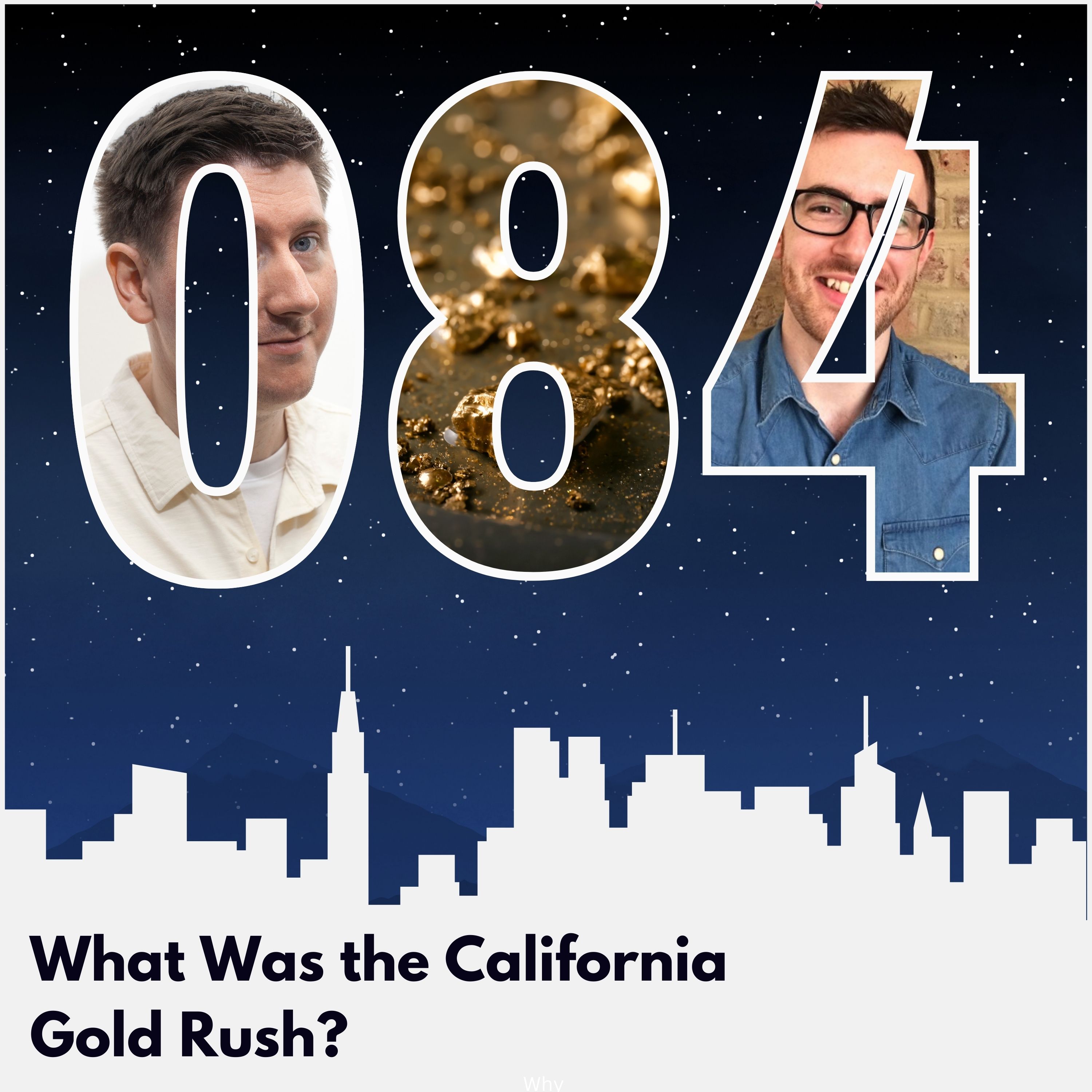
Ep 103What Was the California Gold Rush?
On this day in 1848, the New York Herald published an article that would change America forever.They reported on a man named James Marshall who, while building a saw mill in California, just outside what we now know as Sacramento, found gold flakes in the river. What followed was a stampede of opportunistic Americans moving west to chase their American dreams, in what became the largest gold rush in the country’s history.This week, I want to know why it was so significant, and how it changed the United States, as I ask… what was the California gold rush?...Special guest for this episode:Stephen Tuffnell, a historian of the global and imperial history of the 19th century United States from the University of Oxford, whose research interests include American emigration and the history of commodities such as gold and ice. He’s also the co-editor of A Global History of Gold Rushes....Highlights from this episode:The California Gold Rush of 1848 marked a pivotal moment that transformed American society and economy significantly.James Marshall's discovery of gold initiated a massive migration and an unprecedented pursuit of wealth across the country.The rush not only shaped California's demographics but also had profound implications for indigenous populations and their displacement.Media played a crucial role in stimulating the gold rush, creating a frenzy that spurred thousands to seek fortune in California....Additional Resources:A Global History of Gold Rushes (Volume 25) by Benjamin Mountford and Stephen Tuffnellhttps://dayhist.com/events/california-gold-rush-1848 https://www.mininghalloffame.org/hall-of-fame/james-wilson-marshall https://americanhistory.si.edu/explore/stories/striking-it-rich-american-gold-rushes-early-19th-century An American Genocide: The United States and the California Indian Catastrophe, 1846-1873 by Benjamin MadleyCalisphere: The deeper you look, the more you discover....And if you like this episode, you might also love:When Did the 50 States Become the 50 StatesIs America an Empire?...Contact us: [email protected] the community: <a href="https://www.patreon.com/cw/americathestoryoftheusa" rel="noopener noreferrer"...
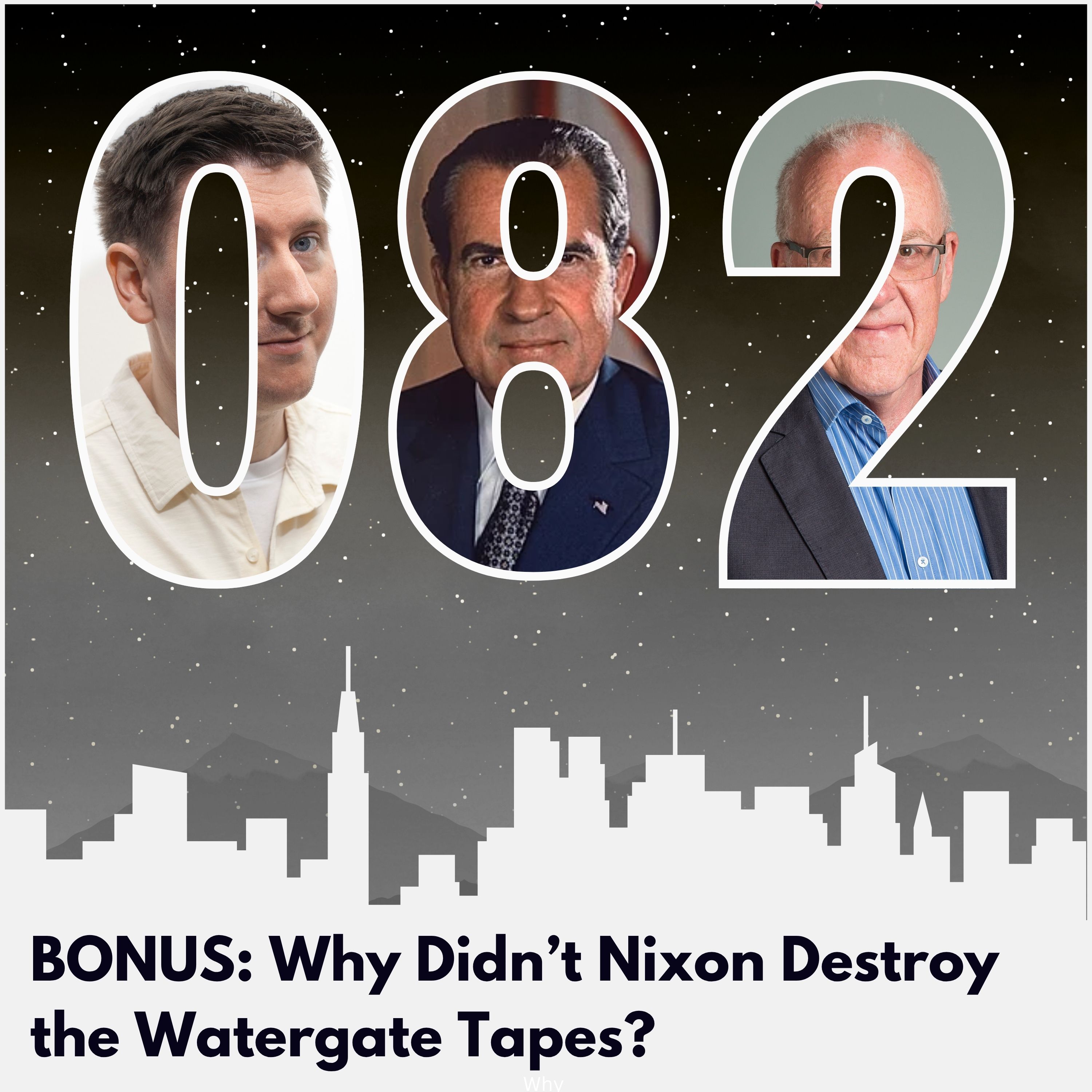
BONUS: Why Didn't Nixon Destroy the Watergate Tapes?
bonusIn this bonus episode, UCL's Professor Iwan Morgan, author of Nixon, discusses why the President refused to destroy the Oval Office tapes - the most incriminating piece of evidence that ultimately led to his resignation from the White House....Special guest for this episode:Iwan Morgan, an emeritus professor of US Studies at University College London, and an expert on the US Presidency. His most recent books are Reagan: American Icon and FDR: Transforming the Presidency and Renewing America...Highlights from this episode:Nixon's downfall was significantly influenced by his desire to maintain a favorable legacy, which ironically led to his undoing.The investigation into Watergate involved many key figures beyond Woodward and Bernstein, including the FBI and Congress.Nixon's reluctance to destroy the incriminating tapes stemmed from his aspirations for greatness and historical legacy.The role of the FBI in uncovering the Watergate scandal was crucial, as they were pivotal in tracing the hush money involved.Deep Throat's identity remained a secret for over thirty years, revealing the complexities of the investigation into Watergate.Ultimately, Nixon's actions during the Watergate scandal overshadowed his significant achievements in foreign policy and environmental protection....Additional Resources:Nixon (Reputations Series) by Iwan MorganPresident Nixon and Watergate - Political change 1960-2000 - Eduqas - GCSE History Revision - Eduqas - BBC BitesizeJohn Dean's Watergate Testimony 50 Years Later | Teaching American HistoryBurdick v. United States | 236 U.S. 79 (1915) | Justia U.S. Supreme Court Cente...And if you like this episode, you might also love:What Was the Constitutional Convention?Why Does the President Only Serve Two Terms?Is the President Above the Law?How Are Presidents Elected?What is the US Constitution?...Contact us: [email protected] the community: https://www.patreon.com/cw/americathestoryoftheusa - use code USA26 for 50% off your first monthGet the newsletter: https://america-the-story-of-the-usa.beehiiv.com/Brand & advertising enquiries:...
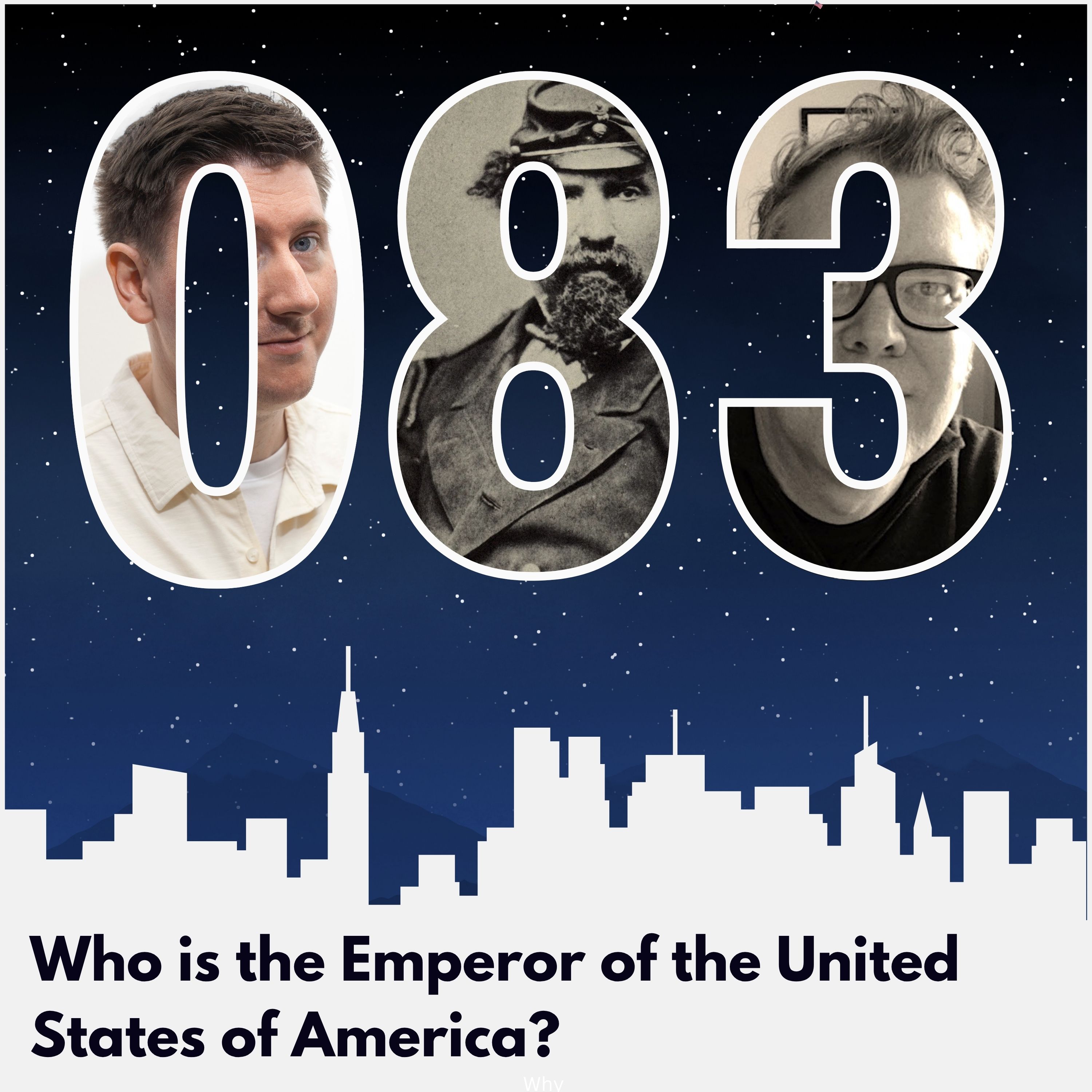
Ep 102Who is the Emperor of the United States of America?
On this day in 1869, self-proclaimed Emperor Norton of the USA issued an order, abolishing the Democratic and Republican parties.Confused? I’m not surprised. So this week we’re going to unpack one of the more bizarre and lesser talked about individuals in America, and why he still, to this day, has left an indelible mark on the country’s history, as I ask… who was the Emperor of the United States?...Special guest for this episode:John Lumea, the founder of The Emperor Norton Trust, who describes himself as a ‘champion of beautiful losers’. He studied philosophy and religion at St. Andrews in Scotland, and now resides in Boston. Today he is a writer and activist and his work has been covered in major publications including the Wall Street Journal, New York Times, and the LA Times...Highlights from this episode:Emperor Norton, originally Joshua Abraham Norton, declared himself Emperor of the United States in 1859, a title that was never officially recognized.His early life in South Africa and migration to the U.S. remain largely a mystery, with few records detailing his journey and experiences.Norton’s financial decline began after a series of poor business decisions in the commodities market, leading to his eventual bankruptcy.Despite his eccentric self-declaration, Norton became a beloved figure in San Francisco, advocating for social justice and civil rights in a progressive manner.The Emperor Norton Trust aims to preserve and promote the legacy of Norton, highlighting his contributions to American history and culture.Records indicate that Norton's proclamations often addressed social issues of the time, showcasing him as a surprisingly progressive figure for his era....Additional Resources:The Emperor Norton Trust | Research, Education, AdvocacyEmperor Norton: San Francisco's Beloved Eccentric Ruler of the Gold Rush Era - Sick HistoryWho is Joshua Norton, a South African immigrant who once declared himself emperor of the United States? - The Economic Times...And if you like this episode, you might also love:What Makes Country Music so American?Are the Oscars Still Relevant?Why Does Everyone Love Disney?Could Friends BE Any Bigger?How Accurate is Forrest Gump?...Contact us: [email protected] the community: https://www.patreon.com/cw/americathestoryoftheusa - use code USA26 for 50% off your first monthGet the newsletter: https://america-the-story-of-the-usa.beehiiv.com/Brand & advertising enquiries: [email protected] to advertise...

BONUS: Hoagies, Grammar Police, and Momphoria
bonusIn this bonus episode, linguistics professor Valerie Fridland discusses her favourite American accents, invents a new slang word, and chats with Liam about some of the everyday differences between American and English....Special guest for this episode:Valerie Fridland, a Professor of Linguistics at the University of Nevada, Reno. She is an expert on the relationship between language and society, and is co-author of the book Sociophonetics. Her latest book, Like, Literally, Dude: Arguing for the Good in Bad English is available to buy now....Highlights from this episode:The perception of accents in America often reflects cultural stereotypes that can be misleading.Southern accents evoke a sense of warmth and home for many, despite negative stereotypes associated with them.Linguists focus on the descriptive nature of language rather than enforcing strict grammar rules, emphasizing authenticity in speech.The organic evolution of slang often reflects the emotional experiences of younger generations and their unique social contexts.Accents are often judged based on social class and education, leading to a complex relationship between language and identity.Expressions like 'mumforia' highlight the evolving nature of language, as new terms emerge to describe contemporary experiences....Additional Resources:Like, Literally, Dude: Arguing for the Good in Bad English by Valerie FridlandSociophonetics (Key Topics in Sociolinguistics) by Tyler Kendall, co-authored by Valerie FridlandWhy We Talk Funny by Valerie FridlandValerieFridland.com Language in the Wild | Psychology Today...And if you like this episode, you might also love:What Makes Country Music so American?Are the Oscars Still Relevant?Why Does Everyone Love Disney?Could Friends BE Any Bigger?How Accurate is Forrest Gump?...Contact us: [email protected] the community: https://www.patreon.com/cw/americathestoryoftheusa - use code USA26 for 50% off your first monthGet the newsletter: https://america-the-story-of-the-usa.beehiiv.com/Brand & advertising enquiries: [email protected] to advertise with us and support the American Studies community?Email [email protected] and let's talk.

Ep 101IN THE MAKING: Can Donald Trump Run for President in 2028?
The short answer is no (sorry MAGA), at least not without a change to the constitution. So in this episode of America: A History in the Making, I explore the main constitutional barriers to a Trump third term, and why changing this would be almost impossible in just three years.Let us know in the comments what you think:Do you want Trump to run again in 2028?Should he be allowed?Who do you think the Republican nominee contenders are?...Highlights from this episode:In this episode, we delve into the implications of Donald Trump's potential third presidential run in 2028 and the constitutional barriers that exist.We clarify that the 22nd Amendment restricts any individual from being elected for more than two terms as president, creating significant legal challenges.Our discussion includes Trump's recent comments suggesting JD Vance as a likely Republican nominee, highlighting the shifting dynamics within the MAGA movement.We explore the argument that Trump could run for vice president, but we detail why this is constitutionally problematic and unlikely to succeed.The episode emphasizes that there is no legal route for Trump to regain the presidency, addressing concerns among both supporters and critics alike.We conclude that unless significant legal changes occur, Donald Trump will not be president after 2028, which is a critical point for understanding future elections....Additional Resources:12th Amendment - Election of President and Vice President | Constitution CenterCan Donald Trump run for a third term? Constitution sets two-term limit despite 'Trump 2028' merchTrump touches on the 22nd Amendment and that is bad news for US history...And if you like this episode, you might also love:What Was the Constitutional Convention?Why Does the President Only Serve Two Terms?Is the President Above the Law?How Are Presidents Elected?What is the US Constitution?...Contact us: [email protected] the community: https://www.patreon.com/cw/americathestoryoftheusa - use code USA26 for 50% off your first monthGet the newsletter: https://america-the-story-of-the-usa.beehiiv.com/Brand & advertising enquiries: [email protected] to advertise with us and support the American Studies community?Email [email protected] and let's talk.
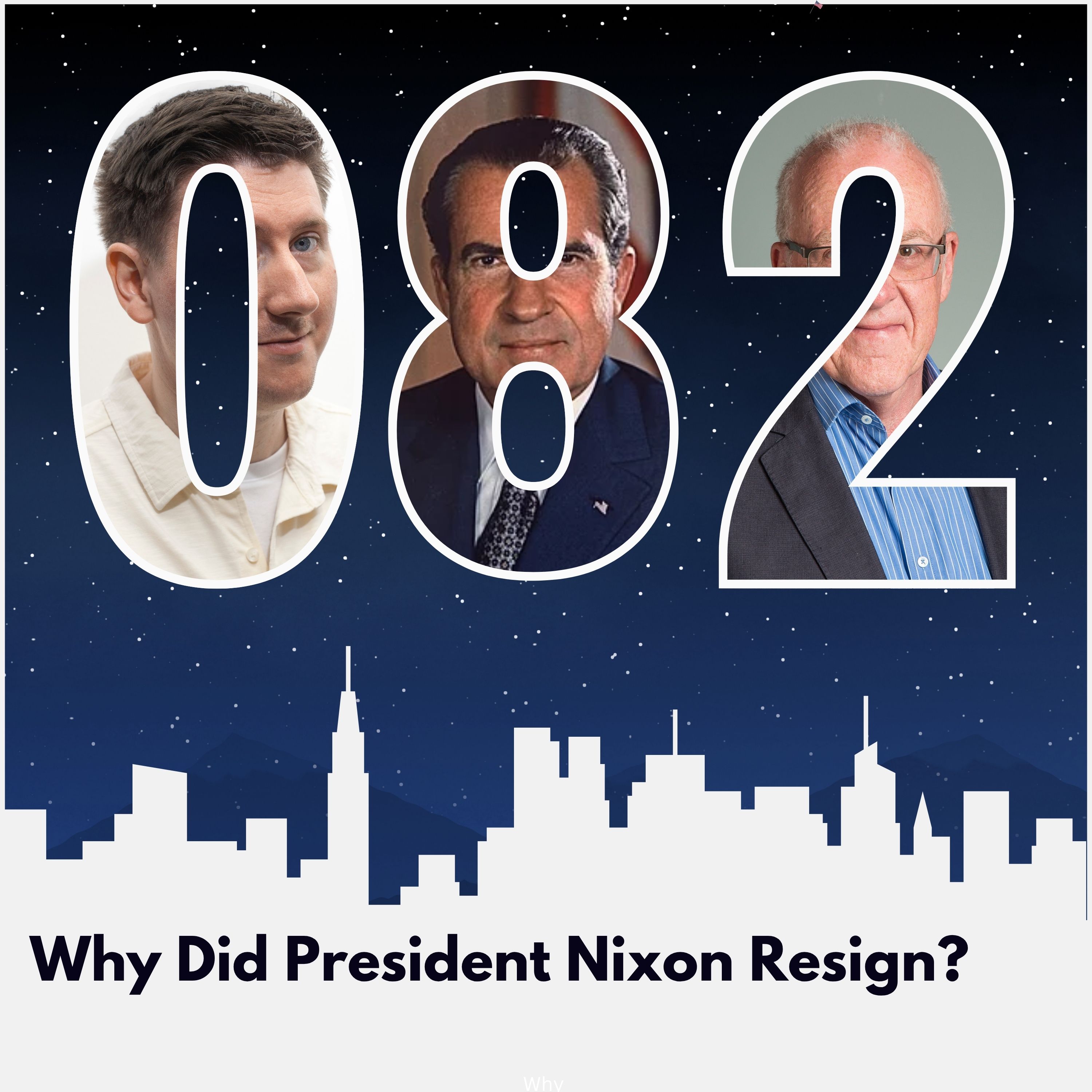
Ep 100Why Did President Richard Nixon Resign?
This week marks the 51st anniversary of a truly unique event in American history. The one and only time a President left the White House by choice. Not due to death or the 22nd amendment, but resignation. Never before and not yet since has any other President done this, so this week, I want to know… why did Richard Nixon resign?...Special guest for this episode:Iwan Morgan, an emeritus professor of US Studies at University College London, and an expert on the US Presidency. His most recent books are Reagan: American Icon and FDR: Transforming the Presidency and Renewing America...Highlights from this episode:This episode commemorates the 50th anniversary of Richard Nixon's resignation, marking a unique moment in U.S. presidential history.Nixon's resignation was not due to death or a constitutional amendment, but rather a voluntary choice amid the Watergate scandal.The discussion highlights Nixon's insecurities and the political context that ultimately led to his decision to resign from office.The establishment of CREEP, Nixon's re-election committee, played a significant role in the events that led to the Watergate break-in and subsequent cover-up.The Watergate scandal revealed a pattern of cover-ups and dishonesty at the highest level of government, leading to a loss of public trust in presidential integrity.Nixon's resignation set a precedent in American politics, shaping future expectations of presidential accountability and the ethical standards expected from elected officials....Additional Resources:Nixon (Reputations Series) by Iwan MorganPresident Nixon and Watergate - Political change 1960-2000 - Eduqas - GCSE History Revision - Eduqas - BBC BitesizeJohn Dean's Watergate Testimony 50 Years Later | Teaching American HistoryBurdick v. United States | 236 U.S. 79 (1915) | Justia U.S. Supreme Court Cente...And if you like this episode, you might also love:What Was the Constitutional Convention?Why Does the President Only Serve Two Terms?Is the President Above the Law?How Are Presidents Elected?What is the US Constitution?...Contact us: [email protected] the community: https://www.patreon.com/cw/americathestoryoftheusa - use code USA26 for 50% off your first monthGet the newsletter: <a...
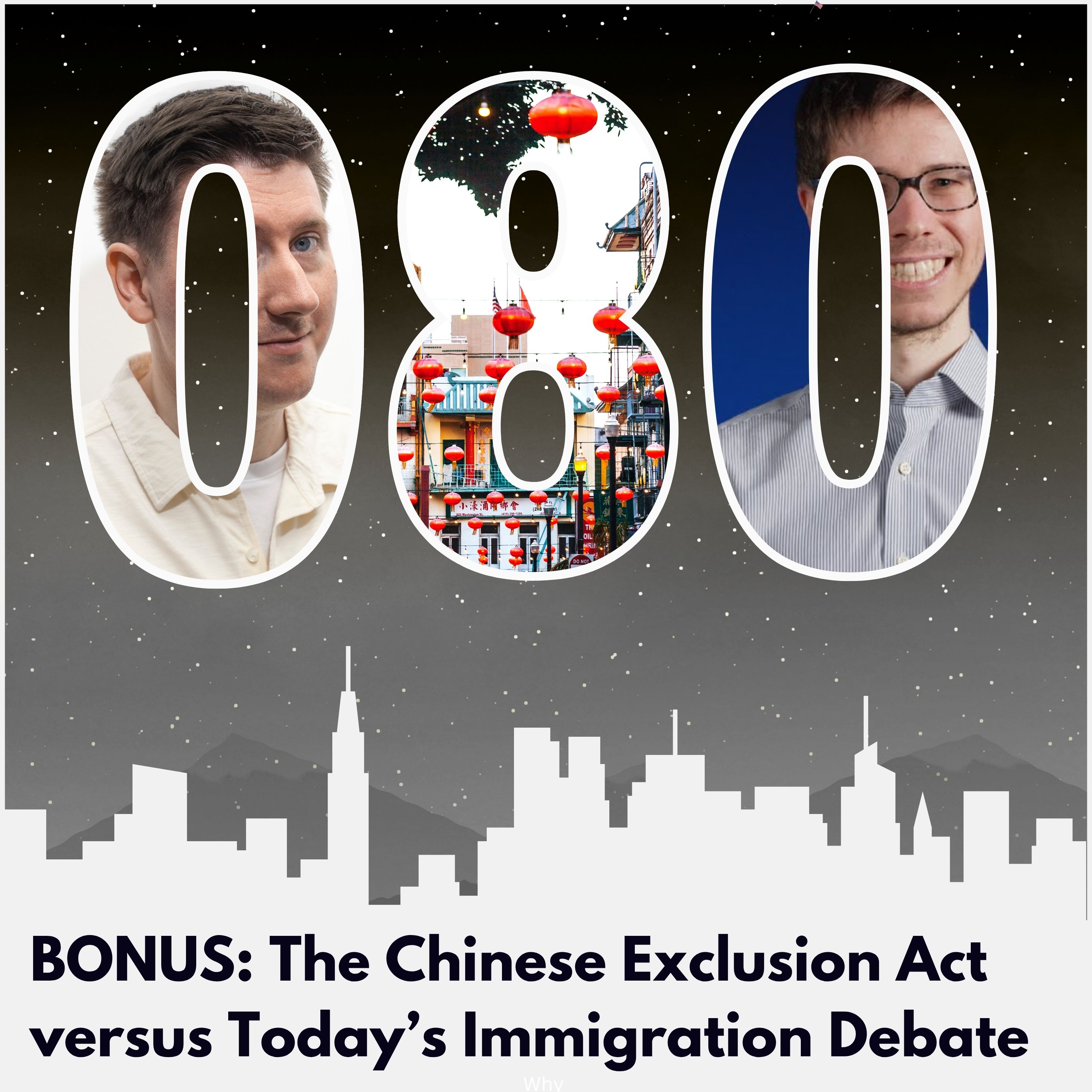
BONUS: Understanding the Impact of the Chinese Exclusion Act on Today's Immigration Debate
bonusThe Chinese Exclusion Act of 1882 stands as a pivotal moment in American immigration history, marking the first time in U.S. history that a law was enacted to prohibit immigration based on race or ethnicity.This episode delves into the origins and implications of the Act, which was initially intended as a temporary measure but ultimately became a permanent fixture of American law until its repeal in 1943. he discussion highlights the socioeconomic conditions leading to the Act's introduction, emphasizing the growing anti-Chinese sentiment among American workers who perceived Chinese immigrants as a threat to their jobs and wages, and features insights from Professor Marco Tabellini, an expert on the economic ramifications of the Act, who explains how the exclusion of Chinese laborers disrupted local economies, particularly in the western United States, where they constituted a significant portion of the workforce.The conversation navigates through the complexities of cultural opposition and economic fears that fueled the Act, examining how these sentiments resonated with the broader narrative of immigration policy in the U.S....Special guest for this episode:Marco Tabellini, an Assistant Professor of Business Administration at Harvard Business School, and a co-author of The Impact of the Chinese Exclusion Act on the Economic Development of the Western U.S....Highlights from this episode:The podcast episode discusses the historical implications of the Chinese Exclusion Act and its relevance to current immigration policies in America.Marco Tabellini emphasizes that mass deportation efforts today may lead to negative labor supply shocks similar to those in the past.There is a misconception that native-born workers will readily fill jobs left vacant by deported immigrants, which is not supported by evidence.The podcast highlights the economic significance of immigrant labor in sectors like agriculture and construction, which are often overlooked in policy discussions.The discussion touches on how anti-immigration sentiment can deter high-skilled immigrants, impacting the U.S. economy negatively in the long run.Listeners are encouraged to explore the full episode for a deeper understanding of the complexities surrounding immigration policies and their effects....Additional Resources:The Impact of the Chinese Exclusion Act on the Economic Development of the Western U.S....And if you like this episode, you might also love:What Do We Get Wrong About the Civil Rights Movement?What Challenge Does Black Lives Matter Present to America?What is the Civil Rights Act?...Contact us: [email protected] the community: https://www.patreon.com/cw/americathestoryoftheusa - use code USA26 for 50% off your first monthGet the newsletter: https://america-the-story-of-the-usa.beehiiv.com/Brand & advertising enquiries: [email protected] to advertise with us and support the American Studies...
Ep 99IN THE MAKING: Comparing the Epstein Files to Nixon's Watergate Tapes
Liam here, and in this impromptu edition of America: A History in the Making, I look into the parallels between the Nixon administration's Watergate scandal and the ongoing controversy surrounding the Epstein files, discussing how both situations highlight the complexities of political accountability and public transparency.Recently, there has been significant pressure on former President Trump to release the Epstein files, particularly as claims emerge regarding his connections to Epstein. We explore the implications of Trump's reluctance to disclose this information and how it could reflect on his standing within his own party.Additionally, I look at the historical context of Nixon's tapes and the Supreme Court's role in demanding transparency, contrasting it with today's political landscape and the differing judicial responses, raising important questions about accountability and the evolving nature of political scandals in America....Highlights from this episode:This episode discusses the parallels between Nixon's Watergate scandal and the current situation surrounding the Epstein files.Previewing the next episode of America: A History where I speak with UCL's Iwan Morgan about Nixon's resignation.The Supreme Court's involvement in both Nixon's case and the Epstein files raises questions about political transparency.Trump's reluctance to release the Epstein files suggests potential issues within his own party and public image....Additional Resources:Senate Democrats Try to Force Release of Epstein Files With Little-Known Law - The New York Times...And if you like this episode, you might also love:What Was the Constitutional Convention?Why Does the President Only Serve Two Terms?Is the President Above the Law?How Are Presidents Elected?What is the US Constitution?...Contact us: [email protected] the community: https://www.patreon.com/cw/americathestoryoftheusa - use code USA26 for 50% off your first monthGet the newsletter: https://america-the-story-of-the-usa.beehiiv.com/Brand & advertising enquiries: [email protected] to advertise with us and support the American Studies community?Email [email protected] and let's talk.
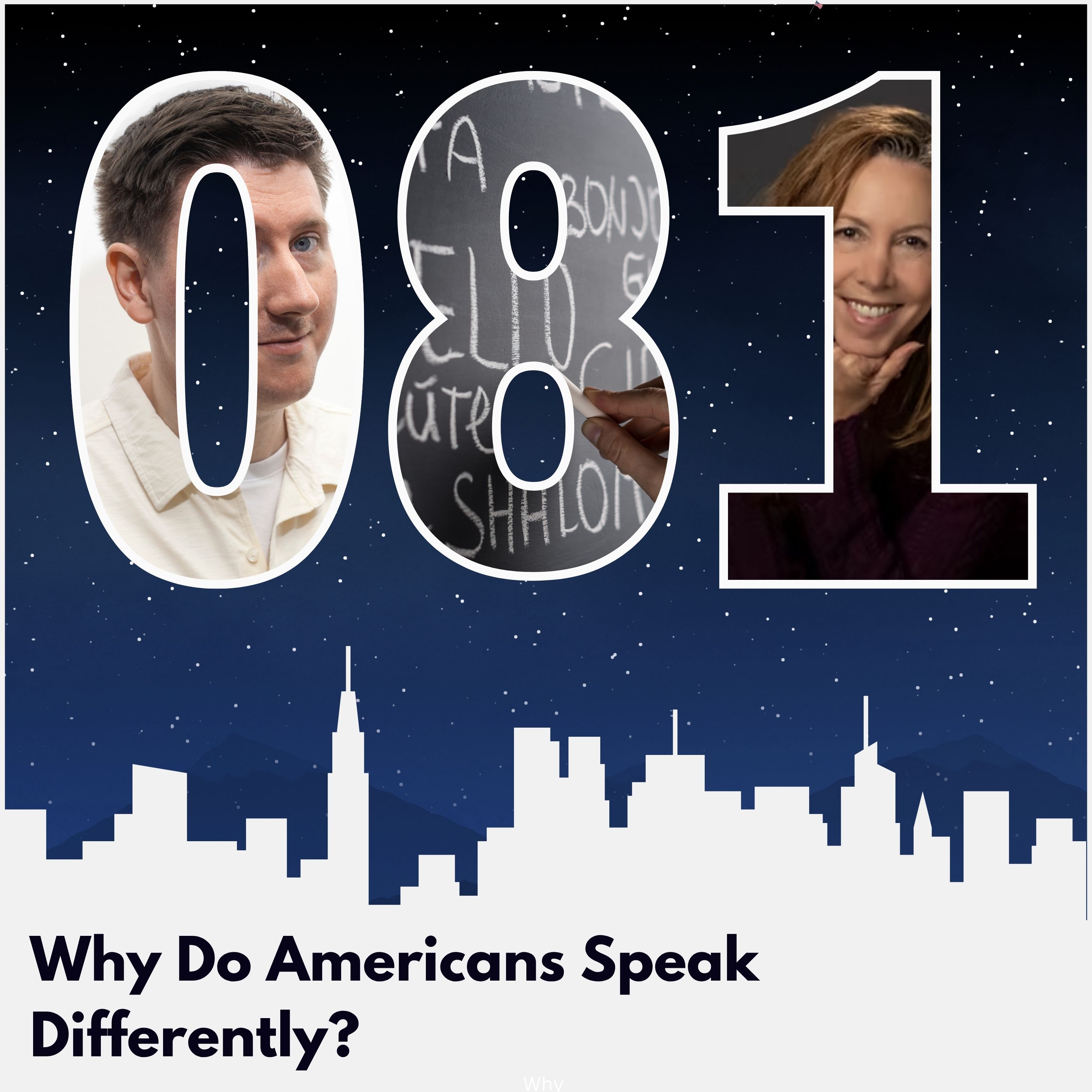
Ep 98Why Do Americans Speak Differently?
This week we are talking about talking.The United States of America is a diverse country - geographically, demographically, and culturally, where every state has its own unique sense of identity. And a big part of that identity is language and dialect.So in this episode, I want to understand why and how American accents are so different, both from each other and from the British, as I ask… why do Americans speak differently?...Special guest for this episode:Valerie Fridland, a Professor of Linguistics at the University of Nevada, Reno. She is an expert on the relationship between language and society, and is co-author of the book Sociophonetics. Her latest book, Like, Literally, Dude: Arguing for the Good in Bad English is available to buy now....Highlights from this episode:The podcast explores the complexities of American accents, emphasizing their diversity across regions, which reflects the different cultural identities found in the USA.Differences between dialects and accents are discussed, with dialects representing broader linguistic variations while accents focus specifically on pronunciation features.Language evolution is shaped by both nature and nurture, as cognitive structures influence language change while social factors determine specific dialectal features.The historical context of language in America is highlighted, illustrating how early settlement patterns contributed to the development of distinct American accents over time.The impact of mass media on language and accents is nuanced, as it has not significantly altered established accents but can reinforce existing linguistic trends.The three-generation pattern of language loss among immigrant communities demonstrates how ethnic identities persist through evolving accents even when original languages are forgotten....Additional Resources:Like, Literally, Dude: Arguing for the Good in Bad English by Valerie FridlandSociophonetics (Key Topics in Sociolinguistics) by Tyler Kendall, co-authored by Valerie FridlandWhy We Talk Funny by Valerie FridlandValerieFridland.com Language in the Wild | Psychology Today...And if you like this episode, you might also love:What Makes Country Music so American?Are the Oscars Still Relevant?Why Does Everyone Love Disney?Could Friends BE Any Bigger?How Accurate is Forrest Gump?...Contact us: [email protected] the community: <a href="https://www.patreon.com/cw/americathestoryoftheusa" rel="noopener noreferrer"...

BONUS: Why Isn't Frances Perkins a Household Name?
bonusFrances Perkins, the first female cabinet member in U.S. history, was a powerhouse in American politics, yet her legacy often flies under the radar.In this bonus discussion, we get into why Perkins isn't as well-remembered as she should be, despite her monumental contributions like the Social Security Act and labor reforms.We chat with historian Rebecca Brenner Graham, who sheds light on Perkins' complicated relationship with the media and her strategic choice to remain out of the spotlight, which ironically contributed to her historical obscurity. She also highlights how Perkins’ memoirs often downplayed her own influence, attributing her successes to President Roosevelt instead.It’s a thought-provoking conversation about how historical narratives are shaped, often by the male-dominated journalism of the time, leading to Perkins becoming a mere trivia answer rather than the icon she truly is, and we ponder how modern movements can learn from her story....Special guest for this episode:Rebecca Brenner Graham, a postdoctoral research associate at Brown University, and the author of Dear Miss Perkins: A Story of Frances Perkins’s Efforts to Aid Refugees from Nazi Germany....Highlights from this episode:Frances Perkins, the first woman in the U.S. Cabinet, played a pivotal role in the New Deal legislation, shaping the modern welfare state with her innovative policies.Despite her significant contributions, Frances Perkins remains largely unremembered by the public, overshadowed by male contemporaries who wrote history from their perspective.The Frances Perkins Center has been instrumental in revitalizing her legacy, advocating for her recognition as a moral icon and ensuring her contributions are not forgotten.Individual and collective action were both essential to Perkins' approach, demonstrating that real change requires collaboration and community involvement.The historical narrative often neglects female figures like Perkins; it's crucial to highlight women’s roles in shaping policy and social reform throughout history.Frances Perkins' legacy serves as a reminder of the importance of recognizing women in leadership roles and their impact on society, particularly in times of crisis....Additional Resources:Dear Miss Perkins: A Story of Frances Perkins's Efforts to Aid Refugees from Nazi Germany by Rebecca Brenner GrahamFair Labor Standards Act of 1938: Maximum Struggle for a Minimum Wage | U.S. Department of LaborHow the Triangle Shirtwaist Factory fire transformed labor laws and protected workers’ health | PBS NewsSocial Security HistoryAmazon.com: The Yiddish Policemen's Union by Michael Chabon<a...
Ep 97IN THE MAKING: Why We Must Protect Universities from Government Interference
In this special solo episode, I explore the challenges facing universities in the United States, particularly as they navigate the intersection of politics and education, addressing a significant legal settlement involving Columbia University and Donald Trump, which has broader implications for how educational institutions are perceived and treated by political powers.Universities must maintain freedom and autonomy to fulfill their roles as centers of learning and critical inquiry. When government entities begin to dictate what can be taught and discussed, it fundamentally undermines the purpose of higher education. It is critically important to protect academic freedom, and institutions ability to operate independently from political pressures. Recent political and economic factors have meant that universities are being seen as financial burdens, but they are essential contributors to societal growth and innovation.So I urge you all to support the preservation of academic integrity and resist the encroachments of political influence in the classroom. Let's advocate for a future where universities can continue to thrive as bastions of knowledge and independent thought....Note: all the opinions in this episode belong entirely to producer and host Liam Heffernan, and are in no way affiliated with, or endorsed by, any institution, company or individual....Contact us: [email protected] the community: https://www.patreon.com/cw/americathestoryoftheusa - use code USA26 for 50% off your first monthGet the newsletter: https://america-the-story-of-the-usa.beehiiv.com/Brand & advertising enquiries: [email protected] to advertise with us and support the American Studies community?Email [email protected] and let's talk.

Ep 96What is the Chinese Exclusion Act?
The Chinese Exclusion Act of 1882 stands as a pivotal moment in American immigration history, marking the first time in U.S. history that a law was enacted to prohibit immigration based on race or ethnicity.This episode delves into the origins and implications of the Act, which was initially intended as a temporary measure but ultimately became a permanent fixture of American law until its repeal in 1943. he discussion highlights the socioeconomic conditions leading to the Act's introduction, emphasizing the growing anti-Chinese sentiment among American workers who perceived Chinese immigrants as a threat to their jobs and wages, and features insights from Professor Marco Tabellini, an expert on the economic ramifications of the Act, who explains how the exclusion of Chinese laborers disrupted local economies, particularly in the western United States, where they constituted a significant portion of the workforce.The conversation navigates through the complexities of cultural opposition and economic fears that fueled the Act, examining how these sentiments resonated with the broader narrative of immigration policy in the U.S....Special guest for this episode:Marco Tabellini, an Assistant Professor of Business Administration at Harvard Business School, and a co-author of The Impact of the Chinese Exclusion Act on the Economic Development of the Western U.S....Highlights from this episode:Historical Significance: The 1882 Chinese Exclusion Act marked America's first immigration ban based solely on race or ethnicity, setting a precedent for future restrictive immigration policies including the 1920s quota systemsEconomic Devastation: The act created a massive negative supply shock in Western states where Chinese workers comprised up to 20% of the labor force, leading to business closures, slower economic growth, and reduced manufacturing developmentEnforcement Mechanics: Chinese immigrants primarily entered through San Francisco, making enforcement relatively straightforward, though the act didn't require deportations—instead creating conditions that encouraged voluntary departureSocial Impact: The legislation legitimized discrimination and violence against Chinese communities, including lynchings and legal restrictions on property ownership and citizenshipLong-term Consequences: Economic effects persisted for 60 years, slowing urbanization, manufacturing growth, and the transition from agricultural to industrial economy in affected regionsModern Parallels: The episode draws connections between 19th-century anti-Chinese sentiment and contemporary immigration debates, exploring recurring themes of economic competition and cultural anxiety...Additional Resources:The Impact of the Chinese Exclusion Act on the Economic Development of the Western U.S....And if you like this episode, you might also love:What Do We Get Wrong About the Civil Rights Movement?What Challenge Does Black Lives Matter Present to America?What is the Civil Rights Act?...Contact us: [email protected] the community: <a href="https://www.patreon.com/cw/americathestoryoftheusa" rel="noopener noreferrer"...
BONUS: What Really Keeps the White House Running?
bonusIn this special, unfiltered bonus episode, you get a little sneak peak behind the curtain of how America: A History is made, which is fitting as we're also going backstage at the White House to find out what actually keeps the Presidential home running.This episode shines a light on how each president, regardless of their party, has made improvements to this iconic building, leaving it in better shape than they found it.Our guest from the White House Historical Association shares some juicy tidbits about the day-to-day operations and the dedicated staff that keep everything running smoothly—because let’s be real, the White House isn’t just a nine-to-five gig!We even explore some quirky roles that you might not expect, like who’s responsible for the flowers and who keeps the lights on (spoiler: it’s not just the President!).So, whether you're a politics buff or just curious about what goes down in that grand ol’ house, we’ve got a delightful mix of history, humor, and insights waiting for you. Grab your earbuds and settle in for a fun chat about the heartbeat of American democracy!...Special guest for this episode:Stewart McLaurin, the president of the White House Historical Association, and the author of three books including the 2021 anthology James Hoban: Designer and Builder of the White House....Highlights from this episode:The White House has evolved through multiple presidencies, each leaving it better than before.Despite political differences, there's a shared respect for preserving the White House's history.The daily operations of the White House are run by an impressive, dedicated staff that works 24/7.Many people are surprised by the small size of the White House compared to their expectations.The original design of the White House was meant to reflect American values without being too grand.If it weren't for James Madison's decision, the White House could have been built in Ohio instead of D.C.!...Additional Resources:The White House Historical Association: https://www.whitehousehistory.org/The White House 1600 Sessions: https://open.spotify.com/show/75CjkWPYFGXZvz2u9Xpeid?si=f527f98c7dad4c9a James Hoban : Designer and Builder of the White House Hardcover by Stewart McLaurinThe People’s House: A White House Experience: https://www.thepeopleshouse.org/ ...And if you like this episode, you might also love:What Was the Constitutional Convention?Why Does the President Only Serve Two Terms?Is the President Above the Law?How Are Presidents Elected?What is the US...
Ep 95IN THE MAKING: Can Elon Musk Disrupt the American Political Landscape?
In the latest episode of America: A History in the Making, we dive into the evolving political landscape in the United States, focusing on recent developments regarding Trump's shift in stance on military aid to Ukraine.We discuss how Trump's promise to provide weapons through NATO has sparked mixed reactions among his supporters, particularly from notable figures like Marjorie Taylor Greene, who openly criticizes his approach.And we explore the implications of Elon Musk's potential formation of a new political party, examining the challenges he might face in a system traditionally dominated by two major parties. Finally, we discuss how these changes could signal cracks in the MAGA base and what that might mean for future elections.Contact us: [email protected] the community: https://www.patreon.com/cw/americathestoryoftheusa - use code USA26 for 50% off your first monthGet the newsletter: https://america-the-story-of-the-usa.beehiiv.com/Brand & advertising enquiries: [email protected] to advertise with us and support the American Studies community?Email [email protected] and let's talk.

Ep 94Who is Frances Perkins?
This week, we are shining a light on one of the most influential women in 20th century America. She was the first woman to serve in a cabinet position in the US government, and her efforts to support Jewish refugees during the holocaust has carved a unique legacy in human history. So in this episode I want to find out more about her life, her work and her legacy, as I ask… who is Frances Perkins?...Special guest for this episode:Rebecca Brenner Graham, a postdoctoral research associate at Brown University, and the author of Dear Miss Perkins: A Story of Frances Perkins’s Efforts to Aid Refugees from Nazi Germany....Highlights from this episode:In this episode, we uncover the life of Frances Perkins, the first female cabinet member in the US, and her groundbreaking achievements.We dive into how Perkins supported Jewish refugees during the Holocaust and made significant contributions to labor laws.The podcast explores Perkins' early life, her struggles for employment, and her eventual rise to prominence in American politics.There's a focus on the historical context of Perkins' work, shedding light on the socio-political climate of the time.Listeners learn about the legacy of Frances Perkins, particularly her role in shaping American labor policies during the Great Depression.The conversation highlights the challenges Perkins faced as a woman in a male-dominated political landscape and how she navigated those obstacles....Additional Resources:Dear Miss Perkins: A Story of Frances Perkins's Efforts to Aid Refugees from Nazi Germany by Rebecca Brenner GrahamFair Labor Standards Act of 1938: Maximum Struggle for a Minimum Wage | U.S. Department of LaborHow the Triangle Shirtwaist Factory fire transformed labor laws and protected workers’ health | PBS NewsSocial Security HistoryAmazon.com: The Yiddish Policemen's Union by Michael ChabonAmazon.com: Madam Secretary Frances Perkins by George MartinThe Woman Behind
BONUS: Gems of Vegas - Where to Find Fun Beyond the Bright Lights
bonusGet ready for a whirlwind chat about Las Vegas, where we dive deeper into some hidden gems and local favorites that’ll make your next trip a blast!I’m hanging out with the fabulous Professor Michael Green from UNLV, who shares some of his top spots to explore beyond the glitzy Strip.We’re talking museums, quirky cafes, and even the nostalgia of Boulder City, where gambling is a no-go but the charm is off the charts!Plus, we dig into how Vegas folks feel about the influx of tourists like us—spoiler alert: they’ve got some opinions! So, if you’re itching to uncover the real Vegas and maybe snag a few insider tips, you’re in the right place....Highlights from this episode:In this bonus episode, we dive deeper into the hidden gems of Las Vegas that aren't just the flashy casinos and bright lights.Professor Michael Green shares his favorite local spots in Vegas, including unique museums and parks that offer a different vibe than the Strip.We discuss how going off the beaten path in Vegas can lead to delightful surprises, like finding local cafes and small casinos with great deals.Las Vegas's economy is heavily influenced by tourism, and we reflect on how global events like COVID-19 have impacted the city.The conversation touches on the balance between maintaining local charm and catering to the tourist economy, revealing a complex relationship with visitors.Lastly, we explore the idea that despite its glamorous reputation, Las Vegas faces challenges that require innovation and adaptation to thrive....And if you like this episode, you might also love:When Did the 50 States Become the 50 StatesIs America an Empire?...Contact us: [email protected] the community: https://www.patreon.com/cw/americathestoryoftheusa - use code USA26 for 50% off your first monthGet the newsletter: https://america-the-story-of-the-usa.beehiiv.com/Brand & advertising enquiries: [email protected] to advertise with us and support the American Studies community?Email [email protected] and let's talk.
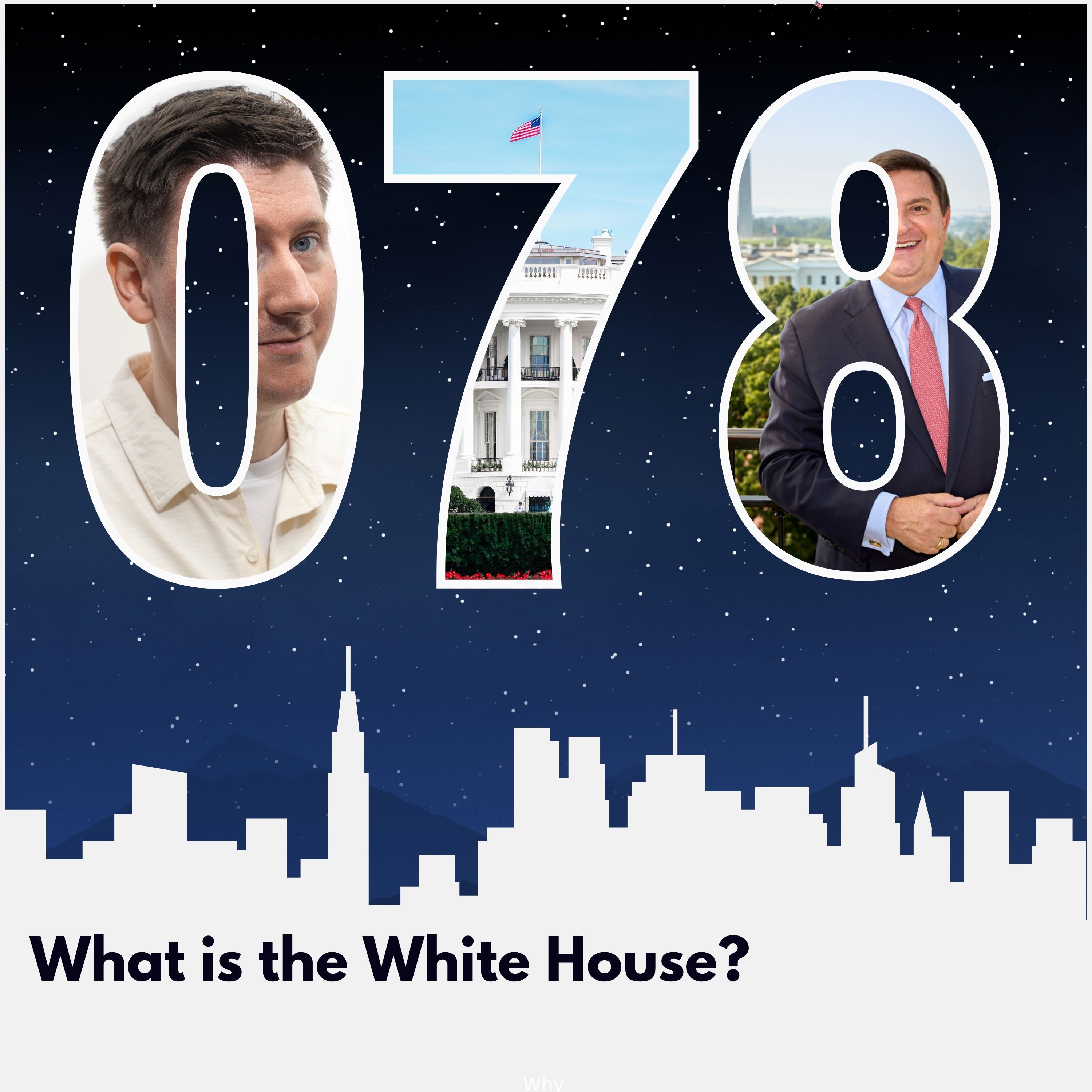
Ep 93What is the White House?
We’re diving into one of the most iconic buildings in the world—yep, you guessed it, the White House!This week, we’re unpacking its rich history, from its construction over 200 years ago to its evolution as a symbol of American democracy and politics. I mean, billions are spent just to get a chance to live there, so what’s the real story behind this grand residence?To help us navigate this fascinating journey, we’ve got the President of the White House Historical Association, and he’s got the inside scoop on everything from the architectural genius behind its design to the lesser-known labor that went into building it, and trust me, it’s a wild ride! So grab your favorite snack, settle in, and let’s get to the heart of what makes the White House not just a house, but a cornerstone of American history!...Special guest for this episode:Stewart McLaurin, the president of the White House Historical Association, and the author of three books including the 2021 anthology James Hoban: Designer and Builder of the White House....Highlights from this episode:The White House, a symbol of American democracy, was first built in 1792, taking eight years to complete, with John Adams being the first resident.Construction of the White House involved both free laborers and enslaved people, highlighting complex historical narratives around its creation.The White House has undergone significant renovations over time, including major updates in 1902 and 1952, ensuring its preservation as a historical landmark.Stuart McLaurin emphasizes the White House's role as more than just a residence; it's a museum and a stage for American democracy.The layout of Washington D.C., including the White House, was largely designed by Pierre L'Enfant, reflecting a vision for a grand federal city.The White House Historical Association operates without government funding, allowing for independence in preserving the White House's history and integrity....Additional Resources:The White House Historical Association: https://www.whitehousehistory.org/The White House 1600 Sessions: https://open.spotify.com/show/75CjkWPYFGXZvz2u9Xpeid?si=f527f98c7dad4c9a James Hoban : Designer and Builder of the White House Hardcover by Stewart McLaurinThe People’s House: A White House Experience: https://www.thepeopleshouse.org/ ...And if you like this episode, you might also love:What Was the Constitutional Convention?Why Does the President Only Serve Two Terms?Is the President Above the Law?How Are Presidents Elected?<a href="https://pod.fo/e/1896e6" rel="noopener noreferrer"...

Ep 92Who Put the Fabulous in Las Vegas?
Ever wondered how a tiny railroad stopover in the Nevada desert became the glittering entertainment capital we know today? This week we're diving deep into the wild history of Las Vegas as it celebrates its 120th birthday!From humble beginnings serving railroad workers to becoming the ultimate destination for gambling, shows, and quick weddings, Vegas has quite the story to tell. We're exploring how the mob helped build the Strip, why the 1930s legalization of gambling changed everything, and how Mormon settlers played a surprising role in the city's early days.Joining us is Michael Green, a professor of history at the University of Nevada, Las Vegas, and author of Nevada: A History of the Silver State. He's got some fascinating insights about how this desert oasis transformed from a simple stopover into Sin City itself.We'll cover the cultural influences that shaped Vegas, the tourism boom that made it famous, and even touch on the modern challenges facing the city as it continues to grow. Plus, we'll visit some iconic spots like the Neon Museum and talk about legendary venues like the Flamingo.Whether you're a Vegas regular or just curious about American history, this episode has something for everyone. So grab your chips and let's explore how Las Vegas became the most fabulous city in the world!...Highlights from this episode:Las Vegas started as a humble stopover for railroad workers and evolved into a vibrant entertainment hub.The history of Las Vegas is rich with cultural influences, including its early Mormon settlers and the impact of the railroad.The legalization of gambling and marriage in the early 1930s sparked a tourism boom that shaped modern Las Vegas.Las Vegas has transitioned from a gambling-centric city to a diverse destination for food, entertainment, and sports.The mob played a crucial role in developing the Strip, leading to today's lavish hotel-casinos we see now.As Vegas continues to grow, its infrastructure and water supply face challenges that could impact future development....Additional Resources:Nevada: A History of the Silver State by Michael GreenLas Vegas: A Centennial History by Eugene P. Moehring and Michael Green...Mentioned in this episode:University of Nevada, Las VegasNeon MuseumMob Museum<a href="https://atomicmuseum.vegas/" rel="noopener
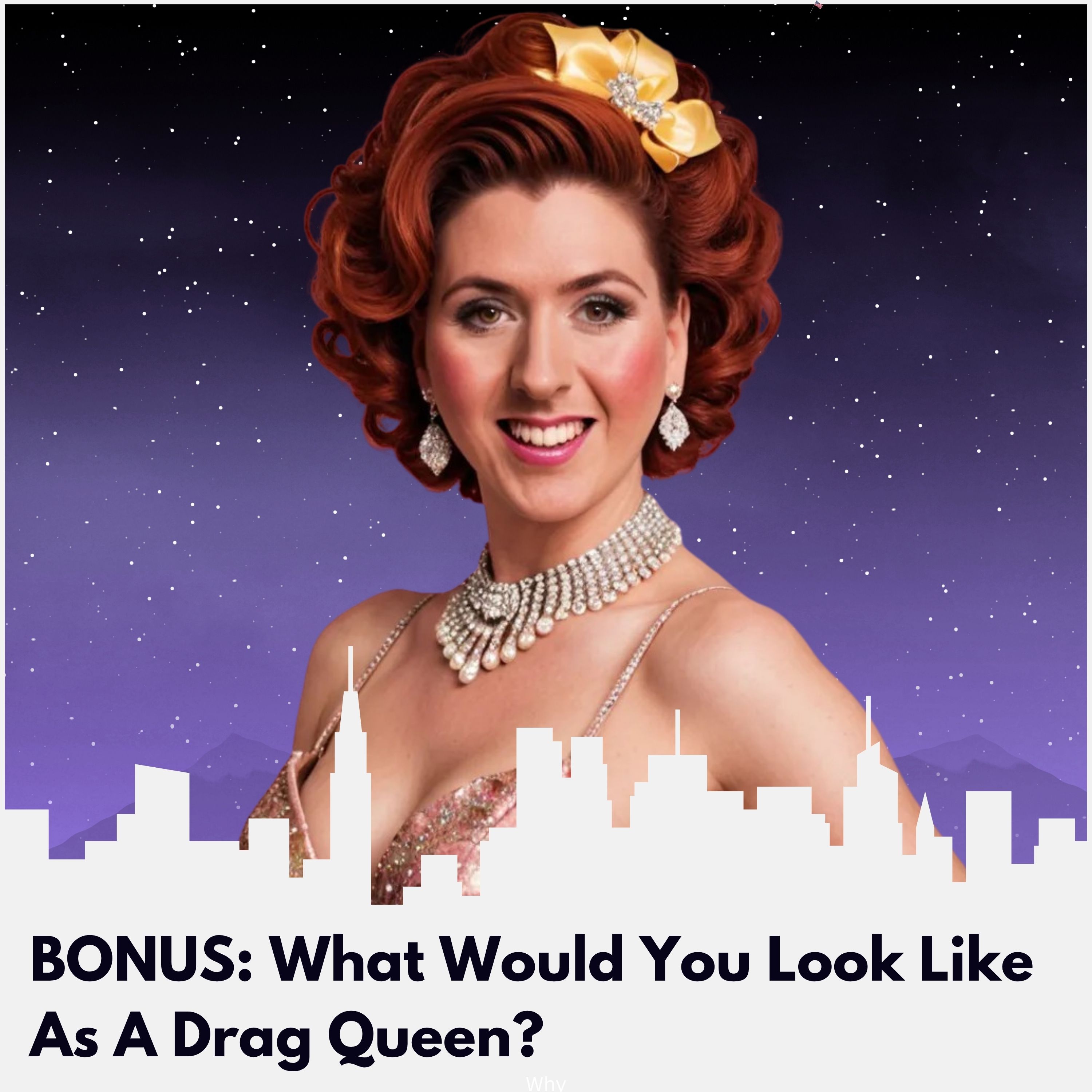
BONUS: What Would You Look Like as a Drag Queen?
bonusIn this special bonus episode, the co-creators of Ru Paul's Drag Race challenged me to dress up in drag for this episode's artwork. I forgot, naturally, but I used a free AI tool. What do you think?Turn yourself into a drag queen using this link - https://photostylelab.com/photo-styles/drag-queen/ - and email the results to [email protected] also discussed their all-time favourite moments from the show, and their own experiences trying out drag....Special guests for this episode:Randy Barbato & Fenton Bailey, the Emmy-winning co-creators of World of Wonder, the media company behind the RuPaul’s Drag Race franchise and streaming service WOW Presents Plus. They have been honored for their trailblazing work with the IDA Pioneer Award, Realscreen’s Global 100 list, Variety’s Reality Leaders List, and Variety’s Reality TV Impact Report, as well as the OUT 100, to name just a few of their accolades....Highlights from this episode:The impact of RuPaul's Drag Race on American culture is profound and far-reaching, influencing both entertainment and societal norms.The show has introduced audiences to a diverse array of drag artists, creating a platform that celebrates self-expression and creativity.Favorite moments from Drag Race seasons often highlight the emotional and dramatic stories of contestants, showcasing their journeys beyond the runway.The transformation episodes of Drag Race are particularly special, revealing how even the most macho participants can embrace their playful sides.Fenton and Randy shared hilarious anecdotes about their own attempts at drag, proving that anyone can have a laugh while experimenting with identity.Artistic interpretations, like placing historical figures in drag, spark conversations about gender and representation in a fun and engaging way....Additional Resources:Sign in - WOW Presents PlusRuPaul’s Drag Race: our research shows how it helps destigmatise the LGBTQ+ community‘RuPaul's Drag Race' Creative Duo Set for Sheffield DocFest as "Queer Stories Face Growing Resistance"Drag Race queens who shared health struggles and stars whose deaths rocked the community | Metro Newsrupublicans • Instagram photos and videos...And if you like this episode, you might also love:What Do We Get Wrong About the Civil Rights Movement?What Challenge Does Black Lives Matter Present to America?What is the Civil Rights Act?...Contact us: [email protected] the community: https://www.patreon.com/cw/americathestoryoftheusa - use code USA26 for 50%...
Ep 91IN THE MAKING: They Don't Know What the F*ck They're Doing
In our latest review of US news and headlines, we discuss Trump's high stakes gamble in the Middle East... and it seemingly paying off. But was this luck or judgment?Plus, we also take a look at the recent New York Mayoral primary, where up-and-comer democrat Zohran Mamdani beat former a state governor to the nomination. What does this tell us about the democrats and the fractures within the party?...Special guest for this episode:Dr. Emma Long, Associate Professor of American History and Politics at the University of East Anglia...Highlights from this episode:In this episode, we dive deep into the complexities of American politics, especially how Trump's unpredictable style has led to significant shifts in both domestic and foreign policies.Listeners will learn about the ongoing U.S. involvement in conflicts like those between Israel and Iran, and how this situation demands careful examination and nuanced conversation.We discuss the fractures within the Democratic Party, highlighting the tension between moderate and progressive factions, and how that shapes their future strategies.Our hosts share their thoughts on the impact of Trump's presidency and how it has forever changed the landscape of American politics, leaving a lasting imprint for generations to come.The episode emphasizes the necessity for Democrats to define their identity moving forward, especially as the political landscape shifts with new leaders emerging.We wrap up with a light-hearted reminder that the world of politics is ever-evolving, and there's always more to chat about, so stay tuned for our next episode....And if you like this episode, you might also love:What Was the Constitutional Convention?Why Does the President Only Serve Two Terms?Is the President Above the Law?How Are Presidents Elected?What is the US Constitution?...Contact us: [email protected] the community: https://www.patreon.com/cw/americathestoryoftheusa - use code USA26 for 50% off your first monthGet the newsletter: https://america-the-story-of-the-usa.beehiiv.com/Brand & advertising enquiries: [email protected] to advertise with us and support the American Studies community?Email [email protected] and let's talk.
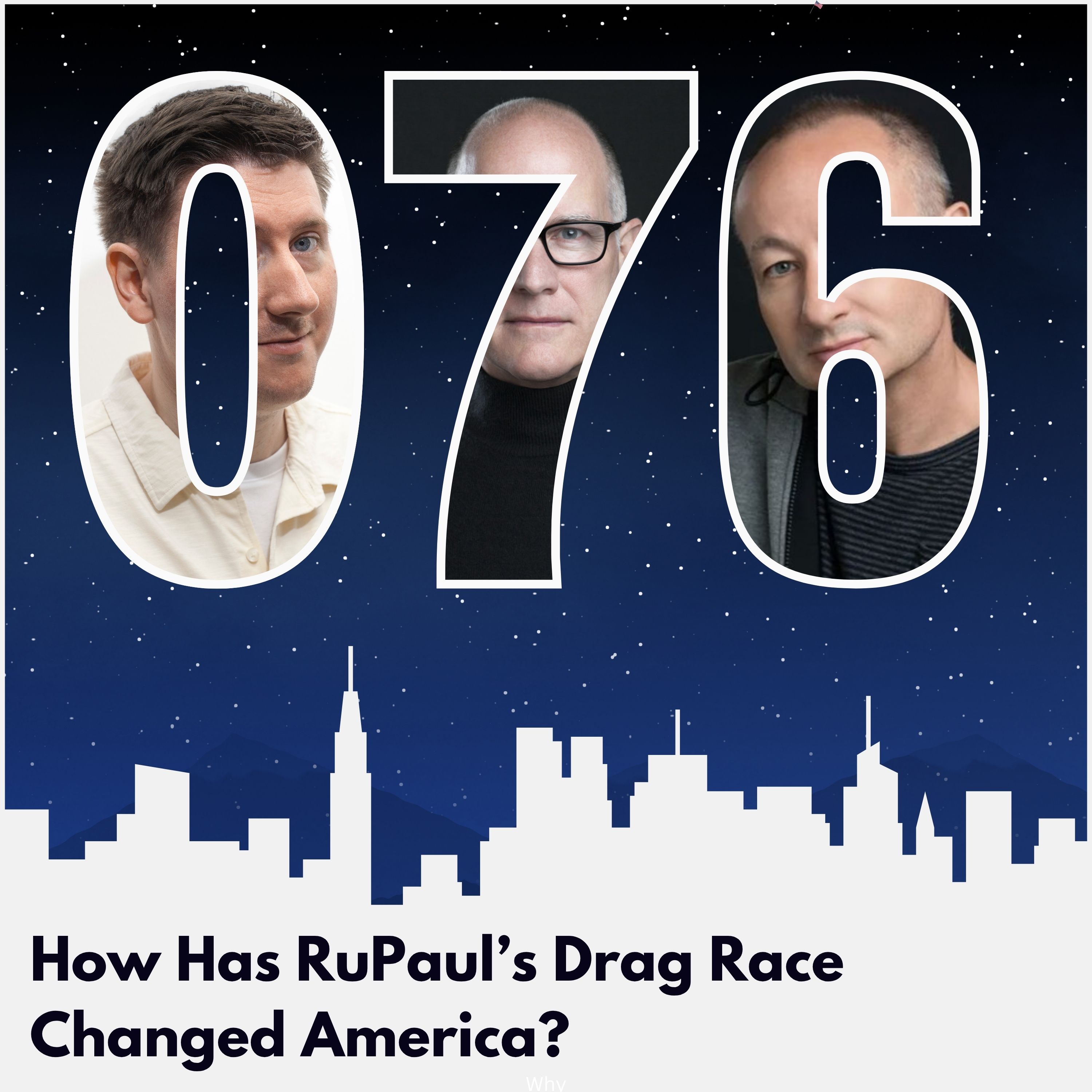
Ep 90How Has Ru Paul's Drag Race Changed America?
In this episode we're diving into the fabulous world of RuPaul's Drag Race, a show that’s not just a reality competition but has become a cultural phenomenon over nearly two decades.With a flair for drama that could outshine a Broadway production, this series has launched 26 international versions and catapulted numerous queens into superstardom. But it's not all glitter and glam; we’re unpacking why this show sparks heated debates among fans and critics alike.Join me as we chat with Drag Race's Emmy-winning co-creators, Randy Barbato and Fenton Bailey, about the show's groundbreaking impact on drag culture and its role in reshaping conversations around identity in America....Special guest for this episode:Randy Barbato & Fenton Bailey, the Emmy-winning co-creators of World of Wonder, the media company behind the RuPaul’s Drag Race franchise and streaming service WOW Presents Plus. They have been honored for their trailblazing work with the IDA Pioneer Award, Realscreen’s Global 100 list, Variety’s Reality Leaders List, and Variety’s Reality TV Impact Report, as well as the OUT 100, to name just a few of their accolades....Highlights from this episode:This podcast celebrates the incredible cultural impact of RuPaul's Drag Race, which has influenced global television for nearly two decades.The show has launched numerous drag queens into stardom while also pushing boundaries on gender identity and acceptance in mainstream media.With its unique blend of humor and competition, Drag Race has become a parody of reality TV, challenging traditional norms while celebrating community.The creators discuss how Drag Race has evolved alongside social media, amplifying the voices of marginalized communities in a way that's both entertaining and empowering....Additional Resources:Sign in - WOW Presents PlusRuPaul’s Drag Race: our research shows how it helps destigmatise the LGBTQ+ community‘RuPaul's Drag Race' Creative Duo Set for Sheffield DocFest as "Queer Stories Face Growing Resistance"Drag Race queens who shared health struggles and stars whose deaths rocked the community | Metro News...And if you like this episode, you might also love:What Do We Get Wrong About the Civil Rights Movement?What Challenge Does Black Lives Matter Present to America?What is the Civil Rights Act?...Contact us: [email protected] the community: https://www.patreon.com/cw/americathestoryoftheusa - use code USA26 for 50% off your first monthGet the newsletter: <a href="https://america-the-story-of-the-usa.beehiiv.com/ " rel="noopener noreferrer"...
REPLAY: Why is Abortion So Controversial in America?
bonusAs Pope Leo XIV reaffirms the church's position against abortion, we wanted to reshare this conversation, where Rev. Caleb Lines, a leader in the Christian community, explains why abortion is not a fundamentally religious issue, but a political one, and is, if anything, antithetical to the teachings of the Bible.It's a fascinating listen, so check it out and leave a comment, follow, and rate this podcast wherever you're listening..This week, as one of the most conservative administrations in recent times settle into the White House, concern grows on the left around what this means for reproductive rights. The overturning of Roe v Wade, back in June 2022, was a seismic decision by the Supreme Court, and one that has made abortion one of the most important and divisive issues in the United States, but why?I’m joined by the brilliant Rebecca Fraser, a historian with a keen focus on gender and race, and the insightful Reverend Caleb Lines, who’s made waves on social media for his candid takes on such hot-button topics. Together, we’ll explore the historical context of abortion, the tangled relationship between politics and religion, and how these factors shape current debates....Special guest for this episode:Rebecca Fraser, a professor of American history and culture at the University of East Anglia. Her research focuses on discourses of gender, race, and sexuality, particularly in 19th century America.Rev. Caleb Lines, the Senior Minister of University Christian Church in San Diego, the Co-Executive Director of ProgressiveChristianity.org, and the Co-Host for The Moonshine Jesus Show....Highlights from this episode:The recent political climate has intensified concerns about reproductive rights in America, especially after the Supreme Court's decision to overturn Roe v. Wade.Understanding the historical context of abortion reveals that it's been a contentious issue influenced by various social and political factors over the decades.The podcast dives into how different interpretations of Christianity shape attitudes towards abortion, highlighting the clash between progressive and fundamentalist views.Economic factors play a crucial role in the abortion debate, as many women seeking abortions do so due to financial constraints and lack of support for raising children.The episode emphasizes that pro-choice advocates are not pro-abortion; they advocate for women's right to choose based on individual circumstances and needs.The conversation touches on the intersection of patriarchy and reproductive rights, questioning whether abortion would be as controversial if it primarily affected men....Additional Resources:READ: Abortion: What does overturn of Roe v Wade mean? - BBC NewsREAD: Caleb Lines WebsiteWATCH: Why Do Religious Groups Care About Abortion? - Caleb Lines via TikTokREAD: 10 States Put Abortion Rights on the Ballot This Year. 7 Voted to Enshrine Protections LISTEN: The Moonshine Jesus ShowREAD: Analysis: How...
REPLAY: How Did the 50 States Become the 50 States
bonusIn this episode, with Trump's threats about Canada, Greenland, Panama, Gaza and others becoming US-owned territories and states, one of our earliest conversations on the podcast is now more important than ever..Over the past 250 years, the United States of America have grown from 13 founding colonies to 50 states and multiple territories, but what does it take to become a state?Why is expansionism so important?And what about Native Americans?In this episode, we explore how colonialism created a blueprint for modern America as we answer the question... how did the 50 states become the 50 states?We're joined on this episode by Jacqueline Fear-Segal, Professor of American and Indigenous Histories at the University of East Anglia, with an interest in the American West, immigration and Americanisation..Additional Resources:BOOK: The Invasion of America by Francis JenningsPAMPHLET: Common Sense by Thomas Paine.If you enjoy this episode, you might also like:Who Are Native Americans?How Did Slavery Impact Cherokee Nation?What is Thanksgiving? .Contact us: [email protected] the community: https://www.patreon.com/cw/americathestoryoftheusa - use code USA26 for 50% off your first monthGet the newsletter: https://america-the-story-of-the-usa.beehiiv.com/Brand & advertising enquiries: [email protected] to advertise with us and support the American Studies community?Email [email protected] and let's talk.
The Future of America: A History Podcast
bonusAs we all adjust to a rapidly changing America, and the impact this is having around the world, we've taken some time out from the podcast to reflect on exactly what we're doing, and how we can continue to do it appropriately and effectively.We know that at the moment, it's as important to look to the future as it is to understand the past. So our podcast needs to keep up with that, drive important conversations, and continue to provide value to you, our listener.What that looks like is different now to when we launched this in 2023.But we promise: we will be back.
BONUS: Pushback Against Trump's Anti-Immigrant Agenda
bonusIn this bonus episode, I'm joined again by Will McCorkle from the College of Charleston, following our recording of 'How Has Immigration Shaped American Idenitty?'We had such a blast in our previous episode, but there’s just so much more to unpack! We’re taking a closer look at Trump’s ever-elusive border wall and whether it’s ever going to be a reality or just a big ol’ distraction. Spoiler alert: it’s a bit of both! Plus, we dig into the wild world of birthright citizenship and what it actually means, because let’s face it, some folks don’t quite get it. Trust me, this episode is packed with laughs, insights, and maybe a few "Did they really just say that?" moments, so buckle up....Special guest for this episode:Will McCorkle, an assistant professor of educational foundations and social studies education at the College of Charleston. His research focuses on the intersection of nationalism, immigration, and education with a particular focus on more marginalized migrant communities. ...Highlights from this episode:The podcast dives deep into how immigration has shaped American identity, a topic that is both timely and critical.We discuss the infamous Trump wall, comparing its reality to Biden's border policies, and how both are more symbolic than effective.Birthright citizenship is examined, revealing the complexities of the 14th Amendment amidst current political pressures to revoke it.The conversation touches on the importance of public pushback against extreme immigration policies, citing historical examples like family separations.We explore the current political climate, emphasizing the need for checks and balances in government to prevent abuses of power.The episode wraps up with a call to action for listeners to engage in advocacy, highlighting the power of collective resistance....Additional Resources:William McCorkle – The ConversationImmigration and U.S. citizenship | USAGovSix big immigration changes under Trump - and their impact so far - BBC NewsUS immigrant population in 2023 saw largest increase since 2000 | Pew Research CenterThe impact of immigration on cultural diversity - Immigration & ResidencyLegal Immigration: Last Week Tonight with John Oliver (HBO)Practice Mercy...And if you like this episode, you might also love:When Did the 50 States Become the 50 StatesIs America an Empire?...Contact us: [email protected] the community: https://www.patreon.com/cw/americathestoryoftheusa - use code USA26 for 50% off your first...
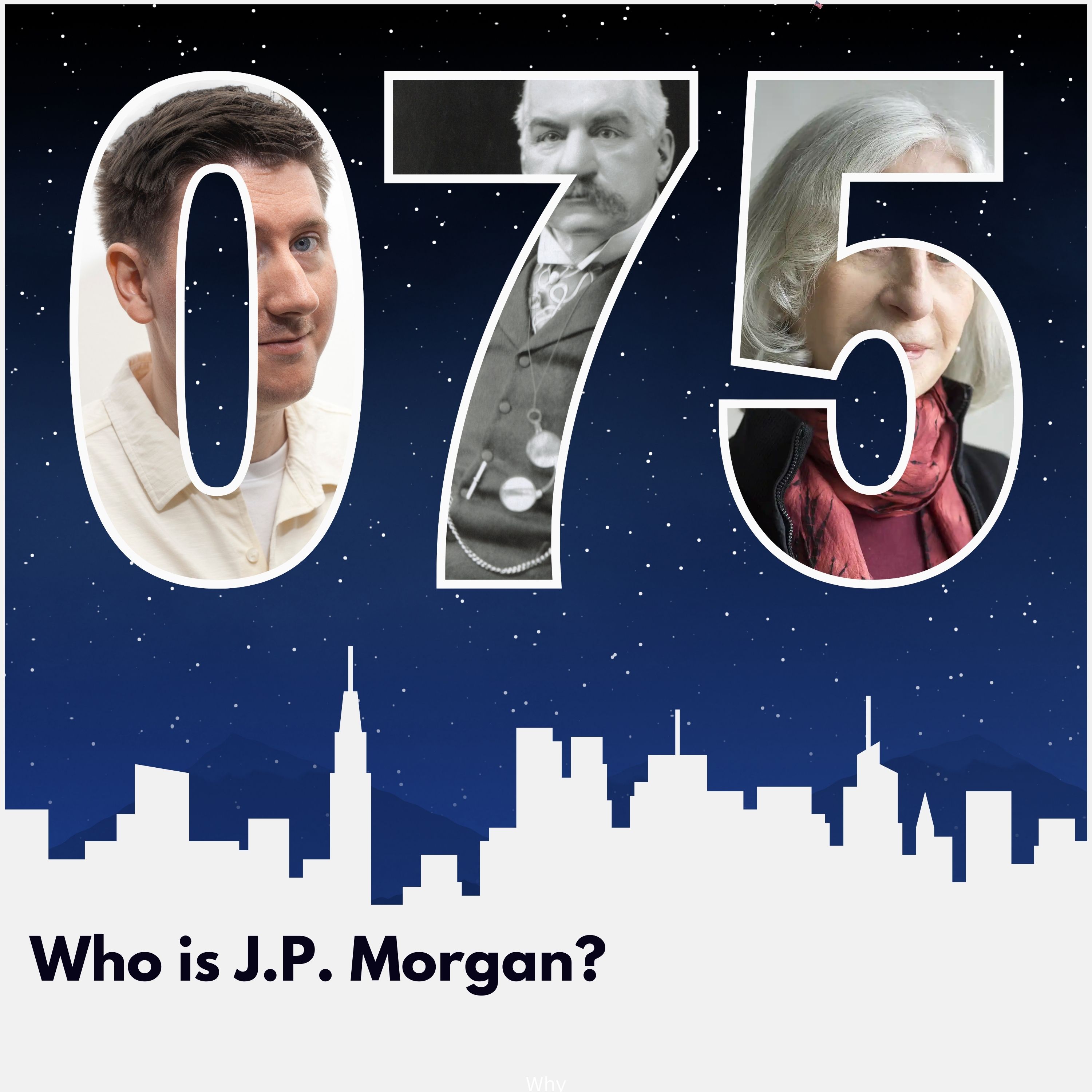
Ep 89Who is J.P. Morgan?
This week, on the anniversary of the sinking of the Titanic, which was 113 years ago today, we’re shining a light on one of its biggest investors; a man who is as controversial as he was transformative to the future of America. The railroad, the steel industry, the treasury - all impacted greatly by his involvement and investment. So in this episode we’re going to explore the rise of one of the wealthiest and most powerful individuals in American history, as I ask… who is J.P. Morgan?...Special guest for this episode:Jean Strouse, one of the preeminent biographers of J.P. Morgan and author of Morgan: American Financier. Her accomplished career includes being President of the Society of American Historians, and a consultant to the Bill & Melinda Gates Foundation...Highlights from this episode:On the anniversary of the Titanic's sinking, we dive into J.P. Morgan's controversial yet transformative impact on America's future, especially in finance and industry.Morgan was a key player in the railroad and steel industries, fundamentally changing the financial landscape of the United States during his time.Despite his immense influence, J.P. Morgan's wealth was debated; he was seen as not as rich as other contemporaries like Rockefeller, which adds complexity to his legacy.His early life was marked by privilege and education, shaping his future as a powerful banker who managed chaotic markets with a unique approach and keen understanding of finance.Morgan's contributions included organizing the creation of U.S. Steel and stabilizing financial crises, showcasing his dual role as a profit-driven businessman and a national stabilizer.Ultimately, J.P. Morgan's legacy is mixed; he is viewed as both a robber baron and a pivotal figure in America's economic development, leaving an imprint on culture and industry that persists today....Additional Resources:Morgan: American Financier by Jean Strouse...And if you like this episode, you might also love:What Makes Country Music so American?Are the Oscars Still Relevant?Why Does Everyone Love Disney?Could Friends BE Any Bigger?How Accurate is Forrest Gump?...Contact us: [email protected] the community: https://www.patreon.com/cw/americathestoryoftheusa - use code USA26 for 50% off your first monthGet the newsletter: https://america-the-story-of-the-usa.beehiiv.com/Brand & advertising enquiries: [email protected] to advertise with us and support the American Studies community?Email [email protected] and let's talk.
BONUS: Is Social Media a Blessing or a Curse for Democracy?
bonusIn this lively bonus episode, we hit the rewind button to dig deeper into our earlier talk on the Internet’s influence on American politics, focusing on the undeniable role of social media. Liam and the brilliant Jennifer Stromer-Galley dive into the vibrant and sometimes volatile world of Twitter, TikTok, and Reddit.They contemplate whether social media is merely a tool for political communication, or if it has morphed into something far more complex, shaping narratives and influencing outcomes in ways we’re just beginning to understand. ...Special guest for this episode:Jennifer Stromer-Galley, a Professor in the School of Information Studies at Syracuse University. She is former president of the Association of Internet Researchers, and she is author of the widely-acclaimed book Presidential Campaigning in the Internet Age....Highlights from this episode:In today's episode, we dove deep into how social media, especially platforms like Reddit and TikTok, has reshaped the way we consume news and engage in political discourse.We discussed how Trump and Musk are leveraging social media to influence American politics, creating both opportunities and concerns for democracy.Reddit's unique community-focused nature allows for more extensive discussions, setting it apart from quicker, more superficial platforms like Twitter.We also touched on the impact of campaign financing in politics, highlighting how money matters more than ever in shaping electoral outcomes and candidate viability....Additional Resources:Presidential Campaigning in the Internet Age by Jennifer Stromer-GalleyJennifer Stromer-Galley - iSchool | Syracuse UniversitySocial Media: Are TikTok videos the way to win an election? - BBC News12 States With Teens' Social Media Regulation- Is Yours One of Them?Facebook, Cambridge Analytica scandal: Everything you need to know...And if you like this episode, you might also love:What Was the Constitutional Convention?Why Does the President Only Serve Two Terms?Is the President Above the Law?How Are Presidents Elected?<a...

Ep 88How Has Immigration Shaped American Identity?
With the looming threat of mass deportations and the revocation of birthright citizenship, the atmosphere surrounding immigration in the United States is thick with uncertainty. In this episode, we dive into the complexities that shape the immigration debate, from passionate advocacy to fervent opposition.We shed light on the historical context of immigration in America, revealing how deeply interconnected it is with the nation's identity, and we explore the reasons behind the polarized views on immigration and examine how current political climates can drastically alter public discourse.We discuss the historical waves of immigration that have shaped the country, highlighting both the struggles and triumphs of immigrant communities, and how these narratives challenge the nativist tendencies that sometimes dominate the conversation....Special guest for this episode:Will McCorkle, an assistant professor of educational foundations and social studies education at the College of Charleston. His research focuses on the intersection of nationalism, immigration, and education with a particular focus on more marginalized migrant communities. ...Highlights from this episode:This episode dives deep into the complex landscape of U.S. immigration policies and their societal impacts.We discuss how immigration has shaped American identity, highlighting both support and opposition to migrant communities.The tension between America's ideals of freedom and the reality of immigration enforcement is a key theme in our conversation.It's fascinating how historical waves of immigration have influenced U.S. demographics and fueled the debate on immigration today.Understanding the legal pathways for immigrants reveals a complicated system often inaccessible for many seeking refuge.We also touch on the misconceptions surrounding immigrant crime rates, countering them with actual statistics and historical context....Additional Resources:William McCorkle – The ConversationImmigration and U.S. citizenship | USAGovSix big immigration changes under Trump - and their impact so far - BBC NewsUS immigrant population in 2023 saw largest increase since 2000 | Pew Research CenterThe impact of immigration on cultural diversity - Immigration & ResidencyLegal Immigration: Last Week Tonight with John Oliver (HBO)Practice Mercy...And if you like this episode, you might also love:When Did the 50 States Become the 50 StatesIs America an Empire?...Contact us: [email protected] the community: <a href="https://www.patreon.com/cw/americathestoryoftheusa" rel="noopener noreferrer"...

BONUS: The Rise of Fascism with Ece Temelkuran [FEED DROP via IF YOU WERE IN CHARGE]
bonusOn this bonus episode, we're doing something a little different, and sharing another podcast doing some great things.If You Were in Charge features global peace strategist Sanam Naraghi Anderlini talking to the frontline doers and imaginers—activists, organizers, and peacebuilders—whose lived experience, courage, and ideas are reshaping what’s possible. People who, if they were in charge, could change the world.In their first episode of season two, Sanam speaks to Ece Temelkuran, renowned author of How to Lose a Country: The 7 Steps from Democracy to Dictatorship, which explores the mechanisms of autocracy and the decline of democratic principles..If You Were In Charge is brought to you by the Bjian Ghaisar FoundationAnd ICAN International Civil Society Action Network.ICAN’s newsletter: https://icanpeacework.org/2025/03/sign-up-to-icans-newsletter/.Original Music, Little Monster MediaExecutive Producer: Pearse LynchThis is an Africa Digital Audio production.Contact us: [email protected] the community: https://www.patreon.com/cw/americathestoryoftheusa - use code USA26 for 50% off your first monthGet the newsletter: https://america-the-story-of-the-usa.beehiiv.com/Brand & advertising enquiries: [email protected] to advertise with us and support the American Studies community?Email [email protected] and let's talk.

Ep 87How Has the Internet Shaped American Politics?
This week, following an election cycle dominated by misinformation, AI, social media, and a… well, strange blossoming relationship between a Silicon Valley billionaire and the 47th President, I think it’s time to look closer at the relationship between technology and politics. How has social media impacted US politics? How is this being regulated? And ultimately, how has the internet changed American politics?...Special guest for this episode:Jennifer Stromer-Galley, a Professor in the School of Information Studies at Syracuse University. She is former president of the Association of Internet Researchers, and she is author of the widely-acclaimed book Presidential Campaigning in the Internet Age....Highlights from this episode:In this episode, we explored the complex relationship between technology and politics, particularly focusing on social media's influence in shaping political narratives and public opinion.Jennifer Stroma Galley shared insights on how social media platforms, especially during election cycles, have become battlegrounds for misinformation and targeted political advertising.We discussed the impact of tech giants like Elon Musk and their affiliations with political candidates, raising questions about the ethical implications of such relationships.The episode delves into the evolution of political fundraising through social media, highlighting how candidates like Trump have mastered the art of leveraging online platforms for financial support.We highlighted the importance of media literacy in today's information age, as the cacophony of voices online makes it challenging for individuals to discern fact from fiction.Listeners were reminded that while social media can empower grassroots movements, it also poses risks of misinformation and ideological echo chambers that can threaten democratic processes...Additional Resources:Presidential Campaigning in the Internet Age by Jennifer Stromer-GalleyJennifer Stromer-Galley - iSchool | Syracuse UniversitySocial Media: Are TikTok videos the way to win an election? - BBC News12 States With Teens' Social Media Regulation- Is Yours One of Them?Facebook, Cambridge Analytica scandal: Everything you need to know...And if you like this episode, you might also love:What Was the Constitutional...
BONUS: Is Abraham Lincoln the Great Emancipator or Just Another Racist?
bonusIn this special bonus episode, following our previous episode What is Emancipation?, we discuss the often overlooked issue of Abraham Lincoln's own prejudice, and how this changed over the course of the civil war.Plus, our guest discusses his own research on Sherman's March, and his upcoming biography on General Sherman himself....Special guest for this episode:Bennett Parten, an Assistant Professor of History at Georgia Southern University, and the author of ‘Somewhere Toward Freedom: Sherman's March and the Story of America's Largest Emancipation’...Highlights from this episode:Emancipation and Reconstruction are massive topics that deserve in-depth exploration and discussion.Abraham Lincoln's complicated relationship with race reveals a man whose views evolved over time.Lincoln's early beliefs included ideas of racial superiority and colonization, reflecting the prejudices of his era.The podcast emphasizes the importance of understanding historical context and how perspectives on figures like Lincoln can change....Additional Resources:Somewhere Toward Freedom: Sherman's March and the Story of America's Largest Emancipation by Bennett PartenEmancipation Proclamation (1863) | National Archives...And if you like this episode, you might also love:Why Did America Ban Slavery?How Did Slavery Impact Cherokee Nation?Who is Frederick Douglass?What Does Kindred Tell Us About Plantation Life?Who is Harriet Tubman?...Contact us: [email protected] the community: https://www.patreon.com/cw/americathestoryoftheusa - use code USA26 for 50% off your first monthGet the newsletter: https://america-the-story-of-the-usa.beehiiv.com/Brand & advertising enquiries: [email protected] to advertise with us and support the American Studies community?Email [email protected] and let's talk.
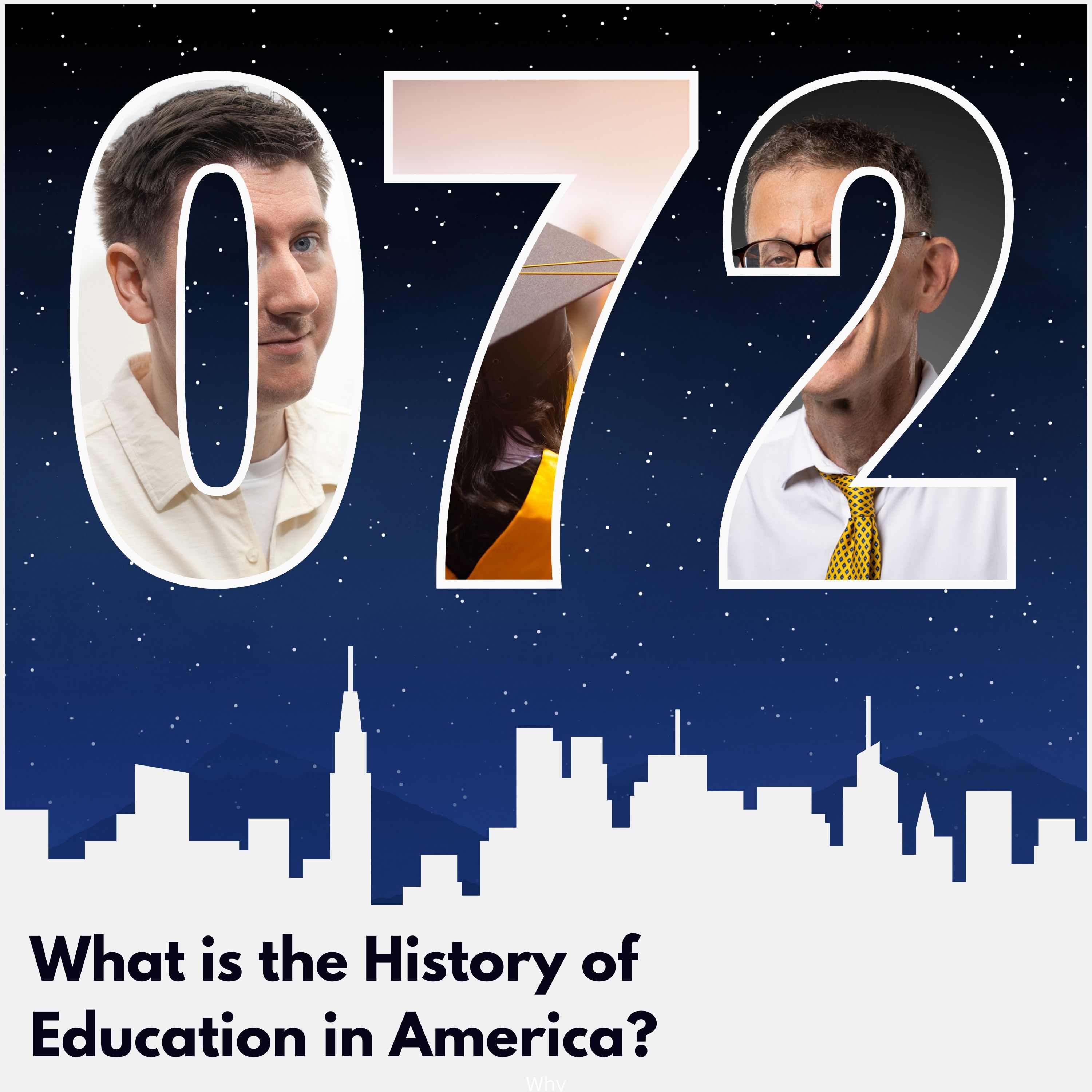
Ep 86What is the History of Education in America?
Ever wondered what American schools really look like beyond the glossy TV portrayals? Well, grab your backpack because we’re diving deep into the quirky, complex world of the U.S. education system!From the early dame schools of the 1600s to the well-oiled machinery of today’s public school system, our guest gives us the lowdown on how American education evolved. We chat about how local communities shaped schools, the rise of the federal government’s influence, and the tug of war between state and federal control.What’s the deal with that 10% of funding from Uncle Sam? And why do folks cling to local control like it's the last slice of pizza at a party? Spoiler alert: it’s all about community identity!And let’s not forget the elephant in the room—why does the U.S. rank 31st in education compared to other countries? We dig into how local pride can sometimes blind us to the need for improvement....Special guest for this episode:Jonathan Zimmerman, a Professor of History of Education at the University of Pennsylvannia, and has a particular interest in how political and social movements shape education. He has also written for The New York Times, The Washington Post, The Atlantic and others....Highlights from this episode:The American education system has evolved significantly since colonial times, with local communities playing a crucial role in shaping schools.Federal involvement in education really kicked off with the establishment of the Department of Education under Jimmy Carter in the late 1970s.Local control of schools can empower communities but may also lead to significant disparities in education quality across the country.The No Child Left Behind Act mandated testing and accountability, but its execution often led to absurd outcomes, like inflated proficiency rates in certain states.Extracurricular activities, from sports to drama clubs, are seen as integral to the American schooling experience and can enhance deeper learning.American schools are not just about academics; they're community hubs where various social functions and services come together....Additional Resources:Education Rankings by Country 2024The difference between the Every Student Succeeds Act and No Child Left BehindWhose America?: Culture Wars in the Public Schools by Jonathan ZimmermanIn Search of Deeper Learning: The Quest to Remake the American High School by Jal Mehta and Sarah Fine...And if you like this episode, you...
BONUS: The Abortion Paradox in America
bonusIn this special bonus episode, Professor Rebecca Fraser and Rev. Caleb Lines stick around for a chat following the main episode, Why is Abortion So Controversial in America, which you can listen to in full right now.They discuss the interesting contradiction in states largely voting for reproductive rights on the same day they re-elect Trump to the White House.Plus, Caleb discusses how he balances his life as a clergyman with his newfound fame as a social media influencer....Special guest for this episode:Rebecca Fraser, a professor of American history and culture at the University of East Anglia. Her research focuses on discourses of gender, race, and sexuality, particularly in 19th century America.Rev. Caleb Lines, the Senior Minister of University Christian Church in San Diego, the Co-Executive Director of ProgressiveChristianity.org, and the Co-Host for The Moonshine Jesus Show....Highlights from this episode:In the podcast, we explored the surprising contradiction between political trends and voter preferences regarding reproductive rights in America.Despite the election of a conservative president, many voters actually supported measures to protect reproductive rights in various states.The discussion highlighted how generational perspectives on reproductive rights can influence voting behavior and community support systems.It's essential to recognize that people's daily struggles, like paying rent, often overshadow their concerns about abortion rights and reproductive health.We also touched on the importance of women's networks in supporting reproductive choices and how these networks can empower future generations.Lastly, we discussed how the rhetoric surrounding reproductive health often conflicts with the actual beliefs of the majority of people in the country....Additional Resources:READ: Abortion: What does overturn of Roe v Wade mean? - BBC NewsREAD: Caleb Lines WebsiteWATCH: Why Do Religious Groups Care About Abortion? - Caleb Lines via TikTokREAD: 10 States Put Abortion Rights on the Ballot This Year. 7 Voted to Enshrine Protections LISTEN: The Moonshine Jesus ShowREAD: Analysis: How Abortion Rights Are Linked to Gender Equality | Best States | U.S. News...And if you like this episode, you might also love:What Do We Get Wrong About the Civil Rights Movement?What Challenge Does Black Lives Matter Present to America?What is the Civil Rights Act?...Contact us: [email protected] the community: https://www.patreon.com/cw/americathestoryoftheusa - use code USA26 for 50%...
Ep 85What is Emancipation?
This week, we're diving into one of the biggest game-changers in American history: the Emancipation Proclamation.On January 1, 1863, President Abraham Lincoln declared all enslaved people in rebellious states to be free, and while it sounds like a happy ending, the reality is a whole lot more complicated. After all, emancipation and freedom are two very different things.So what does it actually mean? What were the implications? And what really changed? In this episode, I’m going to find out… what is emancipation?...Special guest for this episode:Bennett Parten, an Assistant Professor of History at Georgia Southern University, and the author of ‘Somewhere Toward Freedom: Sherman's March and the Story of America's Largest Emancipation’...Highlights from this episode:On New Year's Day in 1863, Lincoln's Emancipation Proclamation declared freedom for enslaved people in rebellious states, a pivotal moment in American history.Emancipation was not a singular event but evolved through various stages during the Civil War, starting with acts of Congress in 1861 and culminating in the 13th Amendment.While emancipation legally freed enslaved individuals, the actual meaning of freedom was complex and continued to evolve during Reconstruction and beyond.Lincoln's decision to emancipate slaves was as much about strategic war efforts against the Confederacy as it was about moral advocacy for human rights....Additional Resources:Somewhere Toward Freedom: Sherman's March and the Story of America's Largest Emancipation by Bennett PartenEmancipation Proclamation (1863) | National Archives...And if you like this episode, you might also love:Why Did America Ban Slavery?How Did Slavery Impact Cherokee Nation?Who is Frederick Douglass?What Does Kindred Tell Us About Plantation Life?Who is Harriet Tubman?...Contact us: [email protected] the community: https://www.patreon.com/cw/americathestoryoftheusa - use code USA26 for 50% off your first monthGet the newsletter: https://america-the-story-of-the-usa.beehiiv.com/Brand & advertising enquiries: [email protected] to advertise with us and support the American Studies community?Email [email protected] and let's talk.
BONUS: Is Calvin Coolidge America's Quietest Overachiever?
bonusToday, we're discussing President Calvin Coolidge a little more and why his general mid-table ranking among Presidents might be a harsh reflection of his success as America's 30th President....Special guest for this episode:Amity Shlaes, the author of four New York Times bestsellers, including Coolidge, a full-length biography of the thirtieth president. She now chairs the board of the Calvin Coolidge Presidential Foundation, a national foundation based at the birthplace of President Coolidge....Highlights from this episode:Calvin Coolidge, often overlooked in history classes, was a surprisingly impactful president who deserves more recognition.Despite the challenges of his time, Coolidge successfully stabilized the economy and fostered growth through his deliberate policies.Coolidge's immigration stance was complex; he supported restrictions but was not motivated by bigotry, which was quite progressive for his era.The podcast discusses how presidential rankings can be misleading, as one president's rise often means another's fall in public perception....Additional Resources:READ: The Coolidge FoundationREAD: Coolidge by Amity ShlaesLISTEN: Calvin Coolidge: A tale of two - Presidential - Apple PodcastsLISTEN: 1924, Coolidge vs. Davis vs. L - American Elections: Wicked Game - Apple PodcastsREAD: Calvin Coolidge: Life Before the Presidency | Miller Center...And if you like this episode, you might also love:What Was the Constitutional Convention?Why Does the President Only Serve Two Terms?Is the President Above the Law?How Are Presidents Elected?What is the US Constitution?...Contact us: [email protected] the community: https://www.patreon.com/cw/americathestoryoftheusa - use code USA26 for 50% off your first monthGet the newsletter: https://america-the-story-of-the-usa.beehiiv.com/Brand & advertising enquiries: [email protected] to advertise...
Ep 84Why is Abortion So Controversial in America?
This week, as one of the most conservative administrations in recent times settle into the White House, concern grows on the left around what this means for reproductive rights. The overturning of Roe v Wade, back in June 2022, was a seismic decision by the Supreme Court, and one that has made abortion one of the most important and divisive issues in the United States, but why?I’m joined by the brilliant Rebecca Fraser, a historian with a keen focus on gender and race, and the insightful Reverend Caleb Lines, who’s made waves on social media for his candid takes on such hot-button topics. Together, we’ll explore the historical context of abortion, the tangled relationship between politics and religion, and how these factors shape current debates....Special guest for this episode:Rebecca Fraser, a professor of American history and culture at the University of East Anglia. Her research focuses on discourses of gender, race, and sexuality, particularly in 19th century America.Rev. Caleb Lines, the Senior Minister of University Christian Church in San Diego, the Co-Executive Director of ProgressiveChristianity.org, and the Co-Host for The Moonshine Jesus Show....Highlights from this episode:The recent political climate has intensified concerns about reproductive rights in America, especially after the Supreme Court's decision to overturn Roe v. Wade.Understanding the historical context of abortion reveals that it's been a contentious issue influenced by various social and political factors over the decades.The podcast dives into how different interpretations of Christianity shape attitudes towards abortion, highlighting the clash between progressive and fundamentalist views.Economic factors play a crucial role in the abortion debate, as many women seeking abortions do so due to financial constraints and lack of support for raising children.The episode emphasizes that pro-choice advocates are not pro-abortion; they advocate for women's right to choose based on individual circumstances and needs.The conversation touches on the intersection of patriarchy and reproductive rights, questioning whether abortion would be as controversial if it primarily affected men....Additional Resources:READ: Abortion: What does overturn of Roe v Wade mean? - BBC NewsREAD: Caleb Lines WebsiteWATCH: Why Do Religious Groups Care About Abortion? - Caleb Lines via TikTokREAD: 10 States Put Abortion Rights on the Ballot This Year. 7 Voted to Enshrine Protections LISTEN: The Moonshine Jesus ShowREAD: Analysis: How Abortion Rights Are Linked to Gender Equality | Best States | U.S. News...And if you like this episode, you might also love:What Do We Get Wrong About the Civil Rights Movement?What Challenge Does Black Lives Matter Present to America?<a...
BONUS: Drill, Baby, Drill! The Impact of Trump's Agenda on Native Lands
bonusIn this week's bonus episode, we’re diving into the impact of American Indian Boarding Schools and the ongoing challenges faced by Native communities in light of recent political shifts.It’s a real gut-wrencher, but we’re here with Jacqueline Fierce Siegel about the fallout from these schools and the alarming direction some policies are taking under the current administration. Spoiler alert: there’s a lot of concern in Indian country about how these changes might affect sovereignty and rights....Special guest for this episode:Jacqueline Fear-Segal, Professor of American and Indigenous Histories at the University of East Anglia...Highlights from this episode:This bonus episode dives deep into the impact of American Indian Boarding Schools, a truly heartbreaking chapter in history.We had an enlightening discussion with Jacqueline Fierce Siegel about the alarming political climate for Native American communities.The episode emphasizes the ongoing struggles for sovereignty and rights faced by Native Americans in today's political landscape.Listeners are encouraged to explore more about Native American history and its implications in contemporary society.The conversation touches on the surprising political choices of some Native Americans during recent elections and its complex implications.The discussion highlights the urgent need for respect towards Native communities and their resources, especially under current environmental policies....Additional Resources:Forced assimilation and abuse: How US boarding schools devastated Native American tribes | News | cherokeephoenix.orgBiden apologizes to Native Americans for abusive government-funded boarding schools | CNN PoliticsThe U.S. history of Native American Boarding Schools — The Indigenous FoundationHistorian: American Indian Boarding Schools and Their Impact | TIME...And if you like this episode, you might also love:Who Are Native Americans?How Did Slavery Impact Cherokee Nation?What is Thanksgiving?...Contact us: [email protected] the community: https://www.patreon.com/cw/americathestoryoftheusa - use code USA26 for 50% off your first monthGet the newsletter: https://america-the-story-of-the-usa.beehiiv.com/Brand & advertising enquiries: [email protected] to advertise with us and support the American Studies community?Email [email protected] and let's talk.

Ep 83Who is Calvin Coolidge?
On this day 100 years ago, a Presidential inauguration was broadcast on national radio for the first time. Having inherited the White House from Warren G. Harding three years into his Vice Presidential career, the thirtieth President of the United States arrived amidst scandal and left behind a Great Depression. But was he popular? Was he successful? And why didn’t he run for a second full term? In this episode, I’m asking… who is President Calvin Coolidge?...Special guest for this episode:Amity Shlaes, the author of four New York Times bestsellers, including Coolidge, a full-length biography of the thirtieth president. She now chairs the board of the Calvin Coolidge Presidential Foundation, a national foundation based at the birthplace of President Coolidge....Additional Resources:READ: The Coolidge FoundationREAD: Coolidge by Amity ShlaesLISTEN: Calvin Coolidge: A tale of two - Presidential - Apple PodcastsLISTEN: 1924, Coolidge vs. Davis vs. L - American Elections: Wicked Game - Apple PodcastsREAD: Calvin Coolidge: Life Before the Presidency | Miller Center...And if you like this episode, you might also love:What Was the Constitutional Convention?Why Does the President Only Serve Two Terms?Is the President Above the Law?How Are Presidents Elected?What is the US Constitution?...Contact us: [email protected] the community: https://www.patreon.com/cw/americathestoryoftheusa - use code USA26 for 50% off your first monthGet the newsletter: https://america-the-story-of-the-usa.beehiiv.com/Brand & advertising enquiries: [email protected] to advertise with us and support the American Studies community?Email [email protected] and let's talk.
BONUS: Talk Until You Drop - The Wild World of Filibusters
bonusIn this bonus episode following the main recording of What is a Filibuster? Liam and special guest Gregory Koger continue their discussion on the history of filibuster's, including its British origins and the role they played in the Civil Rights Act....Special guest for this episode:Gregory Koger, a professor of political science at the University of Miami, who specializes in legislative politics and political parties and author of the book Filibustering: A Political History of Obstruction in the House and Senate...Highlights from this episode:Filibusters can be a complex political tool, not just a stubborn roadblock to legislation. They serve a purpose in forcing issues onto the agenda, showcasing their strategic use in U.S. politics.The history of filibustering dates back to the 19th century, with early examples even found in the UK Parliament, illustrating that this isn't just a U.S. phenomenon.Negotiating under pressure is crucial in politics, and filibusters often create that necessary urgency for lawmakers to reach agreements.Filibusters can sometimes prevent disastrous outcomes, such as a government default, highlighting their importance in legislative processes.The role of filibusters in campaign finance reform discussions in the 1990s demonstrates how they can bring critical issues to the forefront, ultimately leading to significant legislation.Understanding filibusters enriches our perspective on political maneuvering, revealing how they can be leveraged for both obstruction and progress in legislative debates....Additional Resources:Filibustering: A Political History of Obstruction in the House and Senate by Greg KogerU.S. Senate: About Filibusters and Cloture10 Wildest Filibusters In History - ListverseHow The Filibuster Has Been Used To Block Civil Rights Progress | NBC News NOWThe filibuster has been a thorn in Democrats' side. Now it's their last hope - Fast CompanyFilibuster Reform - Center for Effective Government...And if you like this episode, you might also love:What Was the Constitutional Convention?Why Does the President Only Serve Two Terms?Is the President Above the Law?How Are Presidents Elected?What is the US Constitution?...Contact us: [email protected] the community: https://www.patreon.com/cw/americathestoryoftheusa - use code USA26 for...
Ep 82What Were Native American Boarding Schools?
This week, we’re diving deep into what President Joe Biden called “one of the worst chapters in American history” — the Native American boarding schools.These institutions, which operated for over a century, were designed with the aim of systematically stripping away the cultures and identities of Native American children, often through brutal means.Trust me, it's not going to be a light chat; we’re tackling some heavy topics that might leave you feeling a bit uneasy. However, it’s super important to understand the history behind these schools and the devastating impact they had on entire communities....Special guest for this episode:Jacqueline Fear-Segal, Professor of American and Indigenous Histories at the University of East Anglia...Highlights from this episode: This episode explores the dark history of Native American boarding schools, highlighting their role in systematic abuse. Over 500 boarding schools were established across the United States, aimed at assimilating Native children into white culture. The boarding school system was not just about education, but involved severe cultural suppression and trauma for generations. Despite the oppressive past, Native communities today are showing remarkable resilience and a revival of their cultural identities. ...Additional Resources:Forced assimilation and abuse: How US boarding schools devastated Native American tribes | News | cherokeephoenix.orgBiden apologizes to Native Americans for abusive government-funded boarding schools | CNN PoliticsThe U.S. history of Native American Boarding Schools — The Indigenous FoundationHistorian: American Indian Boarding Schools and Their Impact | TIME...And if you like this episode, you might also love:Who Are Native Americans?How Did Slavery Impact Cherokee Nation?What is Thanksgiving?...Contact us: [email protected] the community: https://www.patreon.com/cw/americathestoryoftheusa - use code USA26 for 50% off your first monthGet the newsletter: https://america-the-story-of-the-usa.beehiiv.com/Brand & advertising enquiries: [email protected] to advertise with us and support the American Studies community?Email [email protected] and let's talk.
BONUS: Lights, Cameras, Incarceration - Are We Simplifying Prison Life?
bonusIn this bonus episode, Liam and guests continue their discussion on the US prison system, in particular how it is represented and simplified in popular media, and the impact this can have on wider public perceptions of incarceration. Plus, they explore the potential impact of a Trump administration on prisons, and why other countries like the UK may not be as different as they like to appear....Special guest for this episode:Nicholas Grant, a historian of the twentieth century United States at the University of East Anglia, researching race, internationalism and transnational activism.Heather Ann Thompson, a historian at the University of Michigan, and the Pulitzer Prize-winning author of Blood in the Water: The Attica Prison Uprising of 1971 and Its Legacy. She was also the historical consultant for the Oscar-nominated documentary ATTICA....Highlights from this episode:In this episode, we dove deep into America's prison system and discussed its many flaws, shedding light on the complexities that are often oversimplified in popular media.We explored how reality TV shows can sometimes glorify incarceration, which isn't just misleading but also dehumanizing for those behind bars.The conversation highlighted the important role of documentaries in revealing the harsh realities of prison life, challenging the voyeuristic narratives often presented.Trump's impact on prison policies could be significant, exacerbating issues that affect the most vulnerable populations in society.The dialogue also touched on the media's responsibility to represent the incarcerated more humanely and accurately, rather than just sensationalizing their stories.Lastly, we emphasized that the conversation around prison reform is ongoing and needs continued attention, as these issues won't simply disappear overnight....Additional Resources:Dr. Heather Ann Thompson - Pulitzer Prize Winner | Author | Speaker | ConsultantBlood in the Water: The Attica Prison Uprising of 1971 and Its Legacy by Heather Ann ThompsonU.S. prisons - number of prisoners 2022 | StatistaIncarceration Rates by Country 2024Global Prison Trends ReportHow Much Does A Prisoner Cost Per Year USA? - Prison Inside50 years after the US declared war on drugs, AP examines racial disparities | The Associated Press...And if you like this episode, you might also love:<a href="https://pod.fo/e/1e5cad" rel="noopener...

Ep 81What is a Filibuster?
Ever wonder what a filibuster actually is? Well, this week we dive into the quirky world of filibusters with a political science professor who’s literally written the book on the subject! He breaks down the origins of filibusters, how they’ve evolved over time, and why they still make headlines today.Spoiler alert: it’s not just about the drama of endless speeches; it’s also a strategic game of political chess! So grab your favorite snack, kick back, and let’s unravel the mysteries behind this bizarre but fascinating practice in American government....Special guest for this episode:Gregory Koger, a professor of political science at the University of Miami, who specializes in legislative politics and political parties and author of the book Filibustering: A Political History of Obstruction in the House and Senate...Highlights from this episode:Filibusters are a unique way for legislators to block decisions and slow down processes, allowing a minority to exert influence over a majority's agenda.The history of filibustering dates back to the early 19th century, showcasing how this tactic has evolved in American politics over the years.In the U.S. Senate, there is no formal limit on how long someone can speak, leading to marathon speeches that can last for hours or even days.The effectiveness of a filibuster often depends on the willingness of senators to wait out the opposition, highlighting the strategic nature of this political maneuver.Filibusters can be seen as both a tool for minority rights and a source of legislative gridlock, especially in today's polarized political climate.Attempts to reform the filibuster have been met with resistance, illustrating the complexities of changing long-standing legislative rules....Additional Resources:Filibustering: A Political History of Obstruction in the House and Senate by Greg KogerU.S. Senate: About Filibusters and Cloture10 Wildest Filibusters In History - ListverseHow The Filibuster Has Been Used To Block Civil Rights Progress | NBC News NOWThe filibuster has been a thorn in Democrats' side. Now it's their last hope - Fast CompanyFilibuster Reform - Center for Effective Government...And if you like this episode, you might also love:What Was the Constitutional Convention?Why Does the President Only Serve Two Terms?Is the President Above the Law?How Are Presidents Elected?What is the US Constitution?...Contact us: [email protected] the community:...
BONUS: Rosa Parks is More Than Just the Lady on the Bus
bonusIn this special bonus chat, following the release of 'Who is Rosa Parks?' Liam and guests discuss how the civil rights movement, and figures like Parks, are taught and remembered, particularly in an age where disinformation and division is rife....Special guest for this episode:Dr. Nicholas Grant, a historian of twentieth century United States and author of 'Winning Our Freedoms Together: African Americans and Apartheid, 1945-1960.' His research focuses on race, internationalism and transnational activism.Dr. Jeanne Theoharis, a Distinguished Professor of Political Science at Brooklyn College of City University of New York. She is the author of numerous books and articles on the civil rights and Black Power movements and the politics of race and education in the US, including The Rebellious Life of Mrs. Rosa Parks....Additional Resources:READ: The Rebellious Life of Mrs. Rosa Parks by Jeanne TheoharisREAD: King of the North: Martin Luther King Jr.’s Life of Struggle Outside the South by Jeanne TheoharisREAD: Rosa Parks' Legacy Stained By Court Feud, Accusations Of CorruptionREAD: Biography: Rosa Parks READ: Who was Rosa Parks, and what did she do in the fight for racial equality? WATCH: Watch Freedom Riders | American Experience | Official Site | PBS WATCH: The Case of the Scottsboro Boys...And if you like this episode, you might also love:What Do We Get Wrong About the Civil Rights Movement?What Challenge Does Black Lives Matter Present to America?What is the Civil Rights Act?...Contact us: [email protected] the community: https://www.patreon.com/cw/americathestoryoftheusa - use code USA26 for 50% off your first monthGet the newsletter: <a href="https://america-the-story-of-the-usa.beehiiv.com/ " rel="noopener noreferrer"...
Ep 80Why Does America Have So Many Prisons?
This week, as Trump promises to make America great again.. again, I want to find out more about the prison system. In some states, up to 10% of budgets are allocated to correctional facilities, and yet incarceration rates and the costs continue to rise, while issues around systemic racism and politics continue to plague its reputation and put question marks over its effectiveness. So in this episode, I want to know… why does America have so many prisons?...Special guest for this episode:Nicholas Grant, a historian of the twentieth century United States at the University of East Anglia, researching race, internationalism and transnational activism.Heather Ann Thompson, a historian at the University of Michigan, and the Pulitzer Prize-winning author of Blood in the Water: The Attica Prison Uprising of 1971 and Its Legacy. She was also the historical consultant for the Oscar-nominated documentary ATTICA....Highlights from this episode: The American prison system has a staggering rate of incarceration, with more people locked up per capita than any other country, indicating a severe failure in addressing social issues. Historically, prisons in the United States have disproportionately housed poor individuals and people of color, revealing deep-seated racial disparities in the justice system. Despite some reforms, the prison system in America has not shifted towards rehabilitation; rather, it continues to operate as a mechanism for social control and economic profit. The narrative surrounding crime and punishment in the U.S. has often been driven by racial politics, with a history of policies targeting marginalized communities under the guise of public safety. The prison population remains predominantly non-white, reflecting systemic inequalities, as African Americans and Latinos make up a significant portion of incarcerated individuals. Public perception and political rhetoric often frame incarceration as a solution to crime, but the reality is that it perpetuates cycles of poverty and violence in communities. ...Additional Resources:Dr. Heather Ann Thompson - Pulitzer Prize Winner | Author | Speaker | ConsultantBlood in the Water: The Attica Prison Uprising of 1971 and Its Legacy by Heather Ann ThompsonU.S. prisons - number of prisoners 2022 | StatistaIncarceration Rates by Country 2024Global Prison Trends ReportHow Much Does A Prisoner Cost Per Year USA? - Prison Inside<a href="https://www.ap.org/news-highlights/best-of-the-week/2021/racial-disparity-of-50-year-war-on-drugs/#:~:text=Fifty%20years%20ago%20President%20Richard%20Nixon%20declared%20a,restricitions.%20%28AP%20Photo%20%2F%20Douglas%20C.%20Pizac%2C%20File%29" rel="noopener noreferrer"...
BONUS: How American Media Distorts Perceptions of the Middle East
bonusIn this bonus episode, Liam and special guest Melani McAlister dive into the complex perceptions Americans have about the Middle East, particularly in light of popular culture and media representation.They discuss how ignorance about the region persists despite educational efforts, leading to a skewed view of Middle Eastern people as either potential terrorists or helpless victims in need of salvation. And they explore the pervasive narratives in American films and television, which often frame the U.S. as the heroic savior while portraying Muslims in a negative light, the troubling stereotypes that arise from these portrayals, particularly about Muslim women, and how these narratives fail to acknowledge the voices and agency of those within the region....Special guest for this episode:Melani McAlister, a Professor of American Studies and International Affairs at George Washington University, whose interests include the rhetoric of foreign policy. Her new book Promises, released in 2024, explores the long history of the Israeli-Palestinian conflict and the US role in it....Highlights from this episode:The American public's perception of the Middle EastPopular culture's frequent portrayal of Muslims and Arabs as dangerous, reinforcing negative stereotypes.The harmful narrative of American exceptionalismMedia representations of Americans as saviors of oppressed populations.The problematic concept of the 'good Muslim' character.The portrayal of Muslim women needing saving can diminish their agency and voices in society....Additional Resources:Promises, Then the Storm: Notes on Memory, Protest, and the Israel–Gaza War by Melani McAlisterMelani McAlister – Writing, Teaching, & Other StuffU.S. Policy in the Middle East: A Brief HistoryOur American Israel: The Story of an Entangled Alliance by Amy Kaplan...And if you like this episode, you might also love:When Did the 50 States Become the 50 StatesIs America an Empire?...Contact us: [email protected] the community: https://www.patreon.com/cw/americathestoryoftheusa - use code USA26 for 50% off your first monthGet the newsletter: https://america-the-story-of-the-usa.beehiiv.com/Brand & advertising enquiries: [email protected] to advertise with us and support the American Studies community?Email...

Ep 79Who is Rosa Parks?
This week, to celebrate Black History Month in the US, we are shining a light on one of the most influential figures in American history. Her relentless efforts for social justice and equality made her a powerful voice of the civil rights movement, and her work and legacy still endures today, alongside figures such as Martin Luther King and Malcolm X. So today we remember the life, the work, and the legacy of this great individual as I ask… who is Rosa Parks....Special guest for this episode:Dr. Nicholas Grant, a historian of twentieth century United States and author of 'Winning Our Freedoms Together: African Americans and Apartheid, 1945-1960.' His research focuses on race, internationalism and transnational activism.Dr. Jeanne Theoharis, a Distinguished Professor of Political Science at Brooklyn College of City University of New York. She is the author of numerous books and articles on the civil rights and Black Power movements and the politics of race and education in the US, including The Rebellious Life of Mrs. Rosa Parks....Highlights from this episode: Rosa Parks' childhood experiences with racial violence shaped her beliefs about self-defense and activism. The Montgomery Bus Boycott was not just a single event but a culmination of ongoing resistance. Rosa Parks' activism extended beyond the bus boycott, influencing civil rights and black power movements. Many women, like Claudette Colvin, played crucial roles in the bus resistance before Parks' arrest. Parks' legacy is often simplified, overshadowing her lifelong commitment to social justice and equality. The importance of community organizing and collective action was vital for the boycott's success. ...Additional Resources:READ: The Rebellious Life of Mrs. Rosa Parks by Jeanne TheoharisREAD: King of the North: Martin Luther King Jr.’s Life of Struggle Outside the South by Jeanne TheoharisREAD: Rosa Parks' Legacy Stained By Court Feud, Accusations Of CorruptionREAD: Biography: Rosa Parks READ: Who was Rosa Parks, and what did she do in the fight for racial equality? WATCH: Watch Freedom Riders | American Experience | Official Site | PBS WATCH: <a href="https://www.youtube.com/watch?v=k_q4GG3iHGY" rel="noopener noreferrer"...
BONUS: Will Bryan Cranston be the Next Freddy Krueger?
bonusIn this special bonus episode, following the recording of 'Who is Freddy Krueger?', Liam and special guest Noel Mellor discuss their favourite horror films, the future of Freddy, and our ideal castings - Jack Black, anyone?...Special guest for this episode:Noel Mellor, a former marketing professional, now Programme Leader on the BA Digital Video Production and Marketing at University of Salford. As a writer and podcaster, he's extensively covered 1980s film and popular culture for over a decade across podcast and book projects like Adventures in VHS and Beyond the Neon - and he is now researching movie marketing past, present and future. His papers for the Montréal Monstrum Society Journal and University of Nottingham's A Nightmare on Elm Street @ 40 conference this year, explored Freddy Krueger's role as the leader of a new pack of 80s slashers - or 'Brand Boogeymen' - and their impact on popular culture....Highlights from this episode: Noel Mellor reflects on his early horror experiences and how he first watched Freddy Krueger. The conversation highlights the evolution of Freddy Krueger from horror icon to pop culture figure. Dream Warriors is celebrated as a beloved sequel due to its fun and imaginative approach. The meta-narrative in Wes Craven's New Nightmare is discussed as a pioneering horror concept. Both hosts agree that horror movies can deeply affect viewers through discomfort and unsettling themes. The possibility of Freddy's return in a new adaptation raises questions about casting and character development. ...Additional Resources:The souls of the children… Give me strength”: 1980s Horror Movie Marketing and the Life and Death of the Brand Boogeymen by Noel MellorThe Cultural Influence of Nightmare On Elm Street | Horror Cult FilmsThe Sociology of Freddy | Retro JunkWes Craven: the scream of our times...And if you like this episode, you might also love:Who is Ed Gein?Why Do Americans Love Halloween?Why Do Americans Love Aliens?...Contact us: [email protected] the community: https://www.patreon.com/cw/americathestoryoftheusa - use code USA26 for 50% off your first monthGet the newsletter: https://america-the-story-of-the-usa.beehiiv.com/Brand & advertising enquiries: [email protected] to advertise with us and support the American Studies community?Email [email protected] and let's talk.
Ep 78[EMERGENCY EPISODE] ITM: The Washington D.C. Plane Crash
On the evening of Jan 29th 2025, an American Airlines flight carrying 60 people has collided with a Black Hawk helicopter over the Potomac River in Washington D.C.In this emergency episode of America: A History in the Making, Liam dives into the complexities surrounding this incident, emphasizing the risk of politicizing such a heartbreaking event. He reflects on Donald Trump's recent response, which raises questions about aviation safety and oversight, especially given his administration's recent moves to limit advisory committees.While acknowledging the potential conspiracy theories that could arise, Liam urges listeners to focus on the human tragedy at hand rather than getting caught up in political debates.As the recovery efforts continue, he and everyone involved in this podcast ask for a moment of respect and reflection on the loss of life before diving into the inevitable discussions about responsibility and accountability in the days to come....Additional Resources:Truth Details | Truth SocialTrump Guts Key Aviation Safety Committee, Fires Heads Of TSA, Coast Guard | HuffPost Latest NewsWashington DC plane crash live updates: Nineteen bodies recovered after passenger jet collides with helicopter - BBC News...Contact us: [email protected] the community: https://www.patreon.com/cw/americathestoryoftheusa - use code USA26 for 50% off your first monthGet the newsletter: https://america-the-story-of-the-usa.beehiiv.com/Brand & advertising enquiries: [email protected] to advertise with us and support the American Studies community?Email [email protected] and let's talk.

Ep 77What is America's Relationship to the Middle East?
Every American generation has a unique memory tied to the nation's involvement in the Middle East, from the Gulf War to the ongoing conflict in Gaza.America has often inserted itself into the politics and the conflicts within the region, but why? In this episode we find out why it cares, and what it has to gain, and… what exactly is America’s relationship to the Middle East?Special guest Melani McAlister, a professor at George Washington University, delves into the historical context of U.S. involvement, highlighting the shift in focus towards the Middle East post-World War II, primarily due to the discovery of vast oil resources and strategic geopolitical interests. Plus, the political aspects of these alliances, but also the emotional and cultural investments that shape public opinion on Israel and Palestine.And we reflect on the future of U.S. engagement in the Middle East, questioning whether a more diplomatic approach could replace the long-standing pattern of military intervention....Special guest for this episode:Melani McAlister, a Professor of American Studies and International Affairs at George Washington University, whose interests include the rhetoric of foreign policy. Her new book Promises, released in 2024, explores the long history of the Israeli-Palestinian conflict and the US role in it....Highlights from this episode: The United States' long and complicated history of involvement in the Middle East, rooted in strategic interests and resource extraction. U.S. policymakers cultivating Israel as a key ally The current conflict in Gaza, America's support for Israel and its implications for U.S. foreign policy. Many Americans' opposition to military funding for Israel The rise of anti-Palestinian sentiment in the U.S. and public discourse around the Israel-Palestine conflict. Religious groups in the U.S. and their influence on American foreign policy towards Israel....Additional Resources:Promises, Then the Storm: Notes on Memory, Protest, and the Israel–Gaza War by Melani McAlisterMelani McAlister – Writing, Teaching, & Other StuffU.S. Policy in the Middle East: A Brief HistoryOur American Israel: The Story of an Entangled Alliance by Amy Kaplan...And if you like this episode, you might also love:When Did the 50 States Become the 50 StatesIs America an Empire?...Contact us: [email protected] the community: https://www.patreon.com/cw/americathestoryoftheusa - use code USA26 for 50% off your first monthGet the newsletter: <a...
BONUS: What Does MAGA Mean for the GOP?
bonusIn this special bonus chat, Liam and special guest Mike Cowburn discuss the two party system in America, and how Trump and the MAGA are challenging the status quo....Special guest for this episode:Dr. Mike Cowburn, a Postdoctoral Researcher for Digital Democracy at European University Viadrina. His new book Party Transformation in Congressional Primaries is out now...Additional Resources:READ: Party Transformation in Congressional Primaries by Mike CowburnWATCH: All Politics Is Tribal | Lee Drutman + Andrew Yang | ForwardREAD: How Democracies Die by Steven Levitsky and Daniel ZiblattREAD: The Party Decides: Presidential Nominations Before and After Reform...And if you like this episode, you might also love:What Was the Constitutional Convention?Why Does the President Only Serve Two Terms?Is the President Above the Law?How Are Presidents Elected?What is the US Constitution?...Contact us: [email protected] the community: https://www.patreon.com/cw/americathestoryoftheusa - use code USA26 for 50% off your first monthGet the newsletter: https://america-the-story-of-the-usa.beehiiv.com/Brand & advertising enquiries: [email protected] to advertise with us and support the American Studies community?Email [email protected] and let's talk.