America: The Story of the USA
191 episodes — Page 3 of 4
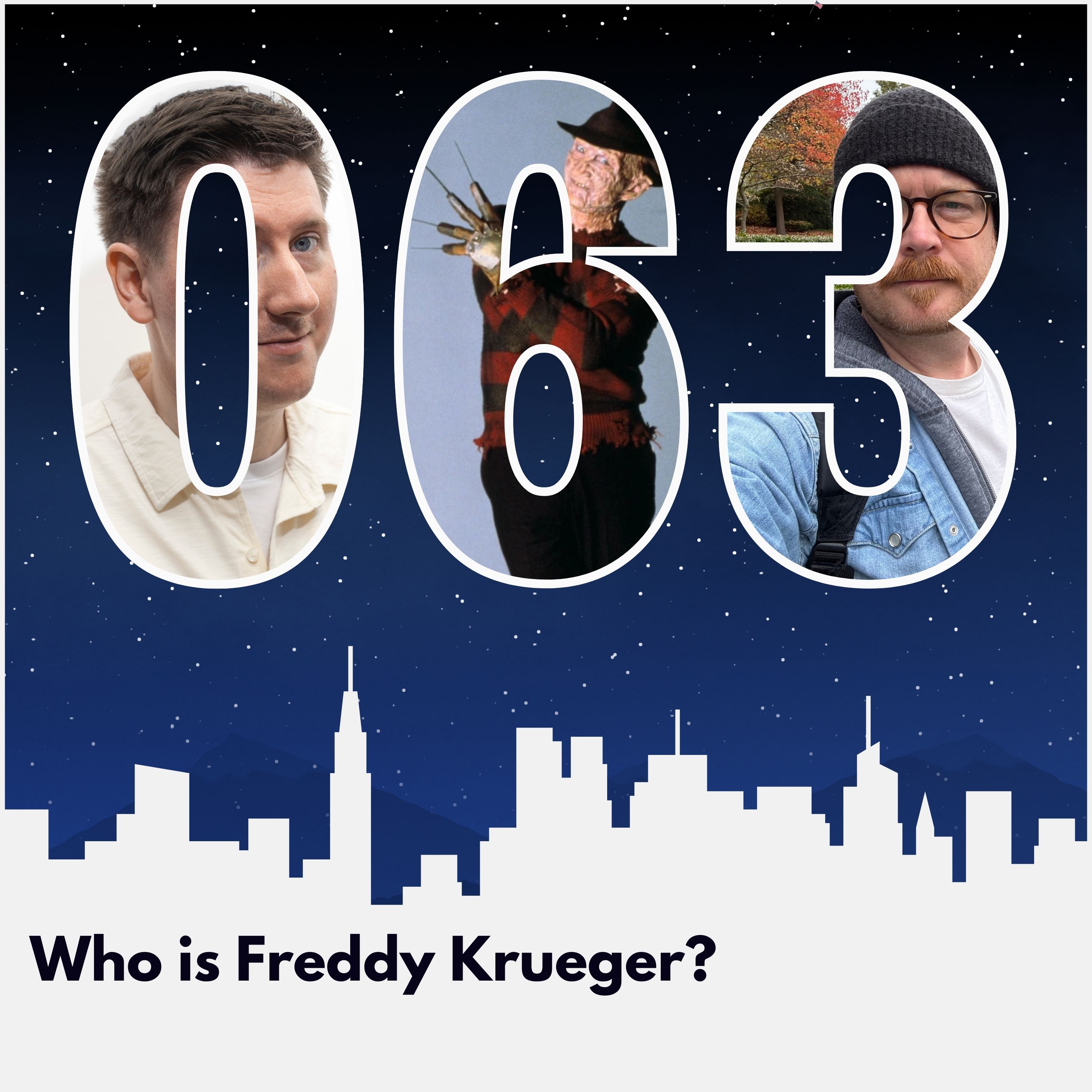
Ep 76Who is Freddy Krueger?
The conversation around Freddy Krueger is not just about horror; it’s a reflection of societal fears and cultural shifts that have persisted since the 1980s.When Wes Craven introduced Freddy in A Nightmare on Elm Street, he tapped into a universal anxiety — the fear of sleep and the vulnerability that comes with it.In this episode, Liam and special guest Noel Mellor discuss how this fear transcends geographical and cultural boundaries, allowing audiences worldwide to connect with Freddy's terrifying premise, and create an American pop culture phenom in the process.What makes a villain like Freddy Krueger so likeable?Is Robert Englund the real brand?And what does Freddy tell us about America?...Special guest for this episode:Noel Mellor, a former marketing professional, now Programme Leader on the BA Digital Video Production and Marketing at University of Salford. As a writer and podcaster, he's extensively covered 1980s film and popular culture for over a decade across podcast and book projects like Adventures in VHS and Beyond the Neon - and he is now researching movie marketing past, present and future. His papers for the Montréal Monstrum Society Journal and University of Nottingham's A Nightmare on Elm Street @ 40 conference this year, explored Freddy Krueger's role as the leader of a new pack of 80s slashers - or 'Brand Boogeymen' - and their impact on popular culture....Highlights from this episode: Wes Craven's creation of Freddy Krueger in 1984 revitalized the slasher genre, combining nightmare elements with iconic horror. The successful marketing strategy for A Nightmare on Elm Street capitalized on its universal themes of fear in dreams. Freddy Krueger's character depth and charm, portrayed by Robert Englund, set him apart from typical horror villains. The cultural impact of Freddy Krueger extended beyond films into merchandise and TV appearances, creating a household name. The original Nightmare on Elm Street's unique premise of a killer in dreams fascinated audiences and influenced horror films. Freddy's transformation into an anti-hero in sequels reflects audience desires for charismatic villains in horror. ...Additional Resources:The souls of the children… Give me strength”: 1980s Horror Movie Marketing and the Life and Death of the Brand Boogeymen by Noel MellorThe Cultural Influence of Nightmare On Elm Street | Horror Cult FilmsThe Sociology of Freddy | Retro JunkWes Craven: the scream of our times...And if you like this episode, you might also love:Who is Ed Gein?Why Do Americans Love Halloween?Why Do Americans Love Aliens?...Contact us: [email protected] the community: https://www.patreon.com/cw/americathestoryoftheusa - use code USA26
BONUS: What Does it Mean to be Vice President?
bonusWhat does it mean to be a Vice President in the modern political landscape? This bonus episode dives into the complex role of the Vice President with UCC's Clodagh Harrington.We touch on the often-overlooked influence of Vice Presidents throughout history, contrasting this with the satirical portrayal seen in the popular TV show Veep, and how it encapsulates the cynical and opportunistic nature of the role.Plus. Clodagh shares her best and worst Vice Presidential picks in US history....Special guest for this episode:Clodagh Harrington, a US politics lecturer from University College Cork, and host of the excellent podcast A Chicken in Every Pot. Her monograph, co-authored with Alex Waddan, entitled ‘Obama V Trump: the Politics of Presidential Legacy and Rollback is available now, and the follow-up, Trump V Biden is due for publication next year....Highlights from this episode: The Vice Presidency can be interpreted in vastly different waysFictional Veeps, from Selina Meyer to Christian Bale's Cheney Historical context is crucial to understanding the evolving role of the Vice President Cheney's role as Vice President brought unprecedented influence and power, unlike many predecessors. Walter Mondale is praised for bringing seriousness to the Vice Presidency during his term. The unpredictable nature of political power dynamics in the White House. ...Additional Resources:READ: Obama v. Trump: The Politics of Rollback by Clodagh HarringtonREAD: The vice presidency: From 'insignificant office' to political powerhouse : NPRREAD: US Vice Presidents Who Went on to Become President | HISTORY LISTEN: A Chicken in Every Pot...And if you like this episode, you might also love:What Was the Constitutional Convention?Why Does the President Only Serve Two Terms?Is the President Above the Law?How Are Presidents Elected?What is the US Constitution?...Contact us: [email protected] the community: https://www.patreon.com/cw/americathestoryoftheusa - use code USA26 for 50% off your first monthGet the newsletter: https://america-the-story-of-the-usa.beehiiv.com/Brand...
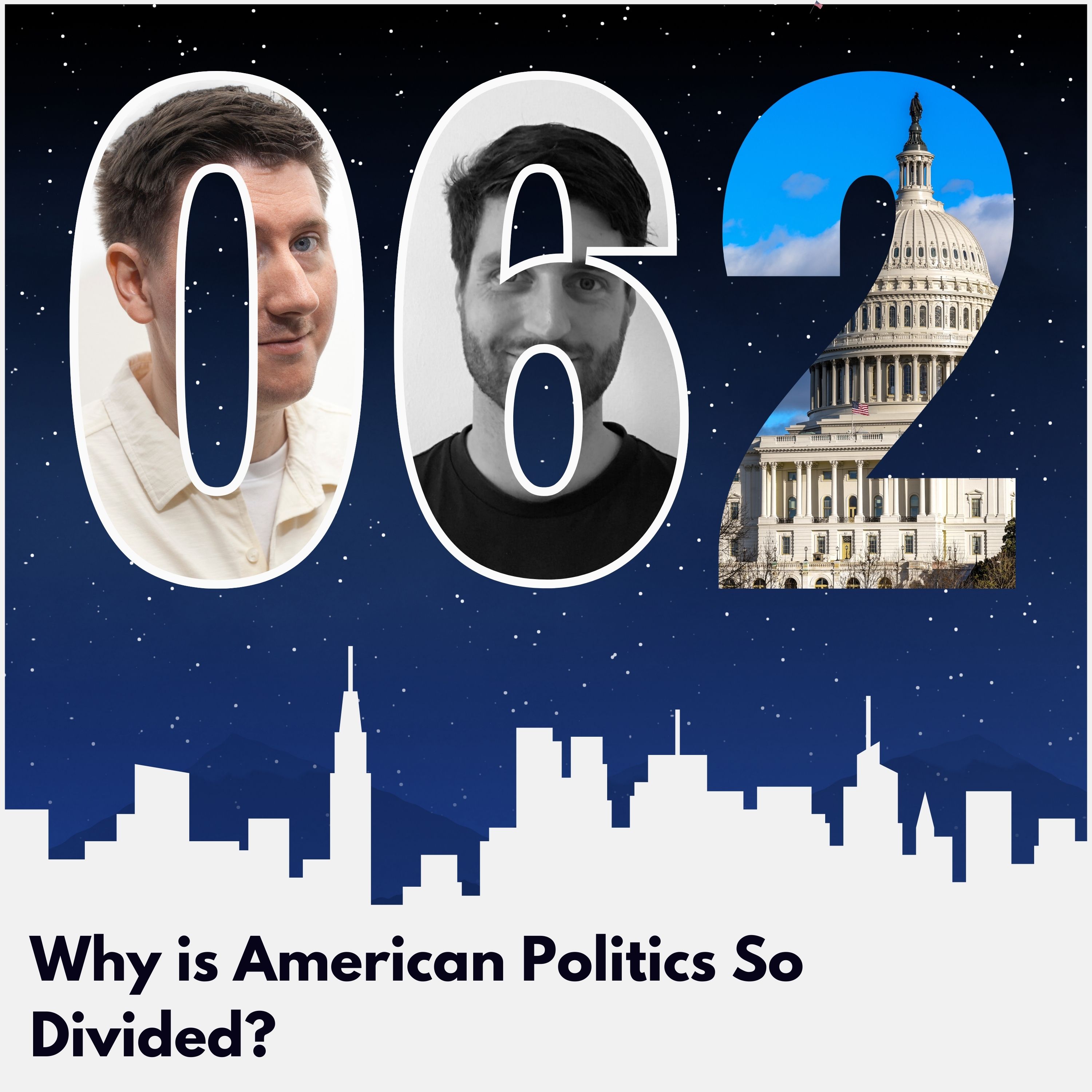
Ep 75Why Is American Politics So Divided?
As Donald Trump prepares to be inaugurated as the 47th President of the United States, our latest episode dives into the complexities of the American political landscape, focusing on the deepening divide within the two-party system.How has the MAGA movement come to dominate republican politics?What are the mechanisms driving the two-party system?And ultimately… why is American politics so divided?Special guest Mike Cowburn, a political scholar whose recent book sheds light on the transformation of party dynamics in the U.S., gives a historical overview of how the Republican and Democratic parties evolved through the mid-20th century, highlighting the ideological shifts that catalyzed the current polarization, and explores the implications of this shift, including how institutional factors like gerrymandering and the Electoral College have reinforced Republican advantages in elections.We also discuss Mike's new book, which takes a closer look at the primary election system, and how it has fundamentally changed since the early 2000s, becoming more factionalized and ideological.Finally, this episode contemplates the future of American politics, and whether the entrenched two-party system can adapt to the evolving political landscape, or if it will continue to push voters towards extremes....Special guest for this episode:Dr. Mike Cowburn, a Postdoctoral Researcher for Digital Democracy at European University Viadrina. His new book Party Transformation in Congressional Primaries is out now...Highlights from this episode: The American political divide is deeply rooted in historical party transformations and societal changes. Trump's ability to navigate between establishment politics and populist sentiments illustrates a unique political strategy. The primary system in the U.S. significantly influences party polarization and candidate positioning. Many Americans are disengaged from politics, viewing it through a non-political lens despite strong values. The ideological differences between parties today stem from a historical shift towards extremism. Institutional factors and electoral mechanics play a crucial role in maintaining the two-party system. ...Additional Resources:READ: Party Transformation in Congressional Primaries by Mike CowburnWATCH: All Politics Is Tribal | Lee Drutman + Andrew Yang | ForwardREAD: How Democracies Die by Steven Levitsky and Daniel ZiblattREAD: The Party Decides: Presidential Nominations Before and After Reform...And if you like this episode, you might also love:What Was the Constitutional Convention?Why Does the President Only Serve Two Terms?<a href="https://pod.fo/e/20637a"...
BONUS: The Three-Fifths Compromise & Other Myths About the Constitutional Convention
bonusIn this special bonus episode, Emma Long and Frank Cogliano delve into the historical context that shaped the Constitution, recorded straight after our earlier episode of the podcast, What Was the Constitutional Convention?The discussion centers around misconceptions about the U.S. Constitution and the Constitutional Convention, particularly focusing on the complexities of the three-fifths compromise and the perceived unchangeability of the Constitution....Special guest for this episode:Dr. Emma Long, Associate Professor of American History and Politics and Head of the Department of American Studies at the University of East Anglia.Frank Cogliano, a Professor of American History at Edinburgh University. Originally from Massachusetts, he’s been living in the UK since 1992, teaching all of us a thing or two about the USA....Highlights from this episode: The Constitutional Convention's three-fifths compromise is often misunderstood regarding enslaved people's status. Many believe the Constitution is unchangeable, but the framers anticipated amendments and adjustments. The Articles of Confederation are frequently overlooked, despite being America's first governing document before the Constitution. The Federalist Papers were political propaganda aimed at convincing states to ratify the Constitution, not neutral explanations. Edinburgh is a lovely city, but the conversation also highlights the charm of Massachusetts. The Confederate States modeled their constitution largely on the U.S. Constitution with added protections for slavery. ...Listen to the full episode with Emma and Frank here:What Was the Constitutional Convention?...And if you like this episode, you might also love:What Was the Constitutional Convention?Why Does the President Only Serve Two Terms?Is the President Above the Law?How Are Presidents Elected?What is the US Constitution?...Contact us: [email protected] the community: https://www.patreon.com/cw/americathestoryoftheusa - use code USA26 for 50% off your first monthGet the newsletter: https://america-the-story-of-the-usa.beehiiv.com/Brand & advertising enquiries: [email protected] to advertise with us and support the American Studies community?Email [email protected] and let's talk.
Ep 74IN THE MAKING: New Term, Same Old Donald Trump
In the latest episode of America: A History in the Making, Liam is joined by UEA's Emma Long to discuss the implications of Trump's comments about Canada and Greenland potentially becoming U.S. states, highlighting how the media tends to amplify his outlandish remarks.They also reflect on the smooth certification process of January 6th, contrasting the Democrats' acceptance of election results with the MAGA Republicans' historical resistance to unfavorable outcomes.They also explore the alarming influence of figures like Elon Musk in global politics, with a looming presence in the UK, and the potential repercussions of their actions on democracy.Plus, the legacy of Jimmy Carter following his recent passing, and how his post-presidency humanitarian efforts overshadowed his mixed legacy in office....Special guest for this episode:Dr. Emma Long, Associate Professor of American History and Politics at the University of East Anglia....Highlights from this episode:Trump threatens to use military force to take control of Greenland and the Panama Canal, plus...He called the US-Canada border an 'artificial line', suggesting Canada should become a stateElon Musk continues to interfere in UK politicsJanuary 6th came and went without an insurrection - hurrah!The United States mourns former President Jimmy Carter...Additional Resources:What to know about Jimmy Carter's funeral - BBC News...And if you like this episode, you might also love:Will America Ever Elect a Woman for President?Should Donald Trump Be Allowed to Run for President?What is a Primary and a Caucus?Who is Ron DeSantis?How Are Presidents Elected?...Contact us: [email protected] the community: https://www.patreon.com/cw/americathestoryoftheusa - use code USA26 for 50% off your first monthGet the newsletter: https://america-the-story-of-the-usa.beehiiv.com/Brand & advertising enquiries: [email protected] to advertise with us and support the American Studies community?Email [email protected] and let's talk.

Ep 73What Does the Vice President Actually Do?
This week, as JD Vance prepares to follow Donald Trump into the White House for the next four years, I want to shine a light on the most high profile understudy in the world. The Vice Presidency is often criticised and ridiculed by many, including those who have held the office, but how much power do they really wield? In this episode, I ask… what does the Vice President actually do?...Special guest for this episode:Clodagh Harrington, a US politics lecturer from University College Cork, and host of the excellent podcast A Chicken in Every Pot. Her monograph, co-authored with Alex Waddan, entitled ‘Obama V Trump: the Politics of Presidential Legacy and Rollback is available now, and the follow-up, Trump V Biden is due for publication next year....Highlights from this episode:The Vice President's influence in the SenateThe importance of good rapport with their PresidentsThe dynamic between a First Lady and a Vice PresidentNotable Vice Presidents like Cheney have redefined their roles, showcasing how these positions can evolve over time based on individual character and circumstanceThe impact of political legacies of Presidents on their their Vice Presidents, either bolstering or hindering their future electoral campaigns The relationship and trust between a President and Vice President...Additional Resources: READ: Obama v. Trump: The Politics of Rollback by Clodagh HarringtonREAD: The vice presidency: From 'insignificant office' to political powerhouse : NPRREAD: US Vice Presidents Who Went on to Become President | HISTORY LISTEN: A Chicken in Every Pot...And if you like this episode, you might also love:What Was the Constitutional Convention?Why Does the President Only Serve Two Terms?Is the President Above the Law?How Are Presidents Elected?What is the US Constitution?...Contact us: [email protected] the community: https://www.patreon.com/cw/americathestoryoftheusa - use code USA26 for 50% off your first monthGet the newsletter: https://america-the-story-of-the-usa.beehiiv.com/Brand & advertising enquiries: [email protected] to...
BONUS: Is the Star-Spangled Banner Actually British?
bonusThe War of 1812 is often overshadowed by the grand narratives of larger conflicts, yet it birthed significant cultural artifacts, including the U.S. national anthem.In this bonus episode, Professor Andrew Lambert sheds light on the fascinating interplay between the war and the creation of 'The Star-Spangled Banner'. The origins of the anthem trace back to a dramatic event at Fort McHenry, where Francis Scott Key, a lawyer, witnessed the bombardment of the fort by the British navy....Special guest for this episode:Professor Andrew Lambert, a Laughton Professor of Naval History in the Department of War Studies at King's College. His books include The Challenge: Britain Against America in the Naval War of 1812...Highlights from this episode: The War of 1812 saw the creation of the US national anthem Francis Scott Key wrote the anthem while observing the bombardment of Fort McHenry Baltimore's population played a crucial role in defending the city during the war The national anthem's tune is from an 18th-century English drinking song Naval power remains critically important for global trade and security, despite modern warfare changes The War of 1812 highlighted the significance of naval strategy in American independence efforts...And if you like this episode, you might also love:What is the War of 1812?Why Did the USA Drop Atomic Bombs on Japan?Is America an Empire?...Contact us: [email protected] the community: https://www.patreon.com/cw/americathestoryoftheusa - use code USA26 for 50% off your first monthGet the newsletter: https://america-the-story-of-the-usa.beehiiv.com/Brand & advertising enquiries: [email protected] to advertise with us and support the American Studies community?Email [email protected] and let's talk.

Remembering Jimmy Carter
bonusToday, we pay tribute to the extraordinary life and legacy of Jimmy Carter, the 39th president of the United States, who passed away at the age of 100.From his humble beginnings in Plains, Georgia, to his impactful presidency and remarkable post-presidential humanitarian efforts, Carter's journey is one of service, compassion, and unwavering commitment to human rights.Known for his integrity and reformative spirit, Carter tackled significant challenges during his time in office, including the energy crisis and the Iran hostage situation, while also achieving monumental successes like the Camp David Accords.His post-presidency years redefined the role of former leaders, as he dedicated himself to global humanitarian work through the Carter Center and remained actively engaged in his community.As we reflect on his life, we find that Carter's enduring legacy lies in his dedication to peace, democracy, and the betterment of humanity....Please note, we do not own the copyright of any third party content used in this episode. We are using the content and citing all sources below in good faith, and will never place a single advertisement on this episode.Sources Used in this Episode:President Jimmy Carter Is Still Praying For Donald Trump - YouTubePresident Carter on Joining the Navy | CNBC Meets (youtube.com)Excerpt from Governor Jimmy Carter's Inaugural Address (Carter Center) - YouTubeJimmy Carter inaugural address: Jan. 20 1977 - YouTubeFrom the archives: Jimmy Carter and the signing of the Camp David Accords - YouTubeJimmy Carter Iran hostage crisis speech - YouTubeJimmy Carter's niece spoke about what his legacy will be at his hometown church on Sunday. - YouTubeJimmy Carter turns 100: Biden, 81, pays tribute to his 'beloved friend' as oldest living president's grandson reveals how he has 're-engaged with the world' | Daily Mail OnlineJimmy Carter Interview: His Unlikely Rise to Power & Presidential Legacy - YouTubeWho is Jimmy Carter? | America: A History PodcastIf you are the owner of any content used and wish it to be removed, please contact us.Thank you for listening to our podcast. It's a labor of love by an American history nerd and some smarter folk.
Ep 72What is the War of 1812?
The War of 1812 was a significant yet often misunderstood conflict between the United States and Britain, driven by a mix of economic interests and territorial ambitions.This war was not just about impressment of American sailors or maritime rights; it was a bold land grab aimed at expanding the United States into British North America, now known as Canada, and the American desire for economic gain through neutrality, which ultimately backfired.So in this episode, on the 210th anniversary of the Treaty of Ghent, which brought an end to the war, I’m going to find out exactly how it started, what happened, and its importance in shaping the future of the United States, as I ask… what is the War of 1812?...Special guest for this episode:Professor Andrew Lambert, a Laughton Professor of Naval History in the Department of War Studies at King's College. His books include The Challenge: Britain Against America in the Naval War of 1812...Highlights from this episode: The Treaty of Ghent marked the end of the War of 1812 on Christmas Eve 1814. The United States sought to expand by invading British North America, aiming for Canada. Impressment and economic warfare were central issues leading to the War of 1812. The War of 1812 was not just a conflict with Britain but involved Native American resistance. The British successfully blockaded American ports, crippling the U.S. economy and forcing peace. American narratives often portray the War of 1812 differently than British historical accounts. ...Additional Resources:Listen: The British way of war, Julian Corbett and national strategy with Professor Andrew Lambert in The War Studies PodcastRead: The Challenge: Britain Against America in the Naval War of 1812 by Andrew LambertRead: War of 1812 Timeline | American Battlefield Trust Read: Battle of Horseshoe Bend Facts and Overview - The History Junkie ...And if you like this episode, you might also love:Why Did the USA Drop Atomic Bombs on Japan?Is America an Empire?...Contact us: [email protected] the community: https://www.patreon.com/cw/americathestoryoftheusa - use code USA26 for 50% off your first monthGet the newsletter: https://america-the-story-of-the-usa.beehiiv.com/Brand & advertising enquiries: [email protected] to advertise with us and support the American Studies community?Email [email protected] and let's talk.
BONUS: The Christmas Goose & Our Favourite On-Screen Santa
bonusIn this special festive bonus episode, Liam & guests discuss their own personal Christmas traditions, their favourite screen Santa Claus and what, if anything, we would change or add to the myth of Santa.Happy holidays everyone!...Special guest for this episode:Thomas Ruys Smith, Professor of American Literature and Culture and Deputy Director of Area Studies at the University of East Anglia, and author of The Last Gift: The Christmas Stories of Mary E. Wilkins Freeman.Brian Earl, creator and host of Christmas Past...Highlights from this episode: The importance of traditions like Santa Claus in family celebrations. Brian explains the Christmas Goose. Tom reflects on the evolution of Santa Claus in modern holiday culture and media. How children's understanding of Santa changes as they grow older. The fleeting nature of childhood magic during Christmas celebrations. The portrayal of Mrs. Claus and her evolving role. ...And if you like this episode, you might also love:What is the War on Christmas?How to Make a Hollywood Christmas MovieWhat's the History of Christmas in America?...Contact us: [email protected] the community: https://www.patreon.com/cw/americathestoryoftheusa - use code USA26 for 50% off your first monthGet the newsletter: https://america-the-story-of-the-usa.beehiiv.com/Brand & advertising enquiries: [email protected] to advertise with us and support the American Studies community?Email [email protected] and let's talk.
Ep 71Who is Santa Claus?
Father Christmas, Kris Kringle, Sinterklaas, Babbo Natale, Kanakaloka, Papa Noel, and Saint Nicholas - just some of the names used for a figure who has become synonymous with Christmas around the world. But who is this jolly fat man with the beard, and what makes him so American? In this episode, as we deck our halls and get ready for the holidays, I want to know… who is Santa Claus?...Special guest for this episode:Thomas Ruys Smith, Professor of American Literature and Culture and Deputy Director of Area Studies at the University of East Anglia, and author of The Last Gift: The Christmas Stories of Mary E. Wilkins Freeman.Brian Earl, creator and host of Christmas Past...Highlights from this episode:The figure of Santa Claus emerged as a distinct character in early 19th century America, influenced by various European traditions.Santa Claus is primarily associated with generosity and kindness, contrasting with earlier gift-bringing figures who had more sinister traits.Coca-Cola played a significant role in popularizing the red-suited image of Santa, although he was already depicted in red in earlier literature.The evolution of Santa Claus reflects a blend of cultural influences, including Dutch, German, and British traditions.Father Christmas and Santa Claus have merged over time, leading to a shared image of a benevolent gift-bringer.The commercialization of Santa Claus began as early as the 1820s, intertwining with seasonal marketing strategies in America....Additional Resources:READ: The Last Gift: The Christmas Stories of Mary E. Wilkins Freeman by Thomas Ruys SmithLISTEN: Christmas Past by Brian EarlREAD: <a href="http://www.santaswhiskers.com/the-children-s-friend.html"...
BONUS: The Best Christmas Films of All Time
bonusIn this special festive bonus episode, we jump in our Christmas movie time machine and chat about everything from It's a Wonderful Life to Klaus with a stop at 34th Street and more, and discuss our personal holiday favourites....Special guest for this episode:Dr. Vaughn Joy, an academic who recently completed her PhD at UCL on mid-century Hollywood politics through a case study on Christmas films...Highlights from this episode: The significance of Christmas films in American culture. The artistic merits and cultural implications of Klaus. Different versions of Miracle on 34th Street reveals cultural shifts. Nostalgia's role in remaking classic Christmas films in the 1990s. Klaus as a standout modern Christmas film. Christmas movies can reflect and shape American beliefs over time. ...And if you like this episode, you might also love:What is the War on Christmas?How to Make a Hollywood Christmas MovieWhat's the History of Christmas in America?...Contact us: [email protected] the community: https://www.patreon.com/cw/americathestoryoftheusa - use code USA26 for 50% off your first monthGet the newsletter: https://america-the-story-of-the-usa.beehiiv.com/Brand & advertising enquiries: [email protected] to advertise with us and support the American Studies community?Email [email protected] and let's talk.

Ep 70What Do Christmas Films Tell Us About America?
With Christmas just around the corner, it’s time to dust off those old DVDs, whip up some egg nogg, and cosy up on the sofa with a festive film.From It's a White Christmas to Miracle on 34th Street, there's nothing quite like losing ourselves in a holiday favourite, but why do Christmas films resonate so much? Is the genre more important than we like to think? And ultimately… what can Christmas films really tell us about America?...Special guest for this episode:Vaughn Joy, an academic who recently completed her PhD at UCL on mid-century Hollywood politics through a case study on Christmas films....Highlights from this episode:Christmas films serve as a cultural lens reflecting American values, traditions, and social dynamics.The genre of Christmas movies often combines sentimentality with deeper societal critiques and historical contexts.Films like 'It's a Wonderful Life' convey collective national trauma while promoting themes of togetherness.The debate over whether 'Die Hard' qualifies as a Christmas movie highlights the subjectivity of genre definitions.Hollywood Christmas films can both mirror and shape the ways people celebrate the holiday season.The evolution of Christmas films illustrates changing American identities and the commercialization of holiday traditions....Additional Resources:Review Roulette | Vaughn Joy | SubstackChristmas movies: that time of year when home is where the heart isWhat 'It's a Wonderful Life' Teaches Us About American History | SmithsonianThe Battle for Christmas: A Cultural History of America's Most Cherished Holiday: Amazon.co.uk: Nissenbaum, Stephen: 9780679740384: Books...And if you like this episode, you might also love:What is the War on Christmas?How to Make a Hollywood Christmas MovieWhat's the History of Christmas in America?...Contact us: [email protected] the community:...
BONUS: Faith, Feminism, and the American South
bonusIn this bonus episode, we take a deeper look at the complex relationship between religion and American identity, particularly in the context of the Bible Belt, with help from Dr. Megan Hunt.We discuss the stereotypes perpetuated by Hollywood, including the portrayal of the religious middle-class housewife, and how these depictions reflect broader societal issues in the South PLUS the controversial narrative presented in J.D. Vance's "Hillbilly Elegy," examining the implications of his portrayal of his background as he transitions into a political figure....Special guest for this episode:Dr. Megan Hunt, a cultural historian of the modern United States at Edinburgh University, whose new book, Southern by the Grace of God, is available...Highlights from this episode: The Bible Belt is a complex cultural landscape deeply intertwined with American identity. Historically, many settlers in North America sought religious freedom, shaping the region's character. Post-World War II America saw a surge in overt religiosity as a political statement. Media representations often reinforce stereotypes about religion and the Bible Belt in America. The portrayal of Southern women in Hollywood reflects both cultural traditions and historical complexities. J.D. Vance's 'Hillbilly Elegy' has sparked controversy for its portrayal of Appalachian identity. ...Additional Resources:Southern by the Grace of God by Megan HuntHillbilly Elegy by J.D. Vancehttps://www.dukeupress.edu/reconstructing-dixie...And if you like this episode, you might also love:When Did the 50 States Become the 50 StatesIs America an Empire?...Contact us: [email protected] the community: https://www.patreon.com/cw/americathestoryoftheusa - use code USA26 for 50% off your first monthGet the newsletter: https://america-the-story-of-the-usa.beehiiv.com/Brand & advertising enquiries: [email protected] to advertise with us and support the American Studies community?Email [email protected] and let's talk.
Ep 69What is the Bible Belt?
America's Bible Belt, a term coined nearly a century ago, remains a significant cultural and political phenomenon, representing regions in the South and parts of the Midwest known for their strong evangelical Christian traditions.In this episode, we dive into the origins and implications of this term, exploring how it encapsulates not just a geographical area but also a complex interplay of religion, politics, and societal stereotypes.From its roots in H.L. Mencken's critical portrayal of the South during the 1920s, to how this perception continues to shape contemporary political rhetoric and cultural narratives, we explore the Bible Belt's association with conservative values and white supremacy, and the ongoing relevance of the Bible Belt in understanding America's evolving identity and the challenges posed by its enduring stereotypes....Special guest for this episode:Dr. Megan Hunt, a cultural historian of the modern United States at Edinburgh University, whose new book, Southern by the Grace of God, is available...Highlights from this episode:The Bible Belt is a term that originated in the 1920s, symbolizing a religiously devout region in America.Historically, the Bible Belt is associated with evangelical Christianity, particularly in the Southern United States.Contemporary politics often leverage the concept of the Bible Belt to appeal to religious values.The notion of the Bible Belt helps to perpetuate stereotypes about the South and its culture.Migration patterns have spread the values of the Bible Belt beyond its traditional geographical boundaries.Hollywood's portrayal of religion in the South often simplifies and distorts the complexity of local culture....Additional Resources:Southern by the Grace of God by Megan Hunthttps://www.dukeupress.edu/reconstructing-dixie...And if you like this episode, you might also love:When Did the 50 States Become the 50 StatesIs America an Empire?...Contact us: [email protected] the community: https://www.patreon.com/cw/americathestoryoftheusa - use code USA26 for 50% off your first monthGet the newsletter: <a...
BONUS: How Growing Up in the Projects Shaped My Views on Poverty
bonusHomelessness is a complex issue, and approaches to tackling it vary significantly across political lines, as our guest Dr. Becky Avila-Knox explains in this bonus episode, recorded immediately after our episode What Are the Projects?Becky highlights the importance of recognizing external factors that contribute to homelessness, such as systemic discrimination and economic challenges, rather than attributing it solely to individual choices. The conversation also delves into personal experiences, illustrating how growing up in the projects has shaped her perspective on poverty and resilience. Listeners will gain insight into the societal stigmas surrounding homelessness and the necessity for community support and understanding to create lasting change....Special guest for this episode:Dr. Becky Avila-Knox, the Senior Director of Grants & Contracts for Safe Place for Youth, a US organisation on a mission to empower young people experiencing homelessness....Highlights from this episode: The discussion highlights how homelessness is often viewed through differing political lenses, impacting funding and support. Becky emphasizes the importance of understanding homelessness as a systemic issue rather than one solely based on individual choices. There are contrasting approaches to homelessness among political parties that reflect deeper societal beliefs about personal responsibility. Relocating homeless individuals to cheaper areas does not address the underlying issues they face in their communities. Becky shares her personal experiences growing up in the projects, highlighting resilience amidst adversity and the importance of community support. The conversation underscores the need for compassion and systemic change to address homelessness effectively. ...Check out Becky's full episode here:What Are the Projects?...Contact us: [email protected] the community: https://www.patreon.com/cw/americathestoryoftheusa - use code USA26 for 50% off your first monthGet the newsletter: https://america-the-story-of-the-usa.beehiiv.com/Brand & advertising enquiries: [email protected] to advertise with us and support the American Studies community?Email [email protected] and let's talk.
BONUS: The Legacy of Sand Creek: Racism, War, and Cultural Extermination
bonusIn this special bonus episode, we continue our conversation from the recent episode What Was the Sand Creek Massacre? and dive deeper into its broader implications for Native American history and relations with the U.S. government.We discuss recent developments, including President Biden's historic apology for the government's role in cultural genocide through boarding schools, raising questions about the sincerity of recognition and the tangible actions needed to improve the situation for Native peoples today....Special guest for this episode:Jacqueline Fear-Segal, Professor of American and Indigenous Histories at the University of East Anglia, with an interest in the American West, immigration and Americanisation....Highlights from this episode: The Sand Creek Massacre illustrates the violent and systematic oppression of Native Americans in U.S. history. The Civil War did not halt the government's aggressive policies towards Native American communities. President Biden's recent apology acknowledges the historic injustices faced by Native Americans, particularly in schools. Cultural extermination was often framed as a form of kindness towards Native Americans by settlers. The historical perspective reveals that Native Americans were seen as obstacles to American progress. Discussions about Native American rights today must address both historical grievances and future actions. ...And if you like this episode, you might also love:Who Are Native Americans?How Did Slavery Impact Cherokee Nation?What is Thanksgiving?...Contact us: [email protected] the community: https://www.patreon.com/cw/americathestoryoftheusa - use code USA26 for 50% off your first monthGet the newsletter: https://america-the-story-of-the-usa.beehiiv.com/Brand & advertising enquiries: [email protected] to advertise with us and support the American Studies community?Email [email protected] and let's talk.
Ep 68What Was the Sand Creek Massacre?
The Sand Creek Massacre stands as one of the most horrific events in American military history, where hundreds of U.S. army volunteers attacked a peaceful Cheyenne and Arapaho village, resulting in the deaths of approximately 150 to 200 individuals, primarily women, children, and the elderly.This brutal act highlights the broader context of settler colonialism and the U.S. government's broken treaties with Native American tribes during a time of rapid westward expansion driven by the discovery of gold. Colonel John Chivington, who led the attack, justified this atrocity through a deep-seated hatred for Native peoples, viewing them as obstacles to progress.This episode, on the week of Sand Creek's 160th anniversary, we explore the motivations behind such violence and the societal acceptance of these actions, revealing a historical pattern of displacement and brutality towards Indigenous communities, examining the aftermath and evolving perceptions of the massacre, and the ongoing struggles of Native Americans and the complexities of their relationship with the U.S. government....Special guest for this episode:Jacqueline Fear-Segal, Professor of American and Indigenous Histories at the University of East Anglia, with an interest in the American West, immigration and Americanisation....Highlights from this episode:The Sand Creek Massacre marked a tragic event in American history, highlighting the brutality faced by Indigenous peoples.Colonel John Chivington led a volunteer army to attack a peaceful Cheyenne village, resulting in numerous deaths.The massacre involved the murder of mostly women, children, and the elderly, showcasing extreme violence.Chivington's actions were driven by a deep-seated hatred towards Native Americans, reflecting broader societal views.Despite initial support for Chivington, public perception shifted as evidence of the massacre surfaced.The Sand Creek Massacre exemplifies the long history of broken treaties and unjust treatment of Native nations in America....Additional Resources:Remembering the US soldiers who refused orders to murder Native Americans at Sand Creek (theconversation.com)The Sand Creek Massacre 1864 - Defeat and demise of the Native Americans of the Plains - National 5 History Revision - BBC BitesizeNative American History TimelineCochise: The Legendary Apache Leader Who Fought For His Tribe's Freedom (allthatsinteresting.com)...And if you like this episode, you might also love:Who Are Native Americans?How Did Slavery...
BONUS: Is Country Music a 'Mongrel' Genre?
bonusAs the music industry reflects on the recent CMA Awards, here's a conversation we had with John Collins from CountryLine Radio, just after our previous episode of the podcast, What Makes Country Music So American?John argues that country music, much like the United States itself, is a "mongrel form" influenced by various cultures and musical traditions, and highlights how country music has evolved from gospel, rock, and R&B, reflecting the rich tapestry of influences from immigrant communities throughout American history....Special guest for this episode:John Collins, CountryLine Radio...Highlights from this episode: Country music is a reflection of America's immigrant nature, blending diverse musical influences. The genre's appeal persists as it remains open to international influences and new styles. Artists like Beyoncé and Lana Del Rey show that country music is becoming popular among mainstream stars. Traditional country artists coexist with newer influences, creating a dynamic and evolving genre. Country music's roots are deeply intertwined with various genres, including blues and gospel. The genre is characterized by storytelling that resonates uniquely, setting it apart from others. ...Listen to John's full episode of the podcast:What Makes Country Music So American?...And if you like this episode, you might also love:What Makes Country Music so American?Are the Oscars Still Relevant?Why Does Everyone Love Disney?Could Friends BE Any Bigger?How Accurate is Forrest Gump?...Contact us: [email protected] the community: https://www.patreon.com/cw/americathestoryoftheusa - use code USA26 for 50% off your first monthGet the newsletter: https://america-the-story-of-the-usa.beehiiv.com/Brand & advertising enquiries: [email protected] to advertise with us and support the American Studies community?Email [email protected] and let's talk.
Ep 67ITM8: Donald Trump, Russia, and the Risk of World War Three
In the latest episode of America: A History in the Making, we dive into the aftermath of the recent election, exploring the notable absence of allegations regarding electoral fraud compared to previous years.We also analyze Trump's controversial appointments and the potential ideological shifts in U.S. policy, particularly concerning immigration and foreign relations, and the evolving dynamics between the U.S. and Russia, especially in light of the ongoing war in Ukraine, and the political maneuvering surrounding American support for Ukraine....Special guest for this episode:Dafydd Townley, a teaching fellow at the University of Portsmouth, whose research interests include the US presidency, particularly in relation to US national security policy...Highlights from this episode:The 2023 election demonstrated a surprisingly straightforward outcome, reducing claims of electoral fraud compared to previous years.Dafydd Townley discusses how the Republican Party's victory influenced the acceptance of election results by Democrats.Trump's appointments reflect his transactional approach to politics, prioritizing loyalty over broader governance issues.The implications of Trump's foreign policy could shift towards isolationism, impacting global alliances and conflicts.Concerns arise that Ukraine may become a political pawn in U.S. domestic power struggles post-election.The discussion highlights the tension between national security interests and diplomatic relations under Trump's administration....And if you like this episode, you might also love:Will America Ever Elect a Woman for President?Should Donald Trump Be Allowed to Run for President?What is a Primary and a Caucus?Who is Ron DeSantis?How Are Presidents Elected?Why Did the USA Drop Atomic Bombs on Japan?How to Run a Democratic Election: Part II...Contact us: [email protected] the community: https://www.patreon.com/cw/americathestoryoftheusa - use code USA26 for 50% off your first monthGet the newsletter: https://america-the-story-of-the-usa.beehiiv.com/Brand & advertising enquiries: [email protected] to advertise with us and support the American Studies community?Email [email protected] and let's talk.
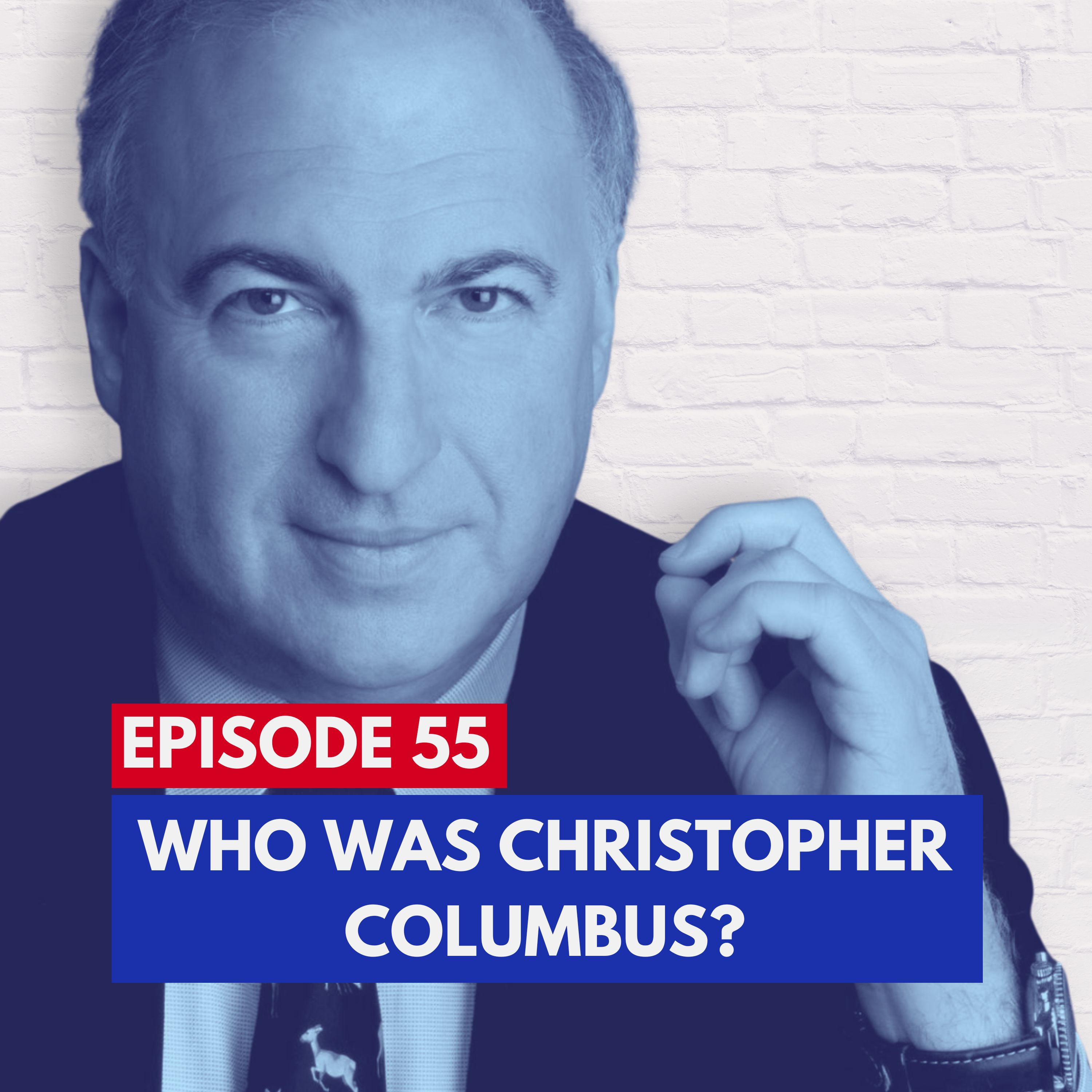
Ep 66Who Was Christopher Columbus?
Christopher Columbus, often credited with discovering America, is a complex historical figure whose legacy prompts significant debate.While he embarked on his voyages seeking a route to India, he stumbled upon the Caribbean, never realizing he had encountered a new continent, and in this episode, we dive into Columbus' life, exploring his motivations, struggles, and the darker aspects of his expeditions, including the exploitation of indigenous peoples.We also examines the evolving perception of Columbus in contemporary society, particularly regarding the implications of celebrating figures with controversial legacies....Special guest for this episode:Laurence Bergreen, an award-winning biographer, historian, and chronicler of exploration. His books include Columbus: The Four Voyages...Highlights from this episode:Christopher Columbus, often credited with discovering America, was actually an Italian explorer.His voyages occurred in a time of great uncertainty, lacking modern navigational tools and knowledge.Columbus's legacy is complex, as he both opened new trade routes and contributed to exploitation.Historical perspectives on Columbus have shifted, reflecting changing views on exploration and colonialism.The concept of 'discovery' is problematic, as America was already inhabited by diverse cultures.Columbus never set foot on mainland America and was looking for India instead....Additional Resources:LISTEN: Columbus: The Four Voyages by Laurence BergreenREAD: Why Columbus Day Is Worth Defending and Celebrating | Discovery InstituteREAD: Should the United States Celebrate Columbus Day? - The New York Times...And if you like this episode, you might also love:When Did the 50 States Become the 50 StatesIs America an Empire?...Contact us: [email protected] the community: https://www.patreon.com/cw/americathestoryoftheusa - use code USA26 for 50% off your first monthGet the newsletter: <a...
BONUS: The Debate That Altered the Course of American History
bonusIn this special bonus episode, recorded before the 2024 Presidential election, we explore the significant implications of the June 2024 presidential debate between Joe Biden and Donald Trump, which many believe marked a turning point in the election.We discuss the emotional and political ramifications of Biden's struggles and the broader historical context of debates in shaping public perception of candidates, and how the dynamics of this debate may influence voter turnout and the overall electoral landscape.The consequences of this debate highlight the ongoing impact of American presidential elections on the global stage, emphasizing the importance of both presidential and congressional outcomes in shaping international relations....Special guest for this episode:Dr. Emma Long, Associate Professor of American History and Politics at the University of East Anglia...Highlights from this episode:The June 2024 debate between Biden and Trump was seen as an absolute disaster for Biden.Emma Long expressed that Biden's performance was painful to watch, highlighting his struggles.The aftermath of the debate led to a shift in Democratic support away from Biden.Biden's long political career may be viewed more positively in the future despite recent challenges.The debate significantly altered the dynamics of the 2024 election, impacting voter enthusiasm.International interest in the U.S. presidential debates reflects America's ongoing global influence....Listen to the full episode here:Who Cares About Presidential Debates: https://pod.fo/e/267a2b...And if you like this episode, you might also love:What Was the Constitutional Convention?Why Does the President Only Serve Two Terms?Is the President Above the Law?How Are Presidents Elected?What is the US Constitution?...Contact us: [email protected] the community: https://www.patreon.com/cw/americathestoryoftheusa - use code USA26 for 50% off your first monthGet the newsletter: https://america-the-story-of-the-usa.beehiiv.com/Brand & advertising enquiries: [email protected] to advertise with us and support the American Studies community?Email [email protected] and let's talk.
Ep 65ITM7: What Does Trump's Comeback Mean for American Politics?
This podcast episode features a deep discussion on the recent presidential election and the implications of Kamala Harris's campaign performance. Ian and Farida Jalalzai analyze the complexities surrounding female voters, noting that 53% of women supported Donald Trump, raising questions about the intersection of gender and economic concerns in voting behavior. They explore the tactical missteps of the Harris campaign and how the dynamics of gender and race influenced the election outcomes. The conversation also delves into the troubling reality of Trump's ability to defy political norms and the potential consequences for American democracy as he returns to power. Throughout the episode, they reflect on the future of the Democratic Party and the challenges it faces moving forward....Special guest for this episode:Farida Jalalzai, Associate Dean for Global Initiatives and Engagement in the College of Liberal Arts and Human Sciences, and Professor of Political Science at Virginia Tech....Highlights from this episode:The podcast explores the implications of the recent presidential election and the challenges faced by the Harris campaign.Farida Jalalzai discusses the importance of understanding the gender gap in voting behavior among different demographics.Trump's ability to appeal to voters despite his controversial past raises questions about American political norms.The conversation emphasizes the need for Democrats to reevaluate their strategies in light of the election results.There is a focus on the potential consequences of Trump's re-election on American democracy and governance.Listeners are encouraged to reflect on how political empathy has shifted during the Trump era....And if you like this episode, you might also love:Will America Ever Elect a Woman for President?Should Donald Trump Be Allowed to Run for President?What is a Primary and a Caucus?Who is Ron DeSantis?How Are Presidents Elected?...Contact us: [email protected] the community: https://www.patreon.com/cw/americathestoryoftheusa - use code USA26 for 50% off your first monthGet the newsletter: https://america-the-story-of-the-usa.beehiiv.com/Brand & advertising enquiries: [email protected] to advertise with us and support the American Studies community?Email [email protected] and let's talk.
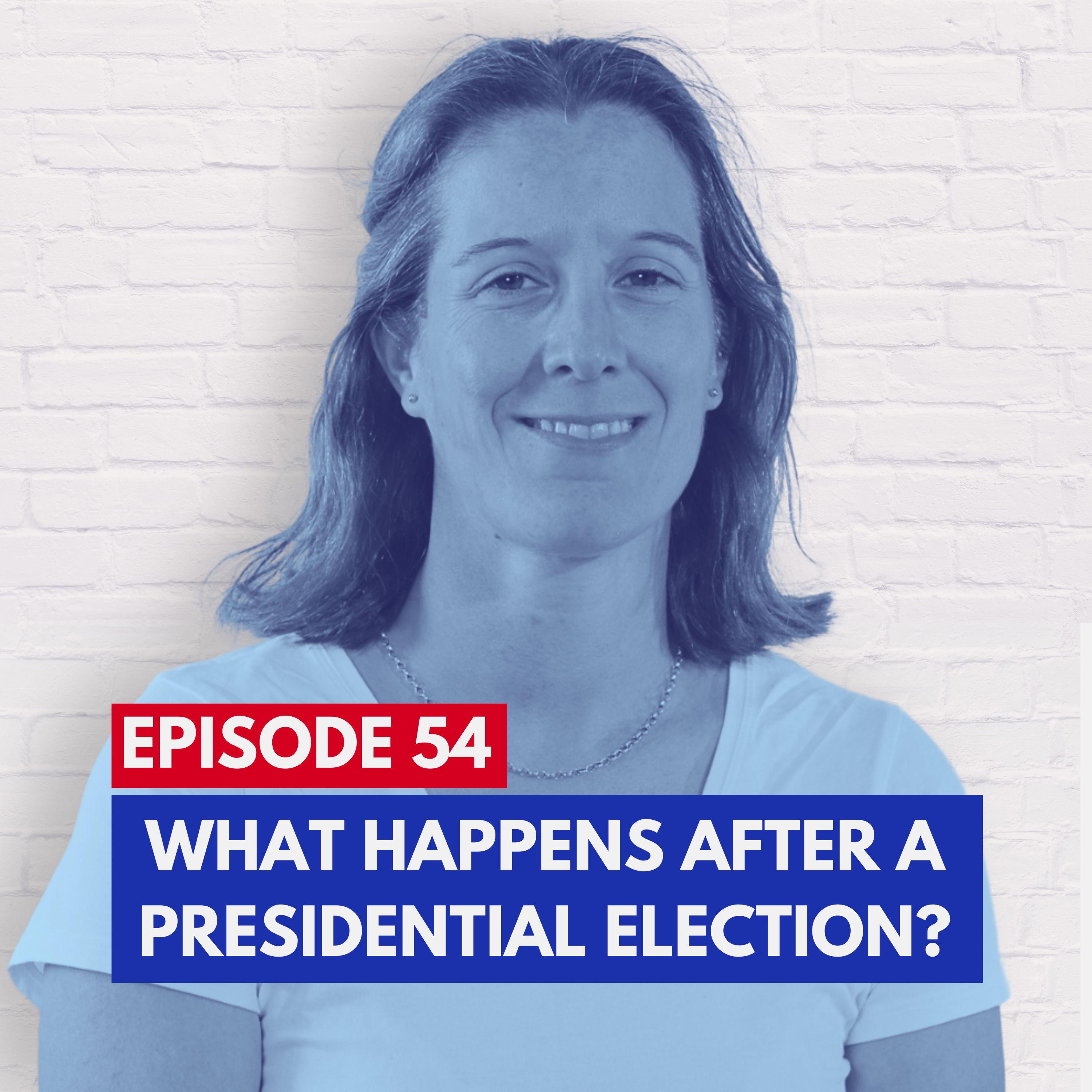
Ep 64What Happens After a Presidential Election?
The transition period following a presidential election is a critical yet often overlooked phase in American politics, so in this episode we explore the intricate processes and protocols that occur in the two months between the election and the inauguration of a new president.We discuss the historical evolution of the transition, its additional complexity with the growth of the executive branch, and the introduction of formal transition teams. We also look at the implications of party changes during transitions and the importance of maintaining governmental continuity, reflecting on recent political events, the 2020 election and Jan 6th, and the significance of cooperation between outgoing and incoming administrations to uphold democratic traditions....Special guest for this episode:Dr. Emma Long, Associate Professor of American History and Politics at the University of East Anglia....Highlights from this episode:The transition period between presidential elections is often overlooked but is crucial for governance.Historically, the transition period has shortened from four months to just two months.The Presidential Transition Act of 1963 mandates preparation for an incoming administration.Civil servants play a vital role during transitions, providing continuity in government operations.The process of transition can vary significantly depending on whether parties change hands.Former presidents often maintain a low profile post-office to respect the new administration's authority....Additional Resources:The US Elections Explained: The Transition of Power - YouTube2024 Transition Timeline • Center for Presidential Transition...And if you like this episode, you might also love:Will America Ever Elect a Woman for President?Should Donald Trump Be Allowed to Run for President?What is a Primary and a Caucus?Who is Ron DeSantis?How Are Presidents Elected?...Contact us: [email protected] the community: https://www.patreon.com/cw/americathestoryoftheusa - use code USA26 for 50% off your first monthGet the newsletter: <a href="https://america-the-story-of-the-usa.beehiiv.com/ " rel="noopener noreferrer"...
UEA Lasdun Lecture: Broken Democracy? Lessons from the American Election
bonusA recent poll suggests that 72% of Americans believe the US used to be a good example of democracy but has not been for the past few years.In this special live event, recorded at the University of East Anglia's Norwich campus in England, a group of experts on the US come together to discuss the recent election, the political and historical context, the result, and what it all means for the state of American democracy today and in the future....Special guest for this episode:Prof. Rebecca Fraser, Professor of American History & Culture, School of Politics, Philosophy and Area Studies. Her research is primarily concerned with the ways in which discourses of gender, race and sexuality were articulated and interacted in the context of nineteenth century America.Prof. Toby James, Professor of Politics & Public Policy, School of Politics, Philosophy and Area Studies. Toby’s research focuses on the electoral integrity and democracy, the policy process and political leadership.Dr. Suzanne Doyle, Lecturer in International Relations, School of Politics, Philosophy and Area Studies. Suzanne's research focuses on the US-UK nuclear relationship. Her wider research interests include nuclear history, transatlantic relations, US and British defence policy, security studies and the Cold War.Dr. Emma Long, Associate Professor in American History and Politics, School of Politics, Philosophy and Area Studies. She specialises in the history of the US Constitution and the Supreme Court, with a particular focus on the period since 1945 and on the rights contained in the Bill of Rights...Highlights from this episode: The importance of understanding the diverse definitions of democracy in the U.S. context. Voter ID laws and their impact on voter accessibility are critical to election fairness. Historical precedents of women candidates highlight ongoing challenges in American politics. The influence of social media and misinformation on voter behavior is increasingly significant. Economic factors are central to voters' decisions, overshadowing issues of race and gender. Trump's presidency poses existential questions about the future of American democracy. ...And if you like this episode, you might also love:Will America Ever Elect a Woman for President?Should Donald Trump Be Allowed to Run for President?What is a Primary and a Caucus?Who is Ron DeSantis?How Are Presidents Elected?...Contact us: [email protected] the community: <a href="https://www.patreon.com/cw/americathestoryoftheusa" rel="noopener noreferrer"...
Ep 63ITM 6: Election Aftermath - Voices from America on Trump’s Victory
In this special episode of America: A History in the Making, the day after the 2024 U.S. election, we bring reactions, insights, and reflections from a diverse group of American voters discussing one of the most unpredictable elections in American history.The conversation highlights a stark realization: despite a highly qualified candidate in Kamala Harris, many voters gravitated towards Trump, revealing deep-seated issues of racism, misogyny, and the complexities of identity politics. Our guests, from opposite coasts of the US, share experiences from their regions, particularly in red pockets of California, emphasizing feelings of voter apathy and the disconnect between individual lived experiences and broader electoral trends.The discussion also touches on the challenges ahead for the Democratic Party, including the need for more effective communication and unity to counter the growing influence of fear-driven politics.As fears mount for the future, the group expresses a mix of hope and trepidation about the implications of a Trump presidency on marginalized communities and the political landscape in America....Special guest for this episode:Felicia from Massachusetts, Co-Founder and Co-CEO of Inclusion Geeks and host of the She+ Geeks Out Podcast: https://podcasts.apple.com/gb/podcast/she-geeks-out-podcast/id1128497037Katie from Massachusetts, and host of The Weeniecast: https://podcasts.apple.com/gb/podcast/the-weeniecast-make-more-money-create-an-impact/id1645672394Shannon and Nathan, a couple and two fans of the podcast from a red town within the very blue California....Highlights from this episode: The impact of the 2024 US election results has left many feeling anxious and uncertain about the future.Voter apathy in California is a real concern, especially among Democratic voters who feel their votes don't count.The internalized biases and systemic racism in America are reflected in the voting patterns of marginalized groups.Kamala Harris's identities were not leveraged effectively in her campaign against Trump.The political landscape has shifted significantly, and the Democrat party needs to adapt to win again.Concerns about the potential for increased political violence and a divided America loom large after the election results....And if you like this episode, you might also love:Will America Ever Elect a Woman for President?Should Donald Trump Be Allowed to Run for President?What is a Primary and a Caucus?Who is Ron DeSantis?How Are Presidents Elected?...Contact us: [email protected] the community:...
BONUS: Will Kamala Harris Break the Glass Ceiling?
bonusIn this extra bonus, following on from a previous main episode, we delve into the prospects of Kamala Harris winning the presidency and the broader implications for women and candidates of color in American politics.Special guest Farida Jalalzai shares her insights on Harris' current campaign dynamics, highlighting both the enthusiasm surrounding her candidacy and the criticisms regarding the perceived lack of policy substance. Plus, we touche on the unique challenges Harris faces as a woman and a person of color, including the heightened scrutiny she may encounter compared to her male counterparts.We also discuss the impact of upcoming debates (as this episode was recorded before the Harris - Trump debate), particularly how Harris' performance could shape public perceptions and expectations for future female candidates....Special guest: Farida Jalalzai, Associate Dean for Global Initiatives and Engagement in the College of Liberal Arts and Human Sciences, and Professor of Political Science at Virginia Tech....Highlights from this episode: Kamala Harris's chances of winning the presidential election appear favorable due to her support. Debates will be crucial for Harris to showcase her policy details against Trump. Trump's debate strategy may rely on attacking the perceived unfairness of the questions. Harris has a unique challenge in navigating gender dynamics while campaigning against Trump. The historical context of women and women of color in leadership raises expectations for Harris. Criticism of Harris's campaign often reflects biases in how women's leadership is perceived. ...Listen to the main episode:Will America Ever Elect a Woman for President?...Contact us: [email protected] the community: https://www.patreon.com/cw/americathestoryoftheusa - use code USA26 for 50% off your first monthGet the newsletter: https://america-the-story-of-the-usa.beehiiv.com/Brand & advertising enquiries: [email protected] to advertise with us and support the American Studies community?Email [email protected] and let's talk.
Ep 61ITM 5: Young Americans Share their Election Experiences of Voting from Abroad
As the US election approaches, this special episode looks at the experiences of first time American voters casting their ballots from abroad, highlighting the unique challenges they face.Guests Henry and McKenna, both students on an exchange semester at UEA in the UK, share their insights on the registration process and the emotional weight of participating in their first presidential election. We discuss the polarized political landscape, how younger voters perceive Kamala Harris and Donald Trump, and the importance of engaging Gen Z in the electoral process....Special guests for this episode:Dr. Emma Long, Associate Professor of American History and Politics at the University of East AngliaMcKenna Anderson, a political science student studying at UEA, from IllinoisHenry Lease, a political science student studying at UEA, from Massachusetts...Highlights from this episode:The podcast discusses the challenges and experiences of American students voting from abroad.Both Henry and McKenna emphasize the importance of registering to vote while living overseas.Listeners are encouraged to understand the complexities of state-level voting processes in the U.S.The conversation highlights a significant generational shift in political engagement among young voters.Emma Long raises the point about the impact of undecided voters on the election outcome.The episode reflects on how international perspectives can shape American political discussions. ...And if you like this episode, you might also love:Will America Ever Elect a Woman for President?Should Donald Trump Be Allowed to Run for President?What is a Primary and a Caucus?Who is Ron DeSantis?How Are Presidents Elected?...Contact us: [email protected] the community: https://www.patreon.com/cw/americathestoryoftheusa - use code USA26 for 50% off your first monthGet the newsletter: https://america-the-story-of-the-usa.beehiiv.com/Brand & advertising enquiries: [email protected] to advertise with us and support the American Studies community?Email [email protected] and let's talk.
Ep 60How to Run a Democratic Election: Part I
On Tuesday November 5th 2024, millions of Americans will decide who moves into the White House for the next four years: former President Donald Trump, or incumbent Vice President Kamala Harris. This election cycle has been like no other, and the outcome will set the course of America's future.In the first of our two-part deep dive into the U.S. electoral process, this week’s episode explores the American election - how it's organised, how they ensure accuracy and efficiency, how it could be improved, and the challenges of running a ballot for over 300 million people.This episode sets the stage for a broader discussion on electoral fairness and representation, in part two of this US election 2024 special, which supporters of the show can access right away....Special guest for this episode:Dr. Emma Long, Associate Professor of American History and Politics at the University of East Anglia. Welcome back Emma…Professor Iwan Morgan, an emeritus professor of US Studies at University College London, and an expert on the US Presidency. His most recent books are ‘Reagan: American Icon’ and ‘FDR: Transforming the Presidency and Renewing America’....Highlights from this episode:The U.S. election process consists of two main parts: the primary season and the general election, each with distinct roles.Elections in the United States are organized at the state level, resulting in 51 individual elections across the nation.Voters in America do not directly elect the President but vote for electors who comprise the Electoral College.The dominance of the two-party system in the U.S. is partly due to structural electoral barriers against third-party candidates.Campaign financing has become increasingly influenced by private donations, complicating fair election practices.The Citizens United ruling has allowed significant spending by outside groups, raising concerns about equality in elections....Additional Resources:WEBSITE: https://www.bbc.co.uk/bitesize/articles/z9d43j6BOOK: Reagan: American Icon by Iwan MorganBOOK: FDR: Transforming the Presidency and Renewing America...And if you like this episode, you might also love:Will America Ever Elect a Woman for President?Should Donald Trump Be Allowed to Run for President?What is a Primary and a Caucus?<a href="https://pod.fo/e/1f1ee5" rel="noopener noreferrer"...
Ep 62How to Run a Democratic Election: Part II
In the second part of our US election special, we dive into the complexity and intricacies surrounding the U.S. electoral process, particularly as the nation approaches a pivotal presidential election.Special guests Dr. Emma Long and Daffy Townley engage in an exploration of the mechanisms that uphold the integrity, fairness, and inclusivity of elections, beginning with the principles of democratic elections, emphasizing the necessity for representation and transparency while dissecting the role of technology in contemporary electoral campaigns.We also address the looming specter of election interference, citing historical instances such as the 2016 and 2020 elections, and the ongoing threats faced in the upcoming 2024 election, and the impact misinformation and disinformation campaigns—both domestic and foreign—can have in undermining voter confidence, and affecting the democratic process....Special guest for this episode:Dr. Emma Long, Associate Professor of American History and Politics at the University of East Anglia. Welcome back Emma…Dr. Dafydd Townley, a teaching fellow at the University of Portsmouth, whose research interests include the US presidency, particularly in relation to US national security policy, and how cybersecurity can be used as a tool for diplomacy....Highlights from this episode:The integrity of elections in the US is threatened by misinformation and disinformation campaigns.Electoral processes vary significantly by state, affecting voter registration and participation rates.Youth engagement in politics has increased, but not all demographics are equally reached.Election interference can undermine public confidence in the fairness of the electoral process.The complexity of voting regulations can disenfranchise minority groups and lower-income individuals.Technological solutions for voting could introduce new vulnerabilities, affecting election integrity....Additional Resources:https://constitutioncenter.org/education/election-resources...And if you like this episode, you might also love:Will America Ever Elect a Woman for President?Should Donald Trump Be Allowed to Run for President?What is a Primary and a Caucus?Who is Ron DeSantis?How Are Presidents Elected?...Contact us: [email protected] the community: https://www.patreon.com/cw/americathestoryoftheusa - use code USA26 for 50% off your first monthGet the...
BONUS: Baseball's Unique Place in American Culture
bonusBaseball's status as America's pastime is deeply intertwined with its rich history and the shared experiences it fosters among fans.This bonus episode delves into the unique structure of baseball games, which revolve around innings rather than a strict time limit, allowing for a slower, more reflective pace compared to other sports. We discuss how this leisurely nature of the game has both contributed to its charm and led to challenges in attracting younger audiences, and we touch on baseball's ability to weave stories and memories that endure across generations....Special guest:Ben Railton, a professor of US Studies at Fitchburg State. His books include We the People: The 500-Year Battle Over Who is American, and he has just released a new podcast series, The Celestials’ Last Game...Highlights from this episode: Baseball's official length is determined by innings, with nine total in each game. Each baseball game consists of a top and bottom half for each inning. The modern baseball game lasts significantly longer than the ideal 2.5 hours. Baseball's slower pace allows for storytelling and communal experiences among fans. Fans often share deep emotional connections to baseball through personal and family stories. The passion of baseball fans often revolves around memory and a shared history. ...Listen to the full main episode:How Did Baseball Become an American Pastime?...Contact us: [email protected] the community: https://www.patreon.com/cw/americathestoryoftheusa - use code USA26 for 50% off your first monthGet the newsletter: https://america-the-story-of-the-usa.beehiiv.com/Brand & advertising enquiries: [email protected] to advertise with us and support the American Studies community?Email [email protected] and let's talk.
Ep 59How Did Baseball Become an American Pastime?
Baseball's evolution from a localized pastime to America's national sport is intricately linked to the social dynamics and historical context of the 19th century.In this episode, we discuss the rise of baseball, and focus on the Celestials, a semi-professional baseball team comprised of Chinese American students, highlighting the challenges and triumphs they faced amid a backdrop of xenophobia and racism.As baseball grew in popularity, it mirrored both the inclusive and exclusionary aspects of American society, reflecting a complex narrative of identity and community.We delve into the contrasting experiences of diverse players in the sport, emphasizing how baseball once offered a space for integration that would later become more segregated. And we look at the broader implications of race, identity, and the enduring legacy of baseball as a reflection of American history....Special guest for this episode:Ben Railton, a professor of US Studies at Fitchburg State. His books include We the People: The 500-Year Battle Over Who is American, and he has just released a new podcast series, The Celestials’ Last Game...Highlights from this episode:Baseball's evolution from local semi-pro teams to a national pastime reflects America's cultural diversity.The Celestials, a semi-pro baseball team, symbolize the integration of Chinese Americans in 19th-century society.Baseball's rich history highlights both its inclusive origins and the challenges it faces today.The sport has become predominantly white, overshadowing its diverse beginnings and players of color.Understanding baseball's roots involves exploring the impact of racism and xenophobia in America.Baseball serves as a lens to examine broader societal issues, including inclusion and identity....Additional Resources:Podcast: The Celestials’ Last Game by Ben RailtonBook: We the People: The 500-Year Battle Over Who is American by Ben RailtonArticle: Considering History: 19th Century Baseball and the Battle for AmericaVideo: James Earl Jones speech, Field of Dreams (1989) via YouTubeWebsite: americanstudier.blogspot.com...And if you like this episode, you might also love:What Makes the Super Bowl so Super?<a href="https://pod.fo/e/2556de" rel="noopener noreferrer"...
BONUS: Exploring Mark Twain and the Challenges of Teaching Huck Finn
bonusThis bonus episode delves into the complexities surrounding Mark Twain's "Huckleberry Finn," particularly why it has faced challenges and bans over the years.Guest Professor Thomas Smith explores the book's rich historical context, its impact on American literary culture, and the nuances of its language that continue to engage contemporary readers. We also discuss the importance of understanding the societal perspectives during the time the book was written, as well as Twain's own evolving relationship with his audience.We also touch on Twain's multifaceted career as a writer and celebrity, and set the scene for a future biopic. What do you think - is this you want to hear on the podcast?....Special guest on this episode:Thomas Smith, Professor of American Literature and Culture and Deputy Director of Area Studies at the University of East Anglia. Welcome back Tom…...If you like this bonus episode, do go back and listen to the full episode right here:Why is Huck Finn Banned?...Highlights from this episode: The discussion emphasizes the importance of understanding the historical context of Huck Finn. Tom Smith highlights the engaging use of vernacular language that captivates contemporary readers. The conversation explores how Twain's personal experiences influenced his writing and celebrity status. Teaching Huck Finn requires navigating complex themes and perspectives from its publication era. Twain's humor, while often dark, remains relevant and relatable to modern audiences today. The episode suggests that Twain's life and career offer rich insights into 19th-century America. ...Contact us: [email protected] the community: https://www.patreon.com/cw/americathestoryoftheusa - use code USA26 for 50% off your first monthGet the newsletter: https://america-the-story-of-the-usa.beehiiv.com/Brand & advertising enquiries: [email protected] to advertise with us and support the American Studies community?Email [email protected] and let's talk.
Ep 58What is the History of Hawai'i?
In this milestone 50th episode of the main podcast, we delve into the complex history of Hawai'i, exploring its journey from an independent kingdom to becoming the 50th state of the United States in 1959.We discuss the significant cultural, political, and economic changes that have shaped Hawaii's identity over the years, including the impact of American missionaries, the sugar industry, and military interests, as well as Hawaiian identity and sovereignty, particularly in the context of ongoing debates about representation and cultural preservation.We also addresses the challenges faced by native Hawaiians in a rapidly commercialized and tourist-driven economy, the multifaceted relationship between Hawaii and the United States, and the unique position Hawaii holds within the broader American narrative....Special guest for this episode:Henry Knight Lozano, an American Studies scholar and US historian from the University of Exeter, whose work focuses on the United States' tropical and semi-tropical frontiers of California, Florida, and Hawai'i....Highlights from this episode:Hawaii's history as a unified kingdom predates its annexation by the United States.The introduction of American missionaries in Hawaii had profound cultural and political impacts.The 1893 coup against Queen Liliuokalani marked a significant turning point in Hawaiian sovereignty.Hawaii's statehood in 1959 followed decades of complex political and cultural negotiations.The rise of tourism in Hawaii post-statehood has led to economic growth but cultural tensions.Native Hawaiians often express a distinct identity separate from American citizenship, reflecting ongoing issues....Additional Resources:BOOK: California and Hawai'i Bound: U.S. Settler Colonialism and the Pacific West, 1848-1959 by Henry Knight LozanoWEBSITE:Asa Thurston via FamousAmericans.netWEBSITE: Mālama ʻĀina: Hawaii's Environmental Legacy via KonaCloudForest.com...And if you like this episode, you might also love:When Did the 50 States Become the 50 StatesIs America an Empire?...Contact us: [email protected] the community: https://www.patreon.com/cw/americathestoryoftheusa - use code USA26 for 50% off your first...
Ep 57What is Medicare?
Medicare, a national health insurance program for individuals over 65, has been a pivotal part of American social policy since its inception in 1965 under President Lyndon B. Johnson.Despite its significance, the program remains a contentious topic in U.S. politics, often debated in the context of broader healthcare reforms and federal tax implications.In this episode we explore what Medicare covers, how it operates, and the reasons behind its divisive nature, delving into its historical roots and the political struggles that led to its establishment. We also discuss the program's evolution, its impact on the healthcare system, and the ongoing ideological battles surrounding it. As the U.S. approaches another election cycle, understanding Medicare's role and the varying perceptions of its value is crucial for navigating the future of healthcare in America....Special guest for this episode:Keith A. Wailoo, a professor of history and public affairs, also at Princeton. He is formerly Vice Dean of the School of Public and International Affairs, and former President of the American Association for the History of Medicine. His research straddles history and health policy, touching on drugs and drug policy, and the politics of race and health.Julian E. Zelitzer, a professor of history and public affairs at Princeton University, who The History News Network named as one of the top young historians in the country. He is regarded as one of the pioneers of the revival of American political history...Highlights from this episode:Medicare, created 59 years ago, is a pivotal program providing healthcare to seniors in the US.The program's funding comes from payroll taxes and general revenue, challenging the welfare program perception.Initially covering only the elderly, Medicare has expanded to include disabled individuals over time.Political resistance to Medicare stemmed from fears of socialized medicine and potential fiscal burdens.The ongoing debate around Medicare reflects deep ideological divides within American healthcare politics.Medicare's success has led to its acceptance across political lines, despite ongoing contention with Medicaid....Additional Resources:BOOK: Medicare and Medicaid at 50: America's Entitlement Programs in the Age of Affordable Care...And if you like this episode, you might also love:What Was the Constitutional Convention?Why Does the President Only Serve Two Terms?Is the...

Ep 56Why Is Huck Finn Banned?
Mark Twain's "Adventures of Huckleberry Finn" continues to stir debate over a century after its publication, primarily due to its racial themes and language. In this episode, we delve into the book's historical context, examining its use of vernacular and portrayals of race.The book continues to face scrutiny for its depiction of race and its frequent use of racial slurs, prompting calls for it to be removed from school curricula, so in this podcast we explore whether the book's controversial elements serve as a valuable critique of American society or if its language ultimately makes it unsuitable for educational settings....Special Guest:Thomas Ruys Smith, a Professor of American Literature and Culture and Deputy Director of Area Studies at the University of East Anglia....Key Takeaways from this Episode:Huckleberry Finn remains controversial due to its use of racial language and depictions of race.The book was initially banned for its use of American slang and irreverent tone.Controversy around Huck Finn resurfaced during the Civil Rights Movement due to its racial themes.The complexity of Huck Finn's racial themes continues to spark debates about its place in education.Different interpretations of the book highlight the ongoing challenges in addressing race in America.The enduring relevance of Huck Finn is evidenced by contemporary adaptations and discussions.Decisions about teaching Huck Finn involve weighing its educational value against potential harm.The book's history of controversy reflects changing societal attitudes towards race and literature....Additional Resources:BOOK: The Adventures of Huckleberry Finn by Mark TwainBOOK: James by Percival EverettWEBSITE: BANNED: Adventures of Huckleberry Finn |
Ep 55Will America Ever Elect a Woman for President?
Since 1779, the United States have sworn in 46 Presidents. All very different - some democrat, some republican, even whigs, and federalists. Northern, southern, white, black, old, young. And each one has carved a different road to the White House, and left behind a unique legacy. But there is one common factor between them. All 46, without exception, are men. So in this episode, I want to know… will America ever elect a woman for President?...Special guest for this episode:Farida Jalalzai, Associate Dean for Global Initiatives and Engagement in the College of Liberal Arts and Human Sciences, and Professor of Political Science at Virginia Tech....Highlights from this episode:(01:59) Is this a US or a global problem?(08:51) A lack of women presidential candidates(14:33) Women still defined by their relationship to men(16:55) Would a successful Harris presidency mean a failing elsewhere?(23:08) A lack of opportunities for women in politics(28:32) Do women dress for the part?(33:20) Changing perceptions of what makes a good leader(38:07) Being a torch-bearer for others to follow... Additional Resources:ARTICLE: Why the US still hasn’t had a woman for President by Farida JalalzaiARTICLE: Jacinda Ardern’s resignation shows that women still face an uphill battle in politics – an expert on female leaders answers 5 key questions by Farida Jalalzai...And if you like this episode, you might also love:What Was the Constitutional Convention?Why Does the President Only Serve Two Terms?Is the President Above the Law?How Are Presidents Elected?What is the US Constitution?...Contact us: [email protected] the community: https://www.patreon.com/cw/americathestoryoftheusa - use code USA26 for 50% off your first monthGet the newsletter: https://america-the-story-of-the-usa.beehiiv.com/Brand & advertising enquiries: [email protected] to advertise with us and support the American Studies community?Email [email protected] and let's talk.
Ep 54What Makes Country Music So American?
This week we are donning our stetsons and grabbing a cold one, as we discuss the most rootin’ tootin’ American music genre of them all. From Dolly Parton to Taylor Swift with a little bit of Footloose, country has come to epitomise the US, but as the genre’s popularity booms internationally, does its Americanness still endure? So in this episode I’m asking… what makes country music so American?...Special guest for this episode:John Collins, Head of Radio Operations at CountryLine Radio and, conveniently a huge fan of both country music and American culture....Highlights from this episode:(03:10) A Brit and a Scot talking about country music...(05:07) Breaking down the stigma(08:41) Is country music still a white person genre?(12:20) Earning your country chops(15:43) US vs international appeal of country music(20:06) Southern representations(22:43) The biggest threat to the genre(25:18) How to keep the country in country(28:31) Women empowering women...Additional Resources:CountryLine RadioThe Country Music AssociationCowboy Carter by Beyonce Charley Pride discographyCountry to Country...And if you like this episode, you might also love:What Makes Country Music so American?Are the Oscars Still Relevant?Why Does Everyone Love Disney?Could Friends BE Any Bigger?How Accurate is Forrest Gump?...Contact us: [email protected] the community: https://www.patreon.com/cw/americathestoryoftheusa - use code USA26 for 50% off your first monthGet the newsletter: https://america-the-story-of-the-usa.beehiiv.com/Brand & advertising enquiries: [email protected] to advertise with us and support the American Studies community?Email [email protected] and let's talk.

Ep 53ITM 4: Debates, Dog Food, and Taylor Swift, Reaction to Harris vs Trump
If June 27th is remembered as the night that ended the Biden re-election campaign, then September 10th may just be remembered as the night that derailed Trump's.It was memorable, it was full of talking points, and it may have just put the momentum firmly back in Harris' camp. So what exactly went down at the debate?With reaction and insight to everything that happened, this is America: A History in the Making.Special guest for this episode:Andrew Wroe, a Senior Lecturer in American Politics at the University of KentAdditional Resources:Rewatch the Debate in FullFiveThirtyEight National PollsAnd if you like this episode, you might also love:Will America Ever Elect a Woman for President?Should Donald Trump Be Allowed to Run for President?What is a Primary and a Caucus?Who is Ron DeSantis?How Are Presidents Elected?Contact us: [email protected] the community: https://www.patreon.com/cw/americathestoryoftheusa - use code USA26 for 50% off your first monthGet the newsletter: https://america-the-story-of-the-usa.beehiiv.com/Brand & advertising enquiries: [email protected] to advertise with us and support the American Studies community?Email [email protected] and let's talk.

Ep 52Who Cares About Presidential Debates?
Presidential debates are a staple of the election cycle, but in recent years the drama of deciding who gets to host a debate and when can often be more exciting than the event itself. In a world where news is instant and everyone is connected, do they have the same impact and influence on elections as they once did? So in this episode, I want to know… who cares about Presidential debates?Special guest for this episode:Emma Long, Associate Professor of American History and Politics at the University of East Anglia.Highlights from this episode:(02:18) The first Presidential debate(07:44) Behind every great President is a great First Lady(09:45) How many millions watch the JFK / Nixon debate?!(13:45) The Trump effect(17:25) How has social media changed debate strategy?(23:10) How much control do the parties have over debates?(27:13) Are debates too boring?(32:42) What lessons were learnt from the Biden / Trump debate?(36:02) Why should candidates care about debates?Additional Resources:Commission on Presidential DebatesThe American Presidency Project (includes transcripts of past debates)C-SPAN – Presidential Debates (recordings of past debates)Michael Socolow, “Think presidential debates are dull? Thank 1950s TV game shows”Pew Research Center, “6 facts about presidential and vice presidential debates”And if you like this episode, you might also love:Will America Ever Elect a Woman for President?Should Donald Trump Be Allowed to Run for President?What is a Primary and a Caucus?Who is Ron DeSantis?How Are Presidents Elected?Contact us: [email protected] the community: https://www.patreon.com/cw/americathestoryoftheusa - use code USA26 for 50% off your first monthGet the newsletter: https://america-the-story-of-the-usa.beehiiv.com/Brand & advertising enquiries: [email protected] to advertise with us and support the American Studies community?Email [email protected] and let's talk.
Ep 51What Are the Projects?
In Britain, council estates are a standard part of the housing ecosystem. That is, government-built housing for those who lack the means to house themselves.But the US also has a long-standing public housing system, used by millions, but the challenges are unique and, reportedly, their future is uncertain. So in this episode, I want to understand this a lot more, as I ask… what are the Projects?Special guest for this episode:Becky Avila-Knox, the Senior Director of Grants & Contracts for Safe Place for Youth. Becky was born and raised in LA’s public housing system, but since moved to the UK and earned her PhD from the University of East Anglia, researching how race relations in America informs educational approaches, cultural production, and identity formation in young children.Highlights from this episode:(02:25) The projects look different depending where you are(06:48) A concentration of people with great need(09:20) How are the projects funded?(14:46) What does low income mean in Los Angeles?(18:55) How is eligibility controlled?(24:00) Did we just hear somebody die?(27:27) Generational shifts(33:25) Should the US government do more?(38:20) Poverty isn't a single lens issueAdditional Resources:Safe Place for Youth‘Just say no’ didn’t actually protect students via NPRContact us: [email protected] the community: https://www.patreon.com/cw/americathestoryoftheusa - use code USA26 for 50% off your first monthGet the newsletter: https://america-the-story-of-the-usa.beehiiv.com/Brand & advertising enquiries: [email protected] to advertise with us and support the American Studies community?Email [email protected] and let's talk.
Ep 50What Was the Constitutional Convention?
This week, as the 2024 Presidential election draws nearer, the possibility of a second Trump term looms larger, and the very question of what is and isn’t constitutional becomes increasingly divisive, I want to go all the way back to where it all began. So in this episode, I want to know… what was the Constitutional Convention?Special Guests:Emma Long, Associate Professor of American History and Politics and Head of the Department of American Studies at the University of East AngliaFrank Cogliano, a Professor of American History at Edinburgh University and author of ‘Revolutionary America, 1763-1815’Highlights from this episode:(02:27) What do we mean by the Constitutional Convention?(05:20) The Articles of Confederation(14:16) A pretty short time to write an entire Constitution?(17:36) The Bill of Rights and why they were inevitable(23:41) Slavery and other Constitutional compromises(30:37) Present day impact of the 1787 convention with Veep(36:26) What will it take for another convention to happen?Additional Resources:BOOK: Revolutionary America, 1763-1815 by Frank CoglianoWEBSITE: The Articles of Confederation WEBSITE: National Constitution Center, Constitution Drafting Project WEBSITE: National Constitutional Center Town Hall, The Constitutional Convention with David RubensteinVIDEO: Veep | Tied ElectionAnd if you like this episode, you’ll also love:What Was the Constitutional Convention?Why Does the President Only Serve Two Terms?Is the President Above the Law?How Are Presidents Elected?What is the US Constitution?Contact us: [email protected] the community: https://www.patreon.com/cw/americathestoryoftheusa - use code USA26 for 50% off your first monthGet the newsletter: https://america-the-story-of-the-usa.beehiiv.com/Brand & advertising...
Ep 49ITM 3: Reaction to the Democratic National Convention
This is America: A History in the Making, where we discuss the biggest stories and breaking news from the USA. On this episode, we react to the Democratic National Convention, which has just wrapped in Chicago, where Kamala Harris and Tim Walz officially accepted the Democratic nomination for President and VP respectively.We discuss the highs, the lows, the speeches, and if, with less than 80 days until the election, this changes the race to the White House.Special Guests:Emma Long, Associate Professor of American History and Politics and Head of the Department of American Studies at the University of East AngliaAndrew Moran, Head of Criminology, Sociology, Politics and International Relations at London Metropolitan University.And if you like this episode, you’ll also love:Will America Ever Elect a Woman for President?Should Donald Trump Be Allowed to Run for President?What is a Primary and a Caucus?Who is Ron DeSantis?How Are Presidents Elected?Contact us: [email protected] the community: https://www.patreon.com/cw/americathestoryoftheusa - use code USA26 for 50% off your first monthGet the newsletter: https://america-the-story-of-the-usa.beehiiv.com/Brand & advertising enquiries: [email protected] to advertise with us and support the American Studies community?Email [email protected] and let's talk.
Ep 48How is Barbie Still Relevant?
In 1959, toy entrepreneur Ruth Handel changed her life forever. Her new product, a doll named after her Daughter Barbara, would become one of the biggest toy franchises in history. Despite the criticisms and its problems, a recent Oscar-winning movie adaptation has won over a whole new generation of fans that guarantees this toy is going nowhere. So in this episode, I want to know… how is Barbie still relevant?Special Guests:Jon Mitchell, an Associate Professor of American Studies at the University of East Anglia. He is interested in late 20th Century US culture, with a particular interest in the representation of gender and sexuality.Vaughn Joy, a PhD candidate at UCL researching mid-century Hollywood, politics, and their cross-section through a case study on Christmas films. Welcome back to the podcast Vaughn..Highlights from this episode:(02:03) Did you ever own a Barbie doll?(04:10) Right place, right time(10:14) Entirely unrealistic proportions(13:40) Are we just seeing really good advertising?(18:58) People will always find a reason to criticise a woman's body, and Barbie is no different(22:45) Ken discovers patriarchy(27:36) The Barbie brand has been building to this(32:11) Barbenheimer and the Oscars(37:36) New perspectives on Barbie(40:28) We superimpose our expectations of women on toysAdditional Resources:WEBSITE: Official Barbie store from MattelWIKIPEDIA: List of all Barbie filmsARTICLE: How the “Barbie” Movie Explains the Psychology of Patriarchy by Wendy JonesESSAY: Butch Barbie by Clara Bradbury-RanceAnd if you like this episode, you’ll also love:What Makes Country Music so American?Are the Oscars Still Relevant?Why Does Everyone Love Disney?Could Friends BE Any Bigger?How Accurate is Forrest Gump?Contact us: [email protected] the community: https://www.patreon.com/cw/americathestoryoftheusa - use code USA26 for 50% off your first monthGet the newsletter: https://america-the-story-of-the-usa.beehiiv.com/Brand & advertising enquiries: [email protected] to advertise with us and support the American Studies community?Email [email protected] and let's talk.
Ep 47IN THE MAKING: Can Trump Stop the Harris Hype Train?
In America: A History in the Making, host Liam Heffernan is joined by show regulars and special guests to discuss the breaking news and biggest stories from the USA.This week, as the US election rages on, we discuss Kamala Harris' running mate Tim Walz, and recent polls suggesting they now have a lead over Trump. Is the momentum shifting in one of the weirdest Presidential election cycles ever?Special guests on this episode...Emma Long, our resident US politics and law expert from the University of East Anglia.Clodagh Harrington from University College Cork, and co-host of US politics podcast 'A Chicken in Every Pot'If you enjoy this episode, why not listen back to these:Will America Ever Elect a Woman for President?Should Donald Trump Be Allowed to Run for President?What is a Primary and a Caucus?Who is Ron DeSantis?How Are Presidents Elected?Contact us: [email protected] the community: https://www.patreon.com/cw/americathestoryoftheusa - use code USA26 for 50% off your first monthGet the newsletter: https://america-the-story-of-the-usa.beehiiv.com/Brand & advertising enquiries: [email protected] to advertise with us and support the American Studies community?Email [email protected] and let's talk.
Ep 46Why Does the President Only Serve Two Terms?
This week, with the Republican National Convention been and gone, and the Democratic National Convention happening over the next few days, the Presidential race is about to be set in stone.If Donald Trump wins, he will be only the second President to serve non-consecutive terms in office. But why is there a time limit? When did this start? And can, or should, there be an exception? In this episode, I dive into all of this as I ask… Why Does the President Only Serve Two Terms?Special Guests:Emma Long, Associate Professor of American History and Politics and Head of the Department of American Studies at the University of East AngliaAndrew Moran, Head of Criminology, Sociology, Politics and International Relations at London Metropolitan University.Highlights from this episode:(02:18) Why did George Washington step down?(07:14) An expectation to seek re-election(10:18) Presidents who chose not to stand for a second term(15:47) FDR: the trigger that turn precedence into law(20:23) Can the two term limit be overturned?(26:32) Trump and the new normal in American politics(31:49) Family dynasties in politics, from Adams to Trump.Additional Resources:READ: Washington’s Farewell AddressREAD: National Constitution Center – interpretations of the 22nd Amendment READ: LBJ chooses not to run again for election (1968) WATCH: President Biden on why he will not run for re-election (2024)And if you like this episode, you’ll also love:What Was the Constitutional Convention?Why Does the President Only Serve Two Terms?Is the President Above the Law?How Are Presidents Elected?What is the US Constitution?Contact us: [email protected] the community: https://www.patreon.com/cw/americathestoryoftheusa - use code USA26 for 50% off your first monthGet the newsletter: https://america-the-story-of-the-usa.beehiiv.com/Brand & advertising enquiries: [email protected] to advertise with us and support the American Studies community?Email [email protected] and let's talk.

Ep 45Why Did the USA Drop Atomic Bombs on Japan?
Exactly 79 years ago to the day this episode is released, the USA changed the course, not just of World War II, but of global history, by using nuclear weapons.The bombs that hit Hiroshima and, three days later, Nagasaki, killed an estimated 200,000 people, and swiftly prompted Japan’s surrender. But how did it get to this? What were Japan and America even doing in a war triggered by Nazi Germany? And when there were so many other courses of action, why did the USA drop atomic bombs on Japan?Special Guests:Sherzod Muminov, an associate professor of Japanese history at the University of East Anglia.Highlights from this episode:(02:11) What happened between America and Japan?!(05:37) Why did America care so much about Japan?(09:56) Racism as a driving force behind the conflict(18:53) An intensifying confrontation pre-World War II(25;03) America outnumbered and outpowered Japan, so why drop the bomb?(30:52) The morality of nuclear warAdditional Resources:FILM: Dr. Strangelove, Or: How I Learned to Stop Worrying and Love the Bomb (1978, Stanley Kubrick)FILM: Oppenheimer (2023, Christopher Nolan)PODCAST: The East Angle by Ra Mason and Sherzod MuminovARTICLE: How the unlucky Lucky Dragon birthed an era of nuclear fear by David RopeikIf you liked this episode, you might also love:Why Did the USA Drop Atomic Bombs on Japan?Is America an Empire?Contact us: [email protected] the community: https://www.patreon.com/cw/americathestoryoftheusa - use code USA26 for 50% off your first monthGet the newsletter: https://america-the-story-of-the-usa.beehiiv.com/Brand & advertising enquiries: [email protected] to advertise with us and support the American Studies...

Ep 44Why Do Americans Love Aliens?
This week, we are taking a closer look at the unidentified, the unexplained, and the stuff that, until recently, have been some of the most closely-guarded secrets of the US government. From E.T. to the X-Files via American Dad and Futurama, the existence of extraterrestrial beings has captured the imagination of the American public for decades, and as we edge closer to finding out if the truth really is out there, I want to know… why do Americans love aliens?Special Guests:Stephen Diener - broadcaster, radio professional, and host of the UAP Unidentified Alien Podcast.In this episode, we cover everything from E.T. to Area 51, and why it took so long for the US government to even acknowledge its existence. Plus, did Richard Nixon and Jackie Gleeson see an alien? You'll have to listen and find out...Additional Resources:PODCAST: UAP Unidentified Alien PodcastVIDEO: Ronald Regan’s 1987 UN speechWEBSITE: What is Area 51 and what goes on there? via Space.comWEBSITE: The Rendlesham Forest UFO via BBCIf you love this episode, you might also like:Was the Moon Landing a Hoax?Why Do Americans Love Aliens?Contact us: [email protected] the community: https://www.patreon.com/cw/americathestoryoftheusa - use code USA26 for 50% off your first monthGet the newsletter: https://america-the-story-of-the-usa.beehiiv.com/Brand & advertising enquiries: [email protected] to advertise with us and support the American Studies community?Email [email protected] and let's talk.
Ep 43IN THE MAKING: Biden Out, Harris In, and What This Means for Trump
In the first of our new strand of episodes, America: A History in the Making, Liam is joined by show regular Emma Long to discuss the breaking news and biggest stories from the USA.It's been a rollercoaster in American politics, as Joe Biden announced he is not seeking re-election in November, just over three months before the election, but within just 48 hours, Vice President Kamala Harris secured enough delegates to become the presumptive nominee.So what does all this mean?Is Trump still the favourite?And what does Harris need to do to win?If you enjoy this episode, why not listen back to these:Will America Ever Elect a Woman for President?Should Donald Trump Be Allowed to Run for President?What is a Primary and a Caucus?Who is Ron DeSantis?How Are Presidents Elected?Contact us: [email protected] the community: https://www.patreon.com/cw/americathestoryoftheusa - use code USA26 for 50% off your first monthGet the newsletter: https://america-the-story-of-the-usa.beehiiv.com/Brand & advertising enquiries: [email protected] to advertise with us and support the American Studies community?Email [email protected] and let's talk.

Ep 42When Did the USA Last Host the Olympics?
In just a few days, the Olympic flame will make its way to the Seine River, where tens of thousands of athletes converge to mark the opening of another summer games. The biggest sporting event in the world has not been on American soil for nearly 30 years, so in this episode we’re going to look back to Atlanta 1996, and I ask… when did the USA last host the Olympics?Special Guests:David Wallechinsky, a historian, TV commentator, and co-founder & former President of the International Society of Olympic Historians.In this episode, David shares his own personal experiences of attending and covering the Olympics. We discuss the corruption and scandal surrounding Atlanta's bid, the tragic Olympic park bombing, and why Atlanta has become a case study for how not to run an Olympic games.Additional Resources:BOOK: The Complete Book of the Olympics by David Wallechinsky and Jaime LouckyWEBSITE: The International Society of Olympic HistoriansWEBSITE: 11 Key Moments of Atlanta 1996VIDEO: The 1996 Atlanta Olympics Opening CeremonyIf you enjoy this episode, why not listen back to these:What Makes the Super Bowl so Super?When Did the USA Last Host the Olympics?Contact us: [email protected] the community: https://www.patreon.com/cw/americathestoryoftheusa - use code USA26 for 50% off your first monthGet the newsletter: https://america-the-story-of-the-usa.beehiiv.com/Brand & advertising enquiries: [email protected] to advertise with us and support the American Studies community?Email [email protected] and let's talk.