Alabama Prison Reform Proposal
R. L. Robinson
Show overview
Alabama Prison Reform Proposal launched in 2025 and has put out 45 episodes, alongside 10 trailers or bonus episodes in the time since. That works out to roughly 10 hours of audio in total. Releases follow a weekly cadence, with the show now in its 2nd season.
Episodes typically run ten to twenty minutes — most land between 13 min and 16 min — and the run-time is fairly consistent across the catalogue. It is catalogued as a EN-language News show.
The show is actively publishing — the most recent episode landed 5 days ago, with 22 episodes already out so far this year. Published by R. L. Robinson.
From the publisher
Alabama Prison Reform Proposal is a thought-provoking series that confronts one of the state’s most urgent crises — the broken prison system. The podcast explores how technology, education, and compassion can transform Alabama’s prisons from warehouses of despair into centers of rehabilitation and redemption.Each episode examines the human stories behind the headlines and proposes evidence-based solutions rooted in AI-driven rehabilitation, virtual reality therapy, vocational training, and restorative justice practices. From overcrowding and violence to the billion-dollar prison construction debate, this podcast challenges Alabamians to rethink incarceration and invest in people — not just prisons.🎧 Tune in to hear real conversations, innovative ideas, and a roadmap for sustainable, humane prison reform that reflects Alabama’s values of faith, justice, and second chances.
Latest Episodes
View all 45 episodesHow Aramark Profit From Prison Hunger
Alabama's Mega Prison Gamble
DOJ Lawsuit Against Alabama Prisons
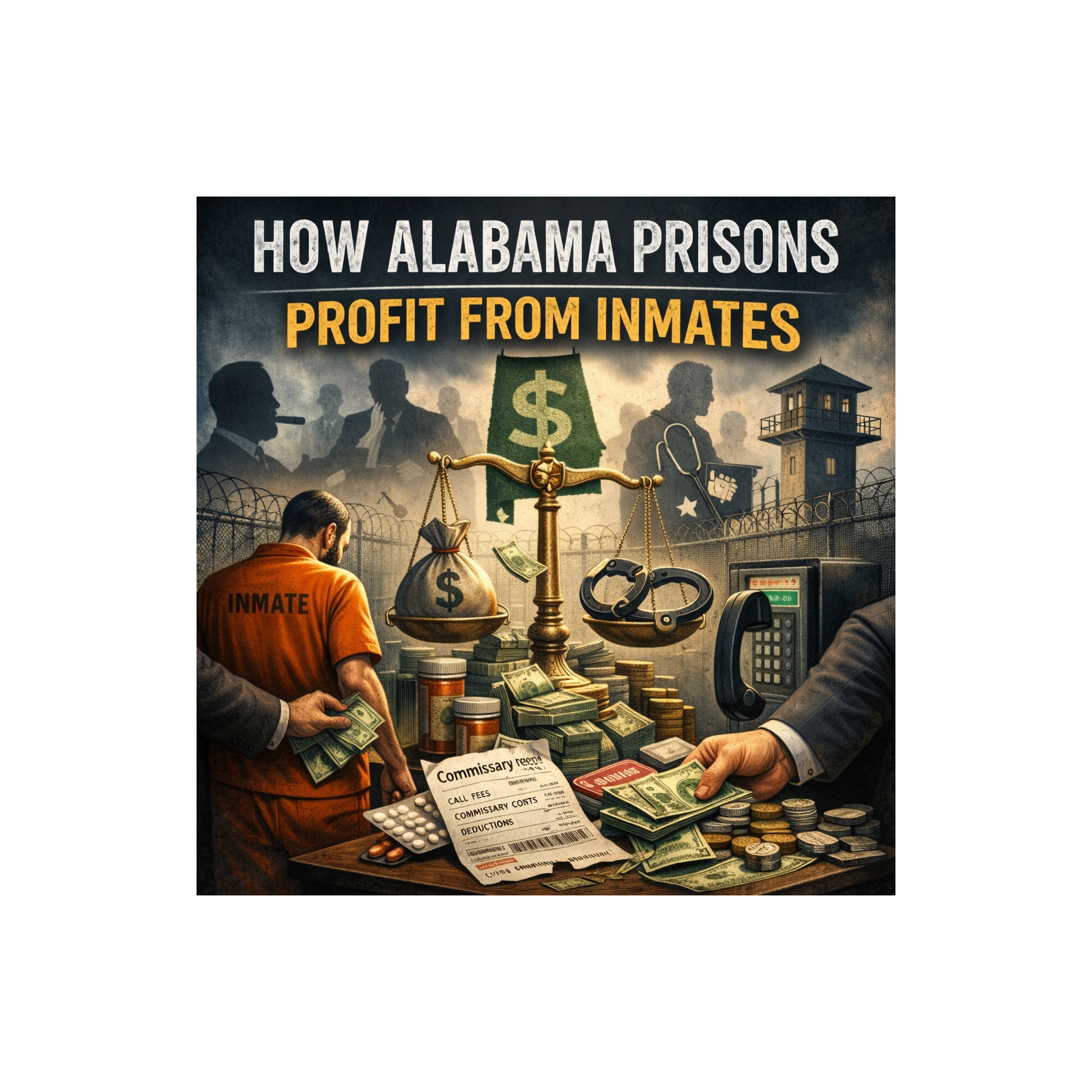
S2 Ep 11How Alabama Prisons Profit From Inmates
Alabama’s prison system isn’t just about punishment—it’s a business model. In this episode, we expose how incarceration generates revenue through inmate labor, phone calls, commissary fees, healthcare contracts, and hidden deductions that funnel money out of the poorest communities in the state.We break down who profits, how the incentives work, and why financial exploitation is baked into daily prison operations—often at the expense of safety, rehabilitation, and public accountability. This is a clear-eyed look at the economics of mass incarceration in Alabama and what it means for incarcerated people, their families, and taxpayers.
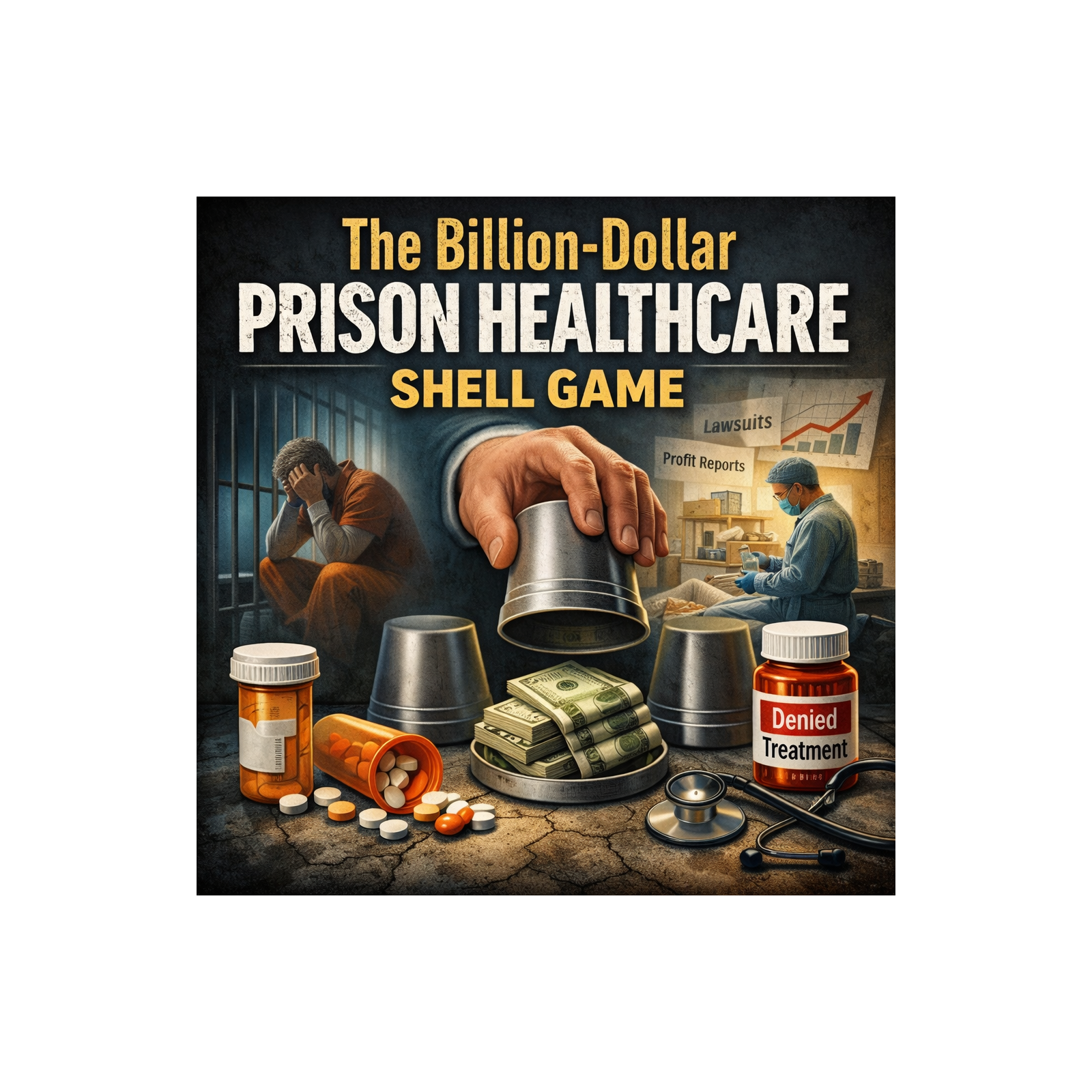
S2 Ep 10The Billion-Dollar Prison Healthcare Shell Game
This episode pulls back the curtain on Alabama’s prison healthcare system, where billions in public funds flow through private medical contracts—yet incarcerated people report delayed treatment, denied medications, and preventable deaths. We examine how outsourcing care creates layers of deniability, shields decision-makers from accountability, and shifts costs without improving outcomes.The Billion-Dollar Prison Healthcare Shell Game connects lawsuits, budget data, and lived experience to ask a direct question: when healthcare becomes a contract instead of a duty, who is actually being served—and who is being sacrificed?
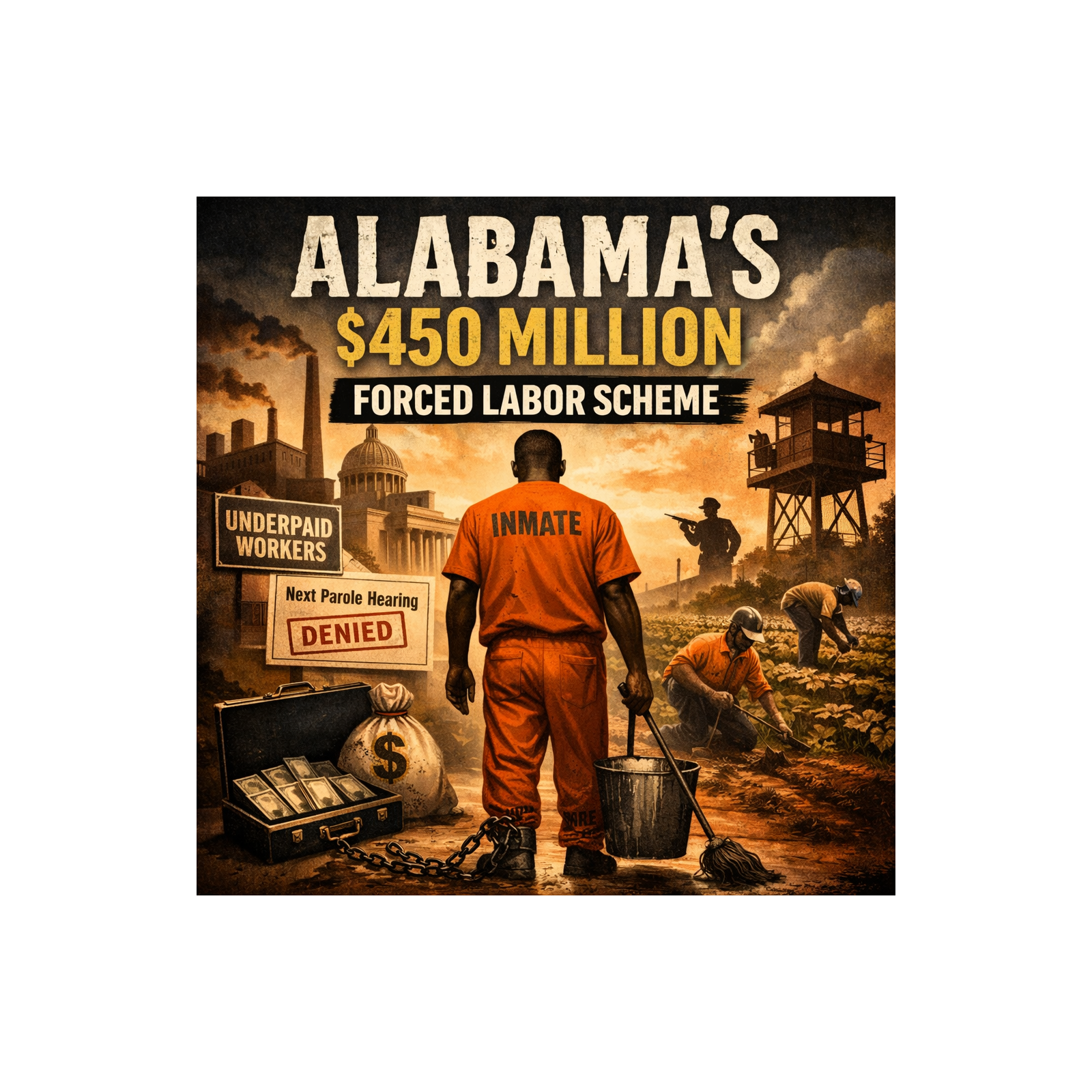
S2 Ep 9Alabama’s $450 Million Forced Labor Scheme
This episode investigates how Alabama’s prison labor system generates hundreds of millions of dollars while the people doing the work earn little to nothing. We unpack the structure behind so-called “voluntary” labor, the role of state agencies and private contractors, and how parole decisions, disciplinary threats, and economic coercion keep the system running.Alabama’s $450 Million Forced Labor Scheme connects policy, profit, and power—examining whether this model serves public safety or perpetuates exploitation, and why accountability has lagged despite mounting legal and ethical challenges.
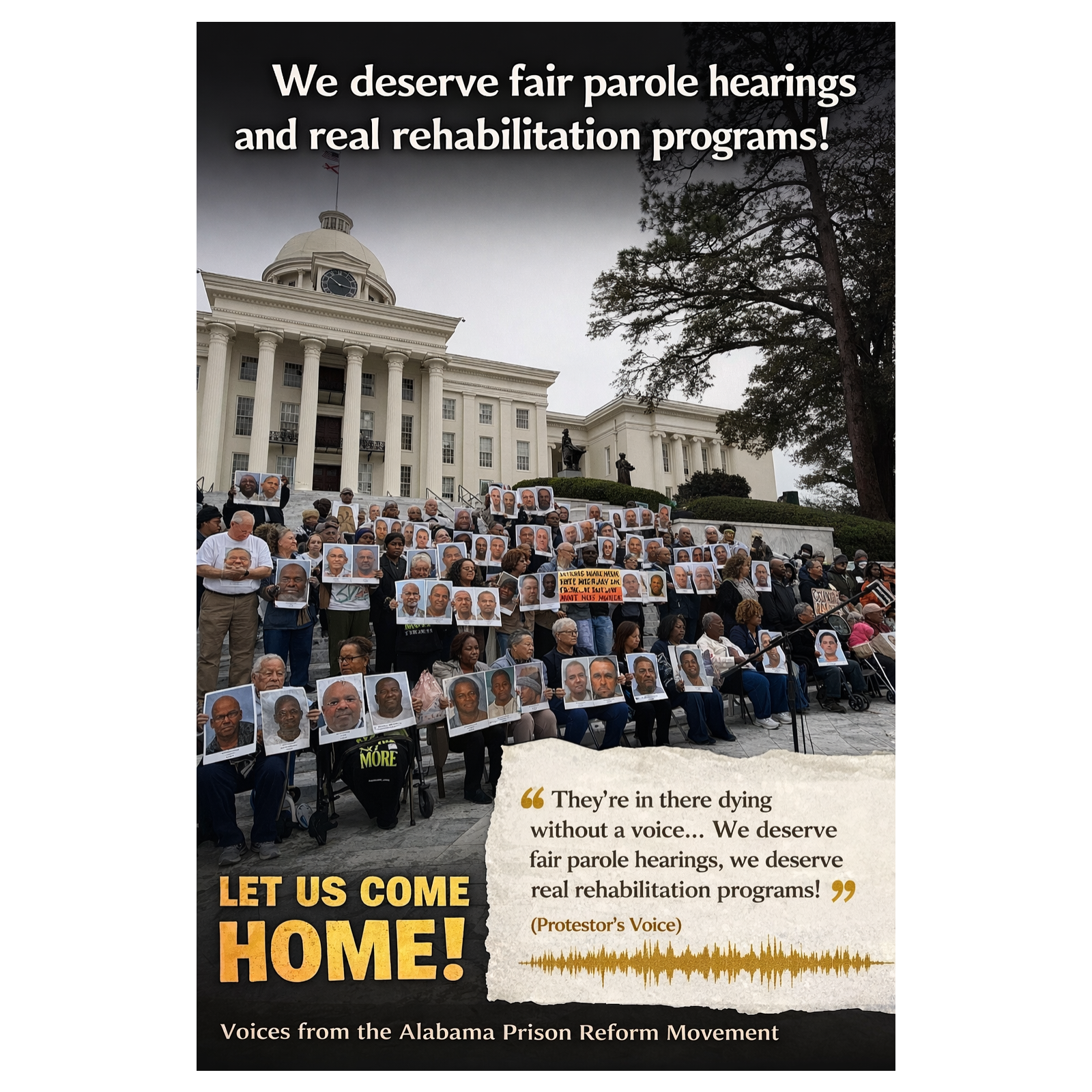
No More Lives Lost Vigils
bonusAlabama’s prison system has received billions in funding, yet families continue to report violence, neglect, medical failures, and a breakdown in accountability. In this episode, we examine the growing concerns surrounding the Alabama Department of Corrections (ADOC): excessive force allegations, unresolved body camera funding questions, contraband pipelines, medical neglect, communication failures, and the financial cost to taxpayers.Drawing from documented lawsuits, oversight committee meetings, and firsthand accounts from families, we analyze what systemic failure looks like — and who ultimately pays the price. Beyond the headlines, we explore the human impact: elderly inmates denied compassion, individuals with serious medical conditions left untreated, and families cut off from communication.This episode is not about outrage. It is about accountability, transparency, and reform.We break down:The legal and financial consequences of officer misconductFederal oversight history and why it mattersThe role of technology, data, and independent monitoring in reformWhy restorative justice and rehabilitation are central to public safetyIf you care about constitutional rights, fiscal responsibility, victim protection, and safer communities, this conversation matters.🎧 Follow the podcast: https://rss.com/podcasts/alabama-prison-reform-proposal/ ALPRP Apps (1) 📘 Read the full proposal: https://alprp.org/

S2 Ep 8FCC Bans Predatory Prison Phone Kickbacks
In this episode, we break down a major but widely misunderstood shift in prison communications: the FCC’s ban on predatory prison phone kickbacks. For decades, incarcerated people and their families have been charged exorbitant rates to stay connected—while states quietly collected commissions on every call.We explain what the FCC ruling actually does, what it does not do, and why families are still paying the price through hidden fees, monopolized service contracts, and broken technology. From accountability gaps to the human cost of isolation, this episode connects federal policy to real-life consequences inside Alabama’s prisons—and asks whether ending kickbacks is reform, or just the first overdue step.
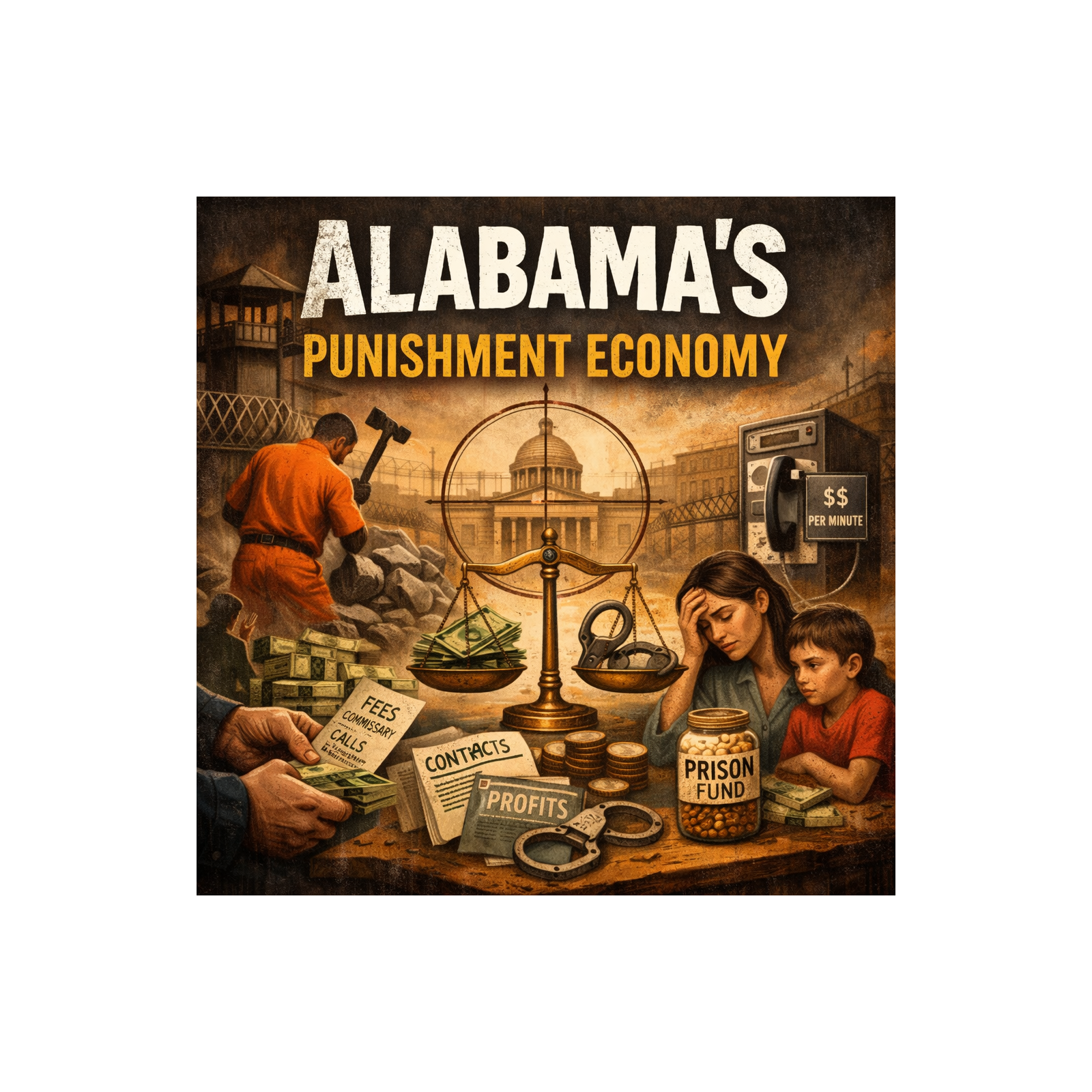
S2 Ep 7Alabama’s Punishment Economy
This episode examines how Alabama’s prison system has evolved into a revenue-driven enterprise—where incarceration generates profit through labor, fees, commissary, communications, and contracts, while public safety and rehabilitation take a back seat. We unpack how billions in taxpayer dollars coexist with chronic understaffing, violence, and constitutional failures, and why families often bear hidden costs for basic survival inside.Alabama’s Punishment Economy connects policy decisions at the Statehouse to lived consequences behind the walls, challenging listeners to confront who pays, who profits, and what accountability should look like when punishment becomes an economic model rather than a path to safety or redemption.
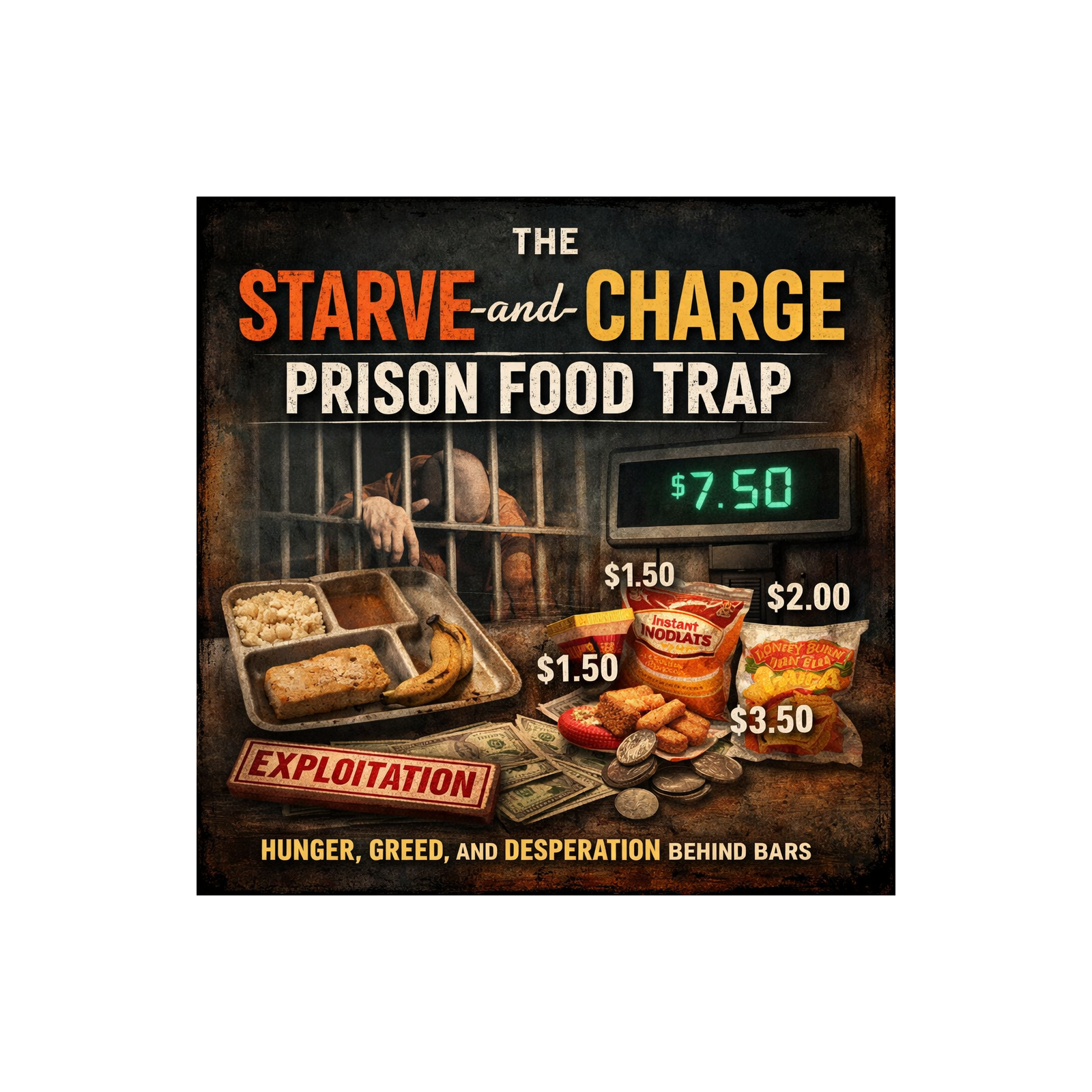
S2 Ep 6The Starve and Charge Prison Food Trap
This episode exposes a quiet but deadly cycle inside Alabama’s prisons: people are underfed at chow, then forced to survive by purchasing overpriced commissary—if they can afford it. When food becomes a commodity instead of a basic obligation, hunger turns into leverage, families become revenue streams, and desperation fuels violence, extortion, and illness.The Starve-and-Charge Prison Food Trap breaks down how inadequate meals, inflated commissary pricing, and lack of oversight intersect to create a system that punishes poverty, endangers lives, and shifts constitutional responsibilities onto incarcerated people and their families. This isn’t about comfort—it’s about survival, accountability, and the real cost of a broken corrections model.
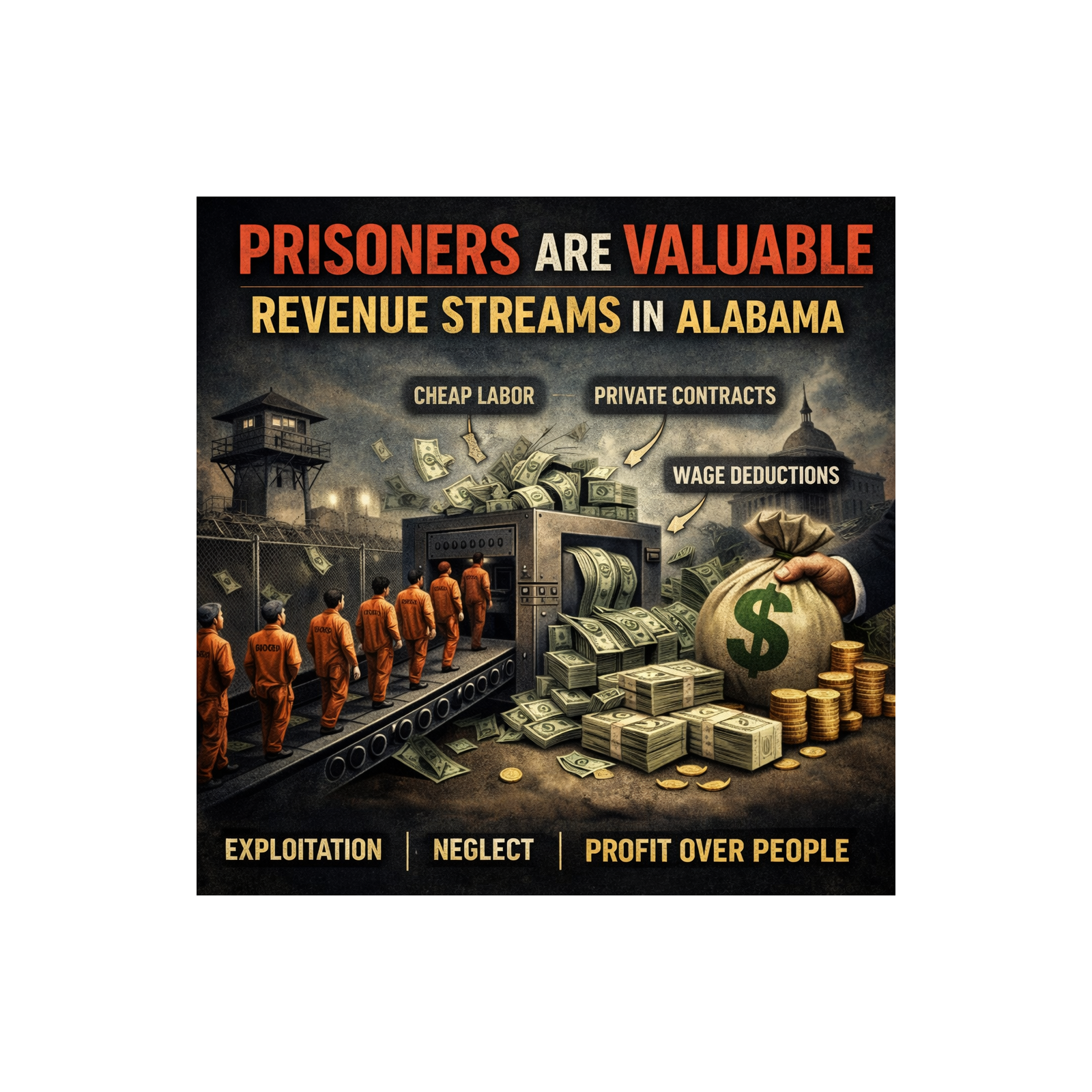
S2 Ep 4Alabama Prisoners Are a Valuable Revenue Stream
Alabama’s prison system is often framed as a public safety necessity—but what if it is also a revenue-generating machine?In this episode of the Alabama Prison Reform Proposal Podcast, we examine how incarcerated people have become a source of profit through prison labor, wage garnishment, fees, and prolonged incarceration, while meaningful rehabilitation and accountability remain underfunded or ignored. Drawing on investigative reporting, public records, and lived experience, this episode exposes how financial incentives distort parole decisions, exploit prison labor, and perpetuate a cycle that benefits institutions while harming families and communities.We discuss:How prison labor generates millions while incarcerated workers remain trappedWhy parole denial and “risk” narratives often conflict with real-world work release practicesThe hidden costs to taxpayers through lawsuits, medical neglect, and federal interventionHow profit-driven incarceration undermines rehabilitation, public safety, and human dignityThis episode is not about ideology—it is about incentives, data, and accountability. If prisons profit from people staying incarcerated, reform becomes harder, not easier. Real public safety requires transparency, rehabilitation, and systems designed to reduce harm—not monetize it.Listen. Learn. Share. Reform is not optional—it’s overdue.
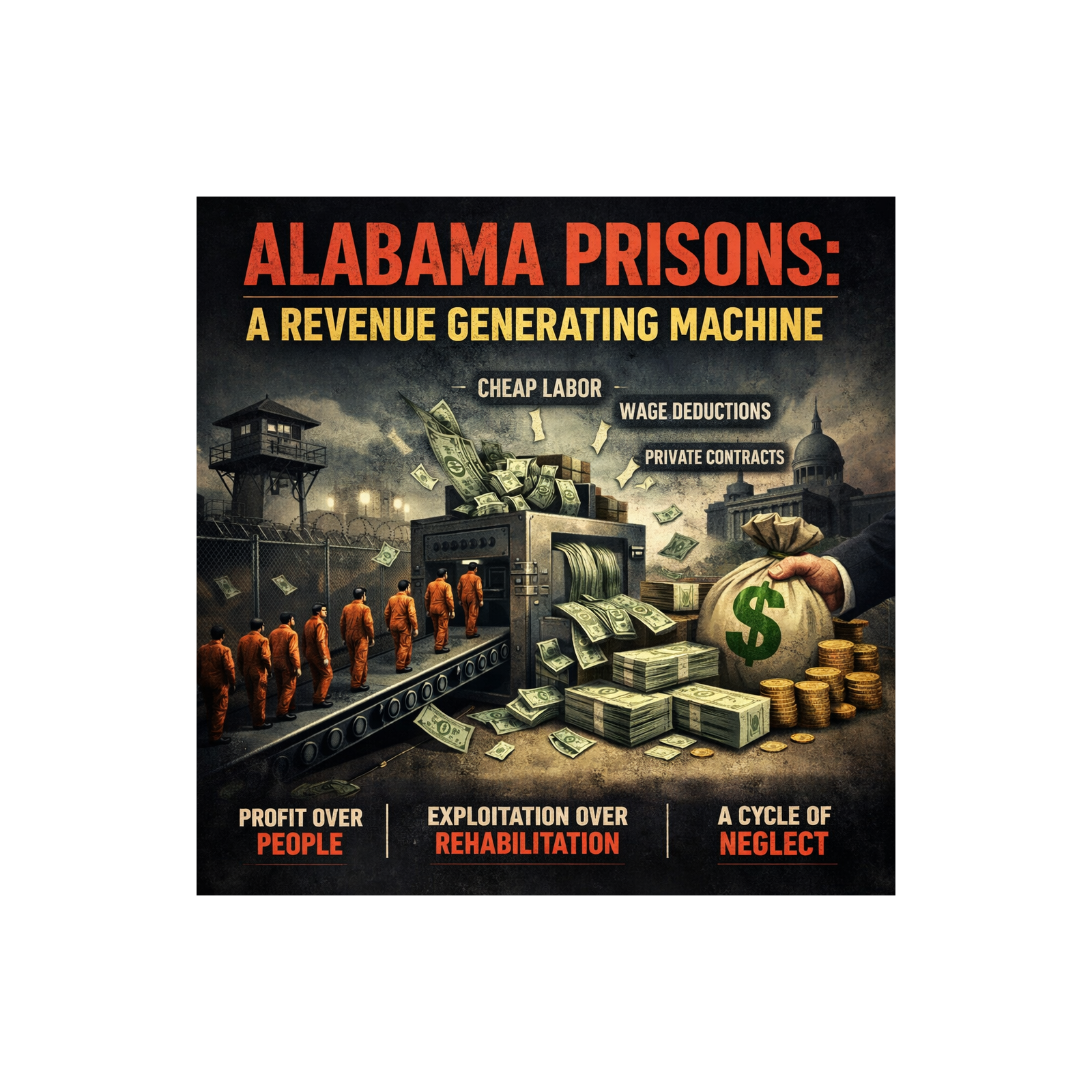
S2 Ep 5Turning Alabama Prisoners Into Revenue Streams
This edition exposes a hard truth: Alabama’s prison system increasingly treats incarcerated people as financial assets rather than human beings. Through work-release labor, wage deductions, and institutional incentives, profit is prioritized while violence, understaffing, and failed rehabilitation persist. The result is a system that generates revenue without accountability—at significant human and public-safety costs.ALPRP challenges this model by demanding transparency, ethical labor standards, and a shift from extraction to rehabilitation.

S2 Ep 3Statehouse Suits vs Snack Cake Murder
EIn this episode, we confront the brutal disconnect between policy decisions made in Montgomery and the daily realities inside Alabama’s prisons. While lawmakers debate budgets and talking points, people are dying over basic survival—food, safety, and neglect. Statehouse Suits vs. Snack Cake Murder exposes how overcrowding, understaffing, and failed oversight turn minor deprivations into deadly outcomes, and why these aren’t “isolated incidents” but predictable results of systemic failure.This is not rhetoric. It’s accountability. And it’s a warning: what happens behind prison walls doesn’t stay there—it defines public safety, fiscal responsibility, and Alabama’s moral credibility.
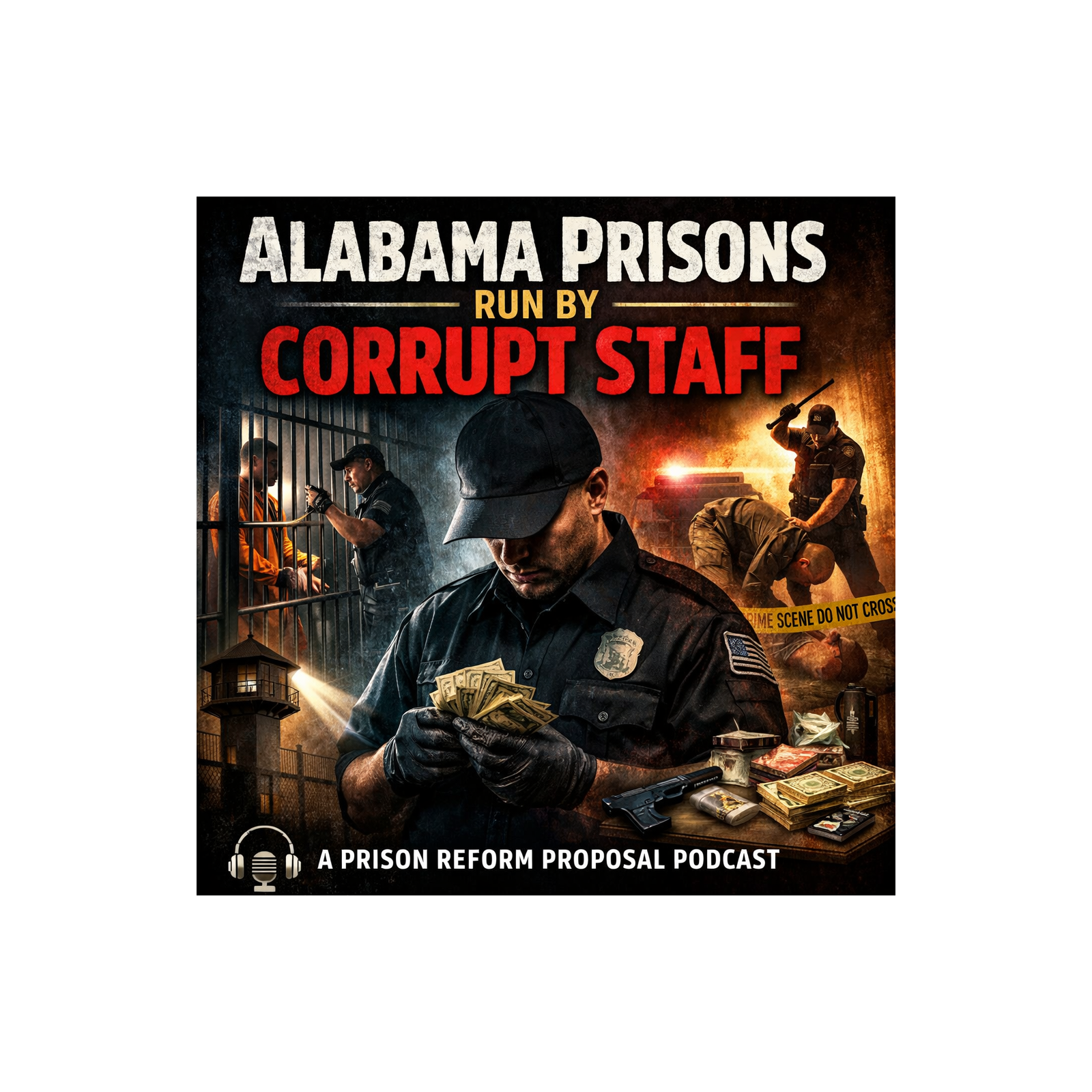
S2 Ep 2When the Guards Break the Law: Corruption Inside Alabama Prisons
In this episode, we expose a side of Alabama’s prison crisis that rarely gets full public scrutiny: staff corruption and the cost of unchecked power behind prison walls. From contraband smuggling and falsified reports to excessive force, retaliation, and silence enforced through fear, we examine how a small number of corrupt actors can destabilize entire facilities—and how weak oversight allows it to continue.Drawing from documented cases, lawsuits, investigative reporting, and firsthand accounts, we break down how corruption among correctional staff fuels violence, enables gangs, undermines rehabilitation, and drives up costs for taxpayers through settlements, federal intervention, and emergency responses. We also confront the uncomfortable reality that accountability mechanisms often fail the very people they are meant to protect—incarcerated individuals, honest officers, and the public.This episode makes one thing clear: prison reform is not anti-officer—it is pro-accountability. Most correctional staff want safe, lawful workplaces. Corruption puts everyone at risk and erodes trust in the justice system as a whole.We close by discussing what real oversight looks like—from body cameras and independent investigations to data transparency and technology that protects both staff and incarcerated people.🎧 Part of the Alabama Prison Reform Proposal podcast series—focused on truth, accountability, and safer prisons for a safer Alabama.
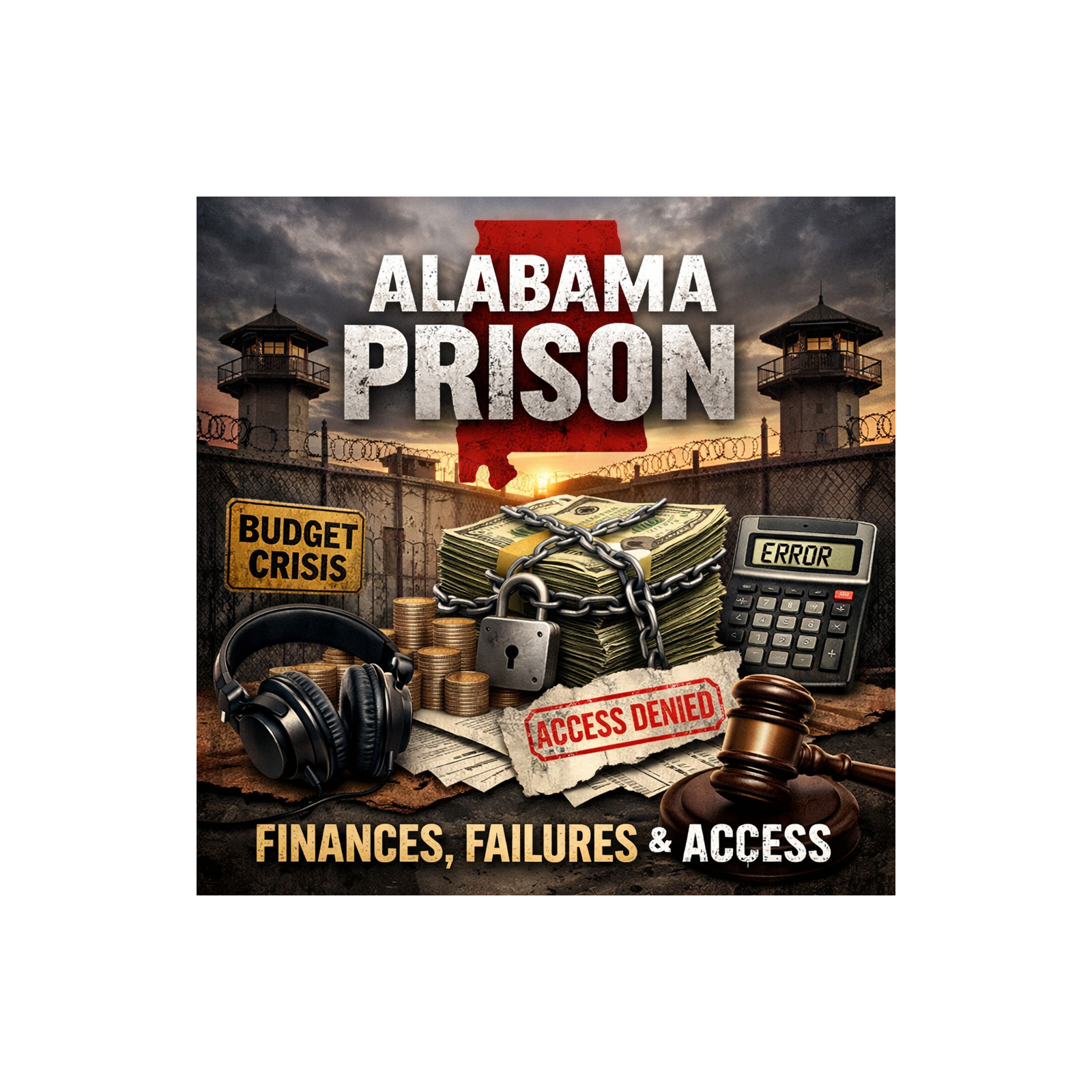
S2 Ep 1Alabama Prisons Financial Success and Failure
In this episode, we take a hard, data-driven look at the economics of Alabama’s prison system—what’s working, what’s failing, and who ultimately pays the price. We examine where revenue is generated through prison labor, contracts, and services, and contrast it with mounting losses tied to mismanagement, lawsuits, medical neglect, understaffing, and violence.Using publicly available reports and real-world examples, we break down how billions in taxpayer dollars flow through the system while outcomes remain poor: unsafe facilities, rising legal liabilities, disrupted family communication, and missed opportunities for rehabilitation that could actually reduce long-term costs. We also explore how short-term financial “wins” can mask long-term failures that undermine public safety and fiscal responsibility.This episode isn’t about ideology—it’s about accountability. If Alabama wants safer prisons, safer communities, and smarter use of taxpayer money, the financial realities can’t be ignored. We close by discussing how evidence-based reform and modern technology could shift the system from reactive spending to measurable returns for the state and its citizens.
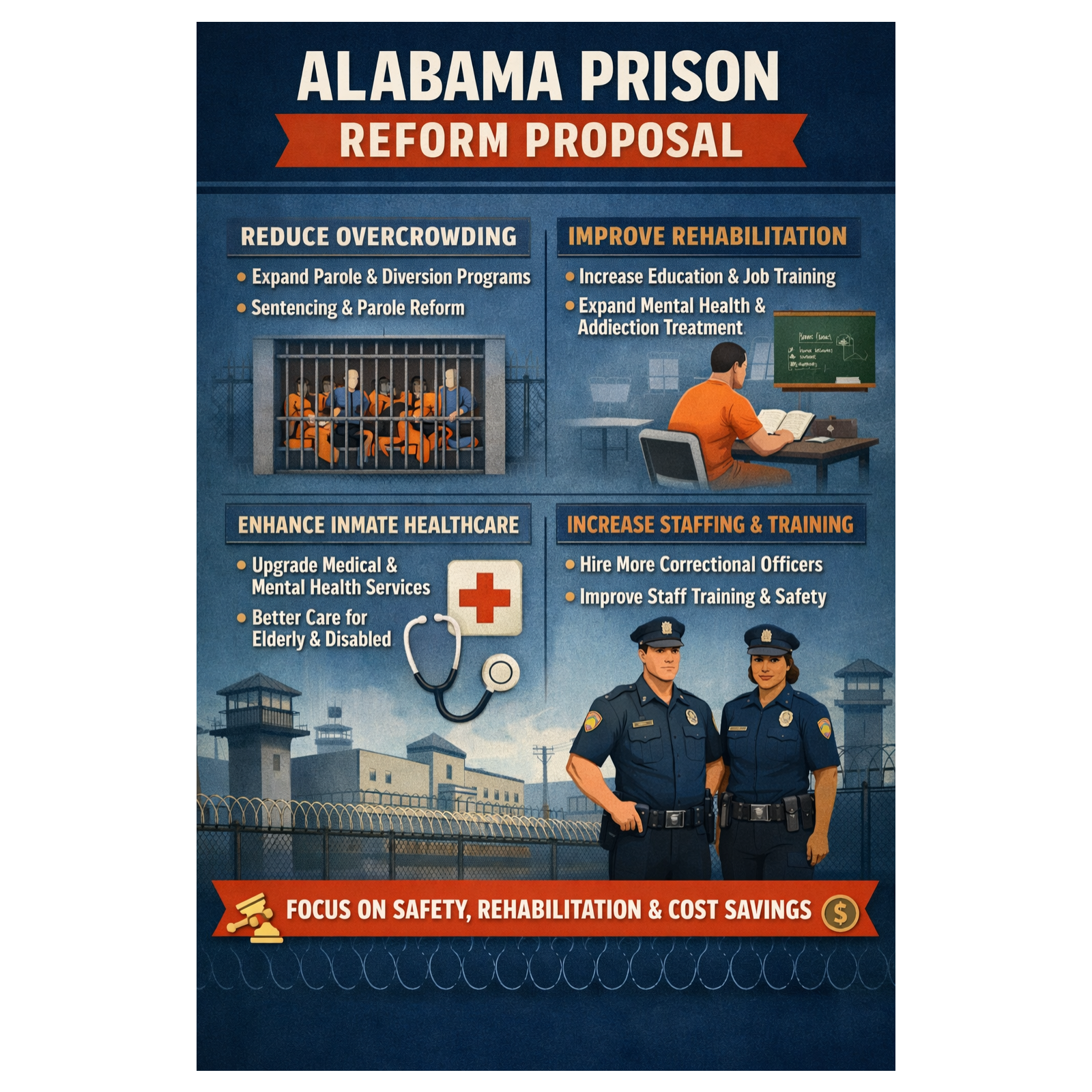
S1 Ep 20The Alabama Prison Reform Proposal: A Smarter, Safer Path to Justice
The Alabama Prison Reform Proposal outlines a comprehensive, evidence-based plan to improve public safety, reduce costly litigation, and strengthen communities by transforming how Alabama approaches incarceration. Grounded in accountability, rehabilitation, and transparency, the proposal prioritizes safer conditions for correctional staff, meaningful rehabilitation and education for incarcerated individuals, support for victims and families, and responsible use of taxpayer dollars. By integrating modern technology, expanding mental health and educational services, and emphasizing data-driven oversight, the plan offers a practical, fiscally responsible roadmap for reducing violence, lowering recidivism, and building a more secure future for all Alabamians.
S1 Ep 19Alabama’s Radical Prison Overhaul: AI, VR, and Technical Colleges Leading Reform
In this groundbreaking episode, Alabama’s Radical Prison Overhaul examines how artificial intelligence, virtual reality therapy, and vocational education could revolutionize the state’s correctional system. Rather than pouring billions into new mega-prisons, Alabama has the opportunity to build a smarter, more humane model centered on rehabilitation, education, and opportunity.Drawing from the Alabama Prison Reform Proposal, this episode explores how AI can personalize inmate learning and behavior tracking, how VR can simulate real-world empathy and emotional healing, and how Ingram State Technical College can serve as the backbone of a new educational infrastructure for inmates. Together, these innovations form a blueprint for reducing recidivism and creating lasting change.🎧 Tune in to discover how Alabama can move from punishment to progress—and lead the nation in 21st-century prison reform.Keywords: Alabama Department of Corrections, prison reform, AI rehabilitation, VR therapy, Ingram State Technical College, vocational education, restorative justice, digital reform, recidivism, correctional innovation.

S1 Ep 18ADOC Crisis: Love, Redemption, and Billions for Concrete — The Human Cost of Alabama’s Prison Plan
In this deeply moving episode, ADOC Crisis: Love, Redemption, and Billions for Concrete, we look beyond statistics and policy to uncover the human stories buried beneath Alabama’s billion-dollar prison construction plan. As the Alabama Department of Corrections continues to face allegations of abuse, neglect, and unconstitutional conditions, the state’s solution remains rooted in bricks and barbed wire instead of compassion and change.Through personal reflections and the lens of the Alabama Prison Reform Proposal, this episode explores how faith, forgiveness, and technology can coexist to rebuild lives. We discuss pathways to redemption through AI-powered rehabilitation, virtual reality therapy, and vocational education, while contrasting these humane alternatives with the staggering financial and moral cost of continuing the old system.🎧 Listen as we confront a haunting question: Why does Alabama keep investing in walls when redemption could build something far greater?Keywords: Alabama Department of Corrections, prison reform, redemption, restorative justice, AI rehabilitation, VR therapy, faith-based recovery, prison construction, human rights, criminal justice reform.
S1 Ep 17Alabama’s Prison Paradox: High-Tech Rehab Meets Raw Sewage
In this powerful episode, Alabama’s Prison Paradox exposes the stark contrast between Alabama’s billion-dollar prison plans and the inhumane realities faced by those behind bars—raw sewage, violence, and neglect. Drawing on the Alabama Prison Reform Proposal, this episode examines how technology—specifically, AI-driven rehabilitation, VR therapy, and digital education—can transform the state’s prisons into centers of redemption rather than despair. Listeners will hear how faith, education, and innovation can rebuild lives, reduce recidivism, and restore dignity to those society has forgotten.“As long as detainees are treated like animals, they will continue to act accordingly.” — Alabama Prison Reform Proposal🎧 Tune in for a candid look at reform that balances security, justice, and humanity—proving that change in Alabama’s prisons is not only possible, but overdue.Keywords: Alabama Department of Corrections, AI rehabilitation, prison reform, restorative justice, virtual therapy, Ingram State Technical College, recidivism, faith-based recovery, prison technology.
S1 Ep 16Alabama’s Prison Paradox: Unconstitutional Violence, $1 Billion Prisons, and the Fight for Reform
In this revealing episode, Alabama’s Prison Paradox confronts the harsh reality of a prison system under federal investigation for unconstitutional violence, abuse, and neglect—all while the state plans to spend over $1 billion on new facilities instead of meaningful reform.We explore how Alabama’s Department of Corrections became one of the deadliest in the nation, where overcrowding, understaffing, and corruption fuel daily chaos and despair. Drawing from the Alabama Prison Reform Proposal, this episode offers a roadmap toward true rehabilitation through AI-powered monitoring, VR therapy, restorative justice, and vocational education at Ingram State Technical College.🎧 Tune in to hear why real justice in Alabama means accountability, transparency, and investing in people—not just prisons.Keywords: Alabama Department of Corrections, prison reform, unconstitutional prisons, violence, $1 billion prison plan, AI monitoring, restorative justice, VR rehabilitation, recidivism, social justice.