Alabama Prison Reform Proposal
45 episodes
How Aramark Profit From Prison Hunger
Alabama's Mega Prison Gamble
DOJ Lawsuit Against Alabama Prisons
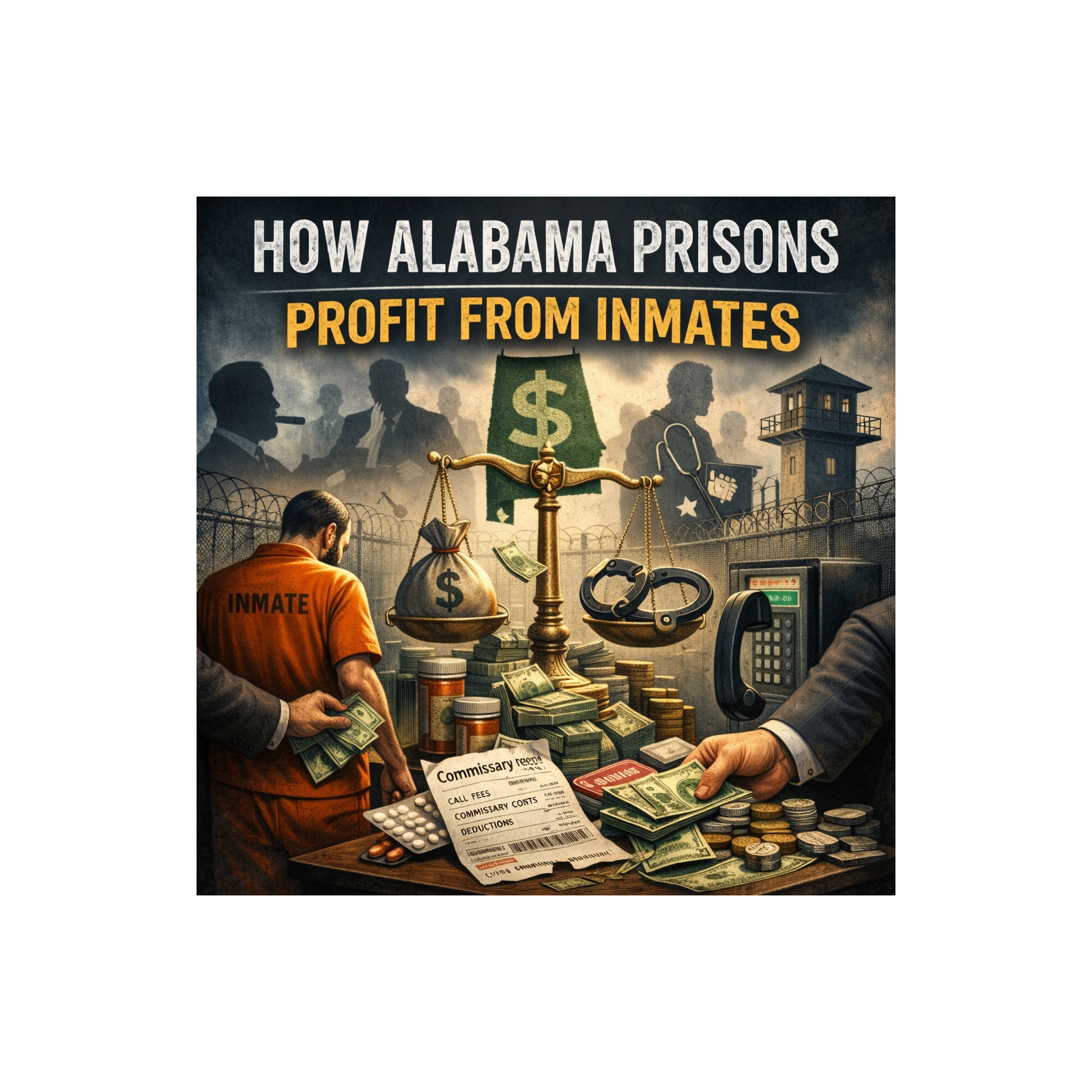
S2 Ep 11How Alabama Prisons Profit From Inmates
Alabama’s prison system isn’t just about punishment—it’s a business model. In this episode, we expose how incarceration generates revenue through inmate labor, phone calls, commissary fees, healthcare contracts, and hidden deductions that funnel money out of the poorest communities in the state.We break down who profits, how the incentives work, and why financial exploitation is baked into daily prison operations—often at the expense of safety, rehabilitation, and public accountability. This is a clear-eyed look at the economics of mass incarceration in Alabama and what it means for incarcerated people, their families, and taxpayers.
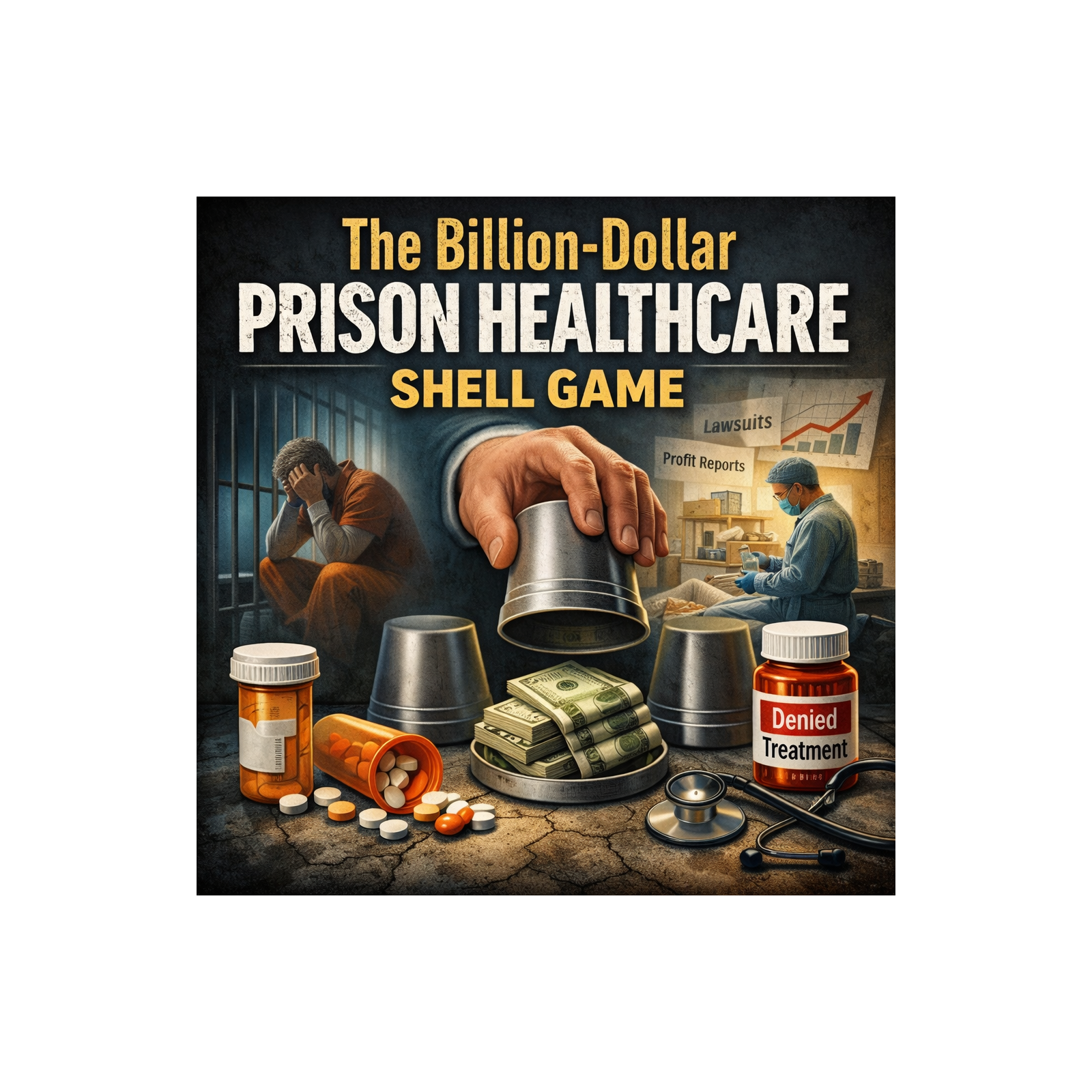
S2 Ep 10The Billion-Dollar Prison Healthcare Shell Game
This episode pulls back the curtain on Alabama’s prison healthcare system, where billions in public funds flow through private medical contracts—yet incarcerated people report delayed treatment, denied medications, and preventable deaths. We examine how outsourcing care creates layers of deniability, shields decision-makers from accountability, and shifts costs without improving outcomes.The Billion-Dollar Prison Healthcare Shell Game connects lawsuits, budget data, and lived experience to ask a direct question: when healthcare becomes a contract instead of a duty, who is actually being served—and who is being sacrificed?
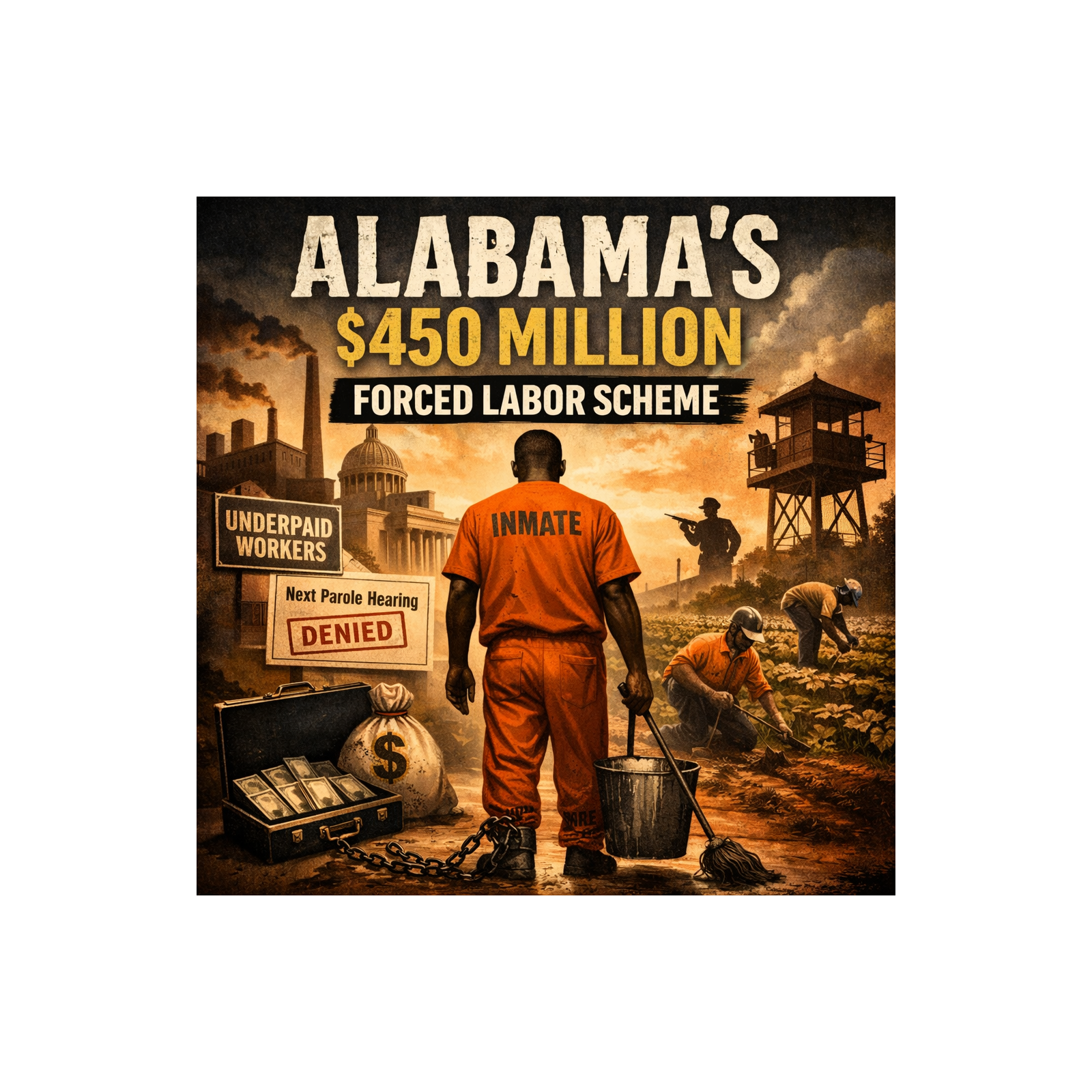
S2 Ep 9Alabama’s $450 Million Forced Labor Scheme
This episode investigates how Alabama’s prison labor system generates hundreds of millions of dollars while the people doing the work earn little to nothing. We unpack the structure behind so-called “voluntary” labor, the role of state agencies and private contractors, and how parole decisions, disciplinary threats, and economic coercion keep the system running.Alabama’s $450 Million Forced Labor Scheme connects policy, profit, and power—examining whether this model serves public safety or perpetuates exploitation, and why accountability has lagged despite mounting legal and ethical challenges.
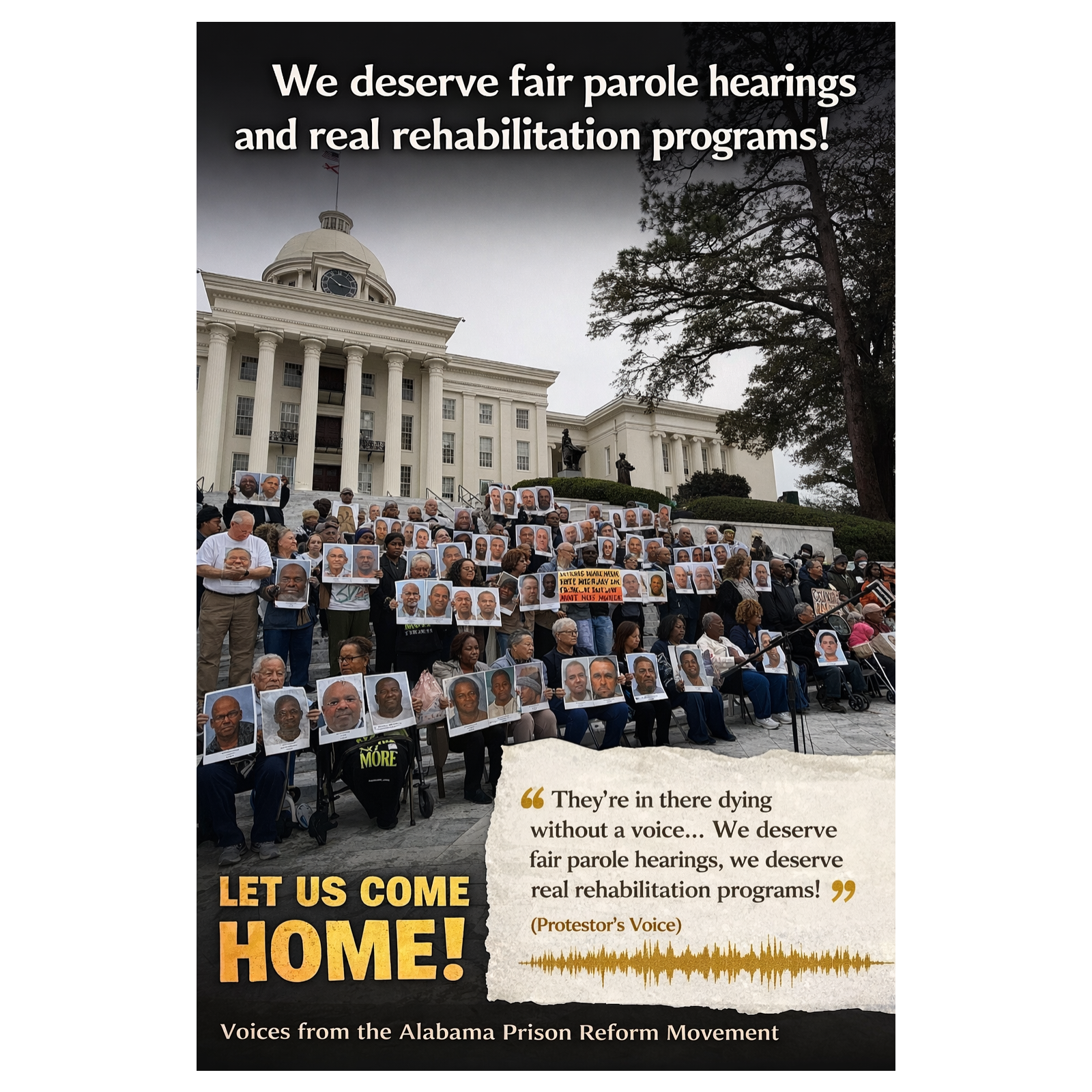
No More Lives Lost Vigils
bonusAlabama’s prison system has received billions in funding, yet families continue to report violence, neglect, medical failures, and a breakdown in accountability. In this episode, we examine the growing concerns surrounding the Alabama Department of Corrections (ADOC): excessive force allegations, unresolved body camera funding questions, contraband pipelines, medical neglect, communication failures, and the financial cost to taxpayers.Drawing from documented lawsuits, oversight committee meetings, and firsthand accounts from families, we analyze what systemic failure looks like — and who ultimately pays the price. Beyond the headlines, we explore the human impact: elderly inmates denied compassion, individuals with serious medical conditions left untreated, and families cut off from communication.This episode is not about outrage. It is about accountability, transparency, and reform.We break down:The legal and financial consequences of officer misconductFederal oversight history and why it mattersThe role of technology, data, and independent monitoring in reformWhy restorative justice and rehabilitation are central to public safetyIf you care about constitutional rights, fiscal responsibility, victim protection, and safer communities, this conversation matters.🎧 Follow the podcast: https://rss.com/podcasts/alabama-prison-reform-proposal/ ALPRP Apps (1) 📘 Read the full proposal: https://alprp.org/

S2 Ep 8FCC Bans Predatory Prison Phone Kickbacks
In this episode, we break down a major but widely misunderstood shift in prison communications: the FCC’s ban on predatory prison phone kickbacks. For decades, incarcerated people and their families have been charged exorbitant rates to stay connected—while states quietly collected commissions on every call.We explain what the FCC ruling actually does, what it does not do, and why families are still paying the price through hidden fees, monopolized service contracts, and broken technology. From accountability gaps to the human cost of isolation, this episode connects federal policy to real-life consequences inside Alabama’s prisons—and asks whether ending kickbacks is reform, or just the first overdue step.
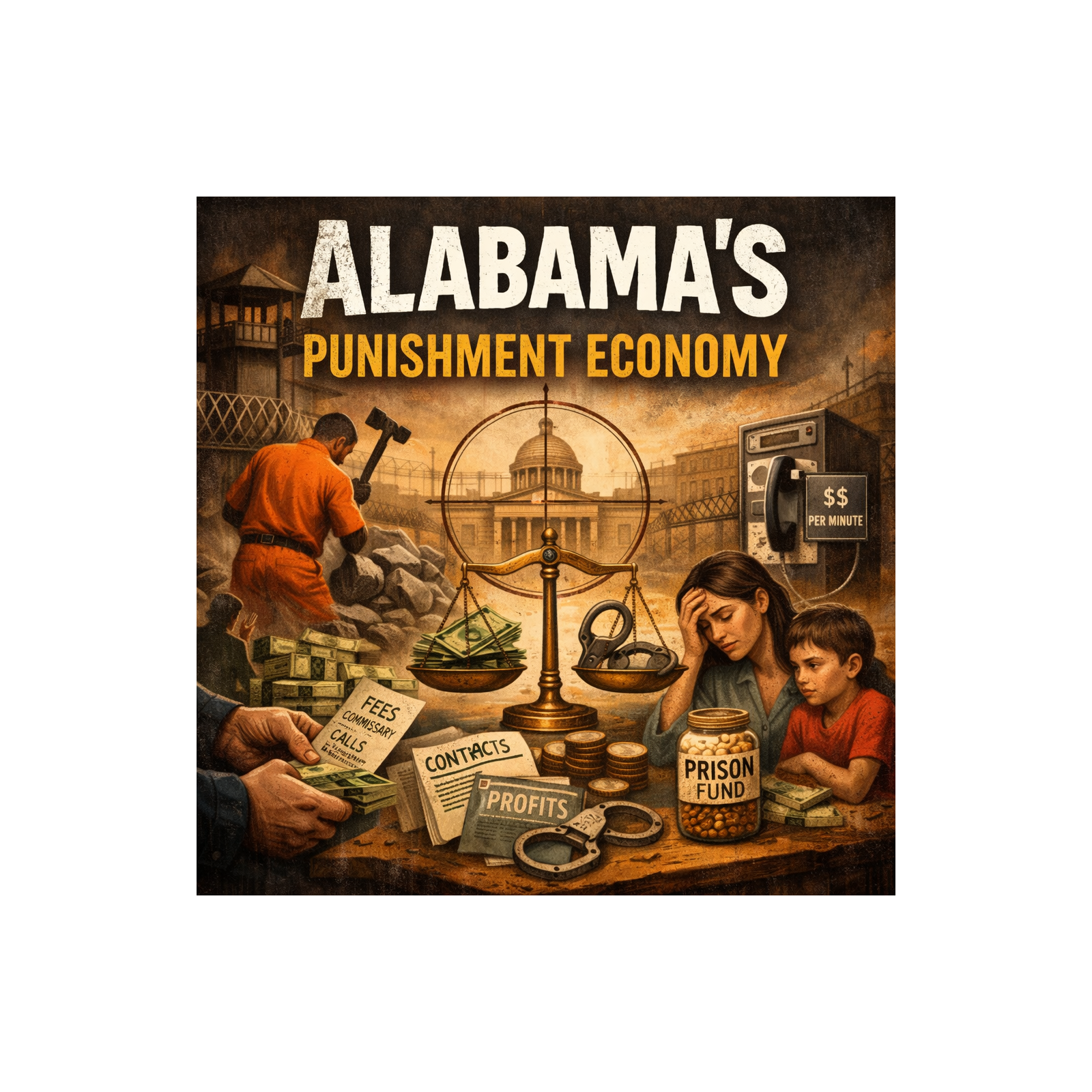
S2 Ep 7Alabama’s Punishment Economy
This episode examines how Alabama’s prison system has evolved into a revenue-driven enterprise—where incarceration generates profit through labor, fees, commissary, communications, and contracts, while public safety and rehabilitation take a back seat. We unpack how billions in taxpayer dollars coexist with chronic understaffing, violence, and constitutional failures, and why families often bear hidden costs for basic survival inside.Alabama’s Punishment Economy connects policy decisions at the Statehouse to lived consequences behind the walls, challenging listeners to confront who pays, who profits, and what accountability should look like when punishment becomes an economic model rather than a path to safety or redemption.
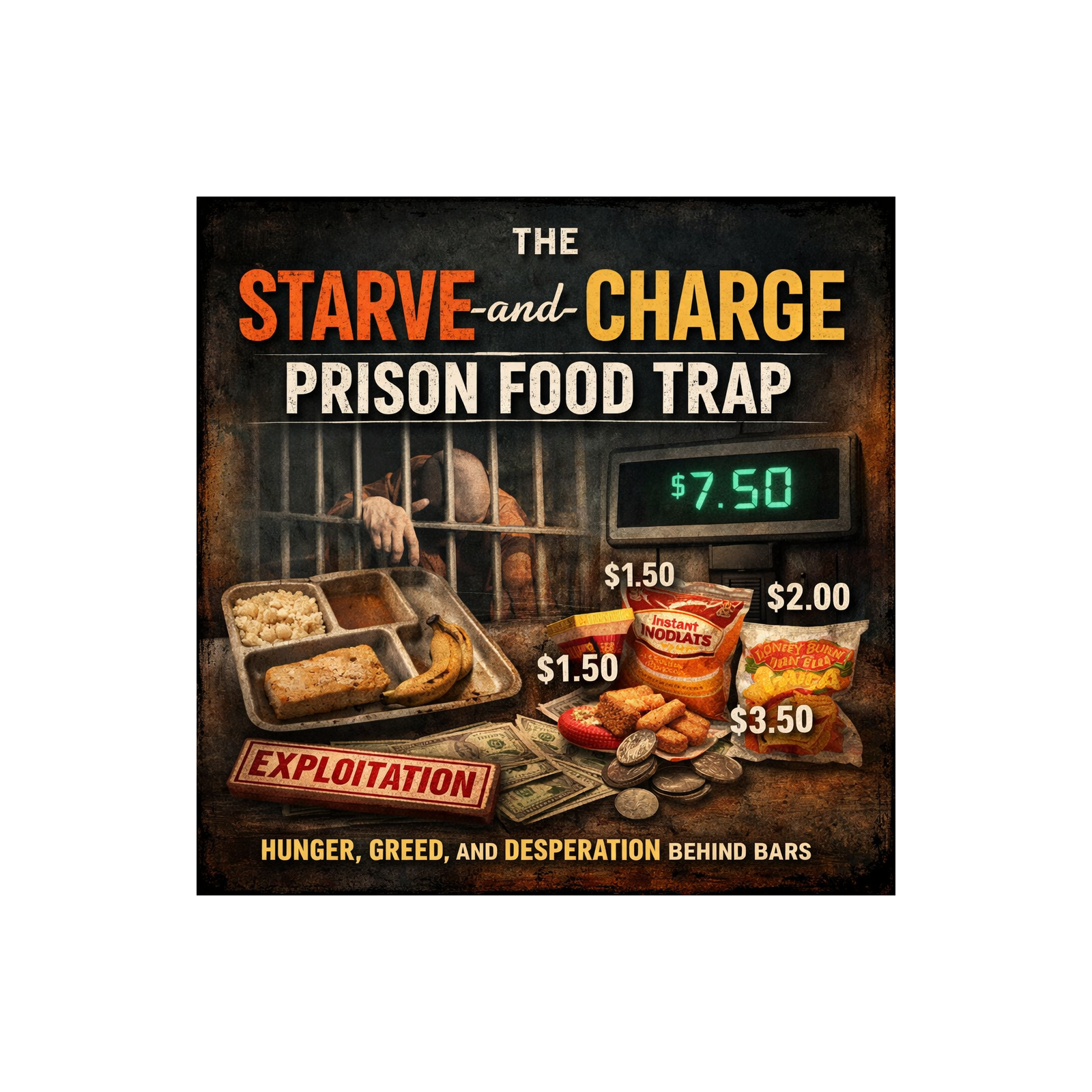
S2 Ep 6The Starve and Charge Prison Food Trap
This episode exposes a quiet but deadly cycle inside Alabama’s prisons: people are underfed at chow, then forced to survive by purchasing overpriced commissary—if they can afford it. When food becomes a commodity instead of a basic obligation, hunger turns into leverage, families become revenue streams, and desperation fuels violence, extortion, and illness.The Starve-and-Charge Prison Food Trap breaks down how inadequate meals, inflated commissary pricing, and lack of oversight intersect to create a system that punishes poverty, endangers lives, and shifts constitutional responsibilities onto incarcerated people and their families. This isn’t about comfort—it’s about survival, accountability, and the real cost of a broken corrections model.
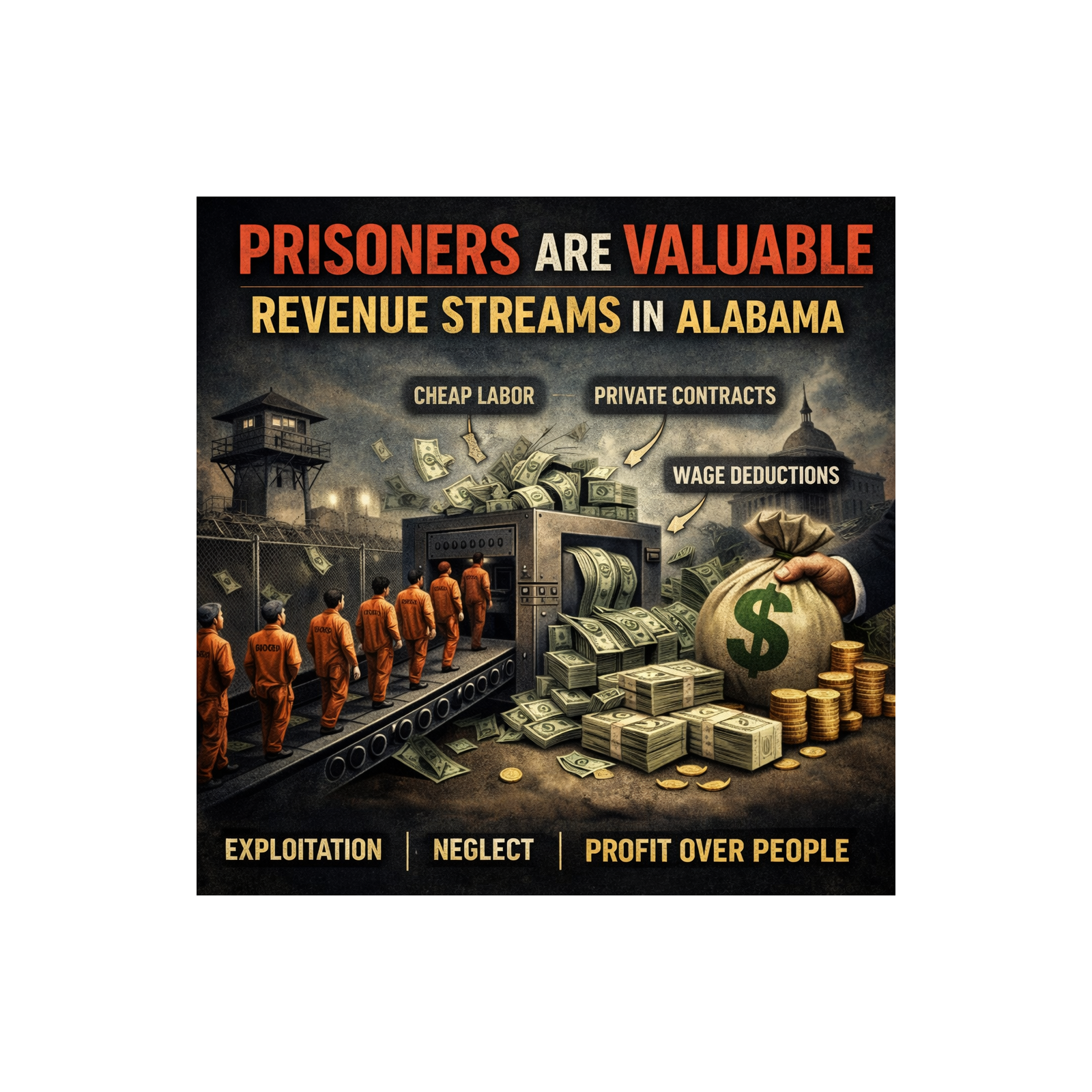
S2 Ep 4Alabama Prisoners Are a Valuable Revenue Stream
Alabama’s prison system is often framed as a public safety necessity—but what if it is also a revenue-generating machine?In this episode of the Alabama Prison Reform Proposal Podcast, we examine how incarcerated people have become a source of profit through prison labor, wage garnishment, fees, and prolonged incarceration, while meaningful rehabilitation and accountability remain underfunded or ignored. Drawing on investigative reporting, public records, and lived experience, this episode exposes how financial incentives distort parole decisions, exploit prison labor, and perpetuate a cycle that benefits institutions while harming families and communities.We discuss:How prison labor generates millions while incarcerated workers remain trappedWhy parole denial and “risk” narratives often conflict with real-world work release practicesThe hidden costs to taxpayers through lawsuits, medical neglect, and federal interventionHow profit-driven incarceration undermines rehabilitation, public safety, and human dignityThis episode is not about ideology—it is about incentives, data, and accountability. If prisons profit from people staying incarcerated, reform becomes harder, not easier. Real public safety requires transparency, rehabilitation, and systems designed to reduce harm—not monetize it.Listen. Learn. Share. Reform is not optional—it’s overdue.
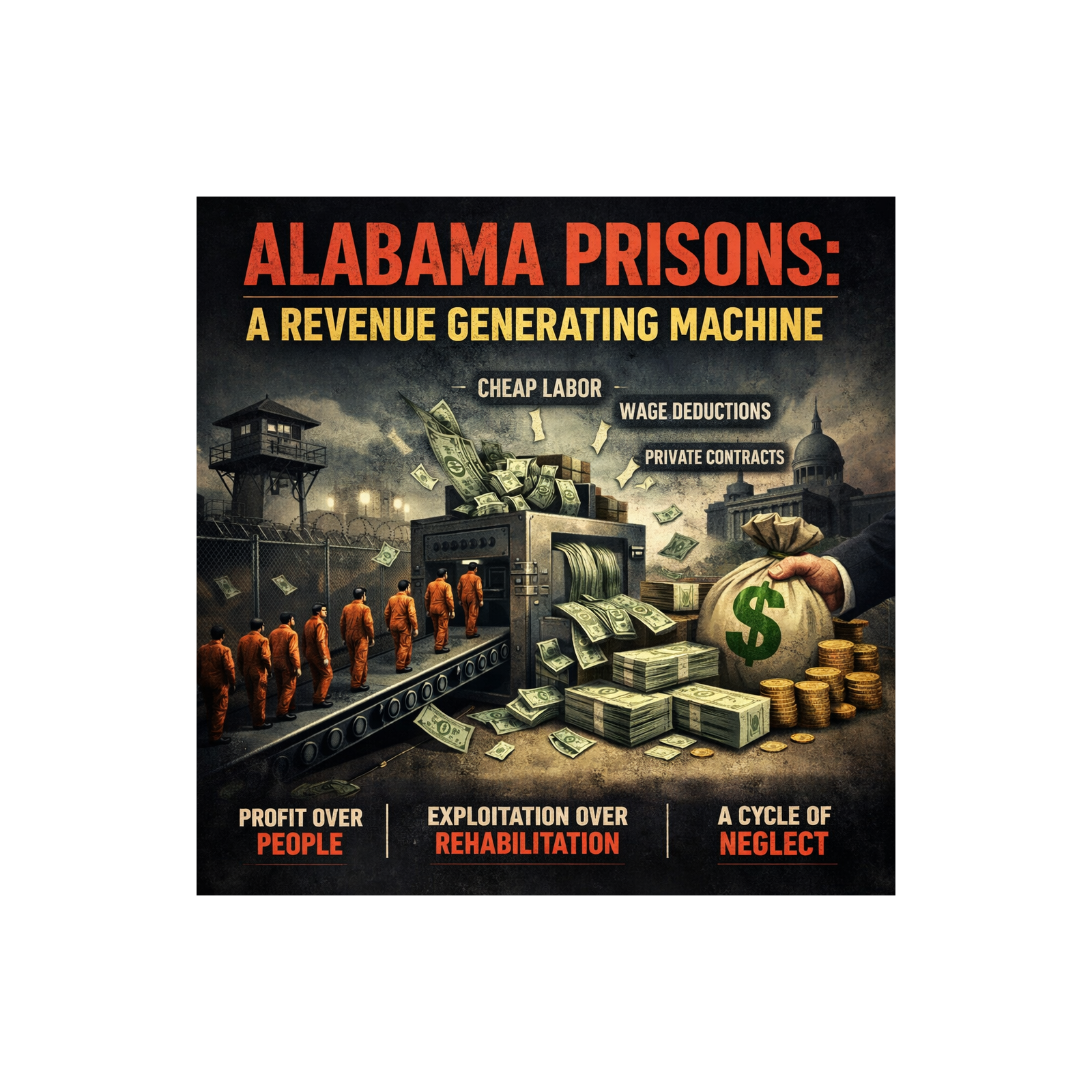
S2 Ep 5Turning Alabama Prisoners Into Revenue Streams
This edition exposes a hard truth: Alabama’s prison system increasingly treats incarcerated people as financial assets rather than human beings. Through work-release labor, wage deductions, and institutional incentives, profit is prioritized while violence, understaffing, and failed rehabilitation persist. The result is a system that generates revenue without accountability—at significant human and public-safety costs.ALPRP challenges this model by demanding transparency, ethical labor standards, and a shift from extraction to rehabilitation.

S2 Ep 3Statehouse Suits vs Snack Cake Murder
EIn this episode, we confront the brutal disconnect between policy decisions made in Montgomery and the daily realities inside Alabama’s prisons. While lawmakers debate budgets and talking points, people are dying over basic survival—food, safety, and neglect. Statehouse Suits vs. Snack Cake Murder exposes how overcrowding, understaffing, and failed oversight turn minor deprivations into deadly outcomes, and why these aren’t “isolated incidents” but predictable results of systemic failure.This is not rhetoric. It’s accountability. And it’s a warning: what happens behind prison walls doesn’t stay there—it defines public safety, fiscal responsibility, and Alabama’s moral credibility.
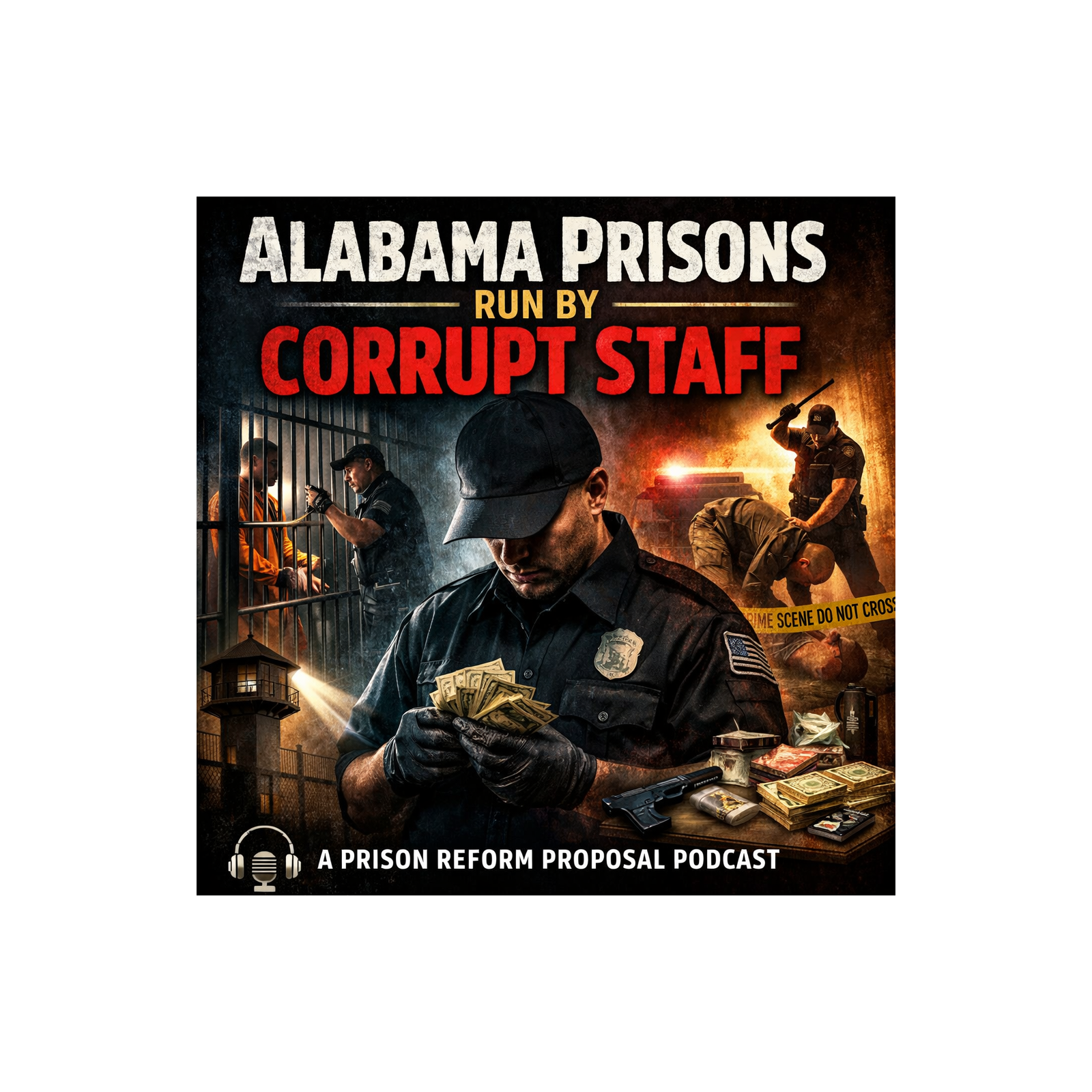
S2 Ep 2When the Guards Break the Law: Corruption Inside Alabama Prisons
In this episode, we expose a side of Alabama’s prison crisis that rarely gets full public scrutiny: staff corruption and the cost of unchecked power behind prison walls. From contraband smuggling and falsified reports to excessive force, retaliation, and silence enforced through fear, we examine how a small number of corrupt actors can destabilize entire facilities—and how weak oversight allows it to continue.Drawing from documented cases, lawsuits, investigative reporting, and firsthand accounts, we break down how corruption among correctional staff fuels violence, enables gangs, undermines rehabilitation, and drives up costs for taxpayers through settlements, federal intervention, and emergency responses. We also confront the uncomfortable reality that accountability mechanisms often fail the very people they are meant to protect—incarcerated individuals, honest officers, and the public.This episode makes one thing clear: prison reform is not anti-officer—it is pro-accountability. Most correctional staff want safe, lawful workplaces. Corruption puts everyone at risk and erodes trust in the justice system as a whole.We close by discussing what real oversight looks like—from body cameras and independent investigations to data transparency and technology that protects both staff and incarcerated people.🎧 Part of the Alabama Prison Reform Proposal podcast series—focused on truth, accountability, and safer prisons for a safer Alabama.
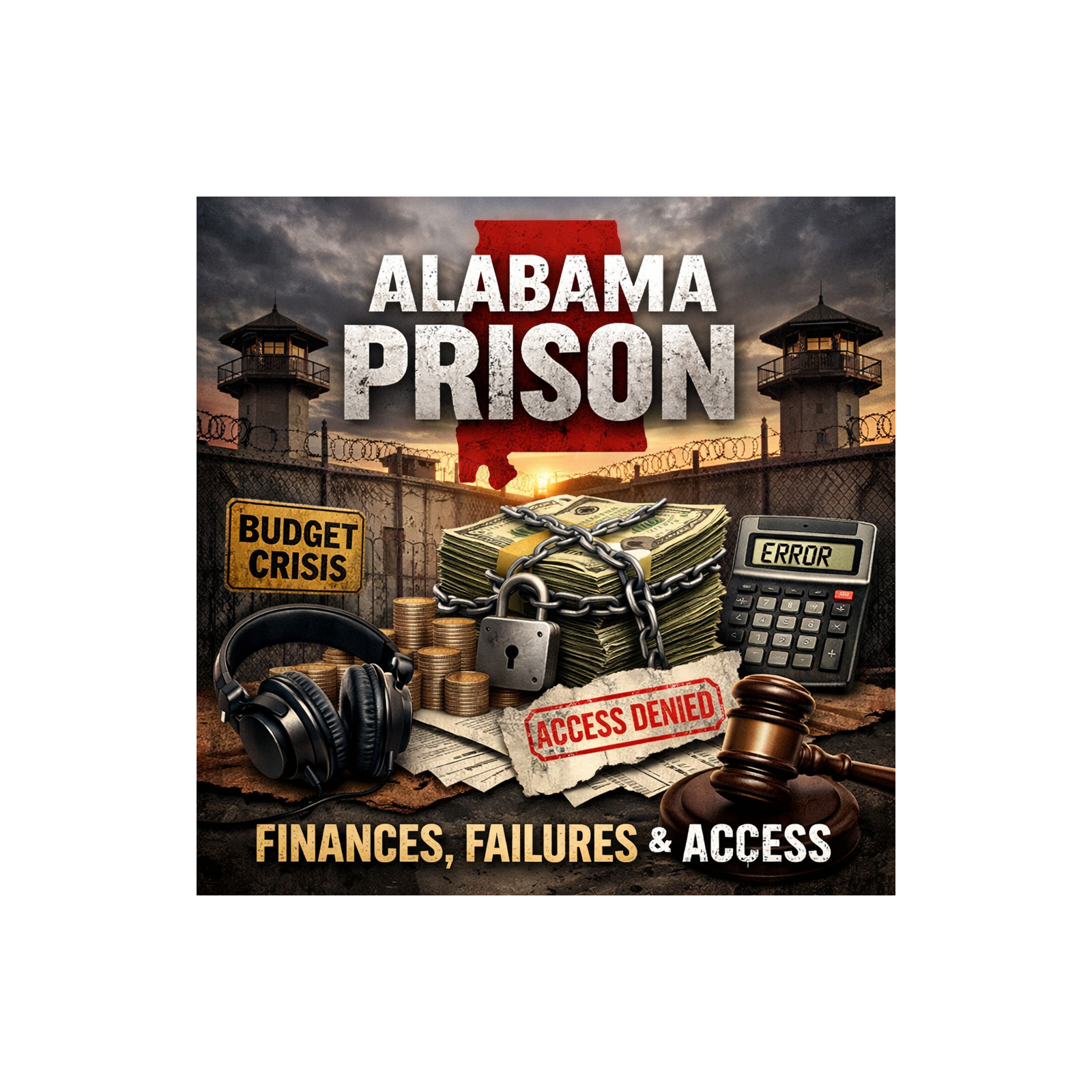
S2 Ep 1Alabama Prisons Financial Success and Failure
In this episode, we take a hard, data-driven look at the economics of Alabama’s prison system—what’s working, what’s failing, and who ultimately pays the price. We examine where revenue is generated through prison labor, contracts, and services, and contrast it with mounting losses tied to mismanagement, lawsuits, medical neglect, understaffing, and violence.Using publicly available reports and real-world examples, we break down how billions in taxpayer dollars flow through the system while outcomes remain poor: unsafe facilities, rising legal liabilities, disrupted family communication, and missed opportunities for rehabilitation that could actually reduce long-term costs. We also explore how short-term financial “wins” can mask long-term failures that undermine public safety and fiscal responsibility.This episode isn’t about ideology—it’s about accountability. If Alabama wants safer prisons, safer communities, and smarter use of taxpayer money, the financial realities can’t be ignored. We close by discussing how evidence-based reform and modern technology could shift the system from reactive spending to measurable returns for the state and its citizens.
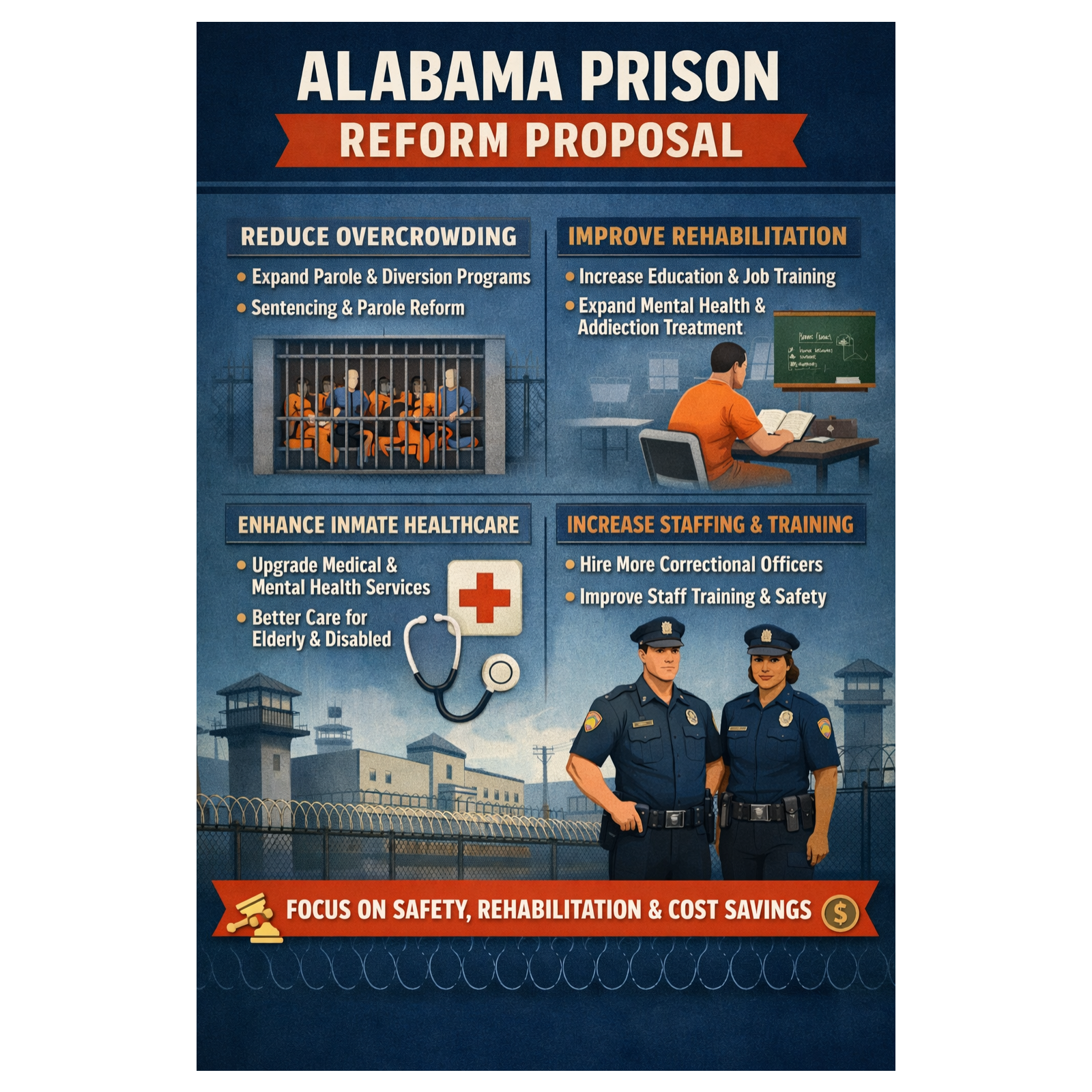
S1 Ep 20The Alabama Prison Reform Proposal: A Smarter, Safer Path to Justice
The Alabama Prison Reform Proposal outlines a comprehensive, evidence-based plan to improve public safety, reduce costly litigation, and strengthen communities by transforming how Alabama approaches incarceration. Grounded in accountability, rehabilitation, and transparency, the proposal prioritizes safer conditions for correctional staff, meaningful rehabilitation and education for incarcerated individuals, support for victims and families, and responsible use of taxpayer dollars. By integrating modern technology, expanding mental health and educational services, and emphasizing data-driven oversight, the plan offers a practical, fiscally responsible roadmap for reducing violence, lowering recidivism, and building a more secure future for all Alabamians.
S1 Ep 19Alabama’s Radical Prison Overhaul: AI, VR, and Technical Colleges Leading Reform
In this groundbreaking episode, Alabama’s Radical Prison Overhaul examines how artificial intelligence, virtual reality therapy, and vocational education could revolutionize the state’s correctional system. Rather than pouring billions into new mega-prisons, Alabama has the opportunity to build a smarter, more humane model centered on rehabilitation, education, and opportunity.Drawing from the Alabama Prison Reform Proposal, this episode explores how AI can personalize inmate learning and behavior tracking, how VR can simulate real-world empathy and emotional healing, and how Ingram State Technical College can serve as the backbone of a new educational infrastructure for inmates. Together, these innovations form a blueprint for reducing recidivism and creating lasting change.🎧 Tune in to discover how Alabama can move from punishment to progress—and lead the nation in 21st-century prison reform.Keywords: Alabama Department of Corrections, prison reform, AI rehabilitation, VR therapy, Ingram State Technical College, vocational education, restorative justice, digital reform, recidivism, correctional innovation.

S1 Ep 18ADOC Crisis: Love, Redemption, and Billions for Concrete — The Human Cost of Alabama’s Prison Plan
In this deeply moving episode, ADOC Crisis: Love, Redemption, and Billions for Concrete, we look beyond statistics and policy to uncover the human stories buried beneath Alabama’s billion-dollar prison construction plan. As the Alabama Department of Corrections continues to face allegations of abuse, neglect, and unconstitutional conditions, the state’s solution remains rooted in bricks and barbed wire instead of compassion and change.Through personal reflections and the lens of the Alabama Prison Reform Proposal, this episode explores how faith, forgiveness, and technology can coexist to rebuild lives. We discuss pathways to redemption through AI-powered rehabilitation, virtual reality therapy, and vocational education, while contrasting these humane alternatives with the staggering financial and moral cost of continuing the old system.🎧 Listen as we confront a haunting question: Why does Alabama keep investing in walls when redemption could build something far greater?Keywords: Alabama Department of Corrections, prison reform, redemption, restorative justice, AI rehabilitation, VR therapy, faith-based recovery, prison construction, human rights, criminal justice reform.
S1 Ep 17Alabama’s Prison Paradox: High-Tech Rehab Meets Raw Sewage
In this powerful episode, Alabama’s Prison Paradox exposes the stark contrast between Alabama’s billion-dollar prison plans and the inhumane realities faced by those behind bars—raw sewage, violence, and neglect. Drawing on the Alabama Prison Reform Proposal, this episode examines how technology—specifically, AI-driven rehabilitation, VR therapy, and digital education—can transform the state’s prisons into centers of redemption rather than despair. Listeners will hear how faith, education, and innovation can rebuild lives, reduce recidivism, and restore dignity to those society has forgotten.“As long as detainees are treated like animals, they will continue to act accordingly.” — Alabama Prison Reform Proposal🎧 Tune in for a candid look at reform that balances security, justice, and humanity—proving that change in Alabama’s prisons is not only possible, but overdue.Keywords: Alabama Department of Corrections, AI rehabilitation, prison reform, restorative justice, virtual therapy, Ingram State Technical College, recidivism, faith-based recovery, prison technology.
S1 Ep 16Alabama’s Prison Paradox: Unconstitutional Violence, $1 Billion Prisons, and the Fight for Reform
In this revealing episode, Alabama’s Prison Paradox confronts the harsh reality of a prison system under federal investigation for unconstitutional violence, abuse, and neglect—all while the state plans to spend over $1 billion on new facilities instead of meaningful reform.We explore how Alabama’s Department of Corrections became one of the deadliest in the nation, where overcrowding, understaffing, and corruption fuel daily chaos and despair. Drawing from the Alabama Prison Reform Proposal, this episode offers a roadmap toward true rehabilitation through AI-powered monitoring, VR therapy, restorative justice, and vocational education at Ingram State Technical College.🎧 Tune in to hear why real justice in Alabama means accountability, transparency, and investing in people—not just prisons.Keywords: Alabama Department of Corrections, prison reform, unconstitutional prisons, violence, $1 billion prison plan, AI monitoring, restorative justice, VR rehabilitation, recidivism, social justice.
S1 Ep 15Alabama Prison Reform Showdown: Tech Skills vs. Steel Bars
In this dynamic episode, Alabama Prison Reform Showdown dives into the clash between two competing visions for justice in the state: one focused on building more prisons, and the other on building more opportunities. As Alabama prepares to spend billions on new facilities, reform advocates argue that true change comes through technology, education, and rehabilitation—not walls and wire.Drawing from the Alabama Prison Reform Proposal, this episode highlights how AI-driven learning, virtual reality therapy, and vocational programs through Ingram State Technical College can transform lives behind bars. Instead of punishment, the focus shifts to progress—turning inmates into students, workers, and citizens ready to rejoin society.🎧 Tune in for a thought-provoking look at whether Alabama will invest in steel… or in skills.Keywords: Alabama Department of Corrections, prison reform, technology, rehabilitation, vocational training, AI education, VR therapy, Ingram State Technical College, recidivism, criminal justice reform.

S1 Ep 14Alabama’s Four-Phase Plan to Redefine Justice: From Punishment to Purpose
In this inspiring episode, Alabama’s Four-Phase Plan to Redefine Justice explores a bold new vision for prison reform built on accountability, compassion, and rehabilitation. Based on the Alabama Prison Reform Proposal, this four-phase model—Revive, Rebuild, Renew, and Reinforce—offers a structured pathway for inmates to rebuild their lives through counseling, education, vocational training, and restorative justice.Each phase represents a step away from punishment and toward purpose, helping individuals gain the skills, emotional intelligence, and moral grounding needed for reentry into society. We also discuss how AI technology, virtual learning, and work-based programs can make the system more effective, humane, and affordable for taxpayers.🎧 Tune in for a thoughtful look at how Alabama could lead the nation in transforming incarceration into a process of true restoration—one phase at a time.Keywords: Alabama Department of Corrections, prison reform, rehabilitation, restorative justice, recidivism reduction, AI in corrections, vocational education, cognitive behavioral therapy, moral reconation therapy, justice reform.

S1 Ep 13Alabama’s Prison Crisis: Is “The Alabama Solution” the Answer?
In this revealing episode, Alabama’s Billion-Dollar Prison Crisis confronts one of the most pressing questions facing the state: Can a system built on punishment truly deliver justice? With billions committed to new mega-prisons, Alabama stands at a crossroads, poised to either repeat the past or embrace innovation.This episode explores The Alabama Solution, a comprehensive prison reform proposal that replaces overcrowding and neglect with AI-powered rehabilitation, virtual reality therapy, and technical education through Ingram State Technical College. Instead of pouring money into more walls, this vision focuses on rebuilding lives through technology, counseling, and purpose-driven work.🎧 Tune in to uncover how Alabama could transform its broken prison system into a model of restoration, redemption, and reform.Keywords: Alabama Department of Corrections, prison reform, mega-prisons, The Alabama Solution, restorative justice, AI rehabilitation, VR therapy, Ingram State Technical College, criminal justice reform, recidivism reduction.

Christmas Message | Day 35 of the Swift Justice Hunger Strike
bonusThis Christmas, as families gather in warmth and celebration, Swift Justice (Kenneth Shaun Traywick) enters Day 35 of a hunger strike behind prison walls — a point where protest has long since become a medical emergency.The Christmas meme shared with this episode is not about holiday imagery; it is about contrast. An empty tray where a meal should be. Silence where accountability should be. A man refusing food not for attention, but to be heard.Day 35 underscores a painful truth: miracles don’t always arrive as divine intervention — sometimes they arrive as human action. Swift’s family continues to call for transparency, meaningful medical care, and a decision-maker willing to engage before irreversible harm occurs.This episode asks a simple but urgent question: What does a miracle look like when it requires someone to act?As Christmas approaches, the need is no longer symbolic. Time matters. Lives matter. Silence is still a decision.🎄 Day 35. A hunger strike. A Christmas season. A plea for a miracle — and for humanity.
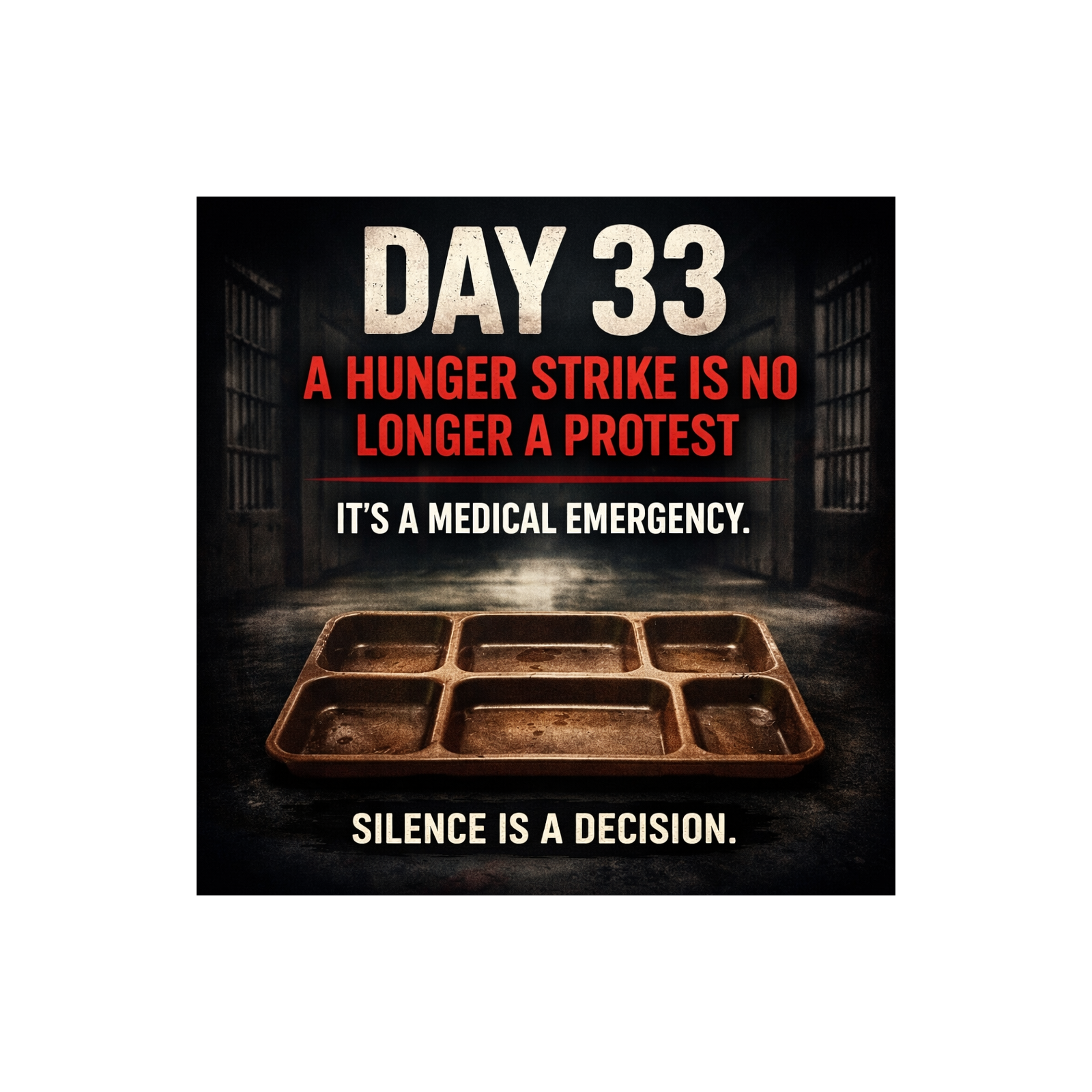
Day 33: When a Hunger Strike Becomes a Medical Emergency
bonusDay 33 of the hunger strike by incarcerated advocate Swift Justice (Kenneth Shaun Traywick) marks a critical turning point from protest to medical emergency. After more than a month without food, the physical risks are severe and escalating, including cardiac complications, organ damage, and the life-threatening dangers of refeeding syndrome if not properly managed.Despite repeated requests, the family continues to seek clear medical documentation, transparency, and identification of decision-makers empowered to resolve the underlying issues that led to this crisis. Monitoring alone is not treatment, and silence from leadership is not neutrality.This episode documents the gravity of Day 33, the urgent medical realities of prolonged starvation, and the family’s call for immediate action, accountability, and humane intervention. The clock is still ticking — and in moments like this, inaction itself becomes a decision.
S1 Ep 12Alabama’s Digital Prison Revolution: How AI, VR, and Canvas LMS Could Redefine Rehabilitation
In this visionary episode, Alabama’s Digital Prison Revolution explores how artificial intelligence, virtual reality therapy, and digital learning platforms like Canvas LMS could transform Alabama’s prison system from punishment to rehabilitation. Instead of investing billions in new prisons, Alabama has the opportunity to leverage technology to provide education, counseling, and real-world job skills behind the walls.Drawing from the Alabama Prison Reform Proposal, this episode outlines how tools such as AI-driven behavioral analysis, VR empathy and trauma simulations, and online vocational training through Ingram State Technical College can prepare inmates for successful reintegration—reducing recidivism and strengthening communities.🎧 Tune in to learn how digital innovation, transparency, and compassion can rewrite the story of incarceration in Alabama—and lead the nation in 21st-century reform.Keywords: Alabama Department of Corrections, prison reform, AI rehabilitation, VR therapy, Canvas LMS, Ingram State Technical College, education technology, restorative justice, digital learning, criminal justice innovation.

S1 Ep 11Alabama’s Prison War: Mega-Prisons vs. Meaningful Reform
In this explosive episode, Alabama’s Prison War unpacks the fierce debate dividing the state—should Alabama pour billions into building mega-prisons, or invest in rehabilitation, education, and restorative justice that actually reduce crime? Behind the political headlines lies a moral and financial battle shaping the future of incarceration in the Deep South.We explore how overcrowding, staff shortages, and unconstitutional conditions have pushed Alabama’s prison system to the brink—and how technology-driven reform, from AI monitoring to virtual reality therapy and vocational training at Ingram State Technical College, offers a smarter path forward. Drawing on the Alabama Prison Reform Proposal, this episode argues that true public safety stems not from concrete walls, but from restoring lives.🎧 Tune in for an unfiltered look at the policies, profits, and people caught in Alabama’s war over punishment and progress.Keywords: Alabama Department of Corrections, prison reform, mega-prisons, mass incarceration, restorative justice, AI monitoring, VR therapy, rehabilitation, criminal justice reform, Ingram State Technical College.
S1 Ep 10Alabama Prison Crisis: Inside the Radical Four-Level Plan to Rebuild Lives
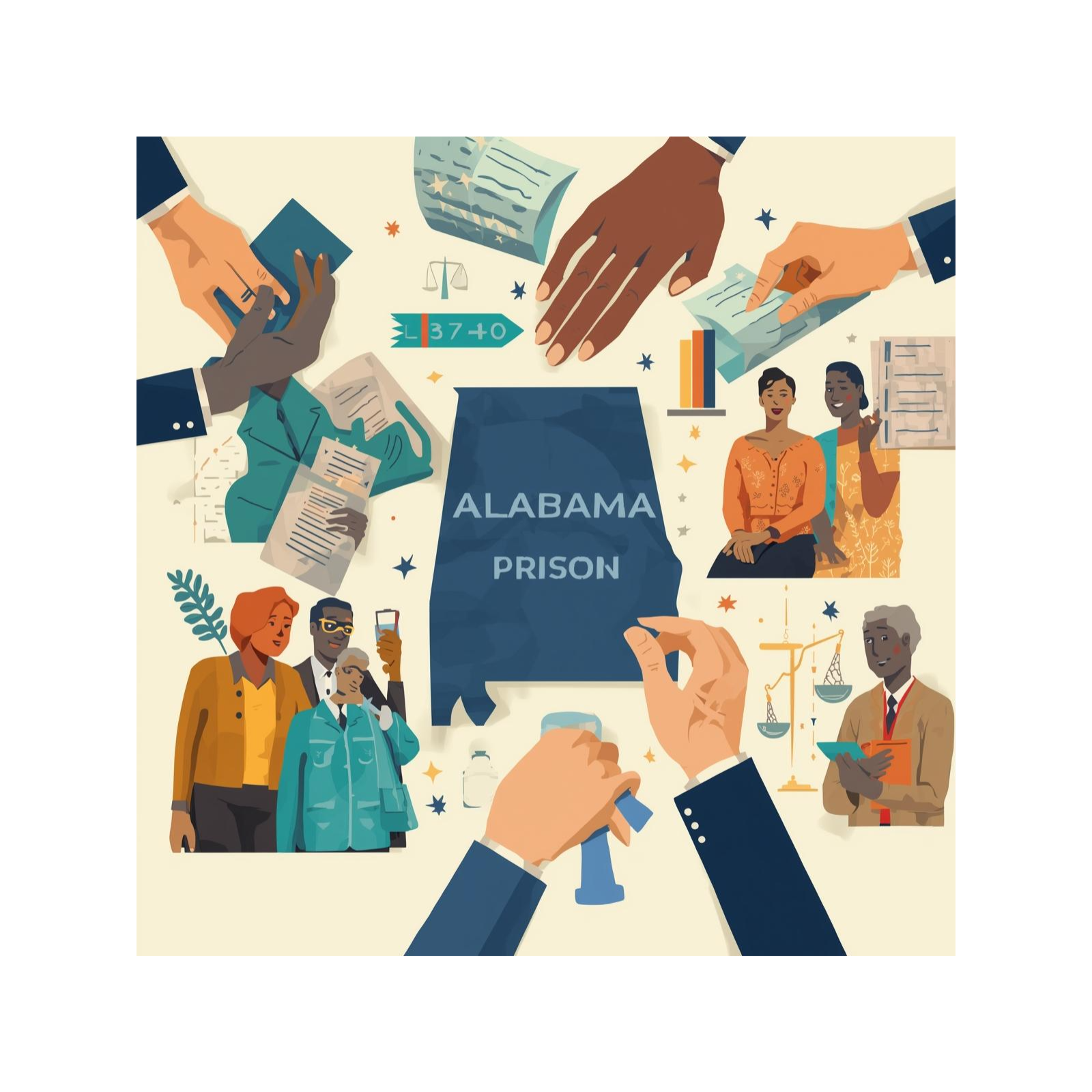
In this transformative episode, Alabama Prison Crisis dives deep into the Four-Level Rehabilitation Plan outlined in the Alabama Prison Reform Proposal — a groundbreaking roadmap designed to replace punishment with purpose. At the heart of this plan is a simple but revolutionary idea: inmates can earn freedom through accountability, counseling, education, work, and moral restoration.From spiritual reflection and cognitive behavioral therapy to vocational training, AI-assisted education, and restorative justice, this episode explains how the model turns Alabama’s failing prison system into a structured pathway to redemption. Each phase—Revive, Rebuild, Renew, and Reinforce—brings detainees one step closer to reintegration, proving that rehabilitation, not incarceration, is the key to public safety and lasting reform.🎧 Join us as we explore how a humane, evidence-based system could end Alabama’s prison crisis and redefine what justice truly means.Keywords: Alabama Department of Corrections, prison reform, rehabilitation, restorative justice, recidivism reduction, four-level plan, AI education, vocational training, cognitive behavioral therapy, faith-based reform.

Day 28 — Swift Justice Hunger Strike
bonusDay 28 of Swift Justice’s hunger strike marks a critical and deeply concerning moment. In today’s update, listeners hear from his wife and family as they continue to ask hard-hitting questions that remain unanswered by those in authority.Warden McKee confirmed today that Kenneth “Swift Justice” Traywick is alive, communicative, and being monitored daily. However, despite this confirmation, the family has still been unable to identify a decision-maker with the authority to address the underlying issues that led to the hunger strike or to engage in meaningful dialogue to resolve them.Attempts to reach Commissioner John Hamm or to schedule a meeting were unsuccessful, and no alternative leadership contact was provided. Efforts to contact YesCare at Bullock Correctional Facility resulted in unanswered phone calls with no option to leave a message.At this stage of a prolonged hunger strike, monitoring alone is not enough.The family respectfully requests:Confirmation of formal medical contingency planningIdentification of the responsible decision-makersA scheduled meeting between Commissioner Hamm and Mr. Traywick’s wifeThis episode centers on prevention, transparency, and the urgent need for resolution. The family continues to seek answers—not just for Swift Justice, but for accountability within a system that should not require a life-threatening protest to prompt action.
S1 Ep 9Alabama’s Free Tablets, Costly Calls: The Prison Tech Pay-for-Play Scheme
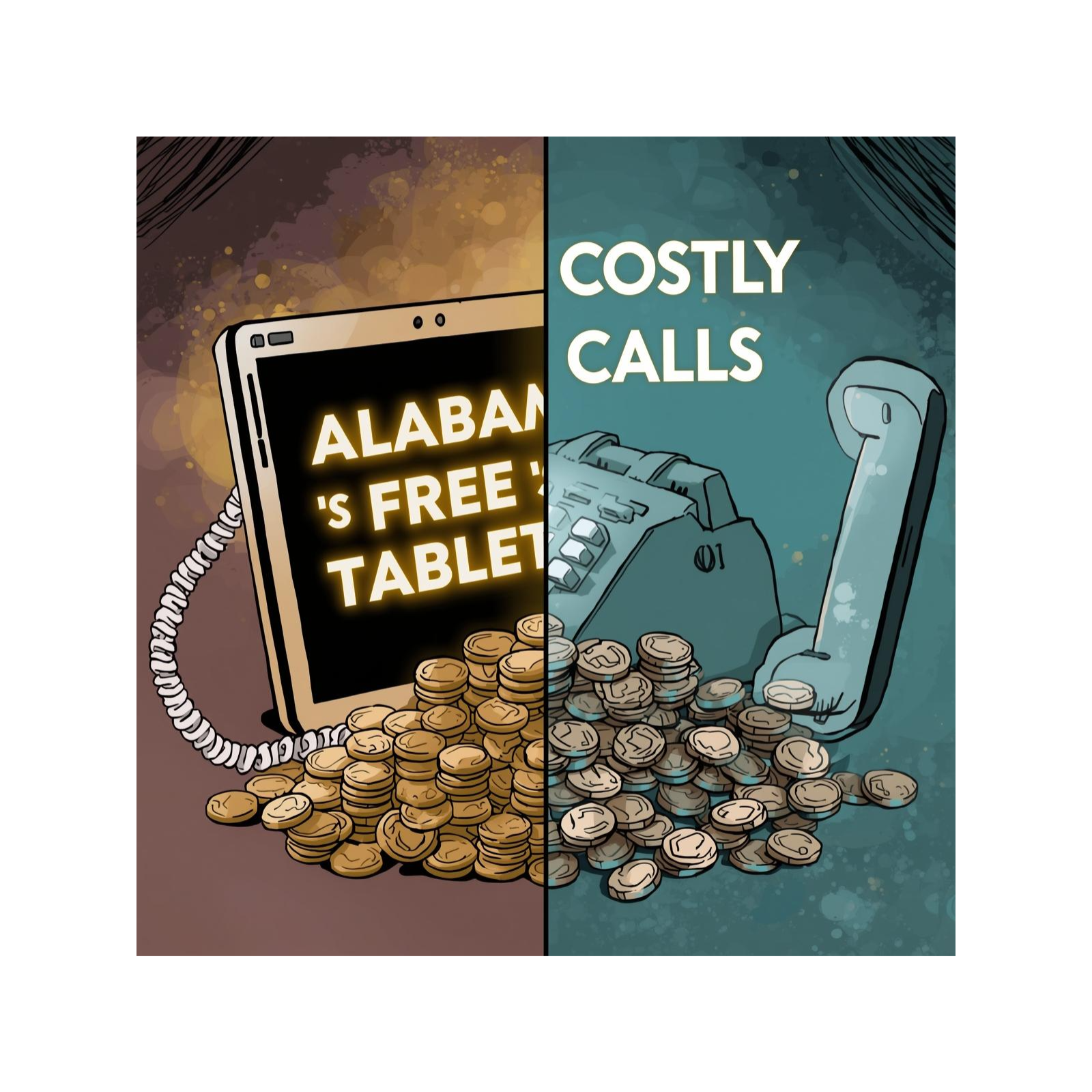
In this revealing episode, Alabama’s Free Tablets, Costly Calls, we expose the hidden costs behind Alabama’s so-called “free” inmate tablet program. While promoted as a step toward digital rehabilitation and education, these tablets often serve as gateways to sky-high phone and messaging fees, turning family connection into corporate profit.We examine how private vendors like ICSolutions and other prison tech companies profit from the poorest families, charging for apps and services that are free to the general public. Drawing from the Alabama Prison Reform Proposal, this episode explores how AI-powered monitoring, state-regulated pricing, and transparent communication systems could ensure rehabilitation tools serve people—not profits.🎧 Tune in to uncover how technology designed to educate and connect has become another barrier to freedom—and how Alabama can fix it with fairness, accountability, and innovation.Keywords: Alabama Department of Corrections, prison reform, ICSolutions, prison tablets, inmate communication, AI monitoring, tech justice, rehabilitation, social equity, pay-for-play.
S1 Ep 8Alabama’s Prison Tech Trap: Free Education Subsidized by Crippling Fees
In this eye-opening episode, Alabama’s Prison Tech Trap exposes how so-called “free” inmate education programs are often offset by hidden costs, exploitative technology fees, and inflated communication charges that trap incarcerated people and their families in cycles of debt.We unpack how private tech companies profit from Alabama’s prison system—charging for digital tablets, phone calls, and educational access that should be free under the promise of rehabilitation. Drawing from the Alabama Prison Reform Proposal, this episode examines how AI-driven transparency, state-funded education, and vocational training through Ingram State Technical College can create a fair, effective model for rehabilitation without exploitation.🎧 Listen as we reveal how innovation meant to uplift inmates has become a tool of profit—and how Alabama can build a system that values learning over leverage.
Day 21: The Disappearance of Swift Justice — Alabama’s Silence in a Life-or-Death Hunger Strike
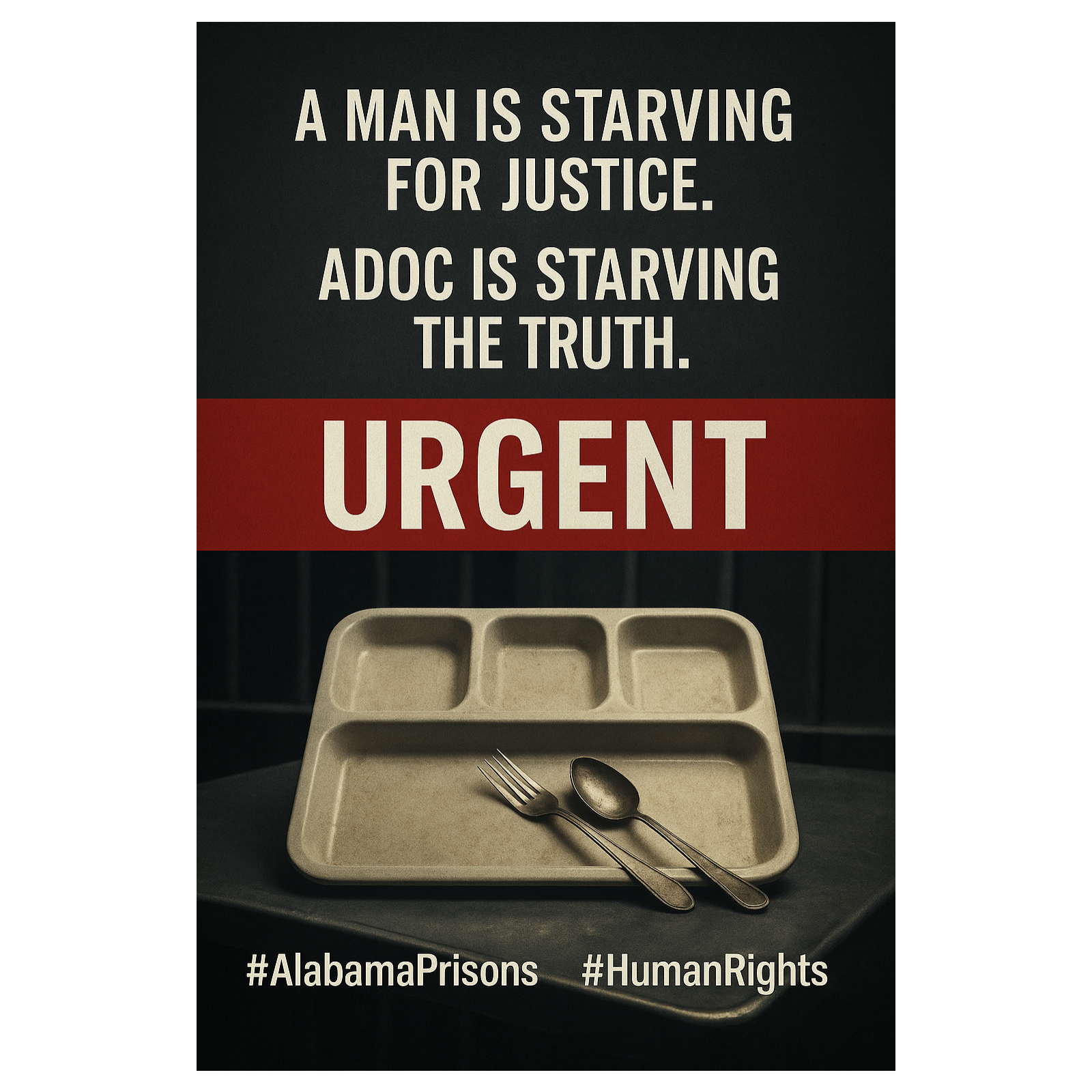
bonusDay 21 of Kenneth “Swift Justice” Traywick’s hunger strike has arrived, and the Alabama Department of Corrections still refuses to provide basic medical updates, proof of life, or confirmation of monitoring — despite repeated attempts from his wife, documented press outreach, and national concern.For three weeks, Swift has gone without food in protest of retaliation, unconstitutional conditions, blocked communication, denial of legal access, excessive force, and the silencing of incarcerated people across Alabama. His hunger strike is now at a stage considered medically life-threatening, with documented risks that include heart failure, fatal arrhythmias, organ shutdown, and refeeding syndrome. ReFeeding Syndrome - Hunger Str…Yet ADOC’s response has been silence, obstruction, and evasion.Across Days 4–14, ADOC repeatedly:Routed his wife’s calls to staff who were not on duty, or to endless ringing linesProvided only the words “he is alive,” refusing all further information, despite a valid medical release on file 11.25.25 Press Release Statemen…Withheld updates even as medical danger escalated beyond 10 and 14 days without foodContinued to hold Swift in restrictive housing, cutting him off from mail, legal access, and communication tools — a pattern he identified as retaliation 11.27.25 Press Release Statemen…Swift’s demands have remained lawful and consistent:A direct meeting with Commissioner HammAn end to retaliation and excessive forceA safe transfer out of Bullock Correctional FacilityRemoval of fabricated or retaliatory disciplinaries (Repeated across Days 4, 10, 11, 12, and 14 press releases)This episode investigates the disappearance of information surrounding Swift’s condition, the medical emergency unfolding behind prison walls, and the broader implications for human rights and accountability in Alabama’s correctional system.How long can ADOC remain silent? How long can a man survive under these conditions? And how long will Alabama ignore a crisis it helped create?This is the story of Day 21 — and the fight to ensure Swift Justice is not lost to a system that refuses to speak.
S1 Ep 7Alabama’s Parole Policy Revolution: How Fear-Driven Guidelines Keep Prisons Full
In this hard-hitting episode, Alabama’s Billion-Dollar Prison Problem takes a deep dive into the state’s escalating prison crisis—where taxpayers face a $5 billion incarceration bill, yet conditions remain among the worst in the nation. From overcrowding and corruption to the plan for billion-dollar “mega-prisons,” Alabama’s approach raises a vital question: Are we funding safety—or failure?We break down how political decisions and private contracts have fueled a profit-driven system that prioritizes construction over correction. Drawing from the Alabama Prison Reform Proposal, this episode explores data-driven alternatives—like AI-powered rehabilitation, VR therapy, restorative justice programs, and vocational training through Ingram State Technical College—that offer real solutions for reducing recidivism and rebuilding lives.🎧 Join us as we follow the money, challenge the myths, and reveal how Alabama can spend smarter—not bigger—on justice and reform.Keywords: Alabama Department of Corrections, prison reform, mass incarceration, billion-dollar prisons, justice reform, restorative justice, AI rehabilitation, VR therapy, taxpayer accountability, criminal justice policy.
No Updates. No Transparency. No Justice
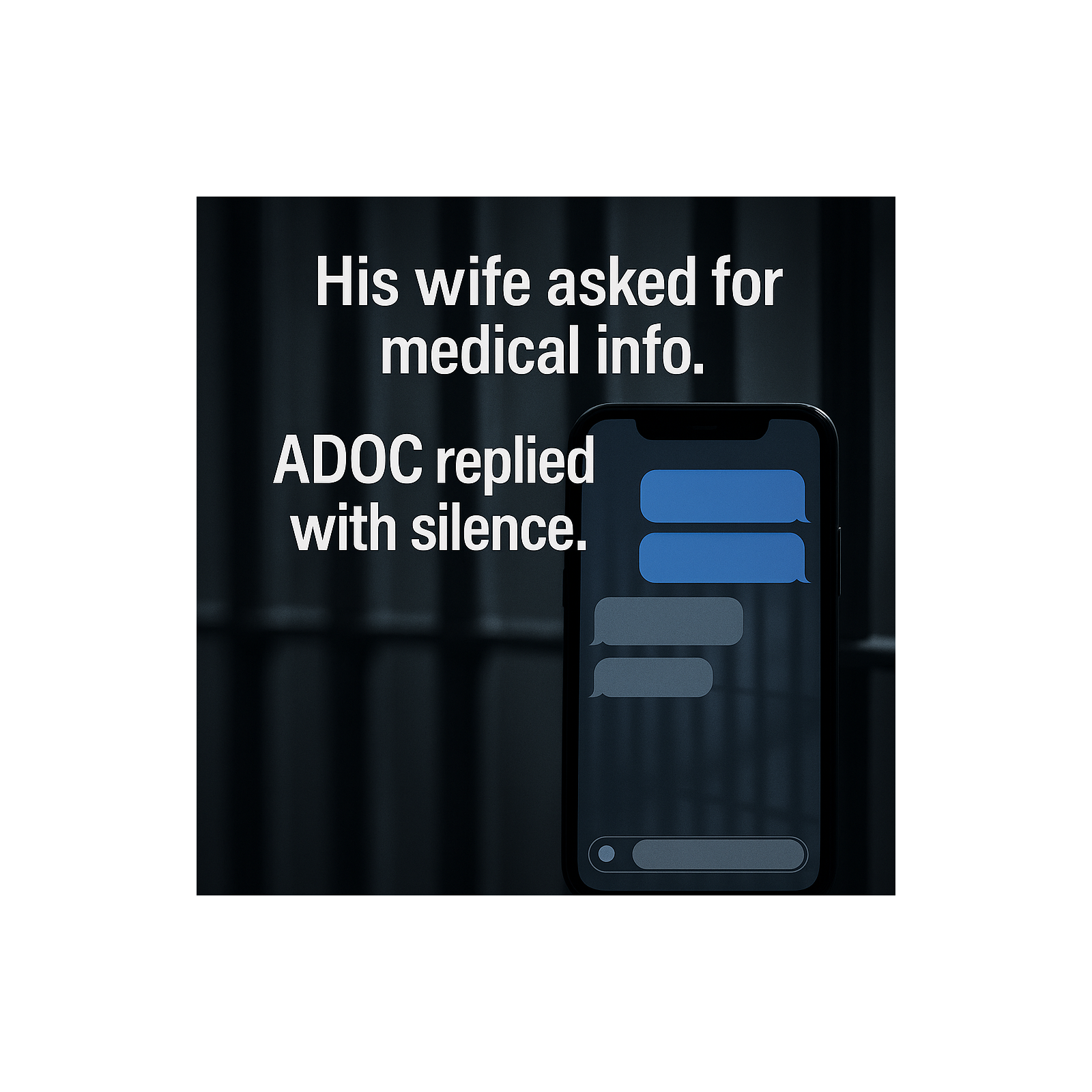
bonusA podcast built from the real-time recordings of a wife trying to save her husband during a hunger strike the state tried to hide. As Dr. Traywick confronts unanswered calls, blocked information, and bureaucratic stonewalling, listeners hear how Alabama’s prison system — one of the deadliest and most expensive in America — operates in total secrecy. This is a story of systemic silence, and the families forced to fill in the deadly gaps.
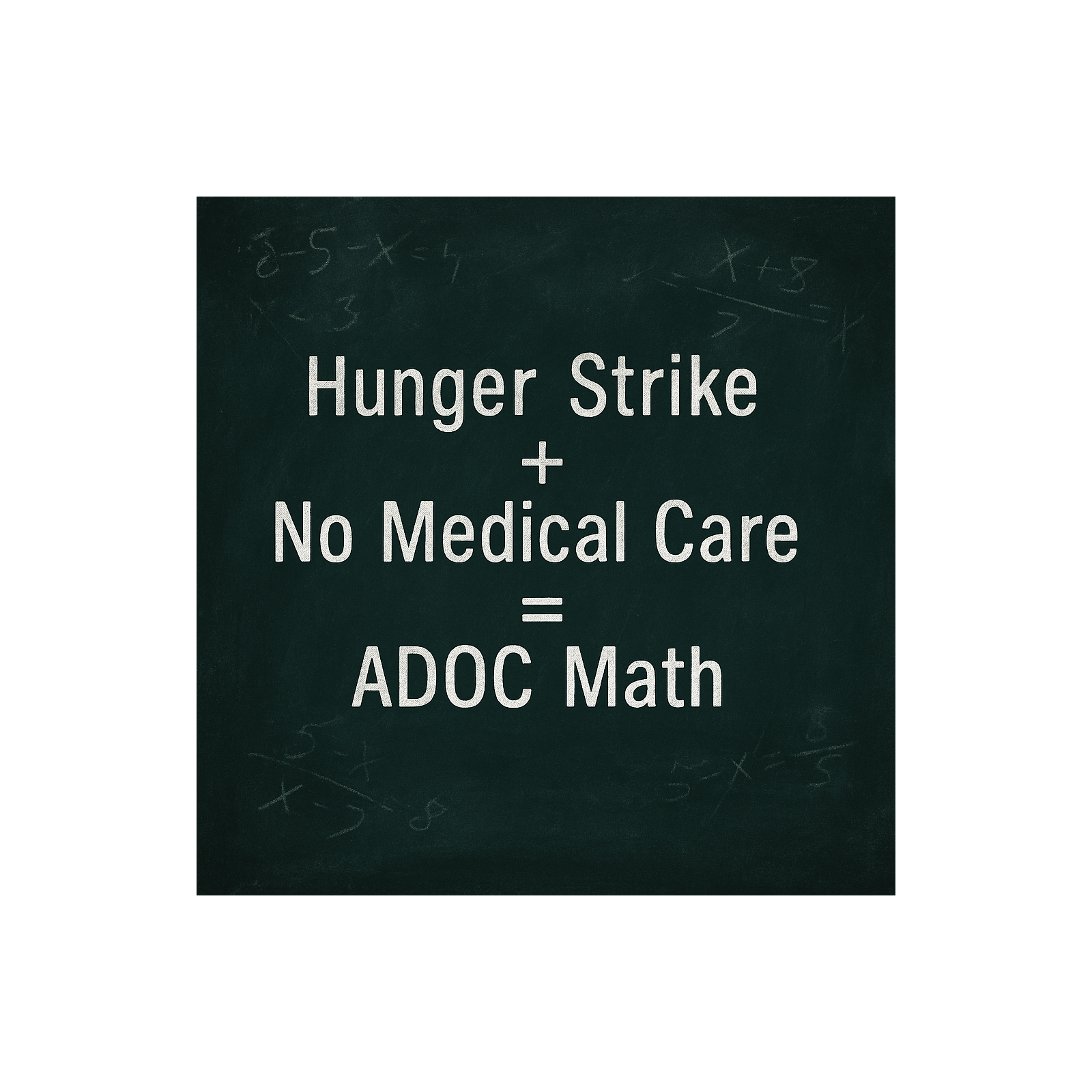
The Hunger Strike Alabama Doesn’t Want You to Hear About
bonusOn Day 16 of his hunger strike inside Bullock Correctional Facility, incarcerated advocate Kenneth “Swift Justice” Traywick has stopped eating, stopped receiving updates, and—according to the Alabama Department of Corrections—has seemingly stopped existing. For sixteen days, ADOC has refused to confirm whether he is safe, conscious, or even being medically monitored. His wife has made dozens of desperate calls, only to face ringing phones, blocked access, contradictory answers, and a deliberate wall of silence.This episode takes you inside Alabama’s prison crisis—where retaliation replaces rehabilitation, where hunger strikes are met with punishment instead of care, and where families are denied the most basic information about their loved ones. Featuring documented calls, official press releases, legal letters, and eyewitness accounts, we investigate how a man can risk his life to expose abuse while the system tries to erase him.Why is Alabama hiding Swift Justice? What is happening behind those walls? And why does a man have to starve himself to be heard?This is more than a hunger strike. This is a human rights emergency.
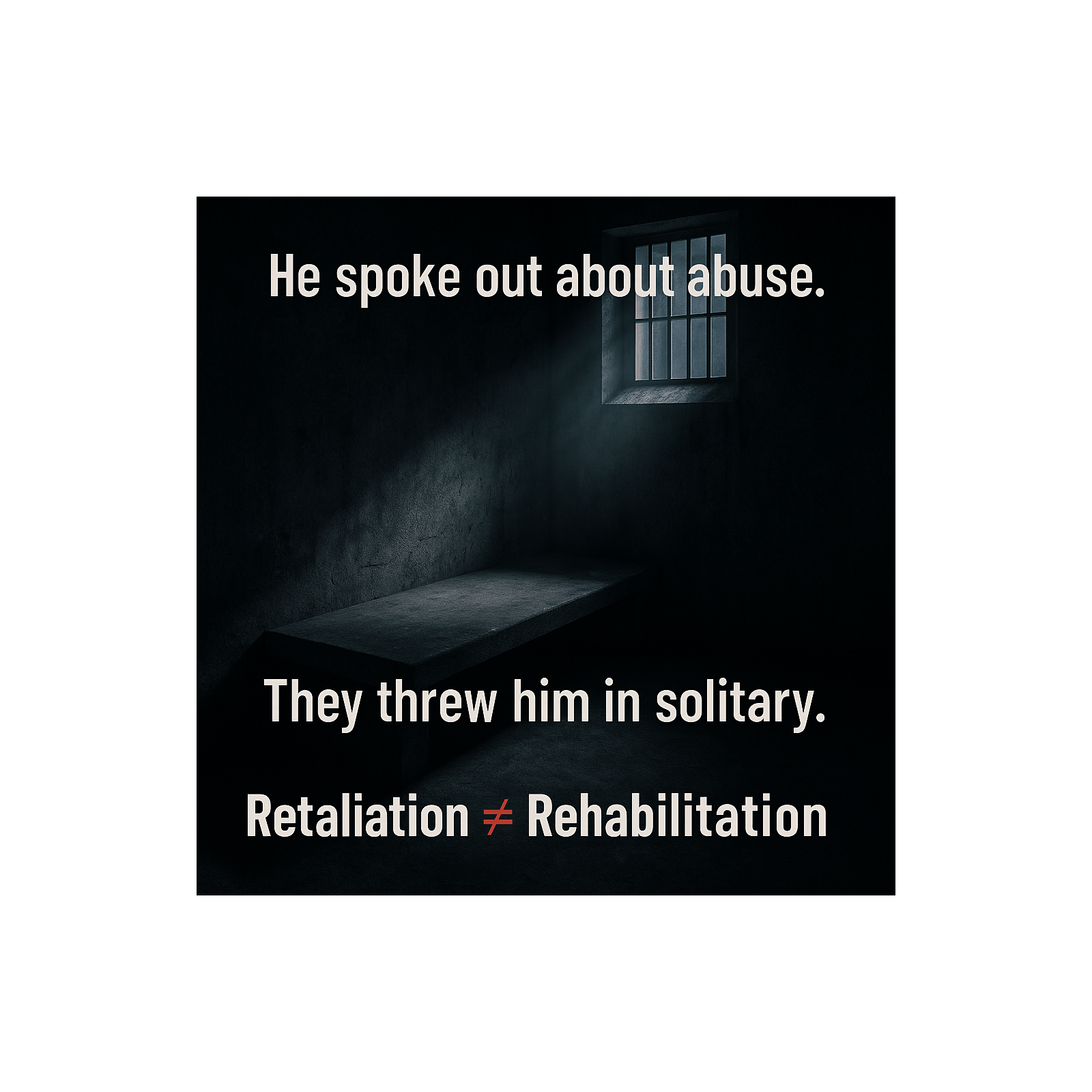
Swift Justice: Hunger Strike Against ADOC Retaliation
bonusIn late 2025, incarcerated organizer Kenneth “Swift Justice” Traywick entered a hunger strike inside Bullock Correctional Facility, igniting statewide concern over what he described as ongoing abuse, retaliation, and unconstitutional treatment by Alabama prison officials. For two weeks, Traywick refused food to protest the conditions at Bullock, calling for a transfer, an end to targeted harassment, and a face-to-face meeting with Commissioner John Hamm.According to a series of press releases from Unheard Voices of the Concrete Jungle (UVOTCJ), the Alabama Department of Corrections responded not with transparency, but with punitive isolation. They placed Traywick in restrictive housing, confiscated his legal materials, removed communication devices, and allegedly threatened him with fabricated disciplinary charges. These actions deepened fears that the hunger strike was being met with retaliation instead of medical oversight.Throughout the strike, ADOC refused to provide medical updates to Traywick’s wife, Dr. Traywick, raising alarms about his safety as his health deteriorated. In her formal letter to prison officials, she cited multiple constitutional violations – from denial of access to courts, to retaliation for protected speech, to inhumane conditions that may rise to the level of cruel and unusual punishment.To understand the deeper roots of Traywick’s defiance, an older interview transcript offers critical context: Swift Justice has long believed that Alabama’s prison system will not change without collective resistance from inside. He has publicly argued that hunger strikes and labor strikes are not just symbolic—they are necessary pressure tactics. His stated vision goes beyond reform: he calls for “mass release,” insisting that the system is too broken to be repaired through incremental policy shifts.Taken together, these sources paint a picture of a man willing to risk his life to expose what he sees as systemic abuse, and a Department of Corrections more focused on control than communication. Traywick’s hunger strike is not an isolated incident—it's the latest flashpoint in a prison system facing record deaths, overcrowding, federal lawsuits, and rising public scrutiny.The story raises a question that echoes through Alabama’s prisons and beyond:When someone resists from the inside, is the state’s response about safety—or silence?
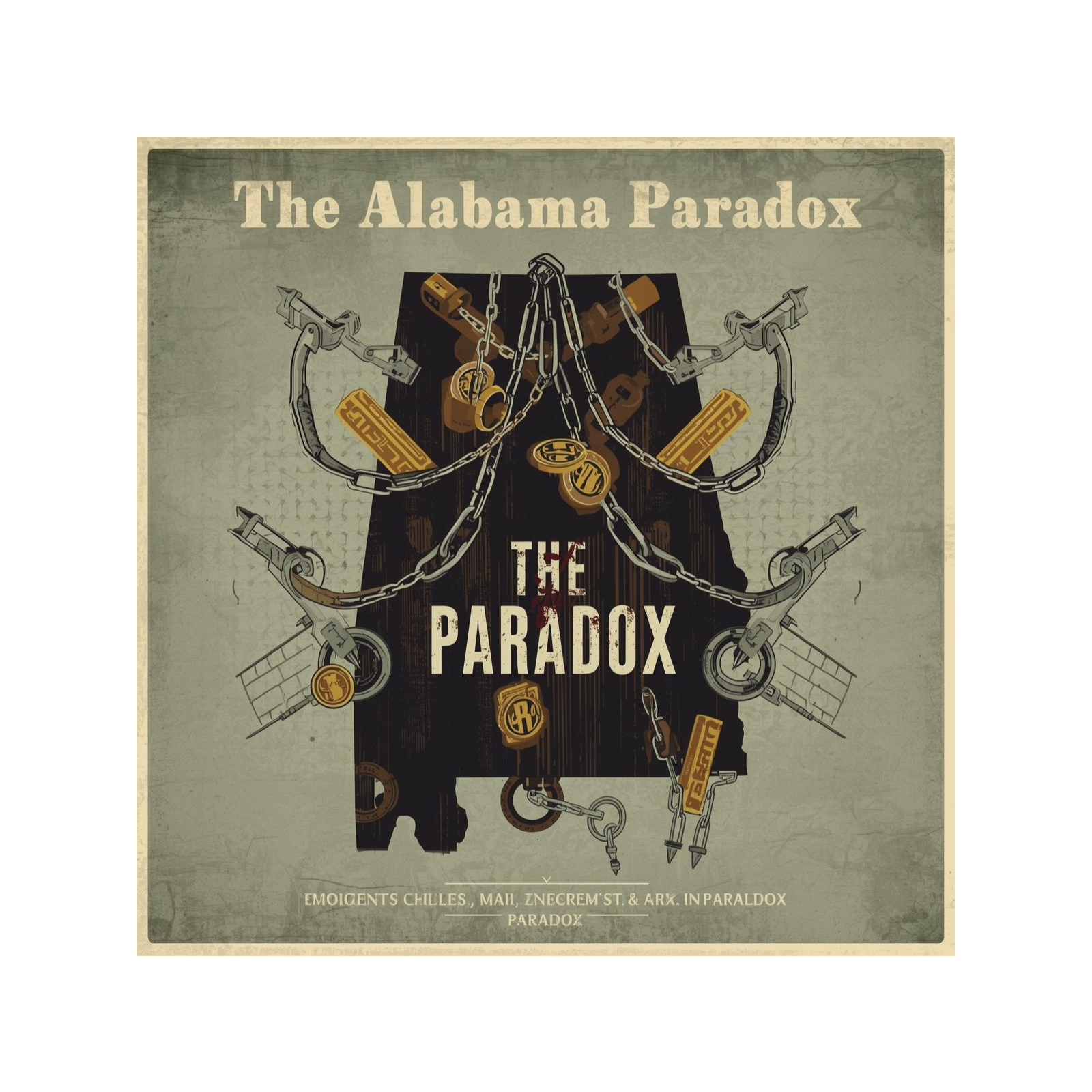
S1 Ep 6The Alabama Paradox: Why Trusted Inmates Working for $2 a Day Are Still Trapped
In this gripping episode, The Alabama Paradox exposes the hidden contradiction within Alabama’s prison system — where “trusted” inmates, some nearing release, work full days for as little as $2 while living in dangerous, unsanitary, and overcrowded conditions. These individuals maintain prison operations, repair facilities, and even save lives, yet remain denied dignity, fair pay, and real rehabilitation opportunities.We explore how this system, built on forced labor and outdated policies, undermines reform and perpetuates cycles of poverty and incarceration. Drawing insights from the Alabama Prison Reform Proposal, the episode highlights how AI-driven transparency, virtual learning, and vocational certification programs, offered through Ingram State Technical College, can break this paradox — turning exploitation into empowerment.🎧 Listen as we uncover how Alabama can move from injustice to innovation, ensuring rehabilitation replaces exploitation in its prisons.Keywords: Alabama Department of Corrections, prison labor, reform, recidivism, inmate pay, forced labor, restorative justice, AI rehabilitation, vocational training, criminal justice reform.
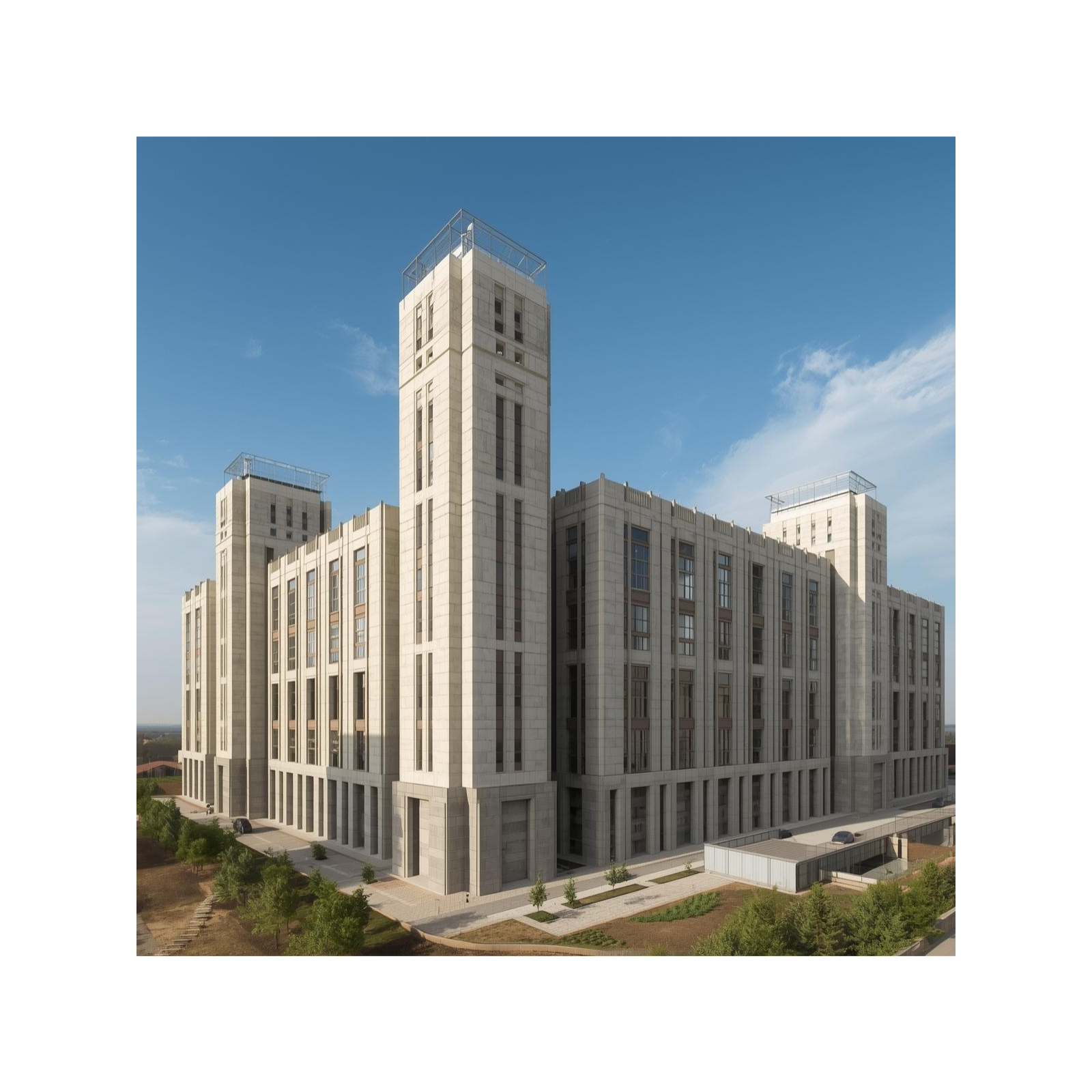
S1 Ep 5Alabama’s $1.25 Billion Prison Crisis: Mega-Prisons vs. Real Reform
In this powerful episode, Alabama’s $1.25 Billion Prison Crisis unpacks the state’s controversial plan to build two massive “mega-prisons” while ignoring decades of corruption, violence, and neglect within the Alabama Department of Corrections. With costs soaring past $1.25 billion, critics say Alabama is investing in concrete instead of people.We explore how this billion-dollar project fails to address the true root causes of the crisis—overcrowding, understaffing, drug addiction, and mental health neglect—and spotlight the alternative path outlined in the Alabama Prison Reform Proposal. Through AI-powered rehabilitation, VR therapy, education at Ingram State Technical College, and restorative justice, this episode demonstrates how technology and compassion can achieve what construction cannot: real change.🎧 Tune in to hear why Alabama’s future depends on reimagining justice, not rebuilding walls.Keywords: Alabama Department of Corrections, prison reform, mega-prison, ADOC crisis, mass incarceration, restorative justice, AI rehabilitation, VR therapy, Ingram State Technical College, criminal justice policy.

S1 Ep 4Alabama’s Billion-Dollar Prison Problem: Unpacking the $5 Billion Mass Incarceration Crisis
In this hard-hitting episode, Alabama’s Billion-Dollar Prison Problem takes a deep dive into the state’s escalating prison crisis—where taxpayers face a $5 billion incarceration bill, yet conditions remain among the worst in the nation. From overcrowding and corruption to the plan for billion-dollar “mega-prisons,” Alabama’s approach raises a vital question: Are we funding safety—or failure?We break down how political decisions and private contracts have fueled a profit-driven system that prioritizes construction over correction. Drawing from the Alabama Prison Reform Proposal, this episode explores data-driven alternatives—like AI-powered rehabilitation, VR therapy, restorative justice programs, and vocational training through Ingram State Technical College—that offer real solutions for reducing recidivism and rebuilding lives.🎧 Join us as we follow the money, challenge the myths, and reveal how Alabama can spend smarter—not bigger—on justice and reform.Keywords: Alabama Department of Corrections, prison reform, mass incarceration, billion-dollar prisons, justice reform, restorative justice, AI rehabilitation, VR therapy, taxpayer accountability, criminal justice policy.
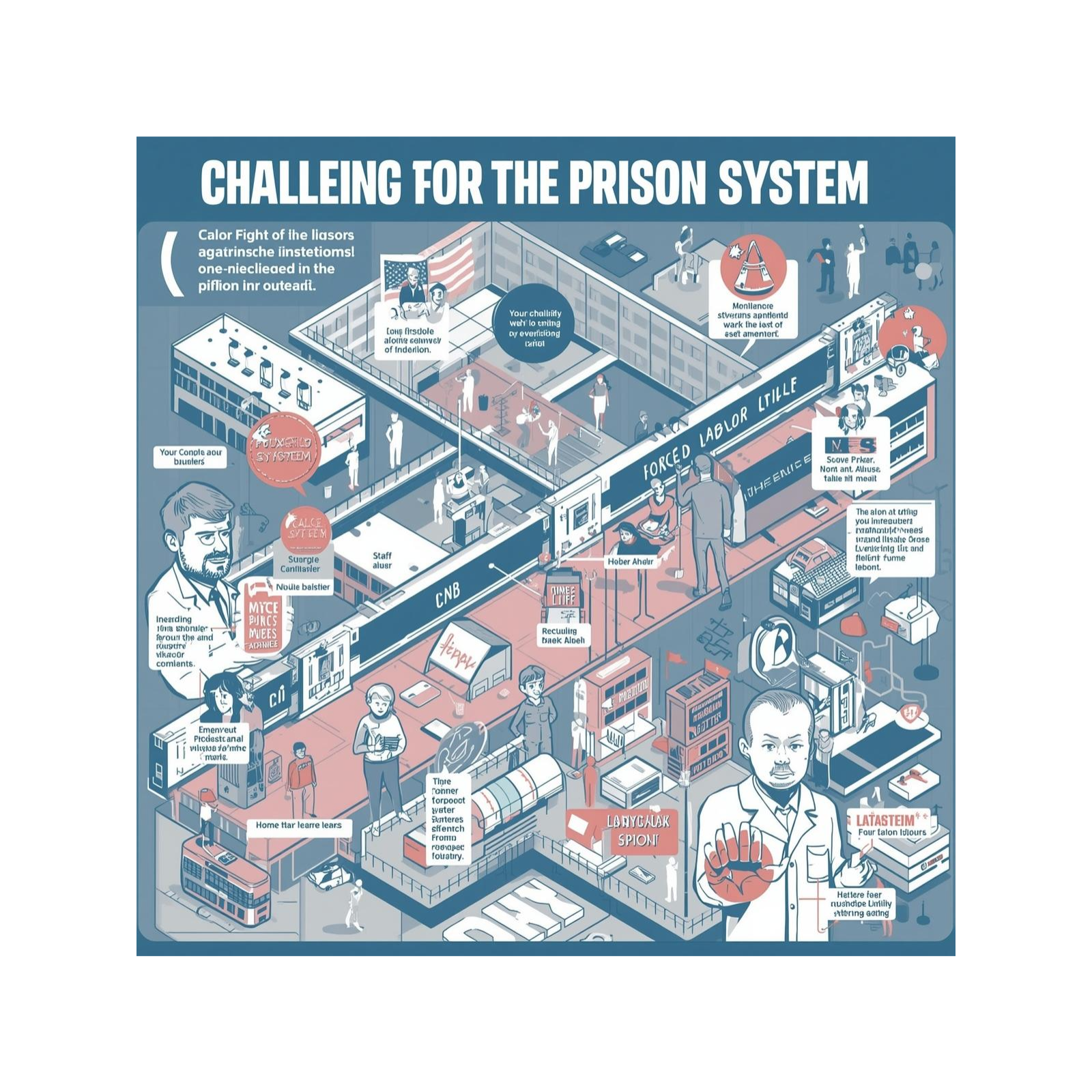
S1 Ep 3Alabama Prison Reform: How to Fight Forced Labor, Staff Corruption, and Systemic Abuse
In this hard-hitting episode, Alabama Prison Reform exposes the deep-rooted corruption, forced labor practices, and human rights violations inside the Alabama Department of Corrections. From exploited inmate workers earning just dollars a day to staff misconduct and systemic neglect, the episode reveals how profit and power have replaced justice and rehabilitation.But there’s a way forward. Drawing from the Alabama Prison Reform Proposal, this episode highlights a plan to replace exploitation with education — using AI-driven transparency, virtual reality therapy, and vocational training through Ingram State Technical College. Together, these innovations can build a correctional system that values human potential over punishment.🎧 Tune in to learn how technology, accountability, and compassion can transform Alabama’s prisons from centers of abuse into engines of redemption and reform.Keywords: Alabama Department of Corrections, prison reform, forced labor, corruption, restorative justice, AI monitoring, VR rehabilitation, Ingram State Technical College, recidivism, justice reform.
S1 Ep 2Promoted for Death: Alabama’s $51 Million Cover-Up and the Forgotten Prison Crisis
In this explosive episode, Promoted for Death uncovers the shocking truth behind Alabama’s prison crisis — a $51 million scandal where corruption, neglect, and human suffering collide. As violence, suicides, and overdoses rise inside the Alabama Department of Corrections, whistleblowers and reform advocates reveal how state officials are rewarded, not held accountable, for catastrophic failures.This episode exposes how political cover-ups and mismanagement perpetuate inhumane conditions, even as taxpayer money fuels a system that’s collapsing from within. Drawing from the Alabama Prison Reform Proposal, we explore how AI monitoring, VR-based rehabilitation, and restorative justice can bring transparency, accountability, and hope to one of the nation’s most dangerous prison systems.🎧 Tune in for a raw, urgent conversation about justice, reform, and the lives caught in Alabama’s hidden crisis.Keywords: Alabama Department of Corrections, corruption, prison reform, $51 million scandal, restorative justice, AI prison monitoring, VR rehabilitation, accountability, human rights, social justice.

S1 Ep 1Alabama’s Prison Hell: Inside the ADOC Crisis, Forced Labor, and the Fight for Reform
In this powerful episode, Alabama’s Prison Hell takes listeners inside one of the darkest corners of the American justice system — the Alabama Department of Corrections (ADOC). From forced labor and extreme overcrowding to rampant violence, suicide, and neglect, the conditions inside Alabama’s prisons expose a humanitarian crisis that has been ignored for far too long.Through real stories, data, and testimony, this episode reveals how corruption and complacency have fueled decades of suffering — and how reform, not expansion, offers a way forward. Featuring insights from the Alabama Prison Reform Proposal, we explore evidence-based solutions, including AI-powered monitoring, VR therapy, restorative justice, and education through Ingram State Technical College — tools that could rebuild lives and restore justice across the state.🎧 Tune in to hear the truth about what’s happening behind Alabama’s prison walls — and how technology, transparency, and compassion can lead to real change.Keywords: Alabama Department of Corrections, prison reform, forced labor, ADOC scandal, restorative justice, AI monitoring, VR rehabilitation, overcrowding, recidivism, social justice.
New Prisons or Policy Reform? The $1 Billion Question for Alabama
In this episode, we take a hard look at Alabama’s billion-dollar plan to build new prisons — and ask whether it addresses the real issues plaguing the state’s correctional system. Does pouring money into concrete and steel fix overcrowding, violence, and inhumane conditions, or does true reform begin with investing in people, education, and rehabilitation?Drawing insights from the Alabama Prison Reform Proposal, this episode explores innovative alternatives, such as AI-driven rehabilitation, VR therapy, and vocational training through Ingram State Technical College — solutions that focus on rebuilding lives rather than expanding prisons.🎧 Tune in for a thoughtful discussion on how technology, policy, and compassion can transform Alabama’s justice system — and why the future of public safety depends on rethinking the past.Keywords: Alabama prisons, prison reform, policy reform, AI rehabilitation, restorative justice, virtual therapy, Ingram State Technical College, recidivism, correctional innovation.
Alabama Prison Reform Proposal: Technology, Truth, and Transformation
trailerAlabama Prison Reform Proposal is a groundbreaking podcast that exposes the truth behind Alabama’s prison crisis and presents a visionary plan for change. Through real stories, investigative insights, and innovative solutions, this series reveals how decades of overcrowding, corruption, and neglect have led to one of the worst correctional systems in America.But it’s not just about what’s broken—it’s about how to fix it. Each episode explores evidence-based solutions from the Alabama Prison Reform Proposal, a plan built on AI-powered rehabilitation, virtual reality therapy, digital education, and vocational training. Together, these technologies offer a blueprint for restoring dignity, reducing recidivism, and rebuilding lives.🎧 Join us as we challenge the old system and introduce a new vision of justice—one that values restoration over retribution, and technology over tradition.Keywords: Alabama Department of Corrections, prison reform, AI rehabilitation, restorative justice, VR therapy, education technology, Ingram State Technical College, mass incarceration, criminal justice reform, recidivism reduction.

Alabama Prison Reform Proposal — The Beginning of Smart, Humane Justice
trailerThis 60-second teaser introduces the Alabama Prison Reform Proposal, a bold plan to replace punishment with purpose through technology-driven rehabilitation. Discover how AI-powered monitoring, virtual reality therapy, Canvas LMS digital education, and vocational training can turn Alabama’s billion-dollar prison problem into an opportunity for transformation.🎧 Listen now and subscribe to Alabama Prison Reform Proposal on RSS.com — join the movement for smart, humane justice that restores lives instead of destroying them.Keywords: Alabama prison reform, ADOC, AI rehabilitation, VR therapy, Canvas LMS, restorative justice, Ingram State Technical College, criminal justice reform, humane incarceration, rehabilitation technology