
ADHD with Jenna Free
80 episodes — Page 2 of 2
S1 Ep 29EP. 29: Executive Functioning Explained - Why ADHD Makes Everything Feel Impossible | ADHD with Jenna Free
Join ADHD Groups starting October 20th - adhdwithjennafree.com/groups Watch the free ADHD Regulation Masterclass (available until October 19th) - adhdwithjennafree.com/masterclass You can get your free ADHD Regulation Guide here - adhdwithjennafree.com/adhdguide Chapters 00:00 ADHD Groups Are Open - Join Now 01:00 What is Executive Functioning? 02:00 Self-Regulation and Daily Life Management 04:00 Executive Functioning as Goal-Directed Action 05:00 Can You Increase Executive Functioning? 07:00 The Blindfold Analogy 09:00 Perception Changes Everything 11:00 The Cost of Chronic Fight or Flight 13:00 Client Success Story - PhD Dissertation 15:00 The Power of Believing Change is Possible 16:00 Action Step - Shifting Your Perception 19:00 Working Through Resistance Summary In this episode, I dive deep into executive functioning - what it is, why ADHDers struggle with it, and most importantly, whether you can actually improve it. I explain how being in chronic fight or flight dramatically impairs executive functioning by redirecting blood flow away from your prefrontal cortex. Using real client examples, I demonstrate how regulation work can dramatically increase your ability to focus, plan, and execute tasks. I share a powerful action step about shifting your perception from seeing a "brick wall" of tasks to a "brick path" you can take one step at a time. This episode challenges the belief that executive dysfunction is permanent and shows you exactly why regulation work is the key to unlocking your true cognitive capacity. Action Step: Practice shifting your perception this week. When you notice feeling overwhelmed by your to-do list or the day ahead (the "brick wall"), mentally lay it down as a "brick path." Identify just the one next step in front of you right now. Focus only on that present moment action, taking it one brick at a time. This trains your brain to think linearly, reduces overwhelm, and signals safety to your nervous system. Takeaways Executive functioning is the management system of your brain that coordinates thoughts and behaviors toward goals. Key components include working memory, cognitive flexibility, and impulse control. Fight or flight significantly impairs executive functioning by redirecting blood flow from the prefrontal cortex. You likely don't know your true executive functioning capacity because you've been dysregulated since childhood. Getting out of fight or flight removes the dampening effect on your cognitive abilities. Your perception of tasks changes dramatically when dysregulated - everything feels overwhelming. Being in chronic fight or flight means suffering all the negative effects without actual danger. Real example: A client finished her PhD dissertation in 4 months after 2 years of being stuck. Believing improvement is possible is the first critical step to making progress. You can only take action in the present moment - hypervigilance about future steps is counterproductive. Resistance to regulation work is normal and comes from your dysregulated system trying to protect you. Connect with Me Instagram TikTok
S1 Ep 28EP. 28: RSD Explained - Why ADHD Brains Panic at Any Hint of Criticism | ADHD with Jenna Free
Join the waitlist for ADHD Groups here - adhdwithjennafree.com/groups You can get your free ADHD Regulation Guide here - adhdwithjennafree.com/adhdguide Chapters 00:01 Introduction to Rejection Sensitivity Dysphoria 02:00 The Bad Review and Initial Reaction 04:00 Understanding the Physical Response 06:00 Reactive vs. Responsive Thinking 08:00 Step-by-Step Regulation Process 10:00 Physical Regulation Techniques 12:00 Cognitive Restructuring and Taking Feedback 14:00 Information vs. Implementation Balance 17:00 Using Criticism Constructively 19:00 The Gift of Taking Feedback 21:00 Final Thoughts and Action Steps Summary In this episode, I dive into rejection sensitivity dysphoria (RSD) - that debilitating feeling when criticism makes you want to run away or quit everything. Using a recent podcast review as a real-time example, I walk through exactly how dysregulation shows up physically and mentally when facing criticism, and more importantly, how to regulate through it. I share the specific steps I used to go from heart-racing panic to productive action, demonstrating how regulation allows us to take in valid feedback instead of staying defensive. This episode includes a detailed action plan for managing RSD episodes. Action Steps for Managing Rejection Sensitivity Dysphoria: Observe the dysregulation - Notice physical symptoms (racing heart, clenched stomach, tense shoulders) and mental reactions (all-or-nothing thinking, panic responses) Regulate physically - Take deep breaths, consciously relax your body, remind yourself "I'm safe, this isn't dangerous" Shift your thinking - Challenge catastrophic thoughts, move from reactive to responsive mode Assess the feedback - Once calm, objectively evaluate if there's valid insight to take from the criticism Take productive action - Use the feedback constructively rather than defensively Takeaways Rejection sensitivity dysphoria is dysregulation triggered by perceived criticism or rejection. The ADHD brain tends to focus more on negative feedback than positive reviews. Physical symptoms include racing heart, stomach clenching, and muscle tension. Dysregulation causes cognitive distortions and reactive rather than thoughtful responses. Regulation takes practice - your nervous system needs training like building muscle. Being able to take feedback non-defensively is a superpower for growth and success. You don't need more information, you need consistent implementation of basics. It's safe to be imperfect and use criticism as a tool for improvement. The goal is responding thoughtfully rather than reacting emotionally. Taking feedback well allows you to learn, grow, and improve continuously. Connect with Me Instagram TikTok
S1 Ep 27EP. 27: From 30,000 Screenshots to One Simple Strategy - Why ADHDers Need Less, Not More | ADHD with Jenna Free
You can get your free ADHD Regulation Guide here - adhdwithjennafree.com/adhdguide Chapters 00:00 Introduction to Less is More Philosophy 01:00 The More is More Dysregulated Mindset 02:00 Trying to Do It All vs. Focused Action 03:00 Physical Items and Hoarding Tendencies 05:00 Information and Knowledge Overload 07:00 Prioritization and Focus Strategies 08:00 ADHD Tools and Overcompensation 10:00 Purpose Over Perfectionism 12:00 Abundance vs. Scarcity Mindset 14:00 Episode Length and Content Value Summary In this episode, I explore the concept of "less is more" for ADHDers, particularly how dysregulation leads to a "more is more" mindset that actually creates more problems. I discuss how being in fight or flight mode causes us to believe we need more calendars, more lists, more information, and more of everything to feel safe. I cover practical areas where streamlining can help: physical possessions, information consumption, prioritization, ADHD tools, task focus, and developing an abundance mindset. This episode also marks the transition to audio-only format as an example of the less is more philosophy in action. Takeaways Dysregulation causes a "more is more" mindset rooted in scarcity and fear. Physical hoarding and keeping items "just in case" stems from feeling unsafe. Information overload prevents implementation and creates overwhelm. Having too many priorities means having no real priorities. Multiple ADHD tools often become counterproductive overcompensation. Focusing on task purpose prevents getting stuck in perfectionism. True abundance mindset recognizes that "enough" already exists. Streamlining creates space for better focus and execution. Less work can often produce better results when done intentionally. Challenging the "more is more" impulse helps regulate the nervous system. Connect with Me Instagram TikTok
S1 Ep 26EP. 26: The Internal Tug of War - Why Your Conscious, Subconscious & Nervous System Fight ADHD Regulation | ADHD with Jenna Free
You can get your free ADHD Regulation Guide here - adhdwithjennafree.com/adhdguide Chapters 00:00 Understanding Dysregulation and Its Components 05:02 The Role of the Conscious Mind 12:37 Exploring the Subconscious Mind 14:32 The Nervous System's Impact on Regulation 21:54 Aligning the Three Parts for Regulation Summary In this episode of ADHD with Jenna Free, we discuss the intricate relationship between the conscious mind, subconscious mind, and nervous system in the context of dysregulation, particularly for individuals with ADHD. I explain how these three components can often be in conflict, leading to feelings of being stuck or overwhelmed. I emphasize the importance of aligning these parts to achieve emotional regulation and personal growth, providing insights into how to navigate this complex journey. Takeaways Dysregulation can feel like an internal tug of war. The conscious mind is aware of the need for change. The subconscious holds ingrained beliefs that can hinder progress. The nervous system reacts automatically to perceived threats. Aligning the conscious, subconscious, and nervous system is crucial for regulation. Understanding the invisible barriers is the first step to overcoming them. It's normal to feel resistance when trying to slow down. Creating new belief systems is essential for personal growth. Dysregulated behavior often stems from underlying beliefs. Patience and grace are necessary in the journey towards regulation. Connect with Me Instagram TikTok
S1 Ep 25EP. 25: Why ADHDers Rush Everything - The Fight-or-Flight Pattern Sabotaging Your Success | ADHD with Jenna Free
Take the quiz: adhdwithjennafree.typeform.com/adhdquiz You can get your free ADHD Regulation Guide here - adhdwithjennafree.com/adhdguide Chapters 00:00 Understanding Rushing in ADHD 08:50 The Three Levels of Rushing 18:23 Breaking the Cycle of Rushing Summary In this episode, I discuss the common trait of rushing among dysregulated ADHDers. I emphasize the importance of slowing down to improve executive functioning and offer practical strategies to interrupt the cycle of rushing (yes it's a cycle and we are trapped in it!) We go over the three levels of rushing—physical, mental, and impatience—and highlight the need for self-awareness and mindfulness in making changes. I'm excited to see what you notice if you choose to practice these shifts this week! Takeaways Rushing is a major issue for ADHDers (even though a lot of the time it can feel helpful). It signals danger to the nervous system, causing dysregulation! Rushing skews our perception of time and creates a scarcity mindset. There are three levels of rushing: physical, mental, and impatience. Challenging the belief of 'not enough time' is crucial. You can achieve more by doing less when regulated. Connect with Jenna Instagram TikTok
S1 Ep 24EP. 24: Overstimulation vs. Dysregulation - Why ADHDers Need to Know the Difference | ADHD with Jenna Free
You can get your free ADHD Regulation Guide here - adhdwithjennafree.com/adhdguide Chapters 00:00 Understanding Overstimulation and Dysregulation 10:49 Coping with Overstimulation 24:16 Long-term Regulation Strategies Summary In this episode of the ADHD with Jenna Free podcast, we dive into the concepts of overstimulation and dysregulation for ADHDers. I explain the differences of overstimulation and dysregulation and where they overlap. It's important to understand these two concepts so you can make the best decisions in how to cope. Dealing with the immediacy of overstimulation and long term dysregulation will improve your quality of life 100 fold! Takeaways Overstimulation is a state where the brain receives too much sensory information. Dysregulation occurs when the nervous system is imbalanced, often stuck in fight or flight mode. Dysregulation can make individuals more sensitive to overstimulation. Understanding the difference between overstimulation and dysregulation is crucial for effective coping. You deserve to have a life that's easier and more enjoyable. Connect with Me Instagram TikTok
S1 Ep 23EP. 23: The ADHD Overconsumption Trap - Why We Buy, Eat & Scroll When Dysregulated | ADHD with Jenna Free
You can get your free ADHD Regulation Guide here - adhdwithjennafree.com/adhdguide Chapters 00:00 Understanding the Fight or Flight Response 03:24 The Impact of Chronic Stress on Consumption 09:14 Balancing Consumption and Creation 14:35 Finding Fulfillment Through Creation Summary In this episode I explore the effects of the fight or flight response on consumption behaviors. I discuss how these stress responses lead to overconsumption of food, goods, and content as a means of coping. I share the importance of balancing consumption with creation to foster well-being and self-regulation. We wrap this episode encouraging you to reflect on your consumption habits. Takeaways Overconsumption is often a coping mechanism for dysregulation. Dopamine-seeking behavior can lead to unhealthy consumption patterns. Balancing consumption with creation is crucial for mental health. Creation fosters a sense of purpose and self-esteem. Connect with Jenna Instagram TikTok
S1 Ep 22EP. 22: ADHD People-Pleasing Explained - When 'Being Nice' Is Really About Staying Safe | ADHD with Jenna Free
You can get your free ADHD Regulation Guide here - adhdwithjennafree.com/adhdguide Chapters 00:00 Understanding the Fawn Response in ADHD 02:59 The Impact of Survival Mode on Relationships 07:07 Breaking Free from the Fawn Response 12:11 Practical Strategies to Overcome People-Pleasing 19:16 Embracing Vulnerability and Taking Up Space Summary In this episode of the ADHD with Jenna Free podcast, I explore the often-overlooked fawn response in survival mode. I discuss how this response manifests in behaviors like people-pleasing and avoiding conflict, and how to recognize and address these patterns for regulation and increased executive functioning. I go over practical strategies for you to break free from the fawn response, advocate for yourself, and foster genuine connections with others. Takeaways Fawn is a response to feeling unsafe and is often overlooked. Being in survival mode can lead to people-pleasing behaviors. Setting boundaries is essential for regulation Asking for help is a crucial step in overcoming the fawn response. Taking up space and expressing needs creates connections. Practicing vulnerability can lead to stronger relationships. It's safe to say no and prioritize your own needs. Connect with Jenna Instagram TikTok
S1 Ep 21EP. 21: Why Can't ADHDers Ever Relax? The Fight-or-Flight Trap That Follows You on Vacation | ADHD with Jenna Free
You can get your free ADHD Regulation Guide here - adhdwithjennafree.com/adhdguide Chapters 00:00 Understanding ADHD and Rest 00:49 The Impact of Dysregulation on Enjoyment 04:26 Chronic Fight or Flight and Its Effects 07:44 Challenging Thoughts and Beliefs 11:08 Nervous System Regulation Strategies 13:56 All or Nothing Thinking in Rest 16:35 Finding Balance in Rest and Productivity 19:30 Transitioning Between Tasks 25:51 Overcoming Barriers to Rest Summary In this episode of the ADHD with Jenna Free podcast, I dive into rest and ADHD, exploring the struggle between dysregulation and the ability to relax. I get into how external factors often get blamed for difficulties in resting, while the real issues may lie within our thoughts, beliefs, and nervous system regulation. I talk about how to challenge all-or-nothing thinking, the importance of finding balance in daily life, and practical strategies for achieving a more regulated state that allows for genuine enjoyment and rest. Takeaways Rest is often hard for those with ADHD due to dysregulation. Chronic fight or flight states hinder relaxation. External factors are not the sole cause of our inability to rest. Nervous system regulation is crucial for relaxation. Slowing down can help manage dysregulation. All or nothing thinking can prevent effective rest. Regulated rest is about balance, not extremes. Rest should be integrated into daily life, not seen as a reward. Connect with Jenna Instagram TikTok
S1 Ep 20EP. 20: The Missing Piece in ADHD Treatment - How Nervous System, Thoughts & Behavior Work Together | ADHD with Jenna Free
Learn more about the ADHD, Regulation and Intuitive Eating workshop here - adhdwithjennafree.com/ieworkshop You can get your free ADHD Regulation Guide here - adhdwithjennafree.com/adhdguide Chapters 00:00 Understanding ADHD Regulation 05:25 Dysregulation and Emotional Responses 08:39 The Impact of Fight or Flight on ADHD 11:30 The Theory of ADHD Regulation 14:32 The Dysregulation Cycle 17:16 Finding Balance in Regulation 20:17 Three Types of Regulation 23:07 The Path to a Regulated Life Summary In this episode of the ADHD with Jenna Free podcast, I discuss the complexities of ADHD regulation, diving into the dysregulation cycle and the impact of being in a constant state of fight or flight. I share the need for a three prong approach that includes nervous system regulation, cognitive restructuring, and behavioral changes to achieve lasting change. Takeaways ADHD regulation involves more than just nervous system regulation. Emotional dysregulation is often a symptom of a system in fight or flight. Understanding the dysregulation cycle is crucial for change. Working on your thinking and beliefs can help alleviate dysregulation. Regulation work is a gentle but long-term process. Connect with Jenna Instagram TikTok
S1 Ep 19EP. 19: ADHD & Food - Why ADHDers Struggle & The Intuitive Eating Solution | ADHD with Jenna Free
Check out the ADHD and Intuitive Eating workshop here - adhdwithjennafree.com/ieworkshop You can get your free ADHD Regulation Guide here - adhdwithjennafree.com/adhdguide Chapters 00:00 Introduction to ADHD and Food Relationships 04:29 Understanding Unhealthy Relationships with Food 09:47 My Personal Journey with Food and ADHD 15:58 Principles of Intuitive Eating 21:36 The Role of Dysregulation in Eating Habits 24:36 Workshop Announcement!! Summary In this episode of the ADHD with Jenna Free podcast, I discuss the complex relationship between ADHD and food. I dive into the challenges faced by ADHDers regarding their eating habits, including unhealthy relationships with food, binge eating, and the impact of dysregulation. I share my personal journey from dieting to intuitive eating and how you can use intuitive eating and regulation to begin building a more balanced and healthy relationship with food. Takeaways ADHD can significantly impact your relationship with food. Many individuals with ADHD struggle with binge eating and dysregulation. A healthy relationship with food involves nourishment and enjoyment, not punishment. Intuitive eating can help create balance in eating habits. Ditching diet culture is essential for a healthy food relationship. No foods should be labeled as good or bad to avoid moral judgments. Regular eating can help regulate emotions and prevent binge eating. Connect with Jenna Instagram TikTok
S1 Ep 18EP. 18: The ADHD Negative Self-Talk Trap - Why Your Brain Thinks Criticism Keeps You Safe | ADHD with Jenna Free
Check out ADHD Groups here - adhdwithjennafree.com/groups You can get your free ADHD Regulation Guide here - adhdwithjennafree.com/adhdguide Chapters 00:00 Understanding Negative Self-Talk in ADHD 04:00 The Impact of Negative Self-Talk on Regulation 07:26 Shifting from Negative to Neutral Self-Talk 12:01 Learning from Mistakes and Reflection 16:51 Embracing a Kinder Inner Dialogue Summary In this episode of the ADHD with Jenna Free podcast, I discuss the pervasive negative self-talk among ADHDers. I explore the reasons behind this, and share how it stems from a dysregulated state and serves as a misguided defense mechanism. I provide practical strategies for you to shift your mindset from negative self-talk to a more neutral perspective, encouraging self-compassion and reflection on mistakes without harsh judgment. The conversation highlights the importance of awareness and the need to create a positive mindset to improve overall well-being and reduce ADHD symptoms. Takeaways Most ADHDers experience a lot of negative self-talk. Negative self-talk serves as a misguided motivator. You are safe without negative self-talk. Shifting to neutral thinking can help reduce self-criticism. Curiosity about mistakes leads to better understanding. You deserve to live a life that's enjoyable and easier. Negative self-talk hinders personal growth and happiness. Connect with Jenna Instagram TikTok
S1 Ep 17EP. 17: The Real Reason ADHDers Struggle With Money - From Survival Mode to Financial Balance | ADHD with Jenna Free
Get your spot in the Free ADHD Beliefs Workshop here - adhdwithjennafree.com/beliefs You can get your free ADHD Regulation Guide here - adhdwithjennafree.com/adhdguide Chapters 00:00 Understanding ADHD and Money 02:16 Survival Mode and Short-Term Thinking 03:39 Shopping as a Coping Mechanism 10:27 The Rush and Its Impact on Spending 13:17 Dysregulation and Financial Avoidance 18:29 Facing Financial Discomfort 23:44 Balancing Short-Term and Long-Term Goals Summary In this episode of the ADHD with Jenna Free podcast, I discuss the complex relationship between ADHD and money management from a dysregulation lens. I explore how ADHD (particularly dysregulated ADHD) can lead to impulsive spending, avoidance of financial responsibilities, and the impact of survival mode on long-term financial planning. We are talking about why money can be hard and what we can do to make it better. Takeaways ADHD can complicate money management due to impulsivity. Survival mode affects our ability to think long-term about finances. Shopping can provide temporary relief from dysregulation. Rushing leads to poor financial decisions and increased spending. Avoidance of financial responsibilities can create a cycle of shame. Slowing down can lead to more thoughtful spending decisions. Urgent purchases often indicate dysregulation. Balancing short-term enjoyment with long-term goals is crucial. Mindfulness and regulation are key to improving financial health. Connect with Jenna Instagram TikTok
S1 Ep 16EP. 16: Beyond Nervous System Regulation - Why Your ADHD Beliefs Need Healing Too | ADHD with Jenna Free
Grab your spot in "The ADHD Beliefs Keeping You Stuck in Survival Mode" Workshop - https://www.adhdwithjennafree.com/beliefs You can get your free ADHD Regulation Guide here - adhdwithjennafree.com/adhdguide Chapters 00:00 Understanding Dysregulation in ADHD 07:21 The Three Layers of Regulation 19:27 Shifting from Scarcity to Abundance 28:12 The Importance of Relaxation Summary In this episode, we explore the connection between dysregulation and ADHD, emphasizing the importance of addressing both the nervous system and belief systems to improve overall well-being. I dive into common beliefs that contribute to dysregulation, such as "I' m behind and I need to catch up", and offers strategies for shifting to more regulating beliefs. Takeaways ADHDers often experience chronic fight or flight due to dysregulation. Dysregulation can exacerbate ADHD symptoms, making them harder to manage. There are three layers of regulation: nervous system, thoughts and beliefs, and behavior. Shifting beliefs can lead to better regulation and improved functioning. The idea of being 'done' is a myth; life is ongoing. Scarcity mindset can lead to feelings of desperation and overwhelm. The dangling carrot philosophy keeps individuals in a cycle of stress. Connect with Jenna Instagram TikTok
S1 Ep 15EP. 15: The 6 External Changes That Transformed My ADHD - Simple Tools for Better Regulation | ADHD with Jenna Free
You can get your free ADHD Regulation Guide here - adhdwithjennafree.com/adhdguide Chapters 00:00 External Regulation Tools for ADHD 03:45 Slowing Down Household Dynamics 07:01 The Power of a Calendar 09:43 Managing Social Media and Scrolling 13:28 The Importance of Breaks 16:58 Implementing Changes Gradually Summary In this episode, I dive into 6 external tools and strategies for managing ADHD, focusing on how to create a more regulated environment. I emphasize the importance of slowing down schedules, simplifying household dynamics, utilizing calendars effectively, managing social media use, listening to one's body for breaks, and implementing changes gradually. I share personal experiences and practical tips to help you find balance and regulation through external supports and strategies. Takeaways External regulation tools can support internal regulation. Slowing down your schedule can prevent dysregulation. Simplifying household dynamics can create a calmer environment. Using a calendar is essential for managing ADHD effectively. Social media scrolling can exacerbate dysregulation. Taking breaks is crucial for maintaining mental health. Implementing changes gradually leads to better long-term results. Rest is as important as productivity. Finding balance is key to managing ADHD. Connect with Jenna Instagram TikTok
S1 Ep 14EP. 14: ADHD & Prioritization - Why You're Not Actually Bad at It & What's Really Going On | ADHD with Jenna Free
You can get your free ADHD Regulation Guide here - adhdwithjennafree.com/adhdguide Chapters 00:00 Understanding Prioritization and Executive Dysfunction 05:42 Dysregulation and the Challenge of Prioritization 14:07 Accepting Consequences of Prioritization 19:20 The Importance of Decision-Making 28:41 Regulation as the Key to Effective Prioritization Summary In this episode of the ADHD with Jenna Free podcast, I explore the complexities of prioritization, particularly for us with ADHD. I highlight the role of dysregulation in decision-making and the necessity of accepting the consequences of our choices. By understanding the interplay between prioritization and regulation, I encourage you to reflect on your decision-making processes and embrace a more regulated and grounded approach to prioritization. Takeaways Prioritization is an action, not just a thought process. Dysregulation can make it difficult to prioritize effectively. Accepting the consequences of choices is crucial for prioritization. Everything we prioritize comes with a sacrifice. It's important to recognize that there is no 'right' answer in prioritization. Making decisions is more valuable than seeking the perfect choice. Dysfunctional thinking can lead to paralysis in decision-making. Regulation is key to overcoming prioritization challenges. Understanding the cause and effect of choices can aid in prioritization. Digging deeper into our beliefs can unlock better prioritization strategies. Connect with Jenna Instagram TikTok
S1 Ep 13EP. 13: How Regulation Changed Everything - My Personal ADHD Transformation Story | ADHD with Jenna Free
You can get your free ADHD Regulation Guide here - adhdwithjennafree.com/adhdguide Chapters 00:00 Jenna's Journey with ADHD and Regulation 05:11 The Impact of Postpartum on ADHD 09:42 The Cycle of Dysregulation and ADHD 12:07 The Shift to Regulation as a Solution 15:21 Daily Life Transformation Through Regulation 16:15 Entrepreneurial Growth and Regulation 25:13 The Importance of Being Present 28:09 Taking Action and Execution in Regulation Summary In this episode, I share my personal journey with ADHD and how regulation techniques have transformed my life. I discuss the struggles I faced, particularly during postpartum, and how understanding ADHD led me to explore regulation as a coping strategy. I dive into the importance of being present and taking small steps in both daily life and entrepreneurial endeavors. Takeaways Regulation work has been the key to my success with ADHD. ADHD can manifest in various ways, including feelings of overwhelm and depression. Postpartum experiences can significantly impact ADHD. Dysregulation often leads to a cycle of overwhelm and crash. Being present in daily life reduces feelings of overwhelm. Entrepreneurial success can be achieved through a regulated approach. Taking small, consistent steps is crucial for growth and success. Rushing to achieve goals can lead to burnout and paralysis. Execution of regulation strategies is more important than having many ideas. Connect with Jenna Instagram TikTok
S1 Ep 12EP. 12: Our Obsession With Efficiency - Why ADHD Brains Need Sustainability Over Speed | ADHD with Jenna Free
You can get your free ADHD Regulation Guide here - adhdwithjennafree.com/adhdguide Chapters 00:00 Understanding Efficiency in ADHD 08:13 The Cycle of Survival Mode and Efficiency 14:50 Shifting from Efficiency to Sustainability 27:11 Rethinking Rushing and Efficiency Summary In this episode, I discuss the concept of ADHDers obsession with efficiency. I explore how the obsession with efficiency can lead to feelings of guilt, shame, and frustration, particularly when in survival mode. We are talking about the importance of shifting focus from efficiency to sustainability, advocating for a more regulated approach to tasks that allows for gradual progress rather than perfectionism. Takeaways ADHDers often obsess over efficiency, which can be counterproductive. Perfectionism about efficiency can hinder action. Survival mode creates a cycle of start-stop behavior. Focusing on sustainability is more beneficial than efficiency. Life is long; we should aim for gradual progress. Small actions matter but we often devalue them. Connect with Jenna Instagram TikTok
S1 Ep 11EP. 11: Are You Happy? The Big Question Every ADHDer Needs to Ask | ADHD with Jenna Free
You can get your free ADHD Regulation Guide here - adhdwithjennafree.com/adhdguide Get your spot now in ADHD Groups (June 9th - 13th only) - adhdwithjennafree.com/groupspresale Chapters 00:00 Exploring the Purpose of Life 10:00 Shifting Perspectives on Life 20:08 Finding Joy in Everyday Moments 28:20 Connecting with What Truly Matters Summary In this episode of the ADHD with Jenna Free podcast, we dive into the profound question of life's purpose, what is all this running around and list checking off even for?!?! I emphasize the importance of stepping out of survival mode to gain perspective on what truly matters in life. Because a dysregulated brain is a zoomed in brain. Some fun "homework" here - to reflect on your priorities and to find joy in everyday experiences. I am here to advocate for a mindful approach to life that fosters connection and fulfillment - through The ADHD Reset! Takeaways The purpose of life is not just about productivity. Survival mode limits our perspective on what matters. We often prioritize tasks over meaningful connections. Mindfulness can help us enjoy everyday moments. Being present can enhance our quality of life. Life's challenges shouldn't make us rush through it. Connect with Jenna Instagram TikTok
S1 Ep 10EP. 10: Finding Calm in Chaos | How to Regulate Your ADHD Brain During Life's Hardest Moments | ADHD with Jenna Free
You can get your free ADHD Reset Guide here - adhdwithjennafree.com/adhdguide Chapters 00:05 Navigating Life's Challenges with ADHD 04:56 Understanding Dysregulation and Its Justifications 06:09 The Human Experience of Grief and Regulation 07:16 The Role of Regulation During Hard Times 13:31 Fighting Reality: Acceptance and Moving Forward Summary In this episode of the ADHD with Jenna Free podcast, I dive into the complexities of regulating emotions during significant life events (think job loss, illness of a family member etc - but this can also be related to smaller but still impactful things like a stressful season at work, having a baby). I provides insights on how to navigate through hard times while maintaining a sense of regulation and clarity. I am sharing 5 things to consider when trying to regulate through more than the everyday stress of life. Takeaways Regulating through big life events is crucial for mental health. Dysregulation can feel justified during tough times, but it's important to recognize it. Grief is a natural human experience that cannot be bypassed through regulation. Regulation helps in observing and managing survival mode during crises. Acceptance of reality is key to moving forward after a setback. Connect with Jenna Instagram TikTok
S1 Ep 9EP. 9: Beyond the Quick Fix | The Truth About ADHD, Dopamine & Lasting Happiness | ADHD with Jenna Free
You can get your free ADHD Regulation Guide here - adhdwithjennafree.com/adhdguide Chapters 00:00 Understanding Dopamine and ADHD 03:45 The Impact of Quick Dopamine Hits 10:16 The Pursuit of Pleasure vs. Meaning 15:36 Healthy Ways to Boost Dopamine 19:52 Finding Fulfillment Beyond Quick Fixes 26:49 Regulation and Long-Term Happiness Summary In this episode of the ADHD with Jenna Free podcast, we explore the relationship between dopamine and ADHD, discussing how dopamine affects mood, motivation, and behavior. I dive into the importance of understanding dopamine's role in ADHD and the potential pitfalls of seeking quick dopamine hits through activities like scrolling and substance use. We are challenging this stereotype by discussing the pursuit of pleasure (hedonia) with the pursuit of meaning and fulfillment (eudaemonia), advocating for healthier ways to boost dopamine through engaging activities that promote long-term happiness and growth. I am sharing the need for regulation and awareness in managing dopamine levels and finding true fulfillment in life. Takeaways Dopamine is crucial for mood, motivation, and attention. People with ADHD may produce less dopamine than those without. ADHD medications often work by increasing dopamine levels. Quick dopamine hits can lead to a crash and feeling worse. The brain seeks balance and homeostasis after dopamine spikes. Survival mode leads to short-sighted decision-making. Healthy dopamine boosts come from activities like exercise and connection. Finding fulfillment requires growth and long-term goals. Regulation is key to managing dopamine and achieving happiness. Connect with Jenna Instagram TikTok
S1 Ep 8EP. 8: Bandaids vs. Breakthroughs | The Critical Difference in ADHD Management That Changes Everything | ADHD with Jenna Free
You can get your new and improved free ADHD Reset Guide here - adhdwithjennafree.com/adhdguide Chapters 00:06 Understanding ADHD Approaches 04:56 The Band-Aid Approach vs. Transformation 14:19 Information Overload and Implementation 23:05 The Three Types of Regulation Summary In this episode, I discuss two primary approaches to managing ADHD: the band-aid approach, which focuses on quick fixes, and the transformational approach, which emphasizes internal work and awareness. I highlight the importance of understanding dysregulation and its impact on the effectiveness of ADHD management tools (yes even using calendars can get better with regulation). Takeaways The band-aid approach offers quick fixes but lacks long-term effectiveness. Transformation requires internal work and awareness, not just external tools. Dysregulation can hinder the effectiveness of ADHD management tools. Information hoarding can lead to inaction and frustration. Effective ADHD management combines both external tools and internal transformation. Understanding the three types of regulation is crucial for managing ADHD. Nervous system regulation alone is not enough for lasting change. Transformation takes time and patience, not instant solutions. Connect with Jenna Instagram TikTok
S1 Ep 7EP. 7: Smartphones & ADHD: A Complicated Relationship | How Your Device Is Changing Your Brain | ADHD with Jenna Free
You can get your free ADHD Regulation Guide here - adhdwithjennafree.com/adhdguide Chapters 00:00 Introduction to Smartphone Addiction and ADHD 04:29 Understanding the "Alternative Effect" 09:43 Radical Approaches to Technology Separation 15:00 Exploring Practical Solutions for Phone Use 20:35 Flexible Strategies for Managing Phone Addiction 30:59 Mindset of Curiosity and Reflection Summary In this episode of the ADHD with Jenna Free podcast, I discuss the relationship between smartphones and ADHD, exploring the addictive nature of technology and its impact on attention and regulation. I introduce the concept of the 'alternative effect' and share both radical and practical strategies for managing phone use, emphasizing the importance of separating technology and fostering a mindset of curiosity towards our habits. All I'm suggesting is to reflect on your phone usage and consider ways to create healthier boundaries with technology. Takeaways Smartphones are designed to be addictive, especially for ADHD brains. The 'alternative effect' shows how options can lower our motivation. Separating technology can help reduce phone addiction. Using a dumb phone or MP3 player can create distance from distractions. Apps like ClearSpace can help limit social media use effectively. Flexible strategies can help manage phone addiction without drastic changes. Mindfulness and curiosity are key in addressing phone habits. Creating a personal entertainment ladder can help retrain attention spans. Reflection on phone use can lead to healthier habits over time. Connect with Jenna Instagram TikTok
S1 Ep 6EP. 6: Perfectionism: The Hidden Defense Mechanism & Why Your ADHD Brain Craves Impossible Standards | ADHD with Jenna Free
You can get your free ADHD Regulation Guide here - adhdwithjennafree.com/adhdguide Chapters 00:00 Understanding Perfectionism and ADHD 02:52 The Fight or Flight Response and Its Impact 06:05 Perfectionism as a Defense Mechanism 12:02 Challenging Perfectionism and Embracing Imperfection 18:01 Practical Strategies for Overcoming Perfectionism 23:56 Finding Balance and Freedom from Perfectionism Summary In this episode we are exploring the complex relationship between perfectionism and ADHD. We talk about how perfectionism stems from a fight or flight response, acting as a defense mechanism against fear of failure and criticism. I emphasize the importance of recognizing perfectionism as a barrier to productivity and self-acceptance, encouraging you to challenge your perfectionistic tendencies and embrace imperfection (reality). I share practical strategies for overcoming perfectionism and highlight the need for awareness and balance in daily life. Takeaways Perfectionism is often a defense mechanism. The fight or flight response can exacerbate perfectionism. Perfectionism can lead to feelings of disappointment and frustration. Self-criticism and low self-esteem fuel perfectionism. Awareness of perfectionism is the first step to overcoming it. Challenging perfectionistic thoughts can lead to greater freedom. It's important to recognize that perfect doesn't exist. Finding balance in life is crucial for regulation. Embracing imperfection can lead to increased productivity and satisfaction. Connect with Jenna Instagram TikTok
S1 Ep 5EP. 5: Acceptance ≠ Complacency: The Powerful Truth About Embracing Your ADHD Brain | ADHD with Jenna Free
ADHD Groups is now open: while spots are available - www.adhdwithjennafree.com/groups You can get your free ADHD Regulation Guide here - adhdwithjennafree.com/adhdguide Chapters 00:00 Understanding Acceptance in ADHD 06:52 The Impact of Fighting Reality (not accepting) 13:13 Dysregulation and Energy Management 19:01 Sustainable Change Through Acceptance 25:05 Curiosity Over Judgment Summary Today we are discussing the importance of acceptance in managing ADHD and the detrimental effects of fighting reality (when we do not accept what is). Acceptance does not equate to complacency but rather allows us to move forward and make change. We will be diving into the relationship between dysregulation, energy management, and sustainable change. Takeaways Acceptance is crucial for managing ADHD effectively. Fighting reality leads to dysregulation and energy depletion. Sustainable change comes from acceptance, not force. Judgments and 'shoulds' hinder progress and acceptance. Being present is essential for effective action. Energy management is key to avoiding burnout. Acceptance allows for realistic goal setting and progress. Self-reflection is best approached with curiosity, not judgment. Connect with Jenna Instagram TikTok
S1 Ep 4EP. 4: ADHD Revealed: The SURPRISING Truth About How Fight-or-Flight Is DRIVING Your Symptoms | ADHD with Jenna Free
You can join the free ADHD workshop here - adhdwithjennafree.com/adhdworkshop Chapters 00:00 Understanding ADHD Symptoms and Fight or Flight 03:17 The Connection Between Anxiety and Overthinking 08:48 Emotional Dysregulation Explained 12:47 Real-Life Examples of Emotional Responses 18:31 The Impact of Fear and Urgency on Motivation 25:33 Decision Fatigue and Overwhelm 31:38 Overcoming Executive Function Challenges 36:47 The Path to Regulation and Understanding ADHD Summary In this episode we explore the intricate relationship between ADHD symptoms and the fight or flight response. We talk about the importance of awareness in recognizing how symptoms like anxiety, emotional dysregulation, and decision fatigue are exacerbated by being in a state of dysregulation. Through personal anecdotes and practical insights we explore a deeper understanding of how to navigate your ADHD symptoms by focusing on regulation and self-awareness, ultimately leading to a more balanced and fulfilling life. Takeaways ADHD symptoms are often linked to the fight or flight response. Awareness of symptoms is crucial for effective management. Emotional dysregulation is not just a skill deficit; it's a response to stress. Regulation work can help manage emotional responses and improve daily functioning. Fear and urgency can hinder motivation and productivity. Decision fatigue stems from the pressure we place on ourselves to make the right choices. Taking small steps can help overcome executive function challenges. Understanding the connection between ADHD and fight or flight can lead to better self-management strategies. Connect with Jenna Instagram TikTok
S1 Ep 3EP. 3: The Hidden Trap of ADHD Motivation: Why Fear & Urgency Are SABOTAGING Your Success | ADHD with Jenna Free
You can join the free ADHD workshop here - adhdwithjennafree.com/adhdworkshop Chapters 00:00 The Freedom of Choice in Regulation 02:22 Understanding Motivation and Its Impact 07:12 Transitioning from Fear-Based to Desire-Based Motivation 11:27 The Journey of Regulation and Overcoming Resistance 20:45 The Importance of Connection and Enjoyment in Life 26:01 Personal Transformation Through Regulation Work Summary Today we are exploring the difference between fear-based and desire-based motivation, highlighting being in fight or flight (motivated by fear) can lead to a cycle of stress and burnout. I encourage you to recognize your resistance to change and the impact of being in a dysregulated state on your ability to connect with others and enjoy life (isn't that the whole point!?) Takeaways Regulation work provides the freedom to choose our behaviors. Fear-based motivators can lead to burnout and are not sustainable. Desire-based motivators are gentler and more effective long-term. Being in a dysregulated state consumes a lot of energy. Connection with others is hindered when in fight or flight mode. Enjoying life is difficult when focused on survival. It's important to challenge beliefs that keep us stuck. Connect with Jenna Instagram TikTok
S1 Ep 2EP. 2: The MISUNDERSTOOD Truth About ADHD & Your Nervous System: Why Traditional Regulation Methods Are FAILING You | ADHD with Jenna Free
You can get your free ADHD Regulation Guide here - adhdwithjennafree.com/adhdguide Please rate and review the podcast to allow more ADHDers to discover this approach! Chapters 00:00 Understanding ADHD and Nervous System Regulation 06:43 The ADHD Reset Approach 9:37 Identifying Dysregulation 20:50 Interrupting Dysregulation 26:17 The Journey to Regulation Summary Today we are diving into the importance of nervous system regulation for ADHDers. I will share how dysregulation can manifest and the impact it has on daily life. We will discuss the ADHD Reset approach, emphasizing the need to identify dysregulation and practice interrupting it to achieve a more regulated state. We explore practical strategies for awareness and coping, ultimately aiming to help you live a more enjoyable and productive life with ADHD. Takeaways ADHD can be helped through nervous system regulation. Chronic fight or flight is detrimental for ADHDers. Identifying dysregulation is crucial for effective management. Awareness of dysregulation can lead to better coping strategies. Interrupting dysregulation can be achieved through simple tools. The journey to regulation requires patience and practice. Living in a regulated state is more enjoyable and productive. Connect with Jenna Instagram TikTok
S1 Ep 1EP. 1: STOP FIGHTING Your ADHD Brain: The UNEXPECTED Path to Success No One's Talking About | ADHD with Jenna Free
You can get your free ADHD Regulation Guide here - adhdwithjennafree.com/adhdguide Chapters 00:00 Rethinking ADHD: A New Perspective 11:38 The Journey to Regulation: Finding Balance 19:07 The Impact of Regulation on Daily Life 26:03 Awareness and Acceptance: The Key to Transformation Summary Hi! I'm Jenna Free, therapist for ADHD with ADHD here to share a transformative perspective on ADHD, emphasizing the importance of understanding that we have ADHD but we are also in fight or flight and that is the true problem. I discuss the concept of dysregulation and how ADHDers often find themselves in a chronic state of fight or flight, which can lead to feelings of overwhelm and paralysis. I am here to advocate for deeper internal work to achieve regulation and balance, moving away from superficial coping strategies. Today I am sharing my unique approach - learning the philosophy of The ADHD Reset is vital in living well with ADHD. From here we will talk about how to implement this in your life and beyond. Takeaways ADHD should be viewed as a brain difference, not a problem. Many (all?) ADHDers experience chronic dysregulation and fight or flight. Superficial coping strategies are not enough for true transformation. Awareness of dysregulation is the first step to change. Regulation allows for a more relaxed and sustainable way of living. Fear and shame can fuel short bursts of energy but are not sustainable. Finding balance is key to managing ADHD symptoms effectively. The journey to regulation involves internal work and acceptance. Enjoyment of life should be the ultimate goal, not just productivity. Transformation is possible with the right approach and mindset. Connect with Jenna Instagram TikTok
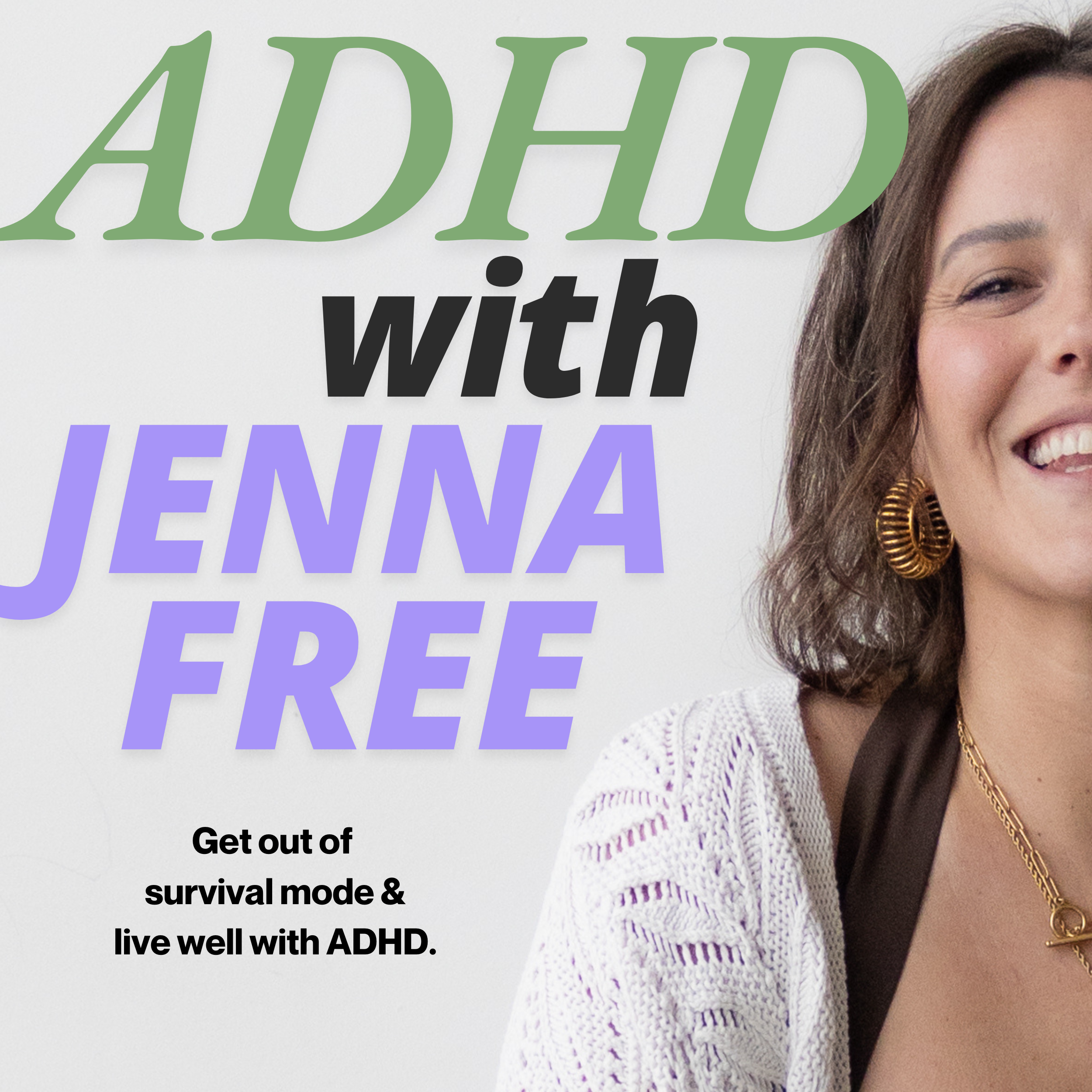
Trailer | ADHD with Jenna Free
trailerWhen you're tired of trying the latest ADHD tips and tricks it's time to do some deeper work. This is what we do here. No more rushing to get everything over with so you can go lay down. We are here to regulate and start truly living (and enjoying) your life. Through Regulation work and 'The ADHD Reset' we will change the way you experience life with ADHD (think more fun and less dread).