A Productive Conversation
695 episodes — Page 2 of 14
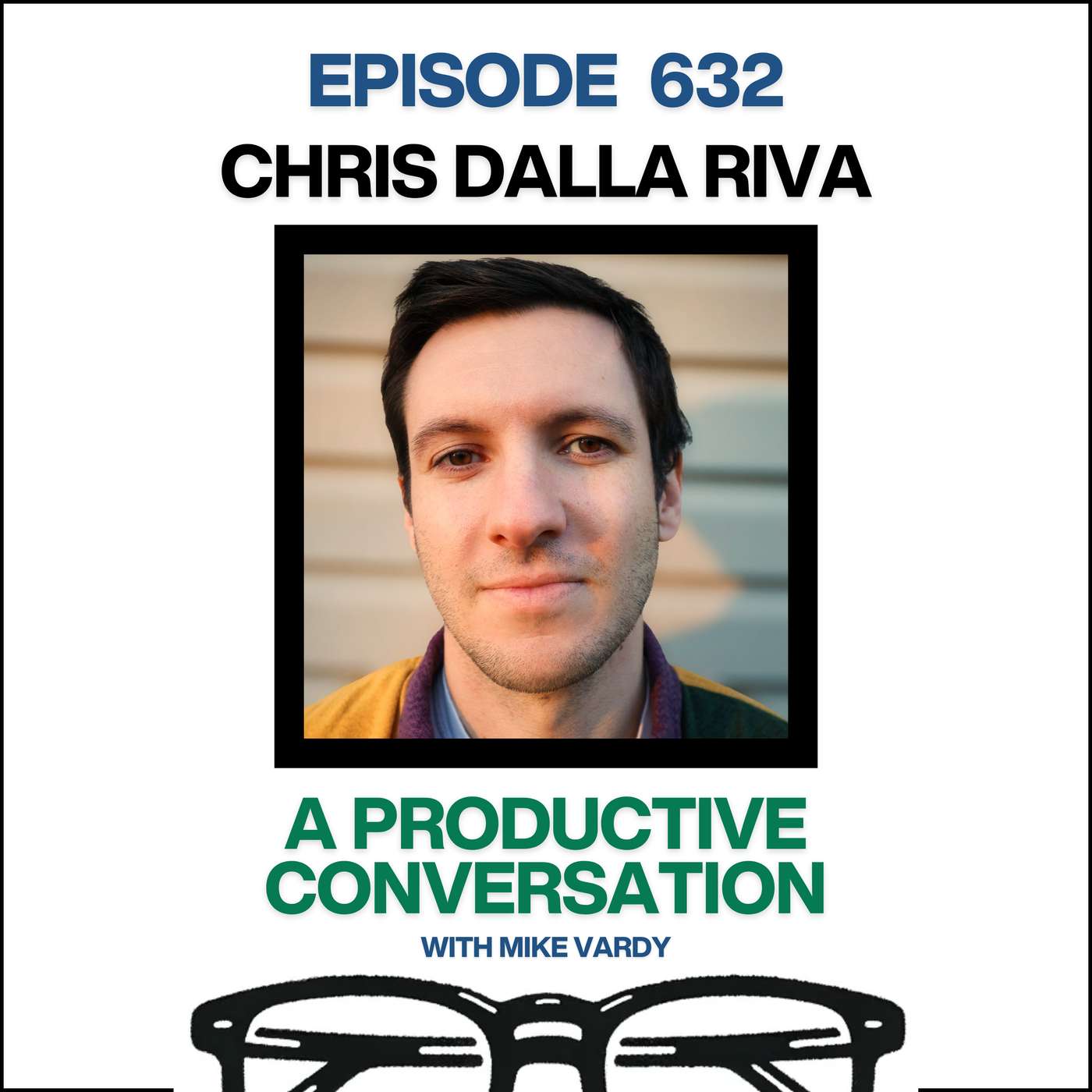
Ep 632Chris Dalla Riva Talks About Music, Data, and the Stories Behind the Hits
This episode is brought to you by Your Clockwise Week—a personalized weekly structure built around your actual life, not an ideal one. If your week feels full but not fitting, you can learn more at mikevardy.com/yourclockwiseweek.This episode of A Productive Conversation features Chris Dalla Riva, a musician, data analyst, and Senior Product Manager at Audiomack who bridges the gap between creativity and analytics. Chris joins me to discuss his book Uncharted Territory: What Numbers Tell Us About the Biggest Hit Songs and Ourselves.As part of his research, Chris listened to every Billboard Hot 100 number-one song—nearly 1,200 of them—tracking trends, rating songs, and discovering how randomness, technology, and taste shape what becomes a hit. We explore the intersection of numbers and nuance, how data can deepen our understanding of art, and what the patterns of pop music reveal about us.Six Discussion PointsThe origin of Chris’s experiment to listen to every Billboard number-one hitWhy Bob Dylan never topped the Hot 100—and what that says about luck and timingHow data, subjectivity, and quality intertwine when rating songsThe cyclical nature of musical trends, from movies to TikTokThe uneasy relationship between music and technology—from Auto-Tune to AIWhy the album format—and vinyl—still matter in a streaming worldThree Connection PointsCheck out Chris's newsletterBuy Chris's bookRead Mike's essay, The Sound of TimeChris and I cover a lot of ground in this conversation—from Bob Dylan’s surprising chart record to the influence of AI on modern music. If you’ve ever wondered what hit songs say about culture, creativity, and ourselves, this episode hits all the right notes.If this episode resonated, I’m exploring ideas like these more deeply in my upcoming book, Productiveness. You can follow along as it takes shape at mikevardy.com/productiveness.
Ep 631PM Talks S2E11: Trust
This episode is brought to you by Your Clockwise Week—a personalized weekly structure built around your actual life, not an ideal one. If your week feels full but not fitting, you can learn more at mikevardy.com/yourclockwiseweek.This latest edition of our monthly PM Talks series dives into a topic that underpins nearly everything we do: trust. From trusting the moment you’re in to trusting the systems you build, Patrick Rhone and I explore how this single word quietly defines the way we live, work, and connect.In this conversation, we move from the personal—trusting ourselves, our instincts, and our attention—to the societal, exploring what happens when trust erodes in our institutions, technology, and even the tools meant to make life easier.Six Discussion PointsWhy trusting the moment enhances presence—and how presence strengthens trust.How trust manifests in everyday choices, like buying a car or managing a calendar.The connection between simplicity, minimalism, and building trustworthy systems.Why democracy, money, and even productivity all rest on unseen foundations of trust.The difference between a trusted system and your trusted system.How patience, presence, and attention preserve trust over time.Three Connection PointsPatrick's blog post on trustWatch The Big Short and/or Margin CallListen to Episode 596: Curiosity | PM Talks S2E3Trust isn’t static—it’s something we build, test, and sometimes rebuild. Whether you’re trying to trust your tools, your timing, or yourself, I hope this episode helps you see where trust already lives in your life—and where it might need a little reinforcement.If this episode resonated, I’m exploring ideas like these more deeply in my upcoming book, Productiveness. You can follow along as it takes shape at mikevardy.com/productiveness.
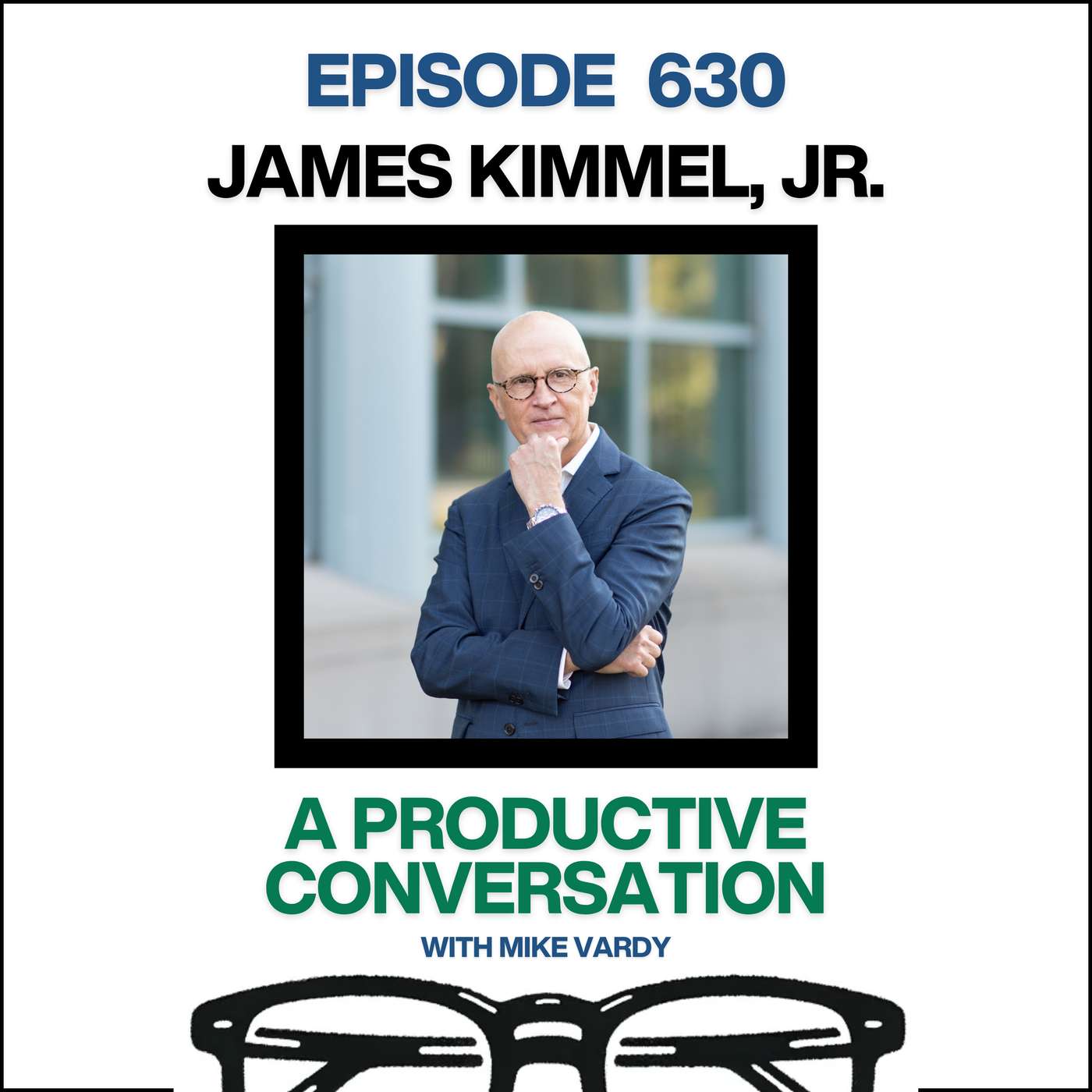
Ep 630James Kimmel Jr. Talks About The Science of Revenge and the Power of Forgiveness
This episode is brought to you by Your Clockwise Week—a personalized weekly structure built around your actual life, not an ideal one. If your week feels full but not fitting, you can learn more at mikevardy.com/yourclockwiseweek.In this episode of A Productive Conversation, I sit down with James Kimmel Jr., JD — a Yale lecturer, lawyer, and leading researcher on the neuroscience of revenge. His new book, The Science of Revenge: Understanding the World’s Deadliest Addiction—and How to Overcome It, explores why our brains crave retaliation and how forgiveness can literally rewire us toward peace.Our conversation begins with a deeply personal story that shaped James’s life’s work and unpacks how revenge functions like an addiction — one fueled by pain, dopamine, and unchecked desire. What follows is a fascinating look at how our minds process grievance, why forgiveness is a neurological superpower, and how awareness can keep us from being consumed by cycles of anger and retaliation.Six Discussion PointsHow a violent act of bullying led James to study the neuroscience of revengeThe brain’s pain and reward circuits — and how they make revenge feel like a drugWhy grievances compound and can trigger impulsive reactionsThe distinction between self-defense, grief, and revengeHow forgiveness shuts down the brain’s pain network and restores self-controlWhy awareness, reflection, and tools like journaling can help break the revenge cycleThree Connection PointsGet James's bookVisit James's websiteCheck out the Miracle Court appThis conversation reminded me that the pause — that small, deliberate moment between grievance and reaction — can change everything. James’s work shows us that forgiveness isn’t about excusing others; it’s about freeing ourselves. I hope this episode helps you reflect on where small moments of release might lead to greater clarity, peace, and yes, productiveness.If this episode resonated, I’m exploring ideas like these more deeply in my upcoming book, Productiveness. You can follow along as it takes shape at mikevardy.com/productiveness.
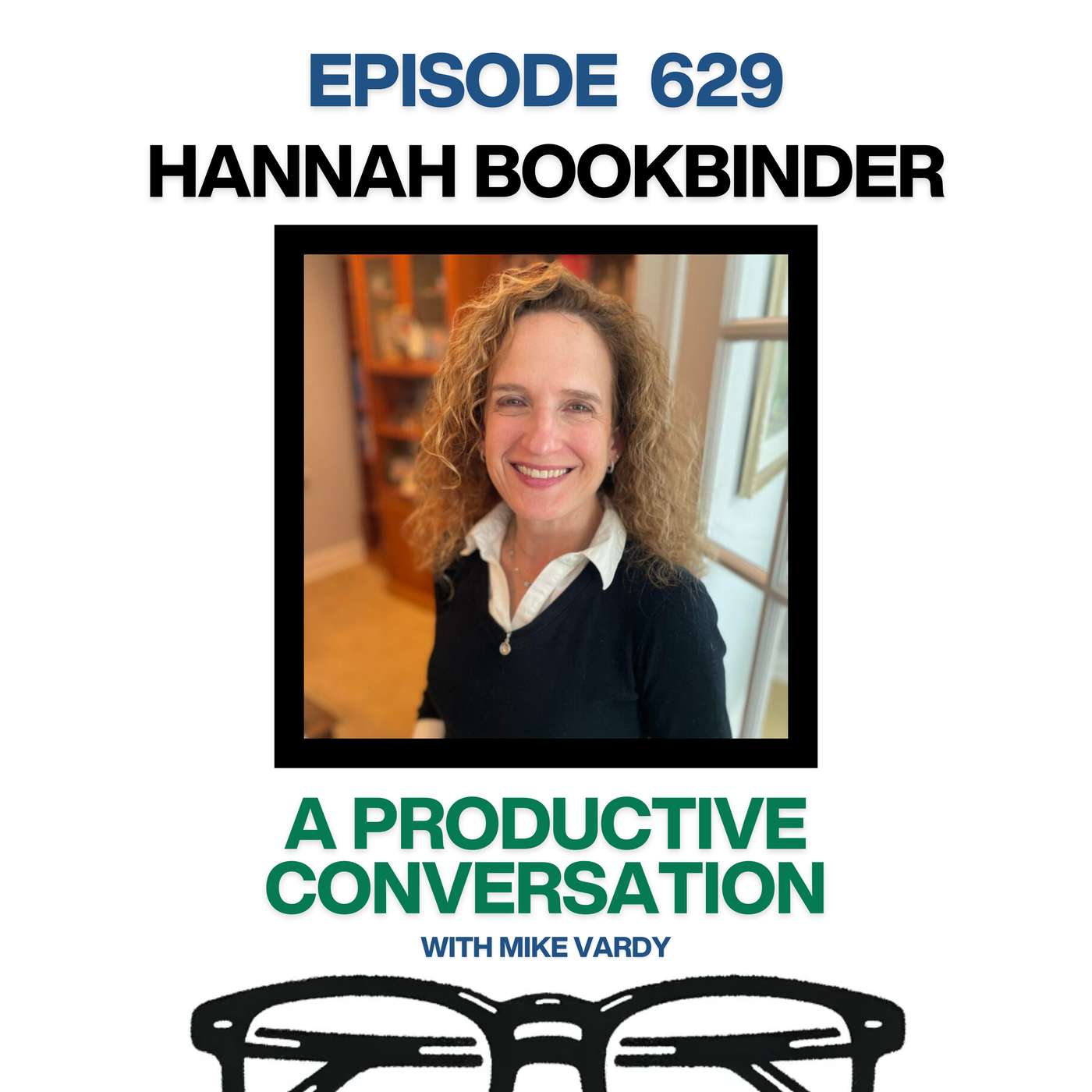
Ep 629Hannah Bookbinder Talks About ADHD, Awareness, and Unlocking Inner Superpowers
This episode is brought to you by Your Clockwise Week—a personalized weekly structure built around your actual life, not an ideal one. If your week feels full but not fitting, you can learn more at mikevardy.com/yourclockwiseweek.In this episode, I sit down with Hannah Bookbinder, founder of AcademicAlly, LLC, and creator of the MyTOAD App—an innovative tool designed to help people manage time, organization, accountability, and focus. With over 25 years of experience supporting neurodivergent individuals, Hannah brings both expertise and empathy to the conversation.We explore how understanding one’s unique wiring leads to better productivity and a stronger sense of agency. Hannah’s insights reveal how reframing ADHD through curiosity, compassion, and structure can turn what feels like chaos into capability.Six Discussion PointsThe story behind the MyTOAD App and how it helps users manage time, organization, accountability, and focus.Why “Eat That Frog” doesn’t always work for neurodivergent minds—and what to do instead.How self-awareness and emotional check-ins can transform productivity habits.The role of journaling as both reflection and regulation—tailored to each individual’s comfort level.Rethinking ADHD: seeing it as a source of strength rather than a villain to defeat.How Hannah’s mission now extends beyond individuals to schools, businesses, and healthcare organizations.Three Connection PointsCheck out MyTOADAppRead the bookCheck out Hannah on InstagramThis conversation with Hannah reminded me that productivity isn’t about conformity—it’s about compatibility. When we learn to align with our wiring instead of resisting it, we uncover the capacity to work with time instead of against it. Whether you’re neurodivergent or simply human, there’s wisdom here worth dialing into.If this episode resonated, I’m exploring ideas like these more deeply in my upcoming book, Productiveness. You can follow along as it takes shape at mikevardy.com/productiveness.
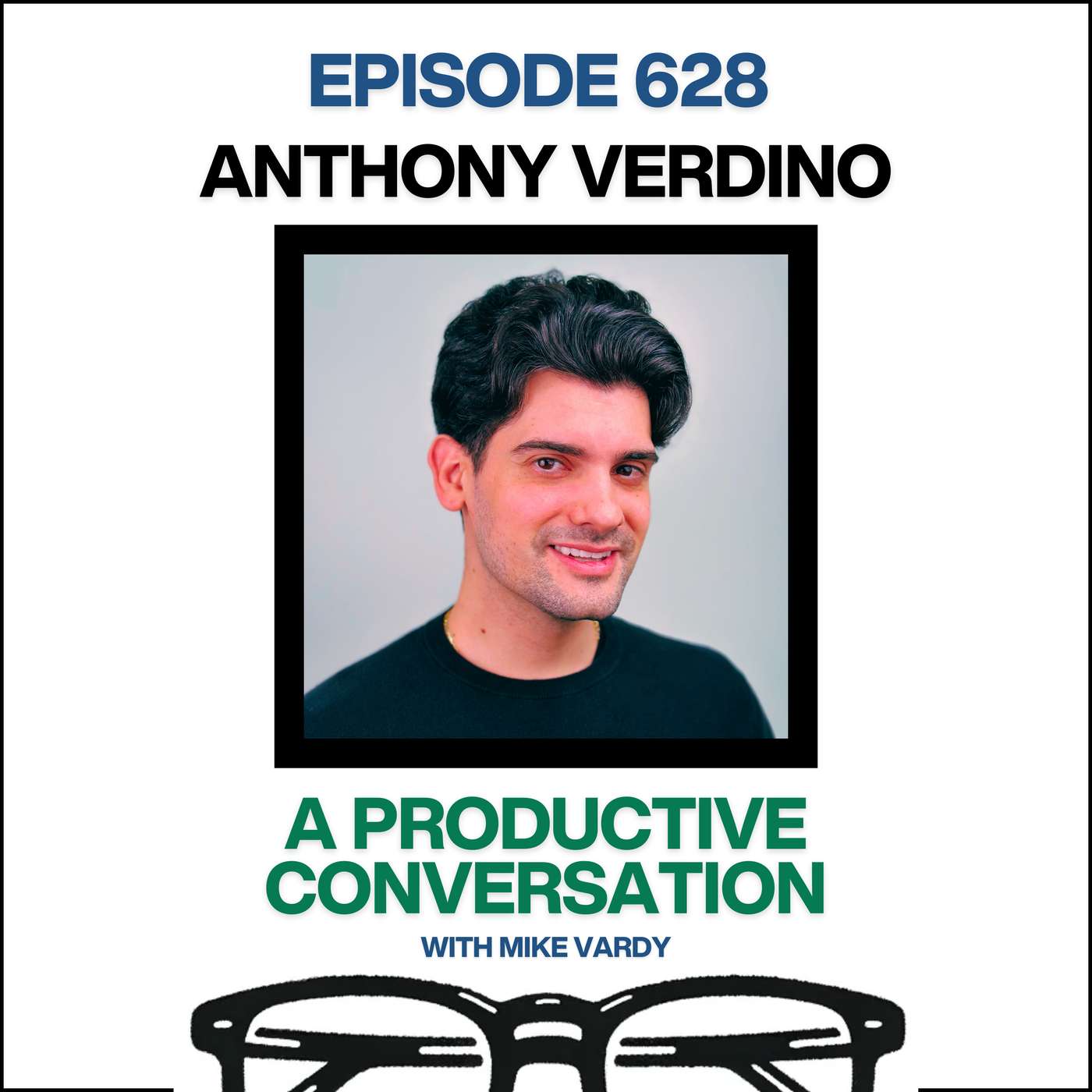
Ep 628Anthony Verdino Talks About Simplifying CBT and Finding Balance Through Mindful Productivity
This episode is brought to you by Your Clockwise Week—a personalized weekly structure built around your actual life, not an ideal one. If your week feels full but not fitting, you can learn more at mikevardy.com/yourclockwiseweek.In this episode of A Productive Conversation, I sit down with Anthony Verdino — a licensed clinical social worker and author of CBT Simplified. Drawing from both his professional expertise and personal story of resilience, Anthony shares how cognitive behavioral therapy (CBT) can be applied beyond the therapy room — into the way we think, act, and feel in our everyday lives.We explore how small shifts in thought and behavior can create profound changes in productivity and well-being, especially in a world that often mistakes busyness for progress. Anthony offers practical ways to align mindset with action and shows how reframing, acceptance, and self-care can transform not just how we work, but how we live.Six Discussion PointsThe core principles of CBT and how Anthony distilled them into a simple, visual modelHow self-monitoring and self-assessment connect directly to productivity and personal growthWhy reframing “should” into “could” turns guilt into empowermentThe danger of perfectionism and how embracing imperfection fosters balance and progressThe role of self-care and mindfulness in preventing burnout and building resilienceHow to make CBT principles second nature through consistent reflection and small, mindful actionsThree Connection PointsAnthony's websiteAnthony's bookMy TEDx Talk: “How to Stop Time”Our conversation reminded me how productivity and psychology share the same foundation: awareness and choice. Whether you’re managing your focus, emotions, or time, the work begins by observing your thoughts, reframing them, and then moving forward — not perfectly, but intentionally.If this episode resonated, I’m exploring ideas like these more deeply in my upcoming book, Productiveness. You can follow along as it takes shape at mikevardy.com/productiveness.
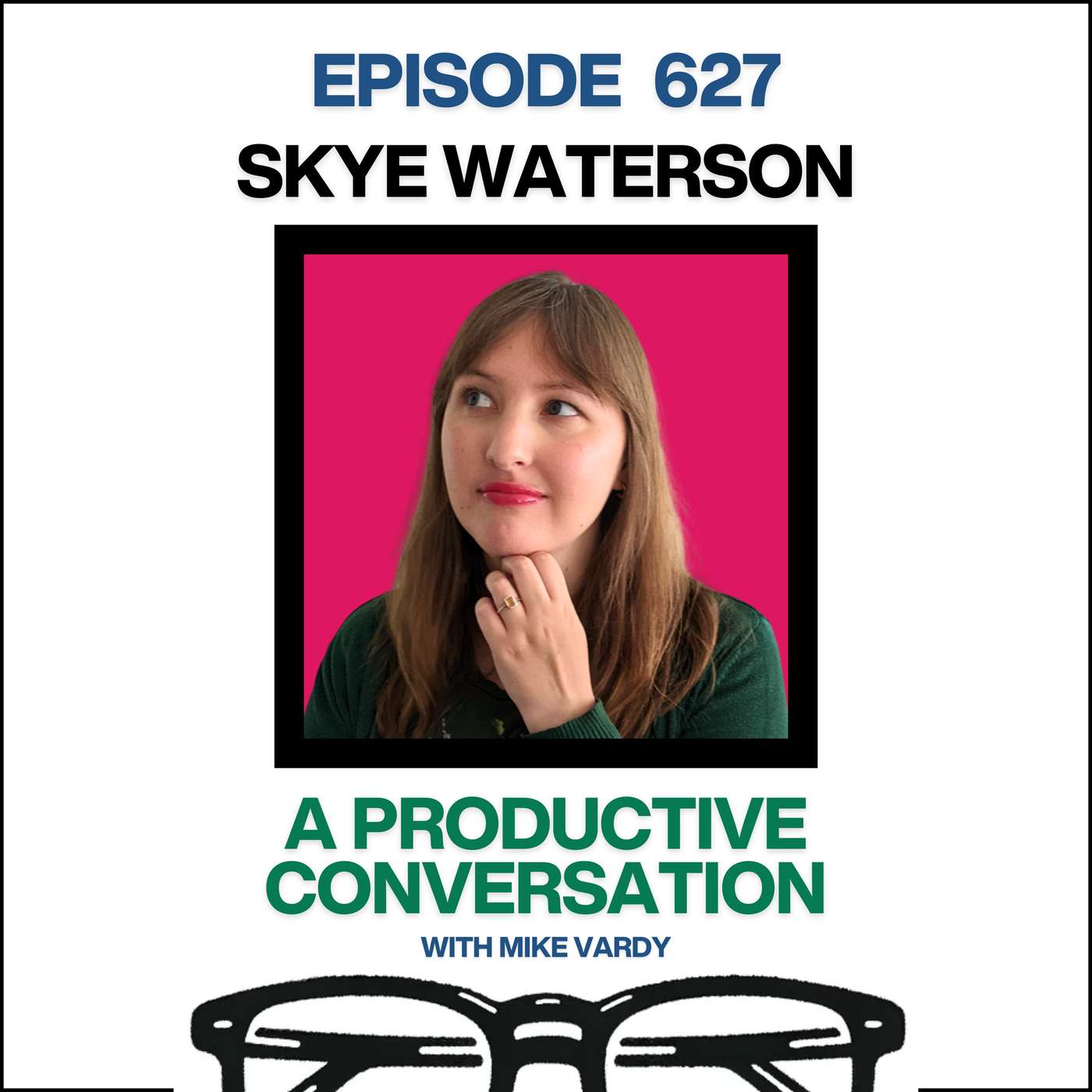
Ep 627Skye Waterson Talks About ADHD, Attention, and Building Systems That Actually Work
This episode is brought to you by Your Clockwise Week—a personalized weekly structure built around your actual life, not an ideal one. If your week feels full but not fitting, you can learn more at mikevardy.com/yourclockwiseweek.When you’re managing ADHD—or simply navigating the distractions of modern life—traditional productivity tools often fall short. My guest, Skye Waterson, knows this better than most. A former academic turned ADHD coach and founder of Unconventional Organisation, Skye has helped hundreds of professionals—from entrepreneurs to executives—craft systems that support their unique brains instead of fighting against them.In this conversation, Skye and I explore the science behind ADHD, the myths that persist around productivity, and how to design frameworks that meet you where you are. Whether you’ve been diagnosed, suspect you might have ADHD, or simply want to focus better in a world full of noise, this episode offers practical wisdom grounded in research and real experience.Six Discussion PointsThe turning point during Skye’s PhD that led to her ADHD diagnosis—and her shift from academia to coaching.Why common productivity systems like the Pomodoro Technique aren’t built for ADHD brains.How dopamine differences influence motivation, focus, and task initiation.The “Focus Formula” method Skye teaches high-achieving clients to identify what’s truly urgent and important.The role of transitions, zones, and small “dopamine boosters” in sustaining attention.How leadership and neurodiversity intersect—and why we need more research on ADHD in executive roles.Three Connection PointsUnconventional OrganisationThe ADHD Skills Lab PodcastEpisode 625: Jesse J. Anderson Talks About ADHD, Extra Focus, and Finding FlowTalking with Skye reminded me that productivity is never one-size-fits-all—it’s about alignment, not conformity. Her evidence-based yet deeply human approach to ADHD management offers lessons anyone can apply: simplify, start small, and give yourself permission to work with your brain, not against it.If this episode resonated, I’m exploring ideas like these more deeply in my upcoming book, Productiveness. You can follow along as it takes shape at mikevardy.com/productiveness.
Ep 626PM Talks S2E10: Clarity
This episode is brought to you by Your Clockwise Week—a personalized weekly structure built around your actual life, not an ideal one. If your week feels full but not fitting, you can learn more at mikevardy.com/yourclockwiseweek.This episode is the latest in our monthly series PM Talks, where Patrick Rhone and I dive into ideas that shape the way we approach work, time, and life. In this conversation, we explore the theme of clarity—how it shows up in our days, why it matters, and what can get in the way of it.Patrick and I both share personal stories—from missed football games to unexpected ISP issues—that highlight how clarity isn’t something we stumble upon, but something we need to cultivate. We talk about how structure and spontaneity coexist, and how clarity can be found even when life throws curveballs (or waves, as one Zen monk would put it).Six Discussion PointsWhy sports outcomes and emotional responses can affect clarity in daily lifeThe value of scaffolding (like time theming) to provide focus without rigidityLessons from the New Yorker article Can You Really Live One Day at a Time?Insights from Paul Loomans’ Time Surfing and how it relates to productivity practicesThe role of feelings: how they can cloud or create clarityThe practice of taking a “Clarity Day” to step back, reflect, and resetThree Connection PointsPatrick Rhone’s WebsiteThe Productivity Diet by Mike Vardy“Can You Really Live One Day at a Time?” – The New YorkerClarity isn’t about controlling every moment—it’s about navigating the waves of life with intention and awareness. I hope this episode gives you a chance to pause, reflect, and maybe even consider setting aside your own Clarity Day.If this episode resonated, I’m exploring ideas like these more deeply in my upcoming book, Productiveness. You can follow along as it takes shape at mikevardy.com/productiveness.
Ep 625Jesse J. Anderson Talks About ADHD, Extra Focus, and Finding Flow
This episode is brought to you by Your Clockwise Week—a personalized weekly structure built around your actual life, not an ideal one. If your week feels full but not fitting, you can learn more at mikevardy.com/yourclockwiseweek.In this episode of A Productive Conversation, I sit down with Jesse J. Anderson, a writer, speaker, coach, and ADHD advocate whose work has resonated with countless people navigating life with ADHD. He’s the author of Extra Focus: The Quick Start Guide to Adult ADHD and the voice behind the popular newsletter of the same name.Jesse brings a mix of humor, honesty, and lived experience to the conversation. We dive into the challenges of attention, time, and motivation—and the strategies that can help not only those with ADHD, but anyone who wants to work with their brain instead of against it.Six Discussion PointsHow Jesse’s diagnosis at 36 reframed his past struggles and opened new possibilities.The concept of the “clockless mind” and why time feels so different for those with ADHD.The oscillation between friction and flow—and how to recognize both.Jesse’s “4Cs” framework (Captivate, Create, Compete, Complete) for unlocking motivation.Rejection Sensitive Dysphoria (RSD) and how it impacts relationships and self-perception.Why strategies like adding action verbs to tasks and “eating the ice cream first” can help create momentum.Three Connection PointsJesse's Extra Focus newsletterGet Jesse's BookListen to APC 164: Faster Than Normal with Peter ShankmanTalking with Jesse reminded me that productivity isn’t one-size-fits-all. Whether you live with ADHD or simply want to work more effectively, strategies like the 4Cs and reframing how you view time can shift the way you approach your day. I hope you’ll check out Jesse’s work and experiment with some of these ideas yourself.If this episode resonated, I’m exploring ideas like these more deeply in my upcoming book, Productiveness. You can follow along as it takes shape at mikevardy.com/productiveness.
Ep 624Leslie Grandy Talks About Creative Velocity and the Future of Ideas
This episode is brought to you by Your Clockwise Week—a personalized weekly structure built around your actual life, not an ideal one. If your week feels full but not fitting, you can learn more at mikevardy.com/yourclockwiseweek.On this episode of A Productive Conversation, I sit down with Leslie Grandy, author of Creative Velocity: Propelling Breakthrough Ideas in the Age of Generative AI. Leslie is a global product executive turned CEO advisor who helps organizations unlock creative thinking to accelerate growth. Her decades of leadership at Apple, Amazon, Best Buy, and T-Mobile give her a unique perspective on how creativity, technology, and leadership intersect.Our conversation explores why creativity isn’t limited to artists, how space and time fuel ideation, and what role emotional regulation plays in sustaining momentum. We also dig into how precision, AI, and frameworks can both hinder and propel breakthrough ideas. If you’ve ever doubted your own creativity—or wondered how to harness it consistently—you’ll want to hear this one.Six Discussion PointsWhy many professionals mistakenly believe they aren’t creative—and how to reframe that thinking.The power of space—whether walking, running, or even showering—in activating creative flow.Precision as both a driver and deterrent of creative velocity, depending on how it’s applied.Emotional regulation and equanimity as essential tools for sustaining creativity without burnout.How to think about velocity beyond speed—focusing on predictability, quality, and intentional triggers.Using AI as a creative collaborator through structured frameworks to expand possibilities without chaos.Three Connection PointsGet Leslie's bookWatch John Cleese’s classic talk on creativityCheck out NotebookLMThis conversation with Leslie reminded me that creativity isn’t an exclusive club—it’s a capacity we all share, provided we give ourselves the time, space, and intention to use it. Whether you’re leading a team, writing your next book, or simply looking to bring more meaning to your daily choices, Leslie’s insights on creative velocity offer a clear path forward.If this episode resonated, I’m exploring ideas like these more deeply in my upcoming book, Productiveness. You can follow along as it takes shape at mikevardy.com/productiveness.
Ep 623Neil Ghosh Talks About Doing More Good and Building Legacy
This episode is brought to you by Your Clockwise Week—a personalized weekly structure built around your actual life, not an ideal one. If your week feels full but not fitting, you can learn more at mikevardy.com/yourclockwiseweek.I had the chance to sit down with Neil Ghosh, a seasoned executive whose work has spanned the nonprofit, government, philanthropic, and private sectors. He’s also the author of Do More Good: Inspiring Lessons from Extraordinary People, a book filled with stories of leaders, visionaries, and everyday people who embody the power of empathy, courage, and action.In our conversation, Neil and I dove into the importance of perspective, why empathy isn’t a “soft” skill but a strategic one, and how small actions can have extraordinary impact. We explored how his upbringing in Kolkata shaped his worldview, the lessons he learned from people like John McCain and Shimon Peres, and why legacy is something you influence—but never fully control.Six Discussion PointsWhy doing more good is different from simply doing more.The value of travel—both near and far—in broadening empathy and perspective.Lessons from John McCain about honoring principles and bridging divides.The role of humility and how serving with it can reshape leadership.How listening deeply—not just hearing—creates space for meaningful change.Why legacy is less about control and more about the small, consistent actions we leave behind.Three Connection PointsNeil’s book: Do More Good5 Steps Anyone Can Take to “Do More Good” and Make a Lasting Impact | Success MagazineYour Time is Not Thine: Rethinking “Know Thy Time”Conversations like this remind me that productivity isn’t about output for its own sake—it’s about impact. Neil’s perspective reinforces the idea that empathy, humility, and legacy aren’t separate from our work, but central to it. I hope this episode leaves you inspired to do not just more, but more good.If this episode resonated, I’m exploring ideas like these more deeply in my upcoming book, Productiveness. You can follow along as it takes shape at mikevardy.com/productiveness.
Ep 622PM Talks S2E9: Connection
This episode is brought to you by Your Clockwise Week—a personalized weekly structure built around your actual life, not an ideal one. If your week feels full but not fitting, you can learn more at mikevardy.com/yourclockwiseweek.This episode is the latest in our monthly PM Talks series, and Patrick Rhone and I dive into the idea of connection—what it means, how it shows up in unexpected ways, and why it’s such a powerful force in our lives. From sports teams and fandoms to faith, empathy, and even the role AI can play in everyday decisions, we explore how connection shapes the way we live, work, and relate to the world.As always, the conversation is a mix of personal stories, practical reflections, and thoughtful insights. It’s one of those talks that started in one place (football fandom, of all things) and wound its way toward something bigger—how our connections help us build meaning, resilience, and compassion in a busy, noisy world.Six Discussion PointsHow fandom and sports teams spark lifelong connections—sometimes for surprising reasons.Why values strengthen or weaken our bonds, whether with people, communities, or organizations.The role empathy and compassion play as natural outcomes of genuine connection.How faith, rituals, and shared traditions anchor identity and belonging.The importance of questioning what we connect to and why, especially in daily life.How tools like AI can reduce decision fatigue and help free us up for deeper connections.Three Connection PointsPatrick's WebsiteThe Fundamentals with David Robinson(s)A conversation with Martin Sheen and Rick Steves on the value of travel and "The Way"At its heart, this episode reminds us that connection is about much more than shared interests—it’s about empathy, values, and the choices we make every day. I hope you find it as thought-provoking to listen to as it was for us to record.If this episode resonated, I’m exploring ideas like these more deeply in my upcoming book, Productiveness. You can follow along as it takes shape at mikevardy.com/productiveness.
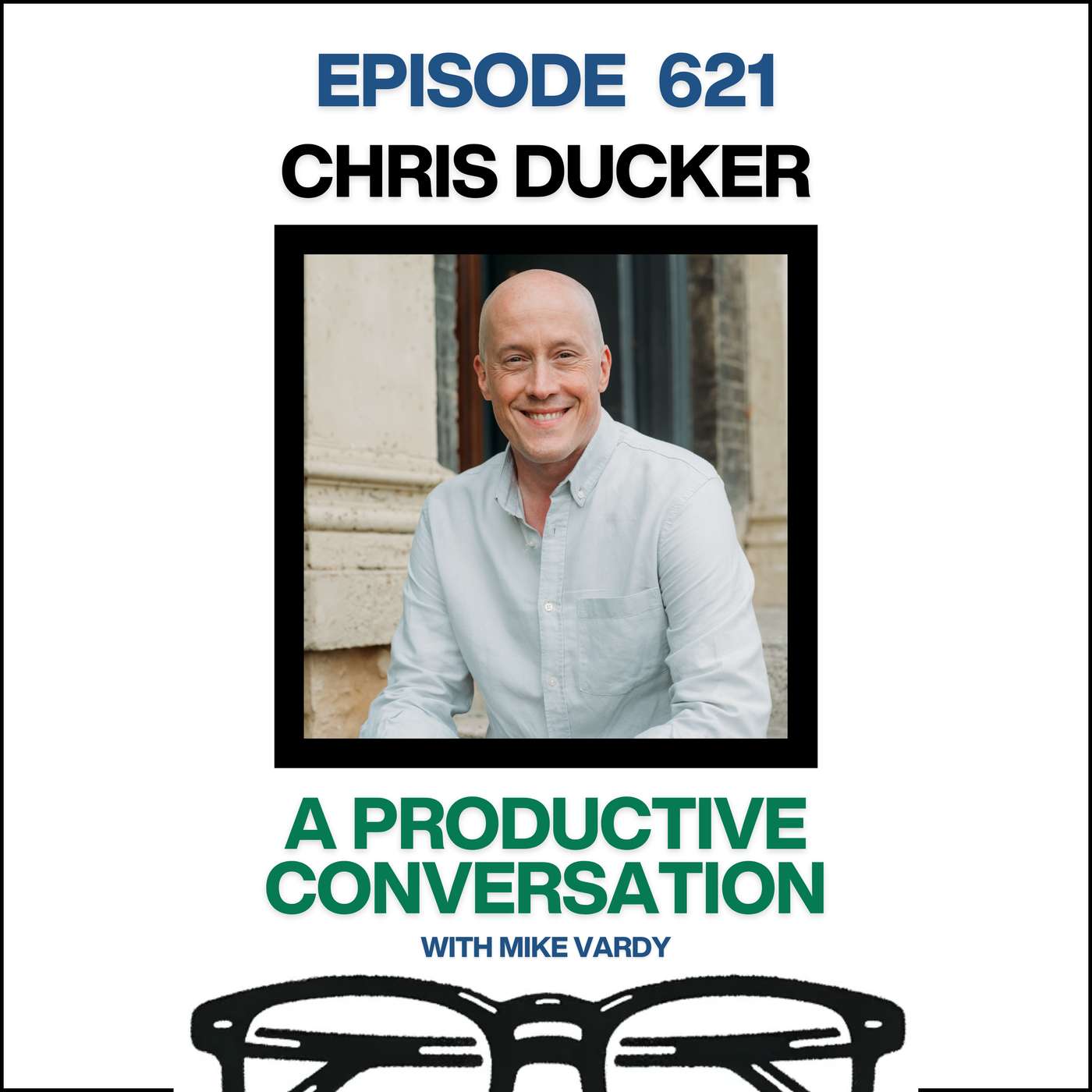
Ep 621Chris Ducker Talks About Long Haul Leadership and Lasting Success
This episode is brought to you by Your Clockwise Week—a personalized weekly structure built around your actual life, not an ideal one. If your week feels full but not fitting, you can learn more at mikevardy.com/yourclockwiseweek.In this episode of A Productive Conversation, I sit down with Chris Ducker—serial entrepreneur, bestselling author, and longtime friend—to talk about his latest book, The Long Haul Leader: 10 Strategies to Work Smarter, Live Better, and Achieve Lasting Success. Chris has spent over two decades building, buying, and selling businesses, while mentoring leaders worldwide.Our conversation goes beyond business tactics. Chris shares candid stories of burnout, rebuilding, and how energy—not time—is the most valuable asset for sustainable success. From the importance of patience to the role of hobbies in leadership, this episode offers insight into what it really takes to thrive for the long haul.Six Discussion PointsWhy hustle is a season, not a lifestyleThe lessons Chris learned from battling burnout—twiceWhy energy is more valuable than time for leadersThe art of letting go: selling businesses and focusing on what mattersHow patience, adaptability, and presence shape long-term leadershipWhy hobbies and creative outlets are vital to performance and recoveryThree Connection PointsGet Chris's Book: The Long Haul LeaderThe Long Haul Leader SummitChris's websiteChris’s story is a reminder that success isn’t just about building businesses—it’s about building sustainability into your life and work. The principles he shares in The Long Haul Leader apply whether you’re running a company, leading a team, or simply trying to create a healthier balance for yourself.If this episode resonated, I’m exploring ideas like these more deeply in my upcoming book, Productiveness. You can follow along as it takes shape at mikevardy.com/productiveness.
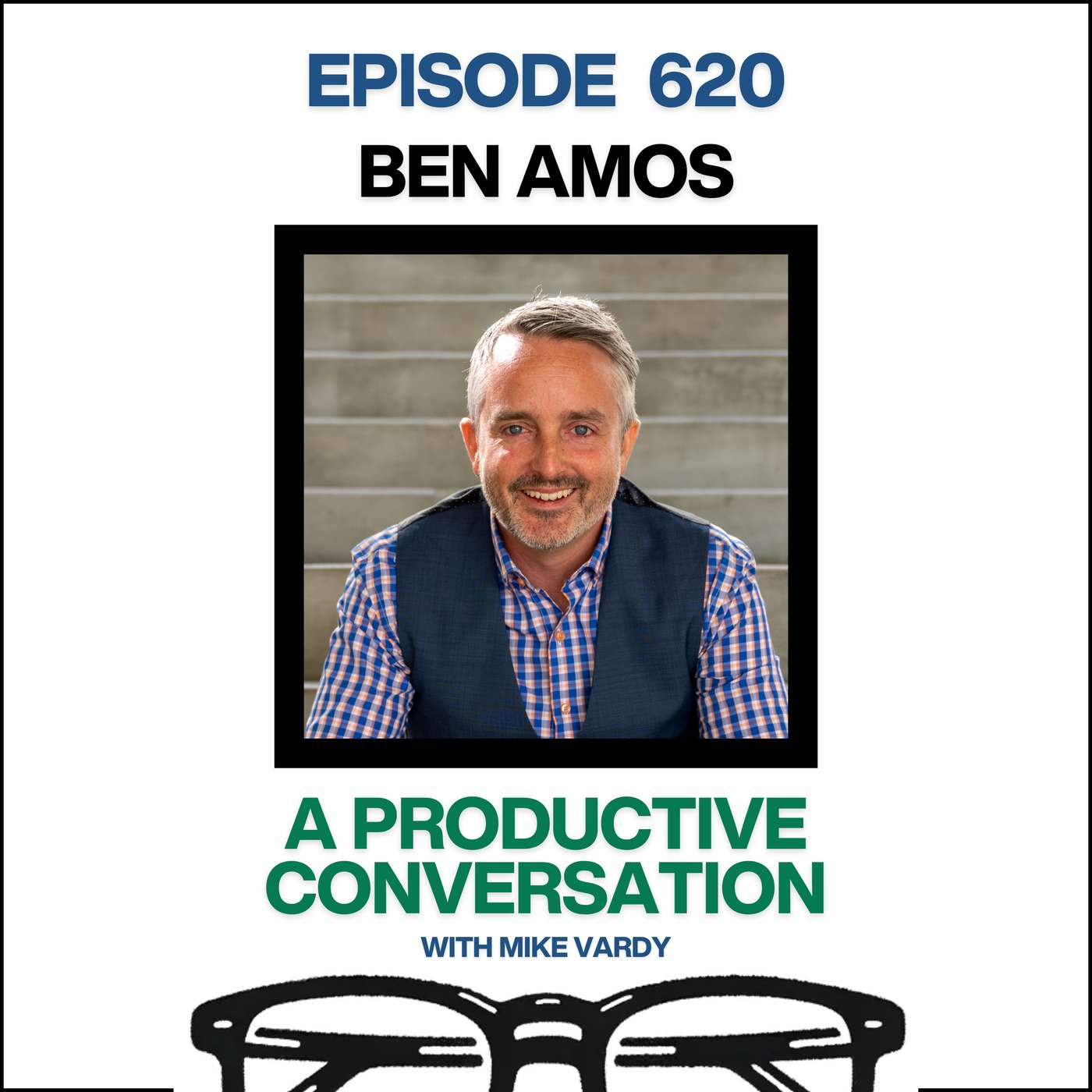
Ep 620Ben Amos Talks About Video Strategy and Storytelling
This episode is brought to you by Your Clockwise Week—a personalized weekly structure built around your actual life, not an ideal one. If your week feels full but not fitting, you can learn more at mikevardy.com/yourclockwiseweek.In this episode of A Productive Conversation, I welcome Ben Amos—video strategist, producer, international speaker, and author of Engage: The Definitive Guide to Video Strategy for Business. Ben has helped brands and entrepreneurs around the globe cut through the noise and connect with their audiences through intentional video.We dig into why strategy must come before tactics, how to identify your ideal audience, and the real role video can play in building relationships that convert. This isn’t about shiny equipment or the latest platform—it’s about clarity, focus, and showing up with purpose.Six Discussion PointsWhy the pandemic accelerated the adoption and acceptance of videoThe Sun Tzu quote that shapes Ben’s approach: “Tactics without strategy is the noise before defeat”How to define your audience with a singular avatar—and why that mattersSetting clear goals for each video in alignment with the customer journeyThe seven elements of video strategy and why production comes lastPractical tips for repurposing podcasts and long-form content into impactful short videosThree Connection PointsEngage: The Definitive Guide to Video Strategy for BusinessBen's websiteEngage Video Marketing PodcastTalking with Ben reminded me that video doesn’t need to be overwhelming. With a strategy-first mindset, it becomes less about keeping up with trends and more about connecting with the right people at the right time. Whether you’re starting fresh or rethinking your current approach, Ben’s insights are the kind that can change how you view video in your work.If this episode resonated, I’m exploring ideas like these more deeply in my upcoming book, Productiveness. You can follow along as it takes shape at mikevardy.com/productiveness.
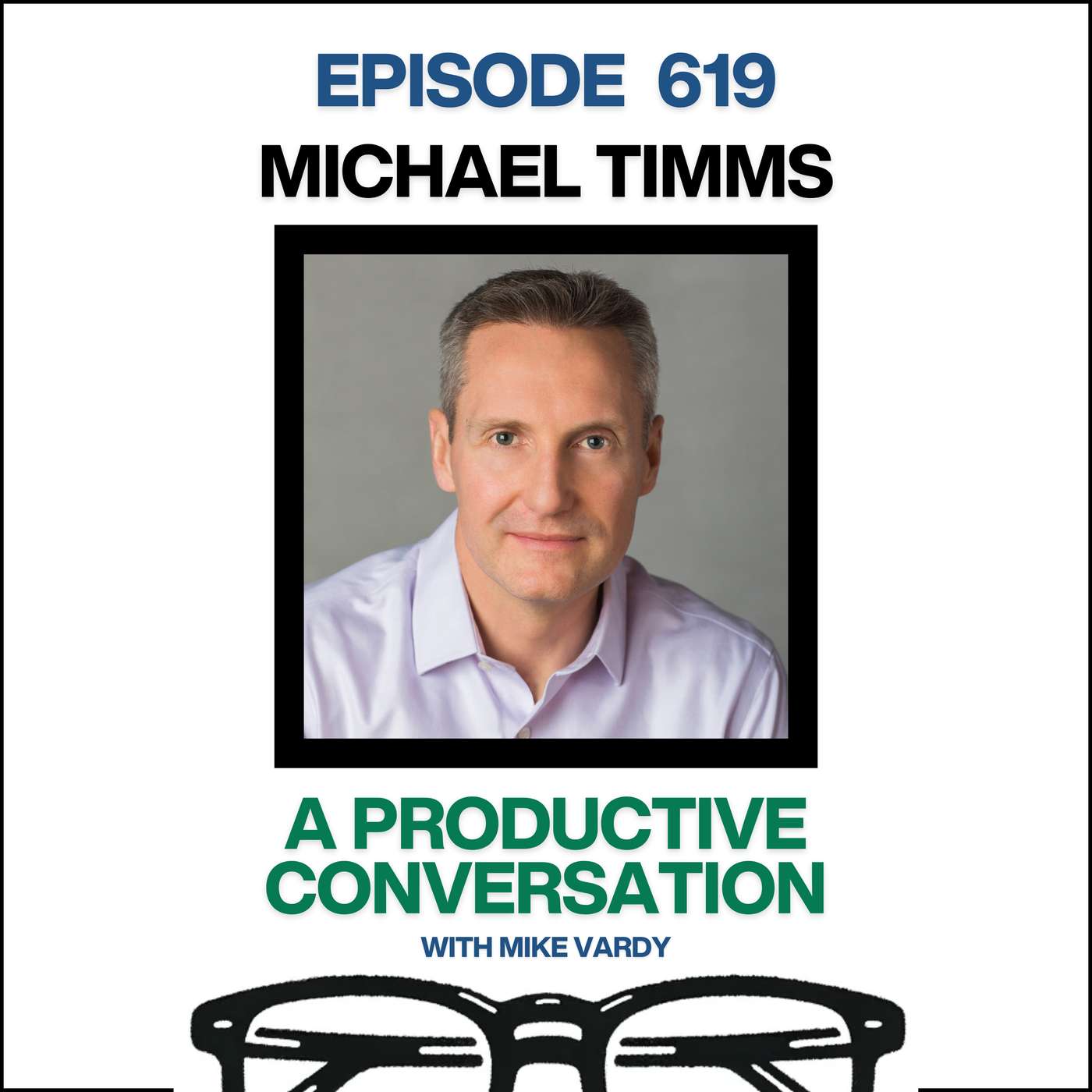
Ep 619Michael Timms Talks About Inspiring Accountability Without Blame
This episode is brought to you by Your Clockwise Week—a personalized weekly structure built around your actual life, not an ideal one. If your week feels full but not fitting, you can learn more at mikevardy.com/yourclockwiseweek.In this episode of A Productive Conversation, I sit down with Michael Timms—TEDx speaker, leadership consultant, and author of How Leaders Can Inspire Accountability. This conversation is a part of our ongoing exploration into the habits that drive not just productivity, but the kind of leadership that inspires lasting impact.Michael unpacks how accountability is often misunderstood and misused—weaponized as blame rather than cultivated as ownership. We explore what it means to truly support people to be accountable, the distinction between leadership and management, and the systems thinking leaders must embrace to avoid finger-pointing and foster real results.Six Discussion PointsWhy “holding people accountable” is the wrong approach—and what to say insteadThe critical distinction between leadership and managementHow self-awareness and humility form the foundation of great leadershipWhat journaling, feedback, and asking for advice all have in commonThe three habits of inspiring accountability—and why they work in harmonySystems thinking: how leaders can engineer solutions that prevent future issuesThree Connection PointsHow Leaders Can Inspire AccountabilityMichael's TEDx Talk – How to Claim Your Leadership PowerWhy Reading Leadership Books will Boost Your ProductivityThis conversation with Michael was a powerful reminder that the best leaders don’t point fingers—they build frameworks. If you're looking to lead with more clarity, humility, and purpose, I highly recommend picking up his book and watching his TEDx talk. True accountability isn’t about control—it’s about connection.If this episode resonated, I’m exploring ideas like these more deeply in my upcoming book, Productiveness. You can follow along as it takes shape at mikevardy.com/productiveness.
Ep 618PM Talks S2E8: Creativity
This episode is brought to you by Your Clockwise Week—a personalized weekly structure built around your actual life, not an ideal one. If your week feels full but not fitting, you can learn more at mikevardy.com/yourclockwiseweek.This episode is the latest in our monthly PM Talks series, where I’m joined by my friend Patrick Rhone to explore timeless ideas around productivity, creativity, and everything in between. In this conversation, we take a deep dive into what it really means to be creative—especially when you're busy, overwhelmed, or stuck in perfectionism.We unpack how constraints can fuel creativity, how time and space are both essential and elusive, and why imperfection might be your creative superpower. There’s a lot of riffing, real talk, and reflection in this one—and if you’ve felt like your creative well is running dry, this might be the refill you’ve been waiting for.Six Discussion PointsThe relationship between speed, structure, and creativityWhy constraints can actually enhance creativity (yes, really)John Cleese’s insight: creativity requires both time and spaceHow perfectionism can sabotage creative flowTurning mundane tasks into creative opportunitiesThe importance of being your own audience—and knowing what’s “for you”Three Connection PointsPatrick’s WebsiteRick Rubin's The Creative Act: A Way of Being"The creative process needs space—not just time." Read 50 more lessons I've learned here.This episode is a reminder that creativity isn’t just for artists—it’s for anyone trying to make something meaningful with their time. Whether you’re juggling routines, deadlines, or just trying to show up a little more intentionally each day, the ideas we explore here can help unlock creative momentum—even in life’s most constrained moments.If this episode resonated, I’m exploring ideas like these more deeply in my upcoming book, Productiveness. You can follow along as it takes shape at mikevardy.com/productiveness.
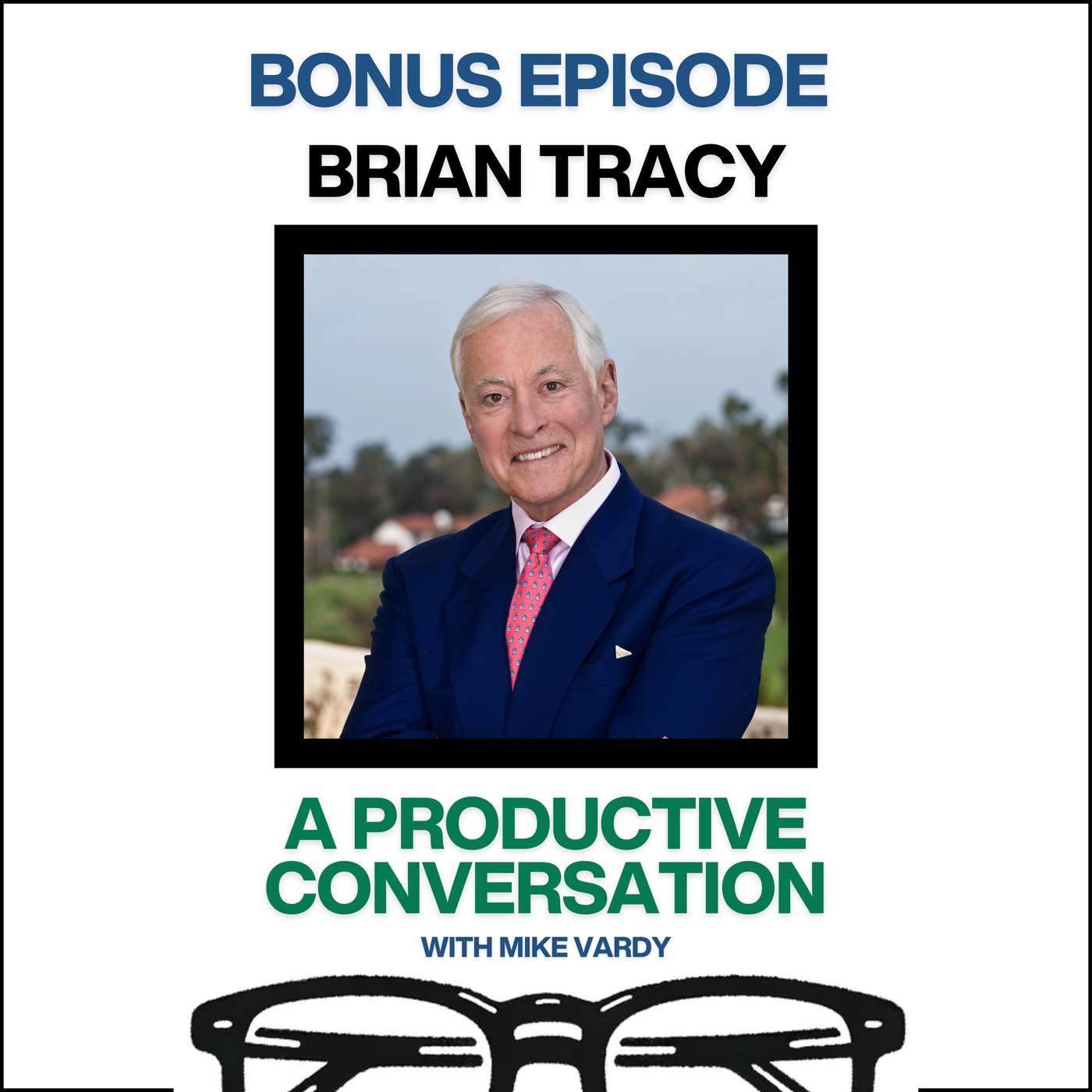
Brian Tracy Talks About Prioritization, Self-Discipline, and Eating That Frog [BONUS EPISODE]
bonusThis episode is brought to you by Your Clockwise Week—a personalized weekly structure built around your actual life, not an ideal one. If your week feels full but not fitting, you can learn more at mikevardy.com/yourclockwiseweek.Brian Tracy returns to A Productive Conversation to mark the launch of the 4th Edition of Eat That Frog!, the productivity classic that has helped millions worldwide stop procrastinating and get more done. This updated edition includes a new chapter on the Law of Three, enhanced tools, and a built-in discussion and action guide — making it more relevant than ever in a world filled with distractions and overwhelm.In this bonus episode, Brian and I dive deep into what has (and hasn’t) changed since the original book’s release, how people can adapt the “eat the frog” principle to their unique rhythms (yes, night owls included), and why self-discipline is the key to self-esteem — and ultimately, success.Six Discussion PointsWhy now was the right time for a 4th Edition of Eat That Frog! — and what’s new insideHow the definition of the “frog” has held steady, even as the world has changedBrian’s insights on habit formation and why bad habits don’t go away — they get replacedThe role of self-discipline in building confidence, clarity, and resultsHow prioritization is even more important today — and how the “Law of Three” can helpWhy you should listen to your heart, trust your gut, and do more of what matters mostThree Connection PointsEat That Frog! 4th Edition on AmazonBrian Tracy’s WebsiteEpisode 351: Eating Frogs with Brian TracyIt’s always an honour to speak with Brian Tracy — and this conversation was no exception. Whether you're a longtime fan of Eat That Frog! or discovering it for the first time, this episode is packed with timeless advice and fresh insights to help you sharpen your focus, overcome procrastination, and move toward your goals with clarity and confidence.If this episode resonated, I’m exploring ideas like these more deeply in my upcoming book, Productiveness. You can follow along as it takes shape at mikevardy.com/productiveness.
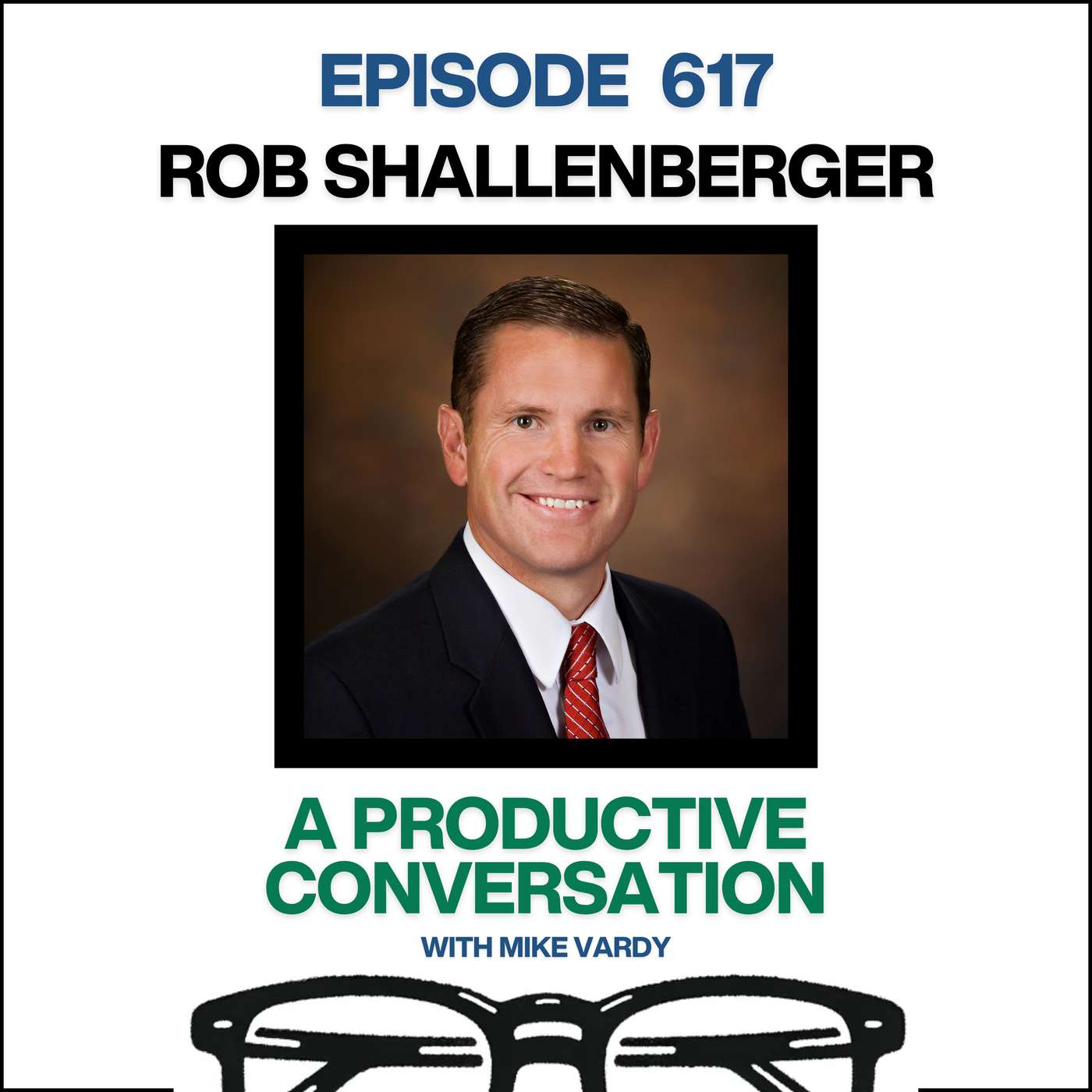
Ep 617Rob Shallenberger Talks About Pre-Week Planning and Leading a Life by Design
This episode is brought to you by Your Clockwise Week—a personalized weekly structure built around your actual life, not an ideal one. If your week feels full but not fitting, you can learn more at mikevardy.com/yourclockwiseweek.In the latest episode, I sit down with Rob Shallenberger—CEO of Becoming Your Best Global Leadership and one of the world’s foremost authorities on productivity and time management. Rob’s background is as dynamic as it is inspiring: from flying F-16s and serving as an Advance Agent for Air Force One to training Fortune 500 companies and governments alike.We focus on the updated second edition of his bestselling book Do What Matters Most, diving deep into the transformative power of pre-week planning, the productivity quotient, and why it’s crucial to schedule your priorities rather than just prioritize your schedule. Rob’s mission is clear—help people lead lives by design, not by default.Six Discussion PointsHow task saturation leads to misprioritization—and how to combat itRob’s four-step pre-week planning system and how it creates peace and balanceThe productivity quotient: why aiming for 70–80% is the sweet spotReal-life stories that show how planning changes lives—including generational impactHow Rob's military background shaped his approach to time and leadershipThe role of AI in planning—why it’s a tool, not a replacement for human intuitionThree Connection PointsDo What Matters Most – Second Edition (Amazon)Rob’s Planner Tools and ResourcesBecoming Your Best WebsiteThis conversation with Rob left me both inspired and affirmed in my belief that quality productivity stems from intentional design. If you’ve ever felt overwhelmed or stuck in reactive mode, Rob’s framework provides both structure and flexibility. I encourage you to test out his pre-week planning approach—just four weeks can make a meaningful difference.If this episode resonated, I’m exploring ideas like these more deeply in my upcoming book, Productiveness. You can follow along as it takes shape at mikevardy.com/productiveness.
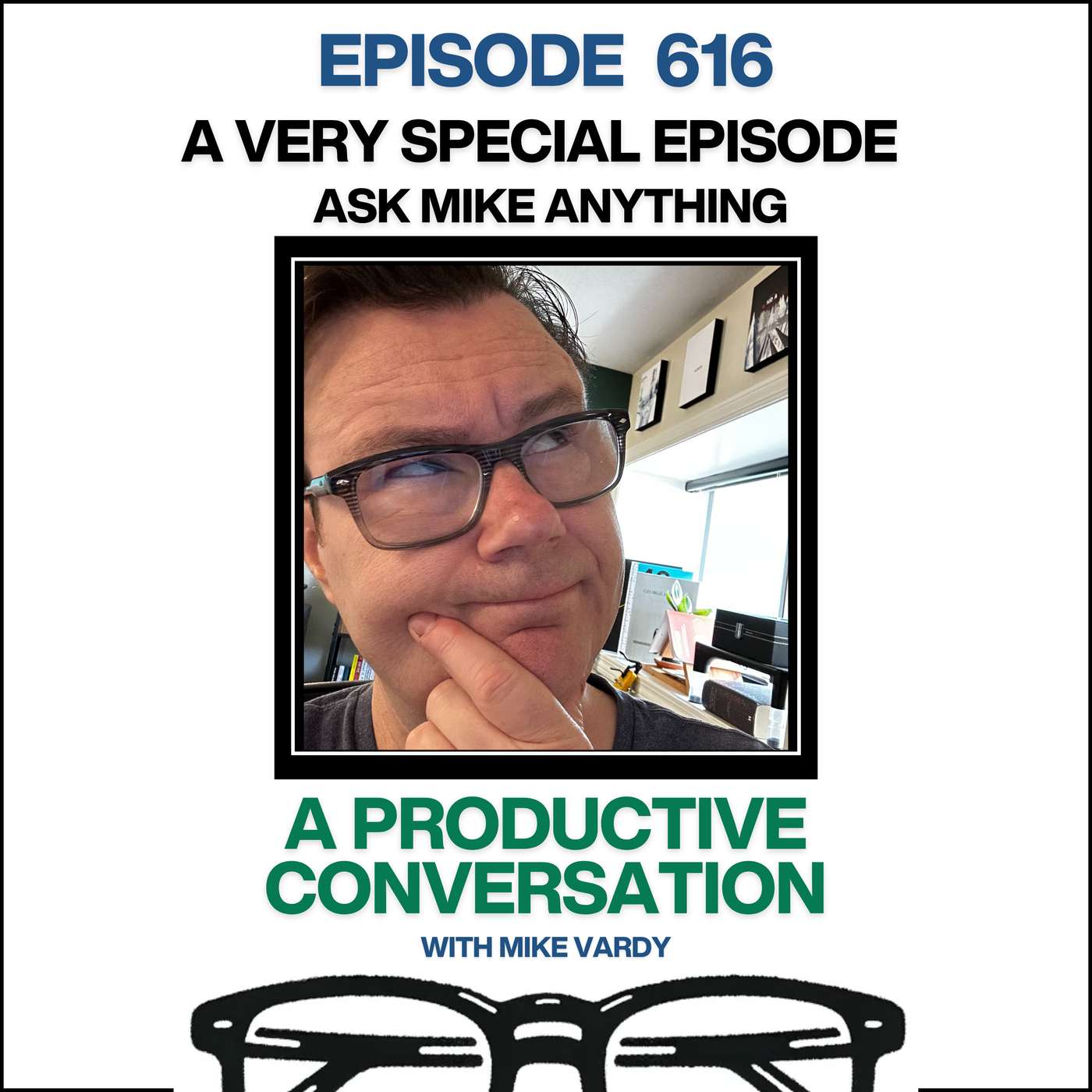
Ep 616ASK MIKE ANYTHING: Journaling, Urgency, and Letting Go of Empty Productivity
This episode is brought to you by Your Clockwise Week—a personalized weekly structure built around your actual life, not an ideal one. If your week feels full but not fitting, you can learn more at mikevardy.com/yourclockwiseweek.In this very special "Ask Mike Anything" edition of the podcast, the tables turn. TimeCrafting Trust Premium member and all-around thoughtful guy Tim O’Hare steps in to host and ask me questions submitted by listeners—and some of his own. From the value of journaling to the nuances of urgency, we explore what it truly means to right the ship when your time management feels off course.This is a raw and reflective episode, recorded live with audience interaction. We talk through everything from tech transitions and app overload to the dangers of measuring productivity purely by numbers. If you've ever felt like you know what to do but still can’t quite get it done, there’s something here for you.Six Discussion PointsWhy journaling is my go-to tool for daily course correction—and why it’s easier than most people thinkHow to close the gap between vision and reality using urgency, importance, and thoughtful task breakdownNavigating forced software transitions without losing your workflow (or your mind)How AI can help (or hurt) your attention and task clarity, depending on how you use itHow to make progress on tasks you’re procrastinating—even if you "know better"Why I focus more on productiveness than productivity, and how to measure what really mattersThree Connection PointsMonk Manual (GET 10% OFF)Watch the recording of this episode on YouTubeTim's BlogWhether you’re new to TimeCrafting or a longtime practitioner, this conversation highlights what so many of us wrestle with: the difference between knowing what to do and actually doing it. If you’ve been stuck, scattered, or just seeking clarity, I hope these answers light a way forward.If this episode resonated, I’m exploring ideas like these more deeply in my upcoming book, Productiveness. You can follow along as it takes shape at mikevardy.com/productiveness.
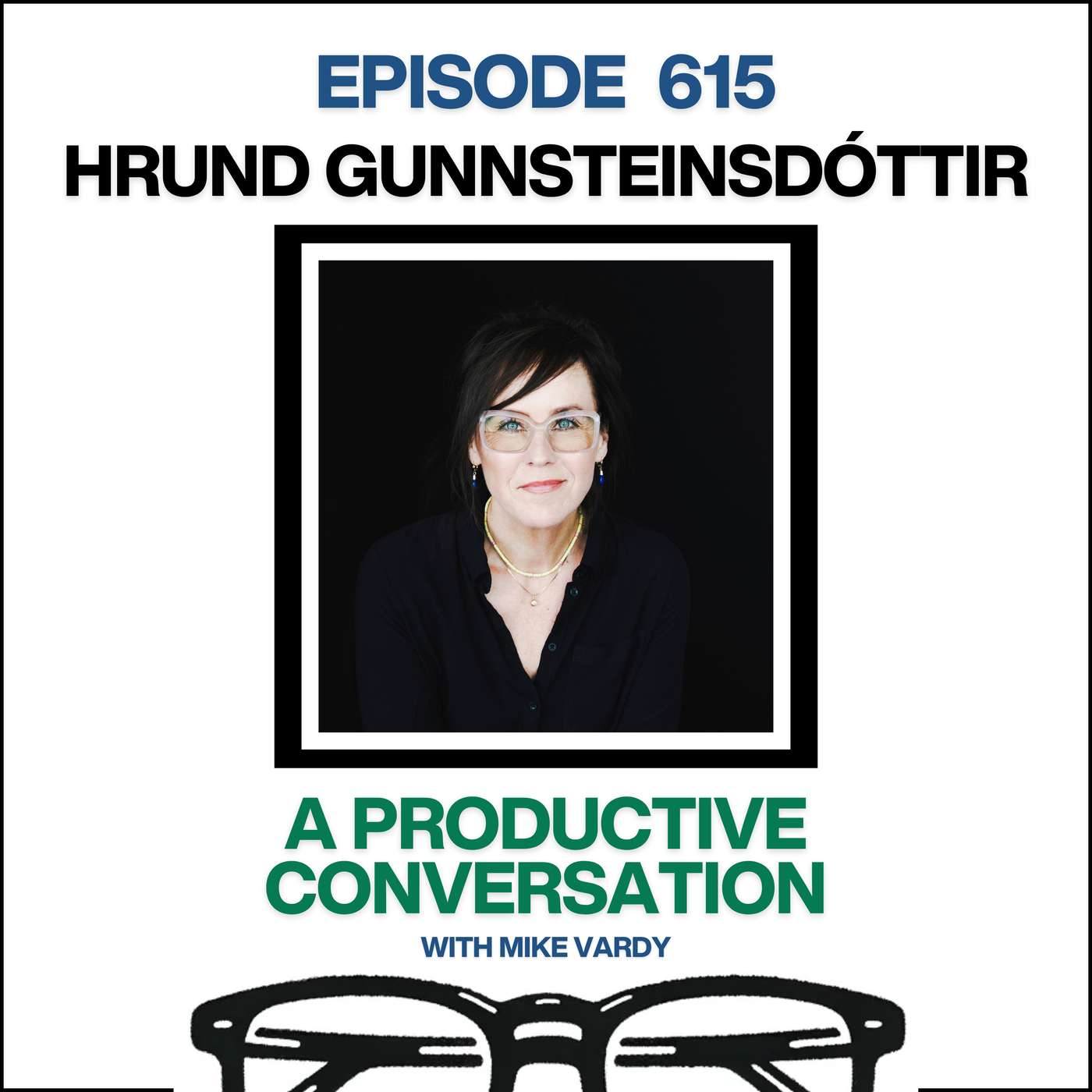
Ep 615Hrund Gunnsteinsdóttir Talks About Intuition, Attention, and Inner Alignment
This episode is brought to you by Your Clockwise Week—a personalized weekly structure built around your actual life, not an ideal one. If your week feels full but not fitting, you can learn more at mikevardy.com/yourclockwiseweek.What does it mean to truly listen to your intuition—and why is that more vital than ever in today’s overstimulated world? In this episode of A Productive Conversation, I’m joined by Hrund Gunnsteinsdóttir: Icelandic thought leader, author, and director of the documentary InnSæi: The Power of Intuition. Her new book, InnSæi: Icelandic Wisdom for Turbulent Times, explores the art and science of tapping into your deepest knowing—and how to protect it from modern noise.We discuss the Icelandic concept of “InnSæi,” which translates to “the sea within,” and unpack what it looks like to live and work in alignment with that quiet inner compass. From managing burnout to navigating complexity with grace, Hrund’s insights offer a refreshing call to reconnect with the deeper wisdom already within us.Six Discussion PointsWhat “InnSæi” really means—and why it goes far beyond the word “intuition”How to recognize and rebuild trust in your own judgmentThe danger of becoming biased against your own intelligenceWhy attention is the key to accessing intuition (and how to protect it)How journaling reveals patterns that intuition already sensesFinding alignment in a world that demands speed, certainty, and resultsThree Connection PointsWatch InnSæi: The Power of IntuitionHrund’s WebsiteListen to APC Episode 475: Megan Hyatt Miller talks about Minding Your MindsetThis conversation with Hrund reminded me how easy it is to lose track of our inner compass in the noise of modern life—and how powerful it can be when we stop, breathe, and listen to the quiet voice within. Her work beautifully bridges the poetic and the practical. I hope it helps you, as it did me, recalibrate what productivity really means.If this episode resonated, I’m exploring ideas like these more deeply in my upcoming book, Productiveness. You can follow along as it takes shape at mikevardy.com/productiveness.
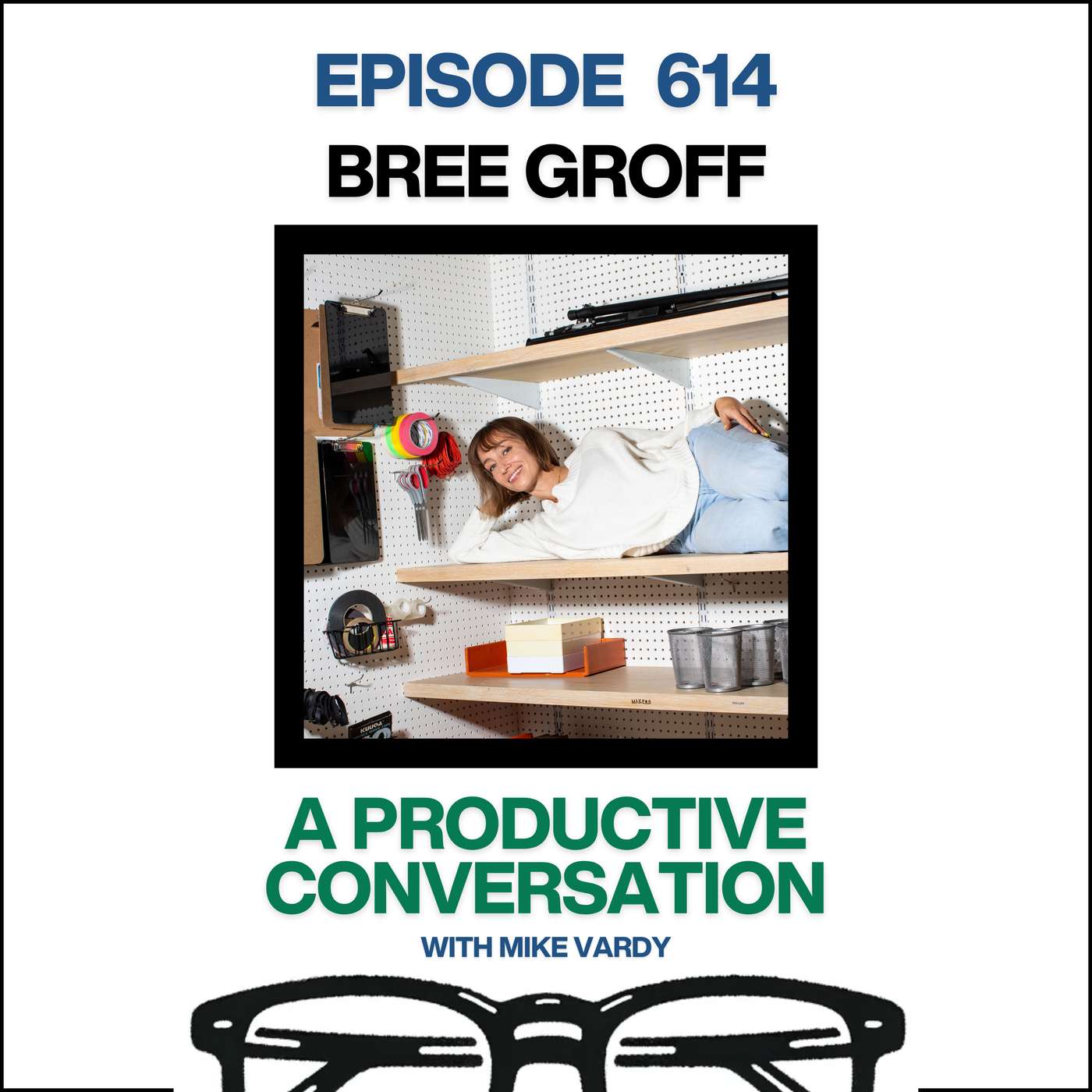
Ep 614Bree Groff Talks About Bringing Fun Back to Work
This episode is brought to you by Your Clockwise Week—a personalized weekly structure built around your actual life, not an ideal one. If your week feels full but not fitting, you can learn more at mikevardy.com/yourclockwiseweek.What if “fun” isn’t the opposite of “work”—but the missing ingredient? In this episode of A Productive Conversation, I sit down with Bree Groff, workplace culture expert and author of Today Was Fun: A Book About Work (Seriously). We dig into how play, permission, and presence can transform not only the way we work—but the way we live.Bree draws on her deep experience guiding Fortune 500 leaders through complex organizational change to offer a refreshingly human perspective on professionalism, productivity, and yes, pajama pants. This is more than a talk about workplace dynamics—it’s a conversation about reclaiming your days.Six Discussion PointsWhy wishing away the workweek is wishing away your lifeHow “fun” at work is often less about ping-pong tables and more about permissionThe myth of performative professionalism (and the case for stretchy pants)The role of novelty, creativity, and risk in making work feel meaningfulEnvironment as a silent force shaping our work habits and cultureHow a simple question—“Was today fun?”—can reframe your entire lifeThree Connection PointsBree’s WebsiteBree's SubstackEpisode 470 – Mike Rucker talks about The Fun HabitTalking with Bree reminded me that the best kind of productivity—the kind I advocate for—is rooted in presence, play, and people. Her perspective is a timely nudge toward joy, and Today Was Fun is a book I’ll keep close for those days when the calendar feels heavier than it should. I hope this conversation lightens yours.If this episode resonated, I’m exploring ideas like these more deeply in my upcoming book, Productiveness. You can follow along as it takes shape at mikevardy.com/productiveness.
Ep 613PM Talks S2E7: Sustainability
This episode is brought to you by Your Clockwise Week—a personalized weekly structure built around your actual life, not an ideal one. If your week feels full but not fitting, you can learn more at mikevardy.com/yourclockwiseweek.This episode is the latest in our monthly series, PM Talks, where I’m joined by my friend and fellow thinker, Patrick Rhone. This time around, we dig into something that often gets overshadowed by its louder cousin: sustainability. From routines and rhythms to systems and seasons, we talk about what it really means to sustain—across time, attention, and action.Patrick and I explore the real difference between consistency and sustainability, and how too many people mistake momentum for something lasting. We share stories about summer, parenting, gardening, and even the war against weeds—all as metaphors for figuring out what’s actually worth sustaining.Six Discussion PointsWhy consistency often gets more attention than sustainability—and why that might be a generational biasThe subtle but critical difference between momentum and long-term viabilityHow unsustainable systems mask themselves through short-term resultsThe role of short-term maintenance in supporting long-term sustainabilityGardening as a metaphor for attention, patience, and the reality of diminishing returnsWhy paper systems and analog tools often outlast their digital counterpartsThree Connection PointsPatrick Rhone’s workGet Chris Ducker’s book, The Long Haul LeaderGet The Productivity Diet by Mike Vardy on AmazonThis episode reminded me—again—that sustainability is about more than staying the course. It’s about choosing what’s worth continuing. Whether you’re managing time, energy, or a tomato plant, the wisdom is in knowing your limits and working with them, not against them. I hope this episode helps you rethink not just what you're doing, but whether you can—and should—keep doing it.If this episode resonated, I’m exploring ideas like these more deeply in my upcoming book, Productiveness. You can follow along as it takes shape at mikevardy.com/productiveness.
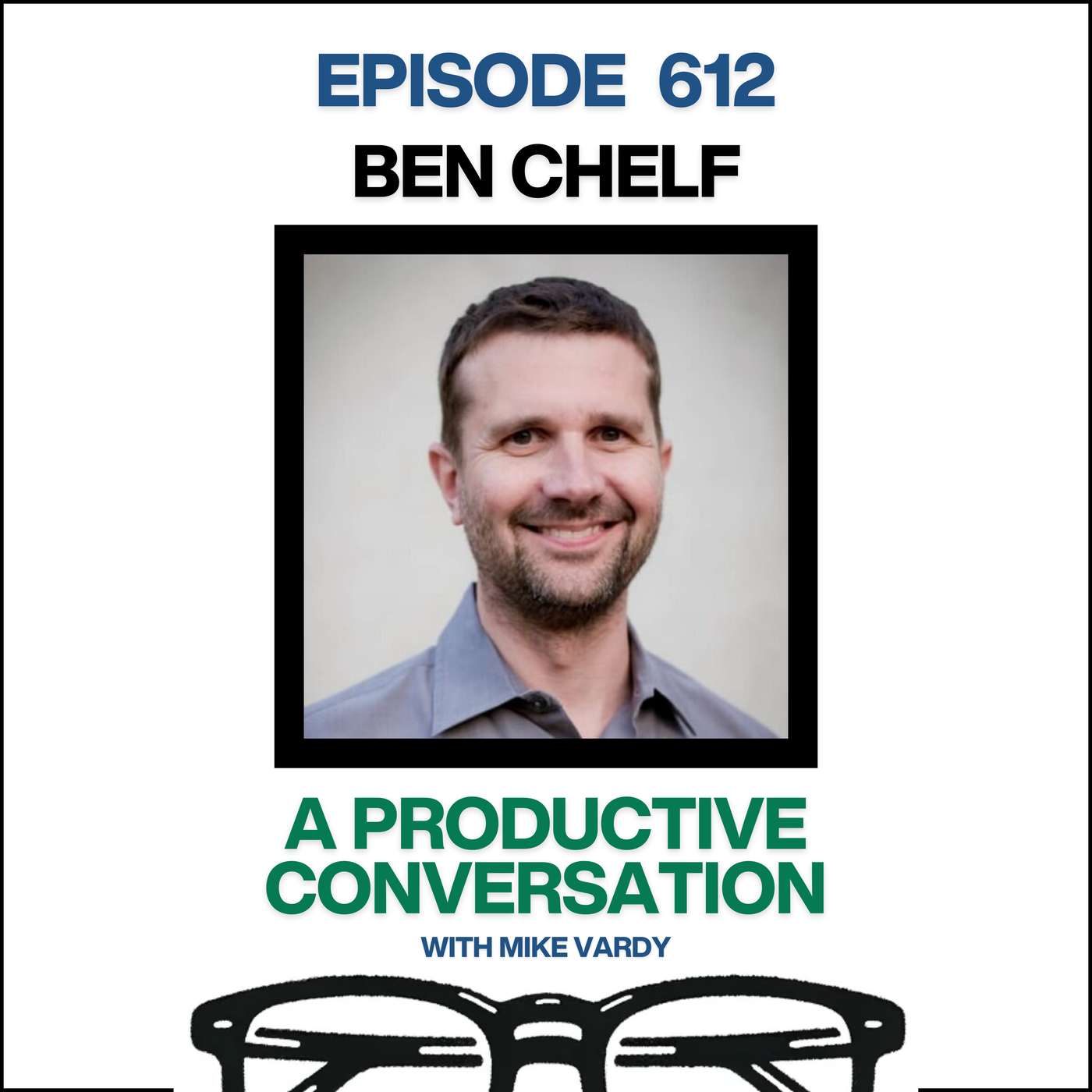
Ep 612Ben Chelf Talks About Reimagining Reading and the Power of Presence
This episode is brought to you by Your Clockwise Week—a personalized weekly structure built around your actual life, not an ideal one. If your week feels full but not fitting, you can learn more at mikevardy.com/yourclockwiseweek.In this episode of A Productive Conversation, I sit down with Ben Chelf—co-founder and CEO of Sol, the company behind the innovative Sol Reader. This single-purpose device is designed to help people reclaim focused, meaningful reading time by stripping away digital distractions.We explore the relationship between attention, technology, and time—and how the Sol Reader aims to improve our pre-sleep routines by reducing screen fatigue and supporting deeper, more intentional reading. Ben’s journey from software pioneer to mindful hardware innovator is a fascinating one, and his perspective on presence, attention, and boundaries is deeply aligned with the work I do.Six Discussion PointsWhy the Sol Reader isn’t just another piece of wearable tech—it’s a shift in mindset.The value of single-purpose devices in a multi-tasking world.How constraints create freedom, especially in pre-bedtime routines.Ben’s personal journey from dopamine-driven distraction to deep reading.Why packaging and physical product design still matter in a digital age.How reading Infinite Jest (yes, really) rekindled Ben’s attention span—and how Sol aims to help others do the same.Three Connection PointsSol Reader websiteListen to Episode 339: Focused Writing with Adam LeebWhenever I can find a way to share this in a relevant way, I willBen’s work speaks directly to something I talk about often: reclaiming agency over our attention. Whether you're trying to read more, sleep better, or simply stop doomscrolling before bed, this conversation offers some meaningful insights—and perhaps a new tool to help you get there.If this episode resonated, I’m exploring ideas like these more deeply in my upcoming book, Productiveness. You can follow along as it takes shape at mikevardy.com/productiveness.
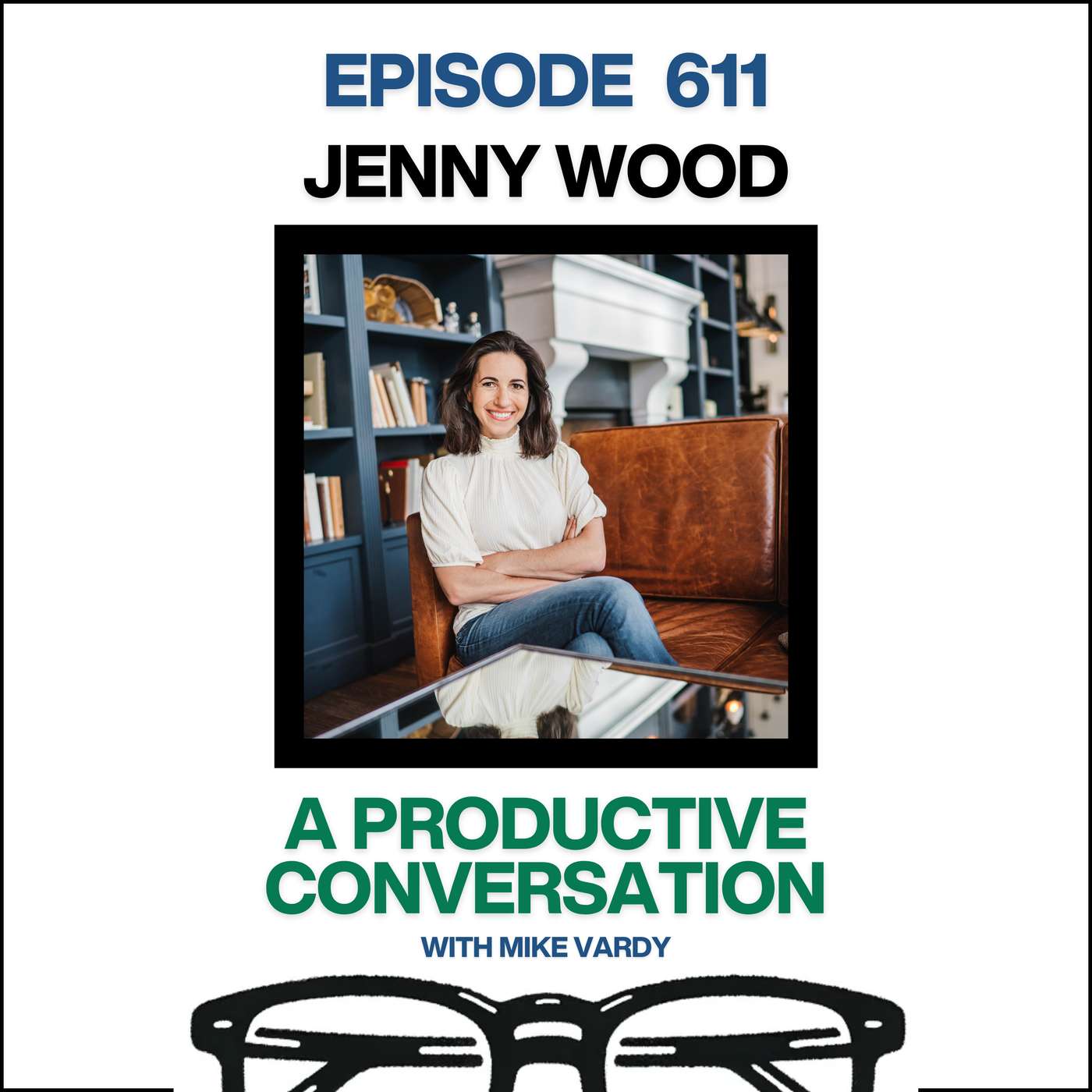
Ep 611Jenny Wood Talks About Wild Courage and Fearless Self-Advocacy
This episode is brought to you by Your Clockwise Week—a personalized weekly structure built around your actual life, not an ideal one. If your week feels full but not fitting, you can learn more at mikevardy.com/yourclockwiseweek.In this episode of A Productive Conversation, I'm joined by Jenny Wood — author of the book Wild Courage: Go After What You Want and Get It. Jenny and I dive deep into the nine supposedly “negative” traits she reclaims as powerful tools for getting what you want in work and life.From her 18-year journey at Google, rising from entry-level to executive, to launching the company’s massive Own Your Career program, Jenny shares stories that challenge the conventional wisdom around being “too much.” Whether it’s being nosy, selfish, or bossy — Jenny reframes these traits as strengths that fuel progress, self-awareness, and courageous action.Six Discussion PointsWhy Jenny reclaims words like selfish, bossy, and reckless — and what they actually mean.How Wild Courage was born from a homework assignment… and a subway love story.The role of nuance and reframing in personal development and leadership.Lessons from Google on prioritization: “Say yes to the big, say no to the small.”When obsession is a strength — and when it turns into burnout.Permission slips, spotlight effects, and overcoming fear of judgment.Three Connection PointsRead Wild Courage: Go After What You Want and Get ItJenny's websiteRead How to Decide When to Say "No"Jenny doesn’t just write about boldness — she lives it. This conversation will nudge you to reexamine how you show up, reframe what’s holding you back, and redefine what courage looks like in your life and work. If you’ve ever felt like you had to shrink to succeed, this episode offers another path — one rooted in wild, unapologetic courage.If this episode resonated, I’m exploring ideas like these more deeply in my upcoming book, Productiveness. You can follow along as it takes shape at mikevardy.com/productiveness.
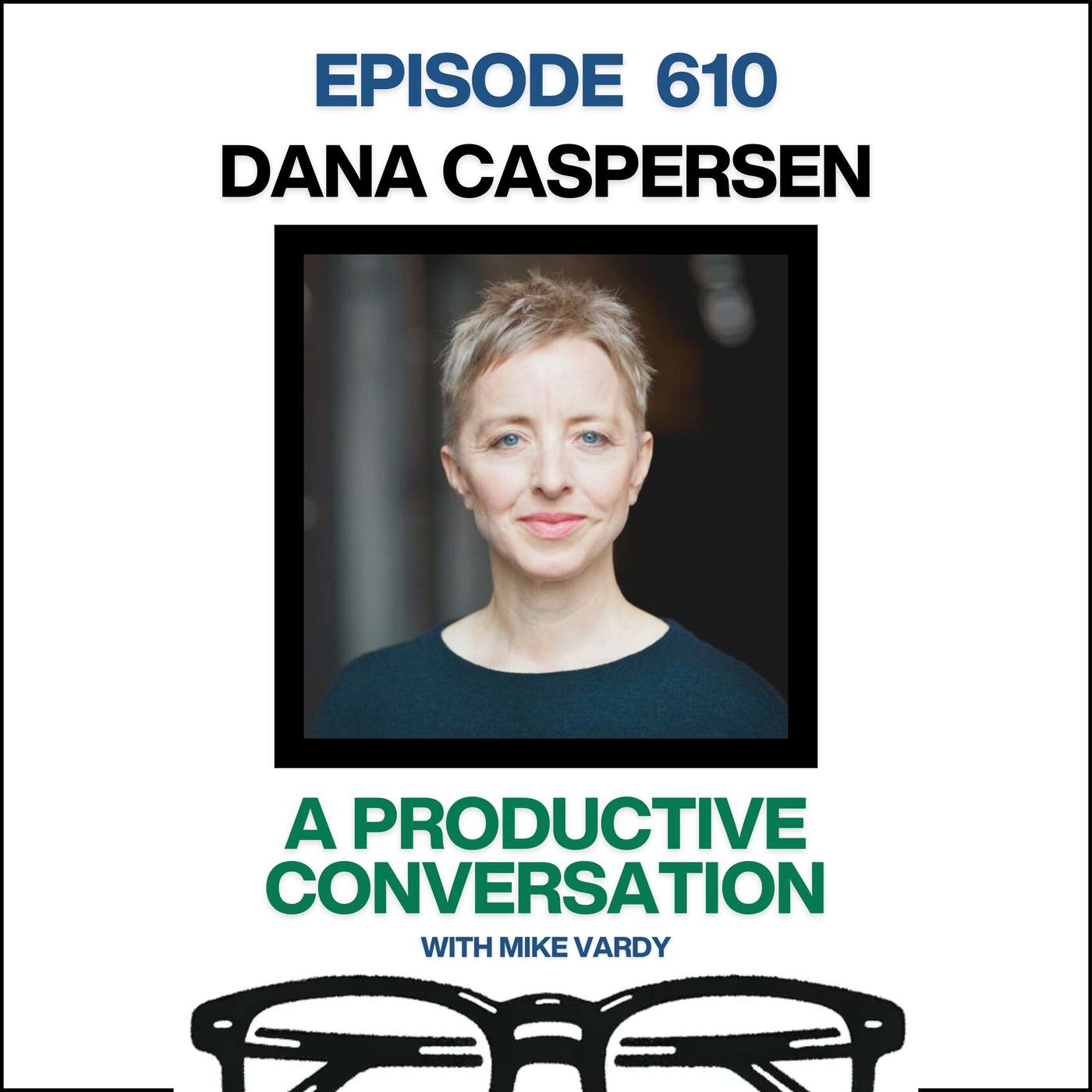
Ep 610Dana Caspersen Talks About Navigating Conflict with Curiosity and Clarity
This episode is brought to you by Your Clockwise Week—a personalized weekly structure built around your actual life, not an ideal one. If your week feels full but not fitting, you can learn more at mikevardy.com/yourclockwiseweek.In this episode of A Productive Conversation, I dive into a topic that’s often overlooked when discussing productivity: conflict. But not just any conversation about conflict — this one’s with Dana Caspersen, conflict engagement specialist, TEDx speaker, and author of Conflict Is an Opportunity: 20 Fundamental Decisions for Navigating Difficult Times.Dana brings a rare combination of deep analytical insight and artistic fluency to the conversation, shaped by decades of work as both a mediator and an award-winning performing artist. We explore how the way we approach conflict — in work, relationships, and even with ourselves — is a direct reflection of how we manage time, attention, and energy.Six Discussion PointsWhy conflict isn’t a distraction from productivity — it’s a part of it.The four fundamental elements of conflict: emotion, needs, interests, and strategies.How assumptions derail conversations and curiosity keeps them alive.Replacing complaints and demands with thoughtful requests.The role of journaling in conflict clarity and attention calibration.Dana’s “20 Decisions” framework and how to work with — not against — your conflict habits.Three Connection PointsDana's websiteGet Conflict Is an Opportunity: Twenty Fundamental Decisions for Navigating Difficult TimesInterested in a related conversation? Then also listen to Episode 354: How To Decide with Annie DukeThis episode reminded me that conflict isn’t something we need to fear or avoid — it’s something we can navigate with purpose. Dana’s thoughtful framework is more than theory; it’s a guide you can return to anytime you feel stuck, misunderstood, or simply out of sync. If you want to turn tension into transformation, this conversation is a must-listen.If this episode resonated, I’m exploring ideas like these more deeply in my upcoming book, Productiveness. You can follow along as it takes shape at mikevardy.com/productiveness.
Ep 609PM Talks S2E6: Momentum
This episode is brought to you by Your Clockwise Week—a personalized weekly structure built around your actual life, not an ideal one. If your week feels full but not fitting, you can learn more at mikevardy.com/yourclockwiseweek.This episode is the latest installment in our monthly PM Talks series, where Patrick Rhone and I dive deep into ideas that shape how we manage time, energy, and focus. This month, we explored a topic that sneaks into our workflows and sustains our best efforts when used wisely—momentum.Momentum isn’t just a starting gun. It’s a rhythm, a flow, a throughline. In this episode, we break down what momentum looks like at different stages of a project or practice, how to recognize its many disguises, and ways to harness it without burning out or blowing past friction points that deserve your attention.Six Discussion Points:Why starting with a satisfying, low-friction task can set the tone for your entire dayThe difference between “Gomentum,” “Slowmentum,” and everyday momentumHow to align your energy and environment to keep momentum goingWhat friction can teach us—and how to treat it as a signal rather than a stop signThe dual role of a creator: sustaining promotion while starting the next meaningful thingHow to tell if a diversion is worth following or just a cleverly disguised distractionThree Connection Points:Patrick Rhone’s WebsiteWatch a sneak peek of my conversation on The Science of Revenge with James Kimmel Jr.Listen to APC Episode 586: Nir Eyal Talks About Becoming Indistractable and Managing DistractionsWe left a lot on the table this time—and that’s intentional. Next month, we’ll be diving into the idea of sustainability, how it differs from consistency, and why it’s essential for any lasting creative or productive work. If you’ve got thoughts, comments, or suggestions for season three, drop them wherever you listen or find me online. Until then, keep the momentum going.If this episode resonated, I’m exploring ideas like these more deeply in my upcoming book, Productiveness. You can follow along as it takes shape at mikevardy.com/productiveness.
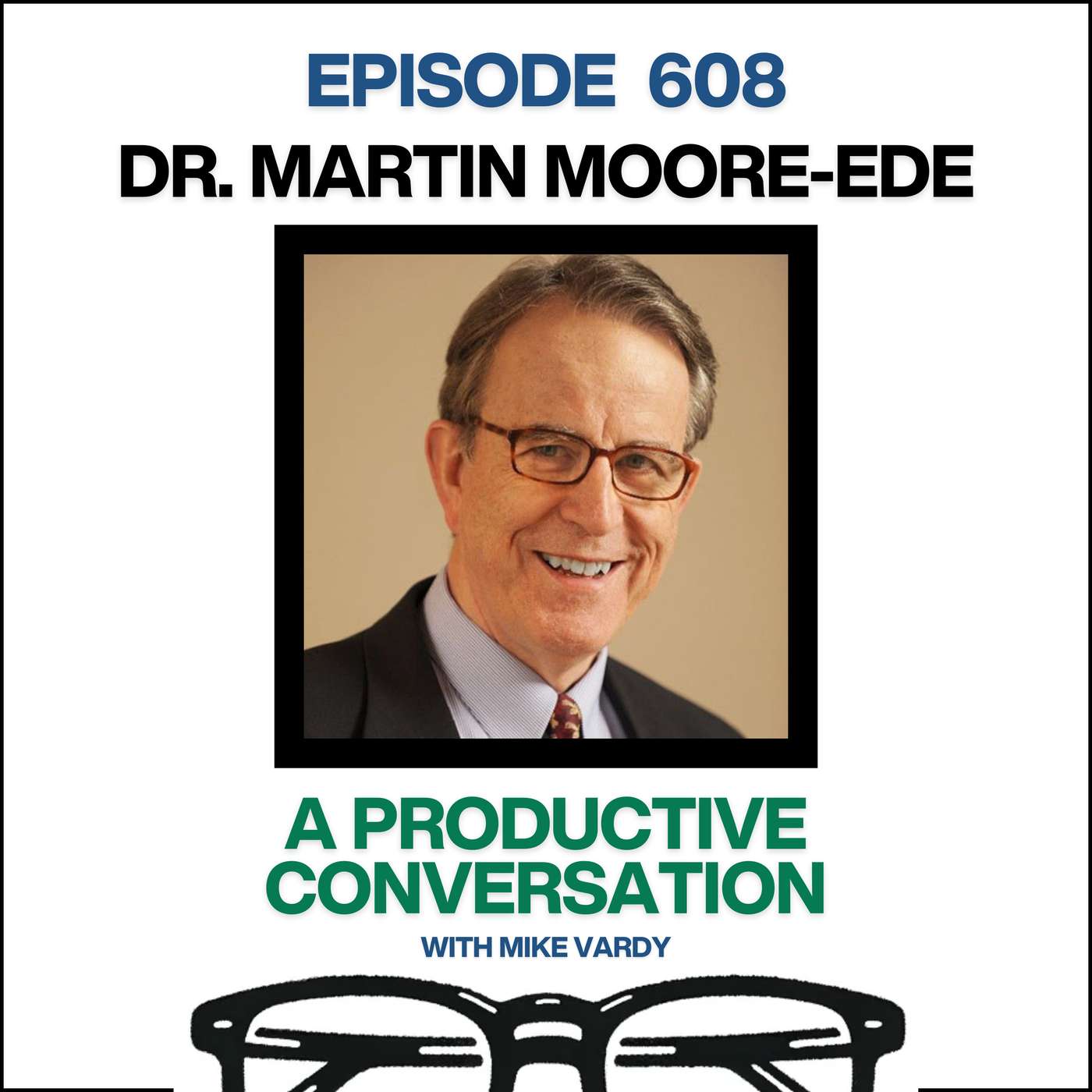
Ep 608Dr. Martin Moore-Ede Talks About Light, Health, and Productivity
This episode is brought to you by Your Clockwise Week—a personalized weekly structure built around your actual life, not an ideal one. If your week feels full but not fitting, you can learn more at mikevardy.com/yourclockwiseweek.Light is something we often take for granted. We flip a switch, our rooms brighten, and we move on with our day. But what if the light we’re exposed to is impacting our sleep, health, and overall longevity? Dr. Martin Moore-Ede, a pioneer in circadian science, joins me on A Productive Conversation to discuss the powerful role light plays in our lives. His latest book, The Light Doctor: Using Light to Boost Health, Improve Sleep, and Live Longer, dives deep into how modern lighting affects our bodies and what we can do to make healthier choices.In this episode, we explore the unseen effects of artificial lighting, how night owls (like me) can optimize their routines, and why the right type of light exposure is as critical as nutrition and exercise. If you’ve ever wondered why you feel wired at night, sluggish in the morning, or just can’t seem to get restful sleep, this conversation will shine a light—literally—on what might be going on.Six Discussion PointsThe critical role of light in our health and why it’s as important as food, water, and airHow modern artificial lighting disrupts our circadian rhythms and contributes to health issuesWhy night owls struggle more with artificial light exposure and what they can do about itThe hidden dangers of LED lighting—why Dr. Moore-Ede compares it to DDT and asbestosSimple strategies for optimizing light exposure throughout the day to improve sleep and overall healthThe future of lighting and the push for healthier, circadian-friendly solutionsThree Connection PointsGet Dr. Moore-Ede's book, The Light DoctorDr. Moore-Ede's websiteRead Dr. Moore-Ede's SubstackThe way we interact with light is more powerful than we realize. Dr. Moore-Ede's insights will make you rethink everything from your morning routine to the bulbs in your home. Tune in for an illuminating discussion on how to harness light for better productivity, health, and longevity.If this episode resonated, I’m exploring ideas like these more deeply in my upcoming book, Productiveness. You can follow along as it takes shape at mikevardy.com/productiveness.
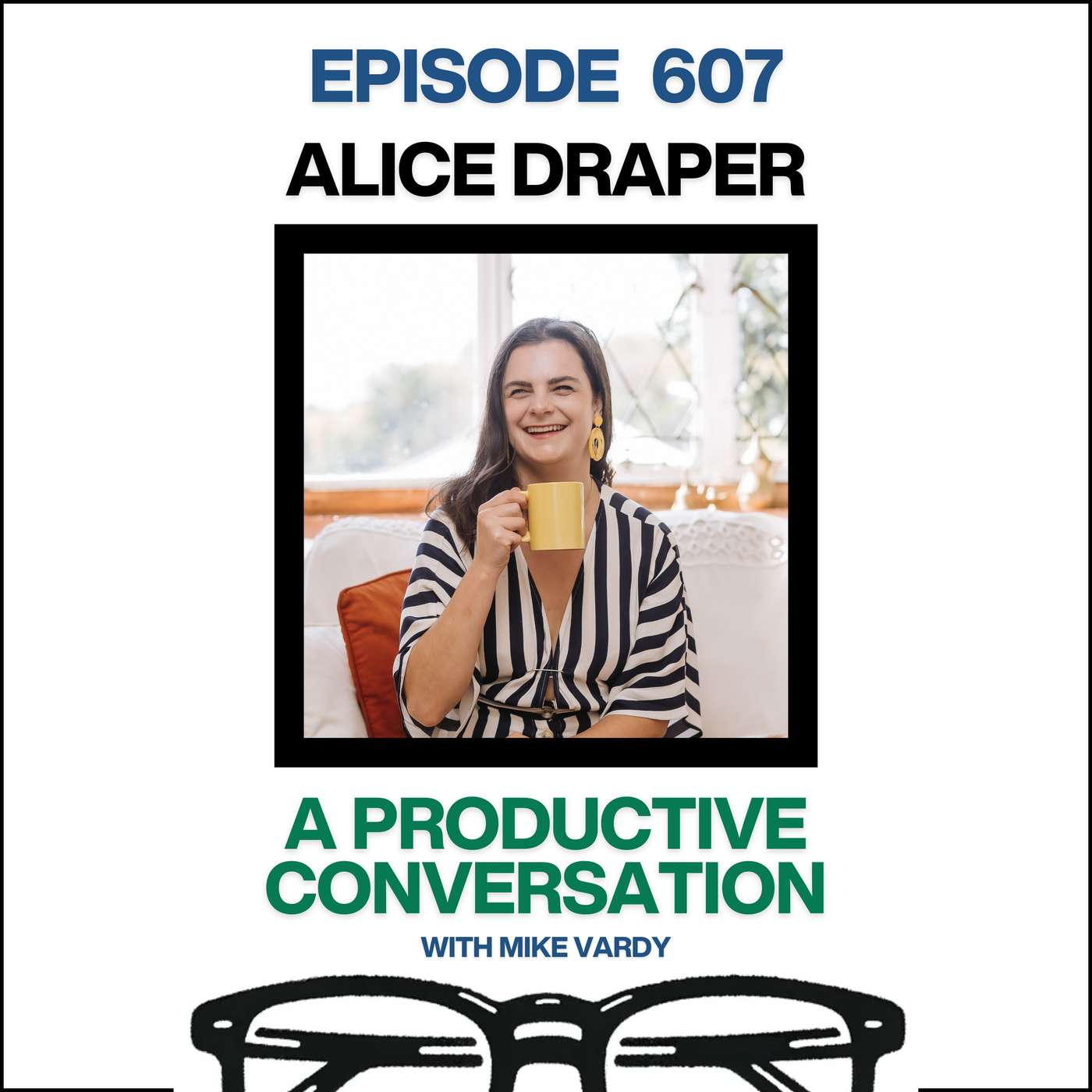
Ep 607Alice Draper Talks About Rejection, Resilience, and Podcast Pitching
This episode is brought to you by Your Clockwise Week—a personalized weekly structure built around your actual life, not an ideal one. If your week feels full but not fitting, you can learn more at mikevardy.com/yourclockwiseweek.What if rejection wasn’t something to fear—but a skill to build? In this episode of A Productive Conversation, I chat with Alice Draper, founder of Hustling Writers and host of My Rejection Story. Alice has helped clients land interviews on hundreds of top podcasts and is on a mission to demystify the power of rejection, especially for creatives and entrepreneurs.We explore what it means to navigate self-rejection, build visibility in an increasingly noisy world, and pitch yourself without compromising your voice. As someone who’s been on both sides of the podcast pitch, Alice shares refreshing insights that go beyond the usual tips and templates.Six Discussion PointsHow Alice went from freelance journalist to podcast publicity expert (accidentally)Why self-rejection is the most insidious form of rejection—and how to combat itThe link between imposter syndrome and visibility for marginalized voicesJournaling as a path to resilience, awareness, and actionHow community can be your greatest hack for rejection resistanceWhat makes a strong podcast pitch—and why vulnerability is essentialThree Connection PointsHustling WritersListen to My Rejection StoryCheck out Alice's appearance on This Changes EverythingThis conversation reminded me that rejection isn’t a sign of failure—it’s a signal that you’re putting yourself out there. Alice’s perspective on vulnerability, rejection, and authentic outreach is something I think more creators and professionals need to hear, especially in an era obsessed with shortcuts and surface-level connection.If this episode resonated, I’m exploring ideas like these more deeply in my upcoming book, Productiveness. You can follow along as it takes shape at mikevardy.com/productiveness.
Ep 606PM Talks S2E5: Adaptability
This episode is brought to you by Your Clockwise Week—a personalized weekly structure built around your actual life, not an ideal one. If your week feels full but not fitting, you can learn more at mikevardy.com/yourclockwiseweek.This episode marks the latest in our ongoing monthly PM Talks series, where I sit down with Patrick Rhone to explore a theme through candid conversation, lived experience, and a touch of real-time reflection.This time, we didn’t just talk about adaptability—we lived it. Technical issues and illness meant we had to reschedule and re-record, but in doing so, we ended up with an even deeper and more resonant conversation. Adaptability isn’t just a concept—it’s a practice, and in this episode, we show what that looks like in real life.Six Discussion PointsWhy slowing down is often the best way to adapt effectivelyHow "known unknowns" create conditions that demand adaptabilityPatrick’s perspective on college uncertainty and shifting expectationsThe tension between efficiency and agency in modern lifeHow small pauses create the space for better decisionsWhy resilience isn’t the same as adaptability—and why both matterThree Connection PointsResilience (Resistance)The Known UnknownsTV is BrokenSometimes we adapt by choice. Other times, we’re forced into it. Either way, the quality of our adaptation depends on how well we pause, observe, and decide. This conversation offers a reminder that in a fast-moving world, the real power lies in how we slow down and shift course with intention.If this episode resonated, I’m exploring ideas like these more deeply in my upcoming book, Productiveness. You can follow along as it takes shape at mikevardy.com/productiveness.
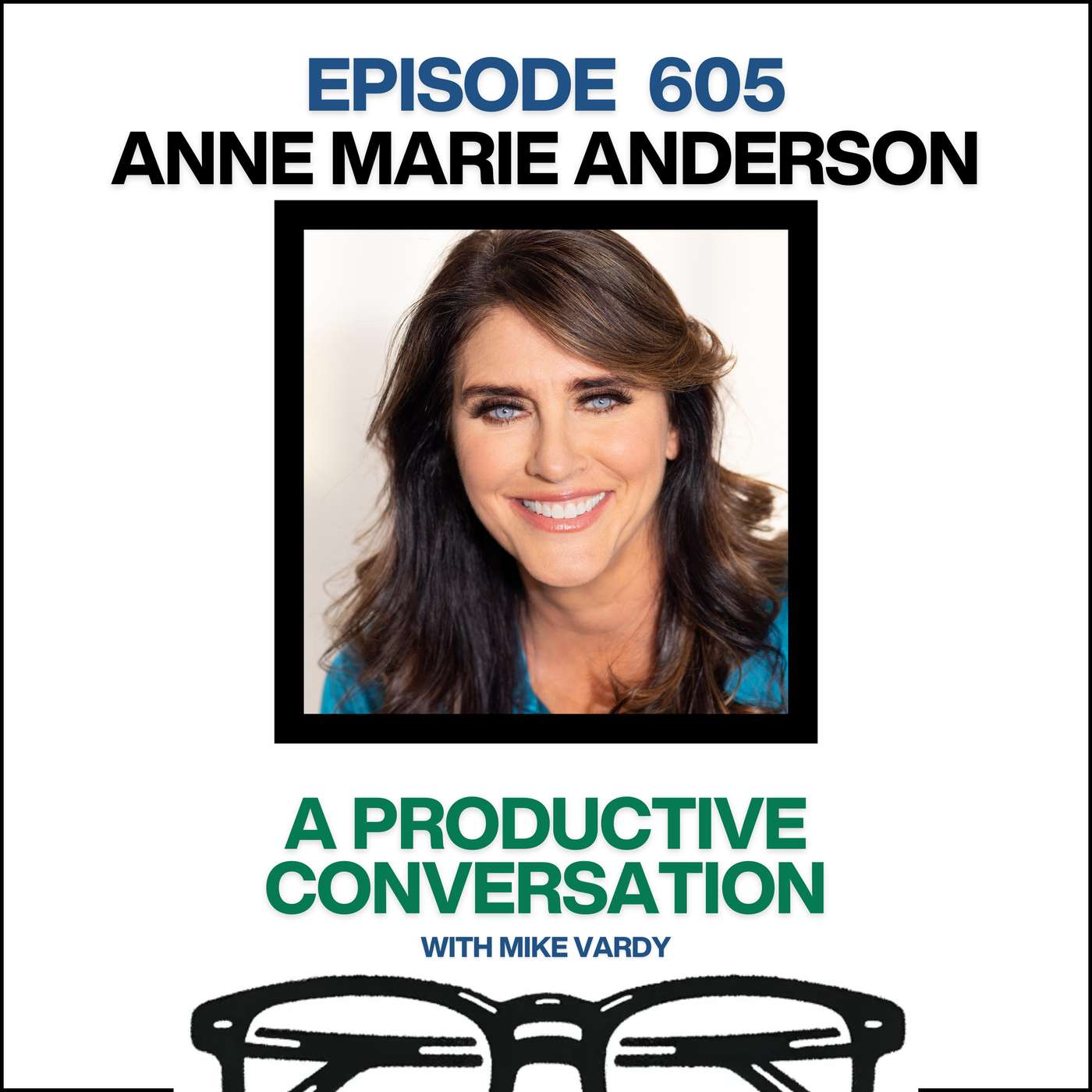
Ep 605Anne Marie Anderson Talks About Cultivating Audacity and Navigating Fear
This episode is brought to you by Your Clockwise Week—a personalized weekly structure built around your actual life, not an ideal one. If your week feels full but not fitting, you can learn more at mikevardy.com/yourclockwiseweek.This episode features a truly audacious guest—Anne Marie Anderson. A three-time Emmy award-winning broadcaster and the author of Cultivating Audacity, Anne Marie has spent her career on the sidelines of high-stakes sporting events and inside boardrooms, observing what sets bold, high performers apart.But this isn’t just about elite athletes or executive culture. It’s about how you can embrace everyday audacity—bit by bit. We explore how to take micro-risks, manage fear without eliminating it, and adopt boldness as a way of being, not a one-time event.Six Discussion PointsWhy audacity is less about bold moves and more about micro-risksHow to separate urgency from importance—and why that distinction mattersWhy fear should be navigated, not conqueredHow Anne Marie wrote her book in 15-minute blocks and why that method worked for herWhat it means to set boundaries with intention rather than defaultHow to audit your time and reclaim it in meaningful, energizing waysThree Connection PointsAnne Marie's websiteAnne Marie's bookRead "How to Maximize Your Minutes"This was a conversation that moved far beyond productivity tips and into what it really means to live intentionally, audaciously, and sustainably. Anne Marie brought both depth and practical wisdom—and I hope you walk away from this one ready to take that next bold step, no matter how small it may be.If this episode resonated, I’m exploring ideas like these more deeply in my upcoming book, Productiveness. You can follow along as it takes shape at mikevardy.com/productiveness.
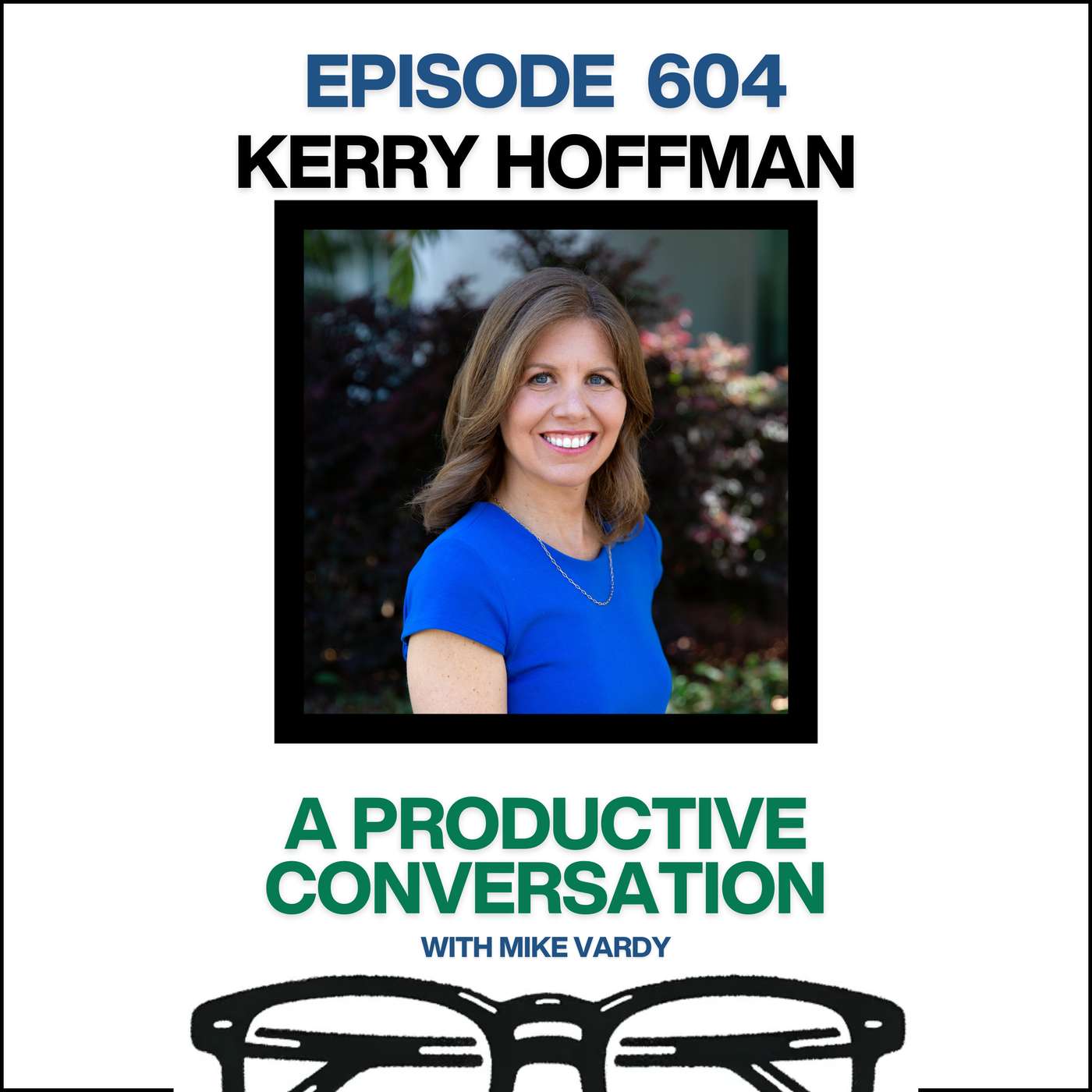
Ep 604Kerry Hoffman Talks About Order, Chaos, and Planning with Purpose
This episode is brought to you by Your Clockwise Week—a personalized weekly structure built around your actual life, not an ideal one. If your week feels full but not fitting, you can learn more at mikevardy.com/yourclockwiseweek.When you gain agency over your time—whether stepping out of a traditional 9-to-5 job or shifting into self-employment—it can feel liberating… and overwhelming. Kerry Hoffman knows this tension well. As someone who helps individuals and teams make sense of what they’re doing and when they’re doing it, she offers a refreshingly practical approach to task management and planning that embraces both the structure and spontaneity life demands.In this episode of A Productive Conversation, Kerry and I dive into the habits and mindset shifts required to design a system that supports how you want to live—not just how you work. From flipping mattresses to prepping for quarterly reviews, it’s about giving your tasks a home… and giving yourself a break.Six Discussion PointsWhy gaining control over your time can feel disorienting—and how to reclaim clarity through structureThe power of defining homes for different kinds of tasks (calendar, project manager, spreadsheet, etc.)The liberating magic of mundane reminders (yes, even "flip the mattress")How building a system frees up bandwidth and unlocks more unplanned timeHow reflecting after the experience makes the memory stronger (and more fun)Why teams need to define what ASAP really means—and who decides what's "possible"Three Connection PointsKerry's websiteKerry on LinkedInThe News and Your Attention: Engaging Without Being ConsumedKerry reminded me of something vital in this conversation: structure isn’t about control—it’s about creating space. Space for spontaneity, reflection, even a non-alcoholic beer at the end of the day (which we talk about, too). Her blend of grounded tools and generous mindset makes the work of planning feel like an act of care, not constraint. If this episode resonated, I’m exploring ideas like these more deeply in my upcoming book, Productiveness. You can follow along as it takes shape at mikevardy.com/productiveness.
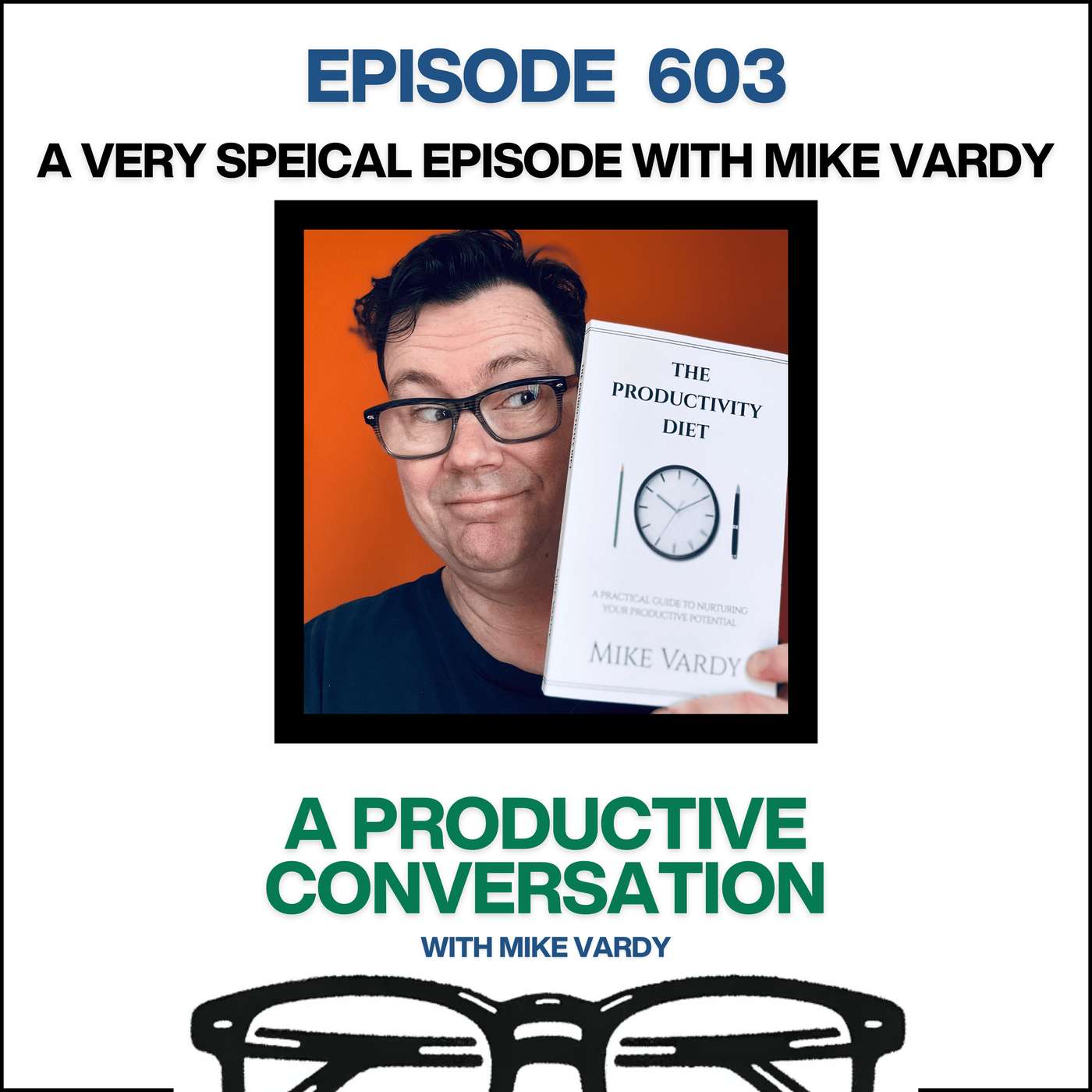
Ep 603A VERY SPECIAL EPISODE: Mike Vardy Talks About The Productivity Diet
This episode is brought to you by Your Clockwise Week—a personalized weekly structure built around your actual life, not an ideal one. If your week feels full but not fitting, you can learn more at mikevardy.com/yourclockwiseweek.What happens when the host becomes the guest? In this special episode of A Productive Conversation, I sit on the other side of the mic as Tim O’Hare—an active and insightful member of the TimeCrafting Trust Premium community—interviews me about my latest book, The Productivity Diet.We explore why this book took years to come together, what makes it different from typical productivity guides, and how it offers a more sustainable and value-driven path toward productiveness. Tim asks great questions, and we dive into the mindset, structure, and lived experiences that shaped the book.Six Discussion PointsWhy I resisted writing The Productivity Diet—and what finally pushed it forwardThe shift from productivity to productiveness: a deeper and more durable focusHow the three-part structure (Mindset, Practice, Mastery) came to lifeThe role of reflection and rhythm in building sustainable systemsHow metaphors like “dieting” help make abstract concepts tangibleThe importance of having a supportive community while crafting time intentionallyThree Connection PointsBuy The Productivity DietCheck out Tim's BlogJoin TimeCrafting Trust PremiumThis episode isn’t just a behind-the-scenes look at the book—it’s a conversation about what it really means to live with intention, apply attention wisely, and develop a practice that fits real life. Whether you've read the book or are just getting curious, this episode will give you clarity and maybe even a nudge to reflect on your own relationship with time.If this episode resonated, I’m exploring ideas like these more deeply in my upcoming book, Productiveness. You can follow along as it takes shape at mikevardy.com/productiveness.
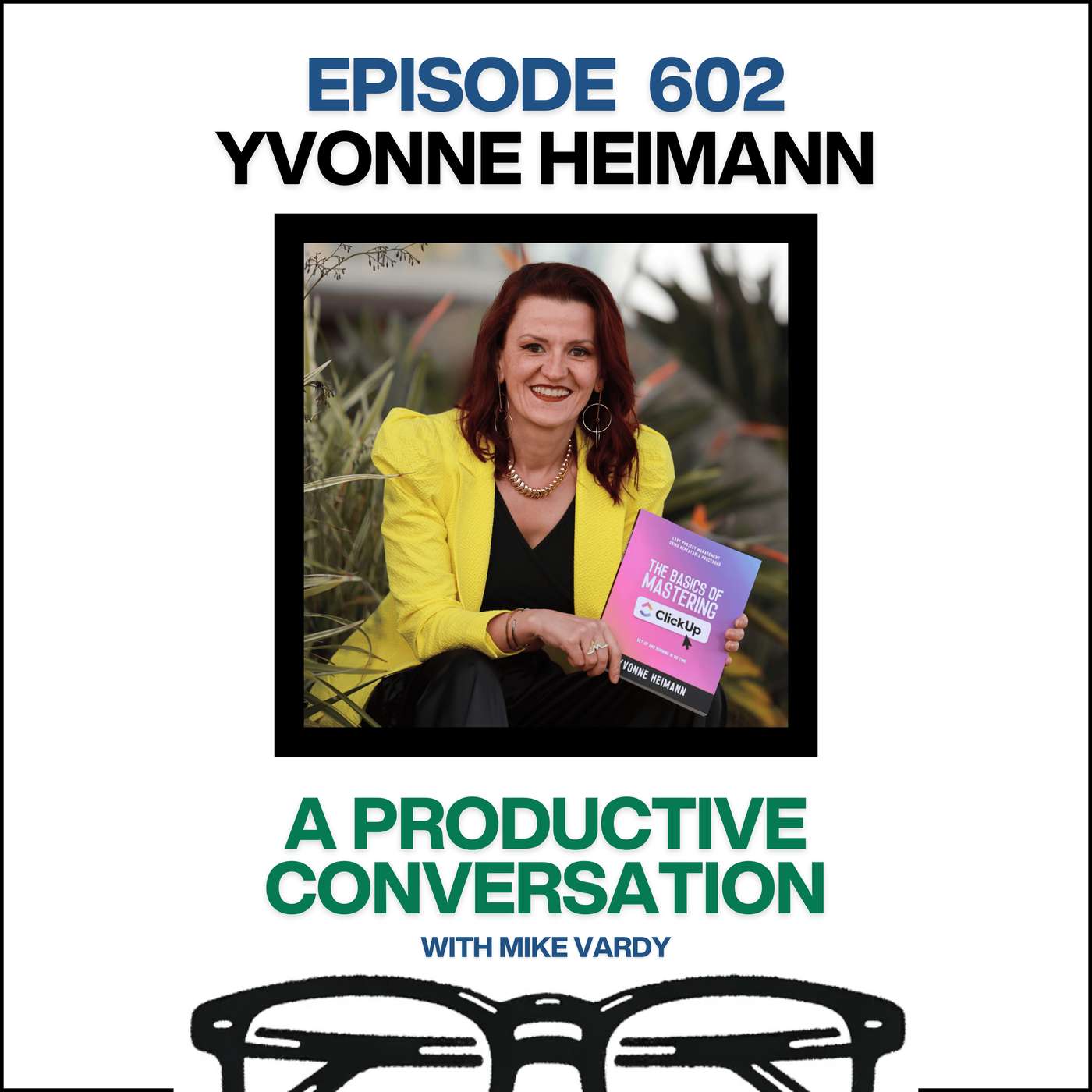
Ep 602Yvonne Heimann Talks About Building Freedom Through Systems
This episode is brought to you by Your Clockwise Week—a personalized weekly structure built around your actual life, not an ideal one. If your week feels full but not fitting, you can learn more at mikevardy.com/yourclockwiseweek.In this episode, I reconnect with productivity strategist Yvonne Heimann—aka AskYvi—who’s not only made a bold geographic shift but is navigating personal and professional freedom with intention and clarity. We explore what it looks like to trust the systems you’ve built, especially when life throws curveballs or invites you into a new chapter.Yvi shares her journey from San Diego to Vancouver Island, a leap that challenged her structured mindset but reaffirmed the foundation she’d built in her business. We discuss the nuances between planning and preparation, how constraints can become catalysts for creativity, and what it really takes to be nimble without losing direction.Six Discussion PointsWhy Yvi left San Diego and how that decision sparked unexpected growthThe difference between planning and preparation—and why that mattersHow building systems in business created personal freedomLetting go of perfection and trusting the foundation insteadThe role of journaling and rituals when life becomes unpredictableWhy boundaries in business are not restrictive—they’re liberatingHow dynamic environments call for static anchors and structureThree Connection PointsAskYvi.comYvi's YouTube ChannelClickUpYvonne’s story is a masterclass in what it means to build a business and life that are both stable and adaptable. If you’ve ever wondered how to stay grounded while embracing change, this conversation offers practical insights and inspiration. (Originally released August 2021)If this episode resonated, I’m exploring ideas like these more deeply in my upcoming book, Productiveness. You can follow along as it takes shape at mikevardy.com/productiveness.
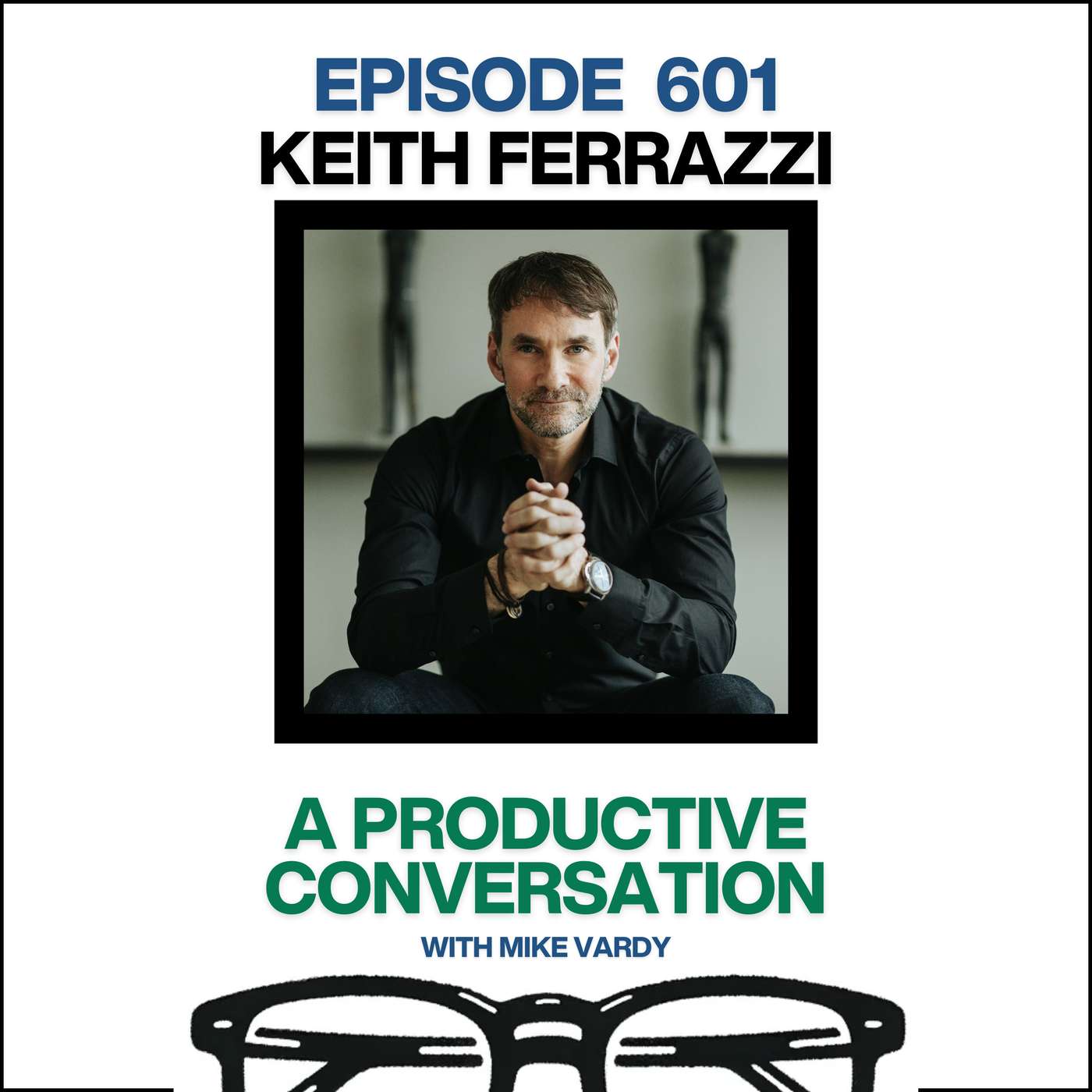
Ep 601Keith Ferrazzi Talks About Teamship and Transforming the Way We Work
This episode is brought to you by Your Clockwise Week—a personalized weekly structure built around your actual life, not an ideal one. If your week feels full but not fitting, you can learn more at mikevardy.com/yourclockwiseweek.It was a real treat to welcome Keith Ferrazzi back to the show—especially to discuss his latest book, Never Lead Alone: 10 Shifts from Leadership to Teamship. Keith’s work has long pushed beyond traditional leadership models, and this conversation builds on that legacy with his fresh concept of “teamship.”We dig into how the book is structured like a workbook, intentionally concise but rich with practices, diagnostics, and stories from leaders who’ve made the shift. Keith shares not only what teamship is, but why it matters more than ever—especially in a world that’s still grappling with how work actually works.Six Discussion PointsWhy the term “teamship” matters and how it reframes traditional leadership modelsThe power of practices like “stress testing” and “candor breaks” in elevating team dynamicsHow the book is structured for flexibility and immediate application—like a toolkit, not a textbookWhy teams should redefine who is on their “team” beyond the org chartThe myth of efficiency and how true growth emerges through inclusive co-creationWhy engineers—more than MBAs—are driving the future of how we collaborateThree Connection PointsKeithFerrazzi.comNever Lead Alone: 10 Shifts from Leadership to TeamshipEpisode 306: Leading Without Authority with Keith FerrazziThis conversation reminded me why Keith’s work continues to influence how I think about leadership, collaboration, and the future of work. Never Lead Alone isn’t just a book title—it’s a call to action for all of us to stop putting the weight of progress on a single set of shoulders. The path forward is teamship. I hope this conversation sparks that shift for you, too.If this episode resonated, I’m exploring ideas like these more deeply in my upcoming book, Productiveness. You can follow along as it takes shape at mikevardy.com/productiveness.
Ep 600PM Talks S2E4: Focus
This episode is brought to you by Your Clockwise Week—a personalized weekly structure built around your actual life, not an ideal one. If your week feels full but not fitting, you can learn more at mikevardy.com/yourclockwiseweek.This episode is the latest in our monthly PM Talks series, where Patrick Rhone and I go deep on foundational elements of productiveness. And for this one—our 600th episode, no less—we dive into a topic that touches everything from our to-do lists to our dinner prep: focus.What does it really mean to focus? And more importantly, how do we hold onto it when the world (and our brains) are pulling us in a million directions? Patrick and I get personal, philosophical, and practical in this candid conversation about the mechanics, challenges, and beauty of attention.Six Discussion PointsWhy clarity is essential for cultivating focusHow poor planning can derail your ability to be present (and how to get back on track)The four spheres of attention: Noticing, Awareness, Focus, and ConcentrationHow setting an intention—before a task or even a class—can sharpen your resultsThe role of tools, routines, and even AI in maintaining (or stealing) our attentionWhy focus is as much about space as it is about time3 Connection PointsPatrick's blogTed Lasso's "Be Curious" SceneThe Center Must Hold (but can it?)Focus isn’t just about removing distractions—it’s about choosing what matters and committing to it with clarity and care. Whether we’re talking about planning meals or choosing how to use AI, what Patrick and I come back to again and again is this: the quality of your attention determines the quality of your experience. And we hope this conversation helps you experience more of what really matters.If this episode resonated, I’m exploring ideas like these more deeply in my upcoming book, Productiveness. You can follow along as it takes shape at mikevardy.com/productiveness.
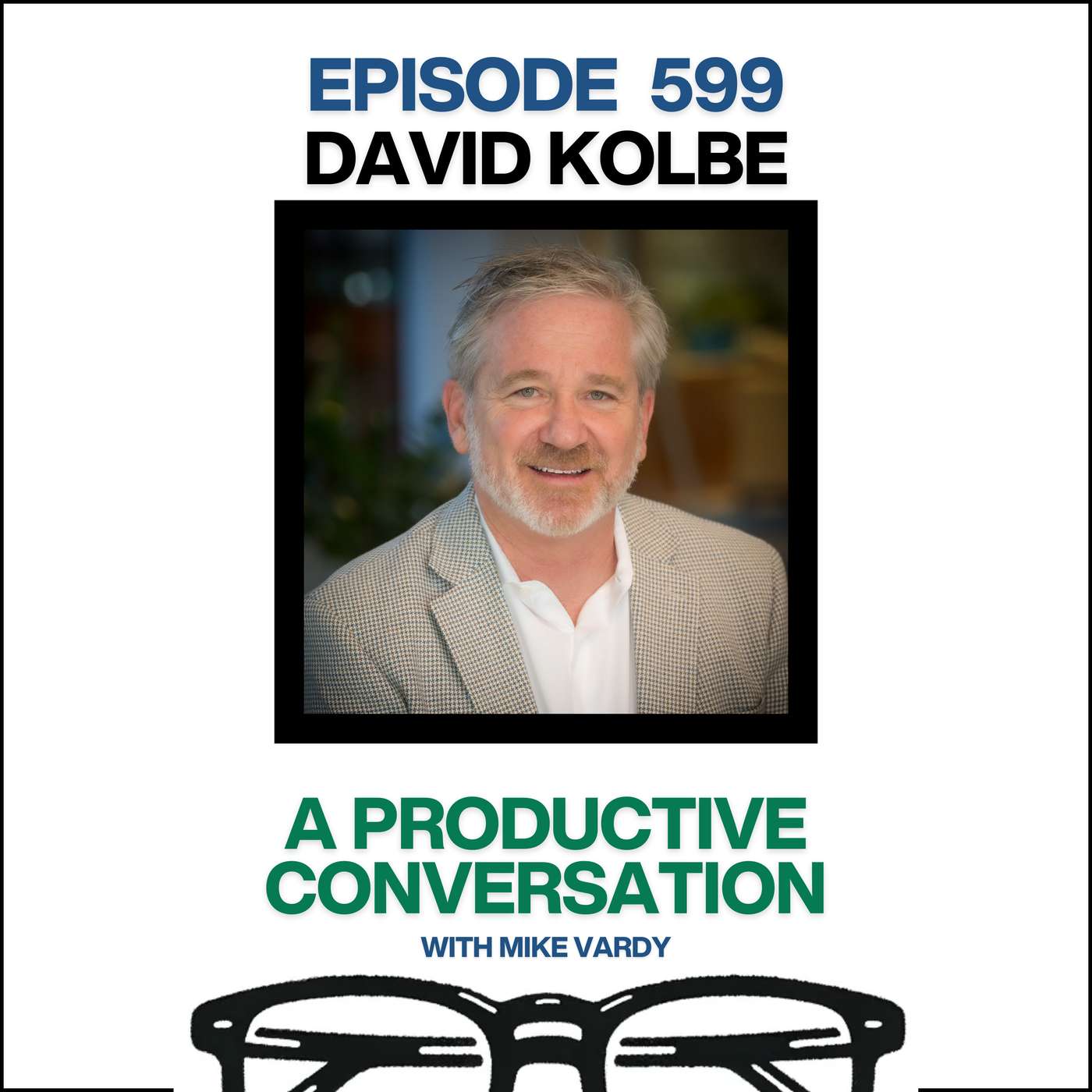
Ep 599David Kolbe Talks About Doing More Naturally and Unlocking Instinctive Productivity
This episode is brought to you by Your Clockwise Week—a personalized weekly structure built around your actual life, not an ideal one. If your week feels full but not fitting, you can learn more at mikevardy.com/yourclockwiseweek.When I first heard the term conative, I was surprised I hadn’t come across it before. After all, I live in the productivity space. But after my conversation with David Kolbe, it became clear just how crucial it is to understand this third part of the mind—especially if we want to work more naturally and avoid burnout.David is the CEO of Kolbe Corp and co-author of the book Do More, More Naturally: Empowering Effortless Success and the Freedom to Be Yourself. In this episode, we dive into how understanding your instinctive strengths—the way you naturally take action—can dramatically shift your productivity, your teamwork, and your overall approach to work and time.Six Discussion PointsWhat “conative” means and why it’s a vital (and often overlooked) aspect of how we get things doneThe three parts of the mind—cognitive, affective, and conative—and how each plays a role in productivityHow to stop following one-size-fits-all productivity advice and instead lean into your natural strengthsWhat organizations can do to allow employees to operate more naturally without sacrificing excellenceWhy balance isn’t about 50/50—it’s about harmony and nuancePractical steps for realigning with your natural way of working when feeling stuck or exhaustedThree Connection PointsDavid's WebsiteDo More More Naturally: Empowering Effortless Success and the Freedom to Be YourselfReason plays a role in this. Give this a read if you want reason on your side.David’s insights are a refreshing reminder that productivity isn’t just about what we do—it’s about how we instinctively do it. I walked away from this conversation with a new appreciation for nuance, individuality, and the value of building systems that work with our natural tendencies rather than against them. If you’ve ever felt like you’re working hard but still not in flow, this episode might be just what you need.If this episode resonated, I’m exploring ideas like these more deeply in my upcoming book, Productiveness. You can follow along as it takes shape at mikevardy.com/productiveness.
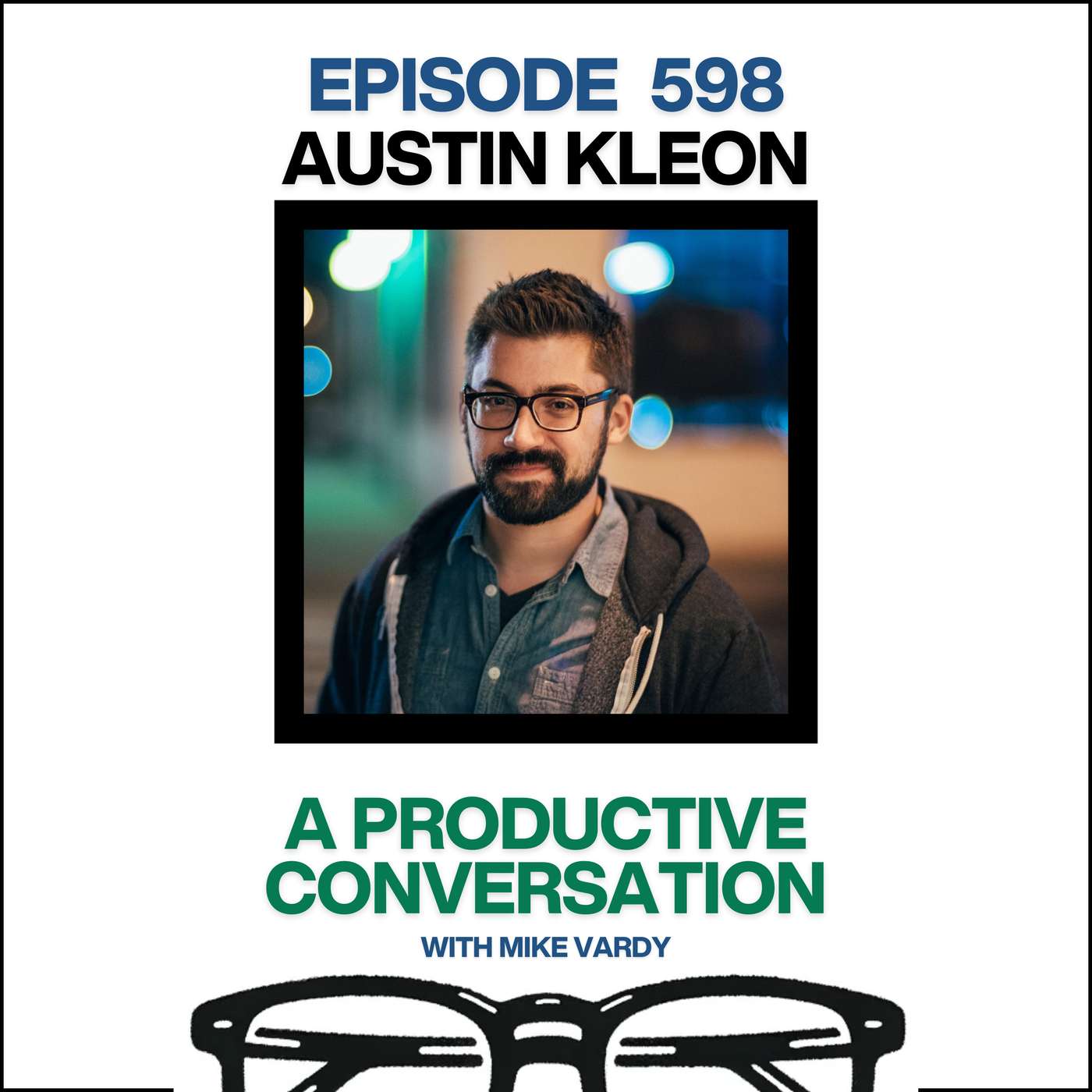
Ep 598Austin Kleon Talks About Routine, Creativity, and Paying Attention
This episode is brought to you by Your Clockwise Week—a personalized weekly structure built around your actual life, not an ideal one. If your week feels full but not fitting, you can learn more at mikevardy.com/yourclockwiseweek.It was a real treat to reconnect with Austin Kleon for this episode of A Productive Conversation. Before we got into the heart of the conversation, Austin gave us a quick update: his next book Don’t Call It Art is in the works, inspired by the playful creativity he’s witnessed in his kids. He also mentioned that his once-weekly newsletter has now doubled in frequency—and it continues to be one of the best things I read online.What followed was one of the most down-to-earth, real conversations I’ve had on the podcast. Austin and I explored how routines shape creative work, why space and time are both essential, and what it means to pay attention in a world that’s constantly pulling at you. His approach to creative living—one grounded in ritual, space, boundaries, and self-awareness—is something we can all learn from, whether we’re artists, entrepreneurs, or just trying to make a little more room for what matters.Six Discussion PointsAustin’s upcoming book Don’t Call It Art and how it was inspired by parentingThe power of routine in a creative life—and how Austin structures his dayWhy boundaries (including physical signs on doors) help protect focusUsing analog and digital “zones” for different types of workPaying attention to what you pay attention to—and why it mattersThe idea of a “bliss station” and how space (or time) supports creative flowRevisiting your own journaling and notes as a form of orientation and reflectionThree Connection PointsAustin's websiteKeep Going: 10 Ways to Stay Creative in Good Times and BadMy "Bliss Station" (circa 2019)Whether you’re deep into your own creative practice or trying to carve out more space for it, this conversation with Austin is a reminder that creativity isn’t about hustle—it’s about attention, boundaries, and giving yourself room to work and think. It’s always a joy to talk with Austin, and I hope this episode helps you reconnect with your own creative rhythm. (Originally released April 2019)If this episode resonated, I’m exploring ideas like these more deeply in my upcoming book, Productiveness. You can follow along as it takes shape at mikevardy.com/productiveness.
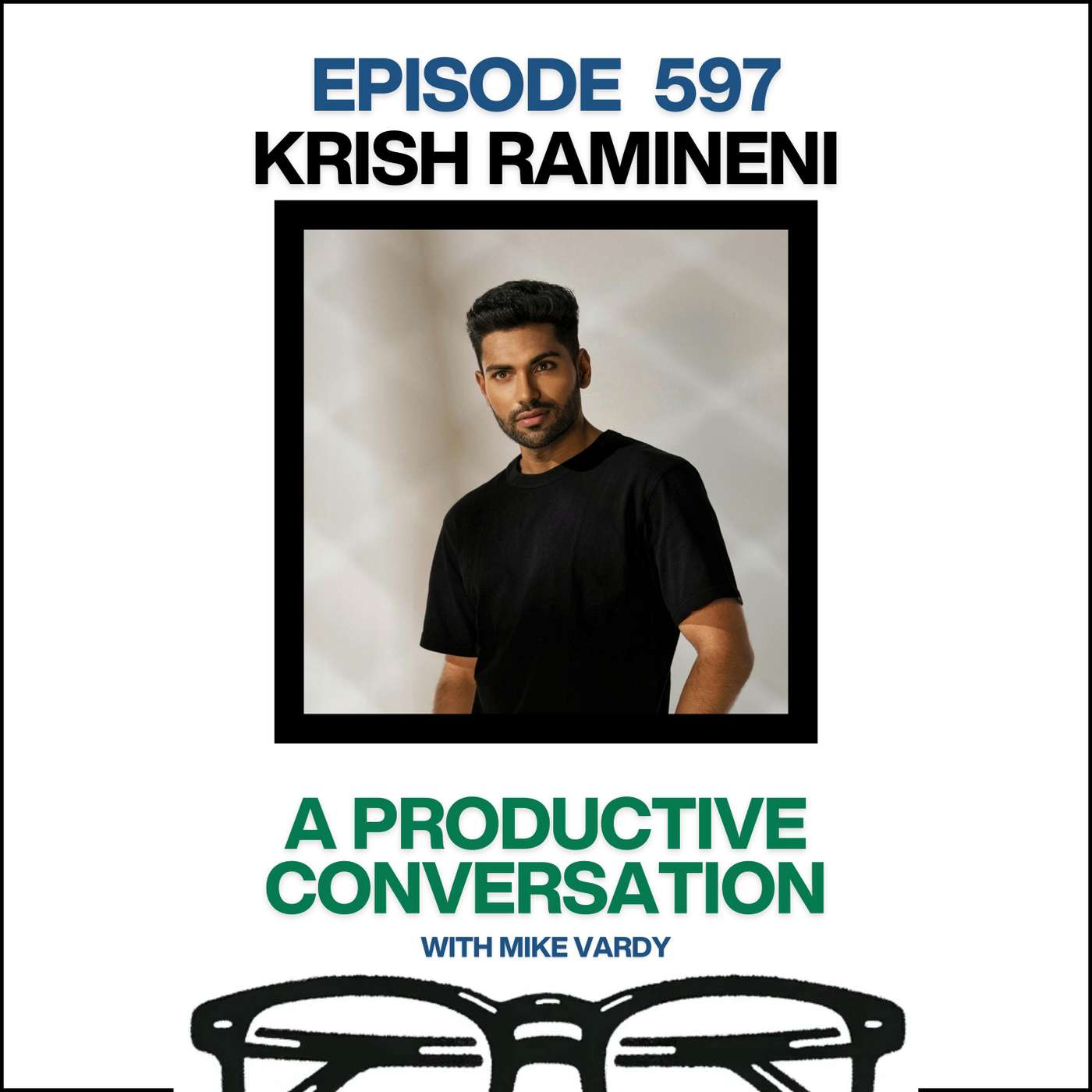
Ep 597Krish Ramineni Talks About AI, Meetings, and Staying Focused While Building
This episode is brought to you by Your Clockwise Week—a personalized weekly structure built around your actual life, not an ideal one. If your week feels full but not fitting, you can learn more at mikevardy.com/yourclockwiseweek.In this episode of A Productive Conversation, I sit down with Krish Ramineni, co-founder and CEO of Fireflies.ai. Krish has had an impressive journey—from being one of Microsoft’s youngest product managers to launching Fireflies, an AI-powered meeting assistant. He’s also been named to Forbes’ 30 Under 30 and has guest lectured at Stanford on deep learning and machine learning.We cover a lot in this conversation—how AI can enhance focus, how Krish avoids getting pulled into shiny object syndrome while building Fireflies, and what the future of AI-powered productivity looks like. If you’re curious about AI’s role in work and how to stay on track while scaling a business, this episode is packed with valuable insights.Key Discussion PointsHow Fireflies.ai helps people focus on what matters by automating meeting notes.Why AI should seamlessly integrate into workflows instead of requiring users to change habits.The balance between quantitative and qualitative work—and how AI can enhance both.How Krish resisted distractions and stayed committed to building Fireflies.ai instead of pivoting too soon.The role of AI in streamlining meetings and reducing unnecessary communication overhead.The challenge of maintaining focus while scaling a tech startup.Where AI is headed next and how people can leverage it for both efficiency and creativity.This conversation is a must-listen if you’re interested in AI’s practical applications, how to use it to free up mental space, and what it takes to stay focused in an industry that’s always shifting.Links Worth ExploringConnect with Krish: LinkedIn | InstagramCheck out Fireflies.ai: Click hereLearn more about Krish's story: Read it hereRelated Conversation: Episode 525: Mat Ellis Talks About Balancing Productivity and Personal Connection with AIRelated Blog Post: The Speed of RightThanks to all of the sponsors of this episode. You can find all of the sponsors you heard me mention on this episode on our Podcast Sponsors page.Want to support the podcast? Beyond checking out our sponsors, you can subscribe to the show wherever you listen to podcasts. You can subscribe on Spotify and also on Apple Podcasts. Not using either of those to get your podcasts? Just click on this link and then paste the podcast feed into your podcast app of choice.Thanks again for listening to A Productive Conversation. See you later.Learn more about your ad choices. Visit megaphone.fm/adchoices If this episode resonated, I’m exploring ideas like these more deeply in my upcoming book, Productiveness. You can follow along as it takes shape at mikevardy.com/productiveness.
Ep 596PM Talks S2E3: Curiosity
This episode is brought to you by Your Clockwise Week—a personalized weekly structure built around your actual life, not an ideal one. If your week feels full but not fitting, you can learn more at mikevardy.com/yourclockwiseweek.This episode of PM Talks is all about curiosity—how it drives us, how it gets suppressed, and how it intertwines with trust and judgment. Patrick Rhone and I dive deep into the forces that shape our thinking, from societal conditioning to personal experiences. As always, we take a thoughtful (and sometimes humorous) approach to unpacking these ideas.We explore why curiosity is often discouraged, how judgment can be a shortcut that stifles growth, and what it means to stay open-minded in an increasingly polarized world. Plus, we talk about journaling, trust, and even how sports fandoms can lead to unexpected insights.Key Discussion Points The paradox of curiosity—how it's both encouraged and discouraged in society Why judgment often wins over curiosity and how that impacts trust How breaking down projects fosters curiosity and prevents blind trust in assumptions The role of journaling in cultivating curiosity and letting go of judgment How social conditioning teaches efficiency over exploration (and why we need to push back) The concept of a Judgment Journal and a Book of Curiosities as tools for reflection How our kids reflect and challenge our own curiosities in unexpected ways We wrap up by discussing how staying curious can build stronger relationships and deeper understanding—whether it’s in politics, personal growth, or simply learning a new skill.Links Worth Exploring Patrick's book, "For You" Patrick’s Website Ted Lasso: The "darts" scene PM Talks S2E2: Alignment Sensible Defaults The Hartford Whalers goal song (for those who love hockey nostalgia) Mel Robbins’ “Let Them Theory” video (Note: She's not the originator of "Let Them" – Cassie Phillips is. Read more here.) Watch "The Social Dilemma" Take The Journaling Persona Assessment Check out ALL of the PM Talks episodes Thanks to all of the sponsors of this episode. You can find all of the sponsors you heard me mention on this episode on our Podcast Sponsors page.Want to support the podcast? Beyond checking out our sponsors, you can subscribe to the show wherever you listen to podcasts. You can subscribe on Spotify and also on Apple Podcasts. Not using either of those to get your podcasts? Just click on this link and then paste the podcast feed into your podcast app of choice.Thanks again for listening to A Productive Conversation. See you later.Learn more about your ad choices. Visit megaphone.fm/adchoices If this episode resonated, I’m exploring ideas like these more deeply in my upcoming book, Productiveness. You can follow along as it takes shape at mikevardy.com/productiveness.
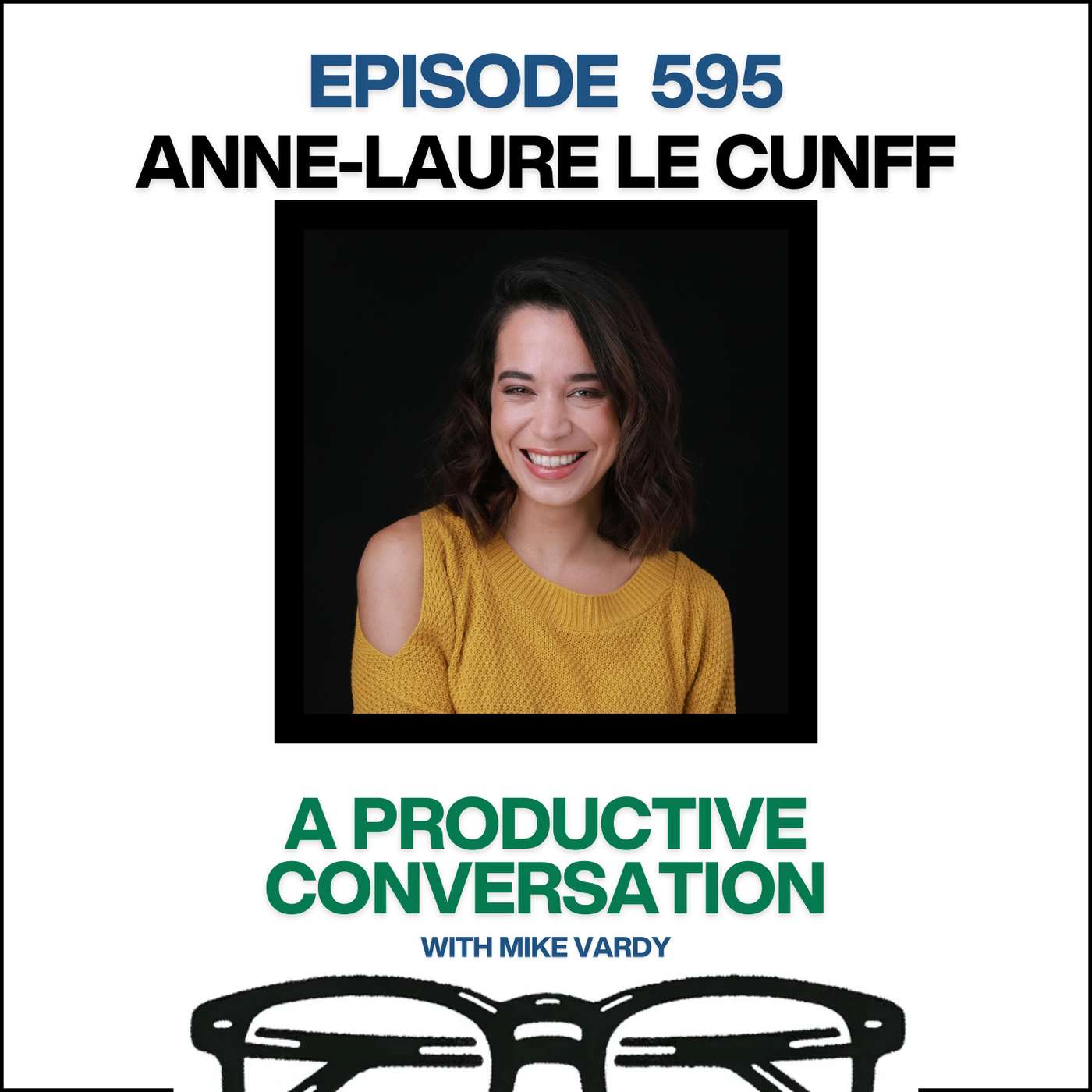
Ep 595Anne-Laure Le Cunff Talks About Tiny Experiments and Sustainable Productivity
This episode is brought to you by Your Clockwise Week—a personalized weekly structure built around your actual life, not an ideal one. If your week feels full but not fitting, you can learn more at mikevardy.com/yourclockwiseweek.In this episode of A Productive Conversation, I sit down with Anne-Laure Le Cunff, neuroscientist, entrepreneur, and founder of Ness Labs, to discuss her new book Tiny Experiments: How to Live Freely in a Goal-Obsessed World. Anne-Laure is known for blending science with practical strategies for thinking, learning, and working better—without burning out.We explore how small, low-risk experiments can lead to big changes, why curiosity is a powerful productivity tool, and how to break free from rigid goal-setting. Anne-Laure also shares how she applies scientific thinking to everyday decision-making, along with strategies for balancing structure and flexibility in personal growth.Key Discussion PointsHow Tiny Experiments challenges traditional goal-setting and promotes flexible, curiosity-driven progress.Why experimentation is a powerful approach to productivity, creativity, and decision-making.How small, low-risk experiments can help overcome perfectionism and fear of failure.The importance of intentional imperfection in balancing work, personal growth, and well-being.How curiosity can serve as a guide for making meaningful progress.Why journaling and self-reflection play a critical role in evaluating experiments.How to create sustainable productivity habits that adapt over time.Links Worth ExploringConnect with Anne-Laure: Website | LinkedIn | Instagram | YouTubeGet the book we discuss: Tiny Experiments: How to Live Freely in a Goal-Obsessed WorldRelated Conversation: Episode 448: Tiago Forte talks about Building a Second BrainRelated Blog Post: Why You Should Play Productivity “Small Ball”This conversation is a great reminder that productivity isn’t just about efficiency—it’s about experimenting, learning, and growing in a way that works for you.If this episode resonated, I’m exploring ideas like these more deeply in my upcoming book, Productiveness. You can follow along as it takes shape at mikevardy.com/productiveness.
Ep 594Charlie Gilkey Talks About Finishing What Matters
This episode is brought to you by Your Clockwise Week—a personalized weekly structure built around your actual life, not an ideal one. If your week feels full but not fitting, you can learn more at mikevardy.com/yourclockwiseweek.Over the years, I've had plenty of insightful conversations on this podcast, and one that still stands out is my discussion with Charlie Gilkey about his book Start Finishing. This Flashback Friday episode brings that conversation back, but with a twist—we start with an update from Charlie on what he's been up to since then.Charlie is someone who has spent years helping people make meaningful progress, and since our last chat, he's been busy launching Momentum, an app designed to reduce productivity friction, and shifting his Productive Flourishing platform over to Substack. In this episode, we pick up where we left off, exploring what’s changed in the way he approaches work, productivity, and team habits.Key Discussion Points What’s new with Charlie since Start Finishing—from launching an app to shifting his content to Substack. How Momentum helps people with chunking and sequencing work without unnecessary friction. Why project management in teams requires a different approach than solo work. The evolution from Start Finishing to Team Habits—and why team productivity is a whole new challenge. The struggle of balancing efficiency with real productivity, especially in hybrid work environments. Why mastery comes from finishing projects, not just starting them. How leaders need to redefine productivity outputs before demanding return-to-office mandates. Charlie and I have been in this space for a long time, and it’s always refreshing to catch up and exchange ideas. Whether you're new to his work or have followed Productive Flourishing for years, this episode has plenty of takeaways on making progress that actually matters. (Originally released September 2019)Links Worth Exploring Connect With Charlie/Productive Flourishing: Website | YouTube | LinkedIn The Book We Discussed This Time: Team Habits: How Small Actions Lead to Extraordinary Results The Book We Discussed Last Time: Start Finishing: How to Go from Idea to Done Another Productive Conversation With Charlie: Watch On My YouTube Channel Related Conversation: Episode 127: A Focus on Flourishing with Charlie Gilkey Related Blog Post: How To Find Your Way Forward (And Finish) Thanks to all of the sponsors of this episode. You can find all of the sponsors you heard me mention on this episode on our Podcast Sponsors page.Want to support the podcast? Beyond checking out our sponsors, you can subscribe to the show wherever you listen to podcasts. You can subscribe on Spotify and also on Apple Podcasts. Not using either of those to get your podcasts? Just click on this link and then paste the podcast feed into your podcast app of choice.Thanks again for listening to A Productive Conversation. See you later.Learn more about your ad choices. Visit megaphone.fm/adchoices If this episode resonated, I’m exploring ideas like these more deeply in my upcoming book, Productiveness. You can follow along as it takes shape at mikevardy.com/productiveness.
Ep 593Kerry Ann King Talks About Productivity, Art, and the Power of Intention
This episode is brought to you by Your Clockwise Week—a personalized weekly structure built around your actual life, not an ideal one. If your week feels full but not fitting, you can learn more at mikevardy.com/yourclockwiseweek.In this episode of A Productive Conversation, I sit down with Kerry Ann King, the founder and CEO of Eluminate Labs. Kerry Ann has spent more than a decade working inside the tech industry to promote human-centered approaches to well-being. She’s now leading the charge in decolonizing tech, creating inclusive solutions that put people first.Our conversation explores the transactional nature of productivity, the intersection of art and work, and how we can break free from extractive approaches to time management. Kerry Ann shares insights on how we can shift away from the pressure to do more and instead focus on creating real impact. We also dive into Fin, a positive productivity app from Eluminate Labs designed to help users better understand their productivity style.Key Discussion Points Why productivity shouldn’t be about extraction but about meaningful impact. The difference between transactional productivity and relational productivity. How the arts can teach us about persistence, focus, and creativity. The tension between structure and flexibility in how we measure progress. The role of intention in both personal and professional work. The story behind Fin and how it helps people uncover their productivity style. The importance of recognizing that different seasons of life require different productivity approaches. This conversation challenges conventional productivity narratives and offers a refreshing take on how we can work with intention rather than just efficiency.Links Worth Exploring Connect with Kerry Ann: Website | LinkedIn Check out Fin: Click here Rick Rubin's book: The Creative Act: A Way of Being Watch what John Cena's (other) watch said Related Conversation: Episode 511: Francesco D’Alessio Talks About Innovative Productivity Apps and Methodologies Related Blog Post: Focus On The App Within Thanks to all of the sponsors of this episode. You can find all of the sponsors you heard me mention on this episode on our Podcast Sponsors page.Want to support the podcast? Beyond checking out our sponsors, you can subscribe to the show wherever you listen to podcasts. You can subscribe on Spotify and also on Apple Podcasts. Not using either of those to get your podcasts? Just click on this link and then paste the podcast feed into your podcast app of choice.Thanks again for listening to A Productive Conversation. See you later.Learn more about your ad choices. Visit megaphone.fm/adchoices If this episode resonated, I’m exploring ideas like these more deeply in my upcoming book, Productiveness. You can follow along as it takes shape at mikevardy.com/productiveness.
Ep 592Dan Schawbel Talks About Human Connection in the Digital Age
This episode is brought to you by Your Clockwise Week—a personalized weekly structure built around your actual life, not an ideal one. If your week feels full but not fitting, you can learn more at mikevardy.com/yourclockwiseweek.In this Flashback Friday episode, I revisit my 2018 conversation with Dan Schawbel, a thought leader in workplace trends and human connection. We originally spoke about his book Back to Human: How Great Leaders Create Connection in the Age of Isolation, which explores how technology can be used as a bridge—not a barrier—to meaningful relationships.Since then, Dan has continued to shape conversations around workplace dynamics as Managing Partner at Workplace Intelligence, conducting research with major brands like Amazon and Deloitte. His podcast, 5 Questions with Dan Schawbel, has featured leaders such as Richard Branson and Condoleezza Rice, and his LinkedIn Learning courses have reached over 220,000 students.Key Discussion Points The central theme of Back to Human: using technology to enhance, not replace, human connection. Why leaders need to focus on human-first workplaces to improve engagement and productivity. The benefits of in-person interaction—why one face-to-face conversation is worth 34 emails. The Work Connectivity Index—a tool for assessing the strength of work relationships. How attending events alone can be a powerful networking tool. Strategies for leveraging technology to deepen relationships rather than create distractions. The impact of remote work on workplace connection and long-term employee retention. This conversation is a timely reminder that productivity isn’t just about efficiency—it’s about fostering meaningful relationships. As we navigate hybrid work environments and digital-first communication, Dan’s insights remain as relevant today as they were when we first published this episode. (Originally released November 2018)Links Worth Exploring Connect with Dan: Website | LinkedIn | Instagram | Facebook Get the book we discuss: Back to Human: How Great Leaders Create Connection in the Age of Isolation Check out Dan's LinkedIn Learning classes (and check out mine too) Listen to Dan's podcast: 5 Questions with Dan Schawbel Read this: Law of Jante, a Scandinavian Code of Conduct Read: The Shallows: What the Internet is Doing to Our Brains by Nicholas Carr Read: How our 269 billion emails a day have made us miserable Check this out: Introduction to Back to Human Watch: The Back to Human Office Party [Comedy Sketch] | Related Conversation: Episode 363: Meaningful Online Connections with Misha Glouberman Related Blog Post: Five Proven Ways To Have a Better Work Day Thanks to all of the sponsors of this episode. You can find all of the sponsors you heard me mention on this episode on our Podcast Sponsors page.Want to support the podcast? Beyond checking out our sponsors, you can subscribe to the show wherever you listen to podcasts. You can subscribe on Spotify and also on Apple Podcasts. Not using either of those to get your podcasts? Just click on this link and then paste the podcast feed into your podcast app of choice.Thanks again for listening to A Productive Conversation. See you later.Learn more about your ad choices. Visit megaphone.fm/adchoices If this episode resonated, I’m exploring ideas like these more deeply in my upcoming book, Productiveness. You can follow along as it takes shape at mikevardy.com/productiveness.
Ep 591Scott Doorley and Carissa Carter Talk About Designing the Future and Navigating Uncertainty
This episode is brought to you by Your Clockwise Week—a personalized weekly structure built around your actual life, not an ideal one. If your week feels full but not fitting, you can learn more at mikevardy.com/yourclockwiseweek.In this episode of A Productive Conversation, I sit down with Scott Doorley and Carissa Carter to explore the themes of their book, Assembling Tomorrow: A Guide for Designing a Thriving Future. As leaders at Stanford's d.school—Scott as Creative Director and Carissa as Academic Director—they've spent years shaping design education and innovation.Our discussion goes beyond traditional design thinking and into the complexities of decision-making, efficiency, and the balance between logic and emotion. We also explore the concept of Runaway Design, how the speed of technological change is shaping our world, and why embracing imperfection is essential for building a better future.Key Discussion Points What Runaway Design is and why we need to "unmake" it to build a better future. The importance of balancing emotion and logic when making decisions. Why uncertainty is inevitable—and how to design with it rather than against it. The role of pausing and curiosity in responding to challenges rather than reacting. How to find harmony in work, life, and productivity instead of seeking rigid balance. Why meaningful work should be measured by quality rather than quantity. The impact of AI, synthetic biology, and other evolving technologies on how we design the future. Scott and Carissa’s insights offer a thought-provoking look at how we navigate complexity, make better decisions, and create a world that is both innovative and intentional.Links Worth Exploring Connect with Scott: Website | LinkedIn Connect with Carissa: Website | LinkedIn Get the book we discussed: Assembling Tomorrow: A Guide to Designing a Thriving Future Get Scott's book: Make Space: How to Set the Stage for Creative Collaboration Get Carissa's book: The Secret Language of Maps: How to Tell Visual Stories with Data Related Conversation: Episode 191: Designing Your Mindset with Andy Murphy Related Blog Post: Designs on Life Thanks to all of the sponsors of this episode. You can find all of the sponsors you heard me mention on this episode on our Podcast Sponsors page.Want to support the podcast? Beyond checking out our sponsors, you can subscribe to the show wherever you listen to podcasts. You can subscribe on Spotify and also on Apple Podcasts. Not using either of those to get your podcasts? Just click on this link and then paste the podcast feed into your podcast app of choice.Thanks again for listening to A Productive Conversation. See you later.Learn more about your ad choices. Visit megaphone.fm/adchoices If this episode resonated, I’m exploring ideas like these more deeply in my upcoming book, Productiveness. You can follow along as it takes shape at mikevardy.com/productiveness.
Ep 590Courtney Carver Talks About Gentle Living and Project 333
This episode is brought to you by Your Clockwise Week—a personalized weekly structure built around your actual life, not an ideal one. If your week feels full but not fitting, you can learn more at mikevardy.com/yourclockwiseweek.Fifteen years into her journey of simplicity, Courtney Carver continues to inspire people to do more with less. In this special Flashback Friday episode of A Productive Conversation, we revisit a past conversation from March 2020 about Project 333, her minimalist fashion challenge that has helped thousands streamline their wardrobes and their lives. But before that, we catch up on her latest book, Gentle: Rest More, Stress Less, and Live the Life You Actually Want.Courtney and I discuss the natural evolution of her work, moving from simplifying physical spaces to creating mental and emotional spaciousness. She shares the origin story of Gentle, which began with a 3 AM epiphany, and why she believes we need to rethink our relationship with time and space. Then, we dive into the practicalities of Project 333, its impact beyond decluttering closets, and how it can lead to greater peace and clarity in everyday life.Key Discussion Points How Gentle came to life and why simplicity isn’t just about stuff—it’s about creating space. The evolution of Courtney’s work from Soulful Simplicity to Project 333 to Gentle. The hidden emotional weight of clutter and how removing physical items can lighten mental loads. Why spaciousness—physical, mental, and emotional—is something we rarely talk about but deeply need. The common misconception that Project 333 is only for women and how anyone can benefit from a curated wardrobe. Decision fatigue, the power of limiting choices, and how a minimalist wardrobe can reduce daily stress. Practical tips for starting Project 333, dealing with sentimental items, and handling gifts that don’t align with a simpler lifestyle. Courtney's approach to simplicity is thoughtful, actionable, and, above all, gentle. If you've been feeling overwhelmed by too much—whether it’s in your schedule, your home, or your mind—this conversation will give you both practical steps and fresh perspectives on what truly matters. (Originally released March 2020)Links Worth Exploring Connect with Courtney: Website | Instagram | Facebook | Pinterest Get Courtney's book: Gentle: Rest More, Stress Less, and Live the Life You Actually Want Get Courtney's book: Project 333: The Minimalist Fashion Challenge That Proves Less Really is So Much More Weed Out the Clothes You Don’t Wear with a Simple Hanger Trick Everything You Need to Know About Project 333 Related Conversation: Episode 75: Soulful Simplicity with Courtney Carver Related Blog Post: Do You Want Fast Or Do You Want Forever? Thanks to all of the sponsors of this episode. You can find all of the sponsors you heard me mention on this episode on our Podcast Sponsors page.Want to support the podcast? Beyond checking out our sponsors, you can subscribe to the show wherever you listen to podcasts. You can subscribe on Spotify and also on Apple Podcasts. Not using either of those to get your podcasts? Just click on this link and then paste the podcast feed into your podcast app of choice.Thanks again for listening to A Productive Conversation. See you later.Learn more about your ad choices. Visit megaphone.fm/adchoices If this episode resonated, I’m exploring ideas like these more deeply in my upcoming book, Productiveness. You can follow along as it takes shape at mikevardy.com/productiveness.
Ep 589PM Talks S2E2: Alignment
This episode is brought to you by Your Clockwise Week—a personalized weekly structure built around your actual life, not an ideal one. If your week feels full but not fitting, you can learn more at mikevardy.com/yourclockwiseweek.The latest episode of PM Talks is here, and this month, Patrick Rhone and I dive into alignment—a concept that is critical for making meaningful progress in both work and life. As we move beyond the fresh-start energy of January, February is often when things begin to fray. That’s why now is the perfect time to step back and examine whether our actions are truly aligned with our intentions.Alignment isn’t just about getting things done—it’s about ensuring that what we do actually moves us in the right direction. In this conversation, Patrick and I explore how alignment impacts productivity, why asking "why" is just as important as asking "what’s next?", and how attunement plays a role in adapting to life’s ever-changing landscape.Key Discussion Points Why alignment is more than just checking things off a to-do list—it’s about meaningful action. The missing piece in traditional productivity systems: aligning actions with deeper intentions. The difference between alignment (structured precision) and attunement (adaptive responsiveness). Why Making It All Work by David Allen is an underrated book on the "why" of productivity. How regularly questioning “why” can dramatically reduce overwhelm and improve decision-making. The tension between who we are, who we want to be, and what we actually do each day. The role of curiosity in navigating misalignment and adjusting course when needed. As we wrap up, we lay the groundwork for next month’s PM Talks on curiosity—a natural follow-up to this discussion. If you’ve ever felt out of sync with your goals or struggled to balance structure with flexibility, this episode will help you find clarity.Links Worth Exploring Patrick's book, "For You" Patrick’s Website An underrated David Allen book: Making It All Work Fish: A Tap Essay We didn't talk about this, but it does have to do with "why" Check out ALL of the PM Talks episodes Thanks to all of the sponsors of this episode. You can find all of the sponsors you heard me mention on this episode on our Podcast Sponsors page.Want to support the podcast? Beyond checking out our sponsors, you can subscribe to the show wherever you listen to podcasts. You can subscribe on Spotify and also on Apple Podcasts. Not using either of those to get your podcasts? Just click on this link and then paste the podcast feed into your podcast app of choice.Thanks again for listening to A Productive Conversation. See you later.Learn more about your ad choices. Visit megaphone.fm/adchoices If this episode resonated, I’m exploring ideas like these more deeply in my upcoming book, Productiveness. You can follow along as it takes shape at mikevardy.com/productiveness.
Ep 588Joshua Becker Talks About Distractions, Meaning, and What Really Matters
This episode is brought to you by Your Clockwise Week—a personalized weekly structure built around your actual life, not an ideal one. If your week feels full but not fitting, you can learn more at mikevardy.com/yourclockwiseweek.In this Flashback Friday episode of A Productive Conversation, I sit down with Joshua Becker to discuss his book Things That Matter: Overcoming Distraction to Pursue a More Meaningful Life. Joshua is known for his work on minimalism, but this book goes beyond decluttering physical possessions—it’s about eliminating the distractions that keep us from focusing on what truly matters.Our conversation explores the distractions that pull us away from meaning and purpose, including fear, technology, and the constant pursuit of more. We also discuss how intentionality and regular reflection can help us stay aligned with what matters most. If you've ever felt like you’re losing time to things that don’t truly fulfill you, this episode is for you.Key Discussion Points The biggest distractions that keep us from focusing on what truly matters. Why fear is one of the most powerful distractions—and how to overcome it. The role of technology in pulling our attention away from meaningful pursuits. Why the pursuit of more (money, possessions, status) often leads us further from fulfillment. How intentional reflection can keep us aligned with our values and priorities. The importance of capturing ideas without letting them overwhelm us. Why time feels like it moves faster as we age—and how to make the most of it. This conversation is packed with insights that will help you cut through the noise and focus on what truly matters. (Originally released April 2022)Links Worth Exploring Connect with Joshua: Website | YouTube | Facebook | Instagram Joshua’s Book: Things That Matter: Overcoming Distraction to Pursue a More Meaningful Life Check out Simplify Magazine: Click here for 50% off (Already a subscriber? Read my essay here.) Read Joshua's blog post: A New Day at Becoming Minimalist Check out The Hope Effect: Click here Related Conversation: Episode 91: The More of Less with Joshua Becker Related Blog Post: I Think Ivy Lee Was Right Thanks to all of the sponsors of this episode. You can find all of the sponsors you heard me mention on this episode on our Podcast Sponsors page.Want to support the podcast? Beyond checking out our sponsors, you can subscribe to the show wherever you listen to podcasts. You can subscribe on Spotify and also on Apple Podcasts. Not using either of those to get your podcasts? Just click on this link and then paste the podcast feed into your podcast app of choice.Thanks again for listening to A Productive Conversation. See you later.Learn more about your ad choices. Visit megaphone.fm/adchoices If this episode resonated, I’m exploring ideas like these more deeply in my upcoming book, Productiveness. You can follow along as it takes shape at mikevardy.com/productiveness.
Ep 587Nathan J. Murphy Talks About The Ideas That Rule Us
This episode is brought to you by Your Clockwise Week—a personalized weekly structure built around your actual life, not an ideal one. If your week feels full but not fitting, you can learn more at mikevardy.com/yourclockwiseweek.Ideas shape our lives—sometimes without us even realizing it. In this episode, I sit down with Nathan J. Murphy, founder of Prepolitica and author of The Ideas That Rule Us, to explore how the ideas we inherit, adopt, and hold onto influence our decisions, beliefs, and behaviors.Nathan brings a deep, research-driven approach to understanding the power of ideas, questioning why we cling to certain concepts while rejecting others. We discuss how ideologies form, how words and terms evolve (and sometimes get corrupted), and how to critically assess which ideas serve us—and which ones hold us back. If you've ever wondered how to break free from ingrained thought patterns or how societal narratives shape your thinking, this conversation is for you.Key Discussion Points The origins of ideas and why they shape our decisions more than we realize How ideologies form—and why breaking free from them is so difficult The emotional ties we have to ideas and how they influence our choices How words and terms get co-opted and corrupted over time Why abstract concepts can create deep emotional reactions The role of cultural ideas in shaping identity, behavior, and even political systems Practical ways to question inherited ideas and redefine personal values Ideas don’t just exist in the abstract—they rule our lives in ways we often overlook. Nathan offers insightful strategies for identifying the ideas that no longer serve us and how to replace them with ones that align with who we want to become.Links Worth Exploring Connect with Nathan: Website | YouTube | Instagram Get the book we discuss: The Ideas That Rule Us: How Others’ Ideology, Political Thought and Societal Norms Rule Our Lives… and How to Change It Check out Prepolitica: Click here Related Conversation: Episode 235: Big Ideas with John Lamerton Related Blog Post: Killing Ideas Thanks to all of the sponsors of this episode. You can find all of the sponsors you heard me mention on this episode on our Podcast Sponsors page.Want to support the podcast? Beyond checking out our sponsors, you can subscribe to the show wherever you listen to podcasts. You can subscribe on Spotify and also on Apple Podcasts. Not using either of those to get your podcasts? Just click on this link and then paste the podcast feed into your podcast app of choice.Thanks again for listening to A Productive Conversation. See you later.Learn more about your ad choices. Visit megaphone.fm/adchoices If this episode resonated, I’m exploring ideas like these more deeply in my upcoming book, Productiveness. You can follow along as it takes shape at mikevardy.com/productiveness.
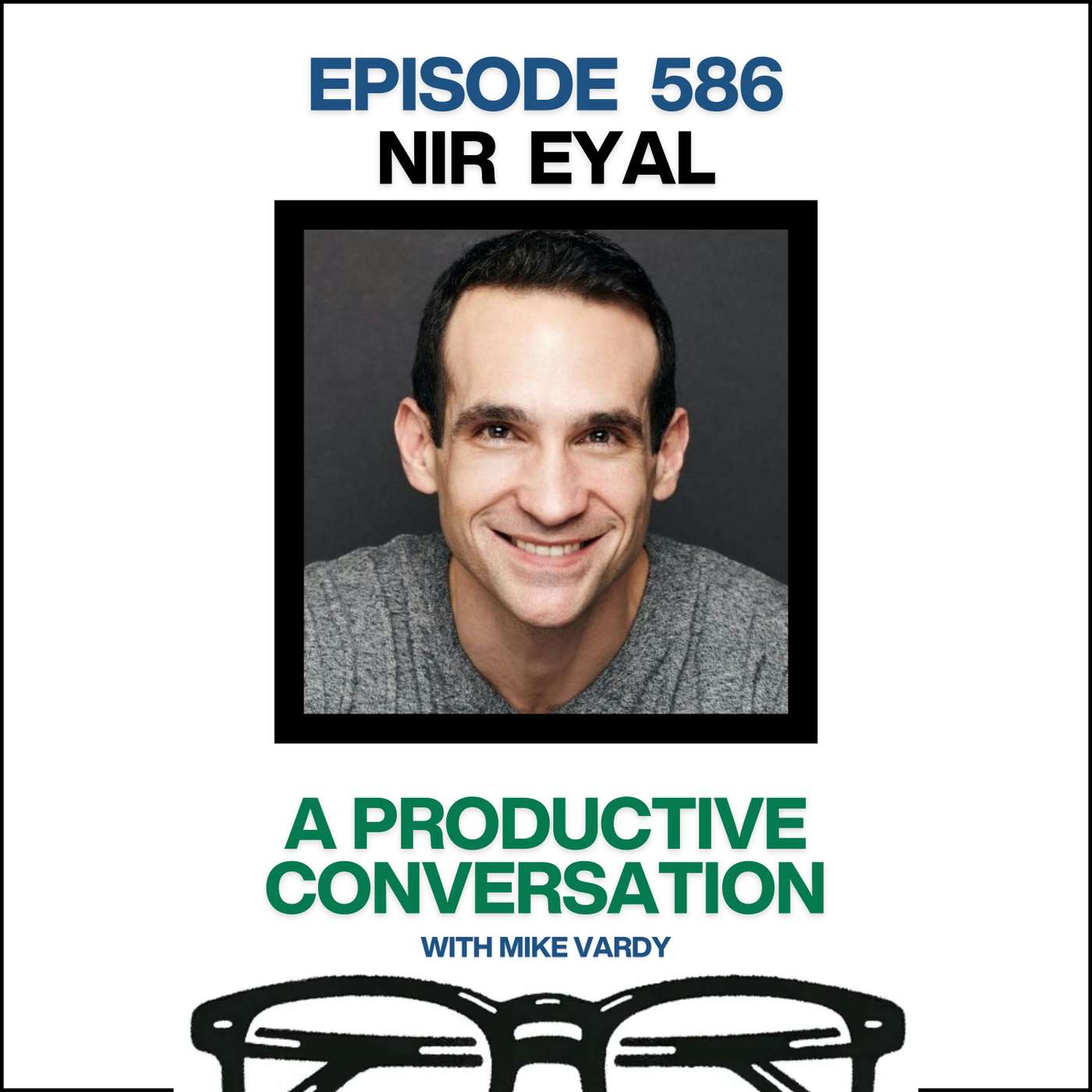
Ep 586Nir Eyal Talks About Becoming Indistractable and Managing Distractions
This episode is brought to you by Your Clockwise Week—a personalized weekly structure built around your actual life, not an ideal one. If your week feels full but not fitting, you can learn more at mikevardy.com/yourclockwiseweek.In this Flashback Friday episode of A Productive Conversation, I talk with Nir Eyal, the bestselling author of Indistractable: How to Control Your Attention and Choose Your Life. Nir offers actionable strategies for avoiding distractions and making time for what matters most.We discuss the difference between traction and distraction, how internal triggers influence our actions, and the power of identity in shaping habits. Nir’s insights are as practical as they are profound, offering listeners tools to become truly indistractable.Key Discussion Points Why the opposite of distraction is traction—not focus. How internal triggers are the root cause of distractions. The importance of forethought and planning in productivity. Why identity plays a crucial role in habit formation. The difference between pseudo-work and meaningful work. How to balance technology use without letting it control you. If you’re struggling to manage distractions or want to learn how to focus better, this episode is a must-listen. (Originally released October 2019)Links Worth Exploring Connect with Nir: Website | X/Twitter Get the book: Indistractable: How to Control Your Attention and Choose Your Life Check out Nir’s podcast: Nir and Far Nir would like you to check this out: Schedule Maker Related Conversation: Episode 201: Willpower Doesn’t Work with Benjamin Hardy Related Blog Post: The 106 Year Old Problem Thanks to all of the sponsors of this episode. You can find all of the sponsors you heard me mention on this episode on our Podcast Sponsors page.Want to support the podcast? Beyond checking out our sponsors, you can subscribe to the show wherever you listen to podcasts. You can subscribe on Spotify and also on Apple Podcasts. Not using either of those to get your podcasts? Just click on this link and then paste the podcast feed into your podcast app of choice.Thanks again for listening to A Productive Conversation. See you later.Learn more about your ad choices. Visit megaphone.fm/adchoices If this episode resonated, I’m exploring ideas like these more deeply in my upcoming book, Productiveness. You can follow along as it takes shape at mikevardy.com/productiveness.
Ep 585Shawn Lemon Talks About Digital Peace and Organization
This episode is brought to you by Your Clockwise Week—a personalized weekly structure built around your actual life, not an ideal one. If your week feels full but not fitting, you can learn more at mikevardy.com/yourclockwiseweek.In this episode of A Productive Conversation, I chat with Shawn Lemon, digital organizer and founder of The Digital Organizer. Shawn has helped countless individuals and organizations regain control of their digital lives, offering practical solutions to manage clutter, streamline workflows, and achieve “digital peace.”We explore the hidden challenges of digital organization, why redundancy and backups are crucial, and how to get started on the path to a clutter-free digital life. Shawn’s approach is practical, insightful, and perfect for anyone feeling overwhelmed by their digital environment.Key Discussion Points What “digital peace” means and why it’s so important. Common mistakes people make with digital organization. How to deal with folder structures and document redundancy. Practical strategies for creating effective backups. When and where to start tackling digital clutter. How AI can play a role in organizing your digital life. This episode is ideal for anyone looking to take control of their digital world and create a more organized, peaceful workflow.Links Worth Exploring Connect with Shawn: Website | LinkedIn | YouTube | Instagram | Facebook Get Shawn's guide: Click here Take Shawn's quiz: Click here Check out Hazel Want to leverage Hazel in the best way possible? MacSparky has you covered. Check out ClickUp Check out Amplenote Related Conversation: Episode 448: Tiago Forte talks about Building a Second Brain Related Blog Post: The Freeing Power of Eliminating Tasks You “Ought to Do” Thanks to all of the sponsors of this episode. You can find all of the sponsors you heard me mention on this episode on our Podcast Sponsors page.Want to support the podcast? Beyond checking out our sponsors, you can subscribe to the show wherever you listen to podcasts. You can subscribe on Spotify and also on Apple Podcasts. Not using either of those to get your podcasts? Just click on this link and then paste the podcast feed into your podcast app of choice.Thanks again for listening to A Productive Conversation. See you later.Learn more about your ad choices. Visit megaphone.fm/adchoices If this episode resonated, I’m exploring ideas like these more deeply in my upcoming book, Productiveness. You can follow along as it takes shape at mikevardy.com/productiveness.
Ep 584Robin Hills Talks About Emotional Resilience and Leadership
This episode is brought to you by Your Clockwise Week—a personalized weekly structure built around your actual life, not an ideal one. If your week feels full but not fitting, you can learn more at mikevardy.com/yourclockwiseweek.In this Flashback Friday episode of A Productive Conversation, I sit down with Robin Hills, author of The Authority Guide to Emotional Resilience in Business. Robin is an expert in emotional intelligence and resilience, with over 35 years of experience in business and personal development. His work is rooted in helping individuals and organizations thrive through emotional intelligence, neuroscience, and positive psychology.During our conversation, Robin unpacks the nuances of resilience, debunking common myths and exploring how leaders can foster resilience within their teams. We also discuss the fine line between coping and resilience, and why emotional awareness is critical in navigating adversity.Key Discussion Points The paradox of resilience: how adversity strengthens us. Why "bouncing back" isn’t true resilience—and what is. Coping versus resilience: the critical distinctions. How leaders can foster emotional resilience in their organizations. The role of emotional intelligence in building resilience. Why resilience is often misunderstood and overused in business contexts. This conversation is packed with actionable insights and strategies for anyone looking to develop a deeper understanding of resilience in the workplace and beyond. (Originally released October 2022)Links Worth Exploring Connect with Robin: Website | LinkedIn Check out his book: The Authority Guide to Emotional Resilience in Business Register for Robin’s EI4Change courses here Related Conversation: Episode 489: Constance Dierickx Talks About Meta-Leadership Insights And Decision Mastery Related Blog Post: Why Reading Leadership Books will Boost Your Productivity Thanks to all of the sponsors of this episode. You can find all of the sponsors you heard me mention on this episode on our Podcast Sponsors page.Want to support the podcast? Beyond checking out our sponsors, you can subscribe to the show wherever you listen to podcasts. You can subscribe on Spotify and also on Apple Podcasts. Not using either of those to get your podcasts? Just click on this link and then paste the podcast feed into your podcast app of choice.Thanks again for listening to A Productive Conversation. See you later.Learn more about your ad choices. Visit megaphone.fm/adchoices If this episode resonated, I’m exploring ideas like these more deeply in my upcoming book, Productiveness. You can follow along as it takes shape at mikevardy.com/productiveness.