
You Are Heroic with Brian Johnson
2,480 episodes — Page 34 of 50
+1: #422 Levity + Gravity = Buoyancy
Dan Pink tells us that To Sell Is Human. Although only 1 in 9 Americans is technically in sales, he says that the other 8 in 9 spend a ton of their time in "non-sales selling." In fact, the research he commissioned shows that we spend around 40% (!) of our time (or 24 minutes out of every working hour!) trying to move people to do things—whether that's pitching an idea to colleagues or trying to change someone's behavior. (That's, obviously a lot. And, being good at that is, obviously, important to our professional and personal success.) Then there's the personal time we spend "selling"/"moving" others—from selling our kids on a philosophical idea ("mistakes are awesome!") or your spouse on how to Optimize your nutrition ("sugar isn't awesome!"). In that context, he tells us we need some new ABCs of selling. As you may know, the "ABCs" of the old-school, hard-core sales approach are "Always be closing." That, to say the least, is not where it's at. Now? Now, Dan says, it's all about "Attunement + Buoyancy + Clarity." Check out our Notes for more. Here's the jumbo-quick look: Attunement is basically the ability to connect with others. We get there via three things: humility, trying to figure out what the other person is thinking (this is more effective, btw, than trying to figure out what they're feeling) and strategically mimicking their movements and words (but doing it subtly and acting like a human being without being weird about it). Buoyancy is actually what I want to focus on today. More on that in a moment. Then we have Clarity. We need to be able to concisely communicate the essence of our offer—finding the 1% of what really matters while asking good questions, etc. So… All that to arrive at Bouyancy. Bouyancy is how we stay afloat in the "ocean of rejection" we all feel when we try to "sell" people on our ideas and/or products, etc. Dan offer us tips to stay buoyant before, during and after our pitch. Before: We want to make sure our self-talk is empowering (he offers a fascinating twist here that we'll talk about in our next +1). During: We want to keep our positivity ratios Optimized. 1:1 isn't going to do it. Nor will 2:1. Research shows that 3:1 is the sweet spot. (Note: 11:1 isn't going to work either!) After: We want to make sure our "explanatory styles" are rocking. Check out the +1 on How to Learn Optimism featuring Martin Seligman's 3 P's for more. Now, we're ready for the point of Today's +1. You know that positivity ratio? We want to target 3:1. Too little positivity isn't going to work. AND (very important and!), TOO MUCH positivity isn't going to work either. I love the way Dan frames Barbara Fredrickson's wisdom on this: "Fredrickson sees the healthy positivity ratios ... as a calibration between two competing pulls: levity and gravity. 'Levity is that unseen force that lifts you skyward, whereas gravity is the opposing force that pulls you earthward. Unchecked levity leaves you flighty, ungrounded, and unreal. Unchecked gravity leaves you collapsed in a heap of misery,' she writes. 'Yet when properly combined, these two opposing forces leave you buoyant.'" Levity + Gravity = Buoyancy. I love that. How's your levity? How's your gravity? Fantastic. Here's to your buoyancy!

+1: #390 Cancer's Achilles: How to Exploit
In our last +1, we talked about our 80/20 180 phase in which we implemented a number of high-leverage lifestyle changes. After that stabilization and Optimizing process, we went deep into what research shows to be a REALLY powerful targeted therapy for cancer: a ketogenic diet. In fact, we hired the woman who literally wrote the book on it. That book is called Keto for Cancer. Its author, Miriam Kalamian has been my brother's day-to-day nutritionist for the last x weeks. She and her book are AMAZING. If you're wondering what nutritional approach we're following, THAT's it. I'm laughing as I type this but my brother went from pretty much eating whatever he wanted whenever he wanted in whatever quantity he wanted to following a nutritional plan with the precision of an Olympic athlete such that he knows, in his words, whether or not he can have a couple more walnuts with lunch. (HAH!) All of which begs a few questions. First, you may wonder: What's a ketogenic diet? And, why is it relevant? Well, a therapeutic ketogenic diet is a very low carbohydrate, adequate protein, high healthy-fat, nutrient-dense diet that shifts your body's primary source of energy metabolism from glucose to what's known as "ketones." The ketones produced in a therapeutic ketogenic diet are relevant because THIS is how we strike cancer where it's weak. Here's the deal. Remember our chat about the fact that "cancer loves sugar"? Well, cancer cells don't just love sugar, cancer cells pretty much literally (!!!) can't live without sugar. (I have goosebumps as I type that.) Know this: You don't need to rewind that far in our 1.5-million-year evolutionary history to arrive at a time when the next meal wasn't guaranteed (let alone arriving as "edible foodlike substances" that was made in a factory and available in your fridge all day every day — all consumed with basically no effort, etc.). Know this: We evolved to not just survive during times of food scarcity but to THRIVE. This fact required what's known as "metabolic flexibility." Healthy cells had to be able to burn either glucose or ketones for fuel. (Side note: Here's a little known fact that all dieticians know but nearly all keep secret: We can function just fine with ZERO carbs. We NEED fats and proteins. We do NOT NEED carbs.) But… And might just be THE most important point in our entire discussion about how to conquer cancer so let's pay attention here: CANCER CELLS ARE METABOLICALLY INFLEXIBLE. Which means that cancer cells can't make the switch from using glucose for fuel to using ketones. (Whereas healthy cells easily can.) And THAT is how you checkmate the seemingly immortal cells and their out-of-control growth. Leverage their metabolic inflexibility. Cut off their fuel source. Step on their Achilles heel. Practically speaking, what that means is we need to drastically reduce carb intake (in the range of around 20 net carbs per day). When done with precision (ideally with the guidance of a nutrition pro) within the healthy fat, adequate protein, nutrient-dense parameters Miriam maps out in her book, you radically change your energy metabolism — nourishing your healthy cells with ketones while starving your cancer cells of glucose. This is why my brother measures his glucose and ketones all day every day. He's driven the glucose down: now in the 80s — which, again, is an epically awesome drop from the 145 diabetic, cancer-feasting-on-glucose zone to the optimal, "where's the glucose?!" cancer cell starvation diet zone — WHILE driving his ketone levels up. Again, nourishing the metabolically flexible healthy cells while exploiting the metabolically INflexible cancer cell's Achilles. THAT is how we use targeted nutritional therapy to win the war on cancer.
Public Speaking 101 (Intro)
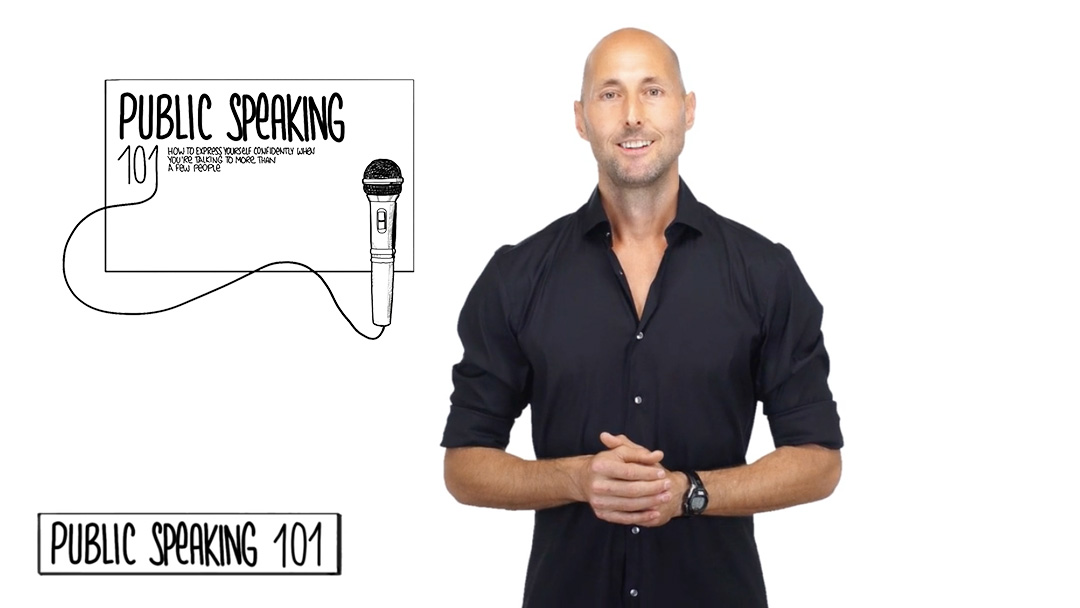
This is an introduction to Public Speaking 101. Get the workbook + watch the full class here: https://www.optimize.me/public-speaking We've had a lot of people ask for a class on Public Speaking. It tends to freak a lot of people out which is why Idea #1 features Jerry Seinfeld's quip that most people are so afraid of public speaking that they'd prefer to *receive* a eulogy than give one. (Hah.) Alas, if you have any fears over speaking in public, you're not alone. Enter: Common humanity. And, enter my own stories about my fears and my favorite ways to alchemize that energy. ("I'm excited!" + "Bring it on!" + threat vs. challenge, etc.) Other Ideas include Rule #0 (aka, it's not about you), Rule #1 (aka BE you—amplified!), systematically organize (and overprepare!), plus Optimizing your pre-shot routine before letting it rip!

+1: #385 Two Theories on the Origins of Cancer
So, on one hand, as per our last +1, science shows that genes play a surprisingly small role in the cause of cancer. Yet… Guess where nearly all of that $100 billion of research money has has been spent? Yep. We've spent $100 billion dollars on research and we spend $100 billion dollars on cancer medications every year operating under the assumption that cancer is, primarily, a genetic issue. To put it directly, that appears to be the essence of why we've failed to win the war on cancer. We've been looking at it from the wrong perspective. Result: No improvements in the real death rates since the 1950s. Here's the short story on the two conflicting theories regarding the origin of cancer: The dominant theoretical orientation within Western medicine is something called the "somatic mutation theory" (or "SMT") of cancer. It basically says that cancer is CAUSED by genetic mutations. Now, there's no question that cancer cells are pretty wacky genetically. In fact, the sheer complexity of mutations that exist even within one individual with cancer (let alone across individuals with various types of cancers) is why it's so hard to treat cancer from this paradigm. But the question we need to ask is: Is cancer CAUSED by genetic mutations, or are those mutations a downstream EFFECT of some other cause? Thankfully, researchers have been asking this question. Enter: The metabolic theory of cancer. The METABOLIC theory of cancer (vs. the genetic theory of cancer) says it's dysfunctional ENERGY METABOLISM that precedes the genetic instability (and all the other hallmarks of cancer). And, guess what? That's a HUGE distinction. Why? Because your theory drives your therapy. Get the theory wrong and you get the therapy wrong. You just might spend an awful lot of money on research and treatment and get no real improvements. To put it directly: When a loved one's life is on the line, that's no longer an abstract statistic. It's a matter of life and death. P.S. Did you know that some cancer medications cost $100,000 for a year's worth of treatment that only extends life by three months? That's (shockingly) true. There has to be a better way, eh? Yes. And… The good news: There is a better way. P.P.S. Thomas Seyfried is one of the world's leading researchers who is persuasively arguing for the metabolic theory of cancer. His 15-page (+ 7 pages of references) peer-reviewed article in the scientific journal Nutrition & Metabolism called "Cancer as a metabolic disease" is a MUST READ. Print it out, read it. Bring a copy with you to your next appointment with your oncologist and team, etc. This is the scientific foundation for the theoretical framework we will be using to inform our metabolic approach to therapy. P.P.P.S. It's essential that we understand the fact that what we're talking about here is not a "cleanse" or a "detox" or anything along those lines. Although many inspiring anecdotal stories exist out there on the Internet about various juicing/cleansing/detoxing protocols, that's NOT what we're talking about here and, with blessings to all those who have benefited from and swear by them, I would never bet my life (or my brother's life or your life) on those approaches. What we're talking about here is a scientifically-grounded look at an alternative theory of cancer supported by a growing body of peer-reviewed, empirically sound data. There's a BIG difference between that and the "cancer cures" we can find on the Internet. And, that's one of the reasons why most primary care physicians and oncologists freak out when they hear you're doing something other than traditional approaches. We've shared all this research with our traditional team. And, we've gotten smart about how to communicate our approach. Which (along with the astonishing (!) therapeutic benefits my brother has experienced thus far) has led our oncologist to say to my brother, "If I were diagnosed with what you have (stage IIB pancreatic cancer), I'd do what you're doing." Why would he say that? Because, pancreatic cancer is notoriously hard to treat from a traditional (read: genetic origin!) perspective. And, you know when he said that? It wasn't in our first meeting. In that initial meeting when he delivered the prognosis he literally didn't look at my brother once. He had the very difficult job of communicating a very heavy prognosis and all my brother could see from the table was the side of his doctor's face as he described what was going on to Rick's wife, Kristin. It wasn't a good day to say the least. He changed his tone after he looked at my brother's PET scan that showed NO SIGNS of cancer—after 5 weeks of SUPER intense nutritional and lifestyle therapeutic intervention that we'll discuss. (Although we didn't have a "before" PET scan to compare it to, that's not supposed to happen with stage IIB pancreatic.) He and the other doctor who reviewed the PET + CT scans said, "If we didn't know you had cancer, we wouldn't know you had cancer after looking

Cooking 101 (Intro)
What You Can Do on a Daily Basis to Optimize Your Nutrition in an Easy and Practical Way.
+1: #380 Seneca Says: Be Harsh with Yourself at Times
In our last couple +1s, we had some fun at the hospital with our Stoic friends Seneca and Epictetus. Recall Epictetus' wisdom that sometimes good philosophy feels more like a trip to the hospital than a spa. (Ouch!) Seneca echoes this wisdom in Letters from a Stoic where he says, "Be harsh with yourself at times." Now, of course, this does NOT mean that we need to go around like that albino monk from The da Vinci Code mutilating ourselves. (Yowsers!) But… It DOES mean that, at times, with a base of (and, ultimately, OUT OF a deep sense of) self-compassion, we need to give ourselves a Zen stick to the head and wake up from the bad habits that might be dragging us down. As with the virtuous mean chat we had awhile ago, there's a virtuous mean here. TOO MUCH harshness is destructive — we'll develop a sense of self-loathing that Aristotle would consider a vice of excess. TOO LITTLE harshness on the other hand, and we run the risk of being a bit too self-contented. That would be a vice of deficiency. The virtuous mean rests right there in the middle path — where we're appropriately correcting our weaknesses WITHOUT self-criticism per se, just a nice firm "needs work" look in the eye as we embody more and more of our ideals. The great Sufi philosopher Rumi comes to mind. He tells us: "This discipline and rough treatment are a furnace to extract the silver from the dross. This testing purifies the gold by boiling the scum away." In other words, be harsh with yourself at times. Check yourself into the hospital for the surgery. Throw yourself into the furnace. Let's extract the silver from the dross. Purify the gold within by boiling away the scum. When? Now. And again and again and again. How? With a knowing, joyful, Stoic-Sufi-Optimizing smile.
+1: #375 You, a Farmer and His Horse
Once upon a time in a land far away, there was an old farmer. This man had a horse. Then, one day, his horse ran away. All the neighbors said, "Gah!! That's such a bummer. What bad luck." The man said, "Maybe. It is what is." Then, one day, the horse returned!! And, lo and behold, the horse brought along a bunch of wild stallions with him! All the neighbors said, "Wow!! That's incredible. What good luck!" The man said, "Maybe. It is what it is." At this point in the story, I should mention that the man also had a son. This son was pretty excited about the new horses. Especially one particularly wild stallion he wanted to ride. So, he hops up on the horse and, WHAM! He gets slammed to the ground and breaks his leg. All the neighbors said, "Ohhhhhhhhh, man! What bad luck. I can't believe that happened. Now your son can't work the fields. That's really bad." The man said, "Maybe. It is what it is." Then one day, the army came marching into the small village. There was a war and the king demanded that all able-bodied young men join them in their battle. Our man's son with the broken leg was spared. All the neighbors said, "Wow. Your son has been saved! What good luck." The man said… Well, at this stage you know what the man said. Today's +1. How do YOU respond to life's events? Is it all either "good" or "bad"? Or, perhaps, is it just what it is? P.S. Shakespeare must have had this Zen story in mind when he had Hamlet say that "there is nothing either good or bad, but thinking makes it so."

+1: #370 Mistake-Learner's High
In our last +1, we talked about Phil Stutz' great phrase: "Endlessly evolving process." Phil likes to draw upward spiraling loops to describe the flow of evolving into the best version of ourselves. In fact, his spiraling loops are almost identical to Ray Dalio's spiraling loops. Remember his? We unpacked his 5-Steps to Success model not too long ago. The super-quick recap: You start with an audacious goal. Then you fail. Then you figure out why you failed. Then you design a better solution to your challenge. Then you get to work on the solution. Then you spiral up and repeat that process of evolving into a slightly better version of you. (For how long? E N D L E S S L Y.) Now, Dalio tells us that it's REALLY important to fall in love with that process. ESPECIALLY (!) the part most people shy away from — that whole failing part. "But can't I just evolve without all those mistakes?" (Insert laughter from all philosophers ever.) (Still laughing.) "No. You can't." Therefore, the wisest among us (with Dalio in the lead on this one) tell us that we want to so fall in love with the process of making mistakes and then getting a little better that we're kinda like a runner who hits a certain point during his or her run where the pain goes away and the "runner's high" takes over. Dalio calls this the "mistake-learner's high." You're so engaged in the dynamic process of Optimizing that you L O V E the mistakes — knowing that they're just part of the process of going after something audacious and the perfect data/fuel to Optimize just a little more today. And, we all know that it's all about aggregating and compounding those tiny little gains over an extended period of time, right? So… Today's +1. Made any mistakes lately? Can you see how those mistakes are an ESSENTIAL part of your (endlessly evolving) process of achieving your audacious goals?! Fantastic. Keep that in mind today. And tomorrow. And the day after that. Enjoy your mistake-learner's high!
+1: #365 Fingers and Lectures
Please extend your pointer finger and shake it as if you're lecturing someone — saying something like, "You shouldn't do this, this and this! Do that, that and that!" Thank you. Now, look at your hand and count how many fingers are pointing at the person you're lecturing and how many fingers are pointing back at you. Unless you're missing a digit, you should see one finger pointing at the lucky recipient of your lecture and THREE fingers pointing back at you. You may want to pay attention to that the next time you're lecturing someone. Debbie Ford tells us that this practices is a really handy way to notice our "shadow" — the stuff we haven't integrated in our own lives that, unfortunately, we tend to project onto others. She tells us to "attend our own lectures" because, more often than not, whatever lecture we're giving someone else is the one WE desperately need to attend. Today's +1. The next time you start telling someone all the things you think they need to start doing more of or less of or whatever, imagine you're a student diligently taking notes on the lecture you're giving. You might just find that the lecture you're giving *them* is what YOU most need to hear! (And, btw, the sooner you actually do the stuff you're lecturing other people about, the sooner you'll stop lecturing them about it. ;)

Conquering Cancer 102 (Intro)

+1: #360 Isn't That Extreme?
Susan Peirce Thompson wrote a great book called Bright Line Eating. She has a Ph.D. in neuroscience and is one of the world's leading experts on the psychology of eating. Before all that, Susan was addicted to cocaine and food and basically everything else — which gives her a very nice vantage point from which to talk about how to recover from addiction. In her book and programs, she applies the bright lines of Willpower 101 we talk about all the time to the fundamentals of Nutrition 101 we talk about all the time. Her top two bright lines for eating? Eliminate sugar and flour. Don't reduce or eat them more moderately. E L I M I N A T E. Susan walks us through all the reasons those edible foodlike substances act more like drugs than food and she points out the havoc they cause in our bodies. But today I want to focus on a question she often gets asked when she encourages people to make a 100% Commitment to those two bright line rules. People often say (insert at least a slightly whiney voice): "But… Isn't that extreme?" "I mean, really? I have to say no to donuts and cookies and pastries and pizza and…?" "Isn't that just sooooo extreme?" NO, she says. Cutting off your limbs because you have diabetes is extreme. Getting checked into the hospital one Tuesday afternoon then losing half your stomach after having gastric bypass surgery because you have a cancerous growth near your pancreas that is a serious threat to your life? THAT is extreme. Removing sugar and flour? Not so much. Today's +1. Eliminate the sugar and flour. Like, jumbo 100% eliminate. Unless you think it's too extreme and you'd prefer the alternative down the line.

+1: #355 The Decade View
Matthew Kelly has written a number of great books. We have Notes on three of them: Perfectly Yourself, The Rhythm of Life and Off Balance. In Off Balance, Mathew tells us that if we want to change the trajectory of our lives (and/or careers), we need to change the period of time we think about. Here's how he puts it: "So, the first step is, don't be in too much of a hurry to create the ideal life you have imagined. Personal and professional satisfaction are built like a castle, one brick at a time. We tend to overestimate what we can do in a day and underestimate what we can do in a week. In the same way, we tend to overestimate what we can do in a year and underestimate what we can do in a decade. Take a decade view. Give yourself a decade to build the life you have imagined for yourself, one that is rich and overflowing with personal and professional satisfaction. Until you take the decade view, until you begin to imagine and plan what you can do in a decade, you have not even begun to explore your potential." The decade view. What's YOURS look like? Seriously. Pull out a blank piece of paper. Wave the wand. What's your life look like? That's Today's +1. P.S. From a career/income perspective, Matthew brings the point home by reflecting on how much various people at McDonalds make depending on the time horizon for which they're responsible. Here's a super quick look: 90 second = Drive-thru clerk = $7-$8/hr 8 hours = Shift manager = $12-$15/hr 3 months = Store manager = $20/hr 1 year = Regional manager = $35-$40/hr 20 years = CEO = $10,000/hr (= $20m/year) Note: The same returns apply to every aspect of our lives. For example, if our time horizon for our happiness is the next 5 minutes, then we'll prioritize eating the donut, having the extra drink or smoking the cigarette. And, guess what? Although it's easy to take for granted, with that approach we're not even guaranteed a decade. Of course, none of us are guaranteed even an extra moment beyond this one but we want to choose wisely and our #1 priority should be making sure we're giving ourselves the best shot to be around in a decade, eh? Here's to a beautiful decade view. See your Future Self. And prioritize your next moment accordingly.
+1: #350 Wealth thru Profound Service
When I worked with Steve Chandler, one of the themes of our work together was "creating wealth through profound service." I just love that phrase: "Wealth through profound service." Steve wrote a great book called Wealth Warrior and he's the one who inspired me to look up the ancient meaning of the word "astonish." It's from the Latin ex "out" + tonare "to thunder." It literally means "to leave someone thunderstruck." Or, as I like to say, "to strike with lightning." Steve says that most people have the wrong standard. They're thinking about "customer satisfaction." But, he says, how uninspiring is the idea of merely "satisfying" someone? Much better, he says, to ASTONISH. I, of course, agree. All that's nice, but how do we do that? Well, I think the essence of it is found at the nexus point of those three circles we talk about in the +1 called "How's Your Hedgehog?" in which we talk about Jim Collins' perspective on how great businesses (and lives!) are created. In short: Collins tells us we need to find the nexus point of what we truly Love to do, what we can be Great at, and what the world Needs (and, if it's a biz we're talking about, what the market is willing to pay for!). As I was preparing for Abundance 101, I was thinking about those ideas and also thinking about Cal Newport's great book So Good They Can't Ignore You in which he tells us about the perils of following your Passion Mindset at the exclusion of your Craftsman Mindset. Longer chat but I don't think it's either/or. Which led me to sketch the three venn circles for the one millionth time. But this time I wrote: Passion Mindset + Craftsman Mindset + Servant Mindset. I think that if we want to actualize our potential (in creativity, enjoyment and wealth) we need to truly LOVE what we do. My standard? You love it so much you'd pay to do it. That's a Passion Mindset. (Of course, as Professionals we need to do what needs to get done whether we feel like it or not, so I'm not saying it's all sunshine and rainbows and unicorns but we've gotta start with the Love!) And… If we want to actualize our potential (in creativity, enjoyment and wealth), we need to be ALL IN committed to mastering our craft and doing GREAT work. Enter: The Craftsman Mindset. Finally, it's not enough to Love it and strive to be Great at it, we need to find a way to share our Passion and Craft with the world. And, we need to do the often hard work of figuring out how to truly create value by giving people what they really want and are willing to pay for. Enter: The Servant Mindset. So… Three Mindsets: Passion + Craftsman + Servant. Find the nexus of those three mindsets. Optimize the bliss out of each. THAT is how we astonish. And, over the long run (!), that's how we create wealth through profound service. Today's +1. Sketch your three circles. Take a quick inventory. How're you doing? What's awesome? What needs work? And, most importantly: What can you do today to Optimize 1%?! Passion + Craftsman + Servant. +1. +1. +1.
+1: #345 No More Ice Cubes, Please
A couple +1s ago we talked about taking a systems approach to disease vs. just a symptoms approach. We referenced Dr. Junger's metaphor of a wise gardener tending to the roots. Which reminds me of T Harv Eker's line: "In every forest, on every farm, in every orchard on earth, it's what's under the ground that creates what's above the ground. That's why placing your attention on the fruits that you have already grown is futile. You cannot change the fruits that are already hanging on the tree. You can, however, change tomorrow's fruits. But to do so, you will have to dig below the ground and strengthen the roots." Here's another metaphor and pop quiz to bring the point home. If you had a boiling pot of water and you wanted to easily and permanently make the water stop boiling, would you: a) Drop in two ice cubes at regular intervals; or, b) Turn the flame off/move the pot off the heat? Option b) for the win! Seems so simple... Yet, somehow, in a world where over fifteen million people have purchased Stephen Covey's The 7 Habits of Highly Effective People, we've failed to implement Habit #1 to "Be Proactive." Instead, we throw our hands up in the air at all the symptoms we experience (from acid reflux and headaches to depression and cancer) and, rather than go after the causes of these ailments, we reach for another couple ice cubes to temporarily reduce the heat while doing *nothing* to deal with the flame at the root of the underlying problem. Option a) for the loss! Of course, we all do it at times. Enter: Common Humanity. And, enter: Today's +1. What "ice cubes" are you relying on? And, what little (or big) thing can you do TODAY to deal with the root cause of the issue more proactively? Ice cubes begone! (Except for iced tea. That's awesome.)
+1: #340 How to Win the Cancer War
Continuing our Anticancer theme, let's chat about another brilliant idea from David Servan-Schreiber's book, Anticancer. Imagine this. It's 1942. Hitler has amassed an army of one million Nazi soldiers. They're pushing to take over Russia — which finds itself so undermanned that adolescents and schoolgirls who have never used a firearm are joining the fight. Miraculously, the Russians are able to resist. But, knowing they can't sustain the defense, their leader shifts their strategy and decides to attack the German supply lines deep within German-controlled territory. And, it works. Without the supply lines, the million soldiers are forced to retreat. That's the Battle of Stalingrad — one of the most influential battles of the European front in World War II. And, David tells us, that's the PERFECT metaphor for how we need to approach cancer. We need to cut off the supply lines. And FORCE cancer's retreat. How? Well, we talked about the four levers a few +1s ago: Environment + Nutrition + Mind + Body. Now it's time for the Anticancer Nutrition chat. That's our next +1. For today: Whether you're actively fighting cancer or just committed to preventing it, let's imagine pulling the levers to cut off cancer's supply lines.
+1: #335 Meet Your Telomeres
Elizabeth Blackburn won a Nobel Prize for her research on telomerase — the enzyme that nourishes our telomeres. She wrote a book called The Telomere Effect with another world-class researcher named Elissa Epel in which they tell us just how powerful our telomeres are. Today, we're going to meet our telomeres. But first, a quick pronunciation lesson: I always thought "telomeres" was pronounced "tell-o-meres" but, apparently, it's pronounced "tee-lo-meres." Alright. With that out of our way, here's what we need to know: The length of your telomeres is one of the most important indicators of your overall health and/or lack thereof. Here's how to think about them. You know those little caps at the end of your shoelaces? Those plastic little guys that keep your laces all neat and tidy? They're called "aglets." Once they go, your shoelaces are pretty much done, eh? Well, that's almost exactly how your telomeres work. Our chromosomes are the shoelaces and our telomeres are the aglets. Here's another way to think about it: Imagine an American football team. The quarterback needs a strong offensive line to do his job. If the offensive line is weak and easily run over, he's going to get sacked. Again, that's how your telomeres work. Our chromosomes are our quarterbacks. Our telomeres are the offensive linemen. Telomeres sit at the end of our chromosomes and keep them all neat and tidy — protecting them so they can do their job of replicating themselves to keep us nice and healthy. Once your telomeres go, your chromosomes are going to have a really hard time replicating which means you're going to have a really hard time staying healthy. This is why the length of our telomeres is such a powerful predictor of when we will exit the "Healthspan" of our lives and enter the "Diseasespan." The good news? We can lengthen and strengthen our telomeres. How? Well, that's pretty much what we do together every day with these +1s. We'll explore their #1 tip in the next +1. For now, take a nice, deep breath and thank your telomeres for all they do behind the scenes. And, know that breathing deeply is actually one of the quickest ways to drop out of super-busy fight-or-flight mode and give your telomeres some rest and lengthening-love Know this as well: Their #1 nutrition tip is to reduce / eliminate the "highly processed, sugary foods and sweetened drinks. (We're looking at you, packaged cakes, candies, cookies, and sodas.)." But only if you want to keep your telomeres nice and long and strong and extend your Healthspan.
+1: #330 Hit the Rock
In our last +1, we took a quick look at Warren Buffett's three-step goal setting process and then chatted about how it fits into our Big 3: Energy + Family + Service. First, pop quiz: Did you do that exercise? If not, all good but… If we want to move from theory to practice and from merely consuming these ideas to actually deeply thinking about and LIVING these ideas, we've gotta do the work. The image that comes to mind for me is a stonecutter. Imagine a guy (or gal) banging away at a HUGE rock with a sledgehammer. He pounds and pounds and pounds at that rock with his sledgehammer again and again and again. And absolutely nothing happens. Just a big rock. And a sweaty sledgehammer guy. Then, apparently out of nowhere, on the next strike the rock splits. YAYUH!!! Now, if you happened to be walking by that guy right when he made the swing that cracked open the rock you might think that a) the guy was super strong and/or b) splitting rocks is easy. But… You missed all the tiring, potentially frustrating swings our sledgehammer guy made BEFORE he cracked the rock. It's kinda like Jim Rohn's combination lock. You might be ONE digit away from unlocking a level of clarity you thought was still super far away. Moral of the story: We've gotta show up and hit the rock. Every day. If we want to make sure our ladder is leaning up against the right wall and that we're living a life of deep, authentic purpose and meaning, we NEED to show up and do the work. We've gotta turn off the entertainment at night so our brains can relax and we can get a good night of sleep. Then wake up early, feeling energized as we choose to go Deep into Creative work before we splash around in the Shallow side of the Reactive pool of life. Over. And over. And over again. Any one session might not yield epiphanies but we're "accreting," as Cal Newport would say, just a little more value in each Deep Work session. Knowing that, like the rock splitter, if we continue showing up and doing the work SOMETHING good will happen. So… Today's +1. How can you take another swing at that rock today? Enjoy it. I can hear the rock splitting from here.

Conquering Cancer 101: How I'm Helping My Brother Fight Cancer + What I'd Share With You (Intro)
This is an introduction to CONQUERING CANCER 101. Get the workbook + watch the full Conquering Cancer 101 class here: https://www.optimize.me/cancer/ Ready to conquer anxiety? Our first step is to embrace the fact that it happens and then we'll quit making it worse as we choose a target (calm confidence!), get our fundies in order, remember to breathe (deeply + properly), turn the serenity key in our brains, do some Olympic-style focus training so we see challenges not threats as we exit our mind and enter the moment. We'll also look at how to create calm confidence in 5 steps and how to tap into infinite calm confidence. Tame those gremlins and rock it!
+1: #325 The Psychology of Hope
Rick Snyder was the founder of research into the science of hope. And, he was one of the pioneers of the positive psychology movement. In fact, he literally wrote the textbook on "Positive Psychology." He documented just how important hope is to our overall well-being and tells us that there are three primary components to having high hope: Goals + Willpower + Waypower. It all starts with a Goal. Happy people have projects. And, happy, hopeful people have GOALS! They have a future they're excited about. Then we have what Rick calls "Willpower." In this context, Rick tells us that Willpower is that spark of determination that says, "We've got this!!" It needs to be there in the beginning AND it needs be there after you get knocked down a few times. (Rick's protege Shane Lopez described this as "Agency" — a sense of personal power that we have what it takes to make our dreams a reality.) Then we have what Rick calls "Waypower." Waypower is all about mapping out the plans for how you will attain your goal along with the wisdom to know that your first plan probably won't work out perfectly — requiring you to continue optimizing your strategy while pursuing different routes to your goal. (Shane Lopez called this "Pathways.") So, again: Goals + Willpower + Waypower. To be high hope, we need to have all three of those Optimized. It's obviously not enough to have Goals without Willpower or Waypower. But it's also not enough to have Goals and Willpower but not have the Waypower. You could be really fired up and really believe you can crush it but… If you're not also doing the planning to find all the routes to your goal, your hope will take a hit. Today's +1. Let's do a quick check in on the status of your hope. Do you have specific, meaningful, and challenging yet doable Goals? Do you have a spark of determination or "Willpower" that gives you the confidence that you can achieve your Goals and helps you move through the inevitable obstacles you'll face along the way? And, do you have a plan on how you can achieve your Goals (and a willingness to constantly tweak that plan as you get feedback from the world) via a strong sense of "Waypower"? Once more: Goals + Willpower + Waypower. Where are you strong? What needs work? Here's to cultivating your resilient, grounded, yet high hope day in and day out — especially (!) when you don't feel like it. P.S. Remember: If your basic fundamentals aren't Optimized there's no way you'll be able to get yourself into that high-hope state consistently. Eating, moving, and sleeping well? That's THE best way to boost your hope. Period.
+1: #320 You, Buddha and Your Fundies
In No Mud, No Lotus, Thich Nhat Hanh tells us that when he was a young monk he thought the Buddha never suffered. Then, as he matured, he realized that OF COURSE the Buddha suffered. He had a body so he had to at least occasionally get a headache or a stomachache. And, when a friend died, he'd feel sad. He was a human being. Therefore, he experienced pain and suffering. Of course, he was also the enlightened Buddha so he was very good at regaining his equanimity. Which leads to another interesting discussion. If the Buddha was enlightened, Thich Nhat Hanh asks, then why did he still meditate after attaining his enlightenment? Hmmm… Fascinating question, eh? Answer: Because the Buddha's happiness and equanimity was, like EVERYTHING else in the world, IMPERMANENT. The Buddha needed to tend to his own well-being. Every day. Even after his enlightenment. Now, if the Buddha needed to keep on doing his fundies after he attained his enlightenment, I'm pretty sure that means we do as well. (Hah.) So… Today's +1. How're your fundies? Want to maintain your high levels of awesome? Continue crushing your fundamentals — long after you think you "need" to. P.S. I'm reminded of peak performance and mental toughness trainers Lanny and Troy Bassham. They tell us that average performers practice something until they get it right. Elite performers? They practice until they can't get it wrong. (That's a really cool distinction.) The jumbo, uber-elite? They never stop practicing.
+1: #315 Expecto Patronum!
Continuing our Harry Potter theme, let's explore how to deal with dementors in your life. Recall that dementors are big, ugly, wraith-like creatures that feed on and suck all the happiness out of you. And, if they're feeling really feisty, they'll give you a kiss that sucks your soul right out of you. (Yikes!) Also recall that there's a special way to deal with these foul creatures. It's called the Patronus Charm. Here's how Professor Lupin describes it to Harry in The Prisoner of Azkaban: "The Patronus is a kind of positive force, a projection of the very things that the dementor feeds upon — hope, happiness, the desire to survive — but it cannot feel despair, as real humans can, so the dementors can't hurt it. But I must warn you, Harry, that the charm might be too advanced for you. Many qualified wizards have difficulty with it." Harry wonders what the Patronus looks like and Lupin tells him that "each one is unique to the wizard who conjures it." How do you conjure it? Well, Lupin tells us: "With an incantation, which will work only if you are concentrating, with all your might, on a single, very happy memory." So… Dementors feed on our happiness. And, if we allow them to, they will suck our very souls out of us. Sounds a lot like depression, eh? Indeed it does. Fighting dementors requires magic that even many qualified wizards have difficulty with. Alas, so it is with depression. The charm? We must concentrate WITH ALL OUR MIGHT on a single, very happy memory. Yep. That does the trick with depression as well. We know that the mind can't simultaneously hold both the depressed and happy thoughts. But we must be fierce in our resolve and concentrate WITH ALL OUR MIGHT if we want to win the battle when the dementors glide into our daily lives. Eating, moving and sleeping well help, too. So does training your ability to focus WITH ALL YOUR MIGHT via a meditation practice. Oh. And deep breathing helps as well — flips the old switch from the fight-or-flight response (which dementors love) to a relaxation response (which they don't like so much). Back to Harry. The specific incantation we powerfully speak as we focus on that happy memory? "EXPECTO PATRONUM!!!" Which reveals another key facet to fighting the dementors: We must expect that our efforts will work. All that leads to a wonderful creature flowing out of your wand and standing between you and the dementor. As Lupin says, it's different for each of us. For Harry it was a stag. For Hermione it was an otter. What's yours? (Mine's a lion.) Today's +1. Got any dementors gliding around in your life? Focus WITH ALL YOUR MIGHT on what's awesome in your life. KNOW that you can protect yourself from them. "EXPECTO PATRONUM!!!" P.S. If you have a bad encounter with a dementor, Rowling tells us that the best way to recover is to eat some chocolate. (Hah! Science agrees that chocolate does boost our mood but let's just make sure we limit it to 1 ounce per day and make sure it's 80%+ dark chocolate. Too much sugar DOES NOT help the cause.) P.P.S. Remember the epic stag Harry created to fight off the 100+ dementors near the end of The Prisoner of Azkaban? Hermione couldn't believe he could do that. Even HARRY couldn't believe it. But… Because of Hermione's handy dandy time turner, Harry had actually ALREADY SEEN himself do it. As he said in disbelief: "I knew I could do it this time, because I'd already done it ... Does that make sense?" Which reveals yet another scientifically-proven piece of wisdom. Recalling prior success is one of the fastest ways to boost your self-efficacy in the moment. So… Let's add that to the mix. Focus WITH ALL YOUR MIGHT on what's awesome in your life. KNOW that you can protect yourself from them. Recall a time in the past when you successfully faced down your biggest challenges and give me a big ol' "EXPECTO PATRONUM!!!" Nicely done! What a beatiful Patronus!

+1: #310 The 2nd Arrow
In No Mud, No Lotus, Thich Nhat Hanh tells us that suffering is a part of life. You can't create a beautiful lotus flower without some stinky mud. As he says, lotuses don't grow in marble. And… You can't create a happy, flourishing life without some suffering. That's just how it is. We need to embrace that reality. In fact, Thay (as he's known to his students) tells us that a big part of happiness is learning how to "suffer well." We want to quit making our suffering worse than it needs to be. To bring the point home, the Buddha shared a story about two arrows. The first arrow strikes you and it hurts. But, if a second arrow hits you in the exact same spot, the pain won't just double, it'll go up TEN fold. (Ouch!) But, here's the deal. WE are the ones shooting ourselves with that second arrow. How? By complaining about it, wishing it didn't happen, moping around, etc. In Self-Compassion, Kristin Neff tells us the same thing in a slightly different way. She tells us that pain is inevitable in life but that suffering is a function of how much we resist that pain. She shares an equation: Suffering = Pain x Resistance. Pain happiness. Our suffering is a function of how much we resist it. Shoot ourselves with that second arrow and suffering goes up exponentially. So, let's not do that. Today's +1. Got any challenges in your life right now? Are you shooting yourself with a second arrow? If so, stop. Let's accept that suffering is a part of life and remember: No mud, no lotus.

PNTV: The Art of Connection by Michael Gelb (#371)
Optimize: https://optimize.me/ (← Get Free Stuff + Free 2-Week Trial!) Optimize Coach: https://optimize.me/coach (← Join 2,000+ Optimizers from 70+ Countries!) Here are 5 of my favorite Big Ideas from "The Art of Connection" by Michael Gelb. Hope you enjoy! Michael Gelb is one of the world's leading creativity teachers. He's also a qi gong and aikido master who wrote one of my favorite books: "How to Think Like Leonardo da Vinci." In this book, he teaches us the art of creating connection. Big Ideas we explore include how to optimize our ability to connect (practice with the little moments!), The Pygmalion Effect (aka the self-fulfilling prophecy), the importance of centering for conflict resolution, and how our addiction to digital devices (ADD) is leading to attention deficit disorder (ADD) which is leading to troubles in connecting and what to do about it. Get book here: https://www.amazon.com/Art-Connection... Connect: http://michaelgelb.com/ PhilosophersNote: https://www.optimize.me/philosophers-... More goodness like this: https://www.optimize.me/membership/?r...

+1: #305 Spiritual Farts
In our last +1, we explored the analytics of American farting behaviors and compared that to the even more prolific Facebook-liking behaviors. (Laughing.) Today, we're going to explore the subject of farts a little more. A particular, shall we say, spicy variety of farts. Spiritual farts. Yes, spiritual farts. What are spiritual farts, you ask?
PNTV: Wired to Create by Carolyn Gregoire and Scott Barry Kaufman
This book started out as a blog post by Carolyn Gregoire based on Scott Barry Kaufman's work that went viral: 18 Things Highly Creative People Do Differently. Scott is one of the world's leading creativity researchers. Carolyn is a senior writer at the Huffington Post. Together, they wrote a great little book on the mysteries of the creative mind. Big Ideas we explore include: the fact that creativity is a messy business (embrace complexity!), the power of walking for daydreaming (all the cool philosophers do it!), creating a nice home for your genius to visit (she's got the magic!), creating again and again (and again), unitask rather than multitask (unless you want to atrophy the best part of your brain), and STAMP your life with your own personality (but only if you want to be great … and happy!).
PNTV: The Happiness Track by Emma Seppälä (#369)
Optimize: https://optimize.me/ (← Get Free Stuff + Free 2-Week Trial!) Optimize Coach: https://optimize.me/coach (← Join 2,000+ Optimizers from 70+ Countries!) Here are 5 of my favorite Big Ideas from "The Happiness Track" by Emma Seppälä. Hope you enjoy! Emma Seppälä is the science director of Stanford's Center for Compassion and Altruism Research and Education. She also has a popular blog called Fulfillment Daily. In this great little book, she walks us through the latest scientific research on everything from resilience, willpower and compassion to positive stress, creativity, and mindfulness. Big Ideas we explore include how to find fulfillment (hint: it's in this moment—right now!), how to skillfully surf stress waves, the most powerful lever to optimize your mind (hint: your breath), how to succeed in failure Jack Ma style, and the science of compassion. Get book here: https://www.amazon.com/Happiness-Trac... Connect: https://emmaseppala.com/ PhilosophersNote: https://www.optimize.me/philosophers-... More goodness like this: https://www.optimize.me/membership/?r...

+1: #300 Play Well the Given Part
Epictetus told us that we don't always get to pick the position we have in life. Our job is to make sure we play that role well. Specifically, he said: "Remember that thou art an actor in a play of such a kind as the teacher (author) may choose; if short, of a short one; if long, of a long one: if he wishes you to act the part of a poor man, see that you act the part naturally; if the part of a lame man, of a magistrate, of a private person, (do the same). For this is your duty, to act well the part that is given to you; but to select the part, belongs to another." James Stockdale personified this wisdom when he found himself in a prisoner of war camp as the clandestine, commanding officer of what became hundreds of soldiers. He didn't choose that role. But he did choose to play that given part as well as he possibly could. Viktor Frankl echoed this wisdom. In the midst of his own experience in the horrors of a concentration camp, he chose to play his role well and told us: "The meaning of our existence is not invented by ourselves, but rather detected." Thankfully, most of us will never experience those types of extremes. Yet, we may perceive ourselves to be "stuck" in a life that's not entirely our choosing or with responsibilities we may sometimes wish we didn't have. That's a very good time to bring this wisdom to mind. And choose to act well the given part. So… Today's +1. What part have you been asked to play by the ultimate director of life? Are you playing it well? What's one little way you can boost your performance today? P.S. Martin Luther King, Jr. has some wisdom on the subject as well. He says: "Be an artist at whatever you do. Even if you are a street sweeper, be the Picasso of street sweepers!"

Abundance 101 (Intro)
I created 25 classes before we got to money/wealth/etc. That was deliberate. (Virtue for the win!) And… It was fun to create this class and share my thoughts on how to create true wealth. First idea? We've gotta remember that the Ultimate Currency/the reason we do *anything* is to be Happy. Therefore, we want to run our pursuit of material abundance through that lens. Then we talk about how to become psychologically wealthy (billionaires, baby!) (and look at how to Optimize your balance sheet), redefine economics from a spiritual plane and then… We talk about how to make and enjoy some more money. The theme? Wealth thru Profound Service. We talk about investing in the best stock on the market: You, Inc. And, we integrate Cal Newport's Passion + Craftsman mindsets with what I call a "Servant" mindset for a new hedgehog-like concept plus we look at Ray Dalio's 5 Steps to Getting What You Want in Life model—which is super powerful, kinda like WOOP by an uber-practical genius. Plus some other goodness I hope you enjoy!

PNTV: Head Strong by Dave Asprey
Dave Asprey is a fascinating guy. He's a professional bio-hacking machine whose publicly-stated goal is to live to 180. We covered his last book called The Bulletproof Diet and our kitchen's pantry is filled with a bunch of his Bulletproof products. In this book, he unveils his best bio-hacks for, as the sub-title suggests, "activating untapped brain energy to work smarter and think faster." Big Ideas we explore: Your brain on energy, kryptonite dust (what're yours?), mitochondria (one QUADRILLION!), EZ water (how to drop into that spot between a gas and a liquid), and junk light.

+ 1: #295 Newton's First Law: Fine Print
In our last +1 we talked about Isaac Newton and his First Law of Motion. Recall the basics: An object at rest will stay at rest. An object in motion will stay in motion. Today I'd like to look at the fine print of that Law. Let's dust it off and read the whole thing again. *unfurls parchment* "An object at rest stays at rest and an object in motion stays in motion with the same speed and in the same direction unless acted upon by some outside force." Oh! We missed the last part in our last +1. "… an object in motion stays in motion with the same speed and in the same direction unless acted upon by some outside force." So, for example, if I start doing some Deep Living (whether that's Working or Connecting), I'll keep on doing some Deep Living UNLESS I'm "acted upon by some outside force." What outside force could possibly act upon me? Hmmm… Maybe a push notification? Or an email alert? Or simply having your smartphone in sight? (Hah.) This is why, if we really want to take advantage of the power of Newton's First Law, we need to put ourselves in a Deep Living bubble, remove all the potential "outside forces" that'll kill our momentum, and go Deep! Today's +1. Make Newton proud. Let's create some distraction-free momentum.

PNTV: The As If Principle by Richard Wiseman (#367)
Optimize: https://optimize.me/ (← Get Free Stuff + Free 2-Week Trial!) Optimize Coach: https://optimize.me/coach (← Join 2,000+ Optimizers from 70+ Countries!) Here are 5 of my favorite Big Ideas from "The As If Principle" by Richard Wiseman. Hope you enjoy! William James once said: "If you want a quality, act as if you already have it." In this book, Richard Wiseman, Britain's official professor in "the Public Understanding of Psychology" walks us through the astonishing array of research that proves what he calls the "As If Principle." Big Ideas we explore include an exploration of the fact that feelings follow behavior, how to make yourself happy, the paradox of rewards, and how to create a new you. Get book here: https://www.amazon.com/As-If-Principl... Connect: https://richardwiseman.wordpress.com/ PhilosophersNote: https://www.optimize.me/philosophers-... More goodness like this: https://www.optimize.me/membership/?r...
PNTV: Trying Not to Try by Edward Slingerland
Optimize: https://optimize.me/ (← Get Free Stuff + Free 2-Week Trial!) Optimize Coach: https://optimize.me/coach (← Join 2,000+ Optimizers from 70+ Countries!) Here are 5 of my favorite Big Ideas from "Trying Not to Try" by Edward Slingerland. Hope you enjoy! Edward Slingerland is one of the world's leading experts on both ancient Chinese thought AND modern cognitive science. This book is a melding of those two realms. It's a truly fascinating read. I read it in a day and felt like I was spending the day hanging out with a brilliant thinker—getting privileged access to twenty years of deep thinking. If you're into ancient wisdom and modern science I think you'll love the book as much as I did. Big Ideas we explore include defining wu-wei + de (one of the coolest words/concepts ever), what Confucius + Lao Tzu + Mencius + Chuang Tzu have to say about wu-wei, and the spontaneity of mirrors. Get book here: https://www.amazon.com/Trying-Not-Try... Connect: https://eslingerland.arts.ubc.ca/ PhilosophersNotes: https://www.optimize.me/philosophers-... More goodness like this: https://www.optimize.me/membership/?r...

+1: #285 How Are You Intelligent?
In our last +1, we had fun hanging out with your Genius. Recall: EVERYONE in ancient Roman times was said to have their own guiding spirit, or "genius" that helped them rock it. That reminds me of Sir Ken Robinson. In The Element, he tells us that our whole concept of "intelligence" is backward. Rather than ask, "How intelligent are you?" we SHOULD be asking "HOW are you intelligent?" We all have our own Geniuses. And… We all have our own different kinds of Intelligence. So… How are you intelligent? As we get clarity on that, Sir Ken tells us that we all have the potential to connect to what he calls "the Element." It's that force within us that allows us to live with deeper meaning and mojo and joy. The Element has two parts: Passion + Aptitude. Two questions will help us +1 our clarity: What do you LOVE to do? As in, you'd do this in your free time or even pay to do it? This is your passion. What are you naturally good at? What can you do relatively easily that most people can't do at all? This is your aptitude. Passion + Aptitude = The Element. Sir Ken tells us the world NEEDS us to discover our Element. I agree. Now more than ever. Let's do the work to discover our Element and then, of course, have the courage to live it!

PNTV: Breathe by Dr. Belisa Vranich (#364)
Optimize: https://optimize.me/ (← Get Free Stuff + Free 2-Week Trial!) Optimize Coach: https://optimize.me/coach (← Join 2,000+ Optimizers from 70+ Countries!) Here are 5 of my favorite Big Ideas from "Breathe" by Dr. Belisa Vranich. Hope you enjoy! Breathing. It's obviously important. And... I'm beginning to realize *just* how important it is. In fact, breathing properly is quickly becoming my #1 fundamental. Belisa Vranich is a clinical psychologist and one of the world's leading experts on how to breathe right. In this Note, we take a quick peek at why breathing is so important, learn how to measure your Vital Lung Capacity, observe the difference between Clark Kent and Superman and get to work on training the most important and underappreciated muscle in your body (hint: your diaphragm).

PNTV: Smarter Faster Better by Charles Duhigg (#365)
Charles Duhigg is a Pulitzer Prize-winning NY Times journalist (and Harvard MBA) who wrote the best-selling book The Power of Habit in which he walked us through the science of building better habits. In this book, he walks us through the science of being productive so we can be smarter, faster and better at everything we do. It's a great book packed with fascinating stories and practical applications. Big Ideas we explore include the 2 keys to motivation, how to build your focus, the best way to set goals (think: Stretch + SMART), why disfluency helps learning and how productivity is all about choices.

+1: #280 How to Flourish
Martin Seligman is basically the Godfather of the Positive Psychology movement. He's written a number of seminal books on the science of well-being. When Seligman first kicked off the Positive Psychology party, he wrote a book called Authentic Happiness. A decade later, he updated his thinking with a book called Flourish. Short story: A good life isn't just about maintaining a positive emotional state represented by that big yellow smiley face. A good life is about moving toward your highest potential — flourishing — and that DOESN'T always feel like sunshine and rainbows. (Of course, the ancient Greeks made a similar distinction with their two different types of "happiness": hedonia and eudaimonia. We'll save that for another discussion.) So, Seligman tells us there are five key facets to the science of flourishing. He captures them in a handy-dandy acronym: PERMA. Here's a quick look: P is for Positive Emotion. Although experiencing a permanent, never-ending positive state isn't necessary (or possible), having a consistent level of positive emotional affect is a key aspect of well-being. So, smile! Enjoy your life. E is for Engagement. Want to feel great as you flourish? ENGAGE with your life. Create more and more moments of flow as you stretch toward goals that matter and give your best self to the moment. (Note: Want to feel really good? Engage in your core VIRTUES. The whole science of well-being is grounded on the universal virtues of all major religious and philosophical traditions.) R is for Relationships. Science is unequivocal: Healthy relationships are a core component to a healthy, flourishing life. Invest your time here. Give someone a hug today and tell them how much they mean to you. M is for Meaning. We need to have a connection to a deep sense of purpose in our lives. What deeply inspires you? Bring that to mind each day and make your life an expression of those values. A is for Achievement. Want to flourish? Then we've gotta stretch ourselves with goals that challenge us and experience the joy of achievement. What's firing you up these days? Are you creating micro wins and celebrating the process? PERMA. Positive Emotion. Engagement. Relationships. Meaning. Achievement. Where are you strong? Celebrate! And what can use a little work? +1! Here's to flourishing!

PNTV: The Ultra Mindset by Travis Macy with John Hanc (#362)
Optimize: https://optimize.me/ (← Get Free Stuff + Free 2-Week Trial!) Optimize Coach: https://optimize.me/coach (← Join 2,000+ Optimizers from 70+ Countries!) Here are 5 of my favorite Big Ideas from "The Ultra Mindset" by Travis Macy with John Hanc. Hope you enjoy! Travis Macy is best known as the record-setting champion of Leadman—"a sort of six-week Grand Prix of Ultra Endurance" that consists of a jaw-dropping number of challenges. This book is a fun look at the eight principles that make up the Ultra Mindset Travis uses to do extraordinary things. Big Ideas we explore include: Your new mantra, what to do when you don't feel like it, thinking about thinking, making the choice to give up choice, and never quitting… except when you should quit (w/a great litmus test for when you should/shouldn't quit). Get book here: https://www.amazon.com/Ultra-Mindset-... Connect: http://www.travismacy.com/ + http://johnhanc.com/ PhilosophersNotes: https://www.optimize.me/philosophers-... More goodness like this: https://www.optimize.me/membership/?r...

+1: #275 First Things First
One of Stephen Covey's 7 Habits of Highly Effective People is "First Things First." He also wrote a whole book by the same name. But you know where he got that phrase? Peter Drucker. It was Drucker who said "Put first things first." And you know what he said we should do with "second things." He said we should ignore them. Specifically, he said, "First things first — and second things not at all." (He also said, "If there is one 'secret' of effectiveness, it is concentration. Effective executives do first things first and they do one thing at a time.") Fact is, in any given moment there is only ONE most important thing to do. And, that's what the best among us do. Over and over and over and over and over again. Of course, this doesn't just apply to executives. How about one of the greatest athletes of all time, Michael Phelps. Phelps is the most decorated Olympian in history. Over the span of five Olympics (which, in itself, is an epic achievement), he won 28 medals — 23 of them gold. (Wow.) In his great book No Limits, he tells us about one of the secrets to his success he learned from his coach Bob Bowman. It's a very simple question that happens to form a powerful word: What's important now? W.I.N. What's important now? Micro WIN. How about now? Micro WIN. And now? Micro WIN. Over and over and over and over again. He created little micro wins all day every day during his training and before his races. And, well, those micro wins added up to a TON of Big Wins. So… How about that as a guiding question for you today? What's important now? To be clear: This doesn't mean working all the time or obsessively grinding in any aspect of our lives. It means seeing the big picture and knowing when the most important thing is NOT working but, rather, turning off your technology so you can connect with your family or your higher self. That's TRUE Winning. Remember: First things first. Second things? Not at all.

PNTV: Barking Up the Wrong Tree by Eric Barker (#363)
Eric Barker is the creator of the blog Barking Up the Wrong Tree, which "presents science-based answers and expert insight on how to be awesome at life." This is a REALLY engaging, well-written, compelling book. Eric takes us on a fun adventure through the science of what *really* works. And, as the sub-title suggests: How most of what you *think* works, is either a LOT more nuanced than you may have been led to believe or is just plain wrong. Big Ideas we explore include why valedictorians don't typically top the success charts, how to get more willpower, why managing your energy is so key, the power of mentors (and how to get one), and the #1 thing to remember for success.

+1: #250 Incremental to Bam!
As all parents know, one of the most amazing things about having kids is watching them hit new milestones—when, one day, they can do what was impossible just the day before. This recently happened in the Johnson house. Our little baby Eleanor went from not being able to crawl to being able to cruise all over the place in what appeared to be the span of 24 hours. Of course, that's life changing not just for her but for mom and dad as well. (Hah!) As a father who happens to be a lover of wisdom, I couldn't help but notice that this huge shift in ability that seemed to be so sudden was arrived at in an incredibly incremental way. Of course, Eleanor has been slowly developing all the requisite strength and skills to be able to crawl and then… BAM! It's on. But, it's fascinating to reflect on the fact that each of the preceding micro-gains didn't make it obvious that something so big was in the works. And, of course, it's the same thing with us. We may not see any "big" results in our lives as we work hard to implement these little +1s. But guess what? One day a switch will flip and you'll be able to easily do what was, up until that point, impossible. So, here's to the +1s that lead to the +10,000s. And, here's to making sure the house is officially child-proof. We've got a baby on the loose!

+1: #245 On a Bad Team?
In our last +1, Navy SEALs Jocko Willink and Leif Babin told us that leadership is all about EXTREME Ownership. No excuses. No blaming. Ever. They tell us that, ultimately, there are no bad teams per se, only bad leaders. To bring the point home, they tell us a story about guys in boats. Imagine Navy SEAL training. You're already exhausted from weeks of basic training. Now it's time for Hell Week. One of the most brutal aspects of the training is when the aspiring SEALs are split into "boat crews"—each with seven guys. Each team gets an old-school World War II-era inflatable boat that weighs 200 pounds. They need to carry this boat up and over 20-foot-high sand berms and run with it for miles. Then they get to paddle it out to the ocean, dump it over so everyone's out and freezing wet and then paddle it back in. And... They're always competing with everyone else. If you lose, you have to go through extra, bonus brutal stuff while the winners get to take the next race off. (The instructors constantly remind everyone: "It pays to be a winner!") So, with that in mind, imagine Boat Crew II. These guys win every single race. They're simply crushing it. And, although they're physically hammered, they're actually smiling throughout the process. Then we have Boat Crew VI. These guys are LOSING every single race. To put it mildly, they are simply NOT crushing it. And, as you can imagine, they're not too happy about it—cursing and blaming one another for all their problems. So… Each crew has a leader. Boat Crew VI's leader is convinced that they're losing because his team sucks. He's certain that Boat Crew II is simply made up of the best guys and his team isn't. Now, our wise instructor knows that there's no such thing as a bad team, just a bad leader. So, he devises a little experiment. He commands the leaders to swap teams. The leader from the always-winning Boat Crew II would now switch places with the leader from the always-losing Boat Crew VI. What happens? Well, the worst boat crew suddenly became the best. They went from losing nearly every race to winning nearly every race. As Jocko and Leif remind us: There are NO bad teams. Only bad leaders. Today's +1. Let's shine the spotlight on you. Whether it's at home or at work, do you ever think you're on a "bad" team? Guess what… You're the problem. (Hah. Seriously.) Quit blaming and criticizing and start taking EXTREME OWNERSHIP for the situation. Find solutions. Make it better. Lead. Win.

+1: #240 Our Minds Must Relax
In our last +1, we talked about the Cal Newport-inspired "Shut-down complete!" First, quick check in: You win that game? Get this: Seneca was talking about the same thing 2,000 years ago. As you may know, Seneca was born around the time Jesus was born. He was one of history's leading Stoic philosophers. In addition to being one of the wealthiest people of Rome and a statesman plus advisor to emperors, he was also a playwright and is considered the creator of the essay. In one of his great books called On the Shortness of Life, Seneca talks about the importance of giving our minds time to rest. Specifically, he says: "Our minds must relax: they will rise better and keener after a rest. Just as you must not force fertile farmland, as uninterrupted productivity will soon exhaust it, so constant effort will sap our mental vigour, while a short period of rest and relaxation will restore our powers. Unremitting effort leads to a kind of mental dullness and lethargy." He tells us that back in the good ol' days of the Roman senate, they couldn't introduce anything important after the tenth hour. Checking our math, we'll note that the sixth hour was for rest (and, as we discussed, is the origin of "siesta"). That was at noon. So, our 10th hour? That was 4pm. The ancient Roman senate didn't allow anything new to be introduced that would tax their brains after 4pm. If that policy was good enough for the Roman senate, I say it's good enough for our lives! (Hah.) Again, we've gotta give our minds time to rest. End your days at a reasonable time. Turn your brain off. Restore your power. Rise better and keener after a solid rest!

+1: #235 Regret, Science Of
Mark Twain tells us that twenty years from now we will be more disappointed by the things we didn't do than by the things we did do. So, he says, we should throw off the bowlines and sail away from the safe harbor—catching the trade winds in our sails. Get this: Science agrees. In The Myths of Happiness, Sonja Lyubomirsky walks us through the fact that we are surprisingly resilient in the face of adversity. And, we consistently overestimate how bad we'll feel in the future if something goes wrong. This is one of her "myths" of happiness. In fact, this is such a common phenomenon that scientists actually have a name for it. They say we have poor "affective forecasting" abilities. So, back to our quote to go for it. If you go for it and fail, odds are you'll bounce back faster than you think. But… If you don't go for it, you run the risk of torturing yourself with an infinite number of scenarios where it could have worked out. Enter: Regret. So… Do you have any dreams that you need to pursue? Here's to sailing away from the safe harbors—knowing we have what it takes to bounce back from the inevitable storms (and occasional shipwrecks)! Twenty years from now, let's look back with a smile at all the things we had the courage to do.

+1: #230 Marginal Gains
Once upon a time, no British cyclist had ever won the Tour de France. Over 100 years of trying, and, precisely, zero wins. Then a guy named Sir David Brailsford stepped in and created Team Sky. He said that a British cyclist would win the Tour within five years. People thought he was crazy. Until they won it in two years. Then, for good measure, they won four of the next five races as well. How'd he do it? Marginal gains. He looked for all the tiny little places where he could Optimize. Things like making sure the riders uniforms were always washed in the same skin-friendly detergent for a little more comfort. Things like making sure the riders always slept on the same exact mattresses every night to give them the best shot at a good night of sleep. Things like making sure the hotel rooms were always properly vacuumed to reduce potential infections. TINY little things. Any one gain wouldn't do a whole lot, of course. But, as we know, when you aggregate and compound enough of those tiny little incremental optimizations MAGIC happens. In this case, Tour de France victories. As Brailsford puts it (via Matthew Syed in Black Box Thinking): "I realized early on that having a grand strategy was futile on its own. You also have to look at the smaller level, figure out what is working and what isn't. Each step may be small, but the aggregation can be huge." Guess what? The same rules apply to our lives. A grand strategy, although important, is futile on its own. We need to go granular and figure out what's working and what isn't. So… Today's +1. What's working for you? Do more of it. What's NOT working for you? Do less of it. Specifically: Do you have a better day when you begin your day in a certain way? Do you have more energy when you eat less of x and more of y? Do you feel better when you exercise or go to bed by a certain time? What other data can you collect? TEST!!! Get feedback. Look honestly at what's working and at what's not and dial it in. FIND THE MARGINAL GAINS. Not complicated. Easy to overlook. But super powerful. Echo: When we aggregate and compound marginal gains over an extended period of time we get EXTRAORDINARY gains. In cycling, that's what separates you from the pack and leads to Tour de France victories. In life, that's what separates us from our old selves so we can actualize our potential. Here's to marginal gains! +1. +1. +1.

+1: #225 How to Avoid Burnout
Continuing our theme of sharpening our saw and resting before we get tired, let's figure out how to avoid burnout. Tal Ben-Shahar wrote a great book on how to quit being a perfectionist. He tells us that the root cause of fatigue, anxiety, depression and burnout in the corporate world "is not hard work; the problem is insufficient recovery." Think about that for a moment. The problem isn't that we WORK too hard per se. It's that we don't RECOVER enough. That's a really powerful distinction. Which, of course, begs the question: Are YOU recovering enough? Tal recommends we think about recovery on three levels: Micro + Mid + Macro. Micro-level recoveries include things like taking a 15-minute break every 60 to 90 minutes. Mid-level recoveries include things like making sure you have a shut-down complete that helps you get 7-9 hours of sleep every night and that you take at least a day off every week. Macro-level breaks include taking 2-4 weeks off every year. Let's do a quick inventory. How are we doing? Micro? Mid? Macro? Personally, I'm pretty good at the Micro- and Mid-level breaks. And, I'm pretty terrible at the Macro-level. (Hah. Needs work!) How about you? Where are you rocking it? Celebrate that. And, where can you Optimize just a little more? Get on that. Remember: It's not that we work too hard. It's that we don't recover enough! Here's to having fun going hard and an equal amount of fun recovering deeply.

+1: #220 Put First Things First
We're officially on a roll with the 7 Habits of Highly Effective People. We've covered Habit #1: Be Proactive and Habit #2: Begin with the End in Mind. Today? Habit #3: Put First Things First. Here's the short story: Covey tells us that some things matter and other things don't. Highly Effective People know the difference and they "Put First Things First." As Goethe said: "Things which matter most must never be at the mercy of things that matter least." Covey shares a handy-dandy four-quadrant model to help us get clarity on what's really important. He organizes activities by Urgency and Importance. So, something can be Important or not and Urgent or not. In Quadrant I we have things that are both "Urgent and Important." These are fire drill-like activities. Unfortunately, way too many activities fall into this category. We need to do a better job of reducing the amount of stuff that shows up here or we'll be constantly stressed and burned out. In Quadrant II we have things that are NOT Urgent but ARE Important. This is our magic bucket. It's where our real impact occurs. Unfortunately, most people are spending all their time reacting to stuff all day every day. They don't spend enough proactive time doing what really matters. In Quadrant III we have Urgent but Not Important stuff. These are really just interruptions. We want to identify and reduce. In Quadrant IV we have Not Urgent and Not Important stuff. This is pure time-wasting stuff. Surfing the Internet, checking your phone for notifications every 5 seconds. Spend enough time here and you'll get fired. So… If we want to "Put First Things First" what do we need to do? Very simple (but not easy): We need to prioritize the Quadrant II activities. How? Well, here's one easy way: Go back to Habit #1 of being proactive and go back to +1 #201 of being Creative BEFORE you're Reactive. You simply CAN'T check your email (or news feeds or social media notifications) first thing in the morning and expect to be as Effective as you'd like. P E R I O D. Do you? Today's question: What little thing can you do to put first things first today? Get on that, +1 style!

+1: #215 Proving Yourself Right
When Peyton Manning was released from the Indianapolis Colts after fourteen seasons, a number of teams recruited him. He picked the Denver Broncos. Now, when he decided to go with the Broncos, he didn't say to himself, "I hope this works out alright." He decided to PROVE HIMSELF RIGHT. There's an epically huge difference between those two perspectives. In one, you kinda-sorta hedge and never really go all in. It's a good way to protect yourself from the risk of being wrong but it's also a really good way to be mediocre. When you make a real decision, you, by definition, cut off all the other options and go ALL IN. Then you're not interested in hedging. You're interested in winning. So, you go to work, HUSTLING to make sure you prove yourself right. Today's +1. Quick check in: What's important to you right now? Like super important. If you could wave a wand and make THIS wildly important thing happen, what would it be? Got it? You willing to really dream? Fantastic. Now, are you hedging or are you going all in antifragile style? Go prove yourself right.

+1: #210 You + Michelangelo + Your Potential
Legend has it that when Michelangelo stepped up to a block of marble, he could see the finished statue in his mind's eye. His job was simple: Get rid of what was in the way. That's a pretty powerful image. Let's apply it to our lives. Step back from your current life for a moment. Fast-forward 5-10 years. Look within the block of marble that is you and your potential. SEE the best version of you sitting within that block of marble. Can you see it? You at your best. Now… What's in the way of you expressing that heroic version of you more and more consistently? What little habits do we need to chip away at to reveal the most beautiful version of you hidden within that marble? And, what's the one little habit we're going to let go of today to reveal just a little more of the awesome? Fantastic. Here's a chisel. Let's do this! How? +1. +1. +1.

+1: #205 To Thine Own Self Be True
William Shakespeare once told us (via Polonius in Hamlet): "This above all: to thine own self be true, And it must follow, as the night the day, Thou canst not then be false to any man." For some reason, as a 15-year old in high school, I decided THAT would be the very first quote I ever wrote down and committed to memory. I can still vaguely see my handwriting on a little index card in my mind's eye. I laugh with joy as I think of that awesome younger version of me thinking that was a quote worthy of my attention. "This above all: to thine own self be true, And it must follow, as the night the day, Thou canst not then be false to any man." To thine own self be true… Are you? Emerson echoed this wisdom centuries later when he said: "Trust thyself. Every heart vibrates to that iron string!" Trust thyself… Do you? Today's +1. Let's live the wise words of our dear friends Will and Ralph just a little more today.
