
Worth Following – Podcast by Adrian Stanek
83 episodes — Page 1 of 2
You Are Not Lazy. You Are Avoiding Something | S02E06
Identity Shapes Character (Disciplina) | S02E05
Stop Living on Everyone Else’s Agenda | S02E04
Name It Before It Owns You | S2E02
Volunatry Discomfort – Prepare yourself for the day | S2E03
The Waste of Being Right
The Discipline of Defocus
Why Do I Keep Quitting?
Know Yourself, or You Become the Problem
Clarity Is a Practice, Not a Feeling
Maybe Your Potential Did Not Disappear
Monday Is Coming – Why Tech Professionals Dread Mondays
Journaling for Self-Reflection: Separate Reality From Your Subconscious StoriesThe script argues that journaling is the best tool for self-reflection, manifesting, and understanding thoughts and emotions. It explains how journaling helps identify the “lower self” as not the controlling self and emphasizes that you can take action once you see things clearly. The episode recommends using paper or a smartphone to create a two-column table: one column for the week’s realities and actual challenges, and a second column for the stories and projections likely coming from the subconscious. It concludes that you must first gather data and analyze your thoughts before you can accept them, adapt, or act on them.00:00 Why Journaling Works: Self-Reflection, Emotions & Manifestation01:05 The Simple Two-Column Journal Setup01:10 Column 1: Write the Week’s Reality & Real Challenges01:20 Column 2: Spot the Stories Your Subconscious Projects01:31 Collect the Data First, Then Analyze and Take Action01:34 Conclusion: Accept, Adapt, and Act on What You Find This is a public episode. If you'd like to discuss this with other subscribers or get access to bonus episodes, visit blog.adrianstanek.dev/subscribe
Stop Letting Deadlines Hijack Your Nervous System
Stoicism, Discipline, and Burnout: A Tough Week ReflectionThe speaker reflects on a stressful, poorly planned week with shifting appointments and sudden obligations, using a practical, personal approach to stoicism to stay calm and functional. They explain the stoic idea of separating what you can control, influence, and cannot control, and argue that real challenge should hurt because discomfort is what drives change.Their goal is to do everything possible to sway outcomes on commitments, so they can live without regret, even if results or timing don’t work out. As a tech leader and mentor, they criticize deadline culture in the tech space, calling many deadlines fictional milestones that push people into a no-control zone and lead to burnout, especially when marketing or investors force schedules before a product is ready.They define discipline as self-driven commitment (“I will do that”) rather than obedience to an external agenda (“I must do that”), and emphasize committing to getting work done rather than committing to specific dates. The speaker describes coping strategies like daily exercise, including jogging with weights to test limits, and contrasts their current resilience with past habits like retreating into games, junk food, soda, or alcohol (which they no longer drink).They end by reaffirming that pushing through hard weeks builds self-worth and self-confidence, and they continue their uphill run with a 10 kg pack.00:00 — Challenge Must Hurt: Why Discomfort Drives Real Change01:16 — Stoic Week Reflection: Stress, Planning Chaos, and When to Intervene02:32 — Control vs Influence vs No Control: The 3 Circles to Stay Sane04:15 — Pushing Through Without Regret (Even When You’re Exhausted)05:50 — Training as Therapy: Weighted Jogging, Limits, and Self-Knowledge06:42 — Commitment Over Deadlines: Why Most Timelines Are Fiction09:25 — Discipline Isn’t Obedience: Avoiding Burnout and External Agendas11:13 — Proving It to Yourself: Self-Confidence Built in Hard Weeks12:34 — Wrap-Up: Keep Moving, Uphill Finish, and Goodbye This is a public episode. If you'd like to discuss this with other subscribers or get access to bonus episodes, visit blog.adrianstanek.dev/subscribe
Dilemmas Are a Leadership Smell
The Power of Decision Making: A Stoic ApproachIn this insightful episode, we explore the art of decision-making and reflect on how to learn and grow from our choices. By examining the consequences of our actions, embracing our emotions, and adapting our strategies, we can develop better decision-making patterns over time. This approach helps us distinguish between significant and trivial decisions while emphasizing the importance of early feedback and personal control. Tune in to understand how a stoic perspective can enhance your decision-making process and lead to more informed and quicker decisions in the future.00:00 Introduction: The Power of Choice00:17 Learning from Decisions00:24 Emotional Consequences and Acceptance00:37 Reflection and Adaptation00:50 Understanding the Impact of Decisions01:20 Stoic Perspective on Control This is a public episode. If you'd like to discuss this with other subscribers or get access to bonus episodes, visit blog.adrianstanek.dev/subscribe
AI & Coaching, Why technology will change how we learn, and how we grow
AI as the New Coach: Integrating Technology Into MentorshipIn this spontaneous stream, the speaker dives deep into the evolving role of AI in the coaching and mentorship industry. As we enter a new year, they reflect on how AI has progressed from a hyped technology to an integral part of daily life. They highlight the unique challenges and opportunities AI brings to software development and coaching. Key discussion points include the importance of discipline, the role of AI as a reflecting partner for daily self-improvement, and the critical need for guardrails in AI coaching. They emphasize that while AI can serve as a useful tool for reflection and learning, it should not replace human judgment and emotional intelligence. The session wraps up by encouraging individuals to integrate AI thoughtfully into their personal and professional development routines.00:00 Introduction and Greetings00:08 Reflecting on Last Year's Doubts01:57 AI's Role in Coaching and Mentoring06:33 AI as a Daily Companion19:04 The Importance of Discipline and Daily Reflection24:05 Guardrails and Trust in AI30:26 Understanding AI's Limitations31:08 The Role of Emotional Intelligence in Leadership31:43 The Importance of Accountability in Decision Making32:42 Using AI to Fill Knowledge Gaps33:36 Frameworks Over Prompts37:50 Privacy and Honest Reflection42:18 AI Amplifying Substance, Not Credibility46:21 The True Value of Coaching50:07 Personal Growth and Self-Leadership52:18 Final Thoughts and Reflections This is a public episode. If you'd like to discuss this with other subscribers or get access to bonus episodes, visit blog.adrianstanek.dev/subscribe

Focus + Feedback Loops
Hello, fellow.Two things are extremely important if you wanna become a good professional, in any field. (That includes yours as well, so read on! 😀) 1 – The first thing is focus. 2 – The second thing is the ability to stay in a feedback loop. And this comes to my mind every time when I’m on an archery field, or in this case, a 3D Parcours.You heard of those if you are on social media, but do you actually “focus” on focusing on a daily basis? Are you running a constant feedback loop for yourself? Anyway, it makes sense to read on:Why I Like Archery as a SportThe reason I like it as a sport is exactly that. It’s a sport, and since I’m mostly a software development entrepreneur, I don’t do much sport while I’m at work. Still, I need to, because there is no other activity I can personally do that offers that level of precision in focus.Archery forces you to be precise about what you do, when you aim, when you release, when you plan your shot, and what you’re doing with your body. And then of course you get the outcome.Nothing is more frustrating than when you mess up a shot, lose your arrow in the forest, and realize it was because your mind was off and not on point. Regret .. Reflect .. Accept .. Adapt … Let’s get into that stuff:The Loop: Commit, Execute, AdaptYou commit to a shot, you plan something, you execute, then you realize what actually happened, and then you adapt. If I mess up, I think about what I have done wrong at this position, from that angle, with that arrow type, at that distance. Was my finger not in the correct position? Was the anchor off? Did I rush? Then I adapt for the next shot as long as it works.This is what makes you better every time you release an arrow, because you’re doing two things at once:* Correct what you’ve done wrong (fast, practical, no drama)* Remember what you’ve done right (so you can repeat it on purpose)That’s also why, when I miss a shot, I take a follow-up shot, and I take a follow-up shot again, and then it’s over. But when I hit, I memorize that and go for the next target. There are enough targets. I want my brain to remember what works and what doesn’t, and that is simply a practice.In both failure and success, I remember intentionally what worked and what did not.Bragging and RegrettingA lot of archers do this; I’ve adopted it and use it in real life, too. I call it bragging and regretting.* Regret is short-term. I regret what I just did wrong right now because I can do it better.* Then regret is over. I accept it, adapt, correct, execute again, and see what happens.* Bragging is pattern storage. When I hit, I say: This is done right, remember that one.Important: Don’t brag or regret any longer; that is necessary. That’s to handle your short-term feelings, which are connected to yours. It’s a part of my stoic practice to let these emotions come up and instantly control them. NEVER drive home and tell yourself:* “I messed up so many shots, what a bad, I hate my life” (That’s nonsense)* “Tell everybody how great of an archer you are” (Which you aren’t in relation to others)It’s only about yourself, your progress, and your learning.Why Traditional Gear MattersA personal point: But after years on the range at 30+ years of coding, 18+years of entrepreneurship, I concluded:It helps that this is a traditional bow. No optics, no helping devices. If you want to do something, you need to do it all by yourself. You have a very basic rest with a little bit of fur on it, and that’s it. This is what I really like. It’s also why I never bought a compound bow or an Olympic bow. I wanted it that way.Because it puts you into situations that are a little bit like the entrepreneurial situation, it’s not standardized. It’s not a specific range, a specific angle, a specific weather condition.Probably that’s why I like being in the more chaotic startup space than in corporate. 😀Real Conditions, Real AdaptationIt is very cold right now, around minus five degrees. It’s very slippery. My fingers are getting chilly, and at some point you need to adapt to those things. That is not how you shoot indoors, or how you shoot in an indoor competition.Even my nocks flew off today. In summer, it works very well with those, now they all flew off while I was shooting. Some I wasn’t able to find again, so I had to shoot with other arrows. I have two types of arrows with me right now, and the entire range I’m shooting with two arrows that are not meant to be shot with that bow. A similar kind of bow, but not the same, different draw weight. That means I need to adapt again.So I’m doing the entire processing in real time:* Use what I know from the past* Apply it to different arrows, different bow behavior* Under colder conditions than usual* On a field, I’m not very often on* Heavy, steep terrain; before most shots, I was climbing an icy hill.All these things together make you a better shooter over time because you need to constantly reflect, adapt to what you have just done, and stay in focus.The

Do you have Clarity in your Life?
We often discuss the importance of clarity — clarity in communication, clarity in vision, and clarity in life. However, when you examine it closely, clarity is one of the most misunderstood things we pursue.Because it’s easy to say, “I want to have clarity.” It’s much harder, actually, to keep it.You might have moments where everything feels aligned, where you know exactly what to do next, and then, just a few days later, the fog returns.Let’s talk about that kind of clarity: the clarity of direction in life.And to make it simple, let’s use a metaphor.The Driving MetaphorImagine you’re driving a car. To drive, you need three things: acceleration and braking, steering, and navigation. These three things serve as metaphors for how we navigate life.1. Acceleration & Braking → Your Physical HealthYour body is your engine. It gives you the energy to move forward, to build momentum, to slow down when needed. If your physical energy is off, if you’re tired, stressed, or unwell, you can’t accelerate toward anything meaningful. This is a public episode. If you'd like to discuss this with other subscribers or get access to bonus episodes, visit blog.adrianstanek.dev/subscribe
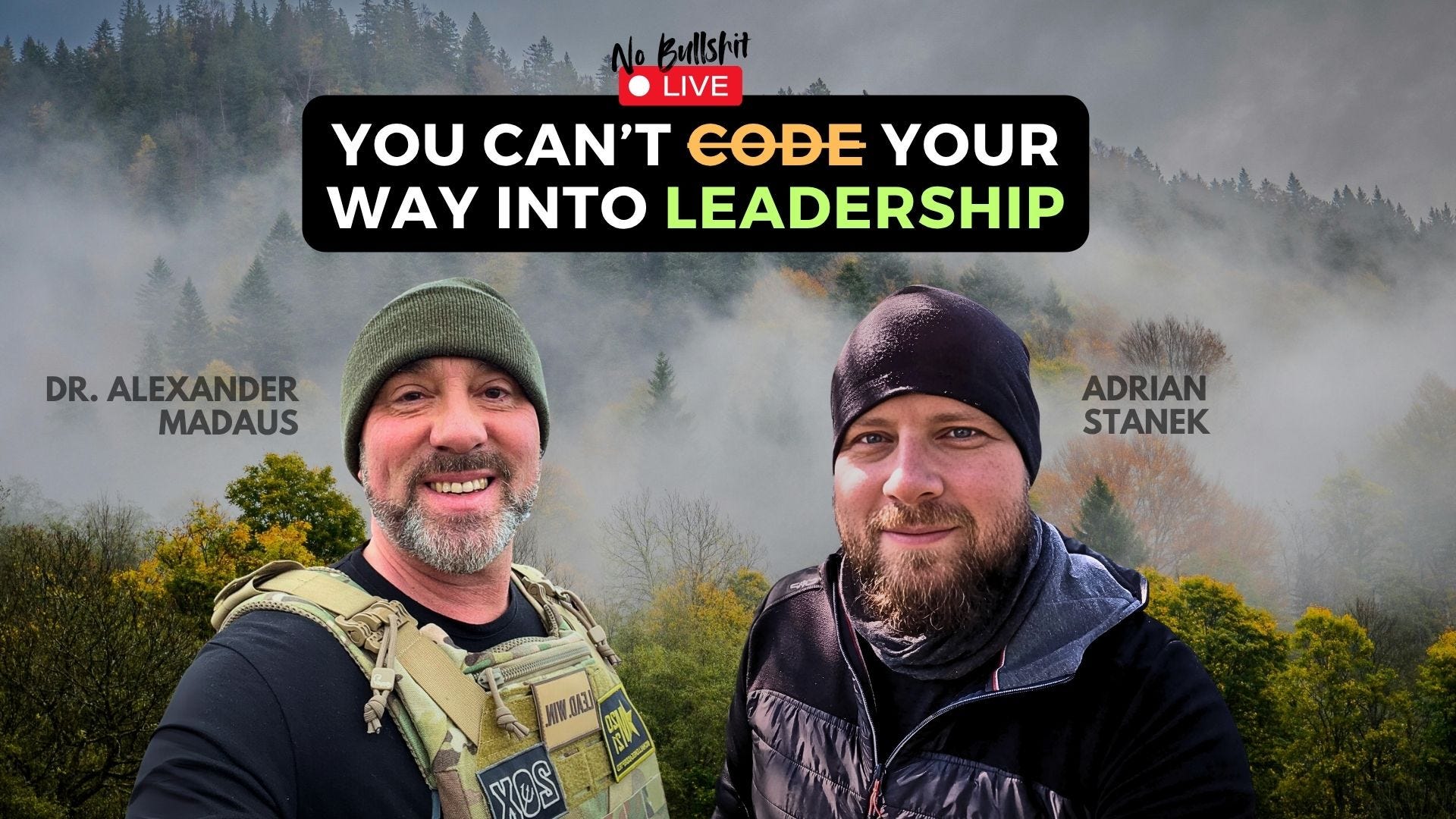
Discipline Is Not Optional – It’s the Foundation of Real Leadership
Most leaders obsess over tools, tactics, frameworks, KPIs, everything except the one thing that actually determines whether their team wins or loses: themselves.This episode goes straight into the uncomfortable truth: if you don’t lead yourself with discipline, integrity, and clarity, you have absolutely no business leading others. That’s not motivational fluff, that’s reality. And it’s the message Dr. Alexander Madaus has spent decades fighting for.Who Is Dr. Alexander Madaus?Dr. Alexander Madaus isn’t your typical leadership trainer. He’s a former German military team leader, an entrepreneur, a medical doctor specializing in intensive care and emergency medicine, and — famously — the only German who has ever trained with U.S. Navy SEALs.His journey began immediately after school, when he joined the German military while simultaneously establishing his first business in Munich. Later, he paid his way through med school, became an MD, and spent a decade making life-and-death decisions in chaotic environments where leadership and clarity weren’t optional.Today, through the Rising King Academy, he coaches entrepreneurs and business owners on character-based leadership, rooted in discipline, candor, trust, and building high-performance A-player cultures — not management theater.00:00 wF-AlexanderMadaus00100:49 REEL02:15 START This is a public episode. If you'd like to discuss this with other subscribers or get access to bonus episodes, visit blog.adrianstanek.dev/subscribe

Self-Control is Leadership
Mastering Self-Control: The Key to Effective LeadershipIn this episode, explore the importance of self-control for effective leadership. Learn how managing emotions like sadness, anger, and grief can help you serve others better and maintain your credibility as a leader. Understand why self-discipline and reflecting on your emotions are crucial for handling daily challenges. Discover the four pillars of leadership—credibility, being a role model, having a vision and mission, and challenging oneself and others. By cultivating the right mindset, you can become a strong, emotionally stable leader. Tune in for practical tips and insights into mastering self-control and leading with confidence.00:00 Understanding Emotional Overwhelm00:38 The Importance of Self-Control in Leadership01:44 Reacting vs. Acting on Emotions02:31 Accepting and Reflecting on Emotions03:02 The Four Pillars of Leadership04:17 The Role of Mindset in Leadership04:46 Final Thoughts and Encouragement This is a public episode. If you'd like to discuss this with other subscribers or get access to bonus episodes, visit blog.adrianstanek.dev/subscribe

Somewhere along the way, we lost the ability to dream
Somewhere along the way, something changed. We stopped dreaming the way we once did. When we were children, the world felt open and full of possibilities. We could see our potential so clearly. Becoming a firefighter, a doctor, or an astronaut felt within reach. Not because those paths were easy, but because they felt possible. We believed in our future selves without hesitation. Failure didn’t scare us. When we fell off the bike, we got back up. We were frustrated, yes, but we tried again. We didn’t question whether we were worthy of learning how to ride. We simply believed it was a matter of time.As adults, something shifted. We became smarter, more practical, and more careful. We learned to navigate opinions, expectations, and social pressure. Slowly, almost invisibly, our dreams began to shrink. They started to fit neatly inside the boxes that other people drew for us. Potential didn’t disappear. It simply faded into the background. It became quieter. It turned into a gentle pull toward something bigger, something we could become if resistance didn’t hold us back.Resistance is real.It shows up as doubt. It shows up as fear of judgment. It shows up as subtle pressure to play small. And for many people, this resistance becomes stronger than their vision. It is what keeps us from starting, from risking, from stepping forward. We tell ourselves stories about why now is not the right time, why others are more capable, or why the dream is unrealistic. But none of that is about our actual potential. It is the voice of resistance doing its job.Vision & LeadershipThis is exactly where leadership comes in. Vision and mission are not just fancy words used in corporate meetings. They are the foundation of real leadership. They are about projecting a future version of yourself or your team that does not exist yet and believing in it deeply enough to make it real. That is what children do naturally when they dream. Leaders need to relearn that skill. Because leadership, at its core, is not about control. It is about seeing something that others cannot see yet and choosing to walk toward it anyway.Great leaders do not lose their ability to dream. They protect it. They nurture it. They hold a vision even when nobody else believes in it. They give shape to potential, first within themselves, then for the people around them. They turn something invisible into something tangible. And that is why reconnecting with your potential is not a nice-to-have. It is a leadership discipline. You cannot lead anyone toward a future you cannot imagine yourself.If you want to lead, you need to dream again, not with the naive certainty of a child, but with the clarity and courage of someone who understands resistance and chooses to act anyway. Vision is the spark. Mission is the path. Leadership begins when you dare to reclaim the part of yourself that still believes something bigger is possible. Because if you cannot imagine it, no one will follow you there.— Adrian This is a public episode. If you'd like to discuss this with other subscribers or get access to bonus episodes, visit blog.adrianstanek.dev/subscribe

Leadership: How to find your real purpose?
There’s a point in life where things click. You stop chasing titles or trying to prove something, and you know what you’re meant to do.That’s your PURPOSE.The journey takes time.It’s built on small steps, discipline, and showing up even when it’s hard.Your inner voice says stop.People around you doubt.But you show up. ALWAYS.I started when I was eight, and I never stopped pursuing it.The path wasn’t clear.Stormy seas, heavy weather.I am alone. I doubted myself. I felt insecure.Every storm runs out of rain.After rain comes sun.Moving on.Don’t stop. FIGHT RESISTANCE.Months become years; everything adds up.The moment will come when you realize you have changed.You spot resistance when it tries to sneak in.You point at it, and it stays put.Now you are in charge.Driven by purpose, not by someone else’s agenda.Rebirth.From then on, life feels simple.You wake up, face the resistance, and do it anyway.Not because you have to, but because it feels right.You decide to. And you will do so tomorrow.You are who you were always meant to be.No doubt. Clarity.Never stop. Never go back. Never give up.You became invincible.Where are you on your journey? Never stop. Remember, you have many fellows.—Adrian This is a public episode. If you'd like to discuss this with other subscribers or get access to bonus episodes, visit blog.adrianstanek.dev/subscribe
What Videos & Streaming did to my tech business
The Power of Authentic Video Content for Remote Coaching SuccessIn this episode, we explore the importance of utilizing video content to build authenticity and credibility as a remote coach. We discuss how being genuine yet professional in videos helps engage and retain clients, even if vanity metrics like likes and comments don't reflect it. Highlighting personal experiences, the script emphasizes that people remember the emotional connection from videos and that this medium is crucial for creating trust and long-lasting impressions on platforms like LinkedIn. Practical tips include the use of proper equipment for video quality and the impact of network effects in securing high-level clients and opportunities. The session wraps up with a teaser for a stream discussing the significance of soft skills in tech leadership.00:00 Introduction: Authenticity in Professionalism00:27 The Power of Video in Remote Coaching01:20 Why I Focus on Video Content01:43 Impact of Video Content on Business03:31 Understanding Audience Engagement04:49 Building Credibility Through Video07:08 Challenges and Misconceptions of Video Content09:19 Effective Video Practices13:46 Conclusion and Upcoming Stream This is a public episode. If you'd like to discuss this with other subscribers or get access to bonus episodes, visit blog.adrianstanek.dev/subscribe

The Real Senior Skill Is Communication.
Leadership doesn’t start when you get promoted.It starts the moment you take responsibility for yourself.Self-leadership means learning to communicate clearly, manage your emotions, and move things forward even without authority.If you can’t lead yourself, you won’t be able to lead others.Communication is not a soft skill. It’s how credibility, trust, and progress are built.It’s how you foster a culture on purpose.Learn it early, when the stakes are small, so you’re ready when the real challenges come.PRACTICE DAILYSPEAK • REFLECT • ACCEPT • IMPROVE • REPEATRecord yourself or meetings you speak in. You don’t need to publish, but you do need to look it over. Watch again a day later. With distance, you will judge it more like others do.ASK YOURSELF:* Were you in control?* Did you overtalk others?* Were you confident and convincing?* Did you stay calm when challenged?* Were you too pushy or too dominant?* Were you fluent and secure in your message?Accept everything; improve next time.You don’t need to be a leader to practice that, but you need to have that quality as a leader.So, what are you waiting for?—AdrianIf you like this podcast, please repost & subscribe. This is a public episode. If you'd like to discuss this with other subscribers or get access to bonus episodes, visit blog.adrianstanek.dev/subscribe

Why I Journal as a Tech Entrepreneur
The Power of Journaling: Enhance Focus and ClarityIn this episode, we delve into the impact of daily journaling on fostering habits, enhancing focus, and providing clarity. The speaker shares personal experiences, emphasizing the importance of writing down thoughts and tasks to manifest them into actionable plans. Learn how a simple morning routine involving a pen and paper can help manage daily chaos, prioritize important tasks, and aid self-reflection. Discover practical tips for incorporating journaling into your life for improved discipline and leadership.00:00 Introduction to Journaling00:02 The Benefits of Journaling01:01 Daily Journaling Routine01:11 The Importance of Setting To-Dos01:27 Reflecting on Achievements01:48 Handling Daily Distractions03:22 Practical Tips for Effective Journaling04:35 Self-Reflection and Improvement05:37 Building Discipline Through Journaling06:49 Final Thoughts on Journaling This is a public episode. If you'd like to discuss this with other subscribers or get access to bonus episodes, visit blog.adrianstanek.dev/subscribe
Control the controllables. Drop the rest.
Harnessing Stoicism for Personal and Professional GrowthIn this episode, explore the fundamentals of stoicism and its practical application in personal and professional life. Learn how focusing on what you can control, while letting go of what you can't, fosters inner balance and discipline. Understand the importance of acting on immediate tasks, avoiding distractions like politics or a toxic work environment, and maintaining discipline over motivation. Discover the 'three circles' method to reduce procrastination and enhance productivity, and see how this practice is effectively integrated into daily routines for better focus and effectiveness.00:00 Introduction to Stoicism00:45 Understanding Control and Influence01:20 Avoiding Unproductive Activities02:01 Focusing on Professional Roles03:15 The Importance of Discipline04:02 Developing Productive Habits04:14 Preview of the Next Stream05:11 Personal Insights and Conclusion This is a public episode. If you'd like to discuss this with other subscribers or get access to bonus episodes, visit blog.adrianstanek.dev/subscribe

Sustain as a Tech Founder
The last six months have been some of the hardest I’ve gone through in years.Days that start at 7 am and stretch until midnight. Weekends are disappearing into work. The constant tension of trying to keep businesses alive and moving forward while still being present for my family and two kids.I’m not new to this; I’ve been building and running businesses for 16 years, but every time I go through an intense launch phase, it reminds me how much it costs. Bootstrapping means we don’t have a boss, but it also means there’s no safety net. The pressure doesn’t go away.And here’s what I’ve learned: it’s not ideas, or markets, or strategies that keep you going when the grind is real. It’s something much more basic.Fitness and nutrition.A year ago, I wasn’t fit at all. I was heavily overweight, constantly exhausted, and often drifting into procrastination just because my body couldn’t keep up with what my mind demanded.Since then, I’ve lost 20kg. I started running almost every day — nothing crazy fast, but consistent, five to eight kilometers at a time, six days a week. I improved my diet, focused on protein, supplements that work for me, and avoided the endless sugar spikes and “Fressattacken” (binge eating) that stress used to trigger.The effect has been transformative.Not just physically, but mentally. Running resets my brain. It cuts through the noise of meetings, messages, and stress, and brings me back to focus on the signal, the things that actually matter. Good nutrition helps me recover, stay sharp, and not burn out halfway through the day.Founders love to talk about discipline and consistency. But discipline isn’t about posting every day or working late every night. It’s about sustaining your purpose over years, not weeks. It’s about keeping yourself alive, strong, and clear-headed enough to make the journey possible.That’s why I believe sustaining as a founder is less about output and more about building the baseline habits that allow you to keep going — through exhaustion, through pressure, through the unknown length of the road ahead.In today’s Builder’s Diary vlog, I share more of my personal journey — the struggles, the fitness routine, the lessons that help me keep moving even when the days feel impossible.And one small note: I’ve recently started using Bearly Fit by @James Mahy. It’s a simple, thoughtful app built with love, and it helps me stay on track with the habits that matter most.If you’re building something of your own, whether it’s a company, a project, or a personal mission, I hope this reminds you:You don’t need more hacks. You need to sustain yourself.—Adrian This is a public episode. If you'd like to discuss this with other subscribers or get access to bonus episodes, visit blog.adrianstanek.dev/subscribe
Stop Using AI in Secret — Make It a Team Strategy
Many developers are already using AI. But here’s the thing: most of them do it in secret. They test it in side projects, use it quietly to get through tickets, and then draw conclusions—without ever bringing it into the open with their team.That’s a mistake.When I’ve been disciplined in my own work, I noticed something: I was faster, could work longer, and felt less drained, because I stayed focused on high-level thinking instead of every small detail. That’s precisely the kind of shift AI can support.But here’s the danger: if you let AI turn into a lazy habit, if you’re just vibing with it instead of working with intention, the outcomes get worse. You’ll ship sloppy code, misunderstand problems, and create more cleanup work later. At scale, that kills quality and trust.And if AI use stays a private habit, it doesn’t scale anyway. Worse, it creates hidden workflows, uneven quality, and mistrust inside the team.The solution is simple: treat AI as a team strategy. Not a secret shortcut. Not a personal experiment. A shared challenge. Align on how to use it, where it makes sense, and what it should not do. Explore it together.That’s when AI becomes valuable: when it creates space for humans to do what we’re best at—thinking, designing, and solving problems—without burning out on the repetitive parts.—Adrian This is a public episode. If you'd like to discuss this with other subscribers or get access to bonus episodes, visit blog.adrianstanek.dev/subscribe
Why AI Doesn't Build Viable Businesses
Why Building an App Isn't Enough: Solving Real Problems for Business SuccessIn this episode, we tackle the common misconception that an app alone can create a successful business. We discuss the importance of identifying true pain points and solving real problems as the foundation of any sustainable business. Using examples like Canva and lessons from the SaaS market, this video emphasizes that domain knowledge, not just tools, is critical for success. We also explain how AI can accelerate the process but cannot replace the need for a solid business idea and expertise. Finally, we address the challenges and realities of building a viable product and securing reliable revenue.00:00 Introduction: The Misconception About Building Apps00:46 Identifying the Real Problem: Business Idea vs. App01:54 Understanding the Market and Solving Pain Points03:13 The Role of AI in Business04:47 Sustainable Business Practices07:22 The Reality of Building a Functional App09:48 Conclusion: The True Challenge in Business This is a public episode. If you'd like to discuss this with other subscribers or get access to bonus episodes, visit blog.adrianstanek.dev/subscribe
They Don’t Follow You. They Follow the Mission.
Overcoming Resistance: Motivating Your Dev Team for Change In today’s episode, we tackle the challenge of motivating a development team to embrace change. You'll hear about common resistance scenarios, the psychological forces at play, and practical strategies to highlight the value of change. Learn how to foster a culture of trust and motivation, making your team more adaptable over time. 00:00 Introduction: The Challenge of Motivating Developers 00:42 Facing Resistance: Common Developer Reactions 02:25 Understanding the Forces of Resistance and Assistance 03:17 The Importance of Value and Trust in Leadership 04:30 Building a Culture of Trust and Change 05:00 The Basics of Motivation and Resistance 05:58 Conclusion: The Mission and Persistent Motivation This is a public episode. If you'd like to discuss this with other subscribers or get access to bonus episodes, visit blog.adrianstanek.dev/subscribe
Why Discipline is Your First Leadership Tool
The Role of Habits in Leadership DevelopmentIn this episode, we delve into the importance of developing habits for personal and leadership growth. The discussion outlines four pillars essential to becoming a credible and effective leader: credibility, role modeling, vision-sharing, and the ability to challenge others. By consistently practicing these habits, individuals can cultivate virtues that enhance their leadership skills. The episode emphasizes the necessity of maintaining discipline and a mindset conducive to habitual development to achieve credibility, become a role model, and effectively lead others.00:00 Introduction to Habits00:02 The Importance of Habits00:10 Becoming a Leader00:15 The Four Pillars of Leadership00:49 Developing Discipline and Baseline02:30 Leadership and Training03:11 Credibility and Role Modeling05:12 Conclusion and Final Thoughts This is a public episode. If you'd like to discuss this with other subscribers or get access to bonus episodes, visit blog.adrianstanek.dev/subscribe
The Dos and Don’ts of Growing Junior Developers
How to Keep Junior Developers Motivated and LoyalIn this video, a vocational trainer with extensive experience shares insights on how to keep junior developers motivated and loyal to your company. The discussion covers the importance of clear career plans, realistic expectations, and long-term learning for junior developers. The narrator also warns against frequent job-hopping and emphasizes the value of stability and domain expertise for career growth. By nurturing junior developers and providing a clear path to grow, companies can ensure a committed and skilled workforce.00:00 Introduction: Keeping Juniors Motivated00:36 Understanding the Junior Developer Role01:09 The Importance of Career Development01:52 Avoiding the Job-Hopping Trap03:12 Becoming a Domain Expert05:04 Guidance for Trainers and Companies05:58 Long-Term Career Planning06:37 Marker07:52 Conclusion and Final Thoughts This is a public episode. If you'd like to discuss this with other subscribers or get access to bonus episodes, visit blog.adrianstanek.dev/subscribe
When Is the Right Time to Step Into Leadership?
When is the Right Time to Become a Leader? Insights for Software EngineersIn this video, we explore the right moment to step into a leadership role, particularly in software engineering. We discuss the importance of building personal credibility, being a role model, and motivating others before taking on responsibility. The speaker advises against prematurely assuming leadership roles without sufficient experience, emphasizing the need for step-by-step growth and the guidance of a mentor or coach. Key points include mastering your craft, the risks of early leadership burnout, and the delicate balance of technical and human skills necessary for effective leadership. Watch for vital insights and practical advice on how to prepare for and succeed in leadership roles.00:00 Introduction: When is the Right Moment to Become a Leader?00:02 The Basics of Leadership: Credibility and Motivation00:52 The Role of a Manager in Software Engineering01:03 Challenges of Early Leadership01:46 The Importance of Mastering Your Craft02:17 Real Talk: Facing Opposition as a Leader03:30 Step-by-Step Approach to Leadership04:28 Avoiding Burnout: The Reality of Leadership Roles05:07 Starting Small: Building Leadership Skills06:55 The Human and Technical Aspects of Leadership07:52 Conclusion and Final Thoughts This is a public episode. If you'd like to discuss this with other subscribers or get access to bonus episodes, visit blog.adrianstanek.dev/subscribe

Keep Building Your Saas – AI Won't Kill It
In this episode, we unpack the recent hype suggesting that AI agents will replace SaaS products. Adrian shares why that narrative is misleading—and why SaaS is still thriving.You’ll hearWhy AI agents still depend on SaaS infrastructureThe real needs of everyday users and businessesHow psychological and economic factors continue to drive SaaS adoptionWhy convenience still beats complexityIf you’re building software people rely on, this one’s for you. This is a public episode. If you'd like to discuss this with other subscribers or get access to bonus episodes, visit blog.adrianstanek.dev/subscribe
The Day I Stopped Obeying the Methodology Gurus
Navigating Software Development Methodologies: Tailoring Systems to Fit Your NeedsIn this video, we delve into the interplay between social media advice and practical application in software development. Highlighting popular platforms like LinkedIn, X, and Reddit, we discuss the importance of understanding the foundational purposes behind various methodologies instead of following them blindly. We emphasize the value of adapting systems to fit individual and business needs, particularly for startups, and stress the importance of iterative development and feedback. Key topics include TDD, continuous delivery, and SaaS product development, urging developers to focus on long-term consistency and learning over rigid planning.00:00 Introduction to Social Media and Software Development00:15 The Importance of Understanding Systems01:04 Applying Systems Thoughtfully01:32 Influencers and Independent Thinking02:00 Developing Your Own Methods02:27 Iterative Approach in Software Development03:02 Long-Term Planning in Software Development03:17 The Agile Mindset04:13 Conclusion and Final Thoughts This is a public episode. If you'd like to discuss this with other subscribers or get access to bonus episodes, visit blog.adrianstanek.dev/subscribe

From Developer to Entrepreneur — Looks easy. It’s not.
🚀 From Developer to Entrepreneur: My 15-Year Journey. In this episode, I share my personal journey from being a software developer to becoming an entrepreneur responsible for multiple software products over the past 15 years. I'll discuss the challenges and realizations that come with this transformation, the critical need for business skills beyond development, and the importance of planning and experience to avoid burnout. You'll also hear my reflections on the pitfalls of early entrepreneurship, the process of building sustainable products, and the balance between technology and business strategy. Ultimately, this episode aims to offer valuable insights and cautionary advice for anyone considering a similar path. 00:00 Introduction and Personal Story 00:41 Transitioning from Developer to Entrepreneur 03:30 Challenges of Self-Employment 06:01 Lessons Learned from 15 Years of Experience 09:27 Building and Selling Products 12:54 Final Thoughts and Advice This is a public episode. If you'd like to discuss this with other subscribers or get access to bonus episodes, visit blog.adrianstanek.dev/subscribe

What I Have Learned After $300 With Agentic Coding
🎁 BONUS: 14 Tips to Save Money with Claude Code! After spending over $300 working with Claude Code in production, I’ve learned what really works — and what’s just expensive noise. In this video, I share my personal lessons, what I wish I had known before, and how you can save time, tokens, and sanity. 👇 Chapters: 00:00 Intro 00:37 What We Want, Why, and How 01:56 Clean Codebase = Better AI 02:51 How Good Is Claude Code Really? 05:14 Claude & The Senior Developer 06:17 Flow vs Vibe Coding 07:06 The Economic Shift 09:14 Why Vibe Coding Suits Juniors 10:13 Why AI Isn’t Everywhere (Yet) 10:48 The Future of Coding 11:59 Vibe Coding Is Coming 🎯 14 Money-Saving Tips 13:28 Bonus Starts 13:41 Tip 1: Choose a Strict Language (e.g. TypeScript) 14:03 Tip 2: Clean React Structures 14:27 Tip 3: Use Context Files 15:01 Tip 4: Tests Are Key 16:32 Tip 5: Let AI Fix Its Own Errors 16:52 Tip 6: Work in Small Batches 17:48 Tip 7: Don’t Expect Perfection 19:12 Tip 8: No Multitasking 19:55 Tip 9: Manage Context Tokens 20:37 Tip 10: Comments Are Back 21:51 Tip 11: Let Go of Style Wars 22:54 Tip 12: Plan with the AI 23:30 Tip 13: Flow over Vibe (for now) 24:39 Tip 14: Split Big Tasks 25:45 Outro This is a public episode. If you'd like to discuss this with other subscribers or get access to bonus episodes, visit blog.adrianstanek.dev/subscribe
Quality ≠ Perfection
In this episode, we explore why quality is not the same as perfection—and why striving for the latter too early can derail your product, your team, and your goals.Adrian shares insights from over two decades in software development, highlighting the common trap of aiming for an undefined version of “perfect” rather than defining and hitting achievable quality goals. Through personal anecdotes and thought-provoking observations, he explains how teams fall into overengineering or underengineering when quality isn’t clearly defined from the start. This is a public episode. If you'd like to discuss this with other subscribers or get access to bonus episodes, visit blog.adrianstanek.dev/subscribe

Vibe & Flow Coding Will Change A Lot
I see Flow Coding as the reasonable middle ground which will become mature in no-time.We hear about Vibe Coding everywhere. This is so different from what we have done for decades now. So, it might take too much attention right now, and things like Flow Coding aren’t in focus. I see Flow Coding as the reasonable middle ground, that will mature quickly.Staying in the flow of coding is great in many ways, but not being in the flow of coding would be rather nasty.We are not alone anymoreInterestingly, we aren’t doing this alone as humans but with AI coding tools. While we heard many bad things about the quality last year, things have shifted towards keeping quality rapidly overnight. So rapidly even that many Software Engineers still keep telling the old phrases:* AI Codes for you in 1 hour your app you and you debug it for the years to come.* AI creates garbage code.* AI degrades your own skills and makes you dumb.To mention some of the general ideas. But are those still viable? I don’t think so. AI moves faster than the human being can grasp right now.I have been using Claude Code in production for over a week, which totally changed my mind."After 32 years of writing code, I sat there, watching Claude Code do my job while I just pressed Enter. And the scary part? It did it well."When I Realized the Shift Had Already StartedThere are moments in your career that feel like turning points.Mine happened while testing a migration on a large-scale Next.js frontend. I wasn’t exploring AI for fun or toying with prompts; I was doing real work on real code and letting Claude Code take the lead.I’ve built software since the 1990s, from BASIC on C64 to web stacks and massive SaaS platforms. I know how migrations go: Messy, slow, and painful.But this time was different. The AI understood the task, handled edge cases, adjusted to patterns, and even debugged problems it encountered. I was no longer writing code. I was reviewing someone else’s—except that someone wasn’t a person.And that’s when it hit me: the future of coding isn’t about typing anymore. It’s about thinking, guiding, and reviewing. The execution? That can be handled by machines.What Makes Coding AI Actually WorkThe magic doesn’t happen automatically. You need a foundation.Here are the essential requirements if you want to work effectively with tools like Claude Code:* Good ArchitectureA clean, modular codebase allows the AI to reason across files. Spaghetti code? Forget it. Claude can only help if your code is already structured well.* A Strong Typing SystemTypeScript strict mode isn’t just good for you—it’s critical for AI. It provides guardrails that help the model understand constraints, infer intentions, and validate changes.* Project GuidelinesClaude Code reads your claude.md (or equivalent) and adheres to project conventions. Folder structure, import order, naming patterns—it all matters. Define the rules, and the AI will follow.* Testing StrategyIf you don’t have automated tests, you’re flying blind. TDD, component-level testing, and end-to-end checks let you trust what AI changes.* Experience Still MattersAI is powerful, but it isn’t intuitive. You need to catch subtle issues, architectural misalignments, or overconfident shortcuts. Your judgment is still the safety net.Key Takeaways* Claude Code isn’t just a prompt-based tool. It acts like a junior developer who learns fast and works with context.* Flow Coding is the future. Let AI handle the typing and jumping between files while you stay in flow, guiding strategy and verifying.* This changes energy dynamics. You don’t end a session mentally drained. You end with more creative bandwidth left.* Tooling is catching up. With editors like Cursor and assistants like Claude, we’re seeing the rise of AI-native development environments.* We’re still needed, just in a different role. Review, design, and decision-making are the new primary skills.My Personal ConclusionIf you're a podcast listener like me, here’s the takeaway: We’re moving from coders to curators. And the sooner we adapt, the more we can lead this shift—rather than get run over by it.The next generation of developers will grow up with Claude in their terminal, not VS Code alone.Are you ready for that?👉 Let me know what you think. Would you trust AI with your codebase?Adrian This is a public episode. If you'd like to discuss this with other subscribers or get access to bonus episodes, visit blog.adrianstanek.dev/subscribe

AI Took Over My Next.js Migration – Am I Still Needed?
"So there is a machine, right now, substituting me after 32 years of coding. It’s just doing what I’ve done—so much faster. Can I go home now?" — from my video.The Moment I Realized AI is Coming for My JobI’ve been coding for over thirty years, writing, refactoring, and maintaining more code than I can count. Started with BASIC on C64 and transitioned into the web world. Yet here I was, sitting in front of my computer, watching Claude Code migrate my 90,000-line Next.js 14 codebase to Next.js 15 while I just pressed Enter.This was not just some gimmick. This was real. The AI wasn’t just suggesting code; it was executing migrations, fixing errors, even reasoning through problems. It wasn’t perfect, but damn—was it fast.For the first time, I questioned: If AI can do this now, where does that leave us, the engineers?The Challenge – Why I Even Tried This"I put Claude Code to the test—can it really migrate my 90K LOC Next.js 14 codebase to Next.js 15 without breaking everything?"We run a B2B SaaS platform with a large frontend built in Next.js 14. Migrating to Next.js 15 meant switching from Page Router to App Router, updating use client directives, fixing TypeScript compatibility, and running tests.Doing this manually would take hours—if not days. It’s tedious, error-prone, and frankly, boring.So, I turned to AI. I let Claude Code do the heavy lifting.And the results? Well, let’s just say… I wasn’t ready.AI vs. Developer – Who Wins?1. Setup Was Easy—Too EasyInstalling Claude Code was straightforward. Within minutes, it was analyzing my entire codebase. It wasn’t just looking at files; it was understanding patterns, naming conventions, linting rules, and architecture.Then came the first real test:Me: “Update all my components and add the use client directive where necessary.”Claude: “Sure. Here’s a batch script to automate it.”Wait, what? Instead of manually modifying 900 files, Claude generated a script that did it in seconds. When I ran it, boom. It was done.2. AI Didn’t Just Follow Orders—It Thought AheadAt first, I expected Claude to simply follow instructions. But no—it started anticipating problems.* Type errors? It refactored props to remove deprecated defaults.* Import mismatches? It auto-fixed them and ran a build check.* Test failures? It debugged and reran failing Cypress tests.It wasn’t perfect, and sometimes, it overlooked nuances or applied brute-force solutions, but it worked at breakneck speed.3. I Became a Passive Observer"I just pressed Enter all day long. AI iterated, debugged, and even verified its own fixes. It felt… unsettling."The scariest moment was when I realized I was no longer coding. I was just approving changes, like a manager reviewing work rather than doing the work myself.Was I really needed?Key Takeaways – What I Learned* AI is no longer just an assistant; it’s an engineer-in-training. It doesn’t just suggest—it executes, iterates, and verifies.* The role of a developer is shifting. We’re moving from writing code to reviewing AI-written code.* AI won’t replace engineers, but it will replace hands-on programming. Engineers will remain valuable in architecture, decision-making, and deep problem-solving.* Trust AI, but verify. AI makes mistakes—sometimes big ones. But it also catches issues we might overlook. (Hint: Same as a human engineer)* Test coverage is more critical than ever. If you let AI refactor a large codebase, tests are your safety net.The Future of Software DevelopmentWe’re at the start of something huge. AI isn’t replacing us yet but fundamentally changing how we work.If you’re still skeptical, I get it. But I’ll leave you with this:If AI can migrate entire Next.js apps in minutes, what will it do in 3 years?Let me know in the comments: Would you trust AI to refactor your production code?Next Video: Migration Page to App Router in Next.js 15I will upload the second part of the video in my paid section. It’s about an hour of uncut material with more information than the free one.Find this video and article valuable? Please repost and share it with like-minded peers ❤️YouTube upload: This is a public episode. If you'd like to discuss this with other subscribers or get access to bonus episodes, visit blog.adrianstanek.dev/subscribe

Why We Don't Build Native Apps.
Why I Chose PWAs Years Ago—And Why You Should Consider Them Too"I have chosen Progressive Web Apps a while ago, several years ago actually, and I’m extremely happy to have chosen this. And I want to explain to you why."The Problem: Small Teams, Big ChallengesA few years ago, I faced a tough decision—how to build the best possible user experience for my product while keeping development efficient. Like most small companies, we had limited resources; budget, time, and engineering capacity were constraints we couldn’t ignore. And yet, users expected seamless, high-quality experiences across devices.Maintaining separate web, iOS, and Android applications wasn’t an option. It was clear that splitting focus would slow us down, increase costs, and create an inconsistent experience for users. But what was the alternative?The Turning Point: Why PWAs Made Sense"Having a native app and a web experience or even multiple native experiences is not efficient at all, and it is not great for the user experience."That’s when I realized that Progressive Web Apps (PWAs) offered a way forward. With a single codebase, we could provide a consistent experience across devices, reducing development and maintenance efforts.It wasn’t just about the technical aspects but also about aligning product and tech strategies. We needed a solution that made sense from a business and user perspective.The PWA Edge: What It OffersPWAs are not just about offline capabilities—although that’s a bonus. They offer everything we expect from modern applications:* Cross-platform compatibility; No separate development for iOS, Android, and web.* Instant updates; No App Store delays.* Better performance; Compared to hybrid frameworks like Flutter and React Native, the web is lightweight and fast.* Lower costs; One team, one codebase, less complexity.This was a game-changer for small teams. Instead of spending time maintaining multiple versions of the same app, we could focus on building the best possible user experience faster.The Alternative: Do Native Frameworks Solve This?"When you take into consideration what modern native frameworks can do, like Flutter or React Native, and then compare that to web technologies, you’ll see that most applications small teams build are better suited for the web."I understand the argument for native apps. Flutter, React Native, and other frameworks promise a “write once, run anywhere” experience. However, they still have compromises. Flutter’s web performance is lacking, and React Native requires bridging for native functionality. Both also demand extra layers of complexity compared to a well-built web app.Do I need a highly specialized native feature? Solutions like Capacitor bridge the gap. But for 95% of use cases, PWAs did everything I needed—and more.The Outcome: A Simpler, More Scalable ApproachWe shipped faster. We iterated quicker. And we kept our team focused. The best teams are small, efficient, and aligned. Having one codebase, one product, one experience keeps everything streamlined. It’s not about being dogmatic; it’s about choosing the best tool for the job.PWAs have matured. Even Apple, once reluctant, has finally acknowledged them. If you’re starting a new project, ask yourself: Do you need a native app, or is a PWA the better choice?Key Takeaways* PWAs reduce complexity; One codebase means fewer resources spent on maintaining multiple platforms.* Better for small teams; Focus on product quality, not platform-specific bugs and fixes.* Instant updates & control; No App Store approvals, just ship whenever you need.* Bridges exist for native needs; Capacitor and other tools can fill in gaps where necessary.* Future-proofing: Web technologies will be here in 20 years, but the same can’t be said for every framework.What’s Your Experience?Have you built a PWA before? Do you still maintain separate web and native apps? Or do you believe native apps are worth the trade-offs?Let’s talk in the comments.First Session: Monday, 17 March 202517:00 CET | 11:00 AM EST | 08:00 AM PSTEvery Monday at the same timeTopics for This Session:🍪 What is the right team size?Why bigger isn’t always better and how to structure teams effectively.🍪 How I align teamsCutting through resistance, enabling autonomy, and ensuring real collaboration.Each session will feel like a real mentoring call, not a lecture. I’ll share my approach and insights, but most importantly—I’ll take questions directly from attendees and focus on the real challenges you’re facing. This is a public episode. If you'd like to discuss this with other subscribers or get access to bonus episodes, visit blog.adrianstanek.dev/subscribe
AI Generates Garbage Code, Yet It’s Improving My Skills
How AI Can Make You a Better Developer | The Future of Coding & EngineeringIn this episode, we dive into the controversial topic of AI-generated code and its impact on developers. Rather than replacing good developers, AI can be a valuable tool that enhances development skills by assisting with tedious coding tasks and enabling better reflection and improvement. We explore the differences between merely being a coder and becoming a true software engineer, emphasizing the importance of learning, iteration, and the human touch in software development. Key timestamps include discussions on the current state of the developer market, the role of AI in coding, the value of AI as a companion for reflection and learning, and the long-term outlook on AI replacing coding tasks.00:00 Introduction: AI and Developer Skills00:18 Common Misconceptions About AI01:30 The Reality of AI in Coding03:37 The Role of AI in Developer Improvement05:27 Pair Programming and AI09:31 The Future of Software Engineering with AI13:51 Conclusion: Embracing AI for Better Development This is a public episode. If you'd like to discuss this with other subscribers or get access to bonus episodes, visit blog.adrianstanek.dev/subscribe
Why Developers Fail Without Feedback
In this video, we delve into the necessity of continuous communication in both personal and professional relationships. Highlighting examples such as manager-employee dynamics, the video discusses the benefits of requesting and providing feedback to nurture healthy connections. By continuously communicating, one can avoid unexpected negative feedback, build strong relationships, and stay proactive rather than reactive. This can lead to a more controlled and less stressful environment, thereby reducing risks of burnout. The discussion also emphasizes the modern need to rethink traditional company practices to foster open communication and continuous improvement.00:00 Devs should do Continuous Communication00:27 Take Control - Act Early01:15 About Negative Feedback02:17 Developers are Business people02:47 Don't compound negativity04:19 Avoid Burnout This is a public episode. If you'd like to discuss this with other subscribers or get access to bonus episodes, visit blog.adrianstanek.dev/subscribe

What is Continuous Delivery and Why Should You Care?
Talking with Bryan Finster, Software Engineer at Defense Unicorns and core team member of minimumcd.org, about what Continuous Delivery really is; and what's not.00:00 Spontaneous Start and Introduction00:13 Defining Continuous Delivery01:28 Brian's Background in Continuous Delivery03:44 Challenges and Misconceptions in Continuous Delivery07:35 Automation in Continuous Delivery12:44 Deployment Strategies and Best Practices17:10 Real-World Examples and Industry Practices29:03 The Importance of Simplicity and Standardization35:36 Understanding the KISS Principle35:43 Service-Oriented Architecture Misconceptions36:40 Designing for Continuous Delivery37:24 The Importance of Domain-Driven Design37:58 Challenges in Continuous Delivery43:31 Code Reviews and Pull Requests in CD44:24 The Role of Testing in Continuous Delivery45:53 The Value of Continuous Integration48:54 Common Pitfalls in Software Development01:03:11 The Importance of Maintainability01:05:05 Wrapping Up and Final ThoughtsLinks:https://minimumcd.org/https://bdfinst.medium.com/Books:Modern Software Engineering: Doing What Works to Build Better Software FasterContinuous Delivery: Reliable Software Releases through Build, Test, and Deployment Automation This is a public episode. If you'd like to discuss this with other subscribers or get access to bonus episodes, visit blog.adrianstanek.dev/subscribe

Let's Deploy on Friday!
Deploying on Fridays? No problem! For me, it’s just another day, and sometimes, we even push changes on weekends without breaking a sweat. Whether it’s small projects or large-scale systems, we stay confident and in control. So, what’s the secret? Let’s dive in and uncover how Continuous Delivery makes it all possible! 00:00 Introduction – Fear of Friday Deployments 01:27 What is Continuous Delivery? 02:00 GitFlow vs Continuous Delivery 03:00 Small Batches in CD 03:48 Importance of Committable State 04:26 Shadow Deployments & Feature Flags 05:16 Testing in Startups 05:49 Building Confidence with CD 07:09 Pitfalls of Large Deployments 09:57 Part II: CD and Business Impact 12:02 Bridging Dev & Business 13:20 Estimations vs Reality 14:31 Delivering Value in Startups 15:01 Deploying on Friday with Confidence 15:32 Avoiding Deployment Anxiety 16:00 Conclusion & Final Thoughts Minimum Viable CD: https://minimumcd.org/ Dave Farley's Channel / @continuousdelivery Books Continuous Delivery: Reliable Software Releases through Build, Test, and Deployment Automation – Jez Humble & Dave Farley Accelerate: The Science of Lean Software and DevOps – Nicole Forsgren, Jez Humble, Gene Kim This is a public episode. If you'd like to discuss this with other subscribers or get access to bonus episodes, visit blog.adrianstanek.dev/subscribe

Building Developer Motivation
Ever wondered what really drives developer motivation? This episode dives deep into how joy and discipline shape developer motivation, why random deadlines are a killer, and how AI is transforming software development faster than ever. Join us for a personal conversation about the elements that energize and drain teams, and what leaders can do to keep motivation alive in the fast-paced tech world.Stephan Schmidt:https://www.linkedin.com/in/stephanjschmidt/Additional Links:• Harvard Business Review on Motivation• DORA Metrics for Developer Productivity• A Field Guide to Understanding Human Error by Sidney Dekker This is a public episode. If you'd like to discuss this with other subscribers or get access to bonus episodes, visit blog.adrianstanek.dev/subscribe
How Will AI Change Your Work as a Developer?
The Impact of AI on Software Development: Threat or Opportunity? This episode explores whether AI is a friend or foe for software developers and discusses the shift toward automating more straightforward coding tasks. Learn how this trend might reshape job roles, hear comparisons with other industries, and discover why demand for IT professionals remains high. We’ll also provide strategies for staying relevant by leveraging AI, with insights for junior and senior developers and the unique impacts on large versus small companies. Ultimately, AI enhances efficiency but can’t replace the human touch essential for quality software.00:00 - Friend or Foe? Setting the Stage03:40 - Meet Devin: The AI “Developer”04:43 - The Future of Coding: Do We Even Code Anymore?05:33 - Junior Developer vs. AI: The Challenge06:22 - Substitution: Large vs. Small Companies09:01 - The Good Parts: AI as a Co-PilotFor a deeper dive, read the full article on Substack:https://blog.snackablecto.coach/Additional LinksIn these videos, screenshots were primarily taken by the available version of DORA Report 2024. I recommend reading it:DORA Report 2024 - https://cloud.google.com/resources/devops/state-of-devopsStephan Schmidt - https://www.linkedin.com/in/stephanjschmidt/ This is a public episode. If you'd like to discuss this with other subscribers or get access to bonus episodes, visit blog.adrianstanek.dev/subscribe
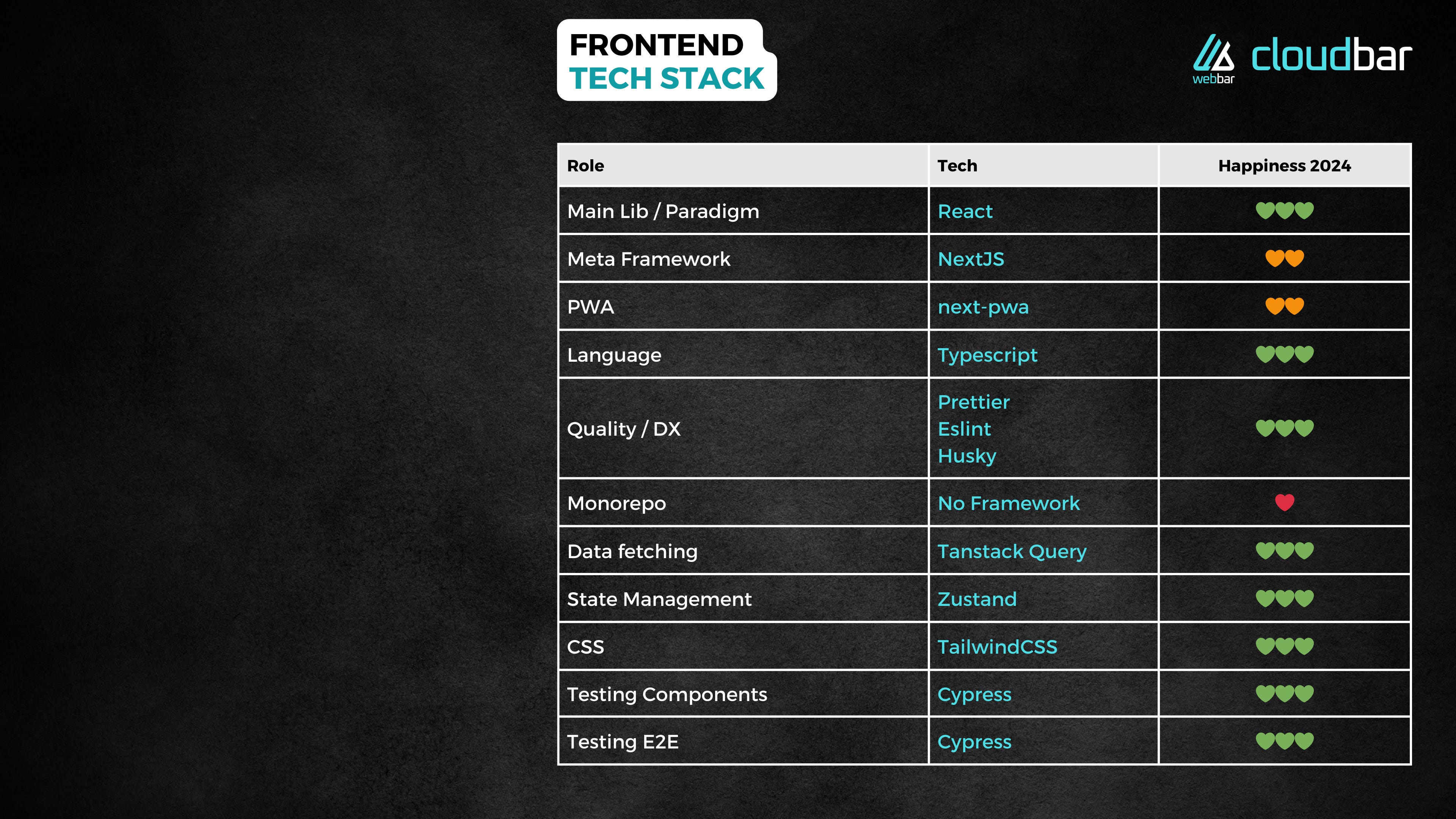
Next.js vs. Vite – Worth migrating to Vite?
Migrating from Next.JS to Vite: Is It Worth the Switch?In this episode, we dive deep into our migration from Next.JS to Vite for an extensive React application with over 80,000 lines of code. You’ll learn about the improvements in build time, Hot Module Replacement (HMR) speed, and bundle size. We also discuss the challenges of switching from Webpack to ES Modules and replacing Next—JS-specific components. By the end, you’ll have insights into whether Vite could be the right fit for your project, especially for client-side rendering and future SaaS projects.Especially interesting since we have the Next.conf 2024 going on right now.00:00 Introduction00:53 Our Tech Stack01:14 How long it took to migrate01:46 Turbopack for Next.js is stable01:57 Build time comparison02:08 Bundlesize comparison02:22 HMR comparision03:35 Large bundle after migration05:19 About Next.js fullstack approach05:56 Review last Video about React06:09 Conclusions Next.js / ViteAdditional links:https://nextjs.org/blog/turbopack-for-development-stablehttps://nextjs.org/docs/app/api-reference/componentshttps://nextjs.org/blog/next-15https://vite.dev/Substack article link on Sunday:https://snackablecto.substack.com This is a public episode. If you'd like to discuss this with other subscribers or get access to bonus episodes, visit blog.adrianstanek.dev/subscribe
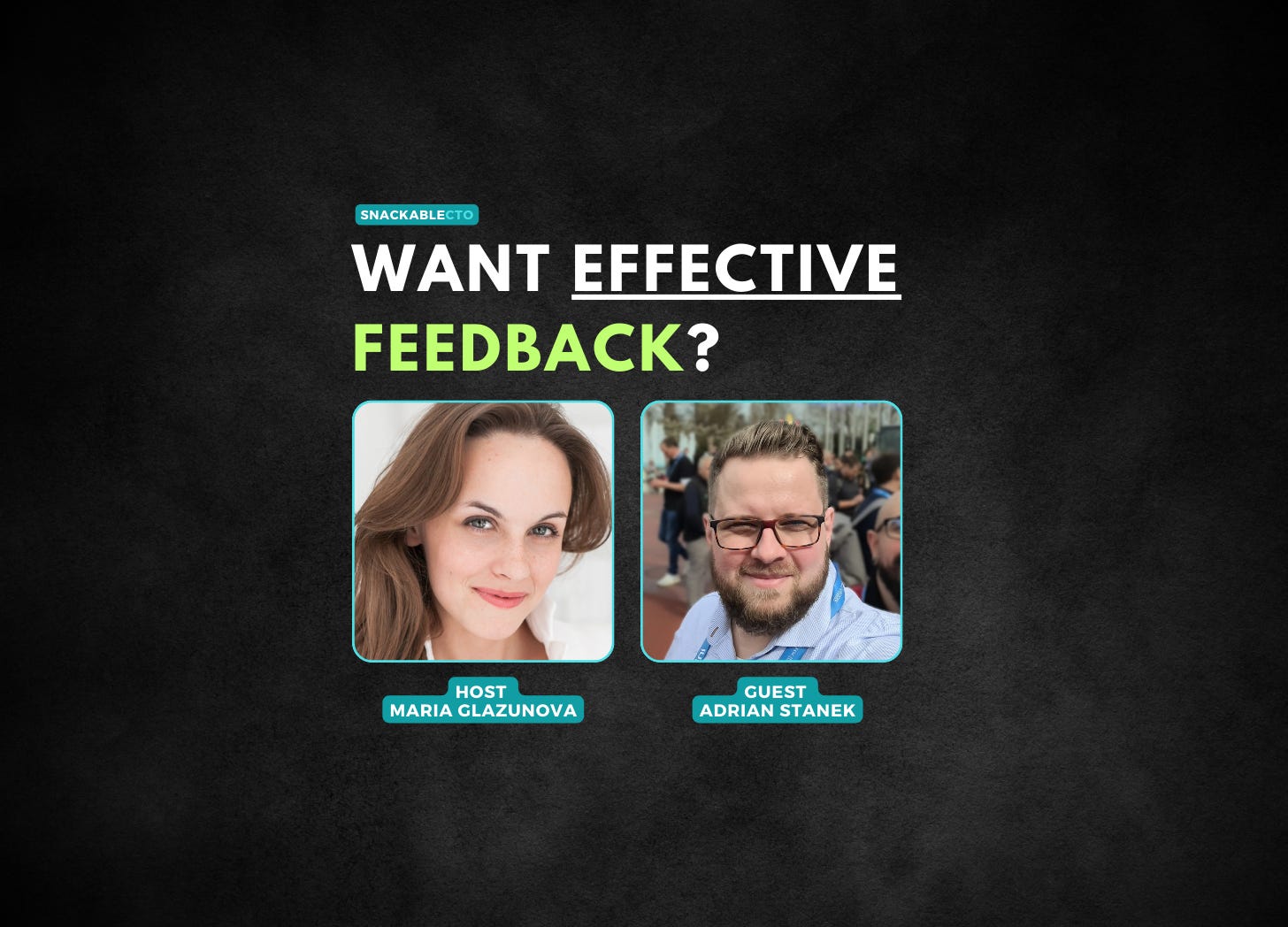
Effective Feedback
Transformative Leadership: Embracing Honesty, Feedback, and Real Connections in TechDiscover the essence of effective leadership in the tech industry through personal experiences and expert insights. In this episode, Maria Glazunov and Adrian Stanek delve into the realities of burnout, the impact of honesty in leadership, and the importance of feedback. Learn about the hidden costs of poor communication, the challenges of Agile frameworks, and the devastating effects of developer layoffs. Gain practical advice on fostering trust, embracing failures, and building genuine connections through vulnerability and radical honesty. Understand the true value of leadership beyond titles and explore strategies to create a culture of responsibility and empowerment within your team.View Full Video + Article at https://blog.snackablecto.coach/Maria Glazunova is a Tech English Communication Coach with 10+ years of experience. She offers an 8-week program using her exclusive ROCK.IT approach to help senior tech professionals boost their communication skills.Learn more here:Website: mariaglazunova.comInterview: YouTubeLinkedIn: Maria Glazunova (DM "ROCKIT" for details)00:00 Introduction to Leadership Challenges00:35 Welcome and Introduction of Guests01:12 Importance of Effective Feedback02:39 Adrian's Leadership Journey06:49 Overcoming Burnout and Failures09:14 The Role of Responsibility in Leadership17:28 Challenges in Communication and Ownership19:37 Leadership and Company Culture22:38 Scrum and Agile Methodologies27:54 Becoming a Good Leader29:52 The Challenge of Changing Company Culture31:44 Choosing the Right Environment for Leadership34:57 The Importance of Transparency and Honesty38:22 Cultural Differences in Feedback41:20 Building Trust and Credibility51:04 The Role of Feedback in Leadership56:47 The Balance Between Kindness and Honesty01:03:03 Final Thoughts on Leadership and Communication This is a public episode. If you'd like to discuss this with other subscribers or get access to bonus episodes, visit blog.adrianstanek.dev/subscribe
Reactjs in 2025 – Is It Still Worth Starting With?
Why start with React in 2025? Today, I dive into why React remains a solid choice despite new trends and frameworks emerging. We'll discuss how React has stayed relevant, the strength of its ecosystem, and why it's still a reliable option for building scalable applications. React isn't just about popularity—it's about real-world adoption. We'll look into how React's usage has helped it become the industry standard and why its huge ecosystem still makes it a strong choice for modern applications. 00:00 - Why React is Still Relevant in 2025 01:07 - React's Ecosystem and Industry Adoption 03:04 - Continuous Evolution and Innovation in React 05:45 - The Advantages of React for Development 06:17 - Challenges with Vanilla JS and the Benefits of React (https://blog.snackablecto.coach/p/reviewing-our-frontend-stack-based) Additional Links: Our Tech Stack Review - https://blog.snackablecto.coach/p/reviewing-our-frontend-stack-based (Tech stack review article) State of JS 2023 - https://2023.stateofjs.com/en-US https://www.linkedin.com/in/adrianstanek/ (Connect with Adrian Stanek on LinkedIn) This is a public episode. If you'd like to discuss this with other subscribers or get access to bonus episodes, visit blog.adrianstanek.dev/subscribe
Why are my devs always so quiet?
Bridging the Communication Gap in Software DevelopmentI used to believe the stereotype that developers are non-communicative, but I’ve learned that’s far from true. The real problem isn’t developers being quiet—it’s that they’re often not heard.There’s a disconnect between the business side and development. Too often, developers are handed tasks with tight deadlines and no context, expected to just execute. It kills motivation, creativity, and ultimately, quality. We want to solve real problems, not just be ticket machines.When I moved into leadership, I realized the importance of giving developers a voice and bridging that gap. By sharing the ‘why’ and letting developers shape the ‘how,’ everything improved—team morale, collaboration, and project outcomes. It’s about trust, ownership, and aligning goals. When that happens, we don’t just write code; we create real value.Read the article at:https://blog.snackablecto.coach/00:00 Introduction: The Communication Challenge in Software Development00:37 Understanding the Disconnect Between Business and Tech01:59 The Impact of Deadlines and Ticket Systems05:31 The Role of Managers in Bridging the Gap07:18 Creating a Positive Work Environment10:26 The Importance of Leadership and Vision13:10 Conclusion: Moving Forward Together This is a public episode. If you'd like to discuss this with other subscribers or get access to bonus episodes, visit blog.adrianstanek.dev/subscribe