
World Leaders Unveiled,
290 episodes — Page 3 of 6
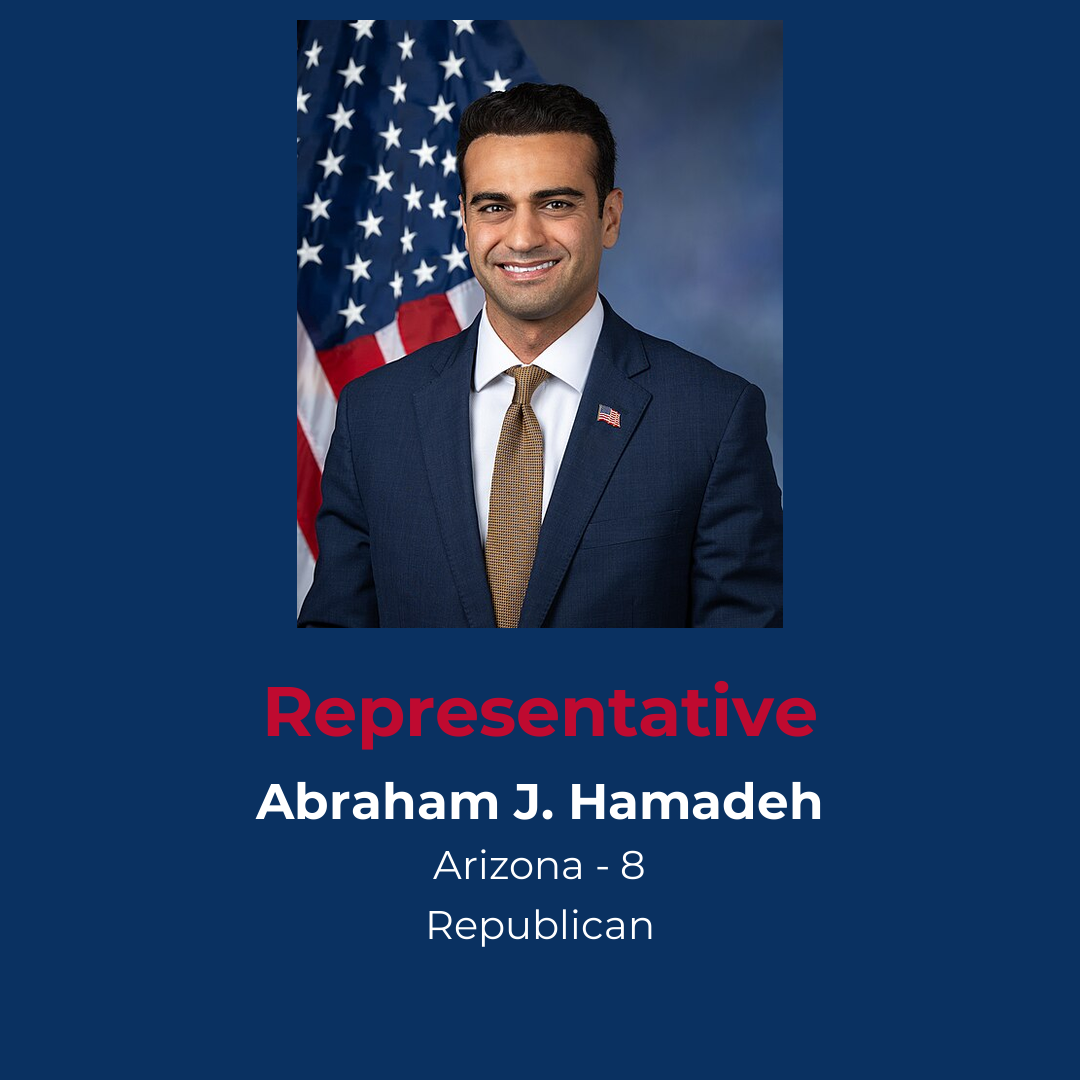
Profile of Republican Representative Hamadeh from Arizona District 8
Abe Hamadeh is a freshman Congressman who rose to national prominence after the closest election in Arizona history—his 2022 Attorney General race, which he lost by just 280 votes. That loss became the catalyst for his congressional run, positioning him as a leading voice for election integrity. He represents Arizona’s 8th District, a conservative stronghold in the West Valley of the Phoenix metro area. It includes the massive retirement communities of Sun City and Sun City West, as well as Luke Air Force Base, the world’s largest F-35 training center. A U.S. Army Reserve Captain and former intelligence officer, Hamadeh served a 14-month deployment to Saudi Arabia. This military background secured his spot on the powerful House Armed Services Committee, a critical assignment for protecting the district’s defense economy. The son of Syrian immigrants (a Druze mother and Muslim father), he often cites his family’s journey to America as the foundation of his "America First" philosophy, arguing that borders and the rule of law are what make the American Dream possible. "He lost the closest race in state history, but he refused to leave the arena. Abe Hamadeh is the intelligence officer turned congressman who turned a 280-vote defeat into a mandate for the West Valley." Abe Hamadeh: The Fighter from the West Valley In November 2022, Abraham "Abe" Hamadeh found himself in the center of a political hurricane. Running for Arizona Attorney General, he finished election night in a dead heat. After weeks of recounting and litigation, he was certified as having lost by a microscopic margin—280 votes out of 2.5 million cast. For many, that would have been a career-ending heartbreak. For Hamadeh, it was rocket fuel. He spent the next two years litigating the results and becoming a fixture on conservative media as a crusader for "Election Integrity." In 2024, when Debbie Lesko announced her retirement, Hamadeh leveraged that high-profile battle to win the seat for Arizona’s 8th District. Hamadeh’s backstory is a classic immigrant success narrative with a twist. Born to Syrian parents who fled oppressive regimes, he grew up in Phoenix in a mixed-faith household. He became a lawyer and a prosecutor for the Maricopa County Attorney’s Office, but his career path shifted dramatically when he joined the U.S. Army Reserve. As an Intelligence Officer (Captain), he deployed to Saudi Arabia in 2020 following the terrorist attack at Naval Air Station Pensacola, tasked with vetting foreign military trainees. In Congress, Hamadeh is strategically positioned to serve his specific constituency. He sits on the House Armed Services Committee, which is arguably the most important committee for his district. AZ-08 is home to Luke Air Force Base, a massive economic engine that trains 75% of the world’s F-35 pilots. Hamadeh views himself as the base's guardian in Washington. He also sits on the Veterans' Affairs Committee, a crucial role given that his district has one of the highest concentrations of veterans and retirees in the country (thanks to the Sun City communities). District Context: Arizona 8th (U.S. Census Data) The "West Valley": This district covers the northwestern suburbs of Phoenix. It includes Peoria, Glendale, Surprise, and the famous master-planned retirement communities of Sun City and Sun City West. Population: ~815,000 (Rapidly growing). The "Golf Cart Capital": Sun City was the first 55+ active adult community in the country. The district has a massive senior population, influencing its high voter turnout and focus on Social Security/Medicare. Economic Drivers: Defense: Luke Air Force Base supports over 10,000 jobs and contributes billions to the local economy. Healthcare: Banner Health and Arrowhead Hospital are major employers servicing the retiree population. Sports & Tourism: The...
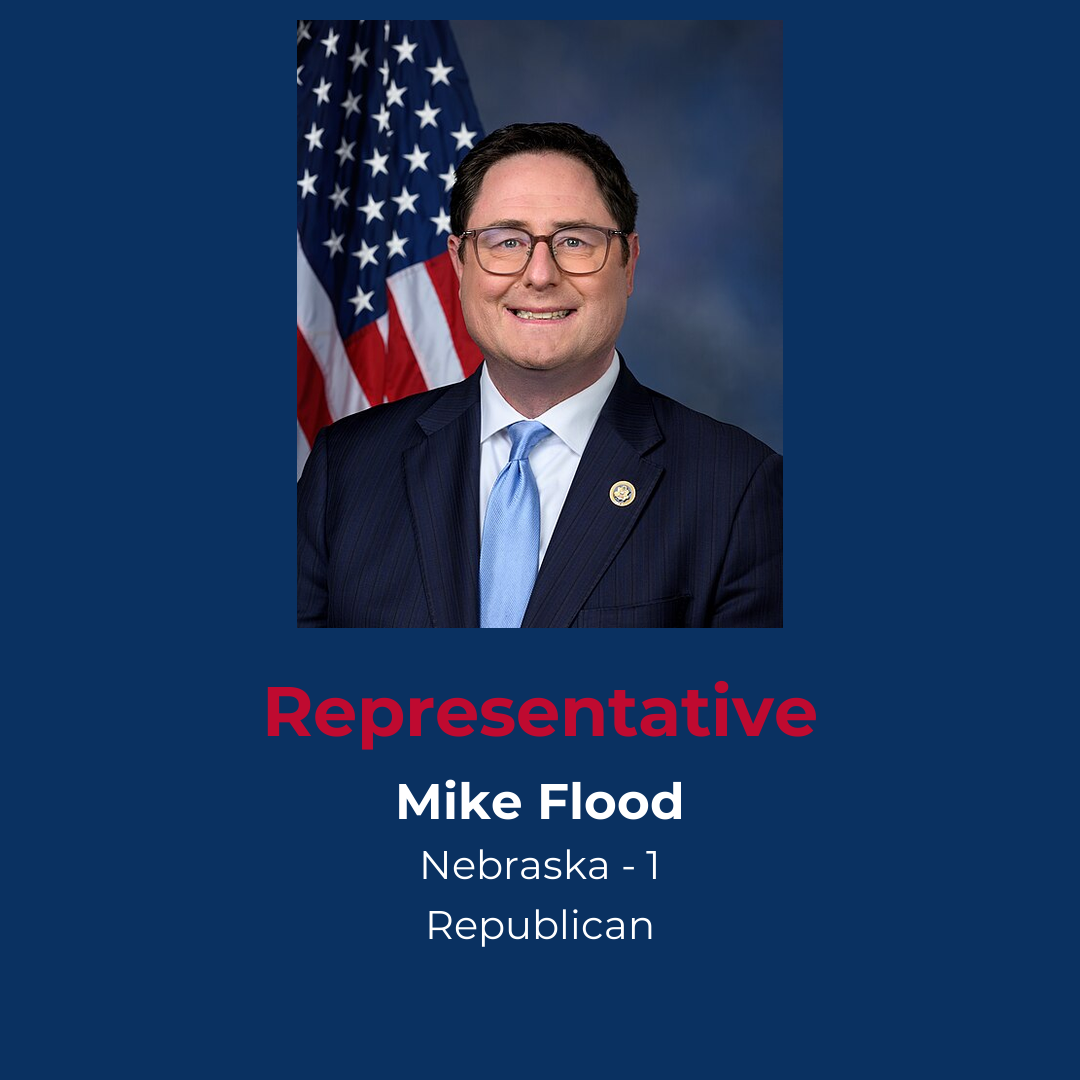
Profile of Republican Representative Flood from Nebraska District 1
Mike Flood is a media mogul turned politician who founded Flood Communications, a network of radio and TV stations across rural Nebraska (including News Channel Nebraska), starting with a single radio station he launched while in law school. He represents Nebraska's 1st District, which includes the state capital Lincoln, his hometown of Norfolk, and the University of Nebraska-Lincoln (UNL), making it a district defined by "Huskers" culture, agriculture, and a growing tech/insurance sector. A former Speaker of the Nebraska Legislature (the youngest in state history), he is known for his ability to navigate legislative procedure and for famously representing Husker football players in a lawsuit to force the Big Ten to play football during the COVID-19 pandemic. In Congress, he serves on the powerful Financial Services Committee, where he chairs the Housing and Insurance Subcommittee and has emerged as a leading Republican voice on cryptocurrency regulation, advocating for digital asset innovation in the "Silicon Prairie." "He started as 'Sideshow Mike' on the morning radio. Now, Mike Flood controls the airwaves of rural Nebraska and shapes the future of digital currency in Washington." Mike Flood: The Broadcaster of the Silicon Prairie Representative Mike Flood’s career began with a microphone, not a gavel. While still a law student at the University of Nebraska, he launched his first radio station in his hometown of Norfolk. That single station grew into Flood Communications, one of the largest media companies in the state, which includes News Channel Nebraska—a 24-hour news network dedicated to covering rural towns that national media often ignores. This background gives him a unique "Main Street" credibility; he didn't just campaign in these towns, he broadcasted their high school football games and morning farm reports for decades. Flood’s political rise was meteoric. He was elected to the Nebraska Legislature in 2005 and became the youngest Speaker in state history just two years later. After term limits forced him out, he returned to the private sector until a special election in 2022 sent him to Congress to replace Jeff Fortenberry. His most viral moment before Congress, however, wasn't legislative—it was cultural. When the Big Ten Conference canceled the 2020 football season due to COVID-19, Flood represented the parents of Husker players in a lawsuit to reinstate the season, securing his status as a local folk hero in a state where football is effectively a religion. In Washington, Flood has defied the stereotype of a rural representative by diving deep into complex financial technology. He sits on the House Financial Services Committee, where he chairs the Housing and Insurance Subcommittee. He is a surprisingly aggressive advocate for cryptocurrency and digital assets, co-sponsoring legislation like the FIT 21 Act to create a regulatory framework for blockchain. He argues that Nebraska, often called the "Silicon Prairie," is perfectly positioned to become a hub for fintech if the federal government provides clear rules rather than "regulation by enforcement." District Context: Nebraska 1st (U.S. Census Data) The Capital & The Corn: This district is a mix of urban and deep rural. It is anchored by Lincoln (pop. ~290,000), the state capital and home to the University of Nebraska. Outside of Lincoln, it covers the rich agricultural land of eastern Nebraska, including Norfolk, Columbus, and Fremont. Population: ~657,000. Economic Drivers: Insurance & Tech: Lincoln is known as the "Hartford of the West" due to its high concentration of insurance companies (Ameritas, Assurity). It is also the heart of the "Silicon Prairie" tech startup scene (Hudl). Agriculture: The rural counties are top producers of corn, soybeans, beef, and pork. Education: The University of Nebraska is t...
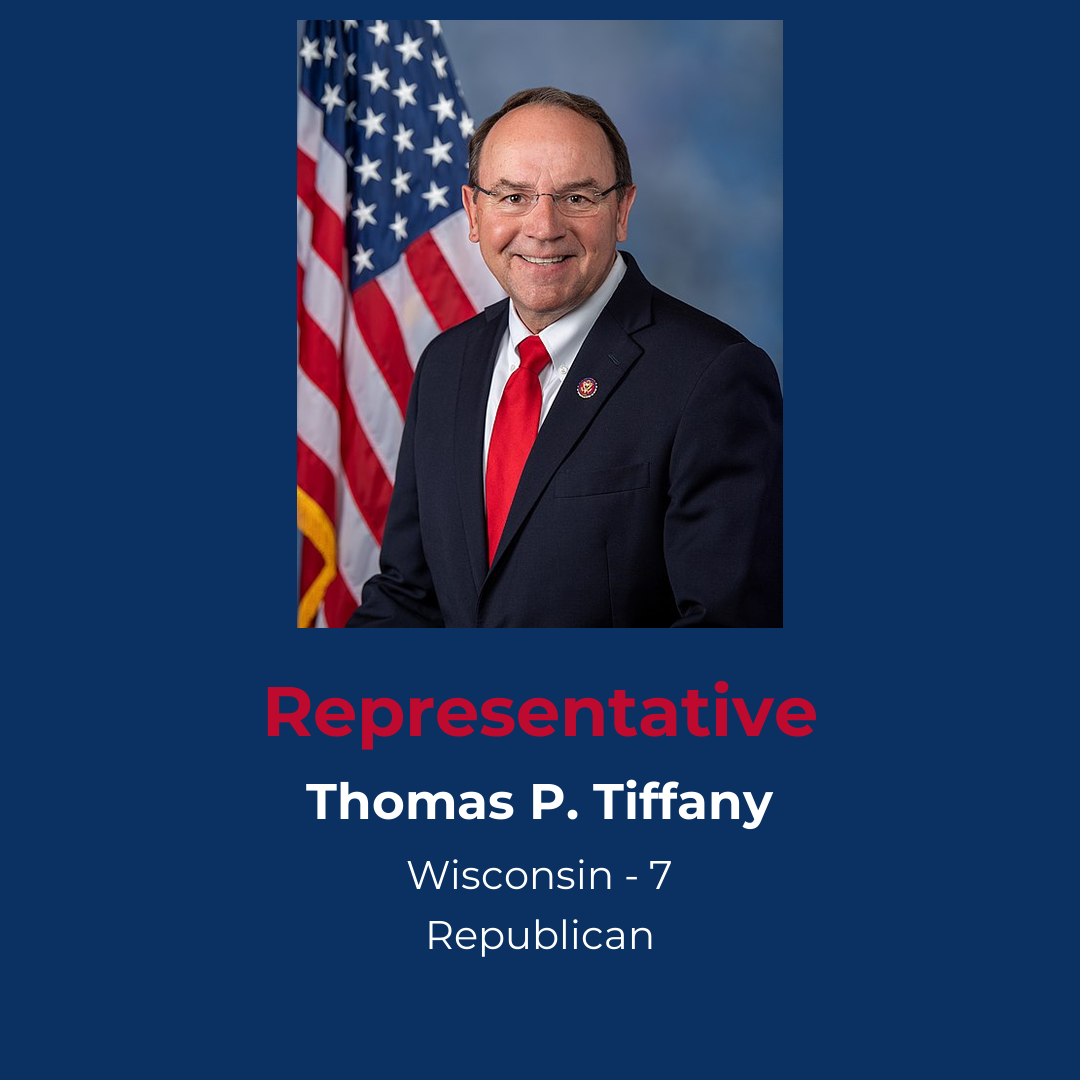
Profile of Republican Representative Tiffany from Wisconsin District 7
Tom Tiffany is a true product of the Northwoods: before politics, he spent 29 years as a dam tender on the Willow Flowage and owned a wilderness river cruise business, giving him a unique "blue-collar conservationist" perspective. He represents Wisconsin’s 7th District, a massive geographic area covering the northern third of the state. It is famous for its timber industry, outdoor tourism (snowmobiling/fishing), and being the ginseng capital of the world (Marathon County). As Chairman of the Federal Lands Subcommittee (Natural Resources), he is a leading critic of federal land mismanagement and a fierce advocate for delisting the gray wolf, arguing that unchecked wolf populations threaten livestock and pets in his rural district. A member of the House Judiciary Committee, he aligns with the Freedom Caucus wing of the party, maintaining a hardline stance on border security and having been one of the Republicans who objected to the 2020 election results. "He spent nearly three decades managing water levels on a remote flowage. Now, the 'Dam Man' is in Washington trying to stop the flood of federal regulations." Tom Tiffany: The Dam Tender from the Northwoods Representative Tom Tiffany’s resume includes a job title you likely won't find on any other congressional bio: "Dam Tender." For 29 years, Tiffany was responsible for managing the water levels of the Willow Flowage, a remote and scenic reservoir in Northern Wisconsin. He also owned and operated Wilderness Cruises, a tour boat company that showcased the natural beauty of the region. This background cemented his political identity not as a lawyer or career politician, but as a businessman whose livelihood depended directly on the land and water. Tiffany entered the State Assembly in 2010 and the State Senate in 2012, where he gained a reputation as a conservative fierce enough to take on the state's powerful environmental bureaucracy. He championed mining reform to open up deposits in the north and fought for the timber industry. In 2020, he won a special election to Congress to replace Sean Duffy, bringing his "Northwoods" agenda to Washington. In the House, Tiffany is laser-focused on resource management. As Chairman of the Federal Lands Subcommittee, he pushes to open more public land to logging and recreation, arguing that "active management" prevents wildfires better than preservation. His signature issue, however, is the gray wolf. He has introduced legislation to permanently remove the wolf from the Endangered Species List, a massive issue for farmers and hunters in his district who deal with livestock depredation. He also champions the FARM Act, which seeks to ban federal subsidies for solar and wind farms on agricultural land, arguing that "green energy" shouldn't come at the cost of food security. District Context: Wisconsin 7th (U.S. Census Data) The "Northwoods": This district covers the northern third of Wisconsin. It is vast, rural, and heavily forested. It includes Wausau (the largest city), Superior (a major port on Lake Superior), and Rhinelander. Population: ~732,000. Economic Drivers: Agriculture: Specifically Ginseng. Marathon County produces about 95% of the ginseng grown in the United States, a high-value export to Asia. Forestry & Paper: The timber industry is the economic backbone of many northern counties. Tourism: A premier destination for hunting, fishing, and snowmobiling (the district has thousands of miles of trails). Politics: A deep red stronghold (R+12). The shift of rural, working-class voters in the Northwoods has turned this former swing district into safe Republican territory. Source: U.S. Census Bureau & WI Dept of Tourism Sources Used Official Biography: https://tiffany.house.gov/about Campaign Site: https://tomtiffany.com/ GovTrack.us Leg...
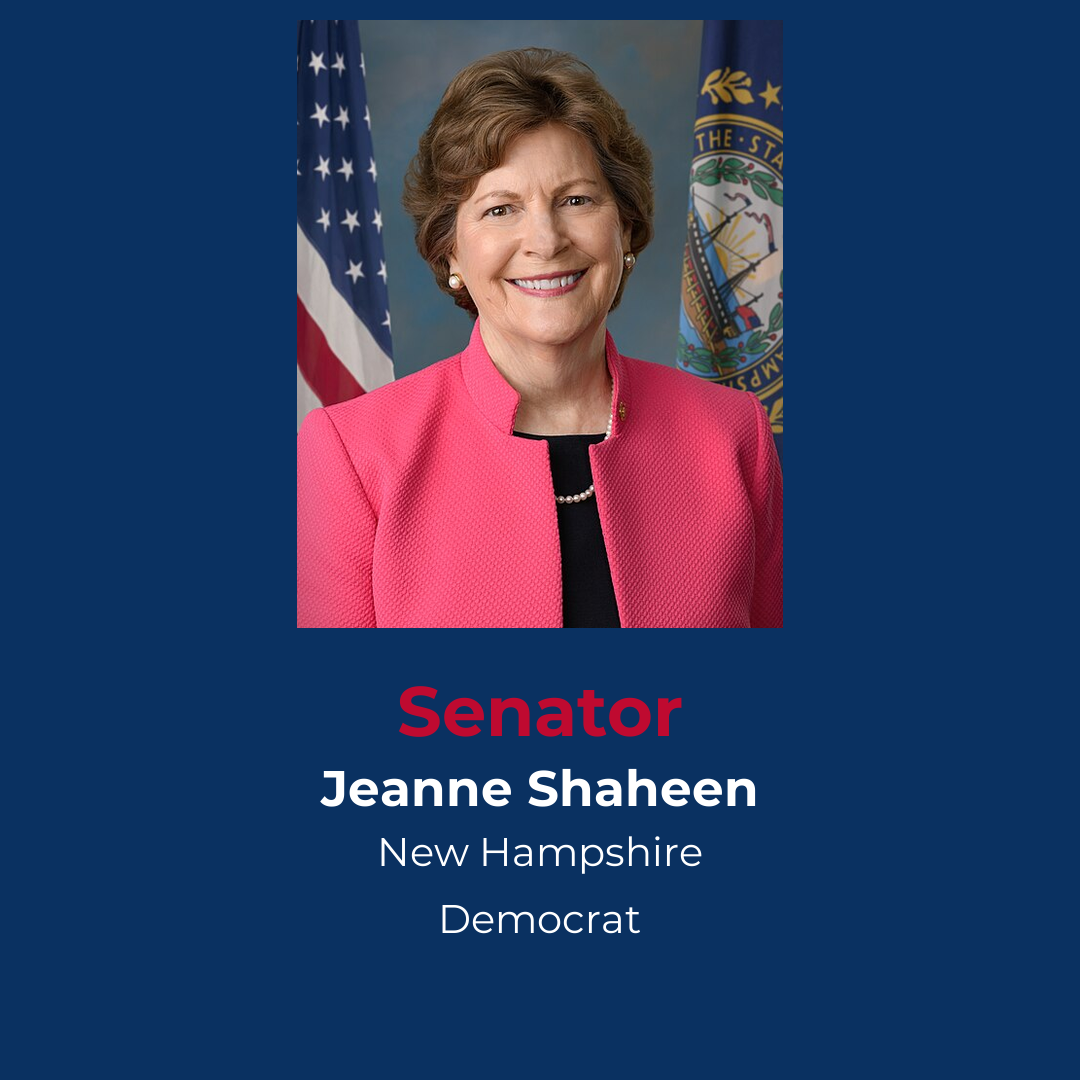
Profile of Democrat Senator Shaheen from New Hampshire
Jeanne Shaheen is a political trailblazer: she is the first woman in U.S. history to be elected both a Governor and a United States Senator. She represents New Hampshire, the "Live Free or Die" state, known for its fierce independent streak, the "First in the Nation" primary culture, and a distinct lack of state income or sales tax. A senior member of the Foreign Relations and Armed Services Committees, she is a leading transatlantic hawk, famously restarting the Senate NATO Observer Group to shore up the alliance against Russian aggression. Her legislative brand is defined by energy efficiency (the Shaheen-Portman Act) and advocating for the Portsmouth Naval Shipyard, a critical economic engine for the New Hampshire seacoast. "She was the first woman to run the statehouse and the first to represent it in the Senate. Jeanne Shaheen is the quiet architect of New Hampshire’s modern political identity." Jeanne Shaheen: The Iron Lady of the Granite State Senator Jeanne Shaheen is the matriarch of New Hampshire politics. Before arriving in Washington, she served three terms as Governor (1997–2003), where she gained a reputation for managing the state’s notoriously frugal budget without implementing a broad-based sales or income tax—the "third rail" of New Hampshire politics. In 2008, she defeated incumbent John Sununu to enter the Senate, cementing her status as the only woman in American history to serve as both a Governor and a Senator. In the Senate, Shaheen has evolved from a local administrator to a global strategist. She is arguably the chamber's staunchest defender of NATO. Recognizing the threat of a resurgent Russia early on, she re-established the Senate NATO Observer Group in 2018 to reassure European allies of American commitment. Her hawkish stance on Russia and strong support for Ukraine have made her a frequent target of Kremlin propaganda; she was even blacklisted by Putin's government, a badge she wears with pride. Domestically, she is a pragmatist who focuses on "kitchen table" efficiency. She is the co-author of the Shaheen-Portman Energy Efficiency Act, a bipartisan law that incentivized industrial energy savings, which she frames not just as environmental policy, but as a cost-cutting measure for businesses. She is also deeply involved in investigating PFAS contamination, a critical issue for New Hampshire families near the Pease Air National Guard Base, pushing for federal health studies and stricter water standards. State Context: New Hampshire (U.S. Census Data) Population: ~1.4 Million. The "Tax-Free" Advantage: New Hampshire has no state sales tax and no tax on earned income, making it a magnet for businesses and commuters from neighboring Massachusetts. Key Industries: Defense & Aerospace: The Portsmouth Naval Shipyard (actually located on an island on the border) is a massive employer, repairing the Navy's nuclear submarine fleet. BAE Systems is also a major employer. Tourism: The White Mountains and the Lakes Region drive a massive seasonal economy. High Tech: The I-93 corridor from Salem to Manchester is a growing tech hub. Political Identity: A true "Purple State." While its congressional delegation is currently Democratic, the state legislature often swings Republican, and the voters are famous for split-ticket voting and high levels of independent registration. Source: U.S. Census Bureau & NH Economic Development Sources Used Official Biography: https://www.shaheen.senate.gov/about Ballotpedia Profile: https://ballotpedia.org/Jeanne_Shaheen Senate NATO Observer Group: https://www.shaheen.senate.gov/nato Portsmouth Naval Shipyard Economic Impact: https://www.navsea.navy.mil/Home/Shipyards/Portsmouth/ #Senator #NewHampshire #Democrat #JeanneShaheen
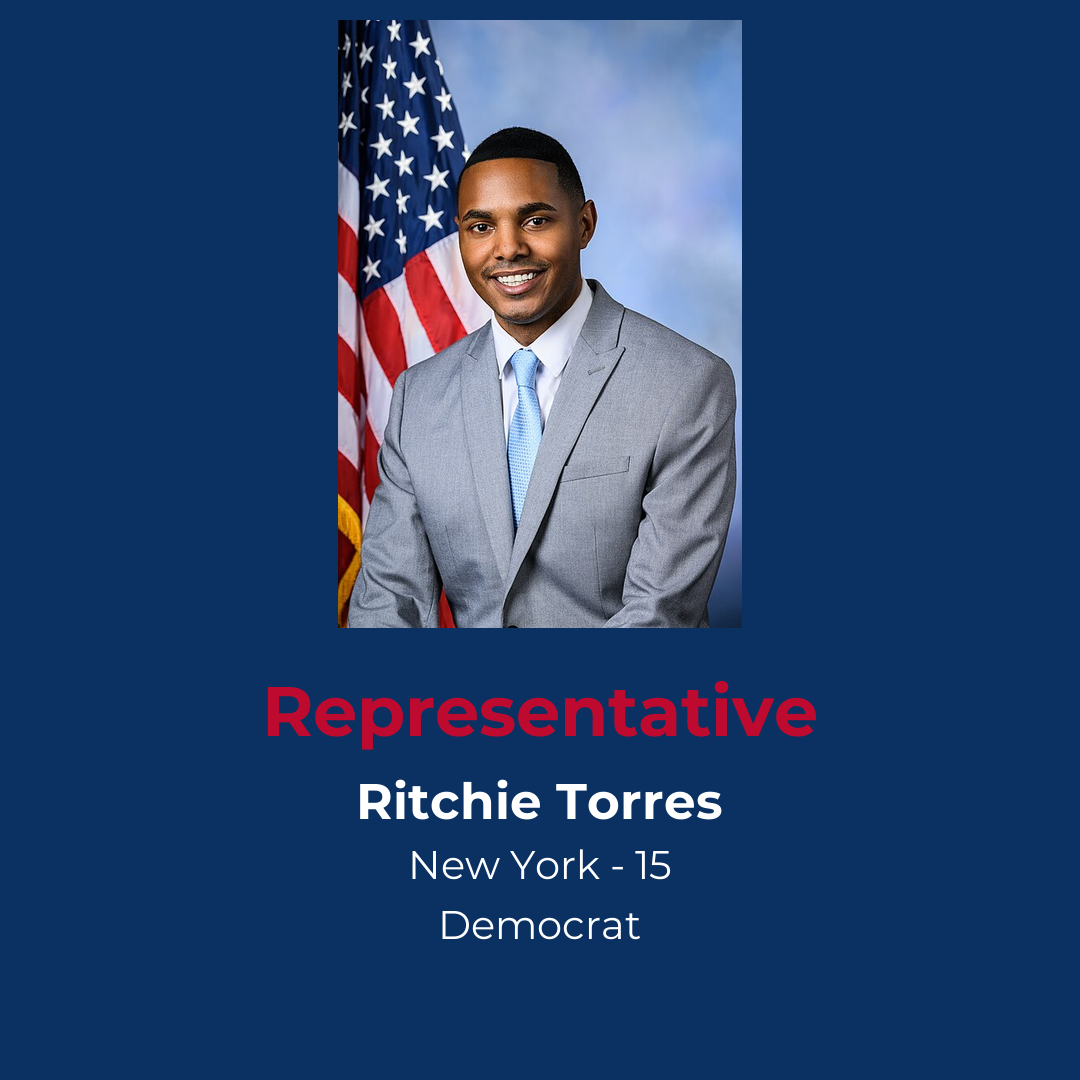
Profile of Democrat Representative Torres from New York District 15
Ritchie Torres is a barrier-breaking legislator: the first openly gay Afro-Latino member of Congress and a former New York City Council member who was elected at age 25. He represents New York’s 15th District, which covers the South Bronx. It is famously the poorest congressional district in the United States, yet home to iconic landmarks like Yankee Stadium and the Bronx Zoo. A member of the Financial Services Committee and the Select Committee on China, Torres has carved out a unique political lane: he is a progressive on domestic economic issues (housing, child poverty) but a staunch pro-Israel moderate on foreign policy, often clashing with the "Squad" on the left. His legislative focus is deeply personal, stemming from his upbringing in public housing (NYCHA). He champions fire safety (following the Twin Parks tragedy), mental health reform, and regulatory clarity for cryptocurrency. "He grew up in public housing with mold and without heat. Now, Ritchie Torres uses his seat at the financial table to fight for the Bronx families who are still living that reality." Ritchie Torres: The Pragmatic Progressive from the Bronx Representative Ritchie Torres is a study in resilience. Raised by a single mother in the Throggs Neck Houses in the Bronx, he grew up surrounded by mold, lead paint, and unreliable heat. That lived experience didn't just shape his politics; it is his politics. He dropped out of NYU to work in housing advocacy and, at age 25, became the youngest elected official in New York City. In 2020, he made history again, becoming the first openly gay Afro-Latino elected to Congress. In Washington, Torres defies easy categorization. While he represents a deep-blue district, he often breaks with the progressive left. He is an unapologetic supporter of Israel, arguing that one can support Palestinian dignity without abandoning the Jewish state—a stance that has made him a lightning rod in Democratic politics. Domestically, he is a "bread and butter" liberal. He fights relentlessly for NYCHA (New York City Housing Authority) funding, viewing public housing not as a failure, but as a lifeline that needs saving. Torres sits on the Financial Services Committee, where he has become a surprising voice on cryptocurrency. Unlike many skeptics in his party, he advocates for a regulated but flourishing crypto market, arguing that it could offer financial inclusion for the unbanked populations in the Bronx. He is also a member of the Select Committee on the Strategic Competition Between the U.S. and the Chinese Communist Party, where he focuses on supply chain independence and national security. Whether he is grilling CEOs about lithium-ion battery fires or advocating for the Child Tax Credit, Torres governs with the intensity of someone who knows exactly what it feels like to be left behind by the system. District Context: New York 15th (U.S. Census Data) The South Bronx: This is the smallest congressional district geographically but one of the most densely populated. It covers neighborhoods like Mott Haven, Hunts Point, Fordham, and Belmont (Arthur Avenue/Little Italy). Population: ~754,000 (2024 Est.) Demographics: A "majority-minority" district. It is ~53% Hispanic/Latino (heavily Puerto Rican and Dominican) and ~31% Black/African American. Economic Reality: Poverty: Historically the poorest congressional district in the nation, with a median household income significantly lower than the national average. Housing: A massive concentration of public housing developments. NYCHA is the landlord for a significant portion of the constituency. Food Insecurity: The district has some of the highest rates of food stamp (SNAP) usage in the country. Landmarks: Yankee Stadium, the Bronx Zoo, and the New York Botanical Garden. Source: U.S. Census Bureau & Census Repo...
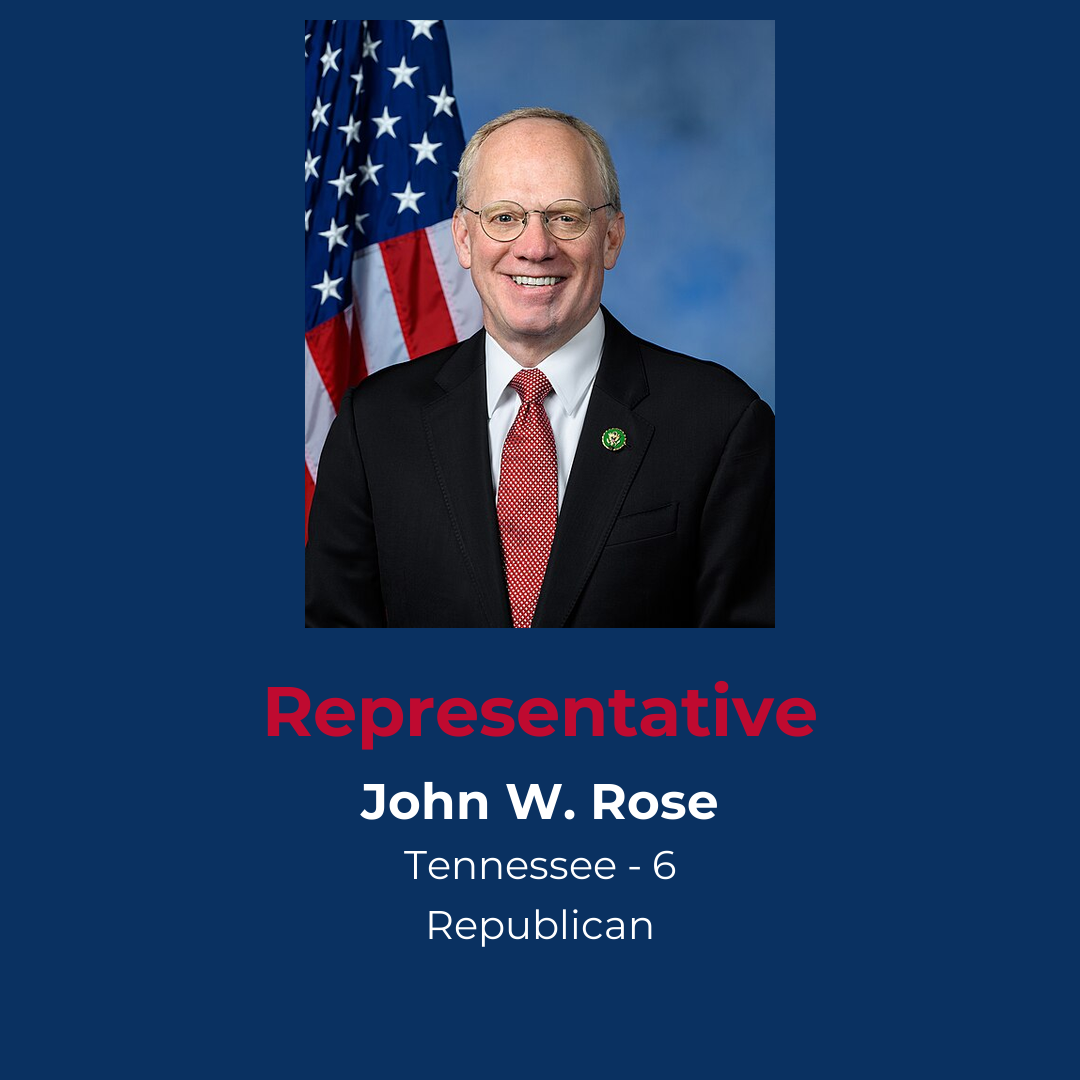
Profile of Republican Representative Rose from Tennessee District 6
Key Takeaways John Rose is a farmer and businessman who served as the Tennessee Commissioner of Agriculture before being elected to Congress in 2018. He represents Tennessee’s 6th District, a conservative stronghold in Middle Tennessee that includes the Cumberland Plateau, the city of Cookeville, and the rapidly growing eastern suburbs of Nashville (like Mt. Juliet and Lebanon). A member of the Financial Services and Agriculture Committees, his legislative work focuses on deregulating community banks, overseeing the cryptocurrency/digital asset market, and shaping the Farm Bill to support Tennessee’s cattle and nursery crop industries. He achieved unexpected global fame in 2024 when his young son, Guy, made viral funny faces behind him during a C-SPAN broadcast from the House floor. "He is an eighth-generation farmer who knows the soil of the Upper Cumberland, but he is best known to the internet as the dad who got upstaged by his son on C-SPAN." John Rose: The Farmer-Executive of the Upper Cumberland Representative John Rose brings a resume that perfectly bridges the gap between the old and new economies of Tennessee. Born and raised in Cookeville, he is an eighth-generation farmer who still owns and operates the family farm in Temperance Hall, which has been in his family since 1790. However, he is also a tech entrepreneur (he founded a successful IT training company) and a lawyer with a degree from Vanderbilt. This mix of agriculture and business led him to serve as the Tennessee Commissioner of Agriculture in the early 2000s, where he managed the state's diverse farming interests. Elected to Congress in 2018 to replace Diane Black, Rose has established himself as a staunch fiscal conservative. He sits on the House Financial Services Committee, where he is a vocal advocate for the "fintech" industry and crypto innovation, arguing that the U.S. must lead in digital assets to remain the world's financial superpower. Simultaneously, he uses his seat on the Agriculture Committee to protect the interests of Middle Tennessee farmers, particularly regarding cattle regulations and broadband expansion in rural areas. While he is a serious legislator, Rose became an internet sensation in June 2024. During a speech on the House floor, his 6-year-old son, Guy, sat behind him and mugged for the C-SPAN cameras, sticking out his tongue and making faces. The clip went viral instantly, humanizing Rose as a working dad trying to balance childcare with congressional duties. District Context: Tennessee 6th (U.S. Census Data) The "Middle Tennessee" Mix: This district spans the Upper Cumberland region. It includes the rural, mountainous counties of the Cumberland Plateau (like Cumberland and Fentress) and the booming suburban counties east of Nashville (Wilson and Sumner). Population: ~803,000 (2024 Est.) Key Cities: Cookeville (home to Tennessee Tech University), Lebanon, Gallatin, and Mt. Juliet. Economic Drivers: Agriculture: A top producer of nursery crops, cattle, and poultry. Logistics & Manufacturing: The I-40 corridor is a major logistics hub (Amazon and Cracker Barrel headquarters are in or near the district). Education: Tennessee Tech University in Cookeville is a major economic engine for the region. Politics: A solid Republican district (R+17). While the Nashville suburbs are growing and diversifying, the deep rural roots of the district keep it firmly conservative. Source: U.S. Census Bureau & Ballotpedia Sources Used Official Biography: https://johnrose.house.gov/about Ballotpedia Profile: https://ballotpedia.org/John_Rose_(Tennessee) GovTrack.us Legislative Record: https://www.govtrack.us/congress/members/john_rose/412793 Tennessee Dept of Agriculture: https://www.tn.gov/agriculture.ht...
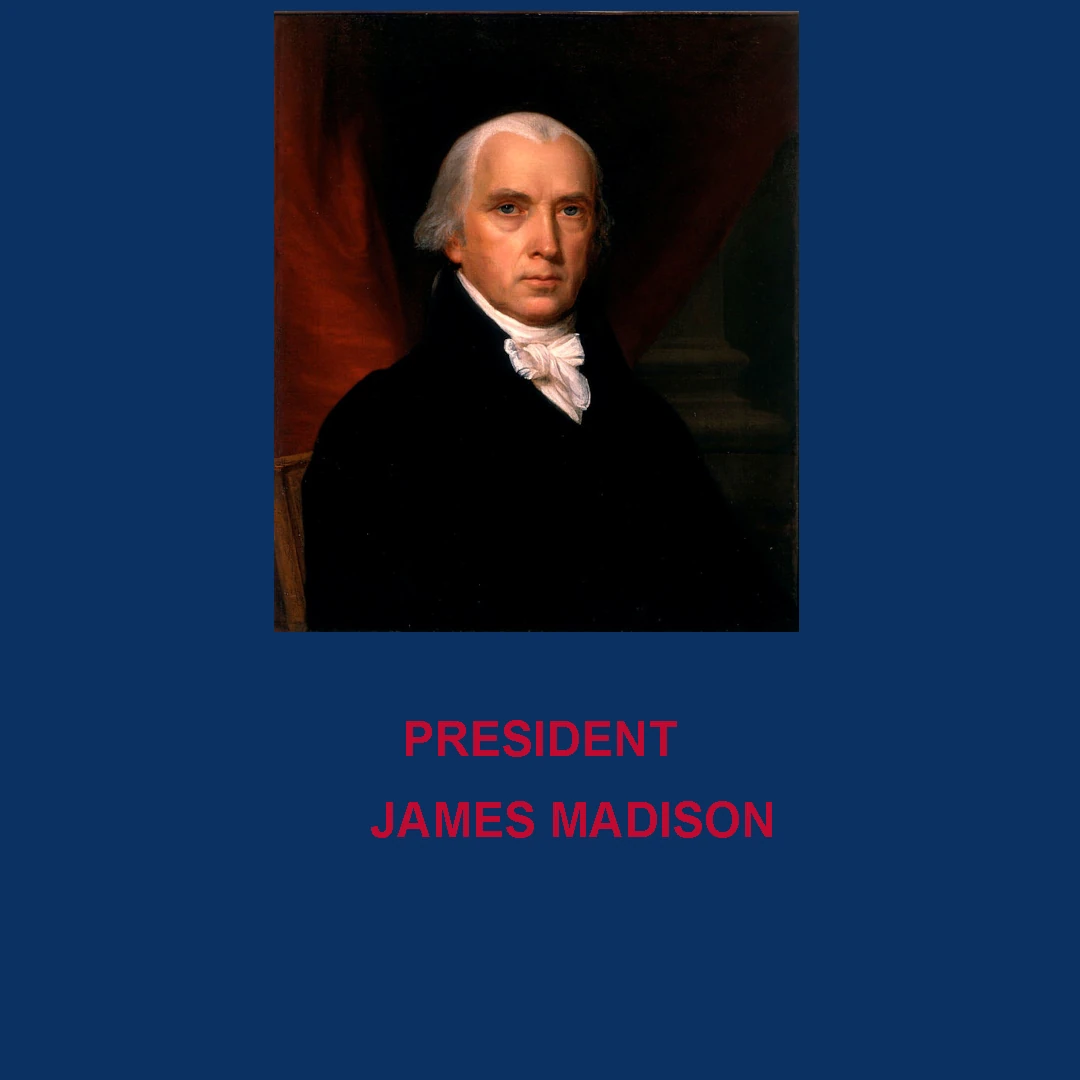
Profile of President JAMES MADISON
James Madison is revered as the "Father of the Constitution" and the primary author of the Bill of Rights, securing the fundamental liberties Americans enjoy today. He served as the 4th President (1809–1817), guiding the nation through the disastrous War of 1812, often called the "Second War of Independence," which saw the burning of the White House by British troops. His partnership with his wife, Dolley Madison, revolutionized the role of the First Lady; her social charm often smoothed over the political animosities her husband’s quiet demeanor could not. Like Jefferson, he was a lifelong enslaver who never freed his enslaved workforce, a stark contradiction to the liberty he championed in his writing. "He was a small man with a giant intellect. James Madison wrote the rules of the American experiment, but nearly lost the nation in a war to defend them." James Madison: The Father of the Constitution Physically, James Madison was the smallest president in history—standing just 5'4" and weighing barely 100 pounds. But intellectually, he was a titan. Before the presidency, he essentially engineered the United States government. At the Constitutional Convention in 1787, his "Virginia Plan" became the blueprint for the three branches of government we have today. He then authored the Bill of Rights, guaranteeing freedom of speech, religion, and the press—freedoms he considered essential for a republic to survive. As President, however, the theorist faced a brutal reality. Inheriting a diplomatic crisis from Jefferson, Madison was pushed by "War Hawks" in Congress to declare war on Great Britain in 1812. The U.S. was woefully unprepared. The war was a near-catastrophe, culminating in August 1814 when British troops marched into Washington D.C. and burned the White House and Capitol Building. Madison became the only sitting president to ride into battle when he briefly commanded artillery units at the disastrous Battle of Bladensburg. Despite the devastation, the war ended in a draw that Americans celebrated as a victory, surging national pride. Madison left office popular, having presided over the "Era of Good Feelings." But his legacy at his estate, Montpelier, is complicated. He owned over 100 enslaved people and, unlike Washington, did not free them upon his death. Instead, they were left to Dolley, who sold many to pay off family debts, a tragic final chapter for the man who wrote the words that protect American liberty. Constituency Context: The United States (1810 Census Data) Population: ~7.2 Million. The nation was growing rapidly, expanding westward. The War Zone: Washington D.C. (Population: ~8,000). Context: When the British burned the capital in 1814, it was still a small, swampy village. The government was forced to meet in a hotel after the Capitol was torched. The New States: Louisiana (1812) and Indiana (1816) joined the Union during his term, proving the nation could expand even during war. Demographics: Virginia remained the most populous state (~974,000), but the power center was shifting North and West. The Economy: The war forced America to start manufacturing its own goods because British trade was cut off, kickstarting the Industrial Revolution in New England. Source: U.S. Census Bureau & National Archives Sources Used Montpelier (Official Site): https://www.montpelier.org/james-madison White House Historical Association: https://www.whitehousehistory.org/bios/james-madison Library of Congress (War of 1812): https://www.loc.gov/rr/program/bib/1812/
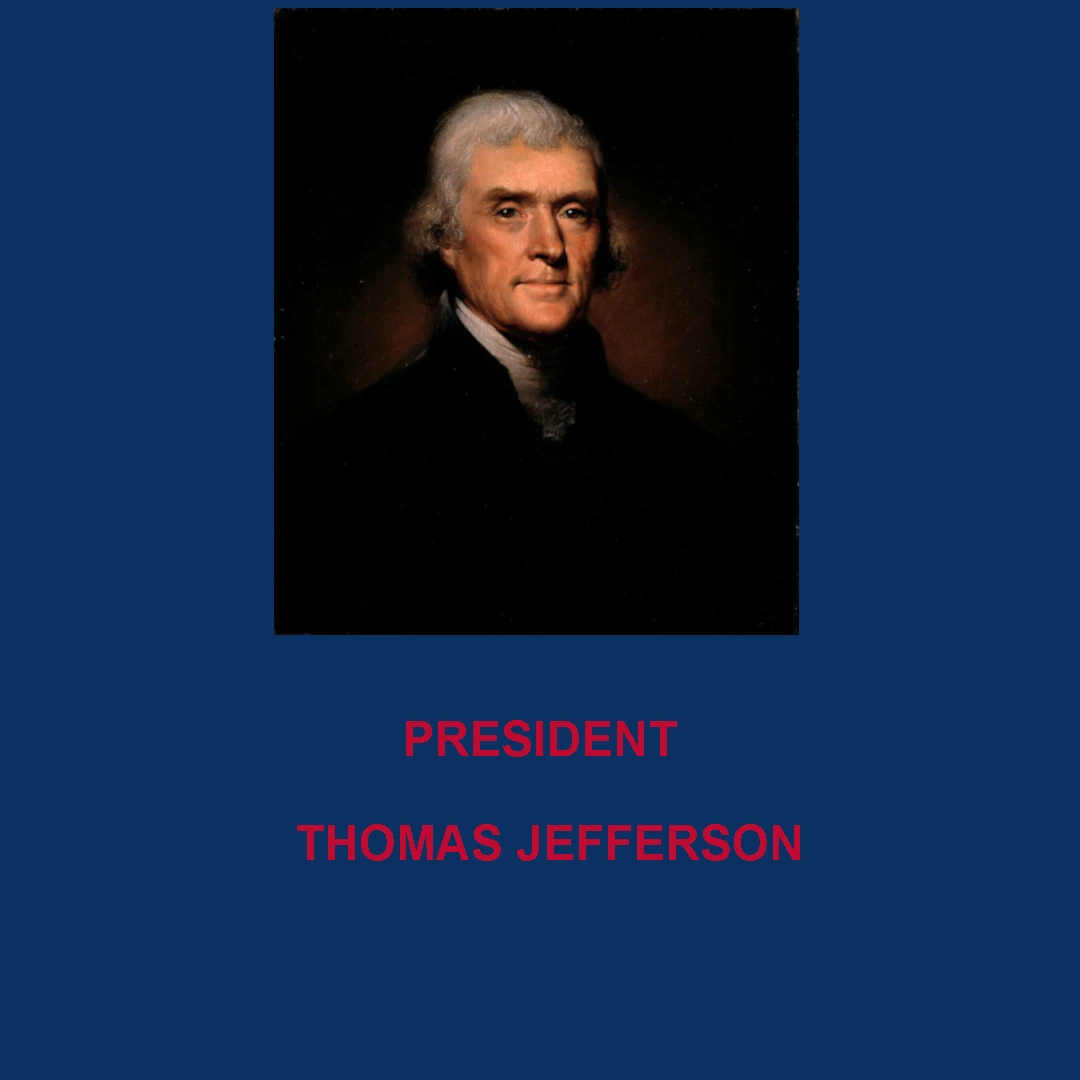
Profile of President Thomas Jefferson
Thomas Jefferson was the primary author of the Declaration of Independence and the 3rd President (1801–1809), serving as the first leader of the "Democratic-Republican" party. His presidency is defined by the Louisiana Purchase (1803), a $15 million deal with Napoleon that doubled the size of the United States overnight, adding 828,000 square miles of territory.
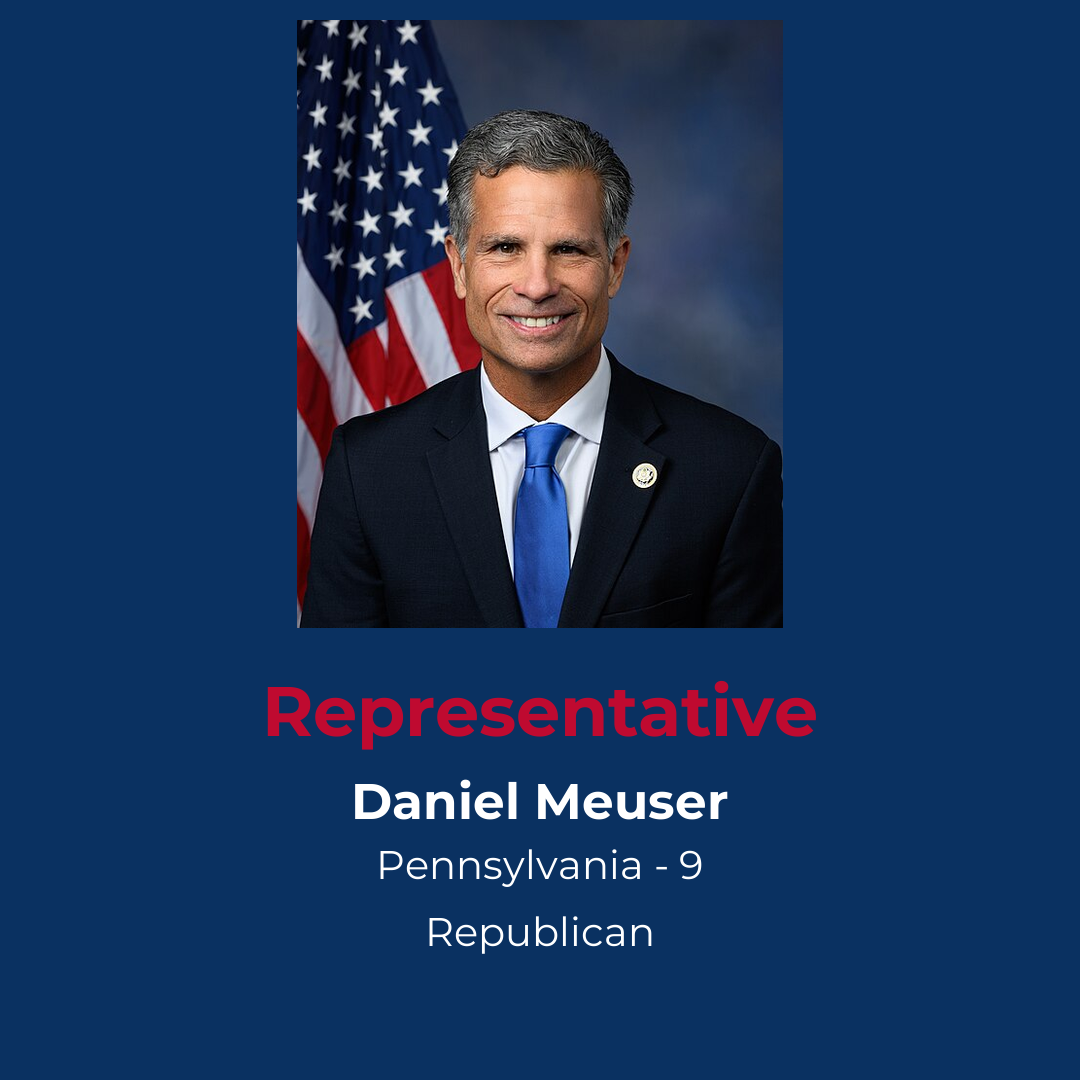
Profile of Republican Representative Meuser from Pennsylvania District 9
Key Takeaways Dan Meuser is a businessman-turned-politician who spent two decades as an executive at Pride Mobility Products, helping grow a small local company into a global leader in power wheelchairs and mobility scooters. He represents Pennsylvania's 9th District, a conservative, working-class stronghold in east-central Pennsylvania that includes the heart of Coal Country (Schuylkill County) and rural farming communities. Before Congress, he served as the Pennsylvania Secretary of Revenue, where he was credited with transforming the tax agency into a more business-friendly, "customer service" oriented department. In the 119th Congress, he holds a powerful gavel as the Chairman of the Subcommittee on Oversight and Investigations on the Financial Services Committee, giving him broad subpoena power over federal regulators and the banking sector. "He turned a small wheelchair company into a global manufacturer, then fixed the state's tax department. Now, Dan Meuser applies that executive mindset to the federal budget." Dan Meuser: The Executive from the Coal Region Representative Dan Meuser’s career is defined by scaling up. Before he ever ran for office, he was a key figure in one of Pennsylvania's great business success stories. Joining his family’s small business, Pride Mobility Products, in 1988, he helped transform it from a tiny operation into a global manufacturing giant, employing over 1,000 people in the district. This experience gave him a deep, practical understanding of supply chains, manufacturing regulations, and the challenges facing American exporters. In 2011, Meuser left the private sector to serve as the Pennsylvania Secretary of Revenue under Governor Tom Corbett. Unlike most tax collectors, Meuser approached the department like a CEO, earning praise from business groups for modernizing the agency and treating taxpayers like "customers" rather than subjects. He was elected to Congress in 2018, bringing this record of fiscal management to Washington. Now a senior member of the House Republican conference, Meuser wields significant influence on economic policy. He serves on the Small Business Committee and the Financial Services Committee, where he chairs the Subcommittee on Oversight and Investigations. This role effectively makes him the "watchdog of the regulators," giving him the power to investigate the SEC, the Federal Reserve, and other agencies he believes are stifling economic growth. As a Co-Chair of the Congressional Coal Caucus, he is also a relentless defender of Pennsylvania’s energy industry, fighting EPA regulations that threaten the anthracite coal mines that power his district's history and economy. District Context: Pennsylvania 9th (U.S. Census Data) The "Coal Region": This district covers a large swath of east-central Pennsylvania. It is anchored by Schuylkill County (the heart of anthracite coal country) and includes Lebanon County, rural Berks County, and parts of Luzerne County. Population: ~765,000 (2024 Est.) Key Cities: Lebanon, Pottsville (home of Yuengling Brewery), and the suburbs west of Wilkes-Barre. Economic Drivers: Energy & Manufacturing: Anthracite coal mining remains a cultural and economic pillar, alongside heavy manufacturing and logistics. Agriculture: Lebanon and Berks counties are agricultural powerhouses, particularly in dairy and poultry. Small Business: A region defined by multi-generational family businesses and farms. Politics: A solid Republican district (R+16), heavily comprised of blue-collar workers and rural voters who shifted dramatically toward the GOP in the last decade. Source: U.S. Census Bureau & Ballotpedia Sources Used Official Biography: https://meuser.house.gov/about Ballotpedia Profile: https://ballotpedia.org/Daniel_Meuse...
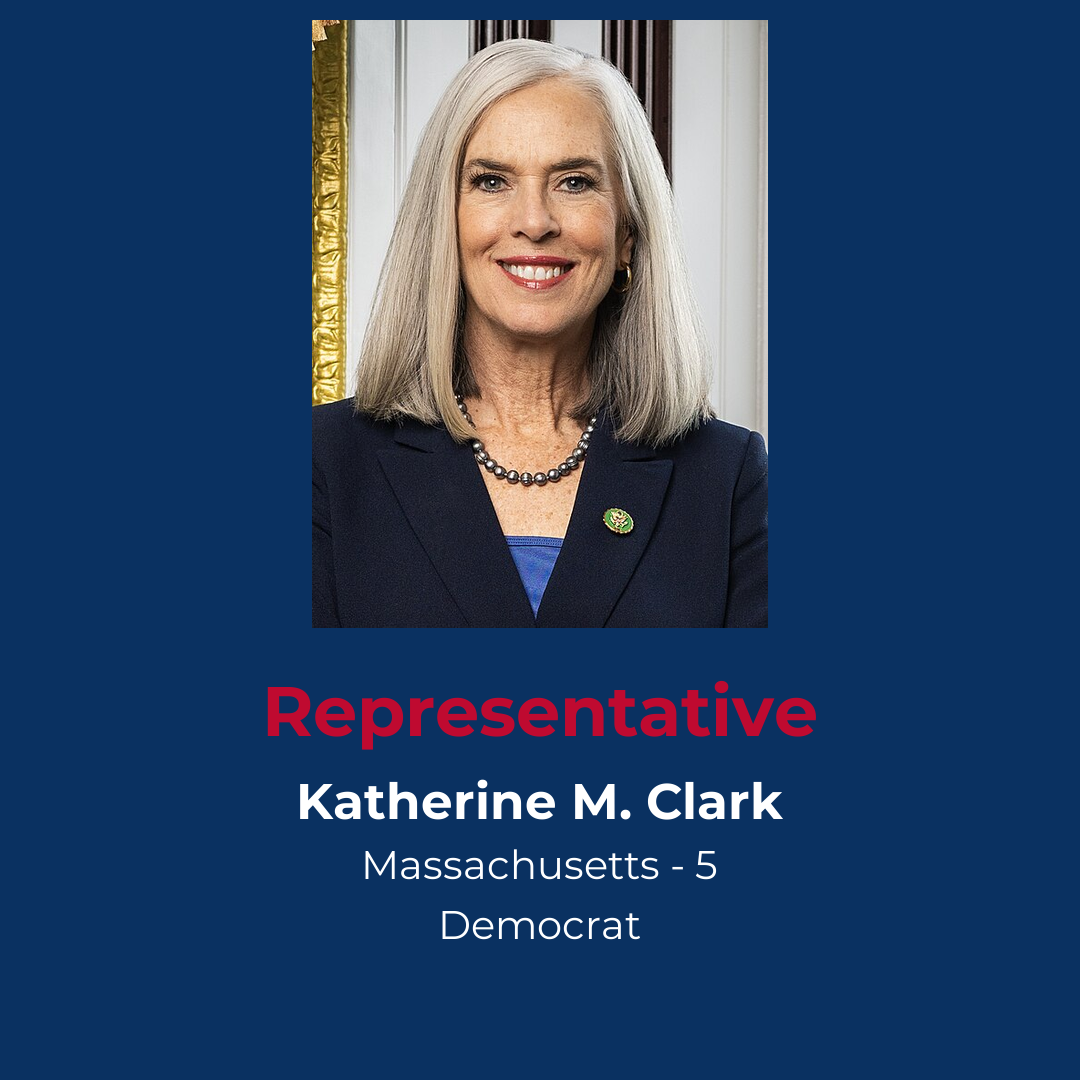
Profile of Democrat Representative Clark from Massachusetts District 5
Key Takeaways Katherine Clark is the House Minority Whip, making her the second-highest-ranking Democrat in the House and one of the most powerful women in American political history. She represents Massachusetts’s 5th District, a string of affluent, highly educated suburbs north and west of Boston, including Cambridge, Revere, Waltham, and Medford. Known as the "Silent Powerhouse," she rose rapidly through the leadership ranks (Vice Chair -> Assistant Speaker -> Whip) by building a reputation as a master strategist and listener rather than a cable news showboat. Her legislative brand is defined by the "care economy"—she is the foremost champion in Congress for affordable child care, paid family leave, and wage equity. "She doesn't seek the spotlight, she seeks the votes. Katherine Clark is the quiet architect of the House Democratic agenda." Katherine Clark: The Democratic Whip Representative Katherine Clark’s rise to the pinnacle of House leadership was swift, strategic, and surprisingly quiet. A lawyer and former prosecutor, she began her career in local government on the Melrose School Committee before moving to the Massachusetts State House and Senate. She was elected to Congress in a 2013 special election to replace Ed Markey, and in just a decade, she vaulted over more senior members to become the Democratic Whip—the person responsible for counting votes and keeping the party united. Clark’s leadership style is often contrasted with the generation that preceded her. While not as famous nationally as Nancy Pelosi or as vocal as AOC, Clark is viewed inside the Capitol as a relentless operator who knows exactly what every member of her caucus needs. She cemented her status during the chaotic speakership battles of recent years, where her ability to keep the Democratic caucus voting in unanimous lockstep stunned political observers. Policy-wise, Clark has staked her career on the "care economy." Long before the pandemic exposed the cracks in the American childcare system, Clark was arguing that childcare is infrastructure. She frames issues of early education, paid leave, and equal pay not just as "women’s issues," but as the central economic challenge of the 21st century. She sits on the Appropriations Committee, where she ensures these priorities receive federal funding. District Context: Massachusetts 5th (U.S. Census Data) The "Brains and Biotech" Belt: This district wraps around Boston like a horseshoe. It includes university towns like Cambridge (home to Harvard and MIT) and Medford (Tufts), as well as the biotech hubs of Waltham and Watertown. Population: ~773,000 (2024 Est.) Demographics: Highly educated and affluent. Over 56% of residents hold a bachelor’s degree or higher, one of the highest rates in the nation. It is ~64% White, ~13% Asian, and ~11% Hispanic. Key Industries: Higher Education: A global center for academia. Biotechnology/Life Sciences: The Kendall Square area (partially in district) and Waltham are the world capitals of the biotech industry. Technology: Major presence of tech giants and startups. Political Identity: Deep Blue (D+23). This is the heart of the Massachusetts liberal establishment. Source: U.S. Census Bureau & Ballotpedia Sources Used Official Leadership Biography: https://democraticwhip.house.gov/about Ballotpedia Profile: https://ballotpedia.org/Katherine_Clark GovTrack.us Legislative Record: https://www.govtrack.us/congress/members/katherine_clark/412557 Census Reporter (MA-05): https://censusreporter.org/profiles/50000US2505-congressional-district-5-ma/ #Representative #Massachusetts #Democrat #KatherineMClark Links for Representative Clark
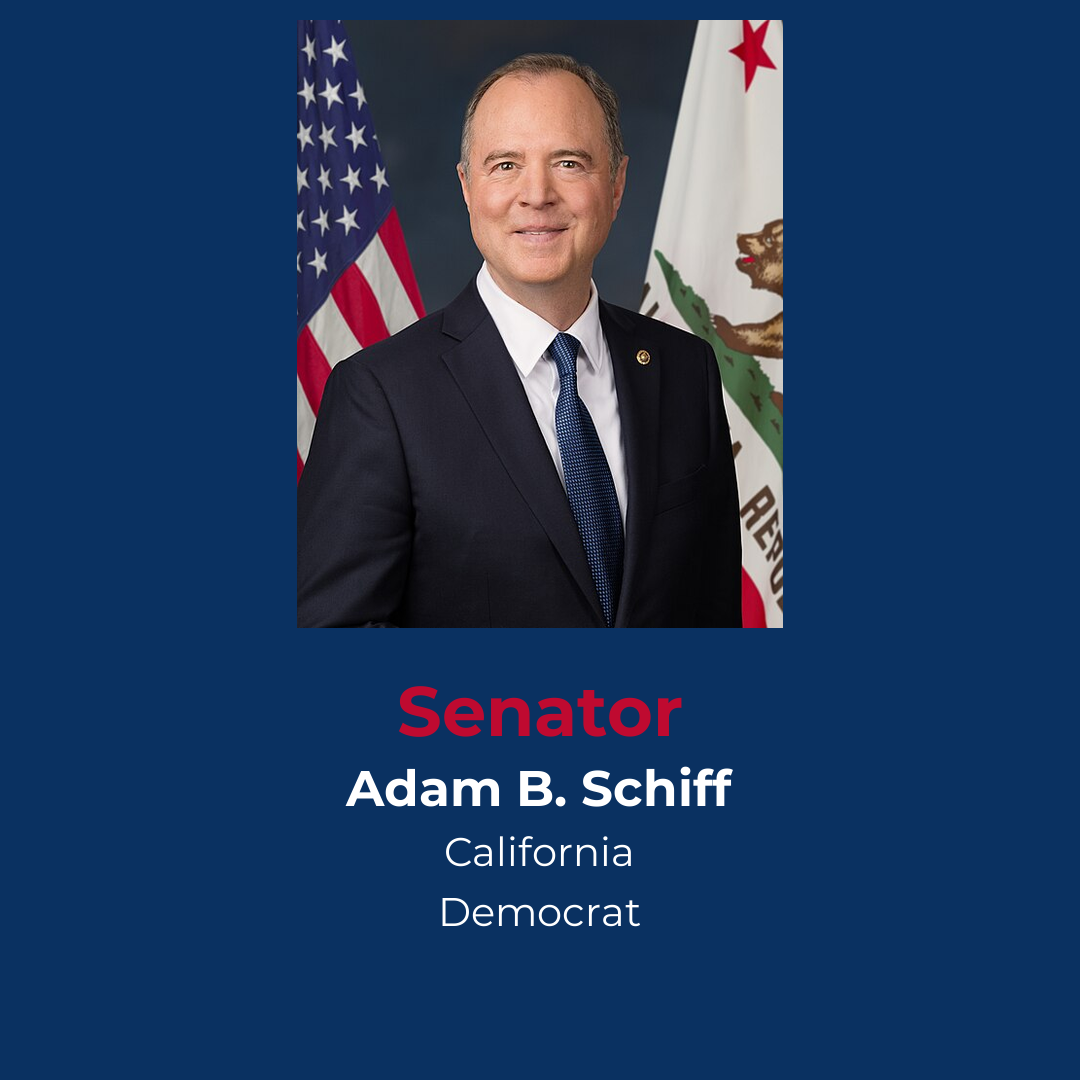
Profile of Democrat Senator Schiff from California
Key Takeaways Adam Schiff is one of the most recognizable figures in Democratic politics, having served as the Lead Manager for the first impeachment trial of Donald Trump while he was in the House. Elected to the U.S. Senate in 2024, he filled the seat long held by the late Dianne Feinstein, moving from a district representative to a statewide leader for nearly 39 million Californians. Before politics, he was a federal prosecutor who notably secured the conviction of the first FBI agent ever indicted for spying for the Soviet Union. In the Senate, he sits on the Judiciary and Environment & Public Works Committees, where he focuses on protecting democratic institutions, addressing the housing crisis, and combating climate change. "From prosecuting spies to prosecuting a President, Adam Schiff has built a career on the contention that no one is above the law." Adam Schiff: The Prosecutor in the Senate Senator Adam Schiff’s career has been defined by high-stakes legal battles. A Harvard Law graduate, he began his public service as a federal prosecutor in Los Angeles. He gained early fame for prosecuting Richard Miller, the first FBI agent ever convicted of espionage for the Russians—a case that foreshadowed his future role on the national stage involving intelligence and foreign influence. After serving in the California State Senate, Schiff was elected to the U.S. House in 2000, representing parts of Los Angeles and the San Gabriel Valley. For years, he was known as a quiet, policy-focused moderate, particularly on national security issues. That changed during the Trump administration. As Chairman of the House Intelligence Committee, Schiff became the face of the Democratic opposition, leading the investigation that resulted in the first impeachment of President Donald Trump. His methodical, lawyerly style made him a hero to liberals and a primary target for conservatives. Now in the Senate, Schiff has pivoted to broader statewide issues. He secured a seat on the Judiciary Committee, where he continues his work on "Protecting Our Democracy," advocating for reforms to limit presidential overreach and strengthen the rule of law. He also sits on the Environment and Public Works Committee, a critical assignment for California as it faces perennial threats from wildfires, droughts, and infrastructure decay. Domestically, Schiff is laser-focused on California’s housing affordability crisis. He has introduced legislation to incentivize the construction of affordable units and protect renters, arguing that the "California Dream" is slipping away for working families. He is also a staunch defender of the state's entertainment industry (a key constituency from his House days), championing intellectual property rights and tax incentives for film production. State Context: California (U.S. Census Data) The "Nation-State": If California were a country, it would have the 5th largest economy in the world. It is a land of massive contrasts, from the tech billionaires of Silicon Valley to the migrant farmworkers of the Central Valley. Population: ~39 Million (The most populous state in the union). Key Economic Drivers: Technology: The global hub of innovation (Apple, Google, Meta). Entertainment: Hollywood remains the world's entertainment capital. Agriculture: The state produces over a third of the country's vegetables and two-thirds of its fruits and nuts. Key Issues: Housing & Homelessness: California is home to nearly 30% of the nation's homeless population, despite having only 12% of the total population. Climate Change: The state is on the front lines of wildfire management and water scarcity. Source: U.S. Census Bureau & CA Dept. of Finance Sources Used Official Biography: https://www.schiff.senate....
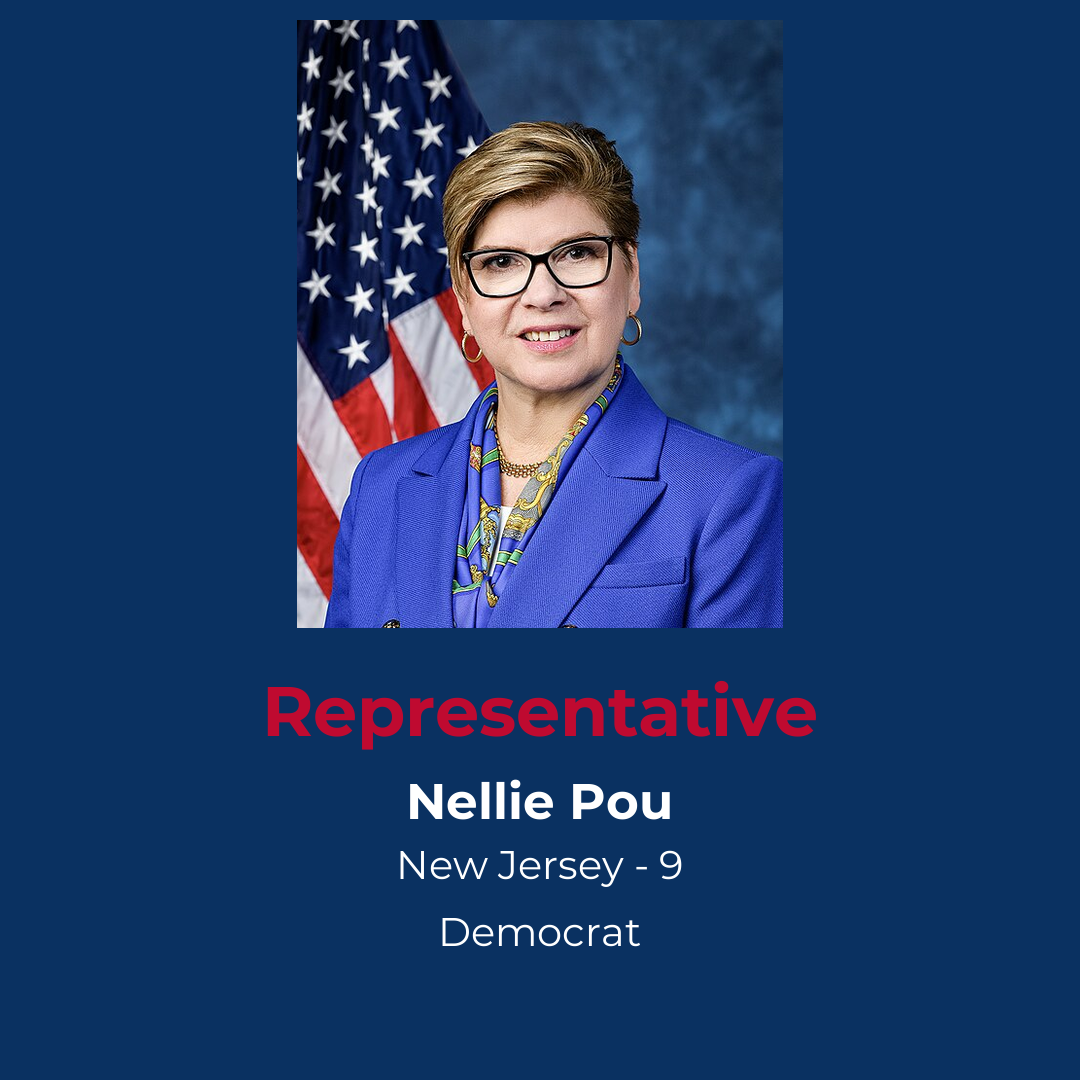
Profile of Democrat Representative Pou from New Jersey District 9
Key Takeaways Nellie Pou made history in 2024 as the first Latina ever elected to represent New Jersey in Congress, succeeding the late, long-serving Bill Pascrell. She represents New Jersey's 9th District, an urban and suburban stronghold in North Jersey anchored by the historic industrial city of Paterson and including parts of Passaic, Bergen, and Hudson Counties. A veteran of Trenton, she spent over 27 years in the State Legislature, where she chaired the Senate Commerce Committee and served as President of the National Hispanic Caucus of State Legislators. In Washington, she secured a coveted seat on the Transportation and Infrastructure Committee, a critical assignment for a district dependent on NJ Transit and the tunnels into New York City. "After three decades in Trenton and City Hall, Nellie Pou broke New Jersey's glass ceiling, becoming the first Latina to carry the Garden State's voice to Washington." Nellie Pou: The Daughter of Paterson Representative Nellie Pou's path to Congress was paved with decades of public service in her hometown. Born and raised in Paterson, she spent over thirty years working for the city administration, eventually becoming the Business Administrator. This local government experience gave her a granular understanding of how federal policy impacts municipal budgets, trash collection, and paving streets. Her political rise began in 1997 when she was elected to the New Jersey Assembly to fill the seat vacated by Bill Pascrell. She followed Pascrell again in 2024, winning the special nomination to replace him in Congress after his passing. In between, she served as a powerhouse in the State Senate, where she chaired the Commerce Committee and became a leading national voice for Hispanic state legislators. In Washington, Pou has focused on "bread and butter" issues. She sits on the House Transportation and Infrastructure Committee, where she fights for funding to repair the aging bridges of Passaic County and improve the NJ Transit rail lines that are the lifeblood of her district. She is also a member of the Homeland Security Committee, a vital role for a district that lies in the shadow of New York City and includes diverse immigrant communities often targeted by security policies. Her legislative style is that of a seasoned technocrat—quiet, diligent, and focused on the details of appropriations. She champions environmental justice, fighting to clean up the Passaic River (one of the nation's largest Superfund sites), and advocates for language access in government services, reflecting the needs of her heavily Spanish-speaking constituency. District Context: New Jersey 9th (U.S. Census Data) The "Silk City" District: The heart of the district is Paterson, founded by Alexander Hamilton as the nation's first planned industrial city (the "Silk City"). It extends into the dense suburbs of Clifton and Passaic, and wealthy enclaves in Bergen County. Population: ~772,000 (2024 Est.) Demographics: A "majority-minority" district with a massive Hispanic/Latino population (~44%), including large communities of Dominicans, Puerto Ricans, and Peruvians. It is one of the most diverse districts in the Northeast. Key Economic Drivers: Manufacturing & Logistics: The industrial legacy of Paterson remains, though shifted toward light manufacturing and logistics. Retail & Service: Major retail corridors along Route 46 and Route 3. Healthcare: St. Joseph’s Health in Paterson is a dominant regional employer. Key Issues: Housing affordability, transit reliability (Gateway Tunnel project), and public safety in urban centers. Source: U.S. Census Bureau & Ballotpedia Sources Used Official Biography: https://pou.house.gov/about Ballotpedia Profile: https://ballotpedia.org/Nellie...
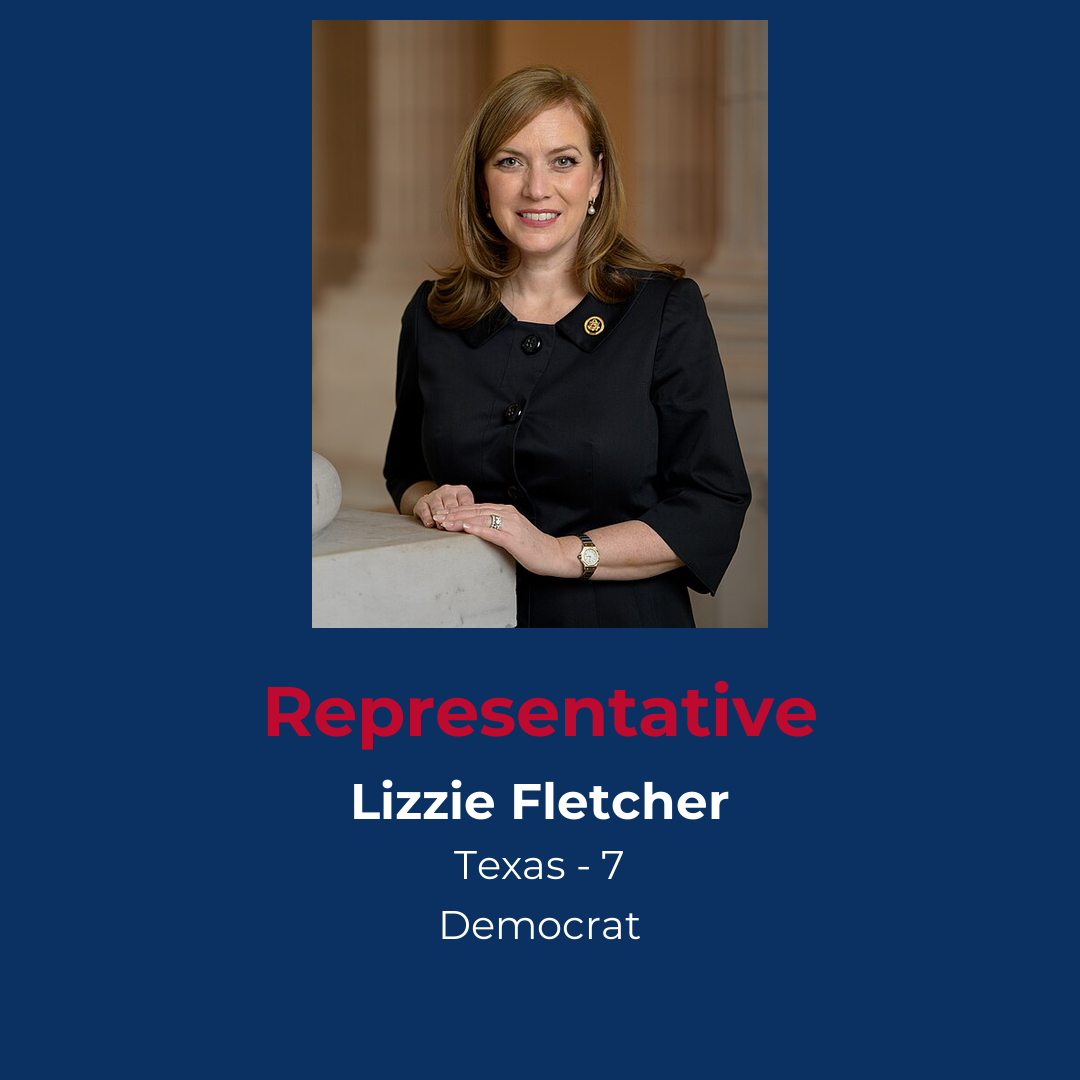
Profile of Democrat Representative Fletcher from Texas District 7
Key Takeaways Lizzie Fletcher is a moderate Democrat and attorney who flipped a long-held Republican seat in 2018, becoming the first woman to represent the district and the first Democrat to do so in over 50 years. She represents Texas’s 7th District, a wealthy, diverse, and rapidly changing suburban district in West Houston and Fort Bend County that is the energy capital of the world. As the Vice Ranking Member of the Energy and Commerce Committee, she occupies a critical and rare lane in her party: a Democrat who actively defends the oil and natural gas industry while advocating for an “all-of-the-above” energy transition. Her legislative priorities blend social liberalism with pro-business pragmatism, focusing heavily on reproductive rights (she is a Vice Chair of the Pro-Choice Caucus) and protecting Houston’s massive energy and medical sectors. “She is the Democrat who speaks ‘Energy.’ Lizzie Fletcher bridges the gap between the oil executives of West Houston and the climate goals of her party.” Lizzie Fletcher: The Energy Democrat Representative Lizzie Fletcher represents the complexities of modern Texas politics better than perhaps anyone else. Born in Houston and raised in the very district she now represents, she built a career as a high-powered business litigator at Vinson & Elkins before entering politics. In 2018, she achieved what many thought impossible: she defeated longtime Republican incumbent John Culberson in a district that had been George H.W. Bush’s old seat, becoming the first Democrat to hold it since 1966. Fletcher has survived by mastering the art of the “Houston Democrat.” She is socially liberal—fiercely defending abortion access and LGBTQ+ rights—but economically pragmatic. She sits on the powerful Energy and Commerce Committee, where she serves as the Vice Ranking Member. In this role, she often breaks with the left wing of her party to defend the oil and gas industry, arguing that natural gas is a critical transition fuel and that Houston’s energy companies must lead, not be destroyed by, the green revolution. Her district is also home to the Texas Medical Center, the largest medical complex in the world. Consequently, Fletcher is a major player on health policy, advocating for Medicaid expansion in Texas (which the state has refused) and securing federal research grants. She is also a Whip for the Reproductive Freedom Caucus, where she has led national efforts to protect the right to travel for abortion care—a direct response to Texas’s strict state bans. District Context: Texas 7th (U.S. Census Data) The “Energy Corridor”: This district is the economic engine of Houston. It includes the Energy Corridor, home to HQs for BP America, ConocoPhillips, and Shell, as well as affluent neighborhoods like River Oaks, Bellaire, and West University Place. Population: ~770,000 (2024 Est.) Demographics: A “majority-minority” district that is incredibly diverse: ~30% Hispanic, ~27% White, ~20% Asian, and ~19% Black. It has one of the highest Asian-American populations in the South, largely concentrated in Fort Bend County (Sugar Land). Economic Drivers: Energy: The global nerve center for oil, gas, and renewable energy financing. Medicine: The Texas Medical Center employs over 100,000 people. Professional Services: High concentration of lawyers, engineers, and consultants. Politics: Once a GOP stronghold, it is now a solid Democratic district (D+13) due to the rapid shift of college-educated suburbanites away from the Republican party. Source: U.S. Census Bureau & Ballotpedia Sources Used Official Biography: https://fletcher.house.gov/about Ballotpedia Profile: https://ballotpedia.org/Lizzie_Fletcher GovTrack.us Legislative Record: https://www.govtrack.us/congress/members/lizzie_fletcher/412767 Energy Corridor District: https:/...
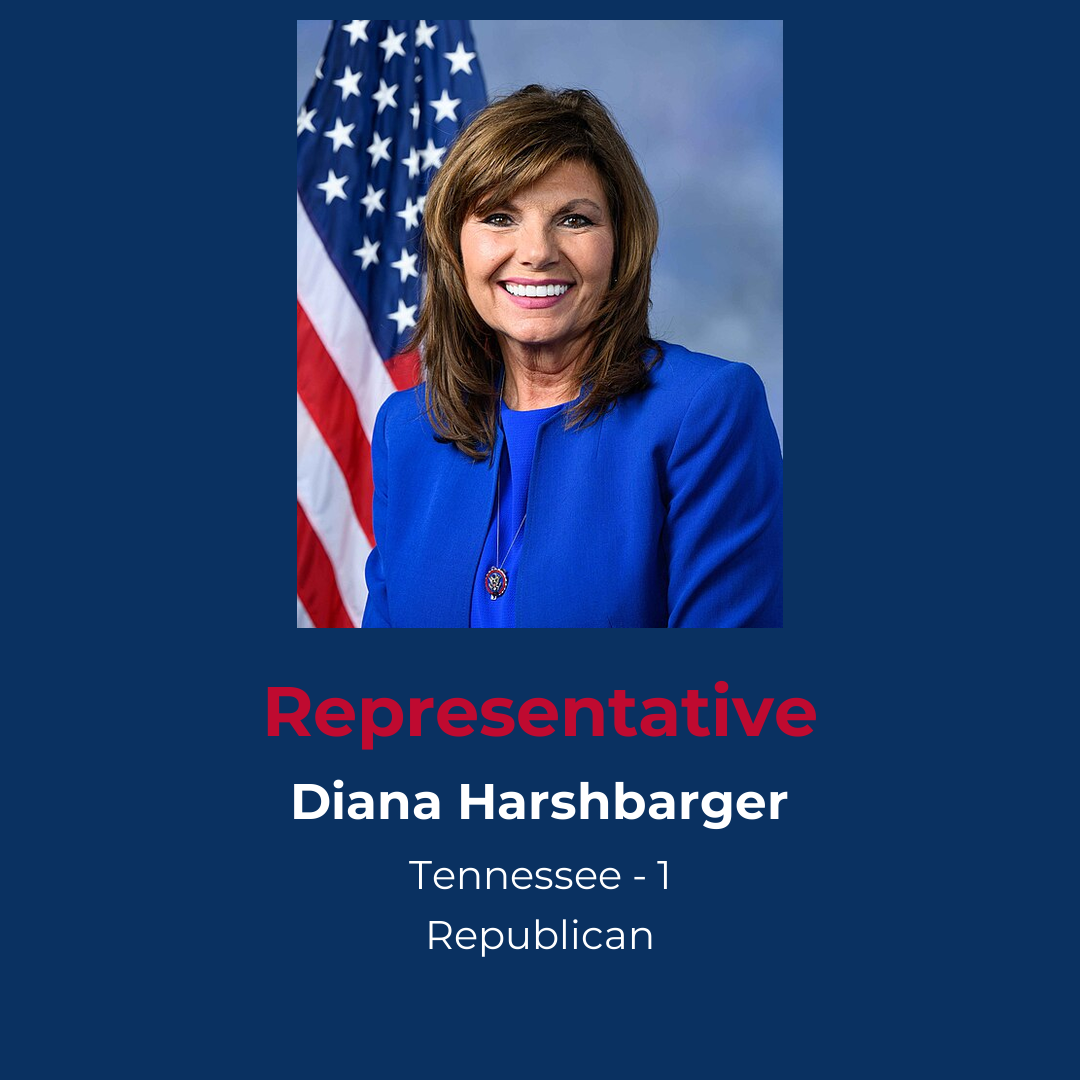
Profile of Republican Representative Harshbarger from Tennessee District 1
Key Takeaways (Click to Expand) Diana Harshbarger is a licensed pharmacist with over 30 years of experience, making her one of the few medical professionals in Congress and the only woman in Tennessee’s House delegation. She represents Tennessee’s 1st District, a deeply conservative stronghold in Northeast Tennessee that includes the Tri-Cities (Kingsport, Johnson City, Bristol) and the tourism hubs of the Great Smoky Mountains. A member of the powerful Energy and Commerce Committee, she leverages her medical background to tackle Pharmacy Benefit Manager (PBM) reform, the opioid epidemic, and ensuring supply chain independence from China for critical medicines. Her legislative style is defined by her “no-nonsense” business background, focusing on rural broadband access, veterans’ care, and protecting the region’s manufacturing and agricultural interests. “She spent three decades behind a pharmacy counter serving her neighbors. Now, Diana Harshbarger is the ‘Pharmacist in Congress,’ prescribing a dose of common sense to Washington.” Diana Harshbarger: The Pharmacist Prescribing Reform Representative Diana Harshbarger’s journey to Washington began behind the counter of a community pharmacy. Born and raised in Kingsport, Tennessee, she was the first in her immediate family to graduate from college, earning her Doctor of Pharmacy degree from Mercer University. For over 30 years, she operated a successful compounding pharmacy, giving her a front-row seat to the challenges of the American healthcare system—from the skyrocketing cost of prescription drugs to the devastation of the opioid crisis. Elected in 2020 to succeed the retiring Phil Roe (another medical provider), Harshbarger quickly established herself as a subject matter expert on healthcare policy. She is a member of the influential House Energy and Commerce Committee, where she sits on the Health Subcommittee. Unlike many of her colleagues who rely on staff briefings, Harshbarger can personally dissect complex healthcare legislation. She has become a leading crusader for Pharmacy Benefit Manager (PBM) reform, arguing that middlemen are driving up drug costs for patients and crushing independent pharmacies. Harshbarger is also a fierce advocate for national security, particularly regarding the medical supply chain. She frequently warns against America’s over-reliance on Chinese manufacturing for active pharmaceutical ingredients, viewing it as a critical vulnerability. Beyond healthcare, she represents a district famous for its natural beauty and tourism. She is a staunch defender of the Great Smoky Mountains National Park and the economic engine it provides for Sevier County. As the only woman in the Tennessee House delegation, she brings a unique voice to the table, blending the compassion of a healthcare provider with the fiscal conservatism of a small business owner. District Context: Tennessee 1st (U.S. Census Data) The “Tri-Cities” & The Smokies: This district covers the mountainous northeast corner of Tennessee. It is anchored by the Tri-Cities (Kingsport, Johnson City, Bristol) in the north and the tourism mecca of Sevier County (Gatlinburg, Pigeon Forge, Dollywood) in the south. Population: ~797,000 (2024 Est.) Demographics: ~88% White. It is one of the most culturally Appalachian and historically Republican districts in the South (Cook PVI: R+30). Key Economic Drivers: Healthcare: A major regional medical hub, with Ballad Health being a top employer. Tourism: Home to Dollywood, Bristol Motor Speedway, and the gateway to the most visited national park in the U.S. Manufacturing: Strong industrial base, including Eastman Chemical Company in Kingsport. Key Landmarks: Great Smoky Mountains National Park, Andrew Johnson National Historic Site. Source: U.S. Census Bureau & Ballotpedia Sources Used Official Biogr...
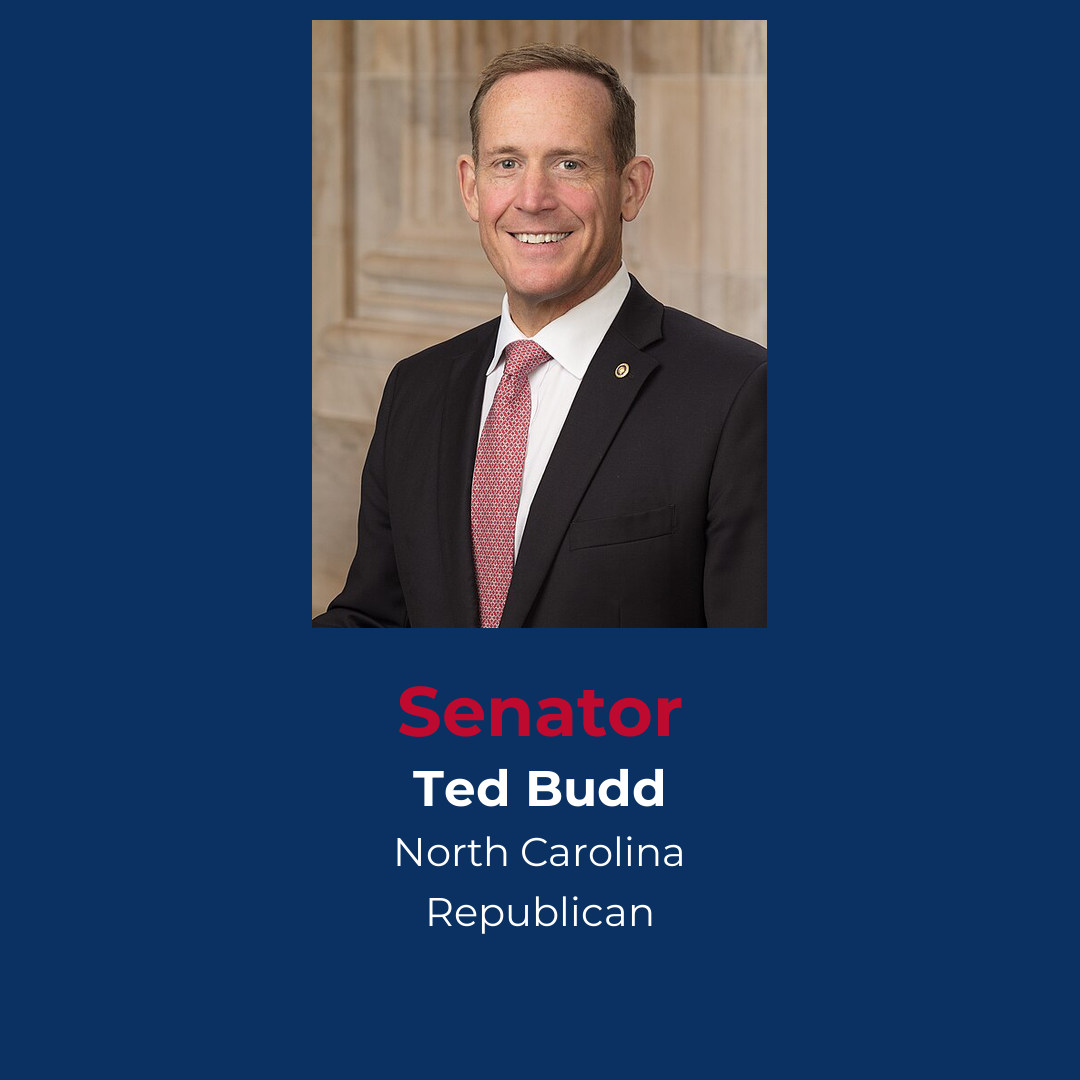
Profile of Republican Senator Budd from North Carolina
Key Takeaways Ted Budd is a gun store owner by trade, having owned and operated ProShots, a firing range and tactical store in rural North Carolina, before entering politics. He rose from a crowded 17-way primary in 2016 to become a Congressman and then won a competitive U.S. Senate race in 2022 with the backing of Donald Trump. He serves on the powerful Armed Services and Intelligence Committees, critical assignments for North Carolina, which has one of the largest military footprints in the nation (Fort Liberty, Camp Lejeune). His legislative focus is heavily centered on Second Amendment rights, manufacturing deregulation, and cutting federal spending, often voting against bipartisan budget deals he views as inflationary. “He went from selling firearms behind a counter in Rural Hall to voting on national security in the Senate Situation Room. Ted Budd is the gun-store owner turned Senator.” Ted Budd: The Merchant of the Second Amendment Senator Ted Budd’s resume stands out in a chamber full of lawyers. Before he was a politician, he was a small businessman in the most literal sense: he bought a bankrupt gun range in Rural Hall, North Carolina, and turned it into ProShots, a successful firearms store and training facility. This background as a federally licensed firearms dealer gives him a unique, technical authority on gun laws that few other Senators possess. Budd entered the political arena in 2016 as a fiercely anti-establishment outsider. In a chaotic 17-candidate Republican primary for a U.S. House seat, he emerged victorious with the help of the Club for Growth, a fiscally conservative powerhouse. He spent three terms in the House as a quiet but reliable vote for the “America First” agenda before running for the Senate in 2022 to replace the retiring Richard Burr. Endorsed early by Donald Trump, Budd defeated former State Supreme Court Chief Justice Cheri Beasley, cementing North Carolina’s status as a lean-Republican stronghold. Now in the Senate, Budd has quickly become a key player on national defense. He sits on the Armed Services Committee and the Select Committee on Intelligence. These are vital roles for his state, which is home to the Fort Liberty (formerly Fort Bragg) airborne forces and the Camp Lejeune Marine base. He pushes for robust defense spending while simultaneously advocating for a “maximum pressure” campaign against China and Iran. Domestically, he remains a fiscal hardliner, frequently voting against continuing resolutions and advocating for the REINS Act to curb the power of federal regulatory agencies. State Context: North Carolina (U.S. Census Data) Population: ~10.9 Million (The 9th most populous state, growing rapidly). The “Military-Banking” Economy: North Carolina has a unique dual economy. Charlotte is the second-largest banking hub in the U.S. (after NYC), home to Bank of America and Truist. The Military: The state hosts the 4th largest military population in the country, supporting over 578,000 jobs. Key Regions: The Research Triangle (Raleigh-Durham): A global hub for biotech and Ph.D. researchers. Rural NC: A massive agricultural sector, leading the nation in sweet potatoes, tobacco, and poultry. Demographics: A true “Purple State” battleground. ~62% White, ~22% Black/African American. The rapid influx of tech workers to Raleigh and bankers to Charlotte is slowly shifting the state’s traditional politics. Source: U.S. Census Bureau & NC Dept. of Commerce Sources Used Official Biography: https://www.budd.senate.gov/about Ballotpedia Profile: https://ballotpedia.org/Ted_Budd GovTrack.us Legislative Record: https://www.govtrack.us/congress/members/ted_budd/412711 ProShots Range & Training: https://proshotsrange.com/ #Senator #NorthCarolina #Republican #TedBudd Links for Senator Budd
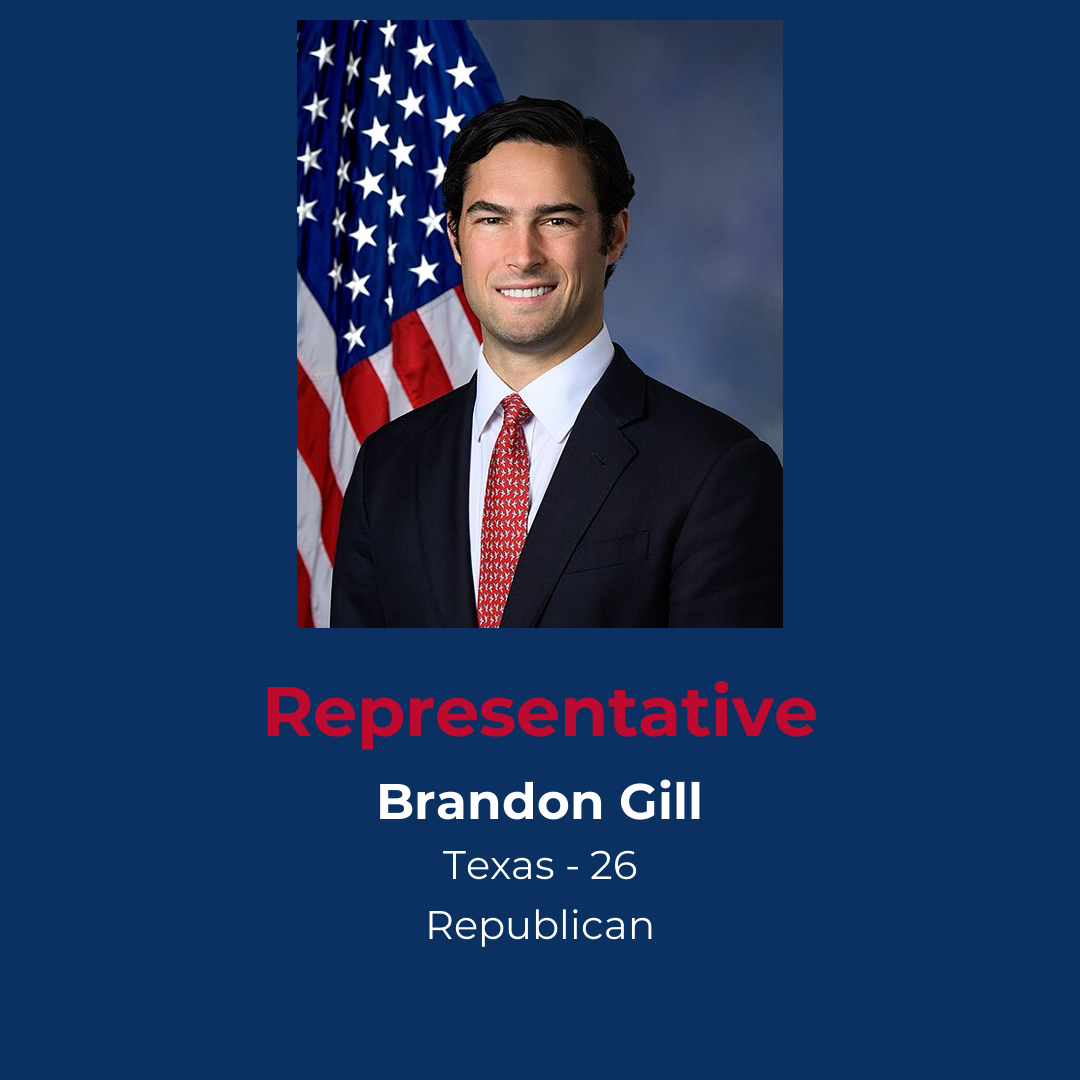
Profile of Republican Representative Gill from Texas District 26
Key Takeaways Brandon Gill is one of the youngest members of Congress (born 1994) and a rising star in the "America First" movement, having founded the conservative news site DC Enquirer before his election. He represents Texas's 26th District, a rapidly growing suburban stronghold north of Dallas-Fort Worth that is anchored by Denton County. A Dartmouth graduate and former investment banker, Gill pivoted to media and politics, marrying Danielle D'Souza (daughter of filmmaker Dinesh D'Souza) and gaining an early endorsement from Donald Trump. In his freshman term, he serves on the Judiciary and Oversight Committees, where he focuses on government efficiency, border security, and combating perceived censorship by Big Tech. "From Wall Street to the DC Enquirer to the halls of Congress, Brandon Gill represents the new, media-savvy generation of the America First movement." Brandon Gill: The Voice of the New Generation Representative Brandon Gill is the face of a new era in conservative politics. Elected in 2024 at just 30 years old, he became one of the youngest Republicans in the House, succeeding the long-serving Michael Burgess. But Gill was a known quantity in the "MAGA" movement long before he took the oath of office. After a stint as an investment banker at Nomura Securities, he founded the DC Enquirer, a conservative news outlet that quickly became a social media juggernaut. Gill’s background blends Ivy League credentials with cattle ranch roots. Born on an Air Force base and raised on a ranch in West Texas, he graduated cum laude from Dartmouth College, where he edited the conservative student paper. His profile rose even higher through his marriage to Danielle D'Souza, the daughter of conservative filmmaker Dinesh D'Souza, placing him at the center of the movement's cultural and media sphere. In Congress, Gill has wasted no time joining the fray on the House Judiciary and Oversight Committees. He views his mandate as a direct rejection of the "status quo," using his committee perches to investigate federal bureaucracy and advocate for aggressive border enforcement. He is also a member of the Budget Committee, where he applies his finance background to arguments for drastic spending cuts. For Gill, the battle isn't just about legislation; it's about using his media fluency to communicate directly with the base, bypassing traditional press filters. District Context: Texas 26th (U.S. Census Data) The "DFW North" Suburbs: This district is the northern anchor of the Dallas-Fort Worth metroplex. It is centered almost entirely on Denton County, including the cities of Denton, Flower Mound, Lewisville, and parts of Frisco and Little Elm. Population: ~800,000+ (One of the fastest-growing areas in the U.S.). Economic Drivers: Corporate HQs: The region is a magnet for corporate relocation (Toyota, Liberty Mutual, and Charles Schwab are just outside the district but employ many residents). Education: Home to the University of North Texas (UNT) and Texas Woman's University in Denton. Medical/Retail: Massive suburban development has created a booming healthcare and retail economy along the I-35 corridor. Demographics: A mix of affluent professionals, young families, and a significant student population in Denton. While traditionally deep red, the rapid influx of new residents from other states is reshaping the political landscape, though it remains a GOP stronghold. Source: U.S. Census Bureau & Ballotpedia Sources Used Official Biography: https://gill.house.gov/about Ballotpedia Profile: https://ballotpedia.org/Brandon_Gill GovTrack.us Legislative Record: https://www.govtrack.us/congress/members/brandon_gill/487250 Denton Economic Development Partnership: https://dentonedp.com/ #Representativ...
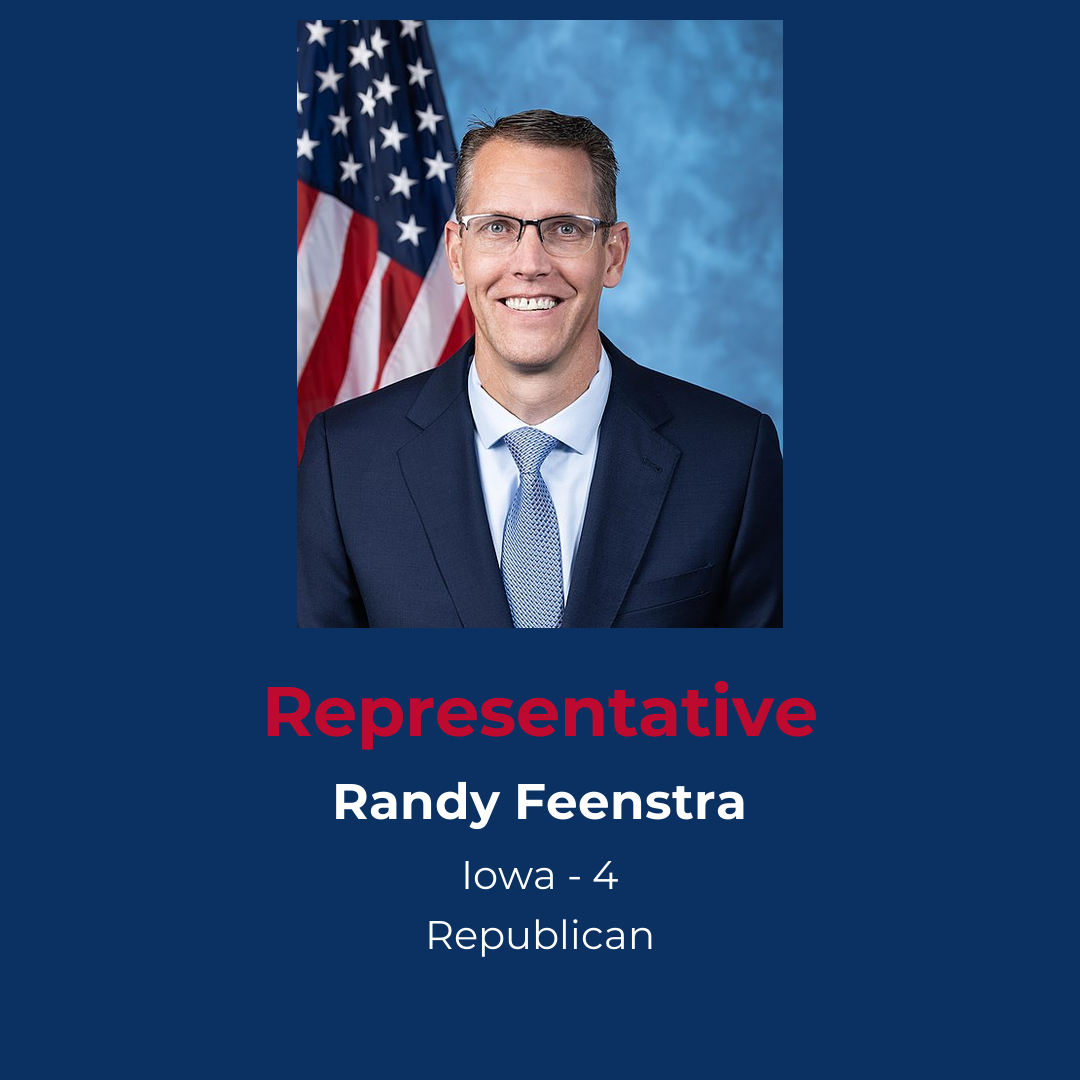
Profile of Republican Representative Feenstra from Iowa District 4
Key Takeaways (Click to Expand) Randy Feenstra is a fiscal conservative and former City Administrator and County Treasurer who rose to national prominence in 2020 by defeating long-time incumbent Steve King in a primary, promising to trade "rhetoric for results." He represents Iowa's 4th District, arguably the most agricultural district in the nation. It is a top producer of corn, soybeans, pork, and eggs, and is often called the "Saudi Arabia of Wind Energy" due to its massive wind turbine density. Feenstra sits on two powerful committees for his district: the House Agriculture Committee and the Ways and Means Committee, where he focuses on protecting the step-up in basis for family farms and expanding biofuels (ethanol/biodiesel) markets. His legislative style is defined by his background in local government—quiet, policy-focused, and obsessed with the math of the federal budget. "He traded headlines for the Farm Bill. Randy Feenstra is the quiet accountant who ensures the nation's breadbasket has a seat at the writing table." Randy Feenstra: The Fiscal Hawk of the Corn Belt Representative Randy Feenstra’s path to Congress was paved with balance sheets. Before Washington, he spent years in local government in Hull, Iowa, first as a City Administrator and then as the Sioux County Treasurer. In those roles, he developed a reputation as a meticulous fiscal hawk, a trait he carried to the Iowa State Senate where he helped author the largest income tax cut in state history. Feenstra entered the national spotlight in 2020 when he challenged and defeated nine-term incumbent Steve King in the Republican primary. His campaign argument was simple: the district needed a legislator, not a lightning rod. Since taking office, Feenstra has made good on that promise, keeping a low media profile while securing spots on the committees that matter most to his constituents: Agriculture and Ways and Means. In Congress, Feenstra operates as a voice for "production agriculture." He is a fierce defender of the Renewable Fuel Standard (RFS), viewing ethanol and biodiesel not just as energy policy, but as a survival mechanism for Iowa corn and soy farmers. On the Ways and Means Committee, he fights to repeal the estate tax (the "Death Tax") and protect "step-up in basis," arguing that these tax structures are essential to keeping family farms in the family. He also champions the FARMLAND Act, legislation designed to prevent foreign adversaries (specifically China) from purchasing American agricultural land—a major concern in rural Iowa. District Context: Iowa 4th (U.S. Census Data) The "Ag Super-District": Covering the northwest and north-central quadrant of Iowa, this district includes Sioux City, Fort Dodge, Marshalltown, and the college town of Ames (home to Iowa State University). Population: ~753,000 (2024 Est.) Economic Drivers: Agriculture: This district consistently ranks among the top in the nation for pork, egg, corn, and soybean production. Renewable Energy: Northwest Iowa has one of the highest concentrations of wind turbines on the planet, generating a massive surplus of green energy. Education & Research: Iowa State University in Ames is a global hub for agricultural research and veterinary science. Demographics: ~82% White, ~10% Hispanic. It is the most conservative district in Iowa (Cook PVI: R+16), heavily influenced by Dutch-American communities in Sioux County and evangelical voters. Source: U.S. Census Bureau & USDA Ag Census Sources Used Official Biography: https://feenstra.house.gov/about Ballotpedia Profile: https://ballotpedia.org/Randy_Feenstra GovTrack.us Legislative Record: https://www.govtrack.us/congress/members/randy_feenstra/456803 USDA Ag Census Data: https://www.nass.usda.gov/...

Profile of Republican Representative Gosar from Arizona District 9
Paul Gosar is a dentist by trade, having run a dental practice in Flagstaff for 25 years before joining Congress during the Tea Party wave of 2010. He represents Arizona's 9th District, a vast stretch of western Arizona that runs along the Colorado River, including Yuma, Lake Havasu City, and the western suburbs of Phoenix. A founding member of the House Freedom Caucus, he is one of the most controversial and conservative members of the House, famously becoming the first member censured by Congress in over a decade in 2021. His legislative work focuses heavily on Western land use, water rights (critical for the drought-stricken Colorado River), and mining reform to boost domestic mineral production. "A dentist who views Washington as a patient in need of a root canal, Paul Gosar has spent a decade as the conservative firebrand of the American West." Paul Gosar: The Dentist of the Desert Dr. Paul Gosar’s path to Washington began not in a law firm, but in a dental chair. For 25 years, he was a dentist in Flagstaff, Arizona, eventually being named the "Dentist of the Year" by the Arizona Dental Association. Frustrated by healthcare regulations and government bureaucracy, he ran for Congress in 2010 as part of the Tea Party wave, campaigning on a platform of strict constitutionalism and fiscal conservatism. In Washington, Gosar quickly established himself on the far-right flank of the Republican party. He was a founding member of the House Freedom Caucus and has been a relentless critic of the establishment. His tenure has been marked by high-voltage controversy; in 2021, he was censured by the House of Representatives and stripped of his committee assignments (later restored) for posting an anime-style video depicting violence against a political rival. Gosar wears these skirmishes as badges of honor, positioning himself as an anti-establishment outsider fighting a "corrupt" system. Despite the national headlines, Gosar is deeply involved in the specific resource issues of the West. As the Chairman of the Congressional Western Caucus, he is a leading voice on the House Natural Resources Committee. His legislative focus is laser-targeted on the unique needs of his district: protecting access to the Colorado River water supply during historic droughts, advocating for the mining industry (Arizona is a top copper producer), and securing the southern border, particularly in the Yuma sector which faces significant migration challenges. District Context: Arizona 9th (U.S. Census Data) The "River District": This massive district spans the entire western edge of Arizona, running from the Utah border down to Mexico. It encompasses the Colorado River communities of Lake Havasu City and Bullhead City, the agricultural hub of Yuma, and conservative Phoenix suburbs like Goodyear and Surprise. Population: ~796,000 (2024 Est.) Demographics: ~57% White, ~28% Hispanic/Latino. Key Economic Drivers: Agriculture: Yuma is known as the "Winter Lettuce Capital of the World," producing 90% of North America's leafy greens in winter. Military: Home to MCAS Yuma and the Yuma Proving Ground. Tourism/Retirement: Lake Havasu is a major destination for "snowbirds" and spring breakers. Politics: A solidly Republican district (R+16), heavily influenced by retirees and rural voters. Source: U.S. Census Bureau & Ballotpedia Sources Used Official Biography: https://gosar.house.gov/about/ Ballotpedia Profile: https://ballotpedia.org/Paul_Gosar GovTrack.us Legislative Record: https://www.govtrack.us/congress/members/paul_gosar/412397 Yuma County Chamber of Commerce: https://www.yumachamber.org/ #Representative #Arizona #Republican #PaulAGosar Links for Representative Gosar
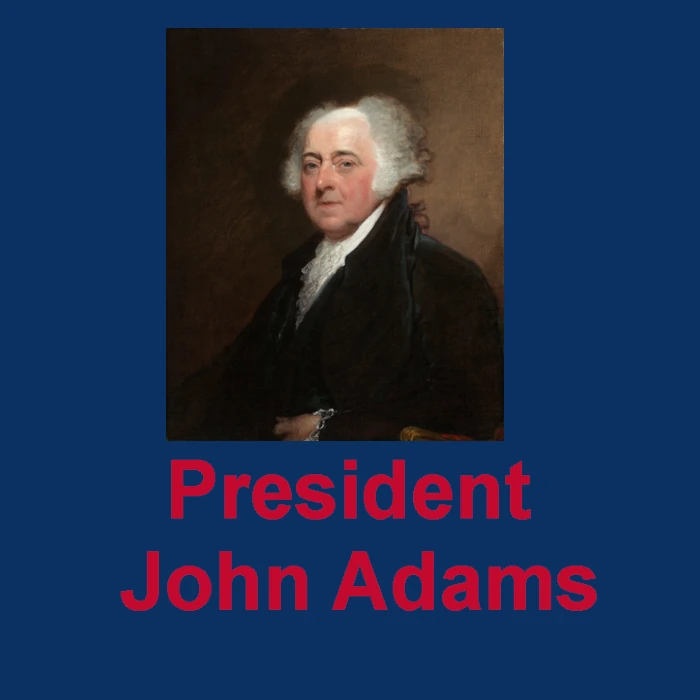
Profile of President John Adams
If George Washington was the sword of the American Revolution, John Adams was its voice. A brilliant, irascible lawyer from Massachusetts, Adams first gained fame for a singular act of integrity: defending the British soldiers accused of the Boston Massacre because he believed every man deserved a fair trial. In the Continental Congress, he was the "Atlas of Independence," relentlessly whipping votes for separation from Britain and hand-picking Thomas Jefferson to write the Declaration.
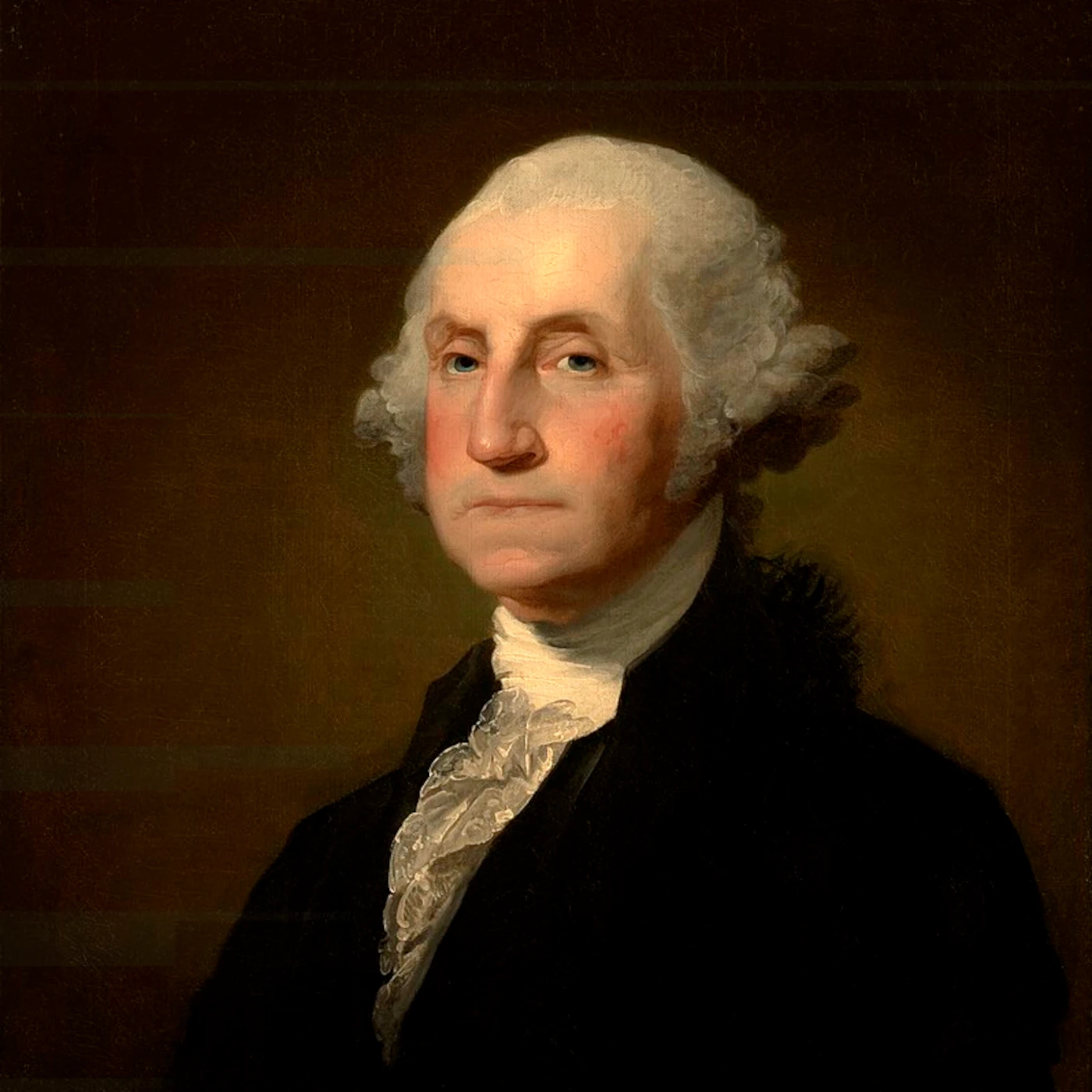
Profile of President George Washington
George Washington: The American Cincinnatus George Washington’s life is the story of the American Revolution itself. Born into the Virginia gentry, he began his career as a land surveyor, a job that taught him the vastness of the American frontier. He gained early military fame (and infamy) in the French and Indian War before becoming the unanimous choice to lead the Continental Army in 1775. Against the might of the British Empire, he managed to keep a ragtag army together through eight years of war, eventually forcing the British surrender at Yorktown.
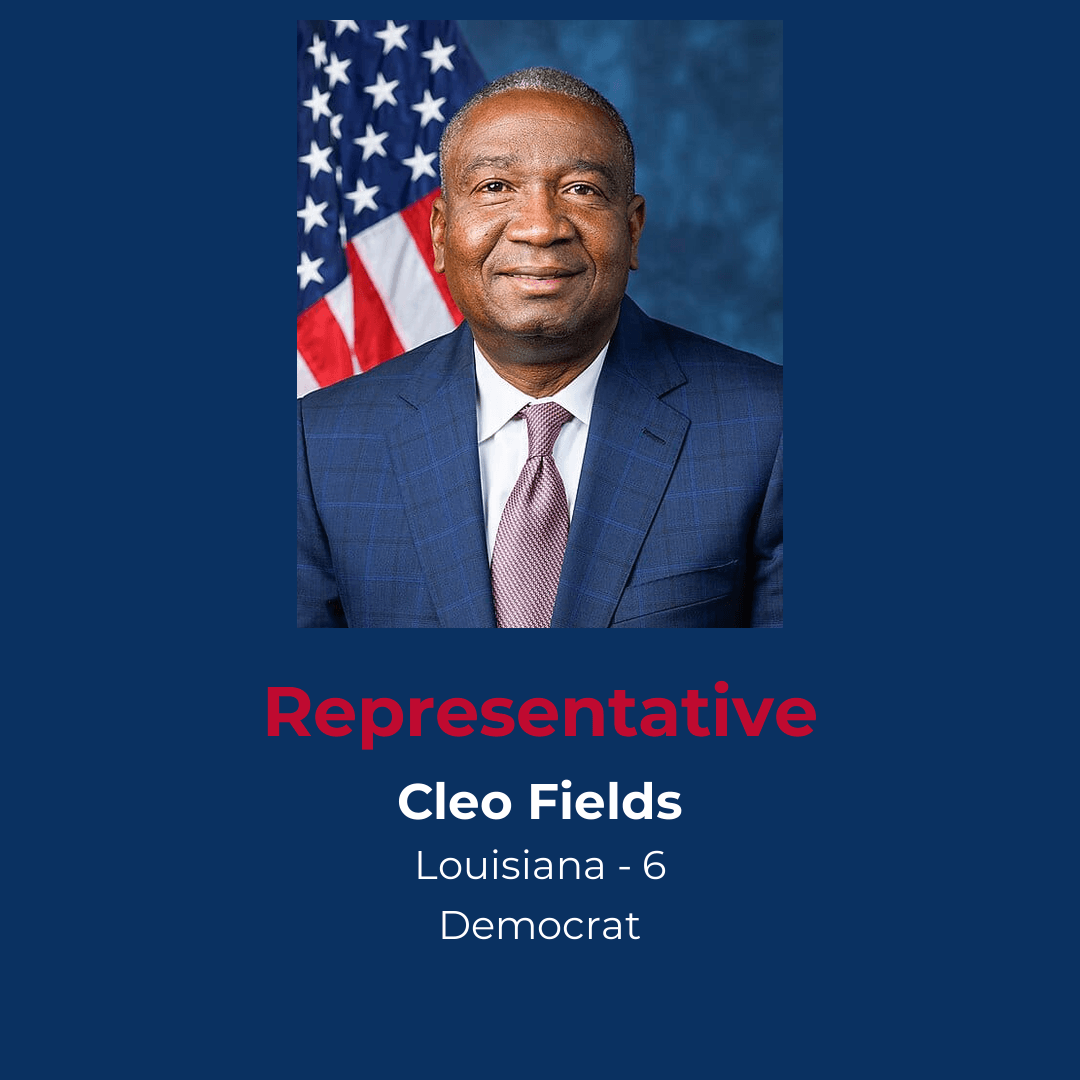
Profile of Democrat Representative Fields from Louisiana District 6
Key Takeaways (Click to Expand) Cleo Fields has made a historic return to Congress after nearly 30 years, having previously served as a U.S. Representative from 1993 to 1997. In the 1990s, he was a political prodigy: the youngest State Senator in Louisiana history (age 24) and the youngest member of the 103rd Congress (age 29). He represents the newly drawn 6th District, a majority-Black district created by court order in 2024 to comply with the Voting Rights Act. A veteran legislator, he has spent decades in the Louisiana State Senate chairing the Education Committee and now serves on the powerful House Financial Services Committee. “Three decades after he first walked the halls of the Capitol as the youngest member of Congress, Cleo Fields returns as a seasoned veteran to give voice to Louisiana’s newest majority-minority district.” Cleo Fields: The Return of the Prodigy Representative Cleo Fields’ career is a story of history repeating itself, but with the wisdom of experience. In the early 1990s, Fields was a national political sensation. Elected to the Louisiana State Senate at 24 and to the U.S. Congress at 29, he was the youngest member of the House and a rising star in the Democratic party. However, after his district was dismantled by the Supreme Court in 1996, he left Washington, returning to Baton Rouge to build a long and influential career in state politics. For the last two decades, Fields has been a power player in the Louisiana State Senate, where he chaired the Education Committee and became known as a pragmatic dealmaker who could work across the aisle in a deep-red state. He championed teacher pay raises, early childhood education, and criminal justice reform. His return to Congress in 2026 comes after a landmark legal battle. In 2024, federal courts ordered Louisiana to create a second majority-Black congressional district to comply with the Voting Rights Act. Fields won the election for this newly drawn seat, completing a 30-year political circle. Now back in Washington, Rep. Fields is no longer the “freshman prodigy” but a senior statesman. He has secured a seat on the House Financial Services Committee, where he advocates for banking access in underserved communities and capital for minority-owned small businesses. His legislative agenda focuses on the “I-49 Corridor” priorities: infrastructure investment, lifting families out of poverty, and strengthening the Historically Black Colleges and Universities (HBCUs) that anchor his district. District Context: Louisiana 6th (U.S. Census Data) The “Slash” District: The new 6th District is geographically unique, stretching diagonally across the state like a slash mark. It connects the African American communities of Shreveport in the northwest to Baton Rouge in the southeast, picking up parts of Alexandria and Lafayette along the way. Population: ~753,000 (2024 Est.) Demographics: ~54% Black/African American. It is the second majority-minority district in the state. Key Economic Drivers: A diverse mix of Government (State Capital), Higher Education (Southern University, Grambling State), Gaming/Tourism (riverboat casinos in Shreveport), and Petrochemicals along the river. Key Institutions: The district is home to Barksdale Air Force Base (cyber/nuclear command) and several major HBCUs. Source: U.S. Census Bureau & Ballotpedia Sources Used Official Biography: https://fields.house.gov/about Ballotpedia Profile: https://ballotpedia.org/Cleo_Fields GovTrack.us Legislative Record: https://www.govtrack.us/congress/members/cleo_fields/400110 Louisiana Dept. of Economic Development: https://www.opportunitylouisiana.com/ #Representative #Louisiana #Democrat #CleoFields Links for Representative Fields Official W...
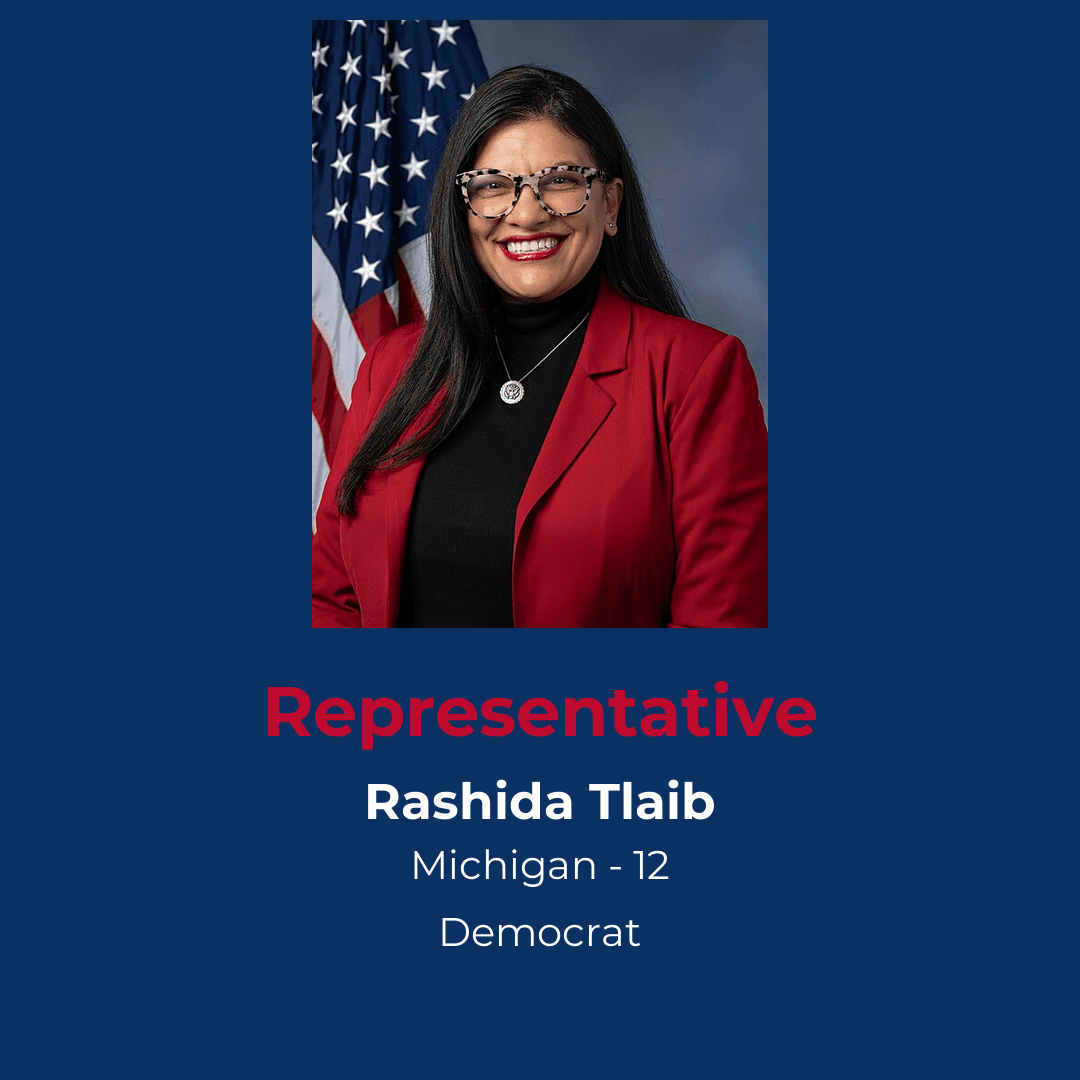
Profile of Democrat Representative Tlaib from Michigan District 12
Key Takeaways (Click to Expand) Rashida Tlaib is a history-making figure: the first Palestinian-American woman to serve in Congress and one of the first two Muslim women elected (alongside Ilhan Omar). She represents Michigan’s 12th District, a culturally distinct area that includes parts of Detroit, Southfield, and Dearborn—the city with the highest concentration of Arab Americans in the United States. Before Congress, she was a public interest lawyer and social worker, famously fighting corporate polluters like Marathon Oil to protect residents in southwest Detroit from toxic emissions. A founding member of “The Squad,” she is a leading progressive voice on the Financial Services Committee, focusing on housing rights, environmental justice, and ending water shutoffs. “A social worker at heart and a fighter by trade, Rashida Tlaib has turned the specific struggles of her Detroit and Dearborn neighbors into a national movement for environmental and economic justice.” Rashida Tlaib: The Fighter from Detroit Representative Rashida Tlaib’s path to Washington was paved not with corporate donations, but with community organizing. Born the eldest of 14 children to Palestinian immigrant parents, Tlaib grew up in Southwest Detroit, where she saw firsthand the impact of industrial pollution and systemic poverty. This upbringing forged her identity as a “fighter”—a label she embraces proudly. Tlaib made history in 2008 when she became the first Muslim woman elected to the Michigan Legislature. There, she earned a reputation for relentless constituent service, often personally driving residents to appointments or fighting foreclosure notices on their porches. In 2018, she brought that activist energy to Congress, winning the seat formerly held by John Conyers. Her victory was a global headline, marking the first time a Palestinian-American woman held a seat in the U.S. House. In Washington, Tlaib is a core member of “The Squad,” the group of progressive women elected in 2018 who have pushed the Democratic party to the left. She sits on the powerful House Financial Services Committee, where she has grilled bank CEOs on discriminatory lending and advocated for a “public banking” option. She is also a member of the Oversight Committee, using her background as an attorney to investigate corporate misconduct. Her legislative portfolio is intensely local despite her national profile. She is the lead sponsor of the Restoring Communities Left Behind Act, which funds home repairs in blighted neighborhoods, and she is a fierce advocate for water as a human right, introducing legislation to permanently ban water shutoffs—a critical issue in Detroit. While her foreign policy positions, particularly regarding Israel and Palestine, often generate national controversy, her constituents know her primarily as the representative who fights the factories that pollute their air. District Context: Michigan 12th (U.S. Census Data) The “Cultural Mosaic”: The 12th District is arguably the most culturally distinct district in the Midwest. It centers on Detroit (West Side/Southwest), Dearborn, and Southfield. Population: ~766,000 (2024 Est.) Demographics: A unique mix: ~44% Black/African American, ~46% White. Context: The “White” census category here includes the massive Arab American population in Dearborn, which is home to the largest mosque in North America and is considered the capital of Arab America. The district also includes Southfield, which has a significant and historic Jewish community, making this district a center of gravity for two major religious groups. Key Economic Drivers: Automotive Manufacturing (Ford World Headquarters and the massive Rouge Complex are here), Healthcare (Corewell Health), and Logistics. Key Issues: Environmental Justice is the #1 local issue. The district includes ZIP code 48217, often c...
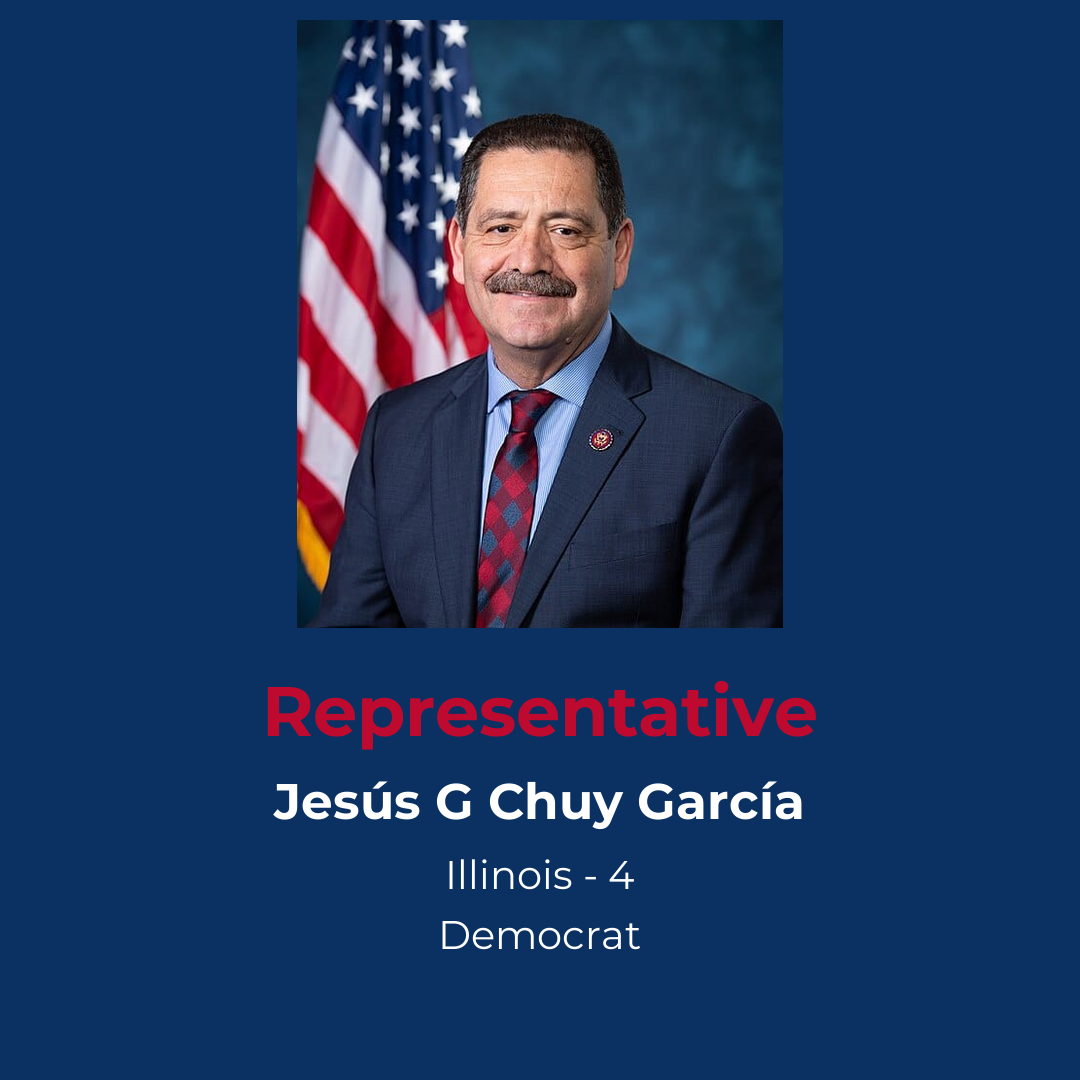
Profile of Democrat Representative García from Illinois District 4
Key Takeaways (Click to Expand) Jesús “Chuy” García is a prominent progressive figure in Chicago politics, having served as an Alderman, State Senator, and Cook County Commissioner before his election to Congress. He rose to national prominence in 2015 when he forced incumbent Chicago Mayor Rahm Emanuel into a historic runoff election, galvanizing a multi-racial coalition of progressives and labor unions. He represents Illinois’s 4th District, famously known as the “Earmuffs” district due to its unique shape designed to unite two distinct Latino communities: Puerto Ricans on the North Side and Mexican-Americans on the South Side. A member of the Transportation and Infrastructure Committee, his legislative work focuses heavily on transit equity, protecting the CTA and Metra systems, and advocating for immigrant rights. “From the Harold Washington coalition to the halls of Congress, Chuy García has spent four decades as the voice of Chicago’s working-class and immigrant communities.” Jesús “Chuy” García: The Progressive Lion of the Southwest Side Representative Jesús “Chuy” García is more than just a congressman; he is a living institution in Chicago politics. Born in Durango, Mexico, and raised on Chicago’s Southwest Side, García’s political career is defined by his roots in community organizing and his role in the legendary coalition that elected Harold Washington, Chicago’s first Black mayor, in 1983. García’s resume reads like a timeline of Chicago history. He was elected Alderman of the 22nd Ward in 1986, becoming a key Washington ally in the “Council Wars.” He later became the first Mexican-American elected to the Illinois State Senate. In 2010, he was elected to the Cook County Board of Commissioners. However, his biggest political moment came in 2015, when he ran for Mayor of Chicago against the powerful incumbent, Rahm Emanuel. Despite being massively outspent, García forced the first mayoral runoff in the city’s history, solidifying his status as the leader of the city’s progressive movement. Elected to Congress in 2018 to succeed Luis Gutiérrez, García brought his “neighborhood first” approach to Washington. He serves on the Transportation and Infrastructure Committee, a critical assignment for a district that relies heavily on the CTA, Midway Airport, and the region’s massive rail network. He is a co-founder of the Future of Transportation Caucus, advocating for transit systems that serve working-class riders, not just downtown commuters. García is also a senior member of the Congressional Hispanic Caucus and the Congressional Progressive Caucus. His legislative priorities are centered on comprehensive immigration reform, affordable housing to combat gentrification in neighborhoods like Pilsen and Logan Square, and environmental justice for communities disproportionately affected by industrial pollution. District Context: Illinois 4th (U.S. Census Data) The “Earmuffs”: The district is famous for its C-shape, wrapping around the western edge of Chicago. It connects the Puerto Rican community in Humboldt Park and Logan Square (North Side) with the Mexican-American community in Little Village and Pilsen (South Side), connected by a thin corridor along I-294. Population: ~712,000 (2024 Est.) Demographics: ~66% Hispanic/Latino. It is one of the most heavily Latino districts in the Midwest. Key Neighborhoods: Pilsen, Little Village (La Villita), Humboldt Park, Logan Square, and suburbs like Cicero and Berwyn. Economic Profile: Working-class and industrial. Key industries include Manufacturing, Transportation/Logistics (home to major rail yards and Midway Airport nearby), and Service/Hospitality. Source: U.S. Census Bureau & Ballotpedia Sources Used Official Biography: https://chuygarcia.house.gov/about Ballotpedia Profile: https://ballotpedia.org/Jesús_”Chuy”_García G...
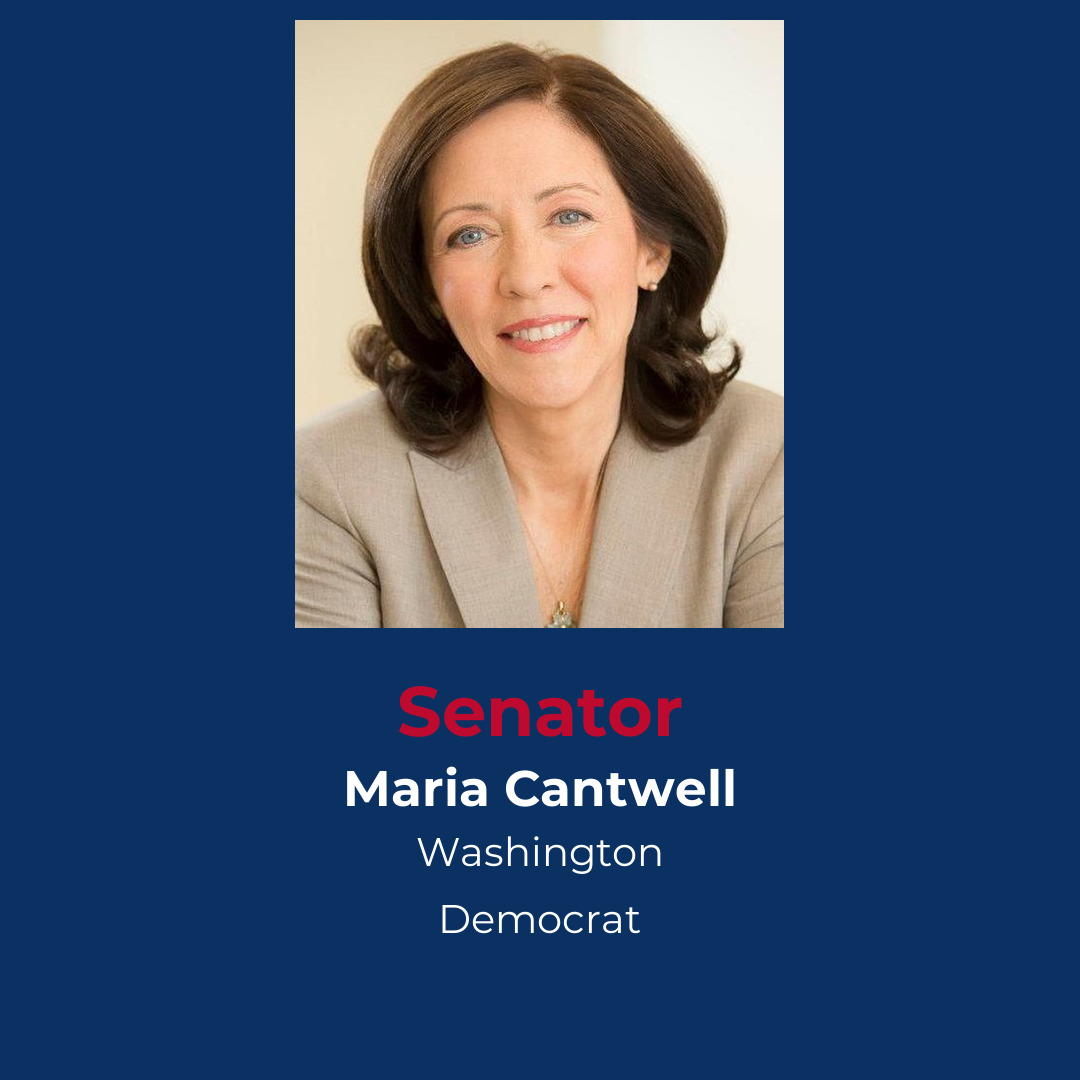
Profile of Democrat Senator Cantwell from Washington
Key Takeaways Maria Cantwell is the first woman to represent Washington state in the U.S. Senate, serving since 2001. Before the Senate, she was a successful tech executive at RealNetworks, where she became a multimillionaire, giving her deep ties to the state’s massive technology sector. She serves as the Top Democrat on the Senate Commerce, Science, and Transportation Committee, a powerful role that gives her oversight of the aviation industry (critical for Boeing), the internet, and consumer protection. Her legislative career is defined by her “technocrat” approach, focusing heavily on net neutrality, aviation safety, STEM education, and protecting the Pacific Northwest’s fisheries and environment. “A tech executive turned senior senator, Maria Cantwell bridges the gap between Washington state’s Silicon Forest and its vast natural resources.” Maria Cantwell: The Tech Senator from the Pacific Northwest Senator Maria Cantwell’s career is a reflection of the state she represents: rooted in innovation, trade, and the environment. As a former high-tech executive, she brings a unique understanding of the digital economy to the Senate, where she has become one of the chamber’s leading voices on technology policy, privacy, and aviation. Cantwell’s path to the Senate was not a straight line. After serving in the Washington State Legislature and one term in the U.S. House (1993–1995), she lost her seat in the 1994 “Republican Revolution.” Instead of staying in politics, she pivoted to the private sector, joining the early internet streaming company RealNetworks. She rose to become a senior vice president, helping build the company into a tech giant. This business success allowed her to self-fund a Senate campaign in 2000, where she defeated a three-term incumbent by one of the narrowest margins in U.S. history. In the Senate, Cantwell is a powerhouse on the Commerce, Science, and Transportation Committee. As the top Democrat on the panel, she has played a central role in writing major legislation, including the CHIPS and Science Act to boost domestic semiconductor manufacturing. She has also been the Senate’s toughest watchdog on the aviation industry, leading investigations into Boeing’s safety culture following the 737 MAX crises. Beyond tech and transportation, Cantwell is a fierce defender of Washington’s natural resources. She has consistently fought to protect the Arctic National Wildlife Refuge and champions the “Blue Economy,” advocating for sustainable fisheries and port infrastructure which are vital to her coastal state. She is known as a pragmatic, policy-focused legislator who prefers the details of committee work over the national media spotlight. State Context: Washington (U.S. Census Data) Population: ~7.9 Million (2024 Est.) Key Demographics: 63.8% White, 14.7% Hispanic/Latino, 10.5% Asian. Economic Drivers: Washington has a dual economy. The “Silicon Forest” in the west is home to global giants like Amazon and Microsoft. The state is also the nation’s leading producer of apples, hops, and sweet cherries. Key Industries: Aerospace (Boeing), Information Technology, Agriculture, and Maritime Trade. Military Footprint: The state hosts major installations including Joint Base Lewis-McChord and Naval Base Kitsap, supporting over 60,000 active duty personnel. Source: U.S. Census Bureau & WA Dept. of Commerce Sources Used Official Biography: https://www.cantwell.senate.gov/about/biography Ballotpedia Profile: https://ballotpedia.org/Maria_Cantwell GovTrack.us Legislative Record: https://www.govtrack.us/congress/members/maria_cantwell/300018 Washington State Dept. of Commerce: https://www.commerce.wa.gov/ #Senator #Washington #Democrat #MariaCantwell Links for Senator Cantwell
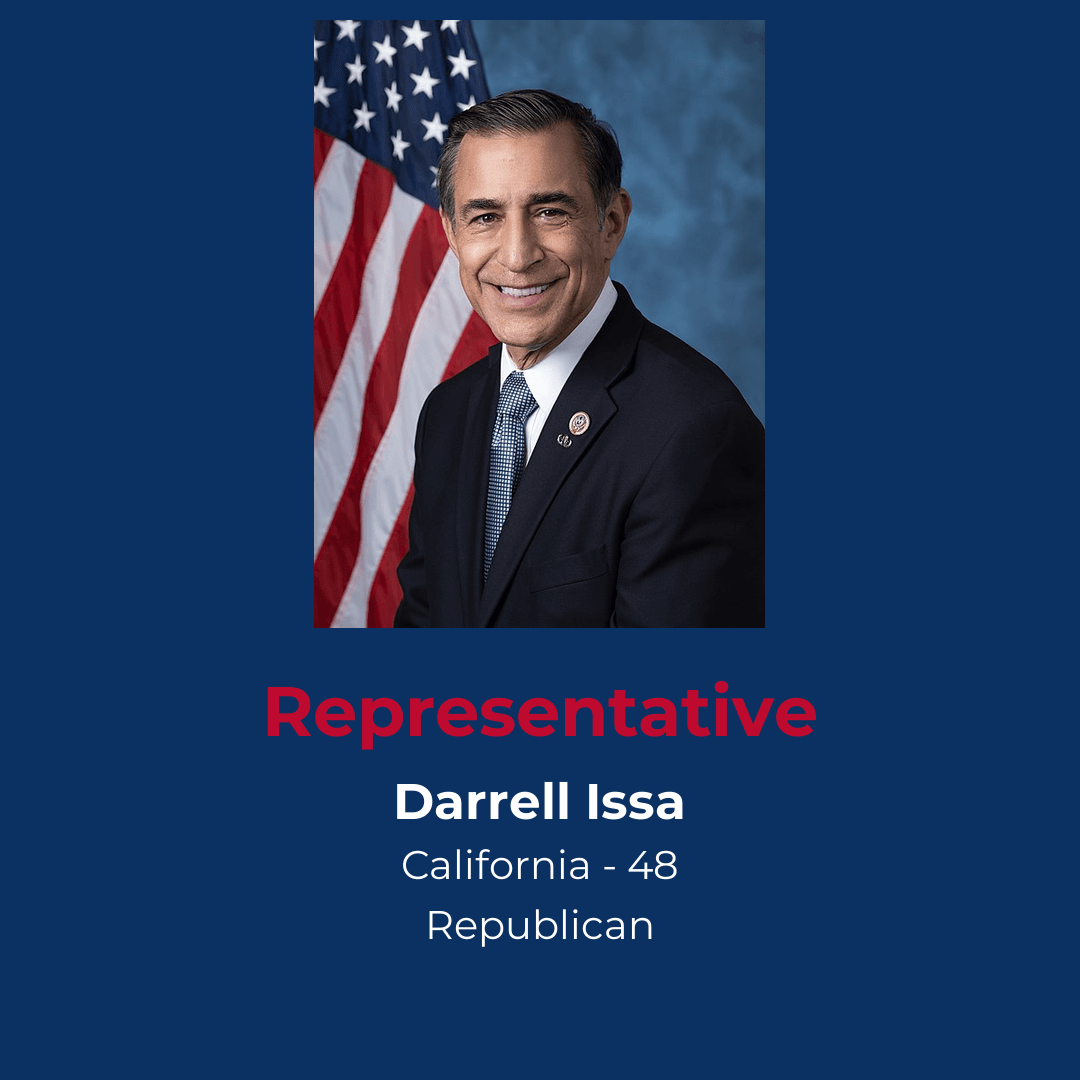
Profile of Republican Representative Issa from California District 48
Key Takeaways Darrell Issa is a successful entrepreneur who founded Directed Electronics, the company behind the famous Viper car alarm system, making him one of the wealthiest members of Congress. He previously served as the aggressive and high-profile Chairman of the House Oversight Committee, where he led major investigations into the executive branch. He is a veteran of the U.S. Army, where he served as an Explosive Ordnance Disposal (EOD) technician and later as a commissioned officer. In his current term, he serves on the House Judiciary and Foreign Affairs Committees, with a deep focus on intellectual property rights and patent reform. “From the CEO of a major electronics company to the Chairman of the House Oversight Committee, Darrell Issa has built a career on two pillars: business innovation and aggressive government accountability.” Darrell Issa: The Tech Entrepreneur and Oversight Watchdog Representative Darrell Issa’s career is defined by his dual identity as a self-made business tycoon and a combative political watchdog. As the founder of a major consumer electronics company and a former Chairman of the House Oversight Committee, he brings a unique mix of entrepreneurial experience and investigatory zeal to Washington. Issa’s path began in the U.S. Army, where he enlisted as a young man and trained as a bomb disposal technician. He later earned a college degree and was commissioned as an officer. After leaving the military, he entered the business world, eventually founding Directed Electronics. The company became a massive success, best known for its “Viper” car alarms and the famous voice recording, “Protected by Viper, stand back.” This venture made him a multimillionaire and gave him a deep, personal stake in issues of patent law and intellectual property. First elected to Congress in 2000, Issa rose to national prominence as the Chairman of the House Oversight and Government Reform Committee from 2011 to 2015. In this role, he became the Republican party’s chief investigator, launching high-profile probes into the Obama administration, including the “Fast and Furious” gun-walking scandal and the IRS targeting controversy. He earned a reputation as a relentless interrogator and a fierce critic of government waste and overreach. After briefly retiring in 2018, Issa returned to Congress in 2020 to represent a new district in inland Southern California. Today, he serves on the House Judiciary Committee, where he leverages his business background as the Chairman of the Subcommittee on Courts, Intellectual Property, and the Internet. He is also a senior member of the House Foreign Affairs Committee. His current legislative work focuses on strengthening patent protection to spur innovation, securing the border, and continuing his career-long mission of holding the federal bureaucracy accountable. Sources Used Official Biography: https://issa.house.gov/about Ballotpedia Profile: https://ballotpedia.org/Darrell_Issa GovTrack.us Legislative Record: https://www.govtrack.us/congress/members/darrell_issa/400196 #Representative #California #Republican #DarrellIssa Links for Representative Issa Official Website | X (repdarrellissa) | Facebook | Wikipedia Follow us: YouTube | X |
The Nation’s Leaders from Coast to Coast: The Battle of Ballots and Bullets: The Battle of Athens
When we think of American soldiers fighting for freedom, we usually picture foreign battlefields. But in nineteen forty-six, a group of World War Two veterans had to fight a war on their own front porch. In McMinn County, Tennessee, a corrupt political machine led by a tyrannical sheriff had been rigging elections and intimidating voters for years. In this episode of Monday Madness, Stephen and Leah tell the explosive true story of the Battle of Athens. Discover how thousands of returning veterans refused to be bullied by local deputies. Learn how a dispute over ballot boxes on election day escalated into a full blown siege of the county jail, involving rifles, machine guns, and dynamite. It is a rare and incredible instance where American citizens took up arms against their own local government to ensure their votes were counted. Research Links American Heritage | The Battle of Athens | https://www.americanheritage.com/battle-athens Vox | The Battle of Athens | https://www.vox.com/2016/8/1/12341234/battle-of-athens-tennessee-1946 Tennessee Encyclopedia | Battle of Athens | https://tennesseeencyclopedia.net/entries/battle-of-athens/
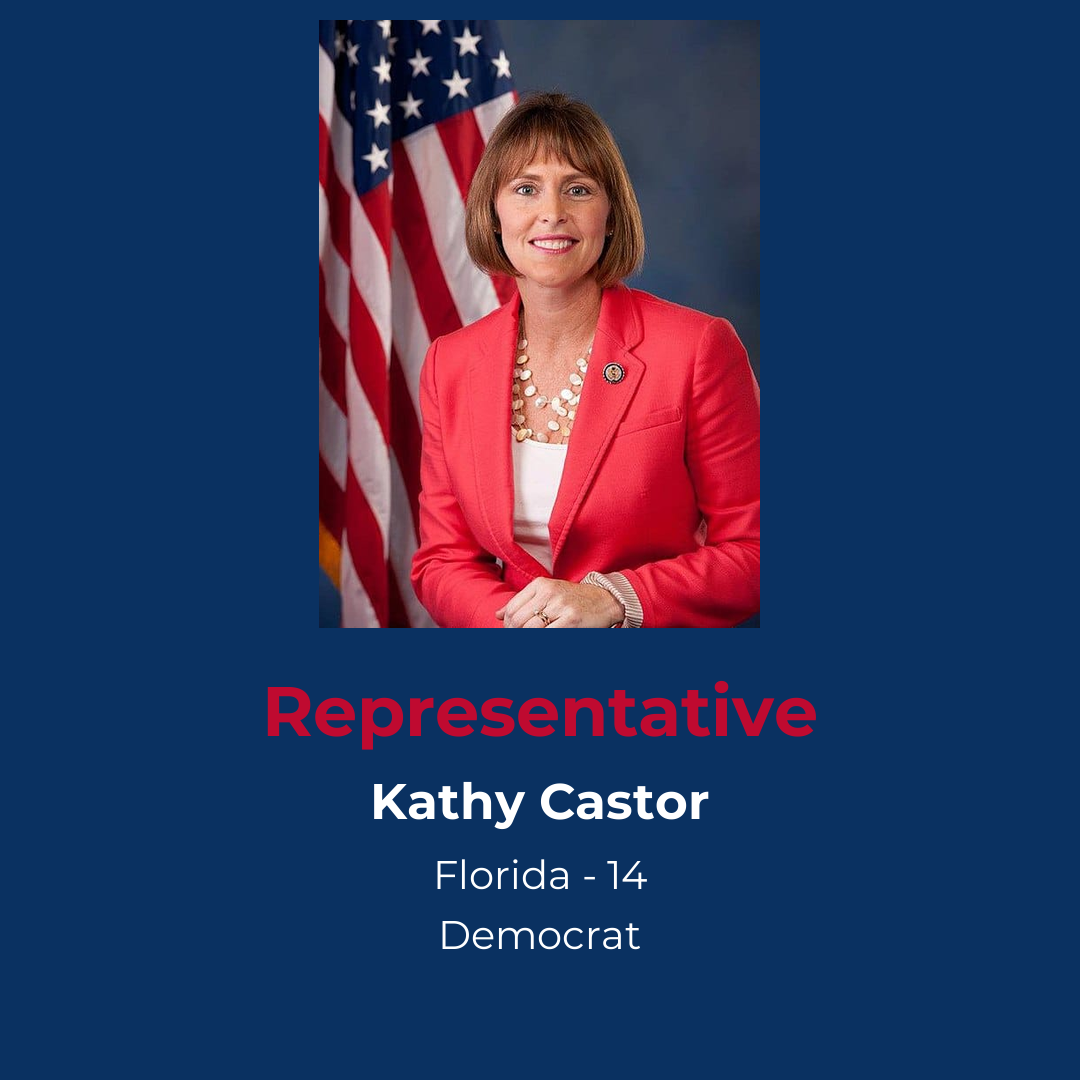
Profile of Democrat Representative Castor from Florida District 14
Kathy Castor served as the Chair of the House Select Committee on the Climate Crisis, where she led the development of a comprehensive congressional roadmap for clean energy and climate action. She is a scion of a prominent Florida political family; her mother, Betty Castor, was the President of the University of South Florida and the Florida Education Commissioner. Before Congress, she practiced as an environmental attorney and served on the Hillsborough County Commission, where she was known as a staunch advocate for environmental protection and smart growth. She holds a senior position on the powerful House Energy and Commerce Committee, serving as the Ranking Member of the Oversight and Investigations Subcommittee. “From her roots as an environmental attorney in Tampa to leading the House’s charge on the climate crisis, Kathy Castor has defined her career by fighting for the health of her community and the planet.” Kathy Castor: A Climate Leader with Deep Tampa Roots Representative Kathy Castor’s career is a testament to the power of combining local advocacy with national leadership. As the former Chair of the Select Committee on the Climate Crisis and a senior member of the Energy and Commerce Committee, she has become one of the most influential environmental policymakers in Congress, all while remaining deeply tethered to the needs of her Tampa Bay district. Castor’s commitment to public service runs in the family. She is the daughter of Betty Castor, a trailblazing Florida politician and educator. However, Kathy carved her own path, first as an environmental attorney enforcing growth management laws to protect Florida’s wetlands and coastlines. She then entered elected office as a Hillsborough County Commissioner, where she championed environmental protection and healthcare access. Elected to Congress in 2006, Castor quickly established herself as a policy heavyweight. Her background made her a natural choice to lead the House Select Committee on the Climate Crisis, where she oversaw the creation of the “Congressional Action Plan,” a detailed framework that laid the groundwork for major legislation like the Inflation Reduction Act. She is a fierce defender of Florida’s coast, consistently authoring legislation to ban offshore oil drilling to protect the state’s tourism and environment. Beyond the environment, Rep. Castor is a dedicated advocate for her district’s economic engines. She fights for funding for MacDill Air Force Base, supports the University of South Florida, and works to expand access to affordable healthcare. As the Ranking Member of the Energy and Commerce Oversight Subcommittee, she also plays a critical watchdog role, investigating issues ranging from consumer safety to public health. Sources Used Official Biography: https://castor.house.gov/biography/ Ballotpedia Profile: https://ballotpedia.org/Kathy_Castor GovTrack.us Legislative Record: https://www.govtrack.us/congress/members/kathy_castor/412195 #Representative #Florida #Democrat #KathyCastor Links for Representative Castor Official Website | X (USRepKCastor) | Facebook | YouTube | Wikipedia Follow us: YouTube | X |

The Nation’s Leaders from Coast to Coast: The Fake Letter That Stole an Election: The Murchison Letter
How did a simple letter swing an entire presidential election? In eighteen eighty-eight, President Grover Cleveland was in a tight race against Benjamin Harrison. The most volatile voters were Irish Americans, who held a deep animosity toward Great Britain. All it would take was one political dirty trick to turn them against the president. In this episode of Monday Madness, Stephen and Leah unpack the story of the Murchison Letter, one of the most effective "October surprises" in political history. Discover how a Republican activist penned a fake letter to the British Ambassador, baiting him into a trap. Learn how the ambassador's foolish reply was published just weeks before the election, creating a massive scandal that proved Cleveland was "pro-British" and costing him the critical state of New York and the presidency. Research Links University of Virginia | Miller Center | The Election of 1888 | https://millercenter.org/president/grover-cleveland/the-election-of-1888 Encyclopedia Britannica | Murchison Letter | https://www.britannica.com/event/murchison-letter Dickinson College | The Murchison Letter | https://www.dickinson.edu/homepage/1026/the_murchison_letter
Profile of Republican Representative Joyce from Pennsylvania District 13
Key Takeaways (Click to Expand) Before entering politics, Dr. John Joyce practiced dermatology in Altoona, PA, for 25 years, running his own practice. He is a Fellow of the American Academy of Dermatology and served in the U.S. Navy Reserve Medical Corps. He holds a key position on the influential House Energy and Commerce Committee, serving on the critical Health Subcommittee. His legislative priorities are heavily informed by his medical background, focusing on healthcare reform (especially rural health), energy policy, and economic issues relevant to his south-central Pennsylvania district. “From diagnosing patients in the exam room to diagnosing policy on the House Energy and Commerce Committee, Dr. John Joyce brings a lifetime of medical expertise to Congress.” John Joyce: The Doctor Is In the House Representative John Joyce’s career before Congress was not spent in political circles, but in the exam rooms of his own dermatology practice. For a quarter-century, Dr. Joyce served patients in his hometown of Altoona and the surrounding rural communities of south-central Pennsylvania. This deep, practical experience in medicine, combined with his service in the Navy Reserve Medical Corps, provides him with a unique and valuable perspective in Washington. Joyce built a successful dermatology practice from the ground up, giving him firsthand insight into the challenges faced by both patients navigating the healthcare system and small business owners managing a practice. His desire to fix what he saw as a broken healthcare system was a primary motivator for his run for office. Elected in 2018, Dr. Joyce quickly secured a coveted spot on the House Energy and Commerce Committee, one of the oldest and most powerful committees in Congress with broad jurisdiction over healthcare, energy, telecommunications, and consumer protection. His assignment to the Health Subcommittee is a natural fit, allowing him to directly apply his decades of medical knowledge to legislative debates on prescription drug pricing, rural healthcare access, and medical innovation. As a representative of a largely rural district heavily reliant on agriculture and energy production, Rep. Joyce is also a key voice on energy policy and rural economic development. A mainstream conservative, his work is defined by his real-world experience as a doctor and small business owner, bringing a pragmatic and knowledgeable approach to the complex issues before Congress. Sources Used Official Biography: https://johnjoyce.house.gov/about Ballotpedia Profile: https://ballotpedia.org/John_Joyce_(Pennsylvania) GovTrack.us Legislative Record: https://www.govtrack.us/congress/members/john_joyce/412798 #Representative #Pennsylvania #Republican #JohnJoyce Links for Representative Joyce Official Website | X (RepJohnJoyce) | Wikipedia Follow us: YouTube | X | Facebook
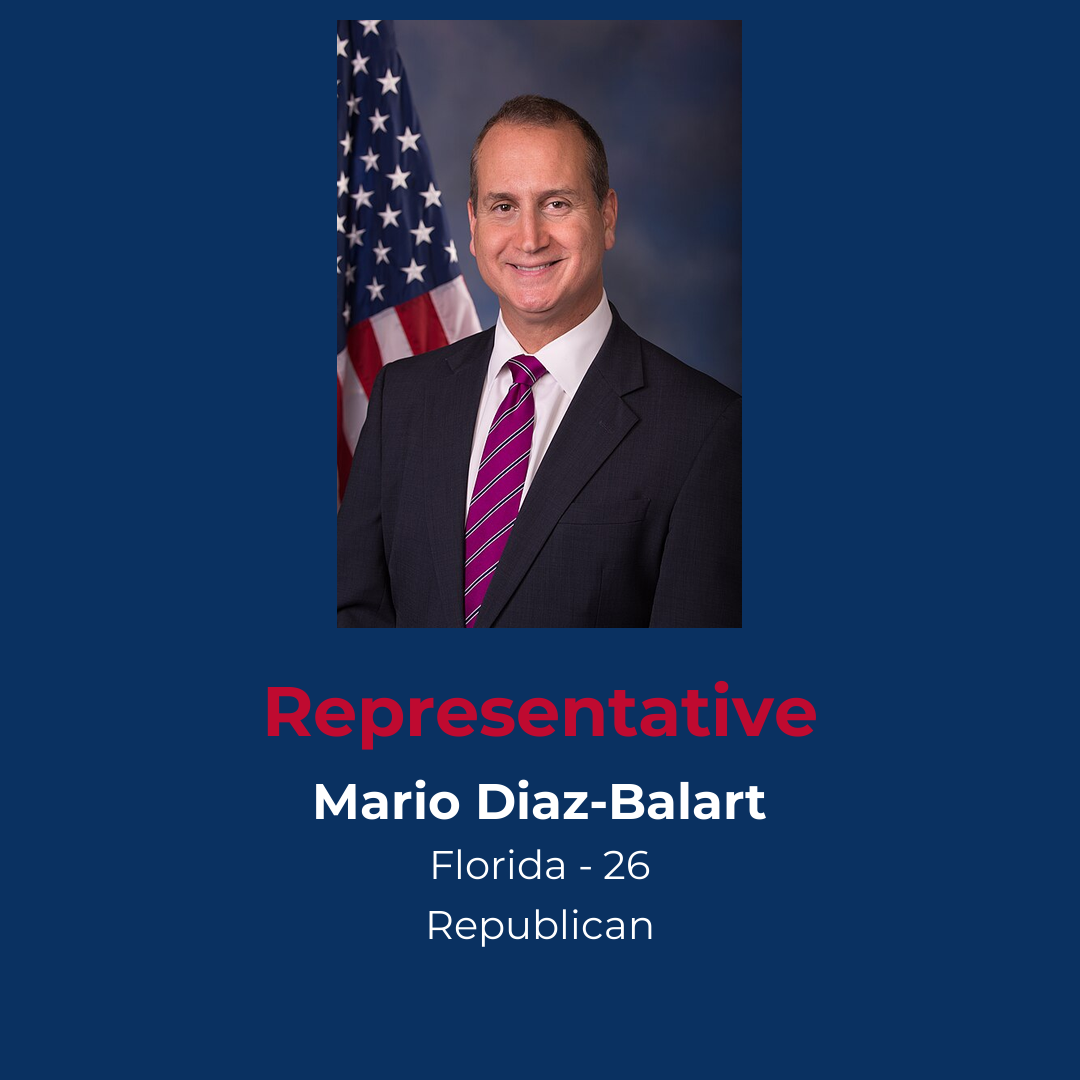
Profile of Republican Representative Diaz-Balart from Florida District 26
Key Takeaways (Click to Expand) Mario Diaz-Balart is the longest-serving Republican in Florida’s congressional delegation, first elected in 2002. He comes from a prominent Cuban-American political family; his aunt was Fidel Castro’s first wife, and his brother, Lincoln Diaz-Balart, also served in Congress. He is a powerful “cardinal” on the House Appropriations Committee, serving as the Chairman of the Subcommittee on State, Foreign Operations, and Related Programs, which oversees the State Department and foreign aid budget. A leading voice on U.S. policy toward Cuba and Latin America, he is known for his staunchly anti-communist and anti-Castro stance. “A pillar of the South Florida political establishment and a key architect of U.S. foreign policy funding, Mario Diaz-Balart’s career bridges the worlds of exile politics and congressional power.” Mario Diaz-Balart: A Legacy of Anti-Communism and Appropriations Power Representative Mario Diaz-Balart is one of the most senior and influential members of Florida’s congressional delegation. His career is defined by his deep roots in the Cuban exile community, his rise to become a powerful appropriator in Congress, and his unwavering focus on U.S. policy toward Latin America, particularly Cuba. Diaz-Balart hails from one of the most prominent families in Cuban and Cuban-American political history. His father was a politician in pre-Castro Cuba, and his aunt, Mirta Diaz-Balart, was Fidel Castro’s first wife before becoming a critic of his regime. His brother, Lincoln Diaz-Balart, preceded him in Congress. This background instilled in him a lifelong, staunch opposition to communism. Before entering federal politics, Diaz-Balart served for 14 years in the Florida state legislature, rising to leadership positions in both the State House and State Senate. First elected to the U.S. House in 2002, Diaz-Balart has steadily climbed the ranks of seniority. His most significant role is on the powerful House Appropriations Committee, where he is one of the 12 subcommittee chairmen known as “cardinals” who control federal spending. As Chairman of the Subcommittee on State, Foreign Operations, and Related Programs, he has direct oversight of the entire budget for the U.S. State Department, USAID, and all related foreign assistance programs. This makes him a central figure in shaping America’s diplomatic and foreign aid priorities. In addition to his appropriations work, Rep. Diaz-Balart is a leading congressional voice on Latin American policy. He is arguably the most prominent advocate for maintaining a hardline stance against the Cuban regime, opposing any normalization of relations and pushing for policies that support democracy activists on the island. Representing a South Florida district with large Cuban-American and Hispanic populations, his work is a direct reflection of his constituents’ deeply held beliefs and experiences. Sources Used Official Biography: https://mariodiazbalart.house.gov/biography Ballotpedia Profile: https://ballotpedia.org/Mario_Diaz-Balart GovTrack.us Legislative Record: https://www.govtrack.us/congress/members/mario_diaz-balart/400108 #Representative #Florida #Republican #MarioDiazBalart Links for Representative Diaz-Balart Official Website | X (MarioDB) | Facebook | YouTube | Wikipedia Follow us:

The Nation’s Leaders from Coast to Coast: The Secret Spies Who Saved Washington: The Culper Spy Ring
Research Links George Washington’s Mount Vernon | Culper Spy Ring | https://www.mountvernon.org/library/digitalhistory/digital-encyclopedia/article/culper-spy-ring/ National Park Service | The Culper Ring | https://www.nps.gov/long/learn/historyculture/culper-ring.htm Central Intelligence Agency (CIA) | The Culper Spy Ring | https://www.cia.gov/stories/story/the-culper-spy-ring/
Profile of Republican Representative Self from Texas District 3
Key Takeaways (Click to Expand) Keith Self is a decorated 25-year U.S. Army veteran, retiring as a Lieutenant Colonel after service in the Airborne Infantry, Special Forces, and Army Rangers. After his military career, he served for 12 years (three terms) as the County Judge of Collin County, Texas, a major suburban county north of Dallas. As County Judge, he was known for his strong fiscal conservatism, overseeing significant tax rate cuts during a period of rapid growth. In Congress, he is a member of the House Freedom Caucus and serves on the Foreign Affairs and Veterans’ Affairs Committees. “From commanding troops in the Army Special Forces to commanding the Commissioners Court in one of America’s fastest-growing counties, Keith Self’s career has been defined by leadership and unwavering conservative principles.” Keith Self: A Veteran’s Voice for Conservative Principles Representative Keith Self brings a lifetime of leadership—forged in the U.S. Army Special Forces and honed in local government—to his role representing the suburban communities north of Dallas. A decorated veteran and a staunch fiscal conservative, his focus in Washington is on national security, border security, and reining in federal spending. Self’s journey began with a 25-year career in the U.S. Army. A West Point graduate, he served with distinction in Airborne Infantry, Army Rangers, and Special Forces units, deploying across Europe and the Middle East, including during Operations Iraqi Freedom and Enduring Freedom in Afghanistan. He retired as a Lieutenant Colonel, holding high-level security clearances and earning numerous awards, including the Master Parachutist Badge, Ranger Tab, and Special Forces Tab. Upon retiring from the military, Self entered public service in his home state of Texas. In 2006, he was elected County Judge of Collin County, the chief executive position for one of the fastest-growing and most populous counties in the nation. Over his three terms (12 years) in office, he built a strong reputation as a fiscal hawk, presiding over significant cuts to the county property tax rate while managing explosive growth. Elected to Congress in 2022, Rep. Self joined the conservative House Freedom Caucus and secured committee assignments that align with his background: the House Foreign Affairs Committee and the House Veterans’ Affairs Committee. He is a vocal advocate for securing the U.S.-Mexico border, strengthening the military, supporting veterans, and cutting federal spending, bringing his “Texas Tough” leadership style to the national stage. Sources Used Official Biography: https://keithself.house.gov/about Ballotpedia Profile: https://ballotpedia.org/Keith_Self GovTrack.us Legislative Record: https://www.govtrack.us/congress/members/keith_self/456942 #Representative #Texas #Republican #KeithSelf Links for Representative Self Official Website | X (repkeithself) | Facebook | Wikipedia Follow us: YouTube | X | Facebook
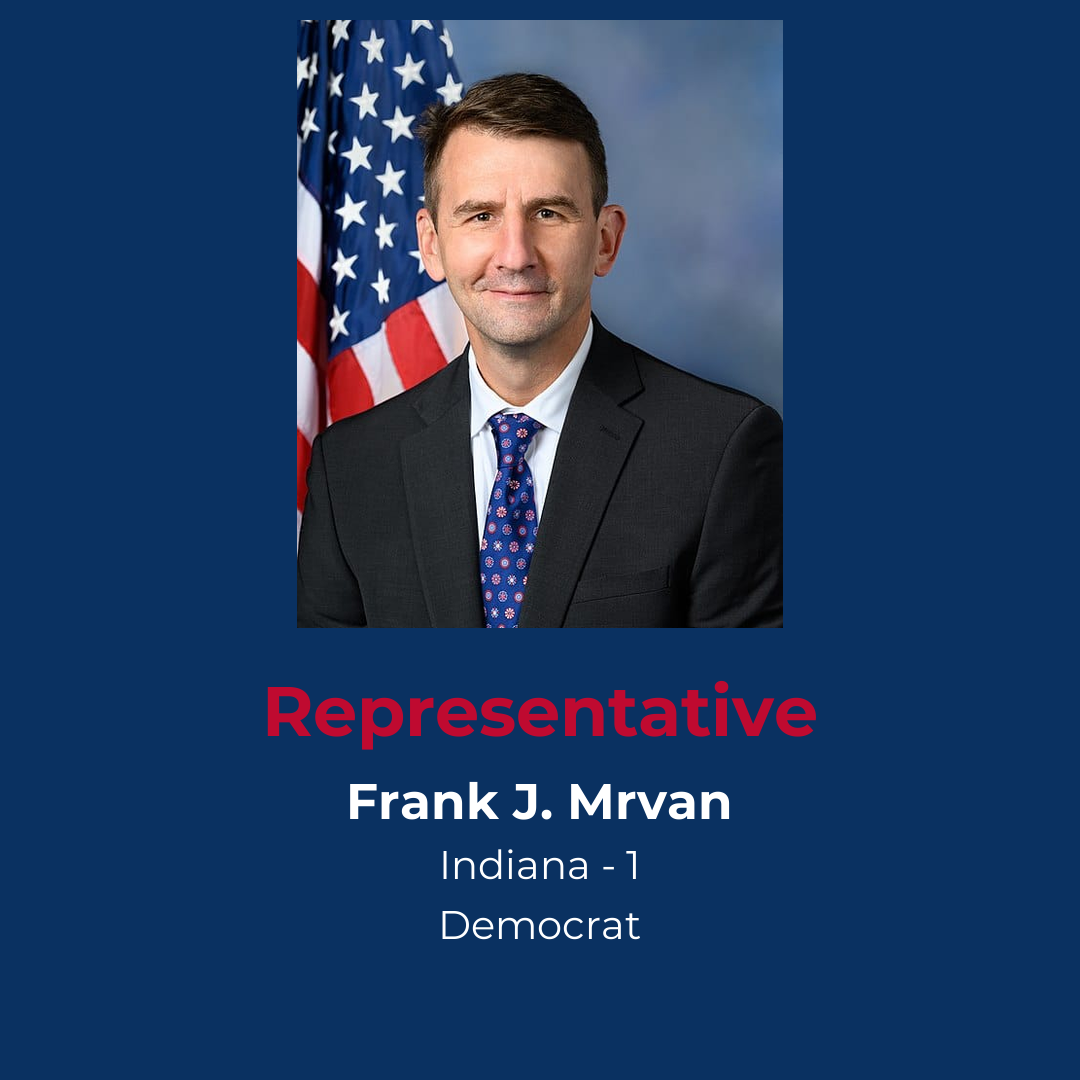
Profile of Democrat Representative Mrvan from Indiana District 1
Key Takeaways (Click to Expand) Frank Mrvan is the Vice-Chairman of the Congressional Steel Caucus, making him one of the most powerful advocates for the American steel industry in Washington. He continues a family legacy of public service; his father, Frank Mrvan Sr., was a respected Indiana State Senator for decades. Before Congress, he served for 15 years as the North Township Trustee, a key local government role focused on community services and financial assistance. He holds a powerful seat on the House Appropriations Committee, where he helps direct federal funding, particularly to projects supporting manufacturing and infrastructure. “From a family rooted in Northwest Indiana public service to his role as a chief defender of the American steel industry, Frank Mrvan’s career is a story of community advocacy.” Frank Mrvan: A Legacy of Service and a Champion for Steel Representative Frank J. Mrvan’s work in Congress is a direct continuation of a life dedicated to serving the communities of Northwest Indiana. As the Vice-Chairman of the Congressional Steel Caucus, he is a leading and powerful voice for the industry that forms the backbone of his district’s economy. Mrvan’s roots in public service run deep. He is the son of Frank Mrvan Sr., a long-serving and widely respected Indiana State Senator, from whom he learned the importance of constituent services. Before coming to Washington, Rep. Mrvan spent 15 years in local government as the North Township Trustee. In this executive role, he was on the front lines, managing a budget and providing essential services—from utility assistance to community programs—directly to residents. This experience gave him a ground-level understanding of the economic challenges facing working families. Elected to Congress in 2020, Mrvan succeeded longtime Representative Pete Visclosky and immediately took up the mantle as his district’s chief advocate. He secured a powerful assignment on the House Appropriations Committee, allowing him to have a direct hand in funding federal projects. He uses this role to support the domestic manufacturing industry and fund infrastructure projects that are critical to the “Region.” His most passionate work is in his role as Vice-Chairman of the Congressional Steel Caucus. Representing a district that is home to one of the largest concentrations of steel production in the nation, he is a relentless defender of the industry. He is a staunch supporter of “Buy America” provisions and the Section 232 tariffs, which he argues are essential to protect American steelworkers from unfair foreign competition and to ensure the nation’s economic and national security. Sources Used Official Biography: https://mrvan.house.gov/about Ballotpedia Profile: https://ballotpedia.org/Frank_J._Mrvan GovTrack.us Legislative Record: https://www.govtrack.us/congress/members/frank_mrvan/456822 #Representative #Indiana #Democrat #FrankJMrvan Links for Representative Mrvan Official Website | X (RepMrvan) | Facebook | Wikipedia Follow us: YouTube | X | Facebook
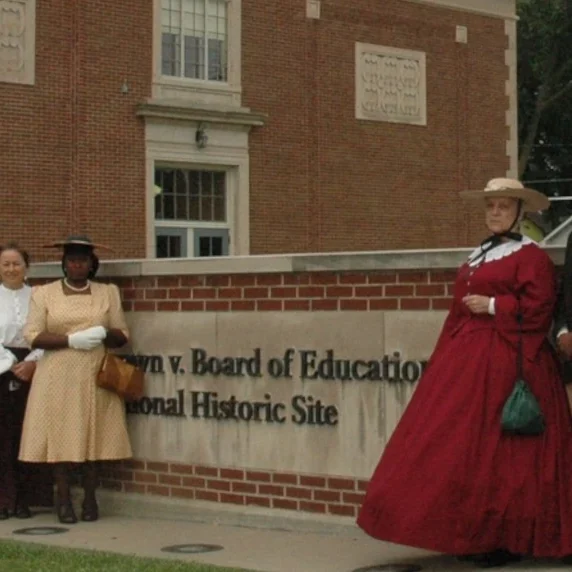
The Nation’s Leaders from Coast to Coast: The Case That Ended Segregation: Brown v. Board of Education
For decades, the law of the land in many states was "separate but equal." This doctrine, cemented by the eighteen ninety-six case Plessy versus Ferguson, allowed for systemic racial segregation in all walks of life. But in practice, especially in public education, separate was never equal. This injustice became the target of one of the most important legal battles in American history. In this episode of Wednesday Writs, Stephen and Leah explore the monumental case of Brown versus Board of Education. Discover how this was not just one lawsuit, but five separate cases bundled together, all led by the brilliant NAACP lawyer Thurgood Marshall. We dive into the groundbreaking legal strategy that went beyond unequal funding and argued that the very act of segregation inflicted psychological damage on children, violating the Fourteenth Amendment. Learn about the unanimous nine to zero decision that changed America forever and the long, difficult fight for desegregation that followed. Research Links Oyez | Brown v. Board of Education of Topeka (I) | https://www.oyez.org/cases/1940-1955/347us483 National Archives | Brown v. Board of Education (1954) | https://www.archives.gov/milestone-documents/brown-v-board-of-education Library of Congress | Brown v. Board of Education: A Resource Guide | https://guides.loc.gov/brown-v-board-of-education
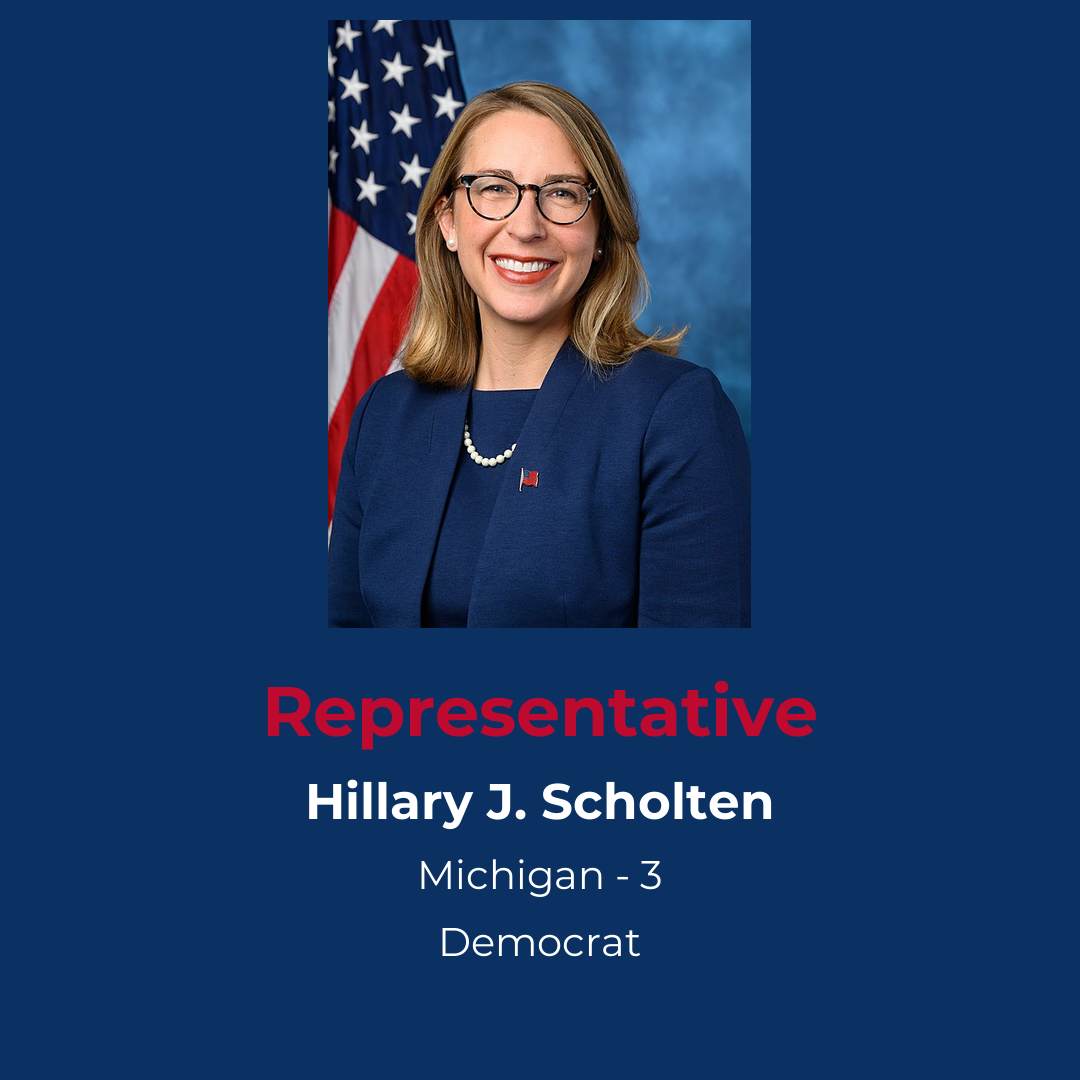
Profile of Democrat Representative Scholten from Michigan District 3
Key Takeaways Hillary Scholten is the first woman and the first Democrat in nearly 50 years to represent her Grand Rapids-based district in Congress. Before her election, she was an attorney for the Department of Justice during the Obama administration, specializing in immigration law. She also worked as a social worker and an attorney for the Michigan Immigrant Rights Center, giving her a deep background in advocacy. She serves on the Transportation and Infrastructure Committee, where she is a key advocate for protecting the Great Lakes and addressing PFAS water contamination. “From the Department of Justice to the Michigan Immigrant Rights Center, Hillary Scholten’s career as an attorney and advocate has been a prelude to her historic role as the first woman to represent West Michigan.” Hillary Scholten: A Historic Voice for West Michigan Representative Hillary Scholten’s election in 2022 was a historic political shift, making her the first woman to ever represent Michigan’s 3rd District and the first Democrat to hold the Grand Rapids-based seat in nearly half a century. Her background as an attorney for the Department of Justice and a local immigrant rights advocate has defined her pragmatic, community-focused approach to leadership. Scholten’s career began not in politics, but in social work and law. After law school, she clerked for the U.S. Court of Appeals and was then selected for the Attorney General’s Honors Program to serve as an attorney at the Department of Justice. During the Obama administration, she worked on immigration policy, a specialty she brought back to her home state. In 2017, she returned to Grand Rapids and served as a staff attorney for the Michigan Immigrant Rights Center, providing legal services to immigrants and refugees. After an unsuccessful but close run for the seat in 2020, she ran again in 2022 and won. In Congress, Rep. Scholten has secured assignments that are critical to her district’s economy and environment. As a member of the Transportation and Infrastructure Committee, she is a leading voice on the protection of the Great Lakes and has made securing federal funds to clean up PFAS contamination a top priority. As a member of the Small Business Committee and the pragmatic New Democrat Coalition, Scholten focuses on economic issues vital to West Michigan, from supporting the region’s diverse manufacturing sector to cutting red tape for local entrepreneurs. Her historic election represents a new era for her district, led by a voice deeply rooted in law, advocacy, and a commitment to public service. Sources Used Official Biography: https://scholten.house.gov/about Ballotpedia Profile: https://ballotpedia.org/Hillary_Scholten GovTrack.us Legislative Record: https://www.govtrack.us/congress/members/hillary_scholten/456919 #Representative #Michigan #Democrat #HillaryJScholten Links for Representative Scholten Official Website | X (RepScholten) | Facebook | Wikipedia Follow us: YouTube | X | Facebook

Profile of Republican Senator Cramer from North Dakota
Key Takeaways (Click to Expand) Before Congress, Kevin Cramer had a long career in state public service, most notably serving for nearly a decade as a North Dakota Public Service Commissioner. As a state regulator, he was a key figure overseeing the Bakken oil boom, making him one of his state’s foremost experts on energy policy. He served three terms as North Dakota’s sole, at-large Representative in the U.S. House before winning a high-profile Senate race in 2018. In the Senate, he serves on two committees vital to his state: Armed Services (advocating for Minot and Grand Forks AFBs) and Environment and Public Works (advocating for energy and agriculture). “From overseeing a state energy boom as a regulator to shaping national policy on the Senate’s Environment and Public Works Committee, Kevin Cramer’s career has been defined by American energy.” Kevin Cramer: An Energy Expert’s Path to the Senate Senator Kevin Cramer has been a central figure in North Dakota politics for decades, building a career that took him from state-level regulator to the U.S. House, and ultimately to the Senate. His political identity is deeply rooted in his expertise on energy policy, which he developed during one of the most transformative economic periods in his state’s history. Cramer’s career in public service is extensive. He served as Chairman of the North Dakota Republican Party and in the governor’s cabinet as State Tourism and Economic Development Director. However, his most defining pre-congressional role was his near-decade of service on the North Dakota Public Service Commission (PSC). As a PSC commissioner, he was a key state official overseeing the massive expansion of the Bakken oil shale formation, giving him a front-row seat to the energy boom that reshaped the state’s economy. In 2012, Cramer was elected to serve as North Dakota’s sole, at-large Representative in the U.S. House. For six years, he built a reputation as a staunch conservative and a vocal champion for the energy and agriculture sectors. In 2018, he entered a high-profile, nationally watched Senate race and successfully unseated the incumbent Democrat, Heidi Heitkamp. In the Senate, Cramer secured committee assignments that are a perfect match for his state’s priorities. As a member of the Environment and Public Works (EPW) Committee, he is a leading voice against federal environmental regulations, such as the “Waters of the U.S.” rule, and a proponent of an “all-of-the-above” energy strategy. He also serves on the Senate Armed Services Committee, a critical role he uses to advocate for North Dakota’s vital military installations, including the Minot and Grand Forks Air Force Bases. Sources Used Official Biography: https://www.cramer.senate.gov/biography Ballotpedia Profile: https://ballotpedia.org/Kevin_Cramer GovTrack.us Legislative Record: https://www.govtrack.us/congress/members/kevin_cramer/412555 #Senator #NorthDakota #Republican #KevinCramer Links for Senator Cramer Official Website | X (SenKevinCramer) | Facebook | YouTube | Wikipedia Follow us: YouTube | X | Facebook
The Nation’s Leaders from Coast to Coast: The Man Who Bailed Out America: The Panic of 1907
In a modern financial crisis, the world turns to central banks and governments for a rescue. But what happens when the government is powerless? In 1907, a failed stock scheme spiraled into a full-blown panic, causing a massive market crash and a run on the nation's banks. With no Federal Reserve to stop the bleeding, the entire U.S. economy teetered on the brink of collapse. In this episode of Monday Madness, Stephen and Leah tell the incredible story of how one private citizen, the powerful and imposing banker J.P. Morgan, stepped into the void. Discover how he transformed his private library into the nation's command center, summoned the country's top financiers, and physically locked them in a room, refusing to let them leave until they agreed to fund a bailout. It’s a wild story of a time when the fate of the American economy rested entirely in the hands of one unelected man. Research Links Federal Reserve History | The Panic of 1907 https://www.federalreservehistory.org/essays/panic-of-1907 J.P. Morgan & Co. The Panic of 1907 https://www.jpmorgan.com/about-us/our-history/panic-of-1907 The National Bureau of Economic Research The Financial Panic of 1907: The J.P. Morgan Years | https://www.nber.org/digest/mar06/financial-panic-1907-jp-morgan-years
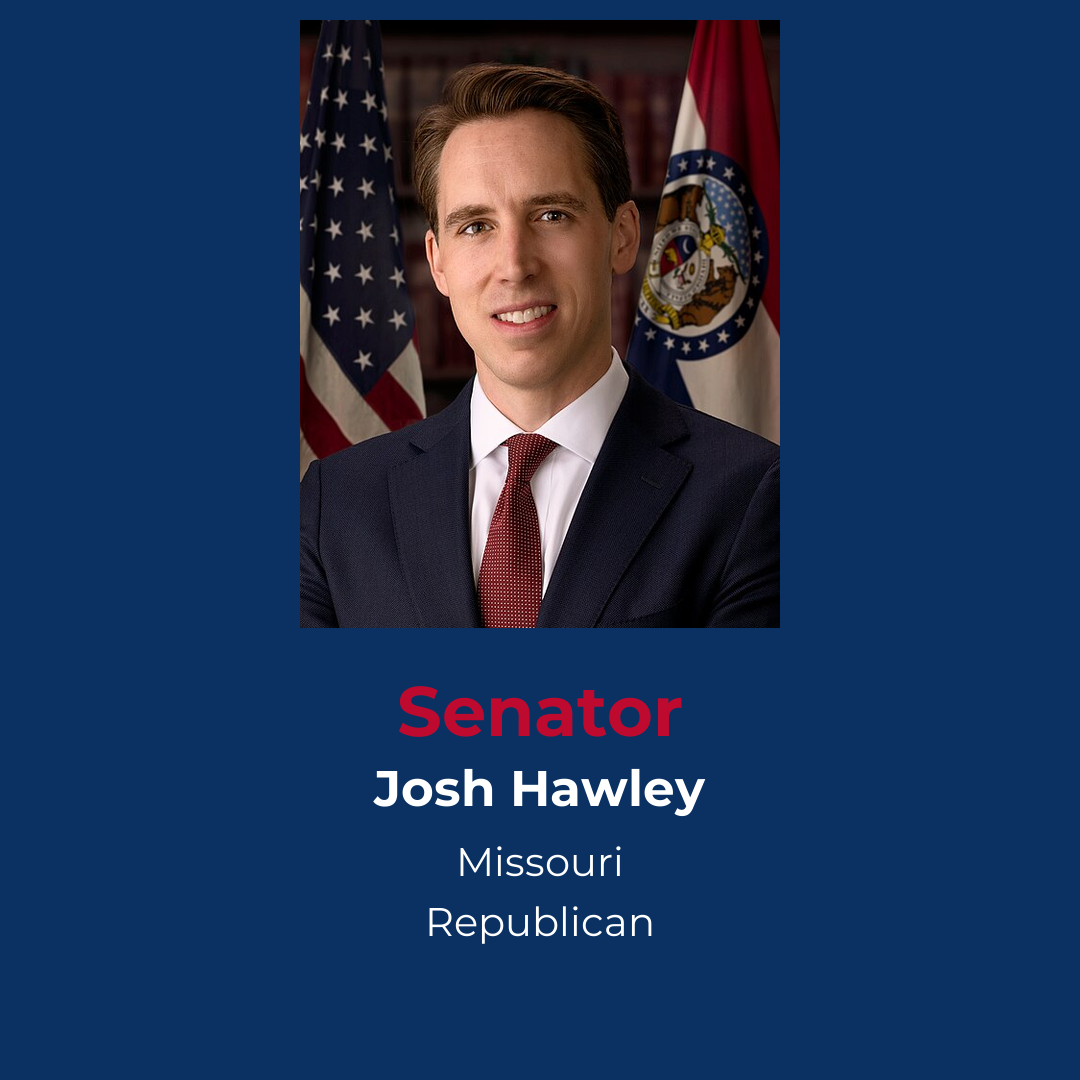
Profile of Republican Senator Hawley from Missouri
Key Takeaways (Click to Expand) Before entering politics, Josh Hawley was a constitutional lawyer and a tenured law professor at the University of Missouri. In his single term as Missouri’s Attorney General, he gained national attention for launching investigations into major tech companies. Elected in 2018 at age 38, he was the youngest U.S. Senator at the time and is a leading intellectual voice for the “national conservatism” movement. His primary legislative focuses are on combating the power of Big Tech, confronting the economic and national security threat of China, and promoting pro-family policies. “A leading intellectual of the modern conservative movement, Josh Hawley has defined his Senate career by waging a two-front war against the power of Big Tech and the influence of China.” Josh Hawley: The Architect of National Conservatism Senator Josh Hawley has, in a remarkably short time, become one of the most influential and ideologically defining figures in the Republican party. A constitutional lawyer by training and a populist by conviction, he has worked to reshape the GOP’s priorities, moving the party towards a new philosophy of “national conservatism” that is skeptical of globalism and focused on protecting American workers and families. Hawley’s background is in academia and law, not business or lifelong politics. After clerking for Supreme Court Chief Justice John Roberts, he became a tenured law professor at the University of Missouri. He entered the political arena in 2016, winning a race to become Missouri’s Attorney General. In that role, he quickly made a name for himself by launching antitrust investigations into big tech companies, a fight that would become his signature issue. In 2018, he ran a successful campaign to unseat a Democratic incumbent, becoming the youngest member of the U.S. Senate. He arrived in Washington with a clear and ambitious agenda: to reorient the Republican party away from what he saw as an outdated focus on free-market globalism and toward a new nationalism. In the Senate, Hawley has been a relentless critic of large technology companies, introducing legislation to break them up and strip them of liability protections. He is also one of the Senate’s most prominent hawks on China, advocating for a fundamental rethinking of U.S. policy to counter their economic and military power. He uses his position on the Judiciary and Homeland Security committees to advance his agenda, challenging both corporate power and foreign adversaries in a way that has made him a leading voice for the future direction of the conservative movement. Sources Used Official Biography: https://www.hawley.senate.gov/about-senator-hawley Ballotpedia Profile: https://ballotpedia.org/Josh_Hawley GovTrack.us Legislative Record: https://www.govtrack.us/congress/members/josh_hawley/412840 #Senator #Missouri #Republican #JoshHawley Links for Senator Hawley Official Website | X (SenHawleyPress) | Facebook | YouTube | Wikipedia Follow us: YouTube | X | Facebook
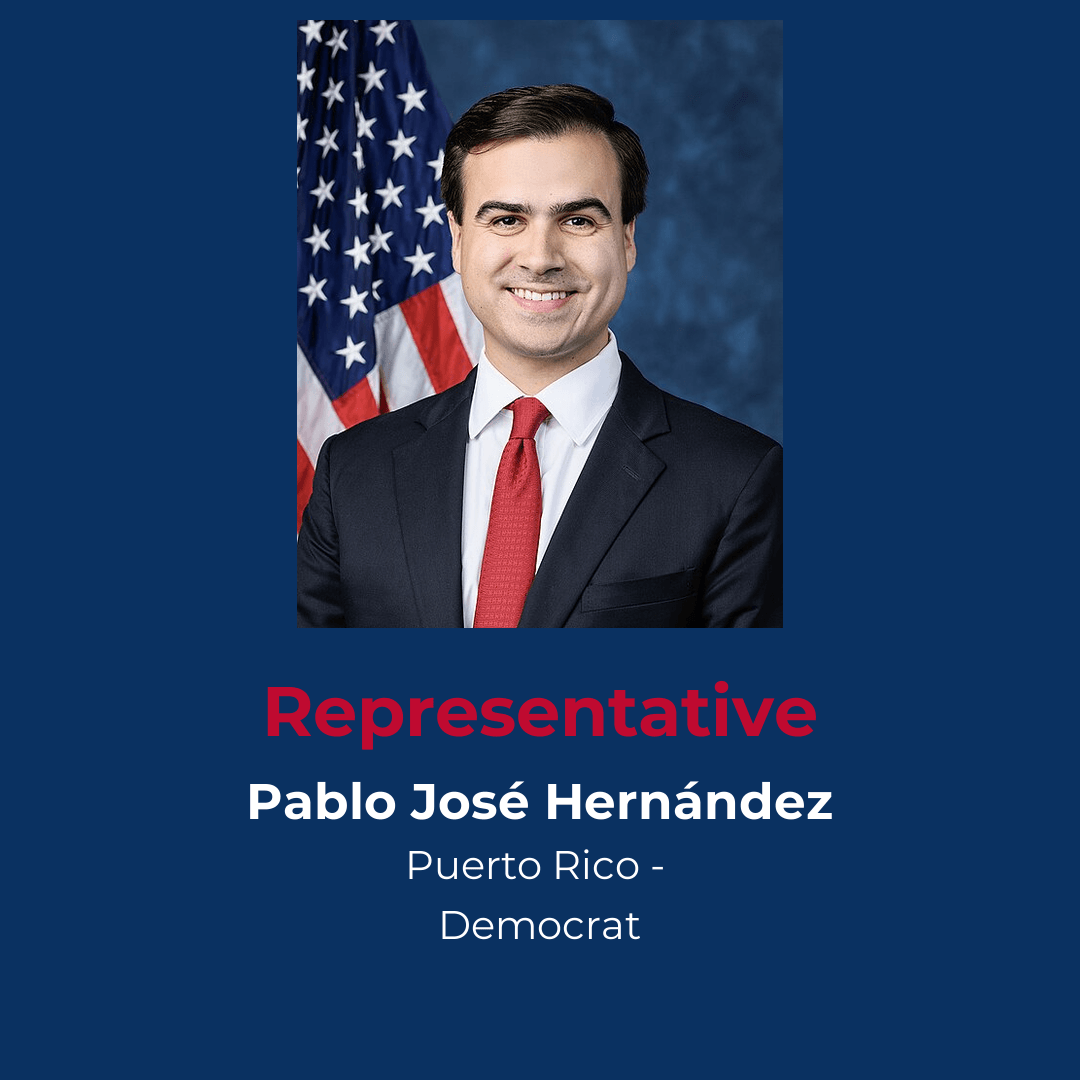
Profile of Democrat Representative Hernández Rivera from PR District 0
Key Takeaways Pablo Hernández is the Resident Commissioner of Puerto Rico, the island’s sole and non-voting member of the U.S. House of Representatives. He is the grandson of Rafael Hernández Colón, one of the most significant and longest-serving governors in Puerto Rico’s history, representing a new generation of a political dynasty. Before his election, he worked as a congressional staffer in Washington D.C., giving him deep experience with the legislative process. His primary focus is on addressing Puerto Rico’s political status, achieving economic parity with the states, and securing federal investments for the island. “Carrying the weight of a legendary political name, Pablo Hernández steps onto the national stage as a new-generation leader for Puerto Rico, tasked with navigating the island’s complex future.” Pablo Hernández: A Political Legacy for a New Era Resident Commissioner Pablo Hernández represents a unique convergence of legacy and a new vision for Puerto Rico’s future. As the grandson of the island’s revered former governor, Rafael Hernández Colón, he brings a historic name to Washington. Still, his focus is squarely on the modern challenges facing the island, from resolving its long-standing political status to achieving economic equality within the American system. Hernández grew up immersed in Puerto Rican politics. His grandfather was a dominant figure in the Popular Democratic Party, serving as governor for three terms. Instead of immediately entering the political fray, Hernández pursued a law degree and gained invaluable experience from the inside, working as a staffer and legal counsel on Capitol Hill in Washington, D.C. This time gave him a pragmatic understanding of how Congress operates and how to advocate effectively for the island’s interests before he ever became an elected official himself. Elected in 2024, Hernández holds the unique position of Resident Commissioner. While he can introduce legislation and vote in committee, he does not have a vote on the final passage of bills on the House floor. His primary role is to be Puerto Rico’s sole advocate and representative, fighting for federal resources, equal treatment under federal programs like Medicare and SSI, and a definitive resolution to the island’s political status. In Congress, Hernández is a central figure in the debate over Puerto Rico’s future. He advocates for a binding process that allows the people of Puerto Rico to determine their own destiny, whether that be statehood, independence, or a new form of commonwealth. His work is defined by a deep-seated belief in self-determination and a focus on building the economic and political foundations necessary for the island to thrive. Sources Used Official Biography: https://hernandez.house.gov/about (Note: Official site will be active post-swearing-in) Ballotpedia Profile: https://ballotpedia.org/Pablo_Hernández GovTrack.us Legislative Record: https://www.govtrack.us/congress/members/pablo_hernandez/456958 #Representative #PR #Democrat #PabloJosHernndez Links for Representative Hernández Rivera Official Website | X (reppablojose) | Facebook | Wikipedia Follow us: YouTube | X | Facebook
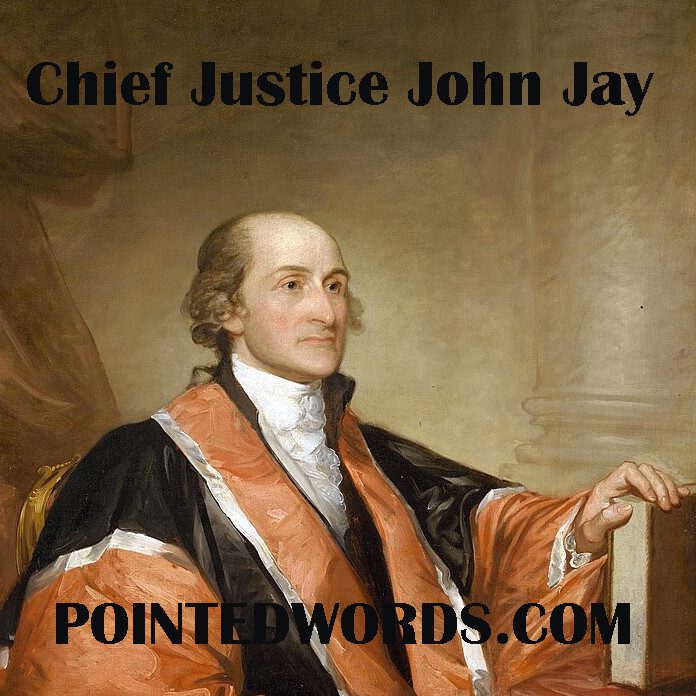
The Nation’s Leaders from Coast to Coast: The Founding Father in the Footnotes: John Jay
Overview When you list the architects of the United States, names like Washington, Jefferson, and Hamilton come to mind. But what if one of the most essential founders has been hiding in plain sight? John Jay’s resume is almost unmatched: he was a co-author of the Federalist Papers, the nation’s chief diplomat, the first Chief Justice of the Supreme Court, and an anti-slavery governor. His steady hand helped build the nation’s bedrock institutions, yet he rarely gets the same recognition. In this episode of Forgotten Fridays, Stephen and Leah pull John Jay out of the historical footnotes and into the spotlight. We explore why his cautious and principled nature made him a brilliant statesman but not a famous icon. Discover his crucial role in foreign policy, his unpopular but necessary Jay Treaty that prevented a war, and his quiet, foundational work on the Supreme Court. Join us to learn about the indispensable Founding Father whose legacy of quiet competence and steady leadership is more important now than ever. Research Links Columbia University | John Jay | https://jay.columbia.edu/ National Archives | John Jay | https://founders.archives.gov/documents/Jay-01-01-02-0001 Oyez | John Jay | https://www.oyez.org/justices/john_jay
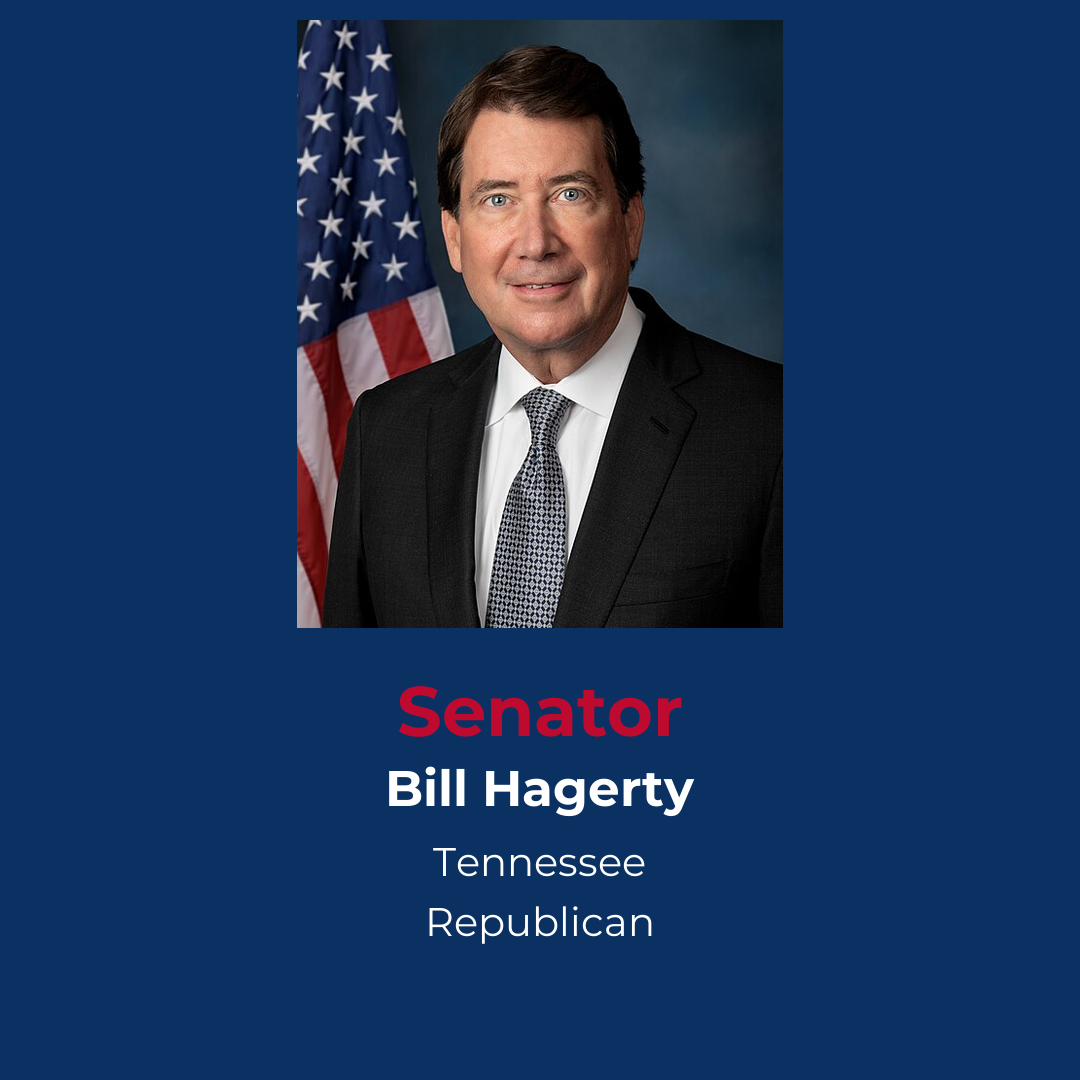
Profile of Republican Senator Hagerty from Tennessee
Before his Senate career, Bill Hagerty served as the U.S. Ambassador to Japan under President Donald Trump, a key diplomatic post. He has an extensive background in business and finance, having co-founded a successful private equity investment firm. He previously served in state government as the Commissioner of Economic and Community Development for Tennessee, overseeing a period of significant job growth. In the Senate, he holds positions on three powerful committees: Appropriations, Foreign Relations, and Banking, Housing, and Urban Affairs. “From the world of high finance to the high stakes of international diplomacy and now to the U.S. Senate, Bill Hagerty’s career has been defined by his focus on economic policy and America’s role in the world.” Bill Hagerty: From Ambassador to Senator Senator Bill Hagerty’s path to the U.S. Senate is a story of success in both the private sector and high-level public service. As a former U.S. Ambassador and a successful businessman, he brings a unique perspective on global economics and foreign policy to his role representing Tennessee, making him a significant conservative voice in Washington. Hagerty’s career began in the world of finance, where he built a successful career in private equity, eventually co-founding his own investment firm, Hagerty Peterson & Company. He first entered public service when he was appointed by Governor Bill Haslam to serve as the Commissioner of Economic and Community Development for Tennessee. In this role, he was the state’s chief economic development officer, credited with helping to bring major companies and thousands of jobs to the state. His profile rose significantly when President Donald Trump nominated him to be the U.S. Ambassador to Japan in 2017. During his two-year tenure in Tokyo, he was a key figure in strengthening the U.S.-Japan alliance, navigating complex trade negotiations, and coordinating strategy on threats from North Korea and China. In 2020, with the endorsement of President Trump, Hagerty ran for the open Senate seat being vacated by the retiring Lamar Alexander and won a decisive victory. In the Senate, he has secured powerful committee assignments that align perfectly with his background. As a member of the Appropriations, Foreign Relations, and Banking committees, he is deeply involved in shaping the nation’s budget, foreign policy, and financial regulations. He is a staunch fiscal conservative and a foreign policy hawk, focused on promoting economic growth and countering global threats. Sources Used Official Biography: https://www.hagerty.senate.gov/biography/ Ballotpedia Profile: https://ballotpedia.org/Bill_Hagerty GovTrack.us Legislative Record: https://www.govtrack.us/congress/members/bill_hagerty/456846 #Senator #Tennessee #Republican #BillHagerty Links for Senator Hagerty Official Website | X (SenatorHagerty) | Facebook | YouTube | Wikipedia Follow us: YouTube | X | Facebook
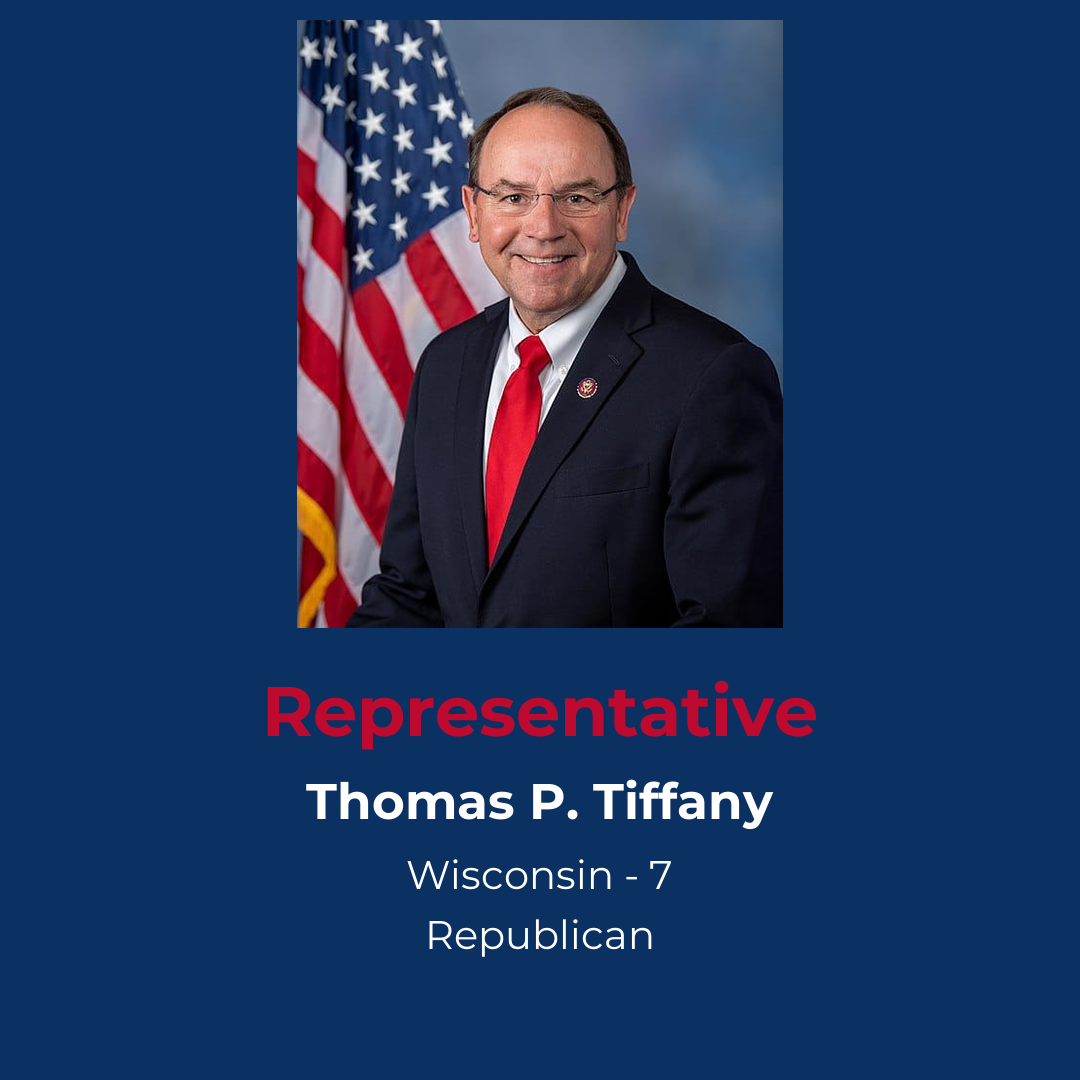
Profile of Republican Representative Tiffany from Wisconsin District 7
Key Takeaways (Click to Expand) Before entering politics, Tom Tiffany was a small business owner for over 20 years, operating a tour boat company with his wife in northern Wisconsin. He served for nearly a decade in the Wisconsin state legislature, in both the Assembly and the Senate, where he was a leading conservative voice on natural resources. He represents Wisconsin’s 7th District, a vast, rural, and heavily forested district known as the “Northwoods,” making him a key advocate for the timber and tourism industries. In Congress, he is a member of the House Judiciary Committee and the House Natural Resources Committee, and is known as one of the most conservative members of the House. “From the helm of a tour boat on the Wisconsin River to the halls of Congress, Tom Tiffany’s career has been defined by his deep roots in the Northwoods and a staunch commitment to conservative principles.” Tom Tiffany: A Conservative Voice for Wisconsin’s Northwoods Representative Tom Tiffany’s political identity is inextricably linked to the sprawling, rural landscape of northern Wisconsin. As a longtime small business owner and a veteran of the state legislature, he brings a fiercely conservative and independent perspective to Washington, shaped by the economic and cultural values of his district. Tiffany’s career before politics was in tourism. For more than two decades, he and his wife owned and operated a wilderness tour boat company, giving him a firsthand understanding of the challenges facing small business owners and the importance of the region’s natural resources to the local economy. This experience inspired him to run for office, and in 2010 he was elected to the Wisconsin State Assembly. He later won a seat in the State Senate in 2012. During his near-decade in the state legislature, he became a prominent and sometimes controversial conservative leader, known for championing mining, forestry, and property rights. In 2020, following the resignation of the sitting congressman, Tiffany won a special election to represent Wisconsin’s 7th District. In the U.S. House, he has continued his focus on natural resource issues as a member of the House Natural Resources Committee. He is also a key member of the House Judiciary Committee, where he is involved in debates on immigration, crime, and constitutional issues. Known as one of the most consistently conservative members of the House, Rep. Tiffany is a member of the House Freedom Caucus. He is a staunch advocate for limited government, fiscal responsibility, and what he terms “economic freedom,” which includes reducing regulations on industries vital to his district, such as timber and mining. Sources Used Official Biography: https://tiffany.house.gov/about/ Ballotpedia Profile: https://ballotpedia.org/Tom_Tiffany GovTrack.us Legislative Record: https://www.govtrack.us/congress/members/thomas_tiffany/456853 #Representative #Wisconsin #Republican #ThomasPTiffany Links for Representative Tiffany Official Website | X (RepTiffany) | Facebook | Wikipedia Follow us: YouTube | X | Facebook
The Nation’s Leaders from Coast to Coast: The Prisoner Who Changed the Law: Gideon v. Wainwright
The phrase, You have the right to an attorney, is a cornerstone of American justice, known to millions from TV shows and movies. But where did that right come from? For most of American history, that guarantee only existed for those who could afford it, leaving the poor to fend for themselves in court. That all changed because of a handwritten letter sent from a prison cell. In this episode of Wednesday Writs, Stephen and Leah tell the incredible story of Clarence Earl Gideon, a drifter with an eighth-grade education who was convicted of a felony after being denied a lawyer. Convinced his trial was unfair, Gideon studied the law from the prison library and petitioned the Supreme Court itself. Join us to learn how this one man’s stubborn belief in his constitutional rights led to the landmark 9-0 decision in Gideon v. Wainwright, a case that fundamentally reshaped the American legal system and affirmed that justice requires a voice for everyone, not just the wealthy. Research Links Oyez | Gideon v. Wainwright | https://www.oyez.org/cases/1962/155 National Constitution Center | Gideon v. Wainwright: The Right to Counsel | https://constitutioncenter.org/education/lessons-and-essays/gideon-v-wainwright United States Courts | Facts and Case Summary – Gideon v. Wainwright | https://www.uscourts.gov/educational-resources/educational-activities/facts-and-case-summary-gideon-v-wainwright
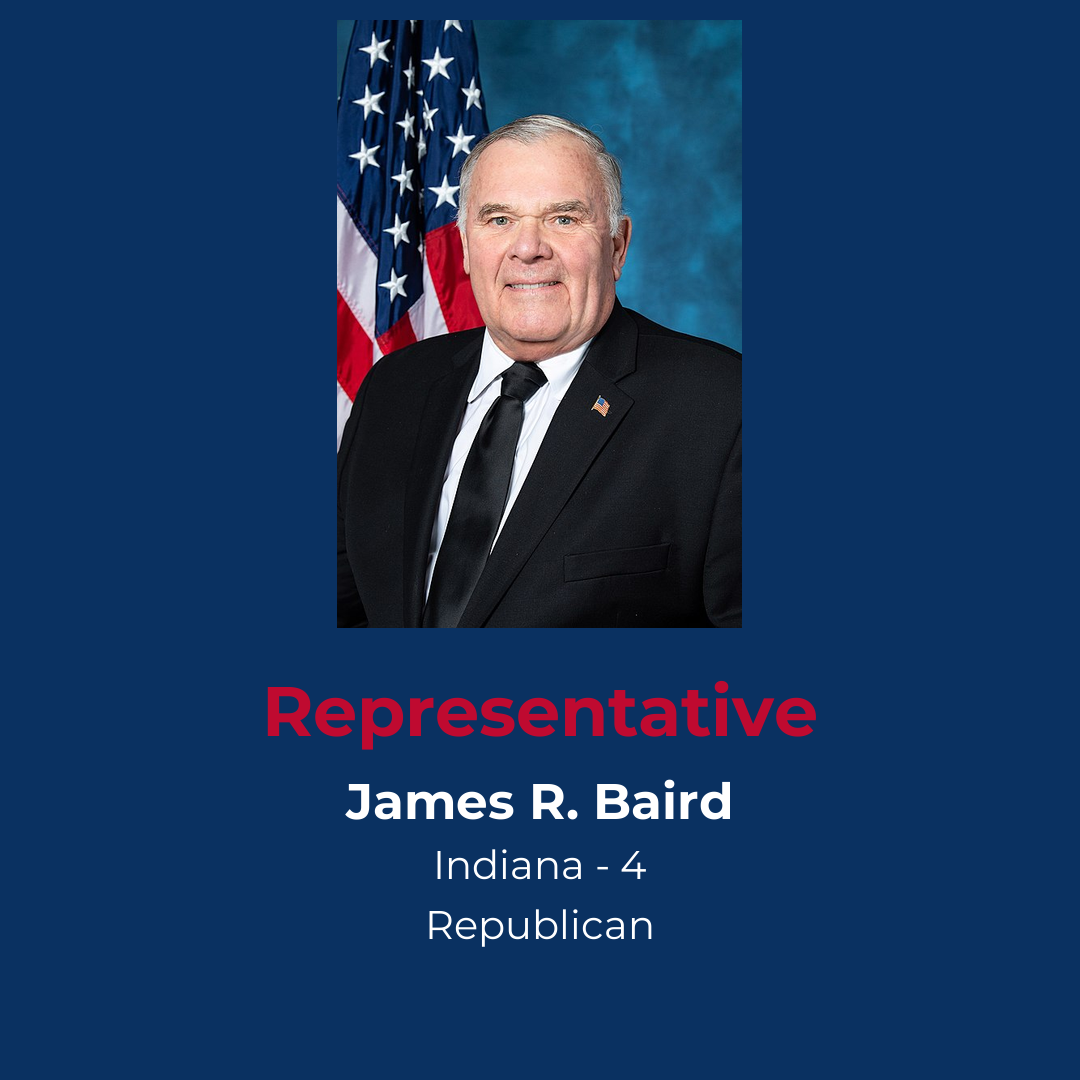
Profile of Republican Representative Baird from Indiana District 4
Key Takeaways (Click to Expand) Jim Baird is a decorated U.S. Army veteran of the Vietnam War, where he earned a Bronze Star and two Purple Hearts and lost his left arm in combat. After his military service, he earned a Ph.D. in Animal Science and has had a long career as a farmer and small business owner in Indiana. He serves as the influential Chairman of the House Agriculture Subcommittee on Conservation, Research, and Biotechnology. He brings his extensive life experience as a veteran, farmer, and scholar to his work on the Agriculture and the Science, Space, and Technology Committees. “From the battlefields of Vietnam to the family farm and now to the halls of Congress, Jim Baird’s life has been a story of profound service and unwavering resilience.” Jim Baird: A Life of Service, from the Battlefield to the Farm Bill Representative Jim Baird’s life has been characterized by extraordinary service and resilience. As a decorated and wounded Vietnam veteran, a Ph.D. scientist, a lifelong farmer, and a small business owner, he brings an incredible depth of real-world experience to his role representing the people of west-central Indiana. Baird’s commitment to public service began in the U.S. Army. He served in the Vietnam War, where he was awarded a Bronze Star for his meritorious service and two Purple Hearts for wounds sustained in action. During an enemy ambush, he lost his left arm, a sacrifice that has profoundly shaped his perspective and his dedication to fellow veterans. After returning home, he didn’t slow down. He went on to earn a Ph.D. in animal science from the University of Kentucky, managed his family’s farm, and co-owned a home healthcare company with his wife. His political career began at the local level, where he served as a county commissioner. He was then elected to the Indiana House of Representatives, where he served for eight years, focusing on agricultural and rural issues. In 2018, Dr. Baird was elected to the U.S. House of Representatives. In Washington, he has put his unique expertise to work on the House Agriculture Committee and the Science, Space, and Technology Committee. As the Chairman of the Agriculture Subcommittee on Conservation, Research, and Biotechnology, he is a leading voice on the science of modern farming. He plays a key role in shaping the Farm Bill and advocating for the cutting-edge agricultural research conducted at institutions like Purdue University, located in his district. A quiet and serious legislator, his work is defined by a deep, personal understanding of the issues he handles, from veterans’ healthcare to the science that supports America’s farmers. Sources Used Official Biography: https://baird.house.gov/biography Ballotpedia Profile: https://ballotpedia.org/James_Baird_(Indiana) GovTrack.us Legislative Record: https://www.govtrack.us/congress/members/james_baird/412776 #Representative #Indiana #Republican #JamesRBaird Links for Representative Baird Official Website | X (RepJimBaird) | Facebook | YouTube | Wikipedia Follow us: YouTube | X | Facebook
Profile of Republican Representative Obernolte from California District 23
Key Takeaways (Click to Expand) Before entering politics, Jay Obernolte was a successful entrepreneur and video game developer, founding FarSight Studios, a company he still owns and operates. He holds a Ph.D. in Artificial Intelligence, making him one of the foremost experts on technology and AI within the U.S. Congress. Prior to his election to the House in 2020, he served in the California State Assembly, where he was a leading Republican voice on fiscal policy. He is a member of the powerful House Appropriations Committee, where he helps oversee the federal budget. “From designing video games and earning a Ph.D. in Artificial Intelligence to shaping the nation’s budget, Jay Obernolte brings a rare and valuable technological expertise to the halls of Congress.” Jay Obernolte: The Video Game Developer in Congress Representative Jay Obernolte’s background is one of the most unique in all of American politics. As a successful video game developer, an accomplished pilot, and a Ph.D. in Artificial Intelligence, he brings a deep, hands-on understanding of technology and innovation to his work in Washington. His career is a story of applying a problem-solving, entrepreneurial mindset to the complex challenges of public policy. Obernolte’s story began not in politics, but in technology. In 1990, he founded FarSight Studios, a video game development company that has created dozens of popular games over the last three decades, including titles based on classic pinball machines and major movie franchises. He remains the owner and operator of the company today. Alongside his business career, he pursued his academic interests, earning a master’s degree in computer science and eventually a doctorate in Artificial Intelligence. His entry into politics started at the local level, where he served as a councilman and Mayor of Big Bear Lake. He was then elected to the California State Assembly, where he quickly became a respected Republican leader on budget and fiscal issues, known for his meticulous, data-driven approach to policy. In 2020, Obernolte was elected to represent California’s 23rd District, a vast inland district that includes parts of the High Desert. In Congress, he has secured a position on the influential House Appropriations Committee, where he has a direct say in federal spending. Given his background, he is a leading congressional voice on technology policy, particularly on the topic of Artificial Intelligence, where he helps educate his colleagues on the opportunities and risks of this transformative technology. Sources Used Official Biography: https://obernolte.house.gov/about Ballotpedia Profile: https://ballotpedia.org/Jay_Obernolte GovTrack.us Legislative Record: https://www.govtrack.us/congress/members/jay_obernolte/456804 #Representative #California #Republican #JayObernolte Links for Representative Obernolte Official Website | X (JayObernolte) | Wikipedia Follow us: YouTube | X | Facebook
The Nation’s Leaders from Coast to Coast: The War Where the Only Casualty Was a Pig
What does it take to push two of the world's greatest powers to the brink of war? In 1859, the answer wasn't a border skirmish or a diplomatic breakdown, but something far more absurd: a pig. On the beautiful San Juan Island, a territory claimed by both the United States and Great Britain, a simmering border dispute boiled over when an American farmer shot a British-owned pig for repeatedly raiding his potato patch. This single gunshot set off a bizarre and dangerous chain of events that would see two nations deploy soldiers and warships, all centered on a conflict over a dead farm animal. In this episode of Monday Madness, Stephen and Leah unravel the incredible true story of the Pig War. Discover how a petty argument over compensation escalated into a full-blown military crisis, with a hot-headed American general sending in troops led by a future Confederate icon, George Pickett. Learn about the tense standoff that lasted for months and the one cool-headed British admiral who refused an order that would have certainly started a war. It's a forgotten but fascinating tale of how international madness was narrowly averted, leading to a peaceful resolution where the only casualty was the pig that started it all. Research Links National Park Service | The Pig War HistoryLink.org | The Pig War Crisis
Profile of Democrat Representative Torres from California District 35
Key Takeaways (Click to Expand) Norma Torres is the only current member of Congress who was born in Central America, having immigrated to the U.S. from Guatemala as a child. Before her career in politics, she worked for over 17 years as a 9-1-1 dispatcher, an experience that deeply informs her focus on public safety. She has an extensive background in local and state government, having served as a city councilwoman, Mayor of Pomona, and a California State Legislator. She is a senior member of the powerful House Appropriations Committee, where she is an influential voice on funding for foreign aid, transportation, and housing. “From a 9-1-1 dispatcher’s headset to a seat on the powerful House Appropriations Committee, Norma Torres’s career is a testament to a life dedicated to public service at every level.” Norma Torres: An Immigrant’s Journey to the Halls of Congress Representative Norma Torres’s life and career represent a uniquely American story. As the only member of Congress to have been born in Central America, she brings a powerful and personal perspective to the nation’s debates on immigration and foreign policy. Her journey from a child immigrant from Guatemala to a respected voice on the influential House Appropriations Committee is one of remarkable perseverance and dedication. Torres was born in Guatemala and immigrated to the United States with her family at the age of five. Her career in public service began not in a political office, but on the front lines of emergency response. For more than 17 years, she worked as a 9-1-1 dispatcher for the LAPD, a high-pressure job that gave her a ground-level view of the public safety challenges facing communities. This experience inspired her to get more involved in local government. Her political career began on the Pomona City Council in 2001. She was then elected Mayor of Pomona in 2006, where she focused on balancing the city’s budget and improving public services. Following her success as mayor, she was elected to the California State Assembly and later the State Senate, building a strong record as a pragmatic and effective legislator. In 2015, she was elected to the U.S. House of Representatives. In Congress, she has secured a senior position on the House Appropriations Committee, a powerful role that allows her to help direct federal spending. As chair of the subcommittee that funds the Department of Housing and Urban Development and transportation, she is a key figure in shaping national infrastructure and housing policy. Drawing on her personal history, she is also one of Congress’s most passionate and knowledgeable voices on the root causes of migration from Central America. Sources Used Official Biography: https://torres.house.gov/about Ballotpedia Profile: https://ballotpedia.org/Norma_Torres GovTrack.us Legislative Record: https://www.govtrack.us/congress/members/norma_torres/412616 #Representative #California #Democrat #NormaJTorres Links for Representative Torres Official Website | X (NormaJTorres) | Facebook | Wikipedia Follow us: YouTube | X | Facebook
Profile of Democrat Representative Neguse from Colorado District 2
Key Takeaways Joe Neguse is the first Black American elected to represent Colorado in the U.S. Congress, a historic achievement. He is the son of immigrants from Eritrea, who fled the war-torn country and came to the U.S. as refugees. In a remarkably fast ascent, he was elected by his colleagues to a senior position in House leadership, serving as Chair of the Democratic Policy and Communications Committee. A key focus of his legislative work is on public lands, conservation, and combating climate change, reflecting the priorities of his Boulder-based district. “From the son of African refugees to a member of the House Democratic leadership, Joe Neguse’s rapid rise in Congress is a powerful story of the American dream.” Joe Neguse: A Historic Voice for Colorado and a Rising Star in Washington Representative Joe Neguse’s career is a story of breaking barriers and a remarkably rapid ascent to the leadership ranks of the Democratic party. As the first-ever Black American to represent Colorado in Congress, his work is defined by his unique personal history, his focus on environmental stewardship, and a reputation as one of the party’s most promising young leaders. Neguse’s story begins with his parents, who fled Eritrea, a war-torn country in East Africa, as refugees. They immigrated to the United States, where Neguse was born. This immigrant experience profoundly shaped his commitment to public service. After earning his law degree, he co-founded a law firm and became a dedicated advocate for civic engagement. He was elected to the University of Colorado Board of Regents and later appointed by the governor to lead Colorado’s consumer protection agency. In 2018, Neguse ran for Congress and won decisively, making history in his state. In the House, he quickly distinguished himself as a thoughtful and articulate legislator. His profile rose significantly when he was selected by Speaker Nancy Pelosi to serve as a House Impeachment Manager during the second impeachment trial of President Donald Trump, a role typically reserved for more senior members. His talent and work ethic were recognized by his colleagues, who elected him to a senior leadership position as Chair of the Democratic Policy and Communications Committee, a stunning achievement for a member in only his third term. Representing a district that includes Boulder and Fort Collins, Rep. Neguse is a fierce advocate for protecting public lands, combating the climate crisis, and investing in wildfire prevention. He brings a historic and compelling voice to the forefront of American politics. Sources Used Official Biography: https://neguse.house.gov/about Ballotpedia Profile: https://ballotpedia.org/Joe_Neguse GovTrack.us Legislative Record: https://www.govtrack.us/congress/members/joe_neguse/412761 #Representative #Colorado #Democrat #JoeNeguse Links for Representative Neguse Official Website | X (RepJoeNeguse) | Facebook | Wikipedia Follow us: YouTube | X | Facebook
The Nation’s Leaders from Coast to Coast: The Woman Who Ran for President Before She Could Vote: Belva Lockwood
Research Links National Portrait Gallery | Belva Lockwood: The Woman Who Would Be President | https://www.npg.si.edu/exhibit/lockwood/index.html Smithsonian Magazine | The First Woman to Run for President | https://www.smithsonianmag.com/history/first-woman-run-president-180961203/ The White House Historical Association | Belva Lockwood’s Uphill Battle | https://www.whitehousehistory.org/belva-lockwoods-uphill-battle
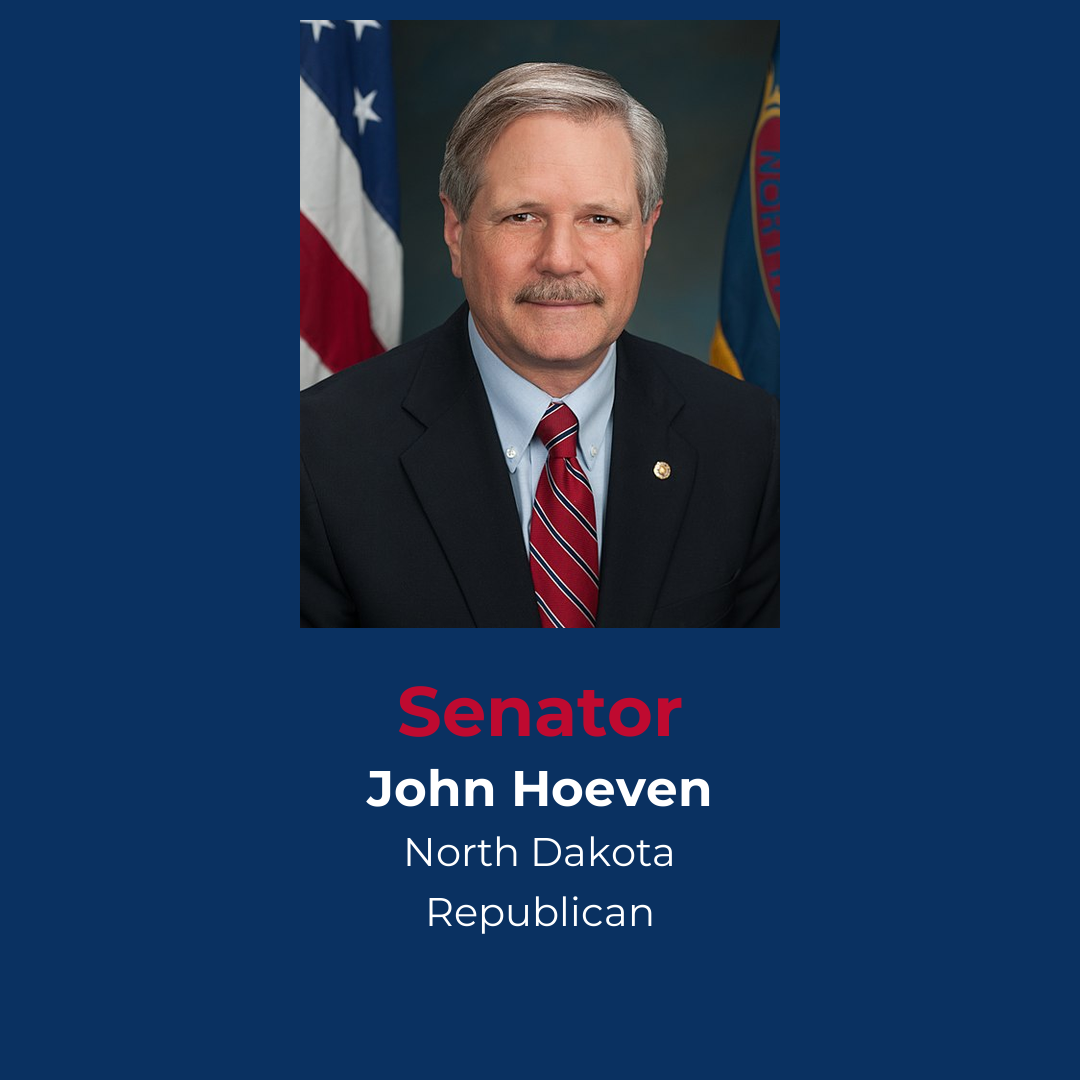
Profile of Republican Senator Hoeven from North Dakota
Key Takeaways (Click to Expand) Before his Senate career, John Hoeven served for a decade as the popular and influential three-term Governor of North Dakota, overseeing a period of major economic expansion. He is a senior member of two of the most powerful committees in the Senate: the Appropriations Committee and the Agriculture, Nutrition, and Forestry Committee. As the top Republican (Ranking Member) on the Senate Committee on Indian Affairs, he is a leading voice on issues affecting tribal nations. His legislative focus is squarely on the key drivers of his state’s economy: agriculture, energy, and securing federal investments. “From overseeing North Dakota’s economic boom as governor to shaping national farm and energy policy in the Senate, John Hoeven’s career has been a steady application of business-minded leadership.” John Hoeven: A Governor’s Approach to the U.S. Senate Senator John Hoeven’s political career is a story of steady, business-like leadership that has made him one of North Dakota’s most dominant political figures for over two decades. His long and highly popular tenure as governor provided the foundation for his work in the U.S. Senate, where he has become a quiet but deeply influential voice on the nation’s agriculture, energy, and fiscal policies. Hoeven’s path to public service began in the financial sector. After a career in banking, where he rose to become President and CEO of the state-owned Bank of North Dakota, he entered politics. In 2000, he was elected Governor of North Dakota, an office he would hold for ten years. His governorship coincided with the start of the Bakken oil boom, a period of unprecedented economic growth that transformed the state. He presided over budget surpluses, tax cuts, and job growth, earning consistently high approval ratings from his constituents. In 2010, he ran for the U.S. Senate and won decisively. In Washington, he has strategically positioned himself on the committees that matter most to his home state. As a senior member of the Appropriations Committee, he is one of the Senate’s “cardinals,” with direct influence over all federal spending, allowing him to advocate for funding for North Dakota’s military bases, research institutions, and infrastructure. On the Agriculture Committee, he is a central figure in crafting the crucial five-year Farm Bill, which is the single most important piece of legislation for his state’s farmers and ranchers. In addition to these roles, Senator Hoeven serves as the Ranking Member of the Senate Committee on Indian Affairs, making him the top Republican on issues concerning tribal sovereignty, economic development, and healthcare for Native Americans. A mainstream conservative, Hoeven is known as a pragmatic workhorse, more focused on delivering concrete results for North Dakota than on engaging in partisan media battles. Sources Used Official Biography: https://www.hoeven.senate.gov/biography Ballotpedia Profile: https://ballotpedia.org/John_Hoeven GovTrack.us Legislative Record: https://www.govtrack.us/congress/members/john_hoeven/412494 #Senator #NorthDakota #Republican #JohnHoeven Links for Senator Hoeven Official Website | X (SenJohnHoeven) | Facebook | YouTube | Wikipedia Follow us: YouTube |