
World Leaders Unveiled,
290 episodes — Page 2 of 6
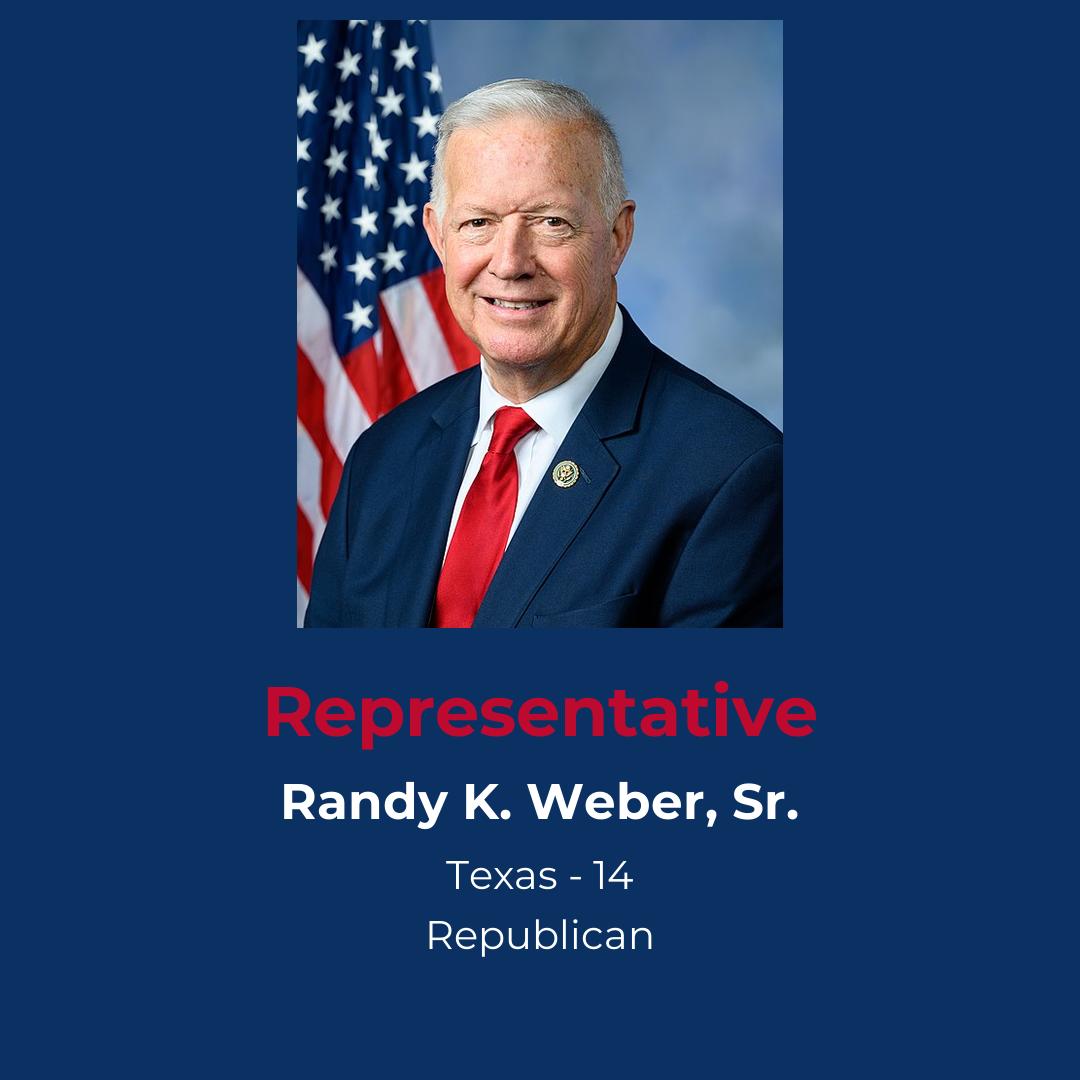
Profile of Republican Representative Weber from Texas District 14
Randy Weber is a third-generation Texan who brings a blue-collar, small-business mindset to Washington. He built his own air conditioning company (Weber's Air & Heat) from scratch in 1981. He frequently cites this private-sector experience—relying on "good old-fashioned Texas horse sense"—as the foundation of his disdain for federal regulations and red tape. He represents Texas’ 14th District, arguably the most critical energy and maritime district in the United States. Spanning the Gulf Coast from Freeport to Orange, the district contains seven ports, three massive LNG export terminals, some of America's largest refineries, and 60% of the nation's Strategic Petroleum Reserve. In the 119th Congress (2025-2026), Weber received a massive boost in influence. He was named the Chairman of the Energy Subcommittee on the Science, Space, and Technology (SST) Committee, and the Vice Chairman of the Energy Subcommittee on the powerful Energy and Commerce (E&C) Committee. He is intensely focused on protecting America's energy infrastructure. In February 2026, he successfully advanced the bipartisan Pipeline Cybersecurity Preparedness Act through subcommittee. This bill designates the Department of Energy as the lead agency to protect vulnerable U.S. pipelines from increasingly sophisticated cyberattacks. Coastal resilience and waterway dredging are his primary local obsessions. He has secured hundreds of millions in Army Corps funding for the Sabine-Neches Waterway, the Galveston Ship Channel, and the Coastal Texas Project (the "Ike Dike"), arguing that protecting the Texas coast from hurricanes is a matter of strict national security, as 30% of the nation's refining capacity sits in his district. "He spent thirty years fixing air conditioners in the Texas heat before heading to Washington. Now, Randy Weber controls the gavels that dictate the future of American energy dominance." Randy Weber: The Energy Powerhouse Randy Weber did not come to Congress from an elite law firm or a corporate boardroom; he came from the attic. Starting his own HVAC business, Weber’s Air & Heat, in 1981, he spent decades dealing directly with the grueling Texas summers and the frustrations of payroll, taxes, and local permitting. That real-world, small-business experience cemented his worldview: the federal government is usually the obstacle, not the solution. His political career began on the Pearland City Council, moved to the Texas State House, and finally to the U.S. Congress in 2012, where he succeeded the legendary libertarian icon, Ron Paul. While he shares Paul's contempt for wasteful spending, Weber is a more traditional, born-again Christian conservative. He is unapologetically "America First," a fierce advocate for strict border enforcement, and a vocal supporter of the White House's 2025 executive actions to end catch-and-release policies and halt birthright citizenship for the children of illegal immigrants. However, Weber’s true legacy is being built on energy and infrastructure. Representing the 14th District means representing the beating heart of the American blue economy. His district doesn't just produce energy; it refines it, stores it, and ships it to the rest of the world. In the 119th Congress, as Chairman of the SST Energy Subcommittee, Weber is in a prime position to dismantle what he views as the disastrous "anti-energy" policies of the previous administration. He was instrumental in drafting legislation to permanently end federal Electric Vehicle (EV) mandates and streamline the permitting process for new pipelines. Weber understands that a hurricane hitting his district isn't just a local tragedy; it is a global economic event. He has been the relentless driving force behind securing federal appropriations for the Coastal Texas Project (often referred to as the "Ike Dike"), a massive system of storm surge barriers des...
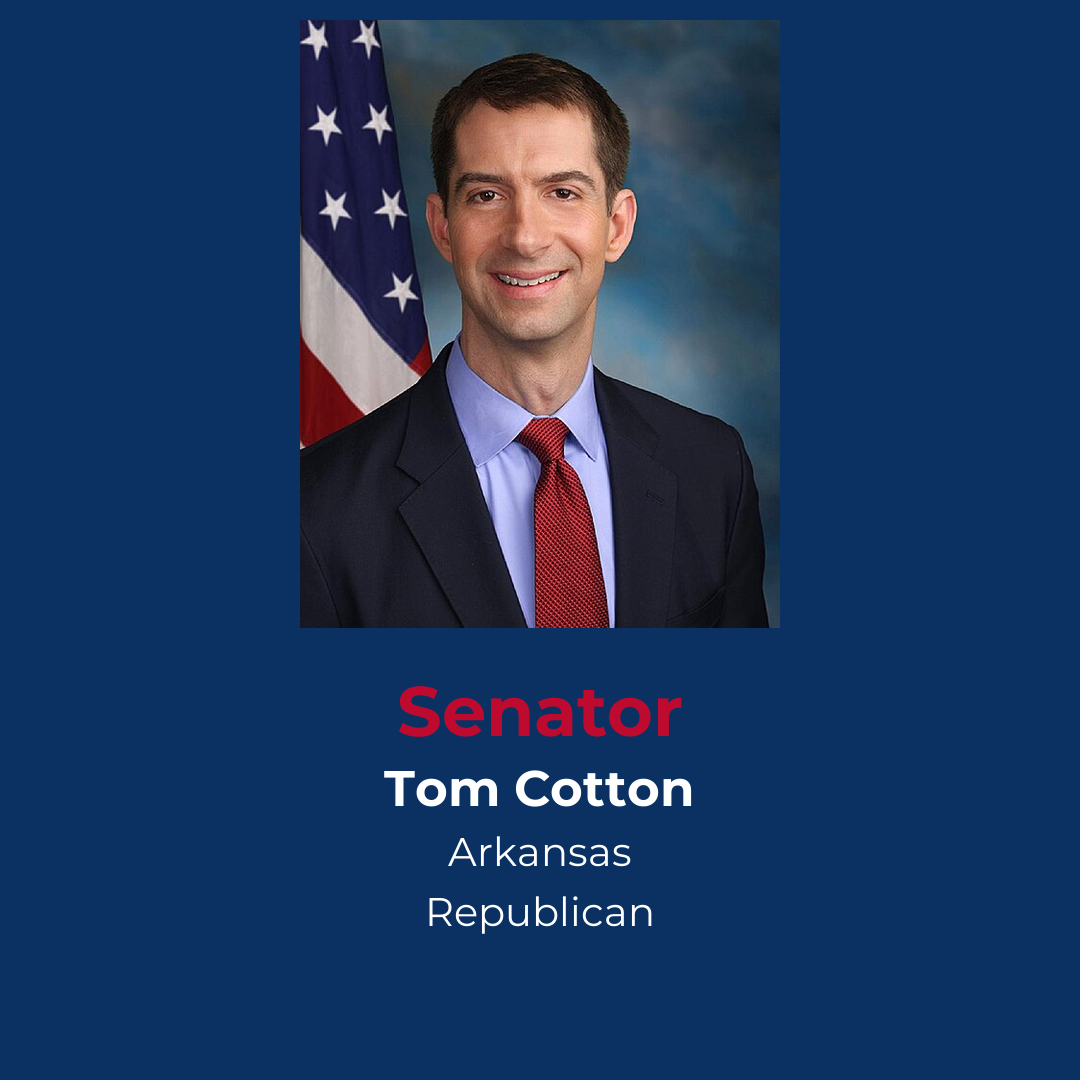
Profile of Republican Senator Cotton from Arkansas
Tom Cotton is one of the most prominent national security hawks in Washington. A graduate of Harvard College and Harvard Law School, he left a lucrative legal career after 9/11 to join the U.S. Army, serving as an infantry officer and Army Ranger with combat tours in Iraq and Afghanistan. In the 119th Congress (2025-2026), Cotton received a massive elevation in power, taking over as the Chairman of the Select Committee on Intelligence. This position places him in the exclusive "Gang of Eight," granting him access to the nation's most highly classified intelligence and significant oversight of the CIA, NSA, and broader intelligence community. He is a fierce advocate for strict immigration enforcement. In July 2025, he introduced the Constitutional Citizenship Clarification Act, a high-profile bill aimed at ending birthright citizenship for the children of illegal immigrants, foreign spies, and terrorists, arguing that border security requires removing the incentives for illegal crossings. Cotton is an unapologetic defender of American military action and a staunch opponent of the Chinese Communist Party and the Maduro regime in Venezuela. In late 2025, he notably defended U.S. military strikes against narco-trafficking boats in the Caribbean, clashing with Democrats over the rules of engagement and firmly backing the military's aggressive posture. Domestically, he fights against federal regulations that he believes hamper American industry or military readiness. In early 2026, he introduced the Necessary Environmental Exemptions for Defense Act to shield the DOD from certain environmental regulations, and S.3839, a bill to preempt state climate mandates to protect the reliability of the electric grid. "From the mountains of Afghanistan to the chairmanship of the Senate Intelligence Committee, Tom Cotton approaches politics with the strict, unyielding discipline of an Army Ranger." Tom Cotton: The Hawk of the Senate Tom Cotton’s political identity is inextricably linked to his military service. He is the intellectual heavyweight of the Republican Party's national security wing. After graduating from Harvard Law School and completing a clerkship, Cotton shocked his peers by abandoning the corporate track to enlist in the U.S. Army. As an infantry officer and Army Ranger, he led a platoon of the 101st Airborne in Iraq and served in Afghanistan. He first gained national attention while deployed in Iraq, writing a viral open letter criticizing the media's coverage of the war. That exact instinct—unapologetic, confrontational, and deeply conservative—has defined his entire political career. First elected to the House in 2012 and the Senate in 2014, Cotton has consistently positioned himself as a "law and order" conservative and a defense maximalist. He does not court the media; rather, he views much of the Washington establishment with open skepticism. This ideological consistency has made him a leading voice for the "America First" agenda, particularly regarding border security and countering China's global influence. The 119th Congress represents the zenith of his power to date. With the Republican majority secured, Cotton assumed the chairmanship of the Select Committee on Intelligence. This is one of the most powerful and secretive posts in the U.S. government. From this perch, he oversees the Intelligence Authorization Act (introducing the FY2026 version) and directs the nation's espionage priorities, placing a heavy emphasis on counterintelligence against Beijing and Tehran. Legislatively, Cotton's 2025 and 2026 agenda has been aggressive. He introduced legislation to fundamentally alter birthright citizenship interpretations, condition federal highway funding on state cooperation with federal immigration enforcement, and protect the national energy grid from state-level climate initiatives. He is a politician who operates st...
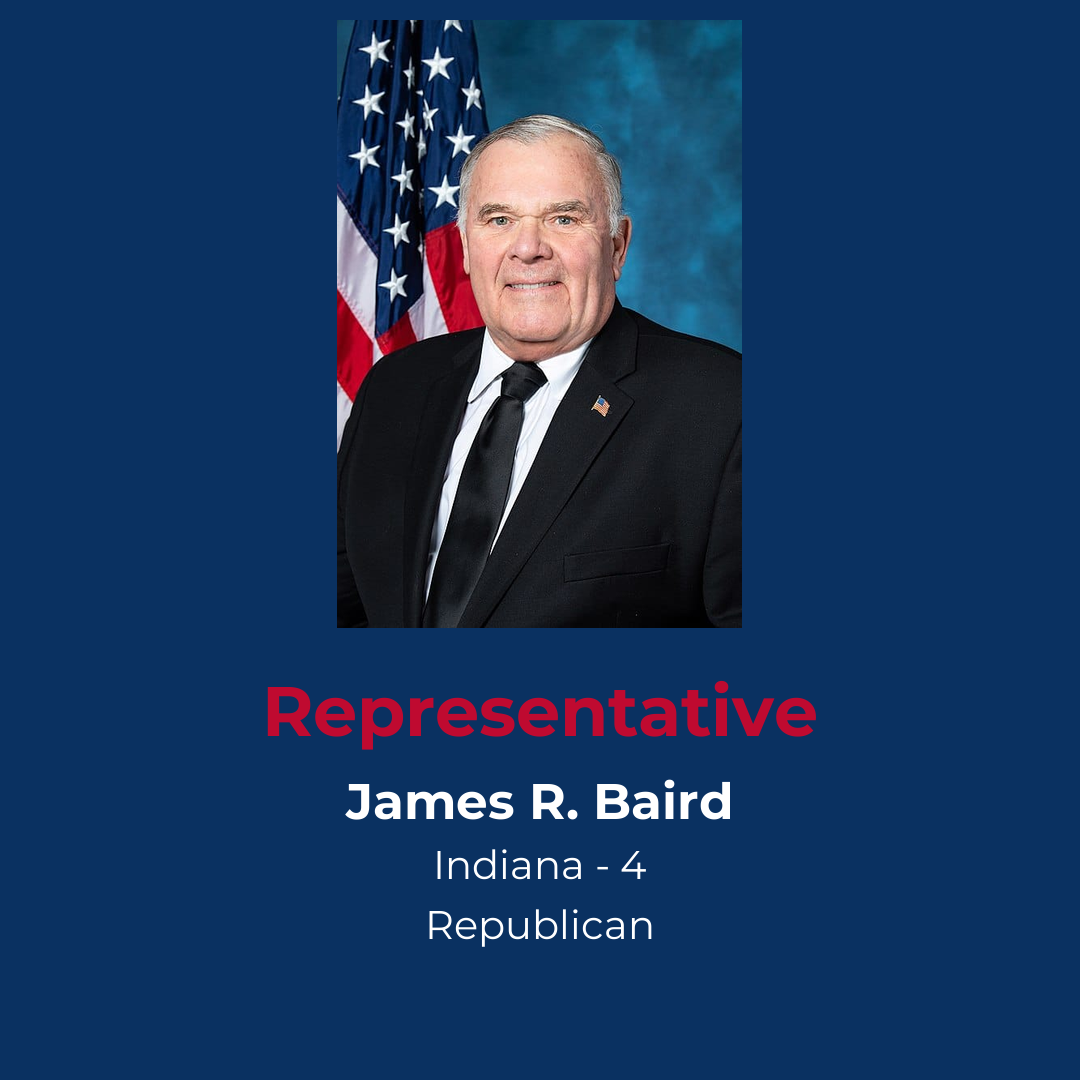
Profile of Republican Representative Baird from Indiana District 4
Jim Baird brings a rare combination of lived experiences to Washington: he is a decorated Vietnam War combat veteran, a lifelong farmer, and a scientist holding a Ph.D. in monogastric nutrition. This "soldier-scholar-farmer" background gives him a unique lens on the Agriculture and Science committees. He represents Indiana’s 4th District, a sprawling 16-county region covering West Central Indiana. It is a heavily rural, agricultural district that serves as the breadbasket of the state, but it also includes the academic and technological hub of Purdue University in West Lafayette. His military service is legendary among his peers. Baird earned a Bronze Star with a V device (for valor) and two Purple Hearts during his combat tours in Vietnam. He served on the famous "Eve of Destruction" gun truck, which is the only surviving gun truck from the Vietnam War and is currently displayed at the U.S. Army Transportation Museum. He is one of the very few deployed Vietnam veterans remaining in Congress. In the 119th Congress (2025-2026), Baird serves on the House Committee on Agriculture, the Committee on Science, Space, and Technology, and the Committee on Foreign Affairs. A staunch fiscal conservative, he has focused his recent efforts on election security (voting for the SAVE America Act), protecting the agricultural supply chain, and advocating for veterans. In early 2026, he successfully championed legislation to award the Medal of Honor to Major Nicholas Dockery and Major Kareem Dockery for their heroism in Afghanistan. He has also aligned closely with the White House's energy agenda, recently joining the President for the signing of the "Strengthening the United States National Security" executive actions on clean coal. "He holds a Bronze Star, two Purple Hearts, and a Ph.D. in animal science. Jim Baird is the combat-tested farmer who brings the quiet grit of West Central Indiana to the halls of Congress." Jim Baird: The Soldier, The Scholar, The Farmer Jim Baird’s path to the United States Congress was not forged in law firms or elite political circles, but in the jungles of Vietnam and the crop fields of Putnam County, Indiana. Raised on a farm, Baird learned the value of hard work early, a trait that propelled him to earn his bachelor’s and master’s degrees in animal science from Purdue University. When his country called, Baird paused his academic pursuits and joined the U.S. Army, deploying to Vietnam. He served with distinction in a transportation unit, defending convoys on heavily armored gun trucks—most notably the legendary "Eve of Destruction." He returned home bearing the physical and mental scars of war, recognized with a Bronze Star with a V for valor and two Purple Hearts. Instead of letting his injuries define him, he went right back to his studies, earning a Doctoral degree from the University of Kentucky in monogastric nutrition. He subsequently built a successful life as a farmer and small business owner running a home healthcare agency. Baird's political career began at the local level as a Putnam County Commissioner before he moved to the Indiana State House, where he played an integral role on the Ways and Means Committee in balancing the state's budget. Elected to the U.S. House in 2018, Baird is now in his late seventies and serves as one of the elder statesmen of the Republican caucus. He operates with a quiet, traditional conservatism, frequently bucking the trend of "viral" politics in favor of steady committee work. In the 119th Congress, Baird is a critical voice on the Agriculture Committee, serving as the Vice Chair of the Conservation, Research, and Biotechnology Subcommittee. He understands the literal science of the American food supply. Furthermore, he leverages his seat on the Foreign Affairs Committee to push back against narco-terrorism and Chinese influence, viewing national security through...
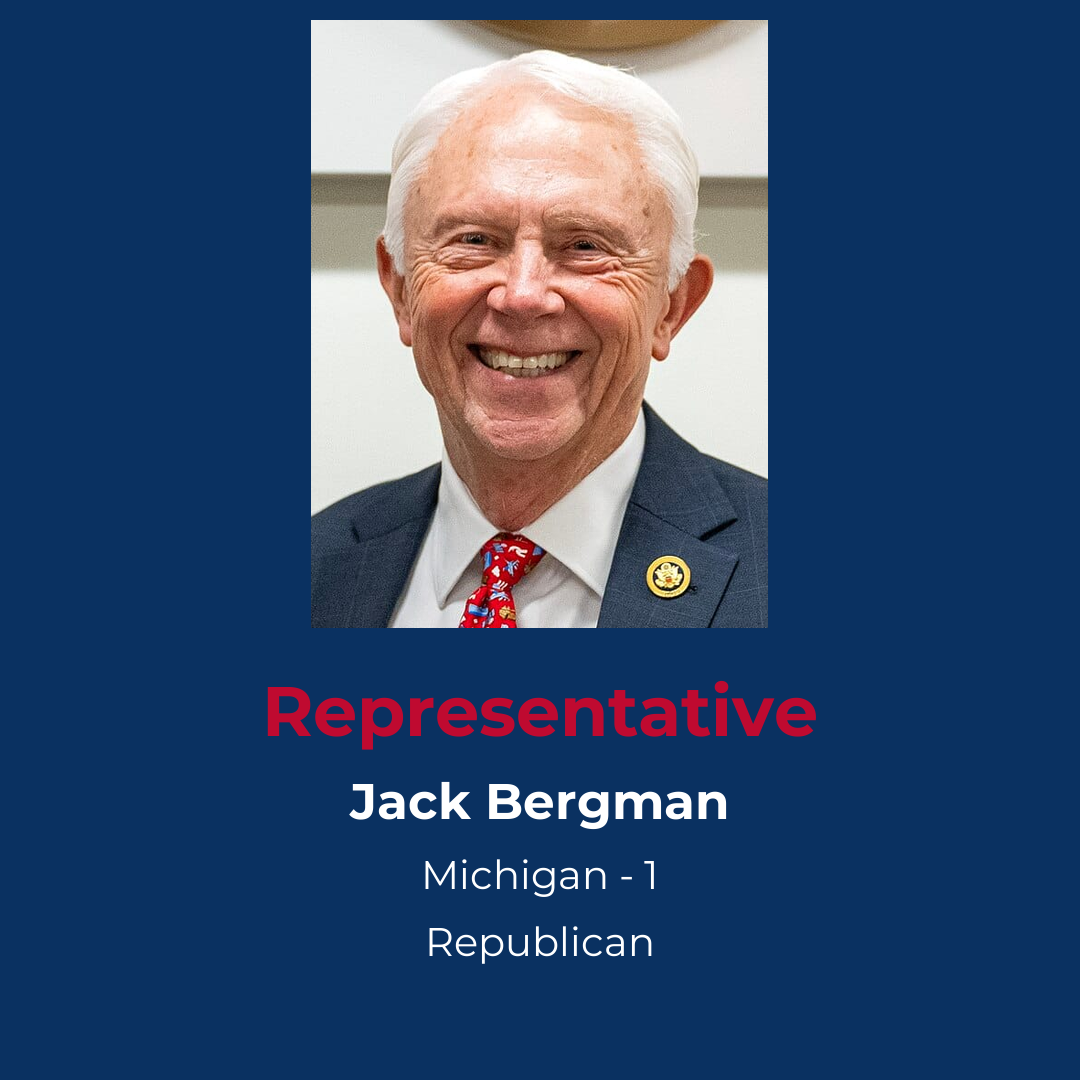
Profile of Republican Representative Bergman from Michigan District 1
Jack Bergman holds the distinction of being the highest-ranking combat veteran ever elected to the United States Congress. A retired Lieutenant General in the Marine Corps, he served for 40 years, flying CH-46 helicopters in Vietnam and later commanding the Marine Forces Reserve. This unparalleled military pedigree defines his legislative identity. He represents Michigan’s 1st District, a colossal geographic area covering the entire Upper Peninsula (UP) and the northern third of the Lower Peninsula. It is one of the largest congressional districts east of the Mississippi River, creating unique challenges regarding rural mail delivery, telehealth, and veteran care access. In the 119th Congress, Bergman has been a legislative workhorse on the Veterans' Affairs Committee. He recently introduced the BEACON Act to expand innovative care for veterans with Traumatic Brain Injuries (TBI), the Veterans STAND Act for spinal cord injuries, and successfully reintroduced Gerald's Law to permanently close loopholes denying burial benefits to certain veterans. He is a fierce protector of Northern Michigan's natural resources and infrastructure. He champions the Great Lakes Restoration Initiative (GLRI) to keep Asian Carp out of Lake Michigan, and he recently successfully passed a bill in the House to delist the Gray Wolf from the Endangered Species Act, returning management authority to local states and tribes. +1 Nationally, he is focused on securing domestic supply chains and military readiness. He recently secured the designation of Camp Grayling as a national testing range for uncrewed aerial systems (drones). He is also the author of the NO GOTION Act, which aims to deny green energy tax credits to companies affiliated with Chinese interests. +1 "He flew helicopters in Vietnam and commanded thousands of Marines. Now, Jack Bergman commands the sheer vastness of Northern Michigan, fighting for rural veterans, the Soo Locks, and the Great Lakes." Jack Bergman: The General of the North Jack Bergman is not a career politician; he is a career warrior who answered a late call to public service. Born in Minnesota, Bergman spent four decades in the United States Marine Corps, rising from a Second Lieutenant pilot to a Three-Star General. His service record includes combat tours in Vietnam—where he flew the tandem-rotor CH-46 Sea Knight—and command of the Marine Forces Reserve. When he retired in 2009, he settled in the quiet woods of Watersmeet, Michigan, intending to spend his days enjoying the Upper Peninsula. +1 But the 2016 election cycle pulled him out of retirement. Running as a conservative outsider, Bergman won Michigan's 1st District by emphasizing his leadership experience over political polish. He brings a strict "command climate" to his office—direct, disciplined, and focused on the mission rather than the noise of Washington. In Congress, Bergman has become the de facto voice for rural veterans. His district has one of the highest concentrations of veterans in the country, many of whom live hours away from a VA hospital. He has been a relentless advocate for expanding "community care" options and telehealth flexibilities so that an elderly veteran in a blizzard doesn't have to drive eight hours to see a doctor. He has advanced several major pieces of legislation, including the BEACON Act to modernize the VA's approach to Traumatic Brain Injuries. +1 His commitment to Michigan's infrastructure and environment is equally intense. Representing more shoreline than almost any other member of Congress, Bergman breaks with some in his party to robustly fund the Great Lakes Restoration Initiative (GLRI). Furthermore, he views the Soo Locks in Sault Ste. Marie not just as local infrastructure, but as a critical national security chokepoint, fighting tirelessly to secure funding for modernization to ensure the American steel and auto indust...
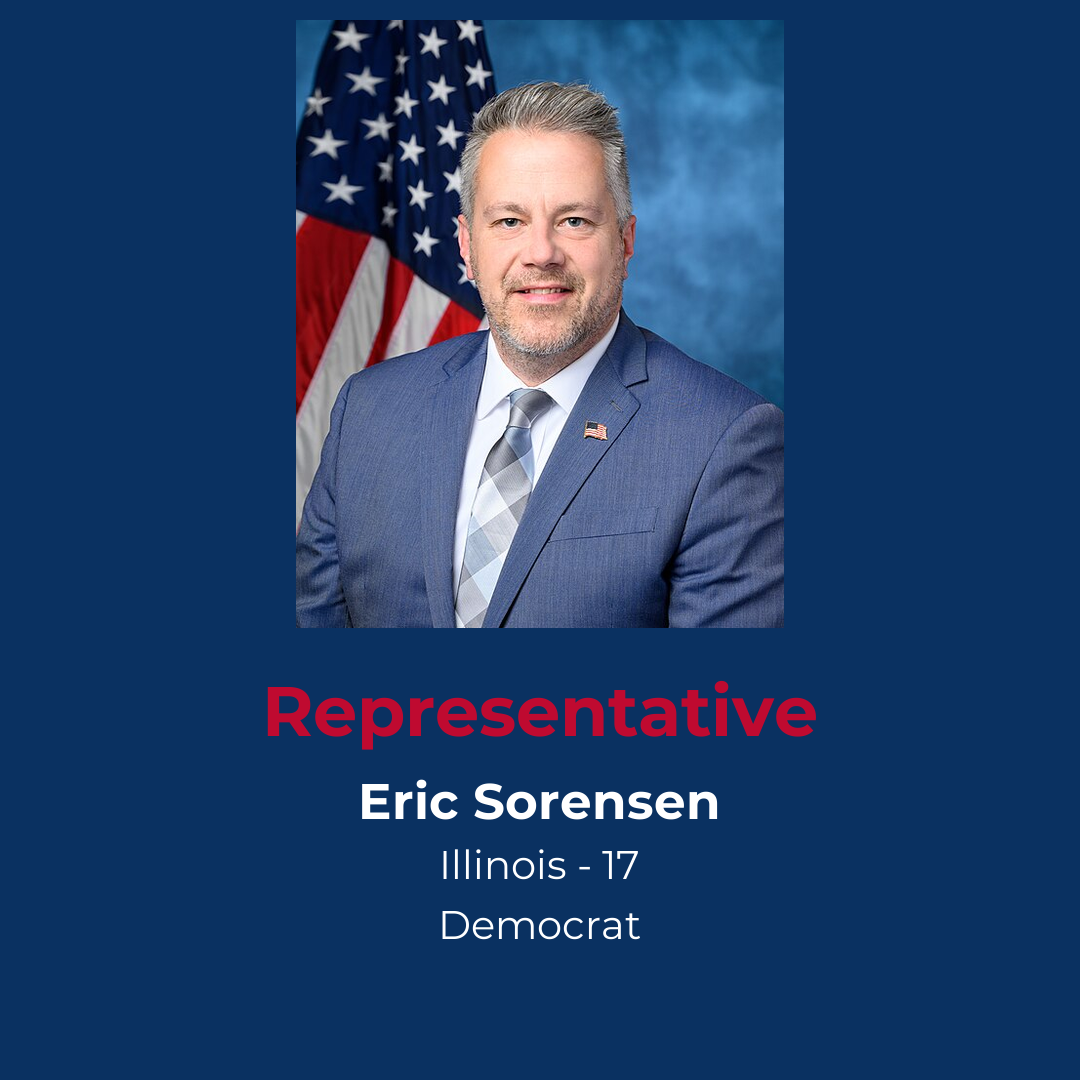
Profile of Democrat Representative Sorensen from Illinois District 17
Eric Sorensen is the first openly gay member of Congress from Illinois. Before politics, he was a household name in the region as a TV meteorologist for nearly 20 years, forecasting the weather in Rockford and the Quad Cities. He frequently uses this background to frame his policy positions, arguing that he approaches legislation with "science, not politics." He represents Illinois’ 17th District, a geographically sprawling "polycentric" district that connects the industrial hubs of Rockford, Peoria, Bloomington-Normal, and the Quad Cities. It is one of the few true "swing districts" remaining in the Midwest, balancing progressive urban centers with conservative rural farmland. In the 119th Congress, Sorensen made a strategic committee shift, joining the powerful House Armed Services Committee. This assignment allows him to directly advocate for the Rock Island Arsenal (the largest government-owned weapons manufacturing arsenal in the U.S.) and the 182nd Airlift Wing in Peoria, essentially becoming the defense guardian for his district's largest employers. He retains his seat on the Agriculture Committee, where he is a vocal supporter of biofuels and sustainable farming. Representing a district that is a global leader in corn and soybean production (and the home of John Deere's headquarters), Sorensen often breaks with coastal Democrats to defend ethanol mandates, viewing them as critical for the rural economy. His legislative style is defined by his "neighbor" persona. Avoiding the culture wars, he focuses on hyper-local issues like rural broadband and flood resiliency. In 2026, he co-sponsored the Farm and Family Relief Act, aimed at protecting family farmers from the economic impact of new tariffs and inflation. "For 20 years, he told you when to carry an umbrella. Now, he's in Washington trying to weather-proof the Midwest economy. Eric Sorensen is the weatherman who decided to change the climate." Eric Sorensen: The Forecaster Eric Sorensen spent two decades in living rooms across Illinois, not as a politician, but as the guy telling you whether it was going to snow on your commute. As the Chief Meteorologist for WQAD in the Quad Cities and WREX in Rockford, he built a brand based on trust and scientific communication. When he ran for Congress in 2022, he didn't run as a partisan firebrand; he ran as a "trusted neighbor," using his weatherman persona to explain that climate change wasn't a political ideology, but a data point that farmers needed to prepare for. His victory in 2022 (and re-election in 2024) was historic—making him the first LGBTQ+ person elected to Congress from Illinois—but his tenure has been defined by pragmatic industrial policy. Sorensen represents the "Factory Belt" of Illinois. His district is the home of John Deere, Caterpillar, and the Rock Island Arsenal. He understands that his constituents are the people who build the tractors that feed the world and the howitzers that defend it. In the 119th Congress, Sorensen traded his seat on the Science Committee for a spot on the Armed Services Committee. This was a calculated move to protect the Rock Island Arsenal, which employs 6,000 people in his district. He now sits on the Readiness and Tactical Air and Land Forces subcommittees, ensuring that the Arsenal continues to receive contracts for advanced manufacturing. Despite his move to Armed Services, he remains a scientist at heart. On the Agriculture Committee, he is a leading voice for the Biofuels Caucus. He argues that the path to a green economy runs through the cornfields of Illinois, advocating for aviation fuel made from ethanol. He frames environmentalism as an economic opportunity for the Rust Belt, pushing for federal grants to help local factories retool for green energy production. District Context: Illinois 17th (U.S. Census Data) The Polycentric District: Unlike most distric...
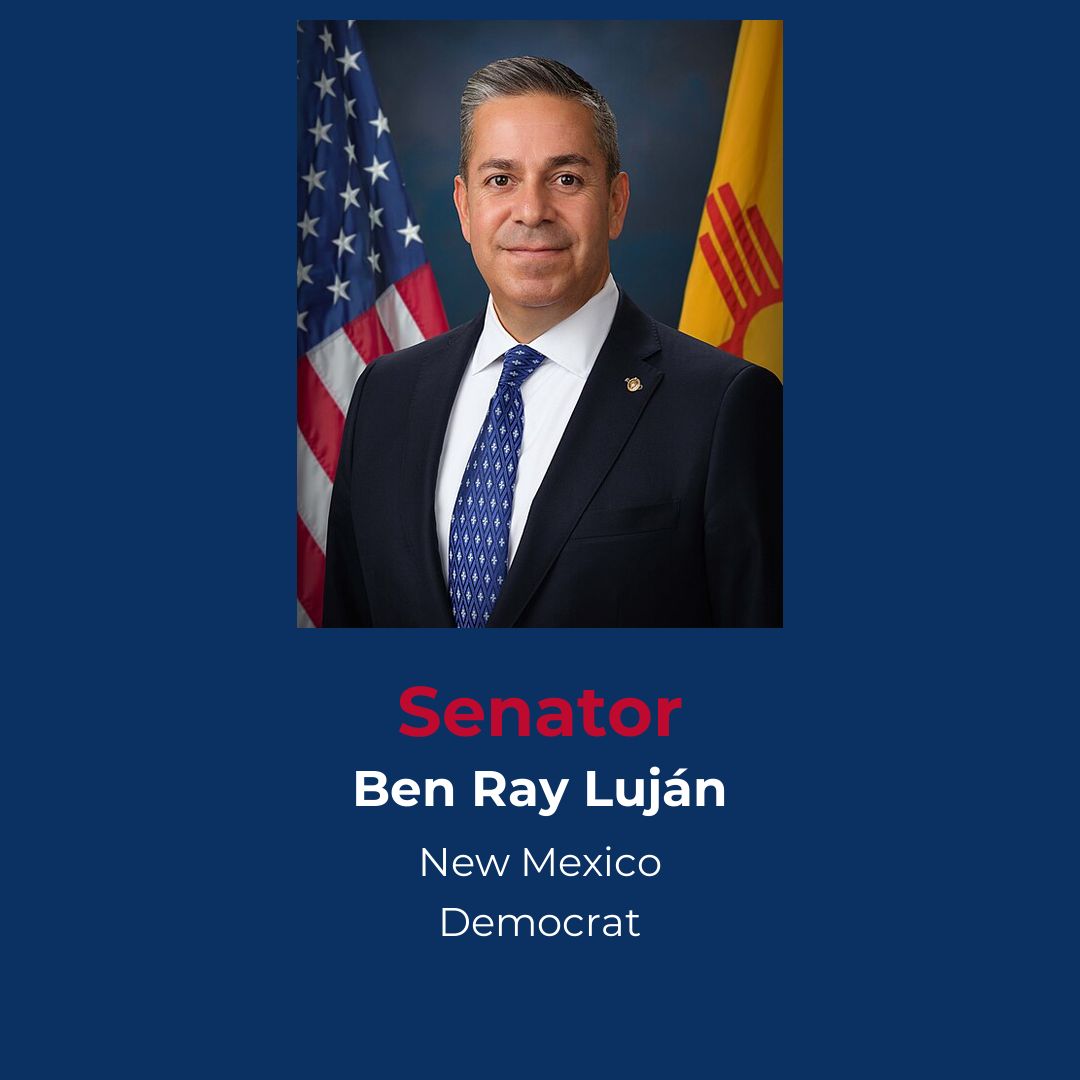
Profile of Democrat Senator Luján from New Mexico
Ben Ray Luján is a quiet powerhouse in the Senate, currently serving as a member of the influential Committee on Finance in the 119th Congress. This new assignment gives New Mexico a direct voice on tax policy, trade, and the long-term solvency of Social Security and Medicare—critical issues for a state with a high population of seniors and retirees. He represents New Mexico, a state defined by its diversity (highest percentage of Hispanic residents in the U.S.) and its "federal" economy. Luján focuses heavily on protecting the funding for the state's two massive nuclear laboratories, Los Alamos and Sandia, which are the economic engines of the region. In early 2022, Luján suffered a life-threatening stroke in his cerebellum at age 49. He underwent decompressive brain surgery and made a miraculous full recovery, returning to the Senate floor just a month later to cast a decisive vote for a Supreme Court justice. He has since become a leading advocate for stroke awareness and rural health access, often sharing his story to de-stigmatize health crises in positions of power. A former Chairman of the DCCC (Democratic Congressional Campaign Committee) in the House, Luján is a master strategist known for his "no drama" style. Unlike firebrand politicians, he operates like his mentor Harry Reid—working behind the scenes to build consensus rather than seeking viral moments. His legislative passion is Digital Equity. As the Ranking Member of the Subcommittee on Communications, Media, and Broadband, he was a key architect of the broadband funding in the Bipartisan Infrastructure Law. He relentlessly pushes for the deployment of fiber to New Mexico's remote tribal pueblos and rural acequia communities, arguing that "high-speed internet is the water of the 21st century." "He survived a massive stroke and was back on the Senate floor in a month. Ben Ray Luján is the quiet warrior from Nambé who brings the grit of the high desert to Washington." Ben Ray Luján: The Gentleman from Nambé Ben Ray Luján does not shout. In a political era defined by noise, the junior Senator from New Mexico speaks with the quiet, deliberate cadence of the Nambé Valley farming community where he was born. The son of Ben Luján Sr., a legendary ironworker who served as the Speaker of the New Mexico House for decades, Ben Ray was raised in a world where politics was about paving dirt roads and protecting water rights, not cable news hits. His path to the Senate was methodical. He served on the New Mexico Public Regulation Commission, then in the U.S. House for six terms, where he rose to become the Assistant Speaker—the highest-ranking Hispanic in House history at the time. He was the architect of the 2018 Democratic wave as DCCC Chair, proving he understood the national electorate better than most pundits. But his career—and life—nearly ended in January 2022. Feeling dizzy after a busy day, he checked himself into a hospital in Santa Fe, only to be rushed to Albuquerque for emergency brain surgery to relieve pressure from a cerebellar stroke. The political world held its breath; the 50-50 Senate majority hung in the balance. Luján’s recovery was grueling but rapid. When he walked back onto the Senate floor weeks later to a standing ovation, it was a moment of rare bipartisan humanity. In the 119th Congress, Luján has secured a seat on the powerful Finance Committee, a major upgrade that allows him to protect New Mexico's interests in tax and health policy. He also sits on the Indian Affairs Committee, where he fights to fully fund the Indian Health Service (IHS) and protect the sovereignty of the state's 23 federally recognized tribes and pueblos. He is also the Senate's leading champion for the Radiation Exposure Compensation Act (RECA). Representing the "Downwinders"—families in New Mexico poisoned by the fallout from the Trinity nuclear test—Luján has...
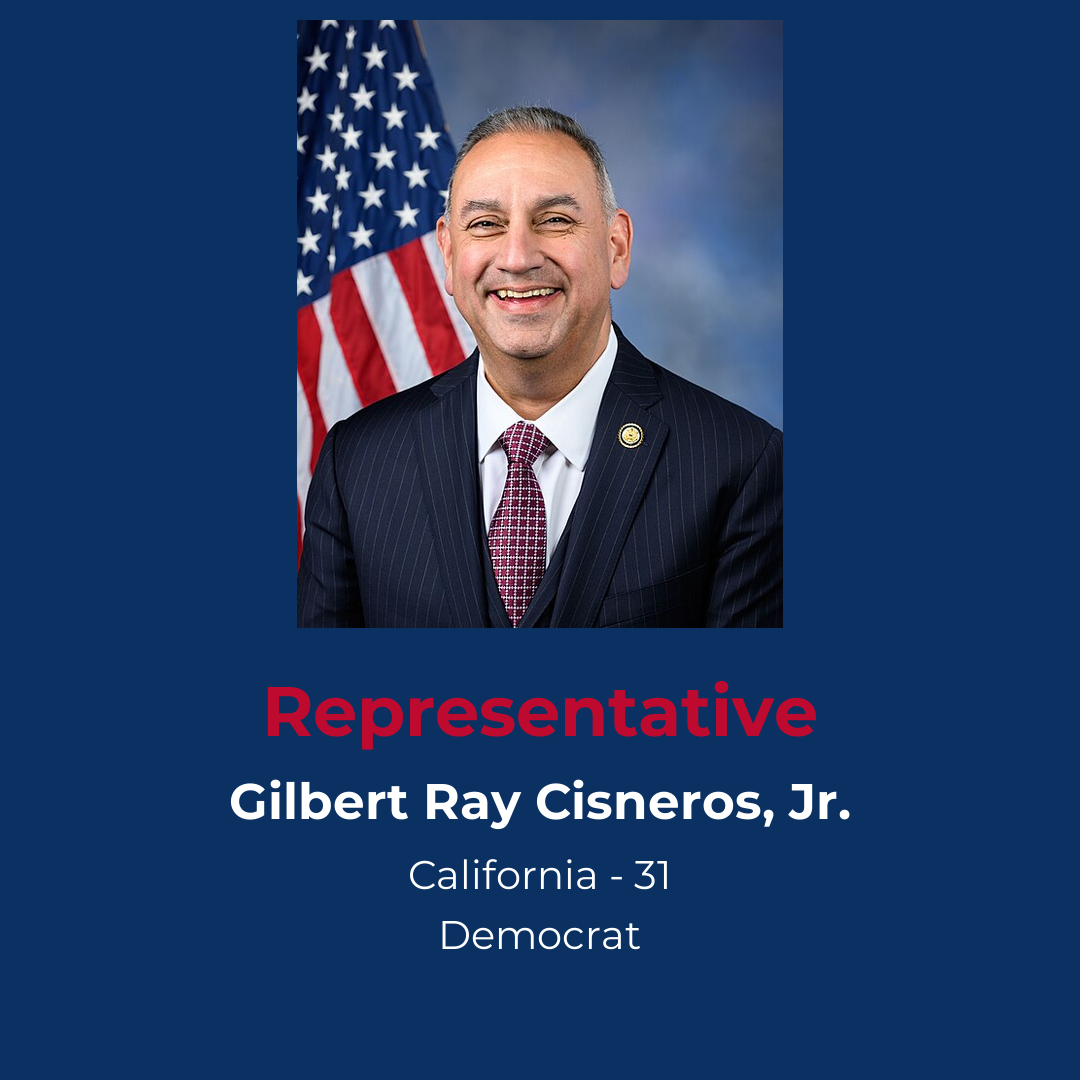
Profile of Democrat Representative Cisneros from California District 31
Gil Cisneros has one of the most unique biographies in American politics: he is a former Navy Supply Corps Officer who became a massive philanthropist after winning a $266 million Mega Millions jackpot in 2010. He and his wife, Jacki, used their winnings to fund education scholarships for Latino students, a path that eventually led him to run for office. He represents California’s 31st District, covering the San Gabriel Valley (SGV). This includes working-class, heavily Latino cities like West Covina, El Monte, Azusa, and Baldwin Park. He succeeded the retiring legendary Congresswoman Grace Napolitano in 2025, moving from his previous, more volatile district (CA-39) to this safer Democratic stronghold. Between his two stints in Congress, Cisneros served as the Under Secretary of Defense for Personnel and Readiness in the Biden administration. In this high-ranking Pentagon role, he was the Chief Diversity and Inclusion Officer for the entire U.S. military, overseeing recruitment, training, and the repeal of policies banning transgender service members. In the 119th Congress, he returned to the House Armed Services Committee, where he is a heavyweight voice on military quality of life. Drawing on his time as an Under Secretary, he is laser-focused on food insecurity among junior enlisted troops, arguing that it is a national disgrace that some military families rely on SNAP benefits. He is a prominent member of the New Democrat Coalition, positioning himself as a pro-business, pragmatic progressive. His "SGV" agenda focuses heavily on small business support, reflecting the entrepreneurial spirit of the San Gabriel Valley's immigrant communities. "He won $266 million in the lottery, served as a Pentagon Chief, and came back to Congress to fight for the San Gabriel Valley. Gil Cisneros is the Navy vet who proves that luck is just the beginning." Gil Cisneros: The Philanthropist Veteran Most people know Gil Cisneros as the "Lottery Congressman," but his story is far more complex than a lucky ticket. A Navy veteran who used the GI Bill to earn his MBA, Cisneros was working as a shipping manager at Frito-Lay when he bought a lottery ticket in 2010 that changed his life forever. Winning $266 million allowed him to become a full-time philanthropist. He founded the Gilbert & Jacki Cisneros Foundation, which has provided millions in scholarships to Latino students to bridge the education gap. His political career has been a rollercoaster. He first flipped a Republican seat in Orange County (CA-39) in 2018, only to lose it in 2020. Instead of retiring to a life of luxury, he accepted a grueling job at the Pentagon. As the Under Secretary of Defense for Personnel and Readiness, he was essentially the "HR Director" for the most powerful military on Earth. He dealt with the military recruitment crisis, sexual assault prevention, and the implementation of diversity initiatives. In 2024, when long-time Rep. Grace Napolitano retired, Cisneros ran for the open seat in the San Gabriel Valley. This marked a shift from representing the wealthy suburbs of Orange County to the working-class, immigrant-heavy neighborhoods of the SGV. He won decisively, promising to continue Napolitano’s legacy on mental health and water conservation. Now back in the House, Cisneros is leveraging his unique Pentagon experience. He frequently grills generals in hearings, not as a politician, but as their former boss. He knows where the bodies are buried in the defense budget. His legislative priority is the Military Family Nutrition Access Act, aiming to ensure that the Basic Allowance for Subsistence actually covers the cost of food for military families in high-cost areas like California. District Context: California 31st (U.S. Census Data) The SGV: The San Gabriel Valley is a cultural powerhouse, famous for having some of the best Asian and Mexican fo...
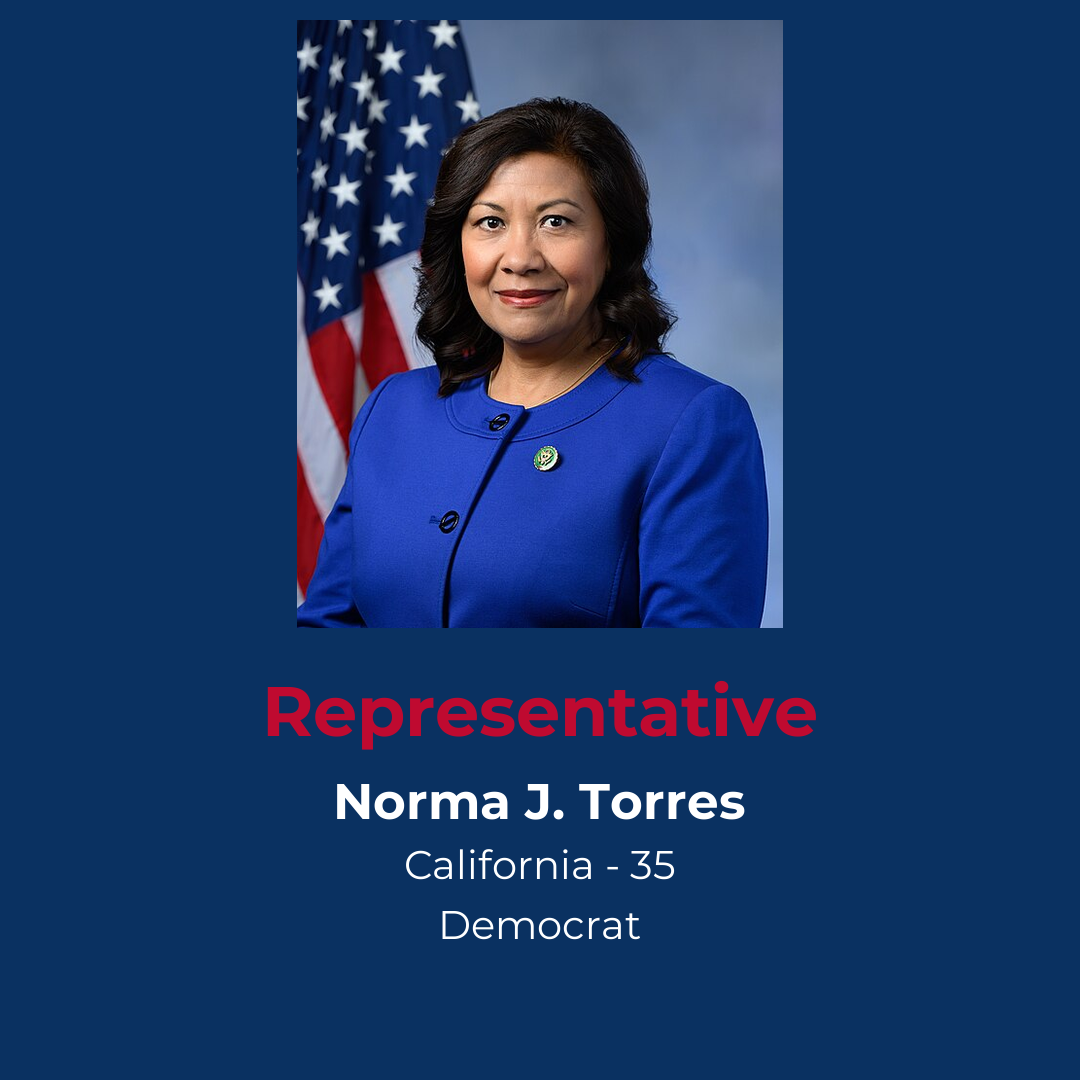
Profile of Democrat Representative Torres from California District 35
Norma Torres is the only member of Congress born in Central America (Guatemala). Arriving in the U.S. at age five after her mother’s death, she has become the House's leading voice on Central American policy. She is famous for her high-profile diplomatic feuds with authoritarian leaders, most notably El Salvador’s President Nayib Bukele, who has attacked her on social media for her relentless exposure of corruption in the region. She represents California’s 35th District, located in the Inland Empire. It includes Pomona, Ontario, Chino, and Fontana. This area is the "Logistics Capital of America," home to the massive warehouses and distribution centers that handle goods coming from the Ports of LA and Long Beach, creating a unique tension between job creation and poor air quality. Torres’ political origin story is one of the most visceral in Congress: she was a 911 dispatcher for the LAPD for 17 years. Her career path changed forever after a tragic call where a young girl was murdered by her uncle while Torres was on the line; the girl had waited 20 minutes for a bilingual operator. Torres turned her grief into action, leading a union campaign to require bilingual staffing at dispatch centers. As a senior member of the Appropriations Committee, she wields the "power of the purse" over two critical areas: Transportation (vital for her district's infrastructure) and State and Foreign Operations (vital for her foreign policy goals). In the 119th Congress, she has used this seat to block funding for foreign governments that dismantle anti-corruption task forces. She is the lead sponsor of the 911 SAVES Act, a bill to reclassify 911 dispatchers from "clerical workers" to "first responders." She argues that dispatchers suffer from PTSD at rates similar to police and fire personnel and deserve the same mental health benefits and retirement protections. "She listened to a murder unfold over the phone because there weren't enough bilingual dispatchers. Norma Torres quit her job, ran for office, and fixed the system. She is the 911 operator who hung up and went to Washington." Norma Torres: The Voice on the Line Norma Torres’ path to power began with a headset. For nearly two decades, she worked the graveyard shift as a 911 dispatcher for the Los Angeles Police Department. It was a grueling, high-stress job that taught her to stay calm in chaos, but one call broke her. A young girl named Yahida called 911 screaming that her uncle was going to kill her. Because the system lacked sufficient Spanish-speaking operators, Yahida had waited on hold for 20 minutes. By the time Torres connected, it was too late. She heard the shots fired. Enraged by the bureaucratic failure that cost a child her life, Torres became a union organizer. She lobbied the LA City Council to mandate bilingual pay and staffing minimums for emergency services. She realized then that if she wanted to save lives, she had to be the one making the rules. She ran for Mayor of Pomona, then State Assembly, and finally Congress in 2014. In Washington, Torres is a unique figure: a blue-collar immigrant with a specialized focus on national security and corruption. As the founder of the Central America Caucus, she argues that the "root cause" of migration isn't poverty alone, but the theft of state resources by corrupt elites. She has released lists of corrupt officials in the "Northern Triangle" (Guatemala, Honduras, El Salvador), earning her death threats and insults from foreign heads of state. When El Salvador's President Nayib Bukele urged voters in her district to vote her out, Torres responded by winning re-election comfortably. Locally, she represents the Inland Empire, a region defined by blue-collar grit and global commerce. Her district is the engine room of the American supply chain. While she supports the jobs provided by the logistics industry, she is a fierce criti...

Profile of President President Zachary Taylor
Zachary Taylor was a career soldier who had never voted in an election before running for President. Nicknamed "Old Rough and Ready," he was a hero of the Mexican-American War (winning the Battle of Buena Vista) and was courted by both the Whigs and Democrats because his political views were a complete mystery. He died in office under bizarre circumstances, sparking one of history's great conspiracy theories. After attending a sweltering July 4th celebration at the Washington Monument in 1850, Taylor consumed a large quantity of raw cherries and iced milk. He fell ill with severe gastroenteritis (cholera morbus) and died five days later. In 1991, his body was exhumed to test for arsenic poisoning; the results were negative. Despite being a Southern slaveholder from Louisiana, Taylor was a fierce Unionist who opposed the expansion of slavery into the new western territories. He shocked Southern leaders by threatening to personally lead the army to hang any secessionists "with less reluctance than I hanged deserters and spies in Mexico." His beloved war horse, "Old Whitey," lived on the White House lawn. Visitors would often pluck hairs from the horse's tail as souvenirs, eventually leaving the poor animal partially bald. Taylor was notoriously unpresidential in appearance. He hated uniforms and often wore a straw hat and dusty civilian clothes on the battlefield, leading new recruits to frequently mistake him for a farmer. This anti-establishment vibe was key to his electoral appeal. "He was a slaveholder who threatened to hang secessionists. He was a general who never voted. Zachary Taylor was a bundle of contradictions who died by a bowl of cherries." Zachary Taylor: The Soldier President Zachary Taylor was the original "outsider" candidate. He spent 40 years in the U.S. Army, fighting in the War of 1812, the Black Hawk War, the Seminole Wars, and finally the Mexican-American War. He was a soldier's soldier: he slept in tents with his men, wore sloppy clothes, and chewed tobacco. His victory at the Battle of Buena Vista, where his outnumbered forces defeated Santa Anna, made him a national celebrity. The Whig Party nominated him in 1848 not because he agreed with their policies (he barely knew what they were), but because he was a winner. Taylor had literally never cast a ballot in his life. He famously refused to pay postage due on the letter informing him of his nomination, leaving it sitting at the post office for weeks. Once in office, Taylor surprised everyone. Southern leaders expected him—a wealthy plantation owner from Louisiana—to support the expansion of slavery into California and New Mexico. Instead, Taylor argued that slavery was geographically impossible in the arid West and pushed for California to be admitted immediately as a Free State. When Southern fire-eaters threatened to secede, Taylor exploded. He told them he would personally lead the army to crush any rebellion. He was prepared to veto the Compromise of 1850, which he viewed as a concession to traitors. But he never got the chance. On July 4, 1850, Taylor attended a fund-raising ceremony at the unfinished Washington Monument. It was a blistering hot day. He returned to the White House and consumed a large bowl of fresh cherries and a pitcher of iced milk. That night, he developed severe stomach cramps. Doctors treated him with the "medicines" of the time—opium, calomel (mercury), and bleeding—which likely hastened his death. He died on July 9, 1850. His sudden death changed history. His successor, Millard Fillmore, was a compromiser who signed the very bills Taylor had threatened to veto, delaying the Civil War for a decade but arguably making the final explosion worse. Constituency Context: The United States (1849–1850) Population: ~23 Million. The Crisis of 1850: The nation was on the brink of disunion over the status...

Profile of President President James K. Polk
James K. Polk is arguably the most successful one-term president in American history. He entered office with four specific goals—acquire California, settle the Oregon dispute, lower tariffs, and re-establish the Independent Treasury—and accomplished every single one of them in just four years. He was the first "Dark Horse" candidate. At the 1844 Democratic convention, he was a compromise choice who wasn't even on the ballot until the ninth round of voting. The Whigs mocked him with the slogan, "Who is James K. Polk?"—a question he answered by expanding the U.S. territory by 1.2 million square miles. Polk was a micromanager and a workaholic who essentially worked himself to death. He refused to delegate tasks, personally checking government accounts and military supply logs. He entered the White House at 49 (the youngest president at the time) full of vigor and left it at 53 completely exhausted, dying of cholera just 103 days after his term ended. Under his leadership, the U.S. fought the Mexican-American War, a conflict he arguably provoked to secure the Southwest. While successful in gaining territory (including modern-day CA, NV, UT, AZ), the war inflamed the slavery debate, leading directly to the Civil War. As a child, he survived a horrific surgery for urinary stones without anesthesia or antiseptics (drinking only brandy to dull the pain). This traumatic event left him sterile; he and his wife, Sarah Childress Polk, had no children. Sarah was his indispensable political partner, serving as his communications director and secretary. "He promised to serve only four years, and he promised to redraw the map of the United States. He kept both promises, and the effort killed him." James K. Polk: The Napoleon of the Stump James K. Polk is the definition of "consequential." Before Polk, the United States ended at the Rocky Mountains. After Polk, it stretched to the Pacific Ocean. A protégé of Andrew Jackson (earning him the nickname "Young Hickory"), Polk believed fervently in Manifest Destiny—the idea that America was divinely ordained to control the continent. He was a man of intense discipline and little humor. He banned dancing and card-playing in the White House. He worked 12-hour days and rarely took a vacation. This intensity was born from a childhood trauma: at age 17, he underwent a lithotomy (removal of bladder stones) performed by a frontier doctor with nothing but a knife and a bottle of brandy. Surviving that ordeal gave him a sense of destiny but also a frail constitution that he constantly pushed to the breaking point. His presidency was dominated by territorial expansion. He bluffed Great Britain into a treaty for the Oregon Territory (avoiding a war with the slogan "54-40 or Fight" but settling for the 49th parallel). Simultaneously, he sent troops to the disputed Texas border, provoking Mexico into firing the first shot. The resulting Mexican-American War was controversial—Abraham Lincoln, then a young Congressman, famously opposed it—but it resulted in the U.S. acquiring nearly half of Mexico's territory. Polk is also unique for his exit. He pledged during his campaign that he would not seek a second term. Despite being popular and successful, he kept his word. He retired to Nashville in March 1849, but his immune system was shattered by four years of stress. He contracted cholera during a tour of the South and died in June, having enjoyed the shortest retirement of any U.S. President. Constituency Context: The United States (1845–1849) Population: ~20 Million. The Map: Under Polk, the U.S. annexed Texas (1845), acquired the Oregon Territory (1846), and seized the Mexican Cession (1848). The Gold Rush: Just days before Polk signed the treaty ending the war with Mexico, gold was discovered at Sutter's Mill in California. Polk confirmed the discovery in his farewell address, spar...
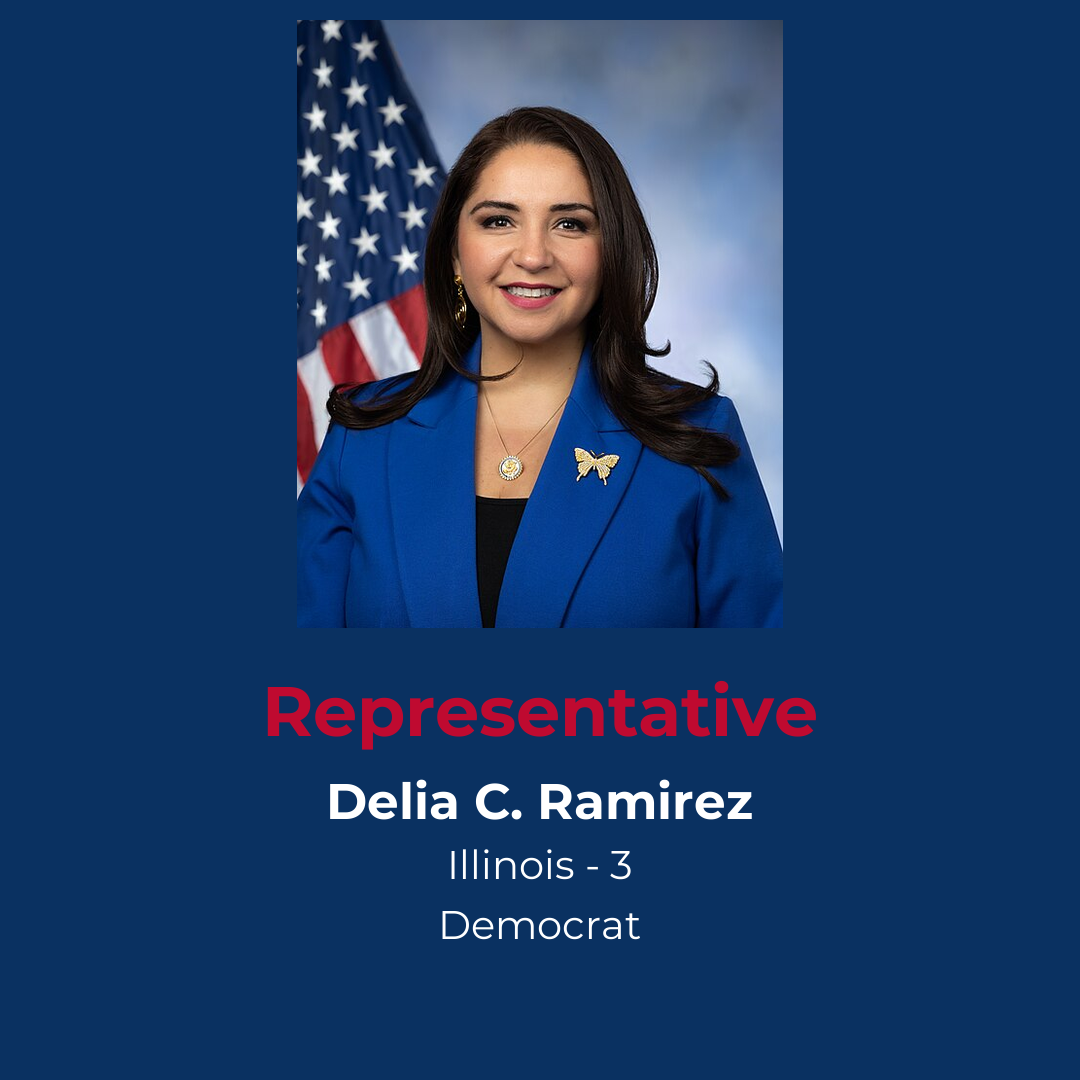
Profile of Democrat Representative Ramirez from Illinois District 3
Delia Ramirez is a history-maker: elected in 2022, she is the first Latina ever elected to Congress from the entire Midwest. The daughter of Guatemalan immigrants, she represents a new voice for the region's growing Latino population, breaking the mold of coastal-dominated Latino leadership in the Democratic caucus. She represents Illinois’ 3rd District, a newly created Latino-plurality district that stretches from the hip, progressive neighborhoods of Logan Square and Humboldt Park in Chicago to the working-class, heavy-industrial suburbs of West Chicago and Addison. It is a district that bridges the gap between urban gentrification and suburban immigrant labor. Ramirez brings a uniquely personal perspective to the immigration debate: she is the only member of Congress in a mixed-status marriage. Her husband is a DACA recipient (Dreamer), meaning his legal status is perpetually in limbo. She frequently cites this reality in hearings, arguing that for her family, immigration policy isn't theoretical—it’s the difference between staying together or being separated. In the 119th Congress, she has taken on a significant oversight role as the Ranking Member of the Veterans' Affairs Subcommittee on Oversight and Investigations. She has used this gavel to probe the VA's handling of minority veterans and student veteran benefits, introducing the Student Veteran Benefit Restoration Act to help those defrauded by for-profit colleges. Before Congress, Ramirez was a non-profit executive focused on homelessness and housing. She served as the Executive Director of the Center for Changing Lives and Board Chair of LUCHA. This background drives her intense focus on "Housing as a Human Right," leading her to introduce the Tenants' Right to Organize Act in 2025 to protect renters with federal vouchers. "She is the first Latina Congresswoman from the Midwest, and she goes home every night to a husband whose legal status is in the hands of the courts. Delia Ramirez lives the policy she fights for." Delia Ramirez: The Bridge Builder Delia Ramirez represents the new face of the Midwest. Born in Chicago to working-class immigrants who crossed the border while pregnant with her, Ramirez grew up in the Humboldt Park neighborhood witnessing the struggles of the working poor. Her parents worked multiple low-wage jobs to keep a roof over their heads, an experience that radicalized her on the issue of housing stability. She spent nearly two decades in the non-profit sector, leading organizations that fought for affordable housing and homeless prevention. Unlike many politicians who come from law or business, Ramirez came from social work. She was elected to the Illinois General Assembly in 2018, where she quickly rose to leadership, co-founding the Progressive Caucus and passing legislation to expand Medicaid to undocumented seniors. When the 2020 Census resulted in a new, Latino-plurality district in Illinois, Ramirez was the natural choice to run. She won decisively, uniting a coalition of progressive white voters in Chicago's gentrifying northwest side and working-class Latino families in the western suburbs. In Washington, Ramirez is a proud progressive, often aligning with "The Squad" on economic and foreign policy issues. However, she distinguishes herself with her hyper-focus on housing and veterans. As the Ranking Member of the Veterans' Affairs Oversight Subcommittee, she has proven to be a diligent investigator. In late 2025, she co-led a high-profile inquiry into the VA’s creation of a database tracking non-citizen veterans, arguing that it could be weaponized for deportations. Her legislative style is defined by her "lived experience." Whether she is debating the Homeland Security Committee about border enforcement or pushing for the American Dream and Promise Act, she frequently reminds her colleagues that she is the wife of a Drea...
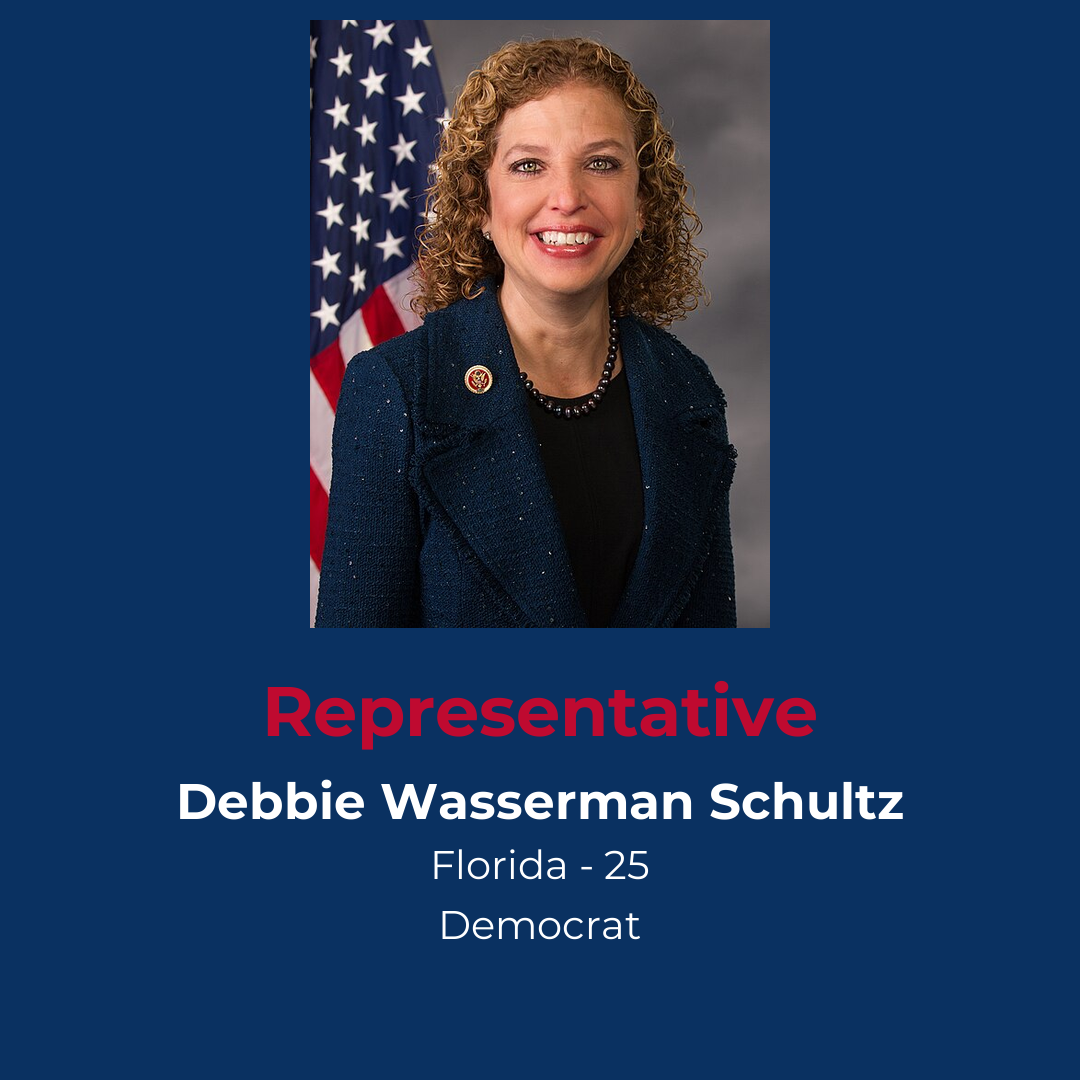
Profile of Democrat Representative Wasserman Schultz from Florida District 25
Debbie Wasserman Schultz is a political survivor in every sense of the word. The first Jewish woman elected to Congress from Florida, she overcame a highly public resignation as DNC Chair in 2016 and a private, grueling battle with breast cancer (involving seven surgeries kept secret from the public) to remain one of the most influential Democrats in the House. She represents Florida’s 25th District, a suburban stronghold in Broward County that includes Weston, Davie, Dania Beach, and Hollywood. The district is culturally distinct for having one of the largest Jewish populations in the country and a massive Venezuelan exile community (Weston is often called "Westonzuela"), driving her hawkish stance on both antisemitism and the Maduro regime. A "Cardinal" of the House (senior appropriator), she currently serves as the Ranking Member of the Military Construction and Veterans Affairs Subcommittee. This role allows her to funnel billions into veteran healthcare and base infrastructure, a critical priority for Florida’s large veteran population. Her signature legislative achievement is the EARLY Act (Breast Cancer Education and Awareness Requires Learning Young). Drawing from her own diagnosis at age 41, she authored this law to mandate education about breast health for young women, arguing that "cancer doesn't check your ID." In the 119th Congress, she continues to lead the fight for its reauthorization and funding. She is arguably the Democratic caucus's most vocal defender of Israel. A Co-Chair of the Abraham Accords Caucus, she has frequently broken with the progressive "Squad" to support military aid to Israel, particularly in the aftermath of October 7th, framing the conflict not just as foreign policy but as an existential issue for her constituents. "She survived seven surgeries in secret while whipping votes on the House floor. Debbie Wasserman Schultz is the unbreakable force of Florida politics." Debbie Wasserman Schultz: The Survivor Debbie Wasserman Schultz has lived two lives in Washington. To the national public, she is best known as the former Chair of the Democratic National Committee (DNC), whose tenure ended in controversy during the 2016 election. But to her constituents in Broward County and her colleagues on Capitol Hill, she is defined by a ferocity that borders on the indestructible. Her resilience was forged in 2007. Just months after becoming a Chief Deputy Whip, she was diagnosed with breast cancer. Carrying the BRCA2 gene mutation, she opted for a double mastectomy and the removal of her ovaries. Remarkably, she kept the diagnosis and seven subsequent surgeries a complete secret from the public and most of her colleagues for over a year, scheduling operations during congressional recesses and returning to work days later. She only revealed her battle after she was cancer-free, turning her pain into policy by passing the EARLY Act, which directed the CDC to launch breast cancer education campaigns for young women. Legislatively, she is a powerhouse on the Appropriations Committee. Having previously chaired the Military Construction subcommittee, she now serves as its top Democrat, wielding the "power of the purse" to modernize VA hospitals and improve housing for military families. She is known for her mastery of the appropriations process, using it to secure hundreds of millions of dollars for Everglades restoration, arguing that the "River of Grass" is the lifeblood of South Florida’s water supply. Her foreign policy is intensely local. Representing thousands of Venezuelan exiles in Weston, she has been a relentless critic of the Maduro regime, often aligning with Republicans to pass sanctions (like the REVOCAR Act of 2025) and demanding Temporary Protected Status (TPS) for Venezuelans. Similarly, representing a district with a dense Jewish population, she has been a frontline warrior against antisem...
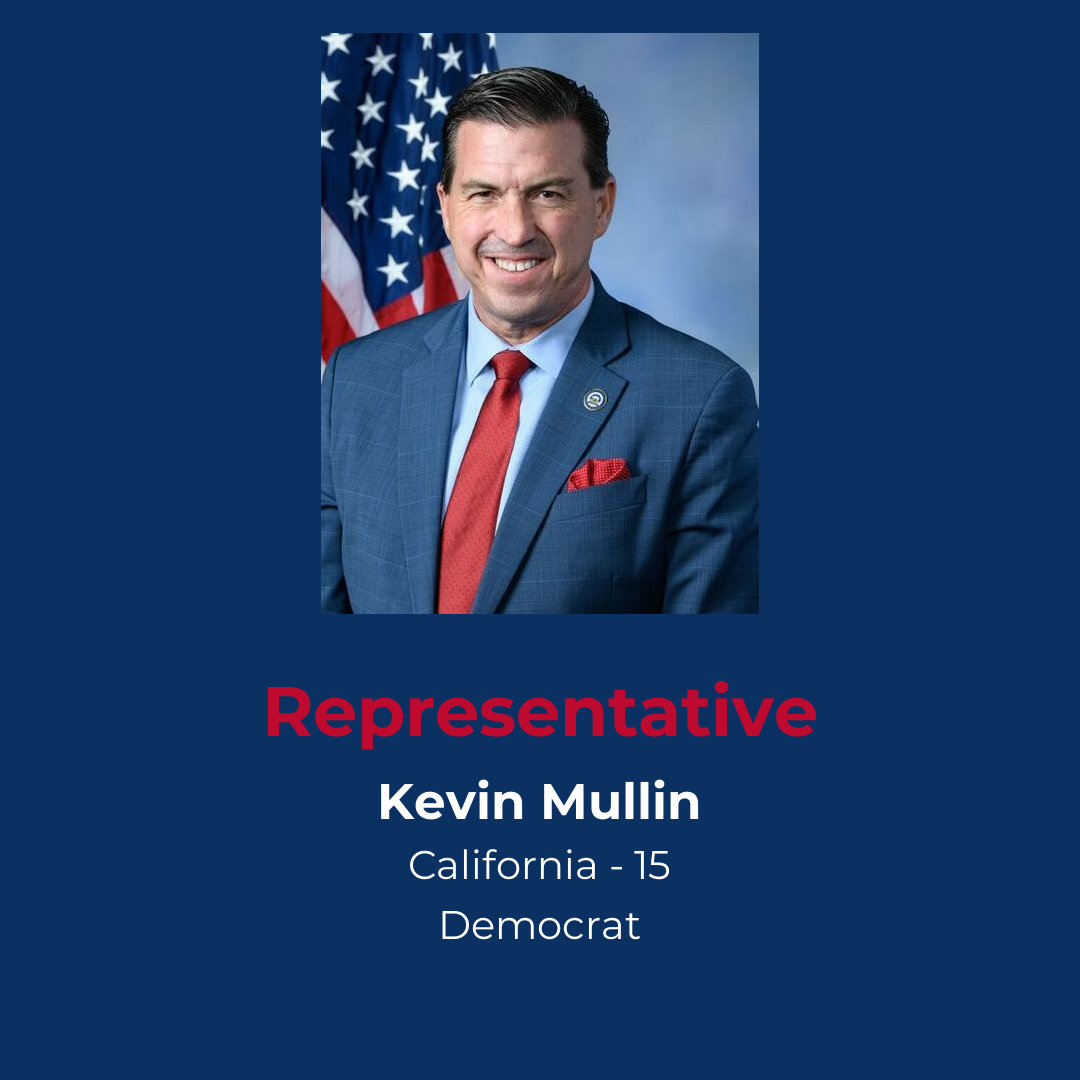
Profile of Democrat Representative Mullin from California District 15
Kevin Mullin is the self-described "Architect of Vote-by-Mail" in California. As a State Assemblyman, he authored the landmark legislation that transitioned the state to universal all-mail elections. In Congress, he has introduced the Universal Right to Vote by Mail Act of 2025, seeking to take this model national to modernize American elections. He represents California’s 15th District, a stretch of the San Francisco Peninsula that includes San Mateo County and parts of San Francisco. It is the heart of the global biotech industry (home to Genentech) and is one of the wealthiest and most educated districts in the country. Mullin is the scion of a beloved local political dynasty. He is the son of Gene Mullin, a legendary civics teacher and State Assemblyman. Kevin followed in his father's footsteps, serving on the South San Francisco City Council and in the State Assembly before succeeding his mentor, Jackie Speier, in Congress. In the 119th Congress, Mullin secured a coveted seat on the House Energy and Commerce Committee. This assignment gives him direct oversight over the biotech and pharmaceutical industries that dominate his district, allowing him to protect the "innovation economy" while advocating for lower drug prices. A fierce critic of the administration's immigration policies, Mullin made headlines in January 2026 by introducing articles of impeachment against Homeland Security Secretary Kristi Noem following aggressive ICE raids in the Bay Area. He has positioned himself as a defender of immigrant rights in a district with a massive foreign-born population. "He turned California into a vote-by-mail state, and now he wants to do the same for the country. Kevin Mullin is the civics teacher's son fighting to modernize American democracy." Kevin Mullin: The Reformer from the Peninsula Kevin Mullin views politics through the lens of a classroom. The son of Gene Mullin—a high school government teacher who became a State Assemblyman—Kevin grew up discussing the Federalist Papers at the dinner table. This background has made him a "process nerd" in the best sense of the term. While other politicians chase cable news hits, Mullin chases structural reform. His signature achievement came in Sacramento, where he authored AB 37, the bill that made California a permanent vote-by-mail state. He argued that the best way to fight voter suppression was to put a ballot in every mailbox. Since arriving in Washington in 2023, he has attempted to scale this idea federally. As a member of the Democracy Reform Task Force, he argues that "access to the ballot is the gateway to all other rights." Representing the San Francisco Peninsula, Mullin is also the Congressman for "Innovation." His district is the birthplace of the modern biotech industry. From Genentech in South San Francisco to the venture capital firms on Sand Hill Road, his constituents are inventing the future of medicine. His seat on the Energy and Commerce Committee allows him to be the bridge between Silicon Valley innovation and Washington regulation. He frequently advocates for increased NIH funding and tax credits for R&D, arguing that American competitiveness depends on the labs in his backyard. However, Mullin is not just a technocrat. He represents a district with a 40% foreign-born population, and he has been a vocal opponent of the Trump administration's deportation agenda. In early 2026, after a series of high-profile ICE operations in San Mateo County, Mullin took the aggressive step of introducing impeachment articles against the DHS Secretary, arguing that the department was violating due process rights. It was a move that solidified his standing as a progressive fighter willing to punch back. District Context: California 15th (U.S. Census Data) The Peninsula: This district covers the spine of the San Francisco Peninsula, including Daly City, Sout...

Profile of Republican Senator Blackburn from Tennessee
Marsha Blackburn is the Senior Senator from Tennessee and arguably the Senate's most aggressive regulator of Big Tech. As the Chair of the Subcommittee on Consumer Protection, Product Safety, and Data Security, she is the lead Republican sponsor of the Kids Online Safety Act (KOSA), a landmark bill aiming to force social media companies to design their platforms with child safety in mind. She secured a decisive re-election in 2024, defeating Democrat Gloria Johnson by nearly 30 points. Her victory solidified Tennessee's status as a deep-red fortress and affirmed her brand of combative, populist conservatism. Blackburn has positioned herself as the "Guardian of Music Row." Representing Nashville, she has become the Senate's leading voice on the intersection of Artificial Intelligence and Copyright. In the 119th Congress, she introduced the COPIED Act and the NO FAKES Act, legislation designed to protect songwriters and artists from unauthorized AI deepfakes and voice cloning. A fierce Border Hawk, she serves as the Chair of the Judiciary Subcommittee on Border Security and Immigration in the new Republican majority. She uses this gavel to lead high-profile hearings on cartel activity and human trafficking, often livestreaming her trips to the southern border to her massive social media following. Before politics, Blackburn was a trailblazing businesswoman. She worked for the Southwestern Company (selling books door-to-door) and later founded her own marketing firm. She was the first woman elected to Congress from Tennessee who did not succeed her husband, a distinction she frequently cites when discussing conservative feminism. "She regulates Silicon Valley to protect the children and regulates AI to protect the country stars. Marsha Blackburn is the grandmother who knows more about the internet than the tech CEOs." Marsha Blackburn: The Retail Warrior Marsha Blackburn often calls herself a "hard-core, card-carrying Tennessee conservative," but her political style is pure salesmanship. Before she was a politician, she was a sales manager for the Southwestern Company, training college students to sell educational books door-to-door. She learned early that to make the sale, you have to be persistent, personable, and unflappable. She brings that same "retail politics" energy to the Senate, famously hosting "Tennessee Tuesday" breakfasts every week where any constituent visiting D.C. can meet her for donuts and coffee. Her rise to power began in the Tennessee State Senate, where she led the revolt against a proposed state income tax in the early 2000s—a legendary political battle where protesters stormed the state capitol. That victory catapulted her to the U.S. House in 2002 and eventually the Senate in 2018. In Washington, Blackburn has carved out a unique niche: she is a cultural warrior who does the homework on technology. While many Senators struggle to understand the internet, Blackburn has made herself the primary antagonist of Silicon Valley. Her signature legislation, the Kids Online Safety Act (KOSA), co-authored with Democrat Richard Blumenthal, represents the most significant bipartisan attempt to regulate social media algorithms in decades. She argues that platforms like TikTok and Instagram are "addictive by design" and that Big Tech has lost the privilege of self-regulation. Her focus on Artificial Intelligence is driven by her constituents in Nashville. As AI voice cloning threatens the livelihoods of country music stars and session musicians, Blackburn has introduced the ELVIS Act (at the state level) and the COPIED Act (federally) to establish a property right in one's own voice and likeness. She views this as a property rights issue: "Your voice is your property, and Big Tech can't steal it to train their models." Despite her focus on tech, she remains a staunch partisan on social issues. She is a fie...
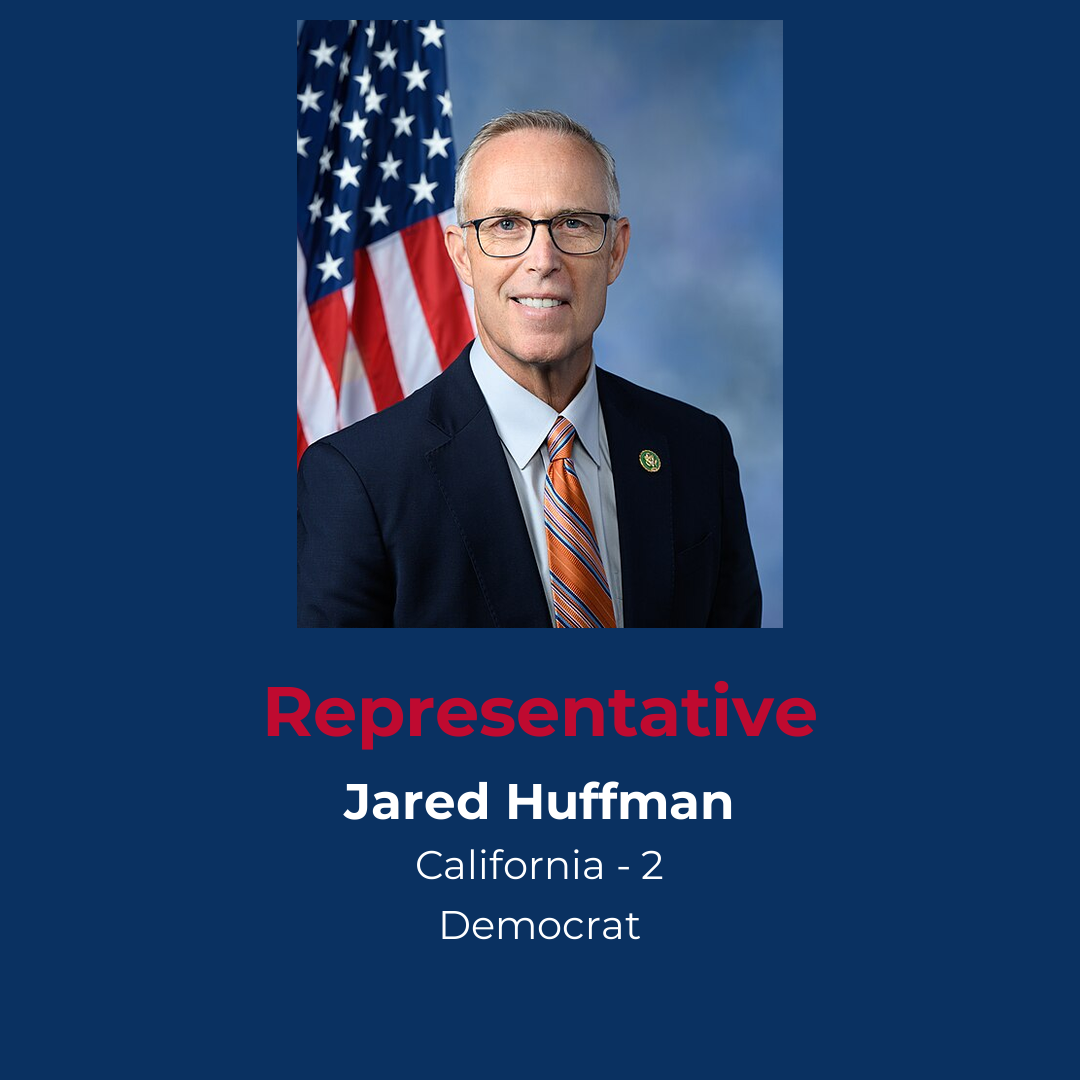
Profile of Democrat Representative Huffman from California District 2
Jared Huffman is the Ranking Member of the powerful House Natural Resources Committee in the 119th Congress. Ascending to the top Democratic spot on the panel in 2025, he is now the party's lead strategist on public lands, oceans, and energy policy, positioning him as the primary antagonist to the administration's efforts to expand drilling and mining. He represents California’s 2nd District, widely considered the most physically beautiful district in America. Spanning the "North Coast" from the Golden Gate Bridge to the Oregon border, it encompasses the wealthy enclaves of Marin County, the wine country of Sonoma, and the rugged redwood forests of Mendocino and Humboldt counties. Huffman is the founder and chair of the Stop Project 2025 Task Force. Launched in 2024 and continuing into the 119th Congress, this working group is the Democratic caucus's "war room" dedicated to identifying and blocking the implementation of the conservative policy roadmap known as Project 2025. He is the only openly non-religious member of Congress. Identifying as a Humanist, Huffman co-founded the Congressional Freethought Caucus to defend the separation of church and state and protect the rights of atheists and agnostics, often challenging what he calls "creeping Christian Nationalism" in federal policy. Before Congress, Huffman was a star environmental lawyer for the Natural Resources Defense Council (NRDC) and a World Champion volleyball player (he was a three-time All-American at UCSB). This competitive background defines his legislative style: he is a "happy warrior" who aggressively litigates policy arguments in committee hearings. "He represents the Redwoods, the Cannabis growers, and the Golden Gate Bridge. Jared Huffman is the Humanist lawyer leading the resistance against Project 2025." Jared Huffman: The North Coast Guardian Jared Huffman fits his district perfectly: he is outdoorsy, intellectually combative, and deeply progressive. Representing the "North Coast" of California, Huffman acts as the guardian of one of the planet's most unique ecosystems. But in the 119th Congress, his role has expanded from regional protector to national opposition leader. In January 2025, Huffman ascended to the role of Ranking Member of the House Natural Resources Committee. This is a massive elevation, putting him in charge of the Democratic response to every oil lease, mining permit, and national park policy proposed by the Republicans. A former senior attorney for the NRDC, Huffman brings a litigator’s precision to these fights. He doesn't just oppose drilling; he dissects the legal frameworks used to justify it. He has been particularly vocal about protecting the Arctic National Wildlife Refuge and blocking new offshore drilling in the Pacific. Beyond the environment, Huffman has carved out a unique niche as the leader of the "Resistance" to the right-wing restructuring of government. He founded the Stop Project 2025 Task Force, a coalition of lawmakers dedicated to exposing and halting the sweeping executive actions proposed by conservative think tanks. He views this as a defense of the civil service and democratic institutions, organizing regular briefings to "connect the dots" between administrative actions and the Project 2025 playbook. Culturally, Huffman is a trailblazer for the secular community. In a capital where nearly every speech ends with "God Bless America," Huffman openly identifies as a Humanist. He argues that the "religious right" has weaponized faith to justify discriminatory policies, and he uses the Congressional Freethought Caucus to push back, advocating for science-based policy and strict church-state separation. Locally, he navigates a district of stark contrasts. He represents the ultra-wealthy liberals of Marin County and the rugged, often libertarian growers of the Emerald Triangle (Humboldt/Mendocino). He ha...
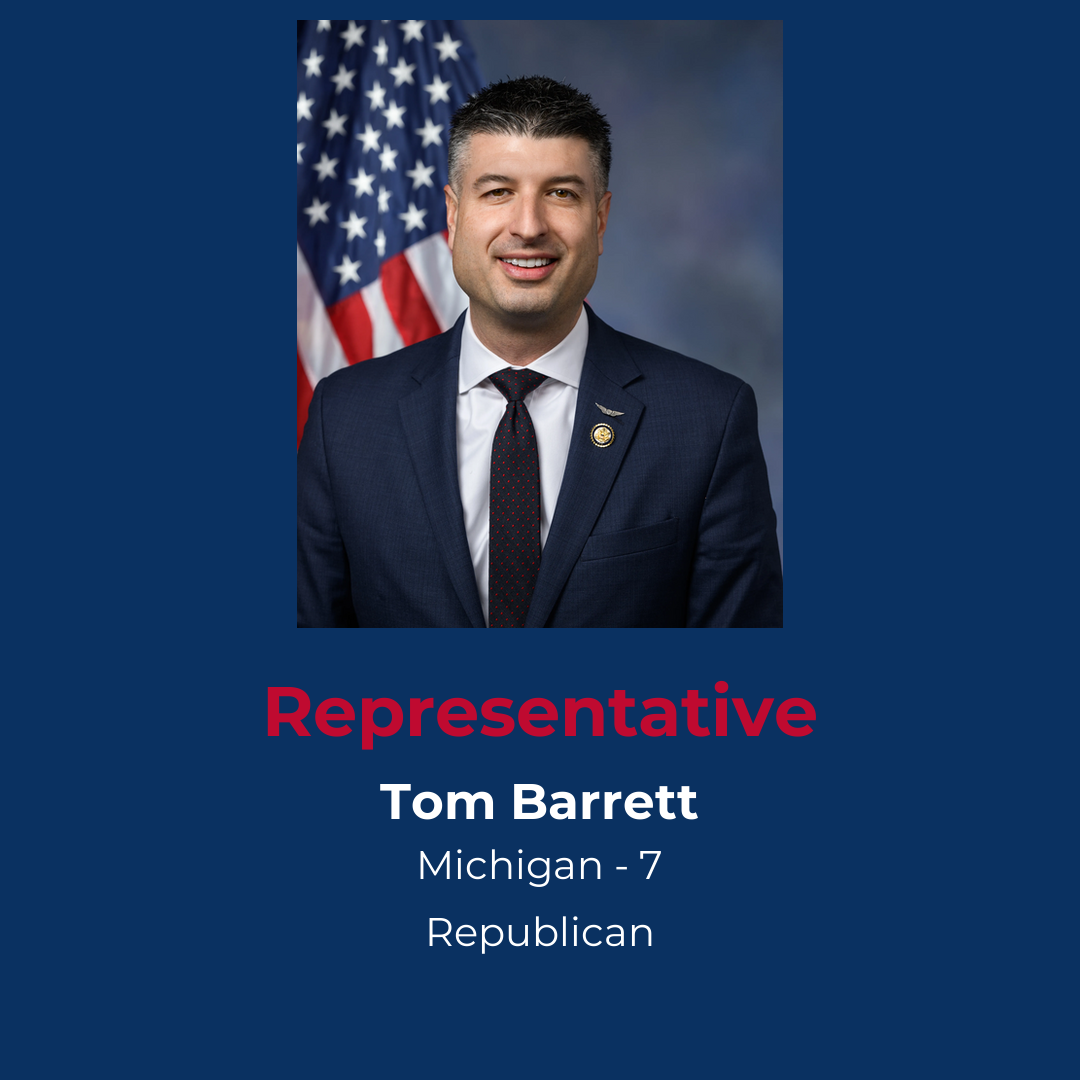
Profile of Republican Representative Barrett from Michigan District 7
Tom Barrett is the only helicopter pilot in the Michigan delegation and one of the few in Congress. A 22-year Army veteran who flew Black Hawks and Lakotas, he logged over 1,000 flight hours in combat zones including Iraq and Kuwait. His military service is the cornerstone of his political identity. He represents Michigan’s 7th District, arguably the most critical "bellwether" district in the nation. Centered on the state capital of Lansing, it includes a volatile mix of liberal state workers, suburban moderates in Livingston County, and rural conservatives in Clinton and Shiawassee counties. It is the district that often decides control of the House. Barrett flipped this seat Red in 2024, defeating Democrat Curtis Hertel in one of the most expensive congressional races in history. His victory was seen as a rejection of the "EV mandates" that many autoworkers in his district feared would cost them their jobs. Despite being a freshman in the 119th Congress, Barrett was tapped to serve as the Chairman of the Veterans' Affairs Subcommittee on Technology Modernization. This rare leadership role for a junior member highlights the GOP's trust in his subject matter expertise regarding the VA's broken software systems. His signature legislative achievement is the Military Helicopter Training Safety Act, which was signed into law by President Trump in December 2025. The bill, inspired by his own flight experience, mandates the installation of crash-avoidance technology in non-combat military helicopters. "He flew Black Hawks over Iraq and flipped the toughest swing district in Michigan. Tom Barrett is the pilot trying to land the plane for the American auto industry." Tom Barrett: The Citizen Soldier Tom Barrett’s path to Congress was literally cleared by a rotor blade. Enlisting in the Army right out of high school, Barrett spent 22 years in uniform, deploying to Iraq, Kuwait, Guantanamo Bay, and the Korean DMZ. But it was his time as a Black Hawk and Lakota helicopter pilot that defined his leadership style: precise, technical, and hyper-aware of his surroundings. He entered politics in the Michigan State Legislature, where he served in both the House and Senate. In Lansing, he built a reputation as a conservative pitbull who wasn't afraid to investigate his own government. He famously led the oversight hearings into the Grand Rapids Home for Veterans, exposing abuse and neglect that led to criminal charges against staff. That experience convinced him that the government often fails the people it promises to protect—a theme he carried to Washington. In 2022, he ran for Congress against Democratic star Elissa Slotkin and lost a heartbreakingly close race. Instead of quitting, he ran again in 2024. This time, the political winds had shifted. Campaigning heavily against what he called "state-sponsored corporate welfare"—specifically the controversial Gotion battery plant (a Chinese-linked EV battery factory planned for Michigan)—Barrett tapped into a deep vein of economic anxiety. He argued that American tax dollars shouldn't fund Chinese companies. He won the open seat (vacated by Slotkin) by nearly 4 points, flipping a district that had been a Democratic stronghold. In Washington, Barrett has focused on two things: Veterans and Aviation. As the Chair of the VA Tech Modernization Subcommittee, he is currently overseeing the disastrous rollout of the VA’s new Electronic Health Record system, grilling bureaucrats with the specificity that only a former soldier can muster. In early 2026, he also made headlines by introducing the Stop Insider Trading Act, joining a bipartisan push to ban members of Congress from trading individual stocks, arguing that "public service shouldn't be a get-rich-quick scheme." District Context: Michigan 7th (U.S. Census Data) The Heart of Michigan: This district is the political and geographic cente...
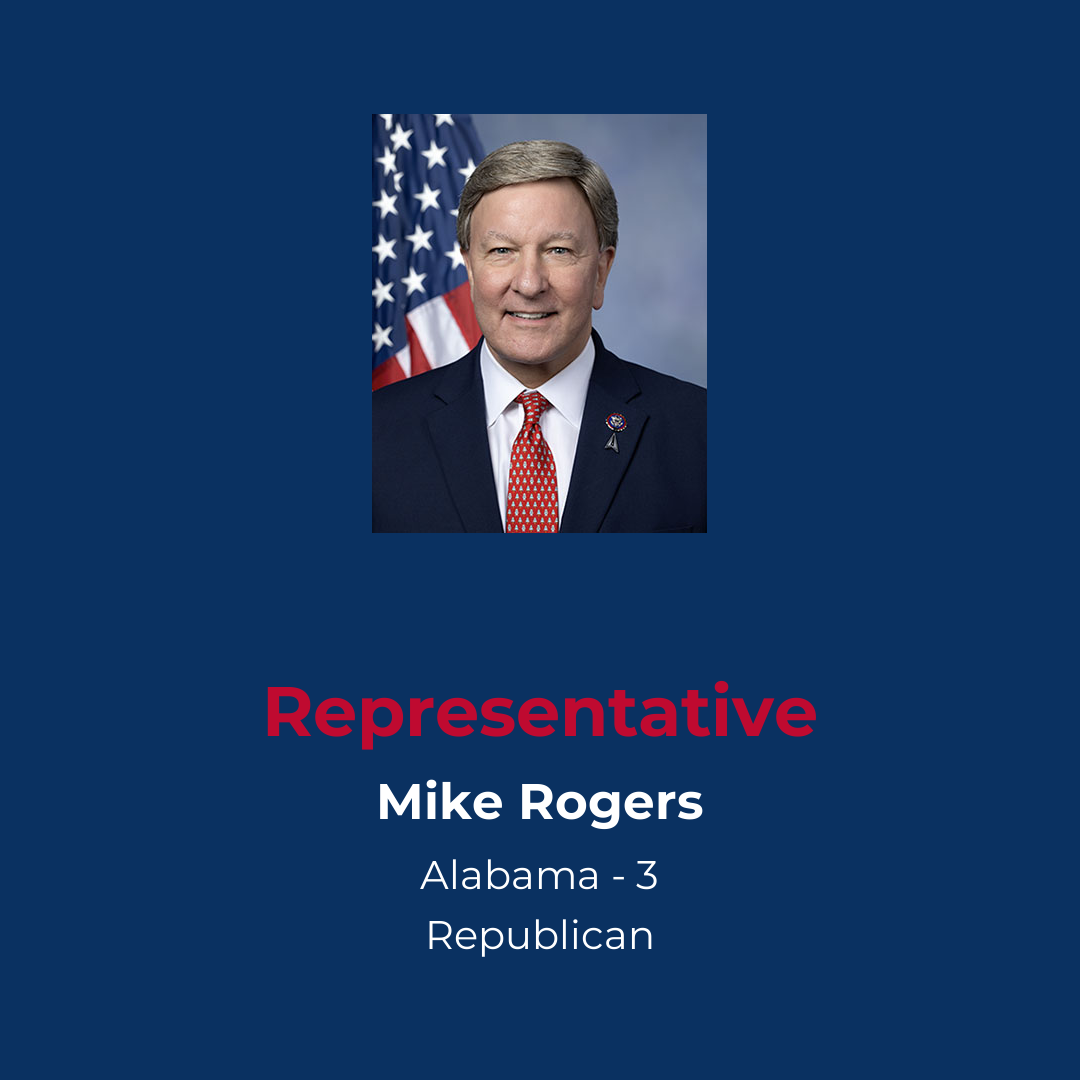
Profile of Republican Representative Rogers from Alabama District 3
Mike Rogers is one of the most powerful men in Washington as the Chairman of the House Armed Services Committee (HASC). He controls the National Defense Authorization Act (NDAA), the massive annual bill that funds the U.S. military, sets troop pay, and determines which weapons systems get built. He represents Alabama’s 3rd District, a slice of East Alabama that is essentially a military-industrial powerhouse. It includes Anniston Army Depot (known as the "Pit Crew of America's Warfighters"), Auburn University, and a massive corridor of automotive manufacturing (Honda and Hyundai suppliers). Rogers is widely considered the "Father of the Space Force." Years before Donald Trump made it a campaign rally line, Rogers and Democrat Jim Cooper were quietly drafting the legislation to create a separate branch of the military for space, arguing that the Air Force was neglecting the domain. He is a fierce "institutionalist" with a legendary temper. This was most famously displayed on January 6, 2023, during the Speaker vote, when Rogers had to be physically restrained by Rep. Richard Hudson after lunging at Matt Gaetz on the House floor. Rogers was furious that the Freedom Caucus was blocking Kevin McCarthy and threatening the defense budget. Locally, Rogers is the ultimate "pork barrel" protector (in the eyes of his voters, a "strategic investor"). He has fought tooth and nail to move U.S. Space Command to Huntsville, AL (just outside his district, but vital to the state's economy), engaged in a years-long feud with the Biden administration over the decision to keep it in Colorado. "He created the Space Force, funds the Army, and had to be held back from fighting Matt Gaetz on the House floor. Mike Rogers is the Chairman who does not suffer fools." Mike Rogers: The Chairman In the chaotic ecosystem of the House GOP, Mike Rogers is the "Old Bull." While younger members chase social media clout, Rogers chases defense contracts. He is a throwback to the era of powerful committee chairmen who could make or break a presidency with a single markup session. As the leader of the Armed Services Committee, he views himself as the guardian of the American military—and, by extension, the guardian of Alabama’s economy. His path to power was paved with patience. A former county commissioner and practicing attorney from Calhoun County, Rogers came to Congress in 2003. He spent nearly two decades climbing the seniority ladder, specializing in the unglamorous work of nuclear deterrence and missile defense. His obsession with the threat from China led him to a radical conclusion in 2017: the U.S. was losing the war in space. He teamed up with a Democrat to propose the Space Corps (later the Space Force). The Pentagon hated the idea. The Air Force fought it. Rogers crushed them both, writing the legislation that eventually created the first new military branch in 70 years. But Rogers is not just a policy wonk; he is a brawler. The "Lunge" heard 'round the world during the 2023 Speaker battle wasn't a random outburst; it was the culmination of months of frustration. Rogers believed the hard-right holdouts were endangering national security by delaying the swearing-in of Congress. He takes the chain of command seriously, and when he felt the "rebels" were disrespecting the institution, he snapped. It was a moment of raw, unpolished emotion that endeared him to the establishment and alienated him from the MAGA wing—until he reconciled with Trump to pass the NDAA. In the 119th Congress, Rogers has been a critical bridge. He supports President Trump’s "Peace Through Strength" agenda but often holds the line against isolationism, arguing that funding allies like Israel and Ukraine is cheaper than fighting a war with U.S. troops later. District Context: Alabama 3rd (U.S. Census Data) The "Depot District": This district covers East Alabama, from the...
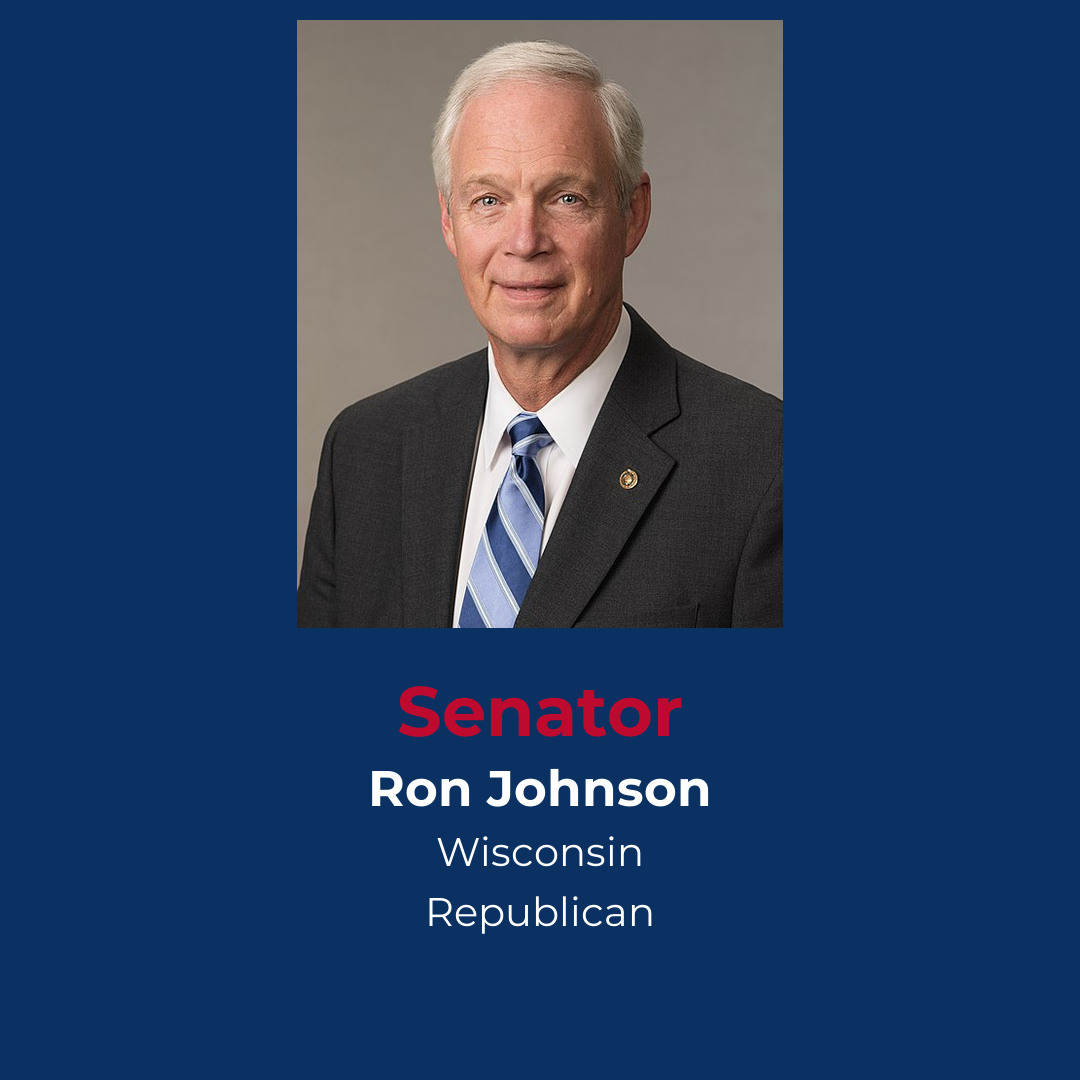
Profile of Republican Senator Johnson from Wisconsin
Ron Johnson is the ultimate "Citizen Legislator." He had zero political experience before running for the Senate in 2010. He spent 30 years running PACUR, a specialty plastics manufacturing company in Oshkosh, Wisconsin, before riding the Tea Party wave to Washington to defeat longtime incumbent Russ Feingold. He represents Wisconsin, arguably the most critical swing state in the nation. Johnson has survived three brutal elections (2010, 2016, 2022) by mobilizing the conservative base in the suburban "WOW counties" (Waukesha, Ozaukee, Washington) and maintaining strong support in the rural north, often running ahead of the top of the ticket. Johnson is the Senate's leading contrarian. As the Ranking Member of the Permanent Subcommittee on Investigations (PSI), he is the GOP's chief investigator, relentlessly probing the Biden family's business dealings, federal agency corruption, and what he terms the "COVID cartel" of public health officials. A staunch fiscal hawk, Johnson serves on the Budget and Finance Committees. He famously threatened to block the 2017 Tax Cuts and Jobs Act until he secured a deeper tax deduction for "pass-through" businesses (LLCs and S-Corps), a move he argued was essential to save Main Street manufacturers like his own former company. In the 119th Congress, Johnson has joined the "Make America Healthy Again" caucus, pivoting his investigative focus toward the pharmaceutical industry, food safety standards, and federal health agencies, arguing that corporate capture has compromised public health. "He was a plastics manufacturer who looked at the national debt and decided to fire his Senator. Ron Johnson is the outsider who refuses to play by Washington's rules." Ron Johnson: The Disruptor from Oshkosh Ron Johnson never planned to be a politician. Born in Minnesota and trained as an accountant, he moved to Oshkosh, Wisconsin, in 1979 to start a business with his brother-in-law. For three decades, he ran PACUR, a company that manufactures specialty plastic sheeting for medical device packaging. He was the guy on the factory floor and the guy looking at the spreadsheets. He saw firsthand how federal regulations and tax codes strangled small businesses. In 2010, enraged by the passage of the Affordable Care Act and the ballooning national debt, Johnson gave a speech at a local Tea Party rally. The clip went viral in conservative circles. With no name recognition, he challenged Democratic titan Russ Feingold—and won. He promised to be a "citizen legislator," not a career politician. True to his word, Johnson has remained an outsider in the clubby world of the Senate. He doesn't care about being liked by the media or even his own leadership. He views his role as a auditor sent to check the books of a bankrupt company. This approach has made him a hero to the grassroots and a villain to the establishment. He famously used his chairmanship of the Homeland Security Committee to hold hearings on controversial topics ranging from Hunter Biden’s laptop to early treatment options for COVID-19, often drawing fierce criticism for promoting unverified theories. Johnson’s political survival skills are legendary. In 2016, national Republicans gave up on his re-election campaign, assuming he would lose the rematch with Feingold. Johnson effectively ran his own campaign and won by a larger margin than Donald Trump did in the state. In 2022, facing millions of dollars in attack ads, he narrowly defeated Lt. Governor Mandela Barnes by leaning into issues of crime and inflation. Now, as a senior member of the Finance Committee, Johnson is focused on the expiring tax provisions of 2025. He argues that the tax code should favor the "creators" (manufacturers and entrepreneurs) over the "takers" (bureaucrats and tax-favored corporations). State Context: Wisconsin (U.S. Census Data) The Tipping Point: Wiscon...
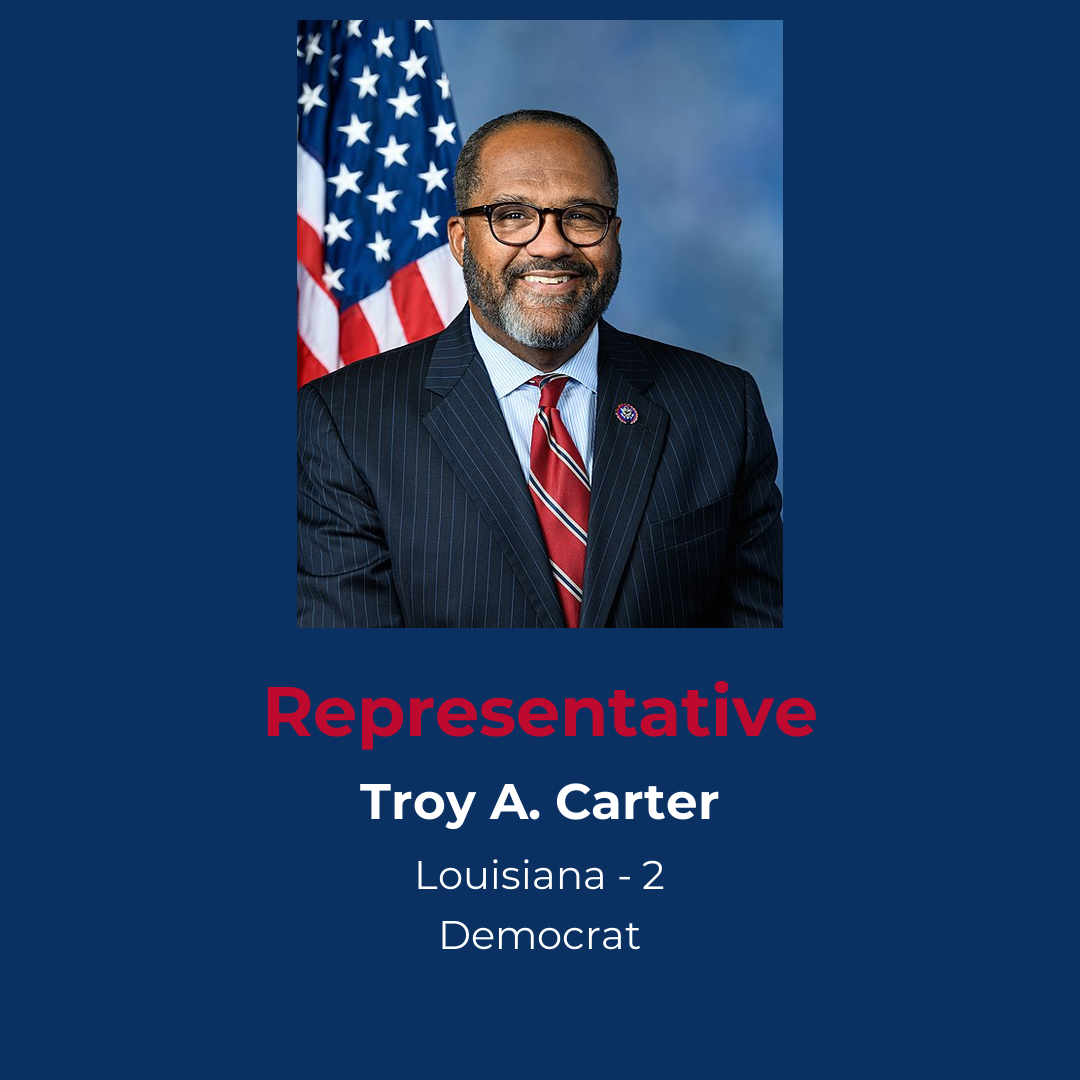
Profile of Democrat Representative Carter from Louisiana District 2
Troy Carter is the only Democrat in Louisiana’s congressional delegation, carrying the immense weight of representing the state's liberal, urban, and Black voters almost entirely on his own. He is a fixture of New Orleans politics, having served on the City Council and in the State Senate for decades before his election to Congress in 2021. He represents Louisiana’s 2nd District, a meandering "snake" of a district that follows the Mississippi River to connect the two largest Black population centers in the state: New Orleans and Baton Rouge. This geography makes him the representative for the heart of Louisiana's tourism, port, and industrial economies. The district is infamously known as "Cancer Alley," an 85-mile stretch of the Mississippi River lined with over 150 petrochemical plants and refineries. Carter walks a delicate tightrope here: he is a vocal advocate for Environmental Justice and stricter EPA regulations to protect residents' health, while simultaneously sitting on the Energy and Commerce Committee to protect the jobs those industries provide. In the 119th Congress, Carter secured a seat on the powerful Energy and Commerce Committee, a massive upgrade that gives him direct jurisdiction over the very industries that dominate his district. He has used this perch to fight against the Trump administration's attempts to roll back pollution controls on chemical plants. Carter’s personal life is a blend of public service and military discipline. He is the creator of the Algiers Jazz Walk of Fame and is married to Brigadier General Ana Carter of the U.S. Army, making them a true power couple in both D.C. and NOLA circles. "He represents the Jazz clubs of New Orleans and the chemical plants of Cancer Alley. Troy Carter is the man walking the tightrope between culture and industry along the Mississippi River." Troy Carter: The River Guardian To understand Troy Carter, you have to understand the Mississippi River. His district doesn't just sit near it; it hugs it. From the wards of New Orleans, up through the River Parishes (St. Charles, St. John the Baptist, St. James), and ending in North Baton Rouge, Carter represents the artery of the American South. Born and raised in the Algiers neighborhood of New Orleans, Carter is local royalty. He was elected to the Louisiana House of Representatives in 1991 as the first African American to represent District 102. He then served on the New Orleans City Council, where he became known for focusing on neighborhood revitalization—literally paving the streets and lighting the parks of the West Bank. After a stint in the State Senate, he won the special election to replace Cedric Richmond in 2021. In Washington, Carter has become the Democrats' point man on disaster resilience. Representing a district that is frequently ground zero for hurricanes (including Katrina and Ida), Carter has focused his legislative energy on the National Flood Insurance Program (NFIP). In the 119th Congress, he introduced the National Flood Insurance Program Automatic Extension Act, seeking to end the constant political brinksmanship that leaves homeowners wondering if their coverage will lapse during hurricane season. But his most defining battle is over public health. His district contains "Cancer Alley," where residents suffer from disproportionately high rates of cancer and respiratory illness due to industrial emissions. Carter has been aggressive in demanding federal oversight. He praised the EPA's 2024 rule cracking down on chloroprene and ethylene oxide emissions and has fiercely opposed recent attempts by the Trump administration to grant exemptions to these facilities. He frames this not as "anti-industry," but as "pro-human," arguing that companies making billions on the river owe it to their neighbors to stop poisoning the air. District Context: Louisiana 2nd (U.S. Census Data) The Ri...
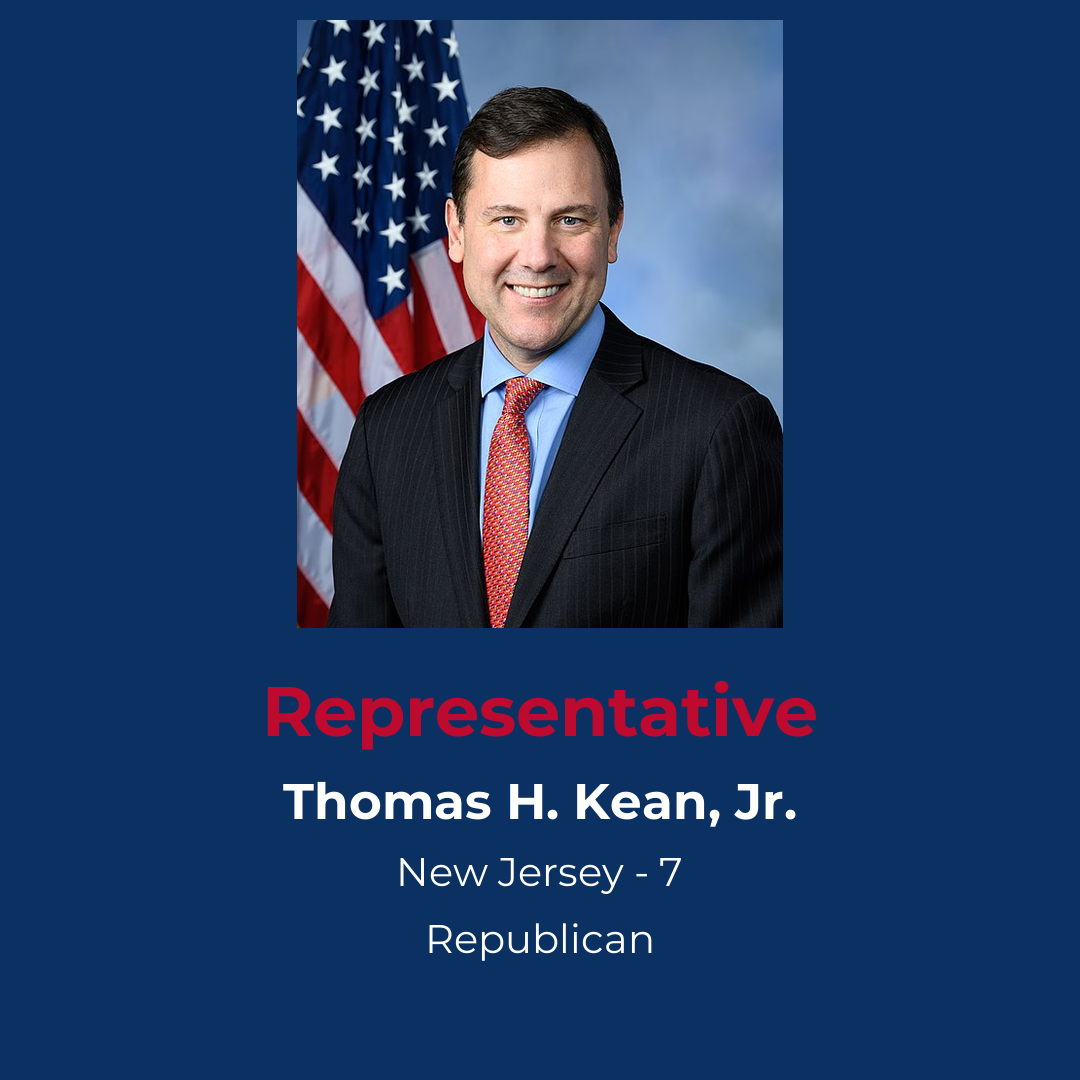
Profile of Republican Representative Kean from New Jersey District 7
Tom Kean Jr. is the scion of a political dynasty: he is the son of the immensely popular former New Jersey Governor (and 9/11 Commission Chair) Tom Kean Sr., and the grandson of former Congressman Robert Kean. His family history in American politics dates back to the Continental Congress. He represents New Jersey’s 7th District, a wealthy, highly educated suburban swing district that covers parts of Hunterdon, Morris, Somerset, Sussex, Union, and Warren counties. It is the battleground of battlegrounds, typifying the "suburban revolt" against both Trump-style populism and progressive overreach. Fresh off a decisive re-election victory in 2024 against progressive challenger Sue Altman, Kean proved that his brand of "quiet moderation" could survive even in a high-turnout presidential year. He outperformed the top of the ticket by focusing intensely on local affordability rather than culture wars. Kean serves on the Transportation and Infrastructure Committee, a critical assignment for his district, which is home to thousands of commuters who rely on NJ Transit. In 2025, he re-introduced the One Seat Ride Act, a legislative push to eliminate the hated "transfer at Newark" for Raritan Valley Line commuters, framing efficient commuting as an economic necessity for the region. On the Foreign Affairs Committee, he has positioned himself as a traditional Reagan-style internationalist. In the 119th Congress, he introduced the REPO Implementation Act of 2025, a hawkish bill designed to seize frozen Russian sovereign assets to fund Ukraine’s defense—a move that distances him from the isolationist wing of his party. "His father was the most popular Governor in New Jersey history. Now, Tom Kean Jr. is proving that quiet, pragmatic Republicanism can still win in the suburbs." Tom Kean Jr.: The Quiet Dynasty Tom Kean Jr. carries one of the most famous names in Northeast politics. His father, Tom Kean Sr., served as Governor of New Jersey from 1982 to 1990 and left office with a 70% approval rating before leading the 9/11 Commission. The Kean brand stands for "compassionate conservatism"—moderate, environmentalist, and focused on good governance. Tom Kean Jr. has spent his entire career trying to uphold that brand in a political environment that has become increasingly hostile to it. He served for nearly 20 years in the New Jersey State Senate, eventually becoming the Minority Leader. In Trenton, he was known as a tactical operator who could strike deals with Democrats when necessary but fiercely opposed tax hikes. His path to Congress was a long one; he ran for the U.S. Senate in 2006 (losing to Bob Menendez) and lost a House race in 2020 before finally defeating Democrat Tom Malinowski in 2022. In 2024, he faced a stiff challenge from progressive activist Sue Altman but won convincingly by focusing on inflation and public safety, proving that the suburbs are not yet lost to the GOP. In Washington, Kean has adopted a strategy of strategic silence. In an era where most freshmen members try to become viral influencers, Kean often literally runs away from reporters in the hallways to avoid answering questions about party drama. This avoidance is calculated: representing a district that is socially liberal but fiscally conservative, Kean knows that associating too closely with the MAGA wing is political suicide, but rejecting it invites a primary challenge. His policy focus is intensely local. He is obsessed with the Gateway Tunnel and the Raritan Valley Line. For his constituents—many of whom are high-income professionals commuting to Wall Street—the daily commute is the single most important issue. In 2025, he introduced the One Seat Ride Act to force a study on eliminating the transfer at Newark Penn Station, a major pain point for his voters. Simultaneously, he has pivoted to housing affordability, introducing the MAHA Act (Make American H...

Profile of President John Tyler
John Tyler is the first Vice President to ascend to the presidency upon the death of a predecessor, earning him the mocking nickname "His Accidency." His stubborn refusal to accept the title of "Acting President" set the "Tyler Precedent," establishing that a Vice President becomes the President in full, not just a temporary caretaker. He was a man without a party. Although elected on the Whig ticket (as the "Tyler Too" in "Tippecanoe and Tyler Too"), he was a lifelong Democrat at heart who opposed the Whig agenda. After he vetoed his own party's banking bills, the Whigs famously expelled him from the party while he was still in the White House. His presidency achieved significant territorial expansion, most notably the Annexation of Texas. Tyler ruthlessly pursued Texas as a legacy achievement, signing the annexation resolution just three days before leaving office, setting the stage for the Mexican-American War. Tyler’s life had a shocking second act: he is the only U.S. President to die as a sworn enemy of the United States. In 1861, he joined the Confederacy and was elected to the Confederate House of Representatives. When he died in 1862, his coffin was draped in a Confederate flag, and he is the only president whose death was not officially recognized by the U.S. government. He holds the record for the most children of any President (15 children between two wives). His second marriage to Julia Gardiner—who was 30 years his junior and younger than some of his daughters—caused a massive social scandal in Washington but also introduced the custom of playing "Hail to the Chief" to announce the President's arrival. "His own party expelled him, his cabinet resigned in protest, and the newspapers called him 'His Accidency.' John Tyler didn't just inherit the presidency; he seized it." John Tyler: The Man Without a Party John Tyler was never supposed to be President. He was put on the 1840 Whig ticket solely to attract Southern states' rights voters who hated Andrew Jackson. The Whigs assumed he would be a quiet, ceremonial Vice President. They were wrong. When William Henry Harrison died 32 days into his term, the Cabinet informed Tyler that he was merely the "Vice President Acting as President." Tyler essentially said, "No." He took the oath of office, moved into the White House, and returned any letter addressed to "Acting President" unopened. By sheer force of will, he established the constitutional norm that the Vice President becomes the President—a precedent not formally written into the Constitution until the 25th Amendment in 1967. Once in power, Tyler declared war on the party that elected him. The Whigs, led by Henry Clay, tried to pass a new National Bank. Tyler, a strict constitutionalist who hated banks, vetoed it. Enraged, the Whigs held a caucus and formally expelled the sitting President from their party. His entire cabinet (except Secretary of State Daniel Webster) resigned in a coordinated protest to cripple his administration. Tyler didn't blink; he simply appointed a new cabinet of Southern conservatives. His administration was defined by tragedy and scandal. In 1842, his wife Letitia died in the White House. Two years later, while cruising on the USS Princeton, a ceremonial cannon called the "Peacemaker" exploded, killing the Secretary of State and the Secretary of the Navy. Tyler survived because he was below deck flirting with Julia Gardiner, a 24-year-old socialite. He married her months later, sparking gossip across the capital. Despite the chaos, Tyler was an effective foreign policy president. He concluded the Webster-Ashburton Treaty with Britain, settling the border between Maine and Canada. But his obsession was Texas. Viewing it as the key to preserving Southern power (and slavery), he maneuvered around Congress to secure the annexation of the Lone Star Republic in his final days, handing his su...

Profile of President William Henry Harrison
William Henry Harrison holds two contradictory records: he delivered the longest inaugural address in history (nearly two hours) and served the shortest term in history (just 32 days). He was the first President to die in office, sparking a constitutional crisis over succession that defined the presidency for nearly 130 years. His 1840 campaign was the birth of modern political campaigning. The Whig Party branded him as a hard-drinking, log-cabin-living frontiersman ("Old Tippecanoe") to appeal to the common man. In reality, Harrison was a wealthy Virginia aristocrat born at Berkeley Plantation, the son of a Declaration of Independence signer. The campaign slogan "Tippecanoe and Tyler Too" became the first viral political catchphrase, accompanied by massive parades, campaign songs, and the literal rolling of giant balls (the origin of the phrase "keep the ball rolling") from town to town. While history textbooks often claim he died of pneumonia caused by not wearing a coat at his inauguration, modern medical analysis suggests he actually died of enteric fever (typhoid or paratyphoid) caused by the White House's contaminated water supply, which was located just downstream from a field of "night soil" (human sewage). His death forced the U.S. to answer a vague Constitutional question: Does the Vice President become the President, or just "act" as President? His VP, John Tyler, aggressively seized the title, setting the "Tyler Precedent" that stands today. "He was sold to the public as a poor frontiersman, but he was born in a mansion. William Henry Harrison invented the political campaign, spoke for two hours in the rain, and died before he could unpack." William Henry Harrison: The Image vs. The Reality William Henry Harrison is often treated as a trivia question: "Who had the shortest presidency?" But his legacy is far more significant than his 32 days in office. Harrison was the test subject for the first-ever "image campaign" in American history. In 1840, the Whig Party realized they couldn't beat the Democrats with policy, so they beat them with branding. They took Harrison—a wealthy, college-educated aristocrat from Virginia's Berkeley Plantation—and rebranded him as "Old Tippecanoe," a rugged Indian fighter who lived in a log cabin and drank hard cider. They flooded the country with log-cabin-shaped bottles of whiskey and catchy songs. It was a total fabrication (Harrison lived in a mansion in Ohio), but it worked. It proved that in American democracy, a good story beats a true resume. On March 4, 1841, Harrison arrived in Washington determined to prove he wasn't just a senile old general. He insisted on delivering his inaugural address without a top hat or overcoat, despite the freezing rain. He spoke for one hour and 45 minutes, delivering an 8,445-word speech filled with references to Roman history. It remains the longest inaugural address ever delivered. Just three weeks later, he fell ill. For over a century, historians believed the cold weather at the inauguration gave him pneumonia. However, a 2014 medical analysis concluded that his symptoms—gastrointestinal distress and septic shock—were actually caused by enteric fever. At the time, the White House water supply was pumped from a spring located seven blocks away, directly downhill from a depository for human sewage. In essence, the White House plumbing likely killed the President. His death on April 4, 1841, threw the nation into chaos. The Constitution was unclear about what happens when a President dies. Did the Vice President become President, or was he just an "Acting President" until a new election? Harrison's Vice President, John Tyler, didn't wait for permission. He took the oath of office and moved into the White House, declaring himself the President in full. This bold move, known as the "Tyler Precedent," ensured the stability of power trans...
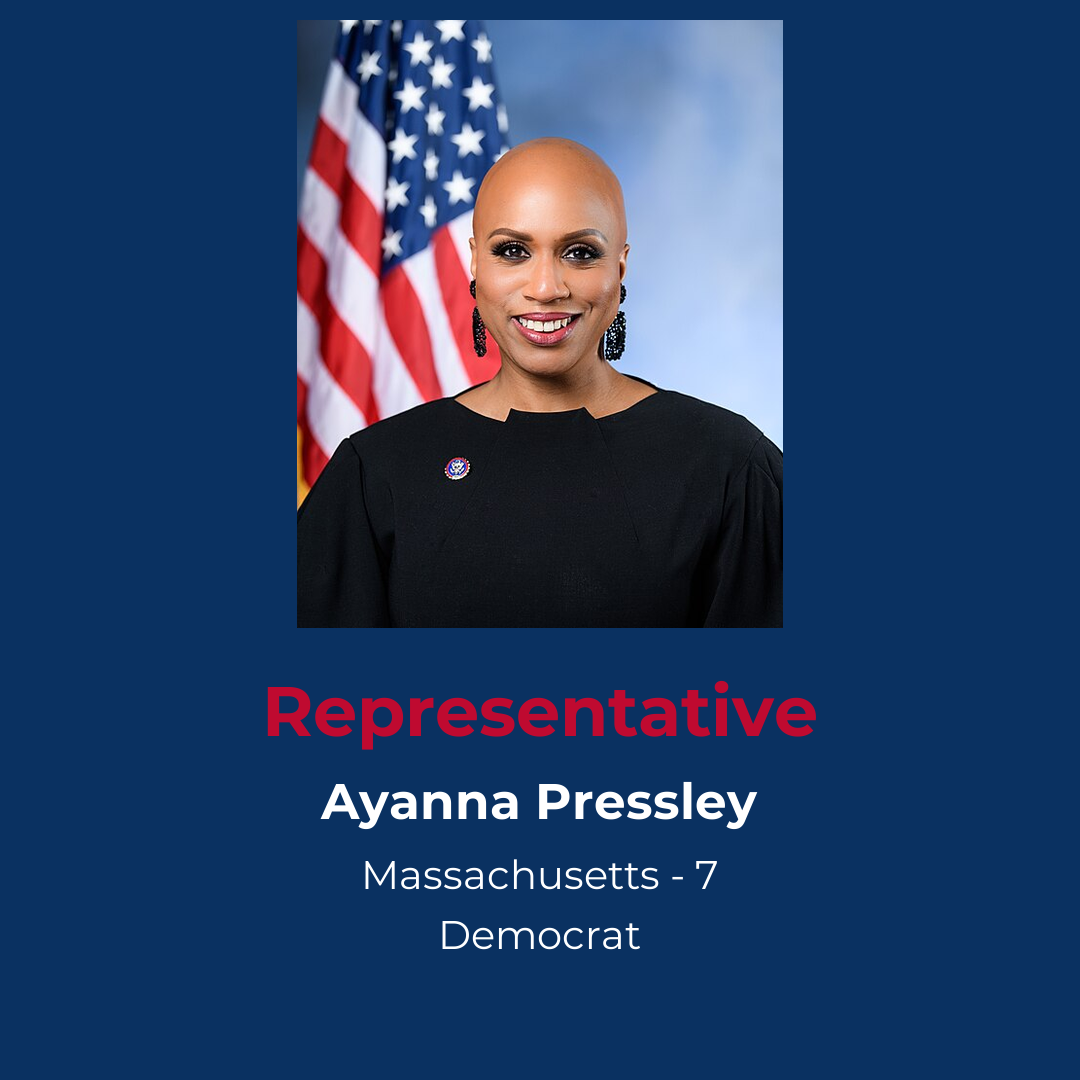
Profile of Democrat Representative Pressley from Massachusetts District 7
Ayanna Pressley is a history-maker: in 2018, she became the first Black woman elected to Congress from Massachusetts, ending a 230-year drought of diversity in the state's delegation. She upset a popular 10-term incumbent, Mike Capuano, not by running to his left on policy, but by arguing that "the people closest to the pain should be closest to the power." She represents Massachusetts’ 7th District, the only majority-minority district in New England. It is a district of staggering inequality, encompassing the intellectual wealth of Cambridge (Harvard/MIT) and the systemic poverty of Roxbury and Dorchester. A member of "The Squad" (alongside AOC, Ilhan Omar, and Rashida Tlaib), Pressley is distinct for her focus on "policy violence." She argues that just as policy can harm (redlining, mass incarceration), it can also heal. Her signature mantra is "Policy is my love language." Pressley is perhaps the most visible advocate in the world for Alopecia Areata, an autoimmune disease that causes hair loss. In 2020, she publicly revealed her baldness in a raw, emotional video, turning her personal trauma into a platform to fight for medical coverage of wigs and mental health support for those with auto-immune conditions. Her legislative flagship is "Baby Bonds" (The American Opportunity Accounts Act). Co-sponsored with Senator Cory Booker, this proposal would provide every American child with a federally funded savings account at birth, designed to close the racial wealth gap by ensuring every 18-year-old has capital to start a business or buy a home. "She defeated a ten-term incumbent by asking a simple question: 'Change can't wait.' Ayanna Pressley is the Squad member who believes policy is a form of healing." Ayanna Pressley: The Activist Legislator Ayanna Pressley’s career has been defined by disrupting the status quo from the inside. Born in Chicago and raised by a single mother who was a tenants' rights organizer, Pressley learned early that "the personal is political." She dropped out of Boston University to support her mother after she lost her job, eventually working her way up as a staffer for Senator John Kerry. In 2009, she became the first woman of color elected to the Boston City Council, where she spent a decade focusing on often-ignored issues like trauma, domestic violence, and the sexual abuse of girls. Her 2018 Congressional run was viewed as a suicide mission. She challenged Mike Capuano, a popular, progressive Democrat who had held the seat for twenty years. Unlike other progressive challengers who run against "corporate Democrats," Pressley admitted Capuano’s voting record was good. Her argument was deeper: representation matters. She campaigned on the idea that in a majority-minority district, the representative should understand the lived experience of discrimination. Her slogan, "Change Can't Wait," resonated with a district tired of waiting its turn. She won by 17 points, sending shockwaves through the Democratic establishment. In Washington, Pressley joined "The Squad," but often acts as its legislative mechanic. While others focus on foreign policy or Green New Deal messaging, Pressley focuses on the "poverty to prison pipeline." She was the primary force pushing the Biden administration to cancel student debt, arguing it was a racial justice issue because Black borrowers carry disproportionately higher debt loads. Her vulnerability has become her superpower. In January 2020, after hiding her hair loss under wigs for months, she revealed her bald head to the world. She spoke openly about the shame and loss of identity she felt losing her signature Senegalese twists. By refusing to hide, she became a hero to millions of women suffering from alopecia and autoimmune diseases, introducing legislation to require Medicare to cover cranial prosthetics (wigs). District Context: Massachusetts 7th (U.S. Ce...
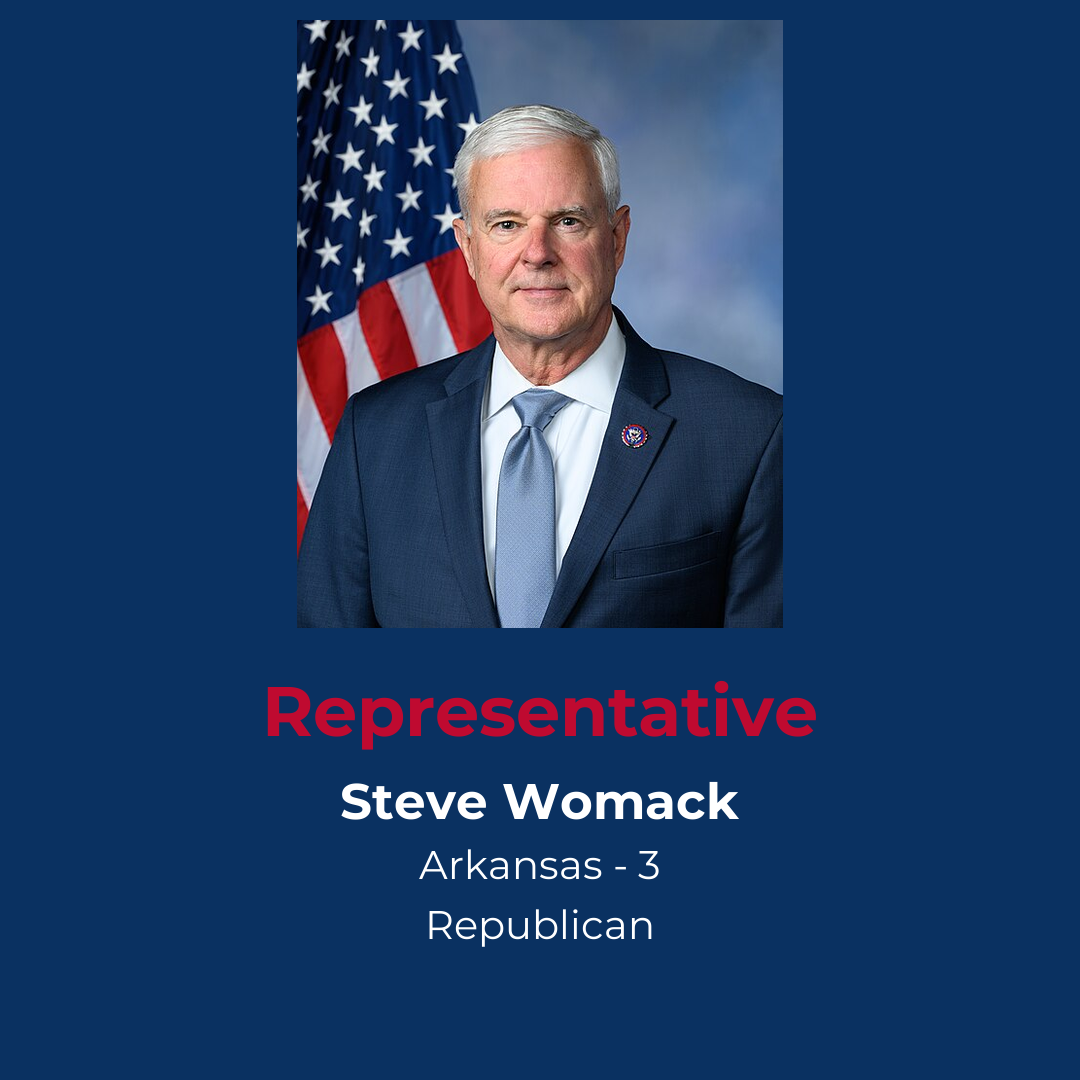
Profile of Republican Representative Womack from Arkansas District 3
Steve Womack is the definition of an "Institutionalist" in a chaotic House. A retired Army National Guard Colonel with 30 years of service, Womack brings a military discipline to Congress, often serving as the "voice of reason" within the GOP conference. He famously presided over the House floor during some of its most raucous moments because leadership trusted him to maintain order. He represents Arkansas’ 3rd District, arguably the most economically dynamic district in the South. Located in Northwest Arkansas (NWA), it is the global headquarters of Walmart, Tyson Foods, and J.B. Hunt Transport. This concentration of corporate giants makes Womack the representative for "Vendorville"—the ecosystem of thousands of suppliers who do business with these titans. A senior member of the powerful House Appropriations Committee, Womack is a "Cardinal" (a subcommittee chair/ranking member) who wields immense influence over federal spending. He currently leads the Transportation, Housing and Urban Development (THUD) subcommittee, a critical role for his district, which is facing a massive infrastructure crunch due to explosive population growth. Womack is a staunch defender of the University of Arkansas (located in Fayetteville). As the representative for the Razorbacks, he focuses heavily on securing federal research grants for the university, particularly in agriculture and logistics. He is the Chairman of the Board of Visitors for the United States Military Academy at West Point, a prestigious role that underscores his deep ties to the defense establishment and his focus on shaping the next generation of military leadership. "He represents the headquarters of Walmart and the University of Arkansas. Steve Womack is the Colonel who controls the checkbook for the nation's infrastructure." Steve Womack: The Colonel in the Chaos In a Congress defined by performative outrage, Steve Womack is the guy trying to make the trains run on time. Before coming to Washington in 2010, Womack served for 12 years as the Mayor of Rogers, Arkansas, overseeing its transformation from a sleepy town into a booming suburban hub for the retail industry. Before that, and during it, he wore the uniform. Womack spent over three decades in the Arkansas Army National Guard, retiring as a Colonel. He commanded a battalion in the Sinai Peninsula shortly after 9/11. That command experience defines his political style: orderly, hierarchical, and focused on the mission rather than the noise. Womack’s influence comes from his seat on the Appropriations Committee. He is an "Old Bull" in the making, believing that the primary job of Congress is to pass a budget and keep the government open. He has been openly critical of the "shutdown politics" favored by the Freedom Caucus, arguing that continuing resolutions (CRs) destroy military readiness. During the chaotic Speaker battles of 2023, Womack was a vocal supporter of Steve Scalise and a critic of the dysfunction, famously telling reporters, "We look like a bunch of idiots." His legislative portfolio is dominated by the unique needs of his district. Northwest Arkansas is growing faster than almost anywhere in the country. To support this, Womack uses his gavel on the Transportation Subcommittee to funnel money into the region's highways (like I-49) and regional airport (XNA). He views infrastructure not as "pork," but as essential investment for the supply chain capital of the world. Womack also carries a heavy focus on defense. beyond his role at West Point, he fights to modernize the National Guard, arguing that the "weekend warrior" model is outdated and that Guard units need the same equipment as active-duty troops if they are going to be deployed to combat zones. District Context: Arkansas 3rd (U.S. Census Data) The Miracle of NWA: This district is physically beautiful (Ozark Mountains) and economically ex...
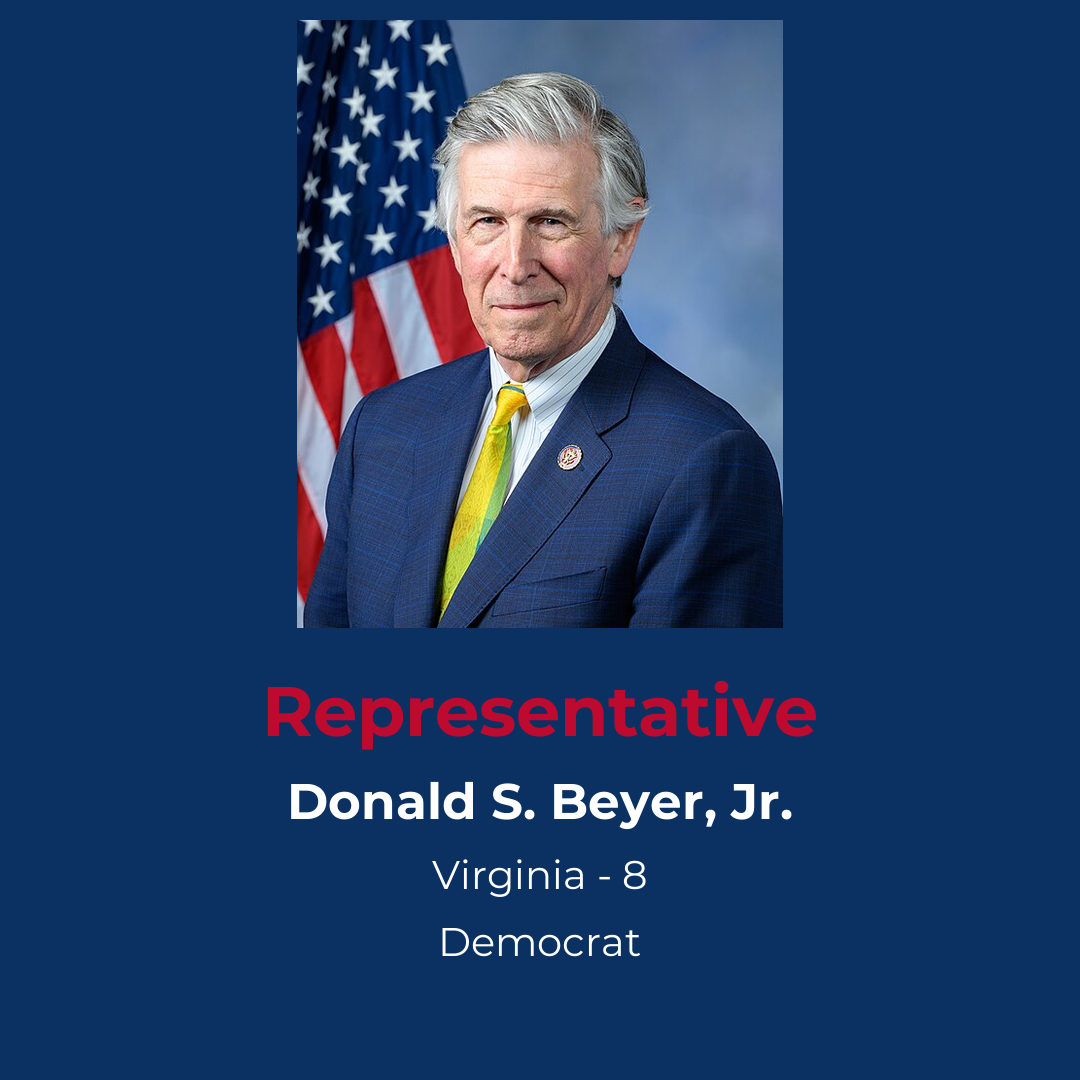
Profile of Democrat Representative Beyer from Virginia District 8
Don Beyer is the "Renaissance Man" of the House: a former Lieutenant Governor, former Ambassador to Switzerland, successful car dealership mogul, and now a Representative pursuing a Master’s degree in Machine Learning at age 74 to better legislate Artificial Intelligence. He represents Virginia’s 8th District, arguably the most educated congressional district in the nation. Located just across the Potomac from D.C., it includes Arlington, Alexandria, and Falls Church, serving as home to the Pentagon, Amazon HQ2, and a massive population of federal workers and contractors. As the Senior House Democrat on the Joint Economic Committee, Beyer is the party's lead statistician, frequently publishing deep-dive reports on inflation and employment. He combines this with a seat on the powerful Ways and Means Committee, where he focuses on trade policy. Beyer is Congress’s leading evangelist for Fusion Energy. He founded the bipartisan Fusion Energy Caucus and was instrumental in securing historic funding for fusion research, arguing that it is the "Holy Grail" of climate solutions. His fascination with the future extends to AI. He is the co-chair of the Congressional AI Caucus and recently introduced the CREATE AI Act to democratize access to AI research tools. Unlike peers who fear the technology, Beyer is actively studying to code it, believing legislators must understand the math to regulate the outcome. "He was an ambassador, a lieutenant governor, and a car salesman. Now, at age 74, Don Beyer is going back to grad school for AI so he can write the laws of the future." Don Beyer: The Student-Statesman Don Beyer has lived four different successful lives, any one of which would satisfy most people. He began as a businessman, taking over his father’s Volvo dealership and turning the Beyer Automotive Group into a Northern Virginia empire. In the 1990s, he served two terms as the Lieutenant Governor of Virginia, where he was known for championing disability rights. In the Obama administration, he served as the U.S. Ambassador to Switzerland and Liechtenstein, where he successfully negotiated with the Swiss government to crack down on tax evasion by wealthy Americans. When he was elected to Congress in 2014, many expected him to be a quiet backbencher resting on his laurels. Instead, Beyer became the "Science Guy" of the Democratic caucus. He requested a seat on the Science, Space, and Technology Committee and became obsessed with Fusion Energy. While others were focused on solar and wind, Beyer was visiting plasma labs, convinced that fusion could provide limitless clean energy. He founded the Fusion Energy Caucus to educate his colleagues, and his advocacy helped lead to the breakthrough at Lawrence Livermore National Laboratory in 2022. But his most surprising pivot came recently. Concerned about the rapid rise of Artificial Intelligence, Beyer decided that reading briefings wasn't enough. In 2023, he enrolled as a part-time graduate student at George Mason University to pursue a master’s degree in Machine Learning. He is likely the only member of Congress currently struggling with calculus homework and coding in Python between votes. He argues that Congress failed to regulate social media because they didn't understand the algorithm, and he refuses to let that happen with AI. Legislatively, Beyer is a policy wonk’s dream. On the Joint Economic Committee, he produces data-heavy reports that counter GOP narratives on the economy. He is also a champion for the federal workforce—his constituents—constantly fighting against government shutdowns and advocating for pay raises for civil servants. District Context: Virginia 8th (U.S. Census Data) "Inside the Beltway": This district is physically small but strategically massive. It hugs the Potomac River, covering Arlington County, the City of Alexandria, and Falls Church. It is the...

Profile of Independent Senator Sanders from Vermont
Bernie Sanders is the longest-serving independent in U.S. congressional history. A self-described Democratic Socialist, he caucuses with the Democrats but has maintained his independence for over 40 years, allowing him to push the party left on issues like Medicare for All and tuition-free college. He represents Vermont, a state known for its fierce independent streak and "Town Meeting" democracy. Despite its small size, Sanders has given the state a massive footprint in national politics, twice running for President (2016, 2020) and fundamentally shifting the "Overton Window" of American economic policy. As the Ranking Member (and former Chair) of the Senate HELP Committee (Health, Education, Labor, and Pensions), Sanders is the Senate's leading crusader against corporate greed. In the 119th Congress, he has focused intensely on the 32-Hour Workweek Act, arguing that advancements in AI and automation should benefit workers through more leisure time, not just increased corporate profits. He remains a maverick on foreign policy. In 2025, he led a high-profile (though unsuccessful) effort to block arms sales to Israel via Joint Resolution, arguing that U.S. military aid must be conditional on human rights standards, a stance that often puts him at odds with leadership in both parties. Locally, Sanders is a relentless defender of Community Health Centers (CHCs). He is widely credited with securing billions in funding for these clinics through the Affordable Care Act, significantly expanding primary care access in rural Vermont. "He has given the same speech for 40 years, and the country finally caught up to him. Bernie Sanders is the Independent from Vermont who turned 'political revolution' into a legislative agenda." Bernie Sanders: The Amendment King Bernie Sanders is an institution. Born in Brooklyn with a thick accent he never lost, Sanders moved to Vermont in the late 1960s. His political career began improbably in 1981 when he was elected Mayor of Burlington by a margin of just 10 votes, defeating a longtime Democratic incumbent. As a "sewer socialist" mayor, he focused on pragmatic city services while railing against the Cold War. He was elected to the U.S. House in 1990 and the Senate in 2006. Throughout his career, Sanders was dismissed by the establishment as a fringe figure, yet he became one of the most effective legislators in modern history. Dubbed the "Amendment King" during his time in the House, he mastered the art of attaching roll-call amendments to larger bills to pass progressive priorities—like banning the importation of goods made by child labor—through a Republican-controlled Congress. His 2016 and 2020 presidential runs transformed the Democratic Party. Ideas that were once considered radical—$15 minimum wage, canceling student debt, and universal healthcare—became mainstream party platforms because of his campaigns. In the current Congress, Sanders serves as the Ranking Member of the Senate HELP Committee. He uses this gavel (or microphone) to summon pharmaceutical CEOs to testify about the high cost of insulin and prescription drugs, famously shaming companies into lowering prices. Sanders remains a unique figure: an 80-something radical who commands a massive following among young voters. He continues to rail against the "billionaire class" and wealth inequality, arguing that the American economy is rigged against the working person. Whether fighting for the PRO Act to protect unions or opposing "bloated" defense budgets, Sanders operates with a consistency that is rare in Washington. State Context: Vermont (U.S. Census Data) The Green Mountain State: Vermont is the second-least populated state in the Union, but it punches above its weight culturally. Population: ~647,000. Demographics: Rural Character: Vermont is the most rural state in the country (by percen...
Profile of Democrat Representative Thanedar from Michigan District 13
Shri Thanedar is the embodiment of the "American Dream" with a twist: he is an immigrant scientist and millionaire entrepreneur representing one of the poorest and Blackest congressional districts in the country (Detroit). He represents Michigan’s 13th District, which includes large portions of Detroit, the wealthy enclaves of Grosse Pointe, and the working-class Downriver communities like Taylor and Romulus. It is the hub of the American auto industry, hosting major Stellantis manufacturing plants. Born into poverty in India, Thanedar came to the U.S. in 1979 to pursue a PhD in Chemistry. He famously worked as a janitor and slept in his car before building and selling two successful chemical testing companies (Chemir and Avomeen), earning him multiple "Entrepreneur of the Year" awards. In Congress, he serves on the Homeland Security Committee (where he is the Ranking Member of the Oversight Subcommittee) and the Small Business Committee. His legislative focus is a unique blend of pro-business policies for entrepreneurs and progressive social safety nets (like protecting SNAP) for his low-income constituents. Despite his moderate business background, Thanedar has taken a fiery turn in the 119th Congress, introducing articles of impeachment against President Trump in 2025 and authoring the "Abolish ICE Act" in 2026, positioning himself as a relentless critic of the administration's immigration policies. "He slept in his car as a student and built a chemical empire as a CEO. Now, Shri Thanedar is the scientist fighting for Detroit's auto workers and immigrants." Shri Thanedar: The Scientist of the Motor City Shri Thanedar’s resume looks nothing like a typical politician’s. Born in Belgaum, India, to a low-income family, he immigrated to the United States at age 24 with $20 in his pocket. While earning his PhD in Chemistry at the University of Akron, he worked odd jobs as a janitor and often slept in his car to save money. He eventually became a U.S. citizen in 1988 and leveraged his scientific expertise into a business empire, founding Chemir/Polytech Laboratories and Avomeen Analytical Services. These companies, which tested pharmaceutical products and chemical formulations, made him a millionaire and a celebrated job creator in the Midwest. His entry into politics was splashy. He spent millions of his own money running for Governor of Michigan in 2018, finishing a surprising third in the primary with a platform that combined fiscal pragmatism with progressive ideas. He pivoted to the state legislature in 2020, representing Detroit, and in 2022, he won the race for the newly redrawn 13th District—a victory that made him the first Indian American to represent Michigan in Congress. In Washington, Thanedar acts as a bridge between the business world and the working class. As a member of the Small Business Committee, he pushes for the LIONS Act, which aims to raise the limit on SBA loans to $10 million to help startups scale. Simultaneously, he sits on the Agriculture Committee, where he is a militant defender of SNAP (food stamps). He famously took the "SNAP Challenge," living on the average weekly benefit of roughly $42 to highlight the impossibility of eating healthy on government assistance. Recently, Thanedar has shifted toward a more combative stance against the Trump administration. In May 2025, he introduced articles of impeachment against the President, citing "tyrannical overreach," and has been a vocal critic of new tariffs that threaten the auto manufacturing jobs in his district. District Context: Michigan 13th (U.S. Census Data) The Motor City Core: This district is the heart of American manufacturing. It includes the Jefferson North Assembly Plant (Stellantis) and is adjacent to the Ford Rouge Complex. Population: ~770,000. Demographics: A "Majority-Minority" district (approx. 45% Bla...
Profile of Republican Representative Timmons from South Carolina District 4
William Timmons is a "reformer" with a resume built on service: he is a former prosecutor who specialized in domestic violence cases, a small business owner (he founded a CrossFit gym), and currently serves as a Captain in the South Carolina Air National Guard JAG Corps. He represents South Carolina’s 4th District, the economic engine of the "Upstate." The district includes Greenville and Spartanburg, home to the massive BMW Manufacturing plant, which is the largest BMW factory in the world and the region's top employer. In Washington, Timmons has carved out a niche as an institutional mechanic. He served as the Vice Chair of the Select Committee on the Modernization of Congress, where he worked across the aisle to pass over 100 recommendations to make Congress more efficient, transparent, and functional. A member of the House Financial Services Committee and the Oversight Committee, Timmons focuses on digital assets (crypto) regulation and government efficiency. He was recently tapped to serve on the new Subcommittee on Delivering on Government Efficiency, aligning with his long-time slogan, "Washington is Broken." He survived a bruising primary challenge in 2024 against a Freedom Caucus-backed opponent. Timmons won by leaning on his conservative voting record and an endorsement from Donald Trump, proving the durability of his support in the Upstate. "He runs a CrossFit gym, flies with the Air National Guard, and spent two years trying to fix the broken rules of Congress. William Timmons is the Captain trying to steer the ship off the rocks." William Timmons: The Captain of the Upstate William Timmons IV is a fourth-generation native of Greenville with a career path that checks nearly every box of modern conservative leadership. Before entering politics, he was a prosecutor in the 13th Circuit Solicitor’s Office, where he helped create a centralized court specifically for domestic violence cases to ensure victims didn't get lost in the system. Simultaneously, he was an entrepreneur, opening a law firm and a CrossFit gym (Swamp Rabbit CrossFit), giving him a direct view of the regulatory burdens facing small business owners. Timmons entered Congress in 2019, filling the seat left by the retiring Trey Gowdy. He ran on a simple, frustrated slogan: "Washington is Broken." Unlike many who use that phrase as a throwaway line, Timmons actually tried to fix it. He spent two terms as the top Republican on the Select Committee on the Modernization of Congress. In a rare display of bipartisanship, he worked with Democrats to modernize House technology, streamline scheduling, and improve staff retention. While it wasn't headline-grabbing work, it earned him respect as a serious legislator who cares about the institution. His military service is active, not past tense. Timmons is a Captain and JAG Officer in the South Carolina Air National Guard. This dual role gives him a unique perspective on the Oversight Committee, particularly when questioning military leadership or discussing defense spending. Economically, Timmons represents a powerhouse. The BMW Spartanburg plant in his district is a global manufacturing icon, exporting American-made luxury cars to the world. On the Financial Services Committee, Timmons acts as a guardian for this kind of international commerce while also pivoting to the future—he is a vocal proponent of clear regulatory frameworks for cryptocurrency and blockchain, arguing that the U.S. must lead the digital finance revolution or be left behind by China. District Context: South Carolina 4th (U.S. Census Data) The Upstate: This district is located in the foothills of the Blue Ridge Mountains. It covers Greenville (a trendy, rapidly growing urban center) and Spartanburg. Population: ~758,000. The BMW Effect: Manufacturing: The district is home to BMW Plant Spartanburg, the...
Profile of Republican Representative Schweikert from Arizona District 1
David Schweikert is known as the "Numbers Guy" of the House GOP. As the Chairman of the Joint Economic Committee, he is famous for his frequent floor speeches featuring complex charts about the national debt, where he argues that demographics and healthcare costs—not discretionary spending—are the primary drivers of America's fiscal crisis. He represents Arizona’s 1st District, a wealthy and highly educated suburban district that covers Scottsdale, Paradise Valley, and Northeast Phoenix. It is one of the most affluent districts in the Southwest and has become a fierce battleground as suburban voters trend purple. A self-described "techno-optimist," Schweikert is the leading evangelist in Congress for Blockchain and Artificial Intelligence. He co-chairs the Congressional Blockchain Caucus and argues that radical adoption of AI in healthcare (like telehealth and wearable monitors) is the only way to mathematically save Medicare from bankruptcy. His career has been marred by a significant ethics scandal. In 2020, he admitted to 11 violations of House rules regarding campaign finance and misuse of staff, agreeing to pay a $50,000 fine and accept a formal reprimand. In 2022, his campaign agreed to pay another $125,000 fine to the FEC. Before Congress, Schweikert served as the Maricopa County Treasurer, where he earned a reputation for fiscal prudence. His personal backstory is compelling: he was born to an unwed teenage mother and adopted, a fact that shapes his strong pro-life stance and support for adoption services. "He brings his own charts to the House floor and thinks AI can save Medicare. David Schweikert is the accountant who believes technology is the only way out of the debt crisis." David Schweikert: The Techno-Hawk If you tune into C-SPAN late at night, you will likely see David Schweikert standing next to a poster board filled with line graphs. While other members give fiery speeches about culture wars, Schweikert gives lectures on actuarial science. He is obsessed with the math of the federal budget. His central thesis is that politicians are lying to the public about the debt; he argues that cutting "woke" programs or foreign aid does nothing to solve the problem because the real drivers are Social Security and Medicare for an aging population. Schweikert’s solution, however, is not traditional austerity—it is technology. As a co-chair of the Telehealth Caucus and the Blockchain Caucus, he envisions a future where wearable technology and AI doctors drastically reduce the cost of healthcare, thereby saving the federal budget. He calls this the "moral imperative" of innovation. His path to this philosophy began in Scottsdale, where he grew up as an adopted child. He became a real estate investor and earned an MBA before entering politics. He served in the Arizona State House and as the Maricopa County Treasurer, where he managed billions of dollars in public funds. This financial background is why he landed a spot on the powerful Ways and Means Committee, which oversees tax writing. However, Schweikert’s tenure has been clouded by ethical lapses. An investigation by the House Ethics Committee found that his office had misused official funds and that his staff had made illegal campaign contributions. The scandal forced him to pay substantial fines and nearly cost him his seat in 2020 and 2022, as his district has shifted from deep red to a toss-up. Despite this, he remains a central figure in GOP economic policy, serving as the Chairman of the Joint Economic Committee in the current Congress. District Context: Arizona 1st (U.S. Census Data) The Valley of the Sun: This district covers the "East Valley" suburbs of Phoenix, including Scottsdale, Paradise Valley, Fountain Hills, and Cave Creek. Population: ~800,000. Demographics: Wealth: This is the wealthiest congressional district...

Profile of Democrat Senator Duckworth from Illinois
Tammy Duckworth is a legislative pioneer with a resume full of "firsts": she is the first Thai-American woman elected to Congress, the first female double amputee in the Senate, and the first Senator to give birth while in office. She represents Illinois, a state that combines the massive urban center of Chicago with extensive rural agriculture. Her policy portfolio reflects this duality, balancing aviation safety (crucial for O'Hare, a global hub) with support for ethanol and biofuels for downstate farmers. A combat veteran of the Iraq War, Duckworth lost both legs when her Black Hawk helicopter was shot down by an RPG in 2004. She earned a Purple Heart and spent decades in the Reserve Forces, retiring as a Lieutenant Colonel. As the Ranking Member of the Subcommittee on Aviation Safety, she is one of the most powerful voices in Washington on airline regulation, frequently challenging manufacturers like Boeing on quality control and safety standards. Her signature legislative fight is the Access to Family Building Act, which seeks to codify the right to IVF (In Vitro Fertilization) nationally. This is personal for Duckworth, who utilized IVF to conceive both of her daughters. "She lost her legs when her Black Hawk was shot down over Iraq, then fought to change Senate rules so she could bring her baby onto the floor. Tammy Duckworth is the warrior-mom of the Senate." Tammy Duckworth: The Maverick Pilot Senator Tammy Duckworth’s life is defined by resilience. Born in Bangkok to an American father and a Thai mother, she grew up across Southeast Asia before her family fell on hard times in Hawaii, where she relied on food stamps to survive. She joined the ROTC in college and became a helicopter pilot in the Army National Guard because, at the time, it was one of the few combat roles open to women. On November 12, 2004, her life changed forever. While co-piloting a Black Hawk over Iraq, a rocket-propelled grenade (RPG) exploded in the cockpit. She lost both legs and partial use of her right arm. She famously credits her crew with saving her life, refusing to be called a hero herself. She spent over a year at Walter Reed Army Medical Center, becoming a fierce advocate for her fellow wounded warriors even before she could walk on her prosthetics. After serving in the House, she was elected to the Senate in 2016. In 2018, she made history again by bringing her ten-day-old daughter, Maile, onto the Senate floor to cast a vote, forcing the Senate to change its archaic rules to allow infants in the chamber. Legislatively, Duckworth is a pragmatist who leverages her lived experience. As a wheelchair user, she is the Senate's watchdog on ADA compliance, famously shaming airlines that damage wheelchairs. As a mother who struggled with infertility, she has led the charge to protect IVF access federally, framing it not just as a women's issue, but as a family freedom issue. In 2025, she joined the Senate Veterans' Affairs Committee, fulfilling a career-long goal to directly oversee the agency she once served as an Assistant Secretary. State Context: Illinois (U.S. Census Data) The Prairie State: Illinois is a microcosm of America, blending the third-largest city in the nation (Chicago) with vast rural farmland. Population: ~12.5 Million. The Transportation Hub: Aviation: O'Hare International Airport is a critical economic engine, employing nearly 50,000 people directly. Duckworth’s role on the Aviation Subcommittee is vital for the state’s economy. Rail & Road: Illinois is the freight crossroads of the continent, where all major Class I railroads meet. Agriculture: A top producer of soybeans and corn, making renewable fuel standards (ethanol) a key issue for downstate constituents. Politics: A solid Blue state (D+7), but with a stark divide between the deep blue Chic...
Profile of Democrat Representative Chu from California District 28
Judy Chu is a trailblazer in American history: in 2009, she became the first Chinese American woman ever elected to Congress. She has since become the "Dean" of the AAPI political community, serving as the long-time Chair (now Chair Emerita) of the Congressional Asian Pacific American Caucus (CAPAC). She represents California’s 28th District, which covers the San Gabriel Valley—including Pasadena, Monterey Park, and Alhambra. This district is the cultural epicenter of Asian American life in Southern California, known for its vibrant immigrant communities and world-class food scene. Her leadership was tested in January 2023 when a mass shooting in her hometown of Monterey Park killed 11 people during Lunar New Year celebrations. In response, Chu became a national voice for language-accessible gun safety resources (like "Red Flag" laws explained in Asian languages) and trauma support for immigrant communities. A fierce advocate for reproductive rights, Chu is the lead sponsor of the Women’s Health Protection Act, the primary Democratic legislation aiming to codify the protections of Roe v. Wade into federal law. Before Congress, Chu spent decades in local government, serving on the school board and as Mayor of Monterey Park, where she famously fought the "English Only" movement in the 1980s that tried to ban Chinese signage in the city. "She fought the 'English Only' movement in the 80s and broke the glass ceiling for Chinese American women in 2009. Judy Chu is the matriarch of the San Gabriel Valley." Judy Chu: The Voice of the Valley Representative Judy Chu’s career is defined by breaking barriers in spaces where people like her had never been allowed. Born in Los Angeles to a Chinese American veteran father and a war-bride mother, Chu initially didn't plan on a life in politics; she was a psychology professor. But in the 1980s, her hometown of Monterey Park became the flashpoint for a nativist "English Only" movement that sought to ban Chinese-language signs on businesses. Chu didn't just protest; she organized. She ran for City Council, became Mayor, and helped defeat the movement, turning Monterey Park into a symbol of multicultural coexistence. In 2009, she made national history by winning a special election to become the first Chinese American woman elected to the U.S. House of Representatives. In Washington, she quickly became the organizing force for the Asian American Pacific Islander (AAPI) community. As the Chair of CAPAC, she transformed the caucus from a social group into a legislative powerhouse, leading the fight against anti-Asian hate crimes during the COVID-19 pandemic and pushing for the COVID-19 Hate Crimes Act. Recently, her work has been shaped by tragedy. On the eve of Lunar New Year in 2023, a gunman attacked a dance studio in Monterey Park—a place Chu knew personally—killing 11 elders. In the aftermath, she became a grief counselor for her community and a legislative bulldog in D.C., introducing the Language Access to Gun Violence Prevention Strategies Act. She argued that immigrant elders often don't know about "Red Flag" laws because the government fails to communicate in their languages. Beyond her district, she is a heavy hitter on the House Ways and Means Committee, where she fights to protect Social Security and Medicare. But her signature legislative project remains the Women’s Health Protection Act. As the lead sponsor, she has been the face of the Democratic effort to restore abortion rights federally, framing bodily autonomy as a fundamental human right. District Context: California 28th (U.S. Census Data) The San Gabriel Valley (SGV): This district sits just east of Los Angeles and is a collection of suburban cities that function as a massive ethnic enclave. It includes the wealthy, historic estates of Pasadena and San Marino, and the working-class immigrant hubs of Rosemead and E...
Profile of Democrat Representative Goldman from New York District 10
Dan Goldman was a national celebrity before he ever ran for office. He served as the lead counsel for the first impeachment of Donald Trump, where his questioning of witnesses during the House Intelligence Committee hearings made him the face of the Democratic case against the President. He represents New York’s 10th District, arguably the most culturally and economically influential district in the country. It covers Lower Manhattan (Tribeca, Greenwich Village, Wall Street) and Brownstone Brooklyn (Brooklyn Heights, Park Slope), along with the ultra-Orthodox enclave of Borough Park. A scion of the Levi Strauss fortune (he is an heir to the denim empire), Goldman is one of the wealthiest members of Congress. However, he built his own career as a federal prosecutor in the Southern District of New York (SDNY), where he took down members of the Genovese crime family and prosecuted securities fraud. In Congress, he is the Democrats' designated "legal attack dog" on the Oversight Committee. He frequently uses his prosecutorial skills to dismantle GOP witnesses and defend the Biden administration against Republican investigations. Goldman occupies a unique lane as a progressive Zionist. Representing a district with a massive Jewish population that ranges from secular liberals in Park Slope to Haredi Jews in Borough Park, he has been a vocal defender of Israel while also criticizing the Netanyahu government's judicial reforms. "He prosecuted the mob for the SDNY and led the impeachment of a President. Dan Goldman is the Levi Strauss heir who traded the family business for the fight to save democracy." Dan Goldman: The Prosecutor in the House Representative Dan Goldman’s path to Washington was paved with high-stakes litigation. Born into the Levi Strauss family dynasty, Goldman attended Yale and Stanford Law before joining the most prestigious prosecutor’s office in the country: the Southern District of New York (SDNY). As an Assistant U.S. Attorney, he spent a decade putting away mobsters, insider traders, and gun runners. He wasn't a politician; he was a courtroom tactician. That changed in 2019. When the House of Representatives launched an impeachment inquiry into President Donald Trump regarding Ukraine, Intelligence Committee Chair Adam Schiff tapped Goldman to lead the investigation. For weeks, millions of Americans watched Goldman question witnesses on live TV. His methodical, evidentiary style turned him into a hero for the "Resistance" and a villain for MAGA Republicans. When he ran for the open NY-10 seat in 2022, he won a crowded primary by leveraging that national profile, narrowly defeating a field of seasoned local politicians. In the House, Goldman has lived up to his reputation. He serves on the Oversight Committee and the Homeland Security Committee. He views his role as the "Defense Counsel for Democracy," aggressively pushing back against what he calls the "weaponization of government" by the far-right. He is often the member who spots the legal holes in a witness's testimony, turning committee hearings into cross-examinations. Locally, Goldman navigates a complex constituency. His district is the epicenter of American finance and culture, but it also contains deep pockets of poverty in public housing (NYCHA) and a politically powerful Orthodox Jewish community. Goldman has focused heavily on antisemitism, leading efforts to censure colleagues for hate speech and working to secure federal security grants for synagogues and community centers. District Context: New York 10th (U.S. Census Data) The "Empire District": This is the district of the 9/11 Memorial, the New York Stock Exchange, the Brooklyn Bridge, and the Stonewall Inn. It is the historic and financial core of New York City. Population: ~776,000. Demographics: Jewish Population: One of the largest Jewish constituenc...

Profile of President President Martin Van Buren
Martin Van Buren was the first President born a U.S. citizen (all previous presidents were born British subjects). He was also the only president who spoke English as a second language; his first language was Dutch, spoken in his hometown of Kinderhook, New York. Known as the "Little Magician" or the "Red Fox," Van Buren was a master political strategist. He essentially invented the modern political machine, creating the Albany Regency in New York and architecting the coalition that became the Democratic Party to get Andrew Jackson elected. His presidency (1837–1841) was doomed by the Panic of 1837, a massive economic depression that began just weeks after his inauguration. Banks failed, unemployment soared, and Van Buren’s refusal to intervene (due to his strict limited-government philosophy) earned him the nickname "Martin Van Ruin." Although Andrew Jackson signed the Indian Removal Act, it was Van Buren who enforced the final, brutal stages of it, overseeing the actual removal of the Cherokee on the Trail of Tears. His most lasting contribution to American culture might be the word "OK." His supporters formed "OK Clubs" (standing for Old Kinderhook, his nickname) during his reelection campaign. The term caught on and became a universal expression of approval. "He invented the political machine and spoke Dutch at the dinner table. Martin Van Buren was the 'Little Magician' whose magic ran out the moment he walked into the White House." Martin Van Buren: The Architect of the Party Martin Van Buren was the first professional politician to become President. Unlike the generals (Washington, Jackson) or the philosophers (Jefferson, Adams), Van Buren rose to power simply by being better at the game of politics than anyone else. Born in the tiny Dutch enclave of Kinderhook, New York, he was the son of a tavern keeper. This upbringing in a tavern gave him a unique education; he learned to listen, negotiate, and read people—skills that earned him the nickname "The Little Magician." He didn't just run for office; he built the system. In New York, he created the Albany Regency, a political machine that enforced party discipline and rewarded loyalty with government jobs (the spoils system). He realized that to win nationally, the North and South needed to be united by a single party. He allied with Andrew Jackson, combining New York’s money with Tennessee’s popularity to forge the Democratic Party. But when he finally achieved his dream of the Presidency in 1837, the ground collapsed beneath him. Andrew Jackson’s war against the National Bank had destabilized the economy, and just five weeks after Van Buren took the oath, the Panic of 1837 hit. It was the worst depression the young nation had ever seen. Banks closed, bread riots broke out in New York City, and cotton prices plummeted. Van Buren, a staunch believer in small government, believed the federal government had no authority to interfere in the economy. He sat by and did nothing to relieve the suffering, telling the people, "The less government interferes with private pursuits the better." The public turned on him. He was crushed in the 1840 election by William Henry Harrison, whose campaign mocked Van Buren as an effete dandy who drank champagne in the White House while the people starved. He left office unpopular, but his creation—the Democratic Party—survived him for nearly two centuries. Constituency Context: The United States (1837–1841) Population: ~16 Million. The Economy: The Great Depression of the 19th Century: The Panic of 1837 lasted for years. In some cities, unemployment reached 25%. It was caused by speculative lending in western lands and the collapse of the "pet banks" Jackson had created. Technology: This era saw the dawn of the telegraph (Samuel Morse received his patent in 1840) and the expansion of the railroad, whic...

Profile of President President Andrew Jackson
Andrew Jackson was the first "outsider" President. Unlike the first six presidents who were wealthy Virginia aristocrats or Massachusetts intellectuals, Jackson was a self-made man from the Tennessee frontier. Born into poverty and orphaned during the Revolutionary War, his election in 1828 marked the rise of the "Common Man" in American politics. He is the father of the modern Democratic Party. His supporters organized the first national political conventions and grassroots campaigns, creating the machinery of modern partisan politics. His presidency (1829–1837) fundamentally reshaped the executive branch. Jackson used the veto power more than all previous presidents combined, establishing the precedent that the President represents the people directly and is equal in power to Congress. His legacy is forever stained by the Indian Removal Act of 1830, which he aggressively championed. This policy forced tens of thousands of Native Americans (including the Cherokee, Creek, and Choctaw) off their ancestral lands in the Southeast, leading to the Trail of Tears, where thousands died during the forced march to Oklahoma. A fierce opponent of concentrated financial power, Jackson waged a personal "Bank War" against the Second Bank of the United States, eventually vetoing its recharter and withdrawing federal funds. While popular with his base, this move destabilized the economy and contributed to the Panic of 1837. "He was a brawler, a general, and a populist who invited the public to trash the White House at his inauguration. Andrew Jackson didn't just govern the nation; he forced it into a new era." Andrew Jackson: The People’s President (and the Establishment’s Nightmare) Andrew Jackson was carrying bullets in his body before he ever entered the White House—literally. A veteran of the Revolutionary War (where he was slashed by a British officer for refusing to shine his boots) and a legendary duelist (who killed a man for insulting his wife), Jackson was "Old Hickory"—tough, unbending, and violent. He became a national hero after the Battle of New Orleans in 1815, where his ragtag army defeated the British Empire, restoring American pride. When he won the Presidency in 1828, it was a revolution. The electorate had expanded as states dropped property requirements for voting, allowing working-class white men to vote in mass numbers for the first time. They chose Jackson. His inauguration was a chaotic scene where thousands of supporters stormed the White House to shake his hand, breaking china and standing on furniture until they were lured outside with tubs of punch. As President, Jackson was relentless. When South Carolina threatened to "nullify" federal tariffs and secede, Jackson threatened to personally lead the army down there and hang the traitors (including his own former Vice President, John C. Calhoun). When the Supreme Court ruled that the Cherokee nation had a right to their land in Georgia, Jackson reportedly sneered, "John Marshall has made his decision; now let him enforce it," proceeding with the brutal forced removal that cleared the South for white settlement and cotton expansion. He left office in 1837 more popular and more hated than when he arrived. He had paid off the national debt (the only time in history it has happened), killed the National Bank, and cemented the two-party system. He retired to The Hermitage in Nashville, still fighting his enemies in his letters until the day he died. Constituency Context: The United States (1829–1837) Population: ~13 Million. The "Jacksonian Democracy": This era saw the shift from "republicanism" (where elites govern) to "democracy" (where the majority rules). It was defined by the Spoils System, where Jackson fired career bureaucrats and replaced them with loyal party supporters. The Economy: Cotton is King: The removal of tribes...
Profile of Republican Representative Bentz from Oregon District 2
Cliff Bentz is the first representative from Ontario, Oregon (a border town near Idaho) to serve in Congress. A third-generation cattle rancher and a specialized water rights attorney, he brings a technical, legalistic approach to the emotional battles over Western land use. He represents Oregon’s 2nd District, a colossal geographic area covering roughly two-thirds of the state. It is one of the largest congressional districts in the nation that doesn't cover an entire state, encompassing the high desert, the Cascade Mountains, and the agricultural basins of Eastern and Southern Oregon. Bentz rose to national prominence as a leader of the 2019 Oregon Senate Walkout, where he and his Republican colleagues fled the state to deny a quorum and block a controversial cap-and-trade climate bill. This maneuver solidified his reputation as a tactical fighter for rural interests against the progressive majority in Salem/Portland. As the Chair of the Water, Wildlife and Fisheries Subcommittee (Natural Resources), Bentz is the tip of the spear in the fight to save the Lower Snake River Dams. He argues that removing these hydroelectric dams would devastate the Pacific Northwest's power grid and wheat exports. His legislative portfolio is heavily focused on forest management to prevent wildfires and navigating the complex legal web of water adjudication in the Klamath Basin, arguably the most contentious water conflict in the American West. "He’s a rancher who reads the fine print. Cliff Bentz led a legislative walkout to stop a climate bill, and now he’s in Washington fighting to keep the dams standing and the water flowing." Cliff Bentz: The Water Lawyer from the High Desert If you look at a map of Oregon, you see a deep blue strip along the coast and a massive sea of red everywhere else. Cliff Bentz represents the red. Born and raised on a cattle ranch in Harney County, Bentz didn't just work the land; he studied the laws that govern it. For decades, he was a commercial lawyer specializing in water law and ranch reorganization. In the arid West, where "whiskey is for drinking and water is for fighting," this expertise made him an invaluable asset to the agricultural community long before he ran for office. Bentz spent 12 years in the Oregon State Legislature, where he earned a reputation as a cerebral tactician. He was willing to negotiate on transportation packages, but when the Democratic supermajority pushed a "Cap and Trade" bill that he believed would bankrupt rural trucking and farming families, Bentz engineered a historic walkout. He and 10 other senators left the state to deny the quorum needed to pass the bill, effectively killing it. This act of defiance made him a hero in Eastern Oregon and propelled him to Congress in 2020 to replace the retiring Greg Walden. In Washington, Bentz is the only Republican in the Oregon delegation, serving as the lone voice for the state's rural conservatives. He sits on the House Judiciary Committee and the Natural Resources Committee. His background makes him uniquely suited to chair the Subcommittee on Water, Wildlife and Fisheries, where he is currently waging a legislative war to protect the Snake River Dams. While environmental groups want the dams breached to save salmon populations, Bentz argues that the dams are essential for barging wheat to the coast and providing clean hydropower. He frames the debate not as "fish vs. dams," but as "Portland fantasies vs. rural reality." District Context: Oregon 2nd (U.S. Census Data) The "Other Oregon": This district is massive—larger than many U.S. states. It includes Bend, Medford, Klamath Falls, Pendleton, and The Dalles. It is separated from the liberal Willamette Valley by the Cascade Mountain range, creating a stark cultural and political divide. Population: ~803,000 (Rapidly growing in areas like Bend). The Economy:...
Profile of Democrat Representative Brown from Ohio District 11
Shontel Brown is a rising star in the Democratic establishment who gained national attention by winning the high-stakes 2021 Special Election against Nina Turner. The race was viewed as a "proxy war" for the soul of the party, with Brown representing the Biden-Clyburn pragmatic wing against the Sanders progressive wing. She represents Ohio’s 11th District, a meandering, gerrymandered district that connects the Black communities of Cleveland’s East Side with parts of Akron. It is one of the most culturally significant Black districts in the Midwest, previously held by political giants Louis Stokes and Marcia Fudge. A protégé of former HUD Secretary Marcia Fudge, Brown rose through the ranks as a Cuyahoga County Council member and the first Black woman to chair the Cuyahoga County Democratic Party, building a reputation as a disciplined party builder rather than an activist firebrand. In Congress, she serves as the Vice Ranking Member of the House Agriculture Committee, a surprising assignment for an urban representative. However, she uses this seat to fiercely defend SNAP (food stamps) and nutrition programs, arguing that "hunger is not a rural or urban issue, it is a human issue." Her legislative style is defined by her slogan "The Partner, Not the Protester." She focuses intensely on bringing federal dollars back to Northeast Ohio, championing the Bipartisan Infrastructure Law which is funding the removal of lead pipes in Cleveland and the revitalization of the West Side Market. "She won the battle for the soul of the Democratic Party by promising to be a partner, not a protester. Shontel Brown is the quiet force delivering for Cleveland." Shontel Brown: The Unifier of Northeast Ohio In the summer of 2021, the eyes of the entire political world were fixed on Northeast Ohio. The seat left vacant by Marcia Fudge had triggered a special election that became the most expensive in Ohio history. On one side was Nina Turner, a national progressive icon backed by Bernie Sanders. On the other was Shontel Brown, a calm, methodical county councilwoman backed by the Congressional Black Caucus and Hillary Clinton. Brown won decisively by promising to work with the Biden administration rather than fighting it from the left. That victory cemented her status as a standard-bearer for the pragmatic, governing wing of the Democratic Party. Brown’s path to power was local and steady. She started as a City Council member in Warrensville Heights before moving to the Cuyahoga County Council. In 2017, she ousted the sitting chair of the county Democratic Party to take the role herself, becoming the first Black woman to lead the powerful organization. This background gave her a deep network of local allies—mayors, church leaders, and union bosses—that proved unbeatable in the special election. In Washington, Brown has avoided the media circus. Instead, she has leaned into the "workhorse" model of her mentor, Marcia Fudge. Her assignment to the Agriculture Committee is strategic; while her district has few farms, it has high rates of food insecurity. Brown has become a leading voice on the Nutrition Subcommittee, fighting to modernize SNAP benefits and protect them from GOP cuts. She famously took the "SNAP Challenge," living on the average weekly benefit of $42 to highlight how difficult it is for her constituents to eat healthy on a government budget. She also serves on the Oversight Committee, where she focuses on cybersecurity and protecting the federal workforce. District Context: Ohio 11th (U.S. Census Data) The "Lake to the Summit": The district stretches from the shores of Lake Erie in Cleveland down to Akron. It includes the historic Black neighborhoods of Glenville and Hough, the wealthy Jewish suburbs of Beachwood and Shaker Heights, and the university hub of University Circle. Population: ~759,000. Demographics: A "Ma...
Profile of Democrat Representative Houlahan from Pennsylvania District 6
Chrissy Houlahan is a "tri-sector athlete" whose resume spans the military, business, and education. An Air Force veteran and engineer with degrees from Stanford and MIT, she is best known in the business world for serving as the COO of AND1 basketball footwear, helping grow the startup into a global brand. She represents Pennsylvania’s 6th District, a wealthy and historically Republican suburban district that includes Chester County and the southern part of Berks County. It is the home of the "Mushroom Capital of the World" (Kennett Square) and a booming pharmaceutical/tech corridor. A leader on the House Armed Services Committee, Houlahan served as the Ranking Member of the influential Quality of Life Panel, where she architected a historic overhaul of military pay, housing (barracks), and childcare standards in the 2025 NDAA. Her legislative brand is defined by pragmatic bipartisanship. As a member of the Problem Solvers Caucus and the New Democrat Coalition, she focuses on supply chain independence and is the co-chair of the Bipartisan Paid Family Leave Working Group, pushing for a federal paid leave framework that supports both families and small businesses. Houlahan’s commitment to service is deeply personal: Her father was a Holocaust survivor who came to America as a child refugee and later became a Navy P-3 pilot, instilling in her a fierce patriotism that drove her to join the Air Force. "She engineered basketball shoes for AND1 and tracked ballistic missiles for the Air Force. Now, Chrissy Houlahan is engineering bipartisan solutions for the suburbs of Philadelphia." Chrissy Houlahan: The Engineer in the House Representative Chrissy Houlahan is the kind of person who makes you wonder if she ever sleeps. Her biography reads like three different successful lives stitched together. Born at a Naval Air Station to a Holocaust survivor father who became a career Navy pilot, Houlahan attended Stanford on an ROTC scholarship. She served three years in the Air Force as a project manager working on air defense and ballistic missile technologies. After her service, she pivoted to the private sector, becoming the Chief Operating Officer (COO) of AND1, the cult-classic basketball shoe company. Under her operational leadership, the company exploded from a garage startup to a global cultural phenomenon. Not content with just business success, she later joined Teach for America, teaching high school chemistry in North Philadelphia, and helped scale B Lab, the nonprofit behind the "B Corp" certification for ethical businesses. Houlahan entered politics in 2018 as part of the historic wave of national security-focused Democratic women (often called the "Badass Women" of the freshman class). She flipped a district that had been held by Republicans for nearly 160 years, proving that a moderate, service-oriented Democrat could win over the affluent suburbs of Philadelphia. In Congress, Houlahan operates like the engineer she is: low on rhetoric, high on data. On the House Armed Services Committee, she has been a relentless advocate for the "people" side of national defense. In 2024, she led the Quality of Life Panel, releasing a blistering report on the conditions of military barracks and the poverty levels of junior enlisted families. She turned those findings into legislation, securing the largest pay raise for junior troops in decades. She also sits on the House Permanent Select Committee on Intelligence, where she focuses on cyber threats and supply chain vulnerabilities, arguing that America’s reliance on foreign semiconductors is a national security crisis. District Context: Pennsylvania 6th (U.S. Census Data) The Philly "Collar Counties": This district covers Chester County (one of the wealthiest counties in PA) and the city of Reading. It is a quintessential suburban swing district that has trended blue due to high education l...
Profile of Democrat Senator Smith from Minnesota
Tina Smith is known as the "Velvet Hammer" of the Senate—a nickname she earned as a Chief of Staff for her ability to negotiate tough deals with a smile. She is often cited as one of the most effective behind-the-scenes operators in the Democratic caucus. She represents Minnesota, the land of the Democratic-Farmer-Labor (DFL) party. Her political identity bridges the gap between the progressive activists of Minneapolis and the pragmatic agricultural interests of greater Minnesota. Uniquely, Smith is the only U.S. Senator to have worked as an executive at Planned Parenthood. She served as a VP for the organization in the region, making her a leading voice on reproductive rights long before she entered elected office. Her path to the Senate was unconventional: She worked on the Trans-Alaska Pipeline as a union teamster in her youth, then as a marketing executive at General Mills, before serving as Chief of Staff to both the Mayor of Minneapolis and Governor Mark Dayton. She was appointed to the Senate in 2018 to replace Al Franken and subsequently won the seat in her own right. A member of the Senate Agriculture, Banking, and Health (HELP) committees, her legislative focus is heavily tied to mental health parity (sharing her own story of depression to destigmatize care) and pushing for a Clean Energy Standard to decarbonize the electric grid. "She was a union worker on the Alaska Pipeline and a marketing exec for General Mills. Now, Tina Smith uses that 'Velvet Hammer' approach to break gridlock in the Senate." Tina Smith: The Operator from the North Star State Senator Tina Smith did not follow the traditional path to Washington. While many Senators spent their 20s in law school, Smith spent hers working as a kitchen aide and union member on the Trans-Alaska Pipeline and later marketing cereal for General Mills. She eventually moved into the high-stakes world of political management, serving as the Chief of Staff for Minneapolis Mayor R.T. Rybak and Governor Mark Dayton. It was in these roles that she earned her nickname, "The Velvet Hammer," for her ability to ruthlessly execute political objectives without ever raising her voice. Smith ascended to the Lieutenant Governorship in 2015 and was appointed to the U.S. Senate in 2018 following the resignation of Al Franken. While appointed senators often struggle to hold the seat, Smith quickly defined her own brand, winning a special election in 2018 and a full term in 2020. She has become a key player on the Senate Agriculture Committee, where she advocates for Minnesota’s massive sugar beet, corn, and soybean industries, often noting that "farming is the original green energy." Her tenure is defined by two major passions: Clean Energy and Mental Health. Smith has been the primary architect of the Senate’s push for a "Clean Electricity Standard," arguing that decarbonization is an economic opportunity for rural wind and solar farms. On mental health, she has been unusually vulnerable, publicly discussing her own battles with depression as a young mother and professional. This openness has allowed her to pass bipartisan legislation expanding access to mental healthcare in schools and rural clinics, viewing it as a core component of the healthcare system rather than a luxury. State Context: Minnesota (U.S. Census Data) The DFL Stronghold: Minnesota’s Democratic party is technically the Democratic-Farmer-Labor Party, a nod to its unique history of merging populism with progressivism. It has the longest streak of voting for Democratic presidential candidates of any state (since 1976). Population: ~5.7 Million. The Twin Cities Engine: The Minneapolis-St. Paul metro area accounts for nearly 65% of the state’s population and economic output. It is a headquarters hub for companies like Target, 3M, UnitedHealth, and General Mills. The Rural Divide: Outside th...
Profile of Republican Representative Steube from Florida District 17
Greg Steube (pronounced "Stew-bee") is a combat veteran and arguably the best athlete in Congress. He made history in the Congressional Baseball Game by hitting the first out-of-the-park home run in nearly 40 years, cementing his status as a GOP star on and off the field. He represents Florida’s 17th District, a "Suncoast" stronghold that includes Sarasota, Venice, and Punta Gorda. This district is defined by its massive retiree population, its vulnerability to hurricanes (it was devastated by Hurricane Ian), and its agricultural interior. A former U.S. Army JAG Corps Captain, Steube deployed to Iraq in support of Operation Iraqi Freedom. This military background drives his work on the Select Subcommittee on the Weaponization of the Federal Government, where he aggressively investigates alleged biases within the DOJ and FBI. He serves on the powerful House Ways and Means Committee, focusing on tax cuts for seniors and protecting Social Security—a mandatory priority for a district with one of the highest median ages in the country. Steube survived a near-fatal accident in 2023 when he fell 25 feet from a ladder while cutting trees at his Sarasota home. He suffered a fractured pelvis, punctured lung, and torn neck ligaments, crediting his miraculous recovery to his faith and the quick action of an Amazon delivery driver who found him. "He hit a home run out of a Major League park and survived a 25-foot fall from a tree. Greg Steube is the combat veteran who brings a survivor's grit to the Ways and Means Committee." Greg Steube: The Survivor of Sarasota If you only know Greg Steube from C-SPAN, you might know him as a sharp-elbowed conservative prosecutor on the Judiciary Committee. But if you know him from ESPN, you know him as the guy who crushed a fastball over the left-field wall at Nationals Park. In 2021, Steube became the first congressman since Ron Paul in 1979 to hit an out-of-the-park home run during the Congressional Baseball Game, earning him MVP honors and proving that he plays hardball in every sense of the word. Steube’s path to Washington was paved with service. The son of a long-time Florida Sheriff, he attended the University of Florida for both his undergrad and law degrees. Following the September 11th attacks, he joined the U.S. Army, serving as an infantry officer and later a JAG Corps Captain. He deployed to Iraq, where he prosecuted detainees and learned the military justice system from the inside out. This experience makes him a unique voice on the Weaponization Subcommittee, where he often argues that the unparalleled power of the federal justice system is being misused against political opponents. In January 2023, Steube faced his biggest battle outside of a war zone. While trimming trees at his property in Sarasota, he fell 25 feet from a ladder. The impact was catastrophic—he cracked his pelvis, punctured a lung, and tore arteries. He was discovered by an Amazon delivery driver, Darrell Woodie, who called 911 and saved his life. Steube’s recovery was grueling but rapid; he returned to the House floor in a wheelchair weeks later, receiving a standing ovation. Legislatively, Steube is a staunch fiscal conservative. On the Ways and Means Committee, he fights for tax policies that benefit Florida’s retirees, such as eliminating taxes on Social Security benefits. He is also a fierce advocate for disaster relief reform, a personal mission after Hurricane Ian leveled parts of his district in 2022. He has introduced legislation to streamline FEMA reimbursements for homeowners, arguing that the federal bureaucracy is too slow to help people rebuilding their lives. District Context: Florida 17th (U.S. Census Data) The Suncoast: This district covers the wealthy coastal communities of Sarasota County and the retirement havens of Charlotte County. It is the epitome of the "Florida Dream"—beaches, golf...
Profile of Democrat Representative Cohen from Tennessee District 9
Steve Cohen is a political anomaly who has become a beloved fixture in Memphis: he is a Jewish congressman representing a majority-Black district (roughly 64% African American). Despite initial skepticism when he replaced Harold Ford Jr. in 2006, Cohen has consistently won re-election with massive margins, earning the trust of his constituents through a relentless focus on civil rights and social justice. He represents Tennessee’s 9th District, which is effectively the city of Memphis. It is the cultural soul of the Mid-South, home to Beale Street, Graceland, and the National Civil Rights Museum (at the Lorraine Motel). Economically, it is a global logistics superpower, hosting the world headquarters of FedEx and the massive Memphis International Airport cargo hub. A senior member of the Judiciary Committee, Cohen is known for his sharp wit and theatrical protests. He went viral in 2019 for bringing a bucket of KFC and a ceramic chicken to a committee hearing to mock Attorney General William Barr for refusing to testify, calling him "Chicken Barr." His legislative portfolio is deeply tied to his district's needs. He is a fierce advocate for St. Jude Children's Research Hospital (located in his district), plays a key role on the Transportation Committee protecting funding for the Memphis Area Transit Authority (MATA), and has introduced historic legislation to study reparations for slavery. Before Congress, Cohen served 24 years in the Tennessee State Senate, where he was the "father" of the Tennessee Education Lottery, creating the HOPE Scholarship that has sent hundreds of thousands of students to college. "He’s the white Jewish lawyer who the people of Memphis trust to carry the torch of Civil Rights. Steve Cohen proves that representation isn't just about demographics; it’s about showing up." Steve Cohen: The Conscience of Memphis Steve Cohen’s career is a testament to the power of showing up. Born in Memphis to a pediatrician father and a homemaker mother, Cohen contracted polio at age five, a battle that left him with a permanent limp and a lifelong empathy for the vulnerable. He didn't come from a political dynasty; he built his reputation in the trenches of the Tennessee State Senate, where he spent 24 years as a liberal firebrand in an increasingly conservative legislature. His crowning achievement there was fighting for nearly two decades to establish the Tennessee Education Lottery, which now funds the HOPE Scholarship program, making college accessible for countless Tennessee families. When he ran for Congress in 2006 to replace Harold Ford Jr., many doubted that a white candidate could hold a seat that had been a bastion of Black political power. Yet, Cohen won by promising to be "the congressman for the rest of us." He has kept that promise by becoming one of the most progressive voices in the House. He serves on the Transportation and Infrastructure Committee, a critical assignment for Memphis, which bills itself as "America's Distribution Center." He constantly fights to modernize the I-40 bridge and expand Amtrak service to the city. On the national stage, Cohen is a fighter. As the Chair (and now Ranking Member) of the Judiciary Subcommittee on the Constitution, he has held historic hearings on reparations, the Voting Rights Act, and police reform. He doesn't shy away from conflict; he was the first member of Congress to introduce articles of impeachment against Donald Trump (in 2017, long before the rest of the party caught up). His style is often unconventional—like the "Chicken Barr" incident—but his constituents view his theatrics as a sign that he is willing to fight dirty to be heard. District Context: Tennessee 9th (U.S. Census Data) The Bluff City: This district covers the vast majority of Memphis and some immediate suburbs. It is an urban, river city defined by music, logistics, and a complex histor...

Profile of Democrat Representative Stansbury from New Mexico District 1
Melanie Stansbury is a scientist by training, not a lawyer. A former ecology instructor and STEM educator, she holds a Master’s in Development Sociology and built her career working on water resource management at the White House OMB and the Senate Energy Committee. She represents New Mexico’s 1st District, which covers the vast majority of Albuquerque and its suburbs. It is the economic heart of the state, home to Kirtland Air Force Base and Sandia National Laboratories, making it a hub for nuclear science, aerospace, and Directed Energy research. Stansbury rose to national prominence in June 2021 when she won a high-stakes special election to fill the seat vacated by Deb Haaland (who became Secretary of the Interior). Her decisive victory was seen as a bellwether for Democratic strength in the suburbs. A self-described "water wonk," her legislative portfolio is intensely focused on the Colorado River crisis and the Rio Grande. She authored the Water Data Act, a bill to standardize how federal agencies track water usage, arguing that "you can't manage what you can't measure" in a drought. She serves on the House Natural Resources Committee and the Oversight Committee, where she frequently uses her background in science to challenge witnesses on climate change data and environmental justice. "She used to be a river guide and an ecology instructor. Now, Melanie Stansbury is the 'water wonk' in Congress fighting to keep the Rio Grande flowing." Melanie Stansbury: The Scientist in the House Representative Melanie Stansbury is one of the few members of Congress who is more comfortable in a hydrology lab than a courtroom. Born in Farmington and raised in Albuquerque in a working-class family, she grew up watching her mother struggle to make ends meet. This experience, combined with New Mexico’s stark landscape, pushed her toward a career in science and public service. Before entering politics, she worked as an ecology instructor at the New Mexico Museum of Natural History and Science and later as a staffer in the White House Office of Management and Budget (OMB) under President Obama, where she drafted budgets for natural resource programs. Her political breakthrough came in 2021. When Deb Haaland was tapped to lead the Department of the Interior, the race for New Mexico’s 1st District became a national spectacle. Republicans poured money into the race, hoping to flip the seat and prove that the Biden agenda was unpopular. Stansbury, then a relatively new State Representative, ran a campaign that leaned heavily on her scientific background and her deep knowledge of New Mexico’s water crisis. She won in a landslide, winning by over 24 points—a margin that stunned national pundits and cemented her status as a rising star. In Washington, Stansbury has carved out a niche as the House’s leading expert on water data. She argues that the American West is flying blind into a mega-drought because federal agencies like the Army Corps of Engineers, the Bureau of Reclamation, and the USGS don't share data effectively. Her signature legislation, the Water Data Act, seeks to create a unified federal framework for water information, using technology to track aquifers and river flows in real-time. She views water not just as an environmental issue, but as an existential economic one for New Mexico’s farmers and tribes. District Context: New Mexico 1st (U.S. Census Data) The Duke City: This district is effectively Albuquerque and its immediate orbit. It is the only truly urban district in the state. Population: ~709,000. The "Science Economy": Sandia National Laboratories: A massive federally funded research and development center (FFRDC) focused on national security and nuclear weapons reliability. It employs over 14,000 people. Kirtland Air Force Base: A major installation for the Air Force Global Strike...

Profile of Democrat Senator Reed from Rhode Island
Jack Reed is the definition of a "Soldier-Scholar." He is a West Point graduate and former Army Ranger who also holds a law degree from Harvard. This dual background makes him one of the most respected voices in Washington on both national security and constitutional law. He represents Rhode Island, the "Ocean State." While it is the smallest state geographically, it plays a massive role in the U.S. defense industrial base. Reed is the primary champion for Electric Boat at Quonset Point, where the hulls of the Navy's nuclear submarines are manufactured. As the Chairman (and now Ranking Member) of the Senate Armed Services Committee, Reed has overseen the modernization of the U.S. military, focusing heavily on submarine warfare and deterring Chinese naval expansion in the Pacific. He famously voted against the authorization for the War in Iraq in 2002, a vote that burnished his reputation for strategic foresight. Locally, Reed is the architect of Rhode Island's "Blue Economy." He has secured billions in federal funding to transform the state’s coastline into a hub for offshore wind energy and marine biotechnology, arguing that the ocean is an economic engine, not just a tourist attraction. Known for his understated, serious demeanor, Reed is often called the "Quiet Professional" of the Senate—a nod to the ethos of the Special Forces community he once served in. "He jumped out of airplanes as an Army Ranger and taught social sciences at West Point. Now, Jack Reed ensures the U.S. Navy rules the waves from the Senate floor." Jack Reed: The Quiet Professional In a capital city filled with showboats, Senator Jack Reed is the aircraft carrier: massive, powerful, and notoriously quiet. Born in Cranston to a World War II veteran father and a homemaker mother, Reed’s path was defined by discipline. He attended the United States Military Academy at West Point, graduating in 1971. He served in the 82nd Airborne Division as an infantry platoon leader, earning the coveted Ranger Tab and jumping out of airplanes for a living. But Reed wasn't just a soldier; he was an intellectual. After his active duty, he earned a Master’s in Public Policy from the Harvard Kennedy School and a Law Degree from Harvard Law, eventually returning to West Point to teach social sciences. Reed entered politics in the Rhode Island State Senate before winning a seat in the U.S. House in 1990. In 1996, he was elected to the Senate to replace the legendary Claiborne Pell. For nearly three decades, Reed has been the steady hand of the Democratic caucus. He rarely seeks the cameras, preferring to work behind closed doors on the Senate Armed Services Committee. His leadership there has been defined by a focus on "future warfare"—specifically, maintaining American dominance undersea. He is arguably the single most important legislator for the U.S. Navy’s submarine program, ensuring that the Virginia and Columbia class subs are fully funded—which directly keeps thousands of Rhode Islanders employed. Beyond defense, Reed is a progressive pragmatist. He was a key architect of the Dodd-Frank Act, creating the Consumer Financial Protection Bureau (CFPB) to protect average Americans from predatory lending. He is also the author of the National Suicide Prevention Lifeline Improvement Act, which helped modernize the 988 crisis line, a cause close to his heart as a veteran concerned with military suicide rates. State Context: Rhode Island (U.S. Census Data) The Ocean State: Rhode Island may be small (just 1,214 square miles), but it has over 400 miles of coastline. The economy is entirely oriented toward the water. Population: ~1.1 Million. The "Blue Economy": Defense Manufacturing: General Dynamics Electric Boat at Quonset Point is a massive employer. They build the hull cylinders for nuclear submarines before shipping them to Connecticut for asse...
Profile of Democrat Representative Evans from Pennsylvania District 3
Dwight Evans is a legislative architect known for turning local experiments into national policy. His signature achievement, the Pennsylvania Fresh Food Financing Initiative, successfully brought 88 grocery stores to underserved areas and became the model for the federal Healthy Food Financing Initiative (HFFI). He represents Pennsylvania’s 3rd District, which covers the heart of Philadelphia, including West Philadelphia, Center City, and Northwest Philadelphia. It is a district of stark contrasts, housing both the Ivy League wealth of the University of Pennsylvania and some of the poorest zip codes in the state. Before Congress, Evans served 36 years in the Pennsylvania House of Representatives, where he made history as the first African American Chairman of the Appropriations Committee. He held the gavel for two decades, earning a reputation as a master dealmaker who directed billions in state funding to Philadelphia’s economic development. A member of the powerful House Ways and Means Committee, Evans focuses on "poverty-busting" tools like the Earned Income Tax Credit (EITC) and the Child Tax Credit. He argues that the tax code is the most efficient way to inject capital directly into struggling households. His unique policy niche is "Middle Neighborhoods"—working-class communities (like his own West Oak Lane) that are neither booming nor collapsing, but need specific, targeted investment to prevent decline and stabilize homeownership. "He spent 36 years holding the purse strings in Harrisburg before coming to Washington. Dwight Evans is the quiet architect who proved that a grocery store can be a more powerful tool for change than a speech." Dwight Evans: The Block-by-Block Builder Representative Dwight Evans calls himself a "policy entrepreneur," and his resume supports the title. Born and raised in the Germantown and West Oak Lane sections of Philadelphia, Evans entered the State House in 1980 at the age of 26. He didn't just stay there; he built a machine. In 1990, he became the first African American to chair the House Appropriations Committee in Harrisburg. For the next 20 years, he was arguably the most powerful Philadelphian in state government, using his control over the budget to fund stadiums, convention centers, and neighborhood revitalization projects. His most enduring legacy, however, is the Fresh Food Financing Initiative (FFFI). In the early 2000s, Evans recognized that "food deserts" were killing his constituents—not just from hunger, but from diabetes and heart disease caused by a lack of fresh produce. Instead of just asking for grants, he created a public-private partnership that incentivized supermarkets to open in distressed neighborhoods. The program was a massive success, creating 5,000 jobs and opening nearly 90 stores. When he arrived in Congress in 2016, he worked to scale this model nationally, successfully embedding it into the federal Farm Bill. In Washington, Evans serves on the House Ways and Means Committee, the oldest and most powerful committee in Congress. He views his seat there as a tool for equity, fighting to expand the Low-Income Housing Tax Credit (LIHTC) and reform the tax code to help minority-owned small businesses. Locally, he has championed the "Reconnecting Communities" initiative, recently securing a massive $158 million grant for the "Chinatown Stitch"—a project to cap the Vine Street Expressway, which had severed Philadelphia’s Chinatown neighborhood for decades. District Context: Pennsylvania 3rd (U.S. Census Data) The Philly Core: This district is entirely within the city limits of Philadelphia. It includes University City (UPenn, Drexel), the skyscrapers of Center City, and the residential rowhouse neighborhoods of West Oak Lane, Germantown, and Roxborough. Population: ~759,000. Demographics: A "Majority-Minority" district (roughly 52% Black). It...
Profile of Democrat Representative Thompson from Mississippi District 2
Bennie Thompson is a civil rights icon who became a household name as the Chairman of the January 6th Select Committee, where his calm, methodical leadership guided the historic investigation into the attack on the U.S. Capitol. He represents Mississippi’s 2nd District, a vast, rural district that covers the Mississippi Delta and parts of Jackson. It is the only Democratic district in the state and consistently ranks as one of the poorest congressional districts in the nation, making federal aid for agriculture, HBCUs, and infrastructure his top priorities. As the Ranking Member (and former Chairman) of the House Committee on Homeland Security, Thompson was the first Democrat to ever chair the committee. His focus is distinct from his peers: he champions disaster equity (ensuring FEMA serves poor communities as well as rich ones) and securing funding for rural first responders. His roots in activism run deep: he began as a field organizer for Fannie Lou Hamer and the Student Nonviolent Coordinating Committee (SNCC) in the 1960s. Before Congress, he served as the Mayor of Bolton, where he famously had to sue the town's white establishment just to take his seat as an Alderman. "He started his career registering voters in the Jim Crow South with Fannie Lou Hamer. Fifty years later, Bennie Thompson used that same steely resolve to investigate a President." Bennie Thompson: The Dean of the Delta Representative Bennie Thompson is the longest-serving African American elected official in the history of Mississippi. He is the "Dean" of the state's delegation and its only Democrat. But to understand Bennie Thompson, you have to understand the soil he comes from. Born and raised in Bolton, a tiny town west of Jackson, Thompson came of age during the violent peak of the Civil Rights Movement. He attended Tougaloo College and Jackson State University, the intellectual hubs of Black resistance in Mississippi, and cut his teeth as a volunteer for the legendary Fannie Lou Hamer. His entry into politics was a fight for survival. In 1969, he was elected Alderman in his hometown, but the white mayor refused to certify the results. Thompson sued in federal court and won. Four years later, he ran for Mayor and won again. He spent decades in local government—as Mayor and then as a Hinds County Supervisor—building a reputation as a relentless advocate for paved roads, clean water, and fire protection in neglected Black neighborhoods. In Washington, Thompson’s style is the opposite of the modern "show horse" politician. He rarely raises his voice. He speaks in a slow, deliberate Southern baritone. This demeanor is exactly why Speaker Nancy Pelosi chose him to chair the Select Committee to Investigate the January 6th Attack. While the investigation was a political firestorm, Thompson’s steady hand kept the committee focused on facts and testimony, turning what could have been a circus into a methodical legal case. Beyond the headlines, Thompson is a master of the Homeland Security Committee. He views "homeland security" through a lens of equity. After seeing the failures of Hurricane Katrina, which devastated his district, Thompson spent years reforming FEMA to ensure that poor, rural communities weren't left behind during disasters. He is also the champion of the Mississippi Delta, fighting for the region's catfish farmers and its historic network of HBCUs (Historically Black Colleges and Universities), securing hundreds of millions in funding for institutions that have been underfunded for a century. District Context: Mississippi 2nd (U.S. Census Data) The "Delta": This district covers almost the entire western edge of the state, following the Mississippi River. It includes the legendary Mississippi Delta (the birthplace of the Blues), parts of Jackson, and rural counties stretching down to Natchez. Population: ~726,000. Demogr...
Profile of President President John Quincy Adams
John Quincy Adams was the most qualified man to ever become President—and arguably the most miserable while in office. The son of John Adams (2nd President), he was a diplomat from age 14, speaking multiple languages and serving as Minister to four different nations before becoming Secretary of State. His presidency (1825–1829) was doomed from day one by the "Corrupt Bargain" of 1824. Adams lost both the popular and electoral vote to Andrew Jackson, but because no candidate won a majority, the election went to the House. Speaker Henry Clay threw his support to Adams, who then made Clay Secretary of State, leading to four years of obstruction by enraged Jacksonians. While his presidency was gridlocked, his pre-presidential career was legendary. As Secretary of State under Monroe, he was the actual author of the Monroe Doctrine and the diplomat who secured Florida from Spain. His greatest legacy came after he left the White House. Unlike other presidents who retired, Adams ran for Congress and served 17 years in the House of Representatives. There, he earned the nickname "Old Man Eloquent," leading the fight against the "Gag Rule" (which banned anti-slavery petitions) and successfully defending the enslaved men of the Amistad before the Supreme Court. He was known for his rigid, almost Spartan lifestyle, which included waking before dawn to read the Bible and famously skinny-dipping in the Potomac River every morning, believing the cold water toughened his constitution. "He was a diplomat at 14, a President at 57, and a freshman Congressman at 63. John Quincy Adams is the only man in history who used the Presidency as a stepping stone to his true calling." John Quincy Adams: The Public Servant John Quincy Adams was groomed for leadership in a way that no American has been before or since. As a boy, he traveled Europe with his father, John Adams, during the Revolution. By age 14, he was working as a secretary to the U.S. envoy in Russia. By the time he became Secretary of State under James Monroe, he was arguably the most experienced diplomat on Earth. He single-handedly negotiated the acquisition of Florida and authored the core text of the Monroe Doctrine, defining American foreign policy for a century. However, his presidency was a tragedy of politics. The Election of 1824 was a four-way split, and although Andrew Jackson won the most votes, the House of Representatives chose Adams. Jackson’s supporters screamed "Corruption!" and spent the next four years blocking every single proposal Adams made. His ambitious plans for a national university, a naval academy, and a federally funded system of roads and canals were mocked and voted down. He was trounced by Jackson in the 1828 rematch and left Washington defeated and depressed. But then, the twist happened. Instead of fading away, Adams did the unthinkable: he ran for a seat in the U.S. House of Representatives. He won. For the next 17 years, "Old Man Eloquent" became the conscience of the Congress. Freed from the need to be "presidential," he waged a relentless war against the "Slave Power" of the South. He fought the "Gag Rule" that prevented anti-slavery petitions from being read on the floor, engaging in shouting matches with Southern fire-eaters who threatened to assassinate him. In 1841, he took the case of the Amistad mutineers to the Supreme Court, winning their freedom in a landmark decision. He died as he lived—collapsing from a stroke on the floor of the House in 1848, literally working until his final breath. Constituency Context: The United States (1824–1829) Population: ~11 Million. The Era: The "Era of Good Feelings" shattered into the "Second Party System" (Democrats vs. Whigs/National Republicans). The Electorate: This period saw the explosion of universal white male suffrage. States were dropping property requirements for voting, which fue...

Profile of President James Monroe
James Monroe was the last Founding Father to serve as President and the final member of the "Virginia Dynasty." A Revolutionary War hero who crossed the Delaware with Washington, he bridged the gap between the generation of 1776 and the new age of Jacksonian democracy. His presidency (1817–1825) is known as the "Era of Good Feelings," a period of one-party rule (the Federalists had collapsed) and surging nationalism. However, this label masked deep sectional cracks, including the Panic of 1819 and the fierce debate over the Missouri Compromise. His most enduring legacy is the Monroe Doctrine (1823), a bold foreign policy statement warning European powers that the Western Hemisphere was closed to future colonization. Though largely written by Secretary of State John Quincy Adams, it established the U.S. as the dominant power in the Americas. Under his watch, the U.S. acquired Florida from Spain (Adams-Onís Treaty), resolving a long-standing border crisis and ending the use of the peninsula as a haven for escaped slaves and Seminole raiders. Like Jefferson and Madison, Monroe died on July 4th (in 1831), becoming the third president to pass away on Independence Day, a coincidence that stunned the nation. "He was the last of the cocked hats, a Revolutionary soldier who became the architect of American dominance in the Western Hemisphere." James Monroe: The Last Founding Father James Monroe was the ultimate resume builder of the early republic. Before becoming President, he had been a Senator, Governor of Virginia, Minister to France and Britain, Secretary of State, and Secretary of War (simultaneously!). He was physically wounded at the Battle of Trenton in the Revolutionary War, carrying a musket ball in his shoulder for the rest of his life. When he took office in 1817, he famously wore the style of the old revolution—knee breeches and tricorn hats—long after they had gone out of fashion, earning him the nickname "The Last Cocked Hat." His presidency is often remembered for its foreign policy triumphs. The acquisition of Florida in 1819 finally secured the southern border, and the Monroe Doctrine in 1823 drew a line in the sand against European imperialism. But domestically, Monroe presided over a nation that was beginning to tear itself apart. The Missouri Compromise of 1820, which he signed, temporarily settled the issue of slavery's expansion by drawing a geographical line across the continent. Monroe, a lifelong enslaver who owned a plantation called Highland (near Jefferson’s Monticello), privately believed slavery would eventually end but did nothing to hasten its demise, supporting instead the colonization of freed slaves to Africa (which is why the capital of Liberia is named Monrovia). Monroe left office popular but destitute. He had spent decades in public service, often using his own money to fund diplomatic missions. He was forced to sell his beloved Highland estate to pay off debts and spent his final years living in a spare room at his daughter’s house in New York City. He died there on July 4, 1831—exactly five years after Jefferson and Adams—marking the symbolic end of the Founding Era. Constituency Context: The United States (1820 Census Data) Population: ~9.6 Million. The Growth: The population had grown by a massive 33% since 1810. The country was moving West at a breakneck pace. Demographics: Enslaved Population: ~1.5 Million (roughly 16% of the total population). Urbanization: For the first time, a U.S. city (New York) surpassed 100,000 residents. New States: During his presidency, Mississippi (1817), Illinois (1818), Alabama (1819), Maine (1820), and Missouri (1821) joined the Union. The Economy: The Panic of 1819 was the first major peacetime financial crisis in U.S. history, causing widespread bank failures and foreclosures, shattering the illu...
Profile of Republican Representative Higgins from Louisiana District 3
Clay Higgins is widely known by his viral nickname, the "Cajun John Wayne," a moniker he earned as a Crime Stoppers spokesman for the St. Landry Parish Sheriff's Office, where his menacing, unscripted videos warning criminals to "pack a lunch" made him an internet sensation. He represents Louisiana’s 3rd District, the heart of Acadiana (Cajun Country). The district includes Lafayette and Lake Charles and is the epicenter of the American energy industry, hosting critical Liquefied Natural Gas (LNG) export terminals in Cameron Parish. A former U.S. Army Military Police officer and SWAT operator, Higgins brings a "street cop" intensity to Washington. He serves on the House Oversight Committee, where he chairs the Subcommittee on Federal Law Enforcement, using the gavel to aggressively investigate federal agencies like the FBI and DHS. His legislative style is defined by his staunch defense of American sovereignty and the fossil fuel industry. He was instrumental in pushing for the approval of major LNG projects like Venture Global CP2 and Commonwealth LNG, arguing that exporting Louisiana natural gas is a geopolitical weapon against adversaries like Russia. "He went from making viral videos in a sheriff's uniform to grilling federal agents in a suit. Clay Higgins is the 'Cajun John Wayne' who views his seat in Congress as just a bigger beat to patrol." Clay Higgins: The Officer from Acadiana Representative Clay Higgins has one of the most distinct paths to Congress in modern history. He didn't rise through the state legislature or the boardroom; he rose through YouTube. As the Public Information Officer for the St. Landry Parish Sheriff's Office, Higgins began filming Crime Stoppers segments that broke every rule of police PR. Instead of dryly reading a script, he stared into the camera, addressed suspects by name, and delivered ominous, biblical warnings like, "You will be hunted. You will be trapped." The videos garnered millions of views globally, earning him the nickname "Cajun John Wayne." However, his law enforcement career ended in controversy. In 2016, he resigned from the Sheriff's Office after a video targeting the "Gremlins" street gang drew criticism for its dehumanizing language (calling suspects "animals" and "heathens"). Higgins famously announced his resignation on the courthouse steps, declaring, "I will not kneel." That moment of defiance launched his political career. He ran for Congress later that year as an outsider and won decisively in a crowded field. In Washington, Higgins has maintained that same confrontational, unscripted energy. He is a senior member of the House Oversight Committee, where his interrogations of witnesses often go viral for their intensity and cryptic phrasing. He previously served on the Homeland Security Committee but withdrew in 2025 to focus on his Oversight role, citing ideological differences with the committee's direction. His primary policy focus is the Energy Sector. His district is the "Saudi Arabia of Natural Gas," home to massive LNG export terminals that ship American energy to Europe and Asia. Higgins views these terminals as vital national security assets, successfully lobbying the Trump administration to approve projects like the Venture Global CP2 facility in Cameron Parish. For Higgins, energy independence is the ultimate form of national security. District Context: Louisiana 3rd (U.S. Census Data) "Cajun Country": This district covers the southwest corner of Louisiana, known as Acadiana. It is the cultural home of the Cajun people, famous for French dialects, zydeco music, and world-class cuisine (crawfish, boudin, gumbo). Population: ~776,000. The "Energy Corridor": The district's economy is inextricably linked to Oil & Gas. Port of Lake Charles: A top-ranking U.S. port for energy exports. Cameron Parish: The site of mul...
Profile of Democrat Representative Moore from Wisconsin District 4
Gwen Moore is a political pioneer: she is the first African American elected to Congress from the State of Wisconsin. She represents Wisconsin’s 4th District, which encompasses the city of Milwaukee and its immediate suburbs (like Shorewood and West Milwaukee). It is the state's only "majority-minority" district and serves as the Democratic engine of Wisconsin politics. A member of the powerful House Ways and Means Committee, Moore brings a lived experience that is rare in Washington: she was once a single mother on welfare earning just $500 a year. This background drives her intense focus on Social Security, the Child Tax Credit, and defending the social safety net. Her legislative style is defined by her fierce advocacy for the poor. She famously protested for a $15 minimum wage (getting arrested in the process) and has been a leading voice on maternal health and reauthorizing the Violence Against Women Act (having survived domestic violence herself). Moore is known for her fiery, often poetic floor speeches—she once went viral for calling a tax bill "lipstick on a pig" and reciting poetry to criticize GOP budget cuts. "She went from the welfare rolls to the Ways and Means Committee. Gwen Moore doesn't just represent Milwaukee; she represents every American who has ever had to decide between paying rent or buying groceries." Gwen Moore: The Voice of the Voiceless Representative Gwen Moore’s rise to power is one of the most compelling stories in the U.S. Congress. Born in Racine and raised in Milwaukee as the eighth of nine children, her early life was defined by struggle. As a young adult, she was a single mother on welfare, relying on government assistance to feed her children while she put herself through Marquette University. She credits the TRIO program (a federal student outreach program) with saving her life and career. This personal history means that when Republicans propose cuts to SNAP (food stamps) or housing assistance, Moore takes it personally—she knows exactly what those cuts mean for a family’s dinner table. After working as a VISTA volunteer and helping to start a community credit union to fight redlining, Moore entered state politics. She served in the Wisconsin State Assembly and Senate, where she became a legislative heavyweight on women’s rights and criminal justice reform. In 2004, she made history by winning the seat for Wisconsin’s 4th District, becoming the first Black person to represent the state in Washington. In the House, Moore secured a coveted spot on the Ways and Means Committee, the powerful body that writes the tax code. It is an unusual assignment for a representative from a high-poverty district, but Moore uses it to serve as a check on corporate tax breaks. She is a relentless advocate for the Earned Income Tax Credit (EITC) and the Child Tax Credit, arguing that the tax code should be a tool for poverty alleviation, not just wealth accumulation. She also serves as a Whip for the Congressional Black Caucus, ensuring that the needs of urban communities are front-and-center in Democratic leadership meetings. District Context: Wisconsin 4th (U.S. Census Data) The Milwaukee Core: This district is geographically small but densely populated, covering the city of Milwaukee and inner-ring suburbs like Cudahy, St. Francis, and South Milwaukee. Population: ~715,000. Demographics: A "Majority-Minority" district. It is roughly 38% Black, 37% White, and 20% Hispanic, making it one of the most diverse districts in the Midwest. Economic Reality: Poverty: The district faces significant economic challenges, with one of the highest child poverty rates in the nation. Manufacturing Legacy: Milwaukee was once the "Machine Shop of the World." While heavy industry has declined, it remains a hub for companies like Harley-Davidson and Rockwell Automation....
Profile of Republican Senator Risch from Idaho
Jim Risch is one of the most powerful but understated figures in Washington. As the Chairman (or Ranking Member) of the Senate Foreign Relations Committee, he has access to the highest levels of classified intelligence and serves as the GOP’s primary architect on NATO and China policy. He represents Idaho, a state that is rapidly transforming from a rural outpost to a tech and nuclear hub. Risch is the Senate’s foremost champion of the Idaho National Laboratory (INL), arguing that American nuclear innovation is the only way to check Russian and Chinese energy dominance. A lawyer and rancher by trade, he holds a degree in Forestry, a rarity in the Senate. This background drives his legislative focus on timber management and his fierce opposition to federal "land grabs," such as the controversial Lava Ridge wind project. His political career path is unique in American history: He served as Governor of Idaho for just seven months (succeeding Dirk Kempthorne) and famously lived in his own house rather than the Governor's Mansion, before stepping down to Lieutenant Governor and then running for the Senate. "He holds the keys to America’s foreign secrets, but he’d rather be on his ranch in Boise. Jim Risch is the forestry major who became the Senate’s top diplomat." Jim Risch: The Silent Hawk of the Senate If you watch the Sunday talk shows, you might miss Jim Risch. He doesn't seek the limelight, he rarely gives fiery viral speeches, and he flies home to Idaho almost every single weekend. But make no mistake: Jim Risch is one of the most consequential men in the United States government. As the top Republican on the Senate Foreign Relations Committee, Risch has his fingerprints on every major treaty, arms deal, and sanction package of the last decade. He was a critical force in pushing through the accession of Finland and Sweden to NATO, and he authored the Strategic Competition Act, the first comprehensive legislative strategy to counter the rise of China. Risch’s path to power was unconventional. A "rancher-lawyer" with a Bachelor of Science in Forestry, he spent decades in Idaho state politics. In 2006, he became Governor when the incumbent, Dirk Kempthorne, was appointed Secretary of the Interior. Risch served only seven months—one of the shortest tenures in state history—but was incredibly effective, passing a massive property tax relief bill in that tiny window. Instead of running for a full term as Governor, he chose to return to the Lieutenant Governor's office, a move that baffled pundits but positioned him perfectly for his 2008 Senate run. In Washington, Risch is known as a "pragmatic hawk." He is deeply skeptical of international entanglements but fiercely protective of American strength. His home-state priority is the Idaho National Laboratory (INL), a sprawling nuclear research facility in the high desert. Risch views the INL not just as a jobs program, but as a geopolitical weapon; he argues that developing advanced nuclear reactors in Idaho is the only way to stop developing nations from relying on Russian nuclear technology. Domestically, he is the Senate's most vocal critic of the Lava Ridge Wind Project, a massive proposed wind farm on public land in Idaho, which he views as federal overreach that threatens historic Japanese-American incarceration sites and local grazing rights. State Context: Idaho (U.S. Census Data) The "Gem State" Boom: Idaho has been one of the fastest-growing states in the nation for nearly a decade, driven by an exodus from California and Washington. Population: ~1.9 Million (2024 Est.) The Economy: Science & Energy: The Idaho National Laboratory (INL) employs over 5,700 people and contributes billions to the economy. It is the nation's premier nuclear research center. Agriculture: Idaho remains the top potato producer, but also leads in dairy, cattle, an...
Profile of Democrat Representative Ryan from New York District 18
Pat Ryan is the first West Point graduate to represent the U.S. Military Academy in Congress. A decorated combat veteran, he served two tours in Iraq as an Army intelligence officer, earning two Bronze Stars. He represents New York’s 18th District, a stunningly beautiful and politically "purple" slice of the Hudson Valley. The district includes the U.S. Military Academy at West Point, the artsy enclaves of Beacon and Kingston, and the commuter suburbs of Orange and Dutchess Counties. Ryan gained national fame in August 2022 when he won a bellwether special election by leaning hard into reproductive rights immediately after the Dobbs decision. His campaign framed abortion access as a fundamental "Freedom"—a messaging strategy that Democrats nationwide adopted for the midterms. Before Congress, he was a tech entrepreneur (co-founding a cyber defense firm) and the Ulster County Executive, where he led the revitalization of the former IBM campus (now iPark 87) and fought for mental health services. In Washington, he sits on the Armed Services and Transportation Committees, focusing on cybersecurity, support for military families, and holding local utility monopolies accountable for billing errors. "He is a combat veteran who views reproductive rights as a mission of patriotism. Pat Ryan is the West Point grad who taught his party how to run on 'Freedom.'" Pat Ryan: The Happy Warrior of the Hudson Valley Representative Pat Ryan’s resume reads like a main character in a political thriller. Born and raised in Kingston, New York, he attended the United States Military Academy at West Point—which is now in his district. After 9/11, he deployed to Iraq for two combat tours as an Army intelligence officer, where his job was to track insurgent networks. Disillusioned by the data failures he saw in the military, he returned home and became a tech entrepreneur, founding a cybersecurity company that employed 150 people. But it was his pivot to local politics that set the stage for his national profile. As the Ulster County Executive, Ryan gained a reputation for hands-on crisis management during the pandemic. He famously turned a massive, abandoned IBM site—a symbol of the region's manufacturing decline—into "iPark 87," a new hub for green tech and film production. In August 2022, Ryan found himself in a special election that the entire country was watching. It was the first competitive race after the Supreme Court overturned Roe v. Wade. While pundits expected Democrats to talk about the economy, Ryan released a simple, stark ad. It showed him in his Army uniform, looking at the camera, saying: "I fought for freedom abroad, and I won't stand by while it’s stripped away at home." He won the race in an upset, and his "Freedom" framework became the blueprint for the Democratic Party’s midterm strategy. In Congress, Ryan is a pragmatic center-left voice. On the House Armed Services Committee, he leverages his tech background to push for modernization in cyber warfare and AI, arguing that the Pentagon is moving too slowly to counter China. Locally, he has waged a relentless war against Central Hudson, the regional utility company, over billing practices that left his constituents with skyrocketing costs. He is often seen as a bridge-builder: a pro-choice, pro-environment Democrat who can speak the language of military service and national security fluently. District Context: New York 18th (U.S. Census Data) The Hudson Highlands: This district straddles the majestic Hudson River about an hour north of New York City. It covers parts of Orange, Dutchess, and Ulster Counties. Population: ~778,000. The "Commuter Corridor": The district is defined by the Metro-North rail line. Thousands of constituents commute daily to NYC, making infrastructure and train reliability top priorities. Key Landmarks: We...