Worker and Parasite
111 episodes — Page 1 of 3
The Great Leveler by Walter Scheidel
The God Test by Robert Wright
Addiction by Design by Natasha Dow Schull
The Special One by Diego Torres
Homo Ludens by Johan Huizinga
Ride the Tiger by Julius Evola
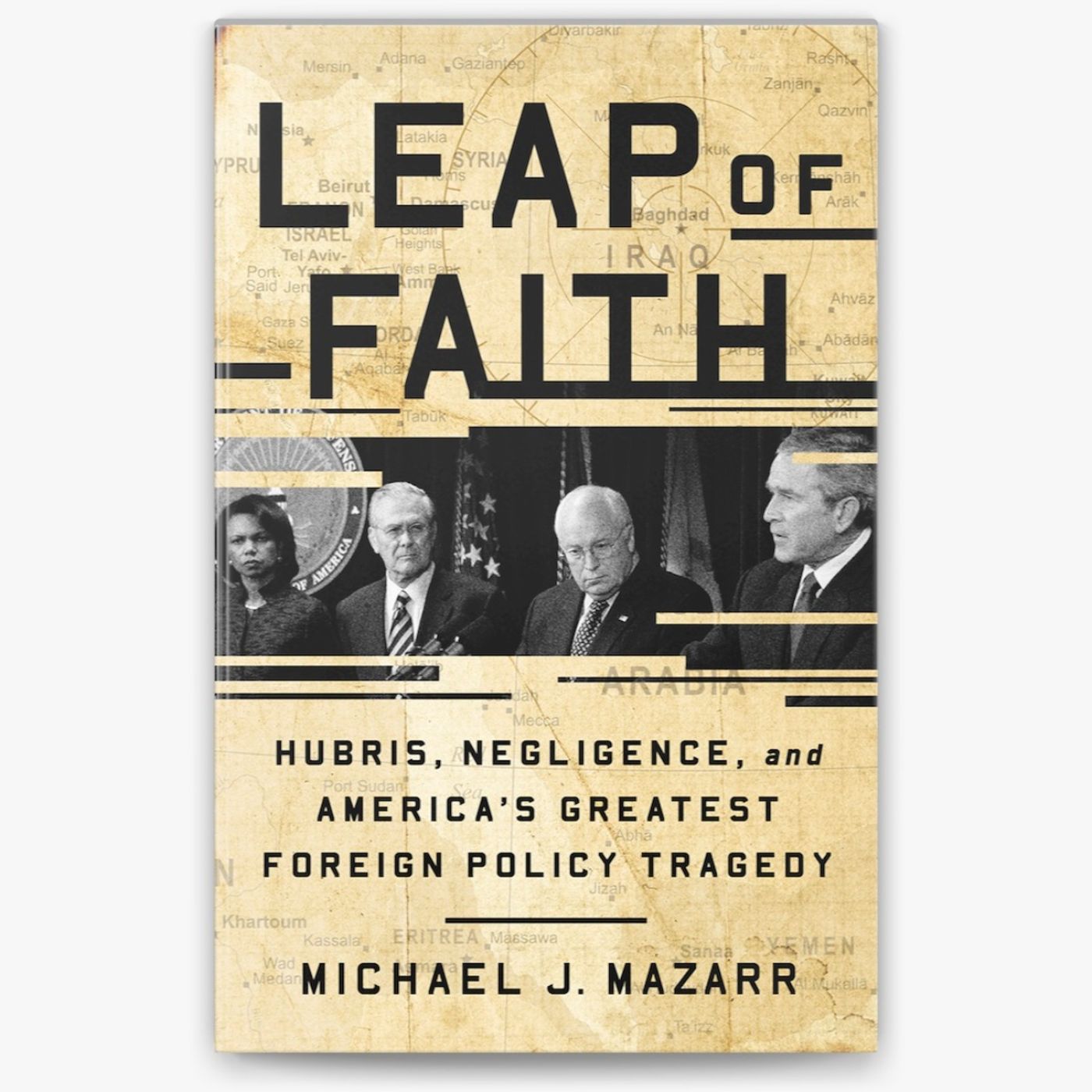
Ep 105Leap of Faith by Michael J. Mazarr
In this episode Jerry and Stably discussed Leap of Faith by Michael J. Mazarr. Mazarr, a RAND Corporation scholar, draws on every available memoir, declassified document, and interviews with senior administration officials to dissect how the United States stumbled into the Iraq War. His central argument is that there was never really a decision — the invasion happened through a process of drift, assumption, and institutional momentum, with no memo ever formally ordering it. Jerry and Stably walked through Mazarr's typology of the principals — Bush and Wolfowitz as values-driven, Cheney and Rumsfeld as power-oriented unilateralists, and Powell and Rice as multilateralists — and how their clashing psychologies at every turn undermined coherent planning. They discussed how the easy initial victory in Afghanistan gave the administration a dangerously false sense of what a small-footprint war could accomplish, Saddam's catastrophic misreading of American intentions, and the near-total absence of any post-invasion plan. The conversation turned to the eerie parallels with the current situation in Iran, and whether the lessons Mazarr draws — about American missionary zeal and intuitive, values-driven foreign policy judgment — are simply baked in.

Ep 104The Digital Reversal by Andrey Mir
In this episode Jerry and Stably discussed Andrey Mir’s The Digital Reversal, which explores the concept of reversal, arguing that media, when pushed to extremes, reverse their cultural effects due to accelerating technological change. They discussed debated the book's support for technological determinism, which posits that the trajectory of AI and technology is unstoppable and will lead to an inevitable loss of human agency. This surrender of agency is driven by the relentless pursuit of optimization—exemplified by AI making coaching decisions in sports and the shift from structured knowledge to a searchable "goo"—suggesting that most people will voluntarily "plug in" to fully automated, performant systems, with only a few non-maximizing groups remaining.

Ep 103On Photography by Susan Sontag
In this episode Jerry and Stablydiscussed Susan Sontag’s On Photography, with both finding the book overly long, baroque, and pedantic, though both agreed that Sontag's observations were interesting when extracted from the dense, "show-offy" prose. Jerry and Stably critiqued Sontag’s positions on photography as a predatory act, its role in tourism and status, and its potential for desensitization, with Jerry challenging Sontag's political framing and insistence on classifying art. The discussion included Stably suggesting Sontag's critique was politically motivated, while Jerry prioritized free speech regarding photography in public.
Ep 102On the Suffering of the World by Arthur Schopenhauer
In this episode, Jerry and Stably discussed Arthur Schopenhauer's On the Suffering of the World. Jerry praised the book as a great introduction to Schopenhauer's philosophy and its insights, particularly the concept of life as a balance between suffering and boredom, while Stan found the text repetitive and at times impenetrable, disagreeing with the author’s premise. They also explored Schopenhauer’s core ideas, including the "Will" as an eternal, irrational force and the philosopher’s suggested solution of denying the Will through asceticism or art, and they further debated the ethics of procreation and the necessity of preserving consciousness. Stan then selected "On Photography" by Susan Sontag as the next reading material for discussion.
Ep 101The Return of the Common Good by Stefan Borg
In this episode, Jerry and Stably discussed Stefan Borg's book, The Return of the Common Good: The Post-Liberal Project Left and Right, with Stably finding it enjoyable but wanting more and Jerry viewing it as a concise outline confirming prior beliefs, while both criticized its dense, academic style. A major talking point was the assertion that post-liberals offer a "fantastic critique" of liberalism's self-undermining nature but are "incredibly light on prescription," with participants exploring alternative post-liberal approaches like Michael Lind’s and the intellectual genealogy rooted in "radical orthodoxy." The conversation covered various facets of the post-liberal critique, including its US and UK contexts, its distinction from National Conservatism (NatCon), its theoretical core identifying liberalism as an ideology rooted in fear and violence, and its analysis of liberalism's internal contradictions, which erode social trust and necessitate state enforcement of radical individual freedom, alongside a critique of post-liberal feminism.
Ep 100The Human Stain by Philip Roth
In this episode, Jerry and Stably discuss Philip Roth's The Human Stain, focusing on the character Coleman Silk, a disgraced college professor whose downfall began after a misconstrued comment with a big secret. They analyzed the book's themes of radical individualism, societal judgment, and the complexities of Silk's relationships.
Ep 99Days of Rage by Bryan Burrough
In this episode, Jerry and Stably discuss Bryan Burrough's book, Days of Rage: America's Radical Underground, the FBI, and the Forgotten Age of Revolutionary Violence, focusing on the complexity, motivations, and incompetence of 1970s radical groups like the Weather Underground, BLA, SLA, and FALN.

Ep 98The Invention of Good and Evil by Hanno Sauer
In this episode, Jerry and Stably discuss Hanno Sauer's book, "The Invention of Good and Evil: A World History of Morality." The discussion highlighted the book's exploration of cooperation in early hominid evolution, the emergence of punishment, the impact of agriculture and "big gods," and the influence of the Catholic Church on Western individualism.
Ep 97Total Defense by Andrew Preston
In this episode, Jerry and Stably discuss Andrew Preston's book, "Total Defense, the New Deal, and the Invention of National Security," which explored the evolution of "national security" from territorial defense to an ideological concept linked with the New Deal and global interventionism.
Ep 96The Dorito Effect by Mark Schatzker
In this episode, Jerry and Stably discuss two books by Mark Schatzker, "The Dorito Effect" and "The End of Craving," exploring how artificial flavors and government mandates have altered food, affecting satiety and nutritional wisdom. They also talked about the challenges of engineering natural flavors, the critiques of lab-grown meats, and the accessibility and cost of quality food.
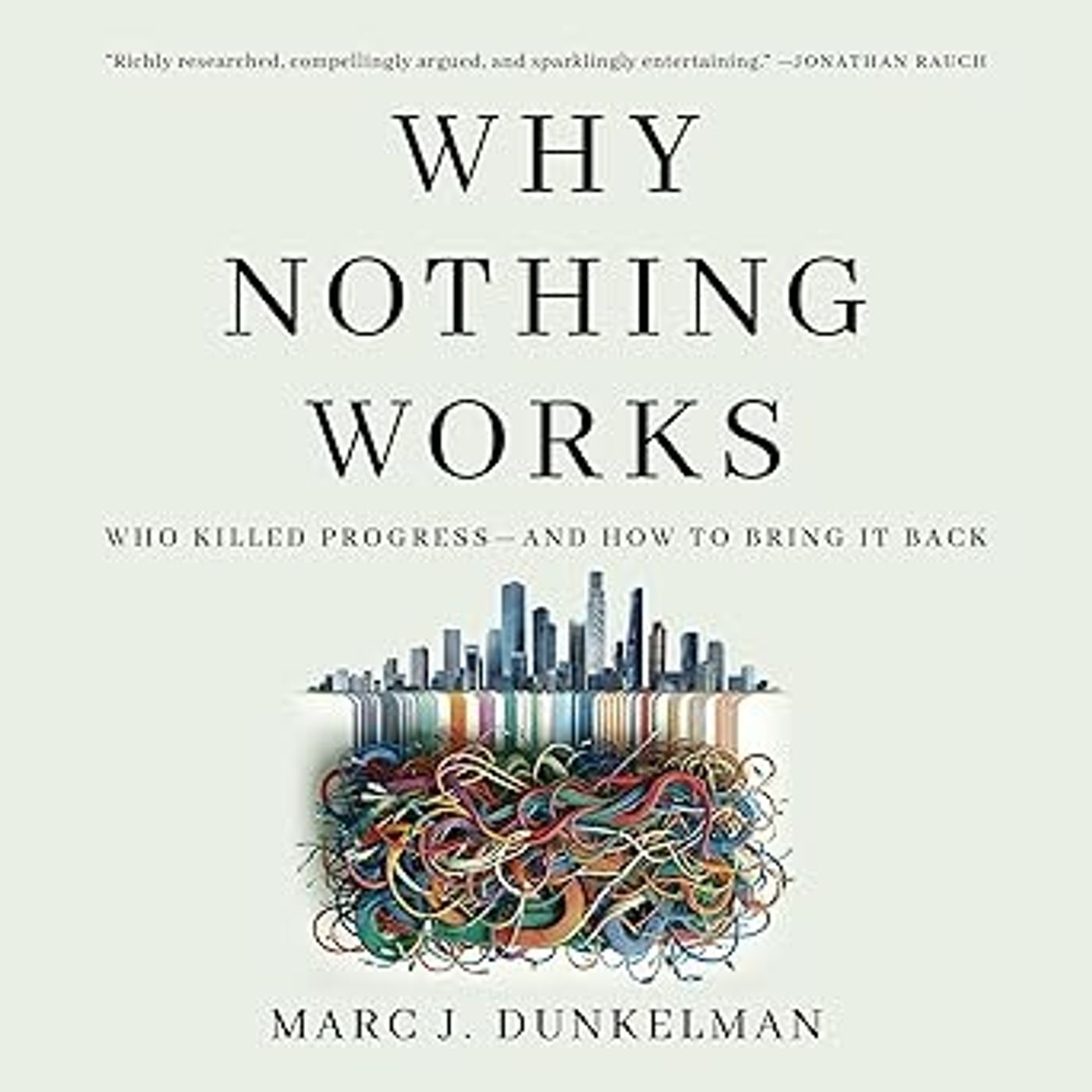
Ep 95Why Nothing Works by Marc J. Dunkelman
In this episode, Jerry and Stably discuss Why Nothing Works: Who Killed Progress and How to Bring It Back by Mark J. Dunkelman. The conversation centers on Dunkelman’s core thesis that modern progressivism has become paralyzed by internal contradictions between its Jeffersonian impulse to decentralize power and its Hamiltonian desire to empower experts and centralized institutions. This unresolved tension has led to procedural gridlock and institutional ineffectiveness, which in turn fuels public distrust and reactionary populism. The hosts compare Dunkelman’s analysis to Mancur Olson’s and public choice theory, noting that while Dunkelman emphasizes process over interest groups, he largely overlooks incentive structures. Both Jerry and Stably appreciate the book’s historical scope and clear narrative but critique its lack of engagement with deeper structural limits and its vague, ultimately inadequate prescriptions for reform. They agree that Dunkelman’s call to “restore balance” is insufficient without grappling with constraints inherent in democratic governance.

Ep 94The Cynic Philosophers: From Diogenes to Julian
In this episode, Jerry and Stably discuss The Cynic Philosophers: From Diogenes to Julian, edited by Robert Dobbin. The conversation centers on the core tenets of Cynicism, such as radical self-sufficiency, rejection of societal norms, and public acts meant to provoke reflection. The hosts explore how cynics challenged conventions through deliberately outrageous behavior, like Diogenes’ public defecation or spitting on opulence, aiming to expose hypocrisy and dependency. They contrast Cynicism with Epicureanism and Stoicism, debating whether these philosophies share a common telos and whether Cynicism’s austerity is a viable path to virtue. The episode ends with a preview of their next book: Why Nothing Works by Mark Dunkelman.

Ep 93The Unaccountability Machine by Dan Davies
Jerry and Stably discuss The Unaccountability Machine by Dan Davies, a book exploring why large systems often produce irrational outcomes. While the subtitle promises insight into how “the world lost its mind,” the hosts note the book leans heavily into cybernetics and systems theory, which was unexpected. They reflect on a shared cultural sense that “something has gone wrong,” but critique the book for offering a diffuse diagnosis—pointing vaguely at free market capitalism and systemic complexity without a clear prescriptive argument. The conversation highlights both the book’s ambition and its lack of concrete answers to institutional dysfunction.

Ep 92The Art of Happiness by Epicurus
In this episode, Jerry and Stably discuss The Art of Happiness by Epicurus, specifically the Penguin Classics edition that compiles Epicurean texts alongside interpretations by editors like Dan Klein and George K. Strodach. They clarify that Epicurus never authored a book by that title; rather, it is a curated volume of letters, aphorisms, and summaries of his philosophy. The hosts highlight how the book heavily features commentary by Strodach, which at times overtakes the original texts. They explore the core tenets of Epicureanism, such as pleasure as the absence of pain, and critique the editorial tone, noting Strodach’s assertive, almost irascible personality.

Ep 91Huey Long by T. Harry Williams (Part 2)
The episode continues Jerry and Stably’s deep dive into Huey Long by T. Harry Williams, covering the second half of the biography of the controversial Louisiana politician. Picking up after Long’s first gubernatorial win, the discussion traces his aggressive consolidation of power, his near-impeachment, and the establishment of a political machine that blurred the line between populist governance and autocracy. Jerry and Stably emphasize Long’s command over the state legislature and his manipulative use of patronage and state resources to silence opposition. They explore the contradictions in Long’s character—his professed idealism versus his often ruthless tactics—and analyze how his charisma and direct appeals to the poor fueled both admiration and intense resistance.The hosts examine his tenure as a U.S. Senator, during which he maintained effective control over Louisiana politics from Washington, D.C. They note his increasing paranoia, use of bodyguards, and elaborate security measures. His “Share Our Wealth” program is given particular attention, with discussion about its radical proposals and how it positioned Long as a national political threat, especially to President Roosevelt. The episode also delves into Long’s polarizing public image, his strategy to control media narratives, and his dramatic assassination. Jerry and Stably reflect on the legacy of Huey Long, drawing connections between his methods and modern populism, and debating whether his contributions to infrastructure, education, and wealth redistribution justify his authoritarian tendencies. The conversation closes with a sober assessment of the enduring relevance of Long’s political style.

Ep 90Huey Long by T. Harry Williams (Part 1)
The episode features hosts Jerry and Stably engaging in a discussion about Huey Long: A Biography by T. Harry Williams. The conversation begins with Jerry expressing his frustration with the book’s length and dense formatting, noting that it was difficult to obtain digitally. Stably acknowledges the challenge but defends the book’s depth and significance. They proceed to explore the life and political career of Huey Long, the populist governor and senator from Louisiana, whose ambitions and policies made him one of the most controversial figures in American history.The discussion highlights Long’s rise to power, his unconventional political tactics, and his ability to mobilize mass support through populist rhetoric. Stably emphasizes Long’s role in reshaping Louisiana politics, particularly his efforts to expand social programs, build infrastructure, and challenge entrenched elites. Jerry, however, is more critical, questioning whether Long’s authoritarian tendencies undermined the very democratic ideals he claimed to champion. They debate whether Long was a true reformer or a self-serving demagogue, referencing specific moments in his career, including his battles with corporations, his conflicts with political opponents, and his aggressive consolidation of power.The hosts also consider Long’s national ambitions, discussing his Share Our Wealth program, which proposed radical wealth redistribution during the Great Depression. They analyze how his policies resonated with struggling Americans but also raised concerns about their feasibility and authoritarian implications. The episode concludes with a reflection on Long’s legacy, debating whether his assassination cut short a dangerous trajectory or silenced a leader who might have reshaped American politics.

Ep 89A Generation of Sociopaths by Bruce Cannon Gibney
In this episode we discuss A Generation of Sociopaths: How the Baby Boomers Betrayed America by Bruce Cannon Gibney. Jerry selected the book as a deep dive into the behaviors and societal impact of the baby boomer generation, a topic that both hosts had discussed in passing. The conversation explores Gibney’s central thesis that baby boomers, as a generational cohort, have demonstrated extreme selfishness and short-sighted governance, prioritizing their own interests at the expense of younger generations and the country’s long-term well-being.The hosts examine key arguments from the book, particularly how the economic and political power wielded by boomers led to policies favoring immediate personal gains over sustainable societal progress. They highlight examples such as fiscal irresponsibility, the erosion of public infrastructure, and the dismantling of social safety nets. The discussion also touches on how boomers’ approach to wealth accumulation, corporate influence, and political decision-making has created financial and environmental burdens for future generations.Jerry and Stably engage in a critical analysis of whether Gibney’s arguments are fair and balanced, debating the extent to which structural forces versus generational attitudes contributed to current societal issues. They reflect on personal anecdotes and historical contexts, considering alternative perspectives on intergenerational responsibility. The episode concludes with a discussion on whether younger generations can shift the trajectory set by boomers and what lessons can be learned from the book’s analysis.

Ep 88Kaiser! by Rob Smyth
In this episode, Jerry and Stably dive into Kaiser: The Greatest Footballer Never to Play Football by Rob Smyth, a fascinating exploration of the life and myth of Carlos Kaiser. Known for his extraordinary ability to avoid playing professional football while maintaining a high-profile “career,” Kaiser’s story blends deception, charisma, and ingenuity. The hosts discuss how Kaiser leveraged charm, fake injuries, and carefully orchestrated media coverage to sustain his reputation in the elite world of football without ever stepping on the pitch.Jerry and Stably analyze the cultural and systemic factors that allowed Kaiser to thrive in 1980s and 1990s football, highlighting how charisma and myth-making can sometimes outweigh skill and merit. They share amusing and thought-provoking anecdotes from the book, such as Kaiser’s elaborate schemes to evade matches, and explore broader themes of ambition, imposture, and the human fascination with larger-than-life figures.The episode examines the ethical and societal implications of Kaiser’s actions, questioning whether his story is one of clever survival or manipulative fraud. With their trademark mix of humor and insightful critique, Jerry and Stably offer listeners a compelling look at a figure who turned football’s conventions on their head and became a legend for all the wrong—or perhaps right—reasons.

Ep 87Fat Leonard by Craig Whitlock
The podcast episode explores Fat Leonard: The Con Man Who Corrupted the US Navy by Craig Whitlock, focusing on the astonishing true story of Leonard Glenn Francis and his large-scale corruption scandal involving the U.S. Navy. Hosts Jerry and Stably delve into the book’s narrative, beginning with Francis’s origins as a Malaysian entrepreneur and his rise as a defense contractor, where he exploited weaknesses in Navy operations. Through bribes, lavish gifts, and manipulation, Francis secured lucrative contracts while engaging in systematic fraud, inflating invoices, and misappropriating resources.The hosts highlight how Francis’s operation thrived in an environment rife with negligence and complicity, exposing systemic vulnerabilities in military oversight. They discuss specific examples, such as the misuse of Navy funds for personal gain and the pervasive culture of secrecy and entitlement that allowed Francis’s schemes to flourish. The story is presented as both riveting and disheartening, with the moral complexities and human failings of those involved taking center stage.Jerry and Stably reflect on the broader implications of the scandal, including its impact on trust in military institutions and the challenges of reforming such entrenched corruption. Despite its detailed account of misconduct, the book is acknowledged as an engaging and accessible read that illuminates a lesser-known aspect of military history. The discussion blends critique, analysis, and a touch of incredulity at the audacity of Francis’s operations, making for an insightful exploration of a shocking case of institutional failure.

Ep 86Heart of a Dog by Mikhail Bulgakov
The episode opens with Jerry and Stably greeting each other warmly after a holiday break, reflecting on the New Year and its opportunities for renewal. They segue into the central discussion, focusing on “Heart of a Dog” by Mikhail Bulgakov, a novella set in 1920s Moscow. Stably introduces the story, describing it as a satirical exploration of Soviet society through the transformation of Sharik, a stray dog, into a human following an experimental surgery conducted by a renowned doctor, Professor Preobrazhensky.The hosts delve into Bulgakov’s critique of the Soviet regime, examining how the novella uses humor and absurdity to highlight the societal and moral dilemmas of the time. They discuss the professor’s intentions behind the experiment, portraying it as a commentary on human nature and the challenges of attempting to create “ideal” citizens. Sharik’s transformation is analyzed as both a metaphor for social engineering and a direct critique of the upheavals of the Russian Revolution.Stably highlights how the novella’s narrative structure juxtaposes Sharik’s perspective as a dog with his later experiences as a human, emphasizing the loss of innocence and the complexities of human existence. The conversation touches on Bulgakov’s use of vivid imagery and allegorical elements, with Jerry noting the novella’s blend of dark comedy and philosophical inquiry.The hosts also discuss specific scenes and character dynamics, such as Sharik’s initial gratitude towards his rescuer and his eventual rebellion as he struggles to adapt to his new identity. They reflect on the ethical implications of the experiment and the broader questions it raises about science, power, and identity. Notable examples include the interplay between Professor Preobrazhensky and his assistant, Dr. Bormenthal, which underscores the tensions between ambition and responsibility.Concluding the discussion, Jerry and Stably agree that “Heart of a Dog” remains relevant for its incisive critique of authoritarianism and its exploration of what it means to be human. They praise Bulgakov’s storytelling for its ability to provoke thought while entertaining readers, encouraging listeners to explore the novella for its rich thematic layers and enduring significance.

Ep 85The Image by Daniel J. Boorstin
In this episode, Jerry and Stably discuss The Image: A Guide to Pseudo-Events in America by Daniel J. Boorstin, a book that explores the construction of unreality in American media and culture. Jerry introduces the book as his pick and notes its thematic resonance with previous discussions, particularly those around Neil Postman’s Amusing Ourselves to Death. The hosts agree that Boorstin’s work predates many of Postman’s arguments and, in some ways, anticipates the cultural shift toward media-driven realities.Stably and Jerry unpack Boorstin’s central argument that American culture increasingly operates within “mirrors upon mirrors of unreality,” where pseudo-events—artificial happenings staged for media consumption—dominate public perception. Boorstin, writing in the late 1950s and early 1960s, critiques how society becomes incentivized to embrace these fabricated realities, constructing what Jerry calls “castles in the air.” This critique extends across multiple facets of public life, including politics, advertising, and entertainment, all of which blur the line between authenticity and illusion.The discussion touches on Boorstin’s seemingly conservative perspective, as he neither explicitly condemns the shift toward pseudo-events nor advocates for a return to a previous era. Instead, he opts to describe the phenomenon with striking clarity, allowing the implications to speak for themselves. This ambiguity prompts Jerry to reflect on Boorstin’s ultimate goals or desired outcomes, noting that while the book is critical, it refrains from offering solutions or alternatives.Stably and Jerry also draw connections between Boorstin’s work and Marshall McLuhan’s theories on media, highlighting the shared observation of media as an environment that reshapes human experience. They discuss how Boorstin’s observations remain relevant, despite the book’s age, as contemporary media landscapes have only amplified the prevalence and impact of pseudo-events.Throughout the conversation, the hosts emphasize the enduring value of Boorstin’s analysis, particularly in an era where digital media and social platforms further complicate notions of authenticity. They reflect on specific examples of pseudo-events in modern society, noting parallels to Boorstin’s original case studies and illustrating how the themes of the book continue to manifest today.By the end of the episode, Jerry and Stably underscore the significance of The Image as a foundational critique of media culture. While Boorstin stops short of prescribing change, his work serves as a powerful lens for examining how societies construct and consume manufactured realities. The hosts conclude with a shared appreciation for Boorstin’s prescient insights, leaving listeners with a deeper understanding of the book’s arguments and their implications for contemporary life.

Ep 84The Theological Origins of Modernity by Michael Allen Gillespie
In this episode, Jerry and Stably engage in a thoughtful discussion about The Theological Origins of Modernity by Michael Allen Gillespie. The hosts delve into the book’s central thesis that the modern world, often perceived as secular and rational, has deep roots in theological and metaphysical ideas. They explore how Gillespie traces the evolution of modernity back to debates between medieval theologians and their reinterpretation of ancient Greek philosophy.The conversation begins with a recap of Gillespie's argument that the Reformation and the Renaissance played pivotal roles in shaping the modern worldview. Stably highlights how the author connects figures like Martin Luther and Descartes to a broader intellectual trajectory, emphasizing their attempts to reconcile human freedom with divine omnipotence. Jerry complements this by discussing how these thinkers laid the groundwork for Enlightenment values, such as individual autonomy and scientific inquiry.A key portion of the episode is dedicated to Gillespie’s examination of nominalism—the idea that universals do not exist independently of the mind. Both hosts note how this seemingly abstract philosophical shift had profound implications, undermining the hierarchical, God-centered cosmos of medieval scholasticism and paving the way for a more human-centered perspective. They discuss specific examples from the book, such as the works of William of Ockham and how his ideas challenged traditional notions of order and knowledge.Jerry and Stably also tackle the tension between faith and reason, a recurring theme in Gillespie’s analysis. They reflect on how this tension manifested in early modern thinkers, including Galileo and Bacon, who sought to harmonize religious beliefs with empirical science. The hosts provide a nuanced take on the enduring relevance of these debates, drawing parallels to contemporary discussions about the role of religion in public life and the boundaries of scientific authority.In addition to philosophical themes, the episode includes accessible anecdotes and case studies. For instance, Stably recounts the historical context surrounding the Protestant Reformation and how it reshaped societal structures, while Jerry adds insights on the influence of classical antiquity on Renaissance humanism. Both hosts emphasize Gillespie’s skill in weaving these diverse threads into a cohesive narrative, making a complex subject engaging and relatable.The episode concludes with Jerry and Stably sharing their personal takeaways. They agree that Gillespie’s work challenges readers to reconsider simplistic narratives about modernity’s origins, inviting a deeper appreciation of the interplay between theology, philosophy, and history. As they wrap up, the hosts encourage listeners to reflect on how these historical dynamics continue to shape modern identity and values.This discussion offers an intellectually stimulating journey through the intersections of faith, reason, and modernity, underscoring the importance of understanding historical context in making sense of today’s world.

Ep 83The Prophets of Doom by Neema Parvini
In this episode, Jerry and Stably discuss “Prophets of Doom” by Neema Parvini, a book that delves into societal power dynamics and the mechanisms by which elites maintain control. The discussion begins with an overview of Parvini’s intellectual background and his previous work on elite theory, which provides a foundation for this latest exploration. Jerry and Stably explain how “Prophets of Doom” builds on these ideas, focusing on the interplay between cultural narratives and elite influence.The hosts examine Parvini’s argument that societal elites are not merely individuals in positions of power but members of a cohesive class that perpetuates its dominance through institutional control and manipulation of cultural norms. They explore historical examples and link these ideas to modern-day case studies, providing a robust analysis of how elites shape public discourse to secure their position. Throughout the episode, Jerry and Stably critique and expand on Parvini’s theories, debating their applicability to contemporary political and social issues.They also reflect on the broader implications of elite theory, questioning the potential for systemic change and considering whether Parvini’s perspective offers a way to understand recurring societal challenges. The conversation is enriched with anecdotes, personal insights, and recommendations for further exploration, making this episode both thought-provoking and highly relevant for anyone interested in understanding the dynamics of power and influence in society.

Ep 82What Went Wrong with Capitalism by Ruchir Sharma
The episode focuses on a discussion between Jerry and Stably about Ruchir Sharma’s book What Went Wrong With Capitalism. The hosts delve into the central themes of the book, including the rise of economic inequality, the stagnation of middle-class wages, and the growing influence of monopolies in global markets. Sharma critiques how capitalism, once a system driving innovation and widespread prosperity, has transformed into one that increasingly benefits the few at the expense of the many.Jerry and Stably explore Sharma’s argument that unchecked corporate power, political complacency, and a focus on short-term profits have eroded the foundational values of capitalism. They examine specific examples, such as how dominant tech companies have leveraged their market position to stifle competition and innovation. The hosts also discuss the impact of globalization, reflecting on the tensions between free trade and protectionist policies, particularly in the context of economic shifts in countries like the United States and China.A notable part of the conversation revolves around Sharma’s proposed solutions to address these systemic issues. These include reinvigorating antitrust enforcement, encouraging grassroots entrepreneurship, and rethinking fiscal policies to balance growth and equality. Stably highlights the practicality of some suggestions while questioning the feasibility of others in the current political climate. Jerry adds a historical perspective, drawing parallels with earlier economic shifts that required structural changes to preserve the benefits of capitalism.Throughout the episode, the hosts emphasize the importance of this discussion in the modern era, where economic discontent and political polarization often intersect. They reflect on the book’s relevance to individuals and policymakers alike, underlining its call for a reimagined capitalism that aligns more closely with its original principles of fairness and opportunity.By the end of the episode, Jerry and Stably agree that What Went Wrong With Capitalism serves as both a critique and a roadmap, challenging readers to reconsider their assumptions about economic systems while inspiring action to ensure a more equitable future.

Ep 81The Case Against Reality by Donald Hoffman
The episode features Jerry and Stably discussing the book The Case Against Reality by Donald Hoffman. Jerry introduces the book as a thought-provoking exploration of perception, reality, and consciousness, inspired by a personal recommendation. The hosts delve into Hoffman’s central argument that our perceptions of the world are not objective reflections of reality but evolved constructs designed to maximize survival rather than convey truth.The conversation begins with Stably reflecting on the implications of Hoffman’s ideas for everyday experiences, particularly how this perspective challenges intuitive notions about the nature of existence. Jerry provides an overview of Hoffman’s evolutionary game theory model, which suggests that organisms develop perceptions not to understand reality as it is but to create simplified, user-friendly interfaces that guide successful behavior. They discuss examples, including the concept of visual perception as akin to a computer desktop, where icons represent underlying complexities we are not equipped to process directly.The hosts also explore how Hoffman’s theories intersect with broader philosophical and scientific debates about consciousness. Jerry highlights the book’s critique of materialism and its argument that consciousness might be fundamental to reality rather than an emergent property of physical systems. Stably raises questions about the implications of this idea, particularly in the context of artificial intelligence and neuroscience, while expressing some skepticism about Hoffman’s conclusions.Throughout the episode, the hosts incorporate case studies and analogies from the book to illustrate key points. They examine experiments in perception, such as optical illusions and studies on animal senses, to underscore how different species construct distinct “realities” based on their survival needs. This leads to a broader discussion on the limits of human understanding and the value of embracing uncertainty in scientific inquiry.The episode concludes with Jerry and Stably reflecting on how Hoffman’s work inspires a reevaluation of deeply held assumptions about reality. They agree that while the book’s arguments are ambitious and occasionally contentious, its interdisciplinary approach offers a fresh lens through which to examine the relationship between mind, perception, and the nature of existence. Both hosts recommend the book as a challenging but rewarding read for those interested in philosophy, science, and the mysteries of consciousness.

Ep 80Losing the Long Game by Philip H. Gordon
The episode centers on a discussion of Losing the Long Game: The False Promise of Regime Change in the Middle East by Philip H. Gordon, a book selected by Stably. The hosts examine Gordon’s analysis of the United States’ history of regime change in the Middle East, highlighting the recurring failures of such policies and their often devastating consequences.Jerry and Stably explore the core arguments presented in the book, particularly Gordon’s assertion that regime change efforts, while sometimes well-intentioned, have consistently underestimated the complexities of the region and overestimated the ability of external powers to control outcomes. They discuss examples from the book, including interventions in Iraq, Afghanistan, Libya, and Syria, using these case studies to illustrate how regime changes have frequently led to instability, human suffering, and unintended geopolitical consequences.The hosts focus on Gordon’s critique of the flawed assumptions underpinning these policies, such as the belief that removing a dictator would automatically lead to democratization or that Western-style governance could be imposed on societies with vastly different histories and political structures. They reflect on the role of hubris, ideological bias, and the tendency to prioritize short-term objectives over long-term stability in driving these decisions.Stably highlights Gordon’s argument that regime change is often pursued without a coherent plan for the aftermath, leading to power vacuums, insurgencies, and regional chaos. Jerry adds a historical perspective, comparing these modern interventions with earlier examples of imperial overreach and the unintended consequences of foreign meddling. Together, they discuss the broader lessons for policymakers, emphasizing the need for humility, a deeper understanding of local contexts, and a focus on diplomacy over military solutions.The episode also addresses some of the criticisms of Gordon’s analysis, including whether the author underestimates the challenges of non-intervention and the moral dilemmas of tolerating oppressive regimes. While the hosts acknowledge these points, they largely agree with Gordon’s thesis that regime change has been a consistently flawed strategy with predictable and avoidable outcomes.The discussion concludes with Jerry and Stably reflecting on the broader implications of the book for future U.S. foreign policy. They emphasize Gordon’s call for a more cautious and pragmatic approach, one that prioritizes stability, respect for sovereignty, and the avoidance of overreach. The episode provides a thoughtful examination of the lessons from past failures and a sobering reminder of the complexities of international relations.

Ep 79The World That Wasn't by Benn Steil
The episode features a discussion of Ben Steil The World That Wasn’t: Henry Wallace and the Fate of the American Century, focusing on the life and legacy of Henry Wallace, a controversial figure in mid-20th century American politics. Jerry and Stably explore the book’s central themes, including Wallace’s vision for a progressive, egalitarian future and the historical forces that ultimately marginalized his ideas.Jerry introduces Wallace as a pivotal yet often overlooked figure, detailing his role as Vice President under Franklin D. Roosevelt and his subsequent marginalization by political elites wary of his progressive ideals. The hosts delve into Steil’s portrayal of Wallace as a visionary who sought to reshape the American century into one defined by social justice, economic equality, and international cooperation. Wallace’s advocacy for policies like universal healthcare, anti-racism initiatives, and a more diplomatic approach to foreign relations positioned him as a polarizing figure, especially during the intensifying Cold War.Stably emphasizes Steil’s argument that Wallace’s fall from political power was emblematic of a broader shift in American priorities during the mid-20th century. They discuss the forces that opposed Wallace, including conservative Democrats, rising Cold War tensions, and the growing influence of corporate interests. Wallace’s removal from the Roosevelt ticket in 1944, replaced by Harry Truman, is highlighted as a critical turning point, reflecting the Democratic Party’s pivot away from its New Deal roots toward a more centrist stance.The hosts also examine Steil’s analysis of Wallace’s enduring relevance, particularly his warnings about the dangers of unchecked capitalism and militarism. They reflect on how Wallace’s ideas, dismissed as radical in his time, resonate in contemporary debates about inequality, climate change, and the role of the United States in global affairs. Jerry points out Steil’s use of archival materials to illuminate Wallace’s intellectual depth and moral clarity, while Stably critiques some of the book’s speculative elements, particularly regarding what might have happened if Wallace’s vision had prevailed.Notable examples discussed include Wallace’s advocacy for a postwar international order grounded in cooperation rather than competition, as well as his controversial engagement with Soviet leaders during a time of growing anti-communist sentiment in the U.S. The hosts consider whether Wallace’s idealism was his greatest strength or his fatal flaw, debating the balance between pragmatism and principle in political leadership.In closing, Jerry and Stably agree that The World That Wasn’t is a compelling examination of an alternative vision for the American century, offering both a critique of the path taken and a reminder of the possibilities that were left behind. They commend Steil for reviving Wallace’s story and presenting it as a lens through which to consider the challenges and opportunities of shaping a more equitable future.

Ep 78The World Beyond Your Head by Matthew B. Crawford
The episode centers on a discussion of Matthew B. Crawford’s The World Beyond Your Head: On Becoming an Individual in an Age of Distraction, selected by Stably. The hosts delve into Crawford’s exploration of attention, individuality, and the challenges posed by the modern, hyper-stimulating environment. Jerry and Stably reflect on how the book critiques the pervasive influence of consumer culture and technology on our capacity to focus, connect with others, and engage meaningfully with the world.The hosts begin by discussing Crawford’s argument that attention is a finite and increasingly commodified resource, with corporations and digital platforms competing aggressively to capture it. Crawford contends that this environment undermines autonomy and individual agency, as people are pulled away from self-directed thought and immersed in distractions engineered for profit. Stably highlights the book’s critique of the modern emphasis on “choice” as a shallow substitute for true freedom, arguing that our choices are often pre-shaped by systems that prioritize consumption over creativity or reflection.Jerry focuses on Crawford’s call to re-engage with tangible, skill-based activities as a way to reclaim attention and rebuild a sense of agency. The hosts discuss examples from the book, including Crawford’s examination of craftspeople, mechanics, and athletes, whose work requires sustained focus and a deep connection to the physical world. These case studies illustrate Crawford’s belief that mastering a skill or trade can provide a counterbalance to the fragmented, superficial nature of modern life.The conversation also touches on Crawford’s philosophical influences, including his critique of the Enlightenment ideal of the isolated, self-sufficient individual. Crawford argues that true individuality emerges not in isolation but through engagement with the world and with communities of practice. Stably and Jerry explore how this perspective challenges dominant cultural narratives and resonates with broader debates about the balance between independence and interdependence in contemporary society.Throughout the episode, the hosts reflect on the book’s relevance to their own lives and the challenges of maintaining focus in an era defined by constant notifications, advertisements, and information overload. They discuss practical strategies inspired by the book, such as cultivating environments that minimize distractions and prioritizing activities that foster deep attention and meaningful engagement.The episode concludes with a reflection on the broader implications of Crawford’s work. Jerry and Stably agree that The World Beyond Your Head offers a compelling critique of modern life while providing a hopeful vision of how individuals can reclaim their attention and agency. They commend Crawford for blending philosophical depth with accessible storytelling, making the book a thought-provoking read for anyone grappling with the demands of the digital age.

Ep 77The United States of Paranoia by Jesse Walker
In this episode of the podcast, Jerry and Stably delve into a discussion of Jesse Walker’s book, The United States of Paranoia: A Conspiracy Theory. The hosts begin by sharing their initial reactions to the book, noting its length and distinct structural halves. Jerry and Stably express differing preferences for the sections, with Jerry favoring the latter half and Stably finding the entire work thought-provoking. The book’s central premise revolves around the history and culture of conspiracy theories in America, exploring how they reflect societal anxieties and the ways in which they are interwoven into the fabric of the nation’s identity.The conversation highlights Walker’s position as a longtime libertarian and contributor to Reason magazine, providing context for his perspective. Stably describes Walker’s approach as balanced and methodical, focusing on conspiracies from both political extremes and illustrating their historical recurrence. They explore Walker’s categorization of conspiracy theories, such as “enemy outside” (fears of external threats), “enemy within” (subversive elements within society), and “enemy above” (plots orchestrated by elites). This framework, the hosts agree, helps to demystify conspiracy thinking as a universal and enduring phenomenon rather than a fringe or modern issue.Jerry and Stably discuss specific examples from the book, including the Salem witch trials and McCarthyism, as illustrative of how paranoia has historically shaped political and cultural dynamics. They examine Walker’s argument that conspiracy theories often emerge from genuine grievances and mistrust, even if the resulting narratives lack factual grounding. The discussion also touches on how media, technology, and social networks amplify and evolve these theories, making them more pervasive in contemporary society.While appreciating Walker’s insights, the hosts note some areas where the book could have been more concise. They debate the balance between depth and accessibility in nonfiction works and consider whether Walker’s detailed exploration might challenge readers unfamiliar with the subject matter. The discussion concludes with reflections on the importance of understanding conspiracy theories as a means to address underlying societal issues rather than dismissing them outright.Overall, this episode offers a nuanced and engaging exploration of United States of Paranoia, emphasizing the book’s relevance to current events and its contribution to understanding the persistence of conspiratorial thinking throughout American history.

Ep 76The Populist Delusion by Neema Parvini
In this episode, Jerry and Stably engage in a thoughtful discussion about The Populist Delusion by Neema Parvini. The book examines the mechanics of political power and challenges prevailing democratic narratives by highlighting the influence of elites in shaping societal structures. Stably, who selected the book for this episode, shares his enthusiasm for its content, emphasizing how it ties into themes explored in previous episodes. Jerry also expresses his appreciation for the book, noting its analytical depth and connection to broader philosophical and historical arguments.The hosts unpack Parvini’s central thesis that power is rarely, if ever, distributed equitably in society, even in systems purported to be democratic. They discuss the book’s critique of populism as a concept and its assertion that true power lies within established elites who control institutions and narratives. This perspective leads to a broader conversation about the illusion of popular sovereignty and the ways in which political systems perpetuate the dominance of entrenched interests.Throughout the episode, Jerry and Stably explore several historical and theoretical frameworks referenced in the book, including Pareto’s "circulation of elites" and Mosca’s theories of ruling classes. These frameworks serve as a foundation for Parvini’s argument that elite structures are not only inevitable but necessary for societal stability. The hosts discuss how these ideas resonate with contemporary political dynamics and consider their implications for understanding power relationships in modern democracies.The discussion is enriched by the hosts’ reflections on the book’s tone and accessibility. While they praise Parvini’s scholarly rigor, they also note that the book’s dense theoretical content may pose challenges for some readers. They debate the balance between depth and readability, ultimately agreeing that The Populist Delusion offers valuable insights for those willing to engage with its complex arguments.Jerry and Stably conclude the episode by reflecting on how the themes of the book intersect with their own perspectives on political theory and power. They encourage listeners to consider the role of elites in shaping societal outcomes and to critically assess the narratives that underpin democratic ideals. This episode provides an engaging and nuanced exploration of Parvini’s work, situating it within a broader conversation about power, governance, and the structures that define human societies.

Ep 75Lessons in Stoicism by John Sellars
In this episode, Jerry and Stably embark on a lively discussion that begins with their initial intention to review Cicero’s On Duties but ultimately pivots to John Sellars’ Lessons in Stoicism: What Ancient Philosophers Teach Us about How to Live. The shift reflects their candid admission that Cicero’s dense philosophical treatise posed challenges in accessibility and relevance for the conversation, prompting a move to the more concise and approachable modern work. This transition sets the tone for a reflective and occasionally humorous exploration of Stoic philosophy and its application in contemporary life.The hosts highlight key insights from Lessons in Stoicism, emphasizing its practical approach to understanding Stoic principles such as emotional resilience, ethical living, and the dichotomy of control. They appreciate Sellars’ ability to distill complex ideas into actionable guidance, making Stoicism more accessible to a modern audience. Jerry and Stably connect these ideas to broader philosophical discussions, drawing comparisons to classical texts and examining how timeless Stoic concepts resonate today.Throughout the episode, the hosts discuss notable examples from the book, such as the Stoic emphasis on cultivating inner tranquility amidst external chaos. They reflect on the relevance of these ideas in managing stress and uncertainty, particularly in a world dominated by rapid change and pervasive challenges. Their conversation also touches on the enduring appeal of Stoicism in popular culture, examining why figures like Marcus Aurelius and Seneca continue to inspire readers and thinkers.While focusing primarily on Lessons in Stoicism, Jerry and Stably weave in references to On Duties, considering Cicero’s more rigorous and formal exploration of duty and moral responsibility. They contrast the classical and modern approaches, noting how Sellars’ work serves as an accessible entry point for those interested in Stoic philosophy without the daunting complexity of Cicero’s writings.The episode concludes with the hosts’ reflections on the practical value of Stoicism in navigating modern challenges. They underscore the importance of integrating philosophical principles into daily life, advocating for a balanced approach that combines intellectual exploration with actionable insights. This episode offers an engaging and thought-provoking journey through Stoic philosophy, bridging classical and modern perspectives while inviting listeners to consider the relevance of these timeless ideas in their own lives.

Ep 74The Formula by Joshua Robinson and Jonathan Clegg
In this episode, hosts Jerry and Stably delve into "The Formula: How Rogues, Geniuses, and Speed Freaks Reengineered F1 into the World's Fastest Growing Sport," authored by Joshua Robinson and Jonathon Clegg. The discussion centers on the transformation of Formula One (F1) from a niche motorsport into a global phenomenon, emphasizing the strategic decisions, key personalities, and cultural shifts that propelled this change.Jerry begins by highlighting the book's exploration of F1's history, noting how the sport was once dominated by an elite European audience and largely inaccessible to a broader public. Stably complements this by discussing the pivotal role played by Bernie Ecclestone, the sport’s former chief executive, in commercializing F1. Ecclestone’s aggressive negotiations and centralization of broadcasting rights are credited with laying the groundwork for F1’s financial success. The hosts agree that while Ecclestone's approach was groundbreaking, it also sparked controversies, particularly regarding his authoritarian management style and focus on profit over inclusivity.The episode also examines how Liberty Media's acquisition of F1 in 2017 marked a new era for the sport. Stably explains how the new owners leveraged digital platforms and social media to engage younger audiences, a departure from Ecclestone’s reluctance to embrace modern marketing trends. Jerry brings up Netflix’s "Drive to Survive" series as a case study of this strategy's success. The show humanized the drivers, dramatized rivalries, and attracted viewers unfamiliar with the technicalities of F1. The hosts reflect on how this narrative-driven approach not only expanded F1's fanbase but also boosted ticket sales and viewership figures globally.A recurring theme in the discussion is the tension between tradition and innovation. Jerry and Stably note how F1’s heritage as a cutting-edge motorsport has often clashed with efforts to make the sport more accessible and sustainable. They discuss controversies surrounding rule changes, such as the introduction of hybrid engines and budget caps, and their impact on teams with varying financial resources. The hosts praise the book for addressing these debates in a balanced manner, offering insights into how the sport’s stakeholders navigate these challenges.Throughout the episode, the hosts share anecdotes and examples from the book that illustrate the colorful personalities in F1. Stably recounts stories of maverick engineers and risk-taking drivers who pushed the boundaries of technology and performance. Jerry highlights the cultural impact of iconic teams like Ferrari and McLaren, as well as the emergence of newer powerhouses like Red Bull Racing. The hosts also touch on broader societal issues, such as diversity and environmental concerns, and how F1 has responded to these pressures.In conclusion, Jerry and Stably commend "The Formula" for its thorough analysis of F1’s evolution and its ability to weave complex business strategies with engaging storytelling. They encourage listeners to consider how lessons from F1’s transformation might apply to other industries facing disruption and change. This episode offers a rich and nuanced exploration of a sport that has successfully reinvented itself while grappling with its identity and legacy.

Ep 73Virtue Hoarders by Catherine Liu
In this episode, Jerry and Stably engage in a thought-provoking discussion centered on the book Virtue Hoarders: The Case against the Professional Managerial Class by Catherine Liu. The conversation examines the core arguments presented in the book, delving into the societal and economic implications of the professional managerial class (PMC) and its role in perpetuating inequality under the guise of progressive values.The hosts begin by outlining Liu’s central thesis, which critiques the PMC for leveraging moral and cultural capital to maintain its own privileged status while failing to address systemic inequities. Jerry emphasizes the book’s focus on how this group—comprised of academics, administrators, and other white-collar professionals—positions itself as both morally superior and indispensable. Stably adds that Liu’s argument challenges the assumption that the PMC’s progressive rhetoric translates into meaningful action for broader social good.Throughout the discussion, Jerry and Stably explore examples of virtue signaling within the PMC, such as performative activism on social media and the commodification of diversity initiatives. They reflect on Liu’s critique of how these actions often serve to reinforce the PMC’s sense of moral authority rather than driving substantive change. Stably notes that the book draws parallels between the PMC’s behavior and historical patterns of class preservation, suggesting that these dynamics are not new but have evolved with contemporary cultural norms.The hosts also discuss Liu’s perspective on education and its role in perpetuating PMC dominance. Jerry highlights the book’s critique of elite educational institutions as gatekeepers that reinforce class stratification under the pretext of meritocracy. Stably adds that this analysis extends to the PMC’s emphasis on credentialism, which further marginalizes working-class individuals by placing undue value on formal qualifications.A key theme in the episode is the tension between individual actions and systemic change. Jerry and Stably consider Liu’s assertion that the PMC’s focus on personal lifestyle choices, such as adopting sustainable practices or engaging in charity work, often obscures the need for collective action to dismantle structural inequalities. They debate the practicality of Liu’s proposed solutions, which call for a reorientation of priorities away from self-serving virtue displays and toward solidarity with working-class movements.In their critique of Liu’s work, the hosts acknowledge that while the book provides a sharp critique of the PMC, it offers limited guidance on how to enact the systemic changes it advocates. Stably questions whether the PMC can realistically be expected to relinquish its privileged position, while Jerry suggests that the book’s polemical tone might alienate some readers despite its compelling arguments.The episode concludes with a reflection on the broader implications of Liu’s critique. Jerry and Stably discuss how the themes in "Virtue Hoarders" resonate with current debates about class, power, and inequality, particularly in the context of global crises such as the pandemic and climate change. They encourage listeners to critically examine the role of the PMC in shaping societal values and to consider how collective action can address the systemic issues highlighted in the book.

Ep 72The Collapse of Complex Societies by Joseph A. Tainter
In this episode, Jerry and Stably engage in an insightful discussion on Joseph A. Tainter’s seminal work, The Collapse of Complex Societies. The conversation unpacks Tainter’s central arguments, exploring the reasons behind the decline of complex societies and the factors that make collapse a recurring phenomenon in human history.The hosts begin by outlining Tainter’s definition of societal complexity, highlighting how societies evolve into intricate systems with specialized roles, institutions, and infrastructures to address challenges and ensure stability. Jerry emphasizes Tainter’s argument that complexity is not inherently beneficial but is often a response to crises that demand greater resource allocation and administrative oversight. Stably adds that this increasing complexity eventually leads to diminishing returns, as the costs of maintaining such systems outstrip their benefits.Key examples discussed include the Roman Empire, the Mayan civilization, and various smaller polities whose collapses were characterized by an inability to sustain their complex structures. Stably draws attention to Tainter’s assertion that collapse is not necessarily a catastrophic event but can be a rational simplification, where societies revert to less complex forms that are more sustainable. Jerry underscores how these examples illustrate the universality of the challenges faced by complex systems, regardless of geography or time period.The hosts also delve into contemporary parallels, considering whether modern societies are at risk of similar outcomes. They discuss Tainter’s criteria for societal collapse, such as resource depletion, economic overextension, and failure to adapt to changing conditions. Stably notes that today’s global interconnectedness adds a layer of vulnerability, as localized issues can have far-reaching impacts. Jerry references ongoing debates about climate change, energy transitions, and economic inequality as factors that could stress modern systems beyond their breaking points.Throughout the episode, the discussion touches on the role of innovation and whether technological advances can offset the diminishing returns of complexity. Jerry and Stably explore Tainter’s skepticism about technological fixes, noting that while innovations can provide temporary solutions, they often introduce new layers of complexity that perpetuate the cycle. The hosts debate the extent to which Tainter’s framework applies to contemporary challenges and whether lessons from historical collapses can inform strategies for resilience.The episode concludes with a reflective analysis of Tainter’s work, highlighting its interdisciplinary approach and its relevance to understanding the sustainability of complex systems. Jerry and Stably commend the book for its ability to synthesize historical, economic, and anthropological perspectives into a cohesive theory. They encourage listeners to consider how societies can balance complexity and sustainability to avoid the pitfalls identified by Tainter. This episode offers a comprehensive and thought-provoking exploration of a topic that remains deeply relevant in today’s interconnected world.

Ep 71Technopoly by Neil Postman
In this episode, Jerry and Stabley delve into Neil Postman’s book Technopoly: The Surrender of Culture to Technology. The discussion begins with their impressions of the book, with both hosts acknowledging its engaging yet at times polemical tone. They highlight how Postman’s central argument critiques the uncritical acceptance of technology as the organizing principle of culture, warning against its potential to erode traditional structures of meaning and authority.The conversation explores Postman’s concept of technopoly—a societal state where technology is not just an aid to human life but the central focus, shaping values, behaviors, and even moral decision-making. The hosts reflect on Postman’s observations regarding the loss of transcendental frameworks, such as religion, and their replacement with technology-driven ideologies. They cite examples like the cultural fascination with figures such as Elon Musk, whose vision of humanity’s destiny in space is framed as a new narrative of purpose. Jerry and Stabley debate whether these modern technological aspirations truly offer meaning or merely serve as substitutes for traditional beliefs.A key theme discussed is the decline of sacred symbols and narratives. The hosts reference Postman’s argument about the "great symbol drain," where once-sacred figures and institutions have been commodified and stripped of their deeper significance, leading to a fragmented cultural landscape. Examples like hypothetical marketing campaigns involving religious icons are used to illustrate this point humorously yet poignantly.The hosts also touch on the practical and societal implications of technopoly. They note Postman’s critique of how technological progress often prioritizes efficiency over ethical considerations. This critique extends to contemporary phenomena like AI, environmentalism, and the proliferation of science as a quasi-religious authority. The discussion includes reflections on how these trends create existential anxiety and irrational behaviors, despite their ostensibly rational foundations.In examining Postman’s proposed solutions, the hosts discuss his call for a reinvigorated educational system that emphasizes history, ethics, and storytelling over the dominance of social sciences and technocratic thinking. Postman’s idea of cultivating individual resistance to technopoly through critical thinking and an appreciation for non-technological truths resonates strongly with the hosts. They highlight his suggestion for embracing "curmudgeon" tendencies—questioning prevailing norms, resisting the worship of efficiency, and taking religion and traditional narratives seriously.The episode closes with reflections on the book’s relevance and its mix of timeless insights and dated examples, particularly in chapters focused on computers and medicine. While acknowledging these limitations, Jerry and Stabley appreciate Postman’s incisive writing and thought-provoking arguments, recommending the book for its broader critique of the cultural ramifications of technology. They hint at continuing similar discussions with their next selection, The Collapse of Complex Societies by Joseph A. Tainter, promising to further explore themes of societal change and sustainability.

Ep 70How the World Really Works by Vaclav Smil
In this episode, Jerry and Stably discuss How the World Really Works: The Science Behind How We Got Here and Where We're Going by Vaclav Smil. The conversation explores how technological advancements and societal behaviors intersect with environmental and economic realities. The hosts reflect on the book's central themes, including the intricate interdependence of modern systems, the hidden costs of technological progress, and the difficult trade-offs inherent in addressing global challenges.One of the key arguments highlighted is the paradox of progress: while advancements in technology and industrialization have improved living standards for many, they have also created significant challenges, such as resource depletion and environmental degradation. The authors argue that solving these issues often introduces new, unforeseen problems, perpetuating a cycle of innovation and mitigation. The hosts cite examples such as advancements in agriculture and energy, illustrating how improvements in efficiency have historically led to new forms of resource strain.Jerry and Stably also discuss the book's exploration of dietary habits, particularly the global implications of meat consumption. The text examines how reducing meat consumption in developed countries might mitigate some environmental pressures but notes the immense challenges of equitably raising living standards in underdeveloped regions. The hosts consider the broader societal shifts needed to address these issues, acknowledging the complexities of balancing ethical, economic, and environmental considerations.The episode delves into the speculative aspects of the book, including critiques of proposed solutions such as Mars colonization or the singularity. The author’s skepticism about these futuristic visions is underscored by a pragmatic focus on Earth-bound challenges, which the hosts discuss with a mix of agreement and humor. They reflect on the limits of technological fixes and the necessity of systemic changes to address the root causes of global crises.The discussion turns to the book’s detailed accounts of the infrastructure and systems underpinning modern life, from energy production to supply chains. While Jerry appreciates the insights offered, he finds the procedural depth somewhat overwhelming, describing it as more suitable for a specialized audience or those deeply interested in technical details. Stably, however, expresses admiration for the book's thoroughness and its effort to quantify the scope of global challenges.The hosts debate the book’s accessibility and intended audience, considering whether its dense, detail-oriented style might limit its appeal. They agree that while the book is highly informative, it may resonate most with readers who are already engaged with topics like sustainability, resource economics, and environmental science. Despite these critiques, both hosts recognize the book's value as a comprehensive reference and a catalyst for deeper reflection on modern challenges.The episode concludes with a preview of the next book in their reading series, promising further exploration of societal and technological themes. Jerry and Stabley encourage listeners to engage critically with the ideas presented, emphasizing the importance of understanding the trade-offs and complexities involved in building a sustainable future.

Ep 69A City on Mars by Kelly and Zach Weinersmith
In this episode, Jerry and Stably discuss A City on Mars: Can We Settle Space, Should We Settle Space, and Have We Really Thought This Through? by Kelly and Zach Weinersmith. The hosts discuss the parallels between space settlement and other forms of human endeavor, emphasizing the mixture of curiosity, ambition, and practical considerations that drive humanity to venture into the unknown.The conversation touches on the metaphorical comparison of space exploration to buying a hot tub—an act that may be motivated by personal desire, perceived benefits, or simple enjoyment. However, the hosts emphasize the unique externalities of space exploration, noting that unlike personal consumer choices, it carries broader risks and consequences for humanity. They discuss how historical milestones in space exploration, such as the early space race, were shaped by a blend of military strategy, public relations, and political expediency, rather than purely scientific or altruistic goals.A key topic is the challenges of sustainable space settlements, including the need for a viable gene pool, the management of radiation exposure, and the socio-economic dynamics of colonization. The hosts reflect on the logistical and ethical complexities of creating habitable environments on other planets, questioning the feasibility and morality of such endeavors in the near term. They discuss the potential for voluntary participation in experimental projects and how technological pressures could drastically reshape societal structures, akin to historical migrations and explorations.The book’s critique of the idealism often associated with space colonization resonates with the hosts. They examine the arguments against viewing space as a solution to Earth’s challenges, including environmental degradation and resource scarcity. Instead, the hosts underscore the importance of addressing planetary issues with systemic changes and innovations grounded on Earth. They also humorously consider the speculative possibilities of space settlements, including the social and cultural adaptations that might arise in such unique contexts.The episode concludes with a discussion of the book’s tone and accessibility, highlighting its mix of rigorous analysis and engaging anecdotes. While Jerry finds the narrative breezy and suitable for casual readers, Stably appreciates its informative depth and balanced approach. Both agree that the book serves as a thought-provoking entry into the complexities of space exploration and its implications for humanity’s future.Looking ahead, the hosts preview the next book in their series, which will delve into how societal and technological systems shape the modern world, signaling a continued exploration of these critical themes.

Ep 68Digital Future in the Rearview Mirror by Andrey Mir
In this episode, Jerry and Stably engage in a dynamic discussion about the themes and concepts in the book Digital Future in the Rearview Mirror: Jaspers’ Axial Age and Logan’s Alphabet Effect by Andrey Mir. As a friend of the podcast, Mir’s work provides a fascinating lens through which to explore the intersection of media theory, historical analysis, and the impact of communication technologies on society.The conversation opens with an acknowledgment of the unique position they find themselves in, knowing the author might listen to their critique. This self-awareness underscores the thoughtful and unvarnished approach they take in evaluating Mir’s arguments. The hosts dive into Mir’s exploration of the "axial age" concept, reinterpreted through the lens of digital evolution and media shifts. They unpack how communication technologies, from the alphabet to the internet, have profoundly shaped human thought and societal structures.Jerry and Stably pay particular attention to Mir’s use of historical parallels. For example, they discuss the "alphabet effect," a theory that writing systems and literacy have long-term cognitive and cultural consequences. They compare this to modern digital interfaces, which similarly rewire how individuals think and interact. This parallel becomes a recurring theme as they analyze how older media systems cast a "shadow" on newer ones, creating a layered interplay of influences that are neither entirely replaced nor fully integrated.One of the highlights of the episode is the discussion on how digital tools and platforms are redefining the notion of "truth" and "knowledge." The hosts explore Mir’s argument that we are living in a second axial age, driven not by philosophical or religious upheaval but by technological transformations that are equally profound. They reflect on how this shift manifests in the way people access and prioritize information, noting the decentralization and democratization of knowledge as both an opportunity and a challenge.Stanley emphasizes the book’s nuanced view of the digital future, particularly Mir’s critique of determinism—the idea that technology alone dictates societal outcomes. Instead, Mir suggests that human agency and cultural contexts remain pivotal. This perspective leads to a broader conversation about how individuals and institutions can adapt to technological change without losing sight of ethical considerations and historical continuity.The episode also delves into specific examples and case studies mentioned in the book, such as the transition from oral to written cultures and its parallels with today’s move from analog to digital. Jerry highlights how Mir’s work draws attention to the cyclical nature of media evolution, suggesting that understanding the past can provide valuable insights for navigating the future.In their closing reflections, the hosts praise Mir’s ability to weave complex ideas into a coherent narrative while challenging readers to think critically about the implications of the digital age. They conclude that Digital Future in the Rear-View Mirror is not just a commentary on technology but a call to engage thoughtfully with the ongoing transformations in how humans communicate, learn, and understand the world.This episode offers listeners a rich and thought-provoking discussion that bridges historical perspectives with contemporary challenges, encouraging a deeper examination of the digital age’s profound and multifaceted impact on society.

Ep 67The Rise and Decline of Nations by Mancur Olson
In this podcast episode, hosts Jerry and Stably engage in a thought-provoking discussion on the book The Rise and Decline of Nations: Economic Growth, Stagflation, and Social Rigidities by Mancur Olson. The book serves as a foundation for their exploration of the interplay between economic dynamics, institutional behavior, and societal structures, particularly focusing on how nations evolve and encounter periods of growth and decline.The hosts begin by reflecting on the relevance of Olson’s theories to contemporary issues, acknowledging that life events have delayed their review but emphasizing the enduring significance of the book’s insights. They delve into Olson’s argument that institutional rigidities and special interest groups can hinder economic progress over time, creating conditions for stagnation. Jerry and Stably unpack how these dynamics manifest in various contexts, such as government policy, market behavior, and cultural attitudes, illustrating their points with current and historical examples.One of the key discussions revolves around Olson’s idea of "distributional coalitions," or organized groups that prioritize their interests over collective economic welfare. The hosts analyze how these coalitions contribute to inefficiencies, explaining their role in slowing innovation and adaptability within nations. They draw parallels to modern economic challenges, such as regulatory inertia and systemic inequality, offering a nuanced view of how entrenched interests shape political and economic landscapes.Jerry and Stably also explore the book’s examination of stagflation—a phenomenon where stagnation and inflation occur simultaneously—and its implications for policymakers. They connect Olson’s observations to recent economic disruptions, highlighting the cyclical nature of growth and decline in nations. This leads to a broader discussion about how countries can break free from these cycles, emphasizing the need for institutional reform and adaptive governance.The conversation is enriched by their critical analysis of Olson’s theories, including a discussion on whether his framework sufficiently accounts for technological advancements and globalization. Stably raises questions about the applicability of Olson’s ideas in an increasingly interconnected world, while Jerry offers counterpoints that stress the timeless nature of institutional challenges.The episode concludes with a reflection on the practical lessons from The Rise and Decline of Nations, particularly its relevance for understanding the barriers to sustainable growth. Jerry and Stably emphasize the importance of fostering flexibility and innovation within institutions to avoid the pitfalls of rigidity and stagnation. They leave listeners with a deeper appreciation for Olson’s contributions to economic and political thought, encouraging further exploration of how nations can navigate the complexities of growth and decline in a rapidly changing world.This episode offers an engaging and comprehensive overview of Mancur Olson’s work, blending theoretical insights with real-world applications to provide listeners with a rich understanding of the factors that shape national trajectories.

Ep 66In Defense of Civilization by Michael RJ Bonner
In this episode, hosts Jerry and Stably delve into Michael R.J. Bonner’s book In Defense of Civilization: How Our Past Can Renew Our Present, a thought-provoking exploration of history’s lessons and their relevance to contemporary challenges. Stably, who selected the book, introduces Bonner as a Canadian scholar specializing in ancient and medieval Persia, Iran, and the Near East. Known for his academic rigor and right-of-center perspective, Bonner’s work reflects a deep concern for the state of modern civilization.The conversation begins with an overview of Bonner’s thesis, which argues for the enduring value of historical knowledge in addressing the cultural and moral crises of the present. Bonner critiques what he sees as a widespread erosion of civilizational principles, suggesting that society has lost its connection to the virtues and institutions that underpinned past successes. Jerry and Stably unpack these ideas, examining how Bonner’s historical focus on ancient and classical cultures informs his critique of modernity.A central theme of the discussion is the book’s emphasis on the importance of preserving and revitalizing cultural heritage. Bonner advocates for a return to foundational principles, drawing on examples from ancient Persia and other civilizations to illustrate how historical continuity can provide a framework for renewal. The hosts discuss how this perspective challenges the contemporary tendency toward cultural relativism, highlighting Bonner’s call for a more robust defense of universal values.Jerry and Stably also explore Bonner’s critique of modern education and intellectual life, which he argues have become disconnected from their historical roots. They reflect on the implications of this disconnection for political and social stability, considering how the neglect of classical learning and moral philosophy might contribute to the fragmentation of contemporary society. Stably points out that Bonner’s insights resonate beyond academia, offering practical lessons for policymakers, educators, and cultural leaders.Throughout the episode, the hosts balance their analysis of Bonner’s arguments with critical reflections. They discuss whether his focus on history’s successes adequately addresses the complexities of modern pluralistic societies. Jerry raises questions about how Bonner’s framework might be adapted to account for technological and demographic changes, while Stably defends the book’s emphasis on moral and cultural foundations as a necessary starting point for reform.The episode concludes with a thoughtful discussion on the role of individual agency in civilizational renewal. Drawing on Bonner’s work, Jerry and Stably emphasize the importance of cultivating a sense of responsibility and engagement with the past, suggesting that history offers not only warnings but also inspiration for navigating the challenges of the present. They commend In Defense of Civilization for its intellectual depth and its timely call to action, encouraging listeners to reflect on their own role in shaping the future of society.

Ep 65Offside by Andrei Markovits and Steven L. Hellerman
In this episode, Jerry and Stably dive into a discussion about the book Offside: Soccer and American Exceptionalism by André Markovits and Steven L. Hellerin. The conversation begins with a lighthearted exchange, setting an informal tone as the hosts express their initial reactions to the book. Jerry introduces the book as his pick and jokingly mentions some regret over choosing it, hinting at its dense academic style. Stably agrees, remarking on the challenges of engaging with an academic text, especially one authored by sociologists and published by a university press. The hosts reflect on the book's cover and even the image of the lead author, which Stably describes as embodying the quintessential Middle European scholar archetype.The main focus of the discussion revolves around the book’s exploration of soccer's unique place in American culture compared to its global significance. Jerry and Stably delve into the concept of "American exceptionalism" and how it manifests in sports, with soccer serving as a key example. The authors argue that soccer’s marginalization in the United States reflects broader cultural tendencies, including the nation's preference for homegrown sports like American football, baseball, and basketball. The book contrasts this with soccer's universal appeal, which transcends national boundaries and dominates cultural landscapes in nearly every other part of the world.The hosts highlight some of the key arguments made by Markovits and Hellerin, particularly the historical and sociological factors that shaped the American sports hierarchy. They discuss the role of class, ethnicity, and immigration in influencing sports preferences, noting that soccer's initial popularity among immigrant communities may have contributed to its perception as "un-American" in certain circles. Jerry and Stably also touch on the commercialization and media narratives that have cemented the dominance of traditional American sports while relegating soccer to a niche status for much of the 20th century.Throughout the episode, the hosts provide thoughtful commentary on the book’s academic tone and its reliance on extensive sociological data. While they acknowledge that the text may not be easily accessible to all readers, they appreciate its thorough analysis and the thought-provoking questions it raises about identity, culture, and globalization. They share their personal experiences and reflections, discussing how the themes of the book resonate with their own observations of sports and society.The conversation is punctuated with humor and anecdotes, including Stably's surprise at discovering the scholarly demeanor of the lead author and their shared amusement at the book's meticulous approach. Despite its challenges, the hosts agree that Offside: Soccer and American Exceptionalism offers valuable insights into why soccer occupies its peculiar position in American culture and how this ties into larger discussions about exceptionalism and cultural identity. The episode concludes with a mutual acknowledgment of the book’s strengths and limitations, as well as its ability to spark meaningful dialogue about sports and society.

Ep 64The Origins of Woke by Richard Hanania
In this episode, Jerry and Stably discuss the book The Origins of Woke: Civil Rights Law, Corporate America, and the Triumph of Identity Politics by Richard Hanania. The conversation opens with some humor and banter about the book’s author, including playful speculation about his name and background. This sets the stage for a candid and occasionally irreverent examination of the book’s arguments and themes.The hosts focus on Hanania’s central thesis that the rise of identity politics in the United States has been driven significantly by legal changes, particularly in civil rights law. They explore how corporate America has adopted and amplified these changes, often in ways that go beyond the original legal mandates. Hanania’s contention that these developments have reshaped American society is discussed at length, with Jerry and Stably analyzing whether these outcomes were inevitable or if alternative approaches could have led to different results.The episode delves into the historical context provided by Hanania, tracing the evolution of civil rights legislation and its broader cultural impact. The hosts examine case studies and examples from the book, such as the ways in which businesses have implemented diversity initiatives and how these efforts have been influenced by both legal pressures and shifting social norms. Stably notes the author’s critique of what he sees as the excesses of identity politics, while Jerry provides counterpoints that emphasize the complexity of balancing legal frameworks with cultural change.Throughout the episode, the discussion touches on broader themes, including the relationship between law and culture, the role of corporations in shaping societal values, and the ongoing debates around equity and inclusion. The hosts highlight the book’s provocative arguments, including its assessment of the unintended consequences of civil rights policies and the tension between individual rights and group-based remedies.While the tone of the discussion is often light and conversational, Jerry and Stably maintain a thoughtful and critical approach to Hanania’s ideas. They acknowledge the book’s strengths, such as its detailed analysis and bold assertions, while also questioning some of its conclusions and the potential oversimplification of complex issues. The episode concludes with the hosts reflecting on the relevance of the book’s arguments in today’s political and cultural landscape, offering listeners a nuanced perspective on one of the most contentious topics in contemporary discourse.

Ep 63Amusing Ourselves to Death by Neil Postman
In this episode, Jerry and Stably engage in an insightful discussion about Neil Postman’s book Amusing Ourselves to Death: Public Discourse in the Age of Show Business. The conversation begins with a playful and lighthearted exchange, showcasing the hosts’ camaraderie before transitioning into the substance of the book. Jerry introduces the title as his pick and highlights the subtitle, emphasizing its relevance to contemporary media culture and public discourse.Stably describes the book as one of the best he’s read all year, setting an enthusiastic tone for the discussion. The hosts explore Postman’s central thesis that the rise of television and entertainment-driven media has profoundly shaped public discourse, often to its detriment. They discuss how Postman traces the historical shift from a print-based culture, characterized by depth and rational discourse, to a visual and entertainment-focused culture that prioritizes emotion and spectacle over substance.The episode delves into key examples from the book, such as Postman’s analysis of televised political debates and their impact on public perception. Jerry and Stably discuss how these debates illustrate the shift toward performance and image as central to political communication, often at the expense of meaningful policy discussion. They also reflect on Postman’s critique of how education and other public institutions have adapted to this entertainment-driven paradigm, questioning whether these changes have undermined their original purposes.Throughout the discussion, the hosts connect Postman’s arguments to contemporary issues, including the role of social media and the ongoing challenges of balancing entertainment with meaningful engagement in public discourse. They consider whether Postman’s warnings about the corrosive effects of entertainment on public life have grown even more urgent in the digital age.Jerry and Stably’s analysis is both thoughtful and critical, as they acknowledge the prescience of Postman’s arguments while debating some of his conclusions. They reflect on the implications of living in a culture dominated by show business and consider how individuals and institutions might counteract its more negative effects. The episode concludes with the hosts agreeing on the enduring relevance of Amusing Ourselves to Death and its value as a lens for understanding the interplay between media, culture, and public life.

Ep 62Transformative Experience by L. A. Paul
In this episode, Jerry and Stably discuss the book Transformative Experience by L.A. Paul, focusing on its exploration of how life-altering decisions shape personal identity and the challenges of making choices without fully understanding their consequences. The episode begins with a lighthearted and sleepy exchange between the hosts, setting a relaxed tone for a deep philosophical conversation.Stably introduces the book as his pick, describing how he encountered its ideas online and felt profoundly influenced by them—though not entirely in a positive way. The hosts delve into Paul’s central argument, which centers on the difficulty of predicting the outcomes of transformative experiences, such as becoming a parent, changing careers, or moving to a new city. These are decisions that fundamentally alter a person’s preferences, values, and identity in ways that cannot be fully grasped beforehand.Jerry and Stably explore the concept of "epistemic humility," emphasizing Paul’s point that the inability to fully understand or anticipate a transformative experience is not a flaw in reasoning but a natural limitation of human cognition. They discuss how this uncertainty challenges traditional decision-making frameworks, which often rely on weighing costs and benefits based on current preferences and knowledge.The hosts connect Paul’s arguments to real-world examples, including personal anecdotes and cultural references, to illustrate the book’s relevance. They reflect on how the concepts apply to their own lives and broader societal issues, such as debates about taking risks and embracing change. Jerry highlights the paradox of wanting to make informed decisions while acknowledging that some experiences can only be understood through direct engagement.The discussion also touches on critiques of Paul’s work, including questions about its practical implications and whether it offers actionable guidance for navigating transformative decisions. Stably shares his mixed feelings about the book, praising its thought-provoking nature while expressing frustration with its abstract style and limited focus on practical applications.The episode concludes with a thoughtful exchange about the importance of embracing uncertainty and the value of reflecting on how transformative experiences shape who we are. Jerry and Stably agree that while Transformative Experience may not provide clear answers, it offers a compelling framework for thinking about life’s most profound and unpredictable moments.