Worker and Parasite
Jerry Brito, Stan Tsirulnikov · Jerry Brito
Show overview
Worker and Parasite has been publishing since 2020, and across the 6 years since has built a catalogue of 113 episodes. That works out to roughly 120 hours of audio in total. Releases follow a monthly cadence.
Episodes typically run an hour to ninety minutes — most land between 53 min and 1h 9m — and the run-time is fairly consistent across the catalogue. None of the episodes are flagged explicit by the publisher. It is catalogued as a EN-language Arts show.
The show is actively publishing — the most recent episode landed 2 weeks ago, with 12 episodes already out so far this year. Published by Jerry Brito.
From the publisher
Jerry and Stably engage in a fortnightly conversation about a book they have recently read.
Latest Episodes
View all 113 episodesBuddha's Little Finger by Victor Pelevin
Ethics: Inventing Right and Wrong by J.L. Mackie
The Great Leveler by Walter Scheidel
The God Test by Robert Wright
Addiction by Design by Natasha Dow Schull
The Special One by Diego Torres
Homo Ludens by Johan Huizinga
Ride the Tiger by Julius Evola
Ep 105Leap of Faith by Michael J. Mazarr
In this episode Jerry and Stably discussed Leap of Faith by Michael J. Mazarr. Mazarr, a RAND Corporation scholar, draws on every available memoir, declassified document, and interviews with senior administration officials to dissect how the United States stumbled into the Iraq War. His central argument is that there was never really a decision — the invasion happened through a process of drift, assumption, and institutional momentum, with no memo ever formally ordering it. Jerry and Stably walked through Mazarr's typology of the principals — Bush and Wolfowitz as values-driven, Cheney and Rumsfeld as power-oriented unilateralists, and Powell and Rice as multilateralists — and how their clashing psychologies at every turn undermined coherent planning. They discussed how the easy initial victory in Afghanistan gave the administration a dangerously false sense of what a small-footprint war could accomplish, Saddam's catastrophic misreading of American intentions, and the near-total absence of any post-invasion plan. The conversation turned to the eerie parallels with the current situation in Iran, and whether the lessons Mazarr draws — about American missionary zeal and intuitive, values-driven foreign policy judgment — are simply baked in.

Ep 104The Digital Reversal by Andrey Mir
In this episode Jerry and Stably discussed Andrey Mir’s The Digital Reversal, which explores the concept of reversal, arguing that media, when pushed to extremes, reverse their cultural effects due to accelerating technological change. They discussed debated the book's support for technological determinism, which posits that the trajectory of AI and technology is unstoppable and will lead to an inevitable loss of human agency. This surrender of agency is driven by the relentless pursuit of optimization—exemplified by AI making coaching decisions in sports and the shift from structured knowledge to a searchable "goo"—suggesting that most people will voluntarily "plug in" to fully automated, performant systems, with only a few non-maximizing groups remaining.

Ep 103On Photography by Susan Sontag
In this episode Jerry and Stablydiscussed Susan Sontag’s On Photography, with both finding the book overly long, baroque, and pedantic, though both agreed that Sontag's observations were interesting when extracted from the dense, "show-offy" prose. Jerry and Stably critiqued Sontag’s positions on photography as a predatory act, its role in tourism and status, and its potential for desensitization, with Jerry challenging Sontag's political framing and insistence on classifying art. The discussion included Stably suggesting Sontag's critique was politically motivated, while Jerry prioritized free speech regarding photography in public.
Ep 102On the Suffering of the World by Arthur Schopenhauer
In this episode, Jerry and Stably discussed Arthur Schopenhauer's On the Suffering of the World. Jerry praised the book as a great introduction to Schopenhauer's philosophy and its insights, particularly the concept of life as a balance between suffering and boredom, while Stan found the text repetitive and at times impenetrable, disagreeing with the author’s premise. They also explored Schopenhauer’s core ideas, including the "Will" as an eternal, irrational force and the philosopher’s suggested solution of denying the Will through asceticism or art, and they further debated the ethics of procreation and the necessity of preserving consciousness. Stan then selected "On Photography" by Susan Sontag as the next reading material for discussion.
Ep 101The Return of the Common Good by Stefan Borg
In this episode, Jerry and Stably discussed Stefan Borg's book, The Return of the Common Good: The Post-Liberal Project Left and Right, with Stably finding it enjoyable but wanting more and Jerry viewing it as a concise outline confirming prior beliefs, while both criticized its dense, academic style. A major talking point was the assertion that post-liberals offer a "fantastic critique" of liberalism's self-undermining nature but are "incredibly light on prescription," with participants exploring alternative post-liberal approaches like Michael Lind’s and the intellectual genealogy rooted in "radical orthodoxy." The conversation covered various facets of the post-liberal critique, including its US and UK contexts, its distinction from National Conservatism (NatCon), its theoretical core identifying liberalism as an ideology rooted in fear and violence, and its analysis of liberalism's internal contradictions, which erode social trust and necessitate state enforcement of radical individual freedom, alongside a critique of post-liberal feminism.
Ep 100The Human Stain by Philip Roth
In this episode, Jerry and Stably discuss Philip Roth's The Human Stain, focusing on the character Coleman Silk, a disgraced college professor whose downfall began after a misconstrued comment with a big secret. They analyzed the book's themes of radical individualism, societal judgment, and the complexities of Silk's relationships.
Ep 99Days of Rage by Bryan Burrough
In this episode, Jerry and Stably discuss Bryan Burrough's book, Days of Rage: America's Radical Underground, the FBI, and the Forgotten Age of Revolutionary Violence, focusing on the complexity, motivations, and incompetence of 1970s radical groups like the Weather Underground, BLA, SLA, and FALN.
Ep 98The Invention of Good and Evil by Hanno Sauer
In this episode, Jerry and Stably discuss Hanno Sauer's book, "The Invention of Good and Evil: A World History of Morality." The discussion highlighted the book's exploration of cooperation in early hominid evolution, the emergence of punishment, the impact of agriculture and "big gods," and the influence of the Catholic Church on Western individualism.
Ep 97Total Defense by Andrew Preston
In this episode, Jerry and Stably discuss Andrew Preston's book, "Total Defense, the New Deal, and the Invention of National Security," which explored the evolution of "national security" from territorial defense to an ideological concept linked with the New Deal and global interventionism.
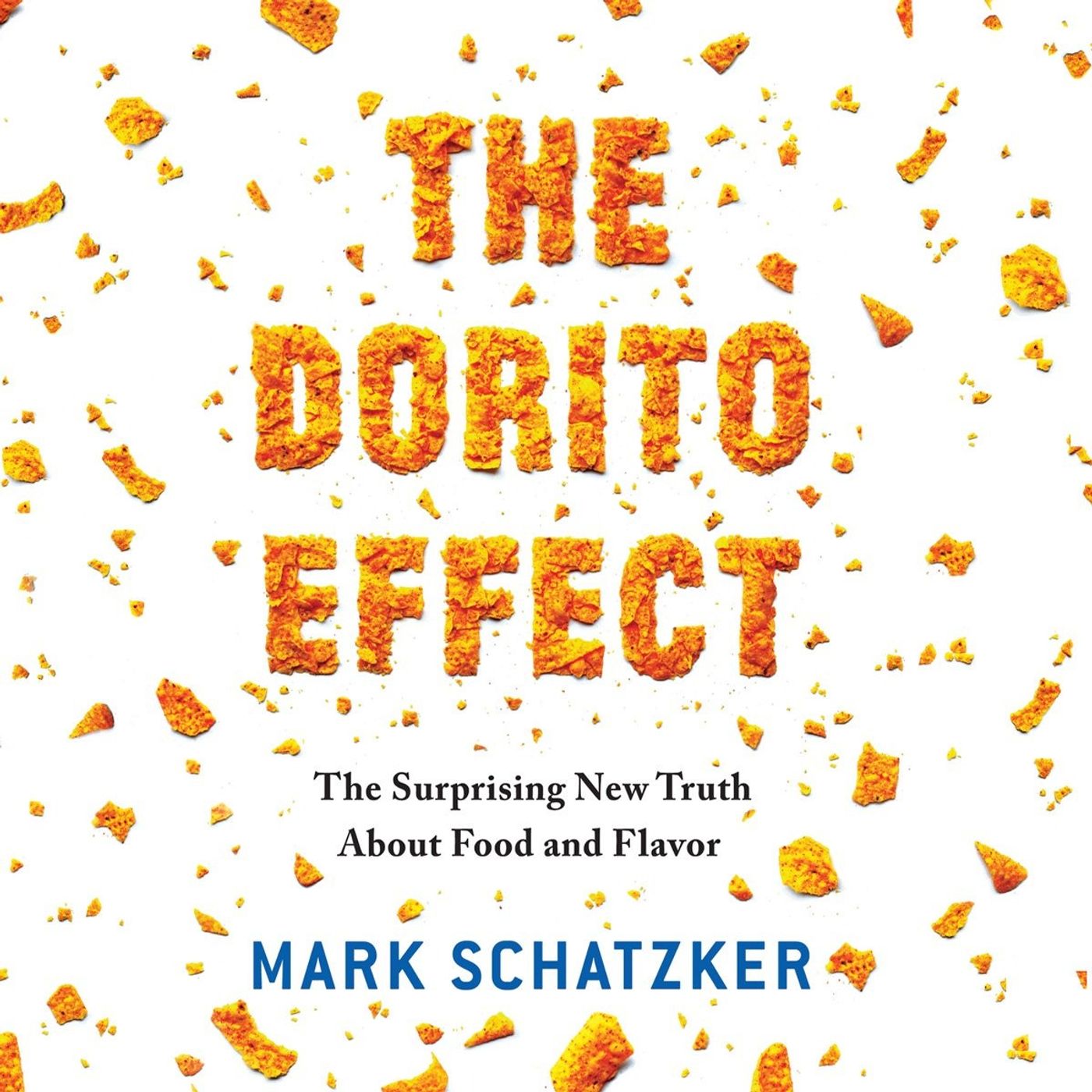
Ep 96The Dorito Effect by Mark Schatzker
In this episode, Jerry and Stably discuss two books by Mark Schatzker, "The Dorito Effect" and "The End of Craving," exploring how artificial flavors and government mandates have altered food, affecting satiety and nutritional wisdom. They also talked about the challenges of engineering natural flavors, the critiques of lab-grown meats, and the accessibility and cost of quality food.
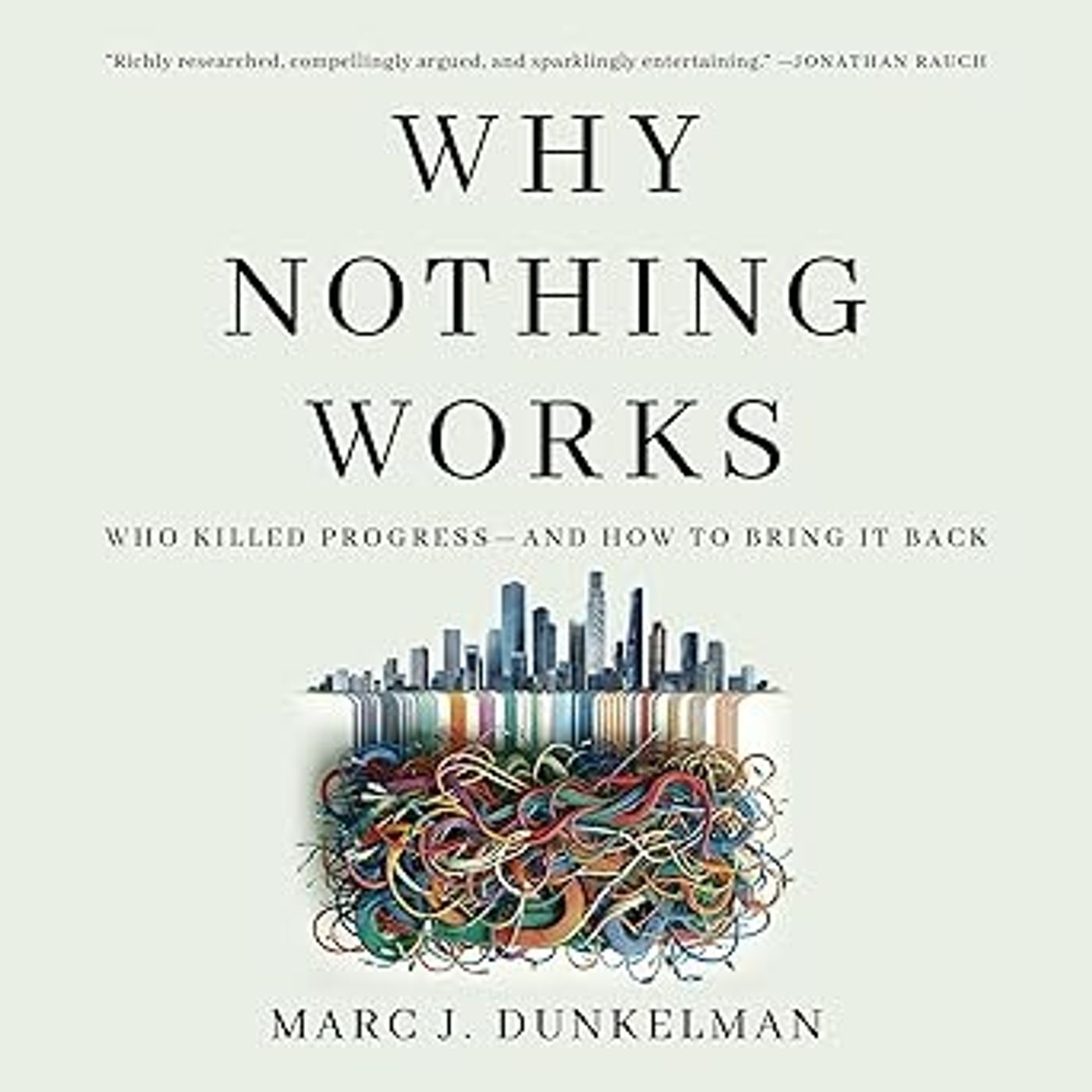
Ep 95Why Nothing Works by Marc J. Dunkelman
In this episode, Jerry and Stably discuss Why Nothing Works: Who Killed Progress and How to Bring It Back by Mark J. Dunkelman. The conversation centers on Dunkelman’s core thesis that modern progressivism has become paralyzed by internal contradictions between its Jeffersonian impulse to decentralize power and its Hamiltonian desire to empower experts and centralized institutions. This unresolved tension has led to procedural gridlock and institutional ineffectiveness, which in turn fuels public distrust and reactionary populism. The hosts compare Dunkelman’s analysis to Mancur Olson’s and public choice theory, noting that while Dunkelman emphasizes process over interest groups, he largely overlooks incentive structures. Both Jerry and Stably appreciate the book’s historical scope and clear narrative but critique its lack of engagement with deeper structural limits and its vague, ultimately inadequate prescriptions for reform. They agree that Dunkelman’s call to “restore balance” is insufficient without grappling with constraints inherent in democratic governance.

Ep 94The Cynic Philosophers: From Diogenes to Julian
In this episode, Jerry and Stably discuss The Cynic Philosophers: From Diogenes to Julian, edited by Robert Dobbin. The conversation centers on the core tenets of Cynicism, such as radical self-sufficiency, rejection of societal norms, and public acts meant to provoke reflection. The hosts explore how cynics challenged conventions through deliberately outrageous behavior, like Diogenes’ public defecation or spitting on opulence, aiming to expose hypocrisy and dependency. They contrast Cynicism with Epicureanism and Stoicism, debating whether these philosophies share a common telos and whether Cynicism’s austerity is a viable path to virtue. The episode ends with a preview of their next book: Why Nothing Works by Mark Dunkelman.