
Wonderfully Wired
41 episodes
Parent Pause: Helping Your Child's Executive Functions Grow — with Adele Diamond's Brain Science
The Things that Make a Brain work: Prof Adele Diamond on Executive Function, Stress, Belonging and the Conditions for Learning
Bonus Episode: Understanding Autism - One clinician's perspective
Healing Happens in Community, Jill Burgess and Aileen Johnstone on horses, hope and belonging in Zimbabwe.

S5 Ep 35Executive Function Skill in the Classroom with Dr Laurie Faith
Dr Laurie Faith extends an invitation to teachers "to be wide awake and curious" instead of acting on habit or bias and to let uncomfortable moments lead to intentional conversations with children that grow skills! This episode is for you if you've been introduced to the idea of Executive Function Skills (See Episode 25 with Dr Peg Dawson if you haven't) and are wondering just how you can start having conversations about them in your classroom. Dr Faith says that "whatever is discussable is improvable" and helps the willing, compassionate teacher address the EF limits and immaturity that is the "elephant in every room" for children! Dr Laurie Faith is an Assistant Professor at the Ontario Institute for Studies in Education (OISE), where she teaches special education and executive-function-related courses.Her latest book, Executive Function Skills in the Classroom: Overcoming Barriers, Building Strategies, co-authored with Peg Dawson and Carol-Anne Bush, brings together research and practical tools for teachers.
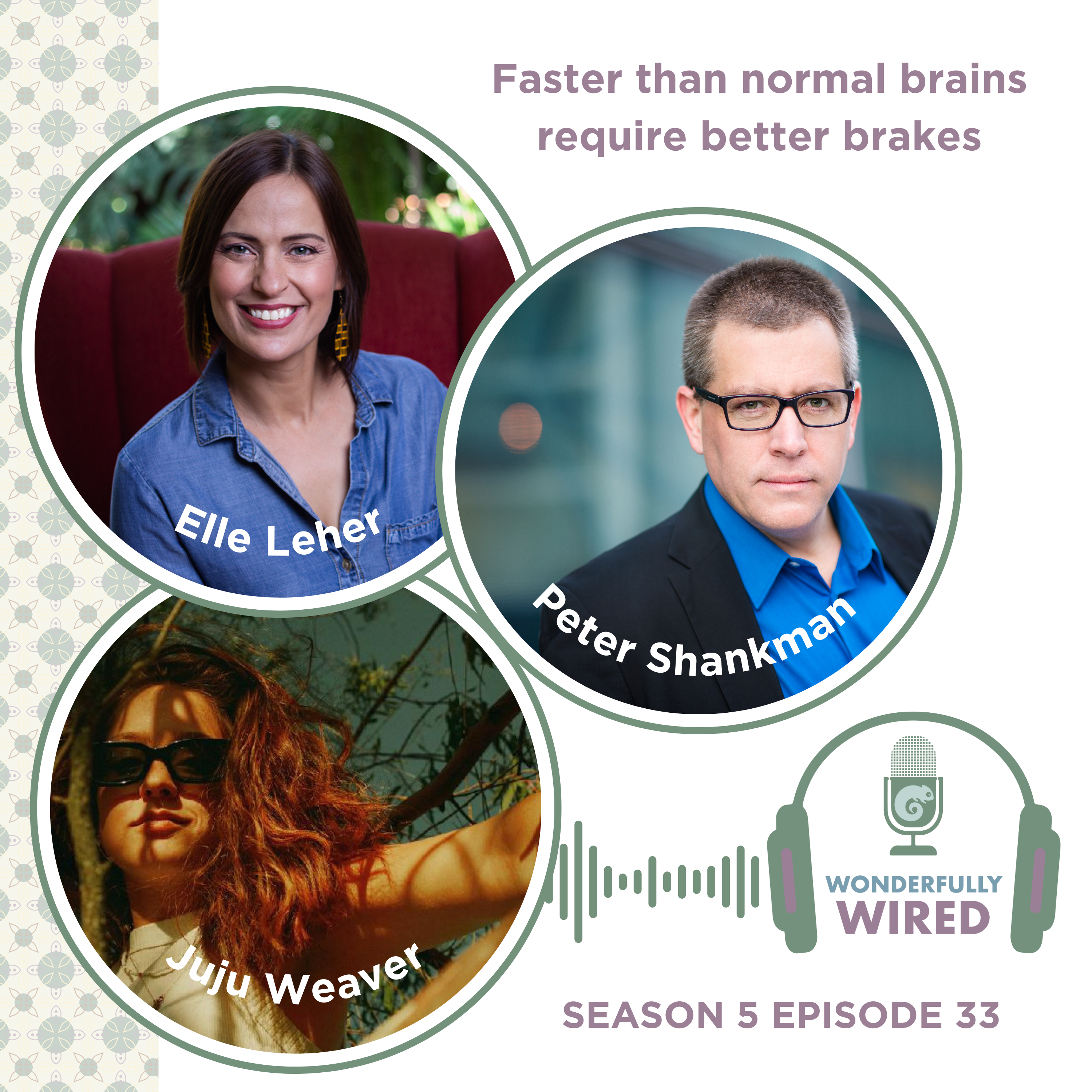
S5 Ep 34Faster than normal brains require better brakes with Peter Shankman
In this episode of Wonderfully Wired, hosts Elle and Juju sit down with ADHD expert and bestselling author Peter Shankman. Peter shares his unique perspective on the ADHD brain, comparing it to the controlled chaos of a Tokyo crosswalk. The conversation dives into the "all or nothing" nature of neurodivergence, covering Peter's "Chicken Genocide Diet" and his "Ironman" approach to managing energy. Peter also provides profound insights for parents, arguing that neurodivergent children are gifted, not broken, and stresses the importance of teaching skills alongside medical support. This episode is a masterclass in high-performance ADHD management, proving that with the right "traffic lights," a fast brain can achieve extraordinary things.
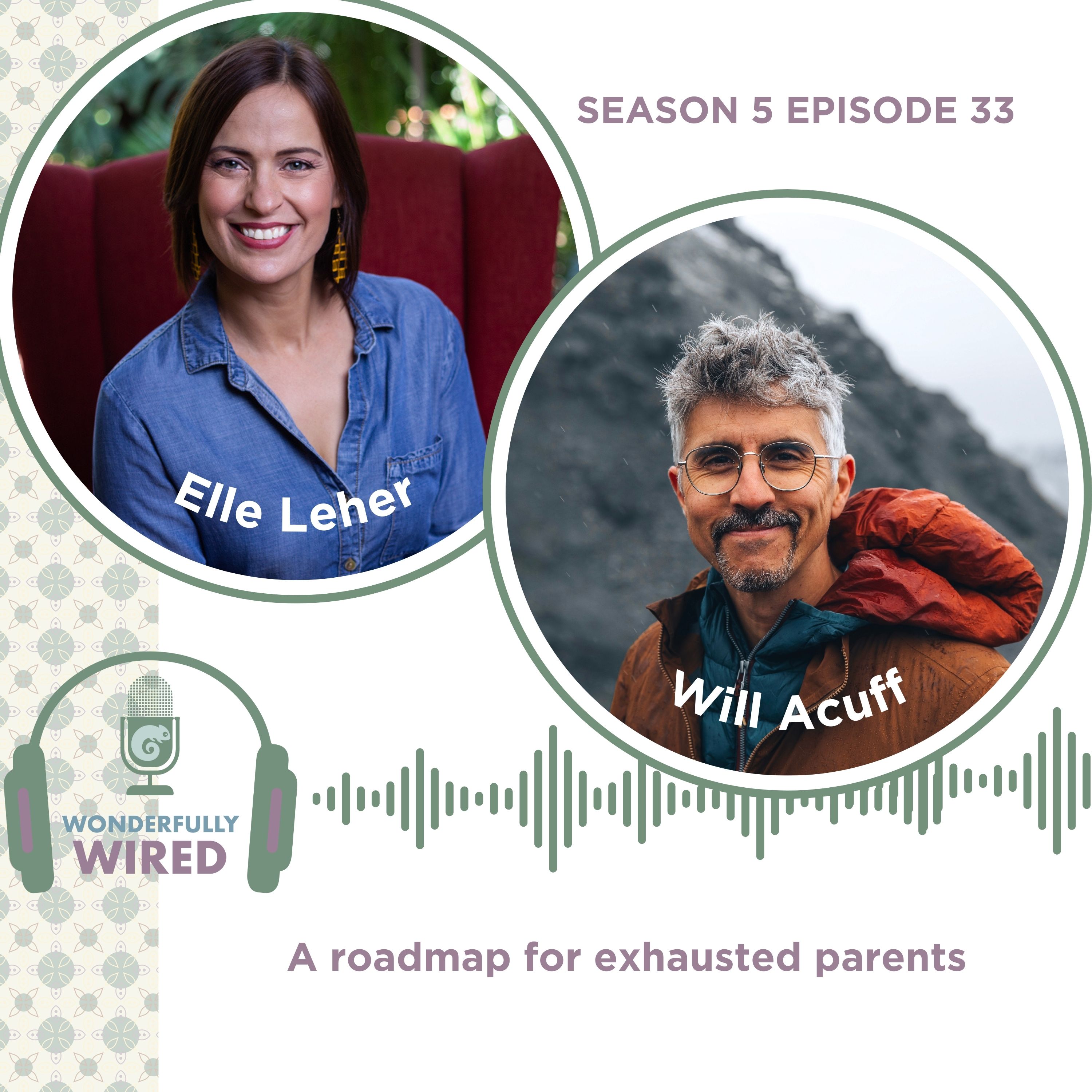
S5 Ep 33A roadmap for exhausted parents with Will Acuff
In this episode of the Wonderfully Wired Podcast, host Eloise Leher is joined by author, speaker, and autism dad Will Acuff for a deeply reflective conversation about parenting neurodivergent children. Will shares how his natural instinct to "fix problems" collided with the reality of parenting his son — and why shifting from fixing to knowing became transformational. Together, they explore what happens when parents take responsibility for their own responses, nervous systems, and expectations, rather than trying to change their child. This episode will resonate with parents of autistic and neurodivergent children, educators, and professionals interested in executive functioning, emotional regulation, and hope-based parenting approaches. Will is a a Christian author but his wisdom extends beyond a narrow faith specific audience

S5 Ep 32Radical Acceptance & Repair: The Inner Work Required to Support PDA with Liesel Smal
Welcome to Part 2 of our deep dive into Pathological Demand Avoidance (PDA) with Occupational Therapist Liesel Smal. This vital conversation addresses the challenging question: "What now?" Liesel details the process of adopting Low Demand Parenting (LDP), emphasizing that these accommodating acts (like handing over the remote or helping with hygiene) are life-saving caregiving. However, she explains that LDP as a mere strategy will fail, leading parents to the crucial work of radically accepting the reality of their lives, which often involves significant grief and rage. Liesel shares personal insights on how her child became a "canary in the coal mine" for her own nervous system, forcing her to embrace agency and tend to her inner wounds. The episode stresses that true regulation means flexibility, not constant calm, and highlights the importance of repair in building a deeper, messy, fully human connection.

What is Pathological Demand Avoidance with Liesel Smal
Dive into the critical world of Pathological Demand Avoidance (PDA) in Part 1 of this essential two-part series with Liesel Smal, an Occupational Therapist (OT) and mom of a PDA child Liesel introduces PDA as a specific neurotype that requires "good accommodation" due to the serious "gravity" of the diagnosis. Learn why avoidance is rooted in an inability ("I can't"), not a choice, often manifesting as an "inner straitjacket" or a "contraction" in the nervous system. This episode exposes the confusing reality of masking; children often appear "compliant and good" or "high achieving" at school, only to experience severe "Coke bottle" meltdowns at home. Liesel offers a compassionate nervous system lens, validating parents who feel blamed or gaslighted. This discussion highlights how PDA is tied to a pervasive drive for autonomy and how understanding this difference is crucial for supporting these "uniquely brilliant" and autodidactic children. #PDA #PathologicalDemandAvoidance #AutismSpectrum #Neurodiversity #NervousSystem #SomaticExperiencing #LowDemandParenting #DemandAvoidance #Masking #WonderfullyWired

S5 Ep 30Curating Pathways of Care with the Neurodiversity Centre's Corneil Claassen
Welcome to Season 5 of the Wonderfully Wired podcast! In this insightful episode, host Eloise welcomes Corneil Claassen, an educational psychologist and co-lead at the Neurodiversity Center (NDC) in South Africa. Corneil shares her powerful mission: to create a world where every wonderfully wired mind – be it facing autism, ADHD, anxiety, or learning differences – is seen, supported, and celebrated. Discover NDC's origin, a multidisciplinary organization supporting over 6,000 families, dedicated to affirming neurodivergent individuals who are "brilliantly uniquely wired". Corneil emphasizes shifting from 'fixing problems' to understanding, empowering, and celebrating differences. She discusses their holistic, evidence-based approach, including the Essence perspective, focusing on co-occurring neurodevelopmental profiles. Learn about their global reach and upcoming "NeuroHood" initiative, democratizing safe, accessible neurodiversity knowledge worldwide. This episode offers hope and clarity for families and professionals navigating neurodiversity.
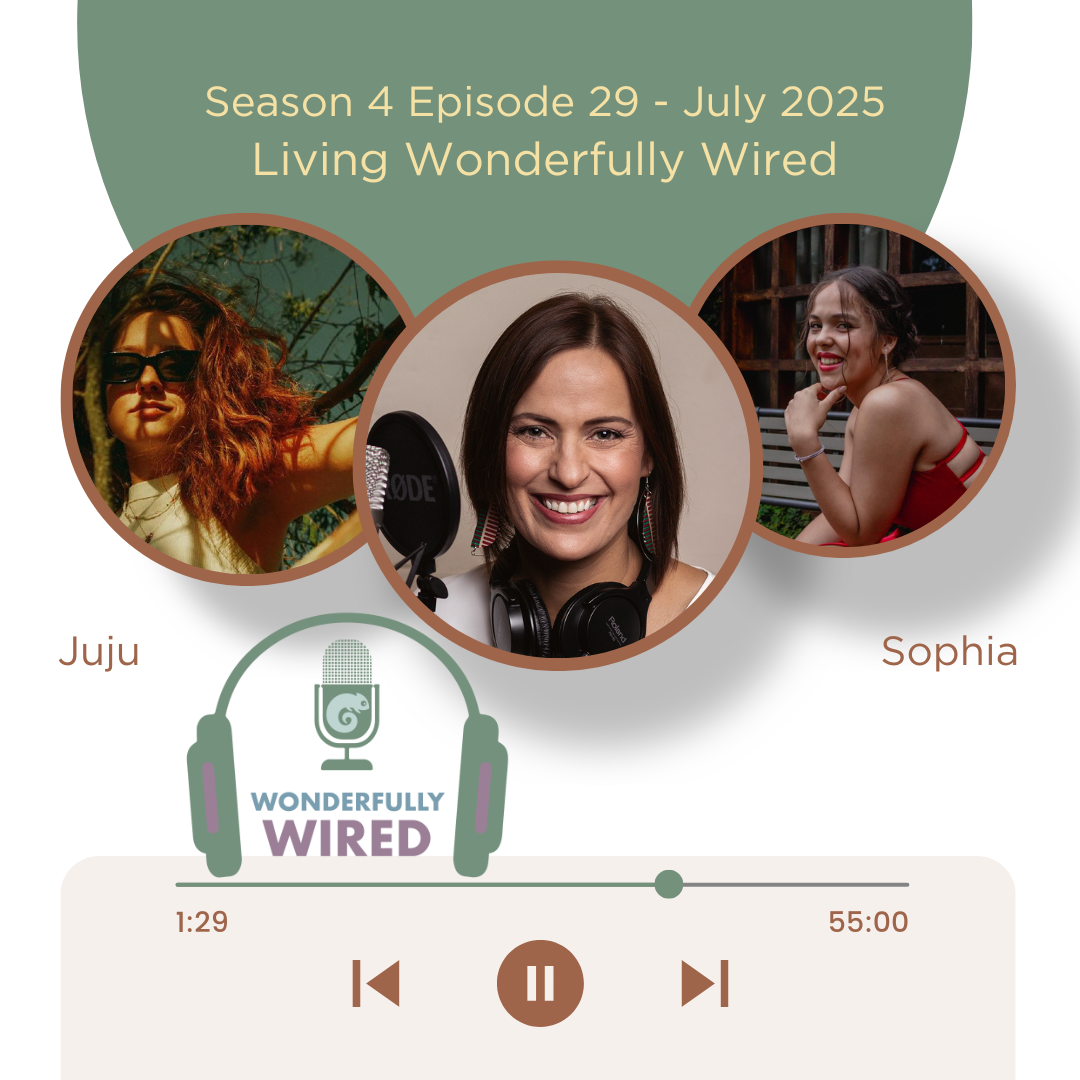
S4 Ep 29Living Wonderfully Wired as a young adult with Juju and Sophia
This special bonus episode of the "Wonderfully Wired" podcast features live studio guests Juju and Sophia, both young women who have served on the Wonderfully Wired team and are "wonderfully wired" themselves. Juju, who has ADHD, describes her brain as a city constantly under construction, with changing alleys, roads, and houses. Sophia, who is gifted and intense, explains her experience as feeling emotions and sensory input "10 times more intensely" than others. The conversation delves into the challenges, joys, and humours of living wonderfully wired. Both Juju and Sophia discuss the profound exhaustion that comes from existing and navigating a world not always suited to their brains, noting how they can thrive under pressure but struggle with mundane tasks. They highlight the difficulties of masking their neurodiversity to fit in and the hurtful impact of labels like "drama queen" or "too much". They emphasize the importance of grace for themselves and from others, particularly parents and teachers. The episode celebrates the unique talents and perspectives that come with being neurodivergent, concluding that they would not wish away their wiring, as it is an integral part of who they are.

S4 Ep 28Assistive Technology for students, parents and teachers with Joan Green
Meet our tech-savvy friend Joan Green! Joan's been working with assistive technology since the 80s—and she's got the tools and stories to prove it. From calendar tricks and color-coded Google Drives to goblin tools and immersive readers, this episode is jam-packed with tips that make learning easier for our wonderfully wired kids (and adults too!). Easy wins with everyday tech Tools that organize your digital chaos Confidence for parents & empowerment for students Joan reminds us: tech doesn't need to be overwhelming. With a little guidance, it becomes a powerful ally. "I just want to help people be the best they can be—and not be sidelined by their challenges."

S4 Ep 27AI for Wonderfully Wired students with Dr Arno Louw (part b)
This episode, the second of two in a series with Dr. Arno Louw from the University of Johannesburg, focuses on how AI can be a student's best friend and assistant, particularly for wonderfully wired learners. The key takeaway is to use AI to help with the work that is difficult for you, not to do the work for you. This involves prompt engineering, asking the AI better questions by giving it background about yourself, like your age, preferences, and learning style. AI can guide you in writing, explain complex topics simply (like explaining to a 10-year-old), and act as a practice ground for self-advocacy. For learners facing challenges like dyslexia, AI can help overcome bottlenecks and allow great ideas to be expressed. The episode discusses practical uses such as turning spoken ideas into written essays, creating visual aids like mind maps or comic strips, or even building games to understand concepts. It's vital to remain the creative force and the human in charge, using AI as a tool to do better work, and to disclose when you've used AI. Using AI effectively is a conversational process that requires checking, reviewing, and even arguing with the AI's recommendations, which helps improve both the output and the student's learning. AI is presented as a non-judgmental, tireless assistant that adapts to you, helping you understand content and yourself better. It's not a quick fix but a process that requires persistence and integrity. The conversation suggests AI could even revolutionize assessment by providing instant, personalized feedback.

S4 Ep 27AI for teachers with Dr Arno Louw (Part a)
What if AI could help tailor education for every learner? In this Part a of the Wonderfully Wired & UJ partnership episode, Dr. Arno Louw a senior specialist in instructional and e-learning and manager of the CAT lab at UJ, with his incredible knowledge, fun, and enthusiasm inspires us to see AI as a tool to support difference and neurodivergence. We discuss how AI can be your brilliant teachers assistant that never gets tired, helping you earn extra hours and get administrative tasks done faster. Don't miss this insightful discussion on how to navigate AI anxiety and use this tool to support the wonderfully wired in your classes. Dr. Louw hints at the future, discussing how analyzing students' AI prompts could reveal their learning style and pattern. This understanding could then inform personalized learning experiences, potentially creating branching scenarios or even custom GPTs tailored to individual students! Also catch Part 2 if you are a student that's wonderfully wired!

S4 Ep 26Burnout and the Wonderfully Wired with Casey Anley
I loved my conversation with Casey Anley talking about burnout in the Wonderfully Wired. What does it look like to acknowledge each person's unique energy and work with the available energy instead overrding each body's need for rest. What should you look out for in yourself and in your child? Casey Anley is an educational psychologist. She wears many hats - neurodiversity advocate, executive function coach trainer and supervisor. She's built a career in helping neurodivergent minds untangle the chaos, build systems that actually work, and, most importantly, stop beating themselves up in the process. Casey has trained, mentored, and supervised executive function coaches worldwide. From students drowning in deadlines to professionals juggling a million tabs (in their browsers and their brains), Casey is all about practical, real-life strategies that make life easier. With experience as a teacher, learning support coordinator, therapist, lecturer, coach and her current focus as coach supervisor - not to mention her own journey with neurodiversity - she gets it.

S4 Ep 25Supporting our Smart but Scattered kids with Dr Peg Dawson
Dr Peg Dawson has had a fruitful career as school psychologist and for over 20 years worked at the Center for Learning and Attention Disorders in New Hampshire for which she received a liftime achievement Award from the American National association of School Psycologists. Her contribution to all of our collective understanding of Executive Functions and how we can help wonderfully wired kids that are clearly Smart but Scattered develop them has been profound. And Dr Dawson is far from done! Smart but Scattered, The Revolutionary Executive Skills Approach to Helping Kids Reach Their Potential is the title of the book Dr Dawson coauthored a second edition of which is now on the shelves that is the base of much of our discussion.

S4 Ep 23Talking Strength based assessment with Dr Jade Rivera
Dr Jade Rivera is professor at the Bridges Gradual School for Cognitive diversity with a passion for 'a strength based world for neurodivergent humans' She's been a force for change in education for wonderfully wired kids for over fifteen year designing 'micro schools' that serve niche communities in creative ways showing ideas like project based learning and grade less classrooms aren't just fanciful dreams. Anyone who spends a bit of time on Dr Rivera's newsletter on Substack will quickly see her depth of knowledge and infectious passion. I've invited her on the show to talk to us about her most recent baby, and maybe greatest contribution in running the STRENGTH based assessment lab at Bridges: where we get to pack away all we've learnt about assessment, all our stress and anxiety and see in action something significantly different.

S3 Ep 23Introducing Southern African Fathers of Children with Neurodiversity (FCN)
"There is a prevailing narrative that black dads are deadbeats, that they often abscond their responsibilities." said Buzwe Mabuza, founder of Black Dad's are Cool Dads and one of my three guests on the podcast this month "Providing and disciplining. That's all that we were told we can look forward to when we become dads.But I'm a present dad, I'm active and I have a couple of friends who are also active and present. Therefore we decided as opposed to just complaining, let's do something about it." I interviewed Caleb Chavalala, Buzwe Mabuza and Mosi Molefe of FCN (Fathers of Children with Neurodiversity) a vibrant online community out of South Africa made of men supporting one another in parenting their Wonderfully Wired kids. You are in for a treat!

S3 Ep 22Understanding Working Memory with Dr Erica Warren
"If the research shows that Working Memory is a better indicator of academic success than IQ, then why aren't we honing in on this skill in education?" This compelling question is posed by Dr. Erica Warren, our guest on this month's Wonderfully Wired podcast. For quite some time, we've understood that IQ isn't the sole predictor of a child's academic success. Children can exhibit areas of extraordinary IQ yet struggle academically. What if enhancing the Executive Functioning skill of working memory is the most practical way to improve academic performance? Dr. Warren certainly thinks so.

S3 Ep 21Teaching Kids Social skills with Caroline Maguire
For years, my guest Caroline Maguire wondered why nobody in the industry was serving Wonderfully Wired kids by explicitly teaching them social skills. As a Wonderfully Wired person herself, Caroline thought it was "bonkers," that nobody was acknowledging how hard it was for these kids and teaching them the skills they were lacking. Wonderfully Wired kids often struggle to understand social rules: They may feel like they've broken rules they didn't know existed. Feedback they receive can seem unexpected and confusing. Caroline emphasises that in her 20 years of experience, all the children she taught were more worried about belonging and being understood than their academic performance. She believes that developing the underlying executive functioning skills is key to helping kids live the fulfilling lives they aspire to.

S3 Ep 20Talking to Kids about their brains with Dr Liz Angoff
This month we are featuring the incredible insights of Dr. Liz Angoff from ExplainingBrains.com. Dr. Liz's approach to assessments is transformative, focusing on celebrating the strengths of a child's brain, recognising challenges, and using a child's language to understand the uniqueness of their brain. This process is inherently more collaborative and respectful, involving feedback to the child and the family that is empowering and celebratory of neurodiversity right from the very start.

S3 Ep 19Voice to Writing can do what Speech to Text never could, with Nick Koshnick
In this episode, we dive into the world of AI-powered active listening tools and their potential to support individuals with dyslexia. Our guest, Nick Koshnick, a dyslexic physicist and data scientist, joins us to share his insights and experiences. Key Topics Discussed AI-powered Writing Tools: We explore how AI can assist dyslexic individuals in writing and communicating more effectively, emphasizing tools like Vnote.ai that convert spoken input into written text. Unique Strengths and Adaptability: Nick discusses his journey, emphasizing the significance of recognizing unique brain strengths and weaknesses. He advocates for adaptability and leveraging individual strengths in creative problem-solving. Neurodiversity in Entrepreneurship: Embracing neurodiversity is crucial in entrepreneurship. We highlight the resilience and hard work that dyslexic individuals often exhibit, which can lead to significant strengths in reasoning and interconnectedness. Clarity in Communication: The importance of clear communication, especially in leadership roles, is underscored. We discuss the effectiveness of interactive tools and writing prompts in enhancing writing abilities. Voice Writing Tools: Benefits of using AI in voice writing are discussed, including improved clarity, accuracy, and efficiency in document creation. AI's Role in Education: AI's potential in education, particularly for dyslexic students, is explored. Nick emphasizes the value of AI in generating ideas and facilitating a more personalized and creative approach to writing. Tune in to get inspired by Nick's journey and learn about the future possibilities of AI in supporting neurodiverse individuals.

S3 Ep 18Coaching Executive Functions with Victoria Bagnall
In this episode, I speak with Victoria Bagnell from Connections in Mind. Victoria specializes in training teachers and executive function coaches. Her organization is dedicated to supporting children in developing their executive functioning skills. We begin by understanding what executive functioning is and why children need support in this area. Victoria provides insights into what executive function coaching looks like and discusses the necessary changes in classrooms to address unconscious bias against children struggling with executive functioning. We also explore strategies for creating a sense of belonging to prevent children from masking or acting out. Additionally, we cover techniques to help children stay motivated and how Connections in Mind assists adults in developing their executive functioning skills. Join us as we explore these critical topics and learn how to better support children and adults in enhancing their executive functioning abilities.

S3 Ep 17Wonderfully Wired stories with Zak and Nadine Judge
Join us for an inspiring conversation in this first episode of the Season 3 of the Wonderfully Wired Podcast, featuring Zak and Nadine Judge. Zak, a university student in his twenties studying computer design, and his mom, Nadine, share their journey with ADHD. They discuss the discovery of Zak's difference, the decisions they made about his schooling, and the strategies that worked and those that didn't. The episode delves into the creation of a supportive family culture, highlighting Nadine's role in helping Zak decide what he truly wants from life and supporting him towards those goals. Additionally, Zak and Nadine open up about their mental health journeys, with Zak providing an uncanny description of how his brain works. This episode is a story of wounds and healing, character and resilience, gumption and determination, and the power of unconditional love and family support. It is a testament to the importance of seeing, supporting, and truly celebrating the Wonderfully Wired. The sound quality of this episode is not as good as our usual work! The content is worth it! Find a transcript at https://www.wonderfullywired.online/episodes

S2 Ep 16To create inclusive schools we need to hear real stories with Scott Whitney
I took what I thought was a diversion into talking about physical disability inclusion with Scott Whitney of All4Inclusion and found that to see difference, to support challenges and to really celebrate gifts we must hear real stories of people with lived experience different to our own. As part of creating teacher training material on inclusion I collaborated with Scott Whitney to talk about living with disability and what it would take to create more inclusive schools. "The strong cannot be brave. Only the weak can be brave; and yet again, in practice, only those who can be brave can be trusted, in time of doubt, to be strong. The only way in which a giant could really keep himself in training against the inevitable Jack would be by continually fighting other giants ten times as big as himself. That is by ceasing to be a giant and becoming a Jack." Heretics, G.K. Chesterton

S2 Ep 15Genetic Brain Profiling and seeing each child as unique with Chantal Deacon Daniel
Is it helpful to look at which part of the brain is dominant to help us understand our chidren's unique wiring? Is dominance only left or right or are there other modalities that can help us understand how our children process information, feel love or express frustration. Chantal Deacon Daniel introduces us to the Genetic Brain Profiling Tool . Chantal believes the tool can give us insight into our children (and ourselves) that can help families love each other better, discipline wiser and communicate clearer. We talk about the tool but also about Chantal's own story of resilience and the power of a mom willing to be intentional and tenacious in serving her family.

S2 Ep 14How to ADHD with Jessica McCabe
Meet Jessica McCabe, the force behind "How to ADHD." Seven years ago, Jessica embarked on a transformative journey, evolving from a place of self-doubt to becoming an advocate for understanding and working with the ADHD brain. In her own words, she shares: "Seven years ago, I didn't respect myself; I thought that I just needed to try harder. I dropped the shame, embraced the way my brain works, and developed strategies to accomplish anything I set my mind to. Now, I want this to be the norm—a world where discussing our working memory is as natural as talking about our eye color." Jessica's insights are a breath of fresh air, and this month, she unveils her latest creation, the book "How to ADHD: Working with Your Brain, Not Against It."

S2 Ep 13Moving our bodies and celebrating our brains with Adell Bridges
My guest on the podcast is Adell Bridges, a movement expert and yoga instructor who often credits her ADHD for the creative way she instructs bodies and brains on the mat. Adell is both a role model of a successful wonderfully wired adult and an infectious brain-body enthusiast and teacher. This episode is a gift to parents of wonderfully wired kids and parents who are wonderfully wired themselves.

S2 Ep 12Solving behaviour together with my Wonderfully Wired child with Dr Ross Greene
Whilst we know that being "out of the box" is a good thing, it often creates difficulties for both us as parents and our children, when it results in explosive, difficult behaviour. Dr Greene offers so much hope and practical teaching to parents like you and I pulling out our hair, desperate to help a child who is often in trouble (or in distress!) due to his inability to consistently manage his frustration in an adaptive way. "Seeing your kid struggle isn't fun." says Dr Ross Greene. "The trick is to pay close attention to whether she needs your help or can manage it on her own. And the magic is in how, if she does need your help, you handle things from there." I'm so excited to give you real tools in knowing just how to 'handle things from there' this month! Dr Greene explains the Collaborative Proactive Solutions (CPS) approach with clarity and practical examples.

S2 Ep 11Wonderfully Wired babies and becoming a responsive parent with Meg Faure
Meg Faure is an Occupational Therapist, author, baby specialist and the founder of Parent Sense. Over the last 25 years, she's worked with thousands of parents to help them understand their baby's sleep, feeding and sensory needs. In this episode of the podcast, we talk about the sensory needs of babies, the way to create a calm sensory world for a little one and how to read and respond to babies sensory cues. I asked Meg if one can identify wonderful wiring in infants and how to respond wisely to early warning signs and special needs.

S2 Ep 10Raising Critical Thinkers with Julie Bogart
I invited Julie Bogart onto the podcast to discuss how wonderfully wired kids would benefit if education creates good thinkers rather than good test takers. Julie is known for her common sense parenting and education advice. She's the author of the beloved book, The Brave Learner, which has brought joy and freedom to countless home educators. Her new book, Raising Critical Thinkers, offers parents a lifeline in navigating the complex digital world our kids are confronting. Julie's also the creator of the award-winning, innovative online writing program called Brave Writer, now 22 years old, serving 191 countries. Julie says things like "Reading isn't voting", "There are no educational emergencies" and "the content we teach is just content". You're going to like what she has to say!

S2 Ep 9Helping Struggling Students with Dr Jeannine Jannot
My guest on the podcast this month is Dr Jeannine Jannot. Dr Jannot is an academic coach and the author of The Disintegrating Student: Struggling But Smart, Falling Apart, and How To Turn It Around. She has over 25 years of experience working with children, teens, and young adults in both public and private school settings. Jeannine has a master's degree in school psychology from The Ohio State University and a doctorate in child and developmental psychology from the University of Connecticut. She began teaching college psychology courses in 2010, and in 2014 she founded The Balanced Student. You can learn more about her at JeannineJannot.com.

S2 Ep 8Stop managing behaviour with dr. Mona Delahooke
I used to think that good parents nip bad behaviour in the bud to prevent it from escalating into character flaws and discipline problems in kids. When a child of mine acted out, I interpreted defiance and felt a pressure to correct and instruct every-time. "As a psychologist I no longer work on behaviors." Dr Mona Delahooke explains in her book Brain Body Parenting "I work on supporting nervous systems and looking to the underlying sources of challenges" Dr. Mona Delahooke is a best-selling author and child psychologist who aims to reduce suffering and increase resilience for children and families. She is a frequent speaker, trainer, and consultant to parents, organizations, schools, and public agencies. Especially of value to us is that Dr Delahooke has dedicated her career to promoting compassionate, trauma responsive, relationship-based neurodevelopmental interventions for individuals with developmental, behavioral, emotional, and learning differences.

Learning for Tomorrow with Heather Wells
Heather Wells is the principle of a Co Ed 4-18 Independent College in a very traditional education context and a struggling economy. She trained and started her career in the UK as teacher and school administrator with a specialization in management in Education and in Special and Inclusive Education. Heather believes education is about learning for tomorrow not just for exams and where individuals are seen and heard, where learning to learn is a process and individual skills and talents are recognized and exploited. I asked Heather: · just how possible she believes it is for Wonderfully Wired kids to thrive in conventional schools. · What shifts she believes teachers and schools can make to really foster inclusive classrooms · and how she would encourage parents of Wonderfully Wired kids go about advocating for their kids.

When Children and Teens battle Anxiety with Natasha Daniels
Natasha Daniels has been an anxiety & OCD therapist for over two decades. She combines both her clinical expertise with her lived experience, raising her own three kids with anxiety and OCD. I ask Natasha what causes anxiety in children and we discuss ways a parent can respond to and help our children respond to anxiety. We talk about what it takes to see anxiety as separate from the person who feels anxious by personifying it and how that shift empowers kids and teens to 'talk back' to their anxiety. Join us for a practical discussion that will help you shape your approach to your anxious child and give you tools to love them well as they battle anxiety.

S1 Ep 5Seeing What others Cannot See with Thomas West
I used to think for someone to reach the highest level of education, they needed to be good at the early years of education. If you're going to be great at advanced math or astrophysics, then surely you need to start by being good at the times tables and spelling. And then I came across these words of Thomas West: "If a truly original method is needed, the conventionally successful student may be the last one to find it, sometimes only among those who have repeatedly failed is there a high likelihood of success". Thomas West has written three books. As early as 1991, In the Mind's eye explored the cognitive advantages of the dyslexic mind - a good 20 years before the rest of the world imagined anything other than learning disability. His most most recent book, "Seeing what others cannot see", explores the stories and contributions of talented dyslexic and autistic visual thinkers in the history of medicine, math and sciences and discusses how such visual thinking is of increasing importance in the modern world.

Dyslexic Advantage with Fernette Eide
I used to think Dyslexia is basically a problem with reading and spelling, and letter reversals. And then I came across the work of Brock and Fernette Eide and realised I was far off the mark. Not only was my understanding of the challenges someone with Dyslexia faces terribly inadequate, but I had no idea of the incredible strengths such a brain inherently has. Who even knew Dyslexia could be an advantage? But that's exactly what the Drs Brock and Fernette Eide set out to prove twenty years ago …. They are the co-founders of Dyslexicadvantage.org and the co-authors of The Dyslexic Advantage and The Mislabeled Child with over 100,000 books sold, with translations into Spanish, Chinese, Japanese Korean, and Dutch. Both are international authorities on dyslexia and learning differences. In this episode Elle asks Fernette, on behalf of parents who see their children struggling daily, how their research and experience can help us see Dyslexia from different perspective.

S1 Ep 3Differently Wired with Debbie Reber
I used to think that good parenting looks the same for all parents and all kids. And then I came across the work of Deborah Reber. Debbie is a parenting activists best selling author, podcast host and speaker. The TiLT parenting podcast has grown to be a top podcast in the iTunes kids and family category with more than a million downloads, and a slate of guests that include high profile thought leaders across the parenting, and education space. Debbie is the author of Differently Wired, raising an exceptional child in a conventional world. I am convinced that a parent of a Wonderfully Wired child listening to this episode, feeling stuck and overwhelmed and isolated in their parenting can feel differently when they walk away. Because I think that's what Debbie's book does.

S1 Ep 2Seeing Dyslexic Strength with Dean Bragonier
"Teach kids what they are good at and they feel better about themselves - it's not that difficult" says Dean Bragonier Dean is the founder and executive dyslexic of NoticeAbility Incorporated, a nonprofit organisation dedicated to helping students with dyslexia, identify their unique strengths, and build selfesteem. Dean is a successful restaurant owner turned social entrepreneur who is currently touring the world, helping kids with dyslexia and their teachers understand their strengths. So is Dean right when he says that the advantages of dyslexia far outweigh the associated challenges?

S1 Ep 1What is Giftedness with Mark Kluckow
Elle talks to Clinical Psycologist, Mark Kluckow and asks "How is 'Gifted' different from 'very smart'?" They discuss how gifted kids have special emotional needs and what parents can do today to see the strenghts, support the challenges and celebrate the complexity of their gifted child.

Introducing Wonderfully Wired
trailerListen to the trailer for Season 1 of Wonderfully Wired. Elle suggests the biggest reason why some kids that think and learn differently become successful adults, when so many do not. She extends an invitation to you to join her in becoming the kind of parent that helps unlock each child's potential by seeing their Neurodivesity as strength and potential. Elle introduces her expert guests in the season, giving a glimpse into the kind of insight and support you can expect Email Elle on [email protected] or visit www.wonderfullywired.online from October 1st, 2022