Witness History
2,140 episodes — Page 32 of 43
Operation Breakthrough: Fighting to save three whales
Three Californian gray whales got caught in ice off Alaska in October 1988. Indigenous people, environmentalists, oil companies and even the Soviet Navy joined forces to try to free them. Rich Preston has been hearing from Cindy Lowri who was working for Greenpeace and who joined the battle to save the whales.Photo: Local indigenous children watch a gray whale nosing up through the ice. (Credit: Taro Yamasaki/The LIFE Images Collection via Getty Images)
The founding of Google
The world's most popular search engine was launched in September 1998 by two PHD students from Stanford University in California. Larry Page and Sergey Brin had an idea that would revolutionise the internet and create one of the world's most valuable companies. Farhana Haider has been speaking to Tamara Munzner a computer scientist who was at Stanford with the two founders of Google.Photo Google founders Larry Page and Sergey Brin, 2003. Credit Getty.
The Mafia trial of Italy’s former Prime Minister Giulio Andreotti
Prosecutor Gian Carlo Caselli explains how leading Italian politician Giulio Andreotti was put on trial in Sicily in September 1995, accused of collusion with the Mafia. Andreotti had been prime minister seven times and journalists dubbed it the trial of the century. Bob Howard has been hearing from Gian Carlo Caselli about compelling evidence that Andreotti had met the Mafia kingpin Stefano Bontade and even knew in advance of the planned assassination of the president of the Sicilian regional government, Piersanti Matarella.Photo: Giulio Andreotti in 1983. Credit: Mondadori Portfolio/Getty Images
The death of Gamal Abdel Nasser
The charismatic Egyptian president dominated Arab politics for almost two decades up until his death on September 28th 1970. His funeral was attended by millions of grief-stricken Egyptians. In 2010 Mike Gallagher spoke to an ordinary Egyptian who remembered his death, and its aftermath. This programme is a rebroadcast.Photo: Crowds in Cairo mourning Nasser on October 1st 1970. Credit: Fred Ihrt/LightRocket via Getty Images.
Bush v Gore: The 'hanging chads' US election of 2000
The US presidential election of 2000 was one of the closest and most contested in history. It was more than a month before the result was decided after a Supreme Court decision. It all came down to the vote in Florida, a 'swing-state', where irregularities and technical problems added to the confusion. In the end it's thought there were just a few hundred votes in it, but years later, the result, and the handling of the election in the state, divides opinion. Callie Shell was the official photographer for Al Gore's presidential campaign and documented the dramatic events behind closed doors in pictures. She's been telling Rebecca Kesby what it was like to be there.
Blackwater killed my son
On 16 September 2007 private security guards employed by the American firm Blackwater opened fire on civilians in Baghdad's Nisour Square. Seventeen Iraqis were killed, and another 20 injured. The Blackwater guards, who were escorting a convoy from the American embassy, claimed that they had come under attack from insurgents, but eye-witnesses and Iraqi offficials quickly dismissed that version of events. Mike Lanchin has been speaking to Mohammed Kinani who was driving through the area at the time, and whose 9-year-old son Ali, was shot dead by the Americans.Photo: An Iraqi looks at a burnt car on the site where Blackwater guards opened fire on civilians in Baghdad on 16 September 2007 (Credit ALI YUSSEF/AFP via Getty Images)
When Nelson Mandela went to Detroit
Just months after his release from prison in 1990 the South African freedom fighter Nelson Mandela toured the USA. One of the eight cities he went to visit was Detroit. Benita Barden has been speaking to Reverend Wendell Anthony who was one of the people who welcomed him to the city.Photo: Nelson Mandela and Rev Wendell Anthony in 1990. Courtesy of Rev Wendell Anthony.
How Liberia wrote off its debts
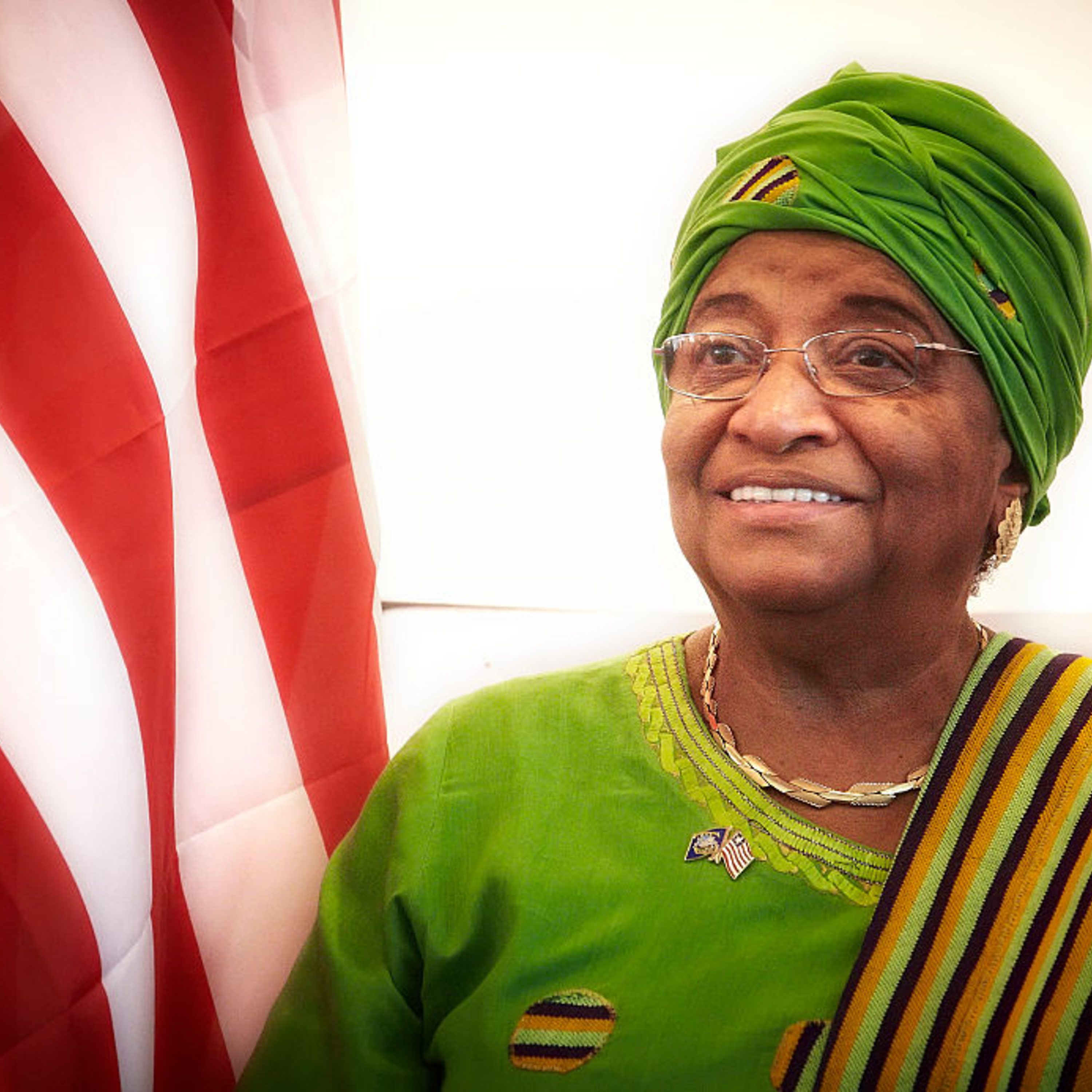
How the Liberian president Ellen Johnson Sirleaf was negotiated to write off billions of dollars of debt, accumulated over two decades of civil war. Coming to power in 2006, Johnson Sirleaf had to govern the West African country with little tax revenue and owing large sums to countries and institutions it could never hope to pay back. Over four years, with intensive negotiations with multiple parties and even support from the Irish rock star Bono, in 2010 the World Bank and International Monetary Fund announced they would forgive 4.6 billion dollars of the country’s debt.Bob Howard speaks to former president Johnson Sirleaf about the long road to debt forgiveness. Photo: Ellen John Sirleaf Credit: Olivier Polet/Getty Images
The Galileo project
The Galileo mission to examine the planet Jupiter had its beginnings in the 1970s. It finally came to an end on 21st September 2003. Professor Fred Taylor is one of the few scientists who worked on it from start to finish and he has been telling Dan Whitworth about some of the highs and lows of the project.Photo: The Galileo Jupiter probe being tested before launch. Credit:Roger Ressmeyer/Corbis/VCG/Getty Images
The mothers of Argentina's disappeared
In April 1977 a group of women in Argentina held the first ever public demonstration to demand the release of thousands of opponents of the military regime. It was the start of a long campaign by the women, who became known as the Mothers of the Plaza de Mayo. In 2017 Mike Lanchin spoke to Mirta Baravalle who has spent decades searching for her missing daughter and son-in-law, and for the grandchild she has never met.(Photo: Mirta Baravalle, with the photograph of her daughter, Ana Maria. Credit: BBC)
Tank Man
A photo of a man confronting a tank in Tiananmen Square in Beijing caught the world's imagination. Carrying two plastic shopping bags, unarmed and alone, he seemed to embody the protest movement crushed by the Chinese authorities in 1989. Stuart Franklin was one of the photographers who captured the image of Tank Man - he has been speaking to David Edmonds for Witness History.Photo: Tank Man on Tiananmen Square, June 4th 1989. Credit: Stuart Franklin/Magnum.
The Mau Mau struggle against British rule
During the 1950s in Kenya, armed rebels known as the Mau Mau fought against British rule. Thousands were taken captive and interned in camps by the British authorities. In 2011 Gitu wa Kahangeri, a Mau Mau veteran, spoke to Louise Hidalgo about his experiences.Photo: Gitu wa Kahangeri speaking to the BBC in 2016. Credit: BBC
Resisting 'Europe's last dictator' in Belarus
For more than 20 years, people in Belarus have been protesting against the authoritarian rule of President Alexander Lukashenko - who's been dubbed Europe's last dictator. Lukashenko came to power in a landslide election victory in 1994 but he soon changed the constitution to give himself sweeping new powers. He has remained in office ever since, winning elections which observers say are rigged. Opponents of the regime have faced harassment, violence and arrest. Some are believed to have been kidnapped and murdered by the state. Alex Last has been speaking to the exiled dissident and co-founder of the Belarus Free Theatre, Nikolai Khalezin, about the origins of the protest movement in Belarus.Photo: A banner compares Belarusian President Alexander Lukashenko to Stalin and Hitler, during a protest march in Minsk, Belarus, March 15, 2000 (Getty Images)
Why the US rejected universal healthcare
The USA is the only rich democracy not to provide universal healthcare. After WW2 US President Harry Truman was horrified that only a fifth of all Americans could afford proper healthcare. Most middle class Americans had no private health insurance and many found medical fees unaffordable. He calculated that more than 300,000 people died every year because they couldn't pay for proper treatment. In 1945 he tried to persuade Congress to push through legislation for an insurance programme meaning all workers would pay for their healthcare through a monthly fee or tax. But the American Medical Association - representing doctors - employed a public relations firm to lobby against the move. Claire Bowes has been listening to archive material of Harry Truman and speaking to Jonathan Oberlander a Professor at the University of North Carolina, Chapel Hill. Photo: President Harry Truman in 1947 (courtesy of US National Archives) Archive material: courtesy of the Harry S Truman Library
Banning alcohol in an Indian state
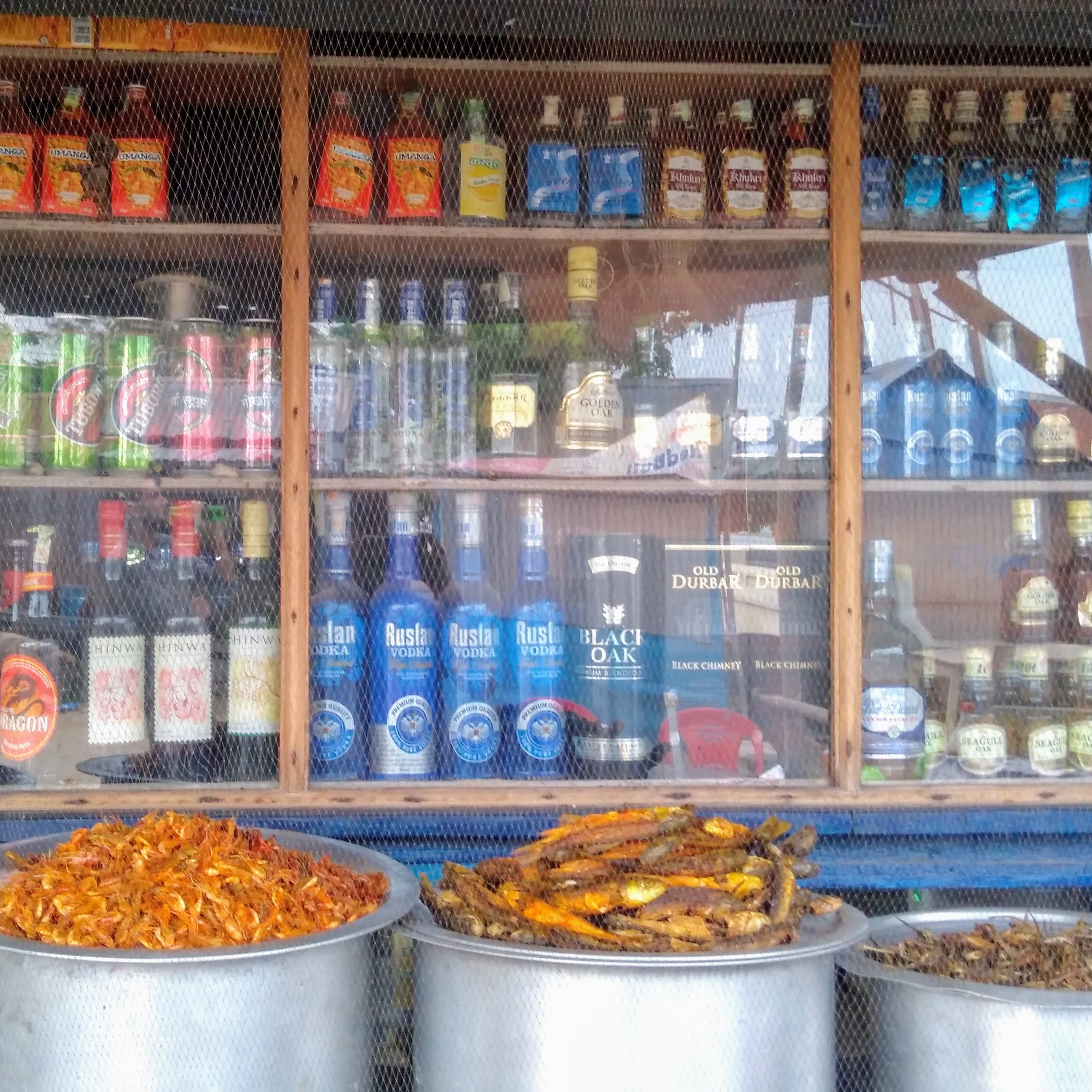
Punyavathi Sunkara recalls how she campaigned to stop the sale of alcohol in the Indian state of Andhra Pradesh to protect women from domestic violence and safeguard family finances. Pressure from women like Punyavathi helped persuade the state's chief minister, NT Rama Rao, to pass the prohibition law in 1995.
The birth of Reddit
Steve Huffman had been programming software since he was eight-years-old. At the University of Virginia, he met his future business partner, Alexis Ohanian. The pair went on to found Reddit, a discussion website where anyone can post links, photos, videos or questions on all kinds of different topics. The website now has an online following of over 430 million users, who contribute to over 138,000 different communities. Robbie Wojciechowski has been speaking to Steve Huffman about how it all began.Photo: The Reddit logo (Credit: Reddit)
The Dawson's Field hijacking
Barbara Mensch recalls how she was hijacked and held in Jordan by the Popular Front for the Liberation of Palestine in September 1970. Barbara’s plane was forced to fly to a disused British airbase in Jordan, whilst on the final leg of a flight from Tel Aviv to New York. She was imprisoned on board the TWA plane for almost a week and then held hostage in the Jordanian capital Amman for a further fortnight, as the so called Black September conflict erupted between militant Palestinian groups and the Jordanian Army.
Haiti's cholera outbreak
In October 2010, Haiti was hit by an outbreak of cholera, the first in recent history of the impoverished Caribbean nation. Nepalese peacekeepers belonging to the international MINUSTAH mission were blamed for introducing the deadly disease, but for many years the UN refused to accept any responsability. More than 10,000 Haitians have died from cholera, and thousands more were infected. The UN finally apologised to the Haitian people in December 2016. Mike Lanchin speaks to the French specialist in tropical medicine and infectious diseases, Dr Renaud Piarroux, whose investigation helped force the UN's hand.Photo: Haitians wait for medical treatment for cholera, Oct 22 2010 (REUTERS/St-Felix Evens)
Care in the Community
In the 1990s Britain closed down many of its long-stay hospitals and asylums and their patients were sent to new lives in the community. But the transition wasn't always easy. Some people had suffered abuse and found it hard to adjust to life outside. Lucy Burns has been speaking to "Michael" who has a learning disability, about his experiences both inside and outside of institutions.Photo: A now derelict asylum in Colchester, England. Credit: Simon Webster/Alamy Stock Photo
The Cape Town bombings
Between the late 1990s and 2002 there were more than 150 bomb attacks in the South African city of Cape Town. The authorities blamed them on a group known as Pagad - People Against Gangsterism And Drugs. But no one was ever convicted of the bombings. Darin Graham has been speaking to Elana Newman whose daughter Olivia lost a leg in a blast at the pizza restaurant where she was working in 1999.Photo: Olivia (l) and Elana Newman (r). Copyright: Elana Newman.
The birth of the Sony Walkman
The portable cassette player that brought music-on-the-move to millions of people was launched in 1979. By the time production of the Walkman came to an end 30 years later, Sony had sold more than 220 million machines worldwide. In 2019 Farhana Haider spoke to Tim Jarman, who purchased one of the original blue-and-silver Walkmans.This programme is a rebroadcast.(Photo by YOSHIKAZU TSUNO/Gamma-Rapho via Getty Images)
Flying through a volcano
When a British Airways flight carrying 248 passengers took off one evening in 1982 heading from Kuala Lampur to Australia, everything seemed fine. But two hours later all of the jumbo jet’s engines shut down and no one knew why. The plane had flown into the ash cloud of the erupting volcano, Mount Galunggung, without realising it. Darin Graham speaks to retired Captain Eric Moody, who flew the plane that night.
Inventing James Bond
The author Ian Fleming created the fictional super-spy, James Bond, in the 1950s. Fleming, a former journalist and stockbroker, had served in British naval intelligence during the Second World War. Using interviews with Fleming and his friends from the BBC archive, Alex Last explores how elements of James Bond were drawn from Ian Fleming's own adventurous life. Photo: Ian Lancaster Fleming, British author and creator of the James Bond character, in 1958. (Getty Images)
Who has the right to vote in America?
The Voting Rights Act of 1965, a landmark civil rights-era electoral law was designed to protect African-American and other minority voters. It was introduced to remove the many obstacles that were in place to prevent African-Americans from being able to vote. Many states, particularly in the south, used intimidation, local laws and so-called literacy tests to prevent black people from being able to register to vote. In 2010 Shelby County in Alabama attempted to overturn a key part of the law. In 2013 the US Supreme Court upheld their challenge. Now voters who are discriminated against bear the burden of proving they are disenfranchised. Farhana Haider hears from civil rights attorney Kristen Clarke who fought to protect the Voting Rights Act.Photo Washington DC June 25. Supporters of the Voting Rights Act outside the U.S. Supreme Court. Credit Getty Images
St Kilda
In August 1930 the last inhabitants left their homes on the remote Scottish islands of St Kilda. It was the end of a traditional Gaelic-speaking community who were once believed to live at the end of the world. Simon Watts has been listening to some of their stories, as recorded in the BBC archives.PHOTO: The men of St Kilda pictured in the late 19th century (Getty Images)
Occupy Wall Street
In 2011, the Occupy movement staged demonstrations against financial inequality across the world. The biggest was in New York, where a retired police officer called Ray Lewis became one of the best-known protestors when he was arrested in his old dress uniform. He talks to Robbie Wojciechowski.PHOTO: Ray Lewis at the Occupy Wall Street protest (Getty Images)
America's first woman combat pilot
In 1993, Jeannie Leavitt became the first woman to fly a US Air Force fighter plane after the Pentagon lifted its ban on female pilots engaging in combat. After hundreds of F15 missions over Iraq and Afghanistan, Leavitt went on to become the first woman to command a fighter unit. She talks to May Cameron.PHOTO: Major-General Jeannie Leavitt in a recent picture (US Department of Defence)
Margaret Ekpo - Nigeria's feminist pioneer
One of the leading figures in Nigeria's fight for democracy was Margaret Ekpo, a feminist politician and trades union leader. After Nigerian independence in 1960, Ekpo became an MP and a hero to a generation of Nigerians - men and women. Rebecca Kesby tells the story of her life.PHOTO: Margaret Ekpo in London in August 1953 (ANL/Shutterstock)
The siege at Ruby Ridge
Randy Weaver was a white separatist in Idaho in the north-west United States who was wanted by the government on firearms charges. When government agents approached his remote cabin on Ruby Ridge in August 1992, it was the start of an eleven day siege involving hundreds of police officers – which ended with the deaths of Weaver’s wife and teenage son, along with a US marshal. The incident would become a touchstone for the far right and a rallying cry for the American militia movement. Lucy Burns speaks to journalist Bill Morlin, who covered the siege for the Spokesman-Review newspaper. Picture: Randy Weaver (C) shows a model of his Ruby Ridge, Idaho cabin to US Senator Arlen Specter, R-PA, during Senate hearings investigating the events surrounding the 1992 standoff with federal agents (PAMELA PRICE/AFP via Getty Images).
The American who put women's rights in the Japanese constitution
In November 1946, Emperor Hirohito proclaimed a new post-war constitution for Japan which contained clauses establishing women's rights for the first time. They were the brainchild of Beate Sirota Gordon, a young American woman working for the Allied occupying forces. Simon Watts tells her story using interviews from the BBC archives.PHOTO: Beate Sirota Gordon in Japan in 1946 (Family Collection)
The Guatemalan syphilis scandal
A team of American doctors, led by the distinguished physician Dr John Cutler, carried out secretive STD tests in Guatemala from 1946 to 1948. The doctors experimented on more than one thousand prisoners, sex workers, mental institution inmates and soldiers, injecting them without their consent with syphilis and gonorrhea. In some cases the victims were provided with penicillin to combat the diseases; in many others they weren't given anything. Mike Lanchin speaks to Susan Reverby, a medical historian, who discovered the original documents from the greusome experiments and helped get a public apology for the victims from the Obama administration in October 2010.Photo: A doctor examines the injection site of a female psychiatric patient in Guatemala who was exposed to syphilis, cerca 1948 (from the papers of John Cutler/the National Archives and Records Administration)
The first modern asthma inhaler
Asthma affects more children than any other non-communicable disease - and it was a teenager who first asked her father "why can't they put my asthma medication in a spray can like hairspray?". Luckily her father ran a pharmaceutical company and got a team of scientists to work on the idea. Charlie Thiel is the one surviving member of the team. The chemist helped create a drug formulation of fine spray that reached further into the lungs than any previous treatment. Claire Bowes hears from him and his colleague Stephen Stein who has helped him document his story.Photo: Girl using metered dose inhaler 2001 (BBC)
The lost King of England
In 2012, archaeologists from the University of Leicester discovered the lost grave of Richard III under a car park in Leicester. Richard was the King of England more than 500 years ago and for centuries was portrayed as one of the great villains of English history. He was killed in 1485 leading his army in battle against a rival claimant to the throne, Henry Tudor. After the battle, Richard III corpse was stripped naked, paraded around down, before being hastily buried in a church within a friary in Leicester, which was later demolished. Alex Last spoke to Dr Richard Buckley who led the archaeological project to find the remains.Photo: Remains of King Richard III being studied at The University of Leicester (BBC)
Surviving Saddam
Zainab Salbi grew up in the inner social circle of the Iraqi dictator, Saddam Hussein, in the 1980s because her father worked as Saddam’s personal pilot. It was a world of apparently glamorous parties on the River Tigris, but where the slightest falling-out with the dictator could lead to execution. After years of psychological pressure, Zainab’s family got her out of Saddam’s Iraq by setting up an arranged marriage for her in the US. She tells her story to Susan Hulme.PHOTO: Zainab Salbi as a teenager with Saddam Hussein (private collection)
The invention of the modern ventilator
In August 1952, the Blegdam Hospital in the Danish capital Copenhagen was overwhelmed by hundreds of seriously ill polio patients. During the first weeks of the epidemic over 80 percent of the patients died, most within days of admission. The patients, who were mostly children, were dying of respiratory failure. Desperate for a solution an anaesthetist, Bjørn Iben, came up with a strategy that led to today’s ventilators and revolutionised medicine. Farhana Haider has been speaking to Anne Holton who was a medical student at the time of the polio epidemic and helped treat patients.Photo A medical student in Denmark 1952 treating a polio patient in Blegdam Hospital, Copenhagen. Credit used with permission of Jørgen Viby-Mogensen.
Scoring a victory for women's rights in Turkey
In 2004 feminist campaigners in Turkey forced a radical change in the law on crimes against women. The overhaul of the country's 80-year-old penal code meant a redefinition of crimes such as rape and sexual assault; references to chastity, honour and virginity were also removed from the legislation. It was a major victory for a group of women who had been pressing for reform for years and was also one of the conditions for Turkey's accession talks with the European Union. Mike Lanchin has been speaking to Pinar Ilkkaracan, who led the successful campaign for legal change.(PHOTO: TARIK TINAZAY/AFP via Getty Images)
Beirut's Hotel War
At the start of the Lebanese Civil War in 1975, Beirut’s luxury hotel district was turned into a battlefield, with rival groups of gunmen holed up in some of the most expensive accommodation in the Middle East. In 2014, William Kremer spoke to two former employees of the Holiday Inn about what came to be known as the Battle of the Hotels. Photo: The ruins of the Holiday Inn. (Credit: Getty Images)
Bremen’s Elephant Statue
Amid the ongoing debate about how to handle historical monuments which commemorate colonialism and slavery, Witness History hears the story of a giant statue of an elephant in the German city of Bremen.The port city had played a significant role in Germany's colonial past, and after Germany lost its territories in Africa following the First World War the statue was built there in memory of the period.But in the 1980s, a group of anti-apartheid activists campaigned to raise awareness of Germany's colonial history - and to rededicate the elephant statue.Lucy Burns speaks to Professor Manfred Hinz, who was part of the campaign.Photo: Shutterstock - the anti-colonial elephant monument in Bremen, 08/07/2020
Radar and World War Two
During World War Two, British women were employed as operators of a top-secret radar system for detecting aircraft. The new technology had helped shift the balance of power in the air war with Nazi Germany. Laura Fitzpatrick talks to Margaret Faulds, who was stationed at a Royal Navy Air Station during the war.PHOTO: Margaret Faulds in naval uniform during World War Two (Personal Collection).
The atomic bombs dropped on Japan
The USA dropped its first atomic bomb on the Japanese city of Hiroshima on August 6th 1945. Three days later a second atomic bomb was detonated over Nagasaki. The explosion was bigger than the blast at Hiroshima and killed 70,000 people. Louise Hidalgo introduces recordings from the BBC archive. (Photo: Mushroom cloud in the sky. Credit: US Air Force/Press Association)
The battle of Midway
On 4th June 1942, aircraft carriers of the Japanese and American fleets fought a huge naval battle near Midway Atoll in the Pacific. The outcome marked a turning point in the war. Using archive recordings we hear from American and Japanese airmen who flew in combat that day. Photo: (Original Caption) This official United States Navy photo shows the American aircraft carrier Yorktown, already listing badly to port, as she received a direct hit from a Japanese bomber in the Battle of Midway Island, June 4th 1942. The black puffs in the photo are exploding U.S. antiaircraft shells. (Getty Images)
The internment of Japanese Americans
Thousands of Japanese Americans were sent to prison camps after the USA entered World War Two following the bombing of Pearl Harbour. Whole families found themselves housed in barracks behind barbed wire fences. Former Star Trek actor, George Takei, was just a child when he was locked up in one of the camps. In 2010 he spoke to Lucy Williamson about his experiences there.This programme is a rebroadcast.Photo: Japanese American children on their way to internment camps. Credit: Dorothea Lange/Hulton Archive/Getty Images.
The Japanese attack on Pearl Harbor
On 7 December 1941, Japan launched a surprise strike on the American naval base, Pearl Harbor, in Hawaii. Thousands of American servicemen were killed or injured in the attack, which severely damaged the US Pacific Fleet. The next day, President Franklin Roosevelt declared war on Japan and America entered World War II. Adolph Kuhn was a US Navy mechanic stationed at Pearl Harbor when the bombs began to fall.Photo: The USS Arizona sinking at Pearl Harbor. (Credit: Getty Images)
The death of Heinrich Himmler
One of Hitler's most important henchmen was caught by British troops in the chaos of post-war Germany just after WW2 had ended in Europe. A British soldier described to the BBC how the leading Nazi bit down on a cyanide capsule and died. Gordon Corera has been listening to the archive account of Himmler's death, and finding out more about the situation in Germany immediately after its surrender to the Allies.Photo: Heinrich Himmler in 1939. Credit: Central Press/Getty Images
Benidorm and the birth of package tourism
The Spanish town of Benidorm is now one of the world's most popular holiday resorts - receiving more than 10 million visitors a year. The hotels and skyscrapers are the vision of Benidorm's mayor in the 1950s and 60s, Pedro Zaragoza. Zaragoza personally convinced Spain's dictator, General Franco, to allow more tourism - and to allow sunbathers to wear the bikini. Simon Watts introduces the memories of Pedro Zaragoza, as recorded by Radio Elche Cadena Ser shortly before his death.PHOTO: A busy day in Benidorm (Reuters)
Adrift for 76 days
A remarkable story of survival. In 1982, Steven Callahan was sailing alone across the Atlantic when one night his yacht hit something in the water and began to sink. He managed to get into a life raft but no one knew he was in trouble. For the next two months he drifted 2000 miles across the ocean. How did he survive? He told his story to Alex Last. Photo: Steve Callahan shows how he hunted fish from his life raft. © Steve Callahan
Australia's 'Black Saturday' bushfires
The forest fires of 2019-2020 in Australia were the worst the country had ever experienced - but ten years earlier Australia had a foretaste of that disaster when 400 separate bushfires burnt their way across the state of Victoria. At the time they were the worst fires Australia had ever seen. Rachael Gillman has been speaking to one of the firefighters who battled to bring the fires under control.Photo Credit: Getty Images
The writer who put Latinos centre stage
The Cuban-American Dolores Prida wrote with a distinctive voice in her plays, newspaper columns and as an agony aunt in the Latina magazine. She challenged perceptions of how Latin Americans should be viewed in the US. When she died in 2013, President Obama paid tribute to her "conviction, compassion and humour." Mike Lanchin speaks to Prida's close friend, the former editor at New York's Daily News, Maite Junco.Photo: Dolores Prida (left) with Maite Junco, Jan 2013 (courtesy of Maite Junco)
The fastest vaccine ever developed
In the 1960s five-year-old Jeryl Lynn Hilleman got ill with mumps. Her father Dr Maurice Hilleman took a swab from the back of her throat and used it to help create a vaccine for the disease - more quickly than any previous vaccine had ever been completed. During his decades long career Dr Hilleman worked on vaccines for measles, mumps, rubella, chickenpox, hepatitis and meningitis.Photo: Jeryl Lynn Hilleman with her sister, Kirsten, in 1966 as a doctor gave her the mumps vaccine developed by their father Maurice Hilleman. Courtesy of Merck.
The first safe house for Afghan women
In 2003 the first refuge for women fleeing violence and abuse was opened in Kabul, Afghanistan, a country that has been labelled one of the most dangerous places in the world to be a woman. The UN estimates that over 50% of women in Afghanistan face domestic abuse from their partner in their lifetime. Farhana Haider has been speaking to Mary Akrami who risked her life to help set up and run Afghanistan's first women's safe house. Photo Mary Akrami Credit Getty