Witness History
2,140 episodes — Page 29 of 43
Why a British MP was filmed taking mescaline
# Warning: This programme contains scenes of drug use #In 1955, a British member of parliament, Christopher Mayhew, took the hallucinogenic drug mescaline and had his experience filmed by the BBC. The drug was legal at the time and the experiment was supervised by the pyschiatrist Dr Humphry Osmond. The film was part of a wider public debate about psychedelic drugs following the publication of The Doors of Perception by the writer Aldous Huxley. But the film of the experiment was never broadcast and years later mescaline was put on the banned list of drugs in the UK because of fears of its potential impact on mental health.. Photo: Christopher Mayhew (right) preparing to start the experiment, watched by Dr Humphry Osmond (left), December 1955. (BBC)
The Great Wine Fraud
In the early 2000s, Rudy Kurniawan was a newcomer to the hedonistic world of wine auctions in the US. He quickly became well-known for his warm and friendly manner and his profligate spending on wines. But where was all his money coming from? Josephine Casserly tells the story of one of the most high profile cases of wine fraud and speaks to Laurent Ponsot, French winemaker, turned Sherlock Holmes.(Photo: Corks, foil capsules and wine labels used as evidence in the trial. Credit: Stan Honda/Getty Images)
Ursula Le Guin
The American writer, Ursula Le Guin, was one of the most influential authors of the second half of the 20th century, publishing 20 novels in genres from science fiction to young adult. Le Guin pioneered feminist science fiction with The Left Hand of Darkness and created the enduringly popular Earthsea series of fantasy novels. She died in 2018. Simon Watts introduces the memories of Ursula Le Guin, as recorded in the BBC archives.PHOTO: Ursula Le Guin in the 1980s (BBC/Marion Wood Kolisch)
The IRA hunger strikes
In 1981 the British government was faced with prisoners dying on hunger strike in a jail in Northern Ireland. The Irish republican activists were demanding to be treated as political prisoners not criminals. Several of them died during the hunger strike, the first, Bobby Sands on May 5th 1981. Louise Hidalgo spoke to Laurence McKeown who took part in the protest but survived.(Photo: Protestors wearing balaclavas in support of the hunger strike. Credit: AFP/Getty Images)
How Amsterdam became the cannabis smoking capital of Europe
How Amsterdam became the home of cannabis coffee shops .The Mellow Yellow Café set a pattern in 1973 of attracting customers, which hundreds of others would follow. Although selling and smoking the drug was illegal, possession of small quantities of cannabis was tolerated by the Dutch police. Bob Howard talks to the café’s owner, Werner Bruining.Photo: Mellow Yellow Cafe, Amsterdam, Netherlands. Credit: Alamy
The killing of Osama Bin Laden
The US tracked down the al-Qaeda leader to a city in northern Pakistan in May 2011. Special operations troops were sent to capture or kill Bin Laden in a top secret raid in the dead of night. The Americans did not tell their Pakistani allies about the raid beforehand. Gabriela Jones spoke to Nicholas Rasmussen who was in the White House situation room with President Barack Obama and US military chiefs as the raid took place.Photo: Osama Bin Laden's fortified compound on the outskirts of Abbottabad in north-west Pakistan. Credit: BBC
The battle of Tora Bora
When the Taliban were ousted from power in Afghanistan in 2001, the hunt for Osama bin Laden began in earnest. One American in particular led the search. He was CIA commander, Gary Berntsen, who had been tracking the al-Qaeda leader for years. In December 2001 he ordered a small group of special forces soldiers and Afghan fighters into the White Mountains, close to the border with Pakistan, in the hope of cornering bin Laden in the caves of Tora Bora. But as Gary Berntsen tells Rebecca Kesby, in spite of heavy bombardment bin Laden managed to give them the slip.(PHOTO: Local anti-Taliban fighters help US special forces in the assault on the White Mountains and Tora Bora cave complex in Afghanistan, December 2001. (Photo by Chris Hondros/Getty Images)
The Nairobi US Embassy bombing
EIn August 1998, more than 200 people were killed in co-ordinated bomb attacks on two US embassies in East Africa. They were among the first major attacks linked to Osama bin Laden and the al-Qaeda network. We hear from George Mimba who was working inside the embassy in Kenya when the bomb detonated. Photo: Rescue workers at the scene of the Nairobi embassy bombing (AFP/Getty Images)
Meeting Osama bin Laden
When the Palestinian journalist Abdel Bari Atwan agreed to go and interview Osama bin Laden in 1996 he was apprehensive. By the time he reached the Al-Qaeda leader's mountain hideout - he was shaken and scared - but what was the man himself really like? Claire Bowes reports.This programme is a rebroadcast.Photo: Osama bin Laden. Credit:AFP/Getty Images
The siege of Mecca
In 1979 Islamist militants seized control of the Grand Mosque in Mecca, the holiest site in Islam. Hundreds were killed as Saudi security forces battled for two weeks to retake the shrine. The militants were ultra-conservative Sunni Muslims who believed that the Mahdi, the prophesied Redeemer, had emerged and was a member of their group. The BBC's Eli Melki spoke to eyewitnesses who were inside the Grand Mosque during the siege.Photo: Fighting at the Grand Mosque in Mecca after militants seized control of the shrine, November 1979 (AFP/Getty Images)
The first space shuttle mission
On 12th April 1981, the space shuttle Columbia made history becoming the first ever reusable space craft to fly into orbit. It marked the start of a 30-year shuttle programme which revolutionised the history of manned space exploration. Using NASA and BBC archive we tell the story of this historic test flight. Photo: NASA photo shows the first launching of the space shuttle from the Kennedy Space Center in Florida. Columbia carried astronauts John Young and Robert Crippen. (AFP via Getty Images)
How the NRA became a US political lobbying giant
The National Rifle Association represents gun owners in the USA. In 1977 it faced a turning point when its members revolted against the organisation’s leadership to concentrate on political lobbying in Washington. Would the gun lobby in America be as strong as it is, without the 1977 turnabout? Bob Howard talks to John Aquilino, a former NRA spokesman, who was at the historic meeting in Cincinnati, Ohio.National Rifle Association Holds Its Annual Conference In Dallas, Texas. DALLAS, TX - MAY 05 2018. Credit: Justin Sullivan/Getty Images
The Raymond Davis Incident
In 2011, an American man shot dead two people in the streets of Lahore. The crisis that ensued saw accusations of espionage and US-Pakistani relations brought to the brink. For Witness History, Josephine Casserly tells the extraordinary story of the Raymond Davis incident.
The return of Blue Lake
In 1970, the Republican president Richard Nixon signed a bill returning a sacred lake to the people of Taos Pueblo in New Mexico. The lake, and surrounding land, had been taken from the Taos people in 1906 and turned into a national forest, even though it was central to their centuries-old cultural rituals and beliefs. The return of the lake was the first time the US government had given land back to a Native American community. Louise Hidalgo talks to Laura Harris and her mother LaDonna Harris, who with her senator husband helped the Taos people get the Blue Lake back.Picture: President Nixon signing the Blue Lake bill in the presence of Taos leaders, 15th December 1970 (Credit: UPI/Getty Images)
The Eichmann trial
In April 1961, Adolf Eichmann, the Nazi official in charge of concentration camps, was put on trial in Israel.The trial helped reveal the full details of the holocaust in which millions of European jews were killed during World War Two. One of the prosecutors, Gabriel Bach, spoke to Lucy Williamson for Witness History.This programme is a rebroadcast.PHOTO: Eichmann in the dock. (AFP/Getty Images)
China's 'Kingdom of women'
The Mosuo community in China’s Himalayan foothills is matrilineal, so a family’s ‘bloodline’, inheritance and power is passed down through the female side. There is no such thing as marriage and monogamy is actively discouraged. The women rule and the men don’t mind. Rebecca Kesby has been speaking to Choo Wai Hong, a Singaporean corporate lawyer who came across the community as she travelled through her ancestral homeland of China. She liked it so much she learnt the language and built a house there. (PHOTO: Mosuo Women. Credit Patrick AVENTURIER/Gamma-Rapho via Getty Images)
The vultures saved from extinction
South Asian vultures started dying in huge numbers in the 1990s but no one knew why. They were on the verge of extinction before scientists worked out what was killing them. Bob Howard has been hearing from Munir Virani of the Peregrine Fund, who discovered that the vultures’ livers were being damaged when they fed on the carcasses of cattle which had been treated with a widely-used painkiller.White-backed vultures in their enclosure at the Vulture Conservation Centre run by World Wide Fund for Nature-Pakistan (WWF-P) in Changa Manga. September 20, 2017. Credit: ARIF ALI/AFP via Getty Images
Fighting for Castro at the Bay of Pigs
On April 17 1961 a group of Cuban exiles launched an invasion of communist-ruled Cuba in a failed attempt to topple Fidel Castro. After 72 hours of fighting many of the invaders were captured or killed. Gregorio Moreria was a member of the local communist militia who fought against the US-backed invaders. He was injured and briefly captured during the fighting. He spoke to Mike Lanchin for Witness History in 2016.(Photo: Members of Castro's militia during the US-backed Bay of Pigs invasion. Credit: Three Lions/Getty Images)
How a worm helped explain human development
After the discovery of the double-helix structure of DNA in the 1950s, South African biologist Sydney Brenner was searching for a model animal to help him tease out the genes involved in human behaviour and human development from egg to adult. Brenner chose a tiny nematode worm called caenorhabditis elegans (c.elegans for short), whose biological clockwork can be observed in real time under a microscope through its transparent skin. The worm has since been at the heart of all sorts of discoveries about how our bodies work and fail. Sue Armstrong has been speaking to people who knew and worked with Sydney Brenner.This programme is a Ruth Evans Production.Photo: the c. elegans worm. Credit: Science Photo Library
The US Supreme Court's first woman justice
In 1981, Sandra Day O'Connor became the first woman judge to be appointed to the US Supreme Court. She was nominated by newly-elected Republican president Ronald Reagan, who'd made the pledge to appoint a woman part of the campaign that led to his landslide victory. Justice O'Connor served for 24 years and had the decisive vote in many landmark cases. Her friend and former law clerk, Ruth McGregor, has been talking to Louise Hidalgo.Picture: Sandra Day O'Connor is sworn in at the Senate confirmation hearing on her selection as a US Supreme Court justice, September 1981 (Credit: Keystone/Consolidated News Pictures/Getty Images)
Discovering the Jet Stream
The Jet Stream is formed by powerful high-altitude rivers of air which circle the globe and help determine our climate. The existence of these winds was first documented in Japan in the 1920s, but only became more widely known during World War Two, when American airmen encounter high-speed winds on bombing missions over Japan. At the same time, the Japanese military also began to use these powerful transcontinental winds to carry innovative balloon bombs all the way to the West Coast of America. Using archive recordings we tell the story of the discovery and speak to Professor Tim Woollings from Oxford University, the author of Jet Stream: A Journey Through Our Changing Climate. Photo: B-29 bombers passing Mount Fuji on their way to Tokyo, April 1945 (Getty Images)
From Leningrad to St Petersburg
As the communist system in the former Soviet Union was collapsing in 1991, the people of Leningrad voted to drop Vladimir Lenin's name abandoning the city's revolutionary heritage and returning to its historic name of St Petersburg. Dina Newman spoke to Ludmilla Narusova, wife of the first St Petersburg mayor, Anatoli Sobchak, who campaigned for the hugely symbolic change.This programme is a rebroadcast - it was first aired in 2018.Photo: Communist campaigners demonstrate against the name change in Leningrad in 1991. Credit: Sobchak Foundation.
David Attenborough's first expedition
In 1954, the BBC broadcast a new television programme in Britain. It was called Zoo Quest and it launched the career of a man who has since brought the natural world into millions of homes around the world, the broadcaster Sir David Attenborough. Louise Hidalgo has been listening back through the BBC archives to Sir David telling the story of the first natural history expedition for Zoo Quest, to Sierra Leone in West Africa.Picture: David Attenborough, producer of the BBC wildlife documentary series Zoo Quest, and Jack Lester (right), curator of London Zoo's reptile house, planning their next expedition with the help of Gregory the parrot, March 1955 (Credit: William Vanderson/Fox Photos/Getty Images)
Mexico's female serial killer
Former female wrestler Juana Barraza was found guilty in March 2008 of murdering at least eleven elderly women in Mexico city over a period of seven years. Barraza, who became known as the "little old lady killer", admitted to murdering three women, and told investigators that it was because of her lingering resentment for the abuse that she'd suffered as a child at the hands of her alcoholic mother. Mike Lanchin has been hearing from Mexican neuro-psychologist Dr Feggy Ostrosky, who spent days interviewing Barraza in jail, trying to understand what had turned her into a serial killer. (Photo: Former female wrestler Juana Barraza. Credit: David Deolarte/AFP/Getty Images)
The women who reclaimed the night
How women in the North of England took to the streets in the late 1970s to protest against a serial killer dubbed the Yorkshire Ripper. Police advised them to stay indoors to avoid being attacked but the feminist protestors wanted greater protection for women and girls. Rebecca Kesby has been hearing from Al Garthwaite one of the organisers of Britain's first "Reclaim the Night" march.Photo: women taking part in a Reclaim the Night march. Credit: BBC
Black Jesus
On Easter Sunday 1967 the Reverend Albert Cleage renamed his church in Detroit the Shrine of the Black Madonna. He preached that if man was made in God's image there was little chance that Jesus was white as most of the world's population is non-white. Reverend Cleage also pointed to the many depictions of black madonnas all over the world throughout history. Claire Bowes has been speaking to his daughter Pearl Cleage, a writer and activist, about her father's belief in black representation and self-determination.Photo: Black Madonna and Child courtesy of BLAC Detroit. Archive: Thanks to the Chicago History Museum and WFMT for the Studs Terkel Radio Archive.
Kidnapped on an orchid hunt
In March 2000, two young English travellers, Tom Hart-Dyke and Paul Winder, were kidnapped by Colombian guerrillas while attempting to cross the notoriously dangerous Darien Gap region on the border with Panama. Hart-Dyke is a gardener who was on a mission to collect orchids, and he survived a nine-month ordeal by building a nursery in the cloud forest and planning his own dream garden for the family castle back home in Kent. He talks to Simon Watts.PHOTO: Tom Hart-Dyke (l) with Paul Winder shortly after their release (Press Association)
Mrs Thatcher’s ground-breaking Soviet TV interview
How Mrs Thatcher shook up the Soviet media with a landmark interview in Moscow in 1987 focusing on nuclear disarmament. It was broadcast unedited and helped bring in the era of “glasnost.” Bob Howard talks to Boris Kalyagin, one of the three Soviet journalists who interviewed the British prime minister.Margaret Thatcher, circa 1993. copyright Jeff Overs / BBC
When the prisoners ran the prison
In March 1973 guards went on strike at Walpole maximum security prison in the US state of Massachussetts, and the prisoners took over. For the next three months the inmates, organised in the National Prisoners Reform Association, ran daily life in the prison. They were helped by a group of outside observers, drawn from members of the community. Mike Lanchin has been hearing from the organiser of the observer teams, Rev. Ed Rodman, about his memories of this unique, but ultimately doomed, experiment in prison reform. (Photo credit: The Boston Globe)
Anorexia nervosa
The American singer, Karen Carpenter, died in 1983 of anorexia nervosa. She was one half of a world famous brother and sister duo called The Carpenters. She was aged just 32. Up until then anorexia nervosa had often been referred to in the media as the "slimmer's disease". Skinny celebrities were seen as both beautiful and successful and anorexia was somewhat glamorised. Claire Bowes has been speaking to Dr Pat Santucci, a psychiatrist who helped set up the world's first national organisation dealing with eating disorders, the National Association of Anorexia Nervosa and Eating Disorders, known as ANAD. Dr Santucci says wherever western culture has an influence, you will find anorexia nervosa.Photo: courtesy of Science Photo Library
South Africa takes on big pharma
At the end of the 1990s, tens of millions of people across Africa had been infected with HIV and in South Africa hundreds of thousands of people were dying from AIDS. People were demanding cheaper drugs, but the big pharmaceutical companies didn’t want to play ball. They took the South African to court over the right to import cheap drugs in a case which would last three years and which would pit the big pharmaceutical companies against Nelson Mandela and the rainbow nation. Bob Howard talks to Bada Pharasi, a former negotiator at South Africa’s department of health.SANDTON, SOUTH AFRICA - JUNE 17: HIV/AIDS activists demonstrate in front of the American consulate on June 17, 2010. Credit: Photo by John Moore/Getty Images.
The woman who got America talking about sex
Dr Ruth Westheimer first became popular on a radio show in New York in the early 1980s. Her frank and open approach to giving advice on all sorts of different questions about sex soon made her a TV personality too.Photo: Dr Ruth Westheimer. Credit: Getty Images
Jamaica’s ‘drug lord’
The Jamaican government issued a warrant for the arrest and extradition of the drug lord Christopher Coke, otherwise known as “Dudus” in May 2010. The United States wanted him extradited to face charges of racketeering and bringing drugs and guns into America. Coke controlled an area of the Jamaican capital Kingston, called Tivoli Gardens. Dozens of people in the district he dominated were killed as the police and military stormed the stronghold, even using mortar bombs to try and disperse the gunmen protecting Coke. Human rights attorney Jodi-Ann Quarrie talks to Bob Howard about the events and their impact on Jamaica. (Jamaican police on patrol after a frenzy of gang and drug violence in Kingston, May 24 2010. Credit: Anthony Foster/Getty Images)
The Ulster Workers' Strike
An early attempt at power-sharing in Northern Ireland ended after protestant workers went on strike and bomb attacks killed dozens in the Republic of Ireland in 1974. Matt Murphy has been hearing from Austin Currie, the former SDLP politician, about the events of that time. Photo: Dr Ian Paisley addresses a mass gathering of supporters, in the Protestant Shankhill Road area of Belfast in 1974. The Ulster Workers' Council declared that "everything stops at midnight" in an attempt to bring down Northern Ireland's power-sharing executive brought about by the Sunningdale Agreement. Credit: PA.
The dirtiest chess match in history
In 1978, the World Chess Championship between the Soviet champion and convinced communist, Anatoly Karpov, and the dissident and defector, Viktor Korchnoi, turned into one of the most infamous clashes in the history of the game. At a time of peak Cold War tension, the two players traded allegations about yoghurts containing messages, the use of psychics and the mysterious appearance of a meditating yoga cult dressed in orange robes. David Edmonds tells the story of the match through the memories of British grandmaster, Michael Stean,PHOTO: Anatoly Karpov and Viktor Korchnoi squaring up in 1978 (Getty Images)
Mars-500 isolation experiment
In 2010, six men were locked inside a simulated spacecraft on earth for 520 days. It was part of an experiment to see how humans would cope if cooped up together for the duration of a potential trip to Mars. The crew were monitored throughout and were treated as if they were on a real mission in space, though the spacecraft was actually housed in a warehouse in Moscow. They even performed a simulated space walk on the surface of Mars. The project was set up by Russia, China and the European Space Agency. Alex Last has been speaking to Diego Urbina (@DiegoU) who took part in the mission. Photo: The six crew members of the Mars-500 mission. (From Left) Russia Alexey Sitev, France's Romain Charles, Russia's Sukhrob Kamolov, Russia's Alexander Smoleevskiy, Diego Urbina from Italy and China's Wang Yue. (Getty Images)
Alva Myrdal - the woman who made modern Sweden
In 1982, the Swedish social reformer, writer and diplomat, Alva Myrdal, was awarded the Nobel Peace Prize for her work on nuclear disarmament. She was only the 7th woman in history to win the award, which she received jointly with Mexican diplomat Alfonso Garcia Robles. In the 1930s and 40s, Alva Myrdal had, with her husband Gunnar Myrdal, developed the ideas behind Sweden's famed welfare state which had transformed Sweden into the modern country we know today. She was also the first woman to be given a senior post at the United Nations. Alva Myrdal's daughter Kaj Foelster has been telling Louise Hidalgo about her mother's life and work.Picture: Alva Myrdal in 1976 on the publication of her book The Game of Disarmament (credit: Keystone/Getty Images)
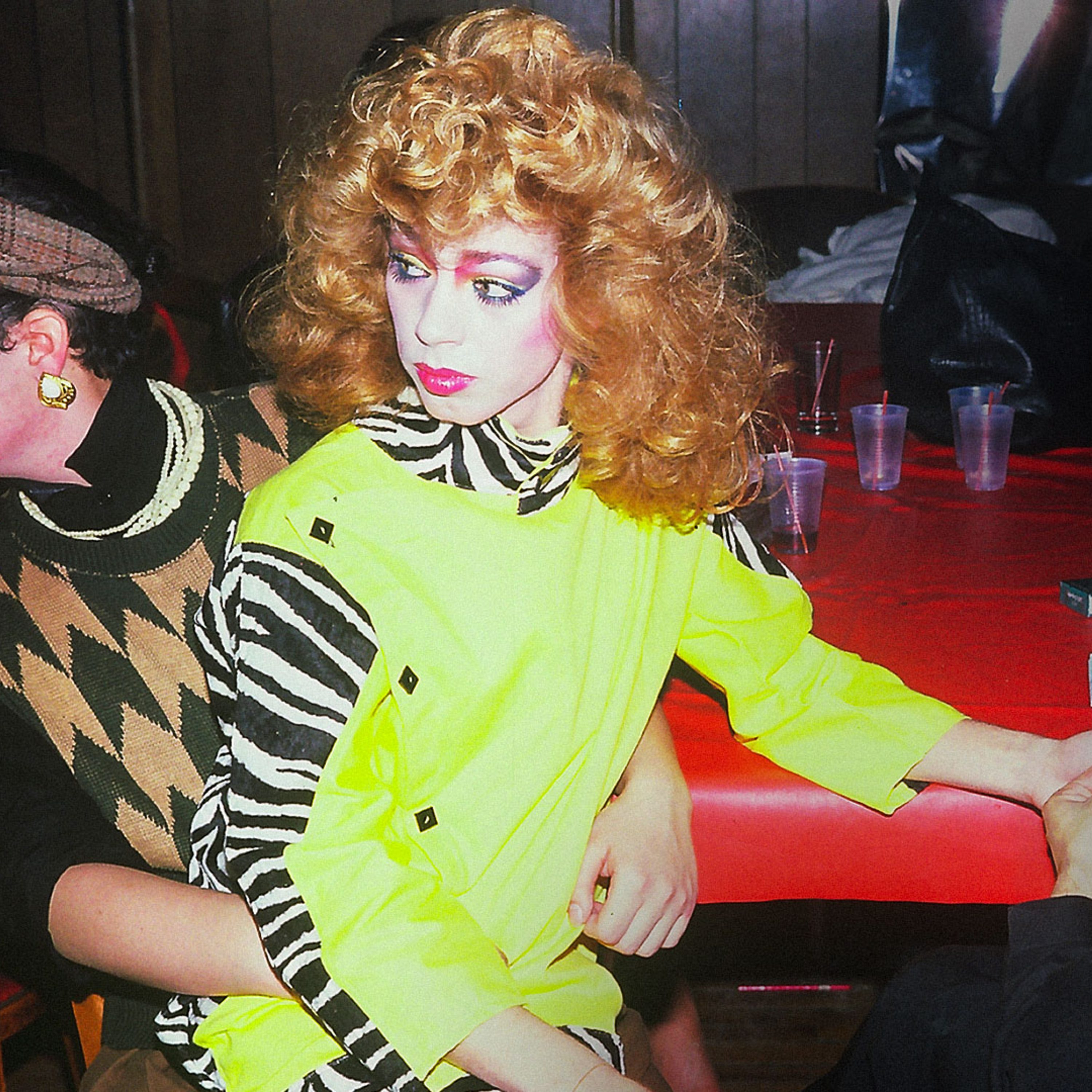
Paris is Burning
The documentary Paris is Burning was released in 1991 The award winning film showed a glimpse of the thriving underground ballroom and drag scene in New York City in the 1980s and the black and LatinX LGBTQ+ communities at the heart of it. The United States in the 1980s was a difficult place to be different, with homophobia and racism running rife. Pairs is Burning was filmmaker Jennie Livingston’s first documentary and she has been telling Bethan Head about the lengthy process of bringing the film to the screen.
The woman who asked Britain to return the Parthenon marbles
Melina Mercouri, famous actress turned politician, visited Britain in 1983 as Greek Minister of Culture and made the first official request for the return of the Parthenon marbles. The marbles were removed in 1801 by Lord Elgin, who was the British Ambassador to the Ottoman Empire at the time. Lord Elgin, who was based in Istanbul sent his agents to Athens to remove the marbles which he claimed were at risk of destruction. He later sold them to the British parliament who in turn entrusted them to the British Museum where they've been exhibited since 1832.This programme was first broadcast in 2019(Photo: The Greek Minister for Culture, Melina Mercouri, inspects the Parthenon Marbles in the British Museum in May 1983)
Jane: The underground abortion network
A group of feminists working under the name “Jane” carried out underground abortions in 1960s Chicago – when abortions were still illegal in most of the US.Initially they gave abortion counselling and put women who wanted to terminate their pregnancies in touch with doctors who would perform the procedure. But when they discovered that one doctor they had been working with was not medically qualified, the women started to perform the abortions themselves.Martha Scott was a member of the group – she received an abortion through the service, learned to perform abortions, and was one of the Janes arrested when they were busted by the police. She tells Lucy Burns about her experiences.This programme is a rebroadcast.Photo courtesy of Martha Scott
Cixi: China's most powerful woman
The Empress Dowager Cixi ruled China for 47 years until her death in 1908. But it wasn't until the 1970s that her story began to be properly documented. She'd been vilified as a murderous tyrant, but was that really true or was she a victim of a misogynistic version of history? Prof Sue Fawn Chung was the first academic to go back to study the original documents, and found many surprises. She tells Rebecca Kesby the story of "the much maligned Empress Dowager".This programme is a rebroadcast(Photo: Chinese Empress Dowager Cixi, portrait c1900. Credit: Ullstein bild/Getty Images)
The women of Egypt's Arab Spring
In 2011 Egyptians took to the streets calling for the overthrow of President Hosni Mubarak, whose regime had been in power for nearly 30 years. Their uprising was part of a wave of pro-democracy protests in the Arab world aimed at ending autocratic rule. Women were at the forefront of protests in Cairo's Tahrir Square, many taking part in political demonstrations for the first time in their lives. Student activist Hend Nafea tells Farhana Haider she was campaigning not only for freedom, dignity and social justice, but also for her rights as a woman. Photo: Hend Nafea protesting in Tahrir Square in January 2011. (Copyright Hend Nafea)
Churchill's 'Iron Curtain' speech
In March 1946, the UK's former wartime leader, Winston Churchill, gave a historic speech which would come to symbolise the beginnings of the Cold War. Churchill had lost power following a crushing election defeat in Britain in 1945. Encouraged by the US President Harry Truman, Churchill agreed to give a speech on world affairs at Westminster College in Fulton, Missouri. But why did the speech have such an impact. Alex Last hears from the historian Prof David Reynolds of Cambridge University, author of The Kremlin Letters: Stalin's wartime correspondence with Churchill and Roosevelt.Photo: Winston Churchill at the podium delivering his "Iron Curtain" speech, at Westminster College in Fulton Missouri, 5th March 1946 (PA)
The Sharpeville massacre
In March 1960, the South African police opened fire on a crowd of demonstrators in the township of Sharpeville, killing 69 people and injuring nearly 200 more. The massacre outraged black South Africans, leading to a radicalisation of anti-apartheid organisations such as the ANC and a ruthless crackdown on dissent by the whites-only government. Simon Watts hears the memories of Nyakane Tsolo, who organised the demonstration in Sharpeville, and Ian Berry, a photographer whose pictures of the killings caused an international outcry.PHOTO: The crowd fleeing from the police at Sharpeville in 1960 (Universal History Archive/UIG via Getty Images)
When US police dropped explosives on a Philadelphia home
On 13 May 1985 a police helicopter dropped explosives on a house in residential Philadelphia, in an attempt to end a stand-off with radical black activists from an organisaton called MOVE. Fire spread quickly through the surrounding buildings and 11 people died, including five children. All the victims belonged to MOVE. A total of sixty houses in the area were also burnt or badly damaged in the botched police operation. Mike Lanchin speaks to Mike Africa, who lost his great uncle and a cousin in the fire, and to the former Philadelphia reporter, Linn Washington. Photo: Aerial view of smoke rising from smouldering rubble in Osage Avenue, West Philadelphia, May 1985 (Getty Images)
Refugee Island
In 2001, boats carrying hundreds of, mainly Afghan, refugees arrived on the tiny Pacific island of Nauru. This marked the beginning of the “Pacific Solution” – a policy by the Australian government to establish offshore centres for processing asylum claims. The policy was intended to act as a deterrent, discouraging people from travelling to Australia. Many of the refugees lived in the cramped conditions of Nauru for years. In this Witness History, Josephine Casserly speaks to Yahya, an Afghan refugee who left his home country as a school student when the Taliban gained control of his local area. Yahya was one of the first refugees to arrive at Nauru’s detention centre. Like many, he was hopeful that his stay in the makeshift camp would be a temporary measure, and he’d be quickly resettled in Australia. But that was not to be.(Asylum seekers on their first day in the compound at Nauru after their long voyage, Sept 2001. Credit: Angela Whylie/Getty images)
The world's deepest dive 11km down
Don Walsh was the first to go to the very bottom of the deepest part of the ocean in 1960 in a specially designed submarine, the Bathyscaphe Trieste. The water pressure was 800 tonnes per square inch, and the successful mission to "Challenger Deep" in the Mariana Trench under the western Pacific, was a technological breakthrough in marine engineering. Don Walsh describes the dive to Rebecca Kesby, and explains why understanding the deep ocean is crucial in the fight to reduce climate change. (Photo: The Bathyscaphe Trieste in 1960. Getty Images)
The WW2 airman from Sierra Leone
Johnny Smythe was one of very few West Africans to fly with Britain's air force during WW2. Recruited in Sierra Leone in 1941 he was trained as a navigator and flew 26 missions on RAF bombers before being shot down over Germany and taken prisoner in 1943. His son Eddy Smythe spoke to Tim Stokes about his father’s story.Photo: Johnny Smythe in his RAF uniform. Copyright: Eddy Smythe.
The fall of Kwame Nkrumah
The Ghanaian president, Kwame Nkrumah, was one of Africa's most famous independence leaders. But in 1966, while he was out of the country, the Ghanaian military and police seized power in a coup. The legendary Ghanaian film maker Chris Hesse worked closely with Nkrumah and was with him at the time. He spoke to Alex Last about his memories of the coup and his friendship with the man who'd led Ghana to independence.Photo: Kwame Nkrumah c 1955 (Getty Images)
Ireland's bank bailout
In the wake of the 2008 global financial crisis Ireland had to borrow billions to stop its banks from going under and to keep its economy afloat. The IMF, the EU and the European Central Bank provided the money. Matt Murphy has been speaking to Patrick Honahan, who was Ireland's central banker at the time of the bailout. Photo: Protesters take to the streets of Dublin in November 2010 to oppose savage public spending cutbacks needed to secure an international bailout. Credit:Ben Stansall/AFP via Getty Images