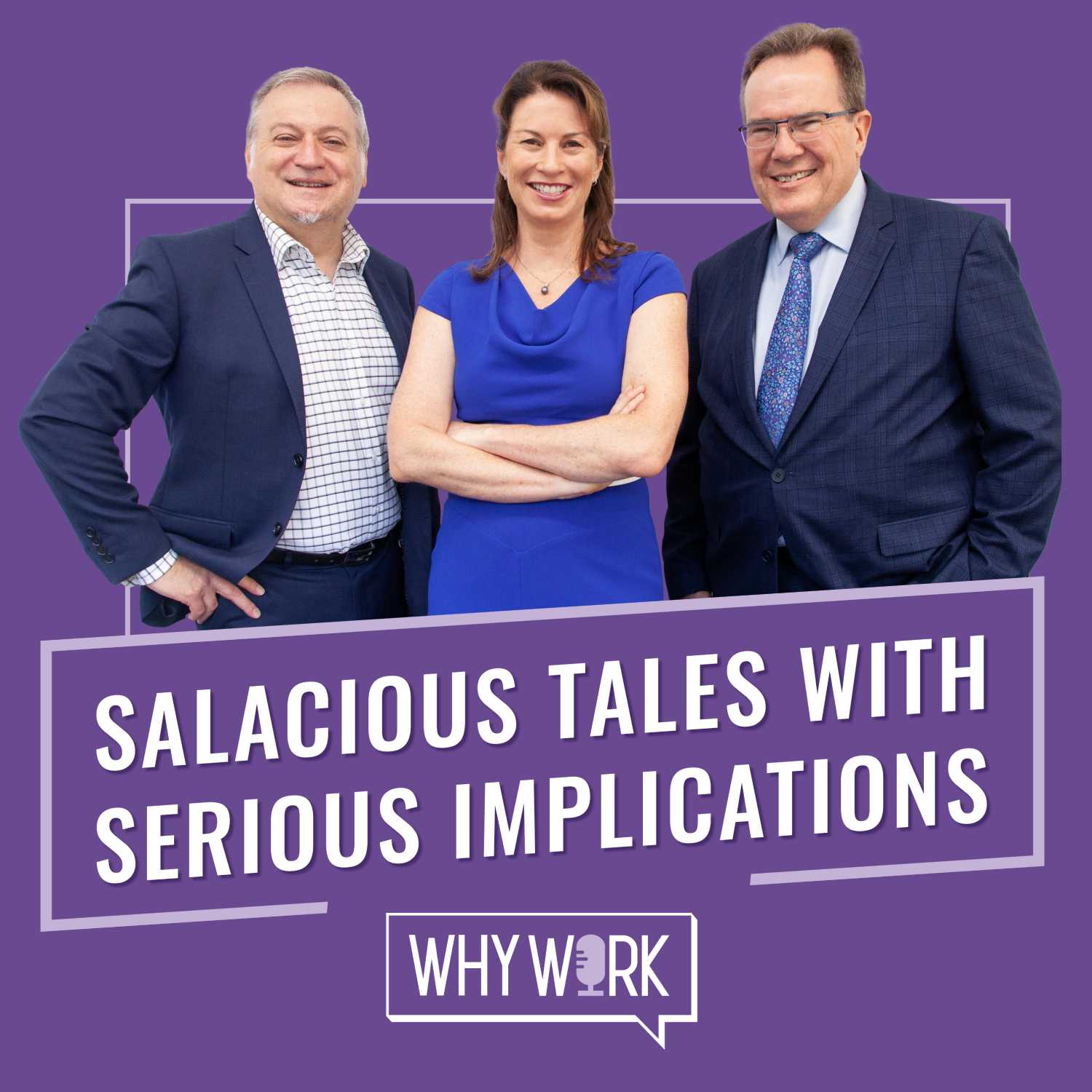
WhyWork Podcast
Alan Girle, Trajce Cvetkovski, & Sara Pazell
Show overview
WhyWork Podcast has been publishing since 2023, and across the 3 years since has built a catalogue of 223 episodes, alongside 94 trailers or bonus episodes. That works out to roughly 65 hours of audio in total. Releases follow a weekly cadence, with the show now in its 10th season.
Episodes typically run ten to twenty minutes — most land between 1 min and 29 min — with run-times ranging widely across the catalogue. Roughly 52% of episodes carry an explicit flag from the publisher. It is catalogued as a EN-language Business show.
The show is actively publishing — the most recent episode landed 4 weeks ago, with 28 episodes already out so far this year. Published by Alan Girle, Trajce Cvetkovski, & Sara Pazell.
From the publisher
The WhyWork Podcast is an organisational strategy session and legal dissection of workplace events that are laced with humour. Your bloggers, Alan, Trajce, and Sara, explore the contemporary and uncomfortable realities of work and the boundaries that are tested. Alan and Trajce dismantle case law and Sara pushes all to consider how to redesign the world of work so that business objectives are realised and that people thrive. Good stories are told. The WhyWork team throws shade on some of the stories and the people involved as they consider defensible and remarkable work design strategy. When you listen to the WhyWork Podcast, you realise that no skeleton in the workplace closet is too sacred to unearth. It’s like listening to the water cooler gossip but then shit gets real, and it all becomes serious – fast. This is a must-listen for executive and emerging managers, work design strategists, human factors specialists and ergonomists, work health safety and law specialists, organisational scientists, occupational health academics, and anyone humoured by office and workplace antics! Get ready to exclaim, “She said WHAT...?” and “He DIDN’T! OMG!”. Laugh along with us while you learn lots.
Latest Episodes
View all 223 episodesS10 Trailer 05: WhyWork: Why Silent?
S10 E06: The Circular Saw Case: A Labour Hire Blind Spot
S10 E05: The Convergence: Nothing is Out of Bounds
S10 E04: Turn Down the Chilli in My Con Carne
S10 E03: Predicting Risk: Why Psychosocial Safety Needs a New Playbook
S10 E02: Coyote Ugly – Scandal upon Scandal
S10 E01: I am follicle-y challenged and I’ve got moobs!
S10: Special-Release Bonus 6: O–100 km/h in 3.5 Seconds. But Did You Die? (Part 3 of The Final 3-Part Reflection Series): The Conclusion
S10: Special-Release Bonus 5: O–100 km/h in 3.5 Seconds. But Did You Die? (Part 2 of The Final 3-Part Reflection Series)
S10: Special-Release Bonus 4: O–100 km/h in 3.5 Seconds. But Did You Die?
S10 Trailer 04: Travel Back in Time with WhyWork
S10 Trailer 03: We've got it all - from baldness to Brazilian accents
S10: Trailer 2: Turn Down the Chiles in the Con Carne
S1o: Trailer 1: Receding hairlines, lap dance moves, and culture clash: Welcome to work
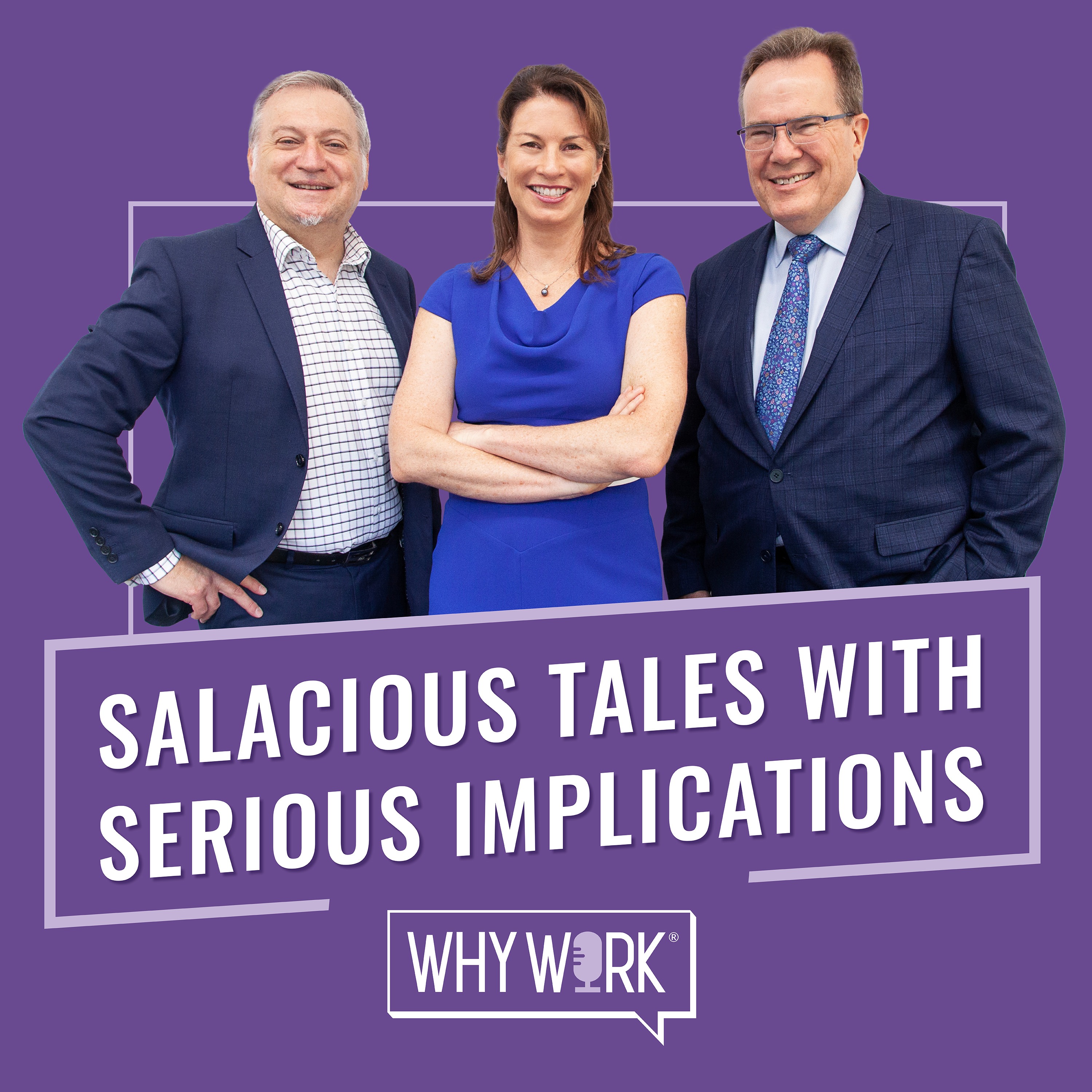
S10 Special-Release Bonus: Early Intervention Under Cross Examination – Band-Aids, Bureaucracy, and Better Design
bonusES10 Special-Release Bonus: Early Intervention Under Cross Examination – Band-Aids, Bureaucracy, and Better DesignWelcome to this special episode release recording during the launch of the Phoenix Occupational Medicine Early Intervention Done Right Symposium 2026. This episode promises nudity, sex, drugs, and almost rock & roll. The WhyWork Podcast - Alan Girle, Trajce Cvetkovski, and Sara Pazell - examine both serious and salacious work-related tales. The flagrant disregard for the law, mishaps, and egregious failures, capture our imagination. This episode discusses invisible, hidden hazards, like dust exposures, nudity as a workplace norm, and recreational drug use intersecting with work readiness tests. The target audience for this show centres on occupational rehabilitation providers, medical teams, and operational leaders. Tune in if your work makes you confront nudity, recreational drug use, or health and safety standards.For more on the team's discussion of a dusty scneario, refer to this NSW Dust Diseases Tribunal Worker's Compensation case law:Bennett v Workers Compensation Nominal Insurer and Ors [2025] NSWDDT 5
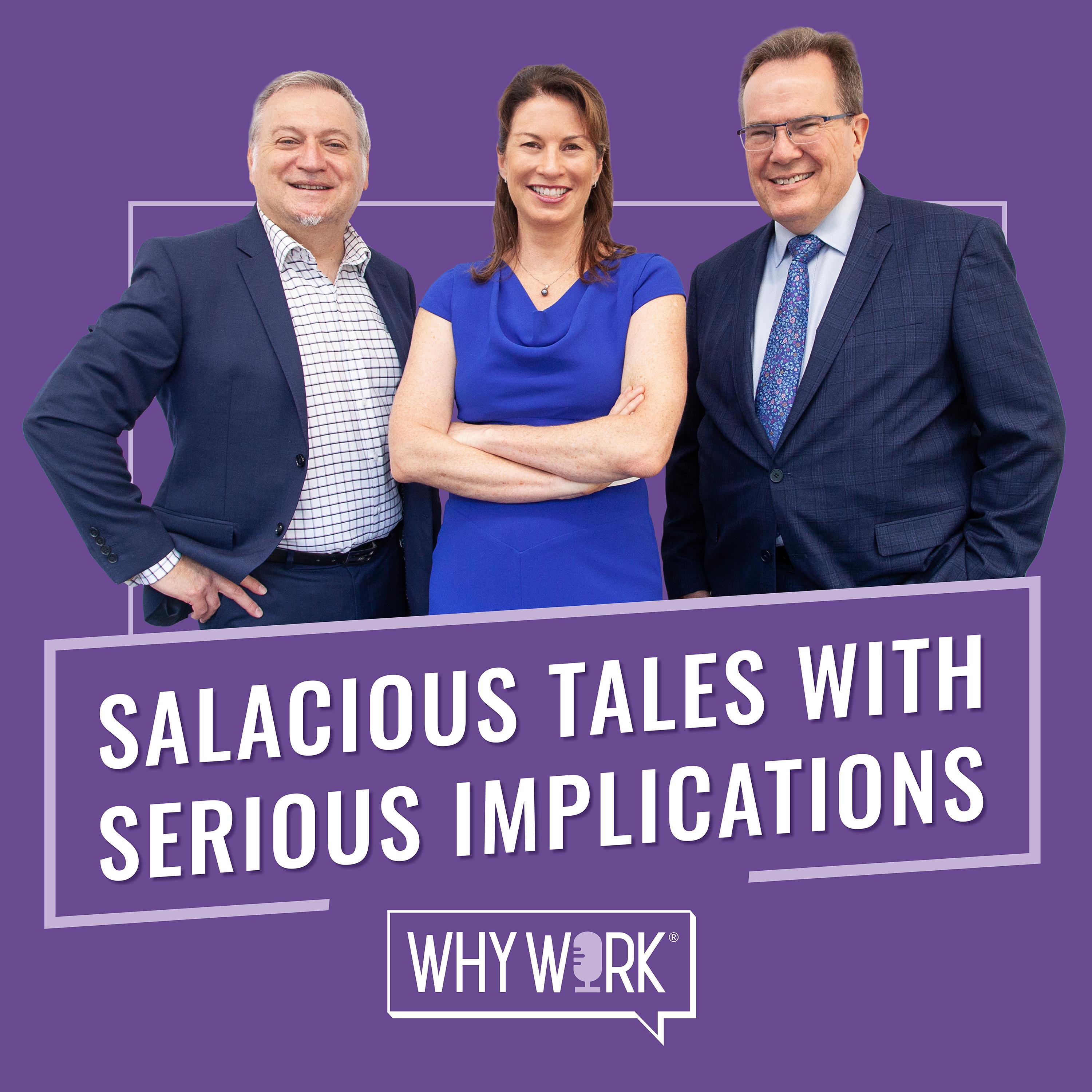
S10: Early Intervention Done Right: Special Release Trailer 03
trailerEThe second trailer for the Launch of the Phoenix Occupational Medicine Early Intervention Done Right Symposium 2026 - Special Episode Release - promising nudity, sex, drugs, and almost rock & roll. Of course, Sara must shamelessly promote the podcast - voluntarily recorded, produced, and promoted - listen in, subscribe, download, and submit your 5-star rating to keep the @WhyWorkPodcast in the charts!
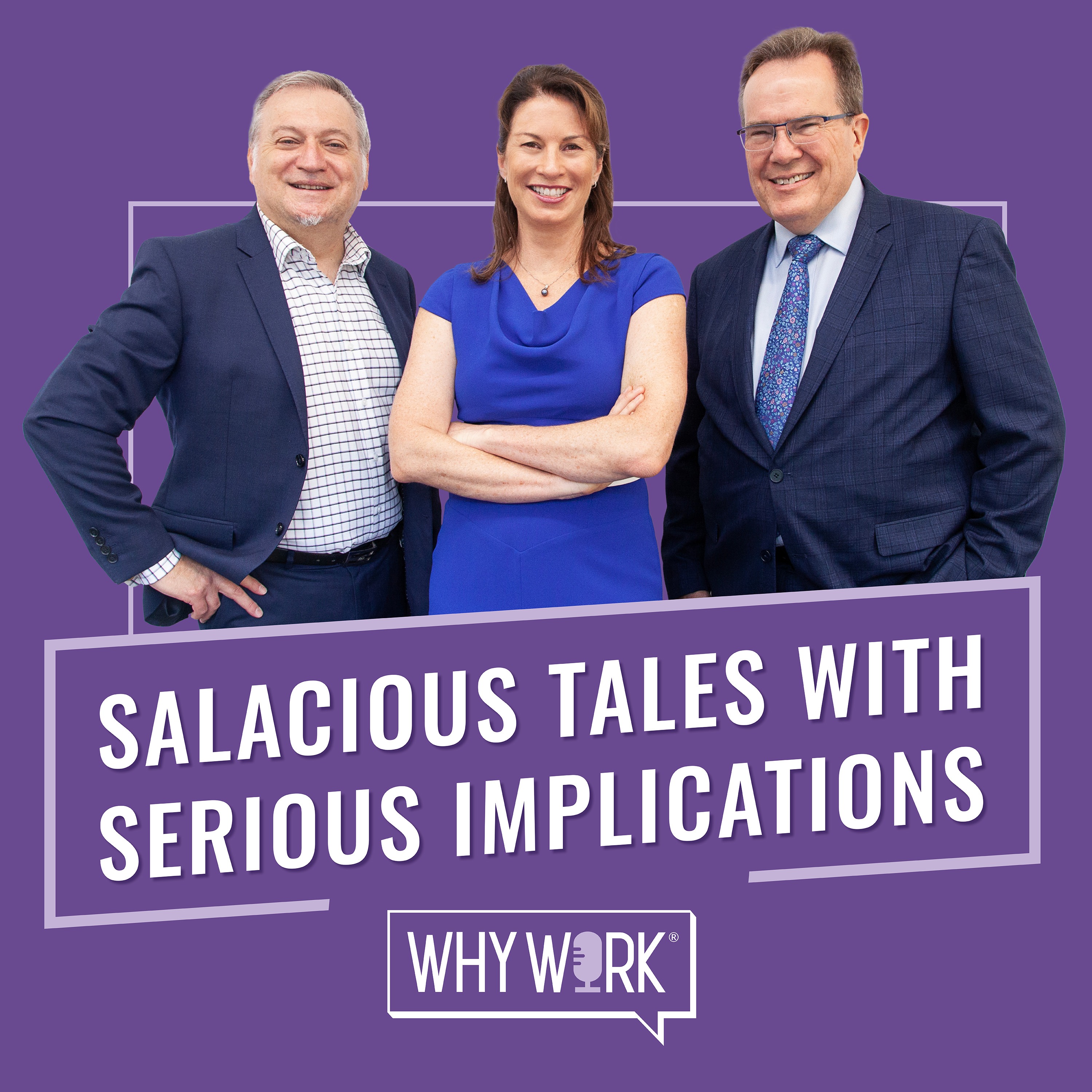
S10: Early Intervention Done Right: Special Release Trailer 02
trailerEThe second trailer for the Launch of the Phoenix Occupational Medicine Early Intervention Done Right Symposium 2026 - Special Episode Release - promising nudity, sex, drugs, and almost rock & roll.
S10: Early Intervention Done Right: Special Release Trailer 01
trailerThe first trailer for the Launch of the Phoenix Occupational Medicine Early Intervention Done Right Symposium 2026 - Special Episode Release.
S10: Special-Release Bonus: How Far Would You Go For a Workmate? Part 3
bonusES10: Special-Release Bonus: How Far Would You Go For a Workmate? Part 3WARNING: This episode discusses the difficult journey of organ donation, which may confront some listeners – we urge listener discretion before tuning in to this special three-part series.In this deeply personal and provocative three-part special, Sara, Trajce, and Alan traverse beyond the usual boundaries of work dynamics leading to work health and safety case law. They enter the territory in which values, courage, relationships, healthcare institutions, and government frameworks intersect in messy fashion.In the latter episodes, the series is joined by Clinton “CJ” Harding, the kidney recipient, whose presence reframes the experience from sacrifice to shared humanity. Together, they explore what it really means to care at work, in friendship, and in life when the stakes are life and death – very real.After all the confrontations of poor service design in the public healthcare setting, Sara would still do it again if tested on repeat. “That’s not really an option, now,” jokes Trajce.This series invites listeners to reflect:What do we owe one another at work in life?How do organisations respond when employees make values-based decisions that don’t fit neat policy boxes?And how far would you go for a workmate?If this series prompts questions or curiosity about organ donation, we strongly encourage you to visit DonateLife and speak with your state or territory kidney transplant centre.For more healthcare insights, check out 'Healthcare Insights: The Voice of the Consumer, the Practitioner, and the Work Design Strategist.'
S10: Special-Release Bonus: How Far Would You Go For a Workmate? Part 2
bonusES10: Special-Release Bonus: How Far Would You Go For a Workmate? Part 2WARNING: This episode discusses the difficult journey of organ donation, which may confront some listeners – we urge listener discretion before tuning in to this special three-part series.In this deeply personal and provocative three-part special, Sara, Trajce, and Alan traverse beyond the usual boundaries of work dynamics leading to work health and safety case law. They enter the territory in which values, courage, relationships, healthcare institutions, and government frameworks intersect in messy fashion. Also, in this episode, the podcast crew invite discussion by special guest, Clinton "CJ" Harding, the organ donor recipient.At the heart of the series is Sara’s experience as a living kidney donor and CJ's opportunity to marvel at transitioning from accepting then moving from death's edge to a second lease on life. Sara reviews her nine-month decision-making journey that tested her resolve and made her confront both her values and capabilities. Unexpectedly, her decision confronted many of her friends, colleagues, and family, while testing the institutions, providers, and government support designed to support people through extraordinary choices.This series doesn’t romanticise donation. It sits honestly with the discomfort:Being confronted by strong opinions and projected fears,Navigating a public hospital system under strain,Discovering the near absence of employer, insurer, or structural financial support,And learning, sometimes the hard way, who can hold space, and who cannot.Sara laments the challenges she faced, unexpectedly, beyond her immediate biological and psychological sphere of live organ donation - the impositions that others placed upon her when projecting their own fears.If this series prompts questions or curiosity about organ donation, we strongly encourage you to visit DonateLife and speak with your state or territory kidney transplant centre.For more healthcare insights, check out 'Healthcare Insights: The Voice of the Consumer, the Practitioner, and the Work Design Strategist.'