
whistlekick Martial Arts Radio
1,228 episodes — Page 5 of 25
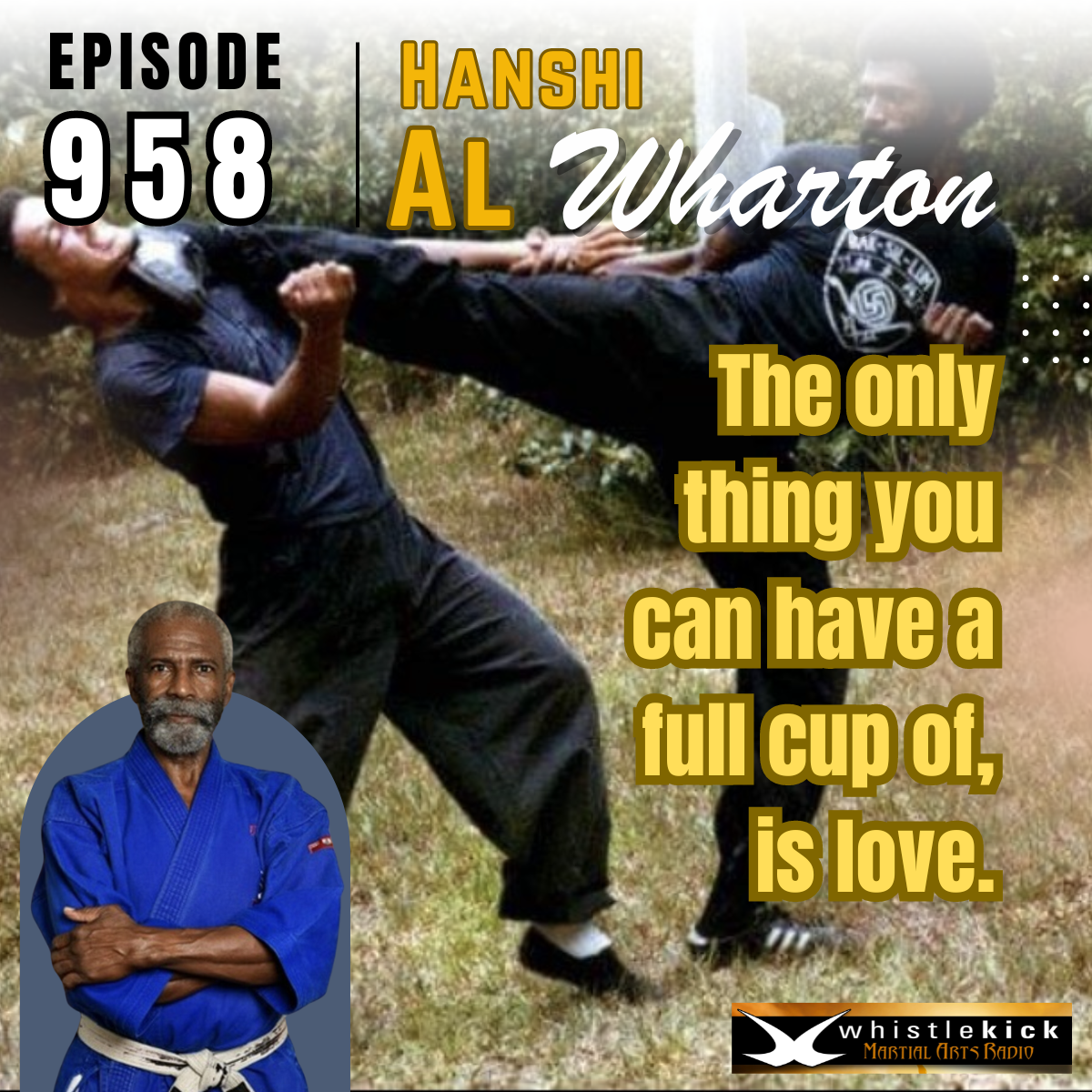
Episode 958 - Hanshi Al Wharton
SUMMARY In this episode of Whistlekick Martial Arts Radio, host Jeremy engages with Hanshi Al Wharton, exploring his extensive martial arts journey that began in the late 1960s. They discuss the evolution of martial arts training, the importance of commitment, and the blending of different styles. Hanshi Wharton shares insights on equity within martial arts, the impact of tournaments, and the significance of teaching with love. The conversation emphasizes the importance of basics, maintaining enthusiasm, and the philosophical aspects of martial arts training, including the metaphor of the mountain and the distinction between conviction and convenience. TAKEAWAYS · Martial arts is a journey of continuous learning and growth. · Equity in martial arts creates a wholesome environment for practitioners. · Commitment to training can lead to profound personal development. · Different martial arts styles can complement each other when blended thoughtfully. · Teaching with love enhances the learning experience for students. · Basics are essential for building a strong foundation in martial arts. · Maintaining a beginner's mind allows for ongoing discovery and insight. · Conviction in training leads to deeper understanding and fulfillment. · Tournaments can foster community and awareness among different martial arts schools. · The metaphor of the mountain illustrates the diverse paths in martial arts.
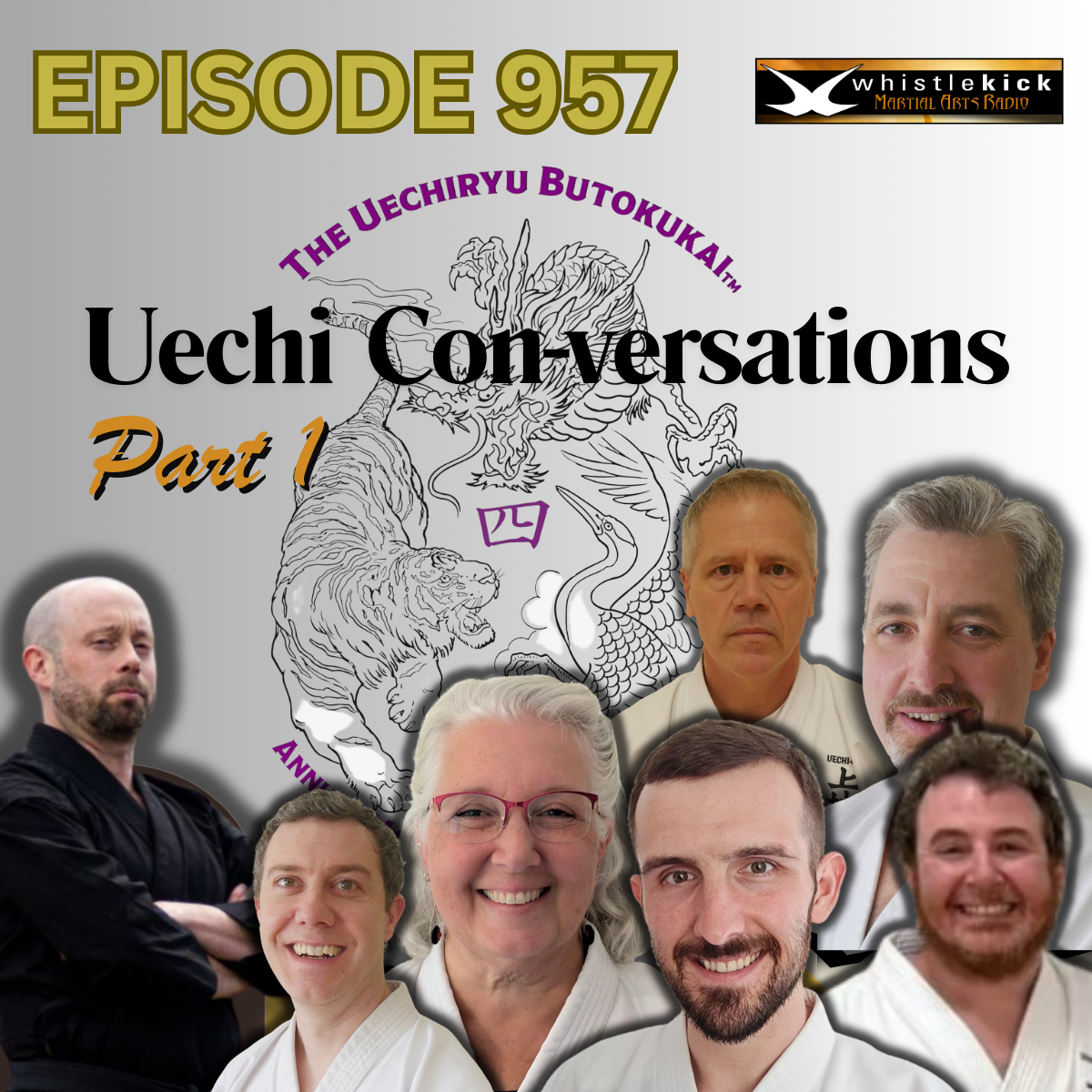
Episode 957 - Uechi Con-versations Part 1
SUMMARY This conversation explores the profound impact of martial arts on personal growth, emotional resilience, and community building. Participants share their experiences with testing for advanced ranks, the emotional journey involved, and how martial arts has shaped their lives beyond the dojo. The discussion highlights the importance of mindset, integrity, and leadership skills developed through training, as well as the joy and fulfillment that comes from pursuing martial arts as a lifelong journey. TAKEAWAYS The journey in martial arts is about personal stories and shared experiences. Testing for advanced ranks brings a mix of nerves and excitement. Emotional growth is a significant part of the martial arts journey. Mindset plays a crucial role in performance during tests. Stress management is a key skill learned through martial arts training. Martial arts is not just a practice; it's a lifestyle. Authenticity and community are vital in the martial arts world. Integrity is essential in both martial arts and personal life. Leadership skills gained from martial arts training are applicable in various fields. Martial arts fosters resilience and the ability to overcome challenges.

Episode 956 - Mrs. Jay Schindler
SUMMARY In this conversation Jay Schindler discusses her experiences in martial arts, including her journey from ballet to martial arts and her TikTok videos recreating martial arts moves. She also talks about the mental and physical challenges of martial arts, the importance of delayed gratification, and the sense of community among martial artists. She shares her background and thoughts on the differences between Tang Soo Do and Soo Bahk Do, the history of these martial arts styles, and how the emphasis on techniques in Soo Bahk Do has shaped her training. She also touches on the spiritual aspect of martial arts and the different approaches to training in traditional martial arts and sport-focused Tae Kwon Do. She explains why she continues to train in martial arts, highlighting the sense of community and personal growth it provides. Lastly, she discusses the challenges she has faced as a female martial artist and the importance of supporting and uplifting each other in the martial arts community. TAKEAWAYS * Martial arts can be mentally and physically challenging, but it also provides a sense of community and personal growth. * Delayed gratification is an important aspect of martial arts, as progress takes time and effort. * Different martial arts styles have different approaches, with traditional martial arts focusing on the spiritual aspect and sport-focused styles like Tae Kwon Do emphasizing competition. * The history of martial arts is rich and diverse, with different styles originating from various countries and cultures. * Martial arts can be a transformative experience, helping individuals develop discipline, confidence, and physical fitness. * Effective movement in martial arts involves a balance of power and softness. * The martial arts community is a supportive and compassionate space. * Female martial artists often face unique challenges and should be uplifted and supported.To contact Jay Schindler: Instagram: @jgirlcook TikTok: @jgirlcook YouTube: @jgirlcook

Episode 955: Eizo Shimabukuro: The Legacy
SUMMARY This conversation explores the life and legacy of Osensei Eizo Shimabukuro, a significant figure in martial arts, particularly Shorin Ryu karate. The discussion features insights from Grandmaster Bill "Superfoot" Wallace and Sensei Darryl Baleshiski, who share their personal experiences training under Shimabukuro and reflect on the evolution of martial arts techniques and philosophies over the decades. The conversation highlights the importance of teaching, the impact of instructors, and memorable moments that shaped their martial arts journeys. TAKEAWAYS Eizo Shimabukuro was a pivotal figure in martial arts history. Training with Osensei was a rigorous and traditional experience. The evolution of martial arts techniques has changed significantly over the years. Personal connections with instructors can deeply impact one's martial arts journey. The importance of adapting techniques to individual needs in training. Memorable moments with Osensei often revolve around personal interactions and lessons. Teaching is about sharing ideas and techniques that resonate with students. Respect and tradition are core values in martial arts training. The legacy of martial arts instructors lives on through their students. Martial arts training can provide a sense of purpose and community Song Lyrics can be found at www.whistlekickmartialartsradio.com/blog/955-eizo-shimabukuro-legacy
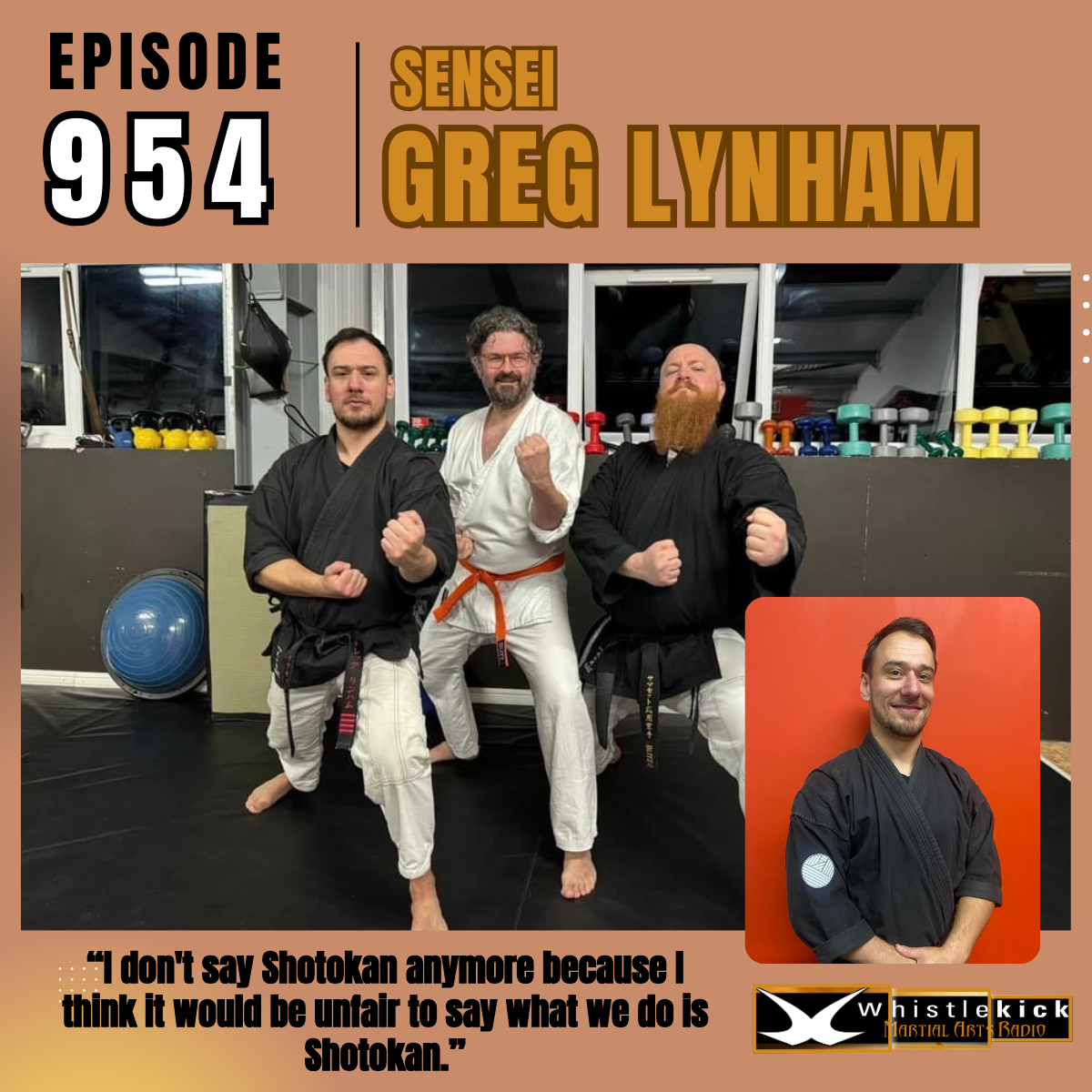
Episode 954 - Greg Lynham
SUMMARY In this episode, Jeremy is joined by Greg Lynham to discuss his journey in martial arts. They talk about how Greg got started in martial arts, the transition from traditional martial arts to MMA and jiu-jitsu, and the changes in his training approach. They also touch on the importance of kata, the benefits of sparring, and the use of the makiwara. In this conversation, Greg Lynham discusses his approach to martial arts training and teaching. He talks about his preference for orthodox sparring and the importance of balance and technique. Greg also shares his teaching style, which focuses on fast-paced, game-based classes that allow students to learn by doing. He emphasizes the importance of creating a friendly and lighthearted atmosphere in his classes. Greg also talks about his podcast, Conversations on Karate, and how it started as a way to answer questions from his training partner. He shares his plans for the future, including teaching seminars and courses, and his passion for drawing and artwork. TAKEAWAYS * Greg's martial arts journey started when he was seven years old after watching the Power Rangers. * He initially focused on kata and later transitioned to MMA and jiu-jitsu. * His training approach has become more pragmatic, focusing on live drills and sparring. * Greg still appreciates the value of kata but sees it more as a form of movement and meditation. * He emphasizes the importance of applying techniques in live training and refining them through sparring. * Greg has recently started using the makiwara as a tool for precision and balance in striking. * Orthodox sparring can be effective, but it's important to be adaptable and switch between dominant and non-dominant hands. * Fast-paced, game-based classes can help students learn by doing and improve their skills more quickly. * Creating a friendly and lighthearted atmosphere in martial arts classes can make training more enjoyable and help students feel comfortable. * Podcasts can be a great way to share knowledge and connect with others in the martial arts community. * Teaching seminars and courses can be a valuable opportunity to share expertise and learn from others. *Engaging in creative hobbies, such as drawing, can provide a balance to martial arts training and offer a different outlet for self-expression.

Episode 953 - Does Martial Arts Energy Have Relevance Today
SUMMARY In this episode, Hayashi Tomio discusses his journey of discovering and understanding the concept of Qi in martial arts. He shares his personal experience of realizing the existence of Qi during a training session and how it sparked a 30-year investigation into the practical application of Qi in traditional martial arts. Hayashi Tomio emphasizes the importance of understanding and harnessing Qi in martial arts training and explains how it can enhance strength and technique. He also highlights the significance of proper body alignment, breathing, and relaxation in cultivating and utilizing Qi. He explains that our bodies project an energy field, known as the subtle energy body or chi, which can be manipulated to enhance physical strength and performance. Hayashi emphasizes the importance of proper technique and body alignment in activating this energy field. He also explores the connection between the energy field and the mind, highlighting the role of mental control in harnessing the power of subtle energy. Hayashi shares insights from his book, 'Kiko: Hidden Power Electric Moves,' which delves deeper into these concepts and provides practical guidance for martial artists. TAKEAWAYS Understanding and harnessing Qi can enhance strength and technique in martial arts. Proper body alignment, breathing, and relaxation are essential in cultivating and utilizing Qi. The katas in traditional martial arts contain bio-energetic techniques that are often overlooked or misunderstood. There is a need for more practical and grounded education about Qi in Western martial arts culture. Qi is not in contention with biomechanics but can complement and enhance it. Our bodies project an energy field known as the subtle energy body or chi. Proper technique and body alignment can activate and enhance the energy field. Mental control plays a crucial role in harnessing the power of subtle energy. Hayashi's book, 'Kiko Hidden Power Electric Moves,' provides practical guidance for martial artists.
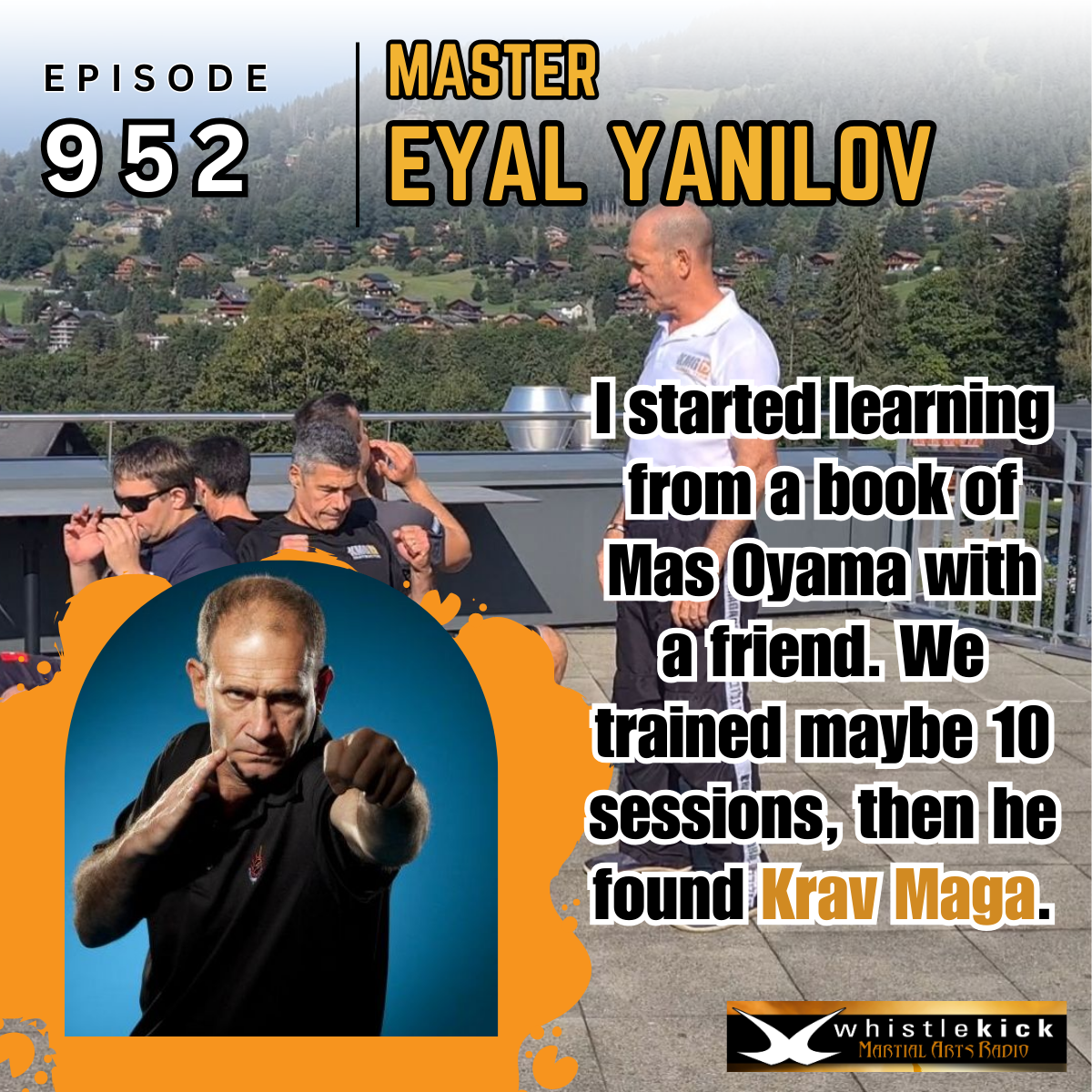
Episode 952 - Master Eyal Yanilov
SUMMARY In this episode of Whistlekick Martial Arts Radio, Jeremy interviewsMaster Eyal Yanilov, the head instructor of Krav Maga Global. Eyal discusses the evolution of Krav Maga and how it has become a comprehensive system that incorporates self-defense, combat, and fighting techniques. He explains the importance of principles, variations, and tactics in Krav Maga training. Eyal also shares his journey from being an electrical engineer to dedicating his life to spreading Krav Maga globally. He emphasizes the sacrifices and coincidences that led him to his mission. Throughout the conversation, Eyal highlights the unique aspects of Krav Maga and its practical applications in real-life situations. He emphasizes the importance of dealing with reality and understanding the nature of the aggressor. Yanilov also addresses the issue of fake Krav Maga instructors and the need for proper training and teaching methods. He highlights the value of faith, trust, and belief in oneself in martial arts and in life. TAKEAWAYS • Krav Maga is a comprehensive system that includes self-defense, combat, and fighting techniques. • The evolution of Krav Maga involved the development of principles, variations, and tactics. • Krav Maga is known for its practical applications in real-life situations. • Krav Maga was developed to protect Jewish communities from anti-Semitic attacks. • The system emphasizes dealing with reality and understanding the nature of the aggressor. • There are fake Krav Maga instructors who teach incorrect techniques and tarnish the system's reputation. • Proper training and teaching methods are essential for effective self-defense. • Faith, trust, and belief in oneself are important in martial arts and in life.

Episode 951 - Team Paul Mitchell
SUMMARY Chris Rappold discusses his relationship with Team John Paul Mitchell and the culture of the team. He shares how he got involved with the team and the regional competition scene in New England. Chris emphasizes the importance of the team mentality and the concept of 'we before me' within the team. He also talks about the confusion surrounding the names Paul Mitchell and John Paul Mitchell and how the team remains a part of John Paul Mitchell Systems. TAKEAWAYS The team mentality and the concept of 'we before me' are crucial in Team John Paul Mitchell. The team's success is attributed to the selflessness and dedication of its members. The team has a strong culture of celebrating team successes and supporting each other. The team's legacy and impact extend beyond martial arts, with the creation of trading cards and a monopoly game. The confusion between Paul Mitchell and John Paul Mitchell is clarified, with John Paul Mitchell being the co-founder of the company and the team's sponsor.

Episode 950 - Master Chris Rappold
SUMMARY In this conversation, Jeremy Lesniak is joined by Master Chris Rappold and he discuss the impact of martial arts training on individuals and families. Master Rappold talks about the power of martial arts to change lives and the joy of seeing students bring their own children to train. He also discusses the importance of creating a family atmosphere in martial arts schools and the benefits of teaching personal development alongside physical techniques. Master Rappold shares his journey of starting his own school and the challenges and successes he experienced. He also touches on the topics of progressive resistance, effort and results, and the value of acknowledging students' efforts. In this conversation, Master Rappold and Jeremy discuss the importance of setting goals, embracing failure, and continuously learning in martial arts and life. He shares personal stories and insights from his experiences in competition and training. The conversation highlights the value of perseverance, self-discipline, and the pursuit of excellence. Master Rappold emphasizes the need to set tangible goals and celebrate successes along the way, while Jeremy emphasizes the importance of embracing discomfort and continuous growth. They also express admiration for martial artists who constantly seek new challenges and opportunities for improvement. TAKEAWAYS * Martial arts training can have a profound impact on individuals and families, shaping character and providing valuable life lessons. * Creating a family atmosphere in martial arts schools can foster a sense of community and connection among students. * Teaching personal development alongside physical techniques can enhance the benefits of martial arts training. * Starting a martial arts school requires passion, perseverance, and a willingness to learn from others. * Acknowledging students' efforts and providing progressive resistance can help build confidence and develop important life skills. Setting tangible goals and celebrating successes along the way is important for growth and progress. * Embracing failure and learning from it is a valuable lesson in martial arts and life. * Continuous learning and seeking new challenges are essential for personal and professional growth. * Perseverance and self-discipline are key qualities in martial arts and achieving success. * The pursuit of excellence requires embracing discomfort and continuously pushing oneself to improve.

Episode 949 - Ins and Outs of Cross Training
SUMMARY In this episode, Andrew Adams, Mark Warner, and Craig Wharem discuss the ins and outs of cross training in martial arts. They highlight the benefits of cross training, such as expanding knowledge and skills, making connections with other martial artists, and gaining a fresh perspective on one's own art. They also mention the importance of having an open mind, setting goals, and communicating with instructors. The downsides of cross training are also discussed, including potential financial costs and the need for beginners to establish a solid foundation before exploring other arts. TAKEAWAYS * Cross training in martial arts can expand knowledge and skills, provide fresh perspectives, and make connections with other martial artists. * Having an open mind and being willing to learn from different styles is crucial for successful cross training. * Setting clear goals and communicating with instructors can help guide the cross training process. * Financial costs and the need for beginners to establish a solid foundation before exploring other arts are potential downsides of cross training.

Episode 948 - Sensei Karen Guarino
SUMMARY The conversation covers various topics including Sensei Karen Guarino's background in martial arts, her experience working at a nature center and zoo, and her return to martial arts after a 16-year hiatus. She discusses the impact of martial arts on her confidence and ability to perform on stage. She also shares her love for animals and her work as a zookeeper. The conversation highlights the importance of networking and building relationships in professional development. Karen shares her journey from being a zookeeper to becoming a martial arts instructor and opening her own school. She talks about the confidence and willingness she gained from her martial arts training, which helped her embrace intimidating experiences. Karen also discusses her love for teaching and working with children, and her dream of combining her zookeeping and teaching skills. She shares her experience of starting a toddler program and the joy she finds in teaching martial arts with her husband. Karen's ultimate goal is to have a martial arts school with a small zoo where people can learn and interact with animals. TAKEAWAYS * Martial arts can have a profound impact on confidence and performance in other areas of life. * Networking and building relationships are crucial for professional development. * Passions and interests can evolve over time, and it's never too late to pursue them. * Working with animals can be both challenging and rewarding. * Taking breaks and exploring different career paths can lead to new opportunities and personal growth. Martial arts training can give you the confidence to embrace intimidating experiences. * Teaching martial arts and working with children can be incredibly fulfilling. * Combining different passions, such as zookeeping and teaching, can lead to unique and exciting opportunities. * Opening a martial arts school requires dedication, hard work, and a love for teaching. * Having a supportive partner can make pursuing your dreams even more rewarding.

Episode 947 - Opening a New School
SUMMARY In this conversation, Andrew Adams, Nick Taber, and Gregory Williams discuss the process of opening a new martial arts school. They share their personal experiences and motivations for starting their own schools, as well as the challenges they faced. In this conversation, Andrew, Greg, and Nick discuss the challenges of starting a martial arts school and share their experiences and insights. They cover topics such as insurance and liability, marketing and getting students, finding a location and the importance of community engagement. The hosts also mention the importance of teaching and how it can enhance their own martial arts journey. They also mention the Whistlekick Alliance program as a resource for martial arts school owners. Overall, they emphasize the need for careful planning, active promotion, and a strong connection with the local community. TAKEAWAYS Opening a martial arts school requires careful consideration of factors such as location, insurance, and financial arrangements. Finding the right space for the school can be challenging, with factors like cost, availability, and suitability playing a role. Insurance is an important aspect to consider, as it can significantly impact the financial viability of the school. Deciding between a brick-and-mortar space and renting a facility depends on factors such as financial resources, long-term goals, and the local market. Teaching martial arts not only benefits students but also enhances the instructor's own martial arts journey. Consider insurance and liability protection for your martial arts school Word of mouth and social media can be effective marketing strategies Engage with the local community to promote your school Joining programs like Whistlekick Alliance can provide support and resources Maintain open communication and availability for your students
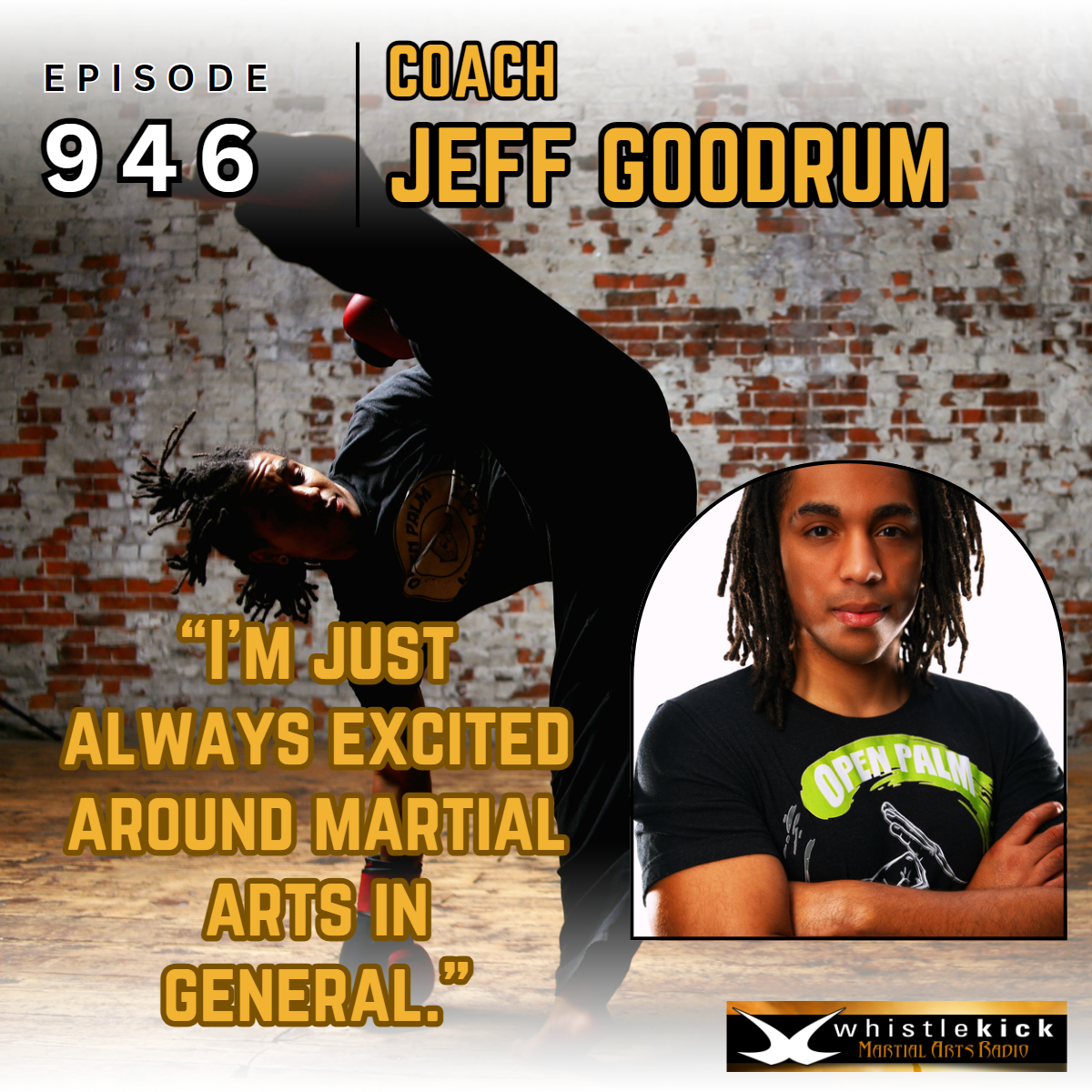
Episode 946 - Coach Jeff Goodrum
SUMMARY Jeremy chat with his guest, Coach Jeff Goodrum, and discusses his love for martial arts and the open-mindedness it brings. He talks about the importance of being a student and constantly learning, as well as the impact of his instructors and upbringing on his mindset. Coach Goodrum also touches on his experiences with fighting and the entertainment aspect of martial arts. He reflects on his journey through different martial arts styles and the influence of his father. He talks about his journey from being a college dropout to starting his own martial arts school and mentoring kids. He shares how his mother's support and his passion for music and martial arts motivated him. Coach Goodrum also discusses the importance of having a mentor and how he wants to be that mentor for kids who don't have a support system. He emphasizes the need for kids to have positive role models and learn how to be heroes in their own lives. He also talks about the challenges of formalizing his training program and the importance of continuous learning and self-improvement. He discusses the importance of seeking help and mentorship in business and martial arts. He highlights the benefits of working with the Small Business Development Center and emphasizes the value of learning from experienced individuals. Lastly, he also talks about the need for education and knowledge in entrepreneurship and the importance of finding a balance between different aspects of life. He shares his vision for his martial arts school and the impact he hopes to have on his students. Overall, the conversation explores themes of mentorship, education, personal growth, and community building. TAKEAWAYS * Martial arts fosters an open-mindedness and willingness to constantly learn and improve. * The influence of instructors and upbringing plays a significant role in shaping one's mindset. * Fighting can be both entertaining and a valuable learning experience. * Being a student and constantly seeking knowledge is important in martial arts and in life. * Following one's passion and making decisions based on personal fulfillment is crucial. Having a support system and a mentor can make a huge difference in a person's life. * Kids who don't have a support system need positive role models and mentors to guide them. * Formalizing a training program and starting a business can be challenging but rewarding. * Continuous learning and self-improvement are essential for personal and professional growth. Seeking help and mentorship is crucial for success in business and martial arts. * The Small Business Development Center offers valuable resources and support for small businesses. * Education and knowledge are essential for entrepreneurship. * Finding a balance between different aspects of life is important. * Martial arts can teach valuable life skills and help individuals cope with trauma. * Building a strong community is a key aspect of martial arts. * Being open to learning and seeking guidance from experienced individuals is beneficial in personal and professional growth.
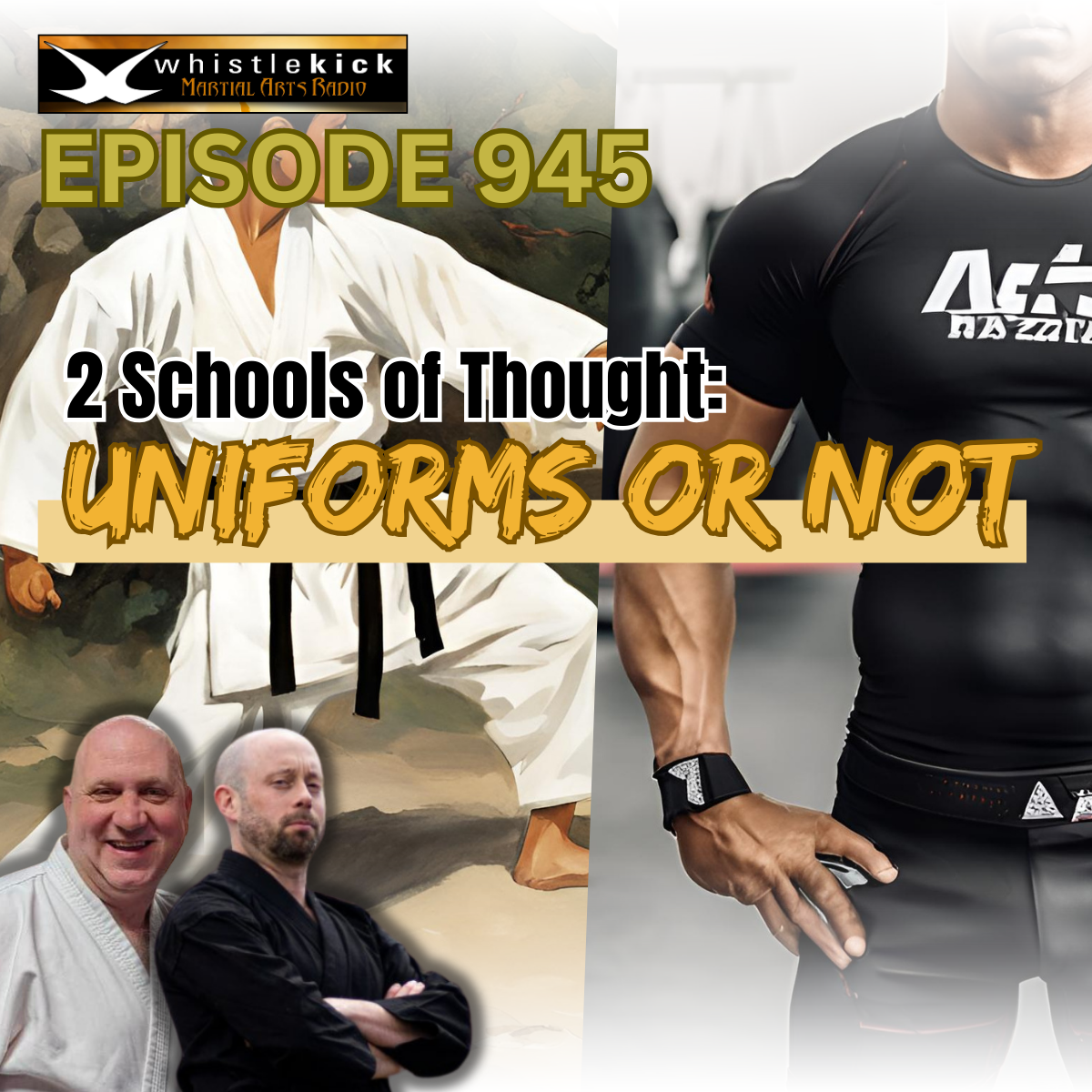
Episode 945 - 2 Schools of Thought: Uniforms or Not
SUMMARY In this episode, Jeremy and Andrew discuss the pros and cons of training in a traditional martial arts uniform versus something else. They explore the benefits of uniformity, such as setting behavior expectations and creating a sense of belonging. They also discuss the downsides, including the restriction of movement and the expense of purchasing multiple uniforms. Additionally, they touch on the importance of training in street clothes to understand the differences in mobility and footwear. Overall, they emphasize the importance of context and individual preference in choosing a training attire. TAKEAWAYS Wearing a traditional martial arts uniform can help set behavior expectations and create a sense of belonging. Training in a uniform can restrict movement and may not be practical for real-life self-defense situations. Training in street clothes is important to understand the differences in mobility and footwear. The expense of purchasing multiple uniforms can be a downside. Context and individual preference play a significant role in choosing a training attire.

Episode 944 - Wyatt Meriwether
SUMMARY In this conversation, Jeremy sits down with Wyatt Meriwether and discusses various topics including martial arts, strongman training, ballet, and the importance of consistency in training. They talk about the balance between flexibility and strength, the dangers of certain exercises, and the need for dedication and perseverance in achieving goals. Wyatt also touches on the challenges of being a performer and the impact of personal experiences on one's career choices. He talks about his journey from joining the military to becoming a modern Army combatives instructor. He shares his experiences in basic training, his decision to join the Marine Corps, and his eventual transition to the Army. He also discusses his time at the Defense Language Institute. Wyatt highlights the challenges and rewards of the program and the respect he gained from his superiors. Alongside his professional journey, he discovered a passion for strength sports, particularly strongman competitions. His love for the process and the challenge of getting stronger drives him in his pursuit of becoming a top-tier strongman. He also has a background in kinesiology and is interested in the intersection of ballet and martial arts. The conversation explores the relationship between structured movement disciplines like ballet and martial arts. It emphasizes the importance of understanding how the body moves and the benefits of diverse movement training. Wyatt shares his experience in ballet, martial arts, and circus training, highlighting the similarities and transferable skills between these disciplines. He encourages martial artists to explore other movement practices to enhance their skills and overall well-roundedness. TAKEAWAYS * Consistency and dedication are key in achieving success in any discipline. * There is a balance between flexibility and strength, and finding the right combination is important. * Certain exercises in strongman training and martial arts can be inherently dangerous, but with proper training and safety precautions, the risks can be minimized. * Personal experiences and childhood trauma can shape one's career choices and focus. * Embracing hard work and difficult challenges is necessary for growth and improvement. * He has overcome challenges related to alcohol and found solace and purpose in strength sports, particularly strongman competitions. * Wyatt's educational background in dance, healthcare, and public health has informed his professional pursuits and shaped his perspective on health and wellness. * Diverse movement training can enhance martial arts skills and improve overall performance. * Understanding proprioception and how the body moves in space is crucial for martial artists. * Non-combative movement practices like ballet, gymnastics, and acrobatics can provide valuable tools for martial artists. * Being a well-rounded practitioner involves exploring different movement disciplines and continuously learning and evolving.

Episode 943 - The Legacy we Leave Behind
SUMMARY The conversation (with Craig Wharem, Kellie Thomas, Mark Warner, Karen Guarino, Matt Nather, Victor Guarino) revolves around the topic of legacy in martial arts. The participants discuss what they hope to leave behind and what they want their students to take away from their teachings. They emphasize the importance of having fun, building self-confidence, and creating a sense of belonging. They also talk about the temporary nature of martial arts involvement and how to manage the emotions of students moving on. The participants share personal stories and insights on teaching from the heart and making a positive impact on students' lives. TAKEAWAYS * Legacy in martial arts is about leaving a positive impact on students' lives. * Having fun and not taking oneself too seriously is an important aspect of martial arts. * Building self-confidence and creating a sense of belonging are key goals in teaching martial arts. * Managing the emotions of students moving on is a challenge, but it's important to support and encourage them. * Teaching from the heart and making a positive impact on students' lives is crucial in martial arts.
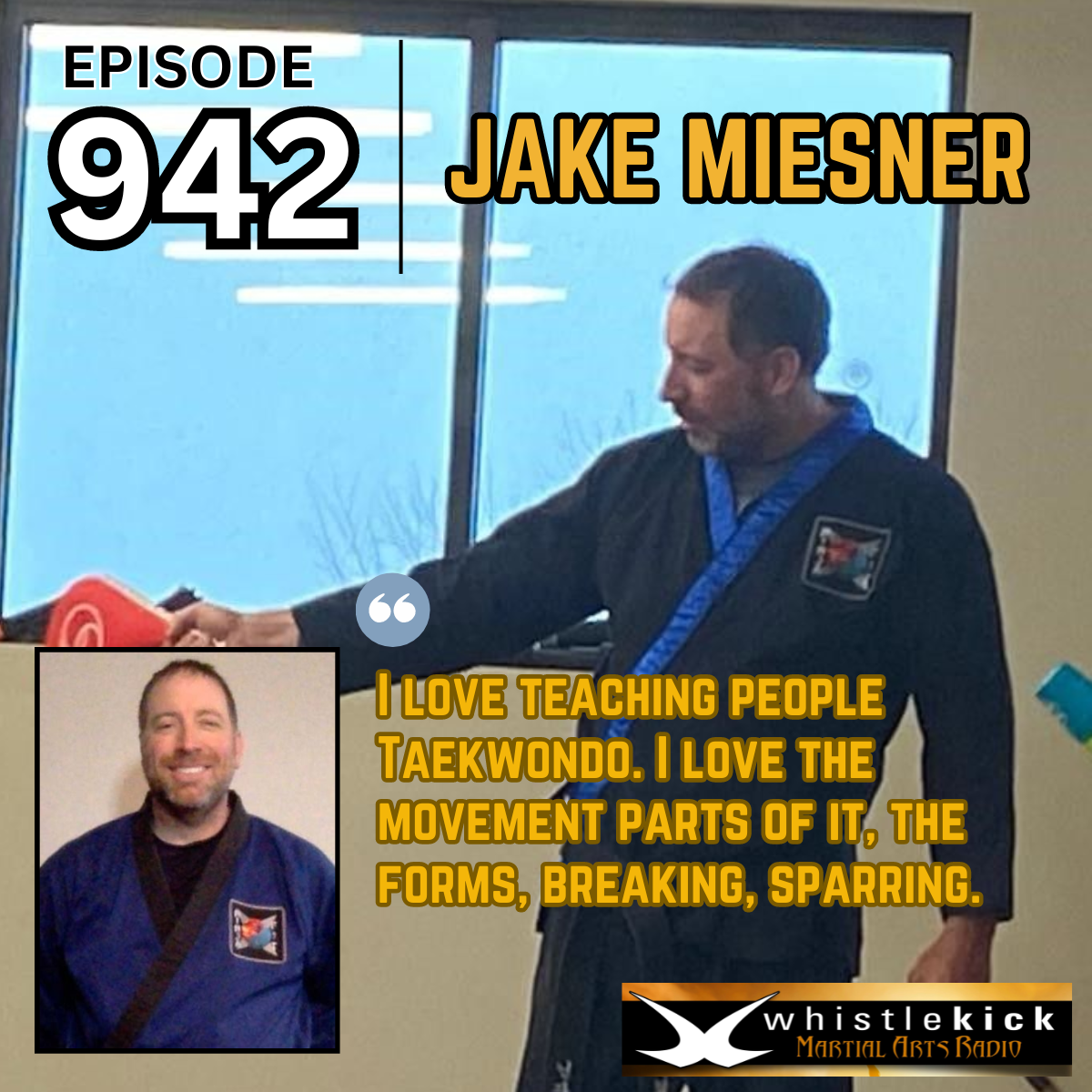
Episode 942 - Jake Miesner
SUMMARY Jeremy sits and chats with Jake Miesner after FTDMW in Kansas. Jake discusses his martial arts background and experiences. He shares his journey from starting martial arts to becoming a teacher and opening his own school. He emphasizes the importance of breaking down movements and keeping the learning process fun and simple. Jake talks about his transition from being a band director to starting his own martial arts school and the challenges he faced. They also discuss the business aspect of running a martial arts school and the need for growth and profitability. Roughly half of martial arts schools in the US are not profitable, but that doesn't mean they can't turn it around or that it's inherently wrong. It's okay to have a hobby that puts money in your pocket and brings you joy. Teaching martial arts and running a school require different skill sets, and it's important to recognize the value of both. Martial arts can provide physical and personal growth, and it can be beneficial for athletes in other sports as well. It's important to create a welcoming and inclusive environment for students and parents, and to involve parents in the training process. Assessments and subjective evaluations can help parents understand the progress their children are making. The goal is to create a sustainable business that allows for growth and expansion, while also prioritizing physical and mental well-being. TAKEAWAYS * Breaking down movements and keeping the learning process simple and fun is key to teaching martial arts effectively. * Transitioning from a different career to starting a martial arts school can be challenging but rewarding. * Having high expectations and holding students accountable is important for their growth and development. * Running a martial arts school requires a balance between passion for teaching and the need for profitability. * Success in martial arts and other disciplines often comes from breaking down complex skills into simple components and gradually building upon them. Roughly half of martial arts schools in the US are not profitable, but it's okay to have a hobby that brings in some income and brings joy. * Teaching martial arts and running a school require different skill sets, and it's important to recognize the value of both. * Martial arts can provide physical and personal growth, and it can be beneficial for athletes in other sports as well. * Involving parents in the training process and creating a welcoming environment can enhance the student experience. * Assessments and subjective evaluations can help parents understand the progress their children are making. * The goal is to create a sustainable business that allows for growth and expansion, while also prioritizing physical and mental well-being.
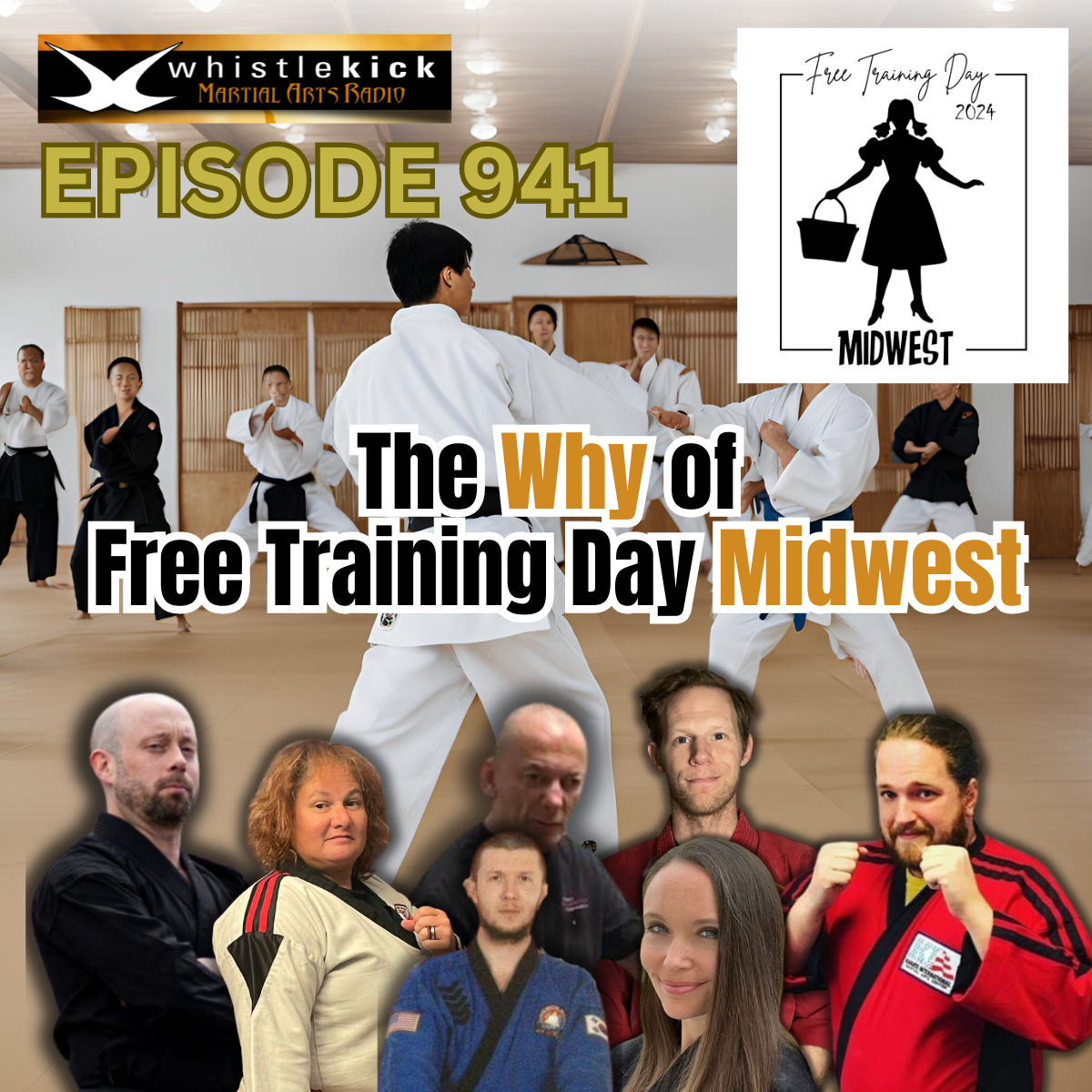
Episode 941 - The Why of Free Training Day Midwest
SUMMARY Jeremy chats with Victor and Karen Guarino, hosts of Free Training Day Midwest, as well as Craig Wharem, Kellie Thomas, Matt Nather, and Mark Warner; presenters that traveled to Kansas from the east coast. They discuss their experiences with free training days and the sense of community and support they provide. They talk about the importance of connecting with other martial artists and the value of being part of a tribe. They highlight the barriers that are removed during free training days, such as rank, title, and lineage, allowing for authentic connections and vulnerability. The participants express their gratitude for the Whistlekick events and the ego-free environment they create. TAKEAWAYS * Free training days provide a sense of community and support for martial artists. * Connecting with other martial artists and being part of a tribe is valuable. * Barriers such as rank, title, and lineage are removed during free training days, allowing for authentic connections. * Free training days create an ego-free environment where vulnerability and authenticity are encouraged.
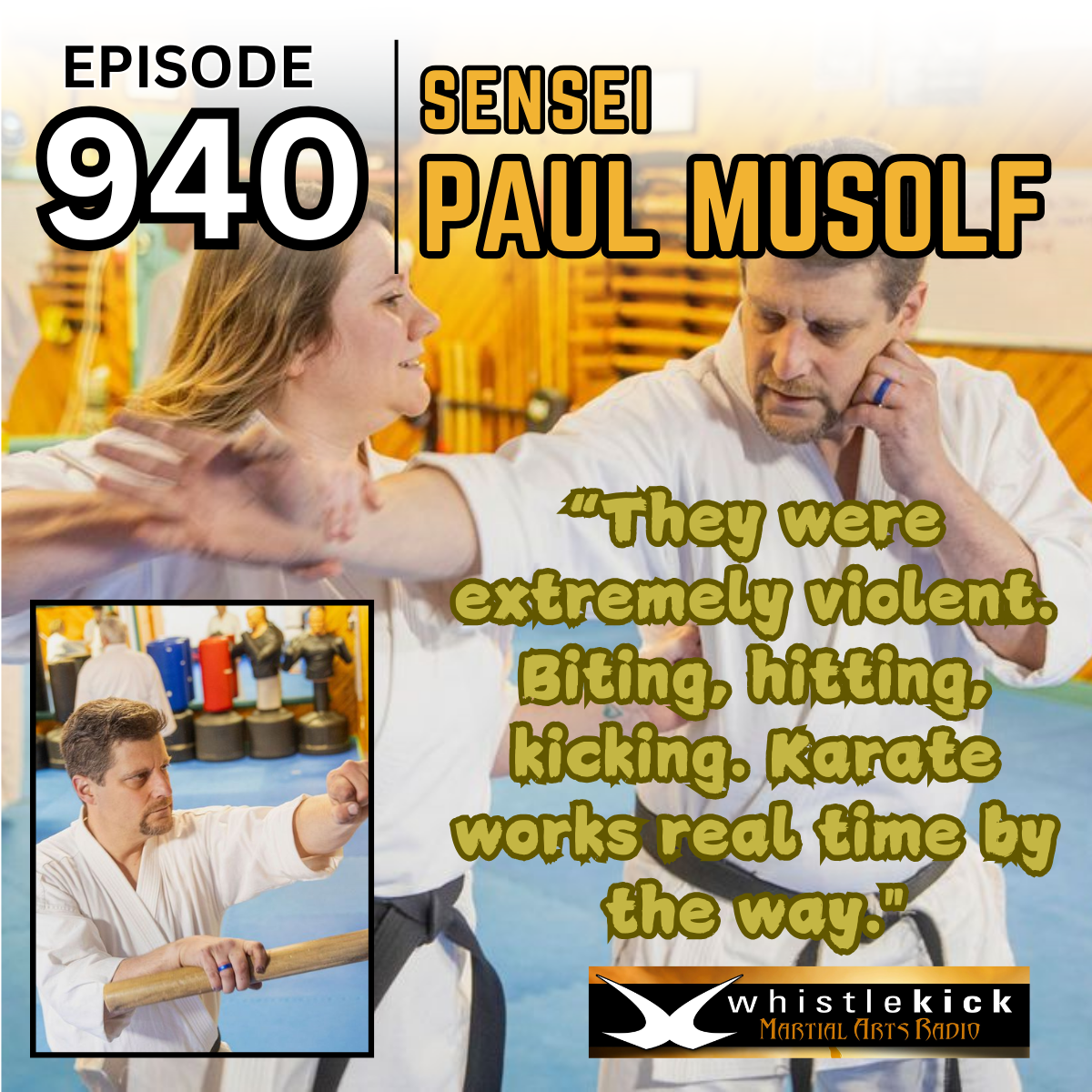
Episode 940 - Sensei Paul Musolf
SUMMARY In this episode, Jeremy is joined by Sensei Paul Musolf, a martial artist in Flushing, MI. They discuss Paul's background in teaching and his transition to working in the glass industry. Paul shares his experiences as a special education teacher and the challenges he faced in the classroom. He also talks about the impact of martial arts on his teaching and how it helps him show up as a better instructor. The conversation highlights the importance of resilience, perseverance, and finding balance in life. Sensei Musolf's journey into martial arts began when he quit smoking cigarettes and wanted to get healthy. He started taking karate classes and fell in love with it. His goal was to learn enough to be able to kick high and defend himself if necessary. He trained diligently and eventually earned his black belt in just over three years. His passion for martial arts led him to explore other styles and cross-train in different disciplines. He believes in a principle-based approach to martial arts and is open to learning from various sources. His dedication to his craft and his students is evident in his continuous pursuit of knowledge and improvement. In this part of the conversation, Sensei Musolf discusses his experience creating an instructional video on martial arts and the impact it has had. He also talks about his involvement in the nonprofit organization INKKS, which aims to provide a supportive environment for martial artists who don't have a teacher or a traditional organization to belong to. Additionally, he shares his work with Kitsune Defense, a nonprofit that focuses on helping victims of sexual assault and domestic violence regain their personal power through self-defense training. In this final part of the conversation, he discusses the INKKS organization and his upcoming seminar. TAKEAWAYS * Martial arts can be a valuable tool for dealing with life's challenges and finding balance. * Teaching martial arts requires energy and a positive attitude to uplift students. * Resilience and perseverance are essential qualities for both teachers and students. * Finding a balance between work and personal life is crucial for overall well-being. Paul Musolf's martial arts journey began when he quit smoking and wanted to get healthy. * He fell in love with karate and earned his black belt in just over three years. * Paul believes in a principle-based approach to martial arts and is open to learning from various sources. * He has cross-trained in different styles and disciplines to enhance his skills and knowledge. * Paul's dedication to continuous learning and improvement is evident in his commitment to his craft and his students. Paul Musolf created an instructional video on martial arts and has received positive feedback from various martial artists. * He is involved in the nonprofit organization INKKS, which provides a supportive environment for martial artists without a teacher or traditional organization. * Paul is also part of Kitsune Defense, a nonprofit that helps victims of sexual assault and domestic violence regain their personal power through self-defense training. * Confidence and body language play a significant role in self-defense, and martial arts training can help individuals project strength and deter potential attackers. The INKKS organization provides valuable resources for martial artists. Contact Sensei Musolf at: kitsunedefense@gmail .comINKKS .orgHeian karate Do/facebookPaul musolf/facebookPaul.musolf for instagram
Episode 939 - Ethics in Leadership
SUMMARY In this conversation, Jeremy and Brendan Wilson discuss the topic of leadership and its application in the martial arts. They explore the importance of creating an environment where people can do their best, the role of communication and vision in leadership, and the ethical decisions leaders face. They also touch on the concept of culture in martial arts schools and the responsibility of leaders to set the tone. The conversation highlights the challenges and responsibilities of leadership in both military and martial arts contexts. In this conversation, Brendan Wilson discusses his approach to safety and promotions in martial arts. He emphasizes the importance of creating a safe environment for students and setting high standards without humiliating them. He also shares his principles of Arête (excellence), Agon (struggle), Zenia (guest-host relationship), Techne (mechanism for delivering power), and Arche (foundation). Brendan also talks about his books, which aims to entertain and educate readers by presenting difficult decisions and ethical dilemmas. TAKEAWAYS * Leadership in martial arts involves creating an environment where people can do their best. * Communication and vision are crucial aspects of leadership. * Leaders face ethical decisions and must weigh conflicting responsibilities. * Culture plays a significant role in martial arts schools and influences student progress. * Leaders in martial arts have the responsibility to set the tone and create a positive learning environment. Create a safe environment for students in martial arts by setting high standards without humiliating them. * Emphasize the principles of excellence, struggle, guest-host relationship, power, and foundation in martial arts training. * Books can entertain and educate readers by presenting difficult decisions and ethical dilemmas. * Writing fiction allows for the exploration of complex scenarios and the development of characters that can teach valuable lessons.

Episode 938 - Matt Abrahams
SUMMARY In this conversation, Jeremy and Matt discuss the importance of communication in martial arts and in life. They explore how communication is a skill that can be improved and how it is essential for effective leadership. They also discuss the role of empathy in communication and how it helps in understanding others' perspectives. Matt shares his journey in martial arts, from starting at a young age to studying different styles and finding fulfillment in the practice. They highlight the connection between martial arts and communication as both being forms of language and expression. In this conversation, Jeremy and Matt discuss the intersection of martial arts and communication. They explore how teaching martial arts can improve communication skills, the importance of repetition, reflection, and feedback in both teaching and martial arts training, and the impact of martial arts on communication styles. They also touch on the role of discipline, the value of making mistakes, and the commonalities among successful martial artists and leaders. Matt shares his future plans for continuing to help people improve their communication skills and his dedication to martial arts training. TAKEAWAYS * Communication is a skill that can be improved and is essential for effective leadership. * Empathy plays a crucial role in communication, helping to understand others' perspectives. * Martial arts and communication are both forms of language and expression. * Studying different martial arts styles can enhance one's understanding and skills. * Teaching martial arts can be a fulfilling experience and helps in personal growth. Teaching martial arts can improve communication skills by enhancing repetition, reflection, and feedback. * Discipline and the ability to learn from mistakes are key traits in both martial arts and effective leadership. * Martial arts training can have a positive impact on communication styles, emphasizing the importance of presence, listening, and the effective use of space. * The goal of martial arts is not just physical mastery, but personal growth, self-improvement, and inspiring others. * The intersection of martial arts and communication offers valuable lessons for personal and professional development.
Episode 937 - Developing a Leadership Team
SUMMARY In this episode, Andrew Adams and Craig Wharem discuss the importance of developing a leadership team in martial arts schools. They emphasize the need for school owners to identify potential leaders early on and provide them with opportunities to grow and contribute. They also stress the importance of clear communication and setting expectations for the leadership team. Regular private meetings and outside training can help improve teaching skills and enhance the team's effectiveness. For students who want to become leaders, they recommend expressing their interest to the instructor and taking initiative to help out in various ways. TAKEAWAYS * Identify potential leaders early on and provide them with opportunities to grow and contribute * Clear communication and setting expectations are crucial for a successful leadership team * Regular private meetings and outside training can help improve teaching skills * Students who want to become leaders should express their interest to the instructor and take initiative to help out * Developing a leadership team is essential for the long-term success of martial arts schools

Episode 936 - Sensei Josh Hodges
SUMMARY In this conversation, Jeremy discusses with Sensei Josh Hodges his martial arts journeys and the importance of training and personal growth. Sensei Hodges touches on topics such as the value of effort and perseverance, the role of organizations in martial arts, and the need for individualization in training. He also explores the concept of mastery and the importance of personalizing one's martial arts practice. In this conversation, Sensei Hodges discusses the importance of principles in martial arts training and how they can be applied across different styles. He emphasizes the value of persistence and the idea that progress looks different for everyone. He also shares his experience of training independently and the challenges of balancing martial arts with other responsibilities. The conversation highlights the importance of finding what works for you and not comparing yourself to others. TAKEAWAYS * Effort and perseverance are key in martial arts training * Organizations can provide structure but may also limit individual growth * Mastery occurs outside the realm of memorization * Personalization and individualization are important in martial arts practice *Principles in martial arts are universal and can be applied across different styles and techniques. * Persistence is key in martial arts training, and progress looks different for everyone. * Training independently allows for flexibility and adapting to personal priorities and schedules. * Finding what works for you and not comparing yourself to others is important in martial arts and in life.

Episode 935 - 2 Schools of Thought: Forms in a Set Order?
SUMARRY In this conversation, Jeremy and Andrew discuss two schools of thought when it comes to teaching forms in martial arts. The first school of thought is teaching forms in a set order, where students learn one form after another in a predetermined sequence. The second school of thought is a rotating curriculum, where students focus on one form for a certain period of time before moving on to the next form. They explore the pros and cons of each approach and discuss the challenges of managing different levels of students in a class. TAKEAWAYS * There are two schools of thought when it comes to teaching forms in martial arts: a set order and a rotating curriculum. * A set order approach involves teaching forms in a predetermined sequence, while a rotating curriculum focuses on one form for a certain period of time before moving on to the next. * The set order approach ensures that students learn forms in a progressive manner, starting with easier forms and gradually progressing to more complex ones. * The rotating curriculum approach allows students to develop a deeper understanding and proficiency in a specific form by focusing on it for an extended period of time. * Managing different levels of students in a class can be challenging, especially when teaching forms. It requires finding a balance between meeting the needs of individual students and maintaining a cohesive class structure.

Episode 933 - The Value of Open Ended Drills
SUMMARY In this episode, Jeremy and Andrew discuss the value of open-ended training drills in martial arts. They explore how allowing students to contribute to drills and make decisions on the fly enhances their learning experience and fosters ownership and creativity. They also highlight the importance of experimentation and problem-solving in martial arts training. The hosts encourage instructors to provide opportunities for students to contribute and explore open-ended drills, ultimately leading to better understanding and skill development. TAKEAWAYS * Open-ended training drills in martial arts allow students to contribute and make decisions on the fly, enhancing their learning experience. * Allowing students to contribute to drills fosters ownership and creativity. * Experimentation and problem-solving are important aspects of martial arts training. * Instructors should provide opportunities for students to explore open-ended drills, leading to better understanding and skill development.
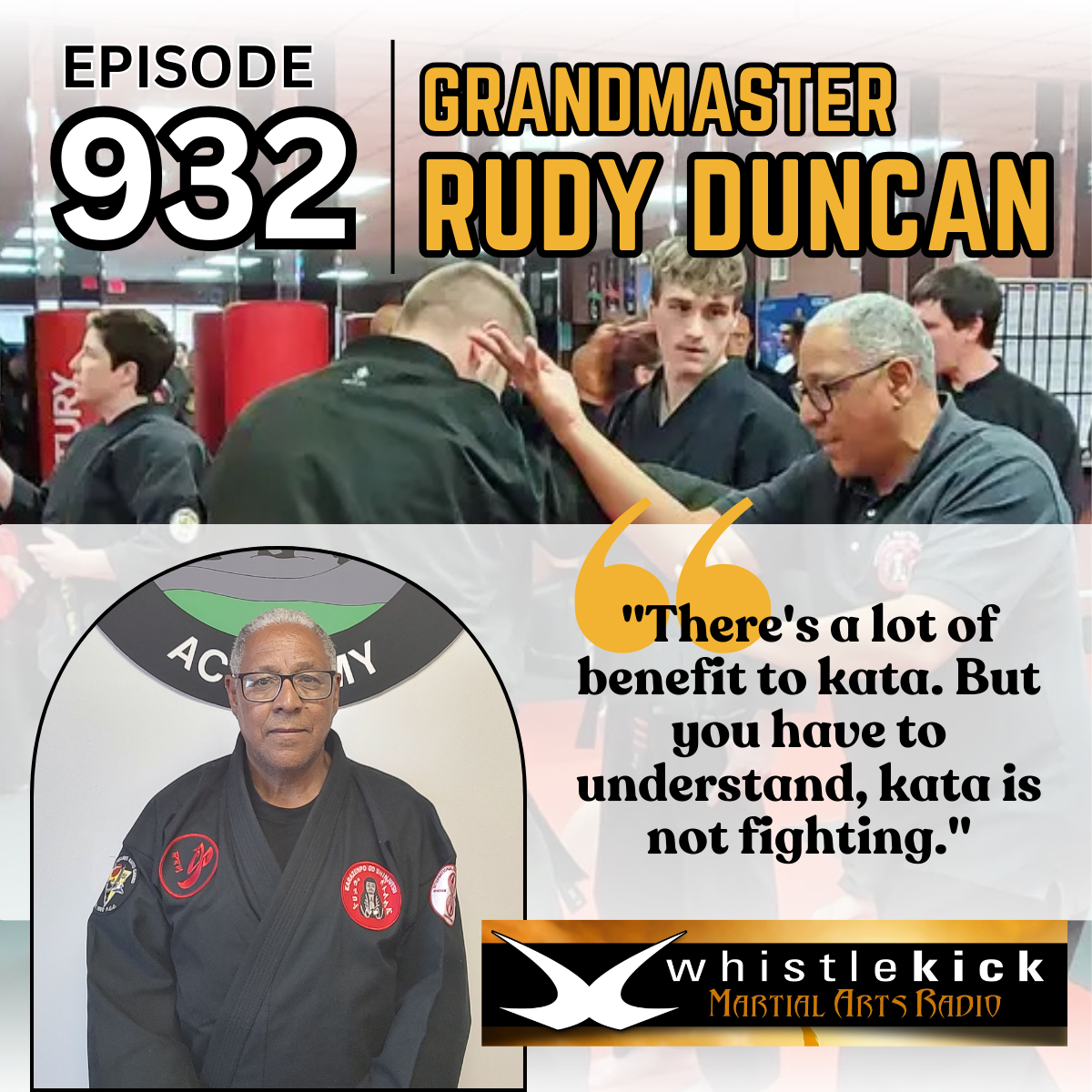
Episode 932 - Grandmaster Rudy Duncan
SUMMARY In this episode of Whistlekick Martial Arts Radio, Jeremy interviews Grandmaster Rudy Duncan. They discuss his martial arts journey, starting with his introduction to karate as a young boy and his transition to studying Goju and Kempo. Grandmaster Duncan emphasizes the importance of embracing different martial arts styles and cross-training to continue personal growth. They also touch on the significance of katas, the value of questioning and discussing techniques, and the evolving landscape of martial arts. In this conversation, Grandmaster Rudy Duncan shares his insights and experiences in martial arts. He discusses the evolution of martial arts training, emphasizing the importance of personal development and adapting to the changing times. He also talks about the importance of individuality in teaching and encourages instructors to find their own teaching style. He highlights the significance of building relationships with students and creating a positive learning environment. He also discusses the benefits of internal martial arts and the impact it has on external techniques. Overall, Rudy's approach to martial arts is focused on fun, learning, and personal growth. TAKEAWAYS * Embrace different martial arts styles and cross-train to continue personal growth. * Katas teach movement, proper stances, and spatial distancing, but they are not fighting. * Question and discuss techniques to deepen understanding and encourage growth. * The internet has provided a platform for sharing ideas and refining martial arts skills. * Traditional martial arts are evolving, and it is important to adapt and improve. Martial arts training has evolved, and it is important to adapt to the changing times and prioritize personal development. * Instructors should find their own teaching style and not try to copy their instructors. Individuality is key. * Building relationships with students and creating a positive learning environment is crucial for success in martial arts. * Internal martial arts can enhance external techniques and improve overall health and well-being. * Fun and learning should be the focus of martial arts training.
Episode 934 - Lori "Ice" Fetrick
SUMMARY Lori Fetrick, also known as "Ice" on American Gladiators, shares her journey from being an athlete to becoming a TV personality. She talks about the physical demands of being a gladiator and the importance of staying in shape to prevent injuries. Lori also discusses her love for martial arts and how she incorporated it into her training. She emphasizes the value of discipline and the need to stay ready for opportunities. Lori's story highlights the importance of perseverance and adaptability in pursuing one's passions. She discusses her passion for martial arts and the benefits it brings to mental health and personal growth. She shares her experience as a podcast host and the challenges of running a podcast. Lori also talks about her upcoming projects, including a children's book called Playground Warriors and the Muscles of Mayhem Tour. She emphasizes the importance of movement and taking care of one's body in today's society. TAKEAWAYS * Staying in shape is crucial to prevent injuries in physically demanding roles. * Martial arts can provide discipline, athleticism, and a sense of purpose. * Being prepared and staying ready for opportunities is essential for success. * Perseverance and adaptability are key in pursuing one's passions. Traditional martial arts can help with various aspects of mental health and personal growth. * Running a podcast requires dedication, time, and financial investment. * Lori Fetrick has upcoming projects, including a children's book and a live tour. * The food industry and the prevalence of unhealthy foods contribute to the rise in obesity and health issues. * Lori Fetrick aims to inspire and motivate people to take care of their bodies and prioritize movement.

Episode 931 - When is it Time to Ask a Student to Leave?
SUMMARY In this conversation, Jeremy and Andrew discuss the challenging topic of when it is time to ask a student to leave a martial arts school. They explore various scenarios where a student's behavior may negatively impact the experience of others, such as disruptive behavior, safety concerns, and drama. They emphasize the importance of maintaining a positive learning environment for all students and the need to address issues that arise. The hosts also acknowledge the difficulty instructors may face in making the decision to ask a student to leave and encourage listeners to share their experiences and perspectives on the topic. TAKEAWAYS * When a student's behavior consistently violates the expectations set by the instructor or school, and they show no effort to correct it, it may be time to ask them to leave. * Disruptive behavior that compromises the experience of other students and safety concerns are common reasons for asking a student to leave. * Financial reasons, such as non-payment of dues, may also lead to a student being asked to leave, depending on the circumstances. * Instructors have a duty to share their knowledge and create a positive learning environment for all students, and accommodating poor behavior can undermine that. * It can be challenging for instructors to make the decision to ask a student to leave, but it is necessary to maintain the integrity of the martial arts school. * Listeners are encouraged to share their experiences and perspectives on when it is time to ask a student to leave a martial arts school.

Episode 930 - Sensei Wojciech Wasilewski
SUMMARY In this episode of Whistlekick Martial Arts Radio, Jeremy interviews Sensei Wojciech Wasilewski, a martial artist and owner of a karate school. Wojciech shares his journey of becoming a martial artist and opening his own school. He discusses the importance of observation and learning from watching others, as well as the impact of his first instructor on his training. Sensei Wojciech also talks about how martial arts helped him overcome bullying and gain confidence. He emphasizes the need to find a balance between discipline and adaptation in teaching martial arts. Sensei Wasilewski shares his journey in martial arts and how it has impacted his life. He talks about his fascination with martial arts and his desire to continue learning and gaining knowledge. He discusses the challenges he faced when he moved to the United States and how he found a way to continue his training. Sensei Wojciech emphasizes the importance of discipline, setting goals, and pushing oneself beyond limitations. He believes that martial arts has many beneficial aspects and can positively impact all areas of life. He encourages listeners to believe in themselves and seize opportunities. TAKEAWAYS * Observation and learning from watching others is an important aspect of martial arts training. * Martial arts can help individuals overcome bullying and gain confidence. * Finding a balance between discipline and adaptation is crucial in teaching martial arts. * The first instructor in martial arts holds a special place in a student's journey. * The training methods and goals in martial arts have evolved over time due to societal changes. Martial arts is a lifelong journey of learning and gaining knowledge. * Moving to a new country can present challenges in finding a training environment that aligns with one's goals and values. * Discipline and setting goals are important aspects of martial arts training. * Pushing beyond limitations and believing in oneself can lead to personal growth and success. * Martial arts has many beneficial aspects that can positively impact all areas of life.

Episode 929 - Martial Arts Word Association 13: Summer Edition
Another episode of "Martial Arts Word Association" where Andrew gives Jeremy a random word that he could connect to martial arts. All of today's words are Summer themed! In this episode, Jeremy and Andrew discuss randomly generated topics to try and find out how they can relate to martial arts!

Episode 928 - Sifu Dwight Woods
SUMMARY In this episode, Jeremy is joined by Sifu Dwight Woods to discuss his training with Dan Inosanto and his journey in martial arts. They talk about the influence of Bruce Lee, the philosophy of Jeet Kune Do, and the importance of being open-minded in training. Sifu Woods shares his experiences training with Dan Inosanto and the impact he has had on his martial arts journey. They also touch on the misquotes and misconceptions surrounding Bruce Lee's teachings. He discusses the criticism and detractors of Bruce Lee, particularly regarding his lack of a fight record. He mentions John Little's book, 'The Real Fights of Bruce Lee,' which documents the fights that Bruce Lee did have. Sifu Woods emphasizes that Bruce Lee trained like an athlete and was always combat-ready, even though he didn't have an official fight record. The conversation then shifts to the handoff from Bruce Lee to Dan Inosanto, highlighting Dan's willingness to advance what he learned from Bruce and his contributions to the martial arts world. Dwight also shares his own approach to martial arts, focusing on learning how to learn and absorbing what is personally suitable. He discusses the importance of going deep into techniques and constantly evolving one's understanding. The conversation concludes with a discussion on the symbiotic relationship between Bruce Lee and Dan Inosanto and the impact they had on each other's training and development. In this final part of the conversation, Sifu Woods and Jeremy discuss the online debates and discussions surrounding Bruce Lee's legacy. They emphasize the importance of focusing on training rather than arguing online. They also talk about Dwight's podcasts, the I Love Jeet Kune Do broadcast and the Jeet Kune Do dialogues, where he interviews Jeet Kune Do practitioners from different lineages. Dwight shares his philosophy of inclusivity and the importance of learning from different perspectives. They also discuss their experiences with influential figures like Dan Inosanto and Dan Kennedy. TAKEAWAYS • Training with Dan Inosanto and the impact he has had on Dwight's martial arts journey • The philosophy of Jeet Kune Do and the importance of being open-minded in training • The misquotes and misconceptions surrounding Bruce Lee's teachings • Speculating on what might have happened if Bruce Lee had lived Bruce Lee's lack of a fight record does not diminish his impact on martial arts and personal development. • Dan Inosanto's willingness to advance what he learned from Bruce Lee is what sets him apart. • Learning how to learn and constantly evolving one's understanding is crucial in martial arts. • The symbiotic relationship between Bruce Lee and Dan Inosanto greatly influenced their training and development. Focus on training rather than engaging in online debates and arguments. • Dwight Woods hosts two podcasts: the I Love Jeet Kune Do broadcast and the Jeet Kune Do dialogues. • Dwight emphasizes the importance of inclusivity and learning from different perspectives in martial arts. • Both Dwight and Jeremy have had experiences with influential figures like Dan Inosanto and Dan Kennedy. Contact Sifu Woods: Facebook.com/dwightdwoods Instagram.com/dwightdwoods Twitter.com/dwightwoods YouTube.com/@theilovejeetkunedobroadcast YouTube.com/@thejeetkunedodialogues YouTube.com/@miamijeetkunedo

Episode 927 - Martial Arts and Pop Culture from the 80's
SUMMARY The conversation explores the impact of martial arts on pop culture in the 80s, discussing cartoons, movies, and TV shows that were influenced by martial arts. It also delves into the authenticity of martial arts in pop culture and the influence it had on the audience. The conversation ends with a humorous discussion about the evolution of technology and entertainment. TAKEAWAYS The influence of martial arts on pop culture in the 80s was significant, with cartoons, movies, and TV shows reflecting this influence. The authenticity of martial arts in pop culture had a profound impact on the audience, providing a sense of relevance and social proof. The evolution of technology and entertainment has changed the pace and experience of consuming media, leading to a discussion about the balance between modern and nostalgic entertainment experiences.

Episode 926 - Feras Alhlou
SUMMARY In this episode, Jeremy interviews Feras Alhlou, a business advisor and martial artist. They discuss the parallels between martial arts and business, including the importance of learning from mistakes, the need for discipline and structure, and the concept of sacrifice and service. Feras shares his journey in both martial arts and business, highlighting the value of continuous learning and the pursuit of mastery. They also touch on the importance of deliberate practice and the benefits of training with different people and in different arts. In this conversation, Jeremy and Feras discuss the importance of having a broad understanding and training in multiple disciplines, both in martial arts and in business. They emphasize the value of finding partners and employees who complement your skills and the importance of discipline and consistency in achieving progress. They also discuss the role of martial arts in self-defense and the importance of de-escalation and avoiding conflict. Feras shares his insights on building a successful business and the importance of being useful, honorable, and compassionate in life. TAKEAWAYS * There are parallels between martial arts and business, including the importance of learning from mistakes and the need for discipline and structure. * Continuous learning and the pursuit of mastery are key in both martial arts and business. * Deliberate practice and training with different people and in different arts can enhance learning and growth. * Sacrifice and service are integral aspects of martial arts and can be applied to business as well. * The road to mastery requires hours of practice, learning from different sources, and applying knowledge in various contexts. Having a broad understanding and training in multiple disciplines is important for both martial artists and business owners. * Finding partners and employees who complement your skills can lead to greater success. * Discipline and consistency are key to making progress in any endeavor. * De-escalation and avoiding conflict are important aspects of self-defense. * Building a successful business involves more than just making money; it also involves creating a positive business culture and helping others. * Being useful, honorable, and compassionate are important values to live by.

2 Schools of Thought: Show All on Testing vs Just New
SUMMARY In this episode, Jeremy and Andrew discuss the two schools of thought when it comes to martial arts testing. Should students be required to show everything they've learned since day one, or just the material they've learned since their last test? They explore the pros and cons of each approach and share their own perspectives. The conversation also touches on the importance of forms, the progression of rank, and the goals of a martial arts school. TAKEAWAYS * There are two schools of thought when it comes to martial arts testing: showing everything learned since day one or just the material learned since the last test. * The decision on which approach to take depends on the goals and curriculum of the martial arts school. * Forms play a significant role in testing, and their importance varies depending on the school and rank. * Rank progression should bring students closer to the defined goals of the advanced ranks. * There is no one right way to approach martial arts testing; it's about finding what works best for the students and the school.

Episode 924 - Sensei Noah Legel
SUMMARY Sensei Noah Legel shares his journey in martial arts, starting with his interest in Japanese swordsmanship and his academic approach to learning. He discusses his early experiences in wrestling and how it led him to explore other martial arts. Sensei Legel emphasizes the importance of understanding the history, traditions, and philosophies of martial arts, and how it shaped his mindset as a practitioner. He also talks about his passion for teaching and overcoming his social anxiety through martial arts. Sensei Legel highlights the privilege of having access to martial arts training and the importance of schools working with students to make it affordable. He shares his transition to a new school and his experiences in judo, including the physical challenges he faced due to his connective tissue disorder. Sensei Legel discusses his transition from Judo to Karate and his exploration of practical kata application. He highlights the value of kata as templates for training various aspects of martial arts, such as speed, power, and footwork. He then also shares his experience of creating Waza Wednesday, a YouTube series that focused on kata application and supplementary training exercises. The conversation takes a poignant turn as Noah discusses the health issues his sensei faced and his eventual passing. Sensei Legel discusses his journey in martial arts, from training in traditional karate to exploring practical applications and founding the International Neoclassical Karate Kobudo Society (INKKS). He shares the story of his Waza Wednesday series and the impact of his friend's passing on his martial arts journey. He emphasizes the importance of evolving and progressing martial arts while staying true to their original intent. He explains the mission of INKKS to inspire and guide practitioners in practicing karate in a neoclassical way. Lastly, he also highlights the inclusivity and community-building aspects of the organization. TAKEAWAYS * Understanding the history, traditions, and philosophies of martial arts is important for a well-rounded practice. * Martial arts can help overcome social anxiety and improve public speaking skills. * Schools should work with students to make martial arts training affordable and accessible. * Judo can be physically challenging and may lead to injuries, but the value of the practice outweighs the difficulties. * Having a passion for teaching can enhance the martial arts journey and contribute to personal growth. Kata are valuable templates for training various aspects of martial arts. * Practical kata application involves exploring different interpretations and applications of the movements. * Creating online content, such as YouTube videos, can help share martial arts knowledge and encourage experimentation. * Health issues can have a significant impact on a martial artist's training and journey. * Sensei Legel's martial arts journey from traditional karate to neoclassical karate * The impact of the Waza Wednesday series and the passing of a friend * The mission of the International Neoclassical Karate Kobudo Society (INKKS) * The importance of evolving and progressing martial arts while staying true to their original intent * The inclusivity and community-building aspects of INKKS

Episode 923 - Does All Movement Relate to Kicking
SUMMARY In this conversation, Jeremy and Andrew discuss the concept that all movement can relate to kicking in some way. They explore different ways of moving and how they can be connected to kicking techniques. They also discuss the importance of managing range and how movement can affect kicking range. The conversation highlights the value of experimenting with different movements in training and thinking about training in a new and creative way. TAKEAWAYS * All movement can be related to kicking in some way * Managing range is important in martial arts * Experimenting with different movements can lead to new insights in training * Thinking creatively about training can enhance the learning experience CHAPTERS 00:00 Introduction to Whistlekick Martial Arts Radio 02:33 Exploring the Connection Between Movement and Kicking 06:30 The Importance of Managing Range in Martial Arts 11:30 The Value of Experimentation in Training 20:49 Moonwalk: A Back Kick 22:33 Conclusion

Episode 922 - G Anthony Joseph
SUMMARY In this episode, Jeremy interviews G Anthony Joseph, an actor and martial artist. They discuss G Anthony's journey in martial arts and acting, the importance of discipline and dedication, and the relationship between martial arts and acting. G Anthony shares his experience of playing both good guys and bad guys in movies and the different approaches to movement in combat. They also touch on the significance of stances in martial arts and the importance of relating movement to the intended action. G Anthony Joseph discusses the importance of reaction and preemptive action in combat situations. He shares how he developed his skills through methodical training and learning from his teachers. G Anthony emphasizes the need to maintain composure and adapt techniques to suit individual strengths and body types. He also discusses the importance of teaching and the exchange of knowledge between instructors and students. G Anthony highlights the value of pressure testing and the need for safety in training. He also touches on the significance of maintaining a calm demeanor and the role of trust in martial arts training. In this conversation, G Anthony Joseph discusses his martial arts journey and the development of his unique system. He emphasizes the importance of discipline, focus, and self-motivation in martial arts training. G Anthony Joseph also shares his approach to teaching and the challenges of working with students from different backgrounds. He highlights the significance of refining techniques and the value of trusting and listening to instructors. The conversation concludes with a demonstration of a specialized punching bag used in his system. TAKEAWAYS * Discipline and dedication are crucial in both martial arts and acting. * The relationship between movement and action is important in combat. * Stances play a significant role in martial arts and can affect the effectiveness of techniques. * Martial arts can provide confidence and a sense of ownership in various aspects of life. * The goal of every instructor should be to make their students better than them. In combat situations, it is crucial to focus on reaction and preemptive action rather than initiating an attack. * Methodical training and learning from experienced teachers are essential for developing effective martial arts skills. * Maintaining composure and adapting techniques to suit individual strengths and body types are key to success in combat. * Teaching martial arts not only helps students learn but also allows instructors to deepen their understanding and improve their own skills. * Pressure testing is an important aspect of training, but it should always prioritize safety. * A calm demeanor and trust between training partners are crucial for effective martial arts training. Discipline, focus, and self-motivation are essential in martial arts training. * Refining techniques is crucial for continued growth and improvement. * Trusting and listening to instructors is important for progress in martial arts. * G Anthony Joseph emphasizes the value of specialization and focusing on one or two specific skills. * A specialized punching bag is used in TCF to develop precise and powerful strikes.

Episode 921 - Starting a Martial Arts Event
SUMMARY In this episode, Jeremy and Andrew discuss their experiences and lessons learned from running martial arts events. They emphasize the importance of starting small and not overwhelming yourself with too many tasks. They also talk about the value of leaving some aspects of the event to chance, as organic moments can often be the most memorable. The hosts discuss the significance of getting buy-in from participants and offer tips on how to incentivize attendance. They also touch on the importance of creating a theme for the event and providing unique experiences for attendees. Overall, they provide valuable insights and advice for anyone looking to organize a martial arts event. TAKEAWAYS * Start small and don't overwhelm yourself with too many tasks * Leave some aspects of the event to chance to allow for organic moments * Get buy-in from participants by providing incentives and unique experiences * Create a theme for the event to give it a cohesive and memorable identity
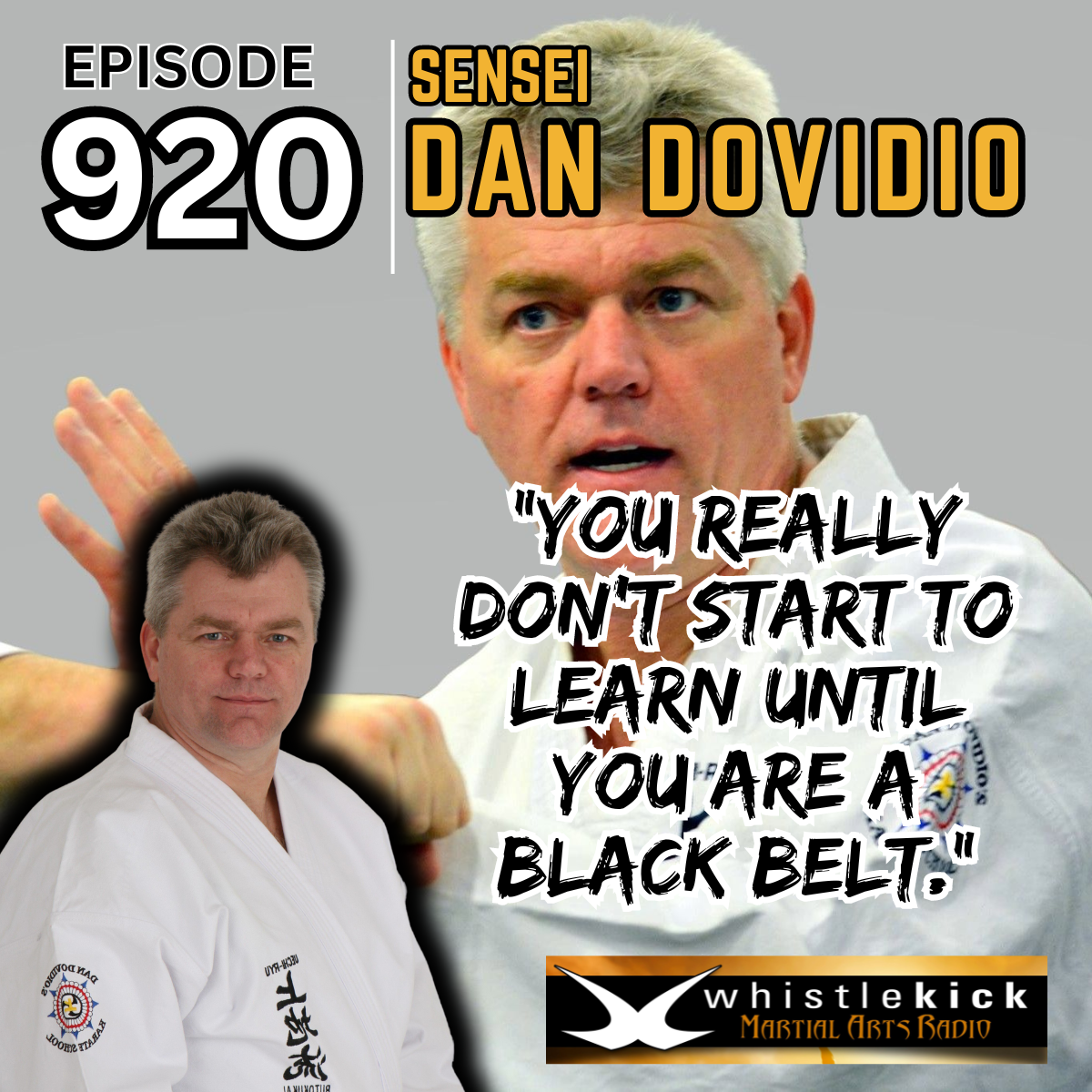
Episode 920 - Sensei Dan Dovidio
SUMMARY In this conversation, Dan Dovidio shares his journey in martial arts, starting as a teenager and continuing for 48 years. He discusses how martial arts has served as a grounding tool in his life, helping him navigate through challenges and maintain a positive mindset. Sensei Dovidio also talks about the importance of personal connections in martial arts, both with instructors and fellow students. He shares his experience of fighting in an Okinawan tournament and the impact of immersive martial arts experiences. Finally, he discusses his role as a martial arts teacher and the balance between teaching and personal life. In this conversation, they discuss their journeys as a martial artist and teacher, as well as the intersection of martial arts and IT. Sensei Dovidio shares his experience of starting teaching after returning from Okinawa and opening his own school. He emphasizes the importance of being a lifelong student and constantly improving in martial arts. He also highlights the positive impact of martial arts on mental and physical well-being, as well as the importance of staying active in retirement. TAKEAWAYS * Martial arts can be a grounding tool, helping individuals navigate through challenges and maintain a positive mindset. * Personal connections with instructors and fellow students are important in martial arts, contributing to long-term commitment and growth. * Immersive martial arts experiences, such as training in different dojos and participating in tournaments, can solidify one's passion for martial arts. * Teaching martial arts requires adapting to different environments and fostering a positive atmosphere for students. Starting teaching and opening a school can be a natural progression for martial artists who have a passion for sharing their knowledge. * Being a martial arts teacher requires the ability to communicate and connect with students, as well as the willingness to constantly learn and improve. * Martial arts and IT can complement each other, as both require problem-solving skills and the ability to adapt and learn new techniques. * Maintaining physical activity and staying motivated are essential for longevity and well-being, especially in retirement. * Martial arts is a lifelong journey of self-improvement and should be approached with a mindset of continuous learning and growth.

Episode 919 - When is it Time to Leave?
SUMMARY The conversation revolves around the topic of when it is time to leave a martial arts school. The hosts discuss two main categories: the desire for more and the presence of issues. Under the desire for more, they mention wanting to explore different martial arts styles, seeking more advanced training, or wanting to progress in rank beyond what the current school can offer. Under the presence of issues, they mention physical or sexual abuse, cult-like behavior, a punishment-focused culture, and being taken advantage of financially or in terms of time. They emphasize the importance of open and respectful communication between students and instructors. When it's time to leave a martial arts school, it can be due to various reasons such as dishonesty, lack of clear expectations, stagnant growth, and instructors who lack passion. It is important to have open and clear communication with the instructor before making the decision to leave. Having a conversation or writing a letter can help provide closure and potentially lead to positive changes in the school. It is crucial to be respectful and considerate of other students when leaving, and not to compromise their experience. Ultimately, the decision to leave should be based on personal feelings and integrity. TAKEAWAYS * There are two main reasons to leave a martial arts school: the desire for more and the presence of issues. * The desire for more can include wanting to explore different martial arts styles, seeking more advanced training, or wanting to progress in rank beyond what the current school can offer. * The presence of issues can include physical or sexual abuse, cult-like behavior, a punishment-focused culture, and being taken advantage of financially or in terms of time. * Open and respectful communication between students and instructors is crucial in addressing concerns and making decisions about leaving a school. * It is important to remember that leaving a school does not mean leaving martial arts altogether; it is about finding a better fit for personal growth and development. Open and clear communication is essential before leaving a martial arts school. * Having a conversation or writing a letter can provide closure and potentially lead to positive changes in the school. * Respect and consider the impact of your departure on other students. * The decision to leave should be based on personal feelings and integrity.

Episode 918 - Guro Carlito Bonjoc
SUMMARY In this conversation, Jeremy interviews Guro Carlito Bonjoc, a practitioner and teacher of Filipino martial arts. They discuss the history and significance of Filipino martial arts, Carlito's personal journey in the martial arts world, the importance of unity within the Filipino martial arts community, and the impact of martial arts on personal growth and overcoming challenges. Carlito emphasizes the value of hard work, a sense of humor, and the willingness to fail in order to succeed. He also shares his plans for the future, including writing a book and expanding his social media presence. TAKEAWAYS * Filipino martial arts have a rich history and are an important part of Filipino culture, promoting unity and understanding within the community. * Carlito Bonjoc's personal journey in the martial arts world, overcoming challenges and embracing his disability, serves as an inspiration to others. * The value of hard work, a sense of humor, and the willingness to fail in order to succeed are emphasized. * Teaching and coaching in martial arts is about helping students achieve their goals and bringing out the best in them. * Carlito's future plans include writing a book and expanding his social media presence to continue impacting people's lives.

Episode 917 - Martial Arts Round Table
SUMMARY This conversation with Jeremy Lesniak, Buzz Durkin, Dave Kovar and Chris Rappold explores the greatness of martial arts and its multifaceted benefits. It discusses the development of confidence through martial arts training and the importance of projecting confidence to deter potential confrontations. The conversation also highlights the emphasis on respect, courtesy, and self-control in martial arts, which sets it apart from other sports. The hosts discuss the role of martial arts in teaching leadership skills and instilling values in students. They also touch on the impact of technology and the need for human connection in martial arts training. The conversation concludes with a discussion on perseverance and the importance of maintaining high standards in martial arts schools. The conversation explores the importance of communication and humility in the learning experience. It emphasizes the role of instructors as guides rather than teachers and the need for a humble and selfless approach. The conversation also touches on the importance of balance, meeting students where they are, and creating a non-judgmental environment. The hosts reflect on their past teaching methods and the need for continuous self-reflection and improvement. The conversation concludes with a story that highlights the negative impact of harsh training methods and the importance of love and support in nurturing students. TAKEAWAYS * Martial arts can aid in every aspect of life and help individuals deal with challenges and enjoy life to the fullest. * Confidence can be developed through martial arts training, and projecting confidence can deter potential confrontations. * Martial arts emphasizes respect, courtesy, and self-control, setting it apart from other sports. * Martial arts training develops leaders who possess qualities such as respect, courtesy, and hard work. * Technology, such as AI, can be used to enhance martial arts training and create more opportunities for human connection. * Teaching perseverance and maintaining high standards are crucial in martial arts schools. Instructors should communicate with students and create a non-judgmental environment. * Humility is important in the learning experience and instructors should be guides rather than teachers. * Meeting students where they are and creating balance is crucial for their growth and development. * Continuous self-reflection and improvement are necessary for instructors to provide the best learning experience. * Harsh training methods can have a negative impact on students, and love and support are essential in nurturing their growth.

Episode 916 - Sensei Bill Leith
SUMMARY Sensei Bill Leith shares his martial arts journey, from starting as a young child to becoming a dedicated instructor. He emphasizes the importance of embracing imperfections and learning from mistakes, both in training and in life. Sensei Leith also discusses the transformative power of martial arts training and the impact it has on personal growth and development. He highlights the value of teaching children and the need for patience and understanding in guiding their martial arts journey. Overall, the conversation explores the mindset and philosophy behind martial arts training and teaching. In this conversation, Jeremy and Bill Leith discuss various aspects of martial arts and teaching. They talk about the journey of a martial artist and the impact of martial arts on students. They also discuss the challenges of dealing with parents and managing their expectations. The conversation highlights the importance of teaching people first and martial arts second. They also touch on the influence of pop culture, particularly Ninja Turtles, on martial arts. The conversation concludes with a discussion on the importance of passion in teaching and the need to integrate into the community. TAKEAWAYS * Embrace imperfections and learn from mistakes in both training and life. * Martial arts training has a transformative power that promotes personal growth and development. * Teaching children requires patience, understanding, and the ability to create a fun learning environment. * Balancing high standards with realistic expectations is crucial in teaching martial arts. Teaching martial arts is not just about the techniques, but also about guiding students on their personal journey. * Big moments in a student's journey can have a lasting impact and remind instructors of the impact they are making. * Dealing with parents can be challenging, but it is important to communicate and set expectations. * Teaching people first and martial arts second is crucial for building relationships and making a lasting impact. * Pop culture, such as Ninja Turtles, can inspire and influence people to pursue martial arts. * Integrating into the community is essential for the success of a martial arts school.

Episode 915 - Joe Lewis: The Legacy
SUMMARY Joe Lewis was a legendary martial artist known for his skill, charisma, and innovation. He had a significant impact on the sport of sparring and brought an academic approach to his training. Joe was a tough competitor and had superb control in his techniques. He accumulated a group of dedicated students who admired and learned from him. Joe was known for his practical jokes and his ability to make people laugh. He was an innovative thinker and constantly analyzed fights and techniques. Joe's legacy lives on through the stories and memories shared by those who trained with him and those he called friends. Joe Lewis was known for his unique personality and his impact on the martial arts world. He had a strong friendship with many and today Bill "Superfoot" Wallace and Danny Dring share many memorable experiences together. Joe was a tough and skilled fighter, and he had a knack for turning it on and off during sparring sessions. He was also an innovator in the martial arts, being one of the first world champions in both full contact karate and kickboxing. Joe's legacy lives on through his teachings and his impact on the martial arts community. TAKEAWAYS * Joe Lewis was a highly skilled and innovative martial artist who had a significant impact on the sport of sparring. * He had an academic approach to training and constantly analyzed fights and techniques. * Joe accumulated a group of dedicated students who admired and learned from him. * He was known for his practical jokes and ability to make people laugh. Joe Lewis had a unique personality and was known for his toughness and skill as a fighter. * He had a strong friendship with Jeremy and they shared many memorable experiences together. * Joe was an innovator in the martial arts, being one of the first world champions in both full contact karate and kickboxing. * His legacy lives on through his teachings and his impact on the martial arts community.

Episode 914 - Mr. Rob Leone
SUMMARY In this episode of Whistlekick Martial Arts Radio, Rob Leone shares his martial arts journey and the impact it has had on his life. He discusses his entry into the world of martial arts as a young kid and the lessons he learned about discipline and respect. Rob also talks about his time in the army and how it provided structure and mentorship. He highlights the importance of mentorship in martial arts and the positive environment it creates. Rob shares his experience with Brazilian Jiu-Jitsu and the cultural elements that make it unique. He emphasizes the value of progress and belonging in martial arts. He also discusses the mission of Big Brothers Big Sisters, which is to create and support one-to-one mentoring relationships that ignite the power and promise of youth. He explains the connection between martial arts and mentoring, highlighting the skills and values that martial artists can bring to mentoring relationships. He emphasizes the impact of mentoring on at-risk youth, including improved behavior, academic performance, and social skills. He also discusses the opportunities and support available for mentors and mentees through Big Brothers Big Sisters. Lastly, he shares his vision of expanding the martial arts for mentoring initiative nationwide and encourages listeners to get involved and support the program. TAKEAWAYS Martial arts provides structure, discipline, and mentorship, which can be especially valuable for those growing up in challenging environments. * The martial arts community is a positive and supportive environment where individuals can learn, grow, and share their experiences. * Brazilian Jiu-Jitsu offers a unique cultural experience and teaches valuable self-defense skills. * Martial arts training fosters progress and a sense of belonging, creating a fulfilling and transformative journey. Big Brothers Big Sisters aims to create and support one-to-one mentoring relationships for at-risk youth. * Martial artists can bring valuable skills and values to mentoring relationships. * Mentoring has a significant impact on the behavior, academic performance, and social skills of at-risk youth. * Big Brothers Big Sisters provides opportunities and support for mentors and mentees. * The martial arts for mentoring initiative aims to expand nationwide, and everyone can get involved and support the program.

Episode 913 - To Watch or Not? 2 Schools of Thought
SUMMARY The conversation explores the topic of whether parents should be allowed to watch their children's martial arts classes. The guests discuss the benefits of having parents present, such as building a sense of community, providing support for the child's practice at home, and allowing parents to see the broader benefits of martial arts beyond self-defense. They also mention the importance of setting boundaries for parental involvement. On the other hand, not having parents in the room can help children focus and establish a clear authority figure. The conversation highlights the value of involving parents in a balanced and controlled manner. The conversation explores the benefits and challenges of having parents present during martial arts classes. The hosts discuss how the presence of parents can affect the behavior and focus of the students, as well as the dynamics between parents and instructors. They also explore the importance of building trust and a strong connection between instructors and students. The conversation delves into the role of parents in shaping their children's behavior and the need for children to learn how to discern different perspectives. The hosts discuss various approaches to finding a middle ground between having parents present and creating a focused learning environment. TAKEAWAYS * Having parents present in martial arts classes can build a sense of community and provide support for the child's practice at home. * Setting boundaries for parental involvement is important to maintain a balanced learning environment. * Not having parents in the room can help children focus and establish a clear authority figure. * Involving parents in a controlled manner can help them understand the broader benefits of martial arts beyond self-defense. The presence of parents during martial arts classes can affect the behavior and focus of the students. * Building trust and a strong connection between instructors and students is crucial for effective teaching. * Parents play a significant role in shaping their children's behavior, but it's important for children to learn how to discern different perspectives. * Finding a middle ground between having parents present and creating a focused learning environment requires individualized approaches and open communication.

Episode 912 - Master Narcyz Latecki
SUMMARY In this episode, Master Narcyz Latecki shares his martial arts journey, starting from his training in Kyokushin and Shotokan karate in Poland to his transition to Chinese martial arts. He emphasizes the importance of discipline, determination, and a limitless mindset in martial arts training. Master Latecki also discusses the influence of friends and environment on his martial arts journey. He highlights the value of finding individual expression in martial arts and the impact of trauma on his perspective. He also shares how he applies martial arts principles in other areas of life. He continues and shares his journey of applying for a green card and the challenges he faced. He then discusses the decision to open his own martial arts school and the influence of his first teacher. The conversation explores the importance of individual expression in martial arts and how it relates to Master Latecki's upbringing. He also talks about the changes in his teaching approach over the years and the challenges he faces in balancing high standards with encouragement. He emphasizes the importance of continued training and physical challenges. The conversation concludes with a discussion on the martial arts family and the importance of spreading positive energy. TAKEAWAYS * Discipline and determination are crucial in martial arts training. * Finding individual expression in martial arts is important for personal growth. * The influence of friends and environment can shape one's martial arts journey. * Applying martial arts principles can have a positive impact on other areas of life. The journey of applying for a green card can be challenging, but with perseverance and honesty, it is possible to achieve success. * Opening one's own martial arts school can be a significant milestone in a martial artist's journey, and it often comes with the support and encouragement of one's teacher. * Individual expression is a crucial aspect of martial arts, allowing practitioners to find their own unique style and approach. * Teaching martial arts requires a balance between high standards and encouragement, challenging students to give their best while also supporting their progress. * Continued training and physical challenges are essential for personal growth and development in martial arts. * The martial arts community can become a family, providing support, encouragement, and a sense of belonging. * Spreading positive energy and treating others with respect and love are fundamental principles in martial arts and life.

Episode 911 - Preserving Legacy and Evolving Your Art
SUMMARY Andrew and Victor explore the topic of preserving legacy and evolving martial arts. They discuss the challenges of teaching and practicing different martial arts styles and systems, and how to maintain the integrity of the art while allowing for evolution. They touch on the importance of lineage and tradition, as well as the need for adaptation and personalization. The conversation also delves into the role of forms in martial arts and the potential for modification and interpretation. The conversation explores the idea of evolving martial arts while preserving their legacy. The hosts discuss the importance of understanding the reasons behind traditional forms and techniques and the need to adapt them for different scenarios, such as tournaments or physical limitations. They emphasize the value of cross-training and learning from different instructors to broaden one's perspective and improve as a martial artist. The hosts also encourage students to think about what they want to do with their martial arts and continue asking themselves that question to ensure ongoing growth and evolution. TAKEAWAYS * Preserving legacy in martial arts involves maintaining the integrity of the art while allowing for evolution and adaptation. * Lineage and tradition are important in martial arts, but they should not hinder the growth and development of the art. * Teaching martial arts requires finding a balance between preserving what was taught by previous instructors and making necessary adjustments for the present and future. * The concept of preserving legacy and evolving martial arts is a complex and ongoing conversation that requires open-mindedness and a willingness to learn and grow. Understanding the reasons behind traditional forms and techniques is important. * Adapting techniques for different scenarios, such as tournaments or physical limitations, is acceptable. * Cross-training and learning from different instructors can broaden one's perspective and improve as a martial artist. * Continuously asking oneself what they want to do with their martial arts ensures ongoing growth and evolution.

Episode 910 - Kyoshi Marcus Traynor
SUMMARY In this episode, Kyoshi Marcus Traynor discusses with Jeremy the culture of hard training and the unique environment of his martial arts school. He emphasizes the importance of creating a welcoming and encouraging culture where students of all ages and abilities can thrive. Kyoshi Traynor shares personal stories of how martial arts training helped him overcome challenges and build confidence. He highlights the enduring nature of traditional martial arts and the impact it can have on individuals' lives. He also discusses the value of tangible achievements in martial arts and the role of teaching in his own martial arts journey. He shares how he discovered his passion for martial arts and the challenges he faced in pursuing it as a career, highlighting the importance of confidence and discipline gained from martial arts training and how it can transform lives. He emphasizes the need for martial artists to support and collaborate with each other, creating opportunities for cross-training and growth. Overall, he encourages individuals to never stop learning and improving, as there is always room for growth. TAKEAWAYS * Creating a welcoming and encouraging culture is essential for the success and growth of a martial arts school. * Martial arts training can help individuals overcome challenges, build confidence, and develop a sense of belonging. * The enduring nature of traditional martial arts provides a strong foundation for personal growth and development. * Tangible achievements in martial arts, such as earning a black belt, can have a profound impact on individuals' self-esteem and sense of accomplishment. Martial arts can be a fulfilling career path, despite societal perceptions. * The economic realities of college education should be carefully considered, as alternative paths may lead to greater success. * Martial arts training can have a profound impact on students' lives, instilling confidence and discipline. * Martial arts is not limited to athletes and can benefit individuals of all backgrounds. * Confidence gained from martial arts can extend beyond the training mat and positively impact various aspects of life. * Overcoming fear and pushing through challenges is a key aspect of martial arts training. * Imposter syndrome and insecurities are common, but martial arts can help individuals overcome them. * Creating opportunities for cross-training and collaboration can foster a sense of community and growth within the martial arts world. * Breaking down barriers and fostering inclusivity in martial arts can lead to a stronger and more supportive community. * Never stop learning and improving, as there is always room for growth in martial arts and in life.

Episode 909 - State Change Management with Matt Thomas
SUMMARY In this episode, Jeremy and Andrew are joined by Matt Thomas and they discuss state change management and its application in martial arts. State change management involves identifying and optimizing different states to achieve desired outcomes. They explore the use of breath work to manage states and prime the body for peak performance. Matt demonstrates the Fire Breath technique, which involves hyper ventilation-style breathing to psych up before a match. He also explains the Calm Down breath technique, which focuses on exhaling longer than inhaling to activate the parasympathetic nervous system. These techniques can be used in both training and competition to enhance performance. This conversation explores the connection between the body and mind and the impact of breathwork on performance in chess boxing and other activities. The guest, Matt, shares various breathing techniques for relaxation and peak performance, such as box breathing and the 4-7-8 breath. He explains how breathwork can help control the body's response to stress and improve focus and decision-making. The conversation also delves into the mental shift required in chess boxing and the importance of harmony and triumph in winning. Matt discusses the F.I.G.H.T. acronym for peak performance and the potential applications of breathwork in different situations. Lastly, he shares his efforts to grow the sport of chess boxing and offers resources for those interested in learning more about breathwork and state change management. TAKEAWAYS *Breathwork can have a significant impact on performance by controlling the body's response to stress and improving focus and decision-making. *Different breathing techniques, such as box breathing and the 4-7-8 breath, can be used for relaxation and peak performance in various situations. *In chess boxing, breathwork helps shift the brain's focus from spontaneous cognition to idea evaluation, improving performance in both chess and boxing. *Harmony and triumph, rather than just winning, are important aspects of peak performance. *Breathwork can be applied in different areas of life, such as difficult conversations or important presentations, to achieve desired states and outcomes. *The sport of chess boxing is growing, and there are opportunities to participate in alternate formats, such as point sparring or non-contact versions.