Warriors In Their Own Words | First Person War Stories
512 episodes — Page 5 of 11
The Battle of Anzio: COL Young Oak Kim Part II
S2 Ep 121The Battle of Anzio: COL Young Oak Kim Part II
EIn this final part of his interview, Kim talks about the Battle of Anzio, earning the Distinguished Service Cross, and his feelings about the war. – Young Oak Kim was born in Los Angeles to a Korean family in 1919. He tried enlisting prior to World War II, but was denied due to his race. When war finally broke out in Europe, Congress passed the Selective Training Service Act of 1940, requiring all men between the ages of 21 and 45, regardless of race, to register for the draft. Kim was among the first group of men allied up, and he entered the Army in January 1941. Racism, exacerbated by Japan’s role in the war, was commonplace both in and out of the military. Despite proving himself to be an exceptional shooter during training, Kim was initially denied the opportunity to fight in the war because he had the “wrong color skin and wrong color eyes”. Eventually, Kim’s skill was recognized by his superiors and he was elected for Officer Candidate School, graduating in February 1943. From there, Kim was assigned as the second platoon leader of Company B, 100th Infantry Battalion. The 100th was a racially segregated unit composed mostly of second generation Japanese Americans (known as Nisei) from Hawaii. Following the Attack on Pearl Harbor, the 100th was removed from Hawaii and sent to the mainland for training. Kim and the 100th Infantry Battalion were sent to Italy in September of 1943. They fought in the Battle of Monte Cassino and the Battle of Anzio, and earned the nickname “The Purple Heart Battalion” due their high casualty rate. Kim was awarded a Distinguished Service Cross for an incredible midnight infiltration mission, which he talks about in the next episode. After leaving Italy, the 100th Infantry Battalion became part of the 442nd Regimental Combat Team, another segregated Nisei regiment, and sent to France. Kim was injured by enemy fire at Biffontaine, and was sent back to the US, later earning a Silver Star and the French Croix de Guerre for his actions in France. Germany surrendered before he was able to return. Kim left the Army following World War II, but when war broke out in Korea, he rejoined. He commanded a South Korean guerrilla unit, and was awarded another Silver Star for his actions there. Kim left Korea in 1952. He then worked as an instructor at Fort Benning, and at the U.S. Army Command and General Staff College at Fort Leavenworth. He retired in 1972 at the rank of colonel as one of the most highly decorated Asian American soldiers in U.S. history with a total of 19 medals. The 100th also made history, becoming one of the most highly decorated units of World War II. Learn more about your ad choices. Visit megaphone.fm/adchoices
S2 Ep 120The Battle of Monte Cassino: COL Young Oak Kim Part I
In this first part of his interview, COL Kim talks about joining the Army, serving as a Korean American in World War II, and the Battle of Monte Cassino – Young Oak Kim was born in Los Angeles to a Korean family in 1919. He tried enlisting prior to World War II, but was denied due to his race. When war finally broke out in Europe, Congress passed the Selective Training Service Act of 1940, requiring all men between the ages of 21 and 45, regardless of race, to register for the draft. Kim was among the first group of men allied up, and he entered the Army in January 1941. Racism, exacerbated by Japan’s role in the war, was commonplace both in and out of the military. Despite proving himself to be an exceptional shooter during training, Kim was initially denied the opportunity to fight in the war because he had the “wrong color skin and wrong color eyes”. Eventually, Kim’s skill was recognized by his superiors and he was elected for Officer Candidate School, graduating in February 1943. From there, Kim was assigned as the second platoon leader of Company B, 100th Infantry Battalion. The 100th was a racially segregated unit composed mostly of second generation Japanese Americans (known as Nisei) from Hawaii. Following the Attack on Pearl Harbor, the 100th was removed from Hawaii and sent to the mainland for training. Kim and the 100th Infantry Battalion were sent to Italy in September of 1943. They fought in the Battle of Monte Cassino and the Battle of Anzio, and earned the nickname “The Purple Heart Battalion” due their high casualty rate. Kim was awarded a Distinguished Service Cross for an incredible midnight infiltration mission, which he talks about in the next episode. After leaving Italy, the 100th Infantry Battalion became part of the 442nd Regimental Combat Team, another segregated Nisei regiment, and sent to France. Kim was injured by enemy fire at Biffontaine, and was sent back to the US, later earning a Silver Star and the French Croix de Guerre for his actions in France. Germany surrendered before he was able to return. Kim left the Army following World War II, but when war broke out in Korea, he rejoined. He commanded a South Korean guerrilla unit, and was awarded another Silver Star for his actions there. Kim left Korea in 1952. He then worked as an instructor at Fort Benning, and at the U.S. Army Command and General Staff College at Fort Leavenworth. He retired in 1972 at the rank of colonel as one of the most highly decorated Asian American soldiers in U.S. history with a total of 19 medals. The 100th also made history, becoming one of the most highly decorated units of World War II. Learn more about your ad choices. Visit megaphone.fm/adchoices
The Battle of Monte Cassino: COL Young Oak Kim Part I
Battalion XO in Iraq: Lt. Col. Joseph Kopser
S2 Ep 119Battalion XO in Iraq: Lt. Col. Joseph Kopser
ELieutenant Colonel Joseph Kopser attended West Point before joining a cavalry unit in the U.S. Army. He volunteered to go to Iraq in 2004 working out of one of Saddam Hussein's Palaces and then again in 2006-2007 where he served as a Battalion Executive Officer in the 1st Cavalry Division. Learn more about your ad choices. Visit megaphone.fm/adchoices
The Airmobile Concept: LTG Harry Kinnard
S2 Ep 118The Airmobile Concept: LTG Harry Kinnard
In this special episode, Lieutenant General Harry Kinnard explains how he helped develop the Airmobile concept- which later became the 1st Air Cavalry Division in the U.S. Army. The Airmobile approach integrated helicopters into the structure of ground forces, allowing troops and supplies to be delivered quickly over difficult terrain, and even over enemy lines. It’s considered as radical as the change from horses to trucks. It was first used in Vietnam. Learn more about your ad choices. Visit megaphone.fm/adchoices
Tunnel Rat in Vietnam: CAPT John Cotter
S2 Ep 117Tunnel Rat in Vietnam: CAPT John Cotter
Captain John Robert Cotter served in the Australian Army in Vietnam. He was a combat engineer, tasked with disarming mines, dismantling booby traps, dealing with gas warfare, establishing roadways for infantry transport, and more. He was among the first to discover the tactical importance and vast scale of enemy tunnels, and it was his job to crawl through them in order to map their network, seize supplies, flush out enemies, and place explosives. Learn more about your ad choices. Visit megaphone.fm/adchoices
Reflecting on Vietnam Part II: Col. John Anthony Cash
S2 Ep 116Reflecting on Vietnam Part II: Col. John Anthony Cash
Colonel John Anthony Cash served in the Army as a Rifle Company Commander in Vietnam. In this second part of his interview, Cash tells more incredible stories, reflects on the war as a whole, and talks about coming home. Before serving in Vietnam, Cash helped train Cuban nationals in the lead up to the Bay of Pigs Invasion. He later contributed to Seven Firefights in Vietnam, The Exclusion of Black Soldiers from the Medal of Honor in World War II, and Black Soldier-White Army: The 24th Infantry Regiment in Korea. Learn more about your ad choices. Visit megaphone.fm/adchoices
Reflecting on Vietnam Part I: Col. John Anthony Cash
S2 Ep 115Reflecting on Vietnam Part I: Col. John Anthony Cash
EColonel John Anthony Cash served in the Army as a Rifle Company Commander in Vietnam. In this interview, Cash recalls hearing updates about the devastating Battle of Ia Drang around a radio, serving in Operation White Wing, and several tragic stories from his tour. Before serving in Vietnam, Cash helped train Cuban nationals in the lead up to the Bay of Pigs Invasion. He later contributed to Seven Firefights in Vietnam, The Exclusion of Black Soldiers from the Medal of Honor in World War II, and Black Soldier-White Army: The 24th Infantry Regiment in Korea. Learn more about your ad choices. Visit megaphone.fm/adchoices
5th Ranger Battalion on D-Day: S/Sgt.Charles Klein

S2 Ep 1145th Ranger Battalion on D-Day: S/Sgt.Charles Klein
Staff Sergeant Charles Klein served in the Army Rangers during the invasion of Normandy. He commanded a section of riflemen, and as a member of the 5th Ranger Battalion, he was one of the first units to land at Omaha beach that day. In this interview, S/Sgt. Klein recounts his training, D-Day, and being sent home after being wounded in action. He also shares something a fellow lieutenant said in the months following the invasion: “He thought for a while, and he said, ‘Lieutenant,’ he says, ‘I don't mind fighting for my country.’ He said, ‘It's a dying part I don't like.’ So I guess that about sums it up.” Learn more about your ad choices. Visit megaphone.fm/adchoices
Infantryman in Vietnam: SGT Jim Purvis
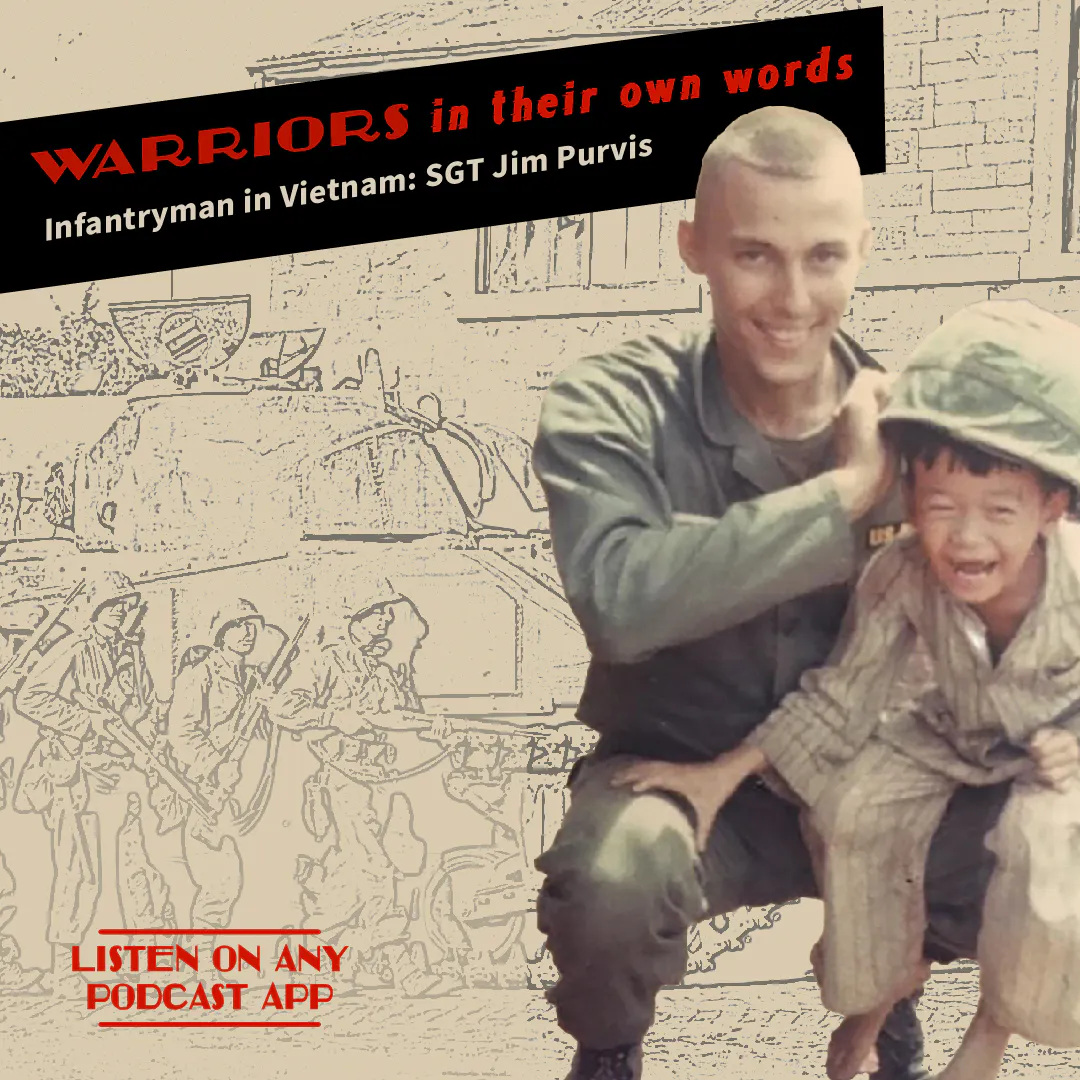
S2 Ep 113Infantryman in Vietnam: SGT Jim Purvis
Sergeant Jim Purvis served in the Army as an infantryman during the Vietnam War. In this interview, he recounts being kicked out of Officer Candidate School, his time in Vietnam, and how Vietnam differed from previous American military conflicts. “Anytime you have a war, it's a very, very sad experience.” - SGT Purvis Learn more about your ad choices. Visit megaphone.fm/adchoices
History Daily - The German Defeat at Stalingrad

History Daily - The German Defeat at Stalingrad
bonusToday as a bonus episode, we’ll be airing an episode of History Daily about the Battle of Stalingrad in WWII which we think you’ll enjoy. History Daily is a show that tells the fascinating stories of what happened “on this day” in history. Every weekday, they share the overlooked and often forgotten stories behind the names and dates of history. They cover a wide range of topics, like war, politics, religion, sports, science, technology, and plenty more. Episodes are under twenty minutes each, so they’re perfect for a quick listen anytime you need a bit of history. This is their episode titled “The German Defeat at Stalingrad”. Learn more about your ad choices. Visit megaphone.fm/adchoices
Defending the Capitol: SSG Aquilino Gonell

S1 Ep 112Defending the Capitol: SSG Aquilino Gonell
Staff Sergeant Aquilino Gonell served in the Army in Iraq. He was born in the Dominican Republic, and was granted US citizenship after joining the military. In this interview, he discusses the difficulty of gaining citizenship, discipling a fellow soldier for being cruel towards an Iraqi child, and defending the Capitol on January 6th as a Capitol Police Officer. Learn more about your ad choices. Visit megaphone.fm/adchoices

S2 Ep 11Christmas as a POW: Rick Render
In this interview, Rick Render describes the Christmas of 1944, when he spent all day waiting in line to enter a German prison camp. Render served as an army infantryman in World War II. He was captured during the Battle of the Bulge and taken as a prisoner of war by the Germans. He spent time in prison camps in Nuremberg and Hammelburg, and was liberated in 1945 by his own division. Learn more about Render here. Learn more about your ad choices. Visit megaphone.fm/adchoices
Christmas as a POW: Rick Render
“Not Ready to Quit”: SSG Beth King
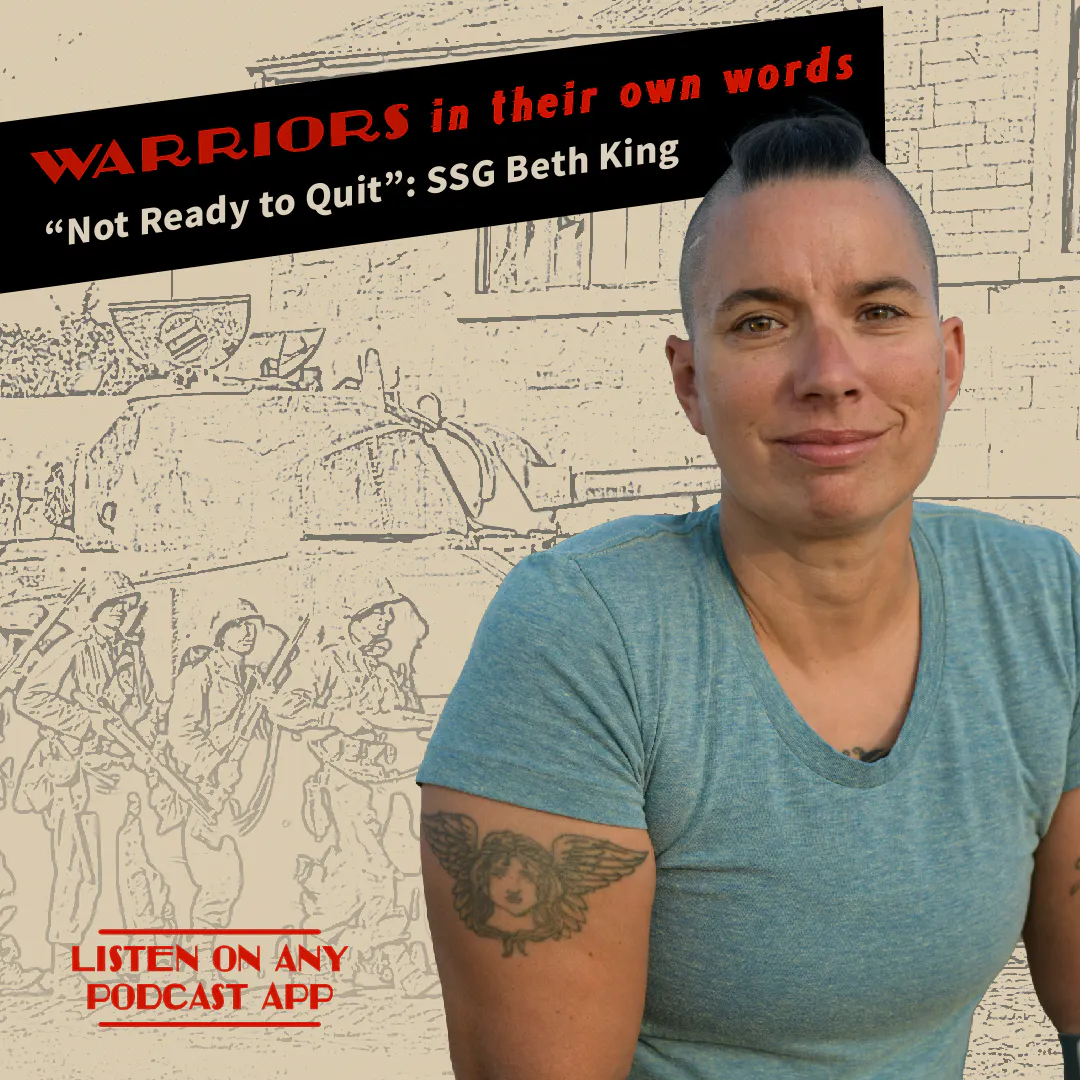
S2 Ep 110“Not Ready to Quit”: SSG Beth King
At 30 years old, Beth King was a single mother, and joined the Army as a way to provide for her five-year-old son. She deployed to Afghanistan and became a Chinook helicopter maintainer. As one of the few women in her field, SSG King felt extra pressure to excel. She had to prove herself to her male colleagues, and if she failed, she was told they would take a “long break” before allowing another woman to join their company. She succeeded, and became the first female to fully progress to crew chief in her company. One night, King’s Chinook was hit by an RPG, and she was four feet away from the blast. She fell out of the helicopter, but was caught by her harness. Although she and the rest of the crew made it back to their FOB, King knew something wasn’t right. She experienced severe pain, spells of vomiting, and had difficulties with her speech, but had no visible injuries. Unfortunately, King’s need to prove herself as a capable woman in her field persisted to the detriment of her health. She was asked multiple times to tough out her injuries and continue flying missions, and she complied, going 18 months without treatment. King later discovered she had suffered a traumatic brain injury (TBI) that was made worse by her continued action. She was medically discharged, and began physical therapy. King also suffered from PTSD, anxiety, and depression. She found that cycling in a special wheelchair reignited her competitive spirit and greatly improved her mental health, so she trained for competition. Unbeknownst to her, the wheelchair cut off circulation to her feet, and her consistent and intense training in the chair caused significant, lasting pain. Now, King is awaiting an amputation of one of her legs. If the amputation is a success, and the pain completely dissipates, she plans on amputating the second. In the meantime, King has begun training in the javelin throw, and hopes to compete in the 2024 Paralympics. She says in this interview “I would love to go to the Paralympics, but the truth is I just like being better. I like improving. I like growth. It is like all this effort is not meaningless. All this pain and suffering has led to me improving, then it's worth it.” To learn more about King, and how the Wounded Warrior Projected aided in her recovery, visit https://www.woundedwarriorproject.org/mission/meet-a-warrior/beth-king. Learn more about your ad choices. Visit megaphone.fm/adchoices
PREVIEW: “Not Ready to Quit”
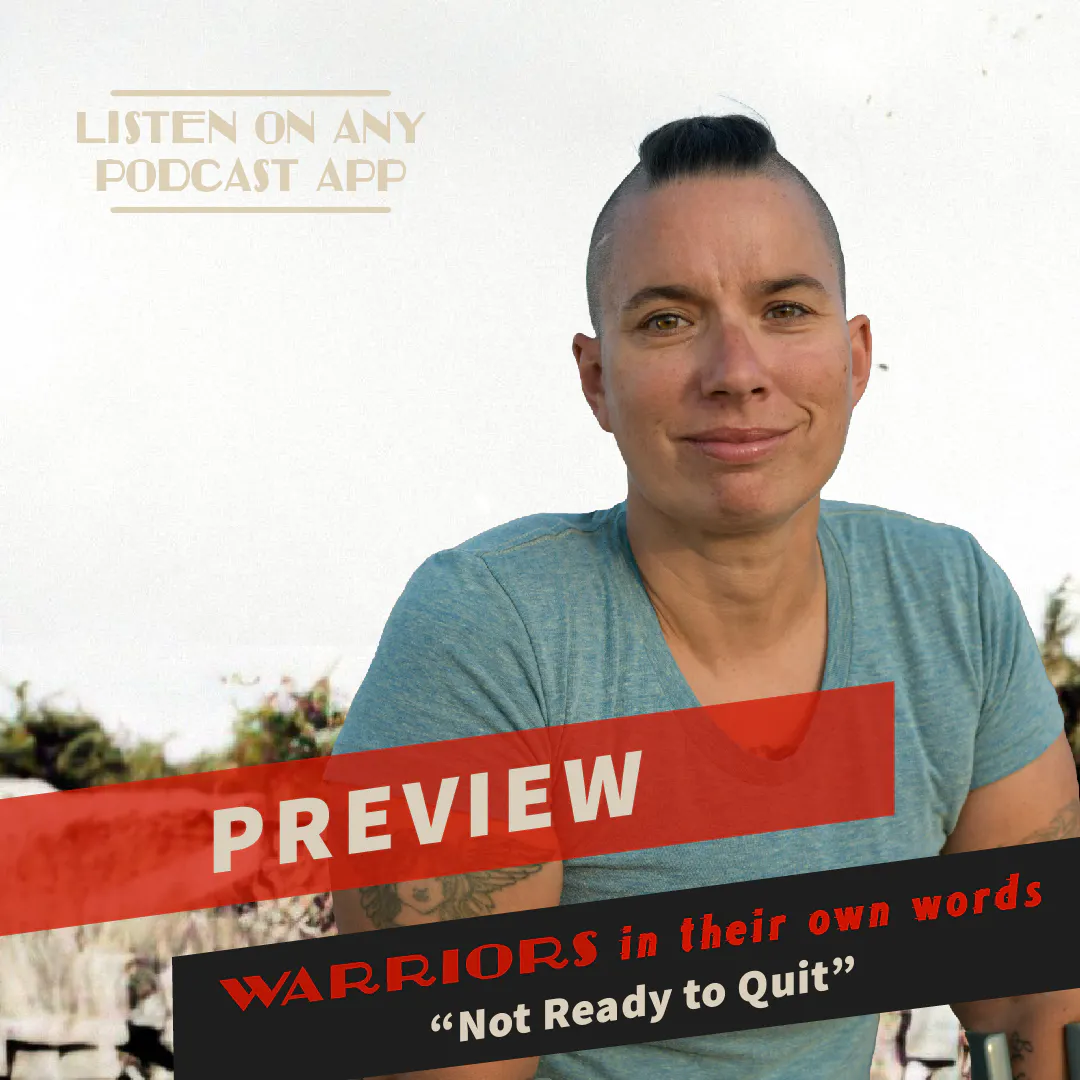
PREVIEW: “Not Ready to Quit”
trailerIn this preview, SSG King recounts the night that her Chinook helicopter was hit by an RPG. Make sure to catch out full interview with King when it releases tomorrow. – At 30 years old, Beth King was a single mother, and joined the Army as a way to provide for her five-year-old son. She deployed to Afghanistan and became a Chinook helicopter maintainer. As one of the few women in her field, SSG King felt extra pressure to excel. She had to prove herself to her male colleagues, and if she failed, she was told they would take a “long break” before allowing another woman to join their company. She succeeded, and became the first female to fully progress to crew chief in her company. One night, King’s Chinook was hit by an RPG, and she was four feet away from the blast. She fell out of the helicopter, but was caught by her harness. Although she and the rest of the crew made it back to their FOB, King knew something wasn’t right. She experienced severe pain, spells of vomiting, and had difficulties with her speech, but had no visible injuries. Unfortunately, King’s need to prove herself as a capable woman in her field persisted to the detriment of her health. She was asked multiple times to tough out her injuries and continue flying missions, and she complied, going 18 months without treatment. King later discovered she had suffered a traumatic brain injury (TBI) that was made worse by her continued action. She was medically discharged, and began physical therapy. King also suffered from PTSD, anxiety, and depression. She found that cycling in a special wheelchair reignited her competitive spirit and greatly improved her mental health, so she trained for competition. Unbeknownst to her, the wheelchair cut off circulation to her feet, and her consistent and intense training in the chair caused significant, lasting pain. Now, King is awaiting an amputation of one of her legs. If the amputation is a success, and the pain completely dissipates, she plans on amputating the second. In the meantime, King has begun training in the javelin throw, and hopes to compete in the 2024 Paralympics. She says in tomorrow’s interview “I would love to go to the Paralympics, but the truth is I just like being better. I like improving. I like growth. It is like all this effort is not meaningless. All this pain and suffering has led to me improving, then it's worth it.” To learn more about King, and how the Wounded Warrior Projected aided in her recovery, visit https://www.woundedwarriorproject.org/mission/meet-a-warrior/beth-king. Learn more about your ad choices. Visit megaphone.fm/adchoices
The Deadly Rice Fields of Vietnam: SP5 Clarence Sasser
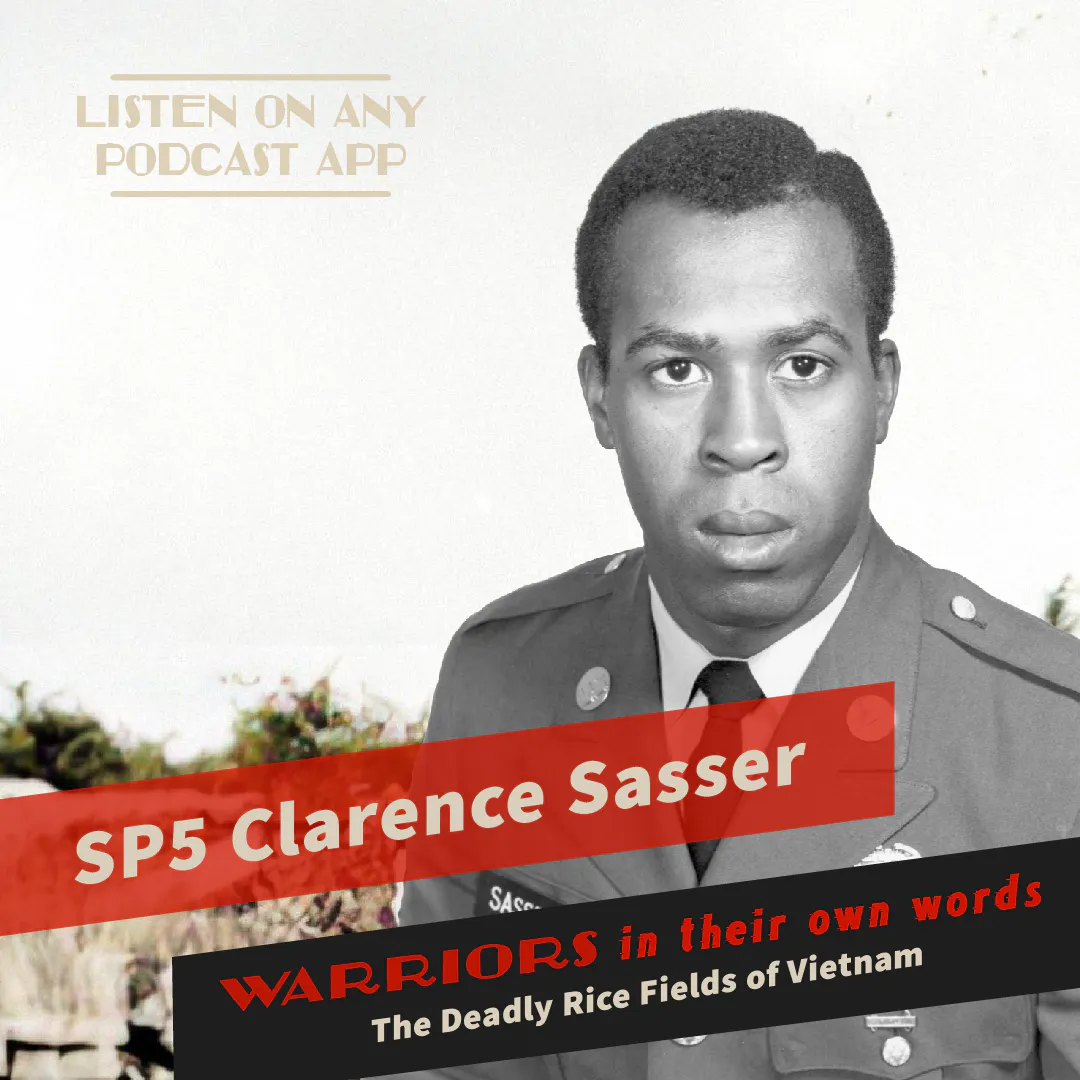
S2 Ep 109The Deadly Rice Fields of Vietnam: SP5 Clarence Sasser
Specialist 5th Class Clarence Eugene Sasser served in Vietnam as an Army Medic. In spite of numerous wounds and excruciating pain, he continuously administered aid to fellow soldiers for 20 hours as his company was attacked in Vietnam. Sasser later said this about spending the night under fire: “The tough part wasn’t enemy fire, it was listening to guys call for their mama, and you can't do anything. Listening to them beg all night. And then you don’t hear them anymore in the morning, so you know they died.” Learn more about your ad choices. Visit megaphone.fm/adchoices
PREVIEW: The Deadly Rice Fields of Vietnam
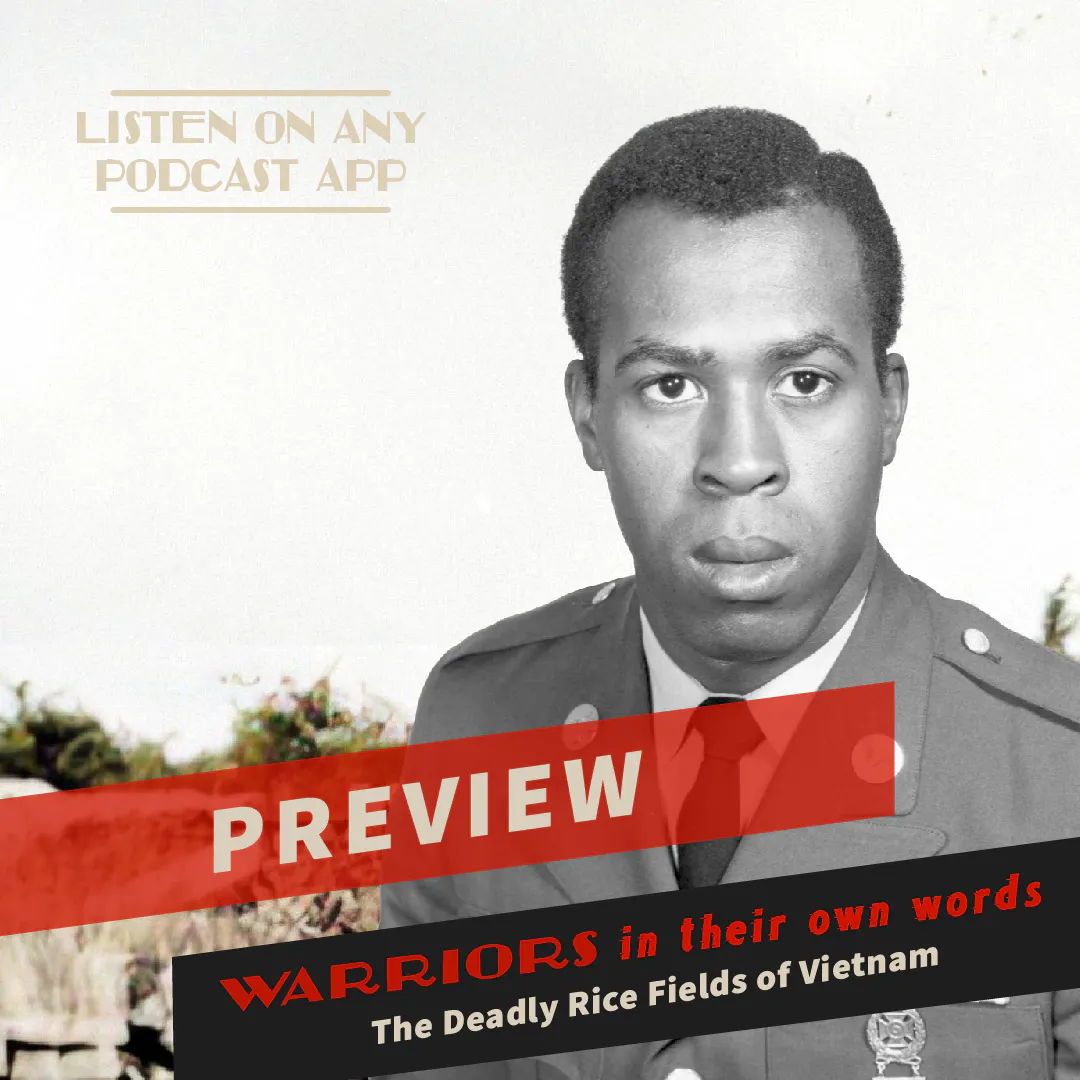
PREVIEW: The Deadly Rice Fields of Vietnam
trailerIn this preview, SP5 Clarence Sasser relives the traumatic mission for which he was later awarded the Medal of Honor. Check back tomorrow to hear our full interview with Sasser. Specialist 5th Class Clarence Eugene Sasser served in Vietnam as an Army Medic. In spite of numerous wounds and excruciating pain, he continuously administered aid to fellow soldiers for 20 hours as his company was attacked in Vietnam. Sasser later said this about spending the night under fire: “The tough part wasn’t enemy fire, it was listening to guys call for their mama, and you can't do anything. Listening to them beg all night. And then you don’t hear them anymore in the morning, so you know they died.” Learn more about your ad choices. Visit megaphone.fm/adchoices
Pearl Harbor, Northern Italy, and the Medal of Honor: Capt. Daniel Inouye
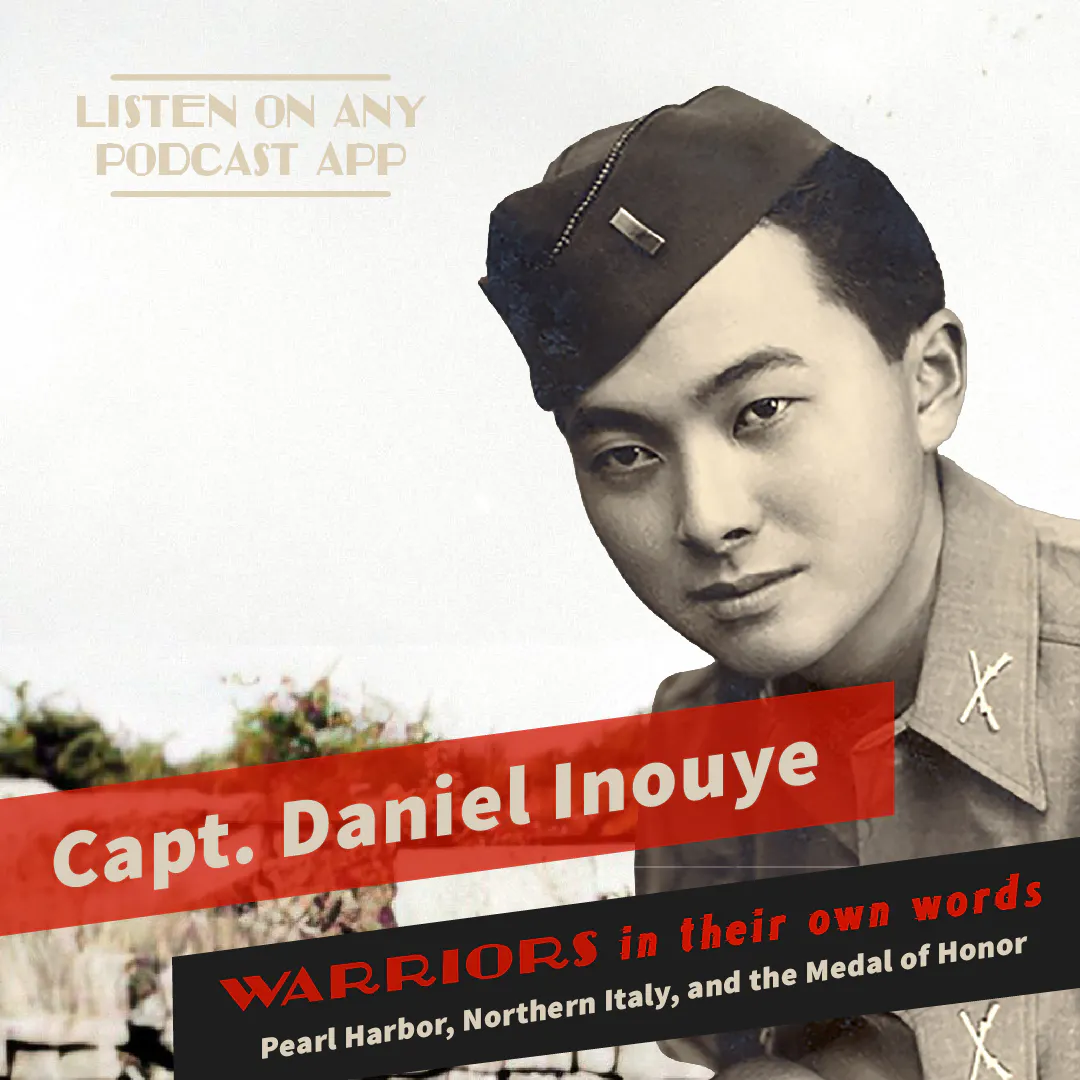
S2 Ep 111Pearl Harbor, Northern Italy, and the Medal of Honor: Capt. Daniel Inouye
After witnessing the attack on Pearl Harbor from his home in Hawaii, Daniel Inouye, a second-generation Japanese American, enlisted in the US Army. He later was awarded the Medal of Honor for heroism in Northern Italy. To hear the details of what earned him the Medal of Honor, check out our episode about him on the Medal of Honor Podcast. Learn more about your ad choices. Visit megaphone.fm/adchoices
PREVIEW: Pearl Harbor, Northern Italy, and the Medal of Honor
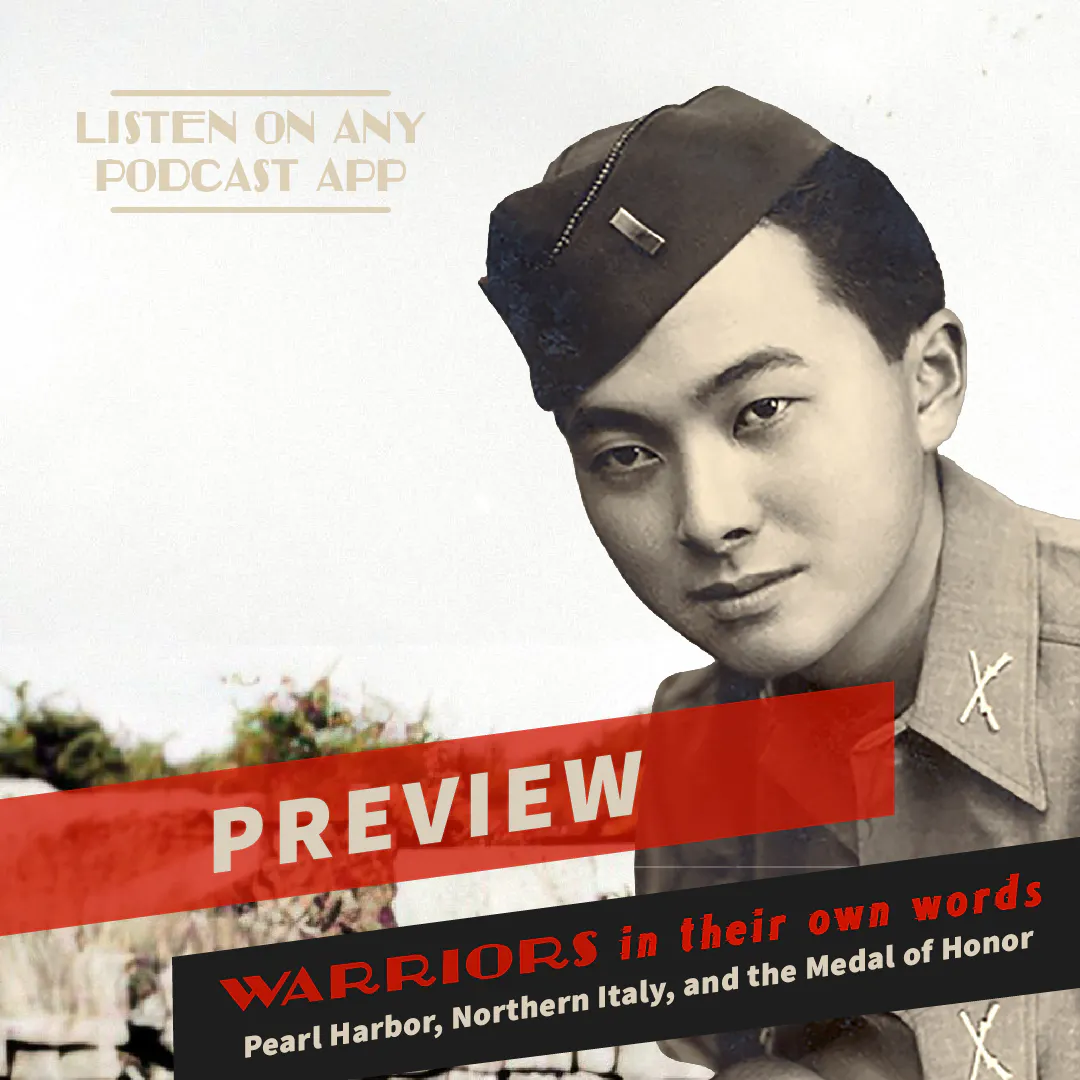
PREVIEW: Pearl Harbor, Northern Italy, and the Medal of Honor
trailerTomorrow, on the 82nd Anniversary of the Attack on Pearl Harbor, we’ll be sharing our full interview with Captain Daniel Inouye. At 17 years old, Inouye witnessed the attack first-hand from his home in Hawaii, and he joined the US Army a year later when the government reversed its policy on Japanese Americans serving. He was awarded the Medal of Honor for his bravery in Northern Italy, and he became a Senator after returning home. In this preview of tomorrow’s interview, Inouye describes how his regiment climbed a treacherous cliff in order to flank a German company in WWII. Learn more about your ad choices. Visit megaphone.fm/adchoices
The Battle of Merville Gun Battery: Lieutenant-Colonel Terence Otway DSO
S2 Ep 110The Battle of Merville Gun Battery: Lieutenant-Colonel Terence Otway DSO
Lieutenant Colonel Terence Otway DSO served in the British Army during World War II. In the hours before the Invasion of Normandy, he and the 9th Parachute Battalion were dropped over German lines, and tasked with destroying the Merville Gun Battery. Armed with four 150 mm guns, the Merville Gun Battery was crucial to the German defense. In this interview, Otway describes organizing and leading the attack, and successfully capturing the battery on D-Day, despite having a fraction of the men they were supposed to. Otway became a hero for his leadership that day, and was awarded the Distinguished Service Order. After his death in 2006, the citizens of Merville-Franceville-Plage erected a bust of Otway in his honor. Learn more about your ad choices. Visit megaphone.fm/adchoices
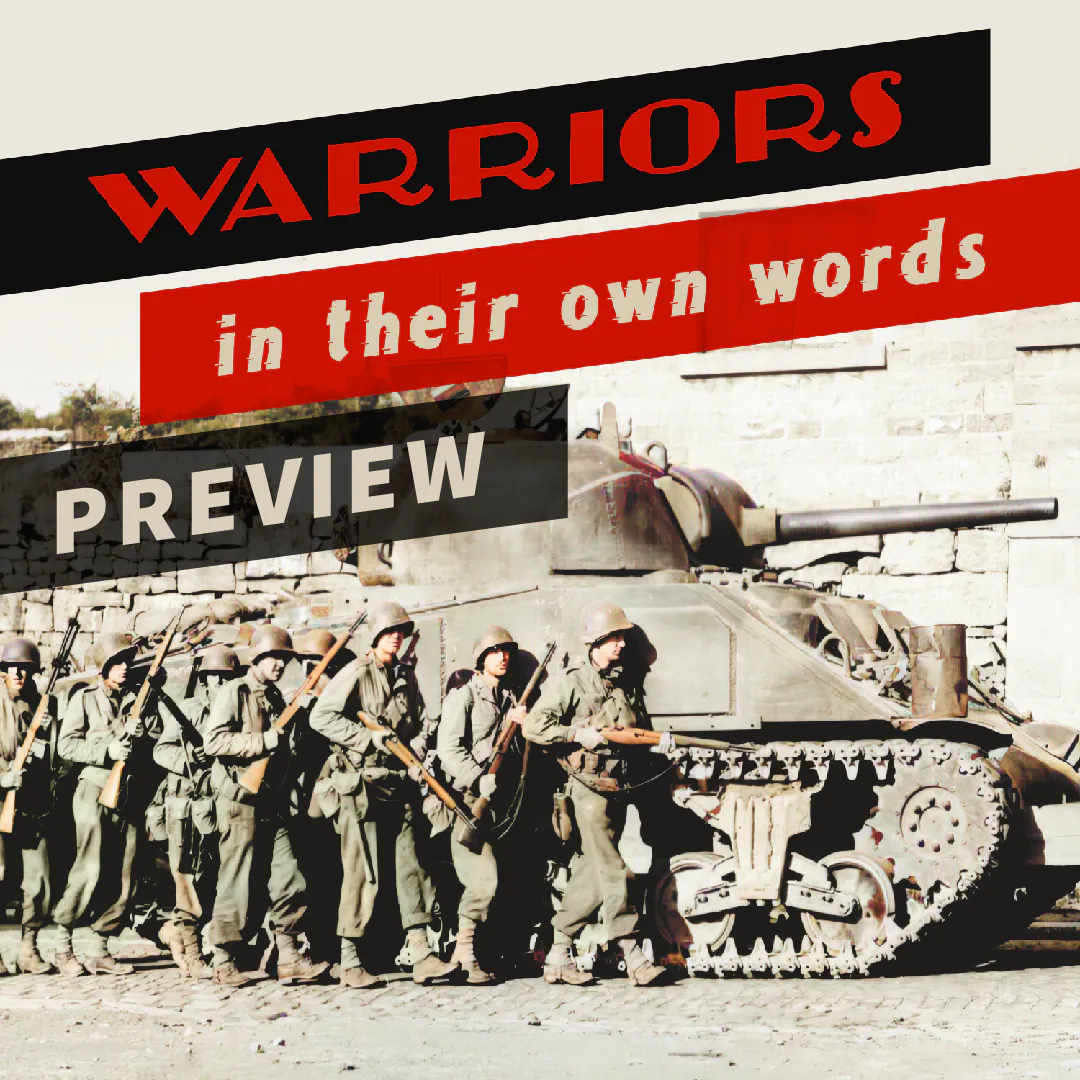
PREVIEW: The Battle of Merville Gun Battery
trailerIn this preview, we'll be sharing a clip from tomorrow's interview with Lieutenant-Colonel Terence Otway DSO. Make sure to catch our full interview with Otway when it releases tomorrow. Lieutenant Colonel Terence Otway DSO served in the British Army during World War II. In the hours before the Invasion of Normandy, he and the 9th Parachute Battalion were dropped over German lines, and tasked with destroying the Merville Gun Battery. Armed with four 150 mm guns, the Merville Gun Battery was crucial to the German defense. Otway became a hero for his leadership that day, and was awarded the Distinguished Service Order. After his death in 2006, the citizens of Merville-Franceville-Plage erected a bust of Otway in his honor. Learn more about your ad choices. Visit megaphone.fm/adchoices
PREVIEW: The Battle of Merville Gun Battery
S2 Ep 109Battalion Surgeon in the Bulge: CPT Loran B. Morgan M.D.
Captain Loran B. Morgan M.D. served as a battalion surgeon and paratrooper in the Army during World War II. He fought in the Battle of the Bulge and at the Rhine River Crossing. After the war, Morgan became an optometrist, and invented an irrigation device for eye wounds that is still used by medical personnel in the field today. He also went to Vietnam for 60 days as a civilian to run an eye clinic. Learn more about your ad choices. Visit megaphone.fm/adchoices
Battalion Surgeon in the Bulge: CPT Loran B. Morgan M.D.
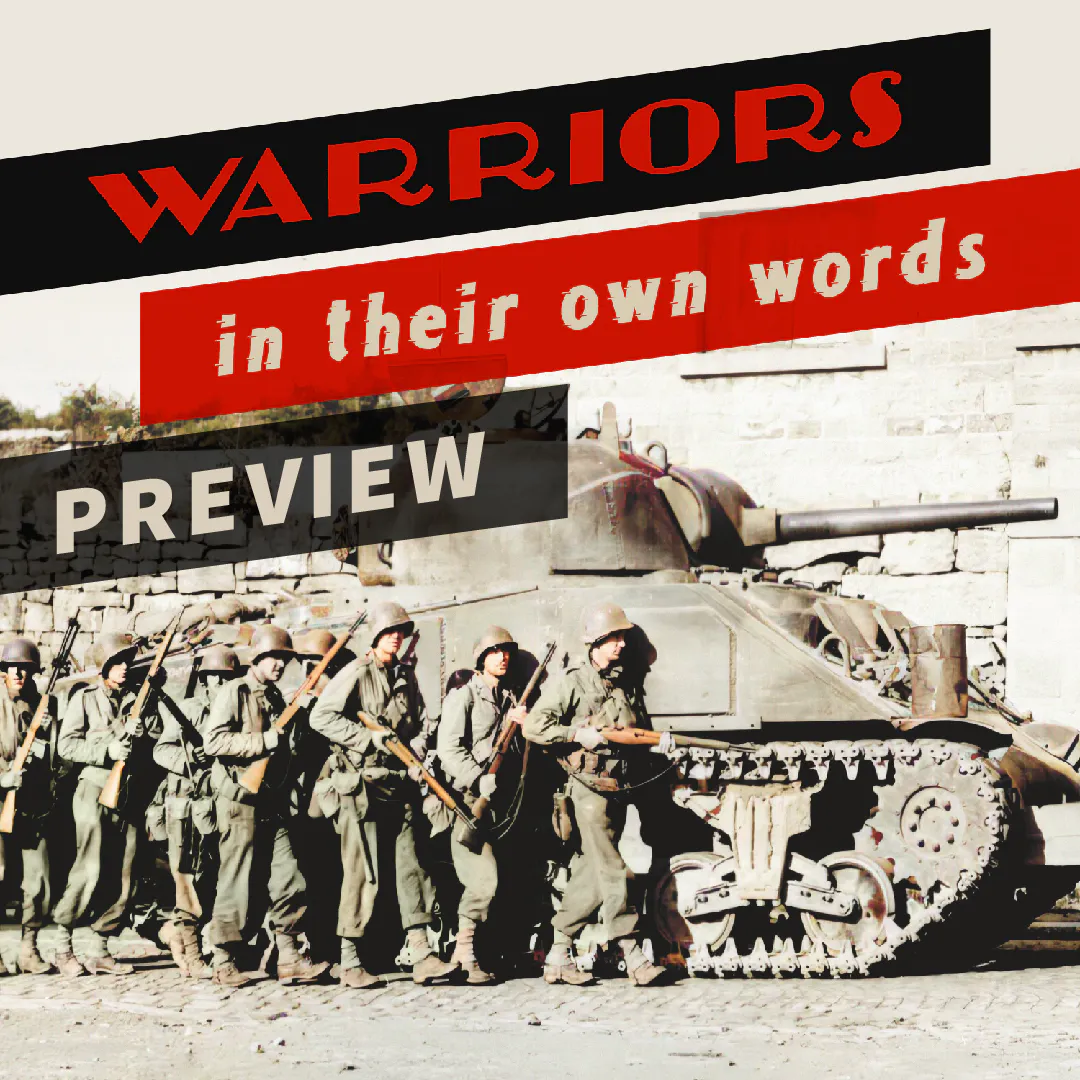
PREVIEW: Battalion Surgeon in the Bulge
trailerIn this preview, we'll be sharing a clip from tomorrow's interview with Captain Loran B. Morgan M.D.. Make sure to catch our full interview with Morgan when it releases tomorrow. Captain Loran B. Morgan M.D. served as a battalion surgeon and paratrooper in the Army during World War II. He fought in the Battle of the Bulge and at the Rhine River Crossing. After the war, Morgan became an optometrist, and invented an irrigation device for eye wounds that is still used by medical personnel in the field today. He also went to Vietnam for 60 days as a civilian to run an eye clinic. Learn more about your ad choices. Visit megaphone.fm/adchoices
PREVIEW: Battalion Surgeon in the Bulge
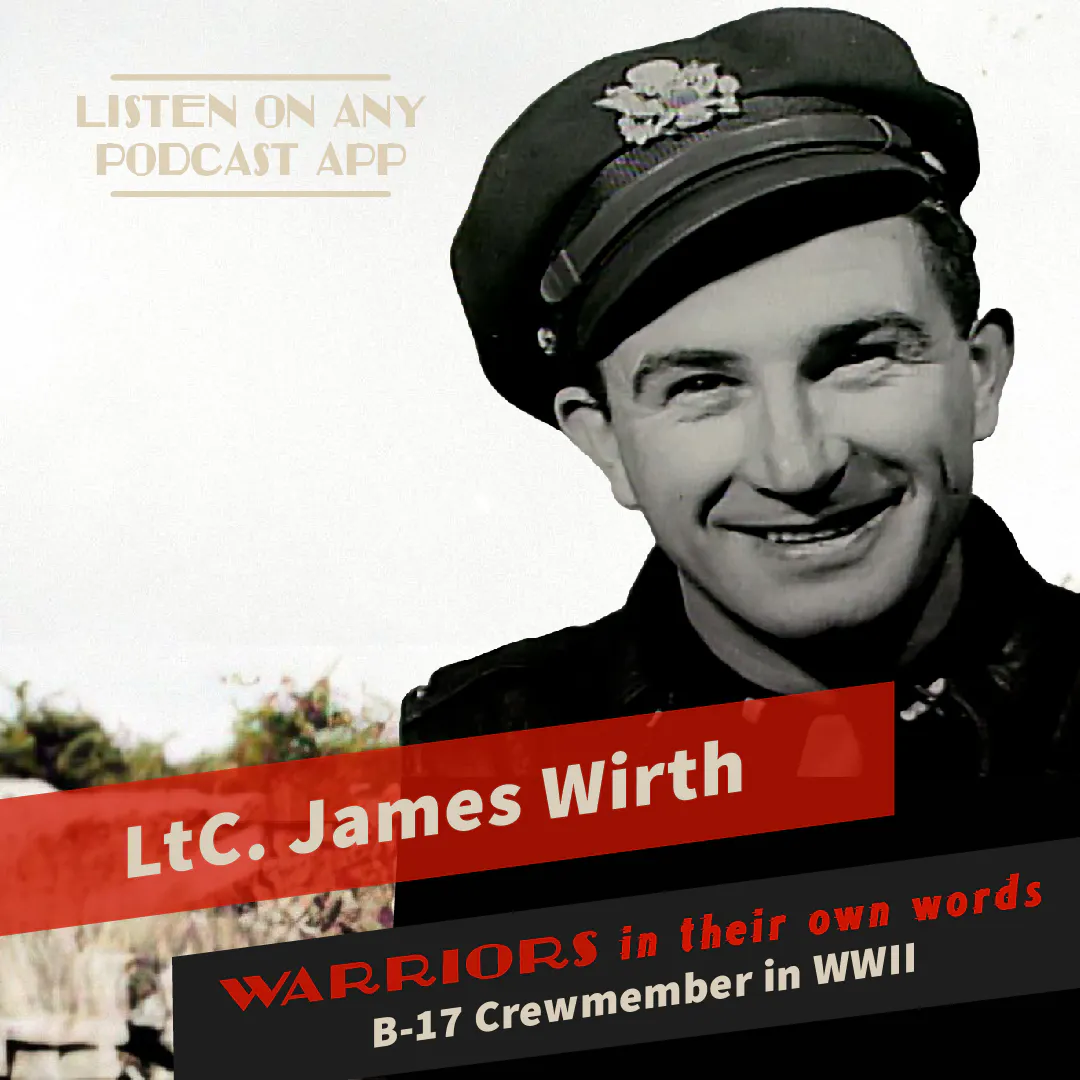
S2 Ep 108B-17 Crewmember in WWII: LtC. James Wirth
EContent Warning: Gore, Violence Lieutenant Colonel James Wirth served in the US Army Air Force during World War II. As a togglier, he flew on bombers and was tasked with arming and dropping bombs as well as manning a turret on board. In this interview, Wirth describes serving on a B-17 bomber, and the time his bomber was hit, injuring him and destroying one of their engines. Learn more about your ad choices. Visit megaphone.fm/adchoices
B-17 Crewmember in WWII: LtC. James Wirth
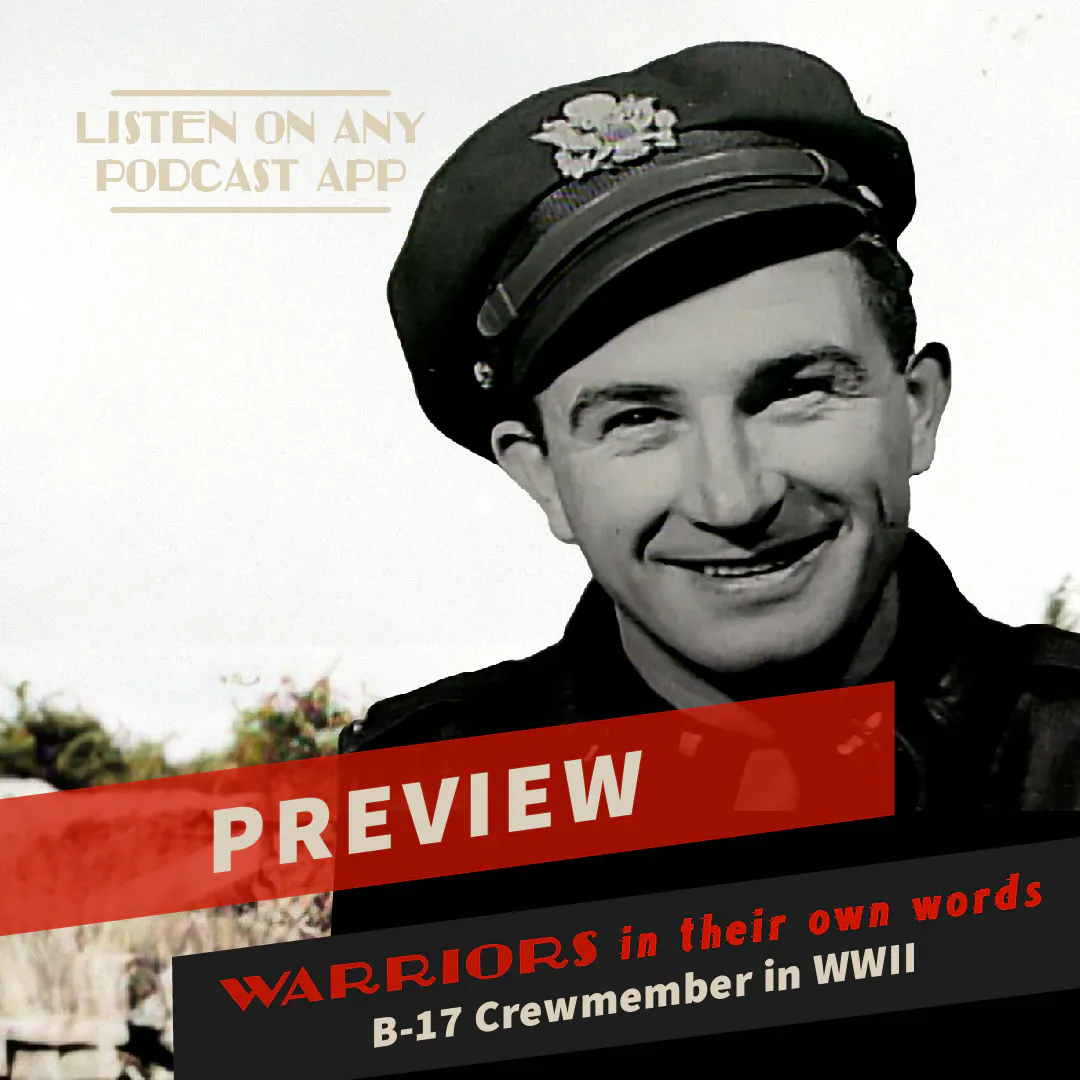
PREVIEW: B-17 Crewmember in WWII
trailerContent Warning: Gore, Violence In this preview, we'll be sharing a clip from tomorrow's interview with Lt Col James Wirth. Make sure to catch our full interview with Wirth when it releases tomorrow. Lieutenant Colonel James Wirth served in the US Army Air Force during World War II. As a togglier, he flew on bombers and was tasked with arming and dropping bombs as well as manning a turret on board. Learn more about your ad choices. Visit megaphone.fm/adchoices
PREVIEW: B-17 Crewmember in WWII
S2 Ep 107Minefield in Vietnam: LtCol Jim Riordan
Lieutenant Colonel Jim Riordan served as a forward observer in the Marine Corps in Vietnam. Forward observers have one of the most dangerous jobs in the Army and Marine Corps. They deploy near, and sometimes beyond, the front lines, and are tasked with analyzing the battlefield, locating allied and enemy positions, and coordinating artillery fire support via radio. In this interview, Riordan describes Operation Harvest Moon, and his company being caught in a minefield. Learn more about your ad choices. Visit megaphone.fm/adchoices