Warriors In Their Own Words | First Person War Stories
512 episodes — Page 3 of 11
The Raid at Cabanatuan: MAJ Robert Prince

S2 Ep 169The Raid at Cabanatuan: MAJ Robert Prince
Major Robert Prince served as an Army Ranger during World War II. He fought throughout the Phillippines, and helped plan the Raid on Cabanatuan, a Japanese POW camp. With the help of Filipino civilians, the Rangers, Alamo Scouts and guerilla forces traveled 24 miles under the cover of darkness to launch a surprise attack on the camp. They successfully defeated the Japanese and liberated over 500 prisoners of war. Actor James Franco portrayed MAJ Prince in The Great Raid (2005), which tells the story of Cabanatuan. Learn more about your ad choices. Visit megaphone.fm/adchoices
S2 Ep 168The Suicide Cliffs: Cpl Roy Roush Part II
ECorporal Roy Roush served in the United States Marine Corps during World War II. He fought in the Guadalcanal Campaign, the Battle of Tarawa, the Battle of Saipan, and the Battle of Tinian. He later served in the Air Force as a fighter pilot during the Korean War. In this interview, Roush describes his experiences during the Battle of Saipan & the Battle of Tinian To learn more about Roush, check out his book, Open Fire. Learn more about your ad choices. Visit megaphone.fm/adchoices
The Suicide Cliffs: Cpl Roy Roush Part II
Fighting Ghosts in Tarawa: Cpl Roy Roush Part I
S2 Ep 167Fighting Ghosts in Tarawa: Cpl Roy Roush Part I
Corporal Roy Roush served in the United States Marine Corps during World War II. He fought in the Guadalcanal Campaign, the Battle of Tarawa, the Battle of Saipan, and the Battle of Tinian. He later served in the Air Force as a fighter pilot during the Korean War. In this interview, Roush describes the Battle of Tarawa. To learn more about Roush, check out his book, Open Fire. Learn more about your ad choices. Visit megaphone.fm/adchoices
Falling Out of the Sky: COL Francis “Gabby” Gabreski
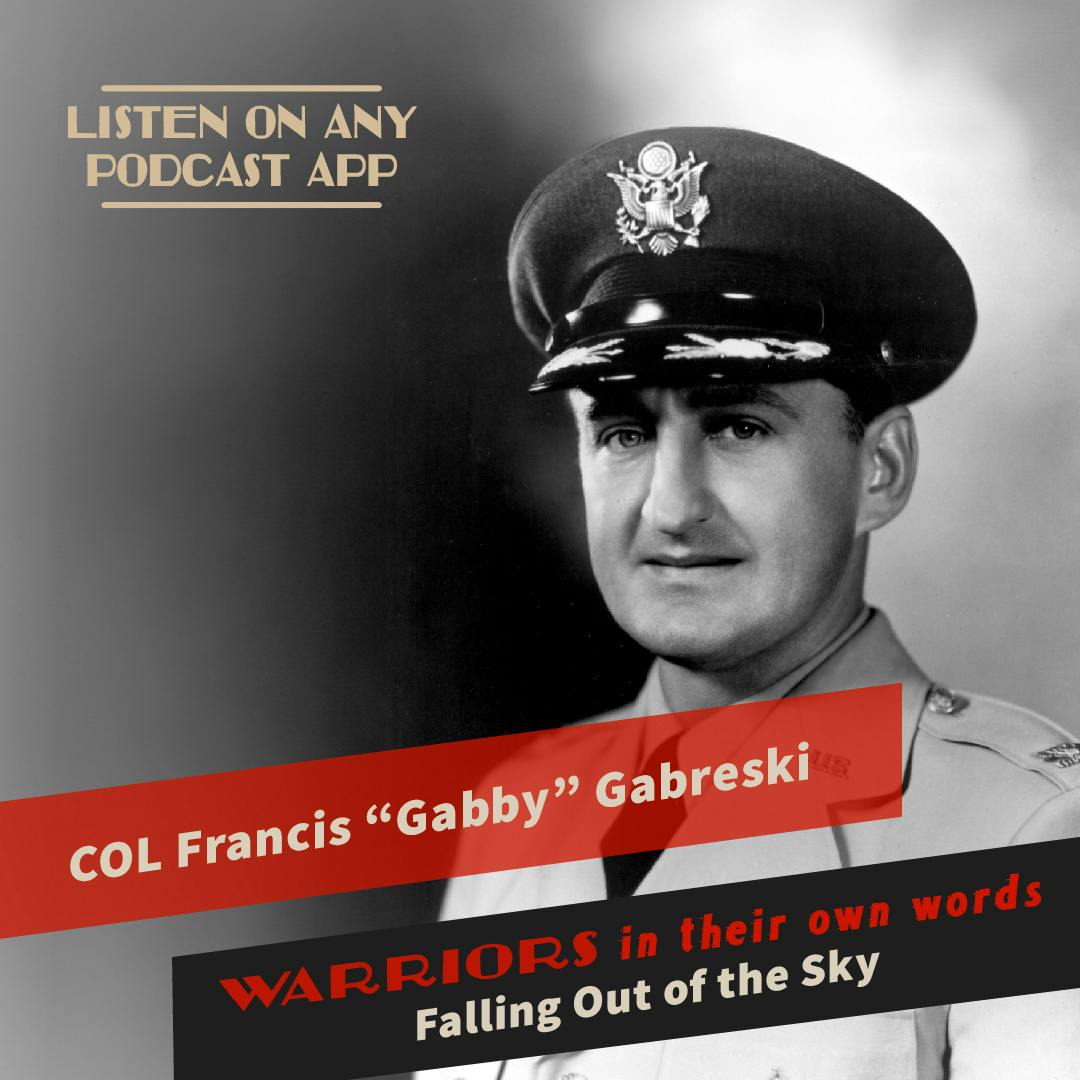
S2 Ep 166Falling Out of the Sky: COL Francis “Gabby” Gabreski
Colonel Francis Gabreski served in World War II as a fighter pilot. He flew bomber escort missions with the 56th Fighter Group in the P-47 Thunderbolt, and was the top U.S. fighter ace in the European theater. He’s credited with destroying 34 ½ enemy aircraft in combat, and is one of only seven American pilots to become an ace in two wars (WWII & Korea). Learn more about your ad choices. Visit megaphone.fm/adchoices
The Burma-Siam Death Railway: CPO Otto Schwarz
S2 Ep 165The Burma-Siam Death Railway: CPO Otto Schwarz
Chief Petty Officer Otto Carl Schwarz Jr. served in the Navy in World War II. He was born in the Netherlands, but moved to the US with his family during childhood. He enlisted in the US Navy in January 1941 with the permission of his parents. Schwarz served stints on several ships before making his way to the USS Houston, a heavy cruiser, in June 1941. During the Battle of Sunda Strait in February 1942, the Houston was sunk by enemy torpedoes and gunfire. Those who escaped the Houston came under machine gun fire from the Japanese as they floated in the water. In total, 700 men were lost. Like most of the 368 men who survived, Schwarz was captured by the Japanese and sent to a work camp. He was transported via a “Hell ship”. Hell ships earned their moniker from the allied prisoners of war who were unlucky enough to board one. They were requisitioned merchant ships that were extremely overcrowded with POWs. Described as “floating dungeons”, inmates had “no access to the air, space, light, bathroom facilities, and adequate food or water.” You can learn more about them here. Schwarz was first sent to Bicycle Camp, a POW camp in modern day Indonesia. There he experienced the best treatment during his time as a prisoner, but it didn’t last long. He was transferred to Changi Prison in Singapore, and then to a prison camp in Moulmein, Burma. There he was forced to work on the Burma Railway, also known as the Death Railway. According to Britannica “More than 11 percent of civilian internees and 27 percent of Allied POWs died or were killed while in Japanese custody; by contrast, the death rate for Allied POWs in German camps was around 4 percent.” Over 60,000 allies were forced to build it, and over 10,000 died during its construction. Conditions for these POWs were unfathomable. They were underfed and overworked, they suffered from numerous diseases and illnesses, they were given little to no medical attention, they faced harsh weather conditions, they had to deal with insect infestations, and they were often subjected to beatings by their captors. Learn more about your ad choices. Visit megaphone.fm/adchoices
The Wild Weasels: Capt. Tom “Bear” Wilson
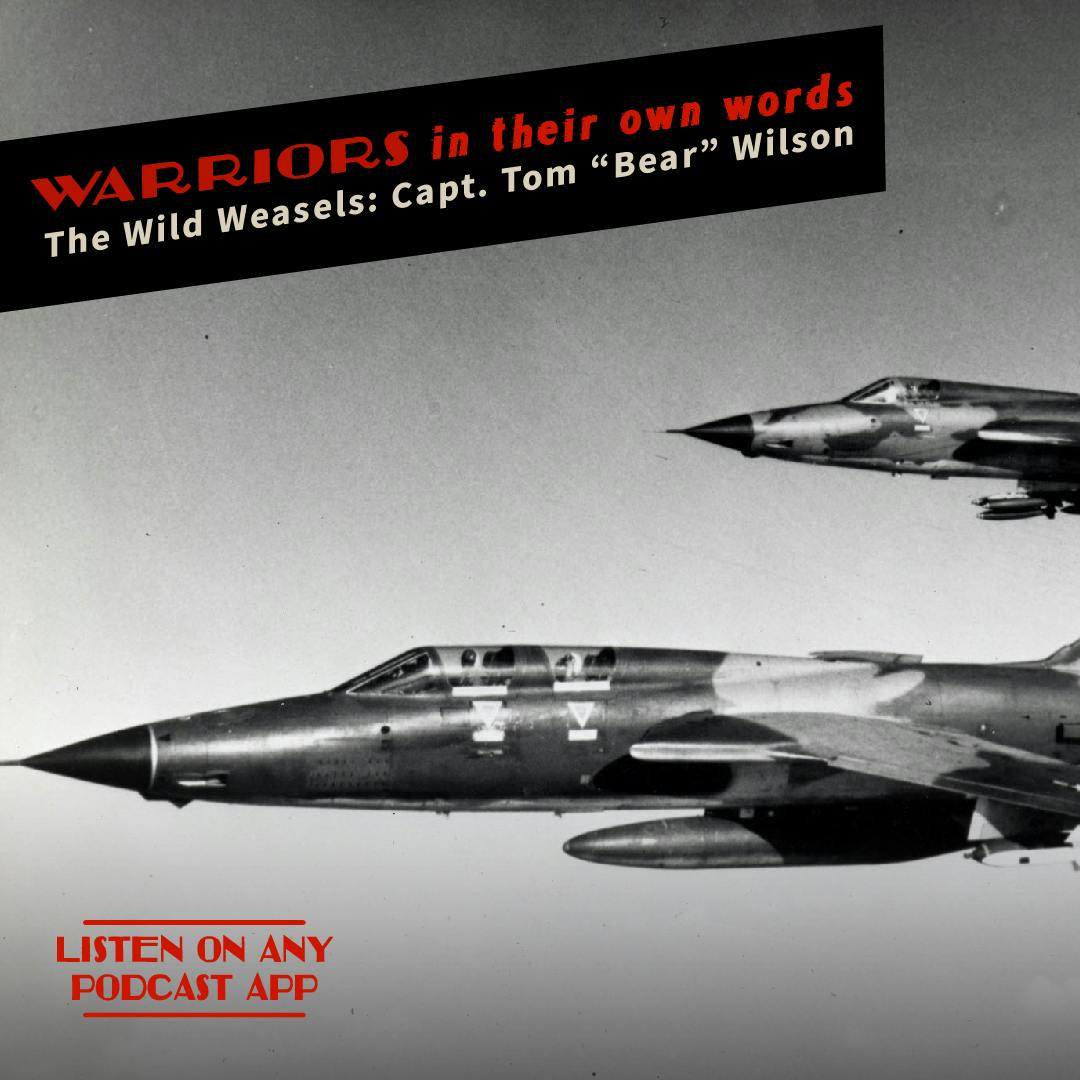
S2 Ep 164The Wild Weasels: Capt. Tom “Bear” Wilson
Captain Tom “Bear” Wilson served in Vietnam as an Electronic Warfare Officer (EWO). He sat in the back seat of aircraft, and was responsible for monitoring radar in order to warn his pilot of threats, like surface-to-air missiles (SAMs), anti-aircraft artillery, and enemy aircraft. He also protected his aircraft by jamming enemy radar. As a Wild Weasel, it was Wilson’s job to protect friendly aircraft attacking enemy SAM sites, who have one of the most dangerous jobs in modern warfare. Wilson and his front seater drew SAMs away from bombers, and targeted the SAM sites themselves. This meant that Weasels spent sometimes more than 20 minutes over the target, as opposed to the one or two minutes bomber pilots spent. One of our favorite interviews features another Wild Weasel and MOH recipient named Col. Leo Thorsness. Check it out here. Learn more about your ad choices. Visit megaphone.fm/adchoices

S2 Ep 164Addiction and Trauma: SSgt Sam Hargrove
Staff Sergeant Sam Hargrove served in the Air Force for 11 years, working in combat communications. During her deployment in Iraq, Hargrove survived a base bombing. The attack left her with a traumatic brain injury (TBI) and PTSD, but both went untreated. When she returned home, Hargrove self-medicated with alcohol. Trauma and anger consumed her life until a drunken outburst caused her to punch a hole in a wall in front of her godson: “He was scared. He was standing there to the side shaking and crying.” Hargrove contemplated suicide after that incident, but decided to get help instead. Thanks to peer support groups at the VA, and multiple programs through the Wounded Warrior Project, she was able to find the help and support she needed to get better. Learn how the VA can help you. Learn how the Wounded Warrior Project can help you. Learn more about your ad choices. Visit megaphone.fm/adchoices
Addiction and Trauma: SSgt Sam Hargrove
Imprisoned by the Japanese: CAPT Lawrence Savadkin
S2 Ep 163Imprisoned by the Japanese: CAPT Lawrence Savadkin
Captain Lawrence Savadkin served as a computer data torpedo operator on the USS Tang, a submarine, during World War II. During a battle with enemy Japanese ships in October 1944, the Tang was struck by a torpedo and sunk. 78 men were killed. Savadkin narrowly escaped the sinking sub with his life. He and the 8 other survivors were rescued and captured by the Japanese. He spent the rest of the war as a POW in the Toyko Bay Area. In this interview, Savadkin describes the battle that sunk the Tang, how luck helped him escape the sinking sub, and the conditions of the Japanese POW camp. Learn more about your ad choices. Visit megaphone.fm/adchoices
Losing An Arm in Iraq: SPC Danielle Green

S2 Ep 161Losing An Arm in Iraq: SPC Danielle Green
Specialist Danielle Green served in Iraq with the Military Police Corps as a gunner. On May 25th, 2004, she was hit by a homemade RPG on a rooftop. She lost her left forearm and hand in the blast. Prior to enlisting at the age of 25, Green played basketball at Notre Dame, and worked as a teacher. In this interview, Green talks about her service, the blast, and what her physical/mental recovery has been like. Learn more about your ad choices. Visit megaphone.fm/adchoices
Christmas During the Battle of the Bulge: 1st Lt. Belton Cooper
S2 Ep 160Christmas During the Battle of the Bulge: 1st Lt. Belton Cooper
Lieutenant Belton cooper served in World War II as a ordnance officer. He and his team were tasked with recovering damaged allied tanks, often from behind enemy lines, and repairing them. In this special holiday episode, he describes a chaotic air raid around Christmastime of 1944, during the Battle of the Bulge. [Editor’s Note: Peep is another name for a Jeep. Cooper uses that terminology a few times during the episode] Learn more about your ad choices. Visit megaphone.fm/adchoices
S2 Ep 159Honoring the Lives Lost at Pearl Harbor: MSgt. Richard Fiske
“I want peace so bad that it hurts.” Master Sergeant Richard Fiske served in the Marines during World War II as a bugler. He was stationed on the USS West Virginia during the attack on Pearl Harbor, and watched as the Japanese planes dropped the first torpedoes. He also served in the Battle of Iwo Jima. "’By God,’ he says, "This is a hell of a way to start a damn war.’He says, ‘Why don't they tell us first?’" After World War II he got his pilot license and joined the Air Force. He became a crew chief and served in both Korea and Vietnam. In this interview, he talks about the chaos during Pearl Harbor, the horrors of war, the importance of forgiveness, and meeting the Japanese pilot who tried to kill him on December 7th, 1941. Learn more about your ad choices. Visit megaphone.fm/adchoices
Honoring the Lives Lost at Pearl Harbor: MSgt. Richard Fiske
A Frozen Thanksgiving: Bill Boldenweck
S2 Ep 158A Frozen Thanksgiving: Bill Boldenweck
Bill Boldenweck served in the Korean War with the Marine Corps. In this interview, he talks about the harsh conditions of the Battle of Chosin Reservoir, which he was sent to the day after Thanksgiving. Editor’s Note: Boldenweck’s rank at the time of the battle, and at the time of his retirement, are unknown. Make sure to check out the Documentary.tv YouTube Channel, where we’ve combined the incredible stories you hear on this show every week with rare, authentic battlefield footage to create riveting film documentaries. Learn more about your ad choices. Visit megaphone.fm/adchoices
The First Man Into Normandy: Col. Vito S. Pedone
S2 Ep 157The First Man Into Normandy: Col. Vito S. Pedone
Colonel Vito S. Pedone served in World War II as a Pathfinder Pilot. Pathfinders were paratroopers that dropped into enemy territory first, tasked with setting up signals that would direct the rest of the paratrooper fleet into the correct landing zones. Since they were often the first soldiers sent across enemy lines, this was an incredibly dangerous job. As a Pathfinder Pilot, it was Pedone’s job to fly the Pathfinders into enemy territory. On D-Day, Pedone co-piloted the lead Pathfinder plane. During the flight over, he leaned forward and stuck his head out the window to check the weather, making him technically the first man to enter France that day. You can learn more about Pedone here. Make sure to check out the Documentary.tv YouTube Channel, where we’ve combined the incredible stories you hear on this show every week with rare, authentic battlefield footage to create riveting film documentaries. Learn more about your ad choices. Visit megaphone.fm/adchoices
Crashing into France: 1st Sgt. Bill Lumsden
S2 Ep 156Crashing into France: 1st Sgt. Bill Lumsden
1st Sergeant Bill Lumsden served in World War II as a Paratrooper and Pathfinder. Pathfinders were paratroopers that dropped into enemy territory first, tasked with setting up signals that would direct the rest of the paratrooper fleet into the correct landing zones. Since they were often the first soldiers sent across enemy lines, this was an incredibly dangerous job. As a Pathfinder Pilot, it was Pedone’s job to fly the Pathfinders into enemy territory. Lumsden parachuted into enemy territory ahead of the Invasion of France, but was heavily injured after a hard landing and a skirmish with a German soldier. Make sure to check out the Documentary.tv YouTube Channel, where we’ve combined the incredible stories you hear on this show every week with rare, authentic battlefield footage to create riveting film documentaries. Learn more about your ad choices. Visit megaphone.fm/adchoices
Dropping Into Bastogne: Pfc. John Agnew

S2 Ep 155Dropping Into Bastogne: Pfc. John Agnew
Private First Class John Agnew served in World War II as a Paratrooper and Pathfinder. Pathfinders were paratroopers that dropped into enemy territory first, tasked with setting up signals that would direct the rest of the paratrooper fleet into the correct landing zones. Since they were often the first soldiers sent across enemy lines, this was an incredibly dangerous job. As a Pathfinder Pilot, it was Pedone’s job to fly the Pathfinders into enemy territory. Agnew parachuted into Normandy on D-Day as a member of the Filthy Thirteen, a paratrooper demolition squad that became notorious for their insubordination and their signature look, that included Native American style warpaint and mohawks. They later inspired the movie The Dirty Dozen. Out of 20 men, Agnew was one of four from his unit that survived D-Day. Agnew, along with half of the surviving members of the Filthy Thirteen, joined the Pathfinders. He fought in the Siege of Bastogne, the Rhine River Crossings, and Operation Market Garden with the Pathfinders. He later also served in Vietnam. In this interview, Agnew describes the Siege of Bastogne and The Filthy Thirteen. Learn more about Agnew here. Check out the Documentary.tv YouTube Channel to see incredible stories like this combined with rare, authentic battlefield footage to create riveting film documentaries. Editor’s Note: ‘Private First Class’ refers to Agnew’s rank during the Siege of Bastogne. His rank by the time of his retirement is unknown. Learn more about your ad choices. Visit megaphone.fm/adchoices
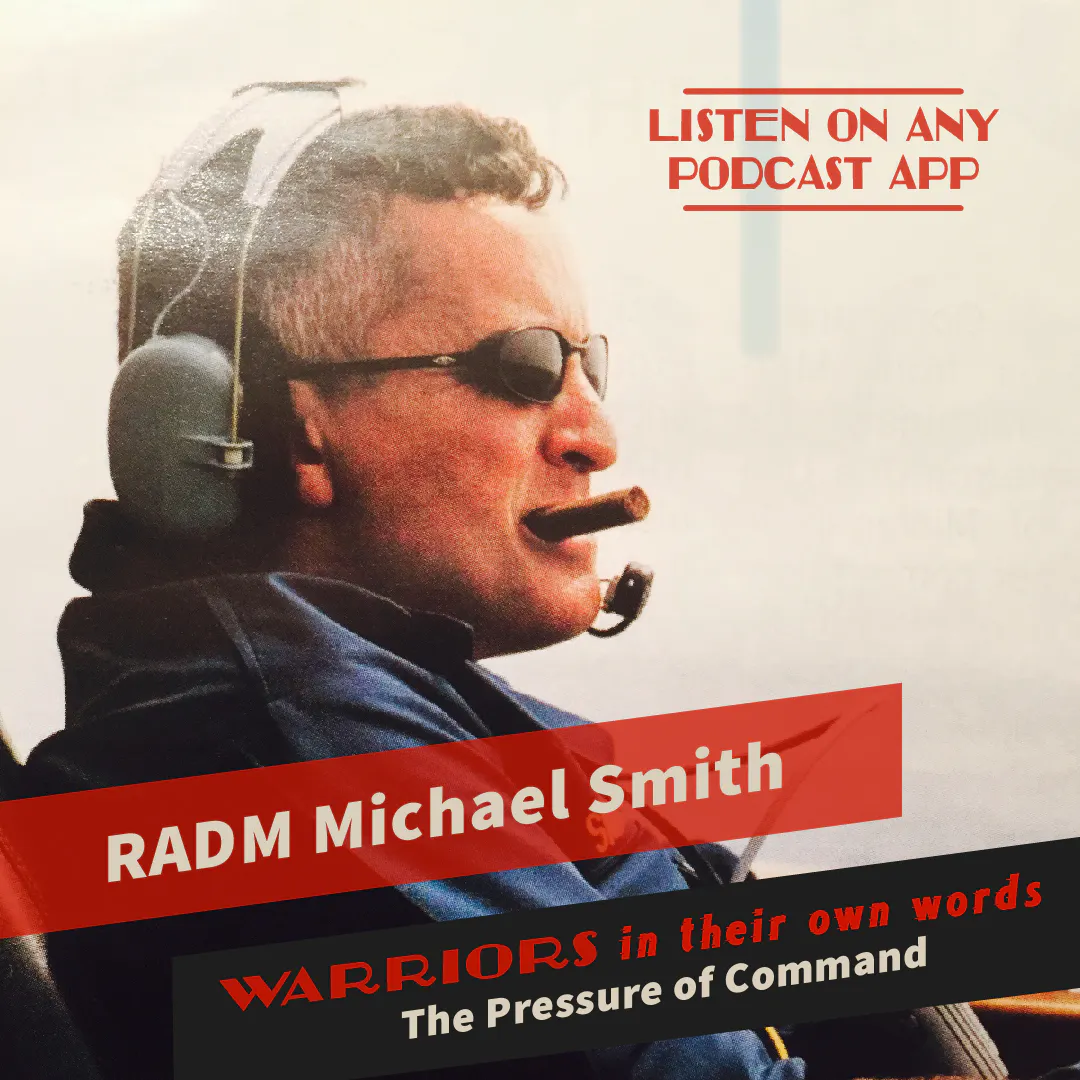
S1 Ep 154The Pressure of Command: RADM Michael Smith
Rear Admiral Michael Smith first served as a nuclear engineer in the Navy. After his first tour, he attended graduate school in order to qualify for command. He first gained command of the USS Porter (a destroyer) in 2005. Check out the Documentary.tv YouTube Channel to see incredible stories like this combined with rare, authentic battlefield footage to create riveting film documentaries. Learn more about your ad choices. Visit megaphone.fm/adchoices
The Pressure of Command: RADM Michael Smith
A Pilot in Civilian Clothes: Lt Col Greg Wilson
S2 Ep 153A Pilot in Civilian Clothes: Lt Col Greg Wilson
Lieutenant Colonel Greg Wilson served in Vietnam & Laos as a Forward Air Controller. As a Forward Air Controller, it was his job to coordinate airstrikes, and ensure that no friendly troops were hit. After less than six months in Vietnam, he joined the classified Steve Canyon Program (Project 404), also known as the Ravens. Laos was technically neutral during the Vietnam war, and no foreign troops were supposed to be in the country. Nonetheless, the North Vietnamese continued to use Laos in order to import supplies via the Ho Chi Minh trail. Needing to stop the flow of enemy supplies, the USAF began secret airborne operations, targeting enemy vehicles, ground troops, and weapon systems. The Raven program was eventually developed in order to better execute these operations. Raven pilots wore civilian clothes, and their job was to mark targets with smoke rockets, and direct air strikes onto them. In this interview, Lt Col Wilson talks about his experience as a FAC and a Raven. He tells this story about first joining the Ravens: “So, I went out for a flight with one of the Ravens, Erik Erikson, and he was in the backseat…He gave me a set of coordinates. I said, ‘Well, there's got to be something. There's got to be a trick here, because this coordinate is right in the middle of a map. I don't have to piece them together.’ So, I flew to those coordinates, and he said, ‘What do you see down there?’ So, I looked down and I said, ‘Well, it looks like a crashed 0-1.’ He said, ‘You're right. What else do you see down there?’ I said, ‘Well, I can't be sure, but I'd say that it looks like skeletal remains.’ And he said, ‘You're right again. You're his replacement.’ So, that was kind of my wakeup call that they figured I was a rookie. And they also, wanted to let me know that this was the real game, that there was threat here. And that if you were shot down in this environment, you were not going to be captured, you were not going to be a POW, you were going to be a fatality.” Learn more about Wilson here. Check out the Documentary.tv YouTube Channel to see incredible stories like this combined with rare, authentic battlefield footage to create riveting film documentaries. Learn more about your ad choices. Visit megaphone.fm/adchoices
The Capture of U-505: QMS2 Don Carter
S2 Ep 153The Capture of U-505: QMS2 Don Carter
Signalman 2nd Class Don Carter served on the USS Guadalcanal in World War II. The ship hunted U-Boats, which had terrorized American convoys in the Atlantic. As a signalman, it was his job to use flags and lights to send messages to other vessels. On June 4th, 1944, the Guadalcanal spotted and captured U-Boat 505, the only one obtained by the U.S. Navy during the entire war. The information gained by its capture, namely the captain’s code book, was crucial to the war effort. This success was kept top secret, and the public only learned about it after the war. LTJG Albert L. David was awarded the Medal of Honor for securing the sensitive materials that day. U-505 was transported back to the U.S., and now sits at the Chicago Museum of Science and Industry. Carter’s pistol is also on display at the museum. Editor’s Note: Carter’s rank at the time of his retirement is unknown. Signalman 2nd Class reflects his rank at the time of U-505’s capture. Learn more about your ad choices. Visit megaphone.fm/adchoices
Special Forces & Drone Warfare: LTC Daniel Pace Part II
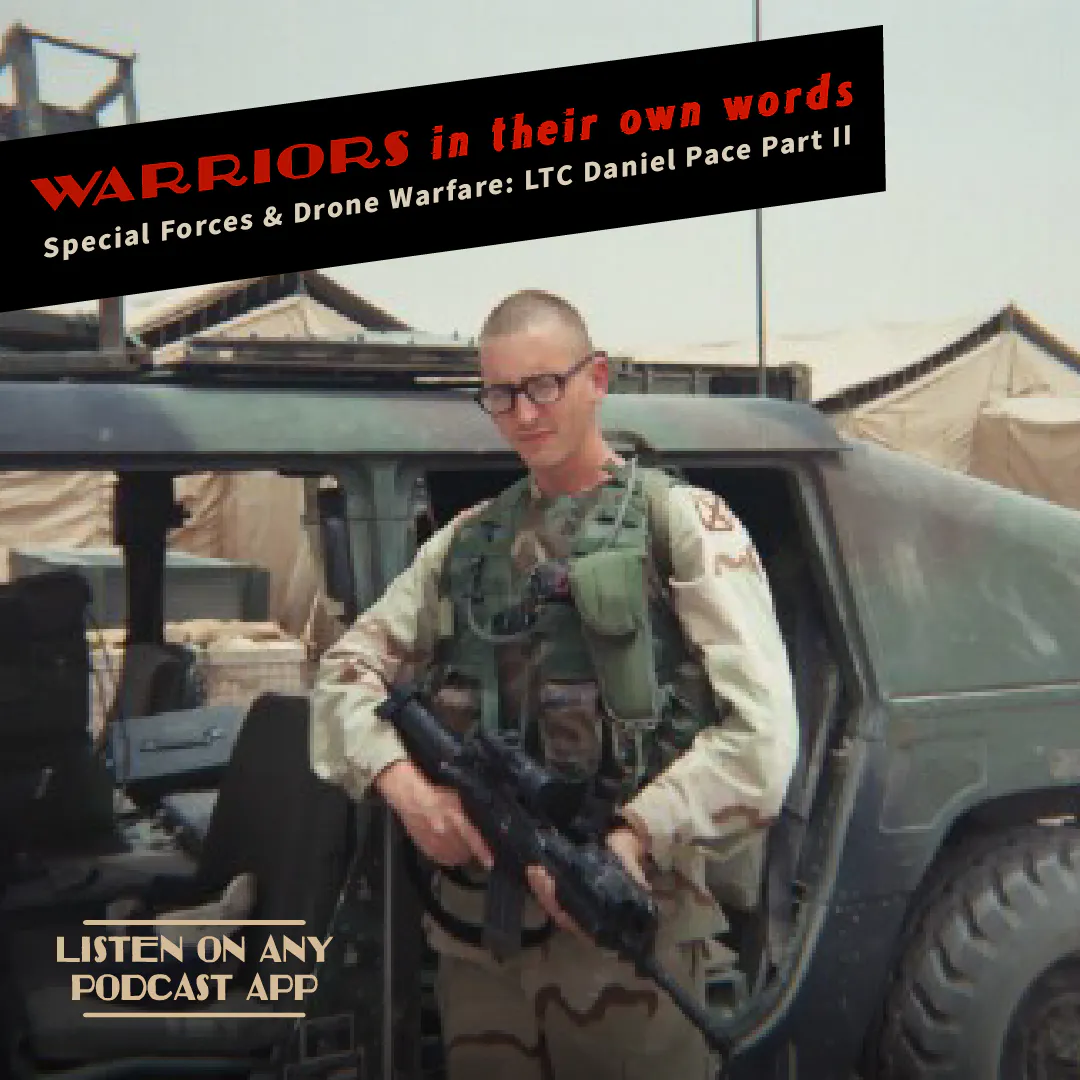
S2 Ep 151Special Forces & Drone Warfare: LTC Daniel Pace Part II
Lieutenant Colonel Daniel Pace served in the U.S. Army for 22 years. He first deployed to Afghanistan at the beginning of the War on Terror as an infantryman, then redeployed to Afghanistan in ‘03. After attending officer candidate school, Pace then deployed to Iraq as a company executive officer in ‘07. Pace then decided to join the U.S. Army Special Forces (Green Berets). He did work in places like Colombia, Peru, Europe and Central America, doing foreign internal defense before returning to Afghanistan in 2019 as a part of Special Operation Forces. There, he oversaw drone warfare. In this interview, Pace talks about his deployment to Iraq, joining the Green Berets, and the horrors of drone warfare: “I started to feel like I was running some kind of weird factory, where our product was human tragedies, where we're just blowing up these people over and over, we're just watching it night after night. And it started to bother me, but it did achieve its desired effect. It did achieve its impact. Again, it's a very effective way to do business.” Click here to check out Two Weeks In Hell, the Discovery Channel show about the Green Beret’s training which features LTC Pace. Learn more about your ad choices. Visit megaphone.fm/adchoices

S2 Ep 150The War on Terror Begins: LTC Daniel Pace Part I
Lieutenant Colonel Daniel Pace served in the U.S. Army for 22 years. He first deployed to Afghanistan at the beginning of the War on Terror as an infantryman, then redeployed to Afghanistan in ‘03. After attending officer candidate school, Pace then deployed to Iraq as a company executive officer in ‘07. Pace then decided to join the U.S. Army Special Forces (Green Berets). He did work in places like Colombia, Peru, Europe and Central America, doing foreign internal defense before returning to Afghanistan in 2019 as a part of Special Operation Forces. There, he oversaw drone warfare. In this interview, Pace talks about his first two deployments, explaining the intense lead-up, the reality of the situation, moral difficulties, and the difficulties they faced. Next time on Warriors In Their Own Words, we’ll hear the rest of Pace’s story, where he talks about his deployment to Iraq, joining the Green Berets, and the horrors of drone warfare. Learn more about your ad choices. Visit megaphone.fm/adchoices
The War on Terror Begins: LTC Daniel Pace Part I
The Inception of the Pathfinders: LTG John Norton
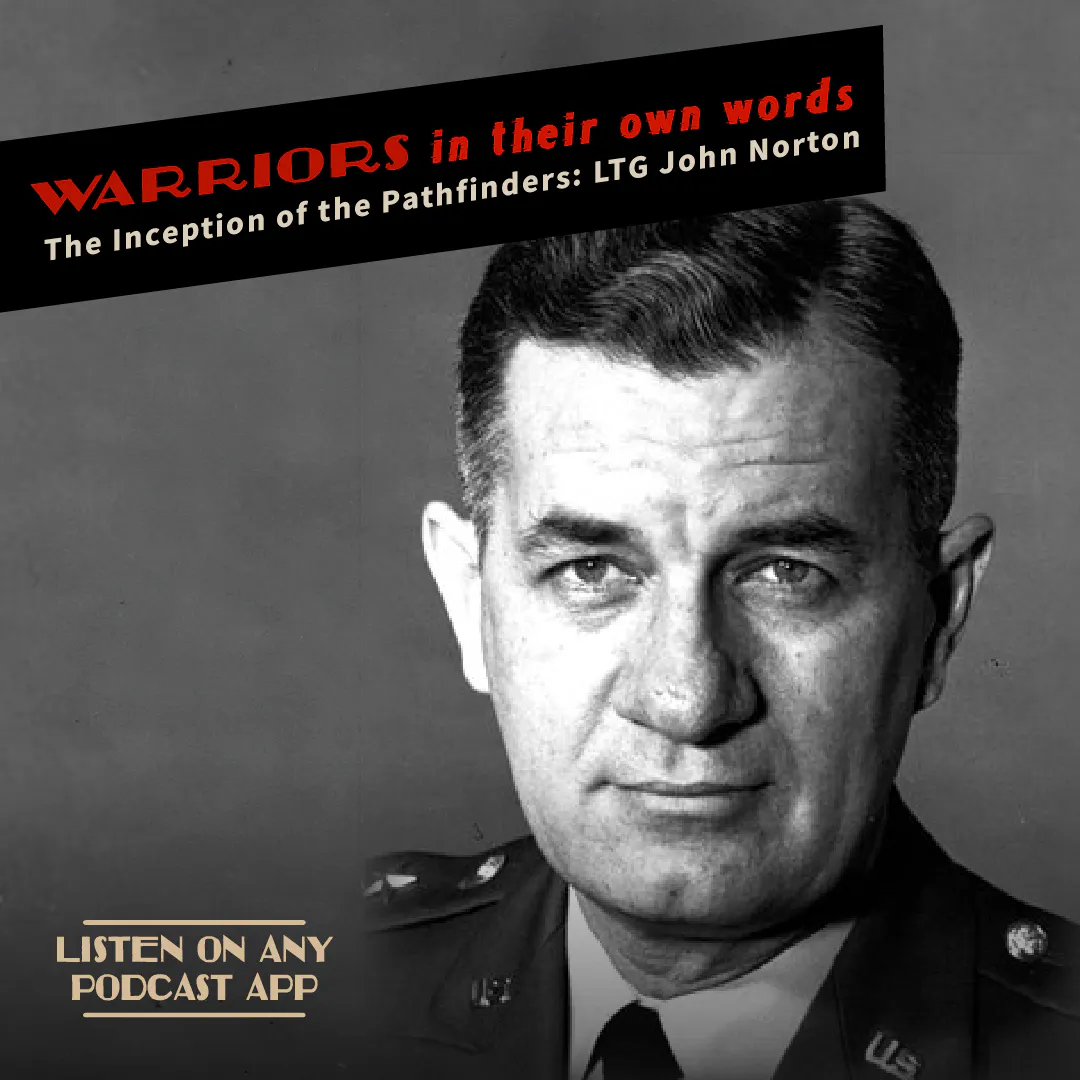
S2 Ep 149The Inception of the Pathfinders: LTG John Norton
Lieutenant General John Norton served in the US Army as a Pathfinder and paratrooper during World War II. He commanded the 505 regimental combat team and completed four jumps during the war, including during the Invasion of Sicily, the Invasion of Italy, the Invasion of Normandy, and Operation Market Garden. He also participated in the Battle of the Bulge. In this interview, Norton recounts his jumps while explaining the inception and development of the Pathfinders. Learn more about your ad choices. Visit megaphone.fm/adchoices
S2 Ep 14818 Year Old Medic in Vietnam: Lawrence Araujo
Lawrence Araujo served in Vietnam as an Army Medic. He arrived in Vietnam three weeks after the 1968 Tet Offensive, and spent a year with the infantry as a medic. He then decided to extend his tour, and chose to work in the emergency room at the 93rd Evac Hospital in Long Bhin. Editor’s Note: Araujo’s rank at the time of his retirement is unknown. Learn more about your ad choices. Visit megaphone.fm/adchoices
18 Year Old Medic in Vietnam: Lawrence Araujo
Pathfinder On D-Day: Pfc. Robert Earl Sechrist

S2 Ep 147Pathfinder On D-Day: Pfc. Robert Earl Sechrist
Private First Class Robert Earl Sechrist served in the U.S. Army as a paratrooper and pathfinder during World War II. As a Pathfinder, Secrist was one of the first men to parachute into France before the invasion of Normandy, tasked with guiding other Paratroopers to their landing zone. As he landed in France, Sechrist’s parachute got stuck in a hedgerow, and he immediately started taking fire from the Germans. Editor’s Note: It’s unknown what rank Sechrist reached by retirement. All we know is that he was a Private First Class when he jumped into France on D-Day. Learn more about your ad choices. Visit megaphone.fm/adchoices
Operation Ivory Coast: MAJ George Petrie
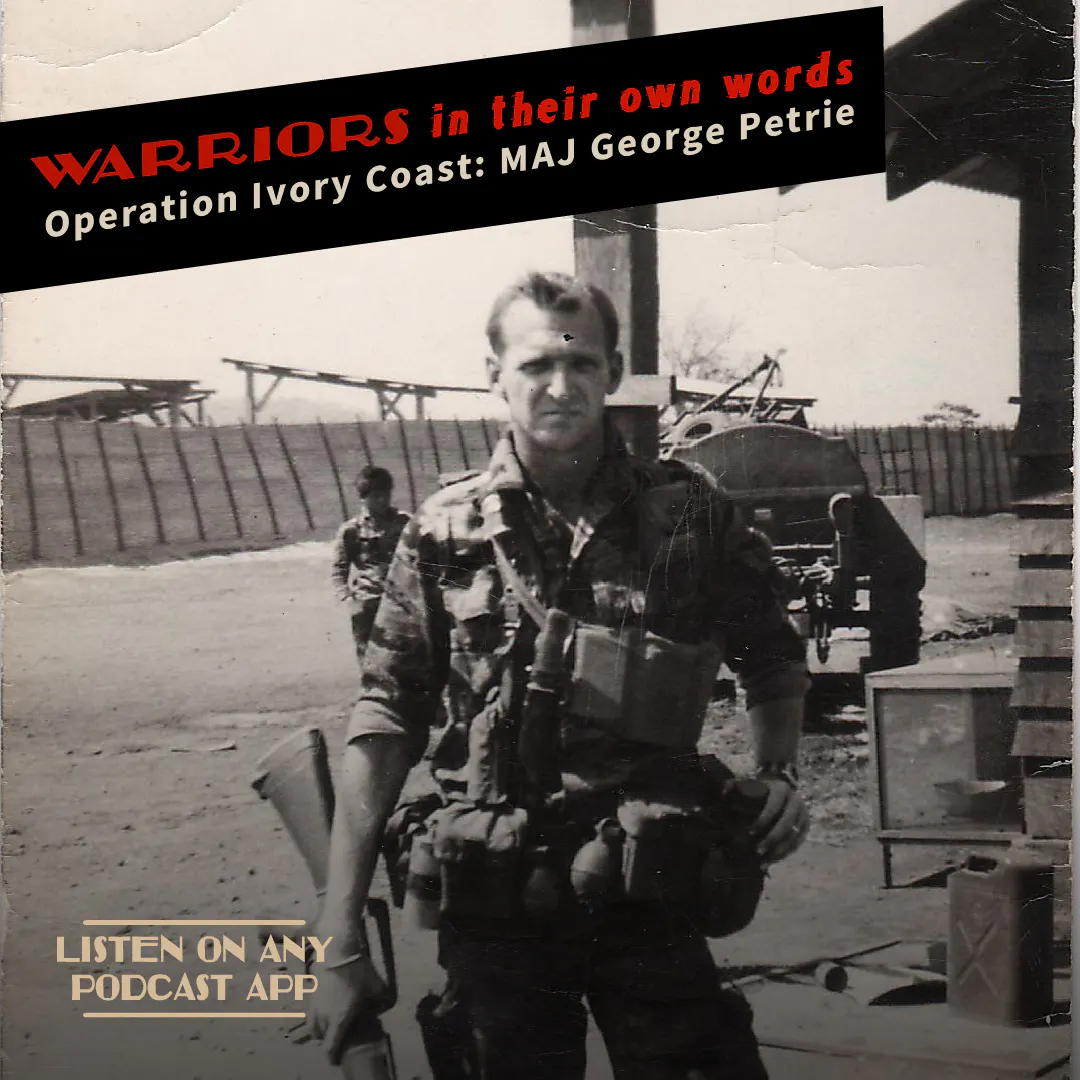
S2 Ep 146Operation Ivory Coast: MAJ George Petrie
EMajor George Petrie served in the U.S. Army Special Forces in Vietnam. He was a member of MACV-SOG, and was the first soldier to hit the ground during the Son Tay Raid. MACV or “Military Assistance Command, Vietnam”, was a highly classified, multi-service special operations unit consisting in part of US Army Special Forces, Navy SEALs, and CIA personnel in Vietnam. SOG, or “Studies and Observations Group”, was a subcomponent of MACV that provided on the ground intelligence to and conducted operations, including reconnaissance missions, evacuations, prisoner captures, and much more from control sites across Vietnam. In this interview, Petrie recounts Operation Ivory Coast (Son Tay Raid), a significant POW rescue operation. Petrie also served in Panama and the Dominican Republic. You can read more about Petrie here. Learn more about your ad choices. Visit megaphone.fm/adchoices
S2 Ep 145Stories From the Aid Tent: SGM Ben Hasley
Sergeant Major Ben Hasley served in Korea and Vietnam as a medic. In this interview he tells the stories of his service in combat and in the aid tent. Learn more about your ad choices. Visit megaphone.fm/adchoices