War Studies
194 episodes — Page 3 of 4
Naval figures of WWII: The good and the bad with Professor Malcolm Murfett
The unsung heroes of World War Two risked everything to ensure naval manoeuvres were fulfilled and convoys, sending vital food and supplies to Britain, were safe. Much is left untold of the incredible logistics that were at play - crossing the inhospitable North Sea, escaping under fire and extricating hundreds of thousands of troops from Dunkirk beaches in just a few days. In this episode, Professor Malcolm Murfett, a visiting professor at the Department of War Studies, shares insights into naval operations that have gone down in history for the infamy, tragedy or glory associated with them and the naval figures that led such missions. Offering narrative on First Sea Lords, such as Sir Dudley Pound, Malcolm highlights the scale of naval tasks, the challenges at sea and how crucial mistakes led to some of history’s biggest naval disasters. The Oxford Dictionary of National Biography exists as almost magisterial volumes in refereeing notable figures from British History. As an Associate Editor, Malcolm reveals the personal endeavours of individuals he’s come across - the good, the bad and the ugly.
Russian Imperialism revisited with Dr Domitilla Sagramoso
The UK government's 2021 Integrated Review of security and defence outlines Russia as the "most acute threat to our security". This follows the rise of an increasingly resurgent and highly unpredictable Russia under Putin, with many in the West raising the spectre that Russia’s military actions are leading to a restoration of the former Soviet Union in a new shape and form. But how credible is this interpretation of Russian foreign policy over the last 30 years and how careful should we be before jumping to conclusions about what lies behind the Russian state’s actions? In this episode, Dr Domitilla Sagramoso, Lecturer in Security and Development at the Department of War Studies, shares insights from her recently published book 'Russian Imperialism Revisited: From Disengagement to Hegemony'. Offering rigorous and objective analysis of Russia’s policies in its closest neighbourhood over a 30 year period up to 2017, she hopes to provide a closer look at the drivers and motivations behind foreign-policy formulation and provide accurate analysis of Russian actions in the former Soviet space. An invaluable resource to anyone grappling with the increasing tensions in Western-Russian relations, her findings highlight the missed opportunities for building bridges between Russia and the West, and underline how and why Russian foreign policy took a different, more assertive tack under Putin.
Revolutionary thought after the Paris Commune with Julia Nicholls
Marx called it the 'glorious harbinger of a new society’, the Bolsheviks shrouded Lenin’s body in a Communard flag, and Mao Zedong claimed the events partly inspired the Cultural Revolution. The Paris Commune 1871 was one of the most significant revolutionary uprisings of the 19th century and after, and has captured imaginations for the last 150 years, inspiring communist leaders to the recent Gilet Jaune protests in France to a French fashion brand. In this special episode marking 150 years since the Paris Commune, guest presenter and War Studies historian, Dr Mark Condos, speaks to Dr Julia Nicholls, Lecturer in French & European Studies at King’s, about the events of the Commune, its aftermath and its enduring legacy. Julia discusses her book 'Revolutionary Thought after the Paris Commune, 1871 – 1885', exploring what happened to the revolutionaries exiled from France post-Commune, how they kept their revolutionary ideas alive, once scattered around the globe, and what this means for understanding French politics during this period and beyond. This podcast is part of our activities marking 150 years since the Franco-Prussian War. We’ll also be hosting a two-day conference, 6-7 May 2021, to interrogate the significance of some of the key political, social, cultural, and military transformations brought about by this crucial turning point in both European and world history. Sign up online - www.kcl.ac.uk/events/reassessing-the-franco-prussian-war-150-years-on-1
Disinformation and epidemics: The next phase of biowarfare with Rose Bernard
Are we entering a fifth era of biological warfare? One that does not depend on the existence of a manufactured biological weapon, but rather seeks to weaponise fake news and disinformation to undermine public health efforts? As we move beyond the first year of the Covid-19 pandemic, we talk to Rose Bernard, doctoral researcher in global health security, in the Conflict and Health Research Group in the Department of War Studies. She believes the deluge of fake news that accompanied the coronavirus, along with the rapid rise of the anti-vax movement in the last 10 years, and misinformation during the Ebola outbreaks, reveal how damaging disinformation can be to public health efforts. We discuss how this new type of biowarfare could incorporate the use of cyber capabilities to undermine sociopolitical systems by virtually escalating natural outbreaks. Such a campaign could have a catastrophic impact – potentially diverting the course of an epidemic by preventing people from accessing treatment, increasing civil conflict, and provoking attacks on health workers.
The hidden women behind Britain’s WWII air victory with Sarah-Louise Miller
“The efficiency of the RAF was maintained and often increased [in WW2] because of the Women's Auxiliary Air Force, especially in helping to win the Battle of Britain.” In this special episode, celebrating International Women’s Day 2021, we speak to Sarah-Louise Miller, a doctoral candidate in the Department of War Studies, about her research on the incredible intelligence work conducted by the Women’s Auxiliary Air Force (WAF) during WW2, and how their work set a precedence for women’s roles in security and intelligence going forwards. We discuss why their efforts behind integral successful RAF operations, which contributed to the overall Allied war victory, remain hidden even up until today, the outstanding bravery they showed in the face of danger and how they survived and thrived in a ‘man’s world’ despite the highly repressive gender norms of the time.
The Gulf War with Dr Carool Kersten
“Seeing the carnage outside beamed instantly into my living room via satellite TV really drove home the realisation that I was indeed witnessing the first fully mediatised war.” In special episode marking 30 years since the end of the 1990-91 Gulf War, Dr Carool Kersten, Reader in the Study of Islam and the Muslim World at King’s College London, who was based in Saudi Arabia during the conflict, joins us to share his unique perspective on the events. We discuss how this largely “forgotten war”, revolutionised warfare for the 21st century, re-set Persian gulf politics and enthralled a group of obscure French philosophers. We look at their how their uncannily prophetic observations at the time, almost anticipated the growing anti-western sentiments in the Islamic world, 9/11 and the rise of global terrorism, extremism and Jihad we've witnessed in the last 30 years.
The untold story of NATO's role in independent Kosovo with Ade Clewlow
"Only a week earlier I’d been pushing my daughter on a swing in England, within a few days I was also already playing my part in shaping the Balkans’ newest independent country.” In this podcast Ade Clewlow MBE, former British Army Officer and alumnus of the Defence Studies Department at King’s discusses his new book ‘Under a Feathered Sky’, a unique, first-hand account of his work on the ground supporting NATO in 2009 during one of the most profound periods of change in Kosovo’s turbulent history. We’ll discuss the volatile security context, clash of cultures, balancing family life with being on deployment, doing shots of raki in the morning ‘for Queen and country’, and the past, present and future of Kosovo’s Independence.
Biden and Russia: Re-building the US’ reputation after Trump with Dr Ruth Deyermond
In just four short years the Trump administration overturned the foundational national narrative of American exceptionalism – the US’ reputation as global exemplar and promoter of democracy. Far from drawing distinctions between the US and authoritarian states like Russia, he tried to show equivalence, marking a start contrast with every one of his predaceous since the end of the Cold War. As Biden’s first week as 46th President of the United States draws to a close, Dr Ruth Deyermond, Senior Lecturer in the Department of War Studies and expert on the post-Soviet and post-Cold war US-Russia relationship, joins us to discuss whether Biden can re-build the US’ damaged reputation and fulfil the promises set out in his inauguration speech. We also explore Trump’s close relationship with Putin and why so few White House records were kept on this, what another four years of Trump would have meant for US security and what the future might hold next for the historically fraught US and Russia relationship.
Intelligence and the Norwegian Resistance retold with Dr Tony Insall
Who were the shadowy figures and unsung heroes that lay behind the extraordinary story of the Norwegian resistance during World War II? What were the extreme conditions they worked under? And how did they contribute to major allied intelligence-gathering operations, including helping to stall German efforts in producing atomic bombs? In this episode we speak to Dr Tony Insall, Senior Visiting Research Fellow in the Department of War Studies and Fellow of the Royal Historical Society, on his recent book ‘Secret Alliances: Special Operations and Intelligence in Norway 1940-1945’. Credited with shining a new light on the story of the Norwegian resistance movement, British intelligence and special operations in war-time Norway, it draws on hitherto unpublished materials buried deep in Norwegian and British intelligence archives. He discusses the uniquely close Anglo-Norwegian political relationship and cooperation that gave rise to the successful resistance movement, the desolate conditions agents based in Norway operated under, the role of code breakers and the story behind one of the world’s most famous Christmas trees – a festive gift from Oslo to London which is displayed in Trafalgar Square every year.
'The Great War': War in TV and film with Dr Peter Busch
‘We are telling a story as great as that of the Bible’, wrote Tony Essex to Gordon Watkins in 1964. These television producers had been given the opportunity of a lifetime - to bring to life the first major multi-episode television documentary on the Great War for the 50th anniversary. In this episode, we talk to Dr Peter Busch, historian and expert in propaganda and strategic communication, about how the ‘Great War’ made TV history and transformed historical documentaries going forwards. He discusses how the BBC used innovative techniques, including eye-witness testimonies to represent the voices of ‘ordinary’ people, but also the extent to which televised or cinematic representations of war can blur fact and fiction, in ways that aren’t always clear to us.
Women, Peace and Security: The Global South
In the final episode of our special three-part series celebrating 20 years since resolution 1325 was passed by the UN Security Council on Women, Peace and Security, we take a look at how we can help shape reform in moving Global North policy, dominating WPS, to more grassroots and how we can push the agenda in communities of the Global South. Although the WPS agenda has led to significant changes in the way women are considered in times of conflict and peace-brokering activities, there are still many challenges that remain. In this episode, we explore whose voices actually count in pursuing the aims of the WPS agenda and how the agenda is viewed in countries of the Global South. Experts in the field, Dr Soumita Basu (South Asian University) and Dr Swarna Rajagopalan (The Prajnya Trust & Women’s Regional Network) discuss the opportunities needed to allow women to take a seat at the table of conversations on war and peace, as well as illustrating the need for women to be included in every stage of conflict resolution, conflict prevention, conflict management and peacemaking processes.
Religion, war and Israel’s secular millennials with Dr Stacey Gutkowski
How do secular Jewish Israeli millennials feel about the Israeli-Palestinian conflict? How has coming of age during a series of wars, in which many of them fought, and the shadow of the failed Oslo Peace Process impacted this generation? Why have their attitudes changed so significantly since their parents’ youth, that they no longer believe in a two state solution and see Occupation as ‘reasonable if regrettable’? In this episode we talk to Dr Stacey Gutkowski, Senior Lecturer in Conflict Studies and Co-Director for the Centre for the Study of Divided Societies in War Studies, about her new book – ‘Religion, War and Israel’s Secular Millennials: Being Reasonable?'. Based on fieldwork, interviews and surveys conducted after the 2014 Gaza War, it offers a close reading of the lived experience and generational memory of participants and a new explanation for why attitudes to Occupation have grown increasingly conservative over the past two decades.
Women, Peace and Security: The privatisation of war
In the second episode of our three-part series celebrating 20 years of Women, Peace and Security (WPS), we look at the escalating threat that private companies, hired to provide military and security services, pose to the rights of women and minorities in conflict settings. This privatisation of war can have incredibly damaging consequences. Private companies often occupy a murky territory outside the legal frameworks of states and international organisations, meaning human rights abuses, including gender-based and sexual violence, are committed under their watch with little or no comeuppance for the perpetrators. Dr Jamie Hagen, Lecturer at Queen’s University Belfast, and Professor Saskia Stachowitsch, from the University of Vienna, join Dr Amanda Chisholm from our own School, to discuss the challenge of this threat, in particular for women and the LGBTQ community. And how Women, Peace and Security might be leveraged to highlight these atrocities and bring justice to the communities affected.
The War on Drugs and Anglo-American relations with Dr Philip Berry
In 2001 Tony Blair introduced what would become a controversial, expensive and ultimately disastrous policy programme to stamp out the drugs trade in Afghanistan in just ten years. Dr Philip Berry, Lecturer in War Studies, joins us to discuss his new book, ’The War on Drugs and Anglo-American Relations: Lessons from Afghanistan’, which reveals the inside story on the Blair Government's mission to destroy opium production at source. We explore why counter-narcotics became such a key foreign policy objective for Blair, his overconfidence in setting such unrealistic timelines and why this whole episode caused considerable tension in UK-US relations, putting significant strain on the ‘Special Relationship’.
Women, Peace and Security: Refugee women with Dr Aiko Holvikivi and Dr Audrey Reeves
31 October 2020 marks 20 years since resolution 1325 was passed by the UN Security Council on Women, Peace and Security (WPS). In a special three-part podcast series, we’re celebrating this landmark achievement by looking at how the WPS agenda can support women’s struggle for better inclusion and representation in matters relating to international conflict and peace, over the next 20 years. In this episode, we explore how Women, Peace and Security (WPS) could be leveraged to address the plight of refugee women and girls at Europe’s borders. Experts working in WPS, Dr Aiko Holvikivi (LSE) and Dr Audrey Reeves (Virginia Polytechnic Institute and State University) argue that in the wake of Europe’s so-called refugee crisis, the whole notion of who is affected by conflict and insecurity, and where those people are, is increasingly under challenge. They state that overlooking women refugees reveals the ‘colonial underbelly’ of the WPS agenda; its tendency to think that conflict-affected people are ‘over there’, not ‘over here’. By identifying these women as worthy of international attention, protection and inclusion under the WPS agenda, we can unsettle the colonial thinking that still sticks to a range of WPS-inspired policies.
Cold War spies with Professor Mike Goodman
Cold War Moscow was a place like no other. The eyes and ears of the Soviet secret police, the KGB, were everywhere; the only place that was really safe, one political prisoner would later write, was in your dreams... Professor Mike Goodman, Head of the Department of War Studies, and expert in the history of intelligence joins us for the first episode in our new series. We discuss who were the individuals who turned traitor against their own country to spy for the other side during the Cold War, what impact they had on stopping the conflict from becoming 'hot' and the gizmos and gadgets they used that wouldn't look out of place in a James Bond film.
Podcast: Perspectives on COVID-19 (part two)
This is the part 2 of a 2 part special podcast series produced by BA IR students Julia Thommessen and Adam Beswick. In these podcasts King's students discuss different perspectives on COVID-19 and share their experiences. And as an Easter bonus: Sally shares her blueberry muffin recipe. Hosted by Adam Beswick, Peter Busch and Sally Horspool.
Podcast: Perspectives on COVID-19 (part one)
This is the part 1 of a 2 part special podcast series produced by BA IR students Julia Thommessen and Adam Beswick. In these podcasts King's students discuss different perspectives on COVID-19 and share their experiences. And as an Easter bonus: Sally shares her blueberry muffin recipe. Hosted by Adam Beswick, Peter Busch and Sally Horspool.
Podcast: India and COVID-19 / student trip to WW2 battlefields
Dr Rudra Chaudhuri, Director of Carnegie India and Senior Lecturer in the department joins us from Delhi and gives his insights on the COVID-19 crisis in India. Find out more on https://carnegieindia.org And third-year students Kleber and Cassy talk about a student trip to Second World War battlefields in Italy earlier this year. Presented by Adam Beswick, Peter Busch and Sally Horspool.
Podcast: OSINT analysts and algorithms /DWS students at EU Brexit vote/ DWS on Instagram
In this episode of our War Studies 'at home' series we talk to IR student Aanvi who organised a visit to the EU and January (see also her blogpost: https://kingsthinktank.com/2020/02/07/eu-brussels-visit/#more-2951 Dr Matt Moran, co-director of the Department's Centre for Science and Security talks about his research on Open Source Intelligence and Big Data (his article: with C Hobbs and C Eldridge: ‘Fusing algorithms and analysts’: https://www.tandfonline.com/doi/abs/10.1080/02684527.2017.1406677 And Adam tells us more about his Instagram story (the department on Instagram: kcl_warstudies). Presented by Adam Beswick, Peter Busch, Sally Horspool
Podcast: student experience / report on 4chan and 'radicalisation'
We have a report on right-wing 'radicalisation' on platforms like 4chan with insights from our colleague Dr Thomas Colley. We also talk to Sanjana Balu, the department's student experience and outreach officer. Adam caught up with two students and asked them about adapting to study from home. Presented by Adam Beswick, Dr Peter Busch and Sally Horspool.
Podcast: War Studies 'at home'
We are talking to staff and students on how they are coping with the coronavirus crisis. Dr Amanda Chisholm also explains how 'virtual writing sprints' work.
Podcast: Free Speech, Religion and the United Nations - Heini i Skorini
In this edition of the War Studies podcast, Heini i Skorini from the University of the Faroe Islands in Denmark discusses the theme of his latest book. He investigates how the struggle to define the limits of free speech with regards to religion unfolds within the United Nations system. The publication gives a broad overview of the political struggle to interpret and define the meaning of human rights and freedom of expression.
Event: Brendan Simms - Hitler: A Global Biography
In this latest event recording, Professor Brendan Simms of the University of Cambridge discusses his new biography of Adolf Hitler, entitled Hitler: A Global Biography. He argues that contrary to past accounts, Hitler was driven by a desire to confront the United States and capitalism more broadly.
Podcast: The debate around realism, reflection on Stephen Walt's Talk
Two BA International Relations student from the Department of War Studies report on a talk given by Professor Stephen Walt. Professor Walt, one of the leading scholars of realism. For the full recording of Professor Walt's presentation visit: https://soundcloud.com/warstudies/event-why-is-it-useful-to-think-like-a-realist?in=warstudies/sets/events
Podcast: Exhibition - Art, Conflict & Remembering: The Murals of the Bogside Artists
In this edition of the King's College Podcast, Dr. Rachel Kerr meets the artists who contributed to the exhibition entitled Art, Conflict & Remembering: The Murals of the Bogside Artists, held from 28 January to 30 February 2020 at The Exchange, Bush House. This powerful exhibition tells the story of the Troubles through the twelve large-scale murals of The People’s Gallery in Derry/Londonderry, Northern Ireland. Created and curated by King's College Visiting Research Fellow Dr. Adrienne Dengerink Chaplin, in close co-operation with the Bogside Artists, the exhibition draws attention to the non-sectarian Civil Rights movement in the late 1960s and raises awareness of the lasting effects of The Troubles on the day-to-day lives of ordinary people.
Event: Michael Newman - Transitional Justice: Contending with the Past
What should be done after the end of a repressive regime or a civil war? How can bitter divisions be resolved in a way that combines reconciliation with accountability? These are typical questions within the field of transitional justice, but each of them is complex and contested and discussed in a wide range of disciplines. Michael Newman draws on his new book, Transitional Justice: Contending with the Past, to explore some of the major debates and themes. Michael Newman is Emeritus Professor at London Metropolitan University, He has been teaching ‘War, Peace and World Order’, at NYU London since 2011. This talk is part of the War Crimes Spring Term Seminar Series at King's College London.
Event: From Timbuktu to The Hague
First event of the War Crimes Spring Term Seminar Series (https://www.kcl.ac.uk/events/series/war-crimes-spring-term-seminar-series). Speaker: Professor Mark Drumbl - Class of 1975 Alumni Professor at Washington & Lee University, School of Law, where he also serves as Director of the Transnational Law Institute. He has held visiting appointments with a number of law faculties, including Oxford, Paris II (Pantheon-Assas), Trinity College, Dublin, Melbourne, Monash, and Ottawa. His scholarly interests include public international law, international criminal justice, and transnational legal process.
Event: Saki and Michael Dockrill Memorial Lecture - Diplomatic Intelligence
Dr John Ferris gave this year's Saki and Michael Dockrill Memorial Lecture on the nature of "diplomatic intelligence" and the question of how diplomatic historians have used it. This event took place on 28 November 2019 https://www.kcl.ac.uk/events/saki-and-michael-dockrill-memorial-lecture-diplomatic-intelligence
Podcast: Is Donald Trump’s war on terror all bluster?
For this episode of the War Studies podcast we spoke with Peter Neumann about his recent book 'Bluster: Donald Trump's War on Terror' About the book: Donald Trump promised to defeat terrorism, but there is no easy way to make sense of his war on terror. Is it a genuine strategic shift from previous administrations? Or is it all bluster, a way to score points with his base? Hamstrung by his administration’s weakness, Trump hasn’t actually changed much about counterterrorism. What is different is the ideological agenda—excessively militaristic and short-sighted. Foreign alliances have deteriorated, right-wing extremists feel emboldened, and the US no longer seems like a multi-cultural haven. So what is it all for? Peter R. Neumann argues that Trump’s war on terror looks strong and powerful in the short term, but will cause damage over time. Trump's self-serving approach has failed on its own terms, made the world less safe, and undermined the US’ greatest asset—the very idea of America. https://www.amazon.co.uk/dp/1787381897/
Podcast: Legal Investigations of War Crime - 6th episode of 'Experts' podcast series
Britain, the Iraq War and legal investigations of War Crimes: We talked about this with Dr Thomas Obel Hansen, Lecturer in Law at the University of Ulster after he gave a paper here in London in March 2019.
Podcast: Fake News and how it affects conflict - 5th episode of our 'Expert' podcast series
What is fake News? And how can it influence war and conflict? We talked about this with Dr Martin Moore, Senior Lecturer in Political Communication and Director of the Centre for the Study of Media, Communication and Power at King’s College London. The interview was recorded in March 2019.
Podcast: 'Social Media and protests in China in 2011' - 4th episode of 'Expert' series
In episode 4 of our ‘Experts’ series, we explore the use of new and social media in the so-called ‘Jasmine Revolution’ protests in China in 2011 and talk to Professor Kerry Brown, the Director of King’s College’s Lau China Institute. The interview was recorded in March 2019.
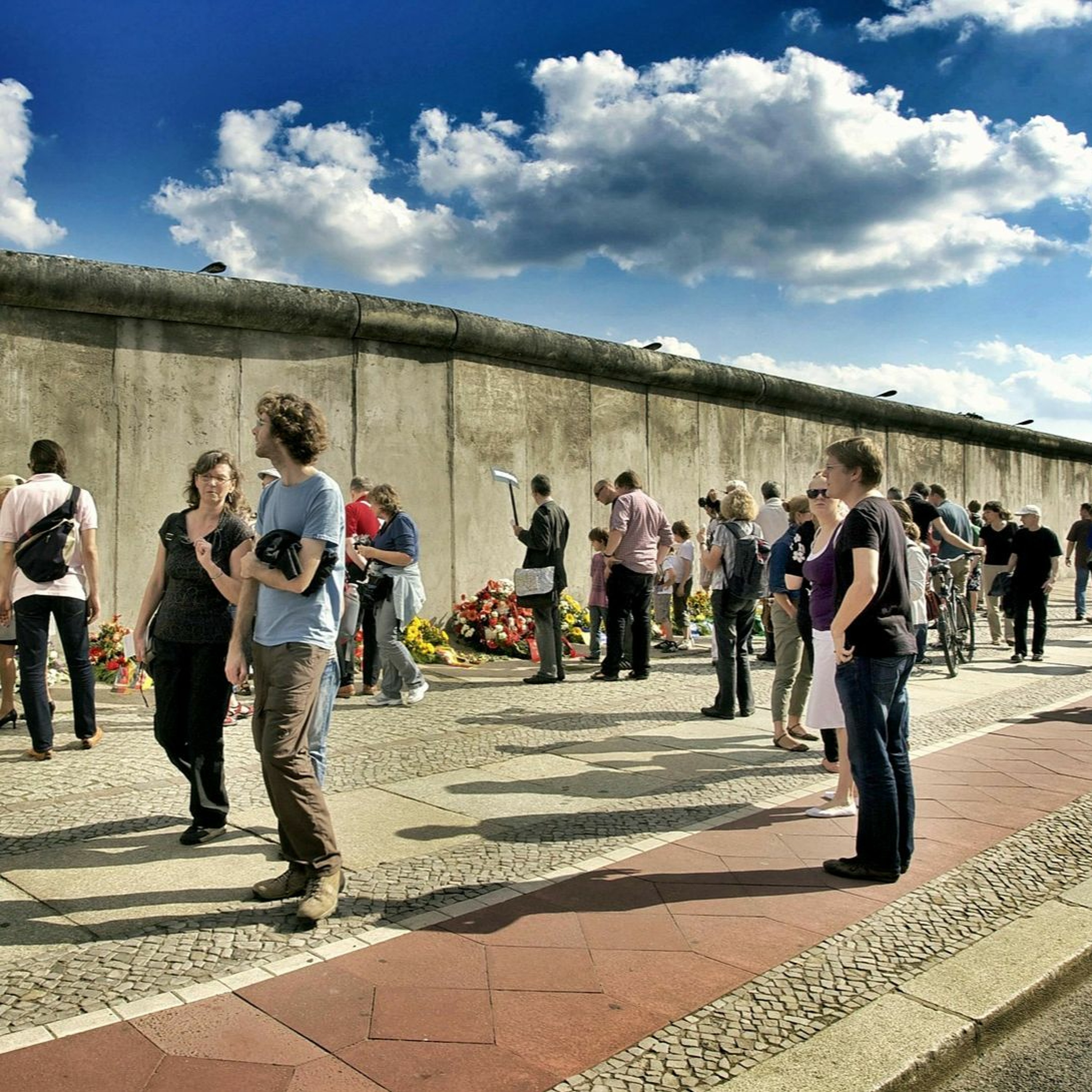
Podcast: 30th Anniversary of the Fall of the Berlin Wall
On 9 November 1989 the Berlin Wall was torn down by crowds from both East and West Germany, defining the end of an era not only for Germans but for the world. This week on the War Studies Podcast, we sit down with Dr Barbara Zanchetta, a Cold War historian in the War Studies Department, to discuss the significance of this anniversary. Event highlight: Africa Week at King's College London https://www.kcl.ac.uk/events/series/africa-week-2019
Podcast: ‘IS propaganda music’ — third episode of 'EXPERTS' podcast series.
In the second episode of our new podcast series called ‘experts’, we investigate how so-called ‘Islamic State’ uses music as propaganda. Our expert Charlie Winter is Senior Research Fellow at the International Centre for the Study of Radicalisation. Like all podcasts in this series, this episode is produced by Department of War Studies students who took the module ‘New Wars, New Media, New Journalism’. This module is convened by Dr Peter Busch who is also presenting this episode. The interview with Charlie was recorded in March 2019.
Podcast: 'The Limits of Open Source Intelligence' - second episode of 'EXPERTS' podcast series.
In the second episode of our new podcast series called ‘experts’, we investigate new media technology affect open source intelligence gathering and we ask what the (ethical) limitations should be. Our expert on this is Dr Huw Dylan who is a senior lecturer in the Department of War Studies. Like all podcasts in this series, this episode is produced by Department of War Studies students who took the module ‘New Wars, New Media, New Journalism’. This module is convened by Dr Peter Busch who is also presenting this episode. The interview with Dr Dylan was recorded in March 2019.
Podcast: 'Lone Actor Terrorism' - the first episode of 'EXPERTS' podcast series.
In the first of our new podcast series called ‘experts’, we investigate how terrorist attacks by lone actors are framed in the media. Our expert on this is Dr Julia Pearce who is a lecturer in the Department of War Studies. Like all podcasts in this series, it is produced by Department of War Studies students who took the module ‘New Wars, New Media, New Journalism’. This module is convened by Dr Peter Busch who is also presented this episode. The interview with Dr Pearce was recorded in March 2019.
Podcast: Feminism, International Relations and Global Security - A Conversation with Cynthia Enloe
This episode brings into conversation Professor Cynthia Enloe, eminent feminist scholar and scholar on militarisation and global politics with Dr Amanda Chisholm, Senior Lecturer on Gender and Security at King's College London (KCL) and Dr Marsha Henry, Assistant Professor in the Gender Department at the London School of Economics (LSE).
Podcast: Women in terrorism and counterterrorism since 2001
For decades women have been involved in terrorism, whether carrying out attacks or supporting organisations. They have been victims of terrorist acts, and many have also been involved in diverse aspects of security, including on the front lines with forces trying to reduce the threat from terrorism. The events of 9/11 triggered years of counter terrorist efforts by the USA and its global partners. However, Dr Joana Cook, Senior Research Fellow at the International Centre for the Study of Radicalisation, says women were not adequately considered in the counter terrorist strategies developed since the events of 9/11, and this has created a major gap in how we understand and respond to terrorism today.
Podcast: Gangs and urban security
Dennis Rodgers is an ethnographer who joined a Nicaraguan gang in the 1990s as part of his PhD research. Now based at the Geneva Graduate Institute, he spoke to War Studies Podcast about his experiences, from being initiated into a gang to seeing how drug distribution proved a good training for a just-in-time warm tortilla service. The podcast also features a discussion with Kieran Mitton of King's College London about his own work on gangs, including the challenges of achieving meaningful policy change.
Podcast: Nonreligion, secularity and security (Summer repeat)
Religion is an important factor to consider when examining many conflicts around the world, but what about nonreligion? Dr. Stacey Gutkowski, senior lecturer in the DWS and Co-Director of Nonreligion and Secularity Research Network (NSRN) argues that in order to understand conflict, one needs to not only look at individual experiences but also at what religious and nonreligious resources individuals draw on to help inform their ethical understandings and perceptions of the world. Listen to the 2018 NSRN Annual Lecture, 'Secular Powers and Heretic Undercurrents', by Samuli Schielke which originally accompanied this interview here: https://soundcloud.com/warstudies/nonreligion-and-war-studies Dr Stacey Gutkowski is a Senior Lecturer in Conflict Studies and Deputy Co-Director of the Centre for the Study of Divided Societies at King’s College London. Prior to joining King’s she was an Economic and Social Research Council (ESRC) Postdoctoral Researcher in the Department of International Relations, University of Sussex; a Visiting Scholar at the Center for the Study of Religion and Conflict, Arizona State University; and a Research Associate with the Religion and Ethics in the Making of War and Peace Programme, University of Edinburgh.
Podcast: D-Day and the ordinary citizen soldier
In his first speech as British Prime Minister Boris Johnson once again invited comparisons with his political hero Winston Churchill, suggested that British 'pluck and nerve' were needed to deliver Brexit and mobilised Britain's ports, banks, factories and more on a quasi-war footing. In light of this, here is an interview recorded for the D-Day commemorations which provides a more rounded perspective of British history through a key episode of the Second World War. Dr Jonathan Fennell discusses the frailty and trauma of the British war experience, Churchill’s objections to the Normandy landings, and the importance not just of the great individuals, but of collective effort of millions of ordinary people in winning the war.
Podcast: Queer perspectives in security studies
This year marks the 50th anniversary of the Stonewall Riots in New York City’s gay district, Greenwich Village on June 28, 1969. This event was monumental in the progression of queer rights being a part of human rights. 50 years on, progress has been made with same sex acts becoming legal and being accepted within most parts of society. However, when it comes to safety and security, very little research and data is in place to accurately represent and more importantly protect the queer community. Dr Jamie J. Hagen, Visiting Fellow of Centre for Women, Peace and Security at the London School of Economics and Politics joined King’s College London’s Senior Lecturer in Security Studies Dr Amanda Chisholm to discuss transgender rights and why we need to queer security studies.
Podcast: Human Rights in China with Benedict Rogers
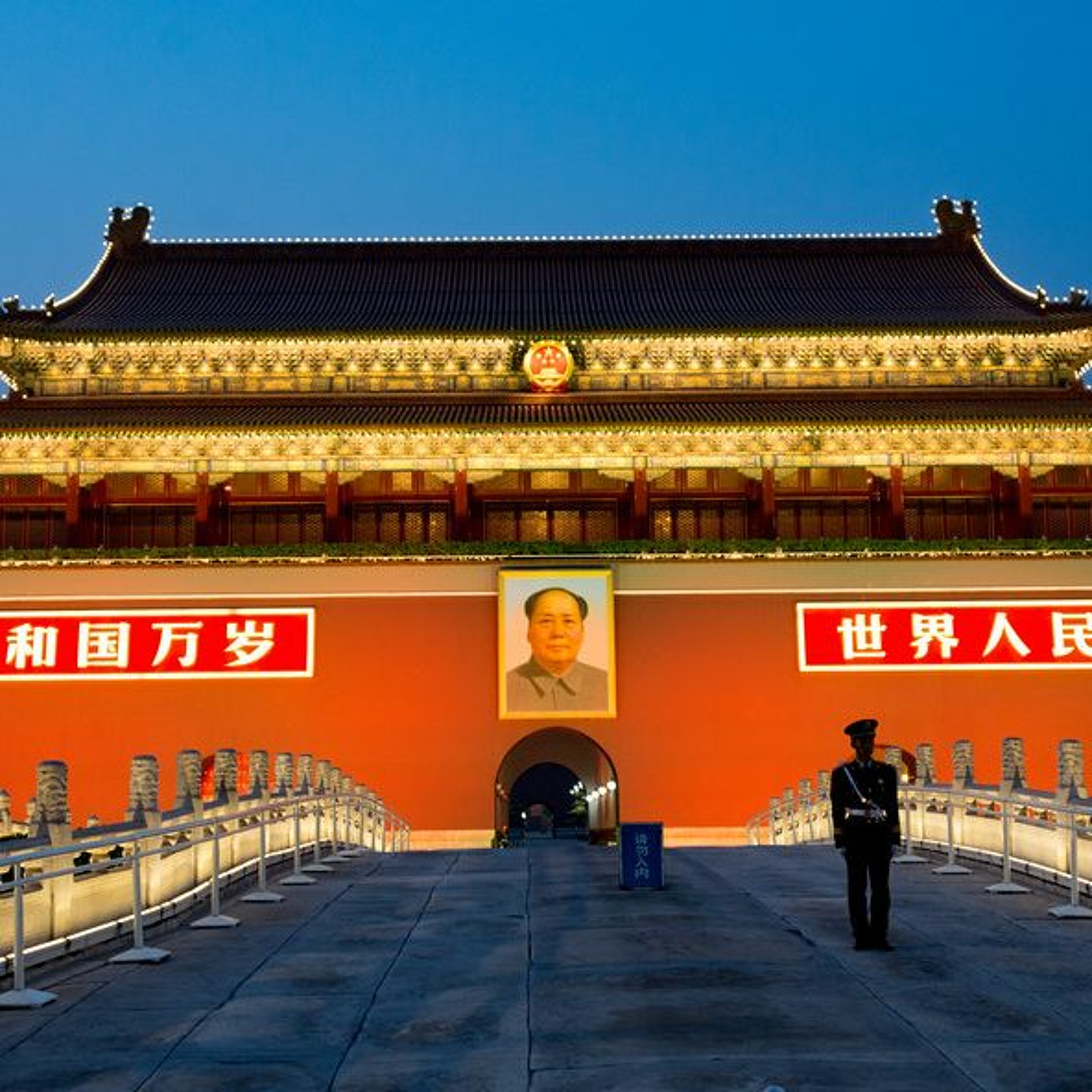
Date of Publication: 28/06/2019 Description: Today, the state of human rights in China appears to be at its worse since the 1989 Tiananmen Square Massacre. According to Human Rights Watch, the Chinese Communist Party (CCP) continues to increase its hold over government bureaucracy and has subsumed state bodies in charge of religious, ethnic, and overseas Chinese affairs. Chinese authorities have also significantly increased repression and systematic abuse against religious groups, especially the Turkic Muslims in China’s Xinjiang region, and have continued the arbitrary detention, torture, and enforced disappearance of dissenters and human rights defenders. Human rights abuses on China’s mainland are very concerning, especially when considering this state’s place in global politics and economic relations. China’s growing power in the international system makes it an exporter of human rights abuse and has allowed China to extend its reach to silence many of its critics across the globe. However, dissenters and human rights defenders in China’s free, autonomous territories such as Hong Kong are obviously the communities that are most at risk of falling victim to human rights abuse by mainland China. Earlier this month, we saw mass protests take place in Hong Kong in opposition to a now-suspended bill that would have allowed mainland China to extradite individuals from Hong Kong to stand trial. This bill would have removed any protection that the people of Hong Kong had from mainland China’s arbitrary and inhumane criminal justice system. On 16 June, nearly 2 million protesters took to the streets in Hong Kong to express their concerns and resistance to being subject to mainland China’s criminal justice system and successfully pressured leadership to suspend the bill. In this edition of the War Studies Podcast, we asked Benedict Rogers, founder and chair of the human rights organization Hong Kong Watch, to tell us about the state of human rights in China and the recent protests in Hong Kong around the now suspended extradition bill. Interviewee bio: Benedict Rogers specialises in human rights in Asia. He is also co-founder and Chair of Hong Kong Watch. He is the author of six books, and a regular contributor to international media including The Wall Street Journal, The New York Times, The Guardian, the Diplomat, The Catholic Herald, and The Huffington Post. and has appeared regularly on the BBC, CNN, Sky News and Al-Jazeera. He is the author of The Darkest Moment: The Crackdown on Human Rights in China 2013-2016. Benedict is a frequent speaker in universities, schools and conferences around the world. He has testified at hearings in the British Parliament, the US Congress, the European Parliament and the Japanese Parliament. He has a BA in History and Politics from Royal Holloway, University of London, and an MA in China Studies from the School of Oriental and African Studies (SOAS). Hong Kong Watch website: https://www.hongkongwatch.org/ War Studies Live Stream - China 30 Years After the Tiananmen Massacre (Ben Rogers): https://www.facebook.com/WarStudies/videos/783991868662508/
Podcast: Is nuclear energy the answer to the climate crisis?
The TV series Chernobyl has brought nuclear power back to the public's attention, at precisely the same time as concern about climate change is at record levels. Many see nuclear power as key to curbing carbon emissions and preventing climate change. but do we really have to accept its risks in order to get to a carbon free future? And do the nuclear capacity figures stack up? This week King’s College London brought academics and industry figures to discuss nuclear energy and climate security. On the podcast hear Dr Simon Chin-Yee, a researcher at King's, discuss his work on the global impacts of climate change and the choices we must make to mitigate further human costs. After that, Philippe Costs, Senior Advisor at the World Nuclear Association, makes the case for nuclear energy in a speech recorded on 13 June at King's College London.
Podcast: Military Virtues and Truth Tellers
Date of Publication: 01/06/2019 Description: In this week’s podcast, we are going to learn about a fascinating new book on Military Virtues and how military ethics training can improve decision making in the field. Then, we will change tracks to the domain of art and conflict to explore how art can add to analytical research methodologies used in international relations (IR) with the members of the Truth Tellers Pilot study, which seeks to examine the unspeakable aspects of the response to the 2017 Manchester Arena Attack through newly develop art-IR methodologies. Interviewees: Military Virtues https://www.howgatepublishing.com/product-page/militaryvirtues Professor David Whetham, Professor of Ethics and the Military Profession at the Defence Studies Department and Co-editor of Military Virtues. Learn more about Prof Whetham's work here: https://www.kcl.ac.uk/people/whetham-dr-david Truth Tellers Project https://www.kcl.ac.uk/sspp/departments/warstudies/research/groups/arts/truthtellers/index Tom de Freston, artist and writer based in Oxford and member of the Truth Tellers Project. Mariah Whelan is a poet and academic based in The Centre for New Writing at The University of Manchester. Dr Pablo de Orellana, Lecturer in International Relations at the Department of War Studies. Dr Christiana Spens, Lecturer and Writer in the School of International Relations at the University of St. Andrews.
Podcast: Qatar and the weaponisation of narratives
In 2017 Qatar was subjected to a blockade by its neighbours, led by Saudi Arabia, which severely restricted its trading and transport links. Two years on the diplomatic crisis has not been resolved. In this podcast, Dr Andreas Krieg of the Defence Studies Department at King's College London discusses the blockade, in particular the ways that narratives were weaponised by Qatar's rivals to justify and build support for their actions both domestically and overseas. Qatar's reaction to this crisis is also discussed.
Event: Protecting the Mediterranean
Date of Recording: 25/04/2019 Description: Speaker: Michael Talbot, University of Greenwich When we think of the Ottoman Empire, we tend to think of them as a terrestrial empire. Yet as well as being ‘sultan of the two lands’, the Ottoman sovereign was also ‘ruler of the two seas’. In part, the relative lack of attention paid to Ottoman imperial discourses over water stems from a notion that, following key naval defeats in the 16th century, the Ottomans simply withdrew from the Mediterranean, leaving it to the mercy of foreign forces, old and new. This paper will argue that in the eighteenth century, the Ottoman state rejuvenated its approach to empire at sea, and instituted a number of new mechanisms to protect its subjects in the Eastern Mediterranean, often at the request of the inhabitants of its islands and coasts. Using sources from Ottoman, British, and French archives, this paper aims to demonstrate that the Ottoman state utilised a number of rhetorical, legal, and military measures to exert its authority in what it claimed as its territorial waters in the Mediterranean Sea. Michael Talbot is Senior Lecturer in the History of the Ottoman Empire and Modern Middle East. His first book, British-Ottoman Relations, 1661-1807, examined the development of diplomatic practices between London and Istanbul in the 18th century, and he has researched (among other topics) the history of Ottoman maritoriality in the same period. Hosted by the Laughton Naval History Unit of the Sir Michael Howard Centre for the History of War on behalf of the British Commission for Maritime History and the Society for Nautical Research
Podcast: Art, Wargaming & Balance of Power (Student Projects)
Date of Publication: 26/04/2019 Description: Across the School of Security Studies at KCL, students are given unique opportunities to apply the knowledge and skills that they learn throughout their courses by participating in research projects, conflict simulations, and even journalism. Students of Dr Peter Busch’s BA module ‘New Wars, New Media, New Journalism’ were tasked with producing 5min podcasts, covering events and guest lectures held within the School of Security Studies. In this podcast, we are going to listen to three outstanding student projects from Dr Busch’s BA module. You will hear from Eleanor Fishleigh on last year’s event ‘Art and Reconciliation: a conversation’, Cory Turner on the topic of wargaming in discussion with Prof Philip Sabin, and Robert Adderley on T.V. Paul’s book talk ‘Restraining Great Powers’. ____________________________________________ If you would like to learn more about the topics discussed here and about student opportunities within the School of Security Studies, please visit our website at kcl.ac.uk/security-studies
Podcast: New Voices: cultural and moral dimensions of torture and mercenaries
Date of Publication: 13/04/2019 Description: This podcast is part of the War Studies New Voices series which showcases emerging research from our PhD community. Emily Brown researches the ways in which torture and prisoner abuse narratives in American popular culture have helped to conceptualise the practice of judicial torture. Since the attacks on US soil on September 11th, 2001, it has become increasingly obvious that torture is considered acceptable in fictional representations of American counter-terror practices, even if only in extraordinary circumstances. What has been largely ignored, however, is the part popular culture has played in normalising the extraordinary into ordinary, everyday practice. The way in which we understand torture relies on how we consume popular culture, which presents torture as an unpleasant but unremarkable past occurrence that has been integrated into the ordinary. Helene Olsen studies the relationship between mercenaries and legitimacy. She looks at how mercenaries have been objected against and de-legitimised using specific speech-acts – moral objections – and how these seem to transcend historical settings. She explores the tension between the extensive use of mercenaries in warfare and the apparent moral opposition to their presences and actions and suggests that mercenaries are objected against and de-legitimised when they behave as disruptors of the ideal polity. In this edition, Emily Brown and Helene Olsen discuss areas where their research may overlap and diverge.