War Studies
194 episodes — Page 2 of 4
Reconciliation and reconstruction in post-conflict Iraq
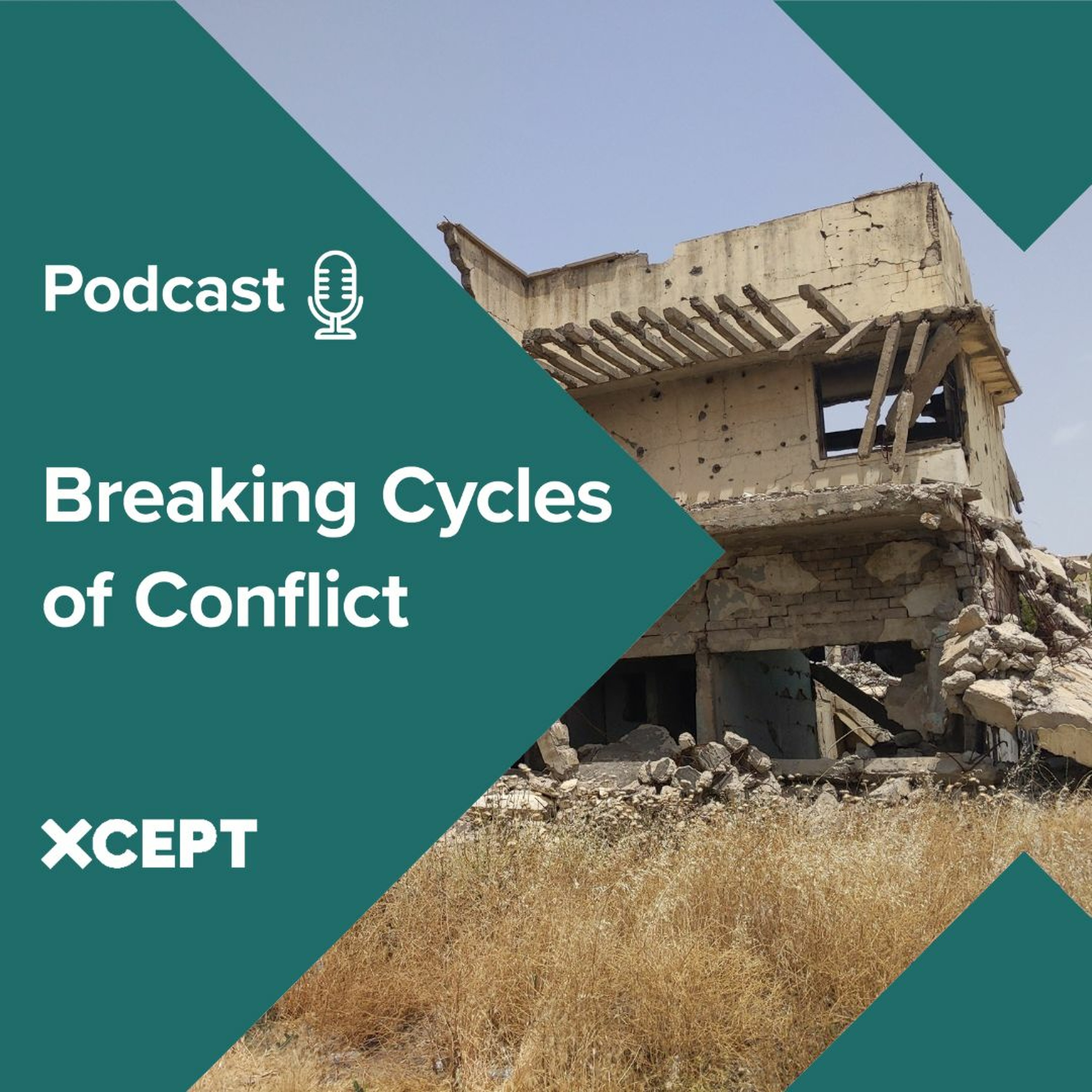
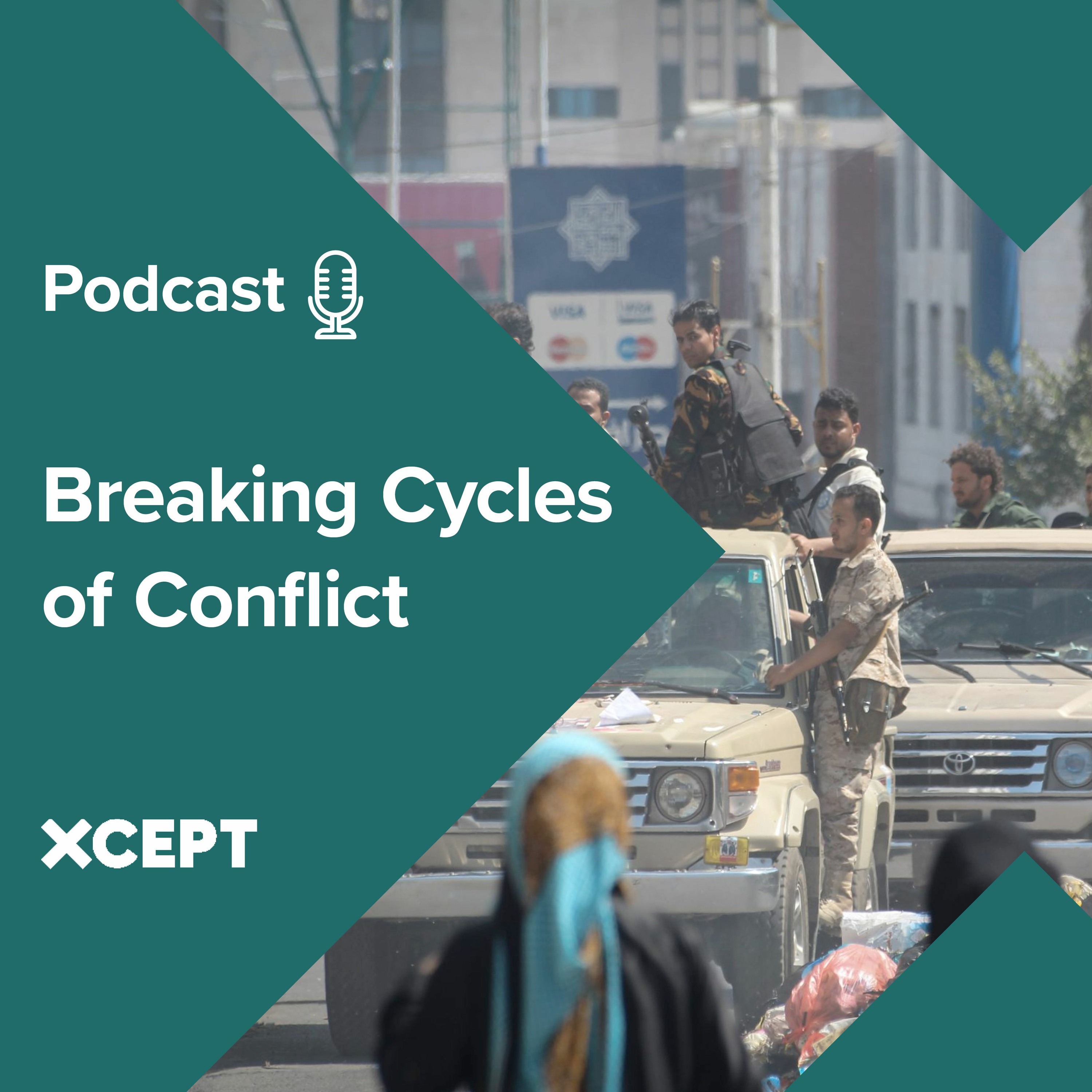
Series: Breaking Cycles of Conflict "Let’s imagine tomorrow Mosul is brick by brick exactly what it was like before ISIS took over – the city has still fundamentally changed." In this episode, Dr Craig Larkin, Dr Inna Rudolf, and Dr Rajan Basra explore issues surrounding post-conflict reconstruction, reconciliation, and recovery in Iraq. Sharing insights from their research trip to Iraq, the trio discuss the hurdles faced by local practitioners, disillusionment with the ‘industry of peacebuilding’, and the impact that legacies of conflict and violence have had on Iraq’s diverse communities. This research is being undertaken as part of a project called XCEPT, which is funded by UK International Development from the UK government; however, the views expressed do not necessarily reflect the UK government’s official policies. XCEPT aims to understand the drivers of violent and peaceful behaviour in conflict-affected populations – and to find solutions that support peace. Find out more about XCEPT at xcept-research.org.
Israel-Hamas war: International Law and the Use of Force with Professor Marko Milanovic
Israel’s military response to the 7 October 2023 attack by Hamas has been subject to much discussion. In a two-part series, we consider specific questions related to the use of force, jus ad bellum, and the laws governing the conduct of hostilities, means, and methods of warfare, referred to as jus in bello. In this episode, Dr Maria Varaki, Lecturer in International Law at King’s College London, speaks to Marko Milanovic, Professor of Public international Law at the University of Reading and prolific author in Human Rights Law, International Humanitarian and Criminal Law. They discuss Professor Milanovic’s blog post ‘Does Israel Have the Right to Defend Itself?’ in EJIL Talk, exploring his legal analysis of complex questions related to the right of self-defence under article 51 of the UN Charter and the concept of proportionality. -- In response to the ongoing situation and humanitarian crisis, all those at King’s College London affected by the events in Israel and Gaza can access support here: https://www.kcl.ac.uk/students/support-for-students-and-staff-affected-by-the-israel-and-gaza-conflict
COP28 and Climate Security with Dr Pauline Heinrichs
Can countries work together at COP28 to agree on effective global actions for addressing climate change? In this episode we speak to Dr Pauline Heinrichs, Lecturer on climate and energy in the Department of War Studies, about the potential impact of COP28, the 2023 United Nations Climate Change Conference. We explore the complexities surrounding international agreements to combat climate change and delve into the factors and agendas that impede governments from significantly reducing their reliance on fossil fuels.
Estimative Intelligence in European Foreign Policymaking
What are the dynamics of intelligence and foreign policy in Europe? The editors of the book “Estimative Intelligence in European Foreign Policymaking”, Professor Michael Goodman, Professor Christoph Meyer, Dr Nikki Ikani, Dr Eva Michaels and Dr Aviva Guttmann, evaluate the performance of the UK, the EU, and Germany during times of surprise, from the Arab uprisings to the rise of ISIS and the Russian annexation of Crimea.
24 hours in Charlottesville with Nora Neus
“White supremacy, hate groups and the alt-right movement thrive in secrecy and in dark places. Being able to bring this topic out into the light and have deeper conversations about what these people really stand for, and what they're willing to do in terms of violence, is important to understand the full brunt of the threat”. In this podcast episode, the Emmy-nominated producer, writer, and freelance journalist Nora Neus talks about her latest book ‘24 Hours in Charlottesville’, which delves into white nationalist riots based on the tumultuous events of August 2017, highlighting anti-racist activists' voices standing up against violence. She shares some of the main challenges for journalists and reporters currently covering war in conflict zones amid a media landscape increasingly dominated by sensationalism. Learn more about '24 hours in Charlottesville' at https://noraneus.com/
Making the military moral with Professor David Whetham
How can we help the armed forces make the best decision when faced with impossible choices? What can we do to minimise the damage to soldiers’ mental health after conflict? And how can we save the highest number of lives? In this episode, we speak to Professor David Whetham of the Defence Studies Department about military ethics education. We explore the process of educating the armed forces on making better decisions, both within the heat of conflict and in everyday life, learn about the innovative playing cards and app created by Professor Whetham and the King’s Centre for Military Ethics, and dive into his work with the Australian Defence Forces on Justice Brereton’s report on the war in Afghanistan. Download the Military Ethics playing cards app via Apple: https://apps.apple.com/gb/app/military-ethics/id1503360618 Download the Military Ethics playing cards app via Android: https://play.google.com/store/apps/details?id=com.corvita.cme&hl=en_US&gl=US&pli=1
50 years after Chile's coup d'etat with Francisco Lobo
"Reconciliation happens when my enemy tells me my story and I am able to say: ‘That is my story" - Stanley Hauerwas. 11 September 1973. Military forces attack La Moneda Palace, the Hawker Hunter plane launches rockets that hit the main wings of the building, fire echoes through the streets of Santiago, the body of President Salvador Allende is found. Fear begins to spread across the country. 50 years have passed since the coup d'état in Chile, which began the dictatorship of Augusto Pinochet that lasted 17 years and left more than 40,000 victims. In this episode, Dr Vinicius De Carvalho talks to Francisco Lobo, Chilean lawyer and PhD candidate at the Department of War Studies, about the violation of human rights, the strides made in transitional justice and international accountability, and how the dictatorship continues to permeate Chile's fragmented identity.
Afghanistan after the Fall of Kabul with Dr Christine Cheng
“They couldn’t scrape together enough food to feed a family… It was very, very, very desperate.” On August 15 2021, international troops withdrew from Afghanistan. Two years on, what has been the impact of the Taliban’s rule? How has the country experienced both conflict and peace? And with a significant humanitarian crisis affecting the country, what can we do to support the people of Afghanistan? In this episode, Dr Christine Cheng explores the balances of power, security and conflict that led to the Taliban’s takeover in 2021. She discusses the mindsets that led to the USA’s expedited withdrawal, why countries aren’t prepared to send foreign aid to support Afghanistan, and the experiences of people – particularly women – living under the Taliban’s rule.
Five years in terrorist captivity with Shahbaz Taseer
Please note that this episode contains material of a highly sensitive nature including kidnapping, violence and abuse that may be triggering for some individuals. In late August 2011, a few months after the assassination of his father Salmaan Taseer, Governor of Punjab, Mr Shahbaz Taseer was dragged from his car at gunpoint and kidnapped by a group of Taliban affiliated militants called the Islamic Movement of Uzbekistan(IMU). For almost five years Mr Taseer was held captive, moved from Mir Ali to Zabul Afghanistan, frequently tortured and forced to endure extreme cruelty, his fate resting on his kidnappers’ impossible demands and the uneasy alliances between his captors, the Taliban and ISIS. Dr Rajan Basra, Senior Research Fellow at the International Centre for the Study of Radicalisation and post-doctoral researcher on the XCEPT programme, speaks to Mr Shahbaz Taseer about his experience and the release of his memoir "Lost To The World - A memoir of faith, family and five years in terrorist captivity". They discuss the details of his kidnapping and the impact it has had on his life since. Read Shahbaz Taseer's memoir: https://www.penguin.co.uk/books/437701/lost-to-the-world-by-taseer-shahbaz/9780552175357
Society, Sacrifice, and Devotion
‘I think people are willing to sacrifice, and go through all sorts of pain, but it can’t just be for oneself. There has to be some higher reasoning to it’. In this episode, we are joined once again by Dr Nafees Hamid, cognitive scientist, Senior Research Fellow at the ICSR, and Research and Policy Director on the XCEPT project at King’s College London. We’ll be discussing identity in the West, the crisis of individualism, and the space this creates for extremism to flourish. Taking a more in-depth view of Dr Hamid’s observations of psychology at a societal level, we discuss his upcoming book proposal, what inspired him to focus his research on this topic, and what it tells us about Western society. This research is being undertaken as part of a UK aid funded project called XCEPT, which aims to understand the drivers of violent and peaceful behaviour in conflict-affected populations – and to find solutions that support peace. Find out more about XCEPT at xcept-research.org.
Trauma and the reintegration of ex-combatants
In the latest episode of the Breaking Cycles of Conflict mini-series, Dr Heidi Riley is joined by Dr Gina Vale to discuss how trauma can affect efforts to reintegrate ex-combatants. Dr Riley explores the different ways in which trauma can be experienced by combatants, and why this makes an individual’s reintegration into post-conflict society so complex. This research is being undertaken as part of a UK aid funded project called XCEPT, which aims to understand the drivers of violent and peaceful behaviour in conflict-affected populations – and to find solutions that support peace. Find out more about XCEPT at xcept-research.org N.B. Since this episode was recorded, Dr Gina Vale has left the XCEPT project and King’s College London. She continues to work on these issues in her current position as Lecturer of Criminology at the University of Southampton.
Neuroimaging of Radicalisation
In the latest episode of the Breaking Cycles of Conflict mini-series, we are joined by Dr Nafees Hamid, Senior Research Fellow at the International Centre for the Study of Radicalisation (ICSR) and Research and Policy Director for the Cross-Border Conflict Evidence, Policy and Trends (XCEPT) research programme. A cognitive scientist focusing on the social side of cognitive research, Dr Hamid talks us through his work looking at the neuroimaging of radicalised individuals. Questioning the dominant rational actor model, he instead proposes a different approach to understanding what makes radicalised individuals ‘tick’. This research is being undertaken as part of a UK aid funded project called XCEPT, which aims to understand the drivers of violent and peaceful behaviour in conflict-affected populations – and to find solutions that support peace. Find out more about XCEPT at xcept-research.org.
Council of the Syrian Charter
As the conflict in Syria passes its 12th anniversary, one civil society body is trying to pave the way to peace. The Council of the Syrian Charter calls for social cohesion built around a common social heritage that transcends political affiliation. In this podcast episode, Dr Craig Larkin and Dr Inna Rudolf are joined by Syrian lawyer and founder of the Council, Dr Naseef Naeem; journalist and Middle East expert, Daniel Gerlach; and Council member, Tambi Qassem, who share their thoughts on overcoming the obstacles of civil war, the Council’s work, and how Syrian civil society ‘bears the key to the exacerbation or relief of the conflict’. This research is being undertaken as part of a UK aid funded project called XCEPT, which aims to understand the drivers of violent and peaceful behaviour in conflict-affected populations – and to find solutions that support peace. Find out more about XCEPT at xcept-research.org.
What makes a violent lone actor? Exploring the role of mental health
In this episode of the Breaking Cycles of Conflict mini-series, Paul Gill, Professor of Security and Crime Science at University College London, discusses his research into lone actor terrorists and the complex link between mental health and terrorism with Professor Ted Barker. The pair talk about how coping mechanisms, stigma, and protective factors shape an individual’s motivations to join a terrorist group or to commit acts of violence. This research is being undertaken as part of a UK aid funded project called XCEPT, which aims to understand the drivers of violent and peaceful behaviour in conflict-affected populations – and to find solutions that support peace. Find out more about XCEPT at xcept-research.org.
Russia's War: Unravelling the Kremlin's narrative
Why is there support for Putin's invasion of Ukraine? How has the Kremlin framed the war? What will be the long-term impact of the war on Russia? In this episode, we spoke to Dr Jade McGlynn, a Senior Researcher in the Department of War Studies and the author of 'Russia's War', a book that explores the attitudes and opinions behind the support for the invasion of Ukraine and popularity of Vladimir Putin. Dr McGlynn argues that the conflict can't be solved in Ukraine because the problem lies in Russia's "social and political imagination of itself". We explore this idea, looking at what Russian citizens are being told by politicians and the media, and the historical underpinnings that are shaping the Kremlin's narrative and attitudes towards the invasion. Focusing on the impact of the war on Russia, we get her opinions on the outcome of the conflict, because if the war can't be won on the battlefield, are there any potential solutions to end Russia's War on Ukraine? Read 'Russia's War': https://www.amazon.co.uk/Russias-War-Jade-McGlynn-ebook/dp/B0BX4V4V5F
Making Sense of Trauma
How can testimony and storytelling help us understand the suffering and trauma of victims of conflict? Why is the act of bearing witness to trauma politically important in terms of raising awareness, healing, and reconciliation? In this episode, Dr Pablo De Orellana, Lecturer at War Studies, sits down with two authors, Professor Minoli Salgado and Gareth Owen, who retold stories of trauma in conflict. Together, they explore the emotional divide between those who suffer and those who impose suffering in conflict. They also discuss how trauma is politicised after it has happened, highlighting the emotional and psychological aspects of trauma and aid work.
Where are the women? Exploring the experiences of women in conflict
Why is it important to give women a voice in the study of war and security? Are women considered in military strategies and post-conflict reconstruction? In this special edition for International Women's Day, we talk to Dr Amanda Chisholm about the role of women in conflict, discussing her latest book 'The Gendered and Colonial Lives of Gurkhas in Private Security: From Military to Market'. Dr Chisholm also talks about her experience as a researcher in Gender and Security Studies, exploring the main challenges women face in academia and how we could break inequalities.
365 days of war in Ukraine: What have we learned?
King's College London postdoctoral researcher, Marina Miron, talks to the War Studies Podcast as we reflect on the first 365 days of Russia's 'Special Military Operation' in Ukraine. Using her knowledge of Russian military strategy, information warfare, and technology, we explore what has happened, why, and what it could mean for the future of global security.
The women of IS
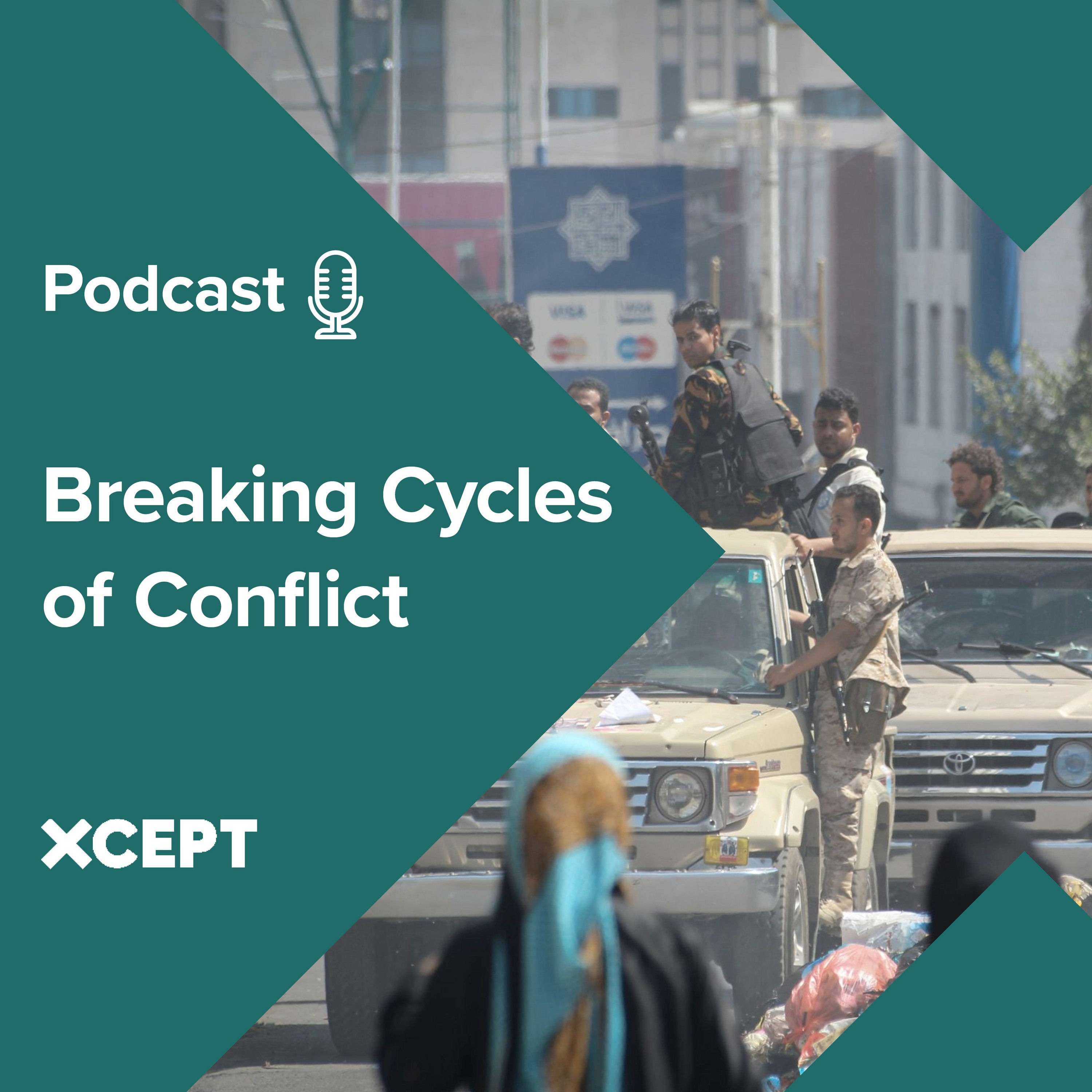
As Shamima Begum appeals the removal of her British citizenship, the question of whether or not she is a ‘victim’ has flooded the press. Was Begum trafficked? Was she groomed? Or did she in fact know exactly what she was doing when she set off to Syria? In this episode of the ‘Breaking Cycles of Conflict’ mini-series, Dr Gina Vale talks about her research into the role of women in IS. She explains how some moved from domestic roles to frontline combat, why the notion of ‘jihadi brides’ can be reductive, and the challenges and risks of reintegrating IS-affiliated women into society. This research is being undertaken as part of a UK aid funded project called XCEPT, which aims to understand the drivers of violent and peaceful behaviour in conflict-affected populations – and to find solutions that support peace. Find out more about XCEPT at xcept-research.org N.B. Since this episode was recorded, Dr Gina Vale has left the XCEPT project and King’s College London. She continues to work on these issues in her current position as Lecturer of Criminology at the University of Southampton.
Do trauma interventions work?
Trauma interventions in fragile areas can help to break cycles of conflict, because we know that exposure to violence causes trauma, but that trauma can also cause violence. But these interventions are often delivered for only a narrow group of people deemed to be ‘worthy’ of them. In reality, the distinction between victim and perpetrator in conflict-affected populations isn’t quite so clear cut. In this episode of the ‘Breaking Cycles of Conflict’ mini-series, Dr Gina Vale interviews Dr Alison Brettle about her research into trauma interventions. Dr Brettle explains what programmes work best in fragile and conflict-affected areas and why the international donor and policy communities need to broaden their conceptualisation of who should be allowed to participate in interventions. This research is being undertaken as part of a UK aid funded project called XCEPT, which aims to understand the drivers of violent and peaceful behaviour in conflict-affected populations – and to find solutions that support peace. Find out more about XCEPT at xcept-research.org
Prisons: the path to extremism?
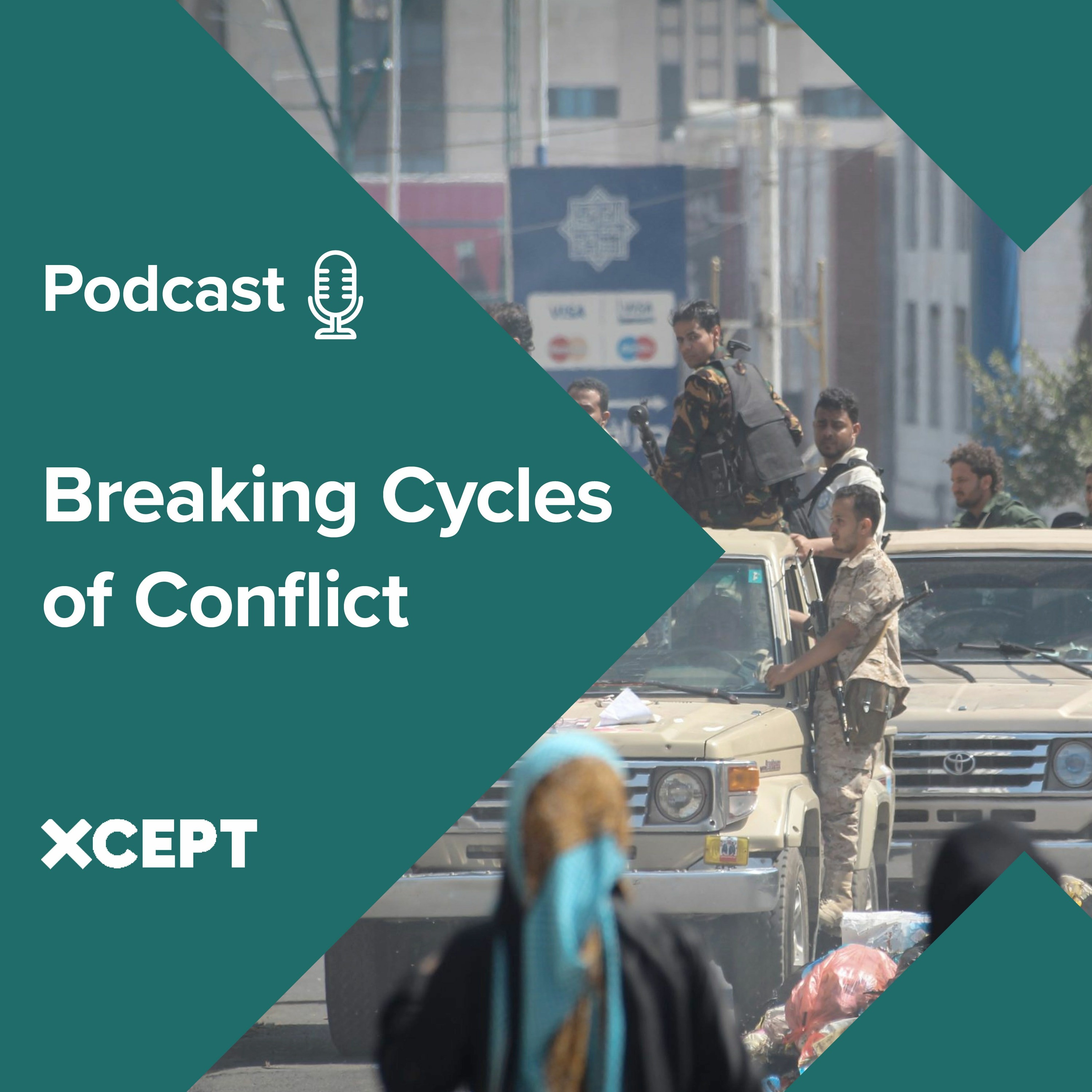
Are prisons really hotbeds of terrorism? Will the ‘ordinary’ young man entering prison be so influenced by his cell mate that he leaves a terrorist? Or can a spell in these ‘incubators of extremism’ actually have the opposite effect? In the second instalment of this mini-series, we join Dr Craig Larkin and Dr Rajan Basra fresh off the plane from Beirut to talk about their fieldwork out in Lebanon interviewing ex-Islamist prisoners and their families. Interviewed by Dr Nafees Hamid, the pair discuss how historic conflicts, social inequalities, and personal traumas can all lead prisoners to pursue a path towards, or away from, extremism. This research is being undertaken as part of a UK aid funded project called XCEPT, which aims to understand the drivers of violent and peaceful behaviour in conflict-affected populations – and to find solutions that support peace. Find out more about XCEPT at xcept-research.org
Breaking cycles of conflict
What drives one person to violence and another to peace? How does experience of trauma lead to radicalisation? Are there interventions that can help deflect people from trajectories of extremism? These are some of the questions that researchers at the Cross-Border Conflict Evidence, Policy and Trends (XCEPT) programme at King’s College London are trying to answer. In this episode Dr Nafees Hamid and Dr Fiona McEwen introduce the work being done as part of the XCEPT programme at King’s College London and give us a glimpse of what’s to come. Funded by UK aid, XCEPT aims to understand the drivers of violent and peaceful behaviour, and to propose interventions and policies that can bring about peace. Find out more about XCEPT at xcept-research.org
Compassion or control? Britain and the abolition of slavery with Dr Maeve Ryan
The HMS Derwent arrived in Freetown harbour, Sierra Leone in March 1808, escorting two captured American ships carrying 167 enslaved people. What made them unusual was that their journey was interrupted — they were not simply captives, but “recaptives.” No longer bound for the Americas, these “liberated Africans” were instead bound to the British Empire: one of the first groups of survivors of the Atlantic slave trade to be brought to a British colony under the newly operational Slave Trade Abolition Act of 1807. But what happened to these former slaves as they fell under the “protection” of the British Government? The freedom into which they had been delivered—as they would learn—was not intended to mean anything more than freedom from being legally owned as chattel. Former slaves were expected to repay the debt of their salvation. In this special Black History Month episode of the War Studies Podcast, Dr Maeve Ryan joins us to discuss her new book, which seeks to deepen our understanding of the conceptual origins and implications of British policies to manage and control liberated slaves, and its consequences for British foreign policy and the rest of the world throughout the 19th century. She discusses the series of imperial experiments set up to resettle and integrate former slaves, with extremely variable and frequently tragic results. She examines how liberated slaves were argued over as resources, as labour units to be distributed or as objects of paternalistic concern and contempt, and as instruments in diplomatic confrontations. She also shares how throughout, the liberated people found ways to disrupt and resist refusing to be a blank canvas onto which imperialist goals, ambitions, and fantasies could be imprinted. As such, they presented successive governments and generations of abolitionists with a complex series of moral, political, ideological, and practical challenges. Find out more about Dr Maeve Ryan’s new book: https://yalebooks.yale.edu/book/9780300251395/humanitarian-governance-and-the-british-antislavery-world-system/ Find out more about the Centre for Grand Strategy Maeve co-directs in the Department of War Studies: https://www.kcl.ac.uk/research/kcl-centre-for-grand-strategy
Patchwork States: The roots of political violence in India, Pakistan, and Bangladesh
Over the winter of 2019 in India, 519 riots took place causing mass casualties and deaths. This in part was a reaction to the introduction of the Citizenship Amendments Act (CAA), government legislation that enabled non-Muslim immigrants from Afghanistan, Pakistan and Bangladesh to become Indian citizens. The exclusion of Muslims was seen by many as a fundamental challenge to principles of secularism enshrined in the Indian Constitution, resulting in violent altercations between protestors, the police and Hindu nationalists. Yet, this was not the only cause. Far removed from CAA agitations, political violence in a variety of forms was waged across India and their neighbouring countries. 75 years since the Partition of the India, we speak to Dr Adnan Naseemullah, Reader in International Politics in the Department of War Studies, to explore the roots of political violence across India, Pakistan and Bangledesh. Discussing his new book, ‘Patchwork States: The Historical Roots of Subnational Conflict and Competition in South Asia’, he argues that the enduring differences in state capacity and state-society relations, built during the colonial period, continue to shape patterns of political violence across the Indian subcontinent. In bridging the gap between the past and present, he asks us to think critically about the legacy of colonial rule and the state in modern-day conflicts, while keeping in mind that history is not determinative.
The Western Front: The Generals in the First World War
The Western Front, that cauldron of war, a bubbling, fermenting experiment in killing that changed the world. The Western Front would become synonymous with stalemate and mass slaughter, with indecisive, attritional struggles, amid a tortured landscape of barbed wire and mud. All the commanders of the First World War, whether leading the British, French or German, struggled in this maelstrom. Yet, for years the 'Generals' have been characterised as ‘donkeys’ or ‘butchers’: unfeeling military aristocrats fighting the wrong kind of war, unable to adapt or change to the new realities unfolding on the battlefield. In this episode, Professor of Modern Warfare in the Defence Studies Department, Nick Lloyd, counters this prevailing narrative, to provide a much more complex and nuanced understanding of these men, trying to cope with a war that had shattered their lives as much as any other. Discussing his book, The Western Front: A History of the First World War, he shares how the truth about the Generals’ performance was a much messier picture than we might imagine, of trial and error, success and failure, with each promising development followed by an equally effective counter-measure from the enemy. He explores how their efforts to overcome the challenge of trench warfare led to innovation, new technology and ultimately the dawn of modern warfare. And how these men were human beings with families – some of whom would be terribly damaged by the battles they themselves directed. In so doing he asks us to follow these men on their command journey, consider their successes and failures and ask ourselves if we would fare any better in their place. Find out more about Professor Lloyd’s book: https://www.penguin.co.uk/books/308121/the-western-front-by-lloyd-nick/9780241347195 Watch his book launch on the War Studies YouTube: https://www.youtube.com/watch?v=aPhJnEXDTU8
Women leaders in health and conflict
Globally, there are very few women in leadership positions in healthcare and peacebuilding in areas of armed conflict – but why is this the case? Why are women a key part of healthcare & peacebuilding? What barriers do women face in accessing leadership roles? And what can we do to tackle this? In this episode, we speak with a team of researchers about their recently published policy brief, ‘An untapped potential: Women’s leadership in health in conflict and peacebuilding’. They give vital insight into some of the biggest issues facing women and peacebuilding, and highlight the emerging relationship between women’s leadership, healthcare, and peace in conflict-affected settings.
The Road to Vietnam with Dr Pablo de Orellana
Why did the United States become involved in Vietnam? To combat communism, evidently. But just how did a Southeast Asian French colony already devastated by two wars become an existential threat? The Vietnam war is one of the most studied diplomatic and security conundrums of international history, political science, international relations and statecraft. Yet less is known about the actual origins of this conflict, which was the continuation of a French colonial conflict. In this episode Dr Pablo de Orellana, Lecturer in International Relations in the Department of War Studies, discusses his book the 'Road to Vietnam', which explores how the United States was persuaded to stake its diplomatic and economic might to support France's war to retain it's colony in Indochina, after which the French withdrew in 1954 and it became an American burden. Focusing on the diplomatic texts of France, Vietnam the USA and UK during this period, he traces the evolutions of the descriptions and narratives of the peoples and countries implicated, and how this produced understandings of the war, its participants and their motives.
Why biodiversity and wildlife conservation is crucial to global security with Dr Richard Milburn
“Empty stomachs have no ears…” These were the words of a poacher in Bukavu in the Democratic Republic of Congo, when asked why he continued to destroy wildlife in a local forest. It reveals what we often forget: that the degradation of biodiversity doesn't happen in a vacuum. So how are global security, development and conservation related? In what ways do conflict and its many secondary effects, bring grave risks for biodiversity? And how can we start seeing action on climate and wildlife as a fundamental part of the post-conflict peacebuilding process? This special episode for London Climate Action Week sees Dr Richard Milburn, Visiting Research Associate in the Department of War Studies, answer these questions and more. He gives important insight into some of the biggest issues around climate, conservation and security, including ways to protect wildlife during conflict, post-conflict environmental recovery, and how we can fundamentally challenge our thinking on climate change, including why we should all become conservation entrepreneurs. You can find out more about Richard’s work, including his innovative environmental action game here: https://www.tunzagames.com and the conservation organisation his work supports here: https://www.polepolefoundation.org
Nuclear forensics: investigating threats to nuclear security with David Smith
There are around 150 incidents of unauthorised activities involving nuclear and radioactive materials reported each year, including smuggling and theft. Why is this a grave issue of concern? How do we find those responsible? And who’s job is it to stop these materials going outside of regulatory control? David Smith, Visiting Research Fellow at King’s College London and an expert in nuclear forensics, answers these questions. He gives us an insight into the life of a nuclear forensic scientist and touches on some of the biggest nuclear security challenges in recent years, such as how the war in Ukraine has impacted the safety of nuclear facilities and undermined the policing of nuclear trafficking in the region, the impact of Covid 19 on nuclear security protocols, and the risks posed by climate change.
The war in Ukraine explained: More from our experts
What’s happening on the ground in Ukraine? Why has Russia’s hopes of a swift, decisive victory turned into a long, drawn-out, brutal war of attrition? How has Russia revised it’s strategy and tactics, as Putin loses interest in a diplomatic solution with Ukraine? Is a nuclear, chemical or biological attack still likely? Can Putin be put on trial for Russia’s alleged war crimes? Two months on from Russia’s invasion of Ukraine, we’ve gone back to experts in the School of Security Studies to get their take on how the war is unravelling and get answers to the many questions that have arisen since the war began. This episode was taken from a webinar recorded at the end of April. You can watch the full video including questions and answers from the audience on the War Studies Youtube Channel: https://www.youtube.com/watch?v=cLAIzmrMZ-U
World We Got This: The role of space in modern-day warfare
**World We Got This Podcast: The role of space in modern-day warfare ** Continuing on from last week we’re sharing another episode of the World We Got this podcast, produced the Faculty of Social Sciences and Public Policy at King’s, which features some of our academics from the School of Security Studies. This episode, the second on the changing face of war, looks at how countries around the world and private individuals are expanding their activities into space and how closely these are linked to what is happening on Earth. Dr Sophy Antrobus, Dr Mark Hilborne and Julia Balm, from the School of Security, also explore whether we need to put in safeguards now, how we can learn lessons from the past and why we should encourage international collaboration to ensure space doesn’t become dangerous overcrowded by satellites and space debris. The World We Got This Podcast is produced the Faculty of Social Sciences and Public Policy at King’s College London, and looks at the complex issues we face in the world today, asking those researching and studying these global challenges about the impacts they are having on society – and what we can do to help overcome them. We hope you enjoy the podcast, and if you want to listen to more episodes and subscribe, just search for the World We Go This Podcast, wherever you listen to podcasts, or find out more on the website: kcl.ac.uk/world-we-got-this
World We Got This: How cyber operations, social media & artificial intelligence are changing warfare
**World We Got This Podcast: How cyber operations, social media & artificial intelligence are changing warfare** Today and next week we’re sharing another podcast series with you, which features some of our academics from the School of Security Studies. The Podcast – 'World We Got This' is produced the Faculty of Social Sciences and Public Policy at King’s College London, and looks at the complex issues we face in the world today, asking those researching and studying these global challenges about the impacts they are having on society – and what we can do to help overcome them. In today’s episode Dr Tim Stevens and Dr Kenneth Payne from the School of Security Studies look at how cyber operations, social media and artificial intelligence are changing the nature of warfare. We hope you enjoy the podcast, and if you want to listen to more episodes and subscribe, just search for the World We Go This Podcast, wherever you listen to podcasts or find out more on the website: kcl.ac.uk/world-we-got-this
The war in Ukraine: Hear from our experts
Many pundits did not believe Russia was going to attack Ukraine. Yet on 24th February 2022 Vladimir Putin launched a terrestrial invasion entering through the North, South, and East of the country. As we continue to make sense of the evolving situations, so many questions have arisen. So we’re sharing a special episode of the War Studies Podcast, which is based on the recording of a webinar held in mid-March 2022 at the School of Security Studies, King’s College London. It features experts from across the War Studies and Defence Studies Department sharing their insight on the war in Ukraine. They discuss perplexing questions such as, why Putin decided to invade Ukraine, escalating from the grey zone warfare seen in 2014 to a war of attrition? Whether he's taken a reckless gamble? What do we know about his military strategy and how does it inform us on what he might do next? You can watch the full video including questions and answers from the audience on the War Studies Youtube Channel: https://www.youtube.com/watch?v=cH5mv83N6mQ
Women in Security and Academia with Dr Anna Brinkman-Schwartz and Helene Olsen
At the end of 2021, the UK government published a report looking into some of the institutional barriers women face within the military. Shockingly, over half of servicewomen surveyed had faced bullying, harassment or discrimination – but the majority had not reported it. Why are women hesitant to report these incidents? What obstacles do women face in these institutions? What can we do to tackle biases and systems that are preventing women from speaking up? In this special edition episode for International Women’s Day, Dr Anna Brinkman-Schwartz and Helene Olsen join us to answer these questions and more. We discuss some of the issues faced by women within the military, security, and academia, and explore what we – and institutions – can do to "break the bias". Further resources: • Journal article: 'Women Academics and Feminism in PME' Brown, Katherine, Syme-Taylor, Victoria. DOI:10.1108/02610151211235460 • Fight Like a Girl, Kater Germano. This is a book written by the woman in charge of the US Marine Corps Women's training programme when it was still segregated by gender. • Managing Sex in the U.S. Military: Gender, Identity, and Behaviour eds. Beth Bailey, Alesha Doan, Shannon Portillo, and Kara Dixon Vuic. (This does not come out till May) • Women's International Thought: A New History eds. Patricia Owens and Katharina Rietzler • The Lonely Soldier: The Private War of Women Serving in Iraq by Helen Benedict • Shade it Black: Death and After in Iraq by Jess Goodell •Report "Protecting those who protect us: Women in the Armed Forces from Recruitment to Civilian Life": https://committees.parliament.uk/publications/6959/documents/72771/default/
Fighting with Pride: The 'gay ban' in the UK Armed Forces with Craig Jones
Up until 2000 it was illegal in Britain to be LGBTQ+ and serve in the armed forces. If suspected of being gay, service personnel would be interrogated, imprisoned, dismissed in disgrace and stripped of their livelihoods, medals and ultimately their dignity Over 20 years on what was the impact of this ban on LGBTQ+ people in the armed forces? And what is being done to bring justice and support to those veterans who were suffered criminalisation and shame as a result of their sexuality? In this special LGBT+ History Month episode we talk to Lieutenant Commander Craig Jones, Joint Chief Executive of Fighting with Pride, a charity that supports the health and wellbeing of LGBT+ veterans, service personnel and their families. Craig discusses the pre-2000 ban on homosexuals in the British Armed Forces and his own experiences as a gay man serving in the Royal Navy. A time filled with anxiety, he grappled with the reality of 'living in the shadows' to avoid being arrested, criminalised and 'dismissed in disgrace', something that he saw many of his comrades subjected to. We also discuss his book, Fighting with Pride, and its inclusion of a letter from renowned military historian and founder of the Department of War Studies, Sir Michael Howard, who campaigned for the rights of LGBT+ service personnel himself. We then take a look at Craig’s campaign which has pushed the government to launch an independent review into the treatment of LGBT veterans, and whether justice might finally be served. Find out about the charity Fighting with Pride: https://www.fightingwithpride.org.uk/ Read the book: https://www.pen-and-sword.co.uk/Fighting-with-Pride-Hardback/p/16874
The British way of war, Julian Corbett and national strategy with Professor Andrew Lambert
A century ago in 1922, British historian and strategist Sir Julian Corbett died. Sir Julian’s contribution as a historian places him amongst the great scholars and thinkers of military history and strategic studies, alongside the likes of theorist Carl Von Clauzwitz. This episode features Professor Andrew Lambert, Laughton Professor of Naval History in the Department of War Studies, on his new book 'The British Way of War, Julian Corbett and the Battle for a National Strategy'. He talks to guest presenter Dr James W E Smith, a researcher in the Department of War Studies, about why Corbett ranks amongst the greats of military strategic studies, and how he coined the concept of a ‘British way of war’. Lambert discusses how Corbett's ideas were catastrophically ignored in 1914 at the outbreak of the First World War, but went on to help shape Britain’s naval successes in the Second World War. Professor Lambert also shares the importance Sir Julian placed on history, as a tool in the intellectual armour of militaries, and his mastery in garnering useful insight from studying Britain’s military past to create a national strategy for Britain. Although Corbett would eventually fall from recognition, a century on, Lambert argues, Corbett’s importance as a historian and strategist is finally being recognised more and made accessible to the public. You can find out more about his publication on the Yale University Press website: https://yalebooks.co.uk/display.asp?k=9780300250732
Ethical leadership in international organisations with Dr Maria Varaki and Dr Guilherme Vasconcelos
Once expected to guarantee the ‘salvation of mankind’, by ensuring a peaceful, healthy and prosperous global order, international organisations such as the UN, NATO, the EU have increasingly lost trust and legitimacy over recent decades. They are often accused of corruption, embezzlement, sexual scandals, poor and immoral performance, and their ability to take on pressing global challenges is compromised. Alongside this, a wave of populism, nationalism, and isolationism threatens the stability of the international legal order and the capacity of international organisations to address policy dilemmas. But as we have painfully witnessed with Covid-19, global cooperation and leadership is needed now more than ever, with ever mounting and more serious global policy dilemmas, including the influx of refugees, climate change, global health issues, cyber wars, and growing inequality. So, how do we rehabilitate International organisations to ensure the fulfilment of their missions while respecting integrity and ethical values? In this episode, Dr Maria Varaki, Lecturer in International Law at the Department of War Studies, and Dr Guilherme Vasconcelos, Associate Professor of Law at the Instituto Tecnológico Autónomo de México, discuss a new volume they’ve edited - ‘Ethical leadership in international organizations'. It offers an innovative, interdisciplinary approach to looking at the importance of virtue ethics to help better understand the role of leadership in international organisations, and how this can transform approaches to tackling pressing global challenges.
The fall of the Soviet Union 30 years on
“The USSR as a geopolitical reality and subject of international law has ceased to exist.” In December 1991, the Presidents of Russia, the Ukraine and Belarus came together in the forests of the Polish-Belarussian border to agree this statement. On Christmas Day two weeks later, the USSR, one of the world’s two super powers as well as a centuries-old Russian Empire was dissolved, with no large-scale violence, civil war or nuclear weapons. But what led to this seismic event in geo-politics? Was the collapse inevitable after the fall of the Berlin Wall? And what were the major consequences of this tidal wave of change for the people of the former Soviet Bloc and Russian relations with the West, that we’re still grappling with today? In this special bumper episode of the War Studies Podcast marking 30 years since the dissolution of the Soviet Union, Professor Sam Greene, Director of King’s Russia Institute, talks to Dr Ruth Deyermond, Senior Lecturer in Post-Soviet Security, and Dr Natasha Kuhrt, Lecturer in International Peace & Security, about how and why the USSR collapsed. They explain why its death surprised many in the East and the West, the chaotic and overwhelming changes people had to deal with almost overnight, and why the West’s response to the collapse of communism sowed the seeds of rising tensions in relations between Russia and the West today.
Challenges and Solutions of Climate Geoengineering
What is climate engineering? How and why are certain shifting geoengineering policies engendering conflict? How do we differentiate between and prioritise the multitude of governance factors? How does funding affect the outcome of policy implementation and how are traditional concepts still being utilised, in tandem with more modern ideas. In the fifth and final episode of this five-part mini-series on Climate Change and National Security focuses on these challenges. Dr Duraid Jalili from the King’s Environmental Security Research Group and Professor Matt McDonald from the University of Queensland, speak to Professor Olaf Corry, Professor of Global Security Challenges at the University of Leeds and expert in international politics and geoengineering, and Dr Naho Mirumachi, Reader in Environmental Politics and Convenor of the King’s Water Hub Research Group. They will discuss the challenges, risks and potential controversy facing proposed solution mitigation and adaptation of implementing large and small scale geoengineering policies.
Climate change and the securitization of vulnerable nations
Vulnerable nations are really feeling the negative effects and implications of climate change and the associated security repercussions. To what extent is climate change a security issue in vulnerable states? How are the coalitions between under-developed nations helping in the fight against climate change? What are the key issues and divisions in the approaches of the global north and south? Recorded just after COP 26, the fourth episode of this five-part mini-series on Climate Change and National Security focuses on these challenges. Dr Duraid Jalili from the King’s Environmental Security Research Group and Professor Matt McDonald from the University of Queensland, speak to Dr Hillary Briffa, Lecturer in National Security Studies, Assistant Director of the Centre for Defence Studies and Co-founder of the Centre for Grand Strategy at King’s College London and Dr Simon Chin-Yee, Lecturer in International Development at University College London and Research Associate at King’s College London. They will discuss how we understand the unique challenges facing small island states and the global south more broadly on the existential problem of climate change and securitization, and the struggle of how these nations fight to get their voices heard and their successful influence on higher powers.
Guilty women, foreign policy, and appeasement with Professor Julie Gottlieb
Did British men and women react in the same way to the imminence of the Second World War? How did women feel about the Munich agreement - the notorious false dawn of ‘peace in our time’? Since they had been given the vote in 1928, women’s political power and influence was a matter of concern, coinciding in the 1930s with the deepening anxieties about the potential and increasing probability of another world war. In this episode we talk to Professor Julie Gottlieb, historian of modern British political history, including women's history and gender studies, from the University of Sheffield, about her book Guilty Women’, Foreign Policy, and Appeasement in Inter-War Britain. Casting new light on the gendered representation of appeasement, it looks at the so-called ‘woman’s peace’ – the perception that women were behind the push for appeasement and that their emancipation through the vote had “sown the seeds of national decline”. We discuss whether there’s any truth behind these claims as well as how the rhetoric of women’s pacifist movements in the late 1930s started to blur uncomfortably with that of anti-war Nazi-sympathising women on the far right. We also take a look at the turn to international affairs in feminist politics between the wars, and the extent to which it reveals how British women were deeply invested in foreign policy and diplomacy at the time.
China, India and the USA’s different approaches to climate security
The three major powers at the centre of COP26 - China, India and the USA, have differing perspectives on the link between climate and security. Yet how does this impact their climate policy? What are the drivers behind the ways the different countries think about the relationship between security and the environment? How does this impact the vital cooperation needed to make COP 26 a success? Recorded just as COP 26 was getting underway, the third episode of this five-part mini-series on Climate Change and National Security focuses on these questions. Dr Duraid Jalili from the King’s Environmental Security Research Group and Professor Matt McDonald from the University of Queensland, speak to leading climate security experts including Erin Sikorsky, Director of the Center for Climate and Security and the International Military Council on Climate and Security, Dhanasree Jayaram, Assistant Professor in the department of Geopolitics and International Relations at the Manipal Academy of Higher Education in India, and Karl Hallding, Senior Research Fellow at the Stockholm Environmental Institute. In this honest discussion, reveals where the governments are going wrong the experts reflect on the barriers and obstacles of different climate security approaches as well as emerging opportunites. Including whether China’s Belt and Road initiative is actually as ‘green’ as they claim, how territorial contestations undermine climate cooperation and how bringing a climate lens to security can help strengthen relationships with partners and allies.
Drivers and obstacles of the UN Climate Change Agenda
What's the UN's role in addressing the security risks of climate change? And what are the obstacles faced by UN bodies in meeting these challenges? In the second episode of this five-part mini-series on Climate Change and National Security, Dr Duraid Jalili from the King’s Environmental Security Research Group and Professor Matt McDonald from the University of Queensland, speak to Dr Lucile Maertens, Senior Lecturer at the University of Lausanne in Switzerland. As a leading expert on the actions being taken by international organisations relating to climate change and securitisation, Dr Maertens will discuss the ways in which the climate change agenda is being driven at the UN and the obstacles affecting the implementation of these principles. From the fear that bringing climate change at the UN Security Council will give too much power for the UN over national sovereignty, to the ignorance, competition and collaboration of different UN entities, she shares how much the UN is engaging with wider perspectives on the security implications of climate change, beyond its potential status as a driver of conflict
Immigration, decolonisation and Britain’s Radical Right with Dr Liam Liburd
What did the British empire, it’s history and legacy mean for Britain’s fascists? And what does this tell us about where the radical right fits into the politics of race in Britain today? From the creation of the pro-Empire British Fascisti by Rotha Lintorn-Orman in the 1920s to Enoch Powell’s ominous Rivers of Blood speech in 1968, the language of white supremacy and imperialism has been on the lips and in the actions of the British Radical Right historically, and still permeates aspects of political discourse on immigration today. Yet our guest, Dr Liam Liburd, Historian in Colonial/Postcolonial British History, argues that the study of British fascism has so far failed to recognise the imperial obsession of British fascists and the Far Right, or to approach it through critical race theory. In this special Black History Month episode of the War Studies podcast, he unpicks the reasons behind this and calls for the excavation of critical black perspectives to understand the motivations and impact of Britain’s fascist movement on the country.
Government responses to climate change and national security
Throughout October and November we're bringing you the special podcast mini-series ‘Climate Change and National Security’, in the run up to the 2021 United Nations Climate Change Conference (COP26), hosted by the Environmental and Security Research Group in the School of the Security Studies. How do different states view the relationship between climate and security? Is there a best practice for climate security and a sense of momentum as we move into COP26? Should we be worried about the securitisation of the climate agenda? In the first of this five part mini-series Climate Change and National Security, Professor Matt McDonald from the University of Queensland and Dr Duraid Jalili from the King's Environmental Security Research Group consider different governmental responses to climate change and national security from '50,000 feet’.
American Grand Strategy and China's hegemonic challenge with Dr Zeno Leoni
There is widespread agreement that world order is in transition. The Liberal International Order (LIO), established in the aftermath of World War II, is in decline. In the summer of 2008, just 20 years since the fall of the Berlin Wall, China’s lavish opening ceremony at the Olympic Games in Beijing showed the world a ‘glorious civilisation’ with a desire to reconquer what was lost. Just a few weeks later, on 15 September, Lehman Brothers crashed, and the West was thrown into a deep financial crisis. With American hegemony and its interventionist strategy of spreading liberalism around the globe on the back foot, so too is the LIO. But what’s causing these major global shifts and how might they shape global politics going forward? In this episode of the podcast, Dr Zeno Leoni, Teaching Fellow in the Defence Studies Department at King’s, joins us to discuss his new publication, American Grand Strategy from Obama to Trump: Imperialism After Bush and China's Hegemonic Challenge. He shares what it says about the rise of China and the decline of the US, how recent US governments have attempted to stem the tide of change, and why he’s approached all of this through a Marxist reading of imperialism and foreign policy.
Women in the War: The last heroines of Britain’s greatest generation with Lucy Fisher
Women’s efforts were indispensable in the Second World War effort, yet their stories are often missing from the general narratives. The nature of the job they did, the unabating dangers they faced and how they experienced the ups and downs of professional and personal war life, is still under-researched and under-reported. In this special episode we’re joined by Lucy Fisher, the Deputy Political Editor of the Daily Telegraph and author of a new book 'Women in the War: The Last Heroines of Britain’s Greatest Generation'. Interviewed by War Studies PhD Candidate Sarah-Louise Miller, Lucy shares the poignant and inspiring first-hand stories of ten of the last surviving heroines of the era, who dedicated their young adulthood to the war effort. Whether flying Spitfires to the frontline, aiding code breaking at Bletchley Park, plotting the Battle of the Atlantic or working with Churchill in the Cabinet War Rooms, Lucy recounts their remarkable experiences, shaped by danger and trauma. She explores how the insight that comes with age enables them to contemplate how the conflict helped women prove their worth, transformed society and sparked the later battles for equal rights. You can find out more and purchase a copy of the book via the Harper Collins website: harpercollins.co.uk/products/women-in-the-war-lucy-fisher
A new approach to peacebuilding with Severine Autesserre
Billions of dollars are spent every year on pacifying conflict zones by international organisations and NGOs. However, the past five years have seen the worst refugee crisis in the world since World War II, and conflicts continue to erupt despite unabated these massive peacekeeping missions. So why is the aid industry failing to deliver lasting peace and what can we instead? In a special episode of the podcast we talk to Professor Séverine Autesserre, professor of political science at Barnard College, Columbia University. An award-winning researcher and author, writing on conflict, peacebuilding and international aid, her research has helped shape the intervention strategies of several United Nations departments, foreign affairs ministries, and non-governmental organisations. Interviewed by guest host, MA student Gizem Yurtseven, Séverine discussed her latest book The Frontlines of Peace: An Insider’s Guide to Changing the World, which across 12 different conflict zones, shares her discovery that pockets of peace can be found everywhere, from Congo to Colombia to Afghanistan. Her inspiring accounts turn on its head traditional notions of peacebuilding, revealing success stories of grassroots initiatives led by local people which have led to long-lasting peace in some of the worst conflict zones around the world.
Child Soldiers: From civil wars to violent extremism with Dr Sukanya Podder
There are an estimated 250,000 child soldiers in the world today in at least 20 countries. “At times I would cry while on the frontline, especially when I thought about my family. When I cried, my friends in the group would lock me up and tell me that I am no longer a child. I should not cry, when I see people dying.” These are the words of Timothy Sunday, a child forcibly recruited into armed conflict in the Liberian civil war in 2002. In this episode of the podcast we chat to Dr Sukanya Podder, Senior Lecturer in the Defence Studies Department, to explore the world-wide issue of children affected by armed groups, including in civil wars to violent extremism. She shares case studies of personal experience with affected youths and describes the evolving global recruitment methods including social media, the violence children are subjected to and the complexities involved in rehabilitating them back into society post-conflict. We’re also joined by Rocco Blume from NGO War Child, who shares how the problem has evolved over the past decade and their dedication and Professor Funmi Olonisakin, Vice-President and Vice-Principal (International), King’s College London, who shares insights from her time in the Office of the United Nations Special Representative of the Secretary-General on Children and Armed Conflict, including the vital role the UN played in drawing international attention to and combatting the issue of child recruitment into armed groups.
Global Nuclear Disarmament: Could blockchain be the solution? with Dr Lyndon Burford
We’re only ever one hour away from full scale nuclear war, a war that would be absolutely catastrophic to human welfare, the economy and the environment. With the world’s nine nuclear-armed states and their allies continuing to spend over 70 billion US dollars a year on their nuclear arsenal, where to from here for nuclear disarmament and a more peaceful world? In this episode of the podcast we talk to Dr Lyndon Burford who believes the technology blockchain may have the answers. A data storage method which stores data in a highly secure, cryptographic way, blockchain has the the potential to revolutionise the world in the same way that the internet has – changing the way in which we think about society and solving global issues, from cryptocurrency to charity donations to nuclear disarmament. Dr Burford, a Visiting Research Associate at the Centre for Science and Security Studies, King’s College London, explores the political, legal and ethical challenges of nuclear weapons, the truth behind growing nuclear stockpiles and explains how blockchain technology might work to increase trust and confidence in nuclear disarmament programmes, as well as the role new technologies in general can enable us to work towards a more peaceful future. He also talks about his fascinating career changes, from a native New Zealander landing himself a role on the set of the Lord of the Rings films as an Armour Weapons Technician to pursuing a career researching nuclear disarmament and now researching the role of new technologies for peace for Pope Francis.