Voices of the Middle East and North Africa
201 episodes — Page 1 of 5
A conversation with Cihan Tugal about the mass protests in Turkey
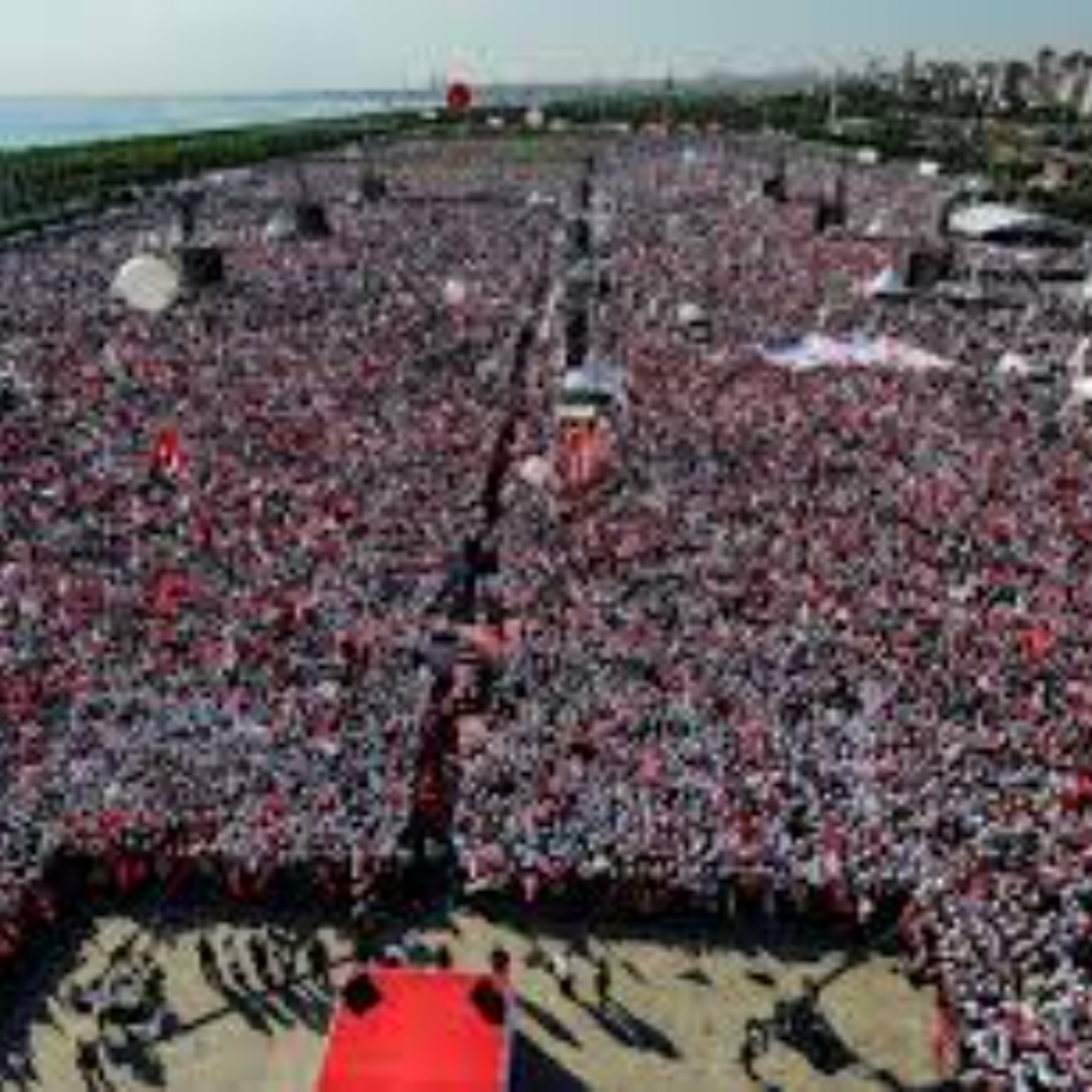
The detention of Ekrem İmamoğlu, Istanbul's mayor and President Recep Tayyip Erdoğan's most formidable rival, on March 19th sparked the largest demonstrations in Turkey in years. Last Saturday, hundreds of thousands of protesters took to the streets, expressing their discontent with the government and demanding the release of the city's imprisoned mayor, who is the Republican People's Party (CHP) candidate for the 2028 Turkish presidential election. According to Reuters, nearly 1,900 people have been arrested. İmamoğlu’s jailing marks another significant moment in Turkey’s shift toward authoritarianism—an ongoing process that arguably began in 2010 with a constitutional referendum that granted President Erdoğan’s Justice and Development Party (AKP) and its allies control over the judiciary. In recent years, hundreds of activists, journalists, politicians, and municipal officials have been imprisoned. Shahram Aghamir spoke with UC Berkeley sociologist Cihan Tugal and started by asking him how this consolidation power took place in Turkey. Jacobin: The Unlikely Resistance in Turkey
Toxic Supply Chains of War in Iraq
Toxic Supply Chains of War in Iraq by VOMENA Team at KPFA
What Is Israel's Endgame in Lebanon?
Bassam Haddad is an associate professor in the Schar School of Policy and Government at George Mason University. He is the author of Business Networks in Syria: The Political Economy of Authoritarian Resilience (Stanford University Press, 2011) and coeditor of A Critical Political Economy of the Middle East (Stanford University Press, 2021). Haddad is cofounder/editor of Jadaliyya ezine and executive director of the Arab Studies Institute. He serves as founding editor of the Arab Studies Journal and the Knowledge Production Project. He is coproducer/director of the award-winning documentary film, About Baghdad, and director of the acclaimed series Arabs and Terrorism. Sami Hermez, PhD, is director of the Liberal Arts Program and associate professor in residence of anthropology at Northwestern University in Qatar. He obtained his doctorate degree from the Department of Anthropology at Princeton University. He is the author of War is Coming: Between Past and Future Violence in Lebanon (UPenn 2017), which focuses on the everyday life of political violence in Lebanon and how people recollect and anticipate this violence, and My Brother, My Land: A Story from Palestine (Stanford 2024), that tells the story of a Palestinian family resisting ongoing Israeli settler colonialism.
Yanis Varoufakis on unbridled capitalism's descent into fascism and genocide
Yanis Varoufakis on unbridled capitalism's descent into fascism and genocide by VOMENA Team at KPFA
Journalists risking their lives to report on Gaza & companies and countries supplying oil to Israel
Journalists risking their lives to report on Gaza & companies and countries supplying oil to Israel by VOMENA Team at KPFA
How Joe Biden Became a Steadfast Israel Defender
https://jacobin.com/author/branko-marcetic
Artists demanding an end to Gaza genocide
Artists demanding an end to Gaza genocide by VOMENA Team at KPFA

Standing in the Dust – Photography of Yalda Moaiery
Standing in the Dust – Photography of Yalda Moaiery by VOMENA Team at KPFA
The Role of International Actors In The War in Sudan
The Role of International Actors In The War in Sudan by VOMENA Team at KPFA
How Islamophobia Is Driving a Mental Health Crisis Among Michigan’s Muslim Youth
On this edition of Voices of the Middle East and North Africa, we speak with Dr. Eli Cahan about why Arab and Muslim Americans face significantly higher rates of mental illness.
The Corporate Power Brokers Behind AIPAC’s War on the Squad
On this edition of Voices of the Middle East and North Africa, we have a conversation with Jacobin staff writer BRANKO MARCETIC about his In These Times investigation, which reveals the individuals behind AIPAC’s election war chest: nearly 60% are CEOs and other top executives at the country’s largest corporations.
Refugee Labor in Turkey and Europe’s Plastic Waste
On this edition of Voices of the Middle East and North Africa, we have a conversation with independent journalist Adnan Khan about his recent article in MERIP titled "A Deadly Trade—Refugee Labor in Turkey and Europe’s Plastic Waste." He writes that China’s ban came at an ideal time for Turkey’s plastic recyclers. Less than two years before it was implemented, the European Union had signed a controversial migration deal with the Turkish government. Turkey was promised six billion euros, among other political guarantees, to keep refugees from crossing into Europe. At the same time, funding for Frontex, the EU’s border protection agency, had soared, swelling to over 754 million euros in 2022, an increase of nearly 300 percent since the deal was signed. Much of the waste Turkey receives consists of low quality and contaminated plastics, dirty trash that often arrives in the country illegally. The results were predictable: refugee numbers in Turkey spiked from nearly 2.8 million at the end of 2015 to nearly 3.8 million by the end of 2017. The availability of cheap refugee labor has been key to sustaining Turkey’s burgeoning recycling sector. Much of the waste Turkey receives consists of low quality and contaminated plastics, dirty trash that often arrives in the country illegally.
Asylum seekers in Greece, remembering Palestinian revolutionary Ghassan Kanafani
The Mediterranean Sea has become a huge cemetery for many thousands of migrants and asylum seekers who have been risking their lives trying to cross it in search of a better future. This week, we speak with Athens based independent journalist Moira Lavelle about the state of refugees and asylum seekers trying to reach Greece- Later in the program, we remember Palestinian revolutionary and novelist Ghassan Kanafani- He was killed in Beirut by the Israeli Mossad spy agency on 8 July 1972. He was 36 years old.
Are Israel and Hezbollah on the brink of an all-out war?
Tensions between Israel and Hezbollah are at all-time high. Israel and Lebenese Hezbollah have been exchanging fire since October 8 the, when Israel launched its devastating war on Gaza, but the conflict between the two archenemies escalated after one of Hezbollah's most senior commanders was killed in an Israeli strike in southern Lebanon, on June 11the. Hezbollah retaliated by launching a large volley of rockets and attack drones at Israel. Concurrently, both sides have stepped up their rhetoric. Are Israel and Hezbollah on the brink of an all-out war? What will the implications of such a war be for Lebanon, Israel and the region? And what is the nexus between Israeli-Hezbollah conflict and Israel’s colonization of Palestine and its ongoing genocidal war in Gaza? Shahram Aghamir put these questions to Karim Makdisi. He is an associate Professor of international politics and founding director of the Graduate Program in Public Policy and International Affairs at the American University of Beirut – Professor Makdisi is also the co-host of Makdisi Street podcast
Hossam el-Hamalawy on Egypt’s role in Israel's war on Gaza
Hossam el-Hamalawy on Egypt’s role in Israel's war on Gaza by VOMENA Team at KPFA
Students face backlash for supporting Palestinian rights, Stage reading of Woman Life Freedom
Students face backlash for supporting Palestinian rights, Stage reading of Woman Life Freedom by VOMENA Team at KPFA
What does it take to end the war on the Palestinians in Gaza?
What does it take to end the war on the Palestinians in Gaza? by VOMENA Team at KPFA
Gaza: Besieged since 2007, now under Israel’s “total blockade”
Gaza: Besieged since 2007, now under Israel’s “total blockade” by VOMENA Team at KPFA
American Anthropologist Association voted in favour of boycotting Israeli academic institutions
American Anthropologist Association voted in favour of boycotting Israeli academic institutions by VOMENA Team at KPFA
Making sense of the devastating floods in Libya
Making sense of the devastating floods in Libya by VOMENA Team at KPFA
Israeli' assault on Jenin refugee camp & 'Sinbad Voyage' mural in Berkeley
Israeli' assault on Jenin refugee camp & 'Sinbad Voyage' mural in Berkeley by VOMENA Team at KPFA
Prof Natalie Koch explores the relationship between Arizona and Saudi Arabia in "Arid Empire"
In recent months, Fondomonte Arizona, a subsidiary of Saudi Arabia-based Almarai dairy Company has been getting renewed attention for growing alfalfa in drought-prone Arizona, and sending it to Saudi Arabia to feed the country’s cows. Despite a worsening drought, several factors including Political influence and lack of regulations have allowed the company to draw an unlimited amount of groundwater from the wells it operates in the area. According to the Associated Press, the two new wells would have pumped in just three minutes what a family of four uses in a month. Why did Saudi Arabia choose Arizona for its crop production? In her new book Arid Empire: The Entangled Fates of Arabia and Arizona. University of Syracuse political geographer professor Natalie Koch explores the exchange of colonial technologies between the Arabian Peninsula and the United States over the last two centuries,
Professor Cihan Tugal on the outcome of the general election in Turkey
On May 28th, Turkey’s President Recep Tayyip Erdogan was re-elected for a third term by winning 52% of the popular vote- His main rival Kemal Kılıçdaroğlu garnered 48%. Two weeks earlier, the right wing islamist-nationalist coalition consisting of Erdogan’s rullingJustice and development party AKP and its allies had won the majority in the parliamentary election. we spend the hour discussing how and why Erdogan was able to secure a third term in office despite a worsening economy and now chronic hyperinflation, the government's disastrous response to the deadly earthquakes, as well as his increasingly authoritarian rule. What happened? In his new article in the new left review, our today’s guest, UC Berkeley sociologist Cihan Tugal writes “There are obvious institutional reasons for the resilience of Erdoğanism. The government has spent years monopolizing the mainstream media and judiciary. Prisons are overflowing with activists, journalists and politicians. The Kurdish opposition, the only truly organized non-right-wing force in the country, has seen its democratically elected mayors replaced with state-appointed officials, who have consolidated the government’s rule over the eastern and southeastern provinces. Yet this is only the tip of the iceberg. The regime’s endurance is not simply a result of its authoritarianism; its popularity runs much deeper than that. Shahram Aghamir spoke with professor Tugal about the outcome of the recent general election in turkey
Part 1- Professor Khahlid Medani discusses the root cause of the ongoing crisis in Sudan
Part 1- Professor Khahlid Medani discusses the root cause of the ongoing crisis in Sudan by VOMENA Team at KPFA
Why did the US invade Iraq, 20 years ago? A conversation with Sinan Antoon+Omar Sirri
The 2003 invasion and occupation of Iraq resulted in massive death and destruction, and fueled sectarian tensions, which culminated in a violent civil war. More than 300,000 Iraqis have died from direct war violence and 9.2 million people have been internally displaced, according to Brown University's Costs of War Project. The Brutal invasion and occupation of Iraq entrenched the country in a cycle of sectarian violence and impacted every aspect of life in Iraq, from governance to health care, infrastructure, economy and the environment and long term trauma In a recent piece in the Guardian, one of today’s guests Professor sinan antoon writes, “ I had always hoped to see the end of Saddam’s dictatorship at the hands of the Iraqi people, not courtesy of a neocolonial project that would dismantle what had remained of the Iraqi state and replace it with a regime based on ethno-sectarian dynamics, plunging the country into violent chaos and civil wars. This week, we bring you the first part of our conversation about the reasons behind the catastrophic invasion of Iraq- we are joined by guests Sinan Antoon is an award winning Iraqi poet and novelist, and an Associate Professor at New York University's Gallatin School and co-founder and co-editor of Jadaliyya. His most recent novel is The Book of Collateral Damage Dr. Omar Sirri is a research associate in the Department of Politics and International Studies at SOAS, University of London. His doctoral dissertation, Scarecrows of the State: An Ethnography of Security Checkpoints in Contemporary Baghdad, was named co-winner of the 2022 Malcolm H. Kerr Dissertation Award in the Social Sciences from the Middle East Studies Association. They spoke with shahram aghamir
Ilan Pappe on the latest developments in Israel
Even by Israel’s abysmal standards, provocations against the people of Palestine have seen a dramatic escalation since the arrival of Bibi Netanyahu’s new government three months ago: Hundreds of innocent civilians murdered, including many children, an outright anti-Palestinian pogrom in the west bank that was cheered on by the minister of interior, a brutal attack on worshippers inside one of Islam’s holy sites in the middle of Ramadan, as well as statements by a key government official declaring that the Palestinian people simply does not exist. At the same time, a historic wave of protests contesting the new government’s attempts to temper with the role of the judiciary claims to defend democracy in the holy land without a single mention of the central question of Palestinian civil and human rights. We asked asked prominent Israeli historian Ilan Pappe for his take on these recent developments.
Cihan Tuğal on the earthquakes in Turkey & why they were so destructive
Guest: Cihan tugal, professor of sociology at the University of California, Berkeley. He is the author The Fall of the Turkish Model: How the Arab Uprisings Brought Down Islamic Liberalism, and Passive Revolution: Absorbing the Islamic Challenge to Capitalism
The Islamization of the eduction system in Iran, following the 1979 revolution
Guest: shahrazad Mojab, professor of Adult Education and Community Development and Women and Gender Studies at the University of Toronto Her most recent books are Marxism & Migration; Women of Kurdistan: A Historical and Bibliographical Study; and Revolutionary Learning: Marxism, Feminism and Knowledge.
From Mali to Dubai: The United Arab Emirates & African gold
Now approaching seventy tons annually, gold has replaced cotton as Mali’s leading export, turning that country into Africa’s third-largest gold producer. The primary destination of artisanal gold seems to be the United Arab Emirates. By all evidence, the gold that shines in the souks of Dubai is the product of a complex web of criminal networks, terrorist groups and internationally sanctioned regimes, who use this non-industrially mined gold to launder their money. The Emirates have long been a global hub for transnational African merchants, who travel to Dubai to purchase imported goods such as Japanese-made auto parts or Chinese-made garments. Emirati authorities and commercial players are now exploiting their country’s existing commercial status to make the UAE an important node for the trade in precious metals, especially gold. These buyers are actively financing associates in Mali and throughout the Sahel and Sahara regions, driving the expansion of artisanal mining into new areas." Bruce Whitehouse is Associate Professor of Anthropology at Lehigh University- HIS WORK and research have concentrated on postcolonial sub-Saharan Africa, anthropological demography, development, with a special emphasis on transnational migration. I spoke with him about the reasons why Mali is emerging a the main production hub for Sahelian countries and why Dubai is the number one destination for artisanal gold trade. Guest: Bruce Whitehouse, associate professor of anthropology at Lehigh University
The political and economic crisis in Lebanon
The country of Lebanon has been in social and economic upheaval over the past few years, sending many of its beleaguered citizens into international exile in search of basic economic survival. We speak with Lebanese activist and academic Rayan El-Amine who, after a decade in his native land, has returned to the Bay area with his family, about the travails of a country that is geographically diminutive but has always loomed large in the conscience of the world. Guest: Rayan El- Amine, activist and scholar
Ilan Pappe on Israel’s new government, Laura Albast on the media coverage of Palestine
With the arrival of notorious fascists in prominent positions of power in Israel, Western news media everywhere seem surprised at the extreme tenor of Israel’s government since Benjamin Netanyahu returned to power for the umptieth time, as if racism, colonialism and apartheid were somehow alien to the very DNA and mission of the so-called Jewish state. This week, prominent Israeli historian scholar professor Ilan Pappe discusses with us the implications of the recent change of administrations in Israel, for both Palestine and the entire region.
The plight of imprisoned environmentalists in Iran & refugees in Europe
The plight of imprisoned environmentalists in Iran & refugees in Europe by VOMENA Team at KPFA
What explains the dangerous levels of air pollution In Iran's main cities?
What explains the dangerous levels of air pollution In Iran's main cities? by VOMENA Team at KPFA
Political prisoners in Iran & Amir Rashidi discusses internet restrictions in Iran
Political prisoners in Iran & Amir Rashidi discusses internet restrictions in Iran by VOMENA Team at KPFA
The toxic legacies of the U.S. war in Iraq: A conversation with Kali Rubaii
The toxic legacies of the U.S. war in Iraq: A conversation with Kali Rubaii by VOMENA Team at KPFA
Reactions to Iran's Soccer team at the FIFA World Cup amid anti-government protests in Iran
Guest: Arang Keshavarzian
History of student movement in Iran- Part 2
History of student movement in Iran- Part 2 by VOMENA Team at KPFA
History of student protest movement in Iran ( part 1) & climate justice and human righs
Guests Dr Kaveh Abbasian, former student activist, filmmaker, researcher, and lecturer in Film and Media Practice at the University of Kent in Britain Hamza Hamouchene, London-based Algerian researcher-activist, commentator and a founding member of Algeria Solidarity Campaign (ASC), and Environmental Justice North Africa (EJNA). He previously worked for War on Want, Global Justice Now and Platform London on issues of extractivism, resources, land and food sovereignty as well as climate, environmental, and trade justice.
protests and internet censorship in Iran
Guest: Amir Rashidi, the director of digital rights and security at Miaan Group
COP27 shines spotlight on human rights abuses in Egypt
Guest: Hossam el-Hamalawy is an Egyptian journalist, photographer and socialist activist
examining the current protests in iran
Guest: Nima Tootkaboni is a former student activist, and a Ph.D. student in sociology at the Johns Hopkins University
nationwide protests continue in Iran - What is next?
nationwide protests continue in Iran - What is next? by VOMENA Team at KPFA
Women, Life, Freedom. Women are leading Iran protests
Women, Life, Freedom. Women are leading Iran protests by VOMENA Team at KPFA
Year of the Locust: A Soldier's Diary and the Erasure of Palestine's Ottoman Past
Victors write history, as the old cliché goes. Over the past 5 centuries, European powers have fanned out across the world, conquering entire continents and writing self-serving accounts of those conquests while diminishing the merits of the conquered civilizations in order to justify their own depredations. Palestine has been no exception to that rule. Today we speak with Professor Salim Tamari, a Palestinian historian based in Ramallah, whose trailblazing work has illuminated the history of Palestine and the Levant prior to British and Zionist occupations from a perspective that is largely absent from western narratives. More specifically, we discuss his book The Year of the Locust, an eloquent chronicle of the transition period that saw the end of the Ottoman empire in the Levant and the arrival of western occupiers through the revealing lens of a rare personal diary kept by a young soldier fighting in the ranks of the Ottoman army. Guest: Salim Tamari, Salim Tamari is IPS senior fellow and the former director of the IPS-affiliated Institute of Jerusalem Studies. He is editor of Jerusalem Quarterly and Hawliyyat al Quds.
Neda semnani tells the story of her parents in"They Said They Wanted Revolution"
Neda semnani tells the story of her parents in"They Said They Wanted Revolution" by VOMENA Team at KPFA
France, a Settler Postcolony? A conversation with professor Olivia Harrison
France, a Settler Postcolony? A conversation with professor Olivia Harrison by VOMENA Team at KPFA
Laura Albast on the US media coverage of Palestine
we speak with Palestinian-American journalist and media analyst Laura Albast about coverage of Palestine in the US media- In a recent Washington Post Op-Ed, she argues that By neglecting to contextualize Israeli state violence, the media has given the Israeli government a free pass, enabling it to continue ethnically cleansing the Palestinian people with impunity. It is time for outlets to address the harm they have done. They should make an effort to hire Palestinian journalists and center Palestinian voices, instead of consistently erasing them from their own stories. The endless footage of documented violence against Palestinians should not remain confined to social media feeds (which face a different form of censorship). Read her op-ed: https://www.washingtonpost.com/opinions/2022/04/28/jerusalem-al-aqsa-media-coverage-israeli-violence-palestinians/
May 06 2022: The New Documentary "Boycott" and Media Coverage of Palestine
**Boycott, is screened on this year’s DocLands on Sunday, May 8 at 4 PM at SMITH RAFAEL FILM CENTER in San Rafael- For more information please visit, doclands.com** The freedom to refuse to buy a product at any time from anyone you want, which has historically been used by oppressed minorities throughout the world, witness the bus boycotts of the 50s, the grape boycotts of the 60s or the anti-Apartheid campaign of the 80s, is now at the heart of the struggle for Palestinian rights. The new documentary film "Boycott," examines the heroic plight of three individual Americans in three different states who rejected the dictate of anti-BDS laws surreptitiously passed by 31 states of the union, challenged that ban in court and prevailed in the head. BOYCOTT chronicles the stories of three everyday Americans -- a speech pathologist, a public defender, and a newspaper publisher -- who take the extraordinary step of suing their states after new laws require them to sign a pledge saying they won't participate in boycotts of Israel in order to receive a government contract. VOMENA’s Khalil Bendib spoke with the film’s producer Suhad Babaa. Palestinian American journalist Laura Albast says the media must stop giving reign to Israeli aggression & begin telling the full story of Palestine. Recently- Ms Albast and Cat Knar coauthored an opinion piece in the Washington Post on the biased & inaccurate coverage of the Israeli Occupation of Palestine- they write, we have seen the same patterns over and over again in media coverage of Palestine. Palestinians are not killed; we simply die. When Israeli forces raid our neighborhoods in the middle of the night, bomb our children, demolish our homes, colonize our land and kill our people, we are somehow equal instigators. Media descriptions regularly imply a false symmetry between occupier and occupied, propping up anti-Palestinian and Islamophobic narratives that blame the Palestinian people for Israeli aggression.” Malihe Razazan spoke with Laura about the media coverage of Palestine in the US media and Why the media fails to cover Palestine with accuracy and empathy. Laura Albast, a Palestinian American journalist and translator, is senior editor of digital strategy and communications at the Institute for Palestine Studies-USA.
April 8, 2022: Samia Errazouki on Morocco's Summit with Israel
In a bold and historic step backwards for the cause of peace in the Middle East last Sunday, Morocco was one of four Arab countries meeting in a special summit with Israel and the US. Although distant Iran was central to the discussions held during this meeting, the central issue of Palestine never broached during this summit, which took place in the heart of historic Palestine. Khalil spoke with Samia Errazouki, a journalist formerly based in Morocco and a PhD candidate in early modern Northwest African history at UC Davis, about Morocco’s participation in this summit and what might be motivating the Moroccan regime to go against the wishes of its own people,
March 9, 2022- Amany Khalifa on forced evictions and the ethnic cleansing of Palestine
March 9, 2022- Amany Khalifa on forced evictions and the ethnic cleansing of Palestine by VOMENA Team at KPFA