VO BOSS
479 episodes — Page 1 of 10
The Winning Voiceover Career Strategy
Reframing Rejection
The Mind of a Voiceover Legend: Spike Spencer

The VO Boss Guide to 2026 Taxes
BOSSes, it is the month of taxes, and while most people's eyes glaze over at the mention of the IRS, Tom Dheere (The VO Strategist) and Anne Ganguzza are here to make it manageable. This year is particularly significant due to major shifts in federal reporting thresholds. This episode provides actionable voiceover tax tips to help you move from a "hobbyist" mindset to a professional business owner, highlighting the importance of clear audit trails and strategic expense tracking. Chapter Summaries: The Multifunctional Cash Flow Spreadsheet (01:34) Tom introduces his cornerstone tool: the Cash Flow Spreadsheet. Used for over 20 years, this template tracks every penny in and out. Beyond taxes, it serves as a marketing diagnostic by logging genres, booking sources (agent vs. direct), and payment portals. Anne notes that tracking the source of income is vital for analyzing which training and marketing efforts are actually paying off. Threshold Shock: The 2026 1099 Changes (19:28) Tom reveals the most critical update for 2026: The 1099 reporting threshold has jumped from $600 to $2,000. This applies to both the 1099-NEC (Non-Employee Compensation) and 1099-MISC. Many talent will receive fewer forms this year, but Tom and Anne stress that this is not free money—you are still legally required to declare every cent of income, even if no form is issued. The 1099-K and Third-Party Payments (20:53) For those paid via PayPal, Venmo, or credit cards, the 1099-K threshold now stands at $20,000 and 200 transactions. Unless you hit both metrics, these platforms won't send you a form. This makes meticulous personal record-keeping through spreadsheets or accounting software like Wave or QuickBooks essential for an accurate filing. Hobby vs. Business: The IRS Standard (10:40) Even if you haven't made a profit yet, Anne and Tom encourage filing to claim deductions for training, gear, and marketing. However, they caution that the IRS may classify your career as a "hobby" if you don't show a profit within a few years. Having a professional CPA who understands self-employment is a deductible business expense that provides protection during potential audits. Creating an Audit Trail (13:55) A "Real Boss" keeps personal and professional finances separate. Tom recommends opening a dedicated "Voiceover" checking account. By running all business transactions through one account, you create a clean audit trail that simplifies tax prep and provides concrete evidence of business activity if the IRS comes knocking. AI for Financial Analysis (05:27) Tom discusses moving his data to Google Docs to leverage AI (Google Gemini). By using AI to analyze his spreadsheet, he can quickly identify which genres are growing or shrinking and compare year-over-year performance, turning "tax prep" into a powerful business strategy session. Top 10 Takeaways for Voice Actors: Declare Everything: Regardless of the new $2,000 threshold, you must report 100% of your income to the IRS. Separate Your Accounts: Use a dedicated checking account for all VO-related income and expenses to create an easy audit trail. File Even When Starting: You can deduct coaching and equipment costs in your first year, even if you haven't booked a job yet. Know the NEC vs. MISC: Understand the difference between non-employee compensation (NEC) and royalties (MISC), as the latter still has a $10 reporting threshold. Hire a Specialized CPA: Don't rely on generic software if your taxes involve 1099s; find a professional who understands the unique needs of freelancers. Track Genres for ROI: Use your financial records to see if your training in specific genres (like medical or e-learning) is resulting in paid work. Watch for Digital 1099s: Check your email and portal dashboards (like Voices or Voice123) for downloadable tax forms; many companies no longer send snail mail. Automate with Informed Delivery: Use the USPS Informed Delivery service to see scans of your incoming physical tax documents. Quarterly Estimates: Avoid a massive year-end bill by paying estimated quarterly taxes throughout the year. Taxes Tell Your Story: View tax season as a "Year in Review" to see the growth and health of your voiceover business.
The Man Who Built Voiceover Xtra
BOSSes, today we celebrate a legend! 🏆 Anne Ganguzza sits down with John Florian, founder of VoiceoverXtra, to discuss his incredible 20-year legacy as the industry's primary news and education connector. John shares the "hot coal" moment that launched his business, how he accidentally mastered SEO, and why he's retiring from VO to become a mystery-humor author. In this episode, you'll discover: The CNN of VO: How Voiceover Extra became the industry's most trusted resource. The Webinar Pioneer: John's journey from Broadway rehearsal halls to global digital training. SEO Secrets: How 2,500 articles created an unbeatable search presence. Digital Ethics: Dealing with content theft and the importance of accountability buddies. The Next Chapter: Why John is "learning the craft" all over again in the world of novel writing. If you've ever used VoiceoverXtra to find a coach, a rate guide, or a studio tip, you cannot miss this heartfelt farewell and celebration!

The Perfectionism Trap
BOSSes, are you re-recording your auditions until you're blue in the face? 🎤 Anne Ganguzza and Lau Lapides reveal why voiceover perfectionism is actually keeping you from getting cast! In this episode, we dive into the "tormented artist" mindset and explain why "trying to be perfect" is the fastest way to sound boring and unmarketable. Learn how to let go of the "safety take," trust your first few recordings, and focus on progress over perfection. In this episode, you'll discover: The Audible Grunt: Why listeners can hear when you're "trying" to sound a certain way. The 10-Second Decision: Why casting directors ditch perfect reads for authentic ones. The "Don't Do That" Trap: Why you can't teach a negative and how to redirect your brain. The Power of Bloopers: Why imperfection is actually more memorable and human. Sounding Boards: How to use colleagues to snap out of a perfectionist spiral. If you're ready to stop being your own worst enemy in the booth, this episode is for you!
Mastering Your Voice Acting Mindset
BOSSes, Anne Ganguzza welcomes powerhouse talent Mark Rider, whose voice has defined campaigns for Ford, Game of Thrones, and Spider-Man: No Way Home. Beyond his iconic sound, Mark is a dedicated coach and creator of the VO Life Coach app. In this episode, we explore the parallel between jumping horses and taking creative risks, the "10,000-hour" journey to natural delivery, and why a healthy voice acting mindset—rooted in self-care and mental clarity—is the only way to survive the high-pressure world of trailers and promos. Chapter Summaries: Horses, Fear, and Character Building (01:48) Anne and Mark bond over their shared passion for horses. Mark notes that jumping a 1,200-pound animal requires staring fear in the face—a skill that translates directly to the booth. They discuss how "eating dirt" (falling off) builds the resilience and character necessary to handle rejection and technical failures in a voiceover career. The Birth of the VO Life Coach App (05:19) Mark shares the "come to Jesus" moment that led to his app. Wrestling with his two loves—performing and coaching—he sought a way to "clone himself" to provide spiritual and professional guidance to talent globally. He emphasizes that "unstucking" talent often involves addressing life strategy rather than just reading scripts. The Myth of "Just Be You" (21:45) Mark issues a controversial reality check: the advice to "just be you" is often misleading. Most scripts are not written for your natural persona. He argues that you must "finish the sentence"—it's about you acting. Successful talent are voice artists who use their unique personality as a tool to inhabit characters and scenarios that are fundamentally different from themselves. The 10,000-Hour Matrix (16:39) There are no workarounds for experience. Mark describes reaching "Year 15" as a "Matrix moment" where auditions began to move in slow motion. He explains that sounding "natural" is a learned skill that only comes after thousands of hours of breaking down copy and internalizing intonation until it becomes instinctual. Zen vs. Chaos: Promo vs. Corporate (41:13) Mark and Anne compare their working styles. While Anne thrives in the "Zen" flexibility of non-broadcast corporate work, Mark admits he craves the "psychotic" chaos of trailer and promo work—getting out of bed at 12:45 AM because a network needs a tag immediately. They agree that the industry has enough room for both mentalities, but you must know which one feeds your soul. Inner Dialogue: Your Biggest Enemy (42:22) Mark's biggest piece of advice for any voice acting mindset is to gain control over your internal dialogue. You don't fail because someone pulls you down; you fail because you allow your own "demons" to tell you that you aren't enough. He recounts wisdom from Maurice Tobias: "Get your life straight first, or the acting won't matter." Top 10 Takeaways for Voice Actors: Resilience is Rooted in Experience: Much like riding, you aren't a professional until you've "fallen off" and gotten back up several times. Strategize Before You Launch: Don't rush into getting a demo Invest time in planning and building a foundation so you do it right the first time. Self-Care is Non-Negotiable: Your mental and physical health directly affects your vocal production. Put your sanity first. Master the "Unstuck" Mindset: When you feel stuck, it's often a sign that you need to shift your focus from performance to business strategy or mental clarity. Experience Takes Time: Respect the "10,000-hour" rule. Longevity comes to those who are willing to put in the years of daily practice. "Be You" Means "Act as You": Learn to bring your unique spirit to scripts that weren't written for you. It's about authentic interpretation, not just reading. Find Your Niche Energy: Determine if you prefer the stability of corporate narration or the adrenaline of "right now" promo work. The Power of "No": Having the confidence (and the savings) to say no to low-paying, high-stress jobs is a hallmark of a VO Boss. Use Creative Promotional Tools: Mark's "Be Awesome" BBQ sauce serves as a brilliant conversation starter and follow-up tool for building client relationships. Your Inner Voice Rules: Monitor your self-talk. If your internal dialogue is negative, your performance and business growth will suffer.
Know Your Worth: A Guide to Strategic Voiceover Pricing for 2026
Pricing for Profits: Your Voiceover Pricing Strategy Voiceover Pricing Strategy BOSSes, Anne Ganguzza and Tom Dheere (The VO Strategist) tackle the often-intimidating world of money. Whether you are setting rates for your very first gig or deciding when to give yourself a "raise" after a decade in the booth, having a clear voiceover pricing strategy is vital. This episode explores the power of industry standards like the GVAA rate guide, the psychology of "perceived value," and why the highest-paying clients are often the easiest to work with. Chapter Summaries: The Industry Benchmarks (01:43) Tom establishes the two core pillars of voiceover rates: SAG-AFTRA Collectively Bargained Agreements (CBAs) and the Global Voice Acting Academy (GVAA) Rate Guide. While the union sets the floor for broadcast work, the GVAA has become the non-union industry standard. The hosts emphasize that even new talent should aim for these benchmarks because clients pay for the voice, not the years on a resume. The "Confidence Workaround" (10:52) For talent who feel "timid" about quoting high numbers, Tom shares his secret weapon: The Screenshot Strategy. When a client won't provide a budget, Tom provides a quote based on the GVAA guide and includes a link or screenshot. This shifts the "blame" from the actor to the industry standard, instantly boosting professional authority. The Low-Budget Paradox (16:08) Anne and Tom discuss a hard truth: the lower the price, the higher the stress. Clients who undervalue voiceover typically demand more retakes and have more "nitpicky" tendencies. Conversely, high-budget clients understand the value of collaboration and are generally more pleasant and professional to work with. When and How to Raise Your Rates (18:37) Raising your rates doesn't require a public announcement. The hosts recommend a "sneak-in" approach: incrementing rates on a project-by-project basis or with new clients. They suggest two primary triggers for a raise: your skills have demonstrably improved (you are "better" at the craft), or the cost of living/business overhead has increased. Direct Marketing vs. Pay-to-Play (30:01) While pay-to-play sites (Voice123, Voices.com) often set the budget for you, direct marketing requires you to lead the negotiation dance. The hosts argue that a balanced voiceover pricing strategy uses all lead generation tools—agents, casting sites, and direct outreach—to ensure a steady flow of diverse opportunities. Negotiation as a Skill (13:28) Before rate guides existed, actors had to be "tough" negotiators. Anne encourages talent to ask clients, "Does this fit within your budget?" as a simple way to open an honest dialogue without burning bridges. Remember, a "no" from a client isn't a failure—it's just one data point in a long-term career marathon. Top 10 Takeaways for Voice Actors: Use the GVAA Guide: It is the "gold standard" for non-union rates. Keep it open whenever you are quoting a project. Price for Quality: Don't undercharge just to get the job. A low price often signals low quality or lack of professionalism to the buyer. Ask for the Budget First: Always ask the client for their budget before providing a quote to avoid leaving money on the table. Leverage the "Confidence Workaround": Use screenshots of industry rate guides to justify your quotes and relieve personal anxiety. Identify Perceived Value: If you have branded yourself well and provide a premium product, you can strategically charge above the minimums. Avoid the Race to the Bottom: Under-cutting your peers on low-budget sites doesn't build a sustainable career; it only attracts high-stress clients. Raise Rates Incrementally: Don't announce a general price hike. Slip small increases into your next quotes as your experience grows. Differentiate B2B vs. B2C: VO is a Business-to-Business industry. Treat your clients as professional partners, not retail consumers. Strategic Volume Discounts: Only consider lower rates if a client guarantees a high volume of consistent work (but get it in writing). The Power of "No": Being willing to walk away from a bad deal is the ultimate sign of a VO Boss.
How to Give Genuinely "Human" VO Reads
BOSSes, are you tired of hearing "give me more YOU " and having no idea what it means? Anne Ganguzza and Lau Lapides reveal the secret to an authentic voiceover performance and how to stop sounding like a polished caricature! This episode is a masterclass in performance mindset. Learn why acting is actually reacting, how to find the "pain point" in every script, and why your unique personality is the only thing that can't be replicated by AI. In this episode, you'll discover: The Casting Secret: Why directors ask for "you" when they really mean "wake me up!" Pain Point Performance: How connecting to a simple discomfort makes your read 100% more believable. The Spec Trap: Why following directions too closely can actually kill your authenticity. The Empathy Angle: How to make dry corporate or medical narration sound like you actually care. The "Hugs Blanket" Strategy: Why Anne's tangent about Minky Couture is a perfect example of a bookable read. If you're ready to stop over-layering your acting and start being a Real Boss in the booth, this episode is for you!
Why "Jack of All Trades" is Killing Your Voiceover Career
BOSSes, Anne Ganguzza and Tom Dheere (The VO Strategist) ring in the new year with a reality check on modern voiceover career strategy. In an industry increasingly influenced by AI and market saturation, the "throw everything at the wall and see what sticks" approach is no longer viable. This episode is a deep dive into the power of focus—mastering one genre at a time, picking the right marketing portals, and closing the "relevance gap" by becoming a high-level human storyteller. Chapter Summaries: The Relevance Gap and AI (10:45) Tom introduces the "relevance gap"—the widening space between aspiring talent and working professionals. He argues that AI is rapidly consuming low-budget, entry-level work. To remain relevant, talent must move beyond simply "reading well" and invest in high-level storytelling skills (acting, improv, etc.) that AI cannot yet replicate. The Danger of the Multi-Demo Rush (03:55) The hosts notice a troubling trend: new talent getting five demos produced before they've mastered a single genre. This lack of focus leads to "sucking at everything." Anne emphasizes that even 20 coaching sessions might not be enough to reach the competitive level required for a professional demo in today's saturated market. Passion vs. Pragmatism: Reconciling Your Goals (15:19) While many enter VO wanting to do anime or video games, the market for corporate, e-learning, and medical narration is significantly larger. Tom suggests a pragmatic voiceover career strategy: use "bread and butter" genres like corporate work (where there are over 33 million potential clients) to fund your passion projects in character and animation work. The Myth of Social Media ROI (24:34) Tom reveals startling statistics on social media ROI for voice actors: Facebook (0.77%) and Twitter (0.69%) pale in comparison to LinkedIn (2.74%). While still low, LinkedIn represents a business-minded audience. The hosts warn that "enpoopification"—the decline of social media quality due to algorithms and AI—makes it harder than ever to find work through standard posting. The "New SEO": Getting Found by Chatbots (27:39) Anne shifts the focus to a forward-thinking strategy: SEO for AI. Companies are increasingly asking chatbots like ChatGPT or Claude for voice actor recommendations. To stay competitive, talent must populate their websites and blogs with high-quality, human-written content that these bots can index and recommend. The 2026 Focus Challenge (30:21) Tom issues a challenge to all VO Bosses: Pick one genre, one casting site, and one social media platform to focus on this year. By concentrating energy rather than scattering it, talent can build true momentum and authority in a specific corner of the market. Top 10 Takeaways for Voice Actors: Close the Relevance Gap: Invest in professional acting and storytelling training to stay ahead of AI-generated voices. Focus on One Genre First: Master the nuances and audience of one genre before producing a demo or marketing yourself in another. Market Pragmatism: Target the corporate and e-learning markets for consistent cash flow while you build your "passion" skills in animation. Avoid "Demo Bundle" Traps: Be wary of packages offering multiple demos for a deal; quality training takes time and individual focus for each genre. Audit Your Marketing Portals: Don't join every pay-to-play site at once. Pick one that aligns with your primary genre and master its algorithm. Prioritize LinkedIn: For B2B genres like corporate narration, LinkedIn offers a significantly higher ROI than other social platforms. Optimize for AI Search: Ensure your website's FAQ and Home pages are rich with pertinent information so chatbots can find and recommend you. Use Low-Budget Sites as Proving Grounds: Use sites like Fiverr or Casting Call Club for practice and project management experience, not as a final career destination. Human Content Wins: Write blogs and website copy with a "human-first" approach to reclaim search authority from AI-generated spam. The Foundation is Acting: Foundational acting skills are transferable across all genres. Master the craft first, and the genre proficiency will follow.
Talking Modern Voiceover Career Strategy
Building a sustainable voiceover career in 2026 requires more than great performance—it means understanding how agencies submit talent, how online casting has evolved, and how discoverability now works in an increasingly digital and AI-influenced landscape. Today's voice actors need clarity, adaptability, and a strategy grounded in how the industry actually operates. In this episode of VO BOSS, Anne Ganguzza and J. Michael Collins sit down for a candid conversation about modern voiceover career strategy. Together, they explore how submissions are filtered behind the scenes, why becoming a trusted, go-to talent matters more than constant chasing, and how marketing, SEO, and emerging AI search tools now play a role in being found. This episode offers practical, experience-based insight into building a career that's positioned for long-term success. Chapter Summaries: The Entrepreneurial "Happy Accident" (04:14) JMC reflects on a 30-year career built on "happy accidents" and flying by the seat of his pants. He emphasizes that a successful voiceover career strategy requires constant evolution. He discusses his "full circle" journey—starting in traditional studios, becoming a pioneer of online casting, and returning to a heavy focus on agency and broadcast work. Legwork and the "100 Touches" Rule (09:56) The hosts discuss the significant increase in effort required for modern talent. JMC suggests that the old standard of 20 daily marketing "touches" is obsolete; today, a competitive voiceover business requires closer to 100 touches a day (auditions + direct marketing) to maintain a tough climb in a saturated market. Demystifying the Agency World (09:29) JMC addresses a common misconception: agents are not scary gatekeepers; they work for you. He breaks down how agency submissions really work—where hundreds of voiceover auditions may be received for a single role, but only a small, carefully selected group is ever sent to the client. For voice actors, success comes from shifting the focus away from constant outreach and toward becoming a trusted, go-to talent within an agency's roster. The New Frontier: LLM Search and SEO (21:07) Anne and JMC dive into the "New SEO." Beyond traditional Google rankings, talent must now optimize for AI chatbots like ChatGPT and Claude. JMC reveals he is booking multiple jobs per week from clients who found him by asking an AI bot for recommendations. This requires a comprehensive digital footprint that AI models can crawl and trust. Longevity and the "Five-Figure Wall" (16:04) JMC offers blunt advice for newer talent: getting to those first $20,000–$30,000 in annual revenue is the hardest part of the job. Once you hit that low five-figure traction, scaling to six figures is often a faster process because you have already developed the resilience and technical skills needed to survive rejection. The Immersion Strategy: VO Conferences (32:39) As the producer of VO Atlanta, One Voice USA, and his signature Euro Retreats, JMC explains why live events are the ultimate "Super Bowl" for career growth. He discusses the difference between intimate retreats (EuroVO) and massive immersion events, emphasizing that the relationships and "lifelong families" built at these conferences are often more valuable than the sessions themselves. Top 10 Takeaways for Voice Actors: Embrace the Hustle: Aim for 100 marketing touches or auditions daily to stay ahead of the competition. Optimize for Chatbots: Ensure your website content is detailed and clear so LLMs like ChatGPT can index you for specific genre recommendations. Agents are Partners: Treat agents as people who work for you; focus on becoming the "easy choice" that they prioritize for shortlists. Traditional SEO Still Matters: Being on Page 1 or 2 of Google provides "walk-in business" that allows you to stop constant chasing. Focus on High-Tier Portals: If using pay-to-plays, aim for top-tier memberships (like 123 Platinum) to bypass the saturation of lower tiers. LinkedIn is the Pro Choice: Focus your social media marketing on LinkedIn, where professional grade buyers live, rather than consumer-heavy sites like Facebook. Persist Past the First $30k: Realize that the first five-figure stretch is the most difficult; the snowball effect happens once you establish a baseline. Demos are Still Non-Negotiable: You cannot get agency representation or high-end direct work without an award-winning, professional demo. Invest in Live Connection: Attend conferences like VO Atlanta or One Voice to build the "community family" that sustains a long-term career. Do It Your Way: Forge your own path by blending old-school agency work with new-school direct marketing and SEO strategy.
The Secret to Sustaining a Long-Term Voiceover Career
BOSSes, do you cringe when you hear your own playback? Anne Ganguzza and Lau Lapides reveal why how to love your voice is the most important mindset shift you can make for your voiceover career! This episode is a "VO Valentine" to all the talent struggling with self-doubt. Learn why professional commitment beats romanticized expectations, how to handle negative feedback without spiraling, and why resilience is your true superpower. In this episode, you'll discover: The Comparison Trap: Why wishing you sounded like someone else is sabotaging your unique brand. Love as a Professional Commitment: How to stay in the game even when you "hate" your performance that day. The "Avalanche" Effect: How to stop one bad comment from ruining your entire business. Healing Through Gratitude: Anne Ganguzza's powerful story of perspective following a major health challenge. Why Love Sells: How to use genuine emotional connection to make your auditions stand out to clients. If you're ready to stop the self-sabotage and start thriving in the booth, this episode is a must-watch!
Read the Room — and the Directions
BOSSes host Anne Ganguzza is joined by co-host Lau Lapides and special guest Carol Alpert (voice actor and on-camera coach) to tackle the industry's most persistent headache: the inability of talent to follow instructions. Whether it's ignoring age ranges in casting specs, butchering file naming, or losing patience during a live session, failing to follow the "rules" of an audition is the fastest way to get your file tossed. The hosts stress that being a "trained actor" means being disciplined enough to read between the lines and respect the client's process. The Casting Filter: Why 70% Get Ditched (01:48) Lau Lapides reveals a shocking statistic: in a recent casting for 35–45 year olds, 70% of the auditions were from talent clearly outside that age range. Agents use specs to filter talent quickly; if you submit for a role you clearly don't fit, you are essentially asking to be ignored. Following the demographic specs is the first step in following directions in voiceover. The File Naming Pet Peeve (07:04) Proper file naming is not just a suggestion; it's a structural necessity. When an agent or casting assistant is processing hundreds of files, an incorrectly named file can disrupt their entire workflow. Lau notes that talent often doesn't see the "assembly line" of 10–40 people involved in a single gig; naming your file correctly shows you respect their time. "Early is On Time": The Reality of Deadlines (11:12) While some pay-to-play sites are instantaneous, agency turnarounds are often measured in hours. Lau asserts that the strongest auditions usually come in within the first few hours of a posting. Being "trained" means having the discipline to interpret, record, and execute an audition professionally and quickly without procrastinating. Cold Reading and Tracking Skills (13:05) A common reason talent fail to follow directions is a lack of ocular tracking skills. Many people listen to content rather than reading it, leading to a decline in the ability to scan a script and pick up nuances quickly. The hosts recommend cold-reading classes to ensure your eyes can track words and directions simultaneously. Live Direction: Active Listening and Communication (31:09) During a live directed session, following instructions becomes a matter of active listening. Lau recommends repeating directions back to the client to ensure clarity. She also warns that talent are often replaced not because of their voice, but because of a poor attitude or lack of patience when being redirected. The "Relationship" Slope: Business vs. Contract (41:23) While it's important to stick to contracts, the hosts discuss the value of being cooperative. Doing an extra tag or a small favor can "earn" you a client for the next ten years. It's about weighing small battles versus the long-term war of building a sustainable career through professional relationships. Top 10 Takeaways for Voice Actors: Read the Specs Twice: Ensure you fit the age, gender, and ethnicity requirements before stepping into the booth. Master File Naming: Follow the naming convention provided exactly. It is the most common reason auditions are discarded without being heard. Early is Best: While you should never rush quality, aim to submit your audition as early as possible to capture the agent's attention. Practice Cold Reading: Maintain your ocular tracking skills by reading aloud for at least 15 minutes a day to stay sharp for quick turnarounds. Listen and Repeat: In directed sessions, repeat the client's instructions back to them to confirm you understand the requested adjustment. Silence Your Ego: If a client asks for 100 takes, provide them professionally. Frustration or an "attitude" is a faster way to get fired than a bad take. Check Your Tech: Before a live session, verify that SourceConnect and your DAW are updated and functioning. Technical failures are a failure to follow prep instructions. The Agent is the Middleman: Don't get annoyed if your agent doesn't have every answer; they copy and paste exactly what the client gives them. Interpret, Don't Just Comprehend: Moving beyond just "reading the words" to understanding the story is part of your professional instruction. Build the Relationship: Being cooperative and "easy to work with" is often more valuable to a client than being the most talented person in the room.
The Truth About Demo Mills
BOSSes, are you being sold a voiceover dream that's actually a nightmare? Anne Ganguzza and Tom Dheere expose the predatory world of "demo mills" and reveal why your VO demo might be holding you back! This episode is your survival guide to the industry's biggest investment. Learn how to spot red flags, understand why "four hours of coaching" is a scam, and how to ensure your demo actually gets you cast. In this episode, you'll discover: The $3,000 Mistake: A real-world story of a talent who was taken for a ride by bad training. Genre Mixing Red Flags: Why putting promo spots on a commercial demo kills your credibility. Performance vs. Voice: Why "golden pipes" aren't enough to make a demo serviceable. The Stock Script Trap: How generic copy makes you blend in instead of standing out. Recourse Strategies: What to do if you've already spent money on a sub-par demo. If you're ready to stop being a "hobbyist" and start building a competitive voiceover business, this episode is a must-watch!
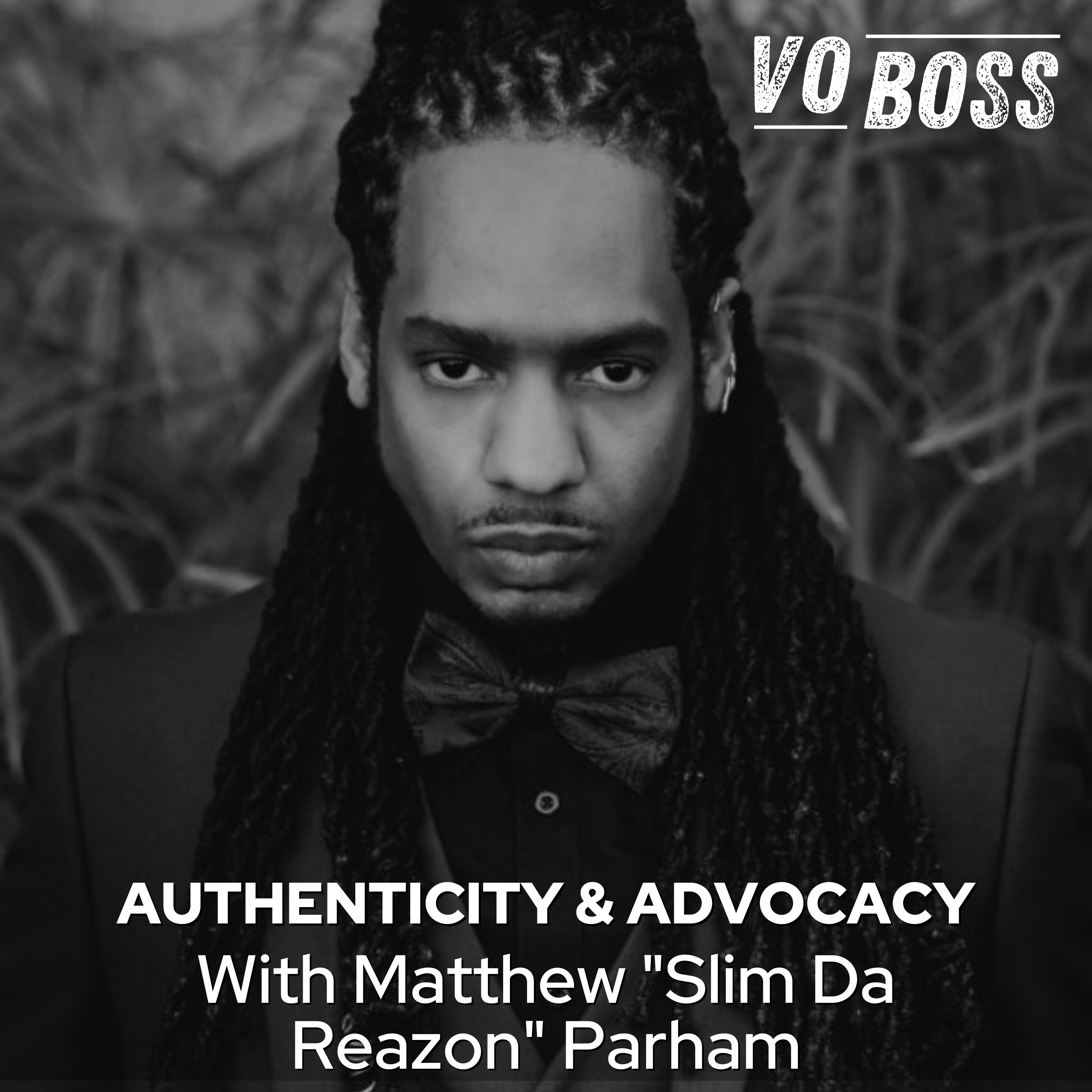
Advocacy, Art, and AI: A Masterclass with Slim Da Reazon
BOSSes, are you ready to become "undeniable" in the voiceover industry? Anne Ganguzza sits down with Matthew "Slim Da Reazon" Parham (Director of Operations at NAVA) to discuss the high-stakes world of authentic voiceover casting and vocal advocacy! Matthew shares his journey from professional musician to a top-tier voice actor for Marvel and ESPN, while revealing what happens behind the scenes on Capitol Hill. In this episode, you'll discover: The NAVA Mission: How voice actors are fighting for the right to own their own voices in the age of AI. The Cadence Secret: How to transition from slam poetry and hip-hop to a "universal" commercial sound. Authentic Casting: Why the "lived-in experience" is your most valuable asset as a performer. The AI Reality: Why luxury brands and politicians will never fully replace the human connection. The "ZFG" Mindset: Why audacity is the secret ingredient to booking major global brands. If you're serious about the future of your voiceover business, this conversation is essential viewing! Connect with Matthew: Instagram: @slimdareason Website: matthewparhamvo.com Connect with NAVA: Website: navavoices.org Connect with VO Boss: Twitter: @vo_boss Instagram: @vo_boss Facebook: /VO BOSS YouTube: VO BOSS
Why Comparison is the Thief of Voiceover Success
BOSSes, feeling down because everyone else seems to be booking but you? Anne Ganguzza and Danielle Famble reveal why comparing your voiceover success to social media "vague bookings" is the fastest way to kill your career momentum! This episode is a masterclass in business mindset. Learn why the "national commercial" you're jealous of might not be the windfall it seems, and how to reclaim your joy by minding your own business. In this episode, you'll discover: The Reality Behind the Post: Why you can't trust the financial perception of social media wins. Social Media Palate Cleanse: Why Danielle took a year-long hiatus and how it helped her business. The Danger of Rate Shaming: Why your financial strategy and rates are your business alone. From Jealousy to Celebration: How truly being happy for others can actually manifest success for you. Hidden Cuts: The agents, managers, and taxes that turn a "big gig" into a smaller reality. If you're ready to stop doomscrolling and start thriving in your own booth, this episode is a must-watch for every VO Boss!

Between the Lines- The Secret Life of Subtext
BOSSes, Anne Ganguzza and her superpower co-host, Lau Lapides, assert that subtext in voice acting is the single most important element for delivering a powerful, unique, and castable performance. The bosses challenge the common mistake of literal reading, offering practical strategies—from audience analysis to efficient marking—that elevate a performance from predictable to profound. Chapter Summaries: Subtext Defines Uniqueness (01:00) Lau states that subtext—the underlying interpretation of a line—is what makes a talent unique. The hosts explain that relying solely on obvious language or descriptive adjectives leads to predictable, robot-like reads. The true power lies in making nuanced choices about what the words really mean to the listener. Audience and Empathy are Everything (02:44) Subtext is entirely dependent on who you are talking to. Anne uses the example of corporate narration: the subtext for an investor (focused on financial facts) is different from the subtext for a consumer (focused on customer service and product benefits). The acting choice must be rooted in empathy and understanding what the listener cares about. The Structural Journey of the Script (14:30) Every script has a structural journey: introduction, series of steps, and conclusion. The subtext should align with this journey. The hosts emphasize that if you are running out of breath , it is the dead giveaway that you did not prepare the story, as natural conversation doesn't require breath struggle. Techniques for Finding the Subtext (22:34) To efficiently analyze copy, the hosts recommend: Improv and Translate: Improvise the script in your own words to capture the genuine emotional wash and then plug the original words back in. Marking: Use clear broadcast-style marking to denote phrasing and intent, but also pay attention to the ellipses and punctuation for clues about the emotional context. Use AI as a Tool: Paste ambiguous scripts into an AI tool (like a chatbot) and ask, "What is the purpose of this script? Who cares about this information?" to provide a jumping-off point for human interpretation. Avoiding the Literal Trap (23:37) The hosts caution against taking common acting advice too literally. For example, constant smiling throughout a read, or persistent upspeak at the end of every sentence, sounds unnatural and is perceived as not genuine. Your performance must always reflect how you would behave and sound in a real-world conversation. The Brilliance of a Point of View (25:16) Subtext gives you a clear point of view. The hosts provide a simple example: saying "Are you wearing those pants?" can be interpreted in dramatically different ways (anger, excitement, disgust) depending on the subtext. This intentional interpretation is what makes your audition unique and elevates it above the predictable melody. Top 10 Takeaways for Voice Actors: Subtext is Everything: The emotional core and underlying meaning of your script is what makes your performance unique and castable. Analyze Your Audience: Base your subtext on who the listener is (consumer, investor, business-to-business) and what they care about most. Translate into Your Own Words: Use the "improv and translate" technique to efficiently find the genuine emotional wash before recording. Embrace Emotional Ambiguity: Simple sentences can hold complex, contrasting subtext. That complexity is your unique acting choice. Use AI to Find Backstory: Use AI as an analysis tool to find information about the brand and the script's purpose, but always apply your human interpretation. Pacing is Preparation: If you struggle for breath, you have not prepared the story correctly. Good actors always know how to naturally navigate long sentences. Mark for Meaning: Pay close attention to punctuation and structure (ellipses, introductions, conclusions) as cues for shifts in subtext. Avoid the Literal Trap: Do not read adjectives literally (e.g., constant smiling). Your emotional choice must align with authenticity, not simple description. The Share is the Subtext: Your goal is to share the story with the listener, not talk at them or talk in your head. Point of View Stands Out: An audition with a clear, intentional point of view, even if surprising, will always get shortlisted over a generic, predictable read.
Setting Voice Acting Career Goals for 2026
BOSSes Anne Ganguzza and Tom Dheere (The VO Strategist) detail the foundational strategy for achieving your voice acting career goals in the new year. Using a proven five-category system taught by industry veteran Dan Duckworth, Tom provides a structured method for turning ambition into executable action plans. The hosts emphasize that in a career where you wear all the hats, efficiency, education, and a healthy mindset are the keys to long-term success.

Finding Purpose and Resilience
BOSSes, Anne Ganguzza is joined by premier coach Dave Walsh for a deep conversation on navigating personal and professional challenges in chaotic times. They assert that the solution to anxiety and stress is to stop focusing on external chaos and instead, live and work from a place of internal purpose and core values. This episode offers powerful insight into why purpose-driven voice acting is the only way to achieve authentic connection and career longevity.

Why Acting and Intuition are the Global Voice Actor's Superpowers
BOSSes, Anne Ganguzza is joined by multi-award-winning global voice actor Toby Ricketts to explore the mindset and techniques required for world-class, remote performance. Toby, who works across British, Australian, New Zealand, and American markets from his remote New Zealand studio, emphasizes that the true superpower for acting for global voice actors lies in intuition, emotional connection, and deliberately making unexpected choices to capture a listener's attention.

Negotiation Power: How to Say No Without Burning Bridges
BOSSes, Anne Ganguzza and Danielle Famble dive into the uncomfortable reality of voice actor negotiation and handling lowball offers. This episode provides essential strategies for maintaining grace, protecting your worth, and ensuring you don't burn bridges when you have to say no. The hosts stress that money is the language of business, and understanding negotiation as a collaborative process is key to long-term success.

Your Most Critical Investment
BOSSes, Anne Ganguzza and her superpower co-host, Lau Lapides, dive into the non-negotiable reality of voiceover demo production. The bosses address why many voice actors—especially those starting out—try to cut corners on their demos, despite the demo being the primary portfolio piece used to land agents and get work. This episode provides essential, current advice on what makes a demo effective, what red flags to avoid, and how to manage the realistic expectations of investing in a long-term voice acting career. 00:03 - Anne (Host) Hey guys, it's Anne Ganguzza here. Are you ready to find your life purpose and live a happier, more fulfilling life? My coaching services can help you discover your true passions and align them with your goals. Let's start that journey today. Visit anneganguzza.com for more information. 00:31 - Speaker 2 (Announcement) It's time to take your business to the next level, the boss level. These are the premier business owner strategies and successes being utilized by the industry's top talent today. Rock your business like a boss a VO boss. Now let's welcome your host, Anne Ganguzza. 00:45 - Anne (Host) Hey, hey, everyone, welcome to the VO Boss podcast and the Boss Superpower Series. I'm your host, Anne Ganguzza, and I'm here with the lovely Miss Lala Pita. Hey, we're back, and better than ever. Annie, I'm so glad to be back with you. We are back. Ah Lala, it's been a week, oh my gosh, it's been a week. 01:06 It's been kind of a crazy year so far, hasn't it? It has, I mean, it's just been a little chaotic. I've dealt with a lot of students recently who come to me that want coaching, but before they want to get coaching, they want me to listen to their demos, and so I'll have a quick listen. I mean, I do an actual, I have an actual like process where, if you want half an hour of my time, I'll actually evaluate your demo spot by spot and give you tips. And I like the fact that I offer it as a service because I don't want people to think I'm just here to sell them demos. 01:42 Yeah, of course, but I listen to a lot of demos that are self-produced and demos that have no production under them, and then demos that have a lot of production under them. And you know, I know it's a topic that you know we tend to talk about quite a bit, all about demos. But demos are just so darn important because it really is the product by which you get hired a lot of times. I mean, in addition to auditions, of course, you know, because the client always wants to hear you know your voice with their brand, but really to get your foot in the door. In a lot of places, that demo that showcases what your voice sounds like in the genre in which you want to work is so important. And it's interesting how many times I'll talk to a student who wants to kind of cut the corners on that and they don't have the money. And yet the demos that I'm hearing are not doing them any favors and not getting them any work. Right. 02:39 - Lau (Host) And there's so many tips you and I could like give about the do's and don'ts of demos, but I think it changed, like what's trending now and the faux pas that are happening are happening, that are a little bit newer these days and it's good to talk about and especially. 02:55 - Anne (Host) I like your angle from—I have my angle from the non-broadcast side and I want to hear your angle from the broadcast side. How much are demos being used to cast people? How much do the demos count when you're listening to that in comparison to the auditions? Talk to me about the casting process and how often are demos being used for that? That's a great question. That's a great question. 03:20 - Lau (Host) You know, the anecdote that I come up with is, or the analogy I come up with is, reminds me of college. College was always a necessity for people who are going into white collar careers. Ok, nowadays it's a little bit different. 03:36 - Anne (Host) Do you? 03:37 - Lau (Host) need a college degree to go into many careers. Maybe not, probably not, but when you earn a college degree, oftentimes it says to an employer that you've gone to the highest level of due diligence in your education and that, to me, oftentimes, is what demos represent. Sometimes you literally don't need demos, like literally, we won't be submitting your demo to a client On the most literal basis, I will not be sending your client 98% of the time to our clients, but it shows us that you are a working, professional, high-level industry talent. So there's a screening. 04:13 - Anne (Host) And that you take your career seriously. I think you take your investment seriously. 04:17 - Lau (Host) There's a screening to that it's a portfolio piece, sure. So I would say, yes, you do need it, but no, you do not need it for every single individual job that comes through, because they're going to be demo reads on the scripts. 04:30 - Anne (Host) Now I'm going to counter that, because you are speaking from the broadcast sense of the word. Typicall

Voice Acting Career Goals
BOSSes, Anne Ganguzza and Tom Dheere share decades of combined experience, reflecting on the realities of voice acting career longevity. From the cassette tape demo era to today's digital age, the hosts emphasize that sustaining a career for 20+ years requires more than just talent—it demands resilience, strategic goal setting, and a deep sense of gratitude to combat the inevitable inconsistency of the industry.
Casting Director Secrets
BOSSes, Anne Ganguzza is joined by the extraordinary Tina Marasco, Head of Casting at Sound and Fury, a respected coach, and the voice of HGTV's Love it or List it. With over three decades of experience spanning agency, acting, and casting, Tina offers indispensable casting director secrets for bridging the gap between a voice actor's truth and a client's real-world needs. 00:03 - Anne (Host) Hey VOBoss family Anne Ganguzza here as we wrap up the year. I just want to say thanks for being a part of this amazing community and because you bosses deserve a little holiday love, I'm giving you 10% off all demos and coaching through December 31st. Your demo discount is automatically applied and for coaching, just enter code COACHINGBFF at checkout. Treat yourself to some career growth this season at anneganguzzacom. 00:36 - Speaker 2 (Announcement) It's time to take your business to the next level, the boss level. These are the premier business owner strategies and successes being utilized by the industry's top talent today. Rock your business like a boss a VO boss. Now let's welcome your host, Anne Ganguzza. 00:55 - Anne (Host) Hey, hey everyone, welcome to the VO Boss Podcast. I'm your host, Anne Ganguzza, and today I am thrilled to welcome the amazing Tina Marasco, head of casting at Sound and Fury, respected voiceover coach and the voice of HGTV's Love it or List it. With over two decades of experience as an agent, actor, casting director oh my gosh, everything. Tina brings an incredible perspective on what connects talent to opportunity, and that's, I think, what we're all looking for. So I think we're going to have a great talk about authenticity, longevity and how to basically bridge the gap between the actor's truth and a client's real-world needs, which is something that I think is so important for us to get that perspective. So, tina, thank you, thank you, thank you. I know you're important for us to get that perspective. So, tina, thank you, thank you, thank you I know you're busy for joining me. 01:50 - Tina (Guest) Oh my gosh, Thank you so much for having me. 01:58 - Anne (Host) I'm very excited to be with you. I know I'm really excited, so let's talk about how it all started. I mean, you have worn so many different hats agent, actor, casting director, coach when did you start with? What did you start with? How much time do we have? 02:10 - Tina (Guest) It's like when blind doors roam the earth. I started in the William Morris mailroom in New York City in like the 90s. Okay, the heyday of you know the wild agent life Pushing the mail cart somehow. Wow, yeah, no, I was literally like doing the swimming with sharks situation and floated all over. I was in a bunch of different departments and then ultimately landed in the commercial department and my then, like, everything was lumped together. So VO on camera, soaps, they were all lumped together and my boss was the VO Maven. 02:49 Her name is Carol Baker and she's not in the business anymore, but I didn't even know what a voiceover was when I sat on that desk and it's funny because, like Terry Berlan was a casting director in New York at the time, so I was like an assistant and Terry would be calling in breakdowns and now we're both casting directors in LA. It just it feels like 72 lifetimes ago. So my, my boss, you know, basically taught me everything there was to know about voiceover and then I spent three years there, then flipped over to ICM in New York and that's really where I cut my teeth, because ICM does not have a scale voiceover department, meaning people like you and me auditioning. They only represented celebrities. So when I went over there they tasked me to start the department. 03:37 So I started from scratch. I had not a single client and went out every night to Broadway and off Broadway and performance art and you know comedy clubs and I say this all the time like my bartender at the Raccoon Lodge ended up being Sally Winters and like one of the biggest voices of the last couple of decades. So I would find talent from all different walks of performance life, bring them into our studio at ICM and kind of teach them how to do it. So that's kind of how I learned, and that's how I learned how to produce demos because nobody had any recorded material, so for us to sort of send it out and announce our department. I produced like 60 demos for our agency reel and it was literally like thrown into the fire and figured it out, ladies. 04:28 - Anne (Host) So but it worked out. That is so impressive because you pretty much built it from the ground up and you basically learned everything along the way, and I love that. I kind of think I always describe myself as I just learned by the seat of my pants, because it's like here, here's the job, do it, and then you've just okay, well, here we go. But I think that probably prepared you for a long career in doing this. I mean, I would imagine that you love what you do because you're still doing it. 05:00
Beyond the Booth: Giving for Voice Actors
BOSSes, Anne Ganguzza is joined by Danielle Famble and special guest Jennifer Clark (Host of Human Kindness at Work podcast) for a Boss Money Talk Series crossover episode. They explore the profound impact of charitable giving. This episode demonstrates that giving—whether time, money, or relationships—is not just good for the soul; it's a strategic act that combats hopelessness, strengthens local ties, and creates powerful networking opportunities for your voiceover business. 00:01 - Anne (Host) Hey guys, Anne Ganguzza here. Imagine a voiceover journey where every step is filled with discovery and growth. That's the path I want to work on with you, through nurturing coaching and creative demo production. Let's unveil the true potential of your voice together. It's not just about the destination, it's about the gorgeous journey getting there. Are you ready to take the first step? Connect with me at anneganguzza.com. 00:32 - Speaker 2 (Announcement) It's time to take your business to the next level, the boss level. These are the premier business owner strategies and successes being utilized by the industry's top talent today. Rock your business like a boss a VO boss. Now let's welcome your host, anne Ganguza. 00:51 - Anne (Host) Hey, hey, everyone, welcome to the VO Boss podcast and the Boss Money Talk series. I'm your host, Anne Ganguza,z and today's show is a very special crossover moment. I'm joined by my regular Boss Money Talks co-host, Danielle Famble, financial strategist, voice actor and the person who keeps our boss business brains sharp. Yay, yay, hey, Anne, hey, and we're teaming up with the amazing Jennifer Clark, a powerhouse voice actor and the host of the Human Kindness at Work podcast. Today, we're going to talk about the power of giving, how it fuels mental wellness, strengthens our brand and builds real community in the voiceover world and beyond. And we'll also be talking about 100 Voices who Care, which is a charitable organization led by these two powerhouses that supports local communities by combining donations to impact local charities. So let's get into it, ladies. Thank you so, so much for joining me today. Thanks for having us. 01:48 - Speaker 4 (Host) Anne. 01:48 - Anne (Host) Yay, I'm very, very excited to talk to you guys about this, because I think this is something that it exists and every time there seems to be, let's say, possible issues in the community or you know people that need help, we get those GoFundMes, we get people who talk about, you know, donating to charities and stuff like that, and I think it's something that we need to really talk about more, about how it can affect us in a positive manner and also how it can affect our businesses. So let's maybe start by talking about the psychology of donating and giving. And, jennifer, I know, in your Human Kindness podcast you which is wonderful, by the way, guys, you absolutely must tune into that you talk to people all the time about giving and human kindness, and so what are your thoughts about you know, what are the benefits of giving? 02:43 - Speaker 4 (Host) Well, I'm not a doctor, but I can speak as someone who has been, you know, intentionally giving for most of my life, and as I'm talking to guests who are really active in their community and showing human kindness at work. What I see in myself and in people that I'm talking to is that it does something for our mental health. It's really easy to look at the world, especially right now, and you wake up every day and there's another crazy thing going on. The world is constantly on fire and it's really easy to get depressed fast. I mean, that's the fastest ticket to depression, right? Just read the news, right and we lose sight of all the really good things that are going on in the world. We lose sight of the really good people that there are. 03:36 Being a part of giving is like linking arms and finding all those people in your local community and the world at large that are doing the work. They're trying to bring change, and it's really uplifting. It's one of those things I don't know what it's called, but it's kind of like when you're looking for something you know when I wanted to buy a new vehicle, I had never seen anybody drive this vehicle and then all of a sudden, when I was like I want a Volkswagen Atlas. I saw it everywhere, Absolutely everywhere. And it's the same with giving. When you look around and you're like man, nobody is doing anything, Nobody is getting involved. In my community, Nonprofits are suffering. But then you start getting involved, you will make connections like crazy and you'll start seeing all of the good and it is so uplifting. It really does change your perspective. 04:34 - Anne (Host) Oh, absolutely I can imagine, because, especially now, just with the craziness, as you mentioned, of the world, and there's a lot of times when I will open up my social media and then, oh my goodness, just start reading or the news and I just start to
Mood Affects Voiceover Performance
BOSSes, Anne Ganguzza and Lau Lapides explore a core challenge for every voice actor: managing personal emotions and moods to deliver a consistent, authentic performance. The Bosses delve into how easily actors can slip into autopilot or let personal frustration compromise a read. This episode provides practical acting methodologies to help you discipline your thoughts, shift your emotional state on demand, and utilize your entire emotional range to serve the story. 00:00 - Anne (Host) Hey Boss, listeners, Anne Ganguzza here. Leveraging years of expertise in the voiceover industry, I offer coaching and award-winning demo production that embodies excellence. I am dedicated to your success. Let's work together to get your career to where you've always wanted it to be. Visit anneganguzza.com to find out more. 00:24 - Speaker 2 (Announcement) It's time to take your business to the next level, the boss level. These are the premier business owner strategies and successes being utilized by the industry's top talent today. Rock your business like a boss a VO boss. Now let's welcome your host, Anne Ganguzza. 00:43 - Anne (Host) Hey everyone, welcome to the VO Boss Podcast and the Boss Superpower Series. I'm your host, Anne Ganguzza, and I am here with Superpower co-host Laura Lapidus. Yay, thank you, annie. I love being called a superpower. Well, I'll tell you what your shirt is so colorful today. I love it. 01:06 - Lau (Guest) Yeah, I'm feeling like this blue is putting me in a certain mood. You know, getting me very moody, but not in a blue mood, more in a hot mood. 01:15 - Anne (Host) Yeah, it's blue and flowers, so there's kind of like a cult, like a culmination of moods, maybe I thought you were going to say a cult. 01:22 - Lau (Guest) No, not a cult, but more of a comedy, more of likes, maybe I thought you were going to say a cult. 01:33 - Anne (Host) No, not a cult, but more of a comedy, More of like artistic meets, comedy meets, I don't know, meets like hot diva thing, oh my gosh. Well, you know that's funny. I'm always so thankful to talk to you, Law, because you're always so positive and upbeat and happy. 01:41 And you know it's interesting because I, as you know, I mean I work with a lot of students and a lot of them that are working full time and then doing voiceover part time, and so they've got, or they've got life happening you know life you know, life, life can happen, life happens and I'll tell you what your mood and how you are dealing with the day can so affect your reads, because I'll have some people that'll be like, yeah, I did it last night, after you know, I came home from work and I'm like, well, yeah, I can tell, because you were exhausted or did you have a bad day, because it actually reflects in your read and I thought it'd be great to talk about how your mood affects your performance. 02:30 I mean, it seems so obvious and we just say, yeah, your mood affects your performance, but maybe it affects it more than you even know, because a lot of times I feel like we go on autopilot. When we're in a certain mood, or we don't want to deal with certain things, or you know, we're not going to acknowledge certain feelings, we then compartmentalize, and we don't always compartmentalize in a way that's helpful for our performance. 02:53 - Lau (Guest) So true. And you know, I first thought about mood as a young, young kid, really, when I was being trained in the theater. I would have directors that would say for rehearsal, leave your trash at the door. Don't worry about it, it'll be there to pick up on your way out. 03:11 - Anne (Host) Leave your trash. 03:12 - Lau (Guest) What does that mean? And meaning that to discipline yourself in the workspace, you cannot bring in every feeling, every thought and every mood that you're walking in with. You have to leave it behind and come into that neutral discipline space. 03:28 - Anne (Host) Unless. 03:28 - Lau (Guest) maybe you're using it to create a character Unless you're channeling it, but even so it's like can you move in and out of it? 03:37 - Anne (Host) That's tough to do. Yeah, that's tough to do. 03:40 - Lau (Guest) Yeah, or is it so adopted in you, so inside of you, that you can't see it? You no longer have the self-awareness to see the mood that you're in. 04:03 - Anne (Host) They're like no, I thought it thought it was great. And then, in reality, I'm like you were tired, weren't you? You know, or you were exhausted, or you were frustrated, or and sometimes it'll become it'll come out right in the first few words I'm like you hate this script, don't you? It's like, well, I had a bad day and so, yeah, being able to compartmentalize or put that aside. And then the probably, I would say, the biggest problem for me in the niches that I teach is that it's. You can start off in one mood. You can say, ok, I've got to be positive, I got to get my energy up, and because I've had a long day, and so let me get my energy up. And then you've got it up for a
The Mental Game of a Long VO Career
Anne Ganguzza and Tom Dheere share decades of combined experience in this insightful episode, dedicated to the long view of a voice acting career. Having been in the industry since the cassette and CD demo era, the hosts emphasize that longevity is achieved not through linear steps, but through resilience, strategic adaptation, and continuous self-improvement. The discussion provides a candid look at why the work never stops, the necessity of community, and the critical importance of mastering the mental game. 00:00 - Anne (Host) Hey bosses, Anne Ganguzza here. Are you ready to take the next step in your voiceover career? At Anne Ganguzza Productions, I specialize in target marketed coaching and demo production that gets you booked. If you're thinking about elevating your performance or creating an awesome demo, check me out at anneganguzza.com. 00:22 - Speaker 2 (Announcement) It's time to take your business to the next level, the boss level. These are the premier business owner strategies and successes being utilized by the industry's top talent today. Rock your business like a boss a VO boss. Now let's welcome your host, Anne Ganguzza. 00:41 - Anne (Host) Hey, hey everyone. Welcome to the VO Boss podcast and the Real Bosses series. I'm your host, Anne Ganguzza, and I'm here with the one and only illustrious Mr Tom Dheere, real Boss. 00:54 - Tom (Host) Hi everybody, hi Anne hey. 00:56 - Anne (Host) Tom, how are? 00:57 - Tom (Host) you. I'm doing pretty good, if I'm not mistaken, haven't you, didn't you just have an anniversary? 01:03 - Anne (Host) I did Just celebrated 25 years with my hubby whoa. It seems like yesterday. I swear to god, 25 years just went so fast that's amazing and uh, and you, just, you just were telling me about your blogiversary how long have you been blogging? 17 years oh my god, tom that blogging, I mean I've been blogging for a you been blogging 17 years. Oh my God, tom, blogging, I mean I've been blogging for a while, but blogging for 17 years is insane. 01:31 - Tom (Host) Thank you. 01:31 - Anne (Host) Wow, you must have really good SEO. That's all I got to say. 01:35 - Tom (Host) I would like to yeah. Yeah, my SEO is pretty good. 01:37 - Anne (Host) Yeah, we would like to think that you have good SEO, but, wow, so long term relationships. You know it makes me think about voiceover, because I have been in voiceover just about as long Not quite as long as I've been married to my husband, but you know, 21 years, and it's. It's incredible. I feel like I just started, but yet I don't, because it is and we always talk about it being a marathon, not a sprint and I think you've been in voiceover longer than me. 02:03 - Tom (Host) Yes, I decided I wanted to be a voice actor in 1994. 02:09 - Anne (Host) Wow yeah. And then I got my commercial demo. Some people were born in 1994. 02:14 - Tom (Host) Not me, I know. 02:17 - Anne (Host) Yeah, some of my students haven't been born. 02:19 - Tom (Host) Some bosses listening to this are going to be like, I was born in 1994. I know, or 2004. And then I got my commercial demo in 1995 and I booked my first voiceover in 1996. And I went full time as a voice actor in 2005 and started coaching in 2011. So I've been-. 02:39 - Anne (Host) Oh, I started coaching just shortly before you. Yeah, yeah, just a little bit longer, because then we started coaching just shortly before you. Yeah, yeah, just a little bit longer, because then because we met shortly thereafter at Voice 2012. 02:49 - Tom (Host) Oh my goodness, we already knew each other, but I don't think we met. 02:52 - Anne (Host) Yeah, but I remember we. 02:54 - Tom (Host) I definitely remember we hung out at Voice 2012, which was 13 years ago. Oh my gosh. 02:59 - Anne (Host) Woo At Disneyland. You know so and it's funny because we talk about you know how long have you been in voiceover and how long did it take you to become successful in voiceover? Well, I always say you know, my overnight success took many, many years. So I think and I think it's something that a lot of people don't understand, especially those that are intrigued by this industry you know thinking that, oh yeah, it's, I can stay at home, I can do this. You know thinking that, oh yeah, it's, I can stay at home, I can do this. You know, I can buy the mic. It'll cost me a few hundred dollars and then I can just start booking jobs and making money. 03:32 And I think really for I know we talk about all the time, but I think I want to have a whole episode dedicated to the realities of having a long view career and the fact that it is something that you have to be in for the long run if you truly want to be successful at it. I mean, of course, you could be in it for a couple of years and then, if you don't like it, you get out. But most people I know want to make a good, they want to be successful at it, they want to make a good living. So let's talk about what it's like to be in voiceover for a long time and what it looks like, because i

30 Years of Voice Acting Trends with Billy Collura
Anne Ganguzza sits down with Billy Collura, a powerhouse agent with over 30 years at CESD New York. Billy shares his unique perspective on the dramatic evolution of the voice acting industry, from the early days of union-only radio spots to the current market dominated by non-union and digital opportunities. This conversation provides essential insight into the biggest voice acting trends that have shaped the industry and reveals the simple, authentic quality that makes a voice actor successful today. 00:03 - Anne (Host) Hey guys, it's Anne from VO Boss here. 00:06 - Speaker 2 (Announcement) And it's George the Tech. We're excited to tell you about the VO Boss. Vip membership, now with even more benefits. 00:12 - Anne (Host) So not only do you get access to exclusive workshops and industry insights, but with our VIP plus tech tier, you'll enjoy specialized tech support from none other than George himself. 00:23 - Speaker 2 (Announcement) You got it. I'll help you tackle all those tricky tech issues so you can focus on what you do best Voice acting. It's tech support tailored for voiceover professionals like you. 00:34 - Anne (Host) Join us guys at VO Boss and let's make your voiceover career soar. Visit vobosscom slash VIP-membership to sign up today. 00:43 - Speaker 3 (Announcement) Slash VIP-membership to sign up today. It's time to take your business to the next level, the boss level. These are the premier business owner strategies and successes being utilized by the industry's top talent today. Rock your business like a boss, a VO boss. Now let's welcome your host, Anne Ganguzza. 01:08 - Anne (Host) Hey everyone, Welcome to the VO Boss Podcast. I'm your host, Anne Ganguzza, and today I am thrilled to welcome someone who truly defines what it means to be a powerhouse in the voiceover industry. With more than 30 years at CESD New York, Billy Collura has been at the forefront of commercials and beyond, representing talent with a direct and grounded approach that has earned him the trust of clients and voice actors alike. I think it's fair to say that he doesn't just follow the changes in the business. He really helps to shape them. So, Billy, I am so excited to have you here on the podcast. 01:44 - Billy (Host) Thank you for asking me. Yeah, this is so nice, yeah. 01:47 - Anne (Host) Yeah, I love it, and of course we're like on opposite coasts here, so you're on my home coast and so I do miss New York quite a bit and we did have a little. 01:58 - Speaker 2 (Announcement) How often do you get out here, pardon me, do you get out here often? 02:00 - Billy (Host) Do you ever get out. You know what? 02:01 - Anne (Host) Not as often as I should. I really have now started to say I'm only coming out during the warm season because I'm done with the snow. Yeah, I hear you. But I would imagine like do you travel like elsewhere in the wintertime in New York, Because I know I stay here. 02:22 - Billy (Host) I travel a lot in general um during the course of the year, but um you know, I right now I'm upstate in well. I'm up in the Hudson Valley and in the city of Hudson, which is two hours North of Manhattan, so I go back and forth Um in the winter time. No, I'm usually, I don't know, I'm usually in the Northeast sometimes. 02:43 - Anne (Host) Okay, Are you a skier? Are you a skier? No, absolutely not, Absolutely not. That was, that was what a lot. What kept a lot of people on the East coast? Um, in my area anyways, they're like oh no, I have to be able to ski in the winter. 02:56 - Billy (Host) No, I don't like the cold. 02:57 - Anne (Host) Well, I have a. I have a mountaineer in California, Uh huh. 03:00 - Billy (Host) Uh-huh. 03:02 - Anne (Host) Oh my gosh. Well, anyways, it's so nice to see you again. It's been a while. I saw you at VO Atlanta and I'm just really thrilled that I have the opportunity to talk to you. I know how busy you are, but I'm just so excited that the bosses are going to get this opportunity to really benefit from your wisdom. And so, benefiting from the wisdom speaking of that, you've been at CESD for over three decades. Um, that's, that's amazing. So how would you say that your role as an agent has evolved during that time? 03:37 - Billy (Host) Well, you know like it started when I started. Um, it'll be. Um, it'll be 32 years in May. Oh my gosh, when I started, voiceover was a smaller industry and I dabbled in a little bit of everything, okay. 03:55 - Speaker 2 (Announcement) I did commercials. 03:57 - Billy (Host) There really wasn't. There was no internet back then. So we did radio and TV commercials and industrials and I'm not even sure cable was around when. 04:08 - Anne (Host) I started. I hear you. You know we didn't have computers, any of that. 04:13 - Billy (Host) So we did a little bit of everything. And then, you know, and promos, promos were a thing, and narration and trailers, and so, you know, we did a little bit of all of that. And then, as the industry kept getting bigger and big
Your Plan for Financial and Studio Security
The sensible and lovely Danielle Famble joins BOSS Anne Ganguzza to discuss a critical, often-overlooked aspect of running a voiceover business: disaster preparedness and maintaining operations during times of crisis. Using Danielle's personal experience of a sudden apartment flood, the hosts outline the necessary steps for every voice actor to ensure both physical and financial resilience. 00:01 - Speaker 1 (Announcement) Hey, if you're looking to take your podcast to the next level, my podcast consultation coaching services teach you how to sound more authentic, develop smart strategies and market your show effectively. Let's elevate your podcast together. Visit anneganguzza.com to get started. 00:20 - Speaker 2 (Announcement) It's time to take your business to the next level the boss level. It's time to take your business to the next level, the boss level. These are the premier business owner strategies and successes being utilized by the industry's top talent today. Rock your business like a boss, a VO boss. Now let's welcome your host. 00:37 - Anne (Host) Anne Ganguzza. Hey everyone, welcome to the VO Boss Podcast and the Boss Money Talk Series. I'm your host, Anne Ganguzza, and I am here with the sensible and lovely Danielle Famble. 00:50 - Danielle (Guest) Hey Anne, sensible and lovely, that's me. 00:53 - Speaker 1 (Announcement) Sensible and lovely. Danielle, oh Danielle, how are you? 00:56 - Danielle (Guest) I'm all right. I'm okay. It's been a little crazy in my world, but I'm doing all right. How about you? 01:05 - Anne (Host) Well it's been. I think it's just been crazy in my world. But I'm doing all right. How about you? Well it's been. 01:08 I think it's just been crazy in the world, but you know, that's a, that's a that's a long discussion, but you know there's been a lot of crazy weather events that have been happening and and unfortunate, unfortunate disasters, and you know, because you're so sensible and ever prepared, Danielle, maybe we should talk about being prepared for your business and disaster, and what do we need to do to be prepared in order to keep our businesses afloat and operational? 01:38 - Danielle (Guest) That's a really good point. I have recently been through needing to be prepared and actually I have this booth as part of my preparedness and needing to be prepared out of really out of nowhere. We may have talked about this in other episodes, but my apartment flooded and I had to leave my home pretty suddenly. I had to leave my home pretty suddenly, and so my preparedness, my preparations that I wasn't even sure specifically what I was preparing for. I just needed to have certain things set up. Those things actually came in handy. The long story short of it all is at almost midnight I started hearing what sounded like a fountain in the walls and realized that that was probably not a good thing. 02:32 Probably not a thing. Probably not a thing and probably not a good thing. Yeah, so I reported it and about 10 minutes later there was water all over the floors, all over in the hallway. There was water pretty much everywhere, and it was pretty clear to me that I needed to leave quickly. So I happened to have a to-go. My tri-booth was pretty much readily available. 03:00 - Anne (Host) Well, look at that, the tri-booth, and I myself have a tri-booth, that's at the ready. 03:05 - Danielle (Guest) The tri-booth was at the ready. I keep it in the suitcase in my closet. 03:10 And I was able to just pull some things that I needed important documents, my laptop, my to-go booth and all the things with it, my mic and everything else. Travel. I basically have like a travel rig that I keep set to the side, and I left within half an hour to an hour, and that was actually the last time I lived in that apartment and spent the night in that apartment, unfortunately. So being able to take myself and my things and my business somewhere else, somewhere safe, was a piece of preparedness and also because I wasn't able to live in my home, I needed to use insurance and I needed to use my emergency fund to keep me through. So those were some layers of preparation that, while I was not preparing for my apartment to flood, I was able to use certain things that I had set to the side and set up specifically for that purpose. 04:09 - Anne (Host) Yeah, I mean, and there's, you know, the unfortunate floods in Texas, there's the fires in, you know, in LA, and you know we have fire season and there's tornado season. There's just all sorts of things that I think are becoming more prevalent these days, that now I think it's more important than ever that not only are we physically prepared, with things at the ready to go in case we need to evacuate quickly, so that we can, you know, manage to keep our businesses afloat, if that should be, of course. Of course, bosses, the most important thing is you being safe and your family and your loved ones and your pets being safe. Next in line would be you know supplies
Controlling Your Digital Brand
BOSSes, Anne Ganguzza is joined by her superpower co-host, Lau Lapides, to discuss a critical issue in the voiceover industry: brand alignment and navigating controversy. Sparked by the American Eagle/Sydney Sweeney campaign, the hosts explore how a voice actor's ethics and personal brand are intrinsically linked to the clients they represent. They emphasize that in the age of social media, protecting your digital reputation is non-negotiable for long-term career success. 00:00 - Anne (Host) Hey bosses, Anne Ganguzza, you know your journey in voiceover is not just about landing gigs. It's about growing both personally and professionally. At Anne Ganguzza Voice Productions, I focus on coaching and demo production that nurtures your voice and your confidence. Let's grow together. Visit anneganguzza.com to find out more. 00:25 - Speaker 2 (Announcement) It's time to take your business to the next level, the boss level. These are the premier business owner strategies and successes being utilized by the industry's top talent today. Rock your business like a boss a VO boss. Now let's welcome your host, Ganguzza. 00:47 - Anne (Host) Hey everyone, Welcome to the VO Boss podcast and the Boss Superpower Series. I'm your host, Anne Ganguzza, along with my awesome superpower co-host Lollapetas. 00:56 - Lau (Guest) Hello, Annie, it's so good to be back. I love being in this Zoom room with you. Or it's not Zoom, but it's Riverside, but I love being in this space room with you. Or it's not Zoom, but it's Riverside, but I love being in this space with you, I know I look forward to it. 01:10 - Anne (Host) We get to see each other and it's been so long it's fabulous when we get back together because we have so much to catch up on. I know, I know oh my gosh. 01:19 - Lau (Guest) By the way, I love your outfit today. You look great. 01:23 - Anne (Host) Why thank you my, my jean shirt or my denim shirt? No, what's really cool about this is this is kind of well, I should say it's it's. It's deceiving, maybe because it looks like it's denim but it's actually like French Terry, and so it's super, super comfortable. But you know, speaking of jeans, I was going to say what color are your jeans. 01:50 Well, you know, I have good jeans and advertising campaigns for our businesses. I mean gosh, it's all over the news. I mean the American Eagle campaign with Sydney Sweeney. I mean, you know, she's got good jeans, and so it's a really interesting debate. I think it's something that we could absolutely relate to our own voiceover businesses in terms of associating with now, first of all, like associating with a brand that may or may not be controversial or may or may not be on the side of you know where your feelings align. I think that would be a really, really interesting topic. 02:30 - Lau (Guest) Lau I love that topic because we hear that word floating in the industry now for quite a while branding. Branding is connected to marketing, is connected to selling right and how you represent yourself and who you're connected to. That helps you represent yourself as well. And making some of those concerted decisions on who you want to be attached to and connected to, that really help you design your ethos of your business. 02:58 - Anne (Host) Well, they can help you. They can help you be successful in the industry, or maybe not. They can help you be controversial in the industry, or maybe not. They can help you be controversial in the industry. It's such an interesting. Now you know one thing about that campaign for me, when I first saw it, I didn't think anything of it, because I am a woman of a certain age and I remember the Jean campaign with Brooke Shields and Calvin Klein, and I just remember it, with Brooke Shields and Calvin Klein, and I just remember it, you know. And so, as a girl in, I think it was in elementary or high school. I can't remember when that came out, but it was the 80s, right? All I know is that I wanted a pair of Calvin Klein jeans because I wanted to look like Brooke Shields. Now today, didn't we all did not we Right? 03:41 No, I thought nothing of it, right, I thought nothing really horrible of it. But then it did become controversial because obviously she was, you know, she was young when she did that ad and it was a little bit sexually, you know, promiscuous, some people would say. And so, you know, today that type of advertising wouldn't fly and I think people are comparing Sydney Sweeney with that, because of she's got good genes, you've got an attractive female and a pair of jeans, and you know, of course, american Eagle says you know, it was always all about the genes, it's not always not about the, not about the misconception that jeans J-E-A-N-S is similar to G-E-N-E-S, so there's a lot to unpack there. 04:25 I don't know how did you react to it when it first came out? What were your thoughts? 04:29 - Lau (Guest) Well, you know what's so funny about the Brooke Shields thing that you bring up? That's the firs
The ROI of Coaching
BOSSes, Anne Ganguzza is joined by Tom Dheere to discuss a foundational topic for every voiceover career: coaching. The hosts assert that every voice actor, from beginner to veteran, needs a coach. The Bosses explore why continuous learning is a necessity in today's saturated market, how to avoid being overwhelmed by industry information, and the combined importance of mastering both performance and business skills. 00:00 - Anne (Host) Hey Boss listeners. Are you ready to turn your voiceover career goals into achievements? With my personalized coaching and demo production, I'm here to help you reach new milestones. You know you're already part of a Boss community that strives for the very best. Let's elevate that. Your success is my next project. Find out more at anneganguzza.com. 00:25 - Speaker 2 (Announcement) It's time to take your business to the next level, the boss level. These are the premier business owner strategies and successes being utilized by the industry's top talent today. Rock your business like a boss a VO boss. Now let's welcome your host, Anne Ganguzza. 00:44 - Anne (Host) Hey everyone, welcome to the VO Boss podcast and the Real Bosses series. I'm your host, Anne Ganguzza, and I'm delighted to be here with Mr Tom Dheere. Yay, yay, hello Anne, hi Tom, yes, guess what, tom, it's that time of year again. 01:01 - Speaker 2 (Announcement) It is you? 01:01 - Anne (Host) know when everybody's going back to school. 01:05 - Tom (Guest) Back to school. Oh yeah, I already bought my trapper keeper. 01:09 - Anne (Host) Oh my gosh, I used to love those. You know that was one of my favorite things about going back to school is buying office supplies and getting ready, and I was one of those rare. I don't know, tom, if you were one of those students, but I loved school. Love, tom, if you were one of those students, but I loved school. Love, love, love school. And it was always exciting to me to, number one, go back for the social component of things and then to go back and like I don't know. I always wanted to like advance in my subjects, and so I was always excited about learning. 01:37 - Tom (Guest) Yeah, me too. I do love school supplies, like if anyone who knows me as just me, or me as the vo strategist like? 01:47 - Anne (Host) of course he loves school supplies right, you know, sharpened pencils and rulers and everything being organized, paper clips and clothes, clothes, my new school clothes. 01:54 - Tom (Guest) You know, hey, oh, love the school clothes. Gotta get the new school clothes. 01:58 - Anne (Host) Well then, speaking of school, you know. I mean maybe it's time that we have a chat about coaching, coaching in this industry. And does it matter, tom, does it? There's so much information out there. Does it matter? Is it beneficial? 02:15 - Tom (Guest) let's, let's, let's chat about that well, one at first. It's funny that we actually haven't talked about this in the few years that we've done the real bosses podcast and two. You know there's an old saying which is never ask an encyclopedia salesman if you need an encyclopedia. 02:28 - Anne (Host) Yes, exactly so you asking? 02:29 - Tom (Guest) me a voiceover coach. If voice actors need voiceover coaching, we'll say well, of course, the answer is yes. 02:34 - Anne (Host) I know and for me to say do we need coaching? As a coach and demo producer. 02:45 - Tom (Guest) Of course. Of course we're gonna say so. Yes, full disclosure. Of course, we as coaches, yes. But here's the thing about it is that I know ann does not accept everybody that that wants to work with her, and I know that not. I don't accept everybody that wants to work with me for all kind, for all kinds of uh, all kinds of reasons. But every voice, regardless of where they are in their journey, needs coaching. You always need to be learning. The greatest baseball players and musicians everyone has a coach. Tiger Woods has a swing coach. Aaron Judge has a baseball bat swing coach as opposed to a golf swing coach. All the greatest artists and athletes have coaching. Do they know more than most? Can they do it better than most? Of course, that's why they are in the positions that they are in doing what they're doing, making what they're making, being as famous as they are, but it's a constant, constant sort of you know all the arts. There needs to be a constant level of education re-education, continuous learning, as they say, absolutely. 03:49 - Anne (Host) And if you're just starting out in the industry, you have to have a fundamental base. And there is, you know, hey, I am the biggest you know. And Google and gangoozle, and gangoozle, and gangoozle, whatever, I am the biggest lover of you know. Search the internet, find the answers. Because I mean, gosh, back in the day, you remember when we used to have to do research, we'd have to actually go to the library and then you would write, like I'd have to write notes for my term paper on like, on like index cards. 04:17 - Tom (Guest)
The Caribbean Voiceover Industry: A Global Perspective with Aisha Manrique
BOSSes, Anne Ganguzza is joined by a very special guest, Aisha Manrique, a distinguished voice talent and coach whose voice resonates across the Caribbean and beyond. In this illuminating conversation, they explore the unique landscape of the Caribbean voiceover industry, where talent must build their careers through hustle and intentional branding. Aisha shares her inspiring journey, from being "divinely called" to the industry to becoming the voice of Disney.
Mastering Acting for Voice Actors with Melique Berger
BOSSes, Anne Ganguzza is joined by the incomparable Melique Berger, a true icon in the voiceover world with over 50 years of acting experience. In this powerful conversation, they explore the central truth of the industry: a voice actor must be an actor first.
How to Thrive with Inconsistent Income
BOSSes, Anne Ganguzza is joined by her lovely co-host, Danielle Famble, for the Boss Money Talk Series. The BOSSes tackle a fundamental challenge of a voiceover freelance career: managing inconsistent income. Drawing from her past job experiences, Danielle shares practical wisdom on how to budget, save, and build a financial cushion. This conversation redefines "budgeting" as a tool for empowerment and offers a strategic roadmap for every voice actor to take control of their finances, ensure stability, and thrive. 00:00 - Anne (Host) Hey guys, are you ready to achieve those dreams? With MyLife Transformation coaching services, I can help you reach your full potential. Don't let fear and uncertainty hold you back. Take control of your life today. Visit anneganguzza.com to get started. 00:20 - Speaker 2 (Announcement) It's time to take your business to the next level, the boss level. These are the premier business owner strategies and successes being utilized by the industry's top talent today. Rock your business like a boss a VO boss. Now let's welcome your host, Anne Ganguzza. 00:39 - Anne (Host) Hey everyone, welcome to the VO Boss Podcast and the Boss Money Talk Series. I'm Anne Ganguzza and I am here with my lovely co-host, Danielle Famble. 00:49 - Danielle (Guest) Hey Anne, hello Danielle, hey, hey, how you doing, how are you? I'm good, I'm good, I'm good. 00:53 - Anne (Host) Well, I am glad to have you back and I have a topic for discussion today, because I've had, on more than one occasion, some students recently talk to me about gosh. I'm just having a hard time finding work and I don't know if I should continue to stay in this industry because it's just getting too hard. I mean to sustain it, and so what should I do? It would be a worthy topic of discussion to talk about, like this particular industry and how we handle our financial situation in times of inconsistency, because it's just a known fact, guys, bosses out there, it is an inconsistent, it is part of being an entrepreneur. Our, our income is inconsistent. So what do we do and how do we budget for those times when maybe it's slow or, you know, when it's not slow, and what do we do when we have inconsistent income? 01:55 - Danielle (Guest) That's such a good question. That's a big part of being a boss, being an entrepreneur and being in this business, and it's good to give the perspective one you know to your students that you're coaching and to anyone listening. You're not alone. It doesn't mean that you're a bad voice actor. It doesn't mean that you're bad at this business. That is the nature of what it is, that we do, and so it has nothing to do with you or your worth or the fact that you're not good. Slow months happen all the time. It happens to the best of us. 02:24 - Anne (Host) And you know, I think it's really something a point worth mentioning is I've been in this industry about 18 years and it's always inconsistent, like there's not been a year where it hasn't been inconsistent. So it is something that I think, if you plan correctly and you're prepared for, it doesn't come as a surprise and it's something that you can absolutely continue to grow and build your business through oh, totally Inconsistent income. So, as long as you plan and strategize, yeah, and you just know this is normal. 02:56 - Danielle (Guest) This has not got anything to do with you. This is a normal thing, you know. It reminds me of I don't know if you know this, anne, but I used to be a waitress for a long, long time. I was a waitress at comedy clubs and the way that I made my money was on tips, and so I got used to living on an inconsistent income and realizing that there's going to be a couple of days or weeks or months where it's going to be great and then it's going to be slow. Maybe you get cut because it's so slow that they don't need you to be there. But you know, the thing that didn't get cut was my fixed expenses, my rent, my cell phone bill, all of those things. 03:35 So I would say to those are stable. Yeah, figure out what your stable expenses are and make sure that you can keep that as your base and plan for your base Anything on top of that. You know when times are great and when you're making a lot more money, you can use that to keep it to the side for a buffer, but really just know what your base expenses are, which then goes back to our longstanding conversation about knowing your numbers and the data and everything else. If you're too afraid to look at what your expenses are, you're not going to know what your base is that you need to be able to maintain at all times. So really like have the courage, look at what are your expenses that are fixed, that are stable, and know what your base is, and you want to be able to hit your base every single month. 04:22 - Anne (Host) So then, budget around your worst month, not your best month. Yeah, absolutely Right. And and that and the and the numbers on your worst month can can actually like I. I mea
Storytelling Techniques
BOSS Anne Ganguzza is joined by Lau Lapides for a discussion on the most fundamental skill for a successful voice actor: storytelling. From breaking out of a predictable melody to using props and sensory cues, Anne and Lau provide actionable tips and acting techniques to help you bring authenticity, emotion, and life to every script.

Direct vs. Indirect Marketing
BOSSes, Anne Ganguzza is joined by Tom Dheere to tackle a topic many voice actors fear most: marketing. In this episode, they break down the essential difference between direct marketing (you go to them) and indirect marketing (they come to you). The hosts discuss how to make both strategies work for you, offering a powerful, actionable roadmap for building a sustainable voiceover business. 00:01 - Anne (Host) Hey boss listeners. Are you ready to turn your voiceover career goals into achievements? With my personalized coaching and demo production, I'm here to help you reach new milestones. You know you're already part of a boss community that strives for the very best. Let's elevate that. Your success is my next project. Find out more at anneganguzza.com. 00:25 - Speaker 2 (Announcement) It's time to take your business to the next level, the boss level. These are the premier business owner strategies and successes being utilized by the industry's top talent today. Rock your business like a boss a VO boss. Now let's welcome your host, Anne Ganguzza. 00:44 - Anne (Host) Hey everyone, welcome to the VO Boss podcast and the Real Boss series. I'm your host, Anne Ganguzza, and I'm here with Mr Tom Dheere. Hello, hello, hello, the Real Boss, Tom Dheere. 00:56 - Tom (Guest) Hi, I'm seeing the light ring in my glasses. I'm going to change. I want to change these. 01:01 - Anne (Host) Wait, I thought you said I'm seeing the light. 01:03 - Tom (Guest) I'm seeing the light. Well, yeah, no, but the light was seeing me and my glasses, so I'm switching over. I have, like different pairs of glasses for where I'm at. 01:11 - Anne (Host) No, really. So like these are better. I hear that. I hear that Yours are part of a marketing strategy. 01:18 - Tom (Guest) Mine are purely because my eyeballs are decomposing. I can hear them. 01:22 - Anne (Host) But me too, though, I need them as well, and I figure I might as well make them part of a marketing strategy. And speaking of marketing, yes. Great segue, isn't it? I think it's one of the most feared things for any voice actor is to actually think and do marketing, and so it's a great topic to talk about, because, I mean, we could talk like multiple podcasts about it, but let's talk about marketing Indirect marketing, direct marketing. They're both important. 01:49 - Tom (Guest) Yes, absolutely. 01:50 - Anne (Host) Let's distinguish the difference. 01:52 - Tom (Guest) Right, and this is the thing that when most people come into the voiceover industry, they think and their instinct is correct, so I need to market myself. What does that mean? For most people, it's slamming into social media sideways and talking about what they had for breakfast, or it most often means cold calls and cold emails. Now, you can clearly lump all of that stuff together into marketing, but there's a lot more to it. It's a lot more nuanced than that. 02:18 - Anne (Host) You say the word cold calls and I think people go cold. I know they do. They're like oh no cold calls now. 02:25 - Tom (Guest) So the way I talk about it is that there is direct marketing and then there is indirect marketing, also known as active marketing or passive marketing. So direct or active marketing is when you are seeking out specific potential clients and you are basically grabbing them by the lapels and saying, hey, you give me money to say stuff out loud. 02:48 - Anne (Host) Here I am. Hello, this is me. 02:50 - Tom (Guest) Hello, right Now that's a cold call, that is a cold email. There's also follow-up emails and getting your seven touches. 02:57 - Anne (Host) And that's direct, because it's direct contact with a potential client. 03:01 - Tom (Guest) Exactly. And then there is indirect marketing, which is where you're kind of like doing your thing over here in hopes that people or robots will notice you Right and come to you Right. So, for example, working on search engine optimization on your website, that's a form of indirect marketing or passive marketing, because if somebody's searching for you, hopefully your website or your content will rank higher on Google, bing, yahoo and they'll be like, hey, who's this person? And then they reach out to you Right. 03:30 - Anne (Host) Or they're seeing you on social media. 03:32 - Tom (Guest) Social media, exactly, is another perfect example of indirect marketing. So that's where you're kind of like demonstrating your value, your progress, your humanity as a voice actor and a person, in hopes that it will get voice seekers' attention and be engaged with your content and hopefully you'll stay top of mind for future projects. 03:50 - Anne (Host) An easy I would say an easy way of thinking about it is direct marketing. You go to them In direct marketing. They're coming to you. 03:58 - Tom (Guest) Exactly. Yeah, that's exactly right. 04:00 - Anne (Host) I think, equally terrifying for voice actors yes, yes, I think that it's great that we made the distinction now between the two. 04:09 - S

The Blueprint for a Thriving Voice Acting Career
BOSSes, get ready for an electrifying conversation with a true entertainment icon. In this episode of the VO Boss Podcast, Anne Ganguzza is joined by the legendary Rolonda Watts, an Emmy-winning, talk show host, actress, and award-winning voice actor. Rolonda's career is a masterclass in professional reinvention. From her groundbreaking syndicated talk show, The Rolonda Show, to her powerful voice acting work on Professor Wiseman in Curious George and her on-screen roles in Mind Your Business and Survival of the Thickest, she embodies the art of pivoting with purpose. The hosts discuss how her journey from journalism to entertainment shaped her, why listening is the most important tool for any communicator, and the life philosophies that have guided her to become a true BOSS. 00:01 - Anne (Host) Hey, bosses, Anne Ganguzza, you know your journey in voiceover is not just about landing gigs. It's about growing both personally and professionally. At Anne Ganguzza Voice Productions, I focus on coaching and demo production that nurtures your voice and your confidence. Let's grow together. Visit Anneganguzza.com to find out more. 00:48 Visit anganguza, hey. Hey everyone, welcome to the VO Boss Podcast. I'mGanguzzayour host, Anne Ganguza, and I have something amazing for you 00:53 , bosses, today. 00:55 Today's guest is a one-woman entertainmentRolondaempire. She's done it all award-winning journalistRolonda daytime talk show host, actor, stand-up comic, best-selling author and one of the most recognizable voices in voiceover. You may have heard her as Professor Wiseman on Curious GeorgeRolonda in the Proud FamilyRolonda kung Fu Panda and now Invincible Fight Girl. She's also the annoucer and promo voice of the Sherry Show, where Sherry Shepard calls her a daytime talk show legend, which I happen to agree. Rolanda Watts is currently lighting up the screen on Bounce TV's hit comedy Mind your Business which I always get to see all the shorts on the Facebook feed, by the way where she plays Lucille, the sharp, sassy family matriarch that keeps it real with tough love and somehow I feel like that just echoes your character to a T. And she I feel like that just echoes your character to a T, and she's also appearing in the upcoming season of Netflix's Survival ofRolondathe Thickest, and was recently inducted into the prestigious Silver Circle by the National Academy of Television Arts and Sciences at the 2024 Emmys, recognizing her lifetime of groundbreaking work in television. 02:04 Bosses, please welcome the incomparable Rolanda Watts, thank you. Thank you, rolanda. I have to tell you, you know I'm a big fan. I mean, I've said this to you before, but, bosses, I am the biggest fan of Rolanda. I actually know Rolanda from watching her on daytime talk TV, and that was a while ago. I want to say that daytime talk shows had just kind of come into like being, and you're one of the first that I watched and I just I just you, your personality, just everything about you was just amazing. It's just magnetic, and so I am so excited to be able to interview you, a talk show host. So I was like, oh man, how am I going to prepare to talk to you? But you are just so gracious and wonderful, and so that kind of gave me a little bit of of hope that I wouldn't completely flub it up today, rolanda. 03:05 - Rolonda (Guest) I don't think you would do that, Anne. 03:08 - Anne (Host) My goodness. So for the bosses, who you know don't really know your story and how you started off, I mean, my gosh, you're a media empire, so I don't even like we could have like five days worth of interviews with you, but it all started as broadcast journalism correct interviews with you, but it all started as broadcast journalism correct? 03:28 - Rolonda (Guest) Yes, Tell us about that. Well, I grew up in Winston-Salem, North Carolina, and I, you know, I went to well, it's a long story about how I became an actor, but it all started with being 12 years old and going to Broadway with my family and seeing Guys and Doll and I was just like, oh my God, I love the stage and that's what I Anne do. So I went to Spelman and majored in theater arts and then there weren't a lot of roles when I got out of college. There just wasn't a track for folks who looked like me in the acting world, and so I fell in love with journalism, went to Columbia's Graduate School of Journalism and I was a news reporter and investigative anchor woman and producer for many years for New York WABC, WNBC Inside. 04:16 - Anne (Host) Edition, and that's impressive. And all of a sudden. Well, yeah, I was an investigative journalist. I mean you just said it like it came so easy. But I Anne imagine at the time. I mean you must have had to really work to get yourself in that space. 04:33 - Rolonda (Guest) Well, it was a crazy time because it was the 1980s. There weren't a lot of women in investigative news reporting, not in New York City, and so it was a groundbreaking time for women and and there was

Is Your Investment Paying Off?
Anne Ganguzza and Danielle Famble dive into a crucial topic every voice actor faces: Return on Investment (ROI). In an industry that combines both tangible equipment and intangible skills, the discussion examines which investments are truly worthwhile. From starter microphones to a full-blown studio, and from coaching to building confidence, Anne and Danielle offer a fresh perspective on how to measure the success of your financial decisions. They emphasize that in a creative industry, ROI is not always about money—it's also about personal growth, confidence, and building a sustainable business. 00:00 - Anne (Host) Hey bosses, we now have events, so don't miss out. Our VIP membership gives you exclusive discounts to events and access to workshops that are sure to boost your voiceover career. Find out more at voboss.com. 00:16 - Speaker 2 (Announcement) It's time to take your business to the next level, the boss level. These are the premier business owner strategies and successes being utilized by the industry's top talent today. Rock your business like a boss a VO Boss. Now let's welcome your host, Anne Ganguzza. 00:35 - Anne (Host) Hey everyone, welcome to the VO Boss Podcast. I'm your host, Anne Ganguzza, and I am here with the Boss Money Talks series with my good friend, Danielle Famble. Hey, Danielle, hey, how are you? I'm good, how are you? I'm good, Danielle. I just got an email from Amazon, oh, and the subject said you might like this, or we found something you might like, which I think is such a marketing tactic. It is a good opening line. Works on me, yeah for sure. 01:08 - Danielle (Guest) It works on me. You definitely opened the email, didn't you? 01:11 - Anne (Host) Yeah, because it's based on my previous you know, either browsing or my previous purchases, and so those of you that have ever perused the VioBoss website know that I have a Studio Gear page where I put all the recommendations for Studio Gear, and so I was updating that page and, of course, everything that they sent to me was Studio Gear related, and I was like, oh, look at that shiny new interface, look at that shiny new pair of headphones. Yeah, you know, new colors, new colors. Yeah, it leads me to think about Danielle what Vio expenses are actually worth the ROI? I mean, that is something that I think every voice actor needs to consider when they're spending money and investing in their business. So which purchases are actually worth it? 01:58 - Danielle (Guest) Yeah, and there are lots of little things that you can invest in in your business and some of them are tangible, like you're talking about the headphones or the interface, and then some of them are intangible, like when you're investing in your education or you're investing in yourself with coaching. So I think that that's such a personal question and it also will change as you progress in your VO boss journey. Agreed, the things that are great returns on investment as you progress in your VO boss journey? Agreed, the things that are great returns on investment when you're earlier on in your career? You may not invest in those again when you're 10, 15, 20, 30 plus years in the game. Right, yeah, that's a fun little question. 02:38 - Anne (Host) I mean we could start with the obvious. The obvious would be most people think, well, okay, I want to be a voice actor, so what do I need? I need a microphone. So there are microphones and there I think microphones are an investment that if you're just starting out and you're not sure if this is really the thing that you want to do or you're going to, you know this is a long term investment for you. Maybe just a starter microphone works. That's a few hundred dollars and I think that that would be worth an investment to just get your feet wet, get you know, dip your toes in the water and find out if this is a career choice that you are going to stick with. 03:12 But if you kind of know that in your heart and you've done enough research and maybe you've gone ahead and done some coaching and you're fairly certain, I would say it's absolutely worth your investment to invest in a good microphone. I mean because I think microphones are one thing. We may use them every single day, right, but we're not like handling them too much. We're not, like you know, dropping them on the ground. God forbid, hopefully not. You're. A good microphone is going to last for years and years, like my 416 and my TLM 103, I have had them for already, like going on 15 years, like, literally there's no signs of slowing down. However, at one point they will, but I've certainly made back the money that I've invested in them, absolutely. What are your? 03:56 - Danielle (Guest) thoughts. I agree, I'm kind of more of the grow as you go kind of mentality. So when I started I was using the Synco Mic D1, I think, or something like that D2. And it was billed as the knockoff 416. And then when I actually had the 416, I was able to listen to them side by side. And it is n
Is VoiceOver Your Passion Project or Profession?
BOSSes, Anne Ganguzza and Lau Lapides join forces in this episode of the VO Boss Podcast for another installment of their Boss Superpower Series. They tackle a topic often considered taboo in the voice acting industry: voiceover as a hobby. This discussion explores whether pursuing voice acting without the pressure of a full-time income carries a stigma. The episode delves into concerns about hobbyists "taking away" jobs, examines the true meaning of commitment, and highlights how to embrace a voiceover journey for pure creative joy, whether it's a primary career or a cherished passion. Listeners will discover why being a BOSS means defining success on one's own terms. 00:01 - Anne (Host) Hey guys, it's Anne from VO Boss here. 00:03 - Speaker 2 (Announcement) And it's George the Tech. We're excited to tell you about the VO Boss. Vip membership, now with even more benefits. 00:10 - Anne (Host) So not only do you get access to exclusive workshops and industry insights, but with our VIP plus tech tier, you'll enjoy specialized tech support from none other than George himself. 00:21 - Speaker 2 (Announcement) You got it. I'll help you tackle all those tricky tech issues so you can focus on what you do best Voice acting. It's tech support tailored for voiceover professionals like you. 00:32 - Anne (Host) Join us guys at VO Boss and let's make your voiceover career soar. Visit voboss.com slash VIP-membership to sign up today. 00:43 - Speaker 3 (Announcement) It's time to take your business to the next level, the boss level. These are the premier business owner strategies and successes being utilized by the industry's top talent today. Rock your business like a boss a VO boss. Now let's welcome your host, Anne Ganguzza. 01:02 - Anne (Host) Hey, hey everyone. Welcome to the VO Boss podcast. I'm your host, Anne Ganguzza, and I am here with the Boss Superpower Series with the one and only Lau Lapides. 01:12 - Lau (Guest) Hey, Anne. 01:13 - Anne (Host) And Lau 01:14 - Lau (Guest) Love being here, as always. Love it, oh, Lau, it's so good to see you. What would a Saturday be without being in the booth with Anne? 01:22 - Anne (Host) Really, I know, right, I mean it would not be a Saturday, I know right it wouldn't, but sometimes on Saturdays I have other hobbies that I like to do, actually, because now it's actually horse show season and every once in a while I have to go out of the studio and go watch my horse shows, because back in the day. 01:39 - Lau (Guest) I used to own a couple of horses and that was like a passion and a love of mine. 01:46 - Anne (Host) Are you a derby girl? Do you get into the Kentucky Derby? I'm not a derby girl, I'm a horse show girl, a jumper. So, yeah, I mean, I can watch a race, but I'm much more enthralled by watching horses jump over things. 01:56 But speaking of hobbies and alternate passions and other passions we talk about voiceover as a full-time career all the time. Passions we talk about voiceover as a full-time career all the time, but there's a taboo topic about voiceover as a hobby. Maybe we should discuss that, laura. How do you feel about that? Is there a stigma around voiceover as a hobby in our industry? 02:19 - Lau (Guest) I think there is and it took me a while to actually let it come to the front of my brain that that was a real thing that people were distancing themselves from the notion of well, I'm in it to win it. I have to do it full time, I have to make a living and I have to do it like now, and the options are really there on the table for you, whether you would call it a full-time or full-time contractor position, whether it's a part-time and fills the holes in your schedule, in between your other lives, or whether it's a hobby, something creative, something joyful, something you love to do, but it's really not about money. 03:01 - Anne (Host) Well, okay, so let's just talk about the elephant in the room, right? Those that do voiceover as a hobby, right, could potentially be seen as taking away jobs from those people who do this for a living. And so those are the people that I think I see other people talk about them in different groups and Facebook groups and forums about how, oh, are you doing voiceover for a career or a hobby? Because if it's a hobby, then poo-poo, and so there's usually kind of a look of disdain upon those people doing it as a hobby. But I like how we're entertaining the thought of it because, I mean, there's lots of reasons why you want to get invested in voiceover, and not all the time is it to make tons of money and pay the mortgage. I mean, sometimes maybe you're in retirement and you just want a creative outlet, or maybe not even retirement, you just want a creative outlet. And do you feel, Lau, that this is taking away jobs from those of us who do it full time? What are your thoughts on that? 04:01 - Lau (Guest) No, in fact I got to be honest with you, Anne that didn't even come to my mind. It didn't come to my mind because I feel like b

The Problem with Playing It Safe.
BOSSes, get ready for an inspiring conversation with a true powerhouse of performance. In this episode of the VO Boss Podcast, we welcome the incredibly talented Stacia Newcomb, a veteran voice actor and performer who has been lighting up the mic and screen for over 20 years! 00:01 - Speaker 1 (Announcement) Hey bosses, if you're ready to start that demo journey, let's craft your professional demo together. As an award-winning professional demo producer, I'll collaborate with you to showcase your talent in the best possible light. From refining your delivery to selecting the perfect scripts to showcase your brand, I'll ensure your demo reflects your skills and personality. Let's create a demo that opens doors and paves the way for your success. Schedule your session at anneganguzza.com today. 00:33 - Speaker 2 (Announcement) It's time to take your business to the next level, the Boss level. These are the premier business owner strategies and successes being utilized by the industry's top talent today. Rock your business like a Boss a VO Boss. Now let's welcome your host, Anne Ganguzza. 00:52 - Anne (Host) Hey, hey everyone. Welcome to the VO Boss Podcast. I'm your host, Anne Ganguzza, and today I'm here with a very special guest who's been lighting up the mic and the screen for over 20 years. Who's been lighting up the mic and the screen for over 20 years? 01:09 Stacia Newcomb is a powerhouse voice actor, performer and creator whose work spans just about every medium, let's say television, radio, video games, audiobooks and even puppetry. You might recognize her as the star voice See what I did there and fuzzy face of star from the Good Night Show on Sprout, where she's brought warmth and comfort to bedtime for kids for over a decade. Not only that, but she's voiced characters for Disney, nickelodeon, pbs, kids and Cartoon Network. And, of course, you've heard her in campaigns for brands like Geico, verizon, subway and Dunkin'. She's made her mark on stage and screen from a memorable appearance on 30 Rock, which I found to be quite interesting We'll talk about that in a minute to sold-out off-Broadway comedy shows like Can I Say this? I Can Shit Show and Potty in the USA. I can't say that because it's my podcast. Yes, these days she's running her own studio in the Berkshires Sound and the Furry where she produces family-friendly content and helps other performers find their voice. Welcome to the show Stacia. 02:12 - Stacia (Guest) Wow, thank you. That was quite the intro. 02:15 - Anne (Host) I'm like wow, I was like wow, I don't think 30 minutes is enough time for us, Stacia, to go through everything that you've done. Let's not, then We'll talk about whatever we want to. It's just, it's so amazing. I mean, so you've been in the industry for over 20 years, which actually to me, I've been in it just the voiceover aspect for like 18. And so 20 years feels like it was yesterday to me. But talk to us a little bit, talk to the bosses and tell us a little bit how you first got into performance. I assume performance was before voiceover. 02:50 - Stacia (Guest) Yeah, yeah, hey, bosses. Yeah, I started as an actor. I wanted to be an actor for as long as I can remember, I mean when I was little. My mom still tells a story about how I performed for all of my five-year-old friends at my fifth birthday party, which sounds like still a good party to me, right? So, yeah, so I started as an actor and through that I tried to just branch off into any direction that I could, to be living a creative life and be able to continue performing in whatever medium I could. You know. 03:34 - Anne (Host) So what was one of the first things that you did? Performance wise, professionally, yes, professionally. 03:38 - Stacia (Guest) So I this is so random, but there is. I'm from Massachusetts, that's where I grew up. In Newport, rhode Island, which I don't know if there are any Gilded Age fans out there there was a mansion, the Astors Beachwood, and the Astors Beachwood was owned by the Astors at the time when I graduated high school. At the time, for about 10 or 15 years, I think they had. They hired actors from all over the country to live there and perform as both aristocrats and servants of the 1890s the year was 1891. And we yeah, it was all improv, like some days I'd be an aristocrat and some days I'd be a little housemaid. 04:22 - Anne (Host) Wow, that sounds so interesting. Now you said Massachusetts. Now see, I'm originally a New York State girl, right, and I've been up and down the East Coast, so Massachusetts would suggest that you have an accent in there somewhere. Yeah, I sure do. 04:37 - Stacia (Guest) It's right there. 04:38 - Anne (Host) Yeah, and of course I feel like, because I had a very New York State accent which was kind of similar, believe it or not, not quite as I don't know, not quite as accented as, not as ugly. Is that what you're trying to say? Oh no, because I would say things like car and water and it would be

Who Cares About Awards?
BOSSes, Anne Ganguzza and Tom Dheere dive into a lively and often debated topic for voiceover professionals: industry awards. Prompted by Anne's multiple Award nominations, they explore whether these accolades are simply vanity projects or powerful marketing tools. This episode delves into evolving perspectives on awards, the true meaning of a nomination, and practical strategies for leveraging any recognition to propel your voiceover business forward. They emphasize understanding the subjective nature of awards and how to use them for credibility, even beyond winning. 00:40 - Anne (Host) Hey everyone, welcome to the VO Boss Podcast. I'm your host, Anne Ganguzza, and I'm here with real boss, Tom Dheere. Woo-hoo, hi, Tom Dheere. I feel like there's pomp and circumstance for you, Tom Dheere, because it's that season again. Do you know what season it is? Deer season. 01:00 - Tom (Guest) Get it Tom Dheere, Deer season oh my God, that is really funny actually. That was terrible. It was not funny. 01:04 - Anne (Host) Well, okay, in addition to being deer season, right, it's award season. Woo-hoo, that's right it is award season. And I know there's always there's always always discussions about awards, and I've had discussions about awards before. I think we've probably talked about them before, but let's talk about them again, shall we? Because I think it's an ever-evolving thing and there are some people who are really for awards and some people who really detest awards. 01:32 - Tom (Guest) Yes, the reason why we're having this conversation, Anne, is because you got nominated for how many One Voice Awards. 01:41 - Anne (Host) Five why,thank you. 01:43 - Tom (Guest) Yes. 01:43 - Anne (Host) Why, thank you. 01:46 - Tom (Guest) I'm very excited about that. Wow, this is exciting and it's for all of the amazing work that you have gotten out of your students. 01:54 - Anne (Host) Yeah, for demos. 01:55 - Tom (Guest) That's amazing. Congratulations to you and all of your students. I'm very excited. 01:59 - Anne (Host) Yes, thank you, thank you. I like awards. I am one of those people that I actually endorse awards and I know some people think they're a vanity thing and in reality, for me it's always been about the marketing aspect. Tom, what are your thoughts? 02:15 - Tom (Guest) I used to be part of the anti-awards crew. I thought it was an exercise in vanity. I thought it was a money grab by the voiceover organizations that were hosting the awards, and my thoughts have evolved on the subject. Okay, I'd love to hear that. Well, I really do see now that it is truly a marketing tool and that is okay. All awards in all industries, from the Oscars all the way down to, you know, dog Catcher of the Year, these are all marketing. It's all about marketing. Is it about recognition? Yes. Is it a celebration of the industry in question? Yes. Is it to shine a spotlight on excellence, either from an individual or a group of individuals or a company, or whatever? Yes, is it to shine a spotlight on excellence either from an individual or a group of individuals or a company, or whatever? Yes, all of that is good and it should be supported. Is it an exercise of vanity? Yeah, sure, it's okay. There's nothing wrong with wanting to get dressed up and have people applaud you. There's nothing wrong with that, it's totally cool, it's totally cool. 03:22 - Anne (Host) Any excuse to get dressed up. 03:24 - Tom (Guest) Well, especially as voice actors who are stuck in closets in our pajamas all day, 03:27 - Anne (Host) Exactly exactly. 03:28 For me, it's always been marketing. First, because we have this whole conversation that awards are subjective. Right, I watch the awards, I watch the music awards, I watch the Emmys, the Oscars, I watch them all. Some people just they have so much to say about the awards, but honestly, I enjoy them if there's entertainment involved and I actually feel like it's wonderful when people get recognition that I feel deserve recognition. But of course, there's always the times where you're like I don't know how that person won or I don't know how that person didn't win, and so it is so very subjective and I think, first and foremost, we all need to remember that that is a fact. Right, it is very subjective and if you do not win an award, it has no bearing whatsoever on your worth or your quality at all, absolutely. 04:17 - Tom (Guest) It's interesting because the prism that most people look through all awards through is the Oscars. Right, and it's like Billy Crystal said it's an evening for three hours where millionaires are handing each other gold statues, which is pretty funny and accurate. But here's the thing I just realized about all this is that if you are a member of the Academy the Film Academy and you get your screeners, you know that Daniel Day-Lewis is up for best actor and you're watching the movie, or whatever excerpts of the movie that they sent you for you to cast your vote for him or somebody else.

Masterclass in Authentic Auditions
BOSSes, are you ready to nail those voiceover auditions? In this episode of the VO Boss podcast, Anne Ganguzza talks with special guest Kelly Moscinski, owner and head of casting at The VoiceCaster. Kelly, who oversees thousands of auditions, reveals what truly stands out to casting directors and how you can stop being predictable to book more jobs. Get ready to transform your approach to commercial auditions with invaluable insights straight from the source! 00:00 - Anne (Host) Hey bosses, Anne Ganguzza here. Are you ready to take the next step in your voiceover career? At Anne Ganguzza Productions, I specialize in target marketed coaching and demo production that gets you booked. If you're thinking about elevating your performance or creating an awesome demo, check me out at anneganguzza.com. 00:22 - Speaker 2 (Announcement) It's time to take your business to the next level, the boss level. These are the premier business owner strategies and successes being utilized by the industry's top talent today. Rock your business like a boss, a vo boss. Now let's welcome your host and gang guza hey everyone, welcome to the vo boss podcast. 00:44 - Anne (Host) I'm your host, Anne Ganguzza, and today I am thrilled to welcome very special guest, Kelly Moscinski. Kelly, the owner and head of casting at the Voice Caster, which, very impressively, is the oldest voiceover casting house in the country, established in 1975. So, with almost 20 years of experience in voiceover and even more in entertainment, Kelly casts and directs all things voiceover. She's also a coach for voice actors, teaching group classes, private coaching, and I am so excited that she's going to be teaching a VO Boss workshop coming up on July 16th, which I am super excited for. She is also the founder of the VoiceCaster Lab, a digital VO training and community platform offering a variety of learn-at-your-own-pace courses, seminars, a membership community and other resources dedicated to giving voiceover artists the chance to learn from the casting perspective, which is so, so important. Kelly, it is absolutely wonderful to have you here today. Thank you so much. 01:43 - Kelly (Guest) Thank you so much for having me. 01:45 - Anne (Host) I am just excited to chat with you. It's been I feel like it's been not so long ago that I saw you, but, like we always, we're like we kind of just pass each other because we're always like on these schedules which are insanely busy, and I always think that you know, I think I'm pretty busy in this industry, but my goodness, you're doing an awful lot over there at the Voice Caster with your classes and you've got all sorts of fun new things that I've seen you come out with this year. So for the bosses who are not familiar with you, let's let's kind of start at the beginning and tell us a little bit about how you got started in the industry and your casting journey. What led you to the voice caster? 02:24 - Kelly (Guest) For me it was, you know I did. I did drama club, you know theater in high school. When I went to college I originally went to school for pre-med. I wanted to be a psychiatrist, so I was focusing on psychology and then from there it was just. I was so involved in the theater department and eventually, after, after a little hesitation, I decided to get my degree in theater instead of following the pre-med path I had. 02:51 And then I got my master's degree in writing and you know it was kind of while I was working on that that you know I had friends. I was doing a ton of directing. So I just had some friends who were like working at local radio and TV stations. They'd ask me for advice on an actor. You know I need this kind of a voice for a spot, you know. So I was starting to do some voiceover before I even really realized what I was getting into. And then I moved out to Los Angeles and you know I had actually interviewed in the same week at voice caster and at a talent agency the same week at VoiceCaster and at a talent agency. Talent agency wanted to bring me on as an agent and VoiceCaster wanted me to come on as a casting assistant and I was like you know what I feel like casting is my calling. You know, I get to, I get to cast, I get to direct. You know there were opportunities to teach. You know, like, all of the things I wanted were kind of all in one with VoiceCaster. And, you know, as soon as I walked into the office, I was like, yeah, this is home. And so I kind of knew right away. And then that was in 2009. 03:55 In 2013, the previous owner, huck Liggett, came to me and said I'm retiring, I'm gone in two weeks. Do you want to take over? I've had other offers. Yeah, he's like. I had other offers, a lot of money, he's like, but I don't want just anyone to take over. Wow, and so he's like, if you don't want it, we're closing down the doors. Wow, yeah. 04:20 - Anne (Host) And wow, what a compliment. 04:22 - Kelly (Guest) That's amazing, wow, yeah yeah, and it's funny because I actually had just got

Turning Debt Into Opportunity
BOSSes Anne Ganguzza and Danielle Famble tackle a crucial and often uncomfortable topic for voiceover professionals: money and debt. Prompted by Danielle's recent experience with an unexpected studio investment due to a flood, they delve into whether voice actors should go into debt to fund their careers. This episode explores personal relationships with debt, strategic financial planning, and the importance of financial literacy in building a sustainable voiceover business. They emphasize distinguishing between impulsive spending and calculated investments, advocating for a data-driven approach to financial decisions. 00:00 - Anne (Host) Hey bosses, Anne Ganguzza here. Are you ready to take the next step in your voiceover career? At Anne Ganguzza Productions, I specialize in target marketed coaching and demo production that gets you booked. If you're thinking about elevating your performance or creating an awesome demo, check me out at anneganguzza.com. 00:21 - Speaker 2 (Announcement) It's time to take your business to the next level, the boss level. These are the premier business owner strategies and successes being utilized by the industry's top talent today. Rock your business like a boss a VO Boss. Now let's welcome your host, Anne Ganguzza. 00:40 - Anne (Host) Hey everyone, welcome to the VO Boss Podcast. I'm your host, Anne Ganguzza, and you are here with the Boss Money Talk series, and I am here with Danielle Famble. I am so excited, Danielle. It's been so long I feel like it's been an age since I've spoken to you. Hey. 00:56 - Danielle (Host) But it was just last month. Yeah, I know it hasn't been that long, but it's good to be back. 01:01 - Anne (Host) Yay, and you know talking about. One of our favorite subjects is money, money, money, money. And speaking of, I noticed you're in a sparkly new booth there, oh, this whole thing it looks like a. 01:12 - Danielle (Host) Studio Bricks. To me this is a Studio Bricks One Plus booth and I've had it for a little while now and, yeah, it's great. 01:23 - Anne (Host) Well, having investigated those studios myself, I do know that's quite an investment it is quite the investment. 01:31 - Danielle (Host) It is an investment that I took quite a long time to get to. It was not an impulse buy, but it was a purchase of necessity. 01:41 Sad news is my apartment flooded and I lost my previous apartment and also booth along the way, and so it was time to get a new booth, and I knew exactly what I wanted to get. Is there insurance for that sort of thing, like for my apartment? And so it was. My previous booth was reimbursed essentially the cost of that booth, but it was not. It was a less expensive booth than this one, obviously, so there was a delta that I had. 02:16 - Anne (Host) So you do have. Yeah, so you did. You did have some, you did have some recovery money for that but you know, it, it. It poses an interesting question. You know you, it seems to, I did yes voiceover talent. Or should you know people that want to get into the voiceover industry go into debt to pay for something like a booth or to pay for their entrance into the industry? I think that would be a good topic to chat about. 02:54 - Danielle (Host) Yeah, that's really interesting. I mean, you hit the nail on the head for me. Obviously, my apartment flooding was an unexpected expense, so therefore, the emergency fund really came to be used for its intended purpose. And I you know that's a really good question, because not you don't always have the money to go after the necessities of your dreams. You know, a booth like this is quite a big investment, or even things like your demos or your equipment microphones, coaching, all of those things. 03:28 It costs quite a bit of money. I, because of my personal experience with debt and getting myself out of debt, I am pretty debt averse, so I choose to have my emergency fund pay for the things that are knowable expenses when it comes to building a life and building a career. That's what I try to do. But I can see a reason why there are ways to use debt to your advantage if you know what you're doing. But for me personally, I try to not use debt, especially if I know that something big is coming. Obviously I didn't know that I needed to get a studio bricks, you know when my apartment flooded and also moving and those kind of costs that were incurred and the stress of it all. I was living in a hotel for three weeks because I did not have a place to live. So obviously those things you know. If you don't know and you can't incur those costs because you can't predict it then debt is a tool that can be used. 04:31 I'm just debt averse, and so I try to use other tools before utilizing the lever of debt. But what do you think, Anne? 04:39 - Anne (Host) Yeah, I mean, I think really, it a lot of it has to with and we had talked about this before if you have any type of money blocks, if you grew up with a certain set of beliefs about money. Yeah, I think that I also

Navigating Business Growth and Embracing Change
BOSSes Anne Ganguzza and Lau Lapides share an inspiring and candid conversation about the challenges and triumphs of leveling up your business. Anne opens up about her personal journey of growth, from small changes in her Pilates class to taking a significant leap in her company, battling the fear and discomfort that often accompany evolution. This episode offers profound insights into navigating change, the vital role of a supportive team, and the power of embracing risk for long-term success. Listeners will gain actionable wisdom on recognizing their own self-imposed limitations, the importance of strategic planning, and understanding that growth, while sometimes terrifying, is essential for avoiding stagnancy. 00:24 - Announcer: It's time to take your business to the next level—the boss level. These are the premier business owner strategies and successes being utilized by the industry's top talent today. Rock your business like a boss, a VO Boss. Now, let's welcome your host, Anne Ganguzza. 00:44 - Anne (Host): Hey everyone, welcome to the VO Boss Podcast. I'm your host, Anne Ganguzza, and I am here with Lau Lapides in our Boss Superpower Series. Hey Lau, hey Anne. 00:54 - Lau (Guest): I'm so excited to be back. It's been a while, you know. It seems like it's been forever years. It hasn't been, it's been years, but it feels like that. 01:04 - Anne (Host): I'm going to say a lot has happened, and so I brought props to show you. So I have... actually, I love props. I care my props. I have actually leveled up, okay? So in many ways. So I have my three-pound weight and I have my five-pound weight. So in my Pilates class, I finally leveled up because when they say grab your light weights, I went from three pounds to five pounds. 01:26 - Lau (Guest): You're now a heavyweight. 01:28 - Anne (Host): Well... I don't know if it's heavyweight, but now, right, it's a change. I've leveled up, and while it may not seem like a lot over the long haul, guess what? It's going to mean a whole lot. And I thought it was such a great comparison for our businesses and how we can make simple little changes. And those simple little changes over time are going to make an amazing difference. And I even got like excited, and I wrote, "No sacrifice, no success." And then here's my little boot necklace to like kick myself in the butt to remind myself. 02:00 - Lau (Guest): We all need that, Annie, we all need that. 02:02 - Anne (Host): I love that, to do that, yeah. So I've taken some chances with my business, and I have done some things. I've made some changes, some not so small, but they've been coming for a while. In my head, they were small, and over time they evolved into a kind of, maybe, a bigger idea for a bigger vision for my company. And I thought it would be great to just talk about the process because it's not easy to level up. 02:27 - Lau (Guest): Oh, it's no, it's not the most challenging thing you can do. And it's funny how you have the thought, the imagination, the dream, which has nothing to do with the actual reality of doing it, right? So you're moving through that reality. 02:40 - Anne (Host): I consider the brain, right? My brain steps, my little steps over time, because I've been thinking about how am I evolving, how am I going to level up, how am I going to make these changes? And so in my head, I was making small changes, right? Until finally, I started implementing those small changes, and then kind of as a, I guess maybe a side effect or after effect of those small changes, then I needed to make bigger changes. And so now I have to say that through the process, it's been definitely a learning process, not only for... I like to say I have a clear direction of where I want to go, I know that, but also things have happened that have been, I guess, scary. They've been monumental, like growing challenges for me, but also moments where I've been... Oh, I get it now! 03:31 - Lau (Guest): Yes, let's hear, what are some of those aha discovery moments for you that caught you? 03:31 - Anne (Host): So the aha discovery, right? The aha discovery of evolving your business and always growing, and I'm always talking about that, right? I'm always talking about evolving, and I'm like, "Oh, I got an idea for this, I got an idea for that." I'm a little bit of a serial entrepreneur, but when it comes right down to it, I think that a big aha moment for me was in the process of doing this, is that I've learned a lot about myself, and I've learned where I myself get in my own way, right? I myself get in my own way, right? And I like to think that I don't, and that I'm all confident, and I'm... Yes, we can forge forward and be successful. But yet there's been some times where I'm like, "Well, am I doing the right thing?" And I second-guess myself, and then when I do that, I learn more about myself. Yes, and so it's really been a learning experience about myself and how there are ways in which I hold myself back, and how when it comes

Protecting Your Voice and Identity
BOSSes Anne Ganguzza and Tom Dheere, your "real bosses" and co-hosts, connect to dive deep into the critical world of online security and scam prevention for voiceover professionals. They unpack Tom's recent harrowing experience with an AI voice cloning scam, offering a candid look into the crucial insights needed to navigate digital threats and build a truly secure business in today's landscape. Listeners will discover the essential role of vigilance and proactive measures in protecting their assets, gain an understanding of emerging scam tactics, and appreciate the power of community in safeguarding their careers. Anne and Tom also discuss practical pathways for secure transactions and the evolving nature of digital defense. 00:01 - Anne (Host) Hey guys, it's Anne from VO BOSS here. 00:04 - Speaker 2 (Announcement) And it's George the Tech. We're excited to tell you about the VO BOSS. Vip membership, now with even more benefits. 00:10 - Anne (Host) So not only do you get access to exclusive workshops and industry insights, but with our VIP plus tech tier, you'll enjoy specialized tech support from none other than George himself. 00:22 - Speaker 2 (Announcement) You got it. I'll help you tackle all those tricky tech issues so you can focus on what you do best Voice acting. It's tech support tailored for voiceover professionals like you. 00:32 - Anne (Host) Join us guys at VO BOSS and let's make your voiceover career soar. Visit voboss.com slash VIP-membership to sign up today. 00:45 - Speaker 3 (Announcement) It's time to take your business to the next level, the boss level. These are the premier business owner strategies and successes being utilized by the industry's top talent today. Rock your business like a boss, a VO boss. Now let's welcome your host, Anne Ganguzza. Hey, hey, everyone, welcome to the VO BOSS Podcast. 01:04 - Anne (Host) I'm your host, Anne Ganguzza. Hey, hey everyone, welcome to the VO BOSS Podcast. I'm your host, Anne Ganguzza, and I'm here with my real boss, Tom Deere. I had to think about that, Tom. We've been together so long. I was like what is our subtitle here? We are real bosses. 01:20 - Tom (Host) Yeah, we're real bosses. Thanks for having me back, Anne. 01:23 - Anne (Host) How are you doing, Tom, my real boss? Co-host. 01:26 - Tom (Host) All things considered, I'm doing okay, I had a weird experience recently which it seems like a lot of voice actors are experiencing. I got an email from someone expressing interest in wanting to cast me for a voiceover project. Oh yes, I looked at it and it was this long-form project, something like 9,000 and change words. And I looked at it and I'm like and you know I was reading the ins and outs of it and I'm like, huh, like my spider sense was tingling a little bit, but I'm looking at, I'm like this one is worth replying to and getting some information about. 02:00 So there was a little bit of back and forth about it. 02:03 - Anne (Host) So you did reply, and then there was. 02:05 - Tom (Host) There was more conversation. 02:06 - Anne (Host) Yeah, there was more conversation, which is what I always do when I'm trying to find out more information about a job to make sure it's legit. 02:12 - Tom (Host) Right Now, around the same time, maybe a couple of days after that, someone posted on a Facebook group hey, I got this email. It was saying this and this Did anyone else get it? Does it seem legit? And it looked like it was the same email that I had gotten, so I was following that it turns out. 02:28 It was posted by our friend, bridget Real, who is the co-founder of VA for VO, the virtual assistant site that helps voice actors, and we talked about it a little bit and we're both like, yeah, we're going to keep digging a little bit and see what's going on. And then her business partner, lynn, also got the email and I was getting ready to accept it just to see what would happen. And that morning I got a message from her saying hey, did you accept this project? Yet I'm like no, why? And she said because both of us accepted the project. We both got cast for the same exact project. We both got the same exact script. They sent me the script. 03:00 So then I did this. I went to Gemini, google Gemini, which is my AI bot of choice, and I did the prompts. I said you are an expert at detecting scams. Please analyze this script and let me know if you think that this script could be used to harvest a voice actor's voice to clone it. A voice actor's voice to clone it. And it did its analysis and I've got like the 2.5 advanced. So it takes a little time. And it wrote back oh, yes, it does. And here are all the reasons why this, this, this, this, this, this and this. And then I sent that information to Bridget and Lynn and they're like we knew it. We knew it. So then she created a wonderful post on LinkedIn talking about it. And then I wrote a blog with all the information and, like what happened, it was the most read blog I've had in like three years or som

Keys To Success In Voiceover
BOSSes Anne Ganguzza and Jennifer Sims, a voice actor, coach, and self-proclaimed "100% certified smarty pants," connect to explore the intricate layers of the voiceover industry. Listen in as we unpack Jennifer's unique journey, shaped by diverse experiences in acting, producing, and voiceover, offering a candid look into the crucial insights needed to navigate challenges and build a truly thriving business in today's landscape. Listeners will discover the essential role of professionalism and adaptability in connecting with clients, gain understanding of the industry's evolving demands, and appreciate the power of a well-rounded skill set. 00:01 - Anne (Host) Hey, guys, it's Anne from VO BOSS here. 00:04 - Speaker 2 (Announcement) And it's George the Tech. We're excited to tell you about the VO BOSS VIP membership, now with even more benefits. 00:10 - Anne (Host) So, not only do you get access to exclusive workshops and industry insights, but with our VIP Plus Tech tier, you'll enjoy specialized tech support from none other than George himself. 00:21 - Speaker 2 (Announcement) You got it. I'll help you tackle all those tricky tech issues so you can focus on what you do best: voice acting. It's tech support tailored for voiceover professionals like you. 00:32 - Anne (Host) Join us, guys, at VO BOSS and let's make your voiceover career soar. Visit voboss.com/vip-membership to sign up today. 00:45 - Speaker 3 (Announcement) It's time to take your business to the next level, the boss level. These are the premier business owner strategies and successes being utilized by the industry's top talent today. Rock your business like a boss, a VO BOSS. Now let's welcome your host, Anne Ganguzza. Hey everyone, welcome to the VO Boss Podcast. 01:04 - Anne (Host) I'm your host, Anne Ganguzza. Hey everyone, welcome to the VO Boss Podcast. I'm your host, Anne Ganguzza, and today I have the pleasure and honor of being with a very special guest, Jennifer Sims. Jennifer, yay! Hi, hi. 01:17 For those bosses who do not know Jennifer, she is a voice actor coach and 100% certified smarty pants. I'm so jealous, so jealous of that branding. She's known for her authentic, conversational, confident, and playful delivery and has a unique perspective from both sides of the glass, and works for clients such as Hyundai, Wells Fargo, CVS, Vons—the list goes on and on and on. She honed her quirky sense of humor studying comedy and improv, which is always so important, I think, for us as voice actors, at the Upright Citizens Brigade and The Groundlings, and that helped her to land on-camera commercials for Uber, Snapchat, and WebMD. She began her acting career out of high school and basically was on her own for a short period of time in LA as a very young girl, which is great, and also as a producer, has had the pleasure of collaborating on hundreds of radio, television, and promo spots and has worked with some amazing talent along the way. And what haven't you done, Jennifer Sims? 02:18 - Jennifer (Host) I'm telling you, so much, so much. Thank you, Anne. That was lovely. Not as much as I'd like, and hopefully more. Yeah, thank you. It's great to be here. Thanks for having me. 02:28 - Anne (Host) Yeah, absolutely. Well, I met you—well, I met you not like physically, but I met you through our VIP room and I was so, so impressed with your background and your wisdom and everything. So I wanted to make sure that I had an opportunity to have you on the show and so our bosses could also get to know you. So let's talk a little bit about your varied career, because I think it's super important in terms of why you're so successful now and how you started off with acting and then as a producer. Talk about that for a little bit and tell us how it's helped you become successful in your voiceover career. 03:06 - Jennifer (Host) Yeah, that's been very, like, it informs most of my career, certainly in the beginning, because when I decided to leave my director of broadcast job, I was working for an ad agency here in Los Angeles as the director of broadcast and I was bringing in a lot of voice actors for promo and commercials, etc. You know how it is when you see somebody and you're like, "Boo, why do they get to do it? I want to do it too!" But as I started my career, realizing that we're a part of the process, voice actors are part of a process, particularly in commercial, since that was my area, and when I was bringing in voice actors to record them, it comes very late in the process. Recording the voice actor for a commercial is one of the last things we do as a process in creating a commercial. 03:52 So, knowing that we're just—not just, I shouldn't say this, but we're part of a collaborative team, we're now brought into the team. We're problem solvers, we're creatives, along with the creative director, copywriter, and understanding why the copy is the way it is. I know a lot of us will—problem solvers, we're creatives, along with the creative directo

Knowing Your Worth
Are you looking to take control of your financial destiny as a voiceover artist and business owner? In this insightful episode of the VO BOSS Podcast, Bosses Anne Ganguzza and the lovely Danielle Famble delve into the critical importance of understanding your hourly rate across all your income streams. They share practical strategies for calculating your worth, optimizing your schedule, and confidently negotiating your fees to build a thriving and sustainable voiceover business. 00:03 - Speaker 1 (Announcement) There's a voice revolution going on between podcasts, smart speakers, voice assistants, social audio. All these things are here to stay and there's more to come. What VO BOSS recognizes are the shifts in the industry, and they always get experts on to explain what's next and how talents can stand out. 00:25 - Anne (Host) Hi, guys, Anne Ganguzza here. Are you looking to discover true happiness and fulfillment? My coaching services are here to help you find joy, overcome challenges, and live your best life. Let's take that first step towards happiness today. Visit anneganguzza.com to get started. 00:45 - Speaker 3 (Announcement) It's time to take your business to the next level, the boss level. These are the premier business owner strategies and successes being utilized by the industry's top talent today. Rock your business like a boss, a VO BOSS. Now let's welcome your host, Anne Ganguzza. 01:04 - Anne (Host) Hey, hey everyone. Welcome to the VO BOSS Podcast and the Boss Money Talk Series. I'm your host, Anne Ganguzza, and I am here again with the lovely Danielle Famble. Hey. 01:15 - Danielle (Guest) Anne, so happy to be back. How are you? 01:18 - Anne (Host) Oh, I'm doing good, Danielle. What are we talking about this morning? I have no clue. 01:24 - Danielle (Guest) Honestly, same. I really have no clue, but we look good and we are here to talk about money, so we can figure it out. 01:32 - Anne (Host) There we go. Well, you know, it's so interesting because if I don't schedule it in my calendar, right, it just, at this point, my calendar, I live by my calendar. I know I've mentioned that to you before, like, literally hourly. I schedule my time hourly, and it's funny because sometimes I have my students that want to get in coaching sessions with me and they get frustrated because my schedule is booked up, but if I don't put it on my schedule, like, it just doesn't get done. 01:57 And interestingly enough, my schedule has a lot to do with the hours I work and the amount of money I make per hour, and I think that it's so important because I can only schedule my coaching services for a certain amount of time a week. 02:12 - Danielle (Guest) Right. 02:12 - Anne (Host) Because at other times, I have to make sure I'm allocating that to my other income streams, right, and so I think it's always important to know, as a voice talent and as a business owner, what is your time worth per hour? Like, what is your hourly rate? How much money are you making per hour? Because that can tell you like, oh, I should spend a certain amount of time coaching and a certain amount doing voiceover, hopefully, because that's the value that we don't know. Like, that's not standard, we can't depend on that. There we go. 02:39 - Danielle (Guest) When you know, like, your hourly rate, like what you're charging for, what you're bringing in, then you actually can figure out how you can grow it. So maybe you grow it by increasing your rate, or maybe you grow it by shifting your focus in those higher hourly buckets. So if it's a different genre or things that you're doing, maybe your day job pays you more per hour than a particular side hustle that you have. 03:02 - Anne (Host) Oh, good point, yeah. 03:02 - Danielle (Guest) You know how to spend your time. I am also very guilty of being the person who always needs to look at my calendar to figure out what I'm doing, because if it is not on my calendar, it's probably not getting done and probably got lost somewhere in the shuffle. But yeah, I mean, knowing how much your time is worth and how much you should be getting paid for working an hour is so helpful to be able to financially plan for what it is that you're wanting to do and how much money you're trying to bring in. 03:33 - Anne (Host) Yeah, and as we entered into this podcast, going, hmm, what are we going to talk about? Had I not scheduled that time into deciding? Here's my schedule, right? So I need to schedule time to prepare my schedule, or to prepare, like, the topics we're talking about. Luckily, though, Danielle, you're just so easy to talk to. We can figure it out on the fly. 03:50 We can just spin off on, yeah, which is really good. But yeah, I found that it's so important. What are your highest paying income streams? Right, and so for me, voiceover, right, voiceover, depending, but what type of voiceover, right, exactly, it can be genre specific. 04:04 So that would be like voiceover commercial, right, it's the shorte

Hope, Hustle & Evolving in Voiceover
BOSSes Anne Ganguzza and Lau Lapides dive into how to cultivate hope and resilience in the ever-evolving voiceover industry. Their inspiring conversation explores discovering your strengths, overcoming challenges, and taking action to achieve your dreams. They emphasize the importance of self-love, nurturing your community, and understanding your true purpose to remain joyful and hopeful. Anne and Lau share practical strategies for educating yourself on industry trends, adapting your marketing approaches to reach diverse clients, and even exploring self-production to build your skills and discover new passions. By embracing change and leveraging your entrepreneurial spirit, they empower voice actors to not just survive, but truly thrive and build the best year ever in their careers. 00:02 - Anne (Host) Hey, are you looking to unlock a better you? My Life Transformation Coaching Services are here to help. We'll work together to discover your strengths, overcome your challenges, and achieve your dreams. Let's take that first step towards your best self today. Visit anneganguzza.com to get started. 00:23 - Speaker 2 (Announcement) It's time to take your business to the next level, the boss level. These are the premier business owner strategies and successes being utilized by the industry's top talent today. Rock your business like a boss, a VO Boss. Now let's welcome your host, Anne Ganguzza. 00:42 - Anne (Host) Hey everyone, welcome to the VO Boss Podcast and the Boss Superpower Series. I'm your host, Anne Ganguzza, and I am here with my absolutely wonderful friend and lovely co-host, Lau Lapides. Hey, Annie. Hello, I'm excited to be back. Hello Lau. I love chit-chatting, and you know what, it's been so long. I know, and we're here at the top of another year. Well, actually, a few months into another year, and I'll tell you what, it's been a little turbulent in a lot of ways. Gosh, I've had a lot of friends who have had some health issues. It's a new administration out there. The voiceover industry is still fighting against synthetic voices and AI, and I think let's talk about what's happening in the industry and what maybe our predictions are for this year, because I am determined and committed to have the best year ever. 01:33 - Lau (Guest) Oh, I love that. I mean, I just went to see a theater show, a professional theater show, in Connecticut. That was a big topic of conversation: how do we have hope? How do we still have hope in what we do as people in the world and also in our professions, and really coming in with that mindset, despite all odds, despite what's happening, despite whatever oppression you're feeling and moving through, how do we find hope in what we do? I'd love to hear, you know, start out with some of those mechanics of like how do I wake up and get hopeful about our profession? I love that. 02:10 - Anne (Host) What a great way to start. I love that. So I think that, now more than ever, we need self-love, right? We need self-love, we need to find the things that we're grateful for in our lives, and we need to have our community, and that, I think, is going to help us continue to have hope. I mean, I feel like those are the three necessary things that I need for me to remain joyful and be hopeful and continue to see progress in everything that I do and have a purpose, right? I really think that understanding what is your true purpose in life, finding your true purpose—which I think might be a lifelong search—but I have a good idea of what I think my purpose is and what I want to do in my lifetime, and I try to keep my eye on that mission, and that keeps me, along with people who I love and who love me, and that keeps me hopeful. 03:06 - Lau (Guest) That's great. I also feel like the next step for me is to start with that and then to take action. Because for me, I'm very much an action-based, execution-based person. So I wouldn't be happy staying in a zone where I have a thought, I'm excited about the thought, or I'm connected to something larger than myself. I'm really investigating that thought, but now I want to do something. 03:34 - Anne (Host) Yeah, and in that action, now you have to execute. Now you have to execute. I love that. I think that's a natural progression for anybody that wants to realize their goals is that you can write them down. All you want, right, but you've got to take steps and have action. You've got to take steps. 03:49 - Lau (Guest) So in our industry, that is the question: how do I go ahead and take a step every single day, whatever is going on in the industry? We see a lot of moves and changes in the industry. How do I take a step every day towards being hopeful and towards being optimistic and towards really something that's action-based? That's the question of the day. 04:12 - Anne (Host) Well, I think number one, if we step back and we take a look and we realize that we are indeed not just creatives, but we are entrepreneurs, we are business builders. First

Tech Secrets for Success
BOSSes Anne Ganguzza and Tom Dheere dive into the essential digital toolkit for today's voiceover professionals. Their lively conversation spotlights practical solutions for safeguarding valuable audio, effortlessly showcasing your work, and leveraging the power of AI to streamline your workflow. They unveil their go-to platforms for reliable cloud backups, easy video conversion for portfolio building, and AI assistants that can help with everything from crafting professional communications to generating content ideas. By sharing their tried-and-true tech arsenal, Anne and Tom empower voice actors to work smarter, not harder, and confidently navigate the ever-evolving digital landscape of the voiceover industry. 00:02 - Anne (Host) Hey, if you're looking to take your podcast to the next level, my podcast consultation coaching services teach you how to sound more authentic, develop smart strategies, and market your show effectively. Let's elevate your podcast together. Visit anneganguzza.com to get started. 00:22 - Speaker 2 (Announcement) It's time to take your business to the next level: the BOSS level. These are the premier business owner strategies and successes being utilized by the industry's top talent today. Rock your business like1 a BOSS—a VO BOSS. Now let's welcome your host, Anne Ganguzza.2 00:42 - Anne (Host) Hey, hey everyone, welcome to the VO BOSS Podcast and the Real BOSS Series. I'm here, Anne Ganguzza, with my good friend, Mr. Tom Dheere. Hello, Tom Dheere, how are you today? 00:53 - Tom (Guest) I am good. Anne Ganguzza, how are you? 00:56 - Anne (Host) I am relieved. 00:58 - Tom (Guest) Relieved? Want to know why? Yes, why? 01:01 - Anne (Host) Well, I had a scare this week where I all of a sudden went to go access one of my audio files to send to my client, and it said, "No, there's no drive." And I went, "Oh my God, I lost my drive!" And that's one of those things—I don't know if you're on an Apple Mac or any kind of computer—when all of a sudden the drive doesn't show up, you're like, "Oh my God, let me unplug it, let me replug it, let me unplug it, replug it," and you wait to hear it spin up. And back in the day, when I used to work in technology, it was a thing. Like your backup plan had to be solid because you could not lose any data, and it used to be very complex where you would have RAID systems and you would have dual backup systems, and you'd pay a lot of money to have systems backing up to other things. And I'll tell you what I got. 01:45 So, paranoid, I unplugged my drive, plugged it back in. Nothing. Same thing, did it multiple times, unplugged it from the cord, I rebooted my computer. Nothing happened. But I'll tell you, I was saved by my favorite tool in the world, which is called Backblaze, which backs up all of my data onto a cloud, and I was able to restore the data that I needed to send to my client to another external drive that I have and do it within the next couple hours. It was actually a few terabytes, right, because my drive... I put everything, Tom, and I think we can talk about this—I have, since I worked in technology, I put everything that's important on an external drive, and that drive gets backed up multiple times. And that way I don't ever have to worry about like, "Oh gosh, if I need to update my..." I never put anything important on my main computer drive, always on an external drive that gets backed up. 02:36 - Tom (Guest) Because it's easy. I think this leads into an extremely important lesson that we could just start right off with. For all you BOSSES out there: do not be 100% cloud-dependent with your data, and do not be 100% external hard drive or internal hard drive-dependent with your data. But back them up, back them up. 02:54 - Speaker 2 (Announcement) Make sure that they are backing each other up. 02:57 - Tom (Guest) What I have is I have Norton 360, which is generally... Norton is known for its antivirus software, and Norton 360 does that. But what it also does is it backs up my hard drive every single day up to one terabyte. And, like you, I have very little actual data on the hard drive of my desktop computer itself. I also use Google Drive's Google Workspace. 03:22 - Speaker 2 (Announcement) If you have a Gmail account or a Gmail address. 03:23 - Anne (Host) Same thing. Yep, you can use Dropbox as well. 03:25 - Tom (Guest) Yep, you can use Dropbox as well. 03:27 You can use OneDrive, you could use Box, you could use CrashPlan, you could use Carbonite. I used to use Carbonite for a very long time, and I was very happy with it, and then I realized I had Carbonite, Box, Dropbox, OneDrive, and Google Drive, and I realized it was so redundant. So my primary cloud-based data storage is a combination of Google Drive with Google Workspace and Norton 360, and I also have an external hard drive which I will actually occasionally hook up and physically back everything up and put it away. So I've got like three—two cloud-based and one drive external h

The Ultimate Voiceover Transformation Guide
BOSSes Anne Ganguzza and George the Tech unveil a powerful collaboration designed to equip voiceover professionals with essential technical prowess. Their discussion highlights the evolution of VO BOSS to include comprehensive tech support, recognizing that pristine audio and a smoothly running studio are fundamental pillars of your voiceover business success. They introduce the new VIP + Tech membership tiers, which offer direct access to George's expertise through monthly meetups, personalized sound checks, and an innovative AI-powered knowledge base, the "George the Tech Bot." By democratizing access to top-tier technical guidance, Anne and George empower voice actors to overcome studio hurdles, optimize their sound, and ultimately elevate their professional presence, ensuring they can confidently navigate the technical landscape of the voiceover industry. 00:04 - Anne (Host) Hey guys, it's Anne from VOBOSS here. 00:06 - George (Guest) And it's George the Tech. We're excited to tell you about the VOBOSS VIP membership, now with even more benefits. 00:13 - Anne (Host) So not only do you get access to exclusive workshops and industry insights, but with our VIP plus tech tier, you'll enjoy specialized tech support from none other than George himself. Enjoy specialized tech support from none other than George himself. 00:27 - George (Guest) You got it. I'll help you tackle all those tricky tech issues so you can focus on what you do best: voice acting. It's tech support tailored for voiceover professionals like you. 00:35 - Anne (Host) Join us, guys, at VO Boss and let's make your voiceover career soar. Visit VOBOSS.com/VIP-membership to sign up today. 00:46 - Speaker 3 (Announcement) It's time to take your business to the next level, the boss level. These are the premier business owner strategies and successes being utilized by the industry's top talent1 today. Rock your business like a boss, a VO boss. Now2 let's welcome your host, Anne Ganguzza. 01:10 - Anne (Host) Hey, hey everyone. Welcome to the VO Boss podcast. I'm your host, Anne Ganguzza, and I am so excited today to have one of my favorite human beings on the planet here with me, and that is George the Tech, George Whittam. George, thank you so much for being with us today. 01:23 - George (Guest) Oh, it's great to be here. It must be the East Coast vibes or something, you know. We're from the same sort of corner of the country. 01:30 - Anne (Host) I think so. I think so. Gosh, bosses, if you are not familiar with George, you should be, number one. I'm so excited to talk to George today because we have come together in a collaborative effort, so to speak, and we're excited to kind of talk about that and talk about how you can boss up your tech and your audio in your studio and in your business. So, for those people that don't know George, gosh, since 2005, George has dedicated, and in George's bio it says that you've dedicated your career to serving the technical needs of voice actors, podcasters, and recording studio owners. 02:08 Guys, actually, George has dedicated probably his life, not just his career. I mean, since I've been in voiceover, George has helped me umpteen billion times, and he has been the audio engineer technician to the stars, to all of my voiceover heroes. And literally, if you've got a tech issue, George can solve it. And so I'm just excited that he's here to talk to us about things that we can do to boss up our studios and boss up our audio. And in 2017, you launched georgethetech.com, which expanded your business like a boss, from just yourself to an entire team of people which can assist anybody with training, studio design, audio processing, stacks—anything you can think about it. You're a '97 graduate from Virginia Tech, woo-hoo, East Coast, with a bachelor's degree in music and audio technology and a minor in communications, and that's pretty darn awesome, because not only are you a geek, but you can talk to people about it. 03:15 - George (Guest) I can communicate, that's right, that's right. 03:18 - Anne (Host) And gosh, if you haven't ever heard of... well, it was E-Webs and then it was VOBS, the voiceover body shop, George and Dan Leonard. For 13 years now, I've had a podcast for gosh, going on nine now, but 13 years they ran their podcast and video. Actually, what did we call it back then? 03:39 - George (Guest) It was a podcast, but it was a vlog, podcast, live stream, live stream. Yeah, it was all of it. 03:45 - Anne (Host) But all of that amazing content is still on YouTube. And now you are the co-host and producer of the Pro Audio Suite, which is wherever your favorite podcasts are located, right next to VO Boss. So after that long-winded introduction, George, I am so glad to have you. Thank you so much for taking the time to be with us. 04:10 - George (Guest) Absolutely, and believe it or don't, that was definitely the abridged version. There are very, very long-winded versions of that that I've described on man