Urgent Futures with Jesse Damiani
Clarifying the chaos, from culture to the cosmos. Fresh perspectives on art, media, technology, philosophy, and the future—and where they intersect.
Jesse Damiani
Show overview
Urgent Futures with Jesse Damiani has been publishing since 2023, and across the 3 years since has built a catalogue of 106 episodes. That works out to roughly 160 hours of audio in total. Releases follow a fortnightly cadence.
Episodes typically run an hour to ninety minutes — most land between 1h 5m and 1h 48m — though episode length varies meaningfully from one episode to the next. None of the episodes are flagged explicit by the publisher. It is catalogued as a EN-language Society & Culture show.
The show is actively publishing — the most recent episode landed 1 months ago, with 28 episodes already out so far this year. The busiest year was 2025, with 40 episodes published. Published by Jesse Damiani.
From the publisher
Welcome to the Urgent Futures Podcast, the show that finds signal in the noise. Each episode, I sit down with leading thinkers for dialogues that clarify the chaos, from culture to the cosmos. www.realitystudies.co
Latest Episodes
View all 106 episodesAI’s Climate Footprint: New Report Argues We’ve Been Dramatically Underestimating the Energy & Emissions Toll - Erald Kolasi | Rapid Response #31
The Future of Free Speech & Censorship - Karen Attiah | Rapid Response #30
On 'Withnessing': Storytelling, Spirituality, & Healing Toward Freedom - Maytha Alhassen | Rapid Response #29
The Geopolitical Crisis Hasn’t Even Started Yet - Adames Global (Juanita Adames & Michelle Sucameli) | Rapid Response #28
How to Live Fully in the Face of Collapse - Sarah Wilson | Rapid Response #27
Decoding Systems of Power & Meaning: Military AI, Epstein, Necropolitics...& Backrooms - Cy Canterel | Rapid Response #26
Apocalypse Early Warning System? Track the Oligarchs. Creative Tech as Crisis Intervention - Kyle McDonald | Rapid Response #25
How Storytelling & Comedy Expose Corruption & Depict Climate Collapse - Adam McKay | #73
From Palantir Employee to Digital Rights Advocacy: Starting a People’s Movement Against AI Risks - Juan Sebastián Pinto | Rapid Response #24
The Most Consequential Story in Earth's History - Peter Brannen | #72
Extreme Heat: What City-Dwellers Need to Understand - Vivek Shandas | #71
Prepper Camp, But Make it Fun & Community-Focused - Sam Bloch (DoomsDaddy) | #70
Orbán’s Loss is a Big Deal. Explaining the Future of Hungary, the EU, & Geopolitics - Eric Czuleger | Rapid Response #23
How Solar Power Could Change Everything - Lee Buck | #69
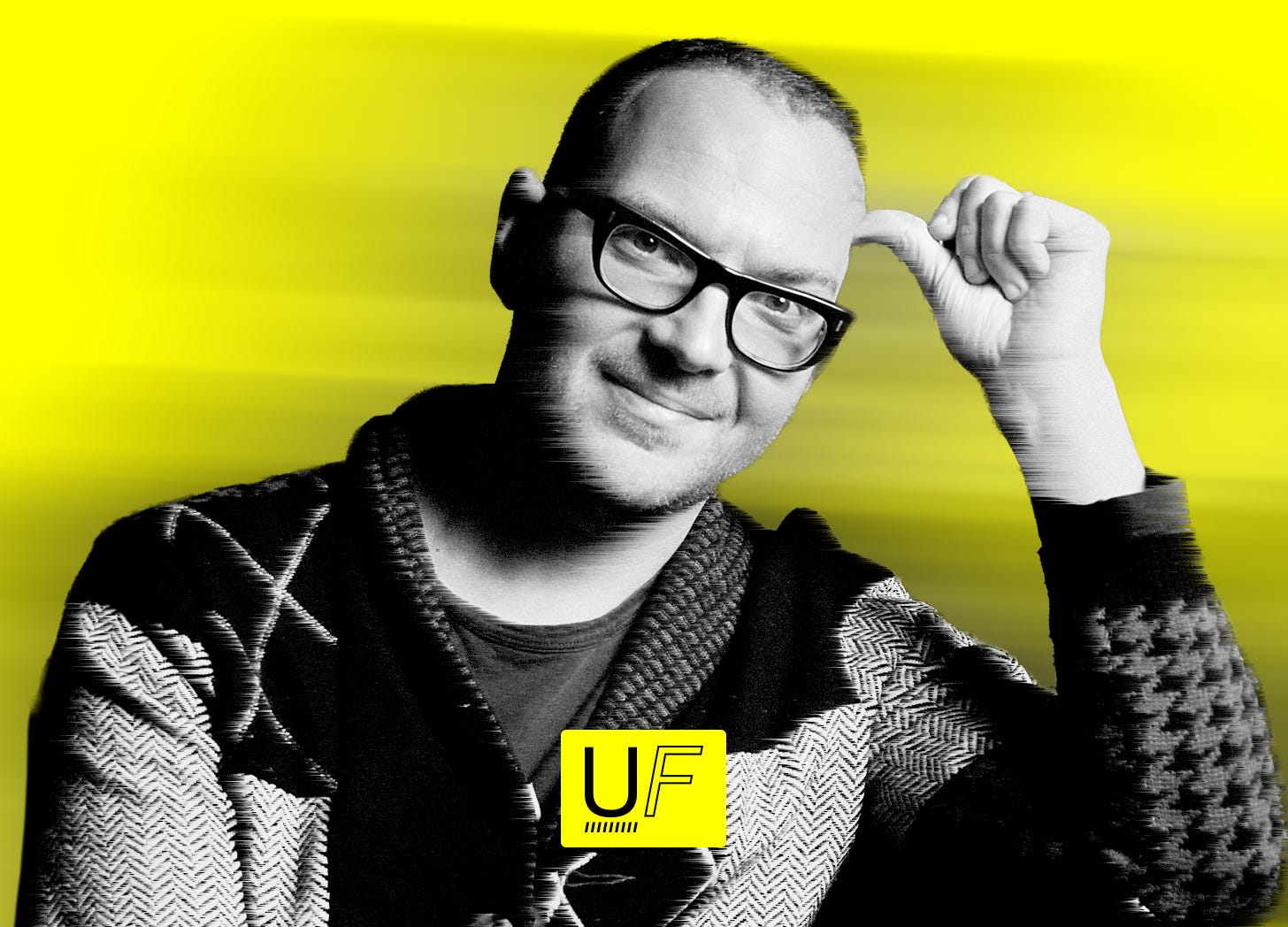
Enshittification: The Rot at the Heart of Big Tech - Cory Doctorow | #68
Remember when the Internet was a fun place, not where you were hypersurveilled while doomscrolling?Enshittification. It’s a word that captures what's happened to the Internet—and critically, why. It has taken the world by storm, dubbed the 2023 Word of the Year by the American Dialect Society and the 2024 Word of the Year by the Macquarie Dictionary. It’s a delicious word—playfully naughty and piercingly descriptive.Grab your copy of Enshittification: Why Everything Suddenly Got Worse and What to Do About It here!Support the show by checking out: ProtonVPN (gold-standard VPN—fast and safe. Click the link to get 55% off VPN Plus: $4.49/mo). ZBiotics (Decrease impact of hangovers. Code: JESSEDAMIANI for 10% off), MUD\WTR (43% off starter kits), 1Password (simplify your life and increase digital safety), Mission Farms CBD (healthy, effective CBD for relief, sleep, and wellbeing—25% off with email).Today’s guest is the man behind the word, and he’s something of an expert in crystallizing complex ideas with memorable turns of phrase. What started as a blog post a few years back has become a full-blown book (and a great one, at that, so pick your copy now!). The concept describes the process by which tech products degrade over time—specifically through economic and political pressures and incentive structures—and the book breaks this down in page-turning detail, with case studies that make your stomach turn. If you’ve interacted with tech products at all over the past couple decades, everything about this book will ring painfully true to you.But all hope is not lost; Cory also outlines how we fight against these enshittificatory processes. It’s truly a must-read, and in the meantime, I hope this conversation is an invitation into this vital body of ideas. So without further ado, please enjoy this illuminating conversation with Cory Doctorow.BIO: Cory Doctorow is a blogger, journalist, and activist. For more than twenty years, he has worked with the Electronic Frontier Foundation on campaigns to safeguard and further our human rights online. He was coeditor of the weblog Boing Boing for nineteen years and now maintains a daily(ish) newsletter at Pluralistic.net. He has written more than thirty books, including nonfiction books, many science fiction novels, collections of short stories and essays, young adult novels, graphic novels, and even a picture book. Born in Toronto, he now lives in Burbank, California. He was awarded an honorary doctorate in laws by York University and an honorary doctorate in computer science by the Open University. He has been inducted into the Canadian Science Fiction and Fantasy Association Hall of Fame and was awarded the Sir Arthur C. Clarke Award for Imagination in Service to Society. He holds visiting professorship and research appointments at MIT, the University of North Carolina, Cornell University, and the Open University.CREDITS: This podcast is produced & edited by Adam Labrie & me, Jesse Damiani. Adam Labrie also edited the video version, which is available on YouTube.Find more episodes of Urgent Futures at: youtube.com/@UrgentFutures. Get full access to Reality Studies at www.realitystudies.co/subscribe
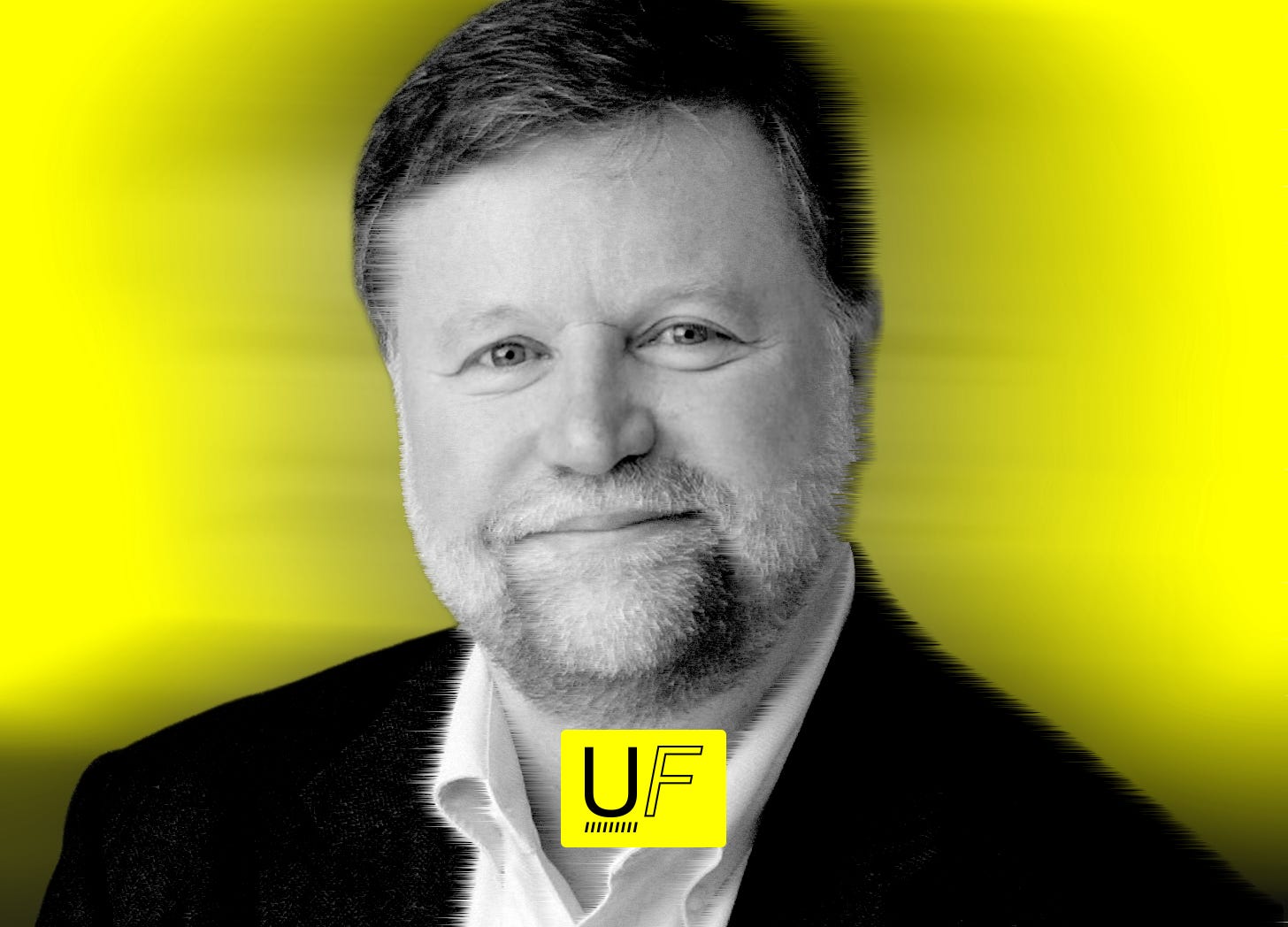
Quantum Computing 101 - Dr. Bob Sutor | #67
Over the years, you’ve probably heard many references to quantum computing. In geopolitics and tech matters, it’s considered an area of extreme interest, and yet it remains a subject that many don’t fully understand (even within the tech commentariat). What is it, how does it work, and what are the implications of a world suffused with this technology?Today's guest, Dr. Bob Sutor, breaks it down.Support the show by checking out: ProtonVPN (gold-standard VPN—fast and safe. Click the link to get 55% off VPN Plus: $4.49/mo). ZBiotics (Decrease impact of hangovers. Code: JESSEDAMIANI for 10% off), MUD\WTR (43% off starter kits), 1Password (simplify your life and increase digital safety), Mission Farms CBD (healthy, effective CBD for relief, sleep, and wellbeing—25% off with email).BIO: Dr. Bob Sutor has been a technical leader and executive in the computer and DeepTech industry for over 40 years. He is a theoretical mathematician by training, with a Ph.D. from Princeton University and an undergraduate degree from Harvard College.During his career, Dr. Sutor has spoken to and briefed government legislators and policymakers around the world, such as his 2022 testimony before the United States Senate Committee on Commerce, Science, and Transportation on “Securing U.S. Leadership in Emerging Compute Technologies.” He was a co-author of the 2024 Quantum Economy Blueprint from the World Economic Forum.Dr. Sutor is the CEO and Founder of Sutor Group Intelligence and Advisory. He helps clients and investors understand sophisticated technologies such as quantum computing and use them effectively to succeed in their organizations and industries. Bob is a member of the Board of Directors of Nu Quantum and an advisor to the Forma Prime venture capital firm. He is also an Adjunct Professor in the Department of Computer Science and Engineering at the University of Buffalo, New York, and spent over two decades at the IBM Thomas J. Watson Research Center. Dr. Sutor is the author of the bestselling 2019 quantum computing book Dancing with Qubits.CREDITS: This podcast is produced & edited by Adam Labrie & me, Jesse Damiani. Adam Labrie also edited the video version, which is available on YouTube.Find more episodes of Urgent Futures at: youtube.com/@UrgentFutures. Get full access to Reality Studies at www.realitystudies.co/subscribe
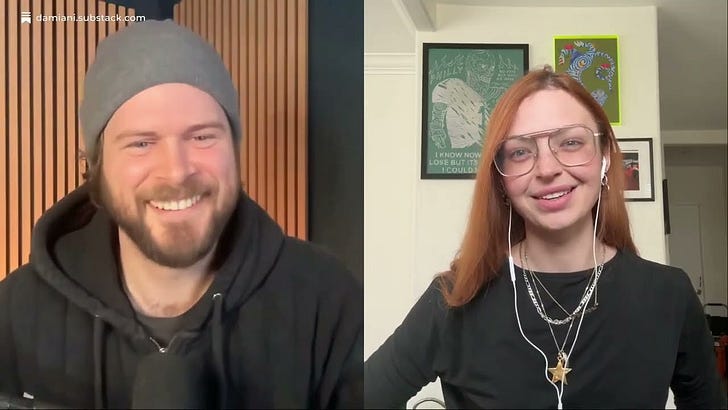
Attacks on Section 230 & ‘Age Verification’ Laws Are Critical Threats to Internet Privacy & Security - Noelle Perdue | Rapid Response #22
This marks Noelle’s—count it!—fourth time on Urgent Futures, and I continue to be grateful to have her as a dialogue partner on all things Internet freedoms. This conversation most directly builds on our Aug. 2025 episode, which focused foremost on the threats to privacy and security smuggled in with ‘age verification’ laws. That conversation is as timely and relevant today, so if you want to learn more, be sure to check that episode out as well.Support the show by checking out: ProtonVPN (gold-standard VPN—fast and safe. Click the link to get 55% off VPN Plus: $4.49/mo). ZBiotics (Decrease impact of hangovers. Code: JESSEDAMIANI for 10% off), MUD\WTR (43% off starter kits), 1Password (simplify your life and increase digital safety), Mission Farms CBD (healthy, effective CBD for relief, sleep, and wellbeing—25% off with email).In today’s episode, we jump off from her recent founding of the Anti-Censorship Coalition with Taylor Lorenz. They’ve both been doing great work explaining the stakes, particularly involving a possible repeal of Section 230, part of the 1996 Communications Decency Act, which protects online platforms (websites, apps, ISPs) from liability for content generated by users on said platforms.I recognize this might feel too tech-centric or legalistic for some folks, but I feel obligated to encourage you to think otherwise; our ability to communicate freely on the Internet is a baseline need for intervening in the polycrisis, and moreover, pushing against the ongoing surveillance creep occurring in much of the “modern” world.BIO: Noelle Perdue is a writer, producer, and Internet porn historian with nearly ten years of experience working platform-side for multiple mainstream and independent adult companies. Having written everything from Food Network porn parodies to legally binding terms and conditions, much of her current work explores obscenity law and how pornography’s history can influence our digital and political futures. Noelle’s writing work has been published on Wired, Washington Post, Pornhub, Slate, Brazzers, Input, etc., she’s also been featured as an industry expert on multiple programs including the BBC, CBC, The Guardian, Rolling Stone, and on Netflix’s 2023 documentary Money Shot. Find more episodes of Urgent Futures at: youtube.com/@UrgentFutures. Get full access to Reality Studies at www.realitystudies.co/subscribe
The Most Dangerous Technology in the World? - Wim Carton | #66
Geoengineering might sound nice in theory, but the consequences could be disastrous. Today's guest, Wim Carton, co-wrote The Long Heat with Andreas Malm, which helps paint the full picture.Grab your copy of The Long Heat here!Support the show by checking out: ProtonVPN (gold-standard VPN—fast and safe. Click the link to get 55% off VPN Plus: $4.49/mo). ZBiotics (Decrease impact of hangovers. Code: JESSEDAMIANI for 10% off), MUD\WTR (43% off starter kits), 1Password (simplify your life and increase digital safety), Mission Farms CBD (healthy, effective CBD for relief, sleep, and wellbeing—25% off with email).BIO: Wim Carton is Associate Professor of Sustainability Science at Lund University, Sweden. He’s the author of over 20 academic articles and book chapters on climate politics. His work has appeared in top journals such as Nature Climate Change, WIRES Climate Change and Antipode. He co-wrote both Overshoot: How the World Surrendered to Climate Breakdown and The Long Heat: Climate Politics When It’s Too Late with Andreas Malm.It is a loud, chaotic time. There are so many worrying developments that demand our immediate attention, action, and solidarity. I know that we all have limits to how much depressing information we can withstand. The not-so-awesome followup here is that there are things unfolding in the background that are also worthy of your attention, but they get virtually zero airplay because they’re not immediate disasters. If you’ve followed my channel for a while, you’re already familiar with a bunch of these, so I won’t belabor this point.One of the most critical ones you need to be aware of is solar geoengineering, an umbrella term for speculative technologies designed to temporarily cool the Earth by reflecting sunlight back into space, typically through dispersing large quantities of sulfates in the atmosphere. At first blush, this may not sound like the worst idea. We know from researching the aftermath of volcanic eruptions that the cooling effect is real, not hypothetical, and especially given the unprecedented heat of the past three years, finding a seemingly straightforward way to cool the planet down might seem like a no-brainer. Unfortunately, it’s too good to be true, which is what today’s guest Wim Carton—along with his co-author Andreas Malm—go to great lengths to demonstrate in their absolute must-read book, The Long Heat. This book is something of a sequel to their likewise superb Overshoot (and for an invitation into that book, be sure to check out my earlier episode with the two of them).Grab your copy of Overshoot here!Having learned from folks like Wim, I think this issue is one of the single most important topics we need to be discussing right now, before it spirals out of control. Because make no mistake: even though we aren’t yet witnessing much geoengineering—and therefore not seeing its knock-on effects—interest is increasing. Israeli-US startup Stardust Solutions announced it had raised $60 million last year, claiming they would begin with experiments in April 2026. And of course, as the impacts of climate change and extreme weather become more pronounced—and we emit ever more greenhouse gases into the atmosphere—desperate times might cause many to turn to desperate measures.After reading The Long Heat, I could spend all day explaining all the ways this go wrong, but instead, I’m going to let you hear it from the author himself. Please enjoy this vital conversation with Wim Carton.CREDITS: This podcast is produced & edited by Adam Labrie & me, Jesse Damiani. Adam Labrie also edited the video version, which is available on YouTube.Find more episodes of Urgent Futures at: youtube.com/@UrgentFutures. Get full access to Reality Studies at www.realitystudies.co/subscribe
The Next Civil War, Mark Carney's Davos Speech, & Canada's View of the US - Stephen Marche | RR #21
My guest this week is Stephen Marche. Stephen is the author of The Next Civil War and On Writing and Failure. He frequently experiments with literary AI.Support the show by checking out: ProtonVPN (gold-standard VPN—fast and safe. Click the link to get 55% off VPN Plus: $4.49/mo). ZBiotics (Decrease impact of hangovers. Code: JESSEDAMIANI for 10% off), MUD\WTR (43% off starter kits), 1Password (simplify your life and increase digital safety), Mission Farms CBD (healthy, effective CBD for relief, sleep, and wellbeing—25% off with email).That modest bio doesn’t do justice to Stephen’s extensive writing and public intellectualism across culture, politics, and technology. We’ve been connected for a few years because of his early experiments with AI in writing—and as you’ll hear in the episode, he actually holds a number of historical firsts in this regard. In 2022, he published The Next Civil War, a book that is exactly what it sounds like: speculative scenarios rooted in rigorous research—including roughly 200 interviews with subject matter experts—about how the next American Civil War might transpire. It’s a bracing read, and unfortunately, much of what he put in that book is coming true.Grab your copy of The Next Civil War here!So it might also come as a surprise to discover that Stephen is Canadian, though he lived in the US for many years. This insider-outsider perspective is critical for discussing such a fraught topic. And his Canadian-ness is also what led me to host this rapid response episode—I’d been meaning to invite him on the show for a while to discuss the aforementioned, but then Canadian Prime Minister Mark Carney gave his address at the World Economic Forum. Fans of the channel will know that I have closely tracked the prospect of the “rules based” international order’s collapse, and Carney pretty baldly named this.If you haven’t watched the address or read about it, I encourage you to do so now. Suffice to say, it felt critical to foreground Stephen’s analysis. And then, toward the end of the episode, we also discuss his literary AI experiments, his take on the current state of affairs, and much more.CREDITS: This podcast is produced & edited by Adam Labrie & me, Jesse Damiani. Adam Labrie also edited the video version, which is available on YouTube.Find more episodes of Urgent Futures at: youtube.com/@UrgentFutures. Get full access to Reality Studies at www.realitystudies.co/subscribe
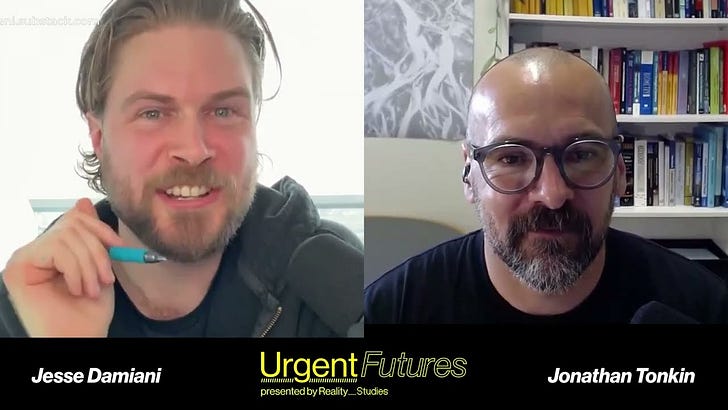
Biodiversity on the Brink: Ecological Rhythms & Human Urgency - Jonathan Tonkin | Rapid Response #20
For as much as I bemoan the attention fracture that occurs on social media, there are times I’m so grateful for it; I discovered the work of Jonathan Tonkin through a Substack Note about ecosystem services—the financial value that the natural world provides, which is vast and yet is barely ever accounted for under capitalist economics (on that note: please be sure to bookmark my conversation with Alyssa Battistoni on the ‘free gifts’ of nature).While we’re at it, please subscribe to his incredible newsletter, Predirections, right now: https://predirections.substack.com/Fast forward and I was lucky that he agreed to join me for a discussion on biodiversity, and in particular his research on freshwater biodiversity. This is one of those subjects that is massively important (to put it mildly!), yet doesn’t get quite as much airtime as more “charismatic” crises like climate change. As Jono explains: it's the "foundation for our very existence."Support the show by checking out: ProtonVPN (gold-standard VPN—fast and safe. Click the link to get 55% off VPN Plus: $4.49/mo). ZBiotics (Decrease impact of hangovers. Code: JESSEDAMIANI for 10% off), MUD\WTR (43% off starter kits), 1Password (simplify your life and increase digital safety), Mission Farms CBD (healthy, effective CBD for relief, sleep, and wellbeing—25% off with email).There’s a lot here, including a discussion about the wonder of braided rivers and broader questions around how we balance “human urgency” and “ecological rhythms,” advocating for what he calls “patient urgency.” We also get into his journey on Substack, and how he balances the differing demands of being an academic and a public communicator. Also he just got a new dog! All to say: if you’re like me, you’ll leave this conversation feeling both inspired and ready to take action in your own life to protect what is precious on this planet.BIO: I love that Professor Tonkin shares his bio in the first person, so I’m copying that here for you:I’m Jonathan Tonkin (Jono for short) — an ecologist and biodiversity scientist at the University of Canterbury in New Zealand, where I’m a Professor and Rutherford Discovery Fellow.My research has spanned continents and ecosystems, but I’ve always returned to one core question: How do we predict and adapt to environmental change in a way that supports life — all life?I’ve spent much of my career documenting biodiversity loss, especially in freshwater ecosystems. Now, I’m pivoting toward solutions: redirecting effort, exploring policy levers, and amplifying the science that can help us adapt. After publishing 100 peer-reviewed papers — including in Nature and Science — I want to share what I’ve learned beyond academia: translating the latest science into plain language, before it even reaches the headlines, to inform, inspire, and equip a wider community.I’m also a parent of two young kids. That perspective shapes everything I write.You can learn more about my research and lab at tonkinlab.org — we focus on biodiversity science for a changing world.🏆 Recently, I was honoured with the New Zealand Prime Minister’s MacDiarmid Emerging Scientist Prize.Find more episodes of Urgent Futures at: youtube.com/@UrgentFutures. Get full access to Reality Studies at www.realitystudies.co/subscribe