
Unsettled
102 episodes — Page 2 of 3

Ep 52Introducing Groundwork
Groundwork is a new podcast about Palestinians and Jews refusing to accept the status quo and working together for change. When war broke out between Israel and Gaza this past May, some of the worst inter-ethnic fighting in Israel’s history erupted between its own citizens. The violence showed that even in mixed cities, where people often talk of coexistence, there are deep political, ethnic, and economic divides.Lod was the epicenter of this recent violence: there were shootings in the streets, neighbors attacking one another, lynching. In this episode, Groundwork’s hosts Dina Kraft and Sally Abed speak with Lod activists Rula Daood and Dror Rubin about the complicated history of Lod, what they think led to the violence in May, and what’s next.CREDITSSally Abed is a staff member and an elected member of the national leadership at Standing Together. In recent years, Sally has become a prominent Palestinian voice in Israel that is putting forward the holistic view that identifies the interrelation between the ongoing occupation of Palestinian territories, growing social and economic disparities within Israeli society, the threat of climate change, and attacks by the government on democratic freedoms and Arab-Palestinian citizens of Israel.Dina Kraft is a veteran foreign correspondent based in Tel Aviv where she’s The Christian Science Monitor correspondent. She began her overseas career in the Jerusalem bureau of The Associated Press. She was later posted to AP’s Johannesburg bureau where she covered southern Africa. She’s also reported from Senegal, Kenya, Pakistan, Jordan, Tunisia, Russia, and Ukraine. Dina has taught journalism at Northeastern University, Harvard University, and Boston University. She was a 2012 Nieman Fellow at Harvard University, and a 2015 Ochberg Fellow at the Dart Center for Journalism and Trauma at Columbia University.Dina hosted “The Branch” podcast, about ties between Jews and Palestinians and her work has also been published in The New York Times, The Los Angeles Times, The Washington Post, and Haaretz among other news outlets.Yoshi Fields is the co-founder and producer of Groundwork and has worked in the podcast industry for about 5 years. In 2018, he moved to Israel-Palestine and has worked on several podcasts in the region, focusing on both political and human interest stories, including as a producer at Israel Story, The Branch, and Unsettled.Through his work, Yoshi aims to empower the voices of others, and facilitate the expression of their stories. He has previously hiked the Himalayas while carrying out a research study on the intersection of love and Buddhism, and worked in a hospice for a year writing about the experience of mortality for health workers.Groundwork is powered by the Alliance for Middle East Peace and the New Israel Fund.

Ep 51Jonathan Brenneman and Aidan Orly: Christian Zionism
As international attention turned to Israel-Palestine this May, Jonathan Brenneman and Aidan Orly co-authored an op-ed for Truthout titled “Progressives Can’t Ignore Role of Christian Zionism in Colonization of Palestine.” In this episode, producer Emily Bell interviews Brenneman and Orly about the origins of Christian Zionism; the relationship between Christian Zionism, Jewish Zionism, and U.S. foreign policy; and what it means to challenge Christian Zionism.CREDITSUnsettled is produced by Emily Bell, Asaf Calderon, Max Freedman, and Ilana Levinson. Original music by Nat Rosenzweig. Additional music from Blue Dot Sessions.Jonathan Brenneman is a Palestinian-American Christian. He has undergraduate degrees in History and Philosophy from Huntington University, and in 2016 completed a Masters at the University of Notre Dame’s Kroc Institute for International Peace Studies. Before going to Notre Dame, Jonathan was part of Christian Peacemaker Teams Palestine project in Hebron/Al-Khalil, where he worked in solidarity with Palestinian communities to challenge unjust Israeli policies and the structures that uphold them. Today, he continues his advocacy in the United States primarily through challenging Christian Zionist theology.Aidan Orly is an Israeli-American Ashkenazi Jew who is active in donor and social justice organizing, especially around issues related to Jewish communities, the Christian Right, and Palestine.RESOURCES“Progressives Can’t Ignore Role of Christian Zionism in Colonization of Palestine” (Jonathan Brenneman & Aidan Orly, Truthout, 5/20/21)“Will this Palestinian matriarch get to keep her Jerusalem home?” (Unsettled, produced in collaboration with +972 Magazine, 4/12/21)“Inside the Most Insanely Pro-Israel Meeting You Could Ever Attend” (David Weigel, Slate, 7/22/14)“An unholy alliance” (Natasha Roth-Rowland, +972 Magazine, 11/5/20)“The Terrifying Alliance Between End Times Christian Zionists and Donald Trump” (Sarah Lazare, In These Times, 10/5/20)“AIPAC Isn’t the Whole Story” (Jonah S. Boyarin, Jewish Currents, 3/4/19)
Ep 50Kathleen Peratis: Visiting Gaza
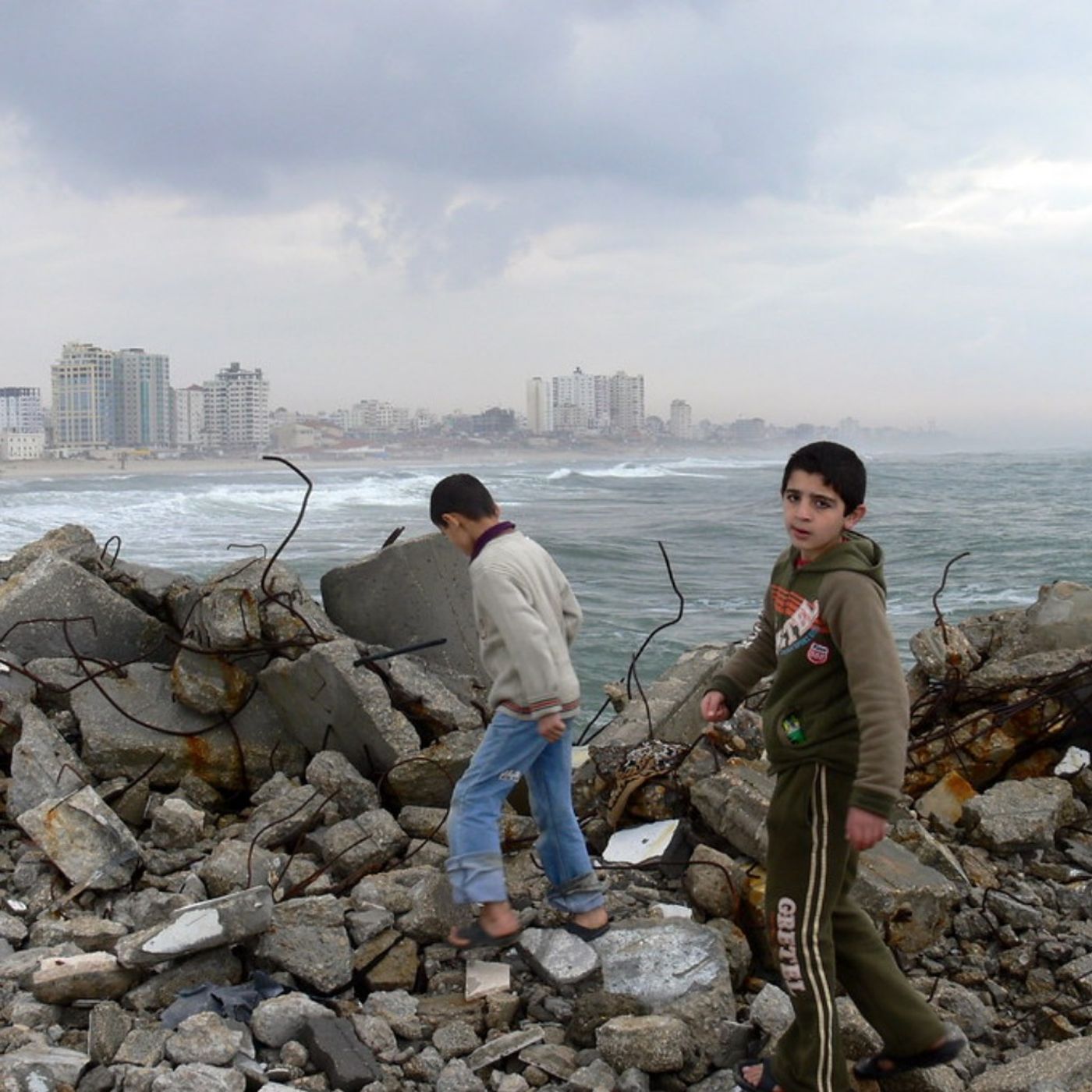
The Gaza strip has been under Israeli siege for 14 years, with cycles of violence happening over and over again. In the latest round of fighting, at least 254 Palestinians and 13 Israelis died. 2 million people live in the Gaza strip, and they’ve endured over a decade of air raids, and an economic blockade that deprives them of basic necessities, like power and clean water. But in the Jewish community, conversations about Gaza tend to focus only on Hamas terrorism and claims of widespread antisemitism. Kathleen Peratis has been to Gaza five times in the last decade, and what she saw there tells a very different story. In this episode of Unsettled, Kathleen talks about what she learned from her experiences in Gaza and the people she met while she was there.Unsettled is produced by Emily Bell, Asaf Calderon, Max Freedman, and Ilana Levinson. Original music by Nat Rosenzweig. Additional music from Blue Dot Sessions.Kathleen Peratis is a Partner at Outten and Golden, an employment justice law firm in Manhattan. She's also the Co-Chair of the Middle East and North Africa Division for Human Rights Watch, and the former director of the Women’s Rights Project at the American Civil Liberties Union, succeeding Ruth Bader Ginsburg.Kathleen's published works on her time in Gaza:One Day in Gaza (May 2011)If You Want Two States, Support BDS (October 2013)Remember Gaza (November 2013)Walking Amid the Rubble of Gaza (September 2014)Unsettled's 4-part series on Gaza:The Great March (Gaza, ep. 1)Refugees (Gaza, ep. 2)Hamas (Gaza, ep. 3)Energy (Gaza, ep. 4)
Ep 49Update from the South Hebron Hills
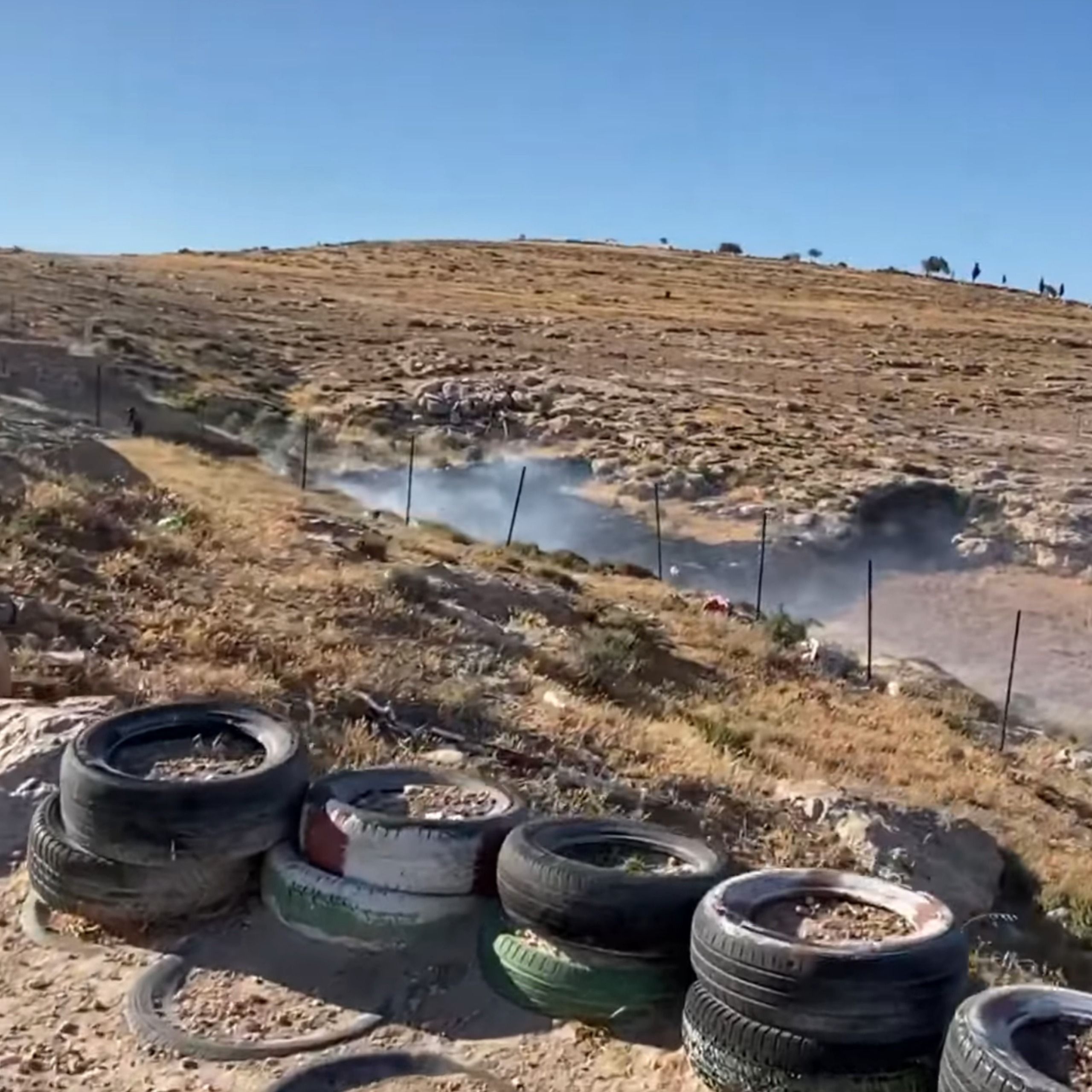
The recent escalation of violence in Israel-Palestine seemed to be happening everywhere, all at once. But one place that’s been getting less public attention is a rural part of the West Bank called the South Hebron Hills. Last weekend, Jewish settlers set fire to Palestinian fields and tried to destroy a cave in the village of Sarura.We have dedicated two past episodes of Unsettled to the story of this cave: how it was first reclaimed four years ago by Palestinian and Jewish activists; and how it has remained in local Palestinian hands ever since, thanks to a group called Youth of Sumud. Today, we’re sharing those two episodes as one. Unsettled is produced by Emily Bell, Asaf Calderon, Max Freedman, and Ilana Levinson. Original music by Nat Rosenzweig. Additional music from Blue Dot Sessions.Youth of Sumud: Facebook, InstagramCenter for Jewish Nonviolence: Facebook, Instagram“Palestinian children travel dangerous route to school in At-Tuwani” (DCI Palestine, 9/10/13)Amira Hass and Hagar Sheizaf, “The Village Where Palestinians Are Completely Powerless” (Haaretz, 1/5/21)Spotify playlist: Unsettled essentials, May 2021
Ep 48Amjad Iraqi: Palestinians Rising
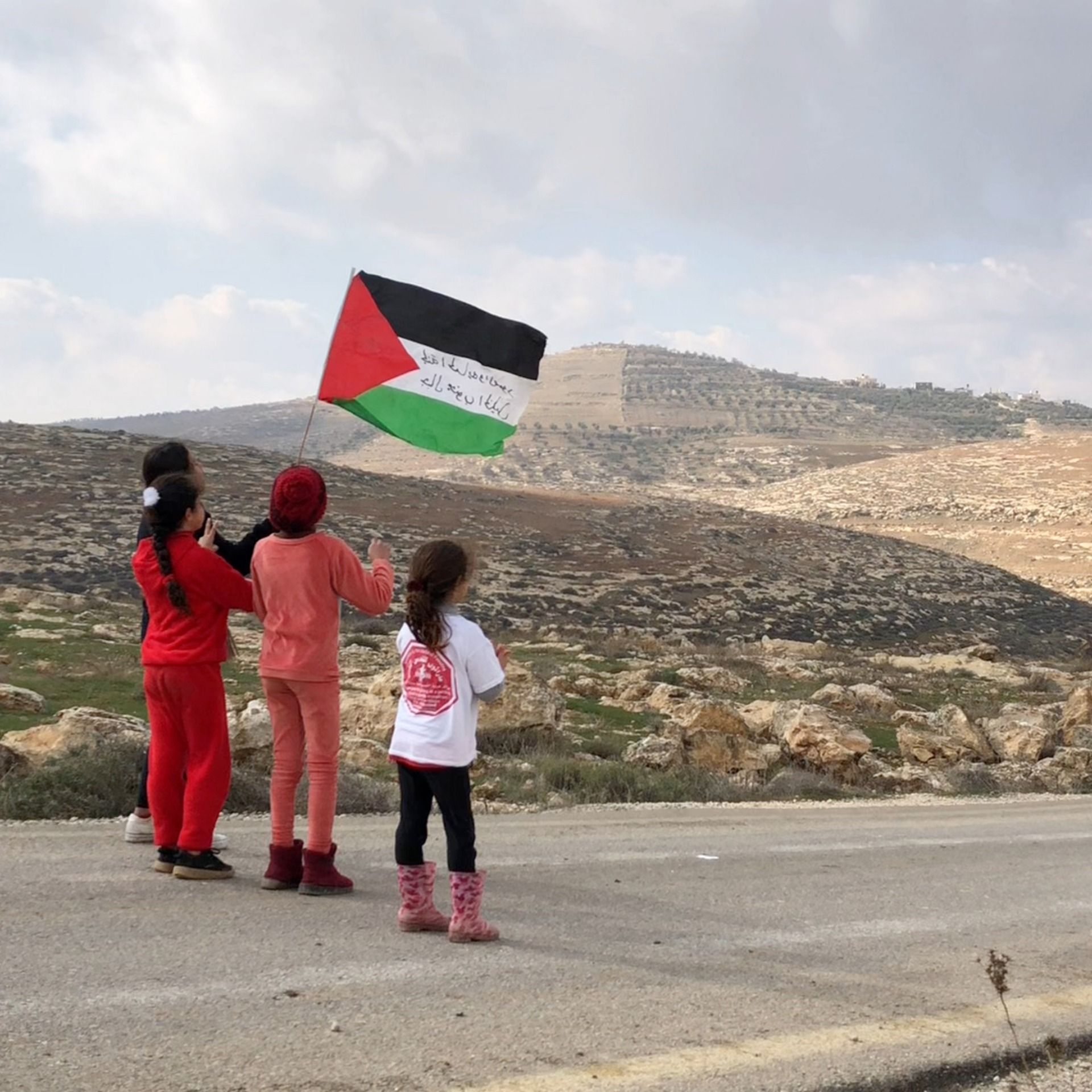
Over the last two weeks, even in the face of state and mob violence, Palestinians have been organizing mass demonstrations on both sides of the Green Line: from Jerusalem to Nazareth to Ramallah. After decades of policy designed to keep the Palestinian people fragmented, they have taken to the streets in unison to demand radical change. What does this new Palestinian uprising look like? And where will it go next? Producer Ilana Levinson speaks to Amjad Iraqi, a writer and editor for +972 Magazine based in Haifa.Unsettled is produced by Ilana Levinson, Emily Bell, Asaf Calderon, and Max Freedman. Original music by Nat Rosenzweig. Additional music from Blue Dot Sessions.Amjad Iraqi is an editor and writer at +972 Magazine. He is also a policy analyst at the think tank Al-Shabaka, and was previously an advocacy coordinator at the legal center Adalah. He is a Palestinian citizen of Israel, based in Haifa."Against the horror, Palestinians are still rising" (Amjad Iraqi, +972 Magazine, 5/13/21)The Nation-State Law w/Amjad Iraqi (Unsettled, 7/24/18)Spotify playlist: Unsettled essentials, May 2021
Ep 47Politicized Pain
When violence erupts in Israel-Palestine, talking in public about Palestinian suffering is often met automatically with an assertion of Israeli suffering — as if one somehow cancels out, or even justifies, the other. It feels like compassion has become a scarce commodity. How do we grieve publicly without negating the experience of the “other side"?This episode is not an expert interview, it's a conversation between two friends: one American, one Israeli. Unsettled producers Ilana Levinson and Asaf Calderon discuss empathy and anger, power, trauma, and responsibility.Unsettled is produced by Emily Bell, Asaf Calderon, Max Freedman, and Ilana Levinson. Original music by Nat Rosenzweig. Additional music from Blue Dot Sessions.“Want to help Israelis? Become an anti-Zionist” (Asaf Calderon, +972 Magazine, 5/19/21)“What it’s like to have a Jewish terrorist in the family” (Asaf Calderon, Haaretz, 5/3/17)Spotify playlist: Unsettled essentials, May 2021

Ep 46Shaul Magid: The Life and Afterlife of Meir Kahane
Meir Kahane is one of the most polarizing figures in modern Jewish history. His Jewish Defense League was labeled a terrorist group by the FBI. His KACH party was banned from the Knesset for racism. Kahane was assassinated in 1990, but his name and ideas live on.Kahanist mobs have recently marched through the streets of Israeli cities chanting “Death to Arabs” and attacking random Palestinians. A Kahanist politician was blamed by Israel's Police Commissioner for inciting a new intifada. What is Kahanism, who was Meir Kahane, and how did the ideas of such an extremist figure become, in many ways, mainstream?In this episode, producer Max Freedman speaks to Shaul Magid, professor of Jewish Studies at Dartmouth College and author of the forthcoming book, Meir Kahane: The Public Life and Political Thought of an American Jewish Radical.Unsettled is produced by Emily Bell, Asaf Calderon, Max Freedman, and Ilana Levinson. Original music by Nat Rosenzweig. Additional music from Blue Dot Sessions.Shaul Magid is Professor of Jewish Studies at Dartmouth College and Kogod Senior Research Fellow at the Shalom Hartman Institute of North America. Author of many books and essays, his two latest books are The Bible, the Talmud and the New Testament: Elijah Zvi Soloveitchik’s Commentary to the Gospel, and Piety and Rebellion: Essay in Hasidism, both published in 2019. His new book Meir Kahane: The Public Life and Political Thought of an American Jewish Radical will be published with Princeton University Press in October, 2021. He is presently working on a project understanding contemporary Jewish scholarship on antisemitism through the lens of critical race theory.Shaul Magid, Meir Kahane: The Public Life and Political Thought of an American Jewish Radical (Princeton University Press, 2021)Josef Federman and Joseph Krauss, “Radical rabbi’s followers rise in Israel amid new violence” (Associated Press, 5/14/2021)“Police chief said to blame far-right lawmaker Ben Gvir for ‘internal intifada’” (Times of Israel, 5/14/2021)School Colors, Episode 2: “Power to the People”School Colors, Episode 3: “Third Strike”Spotify playlist: Unsettled essentials, May 2021
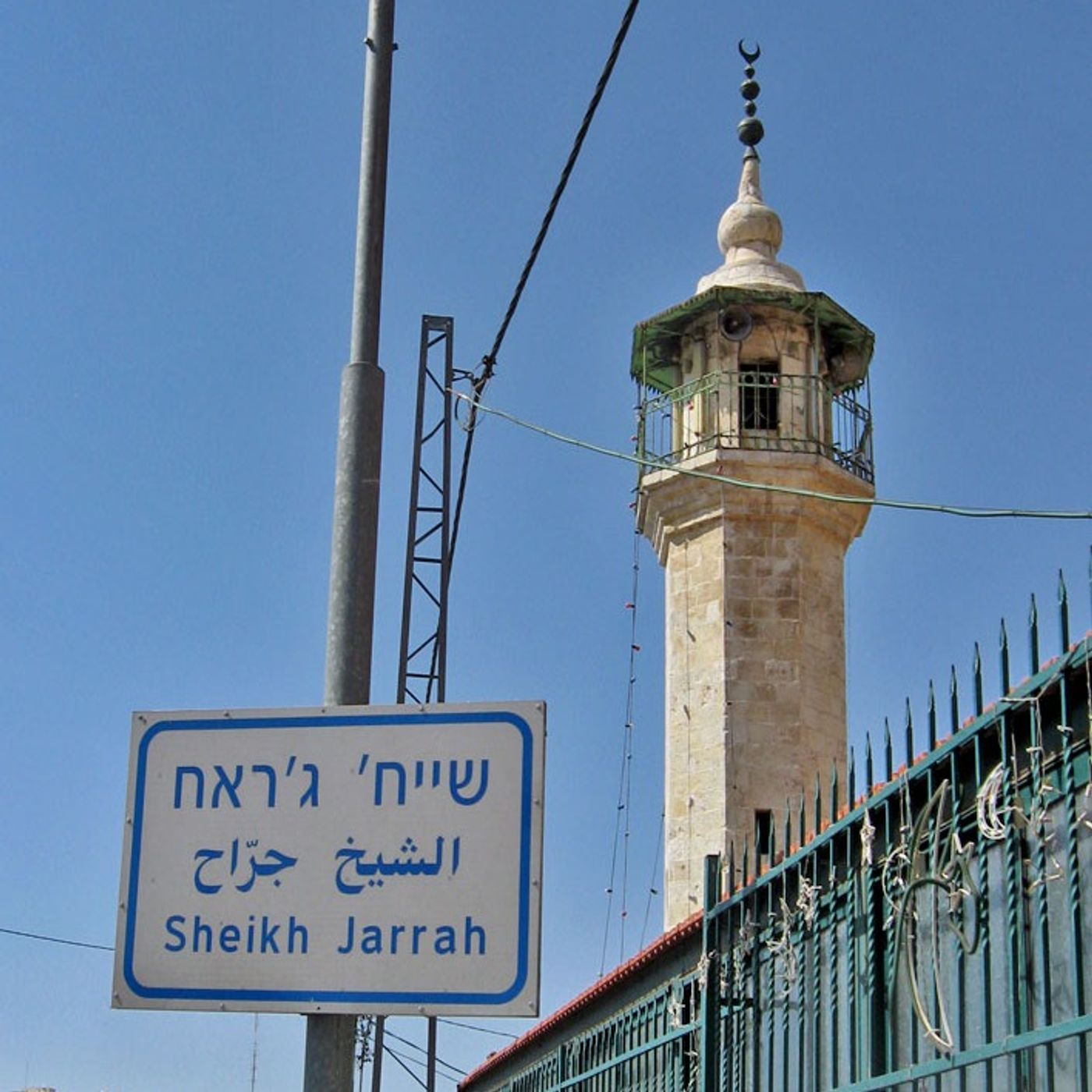
Ep 45Leena Dallasheh: "East Jerusalem is under attack"
The imminent displacement of several Palestinian families in the East Jerusalem neighborhood of Sheikh Jarrah set off a chain of events that led to the violence we’re now seeing all over Israel-Palestine. But what’s happening in Sheikh Jarrah isn't new. Ever since Israel gained control of East Jerusalem in 1967, the state has been making life difficult for Palestinians -- and trying to get them out.In this episode, producer Ilana Levinson speaks to historian Leena Dallasheh about the many forms of exclusion faced by Palestinians in Jerusalem.Unsettled is produced by Emily Bell, Asaf Calderon, Max Freedman, and Ilana Levinson. Original music by Nat Rosenzweig. Additional music from Blue Dot Sessions.Leena Dallasheh is an Associate Professor of History at Humboldt State University. Her research focuses on modern Palestinian and Israeli history, and her training covered the broad social and political history of the modern Middle East, with a particular interest in understanding identity and citizenship in colonial transition. She received her PhD in the joint History and Middle Eastern and Islamic Studies program at NYU. Her work focuses on the social and political history of Nazareth from 1940 to 1966, tracing how Palestinians who remained in Israel in 1948 negotiated their incorporation in the state, affirming their rights as citizens and their identity as Palestinian. Before coming to NYU, she received a law degree from the Hebrew University in Jerusalem.Spotify playlist: Unsettled essentials, May 2021Rasha Budeiri: Sheikh Jarrah (Unsettled, 5/14/21)Refugees: Gaza, ep. 2 (Unsettled, 2/4/19)Jerusalem: Leena Dallasheh (Unsettled, 12/22/17)
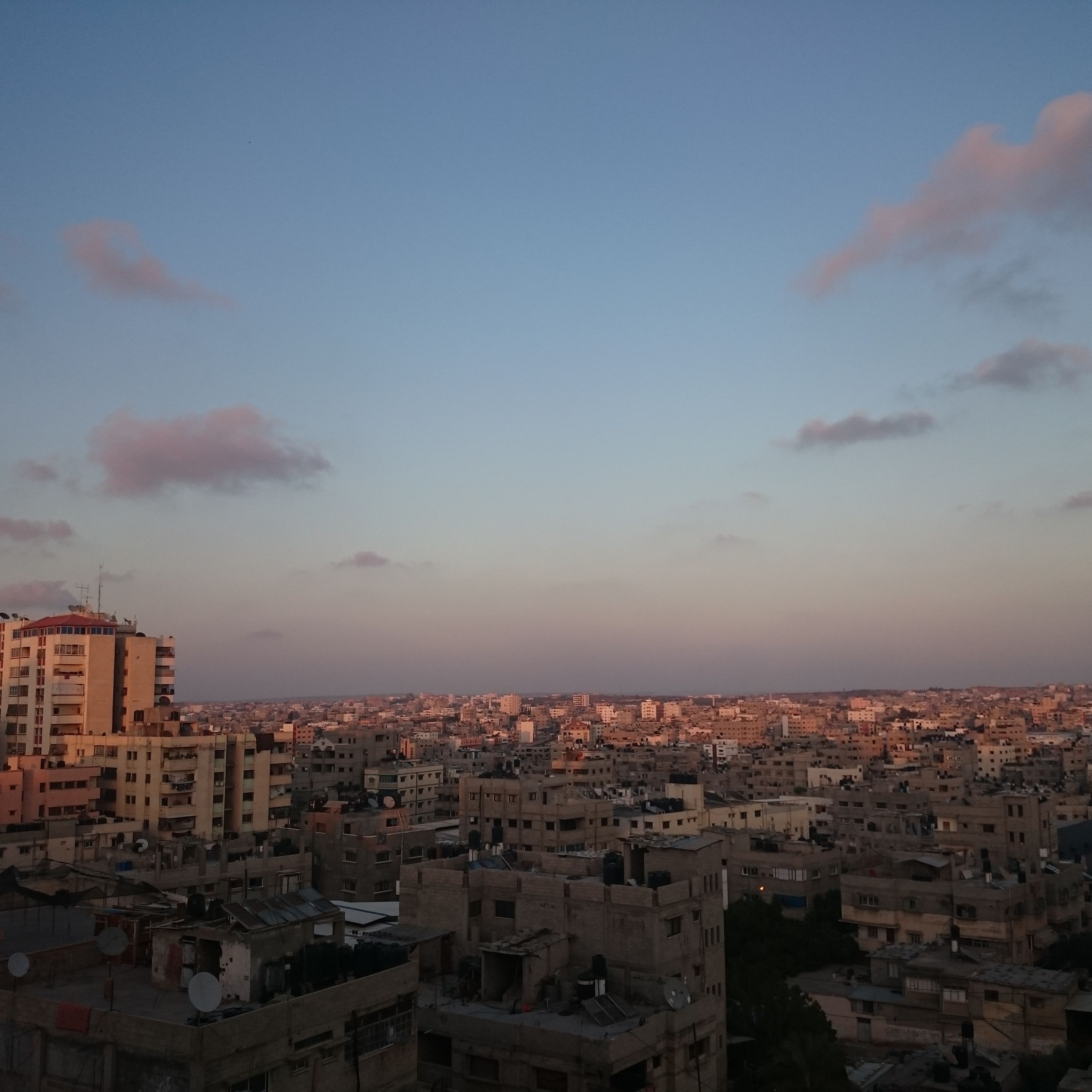
Ep 44Tareq Baconi: Hamas, Explained
Since last week, nearly two hundred Palestinians have been killed by Israeli airstrikes in Gaza. Israel's defenders say the state is simply defending itself against rocket fire from Hamas; loss of life is tragic, but Hamas is to blame. But many of us know very little about Hamas itself.In this episode, originally published in 2019, producer Max Freedman speaks with Tareq Baconi, author of the book Hamas Contained: The Rise and Pacification of Palestinian Resistance. They discuss the origins of Hamas, how Hamas governs the Gaza Strip, and its complicated relationship with the state of Israel.Unsettled is produced by Emily Bell, Asaf Calderon, Max Freedman, and Ilana Levinson. Original music by Nat Rosenzweig. Additional music from Blue Dot Sessions.Tareq Baconi is the International Crisis Group’s Analyst for Israel/Palestine and Economics of Conflict. His book, Hamas Contained: The Rise and Pacification of Palestinian Resistance, was published by Stanford University Press in 2018. His writing has appeared in Arabic in Al-Ghad and Al-Quds al-Arabi, and in English in The New York Review Daily, The Washington Post, Foreign Affairs, The Guardian, The Nation, The Daily Star (Lebanon), and al-Jazeera. He has provided analysis for print and broadcast media, including The New York Times, The New Yorker, BBC, National Public Radio, and Democracy Now!Spotify playlist: Unsettled essentials, May 2021Fares Akram and Ravi Nessram, "Israel stages new round of heavy airstrikes on Gaza City" (Associated Press, May 16, 2021)Tareq Baconi, Hamas Contained: The Rise and Pacification of Palestinian Resistance (Stanford University Press, 2018)Tareq Baconi interviewed by Rami Younis (+972 Magazine, January 11, 2019)Tareq Baconi, "Sheikh Jarrah and After" (London Review of Books, May 14, 2021)Hamas’s original charter (August 18, 1988)Hamas’s new political document (May 1, 2017)

Ep 43Rasha Budeiri: Sheikh Jarrah
There’s a lot going on right now in Israel-Palestine. Right-wing Jewish Israeli mobs are attacking Palestinians in cities like Lod and Haifa. Israel is bombing Gaza. Hamas is firing rockets into Israel. Just last week, Israeli police were attacking worshippers inside Al Aqsa mosque. This round of violence began in the East Jerusalem neighborhood of Sheikh Jarrah.A number of Palestinian families in Sheikh Jarrah are facing imminent eviction from their homes, to be replaced by Jewish settlers. Palestinian demonstrators in Sheikh Jarrah were met with overwhelming force from Israeli police. In this episode, Max Freedman speaks to Rasha Budeiri, whose parents are right in the middle of all this: they live in Sheikh Jarrah, in one of the homes threatened with displacement.Unsettled is produced by Emily Bell, Asaf Calderon, Max Freedman, and Ilana Levinson. Original music by Nat Rosenzweig. Additional music from Blue Dot Sessions.Spotify playlist: Unsettled essentials: May 2021“Palestinians fear loss of family homes as evictions loom” (Joseph Krauss, Associated Press, 5/9/21)“Tax-exempt U.S. nonprofits fuel Israeli settler push to evict Palestinians” (Alex Kane, The Intercept, 5/14/21)Born and raised in Jerusalem, Palestine, Rasha Budeiri is a mother of two girls; ages 14 and 12. Rasha holds a Bachelor’s degree in Mass Communications and Sociology from Birzeit University in the West Bank. She worked with Palestinian communities through her employment at the United Nations for the Relief and Welfare of Palestine Refugees in the Near East (UNRWA) in Jerusalem. After several years of working in the media and NGO fields in Jerusalem, she moved to Kuwait and continued to build on the knowledge and expertise in the communications and research fields. Rasha now resides in Ottawa, Canada.In 1948, Rasha’s grandparents (Fouad and Badria Al-Dajani) were forcibly displaced from their house in Al-Baq'aa, south of Jerusalem by the occupying Israeli forces. As was the case for many Palestinian refugees, they moved to Jordan, then Syria, and back to Jerusalem where they lived in rental homes until 1956.Through an agreement between the Jordanian Government and UNRWA in 1956, Rasha’s grandparents, along with 27 other Palestinian refugee families, were offered housing units in Karm Al-Jaouni, Sheikh Jarrah. In return, these families’ refugee status and benefits were revoked.Raising their six kids at that house, Rasha’s grandfather passed away in 1977 and her grandmother in 1992. Their legacy and love to the place was passed down to her aunts, uncles, and grandchildren. Israeli forces are now in the process of confiscating Rasha’s grandparents' house and evicting her parents, who currently live in it.
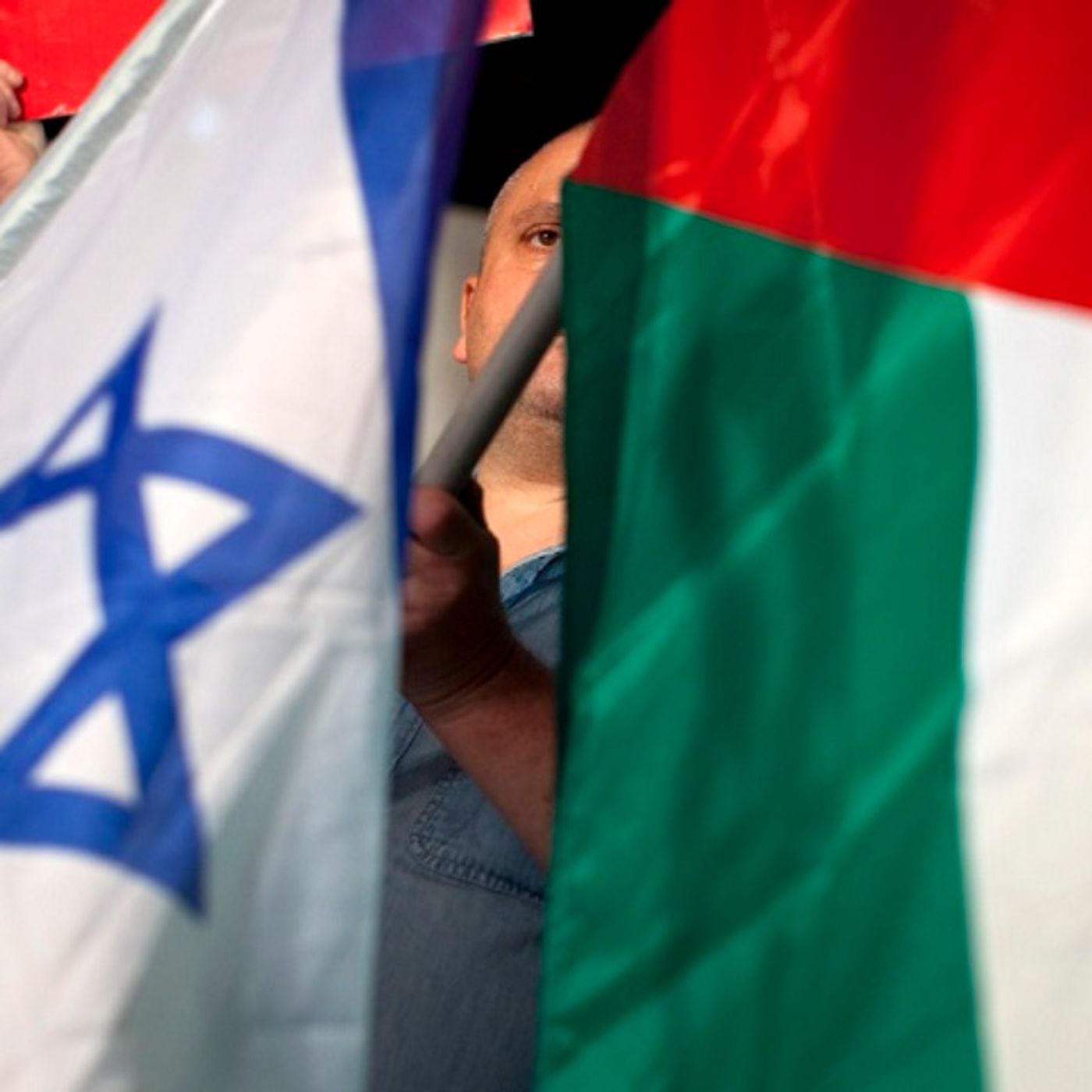
Ep 42Sam Bahour: Confederation
When it comes to peace in Israel-Palestine, the two-state solution has been the party line for much of the international community for a long time. But lately, many experts and activists have been saying the two-state solution is dead. If that's true, what’s the best path forward?According to Palestinian entrepreneur Sam Bahour, it’s time to try confederation. In this episode, Ilana Levinson talks to Sam about why he believes a confederal model is best for Israelis and Palestinians.Unsettled is produced by Ilana Levinson, Emily Bell, and Max Freedman. Original music by Nat Rosenzweig. Additional music from Blue Dot Sessions.Sam Bahour is a Palestinian-American business consultant from Ramallah/Al-Bireh in Occupied Palestine. He is a frequent independent political commentator and is co-editor of “Homeland: Oral Histories of Palestine and Palestinians” (1994). He blogs at ePalestine.ps. @SamBahour"Want Israeli-Palestinian Peace? Try Confederation" (Sam Bahour and Bernard Avishai, The New York Times, 2/12/21)Sam Bahour on BlogspotSam Bahour on YouTube"J Street finally wants the US to think beyond the two-state solution" (Arianna Skibell, +972 Magazine, 4/16/21)
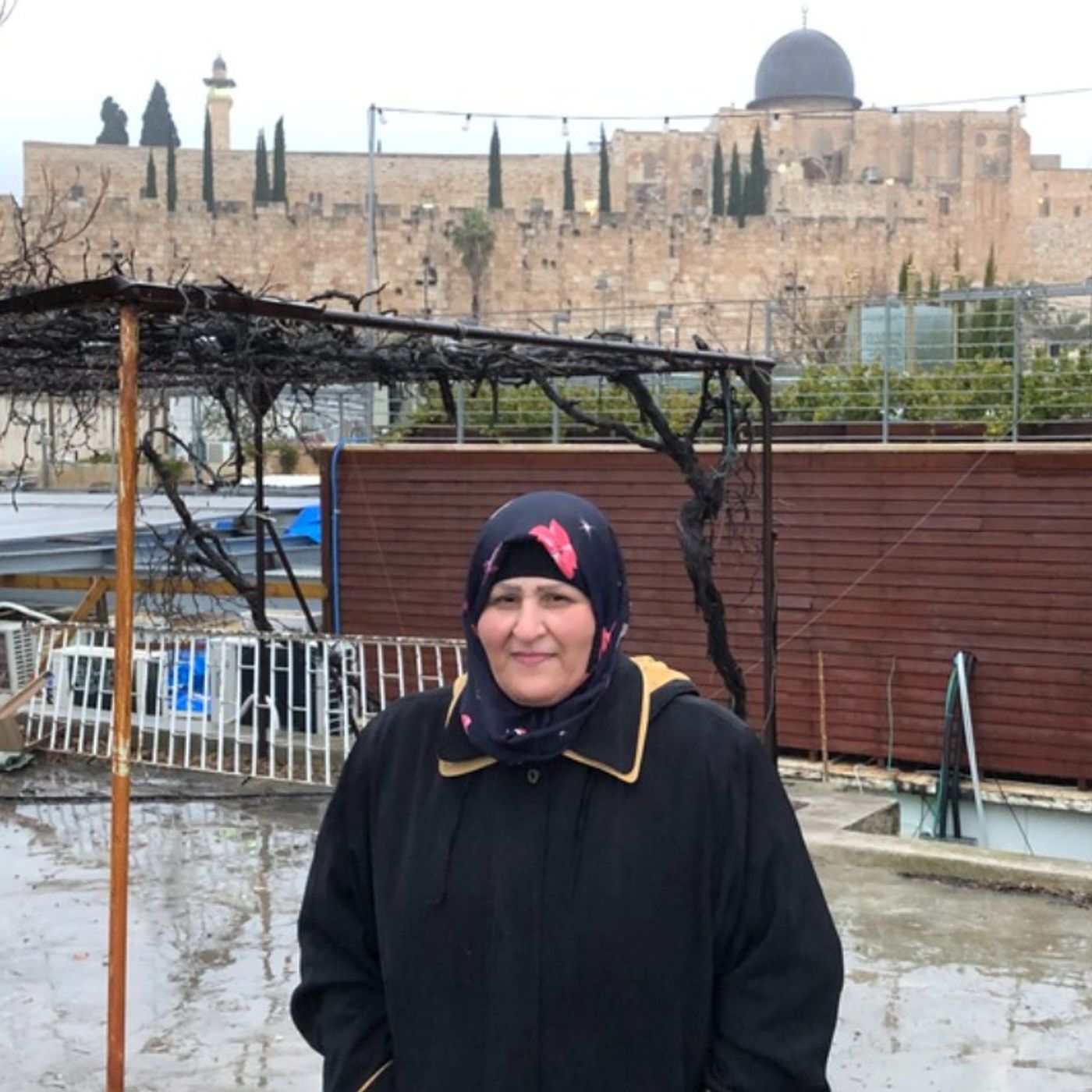
Ep 41Will this Palestinian matriarch get to keep her Jerusalem home?
For the past year, as the coronavirus pandemic spread across the world, home has become an especially important source of shelter and safety. While some governments have responded to pressure from activists and paused evictions, Palestinians in East Jerusalem still face uncertainty.That’s the case with the Sumarin family, who live just outside Jerusalem’s Old City in the Palestinian village of Silwan. The Jewish National Fund and the Elad organization have long been promoting Jewish settlement in the area — often at the expense of the Palestinian residents.In April, after a decades-long legal battle, an Israeli court will finally decide whether the Sumarin family will be forcibly evicted from their home. On this episode, we teamed up with the +972 Podcast to tell the story of the Sumarin family and their struggle to remain in the house they’ve lived in for generations.This episode was produced by Ilana Levinson, Max Freedman, and Emily Bell. Music from Blue Dot Sessions. Special thanks to Henriette Chacar and Edo Konrad at +972; Asaf Calderon, Uri Blau, Ayat Yaghmour, Hagit Ofran, and Leena Dallasheh.RESOURCESEmek Shaveh websiteTimeline of the Sumarin eviction case (Peace Now, 9/23/19)Common Ground: The politics of archaeology in Jerusalem (Rachel Poser, Harper’s Magazine, September 2019)In Search of King David’s Lost Empire (Ruth Margalit, The New Yorker, 6/29/20)Palestinian family faces latest setback to save Jerusalem home (Aseel Jundi, Middle East Eye, 7/2/20)Documents reveal decades of close cooperation between JNF and Elad (Uri Blau, +972 Magazine, 10/19/20)JNF Plan to Expand Settlements Could 'Endanger Its Existence,' Jewish Groups Warn (Allison Kaplan Sommer, Haaretz, 2/15/21)Update on the Sumarin case before the Supreme Court (Peace Now, 4/6/21)

Ep 40Anan Maalouf: The Joint List
Israel is about to hold its fourth parliamentary election in the past two years. The last time Israelis went to the polls, in March 2020, the Joint List — a coalition of four Arab Palestinian political parties — won an unprecedented 15 seats in the Knesset. But since then, the Joint List has fractured. Why? And what does this mean for the future of Palestinian politics?Producer Max Freedman speaks with Anan Maalouf, former chief of staff and policy advisor to Ayman Odeh, head of the Joint List and leader of its largest party, Hadash-al Jabhah.CREDITSUnsettled is produced by Emily Bell, Asaf Calderon, Max Freedman, and Ilana Levinson. Original music by Nat Rosenzweig. Additional music from Blue Dot Sessions. Special thanks to Amjad Iraqi.Photo: Makbula Nassar; election night in Nazareth, March 2015.BIOAnan A. Maalouf is an Urban Planner and a Ph.D. student of Urban and Public Policy at Milano School of Policy, Management, and Environment (The New School). He earned his M.Sc. of Urban and Regional Planning from the Technion IIT (2018), his thesis focused on the relationship between urban forms and technological alterations. Before moving to New York, Maalouf served as Nazareth Mayor’s Assistant (2012-2013), and as MP Ayman Odeh Chief of Staff and Senior Advisor (2015-2018). Anan works currently at The Arab Center for Alternative Planning (ACAP) and is a teaching assistant at The New School and at Barnard College.RESOURCES“The Only Left That Is Left” (Joshua Leifer, Jewish Currents, 3/5/2020)“The Beginning of Breakdown” (Joshua Leifer, Jewish Currents, 3/31/2020)Arabs in Israel Split over Homosexuality (Dima Abumaria, The Media Line, 7/24/2020)How Israel’s Netanyahu helped break apart the Joint List (Jonathan Cook, Middle East Eye, 2/9/2021)As Arab consensus splinters, wangling for community’s vote sparks hard questions (Haviv Rettig Gur, Times of Israel, 2/12/2021)Israel’s Islamists Side with Netanyahu (Joshua Leifer, Jewish Currents, 2/16/2021)
Ep 39Liat Berdugo: The Weaponized Camera
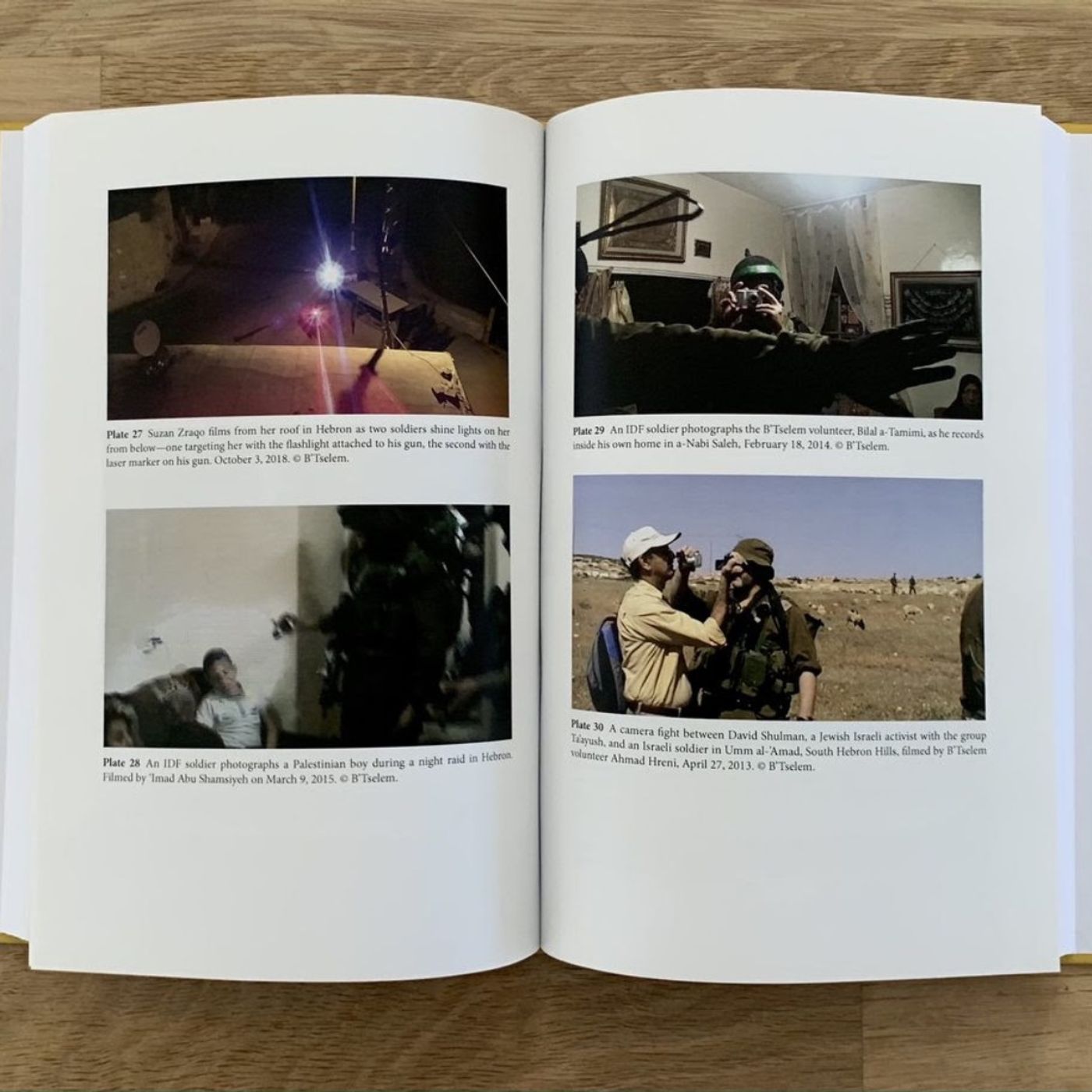
“So it becomes this dance of cameras where the whole goal of the Palestinian camera is to document a human rights violation, to take back some kind of power. And the goal of the Israeli camera is to block that power from being taken through vision.” — Liat BerdugoB’Tselem, an Israeli human rights organization, has been running its Camera Distribution Project since the early 2000s. The project distributes video camcorders to Palestinians, training them in documentation, and building an archive of citizen-recorded video. These videos cover a wide-range of topics, including settler violence, IDF night searches and demolitions. How do visuals disrupt historical narratives of conflicts? What does it mean for someone to later on witness preserved traces of events? And in the context of Israel-Palestine, what impact does a camera actually have in the face of entrenched power dynamics? Producer Emily Bell interviews Liat Berdugo, author of the recently released book, The Weaponized Camera in the Middle East: Videography, Aesthetics, and Politics in Israel and Palestine.CREDITSUnsettled is produced by Emily Bell, Asaf Calderon, Max Freedman, and Ilana Levinson. Original music by Nat Rosenzweig. Additional music from Blue Dot Sessions. Video courtesy of the B’Tselem video archive.BIOLiat Berdugo is an artist and writer whose work investigates embodiment, labor, and militarization in relation to capitalism, technological utopianism, and the Middle East. Her work has been exhibited and screened at Yerba Buena Center for the Arts (San Francisco), MoMA PS1 (New York), Transmediale (Berlin), V2_Lab for the Unstable Media (Rotterdam), and The Wrong Biennale (online), among others. Her writing appears in Rhizome, Temporary Art Review, Real Life, Places, and The Institute for Network Cultures, among others, and her latest book, The Weaponized Camera in the Middle East, was released from Bloomsbury in 2021. She is one half of the art collective, Anxious to Make, and is the co-founder of the Living Room Light Exchange, a monthly new media art series. Berdugo received an MFA from RISD and a BA from Brown University. She is currently an assistant professor of Art + Architecture at the University of San Francisco. Berdugo lives and works in Oakland, CA.RESOURCESThe Weaponized Camera in the Middle East: Videography, Aesthetics and Politics in Israel and PalestineB’Tselem Camera Project ArchiveSpectral Power (Real Life, 8/22/17)Five Broken CamerasEyal Weizman
Ep 38Marc Lamont Hill and Mitchell Plitnick: The Limits of Progressive Politics
In recent years, a term has emerged in leftist activist circles: “progressive except for Palestine,” or “PEP” for short. It describes a person whose values and political leanings are consistent across issues of racial justice, homophobia, healthcare, immigration and more—but on Palestine, they are either silent, or actively hostile to a progressive point of view. It’s a worldview that permeates media spaces, academia, and Washington. What causes the progressive exception for Palestine, and are we seeing a shift on the horizon? In this episode of Unsettled, producer Ilana Levinson interviews Marc Lamont Hill and Mitchell Plitnick, authors of the forthcoming book, Except for Palestine: The Limits of Progressive Politics.Unsettled is produced by Emily Bell, Asaf Calderon, Max Freedman, and Ilana Levinson. Original music by Nat Rosenzweig. Additional music from Blue Dot Sessions.GUEST BIOSMarc Lamont Hill is an award-winning journalist and the Steve Charles Professor of Media, Cities, and Solutions at Temple University. He is the author of multiple books, including the New York Times bestselling Nobody, and co-author (with Mitchell Plitnick) of Except for Palestine (The New Press). He lives in Philadelphia.Mitchell Plitnick is the president of ReThinking Foreign Policy and is a frequent writer on the Middle East and U.S. foreign policy, is the former vice president at the Foundation for Middle East Peace, director of the U.S. Office of B’Tselem, and co-director of Jewish Voice for Peace. The co-author (with Marc Lamont Hill) of Except for Palestine (The New Press), he lives in Maryland.RESOURCESExcept for Palestine: The Limits of Progressive PoliticsMarc Lamont Hill fired from CNN after his speech on Israel draws outrage (NBC, 11/30/18)Republicans and Democrats Grow Even Further Apart in Views of Israel, Palestinians (Pew Research Center, 1/23/18)

Ep 37Lara Friedman: What will Biden do?
President Joe Biden campaigned on the idea that he'd bring the country back to “normal.” But that message has raised some eyebrows, as many have pointed out that America’s “normal” doesn’t necessarily mean good, or right. In this episode of Unsettled, producer Ilana Levinson interviews Lara Friedman, President of the Foundation for Middle East Peace, about what is considered normal U.S. foreign policy on Israel-Palestine, the relationships with Israeli and Palestinian leaders that Biden inherits from former President Donald Trump, and what we can expect from Biden given his record as Vice President in the Obama administration.Unsettled is produced by Emily Bell, Asaf Calderon, Max Freedman, and Ilana Levinson. Original music by Nat Rosenzweig. Additional music from Blue Dot Sessions.GUEST BIO:Lara Friedman is the President of the Foundation for Middle East Peace. With more than 25 years working in the Middle East foreign policy arena, Lara is a leading authority on U.S. foreign policy in the Middle East, with particular expertise on the Israeli-Arab conflict, Israeli settlements, Jerusalem, and the role of the U.S. Congress. She is published widely in the U.S. and international press and is regularly consulted by members of Congress and their staffs, by Washington-based diplomats, by policy-makers in capitals around the world, and by journalists in the U.S. and abroad. RESOURCES:Foundation for Middle East PeaceBiden may offer some key opportunities for Palestinians and their allies (Noura Erakat, Washington Post, 11/17/20)Biden’s Israel-Palestine policy: A chance to restore and reset (Lara Friedman, Foundation for Middle East Peace, 11/12/20)Bill to define anti-Semitism passes state House (Wissam Melhem, AZ Mirror, 3/9/20)ACLU Statement on Senate Introduction of 'Anti-Semitism Awareness Act' (5/23/18)How the Israeli flag became a symbol for white nationalists (Ben Lorber, +972, 1/22/21)Israel announces new settler homes, risking Biden's anger (Joseph Krauss, ABC News, 1/22/21)
Ep 36Samiha Hureini: Youth of Sumud
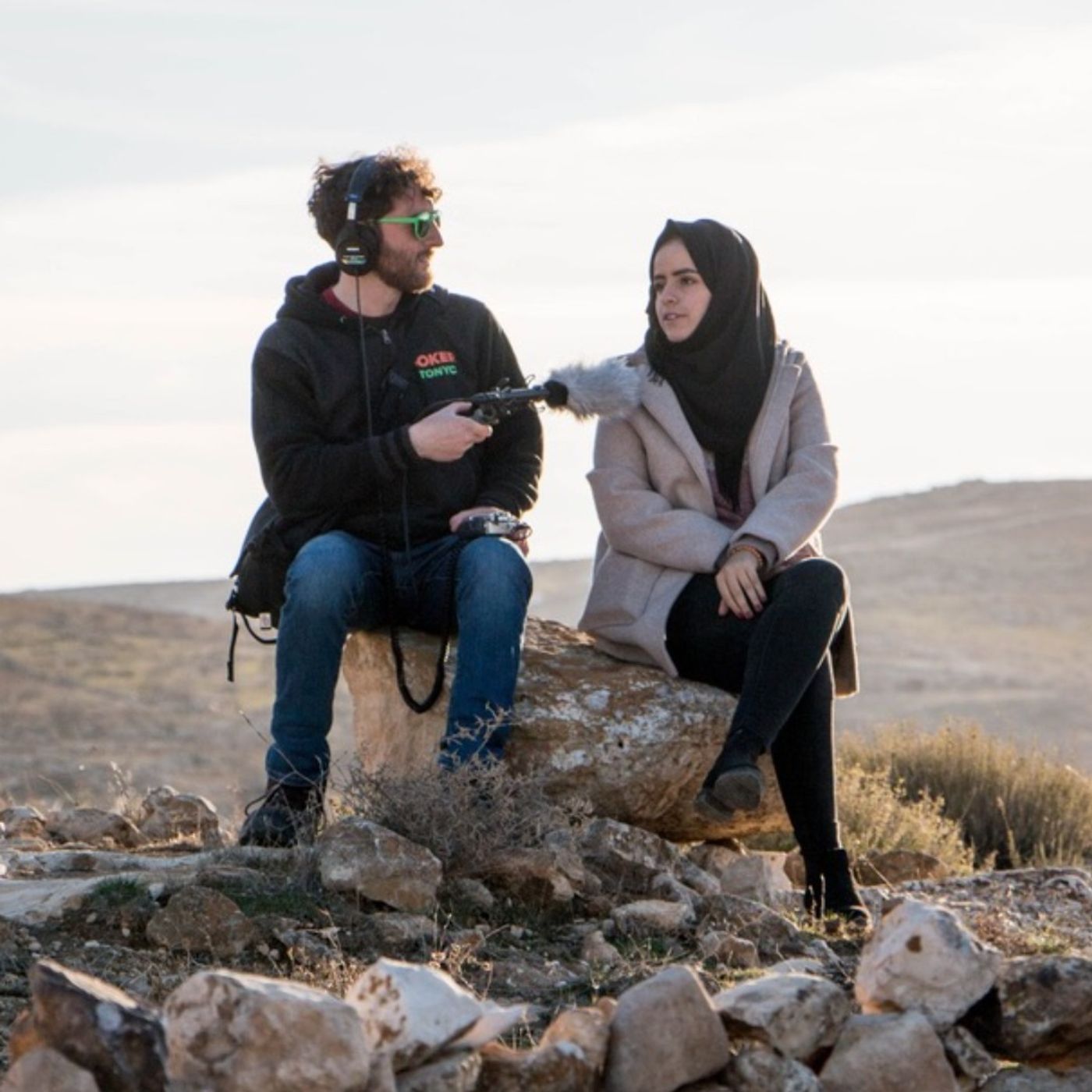
Samiha Hureini is a university student from the village of a-Tuwani, in the South Hebron Hills. She is one of the founders of Youth of Sumud, a group of young people who came together to defend their community in the wake of a dramatic direct action (chronicled in the very first episode of Unsettled).In this interview with producer Max Freedman, Samiha explains how Youth of Sumud has maintained a Palestinian presence in the caves of Sarura despite the constant threat of violence from soldiers and settlers, and the price that she and her family have paid for their activism.Youth of Sumud: Facebook, InstagramCenter for Jewish Nonviolence: Facebook, Instagram“The Story of Sumud” (Unsettled, 8/4/17)“Palestinian children travel dangerous route to school in At-Tuwani” (DCI Palestine, 9/10/13)Yuval Abraham, “He grabbed his generator. They shot him in the neck” (+972, 1/3/21)Amira Hass and Hagar Sheizaf, “The Village Where Palestinians Are Completely Powerless” (Haaretz, 1/5/21)Twitter thread on Sami Hureini’s recent arrest (1/9/21)
Ep 35Joshua Leifer: The Tragedy of Jeremy Corbyn
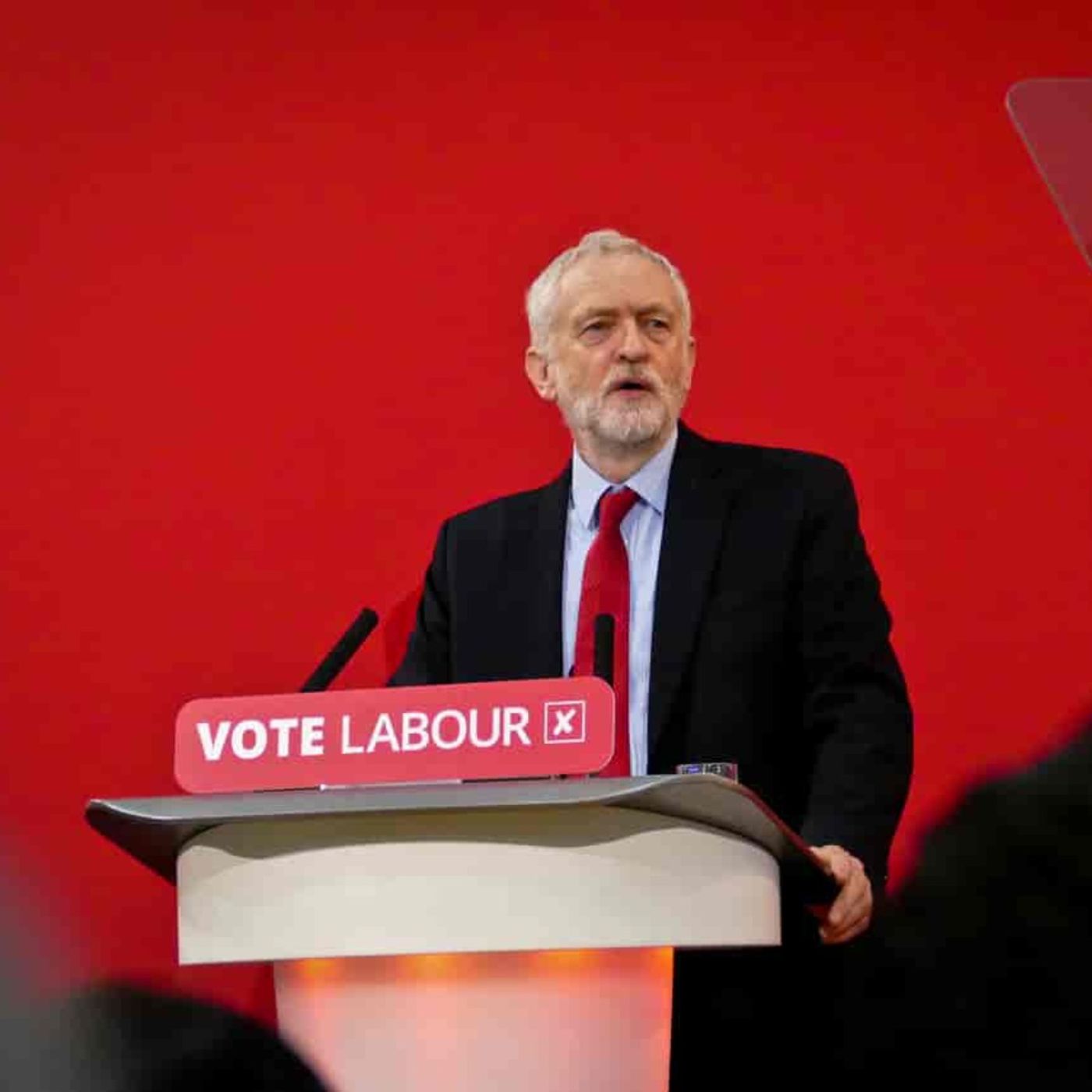
"Five years ago, Jeremy Corbyn brought Palestine solidarity politics into the heart of the largest left-wing party in Europe. And [his leadership has] ended with criticisms of the occupation being untenable in British politics." How did this happen?The unlikely election of Jeremy Corbyn to lead the Labour Party in 2015 appeared to signal the renewed political viability of both socialism and Palestine solidarity. But under Corbyn's leadership, Labour was consumed by a series of anti-semitism scandals, with disastrous results. Was the charge of anti-semitism simply a weapon in Labour's long-running factional conflict, or is the British left irredeemably anti-semitic? What can Americans learn from Corbyn's mistakes?Producer Max Freedman talks to Joshua Leifer, assistant editor at Jewish Currents and author of "The Tragedy of Jeremy Corbyn."CREDITSUnsettled is produced by Emily Bell, Asaf Calderon, Max Freedman, and Ilana Levinson. Original music by Nat Rosenzweig. Additional music from Blue Dot Sessions.Joshua Leifer is an editor, writer, and translator. He is currently an assistant editor at Jewish Currents. He was previously an associate editor at Dissent, and before that, at +972 Magazine. His work has appeared in The Guardian, The Nation, n+1, Jacobin, Haaretz, and elsewhere. REFERENCESJoshua Leifer, “The Tragedy of Jeremy Corbyn” (Jewish Currents, November 27, 2020)Gabriel Pogrund and Patrick Maguire, Left Out: The Inside Story of Labour Under Corbyn (2020)J.J. Goldberg, Jewish Power: Inside the American Jewish Establishment (1996)Nathan Thrall, “How the Battle Over Israel and Anti-Semitism Is Fracturing American Politics” (The New York Times Magazine, March 28, 2019)Mari Cohen, “Jewish Federations Urge Biden to Promote Controversial Definition of Antisemitism” (Jewish Currents, December 10, 2020)
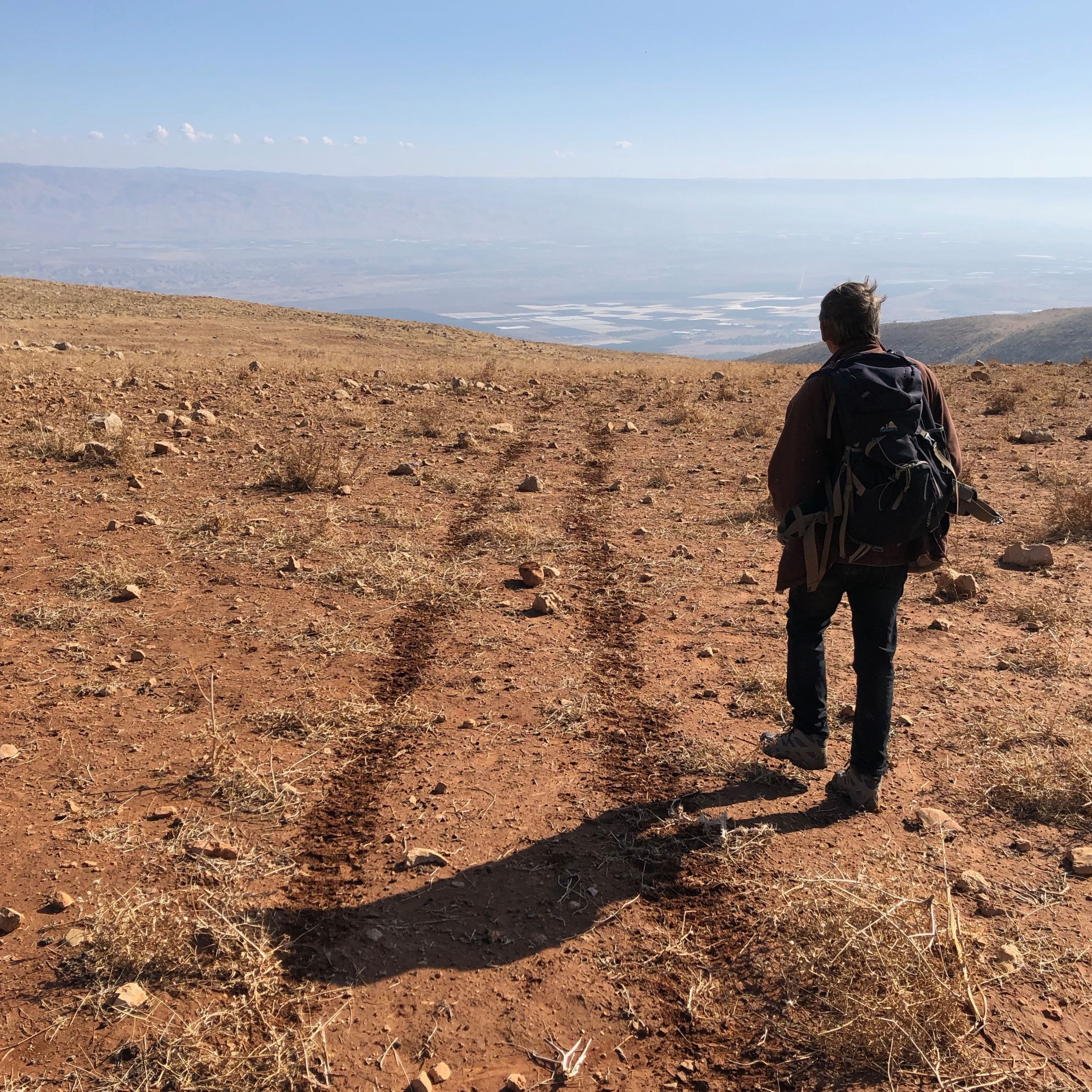
Ep 34Noura Erakat
When we first pitched our documentary "The shepherd and the settler" to be part of the "Rulebreakers" series on the BBC World Service, we started with a question: What are the rules, exactly, where Palestinian shepherds and Israeli settlers live side-by-side? Who makes the rules, and who’s breaking them?To better understand the legal landscape in the occupied West Bank, we turned to Noura Erakat: a human rights attorney, a scholar of law in the Middle East, and the author of Justice for Some: Law and the Question of Palestine.Unsettled is produced by Asaf Calderon, Emily Bell, Ilana Levinson, and Max Freedman.

Ep 33Amiel Vardi
Amiel Vardi is a professor of Classics at the Hebrew University in Jerusalem and one of the founders of a grassroots movement called Ta'ayush: Israelis and Palestinians striving together to end the Israeli occupation and to achieve full civil equality through daily non-violent direct action.Amiel was with our producer Max Freedman when he visited Rashash to report "The shepherd and the settler" for the BBC World Service. Listen to the full documentary, then return to this episode to learn more about why Ta'ayush focuses on herding communities, the resistance they face from settlers and soldiers, and why an older generation of activists struggles to find young Israelis who are willing to join them.Unsettled is produced by Emily Bell, Asaf Calderon, Max Freedman, and Ilana Levinson.
Ep 32Aviv Tatarsky
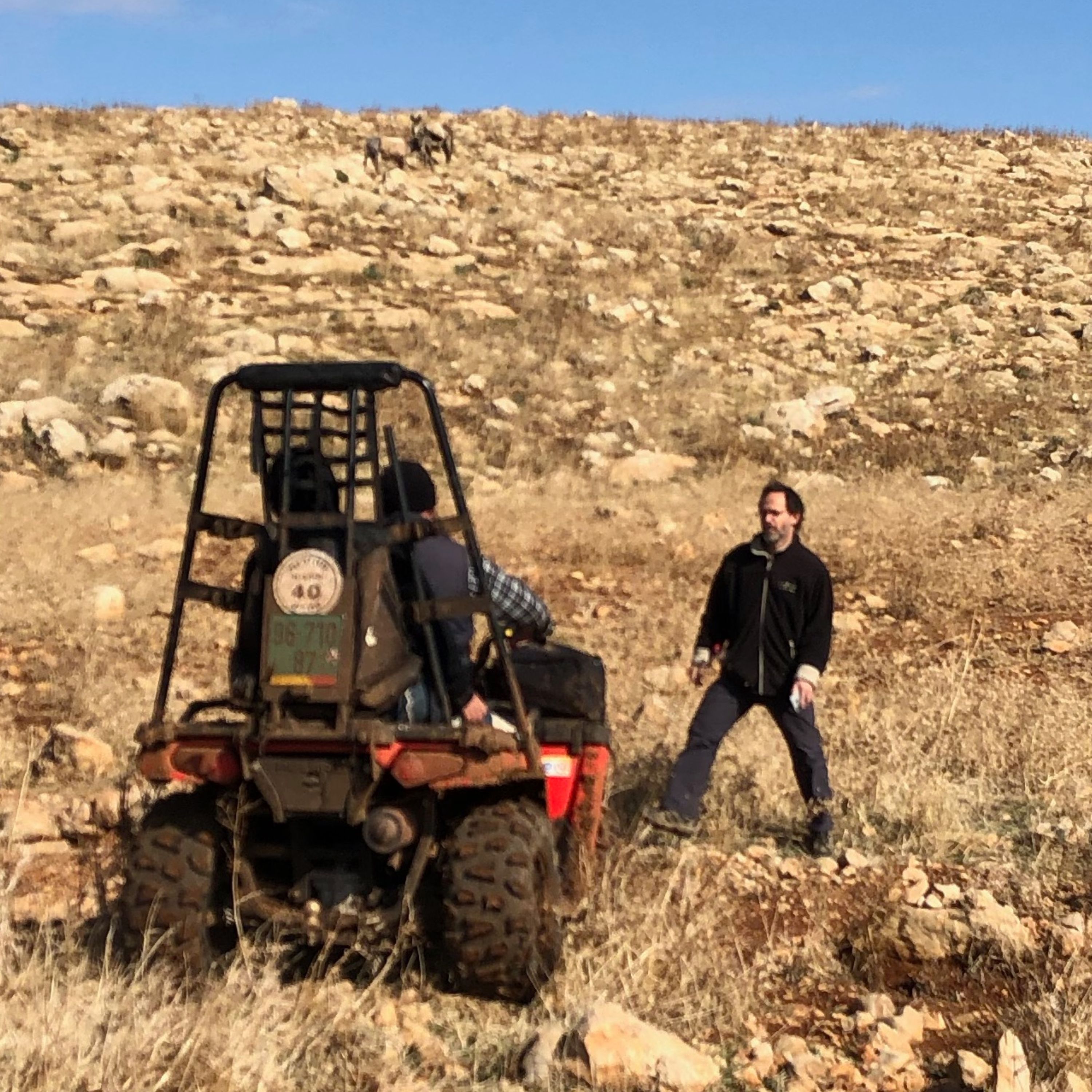
We're back with another extended interview from "The shepherd and the settler," produced by the Unsettled team for the BBC World Service.Aviv Tatarsky is a researcher for Ir Amim and one of the founders of Engaged Dharma Israel. Aviv was with our producer Max Freedman when he visited Rashash to report "The shepherd and the settler." Listen to the full documentary to hear Aviv's close encounter with a settler on an ATV, then return to this episode to learn about how Aviv uses meditation to challenge the occupation, and why he no longer calls himself a "peace activist."Unsettled is produced by Asaf Calderon, Emily Bell, Ilana Levinson, and Max Freedman.
Ep 31Muhammad Jahaleen
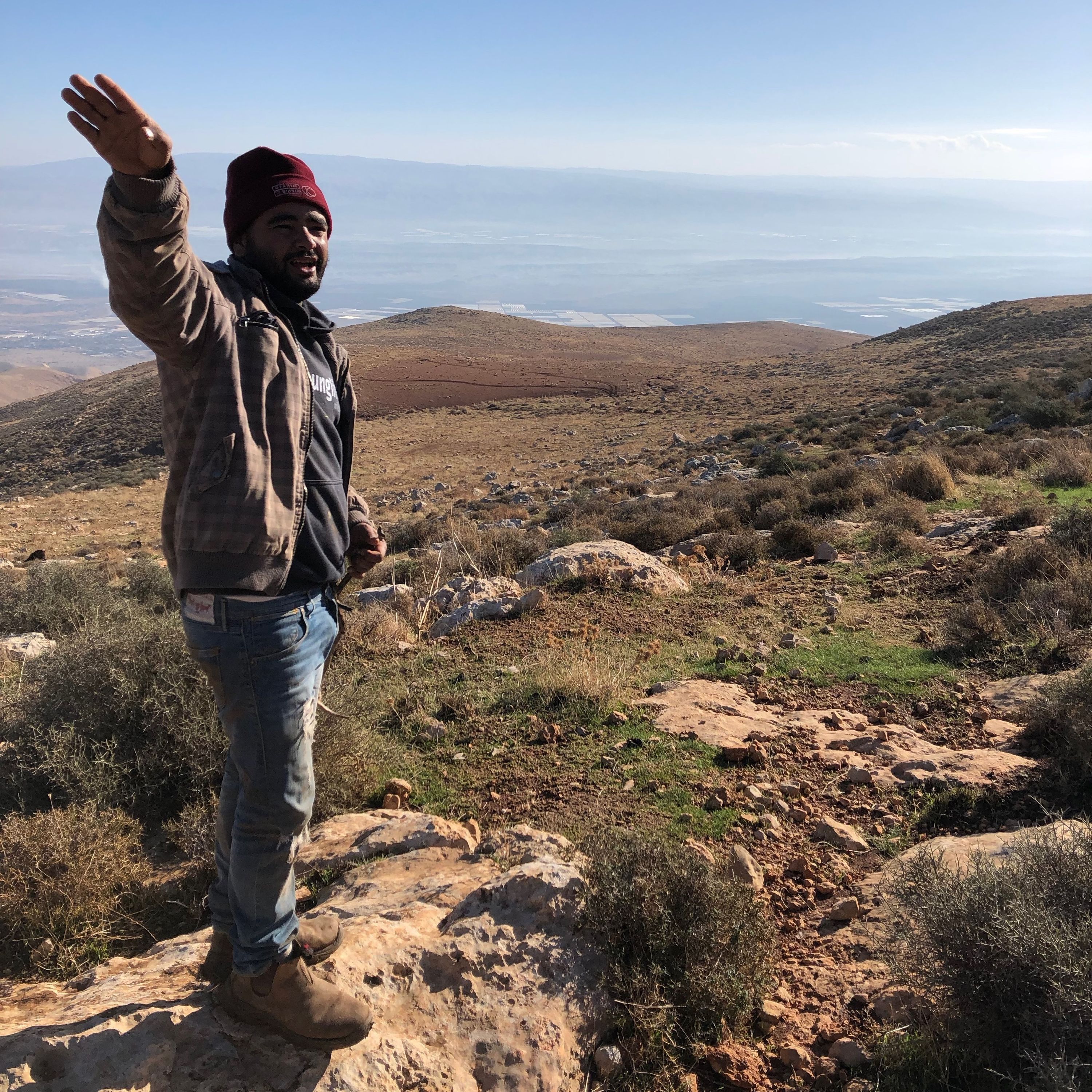
This is the first in a series of extended interviews from "The shepherd and the settler," produced by the Unsettled team for the BBC World Service.Muhammad Jahaleen is a 30-year-old Bedouin shepherd in the occupied West Bank, living with his family in a remote place called Rashash. Listen to "The shepherd and the settler," then return to this episode for more of Muhammad's story and more details about his life under threat from the settlement next door.Unsettled is produced by Asaf Calderon, Emily Bell, Ilana Levinson, and Max Freedman. This episode was reported by Max Freedman.
Ep 30The shepherd and the settler
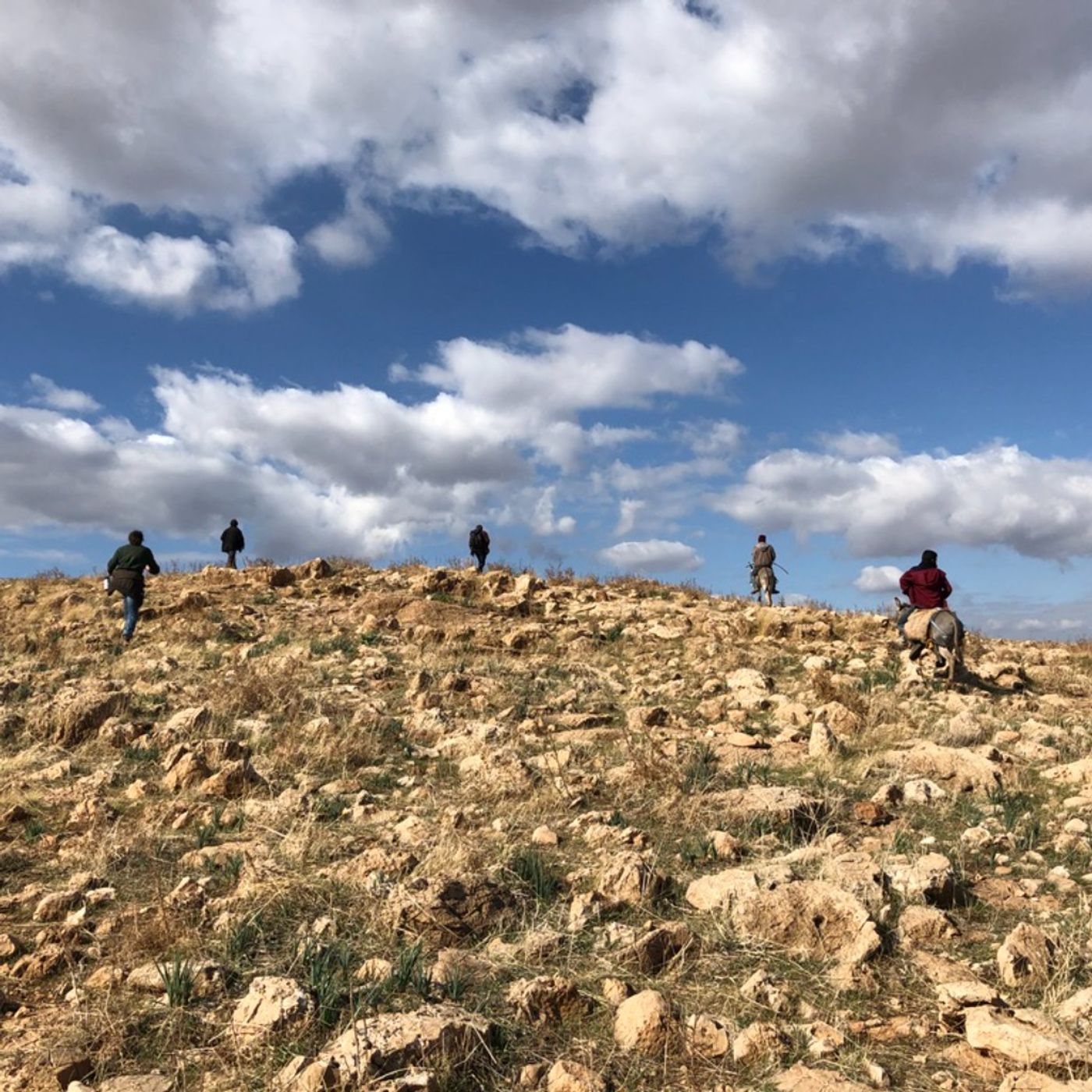
Unsettled producer Max Freedman spends the day in Rashash, a small herding community in the West Bank, with a Bedouin shepherd named Muhammad.Muhammad's family has been herding sheep and goats in Rashash for 30 years, and in Palestine for generations. But since Israeli settlers recently moved in nearby, it has become difficult for Muhammad to graze his flock undisturbed. After watching this conflict in action, Max sets out to understand what he saw in Rashash."The shepherd and the settler" originally aired on September 16, 2020 as part of the "Rulebreakers" series, a collaboration of the BBC World Service and the Sundance Institute. This story was produced by Max Freedman, Ilana Levinson, and Emily Bell, with editing by Ilana Levinson.

Introducing School Colors
bonusEBedford-Stuyvesant, Brooklyn is one of the most iconic historically Black neighborhoods in the United States. But Bed-Stuy is changing. Fifty years ago, schools in Bed-Stuy's District 16 were so overcrowded that students went to school in shifts. Today, they're half-empty. Why?"School Colors" is a new podcast from Unsettled producer Max Freedman exploring how race, class, and power shape American cities and schools. Listen to the first episode here, then find "School Colors" in your podcast app and subscribe. More information at www.schoolcolorspodcast.com.CREDITSProducers / Hosts: Mark Winston Griffith and Max FreedmanEditing & Sound Design: Elyse BlennerhassettOriginal Music: avery r. youngProduction Associate: Jaya Sundaresh

Ep 29Energy (Gaza, ep. 4)
Israel’s blockade of the Gaza Strip shapes people’s lives in many different ways. In this episode, we focus on the chronic energy shortage. Because energy is needed for much more than turning on the lights; water, sewage, and hospitals, schools, farms, and factories — they all depend on a steady supply of electricity. First, producer Max Freedman speaks with Tania Hary, executive director of Gisha, to learn why Gaza’s energy infrastructure can only meet about half of the demand. Then, the story of Majd Mashharawi: a young engineer and entrepreneur who is harnessing Gaza’s most plentiful natural resource — sunlight — to bring power to her people. This episode of was produced and edited by Max Freedman with Ilana Levinson. Original music by Nat Rosenzweig. Additional music from Monem Awad and Blue Dot Sessions. BIOS Tania Hary is the executive director of Gisha – Legal Center for Freedom of Movement. Prior to joining Gisha in September 2007, Tania worked on advocacy initiatives for not-for-profit organizations promoting human rights and the rights of refugees. She received her B.A. in modern literature at the University of California, Santa Cruz and an M.A. in international affairs from the New School in New York. Tania is relied upon as a source of information and analysis on the situation in Gaza by diplomats, foreign offices and international organizations, and appeared before the Security Council in an Arria formula meeting in 2015. As a resident of war-torn Gaza, Majd Mashharawi observed the acute need for access to construction material in order to rebuild damaged buildings and infrastructure. She strove to meet this need by founding GreenCake in 2015,a company that creates environmentally friendly bricks from ash and rubble. In the summer of 2017, she developed SunBox; an affordable solar device that produces energy to alleviate the effects of the energy crisis in Gaza, where access to electricity has been severely restricted, sometimes to less than three hours of electricity a day. With SunBox, she was able to provide electricity to hundreds of people and recently awarded MIT Pan Arab competition for that. She received her BSc in Civil Engineering from the Islamic University of Gaza. In 2018 she was selected as one of the most creative people in business and spoke at TEDwomen 2018. LINKS Monem Awad AKA Fawda, “الشمعة بريئة (The candle is innocent)” Gisha - Legal Center for Freedom of Movement SunBox SunBox’s crowdfunding campaign “How I’m making bricks out of ashes and rubble in Gaza” (Majd Mashharawi, TEDWomen 2018)
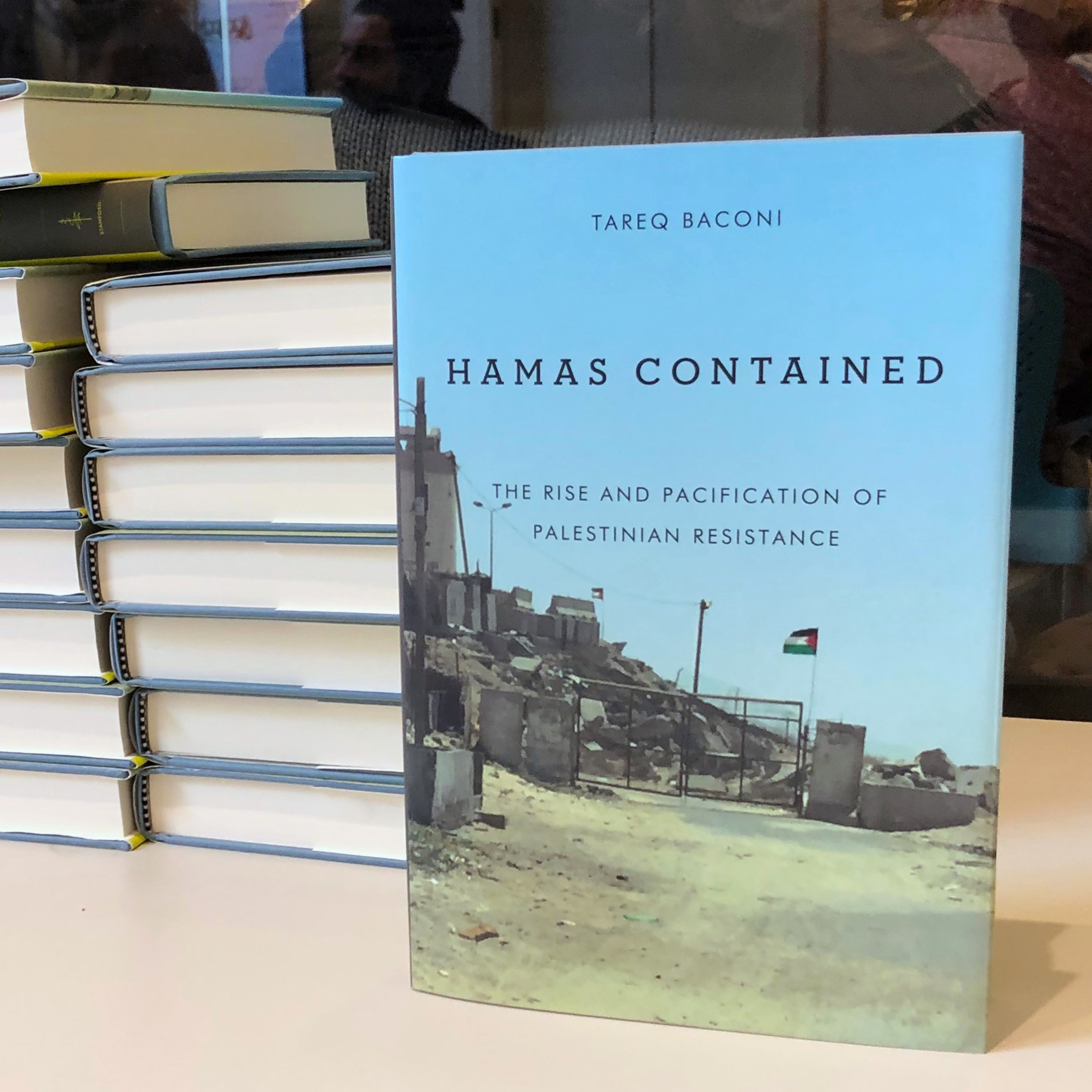
Ep 28Hamas (Gaza, ep. 3)
Too many conversations about Gaza begin and end with one word: Hamas. And conversations about Hamas too often rely on reductive talking points. In this episode, producer Max Freedman speaks with Tareq Baconi, author of the new book Hamas Contained: The Rise and Pacification of Palestinian Resistance. They discuss the origins of Hamas, its position in the Palestinian political landscape, and its governance of the Gaza Strip. This episode was produced and edited by Max Freedman. Fact-checking by Asaf Calderon. Music by Nat Rosenzweig and from Blue Dot Sessions. Episode Notes Unsettled on Facebook Unsettled on Twitter: @UnsettledP Unsettled on Instagram: @unsettled_pod
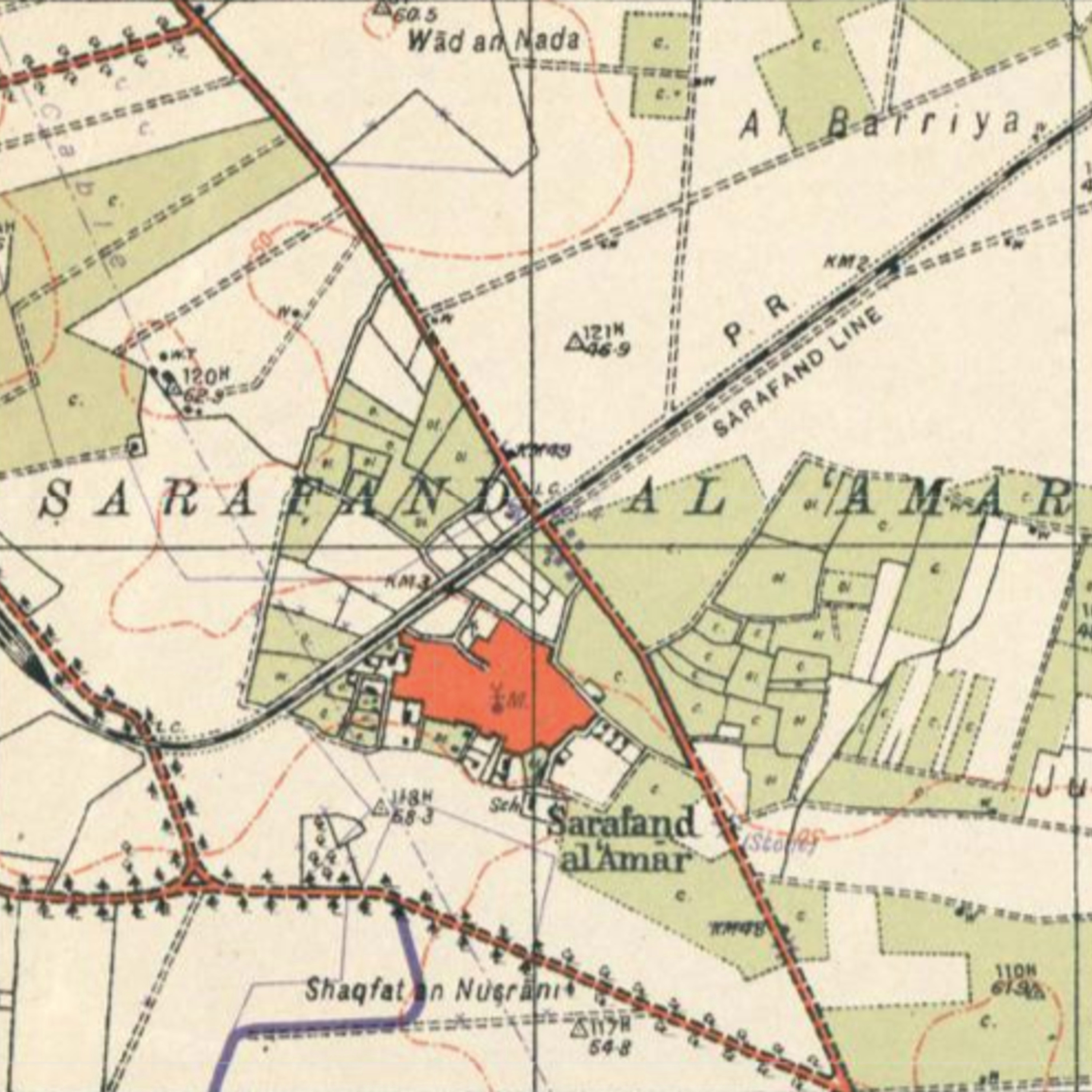
Ep 27Refugees (Gaza, ep. 2)
Hilmi Hammad was 18 years old in 1948 when Israeli forces entered his village. He became one of about 200,000 Palestinian refugees who ended up in the Gaza Strip at the end of the 1948 war. The site where Hilmi's village once stood is located today in the center of Israel, and though Hilmi has spent his life in Gaza, his home is still in that village, to which he hopes to return. In the second episode of Gaza, a series from Unsettled, we hear from Hilmi and his son Isam. Isam was born in Gaza and is one of the organizers of the Great March of Return. Isam and Hilmi shared with us their history and talked to us about what it means to be Palestinian refugees in Gaza, still dreaming of returning to their native village. This episode was produced and edited by Asaf Calderon, with help from Ilana Levinson. Fact-checking by Ilana Levinson and mixing by Max Freedman. Music by El Far3i and from Blue Dot Sessions. Unsettled theme music by Nat Rosenzweig. Artwork for our Gaza series by Marguerite Dabaie. Preview image: Palestine Open Maps Episode Notes Unsettled on Facebook Unsettled on Twitter: @UnsettledP Unsettled on Instagram: @unsettled_pod

Ep 26The Great March (Gaza, ep. 1)
American and Israeli politicians, religious leaders, and dignitaries met in Jerusalem on May 14, 2018 to mark the United States moving its embassy there. While they celebrated with songs about peace, thousands of Palestinians assembled at the fence that separates Israel from the Gaza Strip for the Great March of Return. This mass demonstration was originally planned to last six weeks, but has continued to this day. How did it all begin, and who are the protestors that continue to risk their lives to participate? In the first episode of Gaza, a series from Unsettled, we hear about the Great March of Return from one of its organizers and two young participants. This episode was edited and produced by Ilana Levinson, with help from Asaf Calderon and Sophie Edelhart. Music from Blue Dot Sessions. Unsettled theme music by Nat Rosenzweig. Artwork for our Gaza series by Marguerite Dabaie. Photo credit: Issam Adwan Episode Notes Unsettled on Facebook Unsettled on Twitter: @UnsettledP Unsettled on Instagram: @unsettled_pod
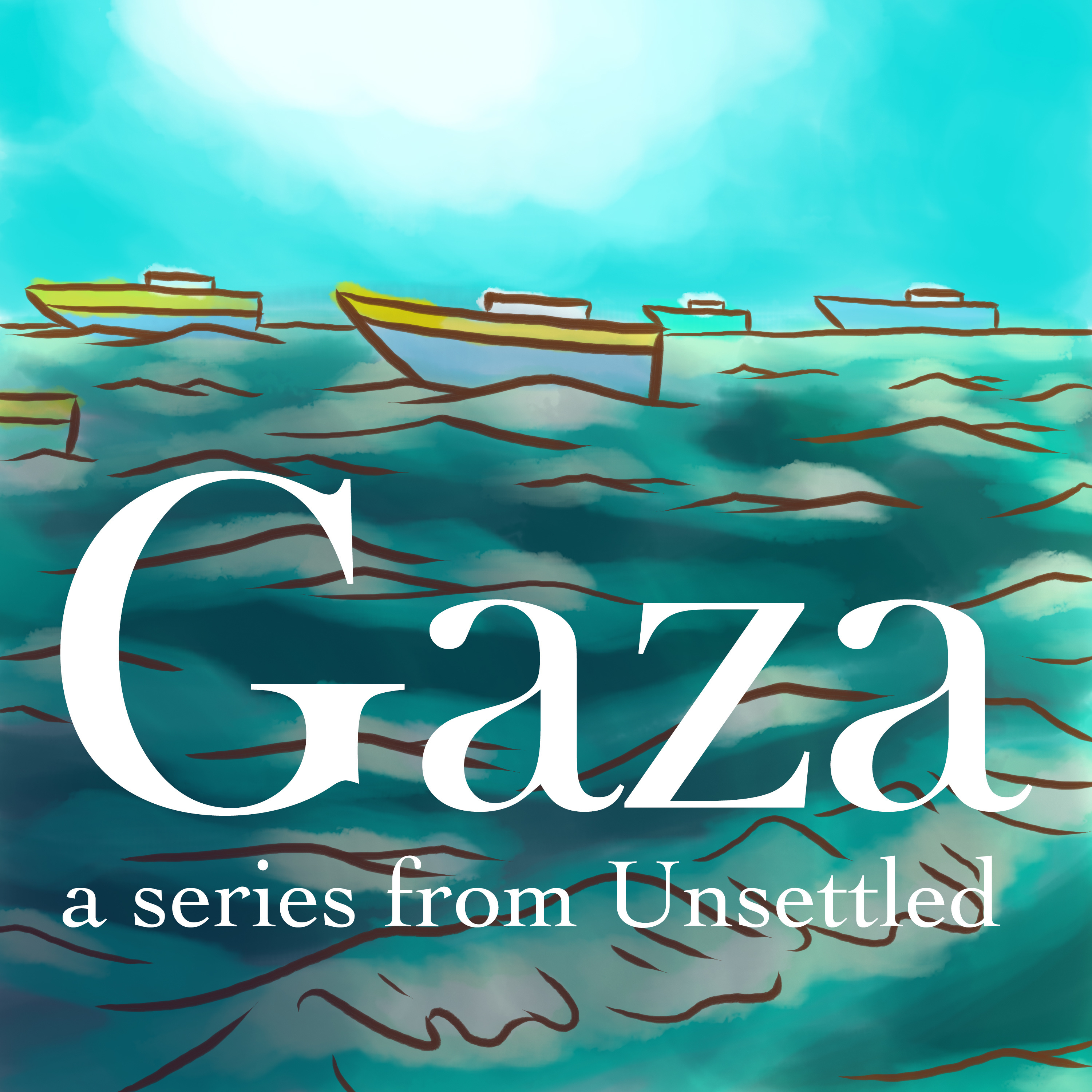
Ep 25Trailer: Gaza, a series from Unsettled
trailerIn January, Unsettled is launching a series about the Gaza Strip. As Gaza has kept coming up in the news this past year, you’ve probably had questions - and so have we. Why did thousands of people risk so much to take part in the Great March of Return? Why does a majority of the population identify as refugees, even many who were born in Gaza? How are Gazans innovating in order to survive? How can art be used to upend conventional narratives about Gaza and its people? These are just a few of the questions we'll try to address in Gaza, a series from Unsettled. Coming in January 2019. Subscribe to Unsettled wherever you get your podcasts. Music from Blue Dot Sessions. Illustration by Marguerite Dabaie.

Ep 24Ita Segev
E> I feel like in some ways, for the first time in my life, I’m standing on my own two feet. Because I know the truth about where I’m from. A few years ago, you would have found Ita Segev in the Israeli army, training to patrol the West Bank. Today, Ita is a transfeminine performance artist and anti-Zionist activist in New York City. In this episode, Ita tells her story: how gender and Zionism shaped her early years, and how learning the truth about her home created space to understand and express her true self. This episode was produced and edited by Yoshi Fields. Original music by Nat Rosenzweig. Additional music from Blue Dot Sessions. Ita Segev makes performance, writes, performs/acts and does advocacy & community building work, mainly around the intersection of her transfeminine and anti-Zionist Israeli identities. She is currently developing a show titled Knot in My Name as a Brooklyn Art Exchange artist in residence for 2018/2019 and is a BDS supporting artist council member at Jewish Voice for Peace. You can read more about her sociopolitical context and personal story on Condé Nast’s Them magazine and connect on IG @itaqt for cute looks and upcoming shows. REFERENCES Ita Segev, "I Left Israel and Found My Trans, Anti-Zionist Self." Them, January 12, 2018. Ita Segev, "Israel Makes the Hormones I Need, But I Support Palestinian Liberation." Them, May 18, 2018. Orly Almi, "Captive Economy: The Pharmaceutical Industry and the Israeli Occupation." Who Profits, March 2012. Photo credit: Niyoosha Ahmadi Khoo
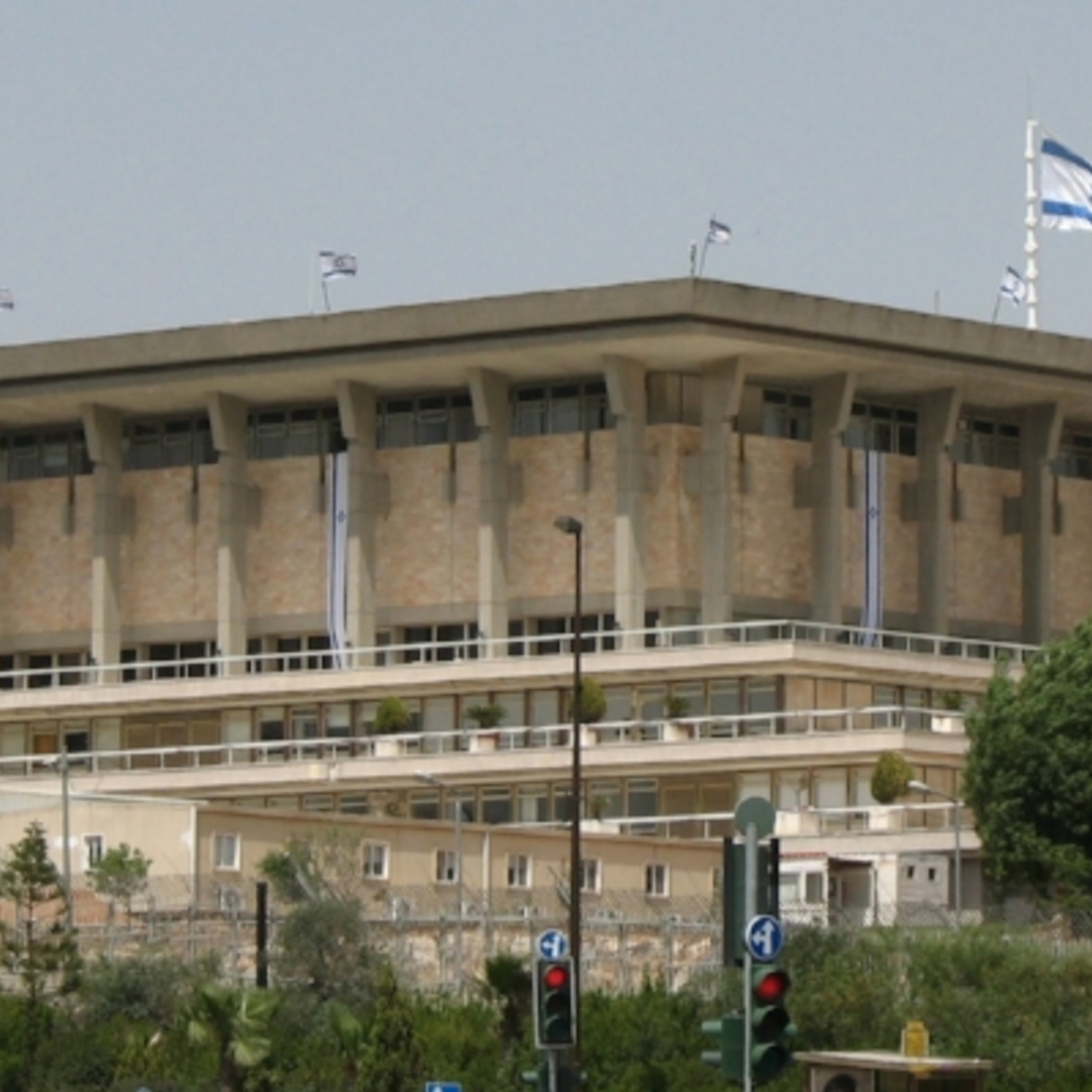
Ep 23The Nation-State Law (with Amjad Iraqi)
The Nation-State Law is actually affirming a lot of the practices that were in place for decades. In many ways, it’s nothing particularly new, and the right wing is just making it more explicit. The center-left wants to keep it delicate enough so that you maintain that democratic image. For Palestinian citizens of Israel, these two debates are unacceptable. We’re not looking for an overt system that legitimizes our inequality, and we’re not looking for a delicate system either that still legitimizes our inequality. — Amjad Iraqi On July 19, the Israeli Knesset passed the "Nation-State Bill" in a 62-55 vote. Many critics of the bill say that it undermines Israel's historic claim to be both Jewish and democratic in character. But does this new law actually change anything, or only make explicit the way things have been for decades? Is it possible for a state to be both affirmatively Jewish and treat its citizens equally? Producer Ilana Levinson spoke to Amjad Iraqi, a Palestinian writer and policy adviser who was in the Knesset for the final debates before the Nation-State Bill was passed into law. This episode of Unsettled was produced and edited by Ilana Levinson, with technical help from Asaf Calderon. Original music by Nat Rosenzweig. Amjad Iraqi is a writer for +972 Magazine, a policy member of Al-Shabaka: The Palestinian Policy Network, and was a projects and international advocacy coordinator at Adalah - The Legal Center for Arab Minority Rights in Israel. REFERENCES David M. Halbfinger and Isabel Kershner, "Israeli Law Declares the Country the ‘Nation-State of the Jewish People’" (New York Times, July 19, 2018) Israel's Basic Laws Yousef Jabareen, "Israel just dropped the pretense of equality for Palestinian citizens" (Los Angeles Times, July 20th 2018) Daoud Kuttab, "Palestinians outraged at Jewish nation-state law" (Al-Monitor, July 20, 2018) _Preview image: James Emery, via Wikimedia Commons _
Ep 22Child Detention
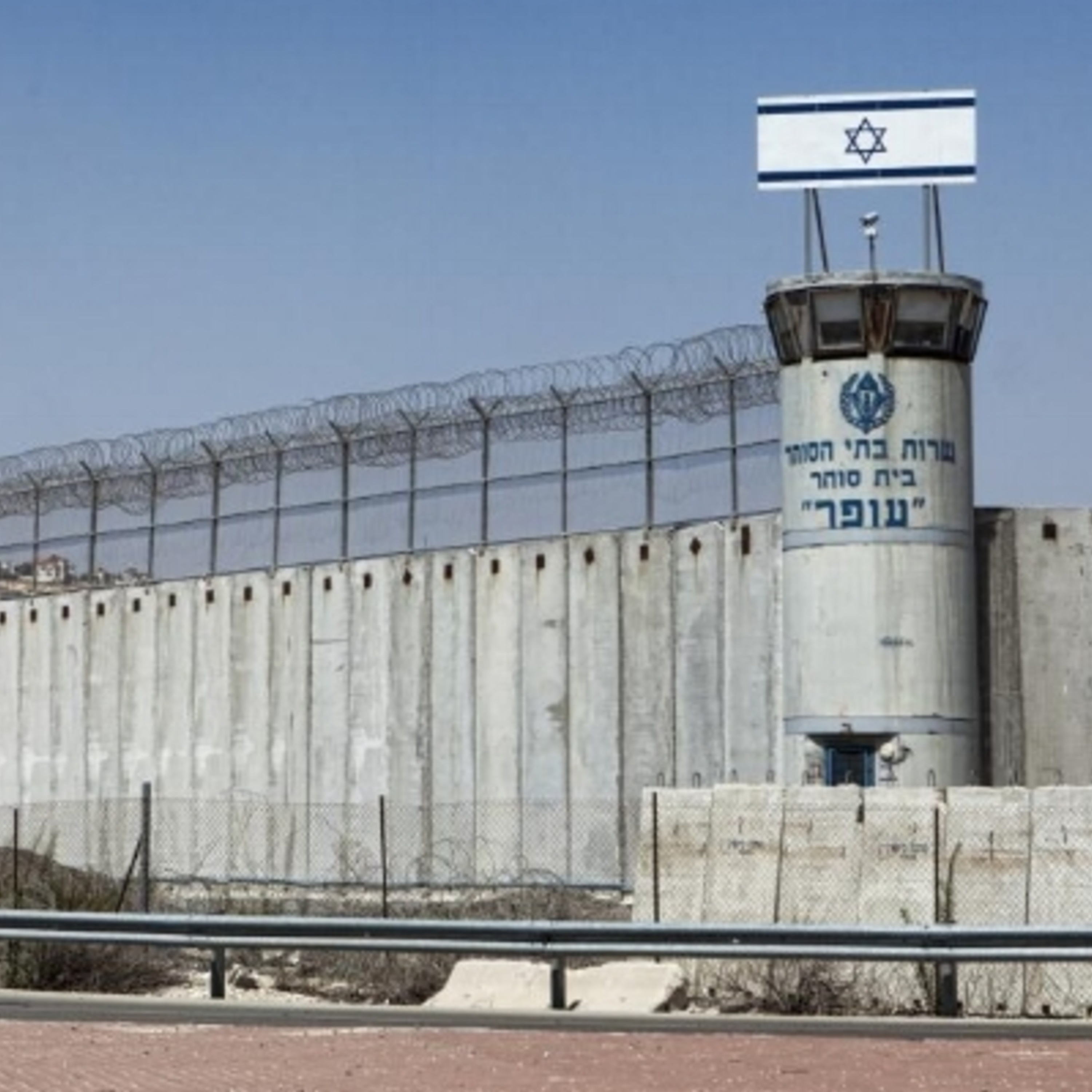
If every time a child does something we detain them, we destroy their future, we make them basically dreamless young men. This is how Palestinian children who go through the system become. — Yazan Meqbil On December 19, 2017 Palestinian teenager Ahed Tamimi was arrested after slapping an Israeli soldier on her family's property. She was taken from her home in the middle of the night, interrogated without an adult present, and eventually signed a plea deal and was sentenced to eight months in prison. Ahed Tamimi became a symbol of Palestinian resistance, but she is only one out of hundreds of Palestinian children who face Israel's military court system every year. In this episode of Unsettled, we wanted to find out — On what grounds are children arrested? What actually happens to a child once they’ve been arrested? How does child detention impact both individuals and communities in the West Bank? We spoke to Ahed's father Bassem Tamimi, Palestinian student and activist Yazan Meqbil, and attorney Brad Parker of Defense for Children International-Palestine. This episode of Unsettled was produced and edited by Emily Bell and Asaf Calderon. Music by Nat Rosenzweig and Monplaisir. Bassem Tamimi is a Palestinian activist from the West Bank village of Nabi Saleh. Since 2009, Tamimi has been one of the leaders of protests in the village against the seizure of the local spring by a nearby settlement. Tamimi spent three years in administrative detention in the 1990s. While he was imprisoned twice between 2011 and 2013, Amnesty International labeled him a prisoner of conscience and wrote that he was "detained solely for his role in organizing peaceful protests against the encroachment onto Palestinian lands by Israeli settlers." Bassem is married to Nariman Tamimi and has four children, including 17-year-old Ahed Tamimi, who was arrested in December 2017 and currently serves an 8-month sentence. Yazan Meqbil grew up in the West Bank town of Beit Ommar. Growing up, Meqbil became familiar with the ill-treatment of Palestinian children. In 2015, Meqbil joined the American Friends Service Committee and Defense for Children International-Palestine in filming the documentary Detaining Dreams. He has been on several speaking tours and engagements in the US since then advocating for the cause and raising awareness about Israel’s arrest, persecution, and mistreatment of an average of 700 Palestinian children every year. Meqbil is currently a rising senior studying Molecular Biology and Biochemistry at Goshen College, in Goshen, Indiana. Brad Parker is a staff attorney and international advocacy officer at Defense for Children International - Palestine. He specializes in issues of juvenile justice and grave violations against children during armed conflict, and leads DCIP’s legal advocacy efforts on Palestinian children’s rights. Parker regularly writes and speaks on the situation of Palestinian children, particularly issues involving detention, ill-treatment and torture of child detainees within the Israeli military detention system, and violations of international humanitarian law and international human rights law. He leads DCIP's US Program and is a co-leader of the No Way to Treat a Child campaign in the United States and Canada. He is a graduate of the University of Vermont and received his J.D. from the City University of New York School of Law. RESOURCES Military Court Watch Annual Report 2016/17 Minors in Jeopardy, B'tselem, March 2018 Statistics on Palestinian minors in the custody of the Israeli security forces, B'tselem, May 2018 Unprotected: Detention of Palestinian Teenagers in East Jerusalem, B'tselem, October 2017 Order regarding Security Provisions [Consolidated Version] (Judea and Samaria) (No. 1651), 5770-2009 Israel's military courts 'humiliating charade' for Palestinians, Al Jazeera, February 2018 Separate and Unequal: Inside Israel's Military Courts, Where the Only Defendants Are Palestinian, Haaretz, March 2017 Defense For Children International - Palestine No Way To Treat A Child H.R.4391 - Promoting Human Rights by Ending Israeli Military Detention of Palestinian Children Act Detaining Dreams Yazan Meqbil: Congressional Briefing - 50 Years of Occupation and Life for Palestinian Children Preview image: Ofer Military Prison, Israel. Photo credit: Christopher Michel, Wikimedia Commons.

Ep 21Nakba Day (with Ahmed Mansour)
For the last three weeks, my Nakba was losing my best friends, covering the march with their press-marked vest. Every week, every day I have like personal Nakba, and this is the case with every Palestinian. With every Palestinian around the world, they have their own Nakba. — Ahmed Mansour Every year, when Israelis and many American Jews celebrate the creation of the state of Israel, Palestinians remember their people’s expulsion, or what they refer to as the "Nakba," the Arabic word for catastrophe. This year, on the 70th anniversary of both Israeli independence and the Nakba, the United States is moving its embassy to Jerusalem. Our guest for this episode, Palestinian filmmaker Ahmed Mansour, calls this a "double Nakba and double catastrophe." Producer Ilana Levinson spoke with Ahmed about his childhood in a Gaza refugee camp, why the timing of the U.S. embassy move is so inflammatory, and how the Nakba continues to permeate Palestinian life. Ahmed Mansour’s film, "Brooklyn, Inshallah," follows the 2017 campaign of Khader El-Yateem, a Palestinian-American Lutheran pastor who became the first Arab-American to run for New York City Council. To learn more and to contribute to his fundraising campaign, click here. This episode was produced by Ilana Levinson and Max Freedman, and edited by Max Freedman. Original music by Nat Rosenzweig. Ahmed Mansour , a New York-based filmmaker, is a NYU Arthur L. Carter Journalism Institute - News and Documentary Program - graduate. Ahmed was born and raised in a refugee camp in Gaza Strip, Palestine. He worked as an organizer, translator and guide for international journalists covering the 2014 war. He made a series of short films highlighting the humanitarian crisis in Gaza Strip after three successive wars. He has also worked as a reporter for the Washington Report on the Middle East Affairs in Washington DC. Ahmed has received residencies and fellowships from Duke University and Story Wise Program. RESOURCES Trailer and fundraising campaign for "Brooklyn, Inshallah"(LaunchGood) Eric Adams,"Why Only Israel Can Customize America's F-35 (At Least for Now)" (Wired, May 10, 2016). Jonathan Cook, "Critics blast US shipment of fighter jets to Israel" (Al Jazeera, April 26, 2017). Daniel Kurtzer, "How terrorism helped found Israel"(Washington Post, March 13, 2015). Asaf Calderon, "What It's Like to Have a Jewish Terrorist in the Family"(Haaretz, May 3, 2017).
Ep 19African Refugees in Israel
Israel is now turning 70, and for 70 years we’ve brought in millions of Jewish refugees from all over the world. And now, for the first time in 2000 years that we have some kind of Jewish sovereignty and we have a political body that is able to protect others, we have non-Jews seeking asylum in the Jewish state. If Israel sends off my Eritrean and Sudanese friends to Africa...if I haven’t done everything in my power as a human being and as a Jew to stop it, I don’t know if I’ll be able to live with myself, and I don’t know if I’ll be able to live in the state of Israel. — Elliot Vaisrub Glassenberg Israel has a complicated history with refugees. Many Jewish refugees found shelter in Israel after the Holocaust; many Palestinians, on the other hand, became refugees after the 1948 war. But in this episode, we talk about Israel’s other refugees, those you may not have known about: African refugees who come mostly from Sudan and Eritrea escaping oppressive regimes and persecution. Mutasim Ali is a Sudanese refugee, one of 35,000 African refugees currently living in Israel -- but one of only 13 to have his refugee status recognized by the state. As of December 2017, all of the others are at risk of deportation. Israel has already started sending refugees to countries that offer them no status or security. In this episode, Unsettled producer Asaf Calderon speaks to Mutasim and advocate Elliot Vaisrub Glassenberg about the unfolding crisis. Why did so many African refugees choose Israel? Why doesn't Israel want them? What does Israel's treatment of these refugees say about the state of the Zionist experiment? And what can Americans do to help? This episode of Unsettled is hosted by Asaf Calderon and edited by Ilana Levinson. Music by Nat Rosenzweig and Podington Bear. Mutasim Ali is a law student at the College of Law & Business, Ramat Gan and former executive director at African Refugees Development Center (ARDC), a community-based organization to protect, assist, and empower African refugees and asylum-seekers to advocate on their behalf. He is an advocate for change and democracy in Sudan. Elliot Vaisrub Glassenberg is an American-Canadian-Israeli Jewish educator-activist. Elliot is a senior educator at The Kibbutz Movement and BINA: The Jewish Movement for Social Change and the central shaliach (emissary) for Habonim Dror Olami in North America. Currently based in Chicago, Elliot leads activities and teaches throughout North America. Elliot is an activist for Jewish pluralism and inclusion, refugee rights, LGBTQ rights and human rights, and his educator-activist approach focuses on the application of Judaism for social change. Elliot is co-chair of Right Now: Advocates for Asylum Seekers in Israel, a blogger for The Times of Israel, and has published in Haaretz, The Jerusalem Post, The Jewish Week, and elsewhere. A native of Chicago, Elliot earned a B.A. from McGill University, and an M.A. in Jewish Education and Jewish Literature from the Jewish Theological Seminary. Elliot worked in the field of Jewish education in North America before making aliyah to Israel in 2011, where he served as Director of International Communication for BINA and became a leading activist for refugee rights in Israel. REFERENCES RIGHT NOW: Advocates for Asylum Seekers in Israel "I am my father's son: Mutasim Ali at TEDxBGU" (2014) "We want freedom - demonstration and voices of refugees, Tel Aviv, Israel"(2014) Benny Morris, Israel's Border Wars, 1949-1956 (Clarendon Press, 1997). Michael Bachner, "Netanyahu says Africans slated for deportation 'not refugees'" (Times of Israel, January 21, 2018). Associated Press, "Rwanda, Uganda Deny Reaching a Deal with Israel to Accept Refugees"(Haaretz, January 5, 2018). Xan Rice, "China and Russia 'sell jets to Sudan'" (The Times, November 17, 2004). Ilan Lior, "Israel to Pay Rwanda $5,000 for Every Deported Asylum Seeker It Takes In"(Haaretz, November 20, 2017).
Episode 6 Preview (plus Campaign Update)
trailerWith your help, from online donations and our fundraising party, we made $3,233: more than a thousand dollars more than our goal! We’re humbled by your support, and more committed than ever to continuing this work and growing the audience for it. We’ll be back next week with a full episode, about African asylum-seekers in Israel -- tens of thousands of whom are at risk of being deported. Here’s a preview of our interview with Sudanese refugee and activist Mutasim Ali.
Ep 17Listener Stories: Arielle Rivera Korman
Exciting news: if you’re in the New York City area, Unsettled is throwing a party -- this weekend! You can help support the podcast, and meet other Unsettled listeners, by joining us for #GetUnsettled this Saturday, February 3rd, at Starr Bar in Bushwick, Brooklyn. Tickets are just $5 in advance or at the door. We’ll have Unsettled merch, including stickers and t-shirts, and there will be a raffle with amazing prizes: a signed copy of Dov Waxman’s book, Trouble in the Tribe; the new album by Dan Fishback’s band, Cheese on Bread; a ticket to see comedian John Mulaney; a juggling lesson from producer Emily Bell; and more! If you’re not in New York, there’s still time to help Unsettled grow by donating online. We’ve got just $500 left to reach our goal of $2,018 in the first month of 2018. Can you help us cross the finish line? This week's listener story comes from Arielle Rivera Korman.

Ep 16Listener Stories: Rivka M.
We are so thankful and excited to announce that over the past two weeks, we have made it just over halfway to our fundraising goal! No matter the amount, each donation will help us continue this work. If you've learned something new from listening to Unsettled, if your views have been challenged, if you want to hear more, or all of the above -- please visit gofundme.com/unsettledpodcast and donate $18, or whatever makes sense for you. This week's featured story comes from our listener Rivka M.
Ep 15Listener Stories: Toby Irving
We're back with another listener story, part of our January fundraising campaign to support the future of Unsettled. In just the first week, we've raised over 700 dollars! Thanks to you, we're on our way to reaching our goal of $2018 in the first month of 2018. In this episode, Unsettled listener Toby Irving explains what brings her to a critical conversation about Israel-Palestine. If you think it's important to create a space for this conversation, please visit our fundraising campaign and donate $18, or whatever you can.
Ep 14Listener Stories: Becca Litt
We're launching our first-ever fundraising campaign for Unsettled! Donate now to help us raise $2018 in the first month of 2018. These funds will support our operations and growth, including: keeping our website running, editing software, recording equipment, and access to a sound studio. To accompany this campaign, each week in the month of January we’ll release a personal story submitted by one of our listeners. We asked you: Why are you here? How did you get engaged in this conversation and why is it important to you? The first answer comes from Becca Litt.

Ep 13Bonus: Dan Fishback
I believe in the liberation of the people of Palestine, and I believe in the liberation of the Jewish people. And those things are not just not mutually exclusive, they require each other. — Dan Fishback This is a bonus episode featuring extra content from our December 4th episode on Cultural Resistance. Playwright and musician Dan Fishback explains the difference between boycott and censorship, why he uses the word "apartheid" to describe Israel-Palestine, and why he wants to start identifying as a "liberationist Jew." This episode of Unsettled is hosted by Max Freedman. Original music by Nat Rosenzweig. Recorded at The 'cast Sound Lab in Brooklyn, New York on November 6, 2017. Edited for length and clarity by Ilana Levinson. Photo credit: Sammy Tunis Dan Fishback is a playwright, performer, musician, and director of the Helix Queer Performance Network. His musical “The Material World” was called one of the Top Ten Plays of 2012 by Time Out New York. His play “You Will Experience Silence” was called “sassier and more fun than 'Angels in America'” by the Village Voice. Also a performing songwriter, Fishback has released several albums and toured Europe and North America, both solo and with his band Cheese On Bread. Other theater works include “Waiting for Barbara” (New Museum, 2013), “thirtynothing” (Dixon Place, 2011) and “No Direction Homo” (P.S. 122, 2006). As director of the Helix Queer Performance Network, Fishback curates and organizes a range of festivals, workshops and public events, including the annual series, “La MaMa’s Squirts.” Fishback has received grants for his theater work from the Franklin Furnace Fund (2010) and the Six Points Fellowship for Emerging Jewish Artists (2007-2009). He has been a resident artist at Kelly Writers House at the University of Pennsylvania, the Hemispheric Institute at NYU, the Kimmel Harding Nelson Center, Yaddo, the MacDowell Colony, and BAX/Brooklyn Arts Exchange, where he has developed all of his theater work since 2010. Fishback is a proud member of the Jewish Voice for Peace Artist Council. He is currently developing two new musicals, “Rubble Rubble” and “Water Signs,” and will release a new album by Cheese On Bread in 2018. references Letter calling on Lincoln Center to cancel Israeli government's "Brand Israel" theater performances (Adalah-NY, 2017). "5 Myths About Israel Boycotts That Every Theater Lover Should Consider"(Dan Fishback, Forward, July 21, 2017). Lincoln Center Festival page for To the End of the Land, presented July 24-27, 2017. Lincoln Center Festival page for Yitzhak Rabin: Chronicle of an Assassination, presented July 9, 2017. "PACBI Guidelines for the International Cultural Boycott of Israel" (Palestinian Campaign for the Academic and Cultural Boycott of Israel, July 16, 2014). "Governor Cuomo Signs First-in-the-Nation Executive Order Directing Divestment of Public Funds Supporting BDS Campaign Against Israel" (Governor's Press Office, June 5, 2016). Rome Statute of the International Criminal Court (2002), which defines the word "apartheid" in Part II, Article 7 (page 5).
Ep 12Jerusalem: Leena Dallasheh
So if you want to really learn what Jerusalem is and what happens here, come here and go to both sides. Come here and talk to Palestinians. — Leena Dallasheh This is the sixth installment of a special miniseries responding to the U.S. President's decision to recognize Jerusalem as the capital of Israel. For this episode, Unsettled producer Emily Bell interviewed Leena Dallasheh, assistant professor of history at Humboldt State University. They spoke about what East Jerusalem is like for its Palestinian population and the stark differences between East and West Jerusalem. This episode was recorded on December 19, 2017 and edited by Ilana Levinson. Original music by Nat Rosenzweig. _Note: At 4:30, Leena Dallasheh says synagogue when referring to the site at Mamilla Cemetery. She intended to say cemetery in this instance. _ Leena Dallasheh is an assistant professor of history at Humboldt State University. She received her PhD in the joint History and Middle Eastern and Islamic Studies program at NYU. Her work focuses on the social and political history of Nazareth from 1940 to 1966, tracing how Palestinians who remained in Israel in 1948 negotiated their incorporation in the state, affirming their rights as citizens and their identity as Palestinian. She has published serval articles and book chapters, including “Troubled Waters: Governing Water and Struggling for Citizenship in Nazareth,” which appeared in IJMES 47 (2015). Before coming to NYU, she received a law degree from the Hebrew University in Jerusalem. Dallasheh is currently in Jerusalem for six months, working on her book manuscript, “Contested Citizenship: Nazareth’s Palestinians in the Transition from British Mandate to Israel.” The project is a communal biography of the Palestinian Arab city of Nazareth from 1940 to 1966, telling the story of this Palestinian community as it lived through the Nakba (the “Catastrophe”) of 1948. Through this, it presents a history of the early encounter between Palestinians who became citizens of Israel in 1948 and the Israeli state. The research during this period is supported by a fellowship from PARC-NEH/FPIRI.
Ep 11Jerusalem: Rabbi Steven Wernick
When nobody’s happy, you know you did the right thing. Especially if you’re a centrist. — Rabbi Steven Wernick This is the fifth installment of a special miniseries responding to the U.S. President's decision on December 6 to recognize Jerusalem as the capital of Israel. For this episode, Unsettled producer Ilana Levinson spoke to Rabbi Steven Wernick, CEO of the United Synagogue of Conservative Judaism, which serves and represents Conservative congregations across North America. On December 8, USCJ put out a statement applauding the United States’ recognition of Jerusalem. This episode was recorded on December 12, 2017 and edited by Max Freedman. Original music by Nat Rosenzweig. Rabbi Steven C. Wernick serves as the Chief Executive Officer of the United Synagogue of Conservative Judaism (USCJ), a community of kehillot - sacred communities - committed to a dynamic Judaism that is learned and passionate, authentic and pluralistic, joyful and accessible, egalitarian and traditional. Since joining USCJ in 2009, Rabbi Wernick has spearheaded a top-to-bottom transformation to allow the organization to meet the dramatically changing needs of 21st century congregations. He has shepherded the successful launch of several new initiatives for USCJ congregations, including Sulam Leadership, an integrated set of leadership development resources that includes programs for presidents, emerging leaders, current leaders and officers. Through partnerships with and grants from outside organizations, he has significantly expanded funding for USY, United Synagogue’s youth group, and has launched major new efforts to help kehillot reach out to young families and to people with disabilities. Rabbi Wernick was instrumental in the 2016 agreement to create a permanent space for pluralistic and egalitarian prayer at the Kotel (Western Wall), following five years of negotiations. The son of a rabbi and a Jewish educator, Rabbi Wernick was actively involved in USY and Camp Ramah while growing up in a variety of cities across North America including Oakland, California and Winnipeg, Manitoba in central Canada. He is a graduate of the University of Minnesota, University of Judaism and was ordained at the Jewish Theological Seminary. After ordination, he served as the Associate Rabbi of Temple Beth Sholom in Cherry Hill, NJ, and then as the senior rabbi at Adath Israel in suburban Philadelphia. As rabbi of Adath Israel, Rabbi Wernick took a synagogue that had been withering and, through his vision and energy, turned it into one of that region’s most vibrant. He still draws on his experiences at Adath Israel, as he works to grow USCJ for the next century. In 2010 Rabbi Wernick was named one of Newsweek’s 50 Most Influential Rabbis in America and was on The Forward’s 50 List of Influential Jewish Leaders. He serves on the board of the Friends of the Arava Institute. Rabbi Wernick is married and the father of three daughters. references USCJ Statement on Jerusalem as Israel Capital AJC Survey of American Jewish Opinion 2017
Ep 10Jerusalem: Dov Waxman
I think most American Jews are probably not aware of the simple fact that when they think of visiting the Western Wall, for example, they think of entering the Old City, they’re actually entering what is officially, according to international law, East Jerusalem. And therefore, according to international law, occupied territory. — Dov Waxman This is the fourth installment of a special miniseries responding to the U.S. President's decision last week to recognize Jerusalem as the capital of Israel. For this episode, Unsettled producer Ilana Levinson interviewed Dov Waxman, professor of Political Science, International Affairs, and Israel Studies at Northeastern University, and author of Trouble in the Tribe: The American Jewish Conflict over Israel (2016). They spoke about fissures in the American Jewish community and why Jerusalem, in particular, elicits such a polarized response. This episode was recorded on December 7, 2017 and edited by Max Freedman. Original music by Nat Rosenzweig. Dov Waxman is Professor of Political Science, International Affairs, and Israel Studies, and the Stotsky Professor of Jewish Historical and Cultural Studies atNortheastern University. He is also the co-director of the university’s Middle East Center. His research focuses on the Israeli-Palestinian conflict, Israeli foreign policy, U.S.-Israel relations, and American Jewry’s relationship with Israel. He has been a visiting fellow at Tel Aviv University, Bar-Ilan University, the Hebrew University of Jerusalem, and Oxford University. He is the author of three books: The Pursuit of Peace and the Crisis of Israeli Identity: Defending / Defining the Nation (2006), Israel’s Palestinians: The Conflict Within (2011), and Trouble in the Tribe: The American Jewish Conflict over Israel (2016).
Ep 9Jerusalem: #StopTheMove
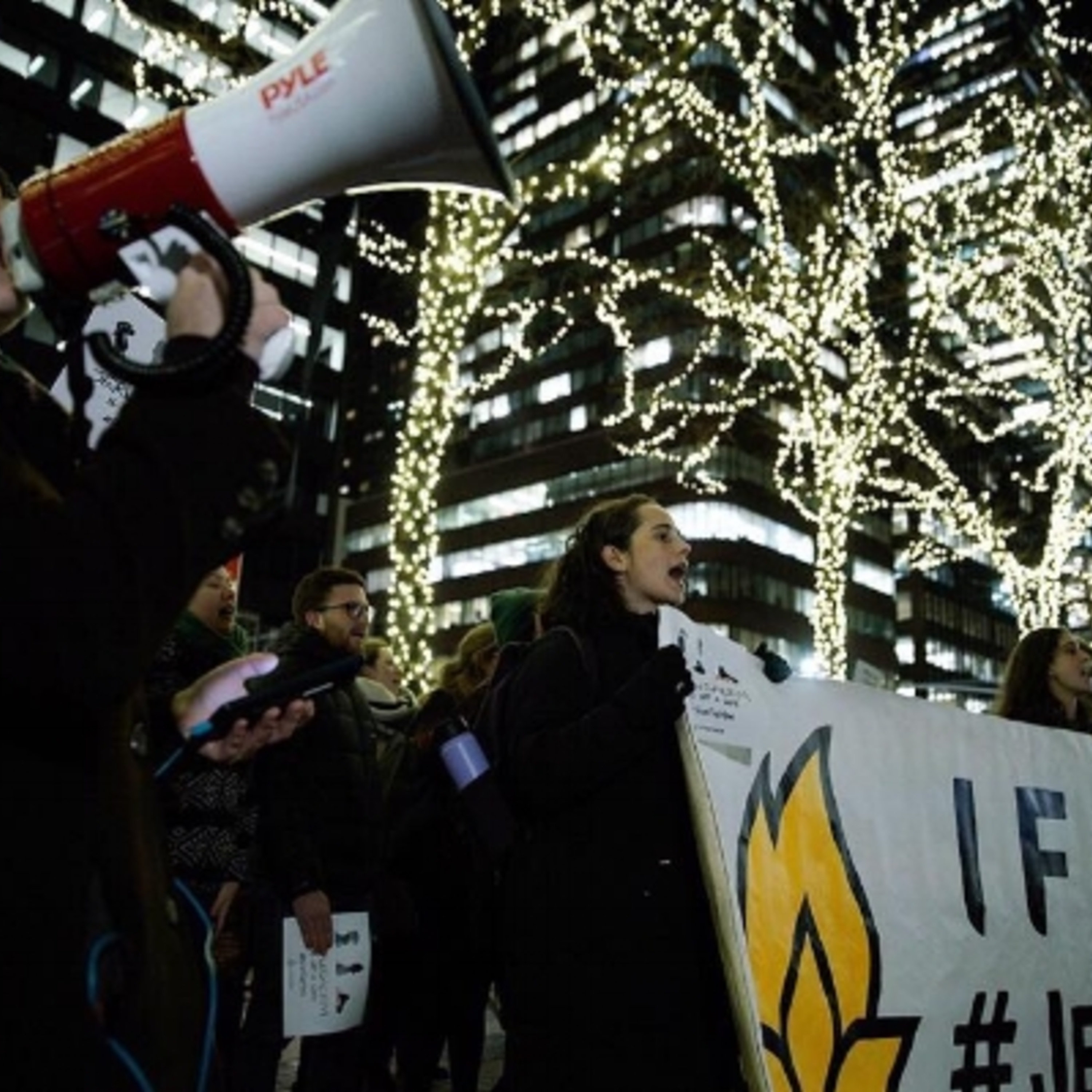
I am a proud American Jew. I’ve been part of this community my entire life. I went to Jewish day schools for 13 years. I cannot stand what the occupation is doing to my community, and I’m not willing to put up with it anymore. And my community needs to make a choice. — Eliana Fishman This is the third installment of a special miniseries responding to the U.S. President's decision this week to recognize Jerusalem as the capital of Israel. For this episode, Unsettled producer Max Freedman attended a protest by the Jewish anti-occupation movement IfNotNow at the New York City offices of Senator Chuck Schumer. This episode was recorded on December 7, 2017 and edited by Max Freedman. VOICES Eliana Fishman is a graduate student at Columbia University studying Quantitative Methods in the Social Sciences. She is a member of IfNotNow. Stephen Lurie is a researcher and writer in Brooklyn. Anna Blachman is a healthcare consultant raised in the Boston area and based in New York City. She has lived in Peru, London, and Thailand, where she worked in public health and pursued biological research. Anna first got involved with anti-occupation work while at Pomona College and has been organizing with IfNotNow since 2016. REFERENCES AJC Survey of American Jewish Opinion 2017 Association for Civil Rights in Israel (ACRI)
Ep 8Jerusalem: Rani Al-Hindi
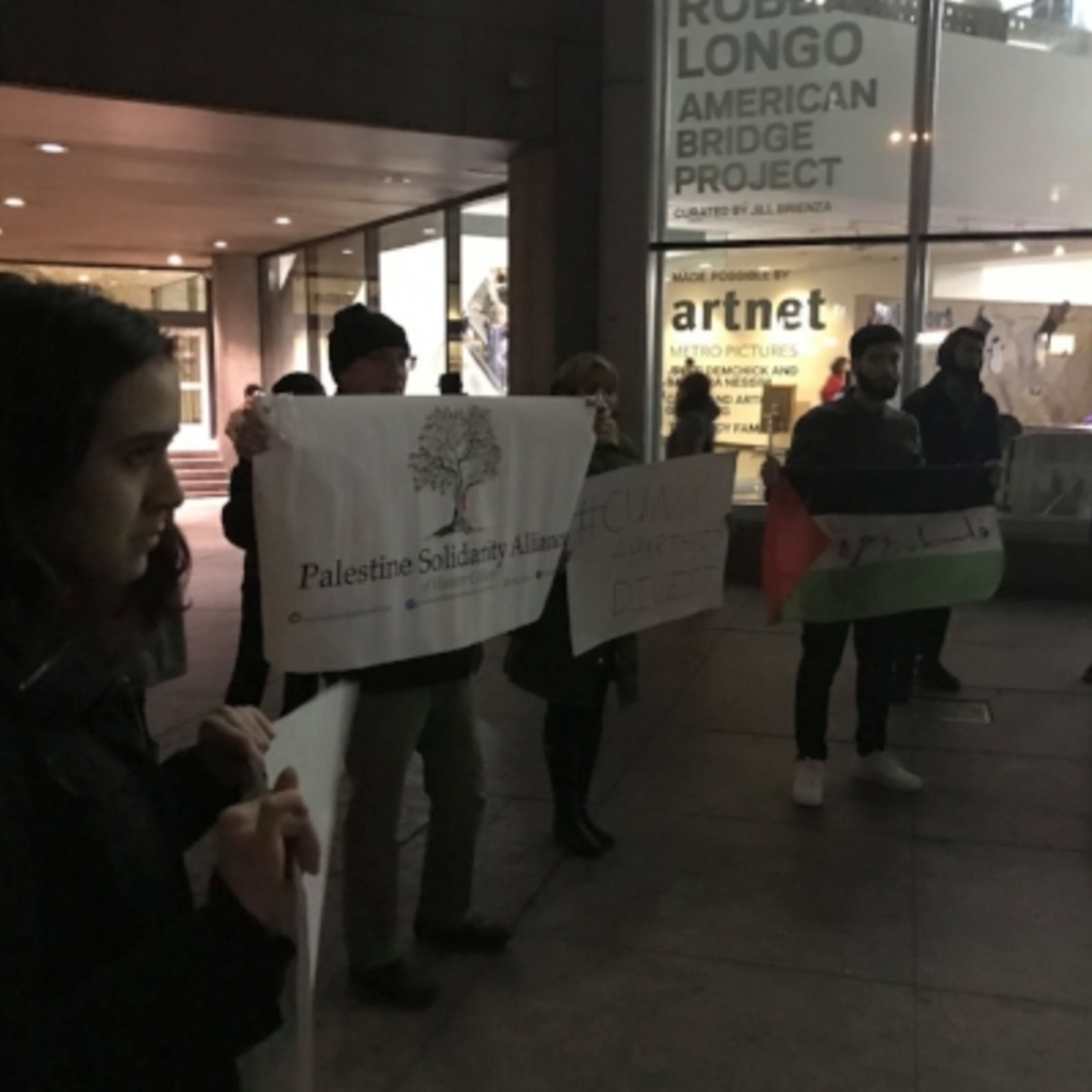
Today, it’s a new event. Part of the same pattern. But we will still resist, as we have always resisted. And this declaration means nothing to us, just as all the other declarations and all the other events meant nothing to us. — Rani Al-Hindi This is the second installment of a special miniseries responding to the U.S. President's decision this week to recognize Jerusalem as the capital of Israel. For this episode, Unsettled producer Yoshi Fields attended a Palestinian-led protest at Hunter College, just hours after Trump's announcement. He interviewed Rani Al-Hindi, one of the organizers of the protest. This episode was recorded on December 6, 2017 and edited by Max Freedman. Original music by Nat Rosenzweig. Rani Al-Hindi is a Palestinian-American, currently a senior at CUNY Hunter College and the co-founder of both the Palestine Solidarity Alliance of Hunter College and the Apartheid Divest at CUNY campaign. His grandparents are from al-Qubab and Deir Ayoub, in '48 Palestine.
Ep 7Jerusalem: Shira Robinson
What is new is that Trump is putting people on notice...that he’s happy to flout international conventions, and he is no longer concerned with continuing this charade of U.S. support for some kind of political negotiation to end the Arab-Israeli conflict. — Shira Robinson On Wednesday, December 6th, the President of the United States formally recognized Jerusalem as the capital city of Israel -- breaking with more than sixty years of official U.S. policy. Why did this happen? What does it mean? And what might happen next? In response to the urgency of this moment, Unsettled is trying something new: a miniseries. For the next few days, we’ll bring you short episodes featuring experts and activists, each with a different perspective on the new status of Jerusalem. For the first installment, producer Ilana Levinson spoke to Shira Robinson, Associate Professor of History and International Affairs at the George Washington University. This episode of Unsettled is hosted by Ilana Levinson. Original music by Nat Rosenzweig. Recorded on December 6, 2017 and edited for length and clarity by Max Freedman. Shira Robinson is Associate Professor of History and International Affairs at the George Washington University, where she teaches the history of the modern Middle East. Her first book, Citizen Strangers: Palestinians and the Birth of Israel's Liberal Settler State, examines Israel's imposition of military rule on the Palestinian Arabs who remained within its borders after 1948.

Ep 6Cultural Resistance
Culture is the only human practice that can actually dig into the root of a trauma and try to undo it in the first place. And this is why people are so afraid of culture, and in particular theatre. ‘Cause when there’s a human being in front of you having an experience, it’s very difficult to ignore them. It’s hard to ignore a play. — Dan Fishback Dan Fishback and Motaz Malhees both made waves in the New York theater scene this fall with plays about Palestine. Motaz performed with the Freedom Theatre of Jenin in "The Siege," at the NYU Skirball Center. Meanwhile, Dan's play "Rubble Rubble" was abruptly and controversially cancelled by the American Jewish Historical Society. In this joint interview, Dan and Motaz talk about their work, and explain why culture is their weapon of choice against the injustices of the occupation. This episode of Unsettled is hosted by Max Freedman. Original music by Nat Rosenzweig. Recorded at The 'cast Sound Lab in Brooklyn, New York on November 6, 2017. Edited for length and clarity by Ilana Levinson. Photo credit: Sammy Tunis Dan Fishback is a playwright, performer, musician, and director of the Helix Queer Performance Network. His musical “The Material World” was called one of the Top Ten Plays of 2012 by Time Out New York. His play “You Will Experience Silence” was called “sassier and more fun than 'Angels in America'” by the Village Voice. Also a performing songwriter, Fishback has released several albums and toured Europe and North America, both solo and with his band Cheese On Bread. Other theater works include “Waiting for Barbara” (New Museum, 2013), “thirtynothing” (Dixon Place, 2011) and “No Direction Homo” (P.S. 122, 2006). As director of the Helix Queer Performance Network, Fishback curates and organizes a range of festivals, workshops and public events, including the annual series, “La MaMa’s Squirts.” Fishback has received grants for his theater work from the Franklin Furnace Fund (2010) and the Six Points Fellowship for Emerging Jewish Artists (2007-2009). He has been a resident artist at Kelly Writers House at the University of Pennsylvania, the Hemispheric Institute at NYU, the Kimmel Harding Nelson Center, Yaddo, the MacDowell Colony, and BAX/Brooklyn Arts Exchange, where he has developed all of his theater work since 2010. Fishback is a proud member of the Jewish Voice for Peace Artist Council. He is currently developing two new musicals, “Rubble Rubble” and “Water Signs,” and will release a new album by Cheese On Bread in 2018. Motaz Malhees is a Palestinian actor born in 1992. He received his professional training in Stanislavsky, Brecht and Shakespeare at The Freedom Theatre in Jenin Refugee Camp (Palestine), and in Commedia dell’Arte at Theatre Hotel Courage in Amsterdam (Holland). Motaz has trained with internationally acclaimed directors such as Juliano Mer-Khamis and Nabil Al-Raee (The Freedom Theatre), Di Trevis (Royal Shakespeare Company), Thomas Ostermeier (Schaubühne Theatre), and Katrien van Beurden (Theatre Hotel Courage). His stage credits with The Freedom Theatre include: “Alice in Wonderland” (2011), “What Else – Sho Kman?” (2011), Pinter’s “The Caretaker” (2012), “Freaky Boy” (2012), “Courage, Ouda, Courage” (2013), “Suicide Note from Palestine” (2014), “Power/Poison” (2014), and most recently “The Siege” at the NYU Skirball Center. Motaz has also acted in films, including: “Think Out of the Box” (2014, dir. Mohammad Dasoqe), which screened in Palestine, Germany and Mexico; and “Past Tense Continuous” (2014, dir. Dima Hourani). As a versatile actor, Motaz has performed in multilingual plays as well as in scripted, devised, physical, epic and fantasy theatre. Motaz also produces and performs in short films about social issues in Palestine, which have received a wide following on social media platforms. Having grown up in Palestine, and experienced the economic and political hardships of life under occupation, Motaz has been actively interested in acting since he was nine years old. He lives through theatre, and believes in the potential of art to transform people’s ideas and lives. REFERENCES "Arna's Children" (dir. Juliano Mer-Khamis, 2004) "The Life and Death of Juliano Mer-Khamis" (Adam Shatz, London Review of Books, November 2013) "Center for Jewish History Chief Comes Under Fierce Attack By Right-Wingers" (Josh Nathan-Kazis, Forward, September 6, 2017) "Jewish Center Faces Backlash After Canceling Play Criticized as Anti-Israel" (Jennifer Schuessler, New York Times_, _October 11, 2017) Program note by Oskar Eustis for "The Siege" at NYU Skirball Center (October 2017) Indiegogo campaign for Dan Fishback's "Rubble Rubble" "Return to Palestine"(The Freedom Theatre, 2016) in Arabic without subtitles Theatre of the Oppressed NYC Housing Works "All Your Sisters" (Cheese On Bread, 2017) danfishback.com @motazmalhees thefreedomtheatre.org TRANSCR
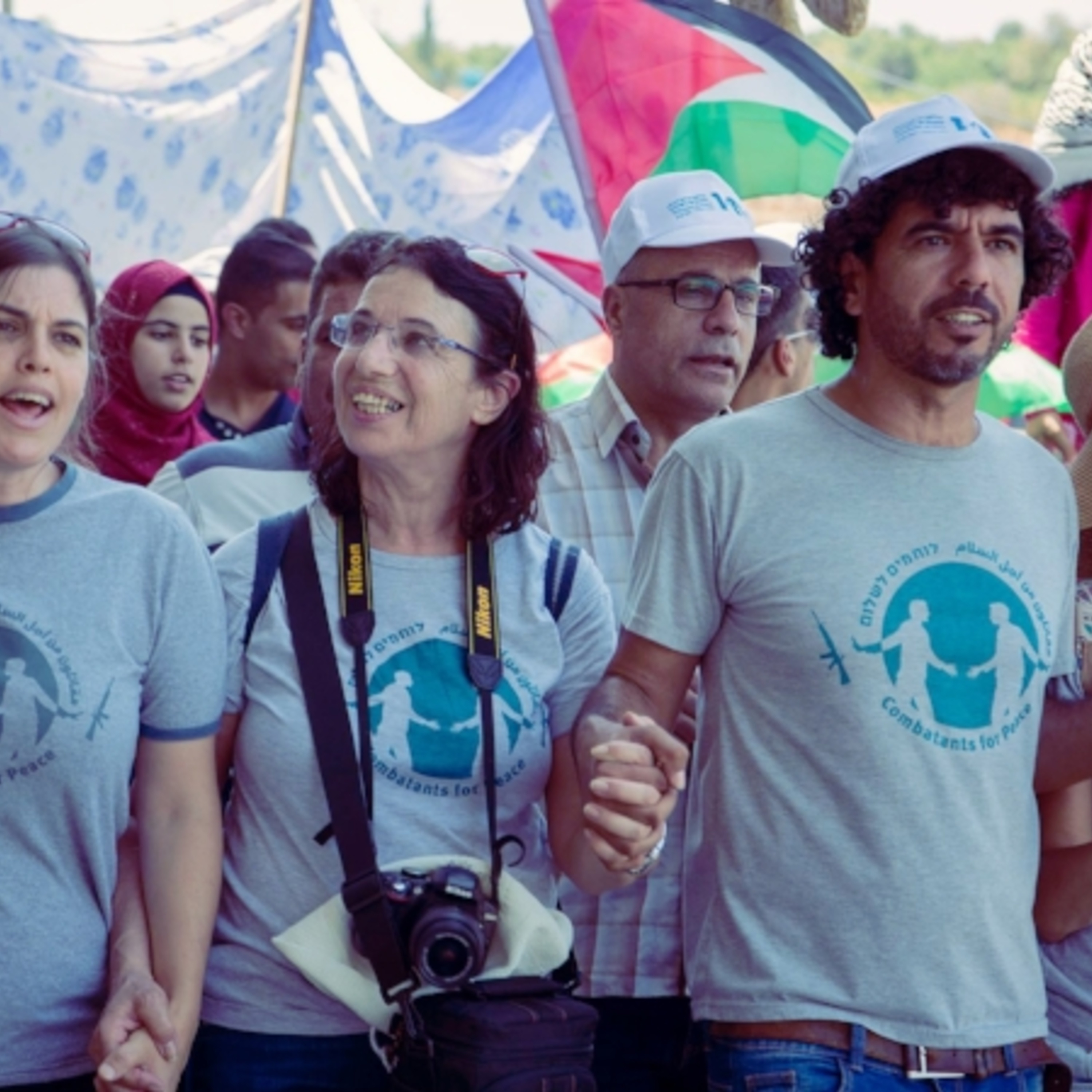
Ep 5Sulaiman Khatib
Sulaiman Khatib is a co-founder and the current Managing Director of Combatants for Peace, a joint Israeli-Palestinian nonviolent movement to end the occupation of the West Bank. In this interview, Souli explains how he began to see Israelis as potential partners, rather than the enemy. He talks about the value of ex-combatants in the struggle to end the occupation, and addresses some of the the criticism that his organization has received from other activist groups. This episode of Unsettled is hosted by Asaf Calderon. Original music by Nat Rosenzweig. Recorded in Brooklyn, New York on August 6, 2017, and edited for length and clarity by Asaf Calderon and Yoshi Fields. Sulaiman Khatib is a leading nonviolence activist in Israel and Palestine. He was born in the West Bank and was imprisoned at the age of 14 for stabbing two Israeli soldiers. It was during his time in prison that he learned about nonviolent resistance and first encountered Jewish Israeli perspectives. In 2006, he and other Israeli and Palestinian ex-militants founded Combatants for Peace: a grassroots nonviolent movement with the goal of ending the occupation. As part of his work, he tours in the US, giving talks with other ex-combatants on nonviolent resistance to the occupation. TRANSCRIPT SOULI: I believe that if our people given like a good leadership with a vision that carry nonviolence and hope, I do believe that many Palestinians are happy to join. This takes time and energy. But I believe the majority of our people don’t want to live in bloody situation, of course. And if the Israelis given the opportunity to show their goodness of solidarity with the Palestinians to struggle together, I really believe also I have faith of the majority of the Israelis in this case also, they will behave differently. _ ASAF: Welcome to_ Unsettled_, a podcast about Israel-Palestine and the Jewish diaspora. We are here to provide a space for difficult conversations and diverse viewpoints that are all too rare in American Jewish communities._ My name is Asaf Calderon. I'm one of the producers of Unsettled and your host for today's episode. Sulaiman Khatib, today's guest, grew up with his family in the West Bank under the Israeli occupation. At the age of 14, while trying to steal weapons, he stabbed two Israeli soldiers. Both soldiers survived, and Souli was sentenced by the military court to 15 years in prison. Fast forward 30 years -- today, Souli is a co-founder and Managing Director of Combatants for Peace, an organization founded by ex-combatants from the Israeli military and the Palestinian armed resistance. They are dedicated to ending the occupation, using only nonviolent means. How did Souli transform from a fighter who saw Israelis as the enemy, to a nonviolent activist committed to working in partnership with them? Why create an organization specifically with ex-militants? And how does he respond to the criticism he gets even from other anti-occupation activists? With these questions in mind, I interviewed Souli while he was visiting the United States to work on his upcoming book. We met in his rented room in Brooklyn, on a Sunday -- so of course, you’re going to hear some background music. Sorry about that. Another thing you may notice, is that we both have pretty strong accents. What you are about to hear is an Israeli interviewing a Palestinian, in English, which of course isn’t either of our first languages. So if you're having trouble understanding, please check out the transcript of this episode on our website, unsettledpod.com. ASAF: So Souli, let’s start by you introducing yourself. SOULI: My name is Sulaiman Khatib, so, people call me Souli -- some people -- and I was born in a village near Jerusalem, 10 minutes from Jerusalem, called Hizma. I grew up there, half of the time, and then I was in jail for a long time. I was one of the people that thought that the only way for freedom was joining the armed struggle. That was my mind when I was 14. _ **ASAF: ** Like other Palestinian prisoners, Souli faced particularly difficult conditions in prison. In his bio for Combatants for Peace, he explains: The use of torture was routine: beating prisoners, spraying tear gas into prison cells, and violently stripping prisoners were daily occurrences._ But, it was in these difficult conditions that Souli learned how nonviolent struggle can make a difference. With no civil rights and with their most basic human rights severely limited, Souli and the other prisoners resorted to hunger strikes. SOULI: The prisoners were very organized, very smart, and represent all the factions in jail through committees that were elected, so we asked, for example, our demands were around having like water -- like in Hebron jail, we used to have a problem of water, especially like to clean ourselves, you know for showers -- to have access to books, education, and newspapers to bring them, and visiting our families -- it used to be half an hour, we demanded like 45 min

Ep 4Sarah Brammer-Shlay
Sarah Brammer-Shlay is a first-year rabbinical student at the Reconstructionist Rabbinical College in Philadelphia and a founding member of IfNotNow. In this interview, Sarah explains how she went from feeling like a "bad Jew" for thinking critically about Israel, to directly confronting the violence of the occupation. As a radical rabbi-to-be, she reflects on the High Holidays, and shares her vision for the Jewish community she hopes to lead. This episode of Unsettled is hosted by Emily Bell. Original music by Nat Rosenzweig. Recorded in Philadelphia, Pennsylvania on September 16, 2017, and edited for length and clarity. Sarah Brammer-Shlay currently lives in Philadelphia, PA and is in her first year of rabbinical school at the Reconstructionist Rabbinical College. Although originally from Minneapolis, Sarah spent the last five years living and working in Washington, D.C. Sarah was a founding member of IfNotNow in 2014 and has remained a leader in the movement with a focus on strategy and action. She also has been both a participant and a trip leader with Center for Jewish Nonviolence delegations in Palestine. She has worked on a variety of justice issues including labor, abortion access, animal rights and marriage equality. REFERENCES Reconstructionist Rabbinical College IfNotNow J Street "Boys Drawn to Gaza Beach, and Into Center of Mideast Strife" by Anne Barnard (The New York Times, July 16 2014) Center for Jewish Nonviolence "Israeli cops assault American Jewish activists in Jerusalem Day protest" by Natasha Roth (+972, May 24 2017) "Israeli Police Broke My Arm, But They Can’t Stop Me From Resisting — Or Speaking Out." by Sarah Brammer-Shlay (The Forward, May 30 2017) SARAH RECOMMENDS The Iron Cage: The Story of the Palestinian Struggle for Statehood by Rashid Khalidi (2007) The Crisis of Zionism by Peter Beinart (2013) The Gatekeepers directed by Dror Moreh (2012)

Ep 3Rachel Roberts
Rachel Roberts is a DC-based attorney who has been a Jewish activist for Palestinian rights since 2003. She recently worked with the Education Team from IfNotNow DC to pilot a curriculum called "Occupation 101." In this interview, she talks about her own journey from "Israel, right-or-wrong" to Palestinian solidarity work, then explains some of the history and everyday realities of the West Bank under Israeli occupation. This episode of Unsettled is hosted by Max Freedman. Original music by Nat Rosenzweig. Recorded in Brooklyn, New York on June 13, 2017, and edited for length and clarity. RACHEL ROBERTS is an attorney, an activist, and a writer who lives in Washington, D.C. She has been an activist for Palestinian human rights since 2003 and has worked with numerous organizations and groups, including the International Solidarity Movement, Jews Against the Occupation, and Jewish Voice for Peace. Rachel recently returned from occupied Palestine where she served as part of the Center for Jewish Non-Violence 2017 delegation. Rachel has also served for several years as a civil rights attorney for CAIR-California, where she provided legal and civil rights advocacy services to U.S. Muslim victims of discrimination. In law school, she was the co-editor in chief of the UCLA Journal of Islamic and Near Eastern Law. Her opinion writing has been published in the Forward, the Baltimore Sun, the Oakland Tribune, the Electronic Intifada, and Mondoweiss. She holds degrees from Oberlin College, the Jewish Theological Seminary of America and the UCLA School of Law. REFERENCES IfNotNow International Solidarity Movement Birzeit University The Black Eyed by Betty Shamieh Brit Tzedek v’Shalom J Street Hillel International The Case for Israel by Alan Dershowitz (2003) Interactive Map of the West Bank (B’Tselem) Active Stills “Why the Palestinian Authority Should Be Shuttered” by Diana Buttu (The New York Times, 2017) “Israel and Pinkwashing” by Sarah Schulman (The New York Times, 2011) “Hasbara: Why does the world fail to understand us?” by Noam Sheizaf (+972, 2011) Interview with Omar Barghouti (The Intercept, 2016) That famous handshake Baruch Marzel: “The Extremist Who Could Bring Kahanism Back to the Knesset” by Raphael Ahren (The Times of Israel, 2015) “Accepting the apartheid label will normalise Israel” by Mark LeVine and Neve Gordon (Al Jazeera, 2017) “This Day in History // 1948: N.Y. Times Publishes Letter by Einstein, Other Jews Accusing Menachem Begin of Fascism” (Haaretz, 2014) “U.S. Foreign Aid to Israel” (Congressional Research Service, 2016) RACHEL RECOMMENDS The Question of Palestine by Edward Said (1992) The Origins of the Palestine-Israel Conflict published by Jews for Justice in the Middle East (2001) A People Without a Land directed by Eliyahu Ungar-Sargon (2014) 500 Dunam on the Moon directed by Rachel Leah Jones (2002) Zochrot (an Israeli NGO working to promote acknowledgement of and accountability for the Nakba)