
Unchained
1,272 episodes — Page 7 of 26

Ep 941The Chopping Block: Code, Chaos & Consequences — What the Balancer Hack and Rollback Debates Mean for Crypto’s Future - Ep. 941
Welcome to The Chopping Block — where crypto insiders Haseeb Qureshi, Tom Schmidt, Tarun Chitra, and Robert Leshner chop it up about the latest in crypto. This week, the crew breaks down DeFi’s Black Friday: a brutal week that saw the $120 million Balancer v2 hack, the collapse of Stream Finance, and a market-wide panic that reminded everyone — nothing in crypto is risk-free. They dive into how one of DeFi’s oldest, most audited contracts failed, why smaller chains froze or rolled back transactions, and what it means for decentralization as Berachain, Sonic, and Polygon took emergency action. The panel debates whether the Balancer attacker used an AI “vibe-coded” exploit, how Ethereum might one day face its own rollback dilemma, and why privacy chains like Zcash may be the last true cypherpunk strongholds. In the second half, they unpack the off-chain losses behind Stream Finance’s XUSD blow-up, the contagion risk across Euler, Silo, and Morpho, and the hard lessons for “yield-chasing” DeFi vaults. The gang closes with advice for founders weathering the storm — from Tarun’s “cockroach mindset” to Haseeb’s reminder that crypto’s long-term fundamentals haven’t changed. Whether you’re building in DeFi, securing smart contracts, or surviving the next credit unwind, this episode lays bare the harsh truths — and enduring resilience — of crypto’s frontier markets. Show highlights 🔹 Market Meltdown Post-“10/10” — The crew dissects October 10’s liquidation shock, lingering rumors about blown-up market makers, and why confidence cratered despite steady fundamentals. 🔹 ADL & Forced Sellers — What auto-deleverage events signaled about thin liquidity and whale-driven order books across perps venues. 🔹 “Nothing Is Risk-Free” — Haseeb’s reminder that there is no crypto “risk-free rate”; even delta-neutral and staking carry hidden smart-contract and market risks. 🔹 Balancer v2 Hack, Explained — Why an OG, heavily-audited E-Pool contract still failed; $120M+ impact across chains and the psychological hit to DeFi’s “battle-tested” narrative. 🔹 AI “Vibe-Coded” Exploit? — The team debates whether attacker logs hint at LLM-assisted discovery vs. expert-guided coding—and why the doomsday “one-shot” scenario isn’t here yet. 🔹 Freeze/Rollback Firestorm — Berachain halted, Sonic froze the attacker, Polygon censored transfers; the panel weighs user protection vs. decentralization purity. 🔹 When Would Ethereum Roll Back? — A thought experiment: is there a loss threshold (e.g., LST or validator-level failure) where even ETH would contemplate extraordinary action? 🔹 Privacy Chains as Last Bastion — Why true no-rollback, censorship-resistant values may persist most credibly on privacy smart-contract chains. 🔹 Builder Mindset in a Doom Cycle — “Be a cockroach”: ignore price, conserve runway, keep shipping; sentiment flips in crypto faster than in any other industry. Hosts ⭐️Haseeb Qureshi, Managing Partner at Dragonfly ⭐️Robert Leshner, CEO & Co-founder of Superstate ⭐️Tarun Chitra, Managing Partner at Robot Ventures ⭐️Tom Schmidt, General Partner at Dragonfly Timestamps 00:00 Intro 01:01 Market Carnage & Sentiment 04:42 Speculations & Rumors: Wintermute vs. Binance 08:34 Builders’ Advice: Survive & Ship 23:11 Balancer V2 Hack: Berachain & Sonic Labs 28:28 Defi Confidence Shaken Hard 33:26 AI “Vibe-Coded” Exploit Debate 36:18 Rollbacks, Freezes, & Chain Ethics 40:13 Future of Decentralization 48:55 Stream Finance & XUSD Collapse Disclosures Learn more about your ad choices. Visit megaphone.fm/adchoices

Will Perps Eat All of Finance? Ex-FTX.US CEO Brett Harrison Bets Yes - Ep. 940
Crypto’s most controversial trading product might be Wall Street’s next obsession. In this interview, Brett Harrison, former president of FTX.US and founder of Architect Financial Technologies, joins to explain how he’s aiming to take perpetual futures — crypto’s 24/7 leveraged trading engine — to traditional markets like stocks, commodities, and FX. Will this be the next big shift in global finance? Thank you to our sponsors! Mantle Guest: Brett Harrison, Founder & CEO of Architect Financial Technologies Links: The Defiant: Former FTX US President Brett Harrison to Launch Perpetuals Exchange Timestamps: 💡 0:00 Introduction 🏗️ 1:43 What problems Architect is trying to solve 📜 4:27 The two licenses Architect holds — with the SEC and CFTC ⚖️ 6:18 The key difference between CFDs and perpetual futures 🌐 8:15 Who Architect’s products are designed for 💥10:02 What crypto learned the hard way from the Oct. 10 liquidation event 📊 15:25 Why reputable benchmarks are critical for pricing assets 💰 18:02 How leverage actually works in these new exchanges 🛡️ 22:03 How Architect’s insurance fund is built 🎯 22:46 Whether prediction markets will ever offer leverage 💵 24:35 Why Architect includes interest rate swaps 🔗 25:27 How tokenization could affect the derivatives trading space 🚀 28:50 How Architect plans to attract users and market makers 🔥 31:50 What Brett is most excited about next Learn more about your ad choices. Visit megaphone.fm/adchoices

Ep 939Why the Crypto Markets Seem Down Bad as Bitcoin Dips Below $100K - Ep. 939
Bitcoin’s bleeding again and sentiment is collapsing. But if you’ve been around for a few cycles, this kind of pain might look familiar. In this episode of Unchained, Laura sits down with Yann Allemann, Co-founder of Swissblock, and Joe Vezzani, CEO of LunarCrush, to unpack the latest market wipeout, and whether it’s a signal of exhaustion or opportunity. From retail’s record-breaking bearishness to the unwinding of crypto’s DAT mania, they explore why the market feels bearish and what that might mean for what’s coming next. They also dive into the likelihood of a blow-off top, the resurgence of privacy coins, the risk in digital asset treasury companies, and even why some think we could see new all-time highs before the year ends. Thank you to our sponsors! Mantle Guests: Yann Allemann, Co-founder and Chairman of Swissblock Joe Vezzani, Co-founder and CEO of LunarCrush Timestamps: 🎬 0:00 Intro 📉 2:13 Why Bitcoin’s crashing again and whether DATs are to blame 💥 10:43 The consequences of the October 10 liquidation wave 🔄 18:48 Is the four-year crypto cycle finally dead? 📊 25:00 The unraveling of the DAT trend: end of the mania or just a pause? 😶 29:32 Why markets feel eerily quiet and deeply bearish 🐻 32:55 How this became the “most bearish bull market” ever 🥇 40:49 If Bitcoin is digital gold, why hasn’t it followed gold’s rally? 🎯 47:09 Are prediction markets stealing attention from crypto? 🚀 53:30 Why Yann thinks a blow-off top is still coming 🕵️♂️ 55:51 The privacy coin comeback led by Zcash 💫 1:02:00 Why ETH’s relative strength could surprise the market ⚠️ 1:07:36 Why Yann says there’s “no reason to hold speculative assets” 💰 1:12:59 Bitcoin price predictions and what smart money’s really doing Learn more about your ad choices. Visit megaphone.fm/adchoices

Ep 938Bits + Bips: Reasons to Be Optimistic After Bitcoin Falls Toward $100K - Ep. 938
Bitcoin has fallen below $102,000. “Uptober” ended in blood. But while retail traders are terrified, institutional conversations are heating up. In this episode of Bits + Bips, hosts Austin Campbell, Ram Ahluwalia, and Chris Perkins are joined by Teddy Fusaro, President of Bitwise, to unpack the week’s market turmoil. They dig into why institutions are finally comfortable allocating to bitcoin, how Ripple is building an ecosystem that can’t be ignored, and whether Tether’s staggering $500 billion valuation makes sense. Plus: the shrinking odds of the CLARITY Act, the merging of TradFi and crypto rails, and why the competition in the payments space is so hot. Sponsors: Binance Mantle Hosts: Ram Ahluwalia, CFA, CEO and Founder of Lumida Austin Campbell, NYU Stern professor and founder and managing partner of Zero Knowledge Consulting Christopher Perkins, Managing Partner and President of CoinFund Guest: Teddy Fusaro, President of Bitwise Links: Unchained: Ripple Hits $4B Investment Milestone With Palisade Deal Extreme Fear Returns to Market as Bitcoin Breaks $104k Support Solana ETFs Draw $44 Million as Bitcoin Funds Bleed $191 Million Stablecoin Volume on Ethereum Breaks $2.8 Trillion Record in October Bitcoin ETFs Record $470 Million Outflows Amid Fed Rate Decision DL News: Clarity Act has 80% chance of passing by 2026: Bitwise The Block: Tether's annual profits top $10 billion as Treasury holdings swell Timestamps: 🎬 0:00 Intro 📈 3:03 Why Ram is still bullish on markets despite recent carnage 💧 6:03 Why a slingshot economy will soon send liquidity back into risk assets 🏦 9:18 How institutional sentiment now differs sharply from crypto Twitter 🚀 16:43 Inside Bitwise’s clever move to launch BSOL 🌊 21:20 Why Chris says “you can’t sleep on Ripple” 🔗 25:28 How TradFi and crypto rails are starting to merge 💳 29:38 Why every company suddenly wants to own the payments layer 💣 30:53 Exlporing Tether’s biggest challenge —and whether it’s worth $500B 📊 39:52 ETFs vs. digital asset treasuries: Teddy’s take ⚖️ 46:48 Why the CLARITY Act is unlikely to pass in 2025 Learn more about your ad choices. Visit megaphone.fm/adchoices

Ep 937The Chopping Block: When Wall Street Meets DeFi — How Equity Perps and RWAs Redefine Leverage On-Chain - Ep. 937
Welcome to The Chopping Block — where crypto insiders Haseeb Qureshi, Tom Schmidt, Tarun Chitra, and Robert Leshner chop it up about the latest in crypto. This week, Kaledora Linn, Co-founder and “Empress of RWAs” at Ostium, joins to break down the rise of on-chain equity perps, the funding-rate chaos that hit 365%, and why she believes the next wave of tokenized assets won’t come from exchanges—but from structured liquidity markets. We dive deep into Ostium’s hybrid CFD model that blends TradFi mechanics with on-chain transparency, explore why most retail traders can’t stomach perp carry costs, and debate what “safe leverage” could look like in an RWA world. The panel also touches on CZ’s presidential pardon and Coinbase’s new Echo platform, connecting the dots between political optics, capital formation, and how crypto’s product design is evolving beyond speculation. Whether you’re building perpetual DEXs, tokenizing RWAs, or just trying to survive the next funding-rate spike, this episode unpacks how market design, UX, and regulation will shape crypto’s next trillion-dollar frontier. Show highlights 🔹 Equity Perps, ADL, and UX Reality — Why funding swings as high as 365 percent make traditional perps unusable for mainstream traders, even if they work for short-term speculators. 🔹 Inside Ostium’s RWA Derivatives Model — Kaledora Linn explains how Ostium re-engineered perps into a CFD-style liquidity system to stabilize funding and attract institutional flow. 🔹 CFDs vs. Options — Why trillions in CFD volume dominate global retail markets and how a linear, simple payoff structure beats the complexity of options. 🔹 Market Microstructure and Path Dependence — How thin liquidity and whale-driven order books make on-chain equity markets fragile in early growth stages. 🔹 Funding-Rate Distortions — Tarun breaks down why “delta-neutral” strategies blow up when funding turns asymmetric and leverage resets too quickly. 🔹 From Perps to Products People Actually Use — Haseeb and Kaledora debate how to make RWAs tradeable without the hidden costs of perps. 🔹 Leveraged ETF Paradox — Despite structural decay, leverage products remain popular because of UX, accessibility, and clear narratives—lessons for on-chain builders. 🔹 Predictable Costs Win Power Users — Why whales and market makers prefer stable, knowable carry over yield-chasing chaos. 🔹 CZ Pardon and Optics — The panel dissects political fallout, public perception, and what “clemency for founders” means for crypto’s reputation. 🔹 Coinbase Echo Launch — A new experiment in on-chain crowd sales, retail capital formation, and the post-airdrop meta. 🔹 From Airdrops to Allocations — Why curated, paid token sales may replace “free money” farming to create long-term aligned communities. 🔹 MegaETH and Luxury Distribution Models — The “sorting hat” approach to allocation mirrors art galleries and luxury brands—scarcity and provenance as value signals. 🔹 Go-to-Market Over Purity — Tom and Robert argue that product distribution and user education matter more than perfect decentralization in early RWA markets. Hosts: ⭐️Haseeb Qureshi, Managing Partner at Dragonfly ⭐️Robert Leshner, CEO & Co-founder of Superstate ⭐️Tarun Chitra, Managing Partner at Robot Ventures ⭐️Tom Schmidt, General Partner at Dragonfly Guest ⭐️ Kaledora, Co-founder at Ostium Timestamps 00:00 Intro 01:39 Kaldora’s Crypto Twitter Controversy 03:43 Debate on Perpetuals & Equities 07:20 Funding Rates & Market Dynamics 16:09 CFDs vs. Perpetuals 29:31 CZ's Pardon & Political Backlash 37:42 Trump's Pardon: Optics and Implications 39:06 Crypto's Midterm Impact 41:50 Echo Acquisition by Coinbase 46:11 Crowdfunding Platforms & MegaETH 55:36 Luxury Goods & Token Sales Analogy Disclosures Learn more about your ad choices. Visit megaphone.fm/adchoices

Ep 936How the Competition Will Play Out in the Great Stablecoin Race - Ep. 936
In this episode of Unchained, Laura is joined by Rob Hadick, General Partner at Dragonfly, and Sam MacPherson, Co-founder and CEO of Phoenix Labs, to break down the fast-moving world of stablecoins and stablechains. They discuss Ethena’s USDe $5 billion drop, the rise of “stablecoin-as-a-service” models, the emergence of payment-focused blockchains like Tempo and Codex, and the return of TradFi heavyweights like Visa, Mastercard, and Western Union to the digital dollar race. From liquidity challenges to regulatory shakeups and tokenized deposits, the conversation explores what it really takes to win the stablecoin wars, and, importantly, whether any of these players can even make a scratch to king Tether. Thank you to our sponsors! Binance Guests: Rob Hadick, General Partner at Dragonfly Sam MacPherson, Co-founder and CEO of Phoenix Labs Links: Previous coverage on Unchained: Stablecoins Are Popping Up Everywhere. What’s the End Game? Why Every Chain Suddenly Wants Its OWN Stablecoin - The Chopping Block Timestamps: 🎬 0:00 Intro and ads: Binance 📉 1:09 Why Ethena’s USDe plunged from $15B to $10B 🔮 5:34 Rob’s view on the future of Ethena 💸 7:06 Why Spark exited Ethena despite being an early believer ⚔️ 11:32 Protocol-native stablecoins—and why Rob and Sam disagree about the trend 💡 21:03 What it really takes to win the stablecoin wars + what makes Tempo's strategy “interesting” 💳 32:11 Tether’s USAT launch: can it succeed? 🏦 36:27 How Tether and Ripple are using the same acquisition playbook 🔥 39:40 Plasma’s emissions strategy and whether it’s sustainable 🏛️ 44:10 Inside Circle’s Arc testnet and its 100+ institutional partners ⛓️ 51:08 Codex and the debate: should stablechains be L1s or L2s? 💵 56:42 How Spark aims to stand out in the new wave of stablecoin competition 🏢 1:00:04 Why TradFi players are entering the space with so much strength 🚀 1:06:04 Why Rob remains so bullish on the future of stablecoins Learn more about your ad choices. Visit megaphone.fm/adchoices

Ep 935Ex-Citi Chief Economist on Gold, Bitcoin and the Debasement of the US Dollar - Ep. 935
Gold may have history, but does it have a future? Former Citi Chief Economist Willem Buiter joins Unchained Executive Editor Steve Ehrlich to argue that gold’s “6,000-year bubble” is long overdue to burst. He explains why he thinks central banks should dump their bullion, why Bitcoin isn’t a reliable store of value, and why fully backed stablecoins and central-bank digital currencies could define the next era of money. He also touches on Trump’s influence on the Fed, tokenized deposits and the future of stablecoins. Thank you to our sponsors! Binance Guest: Willem Buiter, Independent Economic Advisor, Previously Global Chief Economist at Citigroup Timestamps: 💰 0:00 Introduction 🏺 0:28 Is gold really in a 6,000-year bubble? 🫧 4:33 Why Willem says some bubbles can last forever 💵 7:16 What to make of the dollar’s debasement and why other currencies aren’t better 🚫 11:56 Why Willem doesn’t believe in Bitcoin as a store of value 🪙 16:32 Why he says fully backed stablecoins could define the future of money 🏦 19:10 Are tokenized deposits a breakthrough or a threat to the monetary system? 🌐 22:36 Why Willem supports central bank digital currencies 🔢 27:51 Will the world end up with hundreds of stablecoins? 📊 31:23 Is the Fed quietly shifting its inflation target to 3%? ⚖️ 33:57 How Trump’s pressure could undermine Fed independence 🚀 37:39 Why Willem is bullish on tokenized assets Learn more about your ad choices. Visit megaphone.fm/adchoices

Ep 934Sharplink CEO on Why ETH Will Soon See a Boom in Demand: Bits + Bips - Ep. 934
In this episode of Bits + Bips, former BlackRock executive and SharpLink co-CEO Joseph Chalom joins hosts Austin Campbell, Chris Perkins, and Ram Ahluwalia to discuss why the Federal Reserve may move to ease rates despite a “Goldilocks” economy, the growing role of stablecoins in foreign exchange and settlement, and how major banks like JPMorgan and Citi are expanding their use of blockchain. The conversation also explores Japan’s first yen-backed stablecoin, the implications of AI for the labor market, and the generational shift that could make crypto wallets the default interface for finance. Plus, the implications of CZ’s pardon and why it’s “bullish” to have Mike Selig chairing the CFTC. Sponsors: Binance Mantle Hosts: Ram Ahluwalia, CFA, CEO and Founder of Lumida Austin Campbell, NYU Stern professor and founder and managing partner of Zero Knowledge Consulting Christopher Perkins, Managing Partner and President of CoinFund Guest: Joseph Chalom, Co-CEO of SharpLink Gaming, Inc. Links: Reuters: Fed poised to cut rates this week, with more easing likely on tap WSJ: Trump Considers Fed Chair Selection by Year-End From Slate of Five Finalists CoinDesk: Gov. Waller: U.S. Fed to 'Embrace Disruption,' Pitches 'Skinny' Master Account Idea Reuters: World's first yen-pegged stablecoin debuts in Japan EF: ERC-8004: Trustless Agents Bloomberg: JPMorgan to Allow Bitcoin, Ether as Collateral in Crypto Push Unchained: Trump Pardons Binance Founder CZ CNBC: Trump names Michael Selig to chair CFTC; Selig cites crypto capital goal Timestamps: 🎬 0:00 Intro 💸 3:23 Why the Fed will likely still cut rates despite a “Goldilocks” economy 👷♂️ 6:47 Why Joseph says the labor market is at a “moment that matters” as Amazon cuts 30,000 jobs 🏛️ 8:26 What Chris shockingly heard at a recent Fed conference ⚖️ 10:15 What could force the Fed to become hawkish 🚀 12:33 How the Fed is “frontrunning innovation” 💴 14:46 Why Japan’s first fully yen-backed stablecoin, JPYC, is significant 🌍 17:36 Why Chris is so excited about stablecoins disrupting FX markets 🔗 22:55 Why L1 tokens may be the next “strategic commodity” 🏦 26:25 How major banks are joining the stablecoin race 👛 31:33 Why retail adoption could explode in the coming years 🤖 33:37 How AI agents could soon manage our payments 💡 36:34 Why JPMorgan decided to accept bitcoin and ether as collateral ⚖️ 44:04 Was CZ’s pardon fair, and what about “pay to play” concerns 🐂 54:55 Why having Mike Selig chair the CFTC is “bullish” for crypto Learn more about your ad choices. Visit megaphone.fm/adchoices
Ep 932How Kraken Plans to Dominate Tokenization and Perps in 2026 and Beyond - Ep. 932
As crypto markets mature, Kraken is transforming from a trading venue into a multi-asset infrastructure platform. Co-CEO Arjun Sethi joins to break down the exchange’s expansive strategy: building a vertically integrated derivatives business, pioneering tokenized equities with xStocks, and launching a purpose-built layer 2 chain, Ink, to bridge regulated finance and open DeFi. Sethi also explains how Kraken responded to the Black Friday crash, the firm’s ADL and margin policies, and what Kraken wants from U.S. policymakers in 2025. Plus: how Kraken's acquisitions of NinjaTrader and Small Exchange could reshape U.S. derivatives, and why this time, tokenization may finally deliver. Thank you to our sponsors! Mantle https://www.mantle.xyz/ Guest: Arjun Sethi, Co-CEO of Kraken Timestamps: 👍 0:00 Intro ⚡️ 0:15 Kraken’s experience on “Black Friday” and how the team handled the chaos 👥 3:52 Why Kraken uses a co-CEO model and how it works in practice 🧩 7:50 How Arjun and his team kept calm and supported the broader ecosystem during the crash 📈 9:25 What the derivatives boom means for Kraken’s long-term strategy 🛡️ 14:55 Why customer trust and fair risk management are core to Kraken’s DNA 🏛️ 20:26 How the Small Exchange and NinjaTrader deals fit into Kraken’s U.S. expansion plan 🔗 31:44 Why tokenization is finally real this time and how Kraken plans to lead it ⚖️ 53:24 What Kraken hopes to achieve in Washington and what’s next for the company Learn more about your ad choices. Visit megaphone.fm/adchoices

Ep 933Arthur Hayes and Adam Schlegel on Why Private Equity Is Crypto's Next Big Wave - Ep. 933
Crypto has spent years obsessing over tokens, airdrops, and speculation. But what about the unsexy businesses actually making money? Arthur Hayes and Adam Schlegel join Laura Shin to talk about Maelstrom's $250M private equity fund targeting crypto's most profitable, yet overlooked, companies, $50M revenue businesses with 50% margins that VCs can't touch and exchanges won't pay cash for. But while everyone frames this as just another fund, Hayes and Schlegel argue it's actually the missing piece in crypto's maturation: a cash buyer for founders who've done their time and want out without four-year earnouts. Plus: Why Asian crypto companies with monster margins get ignored by Western capital. Thank you to our sponsors! Binance Guests: Arthur Hayes, Co-Founder of BitMEX & CIO at Maelstrom Adam Schlegel, Head of Private Equity at Maelstrom Links: Previous appearances on Unchained: The Chopping Block: Arthur Hayes & Tom Lee; Hyperliquid vs Aster, DATs & ETH Arthur Hayes and Hanson Birringer on Hyperliquid’s Success (And What Could Stop It) Bloomberg: Arthur Hayes’ Family Office Seeks $250M for Buyout Fund Coindesk: Arthur Hayes’ Maelstrom Seeks $250M Private Equity Fund to Acquire Crypto Firms: Bloomberg Akshat’s tweet announcing the fund Timestamps: 🎬 0:00 Intro 📰 1:08 Maelstrom’s $250M private equity fund to buy crypto firms 👤 1:42 Adam’s background and path from Morgan Stanley to Haveli to Maelstrom 💼 3:51 Why Maelstrom believes the next crypto boom is in private equity 📈 4:42 Arthur on how crypto investing evolved from beta → VC → PE 🌏 10:05 Geographic focus: Asia and LatAm’s overlooked crypto firms 🧭 11:49 How Maelstrom evaluates targets and performs due diligence 🛠️ 17:02 Inside Maelstrom’s $250M anchor fund and LP co-invest model 👀 26:01 The types of companies Maelstrom is targeting ⚙️ 30:16 Fund structure and Arthur’s role in Maelstrom PE 📊 36:05 “The four-year cycle is dead”: Arthur on today’s crypto market 💰 39:18 Investor requirements and $5M minimum commitment 🏦 42:09 Coinbase’s Echo acquisition and what it means for exchanges ⚔️ 47:59 The perps war, how DEXs are forcing CEXs toward zero-fee trading 💥 52:18 Binance, ADL liquidations, and leverage risk 🔮 56:27 Prediction markets: Polymarket vs Kalshi vs Limitless 💵 59:06 Stablecoins and rates, why Tether and Circle could lose to Ethena 📈 1:04:15 Who wins the next phase of crypto’s evolution 🔚 1:08:14 Closing thoughts Learn more about your ad choices. Visit megaphone.fm/adchoices

Ep 931Why Bitcoin Could Hit $150,000 Soon. Plus ‘Code Is Law’ Film - Ep. 931
This special two-part episode brings together two very different conversations. In part one, investment manager Lawrence Lepard lays out why he believes the fiat monetary system is structurally unsustainable, what role inflation plays in that system, and how Bitcoin could be the exit ramp, not just from fiat, but from war, debt, and economic manipulation. He discusses gold, stocks, silver, the real estate market, and why he’s betting heavily on Bitcoin. In part two, I speak with filmmaker James Craig, director of the new documentary Code Is Law, which traces the evolution of the phrase from a meme into a legal defense for some of the most infamous smart contract exploits in crypto. From the DAO to Indexed Finance, Mango Markets and KyberSwap, the film explores whether exploiting code is legitimate — or just theft with better PR. Thank you to our sponsor, Binance! Guests: Lawrence Lepard, Investment Manager at Equity Management Associates, LLC James Craig, Founder, Director and Producer at Encrypted Films Learn more about your ad choices. Visit megaphone.fm/adchoices

Ep 930How Crypto Neobanks Make It Easier to Earn Passive Income - Ep. 930
Neobanks changed how fintech thinks about money. Now, crypto builders want to do the same, without custody. In this episode, Itamar Lesuisse, CEO of Ready, and Mike Silagadze, CEO of EtherFi, argue the real shift isn't about "crypto cards," it's about who controls your assets. EtherFi’s and Ready’s self-custodial apps merge saving, spending, and investing. The result: faster settlement, lower fees, and more transparency, but also new challenges around compliance, credit, and security. Itamar Lesuisse and Mike Silagadze explain how layer 2 networks made crypto cards economically viable after years of failed attempts and how Africa’s FX markets could become the breakthrough use case for crypto banking. Visit our website for breaking news, analysis, op-eds, articles to learn about crypto, and much more: unchainedcrypto.com Thank you to our sponsors! Mantle Binance Guests: Itamar Lesuisse, Co-founder and CEO of Ready (formerly Argent) Mike Silagadze, Founder and CEO of EtherFi, and Founder of Top Hat Links: The Block: Best crypto cards with token rewards in 2025 Bitcoin Starknet Staking Post by Ready (Formerly Argent) Timestamps: 🎬 0:00 Intro 💳 1:57 What crypto neobanks are, and why they’re suddenly booming ⚖️ 6:19 Custody as the real divide between traditional and crypto banking 🏦 8:07 From Argent to Ready, turning wallets into full neobanks 💳 10:05 Why early crypto cards failed, and how L2 settlement fixed them 💰 18:49 Credit without credit scores: the rise of collateralized cards 🔒 32:52 How smart accounts and recovery improve wallet security 🌍 44:29 Onchain FX and the next profit frontier for crypto banks 🚀 55:36 How self-custody could reach mass adoption 🔚 58:19 Closing thoughts Learn more about your ad choices. Visit megaphone.fm/adchoices
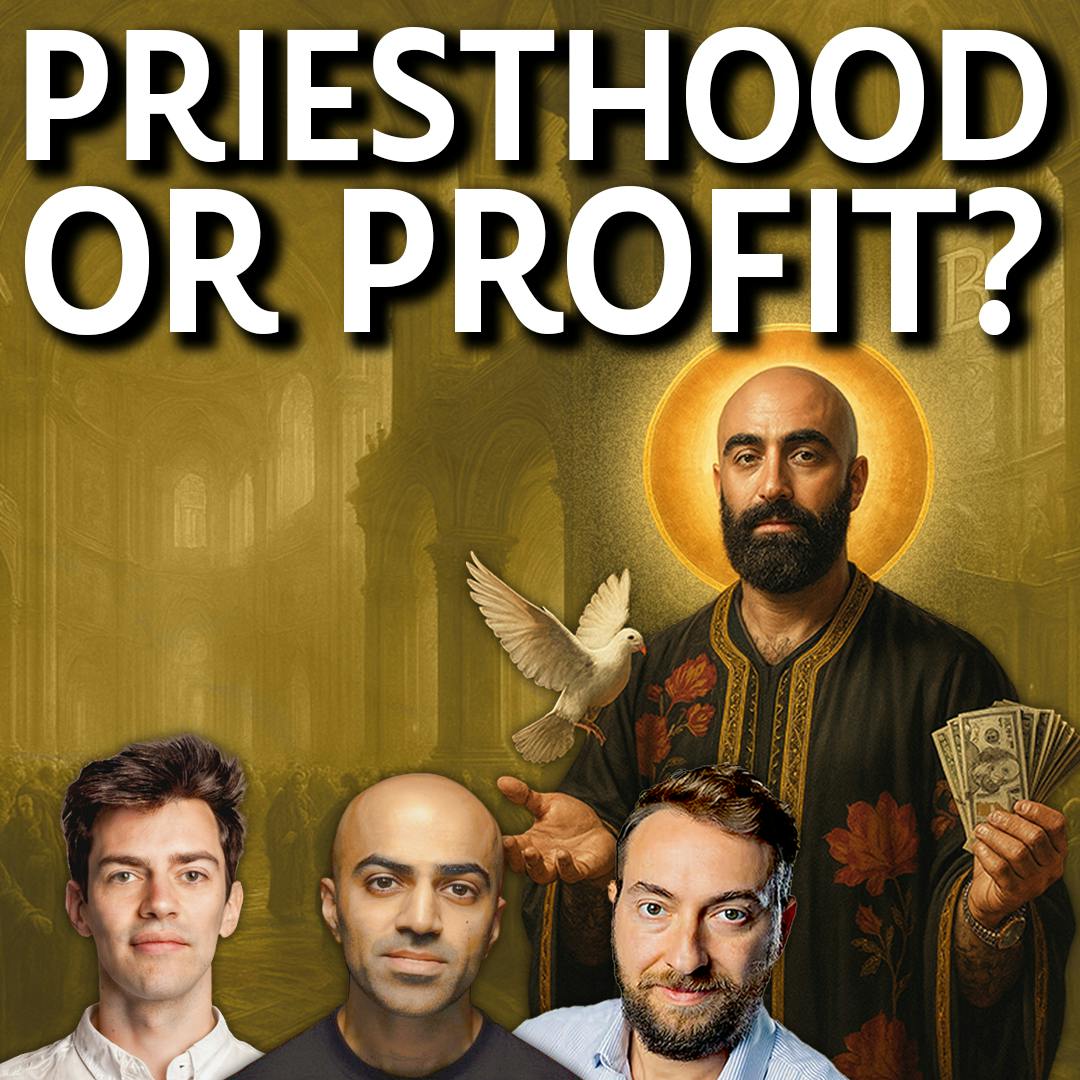
Ep 929The Chopping Block: Zcash +400%, Tempo’s $500M Shock, EF Pay Firestorm & AWS/Base Meltdown feat. Mert - Ep. 929
Welcome to The Chopping Block — where crypto insiders Haseeb Qureshi, Tom Schmidt, Tarun Chitra, and Robert Leshner chop it up about the latest in crypto. This week, Helius’s Mert returns to defend Zcash’s ~400% run and the “encrypted Bitcoin” framing, digging into anonymity sets, privacy UX, and why Bitcoiners are so riled up. We then tackle the Tempo bombshell — a ~$500M raise at a ~$5B pre, Stripe/Paradigm ties, Dankrad’s move from the EF — alongside Péter Szilágyi’s letter on EF culture and compensation: public goods priesthood vs. market incentives. Next up: Mert’s “USD Manlet” rethink (why coordinating Solana around one stable is hard, and why pushing USDT to compete with USDC may be the sharper play) plus a gripe-fueled tour of today’s DeFi trading UX. Finally, an AWS-outage autopsy: Coinbase downtime, Base sequencer hiccups, Infura/MetaMask ripple effects, and the case for multi-region/multi-cloud redundancy when real money — and sometimes safety — are on the line. And no, despite the memes, Mert is not launching a DEX. For more links and Show Hilights - https://unchainedcrypto.com/podcast-chopping-block/the-chopping-block-zcash-400-tempos-500m-shock-ef-pay-firestorm-aws-base-meltdown-feat-mert/ ⭐️Haseeb Qureshi, Managing Partner at Dragonfly ⭐️Robert Leshner, CEO & Co-founder of Superstate ⭐️Tom Schmidt, General Partner at Dragonfly Guest ⭐️ Mert, Co-founder & CEO at Helius Hosts ⭐️Haseeb Qureshi, Managing Partner at Dragonfly ⭐️Robert Leshner, CEO & Co-founder of Superstate⭐️Tom Schmidt, General Partner at Dragonfly Guest ⭐️ Mert, Co-founder & CEO at Helius “One Long Memo” [A Letter To The EF] by Péter Szilágyi https://gist.github.com/karalabe/a2bc53436f29e0711fe680d59e180f6c Timestamps 00:00 Intro 01:22 Mert a Madman of Solana and now Zcash 05:20 Bitcoin vs. Zcash: A Philosophical Clash 14:35 Tempo Fundraise and Ethereum's Talent Exodus 33:05 Ethereum's Social Layer & Public Goods 34:45 The Importance of Religious Priesthood in Crypto 41:01 The USD Manlet Proposal & Stablecoin Coordination 49:32 AWS Outage & Its Impact on Crypto Learn more about your ad choices. Visit megaphone.fm/adchoices

Ep 928Could BTC Outperform Gold? Plus, Ethereum's Big Advantage: Bits + Bips - Ep. 928
In this episode of Bits + Bips, hosts Austin Campbell, Ram Ahluwalia, and Chris Perkins tackle a packed agenda: from the fairness of Binance’s listing fees to the ways in which DeFi didn’t perform well during the “Black Friday” crash, why Tempo’s $500 million raise might have been a political ploy, and the growing war over stablecoin dominance. The trio debates whether Bitcoin is undervalued compared to gold, why Ethereum’s 10-year track record gives it an edge, and whether today’s Digital Asset Treasuries (DATs) are just froth, or the permanent backbone of institutional crypto. Plus: Austin makes a bold prediction about the stablecoin that will dominate by 2040. Sponsors: Mantle Hosts: Ram Ahluwalia, CFA, CEO and Founder of Lumida Austin Campbell, NYU Stern professor and founder and managing partner of Zero Knowledge Consulting Christopher Perkins, Managing Partner and President of CoinFund Links: Binance Listing Fee Drama Unchained: Binance Listing Fee Fight: What’s a Fair Price to List on the Top Crypto Exchange? Binance Claims It Does Not Profit From Token Listings Jesse Pollak (Base) chimes in Tempo & Dankrad Fortune: Exclusive: Stripe-backed blockchain startup Tempo raises $500 million round led by Joshua Kushner’s Thrive Capital and Greenoaks Ethereum core dev Dankrad Feist joins Tempo Reactions: Ryan Adams (Bankless): Tempo will optimize for itself, not ETH. Nick Almond: Not a death sentence for ETH Breadguy: Big loss. Dankrad was a major L1 scaling advocate. Black Friday Dan Wilson: 3 big lessons post-crash Gold vs. BTC GOLD/BTC up 23.5% in past month Bitcoin Is Undervalued vs. Gold DATs Bloomberg: Huobi Founder Li Lin Set To Launch $1 Billion Ether Accumulator - Bloomberg CoinDesk: Ripple Set to Enter Corporate Treasury Business With $1B Acquisition of GTreasury Timestamps: 🎬 0:00 Intro 💸 3:39 Binance listing fees — fair price for distribution or pay-to-play? 🏛️ 10:19 What is the best way to go public? ⚔️ 11:57 How exchanges really compete behind the scenes 💥 15:00 “Black Friday”: why Chris calls it catastrophic — but with a silver lining 🧱 24:52 What the industry must fix to prevent another meltdown 💵 30:15 How Tempo’s $500M raise represents peak frothiness 🚨 39:12 Is Dankrad’s exit from the Ethereum Foundation a red alarm for ETH? 🔮 43:07 Austin’s bold prediction: which stablecoin wins by 2040 🥇 46:17 Is Bitcoin undervalued compared to gold? 🏗️ 52:21 Why DATs are here to stay despite the market carnage Learn more about your ad choices. Visit megaphone.fm/adchoices

Ep 927Aptos Is Betting Big on Transparency After Crypto’s Black Friday, Says CEO - Ep. 927
Last Friday, billions evaporated in a liquidation cascade—and nobody knows exactly what happened because centralized exchanges won't share the data. In this sponsored episode recorded at Aptos' NYC event, Aptos CEO Avery Ching says if their Decibel perpetual exchange had been live, traders would have seen every order, every spread change, every liquidation in real-time onchain. But while critics argue existing perp DEXs like Hyperliquid are already decentralized, Ching says most still match orders off-chain in black boxes. Avery explains why Decibel (launching Q1 2026) will be different, how 500 million Indian users are coming to crypto through Reliance Jio's Jiocoin, and why Aptos partnered with World Liberty Financial despite VCs calling it "garbage in your living room." Guest: Avery Ching, CEO & Co-Founder, Aptos Links: The Composable Global Exchange Engine, by Avery Ching, CEO Aptos Aptos Post: The fully onchain trading engine built by Decibel Foundation Previous coverage of Unchained on Black Friday: Crypto’s Black Friday Was Its Largest Liquidation Ever. What the Hell Happened? Timestamps: 🎬 0:00 Intro 🧭 0:33 How Aptos evolved from Meta’s Libra/Diem project 💡 2:27 Aptos’ vision for global trading engine and everyday crypto use 💾 10:11 What Shelby is and how it supports AI, creators, and enterprise use. 🎥 12:22 Aptos’ new media partnership with NBCUniversal ⚡ 14:46 Avery’s vision for a future when blockchains are widely used 🧩 16:10 What Decibel is and how it aims to bring perps fully onchain 🔎 17:58 What would have changed if Friday’s crash was onchain 💵 24:12 Why Aptos partnered with World Liberty Financial on USD1 🇮🇳 28:46 How the Reliance Jio deal expands Aptos’ reach in India 🌏 30:46 How Aptos is building enterprise adoption across Asia 🏦 32:59 Why Aave launched its first non-EVM deployment on Aptos 🛡️ 36:42 What Aptos learned from recent market turmoil 🔚 42:18 Closing thoughts and Avery’s vision for onchain transparency Learn more about your ad choices. Visit megaphone.fm/adchoices

Ep 926Ethereum's Layer 1 Lacks a Perp DEX. Synthetix Intends to Change That - Ep. 926
Kain Warwick, founder of Synthetix and Infinex, is returning to Ethereum Layer 1 with a bold new experiment: a perpetuals DEX built directly on mainnet. In this episode, he joins Laura to explain why Synthetix is taking this contrarian step, how its hybrid “optimistic order book” can run efficiently on Ethereum’s slower block times, and why he believes the future of trading will move fully on-chain. Warwick also discusses the tradeoffs behind using USDT, what it will take to match centralized exchange performance, and his “super app” vision for how DeFi platforms could finally outcompete CEXs. Thank you to our sponsor, Binance! Guest: Kain Warwick, Founder of Infinex and Synthetix Links: The Superapp Thesis by Kain Warwick Blockwork’s Dan Smith on Spreads for ETH-USD Timestamps: 🔥 0:00 Introduction and ads: Binance ⚙️ 0:56 Why Synthetix is launching a perps DEX directly on Ethereum mainnet ⏳ 5:18 How a perpetuals exchange can even work on slow Ethereum block times 🔍 10:34 How transparency will differ from other onchain trading venues 🏗️ 13:53 Why Kain believes being on Ethereum mainnet still matters 🧱 17:00 The challenges of operating on L1—margin posting, gas costs, and more ⚔️ 21:43 How Synthetix plans to compete in an overcrowded perps DEX landscape 💣 24:33 How liquidations on an Ethereum perp DEX would play out during a Black Friday-like crash 🕵️♂️ 29:32 How traders could maintain privacy while staying fully decentralized 🌐 31:57 Why a perps DEX on mainnet could reshape Ethereum DeFi 💵 34:25 Why Synthetix is using USDT—despite its centralization risks 🏦 37:28 Which premium assets will serve as collateral 📱 39:36 Inside Kain’s “super app” vision for DeFi’s next evolution 🏁 50:31 Why Kain is fired up about Synthetix’s upcoming trading competition Learn more about your ad choices. Visit megaphone.fm/adchoices

Ep 925Binance Listing Fee Fight: What's a Fair Price to List on the Top Crypto Exchange? - Ep. 925
When CJ Hetherington revealed the token listing terms Binance allegedly offered his startup, the crypto world exploded. In this episode, CJ, founder of prediction market app Limitless, and his investor Nick Tomaino of 1confirmation join Laura to discuss why he went public, how Binance responded, and what the incident reveals about the power dynamics between exchanges and builders. The conversation tackles how retail gets dumped on, why transparency is the next frontier for crypto, and why both guests agree that the “revolution won’t be centralized.” Guests: CJ Hetherington, CEO/CO-Founder at Limitless Labs Nick Tomaino, Founder and General Partner at 1confirmation Links: CJ’s tweet Unchained: Coinbase Adds Rival Binance’s BNB to Listing Roadmap Binance Claims It Does Not Profit From Token Listings Timestamps: 🔥 0:00 Introduction 🗣️ 2:24 Why CJ decided to reveal Binance’s alleged listing terms 🏗️ 8:44 Why he built Limitless on Base 🤝 9:11 Whether Base coordinated with CJ before he went public 💥 13:04 How the crypto world reacted to CJ’s viral tweet 🧨 15:00 Whether Binance exploits projects and founders 💸 18:06 How short-term founders dump on retail investors, per CJ 📢 23:18 Binance’s response—and why they called CJ’s claims false 🔍 25:38 Why CJ and Nick say Binance needs far more transparency ⚠️ 30:42 Whether CJ fears retaliation for calling out the world’s biggest exchange 🤔 33:48 Why he doesn’t buy Binance’s claim that its policies “protect users” 💫 39:36 Why Nick is urging crypto founders and users to “believe in something” 🚀 42:03 CJ’s plan to build an “army of token holders” and make Limitless succeed 🪙 48:25 Inside Limitless’s community token sale 📈 50:34 What Nick learned from Polymarket’s rise as an early investor 👀 54:10 Coinbase adding BNB to its listing roadmap Learn more about your ad choices. Visit megaphone.fm/adchoices

Ep 924The Chopping Block: Inside the $19B+ Perp Crash, ADL Explained, Binance’s USDe/Staked-Token Depeg, and the Hyperliquid Whale Debate
Welcome to The Chopping Block — where crypto insiders Haseeb Qureshi, Tom Schmidt, Tarun Chitra, and Robert Leshner chop it up about the latest in crypto. This week, Doug Colkitt, Founder Ambient Finance & Founding Contributor at Fogo, joins us as one of the wildest weekends in crypto history drags us back on air: a record $19B+ in liquidations, gas spiking toward $400, exchange APIs wobbling, and ADL ripping through perps as hedges vanished. We unpack what ADL actually does, why delta-neutral farmers got nuked, and how Binance’s USDe and staked ETH/SOL pegs snapped amid index design and mint/redeem gaps—followed by refunds. We get into HLP vs. LLP (vaults vs. winning traders), the Hyperliquid “whale” short ahead of the tariff tweet, cross-margin reflexivity that torched alts, and why market makers wore outsized pain. Then we zoom out to infra: sequencers, force-inclusion in practice, and the case for on-chain clearing plus real insurance funds before the next Listen to the episode on Apple Podcasts, Spotify, Pods, Fountain, Podcast Addict, Pocket Casts, Amazon Music, or on your favorite podcast platform. Show highlights 🔹 Record wipeout — $19B+ liquidations, 1.6M traders rekt, gas spiking to ~$400 while major exchanges wobbled. 🔹 ADL, decoded — What happens when perps run out of counterparties; socialized losses, P&L/leverage ranking, and why hedges vanished. 🔹 Delta-neutral nuked — Cross-venue long/short farmers turned naked as ADL picked off one leg first. 🔹 Binance peg breaks — USDe to ~$0.68 on Binance, staked ETH/SOL snapped; refunds >$250M after index/oracle and mint-redeem gaps. 🔹 Flows vs. “attack” — Earn users rushing to USDT + copy-trade momentum likely amplified the depeg more than cunning index games. 🔹 DeFi vs. CeFi — Perp DEX performance broadly comparable; transparency gaps in ADL policies and liquidation mechanics laid bare. 🔹 Vaults vs. traders — HLP vs. LLP outcomes show who platforms chose to protect in tail events—and the retention risks of clipping winners. 🔹 OI collapse — Hyperliquid open interest ~15B → ~6B; cross-margin reflexivity helped nuke alts far worse than BTC. 🔹 Why it felt one-sided — Market-maker/API failures and risk misallocation made typically “safe” actors eat outsized losses. 🔹 The whale short — A massive Hyperliquid short pre-tariff tweet sparks insider-vs-coincidence debate. 🔹 Infra faceplants — Sequencers down, force-inclusion in theory only, docs offline—while base L1s largely kept ticking. 🔹 What to fix — On-chain clearing, real insurance funds, sane ADL ranking, robust mint/redeem, and better index/oracle design before the next shock. Hosts ⭐️Haseeb Qureshi, Managing Partner at Dragonfly ⭐️Robert Leshner, CEO & Co-founder of Superstate⭐️Tarun Chitra, Managing Partner at Robot Ventures⭐️Tom Schmidt, General Partner at Dragonfly Guest ⭐️ Doug Colkitt, Founder Ambient Finance & Founding Contributor at Fogo Disclosures Timestamps 00:00 Intro 01:11 $19B+ Liquidated 04:35 Personal Experiences & Reactions 08:30 Understanding Auto De-leveraging (ADL) 14:37 Binance & USDe Incident 23:19 DeFi vs CeFi Performance 26:05 Zero-Sum & Greedy Algorithms 34:26 Vaults & Trader Protection 39:43 Market Reactions & Trader Sentiments 44:33 Infrastructure Failures & OI Collapse 46:56 Insider Trading Allegations & Market Manipulation 52:14 Future of Perpetual DEXs Learn more about your ad choices. Visit megaphone.fm/adchoices

Ep 924Bits + Bips: Crypto Had Its Reset. Will It Go to New Highs Now? - Ep. 924
Crypto just went through its biggest crash. In the wake of “Black Friday,” when $19 billion in positions were wiped out in hours, Bits + Bips hosts Steve Ehrlich and Ram Ahluwalia are joined by Carlos Guzman of GSR and YQ of AltLayer to dissect what really happened. Was it a coordinated attack exploiting Binance’s oracles? A failure of market structure? Or simply too much leverage waiting for a trigger? Or some combination of the three? The group breaks down how liquidity vanished, why hedges failed, how this flash crash echoed the worst moments of traditional markets, and why the industry urgently needs reform before it happens again. Sponsors: Aptos Hosts: Ram Ahluwalia, CFA, CEO and Founder of Lumida Steve Ehrlich, Executive Editor at Unchained Guests: Carlos Guzman, Research Analyst at GSR YQ, Co-founder of AltLayer Timestamps: 🔥 0:00 Introduction and ads ⚡ 3:22 First reactions to crypto’s biggest crash ever 💥 5:55 The USDe depeg on Binance. Plus: coordinated attack or market failure? 🧠 12:57 Why Ram calls it a potential “zero-day hack” 📉 15:38 Are perpetuals the riskiest instruments in crypto? 💫 18:38 Huge spreads, no liquidity: where were the market makers? 🏦 22:59 The eerie parallels to a flash crash in U.S. equities 15 years ago 💀 25:01 How both longs and shorts got wrecked, and why perps fail as hedging tools 🔧 29:00 What crypto needs to fix its liquidity problem 🏛️ 33:34 How TradFi solved this years ago, and what crypto can learn ⚖️ 36:25 How systemic leverage makes every crash worse 📜 42:16 Why this proves crypto urgently needs a market structure bill 🚀 47:13 Why Ram says Hyperliquid came out as the winner 🔮 50:14 Outlook for prices and volatility in the coming days 🛡️ 1:00:04 Will insurance funds rise after this? ⏳ 1:02:18 Why YQ says it’ll take a long time to recover from the damage Learn more about your ad choices. Visit megaphone.fm/adchoices

Ep 922Crypto's Black Friday Was Its Largest Liquidation Ever. What the Hell Happened? - Ep. 922
When Trump tweeted about 100% tariffs on China, crypto collapsed — $19 billion in liquidations in just hours. Altcoins plunged 95%, exchanges froze, and stablecoins depegged. In this special episode, Diogenes Casares, founder of Klyra Protocol, joins Laura to break down the chain reaction: what really caused the crash, whether insiders knew it was coming, and how infrastructure failures and extreme leverage turned a policy tweet into crypto’s Black Friday. Thank you to our sponsor, Aptos! Guest: Diogenes Casares, founder of Klyra Protocol and advisor at Patagon Management Links: Diogenes’s article on X: "Black Friday: What Happened?" Jordi Alexander on "What happened? Stani Kulechov on Aave’s performance Binance co-founder’s statement Timestamps: 💥 0:00 Introduction ⏱️ 1:00 What markets looked like in the hours before the crash 🕵️♂️ 3:25 Whether traders on Hyperliquid knew the tariff tweet was coming 📉 5:44 Why altcoins plunged up to 95% and how market makers amplified the move ⚙️ 7:56 How auto-deleveraging kicked in—and why it mattered 💣 13:07 How DATs created hidden leverage that made the system fragile 🏦 14:54 How perps DEXes and CEXes responded differently to the meltdown 🧩 18:09 Was it a coordinated attack—or just market mania? 🤯 25:56 What happened to smaller market makers when liquidity vanished 💥 29:44 How the USDe depeg on Binance triggered cascading liquidations 📊 32:16 Why Ethena “managed it well” and why exchanges don’t ADL their positions ⚠️ 34:04 What caused the USDe “depeg” 🔧 35:22 How infrastructure failures made price feeds unreliable 🚨 37:28 What perps exchanges need to change going forward ⏳ 43:56 Why Diogenes thinks this kind of crash will happen again—and worse 📜 50:20 The “extraordinary rights” LPs hold on exchanges 💱 49:02 How traders should decide where to trade after this 👀 52:19 A rumor about how much Jump lost Learn more about your ad choices. Visit megaphone.fm/adchoices

Ep 921The Chopping Block: Perps, Privacy & Prediction: Aster vs. Hyperliquid, Zcash Pops, Polymarket Soars, Galaxy One Debut - Ep. 921
EPolymarket scales with Wall Street’s blessing, Kalshi fires up KOLs, and BNB chain melts down as fast as it ran. We dissect Aster’s data drama, the new privacy wave lifting Zcash, and Galaxy One’s glossy yields—what’s smart strategy vs. old mistakes in new clothes? Welcome to The Chopping Block — where crypto insiders Haseeb Qureshi, Tom Schmidt, Tarun Chitra, and Robert Leshner chop it up about the latest in crypto. This week, we unpack Polymarket’s jaw-dropper: a $2B raise at a $9B valuation led by ICE (parent of the NYSE), the token tease, and whether prediction markets will eat sportsbooks. We get into the KOL wars (Kalshi vs. Polymarket), the line between paid shilling and product marketing, and what “parlays” look like on prediction platforms. Then: Aster vs. Hyperliquid and DeFiLlama’s delist sparks transparency questions, while BNB Chain’s 72-hour meme-coin supercycle goes boom→bust. Privacy takes center stage as Zcash rips and the “privacy meta” returns. We close with Galaxy One’s 8% yield pitch — BlockFi déjà vu or smarter risk management in a post-CeFi world? Show highlights 🔹 Polymarket’s $2B at $9B — led by ICE (NYSE parent): why a TradFi giant is backing prediction markets and what integrations could follow. 🔹 Token tease — the crew debates what a Polymarket token could represent amid a CFTC path and U.S. re-entry. 🔹 KOL Wars: Kalshi vs. Polymarket — disclosed influencer marketing vs. “paid shilling,” and where the ethical line actually sits. 🔹 Product vs. Asset promos — why “use this platform” ≠ “buy this ticker,” and the gray zone of shilling specific markets or sides. 🔹 Do prediction markets influence reality? When odds can sway decisions (Fed, elections), and why markets may self-correct before hitting “99%.” 🔹 Sportsbooks in the crosshairs — parlays on prediction markets, Robinhood funnels, and why DraftKings/FanDuel should care. 🔹 Aster vs. Hyperliquid — incentives, wash-trading risk, and DeFiLlama’s delist after suspicious Binance-correlated volumes. 🔹 BNB’s 72-hour supercycle — memecoins moon, CZ’s “not endorsements” tweet, then a brutal boom→bust as bridgers retreat. 🔹 Privacy supercycle — Zcash rips on Naval/Mert momentum; Zashi UX + NEAR intents cited vs. “it’s just flows” skepticism. 🔹 Old coin, new crowd — why ZEC’s age + thin float can turbocharge moves, even with lower on-chain usage than Monero. 🔹 Galaxy One’s 8% yield — comeback arc for BlockFi’s Zach Prince or smarter, public-company-backed risk management? 🔹 CeFi vs. DeFi lending — on-chain transparency, Coinbase’s approach, 60-day gates, and whether unsecured credit is creeping back. Hosts ⭐️Haseeb Qureshi, Managing Partner at Dragonfly ⭐️Robert Leshner, CEO & Co-founder of Superstate ⭐️Tarun Chitra, Managing Partner at Robot Ventures ⭐️Tom Schmidt, General Partner at Dragonfly Timestamps 00:00 Intro 01:08 Polymarket & Shayne Coplan’s Journey to Success 05:28 The Role of Prediction Markets 10:21 Kalshi vs. Polymarket: KOL Wars 23:56 Sports Betting & Prediction Markets 29:19 BNB Chain's Memecoin Boom and Bust 33:55 Aster and Defi Lama: The Delisting Drama 37:04 Privacy Supercycle: The Zcash Bull Run 50:02 Galaxy One: BlockFi's Comeback? Disclosures Learn more about your ad choices. Visit megaphone.fm/adchoices

Ep 920The Stablecoin Competition Is On. Who Will Be the Winners and Losers? - Ep. 920
The stablecoin race is heating up. With the passage of the U.S. stablecoin law the floodgates have opened. Tether still dominates globally, but Circle, Stripe, and a wave of new “stablechains” are making their move. In this episode, Dragonfly partner Rob Hadick and Helius CEO Mert Mumtaz join Laura Shin to map out how this battle could reshape crypto and payments. Will ecosystem apps like Phantom and Jupiter keep their own stablecoins? Can Circle’s new Layer 1, Arc, compete with Tether’s network effect? Don’t miss it! Thank you to our sponsors! Binance Aptos Guests: Rob Hadick, General Partner at Dragonfly Mert Mumtaz, CEO of Helius Timestamps: 🎬 0:00 Intro 🔥 2:50 What Rob and Mert expect from the coming flood of stablecoins and stablechains 🌐 12:06 How network effects could decide the winners in the stablecoin wars 💵 14:09 Whether Tether’s dominance is here to stay 💱 22:45 Why Forex matters—and why everyone still wants dollars 😎 27:15 Whether Tether even cares about its new competitors ⚠️ 33:18 What Rob calls the biggest existential threat to Tether 🏦 36:00 Can Circle’s new payments chain, Arc, really compete in this environment 🧩 40:42 Why Mert says Circle is in a difficult strategic position 🤝 45:17 How new Layer 1s risk pleasing no one by trying to please everyone 💣 52:55 Whether banks are doomed—and why employees might want to start exiting now Learn more about your ad choices. Visit megaphone.fm/adchoices
Ep 919Bits + Bips: What’s Really Driving Bitcoin—and Who’s Driving Crypto Onchain? - Ep. 919
Bitcoin is hitting new all-time highs—but is this real euphoria, or just a prelude to it? In this double-header episode, we bring you a Bits + Bips roundtable and an in-depth interview on the five companies best positioned to bring crypto onchain. First, the Bits + Bips crew, Lumida’s Ram Ahluwalia, FalconX’s Joshua Lim, and NYU professor Austin Campbell, break down what’s really driving this crypto rally. Is it dollar debasement, asset revaluation, or just pure animal spirits? They debate how close we are to a true blow-off top, how to spot a real market peak, and what shocks could shelve bitcoin in an instant. Plus, their takes on Zcash, Japan, Coinbase’s banking ambitions, and more. Then, Unchained’s Steven Ehrlich sits down with Ryan Yi, author of the Onchain 5 series, to discuss the five companies that are leading crypto’s push into real-world adoption. From Coinbase’s Base app and token plans, to Robinhood’s play for tokenized assets, Stripe’s all-in crypto tech stack, Telegram’s TON-powered mini-app ecosystem, and Binance’s BNB-based loyalty empire, this is the playbook for what going onchain really looks like. Thank you to our sponsor, Aptos! Hosts: Steve Ehrlich, Executive Editor at Unchained Ram Ahluwalia, CFA, CEO and Founder of Lumida Guests: Joshua Lim, Co-Head of Markets at FalconX Austin Campbell, NYU Stern professor and founder and managing partner of Zero Knowledge Consulting Ryan Yi, Ex Coinbase, Coinbase Ventures, and CoinFund For links to all the amazing articles, visit https://unchainedcrypto.com/bits-bips/bits-bips-whats-really-driving-bitcoin-and-whos-driving-crypto-onchain/ Timestamps: 0:00 Intro 4:38 What Josh learned at Token2049 about what’s really moving the market 10:12 How the options market is quietly driving bitcoin’s price 13:25 Why Ram says this isn’t a “debasement trade,” despite what everyone thinks 20:29 Whether we’ve hit peak euphoria—or not even close 23:54 Why Zcash suddenly exploded in price 26:45 How political changes in Japan are shaping markets 30:30 How to spot the real market top—and why Austin challenges Ram’s call on stocks beating gold 35:41 How CME’s 24/7 futures could change crypto trading 39:20 The signs Ram thinks would signal when the top is in 43:43 How bitcoin, altcoins, and tech stocks trade together and how they don’t 47:59 What kind of shock could finally take bitcoin down 51:34 What to make of Coinbase applying for a banking license 53:34 Whether Galaxy is trying to become the next crypto super app 57:59 Why this cycle might play out completely differently 1:02:04 Why Ram believes banks are about to crush earnings 1:03:03 The biggest risks investors still aren’t paying attention to 1:07:56 Meet 5 The Firms Poised to Drive the Next Wave of Crypto Adoption 1:08:53 Why distribution is the key battleground for the next wave of crypto adoption 1:12:24 How Coinbase is rearchitecting its platform around Base 1:15:42 What the upcoming Base token and Base app could unlock for users 1:19:13 How Robinhood is competing in crypto—and why it might have an edge 1:25:56 What the tokenization trend means for Robinhood’s future 1:27:52 Why Stripe is building a crypto tech stack of its own 1:35:02 Why Telegram’s TON token is central to its survival and growth 1:41:40 What’s behind TON’s lagging price performance 1:45:13 How Binance uses the BNB token as a cornerstone of its entire ecosystem 1:52:43 Why going fully onchain could be the defining strategy for the next generation of companies Learn more about your ad choices. Visit megaphone.fm/adchoices

Ep 918Bitcoin Core vs Knots: Why Developers Are Fighting Over a Coming Change - Ep. 918
On Monday, bitcoin hit a new all-time high of over $126,000, but Bitcoin’s biggest fight right now isn’t about price; it’s about purpose. Since 2023, image files and meme tokens have clogged the network, spiking fees and making everyday payments expensive. Bitcoin Core wants to lift an 80-byte data limit that's existed since 2014. Bitcoin Knots disagrees — and has built code to enforce a different limit. Should Bitcoin stay a payments network, or evolve into a platform that stores everything from NFTs to memecoins to experimental layer 2 protocols? Blockstream CEO Adam Back and Bitcoin and Lightning developer Chris Guida debate whether removing limits on OP_RETURN protects Bitcoin from what they call “spam,” or opens the floodgates to it. Plus: the real lesson from 2014 when Vitalik Buterin left Bitcoin, why miners can bypass any filter by renting hash rate, and whether 22% of nodes running different code actually matters in a decentralized network. Thank you to our sponsors! Mantle Aptos Guests: Chris Guida, Bitcoin and Lightning Ecosystem dev and Educator Adam Back, CEO of Blockstream Timestamps: 🎬 0:00 Intro ⚙️ 1:37 What the Core vs. Knots debate is really about 🧩 4:46 Why “spam” filtering and “censorship” aren’t the same 💾 7:28 How NFTs, ordinals, and BRC-20s created the “spam” problem 🧱 8:51 The Genesis block message vs. today’s onchain data 🔍 13:27 What op_return does and why its size limit matters ⚔️ 22:04 Why the proposed change has split the Bitcoin community 📈 26:25 Can Bitcoin stay censorship-resistant while filtering “spam”? 💣 30:26 Do economic incentives make “spam” filters useless? 🧰 34:17 Why some believe filters still work to protect blockspace 💰 36:05 Would higher fees from non-payment data help miners secure Bitcoin? 🧮 42:06 Does more data make it harder to run a node? 🧭 46:04 Can Bitcoin fight storage data without hurting its core principles? ⚡ 50:37 What counts as a “real” layer 2 on Bitcoin 🧱 55:55 How much support the Knots software actually has 🧩 1:00:35 Could this debate cause a Bitcoin chain split? 🔚 1:04:22 Closing thoughts on what’s next for the network Learn more about your ad choices. Visit megaphone.fm/adchoices

Ep 917The Chopping Block: Arthur Hayes & Tom Lee; Hyperliquid vs Aster, DATs & ETH - Ep. 917
Arthur Hayes & Tom Lee map the new crypto arms race—Hyperliquid vs Aster, Plasma’s stablecoin rails, and ETH’s DAT-fueled supercycle. Welcome to The Chopping Block – where crypto insiders Haseeb Qureshi, Tom Schmidt, Tarun Chitra, and Robert Leshner chop it up about the latest in crypto. Live at Token2049 Singapore, we’re joined by Arthur Hayes (Maelstrom) and Tom Lee (Bitmine) to map two battles shaping the next cycle: the Perp DEX war—Hyperliquid’s moat vs. CZ-linked Aster, zero-fee experiments like Lighter, and whether ~$500M/year token unlocks can stay “bullish”—and the race to own stablecoin rails, from Tether-affiliated Plasma’s zero-fee USDT chain to distribution plays like Tempo and Codex. We dig into DATs, mNAV compression, and Tom’s “ETH supercycle,” plus prediction markets (Polymarket vs. Kalshi) crossing into the mainstream and a surprise Zcash revival. If crypto’s future is being decided in trading venues and in money itself, this is where the battle lines get drawn. Show highlights🔹 Perp DEX wars — Hyperliquid vs Aster: Binance-linked Aster surges as Hyperliquid’s moat is stress-tested; CEX tie-ups (Bybit–ApeX, Coinbase–Avantis) escalate the fight. 🔹 Arthur Hayes on Hyperliquid: 126x call but sold ahead of ~$500M/yr token unlocks (starting November); “bullish unlocks” depend on sustained dominance + real fees. 🔹 Lighter’s zero-fee perps: Can post-airdrop volume stick, or do profits migrate to HLP/LLP vault strategies as fees compress? 🔹 DATs & ETH “supercycle” — Tom Lee (Bitmine): Communications flywheel, mNAV compression, ~70 ETH DATs with many below NAV; consolidation/unwinds/ETF conversions amid SEC/Nasdaq scrutiny and ZeroG controversy. 🔹 Plasma stablecoin chain (Tether-affiliated): Zero-fee USDT transfers, heavy incentives, Binance Earn distribution—are flows durable vs Ethereum/Tron? 🔹 Prediction markets — Polymarket vs Kalshi: South Park moment; funds cite PMs for shutdown/Fed odds; 2024 election accuracy pushes PMs mainstream. 🔹 Privacy coins & Zcash revival: ZEC rally, Monero 51%-attack mention, and the ongoing listings/compliance tug-of-war. 🔹 Stablecoins to $4T? — Tom Lee: Micropayments + 24/7 rails expand TAM across multiple chains, not just Ethereum. Hosts Disclosures ⭐️Haseeb Qureshi, Managing Partner at Dragonfly ⭐️Tom Schmidt, General Partner at Dragonfly ⭐️Tarun Chitra, Managing Partner at Robot Ventures Guest ⭐️ Arthur Hayes, CIO at Maelstrom ⭐️Tom Lee, CIO of Fundstrat Capital & Chairman of Bitmine Timestamps 00:00 Intro 01:15 Token 2049 Reflections 03:55 Tom Lee's Role in Ethereum 08:04 Challenges & Future of DATs 13:09 Plasma: Berachain for Stablecoins 20:06 Perp Dex Wars & Hyperliquid 24:26 Fee Compression 29:59 Kalshi vs. Polymarket 39:52 Zcash & Privacy Coins Learn more about your ad choices. Visit megaphone.fm/adchoices

Ep 916What’s the Better Bet? Stocks or Gold? - Ep. 916
Is gold the ultimate hedge against inflation and sovereign risk? Or are stocks the better long-term wealth builder thanks to innovation and earnings growth? In this heated and highly entertaining episode, Ram Ahluwalia (Lumida Wealth) and Vinny Lingham (Praxos Capital) dive deep into the macro landscape to debate the relative merits of gold vs. the S&P 500. Along the way, they explore: Gold’s decentralization vs. Bitcoin Why share buybacks might be distorting wealth creation The role of inflation, AI, fiscal dominance, and central banks The logic behind each of their portfolios And to make things more interesting? They make a $10,000 bet on whether gold or the S&P 500 will perform better over the 9 months. Token2049 Binance Ram Ahluwalia, CFA, CEO and Founder of Lumida Vinny Lingham, Co-founder of Praxos Capital Timestamps: 🎬 0:00 Intro 📈 4:30 Why Ram argues stocks are the stronger long-term play 🥇 7:18 Why Vinny says gold is more decentralized than even Bitcoin 💵 12:08 Why Ram believes earnings make stocks the superior investment ♻️ 16:37 Why Vinny thinks stock buybacks are harmful for society 🌍 27:30 Is this still the best time in history to be alive? ⏳ 33:23 Whether its too expensive now to buy gold ⚡ 40:40 What Vinny predicts will trigger the next major macro crisis 🤝 42:56 The $10,000 bet: gold vs. the S&P 500 🤖 48:33 Whether we’re still early in the AI boom 🎤 54:15 Closing arguments from Ram and Vinny Learn more about your ad choices. Visit megaphone.fm/adchoices

Ep 915How Hyperliquid Came to ‘Threaten the Very Existence’ of CEXs Like Binance - Ep. 915
Perp DEXs are on fire, with volumes topping $1 trillion a month for the first time. Aster, backed by YZi Labs (formerly Binance Labs), has suddenly vaulted to the top of volume charts, but is its rise organic, or manufactured? But while everyone frames the battle as Aster vs. Hyperliquid, Syncracy’s Ryan Watkins and Sunny Shi argue the real fight is much bigger: decentralized exchanges versus centralized giants like Binance. Plus: what role Solana will play in the next chapter in the perps DEX wars? And won’t Ethereum even compete? Thank you to our sponsors! Binance Token2049 Guests: Ryan Watkins, Co-Founder of Syncracy Capital Sunny Shi, Investor at Syncracy Capital Links: Unchained: Nearly $12 Billion in HYPE Token Unlocks Loom Ahead: Maelstrom Why Hyperliquid Should Cut Its Total Token Supply Nearly in Half Learn more about your ad choices. Visit megaphone.fm/adchoices

Ep 914How DoubleZero Built a Faster Internet for Crypto and Helped All DePIN - Ep. 914
DoubleZero just launched its mainnet-beta, offering a new type of high-performance fiber network for blockchains, live across 5 continents and already adopted by 20%+ of Solana stake. Co-founder Austin Federa joins Unchained to walk through: How DoubleZero creates a dedicated internet for crypto Who contributes fiber and why they earn the 2Z token What the SEC’s no-action letter means for crypto and DePIN specifically And what this could unlock for L2s, onchain trading, and more Thank you to our sponsors! Binance Token2049 Guest: Austin Federa, Co-founder of DoubleZero Timestamps: 🎬 0:00 Introduction and ads: Token2049 and Binance 🌐 0:59 What’s wrong with the public internet—and why crypto needs its own ⚡ 5:28 How DoubleZero is building a dedicated network for blockchains 🌍 7:54 How the physical world gets integrated into the blockchain economy ⏱️ 10:49 Why traders demand more determinism in transaction times 🛠️ 13:09 How anyone can become a contributor to the DoubleZero network 🚫 14:32 Why Ethereum might not be the right fit for this product 💰 16:06 What role the 2Z token plays in the ecosystem 🔥 23:12 Why Jump’s token allocation sparked controversy ⚖️ 27:40 What the SEC’s no-action letter really means for DePIN 🏆 32:59 If DoubleZero succeeds, who will come out on top? Learn more about your ad choices. Visit megaphone.fm/adchoices

Ep 912Why Every Company Will Have a Stablecoin — and Why One L2 Isn’t Enough - Ep. 912
This week on Unchained, we’ve got a double-header. First, Zach Abrams, CEO of Bridge (acquired by Stripe), unveils Open Issuance, a platform designed to let any company launch its own stablecoin. He explains why the stablecoin duopoly is ending, why fragmentation won’t slow adoption, and how stablecoins could pair with AI to reshape global money movement. Then, Kenny Li, co-founder of Manta Network, joins to reveal why Manta is pivoting away from being just another L2. He argues that the scaling wars are oversaturated, that mercenary users make infra battles a fight for crumbs, and that the real prize is at the application layer. Thank you to our sponsors! Mantle Aptos Guests: Zach Abrams, Co-Founder and CEO of Bridge Kenny Li, Co-Founder and Core Contributor of Manta Network Links: Unchained: How New Stablecoin Startup Bridge Got Acquired by Stripe for $1.1B MetaMask Stablecoin mUSD Goes Live Why JPMorgan and Shopify Are Rolling Out New Products on Ethereum Layer 2 Base Tempo Launch Announcement: The Blockchain Designed for Payments Learn more about your ad choices. Visit megaphone.fm/adchoices

Ep 913Bits + Bips: Where Is the Most Wealth to Be Made in Crypto: DeFi or CeFi? - Ep. 913
Crypto’s bull run may be far from over, but the battleground is shifting. On this week’s Bits + Bips, Bill Barhydt of Abra and Robert Leshner of Superstate join Ram Ahluwalia and Steven Ehrlich to debate: The current state of the markets with a looming government shutdown SWIFT’s move to build on Linea, an Ethereum layer 2 Hyperliquid vs Aster The future of perps vs. spot Why some DATs are starting to look like grifts Whether DeFi billionaires will ultimately eclipse their CeFi predecessors Plus: Binance’s and Tether’s valuation, CZ as the entrepreneur of the decade, and why the industry may be entering an era of “perpification.” Thank you to Xapo for sponsoring this episode! Hosts: Ram Ahluwalia, CFA, CEO and Founder of Lumida Steven Ehrlich, Executive Editor at Unchained Guests: Bill Barhydt, Founder and CEO of Abra Robert Leshner, Co-founder & CEO of Superstate Links: Steve’s story on the DAT that claimed it raised much more than it actually did Subscribe to Bits + Bips newsletter here Timestamps: 🎬0:00 Intro 📈 3:26 Why Bill believes the bull run is far from over 🧐 5:10 Why Ram is pushing back on market FUD 🏛️ 9:10 Will a government shutdown impact markets? 🌐 12:48 Why SWIFT building on Ethereum’s Linea layer 2 is such a big deal 🏦 22:15 Whether it even matters if banks embrace crypto ⚠️ 27:50 How one DAT may have been the “ultimate grift” ⚔️ 35:58 Inside the DEX perps wars: Hyperliquid vs Aster 👑 40:32 How valuable Binance and CZ really are to the industry 🚀 50:39 What advantages make Hyperliquid stand out in the perp battle 🤔 53:14 Why picking winners in trading isn’t so simple 🔄 57:29 Winners in stablecoin race plus why perps are better than spot Learn more about your ad choices. Visit megaphone.fm/adchoices

Ep 911The Chopping Block: Perp Wars & Stablecoin Battles: Hyperliquid, Aster, Tether - Ep. 911
Welcome to The Chopping Block – where crypto insiders Haseeb Qureshi, Tom Schmidt, Tarun Chitra, and Robert Leshner chop it up about the latest in crypto. This week, we’re joined by Farooq Malik, co-founder and CEO of Rain, as two parallel wars erupt across crypto: the Perp DEX war between Hyperliquid and the CZ-backed Aster, and the deepening battle for stablecoin dominance. As Aster rockets to $30B in daily volume, we debate whether it’s real adoption or points-fueled froth — and what it means for Hyperliquid’s lead. Then we dive into Tether’s shocking $500B valuation play, Circle’s shrinking moat, and how Rain is building real-world rails for stablecoin payments. If crypto has two new battlegrounds — trading venues and money itself — this is where the future is getting drawn. Show highlights 🔹 DEX Wars: Aster vs. Hyperliquid – Aster hits $30B daily volume; is it real demand or a points-fueled surge? Hyperliquid’s dominance faces its first real threat. 🔹 CZ’s Return to Form – Aster’s Binance links, aggressive fee model, and possible “James Wynn” conspiracy theory raise the stakes in the perp DEX arena. 🔹 Wash Trading & Open Interest Gaps – Aster’s $2B TVL contrasts with $1.25B open interest vs. Hyperliquid’s $10B, sparking questions about organic traction. 🔹 Incentive Wars – Aster rewards takers 2x over makers; Hyperliquid and Blur praised for long-game design that built sticky liquidity instead of short-term volume. 🔹 The Execution Advantage – Haseeb: “Asia executes better than it innovates”; Aster may stumble now but could out-iterate and outscale its rivals. 🔹 Stablecoin Shockwave: Tether’s $500B Valuation Leak – Tether quietly seeks $15–20B in private funding, aiming for a $500B valuation—matching OpenAI and SpaceX. 🔹 Circle vs. Tether – Circle trades at 0.5x supply, Tether seeks 3x; the panel debates margins, moat, and whether USDC can survive the “reverse momentum.” 🔹 Rain’s Real-World Stablecoin Rails – Farooq Malik shares how Rain powers payroll, P2P, cards, and merchant payments on stablecoins—without touching fiat. 🔹 New Use Cases: Stablecoins in the Wild – On-chain credit cards, just-in-time lending, cross-border Facebook ad funding, and more—all enabled by 24/7 money. 🔹 Global Adoption: LatAm, MENA, Asia – Rain’s data shows stablecoin usage exploding outside the U.S., especially in regions with FX controls and unstable banks. Hosts ⭐️Haseeb Qureshi, Managing Partner at Dragonfly ⭐️Robert Leshner, CEO & Co-founder of Superstate ⭐️Tom Schmidt, General Partner at Dragonfly Guest ⭐️Farooq Malik, Co-Founder & CEO of Rain Disclosures Timestamps 00:00 Intro 01:02 Aster vs. Hyperliquid 14:25 Regulatory Capture: L2s, Sequencers, CFTC 26:08 Tether’s $500B Valuation: Bubble or Bargain? 31:36 Tether vs. Circle: Stablecoin Economics 42:56 Rain: Stablecoin Payments Infra 47:16 Stablecoin Use Cases; Cards, Payroll, P2P 54:04 Global Stablecoin Growth Learn more about your ad choices. Visit megaphone.fm/adchoices

Ep 910Plasma's Successful Launch, Revenue Over TVL & the Future of Pump.fun - Ep. 910
How do stablecoin-first blockchains win distribution? Does TVL actually map to value? And why speculation may become the default language of online culture. In this 3-part episode, we explore three different important stories. Segment 1: CoinFund’s Seth Ginns explains how newly launched stablecoin chain Plasma aims to compete, plus why the “stablecoin race” with Circle and Stripe is just beginning. Segment 2: Solana Foundation president Lily Liu lays out why revenue—not TVL—should be crypto’s north-star metric, whether TVL can be easily gamed, and what a better DeFi metric stack looks like. Segment 3: Figment Capital’s James Parillo makes the case for Pump.fun and “AudienceFi”: how creator coins can financialize streaming, whether token collapses are a feature, and why both perps and memecoins rhyme with gambling. Thank you to our sponsors! TOKEN2049 - Get 15% off with code UNCHAINED Binance Guests: James Parillo, General Partner at Figment Capital Lily Liu, President of Solana Foundation Seth Ginns, Managing Partner and Head of Liquid Investments at CoinFund Learn more about your ad choices. Visit megaphone.fm/adchoices

Ep 909Why Hyperliquid Should Cut Its Total Token Supply Nearly in Half - Ep. 909
Crypto investors love to throw around “FDV” as if it’s the ultimate measure of value. But what if that number is more misleading than helpful? In this episode, DBA’s Jon Charbonneau explains his proposal to cut Hyperliquid’s supply by nearly half, why he believes FDV overstates real valuations, and how outdated tokenomics are holding projects back. We also cover whether the Hyperliquid team should take smaller allocations if they cut the token supply and what Jon thinks of Arthur Hayes’ HYPE sale just weeks after saying the token would 10x. Visit our website for breaking news, analysis, op-eds, articles to learn about crypto, and much more: unchainedcrypto.com Thank you to our sponsor, Mantle! Guest: Jon Charbonneau, Co-founder and General Partner of DBA Links: Proposal to Reduce HYPE Total Supply by 45% by Jon Charbonneau, Co-founder of DBA Maelstrom post: HYPE's Damocles Sword Unchained: Nearly $12 Billion in HYPE Token Unlocks Loom Ahead: Maelstrom Timestamps: 🎬 0:00 Intro 📉 0:35 What Jon thinks people get wrong when they use FDV as a valuation metric 🧮 4:05 How Jon’s proposal would change Hyperliquid’s supply and valuation 🆘 12:20 If the Assistance Fund is removed, how can emergencies be handled? 📊 15:05 How token supplies should really be evaluated when valuing projects ⏳ 20:44 Why current tokenomics reflect an outdated model ✂️ 24:56 Should the Hyperliquid team be taking a smaller allocation too? 🤔 28:15 What Jon thinks of Arthur Hayes selling HYPE right after calling for the moon 🔮 31:351 How Hyperliquid should move forward with Jon’s proposal Learn more about your ad choices. Visit megaphone.fm/adchoices

Ep 908Bits + Bips: How Wall Street Could Make a Killing off the Next Crypto Winter - Ep. 908
EMarkets had a flood of liquidations on Monday, and traders lost over $1.5 billion in positions. So, why are liquidations spiking? Is this a warning or a blip? Also, could a flood of DAT issuance be setting the stage for not just a crypto winter, but a crypto “nuclear” winter? If so, hedge funds and market structure could accelerate the pain. This week on Bits + Bips, Steven Ehrlich, Ram Ahluwalia, Austin Campbell, and Vinny Lingham talk about why mNAVs could compress and whether even MicroStrategy’s stack is more fragile than it looks. They debate the bull case for gold (yes, even at these ATHs), how tokenized stocks and changing reporting cadences could open new insider edges, and what the U.S. macro picture looks like. Thank you to our sponsors! Walrus: Scalable storage that lets you publish, deliver, and program any data, onchain. Xapo: Where Global Banking Meets Bitcoin Hosts: Ram Ahluwalia, CFA, CEO and Founder of Lumida Steven Ehrlich, Executive Editor at Unchained Guests: Austin Campbell, Founder and Managing Partner of Zero Knowledge Consulting Vinny Lingham, Co-founder of Praxos Capital Timestamps: 🎬 0:00 Intro 💥7:39 Why Monday’s liquidations spiked and what triggered $1.5B in losses 📊 11:18 How a shift away from quarterly reporting could change markets 🕵️ 14:16 How tokenized stocks might hand insiders a massive edge 🐻 22:05 Why Vinny is bearish right now and why Ram disagrees 🥇 24:25 Why gold might still have upside, even at record highs 📉 28:59 Whether the flood of DATs will end in brutal consolidation ⚡ 35:49 Could even MicroStrategy blow up under market stress? ✅ 48:17 What SEC clearing the path for ETFs really signals for crypto 📈 54:23 Ram’s stock picks in this environment ⚠️ 56:00 Why Austin sees a looming breakdown in the U.S. economy 😌 58:02 Why Vinny doesn’t feel the need to take big risks right now Learn more about your ad choices. Visit megaphone.fm/adchoices

Ep 907Debate: Should Stablecoin Chains Have an Ethereum L2 or Their Own L1? - Ep. 907
In this episode, Cyber Capital’s Justin Bons and Codex’s Haonan Li challenge the new orthodoxy: whether payments chains should be alt L1s or Ethereum L2s, how “neutrality” and finality matter for real-world transactions, and why fragmentation could make or break onchain dollars. We dig into Stripe’s Tempo (and its permissioned start), what it would take for L2s to reach true decentralization, and whether stablechains undercut general-purpose chains. Plus: the trade-offs of sequencers, paying gas in dollars, and whether protocol-native stables are the future. Thank you to our sponsors! Binance Token2049 – Get 15% off with code UNCHAINED Guests: Justin Bons, Founder and CIO of Cyber Capital Haonan Li, Co-founder and CEO of Codex Timestamps: 🎬 0:00 Intro 💭 1:45 Laying out the first arguments 🛠️ 12:57 What needs to happen for L2s to finally become stage 2 rollups 💵 15:40 Why Haonan chose to launch a stablecoin-focused L2 on Ethereum 🏦 30:17 Does Stripe’s Tempo L1 spell trouble for Ethereum L2s? ⚖️ 38:55 Whether Tempo can position itself as a neutral blockchain 🔗 50:02 Are L2s capable of true decentralization? ⏱️ 53:58 How important finality is for stablecoin businesses 🧩 57:08 Why fragmentation could make or break stablecoins 🔮 1:02:31 What the future of rollups should look like ⚔️ 1:05:58 The case for and against general-purpose chains 📉 1:13:12 Whether protocol-native stablecoins will keep gaining traction Learn more about your ad choices. Visit megaphone.fm/adchoices

Ep 906The Chopping Block: Stablecoin-as-a-Service: The Next Big Crypto Gold Rush? - Ep. 906
Welcome to The Chopping Block – where crypto insiders Haseeb Qureshi, Tom Schmidt, Tarun Chitra, and Robert Leshner chop it up about the latest in crypto. This week, we’re joined by Gordon Liao, Chief Economist at Circle, to dissect the Stablecoin Wars. From Circle’s Arc and Stripe + Paradigm’s Tempo, to Solana’s native stablecoin push and Hyperliquid’s deal, we unpack why everyone suddenly wants their own chain or branded stablecoin. Is this the future of crypto’s monetary layer — or just a fragmentation nightmare? We dig into FX use cases, PMF for stablecoins, collective bargaining power of ecosystems, and whether “stablecoin-as-a-service” is the next killer primitive or a liquidity trap. Show highlights 🔹 Arc vs. Tempo — Circle’s Arc and Stripe + Paradigm’s Tempo: stablecoin-native L1s with permissioned validator sets, stablecoin gas, privacy, and FX engines. 🔹 Will FX Ever Matter? — Gordon: $9T/day FX market is broken; onchain FX could slash costs. Tarun + Haseeb question whether non-USD stables will ever get real traction. 🔹 Solana’s Stablecoin Gambit — Mert & Solana cabal eyeing a native stable to “stop giving Circle all the yield” — can a chain coordinate its way to PMF? 🔹 Collective Bargaining Meta — Hyperliquid deal proves apps/chains can extract economics from issuers; could ecosystems unionize to demand rev share? 🔹 Money Velocity Problem — BUSD worked (until it was banned); Huobi’s KUSD died for lack of velocity; most native stables never circulate beyond mints/redemptions. 🔹 Stablecoin-as-a-Service Gold Rush — Everyone launching a wrapped stable: M^0, Paxos, Agora. Does this dilute liquidity and trust — or unlock new UX? 🔹 Trust & Brand Moat — Users can’t be forced to convert; Circle’s scale, bank rails, and liquidity network remain hard to replicate. 🔹 Network Effects ≠ Monopoly — Stablecoin market evolved into USDC/Tether duopoly with niche players (Athena); future may see more vertical-specific winners. 🔹 Reg + Yield Outlook — GENIUS Act may ban interest payments; as rates fall, mint/redeem fees may replace reserve yield as the main revenue source. 🔹 Stablecoin Future — Will Solana, Tempo, Arc, and others fragment liquidity — or finally bring the next billion users on-chain? Hosts⭐️Haseeb Qureshi, Managing Partner at Dragonfly ⭐️Tarun Chitra, Managing Partner at Robot Ventures ⭐️Tom Schmidt, General Partner at Dragonfly Guest ⭐️Gordon Liao, Chief Economist & Head of Research at Circle Disclosures Timestamps 00:00 Intro 00:52 Gordon Liao from Circle 01:48 Stablecoin Chains: Arc vs. Tempo 04:40 Memory Lane with Libra 06:33 Will FX Ever Matter for Stablecoins? 12:06 Challenges with Stablecoin Adoption 23:12 Circle’s Strategy & Competitors 26:13 Stablecoin Negotiations & Ecosystem Dynamics 31:39 Launching a Global Scale Stablecoin 37:25 Role of Trust & Branding 41:25 Stablecoin as a Service 57:53 The Future of Stablecoins Learn more about your ad choices. Visit megaphone.fm/adchoices

Ep 905Bits + Bips: Could a Base Token Be Coinbase's Key to a Super App? - Ep. 905
This week on Bits + Bips, hosts Steve Ehrlich and Ram Ahluwalia speak with Blockchain.com’s Nic Cary and Franklin Templeton’s Max Gokhman. We talk about how the potential Base token would alter the L2 landscape, and who should capture the value if Coinbase becomes the backbone for DeFi. Also, whether Web2 and TradFi giants will buy their way onchain, why privacy infrastructure is overdue, and how TON’s superapp strategy could pressure social platforms to follow suit. Plus: how Franklin Templeton is valuing L2s and other tokens, why the FOMC’s decision matters for crypto risk, and how tariff talk could spill into digital assets. Thank you to our sponsor, Xapo! Hosts: Steve Ehrlich, Executive Editor at Unchained Ram Ahluwalia, CFA, CEO and Founder of Lumida Guests: Nic Cary, Co-Founder and Vice Chairman at Blockchain.com Max Gokhman, Deputy Chief Investment Officer for Franklin Templeton Investment Solutions Links: Unchained: Base Will Likely Have a Token: Why Now, Who Wins, and How Big It Gets Base Starts to Explore a Native Token Timestamps: 🎬 0:00 Intro 🪙 5:13 The reason for Coinbase’s flip flop on a Base token 🌉 18:33 Should Blockchain.com launch its own L2? 🏗️ 22:05 Is Coinbase becoming the infrastructure layer for DeFi? 📊 25:13 How $1.5 trillion Franklin Templeton builds valuation frameworks for L2s and tokens 📱 30:33 Nic’s case for TON and its superapp strategy 🏦 34:00 Whether Web2 and TradFi giants will buy their way onchain 🕵️ 40:21 Why privacy infrastructure is overdue for crypto but never seems to work 📉 51:03 Surprising predictions regarding the next Fed rate cut 🇺🇸 57:45 Why Trump has a tariff backup plan, and what it means for crypto Learn more about your ad choices. Visit megaphone.fm/adchoices

Ep 904Base Will Likely Have a Token: Why Now, Who Wins, and How Big It Gets - Ep. 904
Base just crossed its own Rubicon. After months of saying “no token,” Jesse Pollak now says Base must decentralize and is “exploring” a token. What changed? On this episode, Proof of Play’s ICO Beast and former Coinbase Ventures investor Ryan Yi unpack why “exploring” is the operative word, how policy (the Clarity Act) could shape the rollout, and what a points-driven airdrop might look like. We dig into governance realism (what Coinbase will and won’t give up), token utility and valuation math, and how a Base↔Solana bridge could ignite a fight for DeFi liquidity while Solana keeps winning Gen-Z consumers. Mantle is pioneering "Blockchain for Banking" — a revolutionary new category at the intersection of TradFi and web3. Thank you to our sponsor Mantle! Follow Mantle to learn more. Guests: Ico Beast, Merchant of Narratives at Proof of Play Ryan Yi, Ex Coinbase, Coinbase Ventures, and CoinFund Links: Unchained: Base Starts to Explore a Native Token LayerZero Fought the Sybils and Airdropped Its Token. Did the Team Win? Why the War Over the USDH Ticker on Hyperliquid Is Bullish for Crypto Timestamps: 🎬 0:00 Intro 😲 1:32 Why Ryan says this step feels right but is also “shocking” 🧐 3:21 Why Base announced it was exploring a token rather than just launching one 🛠️ 5:19 How Ryan views Base’s decision to stay committed to Ethereum 📊 7:43 What Ryan thinks a fair token allocation would look like ⚖️ 13:43 How the Clarity Act could shape a Base token rollout 🎁 16:23 Will Coinbase distribute through an ICO, an airdrop, or something else? 📈 23:32 Why ICO Beast has a different take on the right allocation 🛡️ 26:10 Why sybil filters will be critical for Base 💡 27:50 What the Base token’s utility could be—and how to value it 🌉 37:24 What the announced Base ↔ Solana bridge could mean ⚔️ 42:08 Whether Ethereum and Solana are heading for a DeFi liquidity war 🔥 45:25 How competition across crypto companies is heating up Learn more about your ad choices. Visit megaphone.fm/adchoices

Ep 903The Chopping Block: USDH Bake-off—Native Markets, Validators & the “Beauty Contest” Debate - Ep. 903
Hyperliquid’s USDH ticker set off the most dramatic “RFP” in recent memory. The crew breaks down why Native Markets ran away with validator support, whether the process was theater or strategy, and how the Bake-off became a marketing masterstroke—and potential leverage on Circle. We dig into Polymarket odds, the last‑minute Paxos bribery allegation (denied), and what this means for future “native” stables on Solana, app chains, and beyond. Welcome to The Chopping Block – where crypto insiders Haseeb Qureshi, Tom Schmidt, Tarun Chitra, and Robert Leshner chop it up about the latest in crypto. This week, we’re joined by Guy founder of Ethena as a special guest, as a single ticker (USDH) sparked a weeklong spectacle: Hyperliquid’s “Bake-off” to award the USDH stablecoin brand. Native Markets surged ahead as validators signaled support, Paxos rallied late with partners and incentives, and Ethena ultimately withdrew. Was this always a vibes‑based beauty contest, or a deliberate move to pressure Circle and re‑route bridge yield? We parse the incentives, the governance, and the market microstructure — and peek at what happens if every big chain/app tries the “native stablecoin” playbook. Show highlights🔹 Hyperliquid RFP, Explained — Validators signaled early; stakers could migrate; the USDH “ticker” confers no explicit fee rights, yet bidders offered huge economics. 🔹 Why Native Won — “Vibes-based beauty contest”: homegrown team fit the HL ethos; speed, alignment, and community trust trumped external credentials. 🔹 Paxos Allegation — Late claim of validator bribery surfaced; Paxos denied; no receipts provided; underscores governance fragility to extra‑protocol incentives. 🔹 The Real Prize — Bridge control & yield capture (+ tail‑risk management) mattered more than a brand: even a “just a ticker” beachhead can evolve to real economics. 🔹 Masterstroke Marketing — The public Bake-off dragged every major issuer onstage, boosting HL mindshare and potential leverage in any USDC negotiation. 🔹 Open vs. Closed — If you want a native team, say so; calling it an “RFP” for service providers while preferring insiders created dissonance and drama. 🔹 Odds vs. Votes — Polymarket odds rapidly converged on Native despite splashy rival bids—perception and validator reality diverged from Twitter takes. 🔹 Issuer Margins Compress — Public bids commoditize stablecoin issuance; expect 5–15 bps “asset‑manager” style economics unless you’re Tether‑scale. 🔹 App/Chain Rent Wars — Who captures the float? Apps, wallets, and chains will increasingly demand economics for distribution; UX and liquidity fragmentation loom. 🔹 Liquidity Gotchas — Forcing a nonstandard stable can impair quotes vs. USDT pairs elsewhere; exchanges risk killing their golden goose to save a few bps. Hosts ⭐️Haseeb Qureshi, Managing Partner at Dragonfly ⭐️Robert Leshner, CEO & Co-founder of Superstate ⭐️Tarun Chitra, Managing Partner at Robot Ventures ⭐️Tom Schmidt, General Partner at Dragonfly Guest ⭐️Guy Young, Founder & CEO of Ethena Labs Disclosures Timestamps 00:00 Intro 01:27 Hyperliquid USDH Stablecoin Proposal: Setup & Stakes 03:25 USDH “Bake-off”: Native Markets vs. Paxos, Ethena, Frax 06:21 Early Signals, Rumors, and Bribery Allegations 13:33 Validator Decisions, Community Reactions & Market Fallout 28:53 Polymarket Odds & Onchain Sentiment 29:47 Liquidity, Bridge Yield, & Market Microstructure Explained 31:46 Hyperliquid’s Strategic Playbook 34:28 Governance Design 37:45 Stablecoin Ecosystem 39:25 Exchange Liquidity Challenges, Maker Behavior & Fee Dynamics 55:28 Final Takeaways & Lessons for Chains, Exchanges & Issuers Learn more about your ad choices. Visit megaphone.fm/adchoices

Ep 902Why the War Over the USDH Ticker on Hyperliquid Is Bullish for Crypto - Ep. 902
Stablecoins are supposed to be boring, but the fight for the USDH ticker on Hyperliquid has turned into one of the most dramatic battles in crypto. From Ethena suddenly pulling out, to Paxos revamping its bid, to whispers of favoritism, the contest has put protocol-native stablecoins in the spotlight. In this episode, MegaETH co-founder Shuyao Kong, who just announced their own stablecoin USDm, speaks about why they chose Ethena as a partner, and why alignment with Hyperliquid matters more than short-term incentives. She also explains why ecosystems need both yield-chasing and yield-agnostic stablecoins — and whether Circle and Tether could be pushed aside in the next wave of competition. Thank you to our sponsor, Token2049! Get 15% off your tickets with the code UNCHAINED! Guest: Shuyao Kong, Co-founder of MegaETH Links: Unchained: The Competition Is On. Who’ll Win the USDH Ticker on Hyperliquid? Bits + Bips: Hyperliquid’s USDH Bidding War & Why the DAT Model Is Broken Ethena Joins Race to Issue Hyperliquid’s USDH Paxos Unveils USDH Proposal V2 With PayPal, Venmo Integrations Sky Joins Bidding War to Launch Hyperliquid’s USDH Stablecoin Issuers Enter Bidding War to Launch Hyperliquid’s USDH Ethena withdraws its proposal The Block: MegaETH launches native USDm stablecoin with Ethena to subsidize sequencer fees Polymarket bet: Who will win the USDH ticker? Timestamps: 🎬 0:00 Intro 🔥 3:02 Why Shuyao is so energized by the USDH ticker war 🔄 4:52 How the USDH drama reshaped MegaETH’s USDm launch 🤝 5:27 What convinced MegaETH to choose Ethena as its partner 🌐 11:20 What it really means to be aligned with an ecosystem 🚪 15:36 How Shuyao views Ethena’s sudden withdrawal from the contest 📣 18:22 Whether public governance decisions will keep gaining influence 🏗️ 20:16 Will protocol-native stablecoins be the winners of the next wave? 💵 21:22 Could Circle and Tether actually get pushed aside on Hyperliquid? Learn more about your ad choices. Visit megaphone.fm/adchoices

Ep 901How Pump.fun Plans to Beat Social Media Giants and Win Beyond Crypto - Ep.901
Pump.fun rocketed to revenue, ran a blockbuster token sale, and then hit turbulence: rivals took share, the token slid, bots spammed launches, and critics cried “casino.” Now the team is fighting back with a dynamic creator-fee model, a liquidity foundation for cult communities, and an unapologetic push into live streaming and mobile. In this episode, co-founder Noah Tweedale lays out how Project Ascend aims to align creators and communities, why buybacks aren’t a long-term business model, what they’re doing about bots and user losses, and how Pump plans to compete not just with crypto apps, but with YouTube, Twitch, and TikTok. It’s a candid look at whether a crypto product can become a mainstream platform. Thank you to our sponsor Token2049! Get 15% off with the code UNCHAINED Guest: Noah Tweedale, Co-founder of Pump.fun Timestamps: 🎬 0:00 Intro ⚡ 2:09 Why the past few months have been so turbulent for Pump 💸 4:47 How the new dynamic fee model works for creators 🔍 9:40 How Pump’s discovery algorithm surfaces tokens ♻️ 10:45 Will Pump’s buybacks become programmatic? 🐶 15:33 Why LetsBonk was able to grab so much market share ⚔️ 18:20 Whether Noah sees Zora as a competitor 🌍 20:09 Why Noah wants to build a world-changing app, not chase small wins 👥 25:02 Whether Pump is prioritizing specific demographics 🔧 27:14 What the team is focused on improving in the app 🔗 30:32 How Pump is building interoperability with the broader crypto ecosystem 🤖 32:21 What the team is doing about bots launching tokens 💔 34:48 Whether they’re worried about so many users losing money 🛡️ 36:15 Why Noah doesn’t see apps like Zora or Believe as real competitors 📱 38:38 How mobile usage differs from desktop on Pump ⚖️ 40:03 How Pump approaches regulation and compliance 🎲 41:02 Why Noah insists Pump is not gambling, it’s trading 🎥 42:49 The strategies to compete with YouTube and Twitch 🌐 48:30 How Pump fits into a world with a widening wealth gap 🎰 53:29 How Noah responds to critics calling Pump a casino 🗺️ 57:56 Why Noah says roadmaps are a fallacy 🛠️ 59:41 Whether Pump will evolve into an “everything app” Learn more about your ad choices. Visit megaphone.fm/adchoices

Ep 900Bits + Bips: Hyperliquid’s USDH Bidding War & Why the DAT Model Is Broken - Ep. 900
The fight for Hyperliquid’s USDH stablecoin is more than a ticker battle—it’s a referendum on how crypto distribution, governance, and incentives will shape the next trillion-dollar market. In this episode of Bits + Bips, Steve Ehrlich sits down with Delta Blockchain Fund’s Kavita Gupta, Galaxy Digital’s Alex Thorn, and Frax founder Sam Kazemian to dig into the big questions: Who will win the USDH war, and why does distribution matter more than design? Are DATs fulfilling their promises—or raising money without accountability? Why are L2s the wrong place for tokenized stocks? And where exactly is the trillion-dollar opportunity in stablecoins? Sponsors: Xapo Walrus Host: Steve Ehrlich, Executive Editor at Unchained Guests: Kavita Gupta, Founder & Managing Partner of Delta Blockchain Fund Alex Thorn, Head of Firmwide Research at Galaxy Digital Sam Kazemian, Founder of Frax Finance Links: Unchained: The Competition Is On. Who’ll Win the USDH Ticker on Hyperliquid? Stablecoin Issuers Enter Bidding War to Launch Hyperliquid’s USDH Sky Joins Bidding War to Launch Hyperliquid’s USDH Timestamps: 🎬 0:00 Intro 🔥 4:17 The bidding war for Hyperliquid’s USDH 🗳️ 25:12 Whether the Hyperliquid DAO is truly decentralized ⚠️ 29:22 Are DATs already broken as a product? 🌶️ 35:00 How some DATs avoid fulfilling their promises after raising money 📈 40:27 Why yield-maximization is critical for DATs—and what risks it creates 💵 53:22 Where the trillion-dollar opportunity in stablecoins might actually be 🏛️ 55:35 Why tokenized stocks belong on L1s, not L2s Learn more about your ad choices. Visit megaphone.fm/adchoices
Ep 899The Competition Is On. Who’ll Win the USDH Ticker on Hyperliquid? - Ep. 899
The battle for Hyperliquid’s USDH ticker is a referendum on what crypto wants to be: a community-first public good, or a globally scaled, institution-ready product. With the clock ticking toward the proposal and voting deadlines, Agora’s Nick van Eck and Paxos Labs’ Bhau Kotecha lay out their cases—100% revenue back to users vs. 95% with enterprise distribution, “Hyperliquid alignment” versus “bring it to the masses,” and what each would build on day one if they win. We also dig into liquidity, slippage claims, validator dynamics, and how a single ticker could shape the future of onchain markets. Thank you to our sponsors Mantle! Guests: Nick van Eck, CEO and Co-founder of Agora Bhau Kotecha, Co-founder of Paxos Labs Links: Unchained: Stablecoin Issuers Enter Bidding War to Launch Hyperliquid’s USDH Sky Joins Bidding War to Launch Hyperliquid’s USDH Timestamps: 🎬 0:00 Intro ⏱️ 0:45 How Laura breaks down the background of the proposals 💵 2:12 Why the USDH ticker matters so much for Hyperliquid 🌊 4:04 Why Hyperliquid is an ecosystem “you need to be in” 📜 5:38 How Agora explains its proposal to return all revenue 🏦 10:08 How Paxos makes its case for enterprise distribution 🤝 14:03 Why “Hyperliquid alignment” is central to this debate 🎁 17:05 Why Agora says it’s willing to give back 100% of revenue—what’s in it for them 💸 19:26 Why Paxos is pushing for 95% revenue back instead of 100% 🚀 24:03 What each side would build on day one if they win ⚖️ 31:49 How to characterize the differences between the two proposals ❓ 34:11 What it would mean if neither Agora nor Paxos wins 📉 39:23 Whether Paxos’s PYUSD suffers from slippage and liquidity issues 🗳️ 42:08 What voters should really consider when choosing a proposal Learn more about your ad choices. Visit megaphone.fm/adchoices

Ep 898Why Pokémon Cards Are Better Onchain (and How to Trade Them) - Ep. 898
Pokémon cards are no longer just collectibles stuffed in a binder. They’re becoming liquid, tradable assets onchain. In this episode, Collector Crypt CEO Tuom Holmberg and Bitwise’s Danny Nelson explain how the project is reimagining the $100 billion trading card industry. From slashing eBay’s 13% fees to near-zero, to solving decades-old authentication problems with vaulting and NFTs, to launching a token that surged 700% in weeks, Collector Crypt is pushing trading cards into crypto rails. We also explore whether this is the start of a “Polymarket moment” for collectibles, how these cards could be used in DeFi, and if mainstream investors might soon allocate to Pokémon decks alongside BTC and ETH. Thank you to our sponsors! Re Walrus Guests: Danny Nelson, Research Analyst at Bitwise Asset Management Tuom Holmberg, CEO of Collector Crypt Timestamps: 🎬 0:00 Intro 🛒 2:35 Why eBay’s fees are so high and how Collector Crypt cuts them down 🎴 7:50 How a Pokémon card collector would actually trade onchain 🔒 9:40 What security measures protect vaulted cards 👤 11:13 How Tuom’s background led him to build Collector Crypt 📉 13:14 The highs and lows of launching the app over time ⚖️ 21:24 How the company navigates copyright issues with Pokémon 💰 23:05 Why the $CARDS token surged 700% in weeks 🏦 28:28 How Collector Crypt makes money ⚡ 29:43 Why the team chose to build on Solana 🌍 31:43 How big the trading card market could get onchain 🔮 35:03 What’s next in Collector Crypt’s roadmap 🔥 39:25 Why Danny Nelson calls this a “Polymarket moment” 🖼️ 41:31 What makes digital trading cards different from other tokenized assets 👀 45:06 Why Collector Crypt grabbed so much attention last week 📊 49:22 How traditional funds could start investing in trading cards 🌐 52:04 Whether trading cards are about to go mainstream 🔗 53:40 How Pokémon decks could even be used in DeFi Learn more about your ad choices. Visit megaphone.fm/adchoices
Ep 897Bits + Bips: The Case for Why DATs Are Superior to Crypto ETFs - Ep. 897
DATs aren’t done. They may just be getting started. In this episode, CoinFund’s Chris Perkins and Upexi’s Brian Rudick join Ram Ahluwalia and Steven Ehrlich to dissect why some DATs could outcompete ETFs for certain investors, the bullish accretion math behind premiums, and what makes a winning vehicle. We also dig into whether this is altcoin season or a head fake, why Galaxy’s tokenized-share move matters, and the one market unlock Perkins says could change everything. Use this episode to pressure-test your assumptions: are DATs “just banks,” or the best product-market-fit crypto has found for TradFi capital? Thank you to our sponsor Xapo Bank! Xapo offers Bitcoin-backed loans of up to $1 million, so eligible members can access liquidity without selling their BTC. Hosts: Ram Ahluwalia, CFA, CEO and Founder of Lumida Steve Ehrlich, Executive Editor at Unchained Guests: Christopher Perkins, Managing Partner and President of CoinFund Brian Rudick, Chief Strategy Officer at Upexi Links: DATs: How Crypto Treasury Companies Are Turning to DeFi and TradFi to Juice Yields How Michael Saylor Plans to Ensure Strategy Keeps Its Bitcoin Forever These 4 Crypto Treasury Companies Are Primed for a Price Crash Crypto Treasury Companies Are All the Rage. Could They Cause an Industry Collapse? Tokenization: Federal Reserve to hold conference discussing crypto stablecoins, tokenization, and AI GLXY tokenized stock Ondo Finance launched over 100 tokenized U.S. stocks and ETFs on Ethereum CZ-owned Trust Wallet launches tokenized stocks and ETFs Timestamps: 🎬 0:00 Intro ⏱ 3:00 Are markets set for another September swoon? 📈 6:03 Why the bull case for DATs isn’t over 🏦 12:41 Why Brian says “DATs are banks” 💡 18:20 Are DATs better products than ETFs for investors? 🧮 21:00 How the math behind premiums shows DATs create value 🪙 28:01 Whether this is the time for altcoins to shine 🌍 35:10 Where macro is heading and what investors should watch 🚨 37:48 Why Galaxy’s tokenized-share move on Solana is such a big deal 🔑 49:25 What the key market unlock is for altcoins Learn more about your ad choices. Visit megaphone.fm/adchoices

Ep 896The Chopping Block: Trump’s $22B “Gold Paper” DeFi Launch, Buybacks & Garbage Coins - Ep. 896
Altcoin froth meets political theater. The team dissects World Liberty Financial’s explosive debut: a $22B token backed by the Trump family, a disputed Aave partnership, insider buybacks, and a “gold paper” instead of a whitepaper. We break down Justin Sun’s role, why critics call it crypto’s “garbage moat,” and how WLFi could become the Thanksgiving dinner debate of 2025. Plus: Gavin Newsom’s meme coin tease, GDP data going on-chain, and the CFTC reopening U.S. markets to global exchanges. Welcome to The Chopping Block – where crypto insiders Haseeb Qureshi, Tom Schmidt, Tarun Chitra, and Robert Leshner chop it up about the latest in crypto. This week, the crew dives into the wild debut of World Liberty Financial — Trump’s $22B DeFi token that launched with a “gold paper,” insider allocations, and buybacks despite no product. We break down the Trump family’s $5B paper fortune, the disputed Aave deal, and whether WLFi is a serious stablecoin project or just another garbage fire in crypto’s moat. From Justin Sun’s backing to Thanksgiving dinner debates, we unpack what WLFi means for politics, memes, and markets. Then we zoom out to Gavin Newsom’s meme coin tease, the U.S. Commerce Department posting GDP on-chain, and fresh CFTC moves that could reshape crypto exchanges and ETFs. Show highlights 🔹 World Liberty Financial Launch — Debuted at $22B FDV, $6B circulating cap; price fell 34% on day one with $2.5B in trading volume. 🔹 Trump Family Windfall — 22% of WLFi supply + 75% of presale; $440M presale cash and $5.6B in token wealth now exceeds Trump’s real estate. 🔹 The “Gold Paper” — No whitepaper, but a gold paper signed by Trump’s sons; co-founder emeritus title given to Trump himself. 🔹 Aave Deal Denied — WLFi initially promised 7% supply + 20% fees to Aave; governance ratified, then team denied it ever happened. Snapshot vs. “fake news.” 🔹 Token Buybacks — Team began buying back WLFi with $3M despite no sustainable revenue streams; price rallied but raised doubts. 🔹 Justin Sun’s Role — Largest backer, holding >3% of circulating supply; reignites debate over credibility. 🔹 Fastest Growing Stablecoin Claim — USD1 touted as the fastest-growing stablecoin in history; critics call it unsustainable hype. 🔹 Speculative Mania — Hosts compare WLFi to Bored Apes: meme-driven, high valuation, little product substance. 🔹 Garbage in the Living Room — Haseeb: WLFi is “crypto’s garbage moat” breaking into mainstream consciousness. 🔹 Thanksgiving Talking Point — The coin destined to dominate family dinner debates, regardless of legitimacy. 🔹 Gavin’s Meme Coin Response — Newsom teases “Trump Corruption Coin”; Polymarket odds at 36%. Hosts doubt Democrats can meme. 🔹 GDP On-Chain — Dept. of Commerce posts GDP data on 9 blockchains via Chainlink; useful innovation or pointless theater? 🔹 CFTC Path for Foreign Exchanges — Revives FBO registration to re-open US markets to offshore exchanges; Binance/OKX implications. 🔹 ETFs vs. Spot on CME — New rules may allow CME/Nasdaq to sell spot crypto; could undercut ETFs. 🔹 The Everything App Debate — Coinbase, Robinhood, and brokerages converge on offering stocks + crypto. Hosts spar over whether ETFs belong on Coinbase. Hosts ⭐️Haseeb Qureshi, Managing Partner at Dragonfly ⭐️Robert Leshner, CEO & Co-founder of Superstate ⭐️Tarun Chitra, Managing Partner at Robot Ventures ⭐️Tom Schmidt, General Partner at Dragonfly Disclosures Timestamps 00:00 - Liberty Financials & The Chopping Block Intro 01:21 - World Liberty Financial 05:15 - Tokenomics, Buybacks, and WLFI Drama 08:54 - Memecoins, Bored Apes, and Speculation 11:42 - Memecoins vs. Real Products 19:07 - Gavin Newsom & Beyond 25:43 - GDP Prints Onchain & Blockchain Use Cases 35:06 - CFTC, Regulation, and Global Crypto Markets 42:15 - The Everything App: Crypto, Stocks, and the Future of Finance 51:28 - Security, Trust, and the Future of Financial Platforms Learn more about your ad choices. Visit megaphone.fm/adchoices

Ep 895How Crypto Insiders Are Sidestepping the Law to Dump on Retail - Ep. 895
Behind some of the biggest token launches of the past year — from Trump’s $TRUMP coin to the recent Kanye West’s $YZY, to the collapse of $LIBRA and this week’s launch of $WLFI — the same insider names keep popping up. In this episode, Bubblemaps CEO Nicolas Vaiman explains how figures like Hayden Davis of Kelsier Ventures, celebrity promoter Sahil Arora, Naseem, and even Justin Sun have profited from chaotic launches. We dig into the mechanics of insider “snipes,” one-sided LPs that hide selling, and why celebrity and political tokens so often collapse right after launch. Finally, Nick asks: if “no one is coming to save us,” what real protections can the industry build? Thank you to our sponsors! Mantle Re Guest: Nicolas Vaiman, CEO and co-founder of Bubblemaps Links: Previous coverage of Unchained on these token launches: Why Would Argentine President Javier Milei Protect Kelsier's Hayden Davis? How the Libra Scandal Exposed Memecoin Insider Trading on the World Stage Why Lyn Alden Isn't a Fan of Trump’s Memecoin Unchained: LIBRA Facilitator Sniped $12M of Kanye West’s YZY Token: Bubblemaps YZY Sniper Wallet Traced to LIBRA Scheme Kanye West’s YZY Token Launches With ‘Class Action Waiver’ Trump Family Grows $5 Billion Richer After WLFI Token Sale Circle Freezes $57M of USDC Linked to Libra Scandal Timestamps: ⏱ 0:00 Introduction 🔍 0:56 How Nick verified Trump’s memecoin was legit but Melania’s looked fishy, and how that led to Hayden Davis 🕵️ 8:00 What role Davis played in other shady memecoin launches 🎤 10:51 How Davis was tied to Kanye West’s $YZY token ⚡ 15:48 How sophisticated snipers find tokens onchain before everyone else ❓ 21:28 How Davis recovered frozen funds, and does this mean “crime is legal” in crypto? 👑 27:16 Why do celebrity memecoins almost always collapse 🎯 31:30 How are snipers plaguing the industry 😈 37:14 What tactics has Sahil Arora, the “crypto villain,” been accused of 🛠 40:51 How should the industry respond to these kinds of token launches 📈 46:07 How Justin Sun made a 10x on WLFI 👨💻 49:27 What’s Nick’s background and why he created Bubblemaps 🔮 53:32 How Bubblemaps plans to stand out from competitors Learn more about your ad choices. Visit megaphone.fm/adchoices

Ep 894Why These DeFi Builders Are Betting It All on Coinbase’s L2, Base - Ep. 894
Subscribe to the new Bits + Bips channels! 📺 YouTube 🎧 Podcast → Apple Podcasts, Spotify, Pocket Casts, Fountain 🐦 X / Twitter Coinbase’s L2 Base is quickly becoming the most powerful distribution funnel in crypto — and two builders are betting everything on it. In this episode, Aerodrome’s Alex Cutler and Moonwell’s Luke Youngblood explain why they aligned early with Base, how Coinbase’s strategy could transform token launches by offering “one-click distribution” to 100M+ users, and why they believe Coinbase is set to become the world’s largest “crypto bank.” They also debate whether exchanges should decide which assets people can trade, how DeFi must evolve to reward token holders sustainably, and whether Uniswap’s push to keep liquidity fragmented is a moat or a weakness. Finally, they unpack the future of sequencing — and why Flashbots could deliver Solana-level speed while making trading fairer for everyone. Thank you to our sponsors! Walrus Guests: Alexander Cutler, Co-founder of Aerodrome Finance Luke Youngblood, founder of Moonwell Finance Links: Unchained: Companies Are Competing to Bring Crypto to the Masses. Who Is Best Positioned? Crypto Firms, Fintechs and Banks Hope to Dominate Stablecoins. Who Will Win? Moonwell stats Aerodrome stats Timestamps: 🎬 0:00 Intro 👥 2:56 Why Alex and Luke aligned early with Base, and how their backgrounds shapes that decision 📢 6:32 How Coinbase is positioning itself as the distribution partner of the onchain economy ⚖️ 21:12 Whether exchanges should be the ones deciding what assets people can trade 🌱 33:15 How DeFi needs to evolve to reward token holders sustainably and focus on long-term growth 💧 41:32 Whether liquidity fragmentation is actually a feature, not a bug, for Uniswap 💸 57:50 How Moonwell and Aerodrome justify issuing more incentives than they currently earn in revenue Learn more about your ad choices. Visit megaphone.fm/adchoices
Ep 893The Chopping Block: Tom Lee the New Saylor? DAT Consolidation, Token Wrappers Under Fire - Ep. 893
DAT mania meets market reality. Tom Lee becomes the face of ETH as BitMine amasses 1.5% of supply and mNAV premiums start to collapse. We break down Japan’s MetaPlanet tax arbitrage, SharpLink’s buyback tactics, and the coming wave of DAT M&A. Plus: Robinhood launches tokenized stocks in Europe using Arbitrum, the WFE fires a warning shot, and Stylus lets fintech devs go Rust-first onchain. Welcome to The Chopping Block – where crypto insiders Haseeb Qureshi, Tom Schmidt, Tarun Chitra, and Robert Leshner chop it up about the latest in crypto. This week, Arbitrum’s AJ Warner (Chief Strategy Officer at Offchain Labs) joins to unpack the rise (and potential fall) of Digital Asset Treasuries (DATs), as Tom Lee emerges as Ethereum’s public face and BitMine amasses 1.5% of ETH. We dive into the collapse of mNAV premiums, Japan’s MetaPlanet tax arbitrage, and the looming consolidation of subscale DATs. Plus: Robinhood launches tokenized stocks in the EU on Arbitrum, AJ shares the roadmap for Robinhood Chain, and we debate whether token wrappers, buybacks, and DAT M&A mark the next era of crypto capital markets. Show highlights 🔹 Tom Lee’s ETH Blitz – How BitMine amassed 1.5% of the ETH supply, why Tom Lee says ETH could flip BTC, and how he’s become the “face of Ethereum.” 🔹 mNAV Compression Across DATs – Big-name DATs (BitMine, MicroStrategy) hold premiums; smaller ones trend toward par or discounts. 🔹 Japan’s MetaPlanet Tax Arbitrage – Why MetaPlanet trades at 2.5–3× NAV: stock taxation loopholes vs. crypto income tax rates in Japan. 🔹 DAT Buybacks, Activism & M&A – SharpLink’s buyback plan, potential for hostile takeovers, and speculation around “DAT piracy.” 🔹 One-DAT-per-Alt Endgame – Why most new DATs are failing, the shift to consolidation, and why each token may only support one treasury long-term. 🔹 Staking ETFs vs DATs – DATs can stake nearly 100% of assets; ETFs are constrained by redemptions and liquidity windows. 🔹 Corporate Tax Drag & Onchain Yield – Trade-offs between tax efficiency and flexibility in corporate vs. ETF structures. 🔹 WFE vs. Tokenized Stocks – Global exchange lobby attacks third-party wrappers as misleading “tokenized stocks” lacking shareholder protections. 🔹 Robinhood’s Tokenized Stock Rollout – Launching in the EU under MiCA, built on Arbitrum One, with a full Robinhood Chain to follow. 🔹 Stylus & Arbitrum Stack Strategy – Why Rust/C/C++ compatibility on Arbitrum helped win the Robinhood deal; flexibility for fintech devs. 🔹 Hyperliquid’s Bridge to Arbitrum – $5B+ in assets sourced via Arbitrum; why Arbitrum’s partner-first posture beats chasing L3s. 🔹 DATs as the New CMOs – How charismatic leaders like Tom Lee and Saylor act as public-facing evangelists for their ecosystems. HOSTS: ⭐️Haseeb Qureshi, Managing Partner at Dragonfly ⭐️Robert Leshner, CEO & Co-founder of Superstate ⭐️Tom Schmidt, General Partner at Dragonfly Guest: ⭐️ A.J. Warner, Chief Strategy Officer at Offchain Labs Links: Disclosures DAT Mania Potential & mNAV Compression on the Chopping Block https://youtu.be/rF8TGVWWRTU?list=PLySrw1Nvf-srh6ZnJ033Jb440VKUjVNgX&t=2249 Timestamps 00:00 Intro 01:10 Ethereum's Market Performance 03:02 Tom Lee's Media Blitz 06:37 Digital Asset Treasuries in Crypto 08:47 Tax Arbitrage and Premiums in Different Markets 10:58 Challenges of Digital Asset Treasuries 16:20 Corporate Form vs. ETFs for Staking 19:25 The Role of Spokespersons in Digital Asset Treasuries 27:59 Equity Heavy Strategies and MicroStrategy's Leverage 29:10 Market Signals and Liquidity Challenges 31:29 Adversarial M&A and Stock Buybacks 33:57 WFE letter to SEC: attack on “tokenized stocks” 45:32 Robinhood & Arbitrum Partnership 53:51 Hyperliquid vs. Arbitrum's Ecosystem Learn more about your ad choices. Visit megaphone.fm/adchoices

Ep 892Two VCs on Why the 4-Year Cycle Is Dead, DATs & Hyperliquid vs. Binance - Ep. 892
Subscribe to the new Bits + Bips channels! 📺 YouTube 🎧 Podcast → Apple Podcasts, Spotify, Pocket Casts, Fountain 🐦 X / Twitter Is crypto no longer moving in predictable four-year waves? From the rise of DATs and stablecoin-specific chains, to Hyperliquid challenging Binance itself, the industry is fracturing into segments with winners and losers. In this episode, Hack VC’s Peter Hans and DBA’s Jon Charbonneau debate whether Solana is next in line for a TradFi pump, why ETH suddenly flipped from dead to indispensable, and how onchain exchanges could finally free projects from Binance’s grip. Thank you to our sponsors! Re Mantle Guests: Peter Hans, Partner and Global Head of Business Development at Hack VC Jon Charbonneau, co-founder and general partner of DBA Links: Rob Hadick’s tweet on the DAT trend Vinny Lingham’s tweet on the locked SOL in DATs Unchained: Hyperliquid Surpasses Robinhood in Trading Volume for Three Months Straight Circle to Launch Layer 1 Blockchain ‘Arc’ Stripe Is Building Its Own Layer 1 Blockchain Timestamps: 🎬 0:00 Intro 🎯 2:44 Whether the DAT trend is peaking or just getting started 🧾 10:57 Whether SOL DATs include locked funds from the FTX estate 🙅♂️ 11:52 Why Jon hasn’t touched any of these products 📈 16:28 Why Peter still sees long-term value in these vehicles 🔥 20:24 Why ETH is suddenly hot in TradFi and how SOL could follow 🏦 28:49 What makes a stablecoin-specific chain attractive 😶🌫️ 32:42 How crypto overlooked privacy for far too long 🔗 38:48 What it’ll take for stablecoin chains to win the payments game ⚠️ 45:39 Whether stablechains could hurt Ethereum, Tron, or Solana 🔍 47:46 Which stablechain has the best shot at success 💸 52:07 Why Hyperliquid beat Robinhood in trading volume 🧨 56:00 How Hyperliquid could break Binance’s listing chokehold 🕵️♂️ 59:23 What makes anonymous, no-KYC products appealing 📉 1:01:30 Whether the 4-year crypto cycle is officially dead Learn more about your ad choices. Visit megaphone.fm/adchoices