UKTN | The Podcast
175 episodes — Page 3 of 4
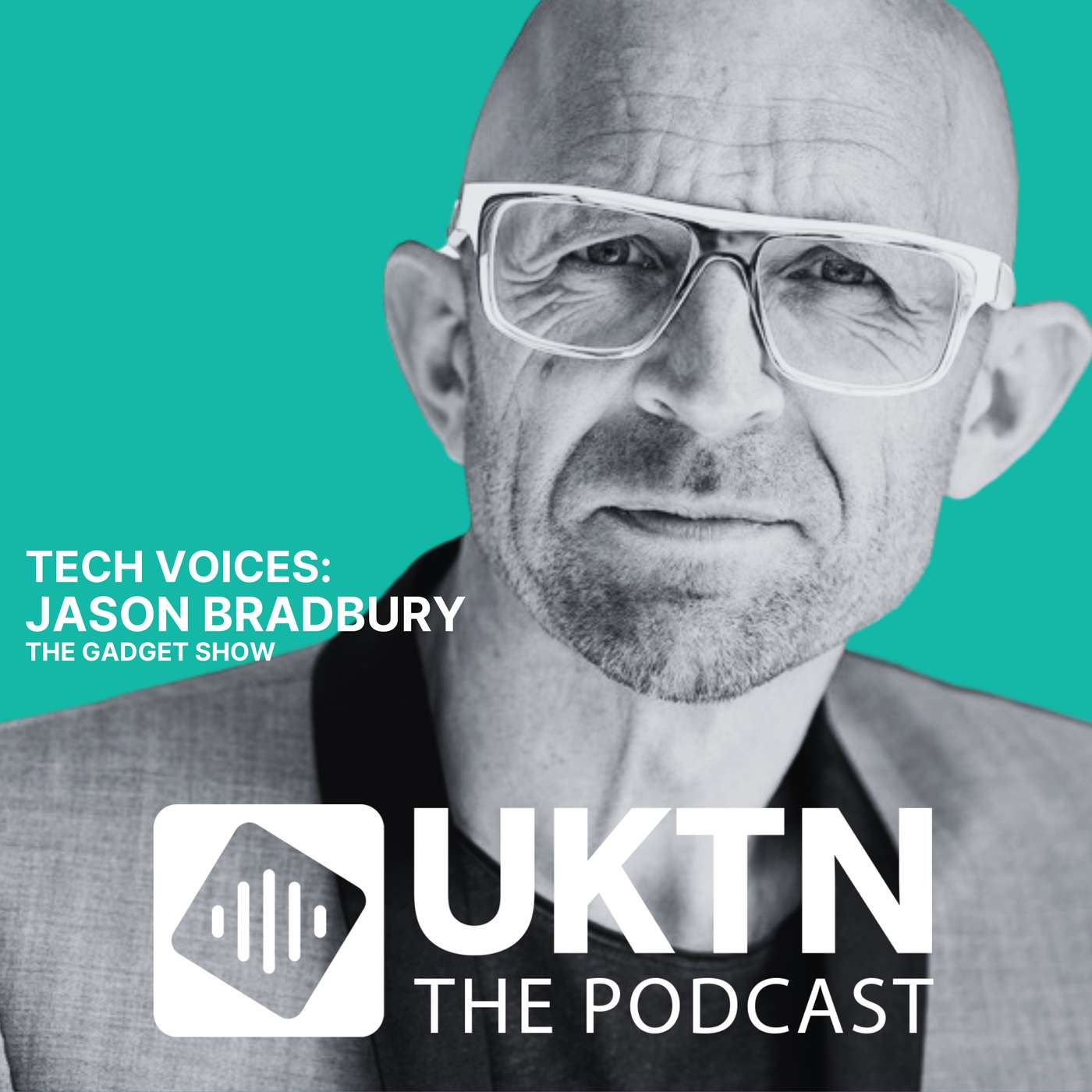
S7 Ep 1Inside the race for AI business adoption – The Gadget Show’s Jason Bradbury
Jason Bradbury, best known for presenting The Gadget Show, explains how businesses are “finding their feet” when it comes to AI, why he’s bullish on the metaverse, and recalls some of the zaniest product testing he’s done. Bradbury was a presenter on Channel 5’s The Gadget Show from its launch in 2004 to 2016, where he tested tech and participated in grabbing stunts – including a jet-powered skateboard. In early 2024 The Gadget Show returned as a podcast presented by Bradbury and Suzi Perry. He is also a speaker at business conferences, where he discusses the transformative impact of technologies such as AI, and a published author. Elsewhere on the podcast, Bradbury discusses his film project about gamers using retro tech to fight back against AI in Skegness, and explains why he’s bullish on the metaverse.
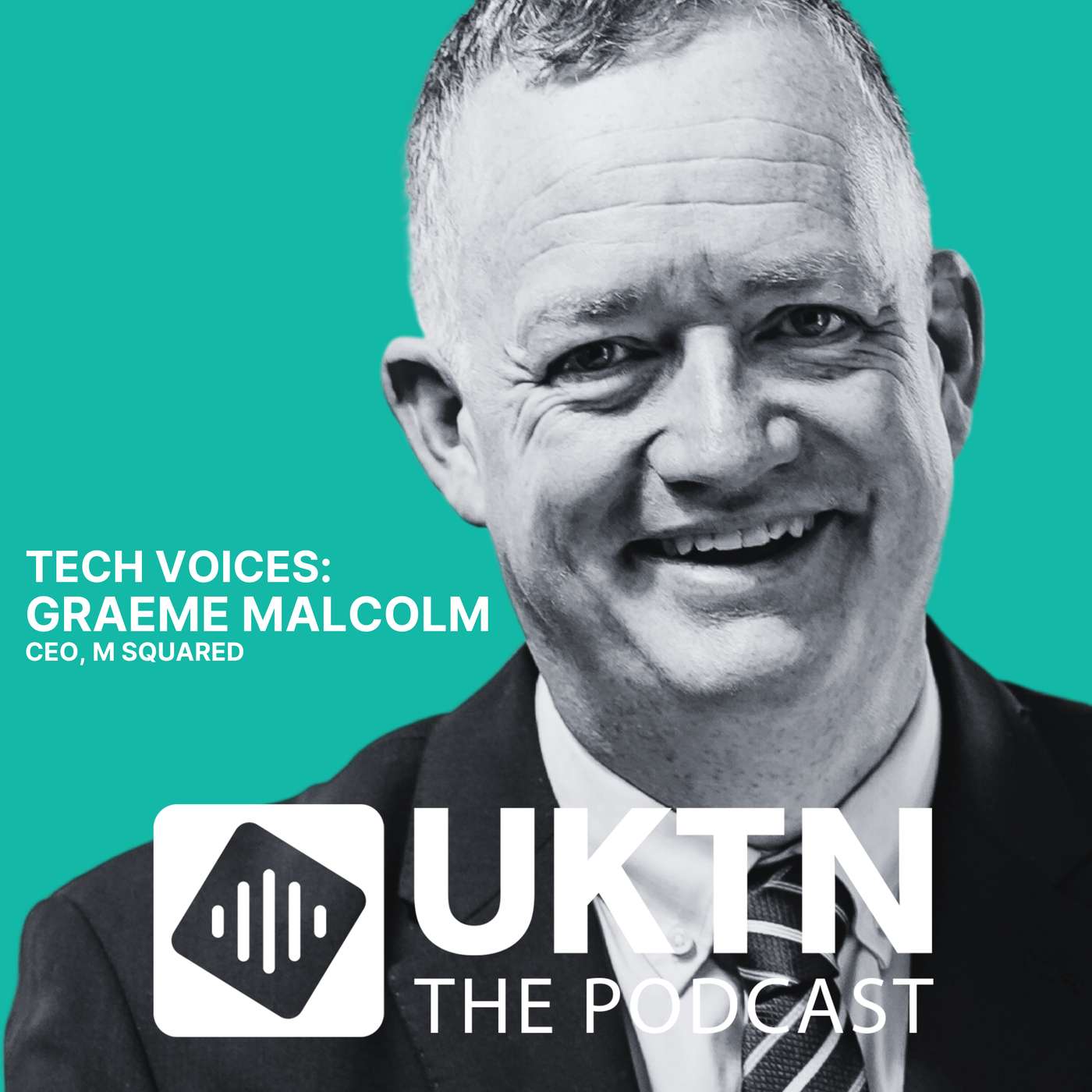
S6 Ep 12Advancing quantum with lasers made in Scotland – Graeme Malcolm, CEO, M Squared
Dr Graeme Malcolm, CEO and founder of M Squared, discusses the current state of the quantum computing market, Glasgow’s growing tech sector, and tips for US expansion. Founded in 2006 by Malcolm and Dr Gareth Maker, M Squared develops laser technologies for a variety of use cases, such as quantum, biophotonics and chemical sensing. Its tech has been deployed across multiple sectors, including in space to calibrate payloads for satellites part of Europe’s Copernicus programme. The company is headquartered in Glasgow and has a presence in the US. Malcolm, who studied laser physics and optoelectronics at Strathclyde University followed by PhD research into compact solid-state lasers, has secured over 400 patents. He was awarded an OBE in 2015 for services to science and innovation. He was also Innovation Entrepreneur of the Year at the 2017 Great British Entrepreneur of the Year Awards and Entrepreneur of the Year at the 2018 Amazon Growing Business Awards.

S6 Ep 11Why London is a global tech problem solver – Michael Mainelli, Lord Mayor of the City of London
Michael Mainelli, Lord Mayor of the City of London, discusses why the UK capital is a global problem solver, explains why he believes politicians have launched AI regulations “without doing their homework”, and why space junk is a growing problem. The Lord Mayor of the City of London is the head of the City of London Corporation, the governing body of the Square Mile. The Lord Mayor is elected annually and is an international ambassador for the UK’s financial and professional services sector. Mainelli, who is the 695th Lord Mayor of the City of London, was previously elected Sheriff of the City of London in 2019. The American-born British scientist, economist and accountant is also chairman of the consultancy firm Z/Yen. In this episode, Mainelli shares his view on reforms aimed at encouraging pension fund cash into listed companies and how the City is really doing since Brexit.
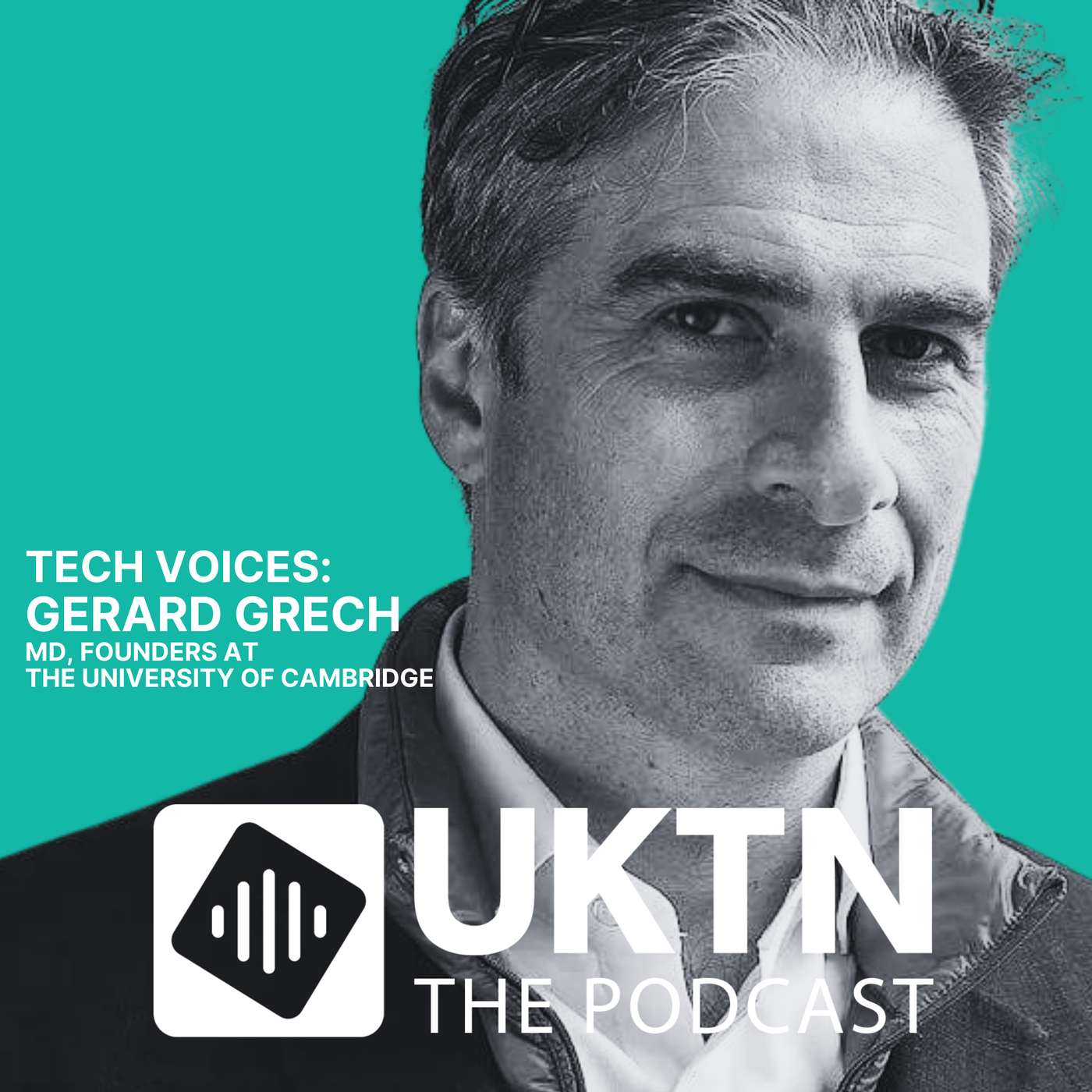
S6 Ep 10Reflecting on Tech Nation’s legacy & supporting high-risk spinouts – Gerard Grech, MD, Founders at the University of Cambridge
Gerard Grech, managing director of Founders at the University of Cambridge, reflects on the legacy of Tech Nation, explains how universities can support impact startups, and assesses the attractiveness of UK markets. Grech was the founding CEO of Tech Nation, leading the startup support organisation for over a decade until it was acquired by Founders Forum Group last year. The deal came after Tech Nation lost a bid for government funding to Barclays Eagle Labs, forcing it to cease operations. In this episode, Grech looks back on what he sees as a “puzzling decision” and reflects on the impact Tech Nation had on the UK’s startup ecosystem. In October 2023, Grech was appointed MD of Founders at the University of Cambridge, an initiative to connect academics, entrepreneurs, alumni and peer role models to help spinouts scale. Grech discusses the role that universities have to play in supporting “high-risk” ventures born out of academia. In addition to his role at the University of Cambridge, Grech is a member of the UK government’s Digital Economy Council and the World Economic Forum’s Digital Board.

S6 Ep 9The North has all the ingredients to rival the Golden Triangle in tech – Duncan Johnson, CEO, Northern Gritstone
Duncan Johnson, CEO of Northern Gritstone, discusses why the north of England has all the potential required to rival the South East in commercialising science and innovation, the challenges of backing early-stage deep tech companies with very long investment journeys, and why ambition and resilience are so important in developing tech hubs. Johnson has been chief executive of the investment firm since 2021 and has guided its vision of growing the northern economic ecosystem by backing innovative new technologies. Northern Gritstone’s portfolio companies include Pragmatic Semiconductor, C-Capture and Re:course. Johnson is adamant that the ingredients required, such as the exceptional talent from the region's universities, to make the north a tech powerhouse are all there and while it will take time, it's an achievable goal worth fighting for.
S6 Ep 8Cultivating vertical farming’s full potential – Jamie Burrows, founder, Vertical Future
Jamie Burrows, founder and CEO of Vertical Future, discusses the many ways vertical farming can be used to address agricultural and environmental challenges, why space presents an exciting opportunity for farming and why VC funding isn't for everyone. Burrows founded Vertical Future in 2016. The company develops the technology to build automated vertical farms wherein robots tend to the needs of stacked crops in enclosed spaces. It has deployed eight farms across the UK and has projects in development overseas. Vertical Future has raised over £30m across grants and family office investments. The company is also working on a project to grow medicinal and material ingredients in orbit, with plans down the line to explore vertical farming on the Moon and Mars.

S6 Ep 7Taking surgical simulators from Merseyside to Tampa Bay – Elliot Street, CEO, Inovus Medical
Elliot Street, CEO and co-founder of Inovus Medical, explains how surgical training simulators can help fix the shortage of qualified surgeons, explores how robotics will change the future of surgery, and shares advice on expanding to the US. Founded in 2012, Inovus Medical designs and manufactures a surgical training platform that combines soft tissue models with digital overlays. The headset-free augmented reality technology provides haptic feedback for trainee surgeons to simulate a real-world environment. The company is based in St Helens, a town in Merseyside, England. Street says the town’s proximity to Liverpool and Manchester means it can access talent from across the North West, while coming with lower overheads. In December 2023, Invous Medical opened its US headquarters in Tampa Bay, Florida. In this episode, Street shares tips for UK tech companies looking to expand across the Atlantic, from remote sales tactics to navigating cultural quirks. The expansion followed the company being crowned KPMG’s UK Tech Innovator, a competition to uncover fast-growth tech startups from across the country. Street reflects on how the competition opened doors for Inovus and shares some of the learnings, such as pitch deck advice.
S6 Ep 6How the AI boom mirrors the frenzied rise of the internet – Anne Glover, CEO, Amadeus Capital Partners
Anne Glover, co-founder and CEO of Amadeus Capital Partners, discusses the ways that the tech investment scene has changed since her firm launched in the late 1990s, how tech started as a niche sector but has since started to encompass everything, why AI hype is valid but there's more to it than just generative AI, and what the UK needs to do to shake its history of not scaling tech companies like the US can. Glover co-founded Amadeus Capital Partners in 1997 alongside Hermann Hauser. The firm generally backs deep tech firms, with major portfolio companies including Graphcore, Improbable and Oxford Nanopore Technologies. Glover discusses how the firm these days is particularly keen on areas including quantum computing, health tech and cybersecurity.
S6 Ep 5How modern science birthed the dawn of personalised health – Melissa Snover, founder, Nourished
Melissa Snover, founder and CEO of Nourished, discusses how the advent of modern scientific data analysis has birthed the personalised health boom, why as an American expat she fell in love with Birmingham as a startup hub, and how women founders can fight the odds to close the funding gap. Snover is the founder of Nourished and Scripted, which provide personalised health products to prevent and treat conditions and make it easier for people to take important nutrients. Snover came to the UK from the States for university and decided as a young entrepreneur that Birmingham had everything she would need to start a thriving business. Nourished has been backed by more than £15m in funding and sells its tailor-made gummies via online subscription.
S6 Ep 4How to ensure the UK lives up to its startup exit potential – Husayn Kassai, co-founder, Onfido
Husayn Kassai, founder of Onfido and Quench.ai, suggests what the UK can do to attract more IPOs and build more scaleups, reflects on providing a 320x return on investment for the University of Oxford, and explains why people should be wary of the “excessive romanticisation” of unicorn success stories. Kassai co-founded Onfido, a digital ID company, in 2012 straight out of studying at the University of Oxford. The startup, which uses AI to verify identities, has raised more than $200m and grown to over 500 people, generating more than £140m in revenue. Earlier this year, it was acquired by US-based payments company Entrust. During this episode, Kassai shares what he learnt while building the business and explains why he thinks policy decisions are putting the brightest talent off from working in the UK. Since stepping down as CEO of Onfido, Kassai has launched Quench.ai, a startup developing an AI coach to help workers learn new skills. Kassai explains what’s next for the startup after raising £3.9m in pre-seed funding last year.
S6 Ep 3What does the future of flexible working look like? – Molly Johnson-Jones, CEO, Flexa
Flexa CEO and co-founder Molly Johnson-Jones discusses the future of flexible working, how companies can “turn hiring into marketing” and why she thinks some corporate CEOs are using flexible working as a scapegoat for innovation failures. Flexa is a careers platform that aggregates a company’s workplace benefits to give job candidates more information when applying for a role. Johnson-Jones co-founded the company in 2020 – alongside Maurice O’Brien, and Tim Leppard – after she was told to leave her job in investment banking. It came after Johnson-Jones, who has an auto-immune disease, had submitted a flexible work request. Flexa aims to inform job candidates about a company’s remote working and benefits policies. Approved companies, which include the likes of Atom Bank and Improbable, can then advertise open roles on the platform and applicants can filter by criteria. More than 2.5 million people now use the platform. In 2022, the startup raised £2m in a seed funding round led by Ada Ventures. Elsewhere in this episode, the Flexa CEO looks at the different approaches startups and corporates are taking for flexible working.
S6 Ep 2How tech can bring a human touch to dealing with death – Sam Grice, founder, Octopus Legacy
Sam Grice, founder and CEO of Octopus Legacy, discusses how the administrative side of death can make the grieving process much harder, why we need to be able to talk about death to plan our lives properly and keeping the ethos of his business alive after it was acquired. Grice founded the company, originally called Guardian Angel, in 2016 after facing difficulties when dealing with the sudden death of his mother. The London-based company provides digital tools for people to prepare for end of life and to support those dealing with an unexpected loss through the process. Guardian Angel was acquired by Octopus Group in 2022, prompting the rebrand to Octopus Legacy. Grice discusses dealing with an acquisition from a major corporation and his approach to keeping the startup human centric.
S6 Ep 1Is the metaverse really dead? – Herman Narula, co-founder & CEO, Improbable
Improbable CEO and co-founder Herman Narula makes the case for the metaverse amid claims it is dead before it started, unpacks his company’s recent commercial deals and explains the impact AI is having on virtual world-building. Improbable develops the infrastructure for virtual worlds. Backed by the likes of SoftBank and Andreessen Horowitz, the London-based company designs, builds and operates metaverse experiences for brands. Recent projects include screening a Major League Baseball match in a virtual ballpark. Last year, Improbable sold its defence business and one of its gaming ventures. In this episode, Narula explains how these commercial deals have made Improbable a more sustainable business that doesn’t need to rely on venture capital. Elsewhere, he responds to what he sees as misconceptions about the metaverse and explains the role he sees web3 playing in preventing large tech companies from dominating the metaverse.
S5 Ep 12Making lab-grown fat the secret ingredient to plant-based protein – Max Jamilly, co-founder, Hoxton Farms
Max Jamilly, co-founder of Hoxton Farms, discusses why developing lab-based fat is the secret ingredient for the cultivated meat industry, why some people oppose lab-grown meat and how the regulatory progress for getting new alternative proteins in shops is going. Jamilly co-founded the London-based cultivated fat startup in 2020 alongside his lifelong friend Ed Steele. Jamilly breaks down the science of how meat can be grown in a lab, and how Hoxton Farm’s cultivated fat can extend lab-grown meat beyond sausages and nuggets to high-quality cuts such as steaks, pork belly and bacon. Jamilly also discusses the health implications of his company’s technology and why he feels people will be better off when the last animal factory farms have shut down. Jamilly has a PhD in synthetic biology from Oxford, an MPhil in bioscience enterprise from Cambridge and an MA in natural sciences (biological) from Cambridge.

S5 Ep 11Why AI regulation isn’t the enemy of innovation – Lord Tim Clement-Jones
Lord Tim Clement-Jones, Liberal Democrat peer, explains why a lack of consistency from the government hasn’t helped startups, weighs in on the debate around using copyrighted material to train AI systems, and unpacks why regulation isn’t the enemy of innovation. Lord Clement-Jones was chair of the Liberal Party from 1986-1988. He was made CBE for political services in 1988 and a life peer in 1998. He is the Liberal Democrat House of Lords spokesperson for science, innovation and technology. He is the former chair of the House of Lords Select Committee on Artificial Intelligence. He co-founded and has co-chaired the All-Party Parliamentary Group on Artificial Intelligence since 2016. In addition to his political work, Lord Clement-Jones is a Consultant on AI policy and regulation with global law firm, DLA Piper.
S5 Ep 10Why Welsh tech is primed for growth – Louise Harris, CEO, Tramshed Tech
Louise Harris, co-founder and CEO of Tramshed Tech, discusses the challenges and opportunities for the Welsh tech sector, unpacks the country’s sub-sector strengths from semiconductors to creative, and mulls what a changing political landscape might mean for businesses. Harris co-founded Tramshed with Mark John in 2015. It now has six co-working sites across Wales and provides startup support through programmes on topics such as investor readiness and exports. Tramshed is supported by strategic partners in the UK and Europe, including Google for Startups, Microsoft, Barclays Eagle Labs and SQY. Harris is also a member of the Welsh Government International Strategy Board and UK Tech Cluster Group.
S5 Ep 9Why the UK can be an autonomous vehicles leader – Gavin Jackson, CEO, Oxa
Oxa CEO Gavin Jackson explains why the UK is well-positioned to be a leader in autonomous vehicles, breaks down Oxa’s strategy for commercialisation, and unpacks who is liable in the event of an autonomous vehicle crashing. Oxa, formerly known as Oxbotica, is developing software for autonomous vehicles. Founded in 2014, it is focusing on passenger transportation and industrial autonomy. It has raised more than £150m in funding, including from Google parent company Alphabet. The Oxford-headquartered company recently announced a commercial partnership with a passenger shuttle service in Florida, US. Oxa has been sharing industry input into the UK’s Automated Vehicles Bill, which is currently progressing through parliament. Jackson, who previously held senior leadership positions at Microsoft and Amazon Web Services, was appointed CEO of Oxa in December 2021.

S5 Ep 8Rewiring Whitehall for UK tech success – Allan Nixon, head of science and tech, Onward
Allan Nixon, head of science of technology at Onward, shares his assessment of the Spring Budget, outlines steps he thinks Whitehall could take to improve tech sector growth, and compares the Labour and Conservative parties' approach to tech policy. Nixon joined Onward, a centre-right think tank, in April 2023. In this episode, he unpacks Spring Budget announcements – from pension fund reform to PISCES. He explains why DSIT and the Treasury need to revamp their spending processes to ensure investments keep pace with the tech sector, particularly in areas like compute infrastructure. Elsewhere, Nixon shares suggestions for Whitehall to cut "bureaucratic red tape" that could support the UK's science and tech sector. Prior to joining Onward, Nixon served in various special advisor roles for the UK government – including to the prime minister, security minister and health secretary. He has also worked in Parliament.

S5 Ep 7The UK must act now to keep fintech crown – Janine Hirt, CEO, Innovate Finance
Janine Hirt, CEO of Innovate Finance, unpacks what the UK must do to maintain its historical strength in financial technology, why clarity in regulation for crypto, BNPL and open banking is vital, and what needs to be done to tackle rising financial scams. Hirt has been with Innovate Finance, the UK fintech industry body, for the past nine years after joining as a community lead in 2015. Hirt then became the group’s ecosystem director, then COO before rising to the rank of chief executive in 2021. The independent group is responsible for championing the efforts of British fintech and advising government policy to support its growth. Before joining Innovate Finance, Hirt held roles at the think tank Chatham House and the Brazilian-American Chamber of Commerce. Elsewhere in this episode, Hirt looks at where fintech clusters are in the UK, why Big Tech must take some responsibility for financial crime, and what she’s hoping to see for the fintech sector in the Spring Statement.
S5 Ep 6Tackling the North-South tech funding gap – Jess Jackson, investment manager, Praetura Ventures
Jess Jackson, investment manager at Praetura Ventures, discusses the challenges startups in the north face, the stark gender divide in the tech and investment industries and how the government should be supporting small businesses and underrepresented entrepreneurs. Jackson joined the Manchester-based venture capital firm in 2022 after years of managing investments in the city at GC Angels. Praetura Ventures prides itself on its commitment to backing companies in the north of England, which traditionally have less access to funding than their counterparts in the south. Jackson is also a founding member of Fund Her North, a collective of northern women investors that campaigns for better treatment and opportunities for northern women in tech.

S5 Ep 5Advocacy needs action to fix tech diversity gap – Suki Fuller, founder, Miribure
Suki Fuller, founder of Miribure, discusses the power of advocacy to improve gender and ethnic diversity in tech, unpacks the importance of storytelling in data, and explains why we should dispel the myth that tech is a “highfalutin career path”. In this episode, Fuller shares her experience as a woman and person of colour working in tech and why it’s important to raise awareness “every single day with everything you do”. She explains how she “struggles” with the dichotomy of needing labels like ‘women in tech’ to highlight that change is needed, despite male entrepreneurs not being described in the same way. Fuller founded Miribure in 2015. It provides advice to businesses from startups to multinationals on how to mitigate risks. In addition to founding Miribure, Fuller is the co-lead of the Tech London Advocates Women in Tech and the co-chair of the Global Tech Advocates Black Women in Tech. She is also a fellow at the Council of Competitive Intelligence Fellows and was voted Computer Weekly’s ‘2023 Most Influential Woman in UK Tech’.
S5 Ep 4Why AI is a double-edged sword in an election year – Angie Ma, co-founder, Faculty
Dr Angie Ma, co-founder of Faculty, explains how AI poses both a threat and an opportunity during an election year, explains why the company stopped doing political work post-Brexit referendum, and shares her top productivity tips for entrepreneurs. Ma founded Faculty with Dr Marc Warner and Andy Brookes in 2014. The London-based firm began as a fellowship to help academics become commercial data scientists. It now provides software and consulting services to businesses, with clients including HSBC, Tide and John Lewis. Faculty was controversially paid by Vote Leave to provide services during the 2016 Brexit referendum, but said it stopped doing political work in 2019. Ma, who holds a PhD in physics and applied optics from UCL, previously served as Faculty’s chief operating officer and chief people officer.
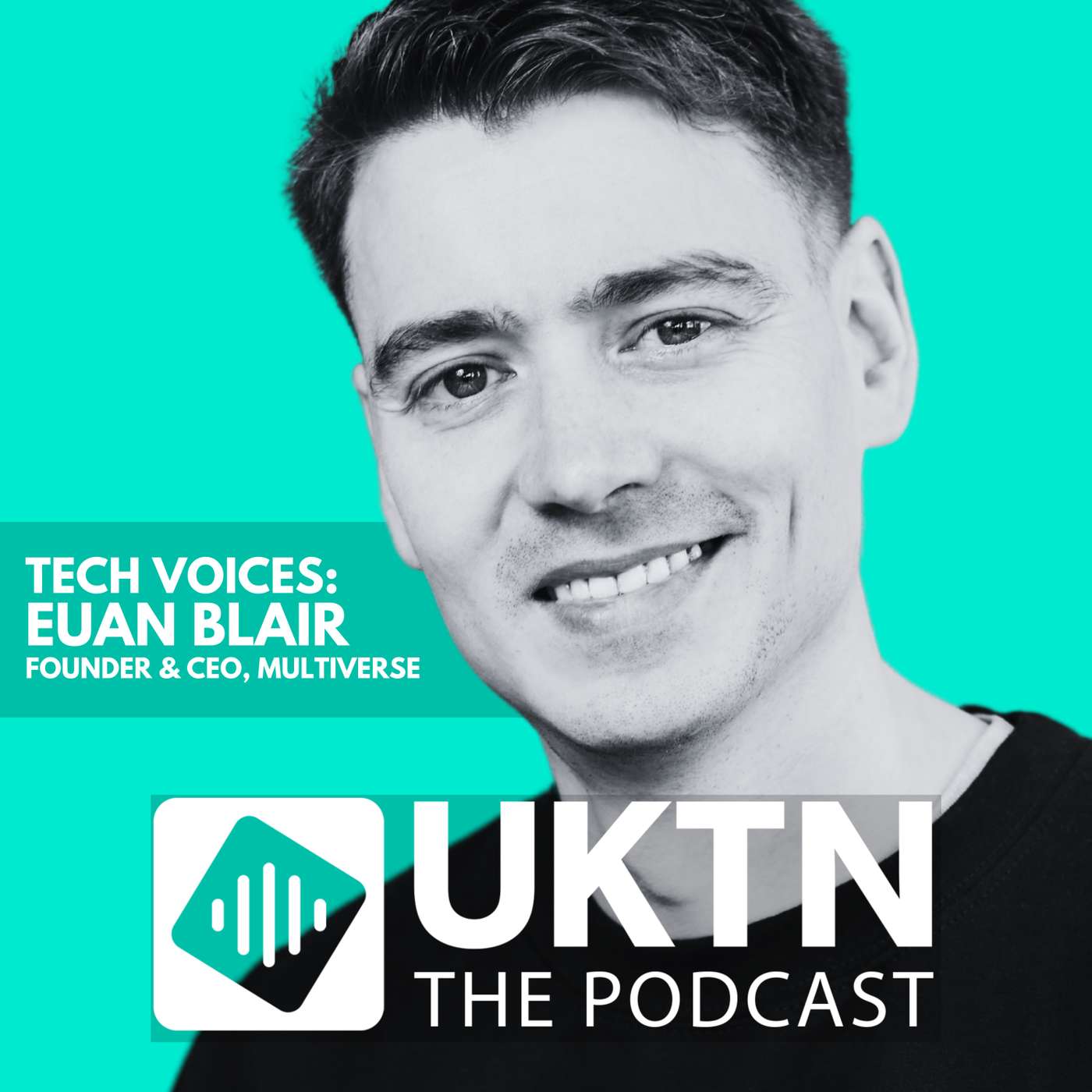
S5 Ep 3The role of apprenticeships in the age of AI – Euan Blair, CEO, Multiverse
Euan Blair, CEO of Multiverse, discusses the role that apprenticeships can play in the future of work, the impact of AI on skills, and the challenges of breaking into the US market. Blair founded Multiverse in 2016. The edtech company’s focus is on matching diverse talent from a range of backgrounds with upskilling opportunities. It has trained over 10,000 apprentices in partnership with more than 1,000 global employers. While the company reached a unicorn valuation in 2022, it is yet to achieve profitability. In 2021, the London-headquartered launched in the US. Multiverse recently scaled back its US workforce after the business missed revenue targets. Blair, who is the eldest son of former British prime minister Tony Blair, was awarded an MBE for services to education in 2022.
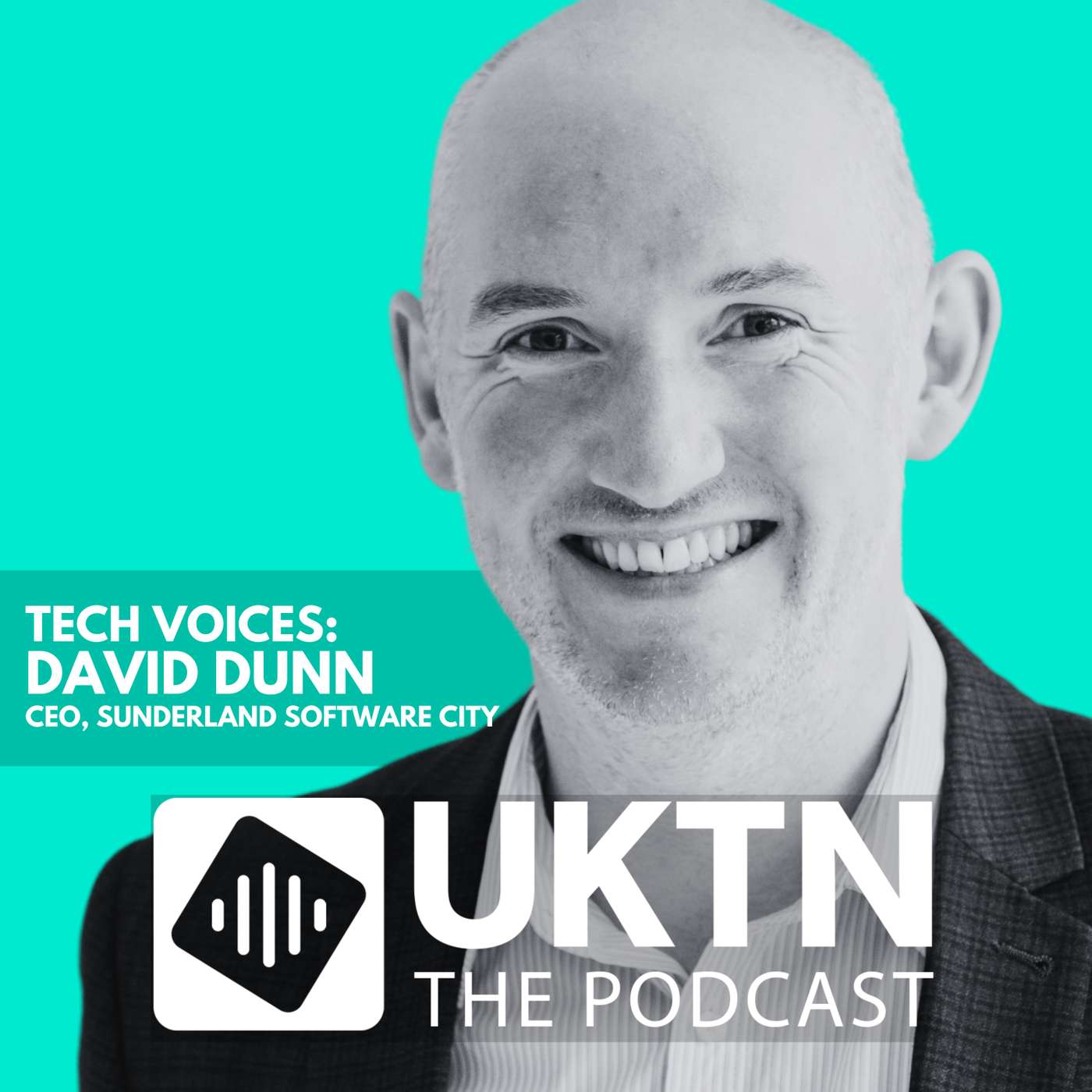
S5 Ep 2How to nurture North East tech growth – David Dunn, CEO, Sunderland Software City
Sunderland Software City CEO David Dunn explains how the North East can grow its tech sector, gives his assessment of the government’s tech department, and explains how increasing the number of regional startups can help the UK become a “tech powerhouse”. From Newcastle to Middlesbrough, the North East of England is bursting with clusters of tech innovation. But Dunn believes that with the right support, the North East “could be adding more value to UK PLC”. In this episode, Dunn explains how focusing on talent pipelines rather than job creation can stimulate tech sector growth. He also explains steps to overcome funding challenges for North East businesses and how to promote the region internationally. And ahead of an almost certain general election this year, Dunn looks at how the two main political parties have been faring when it comes to tech policy. Dunn has held leadership roles at Sunderland Software City since 2008. The not-for-profit provides support services to tech businesses in the region. Dunn also holds the CEO role at support organisation Dynamo North East and is a founding member of the UK Tech Cluster Group, an organisation representing regional tech businesses.
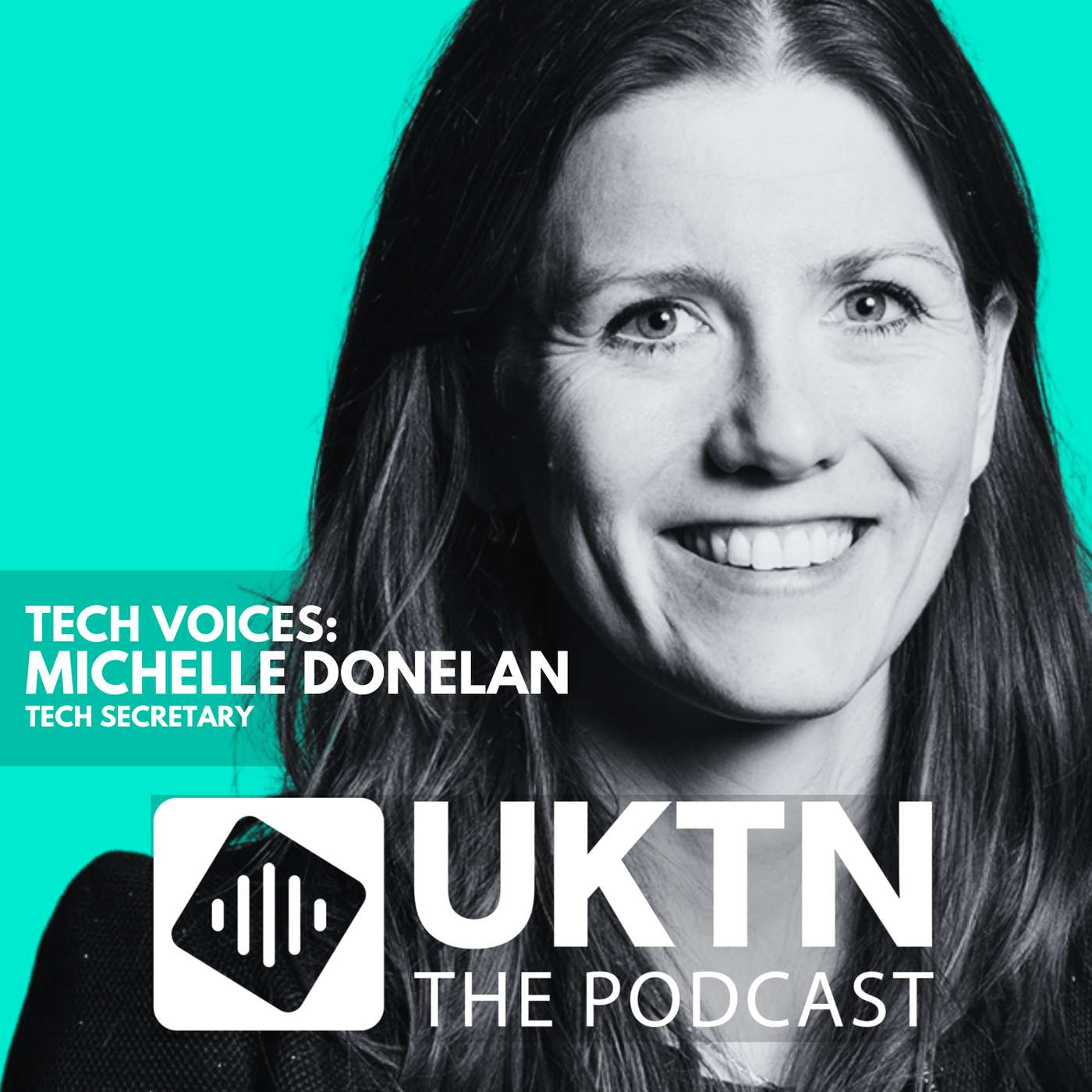
S5 Ep 1Scaleup powerhouse goals, chasing unicorns & immigration concerns - Michelle Donelan, tech secretary
Michelle Donelan, the tech secretary, discusses the government’s plan to make the UK a “scaleup powerhouse” and provides more detail on some of the policy support measures. The secretary of state answers questions about her goal to make the UK home to half of all European tech unicorns by 2030 and whether immigration policy is harming UK tech growth. Elsewhere, Donelan responds to concerns that scrapping parts of HS2 is a blow to regional tech growth, and is asked whether Fujitsu is still a trusted partner in the wake of the Post Office scandal. Donelan is the UK’s first secretary of state for science, innovation and technology. She was appointed to lead the department in February 2023 after Prime Minister Rishi Sunak spun it out of the Department for Digital, Culture Media and Sport, which Donelan led from September 2022. Her responsibilities include all things UK tech, from skills to regulation to R&D. Her department brought the Online Safety Bill into law and negotiated the UK’s post-Brexit re-entry into the Horizon Europe research programme. Donelan and her department organised the first global summit on AI safety, which brought international leaders and experts to Bletchley Park last November.
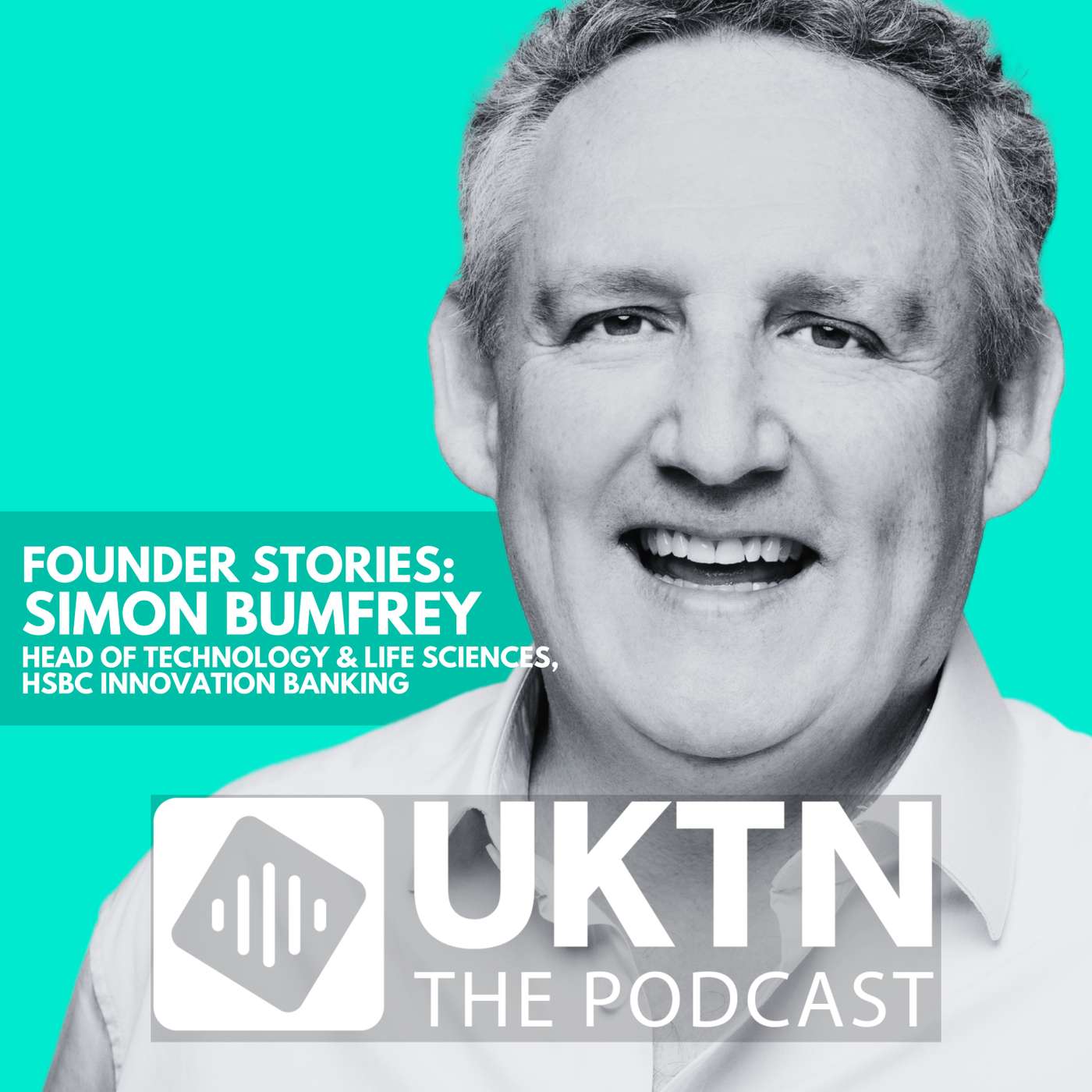
S4 Ep 13Launching a tech banking brand in 100 days – Simon Bumfrey, head of technology and life sciences, HSBC Innovation Banking
Simon Bumfrey, head of technology and life sciences at HSBC Innovation Banking, shares how the lender rebranded from Silicon Valley Bank UK, what happened immediately after that "seismic” rescue weekend in March, and a look ahead to the big themes defining the tech ecosystem in 2024. HSBC Innovation Banking offers flexible banking solutions for startups, scaleups, growth businesses, investors and those working towards IPO. It officially launched at London Tech Week in June, coming just months after HSBC stepped in at the eleventh hour to rescue Silicon Valley Bank UK. Bumfrey goes behind the scenes of the 100-day rebrand and migration, which would typically take more than 15 months. He delves into the "herculean effort" required to achieve this and the challenges that arose during the transition. Elsewhere, Bumfrey – whose career in banking spans three decades – shares his predictions for the innovation economy in 2024, HSBC Innovation Banking’s growth plans and explains why he’s optimistic about a turnaround in the funding environment.

S4 Ep 12Career reflections from dot-com chaos to ‘bonkers’ Elon Musk – Rory Cellan-Jones
Rory Cellan-Jones, former BBC technology correspondent, revisits career highlights interviewing the biggest names in tech, from Elon Musk to Bill Gates. The writer and author recalls the frenzy of the dot-com bubble in the UK – and explains the similarities and differences between the plummeting valuations of startups today. Cellan-Jones left the BBC in 2021 after four decades at the broadcaster, spending the last 14 of those years as technology correspondent. During his career, he witnessed landmark tech moments, including the launch of the iPhone. Elsewhere on the show, Cellan-Jones explains why cryptocurrency is "infested with snake oil merchants", shares his thoughts on the metaverse and explains why there are "question marks" over how well large language models will be integrated into businesses. In 2019, Cellan-Jones announced via Twitter that he had been diagnosed with early Parkinson's disease. He has since written and spoken about living with the disease and engaged with health tech startups developing tools to alleviate symptoms. He has written several books, including ‘Dot.Bomb’, which tracked the rise and fall of startups in the dot-com crash, and more recently a memoir. Since leaving the BBC, Cellan-Jones has turned his attention to writing, podcasting and adopting a nervous rescue dog from Romania with his wife – the economist Diane Coyle.
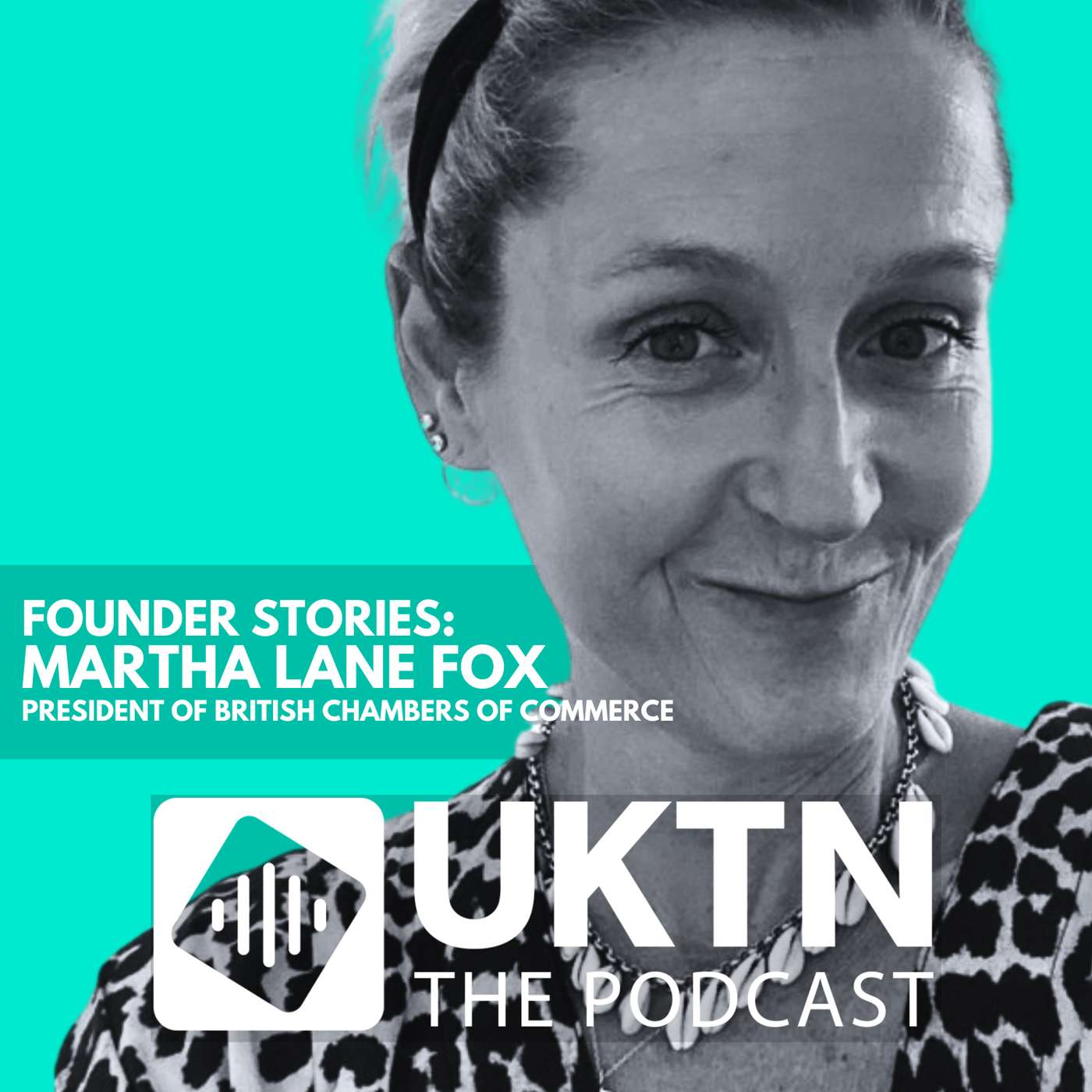
S4 Ep 11Businesses must brace for a year of election frenzy and AI disruption – Martha Lane Fox , president, British Chambers of Commerce
Baroness Martha Lane Fox reflects on a challenging year for tech businesses, explains why we should be more concerned about a “profound shift in information flows” than destruction by robots, and unpacks why we shouldn’t be too pessimistic about startup funding. Elsewhere on the show, she looks ahead to a year of political uncertainty and explains why the first trillionaire in the world will “probably” come from the green transition. Lane Fox is a British businesswoman, philanthropist and public servant. She co-founded Last Minute during the dotcom boom in 1998 with Brent Hoberman, taking it to a public listing two years later. She entered the House of Lords as a crossbencher in 2013, becoming Baroness Martha Lane-Fox of Soho and the youngest female life peer. That same year, Lane Fox was appointed CBE for "services to the digital economy and charity". And in 2014 she was appointed chancellor of the Open University, a role that she continues to hold. Since October 2022 the entrepreneur has been president of the British Chambers of Commerce, a business network spanning companies of different sizes across all sectors.
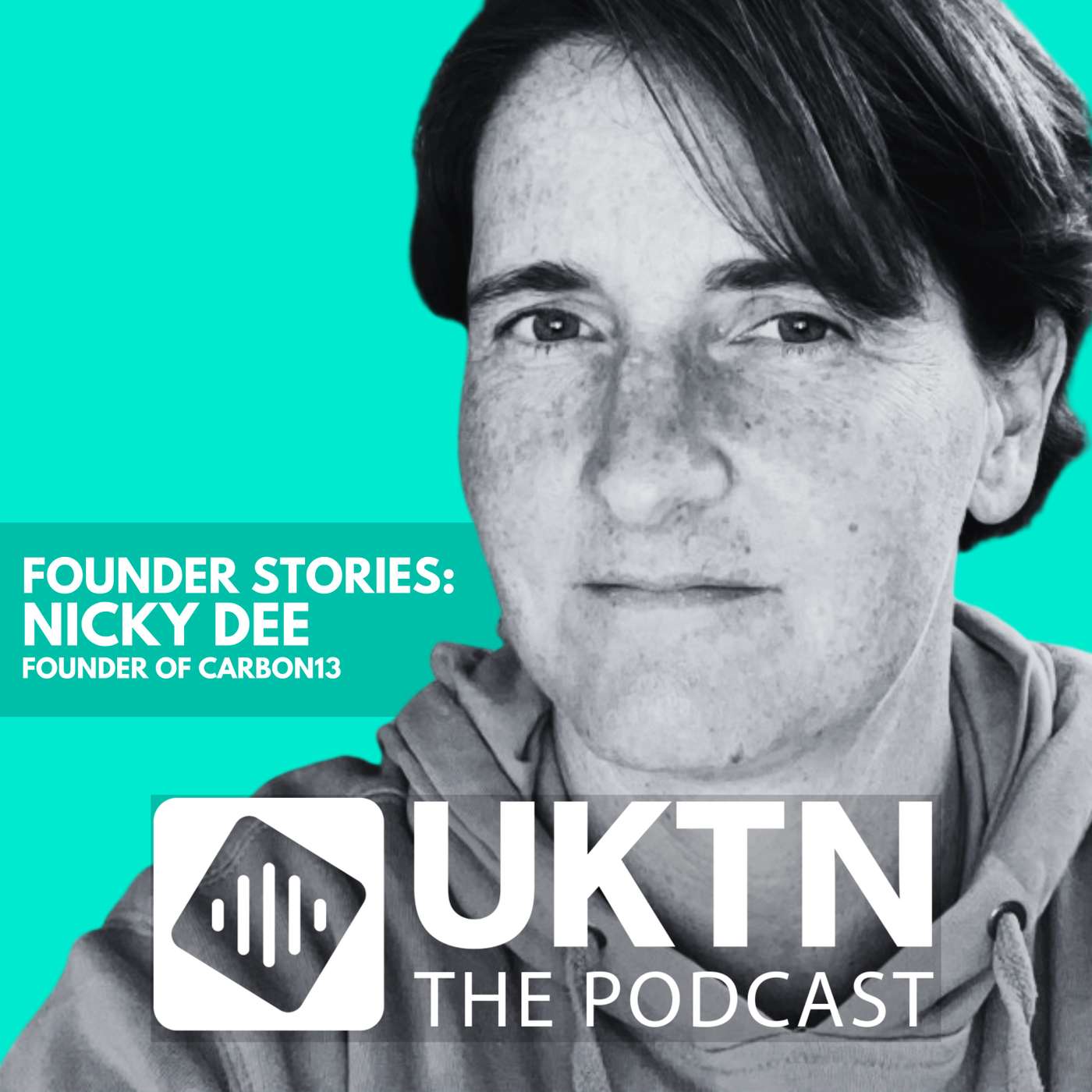
S4 Ep 10Net zero COP-outs and the case for climate tech optimism – Carbon13 CEO Nicky Dee
Dr Nicky Dee, founder and CEO of Carbon13, explains why climate tech innovation is cause for optimism despite a lack of progress from initiatives like COP, unpacks why carbon offsetting is still the “Wild West” and reveals which climate solutions provide the “best bang for buck”. Carbon13 is a venture builder for the climate emergency. The Cambridge-based firm selects, supports and invests in startups focused on building scalable climate ventures that will reduce and remove emissions on a global scale. It has made 65 investments since 2021. Dee has previously worked with UNEP, Nesta and the UK government on climate projects, among others. Dee, who has also been an entrepreneur, is a fellow at CISL, the Cambridge Institute for Sustainability Leadership.
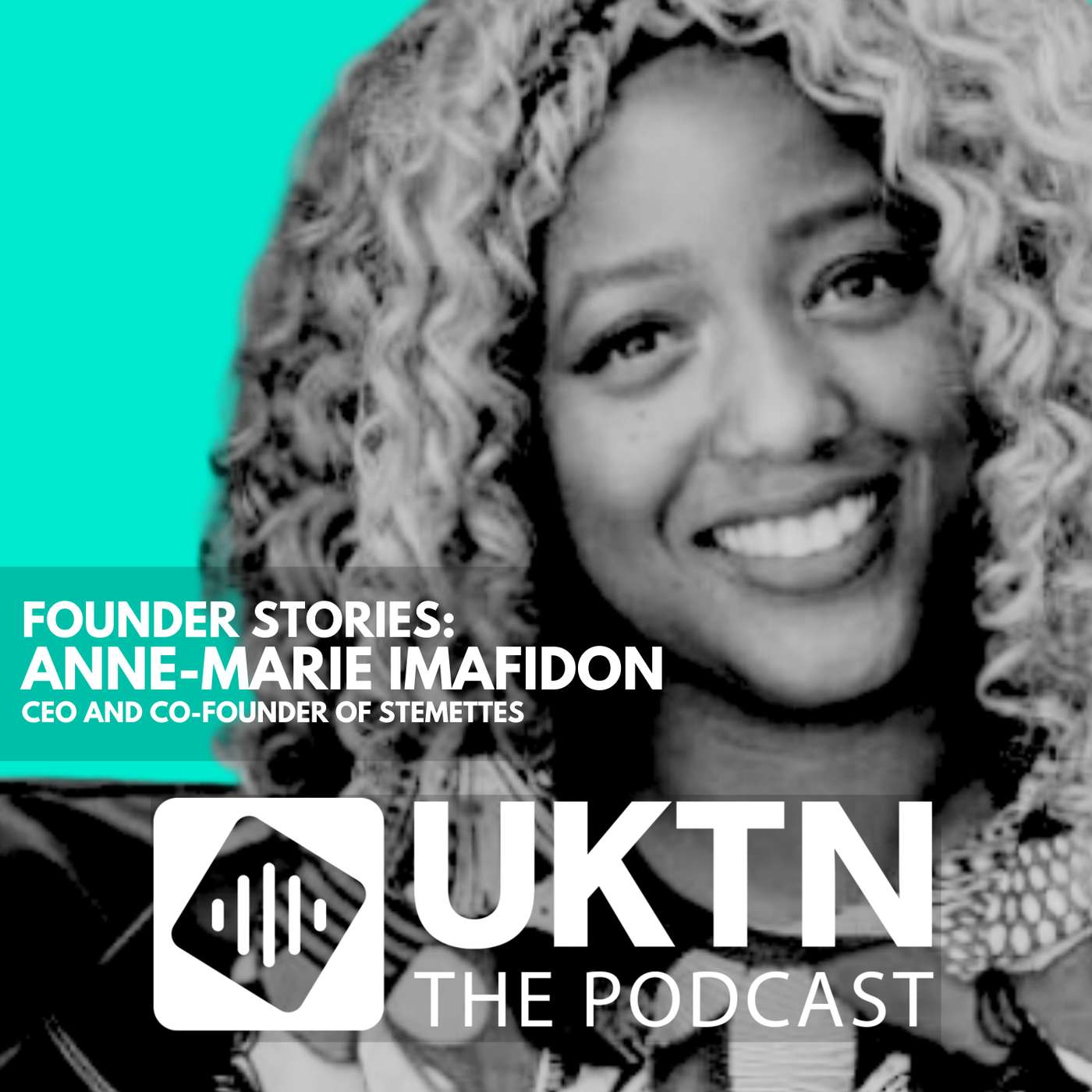
S4 Ep 9Defining AI for good and overcoming tech superpower roadblocks – Anne-Marie Imafidon, CEO, Stemettes
Dr Anne-Marie Imafidon, CEO and co-founder of the Stemettes, discusses the power of role models for women in tech, how AI for good shouldn’t just focus on boosting productivity, and why a fixation on ‘wokeism’ is a roadblock to the government's science and tech superpower goals. Imafidon is a British-Nigerian social entrepreneur and computer scientist. She founded Stemettes, a social enterprise promoting women in STEM, in 2013. Imafidon launched the Stemettes after becoming aware of the lack of diversity in degrees like science and maths. The University of Oxford alumna says that while there has been progress in improving diversity in tech, the root cause is yet to be addressed. Elsewhere on the show, Imafidon recalls the backlash she received as a Black woman appearing on Countdown, and why more work is needed on skills to hit the government’s tech superpower goals. Imafidon has previously served as a trustee for the Future of Work and held a board role for the government’s Department for Digital up until 2022. She was awarded an MBE for services to young women and the STEM sector in 2017.
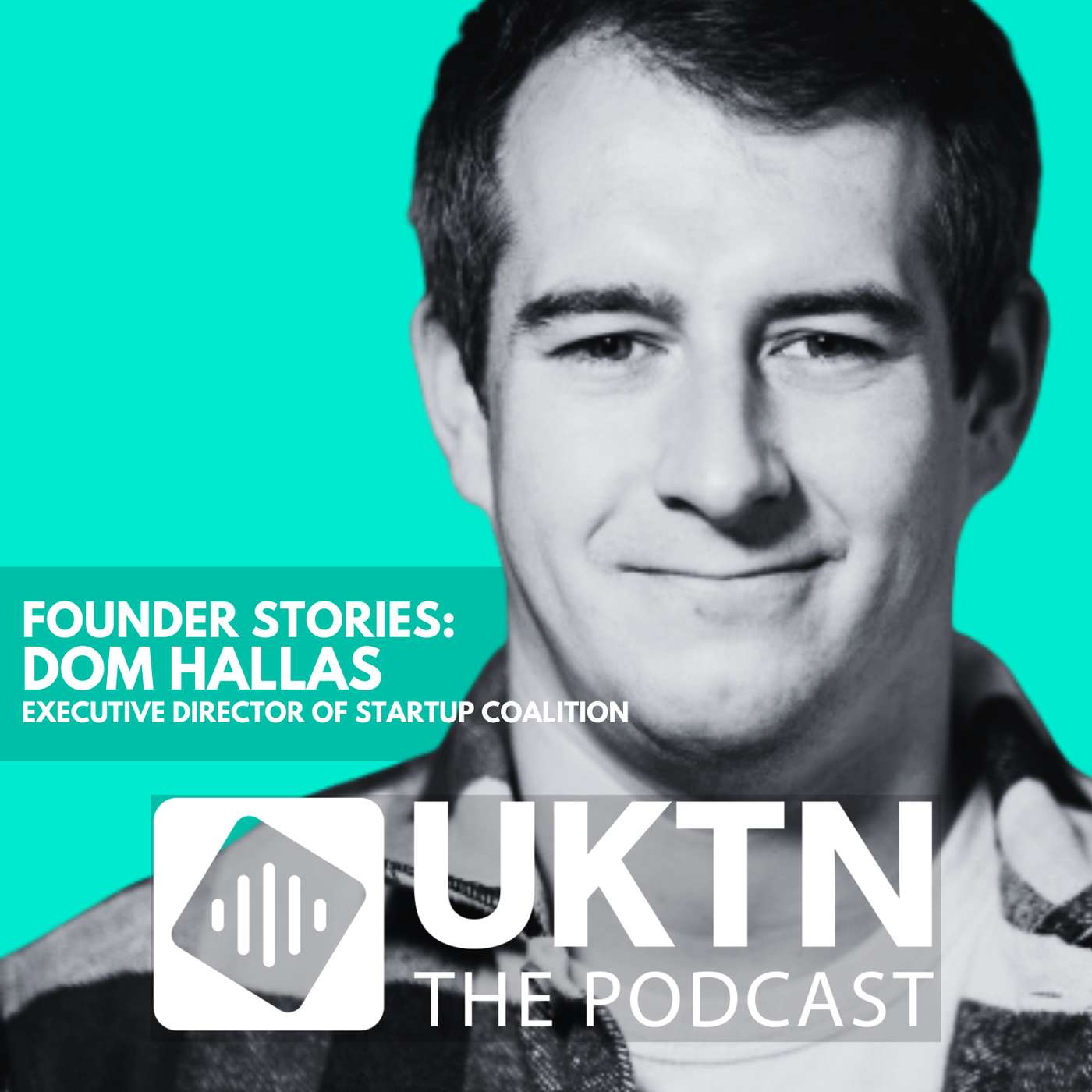
S4 Ep 8Autumn Statement wish list and why UK tech thrives whoever wins the election – Startup Coalition’s Dom Hallas
Dom Hallas, executive director of the Startup Coalition, reveals his top policy wishes for UK tech in the upcoming Autumn Statement and shares his assessment of the tech legislation agenda for 2024, including the Automated Vehicles Bill. Elsewhere in this episode, Hallas explains why he thinks the UK’s AI Safety Summit was a success, why he’s optimistic about either a Labour or Conservative government and what regions need to do to build a strong tech ecosystem. Hallas leads the Startup Coalition, a lobby group that was formerly known as Coadec that acts as a conduit between Westminster and the UK’s startup ecosystem. Hallas, a former civil servant in the Brexit department, has been executive director of the Startup Coalition since 2018. He is also a member of the Digital Economy Council, a government advisory committee, and a member of Seedcamp’s advisory council. Hallas was a key figure in lobbying the government to save Silicon Valley Bank UK earlier this year, which resulted in HSBC acquiring the specialist lender in an eleventh-hour deal.

S4 Ep 7How my bootstrapped pet music startup struck a chord with a US buyer – Music For Pets founder Amman Ahmed
Amman Ahmed, founder of Music For Pets, discusses building a successful brand from nothing, how music can become an integral part of an animal's life, and the importance of being genuinely human in business. Ahmed explains how trusting yourself, your team and your product is essential and urges founders to consider their priorities when seeking lofty valuations. Ahmed launched Music For Pets as a side project with business partner Ricardo Henriquez in 2017. The pair researched how music can have a therapeutic effect on anxious and overly excited animals. After Music For Pets' online content grew rapidly in popularity, Ahmed scaled the company to serve more than 20 million pets around the world, who listen to over 12 million hours of music each month. That growth – all without raising external funding and minimal marketing spend – saw Music For Pets acquired by Create Music Group for a life-changing sum earlier this year.
S4 Ep 6How the early-stage gender funding gap stifles UK tech growth – Merian Ventures’ Priya Guha
Priya Guha, venture partner at Merian Ventures, discusses the skills gap and the shortage of women in STEM roles, why tech companies shouldn’t overlook the arts, and how the early-stage gender funding gap is holding back UK growth. Elsewhere on the show, the investor and former diplomat discusses the UK’s “untapped capital pool” and reveals what she wants to see from the next British government. Guha has been at Merian Ventures since 2019, where she invests in women-led innovation. She was previously a career diplomat, most recently as British Consul General to San Francisco where she was embedded in Silicon Valley. In addition to her current role at Merian, Guha holds non-executive director roles at UKRI and Digital Capital, along with advisory roles at Kheiron Medical Technologies and Gallos Technologies. In addition to these roles, she is a member of the investment governance board at Future Planet Capital, council member at Innovate UK and a NED at Reach PLC. In 2021, she was awarded an MBE for services to international trade and women in innovation.
S4 Ep 5Getting AI safety right and the danger of leaving it to Big Tech – Graphcore CEO Nigel Toon
Nigel Toon, co-founder and CEO of Graphcore, discusses the goals of the AI Safety Summit, the danger of letting commercial interests and Big Tech shape regulations, and the shortcomings of government when it comes to reining in AI risks. Bristol-based Graphcore designs hardware and software for intelligent processing unit (IPU) systems. Its technology is used to power AI and machine learning applications. As Toon puts it, Graphcore is the “seller of the picks and shovels” powering the AI revolution. It became one of the UK’s most valuable private tech companies in 2020 after a $222m funding round gave it a valuation of $2.8bn. Toon answers questions about the company’s plan to seek new investment after losses widened last year. Toon was previously CEO at two VC-backed processor companies and co-founder and board director at Icera, a 3G cellular modem chip company, which was sold to Nvidia in 2011.
S4 Ep 4How space tech is on the cusp of full commercialisation – Space DOTS founder Bianca Cefalo
Bianca Cefalo, co-founder of Space DOTS, discusses how the space tech industry in the UK and beyond is rapidly growing and ready for commercialisation. The engineer and CEO explains what it's like to be a woman in an industry dominated by men and encourages women to ignore the doubters and follow their engineering dreams. Space DOTS is a British startup that offers in-space research and development and testing for the quality control of advanced materials. Cefalo co-founded the company in 2021 and it has since raised over £1m in investments and grants.

S4 Ep 3Diversity is UK tech’s competitive advantage over Silicon Valley – Passion Capital’s Eileen Burbidge
Eileen Burbidge, partner at Passion Capital, discusses the lessons she learned working in Silicon Valley before and during the dot-com crash, explains how luck plays a big role in success, examines the differences between the UK and US tech sectors, and shares how reproductive health support is the new frontier for employee benefits. Burbidge, a British-American venture capitalist, moved to London from Silicon Valley in 2004. During her early career, Burbidge held roles at Apple, Sun Microsystems and Skype. She is a founding partner of Passion Capital, an early-stage venture capital firm that has invested in 96 startup since 2011, including Monzo, Go Cardless and Tide. Burbidge is also the director of Fertifa, a reproductive healthcare startup. In 2015, Burbidge received an MBE for services to entrepreneurship.

S4 Ep 2AI is transforming the legal sector, but it can be a law unto itself – Robin AI founder Richard Robinson
Richard Robinson, co-founder of Robin AI, discusses how artificial intelligence has the power to massively transform the legal sector – though not without considerable risks. The CEO explains why people will always be needed despite the rise of automation, how the government can regulate AI without sacrificing innovation, and shares funding advice for startups. Robin AI is a London-based startup using generative artificial intelligence to automate time-consuming administrative work in the legal sector, such as contract drafting. Robinson co-founded the company in 2019 and it has since raised $16m from the likes of Google and Monzo’s Tom Blomfield. Robin AI’s technology is based in part on the work of Californian AI unicorn Anthropic.

S4 Ep 1The cost of tech's diversity failure and how to fix it - Colorintech founder Ashleigh Ainsley
Ashleigh Ainsley, co-founder of Colorintech, discusses what steps companies can take to build diverse teams, explains how Big Tech can do better on inclusion, and what he would like to see from the government's digital skills agenda to encourage more people from ethnic minority backgrounds into tech careers. Colorintech is a non-profit that focuses on increasing access, awareness and opportunities for underrepresented groups in the technology industry. Ainsley grew up in the diverse London borough of Lewisham and went to Oxford University as "the only Black Caribbean boy to go in that year". After securing an internship at Google, he realised that the tech world “felt more like Oxford than Lewisham." In 2016, following roles in the startup and consulting world, Ainsley co-founded Colorintech, which has grown to a community of over 30,000 people. He is also the founder of Black Tech Fest, a three-day event in October showcasing Black culture and innovation.
S3 Ep 12Playing to UK microchip strengths and avoiding a subsidy race – Minister for Tech Paul Scully
Paul Scully, Minister for Tech and the Digital Economy, addresses criticism of the UK’s semiconductor strategy and explains why the government is avoiding a “subsidy race” with the likes of the US. The MP for Sutton and Cheam outlines the goals of the Digital Markets Bill, and explains how existing regulators will create a “baseline” while building up an understanding of AI risks. Elsewhere, he discusses the Online Safety Bill, investment zones and Tech Nation. Scully was appointed Parliamentary Under Secretary of State (Minister for Tech and the Digital Economy) at the newly created Department for Science, Innovation and Technology (DSIT) in February. He held the corresponding role at DSIT’s precursor, DCMS, from October 2022 and has been an elected MP since 2015. He is also Minister for London and was appointed to that role on 13 February 2020.
S3 Ep 11Accelerating Liverpool’s tech ecosystem – Baltic Ventures CEO Claire Lewis
Claire Lewis, CEO and co-founder of Baltic Ventures, discusses Liverpool’s rapidly growing tech scene, how there's now an understanding that tech investment must be spread across the whole UK, and some of the common mistakes that founders make. Baltic Ventures is a not-for-profit accelerator located in Liverpool. Based in the city’s Baltic Triangle, the accelerator is aiming to address the funding imbalance for early-stage startups outside of London, with a focus on the North West. Lewis, who began her career as a chartered accountant, previously founded a sustainable ecommerce company. After it was acquired, she worked for an investment bank supporting tech for good startups, before launching Tech North, which went on to become part of Tech Nation.
S3 Ep 10Rebuilding Tech Nation and the UK's generative AI opportunity – Founders Forum CEO Carolyn Dawson
Carolyn Dawson, CEO of Founders Forum Group, discusses rebuilding Tech Nation after acquiring the shuttered entrepreneur network, explains why the UK is well-positioned to be a leader in generative AI, and the impact that pension fund reforms will have on the UK tech sector. Launched in 2005, Founders Forum Group is an entrepreneur community that hosts networking events and provides advice to startups. As chief executive, Dawson oversees all of Founders Forum’s events and businesses. In 2022, she was awarded an OBE for her services to London Tech Week, which she has led for seven years. Prior to Founders Forum, Dawson was president at Informa Tech.

S3 Ep 9Decoding brain patterns to nurture mental health – Alena founder Mandana Ahmadi
Dr Mandana Ahmadi, the founder and CEO of mental health app Alena, discusses how technology can be a tool to support mental health, her journey as an Iranian immigrant to a UK-based startup founder and how artificial intelligence has yet to replicate real human emotion. Ahmadi moved to the UK from Iran with a joint passion for technology and psychology. London-headquartered Alena is harnessing computational neuroscience to decode the mental patterns that drive social anxiety. It has raised $3.6m in funding since it was co-founded by Ahmadi in 2019. Before Alena, she co-founded and served as CTO for TAINA Technology, a regulatory technology company that helped financial institutions comply with requirements.

S3 Ep 8The secret to good culture during rapid startup growth – Currencycloud co-founder Richard Arundel
Richard Arundel, the co-founder of Currencycloud, talks about maintaining a good business culture whilst growing rapidly, how developments in cross-border payments have made a real impact in people’s lives, the current state of challenger banks and being acquired by Visa. Arundel helped build the payments infrastructure company Currencycloud in 2012 from a background of 15 years working in foreign exchange markets. Currencycloud is used by major fintechs including Revolut, Starling and Monese and was acquired by Visa in 2021 for £700m.
S3 Ep 7Why quantum computing is the next industrial revolution – Quantinuum CPO, Ilyas Khan
Ilyas Khan, CPO and founder of Quantinuum, explains why quantum computers have the potential to radically change everything about how computing works, how the top prize in quantum has generated a geopolitical race, and what it’s like quietly building a deep tech multi-corn. Khan is the founder of Cambridge Quantum, which in 2021 merged with US-based Honeywell to create Quantinuum, a deep tech company developing scalable quantum computers.

S3 Ep 6Where the UK’s semiconductor strategy falls short – Paragraf CEO Simon Thomas
Dr Simon Thomas, co-founder and CEO of Paragraf, explains why the UK’s semiconductor strategy doesn’t do enough to support the country’s microchip industry, how wonder material graphene could revolutionise electronics, and how semiconductors have become less of a focus for the Silicon Fen area. Cambridge-based Paragraf specialises in graphene-based electronics, a material with highly promising capabilities that could prove to be the perfect alternative to silicon in electronic devices due to its conductivity and power efficiency. It has raised more than $85m in funding. In this episode, Thomas – who has a background in physics, engineering and material science – explains how graphene could produce chips that "operate 1,000 times faster than today's computers". Elsewhere, he delves into the “interesting process” of Paragraf acquiring US chip firm Cardea Bio, which closed in May 2023, and takes aim at the government’s lack of clarity when it comes to a long-term semiconductor vision.
S3 Ep 5The role of synthetic data in the age of generative AI – Harry Keen, Hazy CEO and co-founder
Harry Keen, CEO and co-founder of Hazy, explains how synthetic could address bias issues for AI training data, why we should prioritise the near-term issues with AI instead of doomsday predictions, and shares his experience spinning out from UCL. Founded in 2017, Hazy creates artificial data that replicates the quality of real-world data without including personal information. Companies can then use this synthetic data to train AI models without the associated privacy risks. The company has raised nearly $15m and has been backed by Microsoft. Keen was previously engineering design lead at Opendesk.
S3 Ep 4Preparing for the day quantum computers crack encryption – PQShield founder Ali El Kaafarani
Dr Ali El Kaafarani, founder and CEO of PQShield, explains how quantum computers will one day crack today’s encryption to expose our data, discusses the race to create cryptography that can fend off quantum attacks, and why “strengthening the startup position in the UK should be a top priority for the UK government to excel at quantum computing”. Oxford-headquartered PQShield is a cybersecurity spinout founded by researchers to develop post-quantum cryptography tools. The company, which has raised nearly $27m in funding, has contributed to developing the first cryptography standards designed to block cyberattacks powered by quantum machines. Its software and hardware products are already being adopted by companies such as Bosch and Collins Aerospace. Kaafarani is also a researcher at the Mathematical Institute at the University of Oxford and has previous experience at HP Labs.
S3 Ep 3Creating an AI version of yourself and the pitfalls of ChatGPT - Coachvox AI founder Jodie Cook
Jodie Cook, founder of Coachvox AI, discusses how her company creates "artificially intelligent” versions of coaches and mentors to provide 24/7 support, how AI regulation could impact smaller businesses, and why friends and family should have a “safe word” in the age of deepfakes. London-headquartered Coachvox AI creates digital coaches of entrepreneurs, coaches and content creators, who train the AI model to communicate in their style and in “any field”. The model is fed data provided by clients, such as a back catalogue of blog posts, to ensure the AI coach is equipped with relevant knowledge. The AI coach is then fine-tuned by the human coach scoring the accuracy of answers. The startup's goal is to provide "24/7 access to your brain". Cook founded her previous venture, a digital agency called JC Social Media, straight after university and after 10 years completed a successful exit.

S3 Ep 2Top UK tech policy priorities for startups - Antony Walker, deputy CEO of techUK
Antony Walker, deputy CEO of techUK, discusses some of the key policy areas affecting the UK’s tech companies, from AI to the online safety bill. He also reflects on how the economic shocks of Brexit and the pandemic have impacted UK tech, and the role the UK should play in influencing new technologies on the global stage. The trade association represents nearly 1,000 members and its goal is to “ensure the UK is the best place for technology companies to locate and thrive”. Its member includes smaller startups and SMEs, along with larger corporates such as Amazon Web Services UK. In addition to engaging with the government on behalf of its members, techUK holds events, workshops and creates reports.

S3 Ep 1Dispelling dark kitchen misconceptions - Karma Kitchen CEO Eccie Newton
Eccie Newton, co-founder and CEO of Karma Kitchen, addresses some of the misconceptions surrounding dark kitchens, explains how the sites are “closer to a co-working space” and shares ways to minimise courier traffic in local areas. Newton co-founded Karma Kitchen with her sister Gini in 2018 after struggling to find kitchen space for their corporate catering delivery company. The London-based firm buys industrial real estate in “underutilised areas” and converts them into multi-use kitchen spaces for food businesses. In 2020, the startup raised £252m from investors and today it has four operational dark kitchens – also known as ghost kitchens - with six more under construction.