
Two Ways News
288 episodes — Page 4 of 6

Boldness and authority in preaching
Dear friendsOne of the most enjoyable aspects of doing Two Ways News is interacting regularly with so many of you—through emails and casual conversations as we bump into each other. This week, I thought it was time to pause and deal with a couple of the interesting questions that have come in recently, both of them about gospel ministry in its different aspects: - One is about what makes gospel ministry grow, and whether we can learn from the success of other churches or ministries, or whether everything is too contextual; - The other is in response to our recent discussion about pastors and pastoring, and asks (quite reasonably) whether we have anything positive to say about the ‘office’ or ‘position’ of elder or pastor? I hope you find the answers stimulating. (As usual, the text below is an edited summary of the longer ramblier audio conversation.)Your brother Tony This is a public episode. If you'd like to discuss this with other subscribers or get access to bonus episodes, visit www.twoways.news/subscribe

The gospel and the Gospels
Dear friendsThis episode Phillip and I chat about how the ‘gospel’ that we proclaim (such as in this new book, or via the Two Ways to Live framework) relates to the Gospels of Matthew, Mark, Luke and John. The former declares some news, along with its background and implications; the latter tells a story and introduces you to the person of Jesus. Many questions arise: - If there is only one ‘gospel’, how come the way the gospel is preached in Acts seems very different from the lengthy, story-filled narratives that we call ‘the Gospels’? - Is one approach better than the other, or more ‘gospelly’ than the other? - What of how the gospel is summarized and expounded in the Epistles, which is different again in style? - And what does it all mean for our everyday practice of evangelism? I hope you enjoy the conversation, and that it spurs you on to share the gospel of Jesus with those around you. Your brotherTony This is a public episode. If you'd like to discuss this with other subscribers or get access to bonus episodes, visit www.twoways.news/subscribe

Growing the Vine in Canfield
Hello again everyoneWe received so much positive feedback about my conversation with Marty Sweeney (a few episodes ago) that I thought we should talk again. This time around I wanted to talk to Marty about a subject that we have discussed often over the past decade, especially during the ‘Trellis and Vine’ workshops we often run in across the States. The question is simple enough: if we want to have a church with ‘disciple-making’ as its heartbeat—and we’re aware that our current church culture isn’t really like that—where do we start? In this episode (as he has done many times in our workshops) Marty tells the simple but very encouraging story of how he went about this task at his church in Canfield, Ohio. I hope you enjoy hearing the story for the first time. I still enjoyed discussing it for the umpteenth time! Your brother Tony This is a public episode. If you'd like to discuss this with other subscribers or get access to bonus episodes, visit www.twoways.news/subscribe

Disorganized Religion
Dear friendsIt’s increasingly common these days to hear scholars and intellectuals acknowledge the benefits and even the necessity of the values of Christianity for our culture—people like Tom Holland, Louise Perry and Jordan Peterson. But it’s interesting how these kinds of commentators still resist the claims of Christianity itself for their own lives. And quite often, what they say they’re rejecting is ‘organized religion’. Have you had friends say something like that to you? “Look I’m not against spirituality, and I think Jesus was a really impressive man, but of course I don’t want anything to do with organized religion.” What is it about ‘organized religion’ that is so odious to people? And would they be happier with religion if it was disorganized? That’s our topic for this week. Hope you find it useful. Your brotherTony This is a public episode. If you'd like to discuss this with other subscribers or get access to bonus episodes, visit www.twoways.news/subscribe

The Spirit of the Game
Dear friendsIn a world wracked by wars and rumours of wars, by strife and conflict and international crises, you can trust your faithful correspondents at Two Ways News to tackle the truly weighty issues—like the stumping of Jonny Bairstow. Perhaps it’s a symptom of just how comfortable and prosperous we really are that the populations of England and Australia should be so outraged and obsessed about one incident in a five-day cricket match. For US and other listeners outside the Commonwealth who have not seen the blanket coverage associated with this incident, up to and including comments by our nations’ leaders, it is a little difficult to explain in a brief space what all the fuss was about. Let us just say that one of the batters was declared ‘out’ in controversial circumstances—that is, the Australians did something that was perfectly legal and within the laws of the game to get the batter out, but the English considered it to be a sneaky and unsportsmanlike crime against the spirit of the cricket. (And it turned out to have a decisive effect on the outcome of the game, which made the emotions run even higher.)And so this week’s edition is about cricket—partly because we find it hard to pass up any opportunity to talk about cricket, but mainly because the whole incident was a fascinating case study in the idea of ‘law’ versus ‘spirit’, a subject that the Bible says a great deal about. Your brotherTony This is a public episode. If you'd like to discuss this with other subscribers or get access to bonus episodes, visit www.twoways.news/subscribe
Pastoring the flock
Hello again everyoneIn this week’s edition, we talk about the confusing words of Christian leadership: ‘pastor’, ‘minister’, ‘elder’, ‘overseer’ and ‘deacon’. Christians often mean different things by them (in different denominations) and the world often attaches different meanings again. How can we make sense of what the Bible says about these roles? As always, we will no doubt provoke as many questions as we answer. Please get in touch by emailing [email protected] with your questions and comments. Your brotherTony This is a public episode. If you'd like to discuss this with other subscribers or get access to bonus episodes, visit www.twoways.news/subscribe

The Atmospheric Church
Hi everyonePhillip and I are back together again this week, and tackling a curly but very important question. It’s the one that I promised we’d get back to, from Craig in the US, who wrote to ask about the creation of ‘atmosphere’ in church.No doubt our answer will provoke even more questions, but we hope it’s a help to Craig, and to all of you, as you think through emotions, affections and ‘atmosphere’ in our church gatherings.Your brotherTony This is a public episode. If you'd like to discuss this with other subscribers or get access to bonus episodes, visit www.twoways.news/subscribe
Statues and Heroes
Hello again. It’s Tony’s turn to be sick this week, so you’ll have to put up with just me speaking to you—about the subject of statues and heroes. Phillip-----If you have been finding Two Ways News beneficial and encouraging, we would love for you to consider joining our Supporters Club—the people who make it possible for us to keep producing this newsletter/podcast—if you haven’t already.To subscribe for free or join the Supporters Club, follow the link below to the ‘subscribe’ page. You’ll see that there’s:* the free option (on the far right hand side)* but also a number ‘paid options’. To join the Supporters Club you take out one of the paid ‘subscription plans’, and as a thank you, we send out bonus episodes and other material to Supporters Club members from time to time. Sign up for free or join the Supporters Club. This is a public episode. If you'd like to discuss this with other subscribers or get access to bonus episodes, visit www.twoways.news/subscribe

Christian essentials
Hi everyoneGreat to see some of you at the King’s Birthday Conference this week in Sydney.In the week leading up to the conference (with Phillip preparing his talk and struggling with a bout of covid), I had a chat with Ken Noakes about the subject of Christian maturity and its essential nature. Ken has written a unique and helpful book on the subject, and I started by asking him the basic question that I think all authors want to be asked.TP This is a public episode. If you'd like to discuss this with other subscribers or get access to bonus episodes, visit www.twoways.news/subscribe

The Promise of Providence
Dear friendsA wide-ranging episode this week that starts with an appreciation of the gospel generosity of Tim Keller and moves from there to the blessings of positive disagreement, the problem we have in keeping personal attacks out of our debates, why Donald Robinson and John (Chappo) Chapman were so good at having productive arguments, how we should vote on the Voice referendum, and (just to cap things off) a discussion of the increasingly forgotten concept of providence and what it has to do with God’s guidance. All in a bracing 33 minutes of conversation. Click on the player above to listen to the whole thing, or read an edited transcript below. Your brother Tony This is a public episode. If you'd like to discuss this with other subscribers or get access to bonus episodes, visit www.twoways.news/subscribe
Theology matters
Dear friendsI seem to be having trouble tracking Phillip down at the moment. As I write this, he’s travelling up to the UNSW Mid-Year Conference (I’ll be heading up there this week as well), so it’s me again in this week’s edition. And the subject of this week’s edition comes courtesy of an email from one of our subscribers. Craig from the US writes about two important and related issues he’d like us to address, and as I started to rough out some answers I realised that it was going to take a whole edition just to deal with the first of them. Both of Craig’s questions are about theology, but in different ways. The first is about theological understanding (or lack of it) among the members of his church, and I'll be addressing the problem and suggesting some solutions to it in this episode. We hope you find it encouraging. Your brotherTony This is a public episode. If you'd like to discuss this with other subscribers or get access to bonus episodes, visit www.twoways.news/subscribe
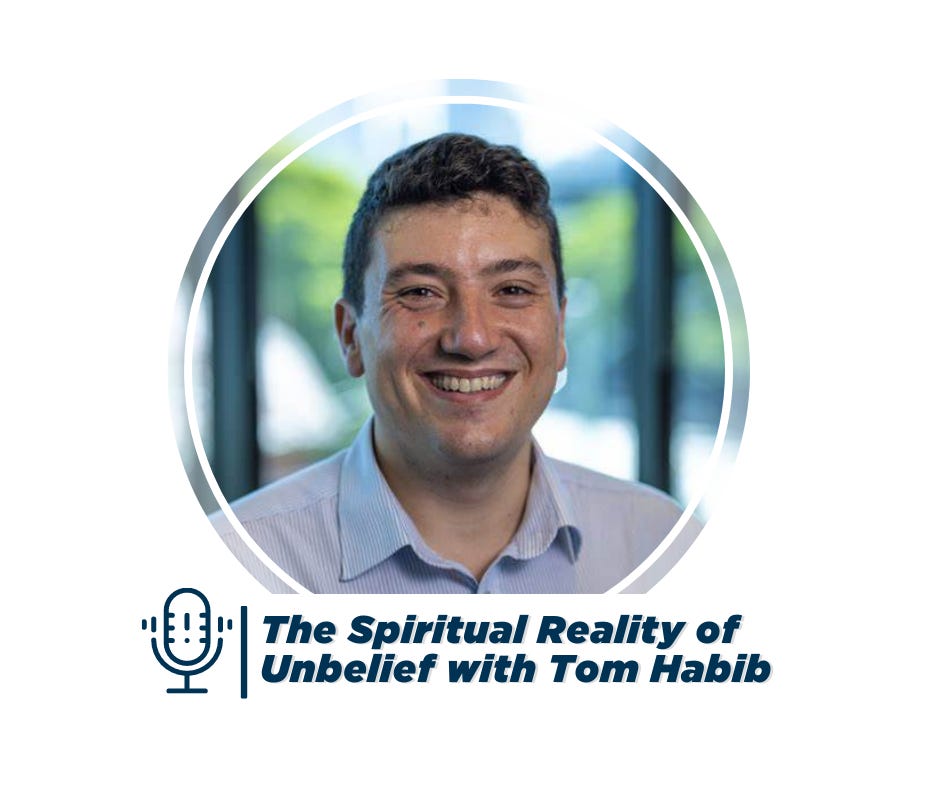
The Spiritual Reality of Unbelief
Dear friendsA special guest for this week’s edition—freshly minted Moore College lecturer, Tom Habib.Tom’s post-graduate study was in John’s Gospel, and in particular the themes of belief and unbelief that are so central to John’s message.He joins us in this episode for a stimulating conversation about why and how people believe—or don’t believe—in Jesus.Your brotherTony This is a public episode. If you'd like to discuss this with other subscribers or get access to bonus episodes, visit www.twoways.news/subscribe

The saints in whom is all my annoyance
Dear friendsJust me this week, and therefore a shorter, punchier edition of Two Ways News in which I ponder one of the ongoing problems of the Christian life—other Christians.I hope you find it encouraging.Your brotherTony This is a public episode. If you'd like to discuss this with other subscribers or get access to bonus episodes, visit www.twoways.news/subscribe

The Coronation and the King
Dear friendsAs I write this, we are now looking back on the pomp and circumstance of King Charles’s coronation. The media did their usual thing, mixing extraordinary images of pageantry and patriotism with a soundtrack of celebrity gossip, fashion notes and inane commentary. However, in this week’s episode (recorded in the days just before coronation), Phillip and I talk about why we have public events like coronations at all, why they are like weddings, and why the content and symbolism of this particular coronation reveals a lot about the Bible’s distinctive view of human government. Read on for an edited transcript, or click on play (above) to listen to the whole thing. Your brotherTony This is a public episode. If you'd like to discuss this with other subscribers or get access to bonus episodes, visit www.twoways.news/subscribe

Lessons from a 'Trellis and Vine' road trip
This week’s episode comes at the end of Tony's trip to the US, during which he and Marty Sweeney spent a couple of weeks travelling around and running workshops about the ministry ideas of The Trellis and the Vine. As they look over the many conversations they had with pastors and congregations, Tony and Marty discuss:- Which aspects of the T&V approach to ministry still resonated most sharply with pastors and with Christians generally?- What differences might there exist between how US and Australian churches are struggling to do more ‘vinework’?- And if they were going to change anything about the book, what would it be?Resources referred to:The Course of Your LifeThe Thing Is This is a public episode. If you'd like to discuss this with other subscribers or get access to bonus episodes, visit www.twoways.news/subscribe

A Jensen Brothers Episode
With Tony away on holiday, Phillip has brought in his brother Peter Jensen for a special conversation on Easter, their new books The Coming of the Holy Spirit and The Life of Faith: An Introduction to Christian Doctrine, as well as the upcoming King’s Coronation. Below are some snippets of the conversation. Listen to the full episode to glean more from the depth of their insights of our world today and to enjoy some good ol’ brotherly banter in between. (We’ll be taking a break from Two Ways News next week. God willing, we’ll be back with our next episode in the first week of May.) This is a public episode. If you'd like to discuss this with other subscribers or get access to bonus episodes, visit www.twoways.news/subscribe

Special Q&A Episode
Hello everyoneIt’s been great to receive so many feedback and emails from you, and in this episode we thought it would be great to answer some of these questions that you raised. We’ll catch up on a whole bunch of interesting questions about evangelism, about culture, about ministry, and the call to ministry.We hope you enjoy this discussion.Your brotherTony This is a public episode. If you'd like to discuss this with other subscribers or get access to bonus episodes, visit www.twoways.news/subscribe

How is God's word unchained?
In this week’s Two Ways News I’m flying solo, my regular co-pilot (Phillip Jensen) having been grounded with a nasty bug.My subject connects with a number of themes we’ve been discussing over the past several episodes. Given the increasing marginalization of Christianity in our culture, is it going to get more difficult to preach the gospel? Or perhaps easier?If God’s gospel is going to run free—unchained and powerful and changing people’s lives—how is that going to happen if we are increasingly being silenced?PSThanks to those who’ve been sending in questions and comments, particularly about our recent discussion of the place of ‘desire’ in evangelism. To listen to an answer to a particularly thoughtful question on this subject, have a listen to the podcast audio above, starting at 14:45. This is a public episode. If you'd like to discuss this with other subscribers or get access to bonus episodes, visit www.twoways.news/subscribe

The God who makes history
Thanks for all the emails that have been rolling in. We’ll do a special mailbag kind of thing in the next episode (or so) to catch up on some of your insights and questions. In the meantime, this week’s edition bounces off last week’s Nexus discussion about our recent history. Why is history important? And how can we make sense of it, especially when there are always competing claims and interpretations of what ‘history’ means? The answer (as always) is deeply theological, and therefore lost on most people today. This is a public episode. If you'd like to discuss this with other subscribers or get access to bonus episodes, visit www.twoways.news/subscribe

Tremble at his word in the heat of battle
Last Monday, Phillip and I were at the Nexus Conference here in Sydney—a one-day gathering that aims to stretch and encourage ministry workers and leaders in the task of reaching Sydney (and beyond) with the gospel. It was a very stimulating and encouraging day, built around the Isaianic theme of trembling at the word of God: Thus says the LORD: “Heaven is my throne, and the earth is my footstool; what is the house that you would build for me, and what is the place of my rest?All these things my hand has made, and so all these things came to be, declares the LORD. But this is the one to whom I will look: he who is humble and contrite in spirit and trembles at my word. (Isa 66:1-2)In the afternoon session, I interviewed Phillip about some of the ways that ‘trembling at the word of God’ had played out in his own ministry, particularly about how a determination to be driven by the Word had brought him into conflict—with his own sinfulness, with the world, and with other Christians. This is a public episode. If you'd like to discuss this with other subscribers or get access to bonus episodes, visit www.twoways.news/subscribe

Deepest desires and jokes about Jesus
In this week’s rather packed episode, we talk about: * Off-colour jokes about Jesus, and how Christians should respond;* Why ‘community standards’ is a fiction used to silence the community;* How you can only flourish in the public square as a Christian by pretending to be someone else; and * Whether our God-given desires are a good basis for evangelism. Enjoy.Links:~ Same same but different - by Tony Payne - Two Ways News~ Seven types of 'apologetics' - by Tony Payne (twoways.news)~ Seven types of 'apologetics': Part 2 - by Tony Payne (twoways.news) This is a public episode. If you'd like to discuss this with other subscribers or get access to bonus episodes, visit www.twoways.news/subscribe

The new & improved Twits
‘Bowdlerise’ is a word that’s fallen out of usage and fashion because the practice of it has (until recently) been laughed off the stage of culture. It means to snip out offensive language, characters or episodes from it. It was named after a 19th century doctor who we’ll talk about in the episode, and it seems like it’s making a comeback. In these strange, upside times, it’s not Victorian moralists who are demanding that books be sanitised, but secular-progressive moralists. Roald Dahl, Enid Blyton, Ian Fleming’s James Bond—they have all recently felt the pain of the bowdleriser’s scalpel. What are we to make of this? More importantly, what does the return of bowdlerising tell us about the nature of modern morality, and how to preach the gospel to a culture that seems deeply sensitive to offence? This is a public episode. If you'd like to discuss this with other subscribers or get access to bonus episodes, visit www.twoways.news/subscribe

That’s just your interpretation
We’ve spoken quite often here at Two Ways News (and before that in ‘The Payneful Truth’ years) about how the gospel is a particular thing. You can express it using different words and in your own style, but it’s not infinitely malleable. It has a definite content that we can know from the New Testament, and which we can explain to other people. The same is true with the Bible generally.These days, both of these claims are controversial, and the common form of the pushback goes something like this: “How can you be so sure? We all bring our own preconceived ideas and contexts to our reading, after all. And nobody seems to be able to agree about what the Bible says. So when you so confidently declare that an outline like Two Ways to Live is a true and good summary of the one true biblical gospel … well, isn’t that just your interpretation?” I put this objection to Phillip to kick off a lively conversation about interpretation, the gospel and how to read the Bible. This is a public episode. If you'd like to discuss this with other subscribers or get access to bonus episodes, visit www.twoways.news/subscribe

The myth of the public square
This week’s edition features a piece from Tony about the strange and elusive phenomenon of the ‘public square’. What is it exactly? Should Christians be concerned that we are excluded from it? And what should we do if we are?In this podcast version, Tony and Phillip chat through a first draft of the piece, and try to improve it. This is a public episode. If you'd like to discuss this with other subscribers or get access to bonus episodes, visit www.twoways.news/subscribe

A gamble not worth taking
Gambling has always been a social problem in our culture. In our part of the world, there is intense debate at present about how to reduce people’s access to poker machines (or gaming or slot machines as they are called elsewhere).How should we think about all this as gospel people? Do Christians have something unique and important to say about gambling?(We’ll also answer one of your questions about the place and importance of historic Creeds and Confessions at the beginning of the conversation.) This is a public episode. If you'd like to discuss this with other subscribers or get access to bonus episodes, visit www.twoways.news/subscribe

Jesus, God, Bible
With Phillip away this week, I’ve gone to the substitute’s bench and hauled in Mark Thompson for a chat. Good to be able to get the Principal of Moore College as a fill in!Mark also lectures and writes in theology, and just last year, he published a more general book for Christians called The Doctrine of Scripture: An Introduction (through Crossway) which is not the most funtastic title in the world but does tell you exactly what the book is about. In this conversation, we'll be hearing from Mark how this book can help Christians build their understanding of what the Bible really is, and their confidence in its truth and clarity and power. The details of Mark’s book: The Doctrine of Scripture: An Introduction, by Mark D. Thompson, (Short studies in systematic theology series), Crossway, 2022. This is a public episode. If you'd like to discuss this with other subscribers or get access to bonus episodes, visit www.twoways.news/subscribe

Teach your children well
As we send our kids back to school (as parents in Australia are doing this week), a question many of us might face is 'What are we actually doing?' With the government running schools for the most part, it isn't strange when parents wonder whose role it is to teach our children.As we discuss this topic, we hope to shed some light on some of the challenges that we face as Christian parents, and equip you with some encouragements as you seek to educate your children in the ways of the Lord in such a complex world.* If you’d like to catch up with Phillip and Tony in person, they’ll both be at the Nexus Conference in Sydney on Monday, March 13. (Tony will be interviewing Phillip as part of the program.) Nexus is aimed mainly at pastors, gospel workers, ministry trainees, and so on, but it’s open to all. The venue is Village Church, Annandale. Find all the details here. * Matthias Media (Aus) is having a big January sale that ends TODAY (if you’re reading this on Tues, Jan 31). Get in quick! This is a public episode. If you'd like to discuss this with other subscribers or get access to bonus episodes, visit www.twoways.news/subscribe
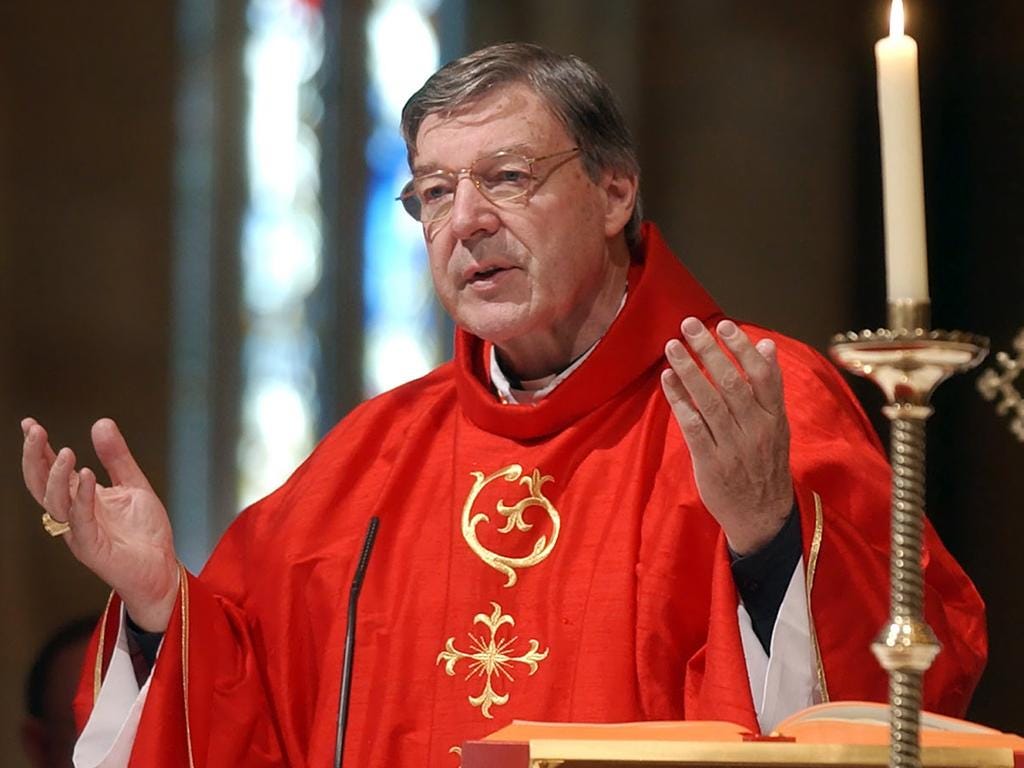
What shall we say about George Pell?
Everyone has an opinion, it seems, about the significance of the late Cardinal George Pell—about his culpability (or otherwise) in the Roman Catholic response to child sexual abuse, about his own guilt or innocence on sexual abuse charges, and about his role within Roman Catholicism itself (in the struggle between conservative and liberal factions). But what should we say when the topic comes up in conversation? As evangelical Protestants, what contribution can we make to the assessment of a Catholic cardinal's legacy? And what opportunities does the conversation present for speaking about the gospel of Jesus? This is a public episode. If you'd like to discuss this with other subscribers or get access to bonus episodes, visit www.twoways.news/subscribe

A New Year’s repentance
In our first episode for 2023, Tony takes a typically roundabout trip through New Year's resolutions, repentance, self-denial and John Calvin, and ends up blaspheming a modern god. This is a public episode. If you'd like to discuss this with other subscribers or get access to bonus episodes, visit www.twoways.news/subscribe

Is it the season to be jolly?
In our end of year episode, we talk about the positives and negatives of Christmas and ministry. Plus some book recommendations for summer reading: The Case Against the Sexual Revolution, by Louise Perry.The Gospel of the Kingdom, by David Seccombe. The Coming of the Holy Spirit, by Philip Jensen.Busy: Tackling the Problem of an Overloaded Christian Life, by Ian Carmichael. This is a public episode. If you'd like to discuss this with other subscribers or get access to bonus episodes, visit www.twoways.news/subscribe
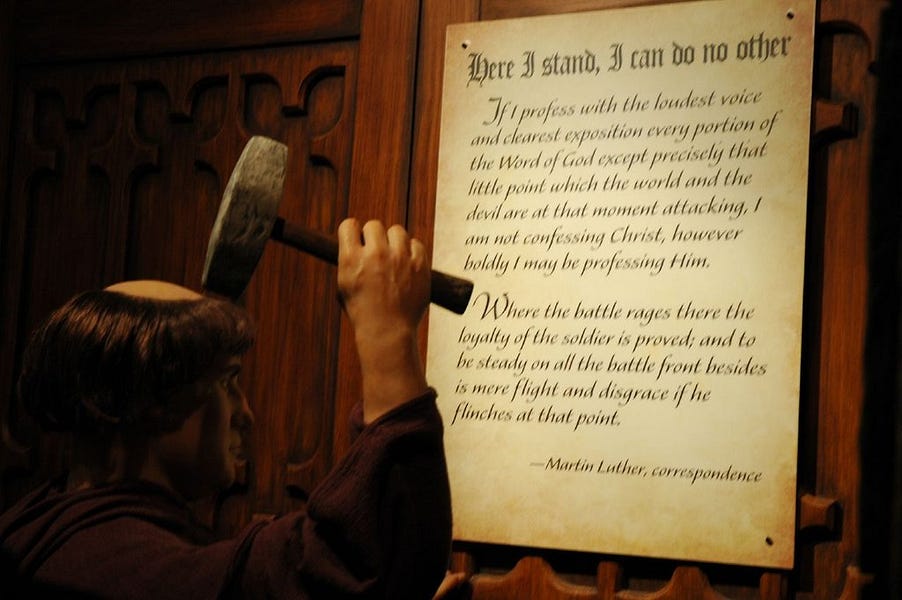
What we stand for
What are the fundamentals that we share as evangelical Christians—the beliefs that bind us together as partners in the gospel, and which enable us to work together? And correspondingly, how much difference and disagreement is too much? When and how can we still work together despite our differences?And what has all this got to do with the Federalist Society?Listen to the full conversation, or read Tony's summarising article at twoways.news.Resources referred to:Student Witness and Christian Truth, by Robert M. HornThe Limits of Fellowship, by Phillip Jensen (article with link to audio). This is a public episode. If you'd like to discuss this with other subscribers or get access to bonus episodes, visit www.twoways.news/subscribe

Does religion cause wars?
Religion causes wars.It’s a common accusation flung at religion generally but at Christianity in particular. And figuring out how to answer this kind of attack is a helpful case study in how to approach apologetic conversations generally.That’s our subject in this episode’s wide ranging conversation. This is a public episode. If you'd like to discuss this with other subscribers or get access to bonus episodes, visit www.twoways.news/subscribe

The kingdom of mercy
When Peter asks Jesus "How many times should I forgive my brother?", it's another example of Peter being sort of perceptive but also missing the point by a wide margin. In this week's edition, we talk about forgiveness: what it means, how it is at the heart of the kingdom that Jesus brings, and why the spirit of forgiveness and mercy must permeate our lives. Plus we deal with some of your questions, including a curly one about tribalism and Sydney Anglicans. This is a public episode. If you'd like to discuss this with other subscribers or get access to bonus episodes, visit www.twoways.news/subscribe
Gullible cynicism
In this week's conversation, Phillip and I talk about the value and dangers of academic scholarship -- particularly the kind of biblical and theological scholarship that is done in mainstream universities. How can we appreciate and benefit from the work of scholars, but not be gullible about the motives and assumptions from which many of them work?To chase up our reference to Helen Pluckrose and what has become known as 'The Grievance Studies Hoax', this article on Wikipedia gives a decent summary. This is a public episode. If you'd like to discuss this with other subscribers or get access to bonus episodes, visit www.twoways.news/subscribe

Detoxing masculinity
Phillip is away this week, so Tony flies solo as he interacts with Al Stewart's fascinating and impressive new book The Manual: Getting masculinity right. This is a public episode. If you'd like to discuss this with other subscribers or get access to bonus episodes, visit www.twoways.news/subscribe

The gospel call to ministry
Sometimes evangelicals are accused of making such a big deal of full-time Christian work that it sends an implicit (or even explicit) signal that people who don’t go into full-time ministry are second class. At other times, we panic about the ‘minister drought’ and bemoan the fact that no-one is being challenged to go into full-time ministry any more.Is it possible to avoid these problems? What’s the right way to challenge people to consider full-time Christian work without devaluing those who don’t pursue that path?A conversation with Tony Payne and Phillip Jensen.Links:Ray Galea's new book on this very topic is now available to pre-order. Eager to Serve: Facing our fears, counting the cost, and stepping up in gospel ministryTony's little book for every Christian on seeing yourself as a disciple-making disciple is also worth a look: The Thing Is: God, you and your purpose in life. This is a public episode. If you'd like to discuss this with other subscribers or get access to bonus episodes, visit www.twoways.news/subscribe

What's wrong with tribalism anyway?
In last week's episode, we touched briefly on 'postmodern progressive tribalism' -- a description that sounds mostly negative, especially about tribalism. But is tribalism necessarily bad? Is individualism (which is its most frequent alternative) any better? And is there a gospel way of thinking about tribalism and individualism that saves us from the pitfalls of both? Join Tony Payne and Phillip Jensen for a lively discussion of these questions. This is a public episode. If you'd like to discuss this with other subscribers or get access to bonus episodes, visit www.twoways.news/subscribe

The freedom to speak
The first edition of Two Ways News, a new podcast and newsletter collaboration between Tony Payne and Phillip Jensen. Find out more, subscribe, and read or listen to past editions of Tony's newsletter 'The Payneful Truth', at the Two Ways News website. To get in touch, make comments or ask questions, send an email to [email protected]. And if you’d like to listen to the whole clip of Stephane Grappelli’s swing version of Bach’s Double Concerto, you can find it here! This is a public episode. If you'd like to discuss this with other subscribers or get access to bonus episodes, visit www.twoways.news/subscribe

Go and tell, come and see
Some significant changes are coming up for The Payneful Truth. I’ll talk about those changes below, but first (and more importantly) to this week’s topic and guest.A conversation on evangelism with John LavenderOne of the things I’ve loved most about doing The Payneful Truth over the past couple of years is the interaction with readers and listeners. Of all those who’ve sent in encouraging comments and questions, the prize for quantity with quality easily goes to John Lavender. John is a church planter and minister here in Sydney, who has been working over the last couple of years with Evangelism and New Churches (an organization within the Sydney Anglican diocese that promotes and resources evangelism). His main job over the past couple of years has been to visit churches and work with them to encourage and improve evangelism, and for a while now I’ve been wanting to talk with him about what he’s learned doing this. What’s the state of play around Sydney evangelistically? Here’s an edited version of the conversation John and I recently had.TP: John, in your work with ENC, you get quite a picture of what’s happening evangelistically in churches around Sydney. We keep being told in the media that Christianity is declining (as the Census data apparently tells us) and that all is doom and gloom. But where do you see good things happening?JL: I hear so many good news stories. Little things like a guy who meets a new neighbour, strikes up a conversation and boldly asks him to read the Bible with him. And the neighbour says yes, and so he works through the Bible with him, and invites him to church.Or a group of ladies who meet new people who move into their street, provide meals for them, and then invite them to church.I see lots of little things like that where people take the initiative to invite, to read the Bible—that’s wonderful.In terms of the bigger picture, some of the churches I’ve visited are just so committed to helping people come to know Jesus. They have a really good structure: there’s good training, the church is welcoming, you arrive and are followed up, the vibe is good, people show interest in you, the sermon is engaging, and you’re invited into a follow-up course. It’s really good! There are churches where there are only one or two converted every now and then, but I’ve been in other contexts that are having 10 or 20 or 30 new people coming each week, where there are significant numbers of people hearing, responding, and wanting to hear more. It’s very encouraging.TP: What about where it’s not working so well. What weaknesses have you seen?JL: This can be a bit sad, because you see people who aren’t gripped by who Jesus is, or they don’t see they have a role to play in speaking about Jesus. There are churches that just haven’t connected at all with their suburb or the community around them, and that’s really sad. Some churches aren’t really sure how to actively reach the people around them. The people are reluctant or afraid or not sure how to bring Jesus into an everyday conversation.But I’m encouraged because the ministers will say me to me, “John, can you help us? How can we raise the evangelistic temperature at our church? How can the congregation be better equipped? How can we connect with people, and follow them up?” It’s encouraging that they see the problems, and want to give it a crack. TP: What do you think is the main problem?JL: Before I point at others I want to think about myself. Two passages I’m passionate about are 2 Cor 4 and 2 Cor 5.In 2 Cor 4, the contrast is between the temporary things of this world and eternity, and I’m just so conscious how often I’ve got my eyes set on the things of this world rather than on eternity.In 2 Cor 5, Paul talks about being compelled or convinced of Christ’s love—I want to be convinced and compelled by that every day! He talks about the urgency. As I think about myself and our churches, I’m conscious that we’re lured into chasing the things of this world. We’re not fully convinced of the need to be Christ’s ambassadors (as 2 Cor 5 says); we’re not gripped by the urgency of the whole thing. I want to work hard to change the focus; to help people see that eternity is at stake; to be convinced and compelled by what Christ has done for us. That’s what I want to encourage people and churches to be on about.I think the other issue is love. I’ve been reading Before you Share your Faith by Matt Smethurst, and reckons that one of the major reasons is simply that we don’t love people. What a slap in the face that is! If we loved people we’d be ready to talk to them about Jesus and about their future and about why Jesus is so good.TP: How do you address this? How do you raise the temperature of evangelism and love and conviction?JL: Well, one way would be by working through chapters like 2 Cor 4 and 5! Another one is Matt 9, where Jesus sees the people harassed and helpless, like sheep without a shepherd. It’s encouraging them to look out, and to seek t

And that's why Anglicanism is divided
I wrote about being a ‘conservative’ a few weeks ago, and now the evil Anglican conservatives are at it again. Forming breakaway ‘churches’. Causing material harm and distress to LGBT people by blatantly refusing to agree with them. Engaging in schismatic actions that miscellaneous bishops sadly shake their heads at, and purport not to really understand (which would be hilarious if it weren’t so disingenuous). And so on.When friends and family ask me what’s the story with this new ‘Diocese of the Southern Cross’, I tell them that they’ve got to understand the background. The Anglican denomination has been home to two different and incompatible belief systems for decades now. Some people limp between these two opinions; others try to find a way to live and let live. But allowing for all the variations of individual circumstances, and all the ways in which the world is a complex place, when it comes down to it, there are still two fundamentally opposed religions at work within Anglicanism, and the current disputes are just the latest manifestation of this fact.JI Packer once summarized these two belief systems as ‘objectivist’ and ‘subjectivist’ like this:[The objectivist position] is the historic Christian belief that through the prophets, the incarnate Son, the apostles, and the writers of canonical Scripture as a body, God has used human language to tell us definitively and transculturally about his ways, his works, his will, and his worship. Furthermore, this revealed truth is grasped by letting the Bible interpret itself to us from within, in the knowledge that the way into God’s mind is through that of the writers. Through them, the Holy Spirit who inspired them teaches the church.…The second view applies to Christianity the Enlightenment’s trust in human reason, along with the fashionable evolutionary assumption that the present is wiser than the past. It concludes that the world has the wisdom, and the church must play intellectual catch-up in each generation in order to survive. From this standpoint, everything in the Bible becomes relative to the church’s evolving insights, which themselves are relative to society’s continuing development (nothing stands still), and the Holy Spirit’s teaching ministry is to help the faithful see where Bible doctrine shows the cultural limitations of the ancient world and needs adjustment in light of latter-day experience (encounters, interactions, perplexities, states of mind and emotion, and so on). Same-sex unions are one example. This view is scarcely 50 years old, though its antecedents go back much further. I call it the subjectivist position. (Briefing 204, March 2003, p. 17; reprinted from Christianity Today)This is typical Packer. Thoughtful, careful, comprehensive, and crystal clear in highlighting the issues. But it’s very English and polite all the same.I wonder if we could express it a bit more … vividly. If I were one of those old-time, African-American preachers, who liked to use the same rhythm and structure for an escalating series of comparisons, I might flesh out the differences between these two belief systems more like this:There’s one religion based on an objective revelation; There’s another religion based on a subjective implication;And that’s why Anglicanism is divided.There’s one religion in which the Bible changes human culture;There’s another religion in which human culture changes the Bible;And that’s why Anglicanism is divided.There’s one religion that is inflexible about truth but flexible about human traditions;There’s another religion that is flexible about truth but clings to human traditions tenaciously;And that’s why Anglicanism is divided.There’s one religion that puts the highest value on listening to God’s word;There’s another religion that puts the highest value on listening to each other;And that’s why Anglicanism is divided.There’s one religion about God seeking the lost;There’s another religion about the lost seeking God;And that’s why Anglicanism is divided.There’s one religion that calls me to repent from my sin;There’s another religion that tells me I can stay as I am;And that’s why Anglicanism is divided. There’s one religion that believes that God knows the truth about men, women and marriage because he created all three;There’s another religion that believes that there’s no solid truth about men, women and marriage because all three can mean what we say they mean;And that’s why Anglicanism is divided.There’s one religion that the mainstream media loathe and oppose;And there’s one religion that the mainstream media tolerate and occasionally support;And that’s why Anglicanism is divided.There’s one religion that looks plain and unimpressive but trusts the power of God;There’s another religion that has the gawdy appearance of godliness but denies its power;And that’s why Anglicanism is divided.There’s one religion that is seeing churches grow and lives transformed;There’s another religion that is seeing churches die and l

Enjoying the moment
There is a time for every matter under heaven, Ecclesiastes 3 reminds us. But is there a time for Ecclesiastes itself?We’ve been studying and preaching our way through Ecclesiastes recently at church, and that old question has arisen more than once. Is its pessimistic view of the world limited in some way to its pre-Christian time? Or is its sobering message about the vacuousness of life just as relevant for us today, this side of the redeeming, revealing work of Christ?The answer makes quite a bit of difference.If the vanity of life under the sun is really a kind of pre-Christian despair that Christ comes to solve, then Ecclesiastes tells us more about what the Christian life is not than what it is. That would still make it a useful and challenging part of Scripture, but in a particular way. It would function as a kind of kategoria or critique of humanity's doomed attempt to find wisdom and meaning on our terms and by our own lights. And it would be a warning to the Christian not to fall into proud or worldly attitudes towards riches, work and pleasure.But would Ecclesiastes then actually provide positive wisdom for our lives? Or not so much?To take the most striking example, should we eat, drink and be merry, or not?In 1 Corinthians 15:32, Paul says that this hedonistic, live-for-the-moment approach is the attitude of people who deny the resurrection. “If Christ is not raised, then what’s the point?” says Paul. We might as well live it up and enjoy each passing moment, because that’s all there is. Or, as James Taylor says, “The secret of life is enjoying the passage of time … Nobody knows how we got to the top of the hill; but since we’re on our way down, we might as well enjoy the ride”.However, when we turn to Ecclesiastes, we find the Preacher giving his readers this James Taylor kind of advice—and often. For example, after describing the capriciousness, injustice and vanity of man’s constant striving for wealth and advantage, he says:Behold, what I have seen to be good and fitting is to eat and drink and find enjoyment in all the toil with which one toils under the sun the few days of his life that God has given him, for this is his lot. Everyone also to whom God has given wealth and possessions and power to enjoy them, and to accept his lot and rejoice in his toil—this is the gift of God. For he will not much remember the days of his life because God keeps him occupied with joy in his heart. (Eccl 5:18-20)You might as well enjoy the moment, because that’s the best we can hope for in this confusing, confounding world. He says the same thing in 2:24-26, 3:9-13, 8:15-17, and in this classic from chapter 9, which I like to write out in nice cursive handwriting on a beautiful card and give to my wife on our anniversary:Enjoy life with the wife whom you love, all the days of your vain life that he has given you under the sun, because that is your portion in life and in your toil at which you toil under the sun. Whatever your hand finds to do, do it with your might, for there is no work or thought or knowledge or wisdom in Sheol, to which you are going. (Eccl 9:9-10)The constant conclusion of the Preacher is that life is an opaque mess. Not only do bad and unjust things happen, but we can never grasp why. We can’t see through our circumstances to decipher their meaning or end—apart from the fact that we’re all going to die. As he says in the famous chapter 3 verse 11:He has made everything beautiful in its time. Also, he has put the vast continuum of time into man’s heart, yet so that he cannot find out what God has done from the beginning to the end.God has put into our hearts an awareness that we have come from somewhere and are going somewhere; that we exist at one point on vast time continuum stretching back and forward. We sense that life should therefore mean something, and indeed we constantly experience the beauty or fittingness of individual events and times. And yet, the larger picture is hidden from us. We can neither see what is coming next, nor comprehend the significance of what has just happened. Just when we think we understand what’s going on, and have things sorted and planned out, it all slips through our fingers. Life is hebel—vanity, absurdity, an airy nothing that we desperately try to pin down with a local habitation and a name, but fail to.These God-given limitations are meant to humble us, says the Preacher. God did it this way to cut us down to size, and to help us realize that everything we work at and achieve and obtain is really a gift from him, to be enjoyed as it comes to us.This is why the Preacher’s over-arching advice is to fear God, to do good and keep his commandments, and to enjoy whatever gifts come to you from his hand (including eating and drinking and enjoying the satisfaction and fruit of your work). God will bring everything into judgement, not us.Looked at it this light, perhaps the Preacher’s teaching is not so different from Paul’s after all. The person who deni

Truth, lies and spiritual yearning
Rummaging around through my digital files last week, I discovered this paragraph: The very experience of 21st century living, with its utterly bewildering array of nearly limitless choice—in knowledge, information, entertainment, commodities, interests, lifestyles, and so on—has the psychological effect of fragmenting our lives, and destroying any illusion that there might be one overarching truth or ‘big story’. There is no fixed truth, no unifying story, no galvanizing purpose. There is nothing that explains me, or locates me in the world as part of a fixed tradition or community. Everything is difference, diversity, plasticity, fluidity. It is up to the individual to try to fashion some satisfactory ‘self’, some thing that is uniquely and authentically ‘me’, by selecting from the google-sized cultural menu.It’s from an article I wrote 15 years ago reviewing David Wells’s book Above all Earthly Pow’rs: Christ in a Postmodern World, which I suspect many of you will never have heard of, but which was quite the thing in 2007. Books are like sermons in this regard. Even the best of them get forgotten; it just takes a little longer.I came across this article because I was searching for background reading on truth and lies, in preparation for the CCL event on ‘Deception’ that’s coming up next week. (It’s not too late to register!) And Wells’s book casts a fascinating perspective on that subject. He charts the collapse of the modernist confidence of the Enlightenment, that humanity could find its own way to the truth about life and the universe.The Enlightenment project failed, he suggests, for a number of reasons. At one level, it simply failed to deliver. The modernist dream was that humanity would craft its own destiny, and that science and education would lead us all into a unified bright new tomorrow. We were promised progress, enlightenment, knowledge and an inspiring humanist quest for truth. Instead we got the holocaust, propaganda, a nuclear arms race and environmental degradation.But it also failed, he argues, because of the very structure of its thought, and all that followed from it. The Enlightenment ideal is profoundly individualistic. Human reason and experience is sovereign, which means that my reason and experience is sovereign—so who are you to tell me what to do? Or to tell me what constitutes ‘progress’? Or what ‘truth’ is?In the end, Wells argues, the Enlightenment dream buckled, sagged and collapsed under the massive variety and weight of the consumer options that have opened before 21st century Westerners. We didn’t become ‘postmodern’ because we all started reading Derrida and Foucault but because contemporary culture is built on ‘you doing you’ and ‘me doing me’ (as we now say it), and we now have the financial and technological resources for us to try to do just that. Postmodern culture is an individualistic consumer culture in which I define meaning for myself by what I buy and choose and experience; by how I thus create the unique thing that is ‘me’.So what does this mean for how we think about lying and deception in a postmodern world?Disappointingly for my preparation, Wells doesn’t explore this angle, nor (therefore) did my review.His interest lies elsewhere, in how the postmodern crisis of ‘truth’ relates to how Christians preach the gospel.And so, as is so often the case when you rummage around in old books and articles, I found myself going down a completely different rabbit hole. But it was also one that very much relates to current events and issues.The big issue for Wells—and it is still very much ours 15 years later—is how secular, postmodern people deal with the fracturing of truth and meaning, and how churches deal with it, as they reach out with the gospel in this environment.He notes that while church-going and general trust in Christianity has declined in the West, interest in ‘spirituality’ and ‘spiritual experience’ has not. He cites a survey showing how in the same period in which church attendance in Britain fell from 28% to 8% of the population, the number of people who described themselves as ‘spiritual’ or having had ‘spiritual experiences’ rose from 48% to 76%.There is a spiritual yearning there. Can Christians bring the gospel to that spiritual yearning?Here is where Wells asks a crucial question that many others in the early 21st century weren’t asking, and are still not asking: Just what kind of spiritual yearning does the postmodern person typically have?Here’s my summary and reflection on his answer (from the 2007 review):As Wells describes it—and his analysis rings very true—the current spiritual quest is intensely personalized, individualized and eclectic. It is part of the postmodern person’s project to make their life happy, satisfying, fulfilled and meaningful. It is about finding something real and meaningful in my life, given that I have lost confidence in a big Answer coming from an outside God. It’s like another panel on my Facebook page: my spirit

A bit bitsy
The painful truth this week is that this is a rather bitsy Payneful Truth; a series of short bites rather than a single vaguely coherent article: about reading Christian books, explaining the gospel powerfully, and defending the truth of the Bible. This is a public episode. If you'd like to discuss this with other subscribers or get access to bonus episodes, visit www.twoways.news/subscribe

The road to spiritual health is paved with Christian books
Before we get to the subject of why Christian books are so vital, a follow up from last week’s post about being a ‘conservative’. Geoff Robson, who has taken over much of the editorial work I used to do at Matthias Media, got in touch to share a great quote from Peter Jensen. Geoff writes: You reminded me of when PFJ became Archbishop (when I’d been working at Anglican Media for just over a year), and the media picked up on the label ‘radical conservative’ that had been applied to him at some point. He said he liked the label and accepted it (I had to transcribe the press conference for work, so I still have it filed away!). PFJ said:Only a conservative could be radical. A conservative, to my mind, is someone who takes matters through to the foundations and is convinced about the foundations. In a postmodern world, this is rare. And indeed some of the flack we get, as a Church—with complaints about the way we behave and the way we speak—are simply a misunderstanding. We are very serious people, with a serious intellectual and moral agenda in a world where these things are treated somewhat as though they don’t matter as much.Now, we have certain base convictions which are terrifically important to us. Having those base convictions frees us to be extraordinarily flexible about things that are of secondary nature.Precisely. But onto this week’s post, which is about bananas and Christian books. The road to spiritual health is paved with Christian booksAs a writer arguing in favour of Christian books, I feel a bit like a banana-grower arguing in favour of bananas—like my family did when I was growing up. My dad’s people grew bananas at Dunoon, outside Lismore. My grandfather was even the president at one time of the North Coast Banana Growers Federation (he was the Big Banana, you could say).So it is hardly surprising that our family consumed bananas in impressive quantities and in every conceivable format. We had them mashed on bread, sliced onWeet-Bix and baked in the Queen of All Cakes (banana cake with lemon icing). We ate them raw, frittered and barbecued. They were our morning tea, our afternoon tea and our sneaky late-night snack.We were banana people, and had the banana key rings and other banana-themed merchandise to prove it. This poster was on the wall on the back verandah:It always struck me that having a road paved with banana peels was also quite possibly dangerous to health. But perhaps the banana lobby could be forgiven for overlooking this. What else would you expect them to be but blindly and joyously pro-banana?I feel rather like this in arguing that the road to spiritual health is paved with Christian books. What else would I say, as a life-long Christian writer and publisher?However, it’s a little different. I’m not sure that a conviction about the all-purpose benefits of bananas was the reason my grandfather spent his life growing and promoting them. Perhaps it was—maybe the banana passion came first, and then the desire to grow them. But it has certainly been that way with me. It’s precisely because of a strong conviction about the value of Christian books that I’ve spent my ministry life writing, editing and publishing them.That conviction has three pillars.The first is a theological belief in the power of the word. It’s a cliché to say that we live in a visual age where people prefer to watch rather than to read. This is true, but only in so far as it is a description of every age. People have always preferred the immediacy of the visual. This is why that little thing called idolatry—the worship of a visual representation of the divine—is condemned so widely and vigorously in the Bible. It has always been humanity’s besetting sin.The ‘humiliation of the word’ (as Jacques Ellul described it) is a feature not just of modernity but of history. Our rejection of God is a rebellion against him who cannot be seen, and a turning to the worship of created things that can be seen. Rather than seeing in the creation evidence for the invisible God, and honouring and thanking and listening to him, we turn away and suppress that truth. We turn to what can be immediately seen and worship it instead.The visual is immediate and uninterpreted. It has no words. It is ‘dumb’, as Isaiah describes the idol that we make out of a piece of wood. Five minutes ago we were barbecuing bananas over it; now we’ve fashioned it into a shape and are thinking that it provides the meaning for our lives. The visual suits us very well, because we simply experience it and decide for ourselves what it means.A preference for seeing and watching over listening and reading is more than a difference in learning styles or personal taste (although of course it is partly that). It is also deeply rooted in our human unwillingness to learn the truth about ourselves and God by humbling listening to his word. The Christian, by contrast, lives by faith not by sight, and our faith is in the word of Christ that we hear (2 Cor 5:7; Rom 10:17

Who wants to be a conservative?
Before we get into today’s topic, some exciting news. Learn the Gospel (part one of the new Two ways to live training framework) has finally arrived, and is available for purchase. (In Australia, that is. It will be a few more weeks before the books find their way through the US ports and land in our American warehouse.)I know many of you have been wondering and waiting for it to be available, and are keen to think how this resource could be used to teach the fundamentals of the gospel in your churches.To this end, Matthias Media is encouraging churches to run a pilot program in Term 4 (say in two or three small groups) to see how Learn the Gospel fits and works in your context—and offering a friendly bulk price to help you have a go at this. If you’re in Australia, and would like to participate in this pilot, and test the waters for how your church could utilize Learn the Gospel, send an email to Gavin Shume ([email protected]). (This is an invitation only pilot—just for Payneful Truth subscribers and a few other churches we’re asking.)But onto this week’s subject … Who wants to be a conservative?I’ve lost count how many times over the course of my life that ‘conservatives’ and ‘progressives’ have fought over different issues in my (Anglican) denomination.Through the fog of time, different figures and controversies rise up and recede in my memory. I see Archbishop Peter Carnley (at that time the Primate of Australia), arguing that the resurrection was a spiritual experience rather than a physical event, and that Christ was not the only path to salvation—and then the godly, gracious Archbishop of Sydney, Harry Goodhew, copping a pounding in the secular press for daring to object (that was in around 2000 I think). I see the radically revisionist Bishop John Spong emerging from the mist, visiting Australia not long afterwards at the invitation of Carnley and the ‘Progressive Christian Network’. And once again the nasty ‘conservatives’ were the ones who criticised Spong’s denial of pretty much every tenet of orthodox Christian doctrine.Then I think of the long-running skirmishes (starting back in the 80s) over multiple issues—women’s ordination, gay ordination, the blessing of same-sex unions, and more. In each case, the ‘progressives’ or ‘liberals’ sought to change or update the doctrine and morality of Christianity, and in the opposing corner were the ‘conservatives’. And given that on all these issues I found myself barracking for the conservatives, I guess that makes me one. And you too, quite possibly.So how do you feel about being a ‘conservative’?I can’t say that the label thrills me to the core.What’s a ‘conservative’ after all? When we think ‘conservative’, we think of a stick in the mud; a reactionary; a stuffy, buttoned-down member of the establishment who wants things to stay the same. Conservatives are risk averse, change averse, and very likely excitement averse. They wear cream blazers over blue chinos. With their thin, cold and (invariably) white hands, they cling to the dogmas and traditions of the past, in a desperate and doomed attempt to forestall the new and better future that everyone else is longing for.Just what I always wanted to be—a conservative.Of course, like many such words in our culture, ‘conservative’ and ‘progressive’ are dependent on their predicate (or should be). It’s like being ‘narrow’ as opposed to ‘broad’. It entirely depends what you’re talking about. I would prefer my waist to be more narrow and my shoulders more broad. I’d like my fridge to be conservative of the food inside it, and my five-irons very progressive and if possible in the right direction.It all depends on what you’re conserving.Interestingly, this is also true in politics.British and European political ‘conservatism’ is quite different from American ‘conservatism’, because they seek to conserve different things. I’ve recently been reading George F. Will’s book, The Conservative Sensibility, and he describes the difference like this: [The European tradition of throne-and-altar conservatism] has generally sought to conserve institutions and practices, such as social hierarchies and established churches, that were produced by the slow working of historical processes spanning many centuries. American conservatism seeks, as Alexander Hamilton did in the Republic’s infancy, to conserve or establish institutions and practices conducive to a social dynamism that dissolves impediments to social mobility and fluency. So American conservatism is not only different from, it is at bottom antagonistic to British and continental European conservatism. The latter emphasizes the traditional and dutiful, with duties defined by obligations to a settled collectivity, the community. Because American conservatism is about individual liberty, it cultivates spontaneous social order and hence encourages novelty.[1]American political conservatism wants to preserve the norms and principles of the Declaration of Independ

Snake-think
I was doing some teaching on apologetics recently on Campus, and as we milled around outside afterwards, one of the students asked a thoughtful question.Why is it that contemporary apologetics mostly focuses on the two approaches that enjoy the least biblical support and have the most risks attached?To understand the question, some background.My presentation had been based on the ‘Seven types of apologetics’ essay that I rolled out on The Payneful Truth last year (pt 1, pt 2). As a refresher (or to save you reading from scratch), I argued that in the varied world of contemporary apologetics and evangelistic persuasion, the word ‘apologetics’ gets thrown around pretty loosely—so much so that it’s possible to identify seven different kinds of persuasion or argument that might have the label ‘apologetics’ slapped on them these days. They were:* Gospel persuasion: the arguments and evidence and reasoning that we employ when actually explaining the gospel of Jesus’ death and resurrection (e.g. evidence that Jesus did indeed rise from the dead).* Gospel objections: having explained the gospel, we answer the various questions and objections that people raise against it (e.g. “Did Jesus really rise from the dead?”; “I don’t believe that we are all sinners and rebels”; and so on).* Pre-emptive objections: before we get to talking about the gospel itself, we might address the general objections people have to God and Christianity (e.g. “Why does God allow suffering?”; “Hasn’t science disproved Christianity?”; “Why is Christianity so anti-women and anti-gay?” etc.) * Building Christian confidence: one function or type of apologetics is bolstering the confidence of Christians by providing answers and reasons for their doubts, and for the common objections that society throws at us.* God talk and life: way back at the ‘engage’ or pre-evangelistic end of the spectrum, the way we talk and behave in everyday life can open up and commend the subject of the gospel, in a Colossians 4:5-6 kind of way.* Positive reasons: These are positive arguments we put forward for the truth or attractiveness of the Christian faith. They might be some version of the classic proofs of the existence of God; they might be arguments that start with the people’s inherent desires and aspirations and show that Christianity fulfills them; they might seek to present the positive goodness of Christianity in the most reasonable and attractive way, to get some traction with the modern, secular person.* Critique (kategoria): Rather than provide a defense or ‘apologia’, this form of persuasion points out the inconsistencies and dysfunctions in the non-Christian worldview. It critiques the world, rather than answering the critiques of the world. (Paul’s speech in Acts 17 is a classic case in point.)I argued that we find types 1, 2, 4, 5, and 7 in the example and instructions of the apostles, and suggested that these were the ones we should also focus on in our own evangelism and persuasion. Types 3 and 6—‘Pre-emptive objections’ and ‘Positive reasons’—are not only difficult to find in the New Testament but have considerable risks attached. The ‘pre-emptive objections’ approach puts us on the backfoot, and often gives too much credence to the validity or genuineness of the objection; the ‘positive reasons’ strategy often seeks to frame Christianity in terms that are attractive to the prevailing secular mind, thereby risking a distortion of the counter-intuitive, offensive nature of the gospel.Unfortunately, it is precisely these two latter types (3 and 6) that tend to dominate the field of contemporary apologetics and persuasion.Hence the question I was asked: How has this come to be the case? Why do we end up focusing on the two apologetic approaches that have least to commend them?In answer, I made a few vague, stuttering remarks about the trends of modern thought, and our temptation to give the world too much credit, and our lack of belief in the power of the gospel itself, and how everything had gone to pot since the Enlightenment, and so on. All no doubt true, but a bit incoherent.But then a few days later, in the slow process of moving some books around at home—slow because I keep stopping to browse through old favourites—I came across Graeme Goldsworthy’s underappreciated Gospel-centred Hermeneutics. Not a light read but full of gold. And I remembered and found again this section on page 60:Sinful thinking is ‘snake-think’, the kind of noetic rebellion proposed by the serpent in Eden. It is diametrically opposed to the mind renewed by the gospel … At this point we can say that the godless presuppositions underlying the temptation and fall in Genesis 3 include the following:* If God is there, he does not communicate the truth.* We do not need God to reveal the rational framework for understanding reality;* Human reason is autonomous, and the ultimate arbiter of truth and falsity, right and wrong.In essence, these presuppositions are those of the secul

A different mountain
In one of the many memorable scenes in Chariots of Fire, the two old Cambridge dons look out the window on the departing Harold Abrahams and lament that his attitude is just not that of an English Christian gentleman. “Well”, says John Gielgud as the Master of Trinity College, “there goes your Semite, Hugh. A different God; a different mountaintop.”It’s not often that the contrast between the two mountains in Hebrews 12 is alluded to in popular culture. In fact, I think it’s safe to say that this may be the one and only and final time.Abrahams belongs to the God of Sinai, the Cambridge don is saying—to the smoking, terrifying, mountain of the law. We (he implies by way of contrast) have a different mountaintop, the heavenly Zion, the joyful assembly of the justified. What’s going on here? Are the two stuffy academics casting the professionalized pursuit of individual athletic glory (that they see in Abrahams) as a kind of works-based striving for acceptance? Or is it just the hide-bound prejudice of the self-satisfied Christian elite against the upstart pushy Jewish outsider? Or could it perhaps be a bit of both? This complexity is one of the many layers of meaning that make Chariots of Fire such an entertaining and satisfying story. At this point in the film, the British establishment (in the form of the dons) is arguing for the spirit of the amateur and against the win-at-all costs professionalism of the modern athlete. Sporting endeavours, they say, are about the creation of character: “They foster courage, honesty and leadership. But most of all, an unassailable spirit of loyalty... comradeship and mutual responsibility.” Later in the movie, the British establishment (in the form of Lords Cadogan and Birkenhead, and the Prince of Wales) try to dissuade Eric Liddell from precisely these ideals. They try to talk him out of the courageous, loyal, honest expression of his Christian beliefs (about running on Sunday) so as to win Olympic glory for Britain. Which mountain do the British elites belong to now? The compromised nature of the establishment is highlighted by Liddell’s character. He is also an outsider; a Scottish, non-conforming Christian. In many ways, he represents the calm assurance and joy of the heavenly Zion. He runs with a kind of liberated abandon and pleasure that his rival Abrahams can only dream of, and with a sense of commitment, courage and integrity that the Cambridge dons would surely approve of. And yet, ironically, the climactic plot device of the movie—Liddell’s Sabbatarian refusal to run on Sundays—suggests that the old mountain of the Law still has some hold on him. The movie closes (and opens) with another twist—the funeral of Harold Abrahams in the church of St Martin-in-the-fields, Abrahams having converted to Christianity around a decade after the events portrayed in the film. Recalling all this is making me want to go and watch again for the umpteenth time, and if you haven’t ever done so (i.e. you’re probably under 40), let me highly recommend it. But before I zip downstairs and fire up my steam-powered Panasonic VCR and rifle through my VHS collection, a word about why I’ve been thinking about Chariots of Fire again after all these years. It’s because I’ve been reading Hebrews again, and thinking about how important and climactic the two mountains passage in chapter 12 is in the message of the whole book. As you no doubt know, Hebrews sharply and constantly contrasts the old covenant and the new. For all its glory, the old covenant of Moses is a shadow and forerunner of the ‘things that were to be spoken later’. It testifies and points forward to the new and infinitely better covenant that has now been finally revealed and enacted by the Son. Israel set out on a journey to the promised land of rest, and most didn’t make it. We have set on a pilgrimage to a heavenly sabbath rest, under the leadership and ministry of “a great high priest who has passed through the heavens, Jesus, the Son of God” (4:14). The contrasts mount up as the book unfolds—the better and final revelation (1:1-4), the better servant-leader (3:1-6), the better sabbath rest, the better high priest and sacrificial atonement made in the better tabernacle (ch 5-10), the better city, the better country, the better resurrection (ch 11), and finally in chapter 12, the better mountain. In all of these contrasts, the ‘betterness’ of Jesus’ ministry and the new covenant is heavenly. In particular, the sacrificial ministry of Jesus as the one, great and final high priest takes place not in an earthly tent or on an earthly mountain (Jerusalem, Mt Zion). His life is taken on the earthly hill of Calvary, but it is in heaven, in the heavenly tabernacle of God, that he appears and offers himself once for all at the end of the ages to put away sin (9:25-26).On the basis of that eternal, heavenly redemption, the new covenant people of God arrive at their destination—the heavenly Jerusalem, the heavenly mountain of chapter

The fire of gospel clarity
Hi everyoneBefore getting onto this week’s topic, another ‘uncommonly good’ prayer to share with you from The Book of Common Prayer. James wrote in to mention two of his favourites:I do quite like the collect for peace, and especially the phrase ‘whose service is perfect freedom’. It’s a refreshing reminder of how God’s call to freedom and our world’s modern conception of freedom aren’t the same thing. Another favourite is the Collect for the Twelfth Sunday after Trinity, and especially the line: ‘… God, who art always more ready to hear than we to pray’. What a wonderful reminder, and rebuke, about our heavenly Father’s willingness to hear from his children! Here’s the full prayer of which that line is part: Almighty and everlasting God, who art always more ready to hear than we are to pray, and art wont to give more than either we desire or deserve: Pour down upon us the abundance of thy mercy; forgiving us those things whereof our conscience is afraid, and giving us those good things which we are not worthy to ask, but through the merits and mediation of Jesus Christ, thy Son, our Lord. AmenWonderful stuff. Gospel clarityThere are many possible reasons for a lack of vitality in a church, which of course gives plenty of scope for experts to provide solutions. It could be your structures or programs or staffing mix or welcoming or preaching or lack of discipline or prayerlessness or who knows what combination of these things and many others. Plus there’s the small matter of God’s sovereign hand.But being a so-called expert myself—on the basis of having helped Col Marshall write a little book about trellises and vines a few years ago—I’ve got another factor to throw into the mix.It may sound ridiculous, but one simple reason that churches and ministries languish is that they don’t teach the gospel with clarity.‘Well of course,’ I hear you say, ‘those liberal and heretical and other sub-orthodox kind of places don’t teach the gospel. That’s why most of them are declining and dying.’True enough, but I’m talking about good solid Bible-teaching evangelical churches. Quite possibly your church.‘Really?’ you respond. ‘That’s hard to believe. Every second sermon at our church mentions that Jesus died for our sins, that justification is by faith alone, and that salvation comes from God’s free grace not our works. We sing about it; we remember it in the Lord’s Supper. Surely if there’s one thing we all know back to front, it’s that!’Like I said, a lack of gospel clarity.It’s certainly true and of prime importance that Jesus died a substitutionary death for our sins, and that forgiveness and salvation and justification flow directly from that fount of every blessing. But to know these truths is not yet to know the gospel with clarity. Not the New Testament gospel anyway.The big newsflash announcement (or ‘gospel’) of the New Testament is not that Jesus died on the cross for your sins. It’s that the Jesus who died on the cross for sins rose again as the Lord and Christ of the world, and now offers forgiveness and salvation and eternal life to all those who repent and submit to his rule in faith.That’s what the apostles went around proclaiming. (Have a read of Acts and see for yourself.)Their big announcement was that the crucified Jesus had been raised by God and thus proven and declared to be the ‘Christ’—God’s promised worldwide ruler and judge in the line of David, whom death could not defeat and who would reign forever over God’s kingdom. When we see the title ‘Christ’ given to Jesus, this is what is being claimed about him.The gospel, then, is not ‘Jesus crucified’, but ‘Jesus Christ and him crucified’ (1 Cor 2:2). The One who was crucified has now risen as God’s worldwide-king-and-judge (‘Christ’). He now calls on everyone in the world to turn back to him in repentance and to receive forgiveness of sins on the basis of his atoning death.Would you say that the members of your church have this understanding of the gospel clearly in their heads? That they could explain to you without hesitation how the death of Jesus for sins and the resurrection of Jesus as the Lord Christ fit together, and how this ‘gospel’ calls not just for faith but for repentance leading to obedience?In my fairly long and wide experience of church life and ministry in evangelical churches in Australia and the US, I would say that disturbingly few everyday Christians grasp these truths with clarity. Whenever I run Two Ways to Live training or workshops, and ask people at the beginning to trot out their existing nutshell gospel, it hardly ever mentions the resurrection—and if it does, it’s with very little understanding of its significance in establishing Jesus as the living Lord and Christ of the world.We need to teach our people this gospel, and clearly. We need to teach it and remind them of it because, as Paul says in 1 Corinthians 15:1-5, this Scripture-fulfilling message about the atoning death and resurrection of the Christ is the word o

Sing for joy
I suppose I should have expected it, but quite a few of you got in touch after my recent brief comments about singing and music, and some foolishly asked for more on this subject. There’s certainly plenty to discuss, but I’ve been pondering what I could say in this brief space that would be encouraging, constructive, non-ranty and generally sensitive to the fact that if there’s a subject that otherwise united people tend to disagree about it is this one.Here are three thoughts that I hope meet these requirements.1. A reason to singMuch of our discussion about church-singing in recent decades has revolved around the subjects of ‘praise’ and ‘worship’. It’s almost a cliché now to insist that worship and praise are much bigger categories than ‘singing’ (as all-of-life responses to God), and that ‘singing’ is much more than ‘praise’ and ‘worship’ (it’s a form of mutual encouragement as well).These debates have been helpful in some ways and frustrating in others. Let’s not rehash them here.It occurs to me, however, that there’s a prominent theological category for talking about singing that we rarely discuss, and which might help us think more clearly about it.It’s very striking how often the Bible links singing with joy. The famous opening of Psalm 95 is one good example among many. Here it is in the Book of Common Prayer version I’ve been using recently:O come let us sing unto the Lord: let us heartily rejoice in the rock of our salvation;Let us come before his presence with thanksgiving: and show ourselves glad in him with psalms.In the Hebrew poetry of these verses, singing is paralleled with rejoicing. Singing is how we demonstrate and express our gladness, our thanksgiving, our joy in the Lord who is the rock of our salvation (also see Ps 5:1; 9:2; 27:6; 47:1; 63:7; 65:13; 67:4; 71:23; 81:1; 84:2; 92:4; 100:2; and many others.)One of the very few references to singing in the New Testament also makes this connection:Is anyone among you suffering? Let him pray. Is anyone cheerful? Let him sing. (Jas 5:13). Now, it’s not as if joy is the only mode of singing that exists, in the world or in the Bible. There are love songs and laments and ballads that tell a story.But if we want to rejoice—and we are commanded to rejoice again and again, in all circumstances—one of the most significant ways to do it is to sing. When we sing, we ‘show ourselves glad’. We employ our whole body and soul not just to declare our gladness and joy, but to demonstrate and enact and celebrate it.Joy is an affection—a sense of delight and gladness and happiness in what is good—but rejoicing is an action that springs from, expresses and stirs that affection.Sometimes we feel very much like rejoicing, such as when the Swans come from behind to defeat the Magpies with a last-minute goal. (For me, the best part of winning is joining 30,000 other fans in the stadium belting out, “Cheer, cheer, the red and the white!”) Sometimes we only start to feel the joy as we rejoice—perhaps as we stand together and sing a stirring song with our brothers and sisters. And at other times, we rejoice and show ourselves glad in the Lord even though our hearts are heavy with the troubles and hardships—because we know that we can and should give thanks and rejoice in him in all circumstances.If we are looking for a biblical category to describe the ‘affective’ nature of singing in church, ‘rejoicing’ is an excellent biblical candidate. It’s our heartfelt response to what the ‘rock of our salvation’ has done for us. It’s something we actively do (by singing heartily together) that expresses our glad response to God’s grace.And if we are looking for ways to diagnose what is lacking in church when the whole vibe of our meeting is stiff or listless or flat, the simplest biblical conclusion might be that we are not rejoicing as we could and should. This is a diagnosis I could get behind.In other words, the thing that is sometimes missing is not an experience of God’s presence, or an exalted state of consciousness that brings me closer to him, or any of the other quasi-mystical foundations for the ‘praise-and-worship experience’ that the charismatic movement has pioneered and exported to so many of our churches.Perhaps the ‘affect’ we’re missing is all-in, foot-stamping, fist-pumping joy.2. Rejoicing is a spiritual responseLike all fruits of the Spirit, joy is both a divine and a human action. It can only come as the Spirit brings life. And yet we are called to keep in step with the Spirit, and commanded to rejoice. It’s something we do, as God works in us by his Spirit through his word.We can’t artificially create or manufacture real joy—say, with a driving bass line or a key change. But we can grow in joy, and grow in our obedience to the command to rejoice. We do this in the usual way—that is, in the way that all spiritual growth happens:* By preaching and teaching the gospel of God’s grace; by holding up Jesus before people’s eyes, and praying that the wonders of
Uncommonly good prayers
I’ve been using the Book of Common Prayer (BCP) recently to structure my personal prayer and Bible times. I fudge my way around a bit—alternating between the Morning and Evening prayer services, the ‘word’ section of the Communion service, the Litany, and so on. It’s been enriching and edifying in a number of ways, not least because of the power, precision and depth of so many of the prayers. Here for the example is the special prayer set down for this week, the ‘collect’ for Whitsunday (Pentecost), and the days following: God, who at this time taught the hearts of your faithful people by sending to them the light of your Holy Spirit, grant us by this same Spirit to have a right judgement in all things, and evermore to rejoice in his holy comfort; through the merits of Christ Jesus our Saviour, who lives and reigns with you, in the unity of the same Spirit, one God, world without end. Amen. Like so many of the BCP collects, there’s a simple request in the middle of the prayer—that by the Spirit we might have a right judgement in all things, and rejoice in the Spirit’s ministry to us—but this short request is surrounded and supported by a rich theological frame. In fact, there’s almost complete biblical theology in there: Jesus’ promise to send the Comforter to enlighten his people, the coming of the Spirit at Pentecost to do just that in the hearts of those who have faith, and the living reign of Jesus, the King and Saviour, who in the unity of the Spirit is the God of the eternal world to come.What the prayer asks for is also echoed in the New Testament’s teaching about the Spirit. It connects the illumining, enlightening work of the Spirit promised by Jesus to Paul’s teaching that the gift of the Spirit enables us to know the truth of Christ and ‘make judgements about all things’ (1 Cor 2:6-16); and it asks for the joy that is so frequently seen as a fruit of the Spirit’s presence (Gal 5:22; Rom 14:17; 1 Thes 1:6 etc.). All of it in one 70-word sentence. It almost seems a shame that this extraordinary prayer would be prayed only once a year—or at least every day during the week following Whitsunday each year.We don’t much use the traditional church calendar these days, and I’m not especially advocating that we do. However, it’s interesting and encouraging to see how the prayers for the different times of the year are shaped by the biblical events and theology that are being remembered and read about in the set readings.On Ash Wednesday, for example, at the beginning of the 40-day period leading up to Easter Day, there’s this prayer: Almighty and everlasting God, who hates nothing you have made, and forgives the sins of all those who are penitent: create and make in us new and contrite hearts, that worthily lamenting our sins and acknowledging our wretchedness, we may receive from you, the God of all mercy, perfect remission and forgiveness; through Jesus Christ our Lord. Amen.I can’t help thinking that there is a corrective going on here for the works-based asceticism that was associated with Lent in traditional Catholicism. The things we must give up during Lent are not the good created things of the world (none of which God hates) but our sins; and in repenting of these with a new and contrite heart that God himself has created in us, we receive complete and utter forgiveness from the God of all mercy. (It is also a beautiful prayer for the person who feels worthless and hateful, and who can’t quite believe that God would show love and mercy even to them.)Not all the BCP prayers are occasional like this. Many of them get repeated often, sometimes daily—like the famous collect for peace:O God, who is the author of peace and lover of concord, in knowledge of whom stands our eternal life, whose service is perfect freedom: defend us your humble servants in all assaults of our enemies; that we, surely trusting in your defence, may not fear the power of any adversaries; through the might of Jesus Christ our Lord. Amen.The prayer is structured around a theological understanding of God’s character, what he has done through Jesus (the mighty and powerful risen Christ), and what our eschatological situation is in the world (given eternal life, liberated to serve God, but surrounded each day by enemies and adversaries). It’s a prayer that understands my situation, and explains it to me, even as I pray it. (I also smile to myself as I pray this prayer because, like me, God is a ‘lover of concord’—although perhaps it’s not Concord Golf Club that the prayer is referring to.)The two other collects I come back to repeatedly are given at the conclusion of the Communion service, as prayers that may be used pretty much in any service or on any occasion. Here’s the first one:Grant, we beseech you, Almighty God, that the words we have heard this day with our outward ears may through your grace be so grafted inwardly in our hearts, that they may bring forth in us the fruit of good living, to the honour and praise of your nam