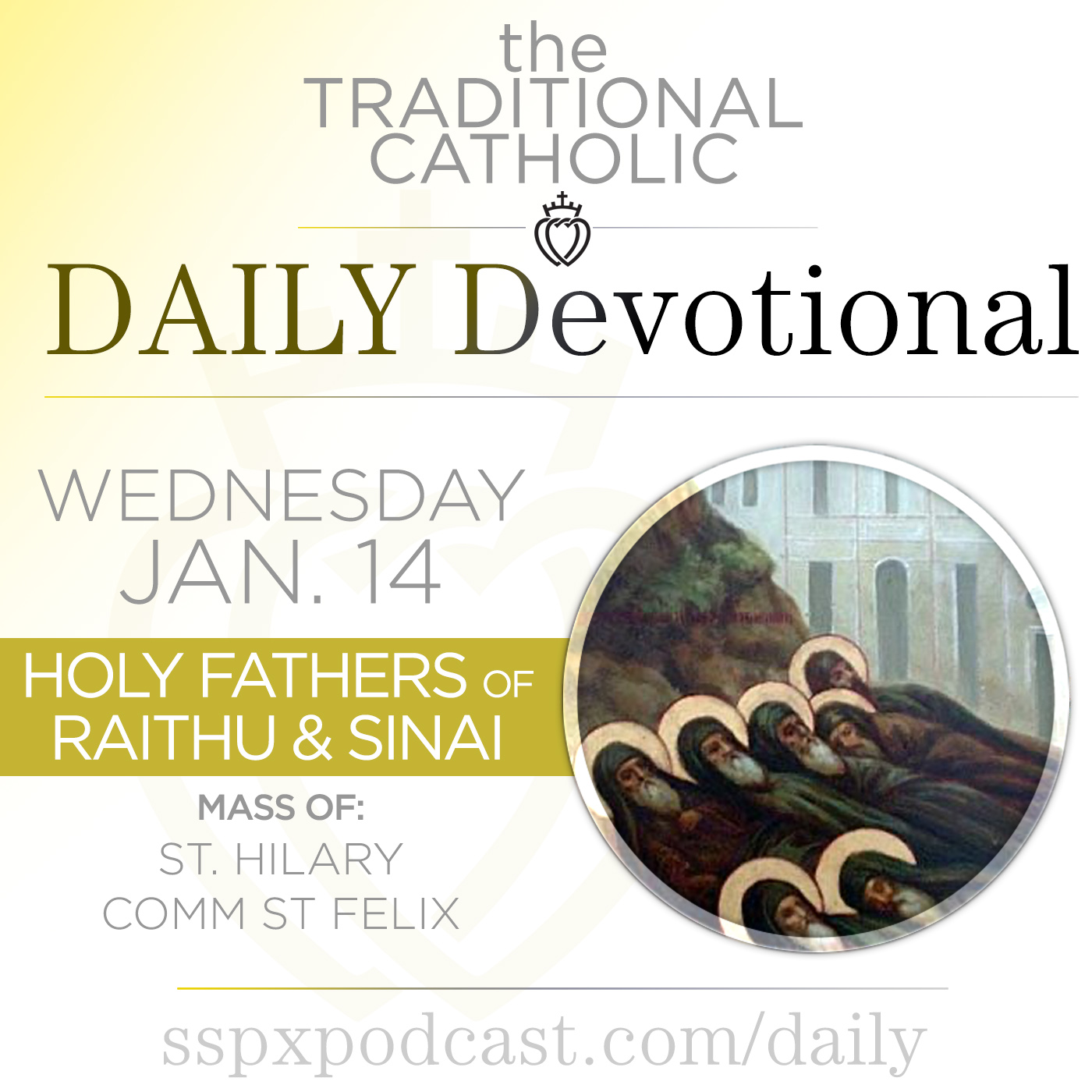
Jan 14 – S Hilary / Fathers of Raíthu & Sinai
Traditional Catholic Daily Devotional · SSPX US District, Angelus Press
Audio is streamed directly from the publisher (episodes.captivate.fm) as published in their RSS feed. Play Podcasts does not host this file. Rights-holders can request removal through the copyright & takedown page.
Show Notes
It’s the Feast of St Hilary, 3rd Class, with the color of White. In this episode: the meditation: “The Sunshine of the Home”, today’s news from the Church: “Cardinal Zen Received in a Private Audience by the Pope”, a preview of the Sermon: “The One Thing Necessary for Families”, and today’s thought from the Archbishop.
Have feedback or questions about the DD or our other shows? [email protected]Sources Used Today:
- “The Sunshine of the Home” – From Epiphany to Lent
- “Cardinal Zen Received in a Private Audience by the Pope” (FSSPX.news)
- “The One Thing Necessary for Families” (SSPX Sermons)
- The Spiritual Life – Archbishop Lefebvre (Angelus Press)
The Holy Monks of Raíthu and Mount Sinai belong to the early centuries of Christian monasticism, when the desert was both a refuge of prayer and a place of real danger. Their feast remembers not a single dramatic moment, but a pattern of fidelity lived to the end. These monks were hermits and cenobites who had withdrawn into the harsh landscapes of the Sinai Peninsula to seek God in silence, fasting, and continual prayer. They were not warriors or missionaries. They were men who believed that offering their lives to God in hiddenness was itself a powerful witness to the world.
Raíthu was a monastic settlement near the Red Sea, while Mount Sinai had already become a revered place of Christian prayer, associated with Moses and the revelation of God. By the fourth and fifth centuries, both regions were dotted with monasteries and solitary cells. Life there was austere. Food was scarce, water limited, and isolation intense. Yet these monks remained, convinced that the desert stripped away illusion and made room for truth. They prayed the psalms, copied Scripture, welcomed pilgrims, and lived under simple rules shaped by obedience and humility.
Their martyrdom came during raids by nomadic tribes who moved through the region. Ancient sources describe sudden attacks in which monks were slaughtered without resistance. Some were killed in their cells, others while gathered for prayer. They did not flee, arm themselves, or bargain for safety. Their witness was not defiance, but surrender. They chose to remain where God had placed them, accepting death rather than abandoning their vocation. In this way, their lives echoed the earliest martyrs of the Roman persecutions, though their deaths took place far from cities and crowds.
The Church preserved their memory because these monks embodied a truth easy to forget. Martyrdom is not always public. Sometimes it unfolds in fidelity maintained when escape is possible but conscience forbids it. Their deaths sanctified the desert places where they lived, confirming that even the most hidden lives are seen by God. Writers such as Saint Nilus and later monastic historians recorded their witness to encourage monks facing fear, instability, or discouragement.
Historically, their feast was kept especially in Eastern monastic communities. It served as a reminder that the monastic vocation is not an escape from the Cross, but a way of embracing it. The monks of Sinai and Raíthu were honored as patrons of perseverance, silence, and fidelity unto death.
Holy Monks of Raíthu and Mount Sinai, who gave your lives in hidden fidelity, pray for us.
- - - - - -Please Support this Apostolate with 1-time or Monthly Donation >>
- - - - - -Explore more:
- Subscribe to the email version of this Devotional- it's a perfect companion!
- Subscribe to this Podcastto receive this and all our audio episodes
- Subscribe to the SSPX YouTube channelfor video versions of our podcast series and Sermons
- FSSPX News Website:https://fsspx.news
- Visit the US District website:https://sspx.org/