
Top of the Morning
845 episodes — Page 4 of 17

Flight 171: The Fatal Switch | China’s 600 kmph Train | Trump’s Ultimatum To Putin | Jaishankar in Beijing
Welcome to Top of the Morning by Mint.. I’m Nelson John and here are today’s top stories. Air India Crash Sparks Urgent Jet Checks After the tragic crash of Air India Flight 171 that claimed 260 lives, India’s aviation watchdog DGCA has ordered urgent inspections of fuel switch locking systems on all Boeing 737 and 787 aircraft in the country. A preliminary probe revealed that fuel supply to both engines was cut off within a second after takeoff, with cockpit recordings capturing confusion among the pilots. The incident has cast a spotlight on a 2018 FAA advisory that was not acted upon by Air India as it was non-mandatory. Over 150 aircraft are now being inspected, with DGCA setting a July 21 deadline. The crash has reignited debate on long-ignored safety warnings in Indian aviation. Jaishankar to China: Peace First, Progress Next In his first visit to China since the 2020 Galwan clash, External Affairs Minister S. Jaishankar told his Chinese counterpart Wang Yi that resolving border tensions is key to rebuilding trust. “Differences must not become disputes,” he said, urging both nations to maintain momentum in de-escalation and avoid restrictive trade practices—an indirect reference to China’s export curbs on critical minerals. The talks follow the October 2024 Modi-Xi meeting in Kazan and come ahead of the Shanghai Cooperation Organisation conclave. Jaishankar underlined that stable India-China ties are vital for global stability, calling for mutual respect and far-sighted diplomacy. MRP Reform on the Cards: No More Fake Discounts? Why does a product tagged ₹5,000 regularly sell at ₹2,500? The government wants to know. The Centre is considering a major revamp of the MRP (Maximum Retail Price) system, with plans to link prices to actual production and marketing costs. The aim is to prevent “price illusions” and deceptive discounts. A recent meeting led by the Consumer Affairs Department explored guidelines that could ensure more transparency in retail pricing. While officials insist it’s not about price control, industry players warn that cost-plus pricing may hurt flexibility and product variety. It’s early days yet—but the move could change how India shops. Trump’s 50-Day Threat to Russia Donald Trump has issued a 50-day deadline to Russia: broker peace with Ukraine or face 100% tariffs and secondary sanctions on oil buyers. In a high-stakes policy shift, the former president said countries purchasing Russian oil—including China and India—could also face penalties. The announcement was made during his meeting with NATO Secretary General and caused a brief rally in Russian markets, as investors welcomed the grace period. Trump also revealed a new U.S. weapons package for Ukraine, with NATO nations footing the bill. With the ceasefire deadline looming, global eyes are now on Moscow—and its oil partners. Maglev Mania: China’s 600 kmph Train In just seven seconds, it rockets to 600 kmph. China’s latest Maglev train is faster than a plane, covering the Beijing-Shanghai 1,200 km route in just 150 minutes. Unveiled at the 17th Modern Railways Expo, the train levitates using magnetic fields to eliminate friction—offering a silent, ultra-fast ride. A vacuum-tube test in Hubei Province clocked the train at 404 mph in under 7 seconds. Built by state-run CRRC, it boasts a futuristic interior and aerodynamic design. The full high-speed track is expected to be completed by the end of 2025. China isn’t just advancing rail tech—it’s reimagining time. Learn more about your ad choices. Visit megaphone.fm/adchoices

Plane Crash At UK Airport | Dividend Week Ahead | VIP Promoters Sell 32% Stake | ₹500 Note Ban Rumour Squashed
Welcome to Top of the Morning by Mint.. I’m Nelson John and here are today’s top stories.Fireball Grounds Flights at Southend Airport A small aircraft crash sparked chaos at London Southend Airport on Sunday, halting all flight operations. Eyewitnesses captured a dramatic fireball and thick smoke, with unconfirmed reports pointing to a Beech B200 Super King Air. Authorities are investigating, but details remain scarce. Essex Police confirmed the 12-metre aircraft went down around 4 p.m., prompting evacuations of nearby golf and rugby clubs. Emergency crews, including four ambulances and air rescue teams, remain on high alert. The airport, 35 miles from London, is closed until further notice. It was a tough Friday for Indian markets. TCS’s weak Q1 results and fresh tariff threats from Donald Trump against Mexico and the EU sent shockwaves through Dalal Street. The Sensex fell 690 points, and the Nifty slipped 205, both ending at weekly lows. Ajit Mishra of Religare says, “Volatility is here to stay.” Still, Bajaj Broking believes the dip may be temporary, expecting a bounce if Nifty holds above 24,900. Also in the mix: FPIs pulled out over ₹5,000 crore, oil prices surged, and over 50 Q1 earnings are due this week. That viral WhatsApp forward claiming ₹500 notes will disappear from ATMs by September 2025? Totally false. The PIB Fact Check team debunked the claim, saying RBI has issued no such order. ₹500 notes remain legal tender. The misleading message also claimed 90% of ATMs would stop dispensing the denomination by March 2026—again, untrue. On a real currency note, the RBI will soon release new ₹20 notes signed by new Governor Sanjay Malhotra. Old ₹20 notes remain valid. Big change at VIP Industries. Promoters Dilip Piramal and family have sold 32% stake to a group led by Multiples PE and investor Mithun Sancheti, handing over control of the ₹6,400-crore company. The deal—reportedly worth ₹1,764 crore—was struck at a 15% discount to market price and triggers an open offer. VIP, which commands 44% of India’s organized luggage market, faces rising heat from startups like Mokobara and Nasher Miles. This could mark a fresh direction for a legacy brand known for Skybags, Carlton, and more. It’s a dividend-heavy week ahead! Market leaders like TCS, Bharti Airtel, Kotak Bank, Dabur, and IDBI Bank will trade ex-dividend starting Monday, July 14. Over 50 companies, including Bajaj Electricals, Blue Star, Cummins, and Happiest Minds, are on the list. Some are also announcing bonus or rights issues, creating opportunities for dividend-focused investors. If you’re chasing payouts, timing is key—own the shares before their ex-date to be eligible. TCS Miss, Trump Tariffs Rattle MarketsFake ₹500 Note Ban Claim BustedVIP Industries Gets a New CrewDividend Week: 50+ Stocks Go Ex-Dividend Learn more about your ad choices. Visit megaphone.fm/adchoices

Nipah Scare Returns | Inside Vedanta’s $8B Red Flag | India’s $700M Cancer Bet | F-35 Set to Fly Home
Welcome to Top of the Morning by Mint.. I’m Nelson John and here are today’s top stories.Jet-Lagged in Kerala, may finally leave for home Jet-Lagged in Kerala, may finally leave for home A $115 million British F-35B stealth jet has been grounded at Thiruvananthapuram airport since June 14 after bad weather forced it to divert from the HMS Prince of Wales. While engineers work on repairs, the jet has turned into a social media sensation. Kerala Tourism joined the fun with a viral post: “Kerala is such an amazing place, I don’t want to leave.” Cartoons have popped up showing the jet enjoying chai and snacks under palm trees. The UK Defence Ministry has dismissed rumors about dismantling and flying it back via cargo. The aircraft is expected to take off again as early as next week. Nipah Returns: Kerala on Guard Kerala is back on high alert after two confirmed cases of the deadly Nipah virus—one fatal. An 18-year-old girl from Malappuram died, while a 38-year-old woman from Palakkad is undergoing treatment. Nearly 500 people are on the contact list, with 29 in the highest-risk category. Despite this, no new cases have been reported, and containment zones in Malappuram have been lifted. A central health team is on the ground coordinating efforts. Nipah is a zoonotic virus with no vaccine, but Kerala’s public health system has managed past outbreaks with early detection and isolation. Vedanta Called a ‘Parasite’ in Explosive Report In a scathing 87-page report, US-based Viceroy Research accused Vedanta Resources Ltd (VRL) of draining its Indian arm, Vedanta Ltd (VEDL), through aggressive dividend extraction, shady internal loans, and dubious brand fees. The report calls VRL a “parasite” with no meaningful operations of its own, relying on the Mumbai-listed company to survive. It highlights over $8 billion in dividends paid by VEDL despite falling cash flows, unexplained interest costs, and $1 billion in suspect loans. Viceroy also flagged flashy project announcements with little follow-through, a revolving door of senior execs, and 107 legal disclosures since 2022—far more than peers like Tata Steel. The takeaway? A pattern of poor governance and financial engineering. Tax Relief for Green Investors The Indian Renewable Energy Development Agency (IREDA) just received a big push from the finance ministry. Its bonds are now classified as ‘long-term specified assets’ under Section 54EC of the Income Tax Act. Translation: investors can save capital gains tax by investing up to ₹50 lakh annually in these bonds. The proceeds will be used exclusively for revenue-generating renewable energy projects. IREDA chairman Pradip Kumar Das hailed the move as a “pivotal moment” for green finance. The company posted a strong Q4 profit rise but saw a dip in Q1 earnings. Nonetheless, its stock ended 2.26% higher. Glenmark’s $700 Million Global Leap Glenmark Pharmaceuticals has struck gold with the biggest outlicensing deal in Indian pharma history. Its US-based unit, Ichnos Glenmark Innovation (IGI), has licensed a breakthrough blood cancer drug to AbbVie for $700 million upfront, with total potential payouts of $1.93 billion. The drug, ISB 2001, is a trispecific antibody targeting multiple myeloma—an aggressive blood cancer that resists conventional treatments. The therapy is still in early trials but has already received orphan and fast track designations from the FDA. Glenmark will retain rights in India and emerging markets, while AbbVie takes it global. “This puts India on the world map,” said Glenmark MD Glenn Saldanha. Learn more about your ad choices. Visit megaphone.fm/adchoices
Vedanta Exposed? | Brazil’s 50% Tariff Blow | $250 US Visa Fee | 200% Pharma Tariff?
Welcome to Top of the Morning by Mint.. I’m Nelson John and here are today’s top stories. Trump Hits Brazil With 50% Tariff In a fiery escalation, U.S. President Donald Trump announced a 50% tariff on all Brazilian imports starting August 1. The move follows a diplomatic spat with Brazil’s President Lula da Silva, who called Trump an “unwanted emperor.” Trump fired back with a sharply worded letter defending ex-President Jair Bolsonaro, calling his trial “a witch hunt” and accusing Brazil of censorship and unfair trade. “Brazil has treated Bolsonaro disgracefully,” Trump wrote, adding that the tariffs are just the beginning. A Section 301 investigation into Brazil’s digital trade practices is also underway. Trump hinted at possible revisions if Brazil reforms, but warned of further hikes otherwise. #USBrazilTensions #TrumpTariffs #Geopolitics #JairBolsonaro #TradeWar Trump Threatens 200% Pharma Tariff, India Alarmed Trump is now eyeing a 200% tariff on pharmaceutical imports, a move that could hit India’s $30 billion pharma exports hard. The threat follows a Section 232 probe launched in April into whether pharma imports pose a national security risk. The U.S. accounts for 31% of Indian pharma exports and sources nearly 40% of its generics from India. Indian manufacturers warn this could worsen drug shortages in the U.S. and disrupt patient care. “Adding tariffs will hurt patients and delay our investments in the U.S.,” said Kathleen Jaeger of the Indian Pharmaceutical Alliance. The final decision is expected soon, and Indian pharma companies are already weighing exit strategies. #PharmaTariffs #IndianPharma #GenericDrugs #TrumpTrade #DrugShortage New US Visa Fee Raises Travel Costs Planning a U.S. trip? Brace for a higher bill. Under Trump’s “One Big Beautiful Bill Act,” a new $250 Visa Integrity Fee is in effect for most non-immigrant visas including B1/B2 (tourist/business), F and M (student), H-1B (work), and J (exchange). The fee, described as a refundable “good behavior bond”, is meant to enforce compliance with visa terms—no overstaying or unauthorized work. Starting in 2026, the fee will rise annually with inflation. For Indian travelers, it means the cost of a U.S. tourist visa jumps from $185 to $472 (~₹40,500). Refunds are rare and only apply to those who strictly follow the rules. #USVisaFee #ImmigrationPolicy #H1B #TravelCosts #VisaNews Vedanta Under Fire: “Ponzi Scheme” Allegation Viceroy Research, the short-seller that exposed Wirecard, is now targeting Anil Agarwal’s Vedanta Resources. In a damning report, Viceroy labeled the Indian conglomerate a “Ponzi scheme,” citing mismanagement and unsustainable debt. Vedanta has denied the charges, calling them “malicious and baseless.” But co-founder Fraser Perring warned more reports are coming. Viceroy, known for its multi-report takedowns, has a track record of triggering steep stock declines—80% of its targets have suffered. Perring also disclosed that he and his team shorted Vedanta bonds in April. With more revelations likely, investor anxiety is growing. #Vedanta #ViceroyResearch #ShortSelling #FraserPerring #MarketWatch India Scrambles After China Cuts Fertiliser Exports Commerce Minister Piyush Goyal has warned of the risks of overdependence on China for fertiliser supplies, following Beijing’s export curbs on Di-ammonium phosphate (DAP)—India’s second-most used fertiliser. India imported over 2.5 million tonnes of DAP in FY25, much of it from China. The restrictions have spiked global prices and sparked fears of shortages during the kharif sowing season. Goyal called for diversified sourcing, domestic production boosts, and long-term mineral partnerships. He also projected India’s agri-exports could grow from ₹4.5 trillion to ₹20 trillion with better processing and branding. But the short-term focus remains: ensuring farmers have what they need to plant. #FertiliserCrisis #ChinaCurbs #PiyushGoyal #AgriExports #DAPShortage Learn more about your ad choices. Visit megaphone.fm/adchoices

Trump Targets BRICS | Another Medal for Modi | India’s Warship Power Play | Apple’s New COO: Sabih Khan
Welcome to Top of the Morning by Mint.. I’m Nelson John and here are today’s top stories. “We Want a Deal, Not a Steal” — India Holds Firm on Trade India and the US have pushed their trade deal deadline from July 9 to mid-July, even as President Trump enforces steep retaliatory tariffs on 14 other nations. India, however, isn’t on that list yet. The deal is awaiting Trump’s final sign-off, but Indian negotiators are in no rush. “Vietnam signed too quickly—we’re drawing red lines,” said a senior official, referring to contentious issues like agriculture, dairy, GM seeds, and digital trade. India currently faces a 26% tariff, and with Trump’s August 1 tariff trigger looming, the stakes are high. Trade experts warn these deals reflect pressure, not parity. Apple’s New Ops Boss is India-Born Sabih Khan After nearly 30 years behind the scenes, Apple veteran Sabih Khan has been named Chief Operating Officer, taking over from Jeff Williams. Born in Moradabad, Khan moved from Singapore to the US, earning degrees in economics and mechanical engineering. Joining Apple in 1995, he’s been instrumental in shaping its global supply chain, driving sustainability, and expanding US manufacturing. CEO Tim Cook praised Khan’s values-driven leadership, calling him “a brilliant strategist” and “central architect of Apple’s supply chain.” Khan officially steps into the role later this month. India’s Warship Surge to Counter China India is arming up at sea. Over the next year, the Navy will induct six homegrown stealth frigates—Udaygiri, Taragiri, Mahendragiri, Himgiri, Dunagiri, and Vindhyagiri—under Project 17A. These 6,670-tonne vessels, with 75% indigenous content, are armed with BrahMos missiles and cutting-edge tech. The ₹45,000-crore project marks a significant upgrade over earlier Shivalik-class ships. INS Udaygiri has already been delivered, and the rest will follow by August 2026. PM Modi, at a rare tri-commissioning earlier this year, called it a step toward a self-reliant Navy. By 2047, the Navy aims to be fully ‘atmanirbhar’ with 60 warships under construction. Modi Bags Brazil’s Top Civilian Honour In Brazil, PM Modi was awarded the Grand Collar of the National Order of the Southern Cross—the country’s highest civilian honour—for deepening India-Brazil ties and advancing global cooperation. “This is a moment of immense pride for 140 crore Indians,” Modi said, calling President Lula the “architect” of the strategic partnership. This is Modi’s 26th international award since 2014. Just days earlier, he received Trinidad and Tobago’s top honour—the Order of the Republic—making him the first foreign leader to earn it. Trump Targets BRICS with 10% Tariff Threat Donald Trump has launched a fresh broadside against BRICS. Calling the bloc an attempt to “destroy the dollar,” Trump warned that all BRICS nations—including India—will face a 10% tariff if he returns to office. “If they want to play games, I can play too,” he said. Trump claimed BRICS is not a “serious threat,” but accused it of trying to dethrone the dollar as the world’s standard. He slammed President Biden’s handling of the dollar’s global status, saying losing it would be like “losing a world war.” Trump added, “The dollar is king. We’re going to keep it that way.” Learn more about your ad choices. Visit megaphone.fm/adchoices
SEBI: 91% Traders Lost Big | Modi’s Wish Sparks China Rage | Wednesday Showdown: Bharat Bandh
Welcome to Top of the Morning by Mint.. I’m Nelson John and here are today’s top stories. 25 Crore Workers Strike: Bharat Bandh Takes Centre Stage India is witnessing one of its biggest labour uprisings. On Wednesday, over 25 crore workers across banking, insurance, coal, postal, and transport sectors are expected to join a nationwide strike—Bharat Bandh—led by 10 central trade unions. The unions are protesting what they call the Modi government’s “anti-worker, anti-farmer, pro-corporate” policies. The flashpoint? The four new labour codes, which unions say erode workers’ rights, extend working hours, weaken collective bargaining, and decriminalize violations by employers. Farmers’ unions, including the Samyukta Kisan Morcha, are also backing the strike. “This isn’t just about wages,” said Harbhajan Singh Sidhu of Hind Mazdoor Sabha. “It’s a fight for the soul of India’s workforce.” China Fumes Over Modi’s Dalai Lama Wish A SEBI study has revealed a brutal truth—91% of retail traders in equity derivatives lost money in FY2025, with net losses ballooning to ₹1.05 lakh crore, up 41% from the previous year. Retail participation in F&O also dropped 20% year-on-year, reflecting rising disillusionment. Despite some pullback in volumes, India still sees intense activity in index options. The data comes as SEBI tightens its oversight of the derivatives market, with new risk-monitoring and transparency norms introduced this year. “The house still wins,” the study suggests, “and most traders are paying—not playing—the market.” Trump Tariff Tsunami Hits Asia—India Spared, For Now China has issued a formal protest to India after PM Narendra Modi wished the Dalai Lama on his 90th birthday and Union ministers attended celebrations in Dharamshala. Beijing labelled the Tibetan leader a “separatist” and accused India of violating past commitments on Tibet, which it refers to as “Xizang.” Chinese officials also reignited the reincarnation debate, asserting that the centuries-old process is under Chinese jurisdiction—not the Dalai Lama’s. India maintained that it doesn’t comment on religious matters and supports freedom of belief. The Dalai Lama, meanwhile, declared his reincarnation will be decided outside China, reinforcing the deep spiritual-political divide between the neighbours. Trump Nominated for Nobel After Iran Strikes President Donald Trump has announced steep new tariffs—up to 40%—on imports from 15 countries, including key Asian economies like Thailand, Cambodia, Indonesia, and South Korea. But India is notably exempt, amid pending talks on a bilateral trade agreement. Trump says the move is part of his Reciprocal Tariff Policy to counter “unfair trade barriers.” Laos and Myanmar face the steepest duties (40%), while Japan and South Korea are hit with 25%. India’s absence from the list gives it a temporary export edge in sectors like textiles, toys, and electronics. “Indian products may gain a pricing edge,” said FIEO’s Ajay Sahai. But with a July 9 deadline for the tariff pause and the trade deal still unsigned, India’s free pass may not last long. In a high-stakes moment of international optics, Israeli PM Benjamin Netanyahu nominated Donald Trump for the Nobel Peace Prize—just two weeks after the U.S. bombed Iranian nuclear sites. Netanyahu called it a “historic victory” and praised Trump’s Middle East strategy. Trump, meanwhile, revealed Iran has approached the U.S. for talks and compared the bombings to the atomic strikes on Japan in World War II. Trump also claimed Hamas is now seeking a ceasefire in Gaza and floated the idea of Palestinian relocation. He sidestepped a two-state solution question, deferring to Netanyahu, who said peace is possible only with Palestinian neighbours who “don’t want to destroy Israel.” With Assad gone in Syria, Netanyahu believes new alliances can be forged in the region. Peace talk, power plays, and posturing—it’s diplomacy, Trump-style. Learn more about your ad choices. Visit megaphone.fm/adchoices

Lifetime UAE Visa for ₹23L | Modi in Rio | Startup Burnout Debate
Welcome to Top of the Morning by Mint.. I’m Nelson John and here are today’s top stories. Markets on Edge: Five Triggers to Watch India’s stock markets cooled off last week, snapping a two-week rally. Both the Sensex and Nifty 50 fell 0.7%, amid global trade tension and FPI outflows (₹5,773 crore in July so far). Mid and small caps stayed resilient. What’s Next? Five key signals will shape this week: India-US Trade Deal: With the July 9 deadline looming and Commerce Minister Piyush Goyal standing firm, uncertainty lingers. Q1 Earnings Kick Off: TCS and Tata Elxsi report July 10. Monsoon Progress: Above-normal rains = boost for kharif sowing. FPI Flows: Still in withdrawal mode, eyes on earnings and trade talks. US Fed Minutes: Could hint at when rate cuts might come. Modi in Rio: Trade, Terror & Teamwork At the BRICS Summit in Brazil, PM Modi met Cuban President Miguel Díaz-Canel to push ties in Ayurveda, biotech, pharma, and digital payments. The leaders agreed on strengthening cooperation on global issues like pandemics and climate change. Modi also took a hard line on terror, calling for sanctions after the Pahalgam attack. “Backing terrorists for political gain should never be acceptable,” he said. UAE’s Golden Gateway for Indians A lifetime UAE Golden Visa is now within reach for Indians—without needing to buy property. What’s new? Nomination-based entry. One-time fee: AED 1,00,000 (~₹23.3 lakh). No Dubai visit needed for pre-approval. Includes family, business, and job rights. Launched under UAE’s CEPA strategy, this pilot includes India and Bangladesh first, with China and others to follow. Applicants will undergo intense vetting—criminal checks, social media scrutiny, and potential economic value to the UAE. Yes Bank CEO Search Paused Amid Japan Deal Yes Bank has paused its CEO search as it awaits RBI’s green light on a ₹13,482 crore investment from Japan’s SMBC Group, which plans to acquire a 20% stake—the largest cross-border banking deal in India. The board felt it prudent to wait for SMBC’s input before appointing a new chief. Current CEO Prashant Kumar has been given a six-month extension, and the search firm has been told to stand down. Fitch calls the SMBC deal a potential game-changer for foreign investment in Indian banks—if RBI opens the door. Bengaluru Startup’s 12-Hour Days Spark Debate Work from 10 to 10. Six days a week. Sometimes Sundays too. That’s the reality at mobile gaming startup Matiks, where founder Mohan Kumar says it’s not a job, it’s a mission. His post on X set off a firestorm—some admired the grind, others slammed it as burnout in disguise. Critics questioned equity sharing, mental health, and the ethics of glorifying extreme hours. Kumar insists no one is forced. “We’re not here for paychecks—we’re chasing a dream,” he said, calling his all-under-25 team co-builders, not employees. Beds in the office, dinners at desks—is this startup grit or toxic hustle? What do you think? Driven dreamers or burnout in disguise? Learn more about your ad choices. Visit megaphone.fm/adchoices

Russia Recognizes the Taliban | Markets Calm, VIX on the Edge | SBI’s 787-District Ambition
Welcome to Top of the Morning by Mint.. I’m Nelson John and here are today’s top stories. “30 Seconds to Doomsday”: Pakistan’s Nuclear Scare In a startling disclosure, Rana Sanaullah, aide to Pakistan PM Shehbaz Sharif, revealed that during Operation Sindoor, Pakistan had just 30–45 seconds to assess whether an incoming Indian BrahMos missile was nuclear-armed. The missile had struck Pakistan’s Nur Khan airbase following a deadly terror attack in Pahalgam that killed 26 civilians. India’s swift tri-service retaliation targeted JeM and LeT camps in Pakistan and PoK. The near-crisis, which ended with Pakistan requesting a ceasefire, underscores how close the region came to nuclear conflict. Sanaullah also questioned former U.S. President Donald Trump’s role in the standoff, hinting at vague international mediation. The episode highlights the razor-thin margins on which Indo-Pak ties rest. 2. Markets Calm, But Tariff Tempest Ahead? With the Nifty 50 up 4% this month and India’s VIX sliding to 12.44, investor nerves seem soothed—for now. But volatility could return swiftly as Trump’s 90-day tariff pause ends on July 9. Shrikant Chouhan of Kotak Securities warns the VIX could spike to 19–20 if tariffs return. Globally, too, fear gauges have cooled—the Cboe VIX has dropped from 51 to under 17. While over 50 IPOs, including HDB Financial’s ₹12,500 crore listing, are riding this wave of calm, events like TCS’s July 10 earnings and the FOMC meet on July 29-30 could shake things up again. Russia has become the first country to officially recognize the Taliban regime in Afghanistan, ending nearly four years of diplomatic isolation for the group. In Kabul, Russian Ambassador Dmitry Zhirnov handed over formal recognition papers to Taliban foreign minister Amir Khan Muttaqi, who called it a “courageous step.” 3. Russia Recognizes Taliban Government Russia’s move follows its decision in April to remove the Taliban from its terror list, and it now views the group as an ally against ISIS-K. Economic motives also drive this pivot—Russia sees Afghanistan as a transit hub for energy routes into Southeast Asia. Western nations remain cautious. The U.S. condemned the move as dangerous legitimization, and others like Germany, France, and Britain continue to demand progress on women’s rights before engaging further. The Taliban, now backed by Russia, is eyeing a UN seat—but that path remains fraught. 4. Tata’s Grocery Ambitions Get Serious Noel Tata believes Star—Trent Ltd’s grocery venture—could soon outshine fashion brands Zudio and Westside. Why? “The food market is just so much bigger than clothing,” he said at Trent’s AGM. Led by Neville Tata, Star posted a record revenue of ₹8,854 crore in FY25, growing 25% YoY, now contributing over 15% of Trent’s revenue. Despite past losses of ₹1,000 crore, the group is investing ₹2,000 crore this year alone—nearly 3x the total invested in the past two decades. The secret sauce? Private labels—72% of Q4 sales came from in-house brands. But challenges remain, including competition from Blinkit, Zepto, and Instamart. For now, the Tatas are betting big on your grocery basket. 5. SBI’s Mission: Lead Every District As it celebrates 70 years, State Bank of India has a bold new target—become the market leader in all 787 Indian districts. Currently, it holds 22.5% in deposits and 19.3% in advances. Chairman C.S. Setty outlined a three-pronged strategy: defend dominance in strong markets, expand aggressively in metros, and close “white spaces” where SBI has no presence. Specialized branches will be rolled out in areas with deposit strength but low loan penetration. SBI is also pursuing strategic tie-ups with fintech, agrotech, and digital platforms while rolling out a massive 104-zone outreach to align its workforce. The message is clear: from a 1955 legacy to a digital-first future, SBI wants to own the next decade of Indian banking. Learn more about your ad choices. Visit megaphone.fm/adchoices

Mid-Air Scare on SpiceJet | Nykaa Backers Cash Out | China’s Fertiliser Curbs Hit India | Microsoft Job Cuts
Welcome to Top of the Morning by Mint.. I’m Nelson John and here are today’s top stories. SpiceJet Scare Mid-Air A SpiceJet Goa-to-Pune flight sparked safety concerns after an interior window frame came loose mid-air. A passenger posted a video of the dislodged panel on social media, questioning the aircraft’s airworthiness. SpiceJet clarified it was a cosmetic issue, not impacting cabin pressure or safety. The aircraft, a Bombardier Q400, continued its journey to Jaipur after landing in Pune. However, the incident has reignited scrutiny over SpiceJet’s maintenance standards, especially with visuals now circulating online. The DGCA has yet to comment. China’s Fertiliser Curbs Hit India China’s clampdown on fertiliser exports is squeezing global supplies—and India’s feeling it hard. Imports of DAP, a key crop nutrient, have slowed significantly just as farmers begin sowing summer crops. Prices have shot up from $630 to over $800 per tonne, with importers now leaning on countries like Jordan. While government reports claim “adequate” stocks, June levels were 42% lower than last year. Farmers are shifting to alternative mixes, but the pressure on food security is real—and growing. Microsoft’s Biggest Layoff Since 2023 Microsoft is cutting over 9,100 jobs, about 4% of its workforce, in its biggest layoff round in two years. This follows 6,000 job cuts in May and comes as the company pushes deeper into AI and automation. The layoffs coincide with CCO Judson Althoff’s two-month sabbatical, stirring speculation of deeper restructuring. Reports also hint at upcoming cuts in the Xbox division. Microsoft’s stock slipped slightly on the news, reflecting market nerves over the tech giant’s ongoing reset. Quad Counters China’s Mineral Might In a direct challenge to China’s dominance in critical minerals, Quad members—the US, India, Japan, and Australia—have launched the Quad Critical Minerals Initiative. The goal: build secure, diversified supply chains for essential materials used in EVs, defense, and tech. “Reliance on any one country exposes us to coercion,” the group said, clearly referencing Beijing. India is stepping up with mineral talks during PM Modi’s five-nation tour and its National Critical Mineral Mission. Experts say this is a bold geopolitical signal—but execution is key. Nykaa’s Early Backers Exit Again Harindarpal and Indra Banga are selling a ₹1,200 crore stake in Nykaa via a block deal, offloading 2.1% at a 5.5% discount to the market price. The couple, among Nykaa’s earliest investors, have been steadily reducing their holdings since last year. Despite the exit, Nykaa’s stock is up nearly 29% this year. The company has delivered strong growth, tripling profits and expanding aggressively through physical stores and influencer partnerships. With plans to double its store count and boost delivery infrastructure, Nykaa’s next phase looks ambitious—even as early investors quietly bow out. Learn more about your ad choices. Visit megaphone.fm/adchoices

Trump Brokers Gaza Truce | Bike Taxis Get the Green Light—Sort Of | Paint Giants Collide | One Big Beautiful Bill Passes Senate
Welcome to Top of the Morning by Mint.. I’m Nelson John and here are today’s top stories. Paint Wars: Asian Paints Under CCI Lens India’s Competition Commission has launched a formal probe into Asian Paints over alleged abuse of market dominance. The complaint, filed by Grasim Industries—makers of Birla Opus—claims Asian Paints pressured dealers with exclusivity deals, including perks like foreign trips, to block out new players. CCI’s initial findings suggest anti-competitive behavior, prompting a 90-day investigation. With the decorative paint market heating up and Grasim eyeing ₹10,000 crore in 3 years, this could be a defining moment for how competition plays out in India’s ₹14.4 billion paint sector. Bike Taxis Cleared, But It’s a State-By-State Ride The Centre has issued fresh guidelines allowing private two-wheelers to be used for passenger services via aggregators like Rapido, Ola, and Uber. It’s a long-awaited move toward legitimizing bike taxis, which have largely operated in a legal grey zone. States can now regulate, charge fees, and enforce safety compliance—but adoption is optional. While Maharashtra is on board (for EVs only), Karnataka’s recent ban shows the battle is far from over. For Rapido, where bike rides account for half its revenue, it’s a potential game-changer—if states come onboard. Trump Pushes for Gaza Ceasefire Deal Donald Trump has claimed a breakthrough in the Gaza conflict, announcing that Israel has agreed to a 60-day ceasefire—pending Hamas’ approval. The deal, brokered with support from Qatar and Egypt, aims to stop the 20-month war that has claimed over 56,000 lives in Gaza and 1,200 in Israel. Trump, who recently mediated a separate Israel-Iran truce, urged Hamas to accept the deal, warning that “it will not get better.” The announcement comes just days before Israeli PM Netanyahu’s visit to the US, adding diplomatic weight to the offer. Trump’s Big Bill Squeaks Through Senate In a midnight drama, the US Senate passed Trump’s massive tax and spending bill—The One Big Beautiful Bill Act—thanks to a tie-breaking vote from VP JD Vance. The bill locks in permanent tax cuts from Trump’s first term, adds new breaks for seniors and tipped workers, and allocates $350 billion for border enforcement. But it slashes $1.2 trillion from Medicaid and food aid, and could balloon the deficit by $3.3 trillion. With only a narrow GOP majority in the House, the final vote—expected this week—could be Trump’s biggest domestic policy test yet. India’s ₹2 Trillion Policy Push: Jobs, Innovation & Sports The Union Cabinet has cleared three landmark initiatives: ₹1 Trillion ELI Scheme to generate 35 million jobs, targeting first-time employees and incentivizing employers up to ₹3,000 per hire. ₹1 Trillion RDI Scheme to supercharge private-sector research in strategic sectors with long-term, low-cost funding. National Sports Policy 2025, with a bold goal: get India into the Top 5 sporting nations, promote leagues, and attract global events. Bonus: Tamil Nadu also gets a ₹1,853 crore greenlight for a major highway project to boost southern connectivity. Learn more about your ad choices. Visit megaphone.fm/adchoices
RBI Rings the Alarm | Fab Wars Begin: Tata vs Tower | India-US Pact on the Horizon
Welcome to Top of the Morning by Mint.. I’m Nelson John and here are today’s top stories. 1. Tata vs Tower: The Chip Fab Face-Off India’s semiconductor revival just got serious. Tata Semiconductor and Israel’s Tower Semiconductor have been shortlisted to modernize the government-run Semi-Conductor Laboratory (SCL) in Mohali, under a ₹4,000 crore project. While it won’t chase bleeding-edge tech, the revamp will upgrade SCL’s 180nm line—crucial for defence, space, and medical tech. Production is set to triple from 500 to 1,500 wafers per month, and this upgrade could lay the groundwork for more advanced nodes like 65nm and 28nm. Tower, notably, is already a tech partner at SCL, giving it an inside track. According to IESA President Ashok Chandak, this isn’t just about chips—it’s about strategic autonomy, deep-tech R&D, and skilling India’s semiconductor workforce for the future. With India’s chip demand projected to touch $103 billion by 2030, this throwback node may be the start of a futuristic leap. 2. Reliance Defence’s Big MRO Bet Anil Ambani’s Reliance Defence is gunning for India’s ₹20,000 crore defence MRO (maintenance, repair, overhaul) market—and it’s bringing in American reinforcements. In a joint venture with US-based Coastal Mechanics Inc., the company will set up a facility in Mihan, Maharashtra to upgrade over 200 military assets, including Jaguars, MiG-29s, Apaches, and L-70 guns. The plan is to shift from buying new to extending the lifecycle of existing gear—more efficient, more economical. Analysts say this tie-up opens doors to US defence contracts and puts Reliance on the path to becoming one of India’s top three defence exporters. With exports already hitting ₹24,000 crore and the geopolitical heat rising post Operation Sindoor, MRO might just become India’s next defence growth engine. 3. RBI Flags Debt Storm Ahead The Reserve Bank of India is waving a red flag. In its June Financial Stability Report, it warns of three key risks: soaring public debt, overvalued assets, and rising geopolitical tensions. India’s public debt is set to exceed ₹196 lakh crore by March 2026. Meanwhile, NBFCs are being scrutinized for risky lending behavior. While India’s economy remains resilient—with growth and cooling inflation offering a cushion—external shocks and diverging global monetary policies could spill into emerging markets. The RBI says it’s stepping up reforms to tackle digital lending risks, curb fraud, and protect retail investors—aiming to future-proof the financial system before the next big tremor hits. 4. Trump-Modi Pact Nears the Finish Line India and the US are on the brink of sealing a major trade deal. White House press secretary Karoline Leavitt confirmed that final touches are underway, calling India a “strategic ally” and highlighting President Trump’s “very good relationship” with Prime Minister Modi. The announcement comes as EAM Jaishankar visits Washington for the QUAD meet, and just weeks before the US enforces new tariffs on Indian goods. Negotiators are aiming for an “early harvest” pact to defuse tensions and pave the way for a full-scale Free Trade Agreement by year-end. With Trump accepting Modi’s invite to the next QUAD Summit in Delhi, the Indo-US alliance may soon move from handshake to hard numbers—$500 billion in trade, to be exact. 5. Agni Goes Underground: India’s Bunker Buster Era India’s missile arsenal is getting a powerful upgrade—literally underground. DRDO is developing new Agni-5 variants designed to penetrate fortified bunkers, much like the US did in its June 22 strikes on Iranian nuclear sites. Unlike the American model, which relies on massive bombers, India’s missile-based approach offers flexibility and speed. Two versions are in development: an airburst warhead for surface targets and a bunker-buster variant with an 8-tonne payload capable of piercing up to 100 meters underground. Learn more about your ad choices. Visit megaphone.fm/adchoices

Tata Steel’s ₹1,000 Cr Tax Shock | Russia Unleashes Air Fury | Sabotage Eyed in AI Crash
Welcome to Top of the Morning by Mint.. I’m Nelson John and here are today’s top stories. Torrent’s ₹11,917 Cr Pharma Power Play India’s pharma space just witnessed a bold move. Torrent Pharmaceuticals is acquiring a 46.39% stake in JB Chemicals from KKR for ₹11,917 crore, valuing the company at ₹25,689 crore. The deal includes an open offer and a future merger. The strategy? Gain control of JB’s chronic care brands like Cilacar and Nicardia and break into the CDMO (contract development and manufacturing) market. JB’s presence in 40+ countries, and expertise in medicated lozenges, brings global heft. Torrent’s chairman Samir Mehta calls it a “long-term growth runway.” Meanwhile, KKR exits with a 5X return and a 36% IRR—making it one of India’s top private equity wins. Russia’s Most Brutal Barrage Yet In its deadliest aerial assault since the Ukraine war began, Russia launched 537 drones and missiles overnight. Ukraine shot down nearly half, but many penetrated defenses—killing at least 10 civilians and igniting major infrastructure damage, including a blaze in Lviv. A Ukrainian F-16 crashed during defense ops, killing its pilot. The strikes reached near Poland’s border, triggering NATO alerts. All this, ironically, followed Putin’s latest peace-talk proposal, which Ukraine dismissed. On the ground, Russia claimed a minor gain in Donetsk, while Ukraine controversially withdrew from the landmine ban. Analysts warn this could be the start of a summer offensive before Western F-16s arrive. Anant Ambani Joins Reliance Board with ₹20 Cr Role It’s official—Anant Ambani has stepped into executive leadership at Reliance Industries. The 29-year-old has been appointed Full-Time Director for five years, with an annual compensation package ranging from ₹10–20 crore. Perks include housing, utilities, medical, and even reimbursed travel for his wife and attendant. He’ll also receive performance-linked profit shares. This solidifies Anant’s growing role in Reliance’s energy and petrochemicals business and marks a major step in Mukesh Ambani’s well-scripted succession plan. Sabotage Angle in Air India Crash Being Probed Authorities are now investigating sabotage in the deadly Air India Dreamliner crash on June 12 in Ahmedabad. Flight AI 171 plunged seconds after takeoff, killing 241 people, including nine students and their families on the ground. Only one person survived. A “Mayday” call was issued by the pilot moments before impact. Minister Murlidhar Mohol confirmed the black boxes are being decoded in Delhi and denied reports of sending them abroad. All 33 Air India Dreamliners have since cleared safety checks. With CCTV footage under review and multiple agencies involved, the investigation is taking no chances. Tata Steel Faces ₹1,007 Cr Tax Notice Tata Steel is under the tax scanner for alleged irregularities in input tax credit (ITC) between FY2018-19 and 2022-23. The GST department has raised a ₹1,007 crore demand. Tata Steel counters that it has already paid ₹514 crore in GST and disputes the remaining ₹493 crore under review. The company called the notice baseless and is preparing to respond within the 30-day window. Financially, the company insists there’s no operational impact. Investors agree—shares closed higher at ₹161.40 and are up nearly 18% YTD. Over five years, Tata Steel has delivered a massive 388% return. Learn more about your ad choices. Visit megaphone.fm/adchoices
DGCA Flags Grim Safety Lapses | Ceasefire Sparks Market Surge | Trump Eyes Nobel for Peace Deal
Welcome to Top of the Morning by Mint.. I’m Nelson John and here are today’s top stories. Ceasefire Cheers, Markets Rally Wall Street bounced and gold slumped as President Donald Trump brokered a surprise ceasefire between Israel and Iran—bringing an end to what he called the “12-Day War.” Investors cheered the cooling conflict, triggering a selloff in safe-haven assets. On the Multi Commodity Exchange (MCX), gold futures dropped sharply by ₹2,606 per 10 grams, while global gold prices echoed the dip. But the peace proved shaky—new explosions were reported in Tehran, adding fresh uncertainty. Analysts now expect continued volatility in bullion, with technical indicators flashing a bearish outlook. Trump Nominated for Nobel Peace Prize In a bold political twist, US Congressman Buddy Carter nominated Trump for the Nobel Peace Prize for his “extraordinary and historic” efforts in ending the Israel-Iran standoff. Carter praised Trump’s “courage and clarity” in averting a broader war and halting Iran’s nuclear momentum. While the prize remains far from guaranteed, the nomination adds a headline-grabbing chapter to Trump’s presidency—and could influence the global political narrative. DGCA Flags Grim Safety Lapses India’s skies are under scrutiny. In the wake of the June 12 Air India crash, the Directorate General of Civil Aviation (DGCA) launched a nationwide audit—and found alarming lapses. From repeated aircraft defects to worn-out tyres and faded runway markings, the audit revealed deep cracks in aviation safety protocols. Ground equipment was unserviceable, simulators didn’t match actual aircraft, and obstruction data hadn’t been updated in three years—despite ongoing construction near airports. The DGCA has ordered urgent fixes within a week and vowed continuous monitoring. With air traffic surging, the need for a full-scale aviation safety overhaul is more urgent than ever. Wegovy Enters India’s Obesity Fight Novo Nordisk has officially launched Wegovy in India—a once-a-week injectable weight loss drug targeting adults battling obesity and cardiovascular risks. Priced between ₹17,345 and ₹26,050, Wegovy enters a space already heating up with Eli Lilly’s Mounjaro, launched earlier this year. Unlike diabetes drug Ozempic, Wegovy is FDA-approved specifically for weight loss. The drug mimics appetite-suppressing hormones and boosts insulin sensitivity. Novo Nordisk says it’s focusing on awareness and accessibility rather than immediate sales numbers. As India’s obesity challenge deepens, a pharma face-off is brewing—one pen injection at a time. Hindalco Buys Into High-Tech Alumina Hindalco is going deeper into advanced materials. The Aditya Birla Group’s metals major has announced a $125 million acquisition of U.S.-based AluChem Companies Inc., adding 60,000 tonnes of specialty alumina capacity. AluChem’s products power EVs, semiconductors, and precision ceramics—critical segments in a fast-changing global supply chain. This marks Hindalco’s third U.S. metals acquisition after Novelis and Aleris. MD Satish Pai says the deal is part of a long-term plan to double Hindalco’s specialty alumina output to 1 million tonnes by FY30. “As clean-tech demand rises, AluChem’s chemistry will help us lead,” he said. Learn more about your ad choices. Visit megaphone.fm/adchoices
US-India Trade: “Big Deal” Brewing? | India Snubs SCO Statement | From Bombs to Beach Resorts | Apollo’s ₹30K Cr Ambition
Welcome to Top of the Morning by Mint.. I’m Nelson John and here are today’s top stories. Kim Goes Coastal From missiles to mini-golf, North Korea’s Kim Jong Un just flipped the script. The Wonsan Kalma resort, seven years in the making, is finally open—with 54 hotels, waterparks, arcades, pubs, and even a ski extension. Ditching his usual military garb for a sharp suit, Kim attended the launch with his wife and daughter, showcasing a softer image. While domestic tourism kicks off July 1, a select group of Russians are set to test the beach vibes on July 7. This isn’t just a tourism play—it’s a carefully curated global image reset. Trump Teases ‘Very Big’ India Deal Just after shaking hands with China on a trade pact, US President Donald Trump is turning east again—this time towards India. Hinting at a “very big” trade deal, Trump said, “We’re going to open up India.” While no details were given, momentum is building. US Secretary of Commerce Howard Lutnick recently confirmed that both sides are closing in on a mutually beneficial agreement. If signed, it could redefine trade ties between the world’s two biggest democracies. Rajnath Singh Says No Deal India’s Defence Minister Rajnath Singh made headlines by refusing to sign the SCO joint statement. Why? The document failed to address cross-border terrorism. At the summit in Qingdao, Singh didn’t mince words: “There can be no double standards.” He cited the April Pahalgam terror attack, blamed on Pakistan-backed groups, and India’s military response under Operation Sindoor. The message: India is done tiptoeing around terror. Acme Solar’s Big Battery Win Acme Solar is powering up for the future. On June 26, it won NHPC’s battery storage tender in Andhra Pradesh to build a 275 MW / 550 MWh system across Kuppam and Ghani. The project includes significant viability gap funding and adds a clean spark to India’s renewable push. Acme’s stock, while only slightly up, could see brighter days ahead. With a ₹14,954 crore market cap and clean energy tailwinds, Acme is becoming a major storage player. Apollo HealthCo Eyes DMart Dreams “I want a valuation like DMart. Why not?” said Shobana Kamineni, chairperson of Apollo HealthCo. With eyes on a ₹30,000 crore business in the next 5–6 years, Apollo is blending its retail pharmacy strength with digital power via Apollo 24|7. After raising ₹2,475 crore last year and merging with Keimed, the company hit ₹9,093 crore in revenue in FY25, with three straight profitable quarters. A digital GMV of ₹3,000 crore and disciplined growth put it on track for Q4 FY26 profitability. Apollo isn’t just growing—it’s redefining healthcare retail. Learn more about your ad choices. Visit megaphone.fm/adchoices

Nvidia Tops the World | Gaza Truce Near? | India Expands Oil Reserves | India’s Return to Space
Welcome to Top of the Morning by Mint.. I’m Nelson John and here are today’s top stories. India’s Return to Space: Shukla Makes History At 12:01 PM IST on Wednesday, India reached a milestone in its space journey. Group Captain Shubhanshu Shukla became the second Indian to travel to space—and the first to reach the International Space Station. Launching aboard SpaceX’s Falcon 9 from Kennedy Space Center, Shukla’s flight symbolizes a new era of commercial space collaboration for India. His mission, Axiom-4, includes 60 scientific experiments from 31 countries, reflecting India’s expanding space ambitions. As his voice crackled over radio—“Kya kamaal ki ride thi”—cheers erupted back home. “This is not just my journey, it’s the start of India’s human space program,” Shukla said. With Gaganyaan and a homegrown space station on the horizon, India isn’t just returning to space—it’s preparing to lead. Gaza Truce ‘Very Close,’ Says Trump Fresh off brokering a ceasefire between Israel and Iran, US President Donald Trump says progress is being made on a Gaza ceasefire as well. “Gaza is very close,” he told reporters, crediting his envoy Steve Witkoff. Qatar and Egypt have intensified mediation efforts, while Hamas confirmed the talks but said no concrete proposal is on the table yet. Meanwhile, Israel remains firm on its goals: dismantle Hamas, recover hostages, and control Gaza. The war, triggered by Hamas’ October 7, 2023 attack, has led to over 56,000 Palestinian deaths. With famine worsening and diplomacy heating up, all eyes are on Trump’s next move in the Middle East. India Expands Oil Reserves Amid Global Volatility India is adding six new Strategic Petroleum Reserves (SPRs) to bolster energy security. With 85% of its crude oil imported, and threats like the Strait of Hormuz blockade looming, the government aims to raise reserve capacity to match IEA’s 90-day import standard. Current strategic reserves only cover 9.5 days. Proposed sites include Mangalore SEZ and Bikaner’s salt caverns, with Engineers India Ltd conducting feasibility studies. The goal? Build resilience against price shocks and supply disruptions, especially as demand for petrol and diesel is expected to rise for at least 15 more years. The investment is high—₹2,500 crore per million tonnes—but so is the payoff: national energy safety. FASTag ₹3,000 Pass: Relief for Commuters, Risk for Toll Operators From August 15, private vehicle owners can buy an annual ₹3,000 FASTag pass covering 200 highway trips—a game-changer for frequent drivers. Crisil Ratings estimates the pass could cut per-trip costs by 80%. But there’s a catch: a 4–8% dip in toll revenues is expected, and toll operators will need timely compensation under their agreements. Crisil says 40 rated projects can absorb short-term cash flow impacts thanks to strong liquidity and NHAI’s payment track record. Still, the move tests how India balances commuter convenience with private investor confidence in infrastructure. Nvidia Tops the World—Again Chipmaker Nvidia has officially reclaimed the title of the world’s most valuable company. Its shares surged 4.33% to $154.31, pushing its market cap to $3.77 trillion—ahead of Microsoft ($3.66T) and Apple ($3.01T). CEO Jensen Huang’s AI-focused keynote at the shareholder meeting fueled the rally, calling this “just the beginning” of the AI infrastructure boom. Loop Capital hiked Nvidia’s price target to $250, citing its leading role in what it calls the “Golden Wave” of AI. The stock is up 17% in 2025, following a 170% rise in 2024 and 240% in 2023. Despite the meteoric rise, its forward P/E remains relatively modest at 30—proof that the AI boom is feeding real earnings, not just hype. Learn more about your ad choices. Visit megaphone.fm/adchoices
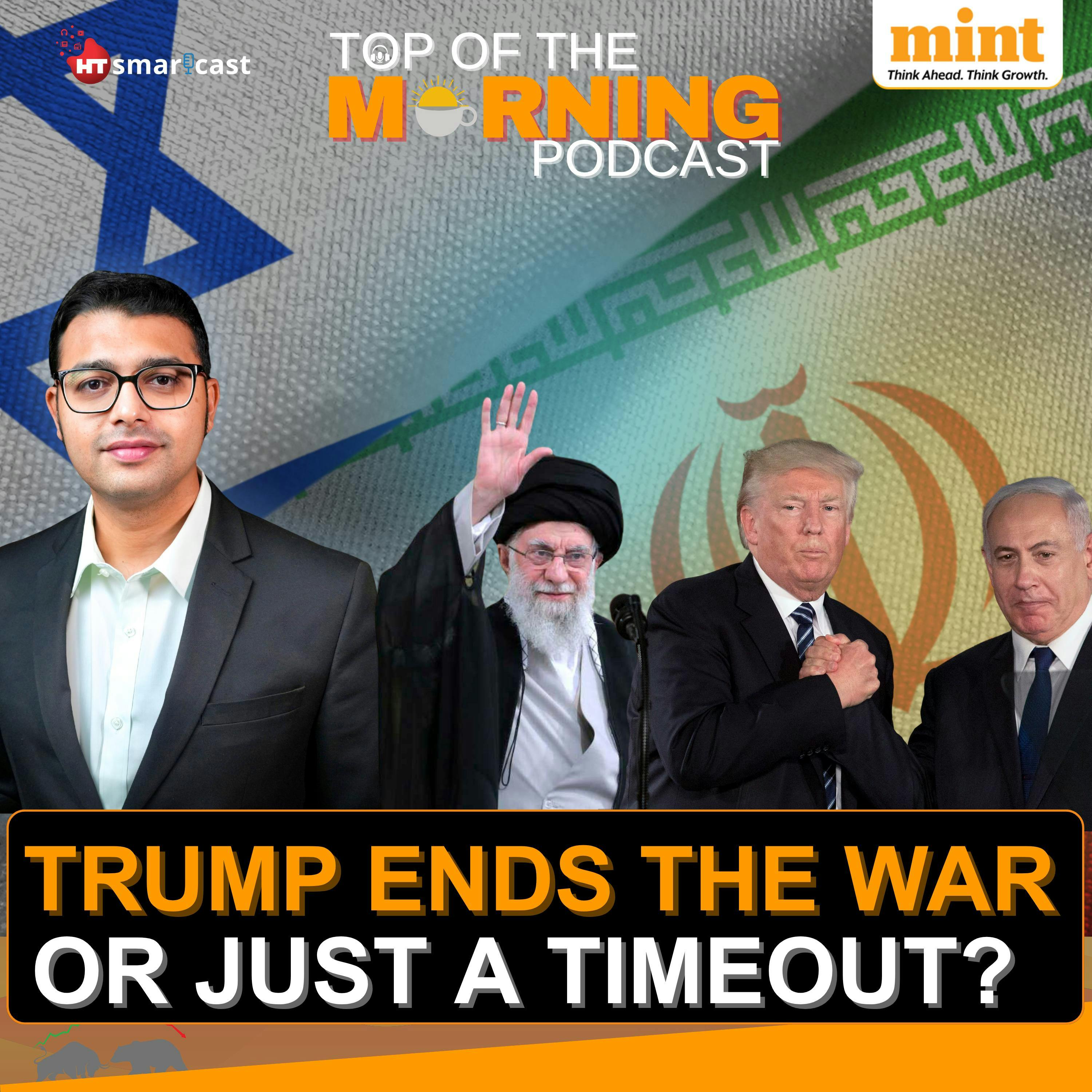
War Ends. Trump Signs Off | A ₹694 Electric Flight | Air India CEO Pay Hike | India’s Economic Surge
Welcome to Top of the Morning by Mint.. I’m Nelson John and here are today’s top stories. Trump Declares Ceasefire: “12-Day War Ends” In a dramatic twist, US President Donald Trump announced a “Complete and Total CEASEFIRE” between Israel and Iran via Truth Social, calling time on what he dubbed the “12-Day War.” The phased truce begins with Iran halting fire, followed by Israel 12 hours later, and full peace declared at the 24-hour mark. Trump credited both nations for their “Stamina, Courage, and Intelligence,” while downplaying Iran’s earlier missile strike on a US base in Qatar as a “very weak response.” With no casualties reported, analysts believe Iran’s restraint signals a desire to de-escalate—but the question remains: is this peace or just a pause? Air India’s CEO Gets ₹27 Cr—Days Before Crash Two weeks before India’s deadliest air tragedy in decades, Air India handed its CEO Campbell Wilson a 46% pay hike, raising his package to ₹27.75 crore. The board approved the raise on May 27; on June 12, an Air India flight crashed, killing over 240 people. The optics have stirred quiet outrage—even as some defend the hike, citing Air India’s 61% revenue growth and halved losses in FY24. The airline now faces regulatory inspections, shaken passenger trust, and social media backlash. Wilson’s biggest challenge? Not growth—but rebuilding public confidence. India’s Economy Hits 14-Month High India’s growth story just added a new chapter. HSBC’s Flash PMI for June surged to 61—the highest in 14 months—signalling strong expansion in both manufacturing and services. Fueled by rising demand, export orders, and tech investments, manufacturing PMI rose to 58.4, while services hit 60.7. “Hiring is up, inflation’s softening, and backlogs are building,” said HSBC’s Pranjul Bhandari. While business confidence dipped slightly, the economy’s overall momentum remains strong. Final numbers drop next month—but for now, it’s full throttle ahead. Aditya Birla Lifestyle Bets Big on Fashion Fresh off its market debut, Aditya Birla Lifestyle Brands Ltd (ABLBL) is swinging for the fences—aiming to double revenue and triple profits by FY30. Backed by a ₹300 crore annual investment plan, the company will expand to 4,500 stores and chase billion-dollar valuations for brands like Van Heusen, Allen Solly, and Peter England. More than 70% of stores already follow an asset-light, franchise-led model. But the road ahead is crowded—Reliance Retail and Tata’s Zudio are fierce competitors. Still, with India’s $2 trillion retail market on the horizon, ABLBL is betting big on fashion—and youth. Flying for ₹694: Electric Jet Makes History Beta Technologies just redefined short-haul flying. Its all-electric Alia CX300 successfully flew four passengers from East Hampton to JFK—130 km—for just ₹694 ($8). Quiet, clean, and cost-efficient, the 30-minute flight offered a near-silent ride with zero emissions. “Charging this thing cost $8,” said Beta’s CEO Kyle Clark. With a 463 km range and FAA certification expected by year-end, the CX300 is a game-changer. Beta’s also working on a vertical takeoff model for city travel. With competitors like Archer Aviation prepping for the 2028 LA Olympics, the electric air taxi race is officially airborne. Learn more about your ad choices. Visit megaphone.fm/adchoices

Trump Strikes, But Iran Outsmarts? Uranium Vanishes | Markets Hold… But for How Long? | IndiGo Mayday Scare | Strait of Hormuz on the Brink
Welcome to Top of the Morning by Mint.. I’m Nelson John and here are today’s top stories. Markets Resilient, But Oil’s the Wildcard Despite the chaos, Indian markets are holding their ground. Since the Israel-Iran conflict flared up, Nifty and Sensex have climbed 1.59%, even as Brent crude rose 2.19% to $76.57/barrel. But the calm may not last. Alok Agarwal of Alchemy Capital warns of a crude spike beyond $100/barrel — a red flag for India, which imports over 80% of its oil. Aniruddha Sarkar of Quest adds that sectors like paints, aviation, and OMCs could feel the squeeze if oil keeps climbing. However, a non-escalatory response from Iran could trigger a market rally, says IIFL’s Nirmal Jain. Strait of Hormuz: The Oil Chokepoint Iran’s top security council may close the Strait of Hormuz — a move that would threaten 20% of the world’s oil flow. Revolutionary Guards commander Esmail Kosari has confirmed it’s “on the agenda.” Since June 13, when Israel struck Iran, Brent has already surged over 10%. Maersk says its ships still sail, but they’re monitoring risk closely. Flashbacks to the 1980s “Tanker Wars” and fears of a new US naval buildup are surfacing. If Hormuz shuts down, prices could jump to $120–130 — or even $400 in a worst-case scenario. India’s Oil Strategy Shift Oil Minister Hardeep Singh Puri says India has significantly reduced its dependence on Hormuz. In June 2025, India’s Russian oil imports are expected to hit a two-year high of 2–2.2 million barrels/day — more than from Saudi or Iraq. US oil imports are also up nearly 57%. With reserves in place and alternative shipping routes via the Suez, Cape of Good Hope, and Pacific, India is positioning itself to weather supply shocks. Still, if Iran closes Hormuz, freight costs and volatility could rise fast. Trump’s Big Strike — and the Fallout Trump called Iran’s nuclear program “completely obliterated” after US strikes on Fordow, Natanz, and Isfahan. But Pentagon officials are backpedaling, confirming only “severe damage.” Satellite images show Fordow took direct hits, but not total destruction. Worse, Israeli intel reveals Iran removed 400 kg of uranium days before the attack. IAEA chief Rafael Grossi confirmed the fuel is now unaccounted for — a worrying development. The world waits for Iran’s next move. Mayday Over Bengaluru Just days after a deadly Air India crash, an IndiGo flight from Guwahati to Chennai issued a Mayday call over low fuel. The pilot aborted landing in Chennai and diverted to Bengaluru, where the plane landed safely. No injuries were reported, but the scare — coupled with the earlier Air India tragedy — has sparked renewed scrutiny over aviation safety. IndiGo has grounded both pilots. Markets Hold Steady as Oil Threat Looms Amid US-Iran Escalation Nifty’s immediate support lies at 24,850; resistance around 25,250, says SBI’s Sudeep Shah. The India VIX is down 9% since June 13, suggesting subdued volatility — for now. Experts advise staggered investments as markets remain sensitive to geopolitical headlines. Experts say India is better placed than ever to absorb shocks. “We’re in a stronger position than previous crises,” said Kenneth Andrade of Old Bridge Capital. Asian markets closed strong on Friday, signaling hope — but all eyes remain on Iran’s response. Learn more about your ad choices. Visit megaphone.fm/adchoices

Fed Hits Pause—Again | FASTag Freedom | SEBI’s Market Makeover | Want a US Student Visa? Hand Over Your Social Media
Welcome to Top of the Morning by Mint.. I’m Nelson John and here are today’s top stories. Fed Hits Pause—Again For the fourth time this year, the US Federal Reserve kept interest rates steady at 4.25%–4.5%, citing “diminished but elevated” economic uncertainty. Fed Chair Jerome Powell pointed to the lingering effects of Trump-era tariffs, noting that while uncertainty peaked in April, it hasn’t fully cleared. FASTag Freedom: ₹3K Toll Pass from Aug 15 India’s road warriors, rejoice! Starting August 15, a ₹3,000 FASTag-based annual toll pass will be available for private vehicles. It covers 200 trips or a full year—whichever comes first. The aim? Reduce travel costs, cut long waits at toll booths, and simplify payments. Announced by Transport Minister Nitin Gadkari, the pass is part of a bigger push toward seamless highway travel. The pass will be available via the Rajmarg Yatra App and NHAI’s website. It comes amid rising toll charges—up over 3% in FY25 and expected to rise further. To complement the effort, a GNSS-based tolling system is also on the way, allowing for distance-based tolling without physical toll plazas. The government will absorb any revenue shortfall to keep concessionaires whole. Trump Thanks Pakistan’s Army Chief for Restraint In an unusual diplomatic move, US President Donald Trump hosted Pakistan Army Chief General Asim Munir at the White House, thanking him for “not going into the war” with India. The lunch meeting was notable for its absence of senior civilian officials. Trump called it “a win” that two nuclear powers—India and Pakistan—chose peace. He also revealed they discussed Iran, adding, “They know Iran very well… and he agreed with me.” Back home, Pakistan’s leadership is walking a tightrope. PM Shehbaz Sharif has publicly supported Iran amid its escalating conflict with Israel, and Foreign Minister Ishaq Dar said Iran is open to talks—if Israeli strikes stop. Want a US Student Visa? Hand Over Your Social Media The US has resumed student visa processing—but there’s a catch. All applicants must now make their social media profiles public for review. Posts that appear hostile to the US, its institutions, or culture could be grounds for rejection. The State Department warns that refusing to comply may be seen as “an attempt to hide behavior.” Critics say the move chills free speech and brings back Cold War-era ideological vetting. “This turns consular officers into censors,” said Columbia’s Jameel Jaffer. With academic sessions around the corner, international students are scrambling to comply, while legal experts raise red flags over digital privacy and First Amendment concerns. SEBI’s Market Makeover: Esops, PSUs & AIFs Get a Lift SEBI is on reform overdrive. In just his second meeting as chair, Tuhin Kanta Pandey cleared a raft of changes aimed at boosting market efficiency, startup incentives, and investor participation. Founders of listed startups can now retain Esops—a game changer that aligns long-term incentives. For public sector undertakings, a new framework for voluntary delisting could fast-track strategic disinvestments. Alternative Investment Funds got more room to maneuver, with greenlights for co-investment vehicles and broader advisory services. Foreign investors in Indian sovereign debt will also benefit from simplified compliance norms. Meanwhile, the long-pending NSEL broker case may be resolved through a new settlement scheme. In short, SEBI is opening the doors wider, and smarter. Learn more about your ad choices. Visit megaphone.fm/adchoices
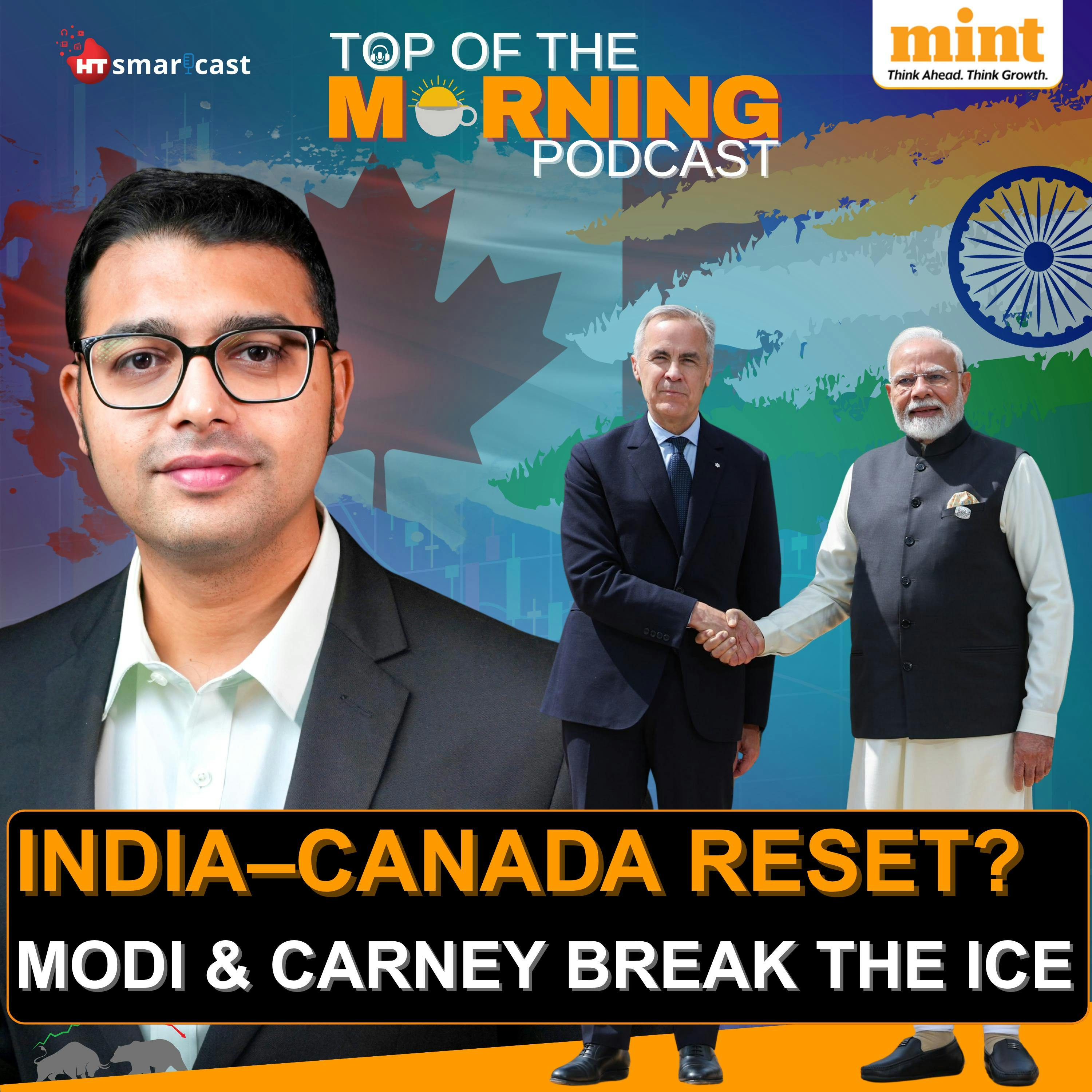
Trump Flexes Muscle in Middle East | MakeMyTrip Cuts Cuts Chinese Stake | HZL’s ₹12K Cr Metal Play
Welcome to Top of the Morning by Mint.. I’m Nelson John and here are today’s top stories.1. Trump Flexes Muscle in Middle East The Iran-Israel conflict has entered a dangerous sixth day, and the U.S. is rapidly reinforcing its military posture. President Donald Trump warned Iran that America’s “patience is wearing thin,” claiming full control of the skies over Iran—signaling potential U.S. strikes on Iran’s underground Fordow nuclear site. B-2 stealth bombers carrying GBU-57 bunker-busters remain on standby, while destroyers and carrier groups are repositioned across the Red Sea, Mediterranean, and Arabian Sea. Fighter jets and refueling tankers are active across the Middle East and Europe. U.S. forces intercepted multiple Iranian missile strikes targeting Israel, while Israel pounded oil depots near Tehran. Death tolls are rising—224 civilians in Iran and 24 in Israel. Trump has demanded Iran’s “unconditional surrender” but stopped short of targeting the Iranian leader “for now.” After years of tension, PM Modi and newly elected Canadian PM Mark Carney hit the reset button in Kananaskis, Canada, during the G7 Summit. This was their first meeting since Carney took office and follows the diplomatic fallout over the 2023 killing of separatist Hardeep Singh Nijjar. Both leaders emphasized shared values of democracy and cooperation on AI, energy, and counterterrorism. They also agreed to restore full diplomatic representation, signaling a thaw in bilateral ties. Modi called Canada an important partner and highlighted growing investments on both sides. MakeMyTrip is raising up to $3 billion to buy back shares from Chinese backer Trip.com, aiming to slash its voting power from 45.34% to below 20%. The Indian travel platform will raise funds via equity and convertible senior notes—14 million shares are on offer, possibly rising to 16.1 million. In a world increasingly wary of Chinese stakes in Indian tech, MMT’s move is both strategic and symbolic—asserting independence while positioning itself as an investor-diversified digital travel leader. Israeli data analytics startup Coralogix is doubling down on India, deploying most of its $115M Series E funding to scale R&D, cybersecurity, and AI operations in the country. India now ranks among Coralogix’s top three global markets. The company is expanding its Gurgaon HQ, planning a new Bengaluru office, and staffing aggressively in BFSI, edtech, and fintech sectors. Its cybersecurity unit, SnowBit, already has its global HQ in India. With a projected $3.3B cybersecurity market in 2025, Coralogix is betting on India as both a tech talent hub and a revenue engine. Hindustan Zinc Ltd (HZL) is investing ₹12,000 crore to add 250 ktpa of zinc production in the first phase of its plan to double output to 2 million tonnes. The expansion includes a new smelter in Debari, mine upgrades, and a sharp focus on cutting production costs to below $950/tonne in three years. Beyond zinc, HZL is eyeing India’s rare earth opportunity, seeking permission to tap monazite reserves. With global supply chains shifting, HZL is positioning itself at the heart of India’s critical mineral strategy. 2. India, Canada Reset Ties at G73. MakeMyTrip Cuts Chinese Stake4. Coralogix Goes All-In on India5. Hindustan Zinc’s Mega Expansion Learn more about your ad choices. Visit megaphone.fm/adchoices
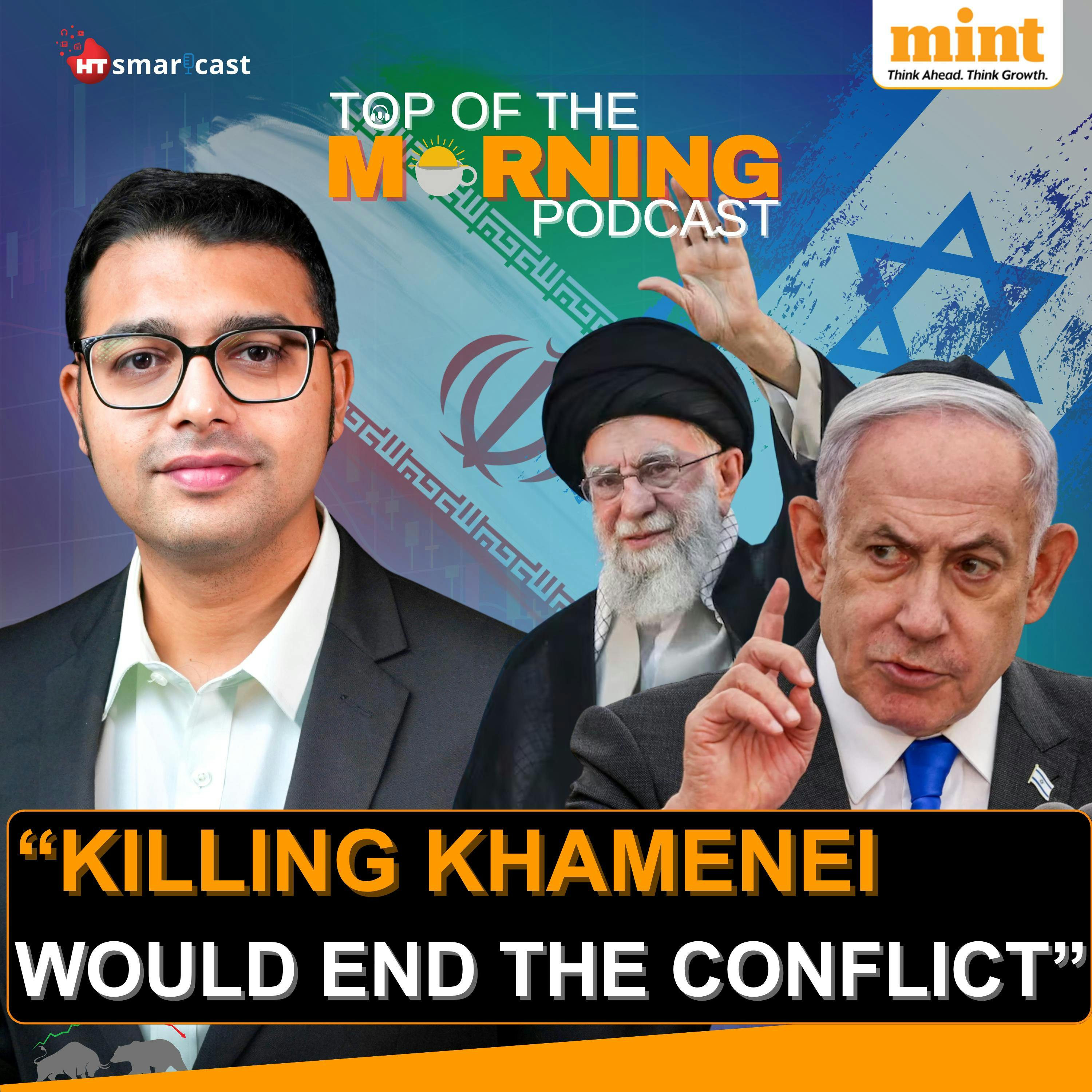
G7 Divided on Iran | ₹39,400 Cr Insurance Shock | Boeing in Crisis Mode | Netanyahu Drops Bombshell
G7 Fractures Over Israel-Iran Conflict As missiles fly between Israel and Iran, G7 leaders are pushing for calm—but unity is cracking. A draft joint statement calls for deescalation and backs Israel’s right to defend itself, while vowing to safeguard energy market stability. But former U.S. President Donald Trump is yet to sign off. “They should talk and they should talk immediately,” Trump said, urging dialogue. UK PM Keir Starmer warned of global consequences if tensions spiral. Germany is drafting a communique demanding Iran be barred from acquiring nuclear weapons-capable materials. Trump, meanwhile, reignited debate over Russia’s expulsion from the G7, blaming it for today’s wars and even floated adding China to the bloc. “Putin speaks to me,” Trump said. “He doesn’t want to talk to anybody else.” Netanyahu: Kill Khamenei to End War Israeli PM Benjamin Netanyahu made his boldest claim yet: assassinating Iran’s Supreme Leader Ayatollah Ali Khamenei would end the war—not escalate it. “The regime is very weak,” he said, calling Iran the architect of a “forever war.” Meanwhile, the battlefield widened. Israeli airstrikes hit Iran’s state-run TV building in Tehran during a live broadcast, disrupting coverage. Israel says it has destroyed nearly a third of Iran’s missile launchers and gained “full aerial superiority” over Tehran. Iran responded with another barrage of 100 missiles. The death tolls are climbing—224 in Iran, 24 in Israel—and hundreds more injured. With diplomacy frozen, fears of a wider regional war are intensifying. Boeing Faces the Heat After Air India Tragedy Four days after the deadliest air crash in India in over a decade, Boeing’s leadership flew into crisis mode. Stephanie Pope, head of Boeing Commercial Airplanes, met with Air India Chairman N. Chandrasekaran in Gurugram. Executives from GE Aerospace, maker of the aircraft’s engines, also joined. The London-bound Dreamliner crashed seconds after takeoff in Ahmedabad, killing 241 of 242 people onboard. “This is the most heartbreaking crisis of my career,” Chandrasekaran told Air India staff, vowing to build a safer airline.With 33 Dreamliners already in its fleet and over 200 Boeing aircraft on order, Air India is at the epicenter of a global aviation reckoning. Insurance Shock: ₹39,400 Cr Claim Rocks Industry India’s biggest aviation disaster is also one of its costliest insurance events. A $475 million (₹39,400 crore) claim is expected—$125 million for aircraft damage and $350 million in liability. “This could be one of the biggest aviation claims India has ever seen,” said Ramaswamy Narayanan of GIC Re, which insured Air India. Most of the financial burden, however, will fall on global reinsurers—since Indian firms offload 95% of aviation risk. Analysts warn the reinsurance market will harden, pushing premiums up across the industry. IFC Backs India’s Mid-Market Rise India’s mid-cap dreams just got a $60 million boost. The World Bank’s investment arm, IFC, is investing in Motilal Oswal Alternates’ fifth fund—its largest bet yet on the PE firm—with an equal amount set aside for co-investments. The India Business Excellence Fund V G aims to raise $750 million and focus on growth-stage companies in financial services, consumer, manufacturing, and life sciences—including in tier-2 and tier-3 towns. “This is a strong signal to institutional investors,” said MO Alternates CEO Vishal Tulsyan. MO Alternates has delivered a 26.8% IRR on its first fund and backed notable names like Kreditbee, SK Finance, and Niva Bupa. IFC’s backing could supercharge both credibility and capital. Learn more about your ad choices. Visit megaphone.fm/adchoices

India’s UPI Goes Global | Gold’s Glimmer Grows | India’s Household Savings Dip as Capex Surges
Welcome to Top of the Morning by Mint.. I’m Nelson John and here are today’s top stories. Markets, Modi, Gold & Grief: A Week That Shook India Markets on Edge It was a volatile week for Indian equities. With Israel-Iran tensions escalating and Brent crude spiking over 12%, investors dumped risky assets. The Nifty 50 closed down 1.14% at 24,718, while the Sensex slipped 1.30%. Market heavyweights like HDFC Bank, Reliance, and SBI led the decline. Vinod Nair of Geojit said early optimism from US–China trade talks faded quickly. “Global risk-off sentiment took over. Safe havens like gold and US bonds rallied.” 5 Big Market Triggers This Week: Israel-Iran conflict – with US and UK now militarily involved. US Fed Meet (June 17–18) – No rate cut expected, but Powell’s tone will matter. Crude Oil Surge – Could reignite inflation, hurt margins. FPI Outflows – ₹4,812 crore pulled out in June so far. Macro Data Watch – WPI, trade numbers, Eurozone CPI, and US jobless claims on radar. Throw in the G7 summit in Canada and it’s a headline-heavy week ahead. Air India Crash: A Nation Mourns A high-level probe begins into the devastating Air India Flight AI-171 crash that killed 270 people, including former Gujarat CM Vijay Rupani. The Boeing 787 crashed just after takeoff from Ahmedabad on June 12. Only one passenger, Vishwashkumar Ramesh, survived. A committee led by the Union Home Secretary has three months to recommend new aviation safety protocols. The second black box has been recovered, and DNA identification of victims is underway. Authorities praised the swift rescue response, but the nation now waits for answers. Gold’s Glimmer Grows Gold is closing in on the ₹1 lakh mark. On June 13, 24K gold hit ₹99,058 per 10g, buoyed by geopolitical fears, a soft dollar, and a weakening rupee. Experts say don’t sit this out. Naveen Mathur of Anand Rathi recommends gold ETFs via SIPs as a smart hedge. Devang Shah from Axis MF says more upside is possible. Meanwhile, central banks are hoarding gold amid what some call “global de-dollarization”. Gold ETF assets are up 88% year-on-year, now near ₹59,000 crore. Modi’s Global Pitch: India Means Business At the India–Cyprus CEO Forum, PM Modi showcased India’s digital and economic might. “Fifty percent of the world’s digital transactions happen through India’s UPI,” he said, adding Cyprus may soon join India’s UPI network. Fresh off a rare third-term win, Modi underlined India’s path to becoming the world’s third-largest economy, with over $100 billion in annual infrastructure investment. The new Manufacturing Mission aims to turn India into a hub for electronics, semiconductors, biotech, and green tech. Maritime development, civil aviation, and startups are also key pillars. “Our 100,000+ startups sell solutions, not dreams,” Modi declared. Savings Shrink, But Capex Soars India’s gross domestic savings dropped to 30.7% of GDP in FY24, down from 32.2% in FY15. More worryingly, household savings fell to 18.1% of GDP, while household debt surged to 6.2%—almost double in a decade. But there’s a silver lining: public capital expenditure is booming. FY25 capex hit ₹10.5 trillion, and FY26 is set to hit ₹15.5 trillion, a 17% jump. April alone saw 14.3% of the Centre’s budgeted capex already deployed. Non-petroleum exports hit $374 billion in FY25, up 6%, led by electronics and pharma. Though FY26 may see a slight dip, rural demand looks solid—thanks to good agri prospects and rising wages. Urban sentiment, however, still lags. Learn more about your ad choices. Visit megaphone.fm/adchoices
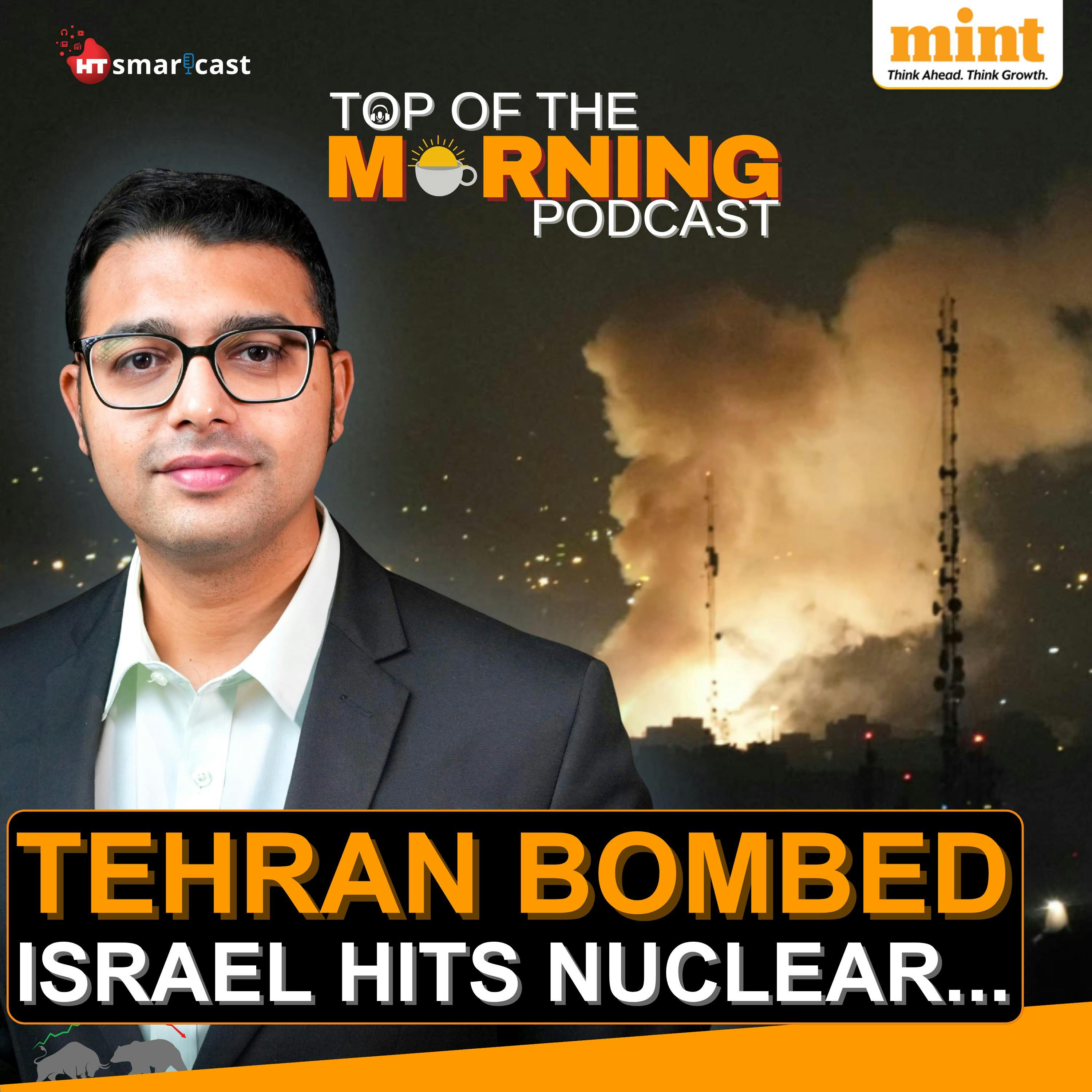
Israel Bombs Iran | Dalal Street Bleeds: ₹6 Lakh Cr Gone | EU Snubs Indian Steel | India’s Space Shield
Welcome to Top of the Morning by Mint.. I’m Nelson John and here are today’s top stories. 🇮🇱 Israel Hits Iran, Global Tensions Soar Tehran woke up to airstrikes as Israel launched a surprise assault targeting suspected nuclear and military sites. While exact targets weren’t confirmed, smoke was seen in western Tehran. Defense Minister Israel Katz declared a nationwide emergency and closed schools. This strike follows the UN nuclear watchdog censuring Iran for the first time in 20 years. Iran retaliated with plans to expand uranium enrichment. President Trump, seen mingling on the White House lawn during the strike, later admitted advising Israel to wait, citing ongoing negotiations. Brent crude prices jumped over 2%, reflecting market fears of a wider conflict. Markets Bleed: ₹6 Lakh Cr Wiped Out Thursday was brutal for Indian markets. Sensex tanked 823 points, Nifty lost 253, and midcaps & smallcaps dropped over 1.3%. The total hit to investor wealth? A whopping ₹6 lakh crore. What triggered it? Middle East tensions Confusion over the US-China trade deal Global growth fears (World Bank slashed forecasts) Rate cut doubts due to tariff turmoil Overstretched market valuations Analysts warn of more volatility ahead. EU Puts India in Steel Trouble India just got downgraded in the EU’s steel export game. From July 1, Indian steelmakers will compete in a “pooled quota” with countries like China and Vietnam for key product categories. Exceed the 12,500-tonne limit—and a 25% tariff kicks in. Meanwhile, countries like the UK, South Korea, and Türkiye get exclusive duty-free quotas. With India’s $1.83B worth of steel exports to the EU at stake—and FTA talks nearing the finish line—this move could become a crucial pressure point. India’s New Eye in the Sky India is setting up its first satellite constellation to monitor space-based threats. The ₹150 crore-a-year project will track foreign satellites potentially spying on India. It will build on ISRO’s “Netra” program but go further with real-time surveillance. The mission is being led by Bengaluru-based startup Digantara—marking India’s biggest private space defence contract yet. The system will be operational by 2026, signalling India’s growing focus on space-based national security. US Cancels Parole, Orders Mass Deportation In a major immigration policy reversal, the US has begun terminating the legal status of thousands under the CHNV parole program (for Cuba, Haiti, Nicaragua, and Venezuela). Work permits are revoked immediately. This comes after a Supreme Court decision greenlit the rollback. DHS claims the program lacked vetting and hurt American workers, echoing Trump’s “America First” line. But critics say it punishes law-abiding migrants who followed all protocols. Industries like construction and healthcare—already stretched—could face staffing crises. Learn more about your ad choices. Visit megaphone.fm/adchoices
Heatwave Crisis Delhi Hits 45°C | Duty Cut to Cool Kitchens | Indian Wheat Ban Stays
Welcome to Top of the Morning by Mint.. I’m Nelson John and here are today’s top stories. Red Alert: North India in a Heatwave Grip North India is reeling under a severe heatwave, with Delhi, Punjab, Haryana, and Rajasthan placed under a red alert. Temperatures are soaring 5°C above normal, with Delhi’s heat index touching 45.5°C and Rajasthan’s Ganganagar hitting a blistering 48°C, the highest in the country. The India Meteorological Department blames the heat on a lack of thunderstorms and an anti-cyclonic system parked over the region. Relief is expected only after June 14, with light rain and gusty winds likely to bring a 2–4°C dip. Meanwhile, the south is facing the opposite extreme—Karnataka and coastal Maharashtra are under red alert for heavy rains, and Kerala and Tamil Nadu are bracing for extremely heavy downpours from June 14 to 17. India’s Big Nuclear Bet: Small Reactors, Big Goals India’s nuclear journey just took a strategic leap—with Bharat Small Reactors (BSRs) leading the charge. Heavyweights like Reliance, Adani, Vedanta, Indian Railways, and JSW are onboard, powering a plan to build compact 220-MWe reactors for captive industrial use. The government’s pitch: private players fund it, NPCIL runs it, and post-commissioning, the plant is handed to NPCIL for ₹1—while the user keeps the power. At least five BSRs are targeted by 2033, as India aims to scale nuclear capacity from 8.78 GW to 100 GW by 2047. Why now? Rising power needs from AI, crypto, and industrial growth demand low-carbon, stable energy. Nuclear fits the bill—and India is betting big on going small. Wheat Stays Home: India Stands by Export Ban Even with a record wheat harvest of 115.4 million tonnes expected this season, India is keeping its wheat export ban in place. In a WTO submission, the government cited food security concerns for itself and neighbouring nations. Imposed in May 2022, the ban has sharply reduced exports—from 4.7 million tonnes in FY23 to just 2,749 tonnes this fiscal. Only diplomatic and humanitarian shipments have been allowed. The government says global volatility, inflation risks, and upcoming festivals and state polls demand price stability. Critics argue it disrupts supply chains, especially after the Russia-Ukraine war hurt global grain flows. But for now, India’s wheat isn’t going anywhere. Adani’s ₹2.5 Trillion Playbook “We only do two things—energy and logistics,” says Sagar Adani, and that’s exactly where the Adani Group is putting its money. The conglomerate plans to raise ₹2.5 trillion ($30 billion) over the next five years to fund a $100-billion capex spree. Even as the group navigates US investigations and controversies, it’s doubling down with ₹1.3–1.7 trillion in annual investments, largely in infrastructure and clean energy. Adani Green, copper and aluminium expansions, a planned demerger of the airports business by FY28, and a mega cement merger are all part of the game plan. With low-cost power and transport as their advantage, and 20% of India’s private capex under their belt, the Adanis are clearly not slowing down—they’re powering through. Learn more about your ad choices. Visit megaphone.fm/adchoices

Gaganyatri Launch Delayed | ACs May Soon Stop at 20°C | India-US Trade Talks Strain
Welcome to Top of the Morning by Mint.. I’m Nelson John and here are today’s top stories. Gaganyatri Launch Delayed Again India’s much-anticipated moment in space will take a bit longer. The Axiom-4 (Ax-4) mission—meant to carry the first Indian Gaganyatri to the ISS—has been postponed due to a liquid oxygen (LOx) leak found during Falcon 9’s booster test. SpaceX confirmed the issue via X, while ISRO announced that the launch will only proceed after thorough repairs and validation tests. This is the second delay, following an earlier weather-related rescheduling. No new launch date has been set. India-US Trade Talks Hit a Roadblock Trade talks between India and the US are entering a tense final phase. The US is demanding greater access to Indian markets in dairy, agriculture, shrimp, and digital services. But India is pushing back, citing food security and rural livelihoods. With a July 8 deadline looming, paused tariffs could soon return. Dairy remains a key sticking point, with India insisting on vegetarian feed standards for US imports. Despite the friction, Indian officials say a balanced deal is still within reach. ₹5,400 Cr Boost for Battery Storage India is ramping up its clean energy game with a fresh ₹5,400 crore push for battery energy storage systems (BESS). Announced by Power Minister Manohar Lal, the scheme aims to build 30 GWh of capacity, attracting ₹33,000 crore in investments. It builds on an earlier ₹3,700 crore initiative supporting 13.2 GWh. With peak power demand expected to hit 270 GW this summer, BESS will help stabilize the grid and support the 2070 net zero target. Undersea transmission lines to the UAE and Saudi Arabia are also in the works, with ₹90,000 crore earmarked for the project. Your AC May Soon Stop at 20°C The government plans to cap air conditioner temperatures at a minimum of 20°C as part of a national energy-saving initiative. Power Minister Manohar Lal said the new rule would apply to homes, hotels, and even cars. Air conditioners account for about 20% of peak power load. Raising the minimum temperature could save up to 3 GW during peak hours. With 100 million AC units already in use and demand rising, the move could cut ₹7.5 trillion in energy costs by 2035. RCB Sale Rumors and Parade Tragedy Just after winning their first IPL title, Royal Challengers Bengaluru (RCB) found themselves in the spotlight again—this time over rumors of a $2 billion sale. Diageo, the team’s owner, denied the speculation in a filing with the BSE. But a deeper crisis unfolded on June 4, when a stampede at RCB’s victory parade in Bengaluru left 11 dead and 56 injured. The tragedy has sparked criticism of event planning and crowd control. Meanwhile, India’s health ministry is pushing to curb alcohol advertising in sports, putting further pressure on Diageo’s branding strategies. Learn more about your ad choices. Visit megaphone.fm/adchoices
Repo Rate Decision Day | OpenAI Academy Debuts in India | Cognizant Bags Billion-Dollar Deal
Welcome to Top of the Morning by Mint.. I’m Nelson John and here are today’s top stories. 1. RBI in the Spotlight: Will Growth Trump Caution? All eyes are on RBI Governor Sanjay Malhotra today as the central bank gears up to announce its second bi-monthly policy decision of FY26. A 25 basis point cut is widely expected—bringing the repo rate down to 5.75%—marking the third straight rate reduction this year. With inflation easing within the 2–4% comfort zone, the focus shifts to fuelling India’s growth engine. The bigger test lies in Malhotra’s tone on inflation outlook, GDP expectations, and global headwinds. This policy pivot could shape the economic narrative for the rest of 2025. 2. Tesla Tanks as Trump-Musk War Escalates Tesla shares nosedived over 14%, wiping out $150 billion in value, after Elon Musk and Donald Trump clashed publicly over federal subsidies and EV policies. The tipping point? Trump’s threat to cut all government contracts with Musk’s firms, including NASA-linked SpaceX, following Musk’s claim that Trump “owes him” for the 2016 win. Investors fear political blowback could derail Tesla’s robotaxi rollout. Analyst Dan Ives warned, “If Trump hits pause on autonomy, it could delay Tesla’s next big bet.” 3. Musk Calls for Trump’s Impeachment In a dramatic twist, Musk endorsed a social media post calling for Trump’s impeachment and backed JD Vance as a replacement. Then came another bombshell: Musk claimed Trump’s name is in the unreleased Epstein files, suggesting political motives for withholding them. Responding to Trump’s threat of terminating contracts, Musk declared SpaceX would begin decommissioning its Dragon spacecraft—NASA’s key ride to the ISS. As political theatrics spiral, the tech-White House feud is now playing out on the world’s biggest stage. 4. OpenAI Academy Launches in India OpenAI has chosen India for the global rollout of its first-ever OpenAI Academy in collaboration with the IndiaAI Mission. Training content will be delivered in English, Hindi, and four regional languages, alongside the IndiaAI FutureSkills portal. With India now hosting data residency for enterprise tools and 34,000 affordable GPUs available, the stage is set for inclusive AI innovation. Eleven nonprofits in India will also receive $150,000 in API credits under OpenAI’s AI for Impact Accelerator, empowering AI for social good. 5. Cognizant’s Billion-Dollar Win Signals Momentum Amid a tough deal-making climate, Cognizant has quietly clinched a $1 billion contract—likely with UnitedHealth Group—spanning renewal, expansion, and new AI-led work. This marks its second mega-deal in two months, with CEO Ravi Kumar’s Infosys-era ties to UHG’s Sandeep Dadlani possibly playing a role. With healthcare forming nearly a third of its revenue, the deal offers fresh momentum and showcases Cognizant’s edge in closing deals without formal RFPs. While rivals struggle, Cognizant may be scripting a quiet comeback. Learn more about your ad choices. Visit megaphone.fm/adchoices
GST Shake-Up May Scrap 12% Slab | Amul Expands to Europe | China Blocks Rare Earth Exports to India
Welcome to Top of the Morning by Mint.. I’m Nelson John and here are today’s top stories. 1. China’s Magnet Freeze Jolts Indian Auto Industry India’s auto sector is on edge as China stalls rare earth magnet exports to Indian firms—even while approving shipments to other countries. These magnets, essential for EV and auto component manufacturing, are now in short supply. Major players like Bosch and Mahle have seen export approvals for their German and U.S. arms, but not for their Indian subsidiaries. Industry bodies ACMA and SIAM raised the red flag in a May 29 meeting with the heavy industries ministry, warning production could halt by July. Bajaj Auto has already sounded the alarm. With no short-term fixes, automakers may be forced to import full motors from China, undermining the ‘Make in India’ initiative and risking incentives under the PLI scheme. Experts warn this is not just a trade glitch—it’s a geopolitical chess game that needs urgent diplomatic moves. 2. Trump Bans Harvard-Bound Foreign Students In a sweeping move, Donald Trump has barred foreign students from entering the U.S. if they’re enrolled at Harvard University, citing national security concerns. This comes just weeks after a federal court blocked an earlier attempt to restrict international students. At the core of the issue is a data-sharing dispute—Washington claims Harvard failed to fully comply with requests regarding misconduct by foreign students, which the university denies. Adding fuel, an internal State Department cable has instructed embassies to scrutinize all visa applicants bound for Harvard. The message is clear: the U.S. may no longer be the academic haven it once was. 3. GST Shake-Up May Scrap 12% Slab The GST Council is eyeing a major rate revamp—eliminating the 12% tax slab and shifting to a simplified 3-tier structure: 5%, 18%, and 28%. A near consensus is forming around the idea, with officials saying the 12% slab has lost relevance. Essential goods may drop to 5%, while the rest may rise to 18%—a move that could pinch pockets if not handled carefully. Experts caution the shift must be phased, revenue-neutral, and come with clear guidance to avoid chaos. With GST collections booming—₹22 lakh crore in FY25—the timing may be ripe for reform. 4. Amul Milk Makes European Debut India’s dairy pride, Amul, has officially launched fresh milk in Spain through a partnership with leading Spanish co-op COVAP. The rollout begins in Madrid and Barcelona, and will soon expand to cities across Spain and Portugal—eventually reaching Germany, Italy, and Switzerland. At the Madrid launch, Amul MD Jayen Mehta called it a landmark in PM Modi’s vision to globalize Indian brands. COVAP’s president hailed the deal as a win-win for farmers in both nations. As the UN marks 2025 as the International Year of Cooperatives, this launch is symbolic of how Indian agri-brands are going global. 5. Musk Withholds $100M, Trump Ties Fray Elon Musk is making headlines again—but this time for holding back $100 million from a promised $300 million pledge to Donald Trump’s reelection campaign, reports The Wall Street Journal. The fallout reportedly began when Musk found out Trump met privately with OpenAI’s Sam Altman—Musk’s tech rival. Trump’s team even delayed an event to avoid Musk’s ire. Inside sources also claim Trump grew tired of Musk’s erratic leadership at the Department of Government Efficiency (DOGE), appointing someone to monitor his moves. Tensions worsened after Musk publicly slammed Trump’s “Big Beautiful Bill” for slashing green energy funding. With Musk’s White House visits dwindling and his political capital fading, the billionaire may be quietly exiting the Trump orbit. Learn more about your ad choices. Visit megaphone.fm/adchoices

IndiGo signs landmark agreement | Ola in Trouble? Investors Big Exit | Carlyle sell stake in Yes Bank | India Builds Polar Power
Welcome to Top of the Morning by Mint.. I’m Nelson John and here are today’s top stories. 1. IndiGo Goes Global with Mega Airline Pact India’s largest airline IndiGo has signed a landmark agreement with Delta Air Lines, Virgin Atlantic, and Air France-KLM, building a deeper network to connect India with Europe and North America. This formalized MoU, which extends beyond passengers to cargo, loyalty, and engineering, comes as IndiGo prepares to induct its first Airbus A350s in 2027. Flights to Manchester, Amsterdam, London, and Copenhagen are in the pipeline, opening up connections to 30+ European cities and beyond. Amid criticism over its short-term Turkish Airlines lease, the move hints at a future European hub—reminiscent of Jet Airways’ Amsterdam play. 2. Hyundai, Kia Exit Ola Electric Amid EV Turmoil In a major shake-up, Hyundai and Kia sold their entire stakes in Ola Electric, cashing out ₹690 crore in total. Hyundai offloaded its 2.47% stake for ₹552 crore, while Kia exited with ₹137 crore. Citigroup Global Markets picked up a 1.95% stake for ₹435 crore. The timing is critical: Ola’s stock tumbled 8% this week, down 42% year-to-date. Financials aren’t pretty either—Q4 losses hit ₹870 crore, with annual losses crossing ₹2,276 crore. Once a darling of India’s EV sector, Ola now faces regulatory heat, slumping sales, and shaken investor confidence. 3. Carlyle Trims Yes Bank Stake as Japan’s SMBC Moves In Global PE firm Carlyle sold a 2.6% stake in Yes Bank worth ₹1,775 crore, reducing its holding to 4.22%. This follows SBI and seven other banks announcing the sale of 20% of their combined stake to Japan’s Sumitomo Mitsui Banking Corporation (SMBC) for ₹13,483 crore. Once complete, SMBC will become Yes Bank’s largest shareholder. Despite a stellar performance—Q4 profit up 63% and FY25 net profit doubling to ₹2,406 crore—Yes Bank’s shares fell over 10% after Carlyle’s exit. It’s a turning point for a bank that was in crisis mode just five years ago. 4. India’s Travel Boom Needs a Louder Global Pitch India’s tourism sector is back in full swing, contributing ₹21 trillion to GDP in 2024 and supporting 46.5 million jobs. The World Travel & Tourism Council (WTTC) projects the sector will grow to ₹42 trillion and 64 million jobs by 2035. But WTTC CEO Julia Simpson warns: India must invest in marketing and infrastructure to keep up. International visitor spend hit a record ₹3.1 trillion in 2024, while domestic travel surged to ₹15.5 trillion. However, India’s global marketing spend remains worryingly low at just ₹3 crore. A new WTTC-India MoU could help raise India’s global visibility. 5. India to Build First Polar Research Vessel In a landmark move, India will build its first-ever Polar Research Vessel (PRV), thanks to a new partnership between GRSE and Norway’s Kongsberg. The vessel, to be built in Kolkata, will support deep polar and ocean research for India’s National Centre for Polar and Ocean Research. This comes alongside plans for two ₹1,000 crore deep-sea exploration vessels as part of the Deep Ocean Mission. Each vessel will be equipped for 6 km-deep explorations with cutting-edge scientific gear. Minister Sarbananda Sonowal, on a maritime diplomacy trip to Norway, pitched India as a global hub for green and resilient shipbuilding. Learn more about your ad choices. Visit megaphone.fm/adchoices
Adani Under Scrutiny | 2000+ Aircrafts ordered: PM Modi | Infosys CEO’s ₹80 Cr Payday Raises Eyebrows
Welcome to Top of the Morning by Mint.. I’m Nelson John and here are today’s top stories. 🚨 Adani in the Hot Seat—Again Gautam Adani is once more facing legal heat—this time from the U.S. Justice Department. The Wall Street Journal reports that Adani Group is under investigation for potentially importing Iranian liquefied petroleum gas (LPG) through its Mundra port, possibly violating U.S. sanctions. Suspicious tanker movements from the Persian Gulf to Gujarat have drawn scrutiny. Adani Group denies any wrongdoing, stating there’s been no deliberate sanctions evasion nor awareness of a U.S. probe. Earlier this year, U.S. prosecutors also alleged that Gautam Adani and his nephew were involved in bribery and misleading investors—claims the group calls “baseless.” If these new allegations hold, secondary sanctions could escalate Adani’s troubles on the global stage. 💸 Infosys CEO’s ₹80 Cr Payday Raises Eyebrows Salil Parekh, CEO of Infosys, took home ₹80.62 crore last year—a 22% jump. Of this, ₹49.5 crore came from cashed-in shares. That places him just behind HCLTech’s C. Vijayakumar in India’s IT pay leaderboard. However, while leadership is being richly rewarded, the average Infosys employee got a 9.63% raise—and TCS employees, just 7.5%. As Chairman Nandan Nilekani put it, “We are in an era of uncertainty.” With shrinking deals and slowing growth, companies are betting big on proven leaders. ✈️ India’s Aviation Sector Soars with 2,000+ Jet Orders India’s aviation market is flying high. Speaking at the IATA AGM in Dubai, PM Narendra Modi said Indian carriers have placed orders for more than 2,000 aircraft. Calling it “just the beginning of a transformative journey,” Modi highlighted India’s leap from 74 airports in 2014 to 162 today. Passenger numbers have surged to 240 million annually—and could hit 500 million by 2030. Key to this growth? The UDAN scheme, which has made flying accessible to over 15 million citizens. Modi positioned India as an investment-ready aviation hub backed by reforms and robust demand. 🌍 India Inc Goes Shopping Abroad India Inc is looking global. JP Morgan says Indian companies are ramping up overseas acquisitions, backed by strong balance sheets and high market valuations. “Listed securities are a valuable currency,” says JP Morgan’s Nitin Maheshwari. Big deals are already rolling in—Infosys bought two tech firms in Australia and the U.S., Intas Pharma snapped up U.S.-based Coherus Biosciences for $558 million, and Ceat acquired Camso for $200 million. The next hotspots? Manufacturing, auto components, and specialty chemicals. As global supply chains realign, Indian firms are poised to plug the gaps—with capital, tech, and ambition. 🏦 Hindujas Eye Bigger Stake in IndusInd Bank The Hinduja Group is plotting a deeper play in IndusInd Bank. Its holding firm, IIHL, is in talks with global funds to raise capital and boost its stake from 15% to 26%. The raise will also help repay debt from its ₹9,650 crore Reliance Capital acquisition earlier this year. This comes as IndusInd Bank deals with a ₹2,100 crore derivatives accounting mess, the exit of top leadership, and a 9% drop in share price. Chairman Ashok Hinduja calls it “an opportune time” to increase ownership. With RBI’s nod already secured, the group is readying for a bold move—putting its own skin in the game to stabilize sentiment. Learn more about your ad choices. Visit megaphone.fm/adchoices
Markets Open Flat, RBI in Focus | Rupee Rises on Growth | NMDC’s ₹70,000 Cr Global Mining Blitz
Welcome to Top of the Morning by Mint.. I’m Nelson John and here are today’s top stories. Flat Start for Markets, All Eyes on RBI Indian markets are bracing for a cautious open this Monday. Global cues are mixed—Japan’s Nikkei and Topix dipped, while US indices closed steady after clocking their best monthly gains since Nov 2023. Gift Nifty hints at a flat open. The big domestic trigger? The RBI’s monetary policy decision on Friday, with markets pricing in a 25-bps rate cut. Investors will also track May auto sales, foreign fund flows, and the fallout from Trump’s move to double US steel tariffs to 50%. India’s GDP grew 7.4% in Q4, even as FY25 growth slowed to 6.5%. GST collections stayed strong at ₹2 lakh crore+, and crude oil prices are heating up again. “Stay diversified,” says PL Capital’s Vikram Kasat. “Macro resilience is intact, but global uncertainty looms.” 🛠️ US-India Metal Clash Intensifies It’s steel vs steel. On May 9, India notified the WTO of its intent to hit back at US tariffs on metals. Washington’s response? “These aren’t safeguard tariffs—they’re national security measures.” With no scope for talks, the US doubled its steel and aluminium tariffs to 50% starting June 4. India exported $4.56 billion worth of metal products to the US in FY25—now at risk. Retaliation could come via higher duties on US almonds, walnuts, and metals. A first-phase bilateral trade deal could still soften the blow—but for now, tensions are high. “If the US won’t play ball, tariffs are coming,” say trade insiders. 💹 Rupee May Rise on Growth Surprise, Rate Cut Buzz The Indian rupee could see a boost this week, helped by stronger-than-expected Q4 GDP and a widely anticipated RBI rate cut. Markets expect a 25-bps cut to 5.75%. MUFG says inflation remains in check, with CPI forecast to stay below 4%, giving the central bank room to ease. Bond markets are already moving—5-year yields continue to outperform, showing “extreme bullish positioning,” according to IndiaBonds’ Vishal Goenka. But globally, Trump’s tariff blitz and upcoming US jobs data could stir fresh volatility. The rupee is expected to hover between 84.80–86 in the near term. ⛏️ NMDC Bets ₹70,000 Cr on Mining Expansion State-owned mining giant NMDC is going global and going big—with a ₹70,000 crore capex push over the next three years. CMD Amitava Mukherjee says the firm will explore 10 minerals including lithium, cobalt, and gold across Africa, Australia, Southeast Asia, and South America. ₹43,000 crore worth of projects are already in the pipeline, with another ₹30,000 crore to be cleared this fiscal. Domestically, NMDC is building slurry pipelines and expanding operations in Chhattisgarh and Andhra Pradesh. The company is also setting up a new international subsidiary at GIFT City in Gujarat to anchor its global ventures. It aims to generate at least 10% of revenue from non-iron ore and overseas operations. “We’re agnostic about the model,” says Mukherjee. “JVs, equity, acquisitions—everything’s on the table.” ☁️ Sovereign Cloud: India’s New Digital Gold Rush India is going full steam ahead on digital self-reliance—and sovereign cloud services are at the heart of it. Tech giants like TCS and Google India are leading the race, with offerings that keep all data, processing, and infrastructure entirely within Indian borders. TCS has launched its fully indigenous SovereignSecure Cloud, while Google is hosting sensitive workloads on its Google Distributed Cloud, featuring Gemini AI—all within India. Early adopters like Ayushman Bharat, EPFO, Passport Seva, and UIDAI are setting the pace. Individual contracts may be modest at $2–5 million annually, but over the next five years, this could balloon into a multi-billion-dollar market. “This isn’t about replacing global giants,” says a govt official. “But for ultra-sensitive data, sovereign is the future.” Learn more about your ad choices. Visit megaphone.fm/adchoices
Mild Covid Surge Triggers Fresh Alerts | India-US Deal Nearing | Trump Tariffs Stay—for Now
Welcome to Top of the Morning by Mint.. I’m Nelson John and here are today’s top stories. India’s Growth Engine Still Roaring, Says RBI The Reserve Bank of India’s annual report is cautiously optimistic. It warns of global headwinds—rising input costs, protectionist trade policies, and tariff risks—but says India remains the fastest-growing major economy. Domestic demand, strong exports, and a thriving farm sector powered momentum in FY25. Inflation eased to a six-year low of 3.16% in April, raising expectations of a 25 bps repo rate cut in June. Forex reserves are healthy, fiscal discipline is holding, and public capex continues to drive growth. On the radar: stress tests, cyber risk reviews, and climate risk evaluations for banks and NBFCs. A record ₹2.69 trillion surplus transfer to the Centre also boosted RBI’s balance sheet credibility. Bottom line? Global chaos may persist, but India’s economic engine looks well-fueled and storm-ready. Covid Creeps Back, But Experts Say: Stay Alert, Not Alarmed With new Covid variants NB.1.8.1 and LF.7 emerging, and over 1,000 active cases reported across cities like Delhi and Bengaluru, India is reactivating its Covid response. A high-level panel is reviewing vaccine stocks, testing readiness, and hospital capacity. Experts say the virus is currently mild. Hybrid immunity—vaccine plus natural infection—is widespread, and booster doses aren’t necessary for most. But vaccine makers are being urged to update formulations in case a new, more dangerous variant emerges. Dr. Soumya Swaminathan and other health leaders advise vigilance over panic. WHO hasn’t flagged the variants as serious threats. For now, the focus is on monitoring—not mass vaccinations. India, US Sprint to Seal Trade Deal Before Tariff Clock Expires India and the US are racing to close a long-pending bilateral trade pact before a crucial 8 July deadline, when Trump-era reciprocal tariffs could make a comeback. American negotiators arrive in Delhi next week for what could be the final round. India’s chief negotiator Rajesh Agarwal said this deal is a strategic play—not just about tariff relief. It covers agriculture, autos, digital trade, and market access, with potential to reframe global supply chains. Even though a US court recently ruled Trump’s baseline tariffs illegal, India is pressing on, seeing the agreement as key to long-term trade stability and its $30 trillion economic ambition by 2047. Sebi Tightens the Screws on F&O Market Risk Come 1 July, Sebi is rolling out sweeping reforms in the equity derivatives market. The big change? A smarter, risk-sensitive metric called delta-adjusted open interest. This will offer a clearer view of traders’ exposure based on price movements of underlying assets. Limits are being introduced—₹1,500 crore net exposure and ₹10,000 crore gross—for index options. For single-stock derivatives, Sebi is tying position limits to cash market liquidity starting October. Retail traders lost ₹1.89 trillion in F&O bets between FY22 and FY24, prompting Sebi to act. With earlier steps like raising lot sizes and capping weekly expiries already in motion, the message is clear: the F&O free-for-all is ending. Trade smart—or step aside. Trump’s Tariffs Get Court Stay—For Now Donald Trump’s controversial “Liberation Day” tariffs live to see another day. A federal appeals court has temporarily allowed the former US president to keep imposing broad-based tariffs under emergency powers, despite a lower court ruling that declared them illegal. The court cited national security concerns, giving the Trump team more time to fight the legal challenge. Critics argue the tariffs were arbitrary, hurting global trade and spooking markets. White House adviser Peter Navarro insists the administration will push on—via courts or alternative methods. “It’s not over,” he said. “We have other tools.” Learn more about your ad choices. Visit megaphone.fm/adchoices

Govt Hikes MSP | US Visa Ban Targets Global Censors | TCS Cuts Dividend
Welcome to Top of the Morning by Mint.. I’m Nelson John and here are today’s top stories. 1. Lokpal Clears Ex-SEBI Chief in Adani-Linked Allegations India’s anti-corruption ombudsman, Lokpal, has dismissed all complaints against former SEBI chairperson Madhabi Puri Buch. The allegations—based on a Hindenburg Research report—claimed Buch and her husband held offshore stakes linked to the Adani Group. The Lokpal, led by Justice A.M. Khanwilkar, concluded the complaints were based on “presumptions and assumptions” with no verifiable evidence. Buch, who completed her SEBI tenure in February 2025, had strongly denied the claims. With Hindenburg itself shutting shop in January 2025, the watchdog ruled the report could not serve as grounds for a corruption probe. 2. SAIL Posts Q4 Growth, Announces Dividend Steel Authority of India Ltd (SAIL) delivered a solid close to FY25, reporting an 11% rise in Q4 net profit to ₹1,251 crore. Revenue grew 4.8% year-on-year to ₹29,316 crore, with gains led by its IISCO and Alloy Steels plants. The Maharatna PSU announced a final dividend of ₹1.60 per share. SAIL stock, which has delivered a 325% return over five years, gained 13.5% year-to-date despite a 21% dip over the past year. With India’s infra buildout gaining momentum, SAIL hopes to carry the steel into coming quarters. 3. US Cracks Down on Global Censorship with Visa Ban In a bold move defending free speech, US Secretary of State Marco Rubio has introduced visa restrictions targeting foreign nationals who attempt to censor expression within the US. The policy aims to block those who threaten legal action against US citizens for social media posts or pressure tech platforms to follow global censorship norms. Rubio didn’t name countries, but the message is clear: foreign governments trying to police American speech or platforms will now face consequences. “We will not tolerate encroachments on American sovereignty,” Rubio said. 4. TCS Dividend Dip Signals Strategic Shift? Tata Sons has seen its dividend income from Tata Consultancy Services (TCS) drop for the first time since the IT major’s 2004 listing. In FY25, Tata Sons earned ₹32,718 crore—₹1,333 crore less than the previous year. While TCS’s revenue rose 3.8% to $30.18 billion and net profit by 2%, the payout ratio dipped to 93.9%, the lowest in six years. Analysts suspect the company is conserving cash for strategic investments in AI and tech. Adding to concerns, TCS skipped its usual annual salary hike, citing macro uncertainty. 5. Govt Hikes MSP, Extends Farm Loan Relief Ahead of Polls With elections on the horizon, the Centre has hiked Minimum Support Prices (MSP) for 14 kharif crops, with tur dal seeing the steepest rise of ₹450 to ₹8,000 per quintal. The government also extended the Modified Interest Subvention Scheme into FY26, offering farmers loans up to ₹3 lakh at subsidized rates via Kisan Credit Cards. Critics, however, note that the 3% hike in paddy MSP is below inflation. The Cabinet also cleared ₹7,000 crore worth of infrastructure projects, including a major rail corridor in Andhra Pradesh—part of a ₹4.5 trillion push to boost connectivity and cut logistics costs. Learn more about your ad choices. Visit megaphone.fm/adchoices

Tax Deadline Extension | Vi’s Last Lifeline? | NMDC Q4 Results
Welcome to Top of the Morning by Mint.. I’m Nelson John and here are today’s top stories. Tax Deadline Extended: More Time, More Disclosures Taxpayers not requiring audits now have until 15 September to file returns for FY 2024-25. The CBDT extended the deadline from 31 July due to significant changes in ITR forms, which now require detailed disclosures on tax-saving investments, capital gains, TDS on non-salary income, and HRA. Experts call the move a relief amid increased compliance.Budget 2025-26 sweetened the deal for middle-class taxpayers, raising the no-tax threshold to ₹12 lakh, and simplifying TDS norms. Direct tax collections hit ₹22.26 trillion, a 13.57% jump, reinforcing India’s push toward a digital-first, transparent tax regime. North-East India Bags ₹4.32 Trillion in Investments India’s North-East is emerging as an economic powerhouse. At a recent investment summit, the region attracted ₹4.32 trillion in deals across agriculture, hydropower, IT, tourism, and bamboo. Union minister Jyotiraditya Scindia confirmed that each state is preparing tailored incentive packages and logistics policies.With Guwahati and Agartala poised to become international gateways, and 70% of the India-Myanmar-Thailand highway complete, the region’s 12–13% decadal growth rate is set to soar even higher. Described as India’s ‘Ashta Lakshmi’, the North-East is becoming central to trade, diplomacy, and inclusive growth. Vodafone Idea Faces Financial Cliff as AGR Relief Denied Vodafone Idea’s troubles deepen after the Supreme Court rejected its plea for AGR dues relief. Its survival now hinges on whether the ₹6,000 crore in bank guarantees it submitted to the government will be invoked.If the DoT calls in the guarantees, lenders like SBI and PNB will be on the hook—turning those into high-interest loans. With a ₹2 trillion debt pile and limited cash flow, analysts fear this could cripple the already fragile telecom sector.The telco has urged government intervention to avoid a market duopoly, especially since the Centre owns a 49% stake in the company. CEAT Reroutes US Expansion Amid Trump Tariff Threat CEAT’s $225 million acquisition of Canadian brand Camso aimed to crack the US tyre market. But Donald Trump’s threat of 44% tariffs on Sri Lankan exports—where Camso manufactures—has thrown a wrench in the works.CEO Arnab Banerjee says the company will now shift US-bound production to India, though that too may face a 26% reciprocal tariff.Despite the uncertainty, CEAT’s stock is up 18% this year, as investors remain bullish on its global expansion. But with nearly one-third of Camso’s revenue coming from the US, analysts say the deal’s long-term value now hangs in the balance. NMDC Mines Profit, But Faces Price Pressures Mining major NMDC posted a solid 5% jump in Q4 profit to ₹1,483 crore, with annual net profits rising 17% to ₹6,539 crore, powered by strong iron ore and pellet sales. Revenue for FY25 crossed ₹25,000 crore.Chairman Amitava Mukherjee reiterated the company’s goal of hitting 100 MTPA production in five years, citing visible gains from ongoing initiatives.However, average iron ore prices dipped and JSW Steel—a major client—expects further softness. Despite that, NMDC announced a ₹1 per share dividend, adding to its earlier ₹2.30 payout.Eyes are now on how NMDC sustains growth amid falling ore prices and global demand shifts. Learn more about your ad choices. Visit megaphone.fm/adchoices
IndiGo ₹6,831 Cr Exit Alert | NSE vs BSE: Showdown Begins | ₹850/month Starlink Connection
Welcome to Top of the Morning by Mint.. I’m Nelson John and here are today’s top stories. 1. IndiGo’s Gangwal Plans ₹6,831 Cr Stake Sale In a major move, IndiGo co-founder Rakesh Gangwal and his family trust are set to sell up to ₹6,831 crore worth of shares in the airline through a block deal. The sale, expected to happen Tuesday, involves up to a 3.4% stake at a floor price of ₹5,175 per share. Gangwal and his trust together own nearly 13.5% of the company. With shares up 461% over five years and near 52-week highs, investors are watching closely—this could mark a strategic exit or just profit booking. 2. NSE vs BSE: Expiry Day Showdown Begins Sebi’s new circular limiting equity derivative expiries to either Tuesday or Thursday has kicked off a turf war. NSE wants to shift its Nifty expiry to Tuesday—the very day BSE had claimed earlier for its Sensex contracts. If approved, NSE could see a 5% boost in market share, while BSE may have to move to Thursday or risk losing volumes. The final decision is due by June 15, but until then, it’s a race to lock in the more lucrative day. 3. Starlink Set to Launch in India at ₹850/month Elon Musk’s satellite internet service, Starlink, is close to entering India after securing a Letter of Intent from the DoT. Plans may start at just ₹850 per month with unlimited data—among the cheapest globally. The goal? Ten million subscribers. But urban surcharges, spectrum charges, and licensing levies could raise prices. Even so, Starlink hopes to bridge India’s digital divide, particularly in rural areas with poor connectivity. 4. Leela Hotels Launches ₹3,500 Cr IPO Luxury hotel chain Leela is making its market debut with a ₹3,500 crore IPO—the largest ever in India’s hospitality sector. Backed by Brookfield, the IPO is priced attractively but comes with baggage: ₹2,567 crore in debt. Most of the proceeds will go toward deleveraging. With new properties planned and EBITDA margins at 50%, Leela hopes to ride the luxury upcycle, though rivals like Taj and Oberoi still lead in occupancy and brand recall. 5. India Pushes US to Ease Fruit Import Rules India is lobbying hard to get better market access for fruits like mangoes, pomegranates, and guavas under a proposed trade deal with the US. After 25 tonnes of mangoes were destroyed at US ports, India wants faster approvals and localized certification. Despite a 28% rise in exports to the US over two years, regulatory bottlenecks remain. Exporters say the deal could be a game-changer—but time, and cold storage, are running short Learn more about your ad choices. Visit megaphone.fm/adchoices

India Leaps Past Japan | Rally Interrupted: Markets Lose Steam | Gold Slips, Reserves Tumble
Welcome to Top of the Morning by Mint.. I’m Nelson John and here are today’s top stories. Markets Cool Off After 4-Week Rally After weeks of surging highs, Indian markets finally took a breather. The Sensex and Nifty slipped 0.7% each as foreign investors sold off in three out of four sessions. Sectors like realty and metals held up well, but autos, IT, and FMCG lagged. Midcaps dipped while smallcaps stayed afloat. Technical resistance at Nifty’s 25,200 level held firm, with support seen at 24,500. Analysts suggest a cautiously bullish stance, with Bank Nifty holding strong and poised for a breakout above 56,000. Traders are advised to focus on banking, metals, and energy, while keeping tight stop-losses amid high volatility. India Becomes World’s 4th-Largest Economy India has officially overtaken Japan to become the fourth-largest economy, with a GDP of $4.19 trillion, according to the IMF. “We are now bigger than Japan,” announced NITI Aayog CEO BVR Subrahmanyam. The data shows India is just behind Germany and could climb to third place within three years. The IMF projects India will grow at 6.2% in 2025 and 6.3% in 2026—making it the world’s fastest-growing major economy, powered by rural demand and resilient consumption despite global headwinds Forex Reserves Slip Amid Gold Dip India’s foreign exchange reserves fell by $4.9 billion to $685.7 billion, dragged down by a steep $5.1 billion drop in gold reserves. The fall comes weeks after hitting a 7-month high. Gold holdings dropped to $81.2 billion, likely due to easing geopolitical tensions and softer gold prices. Interestingly, foreign currency assets edged up by $280 million, showing relative dollar stability. With the rupee trading at ₹85.17 to the dollar, RBI’s reserve moves signal ongoing efforts to curb volatility and balance market swings. LIC Smashes Guinness World Record LIC made global headlines by issuing 588,107 life insurance policies in just 24 hours—earning it a Guinness World Record. The massive feat was achieved on January 20, 2025, with the help of 452,839 agents across India. Dubbed “Mad Million Day,” the initiative was the brainchild of CEO Siddhartha Mohanty, who motivated every agent to close at least one policy that day. LIC called it a reflection of their agents’ dedication and a milestone in customer outreach and productivity. India’s Trade Talks Shift East After US, EU Deals With trade agreements with the US and EU nearing conclusion, India is preparing to refocus on partners in Asia-Pacific—namely Japan, Australia, ASEAN, South Korea, Sri Lanka, and Peru. India-ASEAN FTA reviews are ongoing, and an upgrade to the Japan deal is under discussion. Meanwhile, India’s FTA with the UK, finalized in May, has already slashed tariffs on 99% of goods and aims to double bilateral trade to $100 billion by 2030. A US deal is expected before the 8 July tariff deadline, potentially shielding India from retaliatory trade measures. Once done, India will turn to its next wave of strategic trade alignments to strengthen its supply chains and global reach. Learn more about your ad choices. Visit megaphone.fm/adchoices

Sensex Shake-Up | ITC Profit Soars | Sun Pharma Slides | No More ‘Lodha’ Wars
Welcome to Top of the Morning by Mint.. I’m Nelson John and here are today’s top stories. 1. The Lodha Truce, ₹5,000 Cr Feud SettledAfter nine rounds of mediation and a mother’s public plea, warring brothers Abhishek and Abhinandan Lodha have settled their ₹5,000-crore trademark dispute. As per the court-filed terms, Abhinandan can no longer use ‘Lodha’ in isolation for real estate. Instead, he must use the full ‘House of Abhinandan Lodha’ with clear disclaimers. Both parties waived financial claims and agreed to strict separation, including no shared employees or premises. Violations could trigger a ₹1 lakh/day penalty. Legal experts call it a rare, detailed resolution setting a precedent for intra-family brand disputes in India. 2. ITC’s Record Profit Powered by Hotel DemergerITC reported a Q4 consolidated net profit of ₹19,807 crore, largely due to a one-time exceptional gain of ₹15,145 crore from the demerger of its hotel business. Adjusted net profit fell to ₹4,662 crore, down from ₹5,190 crore a year ago. Revenue rose 10% YoY to ₹20,376 crore, led by cigarettes and FMCG. EBITDA grew 3.7%, but margins slipped to 33.5%. A final dividend of ₹7.85 per share was announced, taking the full-year payout to ₹14.35. 3. Sun Pharma Profit Dips, But Margins Expand Sun Pharmaceutical Industries posted a 19% YoY decline in Q4 profit at ₹2,154 crore, even as revenue rose 8% to ₹12,959 crore. Strong domestic sales and global speciality drugs helped EBITDA grow 22% with margins expanding to 28.7%. US sales declined, but India sales grew 13.6%. The company declared a final dividend of ₹5.50 per share, taking FY25’s total to ₹16. CMD Dilip Shanghvi highlighted promising global pipeline and recent acquisitions to strengthen the speciality segment. 4. Sensex Shake-Up: Trent, BEL In; Nestle, Indus Ind OutThe BSE Sensex is getting a facelift—Tata-owned Trent and defence PSU Bharat Electronics will replace Nestle India and IndusInd Bank from June 23. The reshuffle reflects shifting investor sentiment toward domestic consumption and defence stocks. Other key changes across indices: Dixon, Coforge, and Indus Towers will enter BSE 100; InterGlobe Aviation and Shriram Finance join the Sensex 50. IDFC First Bank replaces Canara Bank in the BSE Bankex. 5. De Beers Sees India’s Diamond Market Doubling India’s natural diamond market is set to double in five years, says De Beers Group CEO Al Cook, during his first visit to the country. India has overtaken China to become De Beers’ second-largest market, after the US. De Beers is ramping up marketing spend, opening four new stores, and partnering with major players like Tanishq and GJEPC. While lab-grown diamonds (LGDs) are gaining ground, Cook emphasized their future lies in tech, not jewellery. De Beers has closed its LGD brand Lightbox amid a 90% fall in LGD prices. Learn more about your ad choices. Visit megaphone.fm/adchoices
Blackstone Buys AGS | NHPC Profit Soars 52% | India-EU FTA Talks
Welcome to Top of the Morning by Mint.. I’m Nelson John and here are today’s top stories. India Seizes Crude Opportunity Amid Geopolitical Tensions With Brent crude trading at a four-year low near $65 per barrel, India is moving fast to refill its Strategic Petroleum Reserves (SPR). Current reserves cover just 9.5 days—far below the IEA’s 90-day norm. The urgency is amplified by recent border tensions and Operation Sindoor. The Centre, which had deferred a ₹5,000 crore SPR budget in FY24, now plans to reallocate funds in FY26. Two new storage sites at Chandikhol and Padur are in the pipeline. Officials are hoping to mirror 2020’s success, when India bought crude at $19/barrel, saving ₹700 crore. JP Morgan expects Brent to dip further to $58 by 2026—offering a window India won’t want to miss. NHPC Powers Up Profits, Expands Clean Energy Push NHPC reported a 52% jump in Q4 net profit to ₹919.63 crore, with operational revenue more than doubling year-on-year. Shareholders get a total FY25 dividend of ₹1.91 per share. The hydropower giant also added 800 MW from the Parbati-II project and 107 MW solar capacity in April, deepening its clean energy portfolio. However, a High Court-mandated ₹589 crore payment to staff dented profits, with ₹301.97 crore booked as unbilled revenue. Despite this, NHPC’s momentum across hydro, solar, and wind cements its leadership in India’s energy transition. Blackstone Clinches Billion-Dollar Healthtech Deal In a competitive bidding war, Blackstone secured AGS Health for $1.2–1.3 billion—quadrupling its 2019 value. The Chennai-headquartered RCM (revenue cycle management) firm serves over 150 US healthcare providers and generates over ₹500 crore in EBITDA. The deal, managed by JP Morgan and BofA, reflects growing global investor appetite for tech-driven, dollar-generating health services. It also signals Blackstone’s strong bet on compliance-focused platforms amid rising healthcare digitization. Trump’s ‘Golden Dome’: Sci-Fi Meets Strategy Donald Trump has revived Reagan’s Star Wars dream—announcing a $175 billion missile-defense initiative named “Golden Dome.” The system, featuring space-based and ground interceptors, aims to defend against threats across all four missile phases—including launches from space. Trump vows it will be operational by 2029, with Gen. Michael Guetlein leading the charge. Congress has begun with a $25 billion ask. While the tech is still untested, the plan could transform modern defense and reshape global security architecture. India-EU Trade Talks Enter Final Lap India has dispatched a delegation to Brussels for the next round of FTA talks with the EU. This follows the 11th round held in Delhi on May 16. The deal covers 23 chapters, including trade in goods and services, IP, sustainability, and dispute resolution. India is hoping for a two-phase closure model, similar to its Australia and US strategies, amid tariff uncertainties under President Trump. The EU seeks steep duty cuts on automobiles, medical devices, and alcohol, while India aims to boost exports in pharma, steel, and textiles. With $137 billion in bilateral trade and strong political backing from both sides, the long-pending FTA may finally be within reach. Learn more about your ad choices. Visit megaphone.fm/adchoices

No Relief for Telcos | Myntra Goes Global | Trump, Putin Talk Peace
Welcome to Top of the Morning by Mint.. I’m Nelson John and here are today’s top stories. 1. India on Covid Alert Again India’s health agencies have reactivated surveillance mechanisms amid rising Covid-19 cases in Hong Kong and Singapore. Genome sequencing and wastewater tracking in Bengaluru are already picking up early signals. With 257 active cases—the highest in a year—authorities stress there’s no need to panic yet. “Covid hasn’t vanished,” warns Dr. Soumya Swaminathan, citing the emergence of Omicron sub-variants LF.7 and NB.1.8. No hospitalizations have been reported in India, but experts are watching SARI and ILI trends closely. 2. SC to Telcos: No Waiver, No Shortcut The Supreme Court dismissed pleas by Bharti Airtel, Vodafone Idea, and Tata Teleservices for relief from ₹80,000 crore in interest and penalties linked to adjusted gross revenue (AGR) dues. Calling the petitions “shocking” and “misconceived,” the court said it’s up to the government to help—but it won’t intervene judicially. Vodafone Idea, now nearly half-owned by the government, is under financial duress with over ₹2 trillion in dues. Without a bailout or major policy relief, analysts warn it may not survive beyond FY26. 3. India’s Coffee Exports Brew Big India’s coffee exports jumped from $800 million in FY15 to $1.81 billion in FY25, despite only marginal production growth. The secret? Higher global prices for robusta and strong branding. Karnataka remains the coffee hub, but cultivation is expanding into tribal districts of Odisha. With Europe’s deforestation regulation kicking in, India’s shade-grown coffee is gaining a green premium. Still, rising procurement costs are hitting local traders hard, even as demand from Italy, Russia, and Germany grows strong. 4. Myntra Goes Global, Starts with Singapore Myntra has launched international shipping to Singapore, targeting the 6 million-strong Indian diaspora. With over 35,000 styles across 100 brands—including Aurelia, Global Desi, and Rare Rabbit—the Flipkart-owned fashion giant is offering delivery in 4–7 days straight from India. CEO Nandita Sinha says the focus is on festive fashion and understanding consumer needs before expanding to more countries. Singapore’s booming e-commerce market makes it an ideal launchpad for “Myntra Global,” a strategy aimed at building global brand affinity. 5. Trump-Putin Call Rekindles Peace Hopes In a surprise diplomatic turn, Russian President Vladimir Putin said his two-hour phone call with US President Donald Trump was “frank and useful.” The two discussed paths to peace in Ukraine, with Putin proposing a memorandum for a ceasefire and long-term treaty. Ukraine’s President Volodymyr Zelensky welcomed the idea of peace but said Russia must act to be trusted. “We want to finish this war, but we don’t trust them,” he said. Talks may be resuming—but skepticism remains high. Learn more about your ad choices. Visit megaphone.fm/adchoices
Big Corporate Earnings Week | India Chokes Dhaka’s Trade Lifeline
Welcome to Top of the Morning by Mint, your weekday newscast that brings you 5 major stories from the world of business. It's Monday, May 19th, 2025. This is Nelson John. 1. Q4 Earnings Storm: Over 660 Companies Line UpIt’s a blockbuster week on Dalal Street as over 660 companies, including market giants like Power Grid, ONGC, Hindalco, and ITC, prepare to report Q4 results. The Nifty 500 has already surprised positively with 10.5% earnings growth, signaling a mid-cap revival. Investors will closely track results starting Monday from firms like DLF and Pfizer, followed by Hindalco, Dixon, and Max Healthcare on Tuesday. Wednesday belongs to ONGC, IndiGo, and Mankind Pharma. By Friday, the likes of JSW Steel and Reliance Infra will cap off what could be a defining week for FY25 sentiment. Even Saturday will see earnings action from JK Cement and Indigo Paints. The momentum here could shape the market’s next big move. 2. IMF’s 11-Point Lifeline to PakistanPakistan has secured a fresh $1 billion from the IMF—but with 11 strict conditions. The total disbursed now stands at $2.1 billion. Key demands include passing a ₹17.6 trillion budget, implementing agricultural income tax, raising energy tariffs, and phasing out tech zone incentives by 2035. Failure to meet these could jeopardize further aid. Adding to the pressure, the IMF has flagged rising India-Pakistan tensions as a potential risk to the reform path. As Pakistan stares at a tough fiscal balancing act, the road to economic stability is paved with policy overhauls and public patience. 3. India Hits Bangladesh with Trade CurbsIndia has restricted port access for Bangladeshi goods worth $770 million, impacting nearly 42% of Dhaka’s exports into India. The move blocks key items like garments and processed foods from land routes, now limiting them to Kolkata and Nhava Sheva ports. While India hasn’t cited geopolitical reasons, the restrictions follow Dhaka’s curbs on Indian yarn and rice exports and a transit fee on Indian cargo. Experts say India is using economic tools to push back against Bangladesh’s growing tilt towards China, which recently signed $2.1 billion worth of deals with Dhaka. With trade ties fraying, the two neighbors are veering from collaboration toward confrontation. 4. Adani’s Deep-Sea Defence PlayAdani Defence & Aerospace has signed a major partnership with US-based Sparton to localize anti-submarine warfare tech in India. This makes Adani the first private Indian firm to offer indigenised sonobuoy systems—critical for undersea detection and naval security. The tie-up aligns with India’s ‘Aatmanirbhar Bharat’ vision and is poised to boost Indian Navy capabilities. Jeet Adani called it a step toward securing sovereignty amid rising maritime threats. Sparton CEO Donnelly Bohan said the collaboration will help build high-tech jobs and localized defence manufacturing. India’s push to be a global player in undersea warfare just got a sonar-powered boost. 5. Ola’s Gigafactory Ambitions Hit DelayOla Electric’s grand gigafactory plan has hit a snag. Despite raising ₹5,500 crore last year, the company has not utilized the ₹1,227 crore earmarked for expanding battery cell capacity to 6.4 GWh by April 2025. Phase 1b and Phase 2 are delayed, with commercial production now pushed to FY26. This could endanger Ola’s eligibility for incentives under the ₹18,100 crore PLI scheme. The company, already facing mounting losses—₹564 crore in Q3 FY25—is under scrutiny for delayed execution and missed milestones. Analysts warn that unless Ola speeds up or outsources, its dream of a 20GWh facility by 2026 may remain on paper. Learn more about your ad choices. Visit megaphone.fm/adchoices
Çelebi Booted from India | India to Pak: Vacate PoK | India’s Oil Demand Rockets
1. India Becomes the World’s Fastest-Growing Oil Consumer OPEC’s latest report crowns India as the top driver of global oil demand growth through 2025 and 2026.Oil demand in India will rise from 5.55 million bpd (2024) to 5.99 million bpd (2026), growing faster than China’s and the US’s.Diesel is the main growth driver, with road expansion, infrastructure, and industrial growth boosting demand.March saw record crude imports (5.4 million bpd), with Russia leading at 36% of India’s crude intake.Despite geopolitical headwinds like US tariffs, OPEC sees India’s fiscal policy and strong economy cushioning any impact. 2. IndusInd Bank Uncovers ₹595 Cr in Dubious Bookkeeping India’s eighth-largest private bank is under fire for accounting lapses worth ₹595 crore in “other assets.”Triggered by a whistleblower complaint, the bank’s internal audit flagged unsubstantiated balances, quietly offset in January 2025.An earlier ₹674 crore was wrongly booked as interest over three quarters and later reversed.Top bosses CEO Sumant Kathpalia and Deputy CEO Arun Khurana resigned in April amid mounting pressure.External firms PwC and Grant Thornton have been roped in for damage assessment and forensic audits.Moody’s cut the bank’s outlook to “negative”, citing weak internal controls and lack of succession planning. 3. Apple Reassures India After Trump’s iPhone Rebuke After Donald Trump publicly told Apple to stop making iPhones in India, the tech giant quietly assured New Delhi that it’s not going anywhere.Trump, speaking in Doha, said Apple CEO Tim Cook was investing in India “too much” and should “build in the US.”Apple currently produces 15% of its iPhones in India, with plans to make India a major export base.Indian officials confirmed Apple’s investment roadmap remains intact.India-made iPhones, mostly built by Foxconn and Tata Electronics, are now being exported to global markets, including the US. 4. IndusInd Bank’s ₹1,979 Cr Derivatives Blowout Adds to Woes In a separate episode earlier this year, derivative accounting errors cost the bank ₹1,979 crore.Lapses hit 2.35% of the bank’s net worth, according to PwC’s review.The bank is now strengthening internal controls, but the damage to investor confidence and leadership remains deep. 5. India Rejects Pakistan’s Conditional Peace Offer Pak PM Shehbaz Sharif extended a peace olive branch—but with the usual caveat: Kashmir.“We are ready to talk,” he said, but insisted Kashmir be central to any future talks.India immediately shut the door—S. Jaishankar stated the only issue left is for Pakistan to vacate PoK.This exchange follows a May 10 ceasefire understanding, after four days of heavy cross-border shelling. 6. India Revokes Security Clearance of Turkish Aviation Firm Çelebi In a move mixing geopolitics with national security, India has revoked the security clearance of Turkish firm Çelebi Aviation.Çelebi handles ground operations at nine major airports including Mumbai and Delhi.The action follows public anger over Turkey’s support to Pakistan amid Operation Sindoor and the Pahalgam terror attack.Shiv Sena leaders had also demanded the firm’s expulsion, citing national security.Despite its large footprint—58K flights, 5.4 lakh tons of cargo, and 7,800 employees—Çelebi now faces exit signals from India’s aviation ecosystem.India’s narrative this week is clear: high on energy, tough on lapses, assertive on sovereignty, and bold in global business. Learn more about your ad choices. Visit megaphone.fm/adchoices
Display Chips, Desi Dreams | Tata Power’s ₹25,000 Cr Surge | North-East’s ₹2.5 Trillion Pitch
1. Tata Power’s ₹25,000 Cr Surge - 00:38:02 - 01:53:715 Tata Power is charging ahead with a massive ₹25,000 crore capital outlay for FY26, focusing half of it on renewables. CEO Praveer Sinha revealed the company plans to add up to 2.7 GW of capacity, with long-term wind turbine deals in the pipeline. Tata Power is also eyeing two UP discoms—Purvanchal and Dakshinanchal—as they head for privatisation. Meanwhile, its nuclear ambitions hinge on legal reforms expected in the Monsoon Session. The company posted a strong Q4 with net profit up 25% to ₹1,306 crore, riding on strong performance across renewables, generation, and distribution. 2. North-East’s ₹2.5 Trillion Pitch - 01:56:495- 03:13:724 Ahead of the Rising Northeast Summit on May 23–24, Union Minister Jyotiraditya Scindia announced ₹1.12 trillion in confirmed proposals and eyes a ₹2.5 trillion target. Big names like Reliance, Adani, Tata Sons, and ITC are expected to contribute an additional ₹80,000 crore. From textiles to tourism, IT to energy, the region is being positioned as a high-return, high-growth destination. The summit will feature 11 ministerial sessions at Bharat Mandapam, New Delhi. French firms are also warming up to the region, with dairy, aviation, and agri-tech sectors in focus. 3. Gensol’s Clean Energy Crisis - 03:16:504 - 04:41:656 Gensol Engineering is in deep trouble. Ireda has filed an insolvency plea for a ₹510 crore loan default, just weeks after accusing the company of forging documents and misusing funds. Sebi has already barred the promoters—Anmol and Puneet Singh Jaggi—from the markets and corporate roles. Gensol raised over ₹800 crore to buy EVs for its BluSmart business but used only ₹567 crore, with ₹260 crore unaccounted for. The case, now under EOW and forensic audit, is a cautionary tale in India’s clean energy push. 4. #BoycottTurkey Takes Off - 04:44:518 - 05:59:635 Social media outrage over Turkey’s ties with Pakistan—especially reports of drone support—has sparked #BoycottTurkey trends. Platforms like Cox & Kings and Ixigo have paused bookings to the country. IndiGo and Air India’s partnerships with Turkish Airlines came under fire, but insiders say there’s no major commercial hit—yet. With Turkish Technic servicing both airlines and Celebi handling ground ops at key airports, complete decoupling looks unlikely. As with Maldives and China, boycotts only stick when commerce takes a hit—and so far, it hasn’t. Learn more about your ad choices. Visit megaphone.fm/adchoices
Airtel, Tata & Hero - Earnings Overview | IND-US, Tariff Tensions Simmer Again
India vs. US: Trade Tensions Heat UpIndia is ready to hit back with $1.91 billion in tariffs on key US goods—like almonds, petrochemicals, and medical devices—if steel and aluminium duties aren’t withdrawn by June 8. The trigger? Trump’s extension of safeguard duties. Commerce Minister Piyush Goyal heads to Washington on May 16 to try and broker a deal. With $7.6B in exports on the line and a 90-day tariff pause set to expire on July 8, India’s playing hardball while still betting on a Free Trade Agreement. Airtel’s Q4 Rings Loud Bharti Airtel posted a stunning 432% jump in Q4FY25 net profit at ₹11,022 crore, riding high on tariff hikes and a one-time tax gain. Revenue rose 27% to ₹47,876 crore, while ARPU hit ₹245. With 590.5 million users, the company also sealed a satellite internet pact with Elon Musk’s Starlink. A ₹16/share final dividend caps off a blockbuster year. Tata’s Mixed Drive Tata Motors saw Q4 profit drop 51% YoY to ₹8,470 crore, but FY25 revenue hit a record ₹4.39 lakh crore. JLR’s PBT soared to a decade-high £2.5 billion, and Tata’s EV arm turned EBITDA positive. Challenges persist in passenger vehicles, but the company remains debt-free and optimistic. A ₹6 dividend and a key Investor Day on June 16 are on the radar. Hero’s Global EV Push Hero MotoCorp’s FY25 net profit rose 16% to ₹4,610 crore. Exports jumped 44%, and EV sales rocketed 175%, with its Vida brand doubling market share. But rivals like Honda and TVS are growing faster. Hero plans European expansion and is betting big on EVs and new three-wheeler plays via Euler Motors. Cipla Steady Amid Policy Storm Cipla shrugged off US pharma tariff fears and posted a 30% jump in Q4 profit to ₹1,222 crore. FY25 revenue grew 8% to ₹27,548 crore. The US remains key, now forming 29% of revenue, while India remains the long-term play. With GLP-1 drugs like Ozempic going off patent soon, Cipla’s gearing up with in-house and partner products for the next leg of growth. Learn more about your ad choices. Visit megaphone.fm/adchoices
Bulls Break Loose | Yes Bank – SMBC Deal | Worldline Exit from India
Market Roars Back: Ceasefire & Tariff Pause Spark ₹16 Trillion RallyPeace on the borders and a tariff truce overseas gave Indian markets their best day in over four years. With India-Pakistan tensions cooling and US-China easing trade friction, the Nifty soared 3.8% and Sensex jumped 3.7%, adding ₹16 trillion to investor wealth. IT, banking, and blue-chip stocks led the charge, as FIIs and DIIs poured in over ₹2,600 crore. “We’re in a sweet spot,” said Marcellus’ Saurabh Mukherjea, flagging optimism ahead of earnings and a potential EM bull run in 2025. Trump’s Drug Price Bombshell Rattles Indian Pharma Donald Trump’s executive order to slash US prescription drug prices by 59% has stirred unease among Indian pharma exporters. Branded drugmakers like Sun Pharma, with up to 17% US revenue exposure, face risks if the rule is enforced. Generic manufacturers may escape unscathed—for now. With Trump pushing for price parity with Europe, and past efforts blocked in court, Indian pharma must brace for policy volatility in its top export market. Yes Bank’s SMBC Deal Signals Fresh Start Yes Bank is readying for a reset with a ₹13,482 crore lifeline from Japan’s SMBC, which will pick up a 20% stake. CEO Prashant Kumar called it a triple win: reducing SBI’s stake overhang, onboarding a global strategic partner, and potentially securing a credit rating upgrade. With PE options ruled out and M&A off the table, the bank is betting on stability, not survival. Approval is expected by September, as analysts cautiously back the move. Worldline Looks to Exit India in $200M Deal French fintech Worldline is quietly preparing to exit India, hiring BNP Paribas to find a buyer for its B2B payments business. The move is part of CEO Pierre Vacheron’s cost-cutting and portfolio-pruning turnaround plan following steep losses and multiple profit warnings. Razorpay and PayU are seen as front-runners. If it goes through, the deal could reshape India’s digital payments battlefield—and help Worldline reset focus on core markets. Hero’s Pivot Moment: Munjal Returns Amid EV PressureLeadership churn at Hero MotoCorp has brought 71-year-old Pawan Munjal back into the spotlight. With CEO Niranjan Gupta exiting and Honda closing in on sales, India’s two-wheeler giant is in reset mode. Interim CEO Vikram Kasbekar steps in as the company struggles with slow EV adoption and a 4.5% YTD stock drop. With just 48,674 EV scooters sold versus TVS and Bajaj’s 2 lakh+, Munjal’s next move will be critical. Investors await Tuesday’s earnings for clues on Hero’s growth, margins, and roadmap. Learn more about your ad choices. Visit megaphone.fm/adchoices
Kashmir - Trump Talks. India Walks | Sensex Sinks on Border Heat | Op Sindoor - 10 Takeaways
Operation Sindoor: “We Struck Where It Hurt”India’s top military brass revealed the impact of Operation Sindoor, launched after the April 22 Pahalgam terror attack. Air Marshal AK Bharti said strikes targeted key Pakistani airbases like Chaklala and Rahim Yar Khan. Over 100 terrorists, including high-value targets like IC-814 hijacker Yusuf Azhar, were eliminated. India also lost five defence personnel. Despite a brief ceasefire request by Pakistan via hotline, violations resumed within hours, including drone attacks and civilian targeting. India made it clear—further provocations will be met with decisive force. D-Street Wobbles Amid Border HeatIndia’s longest stock market rally of 2025 came to a halt as border tensions rattled investors. The Sensex dropped 1,047 points, Nifty fell 339, and Bank Nifty slid 2.76%. Most sectors ended in the red, with realty, banking, and pharma leading the decline. Analysts warn of more correction ahead, with key support at 23,800. With volatility high and geopolitical risk rising, experts advise a cautious, stock-specific approach for the coming week. BrahMos Facility Inaugurated in LucknowDefence Minister Rajnath Singh inaugurated a new 200-acre BrahMos missile facility in Lucknow, linking it to India’s renewed defence posture under Operation Sindoor. Part of the UP Defence Corridor, the facility underscores India’s push for self-reliance in military tech, with ₹34,000 crore in investment proposals already. Singh reiterated India’s intent to neutralize terrorism with precision, calling the strikes a message of strength. UP CM Yogi Adityanath echoed that India would now “crush terrorism, not tolerate it.” India Rejects Trump’s Kashmir OfferIndia firmly rejected U.S. President Donald Trump’s offer to mediate on Kashmir. Trump, who inaccurately referred to it as a “thousand-year conflict,” claimed credit for brokering a ceasefire. India dismissed the idea, reiterating that Jammu & Kashmir is a bilateral issue and the only matter worth discussing is the return of Pakistan-occupied Kashmir. While Pakistan welcomed Trump’s remarks, India’s position remains unchanged—no third-party mediation. Combat Medicine Stock-Up BeginsWith conflict risks rising, India is scaling up production of combat medicines. The Health Ministry, led by J.P. Nadda, has directed the Department of Pharmaceuticals to boost supplies of trauma essentials—antibiotics, burn treatments, orthopedic implants, and blood products. A 24x7 control center is being established to coordinate emergency response. Doctors warn that war-related injuries demand fast access to life-saving supplies, and India’s health sector is quietly shifting into battle readiness mode. Learn more about your ad choices. Visit megaphone.fm/adchoices

Markets Flinch as Missiles Fly | Flying from Mumbai? Pay More Soon
India Shoots Down F-16 in Escalating Air Conflict In a dramatic escalation, India’s air defence systems went full throttle Thursday night, downing a Pakistani F-16, two JF-17s, and a Pakistani AWACS inside Punjab province. The air battle followed Islamabad’s coordinated strikes on Indian military locations in Jammu and Punjab. Drones were also intercepted in J&K and Rajasthan, with one striking Jammu Airport. India’s S-400 systems thwarted eight incoming missiles across key border areas. The Integrated Defence Staff confirmed no casualties, calling the response “by the book.” The attacks came just days after India’s Operation Sindoor targeted terror bases in Pakistan and PoK, placing the region on high alert. Markets Turn Cautious Amid War Clouds While panic didn’t grip the markets, investors showed signs of nervousness after reports of Pakistani missile strikes on Indian targets. The Nifty fell 0.6% to 24,273, and India VIX surged 10% to 21.01, reflecting volatility. The put-call ratio (PCR) hit a record 1.89 before settling at 0.86 by day-end, as traders unwound risky bets. Analysts flagged this as heightened caution. Still, long-term bulls like Mirae’s Swarup Mohanty and Kotak’s Nilesh Shah believe the skirmish won’t derail markets for long—and might offer buying opportunities. Adani’s Himalayan Power Play with Bhutan Adani Group has inked a strategic MoU with Bhutan’s Druk Green Power Corporation to jointly develop 5,000 MW of hydropower. Building on their ongoing 900 MW Wangchhu project, the deal aligns with Bhutan’s 2040 clean energy roadmap. Adani will ensure power offtake via India’s commercial markets, reinforcing Bhutan’s central role in regional energy trade. With Tata Power and NHPC also eyeing Bhutan, the stage is set for a South Asian hydropower boom. Trump Hints at Major UK Trade Deal Donald Trump teased a “major trade deal” announcement at a press conference, likely involving the UK, according to Reuters and Financial Times. The deal could scrap Britain’s 2% digital tax and see U.S. tariffs on aluminum, autos, and steel lowered. Talks with India are also on the table but face “a twist.” Trump claimed multiple nations are eager to negotiate. Markets reacted mildly positive, with S&P 500 futures up 0.5%, even as the 145% tariff wall on China remains untouched. Mumbai Flyers, Brace for Higher Airport Fees From May 16, flying out of Mumbai’s Adani-run CSMIA will cost more. For the first time, domestic passengers will pay ₹175 on departure and ₹75 on arrival. International travellers face a steeper hike—₹695 and ₹304 for business class, ₹615 and ₹260 for economy, over 200% higher than current rates. AERA justified the hike citing upgraded infrastructure. The fee changes come amid Terminal 1’s planned demolition, which is expected to temporarily dip traffic, with a rebound anticipated once Navi Mumbai airport opens. Learn more about your ad choices. Visit megaphone.fm/adchoices

Defence Stocks Rally on Border Tensions | Starlink Cleared for India | REITs Revival
As missiles struck terror targets across the border in ‘Operation Sindoor’, India’s cyber command braced for a digital warfront. Just hours after the strikes, top cyber experts and government officials warned of a heightened risk of cyberattacks targeting India’s critical infrastructure. Banks, telecom networks, and public utilities have been put on alert. The Indian Computer Emergency Response Team (CERT-In) issued advisories to financial institutions, while the Department of Telecommunications (DoT) ordered telcos to boost network security, especially in sensitive border regions. “Cyber sabotage today can be as destructive as a missile,” warned Rakesh Bhatnagar of VoICE, highlighting risks from foreign-made telecom and power equipment. Industry insiders say everything from denial-of-service attacks to stealth intrusions aimed at stealing sensitive government data is on the table. Pakistani hackers, officials say, have already attempted website defacements and intrusions—one recent case targeted Rajasthan’s education portal. With tensions high, India’s cybersecurity forces are now operating at peak alert levels. Experts stress that this isn’t just a government issue. “Every connected individual is vulnerable,” said Aon’s Prasanna Kumar. His warning? The war is now digital—and everyone’s a target. India’s retaliatory strikes under ‘Operation Sindoor’ have not only made geopolitical waves—they’ve sent defence stocks flying. Since the April 22 terror attack in Pahalgam, defence stocks have outpaced the broader market. The Nifty Defence Index is up 2.99%, while the Nifty 50 managed just 1.2%. Big names like Hindustan Aeronautics, Bharat Dynamics, and Mazagon Dock have all gained in anticipation of faster project execution. “Earlier, defence orders took 5–7 years to play out. Now there’s pressure to deliver in three,” says Vikas Gupta of OmniScience Capital. That urgency could drive earnings and lead to analyst upgrades. What’s more, the global backdrop is shifting. With Russia and Israel unable to meet export demand, and Trump pushing NATO to ramp up defence spending, India’s affordable arms offerings are suddenly in high demand. “India’s export potential is huge,” says Ventura’s Vinit Bo-linj-kar, pointing to a 10-year global defence stockpile low. From UAVs and missiles by Adani to Tata-Airbus military aircraft and even critical mineral players like NMDC, India’s defence ecosystem is expanding fast. If tensions escalate, analysts expect a spike in demand not just for weapons—but for maintenance, upgrades, and consumables. War or not, defence is clearly in investor crosshairs. After a long wait and some tough new security rules, Elon Musk’s Starlink has finally been greenlit to beam satellite internet across India. The Department of Telecommunications has issued Starlink a Letter of Intent to launch services, officials confirmed. This approval positions Starlink alongside Eutelsat OneWeb and the Jio-SES JV in the race to blanket India with satellite broadband. The timing’s key—Starlink’s nod came just a day after the government tightened rules, mandating data localization, lawful interception, and domestic manufacturing. “They’ll begin demos next, before getting the final licence,” one official said. Starlink’s plans hinge on more than just a licence. It still needs IN-SPACe clearance to operate its satellite fleet and set up earth station gateways—key for local connectivity. Globally, Starlink operates the world’s largest satellite constellation—over 6,750 in orbit. Back home, it’s already in talks with telecom giants Airtel and Jio to distribute its kits through retail chains. With over 40% of India still offline—mostly in rural regions—analysts say Starlink’s entry could be a game-changer. As Bernstein put it, this could help bridge India’s deep digital divide. Learn more about your ad choices. Visit megaphone.fm/adchoices

India Strikes Deep in Pakistan | India, UK Ink Historic FTA | Synoptics IPO Scam
1. Operation Sindoor: India Strikes Back In a dramatic pre-dawn move on May 8, India launched Operation Sindoor, striking nine terror camps across Pakistan and Pakistan-occupied Kashmir, including key Lashkar and Jaish hubs in Bahawalpur, Kotli, and Muzaffarabad. The operation was a direct response to the Pahalgam terror attack that killed 26 civilians on April 22. Executed using fighter jets, loitering munitions, cruise missiles, and tri-service precision, the strikes were conducted entirely from Indian airspace and targeted only terrorist infrastructure. India described the operation as “focused, measured, and non-escalatory,” avoiding Pakistani military installations while showcasing significant firepower and coordination across the Army, Navy, and Air Force. 2. Pakistan Responds: “This Won’t Go Unanswered” Reacting to the strikes, Pakistan’s military issued a stern warning. The Inter-Services Public Relations (ISPR) stated, “India’s temporary pleasure will be replaced by enduring grief,” vowing retaliation at a time and place of its choosing. Pakistan confirmed strikes in three locations and mobilized its air force, while closing its airspace for 48 hours. Tensions along the Line of Control have since intensified, with reports of heavy artillery exchanges. 3. IAF Combat Drills & Civil Defence Readiness Parallel to Operation Sindoor, the Indian Air Force began a major combat readiness exercise across the western sector, involving fighter jets, drones, helicopters, AWACS, and refuellers in Rajasthan, Gujarat, Haryana, and UP. Though termed “routine,” the timing—post-Pahalgam—adds strategic weight. Simultaneously, India conducted nationwide civil defence drills across 244 districts, the largest since 1971. These drills tested air raid sirens, evacuation plans, blackout protocols, and communications, sending a clear message: India is prepared for all scenarios. ⸻ 4. India, UK Seal Historic Free Trade Deal In a major diplomatic win, India and the UK signed a long-awaited Free Trade Agreement after three years of negotiations. The deal unlocks a $45 billion trade corridor, addresses visa access for Indian professionals, and introduces the Double Contribution Convention to ease social security obligations for cross-border workers. While hailed as a boost for textiles, automotive, and seafood exports, concerns remain over the UK’s upcoming carbon tax that could hurt Indian steel and cement exports. Still, the FTA is expected to double bilateral trade to $100 billion by 2030, marking a new chapter in India’s global trade diplomacy. 5. SEBI Exposes IPO Scam at Synoptics In a first-of-its-kind action, SEBI has cracked down on Synoptics Technologies and its merchant banker, First Overseas Capital Ltd, for misusing over ₹19 crore from IPO proceeds. The money was diverted to shell entities a day before listing, with ₹2 crore used to buy Synoptics shares and artificially inflate demand. SEBI called the misuse “shocking and stunning,” banned FOCL from handling any new IPOs, and barred Synoptics’ promoters from the market. A deeper probe has been launched into 20 other IPOs managed by FOCL. The message is clear: tampering with public money won’t go unpunished. 6. India to Overtake Japan as 4th Largest Economy According to the IMF’s April 2025 Outlook, India is projected to surpass Japan in 2025 with a GDP of $4.187 trillion, becoming the world’s fourth-largest economy. This rise reflects India’s resilience, reforms, and growing domestic demand—even as growth cools to 6.2% in FY25. Challenges persist: trade tensions, including recent US tariffs, and slowing momentum may test the climb. But India’s long-term trajectory remains upward, with Germany next in its sights. Learn more about your ad choices. Visit megaphone.fm/adchoices

PAK Hackers Hit Defence Sites | UTs Get Capex Boost | Taj Bets on Travel Boom
India Gears Up for Worst-Case Scenarios As Indo-Pak tensions soar post the deadly April 22 Pahalgam terror attack that claimed 26 lives, India’s Ministry of Home Affairs has ordered nationwide civil defence mock drills on May 7. These include air raid sirens, crash blackouts, evacuation rehearsals, and camouflaging critical infrastructure—measures not seen at this scale since the Kargil conflict. The drills follow India’s sweeping diplomatic retaliation: suspension of visas for Pakistani nationals, revocation of the Indus Waters Treaty, sealing the Attari border, and banning Pakistan Airlines. Pakistan hit back by halting all trade and closing its airspace. PM Modi has granted the military full operational freedom to respond. As cross-border ceasefire violations stretch into their 10th day, India is clearly preparing for all possibilities. Cyber Frontline: Hackers Hit Indian Defence SitesA digital war is brewing alongside border tensions. Pakistani hacker groups have claimed to breach key Indian defence-linked websites, including the Military Engineer Services and Manohar Parrikar Institute of Defence Studies and Analyses—claims the institute denies. One group alleged access to 10GB of user data. Meanwhile, defacement attempts were made on websites like Armoured Vehicle Nigam and Army Public Schools. Another group, Internet of Khilafah, targeted welfare platforms for ex-servicemen. While cybersecurity teams have foiled most attacks, these waves of digital aggression are adding another layer to the Indo-Pak crisis. Union Territories Join Centre’s Capex Push Starting FY26, India’s Union Territories (UTs) will finally be eligible for the Centre’s 50-year, interest-free capital expenditure loan scheme—originally introduced post-pandemic for states only. With ₹1.5 trillion allocated for FY26, 60% of funds will go toward infrastructure, while 40% will be linked to reforms. UTs like Puducherry and Delhi can now tap into this pool to fund critical projects. States like Uttar Pradesh, Bihar, and Madhya Pradesh already top the borrowing list under this scheme. Economists say the move aims to spur public investment and balance development across regions amid slow private capital inflow. Taj Hotels Bets Big on India’s Travel Boom Indian Hotels Company Ltd (IHCL), owner of the iconic Taj brand, is doubling down on India’s tourism wave with a ₹1,200 crore investment plan for FY26. After a 53% jump in FY25 net profit to ₹2,038 crore, the company plans to open 30 new hotels, most under an asset-light model. TajSATS, its catering arm, added ₹716 crore to revenues. With rising demand from leisure, business, and MICE segments, IHCL is eyeing higher occupancy rates and room prices, forecasted to cross ₹10,000 by 2026. From legacy luxury to next-gen growth, IHCL is charting a bold path forward. Skechers to Go Private in $9.4 Billion Deal Footwear giant Skechers is being acquired by 3G Capital in a $9.4 billion all-cash deal, valuing shares at $63—a 30% premium. Shareholders can also choose $57 cash plus equity in a new private entity. The move comes as global shoemakers brace for US tariffs under President Trump’s trade reset. Despite record revenues of $9 billion in 2024 and $640 million in earnings, Skechers hopes that going private will help it weather geopolitical headwinds, especially as China contributes 15% of its revenue. CEO Robert Greenberg and team will stay on, with headquarters remaining in California. Learn more about your ad choices. Visit megaphone.fm/adchoices

HDFC’s ₹15 Trillion Milestone | Buffett to retire, successor named | Shell Eyes BP
Buffett to Step Down Greg Abel Steps UpIn a surprise announcement at Berkshire Hathaway’s AGM, Warren Buffett, 94, revealed he will retire as CEO by end-2025. His successor: Greg Abel, 62, Berkshire’s vice-chair overseeing its vast non-insurance businesses like BNSF Railways and Dairy Queen. Abel, a low-profile Canadian known for strategic thinking and integrity, has been the designated successor since 2021. The board is expected to formalize his appointment. Buffett’s children won’t lead the company—son Howard will become non-executive chairman, while their $140B stake goes to philanthropy. Abel now prepares to helm the $1 trillion giant, with a clear mandate: preserve the Berkshire culture while navigating a new era. HDFC Bank’s ₹15 Trillion Comeback After years of stagnation, HDFC Bank’s market cap has crossed ₹15 trillion, joining Reliance and TCS in the elite club. Its shares surged 35% over the past year, prompting brokerages to raise price targets to ₹2,340. This marks a major reversal from earlier struggles—tech outages, RBI sanctions, and a tough merger with HDFC had battered its performance. CEO Sashidhar Jagdishan stabilized the ship through aggressive credit card pushes, tech upgrades, and branch expansion. Now focusing on SME lending and retail growth, HDFC is poised to ride India’s next wave of economic expansion, even as analysts say one solid quarter could fully reset investor sentiment. AI Is Now Hiring Artificial Intelligence is no longer just a productivity tool—it’s becoming the recruiter. Companies like Grapevine, Hyring, AssessHub, and Babblebots are automating early stages of hiring, conducting video interviews, evaluating candidates via facial recognition and behavioral cues. Razorpay, for instance, is testing AI for both screening and onboarding. The results? Up to 80% cost savings and 50% reduction in HR hours. Yet, not everyone is sold—CIEL HR found video-based AI interviews off-putting for candidates. Experts warn the current boom may be “curiosity revenue,” with no clear moats in place. Still, with hiring volume set to rise, AI’s role in HR seems here to stay. Shell Considers Bold BP Takeover Shell is quietly exploring a possible acquisition of BP Plc, aiming to capitalize on BP’s 30% stock slump amid weak oil prices and investor unrest. The potential merger would be one of the oil industry’s largest ever, reuniting two British energy giants. But Shell is moving cautiously. CEO Wael Sawan says the “bar is high,” favoring stock buybacks unless a deal clearly boosts value. Activist investor Elliott has taken a 5% stake in BP, urging the company to consider transformative steps. A takeover would give Shell new access to US markets and deepen its oil portfolio—but only if the price, and timing, are right. Learn more about your ad choices. Visit megaphone.fm/adchoices

IND-PAK Border on Edge | YouTube Loves India | Market outlook - Volatility Ahead, but India Steady
To get your dose of daily business news, tune into Mint Top of the Morning on Mint Podcasts available on all audio streaming platforms.https://open.spotify.com/show/7x8Nv1RlOKyMV5IftIJwP1?si=bf5ecbaedd8f4ddc 1. YouTube Doubles Down on India’s Creator Economy YouTube CEO Neal Mohan, at the WAVES 2025 summit, pledged an additional ₹8.5 billion to India’s creator ecosystem, on top of ₹210 billion already invested over the past three years. With over 100 million Indian channels uploading in 2024 and more than 15,000 surpassing 1 million subscribers, Mohan called India a rising “Creator Nation.” The platform clocked 45 billion watch hours from Indian content last year alone. Backing this digital momentum, the Indian government announced a $1 billion creator economy fund and the launch of the Indian Institute of Creative Technology (IICT) in Mumbai, supported by global tech giants like Nvidia, Google, Apple, and Meta. 2. India-Pakistan Border Tensions Escalate Post Pahalgam Attack Following the April 22 terror attack in Pahalgam that killed 26 civilians, Pakistan has intensified military deployments across the India border. Radar systems and Chinese SH-15 howitzers were positioned in Rajasthan’s Longewala sector. The Pakistan Air Force launched large-scale exercises involving F-16s, J-10s, and JF-17s, signaling heightened readiness. India, in turn, suspended the Indus Waters Treaty, calling out Pakistan’s alleged cross-border terror links. The geopolitical mood remains tense, with both countries maintaining high alert levels. 3. Pre-IPO Funding Faces Chill as Markets Wobble Volatile public markets have started to dent private funding too—especially pre-IPO deals. Investors, including HNIs and family offices, are pushing for discounted valuations, stricter terms, and longer timelines before committing funds. Big names like Zepto, Groww, and Cred are said to be in talks, but several deals are being renegotiated or delayed. While 2024 saw $355 million raised across 17 pre-IPO deals, caution is now the dominant theme. Weak post-listing performances by firms like Ola Electric and Swiggy, and the broader 7% decline in Nifty since September, have soured sentiment. 4. Markets Cautious, But India Still a Bright Spot A Mint survey of 30 investment professionals reveals that while volatility is expected to remain high—thanks to Trump’s tariff war and domestic uncertainty—India may still emerge as a relatively stable investment zone. Over 77% of experts expect continued choppiness over the next quarter, though 63% believe large-cap stocks now offer attractive entry points. Mid- and small-cap stocks remain under watch after sharp corrections. Gold, meanwhile, is shining bright—up 31% in 2025 so far—and expected to outperform equities again if global turbulence persists. IPOs have largely dried up, but 53% of analysts see a cautious revival in high-quality names later this year. 5. Sebi Clears IndusInd Execs of Insider Trading Sebi has closed its investigation into insider trading allegations against IndusInd Bank’s former CEO Sumant Kathpalia and deputy CEO Arun Khurana. It found all ESOP-related trades were disclosed and occurred post-vesting. However, a forensic audit revealed Khurana had knowledge of the incorrect forex derivative accounting that caused a ₹1,960 crore hit. While insider trading wasn’t established, governance questions linger. The bank is still grappling with reputational fallout amid ongoing regulatory scrutiny. Learn more about your ad choices. Visit megaphone.fm/adchoices

Bajaj Finance Showers Dividends, Splits Stock | Infosys Trims Again | UltraTech Expands Fast
To get your dose of daily business news, tune into Mint Top of the Morning on Mint Podcasts available on all audio streaming platforms.https://open.spotify.com/show/7x8Nv1RlOKyMV5IftIJwP1?si=bf5ecbaedd8f4ddc Bajaj Finance: Four Reasons to Cheer Bajaj Finance delighted shareholders with a ₹56 dividend bonanza, a 1:2 stock split, and a 4:1 bonus share issue. The ₹44 final dividend and ₹12 special dividend come on the back of its Bajaj Housing Finance IPO. Financially, Bajaj Finance posted a 16% jump in net profit at ₹3,940 crore and a 21% rise in net interest income. Assets under management grew 26% to over ₹3 lakh crore, with stable asset quality. The company’s AGM is scheduled for July 24, and shares are already on a strong upward run. Infosys Trims Trainees, Plans Big Fresh Hiring Infosys laid off another 195 trainees in Mysuru after multiple failed assessment attempts, pushing total layoffs to around 800 since February. While it hasn’t confirmed the layoffs publicly, Infosys is offering free upskilling programs via UpGrad and NIIT, along with a month’s pay and relocation allowances. Interestingly, even as it trims entry-level staff, Infosys plans to hire over 20,000 freshers in FY26. Shares rose slightly post-results, signaling investor confidence. ALTERRA Bets Big on India’s Green Energy ALTERRA, the world’s largest private climate fund, invested $100 million into Mumbai-based Evren to power up renewable projects in Rajasthan and Andhra Pradesh. Backed by Brookfield’s Global Transition Fund II, Evren plans to develop up to 11 GW of solar, wind, and battery capacity. ALTERRA’s move marks its first direct investment in the Global South. With India targeting 500 GW of non-fossil power by 2030, and green investments projected to quintuple to ₹31 trillion, the clean energy race is heating up. UltraTech Cement: Bigger, Leaner, Faster UltraTech Cement is gearing up for double-digit volume growth in FY26, outpacing the industry’s 7–8% growth forecast. After a muted start due to heatwaves and a real estate slowdown, demand is expected to bounce back. Recent acquisitions—India Cements and Kesoram—are showing early wins, with India Cements hitting EBITDA break-even. UltraTech’s capacity is set to jump to 210.5 million tonnes by FY27, boosting its market share to 27%. Shares recently hit a 52-week high, gaining 19% over the past year. Maritime Push: ₹25,000 Crore Fund Cleared India’s shipbuilding ambitions just got a ₹25,000-crore boost with the clearance of the Maritime Development Fund (MDF) for FY26. The Centre will contribute around ₹12,250 crore, with major ports and global funds funding the rest. MDF will offer long-term loans and equity support for shipbuilding, port modernization, cruise tourism, and inland waterways. Experts see huge potential for India to grab market share from China, South Korea, and Japan, especially as global trade dynamics shift. Cabinet approval is expected soon. Learn more about your ad choices. Visit megaphone.fm/adchoices