
Top of the Morning
845 episodes — Page 3 of 17

Lula Woos Trump | Jaishankar “Weaponization of Everything” | France: Three PMs, Zero Solutions | Shoe Hurled at India’s Chief Justice
Welcome to Top of the Morning by Mint.. I’m Nelson John and here are today’s top stories. Trump, Tariffs & Turnarounds Here’s the twist: Trump and Brazil’s Lula just had a surprisingly warm 30-minute call — and Bolsonaro, the man who caused their diplomatic fallout, wasn’t even mentioned. Earlier this year, Trump hit Brazil with 50% tariffs after its courts refused to drop coup charges against Bolsonaro. But this week, Lula flipped the script — pitching trade relief and reminding Trump that Brazil actually runs a deficit with the US. The call ended with promises of a face-to-face meet. Lula called it “cordial.” Translation? Trump’s letting go of ideology for a deal, and Lula’s charm offensive just paid off. #TrumpLulaCall #BrazilTrade #Bolsonaro #Geopolitics #USBrazilRelations Courtroom Chaos in Delhi A 71-year-old lawyer hurled his shoe at Chief Justice BR Gavai during a live hearing — shouting, “India won’t tolerate insult to Sanatan Dharma.” His outburst followed Gavai’s viral remark telling a petitioner to “ask the deity himself” after rejecting a temple plea. Gavai stayed calm; the lawyer’s been suspended. But the message is clear — India’s courtrooms are now ground zero for religious rage. #SupremeCourt #SanatanDharma #Judiciary #IndiaNews #BRGavai Trump’s “Tariff for Peace” Claim Trump now says he single-handedly stopped war between India and Pakistan — using tariffs. After India’s Operation Sindoor in May, he claims he told both sides: no ceasefire, no trade. India calls it nonsense. But Trump’s turning his economic policy into a peace narrative — one few outside MAGA circles buy. #Trump #IndiaPakistan #TariffWar #ForeignPolicy #PeaceClaim Jaishankar’s Warning Shot India’s foreign minister just called out the “weaponization of everything.” S Jaishankar said New Delhi won’t bow to tariff pressure — especially on farm and dairy imports — and must be the crisis anchor in South Asia. His message: India plays by its own rules, even in a volatile world order. #Jaishankar #IndiaForeignPolicy #Trade #Tariffs #SouthAsia France’s Political Freefall France just lost its third prime minister in under a year. Sébastien Lecornu quit after just 26 days — his cabinet picks enraged parliament, and Macron’s government is paralyzed. Debt’s ballooning, politics are fractured, and Marine Le Pen’s shadow looms large. France’s Fifth Republic is wobbling. #FranceCrisis #Macron #Lecornu #LePen #EuropePolitics Learn more about your ad choices. Visit megaphone.fm/adchoices

India Crushes Pak | S-400 Defense Deal | India–Qatar Trade Talks | Jaishankar Draws the Line
Welcome to Top of the Morning by Mint.. I’m Nelson John and here are today’s top stories. The week began with tragedy in the hills. Relentless rain turned Darjeeling and Kalimpong into death zones — 18 dead, thousands stranded, homes buried in landslides between 2 and 3 a.m. Roads caved in, bridges collapsed, and tourists trapped as five NDRF teams dug through debris. With NH-10 cut off and two steel bridges washed away, rescue ops stretched thin. Politics followed quickly — BJP hit out at Mamata Banerjee for staying at Kolkata’s Puja carnival; TMC shot back saying she was monitoring round the clock. Meanwhile, Modi and Shah expressed condolences as the toll rose across Sikkim, Bhutan, and Nepal. Then came fire on the field — India crushed Pakistan by 88 runs at the Women’s World Cup in Colombo. No handshakes. No smiles. Just fierce stares and a coin toss controversy that added fuel to the rivalry. Home Minister Amit Shah called it a “perfect strike,” while fans called it payback season. On the global front, India drew new red lines with Washington. S Jaishankar said Delhi won’t open agriculture or dairy to US markets, calling current tariffs “unfair.” The message: India will trade, but on its own terms. And in defense, Delhi’s doubling down on Russia — set to buy five more S-400 systems, with local manufacturing built in. It’s proof India’s sticking with what’s battle-tested. Finally, Commerce Minister Piyush Goyal heads to Doha to push a new trade pact with Qatar — a move that could reset Gulf ties and give India a stronger foothold beyond oil. #DarjeelingFloods #IndiaPakistanRivalry #WomensWorldCup #S400 #IndiaUSRelations #PiyushGoyal #IndiaQatar #Jaishankar #MamataBanerjee #BreakingIndia #GlobalTrade #IndiaNews #TopOfTheMorning Learn more about your ad choices. Visit megaphone.fm/adchoices

India–China Skies Reopen | Toxic Syrup Scare | France Erupts Again
Welcome to Top of the Morning by Mint.. I’m Nelson John and here are today’s top stories. Putin’s Nuclear Warning At the Valdai forum, Putin warned Russia will resume nuclear tests if “any other nuclear power” does first. He mocked NATO as the real “paper tiger,” threatened escalation if the US sends Tomahawks to Ukraine, and tied confidence to Russia’s new Oreshnik missile complex. With New START treaty set to expire in February, Putin says extension is possible — but only if Washington wants it. Tensions rose further after France detained a Russian-linked tanker, which Putin blasted as “piracy.” The standoff with the West is now being likened to the Cuban Missile Crisis. India–China Flights Return After five years, direct flights resume this month. IndiGo will start Kolkata–Guangzhou on Oct 26, with Delhi routes to follow. China Eastern likely next. The move signals thawing ties after Ladakh clashes froze relations and grounded flights. For Beijing, restoring air links was top priority to boost trade with India. France’s Streets Erupt Again 195,000 protesters marched in 200+ cities, shutting the Eiffel Tower and disrupting trains, schools, and hospitals. Unions demand more public spending and reversal of pension reforms. New PM Lecornu faces pressure even before unveiling the budget. Protests echo last month’s massive half-million march — France’s unrest shows no sign of cooling. Customs Clash in Chennai Wintrack Inc quit India, alleging bribery at Chennai Customs. The department hit back with evidence of undeclared goods, misclassified items, and missing permits, calling the allegations a deflection. A central probe is underway, with the Finance Ministry to decide who’s guilty. Toxic Syrup Scare in Pune After six child deaths from contaminated cough syrup in MP and cases in Rajasthan, Pune’s FDA launched emergency inspections across 10,000+ retailers and 8,000 distributors. No central order triggered it — local regulators acted fast, warning chemists not to stock unverified products. #Putin #Russia #Nuclear #IndiaChina #Aviation #FranceProtests #Macron #ChennaiCustoms #Trade #CoughSyrup #HealthIndia #GlobalNews Learn more about your ad choices. Visit megaphone.fm/adchoices

Zoho’s Arattai vs WhatsApp | Gandhi Statue Defaced | India Rails Into Bhutan | RBI’s Rate Dilemma
Welcome to Top of the Morning by Mint.. I’m Nelson John and here are today’s top stories. Trump’s Gaza Peace Gambit Trump dropped a 20-point peace plan at the White House with Netanyahu by his side. Israel accepted instantly, Hamas is silent. The plan: all Oct 7 hostages freed in 72 hrs, Israel releases 2,000+ prisoners, grim body-for-body swaps, Israeli withdrawal only after Hamas fully disarms. Gaza gets a temporary technocratic govt — no Hamas. Trump wants a global “Board of Peace” led by figures like Tony Blair. Bold but controversial: Israel keeps a security buffer inside Gaza. For Hamas, it’s not a truce, it’s political extinction. India–Bhutan Rail Links ₹4,033 crore for two new lines linking Bhutan’s Gelephu & Samtse with India’s vast network. 90 km track, 125 bridges, completion in four years. Bhutan finally gets rail access to ports, Nepal, Bangladesh. Gelephu is key — it’s becoming an autonomous economic hub. India backs it fully, countering China’s growing Himalayan footprint. Gandhi Statue Vandalized in London Days before his 155th birth anniversary, vandals defaced Gandhi’s memorial in Tavistock Square, a peace garden. India’s High Commission condemned the act as an attack on Gandhi’s legacy. The timing shows this wasn’t random — it was deliberate, and deeply symbolic. Arattai: India’s WhatsApp Challenger Commerce Minister Piyush Goyal joined Zoho’s homegrown messaging app Arattai, calling it “Swadeshi.” With encryption and data staying in India, it signals a push for digital self-reliance. The question: can it dent WhatsApp’s billion-user lead? Will RBI Follow Fed’s Cut? The US Fed cut rates by 25 bps. India’s RBI meets Oct 1. Experts are split: domestic inflation keeps RBI cautious, but Fed cuts may open a small window. For investors: if RBI cuts, banks, autos, and real estate could rally. #Trump #Gaza #MiddleEastPeace #IndiaBhutan #Geopolitics #Gandhi #London #Arattai #DigitalIndia #RBI #FederalReserve #Markets #GlobalFinance Learn more about your ad choices. Visit megaphone.fm/adchoices

Trump’s “Triple Sabotage” at UN | Big Boost for Medical Seats | India-Australia Organic Pact
Welcome to Top of the Morning by Mint.. I’m Nelson John and here are today’s top stories. Ladakh Erupts in Violence What began as a hunger strike turned into Ladakh’s deadliest unrest in years. Four dead, 60+ injured, and Leh under lockdown after protesters demanding statehood and Sixth Schedule protections clashed with security forces, torching buildings and vehicles. Activist Sonam Wangchuk is accused by the Home Ministry of provoking “Arab Spring-style” protests, though he denies it. Talks with Delhi are set for October 6. Private Sector Enters Stealth Race L&T and BEL are teaming up to bid for India’s stealth fighter project, the Advanced Medium Combat Aircraft. With ₹15,000 crore sanctioned for prototypes, the IAF plans to induct 120 jets by 2035. This marks a major shift from HAL’s monopoly as private defense firms compete in India’s biggest aerospace contract. India-Australia Organic Pact A new deal recognizes each other’s organic certifications, unlocking smoother trade. India exports just $9M worth of organics to Australia today, but the pact could boost prices for farmers and open markets in cereals, spices, tea, and wine. Australia leads with 53M hectares of organic farmland; India has the most organic producers worldwide. Trump’s “Triple Sabotage” at UN Donald Trump cried foul after his UN speech was marred by an escalator stop, a dead teleprompter, and sound glitches. He called it “sabotage,” but UN officials said the mishaps were linked to his own team and budget cuts triggered by delayed US payments. Big Boost for Medical Seats The cabinet cleared ₹15,034 crore to add 5,023 MBBS and 5,000 PG seats. India has doubled capacity since 2014, yet 20 lakh aspirants still chase limited spots. The rapid expansion faces hurdles: faculty shortages and unaffordable private fees. Learn more about your ad choices. Visit megaphone.fm/adchoices

H-1B Lottery Overhaul | Kerala Brain Infection | Swiggy–Rapido Deal | India’s Defense Plant in Africa
Welcome to Top of the Morning by Mint.. I’m Nelson John and here are today’s top stories. Trump Turns on India at UN Donald Trump used the UNGA stage to take two direct swipes at India. First, he boasted yet again about “stopping a war” between India and Pakistan — angling for that Nobel Peace Prize. India clarified it halted Operation Sindoor at Pakistan’s request, not Washington’s. Then came the sharper blow: accusing India and China of “funding Putin’s war” by buying Russian oil. Tariffs on Indian imports are already at 50%, with threats of more to come. Modi has stayed silent, while Shashi Tharoor called Trump’s moves “mercurial” — unpredictable today, possibly favorable tomorrow. Kerala Battles Brain-Eating Amoeba Kerala confirmed 80 cases and 21 deaths from amoebic meningoencephalitis, caused by Naegleria fowleri. It spreads when contaminated freshwater enters the nose. Authorities stress seawater, tap water, and chlorinated pools are safe. The state’s focus is aggressive testing and chlorination, which is helping save lives. India’s First Defence Plant in Africa Rajnath Singh inaugurated Tata’s new defence facility in Morocco — India’s first in Africa. The plant will produce WhAP 8x8 armoured vehicles for Morocco’s Royal Army. More than a “Make in India” story, this is about India exporting defence technology and creating a global footprint. H-1B Hurdles Get Higher The US Homeland Security Dept plans to revamp the H-1B system, favoring higher-paid applicants over random selection. Coupled with Trump’s $100,000 visa fee, this creates steep barriers for Indian engineers, especially entry-level talent. Swiggy Cashes Out of Rapido Swiggy sold its entire Rapido stake for ₹2,400 crore to Prosus and WestBridge, booking nearly 2.5x returns. Ironically, Rapido is now launching its own food delivery arm to rival Swiggy and Zomato. The windfall helps Swiggy offset heavy losses despite surging revenues. Learn more about your ad choices. Visit megaphone.fm/adchoices

UK vs US: Talent Tug of War | India Plans Bodyguard Satellites | France Recognizes Palestine at UNGA | Trump Spares Doctors
Welcome to Top of the Morning by Mint.. I’m Nelson John and here are today’s top stories. India–US: From Punches to Handshakes Tariffs up, visas priced at $100K, and sharp words over Russian oil — yet, US Secretary of State Marco Rubio and India’s S Jaishankar met in New York calling each other “critical partners.” It’s not routine diplomacy, it’s damage control. Behind the public sparring, Modi and Trump quietly announced a reset: trade talks are back, with Piyush Goyal already in the US pushing a bilateral deal. Sometimes the loudest fights happen right before breakthroughs. #IndiaUS #TradeTalks #Diplomacy Space: The New Battlefield An Indian satellite found itself shadowed just 1 km away by a foreign craft, sparking fears of space warfare. India is now building “bodyguard satellites” to shield its 100+ fleet from threats, while China boasts over 930. With $3B earmarked for surveillance satellites, New Delhi is gearing up for an orbital arms race. #SpaceSecurity #ISRO #China UK vs US: Talent Tug of War Trump’s $100K H-1B visa bomb could drive Indian talent out of Silicon Valley. Britain smells opportunity — Keir Starmer plans zero visa fees for scientists and engineers. With 70% of H-1B visas historically going to Indians, London could turn into the new magnet for global talent. #GlobalTalent #UKImmigration #H1B Macron’s Bold Move France formally recognized Palestinian statehood at the UN, joining a growing chorus for a two-state solution. Nearly 65,000 Palestinians have died in Gaza since 2022, yet Israel and the US reject recognition. Macron insists it’s not about politics anymore, it’s about lives. #Palestine #France #Peace Trump’s Visa Twist: Doctors Spared After the $100K visa fee shocked tech workers, the White House clarified exemptions for physicians and medical residents. With 76 million Americans in doctor shortage areas, Trump’s move risked crippling healthcare — especially in rural strongholds. Exemptions are a lifeline for hospitals. #H1B #Healthcare #Trump Learn more about your ad choices. Visit megaphone.fm/adchoices

Adani Gets Clean Slate | US Sanctions Iran Port - Big Blow For India | UK Lands £150bn US Investment
Welcome to Top of the Morning by Mint.. I’m Nelson John and here are today’s top stories. Alliances Redrawn: Pakistan & Saudi’s Security Pact Riyadh and Islamabad just inked a Strategic Mutual Defence Agreement, pledging to treat an attack on one as an attack on both. Pakistan formalizes decades of unofficial military support, gaining Saudi investment, while Saudi taps Pakistan’s nuclear and military heft. India, already deepening defense ties with Riyadh, is left rethinking strategy. Chabahar Shock: India’s $250M Gamble at Risk The US revoked sanctions relief on Iran’s Chabahar Port, effective Sept 29. For India, Chabahar is a crucial link to Afghanistan and Central Asia, bypassing Pakistan. Now New Delhi faces a brutal choice: risk US sanctions or abandon years of investment and regional influence. Lavrov Fires Back: Ancient Civilizations Won’t Bow Russia’s Sergey Lavrov mocked Washington’s tariff threats, defending India and China as “ancient civilizations” that won’t bend. With Trump slapping 50% tariffs on India for buying Russian oil, Lavrov warned America’s pressure play may be backfiring. Adani Cleared: Loopholes and Lessons SEBI just gave Gautam Adani a clean slate after Hindenburg’s allegations. Turns out Adani did route funds via intermediaries, but it wasn’t illegal then. Rules only tightened in 2021. The case exposes how corporate giants exploit regulatory gaps—and why timing is everything. Britain’s £150bn Mirage London hailed massive US investment pledges—Microsoft (£22bn), Google (£5bn), Blackstone (£90bn). But job losses outpace promises, and giants like Merck and AstraZeneca are fleeing. Critics say the UK risks becoming a launchpad for US firms, not a growth hub itself. Learn more about your ad choices. Visit megaphone.fm/adchoices

Trump's Birthday Call to Modi | TikTok's Oracle Lifeline | France Faces Massive Strike | Father Fights to Clear Dead Pilot's Name
Welcome to Top of the Morning by Mint.. I’m Nelson John and here are today’s top stories. Oracle's TikTok Lifeline Oracle, Andreessen Horowitz plot TikTok takeover to dodge US ban. ByteDance drops to <20% ownership while American investors grab majority. Trump-Xi call Friday decides fate of 170M users. India Gets 2nm Chips ARM opens Bengaluru lab designing world's most advanced 2nm chips for AI servers. Only second company after Renesas to hit this milestone in India. 278 institutions now have chip design tools. Birthday Call Saves Trade Trump's birthday wishes to Modi breaks trade war ice. Personal chemistry restarts India-US talks after weeks of tension over Russian oil purchases and 50% tariffs. Diplomacy through friendship works. France Explodes Thursday 800,000 protesters to flood French streets against Macron's austerity budget. Unions call it "horror show" as roads, rails, schools shut down. Biggest protest since 2023 pension reform chaos. Dad Fights Crash Probe 91-year-old father demands formal investigation into Air India crash killing 241. Accuses authorities of selective leaks tarnishing pilot son's 25-year unblemished career. Wants independent panel with Supreme Court judge. #TikTok #Oracle #ARM #Bengaluru #ModiTrump #FranceStrikes #AirIndia #USChina #IndianTech #Austerity #PlaneCrash #TechNews #GlobalNews #Breaking Learn more about your ad choices. Visit megaphone.fm/adchoices
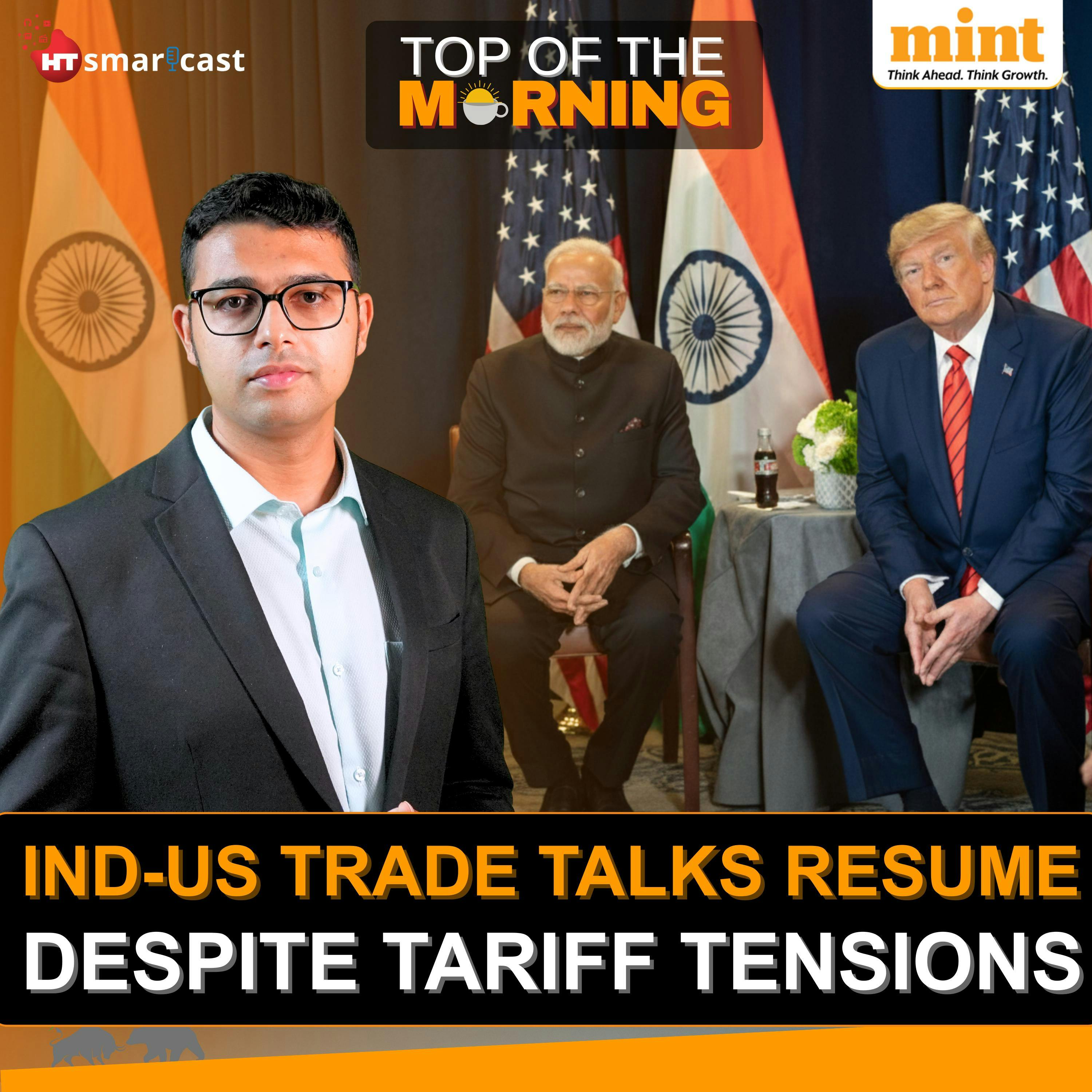
IRCTC: No ID, No Seat | Gaza Under Fire | Dehradun Cloudburst | India–US Trade Resume
Welcome to Top of the Morning by Mint.. I’m Nelson John and here are today’s top stories. India's Supreme Court delivered a crushing victory for the Ambani family, declaring their massive Vantara zoo legally untouchable and slamming the door on future complaints. The 3,500-acre facility housing 2,000 species survived allegations of smuggling and money laundering after a thorough investigation. Meanwhile, India-US trade talks resumed with Washington's chief negotiator flying to New Delhi. After the US slapped brutal 50% tariffs on India over Russian oil purchases, both sides are pushing for a deal by fall 2025. The stakes are high - India's been cozying up to China while these talks stalled. Domestically, railways announced that starting October 1, only Aadhaar-verified users can book tickets during the crucial first 15 minutes online. Out of 130 million IRCTC users, only 12 million are verified - meaning 118 million need to authenticate or wait. Nature struck Uttarakhand as cloudbursts swallowed the ancient Tapkeshwar temple in Dehradun. No lives lost, but it's part of escalating Himalayan disasters that killed 200+ in 2021's Chamoli catastrophe. Globally, Gaza burns under relentless bombing just after US Secretary Rubio's Jerusalem visit backing Israel's assault. At least 16 Palestinians died as America signals no immediate ceasefire push. Learn more about your ad choices. Visit megaphone.fm/adchoices
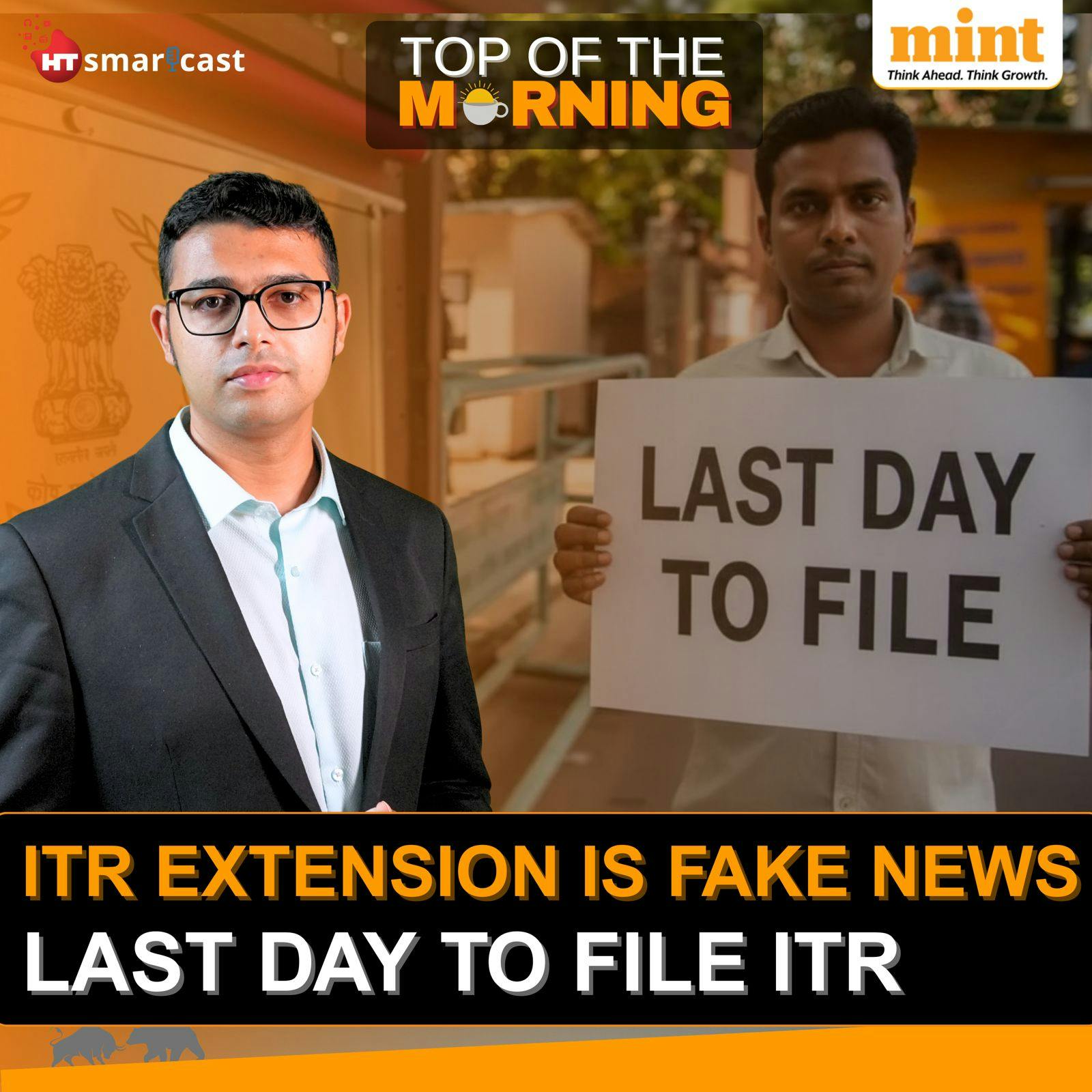
GST Cuts Trigger Stock Clearance | Trump Responds To Brutal Dallas Case | Tax Dept Busts Rumor
Welcome to Top of the Morning by Mint.. I’m Nelson John and here are today’s top stories. No Extension on ITR Filing The Income Tax Department has shut down viral fake news about another deadline extension. September 15 stays the final date to file returns, despite a bogus notice circulating online. Over 6 crore ITRs have already been filed, and officials are urging last-minute filers to act now. #IncomeTax #ITRFiling #FakeNewsAlert #TaxDeadline GST Cuts Spark FMCG Rush India’s consumer goods majors are liquidating stock before GST rates drop on September 22. From shampoo to butter, taxes will fall sharply, pushing HUL, P&G, and L’Oréal to offer steep discounts. The idea: clear old inventory before new lower prices kick in. Consumers could see big festival season savings. #GSTCuts #FMCG #Discounts #FestivalShopping Dallas Murder Fuels Immigration Clash An Indian-origin motel manager was brutally beheaded in Dallas by a Cuban migrant with a long criminal record. The suspect had avoided deportation after Cuba refused to take him back. The killing has ignited a political firestorm, with Trump blaming the Biden administration’s immigration policies. #DallasMurder #ImmigrationCrisis #Trump #USPolitics Far-Right Surge in London Over 100,000 people joined Tommy Robinson’s “Unite the Kingdom” march, one of the largest far-right rallies in UK history. The protest focused on immigration, with clashes breaking out between demonstrators and counter-protesters. Police made multiple arrests as tensions ran high. #LondonProtest #FarRight #ImmigrationDebate #UKPolitics Tata Bets Big with Global JVs Tata International is investing $100 million in two joint ventures — one with Mitsubishi to expand in Africa, and another with Mercuria for commodities trading. The goal is clear: move beyond shoes and auto parts and emerge as a global trading powerhouse. #TataInternational #GlobalTrade #Mitsubishi #Mercuria Learn more about your ad choices. Visit megaphone.fm/adchoices

Mahindra E20 Fuel Advisory | No Palestinian State: Netanyahu | Canada Tightens Student Visas
Welcome to Top of the Morning by Mint.. I’m Nelson John and here are today’s top stories. Infosys is launching its largest-ever buyback, repurchasing shares worth ₹18,000 crore at a 19% premium. The move matches TCS’s record buyback but covers a bigger slice of equity, signalling confidence after a 20% stock slump this year. Analysts say it’s a clear sign the stock is undervalued, even as the IT sector battles slowing growth and cautious investors. PM Mark Carney announced Canada will cap temporary residents, including foreign students, at under 5% of the population by 2027. Already, Indian students are reeling — four out of five faced rejections this quarter, with study permits dropping 66% year-on-year. The cuts reflect anti-immigrant sentiment and pressure on housing and jobs, reshaping Canada’s image as a top study hub. Donald Trump’s pick for US ambassador to India, Sergio Gor, told senators a trade deal with New Delhi could be sealed “within weeks.” He credited Trump’s personal friendship with PM Modi for keeping talks alive despite earlier tensions over Russian oil. The plan: deepen defence ties, push big-ticket arms sales, and double trade to $500 billion by 2030. In the West Bank, Israeli PM Benjamin Netanyahu bluntly declared: “There will never be a Palestinian state.” He signed off on the $1 billion E1 settlement project, a move critics say could kill the two-state solution. The announcement, coming days after Israel’s strike attempt on Hamas leaders in Qatar, risks isolating Israel further as some Western nations weigh recognising Palestine at the UN. Learn more about your ad choices. Visit megaphone.fm/adchoices

Modi Rebukes Israel | UPI Raises Limit | UN Spat with Switzerland | Wangchuk’s 35-Day Fast
Welcome to Top of the Morning by Mint.. I’m Nelson John and here are today’s top stories. Wangchuk’s Hunger Protest in Ladakh Sonam Wangchuk has begun a 35-day fast, demanding statehood and Sixth Schedule protection for Ladakh. With Gandhi Jayanti as a symbolic milestone, Wangchuk says Delhi’s silence has pushed locals to the edge. Patience is running thin since Article 370’s revocation left the region without autonomy. UPI Levels Up Digital payments just got a boost. Starting Sept 15, UPI limits rise to ₹10 lakh for insurance, travel, and capital markets, and ₹6 lakh for credit card and jewellery purchases. With over 10 billion monthly transactions, UPI is now more than small payments — it’s India’s financial backbone. Modi Rebukes Israel Over Qatar Strike Israel’s hit on Hamas leaders inside Doha drew an unusually sharp response from PM Modi, condemning the “violation of Qatar’s sovereignty.” With 8.3 lakh Indians in Qatar and $14 billion trade ties, India’s balancing act between Israel and Qatar just got trickier as ceasefire efforts wobble. Defense Deals Survive Tariff Storm Despite Trump’s tariff offensive, the US and India are moving ahead with talks for six more P-8I surveillance aircraft worth $4B. With China looming in the Indian Ocean, both sides know defense ties outweigh political spats. India’s Diplomatic Punch at UN When Switzerland criticized India on minority rights, diplomat Kshitij Tyagi hit back, citing Swiss racism and xenophobia. With Switzerland chairing the UNHRC, India’s rebuttal was sharp and unapologetic — a sign of growing confidence to push back on global criticism. Learn more about your ad choices. Visit megaphone.fm/adchoices

India–Israel Pact | Nepal’s Youth Revolution | India’s VP Elections Today | India–Israel Pact
Welcome to Top of the Morning by Mint.. I’m Nelson John and here are today’s top stories. Power Shifts in Motion The world feels off its axis. India is choosing a new vice president while fending off Trump’s trade wars. Nepal’s Gen Z has taken to the streets in bloody clashes against corruption. The US just slammed shut a visa loophole Indians depended on. And India and Israel are sealing billion-dollar investment deals even as rockets fly. Different stories, same thread: power — who has it, who wants it, and how far they’ll go to keep it. US Visa Roadblock America now requires all Indians to apply at home, ending the long-used “fast track” via other countries. Wait times stretch up to 9 months, and with interview waivers gone, even kids and seniors must queue. Business trips and family emergencies just got harder. India’s VP Race After Jagdeep Dhankhar’s sudden health resignation, two southern heavyweights battle for the VP chair. BJP’s CP Radhakrishnan has the numbers, but the opposition’s Sudershan Reddy keeps the fight alive. A secret ballot could still spring surprises. Trade Wars Heat Up At a BRICS summit, India’s S. Jaishankar slammed Trump’s punitive tariffs, calling out “weaponized trade.” With China and Russia backing him, BRICS is drawing battle lines that could reshape global commerce. Nepal’s Youth Revolution Nineteen killed, over 100 injured as Nepal’s Gen Z confronted corruption in Kathmandu. Sparked by TikTok clips of politicians’ kids flaunting wealth, the protests mirror Sri Lanka and Bangladesh’s youth-led uprisings. A government crackdown may have only fueled the fire. India–Israel Pact New Delhi and Jerusalem signed an ironclad investment treaty shielding investors and opening trade corridors. With $3.76B trade already flowing, the deal expands into fintech, defense, and cyber. Both nations gain: Israel’s tech meets India’s market scale. Learn more about your ad choices. Visit megaphone.fm/adchoices
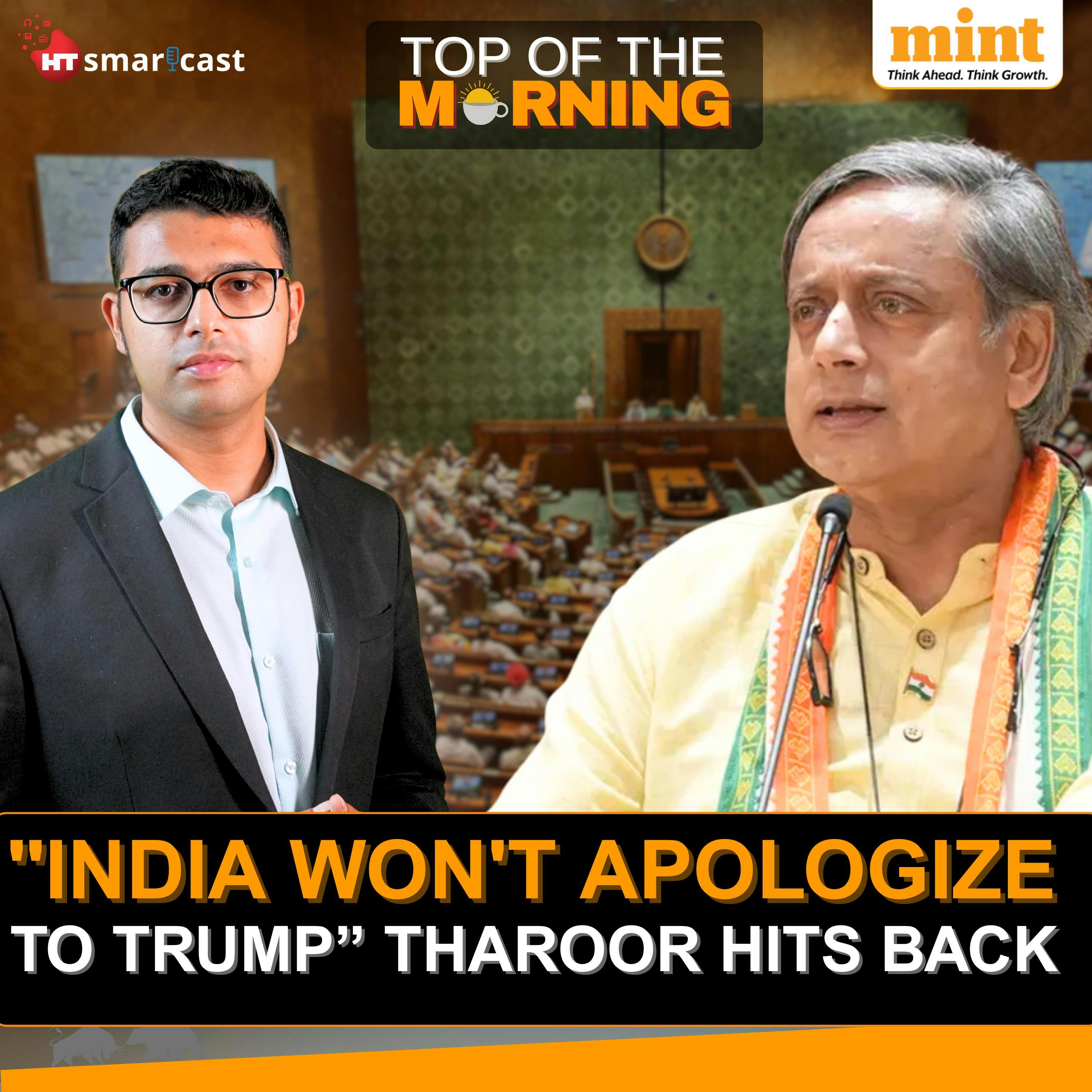
UK’s Tihar Jail Inspection | Physics Wallah IPO | India Hires Trump Ally | Tharoor Calls Out US Bluff
Welcome to Top of the Morning by Mint.. I’m Nelson John and here are today’s top stories. Tariffs, Oil & Trump’s India Puzzle Trump doubled tariffs on India to 50% over Russian oil purchases, hoping Delhi would bend. It hasn’t. Ex-diplomat KP Fabian says Trump’s “Triple T – Trumped-up Trump Tariffs” failed. Modi and Trump still call each other “friends,” but beneath the smiles, India is sticking to its long game: dealing with the US, Russia, and China without picking sides. Tharoor Fires Back Congress MP Shashi Tharoor dismissed US Commerce Secretary Howard Lutnick’s claim that India will “say sorry” to Trump. “We have nothing to apologize for,” he said, pointing out that past US governments encouraged India to buy Russian oil. With Trump’s team threatening harsher sanctions, Tharoor warned against his “mercurial temperament,” stressing India’s right to protect its energy security. Physics Wallah’s $437M Leap As Byju’s and Unacademy crash, Physics Wallah is preparing a $437 million IPO. Revenue jumped 49% to $330 million, losses shrank, and the founders are betting on affordable, quality learning and physical coaching centers. Proof that content beats hype. Tihar’s Image Makeover To overcome UK courts blocking extraditions, India let British officials inspect Tihar Jail. They were “largely impressed,” and Delhi even offered a special enclave for fugitives. With 178 extradition cases pending, including Mallya and Nirav Modi, India is desperate to fix its global image. India’s $1.8M Trump Whisperer India hired Trump’s ex-strategist Jason Miller for $1.8M a year to lobby in Washington. Miller recently posed with Trump at the White House, signaling Delhi now has a direct line into Trumpworld—an investment already paying off. Learn more about your ad choices. Visit megaphone.fm/adchoices

Swiggy, Zomato hike fees | Ola stake Sale | Gold slips, Stocks Jump | India & Singapore Seal Big Deals
Welcome to Top of the Morning by Mint.. I’m Nelson John and here are today’s top stories. Food apps hike festive fees Swiggy and Zomato (now Eternal) have raised platform fees—₹15 and ₹12 in metros—while adding surge, rain, and distance charges. With GST now at 18% on deliveries, your festive orders will cost more. But convenience rules, and platforms know demand spikes 30–50% during this season. Even a ₹2–3 hike per order translates into crores as they process 5 million orders daily. Afghan quake toll rises Twin earthquakes have killed over 2,200 and injured 3,600 in eastern Afghanistan, flattening villages and leaving 6,700 homes in ruins. Survivors face harsh weather and dwindling aid as the UN warns food and medicine could run out in weeks. Entire communities are shattered, with almost 98% of homes destroyed in some districts. EU looks to India European Commission chief Ursula von der Leyen says India has a key role in ending the Ukraine war, after talks with PM Modi. Both sides also push to conclude a long-delayed free trade pact this year, with the next round of talks set for September 8 in New Delhi. Gold slips, stocks jump Gold cooled as investors shifted to equities after GST reforms. MCX gold futures fell to ₹1,06,704, silver to ₹1,24,850, even as Sensex and Nifty rallied nearly 1%. Analysts advise booking profits and waiting for dips before fresh gold buys. SoftBank trims Ola stake SoftBank cut its Ola Electric holding to 15.68%, selling 95 million shares. Ironically, Ola stock soared 61% in August—its best rally since listing—driven by Bhavish Aggarwal’s roadmap and China lifting rare earth restrictions. Losses narrowed, but revenue halved year-on-year. Learn more about your ad choices. Visit megaphone.fm/adchoices

GST Reforms, What’s Cheaper | Cyberattack Hits JLR | Xi’s Power Parade | Putin Invites Zelensky
Welcome to Top of the Morning by Mint.. I’m Nelson John and here are today’s top stories. Rat Bite Horror in Indore Two newborns bitten by rats inside Indore’s government-run MY Hospital died within 24 hours, sparking outrage. Hospital authorities insist the deaths were due to septicemia and congenital conditions, not the bites. But the Madhya Pradesh Human Rights Commission has demanded answers, opposition leaders call it systemic negligence, and the state government has suspended staff and fined the pest control agency. For grieving families, accountability comes too late. China’s Power Parade Marking 80 years since WWII, Xi Jinping unveiled a stunning display of military might in Beijing. From hypersonic Yingji missiles and DF-series ICBMs to stealth fighters, drones, and truck-mounted lasers, the showcase highlighted China’s growing edge in numbers and technology. Analysts, though, caution that parade power doesn’t equal battlefield experience—yet Beijing’s message to rivals is unmistakable: it’s preparing to outproduce and outpace them. Jaguar Land Rover Cyber Hit Luxury automaker JLR confirmed a cyberattack that forced global system shutdowns, disrupting production and retail. While no customer data breach is evident, the disruption adds to its troubles—delayed EV launches and trade headwinds. The attack highlights how UK firms remain prime targets for sophisticated hackers, raising fresh alarms on corporate cyber readiness. Putin Opens Door to Zelensky Talks In Beijing, Vladimir Putin said he’s ready to meet Ukraine’s Volodymyr Zelensky in Moscow—if talks are well-prepared. But he also warned Russia would continue fighting if diplomacy fails. With Trump pushing for a trilateral summit, both sides trade blame for delays. For now, Putin’s remarks offer only a slim glimmer of dialogue amid the grinding war. GST Rate Reset Before Diwali Finance Minister Nirmala Sitharaman’s GST Council has slashed rates on essentials—footwear and clothes up to ₹2,500 now fall under the 5% slab, doubling the earlier limit. Bigger reforms are coming: most 12% goods will drop to 5%, and many 28% items to 18%. Sin goods stay at 40%. The move ties back to PM Modi’s “Diwali gift” promise—lighter bills for households, heavier worries for states losing tax revenue. Learn more about your ad choices. Visit megaphone.fm/adchoices

Singapore PM in India | TCS $640M Deal | Pakistan Woos Russia | Sitharaman’s Reform Push
Welcome to Top of the Morning by Mint.. I’m Nelson John and here are today’s top stories. India is at the center of some big moves this week—diplomatic, economic, and corporate. In Beijing, Pakistan’s PM Shehbaz Sharif tried to woo Vladimir Putin, praising Russia’s “balancing act” in South Asia and calling him a “dynamic leader.” But here’s the truth—India’s ties with Moscow run deeper, built over decades of defense and energy cooperation, far outweighing Islamabad’s fresh overtures. Meanwhile, Singapore’s new PM Lawrence Wong has chosen New Delhi for his maiden visit, underlining confidence in India’s growth story. Deals on aviation, space, finance, and digital innovation are on the table, along with a $1.3 billion PSA port project. Singapore remains India’s top investor and is doubling down with plans to put in $15 billion this year. On the energy front, Russia has offered India even bigger discounts on crude, just as the Trump administration slapped 50% tariffs on Indian exports. New Delhi isn’t backing down—its refiners find Russian oil too cost-effective to resist. PM Modi reinforced at the SCO summit that Russia remains a “special partner.” Back home, Tata Consultancy Services finally landed a mega deal after a long dry spell—a $640 million contract with Danish insurer Tryg. The win comes at a time when rivals have been snapping up billion-dollar clients and TCS faces investor concerns after weak growth and job cuts. And setting the stage for long-term reform, finance minister Nirmala Sitharaman announced a new task force to cut red tape and ease compliance for small businesses, paired with GST reforms. With GDP at 7.8%, inflation at an eight-year low, and a recent S&P upgrade, India’s economic resilience is shining through. Learn more about your ad choices. Visit megaphone.fm/adchoices

Rupee Record Low | SpiceJet Fined Over 14-Hour Delay | SCO Backs India After Pahalgam Attack | Afghanistan Earthquake
Welcome to Top of the Morning by Mint.. I’m Nelson John and here are today’s top stories. Quake Flattens Afghan Villages A 6.0 earthquake has left eastern Afghanistan shattered — more than 800 killed, nearly 3,000 injured. Entire villages in Kunar province are gone, with survivors describing terrifying jolts and endless aftershocks. Helicopters are the only way in as floods and landslides block roads. Hospitals in Jalalabad are overwhelmed, and the Taliban has appealed for urgent international aid. SCO Backs India on Terror At its Tianjin summit, the Shanghai Cooperation Organisation strongly condemned the Pahalgam terror attack and backed India’s demand that “double standards” on terrorism must end. Leaders from India, China, Russia, and Pakistan signed a declaration pledging zero tolerance for terror and more cooperation against cross-border threats. The statement also condemned violence in Gaza and strikes on Iran, while urging reforms at the UN, IMF, and World Bank. India, however, refused to endorse China’s Belt and Road Initiative. Trump Targets India Again US President Donald Trump has reignited trade tensions, calling the India-US equation a “one-sided disaster.” He claimed India has offered to cut tariffs on American goods to “nothing,” but also linked Washington’s steep 50% tariffs to India’s oil trade with Russia. New Delhi has pushed back, defending farm protections and accusing the US of moving the goalposts. Rupee Sinks to 88.33 The Indian rupee has slipped to a fresh record low of 88.33 against the dollar, pressured by US tariffs, heavy importer hedging, and foreign outflows. Analysts warn it could slide toward 89–90 if the dispute drags on, though RBI may intervene. This comes even as India’s economy logged a robust 7.8% growth last quarter. SpiceJet Fined Over Delay A Mumbai consumer court has ordered SpiceJet to pay ₹55,000 to a passenger after a 14-hour Dubai–Mumbai delay where the airline served only a burger and fries. The ruling reminded carriers that technical glitches don’t excuse neglecting passengers. Learn more about your ad choices. Visit megaphone.fm/adchoices

Modi–Xi Reset at SCO | Macron Recognizes Palestine | Tokyo Bets Big on India’s Growth Story | Trump May Skip India Visit
Welcome to Top of the Morning by Mint.. I’m Nelson John and here are today’s top stories. Dragon & Elephant Talk Peace In Beijing, Prime Minister Narendra Modi and President Xi Jinping struck a rare note of harmony at the SCO summit. After years of border tensions, both leaders stressed that India and China are “partners, not rivals,” agreeing to resume direct flights and even restart the Kailash Mansarovar Yatra. Xi said it was “vital for the dragon and elephant to walk together” in shaping a multipolar world. Macron Rekindles Two-State Push In Paris, Emmanuel Macron reignited the two-state debate by recognizing Palestine, despite protests from Israel and the US. Macron argued Gaza’s humanitarian crisis demands urgent action, while critics warned recognition could embolden militants. Several Western nations may follow France’s lead at the UN next month. India’s Next Biofuel Leap New Delhi is moving its biofuel experiment off the roads and onto construction sites. Bulldozers, cranes and heavy carriers that consume nearly 4% of India’s diesel could soon run on blended fuels. The move cuts oil imports, lowers emissions, and boosts farmer incomes by using crop-based fuels. Trump Skips India Visit US President Donald Trump may cancel his India trip and skip the Quad summit after slapping tariffs on Indian goods. Beyond trade, tensions stem from Trump’s claim that he personally brokered peace between India and Pakistan — a claim New Delhi strongly rejects. India & Japan Seal $68B Pact In Tokyo, Modi and Prime Minister Shigeru Ishiba announced a 10-year roadmap, with Japan pledging $68 billion in private investment into India. Both leaders called it a “golden chapter,” combining Japanese technology and Indian talent to drive growth, while reinforcing security ties in the Indo-Pacific. Learn more about your ad choices. Visit megaphone.fm/adchoices
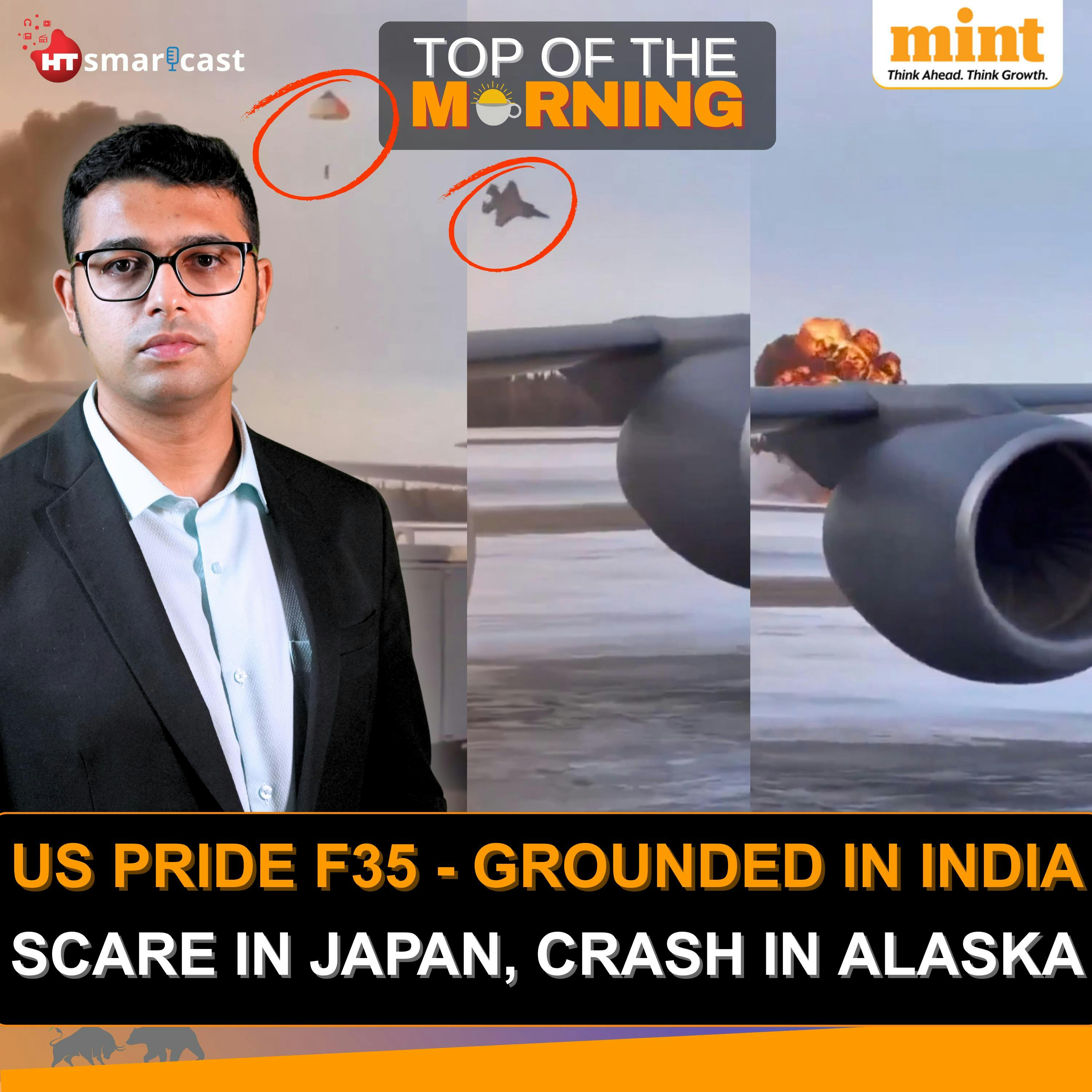
Groww Clears $1 Billion IPO | 40% Women Feel Unsafe | India Rolls Out First Chip | $200M Fighter Falls From Sky
Welcome to Top of the Morning by Mint.. I’m Nelson John and here are today’s top stories. F-35 Crash: Ice Brings Down $200M Jet In Alaska, a $200 million F-35 fighter jet crashed after its pilot spent nearly an hour circling mid-air on a live call with Lockheed Martin engineers. The cause? Ice in the hydraulic lines that froze the landing gear and tricked the jet into “ground mode.” The pilot ejected safely, but the crash added to a tally of 15 F-35 accidents worldwide. Earlier this year, another F-35 was grounded in Kerala and one made an emergency landing in Japan—raising questions about the reliability of America’s most advanced fighter. India’s First Made-in-India Chip Rolls Out In Sanand, Gujarat, India celebrated a milestone as IT minister Ashwini Vaishnaw inaugurated the country’s first packaged semiconductor chip from CG Semi’s pilot OSAT facility. The ₹600 crore G1 unit can produce half a million chips a day, with a much larger G2 plant set to follow next year. Together, they aim for 4.7 billion chips annually, serving electronics, auto, and EV sectors. Sanand is fast becoming India’s chip hub under the ₹76,000 crore Semiconductor Mission. 40% of Urban Women Feel Unsafe: NARI 2025 A new survey across 31 cities shows 40% of women in India’s urban areas feel unsafe. In 2024, 7% reported harassment—100 times higher than official crime data. Delhi, Kolkata, Ranchi, and Patna ranked least safe, while Mumbai and Kohima were rated safer. Only 22% reported incidents to authorities; over half were unsure if their workplaces had the legally mandated POSH policy. Groww Eyes $1B IPO Amid Investor Exodus Bengaluru-based Groww has SEBI’s approval to raise $800 million–$1 billion in an IPO. Backed by GIC, Tiger Global, and Satya Nadella, Groww heads to markets even as discount brokers lost nearly 2 million clients in 2025. Stricter SEBI rules on F&O trading have cooled retail participation. Still, Groww’s profits tripled to ₹1,819 crore, showing strength despite the turbulence. India to Be World’s No. 2 Economy by 2038: EY EY projects India’s GDP at $34.2 trillion by 2038 in purchasing power parity terms, overtaking most economies. PPP, which adjusts for cost-of-living differences, shows India’s consumer strength and competitiveness more accurately than volatile market exchange rates. Learn more about your ad choices. Visit megaphone.fm/adchoices

India’s New War Doctrines | Modi in Japan | Indigo Stake Sale: Most Spectacular Exits In Indian Business History
Welcome to Top of the Morning by Mint.. I’m Nelson John and here are today’s top stories. US Tightens Visas DHS plans to scrap open-ended stays for students and visitors, capping F and J visas at four years, cutting grace periods, and limiting program changes. Officials cite security and oversight as millions enter each year. India’s New War Doctrines Three doctrines unveiled—Special Forces, airborne ops, and multi-domain warfare—aim to unify the Army, Navy, and Air Force for future conflicts across land, sea, space, and cyber. Modi in Japan PM Modi begins his first solo visit to Japan in seven years. Talks with PM Ishiba will cover semiconductors, EVs, bullet trains, and Indo-Pacific security under the Quad. Next stop: China for the SCO summit. Tariff Tensions US tariffs on Indian goods now at 50%, targeting Russian oil buys. Treasury chief Bessent says ties are “complicated” but insists Modi and Trump will “come together.” India calls the move unjustified. Gangwal’s Mega Exit IndiGo co-founder Rakesh Gangwal turns a ₹15 crore bet into ₹45,000 crore, pulling off one of the most spectacular exits in Indian business history. Learn more about your ad choices. Visit megaphone.fm/adchoices

US to Scrap Green Card for Gold Card? | US-Russia Energy Talks | 50% India Tariffs Is On
Welcome to Top of the Morning by Mint.. I’m Nelson John and here are today’s top stories. Trump’s 50% Tariffs on India Starting August 27, Indian exports to the US will face a steep 50% tariff. President Trump doubled duties earlier this month, punishing India for buying Russian oil—a move New Delhi calls “unfair and unreasonable.” Pharma, electronics, and key metals are exempt, but most exports will be hit. PM Modi, striking a defiant note, urged Indians to go “swadeshi” while officials brace exporters for a slowdown. US Pushes ‘Gold Card’ Visa Commerce Secretary Howard Lutnick says the Trump administration is set to overhaul the H1-B and green card system. The proposed “Gold Card” would give residency to foreigners investing $5 million. Officials claim 250,000 people are already interested, potentially generating $1.25 trillion. H1-B visas, meanwhile, could shift from a lottery to a wage-based system, prioritising higher-paying jobs—tough news for Indian tech workers. Modi to Attend SCO in China PM Modi will travel to Tianjin next week for the SCO summit—his first China visit in seven years. Alongside Xi Jinping and Vladimir Putin, leaders from across Asia will attend what Beijing hopes is a show of Global South unity. Analysts say Modi may use the moment to reset ties with China after the 2020 border clashes, while Xi will showcase a “post-American-led world.” US-Russia Explore Energy Deals Even as India is punished for trading with Russia, Washington may be cutting its own deals with Moscow. Reports suggest talks are on to let Exxon Mobil re-enter Russia’s Sakhalin-1 project, allow sales of US equipment for LNG projects, and even buy nuclear icebreakers from Russia. The timing raises eyebrows: Trump penalises India for Russian oil but explores energy ties with Putin himself. HAL Orders 113 Jet Engines HAL is set to sign a $1 billion deal with GE Aerospace for 113 GE-404 engines to power nearly 200 LCA Mk-1A fighters. These jets will replace India’s retiring MiG-21s. Delivery delays, however, have raised doubts within the Air Force. HAL is also negotiating joint production of GE-414 engines for the upcoming LCA Mk-2, a deal with 80% tech transfer—crucial to India’s defence self-reliance push. Learn more about your ad choices. Visit megaphone.fm/adchoices

India’s New Tax Law SOP | Trump Spares China, Hits India | India’s MiG-21 Era Ends | Trump’s 600k Student Remark Backfires
Welcome to Top of the Morning by Mint.. I’m Nelson John and here are today’s top stories. MiG-21 Retires After nearly 60 years in service, India’s iconic MiG-21 is flying into history. Air Chief Marshal Amar Preet Singh marked the farewell with a formation flight alongside No. 23 Squadron, led by Sqn Ldr Priya. Official retirement comes on September 26, closing a legendary chapter in IAF history. Trump Targets India From the Oval Office, Donald Trump praised China while warning India. He spared Beijing but pressed ahead with a 50% tariff on Indian imports, citing New Delhi’s sharp rise in Russian oil purchases—from under 1% before the Ukraine war to 42% after. Half the tariff is already in place; the rest lands this week. MAGA vs Trump Trump also stirred his base by saying the US would welcome 600,000 Chinese students. Supporters erupted online, calling it a betrayal of “America First.” With 277,000 Chinese students already in US universities and new visa restrictions announced earlier this year, his comment struck many as contradictory. Mail to US Halted Taiwan joined India and Europe in suspending postal services to America after Washington scrapped its duty-free exemption for imports under $800. Now, every international parcel faces customs duties, leaving families, small businesses, and e-commerce players scrambling as the US mailbox effectively shuts to the world. New Tax Rules India readies its Income Tax Act, 2025. To ease transition, CBDT will issue an SOP on digital seizures, clarifying how officials can access electronic data. Ramesh Narain Parbat stressed no new powers were added, only clearer wording. The aim: consistency, transparency, and predictability for taxpayers. Learn more about your ad choices. Visit megaphone.fm/adchoices

Vi on the Brink | Apollo Stake Sale | Visa Freeze After Tragic Crash | India Stands Firm With Russia | Putin’s 3 Demands for Peace
Welcome to Top of the Morning by Mint.. I’m Nelson John and here are today’s top stories. 1. Putin's Three Demands to End the War What does Vladimir Putin actually want to end the war in Ukraine? For the first time, we have a clear picture. Sources close to the Kremlin say Putin has three core demands, reportedly discussed during his recent summit with Donald Trump. First, Ukraine must cede the entire Donbas region. Second, it must abandon its ambition to join NATO. And third, it must remain officially neutral, with no Western troops ever stationed on its soil. 2. India's Defiant Message to the U.S. India’s top diplomat just sent a very clear message to Washington—from inside Moscow. As the U.S. slapped new tariffs on Indian goods over its energy trade with Russia, External Affairs Minister S. Jaishankar met with Vladimir Putin. At a press conference, Jaishankar didn't hold back. "We are not the biggest purchasers of Russian oil—that is China... So why single out India?" he asked, calling the U.S. logic "very perplexing." 3. One Tragic Crash Halts All Foreign Trucker Visas in the U.S. A tragic crash in Florida has triggered a sweeping U.S. government response. Three people were killed after an undocumented Indian national, Harjinder Singh, attempted a reckless U-turn in a tractor-trailer. It was later discovered Singh had obtained a commercial driver's license from California. Now, Washington has slammed the brakes, freezing all new worker visas for foreign truck drivers, effective immediately. Learn more about your ad choices. Visit megaphone.fm/adchoices

Seven-Minute Gaming Ban | Russia’s Oil Promise | Agni-5 Blazes Through Test | Bills That Can Topple Leaders
Welcome to Top of the Morning by Mint.. I’m Nelson John and here are today’s top stories. India flexed its defence muscle by successfully test-firing the Agni-5 ballistic missile from Odisha’s Chandipur range. With a 5,000-km range, it can strike deep into Asia—including northern China—and even parts of Europe. Developed by DRDO, an upgraded 7,500-km version is in the works. The Agni-5 family, now equipped with MIRV tech that can deliver multiple nuclear warheads, sits atop India’s deterrence strategy. PM Modi hailed it as another leap in defence modernisation. In just seven minutes, the Lok Sabha passed one of the toughest gaming laws in the world. The Promotion and Regulation of Online Gaming Bill, 2025, bans all money-based online games—from fantasy cricket to poker and rummy. Operators face up to three years in jail and fines of ₹1 crore; advertising carries its own penalties. With 450 million users and ₹31,000 crore in annual revenues, the industry calls it a “death knell” for 400 startups, 200,000 jobs, and ₹20,000 crore in tax revenues. Critics warn it could drive players to offshore sites, while the government insists e-Sports remain untouched. The bill now heads to the Rajya Sabha. High drama in Parliament as Amit Shah introduced three bills to disqualify the PM, CMs, or ministers if jailed for over 30 days on charges carrying a minimum five-year sentence. Pitched as an anti-corruption measure, the Opposition erupted—calling it unconstitutional, warning it undermines the principle of “innocent until proven guilty.” With memories of Kejriwal and Soren’s arrests fresh, fears of political misuse loom large. The bills are now with a Joint Parliamentary Committee, due to report back in November. Even as US tariffs pile up, Moscow assured India its oil supply is safe. “We have a very special mechanism,” said Russian officials, confirming crude flows to India’s Vadinar refinery remain unaffected by EU sanctions. India now sources nearly 40% of its crude from Russia. On defence, Moscow reminded Delhi it remains the “partner of choice,” citing BrahMos and the S-400’s “successful battle test” in May. With trade at $68.7 billion but a $60 billion imbalance, Russia pledged to ease access and hit $100 billion by 2030. Putin is expected in India later this year. Five years after walking away, India is reconsidering the world’s biggest trade bloc—RCEP. With Trump’s tariffs biting and China easing curbs on exports to India, Delhi is reassessing the costs and benefits of joining the 15-nation pact. Officials want assurances from China and ASEAN for greater market access, especially for pharma and IT. Studies highlight untapped export potential of $161 billion to China, mostly in high-tech goods. With Modi heading to Beijing for the SCO summit, the signals are clear: India is warming up to the East again, even as it faces pressure from the West. Learn more about your ad choices. Visit megaphone.fm/adchoices

India Plans Ban on Money Gaming | China Snaps Up Russian Oil | INDIA Bloc VP Candidate | Monorail Chaos in Mumbai
Welcome to Top of the Morning by Mint.. I’m Nelson John and here are today’s top stories.Monorail Chaos in Mumbai It was a rescue straight out of a disaster drill. Heavy rain stalled two Mumbai monorails on Tuesday—one carrying 200 passengers, another with 582—leaving hundreds trapped mid-air for hours. The worst was at Mysore Colony, where rescuers smashed windows and used cranes and scissor lifts to evacuate over 500 people from a train stuck on a curve. By 9:50 pm, all were safe. Another train between Wadala and Acharya Atre was towed back after 200 passengers were rescued. Officials blamed overcrowding: the monorail overshot its 104-tonne limit, hitting 109 tonnes, which snapped power contact and jammed brakes. Deputy CM Eknath Shinde called it “a major accident averted,” while CM Devendra Fadnavis ordered an inquiry. Meanwhile, local trains—the city’s lifeline—were also hit, with 17 inches of water flooding tracks. For commuters, it was another monsoon reminder of how fragile Mumbai’s transport really is. India is preparing a sweeping ban on online games played with money, potentially shaking a sector worth billions. A draft bill reviewed by Reuters says no one can “offer, aid or engage” in real-money gaming. That would put fantasy cricket giants Dream11 ($8B) and Mobile Premier League ($2.5B) in the firing line. The government argues these apps use “addictive algorithms” that fuel compulsive behaviour and financial ruin. Offenders could face up to three years in jail. With India’s gaming market projected at $3.6B by 2029, the ban could send shockwaves through investors. Popular during IPL season, these apps allow entry for as little as 8 rupees with million-rupee prize pools, often endorsed by cricket stars. Now the government’s message is blunt: play for fun, not for money. As India pulls back, China is stepping in. Analysts say Chinese refiners bought 15 cargoes of Russian Urals crude for October–November, each up to a million barrels. Until last month, India was Russia’s biggest seaborne buyer, but shrinking discounts made state refiners pause—cutting imports by nearly 700,000 barrels/day. China, the world’s top importer, usually buys ESPO crude from Russia’s Far East, but cheaper Urals—priced $2–3 below Middle Eastern oil—sparked fresh demand. The shift could pressure Dubai crude, already softening. Yet, analysts caution Beijing won’t absorb all volumes; Urals isn’t a staple grade for its refineries. Another risk: U.S. sanctions. Donald Trump hinted penalties could hit buyers of Russian oil “in two or three weeks” if peace talks stall. For now, the balance tilts: India out, China in—with Washington watching. The Opposition’s Vice-Presidential candidate, B. Sudershan Reddy, kept his message simple: “There’s only one citizenship in this country.” He faces NDA nominee and Maharashtra governor CP Radhakrishnan in the September 9 vote. Both hail from the south—Radhakrishnan from Tamil Nadu, Reddy from Andhra Pradesh—adding a subtle regional undertone. But Reddy, a former Supreme Court judge and Goa’s first Lokayukta, stressed unity: MPs, not the public, elect the Vice President, he reminded. Born in 1946, Reddy rose from Andhra Pradesh’s High Court to Chief Justice of the Gauhati High Court, and in 2007, the Supreme Court, serving until 2011. His candidacy, announced at Congress chief Mallikarjun Kharge’s residence, sets up a heated Parliament battle. In a move seen as breaking the ice, India scrapped customs duty and cess on cotton imports until September 30. The exemption, cutting the 11% levy to zero, directly benefits American exporters pushing for access amid escalating tariffs. Cotton is critical for India—employing 35 million people and driving 80% of textile exports. With domestic output slipping and prices tight, the duty cut also helps local mills ahead of the festive season. Learn more about your ad choices. Visit megaphone.fm/adchoices

GST 2.0 Is Coming | Putin Agrees to Meet Zelensky | Putin Calls Modi After Trump Meet | Will Modi and Xi Break the Ice?
Welcome to Top of the Morning by Mint.. I’m Nelson John and here are today’s top stories. Trump Pushes Biggest Ukraine Breakthrough Yet After nearly four years of war, Washington may have delivered the most concrete peace opening so far. On Monday, President Donald Trump hosted Ukrainian leader Volodymyr Zelensky and seven top European leaders to discuss security guarantees for Kyiv. The real headline came right after: Trump called Vladimir Putin for a 40-minute conversation and set the stage for a potential Putin–Zelensky face-to-face within two weeks. Trump later said he hopes to follow that with a trilateral summit including himself. Zelensky described his meeting with Trump as the “best conversation so far,” while NATO’s Mark Rutte hailed Trump’s offer of NATO-style guarantees as a “breakthrough.” France’s Emmanuel Macron and Germany’s Friedrich Merz called for Europe’s role in shaping long-term security and pressed for a ceasefire as a first step. Italy’s Giorgia Meloni and Britain’s Keir Starmer stressed that only ironclad safeguards can deliver lasting peace. Finland’s Alexander Stubb noted more progress in two weeks “than in three and a half years.” For the first time in years, the US, EU, and Ukraine seem aligned on a peace path. India’s Big GST Reset Before Diwali On Independence Day, the Finance Ministry announced sweeping reforms to simplify GST. Instead of four slabs—5, 12, 18 and 28 percent—the new plan proposes just three: 5, 18, and a 40 percent “sin tax” for items like tobacco and beer. Nearly all goods in the 12 percent bracket could drop to 5 percent, making groceries, medicines, footwear, and even appliances cheaper. Most 28 percent items would shift to 18 percent, cutting costs on furniture, electronics and more. Putin Calls Modi Amid Peace Push While Trump worked the phones with Putin, Moscow also reached out to New Delhi. On Monday, Putin called Prime Minister Narendra Modi, briefing him on the Alaska talks with Trump. Modi reiterated India’s consistent line—support for dialogue and a peaceful settlement. The timing was striking: just hours before Trump’s White House meeting with Zelensky. Yet this diplomatic outreach comes with pressure. India–China Relations Thawing For the first time since the bloody Galwan clashes of 2020, India and China are signaling a thaw. External Affairs Minister S. Jaishankar met Chinese Foreign Minister Wang Yi in New Delhi, insisting that peace and de-escalation along the Line of Actual Control are essential. “Differences must not become disputes,” he said. Already, concrete steps are visible: the Kailash Mansarovar Yatra has resumed after five years, India has reopened tourist visas for Chinese nationals, and talks are underway to restart direct flights. Wang Yi pointed to “shared confidence” driving progress and said both nations can offer stability to Asia and the world. The real test could come later this month, when Prime Minister Modi and President Xi Jinping are expected to meet on the sidelines of the SCO Summit—potentially turning a painful page in bilateral ties. Learn more about your ad choices. Visit megaphone.fm/adchoices

NDA's VP Pick | US-India Deal Off? | Apple Bets Big In Bangalore | Europe Rushes to Washington
Welcome to Top of the Morning by Mint.. I’m Nelson John and here are today’s top stories. Putin’s ‘Jelly Legs’ Steal Spotlight Forget the Alaska handshake—what went viral after Trump and Putin’s summit was the Russian president’s shaky stance. Kremlin footage showed Putin’s knee twitching and toes lifting as he chatted with Trump, sparking a flood of online theories. Ukrainians joked about hidden shoe lifts and exoskeletons, while others speculated about illness, dubbing it “jelly legs.” Some even claimed it wasn’t Putin at all, but a body double—pointing to his missing “gunslinger gait,” a hallmark of his KGB training. The Kremlin has stayed silent, but the optics of wobbly knees may have upstaged Trump’s claims of “big progress.” India-US Trade Talks Collapse A breakthrough in India-US trade is off the table for now. Washington has called off its negotiators’ trip to New Delhi, originally planned for August 25–29. That leaves little hope of avoiding Trump’s steep new tariffs—hiked to 50% on Indian goods—set to take effect August 27. Trump says the penalties are “punishment” for India’s Russian oil purchases, which he argues bankroll Moscow’s war. Five rounds of talks collapsed over two sticking points: opening India’s farm and dairy markets, and cutting oil ties with Russia. India hit back, accusing the US and Europe of hypocrisy for still buying Russian goods. For now, tariffs are locked in, and businesses brace for impact. NDA Picks CP Radhakrishnan as VP Candidate India’s ruling NDA has named Maharashtra Governor C. P. Radhakrishnan as its candidate for Vice-President. Union Minister Jitan Ram Manjhi made the announcement on August 17, with elections slated for September 9. A veteran BJP leader from Tamil Nadu, Radhakrishnan has served as governor in multiple states and is a two-time MP from Coimbatore. His nomination balances experience with regional representation, and the NDA’s numbers got a boost as Shiv Sena pledged unconditional support. The move is seen as another carefully placed piece in India’s political chessboard. Trump Teases ‘Big Progress’ with Russia President Trump is fanning speculation after his three-hour Alaska summit with Vladimir Putin—the first time Putin has set foot on Western soil since 2022. On Truth Social, Trump posted in all caps: “BIG PROGRESS ON RUSSIA. STAY TUNED!” His envoy later hinted at “game-changing” security guarantees for Ukraine, though reports suggest a controversial land-for-peace deal could be on the table. Alarmed, European leaders will join Zelensky in Washington for urgent talks with Trump. Macron, Starmer, Meloni, Merz, and Ursula von der Leyen are flying in, hoping to stiffen Ukraine’s position as Trump presses for a quick peace. The stage is set for a high-stakes diplomatic showdown. Apple’s ₹1,000-Crore Bengaluru Bet Apple has made a blockbuster real estate move in Bengaluru—inking a 10-year lease worth over ₹1,000 crore for nearly 2.7 lakh sq ft in Embassy Zenith, a new tower built on the old Le Meridien site. The rent—₹235 per sq ft per month—sets a city record, with Apple shelling out ₹6.3 crore every month for nine floors, plus parking for 362 cars. The lease includes a 4.5% annual hike and an option to expand further. Propstack’s Raja Seetharaman calls it a “huge vote of confidence” in India, aligning Apple’s office expansion with its booming iPhone manufacturing push. Together, it cements India’s role at the center of Apple’s global supply chain. Learn more about your ad choices. Visit megaphone.fm/adchoices

MLC Kills 2,800 Dogs | Perplexity’s $34.5B Chrome Bid | Wang Yi in Delhi | ICICI’s ₹50K Rule Lasted Just Days
Welcome to Top of the Morning by Mint.. I’m Nelson John and here are today’s top stories. Wang Yi’s Delhi Visit: Setting the Stage for Modi’s China Trip China’s foreign minister Wang Yi will be in New Delhi on August 18 to meet NSA Ajit Doval under the Special Representatives dialogue — just ahead of PM Modi’s August 31 visit to Beijing for the SCO summit. The talks aim to rebuild ties fractured by the 2020 Galwan clash that killed 20 Indian soldiers. Recent thaw signs include meetings between EAM Jaishankar and Wang, Defence Minister Rajnath Singh’s China visit, and the resumption of direct Delhi-Beijing flights. Analysts say Trump’s 50% tariff hike on Indian imports has also pushed New Delhi to keep Beijing channels open. Perplexity’s $34.5B Bid for Google Chrome AI search startup Perplexity, led by Aravind Srinivas, has made an audacious $34.5B cash offer to buy Google Chrome — despite being valued at just $18B. The firm, backed by Nvidia and SoftBank, says unnamed funds are ready to finance the deal. Chrome’s 3B users could supercharge Perplexity’s AI browser, Comet. Google hasn’t put Chrome up for sale but faces monopoly rulings and interest from OpenAI, Yahoo, and Apollo. Karnataka MLC Admits to Killing 2,800 Stray Dogs JDS MLC SL Bhojegowda told the Karnataka Legislative Council he poisoned and buried 2,800 stray dogs to curb attacks on poor children. His statement came days after the Supreme Court ordered all stray dogs in Delhi-NCR removed to shelters within eight weeks. The admission has sparked outrage from animal rights groups and could lead to legal consequences. Zelensky Rejects Donbas ‘Land Swap’ Ahead of Trump-Putin Talks With Trump and Putin set to meet in Alaska to discuss ending the Ukraine war, President Volodymyr Zelensky has ruled out ceding Donbas. He insists Ukraine must be part of the talks and warns the region is key to Russia’s future offensives. Trump says he’ll try to win back some territory for Ukraine, but Putin wants Kyiv to withdraw entirely from Donetsk and Luhansk — 9,000 sq km of land Russia hasn’t fully seized in over a decade. Learn more about your ad choices. Visit megaphone.fm/adchoices
Biggest Tax Law Overhaul in 64 Years | South Africa’s ‘Generous’ Offer to US | India-China Ties Take Off Again | Ultraviolette’s $21M EV Boost
Welcome to Top of the Morning by Mint.. I’m Nelson John and here are today’s top stories. SOUTH AFRICA RUSHES TO AVOID US TARIFF HIT South Africa is racing to avert the US’s steepest sub-Saharan tariff yet — 30% on some exports. Pretoria says it’s ready to offer a “broad, generous” trade deal, including more imports of US poultry, blueberries, and pork, to save an estimated 30,000 jobs in an economy with 33.2% unemployment. Agriculture Minister John Steenhuisen and Trade Minister Parks Tau argue SA exports — just 0.25% of US imports — aren’t a threat. Talks, however, are tangled with US concerns over SA’s land reform and race-based job laws, which Trump has criticised. Steenhuisen calls it a “new era” of tariffs tied to politics, while Tau brands the process “unprecedented” and outside WTO norms. INDIA–CHINA FLIGHTS SET FOR TAKE-OFF After four years, direct India–China flights could return by September. New Delhi has told carriers to be ready, with an announcement expected at the SCO summit in China. IndiGo is already preparing. Flights were halted after the 2020 Galwan Valley clashes that froze ties. Recent thaw: India resumed tourist visas for Chinese nationals and agreed to restart the Kailash Mansarovar Yatra. PM Modi is due in Tianjin on Aug 31 for his first China visit in seven years. ULTRAVIOLETTE CHARGES UP WITH $21M FUNDING Bengaluru-based premium e-motorcycle maker Ultraviolette has raised $21M, led by Japan’s TDK Ventures, with continued backing from Zoho, Lingotto, and notable angel investors. Funds will scale manufacturing, R&D, and expand retail from 20 to 100 cities. CEO Narayan Subramaniam says the TDK tie-up accelerates its push for advanced batteries, intelligent systems, and global expansion. NEW TAX ERA FOR INDIA Parliament has passed the Income Tax Bill, 2025, replacing the 1961 Act from April 1, 2026. The rewrite halves the law’s size to 536 sections, swaps “assessment year” for “tax year,” reintroduces some deductions, and keeps tax rates unchanged. It enables tech-driven faceless assessments but retains search-and-seizure powers, raising privacy concerns. The Bill now awaits the President’s assent. ₹18,500 CR PUSH FOR CHIPS, POWER & METRO The Union Cabinet has cleared ₹18,500 crore for manufacturing and infrastructure. Four new semiconductor projects in Odisha, Punjab, and Andhra Pradesh — including a silicon carbide fab in Bhubaneswar — will create 2,000+ skilled jobs. Also approved: the ₹8,146 crore 700 MW Tato-II hydro project in Arunachal Pradesh and Lucknow Metro’s ₹5,801 crore Phase-1B expansion Learn more about your ad choices. Visit megaphone.fm/adchoices
H-1B Interviews Return | Trump Seizes D.C. Police | 90-Day U.S.-China Trade Truce | No Pause in Defence Deals
Welcome to Top of the Morning by Mint.. I’m Nelson John and here are today’s top stories. 90-Day U.S.-China Trade Truce President Donald Trump has extended the tariff suspension with China for another 90 days, keeping U.S. duties capped at 30% and Beijing’s at 10%. Both sides confirmed the move after talks in Stockholm, avoiding hikes that would have kicked in on August 12. The reprieve calms markets but sets up another tense deadline before year-end. H-1B Interview Rule Returns From Sept 2, 2025, all nonimmigrant visa renewals—including H-1Bs—will require in-person interviews in applicants’ home countries. This will hit Silicon Valley hardest, where over 39,000 H-1B approvals were issued in 2024, mostly to Indian and Chinese tech workers. Experts warn of costly delays and workflow disruptions at firms like Google, Meta, and Apple, as employees and families must travel abroad for renewals. Trump Seizes Control of D.C. Police In a rare move, Trump is invoking the D.C. Home Rule Act to place the Metropolitan Police under federal control and deploy National Guard troops to tackle violent crime and homelessness. Attorney General Pam Bondi will oversee the takeover. The Guard will handle logistics and support, freeing police for arrests. D.C.’s mayor has voiced concern over Guard patrols, as federal agents from the FBI, ICE, DEA, and ATF already operate in the city. India’s 50-Market Export Pivot With U.S. tariffs on Indian goods now at 50%, Delhi is targeting 50 priority markets across the Middle East, Africa, Latin America, Europe, and Asia—covering 90% of current exports. Focus sectors include textiles, engineering goods, gems & jewellery, seafood, agriculture, and chemicals, some at risk of a 40% export drop. Plans include redirecting shipments, reviving the Interest Equalization Scheme, and using a ₹20,000 crore export promotion mission. No Pause in Defence Deals India will continue defence ties with the U.S. despite the tariff dispute, foreign secretary Vikram Misri told Parliament’s external affairs panel. He stressed the “multi-dimensional” relationship, citing U.S. cooperation on security, including extraditing 26/11 accused Tahawwur Rana and designating The Resistance Front as a terror group. Commerce secretary Sunil Barthwal confirmed the sixth round of trade talks is still on. India is also leveraging existing trade pacts and working to finalise deals with the UK and EU. Misri dismissed Pakistani army chief Asim Munir’s Indus River comments as routine sabre-rattling. Learn more about your ad choices. Visit megaphone.fm/adchoices

Red Fort Security Lapse Exposed | China Link in Tata EV Push | F-35 Emergency… Again | Munir’s Nuke Threat from America
Welcome to Top of the Morning by Mint.. I’m Nelson John and here are today’s top stories. Red Fort Security Breach Days Before I-Day A “dummy terrorist” from Delhi Police’s Special Cell walked into the high-security Red Fort with mock explosives during a drill — reaching the children’s enclosure, taking selfies, and leaving unnoticed. This marks the third lapse in recent drills ahead of Independence Day. The man scaled a wall near Nishad Raj Road, loitered in the VIP seating zone, and exited before the breach was reported to police HQ and the PM’s Security Unit. No action has been taken yet. Last week, seven policemen were suspended over illegal Bangladeshi nationals and live cartridges found near the fort. Pakistan Army Chief’s Nuclear Threat in US During a black-tie dinner in Tampa, Pakistan’s Army Chief Asim Munir warned, “If we’re going down, we’ll take half the world down with us.” Reviving tensions over the suspended Indus Waters Treaty, he accused India of risking famine for 250 million Pakistanis and vowed to destroy any Indian dam with “10 missiles.” On his second US visit in two months, Munir met top US military leaders. India’s Shiv Sena MP Priyanka Chaturvedi called him a “Failed Marshal” and urged scrapping cricket ties with Pakistan. Trump’s 50% Tariff Hits India Hard India now faces the highest US tariff rate — 50% — more than China’s 30% and Vietnam/Bangladesh’s 20%. Exports in gems, jewellery, textiles, and some foods have stalled. Bloomberg Economics projects a 60% fall in US-bound exports and a 1% GDP hit. The Nifty 50 is down 7% from its peak, with potential for a 10% drop if tariffs persist. Analysts warn Trump’s unpredictability, high market valuations, and foreign investor exits could prolong the pain. The tariffs could also fuel US inflation, risk stagflation, and keep Fed rates high. Experts say the trade war could last until the 2026 US midterms. British F-35’s Second Emergency Landing A British F-35B fighter jet made an emergency landing in Kagoshima, Japan, after a malfunction, briefly shutting the runway. Just two months earlier, another British F-35B made an emergency landing in Kerala due to a hydraulic fault. Two landings in two countries in eight weeks raise questions about the reliability of one of the world’s most advanced — and expensive — fighter jets. Tata’s Battery Arm Gets Chinese-Owned Partner For the first time, Tata Group acknowledged a Chinese-owned company in its flagship battery venture. Japan-based AESC Group, owned by China’s Envision, bought a 12% stake in Agratas Energy Storage Solutions for ₹66 crore in March; Tata Sons holds the rest. AESC’s general counsel, Gordon Louis Chin, joins the board with Tata chairman N. Chandrasekaran and Tata Motors CFO P.B. Balaji. Agratas is building 60GWh of gigafactory capacity in the UK and India to supply Jaguar Land Rover and Tata Motors. AESC, one of the world’s top 10 EV battery makers, could give Agratas access to proven tech and global supply chains — critical as Chinese export curbs hit rare earth magnets Learn more about your ad choices. Visit megaphone.fm/adchoices

Putin & Trump Meeting Set | US: Trade Talks With India On Hold | Lula’s Hour-Long call with Modi | China Taunts Trump
US–India trade talks have hit a wall. President Donald Trump has doubled tariffs on Indian imports from 25% to 50%, tying the hike to India’s continued purchases of Russian oil. His message was blunt — “No, not until we get it resolved” — making clear that negotiations won’t resume until the tariff dispute ends. For India, a key US export market is now at risk, but New Delhi insists its oil imports are about economic stability, not geopolitics. Amid the tension, NSA Ajit Doval met Russian President Vladimir Putin in Moscow. Talks with Russian Security Council chief Sergey Shoigu focused on defence and energy cooperation, and may pave the way for Putin’s India visit. While Doval was in Moscow, Trump’s tariff hike landed. The Kremlin blasted Washington’s move as “illegitimate,” vowing to keep trading with partners like India. China also joined the pushback. Its envoy to India, Xu Feihong, called the US a “bully,” warning that tariffs violate global trade rules. Trump hinted Beijing could be next for penalties, despite China buying nearly half of Russia’s crude exports. In another twist, Russia’s deputy UN envoy confirmed a possible Putin–Trump summit next week — the first US–Russia leaders’ meeting since 2021 — as part of a push to end the Ukraine war. Trump campaigned on ending the conflict in 24 hours, but the promise remains unmet seven months into his second term. Meanwhile, Brazil’s President Lula phoned PM Modi to discuss the 50% tariffs on both nations. They agreed to deepen cooperation in trade, energy, defence, and technology, expand the India–MERCOSUR pact, and link digital payment systems PIX and UPI. Lula will visit India early next year, with his vice-president leading a trade delegation in October. Both leaders condemned Washington’s move, signalling a united Global South stance without announcing retaliatory tariffs — yet. From Delhi to Brasília, Moscow to Beijing, the week saw a flurry of moves: alliances tightening, rhetoric hardening, and the US turning tariffs into a high-stakes geopolitical weapon. Learn more about your ad choices. Visit megaphone.fm/adchoices

Nationwide Airport Alert | Trump Targets Pharma | Russia Ditches INF Treaty | Lunar Land Grab?
Welcome to Top of the Morning by Mint.. I’m Nelson John and here are today’s top stories. Geopolitical Flashpoint: Russia Ditches INF Treaty In a move that could redraw the global nuclear map, Russia has officially abandoned the last remaining limits under the Intermediate-Range Nuclear Forces (INF) Treaty. The Kremlin confirmed it no longer feels bound by its self-imposed restrictions—opening the door to the redeployment of nuclear-capable missiles across Europe and Asia. The trigger? A sharp escalation with the U.S., including Trump’s warning to Vladimir Putin to agree to a Ukraine ceasefire by August 8, or face severe consequences. Add to that America’s positioning of nuclear submarines in undisclosed zones, and Russia claims it’s simply responding in kind. Who’s at risk? NATO countries and U.S. allies in the Asia-Pacific. What’s next? A likely return to Cold War-style brinkmanship—with no treaty left to keep things in check. Indian Skies on Red Alert: BCAS Issues Maximum Security Warning From September 22 to October 2, all Indian airports and aviation hubs will be on maximum security alert. The Bureau of Civil Aviation Security has issued an urgent directive following intelligence inputs warning of potential terror threats. Airports, helipads, flying schools, and cargo facilities must ramp up surveillance, conduct thorough ID checks, and maintain constant coordination with CISF, IB, and local police. Passenger queues may lengthen—but so will vigilance. Every parcel, every vehicle, every perimeter—under the scanner. Trade War Escalates: Trump Threatens India Over Russian Oil Just a day after slapping a 25% tariff on Indian goods, Donald Trump has threatened to raise it “substantially”—within 24 hours. His reason? India’s growing imports of Russian oil and defense products. Calling India a “bad trading partner,” Trump claims America buys more than it sells—and blames India for “fueling Russia’s war machine.” India’s response was swift: the MEA slammed the move as “unjustified and unreasonable”, calling out Western hypocrisy for continuing to trade with Russia while targeting others. With Russia, India, and China drawing closer—and BRICS gaining momentum—the battle lines in global trade are shifting fast. Tariffs on Pills and Chips: Trump Targets Pharma Next In a separate trade blow, Trump announced plans to impose a “small” tariff on pharmaceutical imports—but warned it could rise to 250% within 18 months. His goal? Bring drug manufacturing back to U.S. soil. He also teased upcoming tariffs on semiconductors and chips, likely aimed at reducing America’s reliance on Asian suppliers. If implemented, the move could reshape global supply chains, raise prices, and escalate trade tensions in tech and healthcare—two sectors critical to global stability. Moon Reactor by 2030: NASA Joins the Space Race NASA is going nuclear—literally. In his first big policy push, interim NASA chief Sean Duffy is launching plans to build the first nuclear reactor on the Moon by 2030. The 100-kilowatt reactor would power future lunar bases, rovers, and science missions. But behind the tech lies strategy: the directive warns that whoever gets there first could claim a ‘keep-out zone’, shutting rivals out. With China and Russia planning a joint lunar base, the space race is now a territorial race. Meanwhile, NASA also plans to replace the aging International Space Station with commercial successors—before China’s Tiangong becomes the sole station in orbit. Learn more about your ad choices. Visit megaphone.fm/adchoices

Indian Tech in Russian Drones? | US Visa Bond Shock | Trump Slams India on Oil | Alibaba Exits Paytm | Airtel’s Cloud Play
Welcome to Top of the Morning by Mint.. I’m Nelson John and here are today’s top stories. Indian Tech in Russian Drones? Ukraine has formally raised concerns with India and the EU after finding Indian-assembled components inside Shahed-136 drones—Iranian UCAVs now used extensively by Russian forces. Investigations revealed a bridge rectifier by Vishay and a signal chip by Aura Semiconductor, both allegedly made or assembled in India. Ukraine flagged the issue in diplomatic cables and even during EU sanctions envoy David O’Sullivan’s visit to New Delhi. India’s foreign ministry insists all dual-use exports comply with global norms, and no domestic laws were broken. Aura said it was “deeply disturbed” and suspects unauthorised third-party diversion via West Asia. The challenge? These are plug-and-play parts—nearly impossible to trace once exported. With drones reshaping warfare, India’s electronics exports face new global scrutiny—raising a key question: how do you ensure compliance without stifling trade? Visa to America? Now Comes with a Price Tag In a move that’s sparked global concern, the U.S. State Department will soon demand up to $15,000 as a refundable bond from business and tourist visa applicants from countries with high overstay rates or weak documentation systems. A leaked cable suggests most adults will be charged $10,000, while children may need to pay $5,000. The Treasury will hold the funds and refund them if travelers exit on time and via specified ports. The policy is part of the Trump administration’s tougher immigration strategy, alongside new in-person interviews and tighter Diversity Visa Lottery norms. While Visa Waiver countries are exempt, millions elsewhere may now find U.S. travel financially out of reach. Trump Targets India Again—This Time Over Oil In a fiery Truth Social post, Donald Trump accused India of profiting from discounted Russian oil while ignoring the war in Ukraine. He threatened to “substantially raise” tariffs on Indian goods, just days after a fresh 25% duty was imposed. India responded swiftly, calling the claims “unjustified and unreasonable.” Officials clarified that India imports and refines oil—it doesn’t resell crude. They also pointed to continued Western trade with Russia, including LNG, fertilizers, and nuclear fuel. Interestingly, Indian refiners are not backing off. In fact, they’ve recently booked Russian spot deals with $3-per-barrel discounts. At the same time, Indian companies are in talks with U.S. LPG suppliers—proving that while rhetoric may rise, trade ties are still complex. Alibaba’s Final Goodbye to Paytm After a decade of investing, Alibaba has fully exited Paytm. Its affiliate, Antfin Netherlands, sold its remaining 5.84% stake in One97 Communications via a ₹3,803 crore block deal at a slight discount to market price. At its peak, Chinese investors held nearly 35% of Paytm’s pre-IPO equity—a figure that sparked regulatory scrutiny. This final exit follows gradual offloading, including a 4% stake sold in May and a 10.3% transfer to Paytm CEO Vijay Shekhar Sharma in 2023. The exit comes as Paytm posts its first-ever quarterly profit—₹123 crore in Q1 FY26. With Chinese ownership concerns now behind it, regulatory hurdles may ease, especially around its pending payment aggregator license. Airtel Launches India’s Own Sovereign Cloud Bharti Airtel has entered the sovereign cloud race, launching a telco-grade, India-hosted platform under its digital arm, Xtelify. The platform stores and processes sensitive data entirely within India—key for regulated sectors like banking and government. By bundling its network with the cloud, Airtel claims it can cut enterprise cloud costs by up to 40%. The offering is powered by its data center unit, Nxtra, and aims to rival global players like AWS, Microsoft, and Google. Learn more about your ad choices. Visit megaphone.fm/adchoices

India, US Dig Deep in Africa | Dalal Street Holds Its Breath | Japanese VC India Shift |
Welcome to Top of the Morning by Mint.. I’m Nelson John and here are today’s top stories. 📉 Markets Hold Their Breath “Brace for more uncertainty.” That’s the sentiment driving investor caution as US-India trade tensions flare once again. According to Mint’s quarterly market survey, 77% of investment professionals expect volatility to continue, especially if the pending trade deal throws up new tariffs or penalties. With earnings under pressure and foreign portfolio investors (FPIs) pulling out nearly ₹18,000 crore in July alone, India’s equity rally looks fragile. Sectors like oil & gas, NBFCs, public sector banks, and pharma are expected to anchor Q1 earnings. IPOs may inject temporary optimism, but experts agree: it’ll take more than listings to restore lasting investor confidence. 🌍 India & US Bet on Africa’s Minerals As global demand for critical minerals heats up, India and the US are looking to Africa. The goal? Break China’s 70% dominance in refining key elements like lithium, gallium, and graphite—used in everything from EVs to solar panels. Both nations are discussing joint investments in African projects, leveraging India’s business ties in East Africa. Meanwhile, India is stepping up at home with a ₹16,300 crore National Critical Minerals Mission and 368 new exploration projects. Despite these moves, the IEA warns diversification will be slow, with China likely to remain dominant even by 2035. 💰 Japanese VC Eyes Turn to India India is emerging as a new hotspot for Japanese venture capital. With returns slowing in Japan and Southeast Asia, firms like Incubate Fund Asia, BeyondNext Ventures, and Enrission India Capital are doubling down on Indian startups. In H1 2025, Indian IPOs raised over $6.1 billion—four times the Southeast Asia tally. Incubate Fund is closing in on a $100M India-focused fund. BeyondNext is raising $50M, while Enrission has already allocated its entire $120M corpus to Indian bets in biotech, robotics, and deeptech. Even corporate giants like Suzuki and SMBC are stepping in, backing clean energy, fintech, and semiconductor plays. The result? Japanese VC dollars are flowing in—with patience, and long-term conviction. 🧠 The Man Who Rejected $1.5 Billion Andrew Tulloch, an Australian machine learning whiz and ex-Meta and OpenAI veteran, has become Silicon Valley’s latest legend—for saying no to what could’ve been a $1.5 billion job offer from Meta. Tulloch, now at Mira Murati’s Thinking Machines Lab—a $12 billion AI startup still in stealth—reportedly turned down Mark Zuckerberg’s offer to lead Meta’s new superintelligence unit. Meta has disputed the number, but Tulloch’s viral LinkedIn profile tells the story of a man who’s betting on building the next wave of AI. So far, no one from Thinking Machines has defected. Tulloch’s move signals a shift in Silicon Valley: not just chasing the next paycheck, but redefining what’s worth building. 🇮🇳🤝🇺🇸 India-US Trade Deal Hits Turbulence Despite strong ties, a comprehensive India-US trade deal remains elusive—and Trump’s return to tariff tactics has made the road even bumpier. Experts warn India may lose up to $33 billion in exports. New Delhi, in turn, is considering reimposing digital taxes on Big Tech firms like Meta and Amazon. But the real hurdle? Philosophy. While the US demands access to India’s agri and dairy markets, India resists, citing food security and employment. Throw in geopolitical friction—over Russia, crude imports, and data sovereignty—and the mistrust only deepens. Utsav Verma of Choice Broking says, “It’s not just about tariffs—it’s about different worldviews.” For now, hopes rest on sectors like climate tech, defence and resilient supply chains to keep the engagement alive. Learn more about your ad choices. Visit megaphone.fm/adchoices

Will India’s $87B Export Engine Stall? | India Cuts Russian Oil | India Hits Back at “Dead Economy” Jab
Welcome to Top of the Morning by Mint.. I’m Nelson John and here are today’s top stories. Trump’s Oil Deal with Pakistan, Tariff Shock for India “Who knows, maybe they’ll be selling oil to India someday.” That was Donald Trump’s surprise message on Truth Social as he unveiled a new U.S.–Pakistan energy partnership to develop Pakistan’s “massive oil reserves.” While no U.S. oil giant has been named yet, Trump signaled a selection is on the way. But the kicker? Just hours earlier, India was hit with a 25% tariff on exports to the U.S., along with vague threats of penalties over its oil trade with Russia. Trump also took aim at India’s place in BRICS, calling the 11-member bloc “anti-United States” and accusing it of attacking the dollar. Meanwhile, the U.S. struck a trade deal with South Korea, placing a 15% import tariff on Korean goods—while exempting American exports. Talks with India continue, with Trump suggesting more clarity “by the end of this week.” Markets React, Investors Watch Closely India’s stock markets felt the heat after the tariff news. Export-heavy sectors—textiles, pharma, and auto components—are expected to take a hit. Markets had anticipated a 20% tariff, but the extra 5% and mention of penalties jolted investor sentiment. Foreign Portfolio Investors (FPIs) pulled out ₹32,000 crore in July, spooked by the weakening rupee and high valuations. In contrast, domestic institutional investors have pumped in ₹4.12 trillion this year, helping cushion the blow. While the Nifty saw a small recovery to 24,855, experts warn of a short-term dip. Bank of Baroda’s Madan Sabnavis expects markets to stabilize quickly, but economists like ICRA’s Aditi Nayar caution the tariff could trim India’s GDP growth below 6.2% for FY26. NASA–ISRO’s NISAR Takes Off: Earth’s New Watchdog “A scientific handshake with the world.” That’s how Union Minister Jitendra Singh described the successful launch of NISAR, the world’s most advanced Earth-observing satellite, co-developed by NASA and ISRO. Launched aboard ISRO’s GSLV-F16 from Sriharikota, the $1.5 billion, SUV-sized satellite will track Earth’s surface changes—down to just 1 cm—from 743 km above. Over five years, it will scan the planet twice every 12 days, monitoring melting glaciers, earthquakes, groundwater levels, and carbon emissions from wetlands. And Finally: UPI Gets a Power Boost Let’s wrap up with a domestic update that affects nearly every Indian with a smartphone. Starting today, August 1, your favourite UPI apps—Google Pay, PhonePe, Paytm—are operating under new NPCI rules aimed at boosting performance and curbing fraud. Here’s a quick rundown: Balance checks? Now limited to 50 per day, and you’ll see your balance automatically after each transaction. Auto-payments? Will only go through during non-peak hours—before 10 am, between 1–5 pm, and after 9:30 pm. Bank details? Visible only 25 times daily, after selecting the issuing bank. Pending transactions? You can check the status only three times, spaced by 90 seconds. Recipient names? Will be shown before every transfer—reducing fraud risk. And yes, non-compliance by payment service providers could mean API restrictions or onboarding bans. Bottom line? India’s digital payments system—already among the most advanced—is getting tighter, faster, and more secure Learn more about your ad choices. Visit megaphone.fm/adchoices

India Hit, Pakistan Wooed | Tariff Shock Rattles Markets | NASA–ISRO’s NISAR Marvel | Infosys Hires Big
Welcome to Top of the Morning by Mint.. I’m Nelson John and here are today’s top stories. Trump’s Oil Deal with Pakistan, Tariff Shock for India “Who knows, maybe they’ll be selling oil to India someday.” That was Donald Trump’s surprise message on Truth Social as he unveiled a new U.S.–Pakistan energy partnership to develop Pakistan’s “massive oil reserves.” While no U.S. oil giant has been named yet, Trump signaled a selection is on the way. But the kicker? Just hours earlier, India was hit with a 25% tariff on exports to the U.S., along with vague threats of penalties over its oil trade with Russia. Trump also took aim at India’s place in BRICS, calling the 11-member bloc “anti-United States” and accusing it of attacking the dollar. Meanwhile, the U.S. struck a trade deal with South Korea, placing a 15% import tariff on Korean goods—while exempting American exports. Talks with India continue, with Trump suggesting more clarity “by the end of this week.” Markets React, Investors Watch Closely India’s stock markets felt the heat after the tariff news. Export-heavy sectors—textiles, pharma, and auto components—are expected to take a hit. Markets had anticipated a 20% tariff, but the extra 5% and mention of penalties jolted investor sentiment. Foreign Portfolio Investors (FPIs) pulled out ₹32,000 crore in July, spooked by the weakening rupee and high valuations. In contrast, domestic institutional investors have pumped in ₹4.12 trillion this year, helping cushion the blow. While the Nifty saw a small recovery to 24,855, experts warn of a short-term dip. Bank of Baroda’s Madan Sabnavis expects markets to stabilize quickly, but economists like ICRA’s Aditi Nayar caution the tariff could trim India’s GDP growth below 6.2% for FY26. NASA–ISRO’s NISAR Takes Off: Earth’s New Watchdog “A scientific handshake with the world.” That’s how Union Minister Jitendra Singh described the successful launch of NISAR, the world’s most advanced Earth-observing satellite, co-developed by NASA and ISRO. Launched aboard ISRO’s GSLV-F16 from Sriharikota, the $1.5 billion, SUV-sized satellite will track Earth’s surface changes—down to just 1 cm—from 743 km above. Over five years, it will scan the planet twice every 12 days, monitoring melting glaciers, earthquakes, groundwater levels, and carbon emissions from wetlands. Its powerful dual-radar system (L-band from NASA, S-band from ISRO) allows it to peer through clouds, fog, and even ice layers, aiding everything from climate science to disaster response and aviation safety. Operations begin by October-end, with data distributed via Alaska’s ASF and India’s Bhoonidhi platform. U.S. Sanctions Six Indian Firms Over Iran Oil Trade Adding more pressure to bilateral ties, the U.S. has sanctioned 33 global entities—including six Indian companies—for dealing in Iranian-origin petrochemicals. Those hit include: Alchemical Solutions Pvt Ltd – $84M in imports Jupiter Dye Chem – $49M worth of toluene Global Industrial Chemicals Ltd – $51M in methanol Ramniklal S. Gosalia & Co – $22M in mixed chemicals Persistent Petrochem – $14M in petrochemical shipments Kanchan Polymers – smaller but notable deals All were designated under Executive Order 13846 for “knowingly” engaging in prohibited trade. The sanctions, which also include 10 blocked vessels, extend to firms in China, UAE, Turkiye, and Indonesia. Though not market-moving yet, they further strain India’s trade talks with the U.S. While TCS Cuts 12,000 Jobs, Infosys Hires 20,000 As India’s IT sector reels from TCS’s record 12,000 layoffs, Infosys is making a contrarian move. Learn more about your ad choices. Visit megaphone.fm/adchoices

US: 25% Tariffs on India? | Mayday at 5,000 Feet | Rupee Hits 4-Month Low | Air India Audit Flags 100 Safety Breaches
Welcome to Top of the Morning by Mint.. I’m Nelson John and here are today’s top stories. Operation Sindoor: Modi’s No-Holds-Barred Warning to Pakistan In a fiery 97-minute address in Parliament, PM Narendra Modi revealed India’s retaliatory strikes after the April 22 Pahalgam terror attack that killed 26 civilians. “In 22 minutes, we responded to April 22,” he said, confirming that India bombed nine terror camps in PoK and Pakistan, followed by air raids on 13 military bases. Modi claimed Pakistan’s nuclear threats were ignored and over 1,000 missiles and drones fired on May 9 were neutralized by Indian air defence. “No one in the world asked us to stop,” he stressed, countering opposition allegations of U.S. pressure. “Operation Sindoor is still on,” he warned, promising continued force against terrorism and accusing the Congress of echoing Pakistan’s narrative. Trump’s Trade Threat: 25% Tariffs on India? President Trump has warned that India could face tariffs up to 25% on its exports to the U.S. “India’s been a good friend, but they charge more tariffs than almost any other country,” he said aboard Air Force One. The threat comes as a temporary tariff truce is set to expire on August 1, with no deal yet in place between the two nations. While countries like the UK, EU, and Japan have sealed trade pacts with the U.S., India has held back on fresh concessions. Instead, it will resume comprehensive trade talks mid-August. U.S. officials say India must open its markets further or risk losing access. Mayday at 5,000 Feet: United Airlines 787 Scare On July 25, United Airlines flight UA108 to Munich suffered a left engine failure shortly after take-off from Washington Dulles Airport. The Boeing 787-8 Dreamliner issued a Mayday alert at 5,000 feet and circled for 2 hours and 38 minutes to safely dump fuel before returning to Dulles. All passengers were safe. The incident came just a month after the Air India Dreamliner crash in Ahmedabad that killed 260 people. Days earlier, an American Airlines 737 MAX 8 also faced an emergency in Denver due to cabin smoke and a tyre-related landing gear issue. Multiple incidents now put Boeing’s aircraft safety back in the spotlight. Air India Audit Uncovers 100 Safety Violations Just weeks after the fatal Flight 171 crash, the DGCA flagged 100 safety-related lapses at Air India following a detailed July audit. Among them: pilot fatigue breaches, simulator shortcomings, and inadequate route checks for high-risk airports. One major violation involved a Milan–Delhi 787 flight exceeding duty hours by over 2 hours. Auditors also found flights operating with insufficient crew and no chief pilots for the A320 and A350 fleets—signaling poor oversight. Air India has until July 30 to explain its corrective actions. With multiple show-cause notices issued, the airline’s post-Tata revival now faces a credibility test amid mounting passenger concerns. Rupee Nears 87 as Dollar Demand, Trade Uncertainty Weigh The Indian rupee slid to 86.9150 per dollar, its lowest since March, before closing at 86.8150. It’s now one of Asia’s worst-performing currencies this year—down over 1%, alongside the Indonesian rupiah. Traders blame rising dollar demand from importers, weak foreign portfolio flows, and uncertainty around U.S.-India trade talks. Exporters who stepped in at 86.50 may only return near 87.10 levels. RBI is expected to hold rates steady at its upcoming policy meet, monitoring transmission of past measures. Globally, the dollar index neared 99 after a pro-U.S. EU trade deal. Investors now await the Fed’s decision and Powell’s tone for rate-cut cues. Learn more about your ad choices. Visit megaphone.fm/adchoices

India’s Fintech Boom | Dollar Rebounds | Tesla-Samsung Deal | Gaza Aid Plan
Welcome to Top of the Morning by Mint.. I’m Nelson John and here are today’s top stories. 1. “No Fences, Just Food” – Trump’s Gaza Pledge With emotion in his voice, U.S. President Donald Trump has announced the setup of “food centres” across Gaza—open, unfenced zones where civilians can access aid freely. Speaking from Scotland after meeting UK PM Keir Starmer, Trump said, “You can’t fake starvation… They have to get food and safety right now.”Starmer echoed the urgency, calling the situation “an absolute catastrophe.” Despite daily Israeli pauses for aid delivery, relief efforts remain insufficient. Only 60 trucks entered Gaza recently, well below the World Food Programme’s target of 100 per day. Trump also issued a direct message to Israeli PM Netanyahu: “You have to end it.” Global pressure is rising—from London to Paris—as the focus shifts from geopolitics to humanitarian survival. 2. “₹12,000 Trillion & Counting” – India’s Digital Payments Boom India’s digital payment ecosystem has logged over 65,000 crore transactions worth ₹12,000 trillion between FY19 and FY25. From remote villages to roadside kirana stores, adoption is widespread.Minister Pankaj Chaudhary said the Payments Infrastructure Development Fund has enabled 4.77 crore touchpoints, boosting financial inclusion across Northeast India and J&K.The RBI Digital Payments Index has risen to 465.33 (Sept 2024), up from the base of 100 in 2018, signaling how deeply embedded digital payments are today.With UPI, BHIM incentives, TReDS for MSMEs, and alternative credit data, India is not just going cashless—it’s unlocking formal credit access for millions. 3. “Dollar Dents Euro as Trade Tensions Cool” After months of anxiety, the dollar is back in form. A fresh U.S.-EU trade agreement—brokered by President Trump and EU’s Ursula von der Leyen—halved proposed tariffs on EU goods to 15%, easing global fears of a trade war.The dollar rose 1.25% against the euro, 0.59% against the yen, and 1% against the Swiss franc. The pound too dipped 0.67% to $1.335.Investor sentiment improved further with U.S.–Japan and U.S.–China dialogues also in progress. U.S. stocks held steady, and eyes now turn to upcoming Fed and BOJ meetings, with both expected to hold rates steady.Meanwhile, Bitcoin dipped to $118,205, and Ethereum fell just below $3,801. 4. “Tremors Trigger Readiness Drills” – Quake Near Andamans A 6.3 magnitude earthquake shook the Bay of Bengal near the Andaman and Nicobar Islands at 12:11 am on July 29. The quake struck at a depth of 10 km; no damage or casualties were reported.This follows a 3.2 magnitude quake in Faridabad on July 22, felt across Delhi-NCR.In response, Delhi, Haryana, and UP have kicked off large-scale disaster drills—running from July 29 to August 1—focusing on earthquakes and industrial hazards.Coordinated by the NDMA and Indian Army, the drills aim to tighten disaster preparedness across the capital region. 5. “Musk’s $16.5B Chip Bet” – Samsung’s Foundry Lifeline Tesla CEO Elon Musk has signed a $16.5 billion chip deal with Samsung Electronics, reviving hopes for the company’s struggling fab in Taylor, Texas.Tesla’s next-gen AI6 chips will be produced there, and Musk says he’ll “personally walk the line” to speed up progress. The deal runs through 2033 and could vastly exceed the initial commitment.Samsung, which already supplies Tesla’s A14 chips, had struggled to find customers for the Texas fab. This order sent Samsung shares soaring nearly 7%, their highest since Sept 2023.While AI6 chip production is expected around 2027–28, this tie-up offers Samsung a much-needed lifeline—especially as it trails TSMC in the foundry race and posted a $3.6B loss in the past six months. Learn more about your ad choices. Visit megaphone.fm/adchoices
Will the UK Recognise Palestine? | Indian Army’s Power Shift | Trump’s EU Deadline Looms | TCS Layoff
Welcome to Top of the Morning by Mint.. I’m Nelson John and here are today’s top stories. 1. TCS Cuts Jobs to “Realign the Future” India’s largest IT firm, Tata Consultancy Services (TCS), is laying off 12,261 employees—roughly 2% of its global workforce—in FY26. The move, largely targeting mid-to-senior management, is part of TCS’s shift toward becoming a “Future-Ready”, AI-driven organisation. Despite a fresh 5,000 hires in Q1, the company’s attrition ticked up to 13.8%, prompting tighter policies on bench strength and billing mandates. CFO Samir Seksaria’s earlier assurance of wage hikes is now shadowed by cost cuts. CEO K. Krithivasan remains cautious, citing macro headwinds and a low likelihood of double-digit growth. TCS joins Microsoft and other tech majors who are navigating the AI disruption with painful workforce realignments. 2. Trump’s EU Tariff Countdown Just days before an August 1 tariff deadline, Donald Trump is pushing hard for a new US-EU trade deal, demanding “fairness” on cars and agriculture. Meeting European Commission President Ursula von der Leyen in Scotland, Trump said there’s a “good chance” of a breakthrough, while von der Leyen pegged the odds at 50-50. If talks collapse, EU exports could face up to 30% tariffs on top of existing duties. With $1.9 trillion in annual trade on the line, this is a critical test for transatlantic ties—and a volatile moment for global markets. 3. Rudra & Bhairav: India’s New Strike Force In a bold military reorganisation, the Indian Army has launched ‘Rudra’ all-arms brigades and ‘Bhairav’ light commando battalions to enhance border readiness against China and Pakistan. Unveiled on Kargil Vijay Diwas, these new formations blend infantry, tanks, artillery, UAVs, and special forces into agile, tech-powered units. Army Chief General Upendra Dwivedi said this realignment—without adding new troops—will “multiply operational capabilities manifold.” Over 250 brigades will be converted into all-arms formations, marking a major pivot toward future-ready warfare. 4. Coforge Rises to #7 in Indian IT Coforge, formerly NIIT Technologies, has overtaken Mphasis to become India’s seventh-largest IT services provider. Clocking $442 million in revenue for the June quarter, Coforge is riding high on a $1.56 billion deal with Sabre and its acquisition of Cigniti Technologies. With operating margins flat at 13.1% and negative free cash flow, challenges remain—but analysts expect Coforge to hit a $2 billion run-rate by June 2026, potentially cracking the top 6 alongside Tech Mahindra and LTIMindtree. CEO Sudhir Singh is confident: “H2 should also be robust.” The mid-cap IT race is heating up, even as the top four remain unchanged. 5. UK Faces Vote on Palestinian Statehood Following France’s bold UN pledge to recognise Palestine, Britain is now under pressure to act. The Scottish National Party (SNP) has vowed to introduce a Palestine Recognition Bill when Parliament resumes in September. Leader Stephen Flynn says if PM Keir Starmer stalls, the SNP will force a full parliamentary vote. Over 220 MPs, including many from Labour, back recognition, citing the escalating crisis in Gaza. While Starmer, Italy, and Germany prefer a peace-first approach, critics warn that waiting might mean never acting at all. With 142 nations already recognising Palestine, the UK’s next move will be closely watched. Learn more about your ad choices. Visit megaphone.fm/adchoices

France To Recognise Palestine | India Resets Maldives Ties | Thailand–Cambodia Border Clash | India, UK Slash Tariffs
Welcome to Top of the Morning by Mint.. I’m Nelson John and here are today’s top stories. Whisky, Work Visas & Win-Win Trade After three years of negotiation, India and the UK have inked a landmark Free Trade Agreement, boosting bilateral trade by an estimated $34 billion annually. Signed during PM Modi’s London visit, the deal grants duty-free access to 99% of Indian exports, benefiting key sectors like textiles, pharma, and jewellery. Indian consumers gain too—expect cheaper British cars, scotch, chocolates, soft drinks, and medical devices. Beyond goods, the deal opens 35 UK service sectors to Indian professionals for up to 24 months, eliminates social security payments for 3 years, and skips the UK’s Economic Needs Test in 36 categories. Commerce Minister Piyush Goyal hailed it as a $23 billion opportunity for India’s labour-intensive sectors, and a step toward inclusive growth. From ‘India Out’ to ‘India’s In’ PM Modi landed in Malé for the second leg of his two-nation tour, becoming the chief guest at the Maldives’ 60th Independence Day celebrations. This marks a diplomatic reset with President Mohamed Muizzu, whose early tenure saw a tilt towards China and ‘India Out’ rhetoric. Key agenda items: maritime security, trade, and inaugurating India-funded infrastructure projects. Several MoUs will be signed, reinforcing the India-Maldives Joint Vision. Foreign Secretary Vikram Misri called it a “significant reset”—a move aimed at rebalancing regional influence. Rubio to Macron: You’re Helping Hamas US Secretary of State Marco Rubio lashed out at France for its decision to recognize Palestine at the UN. Calling it “reckless” and “a slap in the face to the victims of October 7,” Rubio claimed the move boosts Hamas propaganda and damages peace efforts. France joins a growing bloc of EU nations supporting Palestinian statehood, while the US maintains that only direct Israel-Palestine talks can lead to a viable two-state solution. The diplomatic divide in the West over Gaza is getting sharper—and more public. Missiles, Fighter Jets & A UN Cry for Help A dangerous escalation between Thailand and Cambodia has left nine civilians dead after Cambodia reportedly launched rocket attacks into Thai territory. In response, Thailand deployed six F-16s, with at least one conducting airstrikes inside Cambodia. Both sides are now trading barbs and expelling diplomats. Cambodia is calling for an emergency UN Security Council meeting, while China has urged restraint. Thailand has sealed borders, begun civilian evacuations, and accused Cambodia of using human shields and targeting hospitals. The baht slipped 0.3% amid rising market anxiety. This conflict could spiral fast. MSME Stress Clouds ₹4,765 Cr Profit Bajaj Finance posted a solid 22% jump in Q1 profit to ₹4,765 crore, but beneath the numbers is a growing concern: stress in unsecured MSME loans. Vice Chairman Rajeev Jain flagged over-leverage as a “single univariate pain point.” Loan loss provisions rose 26%, and restructured loans surged to ₹219 crore—five times the usual. 13 out of 17 MSME sectors are slowing or contracting, with even doctors under strain. Gross NPAs rose to 1.03% (from 0.86% last year), and credit costs may hover near 2% for FY26. While AUM may grow 15%, disbursements will likely remain flat or decline. Recovery, Jain warned, may take “another quarter or more.” Learn more about your ad choices. Visit megaphone.fm/adchoices

Modi in UK | India Resumes Chinese Visas | Fresh Firepower for Ukraine | IndiGo Engine Fire Incident
Welcome to Top of the Morning by Mint.. I’m Nelson John and here are today’s top stories. Modi’s London Mission: Trade Meets Royalty It was a warm welcome from the Indian diaspora—and a pivotal handshake in British countryside diplomacy. PM Narendra Modi landed in London for a two-day visit focused on formalizing the India-UK Free Trade Agreement, a deal three years in the making. Hosted by newly elected UK PM Keir Starmer at Chequers, the two leaders are expected to finalize an FTA that could eliminate tariffs on 99% of Indian exports, while opening India to more British whisky, cars, and luxury goods. Commerce ministers Piyush Goyal and Jonathan Reynolds are likely to sign the deal in their presence. With $55 billion in bilateral trade and nearly 1,000 Indian companies in the UK, the partnership runs deep. India is also a major investor, with $20 billion in British ventures. Later, Modi is set to meet King Charles III, blending hard talks with soft diplomacy. Next stop: the Maldives, in a potential diplomatic reset after recent strain. Mayday in Ahmedabad: IndiGo’s Engine Scare It was a nerve-wracking moment on the tarmac. IndiGo flight 6E 7966, heading from Ahmedabad to Diu, aborted takeoff after one engine caught fire during its takeoff roll on July 23. The ATR-76 aircraft carried 60 passengers. Pilots issued a “Mayday” and returned to the bay safely. All passengers were evacuated without injury. IndiGo cited a technical snag and promised thorough checks. This scare comes just a day after another IndiGo flight from Goa to Indore also reported a technical fault before landing. No casualties were reported, but the back-to-back incidents have raised concerns over aircraft maintenance during India’s busy monsoon season. Visa Thaw: India Reopens Doors to Chinese Tourists After four tense years post-Galwan, India has officially resumed tourist visas for Chinese nationals, in what’s being seen as a significant diplomatic thaw. The announcement was made quietly via WeChat by the Indian Embassy in Beijing. Chinese travelers can now begin applying online starting July 24. This follows the recent restart of the Kailash Mansarovar Yatra and months of border de-escalation, including the Modi-Xi meeting in Kazan and a flurry of bilateral talks. External Affairs Minister S. Jaishankar recently met his counterpart Wang Yi, urging the end of restrictive trade measures like China’s rare earth export curbs—key for India’s EV and agri sectors. From 200,000 visas in 2019 to just 2,000 last year, this move aims to reboot people-to-people ties. Trump Sends More Weapons to Ukraine—$322M Worth Amid escalating Russian attacks, the U.S. has cleared a $322 million arms package for Ukraine. The deal includes $150 million for U.S. armored vehicle support and $172 million for surface-to-air missile systems. The announcement comes just weeks after Defense Secretary Pete Hegseth paused other aid to assess U.S. stockpiles—surprising the White House. President Donald Trump, under rising pressure from isolationists, has since pivoted, declaring: “They have to be able to defend themselves.” Trump’s new workaround? Let European allies buy U.S. arms and transfer them to Kyiv. Since 2022, the U.S. has sent over $67 billion in military support. Still, NATO countries in Eastern Europe are reluctant to part with their own advanced defense systems, despite mounting urgency. Chanda Kochhar Found Guilty in ₹64 Cr Bribery Case A stunning fall for one of India’s most celebrated bankers. Former ICICI Bank CEO Chanda Kochhar has been found guilty of accepting a ₹64 crore bribe in return for sanctioning a ₹300 crore loan to Videocon Group. Learn more about your ad choices. Visit megaphone.fm/adchoices

H1-B Visa Shakeup | Fire On AI315 | Trump Exits UNESCO | India-UK Free Trade Pact
Welcome to Top of the Morning by Mint.. I’m Nelson John and here are today’s top stories. Flight Frights: Safety Under the Scanner It’s been a tense 48 hours in Indian aviation, with three back-to-back incidents raising concerns over safety and monsoon preparedness. On Tuesday, Air India Flight AI 315 from Hong Kong landed safely in Delhi, only for a fire to break out in the aircraft’s auxiliary power unit (APU) just after parking. Luckily, passengers had started disembarking and no injuries were reported. The aircraft has been grounded for checks. This followed two other incidents on Monday: one Kolkata-bound flight aborted takeoff in Delhi due to a technical snag, and another Air India aircraft skidded off the runway in rain-hit Mumbai while arriving from Kochi. In both cases, passengers were unharmed. Adding to the list, an IndiGo flight from Goa to Indore made an emergency landing after a mid-air landing gear warning. All 140 passengers are safe, but the spate of issues has raised tough questions about maintenance protocols and weather-readiness. H1-B Overhaul: Skill May Trump Luck Donald Trump is moving to restructure the U.S. H1-B visa lottery. On July 17, the Department of Homeland Security filed a proposal to introduce a “weighted and wage-linked selection system.” If approved, higher-paid and more skilled applicants will be prioritized over the current random lottery system. This could mark a seismic shift for Indian professionals, who make up over 70% of all approved H1-B visas annually. In FY24, 77% of the 320,000 slots went to Indian nationals. Elon Musk supported the move with a one-word post on X: “Great.” Musk has previously called the system “broken,” and this change could reflect a “merit-first” model, especially appealing to the tech sector. Still, it’s a divisive move within Trump’s own MAGA base, which often pushes for stricter immigration. The proposal is under regulatory review, with final details yet to be confirmed. Akasa on Ascent: Fastest-Growing Indian Airline Akasa Air is flying high. In just two years, the airline has built a fleet of 30 Boeing 737 MAX jets and placed orders for 226 aircraft to be delivered by 2032. The numbers are impressive: revenue grew 49% year-on-year, Available Seat Kilometres (ASK) rose 48%, and EBITDA margins improved by 50% over FY24. Akasa’s RASK (revenue per seat) now stands at 13%, while CASK (cost per seat) remains below 10%. The airline plans to expand international operations from 16% to 25%, targeting Middle East and Southeast Asia routes. CFO Ankur Goel says Akasa is on track to grow its fleet by 25–30% annually, and the upcoming Navi Mumbai and Noida airports could offer strong domestic growth levers. From startup to serious contender, Akasa is becoming India’s most ambitious young airline. Modi–Starmer FTA: A Landmark Trade Handshake As PM Narendra Modi heads to the UK for his first visit since Keir Starmer took office, the two leaders are set to sign a long-awaited Free Trade Agreement (FTA). Cleared by India’s Cabinet, the FTA promises to cut tariffs on 90% of British goods, making 85% of them duty-free over 10 years. In return, the UK will remove tariffs on 99% of Indian exports, boosting industries like textiles, gems, auto parts, marine goods, and chemicals. This is a big win for Indian exporters, especially in apparel and home textiles, which currently face 8–12% UK duties. The deal also aims to unlock India-UK trade, which currently makes up just 2% of India’s global trade—a surprisingly low figure given their historic ties. Once signed, the FTA will go to the British Parliament for ratification. If passed, this could become Britain’s biggest trade deal post-Brexit. Learn more about your ad choices. Visit megaphone.fm/adchoices

Vice President Resigns | Jane Street Back in Action | Afcons Bags Croatian Deal | China’s Mega Dam Sparks Tension
Welcome to Top of the Morning by Mint.. I’m Nelson John and here are today’s top stories. VP Dhankhar Resigns, Citing Health In a surprising political turn, Vice President Jagdeep Dhankhar resigned from office on Monday, citing medical reasons and the need to prioritize health. The resignation—submitted under Article 67(a)—was effective immediately. In an emotional letter to President Droupadi Murmu, Dhankhar expressed gratitude for her support and recalled their “wonderful working relationship.” He also thanked Prime Minister Narendra Modi, Members of Parliament, and the Council of Ministers, calling his tenure “a privilege” during a transformative phase of India’s rise. Known for his sharp legal acumen and parliamentary presence, Dhankhar’s exit comes at a politically sensitive time, raising immediate questions over his successor. Turbulent Monday for Indian Aviation Monday saw a series of aviation scares across India. IndiGo flight 6E 813 from Goa to Indore reported a technical snag just before landing, but landed safely with all 140 passengers. At Mumbai airport, an Air India flight from Kochi veered off the runway in heavy rain, bursting three tyres and possibly damaging an engine. In Delhi, another Air India flight aborted take-off due to a technical glitch, leaving 160 passengers grounded. All incidents ended safely, but they’ve reignited concerns around monsoon preparedness, runway resilience, and aircraft reliability amid growing air traffic. China’s Giant Dam Raises Red Flags China has begun building the world’s largest hydropower project on the Yarlung Tsangpo river in Tibet—just upstream from India and Bangladesh. The $167 billion Motuo Dam is projected to generate 3x the output of the Three Gorges Dam. But India’s not celebrating. Arunachal CM Pema Khandu called it an “existential threat,” warning the dam could act as a “water bomb” if water is suddenly released. India’s foreign ministry has urged Beijing to respect downstream interests. China, not party to any water-sharing treaty, has promised “no negative impact.” Assam CM Himanta Biswa Sarma offered a cautious view, saying the river’s flow comes from multiple sources and more study is needed. Meanwhile, India is moving ahead with its own buffer dam project on the Siang river. Jane Street Cleared to Trade Again After being barred from Indian markets for alleged ₹43,000 crore index manipulation, US-based hedge fund Jane Street is now back on the NSE and BSE—under tight SEBI conditions. The firm deposited ₹4,843.5 crore into an escrow account, a key requirement from SEBI’s 3 July interim order. Jane Street denies any wrongdoing, claiming its trades were simple arbitrage. The return doesn’t mean the probe is over. SEBI will continue monitoring Jane Street’s trades under heightened surveillance, with a final verdict expected in the coming months. Meanwhile, BSE shares jumped nearly 3%, and unlisted NSE stock saw a surge in demand. Afcons Rides Global Rail Boom Infrastructure major Afcons just clinched a ₹6,800 crore railway project in Croatia, its second big win in a week. The project involves reconstructing a railway line between Dugo Selo and Novska, including electrification and signaling. This follows two Croatian road project wins worth ₹4,535 crore, a ₹700 crore Reliance contract in Gujarat, and a ₹463 crore rural water project in Rajasthan. Despite strong order momentum, Afcons’ stock has underperformed since listing in November at ₹426. It now trades around ₹418, down over 10% from IPO and nearly 27% off its high of ₹570. Still, analysts remain bullish, citing the company’s execution record and robust pipeline. Learn more about your ad choices. Visit megaphone.fm/adchoices

Big Earnings Week | Iran, EU Back to the Table | Honda Flags ABS Deadline Risks | $44M Hack Hits CoinDCX
Welcome to Top of the Morning by Mint.. I’m Nelson John and here are today’s top stories. Earnings Tsunami Incoming The Q1 FY26 earnings season has officially begun, with Reliance Industries and HDFC Bank leading the charge. Over 95 major companies are set to report their numbers this week, covering sectors like tech, pharma, infra, and finance. “Markets will first react to Reliance, HDFC Bank, and ICICI Bank,” said Ajit Mishra, SVP, Religare Broking. Key dates to watch: July 22: Colgate-Palmolive, Dixon, IRFC, JSW Infra, Paytm July 23: Infosys, Dr. Reddy’s, Tata Consumer, Coforge July 24: Bajaj Finance, Canara Bank, Nestle, Mphasis, SBI Life July 25: Cipla, Bajaj Finserv, Bank of Baroda July 26: Kotak Bank, IDFC First, Balkrishna Industries Markets are closely tracking profitability trends, rural demand, and input cost pressures. With large and midcaps on center stage, investor sentiment could shift fast. $44M Crypto Hack Hits CoinDCX India’s leading crypto exchange CoinDCX has confirmed a $44 million security breach, after hackers compromised an internal liquidity account over the weekend. Co-founder Sumit Gupta said customer wallets remain safe and losses will be fully covered by treasury reserves. Trading was briefly paused but services are now live. The company is also launching a bug bounty program and working with cybersecurity partners to trace the stolen assets. This breach follows last year’s WazirX hack worth $230M, adding urgency ahead of India’s first crypto policy paper, expected this month. EU Sanctions Nayara Refinery, Rosneft Hits Back The European Union has sanctioned Nayara Energy’s refinery in Vadinar, Gujarat, drawing sharp condemnation from Rosneft, which owns a 49% stake. Rosneft called the move “unjustified and illegal,” warning it could undermine India’s energy security and hurt the economy. It emphasized that Nayara is a locally governed and taxed Indian entity, with profits reinvested in the country. India’s Ministry of External Affairs responded firmly: “We do not recognize unilateral sanctions. There should be no double standards, especially in energy trade,” said MEA spokesperson Randhir Jaiswal. The EU also slashed the Russian oil price cap to $47.6/barrel and clamped down on “shadow fleet” ships—efforts to reduce Moscow’s wartime revenue. Iran-EU Nuclear Talks Back On In a diplomatic shift, Iran has agreed to restart nuclear talks with the UK, France, and Germany—collectively known as the E3. Deputy foreign ministers will meet Friday, separate from any talks with the US. These nations were part of the original 2015 nuclear deal (JCPOA), which the US exited in 2018. Talks have remained frozen since an Israeli airstrike in June disrupted a round of Oman-mediated negotiations. Iran is demanding security guarantees after joint US-Israel strikes targeted its nuclear infrastructure. While expectations are low, any movement is seen as a sign of thaw in an otherwise tense region. Honda Hits the Brakes on ABS Deadline With a January 2026 deadline approaching for mandatory ABS (anti-lock braking systems) on all two-wheelers, Honda Motorcycles has joined Hero MotoCorp in raising red flags. “Cost is one issue. But the real concern is supply chain readiness,” said Yogesh Mathur of Honda. Currently, only bikes above 125cc require ABS. The new norms would impact 84% of the two-wheeler market, adding ₹3,000–₹5,000 per unit in cost. 70% of key ABS parts—like ECUs and sensors—are still imported, mostly from China and ASEAN nations. Industry body SIAM has asked the government to push the deadline, but the Ministry remains firm, citing India’s high road fatality rate. Analysts say the domestic ABS market could grow 5X to ₹80,000 crore, though full localization may take up to 18 months. Learn more about your ad choices. Visit megaphone.fm/adchoices

Amazon Cuts Jobs | Trump’s Bruises & Swollen Legs | India’s Missile Flex
Welcome to Top of the Morning by Mint.. I’m Nelson John and here are today’s top stories. Trade Tensions Explode: Lula vs Trump It’s no longer just a tariff—it’s personal. After Donald Trump imposed a sweeping 50% duty on all Brazilian imports, Brazilian President Luiz Inácio Lula da Silva fired back, declaring: “No gringo is going to give orders to this president.” The tariff, effective April 1, was justified by Trump as retaliation for Brazil’s treatment of former President Jair Bolsonaro—calling his trial a “witch hunt”. Trump’s letter also accused Brazil of censorship and undermining free speech. Lula stood firm, defending Brazil’s right to regulate U.S. tech giants, whom he blames for spreading misinformation. While Lula is open to talks, no meeting has been scheduled yet. In the meantime, Brazil is consulting industries and weighing retaliatory tariffs. It’s not just a trade spat anymore—it’s about sovereignty, censorship, and global pride. 🩺 Trump’s Bruises & Swollen Legs Spark Rumors—Again A familiar bruise. A flaky patch of makeup. And the internet was off to the races with speculation about Donald Trump’s health. Close-ups before his Pittsburgh trip showed the same discolored mark on his right hand seen in February, April, and June. But the White House insists: it’s just handshakes and aspirin. Meanwhile, concerns about Trump’s swollen legs were addressed with a confirmed diagnosis of chronic venous insufficiency (CVI)—a common, age-related condition where blood pools in the legs due to weakened vein valves. Tests ruled out serious issues like blood clots or heart disease. The official line? “The President remains in excellent health.” 💻 Amazon Cuts Cloud Jobs to Fuel AI Future Amazon is trimming its cloud—literally. The tech giant has begun layoffs at Amazon Web Services (AWS) as it pivots hard toward artificial intelligence. The job cuts come after an internal review of priorities, with spokesperson Brad Glasser noting that the company will continue investing in innovation. CEO Andy Jassy had hinted at this direction in June, predicting AI automation would shrink future headcounts. AWS, a profit engine for Amazon, is now being streamlined to adapt to rising AI costs. As of March, Amazon had 1.56 million employees, including over 350,000 corporate roles. Microsoft, too, recently laid off 9,000 workers citing similar AI-related recalibrations. The message across Big Tech is loud and clear: AI is changing not just what we do—but who does it. 🏭 Adani Exits FMCG Game as Wilmar Takes Over Gautam Adani is stepping back. In a ₹7,150 crore deal, Adani Group is selling a 20% stake in AWL Agri Business Ltd to Singapore’s Wilmar International at ₹275 per share. Once cleared, Wilmar’s stake will rise to 64%, making it the majority owner—officially overtaking Adani. This move is part of Adani’s broader strategy to exit the FMCG space and double down on core infrastructure businesses. It follows a phased exit plan first announced in December 2024. With this sale, Adani’s ownership drops below 11%, completing a strategic shift away from the consumer goods arena. It’s a clear sign of Adani realigning priorities amid India’s rapidly evolving business landscape. 🚀 India Flexes Missile Power with Back-to-Back Tests India just reminded the world why it’s a force to reckon with. In a powerful show of strength, the Strategic Forces Command test-fired two nuclear-capable ballistic missiles—Prithvi-II and Agni-I—from Odisha, validating all technical and operational parameters. Both missiles are central to India’s nuclear deterrence doctrine. And just a day earlier, India successfully launched Akash Prime—an upgraded air defence system—in high-altitude Ladakh. The missile hit two aerial targets above 4,500 meters near the Line of Actual Control. Featuring an indigenous radio frequency seeker, Akash Prime is part of India’s growing focus on homegrown, high-precision defence tech. Learn more about your ad choices. Visit megaphone.fm/adchoices

Alaska Quake Sparks Tsunami Alert | Ola’s Profit Pivot | IndiGo Mid-Air Scare | SBI’s ₹45,000 Cr Fund Rush
Welcome to Top of the Morning by Mint.. I’m Nelson John and here are today’s top stories.PAN-PAN in the Sky: IndiGo’s Emergency Landing It started with a “PAN PAN PAN”—the aviation distress call for urgent but non-life-threatening situations. That’s what the captain of IndiGo flight 6E 6271 declared mid-air on Wednesday, after detecting an engine snag. The Airbus A320neo, carrying 191 people from Delhi to Goa, made an emergency diversion to Mumbai, landing safely at 9:53 pm with emergency teams on standby. All passengers were safe. This incident adds to a growing list of technical issues for IndiGo: a bird strike on a Patna-Delhi flight and a technical snag on an Indore-Raipur route earlier this week. With monsoon weather disrupting flights across Delhi, India’s busiest airport is under pressure—and so is IndiGo’s reputation. “This is not a drill.” That was the warning after a 7.3 magnitude earthquake struck off the coast of Alaska near Sand Point, triggering a tsunami alert for parts of the Alaska Peninsula. The quake hit at 12:37 pm local time, just 20 km below the ocean floor—shallow enough to generate tsunami waves. The National Weather Service issued alerts from Kennedy Entrance to Unimak Pass, covering towns like Cold Bay and Kodiak. Alaska lies on the Pacific Ring of Fire, one of the world’s most seismically active zones. Though no major damage has been reported, the tremors are a stark reminder of the region’s vulnerability, echoing the devastating 1964 quake that killed over 250 people. After months of turbulence, Ola Electric’s stock surged 20% this week—but it wasn’t driven by earnings. The company’s revenues halved, and losses widened in the latest quarter. What changed? Ola’s auto business turned Ebitda-positive in June for the first time, thanks to stronger sales of its premium Gen-3 scooters and tighter cost controls. But serious headwinds remain: market share has dipped below 20%, regulatory hurdles continue, and customer complaints persist. While Ola has scaled back its ambitious battery manufacturing targets, it’s betting big on a leaner, profitability-first strategy. The road ahead? Still bumpy—but at least the wheels are turning in a new direction. India’s biggest lender is raising big money. State Bank of India (SBI) is planning to raise ₹45,000 crore in FY26 via bonds and equity. Its board just cleared ₹20,000 crore worth of Basel III bonds, and it launched its first QIP since 2018, setting a floor price of ₹811.05 per share. Though its capital adequacy stands strong at 14.25%, SBI wants dry powder to support future growth and match peers like HDFC Bank (19.6%). Experts say overall bond activity may slow this year amid weak credit growth and investor wariness around AT1 bonds post-Yes Bank. Public sector banks, including SBI, are increasingly leaning into QIPs—not just to raise capital, but also to meet government disinvestment goals. India has just beaten a major climate target—five years ahead of time. Over 50% of the country’s power capacity now comes from non-fossil fuel sources, fulfilling a key Paris Agreement commitment well before the 2030 deadline. Renewable energy now makes up 48.3% of total capacity, with nuclear taking the figure over the 50% mark. To further this momentum, the Cabinet has greenlit massive investments: NTPC can invest up to ₹20,000 crore via its green arm, while NLC India can invest ₹7,000 crore through its renewables unit. Experts caution that while capacity is growing fast, actual generation from renewables—especially solar and wind—still lags at just 13%. The next frontier? Turning that potential into real, round-the-clock clean energy output. Tsunami Alert After 7.3 Quake Shakes AlaskaOla’s Stock Jumps—but Is the Turnaround Real?SBI’s ₹45,000 Cr Capital PlayIndia Crosses Climate Milestone—5 Years Early Learn more about your ad choices. Visit megaphone.fm/adchoices

NATO 100% Warning to India & China | Nvidia’s China Move | Tesla Finally Rolls Into India
Welcome to Top of the Morning by Mint.. I’m Nelson John and here are today’s top stories. 1. NATO’s 100% Sanctions Warning to India, China & Brazil NATO Secretary General Mark Rutte, with backing from U.S. President Donald Trump, issued a stark ultimatum: any country still trading oil and gas with Russia will face “100% secondary sanctions.” Targeting China, India, and Brazil directly, Rutte urged their leaders to pressure Putin into serious peace talks within 50 days—echoing Trump’s threat of “biting” trade penalties if no progress is made. For India, which has ramped up imports of discounted Russian oil since the Ukraine war began, the message signals growing Western impatience and raises the economic cost of neutrality. 2. Vedanta Faces Fire from Short Seller Viceroy Viceroy Research has reignited scrutiny on Vedanta Ltd, accusing its promoters of secretly holding a 1.91% stake via a trust-controlled entity, PTC Cables Pvt Ltd. The report claims this vehicle was used to funnel ₹1,500 crore in dividends to promoter-linked entities. Vedanta dismissed the allegations as “baseless,” stating full regulatory compliance. Yet public records show links to the Agarwal family and longtime associates. While JP Morgan backed Vedanta with an Overweight rating, the shadow of opaque trust structures and governance concerns continues to hover. 3. Tesla Finally Enters India—With a Luxury SUV, Not Scale Tesla has launched its long-awaited India operations with a flagship showroom in Mumbai’s BKC and the Model Y SUV priced between ₹61–68 lakh. While not aimed at mass adoption, Tesla’s appeal lies in its battery range, tech branding, and cargo space. However, its full self-driving features remain off-limits due to legal and regulatory barriers. India recently eased EV import duties for companies promising local manufacturing within three years, but Elon Musk skipped a planned visit and hasn’t committed to building in India yet. For now, Tesla rides on novelty rather than numbers. 4. Nvidia’s China Chip Move Raises Eyebrows in Washington Nvidia is seeking U.S. approval to resume sales of its H20 AI chips to China—part of a broader deal involving rare earth shipments to U.S. firms. Commerce Secretary Howard Lutnick confirmed the chip sale is linked to this “magnet” trade agreement. While the H20 chips are legally exportable, they remain powerful due to Nvidia’s software ecosystem. Lawmakers, however, are alarmed. Bipartisan critics argue the move undermines national security and could accelerate China’s AI ambitions, especially for companies like DeepSeek. With China generating $17B in revenue for Nvidia last year, CEO Jensen Huang’s balancing act could carry geopolitical consequences. 5. Trump Says US-India Trade Deal “Within Reach”—But Dairy Is a Dealbreaker Former President Donald Trump signaled progress on a long-pending trade pact with India, declaring, “We’re going to have access into India.” He cited a finalized deal with Indonesia as precedent, where U.S. exports face zero tariffs. But talks with India remain stuck—particularly over dairy imports. India has drawn a firm line, refusing U.S. dairy unless it’s certified free of animal byproducts, protecting its cultural norms and small farmers. With bilateral trade hovering around $200 billion and a $500 billion target by 2030, both nations are engaged in a complex tariff tug-of-war. Learn more about your ad choices. Visit megaphone.fm/adchoices