PLAY PODCASTS
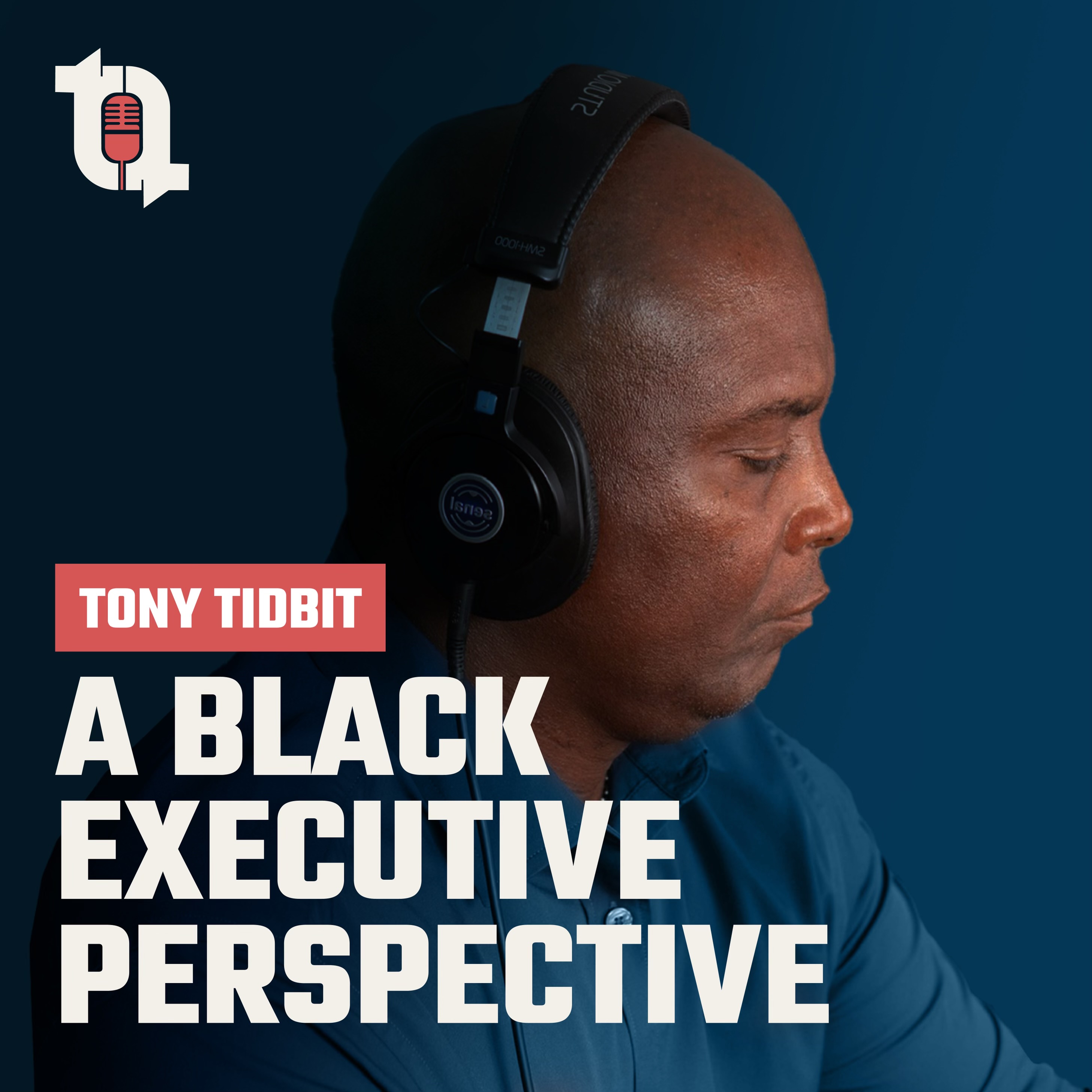
TonyTidbit: A Black Executive Perspective

TonyTidbit: A Black Executive Perspective

289 episodes — Page 1 of 6

Why Doesn’t War Feel Like War Anymore?

May 15, 202658 min

What Happens When America Fails the Open Book Test?

May 14, 202612 min

Stroke of Success: The Hidden Cost of Climbing the Corporate Ladder

May 12, 20261h 6m

Can You Really Be Your Authentic Self at Work?

May 8, 202658 min

Why Are Black Women Still Unsafe at Home?

May 7, 202616 min

Can Foster Youth Rewrite Their Future Through Film?

May 5, 20261h 0m

Remote Work vs Return to Office: Productivity or Control?

May 2, 202657 min

Surviving Workplace Hostility

Apr 30, 202611 min

Can AI Save the World, Or Just Protect Power?

Apr 28, 20261h 16m

Is This About Jobs… or Fear?

Apr 24, 202658 min

Why Do We Still Blame Black Girls for What Grown Men Do?

Apr 23, 202613 min

Can You Stand in the Fire Without Losing Yourself?

Apr 21, 20261h 8m

Are You Middle Class, Or Just Managing to Survive

Apr 17, 20261h 0m

When Leaders Confuse Noise With Power

Apr 16, 202610 min

Your Pivot Is Not Failure

Apr 14, 202657 min

Ep 361Do We Have to Work Until We Die?

Episode Title: Episode Audio Link: https://podcast.ablackexec.com/episode/do-we-have-to-work-until-we-dieEpisode Video Link: Today, Tony Tidbit and Chris P. Reed tackle a question that cuts across every generation: Are we working toward retirement or working until the end?In this BEP Live audio episode, the conversation goes beyond headlines and gets real about the state of work, money, and long-term security. From Gen Z workplace challenges and employer expectations to the disappearance of pensions and the pressure of rising cost of living, this discussion exposes the gaps no one wants to address.This is not about fear. This is about awareness and preparation.What You Will LearnWhy retirement is becoming harder to achieve The disconnect between Gen Z and workplace expectations How is the cost of living impacting financial stability The reality of pensions, 401 (k) s, and long-term planning ▶︎ In This Episode00:00 Opening and the real question01:00 Are we working until we die03:00 Gen Z and workplace expectations08:30 Work ethic and preparation gaps15:00 Leadership and earning your place22:00 Generational tension and mindset shifts29:00 Retirement reality and financial planning35:00 Cost of living and economic pressure40:00 Why people can’t retire47:00 Final thoughts🔗 ResourcesLinks and resources mentioned in this episode:🔔 Listen and SubscribeListen to this episode and subscribe for future updatessubscribe to A Black Executive Perspective podcast onYouTube PodcastsApple PodcastsSpotify PodcastsAmazon MusicOther platforms or by searching "TonyTidbit"if you like what we're doing and would like to support us, here's some ways you can help us continue the uncomfortable conversations that drive changesubscribe to our newslettergive us up to a 5 star review on Apple Podcastsshare an episode with a friend, family member or colleague🗣️ Follow @ablackexecfollow us across social media @aBlackExecLinkedInInstagramFacebookYouTubeTwitterTikTokWhatsApp⭐️ Follow @TonyTidbitfollow Tony across social media @TonyTidbitTwitterLinkedInFacebookThis episode was produced by TonyTidbit ™ . Copyright © 2024 A BLACK EXECUTIVE PERSPECTIVE LLC. All rights reserved. No part of this podcast may be reproduced without prior written permission. For permissions, email [email protected] .

Apr 10, 202653 min

Ep 360DEI Is Not What They Told You

Episode Title: Episode Audio Link: https://podcast.ablackexec.com/episode/DEI Is Not What They Told YouEpisode Video Link: In this episode of Need to Know, Dr. Nsenga Burton breaks down the truth behind Diversity, Equity, and Inclusion and challenges the narratives shaping public perception.DEI has become one of the most misunderstood and politicized concepts in today’s culture. But what does it actually mean, and who does it really benefit?Dr. Burton unpacks the myths, exposes the bias behind the backlash, and explains why DEI is not about giving unqualified individuals opportunities, but about expanding access, equity, and inclusion across society.This is a necessary conversation about power, perception, and truth.What You Will LearnWhat DEI actually includes beyond race and common misconceptions Why the idea of “unqualified hires” is rooted in bias, not fact Who truly benefits from DEI policies and initiatives How misinformation about DEI impacts workplaces and society ▶︎ In This Episode00:00 Introduction01:05 What DEI Really Means02:30 Access and Opportunity Explained04:00 The Myth of Unqualified Candidates06:00 Who Benefits from DEI08:30 Personal Experience and Reality10:30 The Backlash and Misunderstanding12:30 Final Thoughts🔗 ResourcesLinks and resources mentioned in this episode:🔔 Listen and SubscribeListen to this episode and subscribe for future updatessubscribe to A Black Executive Perspective podcast onYouTube PodcastsApple PodcastsSpotify PodcastsAmazon MusicOther platforms or by searching "TonyTidbit"if you like what we're doing and would like to support us, here's some ways you can help us continue the uncomfortable conversations that drive changesubscribe to our newslettergive us up to a 5 star review on Apple Podcastsshare an episode with a friend, family member or colleague🗣️ Follow @ablackexecfollow us across social media @aBlackExecLinkedInInstagramFacebookYouTubeTwitterTikTokWhatsApp⭐️ Follow @TonyTidbitfollow Tony across social media @TonyTidbitTwitterLinkedInFacebookThis episode was produced by TonyTidbit ™ . Copyright © 2024 A BLACK EXECUTIVE PERSPECTIVE LLC. All rights reserved. No part of this podcast may be reproduced without prior written permission. For permissions, email [email protected] .

Apr 9, 202613 min

Ep 359Are We Building… or Just Complaining?

Episode Title: Episode Audio Link: https://podcast.ablackexec.com/episode/are-we-building-or-just-complaining-Episode Video Link: Today, Wesley Alexander, CEO of CoBiz Richmond, delivers a direct message: if we are not building, we are falling behind.In this episode, Tony Tidbit and Chris P. Reed unpack how leadership, faith, economic development, and community infrastructure determine whether individuals and communities move forward or stay stuck.From his journey through Silicon Valley, the FBI, and entrepreneurship, Wesley explains why access, collaboration, and long-term strategy are critical, and why ego, division, and lack of execution continue to limit progress.This is not about inspiration. This is about responsibility, discipline, and building something that lasts.What You Will LearnWhy building institutions is critical for long-term success How ego vs purpose shapes leadership decisions The role of access and infrastructure in economic growth Why collaboration is the key to sustainable community impact ▶︎ In This Episode00:00 Purpose and Leadership Under Pressure08:00 Career Journey and Public Service15:00 Ego vs Purpose22:00 Inside the FBI and System Awareness30:00 Building Beyond the Athlete Identity36:00 CoBiz and Economic Infrastructure45:00 Faith, Fear, and Staying the Course52:00 Legacy and Community ImpactCall to ActionFollow, share, and stay connected for more conversations that challenge perspective and drive real change.Embrace L.E.S.S to eliminate all forms of discrimination.Learn: Educate yourself in cultural and racial realities.Empathy: Understand and respect different lived experiences.Share: Share your knowledge and your story to uplift others.Stop: Stop discrimination when you see it.🔗 ResourcesLinks and resources mentioned in this episode:🔔 Listen and SubscribeListen to this episode and subscribe for future updatessubscribe to A Black Executive Perspective podcast onYouTube PodcastsApple PodcastsSpotify PodcastsAmazon MusicOther platforms or by searching "TonyTidbit"if you like what we're doing and would like to support us, here's some ways you can help us continue the uncomfortable conversations that drive changesubscribe to our newslettergive us up to a 5 star review on Apple Podcastsshare an episode with a friend, family member or colleague🗣️ Follow @ablackexecfollow us across social media @aBlackExecLinkedInInstagramFacebookYouTubeTwitterTikTokWhatsApp⭐️ Follow @TonyTidbitfollow Tony across social media @TonyTidbitTwitterLinkedInFacebookThis episode was produced by TonyTidbit ™ . Copyright © 2024 A BLACK EXECUTIVE PERSPECTIVE LLC. All rights reserved. No part of this podcast may be reproduced without prior written permission. For permissions, email [email protected] .

Apr 7, 20261h 5m

Ep 358AI Fear or Opportunity?

Episode Title: Episode Audio Link: https://podcast.ablackexec.com/episode/ai-fear-or-opportunity-Episode Video Link: Today, Kee Jones, Founder and CEO of Reset, explores a critical question shaping the future of work: Are we avoiding AI out of fear, or stepping into it as an opportunity?In this episode, Tony Tidbit and Chris P. Reed break down how mental health, workplace culture, and leadership accountability are directly impacting how people engage with AI and innovation.From psychological safety in the workplace to the lasting effects of trauma, this conversation reveals why many professionals feel stuck and what it takes to move forward with clarity and confidence.This is not just about technology. This is about how we lead, adapt, and grow.What You Will LearnWhy fear is slowing AI adoption How leadership impacts mental health at work The importance of psychological safety in performance Why engaging with AI is essential for future growth ▶︎ In This Episode00:00 AI Fear vs Opportunity05:00 Mental Health and Cultural Barriers10:00 Workplace Leadership and Toxicity16:00 AI Adoption and ResponsibilityCall to ActionFollow, share, and stay connected for more conversations that challenge perspective and drive growth.Embrace L.E.S.S to eliminate all forms of discrimination. Learn: Educate yourself in cultural and racial realities. Empathy: Understand and respect different lived experiences. Share: Share your knowledge and your story to uplift others. Stop: Stop discrimination when you see it.🔗 ResourcesLinks and resources mentioned in this episode:🔔 Listen and SubscribeListen to this episode and subscribe for future updatessubscribe to A Black Executive Perspective podcast onYouTube PodcastsApple PodcastsSpotify PodcastsAmazon MusicOther platforms or by searching "TonyTidbit"if you like what we're doing and would like to support us, here's some ways you can help us continue the uncomfortable conversations that drive changesubscribe to our newslettergive us up to a 5 star review on Apple Podcastsshare an episode with a friend, family member or colleague🗣️ Follow @ablackexecfollow us across social media @aBlackExecLinkedInInstagramFacebookYouTubeTwitterTikTokWhatsApp⭐️ Follow @TonyTidbitfollow Tony across social media @TonyTidbitTwitterLinkedInFacebookThis episode was produced by TonyTidbit ™ . Copyright © 2024 A BLACK EXECUTIVE PERSPECTIVE LLC. All rights reserved. No part of this podcast may be reproduced without prior written permission. For permissions, email [email protected] .

Apr 6, 202622 min

Ep 357Are Black Girls Being Treated Like Adults Too Early?

Episode Title: Episode Audio Link: https://podcast.ablackexec.com/episode/are-black-girls-being-treated-like-adults-too-early-Episode Video Link: Today, Dr. Gabrielle Wallace and Brittany Merida of Measure unpack a critical issue impacting Black and Brown girls, adultification bias, and how it shapes perception, treatment, and opportunity from an early age.In this episode of A Black Executive Perspective Podcast, Tony Tidbit and Chris P. Reed explore how language, culture, education systems, and artificial intelligence reinforce bias, often without awareness. From everyday phrases to systemic decision-making, this conversation reveals how deeply rooted these patterns are and why they must be challenged.This discussion goes beyond awareness. It calls for interrogation, accountability, and intentional change in how we raise, educate, and protect the next generation.What You Will LearnWhat adultification bias is and how it impacts Black girls How everyday language reinforces harmful perceptions The connection between AI bias, data, and real-world outcomes Why awareness and interrogation are key to driving change ▶︎ In This Episode00:00 Introduction and guest background02:00 Understanding Measure and community impact04:00 Defining adultification bias06:00 Language, parenting, and cultural conditioning08:00 AI, social media, and bias amplification10:30 Community control and AI governance13:00 Getting started with AI and building literacy15:00 Unlearning behaviors and personal reflection17:00 Historical context and generational impact19:00 Interrogation and awareness as solutions21:00 Final thoughtsCall to ActionEmbrace L.E.S.S to eliminate all forms of discrimination. Learn: Educate yourself in cultural and racial realities.Empathy: Understand and respect different lived experiences.Share: Share your knowledge and your story to uplift others.Stop: Stop discrimination when you see it.🔗 ResourcesLinks and resources mentioned in this episode:🔔 Listen and SubscribeListen to this episode and subscribe for future updatessubscribe to A Black Executive Perspective podcast onYouTube PodcastsApple PodcastsSpotify PodcastsAmazon MusicOther platforms or by searching "TonyTidbit"if you like what we're doing and would like to support us, here's some ways you can help us continue the uncomfortable conversations that drive changesubscribe to our newslettergive us up to a 5 star review on Apple Podcastsshare an episode with a friend, family member or colleague🗣️ Follow @ablackexecfollow us across social media @aBlackExecLinkedInInstagramFacebookYouTubeTwitterTikTokWhatsApp⭐️ Follow @TonyTidbitfollow Tony across social media @TonyTidbitTwitterLinkedInFacebookThis episode was produced by TonyTidbit ™ . Copyright © 2024 A BLACK EXECUTIVE PERSPECTIVE LLC. All rights reserved. No part of this podcast may be reproduced without prior written permission. For permissions, email [email protected] .

Apr 3, 202622 min

Ep 358Comfort Is Killing Your Growth

Episode Title: Episode Audio Link: https://podcast.ablackexec.com/episode/comfort-is-killing-your-growth-Episode Video Link: Today, Dr. Nsenga Burton, cultural critic, professor, and media strategist, breaks down a hard truth too many people avoid: comfort is the enemy of growth.In this episode of Need to Know, Dr. Burton challenges the idea that stability and ease are signs of success. Instead, she reframes discomfort as a necessary condition for personal development, leadership growth, and long-term achievement.From navigating political uncertainty to pushing past self-imposed limits in education and career, this conversation explores how mindset, discipline, and resilience are required to evolve in today’s environment.If you’ve been waiting for things to feel easier before you make your next move, this episode will force a reset.What You Will LearnWhy comfort can quietly block growth and opportunityHow discomfort builds discipline, resilience, and leadership capacityThe role of mindset in navigating uncertainty and changeWhy pushing past self-imposed limits is critical for long-term success▶︎ In This Episode00:00 Introduction, What You Need to Know01:00 Change Is Slow, But Certain02:00 Why Comfort Is the Real Risk03:10 The Value of Discomfort04:10 Breaking Self-Imposed Limits05:15 Navigating Uncertainty06:15 Mindset Shift and Growth07:15 Final Thoughts and TakeawaysThis episode is a reminder that growth requires pressure, discipline, and intentional action. Comfort might feel good, but it will keep you exactly where you are.Listen, apply, and move differently.Embrace L.E.S.S to eliminate all forms of discrimination. Learn: Educate yourself in cultural and racial realities. Empathy: Understand and respect different lived experiences. Share: Share your knowledge and your story to uplift others. Stop: Stop discrimination when you see it.🔗 ResourcesLinks and resources mentioned in this episode:🔔 Listen and SubscribeListen to this episode and subscribe for future updatessubscribe to A Black Executive Perspective podcast onYouTube PodcastsApple PodcastsSpotify PodcastsAmazon MusicOther platforms or by searching "TonyTidbit"if you like what we're doing and would like to support us, here's some ways you can help us continue the uncomfortable conversations that drive changesubscribe to our newslettergive us up to a 5 star review on Apple Podcastsshare an episode with a friend, family member or colleague🗣️ Follow @ablackexecfollow us across social media @aBlackExecLinkedInInstagramFacebookYouTubeTwitterTikTokWhatsApp⭐️ Follow @TonyTidbitfollow Tony across social media @TonyTidbitTwitterLinkedInFacebookThis episode was produced by TonyTidbit ™ . Copyright © 2024 A BLACK EXECUTIVE PERSPECTIVE LLC. All rights reserved. No part of this podcast may be reproduced without prior written permission. For permissions, email [email protected] .

Apr 2, 20268 min

Ep 356Scholarships Are Disappearing. Now What?

Episode Title: Episode Audio Link: https://podcast.ablackexec.com/episode/scholarships-are-disappearing-now-what-Episode Video Link: Today, Jacqueline Powers, Vice President of Scholarships at the Thurgood Marshall College Fund, breaks down a growing crisis that is not getting enough attention: scholarship funding for Black students is shrinking while demand continues to rise.In this episode of A Black Executive Perspective Podcast, Tony Tidbit and Chris P. Reed explore how AI, data, and innovation are being used to expand access, identify gaps, and respond to declining funding streams.With more than 60,000 applicants and only a fraction receiving support, this conversation highlights the urgency of creating new pathways for opportunity and rethinking how we fund the future of education.This is not just about scholarships. This is about access, equity, and the future of our communities.What You Will LearnWhy scholarship funding is declining and how it impacts Black students How AI and data can improve access and completion rates The role of innovation in replacing lost funding sources Why HBCUs remain critical to education and workforce development ▶︎ In This Episode00:00 Introduction and Jacqueline Powers background02:00 The Thurgood Marshall College Fund mission06:30 AI and scaling scholarship access10:00 The scholarship funding gap explained12:00 Data insights and application drop-off14:00 Advocacy and protecting HBCU funding17:30 The real stakes for students and communities19:00 Final thoughtsCall to ActionEmbrace L.E.S.S to eliminate all forms of discrimination.Learn: Educate yourself in cultural and racial realities.Empathy: Understand and respect different lived experiences.Share: Share your knowledge and your story to uplift others.Stop: Stop discrimination when you see it.🔗 ResourcesLinks and resources mentioned in this episode:🔔 Listen and SubscribeListen to this episode and subscribe for future updatessubscribe to A Black Executive Perspective podcast onYouTube PodcastsApple PodcastsSpotify PodcastsAmazon MusicOther platforms or by searching "TonyTidbit"if you like what we're doing and would like to support us, here's some ways you can help us continue the uncomfortable conversations that drive changesubscribe to our newslettergive us up to a 5 star review on Apple Podcastsshare an episode with a friend, family member or colleague🗣️ Follow @ablackexecfollow us across social media @aBlackExecLinkedInInstagramFacebookYouTubeTwitterTikTokWhatsApp⭐️ Follow @TonyTidbitfollow Tony across social media @TonyTidbitTwitterLinkedInFacebookThis episode was produced by TonyTidbit ™ . Copyright © 2024 A BLACK EXECUTIVE PERSPECTIVE LLC. All rights reserved. No part of this podcast may be reproduced without prior written permission. For permissions, email [email protected] .

Apr 1, 202620 min

Ep 355Corporate America Wasn’t Built for Black Women

Episode Title: Episode Audio Link: https://podcast.ablackexec.com/episode/corporate-america-wasnt-built-for-black-women-Episode Video Link: Today, Candice C. Jones, President and CEO of the Public Welfare Foundation, delivers a powerful and unfiltered perspective on what it truly takes for Black women to lead, grow, and succeed in corporate America.In this episode of A Black Executive Perspective Podcast, Tony Tidbit and Chris P. Reed unpack the systemic barriers, microaggressions, and leadership challenges that often go unspoken. Candice shares real strategies for navigating environments that were not designed for you while still building influence, confidence, and long-term success.From mentorship and representation to resilience and self-awareness, this conversation provides a blueprint for navigating power, building relationships, and leading with purpose.This is not just about surviving corporate America. It is about learning how to win anyway.What You Will LearnWhy Black women often face unique systemic barriers in leadership How to navigate microaggressions without losing your identity The importance of building a diverse “kitchen cabinet” of mentors How confidence, resilience, and strategy drive long-term success ▶︎ In This Episode00:00 Introduction and guest background02:00 Candice Jones’ journey and early inspiration10:00 Representation and the power of visibility20:00 Confidence versus imposter syndrome25:00 Navigating microaggressions in the workplace32:00 Mentorship and building your network40:00 The power of diverse mentorship48:00 Overcoming rejection and resistance54:00 Leadership lessons and final adviceCall to ActionEmbrace L.E.S.S to eliminate all forms of discrimination.Learn: Educate yourself in cultural and racial realities.Empathy: Understand and respect different lived experiences.Share: Share your knowledge and your story to uplift others.Stop: Stop discrimination when you see it.🔗 ResourcesLinks and resources mentioned in this episode:🔔 Listen and SubscribeListen to this episode and subscribe for future updatessubscribe to A Black Executive Perspective podcast onYouTube PodcastsApple PodcastsSpotify PodcastsAmazon MusicOther platforms or by searching "TonyTidbit"if you like what we're doing and would like to support us, here's some ways you can help us continue the uncomfortable conversations that drive changesubscribe to our newslettergive us up to a 5 star review on Apple Podcastsshare an episode with a friend, family member or colleague🗣️ Follow @ablackexecfollow us across social media @aBlackExecLinkedInInstagramFacebookYouTubeTwitterTikTokWhatsApp⭐️ Follow @TonyTidbitfollow Tony across social media @TonyTidbitTwitterLinkedInFacebookThis episode was produced by TonyTidbit ™ . Copyright © 2024 A BLACK EXECUTIVE PERSPECTIVE LLC. All rights reserved. No part of this podcast may be reproduced without prior written permission. For permissions, email [email protected] .

Mar 31, 20261h 0m

Ep 354AI Won’t Replace You… But Someone Using AI Will

Episode Title: Episode Audio Link: https://podcast.ablackexec.com/episode/ai-wont-replace-you-but-someone-using-ai-willEpisode Video Link: Today, Johnny Austin, Founder and CEO of Recursive Funk, breaks down the truth about AI, productivity, and the future of work in a way most leaders are avoiding.In this conversation recorded at Huston-Tillotson University, Tony Tidbit and Chris P. Reed challenge the hype, fear, and misinformation surrounding artificial intelligence. What emerges is a clear takeaway: AI is not a shortcut. It is a multiplier, and those who learn to use it will quickly set themselves apart.From workforce disruption and AI bias to leadership accountability and the limits of automation, this episode unpacks what it really takes to stay relevant in a rapidly shifting landscape.This is not about AI replacing people. It is about people who understand AI replacing those who do not.What You Will LearnWhy AI requires discipline, strategy, and intentional use, not shortcuts How AI bias impacts outcomes and why representation matters in development The role of human judgment and accountability in an AI-driven world How to position yourself to stay competitive as AI reshapes the workforce ▶︎ In This Episode00:00 Introduction and framing the AI conversation02:10 Johnny Austin’s background and entry into tech06:30 Fear versus opportunity in AI adoption12:00 Measuring AI effectiveness and business impact15:00 Bias, representation, and cultural implications18:30 Human judgment, accountability, and the limits of AI21:00 The real gap, who is building AI and why it matters🔗 ResourcesLinks and resources mentioned in this episode:🔔 Listen and SubscribeListen to this episode and subscribe for future updatessubscribe to A Black Executive Perspective podcast onYouTube PodcastsApple PodcastsSpotify PodcastsAmazon MusicOther platforms or by searching "TonyTidbit"if you like what we're doing and would like to support us, here's some ways you can help us continue the uncomfortable conversations that drive changesubscribe to our newslettergive us up to a 5 star review on Apple Podcastsshare an episode with a friend, family member or colleague🗣️ Follow @ablackexecfollow us across social media @aBlackExecLinkedInInstagramFacebookYouTubeTwitterTikTokWhatsApp⭐️ Follow @TonyTidbitfollow Tony across social media @TonyTidbitTwitterLinkedInFacebookThis episode was produced by TonyTidbit ™ . Copyright © 2024 A BLACK EXECUTIVE PERSPECTIVE LLC. All rights reserved. No part of this podcast may be reproduced without prior written permission. For permissions, email [email protected] .

Mar 30, 202627 min

Ep 353Oscars, DEI, and the Attack on Black Excellence

Episode Title: Episode Audio Link: https://podcast.ablackexec.com/episode/oscars-dei-and-the-attack-on-black-excellence-Episode Video Link: Today, Dr. Nsenga Burton, award-winning cultural critic and media scholar, breaks down the real story behind the Oscars, DEI backlash, and what’s really happening when Black success gets reframed, minimized, or attacked.In this Need to Know episode, Dr. Burton unpacks the controversy surrounding Michael B. Jordan’s Oscar win, the misuse of DEI as a weapon, and why these conversations go far beyond Hollywood; they touch power, economics, and cultural accountability.This is not just about awards. It’s about value, narrative control, and how we choose to uplift or undermine our own.What You Will LearnWhy Oscar wins directly impacts earning power and opportunity How DEI is being misused to discredit qualified talent The line between thoughtful critique and harmful rhetoric Why celebrating Black excellence matters more than ever ▶︎ In This Episode00:00 Introduction, What You Need to Know02:00 Oscars, economics, and why awards matter05:00 DEI, misinformation, and cultural impact08:30 Criticism vs. tearing down your own11:30 Celebrating Black excellence and final message🔗 Resources🔔 Listen and SubscribeListen to this episode and subscribe for future updatessubscribe to A Black Executive Perspective podcast onYouTube PodcastsApple PodcastsSpotify PodcastsAmazon MusicOther platforms or by searching "TonyTidbit"if you like what we're doing and would like to support us, here's some ways you can help us continue the uncomfortable conversations that drive changesubscribe to our newslettergive us up to a 5 star review on Apple Podcastsshare an episode with a friend, family member or colleague🗣️ Follow @ablackexecfollow us across social media @aBlackExecLinkedInInstagramFacebookYouTubeTwitterTikTokWhatsApp⭐️ Follow @TonyTidbitfollow Tony across social media @TonyTidbitTwitterLinkedInFacebookThis episode was produced by TonyTidbit ™ . Copyright © 2024 A BLACK EXECUTIVE PERSPECTIVE LLC. All rights reserved. No part of this podcast may be reproduced without prior written permission. For permissions, email [email protected] .

Mar 26, 202615 min

Ep 352AI Ethics, Power, and Bias Explained

Episode Title: Episode Audio Link: https://podcast.ablackexec.com/episode/AI Ethics, Power, and Bias ExplainedEpisode Video Link: Today, Meme Styles, Founder of Measure and Chair of the HBCU AI Conference Training Summit, and Chris Hyams, former CEO of Indeed and AI educator, join Tony Tidbit and Chris P. Reed live from Huston-Tillotson University to break down AI ethics, bias, and power.This conversation moves beyond the hype of artificial intelligence and into the reality of how these systems are built, who they represent, and who they leave behind.From algorithmic bias and digital erasure to the urgent need for AI literacy and community accountability, this episode exposes a critical truth: AI is not neutral. It reflects the data, systems, and power structures behind it.If left unchecked, AI will not just mirror inequality, it will accelerate it.What you will learnWhy AI bias is embedded in data and decision-making systemsHow AI impacts hiring, healthcare, and criminal justice outcomesThe shift from “human in the loop” to community-driven accountabilityWhy AI literacy is essential to navigating the future▶︎ In This Episode00:00 AI literacy and the urgency of now02:00 The purpose of the HBCU AI Conference06:00 Algorithmic harm and lived experience10:00 AI ethics, bias, and power16:00 Understanding how bias is built into AI22:00 What must change moving forward🔗 ResourcesLinks and resources mentioned in this episode:🔔 Listen and SubscribeListen to this episode and subscribe for future updatessubscribe to A Black Executive Perspective podcast onYouTube PodcastsApple PodcastsSpotify PodcastsAmazon MusicOther platforms or by searching "TonyTidbit"if you like what we're doing and would like to support us, here's some ways you can help us continue the uncomfortable conversations that drive changesubscribe to our newslettergive us up to a 5 star review on Apple Podcastsshare an episode with a friend, family member or colleague🗣️ Follow @ablackexecfollow us across social media @aBlackExecLinkedInInstagramFacebookYouTubeTwitterTikTokWhatsApp⭐️ Follow @TonyTidbitfollow Tony across social media @TonyTidbitTwitterLinkedInFacebookThis episode was produced by TonyTidbit ™ . Copyright © 2024 A BLACK EXECUTIVE PERSPECTIVE LLC. All rights reserved. No part of this podcast may be reproduced without prior written permission. For permissions, email [email protected] .

Mar 25, 202627 min

Ep 351Why Is Black History Being Erased Again?

Episode Title: Episode Audio Link: https://podcast.ablackexec.com/episode/why-is-black-history-being-erased-again-Episode Video Link: Today, Dr. Jewell Parker Rhodes, New York Times bestselling author and educator, joins A Black Executive Perspective Podcast for a powerful and necessary conversation on Black history, book bans, identity, and representation in education.In this audio episode, Tony Tidbit and Dr. Rhodes unpack the reality that history is not just being forgotten, it’s being actively suppressed. From banned books like Ghost Boys to the psychological impact of not seeing yourself reflected in the classroom, this discussion exposes the deeper systems shaping confidence, culture, and opportunity.This is more than a conversation about the past. This is about who gets to define the future.What You Will LearnWhy book banning is a strategic form of cultural suppression How representation (or lack of it) impacts self-esteem and identity The connection between storytelling, history, and empowerment Why is understanding Black history critical for all communities ▶︎ In This Episode00:00 Introduction, Why This Conversation Matters 02:05 The Importance of Black History Today 05:10 Dr. Rhodes’ Background & Family Story 10:40 The Education System & Missing Representation 18:25 Storytelling as Power & Cultural Identity 26:35 Ghost Boys, Book Bans & Controversy 32:50 Global Recognition vs U.S. Suppression 40:55 Hidden Black History & Tulsa Race Massacre 49:20 Confidence, Identity & Youth Development 56:05 Final Thoughts, Books as a Tool for Change🔗 ResourcesLinks and resources mentioned in this episode:🔔 Listen and SubscribeListen to this episode and subscribe for future updatessubscribe to A Black Executive Perspective podcast onYouTube PodcastsApple PodcastsSpotify PodcastsAmazon MusicOther platforms or by searching "TonyTidbit"if you like what we're doing and would like to support us, here's some ways you can help us continue the uncomfortable conversations that drive changesubscribe to our newslettergive us up to a 5 star review on Apple Podcastsshare an episode with a friend, family member or colleague🗣️ Follow @ablackexecfollow us across social media @aBlackExecLinkedInInstagramFacebookYouTubeTwitterTikTokWhatsApp⭐️ Follow @TonyTidbitfollow Tony across social media @TonyTidbitTwitterLinkedInFacebookThis episode was produced by TonyTidbit ™ . Copyright © 2024 A BLACK EXECUTIVE PERSPECTIVE LLC. All rights reserved. No part of this podcast may be reproduced without prior written permission. For permissions, email [email protected] .

Mar 24, 20261h 5m

Ep 350Have We Been Undervaluing HBCUs?

Episode Title: Episode Audio Link: https://podcast.ablackexec.com/episode/have-we-been-undervaluing-hbcusEpisode Video Link: Today, Dr. Melva Wallace, President and CEO of Huston-Tillotson University, joins Tony Tidbit and Chris P. Reed for a powerful and unfiltered conversation on leadership, HBCUs, and the uncomfortable truths shaping the future of Black communities.Recorded live at the HBCU AI Conference, this episode challenges a critical question:Have we been undervaluing HBCUs?Dr. Wallace breaks down how perception, prestige, and internal biases impact how we view Black institutions, while also sharing how authentic leadership, speed, and strategic vision have transformed Huston-Tillotson into a top-performing HBCU.This conversation goes beyond education; it’s about ownership, investment, and whether we truly support what belongs to us.What You’ll LearnWhy HBCUs are essential to economic mobility and workforce outcomesThe truth about perception vs reality when comparing HBCUs and Ivy League schoolsHow authentic leadership drives real transformationWhy reinvesting in Black institutions is critical for long-term success▶︎ In This Episode00:00 The Uncomfortable Truth About HBCUs01:00 Welcome to BEP Live at Huston-Tillotson02:00 Meet Dr. Melva Wallace07:00 Transforming a 150-Year Institution10:00 Leadership, Speed, and Strategy13:00 The Metric That Matters Most16:00 Authentic Leadership Lessons20:00 Are We Undervaluing HBCUs?23:00 Supporting Black Institutions26:00 Final Thoughts🔗 ResourcesLinks and resources mentioned in this episode:🔔 Listen and SubscribeListen to this episode and subscribe for future updatessubscribe to A Black Executive Perspective podcast onYouTube PodcastsApple PodcastsSpotify PodcastsAmazon MusicOther platforms or by searching "TonyTidbit"if you like what we're doing and would like to support us, here's some ways you can help us continue the uncomfortable conversations that drive changesubscribe to our newslettergive us up to a 5 star review on Apple Podcastsshare an episode with a friend, family member or colleague🗣️ Follow @ablackexecfollow us across social media @aBlackExecLinkedInInstagramFacebookYouTubeTwitterTikTokWhatsApp⭐️ Follow @TonyTidbitfollow Tony across social media @TonyTidbitTwitterLinkedInFacebookThis episode was produced by TonyTidbit ™ . Copyright © 2024 A BLACK EXECUTIVE PERSPECTIVE LLC. All rights reserved. No part of this podcast may be reproduced without prior written permission. For permissions, email [email protected] .

Mar 23, 202628 min

Ep 349Will AI Erase Black History or Empower It?

Episode Title: Episode Audio Link: https://podcast.ablackexec.com/episode/will-ai-erase-black-history-or-empower-itEpisode Video Link: Artificial intelligence is transforming the world at breakneck speed.But one critical question remains largely unanswered.Who is shaping the future of AI, and who might be erased from it?In this powerful episode of A Black Executive Perspective Podcast, Tony Franklin and Chris P. Reed sit down with Roy Austin Jr., Director of the Howard Law AI Initiative and former Deputy Assistant to President Obama, live from the HBCU AI Conference at Huston Tillotson University.Roy breaks down the growing intersection between AI, civil rights, technology policy, and racial equity, explaining why the data used to train artificial intelligence will determine whether AI reinforces inequality or becomes a tool for justice.The conversation explores the untapped power of Black historical archives held by HBCUs, the urgent need for AI transparency and regulation, and the responsibility leaders must take to ensure that technological innovation benefits all communities.Tony and Chris also challenge political leaders, tech companies, and institutions to confront an uncomfortable reality.If artificial intelligence becomes the most powerful technology of the next generation, the question is not whether AI will shape society.The question is who will shape AI.What You Will Learn• Why HBCUs may hold the most valuable untapped datasets for the future of artificial intelligence• How AI bias and algorithmic decision-making could impact jobs, policing, and economic mobility• The four pillars of the Howard Law AI Initiative and how they aim to build ethical AI systems• Why transparency, regulation, and community leadership will determine who benefits from AI▶︎ In This Episode00:00 Opening Question and Setting the Stage01:00 Live from the HBCU AI Conference02:12 Roy Austin Jr. and the Howard Law AI Initiative04:10 The Four Pillars of Ethical AI Development08:05 Why Black Historical Archives Must Be Digitized10:30 The Civil Rights Impact of Artificial Intelligence13:05 Are We Entering a New Civil Rights Era?16:10 Community Unity and Collective Power18:05 The Debate Around “Victim Mentality”20:05 Can AI Strengthen Black Economic Power?21:05 Tech Money, Politics, and Regulation23:05 What Leaders Must Do Next24:40 Final Thoughts on the Future of AI and JusticeBottom of Form🔗 ResourcesLinks and resources mentioned in this episode:🔔 Listen and SubscribeListen to this episode and subscribe for future updatessubscribe to A Black Executive Perspective podcast onYouTube PodcastsApple PodcastsSpotify PodcastsAmazon MusicOther platforms or by searching "TonyTidbit"if you like what we're doing and would like to support us, here's some ways you can help us continue the uncomfortable conversations that drive changesubscribe to our newslettergive us up to a 5 star review on Apple Podcastsshare an episode with a friend, family member or colleague🗣️ Follow @ablackexecfollow us across social media @aBlackExecLinkedInInstagramFacebookYouTubeTwitterTikTokWhatsApp⭐️ Follow @TonyTidbitfollow Tony across social media @TonyTidbitTwitterLinkedInFacebookThis episode was produced by TonyTidbit ™ . Copyright © 2024 A BLACK EXECUTIVE PERSPECTIVE LLC. All rights reserved. No part of this podcast may be reproduced without prior written permission. For permissions, email [email protected] .

Mar 20, 202626 min

Ep 350Did America Just Bite the Hand That Feeds It

Episode Title: Episode Audio Link: https://podcast.ablackexec.com/episode/did-america-just-bite-the-hand-that-feeds-itEpisode Video Link: Today, Dr. Nsenga Burton, cultural critic and communications strategist, breaks down a high-stakes leadership failure unfolding in real time, the consequences of ego, poor decision-making, and fractured global relationships.In this episode of Need to Know, we explore how “biting the hand that feeds you” applies to leadership, diplomacy, and power. From strained alliances to economic ripple effects, this conversation highlights what happens when strategy is replaced with impulse.This is not just about politics. This is about leadership, accountability, emotional intelligence, and the cost of operating without foresight.🎯 What You Will LearnWhy strong alliances are critical to sustainable leadershipHow ego-driven decisions weaken global positioningThe real economic and human cost of poor strategic thinkingA powerful leadership lesson on accountability and integrity▶︎ In This Episode00:00 Introduction and current global context 01:05 War or political positioning 02:20 Misinformation and decision-making 03:45 Internal pushback and leadership cracks 05:10 Missed opportunities to pivot 06:40 The consequences of alienating allies 08:05 The importance of relationships in leadership 09:30 The myth of doing it alone 10:50 Lessons from history 12:05 Economic impact on everyday life 13:10 Leadership accountability and integrity 14:10 Final takeaway🔗 ResourcesLinks and resources mentioned in this episode:🔔 Listen and SubscribeListen to this episode and subscribe for future updatessubscribe to A Black Executive Perspective podcast onYouTube PodcastsApple PodcastsSpotify PodcastsAmazon MusicOther platforms or by searching "TonyTidbit"if you like what we're doing and would like to support us, here's some ways you can help us continue the uncomfortable conversations that drive changesubscribe to our newslettergive us up to a 5 star review on Apple Podcastsshare an episode with a friend, family member or colleague🗣️ Follow @ablackexecfollow us across social media @aBlackExecLinkedInInstagramFacebookYouTubeTwitterTikTokWhatsApp⭐️ Follow @TonyTidbitfollow Tony across social media @TonyTidbitTwitterLinkedInFacebookThis episode was produced by TonyTidbit ™ . Copyright © 2024 A BLACK EXECUTIVE PERSPECTIVE LLC. All rights reserved. No part of this podcast may be reproduced without prior written permission. For permissions, email [email protected] .

Mar 19, 202615 min

Ep 348Will AI Make Inequality Worse?

Episode Title: Episode Audio Link: https://podcast.ablackexec.com/episode/will-ai-make-inequality-worseEpisode Video Link: Artificial intelligence is often described as the most powerful technology of our lifetime.But what happens when AI learns from a world already filled with inequality?In this thought-provoking episode of A Black Executive Perspective Podcast, Tony Franklin and Chris P. Reed sit down with Chris Hyams, former CEO of Indeed and visiting lecturer at Huston Tillotson University, live from the HBCU AI Conference in Austin, Texas.Chris Hyams shares powerful insights on how artificial intelligence systems are being trained on historical data that already reflects racial disparities, economic inequality, and systemic bias.If AI continues its current path, it may not just repeat these disparities. It may amplify them.The conversation explores why HBCUs must play a central leadership role in shaping the future of AI, how responsible AI development requires voices from historically marginalized communities, and why the biggest decisions about technology should not be left to a handful of Silicon Valley executives.Tony and Chris also dive into one of the most uncomfortable conversations of our time.If AI truly has the power to transform society, could it also become a tool for reparative justice?This episode challenges leaders, technologists, educators, and policymakers to think differently about the future of artificial intelligence.Because the real question is not just what AI can do.The real question is who gets to decide what AI does next.What You Will Learn• Why artificial intelligence systems often amplify existing social inequalities •How historical data shapes AI outcomes in employment, housing, healthcare, and justice •Why HBCUs must play a leadership role in building responsible AI systems •How could AI potentially become a tool for reparative justice and systemic change▶︎ In This Episode00:00 The Hidden Danger of AI and Disparity 01:00 Live from the HBCU AI Conference at Huston Tillotson 02:05 Chris Hyams’ Journey from Musician to Tech Leader 03:45 Why Human-Centered Technology Matters 05:10 The Opportunity and Risk of Artificial Intelligence 06:20 How AI Can Magnify Systemic Inequality 07:45 Why HBCUs Must Lead the AI Conversation 09:30 The Power of Collective Action Across HBCUs 11:00 Responsible AI and Ethical Technology Development 13:05 The Uncomfortable Conversation About Reparative Justice 15:05 Why We Must Use the Words Others Are Afraid to Say 16:05 Final Thoughts on the Future of AI and Equity🔗 ResourcesLinks and resources mentioned in this episode:🔔 Listen and SubscribeListen to this episode and subscribe for future updatessubscribe to A Black Executive Perspective podcast onYouTube PodcastsApple PodcastsSpotify PodcastsAmazon MusicOther platforms or by searching "TonyTidbit"if you like what we're doing and would like to support us, here's some ways you can help us continue the uncomfortable conversations that drive changesubscribe to our newslettergive us up to a 5 star review on Apple Podcastsshare an episode with a friend, family member or colleague🗣️ Follow @ablackexecfollow us across social media @aBlackExecLinkedInInstagramFacebookYouTubeTwitterTikTokWhatsApp⭐️ Follow @TonyTidbitfollow Tony across social media @TonyTidbitTwitterLinkedInFacebookThis episode was produced by TonyTidbit ™ . Copyright © 2024 A BLACK EXECUTIVE PERSPECTIVE LLC. All rights reserved. No part of this podcast may be reproduced without prior written permission. For permissions, email [email protected] .

Mar 18, 202616 min

Ep 347How Black Women Changed the Game in Rodeo

Episode Title: Episode Audio Link: https://podcast.ablackexec.com/episode/how-black-women-changed-the-game-in-rodeoEpisode Video Link: Today, Valeria Howard Cunningham, President and Owner of the Bill Pickett Invitational Rodeo, joins A Black Executive Perspective for a powerful conversation on Black leadership, Black history, women in business, cultural preservation, and the legacy of Black cowboys and cowgirls.This episode explores how Valeria helped carry forward and expand one of the most important Black cultural institutions in the country. From sponsorship struggles and racial barriers to youth development, scholarships, wellness advocacy, and national visibility, this is a conversation about vision, resilience, and purpose-driven leadership.Valeria shares what it means to lead after loss, to build with intention, to preserve Black Western heritage, and to create opportunities for the next generation. This is bigger than rodeo. It is about legacy, leadership, ownership, and impact.What you will learnHow the Bill Pickett Invitational Rodeo became a platform for Black visibility and excellenceWhy Black women’s leadership has been essential to preserving and growing this legacyHow Valeria navigated resistance, sponsorship challenges, and expansionWhy youth access, education, and community impact are central to the mission▶︎ In This Episode00:00 Introduction06:10 The origin story15:05 Early barriers and resistance24:05 Leadership, loss, and growth38:35 Community impact and youth programs55:20 National visibility and expansion01:06:20 Final reflections and Tony’s TidbitWhy this episode mattersBlack cowboy history is too often ignored.Black women’s leadership is too often underestimated.This episode brings both to the center, where they belong.If this conversation speaks to you, share it, follow the show, and stay connected for more conversations on leadership, culture, race, business, and Black excellence.🔗 ResourcesLinks and resources mentioned in this episode:🔔 Listen and SubscribeListen to this episode and subscribe for future updatessubscribe to A Black Executive Perspective podcast onYouTube PodcastsApple PodcastsSpotify PodcastsAmazon MusicOther platforms or by searching "TonyTidbit"if you like what we're doing and would like to support us, here's some ways you can help us continue the uncomfortable conversations that drive changesubscribe to our newslettergive us up to a 5 star review on Apple Podcastsshare an episode with a friend, family member or colleague🗣️ Follow @ablackexecfollow us across social media @aBlackExecLinkedInInstagramFacebookYouTubeTwitterTikTokWhatsApp⭐️ Follow @TonyTidbitfollow Tony across social media @TonyTidbitTwitterLinkedInFacebookThis episode was produced by TonyTidbit ™ . Copyright © 2024 A BLACK EXECUTIVE PERSPECTIVE LLC. All rights reserved. No part of this podcast may be reproduced without prior written permission. For permissions, email [email protected] .

Mar 17, 20261h 10m

Ep 346BAFTA Controversy: Did the Response Make It Worse?

Episode Title: Episode Audio Link: https://podcast.ablackexec.com/episode/-bafta-controversy-did-the-response-make-it-worse-Episode Video Link: In this episode of Need to Know, Dr. Nsenga Burton examines the controversy surrounding the BAFTA awards incident and why the real issue may not be the moment itself, but the response that followed.When unexpected or harmful moments occur in public spaces, institutions have a responsibility to respond with clarity, accountability, and empathy. Dr. Burton breaks down how BAFTA handled the situation involving comments made during the ceremony and why their response raised deeper concerns about communication, racial harm, and institutional responsibility.The episode explores an important idea. Often, the damage from a situation does not come only from the initial incident, but from how leaders and organizations choose to respond afterward.Drawing from her expertise in media, communication, and cultural analysis, Dr. Burton explains why preparation, ethical leadership, and thoughtful responses matter when harm occurs in public settings.This episode encourages listeners to think critically about how we respond to conflict, miscommunication, and offensive language in our own lives, our workplaces, and our institutions.Need to Know with Dr. Nsenga Burton is part of the award-winning A Black Executive Perspective Podcast, where conversations about culture, leadership, race, and society are explored with clarity and purpose.What You Will LearnWhy the response to harm often matters more than the incident itself How can communication failures deepen racial harm Why organizations must prepare protocols for controversial moments The number one rule of communication when conflict occurs▶︎ In This Episode 00:00 Introduction 00:28 The BAFTA controversy explained 01:05 Understanding Tourette’s and public incidents 02:05 Why preparation and protocol matter 03:05 What went wrong at BAFTA 04:05 The failure of the response 05:10 Editing decisions and public reaction 06:10 Racial harm and accountability 07:15 Why response matters more than intent 08:05 Communication and customer service analogy 09:05 The number one rule of communication 10:05 Why BAFTA’s response failed 11:05 Personal response and ethical choices 12:05 Final message and reflection🔗 ResourcesLinks and resources mentioned in this episode:🔔 Listen and SubscribeListen to this episode and subscribe for future updatessubscribe to A Black Executive Perspective podcast onYouTube PodcastsApple PodcastsSpotify PodcastsAmazon MusicOther platforms or by searching "TonyTidbit"if you like what we're doing and would like to support us, here's some ways you can help us continue the uncomfortable conversations that drive changesubscribe to our newslettergive us up to a 5 star review on Apple Podcastsshare an episode with a friend, family member or colleague🗣️ Follow @ablackexecfollow us across social media @aBlackExecLinkedInInstagramFacebookYouTubeTwitterTikTokWhatsApp⭐️ Follow @TonyTidbitfollow Tony across social media @TonyTidbitTwitterLinkedInFacebookThis episode was produced by TonyTidbit ™ . Copyright © 2024 A BLACK EXECUTIVE PERSPECTIVE LLC. All rights reserved. No part of this podcast may be reproduced without prior written permission. For permissions, email [email protected] .

Mar 12, 202612 min

Ep 347Black Maternal Health Crisis

Episode Title: Episode Audio Link: https://podcast.ablackexec.com/episode/black-maternal-health-crisis-Episode Video Link: In this powerful episode of A Black Executive Perspective Podcast, Tony Tidbit and Chris P. Reed sit down with Da'na M. Langford, Certified Nurse Midwife and Founder of the Village of Healing Center, to explore the Black maternal health crisis and the deeper systemic challenges affecting healthcare outcomes for Black families.Black women in the United States face significantly higher risks during pregnancy and childbirth. But the story behind these disparities is rarely explained in full.Da'na Langford breaks down the historical roots of the crisis, the erasure of Black midwives, and how healthcare systems evolved in ways that continue to impact outcomes today. More importantly, she explains how the Village of Healing model is rebuilding care through community-centered healthcare led by Black providers.This conversation explores the past, confronts the present, and highlights a path forward built on ownership, leadership, and the restoration of trust in healthcare for Black families.What You Will Learn• Why the Black maternal health crisis continues to impact communities across the United States• The hidden history of Black midwives and maternal care in America• How community-based healthcare models can improve outcomes for Black families• Why rebuilding healthcare systems requires new leadership and new approaches▶︎ Chapters00:00 Introduction to the Black Maternal Health Crisis01:45 Meet Da'na Langford and the Village of Healing05:10 Her Journey Into Midwifery and Community Healthcare09:05 Why She Chose to Serve the Black Community12:05 Understanding the Role of a Midwife15:10 The History of Black Midwives in America17:20 The Story Behind Early Medical Practices21:00 Why Trust in Healthcare Has Been Broken24:05 Understanding the Maternal Health Disparity28:15 When the System Was Never Built for Us33:05 Changing the Narrative Around Healthcare38:20 Building the Village of Healing Model42:05 Why Community Healthcare Matters47:05 Supporting Families Beyond Pregnancy50:05 A Call to Action for Community Support54:10 Tony’s Tidbit🔗 ResourcesConnect with Da'na LangfordVillage of Healing CenterWebsite: villageofhealingce.comEmail: [email protected]🔔 Listen and SubscribeListen to this episode and subscribe for future updatessubscribe to A Black Executive Perspective podcast onYouTube PodcastsApple PodcastsSpotify PodcastsAmazon MusicOther platforms or by searching "TonyTidbit"if you like what we're doing and would like to support us, here's some ways you can help us continue the uncomfortable conversations that drive changesubscribe to our newslettergive us up to a 5 star review on Apple Podcastsshare an episode with a friend, family member or colleague🗣️ Follow @ablackexecfollow us across social media @aBlackExecLinkedInInstagramFacebookYouTubeTwitterTikTokWhatsApp⭐️ Follow @TonyTidbitfollow Tony across social media @TonyTidbitTwitterLinkedInFacebookThis episode was produced by TonyTidbit ™ . Copyright © 2024 A BLACK EXECUTIVE PERSPECTIVE LLC. All rights reserved. No part of this podcast may be reproduced without prior written permission. For permissions, email [email protected] .

Mar 10, 202658 min

Ep 347Victim Mentality or Truth Telling?

Episode Title: Episode Audio Link: https://podcast.ablackexec.com/episode/victim-mentality-or-truth-telling-Episode Video Link: Today, Tony Franklin and Chris P. Reed, hosts of A Black Executive Perspective Podcast, dive into one of the most controversial phrases dominating modern cultural and political conversations: “victim mentality.”Across media, politics, and social platforms, the phrase is frequently used when discussions about systemic racism, structural inequality, and historical injustice arise. But is acknowledging real barriers the same thing as surrendering personal responsibility?In this powerful BEP Live conversation, Tony and Chris examine the difference between truth-telling and victimhood, unpack how the phrase “victim mentality” is often used as a rhetorical weapon, and explore whether society is attempting to silence conversations about history, leadership, power, and accountability.The discussion challenges listeners to consider a deeper question:Can we acknowledge systemic barriers while still embracing personal responsibility and forward progress?Through cultural analysis, leadership insight, and real-world examples, BEP explores how leaders confront difficult truths while continuing to build, grow, and lead.What You Will LearnThe real definition of victim mentality vs acknowledging systemic barriersWhy conversations about systemic racism and inequality are often dismissed as “victimhood.”How language like “woke” and “victim mentality” became cultural and political narrativesWhy leadership requires truth-telling, accountability, and continued progress▶︎ In This Episode00:00 Opening Tony Tidbit01:00 The Question: What Is Victim Mentality?03:00 Truth Telling vs Victimhood06:00 Viral Claims About “Victim Mentality”09:00 Personal Responsibility vs Systemic Reality12:00 The Psychology of Learned Helplessness16:00 Why “Victim” Is Used as a Cultural Weapon20:00 Compassion Fatigue and Public Pushback24:00 Real World Examples of Victim Shaming28:00 Cultural Narratives and Media Influence32:00 Who Are These “Victims” People Talk About?36:00 DEI, Politics, and Cultural Messaging40:00 Rewriting History and Public Narratives45:00 The Problem With “Just Be Happy You Have a Job”49:00 Truth Telling vs Surrender 53:00 Leadership and Personal Agency 57:00 Final Thoughts on Victimhood 59:00 BEP Updates and New Show Time 1:01:00 HBCU AI Conference Announcement 1:03:00 Final Call to Action🔗 ResourcesLinks and resources mentioned in this episode:🔔 Listen and SubscribeListen to this episode and subscribe for future updatessubscribe to A Black Executive Perspective podcast onYouTube PodcastsApple PodcastsSpotify PodcastsAmazon MusicOther platforms or by searching "TonyTidbit"if you like what we're doing and would like to support us, here's some ways you can help us continue the uncomfortable conversations that drive changesubscribe to our newslettergive us up to a 5 star review on Apple Podcastsshare an episode with a friend, family member or colleague🗣️ Follow @ablackexecfollow us across social media @aBlackExecLinkedInInstagramFacebookYouTubeTwitterTikTokWhatsApp⭐️ Follow @TonyTidbitfollow Tony across social media @TonyTidbitTwitterLinkedInFacebookThis episode was produced by TonyTidbit ™ . Copyright © 2024 A BLACK EXECUTIVE PERSPECTIVE LLC. All rights reserved. No part of this podcast may be reproduced without prior written permission. For permissions, email [email protected] .

Mar 6, 20261h 4m

Ep 345When Staying Informed Hurts Your Mental Health

Episode Title: Episode Audio Link: https://podcast.ablackexec.com/episode/when-staying-informed-hurts-your-mental-health-Episode Video Link: In this episode of Need to Know, Dr. Nsenga Burton addresses an important reality of modern life: the emotional toll of the nonstop news cycle and political climate.Following the national conversation surrounding the State of the Union address, many people debated whether to watch, stay informed, or step away entirely. Dr. Burton explores the pressure people feel to constantly consume political news and why, sometimes, the healthiest decision is to take a step back.She reminds listeners that protecting your mental health and emotional well-being is not disengagement. It is self-awareness.In a moment when political tension, cultural debates, and social media commentary dominate daily life, Dr. Burton offers a grounded perspective on why choosing your mental health matters.Sometimes the most responsible choice is simply saying, “I can’t today.”This episode encourages listeners to remain informed while also recognizing the importance of setting boundaries with news, politics, and digital media.Tune in for this thoughtful conversation from Need to Know with Dr. Nsenga Burton, part of the award-winning A Black Executive Perspective Podcast, where important conversations about culture, politics, leadership, and society continue every week.What You’ll LearnWhy nonstop political news can impact mental healthThe difference between staying informed and becoming overwhelmedWhy stepping away from the news cycle can be healthyHow protecting your emotional well-being helps you stay grounded▶︎ In This Episode00:00 Introduction to Need to Know00:20 The Stress Around the State of the Union01:00 The Debate About Watching or Not Watching01:50 The Pressure to Stay Informed02:40 Why This Political Moment Feels Different03:25 The Emotional Weight of Current Events04:05 Cultural and Community Stress This Week05:05 When Even Experts Need a Mental Health Break06:00 Choosing Yourself and Protecting Your Peace06:50 Final Message on Mental Health and Boundaries🔗 ResourcesLinks and resources mentioned in this episode:🔔 Listen and SubscribeListen to this episode and subscribe for future updatessubscribe to A Black Executive Perspective podcast onYouTube PodcastsApple PodcastsSpotify PodcastsAmazon MusicOther platforms or by searching "TonyTidbit"if you like what we're doing and would like to support us, here's some ways you can help us continue the uncomfortable conversations that drive changesubscribe to our newslettergive us up to a 5 star review on Apple Podcastsshare an episode with a friend, family member or colleague🗣️ Follow @ablackexecfollow us across social media @aBlackExecLinkedInInstagramFacebookYouTubeTwitterTikTokWhatsApp⭐️ Follow @TonyTidbitfollow Tony across social media @TonyTidbitTwitterLinkedInFacebookThis episode was produced by TonyTidbit ™ . Copyright © 2024 A BLACK EXECUTIVE PERSPECTIVE LLC. All rights reserved. No part of this podcast may be reproduced without prior written permission. For permissions, email [email protected] .

Mar 5, 20267 min

Ep 344Why Black Women Build Ladders When Traditional Pathways Won’t

Episode Title: Episode Audio Link: https://podcast.ablackexec.com/episode/why-black-women-build-ladders-when-traditional-pathways-wont-Episode Video Link: In this powerful audio episode of A Black Executive Perspective Podcast, Tony Tidbit and Chris P. Reed sit down with Felicia Smith, Founder and Chair of The Climb, to unpack what it really means to navigate corporate systems that were never designed for you.From being overlooked for promotion to discovering the political and strategic realities of executive leadership, Felicia breaks down the invisible tax Black women carry in corporate America and why working hard is not enough.This is a direct conversation about power, influence, emotional intelligence, sponsorship, and collective advancement.If you are climbing the corporate ladder, mentoring others, or trying to understand leadership at a deeper level, this episode delivers clarity and strategy.What You Will Learn• Why performance alone does not guarantee executive promotion • How political navigation and sponsorship shape leadership pipelines • The hidden emotional and professional tax Black women face • Why collective advancement, not individual success, changes systems▶︎ In This Episode00:00 – The System Was Never Built for You02:01 – Meet Felicia Smith07:12 – When the Promotion Didn’t Come10:32 – The Emotional Fallout15:14 – The “Indispensable” Trap18:05 – Learning the Political Game24:18 – The Invisible Tax28:42 – Selling Out or Buying In34:22 – Why The Climb Was Created42:07 – Is There Only One Seat52:41 – Inside The Climb Leadership Program58:23 – It’s Not Your Fault1:04:40 – Build the Ladder and Reach BackIf this episode resonates, subscribe, leave a review, and share it with someone navigating leadership right now.Because real executive leadership is not about rising alone. It is about changing the system so others can rise with you.🔗 ResourcesLinks and resources mentioned in this episode:🔔 Listen and SubscribeListen to this episode and subscribe for future updatessubscribe to A Black Executive Perspective podcast onYouTube PodcastsApple PodcastsSpotify PodcastsAmazon MusicOther platforms or by searching "TonyTidbit"if you like what we're doing and would like to support us, here's some ways you can help us continue the uncomfortable conversations that drive changesubscribe to our newslettergive us up to a 5 star review on Apple Podcastsshare an episode with a friend, family member or colleague🗣️ Follow @ablackexecfollow us across social media @aBlackExecLinkedInInstagramFacebookYouTubeTwitterTikTokWhatsApp⭐️ Follow @TonyTidbitfollow Tony across social media @TonyTidbitTwitterLinkedInFacebookThis episode was produced by TonyTidbit ™ . Copyright © 2024 A BLACK EXECUTIVE PERSPECTIVE LLC. All rights reserved. No part of this podcast may be reproduced without prior written permission. For permissions, email [email protected] .

Mar 3, 20261h 9m

Ep 343BAFTA Scandal: Was He Thinking the N-Word?

Episode Title: Episode Audio Link: https://podcast.ablackexec.com/episode/bafta-scandal-was-he-thinking-the-n-word-Episode Video Link: Today, Tony Tidbit and Chris P. Reed break down the BAFTA controversy involving an individual with Tourette's syndrome whose verbal tic included the N-word during a live broadcast in front of Michael B. Jordan and Delroy Lindo. The question is not just about intent. It is about impact, accountability, and institutional response.Was the harm unintentional? Possibly. Was the response sufficient? That is the real debate.Then, the conversation shifts to the U.S. Supreme Court ruling striking down Donald Trump’s tariffs and what that means for executive authority, constitutional limits, and the economic burden placed on American families.Two very different stories. One central issue: What happens when power operates without guardrails?This episode explores race, leadership, media responsibility, presidential power, and why “my bad” is not a strategy.What You Will LearnWhy intent does not erase impactHow institutions respond when racial harm occurs publiclyWhat the Supreme Court ruling on tariffs means for executive powerWhy accountability defines real leadership▶︎ In This Episode00:00 Opening: Intent vs Impact 02:15 BAFTA Incident Breakdown 07:30 Institutional Responsibility 15:40 Media Editing Decisions 25:05 Supreme Court Tariff Ruling 32:10 Who Pays the Economic Cost? 41:20 Presidential Power & Guardrails 49:30 Connecting Both Stories 57:10 Final TakeawaysSubscribe to A Black Executive Perspective for bold conversations on leadership, race, power, politics, and culture.Because leadership without accountability is instability.🔗 ResourcesLinks and resources mentioned in this episode:🔔 Listen and SubscribeListen to this episode and subscribe for future updatessubscribe to A Black Executive Perspective podcast onYouTube PodcastsApple PodcastsSpotify PodcastsAmazon MusicOther platforms or by searching "TonyTidbit"if you like what we're doing and would like to support us, here's some ways you can help us continue the uncomfortable conversations that drive changesubscribe to our newslettergive us up to a 5 star review on Apple Podcastsshare an episode with a friend, family member or colleague🗣️ Follow @ablackexecfollow us across social media @aBlackExecLinkedInInstagramFacebookYouTubeTwitterTikTokWhatsApp⭐️ Follow @TonyTidbitfollow Tony across social media @TonyTidbitTwitterLinkedInFacebookThis episode was produced by TonyTidbit ™ . Copyright © 2024 A BLACK EXECUTIVE PERSPECTIVE LLC. All rights reserved. No part of this podcast may be reproduced without prior written permission. For permissions, email [email protected] .

Feb 27, 202658 min

Ep 342Who Will Carry the Torch After Jesse Jackson?

Episode Title: Episode Audio Link: https://podcast.ablackexec.com/episode/who-will-carry-the-torch-after-jesse-jackson-Episode Video Link: Today, Dr. Nsenga Burton reflects on the passing of civil rights icon Jesse Jackson and delivers an urgent message about leadership, legacy, and cultural responsibility.Our lions are leaving.In this focused 7-minute Need to Know segment, Dr. Burton examines what Reverend Jesse Jackson meant not only to the Black community, but to the world. She challenges us to think critically about how we preserve history, how we use media responsibly, and why media literacy matters more than ever in the age of AI and social platforms.This conversation is not about nostalgia.It is about access.It is about accountability.It is about making sure our children understand the giants whose shoulders we stand on.From presidential campaigns to protest movements to teaching self-worth on national television, Jesse Jackson’s legacy stretches across generations. The footage exists. The speeches exist. The archives exist. The question is whether we will use them.What You Will LearnWhy is civil rights leadership preservation urgentHow digital media access reshapes cultural memoryThe role of media literacy in today’s AI-driven landscapeWhy legacy leadership must be intentionally passed forward▶︎ In This Episode00:00 – Introduction: A Civil Rights Titan Falls00:45 – “Our Lions Are Leaving”01:40 – The Power of Media Archives02:35 – Access Then vs. Access Now03:20 – AI, Social Media & Media Ethics04:10 – “I Am Somebody” and Cultural Memory05:10 – Why Legacy Must Be Shared06:15 – Final Charge: Stay Informed & Make Good DecisionsIf this episode moved you, share it. Leave a review. Follow the show.🔗 ResourcesLinks and resources mentioned in this episode:🔔 Listen and SubscribeListen to this episode and subscribe for future updatessubscribe to A Black Executive Perspective podcast onYouTube PodcastsApple PodcastsSpotify PodcastsAmazon MusicOther platforms or by searching "TonyTidbit"if you like what we're doing and would like to support us, here's some ways you can help us continue the uncomfortable conversations that drive changesubscribe to our newslettergive us up to a 5 star review on Apple Podcastsshare an episode with a friend, family member or colleague🗣️ Follow @ablackexecfollow us across social media @aBlackExecLinkedInInstagramFacebookYouTubeTwitterTikTokWhatsApp⭐️ Follow @TonyTidbitfollow Tony across social media @TonyTidbitTwitterLinkedInFacebookThis episode was produced by TonyTidbit ™ . Copyright © 2024 A BLACK EXECUTIVE PERSPECTIVE LLC. All rights reserved. No part of this podcast may be reproduced without prior written permission. For permissions, email [email protected] .

Feb 26, 20267 min

Ep 341Will AI Close the Leadership Gap for Black Executives?

Episode Title: Episode Audio Link: https://podcast.ablackexec.com/episode/Will AI Close the Leadership Gap for Black Executives?Episode Video Link: In this Audio episode of A Black Executive Perspective Podcast, Tony Tidbit and Chris P. Reed sit down with MIT engineer, entrepreneur, and former Bridgewater and Citadel executive Ted Yang to explore how Artificial Intelligence is transforming executive leadership, career longevity, and performance in corporate America.For decades, professional growth followed a predictable arc. You rise. You plateau. You decline.Ted challenges that model.Drawing from his book Ageless Peak Performance, he explains how generative AI can accelerate young professionals, extend the prime years of seasoned executives, and potentially act as a strategic equalizer for Black leaders navigating systemic barriers in corporate environments.This is a direct conversation about leadership relevance, diversity in corporate America, executive performance, and how to stay ahead before disruption forces you to catch up.What You Will LearnHow AI can extend executive peak performance instead of replacing experienceWhy AI may serve as a strategic equalizer for Black executivesThe difference between cheating, augmentation, and intelligent AI leverageHow leaders should guide teams in an AI-augmented corporate worldWho gets left behind in the next phase of AI adoption▶︎ In This Episode00:00 – AI as the New Equalizer04:00 – What Ageless Peak Performance Really Means11:00 – Fear, Cheating, and the AI Mindset Shift20:00 – Extending Your Prime in Corporate America29:00 – Strategic Clarity as an AI Superpower41:00 – AI and the Black Executive Advantage49:00 – Who Gets Left Behind01:01:00 – Final Word: Your Peak Doesn’t ExpireAI is not here to erase experience. It is here to amplify it.If you are serious about leadership development, executive longevity, diversity strategy, and building long-term relevance in corporate America, this conversation will shift how you think about the future of work.Subscribe, share, and continue making uncomfortable conversations comfortable.🔗 ResourcesLinks and resources mentioned in this episode:🔔 Listen and SubscribeListen to this episode and subscribe for future updatessubscribe to A Black Executive Perspective podcast onYouTube PodcastsApple PodcastsSpotify PodcastsAmazon MusicOther platforms or by searching "TonyTidbit"if you like what we're doing and would like to support us, here's some ways you can help us continue the uncomfortable conversations that drive changesubscribe to our newslettergive us up to a 5 star review on Apple Podcastsshare an episode with a friend, family member or colleague🗣️ Follow @ablackexecfollow us across social media @aBlackExecLinkedInInstagramFacebookYouTubeTwitterTikTokWhatsApp⭐️ Follow @TonyTidbitfollow Tony across social media @TonyTidbitTwitterLinkedInFacebookThis episode was produced by TonyTidbit ™ . Copyright © 2024 A BLACK EXECUTIVE PERSPECTIVE LLC. All rights reserved. No part of this podcast may be reproduced without prior written permission. For permissions, email [email protected] .

Feb 24, 20261h 11m

Ep 340Is Black History Month Still Necessary in 2026?

Episode Title: Episode Audio Link: https://podcast.ablackexec.com/episode/is-black-history-month-still-necessary-in-2026-Episode Video Link: In this BEP Live audio episode, Tony Tidbit and Chris P. Reed examine a question that sits at the center of culture, leadership, and American identity:Is Black History Month still necessary?Originally launched in 1926 by Carter G. Woodson as Negro History Week and later expanded under Gerald Ford, Black History Month was created to address the exclusion of Black contributions from mainstream education.But in 2026, something feels different.With DEI programs being rolled back, curriculum debates intensifying, and national conversations around race becoming more polarized, this year’s observance feels noticeably quieter. Is that progress? Fatigue? Complacency? Or something more deliberate?The episode also honors the life and legacy of Jesse Jackson, reflecting on his impact as a civil rights leader, presidential candidate, and global advocate for marginalized communities. His passing raises a deeper leadership question. What happens when living history fades, and institutional memory weakens?Tony and Chris unpack:Whether Black History is fully integrated into year-round American educationThe difference between performative corporate celebration and structural inclusionHow ownership, credit, and empathy shape national identityWhy historical literacy directly impacts leadership, equity, and accountabilityThis conversation goes beyond February. It addresses how nations construct memory, how power shapes narrative, and why structured remembrance still matters in a divided cultural climate.▶︎ In This Episode00:00 – Opening Question: Is Black History Month Still Necessary?07:58 – Integration vs. Isolation in American Education18:42 – The Legacy of Jesse Jackson and Living History28:05 – Performative Celebration vs. Structural Change41:12 – Fear, Complacency, and Cultural Silence51:30 – Final Reflections on Accountability and American MemoryIf history were fully integrated, February would not need to stand alone. Until that happens, the debate remains relevant.Subscribe to A Black Executive Perspective Podcast on Apple, Spotify, and wherever you listen.Making uncomfortable conversations comfortable.🔗 ResourcesLinks and resources mentioned in this episode:🔔 Listen and SubscribeListen to this episode and subscribe for future updatessubscribe to A Black Executive Perspective podcast onYouTube PodcastsApple PodcastsSpotify PodcastsAmazon MusicOther platforms or by searching "TonyTidbit"if you like what we're doing and would like to support us, here's some ways you can help us continue the uncomfortable conversations that drive changesubscribe to our newslettergive us up to a 5 star review on Apple Podcastsshare an episode with a friend, family member or colleague🗣️ Follow @ablackexecfollow us across social media @aBlackExecLinkedInInstagramFacebookYouTubeTwitterTikTokWhatsApp⭐️ Follow @TonyTidbitfollow Tony across social media @TonyTidbitTwitterLinkedInFacebookThis episode was produced by TonyTidbit ™ . Copyright © 2024 A BLACK EXECUTIVE PERSPECTIVE LLC. All rights reserved. No part of this podcast may be reproduced without prior written permission. For permissions, email [email protected] .

Feb 20, 202656 min

Ep 339Why Did Kid Rock Blame Jay-Z?

Episode Title: Episode Audio Link: https://podcast.ablackexec.com/episode/why-did-kid-rock-blame-jay-z-Episode Video Link: In this audio episode of Need to Know, Dr. Nsenga Burton unpacks the controversy surrounding the Super Bowl halftime show, Kid Rock’s alternative performance, and the claim that Jay-Z is a “DEI hire.”This is not just pop culture commentary. It is a sharp analysis of leadership accountability, race politics, media influence, corporate power, and the weaponization of DEI in today’s cultural climate.Dr. Burton explores what happens when performance fails but blame gets redirected, how mediocrity gets protected by privilege, and why diversity in business consistently drives measurable innovation and profitability.If you care about cultural leadership, media literacy, corporate accountability, and the real data behind DEI, this conversation delivers clarity.What You Will LearnWhy the term “DEI hire” is often misunderstood and strategically misusedThe measurable business impact of diversity and inclusive leadershipHow cultural backlash shapes public narratives in media and politicsWhy accountability matters more than ideology in performance and leadership▶︎ In This Episode00:00 Opening, What We Need to Know 01:05 Why Support for the NFL Changed 02:05 Super Bowl Context & Cultural Framing 03:15 Kid Rock’s Political Shift 04:05 Alternative Performance Analysis 05:05 The “DEI Hire” Narrative 06:10 Jay-Z, Business & Cultural Power 07:05 Who Actually Benefits from DEI 08:05 Mediocrity vs. Excellence 09:00 Black Excellence & Performance Standards 10:05 Veterans, Workforce Access & DEI Origins 11:05 Data on Diverse Workforces 12:00 Cultural Backlash & Responsibility 13:00 Blame Shifting & Privilege 14:00 Final TakeawaysNeed to Know with Dr. Nsenga BurtonPart of A Black Executive Perspective Podcast, where we make uncomfortable conversations comfortable.Subscribe on Apple Podcasts, Spotify, or your preferred audio platform for conversations on leadership, culture, business, and accountability in uncertain times.🔗 ResourcesLinks and resources mentioned in this episode:🔔 Listen and SubscribeListen to this episode and subscribe for future updatessubscribe to A Black Executive Perspective podcast onYouTube PodcastsApple PodcastsSpotify PodcastsAmazon MusicOther platforms or by searching "TonyTidbit"if you like what we're doing and would like to support us, here's some ways you can help us continue the uncomfortable conversations that drive changesubscribe to our newslettergive us up to a 5 star review on Apple Podcastsshare an episode with a friend, family member or colleague🗣️ Follow @ablackexecfollow us across social media @aBlackExecLinkedInInstagramFacebookYouTubeTwitterTikTokWhatsApp⭐️ Follow @TonyTidbitfollow Tony across social media @TonyTidbitTwitterLinkedInFacebookThis episode was produced by TonyTidbit ™ . Copyright © 2024 A BLACK EXECUTIVE PERSPECTIVE LLC. All rights reserved. No part of this podcast may be reproduced without prior written permission. For permissions, email [email protected] .

Feb 19, 202614 min

Ep 338The “Supermom” Lie: Why High-Achieving Women are Burning Out?

Episode Title: Episode Audio Link: https://podcast.ablackexec.com/episode/The “Supermom” Lie: Why High-Achieving Women are Burning Out?Episode Video Link: In this episode of A Black Executive Perspective Podcast, Tony Tidbit and Chris P. Reed sit down with Raquel Cadourcy, Founder & CEO of AI Moms and former Chief Marketing Officer, to expose the hidden crisis impacting working mothers across corporate America.The “Supermom” expectation is not empowerment. It is cognitive overload.Millions of high-performing women are carrying two full-time jobs: executive leader at work and Chief Everything Officer at home. The invisible mental load, decision fatigue, and chronic stress are measurable neurological realities.But this conversation does not stop at burnout.Raquel introduces AI Moms, a first-of-its-kind AI-powered family management system designed to help working parents reduce cognitive load, automate invisible labor, and reclaim mental clarity. Through custom AI systems, automation, and AI literacy education, AI Moms teaches parents how to delegate mental tasks to technology without sacrificing leadership, identity, or control.This episode bridges leadership development, AI transformation, workplace equity, executive burnout, and the future of work.What You Will LearnWhy burnout among working mothers is a measurable neurological overloadHow the “Chief Everything Officer” role creates systemic stressWhat AI Moms is and how it helps automate invisible laborHow AI literacy protects careers in an evolving workforceWhy organizations must support working parents beyond flexible policies▶︎ In This Episode0:00: Introduction, The Supermom Crisis 2:05: Why This Conversation Matters Now 7:52: The Invisible Mental Load Explained 12:30: Neuroscience of Burnout and Decision Fatigue 17:00: Marriage, Responsibility, and Brain Activation 24:15: Social Pressure and Generational Expectations 27:40: Introducing AI Moms 31:00: Real-World Example of AI Automation at Home 35:10: AI Literacy and Workforce Survival 41:15: A Message to Working Mothers 43:50: A Message to Corporate Leaders 47:45: Tony’s Tidbit🔗 ResourcesLinks and resources mentioned in this episode:🔔 Listen and SubscribeListen to this episode and subscribe for future updatessubscribe to A Black Executive Perspective podcast onYouTube PodcastsApple PodcastsSpotify PodcastsAmazon MusicOther platforms or by searching "TonyTidbit"if you like what we're doing and would like to support us, here's some ways you can help us continue the uncomfortable conversations that drive changesubscribe to our newslettergive us up to a 5 star review on Apple Podcastsshare an episode with a friend, family member or colleague🗣️ Follow @ablackexecfollow us across social media @aBlackExecLinkedInInstagramFacebookYouTubeTwitterTikTokWhatsApp⭐️ Follow @TonyTidbitfollow Tony across social media @TonyTidbitTwitterLinkedInFacebookThis episode was produced by TonyTidbit ™ . Copyright © 2024 A BLACK EXECUTIVE PERSPECTIVE LLC. All rights reserved. No part of this podcast may be reproduced without prior written permission. For permissions, email [email protected] .

Feb 17, 202652 min

Ep 337Why Bad Bunny Triggered Backlash and the Obama Video Didn’t

Episode Title: Episode Audio Link: https://podcast.ablackexec.com/episode/why-bad-bunny-triggered-backlash-and-the-obama-video-didntEpisode Video Link: In this episode of A Black Executive Perspective podcast, Tony Tidbit and Chris P. Reed analyze the backlash to Bad Bunny’s Super Bowl performance and contrast it with the muted reaction to a racially dehumanizing video targeting Barack and Michelle Obama.What appears to be two separate controversies is actually one larger conversation about race, cultural power shifts, media hypocrisy, and leadership accountability.This discussion explores why minority visibility triggers fear, how dehumanization becomes normalized, and why civic engagement is the true lever of power in America.BEP does not chase outrage. We chase clarity.What You Will LearnWhy cultural celebrations can trigger political backlashHow do dehumanization narratives shape public perceptionThe strategic connection between culture and political powerWhy voting and civic accountability matter more than outrage▶︎ In This Episode0:00 – Moral Responsibility and Cultural Power2:12 – Bad Bunny and Super Bowl Backlash15:34 – Why It Was Never About Language24:20 – The Obama Video and Racial Tropes32:30 – Strategy, Power, and Political Influence37:55 – The Real Path to Accountability54:30 – L.E.S.S. Call to Action🔗 ResourcesLinks and resources mentioned in this episode:🔔 Listen and SubscribeListen to this episode and subscribe for future updatessubscribe to A Black Executive Perspective podcast onYouTube PodcastsApple PodcastsSpotify PodcastsAmazon MusicOther platforms or by searching "TonyTidbit"if you like what we're doing and would like to support us, here's some ways you can help us continue the uncomfortable conversations that drive changesubscribe to our newslettergive us up to a 5 star review on Apple Podcastsshare an episode with a friend, family member or colleague🗣️ Follow @ablackexecfollow us across social media @aBlackExecLinkedInInstagramFacebookYouTubeTwitterTikTokWhatsApp⭐️ Follow @TonyTidbitfollow Tony across social media @TonyTidbitTwitterLinkedInFacebookThis episode was produced by TonyTidbit ™ . Copyright © 2024 A BLACK EXECUTIVE PERSPECTIVE LLC. All rights reserved. No part of this podcast may be reproduced without prior written permission. For permissions, email [email protected] .

Feb 14, 202657 min

Ep 336What Is Corporate America Really Costing Black Men?

Episode Title: Episode Audio Link: https://podcast.ablackexec.com/episode/what-is-corporate-america-really-costing-black-menEpisode Video Link: In this episode of A Black Executive Perspective Podcast, Tony Tidbit sits down with Justin Grant, author of Company Men: A Wellness Guide for Black Men in Corporate America, for a powerful conversation about the hidden costs of success, leadership pressure, and long-term sustainability for Black men navigating corporate America.Justin shares why Black men experience increased anxiety, depression, and health risks as they climb professionally, a trend that research shows does not exist for other demographic groups. Together, Tony and Justin unpack how performance alone no longer guarantees advancement, why sponsorship matters more than mentorship, and how power truly moves inside corporate systems.The conversation also explores networking versus transactional relationships, playing the long game in career planning, the rollback of DEI protections, and why financial literacy and generational wealth are essential tools for freedom, not just retirement.This episode is not about motivation. It is about strategy, clarity, and surviving corporate America without losing your health, identity, or future.What You Will LearnWhy Black men face unique health and wellness challenges at higher levels of successThe difference between mentorship, sponsorship, and real power advocacyHow to build a strategic career roadmap instead of chasing titlesWhy financial planning is essential for long-term stability and generational wealth▶︎ In This Episode0:00 Introduction, Why This Conversation Matters3:05 Justin Grant’s Background and Corporate Journey8:45 The Hidden Health Costs of Corporate Success15:20 Anxiety, Depression, and Life Expectancy Data22:40 Networking vs Transactional Relationships30:10 Mentorship vs Sponsorship: Who Advocates for You38:25 DEI Rollbacks and Shrinking Leadership Pipelines46:00 Playing Chess, Not Chasing Titles53:30 Money, Wealth Strategy, and Generational Planning1:02:10 Final Reflections, Hope, and Long-Term StrategyIf this conversation resonated with you, subscribe, share, and support the platform. These conversations move forward only when the community moves with them.If this episode resonated with you, subscribe, follow, and share. These conversations grow only when the community moves with them.🔗 ResourcesLinks and resources mentioned in this episode:🔔 Listen and SubscribeListen to this episode and subscribe for future updatessubscribe to A Black Executive Perspective podcast onYouTube PodcastsApple PodcastsSpotify PodcastsAmazon MusicOther platforms or by searching "TonyTidbit"if you like what we're doing and would like to support us, here's some ways you can help us continue the uncomfortable conversations that drive changesubscribe to our newslettergive us up to a 5 star review on Apple Podcastsshare an episode with a friend, family member or colleague🗣️ Follow @ablackexecfollow us across social media @aBlackExecLinkedInInstagramFacebookYouTubeTwitterTikTokWhatsApp⭐️ Follow @TonyTidbitfollow Tony across social media @TonyTidbitTwitterLinkedInFacebookThis episode was produced by TonyTidbit ™ . Copyright © 2024 A BLACK EXECUTIVE PERSPECTIVE LLC. All rights reserved. No part of this podcast may be reproduced without prior written permission. For permissions, email [email protected] .

Feb 10, 20261h 8m

Ep 335Is Black America Broken? Power, Policy, and Moral Narratives

Episode Title: Episode Audio Link: https://podcast.ablackexec.com/episode/Is Black America Broken? Power, Policy, and Moral NarrativesEpisode Video Link: Hello and welcome to TonyTidbit: A Black Executive Perspective ! Today, we're discussing .🎙️Today on A Black Executive Perspective, Tony Tidbit and Chris P. Reed confront a narrative that refuses to die, the claim that Black America is broken due to moral failure. Sparked by a recent Wall Street Journal op-ed, this episode goes deeper than surface-level talking points and challenges viewers to examine accountability, policy, power, and perception simultaneously.This is not a reactionary debate. It is a fact-based, historically grounded, and culturally honest conversation about how Black communities are discussed, who controls the narrative, and why incomplete truths continue to shape public opinion, policy decisions, and lived experience.From redlining and the GI Bill to education data, labor participation, family structure, and media framing, this episode dismantles the idea that a single explanation can define an entire people. Tony and Chris make it clear that moral agency matters, but so does the machine that shapes opportunity.This is an uncomfortable conversation by design, because clarity lives on the other side of discomfort.What You Will LearnWhy moral accountability alone cannot explain economic or social outcomesHow policy decisions before and after the Civil Rights Movement still shape opportunity todayThe truth about Black education, employment, and income data versus popular narrativesWhy Black America is not broken, but unevenly seen▶︎ In This Episode00:00 – Welcome to BEP Live and the central question 04:00 – Moral narratives and the Wall Street Journal argument 10:30 – Policy, redlining, and the roots of the wealth gap 20:00 – Media framing and the myth of the inner-city monolith 30:45 – Education, work, and ignored data 43:30 – Family structure, fatherhood, and historical context 55:00 – Moral hypocrisy and unequal narratives across communities 01:08:30 – The invisibility of Black success 01:18:00 – The LESS framework: Learn, Empathy, Share, Stop 01:28:30 – Final takeaway, Black America is not broken🔗 ResourcesLinks and resources mentioned in this episode:🔔 Listen and SubscribeListen to this episode and subscribe for future updatessubscribe to A Black Executive Perspective podcast onYouTube PodcastsApple PodcastsSpotify PodcastsAmazon MusicOther platforms or by searching "TonyTidbit"if you like what we're doing and would like to support us, here's some ways you can help us continue the uncomfortable conversations that drive changesubscribe to our newslettergive us up to a 5 star review on Apple Podcastsshare an episode with a friend, family member or colleague🗣️ Follow @ablackexecfollow us across social media @aBlackExecLinkedInInstagramFacebookYouTubeTwitterTikTokWhatsApp⭐️ Follow @TonyTidbitfollow Tony across social media @TonyTidbitTwitterLinkedInFacebookThis episode was produced by TonyTidbit ™ . Copyright © 2024 A BLACK EXECUTIVE PERSPECTIVE LLC. All rights reserved. No part of this podcast may be reproduced without prior written permission. For permissions, email [email protected] .

Feb 6, 20261h 0m

Ep 334Media Literacy vs Propaganda: How Power Rewrites the Truth in Real Time

Episode Title: Episode Audio Link: https://podcast.ablackexec.com/episode/media-literacy-vs-propaganda-how-power-rewrites-the-truth-in-real-timeEpisode Video Link: In this episode of Need to Know with Dr. Nsenga Burton, part of A Black Executive Perspective, Dr. Burton delivers a direct and unfiltered examination of why media literacy is essential in an era defined by propaganda, narrative control, and unchecked power.As political authority, media systems, and culture collide, false narratives are increasingly presented as fact without investigation, accountability, or evidence. This episode explores how propaganda operates, how media manipulation reshapes public understanding, and why the ability to critically analyze what we see and hear is fundamental to protecting democracy.Dr. Burton explains how media literacy empowers people to distinguish truth from disinformation, recognize gaslighting, and challenge official narratives that contradict video evidence, historical context, and lived experience. In a highly mediated society where surveillance, misinformation, and anti-intellectualism are normalized, trusting facts and understanding media systems becomes a civic responsibility.This conversation reinforces the importance of responsible representation, leadership accountability, and workplace and societal equity in shaping narratives that directly impact public trust and democratic participation.What You Will LearnHow media literacy exposes propaganda and narrative manipulationWhy power depends on controlling public perceptionHow to critically analyze media content and video evidenceWhy democracy requires an informed and media-literate society▶︎ In This Episode00:00 – Introduction: Why Media Literacy Matters 01:06 – Propaganda and Narrative Control 02:18 – Video Evidence vs Official Statements 03:41 – Citizen Journalism and Accountability 05:02 – Media Literacy as a Democratic Safeguard 06:34 – Anti-Intellectualism and Power 07:46 – Trusting Facts, History, and Your JudgmentEpisode Length: 8 minutes, 53 secondsSubscribe to A Black Executive Perspective on your favorite audio platform for real conversations at the intersection of media, power, politics, culture, and truth.🔗 ResourcesLinks and resources mentioned in this episode:🔔 Listen and SubscribeListen to this episode and subscribe for future updatessubscribe to A Black Executive Perspective podcast onYouTube PodcastsApple PodcastsSpotify PodcastsAmazon MusicOther platforms or by searching "TonyTidbit"if you like what we're doing and would like to support us, here's some ways you can help us continue the uncomfortable conversations that drive changesubscribe to our newslettergive us up to a 5 star review on Apple Podcastsshare an episode with a friend, family member or colleague🗣️ Follow @ablackexecfollow us across social media @aBlackExecLinkedInInstagramFacebookYouTubeTwitterTikTokWhatsApp⭐️ Follow @TonyTidbitfollow Tony across social media @TonyTidbitTwitterLinkedInFacebookThis episode was produced by TonyTidbit ™ . Copyright © 2024 A BLACK EXECUTIVE PERSPECTIVE LLC. All rights reserved. No part of this podcast may be reproduced without prior written permission. For permissions, email [email protected] .

Feb 5, 20269 min

Ep 333Global Leadership Without Losing Yourself, Culture, Identity, and Power

Episode Title: Episode Audio Link: https://podcast.ablackexec.com/episode/global-leadership-without-losing-yourself-culture-identity-and-powerEpisode Video Link: In this episode of A Black Executive Perspective Podcast, Tony Tidbit and Chris P. Reed explore what it truly takes to lead across cultures without losing your identity. Joined by cross-cultural leadership coach Sandra Bonifacio, the conversation examines global leadership, cultural intelligence, identity, belonging, and the emotional realities of working across borders.Drawing from lived experiences across Latin America, Europe, and the United States, this episode breaks down why some global leaders succeed while others struggle, how communication styles differ across cultures, and what organizations often get wrong when supporting expatriate leaders and multicultural teams.This is an essential conversation for executives, managers, and professionals navigating leadership in a global workforce shaped by diversity, power dynamics, and cultural nuance.What you will learnHow to lead across cultures without compromising your identityWhy communication failures derail global teamsThe emotional impact of expatriate leadership and relocationHow organizations can better support multicultural leadership▶︎ In This Episode00:00 Why global leadership requires cultural awareness03:10 Expatriate leadership and cross-cultural identity07:45 Why some global careers succeed, and others fail12:30 Culture, dominance, and leadership mindset shifts17:20 Managing global teams across time zones22:40 Organizational culture vs national culture27:55 Identity, belonging, and emotional resilience33:10 Fear, courage, and relocating families38:35 How companies fail global leaders43:20 Growth through cultural immersion48:10 Lessons from leading across cultures53:15 Final leadership reflections🔗 ResourcesLinks and resources mentioned in this episode:🔔 Listen and SubscribeListen to this episode and subscribe for future updatessubscribe to A Black Executive Perspective podcast onYouTube PodcastsApple PodcastsSpotify PodcastsAmazon MusicOther platforms or by searching "TonyTidbit"if you like what we're doing and would like to support us, here's some ways you can help us continue the uncomfortable conversations that drive changesubscribe to our newslettergive us up to a 5 star review on Apple Podcastsshare an episode with a friend, family member or colleague🗣️ Follow @ablackexecfollow us across social media @aBlackExecLinkedInInstagramFacebookYouTubeTwitterTikTokWhatsApp⭐️ Follow @TonyTidbitfollow Tony across social media @TonyTidbitTwitterLinkedInFacebookThis episode was produced by TonyTidbit ™ . Copyright © 2024 A BLACK EXECUTIVE PERSPECTIVE LLC. All rights reserved. No part of this podcast may be reproduced without prior written permission. For permissions, email [email protected] .

Feb 3, 202657 min

Ep 332Shot on Camera: When Federal Power Rewrites the Truth

Episode Title: Episode Audio Link: https://podcast.ablackexec.com/episode/shot-on-camera-when-federal-power-rewrites-the-truthEpisode Video Link: In this episode of A Black Executive Perspective podcast, Tony Tidbit leads an urgent, fact-based discussion following the killing of Alex Pretti, a U.S. citizen, registered nurse, and legal gun owner, during a federal ICE operation in Minneapolis.Joined by criminal defense attorney Keith B. Johnson and educator Mark Jamison, the conversation examines what video evidence shows, why official narratives matter, how constitutional rights apply during moments of state power, and why silence in the face of public harm is never neutral.What You Will LearnWhat the video evidence reveals versus official statementsHow constitutional rights apply during federal enforcement actionsWhy accountability and transparency are essential to public trustHow misinformation shapes public perception and policy response▶︎ In This Episode00:00 – Setting the context and why this moment matters01:30 – What happened to Alex Pretti and the initial federal response03:45 – Video evidence and inconsistencies in official accounts06:15 – Legal perspective on use of force and constitutional rights08:45 – Public accountability, silence, and civic responsibility10:45 – Closing reflection and the LESS call to actionClosing InsightA citizen can be killed in public, and the truth depends on who controls the story. This episode challenges listeners to stay informed, question official narratives, and understand that silence in moments like this is not neutrality; it is complicity.Practice LESS. Learn. Empathize. Share. Stop discrimination wherever it shows up.🔗 ResourcesLinks and resources mentioned in this episode:🔔 Listen and SubscribeListen to this episode and subscribe for future updatessubscribe to A Black Executive Perspective podcast onYouTube PodcastsApple PodcastsSpotify PodcastsAmazon MusicOther platforms or by searching "TonyTidbit"if you like what we're doing and would like to support us, here's some ways you can help us continue the uncomfortable conversations that drive changesubscribe to our newslettergive us up to a 5 star review on Apple Podcastsshare an episode with a friend, family member or colleague🗣️ Follow @ablackexecfollow us across social media @aBlackExecLinkedInInstagramFacebookYouTubeTwitterTikTokWhatsApp⭐️ Follow @TonyTidbitfollow Tony across social media @TonyTidbitTwitterLinkedInFacebookThis episode was produced by TonyTidbit ™ . Copyright © 2024 A BLACK EXECUTIVE PERSPECTIVE LLC. All rights reserved. No part of this podcast may be reproduced without prior written permission. For permissions, email [email protected] .

Jan 30, 20261h 3m

Ep 331When the Government Lies and the Cameras Don’t

Episode Title: Episode Audio Link: https://podcast.ablackexec.com/episode/when-the-government-lies-and-the-cameras-dontEpisode Video Link: In this episode, Dr. Nsenga Burton examines gaslighting as a deliberate strategy of institutional power, not confusion or miscommunication. She breaks down how official narratives are constructed to override lived experience, even when video footage, eyewitness accounts, and citizen journalism clearly document what occurred.Using events in Minneapolis as context, this conversation explores how authorities reframe and minimize protest, First Amendment rights, press freedom, and public assembly to protect systems of power. Dr. Burton explains why recording, witnessing, and documentation function as acts of civic oversight, disrupting narrative control and forcing accountability where institutions would prefer silence.This episode situates the present moment within a long historical continuum of state-sanctioned violence, racialized authority, and resistance, emphasizing that these patterns are not new, only newly visible to those now experiencing them. It also addresses the emotional and physical toll of constant vigilance, organizing behind the scenes, and surviving systems that rely on fear, erasure, and compliance.What you will learnHow gaslighting operates as a systemic tool used to protect institutional authorityWhy recording and citizen journalism are essential to public accountability and truth preservationWhat the First Amendment protects, including protest, press, and assembly rightsHow historical context explains recurring patterns of power, resistance, and state violence▶︎ In This Episode00:00 – Gaslighting as a Tool of Power00:34 – Defining Gaslighting Beyond Psychology01:00 – Minneapolis, Protest, and Narrative Control01:45 – Citizen Journalism and Recorded Evidence02:30 – Manufactured Narratives and Authority Protection03:05 – State-Sanctioned Violence and Resistance04:10 – Black Identity and Historical Reality05:05 – Organizing Beyond Visibility06:00 – Understanding First Amendment Rights06:55 – Press Freedom and Documentation07:40 – Collaboration Over Control08:30 – Fear, Dignity, and Choosing Joy#BEP #PowerAndAccountability #StateNarratives #FirstAmendmentRights #CitizenJournalism #InstitutionalAuthority #PublicTransparency #SystemsOfPower🔗 ResourcesLinks and resources mentioned in this episode:🔔 Listen and SubscribeListen to this episode and subscribe for future updatessubscribe to A Black Executive Perspective podcast onYouTube PodcastsApple PodcastsSpotify PodcastsAmazon MusicOther platforms or by searching "TonyTidbit"if you like what we're doing and would like to support us, here's some ways you can help us continue the uncomfortable conversations that drive changesubscribe to our newslettergive us up to a 5 star review on Apple Podcastsshare an episode with a friend, family member or colleague🗣️ Follow @ablackexecfollow us across social media @aBlackExecLinkedInInstagramFacebookYouTubeTwitterTikTokWhatsApp⭐️ Follow @TonyTidbitfollow Tony across social media @TonyTidbitTwitterLinkedInFacebookThis episode was produced by TonyTidbit ™ . Copyright © 2024 A BLACK EXECUTIVE PERSPECTIVE LLC. All rights reserved. No part of this podcast may be reproduced without prior written permission. For permissions, email [email protected] .

Jan 29, 20269 min