
Today's Creation Moment
1,937 episodes — Page 23 of 39
What Does the Milky Way Say About Evolution?
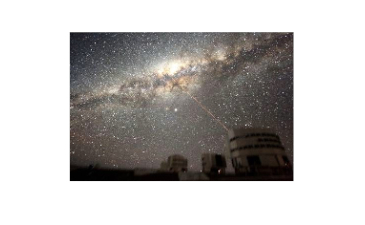
When we look at the size of the universe, it sometimes becomes easier to see evolution as credible. But, in truth, the immensity of space is really not so friendly to evolution's claim that the universe, and the earth, are billions of years old.
Not Every Gift Has Value
Human bridegrooms are not the only males who give gifts to their intended. The birds and the flies do it, too.

Don't Stress Out Your Unborn Baby
A study conducted by researchers from the State University of New York at Stony Brook examined the effect of a mother's stress on the birth weight of her baby.
Do Birds Do Mental Time Travel?
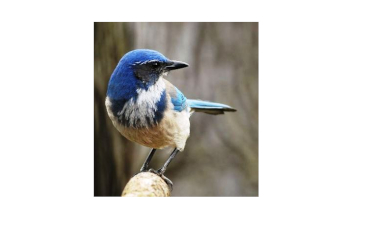
Episodic memory, the ability to remember something that happened in the past is called mental time travel. It has long been thought that only humans are capable of episodic memory. New research suggests that some birds are also capable of mental time travel. Photo: Western_scrub_jay._Courtesy_of_Minette_Layne._CC_BY-SA_2.0.
Which Came First, the Defense or Countermeasures?
There are many plants that have effective defenses against the insects that attack them. Photo: Bursera_simaruba_Permission_granted_to_use_under_GFDL_by_Kurt_Stueber__CCo_By_SA_3.0
Relax
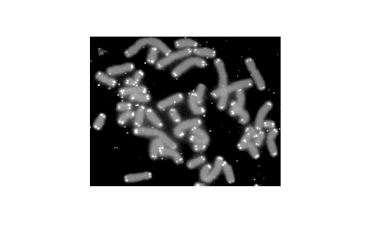
Before the Flood people were living hundreds of years. As man grew more evil, God declared that man’s lifespan would be reduced to 120 years. Modern biology has learned that we do indeed have built-in timers in each of our cells that limit the number of times they can divide. Photo: Human chromosomes (grey) capped by telomeres (white). Courtesy of U.S. Department of Energy Human Genome Program. (PD)
The Squid Without a Shadow
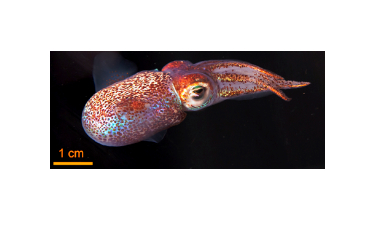
The Hawaiian bobtail squid needs to be able to reflect different levels of light because of its unique lifestyle. This squid glides through moonlit waters but without its special reflective tissue its shadow would be seen as it passes over the bottom. Photo: Adult Hawaiian bobtail squid. Margaret McFall-Ngai. (CC BY 4.0)
Geckos Don’t Need Flashlights
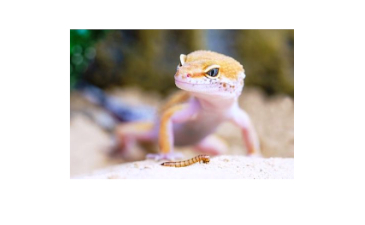
You get up early. The illumination isn’t very good, you put on your socks anyway, only to find out, in the light of day, that you have one blue and one gray sock on. That’s because our eyes have cone cells to detect color, as well as rod cells that are sensitive to light, but cannot see color. Photo: Gecko (not the hooded gecko). (PD)

What Value Is Music?
On the evolutionary side of things, musical ability would seem to provide no survival advantage. Yet, the human brain devotes considerable resources to the processing of music. Photo: Courtesy of Pixabay. (PD)
Species Confusion May Kill Ape-man
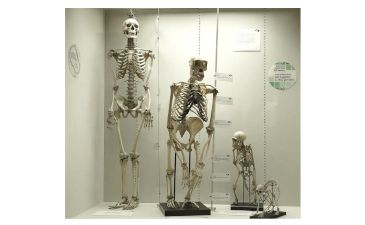
A debate about the definition of “species” may remove Homo erectus from the human evolutionary tree. Photo: Skeletons by Stux_ Pixabay.jpg

A Pure Faith and a Clean Earth
The first book that urged us to take good care of the earth was the Bible. The Bible also reminds those who would be careless about their responsibilities that there is a Creator who is going to hold us accountable for how we carry out our responsibilities. Why, then, does Christianity always seem to be taking the blame for destruction of the environment? Photo: The sunflower. Courtesy of RS3. (CC BY-SA 3.0)
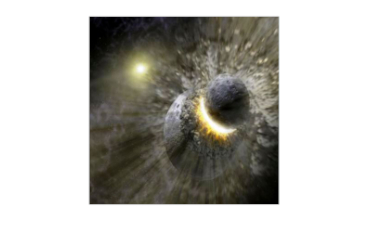
Dusty Stars
The news has again been filled with stories about the search for planets orbiting nearby stars. All these stories assume that our Earth was not formed by God. They perpetuate the idea that the Earth and other planets in the solar system formed when dust around the young sun began to collect into lumps. Image: Artist’s impression of dust around Beta Pictoris. Courtesy of NASA/JPL-Caltech/T. Pyle (SSC). (PD)
Coded for a Poisonous Lifestyle
The bacterium Bacillus cereus likes to live in soil that would kill most other bacteria. It’s bothered neither by lethal concentrations of metal nor natural antibiotics. How can cereus survive under conditions that would kill any other known bacteria? Photo: Bacillus cereus by Loes Van Damme –CCO - Pixabay.com
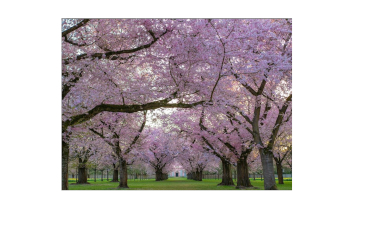
Cherry Blossom
It is often forgotten how much energy a plant uses, in producing flowers and blossoms. Though cherry blossoms are small, there are a lot of them. The colors they reflect, and the aromas released, are attractive to the insects necessary for pollination. Photo: Cherry Blossom by Chiem Seherin_Pixabay.com

Sub Creation
“What is the place of art in the Christian life?”, asked Francis Schaeffer. Many people have pondered the same question. Image: Adobe Stock Photos, licensed to author.

Brew By Design
One study has suggested that caffeine production must have evolved independently at least three times. Not only that, but plants contain at least two different biosynthetic routes for its production. Yet evolutionists claim that caffeine production fulfills just one main evolutionary purpose – to modify the behavior of other organisms. Image: Julius Schworzman. License: Creative Commons Attribution 2.0 Generic.

Beethoven and the Lamb of God
While Bach wrote theological notes in the margins of his manuscripts, and his well-thumbed Bible also contained comments, Beethoven’s music is honest in its skepticism. There is power and passion in it, as well as a great deal of anger. Image: Josef Karl Steiler, 1820 – Public Domain, due to age.

Life on Ocean Worlds?
Is there life on other ocean covered worlds? Image: National Oceanic and Atmospheric Administration, Public Domain.
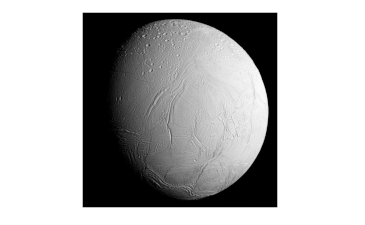
The Oceans of Enceladus
Could the stuff of science fiction be a reality in the outer reaches of our Solar System? Image: NASA, Public Domain

The Art of Folding
Technology is looking at the way nature folds things to copy the natural designs, to produce better robotic algorithms, for packaging fragile objects. Image: Andreas Bauer. License: Creative Commons Share-Alike 2.5 Generic.

The Beginning of Wisdom
Wisdom is demonstrably not the same as intelligence. It is possible – and, I would submit, common – for a highly intelligent scientist to be foolish. Image: Adobe Stock Photos, licensed to author.
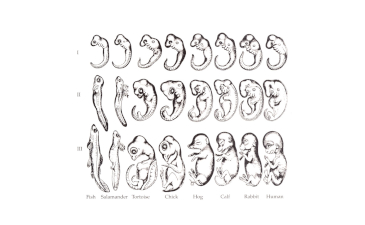
A Lingering Myth of Evolution
Haeckel’s famous embryos drawings of 1874, were deliberately shaped, to support his recapitulation theory, even though actual embryos do not show such similarities. The drawings were debunked in 1965 and yet some science curriculum still included this false concept. Image: G.J. Romanes (1892), Public Domain (due to age).
Material Design
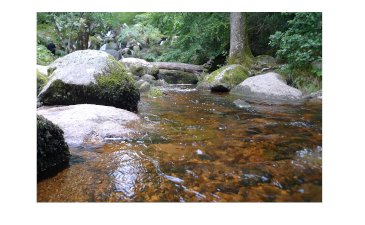
Many materials in nature give an appearance of design. Consider just a small number of properties of water. It freezes from the top down. We are so used to this, that we forget how unusual it is. Image: Adobe Stock photos, licensed to author.
Human Speech Itself Glorifies God
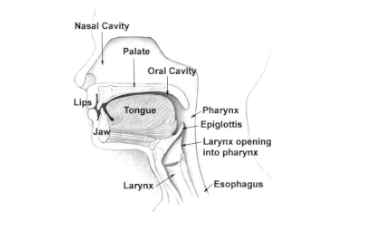
Several different animals communicate on a limited basis with one another. But human speech is unique, leaving those who believe in evolution perplexed. Image: Head and Neck view by Centers for Disease Control and Prevention(PD)

The Family that Prays Together
“The family that prays together, stays together.” A survey by the Barna Research Group indicates that this old saying is still true. Photo: Prayer by CongerDesign_Pixabay.com CCO
Learn of God's Loving Provision
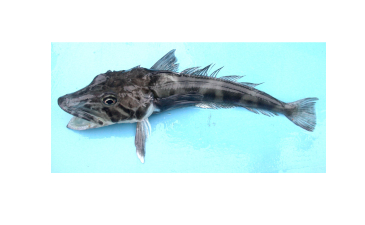
A number of species of fish live, apparently comfortably, in Antarctic waters as cold as the freezing temperature of seawater, which is a couple of degrees colder than fresh water. This presents us with several mysteries. First, cold slows down the chemistry necessary for life. At these temperatures, life's chemistry all but stops. Photo: Ocellated Icefish by NOAA (PD)

Airplane Fingers
Aerodynamics, the science of flight, is a highly complex science. This is because many complex forces are acting on anything in flight. One critical force that has been under recent study is the turbulence that forms at the tips of the wings. Photo: Bombardier_Learjet_60 by Allen Wilson-CCA BY SA 2.0
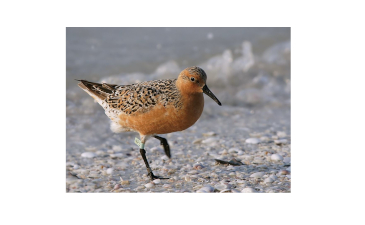
Those Gifted Red Knots
Shore birds like the oystercatcher search for buried mollusks by touch. They poke around in the sand, hoping to find a hard shelled mollusk. But if you have ever tried to find something that was hiding where you couldn't see it? Photo: Red Knot by Hans Hillewaert CC BY-SA 4.0

Is Pizza Good for You?
Could pizza be good for you? Research has shown that tomatoes, especially cooked, have powerful health benefits. Photo: Pizza by DesignDrawArtes_ Pixabay.com CCO
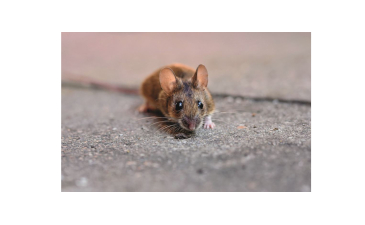
Sense and Smell
What determines the sort of smells that we like and dislike? Is it nature or nurture? Do we like the smells of the environment, in which we were brought up, or are our likes and dislikes inherited from previous generations? Image: Laboratory Mouse, author: Rama, license: Creative Commons Share-alike 2.0
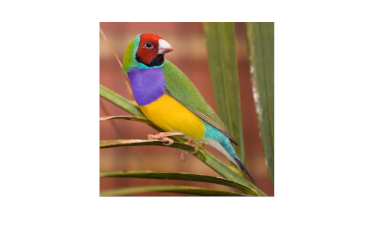
God's Loving Ownership
Have you ever tried to get a bottle in a baby's mouth in a dark room? It would be handy if the baby had a glowing target on its mouth. God has given the Gouldian finch, a native of Australia, a unique solution to this problem. Photo: Male Goulding finch by Martin Pot - CCA By SA 3.0
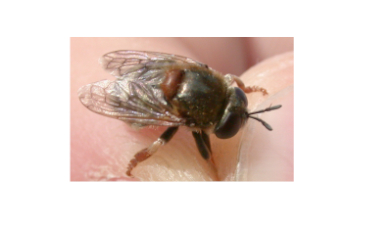
Ant Impostor Glorifies God's Creativity
Deep inside an ant colony, perhaps in a decaying log is an "ant" that is really an impostor! Learn about this insect imposter on today's program. Photo: Microdon mutabilis by PaulT CCA By SA 3.0
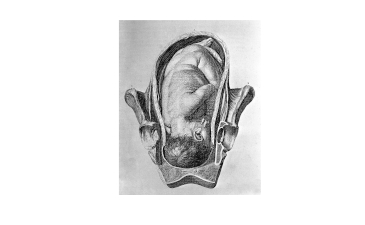
Unborn Babie Protect Themselves
How is it that an unborn baby isn't rejected by the mother's body as something that is foreign? Learn the answer on today's program. Image: Fetus in utero_Wellcome Trust_CCA 4.0
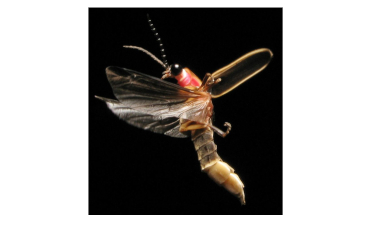
The Efficient Firefly
God gave fireflies a complex chemical factory that lets them generate flashes of light we love to watch on warm summer nights. But on today’s program, you’ll see the main reason why God gave fireflies this unique ability. Photo: Eastern Firefly by art farmer – CCO By SA 2.0.

God’s Unlimited Generosity
The universe that God created is filled with things that demonstrate His unlimited generosity. Many of God’s gifts are visible. But as you’ll see on today’s program, some of God’s greatest gifts are invisible to the eye. Photo: Galaxy-Pixabay.com
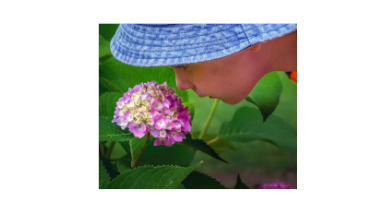
The Gift of Smell
The world is filled with smells – from the foul odor of skunk spray to the fine aroma of freshly ground coffee. Our sense of smell is no less important than our senses of seeing and hearing, as you’ll learn on today’s program. Ref.: Science Digest, June1979, page45. Photo: Child smelling flower – Pixabay.com

The Gift of Humor
Laughter is surely a gift from God. In fact, as every parent knows, babies don’t even have to LEARN how to laugh. On today’s program, we’ll show you a few of the many reasons why laughter is such a valuable gift. Ref: Peterson, K. 1996. "A chuckle a day does indeed help keep ills at bay." USA Today, Oct. 31, page 10D. Photo: Christmas dogs – Pixabay.com
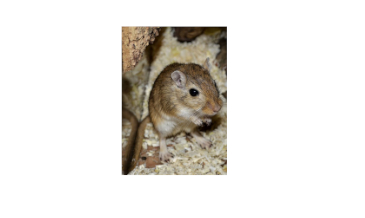
How to Talk Gerbil
What might gerbils be saying to one another with their squeaks? Scientists have lowered the pitch of their voices so they could hear what our ears cannot hear. And on today’s program, we’ll tell you what they’re saying. Ref.: Science Digest, March 1978, page 53. Photo: Gerbil – Pixabay.com
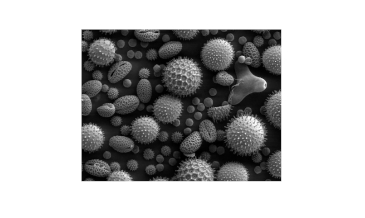
Tiny Time Bombs
Pollen is bad news for people suffering with allergies. But it’s also terrible news for evolutionists who claim the earth is billions of years old. On today’s program, see how tiny pollen grains destroy the myth of an old earth. Ref: Burdick, Clifford L. 1981. "Pine pollen in the Grand Canyon." Bible-Science Newsletter, June, page 1. Photo: Pollination Through Microscope by Stockvault.net/Pixabay CCO
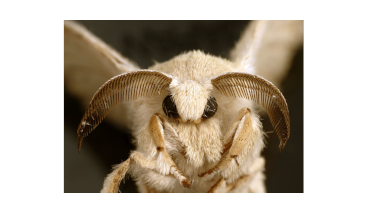
Chemical Communication
Everyone knows that communication is accomplished via hearing and seeing. But did you know there’s a third form of communication that’s just as vital for life on Earth? Find out what it is on today’s program. Ref.: Emmel, Thomas C. Worlds Within Worlds-An Introduction to Biology, page 333. Photo: Silkworm month by CSIRO – CCA 3.0 Unported
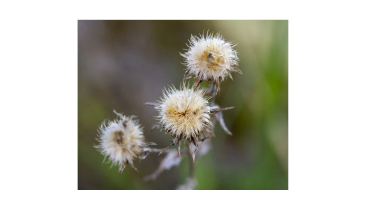
Nature’s Velcro
Did you know that humans did not invent the hook-and-loop fastener known as Velcro? God didn’t patent the design, but He does deserve credit for being the first to use it. Learn about nature’s Nature’s Velcro on today’s program. Ref.: Science Digest, March, 1979, page 68. Photo: Burrs – Pixabay.com
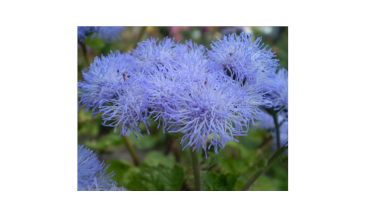
Plants Skilled in Animal Chemistry
They don’t look like chemists. They just look like ordinary plants. But when you discover on today’s program, these plants use hormones and chemicals as a means of self-defense, you’ll see they were created by a very wise Designer. Ref.: Science Digest, March, 1979, page 67. Photo: Flosee flower PD
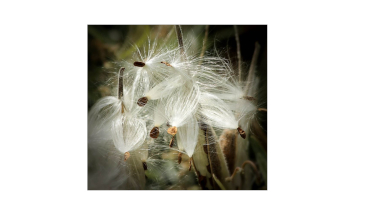
Plant Self-Defense
Since plants don’t move around like animals, you might think they’d be easy prey for insects that would eat them. But on today’s program, you’ll see that plants DO have some formidable tricks up their leaves! Ref.: Science Digest, March, 1979, page 66. Photo: Milkweed – Pixabay.com
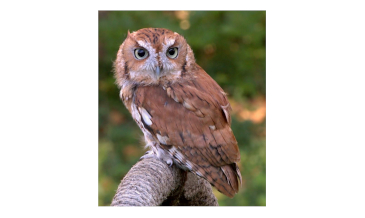
Parents Who Are Wise as Owls
Which animal do most people usually associate with wisdom? Right – owls! On today’s program, we look at screech owls and see what wisdom they can teach us about being a good parent. Ref.: Science Digest, March, 1979, page 62. Photo: Eastern Screech Owl. By Greg Hume CCA By SA 3.0 unported.
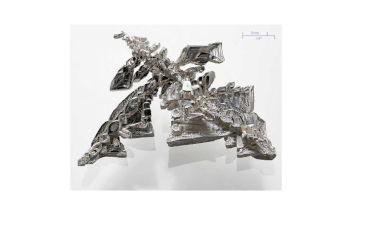
The Original Antibiotic
On today’s program, we will conduct a search for buried treasure. In this case, the treasure is a metal that’s valuable monetarily and also for its use in medicine. What is this treasure? Stay tuned for the surprising answer. Ref.: Science Digest, March 1978, pages 57-59. Photo: Electrolytically refined silver. Courtesy of Alchemist-hp. Licensed under the Creative Commons ‘Attribution-NonCommercial-NonDerivative 3.0 (US) License.
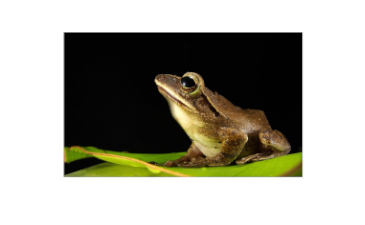
Frog Hibernation
We have all been taught that frogs hibernate in the winter. But on today’s program, we’ll take a closer look and see that hibernation cannot be the result of mindless, purposeless evolution. Ref.: Science Digest, November, 1978, page 96. Photo: Frog – Pixabay.com

The Very Hairs of Your Head
What is it that the Bible tells us that God has counted on each one of us? Yes, it’s the number of hairs on our head. Why does our Creator do that? We’ll tell you why on today’s program. Ref.: Science Digest, June, 1979, page 71. Image: Hair braid – Pixabay.com
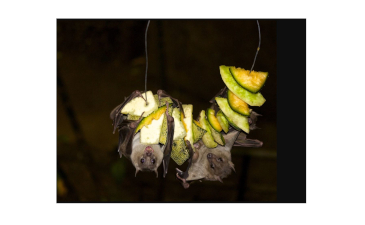
Bats Who Feed Trees
Did you know that the huge trees in a rain forest are usually hollow? You might then ask, how do nutrients get to the top of the trees? On today’s program, we’ll tell you about our Creator’s ingenious solution! Ref.: Science Digest, October, 1978, page 30. Photo: Fruit bats – Pixabay.com
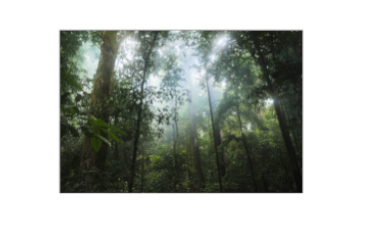
A Community in the Air
Imagine finding an elevator while walking through a thick forest. You ride the elevator up 100 feet and then step out into another forest, filled with plants and animal life. Today’s program explores the rain forest canopy. Ref.: Science Digest, October, 1978, page 30. Photo: Rain forest trees – Pixabay.com
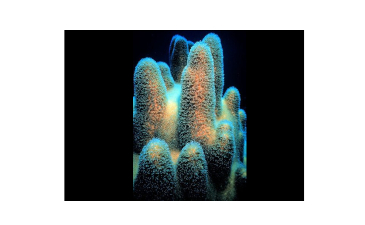
Complex—But No Evolution
Though evolutionists tell us that corals are among the earliest and simplest forms of life, corals are actually quite complex. For starters, just consider their poison-filled stingers! Learn more about coral on today’s program. REF.: What’s in a name. Science Digest, Feb., 1985. p. 87. Photo: Pillar coral. (PD)