
Today's Creation Moment
1,937 episodes — Page 22 of 39

Sea Level During the Flood
If there really was a worldwide Flood and the Ark was floated above Mount Everest,wouldn't the air have been so thin that that no one would have been able to breathe?” We'll answer this skeptical question today on our program. Image: Joe Hastings, Creative Commons Attribution Share-alike 2.0 Generic.
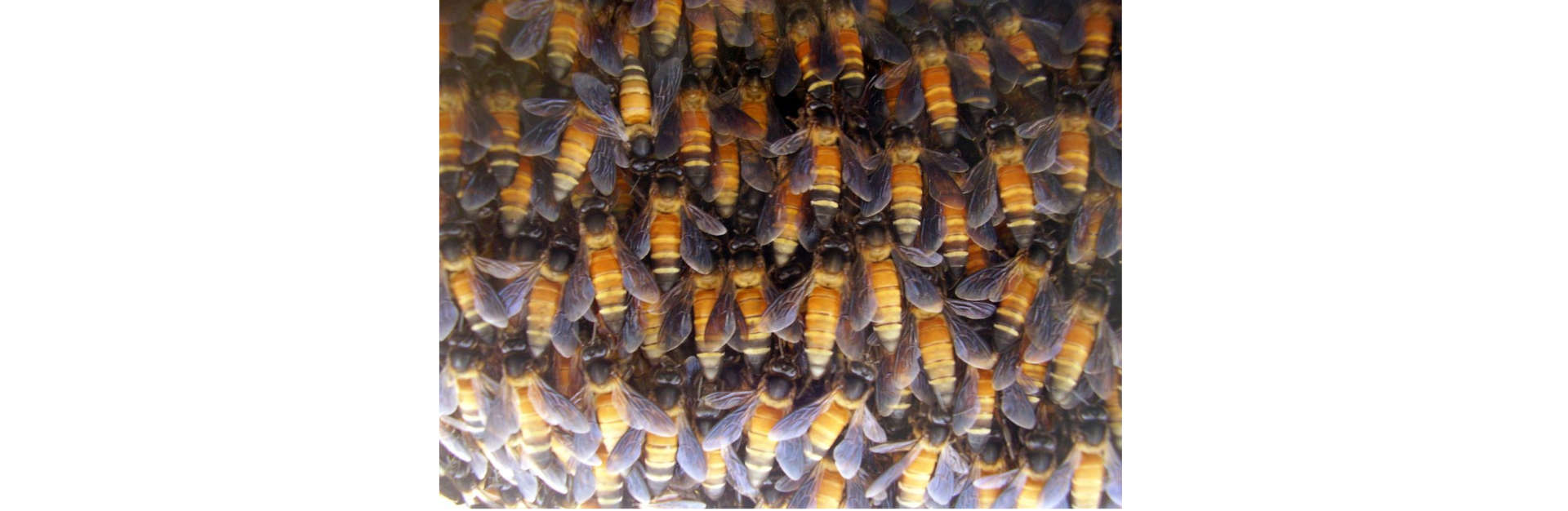
A Lesson from a Beekeeper
Did you know: When bees return to the hive, they will do a little dance. These dances are quite sophisticated and give information to others in the hive about the distance and direction of nectar flowers. Image: License: Creative Commons Share-Alike 3.0 Unported.

Evoltion Lacks Logic
Is evolution's logic air-tight or is it full of holes? Image: Adobe Stock photos, licensed to author.

When Were Angels Created?
Were angels created before "Creation"? After Creation or perhaps - during creation week? We'll tall about to day on our program. Image: Adobe Stock photo, licensed to author.
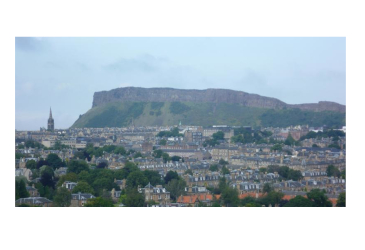
The Birth of Deep Time
Who was James Hutton and what is theory of "Deep Time"? Image: Ann Traynor, Creative Commons Attribution, Share-Alike 3.0 Unported.
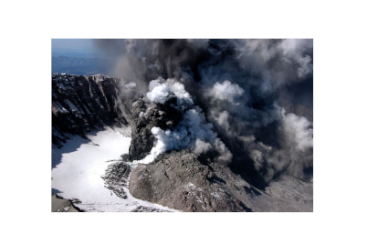
A New Volcano Inside the Old
Mount St Helens has proved that the surface of the Earth can change rapidly at times, and that changes do not require millions of years. Image: USGS, Public Domain.

Fast Dead Tree Oil
On today's program: Petroleum oils need not have taken millions of years, but could have formed in conditions at the time of the Flood. Image: Adobe Stock photos, licensed to author.

Progress in Technology
Technologically speaking, the world is getting better and better, yet we also see the world sinking downhill fast in terms of its moral standard. Image: Adobe Stock images, licensed to author.

Curiosity for Life on Mars
Evolutionist are always eager to hear news about water being discovered on Mar as evidence for life on other planet. Life requires water, but water does not imply there is life. Image: NASA, Public Domain.
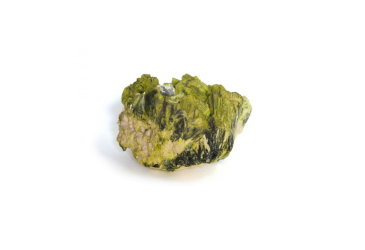
Faster Uranium Decay
Mica crystals have two possible ages - an evolutionary age and a creationist age. However, the results of independent experimental results by heating other crystals when plotted on to a graph, fit with the creationist long-age rates, and not with the evolutionary model. Image: Adobe Stock Photos, licensed to author.

Uranium Half-Life and Decay
On today's program we'll tell you about how the term "half-life" is a misleading term. Image: US DoE, Public Domain

Hourglass of the Rocks
On today's program: What does an hourglass and Radiometric dating have in common? Image: Adobe Stock image, licensed to author.
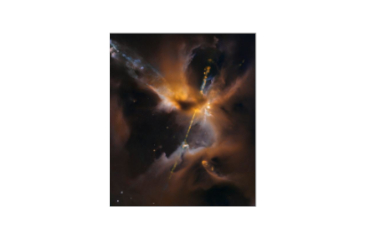
Aging Stars
How old is a star? And how can we tell? we'll talk about that on today's program. Image: Hubble Space Telescope, License: Creative Commons Share-Alike Attribution, 4.0, Unported.
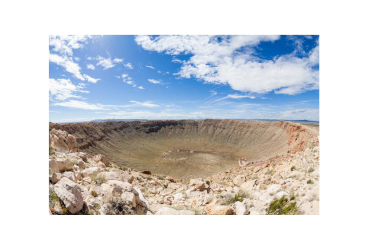
Making an Impact
Could God have used the "impacts" that form craters as part of the creation process? We'll talk about that today on our program. Image: Adobe Stock Photos, licensed to author.
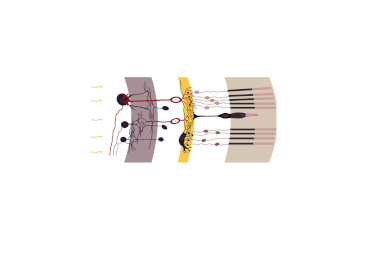
Did God Design the Eye Badly?
If God has designed the eye the way evolutionist, Dr. Richard Dawkins thought it should have been designed - our wires would have been crossed! Image: Creative Commons Attribution Share-Alike 3.0 Unported
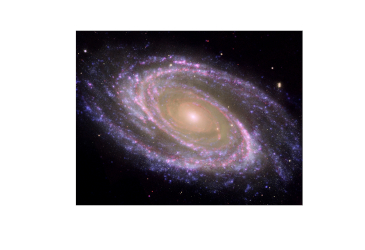
The Heavens Declare
Need proof of a wise Creator and God? Just look at the sky above you! That's today on our program. Image: Galaxy M8, license: Public Domain (NASA)
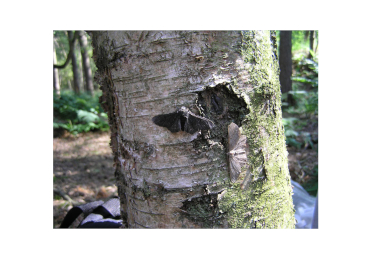
Peppered Moths Again and Again
On today's program - why do evolutionist continue to use the example of the "Peppered Moth" as an example of evolution when the famous photo was exposed as a fake staged photo? Photo: Peppered moth by Chriswick Chap CC By SA 4.0 wikimedi.org

One Best Friend, Many Varieties
On today's program we'll talk about the amazing variety of dogs, wolves, foxes and other wild dogs and how they are all the same species, Canis familiari. Image: Wikimedia Commons, license: Creative Commons Attribution, 3.0 Share-Alike Unported
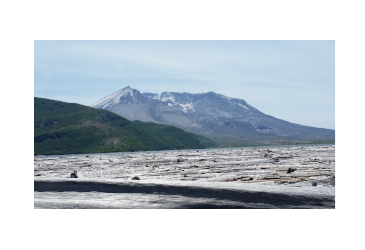
Quick Fossil Forest
Did you know the area around Mount St Helens is a wonderful laboratory, helping us to understand more about the mechanism and aftermath of the Flood? Image: taken by author.
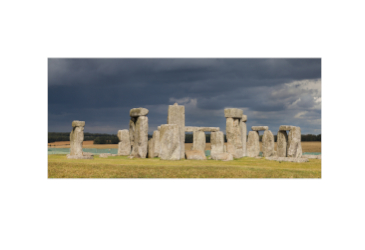
Stonehenge and Babal
What does the descendants of Noah, Babal and Stonehenge all have in common? We'll tell yo on today's program. Image: Author: Diego Delso, delso.photo, License: Creative Commons Attribution Share-Alike 4.0 International

Orchids and Bees
On today's program, learn about a crafty flower and its special bee that pollinates it. Image: License: GNU Free Document License, 1.2
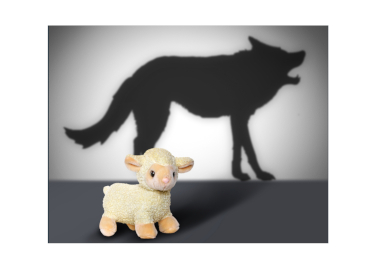
Fear
Some creationist scientists, working in secular universities, have estimated that many of their colleagues do not really accept evolution, but are afraid of losing their careers. Image: Adobe stock photos, licensed to author.
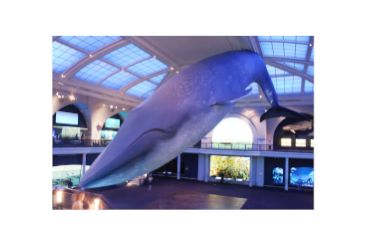
A Tale of Whale Evolution
Did whale "evolve" from land dwelling creatures that were one sea dwelling creatures and theb went back to being sea dwelling creatures? Image: American Museum of Natural History, New York, NY; License: Creative Commons Share-Alike 2.0 Generic
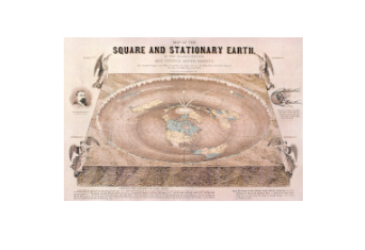
Is the Earth Flat?
In fact, there is no reason from Scripture to believe in a flat earth. But then the flat earth idea did not originate with biblical Christians. It originated as a modern myth, to give something for evolutionists to lampoon creationists with. Ref: Faulkner, D (2016), A Flat-Earth Prediction Falls Flat, accessed 05/26/2017. Image: Orlando Ferguson, Public Domain

Can We Test Evolution?
There are those that claim that Evolution is a scientific theory. Scientific theories can be subject to the scientific method. If the same test or experiment is carried out under the same conditions, on different days or locations, the results should still be the same. Evolution is not testable, and is therefore not Operational Science. Ref: Two Kinds of Science?, , accessed 05/26/2017. Image: Adobe Stock Images, licensed to author.
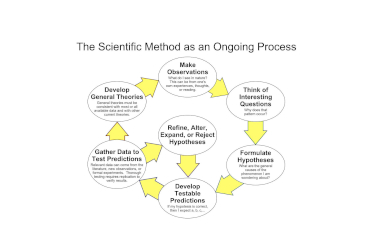
Method in Our Science
Science has an elevated position in Western society. There are those who would try to put Christians down, by saying “You have faith, but I have science”. Ref: Scientific Method, Encyclopædia Britannica, , accessed 05/26/2017. Image: Archon Magnus, license: Creative Commons Share-Alike, 4.0 International.
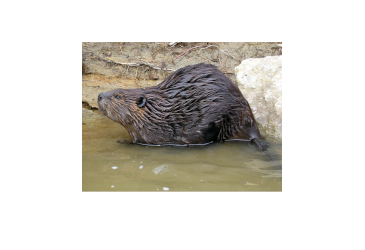
The Home Life of the Beaver
C.S. Lewis was right to allude to the marvelous construction abilities of the beaver. Ref: Wikipedia: https://en.wikipedia.org/wiki/Beaver, accessed 05/23/2017. Image: Laszlo Ilyes, license: Creative Commons Share-Alike Attribution, 2.0 Generic.
Physics and Chemistry Belong to God
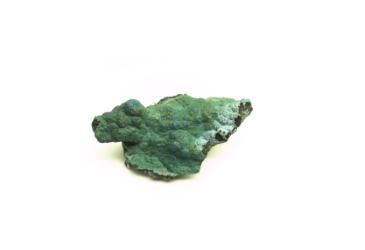
God has provided humanity with resources in the world, for which we are responsible, and over which we have dominion. Image: Jonathan Zander, released under Creative Commons Attribution, 3.0 Unported.
The Big Fizz
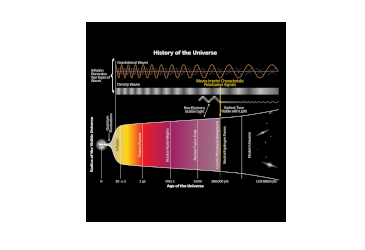
Many secular cosmologists believe that the universe came into existence in a singularity, as a result of a quantum event about 14.7 billion years ago. However, this so-called Big Bang theory is not without its problems. Ref: Faulkner, D.R. (2014), Has Cosmic Inflation Been Proved?, , accessed 05/17/2017. Image: representation of Big Bang and Inflation, by Yinweichen, License: Creative Commons Attribution, Share-Alike 2.0 Unported.
Echoes of a Big Bang?
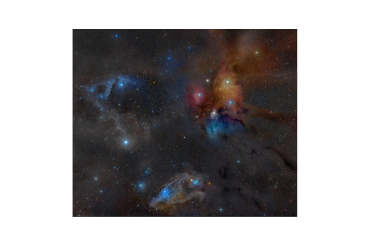
The so-called Cosmic Microwave Background Radiation (or CMB) has been known about since 1965. It is assumed to be an echo of the Big Bang, and is offered in High School textbooks as a proof of the Big Bang. Yet, it is actually problematic for Big Bang cosmologists. Ref: Faulkner, D. (2016), Created Cosmos, (Green Forest, AR: Master Books), p53-54. Image: The binary star system Rho Ophiuchi, by Rogelio Bernal Andreo; released to Public Domain.
Atoning Pitch
Wood will get waterlogged, if it is left in water for too long. And yet wood has often been used throughout history to build boats and ships. The city of Pensacola, Florida, was, in many ways, the birthplace of the US Navy, because of the deep harbor, and the abundance of live oaks, from which to build ships. To prevent water-logging, the wood must be treated, to make it waterproof. Ref: Taylor, P.F. (2013), Don’t Miss the Boat, (Green River, AR: Master Books). Image: Adobe Stock Photos, licensed to author.
A Herald of Righteousness
In 2 Peter 2:5, the apostle remarks, almost parenthetically, that “[God] did not spare the ancient world, but preserved Noah, a herald of righteousness, with seven others, when he brought a flood upon the world of the ungodly.” Noah was a herald of righteousness—someone proclaiming the Good News! Ref: Taylor, P.F. (2013), Don’t Miss the Boat, (Green River, AR: Master Books), Appendix. Image: Adobe Stock Photos, licensed to author.
God: Natural or Supernatural
C.S. Lewis suggested that those who deny the supernatural can still believe in a god of sorts. Ref: Lewis, C.S. (1947), Miracles, (New York: Macmillan Collins), p12. Image: Adobe Stock photos, licensed to author.
Eight Legged Thievery
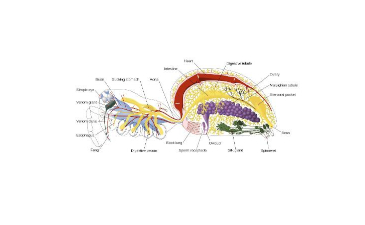
Out of more than 30,000 species of spiders, there are three species that make their living through thievery. That number was recently raised from two with the discovery of a tiny, thieving species on the island of Taiwan. S. Milius, New spider: Unusual suspect steals web, Science News, v.154, p.53. More than 30,000 species, “Spiders” Grolier, 1995, Multimedia Encyclopedia. Image: Diagram of the internal anatomy of a female two-lunged spider. Courtesy of John Henry Comstock. (CC BY 3.0)
He Literally Walks on Water
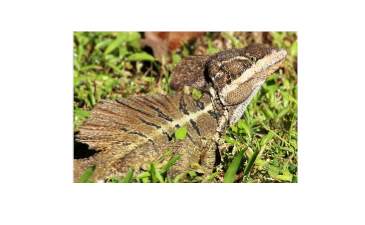
The basilisk lizard is yet another tribute to God's unlimited creativity, knowledge and power. Basilisk are found from Mexico to Ecuador and are equally at home in the trees, on the ground and in and on the water. Photo: Brown basilisk, basking in the sun on the Osa Peninsual, Costa Rica. Courtesy of Benjamint. (GFDL 1.2)
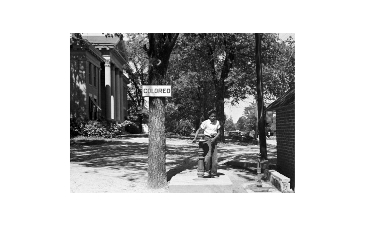
The Origin of Racism
The idea of different races, as distinct from different religions, was not much of an issue until 1859 when Charles Darwin published his famous book, On the Origin of Species.
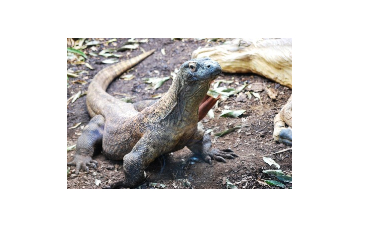
There Could Be Magic Dragons
Besides demonstrating variety in God's creation, the Komodo dragon may eventually save more lives than it has ever taken.

Where Does True Knowledge Come From?
Isaac Newton wrote more Bible commentaries than he did scientific books.
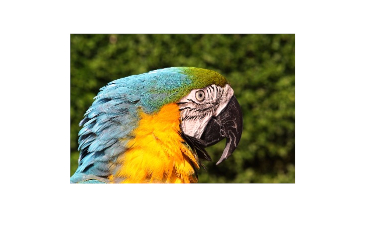
Parrot Denies Evolution
According to evolution theory, birds should not have been around at the time of the dinosaurs, especially the parrot, which by evolution beliefs is supposed to be a more highly-evolved bird. The rock in which the beak was found was dated as coming from the Cretaceous period. But it is not just one parrot's beak that was found but Loons, frigate‑birds and other shore bird fossils were found in rock that was supposedly laid down during the time of the dinosaurs!
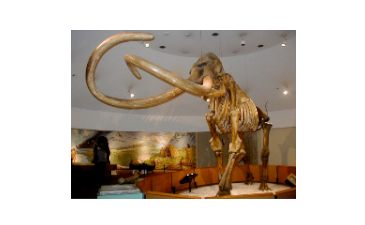
Is the Mammoth Making a Comeback?
In late 1999, Russian and American scientists excavated a buried, frozen mammoth in Northern Siberia. Once excavated, the mammoth was airlifted, using Russia's largest helicopter, to Siberian ice caves that were fashioned into a laboratory. There the frozen mammoth was studied to see if either sperm, or DNA could be extracted from it.

The Nose Knows
When we started out ll in our mother's womb, how did all those our new cells know to hook up to each other to knit together our nerve connections? How did other cells know to hook up with each other to make our circulatory system, or form the heart? A fascinating new theory has now been proposed, based on the fact that every cell in your body has the same active genes that your nose uses to enable you to smell.
Is This Any Way to Do Business?
Evolutionary scientists tell us that mutations were central to the production of the great variety of creatures on Earth today from the first living cell. At the same time, biologists admit that 99 percent of all mutations are harmful.

More About Amazing Aspirin
Aspirin works by disabling the chemicals that cause our pain. Now scientists have discovered that aspirin also works to shut down a plant's response to injury. Aspirin shuts off the plant's production of jasmonic acid, even though jasmonic acid is not at all similar to human pain‑causing chemicals.

Rare and Hidden Flowers
Two strange species of orchids are among the rarest flowers in the world. These unconventional plants live their entire lives underground, even flowering underground. Most often, their flowers never break the surface of the ground.
The Deception of a Glow In the Dark Shark
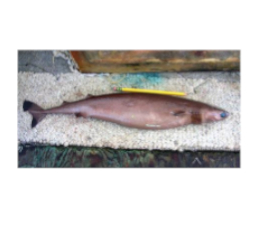
The creation is filled with plants and animals which use deception to survive. The glow‑in‑the‑dark cookie-cutter shark is a master at such deception.

Modern Medicine Is Catching Up with the Bible
For thousands of years the Bible has taught that there is a link between spiritual health and physical health. When rationalism came along, many sought to deny the spiritual aspect of humans. For them, the spiritual and the material have nothing to do with each other.
Saliva Is Nothing to Spit At
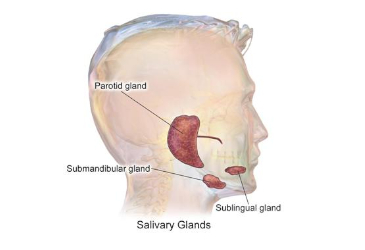
Saliva is an amazing fluid. Besides helping us moisten and digest food, saliva is able to speed healing and fight bacteria, fungi and viruses. Saliva is chemically almost identical to the clear part of your blood.
How Small Can Life Be?
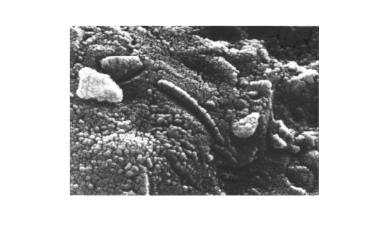
How small can a living thing be and still be considered alive. Viruses are not considered living things because they cannot reproduce on their own. But now scientists have confirmed the existence of bacterai that are smaller than the largest viruses and yet can reproduce on their own.
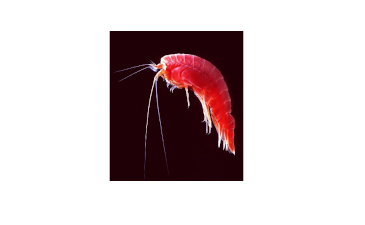
The Amphipod's Unique Escape
The hunted are smart to stay upwind of the hunter. Many predators hunt using scent, at least in part. The same principle works in water.
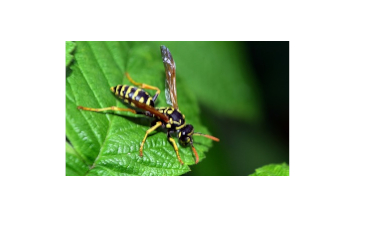
The Key to Real Leadership
The Bible teaches that proper authority is respected when it comes from a spirit of servanthood. This pattern seems to extend even to wasps.