
Titans Of Nuclear | Interviewing World Experts on Nuclear Energy
475 episodes — Page 10 of 10
Ep 24Ep 24: Tara O'Niel, Pacific Northwest National Laboratory
Episode Content: Tara's start as an archaeologist at Hanford Cultural Resources Laboratory. An explanation of the National Environmental Policy Act. A breakdown of environmental assessments and impact statements. The process of acquiring permits and the necessity of mitigating environmental impact. The Nuclear Renaissance and whether there is a second Renaissance emerging. The types of licenses and the renewal process. Likes, dislikes, and improvements that need to be done in the system. What the world will look like moving forward.
Ep 23Ep 23: Steve Unwin, Pacific Northwest National Laboratory
Episode Content: Steve's start working on Probabilistic Risk Assessment with the UK Energy Authority. Sizewell B and the significance of the Wash 1400 safety study. Risk assessment v. risk perception. The definition of risk and why it is important to analyze it. The industry's transition to utilizing a risk-informed approach in design. A breakdown of the categorization of nuclear facilities. The viability, benefits, and challenges of extracting uranium from seawater. PNNL's relationship with the Hanford Site. A discussion of reprocessing through a risk assessment perspective. The Golden Age of Nuclear and when it will happen.

Ep 22Ep 22: Edward McGinnis, Department Of Energy
Episode Content: Ed's start at the US Department of Energy doing nuclear non-proliferation security work. The decisions behind Dirty Bomb Threat Reduction and Global Threat Reduction Initiative. The US' responsibility to continue its high standard of security and safety. How the US can compete against Russia and China's state-financed nuclear industries. The Department of Energy's role in the private nuclear market. Why the small modular reactor will pave the way towards a new nuclear generation. The difficulties of maneuvering politics and Presidential Administrations. Short-term challenges and creating an industry-led commercialization pathway. What the future of the industry will look like.
Ep 21Ep 21: Bill Stokes, Columbia Basin (Advanced Reactor Consulting)
Episode Content: Bill's introduction to the nuclear industry through a co-op program at Drexel University. The importance of the design of a power plant and the logistics of its constructibility. The Nuclear Quality Assurance Requirements and the emergence of larger plants. Mitigating concerns, regulatory-driven changes after the Three Mile Island Accident. Prudence Litigation and the financial vulnerabilities within the nuclear industry. An explanation of the Single-Shell Tank Clean-Up Program. A discussion of the United States' departure from the nuclear industry. The Fast-flux Test Facility shutdown and exploring how to use radio isotopes for medical applications, such as cancer therapy. The Global Nuclear Energy Partnership and the Traveling-Wave Reactor.
Ep 20Ep 20: Jim Conca, Forbes
Jim's start as an extraterrestrial scientist and coordinator of shuttle activities. Transition to nuclear waste as he moved to PNNL as a geology pair with his wife, Judith. 3 styles of decision making in science policy: ignore science, make it the basis of the decision, retroactively justify the decision with science. Yucca Mountain is the wrong rock, dripping wet and corrosive. WIPP Carlsbad, New Mexico, Permian Basin has perfect salt chemistry. A comparison between the future of China and the US' nuclear industries. Dilution as a waste mitigation strategy, discussion of Fukishima and Tritium. A discussion of how the media sources portrays expertise. A discussion of grout v. glass vitrification processes. Waste disposal methods, political contentions, and the power of the Constitution.
Ep 19Ep 19: Amy Roma, Hogan Lovells
Amy's work at the NRC's atomic safety licensing board on waste and interim storage. An overview of nuclear liability and explanation of the Price-Anderson act. Deploying technology abroad, the nuclear export control regime, 10CFR- Part 810, general & specific authorizations, 123 agreements, political considerations. The ability of national security to drive legal policies and decisions. How the "Gold Standard Provision" affects enrichment and reprocessing access. The implicit understanding behind "atoms for peace" initiative and the inverse correlation between energy production and weapons production. Addressing capital risk and the evolution of capital sources, including impact investing. Collaboration between nuclear developers (new and old) and climate-driven acceptance.
Ep 18Ep 18: Josh Freed, Third Way
Episode Content: Josh's journey from American political history to Nuclear advocacy Storytelling as a tool to motivate action Third Way's focus areas, clean energy policies, and how they found advanced nuclear How climate change and natural gas changed the perception and rules of energy Identifying key changes such as: access to the lab & regulatory modernization Questioning the role of public perceptions' influence on the industry Across the aisle legislative efforts enabling the next generation of nuclear Developing a consensus around technology, market, and research needs De-Risking capital, technology, and regulatory risk moving into the future
Ep 17Ep 17: Rita Baranwal, GAIN Program
Episode Content: Rita's start in Materials Engineering at MIT, her transition into the space research world Her work at Westinghouse in their fuel fabrication facility Scouting "Game Changing" technologies across robotics, advanced reactors, advanced chemical engineering, advanced manufacturing, digital instrumentation and control How her experience working between Westinghouse and the Labs helped her understand the shortcomings she needed to fix from the inside GAIN initiatives: Vouchers, Workshops, Facilitating industry work with the labs Fuel testing for advanced reactors and the need to build a domestic Fast Test Reactor The formation of a 30 Million dollar per year for 5 years open ended funding opportunity A quick discussion of the NRC modernizing their licensing framework
Ep 16Ep 16: Don Wolf, Advanced Reactor Concepts
Episode Content: The ARC origen story through resurrection of a decades old nuclear prototype EBR-2 A technical discussion on "closing the fuel cycle", "breeding", "electrochemical refining" The advantages of ARC from a Waste, Cost, Safety and matching market conditions A discussion of sodium and "pool type" vs "loop type" design A discussion of metallic uranium fuel vs uranium oxide Negative reactivity feedback characteristics enabled by neutron leakage Historical examples of this style reactor's inherent safety features A quick comparison of the four metal fuel designs ARC, PRISM, OKLO, and TERRAPOWER Nuclear economics and how to balance economies of scale vs diseconomies of scale Advantages of the Canadian Licensing Regime: 2 stages & risk-based approach
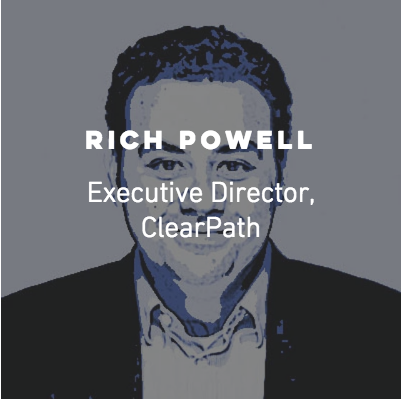
Ep 15Ep 15: Richard Powell, Clearpath
Episode Content: The origin story of Clearpath and politics role in the climate divide The "full toolkit" solution to world energy The "more innovation and less regulation" approach to federal policy An explanation of Production Tax credits and how they fit into energy markets "Leveling the playing field" for zero emissions standards How they focus on the innovation and the government's role in R&D Refocusing the Department of Energy's R&D efforts with moonshot initiatives Changing the paradigm of how we build new nuclear Three other research groups intensely focused on understanding construction costs China - and the risks of us ceding world nuclear leadership to them Energy's role in international political relationships The three things we need to move the industry forward...
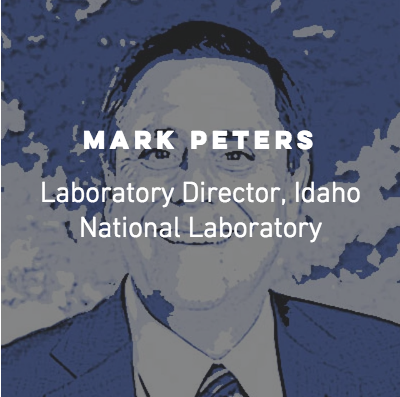
Ep 14Ep 14: Mark Peters, Idaho National Labs
Episode Content: Mark's background in geology and how that ties in to spent fuel disposal His lab career starting at Los Alamos, then Argonne, then INL INL's history and role in developing nuclear technology New technologies that help bring advanced reactors to fruition Specifically how INL helps facilitate the commercialize new reactor technology How the National Labs work with industry and role of R&D in US competitiveness INL's work as the "underwriter's lab" of storage technology How the various contributions of the national labs work as a whole system How competing on ideas drives science forward Smartgrid, cybersecurity, and design with resiliency in mind The importance of multidisciplinary learning and Mark's insight looking towards the future of technology
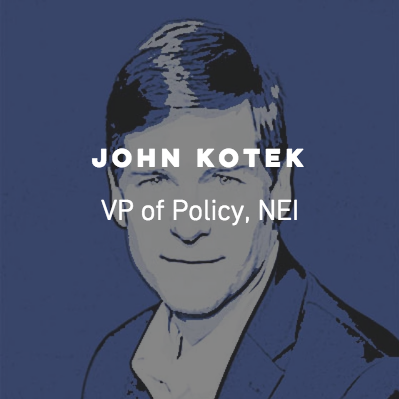
Ep 13Ep 13: John Kotek, Nuclear Energy Institute
Episode Content: John's career at the Department of Energy, the National Labs, as an ANS congressional fellow, and in the private sector Serving on the Blue Ribbon commission for nuclear waste management Why deployment time is key to cost reduction NEI's national nuclear energy strategy: Preserve, Sustain, Innovate, and Thrive An explanation of "negative pricing" and the unintended consequences of tax credits The long term strategic advantages that come form being a global energy supplier Pros and Cons of various mechanisms the government can use to support the industry How SMRs alleviate some of the market problems nuclear faces today Some of the other all-stars at NEI: Maria, Dan, John, Pam, etc. A key tale for nuclear reactor innovators...
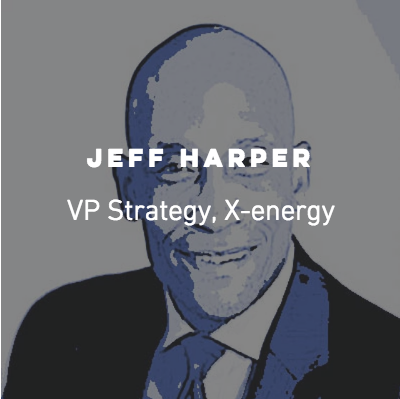
Ep 12Ep 12: Jeff Harper, X-Energy
Episode Content: Jeff's earlier career as an NRC vendor inspector The relationship between NRC and Industry including the balance of health and safety against cost and schedule His work with Westinghouse bidding on an South African nuclear build and the story behind their attempted development of the pebble bed A description of the Pebble Bed technology advantages Further details on the X-energy fuel and reactor technology The role of Silicon Carbide in in TRISO Fuel An alternative safety approach to redundancy and defense in depth The X-energy team composition and its founder Kam Ghaffarian How high temperature nuclear can be used for water desalination Further details of X-energy's deployment strategy
Ep 11Ep 11: Jessica Lovering, Breakthrough Institute
Jessica's start in Astrophysics, transition to Energy, and how she joined Breakthrough The various topic areas the Breakthrough Institute focuses on and its origin story The biggest challenge of Nuclear being cost and how to approach building differently A review of modular construction techniques and readiness levels Deployment timelines and how to make nuclear innovative How construction costs differ across country The market for exporting nuclear technologies and various factors that make it attractive The importance of fuel reliability, export control, and security considerations Canada's efforts on licensing advanced reactor technologies Floating Reactors, Micro Reactors, Autonomous Reactors
Ep 10Ep 10: Emma Redfoot, Idaho National Labs
Episode Content: How Emma's personal experiences abroad developed her interest in energy issues Her dual participation in both technical research and social advocacy How she got involved in Mothers for Nuclear and focus of Students for Nuclear She discusses the relationship between INL and the several local universities Developing a model in the nuclear fuel model simulator Cyclus Then we do a deep dive into Cyclus itself and Emma's efforts to evolve this model to incorporate a hybrid energy ecosystem as well How she sees the role hybrid energy systems play in transforming the world She also shares with us an amazing perspective on what happens holistically when we make energy cheaper
Ep 9Ep 09: George Griffith, Idaho National Labs
Episode Content: The basics of fuel fabrication What it's like to live in the community around and to work at a Nuclear Power plant A description of what happens when you reload fuel in a reactor His work with the Light Water Reactor sustainability program and how they design ways to extend the life of the existing fleet The function of the Advanced Test Reactor, the largest test reactor in the US The role that Small Modular Reactors play in the future of the nuclear power industry Nuscale's efforts in commercializing SMR technology and INL's role in hosting a demonstration version of this technology and others
Ep 8Ep 08: Shannon Bragg-Sitton, Idaho National Labs
Episode Content: Her fascinating entrance to the Nuclear field at an incredibly young age An overview of space nuclear reactors The wide variety of the different projects she's participated in at INL She dives into energy availability intermittency and transmission Applying nuclear energy as an Industrial heat source, utilizing the steam for district heating, chemical process, water desalination, and how all this fits into broader energy ecosystem The many uses of hydrogen and how it can be integrated in a nuclear system Laboratory scale model validation of the worlds future integrated energy systems
Ep 7Ep 07: Hans Gougar, Idaho National Labs
Episode Content: How Hans became interested in nuclear energy An overview of the of pebble bed technology physics and materials How high temperature can be safer than low temperature The ups and downs of interest in the technology He explains need to build expertise, infrastructure, modeling and new regulations just to lay the foundation for commercializing new technologies Why even a 50MW pilot project is a large endeavor The role INL plays as an independent auditor and fuel qualifier He articulates the difference between pebblebed and prismatic reactors We wrap up with where Hans sees the future of Nuclear technology
Ep 6Ep 06: John Wagner, Idaho National Labs
In part 1 of 5 in our special INL series we interview John Wagner, the Associate Laboratory Director of the Nuclear Science and Technology Directorate. If you're not familiar with the structure of the National lab hierarchy… that title is a big deal. In the first half of the episode we discuss: John's entrance into the field and early experience at Oak Ridge National Labs His expertise on developing new methods of understanding how radiation moves through matter He talks us through the basics of spent fuel management and a briefer on the status of Yucca Mountain. And in the second half we talk through the some of the facilities at INL John gives us an overview of the five different divisions that fall under the Nuclear Science Directorate including: "Domestic Programs", "Nuclear Fuels and Materials" "Fuel Cycle Technologies" "Nuclear Systems and Analysis" and "Regulatory Safety" divisions What role the INL plays in advising the NRC The three buckets of Advanced Reactor Design and INL's history in facilitating R&D He talks us through the concept of transients and how INL tests them We touch upon a topic that's very important to me, Energy Abundance And we close out with a glimpse into some of the future work INL and John's perspective into the promise of Nuclear Energy on the whole.
Ep 5Ep 05: Rachel Slaybaugh, ARPA-E
In this episode we interview Rachel Slaybaugh, who, before we were introduced, on three separate occasions was recommended as a must have on this program. She's a professor at UC Berkeley, founder of the Nuclear boot camp which we'll discuss shortly, and newest program director at ARPA-E. Today we discuss: - Rachel's introduction to nuclear science and technical expertise - The genesis of the world's first nuclear startup accelerator - The need to use computation thoughtfully to replace or supplement experiments - Her recent appointment as an Arpa-E program director and it's focus on supporting enabling technologies such as robotics, sophisticated sensing, model-based fault detection, and secure networks
Ep 4Ep 04: Eric Loewen, GE-Hitachi Nuclear Energy
In this episode we interview Eric Loewen, a leading Nuclear Scientist whose current work involves leading General Electric's efforts to deploy the integral fast reactor called PRISM. We discuss: His personal path through various nuclear institutions, work on climate change with congress, and current efforts GE's role in America's nuclear history A deep dive into the PRISM project and technology behind fast reactors We touch upon the the hormetic effect of radiation and the effects of low dose And where Eric sees the future of nuclear
Ep 3Ep 03: Todd Allen, University of Wisconsin
In this episode we interview Todd Allen, one of the top U.S. experts in nuclear energy. Todd's played a critical role in supporting the advancement of the next generation of nuclear technologies serving roles throughout our national lab system, in academia, the think-tank world and more. In this episode Todd' reveals tremendous insights around: The function of our national lab system in prototyping reactors and creation of user facilities to revitalize innovation on this front Walking through various permutations of fuels, coolants, and approaches towards proving new technologies Turning points in the history of commercial nuclear development, here in the US and abroad, and the recent resurgence of nuclear excitement His contribution towards shaping policy at Thirdway, the clean energy think tank, and launching their first advanced nuclear summit. We talk about the concept of prize based incentives and how they might apply to the nuclear space Most importantly concrete steps how the can DOE restructure their efforts to best encourage innovation At the very end he also offers a nugget regarding communication strategies to the public as well
Ep 2Ep 02: Per Peterson, Kairos Power
In this episode we interview Per Peterson, professor at one of UC Berkeley's Nuclear reactors groups. He's the world expert on Fluoride Salt Cooled High Temperature reactors and a founder of Kairos Power, an Oakland, CA based nuclear startup, pursuing commercialization of that same technology. He has a lot of insight to share in this space including: The true cost drivers in plant construction and operations Civil nuclear energy from the perspective of non-proliferation Public misunderstandings around nuclear waste Theories around various safety design approaches Integral effects test facilities and their role in new reactor technology development How market failures make it challenging to develop new reactors Opportunities to borrow learnings from the success of the revitalization of the private space industry

Ep 1Ep 01: Michael Shellenberger, Environmental Progress
In this episode we interview Michael Shellenberger who has been on the forefront of nuclear advocacy for over a decade. He's the founder of Environmental Progress, a research and policy organization, which in addition to putting together papers on Health and Safety, technology, innovation and economics also manages grassroots campaign efforts for preserving the existing Nuclear Fleet. In this episode we discuss: Michael Shellenberger's personal evolution from a solar to nuclear advocacy Common misconceptions around fukushima including the media's role We touch on concepts such on technocentrism, human consciousness, even question energy inevitability, And then we review which arguments are more or less influential in readjusting the public's position

Ep. 00 - Bret Kugelmass introduces "Titans of Nuclear"
trailerHost, Bret Kugelmass, introduces his nuclear energy themed podcast explaining his motivations around climate change.