
Time Sensitive
164 episodes — Page 3 of 4

S5 Ep 61John Hoke on Technology as a Co-Conspirator in Creativity
John Hoke, Nike’s chief design officer, intimately understands how to move design from an object to a feeling. At the company over the past three decades, he has refined his approach to center around creating designs that serve wearers in practical yet unexpected ways, and that often redefine what sportswear can look like and do. Hoke often tells his team that “the goal is goosebumps”—to develop ideas so great that they can be physically felt. Hoke’s role in Nike’s legacy of innovation runs deep. He joined the Beaverton, Oregon–based company in 1992, at age 28, after studying architecture at the University of Pennsylvania and working as a model-maker for the late architect Michael Graves. Hoke, who is dyslexic, considers drawing his first language, his way of articulating the reactions he has to the things he sees. Connecting images with emotions is his portal to new ideas, which he has realized across many forward-thinking projects, ranging from singlets made from recycled polyester and water bottles, produced for the 2000 Summer Olympics; to Space Hippie, a footwear collection inspired by life on Mars; to the 2020 Nike Air Zoom Alphafly NEXT%, a shoe with a carbon-fiber plate that literally propels wearers forward. Even as Nike marks its 50th anniversary this year, Hoke has his sights set on the future, refusing to settle for what has worked in the past. Design, he believes, is a continual, iterative process of improvement. On this episode, Hoke talks with Andrew about how physical movement amplifies the senses, design as an act of optimism, and why perfection is a trap.Special thanks to our Season 5 sponsor, L’ÉCOLE, School of Jewelry Arts.Show notes:Full transcript[04:16] Nike[07:11] Nike Air Zoom Alphafly NEXT%[12:43] Nike FlyEase[13:06] Nike Air VaporMax [16:12] Nike’s FY20 Impact Report [18:03] Space Hippie[19:36] Nike Considered Design[45:29] Michael Graves[01:02:19] Nike: Better Is Temporary[01:04:26] LeBron James Innovation Center[01:04:26] Serena Williams Building
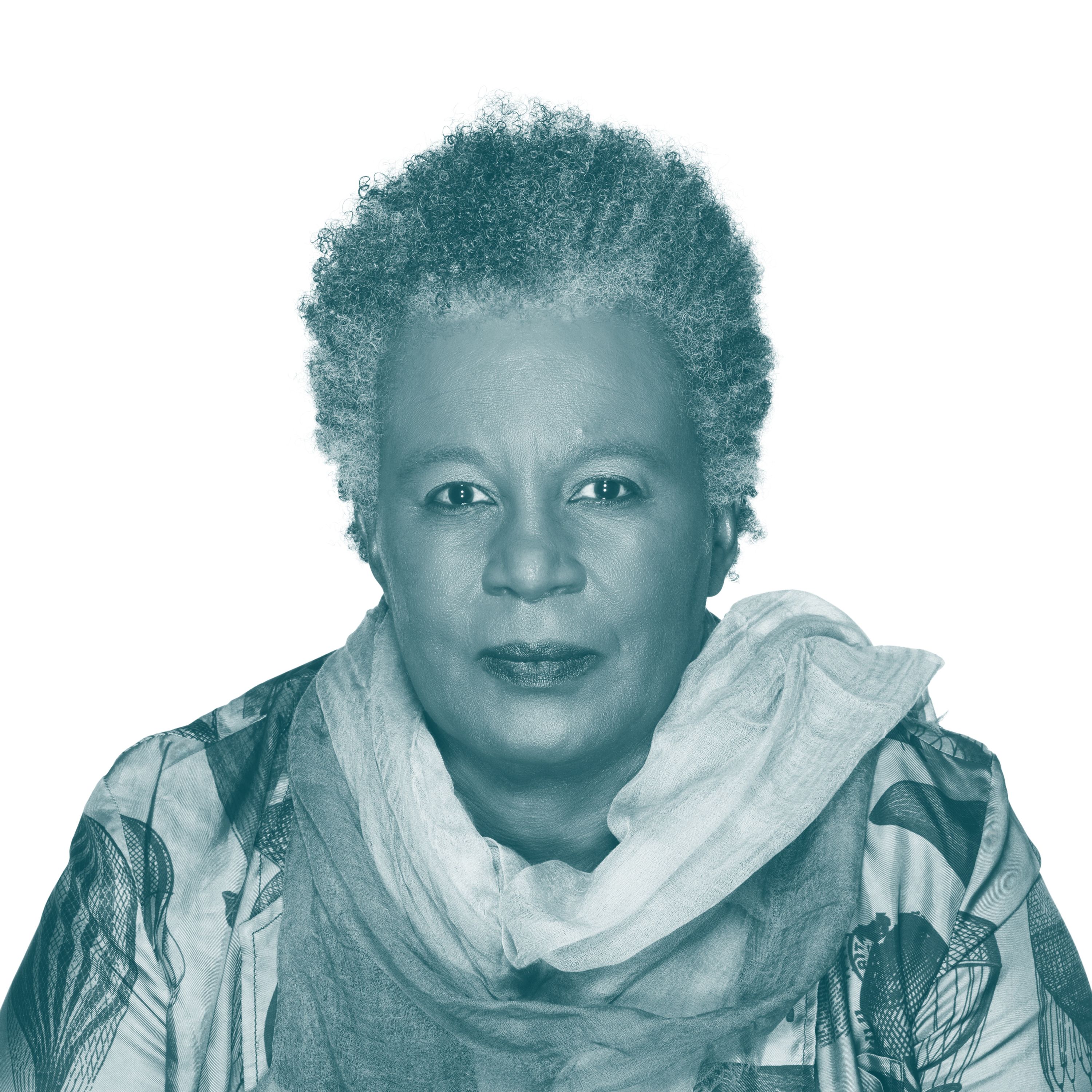
S5 Ep 60Claudia Rankine on Confronting Whiteness Head-On Through Language
Claudia Rankine cuts to the chase. She does not mince her words. The poet, essayist, playwright, and educator—whose recent body of work analyzes white supremacy in America—looks closely at its subtle and not-so-subtle manifestations, personal and systemic. Her forthright attention to the unspoken runs across three plays and six collections of poetry, in which Rankine works through subjects of tragedy and despair, maternity and motherhood, selfhood and individualism, and everyday instances of racial discrimination in ways that shrewdly illuminate the inner workings of American society. Never prescriptive, she leaves room for audiences to consider their own prejudices and privileges, and to understand more intimately where they come from and the systems in which they participate and belong. Often, Rankine seems more interested in questions than answers, and in unpacking the thought processes implied by a given response. These inquiries are at the center of her 2019 New York Times Magazine essay “I Wanted to Know What White Men Thought About Their Privilege. So I Asked,” which details her experiences of talking with white men about race in airports and on airplanes. Some of these dialogues arise in Rankine’s play Help, too, which recently finished a monthlong run at The Shed in New York City. Her inquisitiveness also lies at the center of The Racial Imaginary Institute, an organization she co-founded in 2016 that prompts artists and institutions to consider their racialized positioning. For Rankine, too much is at stake to not have these kinds of conversations.On this episode, Rankine talks with Spencer about why Americans tend to avoid talking about whiteness and white supremacy, racism in professional tennis, and what liminal spaces can reveal about white privilege. Special thanks to our Season 5 sponsor, L’ÉCOLE, School of Jewelry Arts.Show notes:Full transcriptclaudiarankine.com[05:48] “Claudia Rankine on How Beyoncé Became an Icon”[05:48] The White Card[18:30] The Racial Imaginary Institute[18:30] The Racial Imaginary: Writers on Race in the Life of the Mind[27:58] “I Wanted to Know What White Men Thought About Their Privilege. So I Asked.”[34:01] Citizen: An American Lyric[36:41] “The Meaning of Serena Williams”[53:22] Help[58:11] “Weather”[01:10:09] Don’t Let Me Be Lonely: An American Lyric[01:10:09] Just Us: An American Conversation[01:13:51] Plot[01:13:51] The End of the Alphabet

S5 Ep 59Kenny Schachter on Taking the Art World to Task
EKenny Schachter has an insatiable appetite for all things art. The polymathic art dealer, curator, teacher, writer, critic, collector, and self-taught artist brings a Tasmanian Devil–level energy to all that he does, but always with great, arms-open passion and, even within his whirlwind of ideas and projects, deep focus. For good reason, he has become a sort of enfant terrible in the art world, someone who’s not afraid to speak his mind, and who doesn’t care about ruffling feathers or messing with the establishment. He pushes against the status quo, and happily so. Schachter is a believer in high culture as much as low, and brings little pretension to his craft, no matter the medium, even if considerable rigor underlies it. Often, he’s decidedly coy.Schachter’s love of art is bona fide and lifelong. Not only did art prove a helpful outlet for him during a difficult childhood, but it has also blossomed into a way of growing closer to his family (particularly with his children, with whom he has mounted a series of inventive exhibitions). Schachter especially appreciates art for its ability to help him depict the time he’s living in. For him, art also serves as a form of cultural and personal commentary and as a mode of humor, often the self-deprecating variety. Schachter has become something of an NFT oracle, too, and will present his latest efforts in this space at next month’s Independent Art Fair (May 5–8) in New York, with Greece’s Allouche Benias gallery.On this episode, Schachter talks with Andrew about art as a form of sense-making, the benefits of being an outsider, and why he employs humor in so much of his work.Special thanks to our Season 5 sponsor, L’ÉCOLE, School of Jewelry Arts. Show notes:Full transcript@kennyschachter[07:56] Schachter’s column for Artnet[09:46] Schachter’s shrugging emoji[28:42] “The Hoarder” series of Sotheby’s sales[29:46] “Kenny Schachter: Retrospective” (2018)[42:15] “Friends & Family” (2012)[57:46] “The Artist Is Online” (2021)[57:57] “Kenny Schachter: Metadada” (2022)[01:01:46] “Forbidden Amuse Yourself Piggy Bank” (2018)[01:23:06] “The Art World’s Mini-Madoff and Me”

S5 Ep 58Reginald Dwayne Betts on How Freedom Can Begin With a Book
For Reginald Dwayne Betts—a poet, lawyer, and activist who supports and contributes to prison decarceration efforts—reading and writing have a mind-expanding power that never wanes. The author of three books of poetry and a memoir, his prose is intimate and raw. Even when he’s not writing about himself, Betts finds ways to build personal connections with his subjects for his award-winning work in The New York Times Magazine—subjects that have included the rapper Tariq Trotter of The Roots, the late actor Michael K. Williams, and Vice President Kamala Harris. He also brings a literary bent to his activism: In 2020, he founded Freedom Reads, a nonprofit that aims to build libraries inside 1,000 prisons and juvenile detention centers across the country. The program recently installed its first sets of bookshelves at MCI-Norfolk, the Massachusetts prison where Malcolm X was incarcerated, and last month, in a public event at the National Building Museum in Washington, D.C., it presented the 500 titles that comprise each collection.Betts, a graduate of Yale Law School (where he’s currently in a Ph.D. program), became an advocate for respecting the rights and dignity of the people who are in or who have gone through the American carceral system after experiencing it firsthand himself. Instead of resigning himself to the violence and dehumanizing conditions of incarceration, he turned his focus to books—many by Black writers and poets—that showed him the depth and richness of self-reflection, and that got him thinking about the stories he himself had to tell. On this episode, Betts speaks with Spencer about the long-term impacts of his time behind bars, the current renaissance of prison writing, and the transformative act of giving people who are incarcerated access to literature and books.Special thanks to our Season 5 sponsor, L’ÉCOLE, School of Jewelry Arts. Show notes:Full transcriptdwaynebetts.comA Question of Freedom [18:39]Betts’s 2021 commencement speech at Wesleyan University [25:46]Felon: An American Washi Tale [30:24]“Kamala Harris, Mass Incarceration and Me” [30:36]“A Son, A Mother, and Two Gun Crimes” episode of Death, Sex & Money podcast [38:06]“The Lives They Lived” [42:55]Shahid Reads His Own Palm [01:00:27]Bastards of the Reagan Era [01:00:27]Felon [01:00:27]“Could an Ex-Convict Become an Attorney? I Intended to Find Out” [01:03:01]Freedom Reads [01:10:23]“Memorial Hoops” [01:16:54]

Rerun: 12. Maggie Doyne on Uplifting Children and, In Turn, the World
bonusMaggie Doyne, who co-founded the BlinkNow Foundation nonprofit at age 19, discusses how, over the past 13 years, she has developed a school, children’s home, health clinic, and women’s center in Surkhet, Nepal.

S5 Ep 57Michael Murphy on Architecture as a Vessel for Healing and Hope
Michael Murphy believes in architecture that promotes connectivity, collectivity, and health, in the broadest sense of the term. As the founding principal and executive director of MASS Design Group, a 14-year-old nonprofit architecture and design collective with main offices in Boston and Kigali, Rwanda, he creates buildings with the aim of aiding individuals and communities, and addressing complex issues—particularly ones exacerbated by politics and time. In addition to hospitals and health centers around the world, MASS has created schools, public and private housing, farms, campuses, and other projects centered around healing and hope. This focus shines in some of the firm’s recent efforts, including MASS’s Restorative Design Justice Lab, which seeks to design decarceration, and its Covid-19 Design Response team, which provides resources to vulnerable populations, such as Indigenous communities and those in senior housing. “Design and Healing: Creative Responses to Epidemics,” an exhibition at the Cooper Hewitt (on view through February 20, 2023) that MASS curated and designed, highlights how architecture can serve people in moments of crisis. MASS’s work on memorials further illustrates the firm’s dedication to creating affecting architecture. The practice’s designs for the National Memorial for Peace and Justice (2018) in Montgomery, Alabama; the Gun Violence Memorial Project (2019); and “The Embrace,” a sculpture created with artist Hank Willis Thomas that will rise from the Boston Common this year, offer visceral, multisensory experiences. On this episode, Murphy talks with Spencer about creating a “Slow Space” movement, architecture as a storytelling device, and why the most successful memorials are those that offer tools for collective engagement.Special thanks to our Season 5 sponsor, L’ÉCOLE, School of Jewelry Arts. Show notes:Full transcript[03:15] MASS Design Group[21:30] The Architecture of Health: Hospital Design and the Construction of Dignity[21:30] “Design and Healing: Creative Responses to Epidemics”[22:10] Michael Murphy’s 2016 TED Talk [34:30] Restorative Justice Design Lab[44:39] National Memorial for Peace and Justice[44:39] “The Embrace”[47:21] Kigali Genocide Memorial—African Center for Peace[55:18] Gun Violence Memorial Project [01:06:30] Butaro District Hospital

S5 Ep 56David Wallace-Wells on His Growing Optimism for the Planet’s Future
David Wallace-Wells, author of the best-selling book The Uninhabitable Earth and New York magazine’s editor-at-large, wields vivid language that makes people pay attention. But his writing isn’t hyperbole. Wallace-Wells’s clear-eyed, cinematic storytelling provides coherence and context around some of today’s most complex issues, from California wildfires to Covid-19. His writing demonstrates his special knack for synthesizing information and rare ability to draw conclusions in ways that offer viscerally felt, nuanced insights.A large part of Wallace-Wells’s appeal stems from how he straddles two dimensions at once. He unpacks pressing topics by offering of-the-moment analysis while also considering the long-term consequences of such data. Late last year, for example, he wrote frequently about the Omicron variant’s impact—but also compared it to other pandemic data, and detailed unsettling projections about the variant’s protracted effects. In 2019, his New York piece on the wildfires in California traced their devastating toll; he also contextualized it, within the climate crisis, as a once-manageable occurrence that has evolved into a continual threat.On this episode, Wallace-Wells talks with Andrew about society’s troubling capacity for normalization, drama as a means to stir people to climate action, and why—despite all of the above—he’s feeling optimistic for the future.Special thanks to our Season 5 sponsor, L’ÉCOLE, School of Jewelry Arts. Show notes:Full transcript@dwallacewells[12:35] The Uninhabitable Earth: Life After Warming [31:30] “We Had the Vaccine the Whole Time”[34:41] “Can Anything Stop the Omicron Wave?”[40:32] “Ten Million a Year”

S4 Ep 55Wynton Marsalis on Jazz as a Tool for Understanding Life
Trumpeter and composer Wynton Marsalis, the managing and artistic director of New York’s Jazz at Lincoln Center (JALC), is a man bursting with endless energy. Throughout his four-decade career, he has never seemed to run out of steam. He signed his first recording contract at 22, and has gone on to release more than 100 jazz and classical recordings, win nine Grammy Awards, author six books, and earn more than 40 honorary degrees. In 1987, Marsalis co-founded a jazz program at Lincoln Center, which, following the initiative’s success, made it a formal part of the performing arts institution in 1996. The following year, his album Blood on the Fields, an oratorio about slavery, won a Pulitzer Prize. Not even the pandemic could stop Marsalis from using music as a vessel for knowledge and expression. As New York went into lockdown last March, he accelerated JALC’s digital programming with initiatives including a weekly YouTube conversation series and a virtual edition of JALC’s high school jazz band competition. In August 2020, he released The Ever Fonky Lowdown, a horn-powered survey of the forces that divide people and a vision of how we might rise above them. Through it all, Marsalis has remained passionate about the power of his work. “Music is important,” he says, “because music, and all art, is reenactment. The reenactments exist to let you understand the meaning of things across time.”On this episode, Marsalis speaks with Andrew about jazz as a metaphor for democracy, communicating through instruments, and how understanding music lends itself to understanding life.Show notes:Full Transcript[03:55] Ellis Marsalis[04:48] Jazz at Lincoln Center[05:24] Skain’s Domain[09:08] The Ever Fonky Lowdown[09:25] Ellis Louis Marsalis III [11:30] “That Dance We Do” [11:57] The Democracy! Suite [13:38] Blood on the Fields [14:29] “Sloganize, Patronize, Realize, Revolutionize (Black Lives Matters)”[29:03] “Deeper Than Dreams”[32:36] Branford Marsalis

S4 Ep 54Siri Hustvedt on the Value in Embracing Ambiguity
When Siri Hustvedt was 12 years old, she began reading 19th-century novels by Jane Austen, the Brontë sisters, Charles Dickens, and Mark Twain that were given to her by her Norwegian mother, and soon developed a passion for literature. She found great satisfaction in how these stories expanded her mind with new ideas and realms beyond. At 13, precociously enough, she decided she wanted to become a writer. Her interest in developing what she calls a “flexibility of mind” led her to eventually reading and studying works in a wide range of disciplines, including art history, philosophy, psychoanalysis, and neuroscience. Through her essays, poems, fiction, and nonfiction over the past five decades, Hustvedt’s aim has become clear: to bring together perspectives that might help her—and those who read her work—see the world differently.Hustvedt’s efforts to break down barriers and build a diversity of knowledge have steered her toward an array of topics. Upon moving from her hometown of Northfield, Minnesota, to New York City in 1978 to attend Columbia University, from which she earned her Ph.D. in English literature, she worked as a waitress, a researcher for a medical historian, a model, and an artist’s assistant. She went on to write seven novels, including the international bestseller What I Loved (2004) and The Blazing World (2014), the latter of which won the Los Angeles Times Book Prize for Fiction in 2014. Since 1995, Hustvedt has written extensively about art and what comes from looking deeply at it, unpacking works ranging from Johannes Vermeer’s “Woman with a Pearl Necklace” (1662–1664) to the photorealistic paintings of Gerhard Richter. Often, Hustvedt’s subject matter comes to her because it hits close to home. In her 2010 book The Shaking Woman or a History of My Nerves, she investigated the violent tremors that she first experienced in 2006 while delivering her father’s eulogy. Hustvedt (who with her husband, the novelist Paul Auster, has a daughter, the singer-songwriter Sophie Auster) has also long been interested in the peculiarities of motherhood, and more recently, the placenta, a subject she plans to explore at length in a future book. On this episode, Hustvedt talks with Spencer about the mysteries and misunderstandings around gestation, maternity, and being a mother; books as friends; and the problems with putting up walls between disciplines. Show notes:Full Transcriptsirihustvedt.net[05:01] Mothers, Fathers, and Others (2021)[47:53] A Plea for Eros (2005)[53:24] “The Future of Literature: The Anatomy of the Novel” (2017)[01:03:31] The Shaking Woman or a History of My Nerves (2010)

S4 Ep 53Daniel Humm on the Plant-Based Future of Fine Dining
Throughout his life, Daniel Humm has constantly pushed himself to the edge. So when Covid-19 arrived, he understood the importance of a quick pivot. Forced to close Eleven Madison Park—his three-Michelin-star Manhattan restaurant, named No. 1 in the world in 2017—he had to lay off all of his staff. Facing bankruptcy, Humm reflected on the many food-related issues that the pandemic was heightening, including meat-production carbon emissions, food insecurity, and broken supply chains. The extremity of the situation gave him the courage to boldly transition Eleven Madison Park to an entirely plant-based menu when the restaurant reopened earlier this year, in June. It’s one of several ways that Humm is using food to shift perspectives, in the hopes that his approach will lead to environmental and health impacts far outside of the restaurant world.Dogged determination and an inescapable internal call to follow his instincts are chief components of Humm’s successful three-decade-long career. After earning a Michelin star in his first executive chef position at age 24, for an inn in the Swiss Alps called Gasthaus zum Gupf, he helmed the kitchen at Campton Place in San Francisco, where he relocated to in 2003, and proceeded to hone his artful and intentional cooking style. Three years later, at the invitation of restaurateur Danny Meyer, Humm moved to New York to become the executive chef of Eleven Madison Park, which he now owns. Recently, Humm has modified his cooking for a higher purpose. With Eleven Madison Park’s new dishes, for example, he has created a circular ecosystem in which the purchase of each dinner funds meals for New Yorkers in need. Earlier this year, he launched Eleven Madison Truck, which serves meals to food-insecure areas of New York in partnership with Rethink Food—a nonprofit, for which Humm serves as a co-founder, dedicated to creating more equitable food systems. On this episode, Humm speaks with Spencer about cooking and hospitality as performance, why time is his most luxurious ingredient, and what he would say to New York Times restaurant critic Pete Wells, who recently wrote a cantankerous review of Eleven Madison Park’s updated menu.Show notes:Full transcript[02:33] Eleven Madison Park[04:06] Rethink Food [18:49] I Love New York (2013)[47:13] Brad Cloepfil[59:17] Campton Place[01:01:54] Danny Meyer[01:01:54] Daniel Boulud[01:08:47] The New York Times’s September 2021 review of Eleven Madison Park[01:11:12] Eleven Madison Truck

S4 Ep 52Elizabeth Alexander on Moving Forward in the Face of Adversity
The poet, educator, and scholar Elizabeth Alexander, president of the Andrew W. Mellon Foundation, views her work as an urgent political act. Following in the footsteps of her father, who was a civil rights advisor and special counsel to President Lyndon B. Johnson, Alexander has witnessed the sometimes exasperatingly slow pace of progress, particularly when it comes to racial equality, and the resoluteness required for the vital work of pressing on. She approaches each day as an opportunity to do as much as she can, with all she has. Through her teaching, scholarship, and poetry, Alexander built the foundation for her role as a philanthropic leader. She has held professorships at the University of Chicago; Smith College; Yale University, where she worked for 15 years and chaired the African American studies department; and Columbia University. From 2015 to 2018, she served as director of creativity and free expression at the Ford Foundation, and last year, launched the Mellon Foundation’s Monuments Project, a $250 million initiative that aims to rethink and transform America’s commemorative landscape. Alexander’s consciousness and compassion are especially apparent in her writing, which often weaves together biography, history, and memory to potent effect. In articles for publications such as Time and The New Yorker, she has reflected, with great acuity, on racist violence in America. Her collection American Sublime (2005) and memoir, The Light of the World (2015), were both finalists for the Pulitzer Prize. At President Barack Obama’s 2009 inauguration, she recited her optimistic, clear-eyed poem “Praise Song for the Day.”On this episode, Alexander discusses the vast possibilities of social justice, talking with Spencer about using language to promote change, how monuments and memorials shape collective memory, and the profundity of grounding oneself in the present.Show notes:Full transcriptelizabethalexander.net[10:34] “‘Can you be Black and Look at This?’ Reading the Rodney King Video(s)” (1994)[25:05] Andrew W. Mellon Foundation[25:05] The Monuments Project[49:05] The Clifton House[50:11] The Venus Hottentot (1990)[50:15] Body of Life (1996)[50:15] Antebellum Dream Book (2001)[50:15] American Sublime (2005)[50:42] “Crash” (2001)[55:37] The Light of the World (2015)[55:37] Ficre Ghebreyesus

S4 Ep 51Debbie Millman on the Importance of Playing the Long Game
Artist and designer Debbie Millman has been fascinated by the power of branding for most of her life. And as the host of the Design Matters podcast (which was recently translated into a book, out next month) and chair of the School of Visual Arts’s Masters in Branding program, she constantly has branding on her mind. For Millman, part of the allure of logos, identities, and marketing stems from the exercise of clearly and confidently expressing a purpose and meaning—a challenge that she has concurrently grappled with on a personal level. The parallels between aims in her work and life are no coincidence: Millman’s professional projects are often her way of searching for answers to life’s deepest questions.Millman has long considered how design can reveal people’s innermost desires. She has worked at several prominent New York City agencies, including Sterling Brands, for which she served as chief marketing officer and president of its design division for 20 years, and was part of teams that created identities for brands such as 7Up, Burger King, Tropicana, and Twizzlers. She even moonlighted as the first-ever creative director of the pioneering hip-hop radio station Hot 97. Over the years, her career has helped her recognize the importance of slowing down, and of trusting that she doesn’t have to approach everything—writing, teaching, special projects, love—as if it’s her last chance to experience it.On this episode, Millman describes her quest to feel comfortable in her own skin, talking with Spencer about the benefits of being a good listener, branding and marketing as ways to manufacture meaning, and why she doesn’t want to peak until the very end of her life.Show notes:Full transcriptdebbiemillman.com(03:50): Roxane Gay(06:34): Millman’s “Together Apart” poster for #CombatCovid(08:15): RAND Art + Data(11:58): Master’s in Branding program at the School of Visual Arts(13:19): Why Design Matters: Conversations with the World’s Most Creative People (HarperCollins)(13:19): Design Matters podcast(33:52): Look Both Ways (HOW Books)(50:09): Brand Thinking and Other Noble Pursuits (SkyHorse Publishing)(54:35): Millman’s 2019 TED Talk, “How Symbols and Brands Shape Humanity”(01:17:16): How to Think Like a Great Graphic Designer (Simon & Schuster)

S4 Ep 50Glenn Adamson on Craft as a Reflection of Ourselves
For curator and scholar Glenn Adamson, craft isn’t a quirky hobby that sits on the outskirts of contemporary culture. Rather, it’s a vital, timeless tool for teaching us about one another, and about humanity as a whole. This belief fuels his writing, teaching, and curatorial projects, which seek to unpack the many ways in which the age-old activity shapes our lives. Adamson’s work shows that craft is bigger than any single skillfully handmade object—each of which itself can serve as an important symbol of the human capacity for honing expertise over time—and influences countless aspects of society, from the Japanese tea ceremony to farming robots devised by Google’s parent company, Alphabet X. In this way, craft acts as a lens for understanding people and places across time.Adamson, 49, has explored the virtues of craft throughout his two-decade-long career, which has included roles at Milwaukee’s Chipstone Foundation, London’s Victoria and Albert Museum, and New York’s Museum of Arts and Design. In his 2018 book Fewer, Better Things, he positions craft as a means of connecting with fundamental issues and ideas (as opposed to those that hold only momentary or superficial relevance), and explains why taking the time to appreciate handmade objects from a maker’s or a user’s perspective holds particular spiritual and psychological value. Adamson’s account of the discipline in the United States, neatly laid out in his latest book, Craft: An American History (Bloomsbury), reveals how artisans—whose trade often includes people who are disempowered by their ethnicity, gender, or both—have been consistently suppressed throughout the nation’s history, but, paradoxically, are integral to many of its greatest achievements. His latest endeavor takes a more forward-looking approach. “Futures,” an exhibition Adamson co-curated that opens in November at the Smithsonian’s Arts and Industries Building in Washington, D.C. (on view through summer 2022), considers how craft can signal where we might be headed, and why we should be optimistic about the time to come. Over and over again, Adamson demonstrates how skilled making is about more than just beautiful objects. “Craft stands in for the whole idea of what it means to be human,” he says, “and why that matters.”On this episode, Adamson discusses the various facets of skilled making, talking with Spencer about the value of hand-formed objects, the relationship between time and craft, and the discipline’s essential, often complicated role in the history of human progress.Show notes:Full transcript on timesensitive.fm@glenn_adamsonglennadamson.com(16:20): Fewer, Better Things (Bloomsbury, 2018)(52:57): Chipstone Foundation (53:33): Milwaukee Art Museum(54:16): “Postmodernism: Style and Subversion 1970–1990” (Victoria and Albert Museum, 2011)(55:56): The Journal of Modern Craft(56:04): Museum of Arts and Design(59:50): Craft: An American History (Bloomsbury, 2021)(01:17:23): “Futures” (Smithsonian Arts and Industries Building, Nov. 2021–Summer 2022)

S4 Ep 49Trevor Paglen on Art in the Age of Mass Surveillance and Artificial Intelligence
Trevor Paglen aspires to see the unseen. The artist explores the act of looking through various angles—such as how artificial-intelligence systems have been trained to “see” and categorize the world, or the disquieting sense of being “watched” by a security camera—and creates scenarios that frequently implicate viewers in the experience. At other times, he’ll take pictures of places that are typically kept far out of sight, including the rarely seen headquarters of America’s National Security Agency, or the Mojave Desert, home to numerous military facilities, prisons, and a former nuclear testing site. Paglen, who has a Ph.D. in geography from University of California, Berkeley, also thinks about the relationship between space and time, and how the associations a person makes while looking at something—be it an age-old landscape or a satellite in endless orbit around the Earth—are fleeting and constantly changing. By highlighting invisible frameworks that exist in the world, Paglen invites viewers to think about life’s inconspicuous, and often unsettling, realities. Paglen, who is 47 and has studios in New York and Berlin, draws on science, technology, and investigative journalism to make his wide-ranging work. In one of his early projects, “Recording Carceral Landscapes” (1995–2004), he wore a concealed microphone and posed as a criminology student to document the interiors of California penitentiaries. For “The Last Pictures” (2012), he collaborated with materials scientists at M.I.T. to devise an ultra-archival disc, micro-etched with a collection of 100 images, and launched it into space on a communications satellite for aliens to find. More recently, his viral digital art project and app “ImageNet Roulette” (2020), which allowed users to upload photos of their faces to see how A.I. might label them, horrified many users with racist, sexist, or overtly stereotypical results, leading ImageNet, a leading image database, to remove half a million images. Beyond his art practice, Paglen continues his preoccupation with perception. He studies martial arts, surfs, and composes music—activities that require constant, intense awareness. It all stems from a heightened consciousness of, and interest in, the concept of observation that he’s carried for nearly his entire life. “We’re all trying to learn different ways of seeing,” he says. On this episode, Paglen discusses his deep-seated fascination with perception, talking with Spencer about the impacts of surveillance, deserts as sites of secrecy, and the value of trying to perceive forces that seem impossible to see. Show notes:Full transcript on [email protected]:54: “The Last Pictures” project (2012)19:51: “Orbital Reflector” (2018)29:48: Robert Smithson’s “Spiral Jetty” (1970) 42:53: Paglen’s thrash group, Noisegate47:15: “Recording Carceral Landscapes” (1995–2004) 1:05:13: “ImageNet Roulette” (2020) 1:05:13: “Bloom” (2020)

S4 Ep 48Maira Kalman on Walking and Looking as a Way of Life
When describing experiences, New York–based artist and author Maira Kalman almost always goes for the extremes: an instance can be at once stupid and smart, miserable and hopeful, sad and delighted. A bittersweet point of view forms the throughline of her work—which spans more than 30 books for adults and children, as well as performance, opera, film, and industrial and set design—and gives each project its distinct ability to encapsulate the reality of being human. Tragedy and beauty can, and will, she believes, appear out of nowhere. In both instances, it’s what one does with it that determines how the event will impact their life. Kalman, 71, credits this sensibility to credits this sensibility to people and places of significance in her life, specifically to the early death of her husband, the celebrated graphic designer Tibor Kalman, and to her late mother, Sara Berman, in addition to her Jewish heritage and birthplace of Tel Aviv. In tandem with her practice, Kalman makes time to indulge in seemingly mundane activities, such as taking long walks, cleaning, and reading obituaries, which she sees as activators of life. Each gesture is a means for finding clarity in the midst of chaos.On this episode, Kalman talks with Andrew about observation as a creative act, the allure of books, the importance of not thinking, and performing daily rituals as a means for staying sane. Show notes:@mairakalmanmairakalman.com9:37: Tibor Kalman13:08: Alex Kalman13:55: “Love in the Time of Corona” (Times Square Arts, 2020) 17:30: American Utopia (Bloomsbury, 2020) and American Utopia Broadway play (2019–Present)23:46: “The Museum Workout” at the Metropolitan Museum of Art (2017)28:26: “Sara Berman’s Closet” at the Metropolitan Museum of Art (2015)52:21: (Un)fashion (Abrams, 2005)53:43: M&Co56:11: “Tiborocity: Design and Undesign by Tibor Kalman, 1979–1999” 58:08: Alex and Maira Kalman’s short films1:05:08: “New Yorkistan” cover for the New Yorker (2001)

S3 Ep 47Kevin Beasley on Confronting the Social and Cultural Underlayers of Objects
Kevin Beasley thinks a lot about objects. In particular, specific objects that relate to notions of American-ness and Blackness—and ones that are often linked, subtly or not, with violence. Whether with a Cadillac Escalade, a pair of Air Jordans, or an N.F.L. helmet, Beasley finds deep connections to each item he chooses to work with, rigorously studying their multifarious contexts, meanings, and histories. Happy to let artifacts sit in his New York studio for long periods of time, the 36-year-old artist allows them to slowly gestate in his mind until he feels ready to express whatever he has deciphered out of their nature. From there, he turns them into exquisite, alchemical works of art, from tightly packed “slab” sculptures—large, flat resin blocks that embody the density of the symbolic articles that comprise them—to evocative sound installations and performances. Beasley’s prolonged approach isn’t mere research; it’s his way of making space to reflect, to pay more attention, and to grapple with the nuances of the complex, loaded subject matter that’s embedded in many of the things that permeate our everyday lives. For Beasley, unpacking subjects charged with underlying connotations is a necessary means for transformation. “You don’t have to fully understand what it is you’re dealing with,” he says. “It takes time. It takes a revisitation. And that’s okay, because that speaks very specifically to a process of learning and understanding.”Beasley’s work often draws from his personal history, which has included growing up in admiration of the handiwork of his mechanic father, deejaying at house parties at Yale University, and attending annual family reunions in rural Virginia. It was at one such reunion, in 2011, when Beasley came across a cotton field and picked the plant for the first time—an eerie experience that was, as he considered his ancestors and enslaved peoples who once performed the act, all at once distressing, pleasurable, haunting, and illuminating. The following year, Beasley took his fascination with cotton further—and into the deep South. After finding and purchasing a mid-20th-century cotton gin motor on eBay, he drove from New Haven, Connecticut, to a farm in rural Alabama to collect the object. Beginning as part of an M.F.A. project at Yale, the motor would later evolve into an encased artwork, whirling and surrounded by microphones, inside a pristine, clear, soundproof box at the Whitney Museum of American Art—the potent centerpiece of the artist’s breakout exhibition “A View of a Landscape” (2018–2019). (The raw, rancorous noises the motor produced were pumped into an adjacent room that served as a listening gallery.) Later this year, Beasley will extend the project further with a monograph and double LP of the same name, which features sound contributions from artists, musicians, and writers such as Kelsey Lu, Jason Moran, and Fred Moten, whose tracks sample recordings that Beasley made of the churning machine.On this episode, Beasley talks with Spencer about contemplating these particular objects, sound as a means for greater understanding, and the role of repetition in reshaping history.

S3 Ep 46Rosanne Cash on Moving Forward by Confronting the Past
For Grammy Award–winning singer and songwriter Rosanne Cash, processing the past is a constant, endless journey. She’d been thinking about race and reparations long before the Movement for Black Lives gained momentum last year, as both racism and African-American ancestry exist in her family history rooted in the American South, where she was born to country music legend Johnny Cash and his first wife, Vivian Liberto, in 1955. Cash channeled her anguish into “The Killing Fields,” a haunting single that reckons with the United States’s legacy of lynchings, and “Crawl into the Promised Land,” a blistering yet optimistic response to the tumultuous events of 2020. Last month, she released both tracks on a seven-inch limited-edition vinyl, the sales from which will benefit the Arkansas Peace and Justice Memorial Movement, a nonprofit that raises awareness about the state’s history of racial injustice. Over the last four decades, Cash, who now lives in New York, has established herself as one of the rare voices in popular music who sings from the uncut perspective of a grown woman, fraught with opinions, mixed emotions, and battle scars. With each album she releases (there are 14 to date), she seems to gain a deeper understanding of herself. After earning 11 number one hits on Billboard’s country music chart during the 1980s, Cash released Interiors (1990), a dark, reflective album that marked a departure from her commercial work. While country radio stations and her label all but ignored the record, she’s embraced the honest, deeply personal approach used to make it as her modus operandi ever since. Her recent work is increasingly intimate: Cash confronts her Southern roots and grapples with her life as a wife, mother, and former country star in the 2014 album The River and The Thread; her 2018 album She Remembers Everything—released against the backdrop of Brett Kavanaugh’s Supreme Court confirmation hearings and during the rise of the #MeToo movement—tackles the plight of women in America with songs about divorce, ingrained social hierarchies, and death, including a track about a boy killed by gun violence told from the viewpoint of his mother. She has also written articles for The Atlantic, The Nation, and The New York Times about subjects that matter to her, such as the need for country music artists to speak out in support of gun control. Eschewing any self-righteousness, these efforts, whether singing, songwriting, or prose, are her way of working through the complexities of life. “I have to keep showing up for the things I believe in,” she says, noting that she often feels like a fraud. “That’s part of being an artist. You come up against that, and you still show up, because you have to. The world needs it.” On this episode, Cash discusses what it means to reckon with history, talking with Andrew about her long-standing work as an activist, the healing power of music, and continually revisiting the past as a means for personal and artistic evolution.

S3 Ep 45Billie Tsien on Imbuing Buildings With Feeling
Growing up in the 1950s in the only Chinese family in Berkeley Heights, New Jersey, Billie Tsien always felt like an outsider. She would seclude herself in the shower of her family’s home’s master bathroom, behind closed doors, escaping into books for hours before her parents, who had originally moved to America from Shanghai to study at Cornell, would find her. Through this Tsien developed a deep understanding of the value of a rich interior life—a concept she has gone on to apply to her work at the New York–based architectural practice Tod Williams Billie Tsien Architects Partners (TWBTA), which she co-founded with her husband, Tod Williams, in 1986. The ethereal craft inherent in TWBTA’s structures, which include parks, libraries, museums, and other people-focused places, emanates from Billie and Tod’s belief that architecture is an act of service, and an opportunity to create quiet moments where visitors can indulge in the simple yet powerful emotions that can be stirred when encountering beauty. When Tsien, now 72, reflects on her firm’s philosophy—which entails making buildings that transcend solutions, that respect the earth, and that are measured by the lives lived within them—it’s clear that she profoundly, even poetically, shapes each project’s awe-inspiring energy. Tsien’s deliberate, unhurried methodology is apparent in everything she does. She advocates for listening and community engagement—a central part of her firm’s high-profile, often controversial public works, such as Philadelphia’s Barnes Foundation (2012), Dartmouth College’s Hood Museum of Art (2019), and Chicago’s Obama Presidential Center, which is slated to break ground this fall. Tsien and her staff spend time with the craftspeople who create many of their materials—including Dutch textile artist Claudy Jongstra, whose vibrant felt paintings grace the walls of New York’s David Rubenstein Atrium (2009), and Danish brick-makers whose product features on the facade of dormitories at Pennsylvania’s Haverford College (2012)—and select them according to the emotional responses they elicit. She gives the same focused attention to the holistic experience of a building as she does the handrails that will go inside it. When it comes to the planet, Tsien thinks buildings should embrace measurable ways to minimize their environmental footprints as well as immeasurable ones, such as the meandering pathways of the LeFrak Center (2013), in Brooklyn’s Prospect Park, that invite people to appreciate the natural wonders around them.On this episode, Tsien details the origins of and rationale behind her approach to the built environment, talking with Spencer about designing structures as containers for life, why history doesn’t unfold in a straight line, and architecture as both an honor and a responsibility.

S3 Ep 44Eileen Fisher on the Allure of Timeless Clothing
For 37 years, Eileen Fisher has faithfully followed a vision: to create simple, timeless clothes for women that make it easy to get dressed. Soft-spoken, polite, and a self-described introvert, the 70-year-old Fisher is the unlikely CEO of an approximately $500 million fashion company that bears her name. The operation is owned by 42 percent of its largely female staff, and is praised for its longtime environmentalism and progressive business model. Headquartered in Irvington, New York, the brand embodies Fisher’s view of what a contemporary clothing business should be, and acts as her way of giving back to the world.Though Fisher prioritized natural materials in her designs from the beginning, she didn’t fully understand how making clothes affects the planet until a 2012 trip to China, where she visited the company’s factories and saw the severity of the water crisis firsthand. Upon returning home, she created an internal “Sustainable Design Team,” composed of representatives from key departments, including supply-chain management and production, with the goal of minimizing their work’s environmental impact. Today, the brand uses organic cotton and linen almost exclusively, and between 2015 and 2018, it offset all of its carbon emissions when transporting garments between its factories and distribution center. Seventy-nine percent of its wool is responsibly sourced or recycled. The company’s initiative that buys and sells vintage Eileen Fisher pieces, called Renew, has collected more than a million and a half garments, and Waste No More, an in-house studio that uses a felting machine to transform leftover fabric into home decor, accessories, and art, nods toward Fisher’s goal of creating a circular production system. She’s constantly looking for ways to reduce the brand’s environmental footprint. “The whole industry has a very long way to go,” Fisher says of fashion’s contribution to global economic and climate crises. But solving the problem, she adds, is a “huge opportunity.” On this episode, Fisher describes her efforts to build a clothing business that serves women and the environment, talking with Andrew about collaboration as a preferred modus operandi, solving the fashion industry’s pollution problem, and the remarkable effects of staying true to one’s vision, and to oneself.

S3 Ep 43Eddie Stern on Taking Time to Discover Your Inner Freedom of Spirit
Last year, after more than three decades of practicing and teaching Ashtanga yoga, Eddie Stern found himself wondering if he should continue in the discipline. He’d amassed a considerable following through the classes of his New York yoga studios (with celebrity students such as Madonna; Gwyneth Paltrow; and Mike D, of the Beastie Boys), authored two books, launched a successful app with Moby and the alternative-medicine advocate Deepak Chopra, and lectured around the world. But issues within the industry have loomed large: The Western yoga scene—with its high-priced classes, stadium-size festivals, “rock star” yogis, and self-aggrandizing instructors—trouble him. They distort yoga from its origins, he believes, imposing false narratives onto participants. Meanwhile, in the era of #MeToo, multiple allegations of sexual misconduct against his peers—including the late Pattabhi Jois, under whom he studied for 18 years—have brought about a reckoning in the community. Then the Covid-19 pandemic hit, and Stern began giving classes over Zoom, a format he found conducive to creating the personal, noncompetitive, altruistic side of yoga that initially attracted him to the practice. He soon discovered his passion for teaching all over again.Stern’s dedication to yoga is rooted in a desire to understand who he is, which is apparent in each step of building the life he currently leads. His ninth-grade English teacher challenged him to contemplate his identity and purpose, which he explored early on by hanging out in New York’s 1980s punk music scene, skateboarding, and taking psychedelic drugs. When a co-worker at a record store introduced him to yoga, Stern quickly saw that the practice was a direct line to the insight and self-realization he longed for. Eager to immerse himself in the discipline, he moved to India, where he spent nearly two decades, on and off, studying with Jois, who had developed and popularized the vinyasa style of yoga known as Ashtanga. Jois also, as Stern acknowledges on this episode of Time Sensitive, abused some of his female students. But the sense of self Stern drew from being close to the guru, coupled with a fear for his own survival, caused him to remain largely silent until now. “Fear doesn’t lead toward treating people well,” Stern says. “Not just in accordance with yoga principles, but with human principles.” Today, he’s using what he’s learned from this dark experience to help inform how he approaches instructing his own students: as spiritual friends, who learn and grow together with their teacher. On this episode, Stern describes his profound experiences with the yogi tradition, talking with Spencer about the beauty of breathing and the body’s natural rhythms, yoga as practice of selfless concern for others, the problem of fear, and how slowing down shifts our relationship with ourselves.

S3 Ep 42Simon Critchley on Finding Clarity in Philosophy and Comedy
Simon Critchley has seen his share of accidents. In his younger years, he damaged his hands while working in manufacturing plants, and ruined his hearing by rehearsing with a punk band in spaces with subpar acoustics. At 18, he suffered significant memory loss, and most recollections from his childhood in rural England temporarily disappeared. The experience of forgetting, Critchley realized, was something he could make useful: It gave him a clean slate, and the freedom to fill in the blanks however he wanted. So when he entered the University of Essex 1982, Critchley threw himself into his studies, and eventually discovered teaching philosophy as a means to light a fire under people, helping them strip away distractions so that they can really think, and develop a voice and structure to express what comes up in the process. It’s an approach that informs how the philosopher currently works with his students at the New School for Social Research in New York, and how he tackles his own output, nearly four decades in the making. This slow, purposeful manner also allows Critchley, now 60 and living in Brooklyn, to continually explore the possibilities of what he is becoming, resulting in highly personal musings on subjects as varied as life itself. His first book, The Ethics of Deconstruction (1992), took a controversial stance on the forces driving the work of one of his favorite philosophers, Emmanuel Levinas. His writing on humor, devoted to its darkest and lesser-understood aspects, stems from his passion for stand-up comedy. He’s also written about the power of the shape-shifting musician David Bowie, whom he has revered since first glimpsing the artist on the British TV show Top of the Pops at age 12, and continues to dabble in song-making himself: Critchley spent part of the pandemic working on a new single, “Eat Your Funky Dasein”—a riff on a saying by the French philosopher Jacques Lacan—with his long-time collaborator John Simmons, and released it at the end of the summer. Each project is about a commitment to form. “You have to be bold and take risks,” Critchley says. “As you get older and you’ve done more of it, you can begin to let that go where it goes.” For him, finding a clarity of space from which to work is a lifelong endeavor. On this episode, Critchley’s constant re-centering of himself to look at the world through a philosophical lens shines through. He discusses with Andrew how disappointment can serve as a source of creativity, why humor is an act of philosophical reflection, and writing as a form of improvisation.

S3 Ep 41Monique Péan on the Transformative Nature of Fossils, Rocks, and Meteorites
New York–based jewelry and object designer Monique Péan sees fossils and extraterrestrial materials as portals to another time, space, and place. Pyritized dinosaur bones, woolly mammoth tooth roots, meteorites, and lunaites are among her work’s mediums. She sources these from remote locations—including the Arctic Circle, where she located fossils with Native Alaskan Inupiat and Yupik tribes, and on Easter Island, where that site’s aboriginal Polynesian inhabitants helped her hand-carve cosmic obsidian, found on local terrain—and then transforms them into striking, sculptural works of art. Recently, Péan began working on a larger scale, expanding her practice to sculpture and furniture. One of her first pieces in this vein, a bronze vessel incorporating part of a rare meteorite, is included in “Objects: USA 2020,” a forthcoming exhibition at New York’s R & Company gallery (now opening on February 16, 2021, due to the Covid-19 pandemic), curated by Glenn Adamson, Abby Bangser, Evan Snyderman, and James Zemaitis. Péan wants viewers to experience the wonder she feels when holding a piece of the universe in her hands: a transportive, calming energy that signals the vastness of deep time—and illuminates her role in harnessing it. Péan traces her draw toward these specimens to her younger sister, Vanessa, who died in a car accident at age 16. The loss prompted her, then in her mid-20s (she is now 39), to approach life with urgency and intention. She quit her job as an analyst at Goldman Sachs and, a year later, in 2006, launched her eponymous jewelry line. Each piece is, in a way, a memorial to her only sibling. They’re also a means for the designer to explore the origins of life, and to express not only herself but also gratitude toward the planet: Péan donates a portion of the proceeds from every accessory sold to Charity: Water, a nonprofit that provides clean drinking water to communities in need, and avoids using materials that require mining, opting for antique diamonds and recycled gold or platinum instead. The ancient materials she uses are found lying on the Earth’s surface, collected by simply picking them up off of the ground, and in Péan’s hands, they’re turned into wearable reminders of natural phenomena.On this episode, Péan details how she came to understand time through geology, talking with Spencer about her fascination with fossils, rocks, and meteorites; her profound experiences working with indigenous peoples to locate age-old materials; how her Haitian-Jewish background has shaped her worldview; and the ways in which her jewelry pays tribute to her late sister.

S3 Ep 40Dan Colen on Shifting Perspectives Through Farming and Art
Artist Dan Colen built Sky High Farm in the same way all his ideas are realized: intuitively, and with the faith to see it through. A 40-acre self-sustaining ecosystem in New York’s Hudson Valley, the farm helps underserved communities by donating everything it produces to local food banks. Since 2011, Colen and his team have given away more than 70 tons of organic vegetables, fruit, eggs, and meat. As the pandemic exposes the urgency of the farm’s raison d’être—spotlighting food insecurity and small-scale farming—Colen has sought new avenues to give back. This past August, he launched a Go Fund Me to double its production, scale up distribution, and increase its donation capacity by buying more food from other regional farmers. He’s also been working on a partnership with concept shop Dover Street Market—a collection of naturally tie-dyed, vintage-sourced T-shirts, hoodies, hats, and bandanas printed with the logos and slogans of the farm’s partners—and funneling the proceeds to farm beneficiaries. When the merchandise promptly sold out, Colen, a former skateboarder, realized fashion was an effective tool for spreading his message, particularly with a young, engaged audience. This fall, he unveiled the first in a yearlong series of covetable collaborations, created pro bono by 12 brands, including Awake NY, Noah, and Supreme. All profits will go toward running the farm. Colen, who’s represented by the Gagosian and Lévy Gorvy galleries in New York, and Massimo De Carlo in Milan, bought the plot of land nearly a decade ago after moving upstate, which gave him the space, access to nature, and the sense of freedom he needed at the time: He’d just gotten sober, and cultivating the land was an opportunity to do something bigger than himself. Colen long struggled to understand his draw to the property. But after nearly a decade, as he says on this episode of Time Sensitive, he’s come to see it as an extension of his creative practice: making things to alter perceptions, or to act as a mirror. Like his art—which varies in style and often employs perishable materials such as flowers, feathers, and chewing gum—the farm is an inquiry into ephemerality and slow, constant change, a canvas for Colen to work out experiences that made him the person he is today. On this episode, Colen recounts the circuitous journey that brought him to the farming life, speaking with Andrew about Sky High Farm’s efforts to combat food insecurity, how skateboarding introduced him to art, his profound relationship with the artists Ryan McGinley and the late Dash Snow, and the wide-ranging body of work he has created while grappling with life’s big questions.
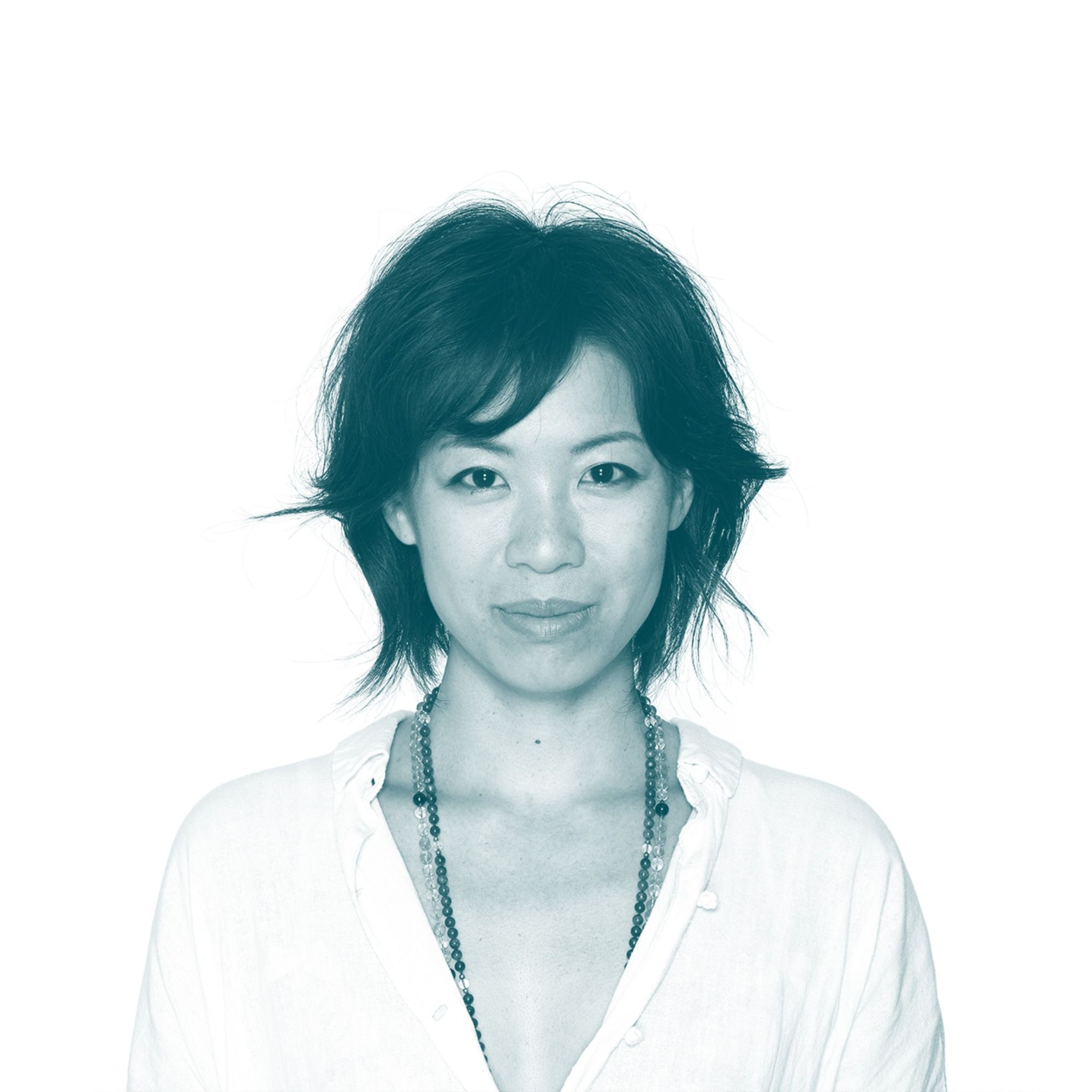
S3 Ep 39Angel Chang on Building Resilience Through Centuries-Old Crafts
To make her namesake womenswear line, New York–based designer Angel Chang had to forget everything she knew about fashion. Her label’s clothing is made using age-old techniques developed by China’s indigenous Miao and Dong ethnic minority tribes, whose procedures are at risk of disappearing because a younger generation has, in recent years, largely been indifferent to learning them. Chang, who was born in central Indiana to Chinese immigrants, first encountered Guizhou Province’s garment-making methods while visiting the Shanghai Museum, where she saw traditional costumes—vivid, elaborately detailed attire akin to haute couture—and spent the next 10 years developing a supply chain to make them available to a wider audience. She tracked down artisans (many of them grandmothers) in far-flung villages, learned Chinese, and even moved to the region, immersing herself in its way of life. There she discovered a distinctive relationship with time—one that depends on nature in lieu of a clock—that informs the slow, faithful process by which her clothes are constructed. Chang never set out to run a sustainable fashion label. But the system she created, which involves waiting six months for cotton seeds to grow and a weaving process that yields barely 10 feet of fabric a day, produces zero-carbon clothing. Each piece, from “seed to button,” as she puts it, is manufactured within a 30-mile radius, without the use of electricity or chemicals. It’s too complicated for fashion companies to become “sustainable,” Chang says on this episode of Time Sensitive; they need to build new supply chains from the ground up. The one she devised serves as a model, even a noble, alternative to fast fashion.On this episode, Chang describes the journey of patience and persistence that forged the infrastructure for her brand, talking with Spencer about persuading high fashion houses to preserve these traditional garment-making techniques; the prolonged, enlightening process of befriending Chinese artisans; harnessing wit and WeChat to build supply chains for her collection; and why indigenous knowledge is key to addressing climate change.

S3 Ep 38Daniel Boulud on Maintaining Consistency Over the Long Haul
Asked how the coronavirus pandemic has affected his relationship with time, Daniel Boulud chokes up. The New York–based French chef—who owns 13 restaurants, including the Michelin-starred Daniel on Manhattan’s Upper East Side and the fast-casual café Épicerie Boulud—laments the ways that Covid-19 has uprooted his staff, suppliers, and customers, deeming it the worst experience of his five-decades-long career. The response reveals a defining trait of the ardent chef, who cares deeply not only for his personnel, but about everything his work encompasses. At 65, Boulud continues to derive his energy from perfecting his craft: reading old French cookbooks, experimenting with his team in the test kitchen, embracing the spontaneity of making food for someone on the fly. When the coronavirus shut down New York’s restaurants this past March, Boulud turned his white-tablecloth flagship inside out, providing takeout and food service on the sidewalk of East 65th Street for patrons, and through converting Épicerie Boulud’s Bowery location into a prep kitchen for Citymeals, he's been helping feed first responders and elderly and food-insecure New Yorkers. Now, as New York officially begins its return to indoor dining, he's introducing Boulud Sur Mer, a pop-up environment designed by architect Stephanie Goto that reimagines Daniel’s interior, nodding to the South of France while elegantly incorporating safety protocols. The chef perks up when discussing Le Pavillion, the seafood restaurant he’s opening next year, a project he sees as a way to contribute to the regeneration of a city he loves after a harrowing period of downtime. His work transcends the kitchen: For Boulud, his legacy isn’t so much about what he’s accomplished, but about how he’s helping others. His profound interest in the wide-ranging potential of food is perhaps best demonstrated by the fact that Boulud is not only a chef, but a restaurateur. Work beckons constantly, as he points out in this episode of Time Sensitive, but it doesn’t seem to bother him. It’s all an extension of himself. His balanced, steady work ethic has enabled him to perpetually grow while maintaining consistency and standing the test of time. On this episode, Boulud’s generous spirit shines through as he details his journey to culinary success. He talks with Spencer about growing up on a farm near Lyon, France, that produced everything his family put on the table; how a “grande dame” facilitated his entry into fine dining; learning about food, mentorship, and entrepreneurship from several legendary chefs; and the humbling satisfaction of seeing his life’s work come full circle.
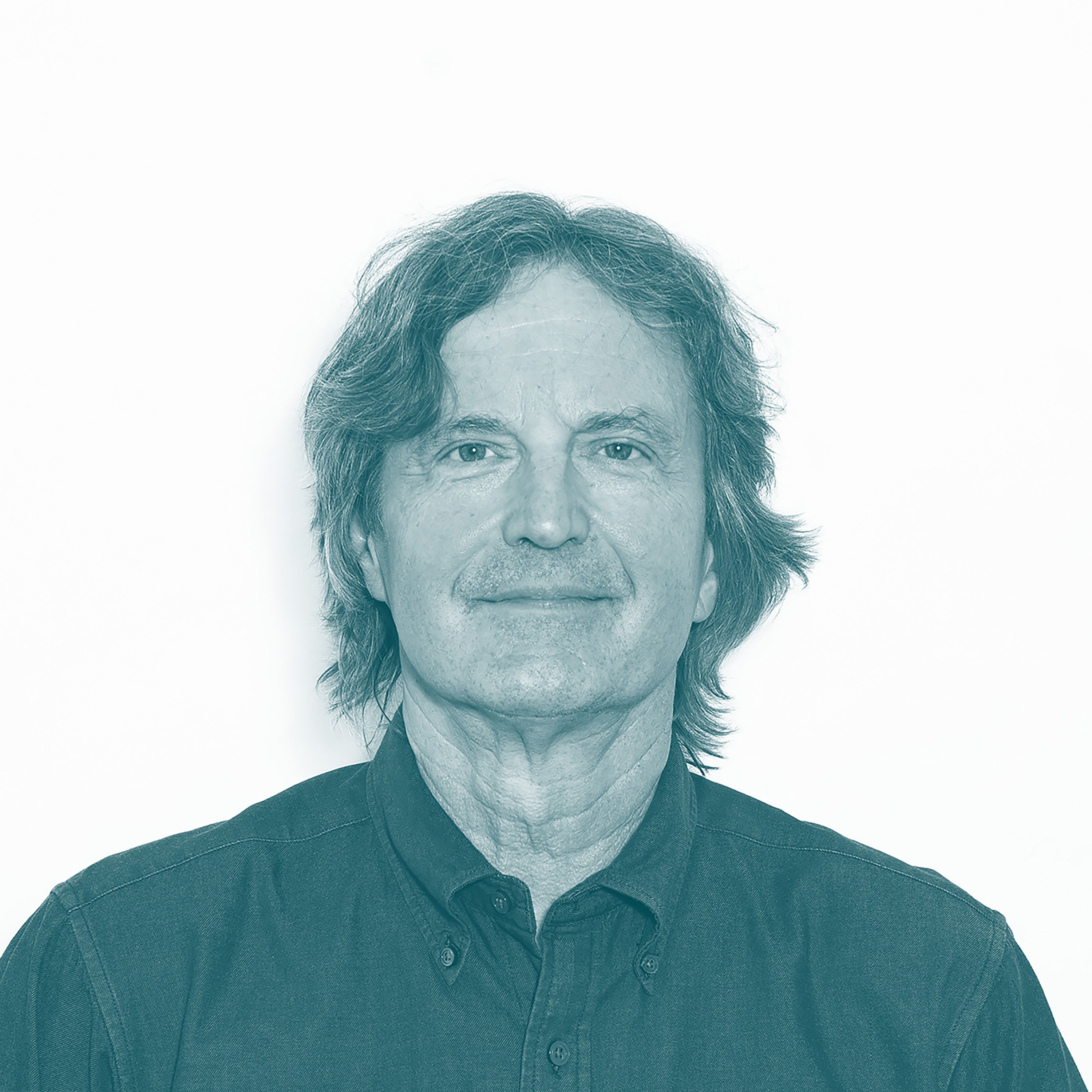
S3 Ep 37Tom Kundig on the Parallels Between Mountain Climbing and Architecture
Tom Kundig brings a refreshingly laid-back, aw-shucks, go-with-the-flow attitude to an industry that seems, on the whole, largely to lack that kind of demeanor. Architects tend to be a rather uptight, perfectionist breed. Not Kundig, an experimental, hands-on Seattle-based practitioner, who, though he appreciates details and makes incredibly immaculate, wondrously conceived designs, also has a fondness for the utilitarian, the everyday, the experimental, the imperfect. His elegant buildings, which range from headquarters to wineries to cabins in the woods, stand out for their balance of heft and lightness, material and form, nature and industry, and craft and tech wizardry. Kundig’s background as a mountain climber no doubt has something to do with all of this: Climbing is inherently unpredictable, putting one at the mercy of the elements, often under extreme conditions. There are pragmatic tools that can be brought to both climbing and architecture, but in the end, as Kundig himself points out on this episode of Time Sensitive, it’s how one prepares for the journey—and then handles and responds to it in the moment—that ultimately results in a successful climb or construction. For him, both are adventures in problem-solving and intimate conversations with the natural world. A native of the Pacific Northwest, Kundig grew up in eastern Washington, northern Idaho, and Southern British Columbia, and it shows in both his work and his personality. Not only because that region is where a bulk of the projects of his firm, Olson Kundig, are located, but because he brings a poetic sensibility and astute understanding of climate and nature to everything he does. On this episode, Kundig’s open-minded, wabi-sabi energy rings loud and clear. He discusses with Spencer his early years as a climber; his incredible ascent in architecture, starting with an opportunity to work in Alaska; his profound learnings from his mentor, the sculptor Harold Balazs; and his deep passions for, among other things, wine, Japanese design, and hot rods.

S3 Ep 36Ibrahim Mahama on the Great Potential of Art to Change How We Look at the World
Over the past decade—and especially in the last year—the Ghanaian artist Ibrahim Mahama has swiftly risen to become one of the most prominent African voices in art. At age 32, he has already exhibited at the Biennale of Sydney, on Cockatoo Island (his work “No Friend But the Mountains” is currently on view there through June 8, though that date may change because of the coronavirus pandemic), as well as at the 2019 Frieze Sculpture presentation at Rockefeller Center in New York and the Ghana Pavilion at the 2019 Venice Biennale. He’s created large-scale public installations around the world, including in Milan (with the Trussardi Foundation, also in 2019) and Athens (during Documenta 14, in 2017). Mahama’s work has also been shown at the Whitworth Gallery in Manchester (also in 2019), the Norval Foundation in Cape Town (yet again in 2019), and the Eli and Edythe Broad Art Museum at Michigan State University (2015). He is represented by the highly respected White Cube gallery. The Africa Report, a Paris-based news magazine that focuses on African politics and economics, recently named Mahama one of the 100 most influential Africans today. In addition to his art-making, he is the founder of an artist-run nonprofit cultural institution and exhibition space, the Savannah Center for Contemporary Art (SCCA), which opened a year ago (yes, also in 2019) in Tamale, a city in the north of Ghana.Central to Mahama’s inspiration is a specific material: jute sacks. Working with a team of collaborators to repurpose the burlap bags, which are traditionally used to transport cocoa beans, he sews together installations that range from wall- or room-size to monumental, often draping the fabric on, around, and over prominent architectural sites. Though his pieces have often been compared to the “wrap” work of Christo and Jeanne-Claude, that is not necessarily an apt analogy, or at least it’s just a surface-level one. While similar in scale and scope to Christo’s ambitious environmental artworks, Mahama’s creations, like his overall practice, are socially oriented and focused on concerns such as labor, migration, globalization, and economic exchange.On this episode of Time Sensitive, Mahama discusses with Spencer his fascination with jute sacks as a material; his views on “Ghanaian time” and Africa’s global influence; his unorthodox upbringing (he grew up among nine siblings and with a polygamous father who had four wives, and was sent to boarding at age 5); and his dreams for the SCCA.

S3 Ep 35Julia Watson on the Power of Indigenous Technologies to Transform Our Planet
Julia Watson is really into TEK. Not necessarily the Silicon Valley variety of tech, but rather traditional ecological knowledge. An anthropologist, environmentalist, activist, and landscape designer, Watson has become a leading researcher of indigenous communities, closely studying the vast implications of their centuries-old (in certain cases, millennia-old) innovations. In the face of today’s climate crisis, Watson’s new book, Lo-TEK: Design by Radical Indigenism (Taschen), a culmination of years of research in 18 countries around the globe, is poised to become something of a bible for a growing design movement that’s focused on harnessing nature-based technologies and better understanding how we can all live in closer harmony with the earth.Born in Australia, Watson studied landscape architecture at Harvard’s Graduate School of Design, where she focused on eco-technologies and preservation of sacred spaces. Currently, she teaches urban design at Columbia University’s Graduate School of Planning and Preservation, as well as at Harvard, and runs her own design studio that’s oriented toward the practice of “rewilding.”On this episode of Time Sensitive, Watson speaks with Andrew about her deep research into various indigenous communities, the symbiotic relationship between culture and nature, her perspective on the recent Australian bushfires, and more.
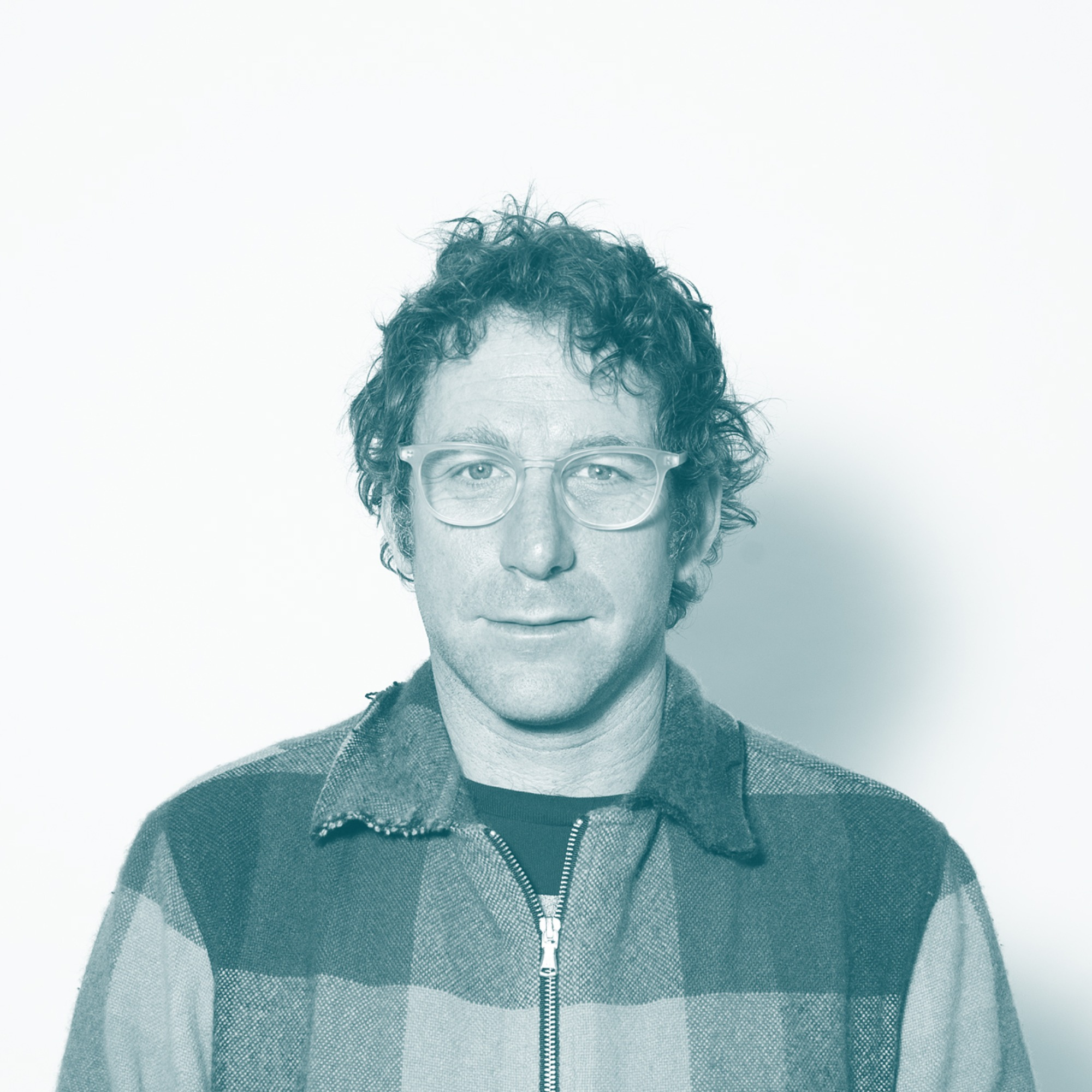
S3 Ep 34Dustin Yellin on His Quest to Reimagine Learning in the 21st Century
Since establishing the Pioneer Works nonprofit cultural center in Brooklyn’s Red Hook neighborhood in 2013, artist Dustin Yellin has slowly grown the place into a powerhouse hub at the nexus of art, technology, music, and science (with literature and food sprinkled in). Like the beautifully complex glass sculptures he creates, Pioneer Works is a richly layered mishmash. Consider this spring’s lineup of programs: One night this April, there’s a performance by the Ghanaian electronic and rap artist Ata Kak; another night, there’s a “Supper Club” dinner featuring traditional Japanese home cooking by chef Emily Yuen and owner Maiko Kyogoku of the New York City restaurant Bessou; on May 2, there’s the institution's annual benefit, this year co-chaired by Austin and Gabriela Hearst, and honoring poet, essayist, playwright Claudia Rankine, as well as economist Marilyn Simons and her billionaire hedge-fund manager husband, James. Currently on display in the galleries is a performance set by artist Jaimie Warren (through April 12) and a showing of four Japanese avant-garde films from the 1960s and ’70s (through April 19). This is to say nothing of the classes, roundtables, and residencies Pioneer Works offers, or its book-publishing arm.Pioneer Works’s eclectic, wide-ranging buffet of intellectual offerings is pure Yellin. With boundless energy, enigmatic bravado, and a collaborative spirit, he has built a multifaceted community not unlike what Andy Warhol had at The Factory from the ’60s to ’80s—only it’s somewhat more institutional and professionalized, and with a new executive director, Eric Shiner (formerly of White Cube gallery, Sotheby’s, and the Andy Warhol Museum), at the helm. As Yellin points out on this episode of Time Sensitive, maintaining a certain scale and intimacy at Pioneer Works is essential to him, with future growth potentially coming from building satellite locations in other cities. As he sees it, the institution could become the next Stanford, Harvard, or MIT Media Lab—a new outlet for education, an incubator that brings together the best and brightest minds on earth in a fresh way, a place to foster the shapers of the future.On the episode, Andrew speaks with Yellin about everything from his wide-ranging dreams for Pioneer Works; to his ambitious plans for “The Bridge,” a large-scale monument to the end of oil; to his harrowing memories of Hurricane Sandy.

S3 Ep 33Nathan Myhrvold on the Art and Science of Food
Nathan Myhrvold is no ordinary chef. With two master’s degrees (one in mathematical economics, the other in geophysics and space physics) and a Ph.D. in theoretical and mathematical physics, he is also a technologist who did postdoctoral research with Stephen Hawking. From 1986 to 1999, Myhrvold was the chief strategist and chief technology officer at Microsoft, where he worked closely with Bill Gates on future planning and developing the company’s software. (During this time, he also co-authored Gates’s 1995 best-seller, The Road Ahead; in 1999, at age 40, he retired from the company.) Now, as the CEO of the firm Intellectual Ventures, which he co-founded in 2000, he develops and licenses intellectual property. The company owns upwards of 30,000 assets, nearly 900 of which were invented by Myrhvold himself. So where does cooking come in? Long a gastronomer and foodie (before the latter term was even a thing), Myhrvold began to pursue his passion for cuisine early on. During his Microsoft years (with Gates’s blessing), he took time off to attend the La Varenne cooking school in Burgundy, and later even apprenticed part-time at Rover's restaurant in Seattle. For a time, he was the “chief gastronomic officer” of the Zagat Survey. It wasn’t until about a decade ago, though, that things really took off for Myhrvold on the food front. In 2011, he established a full-fledged publishing platform with the release of his six-volume Modernist Cuisine, an encyclopedic whirlwind into the science of contemporary cooking. A behemoth of a book, at 2,438 pages, it took about three years to produce, with several dozen people involved. Subsequent iterations have followed: Modernist Cuisine at Home (2012), The Photography of Modernist Cuisine (2013), and Modernist Bread (2017). A Modernist Pizza book is currently in the works. The series has become a cult favorite, highly respected by many of the world’s top chefs, including Thomas Keller and Heston Blumenthal. Especially remarkable about the project—aside from the inventive recipes—is the hyperrealist, meticulously executed photography. Many of the pictures are made through a “cutaway” technique involving machinery to that slices pots, pans, and ovens in half to offer a literal inside look into the processes behind the dishes—a pork roast atop embers, say, or broccoli steaming in a pot. It is through these images that Myhrvold's many talents and interests in science, food, and art collide, and to potent effect. On this episode of Time Sensitive, Spencer speaks with Myhrvold about his journey into sous vide cooking, the problems he sees with the Slow Food movement, why food photography has never been considered a high art, and more.

S3 Ep 32Gabriela Hearst on Why Making Things That Stand the Test of Time Matters
Since launching her eponymous label in 2015, the Uruguayan-born, New York–based designer Gabriela Hearst has become known for her sincere, forward-thinking approach to sustainability; her slow-growth business ethos; the long waiting lists for her limited-production handbags; her impeccable tailoring; and her high-quality collections that, season after season, have consistently been hailed as critics’ favorites. For her, sustainability isn’t just a buzzword or an item to tick off a list; it’s something essential and, most importantly, actionable. Last year, Hearst presented the industry’s first-ever carbon-neutral runway show. A collaboration with Bureau Betak and EcoAct, the presentation was done completely sans blow dryers, straighteners, or curling irons, models were sourced locally, and a carbon-offset fund for the energy-related production costs was donated to the Hifadhi-Livelihoods Project in Kenya. Hearst regularly uses deadstock in her collections. She recently made all of the brand’s packaging biodegradable and compostable, and also tweaked her supply chain to ship by boat instead of by air freight. Hearst’s new eco-conscious store in London’s Mayfair neighborhood, designed by Norman Foster, includes custom furniture made from a tree that fell in a storm and herringbone oak flooring reclaimed from a military barracks. Her preferred word for sustainability? Accountability. Raised on a ranch that has been in her family for six generations—which her father bequeathed to her in 2011 when he passed away—Hearst, early in her life, became interested in where things come from and how they’re made, and in understanding the true value of utility, namely that making well-constructed things that stand the test of time matters. Now, in the age of climate change, her less-but-better mindset has become all the more relevant and pressing. Creating timeless, long-lasting clothing, she says, is the only reasonable (and yes, sustainable) way forward. Eschewing a trend-driven outlook in favor of one that’s about creating fewer, better items that her customers will keep forever, Hearst continues to be informed by her upbringing on the farm. It’s an approach that appears to be working: The company had a turnover of between $15 and $20 million in sales revenue in 2018, and last year LVMH Luxury Ventures bought a minority stake in it (the majority is owned by Hearst and her husband and business partner, John Augustine “Austin” Hearst, a TV and film producer and media executive who is the grandson of William Randolph Hearst).On this episode of Time Sensitive, Hearst speaks with Spencer about everything from her youth on a ranch in rural Uruguay, to her personal definitions of sustainability and luxury, to her roundabout path to becoming a fashion designer, to her mother’s Zen Buddhist teachings.

S2 Ep 31Tony Fadell on Leaving Silicon Valley to Help Build a Healthier Society, Online and Off
In both his work and his life, Tony Fadell constantly imagines Version 2.0 (if not 3.0, or 4.0 and beyond). On a mission to shape the future through forward-thinking design, engineering, invention, and investing, he is probably most widely recognized for both founding the smart-home products company Nest and for his instrumental involvement in developing the iPod. Through his newest venture, the appropriately coined advisory firm Future Shape, Fadell lends his expertise to promising entrepreneurs and companies, funding and advising a range of environmentally minded startups, such as the biologically produced leather-maker Modern Meadow, semiconductor company Phononic, and micro-LED developer Rohinni. After starting his career at General Magic, an early spin-off of Apple, Fadell moved to the electronics behemoth Philips and then, eventually, to Apple, where he started in 2001 and was, from 2006 to 2008, on the executive team that created the iPhone. In 2010, he founded Nest, which Google acquired less than three years later for $3.2 billion. Having played a crucial role in helping many of the most important technological Silicon Valley innovations of the 2000s come to fruition, Fadell has since decamped for Paris, where he now runs Future Shape. Recently, he spent an entire year in Bali with his family.Rebooting and welcoming change has been a constant thread throughout Fadell’s career, and also in his personal life. While he’s known for his extreme work ethic—early in his career, he famously had a bed in his office—Fadell recognizes the need to take time off in order to explore, and to create space for inner growth outside of the workplace. On this episode, Fadell and Andrew Zuckerman discuss his youth in Detroit; the perils of screen addiction; the external pressures of a career-oriented culture; and paving the way for a healthier society, online and off.

S2 Ep 30Suketu Mehta on the Positively Profound Impact of Immigration on the Planet
Suketu Mehta tells a story about pinkie fingers, dancing and kissing. It is as confounding as it sounds. And utterly heartbreaking, too. In his assertive and essential new book, This Land Is Our Land: An Immigrant’s Manifesto—as well as on this episode of Time Sensitive—he describes the scene: Friendship Park, a half-acre fence on the U.S.-Mexican border. A Mexican man living in the U.S., who hasn’t seen his mother in 17 years, and has been working hard to send money back to her all that time, at last reunites with her at that fateful fence. But because of its thick and rigid design, he can’t see her clearly. Through the holes in the fence, mother and son can only fit stick their pinkies, wagging them back and forth, gently touching, caressing, connecting—but only for a few moments. This small act serves as a greater metaphor about immigration, one with vast implications and consequences, and not just in America but around our world today.Mehta, a Calcutta-born, New York–based journalist and N.Y.U. professor who was a Pulitzer Prize finalist for his 2005 novel Maximum City: Bombay Lost and Found, is full of stories like this one. (The dancing, kissing pinkies, however, may be among his most gut-wrenching and tear-inducing tales.) As a reporter and writer, Mehta is slow and methodical in his approach, and it shows in his rich and varied body of work, which spans decades and is written with the elegance and grace of a poet. A sort of modern-day Walt Whitman, he has the rare ability to home in on deeply personal human stories and craft narratives around them that reveal larger truths about culture, politics, and society.On this episode, Mehta speaks with Spencer Bailey about his challenging high school years as an Indian immigrant growing up in Queens, his belief in how the future of democracy “rests on storytelling,” and the importance of considering historical time frames when thinking about today’s contentious immigration debates.

S2 Ep 29Lidewij Edelkoort on Why Doing Less Is More
The Dutch-born trend forecaster Lidewij Edelkoort, founder of the Paris-based consultancy Trend Union, has a knack for being ahead of the curve. In fact, she kind of is the curve, the rare mind who—with her sharp eye, wide-ranging tastes, and quick wit—is able to situate herself within past, present, and future. She astutely understands historical markers of time and often predicts, with surprising precision, what the Next Big Thing is. Working for clients across a variety of industries, from fashion and textiles, to interiors and hospitality, to cars and cosmetics, to retail and food, Edelkoort travels the world studying the subtle market shifts that shape our lives. A sociocultural omnivore with a deep design knowledge, she’s the dean of the Hybrid Design Studies program at Parsons School of Design, where she’s spearheading a new M.F.A. in textile studies.Since founding Trend Union, in 1975, Edelkoort has gained a cult following as a sustainability-minded soothsayer. For more than three decades, corporate leaders have gravitated toward her, as one would a shaman, for strategic, big-picture advice. In the late ’80s, she started giving her now-infamous trend presentations, in which she unpacks, interprets, and predicts the market movements developing before us. An archaeologist of the modern day, Edelkoort is part curator, part sociologist, digging up vast amounts of information, much of it visual, so as to infer, intuit, and map out complex explanations of the now. Her findings aren’t fanciful, even if on the surface they may appear to be high-minded. They are indeed quite often pragmatic, if not also paradigmatic. Sometimes—as was the case with her 2015 “Anti-Fashion Manifesto,” a treatise against the wastefulness and greed of the global fashion industry—they also tend to be refreshingly direct and pointed. On this episode of Time Sensitive, Edelkoort speaks with Spencer Bailey about a movement back toward the farm and nature; the notion of animism (i.e., that a soul is embedded in everything); combatting fear in a time of prolific fear-mongering; and her reasonably optimistic belief in a more collaborative future.

S2 Ep 28Craig Robins on Why Nature Is Our Greatest Luxury
Craig Robins strongly believes that all good things take time. Since launching his vast real estate enterprise Dacra in 1987, at age 24, he has, with this ideology in mind, become one of Miami’s shrewdest mover-shakers. Intimately involved in the revitalization of South Beach in the late ’80s and early ’90s, Robins helped restore—and save from demolition—several now-prized Art Deco properties, including The Webster (designed in 1939 by Henry Hohauser as a hotel and now home to Laure Hériard Dubreuil’s flagship fashion boutique). From there he began to quietly shift his focus across Biscayne Bay, to the Design District neighborhood, unveiling the beginnings of his ambitious plans in 2002. A visionary thinker, tinkerer, and doer, Robins also got involved in bringing the Art Basel fair to Miami in the early aughts and in 2005 co-founded the Design Miami collectible design fair.Thinking about things slowly and holistically, Robins—unlike so many others in his line of work—does not follow a build-it-cheap-and-fast-and-flip-it edict. His is a long-haul, less-but-better vision. Robins cares deeply about the urban fabric and the textures of the city, about architectural serendipity and surprise, about moments of wonder and beauty and joy. A finger-on-the-pulse master of cultivating culture, he has thoughtfully constructed a synergistic amalgam of art, architecture, design, dining, fashion, and urban planning within the Design District, a New Urbanism–infused neighborhood that seems to subtly morph every month, if not every week, bit by bit. While it hasn’t been without its detractors and naysayers, the Design District clearly offers an alternative, human-scale approach to city building. Now home to standouts such as the Institute of Contemporary Art (which opened in its new location in late 2017) and the Pharrell Williams–owned Swan restaurant and Bar Bevy, the Design District is beginning to show its potential not as just a luxury shopping mall—though it’s certainly that, too—but as a dynamic cultural hub.On this episode of Time Sensitive, Robins talks with Spencer Bailey about his big-picture vision, his early career helping rejuvenate South Beach, his forward-thinking approach to bolstering Miami culture and his obsession with river rafting and disconnecting in nature.

S2 Ep 27Christian Madsbjerg on Why “Design Thinking” Is Bogus
EChristian Madsbjerg makes sense. Literally and figuratively, in all the definitions of the phrase. With roots in philosophy and political science, Madsbjerg brings a refreshingly human approach to his work as an author, screenwriter, professor, entrepreneur, and business advisor. In the face of some of the greatest concerns of our time—the climate crisis, technological upheaval—he challenges assumptions and advocates for reflection, deep reading, single-tasking, solitude, and yes, slowness. Though he doesn’t abide by the “digital detox” method, Madsbjerg does operate without a smartphone.While Madsbjerg is not immune to the contemporary swell of panic and anxiety, his approach is calm, methodical, and sometimes humorous. The co-founder of ReD Associates—a strategy and consulting firm that takes an interdisciplinary approach to advising big companies through observation, social science, and problem solving—the multifaceted Madsbjerg is an astute observer of human behavior. The author of Sensemaking: What Makes Human Intelligence Essential in the Age of the Algorithm and co-author of The Moment of Clarity: Using the Human Sciences to Solve Your Hardest Business Problem, he is in the process of writing a book called How to Pay Attention and a comedic screenplay about immigration in the U.S., tentatively titled H1B. He also teaches social science, social theory, and discourse analysis at the Parsons School of Design at The New School. On this episode of Time Sensitive, Madsbjerg speaks to Andrew Zuckerman about the importance of long-view historical research, the problematic nature of “design thinking,” the deep value of a liberal arts education, and the relevance today of Martin Heidegger’s philosophical perspectives on time and technology.

S2 Ep 26Eric Standop on the Art and Science of Face Reading
Many people turn to spiritual professionals such as astrologists and tarot card readers to help answer life’s most essential and cosmic questions. Eric Standop—international speaker, advisor, author, and facial diagnostics expert—guides people to look inward through a different method: by examining their faces. Through analyzing facial characteristics and behaviors, Standop informs his clients of their talents, emotions, personality types, and overall health. No stranger to self-doubt and career burnout, Standop spent years seeking fulfillment through a rollercoaster career of long hours and travel in the entertainment industry. Early on, after starting out as a radio and television speaker, and then moving to a role in cinema management, Standop began to suffer from fatigue and skin irritations. He decided to take a six-month break before reentering the corporate arena, this time as a P.R. director in computer gaming. Later, he transitioned to high-pressure positions in events and marketing. The stress would again take its toll. One morning, he awoke to find that he had lost all feeling in his arms and legs. Determined to turn his health around, Standop decided to backpack through South Africa. There he encountered a face reader for the first time, and became fascinated with the practice. Standop would go on to learn from masters on three different continents. While we all communicate through facial behavior and recognition on some level, becoming an expert face reader takes significant time and dedication, as with developing any other skill. After several years of gathering information, both about himself and about his practice, Standop set out to teach others. Now, he coaches a wide variety of clients, from business executives to law enforcement officials to even—every once in a while, and only when pressed—babies. Standop’s first book, Read The Face: Face Reading for Success in Your Career, Relationships, and Health (St. Martin’s), came out this fall. On this episode of Time Sensitive, Standop and Andrew Zuckerman go deep into the origins of face reading, the function of smell in medical diagnostics, the ups and downs of his circuitous career, and how he ultimately found inner happiness.

S2 Ep 25Rashid Johnson on Escapism and Upending the Notion of the “Monolithic Experience”
Growing up in Evanston, Illinois, the artist Rashid Johnson had a “mixed bag”—racially, at least—of close friends. There were, he says, “four black guys, two Asian guys, two Jewish guys, a white English guy.…” They still keep in touch today via a text chain. This perspective, combined with the one ingrained in him by his Ph.D. history professor mother, who introduced him from a young age to the works of 20th-century African American writers such as Amiri Baraka, W.E.B. Du Bois, and Booker T. Washington, and his tinkerer father, who owned a Wicker Park electronics shop, led to a deep, contextualized curiosity about the human condition: who we are, how we got here, and where we’re going. This multicultural (and intellectual) background continues to feed Johnson—as water and light would a plant—growing his insatiable appetite for better understanding the richness, complications, and contradictions of being human, each of us with our own roots, carrying our own energies—no one necessarily a part of any “monolithic experience.” It has also naturally led him to explore the social, cultural, and political realities of being a black man in today’s world. His multidisciplinary practice, which spans painting, drawing, sculpture, filmmaking, and installation art, is both biographical and collective. Underlying much of Johnson’s work is the idea of escapism—that each of us, on some level, yearns for another reality. Such a narrative is at the core of his directorial debut, HBO’s Native Son, released earlier this year and based on the 1940 Richard Wright novel of the same name (the screenplay was written by the playwright Suzan-Lori Parks). It is also at the heart of “The Hikers,” a ballet film shot on the side of a mountain in Aspen, currently on view at Museo Tamayo in Mexico City (through Nov. 10) and opening on Nov. 12 (through Jan. 25, 2020) at the Hauser & Wirth gallery in New York’s Chelsea neighborhood, where it will be shown alongside several other works by Johnson, including ceramic mosaics, paintings, and a large-scale sculpture.On this episode of Time Sensitive, Johnson talks with Spencer Bailey about the steep challenge of turning Wright’s famed novel into a feature film; using materials such as shea butter, black soap, and plants in his artworks; why he remains somewhat ambivalent about the idea of “wokeness”; and his ongoing fascination with the complexity and diversity of not only blackness but also whiteness.

S2 Ep 24How RoseLee Goldberg Reshaped the Landscape of Performance Art
It’s safe to say that, if it weren’t for art historian RoseLee Goldberg, performance art would not be what it is today. Not even close. The founder of the nonprofit organization Performa, which for nearly 15 years has been putting on biennials of live performance around New York City, has for decades helped shape and steer the conversation about what “performance art” even is—and what, at its best and most inventive, it’s capable of achieving. A scholar, critic, and New York University professor, Goldberg has written important texts on the subject, including Performance Now: Live Art for the 21st Century (Thames & Hudson), and has established new modalities for organizing and presenting performances. Her astute understanding of the multidisciplinary medium is unparalleled.With Performa, Goldberg has radically shifted the landscape of the field through collaborations with hundreds of artists, including Adam Pendleton (in what was a breakout moment for the artist), Yoko Ono, Rashid Johnson, Joan Jonas, and Julie Mehretu. Following previous overarching themes like Futurism (2009), Surrealism (2013), and Dada (2017), this year’s biennial, which runs from November 1 through 24, will explore ideas about the Bauhaus on its centenary year. Among the performances will be works by Taiwanese artist Yu Cheng-Ta, who will unpack Western “influencers” and reality TV culture; Gaetano Pesce, who, at the Salon 94 Design gallery, will create a studio atmosphere, evoking the typical conditions of a day, via his assistants molding, pouring, and crafting; and Bunny Rogers, who will turn various spaces at a public high school—including hallways, a gym, and an auditorium—into a “living installation.”On this episode of Time Sensitive, Goldberg speaks with Spencer Bailey about her upbringing as a young dancer in Durban, South Africa, when that country was under apartheid rule; her adventurous journey into the beating heart of the art world, first in London and ultimately in New York; and her path to establishing Performa—and elevating performance art as we know it in the process.

S2 Ep 23Daniel Brush on Making Some of the Most Extraordinary and Exquisite Objects on Earth
Daniel Brush’s acute eye for detail, as well as the rigor and vigor he brings to his craft, comes through loud and clear in all of his creations. A poet of materiality, he is at once a metalworker, a jewelry-maker, a philosopher, an engineer, a blacksmith, a painter, and a sculptor. The late Dr. Oliver Sacks, a friend of Brush’s, once said that Brush’s work is “the result of years of incubation, years of isolation and complete immersion, which have produced his unique and mysterious objects—they are made objects, and yet they seem found.” Sacks was not exaggerating when he said years. Brush’s oeuvre—on full display in the new Rizzoli book “Daniel Brush: Jewels Sculpture”—is the accumulation of four-plus decades of steadfast, heads-down, solitary work in his Manhattan studio, alongside his wife and accomplice, Olivia, allowing for only select visits from his closest friends and certain patrons, scholars, and students. Brush’s imagination has always run wild—from his beginnings as a concert pianist in his youth, through his early years as a painter, to now, he has always demonstrated a rare intensity. For those who have laid eyes on his intricate cuffs, brooches, necklaces, and other pieces, it may be somewhat surprising to hear that it wasn’t until making a wedding ring for Olivia, in 1967, whom he had known for just three days before marrying, that he became interested in jewelry-making. Now, his work—colored by influences from a life of painting and drawing as well as his astute interests in Japanese Noh theater and Asian art—centers around jewels and objects made from a vast assortment of materials, including Afghan lapis lazuli, aluminum, amethyst, gold, Madagascar sapphire, malachite, steel, tektite, topaz, and tourmaline. Brush, not surprisingly, also has a deep appreciation for history and collecting. His own made objects, as well as a large library of books and found objects, are stowed or situated around his home and studio, serving, for him, as a record of passing time. Given that his pieces are not traded on the market and rarely available to acquire, Brush’s work decidedly has, as he puts it, “no value.” Instead, he suggests that the value he derives from his work comes from the connections he has developed with patrons and peers who show respect for the complexity of it all. For Brush, it is the most minute connection—the tiniest detail—that so often reveals the largest truth.On this episode of Time Sensitive, Brush’s use of language and storytelling approaches the poetic. He and Spencer Bailey talk about memory (and interpretations of memory); his deep, monkish engagement with a wide variety of materials; and some of his most valuable tools—breathing, language, and light.

S2 Ep 22Inge Solheim on Fighting Off Fear and Breaking Bad Habits
EInge Solheim is a free spirit, a new-age explorer, and a wilderness guide-guru whose sense of freedom hinges upon not caring, at all, about what other people think of him. Leading trips to the most remote places in the world with diverse groups—ranging from scientists, to private clients, to film crews, to people with disabilities—Solheim trains those who are with him to overcome extreme physical and psychological barriers. Among his most memorable expeditions are a trip to the South Pole with Mark Pollock, who had lost his eyesight nine years prior, and a North Pole expedition with an organization called Walking With The Wounded, accompanied by Prince Harry and a team of English wounded soldiers. Born in Norway, he grew up in a rather dysfunctional family that left him mostly to his own devices. From a young age, he turned to nature, learning to appreciate solitude—and to be self-sufficient. At 14, Solheim started working at a pizza shop at which he would become a shareholder within a year. At 19, Solheim’s daughter, Marian, was born, and he transitioned into a nine-year “mundane” (his word) finance job, eventually becoming VP of a bank in Norway. While the career prestige was exhilarating in its own right, his passion led him to take on adventure traveling as a full-time profession. A rare combination of old soul, hopeless romantic, and youthful pioneer, Solheim chases beauty and adventure, living peripatetically: He resides part-time in Oslo and finds himself gravitating toward Malibu, California, two to three months a year. Reaching the middle of his life, Solheim remains optimistic about almost everything—even climate change—and is currently working on sustainable tourism and travel business. On this episode of Time Sensitive, Solheim and Andrew Zuckerman get philosophical about what it means to be an explorer at a time in which it’s practically never been easier to get anywhere in the world; confronting fear, anxiety, and pressure; trauma and its effect on our perceptions of time; and instant gratification and materialism.

S2 Ep 21David Duchovny on the Climate Crisis, the Drawbacks of Technology, and the Craft of Writing
EDavid Duchovny may be swooned over as the hunky special agent Fox William Mulder in The X-Files and Hank Moody in Californication, but it should be noted—and, in our opinion, more widely known—that he is also an accomplished novelist. Yes, novelist. In fact, he has published three novels with the highly esteemed publisher Farrar, Straus, and Giroux since 2015. A fourth novel, called Truly Like Lightning and publicly revealed for the first time on this episode, is in the works.Primarily known for his acting—which also includes a well-known, ahead-of-its-time role, in the early ’90s, as the trans FBI agent Denise Bryson on Twin Peaks—Duchovny has carved out a name for himself as a screenwriter, director, producer, and musician, too. With an extensive literary pedigree—his father, Amram, was a “closet” writer until late in his life, when he published the novel Coney—Duchovny graduated with a B.A. in English from Princeton in 1982 and began (though never finished) a comparative literature Ph.D. at Yale.His mastery across both dramatic and comedic acting, as well as his prolificity in writing and music, is impressive in its breadth and wide-ranging in its subject matter. Less than a decade ago, Duchovny began singing and playing guitar, and in 2015, nearly 30 years into his film and television career, he released his first album, Hell or Highwater. That same year, he also published his first novel, Holy Cow. Since then, he has released a second album, Every Third Thought (2018), and published two more books, Bucky F*cking Dent (2016) and Miss Subways (2018). Now, at age 59, Duchovny’s creative energy continues apace across all these mediums—acting, writing, music—with his next novel soon to come out and plans to turn Bucky F*cking Dent into a film.On this episode of Time Sensitive, Duchovny speaks with Spencer Bailey about novel writing, the need to better understand proposed solutions for the climate crisis, his role as Denise in Twin Peaks, and the various twists and turns of his multifaceted life and career.

S2 Ep 20Why Jesse Kamm Finds the Phrase “Global Expansion” Nauseating
Jesse Kamm and her beloved waist-hugging, wide-legged “Kamm pants” embody minimalism. A proponent of producing fewer, better things, Kamm has committed to supporting local craftspeople by making all of her garments in Los Angeles and prioritizing the use of environmentally conscientious materials. This all makes sense within the context of Kamm’s upbringing in a farming and manufacturing town in Illinois, where she was raised by her mother and father—both curious and creative hippies—in a passive solar house they built themselves. The former model turned fashion designer, who spends time in both L.A., where she works, and Panama, where she surfs, lives truly luxuriously by being hyper-protective of her schedule.Kamm maintains that the currency she trades in is freedom, but her life hasn’t always been so balanced. After arriving in L.A. in her early 20s to pursue a modeling career, she quickly lost control and felt stripped bare by the pressures of the industry (and a consequential eating disorder). Living off of cottage cheese and cigarettes, and unhappy with who she had become, she stepped away from the runway and decided she instead wanted to make something. Kamm signed up for sewing classes, started producing her own clothes, and taught herself the ins and outs of running a business. Soon after, she was selling pants for $500 to women in line at a local coffee shop. Since unveiling her first collection, in 2005, she has created a bubble for herself by abstaining from fashion blogs and fancy industry events. Instead, Kamm focuses on her own projects; she spends time with her husband, Lucas Brower, and their 10-year-old son, Julien; and hangs out for three months a year by the Panama ocean, where she and Luke have built their own home.On this week’s episode of Time Sensitive, Kamm talks with Andrew Zuckerman about the essential quality of being a present parent, explains how she has hit upon a sustainable work-life stride, and discusses why she has no intentions of expanding her business beyond its current scale.

S2 Ep 19Wu-Tang Clan “Whisperer” Sophia Chang on Becoming the “Baddest Bitch in the Room”
ESophia Chang pulls no punches. As the self-described (and indeed) “first Asian woman in hip hop,” Chang carries herself—happily, proudly—with the bravado and swagger of the industry brethren she managed throughout much of the ’90s and 2000s, including Ol’ Dirty Bastard (O.D.B.), RZA, and GZA of the Wu-Tang Clan, Q-Tip and A Tribe Called Quest, and D’Angelo. What makes Chang’s career particularly remarkable, beyond her having worked with so many bold-faced hip hop names, is both the organicness and audaciousness of her journey: A chance encounter in 1985 with Joey Ramone led to a budding friendship with the punk icon and, in a roundabout way, to working for Paul Simon in the late ’80s; through frequenting downtown clubs at the time, she befriended the Wu-Tang Clan, becoming a longtime confidante, insider, and ally of the hip hop collective. By the early ’90s, Chang had landed an A&R gig at Jive Records, where she signed the Fu-Schnickens and worked with names like KRS-One and Tribe.In 1996, having become deeply engaged in kung fu—a practice and passion she picked up through her friendship with the Wu-Tang Clan—Chang decided to take a major turn, leaving the music business altogether to manage Shi Yan Ming, a Shaolin monk who became her partner and the father of her two children, and his New York City temple. Though the relationship didn’t last—the couple split up in 2007—it proved a key part of Chang’s spiritual journey, life, and career. She would return to hip hop after that, working on various projects with and for the likes of RZA, GZA, and D’Angelo for a few years. Now, at 54, Chang is preparing her next big move, stepping out from behind the curtain to tell—no, to own—her story. This fall, with Audible, she’s releasing The Baddest Bitch in the Room, a coming-of-age audiobook memoir that chronicles her peripatetic path. Chang is soon to venture into television, too, having recently sold a screenplay to HBO.Born and raised in Vancouver, the first-generation Korean Canadian will not and cannot be pigeonholed, pinned down, put in a box, or stereotyped. On this episode of Time Sensitive, Chang talks to Spencer Bailey with refreshing candor about her exploits in the 1990s hip hop world, including her close friendship with O.D.B., whom she managed; the ever-shifting landscape of racism, sexism, and ageism in America; and why she feels that now, more than ever, is her time to shine.

S2 Ep 18Kim Hastreiter on the Art of Connecting Culture
EKim Hastreiter identifies as a “punk at heart.” The co-founder of Paper magazine, which she started in 1984 with David Hershkovits, she served as the publication’s co-editor-in-chief until handing it off, in 2017. At 67, she remains the cool mom of downtown New York. A curator, editor, writer, and artist, as well as a perpetually delighted connector of people, she witnessed—and amplified—the fledgling careers of Keith Haring, Vivienne Westwood, Jean-Michel Basquiat, and countless others.Hastreiter is, and has always been, New York hustle incarnate. From spending the Summer of Love building Paolo Soleri’s Arcosanti in the desert, to cultivating Paper in 1979 in her loft kitchen, to printing the first issue in 1984 as a black-and-white zine, her gritty commitment to beauty and inspiration has never wavered. There’s never a dull moment with Hastreiter: Throughout Paper’s ascent to pop-culture bible, she curated several art and design shows, authored or co-authored four books, and hosted countless parties for her kaleidoscopic assortment of collaborators and friends. She is currently a mentor for Jim’s Web, a scholarship and mentorship program for emerging creatives, started in memory of her close friend the late design consultant and collector Jim Walrod.On this episode of Time Sensitive, Hastreiter sits down with Andrew Zuckerman to share her experiences of being a Mudd Club kid, selling clothes to Jackie Kennedy, curating in New York at the turn of the millenium, and “breaking the internet” with Kim Kardashian.

S2 Ep 17From The Usual Suspects to Bohemian Rhapsody: Cinematographer Newton Thomas Sigel
Cinematographer Newton Thomas Sigel has no style. No singular aesthetic, mood, or technique. Rather, his focus is on storytelling. From being the first to capture the Contras on film in Nicaragua to photographing the X-Men series and Superman Returns (2006), Sigel has worn many hats (and no, we’re not talking about his fedoras and baseball caps, although there are those, too). But his desire to pursue these projects of various genres and styles all stem from the same goal: to delve into what makes humans human. Born and raised during a time of tense racial relations in Detroit, Sigel learned to look at the world through a political lens early in his youth, which later led to his pursuing social-minded documentaries. When his family moved from Detroit to Buffalo, Sigel got involved in a developing media-study program there, his first foray into the field. Since then, he has worked on dozens of films. He is perhaps best-known for his work on Drive (2011) and Three Kings (1999), and, of course, for his first collaboration with director Bryan Singer, on The Usual Suspects (1995). Sigel most recently worked with Singer in 2018—their tenth film together—on a celebratory biopic of Queen, Bohemian Rhapsody, which was nominated for a BAFTA (British Academy of Film and Television Arts) award for best cinematography. On this episode of Time Sensitive—recorded shortly after his arrival back in the U.S. from Vietnam, where he was the director of photography on Spike Lee’s Da 5 Bloods (to be released in 2020)—Sigel shares with Andrew Zuckerman his early years in SoHo’s vibrant art community, his earning a metaphorical film degree by working for the legendary Haskell Wexler, and how he convinced Warner Brothers to create a movie using cross-processed film.

S2 Ep 16Neri Oxman on Her Extraordinary Visions for the “Biological Age”
Neri Oxman is simultaneously a hardcore ecologist, evocative futurist, meticulous artist, and abstract scientist. The 43-year-old Israeli-American designer, architect, inventor, and MIT Media Lab professor embodies the same dualities that her work hinges upon. Oxman’s multifarious projects transcend the digital age; Oxman’s multifarious projects transcend the digital age; instead, she’s pioneering the “Biological Age” through “material ecology,” which fuses biology and technology, nature and culture, and the grown and made. Among her works are energy-generating photosynthetic wearables, a geometric dome spun by a robotic arm and completed by a swarm of silkworms, and sinewy masks modeled, in part, after the wearer’s own anatomical and physiological makeup—projects as functional and ideologically ambitious as they are beautiful. Outstanding in their aesthetic rigor, Oxman’s brainchildren have caught the attention of leading museums, including New York’s Museum of Modern Art, the Centre Pompidou in Paris, and the Cooper Hewitt, Smithsonian Design Museum. This fall, she will receive SFMOMA's 2019 Contemporary Vision Award, and her next exhibition, “Material Ecology” at MoMA (on view from Feb. 22 to May 25, 2020), organized by Paola Antonelli and Anna Burckhardt, will present eight works from throughout her 20-year career—most notably an updated version of “Totems,” an array of vehicles for synthetically engineered melanin that debuted earlier this year in the Antonelli-curated “Broken Nature” exhibition at the Triennale in Milan. Having pursued architecture after dropping out of medical school, Oxman went on to study at the Architectural Association in London and, later, at MIT, where after earning a Ph.D. she stayed on to become a professor and now leads the pathbreaking Mediated Matter group. On this episode of Time Sensitive, Oxman and Spencer Bailey delve into motherhood, “fossils of the future,” robotic queen bees, death masks, and more.

S1 Ep 15Valerie Steele on Why Paris Won’t Ever Be Dethroned as the Capital of Fashion
Valerie Steele’s deep contextual dives into the history of fashion set her apart from other academics and curators—two identities she embodies in equal parts. The chief curator and director of the Museum at the Fashion Institute of Technology (since 1997 and 2003, respectively), she has produced upwards of 25 exhibitions while also, over the past 15 years, leading the institution. No corner of fashion is out of bounds for the charismatic and multifaceted Steele. Past exhibition subjects have ranged from corsets to gothic fashion to queerness to the color pink. Writing, too, has been a major part of her unabating scholarship, as is evident in her authoring or co-authoring of nearly 30 books over the past few decades—the first of which, on fashion and eroticism, was a product of her final Ph.D. dissertation at Yale in the early ’80s. For Steele, clothes aren’t just tangible garments—they’re the constant medium through which to better understand things like politics, psychology, sexuality, and time. (Perhaps not surprisingly, in 2012, Suzy Menkes of The New York Times dubbed her “the Freud of Fashion”—a moniker Steele relishes.) Her rigorous, vibrant exhibitions—and her career as a whole—are the ultimate clapback to academics who once snubbed her studies as frivolous. Her next Museum at FIT showcase, “Paris: The Capital of Fashion” (on view from Sept. 6, 2019, to Jan. 4, 2020), collects roughly 100 objects that exemplify the “cultural construction” of the French city, from the 18th century to the present, contextualizing the evolution of artisanal haute couture into big business. On this episode of Time Sensitive, Steele and Spencer Bailey discuss her ongoing obsession with the city of Paris, academia’s continued distaste for fashion as a subject of worthy inquiry, her circuitous path to FIT (she dropped out of school at 15 and lived in a “lesbian-feminist commune” before attending Dartmouth for undergrad and Yale for her Ph.D.), and why luxury menswear is on the rise.

S1 Ep 14Michael Kimmelman on Building More Beautiful and Equitable Cities
Michael Kimmelman does nothing in half measures. For more than 30 years, he has brought his assertive, culturally astute, historically sensitive perspective to The New York Times, which he has been contributing to since 1987 and joined full-time in 1990. During his tenure, he has written more than 2,000 articles, ranging from art criticism (he was its chief art critic from 1990 to 2007); to reporting from Europe and the Middle East (from 2007 to mid-2011, he was based in Berlin, where he was the “Abroad” columnist); to civically minded coverage of the built world, which has been his focus as the paper’s architecture critic the past seven years. Throughout Kimmelman has displayed the rare ability to balance his writing in a way that shows him to be more far more level-headed than hot-headed. He is a classically trained pianist who plays with the well-rounded, even-keeled temperament and gentle skill of someone who clearly has done the work and put the hours in, and the same is true of his pieces in The New York Times. Consider his judicious take—note: not takedown—on a 1992 Julian Schnabel show at Pace gallery: “Mr. Schnabel's ambition and ego continue to outstrip his ability to paint. But there's something impressive about his sheer audacity, and just enough talent in him to make it impossible to dismiss his work out of hand. One wants to ignore it but can't.” Or, more recently, in 2014, his view on David Adjaye’s Sugar Hill social-housing complex in Harlem: “Sugar Hill is something of an extravagance and not easily replicable. But it posits a goal for what subsidized housing might look like, how it could lift a neighborhood and mold a generation.” Kimmelman more often than not sees the bigger picture and, at the same time, injects his own shrewd, deeply studied understanding of the subject at hand. On this episode of Time Sensitive, Spencer Bailey speaks with Kimmelman about his lesser-known talents as a pianist, his three-plus-decade path at The New York Times, and his goal as architecture critic to build a greater discourse around designing cities that are better, healthier, and simply fairer for all.

S1 Ep 13Illycaffè Chairman Andrea Illy on the Vast Potential of “Virtuous Agriculture”
Andrea Illy breathes coffee. Not literally, of course, but coffee has indeed been a part of his being since birth. The third-generation head of Illycaffè, he is the company’s chairman and, with CEO Massimiliano Pogliani, leads the massive global enterprise. With good reason—namely, its high-quality, beautifully packaged products—Illycaffè remains one of the largest coffee operations on the planet, with distribution in 145 countries. Last year, it brought in 483 million euros in revenue. Andrea’s path to the trade, on some level, was predictable: The company was founded by his grandfather, Francesco, and later run by his father, Ernesto. He entered the business shortly after earning an advanced degree in chemistry from the University of Trieste. Starting at Illycaffè 1990 as a supervisor of quality control, he quickly rose to become CEO in 1994 and in 2005 was named chairman. (He also studied business at SDA Bocconi in Milan and attended other management and executive programs along the way, including one at Harvard Business School.) In his current role, the 55-year-old continues to commit himself to the brand. Over the past three decades, he has seen Illycaffè surge from a more regional business to an international phenomenon. Not your average executive, Andrea speaks with the wisdom of a philosopher about things like contemporary art, the redemptive power of beauty, and the chemical, biological, agronomical, and physical elements of coffee growing and preparation. More recently, Andrea has been emphasizing the potential—and for Illycaffè, the reality—of “soil-to-soil” coffee production. He calls the concept “virtuous agriculture,” a term he coined to describe a method that combines sustainable farming with a focus, in part, on regenerating the environment by enriching soil with organic carbon. On this episode of Time Sensitive, Andrea talks with Spencer Bailey about the neurophysiology of beauty, the art and science of coffee, and why Illycaffè had made contemporary art so central to its brand and identity.