
Time Sensitive
164 episodes — Page 2 of 4

S9 Ep 110Adam Pendleton on His Ongoing Exploration of “Black Dada”
Most widely recognized for his paintings that rigorously combine spray paint, stenciled geometric forms, and brushstrokes, the Brooklyn-based artist Adam Pendleton is also known for his “Black Dada” framework, an ever-evolving philosophy that investigates various relationships between Blackness, abstraction, and the avant-garde. Many will recognize Pendleton’s work from “Who Is Queen?,” his 2021 solo exhibition at New York’s Museum of Modern Art, which he has said was his way of “trying to overwhelm the museum.” This is a natural position for him: His works in and of themselves are often overwhelming. At once political and spiritual, they provoke deep introspection and consideration, practically demanding viewers to look, and then look again.On this episode, he discusses the elusive, multifarious nature of “Black Dada”; “An Abstraction,” his upcoming exhibition at Pace Gallery in New York (on view from May 3–August 16); painting as a kind of technology; and why, for him, jazz is indefinable.Special thanks to our Season 9 presenting sponsor, L’École, School of Jewelry Arts.Show notes:Adam Pendleton[05:00] Joan Retallack[05:00] Pasts, Futures, and Aftermaths[05:22] “Becoming Imperceptible”[07:41] Ishmael Houston-Jones[07:41] Joan Jonas[07:41] Lorraine O’Grady[07:41] Yvonne Rainer[07:41] Jack Halberstam[14:26] Fred Moten[05:22] “Who Is Queen?”[23:50] Hugo Ball’s Dada Manifesto[23:50] Amiri Baraka’s “Black Dada Nihilismus”[31:14] Isabella Stewart Gardner Museum[31:14] “System of Display”[31:14] “Reading Dante”[34:40] “Adam Pendleton” at Pace Gallery[34:40] “An Abstraction” at Pace Gallery[34:40] Arlene Shechet[34:40] “Adam Pendleton x Arlene Shechet”[40:30] “Blackness, White, and Light” at MUMOK[45:07] “Twenty-One Love Poems” by Audrienne Rich[50:40] “Occupy Time” by Jason Adams[56:04] “What It Is I Think I’m Doing Anyhow” by Toni Cade Bambara[57:13] “Some Thoughts on a Constellation of Things Seen and Felt” by Adrienne Edwards

S9 Ep 109Paul Smith on Imbuing Clothing With Joy and Humor
The cheeky, happy-go-lucky spirit of the British fashion designer Paul Smith can be felt across everything he does, from his own clothing designs to his multifarious collaborations—Maharam textiles, Mini cars, Burton snowboards, and a suite at the Brown’s Hotel in London among them. Though Smith may run a business with expert tailoring and a mastery of color at its core, everything he creates seems to suggest, with a wink, “Don’t take yourself too seriously.” Beyond designing clothes, Smith also serves as a mentor to the next generation of designers. In 2020, he launched Paul Smith’s Foundation, through which he helps guide young creatives as they develop their careers. Fifty-four years into his business, which opened its first store in Nottingham, England, in 1970, Smith now operates shops in more than 70 countries around the world, from New York and Los Angeles to Paris and Hong Kong.On this episode, he discusses his deep, 40-plus-year engagement with the country of Japan; his long-view approach to building a business that transcends time; his ever-growing collection of rabbit ephemera; and the metamorphic impact of music and humor on his life and work.Special thanks to our Season 9 presenting sponsor, L’École, School of Jewelry Arts.Show notes:[3:31] Paul Smith[6:33] Rei Kawakubo[12:55] Elle Decor Japan[21:41] Deyan Sudjic[21:41] John Hegarty[23:48] Paul Smith’s Foundation[24:00] Studio Smithfield Fashion Residency[24:00] John Galliano[24:00] Alexander McQueen[24:22] Jony Ive[31:30] Bauhaus[34:50] Beeston Road Club[40:30] The Mini Strip[48:24] Paul Smith Nottingham Store[53:30] Maharam collaboration[53:30] Burton collaboration[53:30] The Rolling Stones[54:19] Brown’s Hotel Sir Paul Smith Suite[54:39] David Bowie[54:39] Patti Smith[54:39] Eric Clapton[54:39] Jimmy Page[1:01:57] Jean-Luc Godard

S9 Ep 108Lucy Sante on on Transitioning Into Herself at Long Last
Three years ago, at age 66, the Belgium-born writer and critic Lucy Sante—known for her award-winning essays, criticism, and books, including Low Life: Lures and Snares of Old New York (1991)—announced to a few dozen close friends that she was transitioning to womanhood. This news came following nearly four decades of publishing her work under the byline Luc Sante. In her new memoir, I Heard Her Call My Name (Penguin Press), which she discusses at length on this episode of Time Sensitive, Sante writes about the first six months of her recent transition, the decades-long silence that preceded it, and various piercing moments from her life that led up to it. She is also the author of books such as Nineteen Reservoirs (2022), The Other Paris (2015), and Folk Photography (2009), and her writing has appeared in publications including The New York Review of Books, The New York Times, Artforum, and Vanity Fair. Across all of her work, Sante brings a searing, no-nonsense clarity and a photographic eye for detail.Also on this episode, Sante talks about why she thinks of the 1960s as “a kind of magic time,” her life-transforming literary journey, and her decision to open the floodgates of her womanhood.Special thanks to our Season 9 presenting sponsor, L’École, School of Jewelry Arts.Show notes:[3:49] Lucy Sante[3:49] I Heard Her Call My Name[3:49] The Factory of Facts[6:27] Nineteen Reservoirs[6:27] Low Life[9:28] Histories of the Transgender Child[9:28] Jules Gill-Peterson[22:11] Tintin[24:07] Terry Southern[24:07] Writers in Revolt[24:07] Alexander Trocchi’s Caine’s Book[24:07] Allen Ginsberg’s “Howl” [24:07] Peter Orlovsky[24:07] William Burroughs’s Naked Lunch[24:07] Curzio Malapart’s Kaputt[29:05] The New York Review of Books[34:23] Folk Photography[36:55] The Other Paris[38:04] Walker Evans[38:04] Robert Frank[46:10] Maybe People Would Be the Times[49:52] “The Invention of the Blues”[51:41] The Velvet Underground[51:41] Lou Reed[51:41] Andrew Wylie

S9 Ep 107Ilse Crawford on Creating Lasting, “Living” Spaces
To the cult British interior and furniture designer Ilse Crawford, interiors too often take a backseat to architecture. Through her humanistic, systems-thinking, “Frame for Life” approach, however, Crawford has shown how interiors and architecture should instead be viewed on the same plane and, as she puts it on this episode of Time Sensitive, “walk hand in hand.” Widely known for creating indoor spaces that are notable in their tactility, warmth, and comfort—environments that incorporate, to use her phrase, “visceral materiality”—Crawford oversees her namesake London-based design studio, Studioilse, which she launched in 2003, and whose projects include the first Soho House members’ club in New York, the Ett Hem hotel in Stockholm, and the Cathay Pacific lounges in Hong Kong. Crawford is also the founder of the department of Man and Wellbeing at the Design Academy Eindhoven, in the Netherlands, which she headed for two decades. Prior to her career as a designer, she was the celebrated founding editor of Elle Decoration U.K.On this episode, Crawford discusses her approach to crafting beautiful, highly original spaces that push against today’s speedy, copy-paste, Instagram-moment world; her early career in media; and her personal definition of the word “slow.”Special thanks to our Season 9 presenting sponsor, L’École, School of Jewelry Arts.Show notes:[5:09] StudioIlse[7:25] A Frame for Life[58:32] Design Academy Eindhoven[7:25] Svenkst Tenn[7:25] Ett Hem[16:36] Jeanette Mix[1:02:51] Cathay Pacific[47:42] Elle Decoration[29:11] The Eyes of the Skin[33:52] Alvar Aalto[33:52] Paimio Sanatorium[33:52] Christopher Alexander[31:35] Sensual Home[35:24] Leonard Koren[35:46] Frida Escobedo[47:42] Architect’s Journal[47:42] The World of Interiors[47:42] Min Hogg[52:48] Donna Karan[54:04] Soho House[54:04] Babington House[1:00:08] Home Is Where the Heart Is?
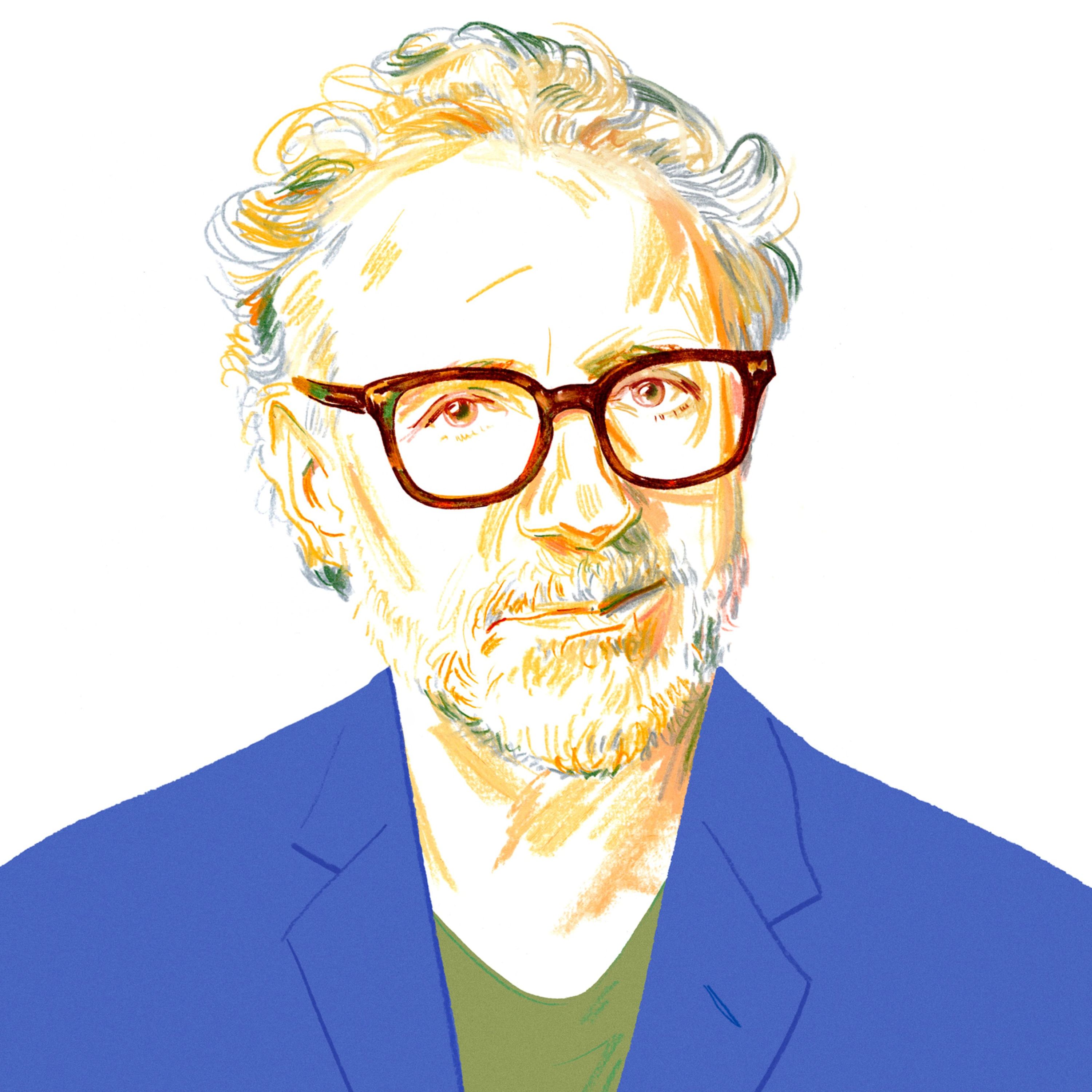
S9 Ep 106Massimo Bottura on Ethics, Aesthetics, and Slow Food
The Italian chef Massimo Bottura may be a big dreamer, but he’s also a firmly grounded-in-the-earth operator. Based in Modena, Italy, Bottura is famous for his three-Michelin-starred restaurant, Osteria Francescana, which has twice held the top spot on the World’s 50 Best Restaurants list. He also runs Food for Soul, a nonprofit dedicated to promoting social awareness about food waste and world hunger. With its first Refettorio opened in 2015, Food for Soul now runs a network of 13 Refettorios around the world—from Paris to San Francisco to Naples—designed to serve people in need via food-recovery programs. In 2019, with his wife, Lara Gilmore, he also opened Casa Maria Luigia, a hospitality concept in the Emilian countryside that became the jumping-off point for their new recipes-slash-interiors book, Slow Food, Fast Cars (Phaidon). In everything he does, Bottura keeps the tradition of the Emilia-Romagna region alive while constantly imagining and executing new possibilities.On this episode, Bottura discusses the art of aging balsamic vinegar; his vast collection of thousands upon thousands of vinyl records; his deep love of Ferraris, Lamborghinis, and Maseratis; and how he thinks about the role of time, both literally and philosophically, in and out of the kitchen.Special thanks to our Season 9 presenting sponsor, L’École, School of Jewelry Arts.Show notes:Massimo Bottura[03:27] Food for Soul[03:27] Refettorio Harlem[03:27] Refettorio Ambrosiano[03:46] Universal Exposition in Milan[15:36] Carlo Petrini[10:40] Gastromotiva[12:30] “Chef Massimo Bottura on Why the Future of Food is in Our Trash”[15:22] Slow Food, Fast Cars[15:36] Trattoria del Campazzo[56:07] Casa Maria Luigia[58:50] Osteria Francescana[41:32] Cavallino[41:32] Lo Mejor de la Gastronomia[43:30] Joseph Beuys[43:30] Lara Gilmore[1:01:42] Tortellante

S8 Ep 105Helen Molesworth on Museums as Machines for Slowness
To Helen Molesworth, curating is much more than carefully selecting and positioning noteworthy artworks and objects alongside one another within a space; it’s also about telling stories through them and about them, and in turn, communicating particular, often potent messages. Her probing writing takes a similar approach to her curatorial work, as can be seen in her new book, Open Questions: Thirty Years of Writing About Art (Phaidon), which culls together 24 of her essays written across three decades. For nearly 20 of those years, Molesworth served in various curatorial roles at museums and arts institutions including the Baltimore Museum of Art, the Institute of Contemporary Art Boston, and most recently, as the chief curator at the Museum of Contemporary Art in Los Angeles (MOCA). In the five years since her departure from MOCA, Molesworth has built a thriving practice as an independent curator, writer, and podcaster, notably as the host of the six-part podcast Death of an Artist, which was named a best podcast of 2022 by both The Economist and The Atlantic.On this episode of Time Sensitive, Molesworth discusses her lifelong engagement with the work of Marcel Duchamp; the transformative power of a great conversation; and the personal and professional freedom she has found in recent years as a roving, independent voice in the art world.Special thanks to our Season 8 sponsor, Van Cleef & Arpels.Show notes:[00:25] Helen Molesworth[03:50] Open Questions: Thirty Years of Writing About Art[04:02] Marcel Duchamp[04:09] “At Home with Marcel Duchamp: The Readymade and Domesticity”[11:33] “The Creative Act”[12:09] Marcel Duchamp’s “Fountain”[17:22] Frank Stella[17:28] John Baldessari[21:56] Paul Lafargue[22:32] Doris Salcedo[29:50] Josiah McElheny[35:23] Al Hirschfeld[36:41] State University of New York at Albany[36:43] Whitney Museum Independent Study Program[36:48] Cornell University[42:33] “One Day at a Time”[46:57] Kerry James Marshall[47:00] “This Will Have Been: Art, Love & Politics in the 1980s”[47:02] “Leap Before You Look: Black Mountain College 1933-1957”[47:41] Death of an Artist[47:46] Dialogues: The David Zwirner Podcast[47:48] Recording Artists[54:53] Museum of Contemporary Art, Los Angeles[54:51] Carl Andre[59:45] WBLS: The Quiet Storm

S8 Ep 104Annabelle Selldorf on Architecture as Portraiture
In another life, the German-born architect Annabelle Selldorf might have been a painter or a profile writer. In this one, she expresses her proclivity for portraiture as the principal of the New York–based firm Selldorf Architects, which she founded in 1988. Renowned for its work in the art world—from galleries such as David Zwirner and Hauser & Wirth to cultural institutions including The Frick Collection in New York, the National Gallery in London, and the Hirshhorn Museum and Sculpture Garden in Washington, D.C.—Selldorf’s firm has also designed a wide variety of residential projects and civic buildings. Many of these designs serve as architectural depictions of their respective clients, revealing each one’s inner nature and underlying ethos.On this episode, Selldorf discusses the links she sees between Slow Food and her architecture, the intuitive aspects of form-making, and why she considers architecture “the mother of all arts.”Special thanks to our Season 8 sponsor, Van Cleef & Arpels.Show notes: [00:31] Selldorf Architects[08:19] The Frick Collection[10:42] Lucian Freud[17:45] Dia Beacon[18:43] Art Gallery of Ontario expansion[18:54] Two Row[18:57] Diamond Schmitt[26:08] Sunset Park Material Recovery Facility[30:03] CSO Red Hook[30:05] CSO Owls Head[34:31] National Gallery, London[35:17] One Domino Park[37:15] John Russell Pope[37:28] Thomas Hastings[43:13] I.M. Pei[55:38] Ludwig Mies van der Rohe[58:54] Neue Galerie
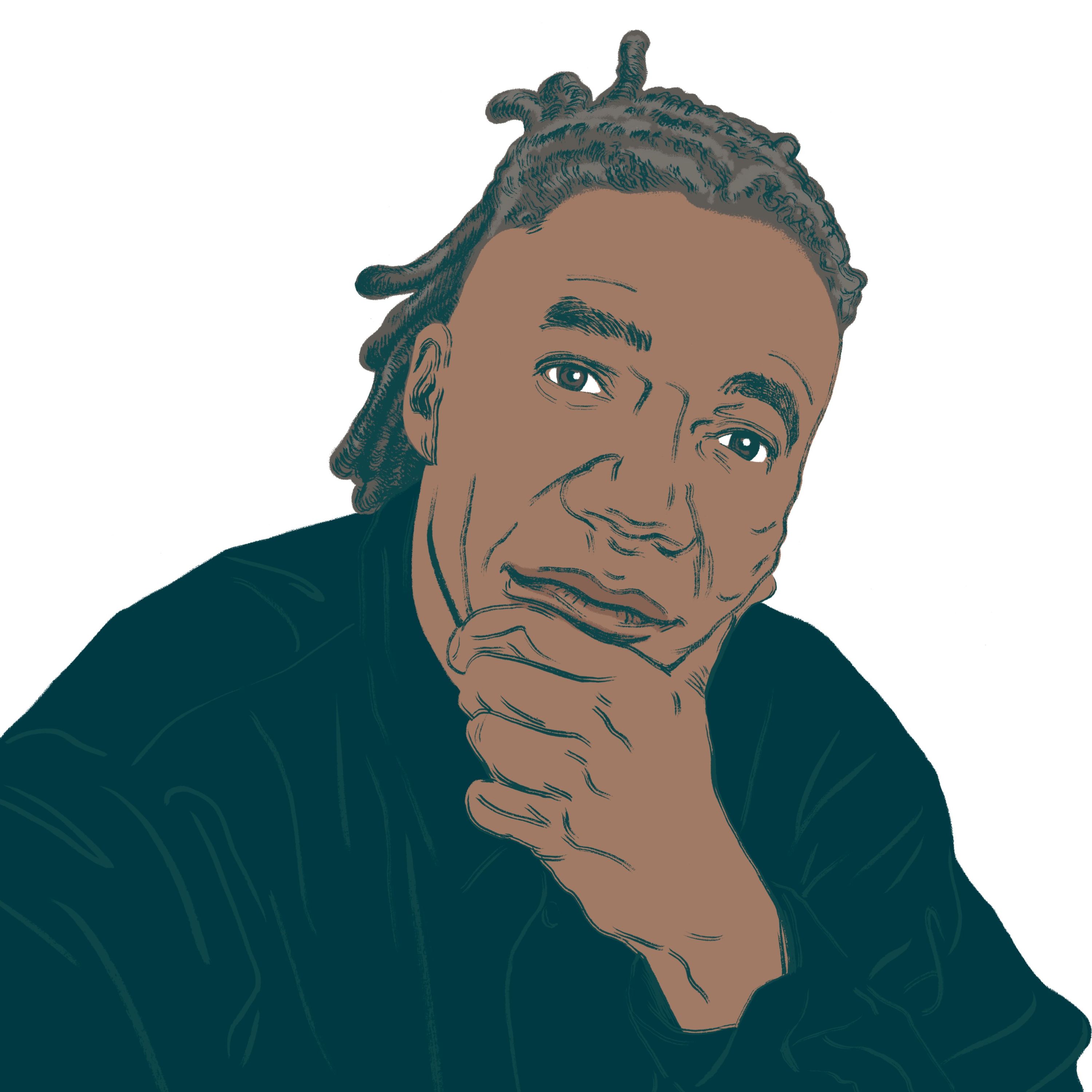
S8 Ep 103Walter Hood on Connecting People and Place Through Landscape Architecture
To the landscape architect Walter Hood, “place” is a nebulous concept made meaningful only through the illumination of its history and the people who have inhabited it. Hood has dedicated his career to this very perspective through his roles as creative director and founder of Hood Design Studio in Oakland, California, and as chair of the Department of Landscape Architecture & Environmental Planning at UC Berkeley, where he has taught since 1990. His projects include a series of conceptual gardens at the International African American Museum in Charleston, South Carolina; the grounds of the campus of the tech company Nvidia in Santa Clara, California; and the landscape of San Francisco’s de Young Museum in Golden Gate Park. Currently, he’s at work on the wayfinding for the Barack Obama Presidential Library in Chicago; a new park in his hometown of Charlotte, North Carolina; and twin memorials for Emory University’s campuses in Oxford and Atlanta, Georgia.On this episode, Hood discusses the intersection of social justice and landscape architecture, his arguments against what we traditionally deem “memorials” or “monuments,” and the power of language to literally shape the world around us.Special thanks to our Season 8 sponsor, Van Cleef & Arpels.Show notes: [03:34] Black Landscapes Matter[03:39] The World They Made Together[08:18] American Academy in Rome[08:27] Carthage[08:55] Loma Prieta Earthquake[13:48] Monticello[13:50] National Memorial for Peace and Justice[13:53] Gadsden’s Wharf[14:28] Lorraine Motel[16:07] Montgomery County Justice Center[18:40] Double Sights[24:37] Macon Yards[25:32] The Power of Place[28:59] Confederate Obelisk[29:55] Splash Pad Park[30:16] Lafayette Square Park[38:21] International African American Museum[38:25] “Native(s)”[39:54] Water Table[40:51] McColl Park[42:28] Twin Memorials[47:11] Octagon House[48:43] de Young Museum[51:13] The Broad[54:14] The Future of Nostalgia[54:53] Blues & Jazz Landscape Improvisations[58:01] Solar Strand[01:06:02] Art Institute of Chicago

S8 Ep 102Min Jin Lee on the Healing Power of Fiction
Min Jin Lee could be considered an exemplar of the old adage “slow and steady wins the race.” The author’s bestselling 2017 novel Pachinko—a National Book Award finalist and New York Times bestseller that was adapted into a television series for Apple TV+ in 2022—took 30 years to write from its inception as a short story. Her debut novel, Free Food for Millionaires (2007), took five years. These extensive periods of time become understandable, or even seem scant, within the sprawling, multigenerational contexts of her novels—Pachinko spans almost a century—into which she pours deep anthropological, sociological, and journalistic research. Lee is also the editor of the just-published The Best American Short Stories 2023 (Mariner Books) anthology, and she’s currently at work on American Hagwon, the third novel in her diasporic trilogy.On this episode, she talks about the complex role of time in Pachinko, her miraculous recovery from chronic liver disease, and why she likens short-story writing to polishing diamonds.Special thanks to our Season 8 sponsor, Van Cleef & Arpels.Show notes: [00:25] Min Jin Lee[03:39] Viet Thanh Nguyen[06:08] Free Food for Millionaires[06:10] Pachinko[06:19] The Best American Short Stories 2023[08:08] Amy Tan[08:09] Salman Rushdie[09:36] “Bread and Butter”[09:37] “Motherland”[09:38] “The Best Girls”[10:04] William Trevor[10:06] Alice Munro[12:45] Yale University[17:23] Harvard Business School[17:34] Fashion Institute of Technology[47:37] Queens Public Library in Elmhurst[49:21] The Bronx High School of Science[49:32] The Hotchkiss School[49:33] Phillips Exeter Academy[58:46] American Hagwon[01:03:33] Stoner by John Williams

S8 Ep 101Mira Nakashima on Keeping Her Father’s Woodworking Legacy Alive
In art and design circles, the name George Nakashima is synonymous with expert woodworking, exquisite furniture, and high-quality craftsmanship. Over the past 30-plus years, his daughter, the architect and furniture maker Mira Nakashima, has not only artfully built upon his techniques and time-honored traditions, further cementing his legacy, but also stepped outside of his shadow and carved a name for herself. Having worked full-time at George Nakashima Woodworkers since 1970, Mira took over as its president and creative director upon her father’s death in 1990. Since then, she has carried on his unfinished projects, continued producing dozens of his designs, and also developed many of her own creations, including her Keisho and Shoki furniture lines. Through it all, Mira has remained as humble as ever and maintained a deep reverence for her father, his boundless creativity, and his exacting vision.On this episode, Nakashima talks about her family’s time spent in a Japanese internment camp during World War II; the enduring “karma yoga” influence of the Indian philosopher and spiritual leader Sri Aurobindo, whom her father once studied under and worked for as an architect; and why her father considered his work “an antidote to the modern world.”Special thanks to our Season 8 sponsor, Van Cleef & Arpels.Show notes: [01:15] George Nakashima Woodworkers[03:39] Nakashima Foundation for Peace[03:43] George Nakashima[03:52] Altar for Peace at the Cathedral of Saint John the Divine[04:08] Altar for Peace at the Russian Academy of Arts[04:14] Altar for Peace in Auroville, India[08:42] Hague Appeal for Peace[13:52] Sri Aurobindo[15:36] Bnai Keshet[15:45] St. Martin of Tours[15:50] Monastery of Christ in the Desert[15:58] Queen of Peace Chapel[17:14] Ivan Wyschnegradsky[17:22] Antonin Raymond[17:36] Golconde[21:00] George Nakashima Woodworker[23:07] Katsura Imperial Villa[23:26] Junzō Yoshimura[30:11] Udar Pinto[31:27] The Soul of a Tree[42:07] Nature Form & Spirit: The Life and Legacy of George Nakashima[45:22] The Krosnicks’ furniture collection[49:54] Keisho collection[54:14] Shoki collection

S8 Ep 100Ian Schrager on Consistently Capturing the Zeitgeist
Behind every unforgettable space and every extraordinary experience is a certain je ne sais quoi. If anyone has an idea of what exactly that is, it’s the hospitality impresario and Studio 54 co-founder Ian Schrager. For more than four decades, Schrager has been a defining cultural catalyst and beacon across industries, from hotels and nightlife, to art and architecture, to fashion and food, and beyond. Since the early 1980s, Schrager has devised and developed more than 20 ahead-of-the-curve hospitality properties, including the Public hotel (2017) in New York City and the Edition line of hotels, as well as, going further back, the Morgans (1982), the Paramount (1990), the Hudson (2000), and the Gramercy Park Hotel (2006) in New York; the Mondrian (1996) in Los Angeles; the Delano (1995) in Miami; St. Martins Lane and the Sanderson (both 1998) in London; and the Clift (2000) in San Francisco. Beyond designing for mere aesthetic appreciation, Schrager cultivates places with a soul and spirit all their own.On this episode—our 100th—Schrager discusses his tried-and-true design philosophies and definition of luxury today; his admiration for the visionary thinking of Steve Jobs, Elon Musk, and Walt Disney; and the enduring aura of Studio 54.Special thanks to our Season 8 sponsor, Van Cleef & Arpels.Show notes: [00:33] Ian Schrager[02:54] Morgans Hotel[02:59] Studio 54[03:02] Steve Rubell[06:26] Edition Hotels[06:33] Arne Sorenson[12:44] Public Hotels[13:03] Paramount Hotel[13:29] The Royalton[14:45] Hudson Hotel[24:37] John Pawson[26:04] The Palladium[26:05] Arata Isozaki[33:24] “Studio 54” Documentary[42:41] Enchanted Garden[50:48] Bianca Jagger[50:51] Truman Capote[50:51] Andy Warhol[50:56] Issey Miyake[53:33] Paul Goldberger[01:03:01] Paperless Post

S8 Ep 99Sanford Biggers on Patching Together the Past, Present, and Future Through Art
To Sanford Biggers, the past, present, and future are intertwined and all part of one big, long now. Over the past three decades, the Harlem-based artist has woven various threads of place and time—in ways not dissimilar to a hip-hop D.J. or a quilter—to create clever, deeply metaphorical, darkly humorous, and often beautiful work across a vast array of mediums, including painting, sculpture, video, photography, music, and performance. Among his standout works are “Oracle” (2021), a 25-foot-tall cast bronze sculpture that combines a Greco-Roman form with an African mask; his “BAM” series (2015) of gunshot statuettes; and his ongoing “Codex” series of quilts, which have, over his past decade of making them, become an especially potent and ritualistic part of his art-making.On this episode, Biggers talks about the influence that musicians such as Mahalia Jackson, Ray Charles, and Stevie Wonder have had on his art; why he thinks of himself as a “material polyglot”; and why religious and spiritual works like reliquaries, shrines, and “power objects” are the bedrock of his practice.Special thanks to our Season 8 sponsor, Van Cleef & Arpels.Show notes:[00:26] Sanford Biggers[03:55] “Sanford Biggers with Yasi Alipour”[07:14] “The Playful, Political Art of Sanford Biggers”[12:34] Moon Medicin[13:36] Mahalia Jackson[13:39] Ray Charles[13:40] Charles Mingus[13:41] Thelonious Monk[15:32] Stevie Wonder[16:06] Prince[18:00] Dick Gregory[18:01] Richard Pryor[18:02] Redd Foxx[18:47] “BAM” series[27:17] “re:mancipation”[29:05] Skowhegan School of Painting & Sculpture[30:08] John Biggers[31:41] “Codeswitch” at the California African American Museum[33:28] Dr. Leslie King-Hammond[33:30] Maryland Institute College of Art[37:47] University High School[38:23] Morehouse College[38:33] Art Institute of Chicago[47:34] Isamu Noguchi[47:36] Martin Puryear[49:06] “Lotus”[50:31] “Orin”[55:52] “Meet Me on the Equinox”[55:52] “Back to the Stars”

S8 Ep 98Edmund de Waal on Pottery, Poetry, and the Act of Letting Go
The London-based artist, master potter, and author Edmund de Waal has an astoundingly astute sense for the inner lives of objects. Each of his works, whether in clay or stone, is imbued with a certain alchemy, embodying traces of far-away or long-ago ancestors, ideas, and histories. This fall, two exhibitions featuring his artworks are on view at Gagosian in New York (through October 28): “to light, and then return,” which pairs his pieces with tintypes and platinum prints by Sally Mann, and “this must be the place,” a solo presentation displaying his porcelain vessels poetically arranged in vitrines, as well as stone benches carved from marble. As respected for his writing as he is for his pots, de Waal is the author of 20th Century Ceramics (2003), The Pot Book (2011), The White Road (2015), Letters to Camondo (2021), and, perhaps most notably, the New York Times bestseller The Hare with Amber Eyes (2010). All that de Waal does is part of one long continuum: He views his pots and texts as a single, rigorously sculpted body of work and ongoing conversation across time.On this episode, de Waal talks about his infatuation with Japan, his affinity for the life and work of the Japanese-American artist Isamu Noguchi (1904-1988), and the roles of rhythm and breath in his work.Special thanks to our Season 8 sponsor, Van Cleef & Arpels.Show notes: [00:28] Edmund de Waal[03:43] Paul Celan[08:12] 2023 Isamu Noguchi Award[08:17] Gagosian[08:20] “this must be the place” [08:22] “to light, and then return”[09:09] Twentieth-Century Ceramics[09:20] The Pot Book[18:23] “Letters to Camondo” Exhibition[20:32] Sally Mann[20:48] The Hare with Amber Eyes[28:00] “The Hare with Amber Eyes” Exhibition[30:56] “Playing with Fire: Edmund de Waal and Axel Salto” Exhibition[40:24] Dr. Sen no Sōshitsu[52:48] The White Road[52:49] Letters to Camondo[01:06:33] In Memory Of: Designing Contemporary Memorials

S8 Ep 97Trent Davis Bailey on Finding Family and Community Through Photography
The artist and photographer Trent Davis Bailey (our host, Spencer Bailey’s, identical twin brother) continually seeks to unearth the tangled roots of his identity through his intensely personal and place-based work. This summer, his first-ever solo museum exhibition, “Personal Geographies” (on view through February 11, 2024)—a photographic exploration of memory, family, and place—opened at the Denver Art Museum, and this fall, he will release the corresponding project, “The North Fork,” in book form. Bailey is also currently at work on “Son Pictures,” an ongoing series of photographs piecing together fragments of his family’s past and present, some of which were recently published alongside a New York Times op-ed titled “What a Motherless Son Knows About Fatherhood.” Leading him to take deep-dives into newspaper and family photo archives, and from Colorado to Iowa to the Adirondacks, “Son Pictures” unpacks the loss of his mother, who died in a plane crash in 1989 when he was 3; his family’s attendant trauma and grief; and his present life, at 38, as a husband and parent of two toddlers.On this episode—his and Spencer’s first formal “twinterview,” recorded last month on their 38th birthday—Bailey talks about what it was like to grow up as an identical twin, his unusual and decidedly dysfunctional upbringing, and photography as a device for commemoration.Special thanks to our Season 8 sponsor, Van Cleef & Arpels.Show notes: [00:28] Trent Davis Bailey[09:58] “The North Fork” [10:02] “Personal Geographies” at the Denver Art Museum[10:12] “What a Motherless Son Knows About Fatherhood” [10:18] “Son Pictures”[11:54] Paonia, Colorado[20:10] California College of the Arts[20:22] Museum of Contemporary Photography’s Snider Prize[20:28] Robert Koch Gallery[22:34] The Sublime[23:52] The Hotchkiss Crawford Historical Museum/Society[26:42] Robert Frank[26:53] Stephen Shore[26:55] Joel Sternfeld[28:27] “A Kingdom From Dust”[28:32] The California Sunday Magazine[36:40] Rebecca Solnit[45:43] United Airlines Flight 232[45:46] Spencer Bailey Reflects on the Crash-Landing of United Airlines Flight 232[45:56] Sioux City, Iowa[46:02] Frances Lockwood Bailey[56:42] International Center of Photography[56:57] Alex Webb and Rebecca Norris Webb[59:55] Robert Frank “The Americans” Exhibition at the Met[01:08:10] Lake Placid, New York[01:14:24] Brooklyn Darkroom

S8 Ep 96Robert Wilson on the Wonder to Be Found in Time, Space, and Light
For each and every performance the theater director, playwright, choreographer, and sound and lighting designer Robert Wilson creates, time isn’t just of the essence—it is the essence. Perhaps best known as the director of the four-act opera Einstein on the Beach, which he composed with Philip Glass and debuted in 1976, Wilson now has nearly 200 stage productions to his name. These include Dorian, which premiered last year in Düsseldorf, and The Life and Death of Marina Abramović, which opened at the Manchester International Festival in 2011. What stands out about Wilson’s work, among many things, is its rare ability to disorient viewers while also enchanting them. Duration is often another part of the equation: Some of the performances on Wilson’s résumé have ranged from seven hours to an astonishing seven days. Many critics, writers, and scholars have agreed that Wilson has completely reshaped the landscape of theater, vastly expanding its vocabularies and horizons.On this episode, Wilson talks about his personal philosophies around silence and sound, the intersections of architecture and theater, and his enduring vision for the Watermill Center.Special thanks to our Season 8 sponsor, Van Cleef & Arpels.Show notes:[04:31] The King of Spain[04:32] The Life and Times of Sigmund Freud[04:34] Deafman Glance[04:59] John Cage[09:02] Madama Butterfly[13:51] “Time to Think”[14:34] Marina Abramović[16:37] The Ring[16:39] King Lear[16:41] Einstein on the Beach[16:43] Philip Glass[18:14] Parsifal[18:50] The Watermill Center[28:55] Dorian[32:09] Time Rocker[32:15] Lou Reed[34:27] Ka Mountain and Guardenia Terrace[39:28] Festival of Autumn in Paris[40:38] The Golden Windows[41:04] Pratt Institute[43:45] Medea[44:48] Edison[44:58] Dr. Faustus Lights the Lights[45:00] Relative Calm[46:32] H-100 Seconds to Midnight[52:27] The Life and Times of Joseph Stalin[52:40] A Letter for Queen Victoria

S7 Ep 95José Parlá on Coming Back to Life Through Art
Through his abstract paintings, the Miami-born, Brooklyn-based artist José Parlá explores themes ranging from memory, gesture, and layering, to movement, dance, and hip-hop culture, to codes, mapping, and mark-making. Coming up in Miami in the late 1980s and early ’90s, Parlá spent his adolescence and young adult years steeped in hip-hop culture and an underground scene that involved break dancing, writing rhymes, and making aerosol art. The art form still manifests, in wholly original ways, in his abstract works, which, while decidedly of the 21st century, extend in meaning and method back to ancient wall writings and cave drawings.On the episode, Parlá talks about his recent near-death experience with Covid-19; his activism with the collective Wide Awakes; and how his large-scale murals at locations including the Brooklyn Academy of Music, Barclays Center, and One World Trade Center trace back to his early days of painting elaborate wall works with aerosol.Special thanks to our Season 7 sponsor, Van Cleef & Arpels.Show notes: [07:37] Rey Parlá[11:45] Ciclos: Blooms of Mold[12:19] Augustin Parlá[13:13] Curtiss School of Aviation[14:05] José Martí[16:20] “Phosphene” series[18:27] “Polarities” series[18:32] “Breathing” series[23:25] Wide Awakes[23:26] For Freedoms[23:29] Hank Willis Thomas[23:31] J.R.[23:35] Wildcat Ebony Brown[24:28] “The Awakening”[32:04] “It’s Yours”[34:17] Snøhetta[34:45] Ghetto Gastro[36:50] Craig Dykers[36:55] José Parlá’s Studio[38:20] James B. Hunt Jr. Library[38:22] “Nature of Language”[38:47] Far Rockaway Writer’s Library[56:56] “Brothers Back to Back”[59:51] “Parlá Frères”[01:00:03] Hurricane Andrew[01:00:12] Savannah College of Art and Design[01:01:32] New World School of the Arts[01:01:51] Mel Alexenberg[01:02:29] “Combine” by Robert Rauschenberg[01:06:29] “Gesture Performing Dance, Dance Performing Gesture” at BAM[01:06:30] Barclays Center mural[01:06:32] “One: Union of the Senses” at One World Trade Center[01:06:33] “Amistad América” at the University of Texas at Austin[01:12:08] Gordon Parks fellowship

S7 Ep 94Tom Dixon on Designing With Longevity in Mind
The renegade British designer Tom Dixon has long had a roving obsession with raw materials—everything from cast iron, steel, and copper; to clay, glass, and stone; to felt, plastic, and marble; to, more recently, cork and aluminum. Entirely self-trained and without any formal design education, Dixon emerged in the design sphere in the 1980s by creating unusual welded salvage furniture that was at once antique, experimental, beautiful, and punk in spirit. Never short of bold, forward-looking ideas, Dixon works from a materials-first perspective. Over the years, he has created an industrial chair with upholstery inspired by the rubber inner tubing of car tires, furniture made of flame-cut steel, and even conceptual pieces grown underwater and built of Biorock. Central to all that he does is a quest for longevity and, in turn, sustainability; he has even, in the past, toyed with the idea of a thousand-year guarantee.On the episode, Dixon talks about how two motorbike accidents transformed his life, his days in the early 1980s as a bass player in the disco-funk band Funkapolitan, why he considers cork a “wonder material,” and the parallels he sees between his design creations and those of a baker.Special thanks to our Season 7 sponsor, Van Cleef & Arpels.Show notes: [00:56] Tom Dixon[07:02] Flame-Cut Furniture[11:27] Design Miami[12:06] Craig Robins[13:50] Wolf Hilbertz[31:14] S-Chair[34:41] Giulio Cappellini[35:12] Marc Newson[35:15] Jasper Morrison[38:56] Isamu Noguchi[38:56] Akari Light Sculptures[39:57] Constantin Brâncuși[40:33] Dixonary[46:34] Funkapolitan[49:16] Funkapolitan’s “If Only”[49:17] Funkapolitan’s “In the Crime of Life”[50:17] August Darnell[53:56] Guy Pratt[53:58] Rockonteurs with Gary Kemp and Guy Pratt[54:50] Creative Salvage[01:01:06] IKEA[01:03:37] Ronan and Erwan Bouroullec[01:03:50] Enzo Mari[01:03:51] Achille Castiglioni[01:03:52] Verner Panton

S7 Ep 93Jessica B. Harris on Making Vast Connections Across African American Cooking and Culture
Dr. Jessica B. Harris is renowned as the grande dame of African American cookbooks. One of the world’s foremost historians, scholars, writers, and thinkers when it comes to food—and African American cooking in particular—she has, over the past 40 years, published 12 books documenting the foods and foodways of the African diaspora, including Hot Stuff (1985), Iron Pots and Wooden Spoons (1989), Sky Juice and Flying Fish (1991), The Welcome Table (1995), The Africa Cookbook (1998), and High on the Hog (2011)—the latter of which became a Netflix docuseries and, in turn, a New York Times bestseller. Through her cookbooks, her work, and her very being, Harris is a living testament to the polyvocal, far-reaching traditions and histories of African American food and culture.On the episode, Harris talks about her love of West African markets, her disregard for recipes despite being the author of numerous cookbooks, and the widely unrecognized yet critical differences between yams and sweet potatoes.Special thanks to our Season 7 sponsor, Van Cleef & Arpels.Show notes: [00:49] Dr. Jessica B. Harris[05:28] Harris’s “French-Speaking Theater in Senegal” N.Y.U. Doctoral Dissertation[05:49] Carrie Sembène[07:45] Souvenirs du Sénégal by J. Gérard Bosio and Michel Renaudeau[10:17] R.A.W.[21:06] Hot Stuff (1985)[21:43] The Welcome Table (1995)[22:01] Iron Pots and Wooden Spoons (1989)[22:05] Sky Juice and Flying Fish (1991)[22:06] Tasting Brazil (1992)[23:12] The Africa Cookbook (1998)[23:15] Beyond Gumbo (2003)[23:28] Rum Drinks (2010)[23:56] Vintage Postcards From the African World (2020)[24:46] High on the Hog (2011)[25:46] High on the Hog Netflix Series[33:53] “African/American: Making the Nation’s Table” Exhibition[33:57] Ebony Test Kitchen[34:00] Smithsonian National Museum of African American History and Culture[34:29] New York Botanical Garden[35:41] Stephen Satterfield[01:05:00] My Soul Looks Back (2018)[01:05:14] Maya Angelou[01:05:15] James Baldwin[01:05:16] Toni Morrison[01:05:17] Nina Simone[01:07:46] Yahdon Israel[01:09:29] Nancy Harmon Jenkins

S7 Ep 92Samuel Ross on the Art of “Awakening” Materials
The term “polymath” is unquestionably overused, and often just plain wrong, but it suits the multi-hyphenate British designer, creative director, and artist Samuel Ross, whose hard-to-pin-down practice spans high fashion, streetwear, painting, sculpture, installation, stage design, sound design, product and furniture design, experimental film, and street art. Best known for founding the Brutalism-tinged fashion label A-Cold-Wall, which sits at the nexus of streetwear and high fashion, and for his work, earlier in his career, with the late Virgil Abloh, Ross also runs the industrial design studio SR_A and has collaborated with brands including Nike, Converse, and Timberland. On this week’s episode of Time Sensitive, he talks about notions of ritual, essence, and alchemy; how his work straddles the line between the organic and the synthetic; and why he always thinks in threes.Special thanks to our Season 7 sponsor, Van Cleef & Arpels.Show notes: [03:59] “Samuel Ross: Coarse” at Friedman Brenda[06:41] Glenn Adamson[22:48] Hettie Judah’s Lapidarium: The Secret Lives of Stones[27:45] Vitsoe 606 Shelving System[30:46] Virgil Abloh[37:02] “Samuel Ross: Land” at White Cube[42:05] Rhea Dillon[46:24] Sondra Perry’s Typhoon Coming On[46:43] Christina Sharpe’s In the Wake[46:46] Saidiya Hartman’s Wayward Lives, Beautiful Experiments[50:30] Steve McQueen’s Small Axe[52:41] John Berger[58:19] 2wnt4[58:53] Pyrex Vision[58:55] Kanye West[58:56] Donda[01:04:09] A-Cold-Wall[01:05:46] Jerry Lorenzo[01:09:25] Black British Artist Grants[01:12:22] SR_A[01:12:50] “Fashion Design: Samuel Ross/A-Cold-Wall” at the V&A Museum[01:13:22] Grace Wales Bonner[01:13:54] Mac Collins[01:13:59] Nifemi Marcus-Bello[01:20:44] David Drake

S7 Ep 91Jelani Cobb on 50 Years of Hip-Hop and the Future of Journalism
To Jelani Cobb, reading, writing, and education are inherently acts of empowerment, and sometimes even ones of defiance. A staff writer at The New Yorker since 2015 and recently appointed the dean of Columbia Journalism School, where he has been on the faculty since 2016, Cobb has written on subjects ranging from the power of Dave Chappelle’s comedy, to the vital lessons of Martin Luther King Jr., to Donald Trump as a rapper. Cobb is also the author of the books The Substance of Hope: Barack Obama and the Paradox of Progress (2010) and To the Break of Dawn: A Freestyle on the Hip Hop Aesthetic (2007). Given the precarious moment we’re in when it comes to truth and the future of not just journalism, but democracy itself, he is unquestionably one of the most essential writers, historians, and thinkers of our time. On this week’s episode of Time Sensitive, Cobb talks about timing and flow in hip-hop, why being a “first Black” leader in any high-profile profession is like “doing a high-wire act without a net,” and his belief that the future of journalism will include greater transparency around how a story gets made.Special thanks to our Season 7 sponsor, L’ÉCOLE, School of Jewelry Arts.Show notes: [03:39] DJ Kool Herc[03:49] “Hip-Hop at Fifty: An Elegy”[03:56] To the Break of Dawn[08:05] August Wilson[09:13] Skip James[27:10] Run-D.M.C.[27:16] LL Cool J[27:24] Q-Tip[27:25] Phife Dawg[27:27] Salt-N-Pepa[27:41] Kool G Rap[27:45] Pharoahe Monch[37:17] Queens Public Library[39:27] Adell Patton[41:18] Elizabeth Clark-Lewis[43:06] David Carr[43:23] Ta-Nehisi Coates[49:58] The Devil and Dave Chappelle: And Other Essays[53:21] “Trayvon Martin and the Parameters of Hope”[59:14] “Postscript: Rodney King, 1965-2012”[59:46] “Alvin Bragg, Donald Trump, and the Pursuit of Low-Level Crimes”[01:02:21] Between the World and Me[01:03:51] Columbia Journalism School

S7 Ep 90Marilyn Minter on Pioneering Sex-Positive Feminism in the Art World and Beyond
EOver the past 50 or so years, Marilyn Minter has been on a roving exploration of feminist, sex-positive thinking. In her art-making, she harnesses the power of sexual imagery—a realm long controlled by men—and presents it through the lens of female desire. Among her most acclaimed works are her “Bathers” series, which reimagines classic female bathers; her “Bush” series, originally a Playboy commission; and a group of new portraits, currently on view at the New York gallery LGDR (through June 3), featuring impactful cultural figures she admires, such as Roxane Gay, Gloria Steinem, Lizzo, and Monica Lewinsky. On the episode, Minter talks about the unrealistic societal and body-image standards young women continue to face, the importance of embracing complexity and multiplicity in artwork, and the hope she has in the next generation to fight social injustice.Special thanks to our Season 7 sponsor, L’ÉCOLE, School of Jewelry Arts.Show notes: [00:49] Marilyn Minter[04:02] Bettie Page[06:10] Susie Bright[24:31] “The Joys (and Challenges) of Sex After 70”[27:31] HBO’s The Deuce[33:37] Pamela Anderson for Parkett[40:33] LGDR[46:30] Minter’s “Coral Ridge Towers” Series[52:19] Linda Yablonsky[53:23] Diane Arbus[55:24] James Harithas[56:35] Sylvia Mangold[56:59] Kenneth Snelson[58:16] Christof Kohlhöfer[01:04:15] Neville Wakefield[01:07:32] Planned Parenthood[01:07:45] ADLAR AR App

S7 Ep 89Ari Shapiro on Finding Clarity and Connection Through Listening
As the co-host of NPR’s flagship news program All Things Considered, Ari Shapiro is a go-to source for tens of millions of Americans for essential deep-dives into some of the most critical stories unfolding across the globe. At NPR for more than two decades now, Shapiro has made it his mission to serve as an informational and emotional conduit—or even a translator of sorts—between the subject and the listener. On this week’s episode of Time Sensitive, he talks about his new memoir, The Best Strangers in the World: Stories From a Life Spent Listening; why he considers hosting All Things Considered like inheriting an heirloom; embracing one’s identity as a journalistic asset; and the parallels between reading fiction, cooking, and reporting the news.Special thanks to our Season 7 sponsor, L’ÉCOLE, School of Jewelry Arts.Show notes:[01:14] Ari Shapiro[03:48] “The Best Strangers in the World: Stories from a Life Spent Listening”[04:09] Mary Louise Kelly[04:10] NPR’s All Things Considered[07:23] Susan Stamberg[08:51] Noah Adams[09:44] Audie Cornish[17:27] “A Second, Chance Interview With Subject of Controversial First Lady Remarks”[20:46] “Ari Shapiro On Covering the Pulse Shooting”[22:07] Billy Manes[24:50] “‘Dr. No’ Becomes Diplomat, Continues a Family Story”[24:54] Norm Eisen[27:29] “For Two Sarajevo Women, a Chance Friendship Forged in the Ashes of War”[31:40] “One Man's Moment With Martin Luther King Jr.”[38:48] Cascade AIDS Project[43:21] Nina Totenberg[52:59] Amitav Ghosh[53:02] “Journey To The Sundarbans: The ‘Beautiful Forest’ of Mangroves”[53:05] Ghosh’s “The Hungry Tide”[54:30] “Meet Bonbibi: The Indian Forest Goddess Worshiped Across Religions”[54:32] “Experts Fear Climate Change Will Lead to More Tiger Attacks in the Sundarbans”[54:53] “Amitav Ghosh: ‘The World of Fact Is Outrunning the World of Fiction’”[55:00] Ghosh’s “Gun Island”[55:49] Pink Martini[55:53] Alan Cumming[57:50] Kim Hastreiter[59:23] Och and Oy[01:02:11] Ernesto Lecuona

S7 Ep 88Anders Byriel on Redefining the Idea of “Company Culture”
Over his 25 years as CEO of the Danish textile company Kvadrat, Anders Byriel has turned what was once a small, fairly dusty family design business into a global giant. Perhaps just as notably, he’s taken a radical, and even artistic, approach to building and cultivating the brand’s culture, partnering with designers such as Raf Simons, Ronan and Erwan Bouroullec, and Peter Saville; arts institutions like the New Museum in New York, the Tate Modern in London, and the Louisiana Museum of Modern Art in Humlebaek, Denmark; and brands including Adidas Originals, Bang & Olufsen, and Jaguar Land Rover. On this week’s episode of Time Sensitive, Byriel talks about why the best design has an artistic edge, the importance of making space for emotion within a corporate environment, and his deep and lifelong passions of poetry and photography.Special thanks to our Season 7 sponsor, L’ÉCOLE, School of Jewelry Arts.Show notes:Anders Byriel [01:04]Annie Ernaux [04:25]“Vermeer” at the Rijksmuseum [06:04]Kvadrat [06:56]Raf Simons [12:05]Peter Saville [13:24]David Adjaye [14:05]Thomas Demand [14:14]Louisiana Museum of Modern Art [14:17]Rosemarie Troeckel [14:20]Olafur Eliasson [14:27]Jean Nouvel [14:40]Massimiliano Gioni [18:06]Pipilotti Rist [18:39]Wu Tsang [19:07]“The Triple Folly” [19:33]Danh Vo [24:20]Ronan and Erwan Bouroullec [27:09]Giulio Ridolfo [30:41]“Materializing Color” [30:43]Adidas Originals x Kvadrat Stan Smith [39:03]Konstantin Grcic [43:06]Verner Panton [49:29]“Pop Art Design” exhibition at Vitra Design Museum [50:20]Robert Adams [01:03:08]Henrik Nordbrandt [01:03:52]Nan Goldin [01:10:39]Ocean Vuong [01:04:54]Ocean Vuong’s “Time Is a Mother” book of poems [01:05:01]“Your Brain on Art” book [01:05:09]Hiroshi Sugimoto [01:11:37]“Ai Weiwei In the Elevator When Taken Into Custody by the Police” (2009) [01:12:00]Ansel Adams [01:12:44]Robert Adams’s “Around the House” book [01:13:01]Robert Adams’s "A Road Through Shore Pine" book [01:13:30]

S7 Ep 87Tina Barney on Photography as a Way of Marking Time Across Generations
Across her 40-year-long career, the photographer Tina Barney has become internationally renowned for capturing her particular milieus—family, friends, and neighbors in Watch Hill, Rhode Island, most notably, but also in New York and Sun Valley, Idaho. On this week’s episode of Time Sensitive, she talks about her new book, The Beginning (Radius Books), and corresponding Kasmin gallery show (on view through April 22), which bring together some of her earliest images, taken between 1976 and 1980; what she views as the underlying sources of nostalgia; the fascinating natures of ritual and tradition; and the small miracles that can exist within a single photograph.Special thanks to our Season 7 sponsor, L’ÉCOLE, School of Jewelry Arts.[11:20] “China Visit” (2006)[16:28] “Marina’s Room” (1987)[18:40] Watch Hill, Rhode Island[19:16] “The Europeans” (1996–2004)[32:01] “Big Pictures by Contemporary Photographers” at MoMA (1983)[32:07] “Sunday New York Times” (1982)[32:50] “Tina Barney” at MoMA (1990)[33:31] John Szarkowski[38:43] Sun Valley Center for the Arts[47:07] Theater of Manners (1997)[47:10] Players (2011)[47:12] Tina Barney Rizzoli monograph (2017)[47:16] Tina Barney: The Beginning (2023)[47:17] Radius Books[48:55] Kasmin Gallery[51:26] “Waterslide in Fog” (1979)[54:39] “The Suits” (1977)[54:40] “The Twins” (1977)[57:53] ““Amy, Phil, and Brian” (1980)[01:00:04] Robert Liebrich

S7 Ep 86Nick Cave on Art as a Means of Working Through Grief and Trauma
On this week’s episode of Time Sensitive—our first of Season 7—Chicago-based artist Nick Cave talks about his career-spanning retrospective, “Forothermore,” currently on view at the Guggenheim (through April 10), which takes over three floors and features installation, video works, and sculpture, including recent iterations of his famous Soundsuits; his improvisational approach to work and life; how his art seeks to find brightness in darkness; and what the world might be like if everyone sat in silence for an hour each day.Special thanks to our Season 7 sponsor, L’ÉCOLE, School of Jewelry Arts.Show notes: [00:30] Nick Cave[16:43] Facility[16:57] Bob Faust[16:59] Jack Cave[20:53] “TM13” (2015)[25:16] “Forothermore”[25:20] Naomi Beckwith[29:53] “Time and Again” (2000)[33:18] “Gestalt” (2012)[33:19] “Blot” (2012)[36:21] “Sea Sick” (2012)[43:44] Anselm Kiefer[53:11] “Made by Whites for Whites”[55:38] Claudia Rankine[55:53] Reginald Dwayne Betts

Rerun: 23. Daniel Brush on Making Some of the Most Extraordinary and Exquisite Objects on Earth
bonusFrom the archive: The late artist, jewelry-maker, and metalsmith Daniel Brush, who died on Nov. 26, 2022, at age 75, talks about memory (and interpretations of memory); his deep, monkish engagement with a wide variety of materials; and some of his most valuable tools—breathing, language, and light.

S6 Ep 85Ruthie Rogers on Cooking as an Act of Imagination
For the American-born chef and restaurateur Ruth Rogers, owner of the Michelin-starred River Cafe on the north bank of the Thames in London’s Hammersmith neighborhood, food is a portal: to memories and cultures. To conversations. To meaningful connections. Since Rogers, who goes by Ruthie, co-founded the celebrated Italian restaurant with Rose Gray in 1987, it has become a well-trod stomping ground for a bevy of artists, filmmakers, writers, actors, architects, and other movers and shakers—many of whom have appeared on her podcast, Ruthie’s Table 4, including the director Steve McQueen, British Vogue editor-in-chief Edward Enninful, and the artist Tracey Emin. Similarly, many highly regarded chefs have come up through the River Cafe’s kitchen, including Jamie Oliver, April Bloomfield, and Jess Shadbolt and Clare de Boer of the New York restaurants King and Jupiter. Rogers’s latest project, The River Cafe Look Book (Phaidon), captures her true spirit; that of the restaurant as a whole; and that of her late husband, the Pritzker Prize–winning architect Richard Rogers, to whom the book is dedicated. A book as much about looking as eating, it encourages, in Rogers’s wonderfully joyful way, engaging the full body and mind as a cook. On this episode, Rogers talks with Spencer about her journey in food and cooking; her 35 years at the helm of the River Cafe; and the rigorous culture of kindness and openness, paired with toughness, that she has built at the restaurant, both in and out of the kitchen.Special thanks to our Season 6 sponsor, L’ÉCOLE, School of Jewelry Arts.Show notes:Ruthie Rogers[03:32] The River Cafe Look Book[03:51] River Cafe 30[13:21] The River Cafe Cook Book[29:17] The River Cafe[41:53] Ruthie’s Table 4

S6 Ep 84Mikkel Vestergaard Frandsen on the Profound Impacts of Humanitarian Entrepreneurship
One small step for Mikkel Vestergaard Frandsen, one giant leap for mankind. So goes the story of several of the entrepreneur, philanthropist, and humanitarian’s pursuits over the past three decades. At present the founder and CEO of Sceye, a company building stratospheric platforms to help prevent human trafficking and monitor climate change, Vestergaard has a long history in developing catalytic products that have quite literally revolutionized the humanitarian and public health landscapes. Through his eponymous material science company Vestergaard, he developed PermaNet, a screen designed to kill mosquitoes by contact, which has more than halved the global prevalence of malaria, and ZeroFly, a storage bag that protects agricultural commodities against insect infestation, mold growth, oxidation, and rancidity. With LifeStraw, he created a product that filters contaminated water, which has eradicated Guinea worm disease from South Asia and all but eradicated it from Sub-Saharan Africa. Imbuing a values-driven approach into everything he does, Vestergaard is driven by the desire to close the gap between those who have and those who don’t.On the episode, Vestergaard talks with Andrew about the values of equity he was raised with in Scandinavia, the importance of maintaining rigor and commitment over time, and why doing good and doing business aren’t mutually exclusive.Special thanks to our Season 6 sponsor, L’ÉCOLE, School of Jewelry Arts.Mikkel Vestergaard Frandsen[02:55] Sceye[39:03] PermaNet[45:27] LifeStraw

S6 Ep 83Hank Willis Thomas on Acknowledging the Multitudes of Truths Among Us
The artist Hank Willis Thomas is a voracious reader, not only of books, but of the world around us—and particularly, of images. Through his practice, Thomas interrogates and investigates, probes and prods, and ultimately helps make sense of various strands of visual culture—advertising, photographs, videos, clothing and ephemera, monuments—to tell necessary stories and shape new forms of meaning and memory. While Thomas’s roots are in the medium of photography, his work also extends far into other realms, including sculpture and memorialization. A prime example of this and a collaboration with MASS Design Group is “The Embrace,” a memorial to the Rev. Martin Luther King Jr. and his wife, Coretta Scott King, that will be unveiled in the Boston Common in January 2023. Another is the Gun Violence Memorial Project, organized with the prevention organizations Purpose Over Pain and Everytown for Gun Safety, and also with MASS. Central to Thomas’s art are the subjects of truth and reality (best illustrated by his traveling “Truth Booth” installation, which toured all 50 states in the lead up to the 2016 U.S. presidential election), how they’re shaped, and by whom. Many of Thomas’s more conceptual projects also tend to be collective. Most notable among these is For Freedoms, an artist-run coalition he co-founded in 2016 as a super PAC that serves as a platform for artists of all kinds to meaningfully contribute to public discourse and help raise political awareness in the United States.On this episode of Time Sensitive, Thomas speaks with Spencer about identity as a figment of our imaginations, race as the “most successful advertising campaign” ever, and quilt-stitching as a metaphor for all that he does.Special thanks to our Season 6 sponsor, L’ÉCOLE, School of Jewelry Arts.Hank Willis Thomas[06:36] “Remember Me” [06:56] “Digging Deeper”[12:12] MASS Design Group[15:27] “The Embrace”[18:02] “Raise Up”[19:27] Gun Violence Memorial Project[23:21] “Unity”[27:59] TED Talk: “A Mother and Son United by Love and Art” [38:31] “Along The Way”[39:08] “Branded”[39:08] “Unbranded”[39:08] “Rebranded”[39:23] “Absolut Power” [43:55] “A Place to Call Home”[44:01] “Question Bridge: Black Males”[47:00] “Truth Booth”[49:01] For Freedoms[49:01] “For Freedoms News”[58:46] “Guernica”

S6 Ep 82Tina Roth Eisenberg on the Deep Value of Heart-Centered Leadership
The Swiss-born, Brooklyn-based designer Tina Roth Eisenberg has, over the past 15 years or so, built a cult following of creatives around the world who, like her, constantly seek to connect, reflect, and grow together—and who view her as an inspirational curator and guide. In 2008, Eisenberg founded Creative Mornings, an egalitarian platform that hosts free talks and events, with chapters currently in 225 cities and 67 countries. A serial entrepreneur and the creator of the widely followed Swissmiss design blog, Eisenberg also founded that same year Studiomates in Brooklyn’s Dumbo neighborhood; a predecessor to WeWork, it was the borough’s first co-working space. (Eisenberg now operates the co-working space Friends Work Here in Brooklyn’s Cobble Hill neighborhood.) Also over the past decade-plus, she has founded and launched the aptly named to-do list app Teux Deux and the temporary tattoo company Tattly, the latter of which she sold to Bic Group earlier this year.On this episode, Eisenberg talks with Spencer about why she views the idea of time as a farce, her spiritual belief that everything is vibration and energy, and her mantra of leading with a sense of gentleness and what she calls “an extra layer of love.”Special thanks to our Season 6 sponsor, L’ÉCOLE, School of Jewelry Arts.Tina Roth Eisenberg[18:58] Creative Mornings[25:53] Tattly[37:35] Studiomates[37:35] Friends Work Here[43:30] Fingerspitzengefühl[50:03] Time Well Spent[01:01:08] Swissmiss

S6 Ep 81Michael Bierut on the Enduring Power of Simplicity
Across his four-decade-long career in graphic design, Michael Bierut has amassed an impressively robust tally of bold-faced clients. From The New York Times, Saks Fifth Avenue, and the Robin Hood Foundation to Mastercard, the New York Jets, and the Brooklyn Academy of Music, Bierut and his team at the multidisciplinary design firm Pentagram—which is celebrating its 50th anniversary this year with a two-volume book from the publisher Unit Editions, and where he has been a partner since 1990—have crafted some of the most unforgettable, standout identities and graphics around. Perhaps most notable in recent years, Bierut devised the unequivocal “H” logo used throughout Hillary Clinton’s 2016 presidential campaign. Consistently fueled by the sheer delight he finds in design, Bierut is also a co-founder of the website Design Observer, launched in 2003 and among the first online platforms dedicated entirely to design. With everything he creates, Bierut whittles each of his concepts down to its most essential core, ultimately arriving at something that feels both rigorously thought through and inevitable in its simplicity.On this episode of Time Sensitive, Bierut talks with Andrew about the integral practice of keeping notebooks throughout his life; the deep groundedness of his nearly lifelong relationship with his wife and high-school sweetheart, Dorothy Kresz; and why the “why” of design is far more important to him than the “how.”Special thanks to our Season 6 sponsor, L’ÉCOLE, School of Jewelry Arts.Show notes:Michael Bierut01:13:57 Pentagram00:23:28 Design Observer01:23:40 Mastercard logo01:30:44 The Library Initiative01:39:26 How To01:39:59 Pentagram: Living by Design

S6 Ep 80Eric Ripert on Finding Compassion in Life and the Kitchen Through Buddhism
As the New York restaurant Le Bernardin celebrates its 50th anniversary this year, chef Eric Ripert humbly reflects on his three-plus decades there. Over this time, he has brought his artistic vision fully to life, subtly evolving it season to season and year to year, creating an exquisite experience for those guests lucky enough to sit in the dining room of a restaurant that has managed to maintain its four-star rating from The New York Times since shortly after its stateside opening in 1987 (it started in Paris, in 1972). Le Bernardin has also kept up its three-Michelin-star status. This year, Ripert himself was honored by Michelin with its mentor chef award.The author of a best-selling memoir and of several cookbooks, Ripert has also been a guest judge on Top Chef, appeared on several episodes of the late Anthony Bourdain’s No Reservations and Parts Unknown (the two were very close friends), and was the host of his own show, Avec Eric, on PBS. Careful to nourish a particular style in the kitchen that emphasizes a fastidious attention to detail, sharing knowledge, and leading in a compassionate way, Ripert credits his practice of Buddhism for helping shape his open-armed approach to life and work.On this episode of Time Sensitive, Ripert talks with Spencer about his cool-headed leadership style, his meticulous ways of managing time and technique in the kitchen, and the enduring influence of his mother’s culinary wonders.Special thanks to our Season 6 sponsor, L’ÉCOLE, School of Jewelry Arts.Show notes:Eric RipertLe Bernardin 05:06Maguy Le Coze 05:53Gilbert Le Coze 10:0432 Yolks: From My Mother’s Table to Working the Line 25:34Vegetable Simple: A Cookbook 41:51Anthony Bourdain 49:37

S6 Ep 79Brad Cloepfil on the Eternal Quest for Awe in Architecture
The architect Brad Cloepfil views his work as less of a job and more of a calling. Sites speak to him. He listens with his eyes. When embarking on a project, Cloepfil slowly feels out the place, studying its particularities closely in order to understand its truest, deepest nature. He and his Portland, Oregon- and Brooklyn-based firm, Allied Works, craft buildings as much as they design them. His are finely tuned, well-wrought structures, elegantly proportioned, and unforgettable in their tactility, visual wonder, and reverence for their sites and surroundings.From the Portland, Oregon, headquarters of the advertising agency Wieden+Kennedy (2000); to Denver’s Clyfford Still Museum (2011); to, more recently, the U.S. embassy in Mozambique (2021), Allied Works sculpts spaces of meaning and feeling that also serve pragmatic functions. Not surprisingly, the firm has become renowned for its designs of museums and arts institutions, including the Contemporary Art Museum St. Louis (2003).On this episode of Time Sensitive, Cloepfil talks with Spencer about his multisensorial approach to design and making; how reading, writing, and poetry have shaped his perspectives on the built world; and why all of his buildings are on some level about “amplifying and elevating the idea of service.”Special thanks to our Season 6 sponsor, L’ÉCOLE, School of Jewelry Arts.Brad Cloepfil[23:46] Allied Works[07:26] Wieden and Kennedy[45:29] Portland Institute for Contemporary Art[48:01] Maryhill Overlook[48:20] Sitings Project[51:40] Contemporary Art Museum St. Louis[53:30] Museum of Arts and Design[55:37] Duchess County Guest House[55:58] University of Michigan Museum of Art[58:38] Clyfford Still Museum[01:07:43] Eleven Madison Park[01:08:43] National Music Centre of Canada[01:11:41] National Veterans Memorial and Museum

S6 Ep 78Annie-B Parson on Choreography as a Way of Life
To Annie-B Parson, choreography isn’t confined to the studio and the stage; rather, practically everything around us abounds with movement that’s worth paying attention to. In her new, aptly titled book, The Choreography of Everyday Life, an inventive, observant, and witty ode to her relationship with dance and movement over the course of her lifetime, she delves into exactly that belief. Across the past 30-plus years with Big Dance Theater, which she co-founded in 1991, her work has amounted to more than 20 choreographed and co-created works. As a whole, her inventive oeuvre extends in seemingly infinite directions: opera, pop music, television, movies, ballet, marching bands, symphonies. A frequent and close collaborator with the legendary David Byrne, Parson has choreographed two of his world tours, and most recently, his highly acclaimed Broadway hit American Utopia. The eclecticness of Parson’s body of work is rivaled only by that of her choreographic style, which finds inspiration in everything from traditional ballet, to Russian folk dances, to pedestrians on the sidewalk. A meticulous attentiveness and a whimsical ingenuity are the hallmarks of everything she does.On this episode, Parson speaks with Andrew about how the pandemic has altered our understanding of the ways our bodies relate to one another, why she considers TikTok a new kind of folk dance, and choreography as a means of controlling and testing time.Special thanks to our Season 6 sponsor, L’ÉCOLE, School of Jewelry Arts.Show notes:Annie-B Parson[05:19] The Choreography of Everyday Life[36:15] Big Dance Theater Company[29:27] Paul Lazar[09:30] Previous books[49:37] The Mood Room[55:15] American Utopia[55:20] Here Lies Love[55:51] Everything That Happens Will Happen Today

S6 Ep 77Saeed Jones on the Profundity to Be Found in the Grieving Process
If there were a bard for our bewildering times, Saeed Jones would be a fitting choice. In his newly released collection of poems, Alive at the End of the World, Jones dances through grief, rage, and trauma—collective and personal—with acerbic clarity and sharp-edged wit. It is a book that gets to the heart of this confounding, erratic era, by turns reflecting on the tremendous amount of loss that has come with Covid-19; more broadly, the staggering, startling nature of living through a pandemic; the unignorable realities of climate disaster; the ongoing dangers of being Black and queer in the face of systemic racism, homophobia, and white supremacy; and, individually, the 2011 death of his mother and the past decade he has spent wallowing, mourning, mending, processing, and growing in the aftermath. Following his two previous books—the 2019 coming-of-age memoir How We Fight for Our Lives and the 2014 poetry collection Prelude to Bruise—Alive at the End of the World is only sort of a hyperbolic, if coy, title. “This human era we’re in is wild,” Jones says on this episode of Time Sensitive. “I am not here to tell people, ‘Oh, it has always been this calamitous.’ No! We are in an era of instability, destability. It’s bad, and I think we need to be real about that.” There’s a blunt, let’s-not-beat-around-the-bush quality to Jones’s work—he intentionally and directly addresses harsh, gut-punching realities that many of us would rather ignore. But he does so in ways that are alluring, and that draw readers in. Wading through the tough stuff, slowly, thoughtfully, and with good humor, Jones gets to higher truths and finds meaningful connection points. Also on this episode, Jones talks with Spencer about growing up Black and queer in the suburban city of Lewisville, Texas; how the murders of James Byrd, Jr., and Matthew Shepard haunted him throughout his teenage years and still do; and why, “in our culture right now, everything’s a proxy war, everything’s one-upmanship.”Special thanks to our Season 6 sponsor, L’ÉCOLE, School of Jewelry Arts.Show notes:Saeed Jones[03:36] Alive at the End of the World[05:41] “Deleted Voice Message: Hey, Robyn—It’s Me, Whitney”[05:41] “A Spell to Banish Grief”[07:03] “Saeed, How Dare You Make Your Mother Into a Prelude”[14:18] “Okay, One More Story”[16:31] “The Dead Dozens”[25:05] “Diahann Carroll Takes a Bath at the Beverly Hills Hotel”[48:07] How We Fight for Our Lives: A Memoir[52:09] Prelude to Bruise[52:09] “Jasper, 1998”[01:13:55] “Self-Portrait of the Artist as Ungrateful Black Writer”

S6 Ep 76Peter Saville on Capturing “Nowness” Through Design
Peter Saville is a man of the moment—and has been, again and again, throughout the past five decades. Raised in Manchester, England, in the sixties—in tandem with the growing prominence of counterculture, the rise of anti-war sentiments, and the birth of pop—Saville developed early on a keen eye and ear for the zeitgeist, or what he terms “nowness.” In his adolescence, he took up a fervent interest in music and in record covers in particular, and went on to art school to study graphic design. In his final year, he was commissioned to design the very first posters for the punk music venue The Factory, which would soon morph into the legendary independent record label Factory Records. Across his prolific, nearly 50-year-long career in graphic design and art direction, Saville has created album covers for Joy Division and New Order (most iconically, the one for Joy Division’s debut studio album, Unknown Pleasures); branding for clients including Ferragamo, Burberry, and Aston Martin; and more recently, even Kvadrat fabric designs—each drawing inspiration from the spirit of their times—that can be called nothing short of era-defining. Woven across all of his work are provocative dialogues between past, present, and future.On this episode, Saville speaks with Andrew about coming of age in the punk and post-punk worlds, the increasing impossibility of tracking “nowness,” and creating literal signs of the times.Special thanks to our Season 6 sponsor, L’ÉCOLE, School of Jewelry Arts.Show notes:Peter Saville[12:11] Kvadrat Technicolour[01:10:48] Power, Corruption & Lies album cover[42:21] Factory Records[50:15] FAC1 poster[50:15] Haçienda[53:13] FAC 2[29:23] Unknown Pleasures album cover[01:22:13] Closer album cover[01:24:43] “Blue Monday” cover[01:35:44] The Apartment[01:39:29] Show Studio

S5 Ep 75Roxane Gay on Using Her Voice for Good and in Service of Others
Roxane Gay describes her wild trajectory as a multihyphenate writer-editor-publisher-professor-social commentator as “fairly bewildering.” And she’s not wrong: Over the past decade—and with long odds stacked up against her as a queer Black woman of size—Gay has had a meteoric rise in the media and publishing stratosphere, achieving rare heights. She has written a best-selling memoir, Hunger: A Memoir of (My) Body (2017); a book of essays, Bad Feminist (2014); and two collections of short stories, Ayiti (2001) and Difficult Women (2017). She publishes a weekly newsletter called The Audacity and hosts The Roxane Gay Agenda podcast. Gay is also a contributing Opinion writer for The New York Times. This spring, she launched the Roxane Gay Books imprint with the publisher Grove Atlantic, and this fall, she begins her rarified position as the Gloria Steinem Endowed Chair in Media, Culture, and Feminist Studies at Rutgers University-New Brunswick. Her next book, the astutely titled How to Be Heard, comes out in the spring. Across all of her work, Gay addresses topics related to feminism, women’s rights, rape culture, sexual violence, weight and body image, trauma, race, and friendship. Gay, it is safe to say, is one of the most essential writers of our time, someone hyperattuned to the moment we’re in and who fights like hell for the issues and causes she deeply believes in. Now in a well-earned position of power, she uses the influence she has to elevate the voices of other writers she feels are being or have been overlooked.On this episode of Time Sensitive, Gay talks with Spencer about her nomadic childhood across America as the daughter of Roman Catholic Haitian immigrant parents, her fluid and flexible approach to time, and her open-armed joy of cooking.Special thanks to our Season 6 sponsor, L’ÉCOLE, School of Jewelry Arts.Show notes:Roxane Gay[04:16] Bad Feminist[04:16] Hunger: A Memoir of (My) Body[13:01] Gloria Steinem Endowed Chair in Media, Culture and Feminist Studies[13:12] Roxane Gay Books[13:16] The Audacity Newsletter[13:18] Roxane Gay Agenda Podcast[13:22] Roxane Gay MasterClass[45:31] Ayiti[45:31] An Untamed State[45:31] Difficult Women[48:20] T Magazine “Cooking Class” videos

S5 Ep 74Jamie Nares on Creating Space for Fluidity in Life and Work
For the past five decades, the British-born, New York–based artist Jamie Nares has been capturing the passage of time, the physics of motion, and the essence of self through a wide variety of mediums, including film, painting, music, photography, and performance. Many of Nares’s films, such as Pendulum (1976) and Street (2011), play with rhythm and speed as they distill the streets of New York City and the movements of its inhabitants. Nares’s vast body of work shares a common theme: the recording of a specific moment in time that gives the viewer an intimate look into a human experience. Her famous brushstroke paintings are both powerful and delicate, capturing the mere seconds of a single, continuous bodily motion using a repeated swooping gesture. One of her recent projects, “Monuments,” pays homage to the workmen who, centuries ago, chiseled marks in the huge granite blocks of downtown Manhattan. As life speeds up following the pandemic lockdowns of 2020 and 2021, Nares’s work serves as a beautiful reminder to slow down, and to more deeply explore the many movements around us.On this episode of Time Sensitive, Nares talks with Andrew about her decades of work exploring time, rhythm, and movement; her journey transitioning to womanhood at age 65; and why her daughters and the next generation give her hope for the future.Special thanks to our Season 6 sponsor, L’ÉCOLE, School of Jewelry Arts.Show notes:Full transcriptJamie NaresKasmin Gallery[03:32] Street[15:43] Pendulum[25:26] Red-Handed[27:29] A New Vein[31:10] James Chance and the Contortions[38:18] Ramp[38:36] No Wave Cinema[39:21] Monuments[50:02] “Nares: Moves”

S5 Ep 73Xiye Bastida on Why “Stubborn Optimism” Is Pivotal to the Climate Movement
Xiye Bastida was quite literally born into environmentalism. Throughout her upbringing in San Pedro Tultepec, Mexico, and later in New York City, Bastida’s Indigenous community leader father, of the Otomi-Toltec people, and Chilean ethno-ecologist mother taught her the importance of ancestral wisdom, respecting nature, and protecting the planet. A lead organizer of the Fridays for Future youth climate strike movement, Bastida is also the co-founder of the Re-Earth Initiative, whose aim is to make the climate movement more inclusive and accessible. She has quickly become one of the world’s most visible and vocal youth leader’s in the climate conversation: Last year, she spoke at the U.N. Leadership Summit on Climate, hosted by the Biden administration, and gave the closing speech at the World Leaders Summit at COP26. She was recently on the cover of Vogue México, and in May, she attended the Met Gala upon the invitation of fashion designer Gabriela Hearst. All this while attending the University of Pennsylvania, where she’s an undergraduate majoring in environmental studies with a concentration in policy.On this episode of Time Sensitive, Bastida speaks with Spencer about effective strategies for climate activism, the deep meaning and value of Indigenous wisdom and ancestral knowledge, and what’s next for the climate movement.Special thanks to our Season 6 sponsor, L’ÉCOLE, School of Jewelry Arts.Show notes:Full transcriptXiye Bastida[10:48] “Okay, doomers”[16:38] Otomi-Toltec people[21:53] COP26 World Leader Summit speech[52:54] Re-Earth Initiative[53:13] U.N. Leaders on Summit Climate speech[53:28] Gabriela Hearst[59:41] Levi’s Partnership[59:47] Nike campaign
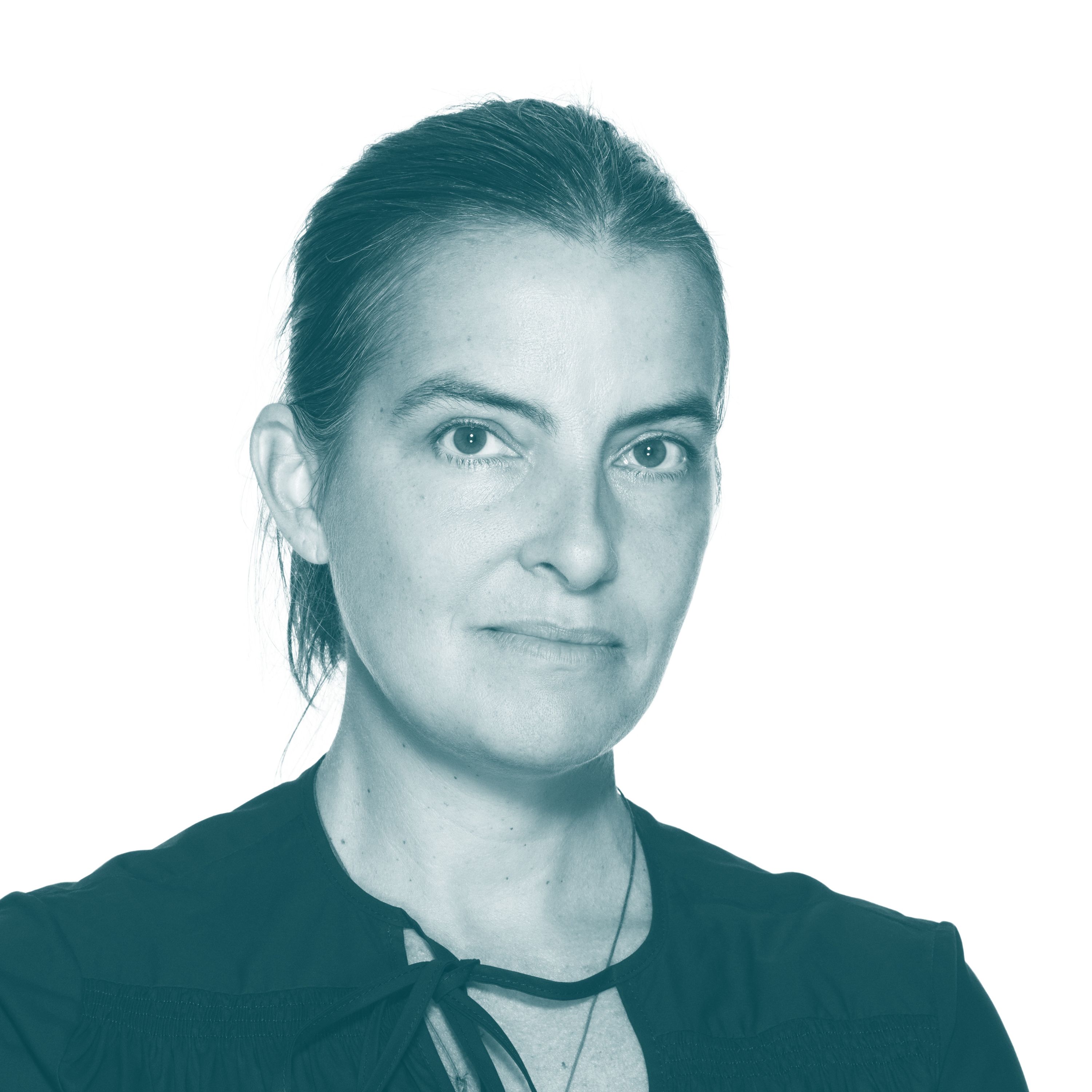
S5 Ep 72Rachel Comey on Meeting Her Customers Right Where They’re At
Fashion designer Rachel Comey has always done things in a tightly focused way—and on her own terms. For more than two decades, she has followed an independent, wholly original approach to clothing design and retail that has resulted in her eponymous brand’s staying power. From novelty underwear with pockets, to a hand-painted shirt that musician David Bowie once wore on the Late Show with David Letterman, to her trademark high-waisted, wide-legged Legion pants, Comey’s designs stand out for their artful craft, distinctive aesthetic, and no-fuss sensibility. Beautiful as they are, they’re also, in a sense, utilitarian: Comey spends her time imagining her wearers’ needs as they go about their days and designs around that. There is something about the entire Rachel Comey universe that comes across as effortlessly cool.On this episode, Comey talks with Andrew about her 20-plus years in the fashion industry experimenting while staying true to herself, childhood memories that have helped shape her enduring designs, and her attention toward creating joy through clothing.Special thanks to our Season 6 sponsor, L’ÉCOLE, School of Jewelry Arts.Show notes:Full transcriptRachel Comey[34:29] Fashion Week[47:39] Pioneer Works[49:14] High Maintenance[52:08] Legion Pant

S5 Ep 71Céline Semaan on Why Slowing Down Is Essential for Our Collective Survival
For Céline Semaan, the founder of Slow Factory, a nonprofit dedicated to advancing climate justice and social equity, no obstacle is too big—or too conceptual—to surmount. Underlying all of Slow Factory’s efforts is the notion of “fashion activism,” a term that’s been credited to Semaan herself. The organization’s past projects include “Landfills as Museums,” which served as a meditation on what “trash” really is, and among its upcoming efforts is “Garment-to-Garment,” an initiative that will teach designers to make clothes from existing apparel instead of from rolls of raw fabric. Semaan is also currently developing the new Slow Factory Institute in Sunset Park, Brooklyn, which will serve the dual roles of a factory for waste-led production as well as a Bauhaus-style school for climate justice.On this episode, Semaan speaks with Spencer about fashion as a political act, the importance of finding ease with contradiction, and what a post-trash world could look like.Special thanks to our Season 6 sponsor, L’ÉCOLE, School of Jewelry Arts.Full transcriptcelinecelines.comslowfactory.earth[03:54] “Slow is Beautiful”[06:16] Open Education[10:58] “Cities at Night”[30:16] “Applied Utopia”[34:05] Slow Factory Institute[35:01] Colin Vernon[36:33] Slowhide[41:13] “Landfills as Museums”[51:25] “Garment-to-Garment”[01:08:41] A Woman Is a School[01:24:45] “The Revolution is a School”

S5 Ep 70Baratunde Thurston on Humility as a Path to Wisdom
For writer, comedian, and cultural critic Baratunde Thurston, host of the How to Citizen podcast, humility is a tool to connect with people—and to bring them together around some collective sense of truth. Through his work, Thurston serves as an ambassador to his audiences, always considering what they’re going through and the questions they might ask. A Harvard graduate, he has advised the Obama White House and worked as a producer on The Daily Show, and is author of the best-selling memoir How To Be Black. A dogged dedication to transparency shines through all that Thurston does. Across his projects, he takes on nuanced discussions about race, technology, and democracy—and in the hopes of galvanizing his readers, listeners, and viewers, uses compassion and humor to make these subjects more approachable. Whether writing about Will Smith’s Oscars slap or the metaverse for the media company Puck (of which he is a founding partner) or hosting the new PBS travel series America Outdoors With Baratunde Thurston, he navigates everything with great self-awareness, curiosity, and an open mind. On this episode, Thurston speaks with Andrew about storytelling as a collaborative process, the value of open-source technology, and the word “citizen” as a verb.Special thanks to our Season 5 sponsor, L’ÉCOLE, School of Jewelry Arts.Show notes:Full transcriptbaratunde.com[04:16] Sidwell Friends School[13:49] We’re Having A Moment podcast[14:59] Live on Lockdown[21:56] “How To Do a Data Detox In a Zillion Easy Steps”[25:06] Thurston’s TED Talk, “How to Deconstruct Racism, One Headline at a Time”[39:01] How to Citizen podcast[01:22:27] How to Be Black[01:24:26] “The Human Shield Against Technology”[01:25:17] Thurston’s TEDx Talk, “Hacking Comedy”[01:32:53] America Outdoors with Baratunde Thurston

S5 Ep 69Jhumpa Lahiri on Translation as a Path to Self-Discovery
Author and translator Jhumpa Lahiri grew up in what she has called “a linguistic exile.” Born in London to Bengali immigrants who moved to the United States when she was 3, Lahiri experienced a profound sense of alienation as a child and a longing for somewhere that felt like home. Then, during a 1994 trip to Florence, Italy, she fell in love with the Italian language, which she came to see as a gateway to exploring her life and identity further—or to, in other words, get beyond any imposed self. For the last decade, she has written almost exclusively in Italian, and has translated most of her Italian writing into English herself. A visceral energy rises up from her translated sentences, reflective of the strong emotional tenor she feels when engaging with the Italian language. Some warned Lahiri against her decision to embrace Italian, practically considering it career suicide. But she remained unmoved. Despite her many triumphs until that point—including winning the 2000 Pulitzer Prize in fiction for her debut short story collection, Interpreter of Maladies (1999), and having her popular novel The Namesake (2003) turned into a Hollywood film—the pivot brought about a new flood of creativity. Since 2015, Lahiri has produced more books than there have been years, including her most recent, Translating Myself and Others (Princeton University Press), which was published in May. Her first book of Italian short stories, Racconti Italiani, or Roman Stories, will debut in the fall.On this episode, Lahiri speaks with Spencer about translation as a political act, the vocabulary of architecture, and language as a portal to understanding one’s place in the world.Special thanks to our Season 5 sponsor, L’ÉCOLE, School of Jewelry Arts.Show notes:Full transcript[12:35] The Lowland[16:33] Translating Myself and Others[22:32] The Clothing of Books[22:32] The Penguin Book of Italian Short Stories[23:11] Whereabouts[25:00] Confidenza[25:12] Ovid’s Metamorphoses[33:41] In Other Words[36:14] Racconti Italiani[39:35] The Namesake[43:38] Interpreter of Maladies[47:53] Unaccustomed Earth[59:44] Jhumpa Lahiri on Charlie Rose[01:07:38] Philip Guston

S5 Ep 68Jancis Robinson on the Wondrous World of Wine
Jancis Robinson wrote the book on wine. Literally. The author of the first four editions of the definitive Oxford Companion to Wine, she has also published some 20 books on the subject and more than 1,500 articles for the Financial Times, for which she has been the wine correspondent since 1989. A member of the royal family’s wine committee, she also helps select wines for Queen Elizabeth II. A trailblazer and a nimble scholar, Robinson—who, in addition to her work at the FT, pours her expertise into her jancisrobinson.com website—was the first wine writer ever to become an M.W., or Master of Wine, a rare distinction.With nearly five decades in the trade, Robinson has an acute awareness of the forces behind the field’s constant evolution, and gives her readers context so that they can understand what it all means. Her primary interests lie not just in the flavors of wine, but rather in the stories that wines tell about where they came from, how they’re made, and what they reveal about the world. A supporter of the Regenerative Viticulture Foundation, a nonprofit working to improve soil health, she also helps amplify the many ways in which the climate crisis is impacting the wine industry, such as harvest dates and “smoke taint.” By her account, the wine world is in more flux today than ever before. On this episode, Robinson speaks with Spencer about the power of old vines, the trials of translating taste and smell into language, and why some of today’s most thoughtful producers are packaging great wines in cardboard boxes and cans.Special thanks to our Season 5 sponsor, L’ÉCOLE, School of Jewelry Arts.Show notes:Full transcriptjancisrobinson.com[15:10] Regenerative Viticulture Foundation[17:16] The World Atlas of Wine[22:43] Vintage Time Charts[26:47] “Ancient Vines and Stunning Wines, But Portugal’s Douro Valley Has a Problem”[28:37] Historic Vineyard Society[28:48] Sideways[31:14] Jancis Robinson’s Wine Course[43:09] Master of Wine exam[46:04] The Oxford Companion to Wine[49:45] The 24-Hour Wine Expert[57:53] Wine Grapes[59:53] Design Classics[01:00:51] The Royal Opera House

S5 Ep 67David Broza on Making Music That Transcends Borders
Israeli singer-songwriter David Broza believes that music can unite people across cultures and has spent the past 45 years showing audiences how it can be done. One of his latest projects exemplifies this philosophy: Beginning in October, once a month during the Friday Kabbalat Shabbat services at Manhattan’s Temple Emanu-El, Broza will present tracks from Tefila, a new album that recasts the service’s traditional prayers and hymns as a blend of folk, jazz, pop, and classical songs. Performed by Broza, who sings in Hebrew and plays guitar alongside a global band of strings, horns, and gospel singers, the effort is a culmination of a lifetime spent honing his craft, which is rooted in the idea of music as a potent tool for facilitating dialogue and social change. Themes of building bridges and breaking barriers run throughout Broza’s vast catalog. Among his 40-plus albums, many of which are multi-platinum, with English, Hebrew, and Spanish lyrics, several put American and Spanish poems to melody. His first song, “Yihye Tov,” or “Things Will Get Better,” from 1975, became and remains a soul-stirring peace anthem for Israel; his 2014 album, East Jerusalem/West Jerusalem, features both Israeli and Palestinian musicians. Whether playing for three people (as he once did, in the Israeli city of Kiryat Shmona, as it was being shelled by rockets) or thousands, Broza takes great care to convey a sense of empathy and hope into his dynamic compositions.On this episode, Broza talks with Andrew about music as a connective tissue, how dialogue can lead to respect, and why feeling trumps thinking almost every time.Special thanks to our Season 5 sponsor, L’ÉCOLE, School of Jewelry Arts.Show notes:Full transcriptdavidbroza.net[07:45] Yehonatan Geffen[07:45] “Yihye Tov” [21:51] “The Sixteenth Sheep” [33:42] Tefila[37:42] “Not Exactly Christmas” [43:17] Misa Criolla[50:51] Sharona Aron[54:21] Wellesley Aron[01:21:01] One Million Guitars

S5 Ep 66Deborah Needleman on the Humble Joys of Making Baskets and Brooms
If life is a garden, the writer, editor, and craftsperson Deborah Needleman certainly knows how to dig and cultivate it. Early in her career, she followed a nonlinear path in the media industry that was, for the better part of a decade, slow and steady—and then, upon launching the home design bible Domino in 2004, meteoric. Over the next dozen years, Needleman rose to become one of the magazine world’s most in-demand editors, serving as the editor-in-chief of both WSJ. Magazine and T: The New York Times Style Magazine. Across this work, her deep appreciation for beauty, craft, gardening and nature, and unfussy, richly layered interiors shined through. By the end of 2016, though, Needleman decided that she had had enough of the whirlwind hustle of the magazine business. She sought a way to work with her hands, not just her head. So she slowed down—way down—and turned to the meditative acts of gardening and craft. She headed to the John C. Campbell Folk School in North Carolina, where she took an introductory broom-making course. Soon, she began producing a limited-edition “Garden Tea” of herbs such as chamomile, lemon balm, and mint. And she kept writing: Throughout 2017 and 2018, Needleman traveled the world, studying local crafts for the T column “Material Culture.” In time, she began to work more consistently with her hands, establishing a humble craft practice, primarily focused around basketry, that she continues to build upon today.On this episode, Needleman talks with Spencer about the pleasures of producing objects from modest materials, what her current craft endeavors have in common with magazine-making, and the deep inherent value of a patina.Special thanks to our Season 5 sponsor, L’ÉCOLE, School of Jewelry Arts.Show notes: Full transcript[07:52] The December 4, 2016, issue of T: The New York Times Style Magazine[11:23] “For the Love of Italy” [16:21] Deborah Needleman’s home in upstate New York[18:44] “Long-Stemmed Neuroses” [20:33] “The Anti-Martha”[22:22] Being Mortal: Medicine and What Matters in the End [25:23] Piet Oudolf[37:15] “Lessons in the Humble Art of Broom-Making”[41:59] Deborah Needleman’s Side chair[47:19] John C. Campbell Folk School

S5 Ep 65Bethann Hardison on Pushing Fashion Forward and Toward “Complete Diversity”
Bethann Hardison has, with great finesse, risen to become among the most vital voices in fashion. A self-described “advocate” who currently serves as Gucci’s executive advisor for global equity and cultural engagement, the former model and agent is a powerhouse figure who has not only reshaped conversations around diversity and anti-racism industry-wide, but has actively pushed for and, in turn, made change in terms of representation, from advertising campaigns to editorial shoots to runway shows.Hardison brings a nuanced, lived approach to diversity, equity, and inclusion, one that is wholly her own, and one that she has practiced from a young age. With subtle (and sometimes, not-so-subtle) force—and through projects such as the Black Girls Coalition, which she co-founded in 1988 with her friend the model Iman, and the Diversity Coalition, which she started in 2013 by calling out certain brands for not using any models of color in their runway shows—Hardison has stepped up again and again, speaking truth to power, against what was, and in some respects remains, a long, ongoing lack of representation. This work has earned her a matriarchal place in the upper echelons of the fashion world, with recognitions such as the 2014 CFDA Founder’s Award. Hardison is currently at work on a memoir about her life, and a documentary about her path to fashion and diversity work by the filmmaker and director Frédéric Tcheng is also underway.On this episode, she talks with Spencer about her “queen-ager” energy, her glass-half-full philosophies around death and dying, her efforts to call out fashion industry racism, and her rational, deep-seated concerns for the future.Special thanks to our Season 5 sponsor, L’ÉCOLE, School of Jewelry Arts.Show notes:Full transcriptbethannhardison.com@bethannhardison [29:07] CFDA Founder’s Award[51:32] “The Battle of Versailles” runway show[51:43] The October 1974 cover of Essence[55:54] Issey Miyake and Twelve Black Girls[01:00:36] Black Girls Coalition[01:19:00] The “All-Black” issue of Italian Vogue

S5 Ep 64Paola Antonelli on Solving the World’s Biggest Challenges Through Design
There is perhaps no one on the planet with a bigger-picture view on the impact of design—in all of its manifestations—than Paola Antonelli. As the Museum of Modern Art’s senior curator of architecture and design as well as its director of R&D, Antonelli consistently expands notions and definitions of what might be considered “design,” and shows how, in no uncertain terms, design connects to practically everything we see, touch, hear, taste, smell, and do. With great passion and energy, she is the ultimate clear-eyed booster of this wide-ranging realm she holds dear. Antonelli’s most recent output—the book Design Emergency: Building a Better Future (Phaidon)—is not only an outgrowth of her prolific 28-year career at MoMA (during which she has worked on related projects including the 2005 exhibition “Safe: Design Takes on Risk,” the 2015 book Design and Violence, and the 2019 Triennale di Milano exhibition “Broken Nature: Design Takes on Human Survival”), but also a result of the pandemic. During lockdown in spring 2020, Antonelli, together with the British design critic and writer Alice Rawsthorn, conceived and launched @designemergency on Instagram, a still-ongoing feed that highlights voices central to key global issues, all of them related to improving the world through design. The effort is yet another example of Antonelli’s talent for synthesizing a vast array of provocative projects, designers, products, and ideas; bringing them to the forefront; and giving them much-needed attention. On this episode, Antonelli talks with Spencer about time as a frustration, the myth of speed, the importance of going with the flow, and the many design emergencies constantly taking place all around us.Special thanks to our Season 5 sponsor, L’ÉCOLE, School of Jewelry Arts.Show notes:Full transcript[04:15] Museum of Modern Art[04:15] @curiousoctopus[05:38] Objects of Design: From the Museum of Modern Art[06:09] “Machine Art”[12:54] “Humble Masterpieces”[15:44] “Mutant Materials in Contemporary Design”[17:42] “Design and the Elastic Mind”[25:14] “Neri Oxman: Material Ecology”[29:34] Design Emergency[29:34] Alice Rawsthorn[33:43] @design.emergency[45:18] “Items: Is Fashion Modern?”[47:02] The 3,000-Year History of the Hoodie[51:03] “Safe: Design Takes On Risk”[01:04:45] Design and Violence

S5 Ep 63Alfredo Jaar on Bringing Reality Into Focus
Alfredo Jaar illuminates truths that often escape popular consciousness. Through his work, the artist and filmmaker raises awareness about sociopolitical issues that have been forgotten, suppressed, or ignored, including genocide and the displacement of refugees. Simultaneously, he informs and engages viewers, urging them to be present for those who need their attention most. With all that he makes, Jaar maintains a heightened sensitivity to the limits and ethics of representation. His aim? To provide viewers with a different perspective on the world and reveal their connections to its many crises—and to be moved to act.Born in Santiago, Chile, in 1956, during a time of intense media censorship, Jaar early on developed an understanding of how to discuss injustices through a different kind of language. He immerses himself deeply in the subjects he documents, which have included Brazil’s Serra Pelada gold mine and the 1994 Rwandan genocide. While Jaar’s work focuses on specific events, there’s a haunting sense of timelessness to it. Take his landmark “A Logo for America” project, which points out that when we say “America” and mean “the U.S.,” we’re claiming a region that is only partially our own. Shown around the world, it has gained multiple new meanings since its 1987 debut. Currently on view at the Whitney Museum of American Art as part of its 2022 Biennial (through Sept. 5) is a video by Jaar, amplified with special effects, of the 2020 police attacks on demonstrators in Washington, D.C.On this episode, Jaar speaks with Andrew about how tragedies reveal inequities, gathering multiple perspectives to understand global issues, and slowing people down so that they can see. Special thanks to our Season 5 sponsor, L’ÉCOLE, School of Jewelry Arts.Show notes:Full transcriptalfredojaar.net[03:43] “Manu”[06:36] “Between the Heavens and Me”[23:56] “Lament of the Images”[54:54] Nicolás Jaar[01:01:09] “Rushes”[01:03:32] “Cries and Whispers”[01:11:22] “A Logo for America”[01:18:25] “The Rwanda Project”[01:20:40] “Six Seconds”

S5 Ep 62Dan Barber on How Seeds Will Revolutionize Our Food System
Dan Barber is on a mission to quite literally plant seeds for a better future. Around a decade ago, after learning that the nation’s largest food companies rarely breed food for flavor—and instead select for self-serving characteristics, such as the ability to produce high yields or endure long-distance travel—Barber, a chef and the co-owner of the restaurants Blue Hill in Manhattan and Blue Hill at Stone Barns in Tarrytown, New York, turned his attention to seeds. From there, he collaborated with a vegetable breeder to make the honeynut squash, a sweeter, healthier version of the butternut variety, and has since used his cooking to raise awareness about the vital roles seeds can play in our food system. A co-founder of the seed company Row 7, he is not only concerned with the beneficial impacts seeds can have on taste buds, but also on communities and the planet.Rethinking what people eat has played a constant role in Barber’s practice. His cooking style, honed at restaurants including Alice Waters’s Chez Panisse, favors minimal ingredients as a way of celebrating their distinctive tastes. His upstate restaurant sits on a property shared with the Stone Barns Center for Food & Agriculture, a nonprofit operation that includes a regenerative farm and robust educational programming; there, his Blue Hill kitchen staff works with the Stone Barns teams to develop new ideas around food and farming. Barber regularly hosts educational programs, too, such as WastED, a 2015 pop-up that served delicious dishes made from ingredients most of us would consider trash.On this episode, Barber talks with Andrew about the distinctive role that restaurants can play in supporting social movements, food scraps as part of a chef’s DNA, and why producing more food won’t solve food insecurity.Special thanks to our Season 5 sponsor, L’ÉCOLE, School of Jewelry Arts.Show notes:Full transcriptResourcED [05:07]Stone Barns Center for Food & Agriculture [09:09]Blue Hill and Blue Hill at Stone Barns [15:11]The Third Plate [15:11]Row 7 [27:35]Michael Mazourek [27:35]Eliot Coleman [51:43]WastED [01:00:32]