Thrivecast
74 episodes — Page 1 of 2
Why Websites Matter More in the AI Era
Should CMOs Cut SEO Budget or Just Add AEO/GEO?
How to build a Content engine with Claude Cowork & Obsidian
Life Maxxing in the AI Era
Why Great Products Fail And How to Shorten the Adoption Curve
Beyond Vibe Coding: The AI Software Factory
From Agency Hustle to an Exit: The AI-Native GTM Playbook
In this episode, Johann Nogueira shares his journey from building multiple ventures to exiting his AI-driven GTM platform. With over 20 years of experience, he walks through how he transitioned from a high-stress agency model to a scalable, product-led, and ultimately white-labeled distribution engine. The conversation dives deep into leverage, ecosystem-led growth, AI-first teams, and the future of work, offering practical lessons for founders navigating modern GTM.Key Insights* Leverage beats effort - systems that run independently create exponential outcomes* Distribution > product complexity - ecosystem access drove faster growth than feature expansion* Confused buyers don’t convert - simplifying to one core use case (lead gen) unlocked adoption* White-labeling is a growth multiplier - partners became the primary distribution channel* Value creation is the true scorecard - more value → more scale → more impact* AI amplifies output, not headcount - small teams can now operate at 5–10x capacity* Agent-to-agent economy is emerging - AI will transact, negotiate, and operate autonomously* Foundational skills still matter - tools are abundant, but execution remains scarceActionable Takeaways* Focus on one high-impact use case instead of building multi-feature products* Leverage existing ecosystems to unlock faster distribution* Build partner-ready assets (scripts, demos, guardrails) to scale indirect sales* Design your company for AI-first workflows before hiring* Optimize for output per employee, not team size* Use AI to compress execution cycles (proposals, campaigns, ops)* Avoid overcomplicating your pitch clarity converts faster than capability* Treat growth as a function of value delivered, not effort investedResources Mentioned* GoHighLevel — white-label CRM ecosystem enabling distribution* ZoomInfo — lead intelligence tool referenced for comparison* Clay — GTM automation and enrichment workflows* Manus AI — used for generating assets like proposals and brochures* B1G1 — platform for embedding impact into business transactionsIf you’re a B2B SaaS founder, growth leader, or GTM operator, this episode highlights that modern scale doesn’t come from bigger teams or more features—it comes from leveraging ecosystems, simplifying value, and embracing AI to multiply output. This is a public episode. If you would like to discuss this with other subscribers or get access to bonus episodes, visit www.hybridgtm.com
AI in GTM: Hype, Hope, and What Actually Works
In this episode of ThriveCast, we host a panel with Molly Bowden (GTM Operations Leader), Jonathan Carford (VP GTM Strategy at Momentum), and Gururaj (Founder of ThriveStack) to unpack how AI is actually changing go-to-market today cutting through the hype to explore real use cases, shifting buyer expectations, the importance of data foundations, and why most AI pilots fail without strong processes and strategy. Key Insights* Buyers now conduct AI-assisted research before ever speaking to sales.* Marketing website traffic is declining as AI search tools intercept discovery.* SaaS budgets are increasingly shifting toward AI-first tools and experimentation.* Many companies are automating broken processes instead of fixing them first.* AI delivers the most value when optimizing existing workflows, not replacing them.* Conversational intelligence is emerging as a powerful source of customer insight.* Sales ramp time can significantly improve through AI-driven coaching and role-play.* Poor data foundations remain the biggest barrier to successful AI adoption.* Many GTM teams are buying AI tools without strategy or clear ROI.* The future GTM stack requires unified data across marketing, product, sales, and customer success.Actionable Takeaways* Fix broken processes first before applying AI automation.* Invest early in clean, structured GTM data foundations.* Use conversational intelligence to capture real customer insights.* Apply AI to improve ramp time and productivity for GTM teams.* Avoid buying shiny AI tools without clear outcomes.* Build systems that unify marketing, product, revenue, and support signals.* Shift GTM strategy toward customer value creation instead of mass outreach.* Focus on improving the buyer experience, not just seller efficiency.Resources Mentioned* Momentum - AI-powered conversational intelligence platform that captures sales call insights and syncs them with CRM, product, and GTM workflows.* Clay - GTM data automation platform used for lead enrichment, prospecting workflows, and orchestrating outbound campaigns.* Sendoso - Sending platform that helps GTM teams personalize outreach using gifts, direct mail, and experiences.If you’re a B2B SaaS founder, RevOps leader, or GTM operator, this discussion reinforces a critical lesson: AI alone won’t transform your go-to-market motion—real impact comes from strong data foundations, disciplined processes, and using AI to amplify customer value rather than chasing automation hype.🎧 Loved the episode?Subscribe to ThriveCast for more behind-the-scenes stories from the builders shaping the future of SaaS. This is a public episode. If you would like to discuss this with other subscribers or get access to bonus episodes, visit www.hybridgtm.com
Product Got Easier. Distribution Got Brutal.
In this episode of ThriveCast, we speak with Matthew Whyatt, B2B SaaS growth advisor and founder of techtorque.co, who shares why the dynamics of SaaS growth have fundamentally changed while AI has made it dramatically easier to build products, generate content, and reach prospects, the real challenge today is distribution, as markets become flooded with automated outreach and AI-generated noise; Matthew explains why trust, specialization, and personal influence have become the true competitive advantages for founders trying to stand out and grow in the modern SaaS landscape.Key Insights* AI has dramatically lowered the barrier to building SaaS products.* Prospect data and outreach tools have made lead sourcing easier than ever.* Mass automation has created a tsunami of outbound noise.* Poor outreach often creates awareness but sends prospects to competitors.* Buyers now research extensively before ever speaking to sales.* Trust is built during the buyer’s research phase, not the sales call.* The companies publishing insights consistently win attention.* Narrow specialization builds stronger positioning than broad messaging.* Personal brands are becoming powerful distribution engines.* Execution and consistency matter more than perfect marketing tactics.Actionable Takeaways* Narrow your target market to become the obvious expert.* Expand your circle of influence within your industry.* Build trust through consistent insights and educational content.* Convert internal expertise and answered questions into public content.* Create low-friction offers that provide value before a demo.* Encourage founders or domain experts to build visible personal brands.* Focus on consistent execution instead of marketing perfection.Resources Mentioned• Velocity Selling — Bob Urichuck• The 7 Habits of Highly Effective People — Stephen R. Covey• The Greatest Salesman in the World — Og MandinoAbout SpeakerMatthew Whyatt is a seasoned sales strategist, Growth advisor, and podcast host who partners with SaaS and B2B tech companies (typically $1M–$20M revenue) to scale their go-to-market performance. With a mission to de-stigmatize sales and highlight its foundational value, Matthew brings insights from decades of selling, coaching, and leading teams across industries.🔗 Matthew Whyatt on LinkedIn🌐 Website: techtorque.coIf you’re a B2B SaaS founder, GTM leader, or product builder, this episode reinforces a critical shift: when everyone can build products and publish content, sustainable growth comes from specialization, credibility, and consistently earning your market’s trust.🎧 Loved the episode?Subscribe to ThriveCast for more behind-the-scenes stories from the builders shaping the future of SaaS. This is a public episode. If you would like to discuss this with other subscribers or get access to bonus episodes, visit www.hybridgtm.com

Revenue is not a North-Star metric
In this episode of ThriveCast, Michael Kuhl shares how AppFire shifted from obsessing over revenue and churn to building a growth engine powered by leading indicators. Drawing from AppFire’s scale—managing dozens of products—Michael explains how activation journeys, real-time signals, and cross-functional alignment became the foundation for predictable revenue growth.Key Insights* Revenue, churn, and conversions are lagging indicators—they explain what happened, not why* Activation is the strongest predictor of trial conversion and long-term retention* Growth starts with visibility, not optimization* A standardized activation journey framework enables scale across multiple products* Instrumentation should answer specific questions, not collect everything* Growth intelligence only matters when it leads to clear actions* Real-time signals are most powerful when shared across Product, Marketing, Sales, and Customer SuccessActionable Takeaways* Define a clear activation journey (signup → setup → aha → habit) before optimizing conversion* Instrument only what helps you understand why users fail to reach value* Treat growth data as actionable intelligence, not dashboards for reporting* Align GTM teams around the same real-time signals, not siloed metrics* Tie signals directly to revenue at risk or revenue opportunity to drive prioritization* Give every team a clear call to action, not just data to interpretResources Mentioned* Activation journey mapping frameworks* Growth experimentation playbooks* Real-time behavioral and firmographic signals* Cross-functional dashboards tied to revenue impactFor B2B SaaS founders, growth leaders, and product teams, this episode is a reminder that growth doesn’t come from more dashboards—it comes from understanding when users struggle, acting in real time, and aligning every team around leading signals that actually move revenue. This is a public episode. If you would like to discuss this with other subscribers or get access to bonus episodes, visit www.hybridgtm.com
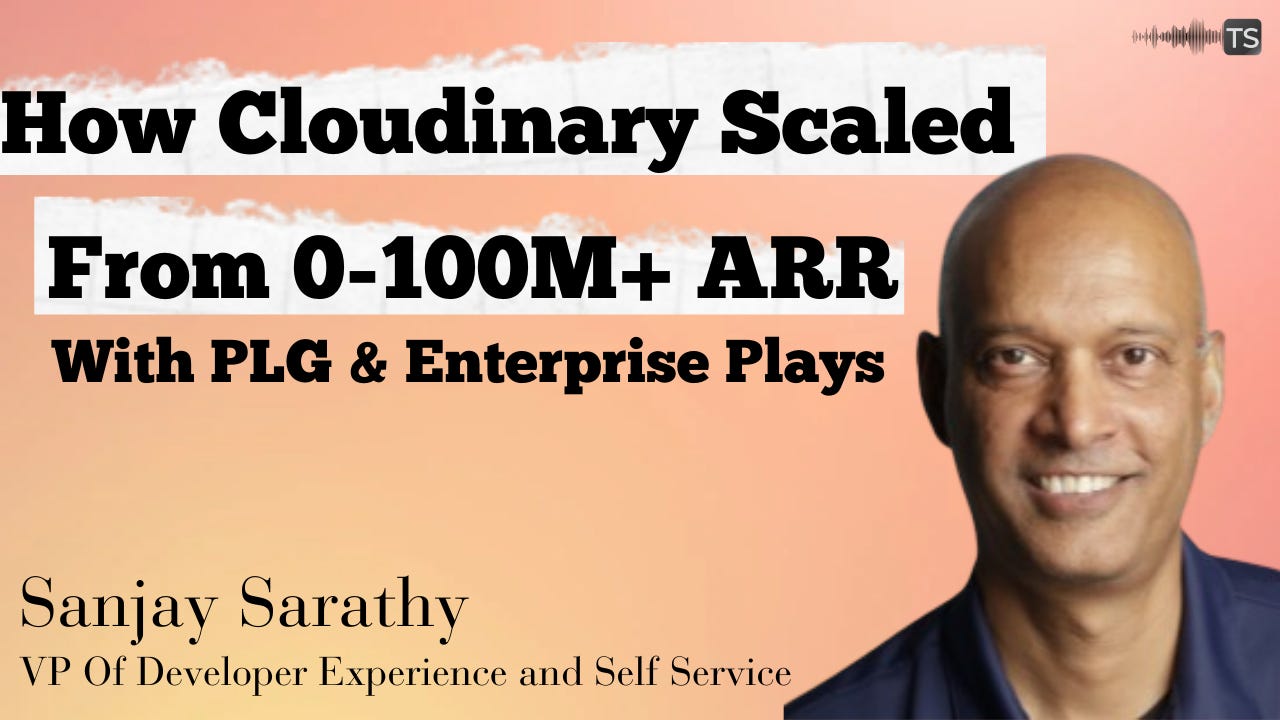
How Cloudinary scaled from 0-$100M+ ARR
In this episode of ThriveCast, we speak with Sanjay Sarathy, VP of Self-Serve and Developer Experience at Cloudinary. Sanjay shares Cloudinary’s journey from a developer consulting firm to one of the most successful product-led growth stories in SaaS—scaling past $100M ARR while maintaining a strong self-serve engine and developer trustKey Insights* Cloudinary started as a consulting company before productizing a repeated developer pain* Developers were treated as the core growth channel, not just users* Early investment in developer support and documentation drove trust and word of mouth* Self-serve and enterprise were built as a continuum, not competing motions* Freemium created value first, revenue followed naturally* Word of mouth still drives a significant share of daily signups at scale* Simplifying signup and activation had outsized impact on growth* Not all product launches succeed, fast failure led to better product strategyActionable Takeaways* Treat your primary user persona as a growth engine, not a funnel step* Invest early in support, docs, and activation, not just sales* Let self-serve usage reveal future enterprise opportunities* Reduce friction relentlessly small changes compound at scale* Separate product experimentation from core revenue products* Build trust first; monetization follows naturallyResources Mentioned* Cloudinary self-serve and freemium model* Developer documentation and SDK-first onboarding* Activation and signup flow experiments* Product incubation model for new betsIf you’re a B2B SaaS founder, PLG leader, or developer-focused product team, this episode shows that sustainable growth doesn’t come from aggressive selling it comes from earning trust, removing friction, and letting value scale naturally across self-serve and enterprise journeys. This is a public episode. If you would like to discuss this with other subscribers or get access to bonus episodes, visit www.hybridgtm.com

GTM Growth Audit - by Marlena Sarunac
In this episode of ThriveStack’s podcast, we speak with Marlena Sarunac, an award-winning CMO and co-founder of Company Advice. Marlena shares her GTM Growth Audit framework, a practical, systems-thinking approach to identifying hidden bottlenecks across product experience, website messaging, and go-to-market execution especially for early-stage and scaling SaaS companies.SPONSOREDDemand & Expand is coming! Join 600+ B2B Marketers May 19 & 20, 2026 for the hottest event in San Francisco. Demand Gen, Growth, AI Marketing, Lifecycle, and Marketing Ops—This is your chance to be in the room for the biggest conversations shaping the future of modern B2B marketing. See details here: demandandexpand.com ThriveStack subscribers can save 25% off tickets with the code HYBRIDGTM.- Direct link hereKey Insights* Most growth problems are system failures, not traffic or UX issues* Effective GTM audits focus on product experience, website messaging, and growth loops* Onboarding fails when users aren’t guided to a clear first value moment* Websites should help the right buyers say yes and the wrong ones say no* Feature-heavy messaging kills conversion outcomes drive decisions* One-off campaigns hide problems; loops reveal where growth breaks* Misaligned ICPs across teams quietly create friction and churnActionable Takeaways* Audit time-to-value, not just onboarding screens trace friction back to promises made before signup* Write your homepage for one primary buyer ICP (not every possible user)* Translate features into buyer-level outcomes, not technical specifications* Replace one-off campaigns with repeatable marketing + product loops* Align Product, Marketing, Sales, and Customer Success on one shared narrative and activation goal* Treat content as a growth asset only if it actively helps users succeed in the productResources Mentioned* GTM Friction Finder Audit (Free) – Available via Company Advice* User interviews, product analytics, and cross-team narrative alignment* CRM-driven, branded lifecycle workflows (activation, nurture, expansion)Marlena Sarunac is the co-founder of The Company Advice, a growth and design studio that helps SaaS companies remove hidden friction across product experience, website narrative, and go-to-market execution. As a fractional CMO, she works closely with founders and growth leaders to diagnose where momentum is leaking and turn clarity, design, and positioning into measurable growth. Marlena specializes in product-led and early growth-stage companies that want to scale without piling on complexity.Thrivecast listeners can explore the GTM Friction Finder Audit, a lightweight scorecard that highlights the top friction hotspots across your company’s product, website, and funnel: https://www.thecompanyadvice.com/friction-finder-thrivecastIf you’re a B2B SaaS founder, growth leader, or product owner struggling with activation, conversion, or retention despite “doing all the right things,” this episode is a reminder: growth doesn’t break at the top of the funnel it breaks in the gaps between teams, tools, and promises.Fix the system, and growth follows! This is a public episode. If you would like to discuss this with other subscribers or get access to bonus episodes, visit www.hybridgtm.com

Rethinking the Funnel: How B2B Growth is Being Rewritten by AI
John Neeson — the mind behind the legendary B2B Demand Waterfall and Co-Founder of SiriusDecisions — joins Gururaj Pandurangi to trace the evolution of how companies create, measure, and grow demand. From pioneering the alignment between sales and marketing to forecasting how AI will reshape the buyer’s journey, John shares lessons that defined two decades of B2B go-to-market strategy.Key Insights* Origins of SiriusDecisions. John built Sirius to answer a simple CEO question: “I gave you $20M — what did I get back?” The firm transformed marketing from art into measurable science.* The evolution of the Demand Waterfall. What began as a simple lead definition matured into the classic, revenue, and demand-unit waterfalls — each mapping closer to real buying behavior.* From creating demand to activating it. Modern marketing’s challenge isn’t generating leads; it’s recognizing and activating intent across fragmented digital journeys.* Buyers are in control. Two decades ago, buyers met sales to learn. Today, they research independently and expect sellers to be context-ready from the first touch.* Product-led and sales-led models are merging. The best companies balance both — using data to harness existing demand while creating new demand through storytelling.* Alignment equals profitability. SiriusDecisions data showed organizations with tight sales–marketing alignment grew faster and retained more customers.* Analytics is the new OS. As AI transforms digital channels, analytics becomes the engine of visibility, efficiency, and retention.* AI is the next frontier. “We won’t be talking about digital marketing — it’ll all be AI marketing,” John predicts, as discovery shifts from Google search to AI interfaces.Actionable Takeaways* Redefine the funnel. Move from counting MQLs and SQLs to tracking buying groups and demand units that reflect collective intent.* Measure activation over volume. Lead quality and conversion velocity matter more than lead count.* Break functional silos. True growth comes when sales, marketing, and product teams share data, signals, and accountability.* Shift focus to retention. Expansion and renewal metrics are now the strongest indicators of sustainable growth.* Adopt AI early. Use it to identify intent, predict churn, and personalize engagement, while preserving human context and storytelling.* Build analytics fluency. Treat analytics not as reporting, but as a real-time strategic layer.* Prepare for AI-driven discovery. Tomorrow’s buyer journeys begin in AI chats — not search engines or inboxes.Resources Mentioned* SiriusDecisions Demand Waterfall – The original B2B alignment framework.* Winning by Design (Bow Tie Model) – Modern full-funnel framework linking acquisition and retention.* Crossing the Chasm / CASA Model – Framework for category creation and market adoption.* Gartner Hype Cycle – For assessing AI maturity and timing go-to-market bets.For B2B Founders & GTM LeadersFunnels are no longer linear, and demand is no longer created — it’s discovered, activated, and expanded through intelligence. In the AI era, alignment and analytics are the new competitive advantages.🎧 Loved the episode?Subscribe to ThriveCast for more behind-the-scenes stories from the builders shaping the future of SaaS. This is a public episode. If you would like to discuss this with other subscribers or get access to bonus episodes, visit www.hybridgtm.com
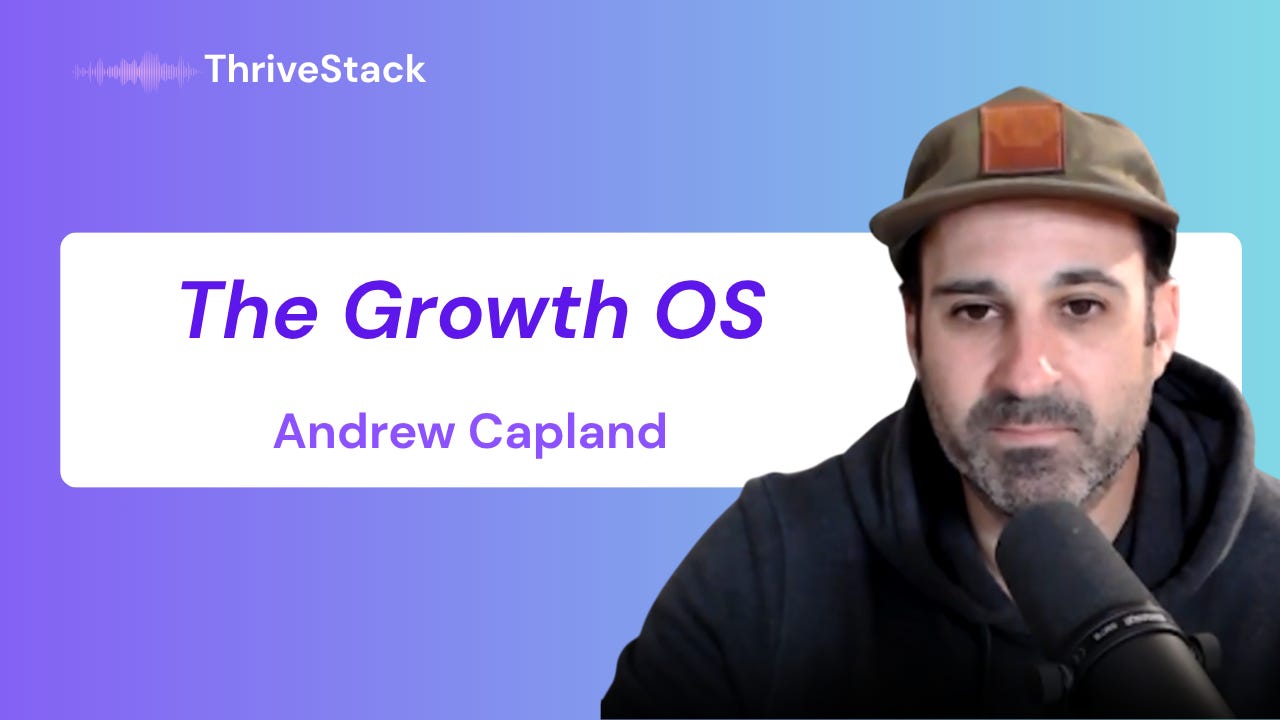
The Growth Operating System — Building Alignment, Activation, and Accountability
Andrew Capland — one of the most respected voices in product-led growth — returns to ThriveCast to unpack what he calls the “Growth Operating System.” After years leading activation, retention, and experimentation programs at leading SaaS companies like HubSpot and Wistia, Andrew realized growth isn’t about more tactics — it’s about how teams execute, align, and communicate across silos.In this episode, he explains how today’s growth leaders can build a repeatable operating system that turns strategy into consistent execution — even in the age of AI.Key Insights* Ideas are cheap. Execution wins.Every company has access to playbooks and frameworks — the real challenge is alignment, communication, and follow-through.* Growth leadership is a new ladder.Moving from individual contributor to growth lead means learning new skills — influencing peers, managing pushback, and driving cross-functional clarity.* Effectiveness > rightness.Knowing what to do isn’t enough. The best growth leaders learn to persuade, align, and prioritize under uncertainty.* AI won’t replace context.Tools can generate frameworks, but they can’t replicate judgment, timing, or human communication in the boardroom.* Collaboration must start early.Teams lose time fixing misalignments because they collaborate at the end — not during the first 20 % of scoping.* Product-market fit can vanish fast.AI has accelerated competitive shifts; even mature SaaS companies can lose PMF in months.Actionable Takeaways* Build your own Growth OS.Define rituals, scorecards, and decision frameworks that align marketing, product, and revenue.* Use a RACI Matrix.Clarify who’s Responsible, Accountable, Consulted, and Informed before starting any initiative.* Separate “company” metrics from “capability” metrics.Execs care about revenue; your team should focus on activation and retention as the true growth levers.* Coach for alignment.Prime your updates — tell the “why” before showing the “what.” It builds trust across teams.* Be the problem expert.The person closest to the problem always earns the right to design the solution.Resources Mentioned* Delivering Value.co / OS – The Growth Operating System toolkit and community.* Reforge – Advanced programs on growth strategy and experimentation.* RACI Matrix – Cross-functional collaboration framework.* ThriveStack Scorecards – Measure activation, retention, and correlation to revenue.For Growth LeadersMost growth teams don’t fail because of bad ideas — they fail because alignment and communication break down faster than experiments succeed. Build your system before you build your next campaign.🎧 Loved the episode?Subscribe to ThriveCast for more behind-the-scenes stories from the builders shaping the future of SaaS. This is a public episode. If you would like to discuss this with other subscribers or get access to bonus episodes, visit www.hybridgtm.com

Why We Buy: The Hidden Psychology of Conversions
Chris Silvestri — a software-engineer-turned-conversion-copywriter — shares how understanding human psychology, UX, and messaging consistency can transform a SaaS website from a brochure into a persuasive buying experience.He breaks down why “words alone don’t convert,” how today’s buyer journey starts before they reach your website, and what modern founders must know about message-market fit.Key Insights* Words alone don’t convert — clarity and structure do.Copy works only when paired with the right visual hierarchy and UX flow.* Your website is a confirmation engine, not a sales pitch.Buyers already have formed opinions from AI, peers, and reviews before they arrive.* Positioning → Messaging → Copy is the true sequence.Define who you help and how you’re different before writing a single word.* Emotion drives decisions.People move either away from pain or toward desired outcomes — know which one motivates your ICP.* Friction kills conversions.Poor clarity, decision fatigue, and inconsistent CTAs reduce sign-ups more than pricing ever does.Actionable Takeaways* Map your buyer’s conversation before writing your homepage. Match what they already believe and expect.* Design “micro-yeses.” Every section should answer: Is this for me? Do I trust them? What happens next?* Be consistent across channels. Inconsistent messaging confuses not just humans but also AI search and LLMs.* Don’t oversimplify. Be clear, not generic — clarity means using the right words for the right audience.* Find product–market fit before message–market fit. Only then can you meaningfully shape your narrative.Resources Mentioned* Conversion Alchemy – Chris’s consulting practice blending psychology, UX, and copywriting.* Bob Mesta – Co-creator of Jobs-to-Be-Done framework.* Forrester’s “Buying Networks” research – On how peer groups and AI shape B2B decisions.* “The User Illusion” – Book on cognition and cognitive load in communication.* Moz SEO case study – Simplifying positioning from “All-in-One” to “The Simplest SEO Tool.”For Founders & MarketersIf your website explains what you do but not why it matters to your buyer’s brain, you’re missing conversions.Great messaging isn’t written — it’s designed for how humans decide.Loved the episode?Subscribe to ThriveCast for more behind-the-scenes stories from the builders shaping the future of SaaS. This is a public episode. If you would like to discuss this with other subscribers or get access to bonus episodes, visit www.hybridgtm.com
Freemium in the Age of AI: Myth, Model, or Growth Engine?
In this week’s ThriveStack webinar, we sat down with Dave Boyce—author, product-led growth (PLG) advocate, and seasoned operator—to unpack the realities of freemium in SaaS. With AI transforming business models and unit economics, the debate around whether freemium accelerates growth or drains resources has never been more relevant. Dave shared lessons from his own journey from sales-led to PLG, and the hard truths behind monetization, activation, and product-market fit in today’s SaaS landscape.Key Insights* Freemium is just one monetization model. It’s not a silver bullet but part of a broader PLG strategy that includes free trials, reverse trials, and self-service onboarding.* Product-market fit comes before scaling. Freemium won’t save a product that hasn’t achieved early user success and retention.* Activation is everything. The first user impact (“first impact moment”) must happen before you ask for money; otherwise, monetization attempts backfire.* Marketing still matters. PLG doesn’t eliminate marketing—it shifts focus toward growth loops, viral mechanics, and blended acquisition strategies.* Established companies struggle with PLG. Legacy sales-led orgs face cultural and operational resistance, but adjacent plays (e.g., self-service renewals, expansion features) offer practical entry points.Actionable Takeaways* Start with founder-led selling. In early stages, hustle for feedback before chasing signups at scale.* Instrument activation. Define and track the “first impact” moment that signals true product-market fit.* Align monetization with value delivery. Trigger paywalls only after customers experience impact.* Experiment relentlessly. Treat failed freemium experiments as data points—iterate quickly to find what sticks.* Incentivize sales teams correctly. Remove channel conflict by giving quota credit for PLG-driven expansions.* Layer PLG adjacently in mature orgs. Start with renewals or expansions before tackling top-of-funnel freemium.Resources Mentioned* Dave Boyce’s new book on Freemium and PLG (launching August 26, available on Amazon).* PLG MBA Program (referenced as part of Dave’s background).* ThriveStack Customer Analytics – for tracking activation, retention, and growth loops.* Case studies of Dropbox, MongoDB, Clickhouse, Timescale, MotherDuck, and others on freemium and PLG strategies.If you’re a SaaS founder or growth leader navigating the tension between scaling fast and building to last, you’ll want to catch this conversation.🎧 Loved the episode?Subscribe to ThriveCast for more behind-the-scenes stories from the builders shaping the future of SaaS. This is a public episode. If you would like to discuss this with other subscribers or get access to bonus episodes, visit www.hybridgtm.com
Future of SaaS, Investments and Innovations: A Fireside Chat with Dave Hersh
ThriveStack and Dave HershAug 20, 2025In this fireside chat, Gururaj Pandurangi sits down with Dave Hersh, founding CEO of Jive Software and now a coach to startup founders and leaders. From scaling Jive from bootstrapped beginnings to IPO, to guiding today’s SaaS teams through turbulent markets, Dave shares a candid look at what’s broken in venture-backed growth, what founders should focus on instead, and how to align both investors and customers without losing sight of purpose.We explore his founder journey, the tension between investor pressure and customer needs, the waste of premature scaling, and why he believes emotional-market fit—the resonance a product has with its users—matters just as much as product-market fit.Listen now on Apple, Spotify, Castbox, Google, and YouTube.“Growth without profit, without purpose, can become toxic. The real challenge is building something that grows and endures.”— Dave Hersh, Founding CEO of Jive SoftwareKey Insights⚖️ Investor Pressure vs. Customer NeedsWhy short-term expectations often distort long-term product and strategy decisions—and how founders can rebalance.💸 The Waste in Venture CapitalGrowth-at-all-costs has left many companies fragile. Dave explains how to recognize premature scaling before it’s too late.❤️ Emotional-Market FitBeyond functionality, companies win when they create loyalty and resonance with customers at an emotional level.🚀 Coaching Conscious LeadersAfter Jive, Dave dedicated his time to helping founders navigate growth without burning out themselves—or their companies.Actionable Takeaways* For Founders: Don’t let investor expectations define your roadmap; customer outcomes should.* For Growth Leaders: Emotional resonance is the moat—look beyond metrics to why people truly care.* For Investors: Hypergrowth isn’t a strategy; durability is.* For SaaS Teams: Build models that balance profit with growth from day one.Resources Mentioned* Jive Software IPO journey* Conscious leadership frameworks* ThriveStack Customer Analytics: www.thrivestack.aiIf you’re a SaaS founder or growth leader navigating the tension between scaling fast and building to last, you’ll want to catch this conversation.🎧 Loved the episode?Subscribe to ThriveCast for more behind-the-scenes stories from the builders shaping the future of SaaS. This is a public episode. If you would like to discuss this with other subscribers or get access to bonus episodes, visit www.hybridgtm.com
Product Activation: Key Drivers and Growth Leaks
In SaaS, getting sign-ups is only half the battle. The real challenge lies in ensuring those users activate — reaching the moment when they first experience real value from your product. This milestone, often called the “aha moment”, is a key predictor of whether users will stay, convert to paid, and grow with your product.In this conversation, growth advisor Andrew Capland shares his perspective on what activation really means, why so many companies get it wrong, and how to identify and fix the leaks that silently drain your growth.Listen now on Apple, Spotify, Castbox, Google and YouTube."Activation is the output. If we do a great job with onboarding and the new user experience, the result should be that new accounts activate — and that’s the signal they’re likely to become active, paying customers."— Andrew CaplandKey Insights* Activation ≠ Onboarding: Onboarding is the process; activation is the outcome.* Value First: The “aha moment” — when a user truly understands your product’s value — is the turning point for retention and monetization.* Trackable Signals: Activation should be tied to measurable events that correlate with long-term use and conversion.* Common Leaks: Poor onboarding flows, unclear value propositions, and friction points can delay or prevent activation.* Fix with Experiments: Identify leaks, measure impact, and run iterative experiments to improve time-to-value.Actionable Takeaways* Define your activation metric — Identify a clear, measurable event that signifies users have reached their first value.* Map the journey to activation — Understand every step from sign-up to “aha” and identify friction points.* Audit your onboarding flow — Remove unnecessary steps, clarify value, and guide users toward the activation event quickly.* Segment your analysis — Look at activation rates by acquisition channel, persona, or plan to uncover hidden leaks.* Run targeted experiments — Test changes to onboarding, messaging, or product experience and measure their impact on activation rates.A huge thank you to Andrew Capland for joining us and sharing his deep expertise on activation and growth.If you want to explore more of Andrew’s work, check out his website Deliver Value Faster, where he shares actionable frameworks, courses, and resources to help SaaS teams accelerate user activation and long-term growth.Resources* “Value First” Onboarding framework - by Andrew Capland* The Growth Operating System - by Andrew Capland🎧 Loved the episode?Subscribe to ThriveCast for more behind-the-scenes stories from the builders shaping the future of SaaS. This is a public episode. If you would like to discuss this with other subscribers or get access to bonus episodes, visit www.hybridgtm.com

From BigQuery to MotherDuck: Reinventing the Data Warehouse with Jordan Tigani
In this episode, we chat with Jordan Tigani, co-creator of BigQuery and now CEO of MotherDuck, a next-gen, serverless analytics platform built on top of DuckDB. Jordan walks us through his journey from leading engineering and product at Google to building a lean, developer-first company that’s challenging the assumptions of modern data infrastructure. We explore his pivot from enterprise-heavy go-to-market models to a bold product-led growth (PLG) approach, his views on usage-based pricing, open-source collaboration, and what AI hasn't done for the data world—yet.Listen now on Apple, Spotify, Castbox, Google and YouTube.Most big data workloads are actually start small. You just don’t need massive infrastructure to do great analytics.— Jordan Tigani, CEO, MotherDuckKey Insights* Big Data is Overrated: Most companies don't actually need "big data" infrastructure. The vast majority of workloads, even at large organizations, are run over small data.* Why MotherDuck Exists: Inspired by the elegance and power of DuckDB, Jordan saw an opportunity for a cloud-native, serverless experience that could scale down as easily as it scales up.* The PLG vs. Sales Balance: While MotherDuck began with a PLG motion, Jordan shares why they now employ a hybrid strategy—PLG to drive adoption, sales to deepen engagement and expansion.* Open Source Partnerships Done Right: DuckDB Labs owns a co-founder equity stake in MotherDuck, ensuring tight alignment and seamless collaboration—without code forking or IP conflicts.* Usage-Based Pricing = Real-Time Value Alignment: Tying revenue to actual usage helps MotherDuck scale quickly, but also makes forecasting tricky. Jordan discusses how they manage this trade-off.* AI Hasn’t Changed Everything (Yet): Despite the AI boom, Jordan believes its impact on the data infrastructure layer is still emerging. However, he sees internal applications—especially enrichment and ops—as low-hanging fruit.Actionable Takeaways* For Data Founders: If you're building for developers, your product must deliver immediate value—because you won’t get a second chance in PLG.* For Open Source Builders: Consider strategic partnerships like MotherDuck’s—sharing upside with core maintainers can lead to long-term stability and innovation.* For Growth Teams: Don’t ignore the long tail. Winning developer love at the grassroots can be a wedge into enterprise later.* For Revenue Leaders: A blended GTM motion (PLG + sales-assist) allows you to capture low-touch users while accelerating high-touch deals. Invest in enrichment early.* For AI Skeptics: You don’t need to “become an AI company” overnight. Focus on where AI truly adds operational or user-facing leverage today—and stay adaptable.Resources Mentioned:* MotherDuck: www.motherduck.com* PLG Model Calculator: https://www.thrivestack.ai/gtm-maturity* Big Data is Dead by Jordan Tigani: https://motherduck.com/blog/big-data-is-dead/ If you're tired of bloated, expensive data warehouses and want a faster, leaner, developer-first alternative—check out MotherDuck.🎧 Loved the episode?Subscribe to ThriveCast for more behind-the-scenes stories from the builders shaping the future of SaaS. This is a public episode. If you would like to discuss this with other subscribers or get access to bonus episodes, visit www.hybridgtm.com

#49 — Scaling Smart: Lessons from Christian Nielsen on Bootstrapping a PLG SaaS
In this Thrivecast episode, Gururaj P hosts Christian Nielsen, the Chief Product Officer and co-founder of uQualio, a Copenhagen-based SaaS company revolutionizing video learning. Christian shares actionable strategies and lessons from uQualio's journey as a bootstrapped, product-led growth (PLG) business.From pricing and onboarding to abuse prevention, Christian explains how uQualio tackled challenges that SaaS founders often face. This episode is packed with insights for startups looking to scale effectively, keep operations lean, and prioritize customer experience.Listen now on Apple, Spotify, Castbox, Google and YouTube.Key Insights and Actionable Takeaways:* Start Small, Validate Early:* uQualio started by reaching out directly to early customers, selling the idea before the product was fully ready.* Action: Leverage existing networks and prioritize learning from early adopters. Validate your product’s value proposition with real users before scaling.* Optimize for Self-Service:* Christian emphasized the importance of creating a lean organization focused on automation rather than building a large sales team.* Action: Invest in a seamless self-serve onboarding experience to lower customer acquisition costs (CAC) and enable users to experience the product value quickly.* Prevent Abuse Before It Happens:* To protect resources and ensure fair usage, uQualio implemented measures like blocking malicious domains, requiring real email addresses, and limiting premium features to paid accounts.* Action: Use tools and processes to filter temporary email addresses, spam accounts, and bots during signup to reduce costs and improve user quality.* Leverage PLG to Align Growth with Pricing Models:* uQualio’s low-cost, pay-as-you-go pricing model required a high volume of customers. PLG was the natural choice to scale efficiently.* Action: If your pricing model is low-cost and high-volume, ensure your PLG strategy focuses on driving activation and retention through in-product experiences.* Prioritize User Experience for Retention:* A significant shift for uQualio was realizing that a poor UX could hinder conversions. They refined their onboarding to highlight “aha” moments within the first 30 minutes.* Action: Map the customer journey and ensure users hit a clear value milestone early in their interaction with your product. Test and iterate based on drop-off points.* Tailor Marketing to the Right Audience:* Early marketing efforts targeted companies that lacked video expertise. These customers often abandoned trials, leading to wasted resources. Refining ICP (Ideal Customer Profile) improved conversion rates.* Action: Analyze your audience’s readiness for your product. Use filters (e.g., companies already using video) to ensure you’re engaging with the right leads.* Combine Automation with Personal Touch:* uQualio combined automated email sequences with manual outreach to personalize interactions for high-quality leads.* Action: Automate repetitive tasks but step in with tailored messaging for high-potential prospects. Use CRM integrations to track user actions and guide outreach.* Educate Instead of Selling:* Christian highlighted the importance of providing value upfront through educational content, webinars, and resources rather than aggressively pitching the product.* Action: Develop content that addresses customer pain points and adds value. Position your product as a solution within that context rather than pushing it directly.Standout Moment:"If your product doesn’t guide users to an ‘aha moment’ quickly, they won’t return. UX isn’t just design; it’s the engine for driving adoption and retention." – Christian NielsenResources Mentioned:* uQualio: www.uqualio.com* PLG Model Calculator: https://www.thrivestack.ai/gtm-maturity* The 4-Hour Workweek by Timothy FerrissFor More Insights:Subscribe to Thrivecast to learn from founders who are redefining how startups scale and succeed. This is a public episode. If you would like to discuss this with other subscribers or get access to bonus episodes, visit www.hybridgtm.com
#48 — Ignite Startups: Gururaj Pandurangi on Product-Led Growth and Startup Strategies
Originally posted on the Ignite Podcast, this episode features Gururaj Pandurangi, a 3x founder, as he unpacks the gritty realities and golden lessons of building and scaling startups. You can tune into the full conversation on Apple Podcasts or Spotify.In a recent episode of the Ignite Podcast, serial entrepreneur and cloud security veteran Gururaj Pandurangi shared invaluable insights into the challenges and opportunities of scaling SaaS businesses. As the founder of ThriveStack, Guru brings over two decades of experience in cloud computing, cybersecurity, and B2B SaaS, making his advice a goldmine for founders navigating the complex landscape of product-led and sales-led growth strategies.The Journey to ThriveStackGuru’s entrepreneurial path is both inspiring and instructive. After contributing to foundational projects at Microsoft, including Bing and early versions of Azure, he transitioned to startups, successfully founding and exiting multiple ventures.His first company, Avid, focused on disaster recovery in the cloud, a novel concept at the time. By leveraging partnerships with companies like Accenture and AWS, Guru turned a basic proof of concept into a thriving business that ultimately attracted acquisition offers. This experience highlighted the power of partner-led growth and laid the foundation for his future ventures.The pivotal moment came when Guru recognized the inefficiencies in scaling enterprise sales without a robust product-led growth (PLG) framework. This realization led to the birth of ThriveStack, a platform designed to simplify and scale customer acquisition and retention for SaaS companies through seamless self-serve enablement and insightful analytics.Key Takeaways for SaaS FoundersLeverage Partnerships StrategicallyGuru’s early success hinged on aligning with key players like Microsoft and AWS. These partnerships not only provided credibility but also opened doors to enterprise customers. Founders should consider similar alliances to accelerate growth and establish market trust.Balance Product-Led and Sales-Led GrowthThriveStack was born out of the challenge of integrating PLG and sales-led growth. Guru emphasizes the importance of starting with founder-led sales to validate the product and then layering in scalable PLG models. This dual approach ensures efficient customer acquisition and expands opportunities for high-value sales.Focus on Self-Serve EnablementSelf-serve models are not just about convenience; they’re a gateway to scalable growth. ThriveStack simplifies this process by bundling tools for onboarding, trial management, and customer insights, allowing SaaS companies to focus on refining their core offerings.Use Data to Drive DecisionsThriveStack’s analytics capabilities provide actionable insights into user behavior, enabling companies to identify potential churn, expansion opportunities, and high-value accounts. Founders should prioritize tools that offer granular visibility into their customer journey.The ThriveStack EdgeThriveStack addresses a critical gap in the SaaS ecosystem: the high cost and complexity of integrating PLG frameworks. By consolidating 15-18 tools into one platform, ThriveStack reduces operational overhead and accelerates time-to-value for SaaS startups. From authentication and trial management to product-led growth analytics, ThriveStack offers a comprehensive solution for scaling efficiently.Guru’s vision for ThriveStack is rooted in his experiences, particularly the costly retrofitting of PLG capabilities at his previous company. This firsthand understanding drives the platform’s focus on making PLG accessible to seed and Series A startups, ensuring they can compete effectively without massive capital outlays.Advice for Aspiring SaaS LeadersGuru’s parting advice is clear: founders must prioritize building a product that customers truly need before investing heavily in growth strategies. Early wins through founder-led sales are essential for understanding market fit and validating the value proposition. Once a baseline is established, integrating PLG motions can unlock exponential growth while maintaining capital efficiency.By combining the best of PLG and sales-led approaches, SaaS companies can achieve sustainable growth, reduce customer acquisition costs, and maximize lifetime value. ThriveStack’s innovative tools and Guru’s seasoned insights make this episode of the Ignite Podcast a must-listen for SaaS founders and growth leaders.Explore MoreFor those interested in learning more, visit ThriveStack or connect with Gururaj Pandurangi on LinkedIn. Whether you’re a seed-stage startup or an established player, Guru’s strategies offer a roadmap to thrive in the competitive SaaS landscape.👂🎧 Watch, listen, and follow on your favorite platform: https://tr.ee/S2ayrbx_fL🙏 Join the conversation on your favorite social network: https://linktr.ee/theignitepodcastChapters:* Introduction and Gururaj Pandurangi's Background (00:01 - 02:14)* From Micro

#47 — Bootstrapping to Scaling Revenue to Exit: GTM Conversation with Gururaj Pandurangi, 3x Founder
Originally posted on the Stratyve podcast, this episode features Gururaj Pandurangi, a 3x founder, as he unpacks the gritty realities and golden lessons of building and scaling startups. You can tune into the full conversation on Apple Podcasts or Spotify.For founders navigating the complex maze from an idea to a thriving company, this episode is a treasure trove of practical insights. Gururaj shares his candid experiences—from bootstrapping in the early days, finding innovative ways to scale revenue, and ultimately guiding his ventures to successful exits.The conversation explores a wide range of topics: the art of staying lean while scaling, crafting GTM strategies that evolve with your company, and how to align teams for maximum impact. Whether you're an operator, founder, or just someone fascinated by the startup ecosystem, this episode delivers a masterclass in perseverance, strategy, and growth.Let’s dig into the journey.The Startup Struggle is RealBuilding a startup isn’t glamorous. It’s messy, unpredictable, and often unforgiving. The early days often feel like a high-stakes gamble, with limited resources and constant market uncertainties testing every decision.What keeps the wheels turning? Resilience and an unrelenting focus on the problem at hand. The bootstrapping phase isn’t just about financial discipline; it demands creative problem-solving and an ability to thrive in chaos. It’s a crucible that shapes founders and their teams, teaching them to stay scrappy while keeping long-term goals in sight.Amid the chaos, one lesson stands out: the power of clarity. Breaking big, daunting goals into smaller, achievable tasks can help a team stay grounded and maintain momentum, no matter how unpredictable the journey becomes.Scaling Revenue: The Art of MomentumMomentum in scaling revenue isn’t about doing more; it’s about doing what matters most. Every founder eventually faces the question: How do you grow without breaking what you’ve built?* It starts with discipline: Staying lean isn’t just a cost-saving tactic—it’s a mindset. By focusing on what drives the most impact, startups can scale without losing their agility.* The customer comes first: Growth isn’t just about acquiring more users; it’s about building trust and long-term relationships. Listening to feedback, adapting to needs, and delivering value consistently are non-negotiables.* Know when to pivot: What works in one phase might not work in the next. Recognizing the signs and making tough calls early can save valuable time and resources.This phase is a balancing act. Short-term wins may feel urgent, but keeping the long-term vision intact is what ensures meaningful, sustainable growth.Building a Winning GTM PlaybookA great GTM strategy isn’t static—it evolves with the company, much like a living organism adapting to its environment. Early-stage GTM is scrappy and experimental, focused on uncovering product-market fit. But as the business scales, it demands a more structured and precise approach.One standout insight: the importance of iteration over perfection. Rigid strategies often fail to account for the realities of rapidly shifting markets. Instead, a flexible framework allows teams to test, learn, and refine continuously. For instance, aligning the timing of product launches with customer buying cycles can significantly amplify impact.Equally critical is integrating customer insights into decision-making. Numbers alone don’t tell the full story. Gururaj’s approach involved pairing data with real conversations—uncovering the nuances of customer pain points and aspirations. These insights then became the backbone of everything from pricing strategies to feature prioritization.Execution, however, is the ultimate test. Misalignment between sales, marketing, and product teams is one of the most common pitfalls, often leading to inconsistent messaging and wasted efforts. A solution that worked? Building bridges between functions by creating shared goals and embedding cross-functional collaboration into the daily rhythm. For example, weekly syncs focused on customer learnings ensured that every team spoke the same language and worked toward a unified vision.In essence, a winning GTM playbook thrives on adaptability, insight-driven decisions, and flawless execution. When these pieces align, scaling becomes more than just achievable—it becomes repeatable.Lessons from ExitsFor many founders, an exit marks the culmination of years of effort—a moment of validation and transformation. But the reality is far more nuanced. Exits are as much about preparation and timing as they are about the eventual transaction.One key lesson: start planning early. Preparing for an exit doesn’t mean chasing buyers; it means building a business that’s attractive to them. Strong financials, clear processes, and a well-documented growth story lay the groundwork for successful negotiations.Another overlooked insight is the importance of alignment between stakeholders. Foun
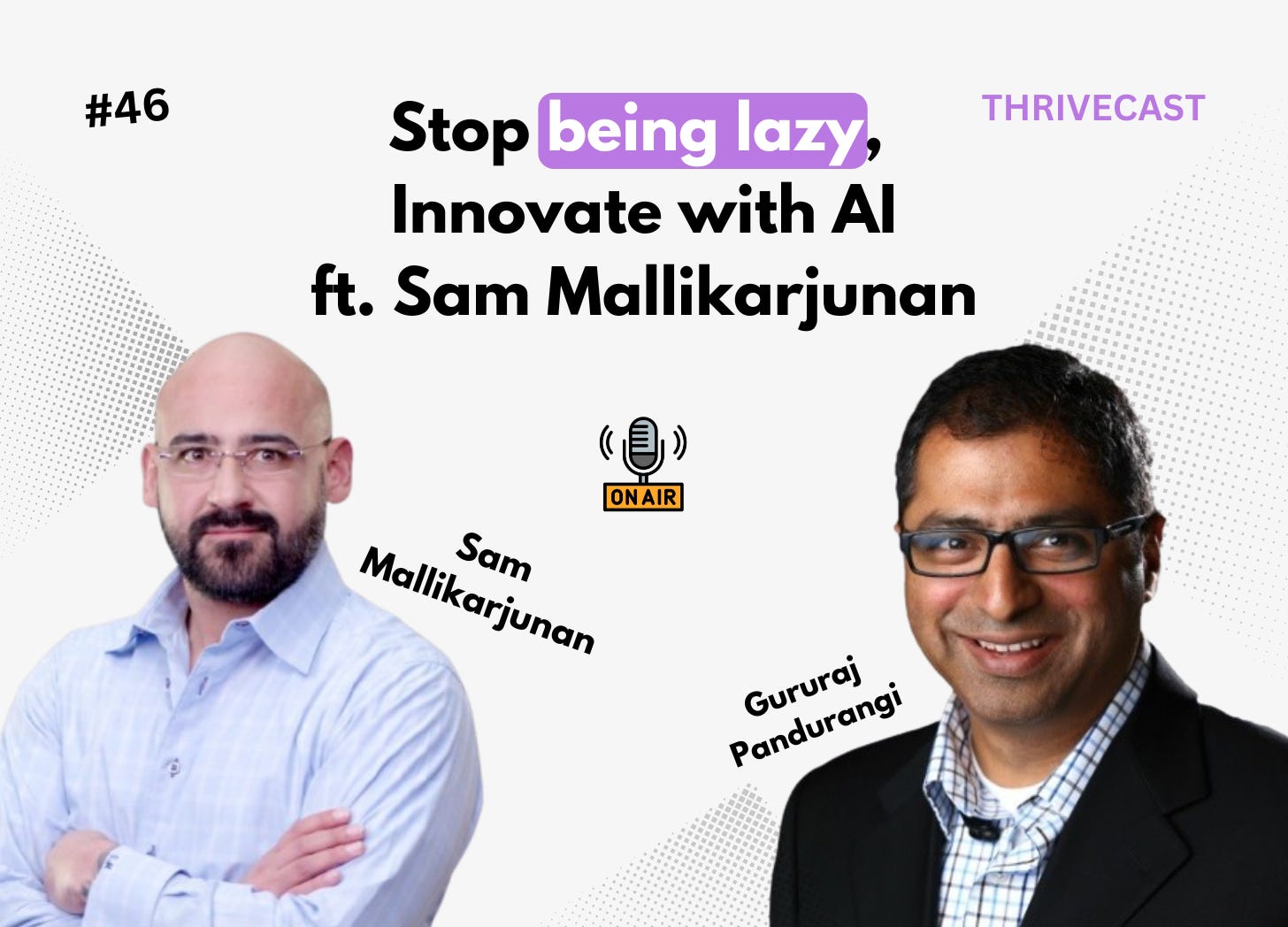
#46 — Stop being lazy, Innovate with AI, ft. Sam Mallikarjunan
Artificial Intelligence (AI) is transforming sales and marketing, equipping businesses with tools to innovate, uncover insights, and connect with customers like never before. It’s no longer about just saving time; it’s about creating new possibilities. In this context, we draw insights from Sam Mallikarjunan, an experienced marketer, entrepreneur, and AI advocate whose career spans impactful roles at HubSpot and as the co-founder of agent.ai. His perspectives offer a roadmap for leveraging AI to unlock new opportunities and overcome challenges in a rapidly evolving landscape.Listen now on Apple, Spotify, Castbox, Google and YouTube.Breaking Down Barriers with AIAI is breaking down traditional barriers to technology, making powerful tools accessible to everyone. Small businesses, once limited by resources, can now use AI to streamline operations or analyze customer behavior with ease. This democratization of technology is leveling the playing field, allowing businesses of all sizes to compete and innovate.Think of a small coffee shop owner using AI to predict customer preferences based on past purchases. It’s not just about having data; it’s about turning that data into actionable insights that drive growth. By automating routine tasks, AI frees up time for businesses to focus on creative problem-solving and long-term strategy.Case in Point: Consider a marketing team previously bogged down by manual data analysis. By deploying AI, they can now identify patterns faster, enabling smarter decision-making and giving them time to craft more engaging campaigns.Efficiency vs. Effectiveness: Finding the Sweet SpotAI is often seen as a tool for efficiency, but its true power lies in driving effectiveness. Automating tasks like sending bulk emails or updating spreadsheets is helpful, but the real breakthrough is in creating personalized and meaningful interactions.For example, instead of sending generic promotions, a retailer could use AI to tailor offers based on individual customer behavior. Imagine receiving a discount for your favorite product right before you planned to buy it—that’s effectiveness in action. Businesses that prioritize these high-impact applications of AI stand out in a crowded marketplace.Avoiding the Trap of MediocrityAI offers immense potential, but it’s not without risks. The temptation to scale existing processes without rethinking them can lead to mediocrity. To truly leverage AI, businesses need to challenge the status quo.Rethink Workflows: Instead of generating more sales emails, use AI to deeply understand customer pain points and craft messages that resonate. Or, instead of automating customer service replies, deploy AI to anticipate issues and proactively provide solutions. The goal should be to elevate, not just replicate, existing processes.The Power of Hybrid ApproachesWhile AI can handle a lot, it shines brightest when paired with human insight. This hybrid approach combines the efficiency of automation with the creativity and empathy of people.Dynamic Teams in Action: Picture an AI system managing routine customer inquiries while human agents step in for complex or sensitive issues. This setup ensures customers get the speed they need without losing the personal touch. A live chat system powered by AI, for example, can handle multiple conversations simultaneously while routing more nuanced queries to a skilled representative.Interactive Scenarios: Businesses could also use AI to draft responses, with humans fine-tuning them to ensure they align with brand values and tone. This collaborative model brings out the best in both.Lessons from Real-World Wins and ChallengesAI is already reshaping industries, but its application isn’t without hurdles. Success stories abound, like live chat systems boosting productivity or prospecting tools identifying high-value leads. Yet, missteps—like irrelevant automated messages—highlight the importance of thoughtful implementation.Avoiding Common Pitfalls:* Keep a human oversight loop to ensure authenticity.* Use AI outputs as a starting point, not the final answer.* Align AI applications with your brand’s voice and customer expectations.What’s Next for AI in Business?The future of AI in sales and marketing lies in its ability to push boundaries. Businesses must move beyond basic automation to embrace AI as a tool for innovation. This means rethinking traditional models and exploring new possibilities.Opportunities to Watch:* Co-creating content with customers using AI.* Predicting market trends with precision to stay ahead of competitors.* Offering hyper-personalized customer experiences that feel intuitive and effortless.The baseline for what customers expect is rising, and businesses that adapt quickly will lead the charge.Closing ThoughtsAI is not just a tool for efficiency; it’s a driver of transformation. By combining automation with human creativity, businesses can create experiences that truly stand out. The key lies in using AI thoughtfully
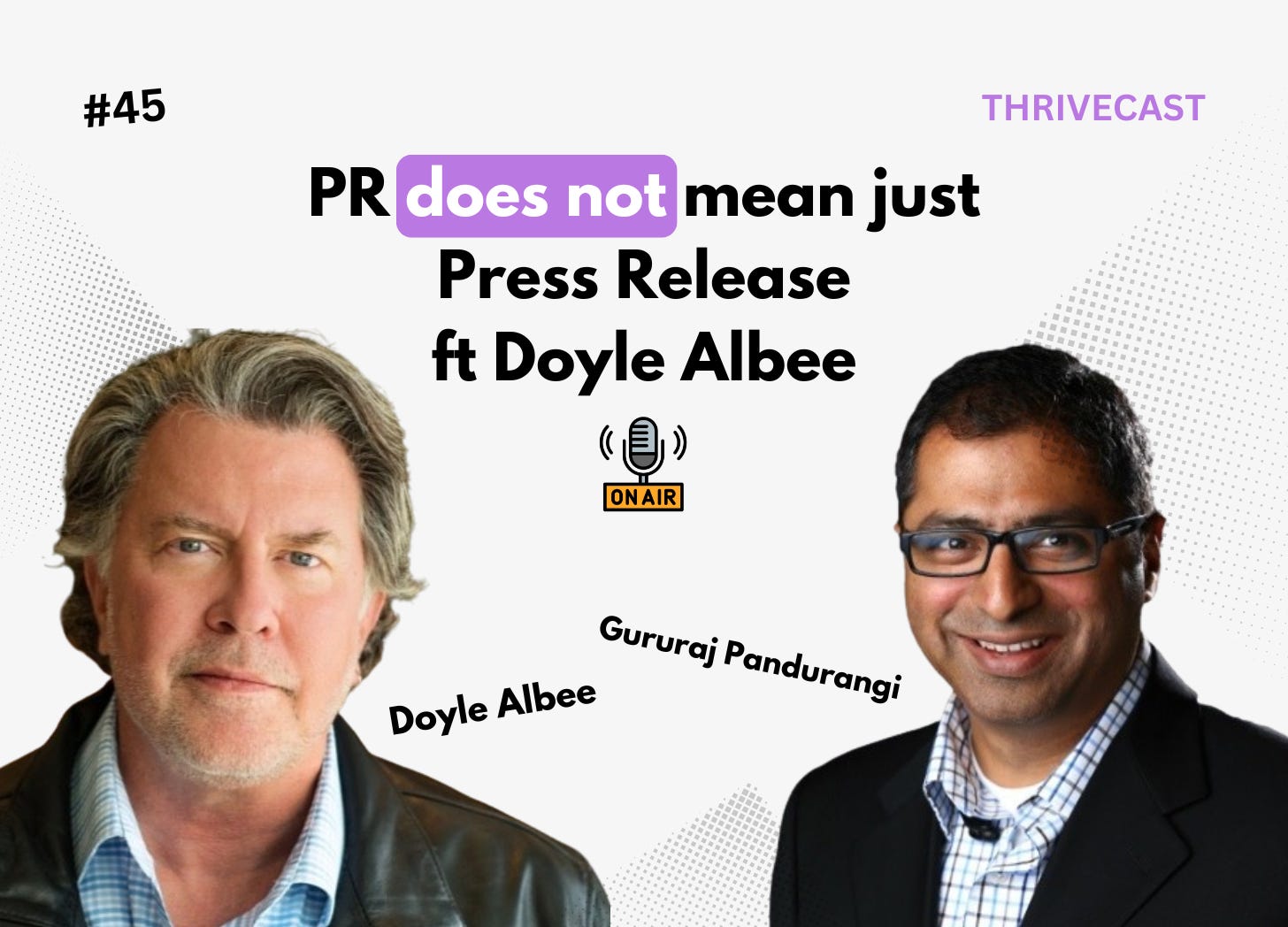
#45 — PR does not mean just Press Release, ft. Doyle Albee
In this episode, Doyle Albee, CEO of Comprise, shares how startups can leverage PR strategies to establish brand authority and credibility. Doyle explains why PR is no longer just about press releases and highlights the importance of tailored messaging to stand out in today’s crowded media landscape.Listen now on Apple, Spotify, Castbox, Google and YouTube.PR Today- What It Is and What It Isn’tPR has moved far beyond the era of simply drafting press releases and distributing them widely. Doyle explains that modern PR is about creating a cohesive narrative that reflects the identity of a business across all its communication channels. A press release might still be a tool in the toolbox, but it’s no longer the main strategy. Today, PR is about telling stories that resonate with the right audience, establishing trust, and positioning your brand as a credible authority in your space.Establishing Brand AuthorityBuilding brand authority is the cornerstone of effective PR, and Doyle emphasizes its importance for businesses of all sizes. Key takeaways:* Consistency builds trust: If your press release says one thing but your website or social media communicates another, it creates confusion and diminishes credibility.* Unified messaging matters: Every interaction, from media coverage to your online presence, should reinforce the same narrative about your brand.* Think beyond the press release: PR isn’t just about making announcements; it’s about positioning your company as an authority people trust.By aligning all communication channels, businesses can create a strong and credible brand image that resonates with their audience.Why PR Is EssentialPR isn’t just about getting your name in the news; it’s about building trust and credibility with your audience. Doyle explained this with a simple yet powerful comparison:Advertising says, “I’m great.” PR gets others to say, “They’re great.”The real magic of PR lies in third-party validation. A journalist’s article or an industry feature carries far more weight than self-promotion. Doyle also emphasized:* A single news story can be leveraged for months—repurpose it for social media, email campaigns, and sales materials.* Small wins in niche outlets often lead to bigger opportunities, including features in mainstream publications.For businesses, PR is an investment in their long-term reputation and authority. Done right, it becomes a tool to turn external validation into lasting growth.PR for StartupsStartups face unique challenges when it comes to PR, and Doyle highlights how to approach it strategically:* Start with Expertise* Instead of leading with announcements, startups should focus on showcasing their unique perspective on industry trends. Positioning yourself as an expert builds trust and opens the door to meaningful conversations.* Targeted, Not Widespread* Blasting press releases to hundreds of journalists often yields little impact. Doyle advises targeting a select few reporters in relevant industries who are likely to resonate with your message.* Small Budgets, Big Wins* Startups don’t need to spend heavily to get noticed. A well-placed story in a niche publication can have as much impact as broader coverage in mainstream outlets, especially when you’re trying to reach decision-makers.PR for startups isn’t about shouting the loudest—it’s about finding the right audience and starting the right conversations.Tailored MessagingOne-size-fits-all doesn’t work anymore. Doyle explains how PR is most effective when it’s tailored to specific audiences and their unique interests.Think about it: a tech journalist covering AI will want different information than a business reporter focusing on startups. That’s why creating multiple versions of your message—each designed to resonate with its intended audience—is crucial.For example:* Tech journalists might care about the technical breakthroughs your product offers.* Business reporters are more interested in how it impacts the market or solves big problems.Tailored messaging allows startups to connect deeply with their audience, ensuring every piece of communication lands where it matters most. It’s not about saying more—it’s about saying the right thing, in the right way, to the right people.Comprise’s Approach to PRDoyle shared how Comprise has redefined PR with a process-driven approach that goes far beyond traditional methods. Here’s how they help businesses build credibility and scale communication:* Start Small, Think Big* For startups with limited budgets, Comprise focuses on impactful efforts like building a media list of key journalists and creating tailored pitches for industry-specific coverage.* Integrated Services* PR isn’t just press coverage; it’s aligning every communication channel. Comprise offers services ranging from SEO optimization and social media management to contributed articles and website development.* Authority Through Data* They leverage data and storytelling to position companies as thought lead
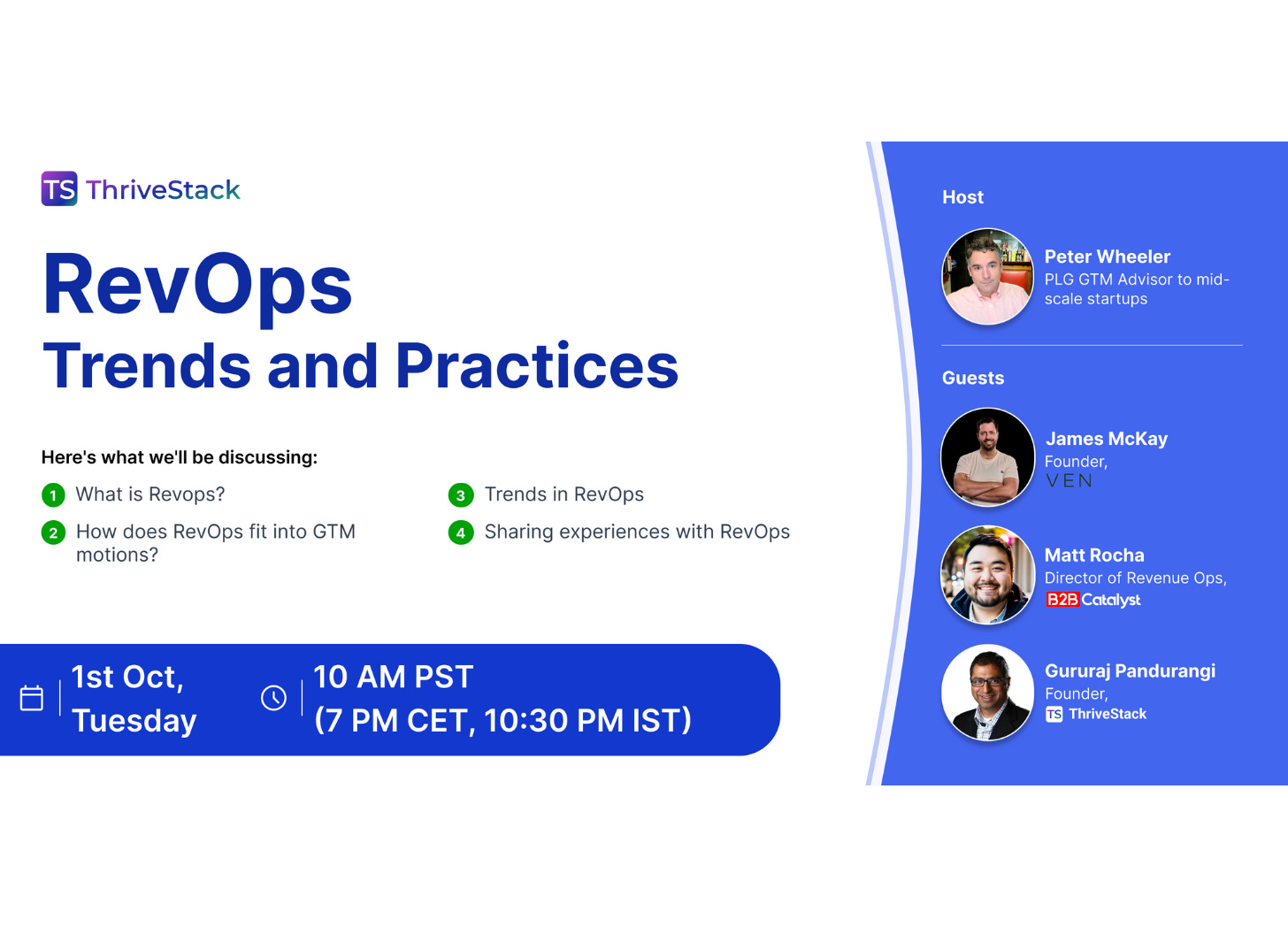
RevOps: Trends and Practices
RevOps (Revenue Operations) is more than just a buzzword—it's a critical function for companies looking to streamline their revenue-generating processes. In a recent ThriveStack webinar, Peter Wheeler hosted an insightful discussion with James McKay (Founder, Venn), Matt Rocha (Director of RevOps, B2B Catalyst), and Gururaj Pandurangi (Founder, ThriveStack). Together, they explored the evolving landscape of RevOps, its role in go-to-market (GTM) strategies, and how businesses are sailing over the shift from sales-led to product-led growth.What is RevOps?At its core, RevOps (Revenue Operations) unifies sales, marketing, and customer success into a single operational system. The discussion emphasized how RevOps helps companies shift from siloed operations to a more integrated approach, ensuring that every part of the revenue-generating engine is aligned. By consolidating responsibilities such as sales ops, marketing ops, and enablement into one framework, RevOps allows businesses to scale more efficiently while maintaining clarity and alignment across teams. It's clear that RevOps is no longer a luxury—it’s a crucial function for businesses seeking sustainable growth.RevOps in GTM MotionsWhen it comes to executing go-to-market (GTM) strategies, RevOps serves as the backbone for aligning cross-functional teams. The discussion highlighted several key roles that RevOps plays in this alignment:* Unifying teams: RevOps ensures that sales, marketing, and customer success work in sync, breaking down silos and creating a seamless flow of information between departments.* Accountability across the board: By standardizing data, tools, and processes, RevOps provides transparency into each team’s performance, holding everyone accountable for their part in the GTM strategy.* Adapting to changing conditions: RevOps makes it easier for teams to pivot when market conditions shift, enabling quicker adjustments to strategy while maintaining focus on growth goals.* Efficient scaling: With RevOps managing the framework, businesses can scale operations more effectively, avoiding the inefficiencies that typically arise from disconnected teams and unclear processes.RevOps transforms GTM efforts from isolated initiatives into a cohesive strategy, ensuring that the entire customer journey is optimized for success.Shifting from Sales-Led to Product-Led GrowthThe shift from sales-led growth to product-led growth (PLG) has transformed how businesses approach revenue generation. Traditionally, sales teams would guide the customer journey from the first interaction to the deal closure. However, with PLG becoming more popular, this process is now being driven by the product itself, often without the need for a sales team in the early stages.Key points discussed include:* Customer-driven adoption: In PLG, users interact with the product directly, allowing them to experience its value firsthand. This shift places more emphasis on product quality and user experience.* Earlier RevOps involvement: Unlike the sales-led model, where RevOps typically comes in during the scaling phase, PLG requires RevOps to play a role much earlier. Data, analytics, and tools need to be aligned from the start to measure success and drive growth.* Blurring lines between teams: The distinction between sales, product, and marketing becomes less rigid as PLG encourages closer collaboration. RevOps acts as the glue, ensuring that teams work together effectively to support the product-led motion.The transition to PLG represents a major opportunity for businesses, and RevOps plays a key role in making this shift successful.Tools, Systems, and IT's Role in RevOpsAs companies grow, managing tools and systems becomes increasingly complex. RevOps often relies on multiple technologies, but there’s been a notable shift: more responsibility for these systems is now being taken over by IT departments.While IT can handle the maintenance and servicing of tools, it often comes at the expense of speed and flexibility. RevOps teams, who need to move quickly with experiments and short-term adjustments, sometimes find their agility reduced when IT controls these systems.Integrating multiple systems—like CRMs, marketing automation platforms, and customer success tools—is crucial. RevOps needs to ensure that these tools work together seamlessly, allowing data to flow freely between teams for better decision-making.The challenge for RevOps is finding the balance between technical expertise and operational needs. With IT managing tool ownership, RevOps must focus on optimizing these systems while ensuring they support broader business goals.Challenges and Recommendations for RevOps ImplementationImplementing RevOps successfully comes with its own set of challenges, especially in rapidly scaling businesses. One key challenge is determining when to bring in RevOps—whether it’s from the start or during growth phases.A few key challenges identified were:* Overlapping roles: In many organizatio

#44 — Product-Led Playbook, ft. Wes Bush
In a lively discussion, three voices in the SaaS world came together to talk about the future of product-led growth (PLG): Wes Bush, the bestselling author of Product-Led Growth and the creator of the PLG system; Vincent Young, VP at Dealfront and author of Product-Led Sales; and Peter Wheeler, a product growth expert. With Wes Bush preparing to release his new book- The Product-Led Playbook, the session explored the complexities and challenges that come with adopting a PLG approach. The conversation was a reality check for many—a closer look into why PLG isn't just a buzzword, but a strategic shift that comes with its own hurdles.The speakers tackled everything from onboarding pains and pricing transparency to navigating the fine line between product-led and sales-led approaches. If you’ve ever wondered why only a small percentage of PLG companies achieve significant self-serve revenue or why onboarding can make or break your product, you’ve come to the right podcast!Listen now on Apple, Spotify, Castbox, Google and YouTube.Understanding PLG ChallengesWes Bush brought an honest perspective to the session, highlighting the reality of implementing a product-led growth (PLG) strategy. Despite the buzz, PLG isn't an easy path. Wes noted that only around 5% of PLG companies break through to reach more than $10 million in self-serve revenue.The reason? It’s not a lack of demand. 97% of buyers want to try before they buy. But while the market clearly favors self-serve models, many SaaS builders struggle to deliver on this effectively.A key issue is distinguishing between the buyer and the user. Buyers seek to understand the product before purchasing, while users are the ones interacting with it daily. This distinction often leads to what Wes calls "cross-wiring trends," where the market clamors for self-serve, but the experience falls short for both buyers and users.Wes’s upcoming book explores these challenges—whether it’s onboarding, retaining users, or scaling effectively. For him, this is about more than a framework; it’s about pinpointing why so many PLG businesses struggle to balance market demand and product execution.The Importance of OnboardingOnboarding is often a make-or-break moment in a product-led growth (PLG) strategy. It starts right from the first brand interaction—be it an ad, landing page, or blog post. But onboarding isn't just an initial experience; it's a continuous journey where users are guided to understand and find value as more features are added.One striking point from the discussion was that most companies lose around 40-60% of users after their first experience. This shows how critical it is to make a strong first impression. The focus should be on guiding users quickly and effectively to ensure they stick around.The panel also discussed the differences between sales-led and product-led onboarding. In sales-led models, the process relies on manual guidance from a sales team. However, in PLG, the product must stand on its own—the user needs to intuitively find value without hand-holding.Pricing and Packaging in PLGTransparent pricing can be both an asset and a challenge for product-led growth (PLG).While clear pricing helps users quickly grasp a product's value, it can become tricky as monthly fees increase. How transparent should you be when prices rise to $1,000 or more? Is there a point where transparency stops being helpful?The discussion touched on the land and expand strategy—a core part of PLG. Users start with one use case, then gradually explore more features. This sounds simple, but planning for such expansions can be difficult. Pricing progression needs to feel natural, allowing users to upgrade without facing overwhelming costs.A crucial aspect of this is identifying value metrics—the elements that users value most, such as per contact or overall usage. When pricing aligns with these metrics, users are more likely to move from free to paid plans. Tiered pricing that scales with usage creates a smooth transition, making upgrades feel less like a jump and more like a natural progression.Ultimately, pricing and packaging aren’t just about numbers—they need to align seamlessly with how users experience and find value in your product.Sales vs. Product-led Dichotomy* Speed vs. Scalability: Sales-led approaches are faster to start. Direct conversations with potential customers help validate the product quickly. In contrast, PLG requires more upfront effort but offers better scalability, with the product driving growth instead of a growing sales team.* Manual Effort vs. Self-Serve Experience: In sales-led models, the process is often manual. Sales reps guide customers through the journey, making it easier to tailor experiences but harder to scale. PLG focuses on building a self-serve experience where users can discover and use the product independently.* Revenue Growth vs. Customer Learning: Sales-led models can secure revenue quickly by closing high-touch deals, which helps refin
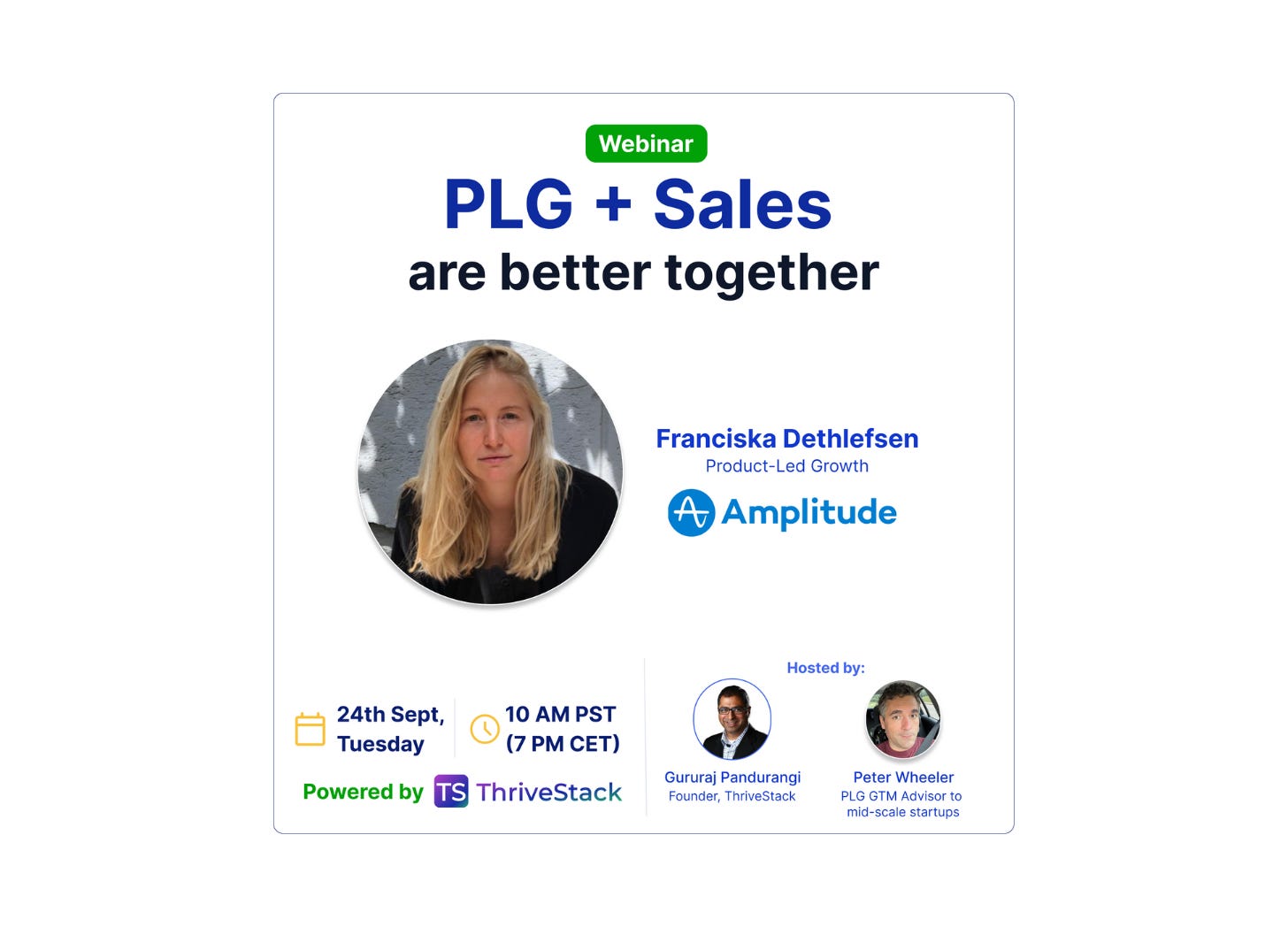
PLG + Sales are better together
Balancing Product-Led Growth (PLG) with traditional sales efforts can be challenging but rewarding. With insights from Amplitude’s Franciska Dethlefsen, the session explored how self-serve and sales motions can work together without compromise. Hosted by Gururaj Pandurangi and Peter Wheeler, the discussion highlighted Amplitude’s journey to integrate PLG and sales seamlessly, with collaboration and timing as key themes.Understanding Product-Led Sales (PLS) Without the JargonFranciska Dethlefsen broke down Product-Led Sales (PLS) as the practice of driving sales through the product itself. She explained that it’s not just about getting users to sign up for a free trial—PLS aims to use the product experience to create qualified leads.Amplitude’s approach to PLS is simple: use the product as a channel to generate and qualify sales opportunities. For instance, they utilize product usage data to identify which users are ready for deeper engagement, whether that means a demo, a trial extension, or support with setup.As Peter Wheeler noted, the term “product-led sales” might be misleading—it’s more like "product-assisted sales." The product becomes a powerful tool to assist and enable the sales process, providing context to the sales team on when and how to approach a user.When and How to Reach Out to UsersTiming is everything in user outreach. Early interventions—like contacting a user immediately after sign-up—can often miss the mark and make users feel pressured.The key is to qualify leads before intervening. Distinguish between high-potential enterprise users who may need early sales support, and smaller users who benefit from independent exploration. Focusing on product signals—such as usage patterns or specific actions—can guide when to engage effectively.It’s about offering value at the right moment, not hard-selling. By monitoring user behavior, outreach becomes more helpful and timely, aligning with user intent and readiness.Amplitude’s Path to Building a Balanced PLG and Sales MotionAmplitude’s transition to a balanced PLG and sales strategy involved a cultural shift. Moving from a primarily sales-led model to one that incorporates PLG required building collaboration between growth and sales teams. The change wasn’t just structural—it was about ensuring both teams saw the value in working together.Early on, the focus was on establishing trust. Instead of seeing the self-serve model as a threat to larger deals, the sales team recognized that product-led users often ended up being stronger leads. This alignment allowed them to reach out to users at the right time, with a clear understanding of user intent and needs.Additionally, managing concerns around cannibalization—where self-serve might seem to undercut traditional sales efforts—was crucial. By focusing sales efforts on larger accounts and leaving smaller users to a self-serve experience, Amplitude successfully integrated both motions, ensuring no missed opportunities and a more efficient approach to growth.Getting Users to Activate ThemselvesActivation plays a key role in any PLG strategy. At Amplitude, activation means users can set up and explore the product independently, without needing support.Steps to Improve Onboarding:* Expand Low-Code/No-Code Options: Amplitude made it easier for non-technical users to connect data sources like GA4 or HubSpot.* Reduce Friction for Quick Wins: The team focused on helping users reach their "aha" moment faster, simplifying setup to enable early value.* Offer Pre-Built Templates: Providing ready-made templates for dashboards and metrics let users gain quick insights, making the product feel immediately useful.These steps deepened user engagement and ensured a smooth self-activation process.How Growth Teams Scale User ActivationAmplitude’s growth team focused on creating a seamless self-activation journey. Rather than relying on direct sales interactions, they leaned into scalable strategies:The team first experimented with onboarding flows, tweaking them to improve how quickly users could access and experience value. They knew that early wins were crucial, so they tested and refined how users were introduced to core features.To reduce barriers, Amplitude introduced low-code/no-code solutions. Users could connect their data sources—such as GA4 and HubSpot—without technical obstacles, accelerating their onboarding and activation process.Lastly, they built in product guidance, encouraging users to discover deeper features on their own. These prompts nudged users to explore and make use of more advanced functionalities, enhancing both engagement and long-term retention.By focusing on these steps, the growth team scaled activation effectively across a wide user base.Maximizing Value from Free UsersFree users can significantly contribute to product growth, but they come with their own set of considerations. Here’s a look at the pros and cons of engaging and maintaining a free user base:Pros:* Brand Advocacy & Communit
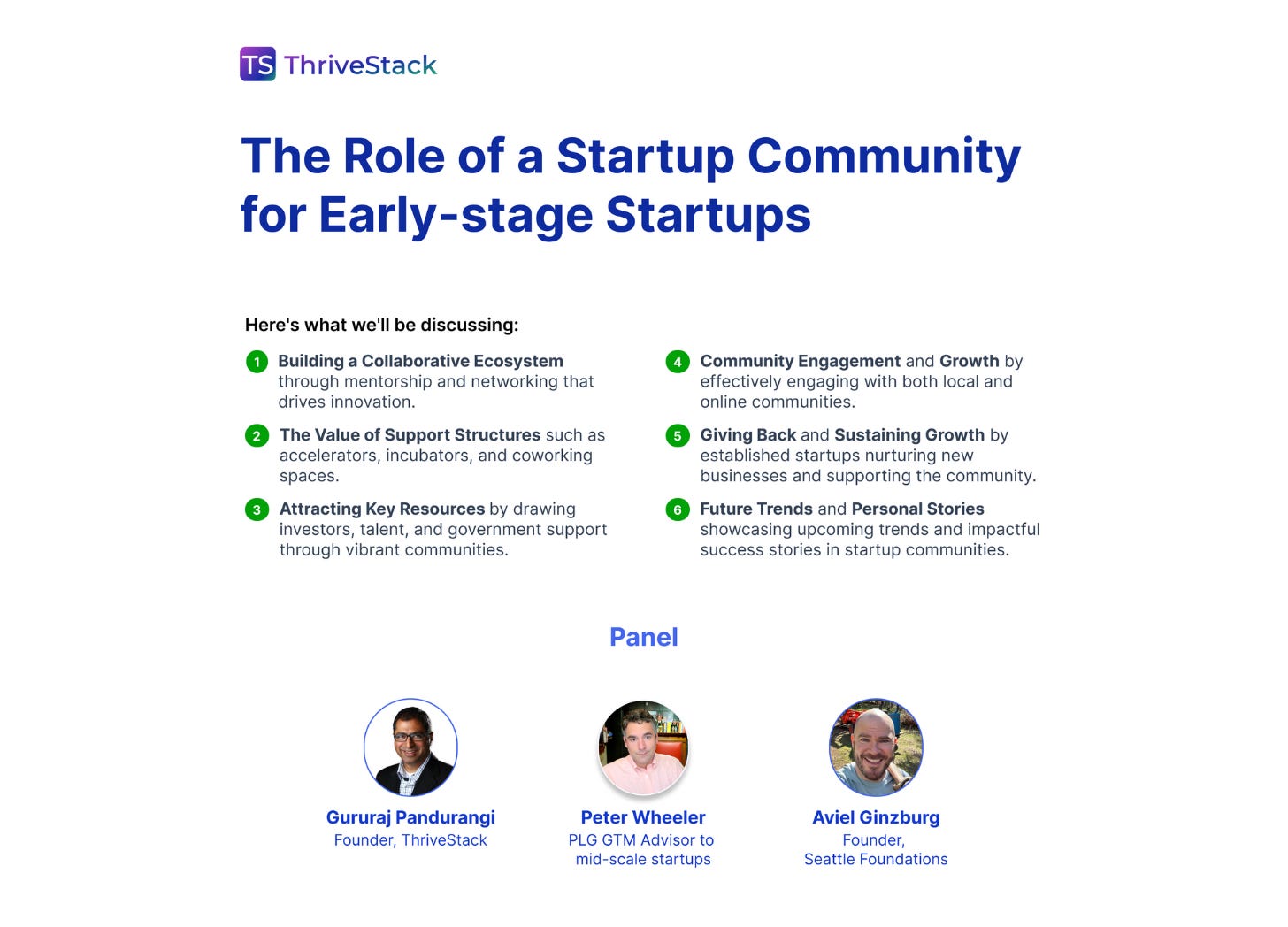
The Role of a Startup Community for Early-Stage Startups
Today, we’re exploring what makes startup communities powerful engines for early-stage founders. In our recent webinar, Aviel Ginzburg—an experienced founder and investor—shared his thoughts on building strong, supportive ecosystems. Aviel has journeyed from software engineer to VC, offering insights on what makes a startup community thrive: connections, mentorship, and the spark of serendipity that can change everything.Setting the Scene: Startup Communities and SerendipityStartup journeys are rarely linear. And, as Aviel Ginzburg pointed out, it’s often serendipity—those unplanned encounters and unexpected opportunities—that shapes an entrepreneur's path. However, not all communities foster these kinds of moments equally.Places like Silicon Valley have perfected the art of the "chance meeting," with daily meetups, networking events, and collaborative workspaces. Seattle, on the other hand, faces unique challenges. Despite being home to significant tech talent, it often lacks the spontaneous interactions that drive connection and growth.For Aviel, his experience moving from New York to Seattle was eye-opening. Unlike the Bay Area, where networking is as natural as breathing, building a meaningful community in Seattle took intentional effort and the willingness to reach out. It meant going beyond comfort zones, showing up at events, and, most importantly, understanding that every conversation could open new doors.The Gaps in the Seattle Ecosystem: A Quick BreakdownWhat’s missing in Seattle's startup scene? It’s not talent—Seattle is packed with some of the best tech minds in the world. The challenge lies in connection and culture. Here's how Aviel breaks it down:* Talent, but Not Enough Founders: Seattle attracts tech talent primarily for big players like Amazon and Microsoft. Many individuals come for the stability of working on established products, but fewer are motivated to take the leap into creating new categories or founding startups.* Risk-Averse Culture: Historically, Seattle has roots in Nordic culture, which brings a certain level of conservatism. The result? An environment where taking big leaps into the unknown, such as starting a company, feels less natural compared to more risk-tolerant cultures.* Fragmented Connections: Unlike San Francisco, where chance meetings and startup events happen daily, Seattle’s community is more spread out. The startup ecosystem has been siloed, making it harder for emerging founders to connect with potential mentors, investors, or even co-founders.Takeaway: Building a community that facilitates serendipitous connections is crucial for startup growth. It’s not about forcing a culture change but creating more spaces and opportunities for people to connect organically.The Anatomy of a Thriving Startup CommunityAccording to Aviel, building a successful startup community means having the right mix of people playing specific roles. Here’s what it takes:* Givers & Takers: A strong community needs active contributors who are willing to share their time, advice, and support (the "givers") and founders eager to learn and implement (the "takers"). The key is balance—no pure takers, as it drains the community's energy.* Enablers: This includes investors who do more than just write checks—they open doors, provide resources, and act as connectors to drive growth. Aviel prefers the term “enablers” over “investors” because it encompasses the broader role they play in a startup’s journey.* Connectors: These individuals or spaces bring people together. Connectors could be events, co-working spaces, or even online communities where founders, mentors, and enablers converge to share experiences and spark opportunities.* Active Participation: Observers, or “tourists,” can be counterproductive to a community. They attend events without contributing, potentially sapping energy and engagement from those who are actively building and giving back.Core belief: A thriving community is an energy engine, where everyone is contributing, learning, and evolving together. Each role is vital, and it’s the interplay of these dynamics that sustains growth and connection.Accelerators, Incubators, and Studios: What’s right for you?Accelerators: Speeding Up the JourneyFor startups that have a defined idea and are ready to push forward, accelerators are the fast lane. They provide mentorship, funding, and a network to help startups move quickly to validate or pivot their ideas. Time is of the essence, and accelerators give founders the urgency and resources to find success—or learn from failure—faster.Incubators: Nurturing Ideas from Seed to GrowthIf you’re in the early, conceptual phase, incubators act like greenhouses. They provide an environment to explore, test, and nurture ideas before they’re ready to become full-fledged startups. The incubator's role is to provide foundational support, helping ideas evolve through mentorship and collaboration.Studios: Co-Pilots in BuildingA startup studio operates
1/3 To PLG or Not To PLG
Choosing the right go-to-market (GTM) strategy can make or break a company. One of the most debated strategies is Product-Led Growth (PLG), which emphasizes the product as the primary vehicle for customer acquisition, retention, and expansion. But is PLG the right fit for every company? How do you know when to embrace it or avoid it?In the first part of a three-part expert conversation series, Vincent Jong, VP Product at Dealfront, Peter Wheeler, PLG GTM Advisor, and Gururaj Pandurangi, Founder of ThriveStack, dove into this exact topic. What is PLG?Product-Led Growth (PLG) can mean different things to different companies, but at its core, it’s about putting the product at the center of your growth strategy. Here's what was highlighted during the conversation:* PLG is often misunderstood as just a “self-serve” model, but it’s much more. It's a business-wide strategy where the product drives customer acquisition, retention, and monetization.* This can be achieved through various tactics such as:* Free trials* Freemium models* Interactive demos* The key is to allow users to experience the product and its value before they even talk to a sales representative.* PLG is about creating a smooth experience where the product shows its worth without requiring direct sales involvement.* Although there are different definitions, ranging from PLG being a growth tactic to a full-fledged business strategy, the common thread is that PLG allows customers to discover value independently.PLG, when implemented correctly, is a powerful tool that can help drive sustainable growth by focusing on the customer experience.When Should You Embrace PLG?PLG might be right for you if:* You’re an early-stage companyPLG can help you reach potential users who prefer to try before they buy, especially in markets with younger buyers who value self-service over traditional sales.* Your product delivers immediate valueIf your product can clearly demonstrate its value without the need for heavy sales assistance, it's a great fit for PLG. Think about whether your users can easily see the benefits on their own.* Scalability is keyIf your goal is to scale quickly, PLG can offer that efficiency. A well-built product in a PLG motion can serve thousands of users without the need for increasing the size of your sales team.When to Avoid PLG?PLG may not be the best strategy if:* You have a complex productIf your product requires extensive explanation or configuration before users can see its value, PLG might not be the right fit. Complex products often need sales assistance to guide potential customers through their buying journey.* Your company is in a regulated industryIndustries with heavy regulations or compliance requirements, like financial services or healthcare, might struggle with PLG. Buyers in these sectors typically need legal approvals and human touchpoints before making a purchase.* You’re dependent on high-touch salesIf your business is already thriving on a high-touch, relationship-driven sales model, switching to PLG could disrupt your existing revenue pipeline. Introducing PLG suddenly might put current deals at risk.* You need quick revenuePLG is a long-term play. If your company needs immediate revenue growth, a sales-led approach is often more effective. PLG requires investment in product development and onboarding, which takes time to deliver returns.How Can PLG Support Your Sales Team?Q: Does PLG replace traditional sales?A: Not exactly. PLG doesn't eliminate sales teams, but it makes their job more efficient. By allowing users to engage with the product first, sales teams can focus their time on qualified leads—people who have already shown interest and experienced the product's value.Q: How does PLG help sales teams close deals?A: With PLG, your sales team can leverage product usage data. They can see which features a prospect is using, where they’re getting stuck, and what value they've already gained. This helps sales reps personalize their approach and guide customers toward making a decision.Q: Can PLG reduce the workload for sales teams?A: Yes! Since customers are already familiar with the product, they don’t need as much hand-holding. Instead, sales can step in when needed—like for complex deals or upselling opportunities.How is the Role of Sales Evolving in a PLG Environment?* Less pitching, more guidingIn a PLG model, sales teams shift from traditional pitching to guiding customers. The focus is on helping users who are already familiar with the product get more value and solve their specific problems.* Sales as a customer success partnerInstead of closing deals quickly, sales teams work more like customer success partners—ensuring that users are properly onboarded, using the product, and progressing toward their goals.* Data-driven decisionsSales reps in PLG environments rely heavily on product usage data to understand a customer’s needs. This insight allows them to make informed decisions on when and how to engage with
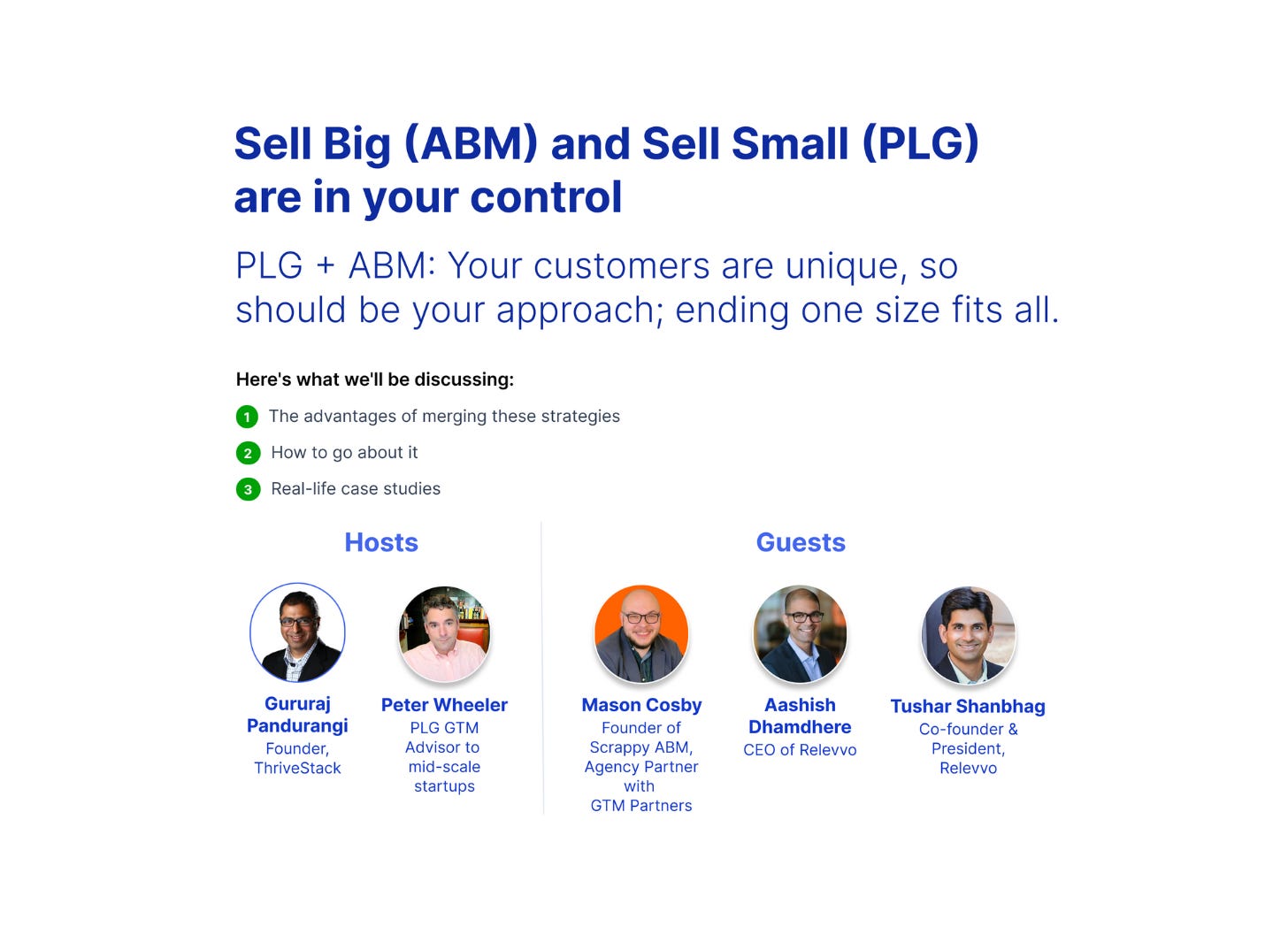
Sell Big (ABM) and Sell Small (PLG) are in your control
tl;dr:* Product-Led Growth (PLG) allows users to discover, engage, and convert independently, making it ideal for scalable, low-touch products.* Account-Based Marketing (ABM) focuses on personalized, relationship-driven campaigns targeting high-value accounts with longer sales cycles.* Combining PLG and ABM enables companies to scale quickly while nurturing key accounts for larger, more complex deals.* AI-driven ABM helps by automating account identification, personalized outreach, and real-time adjustments, ensuring efficiency without losing personalization.* PLG is best for user-driven, self-service models, while ABM works for complex, high-ticket sales involving multiple decision-makers.Available on Apple, Spotify, Castbox, Google and YouTube.PLG vs. ABM: Key Differences and DefinitionsProduct-Led Growth (PLG) revolves around the idea that the product itself drives acquisition and conversion. Users explore the product independently, find value, and ultimately make a buying decision. This approach is ideal for companies where a smooth user experience leads to natural adoption, like Canva or Dropbox.In contrast, Account-Based Marketing (ABM) targets high-value accounts through personalized campaigns that focus on building long-term relationships. This strategy works best for companies with complex products or large deal sizes, where engaging key decision-makers is crucial.The key takeaway: PLG works well for user-driven, lower-touch products, while ABM is better suited for larger, more complex deals where personalization and relationship-building are essential.Should You Combine PLG and ABM?The takeaway here is clear: PLG helps you scale quickly with minimal overhead, while ABM allows you to focus on larger, more complex deals. The trick is knowing when to apply each strategy—or a combination of both—for maximum impact.Challenges in Choosing PLG or ABMEach approach presents unique challenges that companies need to consider:* PLG Challenges:* Requires a seamless product experience that allows users to discover, engage, and convert without human interaction.* Demands continuous investment in self-service features, onboarding, and product improvements to retain users and drive conversions.* Can struggle to convert free users to paying customers, especially for more complex products.* ABM Challenges:* Resource-intensive, involving personalized outreach, long sales cycles, and collaboration between marketing, sales, and customer success teams.* Needs a clearly defined and highly-targeted account list, requiring significant research and refinement.* Longer time-to-close compared to PLG, making it harder to scale rapidly.* Combining PLG and ABM:* Balancing the efficiency of PLG with the personalization of ABM requires coordination across teams.* Requires careful timing to know when to switch from PLG-driven growth to ABM-focused nurturing.* Can be resource-heavy if not managed effectively, especially for smaller teams.By weighing these challenges, companies can decide which strategy—or combination—is best suited to their growth stage and goals.When PLG Works BestPLG shines in situations where users can easily adopt and explore the product without much intervention. Companies offering intuitive tools that provide immediate user value—such as developer tools, SaaS platforms with freemium models, or products targeting tech-savvy customers—often find success with this model.* Low-touch products: PLG works well for software that doesn't require complex onboarding or customer support. Users can dive in and experience the value independently.* Developer-focused tools: Developers prefer hands-on product testing. PLG enables them to explore and adopt solutions without the pressure of a sales team.* Freemium and self-service models: Products that offer free versions or trials can benefit from PLG by letting users test before committing.However, for larger deals or more complex products, PLG might only be part of the journey, requiring a more targeted approach as deals progress.When ABM Is the Right StrategyABM is particularly effective for companies targeting high-value accounts with longer, more complex sales cycles. In these situations, a highly personalized approach is crucial to build strong relationships with decision-makers across multiple stakeholders.* Complex products: When the product requires more explanation or customization, ABM ensures the right people understand the value and are engaged throughout the buying process.* High-ticket deals: ABM is the go-to strategy for landing larger contracts, where the decision-making process involves multiple teams and stakeholders.* Nurturing relationships: With ABM, personalized communication and targeted campaigns are key to building trust and ensuring long-term success.By focusing on a select number of high-value accounts, ABM enables companies to maximize their resources and tailor their approach for each potential client.The Role of AI in ABMSmarter Account Identifica
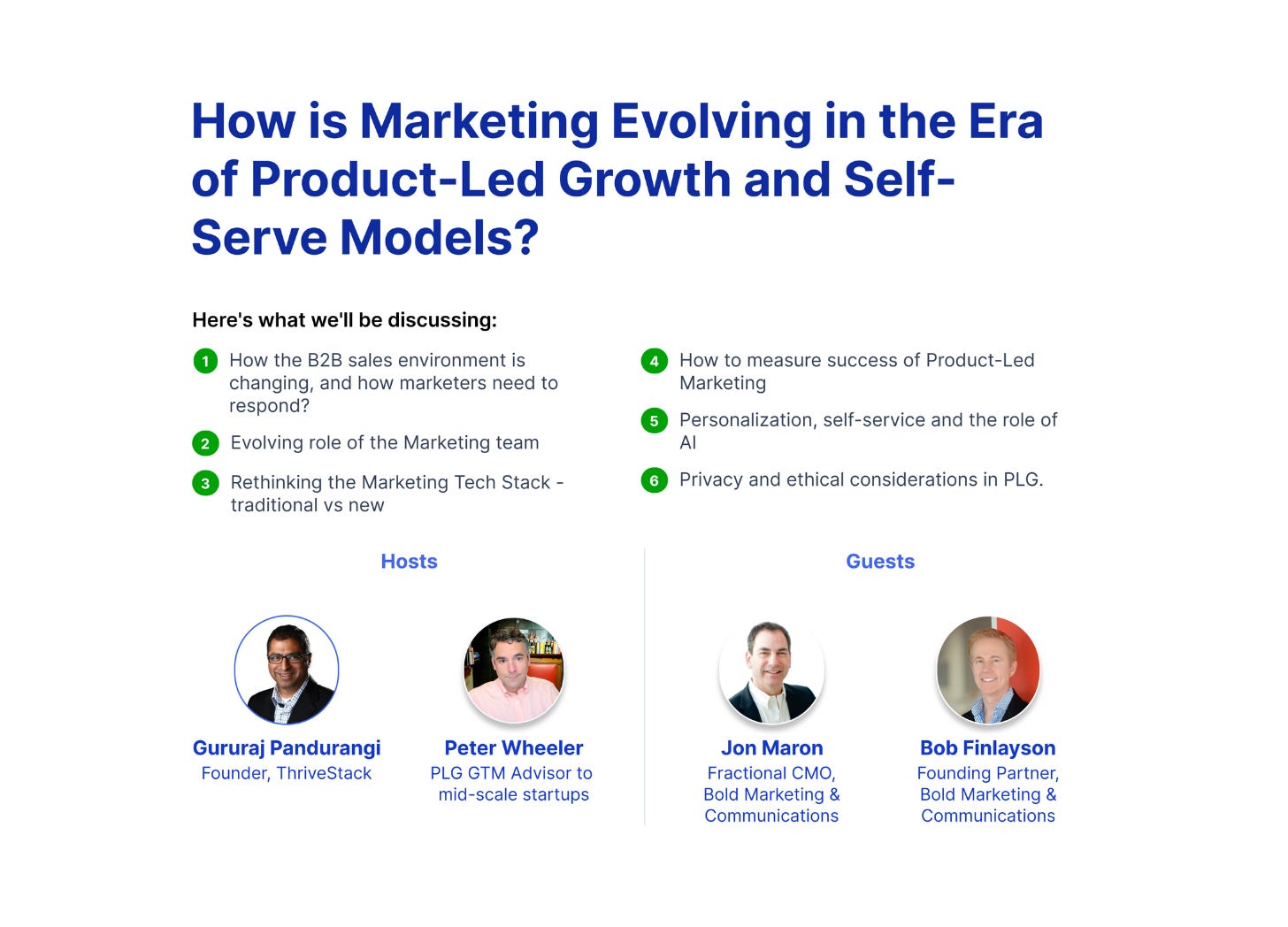
How is Marketing Evolving in the Era of Product-Led Growth and Self-Serve Models?
tl;dr:* B2B buyers are increasingly self-directed, with 77% completing their journey before contacting a vendor.* The role of marketing has expanded to include product education and close collaboration with product development and customer success teams.* Product-Led Growth (PLG) shifts focus to the product as the main driver of customer acquisition and revenue generation.* Product Qualified Leads (PQLs) are now more valuable than traditional Marketing Qualified Leads (MQLs).* The marketing tech stack now includes tools like product usage analytics and AI-powered personalization.* Customer success teams play a critical role in onboarding, retention, and turning users into advocates.* The future of marketing lies in blending revenue accountability with customer-focused strategies that prioritize value.The Changing B2B Sales EnvironmentB2B buyers are increasingly informed and self-directed. Instead of relying on sales teams, they now prefer to research and evaluate products independently, often through free trials or freemium models. By the time they engage with sales, buyers have already gathered the necessary information, making it crucial for marketing to provide valuable product insights early in their journey.With 77% of buyers completing most of their journey before contacting a vendor, marketing’s role has shifted. It’s no longer about generating leads but about empowering customers with value-driven content that enables informed decisions.Key Takeaways:* Buyers are more self-sufficient, relying on self-service research.* Marketing must deliver informative, value-focused content early in the buyer’s journey.* Product-Led Growth (PLG) supports this shift, offering buyers the independence they seek.The Evolving Role of the Marketing TeamIn the Product-Led Growth (PLG) era, marketing teams have transitioned from simply driving awareness to becoming strategic partners in customer acquisition and retention. Marketing is no longer just about generating leads; it now focuses on the product itself as a primary tool for attracting and retaining customers.Marketers are expected to work closely with product development and customer success teams, understanding the product inside and out. This shift emphasizes product-qualified leads (PQLs)—users who engage directly with the product—as a more accurate measure of intent compared to traditional marketing-qualified leads (MQLs).Marketing now plays a critical role in driving product adoption and revenue growth, serving as the bridge between the product and the customer.Rethinking the Marketing Tech StackAs Product-Led Growth (PLG) reshapes marketing, traditional tech stacks focused on CRM systems and email marketing are no longer sufficient. To thrive in a PLG world, marketing teams need to adopt tools that provide real-time user engagement insights and product usage analytics.Here are the essential tools for modern marketing teams:* Product Usage Analytics: Track how users engage with the product to identify popular features and optimize both marketing and product strategies.* Event Tracking: Capture user actions—like signing up for a trial or upgrading to a paid plan—and segment users for targeted campaigns.* Customer Data Platforms (CDPs): Unify data from various touchpoints to create a 360-degree view of each user, enabling personalized messaging and experiences.* AI and Predictive Analytics: Use AI-driven tools to automate tasks and predict customer behavior, ensuring personalized experiences at scale and anticipating customer needs.By upgrading to these technologies, marketing teams can deliver more targeted campaigns, enhance self-serve experiences, and support product adoption with data-driven insights.Product-Led Growth and Its Impact on RevenueIn a Product-Led Growth (PLG) strategy, the product itself drives customer acquisition and revenue generation. This shift fundamentally changes how marketing and sales teams operate, making the entire process more customer-centric and measurable.Here’s how PLG impacts revenue:* Shift from MQLs to PQLs:The focus is no longer on Marketing Qualified Leads (MQLs) but on Product Qualified Leads (PQLs)—users who have actively engaged with the product. This provides a clearer signal of purchase intent.* Revenue Accountability for Marketing:Marketing is now directly accountable for driving product adoption and revenue growth. It's no longer just about generating leads; it's about ensuring users successfully engage with the product and convert.* Blurring of Sales and Marketing Roles:With the product driving acquisition, the traditional boundaries between sales and marketing are fading. Sales teams now step in later in the customer journey, focusing on helping users who have already engaged with the product.* Accelerated Customer Acquisition:With freemium models and free trials, PLG lowers the barrier to entry, speeding up the customer acquisition process and shortening the sales cycle.By making the product the centrepiece of th

#43 — Automating Customer Journeys with Email automation, ft. Jane Portman, Co-Founder Userlist
Today, we're exploring email automation's role in customer journeys with Jane Portman, co-founder of Userlist. Jane, also the host of UI Breakfast and Better Done Than Perfect, shared her expertise on using email automation to boost onboarding, engagement, and nurturing. Whether you're a startup or an established business, this episode is packed with actionable insights.Listen now on Apple, Spotify, Castbox, Google and YouTube.Jane's Journey and Userlist's Evolution* Early Ventures: Jane’s past startup experiences laid the foundation for Userlist, which she co-founded in 2017.* Product Evolution: Userlist was launched as a customer messaging platform in 2019. It pivoted into a comprehensive email marketing tool based on user demand for better onboarding, engagement, and nurturing solutions.Key Insights* Listen to Customers: The evolution of Userlist was driven by user feedback and the need to address broader market demands.* Adaptability: Success often requires pivoting your product to better align with customer needs.* Community Support: The Product Hunt launch was crucial in validating the product and building a loyal user base.Understanding Email Automation for Customer Journeys1. The Role of Email Automation* Definition: Email automation streamlines customer communication, ensuring timely and relevant interactions.* Purpose: Enhances customer onboarding, engagement, and nurturing by automating key touchpoints throughout the customer lifecycle.2. Types of Emails* Marketing Emails: Focus on promotional content and campaigns aimed at acquiring new customers.* Transactional Emails: Triggered by customer actions (e.g., purchase confirmations) and crucial for delivering essential information.* Customer Lifecycle Emails: Designed to support users through various stages, from onboarding to retention.3. Drip vs. Nurture Campaigns* Drip Campaigns: A series of automated emails sent on a schedule to educate or inform the user.* Nurture Campaigns: Tailored email series aimed at guiding users through specific journeys, such as onboarding or re-engagement, based on their behavior and needs.Key Takeaways* Automation Efficiency: Email automation reduces manual effort, allowing businesses to focus on strategy rather than execution.* Personalization: Effective automation requires personalized content to resonate with users at different stages of their journey.* Impact: When done right, email automation can significantly reduce dropouts and increase customer engagement.Essential Information in EmailsStart with Clarity:* Emails should begin with a clear and relevant message that speaks directly to the user's current needs or actions. Avoid jargon and focus on what matters to the user right now.Guide with Action:* Include specific, actionable steps that guide the user towards the next phase of their journey. Whether it’s a link, a prompt to explore a feature, or a purchase, make it obvious and easy to follow.Design for Impact:* Structure your emails with concise messaging and strategic use of visuals. Keep the text short and impactful, and use images or infographics sparingly to support your message without clutter.Personalize and Customize:* Segment your audience to tailor content based on behavior and preferences. Use dynamic content to personalize each email, making it feel like a one-on-one conversation rather than a mass message.Call to Action:* Conclude with a strong, clear CTA that encourages the desired response, be it clicking a link, replying to the email, or making a decision.By following these steps, your emails will not only engage but also retain customers, ensuring they remain connected and active within your product.Insights for Early-Stage Companies"For early-stage companies, the key is to stay focused on solving a specific problem exceptionally well, rather than trying to be everything to everyone."* Focus on Your Core:* Early-stage companies should prioritize perfecting their primary product or service. This focus ensures they solve a specific problem exceptionally well, creating a strong foundation for growth.* Lean and Adaptable:* Startups thrive by being agile. Adapting quickly to user feedback allows for continuous improvement and keeps the product aligned with market needs.* Build Strong Relationships:* Early relationships with users are crucial. Engaging closely with your initial customers not only helps refine the product but also builds a loyal user base that can advocate for your brand.Actionable Advice:* Stay Focused: Resist the urge to expand too quickly; concentrate on doing one thing better than anyone else.* Listen and Learn: Use customer feedback as a tool for continuous product improvement.* Invest in Relationships: Foster early connections with users to build a community that supports and grows with your brand.Key Timestamps(00:00) Introduction to the episode and guest, Jane Portman(02:30) The importance of staying focused for early-stage companies(08:15) The role of customer segmentation

#42 — 2024 B2B SaaS Growth - Marketing ideas to help startups THRIVE, ft. Neil Patel
In today's episode, we're exploring the world of B2B SaaS growth for 2024. Our guest is none other than Neil Patel, the co-founder of NP Digital and a legend in the digital marketing space. Neil brings a wealth of knowledge and practical insights that will be invaluable for early-stage startups looking to navigate the competitive landscape. Get ready for some actionable advice and strategies to help your startup thrive in the coming year. Let's jump right in!Listen now on Apple, Spotify, Castbox, Google and YouTube.Current Trends in B2B SaaS MarketingThe B2B SaaS market is more competitive than ever, with numerous startups vying for attention and market share. The economy, regardless of being labeled a recession, has impacted marketing and growth, making it essential for companies to adapt their strategies. AI, while offering new tools and efficiencies, has also increased competition by lowering the barriers to entry for new startups.Traditional marketing playbooks are no longer as effective, and startups need to innovate to stand out. Conversion rates have declined, and growth has slowed for many. The discussion emphasizes the importance of understanding the current market dynamics and adjusting strategies accordingly. By recognizing these trends and challenges, startups can better navigate the complex landscape and find new growth opportunities.Effective Marketing StrategiesOffering free products rather than freemium models is highlighted as a key strategy. Giving away a product for free can often be more cost-effective than heavy advertising expenditure.Key approaches include:* Utilizing SEO and creating educational content to attract organic traffic.* Participating in communities like Quora and Reddit to engage directly with potential customers.* Securing reviews on platforms like G2 to build credibility and drive sign-ups.* Testing paid ads on a small scale to identify profitable opportunities.A multi-channel approach is essential, leveraging various platforms and methods to reach a broader audience without relying solely on traditional advertising.Omni-Channel MarketingOmni-channel marketing is emphasized as a critical strategy for early-stage startups. Many startups mistakenly believe that each platform requires entirely different content. However, repurposing content across multiple channels can be highly effective.Key insights include:* Creating content that can be adapted for different platforms like YouTube, TikTok, and Twitter.* Understanding that something is better than nothing; even if the content isn't perfectly tailored for each platform, it’s still beneficial to have a presence.* Recognizing the time and budget constraints of startups, and using those limitations to drive creative, efficient marketing efforts.The discussion underscores the importance of maintaining a consistent presence across multiple platforms to maximize reach and engagement.Partner-Led GrowthPartner-led growth is highlighted as a powerful strategy for early-stage startups. Building alliances with other companies and leveraging their customer bases can drive significant growth.Key points include:* Partner-led sales can often be more effective than direct sales, especially for startups with limited resources.* Forming partnerships with larger companies or platforms can provide access to a broader audience and enhance credibility.* Strategic alliances with companies like Microsoft, Deloitte, and others can lead to valuable opportunities and customer acquisition channels.* Startups should focus on building relationships with potential partners and identifying mutually beneficial collaborations.The importance of thinking beyond traditional sales and marketing approaches to include partnerships and alliances as a core growth strategy is emphasized.Lessons from Gururaj and Neil’s Journeys* Value of Experience: Neil emphasizes the benefits of gaining experience in the corporate world before starting a company. Working for established companies can provide crucial learning opportunities and financial stability, which can be advantageous when starting a business later on.* Partner-Led Growth: Gururaj shares how partnerships with larger companies like Microsoft and Deloitte can drive significant growth. Leveraging these relationships can provide access to broader customer bases and enhance credibility.* Strategic Adaptability: Both discuss the importance of being adaptable and open to changing strategies based on the business environment. This includes transitioning from partner-led to sales-led growth post-acquisition.* Focus on Results: Neil and Gururaj stress the importance of focusing on producing tangible results rather than getting caught up in titles or external validation. Success is measured by the impact and outcomes achieved.* Balancing Passion with Practicality: Balancing personal passion with practical business decisions is crucial. Staying passionate about the work while making pragmatic choices ensures long-term su

#41 —Building Community and Product: Advise to early-stage startups, ft Ben Lang
In this episode, we explore the intricate relationship between building a community and developing a product, focusing on advice tailored for early-stage startups. We are thrilled to have Ben Lang, a renowned figure in community leadership and a seasoned entrepreneur, as our guest today.Ben brings a wealth of experience from his time at Notion, where he played a pivotal role in community building. Beyond his work at Notion, Ben has ventured into angel investing and continues to foster communities in various capacities. His journey offers invaluable insights for startups aiming to balance product development with community growth.Listen now on Apple, Spotify, Castbox, Google and YouTube.Defining Community and Its ImportanceA thriving community is more than just a group of users; it's a collective of individuals bound by shared values and interests. For startups, understanding this fundamental concept is crucial. A strong community can serve multiple purposes, from driving user acquisition and retention to providing valuable product feedback and support.Ben Lang emphasizes that the essence of a community lies in the common ground its members share. Whether it's a passion for a product, a mutual goal, or shared experiences, these connections form the foundation of a successful community. For companies, especially those in the early stages, leveraging these shared values can create a powerful support network that fosters growth and innovation.Early-Stage Community BuildingBuilding a community before having a fully developed product can be a daunting task. For early-stage startups, the journey often begins with joining and learning from existing communities.* Learning from Existing Communities: Startups can benefit greatly by engaging with existing communities to gain insights and conduct market research. For example, Notion initially struggled to build a community and took a two-year hiatus to rebuild their product from the ground up, returning to launch on Product Hunt with a renewed focus.* Defining the Community's Purpose: A community is more than just a user base; it's a network of individuals with shared values and interests. For Notion, the community was driven by users who wanted to monetize their templates and share their learnings. This shared purpose helped build a robust ecosystem that supported and promoted the product.* Achieving Product-Market Fit: It's essential to have some semblance of product-market fit before attempting to build a community. Without a product that people find valuable, creating a sustainable community is challenging. Startups should focus on developing a product that meets a genuine need and then leverage that product to foster community growth.By following these steps, startups can lay a solid foundation for a thriving community even before their product is fully developed.Strategies for Building a CommunityDeveloping a successful community around a product involves strategic planning and execution. Ben Lang outlines a step-by-step process that can help startups create and sustain a vibrant community:Step 1: Leverage Existing Platforms* Utilize platforms where your potential users already congregate.* Engage with these communities to gather feedback and spread the word about your product.Step 2: Create Value for Members* Offer exclusive content, early access to new features, or opportunities to influence product development.* Example: Notion created a template gallery, allowing users to share and discover useful templates, adding significant value to their community.Step 3: Encourage Organic Growth* Foster genuine interactions and connections to allow the community to grow organically.* Avoid forcing or overly structuring the community, as this can disengage members.Step 4: Differentiate Between B2B and B2C Communities* Understand that building communities for B2B products can be different from B2C products.* Example: Salesforce’s Trailblazers program focuses on professional development and product training for their B2B community.Step 5: Secure Support from Leadership* Ensure buy-in from the leadership team to view community building as a long-term investment rather than a short-term marketing tactic.Step 6: Allocate Resources* While community building doesn't necessarily require a massive budget, dedicating resources—both in terms of personnel and finances—can significantly impact the success of your community efforts.Practical Advice and FrameworksPractical AdviceHere are some key pieces of advice from Ben Lang:* Establish Long-Term Vision: Define the long-term goals of your community, whether it's for user acquisition, support, or product feedback.* Start Small and Scale Gradually: Begin with small, manageable initiatives to test and learn what works best, and scale successful strategies gradually.* Foster Authentic Interactions: Encourage genuine interactions and avoid overly commercial approaches to build trust within the community.* Measure Impact Regularly: Track the

#40 — The ongoing PLG journey of Superhuman, ft Gaurav Vohra, Head of Growth
In this episode, we explore the ongoing Product-Led Growth (PLG) journey of Superhuman. Gaurav Vohra, who has held multiple leadership roles at Superhuman, shares insights on their strategies, challenges, and successes in building one of the fastest email experiences on the market. Listen now on Apple, Spotify, Castbox, Google and YouTube.Phase One: Getting to Product-Market Fit* Focus: Achieving product-market fit.* Strategy: Founder-led approach leveraging personal networks to reach ideal customer profiles.* Challenges:* Maintaining high product standards for high-expectation customers like VCs and tech founders.* Extensive R&D and continuous improvements for reliability and robustness.* Feedback Management:* Close communication with early users.* Balancing input from high-expectation customers and experimental users.* Iterative development and product refinement.* Measuring Product-Market Fit:* User feedback on how disappointed they would be if Superhuman were no longer available.* Achieving a 40% threshold of users who would be very disappointed indicated a strong product-market fit.Phase Two: Building the Go-to-Market Team* Transition: From founder-led acquisition to building a dedicated Go-to-Market (GTM) team.* Key Hires:* Support: Establishing a robust customer support team to handle queries and issues.* Onboarding: Creating an onboarding team to help new users get started with the product.* Pre-Sales: Implementing a pre-sales or business development role to generate and qualify leads.* Marketing: Building a marketing team to drive brand awareness and user acquisition.* Importance of Charging Early:* Implementing a paid version early to ensure the product’s value is recognized.* Quality of feedback improved significantly once users started paying.* Ensured the product was worth the $30/month price point.* Challenges:* Balancing hiring and training new team members while maintaining high service quality.* Creating and refining processes to transfer knowledge and responsibilities from founders to new hires.* Results:* Successful establishment of fundamental GTM functions.* Transition from initial user acquisition to scalable growth operations.* Continued iteration and improvement based on user feedback.Phase Three: Scaling* Objective: Scaling the go-to-market operations to support growing demand.* Drawing Down the Waitlist:* Addressing the large waitlist, which peaked at around 500,000 users.* Strategically managing user onboarding to match product readiness and support capacity.* Team Expansion and Efficiency:* Scaling support, onboarding, marketing, and other functions to handle increased user volume.* Implementing tools and processes to enhance team efficiency and customer experience.* Introduction of AI:* Integrating AI features into Superhuman to enhance productivity and user experience.* AI functionalities include email summarization, writing assistance, and autocorrection.* Focus on Teams:* Shifting from a B2C to a B2B focus, emphasizing team collaboration features.* Messaging and marketing efforts highlighting Superhuman as a tool for entire teams.* Operational Improvements:* Streamlining processes to support higher customer volumes.* Ensuring robust systems for feedback collection and iterative development.* Results:* More stable and feature-complete product offering.* Increased capacity to support a larger user base with high-quality service.* Continued growth and expansion driven by efficient go-to-market operations.Insights and Lessons LearnedBuilding in public was a crucial strategy for Superhuman. By being active on social media and responsive to customer feedback, the team fostered a strong community and built trust with their users. This transparency helped maintain excitement and engagement throughout their growth journey.Maintaining a high-quality product while scaling was another significant lesson. Superhuman set high standards from the beginning, ensuring that their product was reliable and robust. This focus on quality helped retain users and build a loyal customer base.Customer engagement and feedback loops played a vital role in the iterative development process. By staying closely connected with users, Superhuman was able to continuously refine their product and address user needs effectively. This ongoing dialogue was key to their success.The introduction of AI features demonstrated the importance of innovation in staying ahead of the competition. By integrating advanced functionalities that enhanced productivity, Superhuman provided additional value to their users and reinforced their market position.Finally, the shift from a B2C to a B2B focus underscored the importance of adapting to changing market needs. By evolving their product to support team collaboration, Superhuman was able to tap into new growth opportunities and expand their user base.Key Timestamps:[00:00] Introduction to the episode and topic overview [00:45] Guest introduction: Gaurav Vora from Superhuman [03:

#39 — Has SaaS Lost Go-To-Market Fit? ft. Dave Boyce
In this episode, our guest, Dave Boyce, Chairman at Winning by Design and Board Member at Forrester, shares his insights on the rising Customer Acquisition Costs (CAC) and the decline in Net Revenue Retention (NRR). Dave discusses why traditional GTM strategies are faltering and how Product-Led Growth (PLG) might offer a solution.Listen now on Apple, Spotify, Castbox, Google and YouTube.ContextGrowth rates are dropping, yet Sales & Marketing (S&M) budgets are increasing rapidly.According to Dave Boyce's recent article, over the past two years, the Customer Acquisition Cost (CAC) for Net New Revenue has increased from 150% to 264%, while Net Revenue Retention (NRR) has fallen from 123% to 113%. For instance, ZoomInfo's CAC payback period has jumped to 138 months. This raises the question: Is the influx of Venture Capital money driving a "Growth-At-All-Costs" mentality in SaaS companies, leading them to spend massively on S&M?Reasons for High CACWhy has the Customer Acquisition Cost (CAC) for Net New Revenue risen so dramatically to 2.64 times the revenue? Several factors contribute to this high spend:* Team Costs: The combined expenses of Account Executives (AEs), Sales Development Representatives (SDRs), Sales Engineers (SEs), SE Managers, Customer Success Managers (CSMs), and Marketing teams. Each role adds layers of cost, from salaries to commissions and bonuses.* Sales and Marketing Software: Significant investments in software and tools for customer relationship management (CRM), lead generation, marketing automation, and analytics. These tools, while essential, add substantial costs to the S&M budget.* Operational Overheads: Managing and coordinating large teams and software tools incurs additional costs, including training, management salaries, and administrative support.* Advertising and Promotions: High spending on advertising, promotions, and content creation to attract new customers. This includes online ads, event sponsorships, and various marketing campaigns.* Inefficient Processes: Often, the lack of efficient processes and alignment between sales and marketing leads to wasted resources and higher costs.Understanding these components is crucial for addressing inefficiencies and finding ways to reduce the overall CAC.Product-Led Growth (PLG) as a SolutionCan Product-Led Growth (PLG) fix the rising Customer Acquisition Costs (CAC) for Net New Revenue? * Core Principles of PLG: PLG focuses on leveraging the product itself as the main vehicle for acquiring, activating, and retaining customers. This approach shifts the emphasis from heavy sales and marketing spending to creating a product that effectively sells itself.* Cost Efficiency: By enabling customers to experience value through free trials or freemium models, PLG can reduce the need for large sales teams and extensive marketing campaigns. This can lead to a significant decrease in CAC.* Freemium Models: Offering a free version of the product with the option to upgrade to a paid version allows users to see the product’s value firsthand before committing financially. Dave highlights the success of freemium models in driving user acquisition and retention.* Self-Service: PLG emphasizes self-service as a way to reduce onboarding and support costs. By designing products that are easy to use and require minimal customer support, companies can lower operational expenses. This not only cuts down on the need for extensive support teams but also enhances the customer experience by providing immediate solutions.Alternative Strategies to Reduce CACWhile Product-Led Growth (PLG) offers a promising solution, other strategies can also help reduce Customer Acquisition Costs (CAC). Dave Boyce provides insights into several effective approaches:* Boosting Efficiency: Companies can optimize their sales and marketing operations to minimize waste. This involves refining marketing campaigns to target more precisely, improving the efficiency of sales funnels, and automating routine tasks to save time and resources.* Cost-Cutting Measures: Strategic cost reductions can also help manage CAC. This might involve scaling back on research and development expenses, reducing the size of sales teams, or streamlining customer support operations.* Focus on Unit Economics: Rather than pursuing large, high-cost deals (whale-hunting), companies can focus on achieving healthy unit economics. This involves ensuring that the cost to acquire a customer is sustainably lower than the revenue generated from that customer over time.* Leveraging Data and Analytics: By using data and analytics to inform decision-making, companies can better understand customer behavior, optimize pricing strategies, and identify the most cost-effective acquisition channels.* Innovative Marketing Tactics: Experimenting with new marketing tactics, such as content marketing, influencer partnerships, and community-building initiatives, can help attract customers at a lower cost compared to traditional adverti
#38 — Inside story of Engineering the Amplitude Plus Plan, Ft Kelson Warner, Head of Growth Engineering
In this episode, we explore the intricacies of Amplitude's growth engineering journey with Kelson, the Head of Growth Engineering. We examine the evolution of the growth engineering team, the challenges they faced, and the key strategies they implemented to drive Amplitude's success. Kelson also shares insights into the Amplitude Plus plan and offers valuable advice for aspiring growth engineers and product managers.Listen now on Apple, Spotify, Castbox, Google and YouTube.Early Days at AmplitudeKelson's Initial Role and Responsibilities: When Kelson first joined Amplitude, he took on the role of building and leading the growth engineering team. His initial responsibilities included developing the growth engineering infrastructure, identifying key growth opportunities, and working closely with other departments to ensure alignment on growth strategies.State of Amplitude's Growth Engineering Team upon Arrival: At the time of Kelson's arrival, Amplitude's growth engineering team was in its nascent stages. The team faced several challenges, including limited resources, a lack of established processes, and the need to quickly scale to support the company's ambitious growth targets.Early Challenges and Milestones: Kelson's early days were marked by significant challenges, such as establishing a robust growth engineering framework, integrating new tools and technologies, and building a cohesive team culture. Despite these hurdles, the team achieved key milestones, including the successful launch of early growth experiments, improved user onboarding processes, and the development of a scalable growth infrastructure.Evolution of Growth Engineering at AmplitudeDevelopment and Expansion of the Team:* Initial Team Composition: Started with only three engineers and intermittent support from product managers and designers.* Current Team Structure: Has grown to include 10 engineers, three product managers, and two designers.Key Projects and Strategic Shifts:* Initial Focus: Early on, the team tackled core product features and foundational growth experiments.* Strategic Evolution: Transitioned to more structured growth strategies, focusing on scalability and user acquisition.Transition from Initial Efforts to Structured Strategies:* Early Efforts: Involved ad-hoc projects and experimentation without a clear long-term strategy.* Structured Approach: Developed a clear roadmap with defined goals, such as enhancing the self-serve experience and optimizing user journeys for better conversion.Self-Serve Strategy and InfrastructureOverview of Amplitude's Self-Serve Model:* Objective: To streamline user onboarding and empower users to independently utilize the platform.* Key Features: Includes features like in-app payments, demo exploration, and simplified onboarding processes.Technical Stack and Infrastructure:* Core Components:* User Registration and Authentication* Multi-tenant Analytics Store* Proprietary In-house Ingestion System* Database Use: Utilizes MySQL for organizational data and a custom-built database for operational analytics.Challenges in Scaling the Self-Serve Infrastructure:* Early Issues: Handling increased data volumes and maintaining system performance.* Solutions Implemented: Upgraded infrastructure to support larger data sets and improved query performance, ensuring a seamless user experience.Key Learnings and InsightsA Journey Through Growth Engineering* Adaptability and Flexibility* Emphasizing the need for flexibility in strategy, Kelson highlights how adapting to market feedback has been crucial. The landscape of technology is ever-changing, and staying agile has enabled Amplitude to remain competitive.* The Power of Diversity* The success of Amplitude's growth engineering can be significantly attributed to its diverse team. With various backgrounds and expertise, the team has excelled in innovation and problem-solving, pushing the boundaries of what is possible.The Future of Growth Engineering* Innovation and Self-Serve Functionality* With a focus on enhancing self-serve features, Amplitude is dedicated to simplifying user interactions and empowering clients. The future involves broadening the product offerings to cater to a more extensive clientele.* Expansion into New Markets* Leveraging a solid foundation in growth engineering, Amplitude plans to penetrate new markets, bringing their robust solutions to a wider audience.Kelson’s Words of WisdomEmbrace the winds of change and commit to lifelong learning. The path of growth engineering is one of continual adaptation and learning. As the field evolves, so should those who practice it, with a mindset geared towards embracing new challenges and solutions.“The most exciting part of growth engineering is the constant evolution. Every day presents a new challenge and a new opportunity to learn. This isn't just a job; it's a journey where each step forward is about finding new ways to make technology work harder for us." - KelsonKey timestamps:(00:00) Introd

#37 — The Inevitable Convergence of PLG & UX ft. Kate Syuma
In this episode, we feature Kate Syuma, a renowned growth advisor and ex-Head of Growth Design at Miro. Kate is a Founder at Growthmates — a platform for learning from industry leaders and an advising practice that guides companies in growing meaningful products by leveraging PLG and enhancing UX quality, together.Join us as we explore the convergence of these key areas with insights from her extensive experience.Listen now on Apple, Spotify, Castbox, Google and YouTube.Connecting PLG Business Thinking with User-Experience (UX) CentricityIntegrating user-centricity into Product-Led Growth (PLG) strategies is essential. Understanding end-to-end user journeys helps identify critical touchpoints and areas that need improvement. It is important to grasp user emotions and apply empathy, as this creates a more engaging and supportive experience. Leveraging key behavioral principles allows for designing experiences that naturally guide users towards desired actions.Connecting problem hypotheses and predictions to solutions ensures that teams focus on real user issues. Establishing clear metrics for success, known as "What Success Looks Like" (WSLL), enables teams to measure the impact of their strategies and make data-driven decisions.Framework for User-Centric PLG* Understanding End-to-End User Journeys: Kate stresses the importance of mapping the entire user journey to identify key touchpoints and potential pain points.* Understanding User Emotions and Being Empathetic: Emphasizing empathy, Kate highlights the need to understand user emotions to create a more engaging and supportive experience.* Leveraging Key Behavioral Principles: By applying behavioral psychology, companies can better predict user actions and design more intuitive experiences.* Connecting Problem Hypotheses and Predictions to Solutions: She discusses the value of formulating hypotheses about user problems and testing predictions to find effective solutions.* Identifying and Measuring "What Success Looks Like" (WSLL): Establishing clear metrics for success ensures that teams can measure the impact of their strategies and make data-driven decisions.Examples of Good Practices in PLG and UXImplementing effective PLG and UX strategies involves learning from successful examples. Kate Syuma shares insights from several companies:MailChimp: Integrates manual setup assistance with self-service onboarding, offering users the option to schedule product tours and demo calls with specialists. This combination helps users navigate complex features more easily.Canva: Uses interactive demo presentations to walk users through various use cases and core features in a safe environment. This approach helps users understand the platform's capabilities early on, fostering engagement and retention.Intercom: Develops an onboarding hub that combines articles, videos, checklists, and demo sessions. This hub allows users to choose the type of onboarding information that best suits their needs, catering to different learning styles.Linear: Focuses on creating an intuitive user experience without relying on excessive tooltips or pop-ups. By designing a clear and straightforward product, Linear ensures that users can navigate and utilize the platform effectively from the start.These examples illustrate the importance of combining user-centric design, empathy, and behavioral insights to create successful PLG strategies.Common Mistakes in PLG and UX* Over-Optimizing for Revenue: Prioritizing short-term revenue gains can lead to poor user experiences. It's essential to balance monetization efforts with user satisfaction to ensure long-term success.* Incorrect Activation Metrics: Many companies struggle with defining the right activation metrics. It's vital to design these metrics based on thorough qualitative and quantitative research, ensuring they reflect meaningful user behaviors that lead to retention and growth.* Lack of Alignment Between Teams: Misalignment between acquisition and activation teams can result in attracting the wrong user profiles, leading to poor activation rates. Ensuring that both teams share common goals and understand the criteria for targeting the right users is essential for cohesive growth efforts.* Neglecting Onboarding for New Features: Launching new features without proper onboarding can result in low adoption rates. It's important to apply user onboarding principles to new features, ensuring users understand and can effectively utilize them.* Ignoring User Feedback: Failing to listen to user feedback can lead to a disconnect between what the product offers and what users need. Regularly gathering and incorporating user feedback helps in refining the product and improving the overall user experience.By being aware of these common mistakes and actively working to avoid them, companies can create more effective and user-centric PLG strategies.Closing StatementKate Syuma leaves us with a powerful reminder: "Product-Led Growth is all about self-se
#36 — The ongoing PLG journey of Zuora, ft. Dana Yobst, Ex-Head of Growth
Today, we're excited to have Dana Yobst, the former Head of Growth at Zuora, join us to discuss Zuora's ongoing Product-Led Growth (PLG) journey. Dana has been instrumental in driving growth strategies at Zuora and brings a wealth of experience in go-to-market leadershipListen now on Apple, Spotify, Castbox, Google and YouTube.PLG at Zuora circa 2021* State of Affairs in 2021:* Market conditions had changed significantly.* Competitors were offering trials.* Buyers, especially developers, demanded hands-on experience over analyst reports and customer references.* Importance of PLG:* Developers gained more influence in decision-making processes.* Need to enable self-education and engagement for developers.* Crucial for the entire organization, from executives to developers and product managers, to embrace PLG to align Product & Sales & Marketing in a cohesive GTM strategy.* Key Stakeholders:* PLG was seen as essential by various stakeholders within Zuora.* Executives, developers, and product managers needed to become comfortable with the new approach.Why was it difficult to implement a Self-Service trial ?Implementing self-serve trials at Zuora posed several challenges. The initial tenant creation process was highly manual, taking up to 2-3 hours. The lean team at Zuora had limited resources, which meant proving the value of self-service was a necessary step before securing further investment. As the market conditions evolved and competitors improved their offerings, it became clear that modern, intuitive user experiences were essential to meet new expectations. Despite these hurdles, Zuora recognized the need to add a self-service GTM motion model to stay competitive.How Zuora Tackled the Self-Service Trial ChallengeZuora approached the implementation of self-service trial with a strategic plan:* Prioritizing Experiments:* Focused on sales-led trials, trial metrics, and improved self-serve experiences.* Decided against building self-serve experiences first due to initial complexity.* Clear Responsibilities:* Established a dedicated team to manage PLG initiatives.* Leveraged creative engineering solutions to streamline the provisioning process, reducing it from hours to seconds.* Big Ticket Items:* Addressed key implementation challenges such as provisioning and data enablement.* Conducted rapid, iterative experiments to refine the process and improve user experiences.These strategic actions laid the foundation for a more scalable and user-friendly self-serve model at Zuora.Learnings from Zuora's ExperimentsZuora's journey through various experiments provided several valuable insights:* Understanding User Behavior:* Trials are most effective for mid-funnel prospects.* Zuora's focus on Product-Led Sales (PLS) proved crucial, as it helped in identifying the right user segments and tailoring the experience accordingly.* Effective Resource Utilization:* Initially, Zuora used simple tools like Google Docs and Slack to manage trials, enabling rapid feedback and iteration.* These tools helped bridge the gap while more sophisticated solutions were developed.* Scaling Challenges:* Automating the provisioning process significantly reduced setup time from hours to seconds, allowing for more scalable trials.* However, de-provisioning remained a manual process to avoid losing potential prospects' work, highlighting the need for balanced automation.* Trial Metrics and Conversion:* Close rates for trials were double compared to non-trial opportunities, demonstrating the efficacy of trials in driving sales.* Significant improvements in ACV and quarterly performance further validated the trial approach.* Iterative Learning:* Experiments revealed that users preferred hands-on learning over extensive resource centers, leading to a shift in focus towards more intuitive in-app guidance.* Understanding specific user needs and adapting the trial experience accordingly was key to improving user satisfaction and trial success rates.These learnings helped Zuora refine its approach and better support its PLG initiatives, ensuring a more seamless and effective user experience.ClosingTo wrap up, Zuora's journey toward implementing a robust Product-Led Growth (PLG) strategy highlights the importance of continuous learning and adaptation. Dana Yobst's insights offer valuable lessons for any organization looking to embark on a similar path.For company leaders currently embarking on their PLG journey, her advice is clear: prioritize experimentation, embrace the iterative process, and ensure alignment across all teams.Key Timestamps* (00:00) Introduction* (02:30) Market conditions and competitor offerings* (03:10) Buyer demands and developer influence* (04:00) Importance of PLG and key stakeholders* (09:30) Initial manual tenant creation process* (10:15) Tech debt and validation complexities* (11:00) Lean team and resource constraints* (12:00) Evolving market and product needs* (15:30) Prioritizing experiments: Sales-led trials and metrics* (

#35 — How are Startups reacting to the increased time between venture rounds? Ft. Peter Walker, Carta
Welcome, SaaS Thrivers! Today, we explore how startups cope with longer gaps between venture rounds. Joining us is Peter Walker from Carta, a leading voice in startup equity and data storytelling.Listen now on Apple, Spotify, Castbox, Google and YouTube.Key takeaways:How Startups are Reacting to the Increased Time Between Venture Rounds* Surge in VC Subscriptions: Following our blog post on "Are VCs incentivizing Startups to Grow-At-All-Costs?", there was a significant increase in VC subscriptions to ThriveStack’s substack. This interest underscores the relevance of the topic in the current startup ecosystem.* Peter’s Analysis: Peter Walker from Carta shares the factors contributing to the rising trend of startup shutdowns. He discusses how startups that grew during the era of low interest rates are struggling to adapt to the new, high-interest-rate environment.* Predictions for 2024: Peter predicts that 2024 will see an increase in startup shutdowns. Despite the availability of capital, many startups may not be able to pivot quickly enough to survive in the changing financial landscape.What is Carta Seeing as the Typical Time Between Investment Rounds?* Startups are now experiencing longer waits between Seed to Series-A and Series-A to Series-B rounds. * This extension in timelines is largely due to a decrease in the number of funding rounds available, compelling startups to stretch their existing capital further and adjust their growth strategies accordingly. * Peter Walker emphasizes that the current average time to secure subsequent funding has increased beyond the traditional 18-24 months, impacting how startups plan their financial and operational activities.Strategies to Mitigate the Lengthened Time Between RoundsStartups are adopting various strategies to navigate the extended periods between venture rounds:* Layoffs and Restructuring Compensation: Many startups are reducing their workforce to cut costs and streamline operations.* Disciplined Hiring: There’s a shift towards hiring individual contributors over managers to maximize efficiency and reduce overhead.* Cost Management: Startups are scrutinizing software and infrastructure expenses to minimize unnecessary spending.* Bridge Funding and Extensions: Utilizing bridge rounds and extensions to secure interim funding.* Revenue Funding: Emphasizing revenue generation to achieve self-sufficiency and reduce dependency on external funding.Departmental Hiring and Compensation TrendsCarta’s State of Compensation report highlights significant trends in the startup ecosystem:* Layoffs have impacted all departments, with customer success being particularly hard hit. * However, new hiring is showing a recovery, especially in engineering and sales roles, which now constitute a large portion of new hires. * There is a noticeable shift towards hiring individual contributors over managerial positions. * Additionally, equity packages for new hires have reduced significantly, reflecting a tighter equity distribution strategy. This disciplined approach aims to balance growth with financial sustainability.Advice for Founders and Growth ProfessionalsPeter offers actionable insights for early-stage founders and growth professionals:* Patience and Strategic Hiring“Patience is crucial in these times. Focus on strategic hiring to ensure sustainable growth.”* Understanding SAFEs“Get familiar with SAFEs (Simple Agreements for Future Equity) to avoid unanticipated equity dilution.”* Leveraging AI Tools“Adopt AI tools to enhance operational efficiency and stay competitive.”Key Timestamps* (00:00) Introduction* (01:05) Surge in VC Subscriptions* (02:20) Peter’s Analysis on Startup Shutdowns* (03:40) Predictions for Startup Shutdowns in 2024* (05:00) Typical Time Between Investment Rounds* (06:15) Impact of Reduced Venture Rounds* (07:35) Layoffs and Restructuring Compensation* (08:50) Disciplined Hiring Practices* (09:55) Cost Management Strategies* (11:10) Bridge Funding and Extensions* (12:20) Revenue Funding Strategies* (13:30) Insights from State of Compensation Report* (14:45) Trends in Layoffs and New Hiring* (15:50) Changes in Equity Packages* (17:05) Advice for Founders and Growth Professionals* (18:15) Importance of Patience and Strategic Hiring* (19:25) Understanding SAFEs and Equity Dilution* (20:40) Leveraging AI Tools for Operational Efficiency* (21:50) Closing Remarks and Final ThoughtsWhere to Find the Guest:LinkedIn: Peter WalkerWhere to Find the Host:LinkedIn: Gururaj Pandurangi This is a public episode. If you would like to discuss this with other subscribers or get access to bonus episodes, visit www.hybridgtm.com

#34 - 2/2 Amplitude Plus Plan - Word of Advice ft. Katya Feuntes
In this episode, we resume our insightful discussion with Katya Fuentes from Amplitude, focusing on how to implement Product-Led Growth (PLG) strategies effectively. Katya shares the transformative challenges and strategies Amplitude faced while integrating PLG and sales-led growth. Learn about the critical role of patient leadership, the strategic importance of pricing and value metrics, and how aligning sales with self-service can propel business growth. This episode is packed with actionable advice, whether you're refining an existing PLG approach or starting fresh.Key Insights:* Embracing Hybrid Models: For companies looking to integrate PLG with traditional sales methods, consider Amplitude's approach which combines the strengths of both strategies. This blend can significantly enhance flexibility in customer adoption and support sustainable growth.* Strategic Pricing to Encourage Upgrades: When designing your pricing structure, aim to align your offerings closely with customer value realization, similar to how Amplitude incentivizes users to ascend to higher tiers as their engagement increases.* Strengthening Sales and Product Team Alignment: Ensure your sales and product teams work closely to create a seamless customer experience. This integration can lead to better retention and upsell opportunities by presenting a united front that addresses customer needs comprehensively.* Leadership Patience in PLG Transformation: Leadership patience is pivotal when shifting towards a PLG model. It’s essential to manage the transition thoughtfully, as demonstrated by Amplitude, ensuring changes are sustainable and align with the organization's long-term objectives.Key Timestamps:* 0:00 Introduction and recap of previous discussion* 0:33 Deepening the PLG model integration at Amplitude* 1:20 Insights on structuring pricing and value metrics* 3:15 Lessons learned from Amplitude's journey in balancing sales and product strategies* 5:40 Discussing the alignment of sales and product for unified growth strategies* 8:22 Final thoughts and actionable takeaways* 10:50 Closing and invitation for feedbackWhere to Find the Guest:* LinkedIn: Katya FuentesWhere to Find the Host:* LinkedIn: Gururaj PandurangiPart 1 of the series: This is a public episode. If you would like to discuss this with other subscribers or get access to bonus episodes, visit www.hybridgtm.com
#33 — The awesome tale of Userflow, a PLG enabler - from Zero to Acquisition ft. Esben Friis-Jensen
Embark with Esben Friis-Jensen on a journey through innovation and strategic thinking that took Userflow from a nascent idea to a success story worth $4.6M revenue with a 3 member team.In this episode of Thrivecast, Esben shares the milestones and tactics behind their product-led growth, offering insights into the world of SaaS user onboarding. Weekly episodes promise to ignite your entrepreneurial spirit with stories and strategies that shaped their path to acquisition.Listen now on Apple, Spotify, Castbox, Google and YouTube.Key takeaways:Choosing Product-Led GrowthUserflow team made a bold move by fully adopting a product-led growth strategy.* Shift to PLG — The team’s strategic decision was influenced by the potential for scalable growth and enhanced customer experience.* Self-Service at the Forefront — Userflow focused on developing intuitive self-service capabilities that empowered users to engage with the product directly.* Benefits of PLG — Insights reveal that this approach not only streamlined the onboarding experience but also aligned closely with contemporary user expectations for SaaS platforms.Implementing a Self-Serve ModelUserflow's implementation of self-serve capabilities was a game-changer in their growth trajectory.* Building the Foundation — The initial features were carefully chosen to enable users to serve themselves, reflecting a commitment to usability.* Streamlining Onboarding — Boldly minimizing barriers to entry was a critical step in Userflow's PLG strategy.* Rapid Iteration — The agility of the team allowed for quick adaptation and enhancement of self-serve features based on user feedback and analytics.By focusing on these elements, Userflow crafted a user-centric product that naturally encouraged growth and user retention.Building the PLG MechanismEsben outlines the strategic construction of Userflow's product-led growth engine.* Initial tools were chosen for their simplicity and effectiveness.* Focus was on features that enhanced user experience and enabled quick feedback.Customer Insights and ICP DiscoveryInsights from direct user engagement played a critical role in shaping Userflow’s strategy.* Feedback mechanisms were crucial for gathering actionable insights.* Analysis of user behavior helped define the Ideal Customer Profile focusing on product managers and customer success managers.* Userflow adapted its offerings to meet the demands of its core users efficiently.Growth Drivers: Knowledge and NetworkingExpanding Reach Through EngagementEsben highlights the use of industry events and webinars as pivotal for networking and spreading brand awareness. Userflow utilized these platforms to share valuable insights, which significantly helped in attracting a broader audience.Strategic content marketing was crucial in establishing Userflow as a thought leader in the SaaS sector.Pricing Strategy and EvolutionUserflow's approach to pricing was carefully crafted to foster growth and accessibility.* Introduced scalable pricing tiers to serve diverse business needs effectively.* Adjustments to pricing were made based on customer feedback and enhancements to the product, ensuring alignment with market dynamics and value delivery.Reflections and Recommendations"Adopting a customer-centric approach from the outset not only shaped our product development but also ensured that we remained agile and responsive to market needs," - EsbenHe underscores the importance of staying adaptable with agile practices that allow for rapid responses to user feedback and market shifts. This mindset, he suggests, is crucial for any startup looking to make a significant impact.Key Timestamps* (00:00) Missteps companies make and identifying Ideal Customer Profiles (ICPs) through direct customer engagement* (00:34) Welcome to the show: Esben Friis-Jensen's journey with Userflow* (01:53) Userflow's inception and rapid revenue growth* (05:03) The decision to adopt a PLG-first approach* (07:51) Formulating a lean team and self-service infrastructure* (10:27) The transition from product conception to market launch* (15:09) Discovering the right customer profiles and initiating conversations* (17:25) Methods for understanding customer needs and defining ICPs* (20:38) Incorporating thought leadership and SEM into Userflow's growth strategy* (22:26) Pricing strategy: Transparency and value proposition* (25:31) User adoption strategies and expanding within customer accountsWhere to Find the Guest:LinkedIn: Esben Friis-JensenUserflow: https://userflow.com/Where to Find the Host:LinkedIn: Gururaj Pandurangi This is a public episode. If you would like to discuss this with other subscribers or get access to bonus episodes, visit www.hybridgtm.com

#32 — SaaS Metrics and Tactics to drive Customer Acquisition and Activation ft. Mariano Martene
Step into the world of SaaS growth with Mariano, a seasoned strategist from Lisbon, Co-founder of SaaS-HQ and the force behind SaaStock, as he breaks down the metrics that shape successful go-to-market strategies. In this episode, we focus on the pivotal roles of awareness, acquisition, and activation, dissecting how they contribute to scaling SaaS businesses within PLG and SLG frameworks.Listen now on Apple, Spotify, Castbox, Google and YouTube.Key takeaways:AwarenessDeveloping customer awareness sets the foundation for any successful SaaS venture. It's a multi-faceted domain where metrics like website traffic, social media engagement, and brand awareness intersect to create a comprehensive picture of a company's reach. For PLG-focused businesses, these metrics are fine-tuned to foster organic growth through product use and referrals. In contrast, SLG-oriented companies might weigh these metrics alongside direct outreach efforts. Regardless of the approach, enhancing awareness is pivotal, involving tactics that range from content marketing to strategic partnerships.Acquisition* Common metrics for measuring acquisition include signup rates, Customer Acquisition Cost (CAC), lead quality, and firmographics.* For a PLG company, key measures might focus on the rate of organic signups and the efficiency of product-led conversions.* SLG companies may prioritize metrics like lead quality and CAC to ensure the effectiveness of sales-led initiatives.* To enhance acquisition, tactics differ:* In PLG, it might be about refining the product experience to encourage signups.* For SLG, the focus could be on targeted sales strategies and personalized outreach.Optimizing acquisition is crucial for growth. Whether through refining the product to boost organic signups in PLG or enhancing targeted outreach in SLG, the goal is to attract quality leads efficiently. These efforts lay the foundation for a robust user base and sustainable business expansion.Activation* Activation metrics center on how users are onboarded, their engagement levels, and how they utilize key features.* A PLG approach to activation looks at how intuitive and compelling the product is for new users to begin engaging immediately.* In an SLG model, activation may include hands-on guidance from sales teams or personalized onboarding processes.* Improving activation involves:* Designing an onboarding process that quickly showcases product value, often referred to as the 'aha moment'.* Continuous product analytics to refine and expedite the user journey to value.Optimizing acquisition is crucial for growth. Whether through refining the product to boost organic signups in PLG or enhancing targeted outreach in SLG, the goal is to attract quality leads efficiently. These efforts lay the foundation for a robust user base and sustainable business expansion.Timestamps:(00:00) Introduction: Mariano's background and PLG skepticism(01:27) Welcome Mariano: Discussion on SaaS metrics for awareness and activation(03:23) Setting the stage: Importance of the customer journey in SaaS(06:04) Experimentation in the early stages of a startup(09:11) Focusing on a single marketing channel for growth(13:22) Product-Led Growth vs. Sales-Led Growth(17:36) Quality of leads and customer segmentation(21:04) Tactics for user activation and measuring the aha moment(27:04) Strategies to enhance product experience and activation(30:28) Closing thoughts on building systems for company growthWhere to Find the Guest:LinkedIn: Mariano MarteneSaaS-HQ: https://saas-hq.com/SaaStock: https://www.saastock.com/Where to Find the Host:LinkedIn: Gururaj Pandurangi This is a public episode. If you would like to discuss this with other subscribers or get access to bonus episodes, visit www.hybridgtm.com
#31 — PLG and Importance of Lead Enrichment ft. Jason Saltzman
Step into the world of strategic growth with Jason, a leading voice from Live Data Technologies, who brings his deep understanding of human capital to the forefront of product-led growth strategies. In this episode, we explore how live data transforms the landscape of SaaS marketing and sales, paving the way for smarter, more effective user acquisition and retention.Listen now on Apple, Spotify, Castbox, Google and YouTube.Key takeaways:The Role of Lead Enrichment in PLG* Enriched data tailors the user experience, allowing for interactions that meet specific customer needs* Better targeting is achieved with detailed lead information, enabling effective customer segmentation* Understanding customers leads to crafting messages that resonate, improving conversion rates* Marketing and sales efforts are supported with insights that align strategies to customer behaviorsEnrichment Tools and TimingChoosing the right enrichment tools captures real-time, actionable customer data. Automation integrates these insights seamlessly into the customer journey.At every touchpoint, targeted enrichment tactics enhance understanding and engagement. Data appending provides contact details, firmographic enrichment offers business context, and behavioral insights reveal customer intentions and preferences.Timely interventions at stages like signup, trial, and upgrade to paid plans ensure a data-driven understanding of the customer, setting the stage for personalized experiences and informed sales conversations.Account-Based vs. Individual EnrichmentReal-World Impact of Lead EnrichmentBeyond the strategies, lead enrichment's value shines in its tangible impact on PLG initiatives, transforming user engagement and product evolution.* Enriched data drives user engagement, guiding product iterations with deep insights.* Marketing campaigns become sharply targeted, closely aligning with the audience's needs.* Sales conversations evolve into consultative interactions, rich with contextual understanding.* The result is a notable increase in product adoption and customer satisfaction, significantly contributing to the company's growth.Key Timestamps* (00:00) Introduction to Jason and Live Data Technologies* (02:01) Discussing the shrinking universe of SaaS seat licenses* (03:09) Definition and significance of lead enrichment in PLG* (06:08) Transition from SLG to PLG and the role of data enrichment* (07:40) Importance of implicit data signals in PLG* (10:01) Personalizing customer experience through enriched data* (13:01) The impact of job change data on account-based selling* (15:01) Real-time data's role in identifying key sales opportunities* (17:35) Utilizing job change signals for strategic account growth* (19:52) How data enrichment tools are used by different company roles* (21:38) Who typically buys data enrichment tools in SaaS companies* (23:00) Summary of key points and concluding the discussionWhere to Find the Guest:LinkedIn: Jason SaltzmanLive Data Technologies: https://www.livedatatechnologies.com/Where to Find the Host:LinkedIn: Gururaj Pandurangi This is a public episode. If you would like to discuss this with other subscribers or get access to bonus episodes, visit www.hybridgtm.com

#30 — GTM Journey from Seed to Scale ft. Kevin White, Common Room
In this insightful episode, we welcome Kevin White the marketing maestro at Common Room, as he explores the strategic choices that propel a SaaS company's journey from a nascent stage to a robust scale-up. Armed with years of expertise in fueling product-led growth, Kevin shares the critical decisions and pivotal shifts necessary to scale effectively in today's vibrant market. Listen now on Apple, Spotify, Castbox, Google and YouTube.Key takeaways:From Seed to Scale* Initial GTM strategies focus on product and market validation, emphasizing speed and learning.* Growth involves shifting GTM to optimize customer acquisition costs and lifetime value.* Critical decisions include when to expand the target market and adjusting pricing and product offerings.* Achieving sustainable scale requires balancing a lean startup mentality with investing in processes for reliable growth.Acquisition Strategies* Open Source: This model can dramatically increase product distribution and user adoption, particularly effective for tools aimed at developers. It allows for rapid community-led growth and significant scaling potential.* Freemium: Offers a no-cost introduction to the product, converting users to paying customers by showcasing value. It's especially powerful when there's a clear upgrade path tied to product usage or advanced features.* Beyond Traditional Models: As startups evolve, they often need to look beyond traditional models and innovate in their acquisition strategies, considering industry shifts, customer behavior changes, and emerging technologies.Integrating Sales into a PLG Model* Identify Demand Signals: Look for increased inquiries, higher usage rates, or specific feature requests indicating readiness for sales engagement.* Define Sales Role: Clearly outline whether the first sales hire will focus on closing deals, supporting existing users, or a mix of both.* Establish Sales Goals: Align these with the overall PLG strategy to ensure complementary efforts.* Prepare Product and Support: Ensure the product and customer support teams are ready to work closely with sales to facilitate a smooth transition for users from self-service to sales-assisted experiences.Reconciling PLG and SLG Playbooks* Assess Customer Journey: Understand where sales can add value in the PLG journey without disrupting the self-service experience.* Set Clear Objectives: Define what success looks like for both PLG and SLG efforts, ensuring they contribute to a common goal.* Communicate and Train: Ensure both product and sales teams are well-versed in each other's strategies and how they intersect.* Monitor and Iterate: Continuously review the impact of integrating SLG into the PLG model and adjust strategies as needed.Fostering Collaboration Between PLG and SLG Teams* Align on Metrics: Establish common KPIs for both teams to work towards, fostering a sense of shared purpose.* Regular Cross-Team Meetings: Schedule consistent check-ins between teams to share insights, challenges, and progress.* Create Feedback Loops: Implement mechanisms for ongoing feedback between sales, product, and marketing teams to refine strategies and tactics.* Celebrate Combined Wins: Acknowledge and reward achievements that result from PLG and SLG collaboration, reinforcing the value of integrated efforts.Timestamps:* (00:00) Introduction to the GTM Journey from Seed to Scale* (03:14) Acquisition Strategies: Open Source, Freemium, and Hosted SaaS* (05:26) Open Source vs. Freemium vs. SaaS Models in PLG* (07:01) The Complexity of Product and Customer Onboarding in PLG* (10:07) Hiring the First Salesperson in a PLG Framework* (13:15) Handling Conflicts Between PLG and SLG Strategies* (16:00) Identifying the Right Time to Scale Sales in PLG* (19:10) Permission and Access: Key Factors in PLG Adoption* (21:00) The Impact of Permissions on PLG and Sales-Assisted Growth* (23:05) Marketing's Role in Balancing Inbound and Outbound StrategiesWhere to Find the Guest:LinkedIn: Kevin WhiteCommon Room: https://www.commonroom.io/Where to Find the Host:LinkedIn: Gururaj Pandurangi This is a public episode. If you would like to discuss this with other subscribers or get access to bonus episodes, visit www.hybridgtm.com

#29 - 1/2 Amplitude Plus Plan - A leap into Self-Service and transparent pricing ft. Katya Fuentes
Welcome to our latest episode, where we spotlight Katya Fuentes from Amplitude and the strategic shift that's reshaping the SaaS world. With roots in Ukraine and now innovating in the Bay Area, Katya has been instrumental in advancing product-led growth at Amplitude. In this episode, she shares insights on the Plus plan's launch, a key initiative under her stewardship, which marks a new chapter for Amplitude in enhancing user experience and driving growth.Listen now on Apple, Spotify, Castbox, Google and YouTube.The Evolution of AmplitudeLaunching the Plus PlanThe introduction of the Plus plan at Amplitude was a strategic move to extend its offerings to startups and SMBs, previously underserved by the platform's pricing and plan structure.* Market Gap: Recognized the need for an affordable, self-serve option to attract startups and SMBs.* PLG Escalator: Aimed to facilitate growth from individual users to enterprise-level engagement with a starting price of $49 a month for 1K MTUs.* Development Journey: The Plus plan was shaped over two years, from initial concept through beta testing to refinement.* Launch Timing: After careful analysis, the launch was set for October 17, 2023, ensuring the plan met market needs.* Collaborative Effort: The launch was a concerted effort by product, marketing, growth, engineering, and sales teams.Team Structure and Dynamics Post-Plus Plan LaunchIn response to the Plus plan's rollout, Amplitude experienced a dynamic shift, driving collaboration and adaptation across its teams.* Teams across product, marketing, and growth aligned under shared goals, focusing on the Plus plan's success metrics.* The growth team evolved into specialized pods, including acquisition, retention, and monetization, each laser-focused yet unified in purpose.* Initial sales team resistance transformed into acceptance as clear guidelines and strategic enablement clarified the Plus plan's role in Amplitude's ecosystem.* A revised compensation structure motivated sales teams to identify prospects for whom the Plus plan was an ideal fit, marrying individual incentives with company-wide objectives.This approach showcases Amplitude's internal pivot towards a more integrated and goal-oriented structure following the Plus plan introduction, emphasizing the active roles and adaptability of its teams.Plus Launch Campaign Highlights* The launch campaign was highly cross-functional, bringing together multiple departments to ensure a cohesive message and strategy.* Employed a dual strategy targeting both new prospects and existing customers to drive self-serve monetization.* Featured an engaging homepage modal with a hype video that effectively communicated the benefits of the Plus plan and got people excited about it.* Live demos were key, offering a practical showcase of the Plus plan, leading to higher engagement and interest.* Utilized personalized in-product nudges and a customized pricing modal, guiding users seamlessly towards the Plus plan.Key Timestamps* (00:00) Aligning Teams with Unified Pipeline Metrics * (00:49) Introducing Katya Fuentes* (03:11) Amplitude's Growth Strategy Evolution* (07:41) Strategic Shifts and Organizational Changes for the Plus Plan* (10:20) Sales Concerns and Compensation Structure Adjustments* (13:47) Launching the Plus Plan: Strategies and Outcomes* (18:21) Engineering's Crucial Contribution to the Launch* (21:00) Mapping the Customer Journey Post-Plus Plan Launch* (25:30) Marketing Tactics and Market Response to the Plus Plan* (30:00) Synergy Between Engineering, Product, and Growth Teams* (34:00) Reflecting on the Launch and Looking AheadWhere to Find the Guest:* LinkedIn: Katya FuentesWhere to Find the Host:* LinkedIn: Gururaj PandurangiReference Links* October 17th, 2023 post by Spenser Skates, the CEO of Amplitude* Amplitude’s pricing pagePrepare for Part 2 in our series with Katya Fuentes, where she'll share essential tips for SaaS companies on blending PLG with SLG strategies. Subscribe now to catch these invaluable insights and transform your SaaS strategy. This is a public episode. If you would like to discuss this with other subscribers or get access to bonus episodes, visit www.hybridgtm.com

#28 — Revenue Intelligence for Startups, ft. Francis Brero, CPO MadKudu
Welcome to our latest episode where we're thrilled to have Francis Brero, Co-founder and Chief Product Officer of MadKudu, share his insights on Revenue Intelligence for PLG-first SaaS companies. Francis started in engineering and later moved into data science. He co-founded MadKudu with Sam Levan. Their vision was clear: leveraging data science to enhance go-to-market strategies for SaaS businesses. Join us as Francis shares his experiences from the early days at TechStars to becoming a leading figure in revenue intelligence, offering a fresh perspective on the growth strategies reshaping the SaaS industry.Listen now on Apple, Spotify, Castbox, Google and YouTube.Key takeaways:Market Trends in SaaS Growth Strategies* A strong movement towards PLG as companies seek scalable, user-driven growth avenues* The emergence of hybrid models combining PLG with traditional SLG to meet diverse scaling needs* Increased discussions around PLG and SLG, finding the optimal balance for efficiency and growth* A clear trend in recent years shows traditional SLG companies starting to layer PLG strategy * Anticipation of a future where PLG and SLG coexist seamlessly, leading to more dynamic SaaS growth strategiesOverview of Startup Growth StrategiesIn the early stage, startups must decide between a Product-Led Growth (PLG) and Sales-Led Growth (SLG) approach, more often recently, opting for PLG due to its scalability and customer-centric nature. The critical decision between building in-house solutions or buying external ones can significantly impact the startup's agility and growth potential. Initial solutions should be developed in-house to ensure they closely align with the startup's unique value proposition and customer needs.As startups transition to the mid-stage, the focus shifts towards strengthening the team and product offerings. Hiring decisions become crucial, with an emphasis on finding individuals who can thrive in a growth-stage environment and contribute to a culture of innovation and adaptability. Enhancing product capabilities to include features that support sales efforts, such as advanced user analytics and integration options, becomes imperative.In the growth stage, startups leverage data to inform strategic decisions, focusing on identifying opportunities for expansion through upselling and cross-selling. The integration of PLG and SLG strategies can create a powerful engine for growth, allowing startups to maintain the agility of PLG while capitalizing on the targeted opportunities provided by SLG. This stage is about fine-tuning the balance between product innovation and market expansion to achieve sustainable, scalable growth.For more details review MadKudu’s PLG Maturity ModelFuture OutlookAs the SaaS industry continues to evolve, understanding the trajectory of go-to-market strategies becomes essential for startup sustainability and growth.* Responding to Market Shifts: The ability to remain agile and swiftly adapt to market changes is critical. Continuous evaluation and adjustment of GTM strategies to match the latest customer preferences and industry trends are vital.* Hybrid Approaches Gain Traction: The convergence of PLG and SLG suggests a move towards hybrid strategies, blending the strengths of both to optimize market reach and customer relations.* Data-Driven Insights: Harnessing data for strategic decision-making will grow in importance. Startups need to prioritize investments in analytics and intelligence platforms to extract actionable insights for product and sales optimization.* Prioritizing the Customer Experience: In an increasingly competitive landscape, focusing on customer experience can set startups apart. A culture that actively seeks customer feedback and addresses user needs is key to building lasting relationships.The future of GTM strategies in the SaaS sector points towards a blend of adaptability, data intelligence, and an unwavering focus on delivering superior customer experiences.Timestamps:* (00:00) Introduction to revenue intelligence for startups * (00:38) Introducing guest Francis Brero * (02:15) Background and journey of starting MadKudu * (02:40) The shift towards leveraging first-party data in marketing * (03:55) The importance of a good buyer experience over go-to-market efficiencies * (05:38) Transition from sales-led to product-led growth in companies * (07:04) Predictions on the coexistence of PLG and SLG strategies * (09:24) Challenges for SLG companies adopting PLG * (10:06) Advantages of PLG companies introducing SLG elements * (12:00) The role of analytics in early-stage startups * (15:03) Hiring strategies for mid-stage companies * (18:05) Identifying best signals for cross-sell and upsell in growth-stage companies * (28:21) A fail story: The importance of a differentiated Enterprise plan Where to Find the Guest:LinkedIn: Francis BreroMadKudu: https://www.madkudu.com/ Where to Find the Host:LinkedIn: Gururaj Pandurangi This is a public episode. If you woul

#27 — Trends and Insights into Product-Led Growth ft. David Yockelson, Gartner
Welcome to an exploration of innovation with our esteemed guest, David Yockelson from Gartner, a beacon in the tech community for his insightful analysis and foresight. In this episode, we're investigating the essence of Product-Led Growth (PLG), a strategy that's revolutionizing the SaaS industry. With David's extensive expertise, we'll shed light on the reasons SaaS companies are increasingly adopting PLG, its relationship with traditional sales-led approaches, and its significant influence on the growth paths of tech businesses today.Listen now on Apple, Spotify, Castbox, Google and YouTube.Why PLG?PLG is rapidly becoming the go-to strategy for SaaS companies, driven by its promise to revolutionize growth and customer acquisition.* PLG attracts companies with its promise of scalable growth and deeper user connections* Emphasizing product value upfront leads to natural, sustainable growth patterns* Efficiency in reaching new customers makes PLG a compelling model for SaaS enterprises* The strategy aligns with a wider industry move towards customer-centric development* Significant uptake of PLG across B2B SaaS indicates its growing relevance and successThis shift towards PLG opens up a broader discussion, prompting a closer look at its relationship with Sales-Led Growth (SLG). Up next, we examine the interplay between PLG and SLG, introducing a nuanced comparison: PLG vs SLG.PLG vs SLGDistinction between PLG and Self-ServeThe conversation around PLG often intertwines with the concept of self-serve models, raising questions about their overlap and distinctions. David articulates that PLG, with its broader scope, encompasses a variety of GTM tactics, including self-serve elements, yet it extends beyond to embody a comprehensive product-led approach to growth.* PLG's Broad Reach: PLG is not limited to self-serve but includes it as part of a broader strategy that leverages the product's inherent value to drive growth.* Self-Serve as a Component: Self-serve models, characterized by direct customer engagement with the product without sales intervention, fit within the PLG framework but do not encompass its entire scope.* Strategic Integration: The integration of self-serve within PLG strategies offers a seamless path for customer acquisition and expansion, particularly for straightforward solutions.* Adaptation Across Stages: As SaaS companies evolve, the blend of PLG and self-serve adapts, ensuring alignment with changing customer needs and market dynamics.Closing AdviceFor startups witnessing a wave of signups yet facing a trickle of revenue, the path forward involves more than persistence. It's about understanding the 'why' behind the numbers and adapting strategically."The first counsel I would give is patience. There are a lot of companies, executives, and board members in many companies that say, 'Hey, PLG's been the motion for a quarter; how come things aren't working?' Guess what, it takes longer than that. In my view, it takes at least six months for the motion to start to take hold, and that assumes that the company is doing enough on awareness and driving demand."— David Yockelson* Patience Is Key: Initial enthusiasm for PLG needs to be tempered with patience. The real impact of PLG strategies may take time to materialize.* Assess User Engagement: Dive into the data. Understand how users are interacting with your product during trials or freemium offerings.* Guidance Within the Product: Ensure users are not just left to explore on their own. Guide them towards realizing the value your product promises.* Strategic Triage: If signups are not converting to revenue, it's time for a strategic review. Look at your Ideal Customer Profile (ICP) and usage patterns to identify gaps. Analyze whether your most engaged users align with your ICP and if not, consider how your product or messaging can be adjusted to better meet the needs of your target market.* Revisit Your Value Proposition: Make sure that the value your product offers is clearly communicated and understood by users during their initial interactions.* Feedback Loops: Implement mechanisms to gather user feedback during the early stages of product use to identify barriers to full adoption or payment conversion.* Iterate and Innovate: Use insights from user behavior and feedback to iterate on your product and marketing strategies, ensuring they're aligned with user needs and expectations.* Engage with Your Users: Consider direct engagement strategies for users who show high engagement but haven't converted to paying customers to understand their needs and barriers better.Key Timestamps* (00:00) PLG strategies for startups * (01:05) Guest introduction: David Yockelson * (02:00) PLG and SLG strategies * (04:00) PLG adoption rates * (05:04) PLG in various company sizes * (07:04) Defining PLG strategy * (10:02) PLG's impact on buyer behavior * (15:03) PLG in large enterprise SaaS * (18:16) Role of interactive demos in sales * (20:28) Transition from SLG to

#26 — Product Evolution - Exploring Strategies, Organizational Structure, and Roles ft. Elena Avramenko
Ever wondered how startups transform their product strategies and organizational structures as they grow? In this insightful episode, we sit down with Elena Avramenko to decode the complexities and dynamism of scaling startups. Elena brings her extensive experience in nurturing innovation to shed light on the evolving roles, challenges, and strategies that define the startup journey. Immerse yourself in a conversation that bridges theory and practice, offering a beacon for businesses navigating their path to success.Listen now on Apple, Spotify, Castbox, Google and YouTube.Key takeaways:Evolution of Startup Product StrategiesStartups often begin intuitively, relying on agile development and quick pivots without a set product strategy. As growth demands, the transition to a structured product strategy becomes critical, guiding decisions and aligning teams. Bringing in external advisors can provide fresh insights, helping to refine and clarify the product strategy. A successful product strategy remains flexible, allowing for adjustments while staying aligned with the company's core vision.Organizational Structure's ImpactSignificant shifts in organizational structure mark the journey from a startup's inception to its growth phase. Initially, startups thrive on generalists — versatile individuals capable of wearing multiple hats. As the startup matures, the shift towards hiring specialists for niche areas becomes imperative to delve deeper into specific aspects of product development and market expansion.Role Evolution and Team Dynamics* Early Stages: Teams are small, with members juggling multiple roles.* Growth Phase: Introduction of specialized roles to focus on core areas like product management and market analysis.* Scaling Up: Formation of dedicated teams for growth hacking, focusing on customer acquisition and retention strategies.Adapting to ChangeAdaptability is the cornerstone of a startup's evolution. The ability to pivot strategies, integrate customer feedback, and embrace technological advancements ensures that the startup remains relevant and competitive. This dynamic environment fosters innovation and drives startups towards achieving their long-term goals.Common Challenges and Lessons LearnedStartups often face the dilemma of balancing customer-centric development with data-driven decisions. A notable challenge arises when companies prioritize AB testing and metrics over genuine customer value, leading to a focus on micro-optimizations that fail to deliver substantial value to the customers. This approach can trap companies in a cycle of insignificant improvements without meaningful growth.Personal Lessons from Failures:Elena shares a candid glimpse into her entrepreneurial journey, highlighting a pivotal lesson from her venture. Despite achieving early success, the intense pace led to burnout, underscoring the delicate balance between passion and well-being. This narrative serves as a poignant reminder of the sustainability of one's efforts and the importance of self-care in the relentless pursuit of innovation.Future OutlookThe ability to adapt and innovate remains paramount. Looking forward, key considerations for startups include:* Adaptability: The most successful startups will be those that can pivot quickly, integrating new technologies and responding to market shifts with agility.* Customer-Centric Innovation: Staying closely aligned with customer needs and feedback will drive the development of products that truly resonate and provide value.* Emerging Technologies: Leveraging advancements in AI, machine learning, and blockchain could unlock new opportunities for startups to innovate and differentiate.* Sustainability and Ethics: As global challenges intensify, startups prioritising sustainable practices and ethical considerations will stand out and contribute to a better future.Timestamps:(00:00) Introduction to the evolution of roles in tech companies(01:03) Background and career journey of Elena Avramenko(05:07) Transition from intuition to structured product strategy(10:17) Definition and components of a product strategy(13:58) Example of a product strategy in practice(17:30) Execution and ownership of product strategy in startups(22:55) The evolution of product roles and the importance of generalists(26:35) The trend towards more generalist roles in companies(29:01) Introduction of the "Full Stack Product Manager" role(29:50) External vs. internal focus of product managers in different company stagesWhere to Find the Guest:LinkedIn: Elena Avramenko Where to Find the Host:LinkedIn: Gururaj Pandurangi This is a public episode. If you would like to discuss this with other subscribers or get access to bonus episodes, visit www.hybridgtm.com

#25 — Exploring Storylane’s PLG Journey: Innovating Interactive Demos with PLG Distribution ft. Nalin Senthamil
In this enlightening session, Nalin Senthamil, co-founder of Storylane, shares the narrative of pioneering interactive demos in the B2B sector. With a decade's journey through the startup ecosystem, Nalin takes us through the inception of Storylane, emphasizing the strategic embrace of a product-led growth model. This episode offers a glimpse into the challenges and victories encountered while championing a bottom-up motion in the PLG landscape.Listen now on Apple, Spotify, Castbox, Google and YouTube.Key Timestamps* (0:00) Introduction highlighting PLG success with enterprise adoption.* (1:58) Background on Nalin's journey and the inspiration behind StoryLane.* (3:03) Challenges in B2B sales and the move towards interactive demos.* (5:39) Trust Radius report on changing B2B buyer patterns.* (7:10) Adoption of interactive engagements across all market segments.* (8:41) Role of interactive demos in both PLG and sales-led growth.* (11:31) Enhancing content engagement through interactive demos.* (15:56) Iterative product development based on customer feedback.* (18:00) Strategies for effective onboarding and user engagement.* (21:22) Learning from onboarding challenges to improve the process.* (25:38) Introduction of free demos to reduce friction and engage more companies.* (28:20) Experimentation with pricing and the shift towards a more structured approach.* (30:05) Insights from failures in onboarding and the importance of analytics.* (30:46) The importance of iterating product features and engaging with different customer segments.* (31:04) Special offers for listeners and concluding remarks on StoryLane's PLG strategies.Phase 1: Laying the FoundationIn the early stages of Storylane, Nalin Senthamil and the team focused on creating a solid base for their innovative product. This foundational phase was crucial for setting up the core functionalities and establishing the initial user base, which laid the groundwork for Storylane's growth.* Free Signup from Website: Enabled potential users to sign up directly, facilitating easy access to the platform.* User Waitlists: Implemented waitlists to manage user onboarding, ensuring a smooth introduction to the platform's features.* Core Features Development: Concentrated efforts on developing a few essential features that demonstrated the value of Storylane, making it easier for users to understand and engage with the product.This phase was about building the initial structure of Storylane, focusing on accessibility and core functionality to attract early users and set the stage for future growth.Phase 2: Enhancing Engagement and OnboardingAs Storylane progressed, the team, led by Nalin Senthamil, shifted their focus to enriching user engagement and streamlining the onboarding process. This phase was critical for deepening user interactions and refining the transition from interested prospects to active users.* In-App Demo Scheduling: Introduced the capability for users to schedule demos within the app, providing personalized assistance and a touch of human interaction to guide them through the product's features and capabilities.* Pricing Strategy Evolution: Transitioned from a freemium model to a free trial approach, focusing on converting free users to paid customers by demonstrating the product's value within a limited time frame.* Feature Enhancements: Rolled out significant productivity enhancements, including a multi-player mode, to improve collaboration and user experience, making the platform more versatile and appealing to a broader audience.This phase was characterized by strategic enhancements aimed at making the platform more intuitive and user-friendly, thereby increasing the likelihood of conversion and fostering a growing user base.Phase 2+: Scaling and Customer UnderstandingAs Storylane advanced into the next phase, the focus shifted towards scaling the platform and deepening the understanding of its user base. This stage was instrumental in refining the product and tailoring it to better meet the needs of an expanding customer segment.* Simplified Onboarding: The onboarding process was further streamlined to ensure users could quickly grasp the platform's value, leading to better user retention and engagement.* Customer Success Team: The hiring of Customer Success Managers (CSMs) played a crucial role in enhancing user support and engagement, fostering a more personalized experience for customers.* User Enrichment and Insights: Implementing strategies to gain deeper insights into the customer base, such as analyzing user behavior and feedback, which informed continuous product enhancements.* Potential ProductHunt Launch: Consideration of strategic moves like a ProductHunt launch to increase visibility and attract a broader user base.This phase marked a significant period of growth for Storylane, where the emphasis was on understanding user needs and scaling the product to cater to a wider audience while maintaining a high level of user satisfaction