47: Getting Over Over-Pronation (Ankle & Foot Function)
Audio is streamed directly from the publisher (mcdn.podbean.com) as published in their RSS feed. Play Podcasts does not host this file. Rights-holders can request removal through the copyright & takedown page.
Show Notes
In celebration of Til's upcoming "Leg Knee & Foot" online course, he and Whitney geek out on conditions, anatomy, function, and biomechanics of the ankle and foot.
Topics include:
- How the structure of the foot/ankle complex determines function
- Are we over over-pronation yet?
- Plantar fasciitis/fasciosis, bunions, hammertoes, and other things you wouldn’t have thought of as ankle issues.
Episode Outline:
- Structure of the foot/ankle complex
- Medial side deltoid ligament complex
- Lateral side ATF, CF, PTF
- How does structure govern function
- Distal tibiofibular joint & talocrural joint form mortise & tenon
- Primary supporting ligaments
- Mechanics of the region:
- Talocrural motions: dorsiflexion & plantarflexion
- Type I and type II limitations
- Subtalar motions: inversion & eversion
- Pronation and supination (definitions and confusion)
- Phases of gait
- Some common issues/problems
- Valgus and varus angulations (toes and calcaneal region)
- “Overpronation”
- Bunions & hammertoes
- Plantar fasciitis
- Tendon overuse (Achilles tendon etc.)
- Trauma: sprains breaks
- Nerve entrapments mimicking soft-tissue pathology (i.e. tarsal tunnel syndrome, Baxter’s neuropathy, etc.)
Resources and references discussed in this episode:
- Til Luchau’s “Principles: Leg Knee & Foot” live-online course (join live thru mid-September ‘21, or later by recording)
- Trail Guide to Movement: save 15% by entering "thinking" at checkout on booksofdiscovery.com
- Whitney Lowe’s site: AcademyOfClinicalMassage.com
- Til Luchau’s site: Advanced-Trainings.com
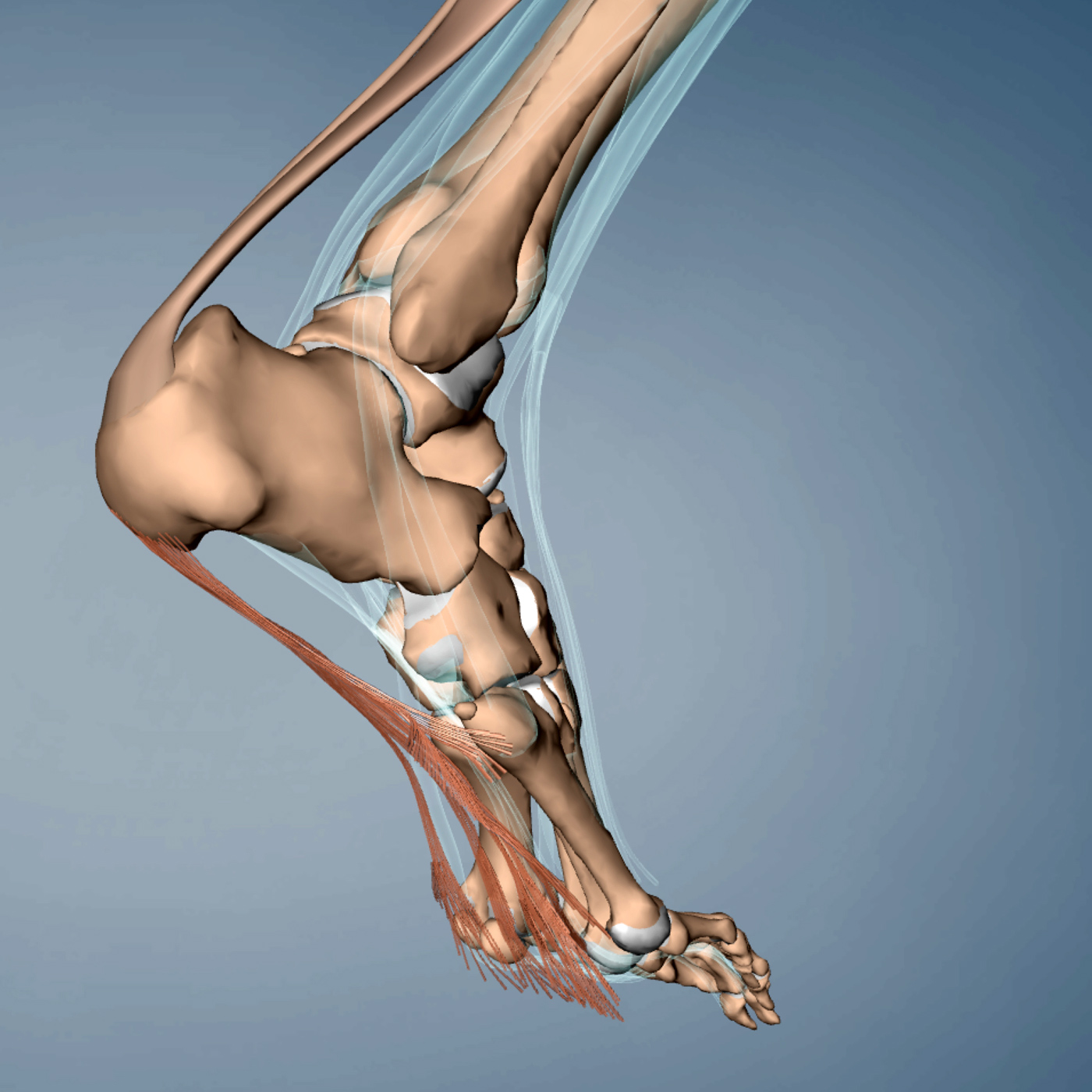
Podcast anatomy image from Advanced Myofascial Techniques, Volume 1. Used under license from Primal Pictures.
- Til Luchau’s “Principles: Leg Knee & Foot” live-online course (join live thru mid-September, or later by recording)
- Whitney Lowe’s site: AcademyOfClinicalMassage.com
- Til Luchau’s site: Advanced-Trainings.com
Sponsor Offers:
- Books of Discovery: save 15% by entering "thinking" at checkout on booksofdiscovery.com.
- ABMP: save $24 on new membership at abmp.com/thinking.
- Handspring Publishing: save 20% by entering “TTP” at checkout at handspringpublishing.com.
About Whitney Lowe | About Til Luchau | Email Us: [email protected]
(The Thinking Practitioner Podcast is intended for professional practitioners of manual and movement therapies: bodywork, massage therapy, structural integration, chiropractic, myofascial and myotherapy, orthopedic, sports massage, physical therapy, osteopathy, yoga, strength and conditioning, and similar professions. It is not medical or treatment advice.)