The Think Wildlife Podcast
171 episodes — Page 3 of 4
Episode 51: Conserving India’s Wildlife through Nature Writing with Neha Sinha
Neha Sinha was once an environmental reporter at The Indian Express. However, she is now one of India’s leading conservationists. Throughout her career, Neha has utilized her aptitude for communication and advocacy to improve policy and safeguard India’s precious wildlife. One of the most prominent campaigns Neha has supported is the Amur Falcon Campaign in Nagaland and Manipur. During their annual winter migration from Siberia to southern Africa, over a million birds roost in Nagaland between November and December. The Doyang Reservoir formed the single largest congregation of the species and is referred to as the Amur Falcon Capital. In 2012, the indiscriminate massacre of Amur Falcons in the Pangti villages in Nagaland’s Wokha District. Over 100,000 falcons were hunted annually and sold to local markets in Nagaland and Assam. Hunters could earn up to $500 within five weeks from this lucrative trade.Fortunately, over a decade later, a revolution has occurred in the region. Much like the hornbills of Nagaland, the Amur falcons are passionately protected by local communities, which once hunted them. In this interview, Neha remembers one of India’s greatest conservation miracles.Neha also elaborates on her work in policy and advocacy. This includes the National Biodiversity Targets for the Government of India and the Wild Life (Protection) Amendment Act 2022. We also discuss about the State of India’s birds and the importance of nature writing for conservation. Lastly, Neha also talks about her book 'Wild and Wilful', which explores the story of 15 iconic Indian species. This includes the Bengal Tiger, King Cobra, elephants, leopards, magarmach, and many more. All views in this podcast are personal. Get full access to The Think Wildlife Podcast at anishbanerjee.substack.com/subscribe
Episode 50: Tackling human-wildlife conflict in the Western Ghats with Dr. Sanjay Gubbi, Wildlife Biologist
The Western Ghats is one of the world’s 36 biodiversity hotspots. Older than the Himalayas, the Western Ghats is home to at least 508 species of birds, 227 reptile species, and 139 mammal species. The region is home to the largest population of Asiatic elephants, with an estimated population of around 11,000 individuals across eight distinct populations. The region is one of the key strongholds for tiger conservation with a population of around 1,200 individuals. Large populations of various other megafauna species are found in the region, including sloth bear, Indian gaur, leopards, Nilgiri Tahr and the Asiatic Wild Dog.Unfortunately, the region’s biodiversity is under immense pressure. The Western Ghat is undergoing rampant habitat loss and fragmentation due to the development of linear infrastructure, such as roads and railways, mining, hydroelectric dams, and monoculture plantations. Other than isolating populations of megafauna, this fragmentation is catalyzing extensive human-wildlife conflict. Changing land use patterns and loss of habitats often result in conflict over resources, such as food and space. Moreover, as megaherbivores, such as gaur and elephants, seasonally migrate across the Western Ghats, there is a high risk of crop depredation, property damage, and even loss of life. Meanwhile, increased human activity in these habitats is leading to increased livestock depredation and loss of lives by carnivores, such as leopards, sloth bears, and even tigers. These lead to retaliatory killings of carnivores. Moreover, the management of animals touted as “man-eaters” often leads to intense political controversy. As megafauna species are on the path to recovery, mitigating human-wildlife conflict is a priority for conservationists in the region. In this episode of the Think Wildlife Podcast, I interview Dr. Sanjay Gubbi, who is one of the leading conservation biologists working in the Western Ghats. He has extensively studied and analyzed patterns of human-wildlife conflict in the region, with a particular focus on tigers, leopards, and elephants. Other than human-wildlife conflict, he has worked extensively to minimize the impact of roads, and vehicular traffic on the biodiversity of the Western Ghats. He played a pivotal role in the banning of night-time traffic along the highways passing through Nagarhole and Bandipur National Parks. His extensive research work, coupled with passionate outreach efforts, has led to the addition of nearly 3,000 square kilometers of forested land to Karnataka’s protected area network. The famous and ecologically crucial Malai Mahadeshwara Wildlife Sanctuary was established based on his work. Tune in to listen more about his illustrious career. Get full access to The Think Wildlife Podcast at anishbanerjee.substack.com/subscribe
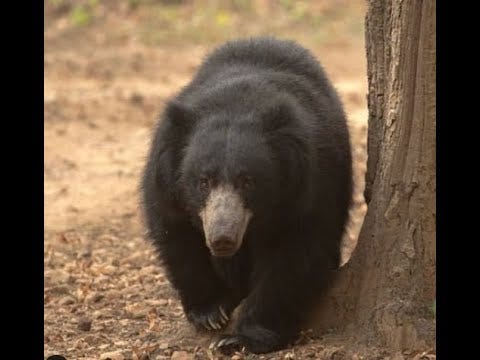
Episode 49: Conserving Gujarat’s Sloth Bears with Nishith Dharaiya, Founder of WCB Research Foundation
The sloth bear is the most widespread of the four bear species found in India. More popularly known as “Baloo” from the Jungle Book, sloth bears are found across a large variety of habitats below an altitude of 1,500m, such as tropical forests, scrubland and grasslands. Sloth bears are regionally extinct in Bangladesh and [are listed as “Vulnerable” by the IUCN Red List due to extensive habitat loss and degradation. Additionally, the rising demand for bear bile in Eastern Asia makes the sloth bear susceptible to the illegal wildlife trade. Historically, sloth bears were used for the disturbing “Dancing Bears” practice by the Kalahadhar Tribe. Fortunately, persistent efforts from NGOs, such as Wildlife SOS has ended this horrific practice and rescued all 600 affected bears.Another major threat to the sloth bear is human-wildlife conflict. Interactions between these bears and humans peak during the flowering of the mahua trees in the summer. The mahua fruit is crucial for the livelihoods of indigenous and tribal communities, as they are used not only as fodder and fuel but also to brew local alcohol. However, sloth bears often forage these fruits during the summer, which often leads to fatal human-bear conflicts in central India. In this episode, I interview Dr. Nishith Dharaiya, the co-founder of the Wildlife Conservation Biology Research Foundation. He is also the co-chair of the IUCN Sloth Bear Expert Team. In this episode, Nishith talks candidly about his conservation and research work on sloth bears in Gujarat over the last few decades. We also revist his PhD on Gir’s lions. Tune in to also learn about the work being done by WCB Research Foundation. Get full access to The Think Wildlife Podcast at anishbanerjee.substack.com/subscribe
Episode 48: The Growing Challenges of Human Carnivore Conflict with Dr. Andrew Stein, Founder and Director of CLAW Conservancies
Over the last few years, the world has celebrated the recovery of various species of large carnivores from the cusps of extinction. This includes the brown bears and gray wolves of North America and Europe, the tigers of South Asia, and the lions and leopards of Africa and Asia. However, much of this recovery has occurred despite rampant habitat fragmentation and degradation. As large carnivores require large territories with an abundance of prey, habitat fragmentation has resulted in significant overlap of the range of large predators and rural communities. With increasing overlapping ranges, human-carnivore conflict is inevitable. Carnivores are more like to predate upon livestock, which results in huge financial losses for the affected rural communities. In retaliation, large carnivores are often murdered by these communities. It is therefore critical to foster human-wildlife coexistence by socially and financially uplifting the communities living with wildlife. This can be in the form of alternative livelihood projects, such as wildlife ecotourism, and utilizing tourism revenue for community development.In this interview, I speak to Dr. Andrew Stein who has extensively studied human carnivore conflict in Africa. He is also the founder of CLAW Conservancies and is working on coexistence projects, involving lions, leopards, and wolves. Tune in to learn more!If you enjoyed this podcast, do not forget to share and subscribe! You can also listen to The Think Wildlife Podcast on other platforms, such as YouTube, Spotify, and iTunes. Get full access to The Think Wildlife Podcast at anishbanerjee.substack.com/subscribe
Episode 47: Rewilding Scotland with Peter Cairns, Executive Director, SCOTLAND: The Big Picture
Once upon a time, Scotland was amongst the most biodiverse regions of Europe. However, over the last few centuries, Scotland, like the rest of the United Kingdom, lost most of its biodiversity. Megafauna, such as the European bison, brown bear, gray wolf, and European beavers, were all hunted to extinction. Moreover, the Scottish Highlands have also experienced rampant habitat degradation and loss due to agricultural expansion and urbanization. With a lack of large predators, herbivores, many of which have been introduced, have proliferated across the United Kingdom to unsustainable populations, further exacerbating habitat degradation.However, there is still hope for Scotland’s wilderness. Over the last half-century, various reintroduction projects have proven to have found success, not only in Scotland but across the UK. This includes the reintroduction of red kites and white-tailed eagles in the late 20th century. More recently, beavers have made a strong comeback to the region.In this episode, I interview Peter Cairns, who is the Executive Director of SCOTLAND: The Big Picture. We talk about their valiant efforts to reintroduce the Eurasian Lynx to the Scottish Highlands. We also discuss the possibility of wolves and bears making a return to the country. We also talk in-depth about the organization’s projects, including the Carignoms Cranes and Painting Scotland Yellow campaigns.If you enjoyed this episode, do not forget to share and subscribe! You can also listen to The Think Wildlife Podcast on other platforms, such as YouTube, Spotify and iTunes. Thanks for reading The Think Wildlife Podcast! Subscribe for free to receive new posts and support my work. Get full access to The Think Wildlife Podcast at anishbanerjee.substack.com/subscribe
Episode 46: Protecting Rainforests with Bioacoustics and Artifical Intelligence with Bourhan Yassin, Founder of Rainforest Connection
Over the last few years, Artificial Intelligence has evolved immensely. Not surprisingly, advanced AI and machine learning algorithms are increasingly being incorporated in sectors across the world. One particular sector, which AI is revolutionizing is wildlife conservation! With an increasingly urgent demand for effective and affordable conservation action, scientists, NGOs, and governments are turning to AI and related technologies for solutions.The earliest and most ubiquitous adoption of AI in conservation is the use of remote sensing to monitor natural ecosystems. Remote sensing has proved to be a far more effective and cost method than manual alternatives, to not only predict and detect threats to ecosystems but also collect high volumes of data for ecological research. Around the world, conservationists are incorporating a wide plethora of remote sensing technology, such as satellites, UAVs, camera traps, and camera traps. These technologies aid in the monitoring of wildlife populations and diseases, analysis of vegetation, the detection of forest fires and environmental impact assessments.One particular technology becoming increasingly popular for conservationists is bioacoustics. Countless species of wildlife produce sound for communication and navigation, hence broadcasting immense amounts of information about, not only themselves but their entire population in their environment. Additionally, acoustic monitoring helps in the detection of illegal logging and poachers. The use of acoustic monitoring systems allows researchers and conservationists to tap into this gold mine of ecological data. Moreover, other than being cost-effective, acoustic monitoring systems also can cover larger radii than camera traps, hence allowing for the collection of larger quantities of data.In this episode, I interview Bourhan Yassin. He is the Founder and CEO of Rainforest Connection, one of the leading conservation technology start-ups in the world. We discuss in depth how bioacoustics and AI are revolutionizing conservation and some of the projects the organization is involved with!If you enjoyed this podcast, do not forget to share and subscribe! You can also listen to The Think Wildlife Podcast on other platforms, such as YouTube, Spotify, and iTunes. Get full access to The Think Wildlife Podcast at anishbanerjee.substack.com/subscribe
Episode 45: Uncovering India’s Free Ranging Dog Problem with Chandrima Home
India is home to over 65 million free-ranging dogs. The explosion in free-ranging dog populations around the country has stemmed from poor waste management, uncomprehensive pet ownership laws, and the vulture crisis. Unfortunately, this has led to an ecological crisis. Countless endangered species, such as the Great Indian Bustard, Black-Necked Cranes, antelopes and deer regularly fall victim to the world’s most populous terrestrial carnivore. Meanwhile, free-ranging dogs have catalyzed the transmission of deadly viruses, such as canine distemper virus, to carnivores such as wolves, dholes and even lions. Unfortunately, human society has not been spared as the dog menace has exacerbated India’s battle against rabies. In this episode, I interview Chandrima Home to understand India’s free-ranging dog menace. We discuss the causes and potential solutions to the menace. Additionally, Chandrima elaborates on her extensive research on the ecological impacts of free-ranging dogs in India. Get full access to The Think Wildlife Podcast at anishbanerjee.substack.com/subscribe

Episode 44: Saving Gorillas, Elephants and Marine Turtles with Adam Henson, Wild Earth Allies
Wild Earth Allies protects vital areas of our natural world for the benefit of wildlife, habitats, and people by inspiring collaborative action. For decades, the organization has partnered with grassroots conservationists to conserve some of the most at-risk species around the world. These include endangered Asian elephants in Cambodia, critically endangered Grauer's gorillas in the Democratic Republic of the Congo, and threatened marine turtles in Central America. Join Adam Henson, the Conservation Director of Wild Earth Allies, as we discuss more about the organization’s projects.If you enjoyed this episode, do not forget to share and subscribe! You can also listen to The Think Wildlife Podcast on other platforms, such as YouTube, Spotify and iTunes. Get full access to The Think Wildlife Podcast at anishbanerjee.substack.com/subscribe
Episode 43: Protecting Asia's Rhinos with Markus Hofmeyr, Director of the Rhino Recovery Fund
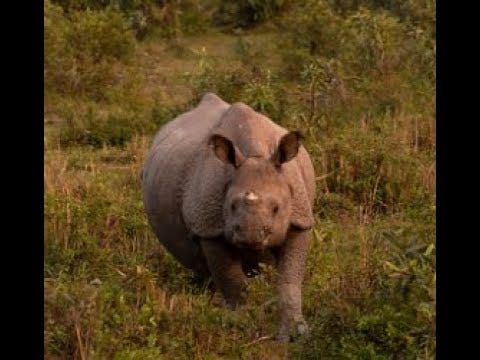
On this episode of The Think Wildlife Podcast, I interview Markus Hofmeyr, who is the Director of the Rhino Recovery Fund (RRF). Launched in 2020 by the Wildlife Conservation Network, the RRF aims to protect rhinos from wildlife crime while also restoring their landscapes. The RRF is working towards the conservation of all five species of rhinos across Africa and Asia, aiming to tackle the illegal rhino horn trade and habitat loss. Furthermore, RRF invests in projects that not only benefit local communities but also involve them in rhino conservation.In this episode, Markus and I cover the great work that the RRF supports across both continents. We also discuss in detail the miraculous recovery of the Greater One-Horned Rhino and the way forward for their conservation. Additionally, we talk about the conservation of the Javan, Sumatran and Black Rhino.If you enjoyed this episode, do not forget to share and subscribe! You can also listen to The Think Wildlife Podcast on other platforms, such as YouTube, Spotify and iTunes. Get full access to The Think Wildlife Podcast at anishbanerjee.substack.com/subscribe
Episode 42: Conserving Arctic's Polar Bear with Krista Wright, Executive Director, Polar Bears International
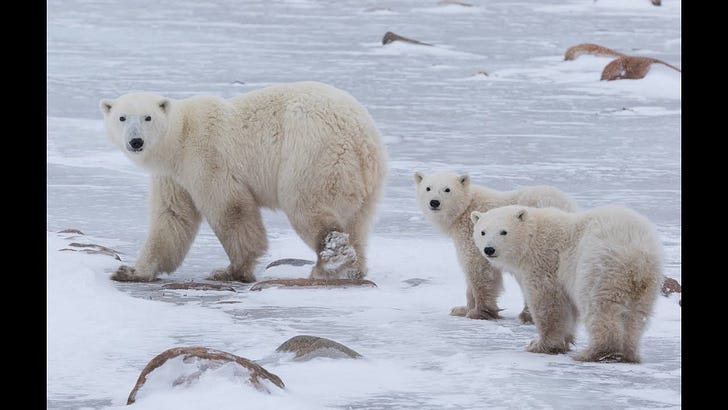
One species of megafauna particularly impacted by climate change, is the polar bear. Considered “Vulnerable” by the IUCN Red List, less than 31,000 individual bears roam the Arctic and surrounding regions of Greenland, Canada, Alaska, Russia, and Svalbard. As Polar Bears are pagophilic (species that live on ice), they are severely threatened by the decline in sea ice due to climate change. A decline in sea ice is particularly problematic as it reduces access of the bears to favored marine prey species, hence increasing the risk of malnutrition and starvation. Additionally, a reduction of sea ice is leading to increased human-wildlife conflict as bears spend more time on land. Other than climate change, Polar Bears are threatened by pollution, energy development, and hunting by both native and non-native people for their coats.Polar Bears are not only the largest species of bear but also the largest terrestrial carnivore, with males reaching up to 800kgs. Their range often overlaps with the closely related brown bear. There have been records of the two species interbreeding.On this episode of the Think Wildlife Podcast, I interview Krista Wright, the Executive Director of Polar Bear International. We discuss not only the conservation of the Polar Bear but also the great work the organization is doing to conserve the species. If you enjoyed this podcast, do not forget to share and subscribe! You can also listen to The Think Wildlife Podcast on other platforms, such as YouTube, Spotify and iTunes. Get full access to The Think Wildlife Podcast at anishbanerjee.substack.com/subscribe
Episode 41: Painting a Bright Future for Africa's Wild Dogs with Gregory Rasmussen, Founder of Painted Dog Research Trust
The African Wild Dog, more aptly known as the Painted Dog, is the largest wild canid species found in the entire African continent. The species is one of the rarest large carnivores in the world with the population of the species crashing from around 500,000 a hundred years ago, to an estimated 6,600 adult individuals today. It is for this reason that the species is listed as “Endangered” on the IUCN Red List. In the 20th century, Painted Dogs were immensely persecuted by farmers due to supposed livestock depredation by the species. Currently, the species is primarily threatened by habitat fragmentation, particularly as a consequence of the development of roads and other linear infrastructure within their range. Not only does this increase the number of dogs lost to road kill but increases the risks of human-wildlife conflict. Additionally, the social nature of the species, makes the Painted Dog highly susceptible to diseases, such as rabies, distemper and parvo-virus, often transmitted from free-ranging dogs. In this episode of The Think Wildlife Podcast, I interview Dr. Gregory Rasmussen, who is the Founder of Painted Dog Research Trust. Gregory is one of the leading scientists working on painted dogs in Africa. We discuss the conservation of the Painted Dogs and a variety of PDRT’s projects, which include the Kazungula Road project, dog collaring, and den protection initiatives. If you enjoyed this podcast, do not forget to share and subscribe! You can also listen to The Think Wildlife Podcast on other platforms, such as YouTube, Spotify and iTunes. Get full access to The Think Wildlife Podcast at anishbanerjee.substack.com/subscribe
Episode 40: How do we restore the world's forests?
Deforestation is one of the leading threats to biodiversity globally. The world is losing over 10 billion trees annually. Over half the three trillion trees on our planet have been lost. But why should you care? Because YOU are a victim of deforestation.Over 1.6 billion people directly rely on forests for subsistence, in the form of food, fuel, medicine, bushmeat, and fodder for livestock grazing. Moreover, even urban populations rely on forests for crucial ecosystem services, such as reliable clean water, climate regulation, air purification and productive soils. Unfortunately, deforestation and land degradation cost the world $6.3 trillion every year.Moreover, forests are critical for biodiversity and tackling climate change. Globally, 68% of mammal species and 75% of bird species are found in forests. Additionally, forests play a critical role in carbon regulation in the atmosphere, hence stabilizing climatic patterns globally.In this episode, I interview April Bagwill, the program officer of Trillion Trees, a collaboration between three leading wildlife NGOs, BirdLife International, Wildlife Conservation Society, and the World Wildlife Fund. The initiative aims to restore 20 million hectares of forests while protecting 105 million hectares of forests under improved management systems. In this episode, we discuss the principles, challenges and process of restoration while also dwelling on the organizations’ projectsIf you enjoyed this podcast, do not forget to share and subscribe! You can also listen to The Think Wildlife Podcast on other platforms, such as YouTube, Spotify and iTunes. Get full access to The Think Wildlife Podcast at anishbanerjee.substack.com/subscribe

Episode 39: Creating a future for the Iranian Cheetah with Morteza Pourmirzai, CEO at Iranian Cheetah Society
The cheetah is symbolic of the African wilderness. However, once upon a time, the world’s fastest mammal, used to roam the plains of Asia, with their range extending from the Middle East across to northern parts of India. Unfortunately, the Asiatic Cheetah subspecies is now considered “Critically Endangered” by the IUCN Red List. Reports estimate, that there are less than 40 individuals left in the wild, with their entire range being restricted to the eastern-central arid region of Iran. The species has fallen victim to the rampant destruction of their grassland habitat and human-wildlife conflict. Additionally, hunting of the Asiatic Cheetah significantly reduced the wild population. Other than being hunted for the illegal wildlife trade, cheetahs were also hunted as a sport, particularly during the Mughal Empire.In this episode, I speak to Morteza Pourmirzai who is the CEO of the Iranian Cheetah Society. We talk in-depth about the organization’s extensive conservation efforts, challenges, and future plans. We also talk about the work the organization is doing with the other four major carnivores found in Iran, which are the gray wolf, Eurasian lynx, Persian leopard and brown bear.If you enjoyed this podcast, do not forget to share and subscribe! You can also listen to The Think Wildlife Podcast on other platforms, such as YouTube, Spotify and iTunes. Get full access to The Think Wildlife Podcast at anishbanerjee.substack.com/subscribe

Episode 38: Conserving Sri Lanka's Fishing Cats with Anjallee Prabhakaran from Small Cat Advocacy and Research
The Fishing Cat is a medium sized cat, discontinuously distributed across South and Southeast Asia. Currently, their range extends from India to Bangladesh, Cambodia, Myanmar, Thailand, and Sri Lanka. In India, the species is found in Odisha, Andhra Pradesh, Rajasthan and West Bengal. In fact, the fishing cat is the State animal of West Bengal. A study from Keoladeo National Park found that fish compromised nearly 75% of the fishing cat's diet of the fishing cat, a testament to the species name.The fishing cat is listed as “Vulnerable” by the IUCN Red List. The species is predominantly found in lowland wetland habitats, such as mangroves, swamps, rivers, and streams. Unfortunately, the species is threatened by rampant habitat loss as wetlands are either severely polluted or converted for agricultural use. Additionally, mangroves in the state of Andhra Pradesh are being converted to aquaculture ponds, further exacerbating habitat loss. In some regions, the species is a victim of human-wildlife conflict due to competition for fish stocks with local fishermen.In this episode, I discuss the conservation of the fishing cat with Anjallee Prabhakaran from Small Cat Advocacy and Research (SCAR). This NGO, which is based in Sri Lanka is a part of the Fishing Cat Conservation Alliance. We talk about all the great work the team is doing towards the conservation of, not only the fishing cat but other small cats on the island nation.If you enjoyed this podcast, do not forget to share and subscribe! You can also listen to The Think Wildlife Podcast on other platforms, such as YouTube, Spotify, and iTunes. Get full access to The Think Wildlife Podcast at anishbanerjee.substack.com/subscribe
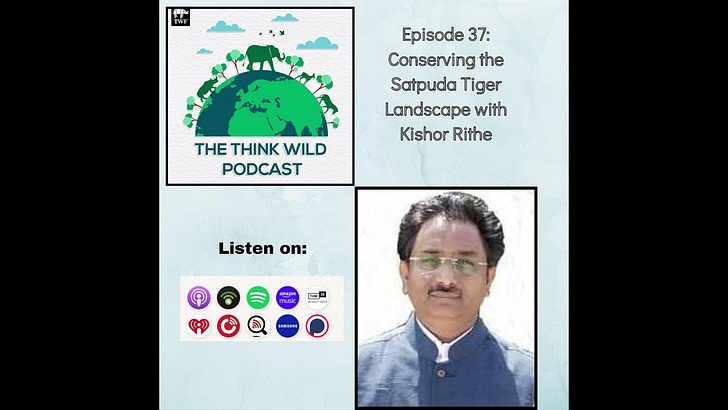
Episode 37: Conserving the Satpuda Tiger Landscape with Kishor Rithe, Founder of the Satpuda Foundation
The story of the Bengal Tiger is probably the pinnacle of India’s conservation miracles over the last few decades, especially following the enactment of Project Tiger. In fact, over the last 15 years, India’s tiger population has more than doubled. While this is promising, much work remains, as habitats continue to become fragmented, which fosters Human-Wildlife Conflict. Meanwhile, the threat of poaching in India still looms large. Additionally, the aspirations of nearly 300 million people who depend on India’s forests for sustenance are also of utmost importance. One particular landscape that has been at the forefront of the tiger’s miraculous recovery is the Central Indian Tiger Landscape. As per the 2023 census, the region, which spreads across Madhya Pradesh, Maharashtra, and Chattisgarh, is home to over 700 tigers, which is almost a quarter of the global population. Conservationists, NGOs, and the government have been involved in a plethora of measures to bolster tiger populations in this region. This includes the restoration of degraded habitat, the protection of wildlife corridors, the creation of wildlife underpasses across highways, and the development of ecotourism. In this episode, I interview Mr. Kishor Rithe, who is the founder of the Satpuda Foundation. As its name suggests, the organization primarily works in the Satpuda Tiger Landscape. This includes the forests of Kanha, Satpura Tiger Reserve, Pench Tadoba-Andhari Tiger Reserve, Melghat Tiger Reserve, and Navegaon-Nagzira. Around 300 tigers are found in this landscape.Through our discussions, we cover the work the organization is doing regarding tackling human-tiger conflict, voluntary resettlement of villages in tiger reserves, habitat restoration, nature education, and alternative livelihoods. We also talk about Kishor’s new role as the Director of the Bombay Natural History Society, which is the oldest wildlife conservation organization in India. The organization is leading research and conservation of various avifauna species, including Great Indian Bustards, Lesser Floricans, Amur Falcon, and various species of Vultures.If you enjoyed this episode, please do share and subscribe to this podcast! You can also listen to The Think Wildlife Podcast on other platforms, such as YouTube, Spotify, and iTunes. Get full access to The Think Wildlife Podcast at anishbanerjee.substack.com/subscribe

Episode 36: Conserving India's Sacred Groves with Archana Godbole, Founder, Applied Environmental Research Foundation
Sacred Groves are amongst the finest examples of in-situ conservation. Often as large as 500 hectares, Sacred Groves are undisturbed and communally protected forest patches that are dedicated to local folk deities. Social traditions which embody both social and ecological values encourage the preservation of Sacred Groves. As a result, these groves contain an invaluable gene pool and also conserve immense biodiversity. Hunting and logging are banned in Sacred Groves.Official records suggest that there are around 13,000 Sacred Groves spread across Rajasthan, Meghalaya, Madhya Pradesh, and the Western Ghats of Karnataka, Maharashtra. However, a few studies suggest that there could be as many as 100,000 to 150,000 Sacred Groves in the country.Unfortunately, Sacred Groves are severely threatened by urbanization, over-exploitation of resources, and environmental destruction due to religious practices. On this episode, I interview Archana Godbole, the founder of Applied Environment Research Founder (AERF), on the conservation of Sacred Groves. AERF has worked extensively to preserve the Sacred Groves of Ratnagiri District of Maharashtra in the Northern Western Ghats. If you enjoyed this episode, do not forget to share and subscribe! You can also listen to The Think Wildlife Podcast on other platforms, such as YouTube, Spotify and iTunes. Get full access to The Think Wildlife Podcast at anishbanerjee.substack.com/subscribe
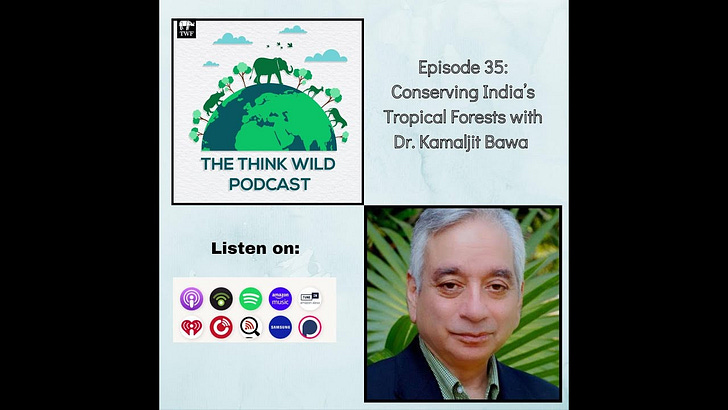
Episode 35: Conserving India's Tropical Forests with Dr. Kamaljit Bawa, Founder of ATREE
India is amongst the most biodiverse countries in the world, with a plethora of habitats, including tropical forests, grasslands, arid deserts, mangroves, and deciduous mountain forests. However, while much of India’s megafauna species have recovered miraculously from the brink of extinction, a major issue looms large. That is the sustainable use of the country’s tropical forests. Reports suggested that between 250 - 300 million of India’s rural population rely on India’s forests for some form of sustenance. This can include bushmeat, fodder, bamboo, and a range of non-timber forest products. In fact, 70% of India’s rural population relies on fuelwood to meet their domestic energy needs.In this episode, I interview Dr. Kamaljit Bawa to discuss the various forest management strategies in India and how forest conservation can be utilized to alleviate poverty. Dr. Bawa is the founder of the famed Ashoka Trust for Research in the Environment and Ecology. Beyond this, he has had a very decorated career. He is currently a distinguished professor of Biology at the University of Massachusetts, Boston. He is an elected member of the American Academy of Arts and Science and the American Philosophical Society.If you enjoyed this episode, do not forget to share and subscribe! You can also listen to The Think Wildlife Podcast on other platforms, such as YouTube, Spotify and iTunes. Get full access to The Think Wildlife Podcast at anishbanerjee.substack.com/subscribe
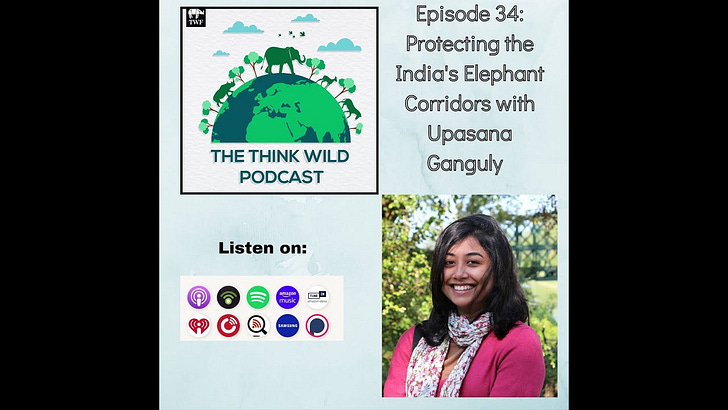
Episode 34: Protecting the India's Elephant Corridors with Upasana Ganguly from the Wildlife Trust of India
Ecosystems around India are becoming increasingly fragmented. This is particularly concerning for megafauna species, such as tigers and elephants. Landscape connectivity is a vital component of megafauna conservation in India. This is because the dispersal of megafauna outside of existing reserves is critical to maintaining the genetic diversity of the larger population. The immense fragmentation between tiger populations has resulted in the increased prevalence of melanism, a phenomenon associated with inbreeding depression. Moreover, preserving wildlife corridors between protected areas is crucial in preserving biodiversity while also minimizing human-wildlife conflict.One of the leading projects aimed at promoting landscape connectivity in India is the “Rights of Passage” program established by the Wildlife Trust of India, in partnership with the Government of India. It aims to secure connectivity and safe passage for large mammals like elephants and tigers across their identified corridors. In this episode, I interviewed Upasana Ganguly, the Manager of “The Rights of Passage” project. We talk in detail about the importance of wildlife corridors, the threats, and the conservation of these corridors. You can also listen to The Think Wildlife Podcast on other platforms, such as YouTube, Spotify and iTunes. Get full access to The Think Wildlife Podcast at anishbanerjee.substack.com/subscribe
Episode 33: Creating a Nature Positive Future with Marco Lambertini
Over the last decade, carbon neutrality and net zero have become the focus across governments, industries, corporations, scientists, and environmentalists. However, over the last few years, the linkage between the carbon and biodiversity crisis has come into the limelight. Restoring biodiversity and ecosystems around the world has become a crucial part in tackling, not only the climate crisis but also in alleviating poverty. For this reason, various global initiatives have come into force to restore biodiversity globally. In fact, the 2020s has been designated as the UN Decade of Ecosystem Restoration.One such project is The Nature Positive Initiative. The initiative aims to ‘Halt and Reverse Nature Loss by 2030 on a 2020 baseline, and achieve full recovery by 2050’. It will work alongside the UN Convention on Biological Diversity's Kunming-Montreal Global Biodiversity Framework, and overarching mission to halt and reverse nature loss. On this episode of The Think Wildlife Podcast, I speak to Marco Lambertini, who is the Convenor of The Nature Positive Initiative. We talk about the key concepts related to this initiative, potential challenges, and its importance!If you enjoyed this podcast, do not forget to share and subscribe! You can also listen to The Think Wildlife Podcast on other platforms, such as YouTube, Spotify and iTunes. Get full access to The Think Wildlife Podcast at anishbanerjee.substack.com/subscribe
Episodes 32: Farmers for Forests, with Krutika Ravishankar, Co-Founder
One of the leading causes of biodiversity loss is habitat degradation. In terrestrial landscapes, this is primarily through rampant deforestation. Unfortunately, the direct impacts of deforestation and land degradation extend beyond the realms of biodiversity and climate change. Rural and tribal communities face the brunt of the socioeconomic consequences of deforestation. This ranges from increased human-wildlife conflict, increased soil erosion and hence flooding, poorer agricultural yield, loss of livelihoods, and increased food insecurity.However, tribal and rural communities can become the torchbearers for afforestation. Ecosystem restoration can not only help bolster biodiversity and mitigate the climate crisis but also alleviate poverty. Through a Payment for Ecosystem Services Model, farmers can be incentivized to protect existing and grow new forests on barren land to improve local ecology while also generating income. This is the vision of Farmers for Forests, a non-profit social enterprise based out of Pune, India. They aim to restore 30,000 acres of degraded land into forests through this method by 2030. This will sequester 25 million tonnes of CO2 annually, which is equivalent to the emissions of 8 million Indians. On this episode, I speak to their co-founder Krutika Ravishankar about the wonderful work the organization is involved with!If you enjoyed this podcast, do not forget to share and subscribe! You can also listen to The Think Wildlife Podcast on other platforms, such as YouTube, Spotify and iTunes. Get full access to The Think Wildlife Podcast at anishbanerjee.substack.com/subscribe
Episode 31: Saving India's Grasslands with The Grasslands Trust
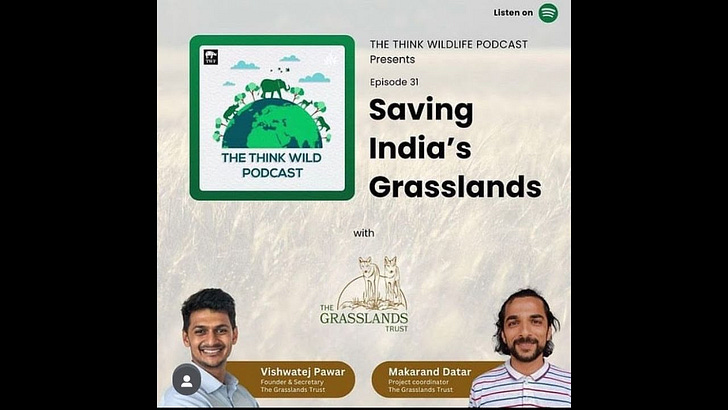
India’s grasslands are amongst the most biodiverse in the world. From wolves and hyenas to blackbucks and gazelle and from the Great Indian Bustard to various species of cranes, these grasslands are pristine ecosystems. Moreover, grasslands play a vital role in the fight against climate change due to the large amongst of carbon sequestration they perform.However, grasslands are under severe pressure. Unfortunately, considered as wastelands, only about 3% of India’s grasslands are protected. As a result, these ecosystems are being degraded by livestock overgrazing, agricultural expansion, renewable energy projects, and infrastructure development.One organization working passionately to preserve these vital ecosystems is The Grasslands Trust. Based in Pune, the organization works extensively on grassland restoration, awareness programs, and biodiversity monitoring. Earlier in 2023, the organization found the first genetic evidence of wolf-dog hybridization in India from Pune’s grasslands. Join me on this episode of The Think Wildlife Podcast, as I speak to Vishwatej Pawar and Makarand Datar from TGT about grasslands, their conservation, and various projects the organization is working on!If you enjoyed this podcast, do not forget to share and subscribe! You can also listen to The Think Wildlife Podcast on other platforms, such as YouTube, Spotify, and iTunes. Get full access to The Think Wildlife Podcast at anishbanerjee.substack.com/subscribe

Interview 15: The History of the WILD Foundation with Vance Martin
On Episode 15, I interview Vance Martin, looking back on his 40 years as president of The Wild Foundation. We cover a wide breadth of conservation topics, including rewilding, Nature Needs Half, COP15 and the roles of indeginious communities in conservation. Tune in to also learn about various of The Wild Foundation's intiatives, including the Rewilding Alliance, the Wolrd Wilderness Campagin and Coalition Wild. The Think Wildlife Podcast is an intiaitve under Think Wildlife Foundation, a student led organization aiming to understand the illegal wildlife trade while also incentivising conservation through alternative livelihood projects. Get full access to The Think Wildlife Podcast at anishbanerjee.substack.com/subscribe
Episode 30: The History and Future of Tiger Conservation in India with Dr. Ullas Karanth - Founder, Centre for Wildlife Studies
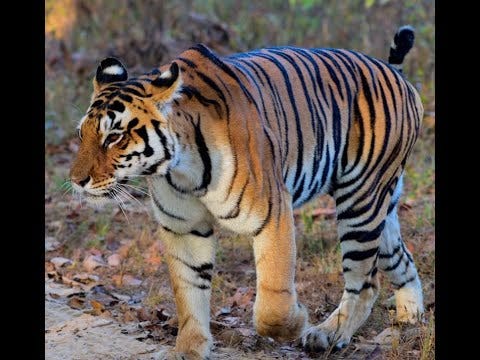
In 2023, India celebrated a major milestone in conservation. The 2022 tiger census yielded an estimated population of around 3,600 tigers, more than double of the 2010 numbers. Ever since the inception of Project Tiger in 1974, tigers, alongside various other megafauna species, including elephants, rhinos, and lions, have recovered from the brinks of extinction.Unfortunately, it is too early to celebrate. India’s wildlife faces ever-evolving challenges in the world’s largest democracy and fastest-growing economy. Rampant habitat fragmentation and degradation remain a major threat to India’s tigers. Other than fostering human-tiger conflict, this leads to significant inbreeding, which is evident through an increase in melanism in the wild. Moreover, much of the growth in tiger populations have occurred in patches that have been thought to be at its carrying capacity. Meanwhile, large areas of potential tiger habitat, particularly in the eastern states of Jharkhand, Andhra Pradesh, Odisha and West Bengal remain void of tigers due to poor management.On this episode of The Think Wildlife Podcast, I interview Dr. Ullas Karanth, one of the country’s leading and pioneering tiger biologists. Though trained officially as an engineer, Dr. Karanth has spent much of his career studying tigers in their natural habitat, especially in the Malanad Landscape of Karnataka. He also pioneered the scientific application of camera trapping techniques of capture-recapture sampling as the foundation of scientific estimation of tiger population densities in forests. In 1984, he established the Centre for Wildlife Studies, which is one of the leading conservation organizations in India. In this interview, we cover his illustrious career and stories from the field, which you can read more about in his book, titled “Among Tigers: Fighting to Bring Back Asia's Big Cats”. We also talk about solutions to human-tiger conflict, voluntary resettlement of forest settlements, and the management of “man-eater” tigers. We also talk about flaws in tiger conservation in India and the way forward.If you enjoyed this podcast, do not forget to share and subscribe! You can also listen to The Think Wildlife Podcast on other platforms, such as YouTube, Spotify and iTunes. Get full access to The Think Wildlife Podcast at anishbanerjee.substack.com/subscribe
Episode 29: Conserving India's Wildlife from Corbett to Satpuda with Kedar Gore, Director of The Corbett Foundation
The Corbett Foundation (TCF) is amongst India’s largest and oldest wildlife conservation organizations. It was established by the late Mr. Dilip D. Khatau and his wife, Mrs. Rina Khatau, on April 22, 1994. TCF works towards wildlife conservation in tandem with the sustainable development of forest-dwelling communities. Mr. Khatau was a former Member of the National Board for Wildlife in India and a Member of the Indian Wildlife Business Council of the Confederation on Indian Industry. Over the last 25 years, TCF has expanded its work well beyond the Corbett Foundation. In fact, their project encompasses a wide range of species across a diversity of landscapes. This includes the Critically Endangered Great Indian Bustard in the Rann of Kutch, tiger conservation in the Satpuda Tiger Landscape, and cheetah-human coexistence in the Kuno Landscape. They also work extensively to involve local communities in conservation through various alternative livelihood and outreach programs. In this episode of The Think Wildlife Podcast, I interview Kedar Gore, the Director of The Corbett Foundation. We talk about the conservation of wildlife, grassland restoration, the issue of free-ranging dogs, and some of their special initiatives!If you enjoyed this podcast, do not forget to share and subscribe! You can also listen to The Think Wildlife Podcast on other platforms, such as YouTube, Spotify and iTunes. Get full access to The Think Wildlife Podcast at anishbanerjee.substack.com/subscribe
Episode 28: Understanding the Illegal Wildlife Trade with Alice Pasqualato
With an annual turnover of USD 199 million, the illegal wildlife trade is the fourth largest illicit market in the world, after drugs, arms, and human trafficking. Amongst all known threats to wildlife, the illegal trade and consumption of wildlife is amongst the most significant and destabilizing. Moreover, the negative consequences of wildlife crime are not limited to natural ecosystems. Wildlife crime is organized, and transnational, is fuelled by corruption, and impacts local communities, national economies, security, and public health. The book “Wildlife Trafficking : A Crime Against Environment” by Siddartha Sarkar covers the economics of wildlife crime in detail.In fact, wildlife crime has been the root cause of various pandemics, including COVID-19, due to increased exposure to zoonotic diseases. Despite the devastation associated with wildlife crime, there is no global agreement on wildlife crime, and existing wildlife trade laws are not adequately enforced.One organization working towards improving the policy around wildlife crime is The Global Initiative to End Wildlife Crime (EWC), founded and chaired by John Scanlon AO, former Secretary General of CITES. EWC is an alliance of individuals and organizations that support the need for these law reforms. On this episode of The Think Wildlife Podcast, I speak to Alice Pasqualato, who is the policy advisor of EWS. We talk about all the great work EWS is doing to tackle wildlife crime. This includes the formation of the Pandemics Treaty and the addition of a Protocol to the UN Convention against Transnational Organised Crime (UNTOC).You can also listen to The Think Wildlife Podcast on other platforms, such as YouTube, Spotify and iTunes. Get full access to The Think Wildlife Podcast at anishbanerjee.substack.com/subscribe

Episode 27: Rewilding Europe with Frans Schepers
With a growing consensus on the importance of nature-based solutions in tackling the climate crisis, one particular ecological concept has become highly prevalent. That is rewilding. Across the world, landscapes and species are making a return. This includes the Southern White Rhinos of South Africa, the Bengal Tiger and Asiatic Lion of India, and the wolves of Yellowstone National Park. Europe also has become the forebearer of the rewilding movement, with various megafauna making a comeback from the brink, including brown bears, wolves, beavers, and bison. However, rewilding is not limited to only the revival of endangered species.So, what exactly is rewilding? It is a form of ecological restoration that aims, to not only bolster biodiversity but also restore natural processes. It differs from conventional ecological restoration due to the minimalistic human interventions involved in this process. Rewilding aims to produce dynamic, yet self-regulating and self-sustaining ecosystems with near pre-human levels of species diversity. The movement focuses on the conservation of the “3-C’s” - cores, corridors, and carnivores. Rewilding finds its roots in a continental-scale effort in North America and over the last three decades has expanded across all continents. To learn more about the history and concept of rewilding, do check out the pioneering book “Rewilding: The Radical New Science of Ecological Recovery” by Cain Blythe and Paul Jepson.On this episode of The Think Wildlife Podcast, I speak to Frans Schepers, the co-founder and Executive Director of Rewilding Europe, one of the leading rewilding organizations globally. We talk about the principles of rewilding, the challenges associated, the role of megaherbivores and the various projects the organization is involved with. We also briefly talk about rewilding in the United Kingdom.If you enjoyed this podcast, do not forget to share and subscribe! You can also listen to The Think Wildlife Podcast on other platforms, such as YouTube, Spotify and iTunes. Get full access to The Think Wildlife Podcast at anishbanerjee.substack.com/subscribe

Interview 16: Saving the Elusive Pygmy Hog with Dhritiman Das
Dr. Dhritiman Das is a scientisit at the Durrell Wildlife Conservation Trust studying the world's smallest pig - the Pygmy Hog. This highly endangered species is found in the grasslands of Assam, with Manas and Kaziranga National Parks being strongholds. Durrell Wildlife Conservation Trust is working extensively to tackle the loss of the their grassland habitat, alongside the reintroduction of captive bred populations into the wild. Get full access to The Think Wildlife Podcast at anishbanerjee.substack.com/subscribe

Interview 10: Using AI for Sacred Groves with Monisha Krishna
The Sacred Groves provides a platform for environmentally sensitive individuals to support the conservation of indigenous natural forests and biodiverse habitats globaly. Using advanced analytics, smart contracting and contempary forest management practices, these forests will come under the protection of millions of inspired individuals.In Episode 10, we speak to Monisha Krishna about the idea behind The Sacred Groves, the challenges and problems of restoration, and why preservation is as important as restoration. Get full access to The Think Wildlife Podcast at anishbanerjee.substack.com/subscribe

Interview 9: Creating India’s First Private Wildlife Sanctuary with Pamel Malhotra
Only 3% of India's land surface is classified as a Protected Area. It is no surprise, therefore, that large populations of megafauna, including wolves, elephants, leopards and even lions, are found outside wildlife sanctuaries. Human wildlife conflict is inevitable. To counter this, a private-public model, much like what exists in the African continent, is required to protect India's wildlife. One such example if the Save Animal Intiative in the Kodagu District of Karnataka. Touted as India's first private wildlife sanctuary was founded by Dr. Anil Kumar Malhotra and his wife, Pamela Malhotra in 1991. What started as 55 acres sanctuary has expanded to over 300 acres. The sanctuary is now home to tigers, leopards, elephants, gaur and various species of hornbills. In Episode 9, I talk to cofounder, Pamela, about the history of this sanctuary and how the couple bought and restored degraded agricultural land into pristine tropical rainforest. We also discuss the the potential of private public partnership, the future for ecological restoration and rewilding in India and associated challenges.. Get full access to The Think Wildlife Podcast at anishbanerjee.substack.com/subscribe

Interview 7: Freeing Shankar, India’s Only African Elephant with Nikita Dhawan
In Episode 7, join hosts Anish, as he speaks to Nikita Dhawan on her very ambitious Free Shankar Campaign. Shankar is India's only African Elephant, who is currently in captivity at Delhi Zoo. Like 3,000 other captive elephants in India, Shankar suffers severly from isolation, poor living conditions and countless health issues. Nikita's ambitious project hopes to, first, release Shankr from Delhi Zoo, and then transport him to a rehablitation centre in Africa. The campaign has recieved overwhelming support in the form of an online petition. In fact, the case is also being heard at the Supreme Court. This is certainly a very valiant effort from Nikita, who at such a tender age.Nikita is the founder of Youth For Animals, a student led animal activism group. Other than fighting for Shankar, she is also the Youth Ambassador for the Born Free Foundation and an upcoming student at Stamford University. Get full access to The Think Wildlife Podcast at anishbanerjee.substack.com/subscribe

Interview 6: Upskilling for Conservation with Adam Barlow
Our guest for Episode 6 of Think Wildlife Podcast is Adam Barlow, founder and Executive Director of WildTeam Conservation, one of the leading conservation educational platforms in the world. Prior to WildTeams, Adam conducted extensive research on the tigers of Sunderbans, while also leading various conservation projects around South Asia. It was during this period, that he realized academics lacked the appropiate skillsets required to implement practical conservation strategies in real life.This inspired him to launch WildTeam, which in 10 years has upskilled over 1,400 conservationists and academics with the relevant conservation skills, including project management, stakeholder engagement and fundraising. This episode is particularly useful for those wishing to enter the field of conservation. Adam talks about the skills required and how early career conservationists, who may not neccessary have the neccessary academic qualifications, can prepare themselves for the industry. Get full access to The Think Wildlife Podcast at anishbanerjee.substack.com/subscribe

Interview 5: Caring for Pari, Saving India’s Captive Elephants, with Kartick Satyanarayan
There are between 3,000 and 4,000 elephants in captivity in India. Despite their cultural reverence as Lord Ganesha, these elephants are exploited to the core. From being stolen from their wild families as calves, to being beaten to submission and worked tirelessly: begging on streets, giving tourist rides or ‘working’ in temples. India’s captive elephants do not live happy lives, mostly their lives are ones of abuse and loneliness.However, all hopes are not lost. Since 1995 Wildlife SOS has been doing a great job in rescuing captive elephants from these horrific conditions, providing both medical and psychological rehabilitation for them at their Elephant Conservation and Care Centre in Mathura. Beyond that, they eradicated, over a ten year period, the use of ‘Dancing Bears’ for entertainment purposes, also providing them with rehabilitation across their centres.In Episode 5, we speak to Kartick Satyanarayan, one of the co-founders of Wildlife SOS about the plight of India's captive elephants, his vision for Wildlife SOS and also some scary elephant rescue stories!One special elephant at their centre is Pari, a begging elephant that Wildlife SOS rescued in 2022. Currently, Think Wildlife Foundation is donating 25% of the profits from our merchandise sales to Wildlife SOS for Pari's care and rehab. Get full access to The Think Wildlife Podcast at anishbanerjee.substack.com/subscribe

Interview 4: The Pressing Problem of Wildlife Diseases with Bindhu Raghavan
In the late 20th Century, India's vulture population collapsed. Over 90% of the vulture population across South Asia was decimated. This led to an ecological collapse and a public health disaster. The lack of such a power scavenger meant carcasses of livestock and wildlife were left untouched. Other than being a food source for feral dogs, these rotting carcases became the breeding ground of various bacterias and pathogens. It was through this mechanism, that the exploding population of feral dogs became a transmittor of deadly diseases, such as rabies, to humans and other wildlife. Despite, such glaring evidence of the impact of ecology on public health, there has been minimal effort to prevent the transmission of zoonotic disease. The illegal wildlife trade has continued to prosper, eventually leading to the devestating covid 19 pandemic. Moreover, humans have also been found to transmit diseases, such as TB, to wildlife in captivity, especially elephants.In Episode 4, we host Bindu Raghavan to talk about the impact of the vulture crisis and the feral dog menance on public health, emerging zoonotic diseases, lessons from covid 19 and a career in wildlife health. Bindu is one of the Principal Scientists at the Centre for Wildlife Studies in Bengaluru India. She has rich academic history in the field of epidemology and wildlife ecology from various prestigious institutes, including the Wildlife Institute of India and Washington State University. Get full access to The Think Wildlife Podcast at anishbanerjee.substack.com/subscribe

Interview 3 - Creating Sanctuary Asia with Bittu Singhal
In India, one of the most established and renowned voices in the field of conservation is none other than Bittu Saghal. Despite begining his career as an advertising professional, Bittu is better known for founding the well reputated conservation magazine, Sanctuary Asia, in 1981. Inspired by the great Fateh Singh Ratore, Sanctuary Asia has captured millions of people around India with its breathtaking conservational journalism. In 2015, the intiative expanded to a formal establishment in the form of Sanctuary Nature Foundation, which has carried out immense outreach. This includes their Muds on Boots and Community Owned Community Operated Nature projects. In 2000, Bittu also launched the Kids for Tigers program, a highly successful educational outreach program, which managed to involve over a million school children in conservation. In Episode 3, Bittu talks about the various projects he has launched over his flamboyant career. He also talks about the importance of community engagement in conservation, rewilding and his opinions of India's cheetah reintroduction. Get full access to The Think Wildlife Podcast at anishbanerjee.substack.com/subscribe

Interview 2: Environmeental Journalism to the Rescue with Rhett Ayer Butler
Mongabay is by far one of the most prominent and larger conservation news outlets in the world. Founded, in 1999 by Rhett Ayer Butler, the non profit now has over 800 correspondonts in 700 countries and produces journalism in English, Hindi, French, Spanish, Indonesian and Portugeese. Recently, Mongabay crossed a billion lifetime views. This has contributed significantly to environmental awarness and popularizing conservation research.However, Mongabay has played a far more substansial role in upholding environmental justice across the world. By exposing environmental crimes, their journalism has protected the critical habitats of endangered species, including tigers, organutans and chimpanzees, from illegal mining, corruption and deforestation. Join us in Episode 2 of the Think Wildlife Podcast, as Rhett speaks about his vision for Mongabay, advice for upcoming environmental journalists and tackling propoganda and threats to unbiased reporting. Get full access to The Think Wildlife Podcast at anishbanerjee.substack.com/subscribe
Interview 1: In Search of the World’s Wild Cats with Stuart Chapman
Welcome to The Think Wildlife Podcast. In our first episode, join our hosts, Anish Banerjee, as he speaks to Stuart Chapman about his passion for the world's wild cats, the success of TX2, the future of tiger conservation and threats faced by the smaller felines. Stuart Chapman is a renowned conservationist with over three decade of experience, leading many prominent WWF projects in the Indochina region. This includes the Heart of Borneo and Tigers Alive Initiative. He is on a highly ambitious mission to spot all 40 species of cat in the wild. He has marked off 27 species and is currently in search off the recovering Eurasian Lynx and the elusive Mainland Clouded Leopard.Think Wildlife Foundation was founded by universities in 2020, with the aim of involving indegeinious communities in conservation and conducting research and outreach on the illegal wildlife trade. Currently, TWF is providing a platform for conservation enterprise and alternative livelihood to expand through the use of e-commerce. For updates, don't forget to follow Think Wildlife Media on Social Media:Website: https://thinkwildlifefoundation.com/YouTube: https://www.youtube.com/@thinkwildlifefoundation2334LinkedIn: https://www.linkedin.com/company/thinkwildlifefoundation/Instagram: https://www.instagram.com/thinkwildlifefoundation/ Get full access to The Think Wildlife Podcast at anishbanerjee.substack.com/subscribe

Interview 26: Protecting Mountain Gorilla Health with Dr. Ricky Okwir Okello from Gorilla Doctors
Listed as “Critically Endangered” by the IUCN Red List, the Eastern Gorilla is under severe threat. Deforestation for both, agricultural and commercial purposes, has led to severe fragmentation of the habitat of the species. Additionally, poaching has also driven much of this decline. Fortunately, there is still hope. The population of the Mountain Gorilla, one of the two subspecies of the Eastern Gorilla, is on the rise. This is through concrete conservation measures, such as habitat protection, eco-tourism, and effective anti-poaching measures. Another critical measure to conserve the world’s largest ape species is to prevent the transmission of infectious diseases. In this interview, I speak to Dr. Rick from Gorilla Doctors about the types of diseases threatening gorillas, measures being taken to halt the transmission of these diseases, and the great on-field work they are partaking in! Get full access to The Think Wildlife Podcast at anishbanerjee.substack.com/subscribe

Interview 25: Dissecting the Asian Songbird Crisis with David Jeggo
The tropics of South East Asia are amongst the most biodiverse regions worldwide. The area also hosts a wide diversity of songbirds! Unfortunately, this taxon, like most in the region, is heavily threatened by habitat loss, particularly driven by the expansion of palm oil. Additionally, the taxa are facing the brunt of the illegal wildlife trade! Songbirds are popular pets in the region. It is estimated that up to 80 million birds have been captured and kept in captivity in the area of Java itself. Various species, such as the Critically Endangered Bali Mynah, are being threatened by this unreasonable demand for songbirds as pets!In this interview, I dissect the Asian Songbird Crisis with David Jeggo, chair of the IUCN SSC Asian Songbird Trade Specialist Group (ATSG). David has had an illustrious conservation career, having working with Durrell Wildlife Conservation Trust (DWCT) for nearly 46 years! David has been the chair of the ASTSG since 2017!Thanks for reading The Think Wildlife Podcast! Subscribe for free to receive new posts and support my work. Get full access to The Think Wildlife Podcast at anishbanerjee.substack.com/subscribe

Interview 24 - The Dangers of Shark Fin Soup
An estimated 100 million sharks are lost annually to human activities. Much of this catastrophic phenomenon is caused by the excessive demand for shark fin soup. This delicacy is popular in East Asia, particularly China, which has become an epicenter for the consumption of exotic wildlife. A large population of sharks is also lost as bycatch due to industrial fishing. This is obviously a massive concern as sharks are keystone species. These apex predators are crucial for the health of marine ecosystems, which are already facing the brunt of climate change and marine pollution.In this episode, I speak to Andrea Richey, the Executive Director of the Hong Kong Shark Foundation. Tune in to learn more about shark conservation and the great work being done by HKSF! Get full access to The Think Wildlife Podcast at anishbanerjee.substack.com/subscribe

Interview 23: How is deforestation impacting bird communities? Umesh Srinivasan, CES IISc
Climate change and the loss and degradation of natural habitats are major drivers of species extinction globally. This is especially the case for species in tropical mountain ranges. These species are thermally sensitive and adapted to small environmental niches, hence making them susceptible to extinction. .On this episode, I interview Dr. Umesh Srinivasan from the Centre for Ecological Studies at the Indian Institute for Science, Bangalore. His lab studies how forest degradation combines with climate change to impact Himalayan biodiversity at multiple levels, including geographic range shifts to behaviour and demography. Most of their work is based in Arunachal Pradesh, where they have been studying bird populations across primary and logged forests for over a decade. Did you enjoy this podcast? Don’t forget to subscribe to the podcast! You can also listen to the podcast on YouTube, Spotify, iTunes and Amazon Music. Get full access to The Think Wildlife Podcast at anishbanerjee.substack.com/subscribe

Interview 21: Communiciating Conservation with Art with Devathi Parashuram, Current Conservation
A prominent challenge faced not only by conservationists, but most scientists, is the communicating their research without much jargon. Fortunately, there are various conservationist groups making a conscious efforts to dissiminiate ecology for the layman. One such group is Current Conservation, launched by 2007 by Kartik Shanker, Meera Anna and Ankila Hiremath, with a small grant from the Duleep Mathai Nature Conservation Trust.In this episode, I interview Devathi Parashuram, who is the Executive Editor of Current Conservation. Other than the story of Current Conservation, we also talk about the role of art in conservation.Did you enjoy this podcast? Don’t forget to subscribe to the podcast! You can also listen to the podcast on YouTube, Spotify, iTunes and Amazon Music. Get full access to The Think Wildlife Podcast at anishbanerjee.substack.com/subscribe

Interview 22: Conserving India’s Marine Turtles with Kartik Shanker, Founder of Dakshin Foundation
While India is well known for her tigers, elephants and rhinos, the country also boasts amongst the richest marine biodiversity. One of the most unique taxa found along India's coasts, are various species of marine turtles. However, these species are heavily threatened by marine pollution, the illegal wildlife trade of their eggs, attacks by free ranging dogs and habitat loss. Additionally, like most marine species, these turtles are also threatened by climate change. Fortunately, there are some great intiatives and scientisits are working extensively to conserve these ecologically critical taxa. In Episode 22, I interview Kartik Shanker, who is one of the leading marine biologists in India. He has worked extensively researching and conserving various species of marine turtles in India. His passion for marine biology led to him to establish Dakshin Foundation, an organization working towards the conservation of India's coastal ecosystems with the involvment of local communities. He is also a faculty of the Centre for Ecological Studies at the Indian Institute of Science.Did you enjoy this podcast? Don’t forget to subscribe to the podcast! You can also listen to the podcast on YouTube, Spotify, iTunes and Amazon Music. Get full access to The Think Wildlife Podcast at anishbanerjee.substack.com/subscribe

Interview 20: Celebrating Field Studies Council with Mark Castle
Launched in 1943 at the Natural History Museum in London, the Field Studies Council has expanded immensely, involving thousands of children in conservation. In this episode, I speak to Mark Castle, the CEO of FSC to talk about the rich history of the organization, the importance of environmental education and youth engagement for conservation and his long term vision for the organization. We also discuss various conservation projects FSC is involved in!Did you enjoy this podcast? Don’t forget to subscribe to the podcast! You can also listen to the podcast on YouTube, Spotify, iTunes and Amazon Music. Get full access to The Think Wildlife Podcast at anishbanerjee.substack.com/subscribe

Interview 19: Rescuing Borneon’s Sunbears with Wong Siew Te
The Malaysian Sunbears are one of the rarest species in the world. Their range extends from north-east India across South East Asia. Unfortunately, the sunbear faces various antropogenic pressures, including habitat loss and fragmentation due to the expansion of palm oil and the illegal wildlife trade of bear bile. The Borneon Sun Bear Conservation Centre was launched in Sabah in 2008 by Wong Siew Te with the aim of rescuing and rehabilitating sunbear orphans. In this interview, we talks about various research and conservation projects made by this centre and the challenges of reintroducing these bears back to the wilderness of Borneo.Did you enjoy this podcast? Don’t forget to subscribe to the podcast! You can also listen to the podcast on YouTube, Spotify, iTunes and Amazon Music. Get full access to The Think Wildlife Podcast at anishbanerjee.substack.com/subscribe

Interview 18: Saving the Bumblebess of the United Kingdom with Gill Perkins
Bumblebess are amongst the most important taxa for the global economy. Agricultural systems around the world rely immensely on bumblebess and other invetebrates for the large scale pollinator services provided by them. However, bumblebees are struggling. Like most insects, they are struggling to a whole pletorha of antropogenic stressors including climate change, pesticide usage, habitat loss and fragmentation and light pollution.In this interview, I speak to Gill Perkins, who is the CEO of the Bumblee Conservation Trust. We talk about conservation efforts made by the organization to save the taxa from extinction.You can also listen to the podcast on YouTube, Spotify, iTunes and Amazon Music. Did you enjoy this podcast? Don’t forget to subscribe to the podcast! Get full access to The Think Wildlife Podcast at anishbanerjee.substack.com/subscribe

Interview 17: Restoring Seagrass Meadows around the World with Richard Lilley, Co-Founder of Project Seagrass
With increasing understanding of the interlinkage of biodiversity and climate change, nature based solutions are increasingly being adopted to tackle the climate crisis and bolster economic growth. One particular nature based solution which is growing in prominence is seagrass restoration. Seagrasss meadows not only absorb immense ammounts of carbon, they also host large diversity of marine biodiversity. More importantly, seagrass meadows also can bolster sustainable fisheries, providing mechanisms for poverty alleviation. In this episode, I interview Richard Lilley, the co-founder of Project Seagrass, which aims to protect and restore seagrass habitats across the world. We talk about threats to seagrass, conservation initatives, the challenges of restoration and the potential of seagrass as a nature based solutionsYou can also listen to the podcast on YouTube, Spotify, iTunes and Amazon Music. Did you enjoy this podcast? Don’t forget to subscribe to the podcast! Get full access to The Think Wildlife Podcast at anishbanerjee.substack.com/subscribe

Interview 16: How are mammals faring in the United Kingdom? Stephanie Wray
On this Episode, I interview Stephanie Wray on how United Kingdom's mammals are faring and her experiences as an ecological consultant. We talk about how the role of smaller mammals in the ecosystem, the role of citizen science in montioring the UK's mammals, conservation challenges and the impact of reintroducing beavers and bison in the UK. Furthermore, we talk about the possibility of reintroducing large predators, such as Gray Wolves and Eurasian Lynx to the island. Lastly, we talk about the various positions she holds across various ecological consultancies, such as Nature Positive, RSK Group and RSK Biocensus. Get full access to The Think Wildlife Podcast at anishbanerjee.substack.com/subscribe

Interview 15: Bringing back India’s Vultures with Chris Bowden, RSPB
Towards the end of the 20th Century, vulture populations across South Asia plummeted, with few species loosing up to 99% of their population. The loss of vulture populations across the subcontinent has led to an ecological collapse and a public health crisis. As very powerful scavengers, vultures play a critical role in the consumption of carcasses of not only dead wildlife, but also of livestock. Following the vulture crisis, there was insufficient and inefficient removal of carcasses, providing havens for lesser scavengers, such as smaller rodents and feral dogs. In fact, the vulture crisis has been credited for the explosion of feral dog populations around India.Unlike vultures, which have corrosive digestive fluids to destroy these pathogens, these lesser scavengers become carriers of countless zoonotic diseases. It is no surprise that the 35 million feral dogs have become the primary transmitters of rabbis to communities around India. Moreover, these feral dogs also are destroying wildlife, by attacking prey species, transmitting diseases, such as canine distemper virus and competing with local predators, such as wolves and dholes. In this episode, I speak to Chris Bowden from the Royal Society of the Protection of Birds about the causes of the vulture crises and the broader ecological impact. We also talk about various conservation initiatives in India to tackle the vulture crisis, ranging from creating vulture safe zones and vulture conservation breeding programs around India. Get full access to The Think Wildlife Podcast at anishbanerjee.substack.com/subscribe

Interview 14: Saving the World’s Elephants with Sarah Conley
With less than 500,000 individuals remaining in the wild, elephants are in trouble around the world. The illegal wildlife trade has decimated elephant populations across Africa as gentle giants are the primary target for poachers due to their ivory tusks. Meanwhile in Asia, elephants are facing severe habitat loss due to the expansion of agricultural land, climate change, development of linear infrastructure and urbanization. With habitats becoming highly fragmented, it is no surprise that human elephant conflict is on the rise. This is certainly concerning as elephants are ecosystem engineers and have a critical role to play in habitat managment. In fact, elephants alongside eight other keystone species, have a critical role to play in tackling the climate crisis. On this episode, I speak to Sarah Conley from the International Elephant Foundation to talk about some very innovative projects they are supporting in both Africa and Asia to conserve elephants. This ranges from biofencing (ie. beehive fencing) to the use of early warning systems to help mitigate human elephant conflict. We also talk about the impacts of the covid-19 pandemic on elephant conservation and the importance of community based conservation. Get full access to The Think Wildlife Podcast at anishbanerjee.substack.com/subscribe

Interview 13: Tackling Africa’s Poaching Crisis with Dan Bucknell
Across most regions of the world, habitat loss and the illegal wildlife trade are leading causes of biodiversity loss. This is particularly the case with Africa, a continent whose rapdily growing population is battling to escape the cusps of poverty.The illegal wildlife trade is the fourth largest illict market in the world after weapons, drugs and human trafficking. Unfortunately, Africa's wildlife has fallen victim to this lucrative trade with criminal syndicates targeting elephants for their ivory tusks, rhinos for their keratin horns and pangolins for their keratin scales. Meanwhile the primary drivers of habitat loss in Africa include agricultural expansion, climate change and encroachment of freshwater ecosystems. This has led to severe human wildlife conflict, further confounding biodiversity loss.On this episode, I discuss the impact of habitat loss, human wildlife conflict and the illegal wildlife trade on Africa's biodiversity with Dan Bucknell, the Executive Director of the TUSK Foundation. We also talk about the various initiatives of TUSK to mitigate the poaching crisis, human elephant and human carnivore conflict. Get full access to The Think Wildlife Podcast at anishbanerjee.substack.com/subscribe