
Show overview
The Survival Punk Podcast has published 21 episodes during 2026. That works out to roughly 8 hours of audio in total. Releases follow a several-times-a-week cadence.
Episodes typically run twenty to thirty-five minutes — most land between 22 min and 24 min — and the run-time is fairly consistent across the catalogue. None of the episodes are flagged explicit by the publisher. It is catalogued as a EN-US-language Education show.
There hasn’t been a new episode in the last ninety days; the most recent episode landed 6 months ago. Published by Survival Punk.
From the publisher
The Survivalpunk Podcast survival with a punk attitude
Latest Episodes
View all 21 episodesShelter Before Fire (Why You’ve Been Prioritizing It Wrong) | Episode 610

Ep 609What’s Actually Wrong With Me (And Why It Matters for Survival) | Episode 609
whats wrong with me What’s Actually Wrong With Me (And Why It Matters for Survival) | Episode 609 This One’s a Little Different This is going to be a different kind of episode. If you’re brand new, this might not be the best place to start. But if you’ve been listening for a while, you’ve probably heard me mention that something hasn’t been right. Fatigue. Pain. Just feeling like absolute shit for months. And I finally have answers. I Thought It Was Just Getting Older For the longest time, I chalked everything up to getting older. I’m 44. I’ve got a physical job. I’ve got a six-year-old with the energy of a nuclear reactor. Of course I’m tired. Of course I hurt. That’s what I told myself. But it kept getting worse. Getting off the couch became a chore. Playing with my daughter became something I physically couldn’t do some days. That’s when it stops being “just getting older.” The Long Road to a Diagnosis I tried a lot of things. Checked testosterone. It was low-ish, not terrible, but enough that I went on TRT. At first? I felt like a god. Two months in, energy through the roof, felt amazing. Then it all came back. Pain. Fatigue. Everything. That’s when I knew something else was going on. I went through telehealth, got some blood work done, and one test came back just barely positive for something that could indicate lupus. Barely. Like right on the line. So I go to a rheumatologist. They run a ton of tests—vials and vials of blood—and we wait. Meanwhile, I’m feeding all this into ChatGPT, tracking symptoms, trying to figure it out. My wife is Googling like crazy, trying to prove it’s not lupus. Because if you look up lupus? It’s scary as hell. The Answer: Not One Thing—Two I finally sit down with the doctor and ask straight up: “With everything you’ve got… do you know what’s wrong with me?” She didn’t hesitate. Rheumatoid arthritis. And lupus. Both. There’s even a name for it when they overlap—“rhupus.” Lucky me. Two autoimmune diseases. No cure. Something I’ll be managing for the rest of my life. But here’s the thing… Knowing is a huge weight off. Knowing Changes Everything Before, I was just throwing shit at symptoms. Trying supplements. Trying random fixes. Guessing. Now I know what I’m dealing with. Now it’s not “what helps fatigue?” It’s “what helps this specific condition?” That’s a massive difference. Because now I can actually build a plan. The Reality of Living With It These diseases work in flares and remission. Some days are okay. Some days are bad. And some days you just have to ride it out. Right now, I’ve been in a pretty bad stretch. You’ve probably noticed episodes haven’t been as consistent. That’s why. I’ve felt like total garbage. What’s Actually Helping (And What’s Not) I’ve tried a ton of stuff. Most of it didn’t do a damn thing. The one thing that has consistently helped me function? Kratom. Without it, I’m basically stuck. In pain. Not moving. With it, I can function closer to normal. And yeah, people have opinions about that. I get it. But when it’s the difference between working and not working… that matters. Now I’ve been put on hydroxychloroquine, which is kind of the standard starting point for lupus. The downside? It takes months to fully kick in. Which sucks when you feel like garbage right now. I’ll likely end up pushing for something like prednisone in the short term just to get relief while that builds up. Why This Matters for Prepping This ties directly into survival. If something goes wrong—real world, grid down, whatever—and I’m in a bad flare? I’m not protecting anybody. I’m not doing anything. That’s a problem. Health is a prep. If you’ve got symptoms—fatigue, pain, weird stuff going on—go get checked. Because if you don’t know what’s wrong, you can’t plan for it. And if you can’t plan for it, it can take you out when it matters most. I know now that I’ll likely be on medication long-term. So guess what? That becomes part of my preps. I’m not running out of something I need to function. That’s not happening. Get Checked Before You Have To If you’re dealing with symptoms and ignoring them, stop. Go to the doctor. Get blood work. Figure it out. Because this stuff doesn’t just go away. And the longer it goes untreated, the worse it can get. Including permanent damage. You don’t want to figure this out in the middle of a crisis. Handle it now. This has been James from SurvivalPunk.com. DIY to Survive. Amazon Item OF The Day AUVON XL Weekly Pill Organizer 2 Times a Day, Pill Box 7 Day with One-Side Large Openings for Easy to Use, Black Privacy Protection AM PM Pill Case for Medication, Vitamins, Fish Oils, Supplements Think this post was worth 20 cents? Consider joining The Survivalpunk Army and get access to exclusive content and discounts! Don’t forget to join in on the road to 1k! Help James Survivalpunk Beat Couch Potato Mike to 1k subscribers on Youtube Want To help make sure there is a podcast Each an

Fire Starting Under Real Conditions | Episode 608
Hard Fire Starting Fire Starting Under Real Conditions (Not YouTube Conditions) | Episode 608 You Think You Can Start a Fire—Until You Actually Try Everybody thinks they can start a fire. You’ve watched the videos. You’ve seen the ferro rod sparks. Maybe you’ve even messed around with a lighter and some dry leaves. And in your head, you’re like, “Yeah, I got this.” Until you don’t. Because real-world fire starting is not YouTube fire starting. YouTube Makes It Look Easy You watch survival channels and they make it look effortless. Hand drill, bow drill, ferro rod—boom, fire. What you don’t see is the setup. Perfect tinder. Perfect conditions. Dry materials. Multiple takes. Editing out all the failures. I’ve tried hand drill fires multiple times. Never successfully done it. Got close once. Ember, bird’s nest, little flame… then nothing. Gone. And that’s the part people don’t see. Fire starting is not guaranteed. Sometimes you have to earn it. Conditions Matter More Than Skill You can know exactly what you’re doing and still fail. Humidity, damp wood, bad tinder—those things will shut you down fast. Tennessee isn’t a rainforest, but it might as well be half the year with the humidity. I’ve been in situations with other experienced people, trying to start a fire in a burn barrel with a lighter… and still struggling. That should tell you something. It’s not always about skill. Sometimes nature just says no. Laziness Will Bite You When you get comfortable with a skill, you start cutting corners. You stop building a proper fire structure.You don’t prep your materials well enough.You just try to brute force it. Sometimes it works. And that’s the problem. Because when it does work, it reinforces the laziness. So the next time, you do the same thing. Until one day… it doesn’t work. And now you’re stuck. At some point, you have to step back and say, “Alright, I’m not respecting the process.” Then you slow down. Build it right. Do it properly. Don’t Be an Idiot With Fire Starters Let’s talk about the dumb stuff. Gasoline. Don’t. Even I know better than that—and that’s saying something. Gasoline doesn’t just burn. It explodes. There are way too many horror stories of people getting seriously hurt trying to start fires with it. There are better options. Charcoal starter fluid is safer. Alcohol works. Even simple things like vegetable oil soaked newspaper can burn long enough to get a fire going. That’s actually one of my go-to methods for charcoal chimneys—newspaper with vegetable oil. Works almost every time. Long Burn Time Solves Most Problems If there’s one trick that will massively increase your success rate, it’s this: Use fire starters that burn longer. Cotton balls soaked in coconut oil or Vaseline.Paraffin-coated pads.Even simple oil-soaked materials. The longer something burns, the more time you have to get your fire established. And time is everything when conditions suck. I’ve had fire starters burn so long I didn’t even need the whole thing. That’s the advantage. Find the Right Wood (Or You’re Screwed) Your materials matter. Standing deadwood is your best friend. Especially the inner core. If it’s laying on the ground, there’s a good chance it’s soaked, rotted, or useless. If it’s standing or leaning, you’ve got a much better shot at finding dry material inside. And if you can find cedar? Even better. Different woods behave differently. Knowing that gives you an edge. More Tools = Better Odds This is where gear actually matters. Not in a flashy way—but in a practical one. Ferro rods, char cloth, magnesium blocks—these all increase your chances. Just don’t cheap out. A bad ferro rod that falls apart when you need it? That’s useless. The goal isn’t to rely on one method. It’s to stack the odds in your favor. Because some days, you’re going to need every advantage you can get. Sometimes You Have to Earn It There are days where fire just isn’t easy. Where everything is damp. Where nothing wants to catch. And you either put in the effort… or you don’t get a fire. That’s reality. So don’t train in perfect conditions. Don’t rely on edited YouTube success. Go out and try it when it’s harder. Because that’s when it actually matters. This has been James from SurvivalPunk.com. DIY to Survive. Amazon Item OF The Day bayite 4 Inch Survival Ferrocerium Drilled Flint Fire Starter, Ferro Rod Kit with Paracord Landyard Handle and Striker, 4″(Long) x 3/8″(Diameter) Think this post was worth 20 cents? Consider joining The Survivalpunk Army and get access to exclusive content and discounts! Don’t forget to join in on the road to 1k! Help James Survivalpunk Beat Couch Potato Mike to 1k subscribers on Youtube Want To help make sure there is a podcast Each and every week? Join us on Patreon Subscribe to the Survival Punk Survival Podcast. The most electrifying podcast on survival entertainment. Itunes Pandora RSS Spotify &n

Ep 607You’re Not Broke — You’re Leaking Money Everywhere | Episode 607
budget bleeding You’re Not Broke — You’re Leaking Money Everywhere | Episode 607 It’s Not the Big Bills—It’s Death by a Thousand Cuts Most people think they’re broke because of the big stuff. Mortgage is too high. Car payment is too high. Groceries are too high. And yeah… some of that is true. But that’s not usually what’s actually killing you. It’s the little things. The constant small leaks that add up over time. That’s where your money is going. That’s why your budget doesn’t balance. It’s death by a thousand cuts. And the reason most people don’t see it is because they’re not actually tracking anything. You Don’t Have a Budget—You Have a Guess If you’re not tracking your money, you don’t have a budget. You have a guess. The times I’ve sat down and run my finances with an iron fist—tracking everything, planning everything—our finances were flawless. The problem is… that takes effort. A lot of it. Which is why systems matter. Automation matters. Because if you rely on willpower alone, you’re going to fall off eventually. Automate What You Can (Before You Screw It Up) The best solution for most people is to build systems that run your finances for you. Separate accounts. Automatic payments. Scheduled transfers. Set it up so the money goes where it needs to go before you even touch it. Because if it hits your account and just sits there… you’re going to spend it. That’s just reality. There are apps that can help with this too. Things like Rocket Money that pull in all your accounts and show you exactly where your money is going. That’s the easy way. The better way is combining that with actually writing things down and paying attention. You Don’t Need to Cut Everything—Just See It First Here’s where people mess up. They think budgeting means cutting everything fun out of their life. It doesn’t. The first step is just awareness. Write everything down. Every bill. Every subscription. Every stupid little charge. Then look at it. You’ll find things that don’t make sense. Maybe you’re spending money on subscriptions you haven’t used in months. Maybe you’ve got a gym membership you haven’t touched since January. Maybe you’re dropping money daily on something that doesn’t actually matter that much. Or maybe it does matter—and that’s fine. The point isn’t to eliminate everything. The point is to decide what’s actually worth it. Give Yourself Permission to Spend This is where most budgets fail. They’re too strict. If you don’t leave room for fun, you’re going to break the system. In our house, we have money set aside for spending. My wife even jokes and calls it her “allowance.” It’s not that—but it gives her the freedom to spend without blowing up the whole budget. Before that? She went hog wild. That’s what happens when there are no guardrails. Now it’s controlled. It’s intentional. And it works. Same with eating out. It’s in the budget. Not unlimited. Not crazy. But enough that we’re not miserable. Because if your budget makes your life suck, you’re not going to stick to it. It’s a Partnership—Not Control If you’re married, this part matters a lot. There’s always one person who wants to dial everything in… and one person who feels like they’re being controlled. That’s normal. The solution isn’t to force it. The solution is to involve them. Let them have input. Let them fight for what they want in the budget. Because if they don’t feel ownership, they’re going to ignore it. And then the whole thing falls apart. Check It, Adjust It, Repeat You can’t make a budget once and forget it. Things change. Bills change. Income changes. Life changes. You should be looking at your budget at least once a month. Could you automate it enough to check it once a year? Maybe. But you’re probably going to run into problems if you do that. Stay on top of it. Adjust when needed. Because once you actually see where your money is going, you’ll realize something important. You were never broke. You were just leaking money everywhere. This has been James from SurvivalPunk.com. DIY to Survive. Amazon Item OF The Day Clever Fox Budget Planner – Expense Tracker Notebook. Monthly Budgeting Organizer, Finance Logbook & Accounts Book, Bill Tracker, A5 (Black) Think this post was worth 20 cents? Consider joining The Survivalpunk Army and get access to exclusive content and discounts! Don’t forget to join in on the road to 1k! Help James Survivalpunk Beat Couch Potato Mike to 1k subscribers on Youtube Want To help make sure there is a podcast Each and every week? Join us on Patreon Subscribe to the Survival Punk Survival Podcast. The most electrifying podcast on survival entertainment. Itunes Pandora RSS Spotify Like this post? Consider signing up for my email list here > Subscribe Join Our Exciting Facebook Group and get involved Survival Punk Punk’s The post You’re Not Broke — You’re Leaking Money Everywhere | Epis

Ep 606Prepping Is Mostly Procrastination | Episode 606
procrastination Prepping Is Mostly Procrastination | Episode 606 You’re Not Prepping—You’re Just Staying Busy Let’s get straight into it. Most of what people call “prepping” is just procrastination. It feels productive. It looks productive. But a lot of the time, you’re just fucking around. This isn’t just a prepper problem either. I see it at work all the time. People running around doing things, looking busy, asking questions, but not actually accomplishing much. And the answer is usually simple. Work the pallets faster. That fixes everything. People don’t like simple answers. They’d rather complicate things, add extra steps, or find something else to do so they can feel busy. Prepping is no different. Buying Gear Feels Like Progress Buying stuff feels good. There’s a dopamine hit that comes with it. You buy some new gear, some MREs, maybe another piece of kit—and it feels like you made progress. And don’t get me wrong, you do need to buy things. You can’t build a deep pantry without spending money. But a lot of people lean way too hard into that side of prepping. Buying a pallet of MREs feels awesome. It’s flashy. It’s something you can brag about. “Yeah, I bought a pallet of MREs this weekend.” That sounds a lot cooler than “I stocked canned goods and rotated my pantry.” But guess which one is more practical? Even I fall into this. I like MREs. They’re fun. Taking them on a hike with the family is a great time. But fun doesn’t always equal effective. Guns Are Cool—Training Is Better Same thing with firearms. Buying another gun feels great. It’s exciting. It’s interesting. It’s something you want to do. But if you haven’t trained recently, buying another firearm is probably not what you need. And I’m calling myself out here too. It’s been a while since I’ve taken a pistol class. I’ve never taken a rifle class. I’ve got gear I haven’t even properly tested yet. That’s a problem. Classes aren’t flashy. They’re not as fun as buying something new. But they are way more important. If you already have the basics covered, you should be investing in training before buying more gear. Watching Videos Isn’t Doing the Work “I’m doing research.” We’ve all said it. And yeah, YouTube is great. I watch a ton of it. There’s a lot you can learn from videos, books, and content. But at some point, you have to actually do the thing. Watching a video on planting perennials doesn’t plant your garden. Watching a video on building a trap doesn’t mean you can build one when it matters. You need to go outside and actually practice. Because knowledge without action is useless. Motion Isn’t Progress This is the core problem. Activity does not equal progress. You can spend years prepping and still be no better off than when you started. Buying gear without building skills. Watching videos without practicing. Talking about scenarios without making real changes. It feels like progress. It looks like progress. But it’s not. Do the Hard Stuff The things that actually matter aren’t flashy. Fixing your finances.Getting in shape.Learning real skills.Changing your habits. That’s the hard stuff. That’s the stuff people avoid. It’s way easier to buy gear, make lists, and talk about “what if” scenarios than it is to face your real weaknesses and fix them. People wait for the perfect time to start. That time doesn’t exist. Start now. Even if it’s small. Even if it’s imperfect. Because doing something real beats pretending you’re preparing. This has been James from SurvivalPunk.com. DIY to Survive. Amazon Item OF The Day ReadyWise Emergency Food Supply – 120 Servings Favorites Sample Bucket, Survival Food Kit, Freeze Dried Prepper Food & Dehydrated Meals for Camping Essentials & Backpacking, up to 25 Year Shelf Life Think this post was worth 20 cents? Consider joining The Survivalpunk Army and get access to exclusive content and discounts! Don’t forget to join in on the road to 1k! Help James Survivalpunk Beat Couch Potato Mike to 1k subscribers on Youtube Want To help make sure there is a podcast Each and every week? Join us on Patreon Subscribe to the Survival Punk Survival Podcast. The most electrifying podcast on survival entertainment. Itunes Pandora RSS Spotify Like this post? Consider signing up for my email list here > Subscribe Join Our Exciting Facebook Group and get involved Survival Punk Punk’s The post Prepping Is Mostly Procrastination | Episode 606 appeared first on Survivalpunk.
Exposure Is Relative | Episode 605
exposure is relative Exposure Is Relative | Episode 605 Cold Isn’t the Enemy—Being Unprepared Is When people think about exposure, they imagine extreme situations. Snowstorms. Mountains. Survival movies. But exposure doesn’t have to be extreme to mess you up. It happens in normal life. Your car breaks down. Power goes out. You get stuck outside longer than expected. That’s when it becomes real. Cold doesn’t kill you just because it’s cold. It kills you because you weren’t ready for it. And here’s the part most people miss—temperature is relative. What feels brutally cold to someone in the South is nothing to someone up North. Your body adapts… if you let it. You’ve Been Trained to Be Fragile Most people today live in constant comfort. Heated house. Heated car. Air-conditioned everything. You can go all day without actually feeling the environment. That’s convenient. But it comes at a cost. Your body never adapts. Same thing with heat. Someone who works outside all day in the summer handles it just fine. Someone who lives in AC melts the second it gets hot. You don’t rise to the occasion. You fall to your level of training. And if your training is comfort, you’re in trouble the moment something goes wrong. People Experience Temperature Differently This is something people argue about all the time. “It’s freezing in here.”“No it’s not.” Both people can be right. Your tolerance is based on what you’re used to. If you never expose yourself to heat or cold, your comfort zone gets smaller and smaller. That’s not where you want to be. Because in a real-world situation, there is no thermostat to save you. Train It Before You Need It This is the part most people skip. You don’t wait for an emergency to figure out how your body handles cold, heat, wind, or rain. You practice it. Go outside when it’s cold. Not stupid cold, but uncomfortable cold. Take a walk. Do some work. Let your body deal with it. Same thing with heat. Spend time outside without immediately running back into AC. You’re not trying to suffer. You’re trying to adapt. The more you expose yourself in controlled ways, the less it shocks your system when it actually matters. Gear Helps—But It Won’t Save You Alone Everyone loves gear. I love gear too. But gear doesn’t replace experience. You can have a great jacket and still freeze if you don’t understand layering or sweat management. You can have electrolytes and still crash in the heat if you don’t pace yourself. Gear supports skill. It doesn’t replace it. The Goal Isn’t Hardcore—It’s Less Fragile This isn’t about becoming some extreme survival guy overnight. It’s about becoming less fragile than you were yesterday. A little more tolerant of discomfort.A little more capable.A little more prepared. Because when something goes sideways—and it will—you don’t want your first experience with exposure to be during an emergency. You want it to be something you’ve already handled. This has been James from SurvivalPunk.com. DIY to Survive. Amazon Item OF The Day S.O.L. Survive Outdoors Longer 90% Heat Reflective Heavy-Duty Emergency Blanket – Thick, Rugged for Disaster Preparedness Kit – Waterproof, Windproof, Tear-Resistant – 58″ x 98″, 3.2 oz, Green Think this post was worth 20 cents? Consider joining The Survivalpunk Army and get access to exclusive content and discounts! Don’t forget to join in on the road to 1k! Help James Survivalpunk Beat Couch Potato Mike to 1k subscribers on Youtube Want To help make sure there is a podcast Each and every week? Join us on Patreon Subscribe to the Survival Punk Survival Podcast. The most electrifying podcast on survival entertainment. Itunes Pandora RSS Spotify Like this post? Consider signing up for my email list here > Subscribe Join Our Exciting Facebook Group and get involved Survival Punk Punk’s The post Exposure Is Relative | Episode 605 appeared first on Survivalpunk.
Ep 604Fitness Myths That Need to Die | Episode 604
fitness myths Fitness Myths That Need to Die | Episode 604 When People Try to Stop Your Progress Before we even get into the actual fitness myths, there’s something that happens during almost every weight loss journey that people don’t talk about enough. At some point, people will try to stop you. I don’t understand the psychology behind it, but it absolutely happens. If you start losing weight and getting healthier, people will try to convince you that you’ve gone far enough. And interestingly, it’s almost never the people who are actually fit. People who are in great shape never say things like “You should probably stop losing weight.” They don’t say “You’re getting too healthy.” That message almost always comes from people who are not healthy themselves. Eventually weight loss stops being about the number on the scale. It becomes about body fat percentage and what you see in the mirror. I’ve been on this journey for years. Back in my early twenties I realized I had gotten seriously fat. I was probably close to 300 pounds and knew I had to do something about it. I went all in on Atkins back in the early 2000s, before keto was even a buzzword. I followed the book exactly and stuck with it for nearly a year. It worked great, but life happens and eventually I fell off track. Later I tried CrossFit and paleo for about a year. That also worked and I got down to around 190 pounds, but I still never reached my original goal of 180. After my daughter was born my wife and I went back to keto and again I landed around that same 190 mark. Eventually I tried retatrutide and got down to about 160 pounds. Funny thing is, even at 160 I didn’t look as good as I expected. I was what people call “skinny fat.” My arms and face looked thin, but I still had fat around the midsection. Now I’m sitting around 192 pounds but with more muscle and visible abs starting to show. The scale says I weigh more, but I actually look better. That’s why chasing a scale number alone isn’t the real goal. Body composition matters a lot more. My wife had a similar journey. She started around 180 pounds and set a few goals for herself. Her stretch goal was 120 pounds. She hit it. And immediately people started asking if she was going to stop now. As if she had reached some imaginary finish line. But belly fat is usually the last thing to go, so she still had a little progress she wanted to make. If you’re improving yourself, don’t let other people talk you out of it. The “Turn Fat Into Muscle” Myth One of the dumbest things people constantly say is that you should “turn fat into muscle.” That’s not how the human body works. Fat cells are fat cells. Muscle cells are muscle cells. They are completely different types of tissue. Fat stores energy. Muscle contracts and produces movement. Fat sits on top of muscle. It doesn’t magically convert into muscle fibers. You can shrink fat cells by losing body fat, and you can build muscle through resistance training, but one does not transform into the other. People say this all the time because it sounds catchy and motivational, but biologically it’s nonsense. You can lose fat. You can build muscle. But you cannot convert one into the other. The Truth About “Toning” “Toning” is another word that gets thrown around constantly. In reality, toning is mostly a marketing term. What people actually mean when they say they want to “tone” is that they want to lose body fat and build enough muscle so that definition starts to show. Muscle definition appears when body fat percentage drops low enough to reveal the muscle underneath. That’s it. If you lose weight gradually and build some muscle along the way, your skin will usually tighten up naturally over time as well. The body is surprisingly good at adapting when changes happen slowly. Loose skin can happen if someone loses a massive amount of weight very quickly, but for most people gradual fat loss combined with strength training produces the “toned” look they’re after. The Leg Press vs Squats Debate Another myth I hear all the time is that the leg press machine is basically the same thing as squatting. It’s not. The leg press machine is a good exercise. It will give you a solid quadricep workout. But it isolates the legs and removes a lot of the stabilization and full-body engagement that squats require. When you squat, you’re supporting the bar on your back. Your core has to stabilize the weight. Your hips, glutes, back, and even smaller stabilizing muscles all have to work together. With the leg press, the machine does most of the stabilizing for you. You just push the weight. Another factor is body weight. When you squat, you are also moving your own body mass through space. That adds load to the movement. So when someone says they’re pressing 200 pounds on the leg press, that doesn’t translate directly to squatting 200 pounds. That said, the leg press still has its place. If your choices are leg press or doing nothing, go use the leg press. It’s still
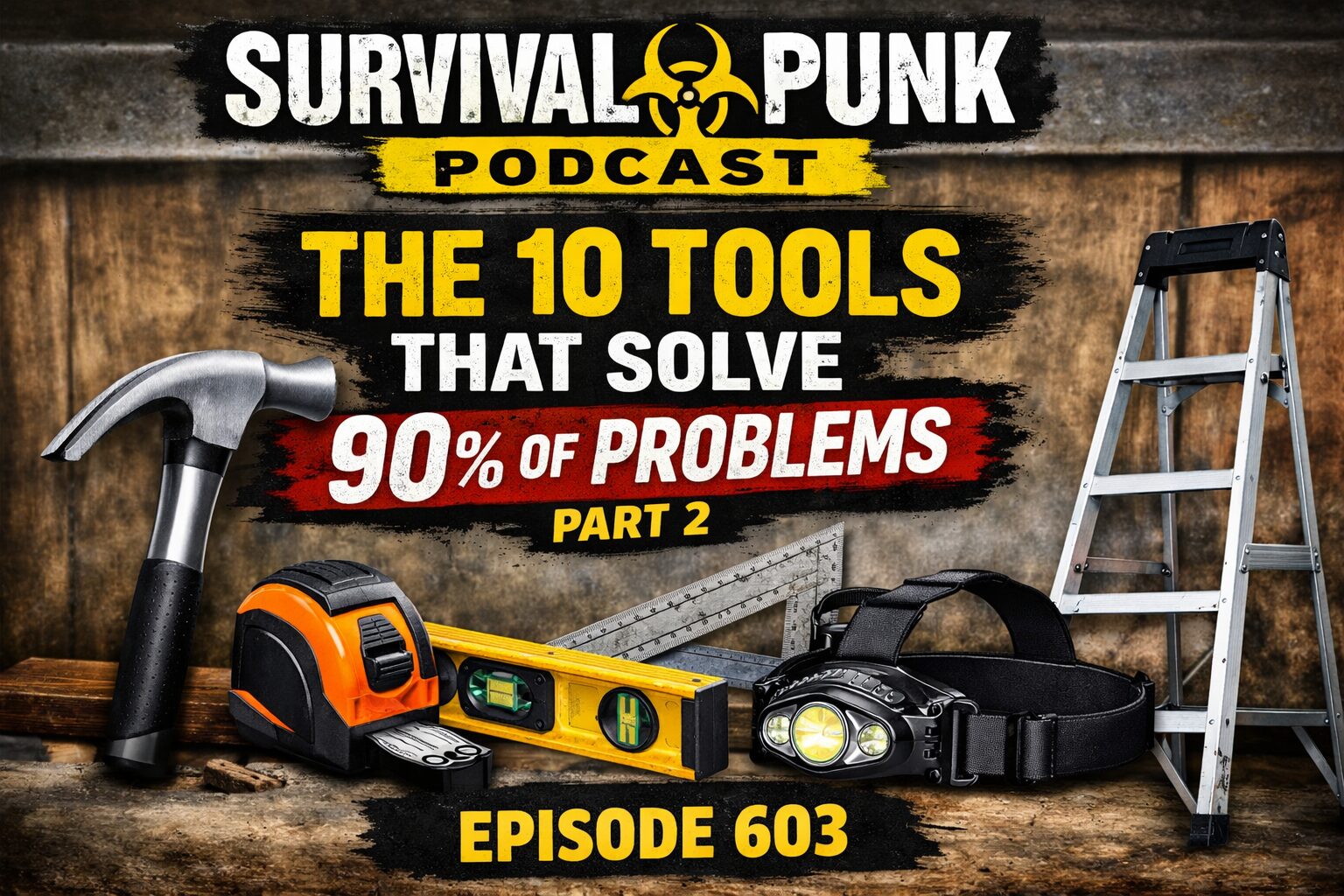
Ep 603The 10 Tools That Solve 90% of Problems (Part 2) | Episode 603
tools part 2 The 10 Tools That Solve 90% of Problems (Part 2) | Episode 603 Picking Up Where We Left Off In the last episode, we talked about the first five tools that handle the majority of repairs around the house. Today, we’re finishing that list with five more tools that, together, will solve about 90% of the problems the average homeowner runs into. Once you go past this list, you start getting into specialty tools. Those are the tools you might only use once every few years. When that happens, you don’t necessarily need to buy them new. One trick is checking places like Facebook Marketplace. A lot of people buy a tool for one specific project, use it once, and then sell it afterward. If you catch it at the right time, you can often buy it cheaper, use it for your project, and sell it again when you’re done. You basically rented the tool for twenty or thirty bucks. But the tools in today’s episode are the ones you should actually own. A Good Claw Hammer If you somehow don’t own a hammer yet, go fix that immediately. Your first hammer should just be a standard claw hammer. Nothing fancy. You don’t need some crazy expensive framing hammer or specialty tool. A basic claw hammer will do almost everything you need it to do around the house. My general rule when buying tools is simple: skip the absolute cheapest one in the store. There’s always some garbage version that’s barely usable. Instead, look at the next cheapest option. That’s usually the sweet spot between price and quality. Eventually, you’ll probably add a rubber mallet to your toolbox as well. They’re cheap and they’re incredibly useful when you need to move or tap something into place without destroying it. Flooring, trim, or anything delicate benefits from that softer impact. Tape Measure You absolutely need a tape measure. You’ll use it constantly. Cutting wood, fitting furniture, installing shelves, measuring rooms before you buy materials—this tool comes out all the time. The real trick is learning how to actually read it well. Fractions matter, and if you’re working with someone else you need to be able to communicate the measurement correctly. Saying something like “eight and three lines” will get you laughed out of a job site. Also avoid gimmicky tape measures. Some of them try to cram in extra markings, metric conversions, or weird features that make the tape harder to read. A simple, clear tape measure with easy-to-see markings is all you really need. Level (and Square) A level is another tool that gets used far more than people expect. Hanging pictures, installing shelves, mounting TVs, building furniture—if something needs to be straight, you need a level. A three or four foot level works great for most homeowners. It also doubles as a straight edge when marking cuts. One trick I’ve used for years is using my level as a saw guide. Clamp it down along your cut line and run your circular saw against it. It works surprisingly well and saves you from buying specialized guides. Alongside a level, you’ll eventually want a square too. That’s the triangle-shaped tool carpenters use to make sure cuts and corners are perfectly 90 degrees. If you do enough projects you’ll probably end up owning several different types. But starting out, one level and one square will cover a lot of ground. Headlamp This is one of the most underrated tools you can own. A headlamp lets you see exactly what you’re doing while keeping both hands free. That’s huge when you’re working under a sink, inside an engine bay, or anywhere that doesn’t have great lighting. Sure, you can hold a flashlight in your mouth or make a kid stand there holding it while you yell at them to point it in the right spot. Or you can just wear a headlamp and solve the problem. Magnetic flashlights and lanterns are also fantastic. Stick them under a car hood or onto a metal surface and suddenly your whole workspace is lit up. Step Ladder The last tool on the list is a step ladder. And yes, you need one. If you don’t have a ladder, eventually you will do something stupid. You’ll stack buckets. You’ll climb onto chairs. You’ll balance on random things that were never meant to hold your weight. Most of us have done it at least once. Having a proper step ladder eliminates all that nonsense and makes life easier. Whether you’re reaching storage, fixing something overhead, or grabbing gear off a high shelf, you’ll use it far more often than you expect. Building Your Core Tool Kit Between this episode and the previous one, you now have ten tools that solve the majority of problems around the house. You don’t need a giant workshop or thousands of dollars worth of gear to be capable. A small set of practical tools—and the willingness to learn how to use them—goes a long way. Preparedness isn’t just about food storage or bug-out bags. Being able to fix your own stuff, repair your home, and solve problems without calling someone else every t
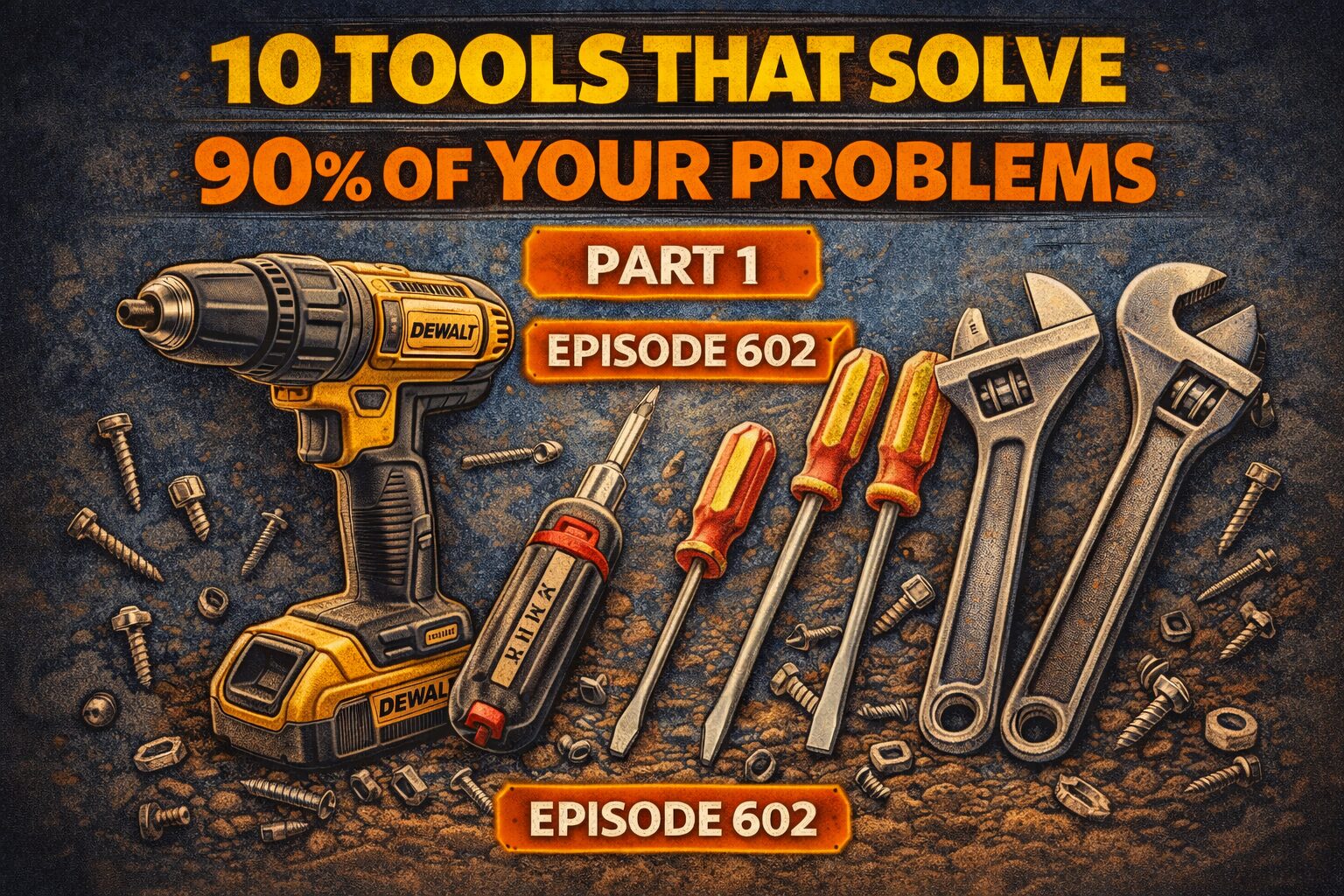
Ep 60210 Tools That Solve 90% of Your Problems (Part 1) | Episode 602
tools part 1 10 Tools That Solve 90% of Your Problems (Part 1) | Episode 602 Most problems around the house aren’t complicated. They’re just annoying. A loose screw, a dripping pipe, a stripped bolt, something that needs tightening or cutting. The real issue usually isn’t the repair itself. It’s not having the right tool when you need it. In this episode I start breaking down the 10 tools that solve about 90% of everyday problems. Whether you’re a homeowner or even a renter, having a basic tool kit can save you money, frustration, and a lot of unnecessary trips to the hardware store. This episode covers the first five tools. Tomorrow we’ll finish the list. If you want to be more self-reliant, this is where to start. Cordless Drill If there’s one tool that dramatically improves your ability to fix things, it’s a cordless drill. Driving screws, removing screws, drilling pilot holes, basic woodworking repairs — a drill speeds up almost every job. There are also little tricks you can do with it, like creating angled pilot holes when you need to join pieces of wood without fancy jigs. It’s one of those tools you end up using constantly once you own it. Multi-Bit Screwdriver A drill is powerful, but it’s not always the right tool. When you’re working with smaller screws, electronics, or anything delicate, a multi-bit screwdriver is perfect. Instead of keeping a dozen different screwdrivers around, one handle with interchangeable bits handles most jobs. I also keep a small electronics repair kit with precision bits for things like laptops and small devices. A Good Set of Screwdrivers There’s also something to be said for owning a simple set of real screwdrivers. Cheap ones tend to break — especially the handles. Good screwdrivers last a long time and give you better control when you need it. You don’t need every size imaginable. Just a few of the most common sizes will cover most situations. Adjustable Wrench An adjustable wrench — also called a crescent wrench — is one of those tools that’s always useful. It won’t always be the perfect tool for every bolt or nut, but when you don’t have the exact size wrench, it will usually get the job done. Having a couple different sizes makes it even more versatile. Monkey Wrench If you’ve ever dealt with plumbing problems, you know exactly why this tool matters. There are situations where a monkey wrench is the only tool that works properly. When pipes need tightening or loosening, it can save the day. If you don’t own one yet, eventually you’ll run into a moment where you wish you did. Tomorrow: The Rest of the List That’s the first half of the tools that solve most everyday problems. Tomorrow we’ll finish the list with five more tools that belong in every practical toolkit. Because the more capable you are with basic tools, the less dependent you are on other people to solve simple problems. And that’s real preparedness. DIY to Survive Amazon Item OF The Day DEWALT 20V Max Cordless Drill Driver Set, 2 Speed, High Performance Motor, Includes 2 XR 1.3Ah Li-Ion Batteries, Charger and Contractor Bag (DCD771C2) Think this post was worth 20 cents? Consider joining The Survivalpunk Army and get access to exclusive content and discounts! Don’t forget to join in on the road to 1k! Help James Survivalpunk Beat Couch Potato Mike to 1k subscribers on Youtube Want To help make sure there is a podcast Each and every week? Join us on Patreon Subscribe to the Survival Punk Survival Podcast. The most electrifying podcast on survival entertainment. Itunes Pandora RSS Spotify Like this post? Consider signing up for my email list here > Subscribe Join Our Exciting Facebook Group and get involved Survival Punk Punk’s The post 10 Tools That Solve 90% of Your Problems (Part 1) | Episode 602 appeared first on Survivalpunk.
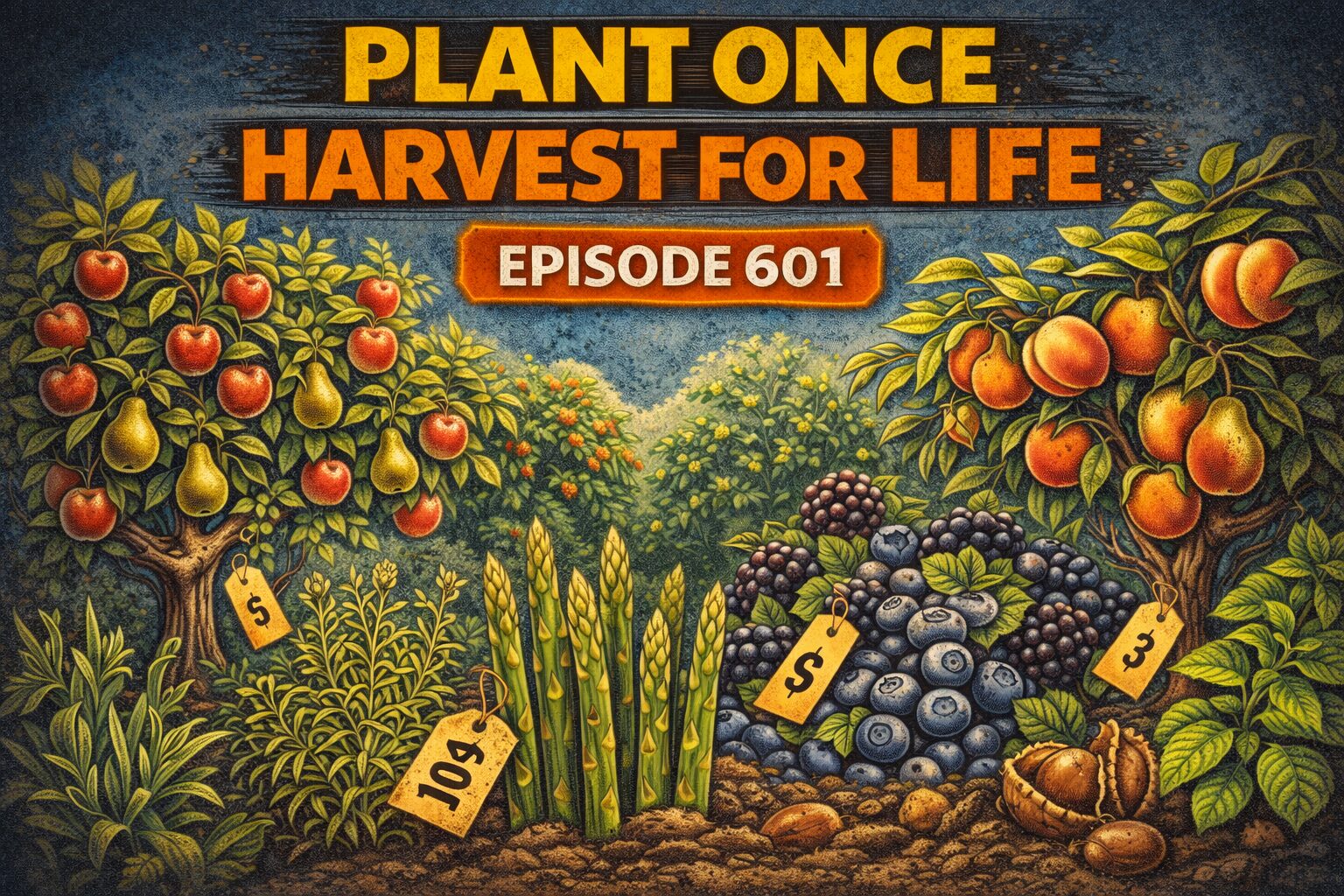
Ep 601Plant Once, Harvest for Life | Episode 601
Perennials Plant Once, Harvest for Life | Episode 601 Growing food is one of the most important survival skills you can develop. A garden can feed your family, give you independence, and reduce your reliance on fragile supply chains. But let’s be honest — gardens can also be a lot of work. Planting every year, maintaining beds, watering, fertilizing, harvesting. It takes time and effort. So what if you could plant something once and harvest from it for years or even decades? Today we’re talking about perennials you plant once and harvest for life. Fruit Trees: Long-Term Food Security Fruit trees are one of the best investments you can make in a long-term food system. Apples, pears, peaches, plums, nectarines, cherries — once established they can produce food for decades with relatively little maintenance. The key advice here is simple: grow what you actually like to eat. If you love apples, plant apples. If you love peaches, plant peaches. But there’s another opportunity here that many people overlook. Instead of growing the same varieties you see in grocery stores, grow unusual or specialty varieties. There are thousands of apple varieties alone. Some have unique flavors, unusual colors, or striking appearances. Things like pink-fleshed apples or deep purple varieties can stand out in farmers markets and command a higher price. If you’re going to plant trees that will produce for decades, you might as well plant something interesting. Avoid Monocropping Another reason to grow multiple varieties is resilience. If you plant twenty identical apple trees and a pest or disease hits that specific variety, you could lose your entire orchard. By planting different varieties, you reduce the risk and increase the overall resilience of your system. It also extends your harvest window since different varieties ripen at different times. Berry Bushes: Easy Perennial Calories Berry bushes are another excellent perennial food source. Blueberries, raspberries, and blackberries can produce fruit year after year once established. Many of them spread naturally and become even more productive over time. They’re also easy to harvest and can fit into small spaces. Some berry bushes can even serve as natural barriers. Thorny plants like blackberries and raspberries can help deter animals or even people from wandering through certain areas. That means your food production can also double as a defensive landscape feature. Asparagus: A Perennial Vegetable Most vegetables are annuals, meaning you have to plant them every year. Asparagus is one of the rare exceptions. Once established, an asparagus patch can produce for 15–20 years or more. It takes a few years to get going, but once it does, it comes back every spring and keeps producing. It’s one of the best “plant once, harvest for years” foods you can grow. Rhubarb and Perennial Herbs Rhubarb is another tough perennial plant that comes back year after year. It produces large stalks that can be used in pies, jams, and preserves. It’s cold-tolerant and very hardy, making it a good option in many climates. Herbs are another category that often comes back year after year. Plants like mint, oregano, thyme, chives, and rosemary can continue growing season after season with minimal effort. Growing herbs at home saves money and keeps fresh flavor available anytime you need it. Instead of buying a bunch of herbs and letting half of it rot in the refrigerator, you can simply step outside and cut what you need. Nut Trees: High-Calorie Survival Food Finally, we have nut trees. Pecans, walnuts, and chestnuts produce calorie-dense foods that can feed people for generations. Nuts contain healthy fats and protein — things that can be harder to obtain in survival situations. Unlike annual crops, these trees can produce for decades or even longer, making them an excellent long-term investment for a food-producing landscape. Chestnuts are particularly interesting historically. The American chestnut once dominated forests across the eastern United States before blight nearly wiped it out. Today people are working to restore blight-resistant varieties, while Chinese chestnuts remain widely available and productive. Building a Perennial Food System The biggest takeaway from today’s episode is simple. Annual gardens are great, but perennial food systems are powerful. Plant trees. Plant berry bushes. Plant herbs that come back every year. Add asparagus, rhubarb, and nut trees. These plants reduce your workload while increasing long-term food production. And the sooner you plant them, the sooner they start producing. Because when it comes to perennial food systems, the best time to plant them was yesterday. The second best time is today. This has been James from SurvivalPunk.com. DIY to Survive. Amazon Item OF The Day GURNEY’S – Double Delicious 2-in-1 Apple Dormant Bare Root Starter Fruit Tree – 2 varieites on o
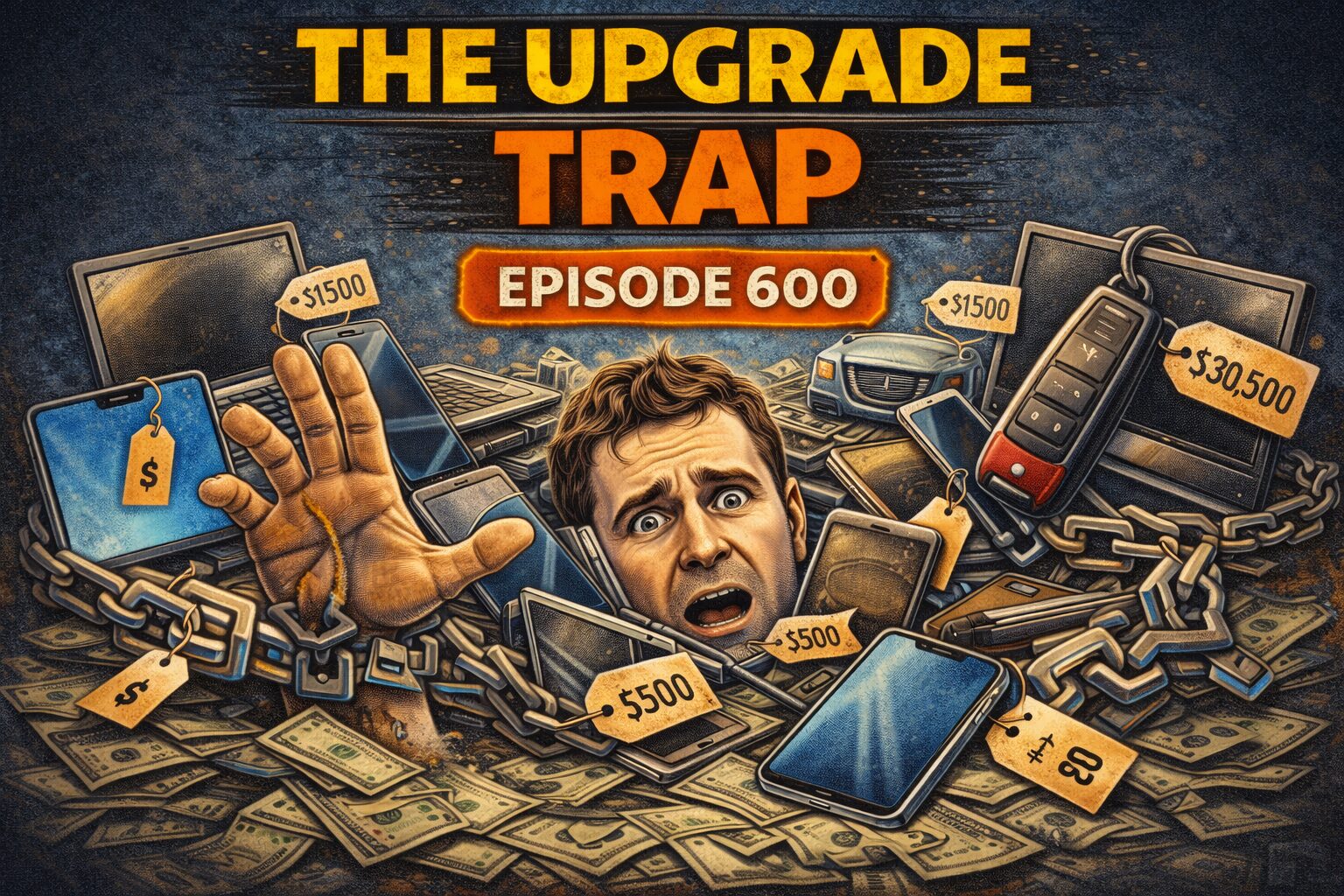
Ep 600The Upgrade Trap | Episode 600
upgrade life The Upgrade Trap | Episode 600 It’s incredibly easy to fall into what I call the upgrade trap. Phones, laptops, TVs, cars — companies are constantly pushing the newest version of everything. The marketing tells you your current gear is outdated, slow, or missing the latest features. So people upgrade every year or two without really thinking about the long-term cost. Today we’re talking about how this trap works, why it’s so effective, and how you can break free from it. The Phone Upgrade Cycle Smartphones are probably the most obvious example of the upgrade trap. Every year there’s a new iPhone. Every year there’s a new Android flagship. Folding phones, bigger cameras, faster processors — and most of the time people are paying more for features they barely use. For years I fell into this trap myself. Back when the first Android phone came out — the T-Mobile G1 with the flip-out keyboard — I jumped on it immediately. After that I kept upgrading every couple of years. And phone companies make it easy to do. They’ll happily “upgrade” your phone while quietly adding another $20–$30 per month to your bill for the next couple years. If you’re doing that for every device in your family, you might be adding $100 or more every month just to keep chasing the newest gadgets. That’s money that never stops leaving your pocket. A Smarter Way to Handle Phones These days I take a completely different approach. First, I stopped paying for phone insurance. That alone saves around $18 or more every month. If you take that same money and just set it aside, you’ll have enough to buy a replacement phone every year if something goes wrong. When my phone breaks, I simply go to eBay and buy a model that’s a couple years old. Usually I can get one for around $100–$200. Then I sell my old phone — even if it’s damaged — and recover some of the cost. People buy broken phones all the time to repair and flip them. So instead of paying monthly fees forever, I just replace devices when I actually need to. It’s simple and it saves a ton of money. Planned Obsolescence Everywhere Phones aren’t the only place this happens. Software companies do it too. Microsoft recently caused a lot of backlash by ending support for a bunch of devices that aren’t even that old. Suddenly perfectly functional computers are considered “obsolete.” Laptop manufacturers have also leaned heavily into planned obsolescence. Cheap laptops in the $300 range often seem designed to last only a couple years before something fails. Hard drives die. Performance slows down. Parts wear out. For years I would just buy a new laptop every few years because it seemed easier than fixing the problem. Eventually I stopped doing that. Now I’m still using a desktop that isn’t perfect, but it works. Sometimes a simple upgrade — like adding RAM or doing a fresh operating system install — can breathe new life into a machine. Companies want you replacing devices constantly. But most of the time you don’t actually need to. The Worst Upgrade Trap: Cars Phones and laptops are expensive enough, but the worst upgrade trap is cars. The average car payment today is around $400 per month — and many people are paying far more than that. I’ve seen car payments pushing $900 a month. That’s basically a second mortgage. And people get stuck in this cycle where they trade in a car every few years and start the payment clock all over again. Personally, I’ve almost always bought used cars. It’s not glamorous, but it works. The better approach would be saving money in a high-yield savings account and paying cash when you need a replacement. Even if you don’t do that perfectly, buying used vehicles can save you an enormous amount of money compared to constantly financing new ones. Yes, the used car market has been weird lately. But if you’re patient and willing to look around, you can still find good deals. Don’t Keep Up With the Joneses At the end of the day, the upgrade trap is really about keeping up with the Joneses. People want the newest phone. The newest car. The newest everything. But every upgrade comes with hidden costs: higher bills, more debt, and less financial freedom. Breaking the cycle means asking a simple question before upgrading anything: Do I actually need this? Most of the time the answer is no. Keep your gear longer. Buy used when possible. Repair things instead of replacing them. Your wallet — and your long-term resilience — will thank you. Final Thoughts The upgrade trap is everywhere in modern life, and companies are counting on you falling into it. But once you see it, you can start making smarter choices. Delay upgrades. Buy used. Fix things when you can. That mindset doesn’t just save money — it builds the kind of independence that survival is really about. Amazon Item of the Day A great tool to help avoid the upgrade trap is being able to repair things yourself instead of replacing them. iFixit Pro Tech Toolkit – Electronics, Smar

Ep 599What Happens When Replacement Parts Disappear? | Episode 599
replacement parts What Happens When Replacement Parts Disappear? | Episode 599 Good morning, this is James from SurvivalPunk.com. Today we’re talking about something that most people don’t think about until it’s too late. What happens when something breaks… and you can’t get the replacement part anymore? Planned obsolescence. And what you can actually do about it. Planned Obsolescence When I first learned about planned obsolescence, it pissed me off. The idea that companies intentionally design products to fail after a few years so you have to buy another one. Your phone getting slower after a couple years. Appliances dying earlier than they should. Meanwhile your grandparents had a refrigerator from the 1950s that ran forever. The difference? It wasn’t designed to die. Modern products often are. The Repair Problem Even if something can be repaired, that doesn’t mean you’ll be able to. Repairmen aren’t nearly as common as they used to be. And a lot of things aren’t built to be repaired anymore. Cars are a perfect example. Older vehicles were simple. You could practically climb inside the engine bay and remove parts comfortably. Newer cars? To replace a starter in one car I worked on, I had to remove the front wheel and drop the part out through the wheel well. Ridiculous. And then you’ve got sensors everywhere. A tiny sensor fails and suddenly the whole car refuses to run. The Real Problem: Parts Disappear Even if you know how to fix something, there’s another issue. Replacement parts eventually stop being made. Say you have a washer — the JamesCo Washer 2000. For years, replacement parts exist. OEM parts. Aftermarket parts. Repair manuals. But eventually the manufacturer stops making them. Suppliers stop stocking them. And suddenly your washer becomes unrepairable — not because the repair is impossible, but because the part doesn’t exist anymore. Strategy #1: Stock Common Failure Parts If you’ve got the space and money, this is a powerful strategy. Find out what parts fail most often. Examples: Ignition coils Fuel pumps Sensors Belts Filters Control boards You don’t need to stock every part. Just the ones most likely to fail. I once suspected my fuel pump might go bad, so I ordered a replacement ahead of time. Turned out the issue was something else… so the pump sat in my garage for months. Then one day the fuel pump actually died. And I already had the part sitting there. Problem solved. Strategy #2: Learn Workarounds Sometimes you don’t need the part. You just need a workaround. Example: catalytic converters. A friend once told me two tricks: One — cut it open and clean it out. Two — if you live somewhere without emissions testing, cut it out and straight pipe it. Not always legal everywhere — but the point is there are often solutions people have discovered that extend the life of equipment. Another time I ran over a rock that punctured my transmission pan. Fluid leaked out everywhere. Instead of replacing the entire pan, I used steel epoxy putty and sealed the hole. Worked perfectly. Sometimes the “temporary fix” lasts forever. Strategy #3: Make Your Own Parts This is where things get really interesting. With modern tools, individuals can manufacture small parts. Two powerful options: 3D printers Small CNC machines These can produce: brackets clips plastic connectors housings mounts small mechanical parts And many of these designs are already shared online. Someone else might have already solved the exact problem you’re facing. Download the file. Print the part. Fix the machine. There’s Also a Business Opportunity Think about this. If a product has a common failure point… And replacement parts are no longer available… Whoever figures out how to make that part can sell it. People do this already. They reproduce discontinued parts for: vehicles appliances electronics tools Sometimes a simple plastic part that costs 50 cents to print can sell for $20 because it solves a real problem. Preparedness Angle From a preparedness standpoint, this matters a lot. If supply chains break down, replacement parts will become extremely hard to find. You won’t be able to just order them online. Being able to: stock parts repair equipment improvise fixes manufacture replacements …is a massive resilience advantage. Final Thoughts Everything breaks eventually. And the modern world is not designed to help you repair things. It’s designed to make you replace them. But if you think ahead… Stock a few parts. Learn some workarounds. And maybe even learn to manufacture simple components. You can keep things running long after everyone else has given up. This is James from SurvivalPunk.com. DIY to survive. Amazon Item of the Day Steel Reinforced Epoxy Putty Stick Steel Epoxy Putty Repair StickPerfect for sealing cracks, holes, and emergency repairs on metal equipment. J-B Weld SteelStik, 1 Hour Cure, Steel Reinforced Epoxy Putty Stick – 2 Pack, Dark Grey (8267-2) Think this post was worth 20 cents? Consid

Ep 597Stuck Where You Are? Homestead Anyway. | Episode 597
homestead where you are Stuck Where You Are? Homestead Anyway. | Episode 597 Good morning, this is James from SurvivalPunk.com. Today we’re talking about something a lot of you are feeling right now. You want land.You want a homestead.You want chickens, a garden, maybe 40 acres and a creek. But you’re in an apartment.Or suburbia.Or stuck in a house you overpaid for. Housing is ridiculous. Rent is ridiculous. Land is ridiculous. So what do you do when you’re stuck where you are? You homestead anyway. Stop Wishing You Bought in 2012 There’s always that “if only” moment. If only you bought that house in 2012.If only you bought Bitcoin at $8.If only you locked in that 3% mortgage. Here’s the truth. Even if you had bought Bitcoin at $8, you probably would’ve sold it at $100 and felt like a genius. Hindsight makes everything look easy. But it doesn’t help you today. What helps you today is controlling spending, increasing income, and stacking cash so you’re ready when opportunity shows up. Because deals still happen — but only for people who are ready. Apartment Prepping Is Real Prepping When I first started prepping, I was in an apartment. No balcony. No land. Just walls and limited square footage. You can still do a lot. If you have a balcony, grow something with high return. Don’t waste space on novelty crops. Herbs and lettuce mixes are powerful. Sprinkle a lettuce mix in a planter box, cover lightly with soil, water it, and cut what you need for salads. It regrows. High ROI. Easy. Cilantro, if you like it, grows fast and heavy. Zucchini? Great yield. Tomatoes? Honestly… sometimes just buy them. (I’ve had the worst tomato luck in history.) The point isn’t perfection. It’s production. Micro-Livestock (Yes, It’s a Thing) You’re not putting a cow on your balcony. Chickens in an apartment? Probably not realistic. But there are small-scale options. Quail are doable in tight spaces. Eggs and meat from a compact footprint. Rabbits? Possible if managed well. Just don’t let the kids name the meat rabbits. Some survivalists even raise meat hamsters. That’s not for everyone. I’m not trying to explain that to my daughter anytime soon. But the lesson is this: Constraints don’t eliminate options. They force creativity. Suburbia Is Not a Prison If you have even a small yard, you’re ahead. You can grow a surprising amount of food on tiny acreage. Look at what micro-homesteaders have done on 1/10th of an acre. Chickens. Vegetables everywhere. Selling surplus. If you’re stuck in an HOA? Learn the rules. Push right up to the line. If they push back, remember — there are creative ways to negotiate. Sometimes all it takes is showing that you’re willing to be more stubborn than they are. Maximize What You Have Whether it’s an apartment, a rental, suburbia, or a house you can’t sell without losing money — maximize it. Use vertical storage. Rotate pantry stock. Build skills. Grow what makes sense. Raise what’s practical. Increase income. Save aggressively. Because when the right opportunity shows up, you want to move fast. Being stuck doesn’t mean being stagnant. It means building quietly. Final Thoughts You don’t need 40 acres to start acting like a homesteader. You need discipline. You need creativity. You need to stop waiting for “perfect conditions.” Maximize where you are. Stack cash. Build skills. When the door opens, you’ll be ready. This is James from SurvivalPunk.com. DIY to survive. Amazon Item OF The Day House Naturals 5 Gallon Plastic Bucket Pail Food Grade with Blue Screw on Lid(Pack of 3) Made in USA Think this post was worth 20 cents? Consider joining The Survivalpunk Army and get access to exclusive content and discounts! Don’t forget to join in on the road to 1k! Help James Survivalpunk Beat Couch Potato Mike to 1k subscribers on Youtube Want To help make sure there is a podcast Each and every week? Join us on Patreon Subscribe to the Survival Punk Survival Podcast. The most electrifying podcast on survival entertainment. Itunes Pandora RSS Spotify Like this post? Consider signing up for my email list here > Subscribe Join Our Exciting Facebook Group and get involved Survival Punk Punk’s The post Stuck Where You Are? Homestead Anyway. | Episode 597 appeared first on Survivalpunk.

Ep 596Sleep Is a Survival Skill | Episode 596
Sleep health Sleep Is a Survival Skill | Episode 596 Good morning. It’s not 18 degrees today — but if you’re running on four hours of sleep, you might as well be freezing your brain. This is James from SurvivalPunk.com. Today we’re talking about something most preppers ignore while they stockpile ammo and freeze-dried chili. Sleep. Not comfort. Not laziness. Sleep is a linchpin survival prep — and if you’re neglecting it, you’re actively sabotaging your ability to function when things matter. Let’s break this down. Sleep Deprivation Is Slow Self-Destruction If you’re bragging about surviving on four hours a night, you’re not hardcore. You’re deteriorating. Sleep impacts: • Hormones• Immune function• Blood sugar regulation• Body composition• Inflammation• Cognitive performance If you’re obese and “doing everything right,” poor sleep could be wrecking your metabolic health. If you’re on maintenance medication and think it’s unrelated — it’s probably not. Shift work? Brutal. Getting up at 2am for years? That has consequences. You cannot ignore biology and expect performance. Sleep debt compounds. You Make Bad Decisions When You’re Tired This one matters for survival. Sleep deprivation has been studied extensively. After a certain point, your motor skills and decision-making resemble being legally drunk. Drunk. You would not patrol your property hammered. You would not handle firearms hammered. You would not try to make life-or-death calls hammered. Yet plenty of people are doing exactly that cognitively every day because they refuse to sleep. In a real emergency, poor judgment gets you hurt. Sleep isn’t weakness. It’s preparedness. Health Collapses Faster Than You Think Lack of sleep tanks immune function fast. A few nights of poor sleep and you’re more susceptible to illness. Chronic deprivation? You’re digging a long, slow grave. When things go sideways, you need resilience. You can’t be the homestead super soldier if you’re chronically inflamed, insulin resistant, hormonally wrecked, and cognitively foggy. Preparedness starts now — not after collapse. Practical Ways to Improve Sleep This isn’t mystical. It’s environmental and behavioral. Darkness matters. Even small light exposure reduces sleep quality. Sleep mask. Blackout curtains. Kill LED lights. Cold room. Your body must lower core temperature to fall asleep. Cooler rooms help trigger that drop. Cold enough to need a blanket? Good. White noise. Fans. Rain sounds. Consistency helps your nervous system settle. Caffeine cutoff. Stop pounding energy drinks in the afternoon. Magnesium (especially glycinate) can improve relaxation and sleep quality. Melatonin works for many people, though not something to megadose casually. Creatine (around 20g) has shown benefit for sleep disruption and jet lag scenarios. If you absolutely must function short-term after bad sleep, tools exist — but they are tools, not substitutes for recovery. Emergency Sleep vs Chronic Deprivation There’s a difference between: • One rough night because something happened• Living in permanent sleep debt Life happens. But if 80% of your nights aren’t solid, you’re underperforming long-term. Survival isn’t about grinding yourself into the dirt. It’s about sustainability. Sleep is fuel. Ignore it and you will pay the bill later. Final Thoughts You cannot prep your way out of biological reality. You cannot caffeine your way out of sleep debt. You cannot toughness your way past hormone regulation. Sleep is a survival skill. Protect it like you protect your food storage. This is James from SurvivalPunk.com. DIY to survive. Amazon Item OF The Day YIVIEW Sleep Mask for Side Sleeper, Complete Light Blocking 3D Sleeping Eye Mask, Soft Breathable Eye Cover for Women Men, Relaxing Zero Pressure Night Blindfold Think this post was worth 20 cents? Consider joining The Survivalpunk Army and get access to exclusive content and discounts! Don’t forget to join in on the road to 1k! Help James Survivalpunk Beat Couch Potato Mike to 1k subscribers on Youtube Want To help make sure there is a podcast Each and every week? Join us on Patreon Subscribe to the Survival Punk Survival Podcast. The most electrifying podcast on survival entertainment. Itunes Pandora RSS Spotify Like this post? Consider signing up for my email list here > Subscribe Join Our Exciting Facebook Group and get involved Survival Punk Punk’s The post Sleep Is a Survival Skill | Episode 596 appeared first on Survivalpunk.

Ep 595The 5 Skills That Eliminate Most Emergencies | Episode 595
5 emergencies The 5 Skills That Eliminate Most Emergencies | Episode 595 Good morning. It’s 18 degrees. Tennessee decided to remind us who’s in charge. This is James from SurvivalPunk.com. Today we’re talking about something that doesn’t get enough credit in prepping circles. Not gear. Not bunker fantasies. Skills. Five specific skills that eliminate most emergencies before they ever become emergencies. Let’s get into it. 1. Preventative Maintenance There are two types of people. The proactive maintenance crowd. And the rest of us. I’ll admit — I’m not perfect at it. But I know better. And knowing better already puts you ahead. Basic maintenance prevents most mechanical disasters: • Oil changes • Cleaning AC units • Replacing spark plugs • Checking filters • Roof inspections • HVAC servicing I clean our window units every year. Pull them out, dismantle them, clean the coils, clear the sludge. Since I started doing that, they’ve lasted years longer. Most people run things until they fail. Failure is expensive. Maintenance is cheap. Same goes for your car. Same goes for your house. Ignore it long enough and you’re buying a new roof instead of patching a leak. Preventative maintenance turns “emergency repair” into “routine upkeep.” 2. Financial Awareness Most “emergencies” are just financial mismanagement. Overdraft fees. Late fees. Impulse spending. Untracked subscriptions. Lifestyle creep. You don’t need to make more money. You need to control the money you already make. When my wife and I started actually tracking spending and living on a budget, we built savings fast. No magic. No lottery. No second job. Just awareness. Turn off overdraft protection so transactions decline instead of charging you $35 to be broke. Set alerts. Call and negotiate fees when they happen. Financial awareness eliminates overdraft emergencies, debt spirals, and panic purchases. Most financial disasters are preventable. 3. Cooking From Basic Ingredients If you can cook from scratch, shortages don’t wreck you. Missing celery? Pivot. No carrots in the store? Make something else. Eggs gone? Mayo works in cornbread. If you rely on recipes as rigid law, you panic. If you understand ingredients and substitutions, you adapt. Cooking skill equals flexibility. Flexibility eliminates food stress. You don’t need a fully stocked gourmet kitchen. You need knowledge. And honestly? AI is great for this. “Hey, I have chicken, rice, and canned tomatoes. What can I make?” Boom. Ideas. Over time, you build your own mental database. That eliminates grocery store drama. 4. Basic Health & First Aid Awareness Don’t ignore your health. Monitor blood pressure. Watch blood sugar. Get basic labs done. Exercise. Eat like an adult. Letting your health degrade until you’re dependent on emergency medicine is the opposite of preparedness. You don’t have to become a biohacker. But you should know your numbers. You should understand symptoms. You should have basic first aid skills. Most long-term “health emergencies” are years in the making. Early action prevents crisis. 5. Calm Problem Solving This one is huge. When something goes wrong: Slow down. Assess. Act deliberately. Panicking compounds problems. Calm thinking: • Avoids dumb decisions • Reduces accidents • Keeps conflict small • Stops mistakes from stacking Most situations aren’t life-or-death. They feel like it because people escalate emotionally. Calm problem solving turns chaos into steps. And steps are manageable. Final Thoughts Most disasters aren’t hurricanes or EMPs. They’re: • Neglected maintenance • Financial sloppiness • Poor health • Inability to cook • Emotional overreaction Master these five skills and you eliminate most emergencies before they begin. Prepping isn’t about hoarding. It’s about competence. This is James from SurvivalPunk.com. DIY to survive. Amazon Item OF The Day Amazon Basics 201-Piece Mechanic’s Socket Tool Set With Case, SAE and Metric Sizes, Chrome-Vanadium Steel, Portable Think this post was worth 20 cents? Consider joining The Survivalpunk Army and get access to exclusive content and discounts! Don’t forget to join in on the road to 1k! Help James Survivalpunk Beat Couch Potato Mike to 1k subscribers on Youtube Want To help make sure there is a podcast Each and every week? Join us on Patreon Subscribe to the Survival Punk Survival Podcast. The most electrifying podcast on survival entertainment. Itunes Pandora RSS Spotify Like this post? Consider signing up for my email list here > Subscribe Join Our Exciting Facebook Group and get involved Survival Punk Punk’s The post The 5 Skills That Eliminate Most Emergencies | Episode 595 appeared first on Survivalpunk.

Ep 594The Subscription Life Trap | Episode 594
Subscription The Subscription Life Trap | Episode 594 Good morning. This is James from SurvivalPunk.com. It’s 23 degrees in Tennessee. The weather jumped from the 60s to the 20s, like it’s trying to kill morale. My body isn’t thrilled about it. And today we’re talking about something just as irritating. The subscription life. How everything is trying to turn into a recurring payment… and how that slowly drags down your freedom. You Don’t Own Anything Anymore Almost everything is trying to become subscription-based. Apps. Software. Entertainment. Editing tools. AI tools. Streaming platforms. Even stuff that absolutely should be a one-time purchase. You don’t buy things anymore. You rent access. That’s the shift. Back in the day, if you rented a movie from Blockbuster, that made sense. You chose to rent it. It was a known expense. If money was tight, you skipped it that week. Now? It’s $1.99 a month forever. That’s the trap. Subscriptions Are Credit Card Debt With Better Marketing A subscription is basically invisible debt. You’re committing to pay indefinitely for something you can never “finish” paying off. At least with a credit card purchase, there’s an endpoint. With subscriptions? There isn’t one. And companies absolutely count on you forgetting. There’s some nerd somewhere who has calculated exactly how long the average person forgets to cancel. That’s part of the business model. You sign up. You forget. They collect. And because it’s “only” a few dollars a month, your brain doesn’t treat it like real money. That’s psychological warfare at the micro level. You’re At Their Mercy Here’s where it gets worse. You don’t actually own what you “buy.” If you purchase a movie digitally and the service loses the license, you can lose access to it. You paid. Doesn’t matter. You’re renting access to a bookmark. Streaming services rotate content constantly. Licensing agreements change. Regions get restricted. Content disappears. You don’t control it. They do. And in some cases, you’re paying companies that actively push agendas you don’t agree with. Why fund people who openly despise your worldview? That’s worth thinking about. Real Example: The $1.50 HBO Mistake Black Friday deal. $1.50 per month for HBO Max. Cheap enough to ignore. I signed up “just in case” I couldn’t log into my brother’s account. Months later? I haven’t used it once. That’s exactly how this works. Multiply that by 10 subscriptions. Now multiply that by millions of people. That’s a massive wealth drain. The Cure: Own Your Stuff The solution is simple. Own things. Buy physical media. Keep your own music. Build your own digital library. Use alternatives like Plex. Download what you legally own. Back it up. Control your access. Spotify is convenient. So is Pandora. But if you already own thousands of songs on a hard drive, why are you paying someone monthly to shuffle music you don’t even like? Same with audiobooks. If you bought it, make sure you truly have it. Ownership equals independence. Subscriptions equal dependency. Subscription Creep Is Real The real danger isn’t one subscription. It’s the pile. $9.99 here. $12.99 there. $1.50 just in case. Another $7 for something you barely use. Now you’re bleeding $100+ a month for “convenience.” That’s $1,200 a year. That’s prep money. Debt payoff money. Investment money. That’s freedom money. Final Thoughts Subscriptions feel harmless. They’re not. They normalize renting your life instead of owning it. They put you at the mercy of corporations. They count on forgetfulness. They slowly erode independence. Prepping isn’t just about food and water. It’s about reducing dependency. Own your tools. Own your media. Own your capability. This is James from SurvivalPunk.com. DIY to survive. Amazon Item OF The Day Seagate Portable 2TB External Hard Drive HDD — USB 3.0 for PC, Mac, PlayStation, & Xbox -1-Year Rescue Service (STGX2000400) Think this post was worth 20 cents? Consider joining The Survivalpunk Army and get access to exclusive content and discounts! Don’t forget to join in on the road to 1k! Help James Survivalpunk Beat Couch Potato Mike to 1k subscribers on Youtube Want To help make sure there is a podcast Each and every week? Join us on Patreon Subscribe to the Survival Punk Survival Podcast. The most electrifying podcast on survival entertainment. Itunes Pandora RSS Spotify Like this post? Consider signing up for my email list here > Subscribe Join Our Exciting Facebook Group and get involved Survival Punk Punk’s The post The Subscription Life Trap | Episode 594 appeared first on Survivalpunk.

Ep 593California Wants to Ban 3D Printers | Episode 593
get strong California Wants to Ban 3D Printers | Episode 593 Good morning. This is James from SurvivalPunk.com. It’s 29 degrees. The coffee didn’t start. The breaker tripped. My headphones weren’t charged. My phone was at 9%. I forgot my medicine and had to turn around in the driveway. So yeah — we’re already off to a strong start. And today we’re talking about something equally annoying: California trying to ban certain 3D printers. Not because they’re dangerous. Not because they’re exploding. But because the government is afraid of what people might do with them. Let’s get into it. The Headline Is Clickbait… But Also Not The headline reads something like: “California to Ban 3D Printers.” That’s bombastic. That’s designed to grab attention. But it’s not entirely wrong. What they’re really trying to do is ban non-approved 3D printers, restrict file sharing, and criminalize ways of bypassing those restrictions — all aimed at stopping people from printing “ghost guns.” Ghost guns meaning: firearms printed from polymer without serial numbers. Here’s the issue. This isn’t a widespread crisis. This is government reacting to a hypothetical problem. 3D Printers Are Still in Their Infancy 3D printers right now are like computers in 1992. How many people had one back then? A few. Most of them weren’t doing anything groundbreaking. They were playing Oregon Trail. That’s where 3D printing is right now. If you think of ten people you know, maybe one owns a 3D printer. And of those owners? How many are truly using them to their full potential? Most of them sit there like a treadmill with clothes hanging on it. The narrative being pushed makes it sound like garages across America are mass-producing plastic arsenals. That’s just not reality. Government Overreach Is the Real Pattern This isn’t about safety. It’s about control. We’ve seen this pattern before: Rainwater catchment restrictions.Filter bans.Endless regulatory creep. Every time there’s a new tool that increases individual capability, the instinct is to regulate it before it’s even a measurable threat. And once a government starts restricting hardware, restricting file sharing, and criminalizing workarounds — that’s not about safety anymore. That’s about controlling information and capability. That should concern you whether you own a 3D printer or not. Are 3D Printed Guns Even a Real Issue? Here’s a question: How many major shootings have involved fully 3D-printed firearms? Not hypotheticals. Not headlines. Not fear narratives. Actual confirmed cases. Very, very few — if any. Most violent crime still involves traditional firearms obtained through traditional means. So we’re building legislation around something that’s statistically insignificant. Meanwhile, 3D printers are used to make: ToolsRepair partsAdaptersHobby projectsPrototypesFunctional survival gear But because something could be misused, we’re talking about banning the tool entirely. That’s backwards. If You Live There… You Already Know At some point, you have to ask: Why are you staying in a state that constantly moves the goalposts? You can fight every single regulation. You can try to out-argue lawmakers. Or you can recognize patterns. When governments show you who they are repeatedly, believe them. Sometimes the most strategic move isn’t fighting every skirmish. It’s relocating to ground that isn’t actively hostile to your independence. Freedom isn’t about screaming at politicians. It’s about positioning yourself where you don’t need their permission. Final Thoughts This isn’t about 3D printers. It’s about capability. Every time technology empowers individuals, there will be pressure to restrict it. The question is simple: Do you want a society where tools are allowed unless proven dangerous? Or one where tools are restricted because someone might misuse them? Preppers understand this better than most. Capability equals resilience. Resilience equals freedom. And freedom doesn’t survive well under constant regulation. This is James from SurvivalPunk.com. DIY to survive. Amazon Item OF The Day Creality Ender 3 V3 SE 3D Printer, 250mm/s Faster Print Speed CR Touch Auto Leveling Sprite Direct Extruder Dual Z-Axis Auto Filament Loading Ender 3 Upgrade 3D Printer Print Size 8.66×8.66×9.84 inch Think this post was worth 20 cents? Consider joining The Survivalpunk Army and get access to exclusive content and discounts! Don’t forget to join in on the road to 1k! Help James Survivalpunk Beat Couch Potato Mike to 1k subscribers on Youtube Want To help make sure there is a podcast Each and every week? Join us on Patreon Subscribe to the Survival Punk Survival Podcast. The most electrifying podcast on survival entertainment. Itunes Pandora RSS Spotify Like this post? Consider signing up for my email list here > Subscribe Join Our Exciting Facebook Group and get involved&n

Ep 592Get Strong or Get Left Behind | Episode 592
get strong Get Strong or Get Left Behind | Episode 592 Good morning. It’s about 60 degrees and not chilly for once. And today we’re talking about something that absolutely belongs in the survival category — strength. Not vibes.Not mindset.Not theory. Physical strength. If general physical preparedness isn’t a prepping principle, I don’t know what is. Strength Is a Survival Skill We love talking about food storage, water filters, and gear. But if you can’t pull yourself up over something, drag weight, or move your own body under stress — that’s a liability. There are real-world, life-or-death scenarios where being strong saves you. Pulling yourself up Lifting something off someone Carrying weight under fatigue Defending yourself You don’t want to be a weak couch potato hoping your gear saves you. Establish Your Baseline Before you get strong, you need to know where you are. Four lifts tell you almost everything about your strength: Push press Back squat Deadlift Bench press Get your one-rep max on each. You don’t need a fancy stat. But those numbers? They’re honest. You can’t improve what you don’t measure. Three Months of Focused Training Here’s the strategy. Not “go to the gym and mess around.”Not “move a little weight and scroll Instagram.” Focused, purposeful training. A three-month strength-building phase. Add weight weekly. Two to five pounds per lift if possible. That’s progressive overload. You can’t just coast forever. But you can: Push hard for 12 weeks Build real strength Maintain it through the year That’s sustainable. Pick a real program. Starting Strength is solid. Don’t invent your own random plan unless you know what you’re doing. Nutrition: The Part Nobody Wants You can’t slam Oreos and Diet Coke and expect muscle. You need: Adequate protein Sufficient calories Consistency For me, maintenance is around 2,800 calories. After eating in a deficit for a long time, ramping up to that is going to feel like work. Gaining strength without gaining fat? That’s the sweet spot. Too skinny and weak? Bad.Overweight and sluggish? Also bad. There’s a bell curve for health and longevity. Moderately strong.Proper hormones.Not obese.Not extreme bodybuilder huge. That’s the lane. Why This Matters for Survival If you pack on strength, you can coast. You won’t keep every pound forever, but you won’t crash either if you maintain properly. Strength: Improves resilience Increases confidence Extends functional life Makes you harder to victimize This isn’t vanity lifting. This is capability. If you had to pull yourself up right now, could you? That’s the question. This is James from SurvivalPunk.com.DIY to survive. Amazon Item OF The Day CAP Barbell 2-Inch Olympic 7 ft Barbell Bars | Multiple Options Think this post was worth 20 cents? Consider joining The Survivalpunk Army and get access to exclusive content and discounts! Don’t forget to join in on the road to 1k! Help James Survivalpunk Beat Couch Potato Mike to 1k subscribers on Youtube Want To help make sure there is a podcast Each and every week? Join us on Patreon Subscribe to the Survival Punk Survival Podcast. The most electrifying podcast on survival entertainment. Itunes Pandora RSS Spotify Like this post? Consider signing up for my email list here > Subscribe Join Our Exciting Facebook Group and get involved Survival Punk Punk’s The post Get Strong or Get Left Behind | Episode 592 appeared first on Survivalpunk.
Ep 591Group Buys: The Ultimate Prepper Hack | Episode 591
group buys Group Buys: The Ultimate Prepper Hack | Episode 591 Good morning. It’s 60 degrees — finally not cold — and today we’re continuing a thought from yesterday’s episode. Group buys. This is something I’ve played with personally. I’ve organized a few. I’ve saved money doing them. But the more I think about it, the more I realize it could be bigger than how I’ve been using it. If you’re serious about reducing costs, building community, and increasing resilience — this is a weapon. Let’s break it down. What Is a Group Buy? It’s exactly what it sounds like. Buying things as a group. There’s a host. That person organizes the buy. They: Source the product Communicate price Collect money Place the order Split and distribute Sometimes there’s profit built in. Sometimes the host just wants the item cheaper and splits shipping. The magic is in shared shipping and bulk pricing. If shipping costs $90 and you split it between five people? Suddenly it’s cheap. If the supplier offers discounts above a certain dollar amount? Now the unit price drops even further. Group buys don’t just split cost. They unlock tiers of pricing you can’t access alone. Transcription(base) Meat Is the Perfect Example Let’s talk steaks. Inflation has wrecked steak prices. Chuck eyes used to be cheap. Not anymore. Transcription(base) But buying a whole chuck roll or ribeye primal? The price per pound drops dramatically. The problem? It’s $100+ up front You need freezer space You need to cut it That’s where a group buy shines. Two to four people split a primal, cut it up, divide it evenly. Now you’re paying near-wholesale pricing without storing 50 pounds of beef alone. Take it further. Quarter cow.Half cow.Whole cow. Yes, it’s a big upfront cost — $1,000+ depending on current pricing. Transcription(base) But split between 8–10 people? Now it’s manageable.Now the price per pound gets very attractive.Now you’re buying local, possibly higher quality meat. This is real-world food security. Bulk Staples and Warehouse Plays It’s not just meat. There are bulk suppliers that deliver pallets or semi loads to parking lots — rice, coconut oil, grains, staples. If you’ve ever priced: 50 lb bags of rice Bulk coconut oil Large quantities of flour You know the price difference is massive compared to grocery shelf packaging. The only barrier is volume and storage. Group buys remove both barriers. Split the pallet.Split the bucket.Split the shipping. Everyone wins. The Hidden Benefit: Community This might be the most important part. Group buys force you to: Build trust Coordinate logistics Meet people locally Exchange value You’re not just saving money. You’re building your survival network. If you’re willing to be the organizer — the person who starts the ball rolling — people will join. Most people don’t want to lead. They just want to participate. That’s opportunity. Run the Numbers (Or Let AI Do It) Here’s the practical advice: Run your math. Factor: Product cost Shipping Packaging supplies Redistribution shipping Payment transfer fees First time I did it, I did rough math and it wasn’t perfect. Now? I feed the numbers into ChatGPT and let it calculate clean pricing tiers. No guessing.No accidentally eating the cost. This is business thinking applied to prepping. Final Thoughts Group buys aren’t new. But they’re massively underused. Meat.Bulk staples.Specialty gear.Hard-to-source items. If you can buy cheaper in volume and split it intelligently, you lower costs and strengthen community. That’s not just frugal. That’s strategic. This is James from SurvivalPunk.com.DIY to survive. Amazon Item OF The Day Meat Slicer, 200W Electric Food Slicer with 2 Removable 7.5″ Stainless Steel Blades and Stainless Steel Tray, Child Lock Protection, Adjustable Thickness, Food Slicer Machine for Meat Cheese Bread Think this post was worth 20 cents? Consider joining The Survivalpunk Army and get access to exclusive content and discounts! Don’t forget to join in on the road to 1k! Help James Survivalpunk Beat Couch Potato Mike to 1k subscribers on Youtube Want To help make sure there is a podcast Each and every week? Join us on Patreon Subscribe to the Survival Punk Survival Podcast. The most electrifying podcast on survival entertainment. Itunes Pandora RSS Spotify Like this post? Consider signing up for my email list here > Subscribe Join Our Exciting Facebook Group and get involved Survival Punk Punk’s The post Group Buys: The Ultimate Prepper Hack | Episode 591 appeared first on Survivalpunk.

Ep 590Shrinkflation Is Robbing You Blind | Episode 590
shrinkflation Shrinkflation Is Robbing You Blind | Episode 590 Good morning. This is James from SurvivalPunk.com. It’s 46 degrees. I’m cold. I don’t like being cold. But that’s not what we’re talking about today. Today we’re talking about something that affects every single one of us every single week. Shrinkflation. And how companies are quietly screwing you over while pretending nothing changed. Listen now. What Shrinkflation Actually Is Shrinkflation is simple. The bag looks the same.The box looks the same.The price looks the same. But you’re getting less. Your “pound” bag of chips? Not a pound anymore.16 ounces becomes 14.5 ounces.Same packaging. Same shelf space. Same mental price anchor. They don’t raise the price because people notice price increases. They shrink the product because most people never check the weight. That’s the game. Why It Works on Your Brain Everyone has internal price anchors. You know what Coke “should” cost.You know what ground beef “should” cost.You know what eggs “should” cost. When the price jumps too far past that mental number, you hesitate. You buy less. You switch brands. So instead of raising prices aggressively, companies keep the sticker steady and shave ounces off the back end. That’s less likely to trigger your brain. And it works. The Worst Offenders Right Now Chips.Soda.Single-serve snacks. The further you get from bulk, the worse the value gets. A 12-pack of Coke creeping toward $9.97? That’s insane. Run the unit math. If it’s buy 2 get 3 free at Kroger, do the math.Total cost divided by total units. If it comes out to $4 a case? That’s closer to reality. Unit price is king. Always. Same with meat. Ground beef has exploded. But sometimes a 50/50 beef-pork blend at Walmart hits that sweet spot. Closer to ingredients = better value.Closer to convenience = you’re getting wrecked. Ingredients Beat Snacks Every Time Plain oats? Still solid.Rice? Still dependable.Flour? Still cheap. Bulk ingredients have padding built in. They absorb inflation better. Single-serve cookies? Astronomical. Two cookies can cost almost as much as a full bag. And if you run the math on making them from scratch, the ROI is ridiculous. The closer you move toward bulk, the better your survival position gets. That’s not theory. That’s math. Group Buys Might Be the Secret Weapon This might be its own episode. But think about this. Shipping kills value. Whether it’s supplements, bulk meat, or specialty items. Split that shipping with friends? Now the math changes. Split a primal cut of beef.Split bulk orders.Split shipping costs. Suddenly your unit price drops dramatically. We talk prepping all the time. But cost discipline is prep too. Final Thoughts Shrinkflation is real. They’re not just raising prices. They’re reducing value. Your defense is simple: Check weight.Check unit price.Buy bulk.Run the math.Split costs when you can. Stop shopping emotionally.Start shopping strategically. That’s survival in 2026. This is James from SurvivalPunk.com. DIY to survive. Amazon Item OF The Day Food Scale, 11lb Digital Kitchen Scale with 6 Units LCD Display and Tare Function,Compact Design for Baking,Healthy Cooking,Meal Prep, 304 Stainless Steel Think this post was worth 20 cents? Consider joining The Survivalpunk Army and get access to exclusive content and discounts! Don’t forget to join in on the road to 1k! Help James Survivalpunk Beat Couch Potato Mike to 1k subscribers on Youtube Want To help make sure there is a podcast Each and every week? Join us on Patreon Subscribe to the Survival Punk Survival Podcast. The most electrifying podcast on survival entertainment. Itunes Pandora RSS Spotify Like this post? Consider signing up for my email list here > Subscribe Join Our Exciting Facebook Group and get involved Survival Punk Punk’s The post Shrinkflation Is Robbing You Blind | Episode 590 appeared first on Survivalpunk.