
The Straits Times Podcasts
2,271 episodes — Page 3 of 46

S2 Ep 62S2E62: Singaporean tech founders on building global companies in US
From a phone plan for cat parents to a keyless life: Two Singaporean founders share tips from their US start-up journeys Synopsis: Every third Friday of the month, The Straits Times gets its US Bureau Chief to analyse the hottest political and trending talking points. In this episode, US bureau chief Bhagyashree Garekar chats with Jasmin Young and Anthony Chow about how they established successful businesses in the US. Jasmin Young has launched and led several Silicon Valley-based startups including Gather, which aims to build the world's first AI-based telco. She also steered Netreo, an enterprise software business, which was recognised by Inc 5000 as a fastest growing private company for eight consecutive years until 2024. She teaches at University of California, Berkeley and the National University of Singapore. Anthony Chow, the chief executive officer and co-founder of Igloo, has unlocked a key part of the sharing economy. His firm creates smart locks, devices and enterprise software for homes, commercial properties and infrastructure worldwide. It has logged one billion unlocks annually and was named ‘International Startup of the Year’ at the Austin A List Awards 2025. A Stanford graduate, he also serves as an adjunct assistant professor at the National University of Singapore. Highlights (click/tap above): 1:26 What’s Meow Mobile? 2:38 What’s Igloo? 9:14 Using AI to help connect people & products at scale 12:37 How can start-ups stand out in a crowd? 16:28 Why Anthony sent his smart locks into space 20:21 It’s a marathon, not a sprint 23:19 Jasmin’s biggest breakthrough during Covid 26:37 Does the Singapore brand help? Read Bhagyashree Garekar’s articles: https://str.sg/whNo Bhagyashree Garekar’s LinkedIn: https://str.sg/gD6E Sign up for ST’s weekly Asian Insider newsletter: https://str.sg/sfpz Host: Bhagyashree Garekar ([email protected]) Produced and edited by: Fa’izah Sani Executive producer: Ernest Luis Follow Asian Insider Podcast on Fridays here: Channel: https://str.sg/JWa7 Apple Podcasts: https://str.sg/JWa8 Spotify: https://str.sg/JWaX Feedback to: [email protected] SPH Awedio app: https://www.awedio.sg --- Follow more ST podcast channels: All-in-one ST Podcasts channel: https://str.sg/wvz7 Get more updates: http://str.sg/stpodcasts The Usual Place Podcast YouTube: https://str.sg/theusualplacepodcast --- Get The Straits Times app, which has a dedicated podcast player section: The App Store: https://str.sg/icyB Google Play: https://str.sg/icyX --- #STAsianInsider See omnystudio.com/listener for privacy information.
S2 Ep 34S2E34: 30 by 30 no more: What is S’pore’s plan for local food production?
As local farms keep closing, will stockpiling, import diversification and global partnerships be enough to safeguard Singapore’s food security? Synopsis: Every first and third Tuesday of the month, The Straits Times analyses the beat of the changing environment, from biodiversity conservation to climate change. The past few years have not been fertile ground for the growth of Singapore’s local farms. Many agri-food businesses have closed or scaled down their operations amid a high operating cost environment. Last November, the Singapore Food Agency finally announced that it will be dropping its original “30 by 30” target, under which Singapore aimed to produce 30 per cent of its nutritional needs locally by 2030. There are other efforts in place to safeguard the food import-dependent country’s food security, such as import diversification, stockpiling and global partnerships. But with climate change wrecking havoc on crop yields and recent geopolitical events disrupting long-standing bilateral relationships, can Singapore afford not to have a strategic plan for local production? Green Pulse hosts Audrey Tan and David Fogarty discuss the challenges in this episode. Have a listen and let us know what you think! Highlights of conversation (click/tap above): 3:38 Why do farms in Singapore keep closing? 10:49 What are the four pillars in Singapore’s approach to safeguarding food security? 12:48 With climate change affecting crop yields, how effective will import diversification and intergovernmental pacts be in ensuring food security? 16:05 Other than securing supplies of food, what are other areas to look at to boost food security? Read more on The Straits Times: https://str.sg/sLPM Follow Audrey Tan on LinkedIn: https://str.sg/848W Read her articles: https://str.sg/JLM2 Follow David Fogarty on LinkedIn: https://str.sg/jcvy Read his articles: https://str.sg/JLMu Hosts: Audrey Tan ([email protected]) & David Fogarty ([email protected]) Produced and edited by: Hadyu Rahim Executive producers: Ernest Luis & Lynda Hong Follow Green Pulse Podcast here and get notified for new episode drops: Channel: https://str.sg/JWaf Apple Podcasts: https://str.sg/JWaY Spotify: https://str.sg/JWag Feedback to: [email protected] SPH Awedio app: https://www.awedio.sg --- Follow more ST podcast channels: All-in-one ST Podcasts channel: https://str.sg/wvz7 Get more updates: http://str.sg/stpodcasts The Usual Place Podcast YouTube: https://str.sg/theusualplacepodcast --- Get The Straits Times app, which has a dedicated podcast player section: The App Store: https://str.sg/icyB Google Play: https://str.sg/icyX --- #greenpulseSee omnystudio.com/listener for privacy information.
S1 Ep 83S1E83: Budget 2026: Will AI lead to more inequality?
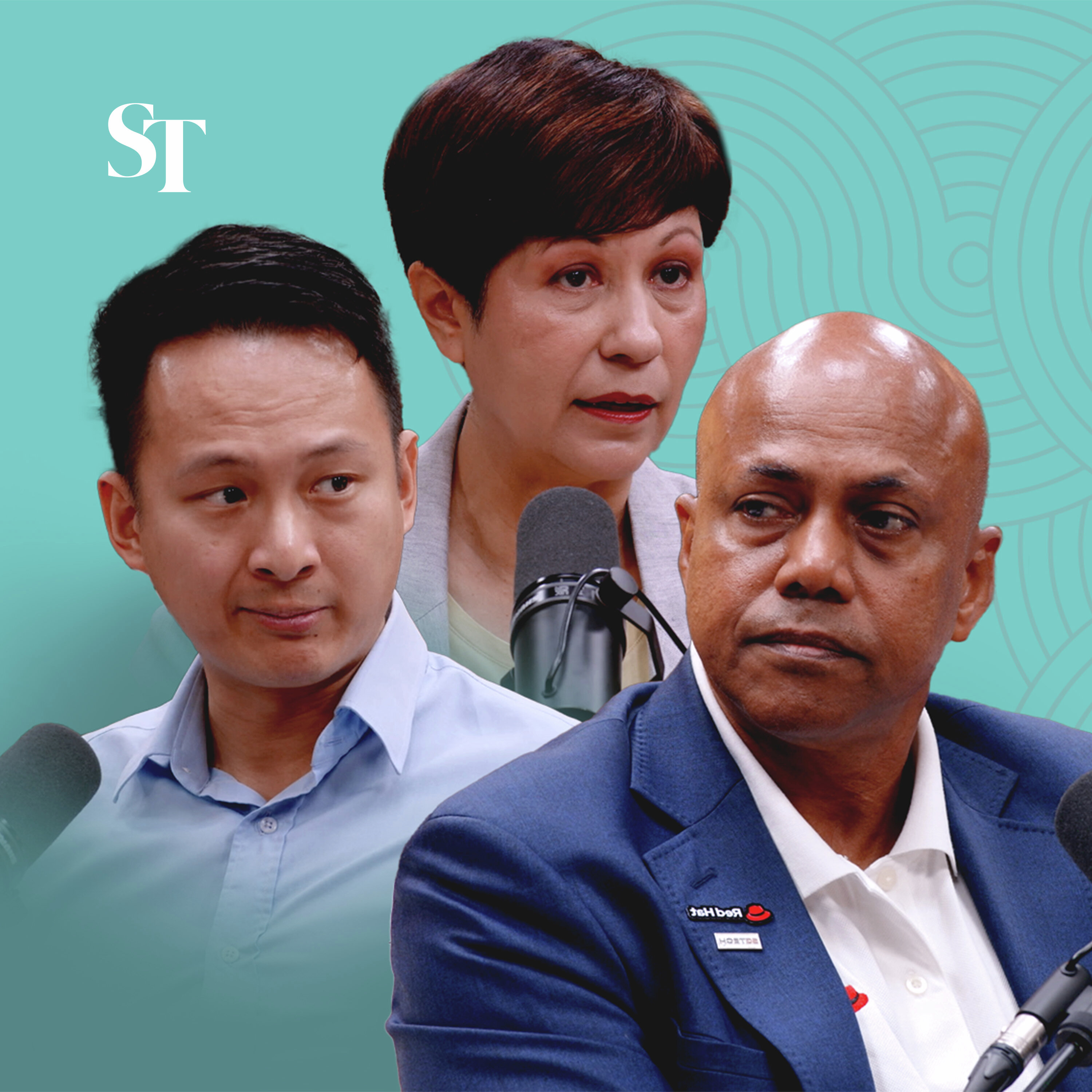
The conversation over the key announcement from Budget 2026 continues. On Feb 12, Prime Minister Lawrence Wong unveiled a record $154.7 billion Budget, how the Government is doubling down on its AI push. For Singaporeans worried about the cost of living, there was household relief in the form of payouts and CDC vouchers. In this episode of the podcast, Second Minister for Finance Indranee Rajah discusses the reason for the big AI push and how the Government planning to deal with the downsides of AI like job losses and its environmental impact? Also joining the conversation are Singapore Management University’s Assistant Professor of Political Science Nathan Peng and the SGTech co-chair of AI, Cloud, and Data Chapter Mr Gunasekharan Chellappan. Highlights (click/tap above): 2:22 Will CDC vouchers be a permanent fixture of the Budget? 5:34 Could Budget 2026 have helped lower income families more? 10:05 “Some people don’t feel like their lives have gotten 2.5 times better.” 12:58 Why do people perceive they aren’t doing well? 18:27 Don’t look at AI as new technology: Guna 21:25 ‘E-nannying’ should stop: Nathan 25:00 Anxiety over being made redundant by AI 30:20 Healthy concern vs unwarranted anxiety? 35:25 Losing the human connection over AI 40:17 Will there be more regulation with stronger AI push? 42:24 Mitigating the negative environmental effects of AI 45:42 How to pick which AI course to take Filmed by: Studio+65 Edited by: Teo Tong Kai, Eden Soh and Chen Junyi Executive producer: Danson Cheong Editorial producer: Elizabeth Law Follow The Usual Place Podcast and get notified for new episode drops every Thursday: Channel: https://str.sg/5nfm Apple Podcasts: https://str.sg/9ijX Spotify: https://str.sg/cd2P YouTube: https://str.sg/theusualplacepodcast Feedback to: [email protected] SPH Awedio app: https://www.awedio.sg --- Follow more ST podcast channels: All-in-one ST Podcasts channel: https://str.sg/wvz7 Get more updates: http://str.sg/stpodcasts --- Get The Straits Times app, which has a dedicated podcast player section: The App Store: https://str.sg/icyB Google Play: https://str.sg/icyX -- #tup #tuptrSee omnystudio.com/listener for privacy information.
S2 Ep 61S2E61: Strategic calculations behind India's trade deals flurry
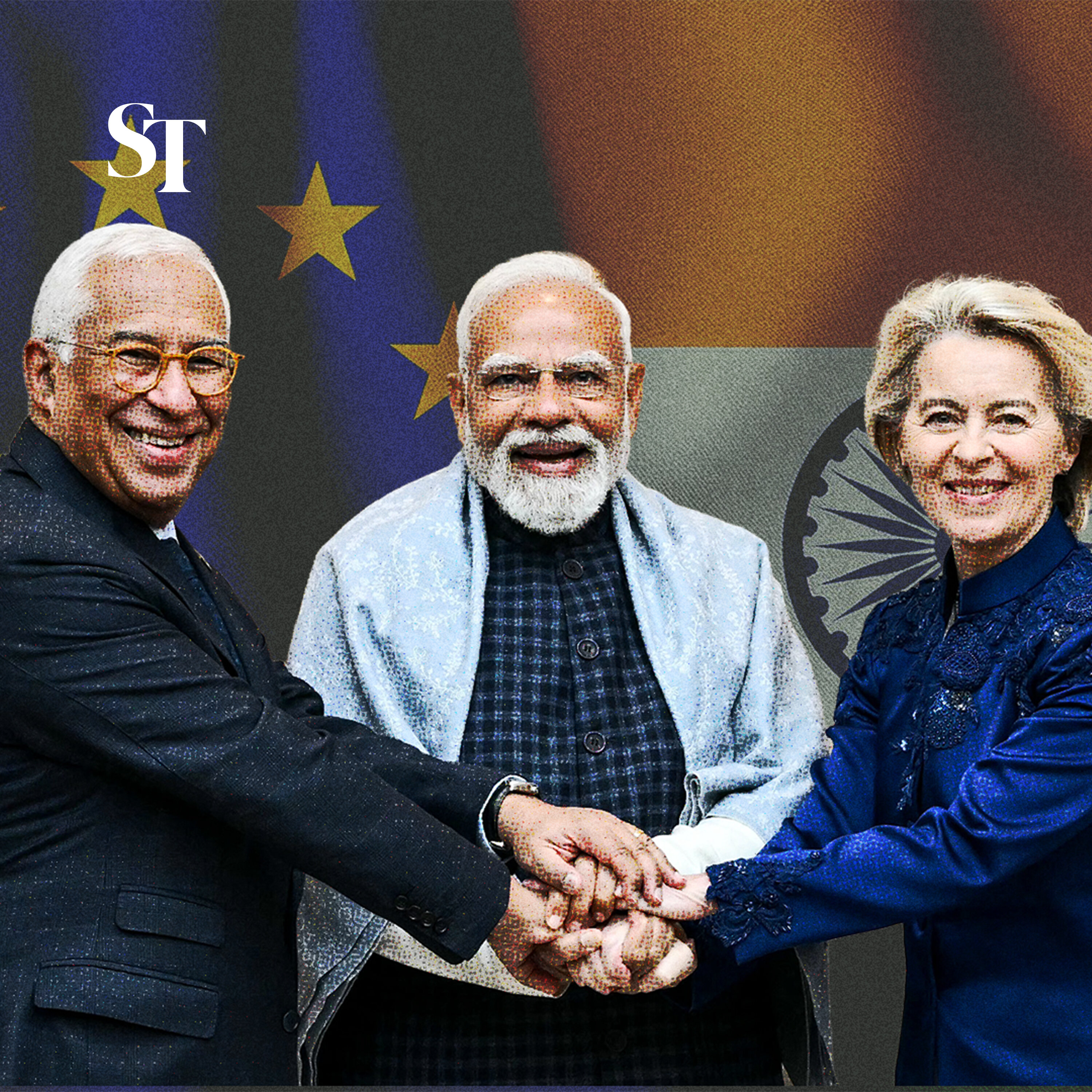
India's new trade pacts with the EU and US, and the big question: Will Delhi revisit its decision to abandon RCEP? Synopsis: The Straits Times’ senior columnist Ravi Velloor distils 45 years of experience covering the Asian continent, with expert guests. A flurry of trade agreements announced by India – first, a “mother of all trade deals” FTA with the European Union, and days later, a framework deal with the US that saw Washington slashing its punitive tariffs on Indian exports to levels just below that of Vietnam and Malaysia, involves wider strategic calculations on every side. In this wide-ranging conversation, host Ravi Velloor speaks with Ambassador Jawed Ashraf, Chairman of India Trade Promotion Organisation and former foreign policy aide to Prime Minister Narendra Modi. Having served as envoy to Singapore and France, he weighs in on the thinking behind the deals, India’s newfound confidence to sign on to market-opening agreements, and the chances of India revisiting its decision to abandon the Asean-backed RCEP, or Regional Comprehensive Economic Partnership. They both discuss India’s trade imperatives, the tighter embrace by India of the European Union which is itself adjusting to a multipolar world, and how quality trade agreements help set the stage for foreign direct investment flows and stronger strategic ties. They also chat about the calibrated opening that India is making with China, even as it is not yet ready to revisit entering RCEP. Highlights (click/tap above) 1:08 India withdrawal from RCEP and focus on bilateral relations 5:15 A greater alignment of trade with geopolitics 8:46 Roots of India’s “self-confidence” to sign trade deals 11:07 What the trade deals mean for ordinary Indians 14:11 EU looks to India, Taiwan in the AI age 18:14 EU-India, and a message to the US 20:53 Did Trump negotiate with a “gun to India’s head”? 24:18 Why stress on defence in US-India trade deal 27:01 RCEP: A calibrated opening is ongoing with China Read Ravi's columns: https://str.sg/3xRP Follow Ravi on X: https://twitter.com/RaviVelloor Sign up for ST’s weekly Asian Insider newsletter: https://str.sg/sfpz Host: Ravi Velloor ([email protected]) Produced and edited by: Fa’izah Sani Executive producer: Ernest Luis Follow Asian Insider Podcast on Fridays here: Channel: https://str.sg/JWa7 Apple Podcasts: https://str.sg/JWa8 Spotify: https://str.sg/JWaX Feedback to: [email protected] SPH Awedio app: https://www.awedio.sg --- Follow more ST podcast channels: All-in-one ST Podcasts channel: https://str.sg/wvz7 Get more updates: http://str.sg/stpodcasts The Usual Place Podcast YouTube: https://str.sg/4Vwsa --- Get The Straits Times app, which has a dedicated podcast player section: The App Store: https://str.sg/icyB Google Play: https://str.sg/icyX --- #STAsianInsiderSee omnystudio.com/listener for privacy information.

S1 Ep 82S1E82: Budget 2026: Why is Singapore betting big on AI?
The strong push towards artificial intelligence and support for vulnerable groups such as lower-income families were two big themes that emerged at Budget 2026. Prime Minister Lawrence Wong, who is also the Finance Minister, just delivered his first Budget since the new government was elected last year. How will businesses be affected by these measures, and how will the Singapore workforce adapt? In our push for new avenues of growth, are there worries about Singaporeans being left behind? In this episode of The Usual Place, I speak with National University of Singapore political science lecturer Rebecca Grace Tan and Singapore Business Federation chief policy and operating officer Musa Fazal about what they made of this year’s Budget. Highlights (click/tap above): 1:12 First reactions to Budget 2026 3:57 What did this year’s Budget miss? 6:12 Using CDC vouchers for strawberries 9:15 Are we dependent on handouts? 14:25 How can AI benefits be spread across society 19:45 The reality of businesses using AI now 24:30 High global talent wages will raise business costs 28:38 Are we ensuring no one’s left behind as S’pore purses growth? 34:51 Growth in the economy, but fewer jobs? Filmed by: Studio+65 Edited by: Teo Tong Kai, Eden Soh and Chen Junyi Executive producer: Danson Cheong Editorial producer: Elizabeth Law Follow The Usual Place Podcast and get notified for new episode drops every Thursday: Channel: https://str.sg/5nfm Apple Podcasts: https://str.sg/9ijX Spotify: https://str.sg/cd2P YouTube: https://str.sg/theusualplacepodcast Feedback to: [email protected] SPH Awedio app: https://www.awedio.sg --- Follow more ST podcast channels: All-in-one ST Podcasts channel: https://str.sg/wvz7 Get more updates: http://str.sg/stpodcasts --- Get The Straits Times app, which has a dedicated podcast player section: The App Store: https://str.sg/icyB Google Play: https://str.sg/icyX -- #tup #tuptrSee omnystudio.com/listener for privacy information.

S1 Ep 65S1E65: Temporary or permanent relief? The future of CDC vouchers
Government support measures such as CDC vouchers were meant to cushion soaring inflation. But are they fiscally sustainable? Synopsis: On Wednesdays, The Straits Times takes a hard look at Singapore's social issues of the day with guests.Temporary government handouts like the CDC vouchers were meant to cushion the impact of Covid-19 and soaring inflation due to supply shocks that were caused by global events like the war in Ukraine. But with inflation cooling to trend levels, can Singaporeans wean off the ‘free money’ reliance from CDC vouchers that were meant to be temporary? In this episode - which comes out a day ahead of Budget 2026 - ST assistant podcast editor Lynda Hong speaks to independent economist Song Seng Wun; and sociologist Clara Lee, research fellow at Lee Kuan Yew School of Public Policy’s Institute of Policy Studies. Apart from how the CDC voucher scheme has since become a staple of the government’s support package, they delve into different forms of welfare Singaporeans now receive, and the impact on small businesses should the scheme be withdrawn. Highlights (click/tap above): 4:11 Impact on heartland merchants should CDC vouchers be withdrawn 9:42 Why are we using 'emergency' vouchers in a recovering economy? 15:49 Exiting from the policy of handing out CDC vouchers 20:43 Digital infrastructure to distribute CDC vouchers are now well-established: Clara 22:45 Redefining welfare state? Read ST’s Opinion section: https://str.sg/w7sH Host: Lynda Hong ([email protected]) Produced and edited by: Hadyu Rahim Executive producers: Ernest Luis & Lynda Hong Follow In Your Opinion Podcast here and get notified for new episode drops: Channel: https://str.sg/w7Qt Apple Podcasts: https://str.sg/wukb Spotify: https://str.sg/w7sV Feedback to: [email protected] SPH Awedio app: https://www.awedio.sg --- Follow more ST podcast channels: All-in-one ST Podcasts channel: https://str.sg/wvz7 Get more updates: http://str.sg/stpodcasts The Usual Place Podcast YouTube: https://str.sg/theusualplacepodcast --- Get The Straits Times app, which has a dedicated podcast player section: The App Store: https://str.sg/icyB Google Play: https://str.sg/icyX --- #inyouropinion See omnystudio.com/listener for privacy information.

S1 Ep 146S1E146: Is it safe to exercise with joint pain? An orthopaedic surgeon explains
Resting too much can weaken muscles, worsening joint pain in the long run, says an expert. Synopsis: Every month, The Straits Times helps you make sense of health matters that affect you. Problems affecting bones, joints, muscles, and tendons are the leading contributor of disability among all ages worldwide. These problems arising from musculoskeletal disorders comprise diverse conditions affecting bones, joints, muscles, and connective tissues, which may result in pain and loss of function. The disorders, which include conditions such as osteoarthritis, osteoporosis, sarcopenia, low back pain, and other degenerative conditions, are especially common in older adults. However, they are not an inevitable part of aging. In this episode, ST senior health correspondent Joyce Teo talks to surgeon-scientist, Assistant Professor Bryan Tan to find out more about what one can do to prevent musculoskeletal disorders. They touched on strength training, what one can do about exercise after a flare of knee osteoarthritis, and not waiting till there is no pain to resume exercising. Prof Tan is an orthopaedic surgeon at Woodlands Hospital, and the co-chair of the musculoskeletal integrated care work group at NHG Health. Highlights (click/tap above): 3:48 What are musculoskeletal conditions? 6:55 It’s never too late to build your muscles and bones 8:45 The more you don’t use your muscles, the weaker they will become 18:21 Hyrox or not, everyone should be engaging in physical activity 20:27 How to get back to your exercise routine after a flare of your knee osteoarthritis? Read Joyce Teo's stories: https://str.sg/JbxN Host: Joyce Teo ([email protected]) Produced and edited by: Amirul Karim Executive producers: Ernest Luis and Lynda Hong Follow Health Check Podcast here and get notified for new episode drops: Channel: https://str.sg/JWaN Apple Podcasts: https://str.sg/JWRX Spotify: https://str.sg/JWaQ Feedback to: [email protected] SPH Awedio app: https://www.awedio.sg --- Follow more ST podcast channels: All-in-one ST Podcasts channel: https://str.sg/wvz7 Get more updates: http://str.sg/stpodcasts The Usual Place Podcast YouTube: https://str.sg/theusualplacepodcast --- Get The Straits Times app, which has a dedicated podcast player section: The App Store: https://str.sg/icyB Google Play: https://str.sg/icyX --- #healthcheckSee omnystudio.com/listener for privacy information.

S2 Ep 60S2E60: Hong Kong’s tolerance for shortcuts has turned deadly
Hong Kong prides itself on being a first world city. So how did such a thing like the Tai Po fire happen?Synopsis: Every first Friday of the month, The Straits Times catches up with its foreign correspondents about life and trends in the countries they're based in. On Nov 26, 2025, a fire swept through Wang Fuk Court in Hong Kong's Tai Po district, killing 168 people. What also perished in that inferno was a certain trust in the system to keep everyone safe. The Straits Times’ Hong Kong Correspondent Magdalene Fung, a long-time resident of the city, talks to host and foreign editor Li Xueying about her experience covering the disaster. She also wrestles with the question of how Hong Kong’s tolerance for cutting corners cuts both ways. There is ingenuity. But the acceptance of quick, convenient fixes has also resulted in a society that collectively allowed the fire to happen. Highlights (click/tap above): 01:04 On the ground, covering the fire 03:52 A system that failed 09:54 But a society that also helped 11:03 Low standards and quick, convenient fixes 16:12 The fire doors are still not closed Read Magdalene Fung’s article here: https://str.sg/JyX2y Read Li Xueying’s articles: https://str.sg/iqmR Follow Li Xueying on LinkedIn: https://str.sg/ip4x Sign up for ST’s weekly Asian Insider newsletter: https://str.sg/sfpz Host: Li Xueying ([email protected]) Edited by: Fa’izah Sani Executive producer: Ernest Luis Follow Asian Insider on Fridays here: Channel: https://str.sg/JWa7 Apple Podcasts: https://str.sg/JWa8 Spotify: https://str.sg/JWaX Feedback to: [email protected] SPH Awedio app: https://www.awedio.sg --- Follow more ST podcast channels: All-in-one ST Podcasts channel: https://str.sg/wvz7 Get more updates: http://str.sg/stpodcasts The Usual Place Podcast YouTube: https://str.sg/4Vwsa --- Get The Straits Times app, which has a dedicated podcast player section: The App Store: https://str.sg/icyB Google Play: https://str.sg/icyX --- #STAsianInsiderSee omnystudio.com/listener for privacy information.
S1 Ep 81S1E81: She became a plumber, he chose the woodworking life. What drew them to blue-collared work?
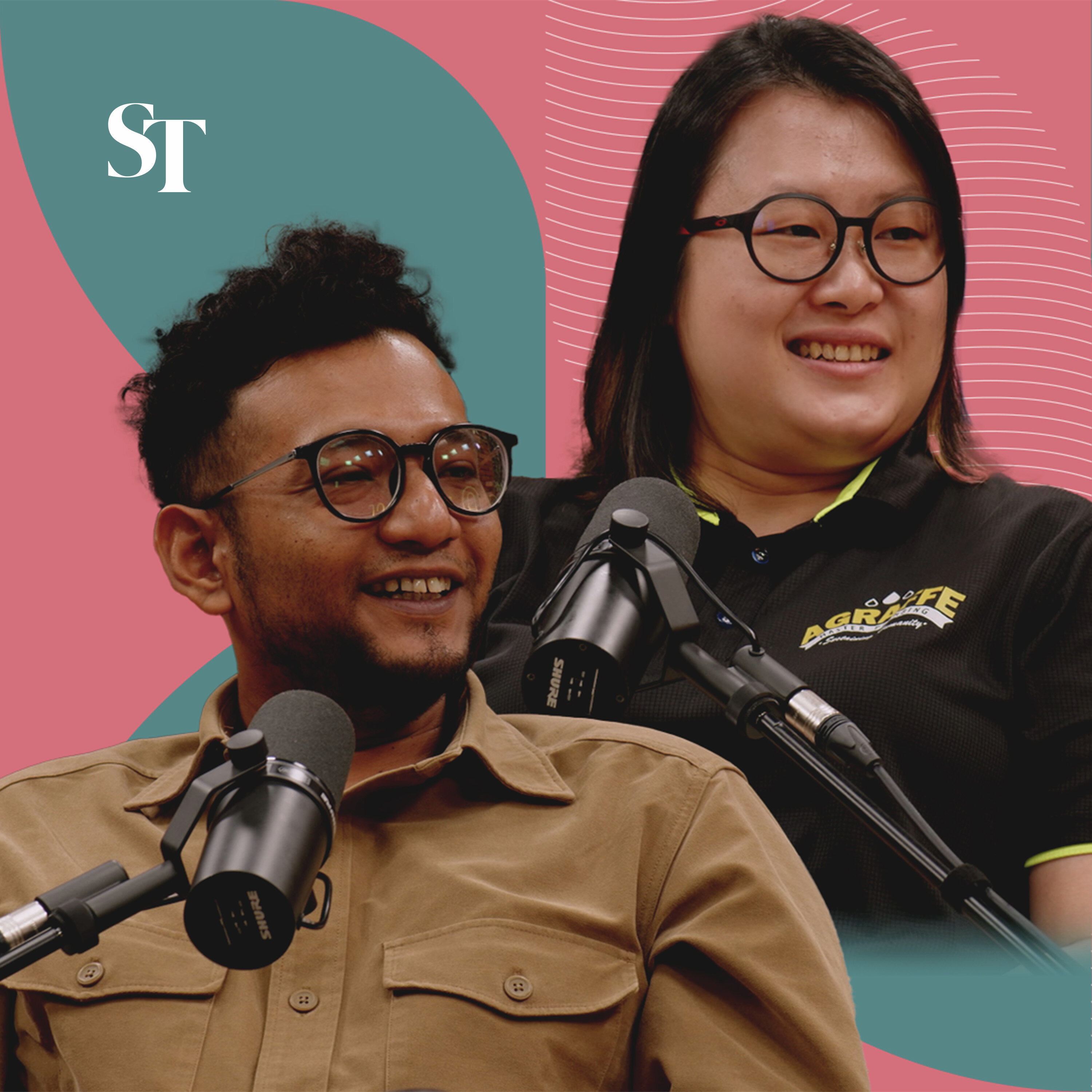
When it comes to charting their career paths, it’s likely most young Singaporeans would opt for white-collared jobs. Hands-on skilled trades? Not so much. Yet, The Straits Times reported in January that a growing number of younger people are choosing to go into traditional skilled trades such as plumbing and landscaping. In this episode of The Usual Place, I speak with two millennials who have chosen not to follow the conventional script and have built businesses with their own hands. Ms Geraldine Goh, 31, is a licensed plumber, who started her own business Agraffe in 2017 after a stint as a facilities management officer at a town council. She was studying mechanical engineering at a university, but dropped out after two years. Meanwhile, Mr Ahmad Alhabshee, 36, started his own furniture company Urban Salvation about 11 years ago. He designs and handcrafts bespoke wooden furniture using sustainably sourced materials. He branched out on his own after he was slighted by a former employer, who judged him for not having enough academic qualifications. What convinced both of them to take on blue-collared work and become their own bosses? What does it mean to go against expectations in a society that still measures success with grades and paper qualifications? Highlights (click/tap above): 1:50 The misconceptions of being a female plumber 8:53 Why I dropped out of NTU to work at a town council 12:32 The harsh reality of the furniture business 20:05 30 years of experience vs. a licence 28:35 Why modern men can’t fix a $1 door hinge Follow The Usual Place podcast on IG: https://www.instagram.com/theusualplacepodcast Follow Natasha on LinkedIn: https://str.sg/v6DN Filmed by: Studio+65 Edited by: Teo Tong Kai, Eden Soh and Chen Junyi Executive producer: Danson Cheong Editorial producer: Elizabeth Law Follow The Usual Place Podcast and get notified for new episode drops every Thursday: Channel: https://str.sg/5nfm Apple Podcasts: https://str.sg/9ijX Spotify: https://str.sg/cd2P YouTube: https://str.sg/theusualplacepodcast Feedback to: [email protected] SPH Awedio app: https://www.awedio.sg --- Follow more ST podcast channels: All-in-one ST Podcasts channel: https://str.sg/wvz7 Get more updates: http://str.sg/stpodcasts --- Get The Straits Times app, which has a dedicated podcast player section: The App Store: https://str.sg/icyB Google Play: https://str.sg/icyX -- #tup #tuptrSee omnystudio.com/listener for privacy information.

S1 Ep 64S1E64: Dr Becky, millennial parent whisperer, on screentime and modern parenting
Are we using phones constructively to help kids to learn or assist adults in coping? Synopsis: On Wednesdays, The Straits Times takes a hard look at Singapore's social issues of the day with guests. One of the most fraught challenges of modern parenting is our love-hate relationship with screen time. From school bans on phones in school, to the everyday reality of dual-income working parents who just need their child to eat dinner in peace, how much is too much screentime and who should be responsible? Are we using phones constructively to help kids to learn or assist adults in coping? And in a dopamine fuelled always-on world where we are expected to be 24/7 ready for work, are we asking our offspring to do something we ourselves fail at? Opinion editor Lin Suling gets answers from Dr Becky, who’s been called the millennial parent whisperer by Time Magazine, on the sidelines of the 2026 World Economic Forum in Davos in January. With millions of followers on Instagram tuning into her snappy videos, Dr Rebecca Kennedy is also a bestselling author, a clinical psychologist, the CEO of Good Inside, and mother of three. Highlights (click/tap above): 1:59 Is there a place for phone bans in schools? 3:45 What’s wrong with kids watching videos during mealtimes? 5:10 Parents are always on their phones for work so why should kids listen? 8:06 Is society intolerant towards misbehaviour in restaurants, airplanes and public areas? 9:58 Might we be over-parenting? 11:23 Is there a minimum age when kids can sit by themselves? 12:40 Dr Becky’s message to people unsure about having kids Read ST’s Opinion section: https://str.sg/w7sH Host: Lin Suling ([email protected]) Produced and edited by: Hadyu Rahim Executive producers: Ernest Luis & Lynda Hong Follow In Your Opinion Podcast here and get notified for new episode drops: Channel: https://str.sg/w7Qt Apple Podcasts: https://str.sg/wukb Spotify: https://str.sg/w7sV Feedback to: [email protected] SPH Awedio app: https://www.awedio.sg --- Follow more ST podcast channels: All-in-one ST Podcasts channel: https://str.sg/wvz7 Get more updates: http://str.sg/stpodcasts The Usual Place Podcast YouTube: https://str.sg/theusualplacepodcast --- Get The Straits Times app, which has a dedicated podcast player section: The App Store: https://str.sg/icyB Google Play: https://str.sg/icyX --- #inyouropinionSee omnystudio.com/listener for privacy information.
S2 Ep 33S2E33: From Greenland to deep sea mining: Is geopolitics killing climate action?
Yes, it’s a scary time. But more than ever we need to talk about climate and nature. Synopsis: Every first and third Tuesday of the month, The Straits Times analyses the beat of the changing environment, from biodiversity conservation to climate change. Right now, it seems we’re in an ‘ice age’ for climate action. Geopolitics is all we can talk about and it’s pretty much wiped climate change and nature from the headlines. Wars and conflict, trade rows, attacks on climate policies and science and the fracturing of multilateralism have created a more fraught and uncertain world. Some countries and businesses have weakened their environmental targets and policies, even as the climate and nature crises worsen. So what can be done? Can the shift to bilateral and regional climate and energy agreements replace unified global action? Can renewable energy remain a powerful uniting force? And how can we get climate and nature back into the headlines? Join hosts Audrey Tan and David Fogarty as they discuss these questions and more in the latest episode of The Straits Times’ Green Pulse podcast. Have a listen and let us know what you think! Highlights of conversation (click/tap above): 1:51 For all the talk of fossil fuels, renewables are stealing the show 7:59 Rush for resources and the Greenland reality check 12:59 Weakening of multilateralism is changing the way we talk about climate and nature. 18:51 Focus on climate and nature might be in a rut. What will it take to refocus minds? 25:33 The human touch. Journalists need to put people at the centre of their environment stories. Follow Audrey Tan on LinkedIn: https://str.sg/848W Read her articles: https://str.sg/JLM2 Follow David Fogarty on LinkedIn: https://str.sg/jcvy Read his articles: https://str.sg/JLMu Hosts: Audrey Tan ([email protected]) & David Fogarty ([email protected]) Produced and edited by: Hadyu Rahim Executive producers: Ernest Luis & Lynda Hong Follow Green Pulse Podcast here and get notified for new episode drops: Channel: https://str.sg/JWaf Apple Podcasts: https://str.sg/JWaY Spotify: https://str.sg/JWag Feedback to: [email protected] SPH Awedio app: https://www.awedio.sg --- Follow more ST podcast channels: All-in-one ST Podcasts channel: https://str.sg/wvz7 Get more updates: http://str.sg/stpodcasts The Usual Place Podcast YouTube: https://str.sg/theusualplacepodcast --- Get The Straits Times app, which has a dedicated podcast player section: The App Store: https://str.sg/icyB Google Play: https://str.sg/icyX --- #greenpulseSee omnystudio.com/listener for privacy information.

S2 Ep 35S2E35: Investing in stocks or stuff?
Is it better to buy stocks or invest in tangible things? Synopsis: Every first and third Monday of the month, get a head start in your personal finance, career and life with The Straits Times. Logan Paul’s Pokemon card has gone for over US$1 million. But do physical items and collections really help your money to grow? How do Pokemon cards, Labubus and Marvel figurines measure alongside traditional stocks as investments? In this episode, ST business correspondent Sue-Ann Tan looks at the stocks versus the 'stuff'. Her guests are avid collector Ian Cheng and eToro market analyst Zavier Wong. Highlights (click/tap above): 4:26 How do stocks compare with items? 8:12 Rare cards that appreciate from $100 to $600 9:00 Why did Pokemon card prices rise? 11:26 Logan Paul’s US$5 million Pokemon card 17:00 Collections that depreciated in value instead 22:08 What should I do if I want to become an investor in cards? Read Sue-Ann Tan's articles: https://str.sg/mvSa Follow Sue-Ann Tan on LinkedIn: https://str.sg/A86X Host: Sue-Ann Tan ([email protected]) Produced & edited by: Amirul Karim Executive producers: Ernest Luis, Lynda Hong & Joanna Seow Follow Headstart On Record Podcast channel here: Channel: https://str.sg/wB2m Apple Podcasts: https://str.sg/wuN3 Spotify: https://str.sg/wBr9 Feedback to: [email protected] Get business/career tips in ST's Headstart newsletter: https://str.sg/headstart-nl SPH Awedio app: https://www.awedio.sg --- Follow more ST podcast channels: All-in-one ST Podcasts channel: https://str.sg/wvz7 Get more updates: http://str.sg/stpodcasts The Usual Place Podcast YouTube: https://str.sg/theusualplacepodcast --- Get The Straits Times app, which has a dedicated podcast player section: The App Store: https://str.sg/icyB Google Play: https://str.sg/icyX --- Do note: All analyses, opinions, recommendations and other information in this podcast are for your general information only. You should not rely on them in making any decision. Please consult a fully qualified financial adviser or professional expert for independent advice and verification. To the fullest extent permitted by law, SPH Media shall not be liable for any loss arising from the use of or reliance on any analyses, opinions, recommendations and other information in this podcast. SPH Media accepts no responsibility or liability whatsoever that may result or arise from the products, services or information of any third parties. --- #headstartSee omnystudio.com/listener for privacy information.
S2 Ep 33S2E33: How to invest in 2026
Tech stocks still shine, but beware the bubble. Synopsis: Every first and third Monday of the month, get a headstart in your personal finance and career with The Straits Times. 2025 has been a turbulent year, and 2026 will also be marked by uncertainty. So amid such global turmoil, what should we invest in? In this episode, ST business correspondent Sue-Ann Tan looks at how to grow your money in 2026. Her guests are Gen Z investor Kass Phai, who is also a family wealth consultant at Unicorn, and veteran market watcher Ven Sreenivasan. Highlights (click/tap above): 1:26 Where are the markets going in 2026? 7:00 Should we still buy tech stocks? 10:37 Risk vs volatility 16:00 Other sectors to invest in 22:00 Should we invest in the SGX? 29:00 Other investment assets to hold Read Sue-Ann Tan's articles: https://str.sg/mvSa Follow Sue-Ann Tan on LinkedIn: https://str.sg/A86X Host: Sue-Ann Tan ([email protected]) Produced & edited by: Amirul Karim Executive producers: Ernest Luis, Lynda Hong & Joanna Seow Follow Headstart On Record Podcast channel here: Channel: https://str.sg/wB2m Apple Podcasts: https://str.sg/wuN3 Spotify: https://str.sg/wBr9 Feedback to: [email protected] Get business/career tips in ST's Headstart newsletter: https://str.sg/headstart-nl SPH Awedio app: https://www.awedio.sg --- Follow more ST podcast channels: All-in-one ST Podcasts channel: https://str.sg/wvz7 Get more updates: http://str.sg/stpodcasts The Usual Place Podcast YouTube: https://str.sg/theusualplacepodcast --- Get The Straits Times app, which has a dedicated podcast player section: The App Store: https://str.sg/icyB Google Play: https://str.sg/icyX --- Do note: All analyses, opinions, recommendations and other information in this podcast are for your general information only. You should not rely on them in making any decision. Please consult a fully qualified financial adviser or professional expert for independent advice and verification. To the fullest extent permitted by law, SPH Media shall not be liable for any loss arising from the use of or reliance on any analyses, opinions, recommendations and other information in this podcast. SPH Media accepts no responsibility or liability whatsoever that may result or arise from the products, services or information of any third parties. --- #headstartSee omnystudio.com/listener for privacy information.
S1 Ep 80S1E80: Has Trump ‘ruptured’ the global order? What can Singapore do?
After the World Economic Forum in Davos, it’s clear that global diplomacy has grown more confrontational and transactional. So what’s the game plan for Singapore now? In this episode of The Usual Place, Natasha speaks with ST opinion editor Lin Suling, who was in Davos last week, and Lee Kuan Yew School of Public Policy dean Joseph Liow about how we can work with American president Donald Trump’s conventional style of foreign policy. The consensus was that ignoring the US is not an option, and that Trumpism is here to stay, even after the US president steps down. As for Singapore, it’s not our style to “tahan”, said Suling, using the Malay word for endure. “Our mantra is to adapt and find new opportunities, and to get on the train.” Highlights (click/tap above): 1:34 What was it like watching Mr Trump speak at Davos? 4:39 Is the world order “rupture” exaggerated? 8:23 How to avoid getting in the crosshairs of the US 14:14 Why it’s not possible for S’pore to ice out US 21:14 S’poreans need to be flexible in outlook and purpose 26:48 Will Trump’s moves influence other big powers to invade other countries? 29:48 “Might is right” has been normalised: Suling 32:54 Great powers have “no qualms” shoving rules aside: Joseph 35:19 Trump called out the dysfunction of the United Nations 37:19 Are countries FOMO about not being on the Board of Peace? 42:10 Should we just wait out the next three years of Trump’s presidency? 45:28 Trumpism is here to stay, even if Trump isn’t here: Joseph Follow The Usual Place podcast on IG: https://www.instagram.com/theusualplacepodcast Follow Natasha on LinkedIn: https://str.sg/v6DN Filmed by: Studio+65 Edited by: Teo Tong Kai, Eden Soh and Chen Junyi Executive producer: Danson Cheong Editorial producer: Elizabeth Law Follow The Usual Place Podcast and get notified for new episode drops every Thursday: Channel: https://str.sg/5nfm Apple Podcasts: https://str.sg/9ijX Spotify: https://str.sg/cd2P YouTube: https://str.sg/theusualplacepodcast Feedback to: [email protected] SPH Awedio app: https://www.awedio.sg --- Follow more ST podcast channels: All-in-one ST Podcasts channel: https://str.sg/wvz7 Get more updates: http://str.sg/stpodcasts --- Get The Straits Times app, which has a dedicated podcast player section: The App Store: https://str.sg/icyB Google Play: https://str.sg/icyX -- #tup #tuptrSee omnystudio.com/listener for privacy information.

S1 Ep 63S1E63: Forced to kowtow until he bled: Why some men stay in abusive marriages
A counsellor of a support group reveals why some men choose to tolerate physical, emotional and psychological abuse in their marriages. Synopsis: On Wednesdays, The Straits Times takes a hard look at Singapore's social issues of the day with guests. Spousal abuse cases in Singapore rose significantly in 2024 to 2,136, up from 2,008 such cases in 2023, according to the Ministry of Social and Family Development (MSF). While official figures did not give a breakdown of these cases by gender, the defamation case of Johnny Depp against his ex-wife Amber Heard and post-Covid-19 awareness have encouraged more men to step forward, said a counsellor who runs a specialised support group for battered husbands. To find out more in this episode, assistant podcast editor Lynda Hong speaks with Josiah Yeo, a counsellor at Lutheran Community Care Services (LCCS), who started its support group for abused husbands in 2022. Mr Yeo details how one of the abused husbands in the support group was beaten with golf clubs and made to slap himself in public. He was even locked out of the house and made to kowtow in front of the door 30 times, before he could get into his home. Apart from abusive marriages, Mr Yeo also gives some pre-marital advice on what are some red flags to look out for, especially in the dating stage. Highlights (click/tap above): 1:49 Impact of Johnny Depp’s defamation suit on men in Singapore 9:31 When do abused husbands finally walk away from a marriage? 14:05 Why men don’t confide in their friends 18:40 Three reasons men stay in abusive marriage 19:11 Breaking the "bro code": How to check on a friend without making it awkward 32:39 Dating red flags - how to spot a potential abusive spouse Read more on abused spouses: https://str.sg/aqjX Helplines Family violence National Anti-Violence & Sexual Harassment Helpline: 1800-777-0000 (24 hours) AWARE Helpline: 1800-777-5555 (weekdays, 10am to 6pm) Care Corner Project StART: 6476-1482 (weekdays 10am-1pm, 2pm-5pm; except public holidays) TOUCH Family Support: 6317-9998 Lutheran Community Care Services: 6441-3906 / [email protected] Mental well-being National Mindline: 1771 (24 hours) / 6669-1771 (via WhatsApp) Samaritans of Singapore: 1-767 (24 hours) / 9151-1767 (24 hours CareText via WhatsApp) Singapore Association for Mental Health: 1800-283-7019 Silver Ribbon Singapore: 6386-1928 Chat, Centre of Excellence for Youth Mental Health: 6493-6500/1 Women’s Helpline (Aware): 1800-777-5555 (weekdays, 10am to 6pm) The Seniors Helpline: 1800-555-5555 (weekdays, 9am to 5pm) Tinkle Friend (for primary school-age children): 1800-2744-788 Counselling Touchline (Counselling): 1800-377-2252 Touch Care Line (for caregivers): 6804-6555 Counselling and Care Centre: 6536-6366 We Care Community Services: 3165-8017 Shan You Counselling Centre: 6741-9293 Clarity Singapore: 6757-7990 Online resources mindline.sg/fsmh eC2.sg chat.mentalhealth.sg carey.carecorner.org.sg (for those aged 13 to 25) limitless.sg/talk (for those aged 12 to 25) Read ST’s Opinion section: https://str.sg/w7sH Host: Lynda Hong ([email protected]) Produced and edited by: Hadyu Rahim Executive producers: Ernest Luis & Lynda Hong Follow In Your Opinion Podcast here and get notified for new episode drops: Channel: https://str.sg/w7Qt Apple Podcasts: https://str.sg/wukb Spotify: https://str.sg/w7sV Feedback to: [email protected] SPH Awedio app: https://www.awedio.sg --- Follow more ST podcast channels: All-in-one ST Podcasts channel: https://str.sg/wvz7 Get more updates: http://str.sg/stpodcasts The Usual Place Podcast YouTube: https://str.sg/theusualplacepodcast --- Get The Straits Times app, which has a dedicated podcast player section: The App Store: https://str.sg/icyB Google Play: https://str.sg/icyX --- #inyouropinionSee omnystudio.com/listener for privacy information.
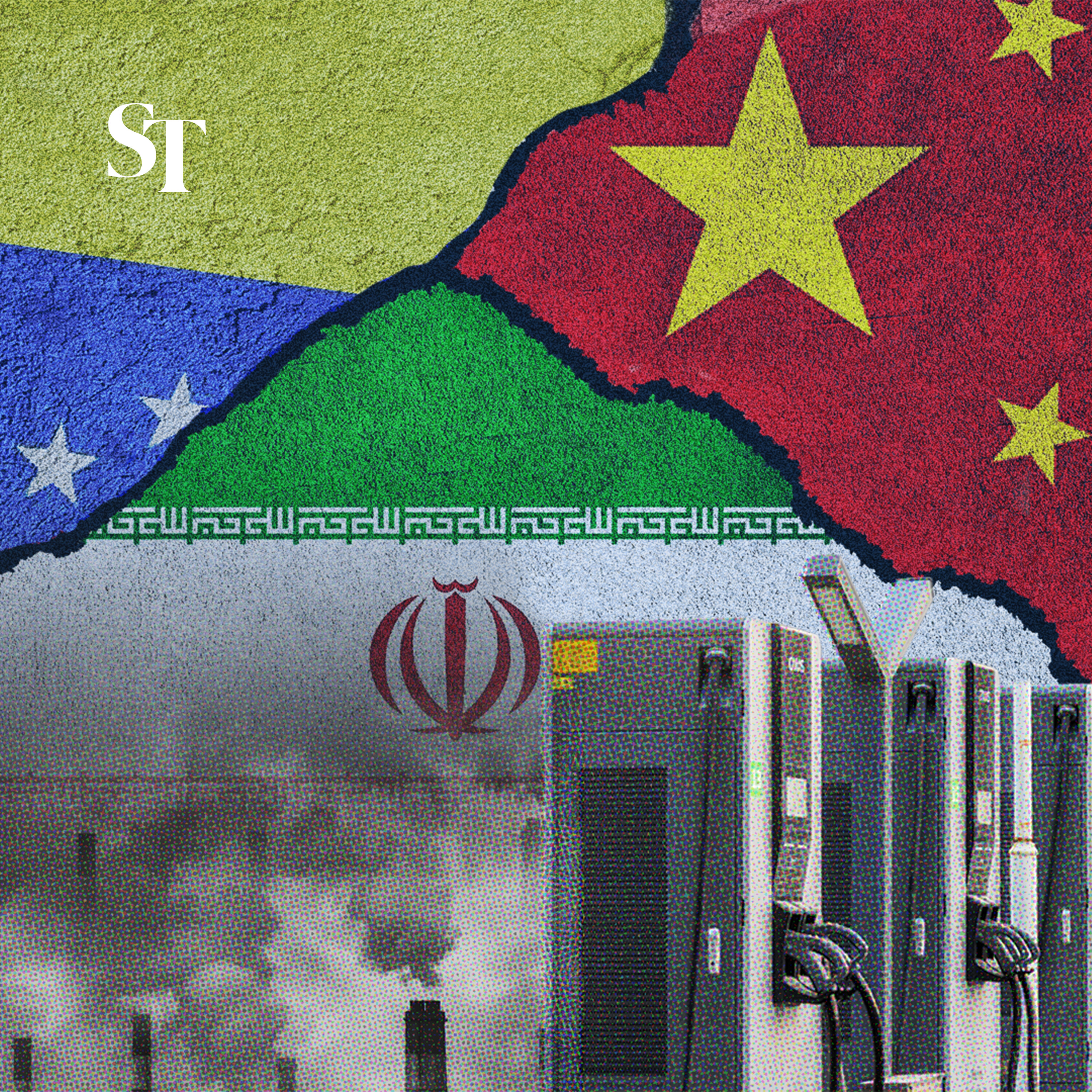
S2 Ep 59S2E59: China's fossil fuel addiction exposes a strategic vulnerability
There is also a human cost to China's clean energy transition. Synopsis: Every fourth Friday of the month, The Straits Times will now analyse the hottest political and trending talking points, alternating between its Malaysia and Greater China bureaus. For January, host and deputy foreign editor Albert Wai teams up again with senior China correspondent Yew Lun Tian. Dramatic developments in Venezuela and Iran, both important oil suppliers for China, have exposed Beijing’s vulnerability in terms of energy security. Oil only accounts for around 18 per cent of China’s energy mix but most of this is imported. While both regimes have enjoyed solid ties with Beijing, the reality is there is little China can do directly to preserve its interests there. Domestically, China has achieved remarkable success in its clean energy transition. But the human cost of this effort, particularly when it comes to poorer communities, should not be underestimated. Clean tech may have played a part in China’s soft power rise (BYD electric vehicles and solar panels are obvious examples), but there is no guarantee that this will translate into a stronger hand geopolitically. Highlights (click/tap above): 2:02 Are China’s interests in Venezuela dead in the water? 4:58 Impacts of developments in Venezuela, Iran on upcoming Trump-Xi meeting 7:37 Is China prepared to use force to defend its energy security interests? 09:44 The human cost of China’s clean energy transition 14:11 Challenges in clean energy storage, distribution 17:28 Clean tech fuels China’s soft power rise 20:14 Existential survival instinct: Running out of energy Read more: https://str.sg/tBih Register for Asian Insider newsletter: https://str.sg/stnewsletters Host: Albert Wai ([email protected]) Produced and edited by: Fa’izah Sani Executive producer: Ernest Luis Follow Asian Insider Podcast on Fridays here: Channel: https://str.sg/JWa7 Apple Podcasts: https://str.sg/JWa8 Spotify: https://str.sg/JWaX Feedback to: [email protected] SPH Awedio app: https://www.awedio.sg --- Follow more ST podcast channels: All-in-one ST Podcasts channel: https://str.sg/wvz7 Get more updates: http://str.sg/stpodcasts The Usual Place Podcast YouTube: https://str.sg/4Vwsa --- Get The Straits Times app, which has a dedicated podcast player section: The App Store: https://str.sg/icyB Google Play: https://str.sg/icyX --- #STAsianInsiderSee omnystudio.com/listener for privacy information.
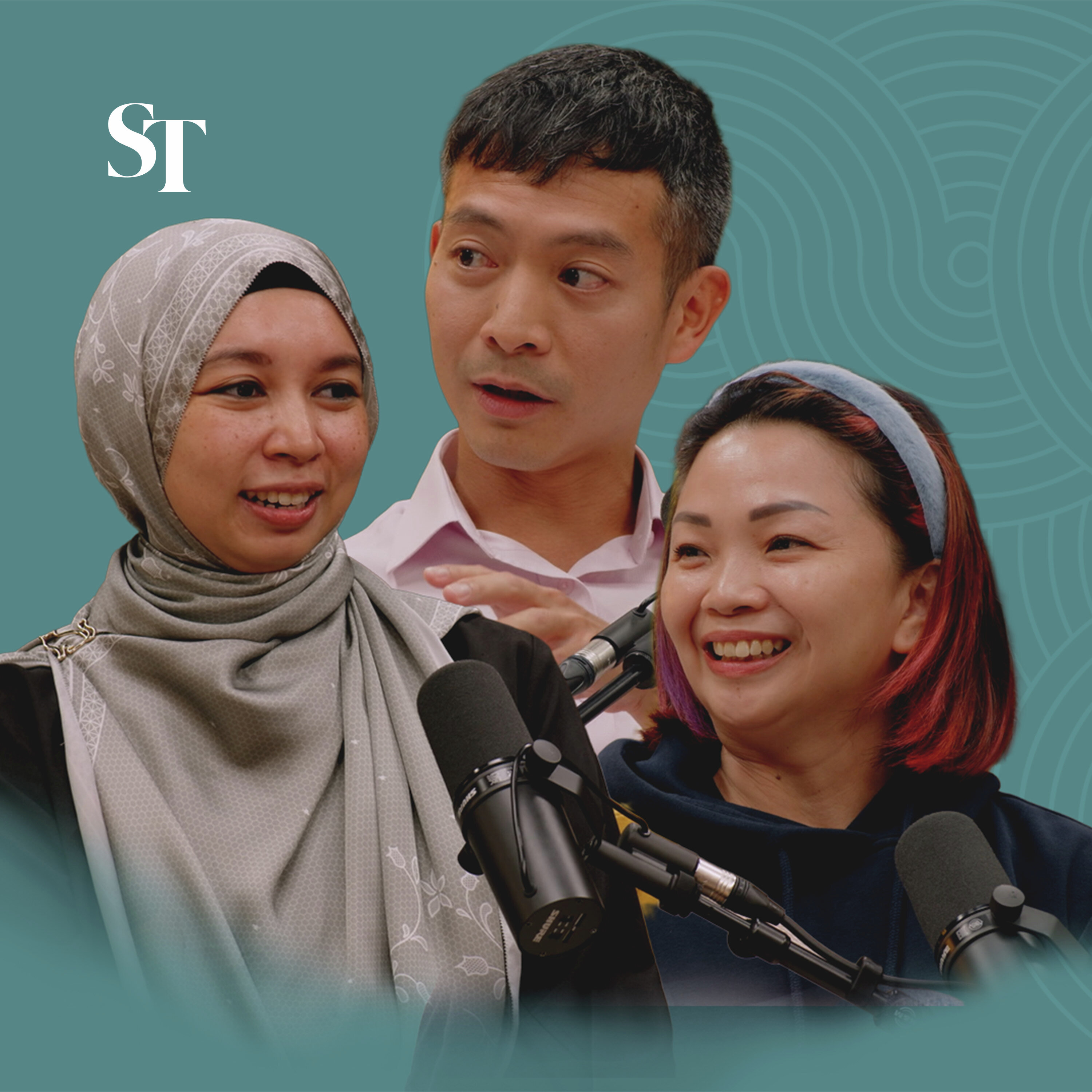
S1 Ep 79S1E79: Are central kitchen meals coming to every Singapore school?
There has been a buffet of discussion as pre-packed food for students have been in the spotlight recently. Some schools have had to turn to prepared meals from centralised kitchens because of shrinking student numbers and a lack of canteen stallholders. But this has not been to everyone’s taste. Bento boxes from airline caterer SATS made the news after pictures of unappetising servings at Hwa Chong Institution (HCI) surfaced online in early January. It prompted a flurry of discussion both on and offline, as everyone weighed in with their thoughts from the colour of the boxes – turquoise – to the dishes served to what pre-packed meals takes away from the recess experience. The media was later invited to HCI to taste the food and speak to students, who gave reviews about the SATS pre-packed meals. The school’s principal said the menus will be refined, and SATS will relook recipes and food presentation. Then on Jan 14, concerns emerged over food safety after 60 primary school pupils came down with suspected food poisoning after consuming food prepared by Gourmetz, the school’s caterer. In this week’s episode of The Usual Place, I chat with two canteen stall operators, Ms Nurkusmawati Kasim, who runs a Western food stall in a primary school, and Ms Grace Lim, who operates a snack stall in a primary and secondary school, about their experience providing meals for students. Jalan Besar GRC MP Shawn Loh, who is the group managing director of food conglomerate Commonwealth Capital Group, joins us to discuss whether there are alternatives to the central kitchen model. Highlights (click/tap above): 0:55 Were the reactions to Hwa Chong Institution bento boxes overblown? 6:17 Why Grace and Wati chose to work in school canteens 9:22 Crafting menus for students 11:54 Healthy meals affects operating cost 14:43 Can you make money as a canteen stall vendor? 18:25 I just wanted to kill time when my son’s at school: Wati 20:47 Why central kitchens work for schools 22:13 Why Shawn champions a model where prepped ingredients are cooked on-site 25:35 Wati’s experience as a former air stewardess is handy when feeding masses 27:24 Do we romanticise recess time? 32:24 Cafeteria model offers control over nutritional value of food 34:50 What would entice people to become canteen vendors? 37:03 “Meal prep is the least efficient way.”: Shawn Follow The Usual Place podcast on IG: https://www.instagram.com/theusualplacepodcast Follow Natasha on LinkedIn: https://str.sg/v6DN Filmed by: Studio+65 Edited by: Teo Tong Kai, Eden Soh and Chen Junyi Executive producer: Danson Cheong Editorial producers: Elizabeth Law & Lynda Hong Follow The Usual Place Podcast and get notified for new episode drops every Thursday: Channel: https://str.sg/5nfm Apple Podcasts: https://str.sg/9ijX Spotify: https://str.sg/cd2P YouTube: https://str.sg/theusualplacepodcast Feedback to: [email protected] SPH Awedio app: https://www.awedio.sg --- Follow more ST podcast channels: All-in-one ST Podcasts channel: https://str.sg/wvz7 Get more updates: http://str.sg/stpodcasts --- Get The Straits Times app, which has a dedicated podcast player section: The App Store: https://str.sg/icyB Google Play: https://str.sg/icyX -- #tup #tuptrSee omnystudio.com/listener for privacy information.

S2 Ep 32S2E32: Should we just give up on cultivated meat?
Lab-grown meat. The way of the future or a hard act to swallow? Synopsis: Every first and third Tuesday of the month, The Straits Times analyses the beat of the changing environment, from biodiversity conservation to climate change. In this episode, hosts Audrey Tan and David Fogarty get their teeth into cultivated meat, a topic that was very much in the headlines a few years back. Singapore was the first nation to approve the sale of cultivated chicken meat in 2020 but investment in the sector, after much fanfare, has slowed. So is there still potential for this sector to take off? The pay-off could be huge if companies can create safe, tasty and affordable beef, chicken, lamb and even seafood in bioreactors instead of relying on huge tracts of land and the sea. Meeting the needs of billions of people, could slash the impacts on the environment and cut greenhouse gas emissions. Is this your vision of the future? Or still too soon to say? Let us know what you think! Highlights of conversation (click/tap above): 2:24 What is the difference between cultivated meat and plant-based alternatives? 3:24 Why the interest in cultivated meat? What are the environmental benefits? 6:20 How cultivated meat products are made and why is the process challenging? 12:14 If companies succeed, the prize could be huge but there are still hurdles 20:32 Stay the course: Cultivated meat could become an important tool to fight climate change 23:04 Better information, better decisions by consumers. For instance: CO2 content labels on food products Follow Audrey Tan on LinkedIn: https://str.sg/848W Read her articles: https://str.sg/JLM2 Follow David Fogarty on LinkedIn: https://str.sg/jcvy Read his articles: https://str.sg/JLMu Hosts: Audrey Tan ([email protected]) & David Fogarty ([email protected]) Produced and edited by: Hadyu Rahim Executive producers: Ernest Luis & Lynda Hong Follow Green Pulse Podcast here and get notified for new episode drops: Channel: https://str.sg/JWaf Apple Podcasts: https://str.sg/JWaY Spotify: https://str.sg/JWag Feedback to: [email protected] SPH Awedio app: https://www.awedio.sg --- Follow more ST podcast channels: All-in-one ST Podcasts channel: https://str.sg/wvz7 Get more updates: http://str.sg/stpodcasts The Usual Place Podcast YouTube: https://str.sg/theusualplacepodcast --- Get The Straits Times app, which has a dedicated podcast player section: The App Store: https://str.sg/icyB Google Play: https://str.sg/icyX --- #greenpulseSee omnystudio.com/listener for privacy information.

S2 Ep 34S2E34: Being kinder to yourself during job changes
Learn how to better reconcile the mixed feelings that come with work transitions. Synopsis: Every first and third Monday of the month, get a headstart in your personal finance and career with The Straits Times. It seems like one of life’s cruel ironies. Do well, and go far together in a bonded team, and yet further progression may require you to move on elsewhere. If this is a familiar scenario to you, fear not. ST correspondent Tay Hong Yi hosts Mr Aneel Singh Gill, a psychologist with Talk Your Heart Out, an online and face-to-face therapy platform. He helps clients navigate work-related issues. Hong Yi, who has been with The Straits Times since 2021, is also hosting in his final podcast as he transitions to a new role elsewhere - and what better topic to talk about than this? Highlights (click/tap above): 2:07 Why might someone feel a sense of loss despite exciting times ahead? 4:13 How to identify and reconcile mixed feelings towards impending change 11:59 Looking past “Stockholm syndrome” after leaving a toxic workplace 15:22 What makes the transition from school to first job especially hard Read an askST Jobs column on leaving well-loved colleagues: https://str.sg/qGTR Read Tay Hong Yi's articles: https://str.sg/w6cz Follow Tay Hong Yi on LinkedIn: https://str.sg/AAxy Host: Tay Hong Yi Produced & edited by: Amirul Karim Executive producers: Ernest Luis, Lynda Hong & Joanna Seow Follow Headstart On Record Podcast channel here: Channel: https://str.sg/wB2m Apple Podcasts: https://str.sg/wuN3 Spotify: https://str.sg/wBr9 Feedback to: [email protected] Get business/career tips in ST's Headstart newsletter: https://str.sg/headstart-nl SPH Awedio app: https://www.awedio.sg --- Follow more ST podcast channels: All-in-one ST Podcasts channel: https://str.sg/wvz7 Get more updates: http://str.sg/stpodcasts The Usual Place Podcast YouTube: https://str.sg/theusualplacepodcast --- Get The Straits Times app, which has a dedicated podcast player section: The App Store: https://str.sg/icyB Google Play: https://str.sg/icyX --- Do note: All analyses, opinions, recommendations and other information in this podcast are for your general information only. You should not rely on them in making any decision. Please consult a fully qualified financial adviser or professional expert for independent advice and verification. To the fullest extent permitted by law, SPH Media shall not be liable for any loss arising from the use of or reliance on any analyses, opinions, recommendations and other information in this podcast. SPH Media accepts no responsibility or liability whatsoever that may result or arise from the products, services or information of any third parties. --- #headstartSee omnystudio.com/listener for privacy information.

S2 Ep 58S2E58: Trump’s Venezuela strike: The good, bad & the ugly
We dissect the abduction of a sitting president and predict what might come next. Synopsis: Every third Friday of the month, The Straits Times gets its US Bureau Chief to analyse the hottest political and trending talking points. Was it all about oil? Transnational crime cartels? Or China? In this episode, US Bureau Chief Bhagyashree Garekar chats with Hoover Fellow Joseph Ledford and veteran oil analyst Carl Larry to understand Washington’s real game in Venezuela. Dr Joseph Ledford is a Hoover Fellow and the Assistant Director of the Hoover History Lab at the Hoover Institution. His research focuses on the exercise of American power, especially in the Western Hemisphere. Mr Carl Larry is a Sales Manager at Enverus MarketView with over 25 years of experience in the oil and gas sector, covering financial, commercial, and physical aspects of the market. Highlights (click/tap above): 1:31 The 3 goals of the US military operation in Venezuela 3:45 So, was it about oil? 6:31 Is the world going to get cheaper petrol now? 7:54 Why does the US not want China as a ‘neighbour’? 16:42 Why was Machado not made president? 21:26 Will the US’ shale miners be hurt? 23:58 Lessons from Iraq and clues for Asia 26:45 How will the US recover from the reputational hit? Read Bhagyashree Garekar’s articles: https://str.sg/whNo Bhagyashree Garekar’s LinkedIn: https://str.sg/gD6E Sign up for ST’s weekly Asian Insider newsletter: https://str.sg/sfpz Host: Bhagyashree Garekar ([email protected]) Produced and edited by: Fa’izah Sani Executive producer: Ernest Luis Follow Asian Insider Podcast on Fridays here: Channel: https://str.sg/JWa7 Apple Podcasts: https://str.sg/JWa8 Spotify: https://str.sg/JWaX Feedback to: [email protected] SPH Awedio app: https://www.awedio.sg --- Follow more ST podcast channels: All-in-one ST Podcasts channel: https://str.sg/wvz7 Get more updates: http://str.sg/stpodcasts The Usual Place Podcast YouTube: https://str.sg/theusualplacepodcast --- Get The Straits Times app, which has a dedicated podcast player section: The App Store: https://str.sg/icyB Google Play: https://str.sg/icyX --- #STAsianInsiderSee omnystudio.com/listener for privacy information.
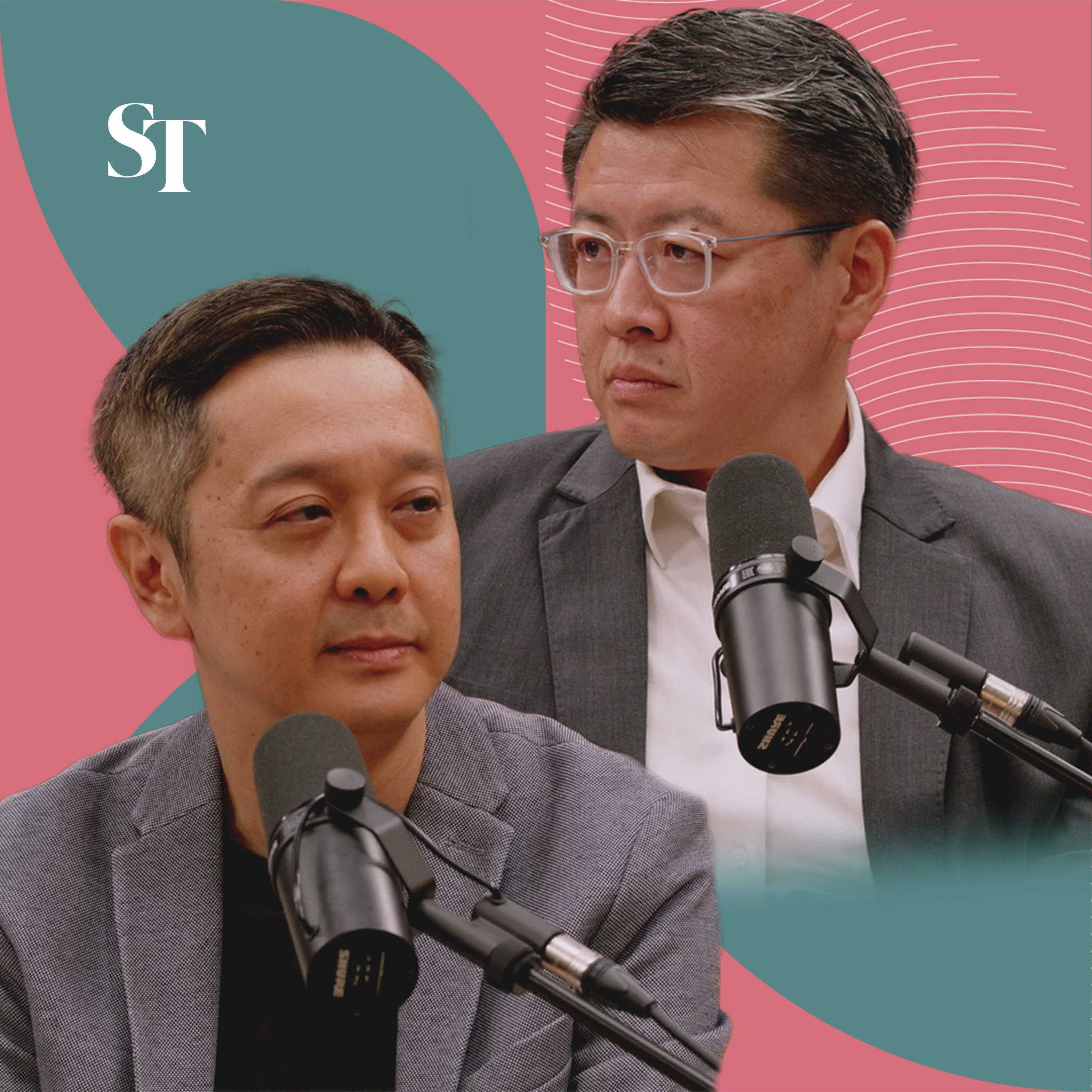
S1 Ep 78S1E78: Pritam Singh no longer Leader of the Opposition, what next for WP?
Workers’ Party chief Pritam Singh has been removed as Leader of the Opposition by Prime Minister Lawrence Wong, a day after Parliament debated his suitability for the role. PM Wong has invited the WP to nominate another elected MP. But the person put forth has to be an MP who has not been implicated in the earlier findings of the Committee of Privileges that looked into former MP Raeesah Khan’s conduct in Parliament. The saga started in 2021 when Ms Khan lied in Parliament. It led to an inquiry by the COP to uncover the sequence of events of who knew what, and when. Mr Singh was later convicted by the courts for lying to the COP.What happens now, and are cracks beginning to show within the party, especially as some cadres have called for a special conference? On this episode to discuss the Parliament debate and the implications of Mr Singh losing the role are: Mr Peh Shing Huei, a regular commentator on Singapore politics and a former ST news editor. He is also the founding partner of content agency The Nutgraf, and author of several books about politicians and people in government, and Singapore Management University’s Associate Professor of Law Eugene Tan, who is a political analyst. He was also a former Nominated Member of Parliament. Highlights (click/tap above): 1:47 Lifting of the WP whip for debate about Pritam Singh 5:08 “It wasn’t a good day at the office for Parliament.”: Prof Tan 9:57 Pritam vs Tharman: What’s the difference in cases? 14:22 Will there be a political cost to the PAP for this motion? 17:14 Was it the right move for WP MP to bring up PAP MP’s indiscretion? 22:23 Fatigue about the matter 25:23 “This is closing the loop.”: Prof Tan 27:55 Are the cracks showing in the WP, despite show of unity in Parliament? 30:15 Possible leadership challenge within the WP? 34:29 This issue an “albatross” around the WP’s neck: Prof Tan 41:51 Peh on why Pritam didn’t resign first 42:57 What does removing the LO office mean for S’pore politics? Follow The Usual Place podcast on IG: https://www.instagram.com/theusualplacepodcast Follow Natasha on LinkedIn: https://str.sg/v6DN Filmed by: Studio+65 Edited by: Teo Tong Kai, Eden Soh and Chen Junyi Executive producer: Danson Cheong Editorial producers: Elizabeth Law & Lynda Hong Follow The Usual Place Podcast and get notified for new episode drops every Thursday: Channel: https://str.sg/5nfm Apple Podcasts: https://str.sg/9ijX Spotify: https://str.sg/cd2P YouTube: https://str.sg/theusualplacepodcast Feedback to: [email protected] SPH Awedio app: https://www.awedio.sg --- Follow more ST podcast channels: All-in-one ST Podcasts channel: https://str.sg/wvz7 Get more updates: http://str.sg/stpodcasts --- Get The Straits Times app, which has a dedicated podcast player section: The App Store: https://str.sg/icyB Google Play: https://str.sg/icyX -- #tup #tuptrSee omnystudio.com/listener for privacy information.

S1 Ep 62S1E62: Education vs. AI - Can schools balance ChatGPT and character-building?
As AI reshapes work and life, schools are changing too. But before we redesign education, should we ask what it’s really for? Synopsis: On Wednesdays, The Straits Times takes a hard look at Singapore's social issues of the day with guests. Education is one of the few institutions almost every Singaporean passes through - and one of the most contested. From debates about declining attention spans to rising anxiety, we now wonder about the role of artificial intelligence in classrooms. Questions about standards, equity, excellence and inclusion continue to surface. Schools are expected to prepare students not just for jobs, but for citizenship and for lives that feel meaningful. Sometimes these expectations are in tension with one another as we grapple with the AI revolution that’s underway. In this episode, we ask a more fundamental question: What purpose does education serve in a world increasingly driven by technology and AI? And how should our answers change when the world students are entering - shaped by AI and rapid technological change - may look radically different from the one schools were designed for? Joining the discussion with Deputy Opinion Editor Mubin Saadat are Ms Elisha Tushara, The Straits Times education correspondent who spent a decade teaching before moving into journalism, and Dr Liu Woon Chia, Director and researcher at the National Institute of Education and co-founder of its Motivation in Educational Research Laboratory. Highlights (click/tap above): 1:30 AI impact on education 11:55 What do PISA and OECD studies tell us? 15: 03 Friction in learning 19:35 A focus on human qualities in learning 26:35 AI as a teacher’s tool Read ST’s Opinion section: https://str.sg/w7sH Follow Mubin Saadat on LinkedIn: https://str.sg/4KZYq Host: Mubin Saadat ([email protected]) Produced and edited by: Hadyu Rahim Executive producers: Ernest Luis & Lynda Hong Follow In Your Opinion Podcast here and get notified for new episode drops: Channel: https://str.sg/w7Qt Apple Podcasts: https://str.sg/wukb Spotify: https://str.sg/w7sV Feedback to: [email protected] SPH Awedio app: https://www.awedio.sg --- Follow more ST podcast channels: All-in-one ST Podcasts channel: https://str.sg/wvz7 Get more updates: http://str.sg/stpodcasts The Usual Place Podcast YouTube: https://str.sg/4Vwsa --- Get The Straits Times app, which has a dedicated podcast player section: The App Store: https://str.sg/icyB Google Play: https://str.sg/icyX --- #inyouropinionSee omnystudio.com/listener for privacy information.

S1 Ep 145S1E145: OCD (Pt 2): 4-day treatment and the Bergen approach
The science of getting unstuck from OCD in four days. Synopsis: Every first Wednesday of the month, The Straits Times helps you make sense of health matters that affect you. Obsessive-compulsive disorder or OCD is often misunderstood. Obsessive Compulsive Disorder (OCD) is frequently misunderstood. Although the term is often used casually, it is a potentially severe disorder that can drastically disrupt a person's life. However, it is highly treatable. Yet, many people remain undiagnosed and untreated for years. To learn more about OCD, ST senior health correspondent Joyce Teo talks to two psychologists who specialise in the treatment of OCD for a two-part series on what the disorder is about and how the Bergen approach treats OCD in just four days? They are Dr Jackki Yim, Principal Clinical Psychologist & Deputy Head of Anxiety Service, Department of Mood & Anxiety at the Institute of Mental Health (IMH) and Ms Tammie Kwek, Senior Clinical Psychologist, Department of Mood & Anxiety, IMH. Highlights (click/tap above): 2:56 How is OCD treated? 6:00 What does the Bergen treatment entail? 11:00 Is it for everyone suffering from OCD? 14:05 What is the “homework” that patients have to do? 21:52 How should families accommodate a family member living with OCD? Listen to OCD Part 1: The hidden reality and a new way out - https://str.sg/yBjG Read Joyce Teo's stories: https://str.sg/JbxN Host: Joyce Teo ([email protected]) Produced and edited by: Amirul Karim Executive producers: Ernest Luis and Lynda Hong Follow Health Check Podcast here and get notified for new episode drops: Channel: https://str.sg/JWaN Apple Podcasts: https://str.sg/JWRX Spotify: https://str.sg/JWaQ Feedback to: [email protected] SPH Awedio app: https://www.awedio.sg --- Follow more ST podcast channels: All-in-one ST Podcasts channel: https://str.sg/wvz7 Get more updates: http://str.sg/stpodcasts The Usual Place Podcast YouTube: https://str.sg/theusualplacepodcast --- Get The Straits Times app, which has a dedicated podcast player section: The App Store: https://str.sg/icyB Google Play: https://str.sg/icyX --- #healthcheckSee omnystudio.com/listener for privacy information.

S2 Ep 57S2E57: Asia's drone wars: Who's buying Predators and Reapers?
As Asia’s militaries show an increasing appetite to deploy drones – most recently during the Thai-Cambodian skirmishes and the brief India-Pakistan conflict in May, 2025, we speak to the chief executive of the company that makes lethal Unmanned Aerial Systems such as the Predator, Reaper and Sea Guardian. Synopsis: The Straits Times’ senior columnist Ravi Velloor distils 45 years of experience covering the Asian continent, with expert guests. In this wide-ranging conversation, Ravi speaks with Dr Vivek Lall, Chief Executive of General Atomics Global Corp, on trends in modern warfare, the rise of data-driven hi-tech weapons, weapons that ‘loiter’ in the air awaiting command from the ground and space as the next frontier of contestation. They also focus on UASs – in warfare and potentially for civil use – and discuss whether unmanned drones have raised the risk of warfare by not putting pilots directly in harm’s way. Highlights (click/tap above): 2:46 'The future is in unmanned systems' 5:45 ‘Hey, there’s an UAV flying right alongside me’ 7:00 Asian militaries buying Predators and eyeing EMALS: India, Japan, Taiwan, Asean 14:05 Can US go it alone in defence research? 16:43 Does unmanned raise risk of war? 20:32 ‘There will always be pilots’ Read Ravi's columns: https://str.sg/3xRP Follow Ravi on X: https://twitter.com/RaviVelloor Sign up for ST’s weekly Asian Insider newsletter: https://str.sg/sfpz Host: Ravi Velloor ([email protected]) Produced and edited by: Fa’izah Sani Executive producer: Ernest Luis Follow Asian Insider Podcast on Fridays here: Channel: https://str.sg/JWa7 Apple Podcasts: https://str.sg/JWa8 Spotify: https://str.sg/JWaX Feedback to: [email protected] SPH Awedio app: https://www.awedio.sg --- Follow more ST podcast channels: All-in-one ST Podcasts channel: https://str.sg/wvz7 Get more updates: http://str.sg/stpodcasts The Usual Place Podcast YouTube: https://str.sg/4Vwsa --- Get The Straits Times app, which has a dedicated podcast player section: The App Store: https://str.sg/icyB Google Play: https://str.sg/icyX --- #STAsianInsiderSee omnystudio.com/listener for privacy information.

S1 Ep 77S1E77: New year, new job? What’s in store for job seekers in 2026?
Finding a new job may be on your resolution list this year, but will it be the right move in 2026?Much of the job market in 2025 was dominated by uncertainty and mixed signals.Fresh university graduates shared – and documented on social media – their struggles landing interviews and jobs, despite sending out multiple resumes. Retrenchments climbed in the third quarter of 2025 after dipping in the previous two quarters, while job vacancies continued to fall, according to the Ministry of Manpower’s third-quarter labour report. There were 69,200 job openings in September, down from 76,900 in June, the report said. Meanwhile, the workforce was constantly cautioned about how artificial intelligence could reshape – and potentially displace – many roles.Will it be more of the same in 2026, or will the market turn in favour of job seekers?In this episode of The Usual Place, I want to find out how job seekers can navigate the market and what kind of upskilling we need to make career changes. Joining me on the podcast are: Ms Serla Rusli, a LinkedIn career expert who advises job seekers on career matters based on hiring and job market trends, and Ms Joyce Bijl, business development director for Asia-Pacific and the Middle East at ManpowerGroup, a global company that deals with workforce solutions. We’ll also discuss whether more employees will continue with “quiet quitting” or “job hugging”.Highlights (click/tap above):1:50 Why companies are ‘cautious’ with hiring despite better GDP growth 6:36 Use existing network instead of mass applying for jobs 12:44 How to use LinkedIn to gauge the job market 18:04 How to future-proof your job against the AI disruption 35:03 Trending in 2026 - move over “quiet quitting,” here comes “quiet cracking” Follow The Usual Place podcast on IG: https://www.instagram.com/theusualplacepodcast Follow Natasha on LinkedIn: https://str.sg/v6DN Filmed by: Studio+65 Edited by: Teo Tong Kai, Eden Soh and Chen Junyi Executive producer: Danson Cheong Editorial producers: Elizabeth Law & Lynda Hong Follow The Usual Place Podcast and get notified for new episode drops every Thursday: Channel: https://str.sg/5nfm Apple Podcasts: https://str.sg/9ijX Spotify: https://str.sg/cd2P YouTube: https://str.sg/theusualplacepodcast Feedback to: [email protected] SPH Awedio app: https://www.awedio.sg --- Follow more ST podcast channels: All-in-one ST Podcasts channel: https://str.sg/wvz7 Get more updates: http://str.sg/stpodcasts --- Get The Straits Times app, which has a dedicated podcast player section: The App Store: https://str.sg/icyB Google Play: https://str.sg/icyX -- #tup #tuptrSee omnystudio.com/listener for privacy information.

S1 Ep 144S1E144: OCD (Pt 1): The hidden reality and a new way out
OCD is more than a quirk. Synopsis: Every first Wednesday of the month, The Straits Times helps you make sense of health matters that affect you. Obsessive-compulsive disorder or OCD is often misunderstood. Although the term OCD is often used casually, it is a potentially severe disorder that can drastically disrupt a person's life. However, it is highly treatable. Yet, many people remain undiagnosed and untreated for years. To learn more about OCD, ST senior health correspondent Joyce Teo talks to two psychologists who specialise in the treatment of OCD for a two-part series on what the disorder is about and how a new treatment can help. They are Dr Jackki Yim, Principal Clinical Psychologist & Deputy Head of Anxiety Service, Department of Mood & Anxiety at the Institute of Mental Health (IMH) and Ms Tammie Kwek, Senior Clinical Psychologist, Department of Mood & Anxiety, IMH. Highlights (click/tap above): 3:37 Clearing misunderstandings about OCD 5:46 An example of OCD 11:19 How can parents respond to their children who have OCD? Listen to OCD Part 2: 4-day treatment and the Bergen approach - https://str.sg/hZaB Read Joyce Teo's stories: https://str.sg/JbxN Host: Joyce Teo ([email protected]) Produced and edited by: Amirul Karim Executive producers: Ernest Luis and Lynda Hong Follow Health Check Podcast here and get notified for new episode drops: Channel: https://str.sg/JWaN Apple Podcasts: https://str.sg/JWRX Spotify: https://str.sg/JWaQ Feedback to: [email protected] SPH Awedio app: https://www.awedio.sg --- Follow more ST podcast channels: All-in-one ST Podcasts channel: https://str.sg/wvz7 Get more updates: http://str.sg/stpodcasts The Usual Place Podcast YouTube: https://str.sg/theusualplacepodcast --- Get The Straits Times app, which has a dedicated podcast player section: The App Store: https://str.sg/icyB Google Play: https://str.sg/icyX --- #healthcheckSee omnystudio.com/listener for privacy information.

S2 Ep 31S2E31: “Not entirely on the road to hell”: Will the world get real on climate action in 2026?
Green Pulse hosts share what’s worth looking out for on the environmental front in Singapore and South-east Asia Synopsis: Every first and third Tuesday of the month, The Straits Times analyses the beat of the changing environment, from biodiversity conservation to climate change. For the first episode of 2026, Green Pulse hosts Audrey Tan and David Fogarty discuss whether the new year will add wind to the sails of the climate movement, or whether it will be another year of climate action being stuck in the doldrums. David seems optimistic about certain developments, such as the entry into force of the High Seas Treaty. But Audrey is more cautious on other fronts. Singapore’s carbon tax is expected to go up from $25 per tonne of emissions in 2025 to $45 per tonne in 2026 and 2027, but will “allowances” given to emitters dampen the signal a carbon tax is supposed to send? Who do you agree with? Let us know! Highlights of conversation (click/tap above): 1:45 Key events for 2026 - High Seas Treaty ahoy! 5:33 Can climate agreements really deliver on their promises? 11:03 ‘Less talk, more tangible action this year, please.’ 16:43 What’s the weather forecast for 2026? 19:31 Let’s talk about positive things – will global CO2 emissions peak in 2026? 23:08 To sum up: Good to be cautiously optimistic – it’s not all gloomy! Follow Audrey Tan on LinkedIn: https://str.sg/848W Read her articles: https://str.sg/JLM2 Follow David Fogarty on LinkedIn: https://str.sg/jcvy Read his articles: https://str.sg/JLMu Hosts: Audrey Tan ([email protected]) & David Fogarty ([email protected]) Produced and edited by: Hadyu Rahim Executive producers: Ernest Luis & Lynda Hong Follow Green Pulse Podcast here and get notified for new episode drops: Channel: https://str.sg/JWaf Apple Podcasts: https://str.sg/JWaY Spotify: https://str.sg/JWag Feedback to: [email protected] SPH Awedio app: https://www.awedio.sg --- Follow more ST podcast channels: All-in-one ST Podcasts channel: https://str.sg/wvz7 Get more updates: http://str.sg/stpodcasts The Usual Place Podcast YouTube: https://str.sg/theusualplacepodcast --- Get The Straits Times app, which has a dedicated podcast player section: The App Store: https://str.sg/icyB Google Play: https://str.sg/icyX --- #greenpulseSee omnystudio.com/listener for privacy information.

S2 Ep 56S2E56: The one design feature that makes Taiwan ‘ugly’
Metal window grilles were meant to keep households safe from burglars but they have been fingered as eyesores. Synopsis: Every first Friday of the month, The Straits Times catches up with its foreign correspondents about life and trends in the countries they're based in. One of Taiwan’s names is "Formosa" - given by Portuguese sailors who sighted the island in the 16th century and called it “Beautiful Island” given its natural wonders such as mountains, forests and hot springs. In more recent times though, Taiwanese officials and designers have complained about a man-made blight across its cities: ubiquitous, often rusty, metal grilles criss-crossing windows. Together, foreign editor Li Xueying and Taiwan correspondent Yip Wai Yee, surface a larger discussion about the pace of urban renewal in Taiwan - a challenge that many Asian cities face, given the competing imperatives between urban renewal, heritage conservation and the rights of homeowners. Highlights (click/tap above): 1:00 The ugly truth about Taipei's buildings 2:06 Taiwan's window bars mystery 4:53 The beauty behind the rust 7:42 Challenges in urban redevelopment 12:12 Cycling and pedestrian safety in Taiwan Read Yip Wai Yee’s article here: https://str.sg/7U6y Read Li Xueying’s articles: https://str.sg/iqmR Follow Li Xueying on LinkedIn: https://str.sg/ip4x Sign up for ST’s weekly Asian Insider newsletter: https://str.sg/sfpz Host: Li Xueying ([email protected]) Edited by: Fa’izah Sani Executive producer: Ernest Luis Follow Asian Insider on Fridays here: Channel: https://str.sg/JWa7 Apple Podcasts: https://str.sg/JWa8 Spotify: https://str.sg/JWaX Feedback to: [email protected] SPH Awedio app: https://www.awedio.sg --- Follow more ST podcast channels: All-in-one ST Podcasts channel: https://str.sg/wvz7 Get more updates: http://str.sg/stpodcasts The Usual Place Podcast YouTube: https://str.sg/4Vwsa --- Get The Straits Times app, which has a dedicated podcast player section: The App Store: https://str.sg/icyB Google Play: https://str.sg/icyX --- #STAsianInsiderSee omnystudio.com/listener for privacy information.

S2 Ep 31S2E31: Should you buy gold now?
Gold prices have soared in 2025 but here are things to consider before buying your first gold bar. Synopsis: Every first and third Monday of the month, get a headstart in your personal finance and career with The Straits Times. Gold has never looked shinier, especially as a safe haven in a volatile world. It reached highs when things were the most volatile, with Trump’s tariffs and then the federal government shutdown. But should you buy gold, how do you go about it and what are the considerations to be taken first? In this episode, ST business correspondent Sue-Ann Tan looks at how to make good use of the current gold rally. Her guests are OCBC Managing Director of Investment Strategy Vasu Menon and ST business journalist Timothy Goh. Highlights (click/tap above): 1:34 Why have gold prices been soaring? 6:50 What does gold as a “safe haven” mean? 10:02 Is this the right time to buy gold? 16:00 When do gold prices come down? 19:56 Physical gold versus paper gold 24:13 Tips for first-time gold investors Read Sue-Ann Tan's articles: https://str.sg/mvSa Follow Sue-Ann Tan on LinkedIn: https://str.sg/A86X Host: Sue-Ann Tan ([email protected]) Produced & edited by: Amirul Karim Executive producers: Ernest Luis, Lynda Hong & Joanna Seow Follow Headstart On Record Podcast channel here: Channel: https://str.sg/wB2m Apple Podcasts: https://str.sg/wuN3 Spotify: https://str.sg/wBr9 Feedback to: [email protected] Get business/career tips in ST's Headstart newsletter: https://str.sg/headstart-nl SPH Awedio app: https://www.awedio.sg --- Follow more ST podcast channels: All-in-one ST Podcasts channel: https://str.sg/wvz7 Get more updates: http://str.sg/stpodcasts The Usual Place Podcast YouTube: https://str.sg/theusualplacepodcast --- Get The Straits Times app, which has a dedicated podcast player section: The App Store: https://str.sg/icyB Google Play: https://str.sg/icyX --- Do note: All analyses, opinions, recommendations and other information in this podcast are for your general information only. You should not rely on them in making any decision. Please consult a fully qualified financial adviser or professional expert for independent advice and verification. To the fullest extent permitted by law, SPH Media shall not be liable for any loss arising from the use of or reliance on any analyses, opinions, recommendations and other information in this podcast. SPH Media accepts no responsibility or liability whatsoever that may result or arise from the products, services or information of any third parties. --- #headstartSee omnystudio.com/listener for privacy information.

S1 Ep 74S1E74: Why are buyers willing to pay $900,000 for 3-room resale HDB flats?
At least four three-room resale Housing Board flats were sold for between $900,000 and $935,000 in the first 11 months of 2025. What’s driving these eye-watering prices for smaller units, and how does this affect buyers who see three-room units as an accessible way to own a first home? Synopsis: Join Natasha Ann Zachariah at The Usual Place every Thursday as she unpacks the latest current affairs with guests. In this episode of The Usual Place, host Natasha Ann Zachariah speaks with Mr Nicholas Mak, chief research officer at property portal Mogul.sg, and Mr Patrick Chee, property agent and founder of real estate portal Homeseller SG. Highlights (click/tap above): 1:49 Million-dollar 3-room HDB flat to happen “in the next ‘bull run”: Patrick Chee 6:13 Who buys pricey 3-room HDB flats? 8:34 Majority of 3-room HDB flat are still transacted in the range of $500,000 15:14 Property prices outlook 21:36 Previous property bubbles 30:32 Does sentiment play a role in flat prices Follow The Usual Place podcast on IG: https://www.instagram.com/theusualplacepodcast Follow Natasha on LinkedIn: https://str.sg/v6DN Filmed by: Studio+65 Edited by: Teo Tong Kai, Eden Soh and Chen Junyi Executive producers: Danson Cheong & Elizabeth Khor Editorial producer: Lynda Hong Follow The Usual Place Podcast and get notified for new episode drops every Thursday: Channel: https://str.sg/5nfm Apple Podcasts: https://str.sg/9ijX Spotify: https://str.sg/cd2P YouTube: https://str.sg/theusualplacepodcast Feedback to: [email protected] SPH Awedio app: https://www.awedio.sg --- Follow more ST podcast channels: All-in-one ST Podcasts channel: https://str.sg/wvz7 Get more updates: http://str.sg/stpodcasts --- Get The Straits Times app, which has a dedicated podcast player section: The App Store: https://str.sg/icyB Google Play: https://str.sg/icyX -- #tup #tuptrSee omnystudio.com/listener for privacy information.

S2 Ep 29S2E29: Unpopular Opinion: Some gifts are clutter and real Christmas trees are overrated
We’re not Scrooges, we just want a less wasteful Christmas. Synopsis: Every first and third Tuesday of the month, The Straits Times analyses the beat of the changing environment, from biodiversity conservation to climate change. Christmas is just around the corner, and many are diving into frantic gift shopping and feast planning. But as Green Pulse hosts Audrey Tan and David Fogarty ask in this episode, do these traditions really spark joy – or do they just add clutter, waste and unnecessary spending? Tune in for practical tips on a clutter-free, eco-friendly Christmas, from smarter gift-giving to reducing food and packaging waste. Do you agree with their takes, or are they just being Christmas grinches? Highlights of conversation (click/tap above): 2:00 How to give sustainable gifts that people actually want 6:30 Regifting – faux pas or a sustainability win? 8:17 Is Christmas gift wrapping environmentally friendly? 15:11 The lowdown on reducing food waste at Christmas feasts 18:10 The debate over real vs fake Christmas trees Follow Audrey Tan on LinkedIn: https://str.sg/848W Read her articles: https://str.sg/JLM2 Follow David Fogarty on LinkedIn: https://str.sg/jcvy Read his articles: https://str.sg/JLMu Hosts: Audrey Tan ([email protected]) & David Fogarty ([email protected]) Produced and edited by: Hadyu Rahim Executive producers: Ernest Luis & Lynda Hong Follow Green Pulse Podcast here and get notified for new episode drops: Channel: https://str.sg/JWaf Apple Podcasts: https://str.sg/JWaY Spotify: https://str.sg/JWag Feedback to: [email protected] SPH Awedio app: https://www.awedio.sg --- Follow more ST podcast channels: All-in-one ST Podcasts channel: https://str.sg/wvz7 Get more updates: http://str.sg/stpodcasts The Usual Place Podcast YouTube: https://str.sg/theusualplacepodcast --- Get The Straits Times app, which has a dedicated podcast player section: The App Store: https://str.sg/icyB Google Play: https://str.sg/icyX --- #greenpulseSee omnystudio.com/listener for privacy information.

S2 Ep 55S2E55: From Zara Qairina to Harimau Malaya: A gripping 2025 for Malaysia
Malaysia’s 2025 was marked by a stormy PKR election, school violence, and a scandal rocking its football team. Synopsis: Every fourth Friday of the month, The Straits Times analyses the hottest political and trending talking points, alternating between its Malaysia and China bureaus. For our December episode, ST’s Malaysia bureau chief Shannon Teoh and host Zurairi A.R. are joined by Nik Nazmi, a member of Parliament from PKR, and former minister of natural resources and environmental stability. We look back at the Malaysian stories that shook 2025, from Prime Minister Anwar Ibrahim’s Cabinet vacancy and the death of Zara Qairina amid rising school violence, to the scandal engulfing Harimau Malaya’s heritage players. Highlights (click/tap above): 5:18 Cabinet vacancy and unity government leadership 11:13 Who leads PKR next? Is it Nurul Izzah's turn? 16:07 Are authorities failing to protect Malaysian children? 19:51 Band-aid solutions to solve school violence 25:41 Criminal case for footballers' citizenship spoofing 28:08 Can Harimau Malaya recover its football credentials? 32:21 Rolling back the time zone to UTC+7 for an extra hour of sunrise Read more: The curious case of four missing Cabinet ministers in Malaysia https://str.sg/A9fZ Death of student in Sabah raises hurdle for Malaysian PM Anwar as he faces tough state polls soon https://str.sg/hpptQ Malaysia fans fear Asian Cup blow as Fifa probe casts doubt on naturalised players https://str.sg/p62X Malaysia faces renewed calls to rewind the clock, 40 years after shifting to UTC+8 https://str.sg/qnuM Read Zurairi A.R.’s articles: https://str.sg/DCfr Read Shannon Teoh's articles: https://str.sg/wzyK Sign up for ST’s weekly Asian Insider newsletter: https://str.sg/sfpz Host: Zurairi A.R. ([email protected]) Produced and edited by: Fa’izah Sani Executive producer: Ernest Luis Follow Asian Insider Podcast on Fridays here: Channel: https://str.sg/JWa7 Apple Podcasts: https://str.sg/JWa8 Spotify: https://str.sg/JWaX Website: http://str.sg/stpodcasts Feedback to: [email protected] SPH Awedio app: https://www.awedio.sg --- Follow more ST podcast channels: All-in-one ST Podcasts channel: https://str.sg/wvz7 Get more updates: http://str.sg/stpodcasts The Usual Place Podcast YouTube: https://str.sg/theusualplacepodcast --- Get The Straits Times app, which has a dedicated podcast player section: The App Store: https://str.sg/icyB Google Play: https://str.sg/icyX --- #STAsianInsiderSee omnystudio.com/listener for privacy information.

S2 Ep 54S2E54: Why the US dollar is so sticky
Find out why the world is likely to stay dollar-centric even as countries try to toggle away from the greenback. Synopsis: Every third Friday of the month, The Straits Times gets its US bureau chief to analyse the hottest political and trending talking points. Harvard historian Mary Bridges, the author of Dollars and Dominion, explains why the world is likely to stay dollar-centric even as China, Russia, India and many countries try to toggle away from the greenback and into rival currencies like the yuan or the euro. In this episode, Dr Bridges, the Ernest May Fellow in History & Policy at Harvard University’s International Security Programme, tells US bureau chief Bhagyashree Garekar that while the world is becoming multipolar and diversified, the thick layer of institutions, relationships and trust built around the US dollar mean that any transition will take a very long time. Highlights (click/tap above): 0:59 How the US dollar became the king of currencies 3:58 How the US banks went into Asia 11:17 Will the US dollar lose its dominance? 19:17 Are crypto-currencies encroaching on dollar dominion? 21:11 Are Trump’s tariffs spurring de-dollarisation? 23:49 Why China’s BRI is also a currency play Read Bhagyashree Garekar’s articles: https://str.sg/whNo Bhagyashree Garekar’s LinkedIn: https://str.sg/gD6E Sign up for ST’s weekly Asian Insider newsletter: https://str.sg/sfpz Host: Bhagyashree Garekar ([email protected]) Produced and edited by: Amirul Karim Executive producer: Ernest Luis Follow Asian Insider Podcast on Fridays here: Channel: https://str.sg/JWa7 Apple Podcasts: https://str.sg/JWa8 Spotify: https://str.sg/JWaX Feedback to: [email protected] SPH Awedio app: https://www.awedio.sg --- Follow more ST podcast channels: All-in-one ST Podcasts channel: https://str.sg/wvz7 Get more updates: http://str.sg/stpodcasts The Usual Place Podcast YouTube: https://str.sg/theusualplacepodcast --- Get The Straits Times app, which has a dedicated podcast player section: The App Store: https://str.sg/icyB Google Play: https://str.sg/icyX --- #STAsianInsiderSee omnystudio.com/listener for privacy information.

S1 Ep 76S1E76: SEA Games 2025: Athletes Kerstin Ong and Amanda Lim on chasing their sporting dreams despite struggles
It’s been about 10 days of excitement at the SEA Games, and Team Singapore has been going all out to make their mark. Hurdler Kerstin Ong and swimmer Amanda Lim have returned home after their events and will join The Usual Place podcast to talk about their experiences in Thailand. One is just getting started, and the other has bid farewell to the SEA Games stage.Kerstin, 28, finally made her debut at the regional meet after a decade of trying to qualify. But the race came with its own hurdle. The national records that she and fellow hurdler Ang Chen Xiang set in their respective events on Dec 12 were considered invalid due to timing system issues. Meanwhile, Amanda won gold in the women’s 50m freestyle event.Post-race, the 32-year-old announced that this would be her last SEA Games. It was her 10th outing at the regional meet, where she has won 21 golds, five silvers and two bronzes. In this episode, I chat with Kerstin and Amanda about what went down during their events, what’s next for them, and the challenges of juggling training with work. Highlights (click/tap above): 1:51 Kerstin's pov on the technical issues that affected her race timings 9:46 Amanda was gunning for gold at her last SEA Games 15:26 Amanda remembers her late father's impact on her swim career 26:46 How these athletes juggle work, training and even nosebleeds 36:40 We basically trying to survive: Kerstin and Amanda on funding most of their training 40:42 Why is it difficult for athletes to get funding? Follow The Usual Place podcast on IG: https://www.instagram.com/theusualplacepodcast Follow Natasha on LinkedIn: https://str.sg/v6DN Filmed by: Studio+65 Edited by: Teo Tong Kai, Eden Soh and Chen Junyi Executive producers: Danson Cheong & Elizabeth Khor Editorial producer: Lynda Hong Follow The Usual Place Podcast and get notified for new episode drops every Thursday: Channel: https://str.sg/5nfm Apple Podcasts: https://str.sg/9ijX Spotify: https://str.sg/cd2P YouTube: https://str.sg/theusualplacepodcast Feedback to: [email protected] SPH Awedio app: https://www.awedio.sg --- Follow more ST podcast channels: All-in-one ST Podcasts channel: https://str.sg/wvz7 Get more updates: http://str.sg/stpodcasts --- Get The Straits Times app, which has a dedicated podcast player section: The App Store: https://str.sg/icyB Google Play: https://str.sg/icyX -- #tup #tuptrSee omnystudio.com/listener for privacy information.
S2 Ep 11S2E11: Paying more for green travel: Are levies and carbon taxes enough?
Which means of various green transportation can decarbonise the most? Synopsis: Every 3rd Wednesday of the month, The Straits Times examines not just vehicle prices but wider transport issues and trends connected to public and private transport. From October 2026, travellers departing Singapore will contribute to the purchase of Sustainable Aviation Fuel (SAF). But is this levy enough to tackle aviation’s carbon problem? Hosted by ST senior transport correspondent Lee Nian Tjoe, the panel - comprising Mr Andrey Berdichevskiy, partner and associate director of Boston Consulting Group and Professor S. Viswanathan from Nanyang Business School - discusses the hard-to-abate aviation sector, the true cost of green flying, and whether we should rethink that long-haul trip to visit the northern lights. Back on the ground, the conversation shifts to the return of the Robo-taxi. Are autonomous vehicles the solution to our “last mile” woes in estates like Punggol? Plus, the experts share practical advice on the “Avoid, Shift, Improve” framework, from taking the train to KL, to swapping a steak for a salad in helping commuters to keep it “wheel and green”. This episode was recorded and filmed on Dec 2 at SPH Media’s revamped auditorium, in front of a live audience of 60 ST readers. It was the sixth and final ST Podcast Live! Session for 2025, capping a special series celebrating The Straits Times’ 180th anniversary. Highlights (click/tap above): 01:43 The cost of greening skies in Sustainable Aviation Fuel (SAF) and for flights out of SG 04:45 Why increasing ticket prices doesn’t dampen travelling 12:09 A practical framework for greener mobility choices, from Zoom calls to high-speed rail 19:47 The return of autonomous vehicles like the Robo-taxi 31:38 From giving up the car to adopting a "flexitarian" diet - what else can individuals? Read Lee Nian Tjoe's articles: https://str.sg/wt8G Follow Lee Nian Tjoe on LinkedIn: https://str.sg/iqkJ Read more COE articles: https://str.sg/iGKC Host: Lee Nian Tjoe ([email protected]) Produced & edited by: Eden Soh Executive producers: Ernest Luis and Lynda Hong Follow Wheel Insights Podcast here and get notified for new episode drops: Channel: https://str.sg/iTtE Apple Podcasts: https://str.sg/iqW2 Spotify: https://str.sg/iqgB Feedback to: [email protected] SPH Awedio app: https://www.awedio.sg --- Follow more ST podcast channels: All-in-one ST Podcasts channel: https://str.sg/wvz7 Get more updates: http://str.sg/stpodcasts The Usual Place Podcast YouTube: https://str.sg/4Vwsa --- Get The Straits Times app, which has a dedicated podcast player section: The App Store: https://str.sg/icyB Google Play: https://str.sg/icyX --- #wheelinsightsSee omnystudio.com/listener for privacy information.

S2 Ep 30S2E30: Why Greta Thunberg’s shock protests in Venice can backfire
How to turn anger about environmental issues into constructive action in Singapore and beyond. Synopsis: Every first and third Tuesday of the month, The Straits Times analyses the beat of the changing environment, from biodiversity conservation to climate change. With the world settling for yet another watered down deal at the UN climate conference COP30, combating climate change is in an uphill battle. Some activists have even taken matters into their own hands to provoke stronger action. In November, climate activist Greta Thunberg joined environmental group Extinction Rebellion in dyeing the waters of Venice’s iconic canals green with a non-toxic liquid to highlight the effects of climate collapse. In this episode co-hosted by ST environment correspondents Shabana Begum and Ang Qing, they discuss whether individual actions can help make a meaningful difference to the global problem. They are joined by Mr Veerappan Swaminathan, chief executive officer of consultancy Sustainable Living Lab (SL2) Group. He also co-founded Repair Kopitiam, an initiative that helps residents fix their household items to reduce waste. Also unpacking the issues is National University of Singapore assistant professor Alisius Leong, who investigates public opinions on environmental and health issues. This episode was recorded and filmed on Dec 2 at SPH Media’s revamped auditorium, in front of a live audience of 60 ST readers. It was the sixth and final ST Podcast Live! Session for 2025, capping a special series celebrating The Straits Times’ 180th anniversary. Highlights (click/tap above): 3:36 How can individual actions make a difference 12:56 Do protests about climate change work 18:12 Which environmental issues in Singapore deserve more attention 25:36 How can the public participate in conversations about nuclear energy SG Eco Fund:: https://www.mse.gov.sg/take-action/sgecofund/ Repair Kopitiam: https://repairkopitiam.sg/ Resources for workplaces and workers: https://str.sg/Hup2 Heat stress levels: https://str.sg/5WrT Follow Ang Qing on LinkedIn: https://str.sg/ichp Read her articles: https://str.sg/i5gT Follow Shabana Begum on LinkedIn: https://str.sg/83Ge Read her articles: https://str.sg/5EGd Hosts: Ang Qing ([email protected]) & Shabana Begum ([email protected]) Produced by: ST Podcast Team, ST Outreach & Engagement Team & Studio+65 Edited by: Hadyu Rahim Executive producers: Ernest Luis & Lynda Hong Follow Green Pulse Podcast here and get notified for new episode drops: Channel: https://str.sg/JWaf Apple Podcasts: https://str.sg/JWaY Spotify: https://str.sg/JWag Feedback to: [email protected] SPH Awedio app: https://www.awedio.sg --- Follow more ST podcast channels: All-in-one ST Podcasts channel: https://str.sg/wvz7 Get more updates: http://str.sg/stpodcasts The Usual Place Podcast YouTube: https://str.sg/theusualplacepodcast --- Get The Straits Times app, which has a dedicated podcast player section: The App Store: https://str.sg/icyB Google Play: https://str.sg/icyX Watch ST Podcasts Live events so far: https://str.sg/uGmoSee omnystudio.com/listener for privacy information.

S2 Ep 32S2E32: How a young entrepreneur’s own business helped her discover new career
She shares why and how she is moving on from a student business she co-founded. Synopsis: Every first and third Monday of the month, get a headstart in your personal finance and career with The Straits Times. Imagine starting a business after finishing your A-level exams, and then growing that business from strength to strength with two outlets in the heart of town within five years alongside your undergraduate studies. Now imagine making the tough decision to take all that one has learned into a new adventure: the first job, one that was never on the radar previously. That is the journey of a young entrepreneur who speaks to ST correspondent Tay Hong Yi on the latest episode of Headstart On Record. The guest was: Ms Desiree Chang, co-founder of Woofie, a thrift and vintage apparel business with an online store and two outlets in Bugis. Highlights (click/tap above): 1:22 How did the business start? 3:03 How was it like to balance studies with a business? 6:52 Finding a sustainable middle-ground in entrepreneurship 11:42 How did the skills learned translate into her job search? 15:52 Tips for aspiring student entrepreneurs Read Tay Hong Yi's articles: https://str.sg/w6cz Follow Tay Hong Yi on LinkedIn: https://str.sg/AAxy Host: Tay Hong Yi ([email protected]) Produced & edited by: Amirul Karim Executive producers: Ernest Luis, Lynda Hong & Joanna Seow Follow Headstart On Record Podcast channel here: Channel: https://str.sg/wB2m Apple Podcasts: https://str.sg/wuN3 Spotify: https://str.sg/wBr9 Feedback to: [email protected] Get business/career tips in ST's Headstart newsletter: https://str.sg/headstart-nl SPH Awedio app: https://www.awedio.sg --- Follow more ST podcast channels: All-in-one ST Podcasts channel: https://str.sg/wvz7 Get more updates: http://str.sg/stpodcasts The Usual Place Podcast YouTube: https://str.sg/theusualplacepodcast --- Get The Straits Times app, which has a dedicated podcast player section: The App Store: https://str.sg/icyB Google Play: https://str.sg/icyX --- Do note: All analyses, opinions, recommendations and other information in this podcast are for your general information only. You should not rely on them in making any decision. Please consult a fully qualified financial adviser or professional expert for independent advice and verification. To the fullest extent permitted by law, SPH Media shall not be liable for any loss arising from the use of or reliance on any analyses, opinions, recommendations and other information in this podcast. SPH Media accepts no responsibility or liability whatsoever that may result or arise from the products, services or information of any third parties. --- #headstartSee omnystudio.com/listener for privacy information.

S1 Ep 75S1E75: Why are Singaporeans still falling prey to scams? An expert explains
Frequent police advisories, daily news stories, a repeated “Add, Check, Tell” mantra – Singaporeans should be better at recognising scams by now. Yet many continue to fall prey to scammers who keep adapting and refining their approach. So far in 2025, more than 31,200 cases of scams have been reported, with victims losing over $750.3 million. Last year, the amount lost to scams crossed the $1 billion mark. In this episode of The Usual Place podcast, I speak with Mr Jeffery Chin, deputy director of the Singapore Police Force’s Scam Public Education Office. Set up in 2023, the office is staffed by police officers, civilian officers and psychologists who work closely together to drive anti-scam public education efforts. We’ll discuss how scams have evolved over the years, what makes a person an “ideal” scam victim, and why people end up becoming money mules. Highlights (click/tap above): 1:47Jeffrey’s personal brushes with scams and having nearly lost £500 9:59 Why young people fall for job scams 21:22 How Jeffrey exposed a love scam in seconds using a simple trick in reverse image search 24:05 When victims get their self-image threatened 28:59 Is there anti-scam fatigue? 32:56 Why sharing information about scams is a form of community service Follow The Usual Place podcast on IG: https://www.instagram.com/theusualplacepodcast Follow Natasha on LinkedIn: https://str.sg/v6DN Filmed by: Studio+65 Edited by: Teo Tong Kai, Eden Soh and Chen Junyi Executive producers: Danson Cheong & Elizabeth Khor Editorial producer: Lynda Hong Follow The Usual Place Podcast and get notified for new episode drops every Thursday: Channel: https://str.sg/5nfm Apple Podcasts: https://str.sg/9ijX Spotify: https://str.sg/cd2P YouTube: https://str.sg/theusualplacepodcast Feedback to: [email protected] SPH Awedio app: https://www.awedio.sg --- Follow more ST podcast channels: All-in-one ST Podcasts channel: https://str.sg/wvz7 Get more updates: http://str.sg/stpodcasts --- Get The Straits Times app, which has a dedicated podcast player section: The App Store: https://str.sg/icyB Google Play: https://str.sg/icyX -- #tup #tuptrSee omnystudio.com/listener for privacy information.

S1 Ep 61S1E61: Can Singapore ever stop being a 'Fine City'? The psychology of etiquette on public transport
New laws were passed to penalise littering, eating and drinking, as well as playing loud music or videos on public transport. Is legislation effective in regulating inconsiderate behaviour? Synopsis: Every second Wednesday of the month, The Straits Times takes a hard look at Singapore's social issues of the day with guests. Behaviours of inconsiderate commuters on public transport and interchanges are set to be regulated under new laws passed in Parliament in Oct 2025. Examples of inconsiderate behaviour include littering, eating and drinking, as well as playing loud music and videos on mobile phones. The latest legislation follows a slew of laws that regulate behaviours in Singapore, raising the question if we can ever shake off Singapore’s reputation of being a ‘fine’ city. To find out more, ST assistant podcast editor Lynda Hong speaks to two sociologists. They are Assistant Professor of Sociology (Education) at the School of Social Sciences at the Singapore Management University, George Wong; and Research Assistant Professor and head of the Urban Psychology Lab in the Lee Kuan Yew Centre for Innovative Cities at the Singapore University of Technology and Design, Samuel Chng. Highlights (click/tap above): 11:24 How people demonstrated civic behaviour during the Covid pandemic 18:25 The technological reason for seniors blasting videos and music 22:28 Empowering bus drivers to deal with inconsiderate commuters 26:10 How other countries regulate civil behaviours in public transport 29:46 The lady commuter that ‘broke’ the system Read ST’s Opinion section: https://str.sg/w7sH Host: Lynda Hong ([email protected]) Produced and edited by: Chen Junyi Executive producers: Ernest Luis & Lynda Hong Follow In Your Opinion Podcast here and get notified for new episode drops: Channel: https://str.sg/w7Qt Apple Podcasts: https://str.sg/wukb Spotify: https://str.sg/w7sV Feedback to: [email protected] SPH Awedio app: https://www.awedio.sg --- Follow more ST podcast channels: All-in-one ST Podcasts channel: https://str.sg/wvz7 Get more updates: http://str.sg/stpodcasts The Usual Place Podcast YouTube: https://str.sg/theusualplacepodcast --- Get The Straits Times app, which has a dedicated podcast player section: The App Store: https://str.sg/icyB Google Play: https://str.sg/icyX --- #inyouropinionSee omnystudio.com/listener for privacy information.
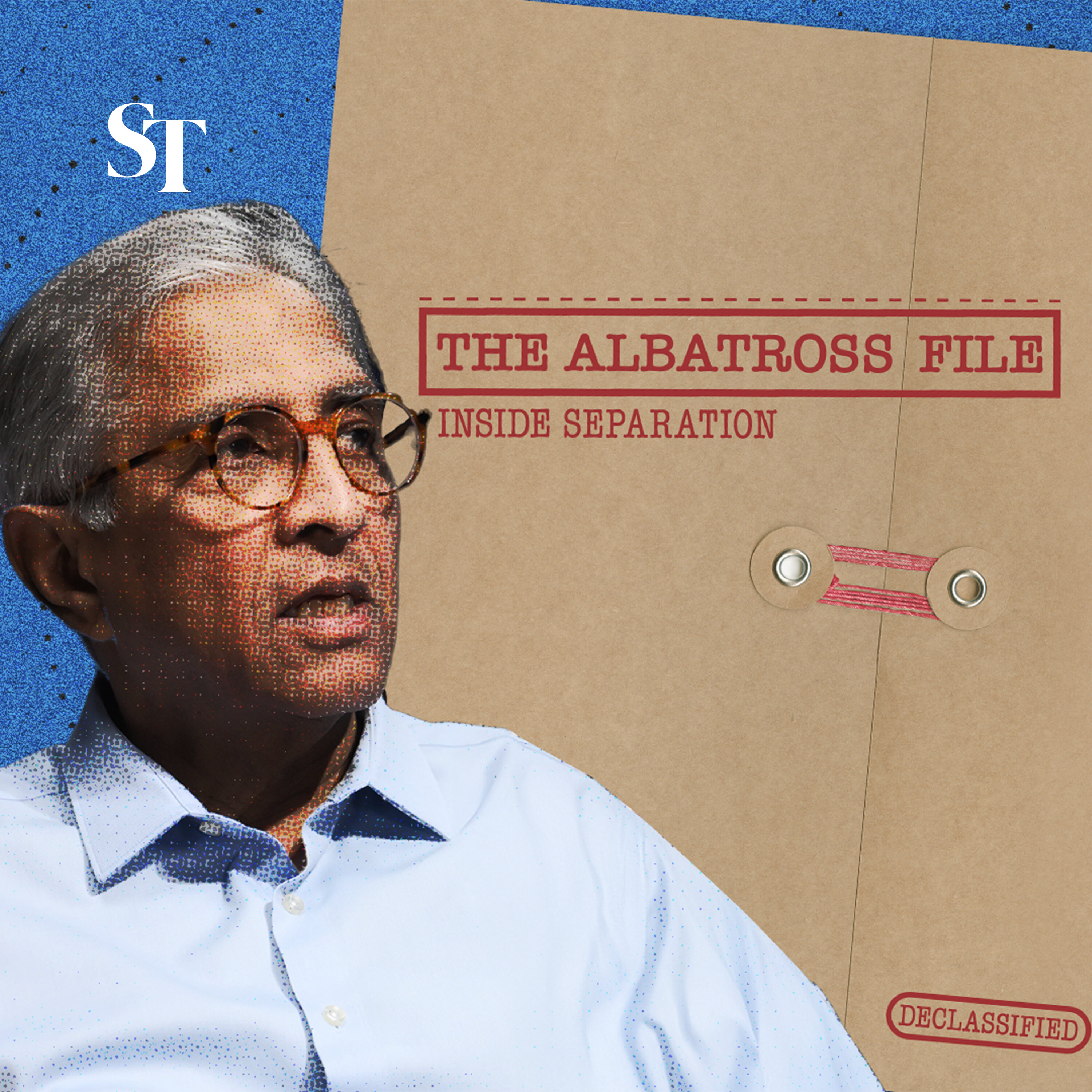
S2 Ep 53S2E53: Inside the secret Albatross file on Singapore’s Separation from Malaysia
Our guest reveals pioneer leaders’ differing views on Singapore’s Aug 9, 1965 split from Malaysia. Synopsis: The Straits Times’ chief columnist Sumiko Tan speaks to Janadas Devan, senior adviser at the Ministry of Digital Development and Information, on how the The Albatross File: Inside Separation sheds fresh light on the decisions that led to Singapore’s independence. Edited by Susan Sim, the 488-page volume is co-published by Straits Times Press and the National Archives of Singapore, and was launched by Senior Minister Lee Hsien Loong on Dec 7 alongside an exhibition at the National Library. Mr Janadas, who coordinated the book, explains that Singapore’s 1963 merger with Malaysia was fraught from the outset, with the 1964 race riots further straining ties. Finance Minister Dr Goh Keng Swee kept a private file he code-named “Albatross”, a reference to the bird in Samuel Taylor Coleridge’s famous 1798 poem, The Rime of the Ancient Mariner, symbolising the burden of the troubled merger. Documents inside the file range from an early Cabinet memo by Prime Minister Lee Kuan Yew to the final Separation Agreement, and includes Dr Goh’s handwritten notes of his meetings with Malaysian leaders. Mr Janadas highlights how merger with Malaysia was a fundamental aim of Mr Lee’s People’s Action Party. It is something young Singaporeans today might find hard to understand, he acknowledges. But the merger was problematic, and proposals for a looser federation eventually collapsed, derailed by unclear terms and British anxieties as Indonesia’s Confrontation was then raging. Dr Goh led the talks for Singapore, navigating sensitive issues and political tensions. Within the Singapore leadership, views differed on whether Singapore should — or could — make it alone. Dr Goh pushed for going separate ways as the best option, while ministers Toh Chin Chye and S. Rajaratnam opposed separation once they learnt of it. Mr Lee was deeply torn, but ultimately authorised the move. Within a few years, Singapore's leaders concluded that Separation was the best outcome for Singapore. Mr Janadas also reflects on his father, Mr Devan Nair, who was the only PAP MP voted into the Malaysian Parliament at the time. When the two sides separated, his father decided to stay on in Malaysia, only returning to Singapore in 1969. Highlights (click/tap above): 5:11 The political climate of the 1960s 7:59 Why young Singaporeans may struggle to understand why the PAP pushed for merger with Malaysia 9:32 Early trouble after merger in 1963; Umno lost 3 seats it contested in Singapore GE to PAP’s Malay candidates 13:13 Was a looser federation ever an option? 17:23 The role of the British as Singapore and Malaysia leaders tried to work through their disagreements 18:35 What did Lee Kuan Yew mean by making life intolerable for the Malaysian leadership? 27:35 Diverging views: Lee always wanted a looser federation but Dr Goh felt separation was the answer 32:45 How Mrs Lee says that the closest her husband came to a nervous breakdown was August 9th, 1965 39:03 Janadas on how his father, Devan Nair, refused to accept Separation at first, before being convinced by Lee to eventually return 44:32 Do Singaporeans today underestimate how fragile the nation’s early years were? Buy the book: The Albatross File: Inside Separation (Standard/Collector’s Editions) https://www.stbooks.sg/products/the-albatross-file-inside-separation-collectors-edition Book tickets to the exhibition opening Dec 8 at the National Library Building: https://thealbatrossfile.nlb.gov.sg Host: Sumiko Tan ([email protected]) Read Sumiko’s articles: https://str.sg/Jbhe Sign up for ST’s weekly Asian Insider newsletter: https://str.sg/sfpz Produced and edited by: Fa’izah Sani Executive producer: Ernest Luis Follow Asian Insider Podcast on Fridays here: Channel: https://str.sg/JWa7 Apple Podcasts: https://str.sg/JWa8 Spotify: https://str.sg/JWaX Feedback to: [email protected] SPH Awedio app: https://www.awedio.sg --- Follow more ST podcast channels: All-in-one ST Podcasts channel: https://str.sg/wvz7 Get more updates: http://str.sg/stpodcasts The Usual Place Podcast YouTube: https://str.sg/theusualplacepodcast --- Get The Straits Times app, which has a dedicated podcast player section: The App Store: https://str.sg/icyB Google Play: https://str.sg/icyX --- #STAsianInsiderSee omnystudio.com/listener for privacy information.

S2 Ep 52S2E52: US in decline; Trump's 'Donroe Doctrine' is worrying Asia
Our guest expert explains the Americas-focused doctrine, inspired by the 19th-century Monroe Doctrine’s hemispheric stance. Synopsis: The Straits Times’ senior columnist Ravi Velloor distils 45 years of experience covering the Asian continent, with expert guests. In this wide-ranging conversation, Ravi speaks with Don McLain Gill, the eminent Filipino geopolitical expert and strategist, on declining US influence in Asia and the ‘Donroe’ Doctrine. They discuss the doctrine’s precursor, the Monroe Doctrine, and how key American allies in Asia are reacting to talk of the Donroe Doctrine. Ravi and Gill also discuss the potential of a ‘G-2', or Group of Two, which would include just the US and China. This, too, is a concept that many Asian nations with their own view of their place in the world, actively resist. Highlights: (Click/Tap Above) 1:24 What is the Donroe Doctrine? 4:47 Implications for Philippines 7:30 Reactions of allies Japan, South Korea, Australia, and quasi-ally India 13:10 ‘G2’ & the Donroe Doctrine: Clear concerns 16:11 A misguided strategy? US-China gap narrowing 19:47 Quad, Squad and increasing mini-laterals minus US Host: Ravi Velloor ([email protected]) Read Ravi's columns: https://str.sg/3xRP Follow Ravi on X: https://twitter.com/RaviVelloor Sign up for ST’s weekly Asian Insider newsletter: https://str.sg/sfpz Produced and edited by: Fa’izah Sani Executive producer: Ernest Luis Follow Asian Insider Podcast on Fridays here: Channel: https://str.sg/JWa7 Apple Podcasts: https://str.sg/JWa8 Spotify: https://str.sg/JWaX Feedback to: [email protected] SPH Awedio app: https://www.awedio.sg --- Follow more ST podcast channels: All-in-one ST Podcasts channel: https://str.sg/wvz7 Get more updates: http://str.sg/stpodcasts The Usual Place Podcast YouTube: https://str.sg/theusualplacepodcast --- Get The Straits Times app, which has a dedicated podcast player section: The App Store: https://str.sg/icyB Google Play: https://str.sg/icyX --- #STAsianInsiderSee omnystudio.com/listener for privacy information.

S1 Ep 143S1E143: Helping children understand and manage their emotions
A psychiatrist's guide to your child's emotional well-being. Synopsis: Every first Wednesday of the month, The Straits Times helps you make sense of health matters that affect you. Many parents spend time teaching their kids essential skills like reading or spelling but they often forget to teach them a key skill that will determine their success, their relationships, and their overall happiness. That is emotional regulation. In this episode, ST senior health correspondent Joyce Teo talks to Dr Ong Say How, a child and adolescent psychiatrist. He’s the chairperson of creative services and youth committee at SAMH and a senior consultant psychiatrist at the Institute of Mental Health. Highlights (click/tap above): 1:49 What exactly is emotional regulation? 6:40 Signs that a child might be struggling emotionally 11:14 It’s ok to tell your children that you’re concerned about them 15:00 Screen time limits can help with a child’s ability to handle boredom and regulate mood 20:51 Parents must be role models 22:24 What parents can do to repair the damage after losing their cool? 24:13 You don’t have to shield your child from negative feelings Read Joyce Teo's stories: https://str.sg/JbxN Host: Joyce Teo ([email protected]) Produced and edited by: Amirul Karim Executive producers: Ernest Luis and Lynda Hong Follow Health Check Podcast here and get notified for new episode drops: Channel: https://str.sg/JWaN Apple Podcasts: https://str.sg/JWRX Spotify: https://str.sg/JWaQ Feedback to: [email protected] SPH Awedio app: https://www.awedio.sg --- Follow more ST podcast channels: All-in-one ST Podcasts channel: https://str.sg/wvz7 Get more updates: http://str.sg/stpodcasts The Usual Place Podcast YouTube: https://str.sg/theusualplacepodcast --- Get The Straits Times app, which has a dedicated podcast player section: The App Store: https://str.sg/icyB Google Play: https://str.sg/icyX --- #healthcheckSee omnystudio.com/listener for privacy information.
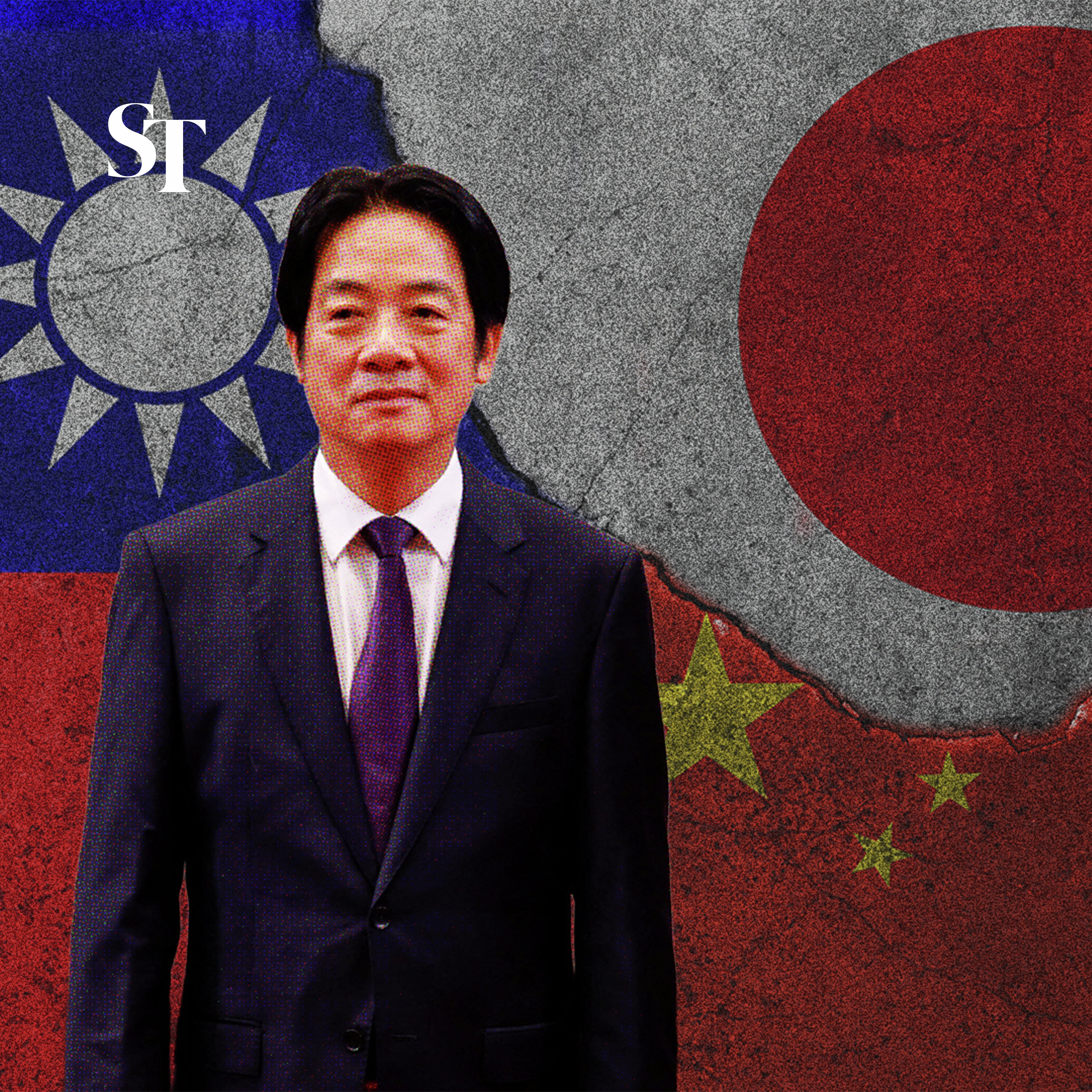
S2 Ep 51S2E51: Taiwan’s message to China: We are not alone
The island’s diplomatic space may be shrinking but it wants to engage the world on its own terms. Synopsis: Every fourth Friday of the month, The Straits Times will now analyse the hottest political and trending talking points, alternating between its Malaysia and Greater China bureaus. For November, host and deputy foreign editor Albert Wai connects with Taiwan correspondent Yip Wai Yee. They discuss Taiwan’s foreign policy preoccupations and the implications of the Beijing-Tokyo spat over remarks made by Japanese leader Sanae Takaichi on cross-strait tensions. Up against an increasingly dominant China, Taiwan is adopting what it calls “integrated diplomacy” as it seeks to buttress relations with like-minded partners. At the same time, the normalisation of so-called grey-zone tactics by the mainland against the island carries risks for Taiwan’s societal resilience and its ability to respond in the event of an actual attack. All eyes are on the next round of talks between American President Donald Trump and Chinese President Xi Jinping in the first half of 2026, as this could have far-reaching implications on Taiwan’s role on the global stage. Highlights (click/tap above): 1:49 Taipei’s “integrated diplomacy” 4:12 China-Japan spat over Taiwan 7:46 Shift in approach for cross-strait ties 10:35 What’s at stake when Trump and Xi meet in 2026 13:51 Leverage in tariff talks with the US 15:22 Grey-zone tactics 19:27 Breakthrough at European parliament 21:31 China Taipei or Chinese Taipei? Read more: https://str.sg/s4A7 Register for Asian Insider newsletter: https://str.sg/stnewsletters Host: Albert Wai ([email protected]) Produced and edited by: Fa’izah Sani Executive producer: Ernest Luis Follow Asian Insider Podcast on Fridays here: Channel: https://str.sg/JWa7 Apple Podcasts: https://str.sg/JWa8 Spotify: https://str.sg/JWaX Feedback to: [email protected] SPH Awedio app: https://www.awedio.sg --- Follow more ST podcast channels: All-in-one ST Podcasts channel: https://str.sg/wvz7 Get more updates: http://str.sg/stpodcasts The Usual Place Podcast YouTube: https://str.sg/theusualplacepodcast --- Get The Straits Times app, which has a dedicated podcast player section: The App Store: https://str.sg/icyB Google Play: https://str.sg/icyX --- #STAsianInsiderSee omnystudio.com/listener for privacy information.

S1 Ep 73S1E73: Primary 1 registrations: Should kids be automatically assigned to schools?
How far would you go to get your child enrolled at a primary school of your choice? One woman repeatedly lied about her home address to get her daughter a spot at the primary school the mother wanted in 2023. But the school discovered the truth, and she was handed a one-week jail sentence in November for subverting the admissions process. While her sentence has raised eyebrows, she’s not the only one to have attempted this, with other parents over the years having been fined between $4,000 and $5,000 over similar attempts. In a 2007 case, a parent was jailed after lying about his residential address in order to get his daughter into a certain school in Bukit Timah. Data from the Ministry of Education showed that between 2020 and 2024, there were about nine such cases each year. In this episode of The Usual Place, I speak with three guests about why some parents think they need to game the system to get their child a good education. They are: • Pooja Bhandari, founder of non-profit EveryChild.SG, which looks to raise awareness about the need for education reforms and the well-being of children in Singapore, • Esther Foong-Tan, a family life education specialist, who helps families work on their interpersonal relationships by equipping parents with up-to-date resources and training, and • Assistant Professor of Sociology Jacqueline Ho, who teaches at Singapore Management University. Her research is focused primarily on the Singaporean education system. In this pre-recorded episode, we discuss: Is this just ‘kiasu’ culture taken to extremes? And what’s driving parents to go to such lengths for a place at a “good” primary school? Highlights (click/tap above): 3:16 Emotional impact on the child whose parent was jailed for lying about their address4:54 Unfairness in the P1 registration system 11:26 How inequality in society builds anxiety in parents23:32 Bullying in an elite school 35:54 How the lack of information about school culture has spurred anxiety among parents 38:20 Could an automatic allocation to primary schools create a fairer admission system? Follow The Usual Place podcast on IG: https://www.instagram.com/theusualplacepodcast Follow Natasha on LinkedIn: https://str.sg/v6DN Filmed by: Studio+65 Edited by: Teo Tong Kai, Eden Soh and Chen Junyi Executive producers: Danson Cheong, Elizabeth Khor & Ernest Luis Editorial producer: Lynda Hong Follow The Usual Place Podcast and get notified for new episode drops every Thursday: Channel: https://str.sg/5nfm Apple Podcasts: https://str.sg/9ijX Spotify: https://str.sg/cd2P YouTube: https://str.sg/theusualplacepodcast Feedback to: [email protected] SPH Awedio app: https://www.awedio.sg --- Follow more ST podcast channels: All-in-one ST Podcasts channel: https://str.sg/wvz7 Get more updates: http://str.sg/stpodcasts --- Get The Straits Times app, which has a dedicated podcast player section: The App Store: https://str.sg/icyB Google Play: https://str.sg/icyX -- #tup #tuptrSee omnystudio.com/listener for privacy information.

S2 Ep 50S2E50: How to read Trump right and why he and Xi get along
Our expert guest explains why he predicts both men will seek good vibes in 2026. Synopsis: Every third Friday of the month, The Straits Times gets its US bureau chief to analyse the hottest political and trending talking points. In this episode, US bureau chief Bhagyashree Garekar hosts her special guest - Harvard Professor Graham Allison - who tells her how he manages to read Trump right, by taking him seriously, looking at his patterns amid all his statements, and noticing the trend lines. Prof Allison is the Douglas Dillon Professor of Government at Harvard University where he has taught for five decades. He is a leading analyst of national security with special interests in nuclear weapons, Russia, China, and decision-making. He has also written books, including Destined for War: Can America and China Escape Thucydides’s Trap?, published in 2017. He also had another book out earlier in 2013 - Lee Kuan Yew: The Grand Master’s Insights on China, the United States and the World - which has been a bestseller in the US and abroad. Highlights (click/tap above): 2:31 How well do Trump & Xi vibe? Getting a sense of their agendas for 2026 7:34 What do Trump and Xi want from each other? 9:31 Will Trump get hawkish on China ahead of 2026 election? 13:52 Why is Trump muted on China-Japan spat over Taiwan? 18:50 Why Trump is different from any other US president 21:48 How today’s China looks at today’s America 24:43 Will China be the world’s sole superpower? Read Bhagyashree Garekar’s articles: https://str.sg/whNo Follow Bhagyashree Garekar on LinkedIn: https://str.sg/gD6E Sign up for ST’s weekly Asian Insider newsletter: https://str.sg/sfpz Host: Bhagyashree Garekar ([email protected]) Produced and edited by: Fa’izah Sani Executive producer: Ernest Luis Follow Asian Insider Podcast on Fridays here: Channel: https://str.sg/JWa7 Apple Podcasts: https://str.sg/JWa8 Spotify: https://str.sg/JWaX Feedback to: [email protected] SPH Awedio app: https://www.awedio.sg --- Follow more ST podcast channels: All-in-one ST Podcasts channel: https://str.sg/wvz7 Get more updates: http://str.sg/stpodcasts The Usual Place Podcast YouTube: https://str.sg/4Vwsa --- Get The Straits Times app, which has a dedicated podcast player section: The App Store: https://str.sg/icyB Google Play: https://str.sg/icyX --- #STAsianInsiderSee omnystudio.com/listener for privacy information.

S1 Ep 72S1E72: Will AI take our jobs? Jasmin Lau, Goh Hanyan say what they think
It has been about six months since Jasmin Lau and Goh Hanyan stepped into politics after careers in the civil and public service. Synopsis: Join Natasha Ann Zachariah at The Usual Place every Thursday as she unpacks the latest current affairs with guests. Now they are both political office holders across several ministries, taking on new responsibilities and getting used to being in the public eye. They are also the co-chairs of the Committee on Technology and Innovation – one of five committees that are part of the Economic Strategy Review. In a nutshell, the review looks at how Singapore can stay economically relevant and competitive amid geopolitical tensions and tech disruptions. They will be dropping by The Usual Place podcast to chat about what the past couple of months have been like and the biggest adjustments they have had to make. We’ll also discuss the committee’s plans on how to accelerate artificial intelligence transformation across the economy and encourage enterprises to adopt AI, as well as feedback they have garnered from speaking with business owners. Highlights (click/tap above): 1:43 Reallocating time spent after landing political office positions 4:29 The most challenging portfolio 6:48 Switching between national and municipal issues 12:09 “Never a dull day, even for the family” - how their children are adjusting 20:58 Last-mover advantage in adapting AI - feedback from CEO closed door session 26:36 Don’t panic, the AI wave is not coming tomorrow for your jobs: Jasmin 35:29 How AI cannot replace the human touch 38:11 AI companions are scary Follow The Usual Place podcast on IG: https://www.instagram.com/theusualplacepodcast Follow Natasha on LinkedIn: https://str.sg/v6DN Filmed by: Studio+65 Edited by: Teo Tong Kai, Eden Soh and Chen Junyi Executive producers: Danson Cheong, Elizabeth Khor & Ernest Luis Editorial producer: Lynda Hong Follow The Usual Place Podcast and get notified for new episode drops every Thursday: Channel: https://str.sg/5nfm Apple Podcasts: https://str.sg/9ijX Spotify: https://str.sg/cd2P YouTube: https://str.sg/theusualplacepodcast Feedback to: [email protected] SPH Awedio app: https://www.awedio.sg --- Follow more ST podcast channels: All-in-one ST Podcasts channel: https://str.sg/wvz7 Get more updates: http://str.sg/stpodcasts --- Get The Straits Times app, which has a dedicated podcast player section: The App Store: https://str.sg/icyB Google Play: https://str.sg/icyX -- #tup #tuptrSee omnystudio.com/listener for privacy information.

S2 Ep 10S2E10: Parking.SG, the summons auntie is coming!
The popular Parking.SG app was supposed to help parking wardens issue summons. What happened? Synopsis: Every 3rd Wednesday of the month, The Straits Times examines not just vehicle prices but wider transport issues and trends connected to public and private transport. The Parking.SG app handles a million sessions a month, with under half of them being ended early and the motorist getting a refund. Half of them are Apple users, and the rest use Android smartphones. To think that it all began as a project to help the parking warden. In this episode, host and senior transport correspondent Lee Nian Tjoe speaks with Ms Amelia Fong, the product manager for Parking.sg and a policy officer at Open Government Products (OGP), a division of the Government Technology Agency of Singapore. Highlights (click/tap above): 2:21 The technology behind the original Parking.SG app 4:00 User statistics 8:00 Considerations to make the app senior-friendly 11:56 Annual hackathon for new technology solutions 19:00 Keeping the app working 24/7 20:57 Becoming a product manager at OGP Learn more about Parking.SG: https://www.parking.sg/ Read Lee Nian Tjoe's articles: https://str.sg/wt8G Follow Lee Nian Tjoe on LinkedIn: https://str.sg/iqkJ Read more COE articles: https://str.sg/iGKC Host: Lee Nian Tjoe ([email protected]) Produced & edited by: Teo Tong Kai Executive producers: Ernest Luis and Lynda Hong Follow Wheel Insights Podcast here and get notified for new episode drops: Channel: https://str.sg/iTtE Apple Podcasts: https://str.sg/iqW2 Spotify: https://str.sg/iqgB Feedback to: [email protected] SPH Awedio app: https://www.awedio.sg --- Follow more ST podcast channels: All-in-one ST Podcasts channel: https://str.sg/wvz7 Get more updates: http://str.sg/stpodcasts The Usual Place Podcast YouTube: https://str.sg/4Vwsa --- Get The Straits Times app, which has a dedicated podcast player section: The App Store: https://str.sg/icyB Google Play: https://str.sg/icyX --- #wheelinsightsSee omnystudio.com/listener for privacy information.

S2 Ep 28S2E28: COP30: How it will affect lives, jobs and politics in Singapore, SE Asia
Why climate conferences are the only forum that can unite the world in fighting climate change. Synopsis: Every first and third Tuesday of the month, The Straits Times analyses the beat of the changing environment, from biodiversity conservation to climate change. Annual UN climate conferences, or COPs, have become giant gatherings that bring together governments, business, scientists, civil society and much more, showing the world wants to fight climate change, showcase solutions and rewire the global economy. But can COP30 and future climate summits really make a difference to heatwaves, floods, green jobs and climate finance – or are they just full of hot air? Join Green Pulse hosts Audrey Tan and David Fogarty as they unpack why climate COPs matter to everyday lives, jobs and politics in South-east Asia and beyond. Highlights of conversation (click/tap above): 1:59 Why are climate COPs so important? 3:40 More money needed for adaptation investments and tools to measure progress 7:46 How to scale climate cash up to US$1.3 trillion a year – that level of funding could transform communities in SE Asia 10:39 COPs: A showcase for solutions to cut emissions and boost adaptation 18:33 Boosting green jobs as nations focus on cutting emissions 22:49 The Paris Agreement targets: Driving regional partnerships to boost green investments and strengthen climate politics 26:31: A tale of the hare and the tortoise…. Follow Audrey Tan on LinkedIn: https://str.sg/848W Read her articles: https://str.sg/JLM2 Follow David Fogarty on LinkedIn: https://str.sg/jcvy Read his articles: https://str.sg/JLMu Hosts: Audrey Tan ([email protected]) & David Fogarty ([email protected]) Produced and edited by: Hadyu Rahim Executive producers: Ernest Luis & Lynda Hong Follow Green Pulse Podcast here and get notified for new episode drops: Channel: https://str.sg/JWaf Apple Podcasts: https://str.sg/JWaY Spotify: https://str.sg/JWag Feedback to: [email protected] SPH Awedio app: https://www.awedio.sg --- Follow more ST podcast channels: All-in-one ST Podcasts channel: https://str.sg/wvz7 Get more updates: http://str.sg/stpodcasts The Usual Place Podcast YouTube: https://str.sg/theusualplacepodcast --- Get The Straits Times app, which has a dedicated podcast player section: The App Store: https://str.sg/icyB Google Play: https://str.sg/icyX --- #greenpulseSee omnystudio.com/listener for privacy information.

S2 Ep 30S2E30: Budgeting for three holidays in 2026
More holidays a year sounds great but ensure they stay within budget by using these hacks. Synopsis: Every first and third Monday of the month, get a headstart in your personal finance and career with The Straits Times. Instead of saving for a home, young people are now saving for travel and leisure. Over half of young workers said saving for trips is among their top financial goals, a survey showed. So travel is clearly a top of mind issue for Singaporeans. But how do we budget for three trips a year? In this episode, ST business correspondent Sue-Ann Tan looks at how to achieve your vacation dreams. Her guests are Revolut’s Head of Strategy and Operations Ashley Thomas and ST travel journalist Sarah Stanley. Highlights (click/tap above): 2:23 How early do you plan for 2026’s trips? 4:00 Are more people doing three holidays a year? 8:00 How to set budgets for a trip 16:22 Using AI to plan holidays 18:00 Where are the upcoming popular spots? 21:00 Travel deals and ways to save money Read Sue-Ann Tan's articles: https://str.sg/mvSa Follow Sue-Ann Tan on LinkedIn: https://str.sg/A86X Host: Sue-Ann Tan ([email protected]) Produced & edited by: Amirul Karim Executive producers: Ernest Luis, Lynda Hong & Joanna Seow Follow Headstart On Record Podcast channel here: Channel: https://str.sg/wB2m Apple Podcasts: https://str.sg/wuN3 Spotify: https://str.sg/wBr9 Feedback to: [email protected] Get business/career tips in ST's Headstart newsletter: https://str.sg/headstart-nl SPH Awedio app: https://www.awedio.sg --- Follow more ST podcast channels: All-in-one ST Podcasts channel: https://str.sg/wvz7 Get more updates: http://str.sg/stpodcasts The Usual Place Podcast YouTube: https://str.sg/theusualplacepodcast --- Get The Straits Times app, which has a dedicated podcast player section: The App Store: https://str.sg/icyB Google Play: https://str.sg/icyX --- Do note: All analyses, opinions, recommendations and other information in this podcast are for your general information only. You should not rely on them in making any decision. Please consult a fully qualified financial adviser or professional expert for independent advice and verification. To the fullest extent permitted by law, SPH Media shall not be liable for any loss arising from the use of or reliance on any analyses, opinions, recommendations and other information in this podcast. SPH Media accepts no responsibility or liability whatsoever that may result or arise from the products, services or information of any third parties. --- #headstartSee omnystudio.com/listener for privacy information.

S2 Ep 49S2E49: Inside the mind of Sanae Takaichi, Japan’s first woman PM
Our guest expert looks at her political approach, as well as her personal side. Synopsis: The Straits Times’ senior columnist Ravi Velloor distils 45 years of experience covering the Asian continent, with expert guests. In this wide-ranging conversation, Ravi speaks with Professor Tomohiko Taniguchi, foreign policy adviser to the Cabinet of the late Prime Minister Shinzo Abe and one of the most authoritative voices on Japan about the ascend and likely impact of Sanae Takaichi. They discuss Ms Takaichi’s first diplomatic encounter with US President Donald Trump, her hardline approach to defence, and China, Japan’s shifting priorities in Asean as Philippines rises in salience and Indonesia declines, Tokyo’s dread of Trump’s ‘G-2’ talk, the future of the Quad security dialogue, and her approach to economic policy. They also discuss Ms Takaichi’s softer, personal side – her early life, propensity to ride powerful motorbikes, marriage to the same man twice and finally, the question: Now that Japan has its first woman PM, is it time to consider an Empress for Japan? Highlights (click/tap above): 1:00 Shinzo Abe’s protege? Yes, and no. 5:00 Asean summit and first encounter with Donald J Trump 10:00 Japan’s dread of Trump’s “G-2” talk 12:00: Defence thrust, and the nuclear question 18:30 China, Japan’s key neighbour 22:30 For Tokyo, Indonesia dips while Philippines rises 26:00 Is Quad dead in the water? 31:00 Japan and foreigners 36:10 Sanae Takaichi: woman, wife, rocker, biker 41:20 After woman PM, an Empress for Japan? Host: Ravi Velloor ([email protected]) Read Ravi's columns: https://str.sg/3xRP Follow Ravi on X: https://twitter.com/RaviVelloor Sign up for ST’s weekly Asian Insider newsletter: https://str.sg/sfpz Produced and edited by: Fa’izah Sani & Chen Junyi Executive producer: Ernest Luis Follow Asian Insider Podcast on Fridays here: Channel: https://str.sg/JWa7 Apple Podcasts: https://str.sg/JWa8 Spotify: https://str.sg/JWaX Feedback to: [email protected] SPH Awedio app: https://www.awedio.sg --- Follow more ST podcast channels: All-in-one ST Podcasts channel: https://str.sg/wvz7 Get more updates: http://str.sg/stpodcasts The Usual Place Podcast YouTube: https://str.sg/4Vwsa --- Get The Straits Times app, which has a dedicated podcast player section: The App Store: https://str.sg/icyB Google Play: https://str.sg/icyX --- #STAsianInsiderSee omnystudio.com/listener for privacy information.