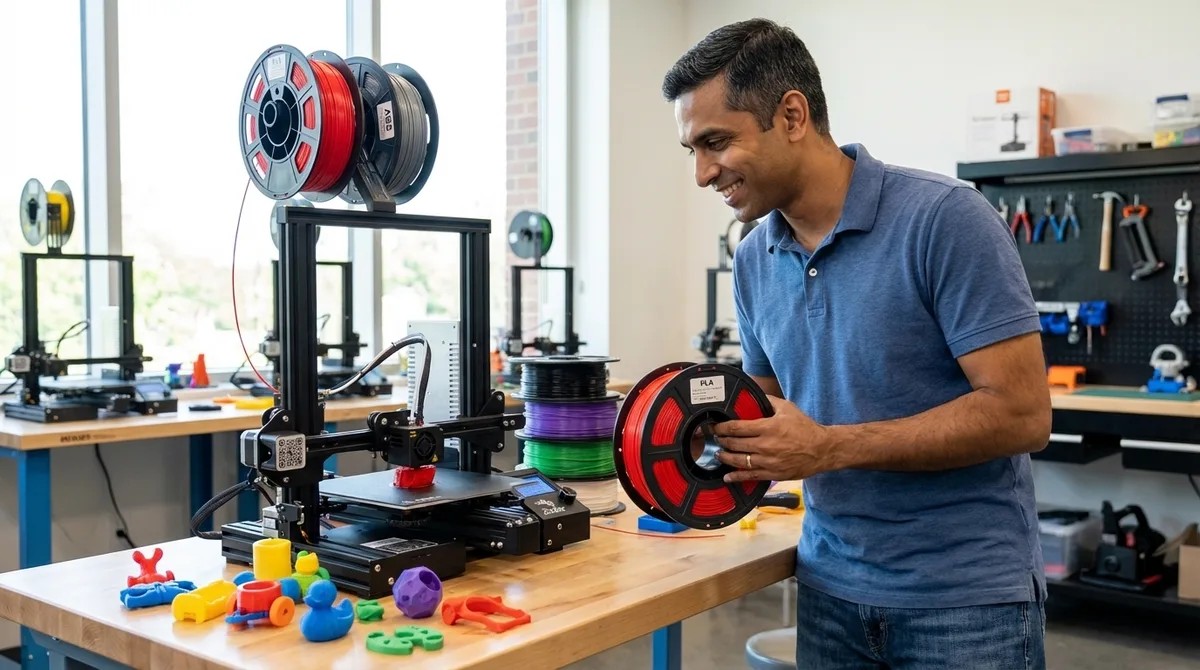
Understanding 3D Printer Filament Types: PLA, ABS, and PETG for Young Makers
The STEM Lab · The Stem Lab
Audio is streamed directly from the publisher (content.rss.com) as published in their RSS feed. Play Podcasts does not host this file. Rights-holders can request removal through the copyright & takedown page.
Show Notes
Ever watched a kid's enthusiasm deflate after their 3D print warped into a useless blob halfway through? The culprit usually isn't the printer or the design—it's the filament choice. This episode breaks down the three most common 3D printer materials—PLA, ABS, and PETG—through the lens of what actually matters for young makers: safety requirements, skill progression, and building real engineering intuition that transfers to future careers.
- PLA delivers 95 percent-plus first-print success rates and requires no ventilation, making it ideal for beginners and classroom environments, but it becomes brittle under sustained loads or temperatures above 60 degrees Celsius.
- ABS contracts nearly double the rate of PLA during cooling (0.8 to 1.0 percent), which explains why prints warp and lift off the bed—solving this requires heated beds at 90 to 110 degrees and draft-free enclosures.
- PETG bridges PLA's ease of use with ABS's durability, offering chemical resistance to oils and weak acids plus outdoor UV tolerance, but its hygroscopic nature means moisture absorption will ruin prints if filament isn't stored with desiccants.
- The temperature variables young makers adjust—nozzle heat, bed temperature, cooling rates—mirror actual process control parameters used in injection molding and manufacturing engineering careers.
- Layer adhesion works differently across materials: PLA relies on mechanical interlocking, ABS achieves solvent-like welding between layers, and PETG balances both mechanisms—explaining why PLA splits along layer lines while ABS bends before breaking.
- Starting with PLA builds confidence, but progressing to ABS and PETG teaches thermal management and material science fundamentals that easy-to-print materials never reveal.
Read the full article: https://stemlabguide.com/understanding-3d-printer-filament-types