How to Create a Wind Turbine Science Project Step-by-Step
The STEM Lab · The Stem Lab
Audio is streamed directly from the publisher (content.rss.com) as published in their RSS feed. Play Podcasts does not host this file. Rights-holders can request removal through the copyright & takedown page.
Show Notes
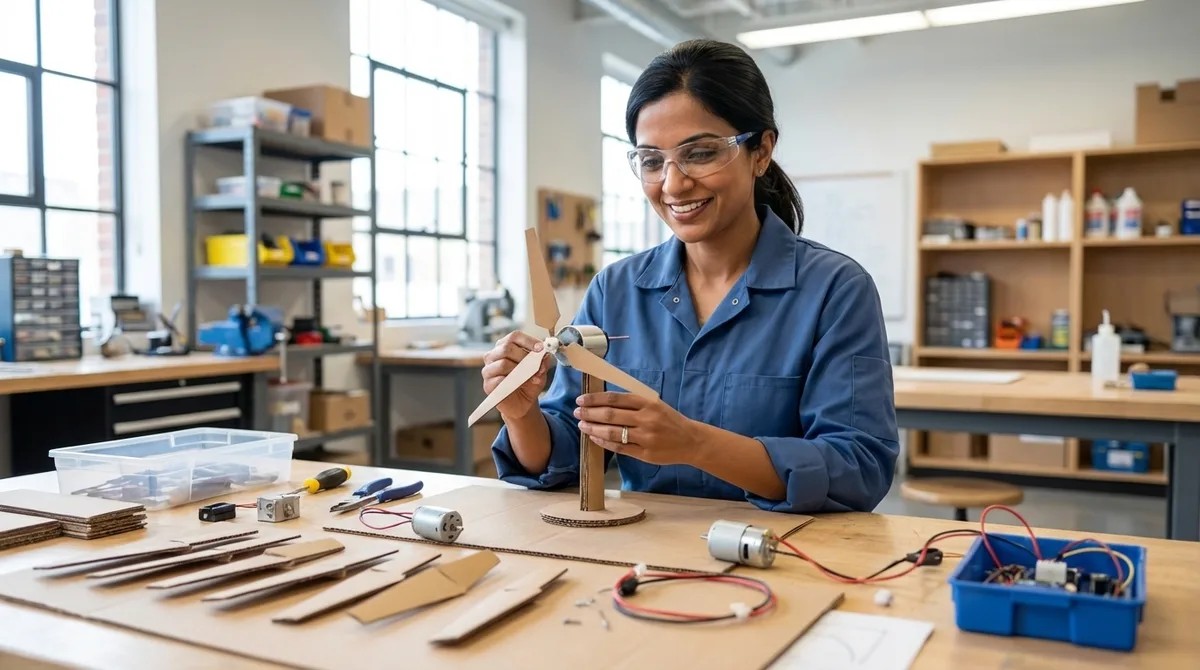
Most kids assume flat blades catch the most wind—and that's exactly why their turbines barely spin. In this episode, Lakshmi Venkataraman walks you through a classroom-tested blueprint for building a wind turbine that actually works, lights an LED, and teaches real energy conversion principles. Designed for upper elementary through middle school students (grades 4–8), this project goes far beyond craft time to introduce iterative engineering thinking used in actual renewable energy careers. If you've ever wanted to turn a science fair project into a genuine learning experience about clean energy, this is your starting point.
- Blade pitch angle—not surface area—determines how efficiently a turbine captures wind energy; a 10–20 degree pitch with an airfoil shape generates lift and maximizes rotational force, which is why flat blades underperform.
- Material choice significantly impacts durability and testing accuracy: cardstock warps in humidity, thin balsa wood survives dozens of trials, and 3D-printed PLA blades allow rapid iteration just like real engineering teams use.
- The turbine hub requires precise 120-degree blade spacing to prevent wobble; imbalanced blades waste kinetic energy and undermine the mechanical efficiency lesson.
- A small DC hobby motor (1.5–6V, 300–1000 RPM) functions as your generator, converting rotational kinetic energy into electrical output measurable with a basic multimeter.
- Standardized components like LEGO Technic connectors reduce confounding variables when running comparative tests across multiple blade designs.
- Optional enhancements including wind tunnels, Arduino-based data logging, and 3D printer access can elevate this from a demonstration into a rigorous experimental investigation suitable for high school physics.
Read the full article: https://stemlabguide.com/how-to-create-a-wind-turbine-science-project-step-by-step