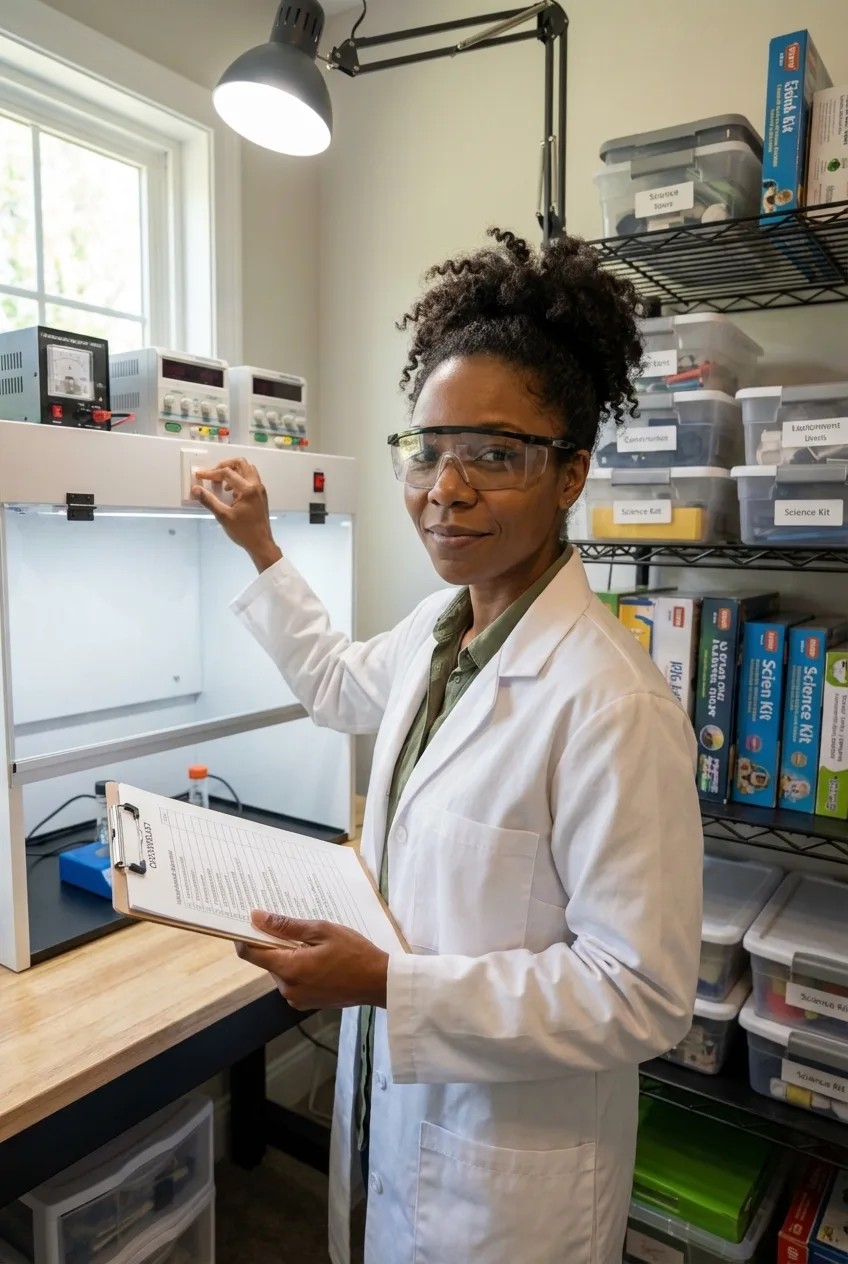
Home STEM Lab Safety Checklist: Power, Ventilation, and Storage Requirements
The STEM Lab · The Stem Lab
Audio is streamed directly from the publisher (content.rss.com) as published in their RSS feed. Play Podcasts does not host this file. Rights-holders can request removal through the copyright & takedown page.
Show Notes
You've assembled the gear for your home STEM lab—3D printers, soldering stations, maybe even a laser cutter—but have you thought about whether your space can actually handle it safely? This episode tackles the unsexy but critical infrastructure that transforms a corner of your home into a legitimate learning environment. Chloe Miller walks through the complete safety checklist covering electrical capacity, proper ventilation, and storage requirements that every parent needs to address before their kid powers up that first project.
- A single 3D printer can pull 250 watts just warming up its heated bed, and running multiple devices on a standard 15-amp circuit creates a genuine fire risk—dedicated 20-amp circuits give you the 2400-watt capacity serious STEM labs need.
- Surge protectors need joule ratings above 2000 and protection for data lines like USB and Ethernet, not just power—cheap power strips can fail after absorbing a single surge, potentially wiping hours of your teenager's experiment data.
- That pleasant maple syrup smell from PLA printing is actually ultrafine particles and volatile organic compounds entering your home, and a bathroom exhaust fan won't cut it—you need to calculate CFM based on room volume for proper air changes per hour.
- Benchtop fume extractors positioned 6–8 inches from a soldering tip cost as little as $40 and capture flux smoke before it reaches young lungs, even when using lead-free solder that still releases respiratory irritants.
- A $15 red emergency stop button mounted within arm's reach of the primary workbench lets any lab user cut power to high-risk equipment with a single palm strike—and every person who uses the space should know exactly where it is.
- Extension cords are temporary tools, not infrastructure, and daisy-chaining them under desks with flammable materials like cardboard project boxes is exactly how house fires start.
Read the full article: https://stemlabguide.com/home-stem-lab-safety-checklist