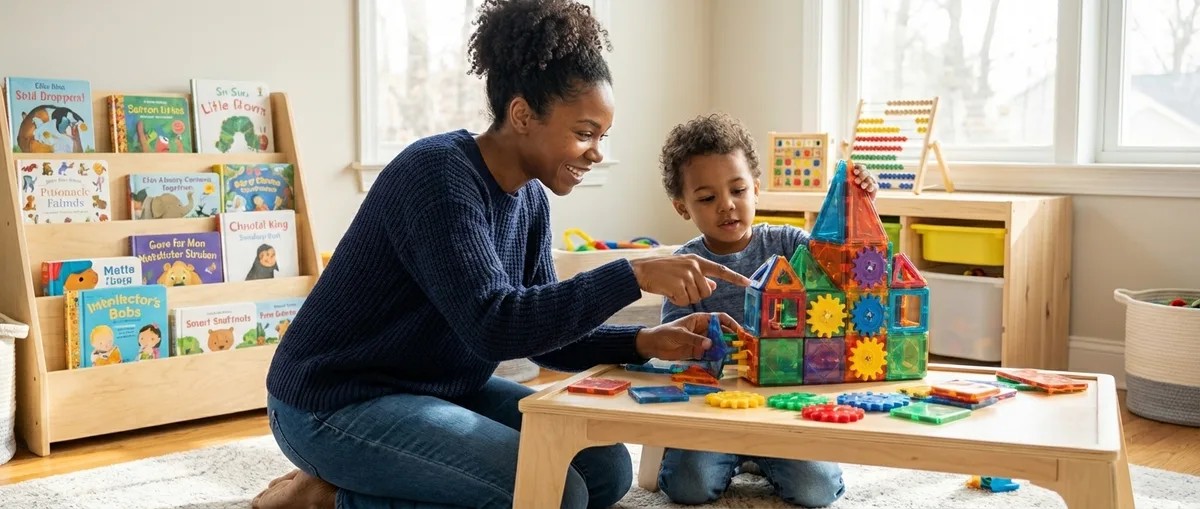
Best STEM Toys for 5 Year Olds: Building Foundation Engineering Skills
The STEM Lab · The Stem Lab
Audio is streamed directly from the publisher (content.rss.com) as published in their RSS feed. Play Podcasts does not host this file. Rights-holders can request removal through the copyright & takedown page.
Show Notes
Ever watched a five-year-old spend twenty minutes completely absorbed in wiring up a circuit? That's not just play—it's engineering in action. This episode breaks down exactly what separates genuinely educational STEM toys from flashy distractions that teach kids nothing about how things actually work. Chloe Miller shares years of hands-on experience observing what helps young children grasp real technical concepts, offering a practical framework for choosing toys that build foundations for coding, problem-solving, and scientific thinking that will carry through elementary school and beyond.
- Ignore vague "ages 3-8" labels and look for toys with specific skill outcomes like "builds understanding of series versus parallel circuits"—that wide age range usually means the toy doesn't actually progress in complexity.
- Real engineering toys teach through constraint, meaning blocks that only connect certain ways, circuits that fail if wired incorrectly, and structures that collapse with poor weight distribution—these build problem-solving resilience that fantasy play features never will.
- Watch out for products that fake technical function, like "solar robots" that actually run on hidden button cells with decorative panels glued on top—test whether solar panels perform noticeably different in shade versus sunlight.
- Screen-free coding toys build deeper foundational understanding than apps at this age—tactile sequencing mats and programmable robot mice teach algorithmic thinking, debugging, and iteration without screen dependency.
- Prioritize practical specs that affect real-world use: USB-rechargeable batteries over disposable cells, durability for drops and sticky hands, and expansion compatibility with other systems as skills grow.
- Avoid toys with consumable dependencies like proprietary refills or subscription access—these ongoing costs add up and teach kids that technology is disposable rather than something to understand and maintain.
Read the full article: https://stemlabguide.com/best-stem-toys-for-5-year-olds