
The State Of Belief
207 episodes — Page 2 of 5
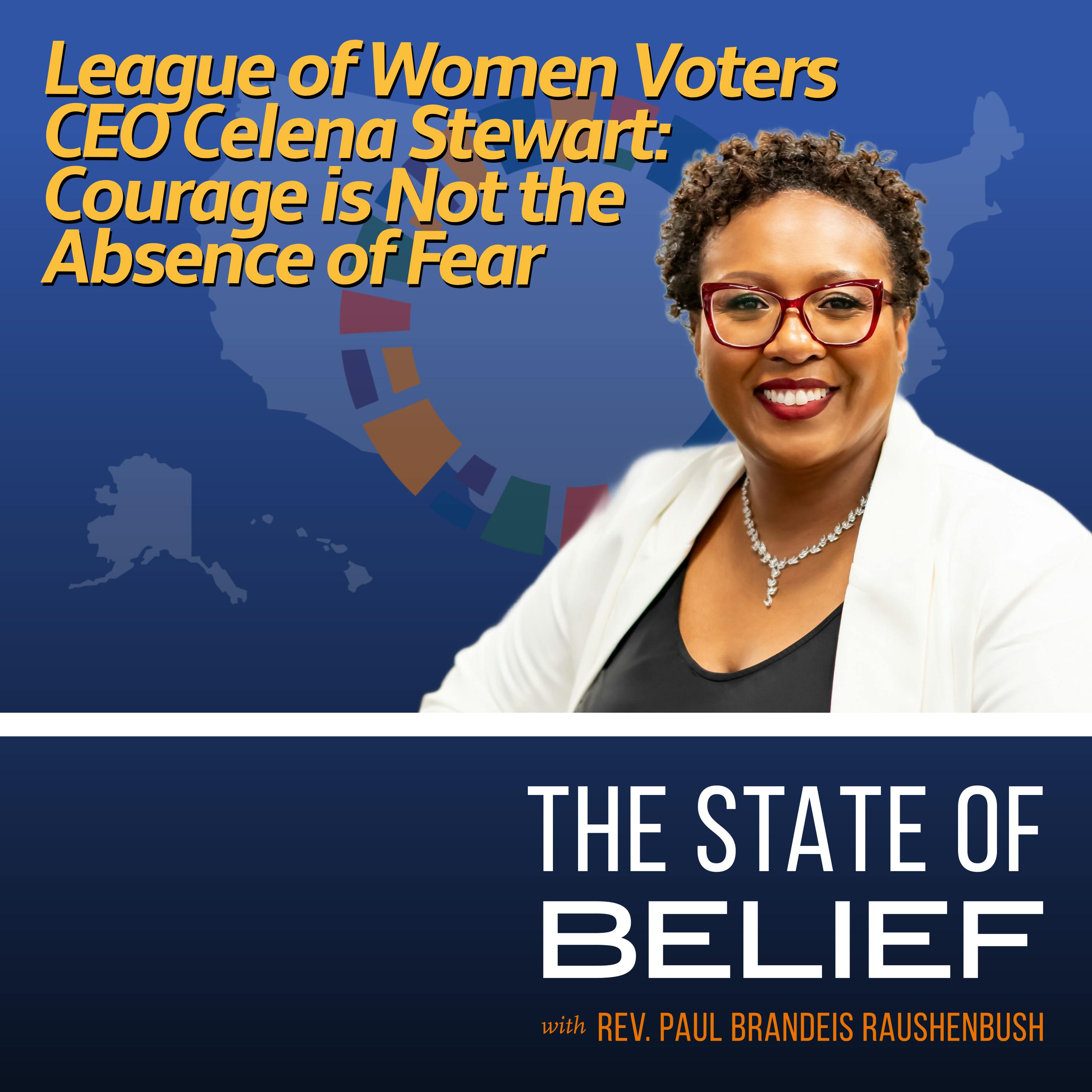
League of Women Voters CEO Celina Stewart: Courage is Not the Absence of Fear
This week, host Rev. Paul Brandeis Raushenbush is joined by Celina Stewart, Chief Executive Officer of the League of Women Voters. They get into the way the League’s work has evolved over the past 105 years, with a focus on expanding access to the ballot, as well as on voter education, protecting voter rights, and strengthening civic engagement. Celina traces her own journey from discovering the League during her college years to leading it as a voting rights attorney. She reflects on the League's history, including its founding in 1920 and its progressive role in enfranchising women and marginalized communities. She emphasizes the organization’s current focus on voter protection and civic courage in the face of modern voter suppression tactics. Celina advocates for widespread participation in democracy through actions like the League's “Unite and Rise 8.5” initiative, aiming to mobilize millions of voters, as well as the national Vote 411 campaign. The conversation also highlights the importance of knowledge in reducing misinformation as well as combating disinformation, and underscores the civic duty to show up courageously against injustices – even if one has to do it in circumstances that can sometimes be scary. The episode also includes the comments of Lt. Gen. Charles D. Luckey (Ret.), reacting to the extraordinary gathering of our military's leaders from around the world to hear remarks from Secretary Pete Segheth and the nation's commander-in-chief. More about Celina Stewart Celina joined the League in 2018 as director of advocacy and litigation, and later served as senior director and chief counsel. Appointed CEO just three months before the 2024 election, she guided the organization through one of the most consequential election cycles in modern history. A creative legal strategist, Celina has led litigation to protect voters from intimidation and disinformation. Before joining the League, she served as chief operating officer and director of philanthropy at FairVote, where she advanced structural election reform and organizational growth. More about Charles D. Luckey Lt. Gen. Charles D. Luckey (Ret.) served in the US Army and Army National Guard for 43 years. He retired from the Army as its oldest Green Beret in uniform after serving as the Commanding General of the United States Army Reserve Command from 2016 to 2020. Charles is a graduate of the University of Connecticut School of Law. Learn more about your ad choices. Visit megaphone.fm/adchoices

Rabbi Sharon Kleinbaum, Randi Weingarten, and Skye Perryman speak on Religious Freedom in Public Schools
Religious freedom and public education: how do these issues come together? This week on The State of Belief, we hear leading voices make a compelling argument for ensuring the latter comes with a healthy dose of the former: Labor leader Randi Weingarten, activist Rabbi Sharon Kleinbaum, and Democracy Forward's Skye Perryman. Most of this episode was recorded live in Dallas, Texas, at a Religious Freedom in Public Schools Summit convened by Interfaith Alliance. In dialogue with host Rev. Paul Brandeis Raushenbush, who moderated the conversation, Rabbi Sharon stresses how important separation of Church and State has been to the full inclusion of people who confess minority religions, including Judaism, in our country. A cornerstone of that is ensuring that public education remains a neutral ground where children from diverse backgrounds can learn together. Randi highlights the immense pressure placed on teachers when faced with mandates for religious instruction. Teachers find themselves in a challenging position, often caught between differing parental beliefs and the need to create an inclusive environment for all students. Randi emphasizes the importance of supporting our educators, ensuring they have the resources and backing to foster critical thinking and respect for diverse beliefs without imposing any one ideology. Then we hear Skye Perryman, President and CEO of Democracy Forward, offer eye-opening facts about the shifting global landscape of democracy. Marking International Democracy Day, Skye offers vital insights into how grassroots activism can counter the global drift toward autocracy - a trend affecting countries across the globe, including the United States, where she sees it playing out in public education policies, among other places. With compelling urgency, she underscores the importance of confronting extremism, misinformation, and regressive judicial decisions that threaten the very core of democratic principles, and the role of public schools in that struggle. More about the speakers: The longtime leader of the largest LGBTQ synagogue in the world, Congregation Beit Simchat Torah in New York City, Rabbi Sharon holds the title of Senior Rabbi Emerita and is now leading The Beacon, a nationwide grassroots movement of public witness. Rabbi Sharon is married to Randi Weingarten, President of the American Federation of Teachers. AFT represents 1.8 million educators and health care professionals across the country. Randi has just released a brand-new book, titled Why Fascists Fear Teachers. Skye Perryman is the President and CEO of Democracy Forward, “working tirelessly every day to safeguard our enduring, yet fragile, democracy.” That’s the description Time Magazine included in listing Skye as one of the 100 most influential people of 2025. We hope you'll take the time to listen - and share this insightful episode with at least one person you think would benefit from hearing it! Learn more about your ad choices. Visit megaphone.fm/adchoices
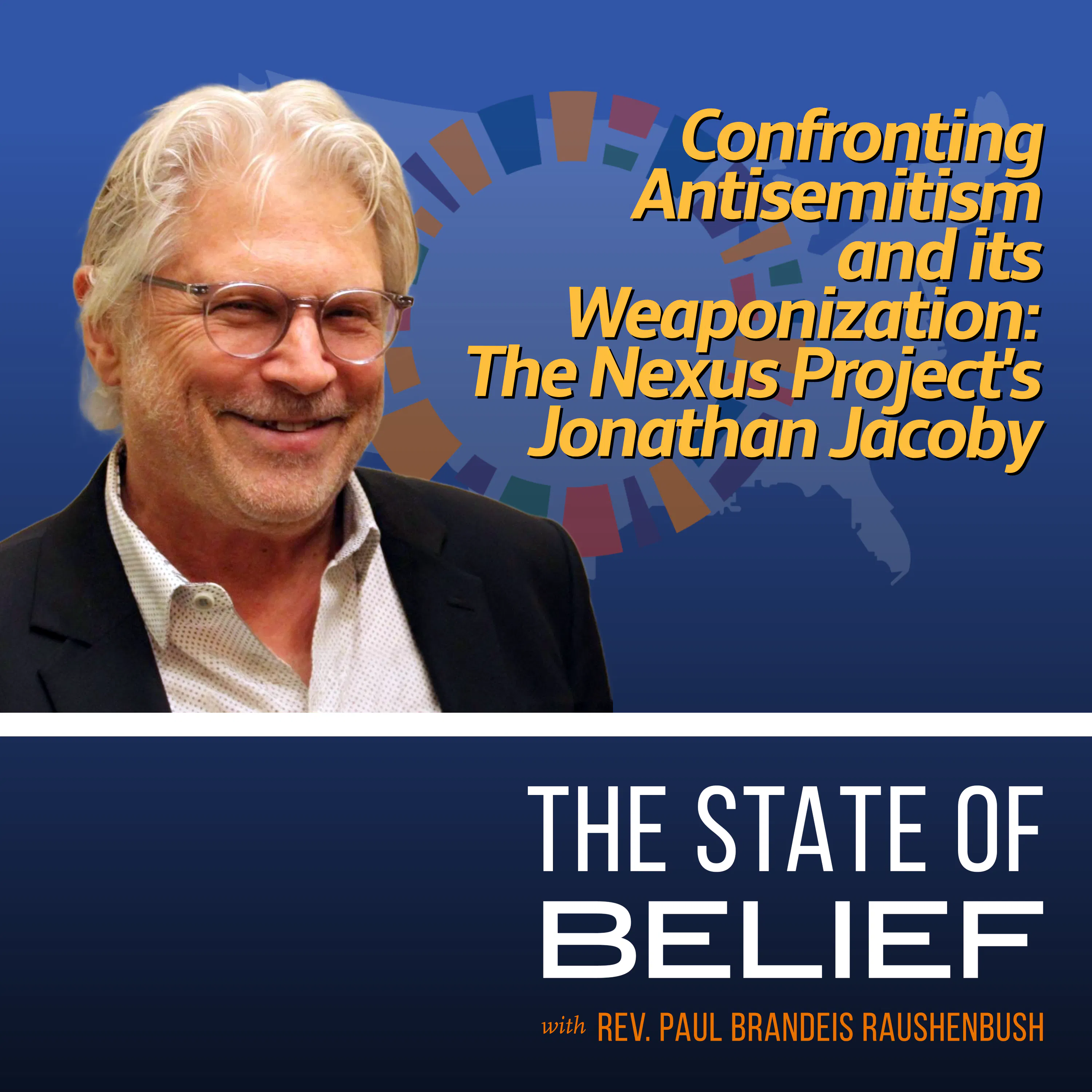
Confronting Antisemitism and Its Weaponization: The Nexus Project's Jonathan Jacoby
This week, host Rev. Paul Brandeis Raushenbush is joined by Jonathan Jacoby, National Director of the Nexus Project. The compelling conversation highlights Jonathan's unique insights on confronting antisemitism and fostering a pluralistic democracy. Drawing from his family history as the descendant of Holocaust survivors and his intrinsic connection to Israel, he provides a thoughtful examination of the challenges that arise when discussing Israel, especially within progressive communities. He makes clear the fine line between legitimate critique and antisemitism, guided by the influential Nexus Document's criteria. By spotlighting crucial distinctions like antisemitic tropes and the problematic imposition of collective responsibility on Jews for Israel's actions, Jonathan champions the power of informed discourse. The episode also ventures into the complex territory of Jewish identity and advocacy amid the ever-shifting political landscape. Jonathan candidly addresses the emotional and ethical dilemmas tied to Israel's policies, especially concerning Gaza and the potential for a Palestinian state, and how these issues resonate with the broader Jewish community. Highlighting the strength and guidance found in both religious and cultural Judaism, he also emphasizes the indispensable role of interfaith solidarity, particularly between Jewish and Christian communities, in combating antisemitism and advocating for peace. Jonathan's call for perseverance, respect, and open dialogue within the Jewish community itself offers a powerful reminder of the importance of unity and understanding in addressing both internal and external challenges. About Jonathan Jacoby: Jonathan is the National Director of the Nexus Project. He was the founding Executive Director of the New Israel Fund and founding President of the Israel Policy Forum. He also held leadership positions at the Jewish Federation of Greater Los Angeles and Americans for Peace Now. Jonathan has pioneered new models for public-private partnerships in the field of rare disease research as a co-founder of SOAR (Support Of Accelerated Research.) About the Nexus Project: The Nexus Project works to fight antisemitism, uphold democracy, and protect free speech - and recognizes that these tasks are intertwined. The Nexus team takes all accusations of antisemitism seriously, which is why they also speak out when fears of antisemitism are cynically exploited to stifle legitimate criticism of Israel or US policy. The Nexus Document is a framework for understanding antisemitism, Israel, and Zionism, detailing what does and what does not constitute antisemitism. We hope you'll take the time to listen - and share this timely episode with at least one person you think would appreciate hearing it! Learn more about your ad choices. Visit megaphone.fm/adchoices

Libraries and Religious Freedom, with ALA President Sam Helmick
This week on The State of Belief - a conversation with Sam Helmick, the newly inaugurated president of the American Library Association. Sam and host Rev. Paul Brandeis Raushenbush mark National Library Card Sign-up Month by discussing the importance of libraries in advocating for intellectual freedom and access to information, noting that libraries are far more than just books - they are spaces for shared experiences and understanding differences. Sam shares the personal journey from feeling libraries were not meant for them to falling in love with the library as a pivotal community space. Emphasizing the theme “Our stories are worth sharing,” Sam highlights the transformative power of libraries and the need for community involvement. The conversation covers challenges faced by libraries, including censorship and misinformation, and the essential role libraries play in supporting democracy, freedom of expression, and education. Paul and Sam also underscore the importance of faith communities in supporting libraries and librarians, suggesting practical steps like using libraries, joining library boards, advocating against censorship - and of course, getting a library card! Interfaith Alliance, together with Unite Against Book Bans, has released a resource titled Banned Books, Banned Beliefs, and is preparing to roll out a major initiative, Faith for Libraries. And as Paul says, there is so much to learn about the American Library Association’s work at www.ala.org. Sam Helmick (they/them) is the 2025-26 president of the American Library Association. Sam is a librarian, advocate, and community leader known for their work defending intellectual freedom and expanding library access. We'd love to have you listen to and share this gripping episode with at least one person you think would appreciate hearing it! Learn more about your ad choices. Visit megaphone.fm/adchoices
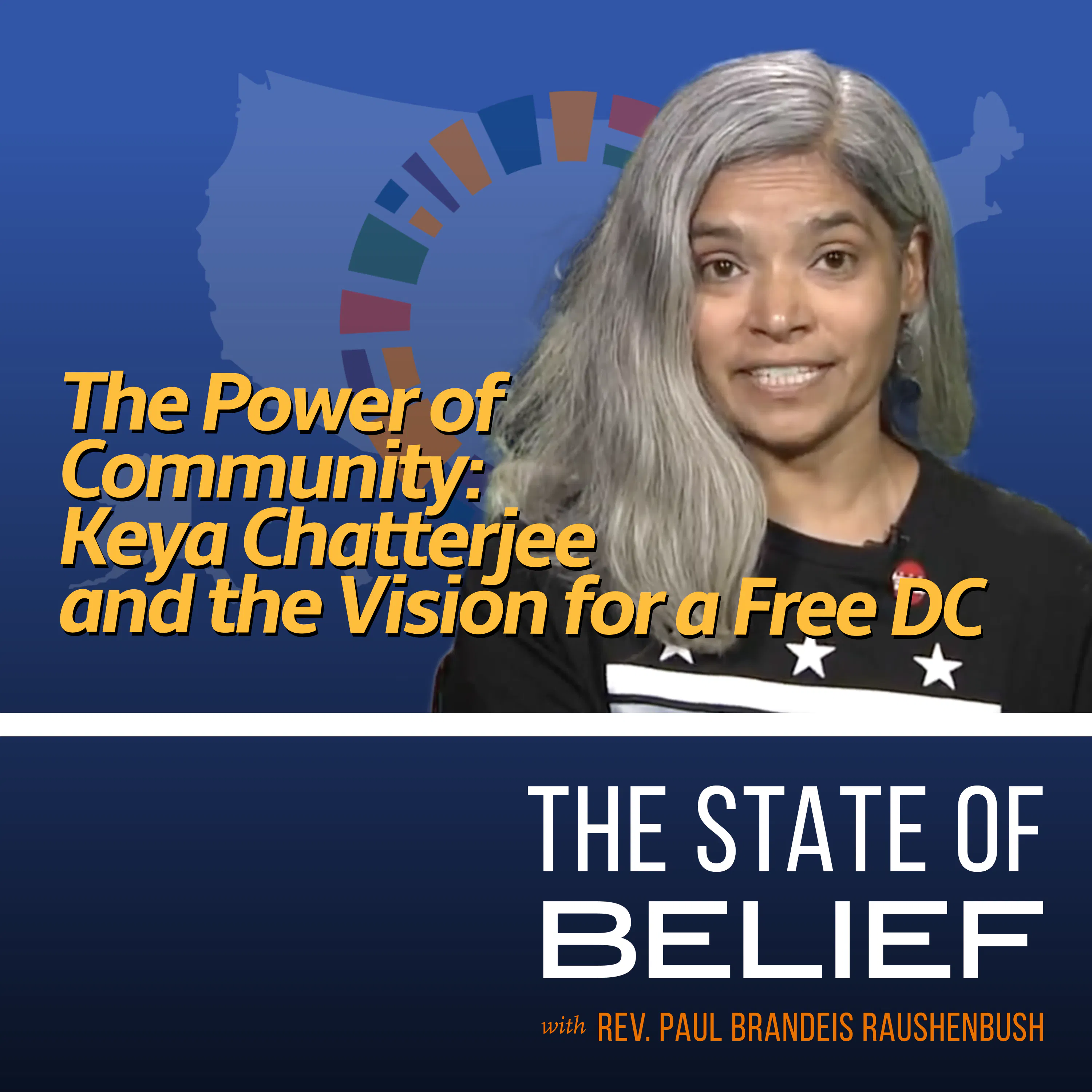
The Power of Community: Keya Chatterjee and the Vision for a Free DC
The Trump administration’s federal takeover of the nation’s capital is having a profound impact on Washington, DC’s 700,000 residents - and on our very democracy. That’s according to this week’s guest on The State of Belief, Keya Chatterjee. Keya’s the co-founder and executive director of Free DC, a civic campaign defending Washington, DC’s home rule and protecting the civil liberties and democratic dignity of its residents. In this episode, Keya and host Rev. Paul Brandeis Raushenbush take an unflinching look at the current challenges facing Washington DC and the broader implications for democracy and civil liberties. Here are three key takeaways that are particularly noteworthy: The Importance of Listening and Believing: Keya emphasizes the critical need to take political rhetoric seriously. She highlights how the warnings from political leaders about authoritarianism should not be dismissed as mere rhetoric. Instead, we must listen and prepare for the potential consequences of their actions. Community and Collective Action: One of the most inspiring aspects of the conversation is Keya's focus on the strength of community. She shares how the people of DC and diverse organizations—including faith groups - are coming together to resist federal overreach and protect their rights. From training sessions to grassroots organizing, the emphasis on collective action is vital. As Keya states, "It is only in community that we will turn this around." Prioritizing Joy in Activism: Keya reminds us of the importance of joy in our activism. She discusses how Free DC incorporates joy into their organizing efforts, emphasizing that taking care of ourselves and each other is crucial for sustaining long-term resistance. This perspective is a reminder that while we fight for justice, we must also celebrate our victories and find joy in our shared humanity. After hearing this episode, you’ll have a deeper understanding of the current state of Washington DC, and the inspiring work being done by Free DC. The experiences Keya describes are a stark warning for other American cities, and for each of us. Learn more about the organization at www.freedcproject.org Keya Chatterjee has an impressive background in social and climate justice, having previously led the U.S. Climate Action Network, worked at World Wildlife Federation, USAID, and NASA. Under her leadership, Free DC has become a prominent voice opposing federal overreach - a very big job indeed, in the face of the Trump Administration’s forcing federal law enforcement on the district and expanding detention powers. Before the in-depth conversation with Keya Chatterjee, Paul spends a few minutes with Rev. Andy Oliver, pastor of Allendale United Methodist Church. He and a fellow clergyman were arrested this past week in St. Petersburg, Fla., while praying on a “Black History Matters” street mural - that was about to be destroyed - in front of the city’s Woodson African American Museum. We'd love to have you listen to and share this thought-provoking episode with at least one person you think would appreciate hearing it. Learn more about your ad choices. Visit megaphone.fm/adchoices

How the Christian Right is Taking Over America with Talia Lavin
She's a Jewish woman who has spent countless hours undercover, impersonating the White supremacist, misogynistic, antisemitic extremists she was researching for her first book. She's also brought an outsider's view to the growing dominance of Christian Nationalism in our society and our government for her second. This week on The State of Belief, journalist and author Talia Lavin explains how the groups she covers in those two impactful books, Culture Warlords: My Journey into the Dark Web of White Supremacy, and Wild Faith: How the Christian Right is Taking Over America, in her words, "Got together and made the worst government ever." Three important additional points that emerge from the conversation: The Invisible Influence of Christian Hegemony: Talia discusses how Christian hegemony often goes unnoticed by those who grew up within it, while it remains glaringly obvious for those outside the faith - especially when it becomes more militant. This awareness is crucial for understanding the current political landscape and the implications of Christian nationalism. The Authoritarian Family Structure: One of the most striking aspects of Talia's research is her examination of how authoritarian parenting styles within certain Christian communities can shape broad societal attitudes. She highlights the works of influential figures like James Dobson, who died earlier this month. She sees his teachings on child-rearing as promoting a model of obedience and submission that can lead to accepting authoritarianism in adulthood. The Need for a Diverse Coalition Against Extremism: Talia emphasizes the importance of embracing a cacophony of voices in the fight against the rigid and coordinated forces of the Christian right. She advocates for a coalition that includes people of various faiths and those with no faith at all, working together to uphold the values of a multiracial democracy. We'd love to have you listen to and share this thought-provoking episode and reflect on these critical issues. Talia's newsletter is titled The Sword and the Sandwich. Learn more about your ad choices. Visit megaphone.fm/adchoices
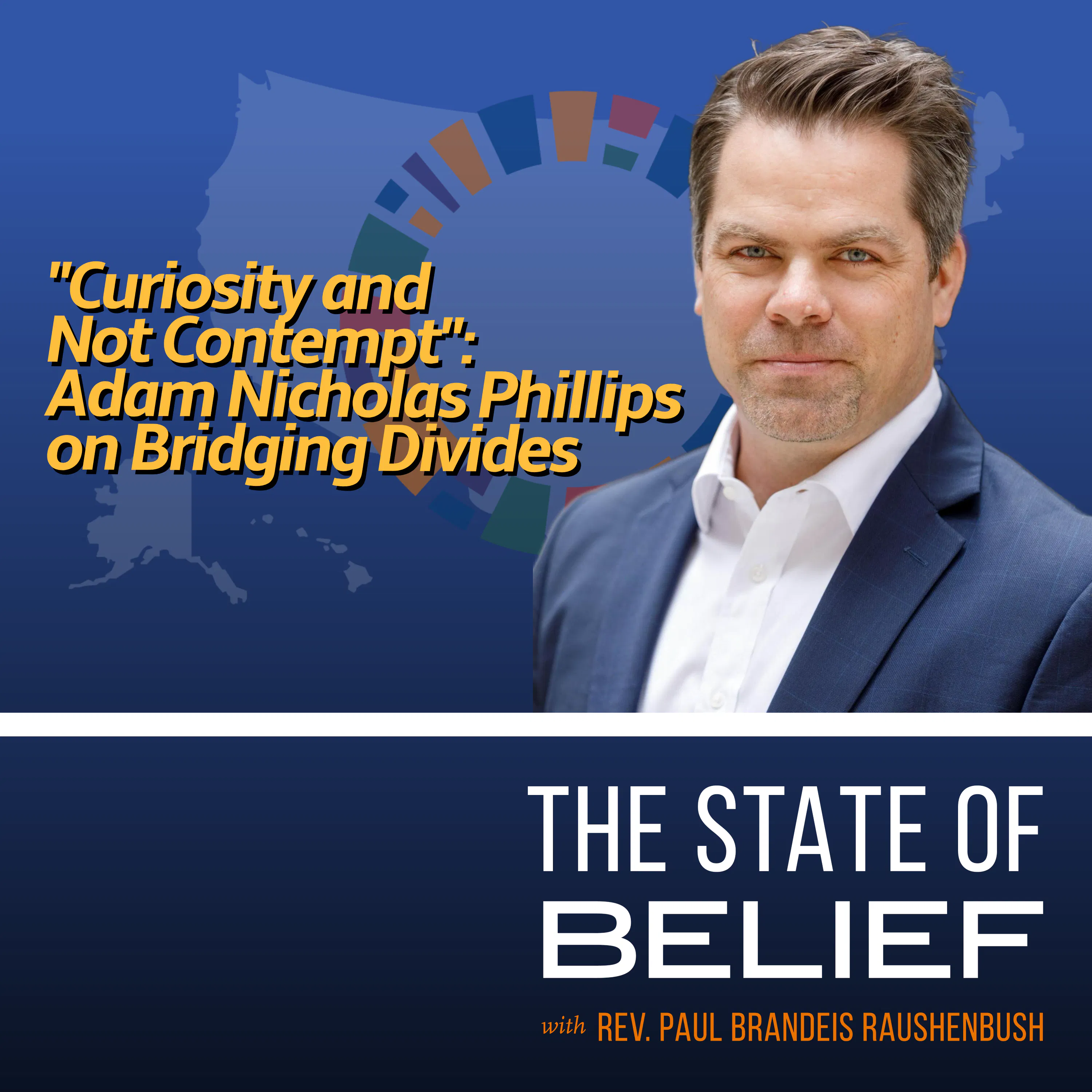
"Curiosity, Not Contempt": Adam Nicholas Phillips on Bridging Divides
What does it mean to build bridges amidst the turmoil of the second Trump Administration? How have interfaith communities moved forward with productive dialogue post-October 7th? Is there a more nuanced way to think about Christian Nationalism and the MAGA constituency? In this episode of The State of Belief, Rev. Paul Brandeis Raushenush and Interfaith America CEO Rev. Adam Nicholas Phillips explore these critical issues and much more. Adam's personal journey into interfaith work is compelling. He describes his upbringing in a non-traditional religious environment, his exploration of various faiths, and his eventual identification with evangelical Christianity. His experiences, including planting a church and getting through the consequences of advocating for LGBTQI+ inclusion, have shaped his understanding of faith and public life. Listen for an in-depth look at:• Interfaith America’s work on managing conflict in classrooms and workplaces, creating opportunities for groups to move beyond just coexisting and rather collaborating for a common cause.• How the inspiration of Live Aid and Adam’s past experience in leadership at USAID during the Biden-Harris administration, as well as as a faith leader, inform his current position as CEO at Interfaith America.• Navigating our polarized environment: “We find ourselves at a crossroads of sorts where the politicization of a number of our traditions has become quite difficult and untenable. But I keep trying to come at this with some sense of curiosity and not contempt.” Where to find Adam:• Check out his book, Love, Light, Joy & Justice: How To Be A Christian Now• Embrace the “power of pluralism,” and get involved with Interfaith America.• Hear more from Adam in his Ted Talk, “Inclusion: the ancient idea that just might save all of us.” There’s a lot to learn from this conversation. I hope you’ll share it with someone you know who’ll enjoy hearing it! Learn more about your ad choices. Visit megaphone.fm/adchoices
An Unlikely Social Justice Warrior: Muslim Feminist Ani Zonneveld
This week on The State of Belief, host Rev. Paul Brandeis Raushenbush sits down with Ani Zonneveld, feminist Muslim activist, musician, and Grammy-winning songwriter. Ani’s journey from Malaysia to Germany, Egypt, India and eventually Los Angeles - and the lessons learned along the way - is nothing short of inspiring. And she lays it all out in her brand-new memoir, titled The Unlikely Social Justice Warrior: Making My Life Count as a Muslim Feminist. As a diplomat’s daughter, Ani nurtured her social justice consciousness despite a privileged upbringing. From witnessing the aftermath of the Sinai War to playing soccer with a Dalit child in India, these moments shaped her anti-war and anti-racist beliefs. It was after 9/11 that Ani delved deep into Islam, discovering its egalitarian and inclusive roots and founding Muslims for Progressive Values, championing LGBTQ+ inclusion, gender equality, and human rights from a faith-based perspective. Music is a cornerstone of Ani’s spiritual journey. While pursuing a professional music career in LA, she faced sexism and racism, and experienced suppression of the diverse musical heritage of Muslim immigrants in the American context. Ani sees a conservative swing in Islam, which she describes as quite different from the religious tradition she grew up in. Ani hopes to inspire young people to channel their anger constructively and build alliances across differences, based on being exposed as students to diverse cultures and traditions in public schools, countering conservative efforts to restrict such content. There’s a lot of value in this conversation. I hope you’ll share it with someone you know who’ll enjoy hearing it! Learn more about your ad choices. Visit megaphone.fm/adchoices

Separating Church from Hate: A Conversation With John Fugelsang
This week on The State of Belief, truth through comedy. Host Rev. Paul Brandeis Raushenbush welcomes comedic genius John Fugelsang, author of the new book Separation of Church and Hate: A Sane Person's Guide to Taking Back the Bible from Fundamentalists, Fascists, and Flock-Fleecing Frauds coming September 9th. Together, they delve into the tension between progressive values and mainstream Christianity, or as John puts it, being “too Christian for the liberals and way too liberal for the Christians.” As they explore this topic, John summarizes the teachings of Jesus: “Welcome the stranger, man. I mean, that's about it.” The child of a former Catholic priest and former Catholic nun, John aims his sharp wit and brilliant mind at a topic he is deeply passionate about: using Scripture to challenge the all-too-often unchallenged claims to godliness by Christian Nationalists and fundamentalist Christians. "I was raised in a Christianity that was about service, that was about love, that was about forgiveness, that guided us to the margins. What are you doing for the least among us? Are you welcoming the stranger? Are you caring for the poor? Are you trying to help those who are hated and despised on the lowest rungs? Because that was Jesus's whole ministry. You reach out to the marginalized.” “And, of course, as you know, the nice Christians don't get the airtime. You don't see the Christians on cable news talking about how war is bad or how homophobia is bad. You see the other kind - because villains make for better TV than nice people.” - Actor, author, comedian, commentator John Fugelsang. You can preorder his book that comes out September 9th, Separation of Church and Hate: A Sane Person's Guide to Taking Back the Bible from Fundamentalists, Fascists, and Flock-Fleecing Frauds Check out his daily show Tell Me Everything with John Fugelsang on Sirius/XM Subscribe to his Substack to get political commentary right to your inbox. Keep up with his almost-daily podcast, the Sanity-Cast, which covers politics, religion, and pop culture. Also in this episode: an excerpt of Texas State Rep. James Talarico's definition of Christian Nationalism from a public conversation last week with Interfaith Alliance Vice President of Programs and Strategy Guthrie Graves-Fitzsimmons, who's also a senior fellow at the Center for American Progress. The event was co-sponsored by the Center for American Progress Action Fund and Interfaith Alliance. The full recording is available here. Please share this episode with one person who would enjoy hearing this conversation, and thank you for listening! Learn more about your ad choices. Visit megaphone.fm/adchoices
From Sanctuary to Courtroom: Immigration and Religious Liberty with Legal expert Elizabeth Reiner Platt
This week, host Rev. Paul Brandeis Raushenbush had the pleasure of interviewing Elizabeth Reiner Platt, the brilliant mind leading the Law, Rights, and Religion Project. They dive deep into her newly published report, Religious Liberty and Immigration: Legal Analysis of Past and Future Claims. Despite the administration's rhetoric about protecting religious liberty, their actual immigration policies have been directly attacking faith communities. Paul and Liz discuss the revocation of the “sensitive locations” policy, which previously protected places like houses of worship from ICE enforcement actions. This has had a direct impact on people of faith feeling safe to practice their religion in community. Faith leaders like Bishop Marion Budde have been targeted for their modest pleas consistent with gospel teachings. This administration has even gone after Catholic bishops for simply caring for refugees and immigrants. Faith communities have long been central to immigration justice movements, from the sanctuary movement of the 1980s to organizations like HIAS, which started by helping persecuted Jews during the 1880's and now supports refugees of all faiths. They explore the question of whether religious freedom is being applied equally to all faiths or just a narrow slice of the Christian right. This is a crucial point in understanding the broader implications of religious liberty claims. There’s been an increase in litigation tactics relying on the expansive interpretation of religious liberty created under the Roberts Court. Paul and Liz discuss cases like Masterpiece Cakeshop and how these precedents intersect with immigration contexts. Elizabeth Reiner Platt has been leading the Law, Rights & Religion Project since 2015. Her publications have included the report, “Whose Faith Matters? The Fight for Religious Liberty Beyond the Christian Right”, which is just incredibly relevant today. Liz is a legally trained scholar and advocate who leads efforts to reframe religious liberty in the U.S., especially in relation to gender justice, reproductive rights, and racial equity. Just last month, the Law, Rights & Religion Project moved from Columbia Law School to Union Theological Seminary in New York, and this week it published Liz’s latest comprehensive report, titled Religious Liberty & Immigration: Legal Analysis of Past and Future Claims. If you enjoy the episode, please consider sharing it with your friends and family. Your support helps us continue these important conversations! Learn more about your ad choices. Visit megaphone.fm/adchoices
Faith, followers, and the files: Jay Michaelson and the Epstein Cover-up
We are back from a brief summer break, and are ready to hit the ground running! This week on The State of Belief, the political, ethical, religious and legal aspects of the sordid case of the Jefferey Epstein files. Whether or not there are incriminating documents, the relative silence from most faith-oriented leaders raises questions. Host Rev. Paul Brandeis Raushenbush is joined by author and attorney Rabbi Dr. Jay Michaelson. A visiting professor at Harvard Law School and a field scholar at the Emory Center for Psychedelics and Spirituality, Jay brings a wealth of knowledge and a unique perspective to our discussion. Paul and Jay dive deep into the ongoing saga surrounding the Epstein files and the implications for the current administration. They explore the ambivalence many progressives feel about discussing this topic, especially when there are so many pressing issues at hand. However, Jay argues that understanding the Epstein case is crucial, not just for its political ramifications but also for the fundamental issues of trust and transparency that it raises. You'll hear about the legal maneuvers surrounding the Epstein case, including the recent attempts to unseal grand jury transcripts and what that could mean for accountability. Jay provides clarity on the complex legal landscape and the potential consequences for those involved, including Donald Trump. Paul and Jay also reflect on the broader implications for democracy and the role of higher education. Jay shares his thoughts on how the current administration is reshaping the federal government and the challenges we face as a society. Rabbi Dr. Jay Michaelson is the author of ten books and a journalist whose work appears on CNN, in Rolling Stone, and in his weekly Substack newsletter, Both/And with Jay Michaelson. For twenty years, Jay's work has focused on the intersections of politics and religion. If you enjoy the episode, please consider sharing it with your friends and family. Your support helps us continue these important conversations! Learn more about your ad choices. Visit megaphone.fm/adchoices

Whither America? July 4th with Dr. Robert P. Jones
What does falling off a bike have to do with the state of our nation? Is America going through an identity crisis - just like a seventeen-year-old? This week on The State of Belief, these parallels are part of the conversation with host Rev. Paul Brandeis Raushenbush and Dr. Robert P. Jones on America's first 249 years, and what's to come as the country approaches 250. All while they ask themselves the question: “How Bad Is It?” On this Independence Day episode, Paul and his guest, who is president and founder of Public Religion Research Institute (PRRI), explore: PRRI’s recent polling on the Trump Administration: “Democracy at Crossroads: How Americans View Trump’s first 100 Days in Office,” and some of the misconceptions that have arisen. From De Tocqueville to Trump, how the notion of “creed” has developed over time, shaping the current state of religious freedom in America. How we can meaningfully celebrate Juneteenth and July 4th together - and why we should! Towards the end of the episode, Robby leaves us with a powerful reminder of civic responsibility: “... whether it's inside a home, inside a business, inside a church or a synagogue or a mosque, there are roles for all of us to play because there is a fight going on, for - I know Biden used this term maybe a little too much, but I do think it's true - this kind of the soul of America really is, in many ways, at stake right now.” Where to find Robby Jones: Bookmark the PRRI website, where a wealth of invaluable research is regularly posted for free. Check out Robby’s bestselling books, The Hidden Roots of White Supremacy, and the Path to a Shared American Future; White Too Long: The Legacy of White Supremacy in American Christianity; and The End of White Christian America. Subscribe to his Substack, White Too Long, where he frequently posts on religion, White Christian Nationalism, and protecting a pluralistic democracy. Have you heard these recent episodes of The State of Belief? June 24, 2024: On Diversity and Democracy with Wajahat Ali June 14, 2025: A Pastor Reports from the Front Lines in Los Angeles: Faith and Immigration Please share this episode with one person who would enjoy hearing this conversation, subscribe, and thank you for listening! Learn more about your ad choices. Visit megaphone.fm/adchoices
On Diversity and Democracy With Wajahat Ali
This week on The State of Belief, popular writer and commentator Wajahat Ali joins host Rev. Paul Brandeis Raushenbush for a thought-provoking exploration of patriotism, diversity, and democracy in today’s politically charged climate. Waj shares his unique perspective on the responsibilities that immigrants and citizens face amid the continuing societal impacts of the Trump administration's policies. Together, they unravel the moral and ethical dilemmas of maintaining integrity in chaotic times, while drawing on historical and religious narratives to emphasize the importance of long-term justice and equality. Life is more than serving a cause we believe in, no matter how urgent that may be. And so they reflect on balancing professional aspirations with personal commitments. Waj opens up about his daughter’s passion for dance and her journey as a cancer survivor, juxtaposed with his career in writing and advocacy. They also tackle the power of storytelling in political activism and its role in challenging misinformation and fear-based tactics. The conversation delves into important themes, including: Navigating Patriotism, Diversity, and Democracy: Paul and Waj discuss the challenges faced by immigrants and citizens in a fascist political climate, emphasizing the importance of ethical grounding and personal responsibility. Finding Purpose and Superpowers: Waj has inspiring things to say about the roles available to each of us, if we’re truly interested in making a difference. There are strengths everyday citizens bring, even if that’s integrity and honesty as an act of resistance to corruption and lies. Christian Nationalism and Authoritarianism: Christian Nationalism demands the suppression of diverse stories in the service of a single self-serving narrative. It uses fear and ignorance to advance a specific kind of White Christian agenda, targeting, in turn, LGBTQ, Black, Muslim, and Jewish communities – and leaving no room, in the end, even for dissenting White Christians like Mike Pence. Wajahat Ali is the author of Go Back to Where You Came From and Other Helpful Recommendations on How to Become an American. He has a very popular Substack, The Left Hook With Wajahat Ali, and co-hosts The Democracy-ish Podcast. Waj is a Daily Beast columnist, a writer, television commentator and keen observer of what this country seems to be doing to itself. The child of immigrants, he's an invaluable contributor to the conversation around patriotism, diversity and democracy. Learn more about your ad choices. Visit megaphone.fm/adchoices
A Pastor Reports from the Frontlines In Los Angeles: Faith and Immigration
This week on The State of Belief, an inspiring conversation with Rev. Noel Andersen, the National Field Director for Church World Service and a dedicated advocate for immigrant rights. In this episode, he joins host Rev. Paul Brandeis Raushenbush to delve into the pressing issues surrounding immigration enforcement, the role of faith communities, and the ongoing fight for justice in the face of adversity. Here are three key takeaways that stand out: The Reality of Court Raids: Noel shares firsthand accounts of ICE agents conducting raids at courthouses, targeting asylum seekers who are simply following the legal process. This alarming trend highlights the urgent need for awareness and action within our communities. The Power of Faith Communities: Throughout the episode, the focus is on the vital role that faith leaders and religious organizations play in advocating for immigrant rights. Noel emphasizes the importance of building relationships with impacted communities and using our moral voices to challenge unjust policies. The Broader Fight for Democracy: The conversation also touches on the intersection of immigration and democracy. Noel articulates how the current administration's tactics are part of a larger strategy to destabilize democratic values. This is a call to action for all of us to engage in the fight for democracy, not just for immigrants but for the integrity of our society as a whole. The episode wraps up with Paul’s words from the June 10th Faith Rally for a Moral Budget at the US Capitol, as well as a conversation he recorded at that event with two of the leaders attending from Iowa: Interfaith Alliance of Iowa Executive Director Connie Ryan and Rev. Heather Wachendorf. Listen to this powerful episode and reflect on how you can contribute to the ongoing struggle for justice and equality. Together, we can amplify the voices of those who are often silenced and work towards a more inclusive future. Rev. Noel Andersen is the National Field Director for Church World Service where he has developed a national network of faith communities taking action in solidarity with immigrants and refugees. He is ordained in the United Church of Christ (UCC) and is the lead organizer and co-founder of the UCC National Collaborative on Immigration, a grassroots network of UCC leaders taking action for immigrants’ rights. Noel works at the intersection of faith and justice, mobilizing religious communities to resist unjust immigration enforcement, including ICE raids in Los Angeles and beyond. Please share this episode with one person who would enjoy hearing this conversation, subscribe, and thank you for listening! Learn more about your ad choices. Visit megaphone.fm/adchoices
Leah Greenberg, Indivisible, and No Kings: "You do not need permission to get started"
This week on The State of Belief – getting ready for No Kings Day on June 14th, an initiative of the national grassroots organization Indivisible. Co-founder Leah Greenberg explains that No Kings Day is a forceful nationwide response to the royal pretensions on display in Donald Trump's demand for a multi-million dollar military parade on his 79th birthday. Leah joins Rev. Paul Brandeis Raushenbush to discuss the importance of getting involved rather than discouraged, share past Indivisible successes and lessons learned, and the essential role faith leaders and communities play in giving credibility to public actions like this. Leah traces the origins of Indivisible, where she serves as co-executive director, back to authoring The Indivisible Guide in the wake of the 2016 election. The conversation highlights the importance of: The Power of Local Organizing: Leah emphasizes how grassroots movements can effectively challenge the status quo. After the 2016 election, many individuals who had never been politically active stepped up to organize in their communities. This surge of local activism powered the growth of Indivisible, and it continues to be a driving force in the fight for democracy today. Building Coalitions Across Differences: To be seen as serious, a coalition needs diverse voices and perspectives. Leah points out that while we may not agree on every issue, we can unite around shared values, such as the dignity of all human life and the commitment to a pluralistic democracy. This approach is essential, especially in a time when divisiveness can easily fracture movements. Mobilization as a Strategy: Leah shares insights on the significance of mass mobilization in the current political climate. With the upcoming No Kings initiative, Indivisible aims to demonstrate that there is a strong and growing opposition to authoritarianism. Mobilization is not just about numbers; it's about sending a message, building community, and preparing for future actions. As Leah noted, "We are building muscles to mobilize," which is crucial for sustaining momentum in the fight for democracy. Leah Greenberg is co-founder and co-executive director of Indivisible, a grassroots movement with over one million participants – and counting. A former congressional staffer, she co-authored We Are Indivisible: A Blueprint for Democracy After Trump. Leah has been recognized for her leadership in civic engagement and was named one of Time magazine’s 100 most influential people in 2019. Indivisible is partnering with many groups - including Interfaith Alliance - for the upcoming No Kings initiative on June 14, 2025. Please share this episode with one person who would enjoy hearing this conversation, subscribe, and thank you for listening! Learn more about your ad choices. Visit megaphone.fm/adchoices
Jim Wallis and a Moral Budget: The June 10th Procession at the Capitol
This week on The State of Belief, you’ll hear a powerful conversation with Rev. Jim Wallis and host Rev. Paul Brandeis Raushenbush, diving deep into his upcoming event on June 10th at the Capitol, A Pentecost Witness for a Moral Budget, which aims to address critical issues surrounding the Reconciliation Bill and its potential cuts to vital programs like Medicaid and SNAP. Just a couple of highlights: How Can Faith and Action Unite? Jim connects the Christian tradition of Pentecost and the current moment we find ourselves in. Just as the early followers of Jesus found courage to speak out in the streets, we too are called to rise above fear and take action. This event is not just a protest; it’s a public witness to our values as people of faith, transcending partisan politics. Why is the Budget a Moral Document? Wallis emphasizes that the choices we make in our budgets reflect our values and priorities as a society. So we’re not just advocating for specific programs; we’re advocating for a moral budget that aligns with the teachings of Jesus and supports the most vulnerable among us. What Does a Call to Collective Action Look Like? There are still ways for all of us to engage in the democratic process. Whether you can attend the event in person or not, there are numerous ways to participate. From writing letters to your senators to mobilizing your community, every action counts. Jim reminds us that moments like these can change the narrative and impact votes. Together, we can show that faith communities are not silent but are actively engaged in shaping a more just and compassionate society. You’ll also hear an excerpt from Sen. Cory Booker’s marathon Senate speech last month, where he and Sen. Chris Coons raised up Scripture as a guide toward the values our federal budget should truly embody as a moral document. Listen to this episode and join in this important movement. Let’s come together to advocate for a budget that reflects our shared values and supports those in need. The Pentecost Witness for a Moral Budget is Tuesday, June 10th, at the US Capitol in Washington, DC. Rev. Jim Wallis is the founder of Sojourners Magazine and the Sojourners Christian Community, and has been at the forefront of bringing together faith and social justice activism for decades, advocating for for issues such as racial equality, poverty alleviation, peace, and environmental stewardship as a preacher, teacher, best-selling author, and theologian. He currently serves as the founding Director of the Center on Faith and Justice at Georgetown University. Jim’s books include God’s Politics: Why the Right Gets It Wrong and the Left Doesn’t Get It, and The False White Gospel: Rejecting Christian Nationalism, Reclaiming True Faith, and Refounding Democracy. Please share this episode with one person who would enjoy hearing this conversation, subscribe, and thank you for listening! Learn more about your ad choices. Visit megaphone.fm/adchoices
Everybody Can Do Something: Rabbi Sharon Kleinbaum
June, traditionally Pride Month, is almost here, and this year, Pride will test the courage of our nation. It has been a challenging time for the LGBTQ+ community - with attempts to erase trans people, roll back civil rights for the wider LGBTQ community, ban Pride flags, and in 10 states there are bills to take back the right to marry... as well as pressure for corporations and faith groups to distance themselves from Pride celebrations. In a powerful response, Interfaith Alliance is bringing together an amazing coalition of leaders and communities around the urgent call to Recommit to Pride - and we are encouraging people from all backgrounds to sign the Recommit to Pride Pledge. This week on The State of Belief, host Rev. Paul Brandeis Raushenbush welcomes Rabbi Sharon Kleinbaum, a true pioneer in progressive activism and LGBTQ+ inclusion within the Jewish community. Rabbi Kleinbaum has dedicated her life to creating spaces of faith and support for marginalized communities, and her insights are more relevant now than ever. In this in-depth conversation, you’ll hear all about: The Power of Community and Action: Rabbi Kleinbaum emphasizes that while no one can do everything, everyone can do something. This mantra has guided her throughout her journey, from her early days in the LGBTQ+ movement to her current role as the director of The Beacon, a multi-faith initiative aimed at mobilizing communities in response to political challenges. Joy Amidst Struggle: One of the most profound lessons offered is the importance of making room for joy, even in the face of suffering. Rabbi Kleinbaum highlights how both the Jewish and LGBTQ+ communities have historically used humor and celebration as tools for survival. She reminded us that while we must acknowledge the pain and challenges we face, we also have a responsibility to nurture our spirits and find joy in our lives. Engagement in the Present Moment: Rabbi Kleinbaum's work with The Beacon encourages each of us to take an active role in our communities. By participating in local actions and expressing a vision for a better future, we can create a "split screen" that showcases both the challenges we face, and the hope we hold. Rabbi Sharon Kleinbaum is a fixture in Jewish life, progressive activism, and interfaith organizing in New York City and far beyond. She led the largest LGBTQ synagogue in the world, Congregation Beit Simchat Torah, from 1992 – 2024 with a powerful message of inclusivity, social justice and spiritual resistance. From service and support to the most marginalized during the height of the AIDS crisis, to the devastation of the first Trump administration, Rabbi Sharon brought courage and wisdom to her decades of leadership at CBST, where she now holds the title of Rabbi Emerita. Today she serves as director of The Beacon, and teaches at Jewish Theological Seminary in New York City and the Rabbinical School of Hebrew College in Boston. Please share this episode with one person who would enjoy hearing this conversation, subscribe, and thank you for listening! Learn more about your ad choices. Visit megaphone.fm/adchoices
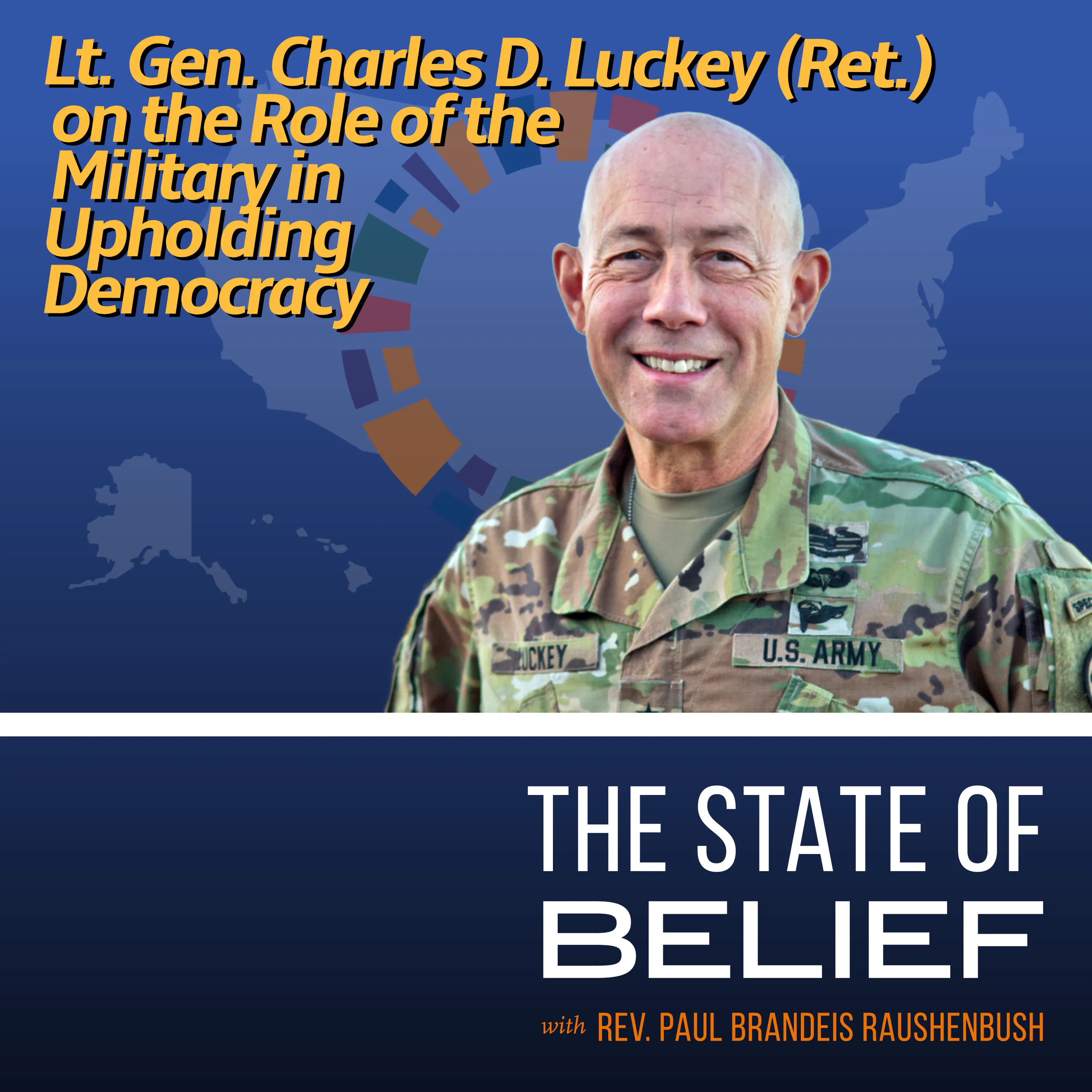
Lt. Gen. Charles D. Luckey (Ret.) on the Role of the Military in Upholding Democracy
This week on the show, we're honored to welcome Lt. Gen. Charles D. Luckey (Retired), former Chief of the United States Army Reserve, joining host Rev. Paul Brandeis Raushenbush. He’s a combat veteran, he’s an attorney, and he’s a pastor’s son – so he's able to cover a wide range of topics with depth and wisdom. Having sworn an oath to the Constitution, Lt. Gen. Luckey has some really great insights into the responsibilities of citizenship, the urgent need to preserve democracy, and the important role for religion in this moment of American – and human – history. With a career that’s equal parts military precision and legal acumen, Lt. Gen. Luckey provides an unparalleled perspective on the challenges confronting democratic institutions today. Raised by politically diverse parents, he sees this moment and this country in a resolutely nonpartisan way. And that also leads Lt. Gen. Luckey to be able to see profound opportunity for faith communities in this time of turmoil and division. Through the lens of a former judge advocate, the conversation expands to explore the core values underpinning lawful military orders and civil service oaths. These insights underscore the enduring necessity of character and integrity across both military and civilian spheres. Are we in a constitutional crisis? Not yet, he says. But we’re getting closer. Quoting a conservative circuit court judge, Lt. Gen. Luckey finds both inspiration and a warning that goes far beyond partisanship, right to the heart of both: the love of country, and the love of neighbor. Retired Lt. Gen. Charles Luckey is the former Chief of the United States Army Reserve. In that position, he was responsible for manning, training, and equipping a force of more than 200,000 Soldiers and civilians across 50 states, five territories, and more than 30 countries. Having completed three combat tours, Lt. Gen. Luckey is a practicing attorney and a leading voice for American values at home and around the world. He regularly shares his insights on his LinkedIn page. Please share this episode with one person who would enjoy hearing this conversation, subscribe, and thank you for listening! Learn more about your ad choices. Visit megaphone.fm/adchoices
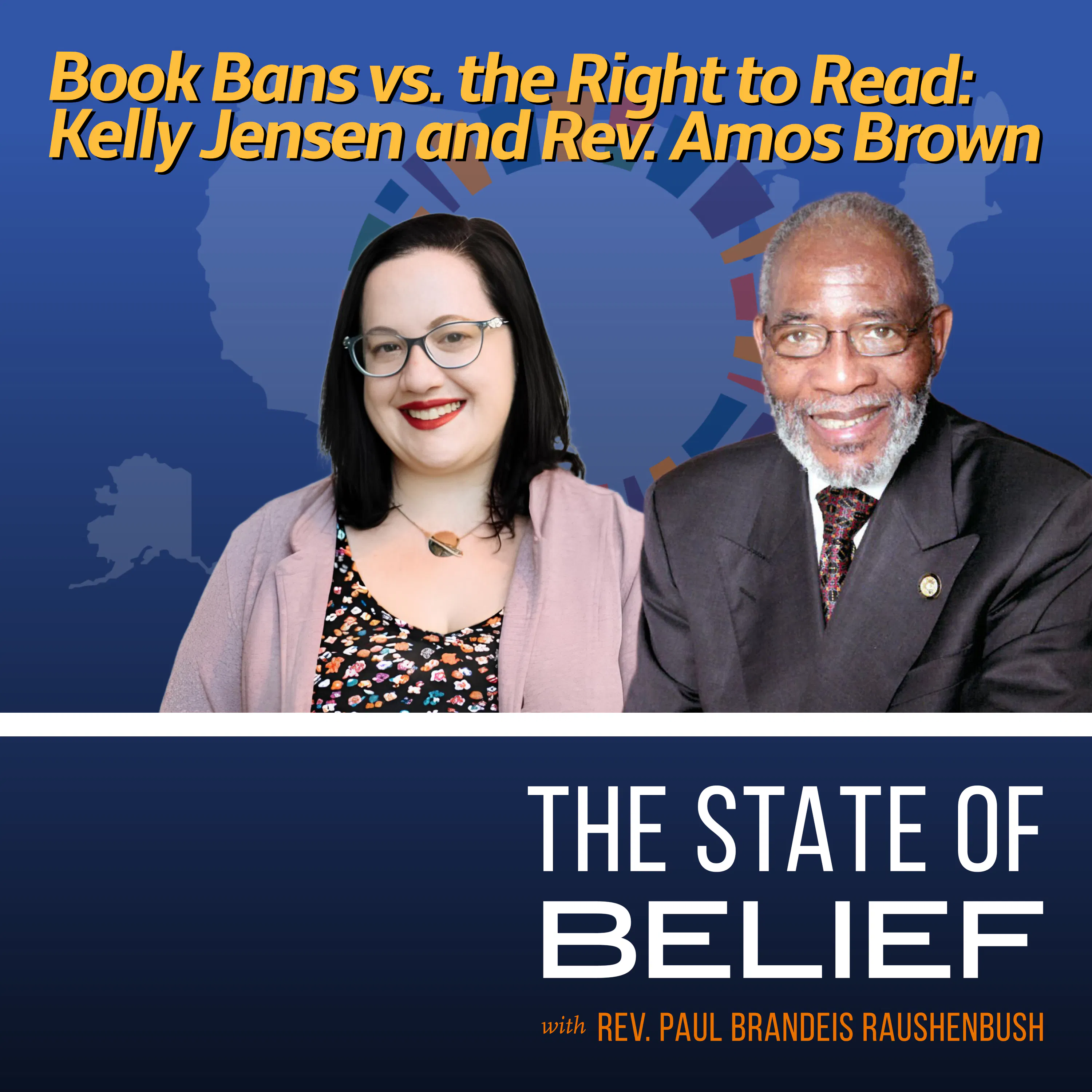
Book Bans vs. the Right to Read: Kelly Jensen and Rev. Amos Brown
This week on The State of Belief, host Rev. Paul Brandeis Raushenbush welcomes Kelly Jensen. She’s a passionate advocate for intellectual freedom, democracy, and the right to read. As an editor at Book Riot and a former librarian, Kelly has been at the forefront of the fight against book bans and censorship. The urgent conversation covers the growing wave of censorship, the role of religious extremism in book-banning efforts, and what we can do to safeguard free expression and democratic values. Kelly shares her personal experiences and insights on the emotional impact of censorship, the importance of diverse stories, and how communities can come together to support libraries and schools. The discussion includes practical steps each of us can take, such as attending library board meetings, writing letters of support, and engaging in local elections to protect the freedom to read. Later, Paul is joined by Rev. Amos Brown, the longtime president of the NAACP of San Francisco and a lifelong civil rights leader. He tells the story of loaning the Smithsonian Institution precious personal items – a historical Bible and the first book about Black American history – and how, seemingly in implementing an anti-diversity executive order, the Smithsonian attempted to return them. (He notes that most recently, there seems to be movement toward reversing this decision.) Kelly Jensen is editor at Book Riot, the largest independent editorial book site in North America. Her weekly newsletter tracking violations of the right to read and opportunities for advocacy is titled Literary Activism. Rev. Dr. Amos Brown is a longtime pastor of Third Baptist Church in San Francisco, a congregation attended by Vice President Kamala Harris. One of the very few students at Morehouse College who were taught by Rev. Martin Luther King, Jr., Amos serves as president of the NAACP San Francisco branch. Please share this episode with one person who would enjoy hearing this conversation, and thank you for listening! Learn more about your ad choices. Visit megaphone.fm/adchoices
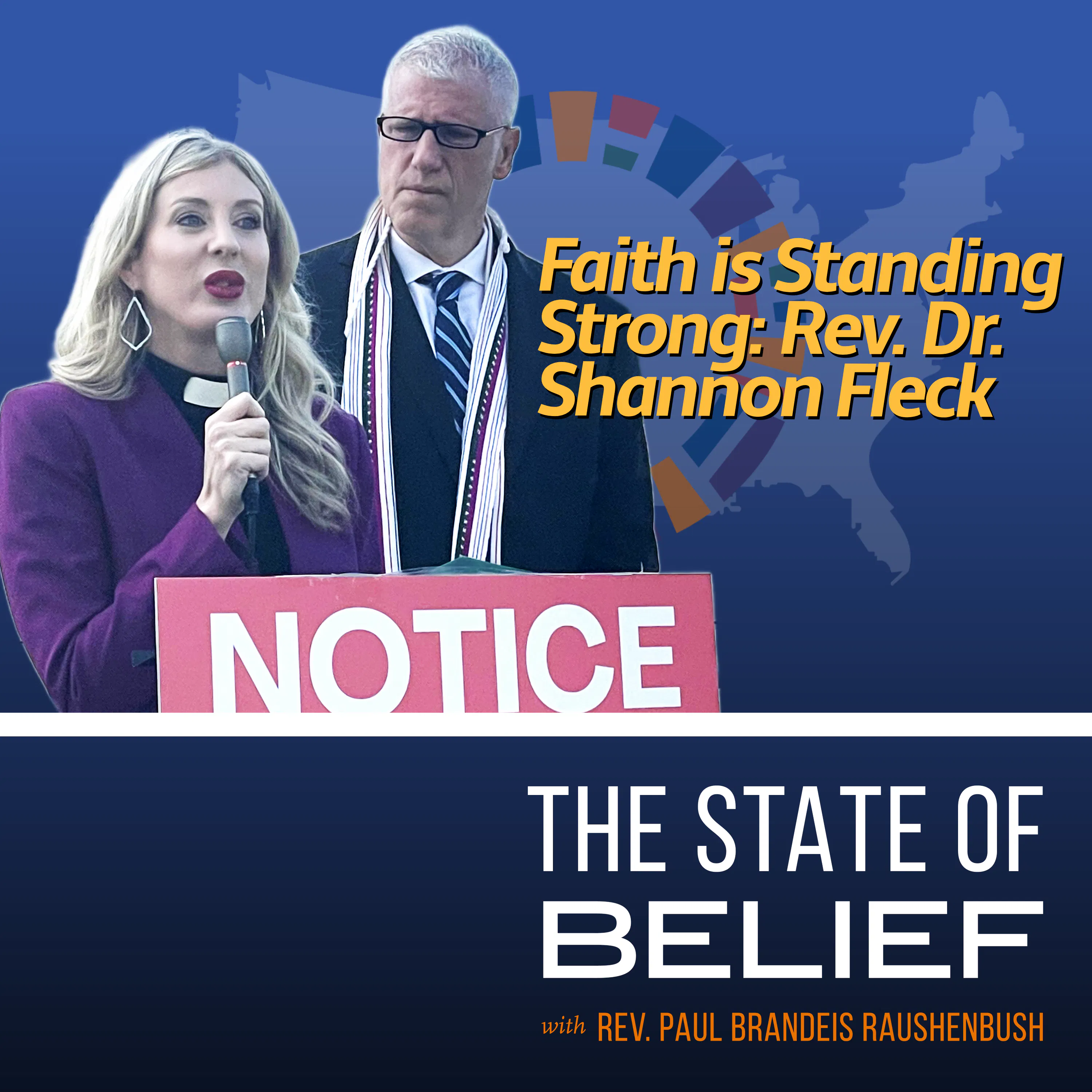
Faith is Standing Strong: Rev. Dr. Shannon Fleck
On Wednesday, April 30th, host Rev. Paul Brandeis Raushenbush was with Faithful America Executive Director Rev. Dr. Shannon Fleck in front of the Supreme Court building, saying “No!” to tax dollars being funneled to private religious schools. That’s the issue that was before the justices as they heard arguments in St. Isidore of Seville Catholic Virtual School v. Drummond. This week, The State of Belief starts with an urgent message Shannon and I recorded that morning at the Court. After that, you’ll hear an in-depth conversation they had a few weeks earlier, getting into her background as a probation officer and Oklahoma native called to ministry and faith-driven activism. Shannon’s passion for social justice and skill at organizing around shared religious values were evident in her time leading the Oklahoma Faith Network. During that time, the organization developed programs like “No Hate in the Heartland.” The St. Isidore case originated in Oklahoma, and Shannon is intimately familiar with its history and its significance for anyone concerned with the Establishment Clause of the US Constitution. The background she reveals makes clear exactly why this is such a big deal. Most recently, Rev. Fleck was chosen to serve as executive director of Faithful America, the largest online community of Christians advocating for social justice. It’s an incredibly difficult time to step into that kind of role, but our conversation shows why she was called to this role, and how prepared she is to take it on. Shannon openly discusses the difficulties caused by Christian Nationalism and unequal treatment of different belief traditions, emphasizing the vital role that faith-based alliances play in uplifting underrepresented voices and fending off political pressure. Shannon’s call to “know your neighbor” is an invaluable reminder that deep connections can still thrive even in a time of seemingly unbridgeable division. Please share this episode with one person who would enjoy hearing this conversation, and thank you for listening! Learn more about your ad choices. Visit megaphone.fm/adchoices

Amy Spitalnick on How Jewish Safety and Inclusive Democracy are Inextricably Linked
This week, Amy Spitalnick, CEO of the Jewish Council for Public Affairs (JCPA), is back on The State of Belief. In this episode, Amy and host Rev. Paul Brandeis Raushenbush dig into the immediacy of antisemitism, democracy, and how our communities are connected. Among the important topics they cover: Why Jewish safety and democracy are intertwined How genuine concerns about antisemitism are being hijacked to undermine civil liberties and democratic institutions How to respond during this critical moment Our voices are wonderful tools for change, and we must never stop using them to counteract hate and extremism in all its forms. Please listen to this episode and reflect on these essential themes. What Amy has to say is not just applicable to the Jewish community but to everyone interested in democracy, justice, and the welfare of humanity. Please share this episode with one person who would enjoy hearing this conversation, and thank you for listening! Learn more about your ad choices. Visit megaphone.fm/adchoices
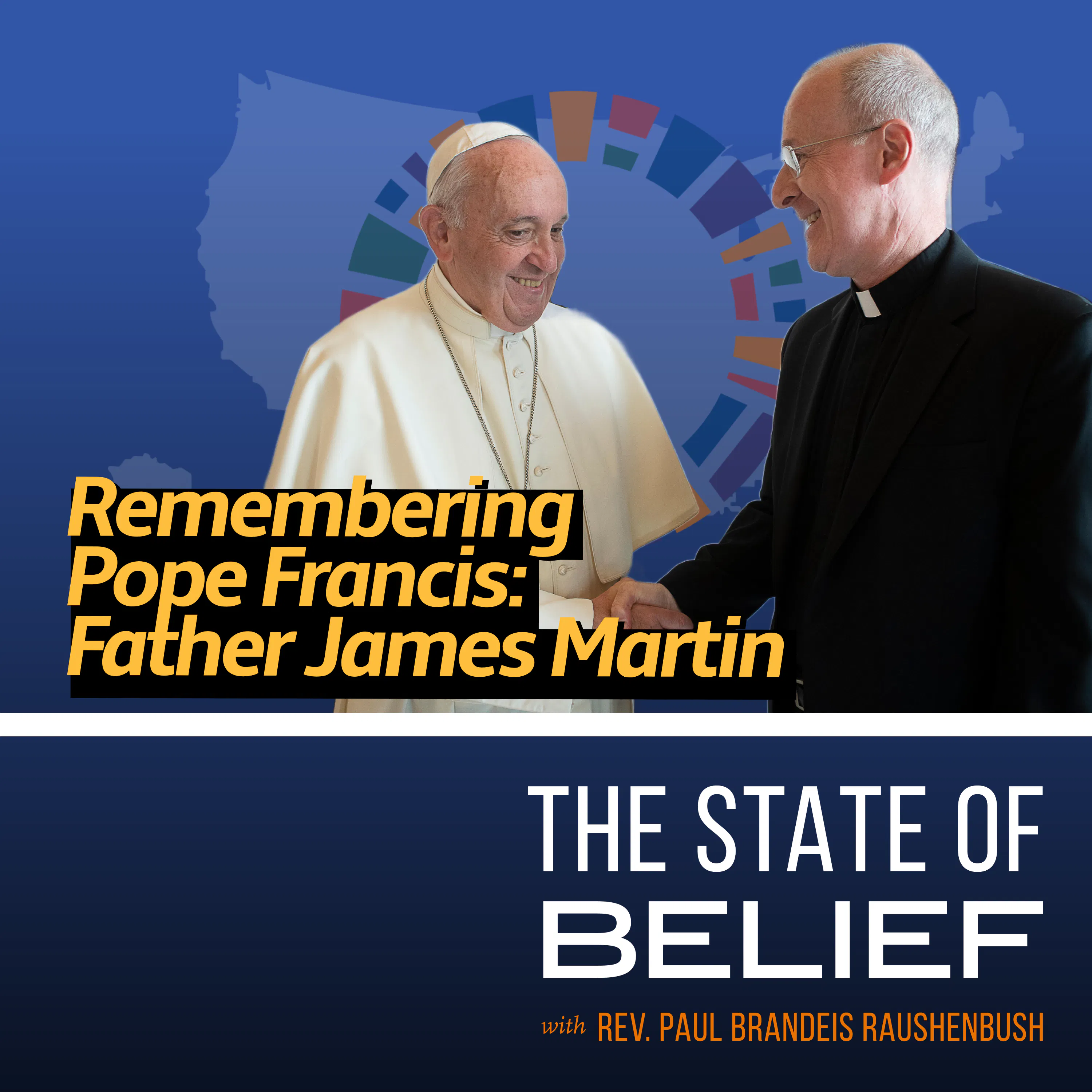
Remembering Pope Francis: Father James Martin Reflects on LGBTQ+ Inclusion, Environmentalism, and Compassionate Leadership
bonusPope Francis, who led the Roman Catholic Church worldwide since 2013, has passed away at the age of 88. A tireless champion of the central social justice teachings of Jesus, Pope Francis followed his personal mantra, “don’t forget the poor,” Pope Francis – previously Cardinal Jorge Mario Bergoglio, Archbishop of Buenos Aires, Argentina - brought profound change to the Church in tumultuous and challenging times. He was the first non-European pope since the 8th Century AD. On this special episode of The State of Belief, host Rev. Paul Brandeis Raushenbush welcomes Father James Martin, a Roman Catholic priest, author, and advocate for LGBTQ inclusion in the Church. Father Jim shares his experiences meeting Pope Francis, discussing LGBTQ issues and receiving the pope’s unwavering support for that ministry, and highlights the late Pope's commitment to the poor and marginalized. Reflecting on Pope Francis's legacy, Father Jim, a fellow Jesuit, emphasizes his empathetic leadership and pivotal encyclicals on the environment and brotherhood. The discussion also touches on current challenges facing the Church and hopes for its future direction. Father James Martin is editor-at-large of America Magazine, the Jesuit Review of Faith and Culture. He’s also an influential moral voice for the inclusion of LGBTQI+ Catholics in the full life of the Church, and a hero to many. A papally-appointed consultant to the Vatican, Father Martin is the author of numerous books, including Jesus: a Pilgrimage; Learning to Pray; and Building a Bridge: How the Catholic Church and the LGBT Community Can Enter into a Relationship of Respect, Compassion, and Sensitivity. Learn more about your ad choices. Visit megaphone.fm/adchoices

Easter and Passover Courage in the Fight for Democracy
This week on The State of Belief, host Rev. Paul Brandeis Raushenbush directly takes on the critical issues facing our democracy as we reach the end of the first 90 days of the Trump-Vance-Musk administration. With the backdrop of the sacred days in both the Christian and Jewish traditions, Paul enumerates some of the anti-democratic actions the administration has taken against individuals and communities. That includes urgent warning signs such as the deportation of Kilmar Abrego-Garcia, and the potential invocation of the Insurrection Act, and the dismantling of DEI initiatives while at the same time installing Orwellian anti-anti-Christian campaigns in government agencies. Paul’s call is for everyone to take action and stand up against authoritarianism while coming together to support one another and uphold the values of democracy and compassion. Now, in the State Department, basically, they're asking people to snitch on one another if they hear anything that is vaguely anti-Christian. And what do they mean by that? This is the most anti-Christian administration that we've ever seen. I mean, this is incredible. Attack the Bishop Budde, attack the Catholic bishops, attack the Lutherans, attack the Quakers, all of them. And including when they shut down DEI, they shut down a Christian affinity group in the State Department. But now the State Department is urging people to snitch on one another if they hear anything that's anti-Christian at all. And you know what that means. It just means anything that's pro-gay, whatever. You can make things up.Raising up voices of hope and courage, Paul shares excerpts from a past Easter program with Bishop Mariann Budde, who leads the Episcopal Diocese of Washington, DC. She reflects on the difficult lessons of the holiday in the context of modern-day America, and the courage exhibited by those being sacrificed then as well as now. We hear from Rabbi Jonah Pesner, director of the Religious Action Center of Reform Judaism, about the significance of Passover and the importance of interfaith collaboration in the fight for justice. And we celebrate with Rev. Dr. Jacqui Lewis, senior minister of Middle Collegiate Church, who offers a powerful reflection on Easter and the theme of rebirth as her congregation celebrates the reopening of their church after a devastating fire. Please share this episode with one person who would enjoy hearing this conversation, and thank you for listening! Learn more about your ad choices. Visit megaphone.fm/adchoices

Michael Eric Dyson: How We Love Is To Tell the Truth
This week on The State of Belief, host Rev. Paul Brandeis Raushenbush engages in a thought-provoking conversation with Dr. Michael Eric Dyson, a distinguished professor at Vanderbilt University and a passionate advocate for social justice. They dive into the current political climate in America, addressing the rising tide of anti-democratic movements and the resurgence of fascist ideologies. Dr. Dyson emphasizes that these challenges, though significant, are not new, especially for Black Americans who have historically fought for justice and equality. The episode examines the role of race in contemporary politics, highlighting how xenophobia and White Christian Nationalism intersect with the actions of the current administration. Dr. Dyson underscores the importance of faith communities rising up and embodying the principles of love and liberation, urging them to speak out against injustice and advocate for the vulnerable. Throughout the discussion, Dr. Dyson highlights the necessity of moral clarity and encourages listeners to actively participate in the democratic process through voting and local governance. He also delivers a powerful call to action, urging listeners to voice their opposition to evil (“VOTE”) and recognize the ongoing struggle for justice as a vital component of a functioning democracy. His words serve as a timely reminder of the collective responsibility to create a more equitable society. White Christian nationalism makes one thing clear that we should not be mistaken about. The real religion is whiteness, not Christianity. White Christian Nationalism should be WHITE Christian Nationalism, or WHITE Christian NATIONALISM, right? That's where the emphasis is. This is a nationalist project motivated by a xenophobic passion, a protectionist concept of America, and trying to have a society that fails to make a distinction between patriotism and nationalism. Rev. Dr. Michael Eric Dyson is a renowned scholar, author, and public intellectual whose work sits at the intersection of race, politics, and culture. A professor at prestigious institutions like Georgetown and Vanderbilt, he has spent decades examining the complexities of racial justice, the power of rhetoric, and the role of faith in social movements. As an ordained minister and cultural critic, he brings a unique perspective to discussions on spiritual resistance and activism. At Venderbilt, Dr. Dyson holds the Centennial Chair and serves as University Distinguished Professor of African American and Diaspora Studies in the College of Arts and Science, and University Distinguished Professor of Ethics and Society in the Divinity School. He's the author of many influential books like Tears We Cannot Stop: A Sermon to White America and Unequal: A Story of America. His most recent is Represent: The Unfinished Fight for the Vote. Please share this episode with one person who would enjoy hearing this conversation, and thank you for listening! Learn more about your ad choices. Visit megaphone.fm/adchoices

National Call to Action for Faith Communities
On this special early-release edition of The State of Belief, you’ll hear host Rev. Paul Brandeis Raushenbush moderate an incredible group of faith leaders, progressive organizers, and activists who came together for a National Call to Action for Faith Communities on April 2, 2025. This episode is a must-listen as we explore the urgent issues facing our democracy and the vital role that diverse faith communities can play in this moment of crisis. In this episode, we discuss the alarming state of our nation, where people are being marginalized, and our democratic values are under threat. We hear from thought leaders like Maria J. Stephan (Horizons Project), who emphasizes the historical significance of faith communities in pro-democracy movements worldwide, and the importance of coming together to resist authoritarianism. You will also hear the inspiring voices of Rahna Epting (MoveOn) and Leah Greenberg (Indivisible); Bishop Dwayne Royster (Faith In Action); Wa’el Alzayat (Engage); Jamie Bieran (Bend the Arc Jewish Action); and Rev. Dr. Liz Theoharis (Poor Peoples’ Campain, Kairos Center), who share their insights on the power of collective action and the need for solidarity across different faith traditions. They remind us that we are not alone in this fight and that together, we can make a difference. As we prepare for the upcoming Hands-Off Day of Action on April 5th, this episode serves as a rallying cry for all of us to stand up for our rights, our communities, and our democracy. With over 430,000 RSVPs already, this is shaping up to be the largest single day of protest since the inauguration. Join us as we reflect on the courage and resilience of faith communities throughout history and how we can channel that spirit into action today. Be inspired to take part in the movement for justice and democracy. Together, we can show that our voices matter and that we will not back down in the face of adversity. Video of this conversation is available on YouTube. Please share this episode with one person who would enjoy hearing this conversation, and thank you for listening! Learn more about your ad choices. Visit megaphone.fm/adchoices
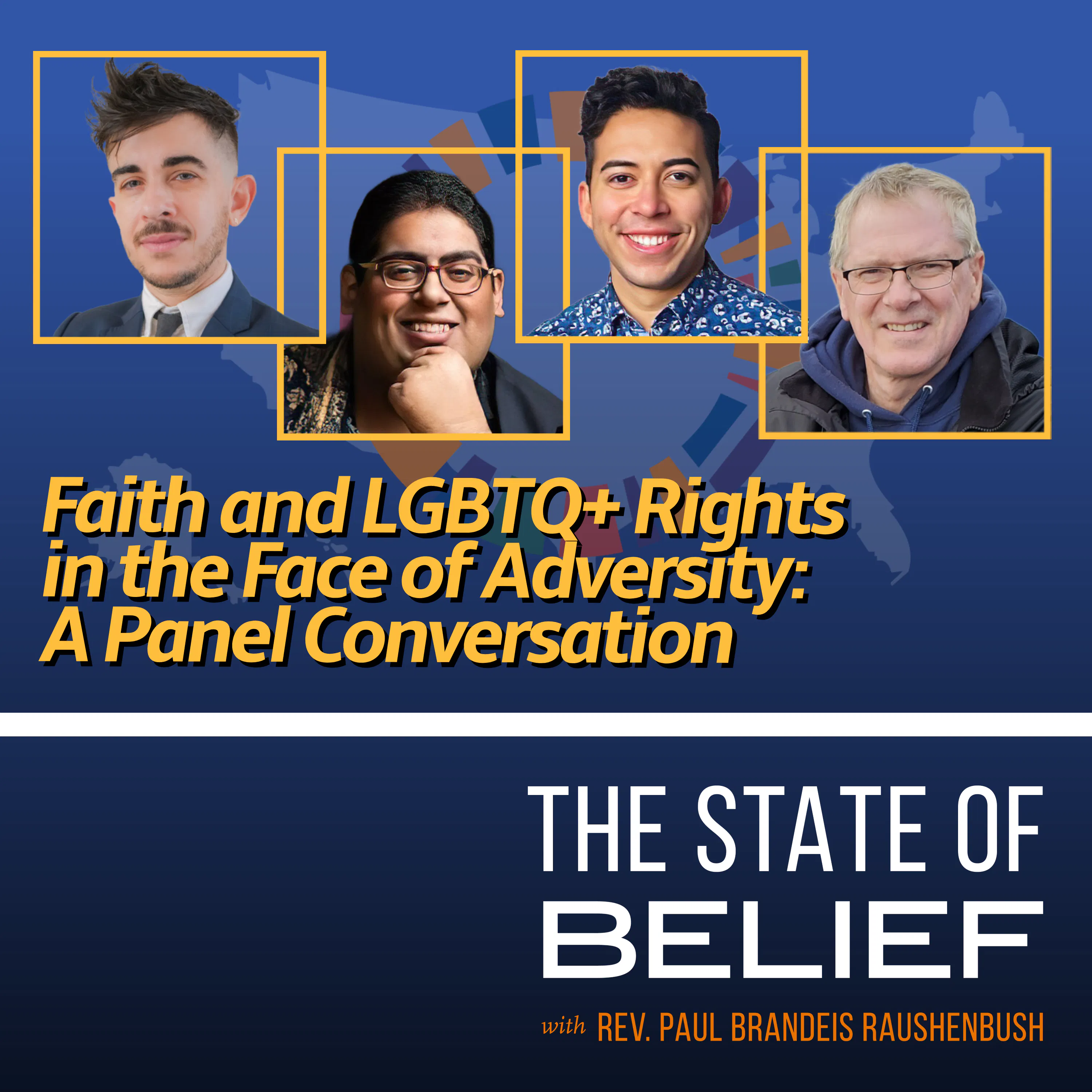
Faith and LGBTQ+ Rights in the Face of Adversity
This week, you'll hear a powerful panel discussion hosted by Rev. Paul Raushenbush and featuring four leading LGBTQ+ and faith activists: Chase Strangio (ACLU), Tahil Sharma (LGBTQ Task Force), Jon Cohen (Keshet), and Ross Keys (Interfaith Alliance of North Dakota). They discuss the intersection of faith and LGBTQ+ rights, the critical threats facing the trans community, and the importance of self-care in activism. Together, they advocate for collective action and highlight the role that faith communities can and must play in supporting LGBTQ+ rights, pushing back against harmful rhetoric, and ensuring a future of inclusion and protection for all. Chase Strangio discusses the broader societal implications of controlling people's bodies and families: “Control over the body and control over the family is a central tool of authoritarian regimes in order to control society at large. There is a need to control people's imagination, people's sense of what they can do with their bodies, what they can do with their desire, and what they can do with their families.” Tahil Sharma underscores the importance of clear communication and solidarity between different communities, stressing, “Religious folks, faith leaders, folks within faith institutions and communities need to do a better job at translating between communities so we can really understand how we can build solidarity…We need to be so clear that if we need to build solidarity, we need to make sure people understand that we're standing with them.” Jon Cohen, highlighting a simple fact that often goes overlooked, says, “A majority of people of faith support LGBTQ non-discrimination, and that's really showing up in the work... And it feels like a privilege to be able to do this work and to be able to channel our energy to do something about it, and to really put our resources to making things better for the LGBTQ community.” Ross Keys emphasizes the need to be carefully strategic and self-aware in activism, saying, "Understand your limits. Focus. If you think you can work on all the bills, you're going to watch them all pass by and not get a thing done – and you're probably going to get burned out at the same time." Chase Strangio is co-director of the ACLU’s LGBT & HIV Project and a nationally-recognized expert on transgender rights. Chase’s work includes impact litigation, as well as legislative and administrative advocacy, on behalf of LGBTQ people and people living with HIV across the United States. He's the first transgender attorney to argue a case in front of the US Supreme Court. Tahil Sharma is the faith director at the National LGBTQ Task Force and has been dedicated to the work of interfaith cooperation and social justice for over ten years. Born to a Sikh mother and a Hindu father, Tahil’s inter-religious upbringing in Los Angeles influenced his willingness to connect with people across differences and inspired him to engage in the work of storytelling and bridge-building. Jon Cohen is a national community builder with a commitment to LGBTQ+ rights. His work organizing diverse communities through an intersectional Jewish lens is inspired by the wisdom and experiences he has gained as a Gay Mexican Jew. As Keshet’s Director of Community Mobilization, Jon has led initiatives helping Jewish institutions in all 50 states to fight for LGBTQ+ rights. Ross Keys heads the Interfaith Alliance of North Dakota. He's also a longtime leader of the North Dakota Human Rights Council, and has worked in the federal government for nearly thirty years, holding a number of positions for Congressman Earl Pomeroy and Senators Heidi Heitkamp and Kent Conrad. Ross has crisscrossed the state with each of these elected officials and had the opportunity to help North Dakotans on a number of issues. Please share this episode with one person who would enjoy hearing this conversation, and thank you for listening! Learn more about your ad choices. Visit megaphone.fm/adchoices

The Rule of Law and the Chaos of MAGA: Jay Michaelson
This week, Rabbi Dr. Jay Michaelson joins Rev. Paul Brandeis Raushenbush for a deep dive into the state of U.S. politics, the role of the rule of law in preserving democracy, and political attacks against institutions of higher education. Together, they explore how faith can play a role in resistance and activism, reflecting on the deep divisions within American society and the responsibility of institutions to defend core values in times of crisis. Jay speaks about the weaponization of accusations of antisemitism – and how these tactics are being used to attack higher education, ultimately harming the interests of American Jews. He also critiques the rise of the "woke right," arguing that anti-woke rhetoric has evolved into a new form of censorship, and expresses concerns about the future of LGBTQ+ rights. Above all, he emphasizes the importance of standing in solidarity across lines of difference to protect civil rights in these challenging times. “[The right isn’t] against censorship. They just wanted to do the censoring. And the same things that people complained about, rightly or wrongly, in the last few years: Oh, you can't say anything about gender, or you can't say anything about race, or you have to be careful what you say about this and that, and you have to always be careful because somebody's going to be offended. That's exactly the world we're living in now. It's just the other side. You can't say anything that's too critical of anything that's on the right…The people who are complaining are now doing the exact same thing that the people who they were complaining about were doing.” - Rabbi Dr. Jay Michaelson, visiting professor at Harvard Law School and a field scholar at the Emory Center for Psychedelics and Spirituality. He is the author of ten books, and a journalist whose work appears on CNN, in Rolling Stone, and in his weekly substack newsletter, Both/And with Jay Michaelson. For twenty years, Jay's work has focused on the intersections of politics and religion; he worked as a religious LGBTQ activist for ten years, and earlier this month he convened the first-ever conference on the legal recognition of religious psychedelic use by Jews, Christians, and Muslims. He holds a PhD from Hebrew University, a JD from Yale Law School, and nondenominational rabbinic ordination. Jay's latest book is The Secret That Is Not a Secret: Ten Heretical Tales. Please share this episode with one person who would enjoy hearing this conversation, and thank you for listening! Learn more about your ad choices. Visit megaphone.fm/adchoices

Navigating the Narrow Bridge: Congressman Eric Swalwell and the Fight for Democracy
This week, Representative Eric Swalwell joins host Rev. Paul Brandeis Raushenbush to discuss the ongoing challenges facing American democracy, lessons not learned in the January 6th Capitol riot, and the critical role of faith communities in this time of division. Together, they explore the importance of political engagement, especially in the face of significant threats to fundamental democratic norms and vital public services. Reflecting on his experience during the January 6th attack, Congressman Swalwell shares his outrage that heroic law enforcement officers who saved lives that day are now being vilified while the perpetrators are pardoned and exalted. He emphasizes the need for Congress to protect essential services like healthcare and education – and to remain committed to fighting for justice, fairness, and security for all Americans. “Go one more rung up the ladder of where you are right now. Go one more rung up the ladder to give yourself more agency and put yourself higher and closer to where decisions are being made. And if you've never gone to a local city council meeting before and you care deeply about what's happening in your community, go to a city council meeting. And then the next time you go, speak at the city council meeting, and then find out when those council members are up for election and find one that you can get involved with.” Congressman Eric Swalwell is a seven-term member of Congress, representing California’s 14th District. A former prosecutor who led the Hate Crimes Unit in Alameda County, his experience in local government prepared him for his Congressional role, where he served on the House Intelligence Committee and played a key role in the investigations into Russian interference and President Trump's impeachments. Known for his bold voice, both on the House Floor and across his social media platforms, Rep. Swalwell consistently speaks out on issues that matter to everyday Americans, never shying away from standing up for what he believes in. Please share this episode with one person who would enjoy hearing this conversation, and thank you for listening! Learn more about your ad choices. Visit megaphone.fm/adchoices

Jeff Sharlet: The Slow Civil War Is Speeding Up
In difficult times, the work of truth-telling can seem like obsessing on the negative. But the most important truths are very often uncomfortable and even frightening. This week, host Rev. Paul Brandeis Raushenbush welcomes writer Jeff Sharlet, author of The Undertow: Scenes From A Slow Civil War, back to The State of Belief. As Jeff sees America’s slow civil war speeding up, he and Paul revisit his reluctance to initially use the term 'fascism' and now emphasizes the growing movement's influence, without yet consolidating into a regime. They explore the implications of such movements on journalism, rule of law, and personal freedoms, highlighting examples like Trump's cult of personality and Musk's hyper-capitalist influence. The conversation also examines the role of Christian Nationalism and its influence on politics, with a particular focus on the intersection of religion and governance. Jeff underscores the importance of solidarity, complex storytelling, and the fight against inevitability in combating these trends, even though the future remains uncertain. The dialogue between Paul and Jeff serves as both a cautionary tale and a call to arms. We need listeners and readers alike to stay alert, engage actively, and never lose sight of the human element amidst the grand political machinations. As we confront these challenging times, this conversation stands as a reminder that solidarity and storytelling are powerful tools in shaping a future where democracy and humanity prevail. I remember at one point a Trump supporter showing me, sharing with me, some crazy conspiracy theories. And at the time I was out there, when I met her, I was reporting for Vanity Fair Magazine, and it was just a pivot. I remember I was sitting in her Cadillac outside a Trump rally. She was showing me this crazy stuff, and then I look up and it was actually a congressman talking on Tucker Carlson sharing this conspiracy theory. And I realized she's not the fringe - I am. - Jeff Sharlet, the best-selling author of books like The Undertow: Scenes From A Slow Civil War. His book The Family was turned into a powerful Netflix series, and his Substack is a must-read @Slow Civil War. Jeff is Frederick Sessions Beebe '35 Professor in the Art of Writing at Dartmouth College. Please share this episode with one person who would enjoy hearing this conversation, and thank you for listening! Learn more about your ad choices. Visit megaphone.fm/adchoices
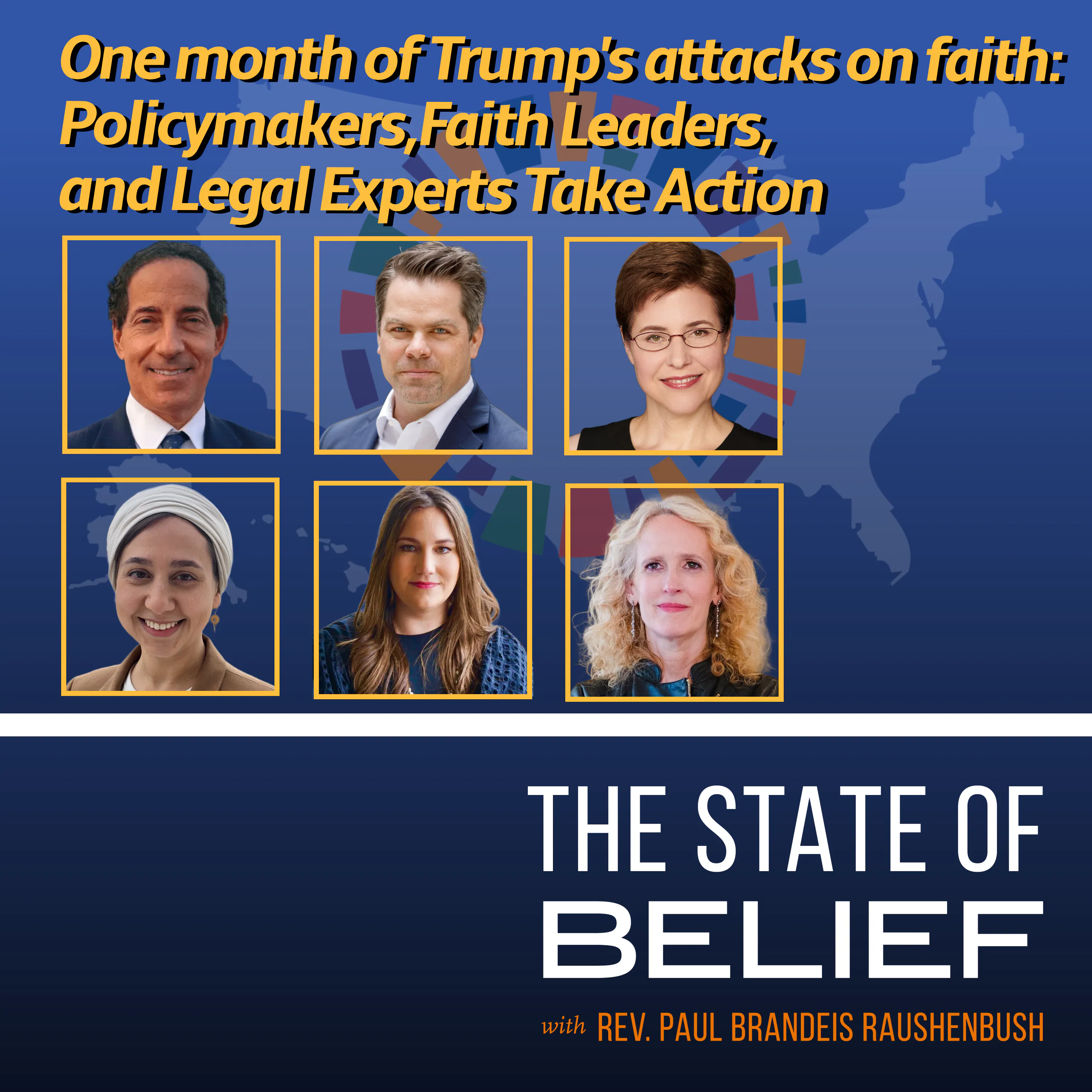
One Month of Trump's Attacks on Faith: Policymakers, Faith Leaders, and Legal Experts Take Action
This week, Rev. Paul Brandeis Raushenbush is joined by a panel of faith leaders, legal experts, and policymakers to discuss the urgent threats facing democracy and religious freedom under the Trump administration. Together, they explore how faith communities can take action against executive overreach, attacks on religious institutions, and efforts to dismantle critical government programs. Here's the complete list of speakers: Jamie Raskin – United States Congressman, MD-08 Skye Perryman – President and CEO, Democracy Forward Adam Nicholas Phillips – Chief Strategy Officer & Chief of Staff, Interfaith America; former head of localization and faith-based efforts at USAID Melissa Rogers – Former Special Assistant to the President and Executive Director of the White House Office of Faith-Based and Neighborhood Partnerships in the Biden and Obama administrations Jennifer Butler – Founder, Faith in Democracy; former founder and executive director, Faith in Public Life Maggie Siddiqi – Senior Fellow, Interfaith Alliance, former Director of the Center for Faith-based and Neighborhood Partnerships at U.S. Department of Education At a time when religious communities are being targeted, and democratic institutions are under attack, this discussion serves as a powerful call to action, emphasizing that courage, community, and persistence are essential in this moment. Rep. Jamie Raskin warns, "It is the religious, the real religious community, that is under attack by these people, and we've got to stand up and defend all of these positive projects that religious organizations have been engaged in." Rev. Jennifer Butler underscores the need for resistance, stating, "The first rule for resisting autocracy? Do not obey in advance." Maggie Siddiqi highlights the misuse of government power, reminding us, "Formal investigations are the role of government whenever that's warranted. Unsubstantiated slander is not." Skye Perryman reinforces the legal limits of executive authority, asserting, "In this country, the president doesn’t get to denounce the Constitution or take away constitutional rights with the stroke of a pen or with the signing of an executive order." Rev. Adam Nicholas Phillips paints a dire picture of the consequences of policy decisions, warning, "Stories are unfolding every day, every hour, around the world because of the pause in funding, and because of the systematic dismantling of USAID in a matter of days." Melissa Rogers reinforces the fundamental principles of democracy, stating, "Presidents are not kings, and thus the federal executive branch must have legal authority for its actions." Video of this panel discussion is available online at https://youtu.be/dXw0VjJOmJ8?si=huGDOgoJ-vDdY2bj Please share this episode with one person who would enjoy hearing this conversation, and thank you for listening! Learn more about your ad choices. Visit megaphone.fm/adchoices

Unfiltered: The Gen Z Revolution with Olivia Julianna
This week, Gen Z activist Olivia Julianna joins Rev. Paul Brandeis Raushenbush to discuss the importance of political engagement and the pursuit of social justice at an incredibly difficult moment in our history. Together, they explore how a rising generation of young leaders is doing critical work to address systemic injustice and inequality – and the influential role that faith and faith communities can play in fueling that activism and change. Olivia, known for her work in reproductive rights and advocacy, discusses her journey as a young activist and the challenges and triumphs she has already experienced. She emphasizes the importance of using one's voice and platform to create meaningful impact, and the necessity of working together to build a more just and compassionate society. Olivia discusses how her faith informs her activism – and helps give her the strength and energy to persist in her work no matter what obstacles are thrown her way. I posted a video where I said if Jesus, Mary, and Joseph showed up at your door and asked for a place in the inn, would you welcome them into your home? Or would you say, “Show me your papers”? And this woman, she's a conservative, she responded to me. She said, “If three strangers showed up at my home in the middle of the night, I would answer the door with a gun.”Do you not understand how insane you sound? Do you not understand how warped your view of religion has become? ... I'm like, do you not realize that you are the false prophets that we are warned about in the Bible, do you understand that? - Olivia Julianna, abortion rights activist, democracy organizer, and political influencer from Houston, Texas. With over 1 million followers across TikTok, Twitter, and Instagram, her content has accumulated over 1 billion views, putting youth voices front and center in the fight for our future. She rose to national prominence for initiating the takedown of a whistleblower website that targeted those in the state of Texas who aided in abortion access, and raised $2.2 million for abortion funds after she was publicly attacked by Republican Congressman Matt Gaetz. Olivia spoke at the 2024 Democratic National Convention about the complexities of her religious upbringing while championing progressive causes. An influential force on social media, more of Olivia’s work can be found on her Substack. Please share this episode with one person who would enjoy hearing this conversation, and thank you for listening! Learn more about your ad choices. Visit megaphone.fm/adchoices

Black History Month In the Time of Trump: Rev. Jacqui Lewis
This week, activist and theologian Rev. Dr. Jacqui Lewis joins host Rev. Paul Brandeis Raushenbush to discuss the celebration and reflection of Black history, and the intersection of faith and activism. Together, they explore the ongoing fight for racial equality, the powerful influence of Black history on contemporary social justice movements, and the role of spiritual and community leaders in challenging systemic injustice. Rev. Jacqui, renowned for her deep faith-based commitment to social justice, shares her personal history of activism, rooted in her family's involvement in the Civil Rights Movement. She highlights the lessons we can draw from Black history and the Black Church to help foster unity, equity, and love, emphasizing the power of faith to overcome the forces of division and oppression. "When asked about what you're doing about immigrants, lean on your faith: that our faith compels us to care for the stranger, because we were once strangers in a strange land. In fact, the Hebrew scriptures say thirty-some odd times you should love the stranger, and one time love your neighbor. The whole idea of loving your neighbor as yourself means loving the alien, loving the stranger, loving the immigrant, loving the widow, loving the child. And I think, for as long as we can say those things as part of our creed, as part of our call to ministry, if you will, that stands well for us.” - Rev. Dr Jacqui Lewis is the senior minister at Middle Collegiate Church in New York City, a diverse and inclusive congregation. Believing faith communities can lead the way to racial reconciliation, Rev. Jacqui co-founded The Middle Project and The Revolutionary Love Conference with her spouse, The Rev. John Janka, which train leaders to create a more just society. She holds an MDiv from Princeton Theological Seminary and a PhD in psychology and religion from Drew University. Her next book, The Just Love Story Bible for children and families is due out in September. Learn more about your ad choices. Visit megaphone.fm/adchoices
Money, Lies, and God: Katherine Stewart Inside the Movement to Destroy American Democracy
This week, author and journalist Katherine Stewart joins host Rev. Paul Brandeis Raushenbush to discuss the rise of Christian Nationalism, Trump’s authoritarian tendencies, and the weaponization of faith for political gain. Together, they dive into the current political climate, the deep divisions within American society, and how knowledge and organizing are key to defending democracy. Katherine’s latest book, out on February 18th, Money, Lies, and God: Inside the Movement to Destroy American Democracy, explores the Christian Nationalist movement, which is fueled by the ultra-wealthy to protect their fortunes at the expense of democracy. Building on the foundation of her previous work, The Power Worshippers, Katherine’s new book reveals how these powerful forces exploit religious narratives to erode democratic institutions. “Extreme levels of inequality are eroding our democracy. This is something that we need to understand. I think there was nothing more stark than to see perhaps the group of the richest men in the world attending Trump's inauguration. You had Bezos there, you had Musk there with his salute, whatever. I mean, you have these tech billionaires there. And here's Trump promising to work for you when he's speaking to the right: 'When they come for you they're coming through me!' And you really think that he's going to serve you, when he's got these billionaires that he's really serving and who are basically paying him bribes by any other name to get policies that they want.” - Katherine Stewart, an author and journalist who has been covering religious nationalism and the assault on American democracy for over 15 years. Her book, The Power Worshippers: Inside the Dangerous Rise of Religious Nationalism, was awarded first place for Excellence in Nonfiction Books by the Religion News Association, and a Morris D. Forkosch award. Katherine writes for The New York Times Opinion, New Republic, and many others, and has appeared on CNN, MSNBC, and NPR. Please share this episode with one person who would enjoy hearing this conversation, and thank you for listening! Learn more about your ad choices. Visit megaphone.fm/adchoices

Can Religion Save Democracy? Maggie Siddiqi on Pluralism, Policy, and Resistance
This week, Maggie Siddiqi, new senior fellow at Interfaith Alliance, is with host Rev. Paul Brandeis Raushenbush discussing Donald Trump’s efforts to dismantle the Department of Education, Bishop Budde’s model of faithful resistance, and the importance of coalition-building to stand up for democracy and religious freedom. Maggie joins Interfaith Alliance following a distinguished tenure with the Biden administration at the Department of Education, directing the Center for Faith-based and Neighborhood Partnerships. Prior to that, she served as senior director of the Religion and Faith team at the Center for American Progress, where she led the organization’s work on religious liberty. Maggie also spent nearly a decade in national organizations serving American Muslim communities, focusing on interfaith relations and faith-based advocacy. "Religious freedom is a matter of equity. I'm not sure how the Trump administration thinks they can tout efforts to address religious freedom and antisemitism while undermining the very means through which those efforts happen. They cannot have it both ways. Equity is about fairness, right. That is what equity means, and we want students of all religious and non-religious backgrounds to be treated fairly and welcomed into class without having to hide a critical part of who they are and what they believe. That's a matter of equity and inclusion." - Maggie Siddiqi, senior fellow at Interfaith Alliance, where she focuses on building partnerships across the religious landscape. Maggie has a master’s degree in Islam and Christian-Muslim Relations from Hartford Seminary and a bachelor’s degree in religion from Wesleyan University. She also earned graduate certificates in Islamic chaplaincy from Hartford Seminary and in nonprofit management from Georgetown University’s McCourt School of Public Policy. Please forward this episode of The State of Belief to one person who would enjoy hearing this conversation and thank you for listening! Learn more about your ad choices. Visit megaphone.fm/adchoices

Skye Perryman: There's No Way Out of This But Through
This week, host Rev. Paul Brandeis Raushenbush reflects on the courage of Episcopal Bishop Rt. Rev. Mariann Budde, who spoke faithfully on behalf of the victims of the incoming administration’s policies at the inagural prayer service, attended by the president and vice president. Then Paul is joined by Skye Perryman, President and CEO of Democracy Forward, to discuss the ongoing challenges to American democracy, particularly the weaponization of government, the politicization of civil servants, and the important intersection of faith and politics. Together, they examine how Trump’s executive actions, which often seem performative, are part of a broader strategy to reshape government and remove protections for vulnerable communities. As the CEO of Democracy Forward, Skye discusses her organization's legal and advocacy work and mission to hold powerful entities accountable, protect democracy, and serve the public good. Together, Interfaith Alliance and Democracy Forward are on the frontlines, combatting extremism and Christian nationalism. "I do think there's no way out of this but through it. And so my advice is the community and connection. We're going to get through it together. When you see someone seeking to tear you apart, to try to sow division, to try to make you feel like you're the only one or that your belief in justice and your belief in a better tomorrow is somehow naive or somehow radical or somehow audacious, you can ignore that. And I think that we can get through it together and to remember our history and how many people have done hard work against great odds at great risks to themselves in order to create a future that we have inherited, and that it's really our job, now, to be good stewards of that." Skye L. Perryman is a board member of Interfaith Alliance and the President and CEO of Democracy Forward, a nonpartisan, national legal organization that promotes democracy and progress through litigation, regulatory engagement, policy education, and research. She has built a visionary team of legal, policy, and communications experts to confront anti-democratic extremism head-on while also using the law to advance progress and a bold vision for the future. Known for her strategic insight and impact-oriented leadership, Skye has a track record of winning tough legal and policy battles, uniting diverse coalitions, and elevating voices that represent the fabric of our country to deliver results that improve the lives of millions. Please forward this episode of The State of Belief to one person who would enjoy hearing this conversation and thank you for listening! Learn more about your ad choices. Visit megaphone.fm/adchoices
King's Non-Violence Trumps Christian Nationalism
This week, we focus on the confluence of the inauguration of Donald Trump on the day we observe Martin Luther King Day, January 20th. Host Rev. Paul Brandeis Raushenbush brings attention to the dichotomy of these two pivotal events, reflecting on the contrasting paths that America finds itself on—one leading towards justice, equality, and liberation, as exemplified by Dr. King, and the other toward Christian Nationalism, which advocates for privilege, power, and exclusion. He also offers some suggestions for how we can all respond to this moment by taking action in our local communities.Paul is then joined by Jeanné Lewis, CEO of Faith in Public Life, to discuss the need for moral clarity and compassion in the face of division, particularly in the context of Dr. Martin Luther King Jr.'s legacy. In this deeply reflective and insightful conversation, Paul and Jeanné touch on themes of faith, social justice, interfaith collaboration, self-care, and the ongoing struggle for racial and economic equality. "I think a big part of what we're facing right now as a nation is that question, why should I still love my neighbor as I'm called to do? And for folks who are listening, I think the answer is we must do that because that is who we are. And we have to listen and understand as much as we can where people are coming from, why they hold the beliefs they do, and why they're making the choices they do… When we listen, we hear that a lot of people are voting for nationalist ideals or authoritarian ideals because they feel unheard, because they feel unseen, and because they are afraid. And that fear is very, very powerful. And when we listen to leaders like Dr. King and John Lewis and other folks who came before us, we see very much that engaging people's fear with compassion while still speaking the truth about another vision and what needs to happen can be very transformative." - Jeanné Lewis, CEO at Faith in Public Life. She is a nonprofit executive, faith-based organizer, and authority on creating empowered communities. Jeanné has dedicated her career to building bridges, closing equity gaps and creating policies that lead to strong, thriving and self-determined cities. Please share this episode with one person who would enjoy hearing this conversation, and thank you for listening! Learn more about your ad choices. Visit megaphone.fm/adchoices

Christian Nationalism and Hate Violence: What Can We Do?
This week, Zev Mishell, National Programs Associate at Interfaith Alliance, joins host Rev. Paul Brandeis Raushenbush to discuss the intersection of systemic violence, hate crimes, and religious and political ideologies in America. Zev is the author of Interfaith Alliance’s new report, Together Against Hate, which closely analyzes how interfaith movements can address hate-based violence by uniting across differences while also examining how White Christian Nationalism is driving the alarming rise of hate in America. The report comprises case studies of successful strategies, practical recommendations, and a guide to organizations working to combat hate and extremism in the U.S. It is based on extensive research and interviews with nearly two dozen advocacy organizations dedicated to faith-based organizing, upholding civil rights and confronting hate. The full report will be released on Monday, January 13th, on the Interfaith Alliance website. "Religion is contextual, and it can manifest itself in extremely damaging and violent ways. It can divide us from one another. It can create supremacist outlooks. It can create and be influenced by ethno-nationalist outlooks. And maybe it'd be better if we could just say, religion is terrible. We can get rid of it. Fine. But we can't. Because ultimately, so many people find spiritual and political inspiration from their religions." - Zev Mishell, National Programs Associate at Interfaith Alliance and a graduate student at Harvard Divinity School. He graduated with honors from Princeton University with a degree in Near Eastern Studies, specializing in Israel/Palestine and the history of the Israeli Far Right. Mishell has published in numerous media outlets, including The Forward, Religion News Service, and the Tel Aviv Review of Books. Learn more about your ad choices. Visit megaphone.fm/adchoices

Special Episode - Remembering Jimmy Carter
Perhaps more than any other modern president, Jimmy Carter identified himself very publicly and explicitly as a person guided by faith. At the same time, he was also a consistent defender of healthy boundaries between government and religion, who made clear that he would never allow his personal faith to dictate or interfere with the public interest. President Carter lived out the values he espoused, both in office and for decades afterwards. He was clear in his belief that respecting differences - including religious differences - was the way to live into his values, and these interview excerpts make that abundantly clear. In conversations with Rev. Paul Brandeis Raushenbush, who was editor of the Huffington Post Religion section, the former president addressed challenging issues, including homosexuality. Jimmy Carter also welcomed the late Rev. Welton Gaddy to his presidential library in Atlanta in 2018, for an in-depth interview in connection with his then-new book, Faith: A Journey for All. He shared the role of prayer in his time in the White House, and his deep optimism about the resilience of America and our ability to overcome challenges. Learn more about your ad choices. Visit megaphone.fm/adchoices
January 6th: Bad Theology, Bad for Democracy
This week, Dr. Robert P. Jones, president and founder of the Public Religion Research Institute, joins host Rev. Paul Brandeis Raushenbush to discuss the intersection of race, religion, and politics in America, focusing on the rewriting of history regarding the January 6, 2021 attacks, and the impact of shifting demographics and the influence of polarizing figures like Donald Trump and Elon Musk. We also pay tribute to the late Jimmy Carter. Paul shares excerpts from powerful interviews he conducted with the 39th president of the United States. Robby is the author of several influential books that explore democracy, religion, and race in America. Bringing together rigorous scholarship with in-depth research, he is one of the few experts capable of helping us understand the forces shaping our democracy, and the major political and religious movements that seek to shape it in the future. "For most of our country's history, we have been on the wrong side of civil rights, the wrong side of slavery, the wrong side of Jim Crow. If we are this far from our Black brothers and sisters in politics today, maybe that ought to give us a little bit of pause… And I also want to say this: that often, I think way too often, even in progressive circles, we try to talk about the problem that we're having as polarization as if the division itself is the problem. But I think that's a wholly wrong way of looking at what's happening. It's sort of like, was polarization the problem during the Civil Rights Movement? Well, yeah, we were divided, and we were polarized over White supremacy and injustice. And if you believe in equality, if you believe in democracy, we ought to be polarized over White supremacy!" - Robert P. Jones, PhD, president and founder of the Public Religion Research Institute and a prominent author whose recent book, The Hidden Roots of White Supremacy, is a New York Times bestseller. His previous works include White Too Long: The Legacy of White Supremacy in American Christianity, which won a 2021 American Book Award, and The End of White Christian America, which was honored with the 2019 Grawemeyer Award in Religion. Robby’s writing is regularly found in The Atlantic, TIME, and Religion News Service and is frequently featured in major media outlets, including CNN, MSNBC, NPR, and The New York Times. He also writes a weekly newsletter focused on confronting and healing from the legacy of white supremacy in American Christianity, found on www.whitetoolong.net. Learn more about your ad choices. Visit megaphone.fm/adchoices

Democracy Defying Gravity: WICKED as Movie and Metaphor
Resisting authoritariansim. Not succumbing to the mass reverence for “the man behind the curtain.” Recognizing the value of those who are different, even if shunned by the majority. Staying true to one’s beliefs no matter what. These themes could just as easily reference American politics and culture on the cusp of 2025 as they do the hit movie musical Wicked. That’s what we explore on the final episode of The State of Belief for 2024, as host Rev. Paul Brandeis Raushenbush welcomes colleague Guthrie Graves-Fitzsimmons, an ardent fan of the Gregory Maguire book and subsequent productions of the Wizard of Oz prequel Wicked. Defying conventional wisdom and expectations, Elpheba flies above the crowd, both figuratively and literally. Starting with the personal impact of the story during their formative years, Paul and Guthrie discuss its contribution to their passion for social justice and equality. Guthrie’s even written an Advent devotional that weaves in themes from Wicked, and wraps up the conversation with five important lessons for the challenging year ahead from this surprisingly relevant story. “It opens our thinking to why do people believe differently than us, why do people come to different conclusions about policy and politics than us? And can we have cognitive empathy…not to justify the actions of others, but to have empathy for why they come to those decisions and try to think through it.” - Guthrie Graves-Fitzsimmons, Wicked superfan as well as Senior Director of Policy and Advocacy at Interfaith Alliance. He’s held cornerstone roles at the BJC, the Center for American Progress, and the National Immigration Forum. Holding an MDiv, Guthrie is the author of the book Just Faith: Reclaiming Progressive Christianity, and his Advent devotional appears in Word & Way. Learn more about your ad choices. Visit megaphone.fm/adchoices

Top Religion News 2024: NYT Reporter Ruth Graham
In 2024 America, almost every major news story was a religion story in some way. Important stories call for compelling storytelling, and we take a look back at 2024 in the company of a leading religion journalist who’s expert at telling those stories. Host Rev. Paul Brandeis Raushenbush is joined by Ruth Graham, New York Times National Reporter covering religion, faith, and values. Together they review some of Ruth’s favorite stories of the past year, and highlight important work by other journalists. From surprising gender shifts among church-going young Americans to the support of many religious immigrants for anti-immigrant policies and challenges of increasingly diverse religious diaspora; from the ongoing spread of Christian Nationalism as a force in American politics to the evolution of evangelical Christianity toward core MAGA values, they mark the highlights of 2024 – and what themes are likely to emerge in 2025. Ruth's recent work for the New York Times includes Pete Hegseth and His ‘Battle Cry’ for a New Christian Crusade; In a First Among Christians, Young Men Are More Religious Than Young Women; and America’s New Catholic Priests: Young, Confident and Conservative. She expands on the complexities of religious reporting, the challenges of capturing the diverse and evolving nature of faith in the U.S., and the personal stakes of writing these stories with empathy and understanding. - Ruth Graham is a national reporter based in Dallas, covering religion, faith and values for The New York Times. She is the recipient of awards from the Religion News Association and the American Academy of Religion. Learn more about your ad choices. Visit megaphone.fm/adchoices

Timothy Snyder On Religion, Power, and Freedom
This week, renowned historian and author Timothy Snyder joins host Rev. Paul Brandeis Raushenbush to discuss the complex relationship between religion, freedom, and democracy. His new book, On Freedom, explores what freedom truly means, how it has been misunderstood, and why it is critical for our collective survival. It debuted as an instant New York Times best-seller, and has earned praise from leading figures like journalist and historian Anne Applebaum and Ukrainian President Zelenskyy. In their conversation, Timothy and Paul discuss how religion can positively help people understand what is “good” by guiding them toward values like mercy, grace, and consistency. These values, they agree, support the fundamentally democratic idea that no one is free unless everyone is free. “You can't have freedom without a notion of what is good, and one thing that religion serves people is as a metaphysical source. Religion can offer notions of what is good - not the only ones, and certainly not ones that can't be challenged by other religions or by people who are not religious. But religion can be a source of metaphysical commitment. It can lead you to caring about things like consistency or grace or mercy, and those things are necessary for freedom. So I'm not saying religion is necessary for freedom, but I'm saying that there's a fundamental way in which a religious commitment can actually help with freedom - so long as that you recognize that on this earth, those things clash.” - Dr. Timothy D. Snyder, renowned historian and professor of history at Yale University, specializing in modern European history, with a focus on authoritarianism, Ukraine and the Holocaust. His many influential books include Bloodlands: Europe Between Hitler and Stalin, and On Tyranny: Twenty Lessons from the Twentieth Century. He has held fellowships at the Centre Nationale des Recherches Scientifiques, Paris (1994-1995); the Harvard University’s Olin Institute for Strategic Studies (1997); served as an Academy Scholar at Harvard’s Center for International Affairs (1998-2001); and has held multiple fellowships at the Institut für die Wissenschaften vom Menschen in Vienna. Learn more about your ad choices. Visit megaphone.fm/adchoices
Did Christian Nationalism Win? Matthew Taylor on the Vote and the Future
Christian Nationalism has seemingly grabbed the levers of power in America. With an overt passion for power over democracy, the agenda of this authoritarian, exclusionary movement needs to be examined now, more than ever. This week on The State of Belief, host Rev. Paul Brandeis Raushenbush turns to concerned experts who have been telling this story and sounding the alarm in book and documentary form. We get Matthew Taylor’s take, with a focus on the nomination of Pete Hegseth for Secretary of Defense, and his Crusades-evoking tattoos. Matt’s also got a lot to say about the role Christian Nationalism played in getting out the vote in the 2024 election – and ways it’s sure to be a driving force in the incoming administration. None of it is a surprise for Matt, who’s the author of the important book The Violent Take It By Force: The Christian Movement That Is Threatening Our Democracy. Matthew D. Taylor, Ph.D., is a senior scholar at the Institute for Islamic Jewish Christian Studies, specializing in Muslim-Christian dialogue, Evangelical and Pentecostal movements, religious politics in the U.S., and American Islam. Paul also gets the insights of two of the creators of Bad Faith: Christian Nationalism's Unholy War on Democracy – Executive Producer Todd Stiefel and Director Stephen Ujlaki. Featuring a who’s-who of knowledgeable voices, many of which you’ve heard on The State of Belief, the film traces the history of corrosive theocratic movements like Christian Nationalism back to the Moral Majority and Council for National Policy, and sounds a credible alarm about what the end game may well be. Stephen Ujlaki is a professor of screenwriting at Loyola Marymount University and a member of the Academy of Motion Pictures Arts and Sciences (AMPAS). He has produced over 30 feature films and documentaries, and wrote, directed, and produced his most recent project, Bad Faith. Todd Stiefel is the founder and president of the Stiefel Freethought Foundation and Heretical Reason Productions, and chairs the ScienceSaves campaign. An investor, activist, and philanthropist, Todd is the executive producer of the film Bad Faith. Learn more about your ad choices. Visit megaphone.fm/adchoices

The Subversive Power of Gratitude with Diana Butler Bass
Happy Thanksgiving! This week on The State of Belief, we look at gratitude and appreciation from several angles: through the eyes of children, and of a theologian who literally wrote the book on giving thanks. Host Rev. Paul Brandeis Raushenbush welcomes the youngest guests ever to appear on The State of Belief, his sons Walter and Glenn. Together, they think about what it means to be thankful, and share what they are thankful for. Then Paul brings a prayer by his great-grandfather, theologian Walter Raushchenbusch, that has particular meaning for him in this season. Then, Paul is joined by Dr. Diana Butler Bass, an award-winning author and commentator on religion and spirituality. The conversation covers Diana's journey as a writer and speaker, particularly in the past eight years; her work on cultivating an online community, The Cottage, on Substack; and her deep exploration into the practice of gratitude. They delve into her book Grateful: The Subversive Practice of Giving Thanks, discussing the transformative power of gratitude, especially in difficult times. Diana shares insights on how gratitude can reframe our understanding of our place in the world, drawing from personal experiences and historical contexts. The episode also touches on her collaborative project, the Convocation, and features a reading of Thanksgiving prayers significant to her. Diana Butler Bass, Ph.D., is an award-winning author, popular speaker, inspiring preacher, and one of America’s most trusted commentators on religion and contemporary spirituality. Diana is the author eleven books, although her husband insists she’s actually written one really long book in eleven volumes, each one building on what came before. In her books she has traced developments in Christianity in the United States, and in her own life. She has written books for congregations and for those who have thought about leaving church behind. In the process she has helped many people understand what they are experiencing and discover new ways of exploring their spiritual lives. Learn more about your ad choices. Visit megaphone.fm/adchoices

Antisemitism: Canary in the Coal Mine to Destroying Democracy With Rabbi Jill Jacobs
This week, we dive into the Israel-Palestine crisis, reflecting on the struggles and the urgent call for peace. Recorded just before Rosh Hashanah and the one-year mark of the October 7th attacks, the conversation focuses on the need for moral leadership to stand against violence and authoritarianism. The State of Belief host Rev. Paul Brandeis Raushenbush is joined by Rabbi Jill Jacobs, CEO of T’ruah: The Rabbinic Call for Human Rights, to talk about navigating the complexities of condemning violence on all sides, the power of interfaith collaboration, and the crucial role of religious communities—especially Jewish and Palestinian voices—in pushing for peace and justice. She also highlights ways that antisemitism can be a precursor to the erosion of a democracy. Rabbi Jill also shares inspiring stories of hope: Israelis protesting for peace, Palestinians resisting extremism, and partnerships across divides. “What gives me hope,” she says, “are the people, despite great losses, still fighting for justice and peace instead of turning to violence.” Rabbi Jill Jacobs is a leading voice in Jewish social justice, the CEO of T’ruah: The Rabbinic Call for Human Rights, and author of Where Justice Dwells: A Hands-On Guide to Doing Social Justice in Your Jewish Community. Learn more about your ad choices. Visit megaphone.fm/adchoices

How to End Christian Nationalism with Amanda Tyler
Faced with the surging threat of Christian nationalism, The State of Belief this week explores the urgent need for resistance against authoritarian theocracy, focusing on the roles that faith communities, and particularly Christians, can play in defending religious freedom and multi-faith democracy. Guest Amanda Tyler joins host Rev. Paul Brandeis Raushenbush with critical insights into the ideological and legal battles against Christian nationalism. In her new book How to End Christian Nationalism, Amanda outlines a three-pronged approach to confronting this dangerous ideology: building awareness, advocating for action, and organizing change. She discusses how Christian nationalism distorts the teachings of Jesus and undermines the very essence of religious freedom. Her call for Christians to take a more active role in speaking out and organizing for change serves as both a challenge and a beacon of hope for those committed to protecting a society where religious freedom and diversity are upheld. “The way I understand Christian Nationalism is it's a political ideology and a cultural framework that tries to merge American and Christian identities, suggesting that to be a real American, one has to be a Christian - and not just any kind of Christian, but a Christian who holds certain fundamentalist religious beliefs that are in line with conservative political priorities. Christian Nationalism overlaps significantly with White supremacy, with a narrative that the only people who truly belong in this country are the people who held power at the beginning of the country - and that is White Protestant Christian men who own property. Everyone else is effectively a second-class citizen in the eyes of White Christian Nationalism.” - Amanda Tyler, executive director of the Baptist Joint Committee for Religious Liberty (BJC), leading the organization as it upholds the historic Baptist principle of religious liberty: defending the free exercise of religion and protecting against its establishment by the government. The lead organizer of Christians Against Christian Nationalism and the author of How to End Christian Nationalism, Amanda is also the co-host of BJC’s Respecting Religion podcast. Her constitutional law analysis and advocacy for faith freedom for all have been featured by major news outlets, including The New York Times, The Washington Post, CBS News, ABC News, CNN, and MSNBC, and she has testified before Congress on religious liberty and Christian nationalism. A graduate of Georgetown University and The University of Texas School of Law, she lives in Dallas with her husband and son. Learn more about your ad choices. Visit megaphone.fm/adchoices

Election 2024: No Mandate for Extremism
In the wake of a deeply consequential election, The State of Belief this week unpacks the electoral role played by religious communities, exploring how various faith groups influenced voter turnout and political coalitions. Guests Skye Perryman, Katherine Stewart, Adelle Banks and Bob Smietana join host Rev. Paul Brandeis Raushenbush to share critical insights into the diverse religious communities shaping our democracy. Their dedication to engaging in nuanced reporting and analysis, and fostering partnerships within and beyond faith traditions, reflects a commitment to upholding a vibrant and inclusive democracy. Their insights explore how we can value and uplift a wide range of voices in the face of intense polarization, Christian nationalism and extremism. Skye Perryman stresses the critical need to safeguard religious freedoms. "I think there's a huge role for people who have spiritual and moral commitments, including religious commitments, in this fight for democracy. And I know that there's a lot of attention to the corrosive role of religious philosophies…whether that's Christian Nationalism or religious fundamentalism." Katherine Stewart points out that "Christian nationalism is sort of a reactionary nationalism. It's about who gets to properly belong in the country and who doesn't. So it's fusing a kind of religious identity with a partisan political identity, that you're either in or you're out. You're with us or you're not.” Bob Smietana reflects on broader political shifts over the past few elections, stating, "In the last eight years, the last three elections, there's been a lot of focus on White evangelicals who are very strong supporters of Donald Trump... but some of this is that White Christians in general, for whatever reasons, have leaned toward Donald Trump." Adelle Banks looks at the fight ahead and recalls a conversation with a Black minister preparing his Sunday sermon, saying, "He's going to be addressing grief, and talking about the need to have kind of a prophetic grief... as opposed to a pathetic grief... people should be trying to be resilient and moving forward, thinking of examples in the past where African-Americans have made it through difficult times." Skye L. Perryman is President and CEO of Democracy Forward, a nonpartisan, national legal organization that promotes democracy and progress through litigation, regulatory engagement, policy education, and research. She has built a visionary team of legal, policy, and communications experts to confront anti-democratic extremism head-on while also using the law to advance progress and a bold vision for the future. Skye is a Board Member of Interfaith Alliance. Katherine Stewart writes about the intersection of faith and politics, policy, education, and the threat to democratic institutions. Her latest book, The Power Worshippers: Inside the Dangerous Rise of Religious Nationalism, was awarded first place for Excellence in Nonfiction Books by the Religion News Association and a Morris D. Forkosch award. Her new book Money, Lies, and God: Inside the Movement to Destroy American Democracy comes out early 2025. Adelle M. Banks is the projects editor and a national reporter for Religion News Service, covering topics including religion and race, the faith of African Americans and partnerships between government and religious groups. She co-authored Becoming a Future-Ready Church: 8 Shifts to Encourage and Empower the Next Generation of Leaders. Bob Smietana is a national reporter for RNS based near Chicago, covering evangelicals, weird religion and the changing religious landscape. He is the author of Reorganized Religion: The Reshaping of the American Church and Why it Matters. Learn more about your ad choices. Visit megaphone.fm/adchoices
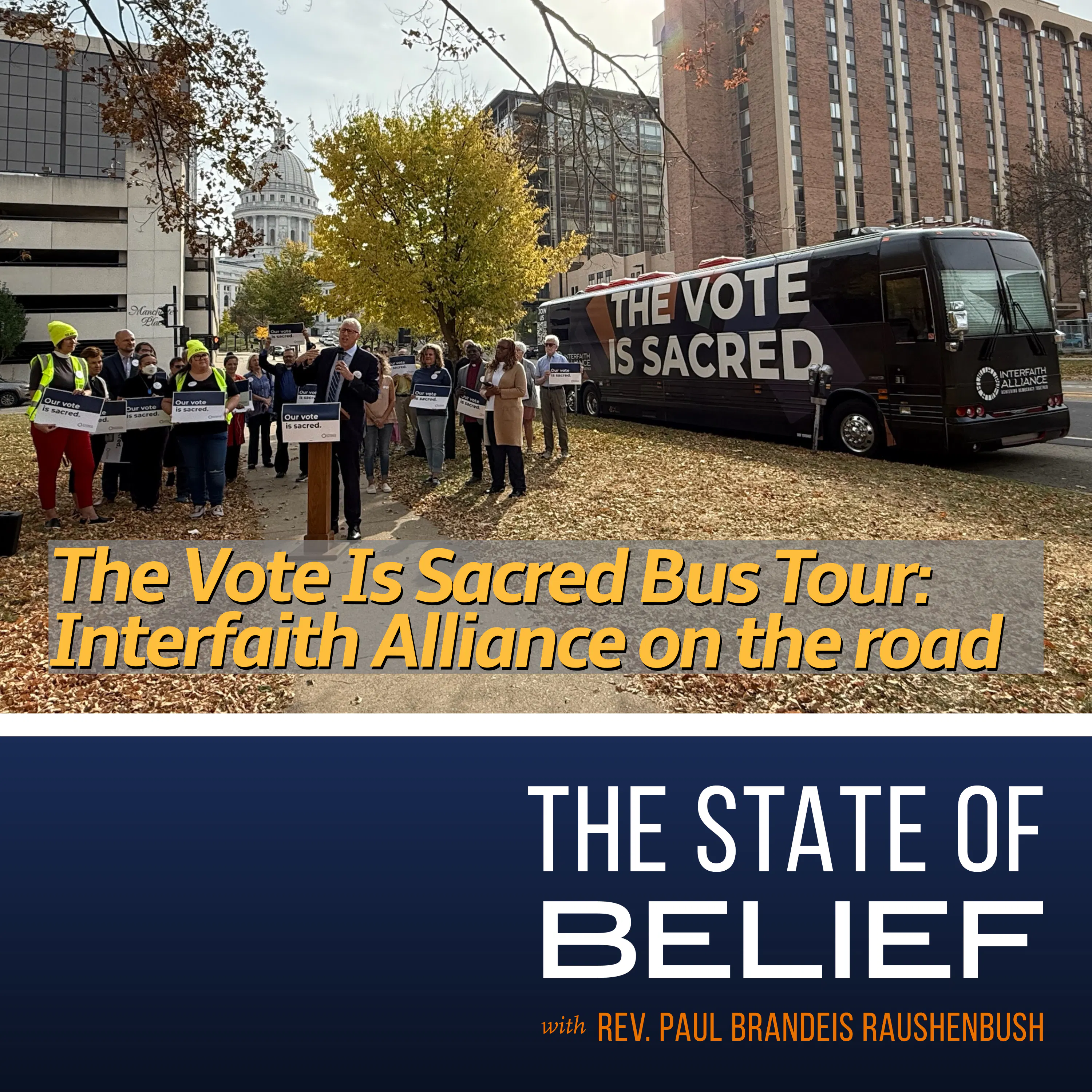
Ep 1The Vote Is Sacred Bus Tour
This week’s episode of The State of Belief features interviews with guests along Interfaith Alliance’s “The Vote is Sacred Bus Tour.” Host Rev. Paul Brandeis Raushenbush visits with Karim Khayati, Rabbi Deanna Sussman, Rev. Sarah Jones, Dan Osborn, Connie Ryan, State Sen. Rev. Sarah Trone Garriott, Rt. Rev. Betsey Monnot, Rhonda Lindner, Rev. Breanna Illéné, and Khalilah Worley, leaders empowering voters to hit the polls to defend religious freedom and multi-faith democracy. These conversations spotlight a shared commitment among diverse leaders—politicians, clergy, and activists—to advocate for social justice, community engagement, and the empowerment of marginalized groups. Underlining the bus tour’s goal of highlighting the role of diverse religious communities engaged in inspiring pro-democracy activism, these leaders’ efforts reflect a shared commitment to fostering a vibrant, multi-faith democracy, working alongside amazing partners to lift up the voices of all Americans in the face of extremism and Christian nationalism. Karim Khayati, Rabbi Deanna Sussman, and Rev. Sarah Jones are leaders in the Muslim, Jewish, and Christian faith communities, respectively, that make up the unique Tri-Faith Initiative in Omaha, Nebraska. A fitting place to begin The Vote Is Sacred bus tour, and their thoughts are a fitting way to start this week’s show. Dan Osborn highlights the lack of working-class representation, stating, “Less than 2% of our elected officials in the House and Senate came from the working class... I'm going to have a worker agenda.” Connie Ryan echoes the need for change, emphasizing that “reproductive rights, LGBTQ rights, and public schools are on the ballot,” calling for people to harness “the magical power of voting” to stand up for justice. State Sen. Rev. Sarah Trone Garriott reminds us that “every single elected office matters,” while the Rt. Rev. Betsey Monnot emphasizes the Episcopal Church's commitment to justice, stating, “One of the vows that we take... is to respect the dignity and worth of every human being.” Rev. Breanna Illéné also recognizes the intersection of faith and politics, asserting, “Your faith should impact your life. Politics impact your life... and they do mix and need to mix.” Rhonda Lindner expresses hope for democracy by asserting, “If every Wisconsin voter who wants to vote and who should vote, votes... democracy and the will of the people will stand.” And even as gerrymandering threatens the fairness of the vote in several states, Khalilah Worley Billy reminds us to "Find joy in this election." Learn more about your ad choices. Visit megaphone.fm/adchoices

Democracy and Faith Hit The Road
This fall, a number of faith- and values-driven organizations have taken to the road, bringing a positive message to communities across the country aboard colorful, activist-filled buses. From the Nuns On The Bus & Friends Vote Our Future Tour, to the Revolutionary Love Tour, to the Faith & Democracy Tour, to the Vote Common Good Confronting Christian Nationalism Tour, to Interfaith Alliance’s own The Vote is Sacred Tour, a lot of face-to-face conversations are happening, and a lot of hope is being spread. This week on The State of Belief, Interfaith Alliance's weekly radio program and podcast, host Rev. Paul Brandeis Raushenbush checks in with some of these tours, and finds out what the conversations are sounding like across the country. Valarie Kaur is just wrapping up a six-week stretch of the Revolutionary Love Bus Tour, part of a deeply spiritual and place-specific experience of community and a vision for a new level of connection. She and her crew took a break from singing while traversing the South to check in with The State of Belief. Rev. Doug Pagitt is no stranger to long and grueling bus tours, bringing the message of Vote Common Good. This election season, the focus is on confronting Christian Nationalism, and he, too, was in motion as he shared his reasons for this particular focus in 2024. The sole non-bus participant in this roundup, Dr. Kristin Kobes Du Mez, describes the music-, wisdom-, and hope-laden gatherings organized by The Convocation Unscripted, under the banner of The Faith and Democracy Tour. She also updates Paul on her documentary film, For Our Daughters: Stories of Abuse, Betrayal, and Resistance in the Evangelical Church. Kristin encourages us to embrace our role in the fight for justice and democracy: “This is not a time for cynicism, certainly not a time to give up or to feel hopeless. It's a time to cut through all of the muddiness out there, all of the messages coming through, and just focus. This is who you are. This is what we believe, and this is what you can do.” And Interfaith Alliance is pulling into traffic with The Vote is Sacred Bus Tour. The brainchild of Senior Director of Policy and Advocacy Guthrie Graves-Fitzsimmons, it brings members of the Interfaith Alliance team to a number of communities to encourage getting out the vote and to raise up the critical issue of voter protection. The Mother Superior of all of these bus tours, the Nuns On the Bus & Friends Vote Our Future Tour, was featured on The State of Belief just a few weks ago. Valarie Kaur is a renowned civil rights leader, lawyer, award-winning filmmaker, and author known for her visionary work in social justice and racial healing. As the founder of the Revolutionary Love Project, she leads movements on reclaiming love as a force for justice. Doug Pagitt is a social activist, author, and possibility enthusiast dedicated to enlisting people in the hopes and dreams of a more just world. As Co-founder and Executive Director of Vote Common Good, he mobilizes people of faith to engage in civic life. Kristin Kobes Du Mez is the New York Times bestselling author of Jesus and John Wayne: How White Evangelicals Corrupted a Faith and Fractured a Nation, and Professor of History and Gender Studies at Calvin University. She holds a PhD from the University of Notre Dame and her research focuses on the intersection of gender, religion, and politics. Guthrie Graves-Fitzsimmons is the Senior Director of Policy and Advocacy at Interfaith Alliance, where he leads efforts like the upcoming “The Vote is Sacred” Bus Tour. An ordained Baptist minister and a leading advocate at the intersection of religion and policy, Guthrie has dedicated his career to empowering faith communities to advance social justice and counter religious extremism. Learn more about your ad choices. Visit megaphone.fm/adchoices
The Freedom to Read is an Essential Human - and Religious - Right!
Marking the Freedom to Read Day of Action, this week’s episode of The State of Belief, Interfaith Alliance's weekly radio program and podcast, features interviews with Qiana Johnson, Rev. Kim Coleman, and Rabba Rori Picker Neiss – influential leaders working at the intersection of faith and activism to combat censorship and book bans. They join host Rev. Paul Brandeis Raushenbush to discuss the critical role that religious communities can play in resisting book bans, supporting vulnerable groups like LGBTQI+ youth, and ensuring that libraries remain spaces for learning and inclusion. Each explores how faith can be a driving force for justice and community-building in the fight against censorship. Rabba Picker Neiss detailed how censorship works to suppress diverse viewpoints. “Anytime people are uncomfortable with a book because it doesn't reflect them, then it's a silencing of anyone different. And fundamentally, we're all different. And that's the beauty that we have in this country. That's the ethos that I think both of our organizations are working off of. That's the strength that we can really bring.” Qiana Johnson also emphasized how book bans can ensure that members of our communities are harmfully marginalized, making our whole society worse off. “Parts of the human story are being weaponized, and parts of the human story are being denigrated, and parts of that human story and our beauty are being hidden. And part of the community is being told that they aren't truly part of the community, that they are dangerous parts of the community…We learn from things that are challenging, but we have to do that.” Rev. Kim captures the urgency of taking action and being vigilant in the face of threats like book ban: “People of faith are called to be proactive, not reactive. Jesus told us to go and make disciples. We have a custom of waiting till something tragic happens before we awaken... but we don’t have to be on the defensive anymore.” Qiana Johnson is the Associate Dean of Libraries, Collections, and Content Strategies at Dartmouth, focusing on acquisitions, discovery, access, preservation, and management of information resources. She's also an ordained deacon in the Episcopal Church. Rabba Rori Picker Neiss is the Senior Vice President for Community Relations at the Jewish Council for Public Affairs (JCPA) and previously the Executive Director of the Jewish Community Relations Council of St. Louis. She has also served on the clergy team at a Modern Orthodox synagogue. The Very Rev. Kim Coleman is the president of the Union of Black Episcopalians (UBE) and the rector of Trinity Episcopal Church in Arlington, Virginia. She leads UBE in addressing racism and advocating for Black Episcopalians, raising awareness about book bans within the Episcopal Church. Learn more about your ad choices. Visit megaphone.fm/adchoices