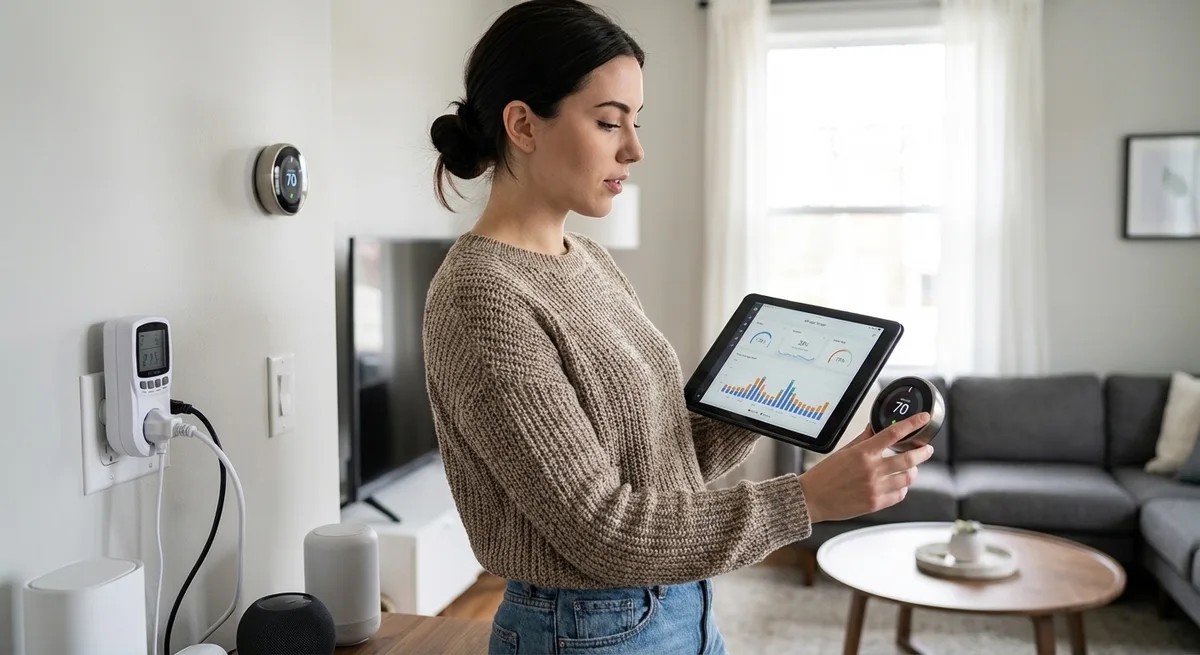
Smart Home Energy Audit Checklist: Identifying High-Consumption Devices and Phantom Loads
The Smart Home Setup Podcast · My Smart Home Setup
Audio is streamed directly from the publisher (content.rss.com) as published in their RSS feed. Play Podcasts does not host this file. Rights-holders can request removal through the copyright & takedown page.
Show Notes
Your smart home might be silently adding hundreds of dollars to your annual electric bill—and you'd never know it because the waste happens while you sleep, spread across dozens of devices that never truly turn off. In this episode, Chelsea Miller shares findings from three years of monitoring every outlet in her fully local smart home setup, revealing exactly where the power goes. This is essential listening for anyone running energy management systems who wants real numbers instead of marketing promises, with a practical checklist for identifying high-consumption devices and phantom loads draining your wallet.
- Baseline infrastructure adds up fast: a typical network closet with a hub, router, mesh nodes, and NAS can draw 48 watts continuously—that's 420 kilowatt-hours annually (roughly $60) before a single smart bulb turns on.
- Repurposing an old desktop PC as a Home Assistant server could cost you 300+ kilowatt-hours more per year than a dedicated Raspberry Pi setup, translating to about $45 in wasted electricity.
- Smart features don't always mean smart savings: Level 2 EV chargers can draw 30–50 watts in standby even when no vehicle is connected, potentially consuming more annual energy than your entire lighting budget.
- Phantom loads from devices that appear "off" are major culprits—a TV soundbar with HDMI passthrough might draw 18 watts when off, nine times the manufacturer's claimed standby figure.
- Smart displays and wall-mounted tablets are sneaky energy drains, with devices like the Echo Show 10 pulling 7–10 watts idle and repurposed iPads drawing 8–12 watts if they never sleep.
- Your smart thermostat automations might actually trigger more frequent HVAC compressor cycles than a basic programmable thermostat would—check your runtime logs to confirm you're actually saving energy.
Read the full article: https://mysmarthomesetup.com/smart-home-energy-audit-checklist