The Scoop
520 episodes — Page 9 of 11

S3 Ep 30FalconX's Aya Kantorovich explains what's been behind bitcoin's latest price gyrations
Aya Kantorovich, head of institutional coverage at FalconX, has been experiencing a bit of déjà vu. Kantorovich, a former associate at crypto hedge fund Pantera, joined The Scoop to unpack the crypto market's recent bouts of volatility and how the market is stuck in a cycle of retail-led drawdowns. FalconX — an aggregator of crypto trading flows — has a window into both the retail and institutional market. According to Kantorovich, liquidations across off-shore market venues, cascading liquidations, and the inability for traders to access crypto exchange platforms drive prices down. When money can't move around, price drawdowns are amplified. "We saw $2 billion worth of liquidations happening across BTC," she said. "Retail liquidations was a large portion of this ... and then a cascading effect.""When you have this level of heightened volatility you see some exchanges begin to shut down their trading capabilities and when these centralized trading platforms shut down those capabilities then traders don't have the ability to top off on their margin so you see a continued cascade," she added. Kantorovich doesn't think this is a cycle that will break because many new institutions have to sell when the price reaches a certain threshold. Unlike crypto native whales, which have driven the buying at the dip, large billion-dollar plus asset managers "have a completely different level of drawdowns that they're allowed to maintain.""Let's say the market falls down by 30%, they have a fiduciary obligation to take money off the table," she said. "These aren't the momentum diamond hands that we're so used to seeing in crypto.""I think the reason for that is we are going to continue to see institutions that do not have a momentum-long venture persona ... and that could be both good or bad for the space."This episode is brought to you by our sponsors Eventus, Kraken, and ExodusEventus is the leading global provider of multi-asset class trade surveillance, transaction monitoring and market risk solutions. Eventus offers a powerful, award-winning trade surveillance platform that is easy to deploy, customize and operate. Eventus is proven in the most complex, high-volume and real-time environments and supports many of the industry’s leading crypto exchanges including Coinbase, Gemini, ErisX and OSL. The company’s rapidly growing client base relies on Eventus’ responsive support and product development teams to overcome its most pressing regulatory challenges.About KrakenWhether you’re an experienced crypto trader or just starting out, Kraken has the tools to help you achieve financial freedom. With 50+ cryptocurrencies to choose from, industry-leading security and a wide variety of features to suit any investing strategy, Kraken puts the power in your hands to buy, sell and trade digital assets. Visit Kraken.com to get started today.About ExodusExodus is leading the world out of traditional finance by building beautiful and user-friendly crypto products. Forget having to learn the nuances of different cryptocurrencies. Exodus is designed for everyone and hides the complex details behind a beautiful and intuitive interface.Buy and sell one cryptocurrency for another from the comfort of your wallet, in seconds. Funds remain under your full control. Secure, manage, stake, and exchange all of your favorite cryptocurrencies from one wallet. No account registration is required. Download Exodus at Exodus.com or directly from Google Play and the iOS App Store and you’re ready to go.
S3 Ep 29Crypto quant hedge fund CIO explains the impact of Elon Musk's tweets on the bitcoin market
Elon Musk's trigger-happy Twitter fingers have left the bitcoin world in a tizzy in recent days.As the Wall Street Journal noted in a recent piece, Musk has become bitcoin's "biggest influencer" — much to the dismay of many evangelists. Since he first tweeted that Tesla would stop accepting bitcoin as payment because of environmental concerns, bitcoin has fallen about 40% from its all-time highs. More recent tweets about Musk working with North American miners on addressing environmental concerns have pushed the crypto from lows near $30,000. On this most recent episode of The Scoop, Martin Green, who leads quant investment firm Cambrian Asset Management, explained why Musk's tweets are having such an outsized impact on the crypto market. In Green's view, it's not so much Musk's tweets that matter but the environment into which he is tweeting. "Often the news itself, like Elon's tweet, would have a different consequence in a different situation," he said. "You can light a match in the middle of my driveway... you can take that match and drop it on the floor in an open space. Monstrous difference in the consequences. Still the same match."Green said that the crypto market has been primed to overreact to market news thanks to the amount of leverage in the system, which creates "a cascading of selling pressure."The lack of institutional spot buying recently has added fuel to the fire.Still, Green said there are a number of tailwinds for the industry. He said that there are macro forces that indicate that institutions are under-allocated to the crypto market, noting specifically that Ethereum is "quite under-owned."This episode is brought to you by our sponsors Bakkt, Kraken, and ExodusBakkt® unlocks the $1.2+ trillion of digital assets that is currently held in cryptocurrencies, rewards and loyalty points, gaming assets and merchant stored value. We began in 2018 with the vision to bring trust and transparency to digital assets. Through the Bakkt Warehouse and Bakkt Bitcoin Futures and Options contracts, we serve institutional clients in an end-to-end regulated market with true price transparency. For consumers, Bakkt aggregates digital assets to enable instant liquidity and to empower users to trade, transfer and pay however they want. Visit Bakkt.com for more informationAbout KrakenWhether you’re an experienced crypto trader or just starting out, Kraken has the tools to help you achieve financial freedom. With 50+ cryptocurrencies to choose from, industry-leading security and a wide variety of features to suit any investing strategy, Kraken puts the power in your hands to buy, sell and trade digital assets. Visit Kraken.com to get started today.About ExodusExodus is leading the world out of traditional finance by building beautiful and user-friendly crypto products. Forget having to learn the nuances of different cryptocurrencies. Exodus is designed for everyone and hides the complex details behind a beautiful and intuitive interface. Buy and sell one cryptocurrency for another from the comfort of your wallet, in seconds. Funds remain under your full control. Secure, manage, stake, and exchange all of your favorite cryptocurrencies from one wallet. No account registration is required. Download Exodus at Exodus.com or directly from Google Play and the iOS App Store and you’re ready to go.
S3 Ep 28'Nowhere near a top': Framework's Vance Spencer on institutional adoption and the memecoin mania
In Vance Spencer's view, the market is completely undercounting the amount of capital that's about to move into the crypto world from institutional investor circles. The co-founder of the $1 billion-plus investment firm Framework Ventures would have a good sense of that trajectory, considering how Framework wrapped up a $100 million fundraise for a new fund in the decentralized finance market.Announced Friday, backers of the new fund include the $40 billion investment firm Hall Capital Partners and unnamed endowments, according to a report by The Wall Street Journal. Spencer joined The Scoop (prior to the raise being made public) to unpack the case for Ethereum, which powers much of the DeFi market, the impact of Dogecoin mania, and institutional adoption of crypto. "The resounding sense that I get is that people are underestimating the amount of capital that's coming off the sidelines by probably 1 to 2 orders of magnitude," Spencer said.Spencer said that Ethereum and Bitcoin are the two cryptos that are "on the menu" for the large investors and are both "nowhere near a top."Still, he added that the story of Ethereum "has a lot more to be told in a world where there is not hyperinflation or there's not all these crazy things happening than [bitcoin's story]."This episode is brought to you by our sponsors Bakkt, Kraken, and ExodusBakkt® unlocks the $1.2+ trillion of digital assets that is currently held in cryptocurrencies, rewards and loyalty points, gaming assets and merchant stored value. We began in 2018 with the vision to bring trust and transparency to digital assets. Through the Bakkt Warehouse and Bakkt Bitcoin Futures and Options contracts, we serve institutional clients in an end-to-end regulated market with true price transparency. For consumers, Bakkt aggregates digital assets to enable instant liquidity and to empower users to trade, transfer and pay however they want. Visit Bakkt.com for more informationAbout KrakenWhether you’re an experienced crypto trader or just starting out, Kraken has the tools to help you achieve financial freedom. With 50+ cryptocurrencies to choose from, industry-leading security and a wide variety of features to suit any investing strategy, Kraken puts the power in your hands to buy, sell and trade digital assets. Visit Kraken.com to get started today.About ExodusExodus is leading the world out of traditional finance by building beautiful and user-friendly crypto products. Forget having to learn the nuances of different cryptocurrencies. Exodus is designed for everyone and hides the complex details behind a beautiful and intuitive interface.Buy and sell one cryptocurrency for another from the comfort of your wallet, in seconds. Funds remain under your full control. Secure, manage, stake, and exchange all of your favorite cryptocurrencies from one wallet. No account registration is required. Download Exodus at Exodus.com or directly from Google Play and the iOS App Store and you’re ready to go.
S3 Ep 27Downtown Josh Brown on bitcoin, wealth management, and the big risk in the market
Wall Street is embracing crypto one headline-driving development at a time.From Goldman Sachs to Morgan Stanley, major banks are moving from exploring the digital asset world to fully operating in it.Goldman, for instance, announced Friday it would restart its market for non-deliverable forwards tied to bitcoin. Both Morgan Stanley and Goldman have said they will offer their wealthiest clients exposure to bitcoin. But one channel that has yet to fully embrace crypto is the independent wealth management market. Josh Brown — the brains behind the well-followed Reformed Broker blog — is among the legion of wealth managers who have yet to start advising their clients to buy crypto.The CEO of Ritholtz Wealth Management joined The Scoop to talk about how financial advisors are examining the fast-growing $2 trillion market, why he is skeptical of non-fungible tokens and decentralized finance, and how Covid-19 turned the idea of risk on its head. Here's a blurb from the show:"The most concerning is that what we’ve just witnessed completely flipped the entire concept of risk on its head because we’ve just had the biggest risk in 100 years. We had Spanish Flu 2.0 in the modern era, like traveling three times faster than the 1918 version, right? Like the biggest risk you could think of, millions of people suddenly dropping dead from a global pandemic. It turned out to be one of the biggest opportunities. And you didn’t have to wait three years or eight years like the Great Depression to figure that out. Literally. The stock market fell for 16 days and stopped. Think about that. So what even is risk anymore? What if I tell you the next thing is a nuclear bomb going off somewhere? Dow Jones might go up 50%." This episode is brought to you by our sponsors Bakkt, Kraken, and ExodusBakkt® unlocks the $1.2+ trillion of digital assets that is currently held in cryptocurrencies, rewards and loyalty points, gaming assets and merchant stored value. We began in 2018 with the vision to bring trust and transparency to digital assets. Through the Bakkt Warehouse and Bakkt Bitcoin Futures and Options contracts, we serve institutional clients in an end-to-end regulated market with true price transparency. For consumers, Bakkt aggregates digital assets to enable instant liquidity and to empower users to trade, transfer and pay however they want. Visit Bakkt.com for more informationAbout KrakenWhether you’re an experienced crypto trader or just starting out, Kraken has the tools to help you achieve financial freedom. With 50+ cryptocurrencies to choose from, industry-leading security and a wide variety of features to suit any investing strategy, Kraken puts the power in your hands to buy, sell and trade digital assets. Visit Kraken.com to get started today.About ExodusExodus is leading the world out of traditional finance by building beautiful and user-friendly crypto products. Forget having to learn the nuances of different cryptocurrencies. Exodus is designed for everyone and hides the complex details behind a beautiful and intuitive interface. Buy and sell one cryptocurrency for another from the comfort of your wallet, in seconds. Funds remain under your full control. Secure, manage, stake, and exchange all of your favorite cryptocurrencies from one wallet. No account registration is required. Download Exodus at Exodus.com or directly from Google Play and the iOS App Store and you’re ready to go.
S3 Ep 25FTX's Sam Bankman-Fried breaks down the Solana and Serum ecoystems
It's been an impressive month for the digital assets tied to billionaire crypto exchange executive Sam Bankman-Fried. Solana, the layer-1 blockchain competitor to Ethereum, has seen its price surge 47.8% over the last month, according to CoinGecko. Bankman-Fried is one of Solana's most prominent supporters. Meanwhile, Serum, the Solana-based DEX, has seen its native token Serum increase by nearly 62% over the last seven days, Coin Gecko data shows. During this episode of The Scoop, we dive deep into the Solana and Serum eco-systems. Sam Bankman-Fried explains why FTX decided to launch a decentralized exchange on Solana versus Ethereum, which supports the vast majority of non-custodial protocols. "Any products that we tried to build or that even that we tried to scope out — we originally were just definitely going to build on Ethereum because that's where everything was — product after product got into the same death dial which was 10 transactions a second for the network was just not enough," Bankman-Fried said. Solana's blockchain promises more scalability through a new consensus mechanism known as Proof of History. It appears to be favorable among traders. Serum, which FTX announced in July, has seen its trading volumes top $1 billion last month, as per The Block's data dashboard. Of course, the benefits of a more scalable blockchain raises questions about decentralization. He said that there are limitations relative to Ethereum, but it is possible to get a lot more participation than other more scalable blockchains."Solana has gone down in the direction of saying, hey, look we want the performance of blockchain to be an important criteria of it and we care a lot about the efficiency and scaling and economics of it," he said. "While also wanting there to be a sufficiently big group of nodes. Now, what does sufficiently mean? I don't know. Different people have different thresholds. Right now, they're about 600 active nodes on Solana."Disclaimer: Beginning in 2021, Michael McCaffrey, the former CEO and majority owner of The Block, took a series of loans from founder and former FTX and Alameda CEO Sam Bankman-Fried. McCaffrey resigned from the company in December 2022 after failing to disclose those transactions.This episode is brought to you by our sponsors Bakkt, Kraken, and ExodusBakkt® unlocks the $1.2+ trillion of digital assets that is currently held in cryptocurrencies, rewards and loyalty points, gaming assets and merchant stored value. We began in 2018 with the vision to bring trust and transparency to digital assets. Through the Bakkt Warehouse and Bakkt Bitcoin Futures and Options contracts, we serve institutional clients in an end-to-end regulated market with true price transparency. For consumers, Bakkt aggregates digital assets to enable instant liquidity and to empower users to trade, transfer and pay however they want. Visit Bakkt.com for more informationAbout KrakenWhether you’re an experienced crypto trader or just starting out, Kraken has the tools to help you achieve financial freedom. With 50+ cryptocurrencies to choose from, industry-leading security and a wide variety of features to suit any investing strategy, Kraken puts the power in your hands to buy, sell and trade digital assets. Visit Kraken.com to get started today.About ExodusExodus is leading the world out of traditional finance by building beautiful and user-friendly crypto products. Forget having to learn the nuances of different cryptocurrencies. Exodus is designed for everyone and hides the complex details behind a beautiful and intuitive interface. Buy and sell one cryptocurrency for another from the comfort of your wallet, in seconds. Funds remain under your full control. Secure, manage, stake, and exchange all of your favorite cryptocurrencies from one wallet. No account registration is required. Download Exodus at Exodus.com or directly from Google Play and the iOS App Store and you’re ready to go.
S3 Ep 25'The threat right now is not Yellen': Kristin Smith on crypto rumors and DC policy
It was a tweet heard 'round the crypto world. A breaking news account fired off, in all caps, an unsubstantiated headline that the U.S. Treasury Department was set to crack down on a number of unknown banks for their activity in the crypto market. Soon after the tweet's release, several industry insiders — including the Blockchain Association's Kristin Smith — threw cold water on its key claim. "There's a lot of rumors going around that don't have any truth of foundation," Smith said. In this episode of The Scoop, Smith unpacked the erroneous rumor, why U.S. Treasury Secretary Janet Yellen isn't making bitcoin a priority right now, how crypto policy works, and why crypto market participants should be concerned about the Financial Action Task Force decision coming this June.As Smith put it during the interview:"The thing that we do have to worry about at Treasury isn't coming from the top people as I said but Treasury's interaction with the Financial Action Task Force or the FATF. The FATF has proposed something that is fairly scary ... if adopted would require a lot of different entities in the U.S. to register as money services businesses."Smith went on to add: "The threat right now is not Yellen."This episode is brought to you by our sponsors Bakkt, Kraken, and ExodusBakkt® unlocks the $1.2+ trillion of digital assets that is currently held in cryptocurrencies, rewards and loyalty points, gaming assets and merchant stored value. We began in 2018 with the vision to bring trust and transparency to digital assets. Through the Bakkt Warehouse and Bakkt Bitcoin Futures and Options contracts, we serve institutional clients in an end-to-end regulated market with true price transparency. For consumers, Bakkt aggregates digital assets to enable instant liquidity and to empower users to trade, transfer and pay however they want. Visit Bakkt.com for more informationAbout KrakenWhether you’re an experienced crypto trader or just starting out, Kraken has the tools to help you achieve financial freedom. With 50+ cryptocurrencies to choose from, industry-leading security and a wide variety of features to suit any investing strategy, Kraken puts the power in your hands to buy, sell and trade digital assets. Visit Kraken.com to get started today.About ExodusExodus is leading the world out of traditional finance by building beautiful and user-friendly crypto products. Forget having to learn the nuances of different cryptocurrencies. Exodus is designed for everyone and hides the complex details behind a beautiful and intuitive interface.Buy and sell one cryptocurrency for another from the comfort of your wallet, in seconds. Funds remain under your full control.Secure, manage, stake, and exchange all of your favorite cryptocurrencies from one wallet. No account registration is required. Download Exodus at Exodus.com or directly from Google Play and the iOS App Store and you’re ready to go.
S3 Ep 24CEO of a fintech that powers hundreds of stock apps unpacks why it offers dogecoin services
Apex Clearing facilitates more than 1.7 million trades a day as the clearing and custody firm behind hundreds of fintech trading platforms.The firm, which entered the crypto market in 2019, provides more than 200 companies, including the likes of Stash, Public.com, and WeBull, with the technology to clear stock trades. At one point Apex also powered Robinhood's platform before the California-based firm launched its own clearing solution.On the crypto side, Apex Crypto helps brokers create their own crypto trading products. That business touches more than 1 million retail clients today.This past weekend, Apex began supporting Dogecoin, unleashing the meme-coin on more than 13 million end-clients. It was good timing considering the price of the coin has whipsawed as retail traders turned their attention toward that particular cryptocurrency market. In this episode of The Scoop, Apex Clearing CEO Bill Capuzzi talks about the growth of its crypto business, what drew it to the dogecoin market, and why stockbrokers will ultimately break into the non-fungible token (NFT) space. "We opened close to 150,000 accounts since we announced and launched Dogecoin from Saturday until today," Capuzzi said, adding:"They’re hearing it from their end customers. Right. So the end customers are raising their hands and saying, hey, we’d like access to Dogecoin through WeBull, and WeBull is leveraging Apex on the backend."This episode is brought to you by our sponsors Bakkt, Kraken, and ExodusBakkt® unlocks the $1.2+ trillion of digital assets that is currently held in cryptocurrencies, rewards and loyalty points, gaming assets and merchant stored value. We began in 2018 with the vision to bring trust and transparency to digital assets. Through the Bakkt Warehouse and Bakkt Bitcoin Futures and Options contracts, we serve institutional clients in an end-to-end regulated market with true price transparency. For consumers, Bakkt aggregates digital assets to enable instant liquidity and to empower users to trade, transfer and pay however they want. Visit Bakkt.com for more informationAbout KrakenWhether you’re an experienced crypto trader or just starting out, Kraken has the tools to help you achieve financial freedom. With 50+ cryptocurrencies to choose from, industry-leading security and a wide variety of features to suit any investing strategy, Kraken puts the power in your hands to buy, sell and trade digital assets. Visit Kraken.com to get started today.About ExodusExodus is leading the world out of traditional finance by building beautiful and user-friendly crypto products. Forget having to learn the nuances of different cryptocurrencies. Exodus is designed for everyone and hides the complex details behind a beautiful and intuitive interface.Buy and sell one cryptocurrency for another from the comfort of your wallet, in seconds. Funds remain under your full control.Secure, manage, stake, and exchange all of your favorite cryptocurrencies from one wallet. No account registration is required. Download Exodus at Exodus.com or directly from Google Play and the iOS App Store and you’re ready to go.
S3 Ep 23Here’s how big brokerage firms are breaking into bitcoin trading
Crypto brokers are making money hand over fist. The direct listing of Coinbase put on display just how much money such firms are making, with the exchange reporting nearly $2 billion in revenues during the first quarter of 2021. Much of those revenues were transactional and from trades made on its retail brokerage platform.Other large brokerages want in on the action, according to Edward Woodford, CEO of crypto firm ZeroHash. The Chicago-based firm works with brokers to jumpstart their own solutions to serve retail clients. On this episode of The Scoop, Woodford joins options brokerage industry trailblazer Tom Sosnoff to discuss why brokers want to create one-stop shops for their clients by incorporating crypto trading as well as the revenue opportunities crypto presents.Sosnoff founded tastyworks, which began offering crypto through a partnership with ZeroHash announced at the end of last year.This episode is brought to you by our sponsors Bakkt and KrakenBakkt® unlocks the $1.2+ trillion of digital assets that is currently held in cryptocurrencies, rewards and loyalty points, gaming assets and merchant stored value. We began in 2018 with the vision to bring trust and transparency to digital assets. Through the Bakkt Warehouse and Bakkt Bitcoin Futures and Options contracts, we serve institutional clients in an end-to-end regulated market with true price transparency. For consumers, Bakkt aggregates digital assets to enable instant liquidity and to empower users to trade, transfer and pay however they want. Visit Bakkt.com for more informationWhether you’re an experienced crypto trader or just starting out, Kraken has the tools to help you achieve financial freedom. With 50+ cryptocurrencies to choose from, industry-leading security and a wide variety of features to suit any investing strategy, Kraken puts the power in your hands to buy, sell and trade digital assets. Visit Kraken.com to get started today.
S3 Ep 22An executive at Bridgewater, the world's largest hedge fund, unpacks bitcoin's role in the macro picture
Bridgewater, the world's largest hedge fund, isn't convinced by the bitcoin narrative yet, but it's listening.On this week's episode of The Scoop, Bridgewater's director of portfolio strategy Jim Haskel said he's not surprised by the growing institutional interest.Bridgewater founder Ray Dalio previously said he didn't see bitcoin's merits as a currency, but he amended his statements in a newsletter published earlier this year. "I believe Bitcoin is one hell of an invention," Dalio wrote at the time.Haskel said Bridgewater remains skeptical but also recognizes bitcoin's "fantastic" attributes. Though the cryptocurrency's price remains volatile and lacks some of the characteristics of traditional wealth from Bridgewater's point of view, Haskel says he sees potential."What I would say is that we certainly have not rejected it as a potential store hold of wealth," Haskel remarked. "We just wouldn’t use it in big size yet."On this week's episode, Haskell talked about Bridgewater's unfolding bitcoin strategy as well as: If it's still possible for funds to have access to unsustainable levels of leverage Whether the inflation alarmists are justified What the impact of continued recovery will be on assets and how that affects alternative allocations How Bridgewater started considering bitcoin as an inflation hedge. This episode is brought to you by our sponsors Bakkt and Kraken. Bakkt® unlocks the $1.2+ trillion of digital assets that is currently held in cryptocurrencies, rewards and loyalty points, gaming assets and merchant stored value. We began in 2018 with the vision to bring trust and transparency to digital assets. Through the Bakkt Warehouse and Bakkt Bitcoin Futures and Options contracts, we serve institutional clients in an end-to-end regulated market with true price transparency. For consumers, Bakkt aggregates digital assets to enable instant liquidity and to empower users to trade, transfer and pay however they want. Visit Bakkt.com for more informationWhether you’re an experienced crypto trader or just starting out, Kraken has the tools to help you achieve financial freedom. With 50+ cryptocurrencies to choose from, industry-leading security and a wide variety of features to suit any investing strategy, Kraken puts the power in your hands to buy, sell and trade digital assets. Visit Kraken.com to get started today.
S3 Ep 21Miami is collaborating with Ethereum developers to put city services on the blockchain
Miami Mayor Francis Suarez turned heads earlier this year when he said he wanted the Florida city to add bitcoin to its treasury. Now, Suarez is pushing a commitment for the city to explore crypto by turning his attention to Ethereum. According to a new episode of The Scoop, Ethereum creator Vitalik Buterin and Suarez announced that they have embarked on a new collaborative project focused on city services.To be sure, it's early days for the initiative, but the two have met on two occasions now and talks about the scope of the initiative continue."We're trying to come up with a project that goes through the foundation and directly with Ethereum that we can do with the city," said Suarez. "We want the city directly involved in a way that demonstrates the applicability of the software so that we can continue to provide better services for our residents."There's a bit of history underpinning the developments: it was in Miami that Buterin, in 2014, first unveiled Ethereum to the world during a presentation at the Bitcoin Miami conference. According to Suarez, decentralized information systems are becoming a priority for Miami, especially with looming security concerns like the upcoming hurricane season.During this week's episode, Suarez and Buterin, along with Cryptex founders Preston Van Loon and Joe Sticco, also discussed: How the Ethereum ecosystem can help create jobs in Miami The ways in which decentralized systems would benefit the city, like the transfer of title records for real estate Why now is the time to start building a project like this despite Ethereum's scalability issues How Florida is trying to join Wyoming in becoming the next regulatory bastion for crypto. This episode is brought to you by our sponsors Bakkt and Kraken. Bakkt® unlocks the $1.2+ trillion of digital assets that is currently held in cryptocurrencies, rewards and loyalty points, gaming assets and merchant stored value. We began in 2018 with the vision to bring trust and transparency to digital assets. Through the Bakkt Warehouse and Bakkt Bitcoin Futures and Options contracts, we serve institutional clients in an end-to-end regulated market with true price transparency. For consumers, Bakkt aggregates digital assets to enable instant liquidity and to empower users to trade, transfer and pay however they want. Visit Bakkt.com for more informationWhether you’re an experienced crypto trader or just starting out, Kraken has the tools to help you achieve financial freedom. With 50+ cryptocurrencies to choose from, industry-leading security and a wide variety of features to suit any investing strategy, Kraken puts the power in your hands to buy, sell and trade digital assets. Visit Kraken.com to get started today.
S3 Ep 20A Washington DC insider lays out her vision for the bitcoin market's first self-regulatory organization
Michelle Bond has been focused on financial regulation for decades, and a turn to crypto policy a few years ago led her to take the helm at the Association for Digital Assets Markets by the end of 2020.ADAM is a trade association for crypto markets, featuring a code of conduct that requires its members to commit to operating with certain requirements of transparency and speed."ADAM is 100% a standards-setting body," Bond said during the most recent episode of The Scoop. ADAM's membership includes such industry players as Anchorage, Paxos and Genesis and the group functions as a collective voice for its members. The group's ultimate goal is to provide for the crypto market what FINRA is to securities brokerages: an industry-spearheading body for self-regulation."We would like to, one day, become a self-regulatory organization. We believe that that is not something that is decreed, that is earned. At the current moment, we're setting the standards," said Bond.Among major issues of the day, Bond noted that industry participants are awaiting a response from the Treasury's FinCEN office on the recently closed comments on its proposal to monitor rules. Less publicized but still critical is custody. Financial regulators in Washington, Bond said, "are 1,000% asking questions and grappling with custody."As always, writing up such policies for crypto finance entails a combination of technological and legal savvy. This is where self-regulation comes in. Though Bond, like much of the industry, lamented the lack of coherent frameworks from financial watchdogs like her former workplace, the SEC, she identified the situation as fairly standard:"Regulators will never come right out and endorse anything. That will never happen. And that makes sense; that's not their job."But by presenting a code for how to operate in today's fast-moving crypto market, ADAM aims to accomplish what regulators have not. This episode is brought to you by our sponsors Bakkt and Kraken. Bakkt® unlocks the $1.2+ trillion of digital assets that is currently held in cryptocurrencies, rewards and loyalty points, gaming assets and merchant stored value. We began in 2018 with the vision to bring trust and transparency to digital assets. Through the Bakkt Warehouse and Bakkt Bitcoin Futures and Options contracts, we serve institutional clients in an end-to-end regulated market with true price transparency. For consumers, Bakkt aggregates digital assets to enable instant liquidity and to empower users to trade, transfer and pay however they want. Visit Bakkt.com for more informationWhether you’re an experienced crypto trader or just starting out, Kraken has the tools to help you achieve financial freedom. With 50+ cryptocurrencies to choose from, industry-leading security and a wide variety of features to suit any investing strategy, Kraken puts the power in your hands to buy, sell and trade digital assets. Visit Kraken.com to get started today.

S3 Ep 19A deep dive into Uniswap v3 with The Block's Mika Honkasalo
After much anticipation, Uniswap v3 — the latest upgrade to the Ethereum-based decentralized exchange — was announced Tuesday.On this episode of The Scoop, The Block Research's Mika Honkasalo walked through the designed upgrade, explaining the significance of Uniswap's adoption of "concentrated liquidity" which aims to make trading on the platform more capital efficient. In Honkasalo's view, this move will help with the adoption of Uniswap among traders and perhaps serve as a tailwind for the broader DeFi market. "I think this is why Uniswap really had nowhere to go in their design except move towards this sort of active liquidity provision because that’s something that works with traditional markets,” he said, adding:"I think what this unlocks next is the possibility to support just more volumes, especially in combination with the L2 launch, which hopefully comes very quickly after the L1 launch is to really start competing against centralized exchanges."Uniswap v3 — set to be implemented in May — will also include Uniswap's adoption of scaling solution Optimism, which aims to reduce gas fees.This episode is brought to you by our sponsors Bakkt and KrakenBakkt® unlocks the $1.2+ trillion of digital assets that is currently held in cryptocurrencies, rewards and loyalty points, gaming assets and merchant stored value. We began in 2018 with the vision to bring trust and transparency to digital assets. Through the Bakkt Warehouse and Bakkt Bitcoin Futures and Options contracts, we serve institutional clients in an end-to-end regulated market with true price transparency. For consumers, Bakkt aggregates digital assets to enable instant liquidity and to empower users to trade, transfer and pay however they want. Visit Bakkt.com for more informationWhether you’re an experienced crypto trader or just starting out, Kraken has the tools to help you achieve financial freedom. With 50+ cryptocurrencies to choose from, industry-leading security and a wide variety of features to suit any investing strategy, Kraken puts the power in your hands to buy, sell and trade digital assets. Visit Kraken.com to get started today.
S3 Ep 18This NFT artist is exploring what a real-world gallery would look like for digital art
Digital artist Beeple sold his collection of 5000 daily works for a whopping $69 million in a Christie's auction last week. That's the third-highest auction price on record for a living artist, but the sale was record breaking for another reason — it was sold as a non-fungible token (NFT).In recent weeks, NFTs have soared in popularity, and that's created opportunities for big and small artists alike to generate value for their work. The Block's Saniya More sat down with Cory Van Lew, an artist who's been tokenizing his work on SuperRare, with some pieces going for tens of thousands of dollars. He's taken a lot of that profit and reinvested it in the NFT market by supporting other artists, but he has even bigger aspirations — he's just started the process of creating his own NFT gallery in the physical world. On this week's episode of The Scoop, he talked about what a merged digital and reality gallery would look like, as well as: How Van Lew began his career as an artist and how that led him to tokenizing his work. The nuts and bolts of turning a creation into an NFT. Why holding NFTs creates different value than say holding a print of an artwork. His take on the energy use conversations surrounding NFTs. Why the NFT community is a supportive space for creators and collectors. This episode is brought to you by our sponsors Bakkt and KrakenBakkt® unlocks the $1.2+ trillion of digital assets that is currently held in cryptocurrencies, rewards and loyalty points, gaming assets and merchant stored value. We began in 2018 with the vision to bring trust and transparency to digital assets. Through the Bakkt Warehouse and Bakkt Bitcoin Futures and Options contracts, we serve institutional clients in an end-to-end regulated market with true price transparency. For consumers, Bakkt aggregates digital assets to enable instant liquidity and to empower users to trade, transfer and pay however they want. Visit Bakkt.com for more informationWhether you’re an experienced crypto trader or just starting out, Kraken has the tools to help you achieve financial freedom. With 50+ cryptocurrencies to choose from, industry-leading security and a wide variety of features to suit any investing strategy, Kraken puts the power in your hands to buy, sell and trade digital assets. Visit Kraken.com to get started today.
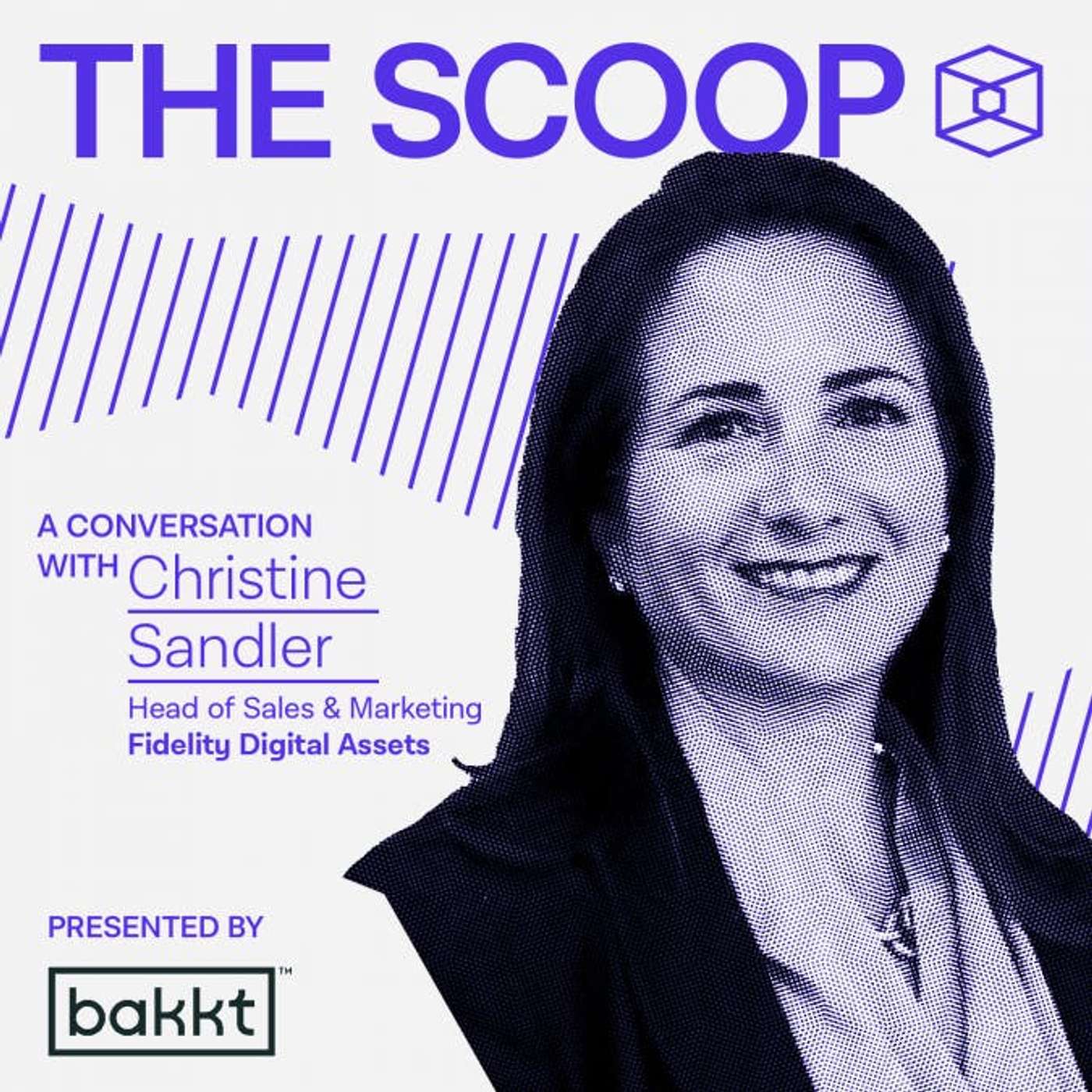
S3 Ep 17Bitcoin is drawing in the banking world's core customers, Fidelity exec says
Fidelity Digital Assets — the cryptocurrency division of multi-trillion asset manager Fidelity — is among the several firms riding the institutional bitcoin wave. FDA, which launched amid a bitcoin bear market in 2018, offers trading and custody services to a wide range of institutional firms. On this episode of The Scoop, Fidelity's Christine Sandler — a veteran of the trading world — walked through the breakneck growth of the crypto market in the past six months and explained how Fidelity has positioned itself during this period. Sandler, who previously held positions at Coinbase, New York Stock Exchange, and Barclays, said Fidelity's crypto unit experienced 4x growth during 2020 and is currently working with hedge funds, corporates, family offices, and registered investment advisers."Our overall account growth was absolutely phenomenal," Sandler said. "We saw participation across all segments. So whether it was corporations adopting it and putting assets on their balance sheet, or hedge funds beginning to approach this from a strategic perspective, registered investment advisors, family offices, ultra-high net worth individuals."Fidelity also works with large banks on sub-custody, according to Sandler. She said that these banks have sought out partners as they look to enter the market."They’re starting to see more of their core customers adopt either strategies or maybe think about launching an asset management business in the space and perhaps this creates this opportunity that it’s not this fledgling business anymore," she said. "It is potentially much more viable."Sandler also discusses the growth of the crypto credit market, women in the crypto market, and rich crypto valuations during this episode of The Scoop.This episode is brought to you by our sponsors Bakkt and KrakenBakkt® unlocks the $1.2+ trillion of digital assets that is currently held in cryptocurrencies, rewards and loyalty points, gaming assets and merchant stored value. We began in 2018 with the vision to bring trust and transparency to digital assets. Through the Bakkt Warehouse and Bakkt Bitcoin Futures and Options contracts, we serve institutional clients in an end-to-end regulated market with true price transparency. For consumers, Bakkt aggregates digital assets to enable instant liquidity and to empower users to trade, transfer and pay however they want. Visit Bakkt.com for more informationWhether you’re an experienced crypto trader or just starting out, Kraken has the tools to help you achieve financial freedom. With 50+ cryptocurrencies to choose from, industry-leading security and a wide variety of features to suit any investing strategy, Kraken puts the power in your hands to buy, sell and trade digital assets. Visit Kraken.com to get started today.

S3 Ep 16Artist who tokenized album for $11M explains why the NFT boom isn't like the ICO craze
The market for non-fungible tokens, digital collectibles, and tokenized music is hitting the mainstream. On Thursday, Beeple's NFT-powered suite of 5,000 images sold for a staggering $69 million, making it the third-highest figure paid for work by a living artist. Indeed, the sale sent shockwaves across the broader press, cementing NFT's place in the mainstream consciousness.The market has been growing at a fast clip, with weekly users on NFT platforms soaring from around 20,000 at the beginning of the year to nearly 200,000 this week, according to data from The Block. On this episode of The Scoop, The Block's Frank Chaparro and Ryan Todd unpack the market's recent headlines with DJ and music producer 3Lau.Performing artist 3Lau has long been focused on the intersection of music and crypto. Recently, he tokenized an album in a move that netted the Long Island native more than $11 million.In this episode of The Scoop, the group discusses how tokenization will usurp record labels and put more money in the pockets of artists, his plans for helping more artists get involved in NFTs, and what makes this current crypto boom cycle different from the initial coin offering rally. "You have these middlemen that have capitalized on artists' emotions and their lack of financial savviness," he said, describing the record labels and managing companies that capture much of the value from a musician's work.Through NFTs, artists can now engage directly with their audiences. "Beeple is an example of that as someone who makes amazing stuff. Will there be speculation in the short term? Yes. Will there be innovation in the long term? Yes," he said, adding:"But in the end, just like with any market, there is a period of price discovery and that's what we're going through right now. The difference between this and what happened with the ICO boom in 2017: back then, people were buying ideas that could barely be delivered upon. Now people are buying things that give them emotions."This episode is brought to you by our sponsors Bakkt and KrakenBakkt® unlocks the $1.2+ trillion of digital assets that is currently held in cryptocurrencies, rewards and loyalty points, gaming assets and merchant stored value. We began in 2018 with the vision to bring trust and transparency to digital assets. Through the Bakkt Warehouse and Bakkt Bitcoin Futures and Options contracts, we serve institutional clients in an end-to-end regulated market with true price transparency. For consumers, Bakkt aggregates digital assets to enable instant liquidity and to empower users to trade, transfer and pay however they want. Visit Bakkt.com for more informationWhether you’re an experienced crypto trader or just starting out, Kraken has the tools to help you achieve financial freedom. With 50+ cryptocurrencies to choose from, industry-leading security and a wide variety of features to suit any investing strategy, Kraken puts the power in your hands to buy, sell and trade digital assets. Visit Kraken.com to get started today.
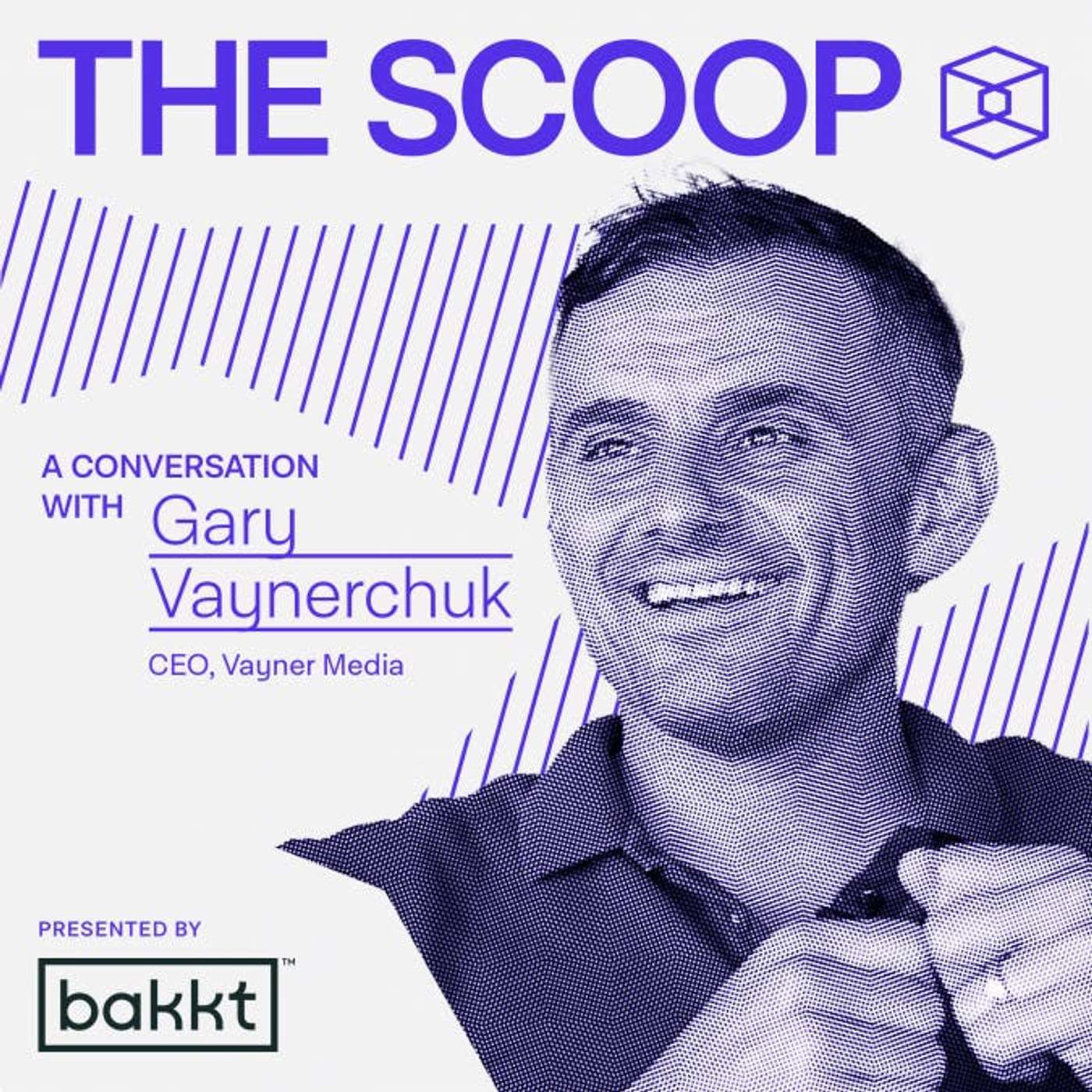
S3 Ep 15Angel investor Gary Vaynerchuk explains the disruptive power behind NFTs
The market for non-fungible tokens and digital collectibles has been growing at a breakneck pace, with projects like Dapper Lab's NBA Top Shot seeing user activity and transaction volumes soar.Since the beginning of the year, the burgeoning market — which runs the gamut of sports collectibles to digital cats — has seen more than half a billion in weekly trade volumes, according to data compiled by The Block. On this episode of The Scoop, Gary Vaynerchuk — the Internet personality, entrepreneur, and CEO of VaynerMedia—broke down what's taking place beyond the hype and why he thinks NFTs are going to be the internet's next big thing after the development of social media.Vaynerchuk is best known for his angel investments in tech giants like Facebook, Twitter, Venmo, and Uber. This episode is brought to you by our sponsors Bakkt and KrakenBakkt® unlocks the $1.2+ trillion of digital assets that is currently held in cryptocurrencies, rewards and loyalty points, gaming assets and merchant stored value. We began in 2018 with the vision to bring trust and transparency to digital assets. Through the Bakkt Warehouse and Bakkt Bitcoin Futures and Options contracts, we serve institutional clients in an end-to-end regulated market with true price transparency. For consumers, Bakkt aggregates digital assets to enable instant liquidity and to empower users to trade, transfer and pay however they want. Visit Bakkt.com for more informationWhether you’re an experienced crypto trader or just starting out, Kraken has the tools to help you achieve financial freedom. With 50+ cryptocurrencies to choose from, industry-leading security and a wide variety of features to suit any investing strategy, Kraken puts the power in your hands to buy, sell and trade digital assets. Visit Kraken.com to get started today.
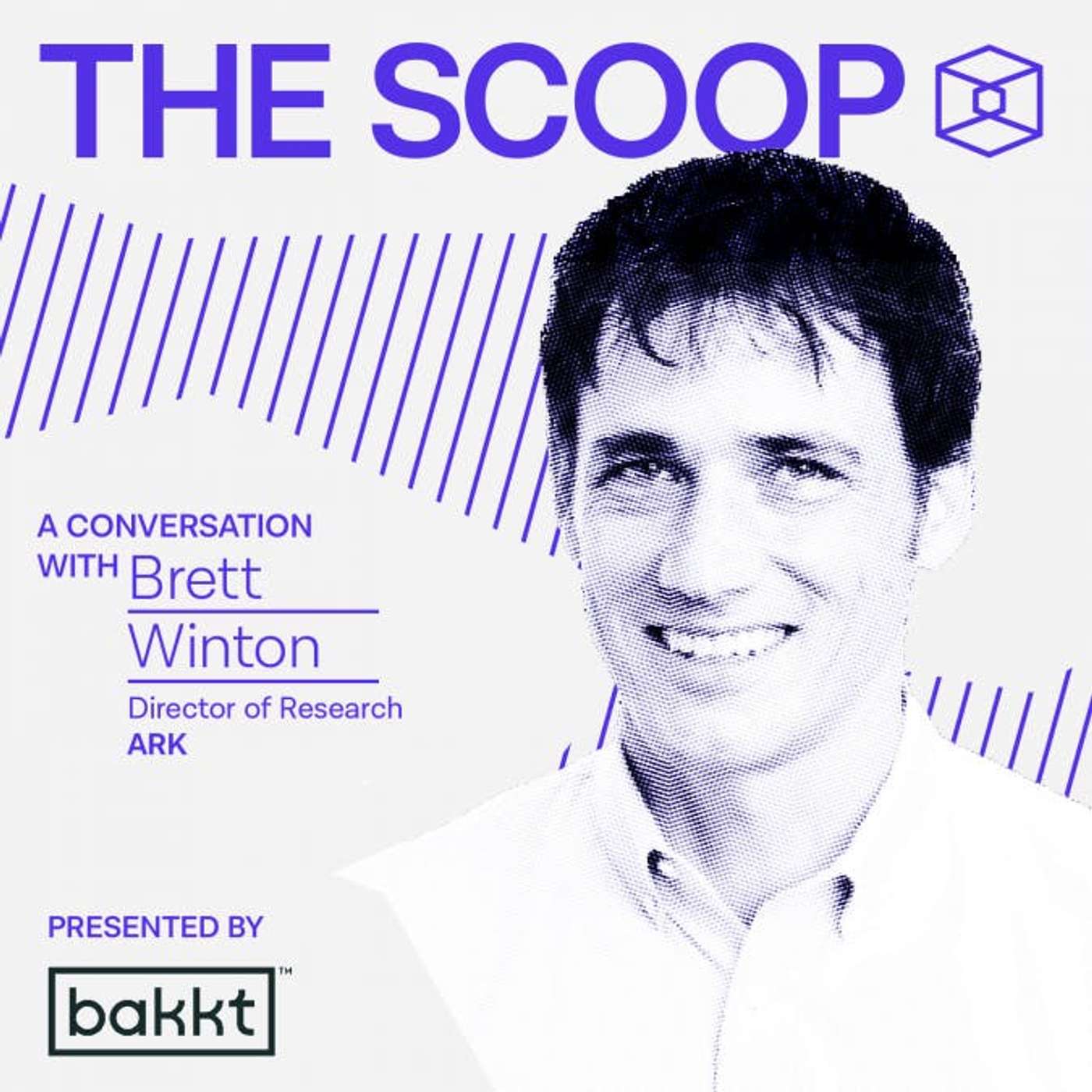
S3 Ep 13ARK's research lead breaksdown the firm's rise, recent market jitters, and bitcoin
ARK Invest has had quite the 2021. Since the beginning of the year—underpinned by unprecedented trading volumes and retail activity—ARK has seen its assets under management soar, buoyed by its bets high-growth tech stocks. Many of the names ARK has backed overlap with the stocks that have become darlings among the Wall Street Bets crowd. Indeed, ARK has grown into a heavy-hitter on Wall Street, with the Wall Street Journal referring to founder Cathie Wood as having on of "Wall Street's hottest hands."The latest few trading sessions, whoever, the firm has experienced a reckoning. The firm's Ark Innovation fund—which includes Tesla, Square, and Silvergate—has fallen sharply past the overall market, as The Journal noted. The $23 billion fund is down more than 30% off its highs. On this episode of The Scoop, Brett Winton—the firm's head of research—breaks down the firm's insurmountable rise, the recent market volatility and macro backdrop, Wall Street Bets and the explosion in retail trading, and the big ideas within the crypto and bitcoin that ARK finds interesting. This episode is brought to you by our sponsors Bakkt and KrakenBakkt® unlocks the $1.2+ trillion of digital assets that is currently held in cryptocurrencies, rewards and loyalty points, gaming assets and merchant stored value. We began in 2018 with the vision to bring trust and transparency to digital assets. Through the Bakkt Warehouse and Bakkt Bitcoin Futures and Options contracts, we serve institutional clients in an end-to-end regulated market with true price transparency. For consumers, Bakkt aggregates digital assets to enable instant liquidity and to empower users to trade, transfer and pay however they want. Visit Bakkt.com for more informationWhether you’re an experienced crypto trader or just starting out, Kraken has the tools to help you achieve financial freedom. With 50+ cryptocurrencies to choose from, industry-leading security and a wide variety of features to suit any investing strategy, Kraken puts the power in your hands to buy, sell and trade digital assets. Visit Kraken.com to get started today.
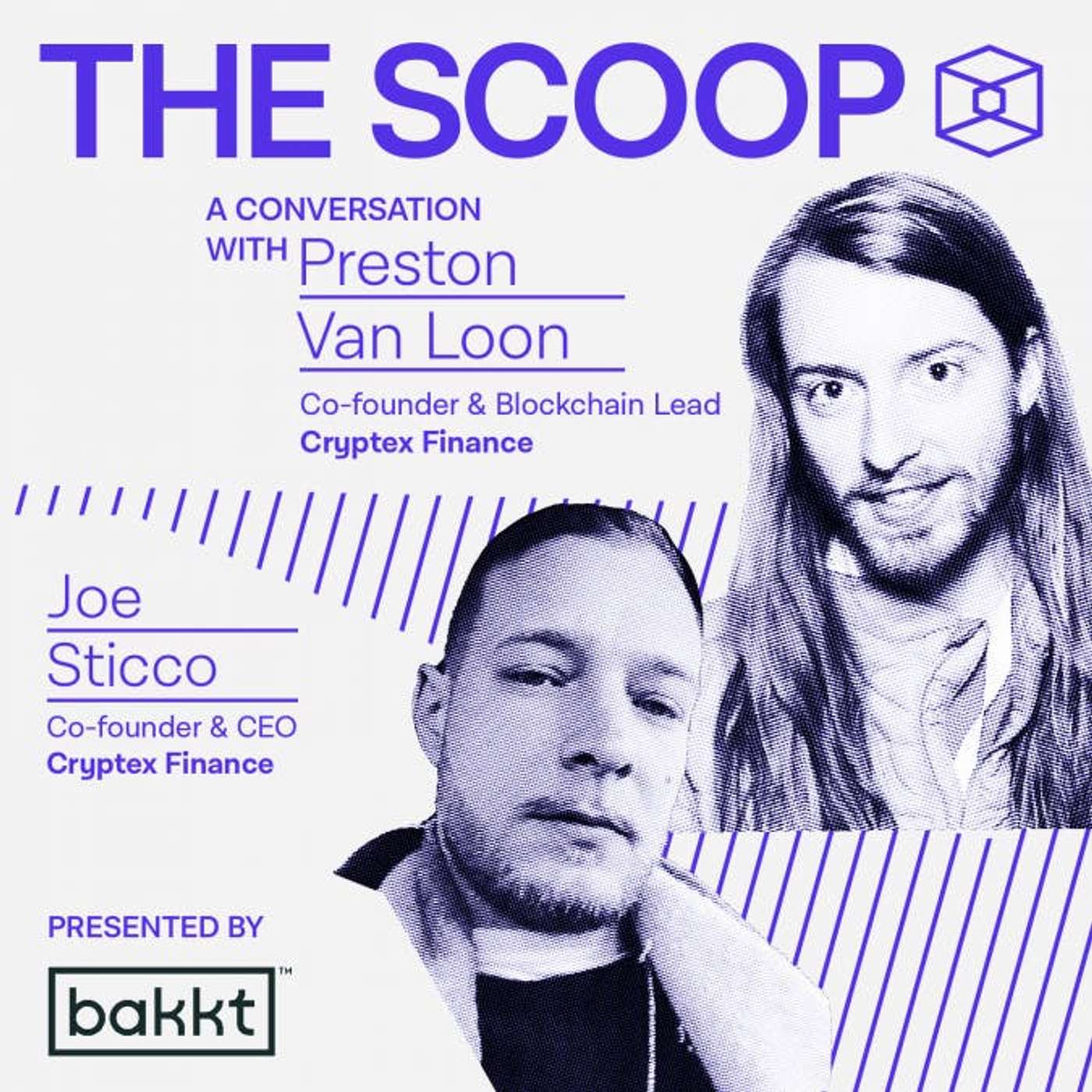
S3 Ep 12Deep dive into Eth 2.0, scaling and a project that lets users buy the entire crypto market
Led by Ethereum 2.0 developer and Prysmatic Labs founder Preston Van Loon and Joe Sticco, Cryptex is set to launch the mainnet of its token TCAP in the next few weeks. Already, the firm has lined up 500 users for its testnet, including a number of liquidity providers in the US.On this episode of The Scoop, Sticco and Van Loon breakdown the launch of their token, which offers investors a way to buy the entire crypto market, how DeFi can offer an alternative to indexes popular on Wall Street, and the scaling solutions being explored in Ethereum. This episode is brought to you by our sponsors Bakkt and KrakenBakktBakkt® unlocks the $1.2+ trillion of digital assets that is currently held in cryptocurrencies, rewards and loyalty points, gaming assets and merchant stored value. We began in 2018 with the vision to bring trust and transparency to digital assets. Through the Bakkt Warehouse and Bakkt Bitcoin Futures and Options contracts, we serve institutional clients in an end-to-end regulated market with true price transparency. For consumers, Bakkt aggregates digital assets to enable instant liquidity and to empower users to trade, transfer and pay however they want. Visit Bakkt.com for more informationKrakenWhether you’re an experienced crypto trader or just starting out, Kraken has the tools to help you achieve financial freedom. With 50+ cryptocurrencies to choose from, industry-leading security and a wide variety of features to suit any investing strategy, Kraken puts the power in your hands to buy, sell and trade digital assets. Visit Kraken.com to get started today.
S3 Ep 11Bloomberg's ETF whisperer says the SEC could approve a BTC ETF
Regulators in Canada approved two bitcoin exchange-traded funds (ETFs) in recent days, marking the first approvals of their kind for North America.Since launch, the products have seen considerable inflows. With the demand for a bitcoin ETF now proven, many wonder what a Canadian approval could mean for a U.S. offering. The Scoop spoke with Eric Balchunas, a senior ETF analyst at Bloomberg, about what an approved bitcoin ETF means for the landscape. During this week's episode Balchunas broke down the winding road to approval and why Canada was always likely to be a first.Now that Canada has its BTC ETFs, he argued that an approval from the U.S. Securities and Exchange Commission (SEC) is just around the corner."I think it's just a matter of the SEC coming around, and then once they come around mentally, I imagine it will happen pretty quickly," he said. "But again, I'm not in that bubble. I'm not a regulatory analyst. That's just my sense from talking to people." How Canada has historically been a proving ground for novel financial products. The differences and similarities in the Canadian and U.S. approval processes. Why Balchunas thinks 2021 will be the year of a U.S. BTC ETF approval. Why it's only a matter of time before a meme ETF launches. This episode is brought to you by KrakenWhether you’re an experienced crypto trader or just starting out, Kraken has the tools to help you achieve financial freedom. With 50+ cryptocurrencies to choose from, industry-leading security and a wide variety of features to suit any investing strategy, Kraken puts the power in your hands to buy, sell and trade digital assets. Visit Kraken.com to get started today.
S3 Ep 10Breaking down Coinbase's S-1 filing and what it means for the bitcoin market
Thursday morning, Coinbase's S-1 filing went public, revealing for the first time details about its financials, cap table, and its pitch to the investment world ahead of a planned direct listing on Nasdaq.In this episode of The Scoop, The Block's director of news Frank Chaparro and director of research Larry Cermak unpack the S-1 filing's headline-grabbing sections and the broader implications of Coinbase's plan on the broader bitcoin market. Coinbase has been preparing to go public for several months. For the past several weeks, the firm's shares have been changing hands on Nasdaq Private Market, with the most recent secondary shares clearing at an average of $373 — implying a valuation of $100 billion. In this episode of The Scoop, Chaparro and Cermak explore Coinbase's revenues, how the firm's institutional business has surged in lockstep with bitcoin's price run-up, and how Coinbase's position as a public company will impact the firm and wider market.

S3 Ep 9DyDx founder unpacks ethereum scaling and DeFi derivatives
Decentralized derivatives exchange dYdX is expanding. After raising $10 million in Series B funding last month, the team is gearing up for its coming V3 launch.Founder Antonio Juliano sat down with The Scoop this week to talk about where the decentralized finance (DeFi) space is going in the coming year. They could be the answer to the traditional financial system's transparency and security problems. But first, they have to scale.Juliano told The Scoop how dYdX is handling scalability, including mitigating high gas fees. They're using ZK-Rollups, or zero knowledge proofs. These proofs take information and create a "constant sized data object" which means no matter how much data is input, the information remains the same size. The idea is that thousands of trades can be compressed into a small size to run on Ethereum, circumventing the high fees.They're planning on launching their scaling solution in partnership with StarkWare in the next two weeks, according to Juliano. Juliano broke down dYdX's path to ZK-Rollups in this week's episode of The Scoop, along with: Where dYdX's origins began and why it was long before the boom of DeFi. How its flagship product, the perpetual swap, works. Why Ethereum layer 2 scaling solutions help projects like dYdX build out their market and which solutions dYdX almost went with. When the DeFi market might collide with the centralized markets, and how interoperability and scaling will lead the way. This episode is brought to you by KrakenWhether you’re an experienced crypto trader or just starting out, Kraken has the tools to help you achieve financial freedom. With 50+ cryptocurrencies to choose from, industry-leading security and a wide variety of features to suit any investing strategy, Kraken puts the power in your hands to buy, sell and trade digital assets. Visit Kraken.com to get started today.
S3 Ep 8Grayscale's CEO details hiring plans, the long-term goal of a bitcoin ETF
Michael Sonnenshein took the reigns of cryptocurrency asset manager Grayscale Investments earlier this year. At the helm of the more than $30 billion investment firm, Sonnenshein is charting a course for a broad expansion of the business, which is best known for its Grayscale Bitcoin Trust."We brought in $5.7 billion last year," Sonnenshein said. "We are launching new products, we are investing in technology, we're building out the various teams, it's really about continuing to stay ahead of the growth we are experiencing at really an unprecedented rate."New inflows into the firm helped push Grayscale's assets under management (AUM) to new highs, while also lining its pockets with fee-based revenue. Estimates by The Block Research suggest Grayscale has brought in more than $109 million year-to-date. In addition to new hires, the firm has a plan for upgrading its GBTC product to an exchange-traded fund should the regulators ultimately approve such a product. "We spent the better part of 2017 in SEC registration for Grayscale Bitcoin Trust," Sonnenshein told The Block. "And we made a lot of progress with the commission and ultimately realized the regulatory environment wasn't ready for a bitcoin ETF and we pulled out of that process."He added:"But we hope in the future, like we were planning to in 2017, to register and uplift GBTC onto a national securities exchange as a bonafide ETF."Still, competition is mounting, with BlockFi and Osprey recently rolling out new funds. There's also Bitwise, which has seen its assets under management climb towards $1 billion in recent months. In this episode of The Scoop, Sonnenshein breaks down its hiring goals for 2021 as well as the following: What a bitcoin ETF approval means for Grayscale's GBTC Why mounting competition will result in fees "absolutely" coming down Why he wants to convince a nation-state to buy GBTC The firm's #DropGold campaign and plans for future marketing campaigns The technology investments Grayscale is making in its platform to make the investing process more seamless This episode of The Scoop is brought to you by KrakenWhether you’re an experienced crypto trader or just starting out, Kraken has the tools to help you achieve financial freedom. With 50+ cryptocurrencies to choose from, industry-leading security and a wide variety of features to suit any investing strategy, Kraken puts the power in your hands to buy, sell and trade digital assets. Visit Kraken.com to get started today.
S3 Ep 7Inside CME Group's journey to launch an ETH futures product
"It's been number one on the ask list for a long time."That's Tim McCourt, global head of equity products for CME Group. Speaking about the reception of the more than hundred-and-seventy-year-old exchange's latest product -- futures based on ETH, the native cryptocurrency of the Ethereum network -- McCourt characterized the response as "overwhelming.""People have been really excited ... I think for a long time customers have really been demanding ether futures. They're really excited about the bitcoin futures and the success they've had," he said on the most recent episode of The Scoop.CME Group saw 388 contracts traded on the first full day of trading for the product, which was announced at the end of last year.That's about 19,000 ETH, or $33 million. The launch of ether futures followed the launch of bitcoin options at the end of 2019 and its bitcoin futures product in 2017. At last check, open interest in CME's bitcoin futures product stood above $2 billion. McCourt said that unlike products trading on other venues, CME's crypto products trade on a venue to which professional market participants are already connected.The firm's crypto products "widgets through the machine” in the same way as its thousands of other contracts, he said. "Your brokers are familiar. Your clearing members are familiar. So you don't have some of those barriers to enter that you have on the spot side."In this episode of The Scoop, McCourt unpacks the growth of CME's crypto products, the development of the overall crypto trading ecosystem, and what might come next for his company's crypto offerings.Episode 7 of Season 3 of The Scoop was recorded remotely with The Block’s Frank Chaparro and Tim McCourt of CME Group.Listen below, and subscribe to The Scoop on Apple, Spotify, Google Play, Stitcher or wherever you listen to podcasts. Email feedback and revision requests to [email protected] episode of The Scoop is brought to you by our sponsors Blockset and Kraken. BlocksetWith Blockset, companies gain access to tools such as:1. A highly scalable API that supports Bitcoin, Ethereum, Ripple, and other top chains2. AML/KYC data expediting time to market by complying with legal requirements3. Leading custody solutions using modern multi-party compute (MPC) technology KrakenWhether you're an experienced crypto trader or just starting out, Kraken has the tools to help you achieve financial freedom. With 50+ cryptocurrencies to choose from, industry-leading security and a wide variety of features to suit any investing strategy, Kraken puts the power in your hands to buy, sell and trade digital assets. Visit Kraken.com to get started today.
S3 Ep 7Former Citadel Securities director explains what happened with Robinhood and GameStop last week
Stock markets have seen unprecedented levels of trading in recent days, fueled by retail trading activity tied to Wall Street Bets. Robinhood — which became the key figure in this drama as the venue through which much of the publicly visible trading occurred — has been a focal point of this market backdrop after buckling under the pressure of heightened activity and temporarily limiting purchases of certain stocks, like GameStop and AMC. In response, Robinhood came forward and tied its response to the underlying settlement infrastructure. Robinhood said in a blog post that the limits on trading were connected to soaring clearinghouse deposit requirements. The firm later said that a move to real-time trade settlement would remedy f the issues that faced not only Robinhood but other brokers. Here's from the blog:"The clearinghouse deposit requirements are designed to mitigate risk, but last week’s wild market activity showed that these requirements, coupled with an unnecessarily long settlement cycle, can have unintended consequences that introduce new risks."Shane Swanson of Greenwich Associates — a market structure wonk and former director at Citadel Securities — breaks down exactly what happened to the markets last week and why things stopped trading on a new episode of The Scoop podcast.Here's Swanson:"I like to use examples because I am a simple guy and examples seem to help. If I am a broker and I have $10,000 worth of capital and these aren't the accurate numbers, but say that allows me to trade $100,000 worth in the market because I have some leverage capabilities. And I am going to let somebody trade with me and I am to give them margin which means I'm going to lend them money and they're going to trade, and I am exposed to that lending risk. And they trade all the way up and they use all my $100,000 that I am allowed to expose myself to, once I hit that $100,000 I can't trade anymore. I can't expose myself to any more risk. I have used up the bucket of capital of which I am allowed to trade now."As for what happens next, Swanson told The Scoop that "it's always hard to go backwards on cost," referring to the ramifications of moving from T+2 to a more instant settlement process."It all depends. If the costs are egregious enough that the industry has to absorb commissions could come back. Movement from T-plus 2 to T-plus 1 settlement would be over a long enough time horizon I believe that would not be something that ends up impacting the retail investors in terms of cost," Swanson explained.
S3 Ep 6The path to a bitcoin ETF, according to a data exec from one of the world's biggest stock exchanges
Cboe is a Wall Street powerhouse. On a typical trading day, the exchange operator handles about a third of U.S. equity volumes. In derivatives, major Wall Street products such as the VIX and S&P 500 options trade hands every day through its venue. Cboe is now trying its hand at the crypto market — again, that is. More than a year after it shuttered its bitcoin futures product, the exchange said that it would re-enter the market through a partnership with crypto data services provider CoinRoutes. On today's episode of The Scoop, Cboe global head of information solutions Catherine Clay lays out the firm's ambitions to build out a business in crypto market data. Clay also touches on how Cboe's plans set the stage for a wide range of tradable products, including a bitcoin VIX-like product to an exchange-traded fund. "You can even think about creative indices that reflect portfolio allocations with digital assets as a component," Clay said. "Bringing this real price data in for the creation and calculation of indexes falls very much in line with how we think about educating the investment sphere and giving people some idea about how to construct portfolios for crypto."For Clay, the relatively undeveloped state of the crypto data ecosystem harkens back to her time trading internet stock derivatives in the 1990s. "It really reminds me of when I was a derivatives trader back in the late 90s trading the internet stock back then that were really volatility," she said. "I remember standing in the pit where I was the lead market maker for Netscape and Double Click and you could imagine back then there was very little data available to understand where the derivatives—the options— listed on those underlying should be priced and traded."In this episode of The Scoop, Clay also discusses Her background as a derivatives market maker and how that history informs her view on the crypto world The use case of the real price data it is now distributing through CoinRoutes The importance of data and analytics for a robust crypto market The pent-up demand from issuers looking to create crypto products What Cboe's next steps might be if the SEC approves a bitcoin ETF
S3 Ep 5Pantera Capital CEO says institutional bitcoin adoption is changing the crypto narrative
Pantera Capital's CEO Dan Morehead says initial coin offerings (ICO) aren't dead, but the narrative is gearing towards a bitcoin and ethereum ruled world for investors."Crypto as a market is so volatile that the narrative changes," said Morehead on this week's episode of The Scoop. That narrative lately has been all about bitcoin's growing adoption. From Microstrategy to Stone Ridge Holdings — and maybe soon the city of Miami — big players are allocating millions into the cryptocurrency.But as the money flows towards bitcoin adoption, ICO's aren't over, according to Morehead. Pantera is still pitched one every two to four months, and the firm's initial coin offering (ICO) fund ended 2020 up more than 500%. Still, that's a sharp decline from the 50 pitches a week Pantera sifted through in 2017, and its bitcoin fund closed 2020 up nearly 300%. The crypto narrative for investors is trending towards bitcoin amid institutional adoption, Morehead told The Scoop."We’re really seeing an inflection point with more coming into the market over the last couple of months....I think the reality is they’re looking for managers that manage multi asset funds sometimes both tokens and venture and they ultimately want that all to be within a handful of managers," he said.Lately, he's getting calls from many endowments, putting the industry at an inflection point with so many entering the space. Driving the interest in bitcoin is the current macro backdrop as well as bitcoin's spring halving last year—which the firm said could play a role in bringing its price to $115,000. He broke down what that means for the coming year on this week's episode, along with: Why the market is so focused on BTC and ETH this time around compared to the focus on initial coin offerings in 2017. What institutional investors want out of a bitcoin or crypto fund manager Why Coinbase's initial public offering will kick off a wave of crypto companies going public. How the industry is going to consolidate in the coming years, and why many exchanges are in a prime position to get rolled up. Why Pantera is "much more bullish on Ethereum" than other parts of the space.

S3 Ep 4'They start with bitcoin:' Polychain's Olaf Carlson-Wee believes big investors will turn their attention to DeFi
"They start with bitcoin. It is the easiest to understand."In the most recent episode of The Scoop, Olaf Carlson-Wee said that recent headlines about institutional investors making waves in the bitcoin market aren't surprising to him. Since he launched Polychain Capital in 2016, he's become familiar with new market entrants who start by exploring bitcoin and then ultimately make their way to other ecosystems. "It isn't surprising that these big institutional investors are first getting involved with bitcoin," he said. "This is effectively electronic gold. Everyone can reason about gold and the value of gold in an easy way."From Anthony Scaramucci to Paul Tudor Jones, the bull case for bitcoin as digital gold has been all but cemented as a Wall Street talking point. Yet his interest in bitcoin will find its way to DeFi, Carlson-Wee argues."Once you have $100 million of bitcoin, you might start to think how I could get yield on this bitcoin for example," he said. "A lot of the time the answer there is through on-chain financial contracts."Carlson-Wee also believes that interest in DeFi products and services will buck the example of the 2017 ICO bubble and be more long-lasting.As he put it during the interview:"The summer of ICOs was a summer, the summer of DeFi was just the beginning of multi-years of compounding growth. The financial engineering in DeFi, I think, at this point is inarguably moving faster than the financial engineering anywhere else in the world. The capital coordination is faster than anywhere else in the world. A lot of these DeFi protocols are bigger than IPOs—regularly. Despite that go regularly unnoticed and are hard to interact with. The user experience barriers here are very high and despite that we see significant traction in terms of volumes."Still, Olaf-Carlson Wee said DeFi market participants need to work out the UI problems that make platforms difficult to use. In this episode of The Scoop, Olaf Carlson-Wee digs into: The differences between the ICO boom and the current market rally How DEXs went from being irrelevant to facilitating billions of dollars in volumes Where DeFi goes next What he thinks about the upcoming Coinbase IPO YFI's recent proposal to increase inflation Polychain's lessons learned from the previous 2017 cycle

S3 Ep 3A deep dive into Coinbase's acquisition of Bison Trails
Count this as one of the first major acquisitions deals of 2021: Coinbase said on Wednesday that it is set to acquire crypto infrastructure services provider Bison Trails for an undisclosed sum. On this episode of The Scoop, Coinbase chief product officer Surojit Chatterjee and Bison Trails CEO Joe Lallouz unpack the deal with The Block's Frank Chaparro and Ryan Todd. "Bison trails is going to serve as a foundational product within our product portfolio: what we call our ecosystem products," Chatterjee, a former executive at Google, said. "So staking infra services is a start point, but we are going to look at other potential services that we can externalize, that we can create as a service."The deal represents a bigger push by Coinbase to offer its internal solutions to new client segments, Chatterjee said."Over time you will see we will extend additional infrastructure and API services, many of which have actually been developed to power our internal Coinbase product," he added. "We want to externalize them make them services for the entire crypto ecosystem."In this episode of The Scoop, we explore various aspects of the deal, including: What it could mean for Coinbase's existing staking offering How it improves Coinbase's standing as an infrastructure as a service provider in the crypto market How the Bison Trail's team could lead to new external API services for big ticket clients and help improve existing services Chatterjee's product philosophy for Coinbase Recent moves by rivals to snag banking licenses from the OCC

S3 Ep 2Meet the CEO trying to convince every multi-billion dollar insurance fund to buy bitcoin
Bitcoin investment firm NYDIG raised $50 million in October, quadrupled its clients and life insurance company MassMutual purchased a minority stake in the firm.This came about because bitcoin is transitioning to a predominantly institution-owned asset, according to NYDIG CEO Robert Gutmann. MassMutual made a $5 million equity investment in NYDIG last December, as well as a $100 million bitcoin investment for its general investment account through NYDIG. On today's episode of The Scoop, Gutmann said this event could open the floodgates for insurance giants to get in on bitcoin.“You are going to see a lot of dominoes fall after this," he said.Based on the set of macro circumstances 2020 presented, insurance companies are starting to question whether they can go forward only buying corporate credit to make good on policies, according to Gutmann. "Over some number of years, it's hard for me to imagine it is not all of them [investing in bitcoin]," he said. "If MassMutual can get there from a diligence perspective so can the next one...It's definitely coming."He also sees publicly-traded companies following in the footsteps of Square and MicroStrategy. Both firms allocated a portion of their balance sheets to bitcoin. In Gutmann's view, these companies have a "fiduciary duty to consider whether holding 100% of your assets in dollars is in the best interest of your shareholders.""Reasonable people can have different opinions about that, but I personally don’t think only Jack and only Michael and no one else is going to do a cold analysis of that and not come to that conclusion," he said.On today's episode of the Scoop, Gutmann also touched on: Why he expects more insurance companies will enter the crypto space over time How the MassMutual deal came to be Why public companies are interested in bitcoin and how the adoption narrative for public companies is similar to that of insurance firms Why his institutional clients are only interested in bitcoin NYDIG's M&A strategy. Listen to today's episode on Apple, Spotify, Google Play, Stitcher or wherever you listen to podcasts.
S3 Ep 1'This is not November 2017' says Mike Novogratz on bitcoin's price gyrations
After bitcoin's price fell from its highs above $40,000 this past weekend, investors were left arguing about whether that drop to almost $30,000 was an inevitable market correction or a sign of something more sinister.Indeed, liquidations across futures venues soared to more than $3 billion as crypto exchange Coinbase reported persistent technical issues. But Galaxy Digital's Mike Novogratz isn't particularly worried. "I am positive this is not November 2017," he said on this week's episode of The Scoop. "Listen, the market got way, way overbought. It was overbought by every statistic, every metric you can look."In spite of a fallen price, Novogratz said the real thesis of the past few months was adoption. More people have heard the bitcoin story, according to Novogratz, and a price correction won't meaningfully undercut that progress. There are still institutions waiting to buy, he said."The bitcoin-as-a-hard-asset story remains intact," Novogratz added. "This is a wash-out, a position wash-out. I don't think it will be long-term damaging. $30,000 should hold." He went on to highlight institutional firms that "haven't filled their coffers yet that continue to want to buy.""Insurance companies, asset managers, big institutions haven't bought bitcoin yet and they want to," said Novogratz.During this week's episode, Novogratz explains how he and Galaxy Digital are navigating the market correction, as well as: Why this price drop won't scare off institutional investors The impact of the macro background and fiscal spending under a Joe Biden-led administration The businesses he's most excited about, particularly in the decentralized finance space How he's viewing Bakkt and Coinbase's plans to go public His advice for new market entrants. This episode of The Scoop is brought to you by Blockset. With Blockset, companies gain access to tools such as:1. A highly scalable API that supports Bitcoin, Ethereum, Ripple, and other top chains2. AML/KYC data expediting time to market by complying with legal requirements3. Leading custody solutions using modern multi-party compute (MPC) technology Learn more and start building today.
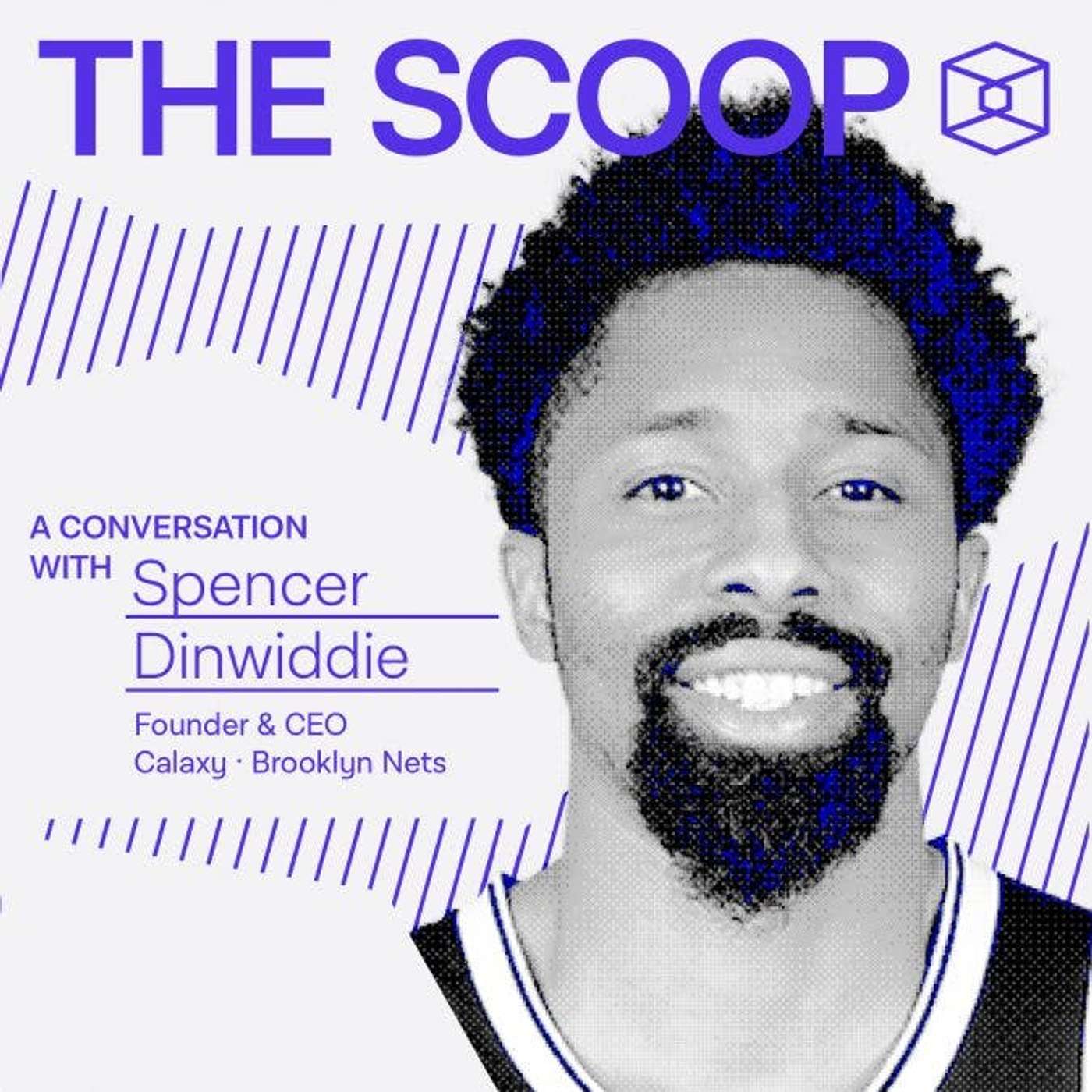
S2 Ep 47The inside story of NBA star Spencer Dinwiddie's crypto journey
On this episode of The Scoop, The Block's research team speak with Dinwiddie about his crypto journey, what originally got him excited about the space, what made him buy bitcoin, the investments that have made him excited about DeFi, Calaxy, and the NBA.
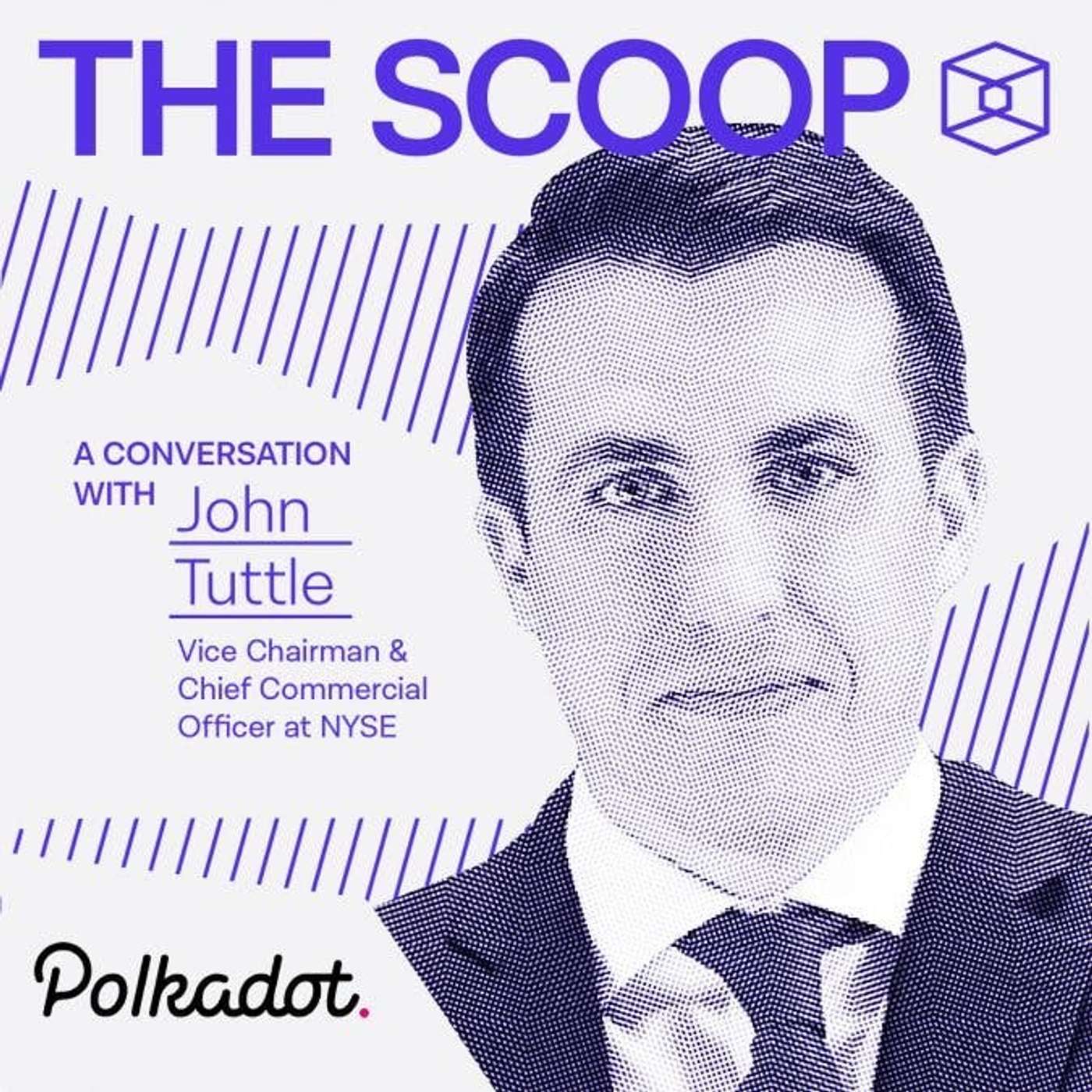
S2 Ep 46NYSE vice chairman: Talks are 'accelerating' with crypto firms that want to go public
Despite the uncertainty of the global economy in 2020, the New York Stock Exchange has had a strong year, helping companies raise more than $66 billion. In many respects, it has been the year of Special Purpose Acquisition Companies (SPACs), according to vice chairman John Tuttle. This year, firms have raised billions through the acquisition-style mechanism.During this episode of The Scoop, Tuttle — who previously led NYSE's global listings business — explained why the fundraising method has taken the markets by storm and how they've evolved from a lackluster funding mechanism to a red-hot fad on Wall Street. "Let's look back ten years or so, SPACs were a four letter word, they didn't have the best reputation, the sponsors didn't necessarily have the best interest in mind of investors in the market place," Tuttle said.He went on to explain:"And they largely fell out of favor. Several years ago you started seeing some rule changes around SPACs to address some of those challenges that SPACs had a decade or so ago and you started seeing higher qualities sponsors come into market.What do I mean by that? Folks that—whether it be the Goldman Sachs or the Gores Groups of the world. Folks that had very well-respected reputations in the marketplace both as financial partners but business partners as well too. You started seeing deals be larger in size. You started see well respected names launch SPACs and partner with SPACs and partner with SPACs, and that's what gave credibility to the product."Indeed, some crypto firms have been considering SPAC-centric strategies, including BlockFi and Ripple. There's also firms like Coinbase, which is said to be in the process of going public in the near-term, as previously reported by Reuters. Tuttle says that the exchange group is talking with crypto firms about tapping into public markets. "It has been a space that's been of interest for quite some time," he said. "We've had discussion with companies that have been thinking about accessing the public market, from that space, crypto blockchain digital assets.""Those conversations continue, they're accelerating," he added. "And I also think that digital assets, crypto are going to play somehow somewhere some way an important role in the market of the future."_________________________________This episode was brought to you by Polkadot Decoded, the Polkadot community conference on December the 3rd. Don’t miss this opportunity to tap into the latest developments and discover what lies ahead in the Polkadot ecosystem, including Gavin Wood in conversation with Laura Shin and a panel moderated by The Defiant founder Camila Russo. . Save your spot today!
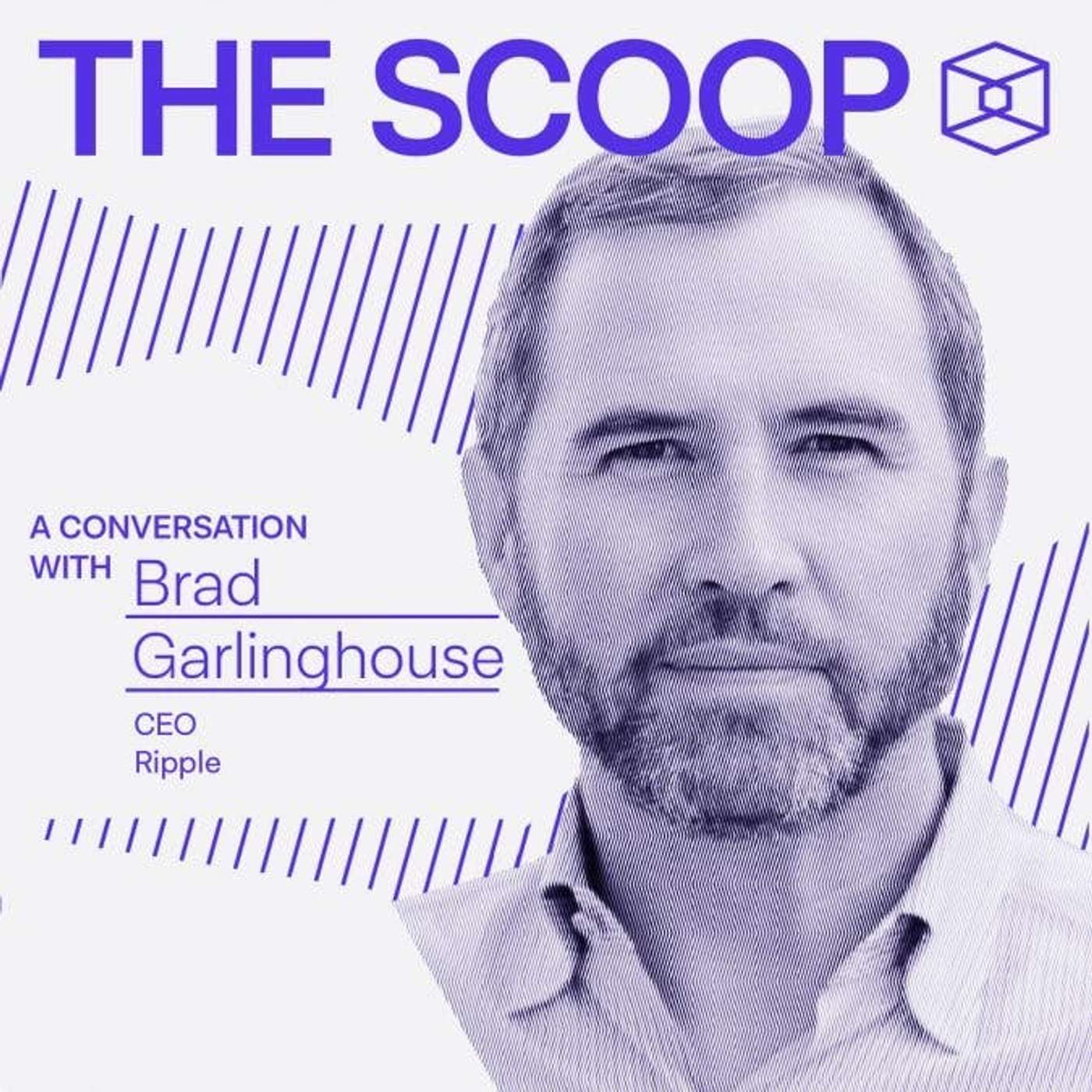
S2 Ep 45Brad Garlinghouse explains how regulatory uncertainty around XRP has affected Ripple
CEO Brad Garlinghouse says in what was poised to be a challenging year, Ripple exceeded his expectations for 2020. "We aren’t going to grow as fast this year as we thought. However, we’re still getting two production financial contracts a week," he said.Indeed, the digital asset and payment system has seen some days this year in which XRP liquidity on Bitso exceeded BTC. But still, an opaque regulatory atmosphere has kept Ripple from reaching its potential, Garlinghouse argued in an interview with The Scoop's Frank Chaparro.According to Garlinghouse, there isn't a "level playing field" for all digital assets in this regulatory climate."Bitcoin was the only one with the hall pass," he said.This creates an atmosphere in which assets without clarity underperform, according to Garlinghouse.On this week's episode, Garlinghouse discussed how Ripple is "fighting with one hand tied behind our back," as well as: Why big banks aren't partnering with Ripple, but smaller banks are interested The ways regulatory clarity has benefited bitcoin but not other digital assets, and why the lack of clarity impedes Ripple's growth Why Ripple is currently not planning a blockchain initial public offering (IPO) How central banks are looking into XRP-based ledgers.
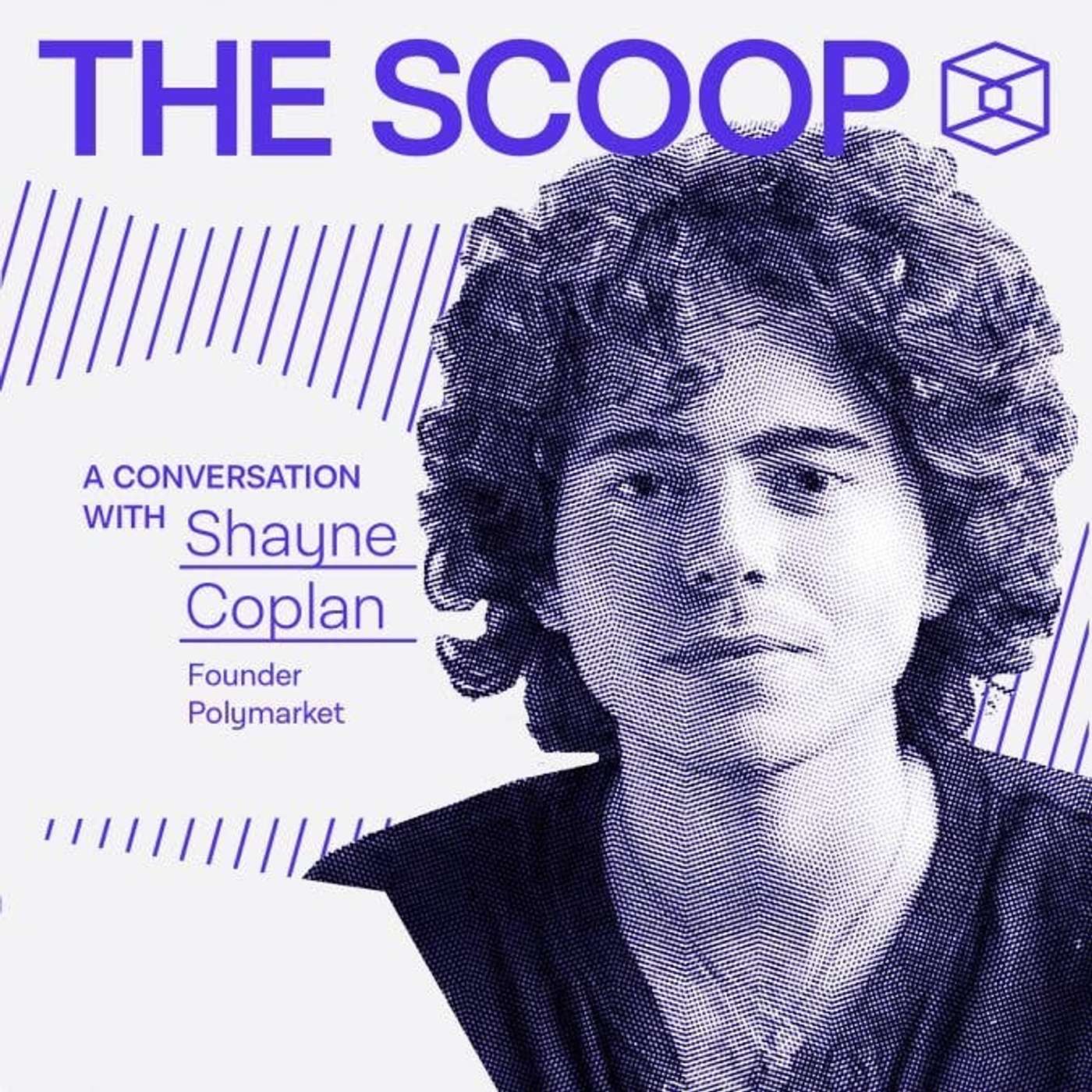
S2 Ep 44As Polymarket's profile rises with the U.S. election cycle, founder Shayne Coplan says it's just the beginning for prediction markets
Shayne Coplan thinks information markets are the future, and with the recent influx in volume to his platform Polymarket, it seems they are rapidly becoming the present. In recent weeks, the prediction market platform has done millions in volume with its various election markets, which span from the U.S. presidential election to state calls. The platform's "Will Trump win market" has surpassed $8 million in volume.As the U.S. presidential election grew ever-tighter on November 3 and 4, many crypto minds noted that Polymarket's odds more accurately reflected the outcomes compared to traditional models like Nate Silver's FiveThirtyEight.Coplan says he has no doubt in the growing future of prediction markets, and on this week's episode of The Scoop, he laid out why he believes markets are the most reliable source of sentiment data. He also touched on: How he went from early ethereum adopter to founder of a company Why he believes markets are superior to polls, and how prediction platforms can change the way information is interpreted Where Polymarket sits on the sliding scale of decentralization and what that means for compliance How Polymarket's second version is lowering the barrier to entry and what tools are making adoption easier What's next for Polymarket after the U.S. presidential election resolves.
S2 Ep 43LMAX's CEO breaks down the real impact of the U.K. crypto derivatives ban
The ban will take effect in January of next year, affecting crypto brokers, investment platforms, financial advisers and, of course, derivatives exchanges. But, David Mercer, CEO of LMAX Group, said what the ban really does is effectively halve the leverage. The FCA had already limited leverage to retail customers to two to one, now it's one to one. "You've banned derivatives, but actually you've just halved leverage. It's one to one rather than two to one. That's all that's really happened," said Mercer. "What they're saying to everyone, you can own crypto assets you just can't own it on leverage. "Still, Mercer said there is a duty in capital markets to protect retail investors and firms have a duty of care. LMAX Group is a regulated broker in the U.K. trading mostly spot, but clients still pass suitability tests indicating their understanding of the product. Working with regulators, even when you disagree with them — and Mercer said he does disagree with the ban — is key.Mercer laid out why he thinks the FCA took such an aggressive approach on this issue as well as its implications on this episode of The Scoop. He also touched on: Why normal corporate firms are beginning to set aside part of their balance sheets to bitcoin, and why Mercer says it's inevitable that bigger traditional funds begin allocating portions of their portfolio to bitcoin How the market responded to regulator cases against Bitmex The implications of the FCA ban and how the regulator's influence might change by ignoring crypto stakeholders Why he thinks a significant bank will move into the marketplace in 2021 and what that will do for crypto.
S2 Ep 42DC veterans say money is key for crypto issues to be heard. So, they formed a PAC
HODLpac is seeking to put the benefits of crypto protocols on display, borrowing from the industry in its governance and voting structure to apportion collected funds to candidates. Though it doesn't accept donations in crypto yet, it does follow a token-based voting structure to determine who the PAC will support and how much a candidate might receive.Its first Community Ballot will occur tomorrow, meaning those who are interested in donating and voting on candidates still can. For more information, Whirty and Smith broke down the structure and purpose of the project on this week's episode on The Scoop.Whirty and Smith also discussed the opportunities of a blockchain-based PAC and where they see the project going, as well as: How a crypto-focused hybrid PAC operates and why it's needed in Washington The PAC's quadratic voting structure and how quadratic voting can lessen the disparity between hyper-wealthy and average donators The road to more decentralized governance and a grassroots base An inside look at the way money talks in Washington — and why a PAC or donation-based opportunity may be a faster way to get an issue on the floor What the different 2020 election outcomes might mean for crypto.
S2 Ep 41ARK Invest's crypto analyst says bitcoin market cap could hit $3 trillion by 2025
Yassine Elmandjra, crypto asset analyst at ARK Invest, published a white paper recently that argues Bitcoin could reach three trillion dollars in market cap by 2025. On this week's episode of The Scoop, he broke down how he arrived at that conclusion.ARK began looking into digital assets in 2015, when BTC was trading around $250. At that time, the firm published a white paper arguing BTC was unique and didn't fall into a traditional asset class. Now, it's published a part two to that early paper aimed at institutions. "In addition to sizing that opportunity for institutions, we really tried to look at what the liquidity and volume profile of Bitcoin are relative to other asset classes and whether or not we're at we're at a place where Bitcoin can support the institutional flow that we so desire," he said. "With that...indeed, we think that over the next five years, Bitcoin presents a multi trillion dollar opportunity."Elmandjra detailed the path to the moon on this week's episode, as well as: The relationship between Bitcoin, the S&P and gold and what that means for strategic allocation What increasing volumes means for Bitcoin's maturity as an institutional asset What the main pain points are for institutional adoption of Bitcoin, like the lack of primer brokerage firms and large custodians What it would take for Ark to gain spot exposure of bitcoin in the future
S2 Ep 40Stephen Palley gives an in depth look at the BitMEX charges — and what it could mean for DeFi regulation
Last Thursday, BitMEX found itself embroiled in both a civil and criminal case with the Commodities Futures Trading Commission (CFTC) and the Department of Justice (DOJ), respectively. BitMEX was hit by twin lawsuits. The CFTC accused the derivative exchange and its operators, including CEO Arthur Hayes and co-founders Ben Delo and Samuel Reed, of running an unregistered trading platform and violating anti-money laundering and know-your-customer regulations.The DOJ filed a criminal indictment against Hayes, Delo, Reed and head of business development Greg Dwyer for allegedly violating the Bank Secrecy Act. Reed himself was arrested. Responding to the breaking news developments, Stephen Palley, partner at Anderson Kill, featured on this week's episode of The Scoop to break down the nuances of the two cases. He touched on: The process for litigating Bank Secrecy Act violations, and why it's likely the BitMEX operators are likely on the hook for possible prison time What this case means for the growing decentralized finance space Key facts in each filing that will be impactful going forward Why it's surprising that the BitMeX domain has not been seized by law enforcement

S2 Ep 39CoinGecko founder explains how the platform saw DeFi mania coming
"We knew that DeFi was going to be big and important about sometime last year."CoinGecko co-founder TM Lee has been keeping a pulse on the space since starting the platform as a project with his co-founder in 2014. The initial coin offering (ICO) boom of 2017 multiplied the traffic tens of times over, cementing CoinGecko as a popular crypto metrics provider. Now, CoinGecko is in the midst of another boom — the decentralized finance (DeFi) explosion. The platform has gained even more popularity listing hundreds of DeFi tokens, becoming a hub of information on for those interested in the ever-increasing projects. But even though CoinGecko saw the DeFi explosion on the horizon thanks to a few team members interested in the space, on this week's episode of The Scoop, Lee said he wasn't expecting the magnitude seen today."If you asked me last year, would DeFi be big today? I just couldn't see that. Will Uniswap be a billion dollar trading volume that beats Coinbase? I would also say that's not possible. But we are in this world right now," he said.On this week's episode, Lee talked about how DeFi mania is changing up the platform's approach as well as: The genesis of the platform, from early days in 2014 through the ICO craze of 2017 to today What's driving Coin Gecko's growth now, and why the explosion came only recently How the platform balances offering a wide array of DeFi projects with protecting users from possible scams How the team is working to stay ahead of the curve during DeFi mania Why the investment side of the team's operations is key in the current climate.
S2 Ep 38'It doesn't need me:' yearn.finance's Andre Cronje on the protocol's path to decentralization
In the fast-paced world of decentralized finance, the people behind the protocols are sometimes just as captivating as the protocols themselves. That's certainly the case for yearn.finance's Andre Cronje, the former banking developer who seemingly built out both a cult following and billion dollar protocol over night. Indeed, the governance token tied to the protocol, YFI, has surged beyond $30,000 since its inception at the beginning of the summer. If it was up to Andre, however, he wouldn't be affiliated with the protocol as much as he is. Cronje is currently trying to expand the number of folks responsible for shepherding the protocol.In the most recent episode of The Scoop, he explained why a proper decentralized protocol doesn't need a decision-maker or figurehead, and discussed yearn's planned transition to a more decentralized model in which multi-sig holders would approve strategies. "We haven't fully transitioned yet," he said. Still, he said: "I disagree with this idea that people have that I am yearn because it doesn't need me. If I were to have a heart attack on this call now, it's going to continue without me."We also discuss: Challenges of decentralized governance and how the yEarn community has fared Why it's difficult for other projects to replicate YFI's success with their token launches How the experimentation happening in the DeFi world matters to the traditional world of finance What lowering the barrier of cost in DeFi means for innovation What's behind the kind of toxicity in the space that almost drove him out Some of the new project ideas yearn is working on, such as Stablecredit
S2 Ep 37Kraken gets green-light to launch crypto bank
S2 Ep 36This bitcoin quant trading CEO explains how to navigate events that data can't predict
This year has been unprecedented in many respects, with the coronavirus pandemic rocking markets and driving volatility in ways many couldn't predict.Quant trading firms — or firms that base their trading strategies on statistic models — were seemingly left at a disadvantage as firms like Winton and others lacked the data for such unprecedented events. On this week's episode of The Scoop, Martin Green, co-CIO and CEO of quant trading firm Cambrian Asset Management, broke down what it's like to run these strategies in a time when so many events were statistically unlikely.A lot of it, said Green, comes down to the manner in which models are built to identify and respond to types of risk.During this week's episode, Green also touched on: Why human judgment is valuable in building models, but is better left behind once models are executing trades How market data in crypto has changed as the quant firm built out its data stores How the firm views risk management and why identifying types of risk in the digital asset world is key to a winning strategy How Cambrian is getting in on the decentralized finance mania and how the firm's risk strategy interacts with the space This episode of The Scoop is brought to you by Bitstamp, the original global cryptocurrency exchange. Since 2011, Bitstamp has been a cornerstone of the industry, earning the trust of over four million individuals and top financial institutions looking for a reliable trading venue. Whether you’re trading on our web platform, mobile app or industry-leading APIs, Bitstamp gives you the professional-grade tools you need to execute your strategy. Download the Bitstamp app or visit Bitstamp.net/Pro to learn more and start trading today!
S2 Ep 36A deep dive into FTX's acquisition of Blockfolio, DeFi, and Serum with Sam Bankman-Fried and Ed Moncada
Last week, FTX announced it would acquire crypto data tracking app Blockfolio for $150 million. In this episode of The Scoop, Blockfolio co-founder Ed Moncada and FTX's Sam Bankman-Fried talk about the logic behind the deal and what the firms plan to build together. We also talk about the burgeoning decentralized finance space and how Jump Trading is going to play a big part in FTX's upcoming DEX, Serum.
S2 Ep 35Senior Coin Metrics analyst breaks down everything you need to know about stablecoins
When Bitcoin emerged, its white paper touted a myriad of use cases that had the potential to rock the traditional finance world.But the idea of using an asset that could severely fluctuate in value as a medium of exchange doesn't quite make sense to some. This, says senior Coin Metrics analyst Nate Maddrey, is why we have stablecoins.On a previous episode of The Scoop, Martin Chavez said Bitcoin doesn't qualify as money in his book — it's a commodity. On this week's episode, Nate Maddrey breaks down how stablecoins were a reaction to this problem long before they were a trading tool."I think it's important to note that that stablecoins, they capture all of the benefits or most of the benefits of something like Bitcoin where it's censorship-resistant...but it has that relatively stable price and that unlocks just a whole bunch of new use cases," said Maddrey.Tether was the first in 2014, but since then, many others have followed suit. On this week's episode, The Block dives into the history and mechanics of stablecoins with Maddrey leading the way, discussing: The different categories of stablecoins and why most follow a so-called "Tether model" How the Tether controversy happened and why the cloud of concern has somewhat dissipated Why calling them "stablecoins" may be a misnomer depending on what the word "stable" connotes His take on the growing USDC supply How the stablecoin world will affect the decentralized finance (DeFi) movement
S2 Ep 34Why commodities veteran Chris Hehmeyer is "committing to crypto"
Chris Hehmeyer has long been a big player in the U.S. futures and commodities industry, but now he's all in on crypto. On this week's episode of The Scoop, Hehmeyer explained why. Hehmeyer began its push into crypto during the 2017 bull run. Competitive pressures in its traditional futures business led to the firm's pivot earlier this year full-time into crypto. Hehmeyer said he wanted to signal to clients that the firm was ready to commit to the growing crypto market.That commitment coincided with the growth of the futures market and bespoke products. With a decade of experience in traditional futures markets, Hehmeyer Trading may be poised to capitalize on that growth. On this week's episode of The Scoop, Hehmeyer talked about where he sees that growth happening, as well as: Where he sees growth is happening in the crypto derivatives market, given years of experience in the traditional futures market How he's making markets in some of crypto's newer products, dealing in spot and hedging in derivatives How being a Chicago shop getting into the crypto space differs now from 2017 Why the decentralized finance (DeFi) space is the next frontier for firms like Hehmeyer, and how the firm is currently "dabbling" What the current DeFi "euphoria" could indicate going forward
S2 Ep 33How Tron's Justin Sun plans to use Poloniex to capitalize on the DeFi craze
In the episode, Justin Sun broke down how Poloniex fits into Tron's plans to capitalize on the DeFi mania. He also discussed: Why increased network effects will keep Tron from being left behind as more protocols emerge The strategy that brought in enough Tether to grow the number of stablecoins on the Tron blockchain to 3.7 billion His response to those who argue Tron is more centralized and those concerned the network has its roots in plagiarism His story behind the Poloniex deal Why memes are a key community building strategy
S2 Ep 32Sven Henrich on the Fed’s debt trap and why it’s causing more harm than good
The age of the new day trader has come about at an uncertain time for the world and the markets, meaning downturns and upturns are fleeting. Sven Henrich, founder of NorthmanTrader, is an expert at reading the macro signs of the market. On this week's episode of The Scoop, he cautioned against continued interventions by the Federal Reserve that have kept the new generation of traders from a prolonged bear market.Henrich's firm provides macro views and technical analysis to its subscribers, and on Twitter, he's been highly critical of the Fed's actions in recent weeks. He's been raising the alarm of coming consequences due to what he sees as the central bank's refusal to take on any pain. On this week's episode, he broke down macro events in the time surrounding the COVID-19 pandemic, touching on: Why continued market interventions could create stresses that investors might be overlooking in a strong tech market narrative What the growing divergence between gold and tech stocks means for economic growth Where to allocate capital as governments debase currencies and real interest rates drop Why bitcoin isn't a hedge against the monetary side when you look at its price action Why the next two months are critical for the strength of the dollar
S2 Ep 32IEX co-founder Ronan Ryan on why bitcoin exchanges will eventually charge for market data
The cost of market data is an ongoing debate in the traditional finance world, but in crypto, not so much. But during this week's episode of The Scoop, Ronan Ryan, head of IEX, the Investor's Exchange, said that's going to change.Ryan broke down the market data discussion from both the traditional and crypto viewpoints on this week's episode. He also explored: What it's like to host a podcast and what value he hopes it adds Why crypto exchanges aren't charging for market data...yet Why traditional finance giants like Fidelity are urging regulators to take a close look at market data fees How regulators are slowly but surely coming up with parameters for rebates, fees and the selling of market data How IEX led the way on the implementation of a speed bump, faced pushback from Nasdaq and others only to eventually have their idea go mainstream
S2 Ep 31Fundstrat's Tom Lee on why boomers are buying gold while millennials are trading bitcoin
Bitcoin and gold have both climbed higher in recent weeks, but any correlation between the two is still too slight to take seriously, according to CoinMetrics. Fundstrat managing partner Tom Lee offered a different explanation on this week's episode of The Scoop — that boomers and Millenials are taking sides.Lee pointed out that it's likely an older generation piling into gold with huge cash positions. For those who missed the market rally, gold likely became a more attractive position as inflation rose.As boomers load up on gold, members of Generation X and Millenials are buying up tech stocks. As tech stocks become more attractive and cash less so with concerns surrounding the coronavirus pandemic, the perception towards bitcoin is shifting as well, according to Lee."Because of coronavirus, I think we're seeing businesses essentially go cashless and therefore digital money is making it easier to understand the value of Bitcoin, which is essentially a settlement network that isn't denominated in dollars," he said.Research from JPMorgan seems to agree with Lee. An August 4 note from the bank's strategists said millenials seem to prefer tech stocks while older investors are selling shares and buying bonds. However, this doesn't mean the institutions are likely to jump in any time soon. As Bitcoin's value rises, Lee said that there might be more parallels to gold. On this week's episode, Lee broke down his other takes on current market conditions, including: Why the negative impact of COVID-19 on markets has waned How the virus has affected Fundstrat's so-called granny shots list, a list of easy-win stocks The relationship between traditional markets and bitcoin price volatility The impact of election cycles on traditional and digital assets and how the winner will effect the market's movements Why he hates being called a perma-bull Listen to this week's episode on Apple, Spotify, Google Play, Stitcher or wherever you listen to podcasts.
S2 Ep 30A retail brokerage veteran breaks down why crypto IPOs are good for bitcoin
During this week's episode of The Scoop, Ehrlich broke down what he shares on those calls. Voyager conducted its initial public offering (IPO) through a reverse merger, listing on the Canadian Securities Exchange and trading in over-the-counter (OTC) markets. While an IPO calls for extensive regulatory filings and investment bank backing, a reverse merger sees private company investors acquire shares of a public but inactive corporation. In Voyager's case, it acquired the shell company UC Resources Ltd., which was publicly listed on the Canadian TSX Venture Exchange.Voyager was an early addition to the IPO party, though Mike Novogratz's Galaxy Digital had already gone public on TSX in August 2018. Now, there's growing interest in crypto IPOs, with rumblings of Coinbase and BlockFi looking to take the plunge. While crypto touts transparency, IPOs put a firm's inner workings on display, opening the door for merger and acquisition activity, according to Ehrlich."You go public and it's right there in front of everybody: what you're worth, what your stock's worth, the financials of the company, the metrics of your company. It's there and it's a currency now to go make acquisitions," he said.Ehrlich discussed the different approaches to crypto IPOs and which firms are right for which routes on This Week's episode. He also discussed: How his early days at E*Trade prepared him for the current retail mania, and how 2020 parallels the late 90s What Coinbase needs to consider before it makes moves to go public Why the current brokerage rush won't end well for most To what degree the fintech space is looking to leverage crypto and why it means widespread adoption is coming — just on a longer timeline.