
The Science of Happiness
358 episodes — Page 3 of 8

Happiness Break: A Self-Compassion Meditation For Burnout
Feeling burned out? Join Dr. Kristen Neff as she guides us through a calming practice to bring kindness and support to ourselves during tough times.How to Do This Practice: Sit in a quiet, comfortable space, close your eyes if you wish, and take deep breaths to center yourself. Observe how you’re feeling—physically and emotionally—without judgment. Acknowledge your struggle: This is hard. Burnout is a natural human response to stress. Offer yourself kindness. Imagine a compassionate voice saying: I’m here for you, you’re doing your best, you’re loved just as you are. Let these words fill you with warmth and calm. When ready, open your eyes and bring this renewed energy into your day. Today’s Happiness Break Guide:Dr. Kristin Neff is an associate professor in the University of Texas at Austin's department of educational psychology. She's also the co-author of 'Mindful Self-Compassion for Burnout,' which offers tools to help individuals heal and recharge from burnout.More Happiness Breaks like this one:The Healing Power of Your Own Touch: https://tinyurl.com/y4ze59h8Take a Break With Our Loving-Kindness Meditation: https://tinyurl.com/2kr4fjz5We’d love to hear about your experience with this practice! Share your thoughts at [email protected] or use the hashtag #happinesspod.Find us on Apple Podcasts: https://tinyurl.com/2p9h5aapHelp us share Happiness Break! Leave a 5-star review and share this link: https://tinyurl.com/2p9h5aapTranscription: https://tinyurl.com/485y3b4y

The Contagious Power of Compassion
Compassionate dialogue isn’t just about talking and listening—it's a meaningful way to bridge divides, cultivate belonging, and reimagine education as a space for connection.Summary: In this episode of The Science of Happiness, we explore the role of compassion in education and connecting across differences. We explore the bravery it takes to have tough conversations, how to create spaces where everyone feels they belong, and the profound impact of addressing marginalization in the classroom. Plus, we uncover practical ways to turn these classroom lessons into meaningful, real-world connections and community building.This episode is sponsored by The Arthur Vining Davis Foundations.Scroll down for a transcription of this episode.Today’s Guests:JACKIE JUSTICE, M.A.E.T., is an English and humanities professor at Mid Michigan College, where she teaches courses in writing, literature, culture, and compassion studies. Read Justice’s article about how learning to bridge differences can help students succeed: https://tinyurl.com/mw7r845h Learn about our Bridging Differences online course at GGSC: https://tinyurl.com/2wk5h72zJAMIL ZAKI is a professor of psychology at Stanford University and the director of the Stanford Social Neuroscience Lab. Follow Zaki on Linkedin: https://www.linkedin.com/in/jamil-zaki-b0b4a9192Follow Zaki on X: https://x.com/zakijamRead Zaki’s Book Hope for Cynics: https://tinyurl.com/mrxtzhmw More episodes like this one:How to Talk to People You Disagree With: https://tinyurl.com/4cpm8m3aWhen It’s Hard to Connect, Try Being Curious: https://tinyurl.com/bde6wyu7Why Compassion Requires Vulnerability: https://tinyurl.com/yxw4uhpfMore Happiness Breaks like this one:Take a Break With Our Loving-Kindness Meditation: https://tinyurl.com/2kr4fjz5Radical Acceptance, with Tara Brach: https://tinyurl.com/ycec7jwtTell us about your experiences and struggles with compassionate listening. Email us at [email protected] or follow on Instagram @ScienceOfHappinessPod.Help us share The Science of Happiness! Leave us a 5-star review on Apple Podcasts and share this link with someone who might like the show: https://tinyurl.com/2p9h5aapTranscription: https://tinyurl.com/3x7w2s5s

Happiness Break: A Walking Meditation with Dan Harris of 10% Happier (Encore)
Trouble sitting still? Learn to practice meditating by simply walking in this practice guided by 10% Happier host Dan Harris. Scroll down for a transcript of this episode.How to Do This Practice: Begin walking. Bring your awareness to the present moment, noticing sights and sounds around you. When your mind wanders to worries or other thoughts, gently bring yourself back to what you notice around you. See if you can notice the sensations in your leg as you take each step. Continue walking this way as long as you wish. ***The Science of Happiness is committed to sharing stories and research that inspire resilience, compassion, and connection. As we reflect on the past few years, these values feel more essential than ever. Help us continue to provide this free resource and expand its reach.Through December 31, your donation will be matched dollar-for-dollar. Visit GGSC.Berkeley.edu/donate to support the show and make an even bigger impact.***Today’s Happiness Break host:Dan Harris the host of 10% Happier, a podcast about mindfulness and other practices and thoughts that can support our well-being. Check out Dan’s podcast, 10% Happier: https://tinyurl.com/48cxcbjmOrder his most recent book, Meditation for Fidgety Skeptics: A 10% Happier How-to Book: https://tinyurl.com/44cmjuvdFollow Dan on Twitter: https://twitter.com/danbharrisFollow 10% Happier on Twitter: https://twitter.com/10percentFollow Dan on Instagram: https://www.instagram.com/danharris/Follow 10% Happier on Instagram: https://www.instagram.com/tenpercenthappier/Follow Dan on Linkedin: https://www.linkedin.com/in/dan-harris-91ba5716b/Follow 10% Happier on Linkedin: https://www.linkedin.com/company/tenpercent/If you enjoyed this Happiness Break, you may also like:Moving Through Space, With Dacher Keltner - https://tinyurl.com/5n8dj5v6Check out these episodes of The Science of Happiness about walking and mind-body awareness.How To Do Good For The Environment (And Yourself) (Walking, With Diana Gameros) - https://tinyurl.com/3zfhhpusHow To Focus Under Pressure (Mindful Body Scan, With Amy Schneider) - https://tinyurl.com/5fkdre2vWe love hearing from you! Tell us about your experiences with mindful walking. Email us at [email protected] or use the hashtag #happinesspod.Find us on Spotify: https://tinyurl.com/6s39rzusHelp us share Happiness Break! Rate us and copy and share this link: https://tinyurl.com/6s39rzusTranscript: https://tinyurl.com/mwbsen7a
How To Find Calm Through Walking
Mindful walking isn’t just a stroll—it’s a science-backed way to reduce, improve concentration, and soak in the beauty of your surroundings at the same time.***The Science of Happiness is committed to sharing stories and research that inspire resilience, compassion, and connection. As we reflect on the past few years, these values feel more essential than ever. Help us continue to provide this free resource and expand its reach.Through December 31, your donation will be matched dollar-for-dollar. Visit GGSC.Berkeley.edu/donate to support the show and make an even bigger impact.***Episode Summary: We explore walking meditation, a powerful practice for feeling more centered and grounded. Dan Harris, host of the award-winning 10% Happier podcast, shares how walking meditation helps him manage the residual stress and anxiety from years of war reporting and high-pressure TV anchoring. Then, Dr. Paul Kelly from the University of Edinburgh dives into the science, explaining how walking meditation can reduce stress, sharpen focus, and improve overall well-being.Practice: Acknowledge the presence of your body. Acknowledge the thoughts and attitudes your mind is naturally thinking about. Acknowledge the nature around you. Repeat steps 1-3 in intervals. Link to transcript to come.Walking Meditation: https://tinyurl.com/29dnmndpToday’s guests:DAN HARRIS is a NYT best selling author with his book 10% Happier, and hosts a podcast by the same name. Listen to The 10% Happier Podcast: https://happierapp.com/podcast Follow Dan on Instagram: https://www.instagram.com/danharris DR. PAUL KELLY is a professor from the University of Edinburgh studying mindfulness. Learn more about Dr. Kelly: https://tinyurl.com/zv7x9xxh More episodes like this one:The Healing Effects of Experiencing Wildlife: https://tinyurl.com/yh238ekpHow To Unwind Doing Mindful Yard Work: https://tinyurl.com/4p7druskMore Happiness Break like this one:Walk Your Way to Calm, with Dacher: https://tinyurl.com/mp5cptanExperience Nature Wherever You Are, with Dacher: https://tinyurl.com/mrutudehFind Calm When You Can’t Clear Your Mind, With Lama Rod Owens: https://tinyurl.com/4ce353nuTell us about your experiences and struggles with achieving mindfulness. Email us at [email protected] or follow on Instagram @HappinessPod.Help us share The Science of Happiness! Leave us a 5-star review on Apple Podcasts and share this link with someone who might like the show: https://tinyurl.com/2p9h5aapTranscript: https://tinyurl.com/mrx26dsc

Happiness Break: 5 Minutes of Gratitude
Psychologist Dacher Keltner guides you through a practice to help you see the good things in your life that you might otherwise overlook.How to Do This Practice:1. Sit or lay down somewhere comfortable. You may close your eyes if you wish, and take a slow, deep breath in to ground into the present moment. Then, scan your body from head to toe, noticing how you’re feeling in this moment. Let worries and plans clear from your mind.2. Start by thinking about all the things that make your life comfortable: Clean water on tap, light at the flip of a switch, a roof over your head to protect you from the weather, warmth, and comfort when it gets windy, rainy, or cold.3. Let your mind wander to all the millions of people who have worked hard to make your life more comfortable: Those who plant and harvest the food you eat, who bring it to markets, people who ensure the water we drink is clean, delivery drivers, teachers, all the people who create art and music and books and films and all the things that can bring us so much meaning, and so on.4. Think about the acquaintances who bring richness to your life, like a colleague, neighbor, or someone you often see at the gym or a coffee shop.5. Take a moment to think about what you’re really grateful for today, right now.6. Notice how you’re feeling now, compared to when you started, and then start to bring movement back to your body, wiggling fingers and toes, maybe slowly standing up.7. If you have the time, spend a few minutes journaling about what you thought about.Today’s Happiness Break host:Dacher Keltner is the host ofThe Science of Happiness podcast and is a co-instructor of the Greater Good Science Center’s popular online course of the same name. He’s also a professor of psychology at the University of California, Berkeley.This practice was created by Dr. Kathy Kemper, who’s the director of the Center for Integrative Health and Wellness at the Ohio State University. Learn more about some of her work here: https://mind-bodyhealth.osu.edu/More resources from The Greater Good Science Center:Try GGSC’s online Gratitude Journal, Thnx4: https://tinyurl.com/2s4e4bx6Take our Gratitude Quiz: https://tinyurl.com/yhbz6cwvFour Great Gratitude Strategies: https://tinyurl.com/2muyff64Is Gratitude Good for You?: https://tinyurl.com/ycknm2ruThree Surprising Ways Gratitude Works at Work: https://tinyurl.com/yc2c8y4nWe love hearing from you! Tell us about your experience with practicing gratitude. Email us at [email protected] or use the hashtag #happinesspod.Find us on Apple Podcasts: https://tinyurl.com/2p9h5aapHelp us share Happiness Break! Leave us a 5-star review and copy and share this link: https://tinyurl.com/2p9h5aapTranscript: https://tinyurl.com/r6pkw2xx

How To Practice Gratitude When You're Not Feeling Grateful (Encore)
One way to feel more thankful for things is to imagine life without them. We explore a practice shown to help you see the bright side, even when you feel down.We know gratitude is good for us, but what if we’re struggling to feel it? This week’s guest, author and podcast producer Stephanie Foo, finds herself missing her close-knit “chosen family” in California since moving to New York. Foo tries a practice called mental subtraction, where she imagines her life without New York. Later, gratitude researcher Ernst Bohlmeijer shares how gratitude practices can reshape our emotions and possibly our whole outlook, and how the Mental Subtraction of Positive Events practice can be antidote to taking things for granted.Practice: Take a moment to think about a positive event in your life. It could be a career or educational achievement or a special trip you took. Imagine yourself back in the time of this event. Think about the circumstances that made it possible. Ponder on the ways in which this event may never have happened. For example, if you hadn’t learned about a certain job opening at the right moment. Write down all of the possible events and decisions - large and small - that could have gone differently and prevented this positive event from occurring. Imagine what your life would be like now if you had not experienced this positive event and all the fruits that came from it. Remind yourself that this positive event did happen and reflect upon the benefits it has brought you. Allow yourself to feel grateful that things happened as they did. Find the full Mental Subtraction of Positive Events practice at our Greater Good in Action website: https://ggia.berkeley.edu/practice/mental_subtraction_positive_eventsToday’s guests:Stephanie Foo is a radio producer and author of the book What My Bones Know: A Memoir of Healing from Complex Trauma.Learn more about Stephanie and her book: https://www.stephaniefoo.me/Follow Stephanie on Twitter: https://twitter.com/imontheradioFollow Stephanie on Instagram: https://www.instagram.com/foofoofoo/Follow Stephanie on Facebook:https://tinyurl.com/yx6pwdnfErnst Bohlmeijer is a psychology professor who studies gratitude at the University of Twente in The Netherlands.Learn more about Ernst and his work: https://tinyurl.com/2p92p6vnScience of Happiness Episodes like this one: Four Great Gratitude Strategies: https://tinyurl.com/2p9buvkd Tips for Keeping a Gratitude Journal: https://tinyurl.com/3jdbe52u Five Science-Backed Strategies for More Happiness: https://tinyurl.com/bd4ussjt Transcript: https://tinyurl.com/4r84778r
Happiness Break: How To Tune Into Water’s Restorative Power
Indigenous scholar Dr. Yuria Celidwen guides us in a reflection on our interconnection with water, encouraging us to see it as more than just a vital resource, but as kin. How to Do This Practice:Last week we explored the scientifically backed healing qualities of water, focusing on how connecting with water through sound, sight, and touch can support our well being. This week, indigenous scholar Dr. Yuria Celidwen guides us in a reflection on our interconnection with water, encouraging us to see it as more than just a vital resource, but as kin. Find a quiet space where you can engage with water— a nearby river, ocean, or even the faucet at home. Focus on the sound of water. Whether it’s the gentle drip from a faucet or the sound of waves, listen deeply to how water calls to you. Contemplate how water transforms between solid, liquid, and gas. Let this remind you of your own potential for transformation. Imagine the water flow, guiding you to feel its presence within and around you, awakening memories, imagination, and a sense of belonging in this shared world. Take a few moments to reflect on how different manifestations of water connect with you. Today’s Happiness Break Host:DR. YURIA CELIDWEN is an indigenous scholar of contemplative studies, and author of the new book, Flourishing Kin: Indigenous Foundations For Collective Well-Being.Read more on Yuria: https://www.yuriacelidwen.com/#aboutFollow Yuria on Linkedin: https://www.linkedin.com/in/yuriacelidwen/Read Yuria’s work on kin relationality: https://www.frontiersin.org/journals/psychology/articles/10.3389/fpsyg.2023.994508/fullIf You Enjoyed This Happiness Break, You Might Also Like: Experience Nature Wherever You Are, with Dacher How to Ground Yourself in Nature, With Yuria Celidwen Check Out These Episodes of The Science of Happiness: The Healing Effects of Experiencing Wildlife How to Do Good for the Environment (And Yourself) How to Use Your Body to Relax Your Mind (The Science of Happiness) This episode is supported by Tianren Culture, whose vision is “One Wisdom, One Health.” Tianren Culture is a next-generation social platform that acts as a catalyst to foster positive global values and lifestyles.Help us share Happiness Break! Rate us and copy and share this link: https://tinyurl.com/6s39rzusTranscript: https://tinyurl.com/59mmr7jc

How Water Heals
Discover how connecting with water through all five senses can support well-being.A growing body of research shows that connecting with water through things like sight and sound and touch can have a positive impact on how we feel, how we think, and even the state of our bodies. This week, we activate all five senses through connecting with water in hopes of applying that research into reality. We hear from an environmental psychologist about the many proven benefits of spending time by water, as well as an indigenous scholar about the view of water not just as vital resources, but as kin that need protecting.Transcript: https://tinyurl.com/mt4sfdbhThis episode is supported by Tianren Culture, whose vision is “One Wisdom, One Health.” Tianren Culture is a next-generation social platform that acts as a catalyst to foster positive global values and lifestyles.Practice:This practice is all about connecting your five senses: taste, sight, sound, touch, and smell– all through water. Here are five steps that could help improve your daily routine. Taste: Create a daily ritual of mindfully drinking water. Sight: Recenter yourself by seeing bodies of water in person, virtually, or even in your mind's eye. Sound: Listen to the sound of rain, the sounds of waves crashing to reduce stress, or the faucet dripping. Touch: This could be swimming, showers, even placing your hands in water Smell: Take in the different smells of water bodies in nature. Today’s guests:TARANEH ARHAMSADR Based out of Oakland, Taraneh is a mother of two who’s worked in nonprofit communication for over 20 years, all the while being a part time blogger. A little under four years ago, she also co-founded Piper + Enza, a media venture dedicated to empowering families on their health journeys through storytelling. Read more on Taraneh: https://piperandenza.com/our-team/Read some of Taraneh’s work: https://www.mother.ly/author/taraneh-arhamsadr/DR. MATHEW WHITE is a social psychologist researching the relationships between natural environments, physical health, and psychological health. White has worked at the European Centre for Environment and Human Health for nearly 10 years, and is currently continuing his research at the University of Vienna. Read more on Mathew: https://env-psy.univie.ac.at/about-us/mat-white/Read more on his research efforts: https://www.ecehh.org/person/dr-mathew-white/ DR. YURIA CELIDWEN is an indigenous scholar of contemplative studies, and author of the new book, Flourishing Kin: Indigenous Foundations For Collective Well-Being.Read more on Yuria: https://www.yuriacelidwen.com/#aboutScience of Happiness Episodes like this one:The Healing Effects of Experiencing Wildlife: https://tinyurl.com/49pkk6euHow to Do Good for the Environment (And Yourself): https://tinyurl.com/5b26zwkx

Happiness Break: Sketching Serenity, With Chris Murchison
A guided drawing meditation to help you break out of stale thought patterns and maybe even enter a state of flow. No talent required.How to Do This Practice: Grab a piece of paper and something to draw with. Find a comfortable place and start by taking some deep, mindful breaths Take a few moments to take in your environment. What colors, shapes, and objects do you see? Set a timer and for the next two minutes, draw something that caught your attention. Don’t worry about how it looks and try to stay in the moment. Once time is up, spend a moment appreciating what you drew. Think about the impact of slowing down and doing something fun has had on your day. Today’s Happiness Break host:Chris Murchison is a meditation teacher, artist and speaker. He currently works as an independent advisor for organizations interested in improving their work cultures.Check out Chris’s GGSC profile: https://tinyurl.com/32htut6nLearn more about Chris’s art and other work: https://chrismurchison.com/aboutFollow Chris on Instagram: https://tinyurl.com/4auxk3urTranscript: tinyurl.com/4cmucasc

How Rituals Help Us Process Grief
We explore Día de los Muertos—Day of the Dead—as a ritual that nurtures community, imbues loss with meaning, and helps us process grief while also connecting through shared joy.Summary: We investigate how Día de los Muertos, or Day of the Dead, rituals strengthen family ties and cultural identity, and learn about its evolution from a 3,000 year old practice to a global celebration. We look at key elements like the ofrenda and explore how commercialization—like Mattel’s Day of the Dead Barbie—raises questions about balancing tradition with modern influences.This episode is made possible through the generous support of the John Templeton Foundation.Guest: Michelle Telléz is an Associate Professor in Mexican-American studies at Arizona State University.Learn more about Michelle: https://tinyurl.com/2ph3can7Guest: Mathew Sandoval, a.ka. "Dr. Muerte," an artist and Associate Professor at Arizona State University. He is a leading expert on Día de los Muertos.Learn more about Mathew: mathewsandoval.comTranscript: https://tinyurl.com/236sp5fj
Happiness Break: A Humming Technique To Calm Your Nerves, with Priyanka Gupta
Discover Humming Bee Breath (Bhramari Pranayama), a soothing breathing technique that uses gentle humming to promote relaxation and mental calm.It’s important to take a moment to pause and take a long, slow exhale as we navigate life. In our podcast series, "Breathe Away Anxiety," we explore ancient breathing techniques alongside cutting-edge research that reveals the powerful effects of slow, controlled breathing on our mental and physical well-being. We also share Happiness Break meditations to guide you through these science-backed methods, helping you reduce anxiety and cultivate calm in your everyday life.Summary: Priyanka Gupta guides us through Bhrmari Pranayama, also known as Humming Bee Breath. Regular practice of this calming technique has been shown to improve sleep, reduce anxiety, and support cardiovascular health.Transcript: https://tinyurl.com/549v3w62Time: 15 minutes, or as long as it feels right.How To Do This Practice: Inhale slowly and deeply through your nose for 3-4 seconds. Exhale for 6-8 seconds, making a gentle humming sound (like a buzzing bee) as you breathe out. Adjust the timing of your inhale and exhale to find a rhythm that feels comfortable for you. Continue the practice for as long as feels right, focusing on the sound and sensation of your breath. Note: This version of Bhramari Pranayama, practiced without specific gestures (mudras), was studied by Dr. Gunjan Trivedi.Guest: Priyanka Gupta is a yoga and meditation instructor.Learn more about Priyanka:https://www.yogawithpriyanka.cahttps://www.youtube.com/yogawithpriyankahttps://www.instagram.com/yogawithpriyanka https://linktr.ee/yogawithpriyankaRelated Science of Happiness episodes:The Science of Humming (Bhramari Pranayama): https://tinyurl.com/549v3w62How Breathe Away Anxiety (Cyclic Sighing): https://tinyurl.com/4jyvkj4tHow To Tune Out The Noise: https://tinyurl.com/4hhekjuh Related Happiness Break episodes:A Breathing Technique To Help You Relax (Cyclic Sighing): https://tinyurl.com/3dtwyk44A Mindful Breath Meditation, With Dacher Keltner: https://tinyurl.com/mr9d22kr

The Science of Humming
Did you know humming can soothe your nervous system? We explore the stress-relieving power of Bhramari Pranayama, also known as humming bee breath, with marathon runner and activist Cal Calamia.Summary: Cal Calamia, the first nonbinary winner of the San Francisco Marathon, explores Bhramari Pranayama, an ancient yogic breathing technique that uses humming to promote relaxation. Dr. Gunjan Trivedi later explains how this "humming bee breath" enhances heart rate variability and why it’s key to managing stress. Part of our ongoing series, Breathe Away Anxiety: https://tinyurl.com/4jyvkj4tTime: 15 minutes, or as long as it feels right.How To Do This Practice: Inhale slowly and deeply through your nose for 3-4 seconds. Exhale for 6-8 seconds, making a gentle humming sound (like a buzzing bee) as you breathe out. Adjust the timing of your inhale and exhale to find a rhythm that feels comfortable for you. Continue the practice for as long as feels right, focusing on the sound and sensation of your breath. Note: This version of Bhramari Pranayama, practiced without specific hand gestures (mudras), was studied by Dr. Gunjan Trivedi.Guest: Cal Calamia is an activist, teacher, poet, and the first nonbinary winner of the San Francisco marathon. Learn more about Cal: https://tinyurl.com/25ft296xGuest: Dr. Gunjan Trivedi is the cofounder of Society for Energy & Emotions at Wellness Space in Ahmedabad, India.Learn more about Dr. Trivedi and Wellness Space: https://tinyurl.com/r53x6x3xRead Dr. Trivedi's study about Bhramari Pranayama: https://tinyurl.com/2xnjk6ahRelated Science of Happiness episodes: How Breathe Away Anxiety (Cyclic Sighing): https://tinyurl.com/4jyvkj4tHow To Tune Out The Noise: https://tinyurl.com/4hhekjuh Related Happiness Break episodes: Happiness Break: A Breathing Technique To Help You Relax (Cyclic Sighing): https://tinyurl.com/3dtwyk44A Mindful Breath Meditation, With Dacher Keltner: https://tinyurl.com/mr9d22krTranscript: https://tinyurl.com/4esyy6nd
Happiness Break: A Breathing Technique To Help You Relax, with Dr. David Spiegel (Cyclic Sighing)
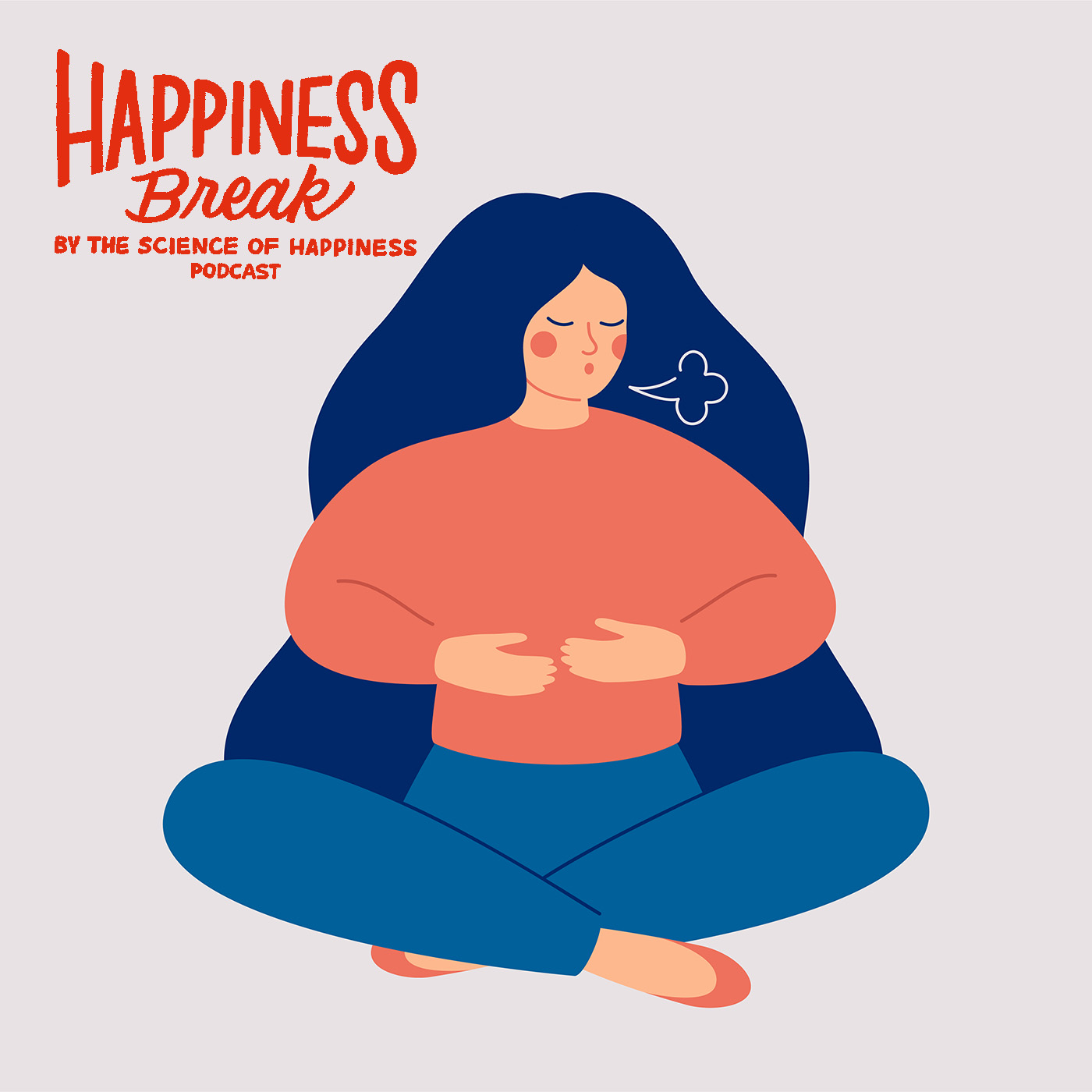
Dr. David Spiegel guides you through cyclic sighing, a breathwork practice that helps reduce stress and anxiety. Summary: Dr. David Spiegel guides you through a simple yet powerful breathwork practice that can help reduce stress, anxiety, and boost overall well-being. Backed by Stanford research, this simple technique uses slow, controlled exhales to calm the nervous system and improve overall well-being.Transcript: https://tinyurl.com/3dtwyk44Time: 5 minutes Prepare: Find a comfortable seated or standing position in a quiet environment. Relax your shoulders and jaw. First Inhale: Inhale slowly and deeply through your nose. Start with your abdomen, allowing it to expand (diaphragmatic breathing) as you fill your lungs about halfway. Hold this breath briefly. Second Inhale: Continue inhaling through your nose, now expanding your chest to completely fill your lungs. Hold this combined breath (abdomen and chest filled) for a moment. Exhale: Exhale slowly and completely through your mouth. Make sure the exhale is gentle and lasts about twice as long as the combined inhales. Repeat the Cycle: Repeat the inhale sequence for a total of 3 cycles (or as desired): Start with a diaphragmatic inhale through your nose, expanding your abdomen. Follow with a chest expansion inhale through your nose to fill your lungs completely. Hold briefly after each combined inhale. Exhale slowly and completely through your mouth, ensuring it's twice as long as the inhales. Reflect and Relax: After completing the cycles, take a moment to observe how your body feels. Notice any sensations of relaxation, reduced tension, or a calmer state of mind. Guest: Dr. David Spiegel is Willson Professor and Associate Chair of Psychiatry & Behavioral Sciences at Stanford University School of Medicine. He is also the co-founder of the clinically backed self-hypnosis app Reveri. Read Dr. Spiegel’s cyclic sighing study here: https://tinyurl.com/mrxbkyr2Related Science of Happiness episodes:Breathe Away Anxiety (Cyclic Sighing): https://tinyurl.com/3u7vsrr5How To Tune Out The Noise: https://tinyurl.com/4hhekjuh Related Happiness Break episodes:A Mindful Breath Meditation, With Dacher Keltner: https://tinyurl.com/mr9d22krFollow us on Instagram: @scienceofhappinesspod

How To Breathe Away Anxiety
It’s important to take a moment to pause and take a long, slow exhale as we navigate life. In our podcast series, "Breathe Away Anxiety," we explore ancient breathing techniques alongside cutting-edge research that reveals the powerful effects of slow, controlled breathing on our mental and physical well-being. We also share Happiness Break meditations to guide you through these science-backed methods, helping you reduce anxiety and cultivate calm in your everyday life.We explore cyclic sighing, a simple breathing technique that can help lift your mood and lower anxiety.Summary: Cyclic sighing is a breathing exercise that involves inhaling through your nose, filling your lungs, and then slowly exhaling through your mouth. The idea is to inhale briefly but deeply, and then exhale for longer. Research suggests that the slow exhale is what's most relaxing. We hear from pro-surfer Sarah Gerhardt about and Stanford scientist David Spiegel. Transcript: https://tinyurl.com/3u7vsrr5Time: 5 minutes Prepare: Find a comfortable seated or standing position in a quiet environment. Relax your shoulders and jaw. First Inhale: Inhale slowly and deeply through your nose. Start with your abdomen, allowing it to expand (diaphragmatic breathing) as you fill your lungs about halfway. Hold this breath briefly. Second Inhale: Continue inhaling through your nose, now expanding your chest to completely fill your lungs. Hold this combined breath (abdomen and chest filled) for a moment. Exhale: Exhale slowly and completely through your mouth. Make sure the exhale is gentle and lasts about twice as long as the combined inhales. Repeat the Cycle: Repeat the inhale sequence for a total of 3 cycles (or as desired): Start with a diaphragmatic inhale through your nose, expanding your abdomen. Follow with a chest expansion inhale through your nose to fill your lungs completely. Hold briefly after each combined inhale. Exhale slowly and completely through your mouth, ensuring it's twice as long as the inhales. Reflect and Relax: After completing the cycles, take a moment to observe how your body feels. Notice any sensations of relaxation, reduced tension, or a calmer state of mind. Guest: Sarah Gerhardt is a pro-surfer chemistry professor based out of Santa Cruz, California Guest: Dr. David Spiegel is Willson Professor and Associate Chair of Psychiatry & Behavioral Sciences at Stanford University School of Medicine. He is also the co-founder of the clinically backed self-hypnosis app Reveri. Read Dr. Spiegel’s cyclic sighing study here: https://tinyurl.com/mrxbkyr2Related Science of Happiness episodes:How To Tune Out The Noise: https://tinyurl.com/4hhekjuh Related Happiness Break episodes:A Mindful Breath Meditation, With Dacher Keltner: https://tinyurl.com/mr9d22kr
Happiness Break: The Healing Power of Your Own Touch, with Kristin Neff
Dr. Kristin Neff guides us in a self-compassionate touch exercise, and shares the many research-backed reasons to cultivate kindness towards oneself.Transcript: https://tinyurl.com/5xt3mz3hSummary: Dr. Kristin Neff guides us through various practices of self-compassionate touch, such as placing hands over the heart or cradling the face, to provide comfort and support. Research shows that self-compassion can improve mental and physical well-being and activates the parasympathetic nervous system, reducing stress. Guest: Dr. Kristin Neff is an associate professor in the University of Texas at Austin's department of educational psychology. She's also the co-author of 'Mindful Self-Compassion for Burnout,' which offers tools to help individuals heal and recharge from burnout.How To Do This Self-Compassionate Touch Practice: Take a moment to try these different touches and see which feels most supportive to you. Whenever you feel stressed or upset, or just need some extra support, use this compassionate touch to remind yourself that you’re here for you. Research shows the practice works best when practiced regularly.Duration: 20 seconds, practiced daily or as often as you can.Find a comfortable space. Sit or stand somewhere you feel relaxed and at ease. Try out these practices while thinking kind words to yourself, as though you were comforting a dear friend in distress.1. Touch Your Heart: Place both hands gently over the center of your chest, one on top of the other. Apply just enough pressure to feel connected, but not uncomfortable. Focus on the warmth of your touch. 2. Feel Your Strength: If it feels right, make a gentle fist with your left hand, symbolizing strength, and place it over your heart. Rest your right hand on top of the fist to combine the feeling of strength and love. 3. Cradle Your Face: Gently cup each of your cheeks with your hands, holding your face as you would a loved one in distress. Let the touch be soft and caring. 4. Support Your Core: Place both hands over your solar plexus, just below your ribcage, and imagine you're holding and supporting your core. This can be particularly comforting if you're feeling fear or deep emotions. 5. Give Yourself a Hug: Cross your arms, resting each hand on the opposite shoulder. Gently squeeze yourself, adjusting the pressure to feel comforting but not overwhelming.Related Science of Happiness episodes: How to Feel Better About Yourself Give Yourself A Break If You Want to Be More Productive, Cut Yourself Some Slack Related Happiness Break mediations:What to do When you're Struggling, With Spring Washam
How To Show Up For Yourself
We explore the science behind how self-compassionate touch can help us feel better about ourselves.Link to transcript: https://tinyurl.com/4nm5827fSummary: Brittany Luce, host of NPR's "It's Been A Minute," shares her experience with self-compassionate touch. She did it for 20 seconds, almost daily. to quiet her inner critic and foster self-compassion, especially during moments of stress or self-judgment. Researcher Eli Susman also shares the fascinating science behind this practice, and how despite being short and sweet —it may still be an effective way to cultivate self compassion -- especially if you find ways to make it a habit.How To Do This Self-Compassionate Touch Practice:Take a moment to try these different touches and see which feels most supportive to you. Whenever you feel stressed or upset, or just need some extra support, use this compassionate touch to remind yourself that you’re here for you. Research shows the practice works best when practiced regularly.Duration: 20 seconds, practiced daily or as often as you can.Find a comfortable space. Sit or stand somewhere you feel relaxed and at ease. Try out these micro practices while thinking kind words to yourself, as though you were comforting a dear friend in distress.1. Touch Your Heart: Place both hands gently over the center of your chest, one on top of the other. Apply just enough pressure to feel connected, but not uncomfortable. Focus on the warmth of your touch. 2. Feel Your Strength: If it feels right, make a gentle fist with your left hand, symbolizing strength, and place it over your heart. Rest your right hand on top of the fist to combine the feeling of strength and love. 3. Cradle Your Face: Gently cup each of your cheeks with your hands, holding your face as you would a loved one in distress. Let the touch be soft and caring. 4. Support Your Core: Place both hands over your solar plexus, just below your ribcage, and imagine you're holding and supporting your core. This can be particularly comforting if you're feeling fear or deep emotions. 5. Give Yourself a Hug: Cross your arms, resting each hand on the opposite shoulder. Gently squeeze yourself, adjusting the pressure to feel comforting but not overwhelming.Guest: Brittany Luse is an award-winning journalist, cultural critic. and host of the NPR podcast “It's Been a Minute.”Learn more about Luse: https://tinyurl.com/3bjt6v7mFollow Luse on Instagram: https://www.instagram.com/bmluseListen to the NPR podcast "It's Been A Minute": https://tinyurl.com/3uek8ey8Guest: Eli Susman is a researcher and Ph.D. Candidate in Psychology at UC BerkeleyRead Eli Susman's study on self-compassionate touch: https://tinyurl.com/2uh783z8Related Science of Happiness episodes: How to Feel Better About Yourself Give Yourself A Break If You Want to Be More Productive, Cut Yourself Some Slack Related Happiness Break mediations:What to do When you're Struggling, With Spring Washam
Happiness Break: A Note to Self on Forgiveness, with Alex Elle (encore)
Letting go of our regrets can motivate us to improve and help us grow. Alex Elle, a certified breath work and writing coach, guides us through a meditation to forgive and accept ourselves.Link to episode transcript: https://tinyurl.com/5dzrzm4zHow to Do This Practice:1. Take a deep breath. As you exhale, remember all you have done in the past that led you to come to be where you are today.2. Remember that you are allowed to forgive yourself and let it go. Give yourself permission to release any shame that you’re carrying. Forgive yourself.3. Think of the good things about yourself. Trust your worth and acknowledge that you are evolving. Remember, you are worthy of good things even when you think you are now.4. When you’re ready, you can bring your attention back to the present moment. Take a few deep breaths in through the nose, and out through the nose. Drop your shoulder and unclench your jaw.5. If you’d like to take this practice a step further, you can write your own letter of self forgiveness, it can start with “Dear self, I forgive you for …”Today’s Happiness Break host:Alex Elle is a certified breath work coach, author and restorative writing teacher. Her new book, How We Heal, will come out soon. Learn more about Alex and her new book: https://www.alexelle.com/about Follow Alex on Instagram: https://www.instagram.com/alex/ Follow Alex on TikTok:https://www.tiktok.com/@easewithalexl Science of Happiness Episodes like this one How to Forgive Your Father: https://tinyurl.com/2p98e3cy Nine Steps to Forgiveness: https://tinyurl.com/mwwhbrs6 Happiness Break Related Episodes A Meditation for Seeking Forgiveness, With Shelly Tygielski: https://tinyurl.com/yynvm6av Radical Acceptance, With Tara Brach: https://tinyurl.com/4k3f563m Message us or leave a comment on Instagram @scienceofhappinesspod. E-mail us at [email protected] or use the hashtag #happinesspod.Help us share The Science of Happiness!Leave us a 5-star review on Apple Podcasts or share this link with someone who might like the show: https://tinyurl.com/2p9h5aap

Are You Following Your Inner Compass?
What if you had a magic wand and could better the world in any way? What would you do? We explore a practice shown to help you find your purpose and feel more motivated, resilient and fulfilled in life.Link to episode transcript: https://tinyurl.com/bp7wv7ftEpisode SummaryWhat’s your greater purpose in life? It’s a tough question, especially if you’re feeling uncertain about your future. In this episode, our guest explores that very question—and gets handed a magic wand with the power to make the world a better place.How To Do The Magic Wand Practice Set aside 15 minutes to reflect and write. Think about the world you live in – your home, your community, and the world at large. Imagine you’ve been given a magic wand, and you can change anything you want to change in the world. What would you want to be different? Why? Describe your ideal world in writing. Now, reflect on what it would take to change the world in this way. Is there anything you can do to help move the world closer to this ideal? If so, explain how; if not, explain why not. Guest: Selina Bilal is a UC Berkeley undergraduate student who is studying psychology, and a Fellow at Greater Good Science Center, where we produce The Science of HappinessExpert Guest: Kendall Cotton Bronk is a professor of psychology in the Division of Behavioral & Social Sciences at Claremont University. Learn more about Bronk’s work: https://tinyurl.com/3s9sjp2d Connect with Bronk: https://tinyurl.com/3p5cepy3 Science of Happiness Episodes like this one How to Find Your Spark in Life: https://tinyurl.com/yc8j9a4u What’s Your “Why” in Life? https://tinyurl.com/2vnaswpt Happiness Break Related Episodes A Meditation to Inspire a Sense of Purpose: https://tinyurl.com/54uuvh7z Visualizing Your Purpose, With Dacher: https://tinyurl.com/3jvnv35y Message us or leave a comment on Instagram @scienceofhappinesspod. E-mail us at [email protected] or use the hashtag #happinesspod.Help us share The Science of Happiness!Leave us a 5-star review on Apple Podcasts or share this link with someone who might like the show: https://tinyurl.com/2p9h5aap
Happiness Break: A Meditation on Becoming A Gift To Life
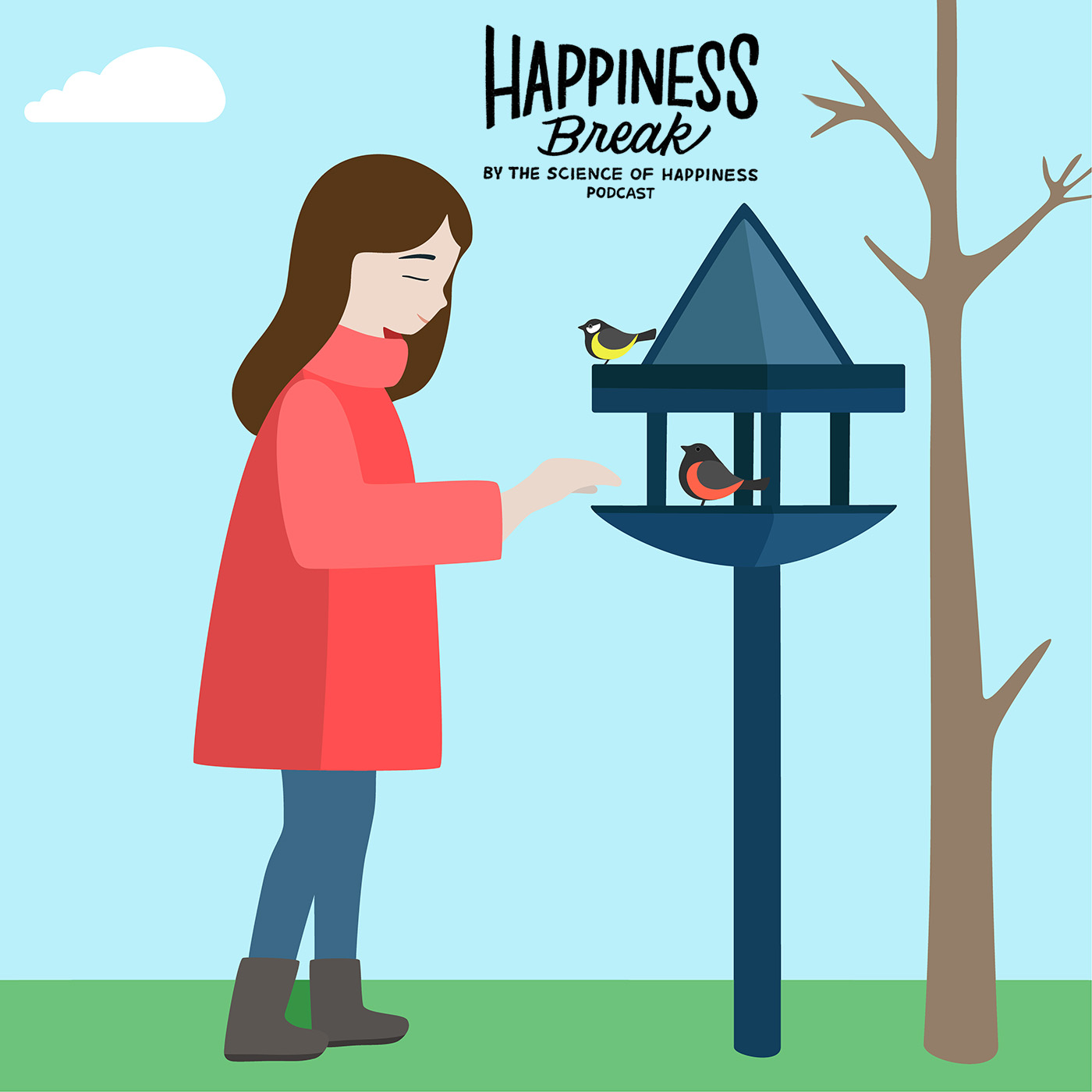
Our happiness is interconnected with the well-being of others, both people and the natural world. Step outside of you can, or imagine the outdoors from wherever you are now, and join us for a meditation that’ll help us be better stewards of the natural world.Link to episode transcript: https://tinyurl.com/y3yfjsxaEpisode SummaryA meditation on how we can give back to the earth, led by indigenous activist, artist, and scholar Dr. Lyla June Johnston.How To Do This Practice Sit and take four deep breaths to honor the four sacred directions. Take a moment to stop, and step outside and see what life flourishes from. Take notice of the little things – a bird bath that provides a safe place for the birds to drink and to bathe. Think about how you can give a small gift to life., Maybe you could plant fruit or nut-bearing trees that could feed you,your neighbors, and the wildlife around you. Following this meditation, think about ways that you can make this a reality. You could order a bird bath from your local feed store. Think of the metaphor of the bird bath. A bird bath is a human creation. And it's a gift to birds. It doesn't benefit us at all. It truly is just a gift to a species outside of our own. Reflect on how this is truly what human beings were born to do – born to be givers, stewards, and caretakers of the earth. Guest Host: Dr. Lyla June Johnston is an indigenous activist, artist, and scholar from the Naaneesht'ezhi Taach'iinii clan of the Diné Nation. For more on her work: https://www.lylajune.com/ Watch her TED talk: https://tinyurl.com/frbe5ya9 Follow her on instagram: https://tinyurl.com/bdfbf8yx Follow her on X: https://tinyurl.com/4jj57n25 Follow her on Facebook: https://tinyurl.com/3cskuh7x Science of Happiness Episodes like this one How to Do Good for the Environment (And Yourself): https://tinyurl.com/dmsr2wkm The Healing Effects of Experiencing Wildlife: https://tinyurl.com/murmd98b Happiness Break Related Episodes How to Be in Harmony in Nature—Wherever You Are, With Yuria Celidwen: https://tinyurl.com/ynxeeb7a Contemplating Our Interdependence With Nature, With Dekila Chungyalpa: https://tinyurl.com/erz2f5de Feeling the Awe of Nature From Anywhere, With Dacher: https://tinyurl.com/y4mm4wu9 Message us or leave a comment on Instagram @scienceofhappinesspod. E-mail us at [email protected] or use the hashtag #happinesspod.Help us share The Science of Happiness! Leave us a 5-star review on Apple Podcasts or share this link with someone who might like the show: https://tinyurl.com/2p9h5aap
How To Let In New Perspectives
With the U.S. election swiftly approaching, the political divide can feel overwhelming. But what happens when we recognize the limits of our knowledge? Link to episode transcript: https://tinyurl.com/83a5wbkp Episode SummaryWhen we internally acknowledge the limits of our knowledge, we create space to engage with other points of view. Allowing new perspectives in can help us better assess arguments, and decrease hubris. We will hear from psychologists Tania Israel and Daryl Van Tongeren about embracing opinions different from our own.How To Do This PracticeReflect on an issue you feel strongly about. Ask yourself the following questions when listening to someone’s opinion that differs from your own: How can other people help me to develop a broader or deeper understanding of this topic? Whose story isn't being told here? What's the perspective I'm not seeing? Check in with yourself as you're reading the news, are you just saying, “I agree with that perspective” or are there moments in which you can say, “This challenges me.” This episode was supported by a grant from the John Templeton Foundation, as part of our project on “Expanding Awareness of the Science of Intellectual Humility.” To learn more, go to ggsc.berkeley.edu/ih.Today’s guests: Our guest host today is Allison Briscoe-Smith, a psychologist and Senior Fellow at The Greater Good Science Center.Tania Israel is a psychology professor at UC Santa Barbara and author of the new book Facing the Fracture: How to Navigate the Challenges of Living in a Divided Nation.Daryl Van Tongeren is a psychology professor at Hope College and author of the book Humble: Free Yourself from the Traps of a Narcissistic World. Learn more about Allison Briscoe-Smith: https://tinyurl.com/p3eexvkf Take BerkeleyX: Bridging Differences by Allison Briscoe-Smith: https://tinyurl.com/58z9vmvb Read Facing the Fracture: How to Navigate the Challenges of Living in a Divided Nation, by Tania Israel: https://tinyurl.com/yeyw7k6j Read Humble: Free Yourself from the Traps of a Narcissistic World, by Daryl Van Tongeren: https://www.darylvantongeren.com/books Science of Happiness Episodes like this one:A Way to Make Work More Meaningful: https://tinyurl.com/mtpay9jwThe Questions to Ask Yourself in an Argument: https://tinyurl.com/3uajhp4tWhen It’s Hard to Connect, Try Being Curious: https://tinyurl.com/nhzj52vcMaking Difficult Interactions More Respectful: https://tinyurl.com/bddafcrwHappiness Break Related Episodes:A Meditation For Connecting In Polarized Times, With Scott Shigeoka: https://tinyurl.com/y6e4vdsdDirect message us or leave a comment on Instagram @scienceofhappinesspod. You can also e-mail us at [email protected] or use the hashtag #happinesspod.Help us share The Science of Happiness! Leave us a 5-star review on Apple Podcasts or share this link with someone who might like the show: https://tinyurl.com/2p9h5aap
Happiness Break: Take a Break With Our Loving-Kindness Meditation
Loving-kindness meditation, or “metta,” has its roots in Buddhist traditions that date back thousands of years. Studies show it can help nourish your capacity to express love, feel more satisfied in life, and enhance brain areas involved in emotional processing and empathy. Link to episode transcript: https://tinyurl.com/5h3nfwjbEpisode SummaryDacher guides us in a meditation that has been practiced over thousands of years. Together, we will mentally extend goodwill, kindness, and warmth towards others and ourselves, in a series of mantras. How To Do This Practice Find a comfortable position, you may lie down or be seated. Bring your attention and awareness to the breath at the belly. Inhale and exhale, noticing sensations of breath. Bring to mind someone who you really believe has your best interests in their heart. Choose just one person and bring them to mind as though they were next to you. Imagine them truly wishing for you to be happy and fulfilled. Imagine their smile. Feel their intention of goodness. For a couple more breaths, really take in this wish for your happiness and joy from this person who cares for you. Now letting go of the image of this person, relax into these sensations and feelings for just a couple breaths. With this feeling of support and happiness, bring to mind someone who could really use some extra love. Now repeat to yourself, “May you be safe. May you be happy. May you be healthy. May you live with ease.” As you inhale, draw in this intention. And as you exhale, send it out. Twice more—inhale, drawing in this intention. And then exhale, sending out. Release the image of this person. And just notice the sensations in your own body. Today’s Host: Dacher Keltner Science of Happiness episodes like this one: 24 Hours of Kindness: https://tinyurl.com/3dnye335 Being Kind Is Good for Your Health: https://tinyurl.com/2afe5v79 How to Love People You Don’t Like: https://tinyurl.com/5sj388yj Happiness Break related episodes: Wrap Yourself in Kindness, With Jack Kornfield: https://tinyurl.com/3cd6xj23 How to Be Your Own Best Friend, with Kristin Neff: https://tinyurl.com/yc8emecm Wishing Others Well, With Anushka Fernandopulle: https://tinyurl.com/3w2sn96m This episode was supported by a grant from the John Templeton Foundation on "Spreading Love Through the Media".Tell us about your experiences practicing loving-kindness meditation! Direct message us or leave a comment on Instagram @scienceofhappinesspod. You can also e-mail us at [email protected] or use the hashtag #happinesspod.Help us share The Science of Happiness!Leave us a 5-star review on Apple Podcasts or share this link with someone who might like the show: https://tinyurl.com/2p9h5aap
Catch Yourself in a Dream (Encore)
Have you ever known you were dreaming while you were asleep? Our guests try practices to help induce lucid dreams, and we hear what they can teach us about consciousness.Transcription: https://tinyurl.com/yc6trmsh
Happiness Break: Pause to Look at the Sky, With Dacher (Encore)
Take a moment to appreciate the beauty and vastness of the sky. Dacher Keltner guides us through a practice of pausing to turn your gaze to the sky as a pathway to awe, creativity and wonder.Link to episode transcript: https://tinyurl.com/yc5xfwp4Practice: Go someplace where you feel safe and also have a nice view of the sky. First, focus on your breathing. Take a few slow inhales and even slower exhales. As you breathe in and out, relax your shoulders, your hands, and your face. On the next breath in, look up at the sky. Notice how vast it is. Breathing naturally, notice everything you can about the sky. What colors are present? Are there any clouds? Do you see any gradation of light? Expand your gaze to get the fullest view and sense of the sky that you can. Spend a few moments taking it in. On the final deep breaths in and out, reflect on how doing this practice has made you feel. Today’s Happiness Break host:Dacher Keltner is the host of the Greater Good Science Center’s award-winning podcast, The Science of Happiness and is a co-instructor of the GGSC’s popular online course of the same name. He’s also the founding director of the Greater Good Science Center and a professor of psychology at the University of California, Berkeley.Check out Dacher’s most recent book, Awe: The New Science of Everyday Wonder and How It Can Transform Your Life: https://tinyurl.com/4j4hcvyt Resources from The Greater Good Science Center:Why we Should Look up at the Sky (Podcast): https://tinyurl.com/fn3bttw6Six Ways to Incorporate Awe into Your Daily Life: https://tinyurl.com/3j5hdtj7How to Choose a Type of Mindfulness Meditation: https://tinyurl.com/py6b729hHow Nature Can Make You Kinder, Happier, and More Creative: https://tinyurl.com/2fmpdpkjWhy is Nature so Good For Your Mental Health? https://tinyurl.com/23zavth3Tell us about your experiences with wildlife! Leave a comment on Instagram @scienceofhappinesspod. You can also e-mail us at [email protected] or use the hashtag #happinesspod.Help us share The Science of Happiness!Leave us a 5-star review on Apple Podcasts or share this link with someone who might like the show: https://tinyurl.com/2p9h5aap

The Healing Effects of Biophila
Safe encounters with wildlife can deepen our appreciation for nature, and for other people. Craig Foster of “My Octopus Teacher” shares his transformational experiences with the animals of the ocean.Link to episode transcript: https://tinyurl.com/murmd98bEpisode SummaryVenturing into nature and experiencing wildlife can be transformative. Safe interactions with wildlife encourage us to be more in relation with nature, and each other. In this episode, we hear from Craig Foster of “My Octopus Teacher” and how his interactions with sea creatures have changed his life. We also hear from environmental researcher Liz Lev about the effect on our well-being that being in wild spaces provides.How To Do This Practice:The next time you want to explore the outdoors, find the “wildest” space you can think of. Explore the “wild spaces” in your neighborhood or city, and reflect on your experiences with wildlife. Today’s guests: Craig Foster is the director of My Octopus Teacher, and the co-founder of Sea Change Project. Liz Lev is an environmental researcher and research associate at Harder+Company who that specializes in the intersections of environmental and climate justice issues, mental health, and urban planning. Learn more about Craig’s work:https://tinyurl.com/tyctr6fu Follow Sea Change Project on Instagram: https://tinyurl.com/2pzdx73z Watch My Octopus Teacher: https://tinyurl.com/e87edt4b Follow My Octopus Teacher on Instagram: https://tinyurl.com/mryx4zum Learn more about Liz’s research: https://tinyurl.com/y2afdxpr Read about Liz’s research on wild spaces: https://tinyurl.com/msjsz32t Science of Happiness Episodes like this one:Experience Nature Wherever You Are, with Dacher (Encore): https://tinyurl.com/aj34s585How Exploring New Places Can Make You Feel Happier: https://tinyurl.com/4ufn2tpnWhy We Should Look up at the Sky: https://tinyurl.com/mpn9vj2tHow Birdsong Can Help Your Mental Health: https://tinyurl.com/3tey4rb5Happiness Break Related Episodes:Feeling the Awe of Nature From Anywhere, With Dacher: https://tinyurl.com/y4mm4wu9How to Ground Yourself: https://tinyurl.com/2wv69kwsThis episode was supported by a grant from the John Templeton Foundation on "Spreading Love Through the Media".Tell us about your experiences with wildlife! Direct message us or leave a comment on Instagram @scienceofhappinesspod. You can also e-mail us at [email protected] or use the hashtag #happinesspod.Help us share The Science of Happiness!Leave us a 5-star review on Apple Podcasts or share this link with someone who might like the show: https://tinyurl.com/2p9h5aap
Happiness Break: Experience Nature Wherever You Are, with Dacher (Encore)
Just a few moments of tuning into nature can make you feel more inspired, connected, and less lonely. Let us guide you through a five-minute noticing nature practice — you don't even have to leave your neighborhood.Link to episode transcript: https://tinyurl.com/aj34s585How to Do This Practice: Find somewhere where you can focus on the natural environment, like your backyard. Take a few slow, deep breaths. Close your eyes or soften your gaze. Notice your belly and chest rise and fall as you breathe. Note the physical sensations of your breath. If you closed your eyes, open them. Let your breath fall into its natural rhythm. Look around you and let your eyes wander slowly through your surroundings: the plants, animals, and bugs. Let yourself be curious about anything that catches your eye and moves you. Rest your awareness there. Pause to appreciate it, and let it hold your attention for a few moments. Turn your awareness to your emotions. How are you feeling? When something you see evokes an emotion, take a mental photo of it. What about it captivated you? What did it make you feel? Write that down in just a few words or sentences, or make a mental note of it. Let your gaze wander again whenever you’re ready, repeating these steps. Today’s Happiness Break host:Dacher Keltner is the host of the Greater Good Science Center’s award-winning podcast, The Science of Happiness and is a co-instructor of the GGSC’s popular online course of the same name. He’s also the founding director of the GGSC and a professor of psychology at the University of California, Berkeley.If you enjoyed this Happiness Break, you may also like these Happiness Breaks:Feeling the Awe of Nature From Anywhere, With Dacher: https://tinyurl.com/y4mm4wu9How to Ground Yourself: https://tinyurl.com/2wv69kwsCheck out these episodes of The Science of Happiness Walk Outside with Inside Out’s Pete Docter: https://tinyurl.com/23vpuj8jWhy We Should Look up at the Sky: https://tinyurl.com/mpn9vj2tHow Birdsong Can Help Your Mental Health: https://tinyurl.com/3tey4rb5Tell us about your nature experience! Direct message us or leave a comment on Instagram @scienceofhappinesspod. You can also e-mail us at [email protected] or use the hashtag #happinesspod.Help us share The Science of Happiness!Leave us a 5-star review on Apple Podcasts or share this link with someone who might like the show: https://tinyurl.com/2p9h5aap
How Exploring New Places Can Make You Feel Happier
Exploring novel places and having diverse experiences is important to our well-being and can make us feel happier. This week, Ike Sriskandarajah, a producer for This American Life, takes us with him as he explores new parts of New York City.Link to episode transcript: https://tinyurl.com/seystc6cEpisode summary: Shaking yourself out of your normal routine can be hard–but studies show it’s worth it. Creating space for variety, novelty, and awe in our lives is essential for our well-being. Exploring new and diverse environments in our daily life can lead to better stress resilience and can make us feel better. In this episode, investigative journalist Ike Sriskandarajah, shares his experience exploring new places with his family in New York City. Then, we hear from Aaron Heller, a neuroscientist and assistant professor at the University of Miami's Department of Psychology, who studies how exposure to novel places can make us happier. This episode is made possible through the generous support of the John Templeton Foundation.Practice: Break out of your usual daily routine–take a route to work you have never taken before, or visit a park you’ve never gone to. Explore a place you have never been to.Today’s guests: Ike Sriskandarajah is an investigative journalist and Producer at This American Life.Aaron Heller is a neuroscientist and assistant professor at the University of Miami's Department of Psychology. Learn more about Ike’s work: https://tinyurl.com/4auuk7pd Learn about Ike’s work at Reveal: https://tinyurl.com/serhuyt5 Follow Ike on X: https://tinyurl.com/ycxz6xbr Connect with Ike on LinkedIn: https://tinyurl.com/ydwztavw Learn more about Aaron’s research: https://tinyurl.com/yxrpm944 Follow Aaron on X: https://tinyurl.com/rr3ac6jw Connect with Aaron on LinkedIn: https://tinyurl.com/36trsaux Science of Happiness Episodes like this one How Awe Brings Us Together: https://tinyurl.com/bddavvbv Can You Find Wonder in the Ordinary? https://tinyurl.com/4j8h4dzk Happiness Break Related Episodes Feeling the Awe of Nature From Anywhere, With Dacher: https://tinyurl.com/y4mm4wu9 Feeling the Awe of Nature From Anywhere, With Dacher https://tinyurl.com/y4mm4wu9 Tell us about your experience exploring new places! Leave a comment on Instagram @scienceofhappinesspod, or e-mail us at [email protected] or use the hashtag #happinesspod.Help us share The Science of Happiness!Leave us a 5-star review on Apple Podcasts or share this link with someone who might like the show: https://tinyurl.com/2p9h5aap
Happiness Break: How to Ground Yourself in Nature, with Yuria Celidwen (Encore)
Connect to yourself and the land you stand on in under 10 minutes with this grounding practice led by Indigenous scholar Dr. Yuria Celidwen.Link to episode transcript: https://tinyurl.com/3at8hrsuHow to Do This Practice: If possible, go outside and find some natural ground, like grass or dirt. If you're wearing shoes or socks, take them off and place the soles of your feet directly on the ground. Bring your attention to the earth beneath you. Allow it to hold you, paying attention to how it feels — soft, firm, reliable. Imagine you're starting to grow roots from the tip of your toes, digging deep into the earth. Visualize energy and wellness flowing through your roots to your toes, into the soles of your feet, your thighs and knees, then base of the spine and upwards into your chest, expanding the whole center of your chest. Take a full, deep breath and contemplate the openness you feel in your chest. Look up towards the sky and open your eyes, allowing all of your senses to awaken to the sounds, smells, colors, and life around you. Feel their presence. Today’s Happiness Break host:Dr. Yuria Celidwen is an Indigenous studies, cultural psychology, and contemplative science scholar of Indigenous Nahua and Maya descent. She also works at the United Nations to advance the rights of Indigenous peoples and the Earth.Learn more about Dr. Celidwen’s work: https://www.yuriacelidwen.com/More resources from UC Berkeley’s Greater Good Science Center: Listen to Dr. Yuria Celidwen on The Science of Happiness episode about listening to your elders: https://tinyurl.com/yr2ydk43 Does Nature Make You More Mindful? https://tinyurl.com/4wcreu9z Why You Need More Nature in Your Life: https://tinyurl.com/ye282e5d Being Around Nature Helps You Love Your Body: https://tinyurl.com/57d5ntxm How Modern Life Became Disconnected From Nature: https://tinyurl.com/yc6u73f9 Listen to The Science of Happiness episode featuring podcast host Krista Tippett, on Being Grounded in Your Body: https://tinyurl.com/8t7rr4yy Tell us about your grounding practice experience! Direct message us or leave a comment on Instagram @scienceofhappinesspod. You can also e-mail us at [email protected] or use the hashtag #happinesspod.Help us share The Science of Happiness!Leave us a 5-star review on Apple Podcasts or share this link with someone who might like the show: https://tinyurl.com/2p9h5aap
How To Unwind By Doing Mindful Yard Work
Everyday activities, such as cleaning and gardening, can be sources of joy and opportunities for mindfulness. This week, our guest shares his experience practicing mindful sweeping on the temple stairs in Kyoto, Japan with Shoukei Matsumoto, a Buddhist monk.Link to episode transcript: https://tinyurl.com/3r6ju2whThe Science of Happiness is now Instagram, and we'd love for you to follow us! You can find us at @ScienceofHappinessPod. We're going to go behind the scenes of our episodes, and share how to do the practices we talk about on the show. The first 100 followers will be included in a raffle to win a signed copy of host Dacher Keltner's newest book, Awe: The New Science of Everyday Wonder and How It Can Transform Your Life.Episode summary:Many of us see yard work as a chore. But what if we shift our perspective and instead see it as an opportunity to practice mindfulness? This week on The Science of Happiness, our guest shares his experience of sweeping the steps of a Buddhist temple in Kyoto, Japan, and the mindfulness and mental processes involved in the practice. Then, we hear from Shoukei Matsumoto, a Buddhist monk and author, about the practice of cleaning as a form of mindfulness.Practice:The next time you’re tending to your garden, picking up trash on your sidewalk, watering the plants, or doing other chores, spend a few minutes practicing mindfulness by slowing down and really being present with the activity and your own body's movements while you do it. Today’s guests:Matt Heron is a Canadian who has been living and working in Japan for five years. Shoukei Matsumoto is a Buddhist monk and cleaning enthusiast in Kyoto, Japan. He is the author of “A Monk’s Guide to a Clean House and Mind,” which has been translated into 18 languages, including English Follow Shoukei on instagram: https://tinyurl.com/4e2jk7xt Follow Shoukei on Linkedin: https://tinyurl.com/48xkr9ew Learn more about Interbeing: https://www.interbeing.co.jp/en Read “A Monk’s Guide to a Clean House and Mind” : https://tinyurl.com/7u3zhvcz More episodes like this one:How to Make Work More Satisfying: https://tinyurl.com/3fa925yfWhy We Should Seek Beauty in the Everyday Life: https://tinyurl.com/26dskv38Related Happiness Breaks (a short, guided practice by The Science of Happiness) Contemplating Our Interdependence With Nature, With Dekila Chungyalpa: https://tinyurl.com/erz2f5deHappiness Break: How to Be in Harmony in Nature—Wherever You Are, With Yuria Celidwen: https://tinyurl.com/ynxeeb7aThis episode is supported by Tianren Culture, whose vision is “One Wisdom, One Health.” Tianren Culture is a next-generation social platform that acts as a catalyst to foster positive global values and lifestyles.Tell us about your mindful gardening experiences! Email us at [email protected] or use the hashtag #happinesspod.Help us share The Science of Happiness!Leave us a 5-star review on Apple Podcasts or share this link with someone who might like the show: https://tinyurl.com/2p9h5aap
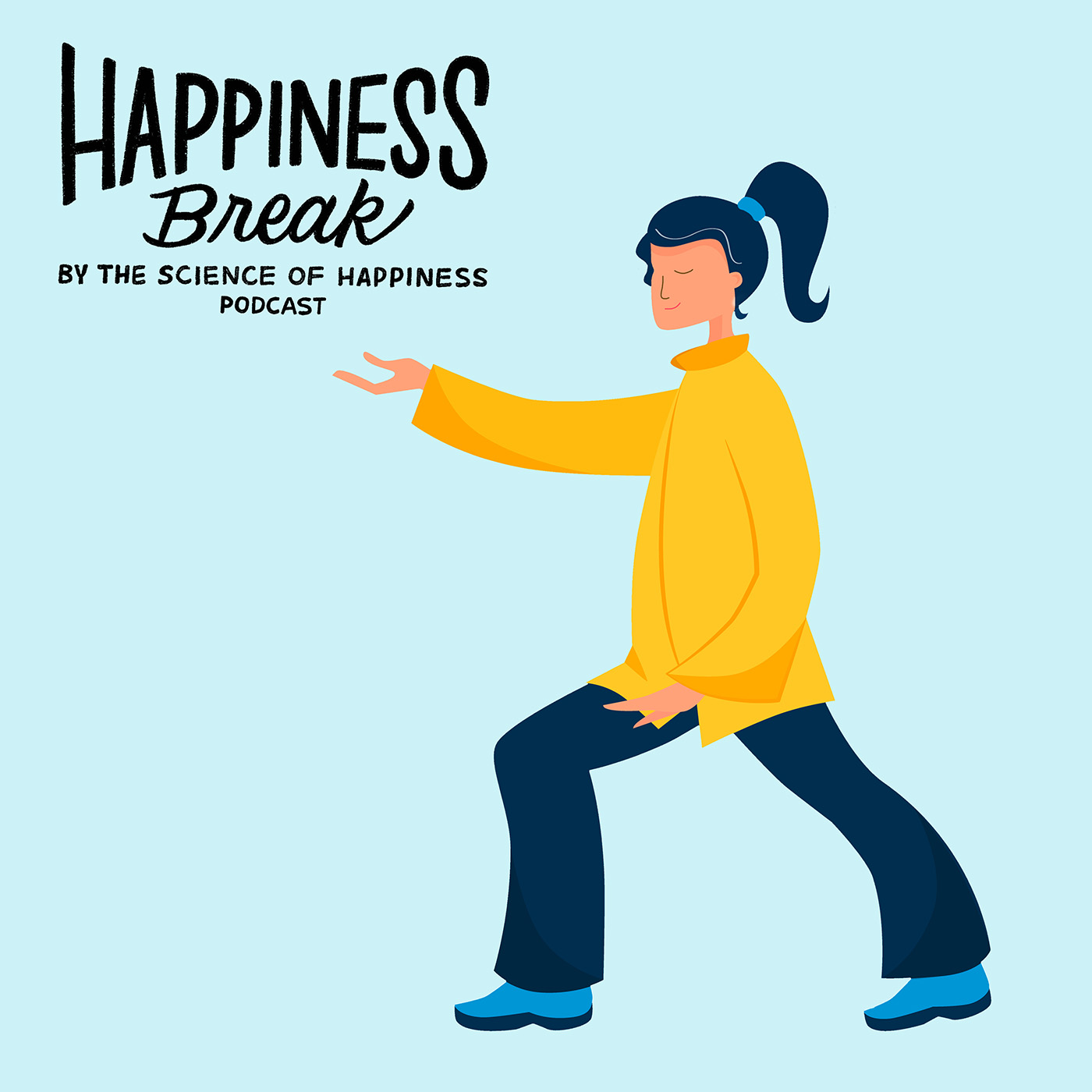
Happiness Break: How to Relax Your Body Through A Standing Meditation, With Sherry Zhang
Last week on The Science of Happiness, we discussed the scientifically proven health benefits of the ancient Chinese practice of qigong with Harvard psychologist Peter Wayne. This week, we practice a standing meditation, with qigong master Sherry Zhang. Link to episode transcript: https://tinyurl.com/3t5wdexeHow to Do This Practice: Take a moment to stand upright with your feet together and take a few deep breaths. Have your eyes looking forward. Soften your knee. Gently shift your weight onto your left leg and step your right foot aside. Face your palms inward, with your fingers relaxed and pointing down. With your chin slightly in, relax both shoulders, and tuck in your tailbone. Ground your feet and relax your knees, armpits, and fingers. Take a deep breath and exhale. Spend a few moments focused on your natural breathing and relaxed body. Now, bring your right foot back, so both feet are together. Lengthen your spine. Take a moment to observe how your body feels, until your breathing slows. Next, bring your hands together and rub them together vigorously, creating heat in between your palms. Now "wash" your face with your hands. "Wash" the side of your ears, to the back of your ears, the back of your neck. Now relax both hands at the front of your chest. Repeat this practice for one to five minutes. Today’s Happiness Break host:Sherry Zhang is the founder of Tai Chi Solutions and a Master Teacher of Qigong. She is faculty at Pacific College of Health and Sciences in New York City. Learn more about Sherry’s work:https://www.taichisolution.org/ Follow Sherry on instagram: https://www.instagram.com/taichisolution/ Follow Sherry on Twitter: https://twitter.com/taichisolution Follow Sherry on Linked-In: https://tinyurl.com/ywca6nd5 Follow Sherry on Facebook: https://www.facebook.com/sherrytaichi/ Follow Tai Chi Solutions on Facebook: https://www.facebook.com/taichisolution/ If you enjoyed this Happiness Break, you may also like these ones:Walk Your Way to Calm (Guided Meditation), with Dacher: https://tinyurl.com/4w37zwpyA Walking Meditation With Dan Harris of 10% Happier: https://tinyurl.com/4dv4ckzcCheck out these episodes of The Science of Happiness about movement-based practices: How Qigong Can Calm Your Mind and Body: https://tinyurl.com/2ywsck4eEpisode 5: Walk Outside with Inside Out’s Pete Docter: https://tinyurl.com/2nfc94zbWe love hearing from you! Tell us what movement based practice you’ve tried!Email us at [email protected] or use the hashtag #happinesspod.Find us on Spotify: https://tinyurl.com/6s39rzusShare this Happiness Break!

How Qigong Can Calm Your Mind and Body
Studies show qigong can strengthen your body and mind, and reduce cortisol levels. We explore this Chinese meditative movement practice that dates back over 4,000 years.Link to episode transcript: https://tinyurl.com/2ywsck4eEpisode summary: Finding calm in your day to day life can be stressful, especially in a world that seems to be moving at such a rapid pace. Your life can change in an instant– and it can be really difficult to get yourself on your feet again. On this episode of The Science of Happiness, Ace Boral, an Oakland-based chef, joins us to try Qigong. Ace talks about his health struggles over the past four years, and how incorporating Qigong into his life over the past few weeks has helped him find mental clarity, emotional balance, and confidence in himself. Then we hear from Harvard psychologist Peter Wayne who has practiced and studied the benefits of Xigong. Today’s guests: Ace Boral is an Oakland-based chef.Peter Wayne is an Associate Professor of Medicine, and serves as the Director for the Osher Center for Integrative Medicine, jointly based at Harvard Medical School and Brigham and Women’s Hospital.Learn more about Peter’s work: https://tinyurl.com/342xndnaMore episodes like this one: Moving Through Space, with Dacher Keltner: https://tinyurl.com/3u844n4d The Science of Synchronized Movement: https://tinyurl.com/n4bcrb5j Tell us about your experiences with Qigong. Email us at [email protected] or use the hashtag #happinesspod.Help us share The Science of Happiness!Leave us a 5-star review on Apple Podcasts or share this link with someone who might like the show: https://tinyurl.com/2p9h5aap

Happiness Break: A Meditation on How To Be Your Best Self, with Justin Michael Williams
Here's a favorite of ours: visualize your best possible self and tap into your inherent enough-ness with this guided meditation by Justin Michael Williams.Link to episode transcript: https://tinyurl.com/5xm9ckffHow to Do This Practice: Close your eyes, take a few deep breaths, and visualize your ideal future self, the person of your dreams you’ve always wanted to be. Try noticing as many details as you can: What color are you wearing, how do you feel, what are you doing, is anyone with you? Answer this question in your mind with 1-3 words: As you look at this future version of you, what energy do you need to cultivate more of in your life now, today, to become closer to being that person you see in your vision? Breathe in deeply, and as you do imagine yourself breathing in that energy. As you exhale, imagine that energy spreading throughout your body and energy field. Open your eyes. Remember, you have what you need to become that which you want to become. We are enough to start stepping into the life of our dreams. Today’s Happiness Break host:Justin Michael Williams works at the intersection of social justice, mindfulness, and personal growth — with a touch of music that brings it all to life. Learn More About Justin’s work: https://www.justinmichaelwilliams.com/ Listen to Justin’s debut album: https://www.justinmichaelwilliams.com/music Order Justin’s book, Stay Woke: A Meditation Guide For the Rest of Us:https://tinyurl.com/2p8xu6hx Follow Justin on Twitter: https://twitter.com/wejustwill Follow Justin on Instagram: https://www.instagram.com/wejustwill/ More episodes like this oneHow to Find Your Best Possible Selfhttps://tinyurl.com/6t3uws8dHappiness Break: Visualizing Your Best Self in Relationships, With Dacher Keltnerhttps://tinyurl.com/5cx6cd5zHappiness Break: Visualizing Your Purpose, With Dacherhttps://tinyurl.com/39apt7tbWe love hearing from you! Tell us what brings you feelings of awe. Email us at [email protected] or use the hashtag #happinesspod.Find us on Spotify: https://tinyurl.com/6s39rzusHelp us share Happiness Break!
Encore: Why We Need Friends With Shared Interests
She's the world's leading animal behaviorist and an autism advocacy leader. Guest Temple Grandin shares what kind of support systems led her to success, and we hear about how community, and lack thereof, affects our health and ability to succeed. Link to episode transcript: https://tinyurl.com/y82vw4dv Episode summary:Having strong relationships is vital to our well-being. We tend to be happier and healthier when we’re involved with community. Today’s guest is the world-famous scientist Temple Grandin. She was born with autism, which led her to be socially isolated from her peers. Join us on this episode of The Science of Happiness to hear about how Grandin credits her support networks for her success and making her into the person she is today. We’ll also look at the science behind the health repercussions of not having strong social networks. Feeling socially disconnected can lead to a higher risk of dementia, cardiovascular disease, cancer and more. Today’s guests:Temple Grandin is a leading scientist, prominent author and speaker on autism and animal behaviors. Today, she teaches courses at Colorado State University. Her latest book is Visual Thinking: The Hidden Gifts of People Who Think in Pictures, Patterns, and Abstractions.Temple’s Website: https://www.templegrandin.comFollow Temple on Twitter: https://twitter.com/drtemplegrandin?lang=enCheck out Temple’s Latest Book: https://tinyurl.com/3tftxpckTegan Cruwyis is a clinical psychologist at The National Australian University who studies social connection and how loneliness and chronic isolation are literally toxic.Learn more about Cruwyis and her work: https://tinyurl.com/3etuvketFollow Cruwyis on Google Scholar: https://tinyurl.com/yc5ujhajResources from The Greater Good Science Center: Four Ways Social Support Makes You More Resilient https://tinyurl.com/34ntce8uWhat is Social Connection? https://tinyurl.com/nk8crbbzIs Social Connection the Best Path to Happiness? https://tinyurl.com/4wxc66tnWhy are We so Wired to Connect? https://tinyurl.com/uttppd3pTell us about your experiences with building social connections. Email us at [email protected] or use the hashtag #happinesspod.Help us share The Science of Happiness!Leave us a 5-star review on Apple Podcasts or share this link with someone who might like the show: https://tinyurl.com/2p9h5aapTranscript to come.
Happiness Break: A Meditation on Cultivating Awe Through Colors
Experiencing awe can help us slow down and connect to the world around us. So how can we harness the power of this feeling? Host Dacher Keltner leads us in a colorful meditation to bring about awe. Link to episode transcript: https://tinyurl.com/3e9cyky5Practice: Please find a space, either inside or outside, where you can take a moment and pause and look slowly at a scene in front of you. Settle into a pattern of deep breathing and ease. Really focusing on how that pattern of inhalation and exhalation relaxes your body and slows your heart rate down. Now cast your gaze over the space around you. Take in what you see in the scene in front of you. You may shift your attention to colors present in the things around you or step back and get a sense of the scene in a more holistic way. Notice the variations and differences in the various colors in your visual field. What feelings do the colors evoke in you? Now, gently close and then open your eyes and notice how you feel. Today’s guests:Dacher Keltner is the host of the Greater Good Science Center’s award-winning podcast, The Science of Happiness and is a co-instructor of the GGSC’s popular online course of the same name. He’s also the founding director of the Greater Good Science Center and a professor of psychology at the University of California, Berkeley.More episodes like this one:How Awe Brings Us Togetherhttps://tinyurl.com/bdhy4sj5How Music Evokes Awehttps://tinyurl.com/mpkww4j9Happiness Break: Awe for Others, With Dacherhttps://tinyurl.com/3ptwh66jFeeling the Awe of Nature from Anywhere, with Dacher Keltnerhttps://tinyurl.com/4r7rjaxfWe love hearing from you! Tell us what brings you feelings of awe. Email us at [email protected] or use the hashtag #happinesspod.Find us on Spotify: https://tinyurl.com/6s39rzusHelp us share Happiness Break! Leave us a 5-star review on Apple Podcasts and share this link with someone who might like the show: https://tinyurl.com/2p9h5aapRate us on Spotify: https://tinyurl.com/6s39rzus
How Birdsong Can Help Your Mental Health
Hearing birdsong can help us feel less anxious, recover from stress faster, and even reduce muscle tension ... but can it help us fall asleep? Drew Ackerman of Sleep With Me podcast listens to recordings of birdsongs to see if it'll help with insomnia. Link to episode transcript: https://tinyurl.com/5n7sxjtb Episode summary: Drew Ackerman, aka Scooter of Sleep With Me Podcast, has always struggled to get to sleep. Even as an anxious kid, worries would keep his mind churning as the night wore on. For our show, he tried a science-backed practice for easing stress: listening to the twitter of birds. He discovered the recordings reminded him of easeful summer afternoons, transporting him to another time and place. The research bears this out: different sounds affect us in different ways. For many, birdsong lowers our body’s stress responses. And for Drew, that helped him get a little sleepier. Practice: Listen to a recording of birdsong that appeals to you. Today’s guests: Drew Ackerman You might know Drew as his alias, “Dearest Scooter,” the host of Sleep with Me podcast. Drew struggles with bedtime worries and has a history of insomnia himself, but he’s great at helping others sleep. Sleep with Me is one of the most listened-to sleep podcasts. On each episode, “Scooter” lulls listeners off to dreamland with meandering bedtime stories intended to lose your interest. Listen to Sleep With Me Podcast: https://pod.link/sleep-with-me Follow Drew on Twitter: https://tinyurl.com/2p8nrhnp Follow Drew on Instagram: https://www.instagram.com/dearestscooter/ Follow Drew on Facebook: https://www.facebook.com/Sleepwithmepodcast/ Emil Stobbe is a post-doctoral fellow at the Max Planck Institute for Human Development in Germany. Jesper Alvarsson is a professor of Psychology at Södertörn University in Sweden. Eleanor Ratcliffe is a professor of Environmental Psychology at the University of Surrey in the UK. More episodes like this one: The Science of a Good Night's Sleep (Sleep Tips, With Drew Ackerman) - https://tinyurl.com/3wrwzrxy Why You Should Snap Pictures of Nature (Appreciating The Outdoors, With Tejal Rao) - https://tinyurl.com/erwdvwrw Related Happiness Breaks (a short, guided practice by The Science of Happiness) Restore Through Silence, With Tricia Hersey - https://tinyurl.com/4h8ww8ub Feeling the Awe of Nature from Anywhere, With Dacher Keltner - https://tinyurl.com/43v74ryn Tell us what sounds relax you! You can even send us a recording, we’d love to hear it. Email us at [email protected] or use the hashtag #happinesspod. Help us share The Science of Happiness! Leave us a 5-star review on Apple Podcasts and share this link with someone who might like the show: https://tinyurl.com/2p9h5aap

Happiness Break: A Meditation on Pilina: Our Deep Interconnectedness, With Jo Qina'au
Pilina is an indigenous Hawaiian word, or concept, that describes our deep interconnectedness. Harvard Clinical Psychology Fellow Jo Qina'au guides us through a contemplation of our profound interrelationships. Link to Episode Transcript: https://shorturl.at/npAM9 How to Do This Practice: Pilina comes from the indigenous Hawaiian language and culture. Pilina means connection, or interconnectedness. Settle into a comfortable position and observe your breath. Visualize someone to whom you feel meaningfully connected and acknowledge the feeling of Pilina, or deep interconnectedness, between you two. Reflect on what it is that connects you, what impact that connection has had on your life, and what it may have had on theirs. Notice how it feels to acknowledge these things. Repeat steps 2-4 with as many people as you wish. Today’s Happiness Break host: Jo Qina’au is an indigenous Hawaiian meditation teacher and a Clinical Psychology Fellow at Harvard Medical School. Learn more about Jo’s work: https://tinyurl.com/2wfcma5f Follow Jo on Instagram: https://tinyurl.com/3v8ubn6a If you enjoyed this Happiness Break, you may also like these Happiness Breaks: 5 Minutes of Progressive Muscle Relaxation, With Jo Qina’au - https://tinyurl.com/4f3fd97f Visualizing Your Best Self in Relationships, With Dacher Keltner - https://tinyurl.com/4dzpatx7 Check out these episodes of The Science of Happiness about connection: How to Feel Less Lonely and More Connected - https://tinyurl.com/36t6urte When It's Hard To Connect, Try Being Curious - https://tinyurl.com/3778r4h9 We love hearing from you! Tell us who you feel Pilina with, and what it means to you to reflect on it. Email us at [email protected] or use the hashtag #happinesspod. Find us on Spotify: https://tinyurl.com/6s39rzus Help us share Happiness Break! Rate us and copy and share this link: https://tinyurl.com/6s39rzus We all could use a break to feel better. That's where Happiness Break comes in. In each biweekly podcast episode, instructors guide you through research-backed practices and meditations that you can do in real time. These relaxing and uplifting practices have been shown to help you cultivate calm, compassion, connection, mindfulness, and more — what the latest science says will directly support your well-being. All in less than ten minutes. A little break in your day.
Are You Remembering The Good Times?
Thinking about happy memories activates reward centers in our brains, and can help us feel more connected and accepted. Palestinian-American poet Naomi Shihab Nye discovers the joy-bringing power of recalling her good childhood memories.Link to Transcript: https://tinyurl.com/2r63e6tnEpisode summary: Whether it’s news notifications or work emails, it’s easy to feel overwhelmed by the stresses of our time every moment of every day. But what if there was something we could do to rekindle the greatest joys of our pasts? How might that shift how we feel in the present moment? Simply reflecting on happy memories has been shown in a lab to reduce stress, activate the reward center in our brain, and uplift our mood. This week, Palestinian-American poet and author Naomi Shihab Nye reminisces on happy memories from her youth and finds the practice soothes her and sparks joyfulness. We also hear from neuroscientist Mauricio Delgado about how the practice changes the way we think and feel, and which types of happy memories serve us best.This episode is made possible through the generous support of the John Templeton Foundation.Practice: For one week or more, spend 5-10 minutes each day writing in response to the following prompt:Think about good memories you have from your past. Write a few paragraphs describing them and one event that you still remember to this date. Please provide as many details as possible, including who was there, so that another person reading what you wrote could understand how you felt at that time.Today’s guests: Naomi Shihab Nye is a Palestinian-American poet and author. Her new book of poetry, Grace Notes, will be available May 7.Order Grace Notes: https://tinyurl.com/st3w6n8tCheck out Naomi’s children’s book about a child visiting her Palestinian grandmother, Sitti’s Secrets: https://tinyurl.com/5embjxujFollow Naomi on Instagram: https://tinyurl.com/5hddcf8kMauricio Delgado is a psychology professor at Rutgers University who studies social and cognitive neuroscience.Learn more about Mauricio’s work: https://tinyurl.com/4tt7bp2dFollow Mauricio on Twitter: https://tinyurl.com/27kvv6j7More episodes like this one:Why We Should Look Up at the Sky - https://tinyurl.com/4xs88syeWhy We Need Friends with Shared Interests - https://tinyurl.com/bdesh3heRelated Happiness Breaks:A Meditation to Connect to Your Roots, With Yuria Celidwen - https://tinyurl.com/3ae3w3z3Where Did You Come From? Guided Writing, With Lyla June - https://tinyurl.com/ytypxn5tTell us about your happiest childhood memories, and what they bring to you now. Email us at [email protected] or use the hashtag #happinesspod.Help us share The Science of Happiness!Leave us a 5-star review on Apple Podcasts and share this link with someone who might like the show: https://tinyurl.com/2p9h5aap

Happiness Break: A Walking Meditation with Dan Harris of 10% Happier
A walking meditation led by 10% Happier Host Dan HarrisHow to Do This Practice: Begin walking. Bring your awareness to the present moment, noticing sights and sounds around you. When your mind wanders to worries or other thoughts, gently bring yourself back to what you notice around you. See if you can notice the sensations in your leg as you take each step. Continue walking this way as long as you wish. Transcript: https://tinyurl.com/yc2kpzmyToday’s Happiness Break host:Dan Harris the host of 10% Happier, a podcast about mindfulness and other practices and thoughts that can support our well-being. Check out Dan’s podcast, 10% Happier: https://tinyurl.com/48cxcbjm\ Order his most recent book, Meditation for Fidgety Skeptics: A 10% Happier How-to Book: https://tinyurl.com/44cmjuvdFollow Dan on Twitter: https://twitter.com/danbharrisFollow Dan on Instagram: https://www.instagram.com/danharris/If you enjoyed this Happiness Break, you may also like:Moving Through Space, With Dacher Keltner - https://tinyurl.com/5n8dj5v6Check out these episodes of The Science of Happiness about walking and mind-body awareness.How To Do Good For The Environment (And Yourself) (Walking, With Diana Gameros) - https://tinyurl.com/3zfhhpusHow To Focus Under Pressure (Mindful Body Scan, With Amy Schneider) - https://tinyurl.com/5fkdre2vWe love hearing from you! Tell us about your experiences with mindful walking. Email us at [email protected] or use the hashtag #happinesspod.Find us on Spotify: https://tinyurl.com/6s39rzusHelp us share Happiness Break! Rate us and copy and share this link: https://tinyurl.com/6s39rzus
How To Make Work More Satisfying
Finding ways to bend tasks toward your strengths and passions can make you happier, more productive and find more meaning in your life — no matter your job. Link to episode transcript: https://tinyurl.com/4ky325rs Episode summary: When the poet and former professor Susan Glass first retired, she stacked her days with so many volunteer gigs and passion projects, she felt like she was working harder than ever before. Now, she wants to prioritize living a life of meaning and enjoyment. Susan tried a lab-tested practice called Job Crafting, where you take stock of the tasks that fill your day, how much time and energy they require, what really lights you up, and what changes you can make to better align your efforts at work (or in your free time) with your genuine strengths and passions. Then we hear from researcher Maria Tims about how Job Crafting doesn’t just benefit your own well-being and help to guard against burnout, it can also boost your whole team’s productivity and morale. Practice: Create a “before” sketch: List all your regular tasks, and note each one as low, medium, or high in terms of the time and energy you actually devote to them. Reflect on and write down what motivates you, what your strengths are, and what you’re passionate about. Create a more ideal (but still realistic) "after" diagram, shifting draining tasks from “high” to “low” or “medium” if possible, and boosting energizing and enjoyable tasks where you can. Create an action plan: What are some concrete changes that are in your power to make? Are there places where you need to ask for the support of a colleague or supervisor to make a change? Learn more about this practice at Greater Good In Action: https://ggia.berkeley.edu/practice/job_crafting Today’s guests: Susan Glass is a retired English professor and visually impaired, Bay Area-based poet. She’s the author of the poetry book “The Wild Language of Deer.” Read Susan’s book: https://pod.link/sleep-with-me Learn more about Susan’s life and work: https://tinyurl.com/j3pcjn6r Maria Tims is a professor of Management and Organization at the University of Amsterdam School of Business and Economics. Learn more about her work: https://tinyurl.com/mtp7tpy3 Resources from The Greater Good Science Center: How to Make Life More Meaningful (The Science of Happiness Podcast) https://tinyurl.com/39pth57f How to Be More Engaged at Work: https://tinyurl.com/2s3t5x2c How Oxytocin Can Make Your Job More Meaningful: https://tinyurl.com/mrx8458h Four Keys to a Healthy Workplace Hierarchy: https://tinyurl.com/788m6tme More Resources for Improving the Job You Have: HBR - What Job Crafting Looks Like: https://tinyurl.com/453yamac LSE - Can workers really craft their own happiness in the job? https://tinyurl.com/yjavhda9 TED - The Power of Personalising Our Work: https://tinyurl.com/4cvznn8v Tell us about your experiences finding meaning in your day-to-day tasks. Email us at [email protected] or use the hashtag #happinesspod. Help us share The Science of Happiness! Leave us a 5-star review and share this link with someone who might like the show: https://tinyurl.com/2p9h5aap
Happiness Break: A Meditation To Move Through Anger, With Eve Ekman
Accepting difficult feelings like anger or irritation can help us keep our cool, feel better overall, and find calm on the other side. Link to episode transcript: https://tinyurl.com/n6hm5yhz How to Do This Practice: Begin the practice by settling your mind and body. Notice your breath and any sensations that arise in your body, Shift your attention away from your body, recalling an instance where you felt mildly irritated or frustrated. Give yourself a few moments to fully feel this emotion. Notice any physical sensations that arise. Then, release that memory, refocusing your attention on the body. Allow these sensations to shift and move, giving them the space to change and observing them with a sense of curiosity and kindness. Consider shaking hands with the emotion the next time it arises in your daily life. Today’s Happiness Break host: Eve Ekman is a contemplative social scientist and meditation teacher from San Francisco, California. Learn more about Eve’s work: https://tinyurl.com/2vhuarh8 Find out about Eve’s Emotional trainings with Cultivating Emotional Balance: https://tinyurl.com/5n95m7yx Explore Eve’s Project, The Atlas of Emotions: https://tinyurl.com/mt75ytm3 Follow Eve on Facebook: https://tinyurl.com/3txahape More resources from The Greater Good Science Center: How to Regulate Your Emotions Without Suppressing Them: https://tinyurl.com/4x29denx What to Do When You Feel Stuck in Negative Emotions: https://tinyurl.com/mwczxfya How to Turn Your Brain from Anger to Compassion: https://tinyurl.com/57upkcfa How to Overcome Destructive Anger: https://tinyurl.com/49zu6whw We love hearing from you! How do you manage your emotions? Email us at [email protected] or use the hashtag #happinesspod. Find us on Spotify: https://tinyurl.com/6s39rzus Help us share Happiness Break! Rate us and copy and share this link: https://tinyurl.com/6s39rzus We're living through a mental health crisis. Between the stress, anxiety, depression, loneliness, burnout — we all could use a break to feel better. That's where Happiness Break comes in. In each biweekly podcast episode, instructors guide you through research-backed practices and meditations that you can do in real-time. These relaxing and uplifting practices have been shown in a lab to help you cultivate calm, compassion, connection, mindfulness, and more — what the latest science says will directly support your well-being. All in less than ten minutes. A little break in your day.

How To Talk To People You Disagree With
We learn techniques for working across the aisle without compromising our values from a Democratic politician in one of the most conservative states, Oklahoma. Link to episode transcript: https://tinyurl.com/w2a9a42p Episode summary: Trying to have a conversation with someone who has an opposing view can be exhausting. This week, we explore what it means to have productive discussions when we disagree. Democratic Oklahoma State Senator Jo Anna Dossett recounts her experience bridging political divides with Republican senators in her state with active listening and self-compassion. Later, we hear from political science professor Lilliana Mason about the blurred line between personal and political identities, and how connecting with individuals on an emotional and social level can lead to more fruitful discussions than just focusing on facts. Today’s guests: Jo Anna Dossett is an Oklahoma State Senator. Learn about Jo Anna Dossett: https://tinyurl.com/muxw7yvz Follow Jo Anna Dossett on Twitter: https://twitter.com/dossett4ok Follow Jo Anna Dossett on Instagram: https://tinyurl.com/293n98fc Follow Jo Anna Dossett on Facebook: https://tinyurl.com/yc3mszhx Lilliana Mason is a political science professor at Johns Hopkins University. Learn about Lilliana Mason’s work: https://tinyurl.com/w2hy6fhk Follow Lilliana Mason on Twitter: https://tinyurl.com/29sumyxb Resources from The Greater Good Science Center: Eight Keys to Bridging Our Differences: https://tinyurl.com/45ntehyp Four Lessons From Mediators for Bridging Differences: https://tinyurl.com/bdhf68te What Will It Take to Bridge Our Differences? https://tinyurl.com/3sua8uz5 Six Techniques to Help You Bridge Differences: https://tinyurl.com/ypsbycf4 15 Practices to Help Kids Bridge Differences: https://tinyurl.com/mvw4s649 More Resources on Bridging Differences TIME - How Americans Can Tackle Political Division Together: https://tinyurl.com/3phj6y7j APA - Healing the political divide: https://tinyurl.com/38kzvm5k BBC - Crossing Divides: What the research tells us: https://tinyurl.com/yahmwdth Stanford - How to Bridge Political Divides: https://tinyurl.com/yc7ha55p Tell us about your experiences and struggles bridging differences. Email us at [email protected] or use the hashtag #happinesspod. Help us share The Science of Happiness! Rate us on Spotify and share this link with someone who might like the show: https://tinyurl.com/d3mc7e6t

Happiness Break: Tap into the Joy that Surrounds You, With Anushka Fernandopulle
Beyond just feeling good, studies show experiencing other people's joy makes us more compassionate and satisfied with life.Link to episode transcript: https://tinyurl.com/kycnk4caHow to Do This Practice: Find a comfortable position to begin this practice, focusing on your breath. Visualize a person or situation that brings you a sense of joy or happiness. It might be a child laughing, the success of a friend, or even a dog wagging its tail. Connect with their joy and happiness, wishing them well. Expand your focus to larger groups of people, like a team winning a match, wishing them well. Consider repeating this practice when you want to connect your sense of happiness with others. Today’s Happiness Break host:Anushka Fernandopulle is a Buddhist meditation teacher and leadership coach. Learn More about Anushka: https://www.anushkaf.org/about/Follow Anushka on Instagram: https://www.instagram.com/anushka_dharma/Follow Anushka on Twitter: https://twitter.com/anushkafMore resources from The Greater Good Science Center:Happiness Break: Wishing Others’ Well, With Anushka Fernandopulle: https://tinyurl.com/jrkewjs8What Is Sympathetic Joy and How Can You Feel More of It? https://tinyurl.com/yuzmykctHow to Overcome Stress by Seeing Other People’s Joy: https://tinyurl.com/4csukyd5Can Little Steps Lead to Big Joy? https://tinyurl.com/3e5yt3hpWhy Experiencing Joy and Pain in a Group Is So Powerful: https://tinyurl.com/3trjtzfmWe love hearing from you! Tell us about your experience of appreciating others’ joy. Email us at [email protected] or use the hashtag #happinesspod.Find us on Spotify: https://tinyurl.com/3bj4637fHelp us share Happiness Break! Leave us a 5-star review and copy and share this link: https://tinyurl.com/2p9h5aapWe're living through a mental health crisis. Between the stress, anxiety, depression, loneliness, burnout — we all could use a break to feel better. That's where Happiness Break comes in. In each biweekly podcast episode, instructors guide you through research-backed practices and meditations that you can do in real-time. These relaxing and uplifting practices have been shown in a lab to help you cultivate calm, compassion, connection, mindfulness, and more — what the latest science says will directly support your well-being. All in less than ten minutes. A little break in your day.
Who’s Always There for You?
When we remember the times someone had our back, it changes the way we view ourselves and the world. Our guest explores what happens when trying a practice to feel more supported.Link to episode transcript: https://tinyurl.com/yt3ejj6wEpisode summary:Ever since he was a young child, José Valladares has spent his life caring for others and has taken pride in supporting his family and community, For our show, he tried a practice where he recalled people in his life who he can turn to during a difficult moment — the people who support him. As he wrote about their admirable qualities and specific instances where they helped him, José felt a renewed sense of gratitude and energy to persist forward in helping others. Later, we hear from psychologist Angela Rowe about how feeling supported can impact our relationships and sense of personal empowerment.Practice: Make a list of the people who offer you comfort or security. Write down six positive qualities that are common to some or all of these people. Next, recall and visualize a specific situation when you felt distressed or worried, and one of these people comforted and helped you. Write a brief description of that situation and how you felt during it. Learn more about this practice at Greater Good In Action:https://ggia.berkeley.edu/practice/feeling_supportedToday’s guests:José Valladares is a software engineer in Utah originally from Honduras.Angela Rowe is a psychology professor at the University of Bristol.Learn more about Angela’s work: https://tinyurl.com/4nh752adResources from The Greater Good Science Center:Happiness Break: Who Takes Care of You? With Dacher Keltner: https://tinyurl.com/bdezwwydHow to Let Someone Love You (The Science of Happiness Podcast): https://tinyurl.com/5xtzbzj2Four Ways Social Support Makes You More Resilient: https://tinyurl.com/2p9zkjpjJust One Thing: Feel the Support: https://tinyurl.com/yrfnmwfvFriend or Family? https://tinyurl.com/msbs2kuhMore Resources on Feeling SupportedNYT Times - Are You Anxious, Avoidant or Secure? https://tinyurl.com/yes746svThe Atlantic - The Trait That ‘Super Friends’ Have in Common: https://tinyurl.com/bdheumdhBBC - Why friendship makes us healthier: https://tinyurl.com/3596n4u7Stanford - Asking for help is hard, but people want to help more than we realize, Stanford scholar says’: https://tinyurl.com/4n4hraj5'Who do you turn to for support in your life? Email us at [email protected] or use the hashtag #happinesspod.Help us share The Science of Happiness!Rate us on Spotify and share this link with someone who might like the show: https://tinyurl.com/b6779syt
Happiness Break: Where Did You Come From? Guided Writing With Lyla June
Indigenous artist Lyla June leads a 5-minute freewriting exercise about our personal journeys. Autobiographical writing has been shown to help do better in relationships and feel more satisfied in life. Link to episode transcript: https://tinyurl.com/3622n5s6 How to Do This Practice: You will need writing utensils for this practice. Find a comfortable place to start this writing practice, taking a few moments to ground yourself. Write the prompt, “I come from a place where…” For the next 5 minutes (or more), write whatever comes to mind, allowing your thoughts and ideas to flow freely, without judgment or filters. Trying keeping your pen to the paper the whole time. Take some time afterward to read and reflect on what you wrote. Consider repeating this exercise every few weeks or months to reflect on your past and prospective future. Today’s Happiness Break host: Lyla June is an Indigenous artist and scholar from the Diné Nation. Learn about Lyla June’s work: [https://www.lylajune.com/>\ Watch Lyla June’s videos: [https://tinyurl.com/bdhbwyru>\ Follow Lyla June on Twitter: [https://tinyurl.com/4pj565d6>\ Follow Lyla June on Instagram: https://tinyurl.com/4pj565d6 More resources from The Greater Good Science Center: The Power of Expressing Your Deepest Emotions (The Science of Happiness Podcast): [https://tinyurl.com/2uzh3r67>\ How to Journal Through Your Struggles: [https://tinyurl.com/yua6wkwd>\ How Journaling Can Help You in Hard Times: [https://tinyurl.com/3zv3hunw>\ How Creative Writing Can Increase Students’ Resilience: https://tinyurl.com/4xw8xuff How was your experience with this freewriting exercise? Email us at [email protected] or use the hashtag #happinesspod. Find us on Spotify: https://tinyurl.com/ycukc4za Help us share Happiness Break! Leave us a 5-star review and copy and share this link: https://tinyurl.com/2p9h5aap We're living through a mental health crisis. Between the stress, anxiety, depression, loneliness, burnout — we all could use a break to feel better. That's where Happiness Break comes in. In each biweekly podcast episode, instructors guide you through research-backed practices and meditations that you can do in real-time. These relaxing and uplifting practices have been shown in a lab to help you cultivate calm, compassion, connection, mindfulness, and more — what the latest science says will directly support your well-being. All in less than ten minutes. A little break in your day.

Why Grownups Should Be Playful Too
Playfulness can improve your relationships, help you excel at work, and reduce stress. We explore a strategy shown to help you become more playful.Link to episode transcript: http://tinyurl.com/b5xc78r3Episode summary:Patricia Mebrahtu used to have so much fun as a child. Now, as a medical assistant and mother of two young children, she found herself feeling burnt out and irritable. For our show, Patricia tried a practice to infuse more playfulness into her life. From singing karaoke with her family to playing in the rain, she tapped into her inner child. Through this practice, Patricia recognized the importance of taking time out for yourself, and that she can carve out opportunities to have fun and be playful, even as a busy adult. Later, we hear from psychologist René Proyer about the different types of playfulness, and how incorporating play can benefit our sense of wellbeing.This episode is made possible through the generous support of the John Templeton Foundation. Practice: Each day for a week, incorporate one playful activity into your routine – it can be anything you find enjoyable and playful. Every evening, write about the experience, and how it made you feel in the present moment. Today’s guests:Patricia Mebrahtu is a mother and medical assistant in California.René Proyer is a psychologist from the Martin-Luther University Halle-Wittenberg.Learn about René’s work: http://tinyurl.com/4sa9vye9Follow René on Twitter: http://tinyurl.com/3x5986u6Resources from The Greater Good Science Center:Can We Play? http://tinyurl.com/prhv22rfWhat Playfulness Can Do for Your Relationship: http://tinyurl.com/n9b3h7e4Tuesday Tip: Play with Some Friends: http://tinyurl.com/mu837nwrMore Resources on Being Playful:BBC - Playtime: Is it time we took 'play' more seriously? http://tinyurl.com/4jmx89vnNYT - Why We All Need to Have More Fun: http://tinyurl.com/335z4bduWashington Post - Why it’s good for grown-ups to go play: http://tinyurl.com/5w8shenTED - The Importance of PLAY in adulthood and childhood: http://tinyurl.com/4hsn9um4How do you incorporate play into your life? Email us at [email protected] or use the hashtag #happinesspod.Help us share The Science of Happiness!Rate us on Spotify and share this link with someone who might like the show: http://tinyurl.com/up29j8zk

Happiness Break: A Meditation on Playfulness, With Dacher Keltner
We all have a playful side, and research shows acting on it can help us when we need to move through challenging emotions, manage conflict, and be more creative. Link to episode transcript: http://tinyurl.com/4bxtn9ek How to Do This Practice: Find a comfortable position to begin the practice. Focus on breathing deeply. Think back to a moment of play during your childhood. Recall specific details like your age, what you were doing and who you were with. As you remember, notice how the memory is affecting you in the present moment. Next, focus on a recent memory of play – maybe with your partner, friends, or family. Fully recall the moment, again bringing to mind specific details. Notice how this memory makes you feel. Take note of how reflecting on play has affected your breathing. Did it affect the tight areas in your body? How about the relaxed and open ones? As you refocus your attention on your breath, make a commitment to add play into your busy schedule going forward. Today’s Happiness Break host: Dacher Keltner is the host of the Greater Good Science Center’s award-winning podcast, The Science of Happiness and is a co-instructor of the GGSC’s popular online course of the same name. He’s also the founding director of the Greater Good Science Center and a professor of psychology at the University of California, Berkeley. Check out Dacher’s most recent book, *Awe: The New Science of Everyday Wonder and How It Can Transform Your Life: *<https://tinyurl.com/4j4hcvyt\](https://tinyurl.com/4j4hcvyt) More resources from The Greater Good Science Center: What Happens When We Play (The Science of Happiness Podcast): http://tinyurl.com/mrfm5pj5 Can We Play? http://tinyurl.com/prhv22rf What Playfulness Can Do for Your Relationship: http://tinyurl.com/n9b3h7e4 For Black Children, Play Can Be Transformative: http://tinyurl.com/mwnfcu26 What memories of play came to your mind? Email us at [email protected] or use the hashtag #happinesspod. Find us on Spotify: http://tinyurl.com/ycydhyxz Help us share Happiness Break! Rate us and copy and share this link: http://tinyurl.com/ycydhyxz We're living through a mental health crisis. Between the stress, anxiety, depression, loneliness, burnout — we all could use a break to feel better. That's where Happiness Break comes in. In each biweekly podcast episode, instructors guide you through research-backed practices and meditations that you can do in real-time. These relaxing and uplifting practices have been shown in a lab to help you cultivate calm, compassion, connection, mindfulness, and more — what the latest science says will directly support your well-being. All in less than ten minutes. A little break in your day.
Encore: How to Feel Less Pressed for Time
When we devote a little time to the other people in our life, we actually feel like we have more of it. Our guest tried a practice to regain control of his time and schedule Link to episode transcript: http://tinyurl.com/mr3r6jfn Episode summary: Like many of us, our guest Bryant Terry felt like he never had enough time in his day. And while he was eager to reconnect with his family, his schedule was spiraling out of control. For our show, Bryant tried a practice proven to help you feel like you have more time, by specifically devoting some of your time to others. He set intentions to spend quality time with his children doing activities that they truly enjoy. By prioritizing those special moments with his family, Bryant felt more control over his schedule, recognizing that he has the power to make time for what truly matters to him. Later, we hear from professor Cassie Mogilner Holmes about why this practice works, and how being intentional with our time can reshape our relationship with it. Learn more about this practice at Greater Good In Action: https://ggia.berkeley.edu/practice/gift_of_time Practice Think of a person whom you care about. What might you be able to do for this person that entails nothing more than the giving of your time? Plan a gift of time for this person and give it, whether it means doing something with them (in person or virtually). Spend as much time as needed to do the favor well and do not take any shortcuts. You might even consider taking off your watch or putting your smartphone away. Today’s guests: Bryant Terry is an award winning chef, author and artist. Learn about Bryant’s work: http://tinyurl.com/3wf3264h Follow Bryant on Instagram: http://tinyurl.com/2w68z8bc Learn about his imprint, 4 Color Books: http://tinyurl.com/yuhrsrp8 Cassie Mogilner Holmes is a professor of marketing and behavioral decision making at UCLA. Learn about Cassie’s work: http://tinyurl.com/rb5r97s5 Resources from The Greater Good Science Center: How to Feel Like You Have More Time: http://tinyurl.com/p6ykm7y2 Ten Ways to Make Your Time Matter: http://tinyurl.com/34dvwnv4 Why You Never Seem to Have Enough Time: http://tinyurl.com/4t8vyhy3 Can Awe Buy You More Time and Happiness? http://tinyurl.com/m28d8wcx How to Spend Your Time on What Matters Most: http://tinyurl.com/ycw527tj More Resources on spending quality time with others: BBC - How to feel more in control of your time: http://tinyurl.com/nhbt7btm Stanford - Jennifer Aaker: How to Feel Like You Have More Time: http://tinyurl.com/n8cc6yfk Harvard -You’ll Feel Less Rushed If You Give Time Away: http://tinyurl.com/yc86ymve How do you devote time to others? Email us at [email protected] or use the hashtag #happinesspod. Help us share The Science of Happiness! Rate us on Spotify and share this link with someone who might like the show: http://tinyurl.com/yjdesnze

Happiness Break: Wrap Yourself in Kindness, With Jack Kornfield
When we treat ourselves with kindness and gratitude, research shows we feel more motivated and less self-critical. Meditation teacher Jack Kornfield leads in a practice where we gently turn inward. Link to episode transcript: http://tinyurl.com/yfbz28h2 How to Do This Practice: Find a comfortable position to begin the practice. Focus on taking deep breaths, relaxing your body. As you recognize the different sensations in your body, consciously envelope yourself in kindness. Thank your body for providing and caring for you. Redirect your loving kindness towards your heart and the varied emotions it carries.Thank your heart for all it does for you. Then, focus your kindness towards your mind and all the thoughts and worries it holds. Thank it for all that it does. Next, turn towards your consciousness as a whole – your emotions, body, thoughts. Rest in a state of comfortable, loving-kindness. When you’re ready, gently open your eyes and reconnect with the world around you. Today’s Happiness Break host: Jack Kornfield is a meditation teacher and author who is one of the leading voices to share Buddhist teachings with a Western audiences. Learn more about Jack’s work: http://tinyurl.com/2wfth7v2 Follow Jack on Instagram: http://tinyurl.com/3zs2bjvx Follow Jack on Twitter: http://tinyurl.com/bd5r9k4a Follow Jack on Facebook: http://tinyurl.com/mryr839y More resources from The Greater Good Science Center: Take Our Self-Compassion Quiz: https://tinyurl.com/yysrf663 How to Bring Self-Compassion to Work with You: https://tinyurl.com/45zkrkam The Five Myths of Self-Compassion: https://tinyurl.com/2p88vass How Gratitude Changes You and Your Brain: http://tinyurl.com/2f78cywf Is Gratitude Good for Your Health? http://tinyurl.com/yc86ve9d We love hearing from you! Tell us about your experience of gratitude and self-compassion. Email us at [email protected] or use the hashtag #happinesspod. Find us on Spotify: https://tinyurl.com/6s39rzus Help us share Happiness Break! Rate us and copy and share this link: https://tinyurl.com/6s39rzus We’re living through a mental health crisis. Between the stress, anxiety, depression, loneliness, burnout — we all could use a break to feel better. That’s where Happiness Break comes in. In each biweekly podcast episode, instructors guide you through research-backed practices and meditations that you can do in real-time. These relaxing and uplifting practices have been shown in a lab to help you cultivate calm, compassion, connection, mindfulness, and more — what the latest science says will directly support your well-being. All in less than ten minutes. A little break in your day.
What To Do When You Don’t Like The Way You Feel
Our guest tried a practice in Radical Acceptance, a Buddhist principle made popular by today's expert, psychologist Tara Brach. Link to episode transcript: http://tinyurl.com/362m4n3b Episode summary: Sometimes, a setback in work or life can leave us feeling defeated and uninspired. Nadia Zafar is a neurobiology student who has been pursuing her PhD for the last 6 years. Recently, her lack of progress had her spiraling in thoughts of self-doubt and unworthiness. For our show, Nadia tried a practice rooted in radical acceptance, called RAIN. By actively recognizing emotions without judgment, investigating them further, and then nurturing those sensations, she started to approach her negative and anxious thoughts from a place of self-compassion instead of blame. Later, we speak with the creator of the RAIN practice, Tara Brach. She explains the elements of the practice that make it so effective, how approaching situations from a place of acceptance helps disrupt our reactive instincts — opening up more space for awareness and compassion for ourselves and others. Practice: When you come up against something challenging – you’re angry or frustrated or feeling any way about yourself, another person, or a situation – move through these steps. It might be helpful to sit somewhere you feel comfortable. Close your eyes for a few moments, and begin by taking a few deep, intentional breaths, to help settle the mind. Recognize what’s happening. For example, “I am getting caught up in anger right now.” Allow the emotion you recognize to be there: Accept that you are feeling the way you’re feeling. You may go a step further and forgive yourself for it, for example by saying to yourself, “Anger forgiven.” Investigate what’s underneath whatever you’re feeling by directing a gentle curiosity towards it. For example, where there is anger, there is something we care deeply about. Nurture: You might put your hand on your heart, remind yourself that many have struggled with the very thing you’re struggling with now, and send yourself a message of kindness and understanding. Today’s guests: Nadia Zafar is a 6th year neurobiology PhD student at the University of Toronto. Tara Brach is a leading voice in the field of contemplative meditation practices. Learn more about Tara and her work: https://www.tarabrach.com/ Read Tara’s book, Radical Acceptance: Embracing Your Life With the Heart of a Buddha: http://tinyurl.com/4csarvmf Follow Tara on Facebook: http://tinyurl.com/3arhy4uh Follow Tara on Twitter: http://tinyurl.com/2drpvp6c Follow Tara on Instagram: http://tinyurl.com/y743bkru Resources from The Greater Good Science Center: Happiness Break: Radical Acceptance, With Tara Brach (The Science of Happiness Podcast): http://tinyurl.com/msf5ccde Can Self-Awareness Help You Be More Empathic? http://tinyurl.com/5yh8z2s2 How Does Mindfulness Help Cultivate Self-Compassion? http://tinyurl.com/yuhwmja4 How to Bring Self-Compassion to Work with You: http://tinyurl.com/2a3mm6pf Want to Change Your Life? Try Self-Compassion: http://tinyurl.com/2y2ryc6m More Resources on Radical Acceptance: Harvard - Greater self-acceptance improves emotional well-being: http://tinyurl.com/2ty58cbh BBC - Why self-compassion – not self-esteem – leads to success: http://tinyurl.com/yj2zax8x Ted - Dare to rewire your brain for self-compassion: http://tinyurl.com/yc2ru73p Tell us about your experiences and struggles with accepting difficult situations. Email us at [email protected] or use the hashtag #happinesspod. Help us share The Science of Happiness! Rate us on Spotify and share this link with someone who might like the show: http://tinyurl.com/v6j42zu7

Happiness Break: Radical Acceptance, With Tara Brach
A meditation in meeting our most difficult emotions — like anger, disappointment, or fear — with mindfulness and gentle care. Link to episode transcript: http://tinyurl.com/48jas955 How to Do This Practice: When you come up against something challenging – you’re angry or frustrated or feeling any way about yourself, another person, or a situation, move through these steps. It might be helpful to sit somewhere you feel comfortable closing your eyes for a few moments, and begin by taking a few deep, intentional breaths, to help settle the mind. Recognize what’s happening. For example, “I am getting caught up in anger right now.” Allow the emotion you recognize to be there: Accept that you are feeling the way you’re feeling. You may go a step further and forgive yourself for it, for example by saying to yourself, “Anger forgiven.” Investigate what’s underneath whatever you’re feeling by directing a gentle curiosity towards it. For example, where there is anger, there is something we care deeply about. Nurture: Send yourself a message of kindness. You might put your hand on your heart, for example, and remind yourself that everyone experiences reactivity, and send yourself a message of kindness and understanding. Today’s Happiness Break host: Tara Brach is a psychologist and leading voice in contemporary meditative practices and the author of numerous popular books on contemplative practice. Read Tara’s seminal book, Radical Acceptance: Embracing Your Life With the Heart of the Buddha: http://tinyurl.com/4csarvmf Learn more about Tara’s work: https://www.tarabrach.com/ Find classes taught by Dr. Neff: https://www.tarabrach.com/online-courses/ Follow Tara on Instagram: https://www.instagram.com/tarabrach/ Follow Tara on Facebook: https://www.facebook.com/tarabrach More resources from The Greater Good Science Center: How to Go Through Life with Love in Your Heart, A Q&A with Tara Brach: http://tinyurl.com/2ne65wed The Mindfulness Skill That Is Crucial for Stress: http://tinyurl.com/3xmnekw2 How Self-Compassion Beats Rumination: http://tinyurl.com/yc7phxsc Want to Change Your Life? Try Self-Compassion: http://tinyurl.com/2y2ryc6m Overcoming Objections to Self-Compassion: http://tinyurl.com/yc2wvusr Self-Compassion Could Help You Be More Tolerant of Others: http://tinyurl.com/3kwrm88h We love hearing from you! Tell us about your experience with the Light RAIN practice. Email us at [email protected] or use the hashtag #happinesspod. Find us on Spotify: https://tinyurl.com/6s39rzus Help us share Happiness Break! Rate us and copy and share this link: https://tinyurl.com/6s39rzus We're living through a mental health crisis. Between the stress, anxiety, depression, loneliness, burnout — we all could use a break to feel better. That's where Happiness Break comes in. In each biweekly podcast episode, instructors guide you through research-backed practices and meditations that you can do in real-time. These relaxing and uplifting practices have been shown in a lab to help you cultivate calm, compassion, connection, mindfulness, and more — what the latest science says will directly support your well-being. All in less than ten minutes. A little break in your day.

How (And Why) To Find More Beauty in the Everyday
What happens when we intentionally look for beautiful things in our day-to-day lives? We explore a lab-tested practice shown to help you feel happier. Link to Transcript: http://tinyurl.com/yretvrkp Episode summary: When was the last time you witnessed a beautiful moment? Maybe it was a striking sunset, a kind exchange between strangers, or a hearty laugh between two friends. Beautiful moments surround us, and research suggests that taking the time to admire them can actually benefit our health and happiness. For our show, restorative justice advocate Darnell Washington looked for 9 beautiful things each day and reflected on them. In doing so, he recognized how admiring different types of beauty from nature to the goodness of others, can have a powerful impact on his own humanity. Later, we hear from the psychologist who created the practice, René T. Proyer, about how making it a point to notice different kinds of beauty benefits our happiness and reduces depression. Practice: Every night for at least one week, set about 15 minutes before going to bed to think about nine beautiful things that happened during the day, 3 each in the following categories. Write down three beautiful things in human behavior (morally, positively valued behavior, ie good deeds). Write down three things you experienced as beautiful in nature and/or the environment. Write down three beautiful things in general that you noticed during the day (referring to aesthetics, like art, music, architecture, etc). Note why you found each of these nine things beautiful. Today’s guests: Darnell Washington is a formerly incarcerated restorative justice advocate from California. Listen to Darnell’s Ted Talk: http://tinyurl.com/cujz79fk René T. Proyer is a professor and researcher at Martin Luther University Halle-Wittenberg. Learn about René’s work: http://tinyurl.com/4sa9vye9 Follow René on Twitter: http://tinyurl.com/3x5986u6 Resources from The Greater Good Science Center: Finding Beauty in the Everyday (The Science of Happiness Podcast): http://tinyurl.com/2w2ht55h Why Seeing Beauty Matters, Even in the Midst of War: http://tinyurl.com/4zy436xk How Nature Can Make You Kinder, Happier, and More Creative: http://tinyurl.com/d2vzpsaj Finding Awe in the Ordinary: http://tinyurl.com/aavr2pkv More Resources on Appreciating Beauty: BBC - The neuroscience of beauty: What your brain finds beautiful – and how this shapes your thoughts: http://tinyurl.com/47s6zcre TED - Nature. Beauty. Gratitude: http://tinyurl.com/upnrzthc CNN - It’s the little things: Why animals, sunsets and coffee make us happy: http://tinyurl.com/yckephaf We want to hear from you! What beautiful moment have you noticed recently? Email us at [email protected] or use the hashtag #happinesspod. Help us share The Science of Happiness! Rete us and share this link with someone who might like the show: http://tinyurl.com/yfsx9zwp